EP3425877A1 - Procédé, appareil et système de mise en oeuvre de service basés sur un protocole fix - Google Patents
Procédé, appareil et système de mise en oeuvre de service basés sur un protocole fix Download PDFInfo
- Publication number
- EP3425877A1 EP3425877A1 EP17759129.4A EP17759129A EP3425877A1 EP 3425877 A1 EP3425877 A1 EP 3425877A1 EP 17759129 A EP17759129 A EP 17759129A EP 3425877 A1 EP3425877 A1 EP 3425877A1
- Authority
- EP
- European Patent Office
- Prior art keywords
- service
- fix
- message
- logic
- script
- Prior art date
- Legal status (The legal status is an assumption and is not a legal conclusion. Google has not performed a legal analysis and makes no representation as to the accuracy of the status listed.)
- Pending
Links
Images



Classifications
-
- H—ELECTRICITY
- H04—ELECTRIC COMMUNICATION TECHNIQUE
- H04L—TRANSMISSION OF DIGITAL INFORMATION, e.g. TELEGRAPHIC COMMUNICATION
- H04L69/00—Network arrangements, protocols or services independent of the application payload and not provided for in the other groups of this subclass
- H04L69/06—Notations for structuring of protocol data, e.g. abstract syntax notation one [ASN.1]
-
- G—PHYSICS
- G06—COMPUTING OR CALCULATING; COUNTING
- G06F—ELECTRIC DIGITAL DATA PROCESSING
- G06F9/00—Arrangements for program control, e.g. control units
- G06F9/06—Arrangements for program control, e.g. control units using stored programs, i.e. using an internal store of processing equipment to receive or retain programs
- G06F9/44—Arrangements for executing specific programs
- G06F9/445—Program loading or initiating
- G06F9/44521—Dynamic linking or loading; Link editing at or after load time, e.g. Java class loading
-
- G—PHYSICS
- G06—COMPUTING OR CALCULATING; COUNTING
- G06Q—INFORMATION AND COMMUNICATION TECHNOLOGY [ICT] SPECIALLY ADAPTED FOR ADMINISTRATIVE, COMMERCIAL, FINANCIAL, MANAGERIAL OR SUPERVISORY PURPOSES; SYSTEMS OR METHODS SPECIALLY ADAPTED FOR ADMINISTRATIVE, COMMERCIAL, FINANCIAL, MANAGERIAL OR SUPERVISORY PURPOSES, NOT OTHERWISE PROVIDED FOR
- G06Q40/00—Finance; Insurance; Tax strategies; Processing of corporate or income taxes
-
- G—PHYSICS
- G06—COMPUTING OR CALCULATING; COUNTING
- G06Q—INFORMATION AND COMMUNICATION TECHNOLOGY [ICT] SPECIALLY ADAPTED FOR ADMINISTRATIVE, COMMERCIAL, FINANCIAL, MANAGERIAL OR SUPERVISORY PURPOSES; SYSTEMS OR METHODS SPECIALLY ADAPTED FOR ADMINISTRATIVE, COMMERCIAL, FINANCIAL, MANAGERIAL OR SUPERVISORY PURPOSES, NOT OTHERWISE PROVIDED FOR
- G06Q40/00—Finance; Insurance; Tax strategies; Processing of corporate or income taxes
- G06Q40/04—Trading; Exchange, e.g. stocks, commodities, derivatives or currency exchange
-
- G—PHYSICS
- G06—COMPUTING OR CALCULATING; COUNTING
- G06Q—INFORMATION AND COMMUNICATION TECHNOLOGY [ICT] SPECIALLY ADAPTED FOR ADMINISTRATIVE, COMMERCIAL, FINANCIAL, MANAGERIAL OR SUPERVISORY PURPOSES; SYSTEMS OR METHODS SPECIALLY ADAPTED FOR ADMINISTRATIVE, COMMERCIAL, FINANCIAL, MANAGERIAL OR SUPERVISORY PURPOSES, NOT OTHERWISE PROVIDED FOR
- G06Q40/00—Finance; Insurance; Tax strategies; Processing of corporate or income taxes
- G06Q40/06—Asset management; Financial planning or analysis
-
- G—PHYSICS
- G06—COMPUTING OR CALCULATING; COUNTING
- G06Q—INFORMATION AND COMMUNICATION TECHNOLOGY [ICT] SPECIALLY ADAPTED FOR ADMINISTRATIVE, COMMERCIAL, FINANCIAL, MANAGERIAL OR SUPERVISORY PURPOSES; SYSTEMS OR METHODS SPECIALLY ADAPTED FOR ADMINISTRATIVE, COMMERCIAL, FINANCIAL, MANAGERIAL OR SUPERVISORY PURPOSES, NOT OTHERWISE PROVIDED FOR
- G06Q40/00—Finance; Insurance; Tax strategies; Processing of corporate or income taxes
- G06Q40/12—Accounting
-
- H—ELECTRICITY
- H04—ELECTRIC COMMUNICATION TECHNIQUE
- H04L—TRANSMISSION OF DIGITAL INFORMATION, e.g. TELEGRAPHIC COMMUNICATION
- H04L51/00—User-to-user messaging in packet-switching networks, transmitted according to store-and-forward or real-time protocols, e.g. e-mail
- H04L51/04—Real-time or near real-time messaging, e.g. instant messaging [IM]
-
- H—ELECTRICITY
- H04—ELECTRIC COMMUNICATION TECHNIQUE
- H04L—TRANSMISSION OF DIGITAL INFORMATION, e.g. TELEGRAPHIC COMMUNICATION
- H04L51/00—User-to-user messaging in packet-switching networks, transmitted according to store-and-forward or real-time protocols, e.g. e-mail
- H04L51/06—Message adaptation to terminal or network requirements
-
- H—ELECTRICITY
- H04—ELECTRIC COMMUNICATION TECHNIQUE
- H04L—TRANSMISSION OF DIGITAL INFORMATION, e.g. TELEGRAPHIC COMMUNICATION
- H04L51/00—User-to-user messaging in packet-switching networks, transmitted according to store-and-forward or real-time protocols, e.g. e-mail
- H04L51/56—Unified messaging, e.g. interactions between e-mail, instant messaging or converged IP messaging [CPM]
-
- H—ELECTRICITY
- H04—ELECTRIC COMMUNICATION TECHNIQUE
- H04L—TRANSMISSION OF DIGITAL INFORMATION, e.g. TELEGRAPHIC COMMUNICATION
- H04L69/00—Network arrangements, protocols or services independent of the application payload and not provided for in the other groups of this subclass
- H04L69/30—Definitions, standards or architectural aspects of layered protocol stacks
- H04L69/32—Architecture of open systems interconnection [OSI] 7-layer type protocol stacks, e.g. the interfaces between the data link level and the physical level
- H04L69/322—Intralayer communication protocols among peer entities or protocol data unit [PDU] definitions
- H04L69/327—Intralayer communication protocols among peer entities or protocol data unit [PDU] definitions in the session layer [OSI layer 5]
-
- H—ELECTRICITY
- H04—ELECTRIC COMMUNICATION TECHNIQUE
- H04L—TRANSMISSION OF DIGITAL INFORMATION, e.g. TELEGRAPHIC COMMUNICATION
- H04L2212/00—Encapsulation of packets
Definitions
- the present disclosure relates to the field of Internet technologies, and in particular, to a service implementation method, apparatus, and system based on the FIX protocol.
- the Financial Information Exchange (FIX) protocol is an open message standard not controlled by a single entity. It can be adjusted to meet a service requirement of any enterprise and can be used to facilitate information exchange related to secure transactions.
- the FIX protocol is first used to support securities transactions among consignors in the United States based on direct information flows. With the development over time, the FIX protocol further relates to the service fields of derivatives and other products, including integrated investment, financial derivative products, and foreign exchange transactions.
- the entity and the service platform should use the FIX protocol of the same version.
- the FIX protocol version has been developed from FIX 1.0 to FIX 5.0.
- the FIX 5.0 version protocol separates the session layer protocol in the earlier versions from the application layer protocol and further generates two protocol versions: FIXT X.Y and FIX X.Y.
- the service platform cannot request or restrict a protocol version used by the entity.
- the service platform needs to set up service environments of all protocol versions, and it separately develops transaction service logic for different protocol versions. With the upgrade of the FIX protocol version and the continuous growth of service types, the costs of deploying the environments on the service platform will be higher and higher.
- the present disclosure provides a service implementation method, apparatus, and system based on the FIX protocol to resolve a problem of high costs in deploying a FIX service environment on a service platform.
- the present disclosure provides a service implementation method based on the FIX protocol.
- the method includes the following: a service platform receiving a FIX message sent by a transmitting end, where the FIX message includes different types of service data, and the service data is in the form of a character string; searching a script list for a service script corresponding to the FIX message based on service type information in the service data, where the script list stores service scripts corresponding to different FIX protocol versions, and the service script includes service logic; and executing the service script and processing the service data based on the service logic.
- the present disclosure further provides a service implementation method based on the FIX protocol.
- the method includes the following: encapsulating a FIX packet into a FIX message by a transmitting end, where the FIX message includes different types of service data and does not include service logic corresponding to a detailed FIX protocol version, and the service data is in the form of a character string; and sending the encapsulated FIX message to a service platform, so the service platform processes the service data based on a service script including service logic.
- the present disclosure further provides a service implementation apparatus based on the FIX protocol.
- the apparatus includes the following: a receiving unit, configured to receive a FIX message sent by a transmitting end, where the FIX message includes different types of service data, and the service data is in the form of a character string; a searching unit, configured to search a script list for a service script corresponding to the FIX message based on service type information in the service data, where the script list stores service scripts corresponding to different FIX protocol versions, and the service script includes service logic; and an execution unit, configured to execute the service script and process the service data based on the service logic.
- the present disclosure further provides a service implementation apparatus based on the FIX protocol.
- the apparatus includes the following: a processing unit, configured to encapsulate a FIX packet into a FIX message, where the FIX message includes different types of service data and does not include service logic corresponding to a detailed FIX protocol version, and the service data is in the form of a character string; and a sending unit, configured to send the encapsulated FIX message to a service platform, so the service platform processes the service data based on a service script including service logic.
- the present disclosure further provides a service implementation system based on the FIX protocol, where the system includes a service platform and a transmitting end; the service platform includes the apparatus according to the third aspect; and the transmitting end includes the apparatus according to the fourth aspect.
- the service implementation method, apparatus, and system can perform high-level abstraction and encapsulation on the FIX packet to obtain a universal FIX message that retains only service data, but it does not include detailed service logic.
- the strongly-typed service of the FIX packet is weakened, so the FIX message can be used for the FIX protocol of any version.
- the service logic is configured independently of the FIX protocol code by using a service script. Different service scripts are developed for different FIX protocol versions.
- the FIX transaction service is implemented based on the features of "dynamic configuration" and "dynamic loading" of the script language.
- the present disclosure implements complete decoupling between the service logic and the FIX protocol code, so the implementation of the service logic is no longer dependent on the protocol code itself. Therefore, the service platform can implement transaction services of all FIX protocol versions by deploying only one version of FIX protocol, so the deployment costs of the FIX service environment can be greatly reduced.
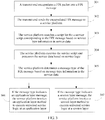
- An implementation of the present disclosure discloses a service implementation method based on the Financial Information Exchange (FIX) protocol. As shown in FIG. 1 , the method includes: 101. A service platform receives a FIX message sent by a transmitting end.
- FIX Financial Information Exchange
- the transmitting end is usually an entity, such as a client of a stock exchange and a futures exchange.
- the transmitting end sends an encapsulated FIX message to the service platform, where content of the FIX message is in the form of a character string and includes different types of service data, such as a transaction amount, a transaction time, IDs of a buyer and a seller, a service type, and a message length.
- service data such as a transaction amount, a transaction time, IDs of a buyer and a seller, a service type, and a message length.
- all data fields (or referred to as fields) in the existing FIX protocol can be used as service data in the present implementation.
- the data fields predetermined by both transaction parties can also be used as the service data.
- the present implementation sets no limitation on the type and the amount of service data.
- the FIX message received in the present step is a message obtained after the transmitting end performs high-level abstraction and encapsulation.
- a difference from the existing implementation lies in that in addition to including various data fields; the existing FIX packet includes service logic specific to a detailed transaction service.
- the service logic is essentially constraint control information for the various data fields. For example, for a service "buying stock”, the detailed constraint control information includes at least the following: determining a buying object (such as a stock), determining whether a stock price reaches a predetermined price, buying how many shares, and how to initiate a buying operation.
- a FIX packet is referred to as a strongly-typed packet in an existing technology.
- the service logic corresponding to different FIX protocol versions is different due to the difference among FIX protocol versions. Therefore, the service logic needs to be separately developed for different FIX protocol versions in an existing technology.
- the service logic is decoupled from the FIX packet and is separately configured on the service platform in the form of the script language.
- the transmitting end abstracts its data fields (service data) into a universal class to obtain service data in the form of a character string.
- the universal service data can be applied to any FIX protocol version.
- the service platform searches a script list for a service script corresponding to the FIX message based on service type information in service data.
- Each service script records one piece of detailed service logic corresponding to a detailed FIX version.
- the script list is an index file used to search for a service script, and records a mapping relationship between service types and service scripts.
- the service platform After receiving the FIX message, the service platform searches the script list for a corresponding service script, based on the service type information, to implement corresponding service logic.
- the service platform can further extract protocol version information from the service data. Moreover, it can combine the protocol version information with the service type information to identify the service script. Correspondingly, one dimension of information, the protocol version information, should be added to the script list to record a mapping relationship among service types, protocol versions, and service scripts.
- a developer needs to pre-compile various service scripts, and the service platform can allow the developer to develop different service scripts corresponding to various pieces of service logic for a certain FIX protocol version. It can allow the developer to develop different service scripts corresponding to all FIX protocol versions for one piece of detailed service logic.
- the service platform can further open an Application Programming Interface (API) for developing service scripts to an entity so as to receive a service script developed by the entity.
- API Application Programming Interface
- the script language is a light dynamic language, and the time costs and the computer resources consumed for developing the script language are far less than the consumption of developing the service logic in the FIX protocol code. Therefore, compared with the existing technologies, in addition to reducing the number of deployed protocol versions, the present implementation can reduce deployment costs of the FIX protocol by configuring the script language.
- the service platform executes the service script and processes the service data based on service logic.
- the service script can be stored on a database server. After identifying the needed service script in the database, the service platform puts it into the cache and loads the service script dynamically by refreshing the cache.
- service logic implementation can use different service data. For example, in a commodity transaction process, at least the service data such as a buyer ID, a seller ID, a commodity ID, and a commodity price are needed. Selecting which type of service data and how to process the service data depend on the service logic in the service script; in other words, the constraint control information in the service logic. The present implementation does not restrict the type and the number of service data used for executing the service script.
- some transaction services are completed on the service platform, while some transaction services need to be transferred by the service platform to an entity that serves as a receiving end (e.g., negotiating service). For the latter case, after step 103 is performed, the service platform further needs to send the processed FIX message to the receiving end.
- an implementation of the present disclosure discloses a service implementation method based on the FIX protocol. As shown in FIG. 2 , the method includes: 201. A transmitting end encapsulates a FIX packet into a FIX message.
- the method shown in FIG. 2 is mainly applied to the transmitting end, to perform high-level abstraction and encapsulation on a conventional FIX packet to obtain a universal FIX message. Because the FIX message includes only service data in the form of a character string, and does not include service logic corresponding to a detailed FIX protocol version, the FIX message can be applied to a FIX protocol of any version.
- the service logic is written into a service script developed in advance. It is configured on a service platform, so the service platform processes the service data based on the service script that includes the service logic.
- the transmitting end sends the encapsulated FIX message to a service platform.
- the service logic in the FIX packet can be reduced to a service script on the service platform for implementation. Constraint control information in the service logic is different in form, and the content based on different FIX protocol versions. Therefore, when the FIX message includes universal service data and does not include detailed service logic, the FIX message is not restricted by the FIX protocol version, and can be applied to the FIX protocol of any version. Compared with the existing technologies, the present implementation can improve the compatibility of the FIX protocol versions, reduce the number of deployed FIX protocol versions, and thus reduce the deployment costs of the FIX service environment.
- an implementation of the present disclosure further provides a service implementation method based on the FIX protocol. As shown in FIG. 3 , the method includes: 301. A transmitting end encapsulates a FIX packet into a FIX message.
- the transmitting end encapsulates the FIX packet into a universal FIX message.
- the transmitting end extracts character strings from the header and the body of the FIX packet to assemble a universal FIX message.
- the transmitting end captures the packet header based on a predetermined header length, parses out a body length based on header content, captures the character string of the body based on the body length, and finally assembles the captured character strings into the FIX message.
- the transmitting end can, but is not limited to, encapsulating the FIX packet into a message-type FIX message.
- the transmitting end sends the encapsulated FIX message to a service platform.
- both receiving and sending parties of the FIX packet should communicate with each other in one session.
- the transmitting end invokes the existing sending method to send the FIX message to the service platform, for example, send the FIX message by using the static method sendToTarget.
- the service platform searches a script list for a service script corresponding to the FIX message based on service type information in service data.
- both the message receiving and sending parties need to communicate with each other based on the same session.
- the transmitting end sends the current session ID together.
- the service platform identifies a corresponding session in a session list based on the session ID, and then performs a subsequent procedure in the session.
- the service data in the FIX packet exists in the form of a data field; namely, exists in the form of a tag-value pair.
- the service data in the present implementation is also present in the form of a tag-value pair.
- the following represents some tag-value pairs specified by the FIX protocol: Tag Field Name Description Must be sent Remarks 8 BeginString Protocol version number Y FIX.4.2 by default, cannot be encrypted, and must be the first field of the message 9 BodyLength Body length Y Cannot be encrypted and must be the second field of the message, excluding the length of 8/9/10 field 35 MsgType Message type Y Cannot be encrypted and must be the third field of the message 49 SenderCompID Sender ID Y Cannot be encrypted 56 TargetCompID Receiver ID Y Cannot be encrypted 34 MsgSeqNum Session sequence number Y Resetting is not allowed during transaction unless it is the first login in one day. 52 Sending Time Sending time Y In the worldwide uniform time format
- the transmitting end After parsing the FIX message, the transmitting end obtains the service data included in the message.
- One tag-value pair corresponds to one type of service data.
- the service platform searches for the tag-value pair of the service type, obtains service type information of a transaction service, and searches the script list for the service script corresponding to the FIX message based on the service type information.
- the service platform can further search for a service script in combination with a sender ID, a message type (an application layer message or a session layer message), and even a session ID to avoid repetition or confusion.
- a service script in combination with a sender ID, a message type (an application layer message or a session layer message), and even a session ID to avoid repetition or confusion.
- the service platform executes the service script and processes the service data based on service logic.
- the service platform puts the identified service script into the cache, and loads the service script by refreshing the cache to implement corresponding service logic.
- the service logic related to the FIX protocol can be divided into two categories: One category is service logic specific to detailed transaction objects or detailed transactions.
- the service logic cannot be universally used in different transaction objects or different transactions, and it needs to be separately developed for detailed cases, including, but not limited to, packet content parsing (related to different parsing rules), packet field check (such as the data format, amount format, amount, etc.), packet field conversion (date format conversion, amount format conversion, currency identifier conversion), signature verification, return code conversion, idempotent control, and traffic control.
- the other category is service logic that can be used by all entities.
- the present type of service logic is mainly used to establish, guarantee, and deregister the bottom-layer communication process between two communication parties. It also includes more universal service logic of transaction services, which is applicable to any service type.
- Typical service logic includes heartbeat management, network test, message retransmission, message rejection, sequence number reset, deregistration, login verification at the session layer, withdrawal request, rejection order, execution report, status request, status check, and new order at the application layer.
- Particular service logic is configured on the service platform in the form of a service script, which is implemented by performing step 304.
- the service script does not need to be repeatedly configured for different entities.
- the universal service logic is directly written into the protocol code on the service platform, which is implemented by performing subsequent steps 305 to 307. Since the universal service logic is applicable to all service types and does not need to be modified during usage, the maintenance costs of the FIX service environment are not increased.
- the service platform determines a message type of the FIX message based on message type information in the service data.
- the service platform obtains the message type of the FIX message based on the tag-value pair with key "MsgType".
- the message type includes two types: application layer message and session layer message. For different message types, the service platform chooses to perform subsequent step 306 or 307.
- the service platform invokes an application layer method to execute universal service logic at an application layer.
- the service platform invokes the toApp method or the fromApp method in the Application class to execute the universal service logic at the application layer.
- the difference between the toApp method and the fromApp method lies in following conditions: If a FIX message sent to the receiving end is processed, the toApp method is invoked. If a received FIX message is processed, the fromApp method is invoked.
- the service platform invokes a session layer method to execute universal service logic at a session layer.
- the service platform invokes the toAdmin method or the fromAdmin method in the Application class to execute the universal service logic at the application layer.
- the difference between the toAdmin method and the fromAdmin method lies in following conditions: If a FIX message sent to the receiving end is processed, the toAdmin method is invoked. If a received FIX message is processed, the fromAdmin method is invoked.
- the session sequence numbers of sent and received FIX messages are separately maintained.
- the message queues of sent and received messages are also mutually independent. Therefore, the service platform can choose to invoke toApp/toAdmin or fromApp/fromAdmin based on the session sequence numbers of the FIX messages.
- step 305 to step 307 following step 304 is merely used for ease of description.
- the service platform can first perform step 305 to step 307 and then step 303 to step 304, or it can perform step 305 to step 307 and step 303 to step 304 simultaneously.
- universal check services such as field check and transmission loss check, based on session sequence number can be written into the FIX protocol code and implemented by invoking a session layer method.
- the service platform can further write the following new types of universal service logic into the FIX protocol code and execute the service logic by using the session layer method:
- the existing FIX protocol standard contains a sequence number protection mechanism.
- the message sender adds a session sequence number to the sent message. For the message receiver, if the sequence number of the currently received message and the sequence number of the previously received message are not consecutive, it indicates that there is a missed message between the two messages. The message retransmission mechanism needs to be triggered. If the sequence numbers are consecutive, the sender sends a message again, and the sequence number of the previous message is increased by 1, which is used as the session sequence number of the next message.
- the present implementation provides universal service logic for resetting a sequence number, which is implemented by using the session layer method.
- the service platform sets a predetermined maximum sequence number based on the upper limit supported by the system. Generally, the maximum value of the sequence number is less than the upper limit of the system. In actual application, the maximum value of the sequence number can be set to 70% to 95% of the upper limit of the system. For example, when the upper limit of the system is 990,000, the maximum value of the sequence number can be set to 900,000.
- the service platform determines whether the session sequence number of the current message reaches the predetermined maximum sequence number. If the maximum sequence number is reached, the session sequence number is reset to 0, so the subsequent sequence number is accumulated starting from 0. If the maximum sequence number is not reached, no processing is performed.
- the reset sequence number logic of the session layer can prevent a session sequence number of a message from exceeding the upper limit supported, by the system or the database, to effectively avoid a system exception caused by a session sequence number overflow.
- the service platform can implement the refuse transaction logic by using the session layer method, and refuse to process the current FIX message so as to eliminate the possibility of further accumulating the session sequence number.
- the service platform can monitor a size of the message queue by performing the clear queue logic. If a cached occupied by the message queue exceeds a predetermined cache threshold, the FIX messages cached in the message queue are cleared to ensure that the system is stable and highly available.
- the cache threshold can be proportionally set based on a memory size of the system, and a detailed value is not limited in the present implementation.
- the service platform can further obtain a service script that includes the service logic of the newly added service, and add the obtained service script to the script list.
- the service logic is configured on the service platform in the form of the script language.
- the service platform can further pre-develop different packet parsers based on encapsulation rules of different non-FIX protocol packets in the present implementation to implement its transaction services.
- the service platform selects a corresponding packet parser based on the encapsulation rule, and parses the data stream of the non-FIX protocol packet by using the packet parser to obtain service data.
- the assets query transaction of the securities firms is implemented by using non-standard FIX protocol packets.
- the non-standard FIX protocol is used to reduce the increasing speed of sequence numbers. Because the frequency of assets query is significantly higher than the transaction frequency, the assets query will inevitably result in the rapid growth of the session sequence numbers, which will result in frequent resetting.
- the universal parsing means cannot correctly parse the underlying binary data stream into data in the form of a character string.
- correctly parsing the non-standard FIX protocol packets can be implemented by using a customized packet parser, which ensures implementation of the service logic.
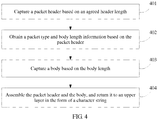
- a process of parsing the non-standard FIX protocol packet by using the packet parser is shown in FIG. 4 .
- the service platform captures the packet header from the data stream of the non-standard FIX protocol packet based on the header length specified in the encapsulation rule.
- the header length can be agreed upon by the service platform in advance with the entity (transmitting end).
- the field information such as a packet type and a body length can be obtained.
- the service platform performs step 403 based on the body length information to capture the body.
- the service platform needs to determine whether the captured body is long enough on a plurality of occasions, in other words, whether the captured body reaches the body length. If the length reaches the body length, the capturing is stopped. Otherwise, the data stream continues to be read until the body length is reached or the data stream is completely read.
- the data stream corresponding to the packet header and the body is captured, the data stream is assembled into data in the form of a character string, and is returned to the upper layer.
- the upper layer splits the character string into tag-value pairs. After the field check, the extraction of the service data is completed.
- the service platform can further send the processed FIX message to the receiving end.
- the service platform needs to process the FIX message sent by one party (transmitting end), and send the processed FIX message to the other party (receiving end).
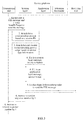
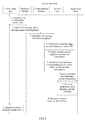
- the implementation of the present disclosure subsequently describes the implementation processes of the FIX service based on two processes: message receiving and message sending.
- the service platform can further use a distributed network architecture to perform distributed processing on the received FIX message by using a plurality of computing nodes.
- Each computing node processes a FIX message of at least one session.
- load balancing can be performed on a session based on a session ID by using a hash algorithm, so each computing node is responsible for a same or approximately same number of sessions.
- the session can be allocated to a computing node with the least number of sessions, or a newly added session can be allocated to a computing node that has recently performed session deregistration when the computing nodes have the same number of sessions.
- the present implementation sets no limitation on the number of computing nodes, a session allocation method, and the number of sessions on a node in the distributed structure.
- the distributed network structure enables each computing node to independently manage its session sequence numbers to support horizontal extension of session sequence numbers, thereby resolving a performance bottleneck caused by sequence number sequential sending.
- the service platform sends the FIX message to the outside.
- the service platform receives the FIX message sent by the transmitting end, and processes the FIX message and sends the processed FIX message to the receiving end.
- the scenario procedure includes the following steps.
- the service platform receives the FIX message sent by the outside.
- the service platform receives the FIX message sent by the transmitting end, and processes the FIX message.
- the scenario procedure includes the following steps.
- the service script is developed by using the groovy language.
- Groovy is an agile dynamic language based on the Java virtual machine. It can seamlessly integrate all existing Java objects and class libraries. It is more convenient to use the groovy language and the Java environment to develop the service script.
- the service script can further be implemented by using languages based on the Java virtual machine, such as JPython, JRuby, etc., which is not limited in the present implementation.
- an implementation of the present disclosure further provides a service implementation apparatus based on the FIX protocol.
- the apparatus is mainly located on a service platform.
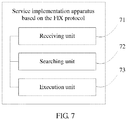
- the apparatus includes a receiving unit 71, a searching unit 72, and an execution unit 73.
- the receiving unit 71 is configured to receive a FIX message sent by a transmitting end, where the FIX message includes different types of service data, and the service data is in the form of a character string.
- the searching unit 72 is configured to search a script list for a service script corresponding to the FIX message based on service type information in the service data, where the script list stores service scripts corresponding to different FIX protocol versions.
- the service script includes service logic
- the execution unit 73 is configured to execute the service script and process the service data based on the service logic.
- the FIX message received by the receiving unit 71 is a universal FIX message.
- the apparatus further includes a write unit 74, configured to write universal service logic into protocol code on the service platform, where the universal service logic is applicable to any service type.
- the apparatus further includes a determining unit 75, configured to determine a message type of the FIX message based on message type information in the service data after the FIX message sent by the transmitting end is received.
- the execution unit 73 is configured to the following: when the message type indicates an application layer message, invoke an application layer method to execute universal service logic at an application layer; and the execution unit 73 is further configured to invoke a session layer method to execute universal service logic at a session layer when the message type indicates a session layer message.
- the execution unit 73 is configured to the following: when the universal service logic is a reset sequence number logic at the session layer, if a session sequence number reaches a predetermined largest sequence number, reset the session sequence number to 0; or when the universal service logic is a refuse transaction logic at the session layer, if resetting a session sequence number fails, refuse to process the FIX message; or when the universal service logic is clear queue logic at the session layer, if a cache occupied by a message queue exceeds a predetermined cache threshold, clear a cached FIX message in the message queue.
- the apparatus further includes the following: an acquisition unit 76, configured to obtain a service script including service logic of the added FIX service when a FIX service is added; and an adding unit 77, configured to add the obtained service script to the script list.
- the apparatus further includes the following: a selection unit 78, configured to select a packet parser based on an encapsulation rule of the non-FIX-protocol-based packet when a non-FIX-protocol-based packet; and a parsing unit 79, configured to parse a data stream of the non-FIX-protocol-based packet by using the packet parser to obtain service data.
- a selection unit 78 configured to select a packet parser based on an encapsulation rule of the non-FIX-protocol-based packet when a non-FIX-protocol-based packet
- a parsing unit 79 configured to parse a data stream of the non-FIX-protocol-based packet by using the packet parser to obtain service data.
- the apparatus further includes a sending unit 710, configured to send a processed FIX message to a receiving end.
- the apparatus is configured to perform distributed processing on a received FIX message by using a plurality of computing nodes, where each computing node processes a FIX message of at least one session.
- an implementation of the present disclosure further provides a service implementation apparatus based on the FIX protocol.
- the apparatus is mainly located on a transmitting end.
- the apparatus includes a processing unit 91 and a sending unit 92.
- the processing unit 91 is configured to encapsulate a FIX packet into a FIX message, where the FIX message includes different types of service data and does not include service logic corresponding to a detailed FIX protocol version.
- the service data is in the form of a character string
- the sending unit 92 is configured to send the encapsulated FIX message to a service platform, so the service platform processes the service data based on a service script including service logic.
- processing unit 91 is configured to encapsulate a FIX packet into a universal FIX message.
- processing unit 91 is configured to extract character strings from the header and the body of the FIX packet to assemble a universal FIX message.
- an implementation of the present disclosure further provides a service implementation system based on the FIX protocol.
- the system includes a service platform 101 and a transmitting end 102.
- the service platform 101 includes the apparatus shown in FIG. 7 or FIG. 8
- the transmitting end 102 includes the apparatus shown in FIG. 9 .
- the service implementation apparatus and system based on the FIX protocol can perform high-level abstraction and encapsulation on the FIX packet, to obtain a universal FIX message that retains only service data, but does not include detailed service logic. By removing the detailed service logic from the FIX packet, the strongly-typed service of the FIX packet is weakened, so the FIX message can be used for the FIX protocol of any version.
- the service logic is configured independently of the FIX protocol code by using a service script. Different service scripts are developed for different FIX protocol versions.
- the FIX transaction service is implemented based on the features of "dynamic configuration" and "dynamic loading" of the script language.
- the implementation of the present disclosure implements complete decoupling between the service logic and the FIX protocol code, so the implementation of the service logic is no longer dependent on the protocol code itself. Therefore, the service platform can implement transaction services of all FIX protocol versions by deploying only one version of FIX protocol, so the deployment costs of the FIX service environment can be greatly reduced.
- modules in the devices in the implementations can be adaptively changed and disposed in one or more devices different from the implementation.
- Modules, units, or components in the implementations can be combined into one module, unit, or component and can additionally be divided into a plurality of submodules or subunits or subcomponents.
- all disclosed features and all processes or units of any method or device that are disclosed in such a way in the specification may be combined in any combination mode.
- each feature disclosed in the specification may be replaced by an alternative feature that serves same, equivalent, or similar purposes.
- Implementations of various parts in the present disclosure may be implemented by hardware or software modules running on one or more processors, or a combination thereof.
- a person skilled in the art should understand that a microprocessor or a digital signal processor (DSP) may be used in practice to implement some or all of the functions of some or all of the components of the disclosure name (for example, an apparatus for determining a link level in a website) based on an implementation of the present disclosure.
- the present disclosure may also be implemented as a device or apparatus program (e.g., computer program and computer program product) for executing a part or all of the methods described here.
- Such a program for implementing the present disclosure may be stored in a computer-readable medium, or may have a form of one or more signals. Such a signal may be downloaded from an Internet website, provided on a carrier signal, or provided in any other form.
Landscapes
- Engineering & Computer Science (AREA)
- Business, Economics & Management (AREA)
- Accounting & Taxation (AREA)
- Finance (AREA)
- Theoretical Computer Science (AREA)
- Physics & Mathematics (AREA)
- General Physics & Mathematics (AREA)
- Development Economics (AREA)
- General Business, Economics & Management (AREA)
- Technology Law (AREA)
- Marketing (AREA)
- Economics (AREA)
- Strategic Management (AREA)
- Software Systems (AREA)
- Signal Processing (AREA)
- Computer Networks & Wireless Communication (AREA)
- Computer Security & Cryptography (AREA)
- General Engineering & Computer Science (AREA)
- Human Resources & Organizations (AREA)
- Operations Research (AREA)
- Game Theory and Decision Science (AREA)
- Entrepreneurship & Innovation (AREA)
- Computer And Data Communications (AREA)
- Financial Or Insurance-Related Operations Such As Payment And Settlement (AREA)
- Communication Control (AREA)
- Data Exchanges In Wide-Area Networks (AREA)
Applications Claiming Priority (2)
| Application Number | Priority Date | Filing Date | Title |
|---|---|---|---|
| CN201610112705.1A CN107135188B (zh) | 2016-02-29 | 2016-02-29 | 金融信息交换fix协议的业务实现方法、装置及系统 |
| PCT/CN2017/073919 WO2017148278A1 (fr) | 2016-02-29 | 2017-02-17 | Procédé, appareil et système de mise en œuvre de service basés sur un protocole fix |
Publications (2)
| Publication Number | Publication Date |
|---|---|
| EP3425877A1 true EP3425877A1 (fr) | 2019-01-09 |
| EP3425877A4 EP3425877A4 (fr) | 2019-11-27 |
Family
ID=59720749
Family Applications (1)
| Application Number | Title | Priority Date | Filing Date |
|---|---|---|---|
| EP17759129.4A Pending EP3425877A4 (fr) | 2016-02-29 | 2017-02-17 | Procédé, appareil et système de mise en oeuvre de service basés sur un protocole fix |
Country Status (11)
| Country | Link |
|---|---|
| US (1) | US10791070B2 (fr) |
| EP (1) | EP3425877A4 (fr) |
| JP (1) | JP6861720B2 (fr) |
| KR (1) | KR102136945B1 (fr) |
| CN (1) | CN107135188B (fr) |
| AU (1) | AU2017226398B2 (fr) |
| MY (1) | MY183050A (fr) |
| PH (1) | PH12018501824B1 (fr) |
| SG (1) | SG11201807245WA (fr) |
| TW (1) | TWI658418B (fr) |
| WO (1) | WO2017148278A1 (fr) |
Families Citing this family (14)
| Publication number | Priority date | Publication date | Assignee | Title |
|---|---|---|---|---|
| CN108427599A (zh) * | 2017-09-30 | 2018-08-21 | 平安科技(深圳)有限公司 | 异步任务统一处理方法、装置及存储介质 |
| CN110659247A (zh) * | 2018-06-13 | 2020-01-07 | 中国移动通信集团江西有限公司 | 话单文件连续性检测方法、装置、设备及介质 |
| CN108833446A (zh) * | 2018-08-01 | 2018-11-16 | 广发证券股份有限公司 | 一种基于Fix协议请求包的协议转换方法及装置 |
| CN110473101A (zh) * | 2019-08-15 | 2019-11-19 | 中国银行股份有限公司 | 模拟交易所的报文处理方法及装置 |
| CN111212056A (zh) * | 2019-12-30 | 2020-05-29 | 中电工业互联网有限公司 | 一种基于809协议的数据解析与分发系统及方法 |
| CN111368512B (zh) * | 2020-03-04 | 2023-08-22 | 北京软通智慧科技有限公司 | 一种业务数据的转换方法、装置、设备及存储介质 |
| CN112134915B (zh) * | 2020-06-29 | 2022-10-14 | 上海金融期货信息技术有限公司 | 一种应用层协议解耦合的通用网络处理系统 |
| CN112532619B (zh) * | 2020-11-26 | 2022-01-25 | 深圳前海景佑科技有限公司 | Defix协议的生成、解析方法、客户端、服务器及系统 |
| CN114040008B (zh) * | 2021-11-05 | 2024-07-30 | 光大科技有限公司 | 一种报文处理方法及装置 |
| CN116137589B (zh) * | 2021-11-17 | 2025-03-25 | 湖南微步信息科技有限责任公司 | 单点故障处理方法、装置、计算机设备及存储介质 |
| CN114282984A (zh) * | 2021-12-16 | 2022-04-05 | 中国农业银行股份有限公司上海市分行 | 一种基于canvas的银行经营数据图形展示方法及系统 |
| CN115103041B (zh) * | 2022-07-18 | 2024-07-12 | 深圳市雁联计算系统有限公司 | 一种基于fix协议实现业务的方法及系统 |
| CN116232885A (zh) * | 2022-12-23 | 2023-06-06 | 中国联合网络通信集团有限公司 | 信息的配置方法、装置及存储介质 |
| CN120658813B (zh) * | 2025-06-06 | 2026-04-21 | 青岛安工数联信息科技有限公司 | 数据传输方法及装置 |
Family Cites Families (23)
| Publication number | Priority date | Publication date | Assignee | Title |
|---|---|---|---|---|
| US20020083213A1 (en) * | 2000-09-18 | 2002-06-27 | Oberstein Brien M. | Method and system for simulating and certifying complex business applications |
| KR100831985B1 (ko) * | 2001-07-10 | 2008-05-23 | 삼성전자주식회사 | 휴대통신단말기에서의 비용결제 문자메시지 관리장치 및그 방법 |
| GB2395041A (en) * | 2001-08-14 | 2004-05-12 | Bloomberg Lp | Distribution and mapping of financial records from data stream |
| WO2004088460A2 (fr) * | 2003-03-25 | 2004-10-14 | Tradeweb Group L.L.C. | Procede et systeme de mise en oeuvre d'un traitement direct de commerces de differents instruments financiers |
| SG132685A1 (en) * | 2003-11-26 | 2007-06-28 | Fx Alliance Llc | Protocol-independent asset trading system and methods |
| CA2615052C (fr) * | 2005-07-11 | 2014-06-10 | Sanjoy Roy Choudhury | Systemes et procedes servant a transmettre des parametres a des dispositifs d'execution automatique d'ordres de securite |
| CN101874383A (zh) * | 2007-04-20 | 2010-10-27 | 泰克莱克公司 | 用于在通信网络中提供服务交互和中介的系统、方法和计算机程序产品 |
| US7840481B2 (en) * | 2007-06-07 | 2010-11-23 | Bny Convergex Execution Solutions Llc | Aged transactions in a trading system |
| CN101267645B (zh) * | 2008-02-29 | 2011-03-02 | 中兴通讯股份有限公司 | 用于w基站业务流程软件开发的自动化测试方法和系统 |
| JP4722195B2 (ja) * | 2009-04-13 | 2011-07-13 | 富士通株式会社 | データベース・メッセージ分析支援プログラム、方法及び装置 |
| US9009351B2 (en) * | 2009-07-09 | 2015-04-14 | Lime Brokerage Llc | Brokerage transaction server and method using encapsulated messages |
| CN102255786A (zh) * | 2010-05-20 | 2011-11-23 | 中国移动通信集团广西有限公司 | 业务报文处理方法及装置 |
| JP5533536B2 (ja) * | 2010-10-08 | 2014-06-25 | 富士通株式会社 | 情報処理プログラム、装置及び方法 |
| US8719795B2 (en) * | 2011-04-12 | 2014-05-06 | Miami International Security Exchange, Llc | System and method for automating testing of computers |
| CN102546599A (zh) * | 2011-12-16 | 2012-07-04 | 深圳中兴网信科技有限公司 | 一种实现不同协议数据等价互转的方法 |
| CN102681854B (zh) * | 2012-05-18 | 2015-04-29 | 华为技术有限公司 | 业务执行方法、服务器和计算机系统 |
| CN103020861A (zh) * | 2012-11-06 | 2013-04-03 | 苏州工业园区凌志软件股份有限公司 | 用于金融证券行业的中间业务平台系统 |
| US9426245B2 (en) * | 2012-12-31 | 2016-08-23 | Trading Technologies International, Inc. | In-line FIX packet translator |
| US9076182B2 (en) * | 2013-03-11 | 2015-07-07 | Yodlee, Inc. | Automated financial data aggregation |
| CN104239803B (zh) * | 2013-06-06 | 2017-08-25 | 中国银联股份有限公司 | 用于电子资源转移的安全性信息交互方法 |
| US10032219B2 (en) * | 2013-09-24 | 2018-07-24 | Chicago Mercantile Exchange Inc. | Secure exchange feed market data embargo |
| US10296973B2 (en) * | 2014-07-23 | 2019-05-21 | Fortinet, Inc. | Financial information exchange (FIX) protocol based load balancing |
| CN104506380B (zh) * | 2014-12-16 | 2018-07-13 | 北京星河亮点技术股份有限公司 | 基于协议分析仪的移动终端数据业务性能测试方法及系统 |
-
2016
- 2016-02-29 CN CN201610112705.1A patent/CN107135188B/zh active Active
- 2016-12-29 TW TW105143948A patent/TWI658418B/zh not_active IP Right Cessation
-
2017
- 2017-02-17 SG SG11201807245WA patent/SG11201807245WA/en unknown
- 2017-02-17 MY MYPI2018703004A patent/MY183050A/en unknown
- 2017-02-17 EP EP17759129.4A patent/EP3425877A4/fr active Pending
- 2017-02-17 KR KR1020187027850A patent/KR102136945B1/ko active Active
- 2017-02-17 WO PCT/CN2017/073919 patent/WO2017148278A1/fr not_active Ceased
- 2017-02-17 JP JP2018545451A patent/JP6861720B2/ja active Active
- 2017-02-17 AU AU2017226398A patent/AU2017226398B2/en not_active Ceased
-
2018
- 2018-08-28 US US16/115,313 patent/US10791070B2/en active Active
- 2018-08-28 PH PH12018501824A patent/PH12018501824B1/en unknown
Also Published As
| Publication number | Publication date |
|---|---|
| CN107135188A (zh) | 2017-09-05 |
| JP2019512138A (ja) | 2019-05-09 |
| AU2017226398B2 (en) | 2020-07-16 |
| TWI658418B (zh) | 2019-05-01 |
| MY183050A (en) | 2021-02-09 |
| SG11201807245WA (en) | 2018-09-27 |
| KR102136945B1 (ko) | 2020-07-23 |
| CN107135188B (zh) | 2020-09-25 |
| WO2017148278A1 (fr) | 2017-09-08 |
| US20180367482A1 (en) | 2018-12-20 |
| PH12018501824A1 (en) | 2019-01-28 |
| KR20180118168A (ko) | 2018-10-30 |
| JP6861720B2 (ja) | 2021-04-21 |
| AU2017226398A1 (en) | 2018-09-13 |
| US10791070B2 (en) | 2020-09-29 |
| PH12018501824B1 (en) | 2022-02-23 |
| TW201732704A (zh) | 2017-09-16 |
| EP3425877A4 (fr) | 2019-11-27 |
Similar Documents
| Publication | Publication Date | Title |
|---|---|---|
| AU2017226398B2 (en) | Service implementation method, apparatus and system based on fix protocol | |
| US7587447B2 (en) | Systems, methods and computer programs for implementing and accessing web services | |
| US7818758B2 (en) | Efficient multi-protocol software architecture with shared resources for different applications | |
| CN108848092A (zh) | 基于调用链的微服务灰度发布的处理方法及装置 | |
| US20030167355A1 (en) | Application program interface for network software platform | |
| US6728750B1 (en) | Distributed application assembly | |
| CN109635019B (zh) | 请求处理方法、装置、设备及存储介质 | |
| CN111447170B (zh) | 数据处理方法及其系统、计算机系统及计算机可读介质 | |
| US20210397671A1 (en) | Method and device for processing resource description file and for obtaining page resource | |
| CN109670131A (zh) | 资源描述文件的处理、页面资源的获取方法及中间服务器 | |
| CN104168250A (zh) | 基于cgi框架的业务流程控制方法及装置 | |
| US7908607B2 (en) | Efficient marshalling between soap and business-process messages | |
| CN114006927B (zh) | 业务报文的处理方法及其处理装置、电子设备、存储介质 | |
| US8819135B2 (en) | Method of performing data mediation, and an associated computer program product, data mediation device and information system | |
| US7571236B2 (en) | System and method for managing connections | |
| US11323368B1 (en) | System and method for web service atomic transaction (WS-AT) affinity routing | |
| CN114090112B (zh) | 配置文件的加载方法和装置、存储介质及电子装置 | |
| US11570265B2 (en) | Data transmission method and system | |
| CN117176565A (zh) | 业务请求的处理方法、系统、设备、介质及产品 | |
| CN108804555A (zh) | 协议展示方法、装置和电子设备 | |
| CN119211160B (zh) | 流量请求流转方法、装置及电子设备、计算机程序产品 | |
| CN119135780B (zh) | 一种报文生成方法、装置及电子设备 | |
| CN112799775B (zh) | 一种节点属性传递方法以及相关装置 | |
| CN112347741B (zh) | 信息编辑方法、装置、设备和存储介质 | |
| CN106302600A (zh) | 一种定制化需求的方法及装置 |
Legal Events
| Date | Code | Title | Description |
|---|---|---|---|
| STAA | Information on the status of an ep patent application or granted ep patent |
Free format text: STATUS: THE INTERNATIONAL PUBLICATION HAS BEEN MADE |
|
| PUAI | Public reference made under article 153(3) epc to a published international application that has entered the european phase |
Free format text: ORIGINAL CODE: 0009012 |
|
| STAA | Information on the status of an ep patent application or granted ep patent |
Free format text: STATUS: REQUEST FOR EXAMINATION WAS MADE |
|
| 17P | Request for examination filed |
Effective date: 20180919 |
|
| AK | Designated contracting states |
Kind code of ref document: A1 Designated state(s): AL AT BE BG CH CY CZ DE DK EE ES FI FR GB GR HR HU IE IS IT LI LT LU LV MC MK MT NL NO PL PT RO RS SE SI SK SM TR |
|
| AX | Request for extension of the european patent |
Extension state: BA ME |
|
| DAV | Request for validation of the european patent (deleted) | ||
| DAX | Request for extension of the european patent (deleted) | ||
| A4 | Supplementary search report drawn up and despatched |
Effective date: 20191024 |
|
| RIC1 | Information provided on ipc code assigned before grant |
Ipc: G06Q 40/04 20120101AFI20191018BHEP Ipc: G06Q 40/00 20120101ALI20191018BHEP Ipc: G06Q 40/06 20120101ALI20191018BHEP Ipc: H04L 29/08 20060101ALI20191018BHEP |
|
| RAP1 | Party data changed (applicant data changed or rights of an application transferred) |
Owner name: ADVANCED NEW TECHNOLOGIES CO., LTD. |
|
| STAA | Information on the status of an ep patent application or granted ep patent |
Free format text: STATUS: EXAMINATION IS IN PROGRESS |
|
| 17Q | First examination report despatched |
Effective date: 20210414 |