EP3426754B1 - Procédé de production d'essences pour moteur à indice d'octane élevé à partir de fractions d'hydrocarbure à faible indice d'octane, de fractions d'oléfines gazeuses et de composés oxygénés - Google Patents
Procédé de production d'essences pour moteur à indice d'octane élevé à partir de fractions d'hydrocarbure à faible indice d'octane, de fractions d'oléfines gazeuses et de composés oxygénés Download PDFInfo
- Publication number
- EP3426754B1 EP3426754B1 EP17763646.1A EP17763646A EP3426754B1 EP 3426754 B1 EP3426754 B1 EP 3426754B1 EP 17763646 A EP17763646 A EP 17763646A EP 3426754 B1 EP3426754 B1 EP 3426754B1
- Authority
- EP
- European Patent Office
- Prior art keywords
- methanol
- oxygenates
- olefin
- reaction
- reaction zone
- Prior art date
- Legal status (The legal status is an assumption and is not a legal conclusion. Google has not performed a legal analysis and makes no representation as to the accuracy of the status listed.)
- Active
Links
Images

Classifications
-
- C—CHEMISTRY; METALLURGY
- C10—PETROLEUM, GAS OR COKE INDUSTRIES; TECHNICAL GASES CONTAINING CARBON MONOXIDE; FUELS; LUBRICANTS; PEAT
- C10G—CRACKING HYDROCARBON OILS; PRODUCTION OF LIQUID HYDROCARBON MIXTURES, e.g. BY DESTRUCTIVE HYDROGENATION, OLIGOMERISATION, POLYMERISATION; RECOVERY OF HYDROCARBON OILS FROM OIL-SHALE, OIL-SAND, OR GASES; REFINING MIXTURES MAINLY CONSISTING OF HYDROCARBONS; REFORMING OF NAPHTHA; MINERAL WAXES
- C10G35/00—Reforming naphtha
- C10G35/04—Catalytic reforming
- C10G35/06—Catalytic reforming characterised by the catalyst used
- C10G35/095—Catalytic reforming characterised by the catalyst used containing crystalline alumino-silicates, e.g. molecular sieves
-
- B—PERFORMING OPERATIONS; TRANSPORTING
- B01—PHYSICAL OR CHEMICAL PROCESSES OR APPARATUS IN GENERAL
- B01J—CHEMICAL OR PHYSICAL PROCESSES, e.g. CATALYSIS OR COLLOID CHEMISTRY; THEIR RELEVANT APPARATUS
- B01J29/00—Catalysts comprising molecular sieves
- B01J29/04—Catalysts comprising molecular sieves having base-exchange properties, e.g. crystalline zeolites
- B01J29/06—Crystalline aluminosilicate zeolites; Isomorphous compounds thereof
- B01J29/40—Crystalline aluminosilicate zeolites; Isomorphous compounds thereof of the pentasil type, e.g. types ZSM-5, ZSM-8 or ZSM-11, as exemplified by patent documents US3702886, GB1334243 and US3709979, respectively
- B01J29/405—Crystalline aluminosilicate zeolites; Isomorphous compounds thereof of the pentasil type, e.g. types ZSM-5, ZSM-8 or ZSM-11, as exemplified by patent documents US3702886, GB1334243 and US3709979, respectively containing rare earth elements, titanium, zirconium, hafnium, zinc, cadmium, mercury, gallium, indium, thallium, tin or lead
-
- B—PERFORMING OPERATIONS; TRANSPORTING
- B01—PHYSICAL OR CHEMICAL PROCESSES OR APPARATUS IN GENERAL
- B01J—CHEMICAL OR PHYSICAL PROCESSES, e.g. CATALYSIS OR COLLOID CHEMISTRY; THEIR RELEVANT APPARATUS
- B01J29/00—Catalysts comprising molecular sieves
- B01J29/04—Catalysts comprising molecular sieves having base-exchange properties, e.g. crystalline zeolites
- B01J29/06—Crystalline aluminosilicate zeolites; Isomorphous compounds thereof
- B01J29/40—Crystalline aluminosilicate zeolites; Isomorphous compounds thereof of the pentasil type, e.g. types ZSM-5, ZSM-8 or ZSM-11, as exemplified by patent documents US3702886, GB1334243 and US3709979, respectively
- B01J29/42—Crystalline aluminosilicate zeolites; Isomorphous compounds thereof of the pentasil type, e.g. types ZSM-5, ZSM-8 or ZSM-11, as exemplified by patent documents US3702886, GB1334243 and US3709979, respectively containing iron group metals, noble metals or copper
- B01J29/46—Iron group metals or copper
-
- C—CHEMISTRY; METALLURGY
- C07—ORGANIC CHEMISTRY
- C07C—ACYCLIC OR CARBOCYCLIC COMPOUNDS
- C07C41/00—Preparation of ethers; Preparation of compounds having groups, groups or groups
- C07C41/01—Preparation of ethers
- C07C41/05—Preparation of ethers by addition of compounds to unsaturated compounds
- C07C41/06—Preparation of ethers by addition of compounds to unsaturated compounds by addition of organic compounds only
-
- C—CHEMISTRY; METALLURGY
- C10—PETROLEUM, GAS OR COKE INDUSTRIES; TECHNICAL GASES CONTAINING CARBON MONOXIDE; FUELS; LUBRICANTS; PEAT
- C10G—CRACKING HYDROCARBON OILS; PRODUCTION OF LIQUID HYDROCARBON MIXTURES, e.g. BY DESTRUCTIVE HYDROGENATION, OLIGOMERISATION, POLYMERISATION; RECOVERY OF HYDROCARBON OILS FROM OIL-SHALE, OIL-SAND, OR GASES; REFINING MIXTURES MAINLY CONSISTING OF HYDROCARBONS; REFORMING OF NAPHTHA; MINERAL WAXES
- C10G3/00—Production of liquid hydrocarbon mixtures from oxygen-containing organic materials, e.g. fatty oils, fatty acids
- C10G3/42—Catalytic treatment
- C10G3/44—Catalytic treatment characterised by the catalyst used
- C10G3/48—Catalytic treatment characterised by the catalyst used further characterised by the catalyst support
- C10G3/49—Catalytic treatment characterised by the catalyst used further characterised by the catalyst support containing crystalline aluminosilicates, e.g. molecular sieves
-
- C—CHEMISTRY; METALLURGY
- C10—PETROLEUM, GAS OR COKE INDUSTRIES; TECHNICAL GASES CONTAINING CARBON MONOXIDE; FUELS; LUBRICANTS; PEAT
- C10G—CRACKING HYDROCARBON OILS; PRODUCTION OF LIQUID HYDROCARBON MIXTURES, e.g. BY DESTRUCTIVE HYDROGENATION, OLIGOMERISATION, POLYMERISATION; RECOVERY OF HYDROCARBON OILS FROM OIL-SHALE, OIL-SAND, OR GASES; REFINING MIXTURES MAINLY CONSISTING OF HYDROCARBONS; REFORMING OF NAPHTHA; MINERAL WAXES
- C10G3/00—Production of liquid hydrocarbon mixtures from oxygen-containing organic materials, e.g. fatty oils, fatty acids
- C10G3/60—Controlling or regulating the processes
-
- C—CHEMISTRY; METALLURGY
- C10—PETROLEUM, GAS OR COKE INDUSTRIES; TECHNICAL GASES CONTAINING CARBON MONOXIDE; FUELS; LUBRICANTS; PEAT
- C10G—CRACKING HYDROCARBON OILS; PRODUCTION OF LIQUID HYDROCARBON MIXTURES, e.g. BY DESTRUCTIVE HYDROGENATION, OLIGOMERISATION, POLYMERISATION; RECOVERY OF HYDROCARBON OILS FROM OIL-SHALE, OIL-SAND, OR GASES; REFINING MIXTURES MAINLY CONSISTING OF HYDROCARBONS; REFORMING OF NAPHTHA; MINERAL WAXES
- C10G2300/00—Aspects relating to hydrocarbon processing covered by groups C10G1/00 - C10G99/00
- C10G2300/10—Feedstock materials
- C10G2300/1037—Hydrocarbon fractions
-
- C—CHEMISTRY; METALLURGY
- C10—PETROLEUM, GAS OR COKE INDUSTRIES; TECHNICAL GASES CONTAINING CARBON MONOXIDE; FUELS; LUBRICANTS; PEAT
- C10G—CRACKING HYDROCARBON OILS; PRODUCTION OF LIQUID HYDROCARBON MIXTURES, e.g. BY DESTRUCTIVE HYDROGENATION, OLIGOMERISATION, POLYMERISATION; RECOVERY OF HYDROCARBON OILS FROM OIL-SHALE, OIL-SAND, OR GASES; REFINING MIXTURES MAINLY CONSISTING OF HYDROCARBONS; REFORMING OF NAPHTHA; MINERAL WAXES
- C10G2300/00—Aspects relating to hydrocarbon processing covered by groups C10G1/00 - C10G99/00
- C10G2300/10—Feedstock materials
- C10G2300/1088—Olefins
-
- C—CHEMISTRY; METALLURGY
- C10—PETROLEUM, GAS OR COKE INDUSTRIES; TECHNICAL GASES CONTAINING CARBON MONOXIDE; FUELS; LUBRICANTS; PEAT
- C10G—CRACKING HYDROCARBON OILS; PRODUCTION OF LIQUID HYDROCARBON MIXTURES, e.g. BY DESTRUCTIVE HYDROGENATION, OLIGOMERISATION, POLYMERISATION; RECOVERY OF HYDROCARBON OILS FROM OIL-SHALE, OIL-SAND, OR GASES; REFINING MIXTURES MAINLY CONSISTING OF HYDROCARBONS; REFORMING OF NAPHTHA; MINERAL WAXES
- C10G2300/00—Aspects relating to hydrocarbon processing covered by groups C10G1/00 - C10G99/00
- C10G2300/40—Characteristics of the process deviating from typical ways of processing
- C10G2300/4006—Temperature
-
- C—CHEMISTRY; METALLURGY
- C10—PETROLEUM, GAS OR COKE INDUSTRIES; TECHNICAL GASES CONTAINING CARBON MONOXIDE; FUELS; LUBRICANTS; PEAT
- C10G—CRACKING HYDROCARBON OILS; PRODUCTION OF LIQUID HYDROCARBON MIXTURES, e.g. BY DESTRUCTIVE HYDROGENATION, OLIGOMERISATION, POLYMERISATION; RECOVERY OF HYDROCARBON OILS FROM OIL-SHALE, OIL-SAND, OR GASES; REFINING MIXTURES MAINLY CONSISTING OF HYDROCARBONS; REFORMING OF NAPHTHA; MINERAL WAXES
- C10G2300/00—Aspects relating to hydrocarbon processing covered by groups C10G1/00 - C10G99/00
- C10G2300/70—Catalyst aspects
- C10G2300/708—Coking aspect, coke content and composition of deposits
-
- C—CHEMISTRY; METALLURGY
- C10—PETROLEUM, GAS OR COKE INDUSTRIES; TECHNICAL GASES CONTAINING CARBON MONOXIDE; FUELS; LUBRICANTS; PEAT
- C10G—CRACKING HYDROCARBON OILS; PRODUCTION OF LIQUID HYDROCARBON MIXTURES, e.g. BY DESTRUCTIVE HYDROGENATION, OLIGOMERISATION, POLYMERISATION; RECOVERY OF HYDROCARBON OILS FROM OIL-SHALE, OIL-SAND, OR GASES; REFINING MIXTURES MAINLY CONSISTING OF HYDROCARBONS; REFORMING OF NAPHTHA; MINERAL WAXES
- C10G2400/00—Products obtained by processes covered by groups C10G9/00 - C10G69/14
- C10G2400/02—Gasoline
Definitions
- the invention relates to petrochemistry, and more specifically, to methods and plants for the production of a base for the production of high-octane gasolines or high-octane gasoline components (concentrates of alkylaromatics) from raw hydrocarbon fractions, fractions of gaseous olefins and oxygenates, wherein starting components are mixed, feedstock is heated and supplied into a reactor, in which the reaction is carried out in the presence of a zeolite-containing catalyst, a gasoline base with improved antiknock rating or a concentrate alkylaromatics is isolated by the separation of the conversion product, while diverting simultaneously the reaction water and exhaust gases.
- Gasoline is the main component of gasolines with improved antiknock rating for the production of commercial automotive and aviation gasolines with a low content of benzene, sulfur compounds and olefins, durene, and with no diene hydrocarbons in the composition, or a concentrate of alkylaromatics.
- Concentrate of alkylaromatics is aromatic hydrocarbon concentrate with the total content of alkyl-substituted aromatics (e.g. xylenes, ethylbenzene) exceeding the total content of non-alkyl-substituted aromatics (e.g. benzene, naphthalene).
- alkyl-substituted aromatics e.g. xylenes, ethylbenzene
- non-alkyl-substituted aromatics e.g. benzene, naphthalene
- Feedstock hydrocarbon fractions are various hydrocarbon fractions, such as 1) straight-run fractions; 2) fractions of hydrocarbons with higher benzene content, including, for example, a benzene fraction made of straight-run gasoline reformates; 3) fractions containing components prone to resin formation, such as dienes and aromatic olefins, including light fractions of pyrolysis gasolines and mixtures thereof with other fractions; 4) hydrocracking gasolines; 5) stable natural gasoline; 6) gas condensate distillate; and other similar products and mixtures thereof.
- hydrocarbon fractions such as 1) straight-run fractions; 2) fractions of hydrocarbons with higher benzene content, including, for example, a benzene fraction made of straight-run gasoline reformates; 3) fractions containing components prone to resin formation, such as dienes and aromatic olefins, including light fractions of pyrolysis gasolines and mixtures thereof with other fractions; 4) hydrocracking gasolines; 5) stable natural gasoline; 6) gas conden
- Methanol and / or other oxygenates and / or olefin-containing feed-stock which means that a mixture of methanol and / or other oxygenates, including ethanol and water, and, in addition to or instead of it, a light olefin-containing feed-stock, such as various ethylene fractions, propane-propylene fractions, butane-butylene fractions, broad olefin containing fractions and mixtures thereof can be used.
- the feedstock can include in addition to the raw hydrocarbon fractions one or more of the following: methanol, ethanol, oxygenates, water, light olefins, light-olefinic fractions and combination and variations of these.
- Methanol and / or other oxygenates are various oxygenate fractions that can include one or more of the following: methanol, crude methanol, a mixture of alcohols, mixture of their ethers, water and combination and variations of these.
- Zeolite-containing catalyst is one or a mixture of zeolite-containing catalysts used in processes of hydrocarbon and/or oxygenates and/or olefin conversion, such as 1) co-processing of oxygenates with hydrocarbons into predominantly gasoline-range hydrocarbons; 2) conversion of methanol into hydrocarbons; 4) co-processing of olefins with hydrocarbons; 5) olefin to gasoline processes; 6) catalytic deparaffinization; and other similar processes and combinations thereof.
- Reaction water is the water chemically created during the production of gasoline from oxygenate-containing feedstock.
- RON stands for the Research Octane Number. It is determined by the method described in GOST 8226-82: "The method is to compare the antiknock rating of test fuel with the antiknock rating of reference fuels expressed by the octane number" on a bench motor. RON characterizes the behavior of a gasoline engine in the modes of small and medium loads. To assess RON, there are also used indirect methods based, for example, on the analysis of chromatograms of gasoline or the analysis of the characteristics of the low-temperature gas-phase oxidation reaction simulating pre-ignition processes, or by the measurement of indirect gasoline physical quantities that correlate well with RON indicators, measured in accordance with GOST 8226-82. Measurement tools for indirect RON assessment are called Octane meters.
- Reaction zone is an isolated space in a reactor, where the catalyst is located.
- the conversion product may contain fractions having temperatures of over 210 °C in an amount of more than 2 vol. %, which does not meet the commercial gasoline requirements published in the European Norm EN 228:2008.
- One of the aspects of the present invention relates to methods for producing motor gasolines having an improved antiknock rating of the raw hydrocarbon fractions, fractions of gaseous olefins and oxygenates, where the starting components are mixed, the feedstock is heated and supplied into a reactor, wherein the reaction is carried out in the presence of a zeolite-containing catalyst, high-octane gasoline is isolated by separation of the conversion product, while diverting simultaneously the reaction water and exhaust gases.
- This method is the closest to the present invention and is taken as the prototype for the method.
- the patent referred to the Patent No. 65045 of the Russian Federation for utility model No. 65045, which was published in 2007, which describes a plant for the production of synthetic gasoline from aliphatic alcohol, in particular, methanol, where a reactor with coaxial heat pipes is proposed.
- the heat pipes due to coolant evaporating and condensing processes occurring in them, allow efficient redistribution of heat from heating zones adjacent to the surface of the heat pipes to heated zones also adjacent to the surface of the heat pipes.
- the distance between the surfaces of the heat pipes limiting the reactor space in the reactor described in the prior art should be no more than 150 mm.
- the ratio of the reaction zone volume to the reactor volume will be less than 0.3-0.5.
- a part of the reactor space between the heat pipes when it is used in the process described in the prototype, is used to heat the feedstock supplied into the reactor in order to provide the coolant condensation on the inner surface of the heat pipes in an amount necessary for removing heat from the inlet (front) catalyst bed, where exothermic reactions prevail, and where the heat removal is performed by evaporation of coolant in the inner space of the heat pipe.
- feedstock is supplied into the reactor at a temperature of up to 100-205 °C.
- the third disadvantage of this method is the inability to control the temperature throughout the catalyst bed.
- the temperature will always be lower than the coolant condensation temperature on the heat pipe walls.
- the temperature in the input (front) part of the catalyst bed, where the exothermic reactions prevail and where the heat removal is performed by evaporation of the coolant flowing over the surface of the heat pipes from above the condensation zone will always be higher than the temperature of coolant condensation / evaporation in the heat pipe.
- the temperature at the top of the reaction zone will always be higher by 15-45 °C than the temperature at the bottom of the reactor.
- Another disadvantage of this method is the fact that upon increasing the methanol to hydrocarbon ratio, the amount of heat generated in the front catalyst bed increases too. This, in turn, limits the temperature of feedstock being supplied to the reactor as the feedstock of a lower temperature is supplied to the reactor and is superheated exactly in the reactor in the area limited by the surface of the heat pipes located upstream the front bed, which is necessary for creating a sufficient coolant condensation on the surface of the heat pipes to dissipate heat.
- a process and plant for producing C 2 -C 4 olefins from methanol and/or dimethyl ether is disclosed in US 2009/124841 A1 , wherein the methanol is preheated and reacted in a prereactor on a dehydrating catalyst, e.g. alumina, to obtain dimethyl ether, and the obtained methanol/dimethyl ether mixture is supplied to a reactor with a zeolite based catalyst which may consist of two or more series-connected reaction stages.
- a dehydrating catalyst e.g. alumina
- the present invention mainly aims to propose a method of producing gasoline from raw hydrocarbon fractions, fractions of gaseous olefins and oxygenates, as disclosed in appended claim 1, wherein the starting components flow is supplied to a unit for supplying the flow to be processed into a reactor, wherein the reaction is carried out in the presence of a zeolite-containing catalyst, gasoline is isolated by separation of the conversion product, while diverting simultaneously the reaction water and the exhaust gases, allowing improvement of the quality of the resulting gasoline by reducing the content of benzene in it, as well as refractory components, such as durene, as well as by the possibility of regulating the temperature throughout the catalyst bed without the use of complex heat exchange reactor equipment, as well as the possibility of increasing the useful volume of the reactor equipment, which is the technical problem specified.
- the specified technical problem is solved by providing a method of producing gasoline from raw hydrocarbon fractions, fractions of gaseous olefins and oxygenates, wherein the feedstock component flow is supplied to a unit for supplying the flows to be processed into a reactor, wherein the reaction is carried out in the presence of a zeolite-containing catalyst, high-octane gasoline is isolated by separation of the conversion product, while diverting simultaneously the reaction water and the exhaust gases, wherein
- An example of such a reactor can be a vertical multiple-shell reactor or a horizontal reactor, the housing of which accommodates several series-connected catalyst baskets; an example of such solutions using a horizontal reactor is shown in Figure 2 .
- An example of such a reactor can be single or multibed reactor or reactor system, such as arrangement of reactors in series, arrangement of reactors in parallel and combinations thereof.
- An example of such a reactor can be fixed bed reactor, fluidized bed reactor, reactors designed for continuous catalyst regeneration.
- An example of such a reactor can be isothermal, adiabatic or pseudo-isothermal reactor.
- An example of the catalyst can be catalysts described hereinafter.
- methanol and / or other oxygenates and / or olefin-containing feedstock are separated by means of said unit into at least two flows, the first flow is directed into the space upstream the first reaction zone where it is mixed with the flow of raw hydrocarbon fractions, and the next flows are mixed in the downstream reaction zones with the conversion product from the upstream reaction zone.
- one or more of the reaction zones can be not supplied with flows of methanol and / or other oxygenates and / or olefin-containing feedstock as long as at least two reaction zones are supplied with the flows of methanol and / or other oxygenates and / or olefin-containing feedstock.
- methanol and / or other oxygenates and / or olefin-containing feedstock are separated by means of said unit into at least one flow, which is directed to the downstream reaction zone, where said stream is mixed with the conversion product from the upstream reaction zone, wherein the first reaction zone is pre-supplied with a pre-mixed flow of methanol and / or other oxygenates and / or olefin-containing feedstock and the flow of raw hydrocarbon fractions.
- the flow of methanol and / or other oxygenates and / or olefin-containing feedstock is mixed with the raw hydrocarbon fractions in the space upstream the first reaction zone or more upstream in the direction of the hydrocarbon feedstock supply flow, and prior to supplying to the first reaction zone, the mixed flow of methanol and / or other oxygenates and / or olefin-containing feedstock and the flow of raw hydrocarbon fractions are heated, e.g., they may be preheated prior to mixing, during mixing or upon mixing, or prior to or upon introduction into the reaction zone.
- flows of raw hydrocarbon fractions and flows of methanol and / or other oxygenates and / or olefin-containing feedstock can be heated prior to mixing, during mixing or upon mixing, or prior to or upon introduction into the reaction zone.
- reaction zones can be supplied with at least part of the raw hydrocarbon fraction flow.
- the flow is directed from the unit said in the above five embodiments into the reaction zone directly or through a mixing zone located between the reaction zones and having means for mixing.
- the distributed supply allows improving the quality of the produced base stock for the production of gasoline by increasing the concentration of components having a high BRON, such as meta- and para-xylenes, in the resulting product, and allows reducing the concentration of undesirable durene, methylnaphthalenes having high melting temperatures, significantly decreasing the concentration of normal C6+ paraffins having an extremely low antiknock ratings, as well as significantly reducing the benzene content (see comparative Table 3 for examples No. 2 and No. 3).
- methanol and / or other oxygenates and / or olefin-containing feedstock is supplied for the conversion by not a single flow, but divided into 2-5 flows and added to the converted mixture successively prior to supplying the converted mixture into the downstream reaction zone, and there is a mixing device installed upstream each downstream reaction zone, the function of which can also be carried out by a protective bed (precontact) poured over the catalyst bed in a catalytic basket, and the function of the mixing device can also be performed by a channel connecting the catalyst baskets to be placed in a horizontal reactor, this will allow using a vertical or horizontal reactor of simple design, with a high efficiency of the reactor volume.
- function of a mixing device is carried out by a protective bed of neutral or weakly-reacting material, for example quartz, in forms such as granules; spheres; fraction of crushed materials.
- neutral or weakly-reacting material for example quartz
- function of a mixing device is carried out by a channel connecting the reactor spaces where the reaction zones are located.
- function of a mixing device is carried out by specifically controlled speed and/or direction of supplied feedstock flow, e.g. by using tangential supply of methanol and / or other oxygenates and / or olefin-containing feedstock to the reaction zone.
- the flow rate of methanol and / or other oxygenates and / or olefin-containing feedstock to each reaction zone is controlled, and the temperature of the feedstock to be supplied to the reaction zone is controlled so that the maximum catalyst bed temperature in the reaction zone does not exceed 420 °C in the production of a base stock for the production of gasolines and 500 °C in the production of alkylaromatics concentrate as a high-octane gasoline component.
- the temperature of raw mixture supplied into the first reaction zone can be increased, and vice versa.
- the temperature of raw mixture supplied into the reaction zone can be increased, and vice versa.
- the optimal solution is the option of supplying methanol and / or other oxygenates and / or olefin-containing feedstock into the reaction zones so that the heating temperature of the catalyst bed in the reaction zone does not exceed 420 °C in the production of the base stock for the production of high-octane gasoline and 500 °C in the production of alkylaromatics concentrate, whereas the temperature of the catalyst end bed should be respectively by 40-70 °C below said maximum temperature.
- this raw mixture can be supplied to the first reaction zone at a reduced temperature of up to 310 °C, whereby most of the methanol and / or other oxygenates and / or olefin-containing feedstock can be supplied to the first reaction zone, which allows controlling the supply of methanol and / or oxygenates and / or olefin-containing feedstock to the process by increasing the temperature of the feed-stock mixture supplied into the first reaction zone while reducing the consumption of methanol and / or other oxygenates and / or olefins; and vice versa, decreasing the feedstock mixture temperature while increasing the flow rate of methanol and / or other oxygenates and / or olefins.
- methanol and / or other oxygenates and / or olefins may be supplied at a lower temperature to prevent overheating of the front bed resulting in rapid deactivation of the catalyst and higher gassing.
- methanol and / or other oxygenates and / or olefins may be supplied at a lower temperature to prevent overheating of the front part of the zone resulting in rapid deactivation of the catalyst and higher gassing.
- the flow rate of methanol and / or other oxygenates and/or olefin-containing feedstock to each reaction zone is regulated independently.
- Example 1 of this patent provides information regarding adiabatic heating of the front catalyst bed during the conversion of hexane-heptane fraction mixture (83.5 wt. %), methanol (6.6 wt. %), water (7 wt. %) and ethylene fraction (2.9 wt. %).
- Adiabatic heating of the front catalyst bed in an isothermal reactor was about 60-65 °C, while, due to the conversion of n-hexane, n-heptane and naphthenes contained in the hydrocarbon phase, the catalyst temperature in the end catalyst zone was about 350-360 °C.
- raw hydrocarbon fractions or a mixture of raw hydrocarbon fractions and methanol and / or other oxygenates and / or olefin-containing feedstock are heated in two stages: at the first stage, raw hydrocarbon fractions or a mixture of raw hydrocarbon fractions and methanol and / or other oxygenates and / or olefin-containing feedstock are vaporized, heavier non-evaporated components are separated, and at the second stage the vaporized components are heated, e.g., preferably superheated.
- raw hydrocarbon fractions and methanol and / or other oxygenates and / or olefin-containing feedstock are supplied to the first reaction zone with joint flow. Due to this advantageous characteristic, there appears a possibility not to use any mixing device in the first reaction zone; also, the presence of water in the raw mixture inhibits radical oligomerization of dienes and aromatic olefins while heating the raw mixture, whereby they may be present in the raw hydrocarbon fractions.
- raw hydrocarbon fractions and methanol and / or other oxygenates and / or olefin-containing feedstock are supplied to each reaction zone by separate flows, wherein they are pre-mixed, and a bed of granules of neutral material and / or a fraction of the crushed quartz placed upstream the frontal catalyst bed is used as a mixing device, or a line connecting the reactor spaces, where the reaction zones are located, is used as a mixing device. Due to this advantageous characteristic, there appears a possibility to use the protective catalyst bed or the line connecting the reaction zones or the line through which the mixture is supplied into the first reaction zone, as a mixing bed.
- methanol and / or other oxygenates and / or olefin-containing feedstock are supplied by separate flows to the first or second and each downstream reaction zones, where methanol and / or other oxygenates are supplied in the gaseous phase at a temperature of no more than 380 °C, which prevents its decomposition upon heating. Due to this advantageous characteristic, there appears a possibility to reduce the loss of methanol for its conversion to carbon oxides during heating up to higher temperatures.
- methanol and / or other oxygenates and / or olefin-containing feedstock are supplied by separate flows to the first and / or second and / or subsequent reaction zones, where methanol and / or other oxygenates are supplied in the gaseous phase at a temperature of no more than 380 °C, which prevents its decomposition upon heating. Due to this advantageous characteristic, there appears a possibility to reduce the loss of methanol for its conversion to carbon oxides during heating up to higher temperatures and possibility of finite control of temperature and/or chemical composition of the product of each reaction zone by controlling the amount of methanol and / or other oxygenates and / or olefin-containing feedstock coming to each reaction zone.
- a 1-2 % aqueous solution of an industrial demulsifier is added to a mixture of hydrocarbons and water supplied to the separation at a ratio of 1:50 - 1:200 to the volume of the reaction water, the aqueous solution of the demulsifier is mixed with the input flow in a laminar static mixer or directly in a hydrocarbons and reaction water condenser located in the separation unit. Due to this advantageous characteristic, there appears a possibility to separate efficiently the mixture of reaction water and liquid hydrocarbons (conversion product) in the separation unit, as well as to prevent entrainment of catalyst particles with the liquid products of conversion and catalyst dust deposition on the surface of internal devices of fractionation columns.
- the proposed invention at a low flow rate of methanol and / or other oxygenates and / or olefin-containing feedstock per ton of convertible hydrocarbon feedstock.
- the proposed combined embodiment can be used, wherein the heat input to the last or to the penultimate and last reaction zones can be performed directly to the reaction zone.
- it allows increasing the temperature in the last reaction zone in order to increase the methanol and / or other oxygenates and / or olefin-containing feedstock conversion as it decreases and with a decrease of catalyst activity during its use.
- adiabatic reaction zones containing no heat exchange devices are used as the last one or two reaction zones of the reactor, at the same time, the feedstock flow to be supplied to the final and / or penultimate reaction zones is further heated, e.g., preferably superheated no more than up to 500 °C.
- the proposed invention at a low flow rate of methanol and / or other oxygenates and / or olefin-containing feedstock per ton of converted hydrocarbon feedstock.
- the proposed combined embodiment can be used, wherein the heat input to the last or the last and the penultimate reaction zones can be carried out by heating, preferably preheating, the converted feed-stock to 500 °C before it is supplied to the respective reaction zones.
- This embodiment with the supply of heat to the last or the last and the penultimate reaction zones has also the advantage that with an increase in the useful volume of the reactor, the temperature can be adjusted in the last or the last and the penultimate reaction zones in the direction of the feedstock flow, regardless of the temperature in the first reaction zones (in the direction of the feedstock flow).
- reaction zones contain heat-exchange devices which are unable to sustain constant temperature throughout all of the reaction zone but can partially mitigate temperature difference between front and end parts of the reaction zone without escalating the low of methanol and / or other oxygenates and / or olefin-containing feed-stock supplied to the reaction zone.
- reaction water with an admixture of methanol and / or other oxygenates is supplied to a distillation column, the distillation residue of which is water cleaned from residues of hydrocarbons with a reduced content of methanol and / or other oxygenates and the distillate of which is water with an increased content of oxygenates and hydrocarbons, while oxygenates, e.g. preferably methanol water and hydrocarbons produced during the distillation process are recycled to the reactor inlet to the beginning of the process in a mixture with methanol and / or other oxygenate and / or olefin-containing feedstock.
- oxygenates e.g. preferably methanol water and hydrocarbons produced during the distillation process are recycled to the reactor inlet to the beginning of the process in a mixture with methanol and / or other oxygenate and / or olefin-containing feedstock.
- a zeolite-containing catalyst wherein a synthetic amorphous aluminosilicate or an inorganic oxide is used as a binder component, which is a mixture of alumina in an amount of 30-70 wt. % and silica in an amount of 70-30 wt. %. Due to this advantageous characteristic, there appears a possibility to increase the catalyst useful life, as there is no destruction of the binder under the action of superheated steam produced in the process of converting feedstock and present in the convertible feedstock.
- the catalyst is used which was described in RU 2160161 for the purposes of producing liquid hydrocarbons of dimethyl ether.
- the use of said catalyst is not restricted to the products and feeds indicated in the initial patent.
- REE rare earth elements
- zeolite having SiO 2 /Al 2 O 3 82 having a residual amount of sodium oxide of 0.04 wt. % taken in the ratio of 1.7 / 1 to 2.8 / 1, and the remainder being a binder in an amount of 20 to 30 wt. % of the catalyst weight.
- At least one reaction zone can contain zeolite-containing catalyst different from the catalysts in the other reaction zones. Due to this advantageous characteristic, there appears a possibility to expand the fractional composition of hydrocarbon feedstock and to selectively enhance conversion of undesirable gasoline components accumulating in downstream reaction zones.
- olefin-containing gas is used as olefins, selected from the group comprising ethylene-containing gas from plants for fractioning of exhaust gas from the catalytic cracking process, gas from the delayed coking process. Due to this advantageous characteristic, there appears a possibility to increase the efficiency of use of olefin-containing feedstock.
- reaction zones are located in multi-bed adiabatic reactor.
- reaction zones are located in in multi-bed isothermal reactor.
- reaction zones are located in in multi-bed pseudo-isothermal reactor.
- reaction zones are located in separate reactors, each one of which can be adiabatic, isothermal or pseudo-isothermal.
- the flow rate of methanol and / or other oxygenates and / or olefin-containing feedstock into the reactor is increased or decreased upon deviation of the parameters of the produced product from the set parameters.
- the flow rate of methanol and / or other oxygenates and / or olefin-containing feedstock into individual reaction zones is increased or decreased upon deviation of parameters of the flows coming from individual reaction zones from the set parameters.
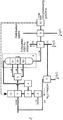
- a plant for the production of gasolines from raw hydrocarbon fractions, fractions of gaseous olefins and oxygenates comprises a unit (1) for supplying methanol and / or other oxygenates and / or olefin-containing feedstock, a unit (2) for supplying raw hydrocarbon fractions, a unit for supplying flows to be treated into a reactor, and a reactor (6) having at least a reaction zone with a zeolite-containing catalyst and an outlet for subsequent separation of the conversion product.
- the disadvantage of the prototype is the lack of the ability to control the availability of heavy fractions in the hydrocarbon feedstock.
- Another drawback of the prototype invention is the limitation of the output of motor gasolines by limiting the possibility of increasing the volume of the reactor.
- the distance between the surfaces of the heat pipes limiting the volume of the reaction zone should not exceed 150 mm.
- the ratio of the reaction zone volume to the reactor volume will be less than 0.3-0.5.
- the reactor volume increases as the square of its diameter, and the required surface for heat pipes for heat removal increases in direct proportion to its diameter. This limits the development of a large-scale reactor fitted with heat pipes having a volume of dozens of cubic meters. Furthermore, as noted above, it is impossible to adjust the temperature of the end catalyst bed (in the last, boundary reaction zone) regardless of the temperature at the top reaction zone.
- a further disadvantage of the prototype is also that upon an increase in the methanol to hydrocarbon ratio, the amount of heat generated in the front layer of the catalyst increases. This in turn limits the temperature of the temperature of heating the feedstock supplied into the reactor.
- a plant for producing gasolines from hydrocarbon fractions, fractions of gaseous olefins and oxygenates comprising a unit (1) for supplying methanol and / or other oxygenates and / or olefin-containing feedstock, a unit (2) for supplying raw hydrocarbon fractions, a unit for supplying flows to be treated into a reactor, and a reactor having at least a reaction zone with a zeolite-containing catalyst and an outlet for subsequent separation of the conversion product, wherein this plant allows at least mitigating the above drawback, namely, providing the improvement in the quality of the resulting gasoline due to reducing its benzene content, as well as content of high melting point components, such as durene, as well as due to the possibility of regulating the temperature throughout the catalyst bed without using a complicated heat-exchange reactor equipment, and the ability to increase the useful volume of the reactor equipment, which is the specified technical problem.
- the reactor is additionally provided with at least one more reaction zone, and the unit for supplying flows into the reactor is adapted to supply separate and / or pre-mixed flows of methanol and / or other oxygenates and / or olefin-containing feedstock and the flow of raw hydrocarbon fractions into the first reaction zone, and a flow of methanol and / or other oxygenates and / or olefin-containing feedstock into the second and / or subsequent reaction zone, wherein between the reaction zones, there is also located means for mixing the reaction products from the upstream reaction zone and supplied methanol and / or other oxygenates and / or olefin-containing feedstock.
- the unit for supplying flows may contain a unit (5) for heating methanol and / or other oxygenates and / or olefin-containing feedstock, which has at least two outputs, the first of which is connected to the first input of the first reaction zone (61) directly or through the mixing zone, the second input of which is connected to the output of a unit (2) for supplying raw hydrocarbon fractions, wherein through the second output of the unit (5) there is supplied a flow of methanol and / or other oxygenates and / or olefin-containing feedstock to the second reaction zone.
- the unit for supplying flows contains an additional heating unit (4), the input of which is connected to the output of the unit (2) for supplying raw hydrocarbon fractions directly, and the output is connected to the second input into the first reaction zone (61).
- the unit for supplying flows may contain a unit (5) for heating methanol and / or other oxygenates and / or olefin-containing feedstock, which has at least two outputs, the first of which is connected to the first input of the first reaction zone (61) directly or through the mixing zone, the second input of which is connected to the output of a unit (2) for supplying raw hydrocarbon fractions, wherein through the second output of the unit (5) there is supplied a flow of methanol and / or other oxygenates and / or olefin-containing feedstock to the third reaction zone.
- the unit for supplying flows contains an additional heating unit (4), the input of which is connected to the output of the unit (2) for supplying raw hydrocarbon fractions directly, and the output is connected to the second input into the first reaction zone (61).
- the unit for supplying flows may contain a unit (5) for heating methanol and / or other oxygenates and / or olefin-containing feedstock having at least one output connected to the input into the second and / or subsequent reaction zone directly or through the mixing zone comprising means for mixing located between the reaction zones, and a unit (3) for mixing raw hydrocarbon fractions and methanol and / or other oxygenates and / or olefin-containing feedstock, whose output is connected to the input to the first reaction zone, directly or through an additional heating unit (4).
- the unit for supplying flows may contain a unit (5) for heating methanol and / or other oxygenates and / or olefin-containing feedstock having at least one output connected to the input into the third reaction zone directly or through the mixing zone comprising means for mixing located between the reaction zones, and a unit (3) for mixing raw hydrocarbon fractions and methanol and / or other oxygenates and / or olefin-containing feedstock, which has at least two outputs which are connected to the inputs of the first and second reaction zones, directly or through an additional heating unit (4).
- Means for mixing hydrocarbon fractions and oxygenates can be located upstream the first reaction zone.
- the unit (4) for heating raw hydrocarbon fraction may further include a unit for evaporating raw hydrocarbon fractions or mixtures of raw hydrocarbon fractions and methanol and / or other oxygenates and / or olefin-containing feed-stock and a unit for heating, e.g., preferably superheating, the formed vapors, wherein between them there is a separator for removal of heavy hydrocarbon fractions containing mainly hydrocarbon components with a molecular mass of no more than 180, with boiling point temperatures of up to 250 °C under normal conditions.
- a mixing device for mixing the reaction products of the upstream reaction zone and supplied methanol and / or other oxygenates and / or olefin-containing feedstock may be made as a bed of granules of a neutral material and / or a fraction of crushed quartz placed upstream the front catalyst bed.
- the protective bed of granules of a neutral material and / or a fraction of crushed quartz placed upstream the front catalyst bed as a device for mixing the reaction products from the upstream reaction zone and supplied methanol and / or other oxygenates and / or olefin-containing feedstock.
- a line connecting the reaction zones may be used as a mixing device for mixing the reaction products of the upstream reaction zone and supplied methanol and / or other oxygenates feedstock and / or olefin-containing feedstock.
- function of a mixing device may be carried out by a protective bed of neutral or weakly-reacting material, for example quartz, in forms such as granules; spheres; fraction of crushed materials.
- neutral or weakly-reacting material for example quartz
- function of a mixing device may be carried out by a channel connecting the reactor spaces where the reaction zones are located.
- function of a mixing device may be carried out by specifically controlled speed and/or direction of supplied feedstock flow, e.g. by using tangential supply of methanol and / or other oxygenates and / or olefin-containing feedstock to the reaction zone.
- reaction zones may be made as separate adiabatic reactors, which are thermally insulated reaction vessels filled with catalyst and connected in series.
- reaction zones may be located in multi-bed adiabatic reactor.
- reaction zones may be located in in multi-bed isothermal reactor.
- reaction zones may be located in in multi-bed pseudo-isothermal reactor.
- raw mixture heaters upstream the last one or two reaction zones, there may be located raw mixture heaters, e.g., preferably superheaters.
- the proposed invention at a low flow rate of methanol per metric ton of convertible hydrocarbon feedstock. Indeed, at low flow rates of methanol less than 20 % of weight of the converted feedstock, to enhance RON of converted mixtures the proposed combined embodiment can be used, wherein a reaction mixture heater, e.g., preferably superheater, heating the reaction mixture up to temperatures of about 500 °C is located upstream the last or the penultimate and the last reaction zones. Additionally, there appears a possibility to raise the temperature in the reaction zones as the catalyst is deactivated to improve the efficiency of conversion of hydrocarbon feedstock and oxygenates.
- a reaction mixture heater e.g., preferably superheater
- the plant may further contain a conversion product separation unit for removal of the reaction water with an admixture of methanol and / or other oxygenates, whose output is connected to the input of a rectification column, the distillation residue of which is water cleaned from residues of hydrocarbons with a reduced content of oxygenates, and the distillate of which are hydrocarbons and water with an increased content of oxygenates, wherein the distillation column output with the distillate is connected to the input of the unit for supplying methanol and / or other oxygenates and / or olefin-containing feedstock.
- a conversion product separation unit for removal of the reaction water with an admixture of methanol and / or other oxygenates, whose output is connected to the input of a rectification column, the distillation residue of which is water cleaned from residues of hydrocarbons with a reduced content of oxygenates, and the distillate of which are hydrocarbons and water with an increased content of oxygenates, wherein the distillation column output with the distillate is connected to the input of the unit
- the reactor 6 is made as a multiple-shell reactor that includes reaction zones on each shelf / catalyst basket or as a horizontal reactor, the housing of which accommodates several series-connected catalyst baskets. Either every reaction zone, or part of the reaction zones may be made as individual thermally insulated vessels.
- the unit 1 for supplying methanol and / or other oxygenates and / or olefin-containing feedstock is connected to the unit 5 for heating the unit for supplying flows.
- the unit 5 may have at least one or at least two outputs.
- said output is connected to the input to the second reaction zone 62 either directly or through the mixing zone having means for mixing located between the reaction zones, wherein the unit for supplying also contains a unit 3 for mixing the starting components, whose output is connected to the inlet to the first reaction zone 61 either directly or through the heating unit 4.
- the downstream (second) output of the unit 5 may also be connected to the inlet to the first reaction zone 61 ( Fig. 1 ) directly or through the mixing zone.
- the separation unit 7 is connected to gasoline stabilization column 9, wherein the bottom product is stabilized gasoline with improved antiknock rating.
- Other products of the column are gasoline stabilization gases and reaction water trapped out of the column reflux tank.
- the plant further includes a mixing device installed for mixing the reaction products from the upstream reaction zone and supplied methanol and / or other oxygenates and / or olefin-containing feedstock.
- the mixing device is not shown in Figure 1 .
- a mixer for mixing the reaction products from the upstream reaction zones and supplied methanol and / or other oxygenates and / or olefin-containing feedstock is made as a bed of granules of neutral material and / or a fraction of crushed quartz placed upstream the front catalyst bed, and a line connecting the reaction zones is used as a mixing device.
- the plant further may include devices for heating the reaction mixture installed upstream the last or the penultimate and last reaction zones; the diagram of Fig. 1 does not show the heating devices.
- the last one or two reaction zones of the reactor can be made as isothermal reactors.
- the plant further includes a unit 10 for determining the parameters of the resulting gasoline, such as RON, connected to a unit 11 controlling the flow rate of methanol and / or other oxygenates and / or olefin-containing feedstock in the unit 1 for supplying methanol and / or other oxygenates and / or olefin-containing feedstock.
- a unit 10 for determining the parameters of the resulting gasoline such as RON
- a unit 11 controlling the flow rate of methanol and / or other oxygenates and / or olefin-containing feedstock in the unit 1 for supplying methanol and / or other oxygenates and / or olefin-containing feedstock.
- the plant further includes a reaction water distillation column 8, the bottom product of which is water cleaned of residues of hydrocarbons with a reduced content of methanol and / or other oxygenates, and the distillate of which is water with an increased content of methanol and / or other oxygenates and hydrocarbons.
- the output of the conversion product separation unit for removal of the reaction water with an admixture of methanol can be connected to the input of the rectification column 8, wherein the output of the distillation column with distillate is connected to the input of the unit 1 for supplying methanol and / or other oxygenates and / or olefin-containing feedstock.
- the gasoline base of raw hydrocarbon fractions, fractions of the gaseous olefins and oxygenates is produced as follows (see Figures 1 , 3 ).
- Step A1 In the unit 3, starting components are mixed, which are supplied through the unit 1 for supplying methanol and / or other oxygenates and / or olefin-containing feedstock, and the unit 2 for supplying raw hydrocarbon fractions.
- Step A2 The starting feedstock is heated in the unit 4 for heating the starting feedstock. During heating, if necessary, the heavy components are separated.
- Step A3 The mixture is supplied from the unit 4 to the reactor 6, wherein the reaction is carried out in the presence of a zeolite-containing catalyst.
- the reactor contains at least two reaction zones, where the zeolite-containing catalyst is located.
- the mixture from step A2 is supplied into the first reaction zone 61.
- methanol and / or other oxygenates and / or olefin-containing feedstock are divided into several flows, the first flow is mixed with the converted hydrocarbon feedstock from the first reaction zone 61 in the mixing zone between the first and second reaction zones, and the subsequent flows are mixed in the downstream mixing zones (not shown in the drawings) with the conversion product from the upstream reaction zone.
- a bed of granules of a neutral material and / or a fraction of crushed quartz placed upstream the catalyst bed placed on a shelf, or a line connecting the reaction zones are used as a mixing zone (a mixing device).
- Methanol and / or other oxygenates are supplied in the gaseous phase at a temperature of no more than 380 °C preventing its decomposition upon heating.
- the isothermal reactors are used as the last or the last and the penultimate reaction zones of the reactor.
- the adiabatic reactors are used as the last or last and the penultimate reaction zones of the reactor.
- Zeolite-containing catalysts are used in the reaction zones, whose binder is a mixture of alumina in an amount of 30-70 wt. % and silica in an amount of 70-30 wt. %.
- Step A4 The flow rate of methanol and / or other oxygenates and / or olefin-containing feedstock into the reaction zones is controlled (by the unit 1 and through picking methanol and / or other oxygenates and / or olefin-containing feedstock into the reaction zone from the unit 5), and the temperature of the mixture supplied to the first reaction zone (by the unit 4) is controlled so that the maximum temperature of the catalyst bed does not exceed 420 °C in the preparation of the base stock for the production of high-octane gasoline and 500 °C for the production of a concentrate alkylaromatics, and the temperature of the end catalyst bed in the reaction zone is respectively by 40-70 °C below the maximum temperature of the bed.
- methanol is supplied in an amount of less than 20 to 25 wt. %, additional heat supply to the downstream reaction zones is required.
- hot stabilization gases from the fractionation unit 9 or heated circulating exhaust gases from the unit 7 can be used, or a heater can be installed on the line connecting 2 last zones, or heat is supplied using the heat pipes, or otherwise, or heat supply can be carried out through heating, e.g., preferably superheating the flow supplied into the last or the last and the penultimate reaction zones, but no more than up to 500 °C, or isothermal reaction zones with heat exchanging heat supply can be used as the last or the last and the penultimate reaction zones.
- Step A5 The temperature of the last or the last and the penultimate reaction zones is decreased during catalyst operation each time by 1-2 °C as the allowable concentration of methanol in the reaction water increases.
- Figure 1 does not show a schematic drawing of additional heat supply to the last or the last and the penultimate reaction zones to control the temperature in this zone.
- heated stabilization gases from the fractionation unit 9 or circulating heated exhaust gases from the unit 7 can be used, or a heater can be installed on a line connecting the last 2 zones, or heat is supplied through the heat pipes or using other means.
- Step A6 A 1-2 % aqueous solution of an industrial demulsifier is added to a mixture of hydrocarbons and water supplied to the separation at a ratio of 1:100 - 1:200 to the volume of the reaction water.
- the aqueous solution of the demulsifier is mixed with the input flow in a laminar static mixer or directly in a condenser of hydrocarbons and reaction water located in the separation unit 6 upstream a three-phase separator.
- Step A7 Gasoline is isolated by the separation of the conversion product while diverting simultaneously the reaction water and exhaust gases.
- the reaction mixture is cooled with partial condensation of C 5 + hydrocarbons and the aqueous portion, further, the three-phase separator located in the same location separates the mixture into the gaseous phase, hydrocarbon condensate and reaction water.
- the separated hydrocarbon condensate is supplied to a distillation unit 9, from where gasoline selected by stabilized vapor pressure and dried is picked up, and stabilization gases and reaction water with a high content of methanol are picked up from the reflux tank.
- the separated reaction water with an admixture of methanol and / or other oxygenates is supplied to the distillation unit 8, the distillation residue of which is water cleaned of residues of hydrocarbons with a reduced content of methanol and / or other oxygenates, and the distillate of which is water with a higher content of methanol and / or other oxygenates and hydrocarbons, wherein water with an increased content of oxygenates and hydrocarbons produced in the rectification process are recycled to the reactor inlet to the beginning of the process in a mixture with methanol and / or other oxygenate and / or olefin-containing feedstock.
- Step A8 If the parameters of the produced gasoline with improved antiknock rating differ from the specified parameters that are measured by the unit 10 for determining the parameters of the resulting gasoline, the flow rate of methanol and / or other oxygenates and / or olefin-containing feedstock to the reactor is increased or decreased by the unit 11 controlling the flow rate of methanol and / or other oxygenates and / or olefin-containing feedstock.
- the sequence of steps is exemplary and allows rearranging, adding or making some operations simultaneously without losing the ability of the production of a base stock for the production of gasolines from raw hydrocarbon fractions, fractions of gaseous olefins and oxygenates.
- the proposed method for producing gasolines from raw hydrocarbon fractions can be embodied in practice, and upon embodiment, it provides an implementation of the declared application, which allows making a conclusion that the invention complies with the "industrial applicability" criterion.
- a zeolite catalyst was used for the conversion of dimethyl ether after regeneration.
- the process was carried out at atmospheric pressure in a reactor having a useful volume of about 1.5 liters and with thermal insulation made as an air gap between the external surface of the cylindrical reactor shell and an outer protection casing, and with compensation of heat losses using external heating of the protective casing.
- the catalyst bed having a volume of 1.2 liters (855 g) was heated to a temperature of 350 °C.
- a mixture of the following mass composition was supplied on the catalyst bed at a temperature of 335 °C:
- the mass feedstock flow rate was 2.6 kg / L of catalyst ⁇ h -1 .
- the temperature of heating of the adiabatic catalyst bed in a narrow front bed was about 60-65 °C (from 335 °C to 395-398 °C)), the end catalyst bed temperature was about 360 °C.
- the mass yield of the C 5 + fraction from the first reaction zone was 97.5 % per the hydrocarbon fraction supplied (65-85 °C).
- RON for the C 5 + hydrocarbons fraction to be released from the conversion products was 67 units with RON of the initial fraction equal to 58 units.
- the methanol conversion was 99.9 %.
- Example No. 2 Increase in RON of the product by increasing the methanol flow rate
- Example No.1 It differs from the Example No.1 by that the temperature of the raw mixture was reduced down to 320 °C. A mixture of the following mass composition was supplied to the reactor inlet:
- the mass feedstock flow rate was 2.6 kg / L of catalyst ⁇ h -1 .
- the temperature of heating of the adiabatic catalyst bed in a narrow front bed was about 80-85 °C (from 320 °C to 402-406 °C)), the end catalyst bed temperature was about 365 °C.
- the mass yield of the C 5 + fraction from the first reaction zone was 96.4 % per the hydrocarbon fraction supplied (65-85 °C).
- RON for the C 5 + hydrocarbons fraction to be released from the conversion products was 71 units with RON of the initial fraction equal to 58 units.
- the methanol conversion was 99.5 %.
- a flow reactor was used, wherein the catalyst was filled for the conversion of light hydrocarbons and oxygenates to aromatics concentrate in three beds in an amount of 18 ml of the catalyst each (a total amount of 40 g of catalyst).
- the catalyst beds were separated by quartz chip beds in an amount of 36 ml each forming the zones for mixing and heating the hydrocarbon feedstock.
- a narrow straight-run gasoline fraction at 65 - 85 °C having a density of 0.71 at a flow rate of 60 ml / hr and 80 wt. % methanol at a flow rate of 12 ml / hr were supplied to the first reaction zone.
- methanol 80 wt. % methanol was supplied through the capillaries at a rate of 6 ml / hr to the second and third reaction zones through the mixing zones.
- the ratio of methanol / straight-run fraction was equal to 0.38.
- a flow reactor was loaded with 36 ml (26.7 g) of the catalyst, where a narrow straight-run gasoline fraction at 65 - 85 °C having a density of 0.711, at a flow rate of 36 ml / hr and 100 wt. % methanol at a flow rate of 12 ml / hr were supplied.
- the ratio of methanol / straight fraction was equal to 0.371.
- the temperature in the reaction zone was 365 - 380 °C.
- the reactor pressure was 0.3 - 0.35 MPa.
- Table 3 shows a comparison of the compositions in weight percentage of the initial narrow straight-run fraction C 6 -C 7 , and C 5 + hydrocarbon fraction from the catalysate hydrocarbon condensate.
- This example demonstrates the possibility of using feedstock containing diene and triene hydrocarbons, as well as the ability to control the degree of conversion of feedstock by increasing the maximum process temperature.
- a catalyst of conversion of light aliphatic hydrocarbons was used.
- Table 4 shows the material balance of the experiment corresponding to the 203 rd hour of the pilot plant operation. Diene and triene hydrocarbons were not detected in the produced gasoline. The total sulfur content was reduced to 0.001 wt. %. The methanol conversion during the experiment was no less than 99 % and was adjusted by increasing the temperature in the reaction zone and reducing the feedstock volumetric flow rate. Table 4 Supplied g / hr Mixture of 50 % of SNG and light fraction catalytic cracking gasoline (initial boiling point: 120 °C).
- the content of methanol in the reaction water is 1.3 wt. %.
- the reaction water is supplied into an evaporator with a vapor space where it is evaporated at a pressure close to atmospheric pressure. Vapors of the reaction water are supplied to a column still. The number of fractionating trays in the column is ten. Vapors from the top of the column are condensed and supplied partially as reflux to the column for reflux.
- the yield of distillate is 11 wt. % of the weight of the starting feedstock supplied to the column as vapor.
- the concentration of methanol in the distillate is 8-9 wt. %.
- This product is admixed to 100 wt. % methanol supplied for conversion together with the hydrocarbon feedstock. As a result, methanol at a concentration of 94 wt. % is supplied for conversion.
- the bottom product of the column is desalted and water cleaned of hydrocarbons, with the methanol content of no more than 0.2 wt. %.
- the present invention achieves the task set, i.e. increasing the quality of the produced high-octane gasoline due to the reduction of the content of benzene in gasoline, as well as the content of high melting point components such as durene, as well as due to the possibility of regulating the temperature throughout the catalyst bed without using complicated heat-exchange reactor equipment, as well as the possibility of increasing the useful volume of reactor equipment.
Landscapes
- Chemical & Material Sciences (AREA)
- Oil, Petroleum & Natural Gas (AREA)
- Organic Chemistry (AREA)
- Engineering & Computer Science (AREA)
- Chemical Kinetics & Catalysis (AREA)
- Crystallography & Structural Chemistry (AREA)
- General Chemical & Material Sciences (AREA)
- Materials Engineering (AREA)
- Organic Low-Molecular-Weight Compounds And Preparation Thereof (AREA)
- Production Of Liquid Hydrocarbon Mixture For Refining Petroleum (AREA)
Claims (17)
- Procédé de production d'essence à partir de fractions hydrocarbonées brutes, fractions d'oléfines gazeuses et composés oxygénés, dans lequel l'écoulement de constituant de charge d'alimentation est introduit dans une unité d'introduction des écoulements à traiter dans un réacteur, dans lequel la réaction est réalisée en présence d'un catalyseur contenant de la zéolite, de l'essence à indice d'octane élevé est isolé par séparation du produit de conversion, tout en déviant simultanément l'eau de réaction et les gaz d'échappement, caractérisé en ce que(a) on utilise, comme un réacteur, un réacteur qui contient au moins deux zones de réaction avec un catalyseur contenant de la zéolite,(b) entre lesquelles est de plus disposé un moyen de mélange du produit de réaction provenant de la zone de réaction précédente et les méthanol et/ou autres composés oxygénés et charge d'alimentation contenant une oléfine introduits, et(c) au moyen de l'unité d'introduction des écoulements les méthanol et/ou autres composés oxygénés et charge d'alimentation contenant une oléfine sont séparés en au moins deux écoulements, dans lequelun premier écoulement de méthanol et/ou autres composés oxygénés et charge d'alimentation contenant une oléfine est dirigé dans l'espace en amont de la première zone de réaction où il est mélangé avec l'écoulement de fractions hydrocarbonées brutes et est introduit dans la première zone de réaction du réacteur, etun second écoulement de méthanol et/ou autres composés oxygénés et charge d'alimentation contenant une oléfine est mélangé dans la zone de réaction en aval avec le produit de conversion provenant de la zone de réaction en amont.
- Procédé selon la revendication 1, caractérisé en ce que le débit de méthanol et/ou autres composés oxygénés et charge d'alimentation contenant une oléfine dans chaque zone de réaction est contrôlé, et la température de la charge d'alimentation à introduire dans la zone de réaction est contrôlée de sorte que la température maximum de lit de catalyseur dans la zone de réaction n'excède pas 420°C dans la production d'un stock de base pour la production d'essences, alors que, lors de la diminution de l'introduction de méthanol et/ou autres composés oxygénés et/ou charge d'alimentation contenant une oléfine dans la première zone de réaction, la température du mélange brut introduit dans la première zone de réaction est augmentée, et vice versa.
- Procédé selon la revendication 1, caractérisé en ce que les méthanol et/ou autres composés oxygénés et charge d'alimentation contenant une oléfine sont séparés au moyen de ladite unité en au moins un écoulement, lequel est dirigé dans la zone de réaction en aval, où ledit courant est mélangé avec le produit de conversion provenant de la zone de réaction en amont, dans lequel la première zone de réaction est pré-alimentée avec un écoulement pré-mélangé de méthanol et/ou autres composés oxygénés et charge d'alimentation contenant une oléfine et l'écoulement de fractions hydrocarbonées brutes.
- Procédé selon la revendication 3, caractérisé en ce que l'écoulement est dirigé à partir de ladite unité dans la zone de réaction directement ou par l'intermédiaire d'une zone de mélange disposée entre les zones de réaction et présentant un moyen de mélange.
- Procédé selon la revendication 3, caractérisé en ce que l'écoulement de méthanol et/ou autres composés oxygénés et charge d'alimentation contenant une oléfine est mélangé avec les fractions hydrocarbonées convertibles dans l'espace en amont de la première zone de réaction ou plus en amont dans la direction de l'écoulement d'introduction de charge d'alimentation hydrocarbonée.
- Procédé selon la revendication 3, caractérisé en ce qu'avant l'introduction dans la première zone de réaction, l'écoulement mixte de méthanol et/ou autres composés oxygénés et charge d'alimentation contenant une oléfine et l'écoulement de fractions hydrocarbonées brutes sont préchauffés.
- Procédé selon les revendications 1 et 3, caractérisé en ce qu'avant la séparation de méthanol et/ou autres composés oxygénés et charge d'alimentation contenant une oléfine en écoulements multiples, une fraction hydrocarbonée brute ou un mélange d'une fraction hydrocarbonée brute et les méthanol et/ou autres composés oxygénés et charge d'alimentation contenant une oléfine sont chauffés dans deux étapes : dans la première étape, une fraction hydrocarbonée brute ou un mélange d'une fraction hydrocarbonée brute et des méthanol et/ou autres composés oxygénés et charge d'alimentation contenant une oléfine sont vaporisés, des constituants non-évaporés plus lourds sont séparés, et dans la seconde étape les constituants vaporisés sont surchauffés.
- Procédé selon la revendication 4, caractérisé en ce qu'un lit de granulés de matériau neutre et/ou une fraction de quartz broyé étant placé en amont du lit de catalyseur avant, ou une ligne connectant les espaces de réacteur où les zones de réaction sont disposées, sont utilisés comme moyen de mélange.
- Procédé selon les revendications 1 et 3, caractérisé en ce que les méthanol et/ou autres composés oxygénés sont introduits à travers ladite unité dans la phase gazeuse à une température d'au plus 380°C évitant leur décomposition par chauffage.
- Procédé selon la revendication 1, caractérisé en ce qu'une solution aqueuse à 1-2 % d'un désémulsifiant industriel est ajoutée à un mélange d'hydrocarbures et d'eau introduit dans la séparation à un rapport de 1:50 - 1:200 par rapport au volume de l'eau de réaction, la solution aqueuse du désémulsifiant est mélangée avec l'écoulement d'entrée dans un mélangeur statique laminaire ou directement dans un condenseur d'hydrocarbures et d'eau de réaction disposé dans l'unité de séparation.
- Procédé selon la revendication 1, caractérisé en ce que des zones de réaction isotherme sont utilisées comme les au moins une ou deux zones de réaction du réacteur.
- Procédé selon la revendication 1, caractérisé en ce que des zones de réaction adiabatique ne contenant pas de dispositifs d'échange de chaleur sont utilisées comme les une ou deux dernières zones de réaction du réacteur, au même moment, l'écoulement de charge d'alimentation à introduire dans les dernière et/ou avant-dernière zones de réaction est de plus surchauffé à au plus 500°C.
- Procédé selon la revendication 1, caractérisé en ce que de l'eau de réaction séparée avec un mélange de méthanol et/ou autres composés oxygénés, est introduite dans une colonne de distillation, dont le résidu de distillation est de l'eau purifiée de résidus d'hydrocarbures avec une teneur réduite en méthanol et dont le distillat est de l'eau avec une teneur plus élevée en composés oxygénés et hydrocarbures, alors que de l'eau de méthanol et les hydrocarbures produits pendant le procédé de distillation sont recyclés à l'entrée du réacteur au début du procédé dans un mélange avec du méthanol et/ou autres composés oxygénés et charge d'alimentation contenant une oléfine.
- Procédé selon la revendication 1, caractérisé en ce qu'un catalyseur contenant une zéolite est utilisé, dans lequel un aluminosilicate amorphe synthétique ou un oxyde inorganique est utilisé comme un constituant de liant, lequel est un mélange d'alumine dans une quantité de 30-70 % en masse et de silice dans une quantité de 70-30 % en masse.
- Procédé selon la revendication 1, caractérisé en ce qu'on utilise un catalyseur pour produire des hydrocarbures liquides de diméthyléther sur la base d'aluminosilicate de type pentasil cristallin ayant un rapport molaire de SiO2/Al2O3 = 25 - 100 caractérisé par la présence de quantités résiduelles d'ions sodium étant équivalentes à une teneur de 0,05 - 0,1 % en masse d'oxyde de sodium, contenant lesdits aluminosilicate cristallin et liant, dans lequel il contient de plus de l'oxyde de cobalt, des oxydes d'éléments de terres rares et de l'oxyde de zinc dans le rapport suivant, % en masse :oxyde de zinc : 0,5 - 3,0oxydes d'éléments de terres rares : 0,1 - 5,0 oxyde de cobalt : 0,05 - 2,5aluminosilicate cristallin : 63 - 69,8liant : le reste.
- Procédé selon la revendication 1, caractérisé en ce que l'on utilise un catalyseur de l'aromatisation de gaz en C3-C4, fractions hydrocarbonées à faible indice d'octane et alcools aliphatiques, et mélanges de ceux-ci, sur la base des zéolites du groupe pentasil, qui contient un mélange mécanique de deux zéolites ayant un module silicate différent :a. zéolite ayant un SiO2/Al2O3 = 20 préalablement traité avec une solution aqueuse d'alcali modifié avec des oxydes d'éléments de terres rares (REE) dans une quantité de 0,5-2,0 % en masse, etb. zéolite ayant un SiO2/Al2O3 = 82 ayant une quantité résiduelle d'oxyde de sodium de 0,04 % en masse prise dans le rapport de 1,7/1 à 2,8/1, et le reste étant un liant dans une quantité de 20 à 30 % en masse de la masse de catalyseur.
- Procédé selon la revendication 1, caractérisé en ce que du gaz contenant une oléfine est choisi dans le groupe comprenant du gaz contenant de l'éthylène provenant d'usines pour fractionner des gaz d'échappement provenant du procédé de craquage catalytique, du gaz provenant d'un procédé de cokéfaction retardée.
Applications Claiming Priority (2)
| Application Number | Priority Date | Filing Date | Title |
|---|---|---|---|
| PCT/RU2016/000127 WO2017155424A1 (fr) | 2016-03-09 | 2016-03-09 | Procédé et installation destinés à la production d'essences à haut indice d'octane |
| PCT/RU2017/050009 WO2017155431A1 (fr) | 2016-03-09 | 2017-03-07 | Procédé de production d'essences pour moteur à indice d'octane élevé à partir de fractions d'hydrocarbure à faible indice d'octane, de fractions d'oléfines gazeuses et de composés oxygénés et installation pour le mode de réalisation du procédé |
Publications (3)
| Publication Number | Publication Date |
|---|---|
| EP3426754A1 EP3426754A1 (fr) | 2019-01-16 |
| EP3426754A4 EP3426754A4 (fr) | 2019-10-09 |
| EP3426754B1 true EP3426754B1 (fr) | 2022-01-12 |
Family
ID=59789780
Family Applications (1)
| Application Number | Title | Priority Date | Filing Date |
|---|---|---|---|
| EP17763646.1A Active EP3426754B1 (fr) | 2016-03-09 | 2017-03-07 | Procédé de production d'essences pour moteur à indice d'octane élevé à partir de fractions d'hydrocarbure à faible indice d'octane, de fractions d'oléfines gazeuses et de composés oxygénés |
Country Status (7)
| Country | Link |
|---|---|
| US (1) | US11427770B2 (fr) |
| EP (1) | EP3426754B1 (fr) |
| CN (1) | CN109072093A (fr) |
| AU (1) | AU2017230031A1 (fr) |
| BR (1) | BR112018067640A2 (fr) |
| DK (1) | DK3426754T3 (fr) |
| WO (2) | WO2017155424A1 (fr) |
Families Citing this family (18)
| Publication number | Priority date | Publication date | Assignee | Title |
|---|---|---|---|---|
| RU2550354C1 (ru) | 2014-03-28 | 2015-05-10 | Общество С Ограниченной Ответственностью "Новые Газовые Технологии-Синтез" | Способ получения концентрата ароматических углеводородов из легких алифатических углеводородов и установка для его осуществления |
| RU2544241C1 (ru) | 2014-01-22 | 2015-03-20 | Общество С Ограниченной Ответственностью "Новые Газовые Технологии-Синтез" | Способ получения ароматических углеводородов из природного газа и установка для его осуществления |
| RU2558955C1 (ru) | 2014-08-12 | 2015-08-10 | Общество С Ограниченной Ответственностью "Новые Газовые Технологии-Синтез" | Способ получения концентрата ароматических углеводородов из жидких углеводородных фракций и установка для его осуществления |
| RU2544017C1 (ru) | 2014-01-28 | 2015-03-10 | Ольга Васильевна Малова | Катализатор и способ ароматизации с3-с4 газов, легких углеводородных фракций алифатических спиртов, а также их смесей |
| US20230235236A1 (en) * | 2016-03-09 | 2023-07-27 | Ngt Global Ag | Method for producing high-octane motor gasolines of low-octane hydrocarbon fractions, fractions of gaseous olefins and oxygenates and a plant for the method embodiment |
| WO2017155424A1 (fr) | 2016-03-09 | 2017-09-14 | Limited Liability Company "New Gas Technologies-Synthesis" (Llc "Ngt-Synthesis") | Procédé et installation destinés à la production d'essences à haut indice d'octane |
| RU2747870C1 (ru) * | 2020-06-29 | 2021-05-17 | Общество С Ограниченной Ответственностью "Новые Газовые Технологии-Синтез" (Ооо "Нгт-Синтез") | Способ получения бензинов или концентратов ароматических соединений |
| RU2747931C1 (ru) * | 2020-06-29 | 2021-05-17 | Общество С Ограниченной Ответственностью "Новые Газовые Технологии-Синтез" (Ооо "Нгт-Синтез") | Способ увеличения выхода жидкого углеводородного продукта |
| RU2757120C1 (ru) * | 2020-06-29 | 2021-10-11 | Общество с ограниченной ответственностью "Новые газовые технологии - синтез" (ООО "НГТ-Синтез") | Способ и установка для получения бензина из жидких углеводородных фракций, оксигенатов и олефин-содержащих газов |
| RU2747866C1 (ru) * | 2020-06-29 | 2021-05-17 | Общество С Ограниченной Ответственностью "Новые Газовые Технологии-Синтез" (Ооо "Нгт-Синтез") | Способ получения бензинов с распределением потоков оксигената и двух олефинсодержащих фракций |
| RU2747864C1 (ru) * | 2020-06-29 | 2021-05-17 | Общество С Ограниченной Ответственностью "Новые Газовые Технологии-Синтез" (Ооо "Нгт-Синтез") | Способ увеличения выхода жидкого углеводородного продукта |
| RU2747867C1 (ru) * | 2020-06-29 | 2021-05-17 | Общество с ограниченной ответственностью"Новые газовые технологии-синтез" (ООО "НГТ-Синтез") | Способ получения бензинов или концентратов ароматических соединений с различным распределением потоков оксигената и олефинсодержащей фракции и добавлением воды |
| RU2747869C1 (ru) * | 2020-06-29 | 2021-05-17 | Общество С Ограниченной Ответственностью "Новые Газовые Технологии-Синтез" (Ооо "Нгт-Синтез") | Способ получения бензинов или концентратов ароматических соединений с различным распределением потоков оксигената и олефинсодержащей фракции |
| US12180130B2 (en) | 2020-08-14 | 2024-12-31 | Alliance For Sustainable Energy, Llc | Methods, systems, and catalysts for the direct conversion of syngas to high-octane hydrocarbons |
| RU2768118C1 (ru) * | 2021-04-13 | 2022-03-23 | Общество С Ограниченной Ответственностью "Новые Газовые Технологии-Синтез" (Ооо "Нгт-Синтез") | Способ получения катализатора |
| RU2760550C1 (ru) * | 2021-04-13 | 2021-11-29 | Общество С Ограниченной Ответственностью "Новые Газовые Технологии-Синтез" (Ооо "Нгт-Синтез") | Катализатор и способ его получения |
| RU2768115C1 (ru) * | 2021-04-13 | 2022-03-23 | Общество С Ограниченной Ответственностью "Новые Газовые Технологии-Синтез" (Ооо "Нгт-Синтез") | Катализатор и способ его получения |
| DK182308B1 (en) * | 2023-07-05 | 2026-03-06 | Topsoe As | Process and plant for conversion of alcohols to hydrocarbons |
Family Cites Families (101)
| Publication number | Priority date | Publication date | Assignee | Title |
|---|---|---|---|---|
| US3702886A (en) | 1969-10-10 | 1972-11-14 | Mobil Oil Corp | Crystalline zeolite zsm-5 and method of preparing the same |
| US3756942A (en) | 1972-05-17 | 1973-09-04 | Mobil Oil Corp | Process for the production of aromatic compounds |
| US3941871A (en) | 1973-11-02 | 1976-03-02 | Mobil Oil Corporation | Crystalline silicates and method of preparing the same |
| US3911041A (en) | 1974-09-23 | 1975-10-07 | Mobil Oil Corp | Conversion of methanol and dimethyl ether |
| US4159282A (en) | 1978-06-09 | 1979-06-26 | Mobil Oil Corporation | Xylene isomerization |
| US4227992A (en) | 1979-05-24 | 1980-10-14 | Mobil Oil Corporation | Process for separating ethylene from light olefin mixtures while producing both gasoline and fuel oil |
| US4211640A (en) | 1979-05-24 | 1980-07-08 | Mobil Oil Corporation | Process for the treatment of olefinic gasoline |
| US4356338A (en) | 1979-07-27 | 1982-10-26 | Mobil Oil Corporation | Extending catalyst life by treating with phosphorus and/or steam |
| US4499314A (en) | 1982-03-31 | 1985-02-12 | Imperial Chemical Industries Plc | Methanol conversion to hydrocarbons with zeolites and cocatalysts |
| US4523049A (en) | 1984-04-16 | 1985-06-11 | Atlantic Richfield Company | Methane conversion process |
| US4456527A (en) | 1982-10-20 | 1984-06-26 | Chevron Research Company | Hydrocarbon conversion process |
| US4463204A (en) | 1983-04-22 | 1984-07-31 | Exxon Research & Engineering Co. | Process for alkylating toluene with methanol to form styrene using a low sodium content potassium/cesium modified zeolite catalyst composition |
| US4465886A (en) | 1983-06-09 | 1984-08-14 | Mobil Oil Corporation | Silica-modified catalyst and use for selective production of para-dialkyl substituted benzenes |
| US4554260A (en) | 1984-07-13 | 1985-11-19 | Exxon Research & Engineering Co. | Two stage process for improving the catalyst life of zeolites in the synthesis of lower olefins from alcohols and their ether derivatives |
| US4590321A (en) | 1985-06-12 | 1986-05-20 | Mobil Oil Corporation | Aromatization reactions with zeolites containing phosphorus oxide |
| US4899011A (en) | 1986-01-15 | 1990-02-06 | Mobil Oil Corporation | Xylene isomerization process to exhaustively convert ethylbenzene and non-aromatics |
| ZA874948B (en) * | 1986-07-07 | 1989-02-22 | Mobil Oil Corp | Aromatisation of aliphatics over gallium-containing zeolites |
| US4720602A (en) | 1986-09-08 | 1988-01-19 | Mobil Oil Corporation | Process for converting C2 to C12 aliphatics to aromatics over a zinc-activated zeolite |
| US5306411A (en) | 1989-05-25 | 1994-04-26 | The Standard Oil Company | Solid multi-component membranes, electrochemical reactor components, electrochemical reactors and use of membranes, reactor components, and reactor for oxidation reactions |
| US4853202A (en) | 1987-09-08 | 1989-08-01 | Engelhard Corporation | Large-pored crystalline titanium molecular sieve zeolites |
| US4835329A (en) * | 1987-12-08 | 1989-05-30 | Mobil Oil Corporation | Process for producing high octane gasoline |
| US5178748A (en) | 1988-12-22 | 1993-01-12 | Imperial Chemical Industries | Catalytic reactions using zeolites |
| US4963337A (en) | 1989-07-07 | 1990-10-16 | Chevron Research Company | Zeolite SSZ-33 |
| US5173461A (en) | 1990-03-21 | 1992-12-22 | Mobil Oil Corporation | Toluene disproportionation catalyst |
| GB9013916D0 (en) | 1990-06-22 | 1990-08-15 | Ici Plc | Zeolites |
| US5516736A (en) | 1992-03-12 | 1996-05-14 | Mobil Oil Corp. | Selectivating zeolites with organosiliceous agents |
| US5321183A (en) | 1992-03-12 | 1994-06-14 | Mobil Oil Corp. | Process for the regioselective conversion of aromatics to para-disubstituted benzenes |
| US5498814A (en) | 1992-03-12 | 1996-03-12 | Mobil Oil Corp. | Regioselective methylation of toluene to para-xylene |
| US5365003A (en) | 1993-02-25 | 1994-11-15 | Mobil Oil Corp. | Shape selective conversion of hydrocarbons over extrusion-modified molecular sieve |
| US5362697A (en) | 1993-04-26 | 1994-11-08 | Mobil Oil Corp. | Synthetic layered MCM-56, its synthesis and use |
| JP3862095B2 (ja) | 1994-11-23 | 2006-12-27 | エクソンモービル・ケミカル・パテンツ・インク | ゼオライト結合ゼオライト触媒を用いる炭化水素転化プロセス |
| DE19533484A1 (de) | 1995-09-12 | 1997-03-13 | Basf Ag | Monomodale und polymodale Katalysatorträger und Katalysatoren mit engen Porengrößenverteilungen und deren Herstellverfahren |
| RU2103322C1 (ru) * | 1995-10-12 | 1998-01-27 | Конструкторско-технологический институт каталитических и адсорбционных процессов на цеолитах "Цеосит" СО РАН | Способ получения бензиновых фракций и ароматических углеводородов |
| US6046372A (en) | 1996-10-02 | 2000-04-04 | Mobil Oil Corporation | Process for producing light olefins |
| US6423879B1 (en) | 1997-10-02 | 2002-07-23 | Exxonmobil Oil Corporation | Selective para-xylene production by toluene methylation |
| US6063724A (en) | 1998-04-06 | 2000-05-16 | The Board Of Regents Of The University Of Oklahoma | Sulfur-tolerant aromatization catalysts |
| DE69913164T2 (de) | 1998-08-17 | 2004-08-26 | Chevron Phillips Chemical Co. Lp, The Woodlands | Verfahren zur herstellung von aromatischen kohlenwasserstoffen in parallelreformern |
| ATE306323T1 (de) | 1999-06-24 | 2005-10-15 | Eni Spa | Katalysatorzusammenzetsung zur aromatisierung von kohlenwasserstoffen |
| CN1171676C (zh) | 1999-12-28 | 2004-10-20 | 康宁股份有限公司 | 沸石/氧化铝催化剂载体组合物及其制备方法 |
| RU2160161C1 (ru) | 2000-06-05 | 2000-12-10 | Закрытое акционерное общество "Новые каталитические технологии" | Катализатор получения жидких углеводородов из диметилового эфира (варианты) |
| KR100557558B1 (ko) | 2000-11-30 | 2006-03-03 | 에스케이 주식회사 | 탄화수소 혼합물로부터 방향족 탄화수소 및 액화석유가스를 제조하는 방법 |
| CA2369318A1 (fr) | 2002-01-28 | 2003-07-28 | Universite Concordia | Catalyseurs hybrides utilises pour le craquage catalytique avance d'essences lourdes et d'autres matieres premieres a base d'hydrocarbures dans la production selective d'olefines legeres |
| US6906232B2 (en) | 2002-08-09 | 2005-06-14 | Exxonmobil Chemical Patents Inc. | Molecular sieve compositions, catalysts thereof, their making and use in conversion processes |
| US6995111B2 (en) | 2002-02-28 | 2006-02-07 | Exxonmobil Chemical Patents Inc. | Molecular sieve compositions, catalysts thereof, their making and use in conversion processes |
| US7208442B2 (en) | 2002-02-28 | 2007-04-24 | Exxonmobil Chemical Patents Inc. | Molecular sieve compositions, catalyst thereof, their making and use in conversion processes |
| US7122492B2 (en) | 2003-02-05 | 2006-10-17 | Exxonmobil Chemical Patents Inc. | Combined cracking and selective hydrogen combustion for catalytic cracking |
| US7122493B2 (en) | 2003-02-05 | 2006-10-17 | Exxonmobil Chemical Patents Inc. | Combined cracking and selective hydrogen combustion for catalytic cracking |
| DE602004017249D1 (de) | 2003-05-17 | 2008-12-04 | Haldor Topsoe As | Verfahren zur Umwandlung von Sauerstoff enthaltenden Kohlenwasserstoffen in Kohlenwasserstoffe und Zusammensetzung zur Verwendung darin |
| BRPI0509507B1 (pt) | 2004-03-31 | 2021-02-23 | Research Institute Of Petroleum Processing, Sinopec | catalisador de conversão de hidrocarbonetos contendo zeólito, o processo de preparação dos mesmos, e um processo para converter óleos hidrocarbonados com o catalisador |
| FR2886636B1 (fr) | 2005-06-02 | 2007-08-03 | Inst Francais Du Petrole | Materiau inorganique presentant des nanoparticules metalliques piegees dans une matrice mesostructuree |
| RU2284343C1 (ru) | 2005-06-20 | 2006-09-27 | Сергей Эрикович Долинский | Способ получения высокооктановых бензинов |
| RU2294799C1 (ru) | 2005-08-01 | 2007-03-10 | Общество с ограниченной ответственностью "Томскнефтехим" (ООО "Томскнефтехим") | Катализатор для конверсии метанола в олефиновые углеводороды, способ его получения и способ конверсии метанола в олефиновые углеводороды |
| CN100391610C (zh) | 2005-08-15 | 2008-06-04 | 中国石油化工股份有限公司 | 含分子筛的催化裂解流化床催化剂 |
| WO2007021394A2 (fr) | 2005-08-18 | 2007-02-22 | Exxonmobil Chemical Patents Inc. | Conversion catalytique d'oxygenates en olefines |
| DE102005048931B8 (de) | 2005-10-13 | 2015-06-18 | Air Liquide Global E&C Solutions Germany Gmbh | Verfahren und Anlage zur Herstellung von C2-C4-Olefinen aus Methanol und/oder Dimethylether |
| RU2289477C1 (ru) | 2005-11-15 | 2006-12-20 | ООО "Компания Катахим" | Способ получения катализатора алкилирования |
| RU2293056C1 (ru) | 2005-12-08 | 2007-02-10 | Генрих Семенович Фалькевич | Способ очистки углеводородных смесей от метанола |
| US7932425B2 (en) | 2006-07-28 | 2011-04-26 | Chevron Phillips Chemical Company Lp | Method of enhancing an aromatization catalyst |
| RU2323777C1 (ru) | 2006-08-15 | 2008-05-10 | Институт нефтехимического синтеза им. А.В. Топчиева РАН (ИНХС РАН) | Катализатор и способ получения олефинов из диметилового эфира в его присутствии |
| RU2320631C1 (ru) | 2006-11-10 | 2008-03-27 | Ирина Игоревна Иванова | Способ диспропорционирования изопропилбензола с использованием катализатора с микромезопористой структурой |
| RU65045U1 (ru) | 2007-01-18 | 2007-07-27 | Общество с ограниченной ответственностью "ЭСТ-Инвест" | Установка получения синтетического бензина из алифатического спирта, в частности метанола |
| MX316324B (es) | 2007-03-08 | 2013-12-11 | Virent Energy Systems Inc | Sintesis de combustibles liquidos y quimicos de hidrocarburos oxigenados. |
| US8053615B2 (en) | 2007-03-08 | 2011-11-08 | Virent Energy Systems, Inc. | Synthesis of liquid fuels and chemicals from oxygenated hydrocarbons |
| CN101279287B (zh) | 2007-04-04 | 2011-07-13 | 中国石油化工股份有限公司 | 用于催化裂解制烯烃的催化剂 |
| RU2333033C1 (ru) | 2007-05-29 | 2008-09-10 | Институт Катализа Им. Г.К. Борескова Сибирского Отделения Российской Академии Наук | Катализатор, способ его приготовления и способ получения ароматических углеводородов |
| RU2350591C1 (ru) | 2007-08-29 | 2009-03-27 | Институт нефтехимии и катализа РАН | Способ получения линейного димера стирола |
| RU2349567C1 (ru) | 2007-08-29 | 2009-03-20 | Институт нефтехимии и катализа РАН | Способ получения линейных димеров стирола |
| RU2350592C1 (ru) | 2007-08-29 | 2009-03-27 | Институт нефтехимии и катализа РАН | Способ получения циклических димеров стирола |
| RU2349568C1 (ru) | 2007-09-03 | 2009-03-20 | Институт нефтехимии и катализа РАН | Способ получения линейных димеров стирола |
| RU2354639C1 (ru) | 2007-09-11 | 2009-05-10 | Институт нефтехимии и катализа РАН | Способ получения циклических димеров стирола |
| RU2354638C1 (ru) | 2007-09-11 | 2009-05-10 | Институт нефтехимии и катализа РАН | Способ получения циклических димеров стирола |
| EP2082803A1 (fr) | 2008-01-25 | 2009-07-29 | Total Petrochemicals Research Feluy | Procédé pour l'obtention de composites catalyseurs comprenant du MeAPO et leur utilisation dans la conversion de substances organiques en oléfines |
| RU2362760C1 (ru) | 2008-02-12 | 2009-07-27 | Евгений Александрович Федоров | Способ получения ароматических углеводородов, водорода, метанола, моторных топлив и воды из газа нестабильного состава газоконденсатных и нефтяных месторождений и установка для его осуществления |
| RU2391135C1 (ru) | 2008-10-10 | 2010-06-10 | Учреждение Российской Академии Наук Ордена Трудового Красного Знамени Институт Нефтехимического Синтеза Им. А.В. Топчиева Ран (Инхс Ран) | Катализатор и способ получения олефинов из диметилового эфира в его присутствии |
| CA2648856A1 (fr) | 2008-12-22 | 2010-06-22 | Martin Chang | Production d'hydrocarbures liquides legers a partir d'ethanol |
| RU2478007C2 (ru) | 2009-01-19 | 2013-03-27 | Учреждение Российской академии наук Институт химии нефти Сибирского отделения РАН | Цеолитсодержащий катализатор, способ его получения и способ превращения алифатических углеводородов c2-c12 и метанола в высокооктановый бензин и ароматические углеводороды |
| RU2417249C1 (ru) * | 2009-11-05 | 2011-04-27 | Общество с ограниченной ответственностью "СИНТОН" | Способ получения высокооктанового бензина или ароматических углеводородов |
| RU2570454C2 (ru) | 2010-02-01 | 2015-12-10 | Джонсон Мэтти Плс | Экструдированный scr-фильтр |
| RU2433863C1 (ru) | 2010-04-14 | 2011-11-20 | Андрей Юрьевич Беляев | Реактор для осуществления газофазных каталитических процессов |
| CN102971075B (zh) | 2010-05-20 | 2016-02-17 | 沙特基础工业公司 | 预碳化钼改性沸石催化剂及其用于低级烷烃芳构化的用途 |
| RU2429910C1 (ru) * | 2010-07-08 | 2011-09-27 | Андрей Леонидович Тарасов | Катализатор и способ совместной переработки низкооктановых углеводородных фракций и алифатических спиртов и/или диметилового эфира |
| RU2440189C1 (ru) | 2010-07-08 | 2012-01-20 | Открытое Акционерное Общество "Gtl" | Катализатор и способ получения высокооктановых бензинов с низким содержанием бензола и дурола |
| RU2010135608A (ru) | 2010-08-26 | 2012-03-10 | Сергей Эрикович Долинский (RU) | Катализатор для глубокой переработки метанола в бензол и метилбензолы и способ переработки метанола в бензол и метилбензолы |
| RU2446135C1 (ru) | 2010-12-28 | 2012-03-27 | Общество с ограниченной ответственностью Производственный научно-технический центр "ЭОН" (ООО ПНТЦ "ЭОН") | Способ получения жидких углеводородов |
| RU2458898C1 (ru) | 2011-02-18 | 2012-08-20 | Общество с ограниченной ответственностью Производственный научно-технический центр "ЭОН" (ООО ПНТЦ "ЭОН") | Способ получения ароматических углеводородов |
| DE102011013908A1 (de) | 2011-03-15 | 2012-09-20 | Süd-Chemie AG | Modifizierter Katalysator zur Umwandlung von Oxygenaten zu Olefinen |
| RU2454388C1 (ru) | 2011-04-07 | 2012-06-27 | Федеральное государственное образовательное учреждение высшего профессионального образования "Московский государственный университет тонких химических технологий имени М.В. Ломоносова" (МИТХТ им. М.В.Ломоносова) | Способ получения высокомолекулярных ароматических углеводородов |
| RU2466976C1 (ru) | 2011-05-23 | 2012-11-20 | Федеральное государственное бюджетное учреждение науки Ордена Трудового Красного Знамени Институт нефтехимического синтеза им. А.В. Топчиева Российской академии наук (ИНХС РАН) | Способ получения алкан-ароматической фракции |
| CA2839399C (fr) | 2011-06-15 | 2021-03-23 | Ut-Battelle, Llc | Conversion catalytique zeolitique d'alcools en hydrocarbures |
| RU2477656C1 (ru) | 2012-02-07 | 2013-03-20 | Общество с ограниченной ответственностью "Новые газовые технологии - синтез" | Гетерогенные катализаторы для получения ароматических углеводородов ряда бензола из метанола и способ переработки метанола |
| RU2495017C1 (ru) | 2012-03-28 | 2013-10-10 | Федеральное государственное бюджетное образовательное учреждение высшего профессионального образования "Московский государственный университет тонких химических технологий имени М.В. Ломоносова" (МИТХТ имени М.В. Ломоносова) | Способ одновременного получения ароматических углеводородов и дивинила |
| CN103537315B (zh) | 2012-07-12 | 2015-11-25 | 中国石油化工股份有限公司 | 甲醇制芳烃催化剂及其制备方法 |
| RU2518091C1 (ru) | 2012-10-26 | 2014-06-10 | Федеральное государственное бюджетное учреждение науки Ордена Трудового Красного Знамени Институт нефтехимического синтеза им. А.В. Топчиева Российской академии наук (ИНХС РАН) | Катализатор и способ синтеза олефинов из диметилового эфира в его присутствии |
| RU2509759C1 (ru) | 2012-12-27 | 2014-03-20 | Федеральное государственное бюджетное образовательное учреждение высшего профессионального образования "Московский государственный университет тонких химических технологий имени М.В. Ломоносова" (МИТХТ им. М.В. Ломоносова) | Способ одновременного получения ароматических углеводородов и дивинила в присутствии инициатора пероксида водорода |
| US9434658B2 (en) | 2013-03-06 | 2016-09-06 | Ut-Battelle, Llc | Catalytic conversion of alcohols to hydrocarbons with low benzene content |
| RU2549571C2 (ru) | 2013-08-23 | 2015-04-27 | Федеральное государственное бюджетное учреждение науки Ордена Трудового Красного Знамени Институт нефтехимического синтеза им. А.В. Топчиева Российской академии наук (ИНХС РАН) | Способ получения алкановых и ароматических углеводородов |
| RU2550354C1 (ru) | 2014-03-28 | 2015-05-10 | Общество С Ограниченной Ответственностью "Новые Газовые Технологии-Синтез" | Способ получения концентрата ароматических углеводородов из легких алифатических углеводородов и установка для его осуществления |
| RU2544241C1 (ru) | 2014-01-22 | 2015-03-20 | Общество С Ограниченной Ответственностью "Новые Газовые Технологии-Синтез" | Способ получения ароматических углеводородов из природного газа и установка для его осуществления |
| RU2544017C1 (ru) | 2014-01-28 | 2015-03-10 | Ольга Васильевна Малова | Катализатор и способ ароматизации с3-с4 газов, легких углеводородных фракций алифатических спиртов, а также их смесей |
| RU2558955C1 (ru) | 2014-08-12 | 2015-08-10 | Общество С Ограниченной Ответственностью "Новые Газовые Технологии-Синтез" | Способ получения концентрата ароматических углеводородов из жидких углеводородных фракций и установка для его осуществления |
| WO2017155424A1 (fr) | 2016-03-09 | 2017-09-14 | Limited Liability Company "New Gas Technologies-Synthesis" (Llc "Ngt-Synthesis") | Procédé et installation destinés à la production d'essences à haut indice d'octane |
-
2016
- 2016-03-09 WO PCT/RU2016/000127 patent/WO2017155424A1/fr not_active Ceased
-
2017
- 2017-03-07 EP EP17763646.1A patent/EP3426754B1/fr active Active
- 2017-03-07 US US16/081,946 patent/US11427770B2/en active Active
- 2017-03-07 WO PCT/RU2017/050009 patent/WO2017155431A1/fr not_active Ceased
- 2017-03-07 DK DK17763646.1T patent/DK3426754T3/da active
- 2017-03-07 BR BR112018067640A patent/BR112018067640A2/pt not_active IP Right Cessation
- 2017-03-07 CN CN201780014824.6A patent/CN109072093A/zh active Pending
- 2017-03-07 AU AU2017230031A patent/AU2017230031A1/en not_active Abandoned
Also Published As
| Publication number | Publication date |
|---|---|
| CN109072093A (zh) | 2018-12-21 |
| EP3426754A1 (fr) | 2019-01-16 |
| WO2017155431A1 (fr) | 2017-09-14 |
| WO2017155424A1 (fr) | 2017-09-14 |
| US11427770B2 (en) | 2022-08-30 |
| US20200291304A1 (en) | 2020-09-17 |
| AU2017230031A1 (en) | 2018-09-27 |
| DK3426754T3 (da) | 2022-03-21 |
| EP3426754A4 (fr) | 2019-10-09 |
| BR112018067640A2 (pt) | 2018-12-26 |
Similar Documents
| Publication | Publication Date | Title |
|---|---|---|
| EP3426754B1 (fr) | Procédé de production d'essences pour moteur à indice d'octane élevé à partir de fractions d'hydrocarbure à faible indice d'octane, de fractions d'oléfines gazeuses et de composés oxygénés | |
| US8128879B2 (en) | Apparatus for increasing weight of olefins | |
| US8471084B2 (en) | Process for increasing weight of olefins | |
| US20100089795A1 (en) | Fluid catalytic cracking process, and gasoline and liquefied petroleum gas obtained by the process | |
| RU2639160C2 (ru) | Способ олигомеризации бензина без дополнительного облагораживания | |
| BRPI0610750A2 (pt) | processo para a conversão de uma carga de alimentação de hidrocarboneto | |
| US20190100477A1 (en) | Catalyst and method for aromatization of c3-c4 gases, light hydrocarbon fractions and aliphatic alcohols, as well as mixtures thereof | |
| RU2671568C1 (ru) | Комплексная установка для переработки смеси углеводородов с1-с10 различного состава и кислородсодержащих соединений | |
| US20140213835A1 (en) | Process and apparatus for alkylating and hydrogenating a light cycle oil | |
| RU2558955C1 (ru) | Способ получения концентрата ароматических углеводородов из жидких углеводородных фракций и установка для его осуществления | |
| Pisarenko et al. | Prospects for progress in developing production processes for the synthesis of olefins based on light alkanes | |
| US20230235236A1 (en) | Method for producing high-octane motor gasolines of low-octane hydrocarbon fractions, fractions of gaseous olefins and oxygenates and a plant for the method embodiment | |
| EP4063468A1 (fr) | Procédé d'amélioration du ron de l'essence fcc avec réduction de benzène simultanée | |
| EA039642B1 (ru) | Способ олигомеризации олефинов c2-c10 и комплексная установка получения высокооктановых бензинов, дизельных фракций или ароматических углеводородов из углеводородных фракций c1-c10 различного состава и кислородсодержащих соединений c1-c6 с его использованием | |
| RU2152977C1 (ru) | Способ переработки углеводородного сырья на основе алифатических углеводородов | |
| WO2006067104A1 (fr) | Craquage de l'essence | |
| US20250207044A1 (en) | Process for cracking to light olefins with isomerization | |
| RU2834320C1 (ru) | Реактор совместной переработки углеводородных фракций и оксигенатов на цеолитном катализаторе и установка для получения бензинов или концентратов ароматических соединений с таким реактором | |
| RU2788947C1 (ru) | Способ получения ароматических углеводородов из широкой фракции легких углеводородов в газовой фазе | |
| RU2788947C9 (ru) | Способ получения ароматических углеводородов из широкой фракции легких углеводородов в газовой фазе | |
| RU2702134C1 (ru) | Способ получения высокооктановых бензиновых фракций | |
| Buchold et al. | Lurgi Eurofuel-a new alkylation process | |
| RU2550690C1 (ru) | Нефтехимический кластер | |
| US10011778B2 (en) | Process and apparatus for improving propylene yield from a fluid catalytic cracking process | |
| CN119487157A (zh) | 用于裂化为轻质烯烃的方法 |
Legal Events
| Date | Code | Title | Description |
|---|---|---|---|
| STAA | Information on the status of an ep patent application or granted ep patent |
Free format text: STATUS: THE INTERNATIONAL PUBLICATION HAS BEEN MADE |
|
| PUAI | Public reference made under article 153(3) epc to a published international application that has entered the european phase |
Free format text: ORIGINAL CODE: 0009012 |
|
| STAA | Information on the status of an ep patent application or granted ep patent |
Free format text: STATUS: REQUEST FOR EXAMINATION WAS MADE |
|
| 17P | Request for examination filed |
Effective date: 20180903 |
|
| AK | Designated contracting states |
Kind code of ref document: A1 Designated state(s): AL AT BE BG CH CY CZ DE DK EE ES FI FR GB GR HR HU IE IS IT LI LT LU LV MC MK MT NL NO PL PT RO RS SE SI SK SM TR |
|
| AX | Request for extension of the european patent |
Extension state: BA ME |
|
| DAV | Request for validation of the european patent (deleted) | ||
| DAX | Request for extension of the european patent (deleted) | ||
| A4 | Supplementary search report drawn up and despatched |
Effective date: 20190905 |
|
| RIC1 | Information provided on ipc code assigned before grant |
Ipc: C10G 3/00 20060101ALI20190830BHEP Ipc: C07C 41/06 20060101ALI20190830BHEP Ipc: C10G 35/095 20060101AFI20190830BHEP Ipc: B01J 29/00 20060101ALI20190830BHEP |
|
| STAA | Information on the status of an ep patent application or granted ep patent |
Free format text: STATUS: EXAMINATION IS IN PROGRESS |
|
| 17Q | First examination report despatched |
Effective date: 20200813 |
|
| GRAP | Despatch of communication of intention to grant a patent |
Free format text: ORIGINAL CODE: EPIDOSNIGR1 |
|
| STAA | Information on the status of an ep patent application or granted ep patent |
Free format text: STATUS: GRANT OF PATENT IS INTENDED |
|
| INTG | Intention to grant announced |
Effective date: 20210727 |
|
| GRAS | Grant fee paid |
Free format text: ORIGINAL CODE: EPIDOSNIGR3 |
|
| GRAA | (expected) grant |
Free format text: ORIGINAL CODE: 0009210 |
|
| STAA | Information on the status of an ep patent application or granted ep patent |
Free format text: STATUS: THE PATENT HAS BEEN GRANTED |
|
| RAP3 | Party data changed (applicant data changed or rights of an application transferred) |
Owner name: NGT GLOBAL AG |
|
| AK | Designated contracting states |
Kind code of ref document: B1 Designated state(s): AL AT BE BG CH CY CZ DE DK EE ES FI FR GB GR HR HU IE IS IT LI LT LU LV MC MK MT NL NO PL PT RO RS SE SI SK SM TR |
|
| REG | Reference to a national code |
Ref country code: GB Ref legal event code: FG4D |
|
| REG | Reference to a national code |
Ref country code: CH Ref legal event code: EP |
|
| REG | Reference to a national code |
Ref country code: IE Ref legal event code: FG4D |
|
| REG | Reference to a national code |
Ref country code: DE Ref legal event code: R096 Ref document number: 602017052267 Country of ref document: DE |
|
| REG | Reference to a national code |
Ref country code: AT Ref legal event code: REF Ref document number: 1462384 Country of ref document: AT Kind code of ref document: T Effective date: 20220215 |
|
| REG | Reference to a national code |
Ref country code: FI Ref legal event code: FGE |
|
| REG | Reference to a national code |
Ref country code: DK Ref legal event code: T3 Effective date: 20220317 |
|
| REG | Reference to a national code |
Ref country code: LT Ref legal event code: MG9D |
|
| REG | Reference to a national code |
Ref country code: NL Ref legal event code: MP Effective date: 20220112 |
|
| REG | Reference to a national code |
Ref country code: AT Ref legal event code: MK05 Ref document number: 1462384 Country of ref document: AT Kind code of ref document: T Effective date: 20220112 |
|
| PG25 | Lapsed in a contracting state [announced via postgrant information from national office to epo] |
Ref country code: NL Free format text: LAPSE BECAUSE OF FAILURE TO SUBMIT A TRANSLATION OF THE DESCRIPTION OR TO PAY THE FEE WITHIN THE PRESCRIBED TIME-LIMIT Effective date: 20220112 |
|
| PG25 | Lapsed in a contracting state [announced via postgrant information from national office to epo] |
Ref country code: SE Free format text: LAPSE BECAUSE OF FAILURE TO SUBMIT A TRANSLATION OF THE DESCRIPTION OR TO PAY THE FEE WITHIN THE PRESCRIBED TIME-LIMIT Effective date: 20220112 Ref country code: RS Free format text: LAPSE BECAUSE OF FAILURE TO SUBMIT A TRANSLATION OF THE DESCRIPTION OR TO PAY THE FEE WITHIN THE PRESCRIBED TIME-LIMIT Effective date: 20220112 Ref country code: PT Free format text: LAPSE BECAUSE OF FAILURE TO SUBMIT A TRANSLATION OF THE DESCRIPTION OR TO PAY THE FEE WITHIN THE PRESCRIBED TIME-LIMIT Effective date: 20220512 Ref country code: NO Free format text: LAPSE BECAUSE OF FAILURE TO SUBMIT A TRANSLATION OF THE DESCRIPTION OR TO PAY THE FEE WITHIN THE PRESCRIBED TIME-LIMIT Effective date: 20220412 Ref country code: LT Free format text: LAPSE BECAUSE OF FAILURE TO SUBMIT A TRANSLATION OF THE DESCRIPTION OR TO PAY THE FEE WITHIN THE PRESCRIBED TIME-LIMIT Effective date: 20220112 Ref country code: HR Free format text: LAPSE BECAUSE OF FAILURE TO SUBMIT A TRANSLATION OF THE DESCRIPTION OR TO PAY THE FEE WITHIN THE PRESCRIBED TIME-LIMIT Effective date: 20220112 Ref country code: ES Free format text: LAPSE BECAUSE OF FAILURE TO SUBMIT A TRANSLATION OF THE DESCRIPTION OR TO PAY THE FEE WITHIN THE PRESCRIBED TIME-LIMIT Effective date: 20220112 Ref country code: BG Free format text: LAPSE BECAUSE OF FAILURE TO SUBMIT A TRANSLATION OF THE DESCRIPTION OR TO PAY THE FEE WITHIN THE PRESCRIBED TIME-LIMIT Effective date: 20220412 |
|
| PG25 | Lapsed in a contracting state [announced via postgrant information from national office to epo] |
Ref country code: PL Free format text: LAPSE BECAUSE OF FAILURE TO SUBMIT A TRANSLATION OF THE DESCRIPTION OR TO PAY THE FEE WITHIN THE PRESCRIBED TIME-LIMIT Effective date: 20220112 Ref country code: LV Free format text: LAPSE BECAUSE OF FAILURE TO SUBMIT A TRANSLATION OF THE DESCRIPTION OR TO PAY THE FEE WITHIN THE PRESCRIBED TIME-LIMIT Effective date: 20220112 Ref country code: GR Free format text: LAPSE BECAUSE OF FAILURE TO SUBMIT A TRANSLATION OF THE DESCRIPTION OR TO PAY THE FEE WITHIN THE PRESCRIBED TIME-LIMIT Effective date: 20220413 Ref country code: AT Free format text: LAPSE BECAUSE OF FAILURE TO SUBMIT A TRANSLATION OF THE DESCRIPTION OR TO PAY THE FEE WITHIN THE PRESCRIBED TIME-LIMIT Effective date: 20220112 |
|
| PG25 | Lapsed in a contracting state [announced via postgrant information from national office to epo] |
Ref country code: IS Free format text: LAPSE BECAUSE OF FAILURE TO SUBMIT A TRANSLATION OF THE DESCRIPTION OR TO PAY THE FEE WITHIN THE PRESCRIBED TIME-LIMIT Effective date: 20220512 |
|
| REG | Reference to a national code |
Ref country code: DE Ref legal event code: R119 Ref document number: 602017052267 Country of ref document: DE |
|
| PG25 | Lapsed in a contracting state [announced via postgrant information from national office to epo] |
Ref country code: SM Free format text: LAPSE BECAUSE OF FAILURE TO SUBMIT A TRANSLATION OF THE DESCRIPTION OR TO PAY THE FEE WITHIN THE PRESCRIBED TIME-LIMIT Effective date: 20220112 Ref country code: SK Free format text: LAPSE BECAUSE OF FAILURE TO SUBMIT A TRANSLATION OF THE DESCRIPTION OR TO PAY THE FEE WITHIN THE PRESCRIBED TIME-LIMIT Effective date: 20220112 Ref country code: RO Free format text: LAPSE BECAUSE OF FAILURE TO SUBMIT A TRANSLATION OF THE DESCRIPTION OR TO PAY THE FEE WITHIN THE PRESCRIBED TIME-LIMIT Effective date: 20220112 Ref country code: MC Free format text: LAPSE BECAUSE OF FAILURE TO SUBMIT A TRANSLATION OF THE DESCRIPTION OR TO PAY THE FEE WITHIN THE PRESCRIBED TIME-LIMIT Effective date: 20220112 Ref country code: EE Free format text: LAPSE BECAUSE OF FAILURE TO SUBMIT A TRANSLATION OF THE DESCRIPTION OR TO PAY THE FEE WITHIN THE PRESCRIBED TIME-LIMIT Effective date: 20220112 Ref country code: CZ Free format text: LAPSE BECAUSE OF FAILURE TO SUBMIT A TRANSLATION OF THE DESCRIPTION OR TO PAY THE FEE WITHIN THE PRESCRIBED TIME-LIMIT Effective date: 20220112 |
|
| REG | Reference to a national code |
Ref country code: CH Ref legal event code: PL |
|
| PLBE | No opposition filed within time limit |
Free format text: ORIGINAL CODE: 0009261 |
|
| STAA | Information on the status of an ep patent application or granted ep patent |
Free format text: STATUS: NO OPPOSITION FILED WITHIN TIME LIMIT |
|
| PG25 | Lapsed in a contracting state [announced via postgrant information from national office to epo] |
Ref country code: AL Free format text: LAPSE BECAUSE OF FAILURE TO SUBMIT A TRANSLATION OF THE DESCRIPTION OR TO PAY THE FEE WITHIN THE PRESCRIBED TIME-LIMIT Effective date: 20220112 |
|
| REG | Reference to a national code |
Ref country code: BE Ref legal event code: MM Effective date: 20220331 |
|
| 26N | No opposition filed |
Effective date: 20221013 |
|
| GBPC | Gb: european patent ceased through non-payment of renewal fee |
Effective date: 20220412 |
|
| PG25 | Lapsed in a contracting state [announced via postgrant information from national office to epo] |
Ref country code: LU Free format text: LAPSE BECAUSE OF NON-PAYMENT OF DUE FEES Effective date: 20220307 Ref country code: LI Free format text: LAPSE BECAUSE OF NON-PAYMENT OF DUE FEES Effective date: 20220331 Ref country code: IE Free format text: LAPSE BECAUSE OF NON-PAYMENT OF DUE FEES Effective date: 20220307 Ref country code: GB Free format text: LAPSE BECAUSE OF NON-PAYMENT OF DUE FEES Effective date: 20220412 Ref country code: FR Free format text: LAPSE BECAUSE OF NON-PAYMENT OF DUE FEES Effective date: 20220312 Ref country code: DE Free format text: LAPSE BECAUSE OF NON-PAYMENT OF DUE FEES Effective date: 20221001 Ref country code: CH Free format text: LAPSE BECAUSE OF NON-PAYMENT OF DUE FEES Effective date: 20220331 |
|
| PG25 | Lapsed in a contracting state [announced via postgrant information from national office to epo] |
Ref country code: SI Free format text: LAPSE BECAUSE OF FAILURE TO SUBMIT A TRANSLATION OF THE DESCRIPTION OR TO PAY THE FEE WITHIN THE PRESCRIBED TIME-LIMIT Effective date: 20220112 Ref country code: BE Free format text: LAPSE BECAUSE OF NON-PAYMENT OF DUE FEES Effective date: 20220331 |
|
| PG25 | Lapsed in a contracting state [announced via postgrant information from national office to epo] |
Ref country code: IT Free format text: LAPSE BECAUSE OF FAILURE TO SUBMIT A TRANSLATION OF THE DESCRIPTION OR TO PAY THE FEE WITHIN THE PRESCRIBED TIME-LIMIT Effective date: 20220112 |
|
| PG25 | Lapsed in a contracting state [announced via postgrant information from national office to epo] |
Ref country code: HU Free format text: LAPSE BECAUSE OF FAILURE TO SUBMIT A TRANSLATION OF THE DESCRIPTION OR TO PAY THE FEE WITHIN THE PRESCRIBED TIME-LIMIT; INVALID AB INITIO Effective date: 20170307 |
|
| PG25 | Lapsed in a contracting state [announced via postgrant information from national office to epo] |
Ref country code: MK Free format text: LAPSE BECAUSE OF FAILURE TO SUBMIT A TRANSLATION OF THE DESCRIPTION OR TO PAY THE FEE WITHIN THE PRESCRIBED TIME-LIMIT Effective date: 20220112 Ref country code: CY Free format text: LAPSE BECAUSE OF FAILURE TO SUBMIT A TRANSLATION OF THE DESCRIPTION OR TO PAY THE FEE WITHIN THE PRESCRIBED TIME-LIMIT Effective date: 20220112 |
|
| PG25 | Lapsed in a contracting state [announced via postgrant information from national office to epo] |
Ref country code: TR Free format text: LAPSE BECAUSE OF FAILURE TO SUBMIT A TRANSLATION OF THE DESCRIPTION OR TO PAY THE FEE WITHIN THE PRESCRIBED TIME-LIMIT Effective date: 20220112 |
|
| PG25 | Lapsed in a contracting state [announced via postgrant information from national office to epo] |
Ref country code: MT Free format text: LAPSE BECAUSE OF FAILURE TO SUBMIT A TRANSLATION OF THE DESCRIPTION OR TO PAY THE FEE WITHIN THE PRESCRIBED TIME-LIMIT Effective date: 20220112 |
|
| REG | Reference to a national code |
Ref country code: FI Ref legal event code: PCE Owner name: UNIVERSAL FUEL TECHNOLOGIES, INC. |
|
| PGFP | Annual fee paid to national office [announced via postgrant information from national office to epo] |
Ref country code: DK Payment date: 20260323 Year of fee payment: 10 |
|
| PGFP | Annual fee paid to national office [announced via postgrant information from national office to epo] |
Ref country code: FI Payment date: 20260320 Year of fee payment: 10 |