EP3426781B1 - Micro-arn et leurs procédés d'utilisation - Google Patents
Micro-arn et leurs procédés d'utilisation Download PDFInfo
- Publication number
- EP3426781B1 EP3426781B1 EP17712348.6A EP17712348A EP3426781B1 EP 3426781 B1 EP3426781 B1 EP 3426781B1 EP 17712348 A EP17712348 A EP 17712348A EP 3426781 B1 EP3426781 B1 EP 3426781B1
- Authority
- EP
- European Patent Office
- Prior art keywords
- mir
- nucleic acid
- hsa
- mimic
- mirna
- Prior art date
- Legal status (The legal status is an assumption and is not a legal conclusion. Google has not performed a legal analysis and makes no representation as to the accuracy of the status listed.)
- Active
Links
Images











Classifications
-
- C—CHEMISTRY; METALLURGY
- C12—BIOCHEMISTRY; BEER; SPIRITS; WINE; VINEGAR; MICROBIOLOGY; ENZYMOLOGY; MUTATION OR GENETIC ENGINEERING
- C12N—MICROORGANISMS OR ENZYMES; COMPOSITIONS THEREOF; PROPAGATING, PRESERVING, OR MAINTAINING MICROORGANISMS; MUTATION OR GENETIC ENGINEERING; CULTURE MEDIA
- C12N15/00—Mutation or genetic engineering; DNA or RNA concerning genetic engineering, vectors, e.g. plasmids, or their isolation, preparation or purification; Use of hosts therefor
- C12N15/09—Recombinant DNA-technology
- C12N15/11—DNA or RNA fragments; Modified forms thereof; Non-coding nucleic acids having a biological activity
- C12N15/113—Non-coding nucleic acids modulating the expression of genes, e.g. antisense oligonucleotides; Antisense DNA or RNA; Triplex- forming oligonucleotides; Catalytic nucleic acids, e.g. ribozymes; Nucleic acids used in co-suppression or gene silencing
-
- A—HUMAN NECESSITIES
- A61—MEDICAL OR VETERINARY SCIENCE; HYGIENE
- A61K—PREPARATIONS FOR MEDICAL, DENTAL OR TOILETRY PURPOSES
- A61K31/00—Medicinal preparations containing organic active ingredients
- A61K31/70—Carbohydrates; Sugars; Derivatives thereof
- A61K31/7088—Compounds having three or more nucleosides or nucleotides
-
- A—HUMAN NECESSITIES
- A61—MEDICAL OR VETERINARY SCIENCE; HYGIENE
- A61K—PREPARATIONS FOR MEDICAL, DENTAL OR TOILETRY PURPOSES
- A61K45/00—Medicinal preparations containing active ingredients not provided for in groups A61K31/00 - A61K41/00
- A61K45/06—Mixtures of active ingredients without chemical characterisation, e.g. antiphlogistics and cardiaca
-
- A—HUMAN NECESSITIES
- A61—MEDICAL OR VETERINARY SCIENCE; HYGIENE
- A61K—PREPARATIONS FOR MEDICAL, DENTAL OR TOILETRY PURPOSES
- A61K47/00—Medicinal preparations characterised by the non-active ingredients used, e.g. carriers or inert additives; Targeting or modifying agents chemically bound to the active ingredient
- A61K47/50—Medicinal preparations characterised by the non-active ingredients used, e.g. carriers or inert additives; Targeting or modifying agents chemically bound to the active ingredient the non-active ingredient being chemically bound to the active ingredient, e.g. polymer-drug conjugates
- A61K47/51—Medicinal preparations characterised by the non-active ingredients used, e.g. carriers or inert additives; Targeting or modifying agents chemically bound to the active ingredient the non-active ingredient being chemically bound to the active ingredient, e.g. polymer-drug conjugates the non-active ingredient being a modifying agent
- A61K47/68—Medicinal preparations characterised by the non-active ingredients used, e.g. carriers or inert additives; Targeting or modifying agents chemically bound to the active ingredient the non-active ingredient being chemically bound to the active ingredient, e.g. polymer-drug conjugates the non-active ingredient being a modifying agent the modifying agent being an antibody, an immunoglobulin or a fragment thereof, e.g. an Fc-fragment
- A61K47/6835—Medicinal preparations characterised by the non-active ingredients used, e.g. carriers or inert additives; Targeting or modifying agents chemically bound to the active ingredient the non-active ingredient being chemically bound to the active ingredient, e.g. polymer-drug conjugates the non-active ingredient being a modifying agent the modifying agent being an antibody, an immunoglobulin or a fragment thereof, e.g. an Fc-fragment the modifying agent being an antibody or an immunoglobulin bearing at least one antigen-binding site
- A61K47/6849—Medicinal preparations characterised by the non-active ingredients used, e.g. carriers or inert additives; Targeting or modifying agents chemically bound to the active ingredient the non-active ingredient being chemically bound to the active ingredient, e.g. polymer-drug conjugates the non-active ingredient being a modifying agent the modifying agent being an antibody, an immunoglobulin or a fragment thereof, e.g. an Fc-fragment the modifying agent being an antibody or an immunoglobulin bearing at least one antigen-binding site the antibody targeting a receptor, a cell surface antigen or a cell surface determinant
-
- A—HUMAN NECESSITIES
- A61—MEDICAL OR VETERINARY SCIENCE; HYGIENE
- A61K—PREPARATIONS FOR MEDICAL, DENTAL OR TOILETRY PURPOSES
- A61K47/00—Medicinal preparations characterised by the non-active ingredients used, e.g. carriers or inert additives; Targeting or modifying agents chemically bound to the active ingredient
- A61K47/50—Medicinal preparations characterised by the non-active ingredients used, e.g. carriers or inert additives; Targeting or modifying agents chemically bound to the active ingredient the non-active ingredient being chemically bound to the active ingredient, e.g. polymer-drug conjugates
- A61K47/69—Medicinal preparations characterised by the non-active ingredients used, e.g. carriers or inert additives; Targeting or modifying agents chemically bound to the active ingredient the non-active ingredient being chemically bound to the active ingredient, e.g. polymer-drug conjugates the conjugate being characterised by physical or galenical forms, e.g. emulsion, particle, inclusion complex, stent or kit
- A61K47/6905—Medicinal preparations characterised by the non-active ingredients used, e.g. carriers or inert additives; Targeting or modifying agents chemically bound to the active ingredient the non-active ingredient being chemically bound to the active ingredient, e.g. polymer-drug conjugates the conjugate being characterised by physical or galenical forms, e.g. emulsion, particle, inclusion complex, stent or kit the form being a colloid or an emulsion
- A61K47/6911—Medicinal preparations characterised by the non-active ingredients used, e.g. carriers or inert additives; Targeting or modifying agents chemically bound to the active ingredient the non-active ingredient being chemically bound to the active ingredient, e.g. polymer-drug conjugates the conjugate being characterised by physical or galenical forms, e.g. emulsion, particle, inclusion complex, stent or kit the form being a colloid or an emulsion the form being a liposome
- A61K47/6913—Medicinal preparations characterised by the non-active ingredients used, e.g. carriers or inert additives; Targeting or modifying agents chemically bound to the active ingredient the non-active ingredient being chemically bound to the active ingredient, e.g. polymer-drug conjugates the conjugate being characterised by physical or galenical forms, e.g. emulsion, particle, inclusion complex, stent or kit the form being a colloid or an emulsion the form being a liposome the liposome being modified on its surface by an antibody
-
- A—HUMAN NECESSITIES
- A61—MEDICAL OR VETERINARY SCIENCE; HYGIENE
- A61P—SPECIFIC THERAPEUTIC ACTIVITY OF CHEMICAL COMPOUNDS OR MEDICINAL PREPARATIONS
- A61P35/00—Antineoplastic agents
-
- A—HUMAN NECESSITIES
- A61—MEDICAL OR VETERINARY SCIENCE; HYGIENE
- A61P—SPECIFIC THERAPEUTIC ACTIVITY OF CHEMICAL COMPOUNDS OR MEDICINAL PREPARATIONS
- A61P43/00—Drugs for specific purposes, not provided for in groups A61P1/00-A61P41/00
-
- C—CHEMISTRY; METALLURGY
- C12—BIOCHEMISTRY; BEER; SPIRITS; WINE; VINEGAR; MICROBIOLOGY; ENZYMOLOGY; MUTATION OR GENETIC ENGINEERING
- C12Q—MEASURING OR TESTING PROCESSES INVOLVING ENZYMES, NUCLEIC ACIDS OR MICROORGANISMS; COMPOSITIONS OR TEST PAPERS THEREFOR; PROCESSES OF PREPARING SUCH COMPOSITIONS; CONDITION-RESPONSIVE CONTROL IN MICROBIOLOGICAL OR ENZYMOLOGICAL PROCESSES
- C12Q1/00—Measuring or testing processes involving enzymes, nucleic acids or microorganisms; Compositions therefor; Processes of preparing such compositions
- C12Q1/68—Measuring or testing processes involving enzymes, nucleic acids or microorganisms; Compositions therefor; Processes of preparing such compositions involving nucleic acids
- C12Q1/6876—Nucleic acid products used in the analysis of nucleic acids, e.g. primers or probes
- C12Q1/6883—Nucleic acid products used in the analysis of nucleic acids, e.g. primers or probes for diseases caused by alterations of genetic material
- C12Q1/6886—Nucleic acid products used in the analysis of nucleic acids, e.g. primers or probes for diseases caused by alterations of genetic material for cancer
-
- C—CHEMISTRY; METALLURGY
- C12—BIOCHEMISTRY; BEER; SPIRITS; WINE; VINEGAR; MICROBIOLOGY; ENZYMOLOGY; MUTATION OR GENETIC ENGINEERING
- C12N—MICROORGANISMS OR ENZYMES; COMPOSITIONS THEREOF; PROPAGATING, PRESERVING, OR MAINTAINING MICROORGANISMS; MUTATION OR GENETIC ENGINEERING; CULTURE MEDIA
- C12N2310/00—Structure or type of the nucleic acid
- C12N2310/10—Type of nucleic acid
- C12N2310/14—Type of nucleic acid interfering nucleic acids [NA]
- C12N2310/141—MicroRNAs, miRNAs
-
- C—CHEMISTRY; METALLURGY
- C12—BIOCHEMISTRY; BEER; SPIRITS; WINE; VINEGAR; MICROBIOLOGY; ENZYMOLOGY; MUTATION OR GENETIC ENGINEERING
- C12N—MICROORGANISMS OR ENZYMES; COMPOSITIONS THEREOF; PROPAGATING, PRESERVING, OR MAINTAINING MICROORGANISMS; MUTATION OR GENETIC ENGINEERING; CULTURE MEDIA
- C12N2310/00—Structure or type of the nucleic acid
- C12N2310/30—Chemical structure
- C12N2310/31—Chemical structure of the backbone
- C12N2310/315—Phosphorothioates
-
- C—CHEMISTRY; METALLURGY
- C12—BIOCHEMISTRY; BEER; SPIRITS; WINE; VINEGAR; MICROBIOLOGY; ENZYMOLOGY; MUTATION OR GENETIC ENGINEERING
- C12N—MICROORGANISMS OR ENZYMES; COMPOSITIONS THEREOF; PROPAGATING, PRESERVING, OR MAINTAINING MICROORGANISMS; MUTATION OR GENETIC ENGINEERING; CULTURE MEDIA
- C12N2310/00—Structure or type of the nucleic acid
- C12N2310/30—Chemical structure
- C12N2310/34—Spatial arrangement of the modifications
- C12N2310/346—Spatial arrangement of the modifications having a combination of backbone and sugar modifications
-
- C—CHEMISTRY; METALLURGY
- C12—BIOCHEMISTRY; BEER; SPIRITS; WINE; VINEGAR; MICROBIOLOGY; ENZYMOLOGY; MUTATION OR GENETIC ENGINEERING
- C12N—MICROORGANISMS OR ENZYMES; COMPOSITIONS THEREOF; PROPAGATING, PRESERVING, OR MAINTAINING MICROORGANISMS; MUTATION OR GENETIC ENGINEERING; CULTURE MEDIA
- C12N2320/00—Applications; Uses
- C12N2320/30—Special therapeutic applications
- C12N2320/32—Special delivery means, e.g. tissue-specific
-
- C—CHEMISTRY; METALLURGY
- C12—BIOCHEMISTRY; BEER; SPIRITS; WINE; VINEGAR; MICROBIOLOGY; ENZYMOLOGY; MUTATION OR GENETIC ENGINEERING
- C12Q—MEASURING OR TESTING PROCESSES INVOLVING ENZYMES, NUCLEIC ACIDS OR MICROORGANISMS; COMPOSITIONS OR TEST PAPERS THEREFOR; PROCESSES OF PREPARING SUCH COMPOSITIONS; CONDITION-RESPONSIVE CONTROL IN MICROBIOLOGICAL OR ENZYMOLOGICAL PROCESSES
- C12Q2600/00—Oligonucleotides characterized by their use
- C12Q2600/178—Oligonucleotides characterized by their use miRNA, siRNA or ncRNA
Definitions
- This invention relates to compositions utilizing microRNAs for use in methods of treating a subject with cancer, wherein the cancer comprises head and neck squamous cell carcinoma or cervical squamous cell carcinoma.
- miR microRNA
- US patent application US2015313932 appears to disclose compositions and methods for treating hematological malignancies in a subject by increasing levels or activity of miR-30 RNA in plasma cells of the subject.
- N ZHANG ET AL "MicroRNA-30a suppresses breast tumor growth and metastasis by targeting metadherin", ONCOGENE, (2013), vol. 33, no. 24, pages 3119 - 3128 appears to disclose that miR-30a inhibits breast cancer proliferation and metastasis by directly targeting MTDH, and that miR-30a can serve as a prognostic marker for breast cancer
- XIAO-HUI LING ET AL "MicroRNA-30c serves as an independent biochemical recurrence predictor and potential tumor suppressor for prostate cancer", MOLECULAR BIOLOGY REPORTS, NL, (2014), vol. 41, no. 5, pages 2779 - 2788 appears to disclose miR-30c as a tumor suppressor for PCa cells by inhibiting tumor cell proliferation, migration and invasion.
- MASAYUKI KANO ET AL "miR-145, miR-133a and miR-133b: Tumor-suppressive miRNAs target FSCN1 in esophageal squamous cell carcinoma", INTERNATIONAL JOURNAL OF CANCER, (2010), vol. 127, no. 12, pages 2804 - 2814 , appears to disclose that the tumour suppressive miRNAs; miR-145, miR-133a and miR-133b, directly control oncogenic FSCN1 gene.
- MAAROUF A SAAD ET AL "Alcohol-dysregulated miR-30a and miR-934 in head and neck squamous cell carcinoma", MOLECULAR CANCER, BIOMED CENTRAL, LONDON, GB, (2015), vol. 14, no. 1, page 181 appears to disclose alcohol-induced dysregulated miR-30a and miR-934 in head and neck squamous cell carcinoma.
- miRNAs that have increased or decreased expression in cancers.
- the disclosed miRNAs or mimics and/or mimetics thereof can be utilized in methods of treating and/or diagnosing a subject with cancer (such as a malignant tumor).
- the invention provides a composition for use in a method of treating a subject with cancer comprising administering to the subject an effective amount of an isolated microRNA (miRNA) nucleic acid comprising an miR-30-5p nucleic acid, or a miR-30-5p mimic or mimetic nucleic acid, wherein the mimic or mimetic nucleic acid comprises one or more modified nucleic acids, a 5'-end modification, and/or a 3'-end modification, wherein the mimic or mimetic nucleic acid comprises one or more of 2'-O-methyl-, 2'-methoxyethoxy-, 2'-dimethylaminooxyethoxy-, 2'-aminopropoxy-, and 2'-fluoro-modified nucleotides, and/or wherein the mimic or mimetic nucleic acid comprises a 5'-amino C3 modification, a 5'-amino C6 modification, or a 5'-amino C12 modification, or an isolated microRNA (miRNA
- the miR-30-5p nucleic acid and/or mimic or mimetic thereof decreases expression of one or more mRNAs listed in Tables 6 to 9.
- the miR-30-5p nucleic acid is an miR-30a-5p nucleic acid, an miR-30b-5p nucleic acid, an miR-30c-5p nucleic acid, an miR-30d-5p nucleic acid, an miR-30e-5p nucleic acid, or a mimic or mimetic thereof.
- the use in the method further comprises administering to the subject an effective amount of an isolated microRNA (miRNA) nucleic acid comprising an miR-26a-5p nucleic acid, an miR-26b-5p nucleic acid, an miR-145-5p nucleic acid, an miR-338-3p nucleic acid, an miR-205-5p nucleic acid, an miR-375 nucleic acid, an miR-29 nucleic acid, an miR-27 nucleic acid, an miR-101 nucleic acid, a mimic or mimetic of any thereof, or a combination of any two or more thereof.
- miRNA isolated microRNA
- the miR-26a-5p nucleic acid comprises SEQ ID NO: 12
- the miR-26b-5p nucleic acid comprises SEQ ID NO: 15
- the miR-145-5p nucleic acid comprises SEQ ID NO: 18
- the miR-338-3p nucleic acid comprises SEQ ID NO: 21
- the miR-375 nucleic acid comprises SEQ ID NO: 17, or a mimic and/or mimetic thereof.
- the use in the method comprises administering an effective amount of the miR-30-5p nucleic acid, the miR-26a-5p nucleic acid, the miR-145-5p nucleic acid, and the miR-375 nucleic acid or a mimic or mimetic thereof.
- the effective amount is 100 ⁇ g/kg to 10 mg/kg in a subject with cancer.
- nucleic acid and amino acid sequences listed herein or in the accompanying Sequence Listing are shown using standard letter abbreviations for nucleotide bases and amino acids, as defined in 37 C.F.R. ⁇ 1.822. In at least some cases, only one strand of each nucleic acid sequence is shown, but the complementary strand is understood as included by any reference to the displayed strand.
- miR-30-5p As disclosed herein, the role of miR-30-5p in tumor suppression was confirmed in regulation of several classical oncogenes centering on growth factor receptor tyrosine kinases, signaling, and metastasis. Finally, disclosed herein are synthetic miR-30a-5p mimic formulations which can delay tumor growth when delivered in xenograft tumor models of HNSCC.
- miRNAs Disclosed herein are miRNAs that are differentially regulated in cancers, including but not limited to squamous cell tumors. These miRNAs can be utilized in methods for treating tumors, and may also be used in diagnostic methods. Also disclosed are modified miRNAs that can also be utilized in compositions and methods of treatment.
- miRNAs are small non-coding RNA molecules that regulate gene expression. Mature miRNAs are generally about 17-25 nucleotides in length. miRNAs typically modulate gene expression (e.g., increase or decrease translation) by promoting cleavage of target mRNAs or by blocking translation of the cellular transcript. miRNAs are processed from primary transcripts known as "pri-miRNA” to short stem-loop structures called “precursor (pre)-miRNA.” The pre-miRNA is processed to an miRNA duplex and finally to functional, mature single-stranded miRNA.
- an miRNA nucleic acid includes precursor miRNAs, as well processed or mature miRNA nucleic acids.
- an miRNA nucleic acid may be a pri-miRNA, a pre-miRNA, an miRNA duplex, or a mature miRNA nucleic acid.
- One of ordinary skill in the art can also identify targets for specific miRNAs utilizing public databases and algorithms, for example at MicroCosm Targets (ebi.ac.uk/enright-srv/microcosm/htdocs/targets/), TargetScan (targetscan.org), and PicTar (pictar.mdc-berlin.de). Based on miRNA sequences from one organism (such as mouse), one of ordinary skill in the art can utilize the available databases to determine a corresponding miRNA from another organism (such as human).
- MicroCosm Targets ebi.ac.uk/enright-srv/microcosm/htdocs/targets/
- TargetScan targetscan.org
- PicTar pictar.mdc-berlin.de
- microRNA functions by activating cleavage or destabilization of a target mRNA or non-coding RNA, which can be detected by RT-PCR, is situ hybridization, FRET, northern blot, or sequencing. It may also function by inhibiting translation of a target mRNA into a protein, which may be detected by Western blot, immune blotting, florescence polarization assay, enzyme activity assay, FRET, immunofluorescence, immunohistochemistry, ELISA, or mass spectrometry.
- the resulting change in expression of targeted mRNAs or non-coding RNA may result in repression of a number of cancer relevant phenotypes including cell proliferation, resisting cell death, pro-inflammatory processes, increased migration and invasion, angiogenesis, evasion of immune destruction, replicative immortality, decreased genome stability, deregulated cellular energetics, and/or deregulation of epigenetic processes which effect tumor growth and progression.
- the miRNA nucleic acids of use in the compositions and methods disclosed herein include the mature miRNAs listed in Table 1, where the miRNAs other than a miR-30-5p nucleic acid or miR-30-5p mimic or mimetic nucleic acid as defined in the claims do not form part of the claimed invention.
- the miRNA nucleic acids include those with at least 75% sequence identity to those listed in Table 1 ( e.g., miRNA mimics), as long as such modified miRNAs retain one or more functions of the unmodified miRNA.
- the miRNA nucleic acid includes or consists of a nucleic acid sequence at least 75%, 76%, 77%, 78%, 79%, 80%, 81%, 82%, 83%, 84%, 85%, 86%, 87%, 88%, 89%, 90%, 91%, 92%, 93%, 94%, 95%, 96%, 97%, 98% 99%, or 100% identical to the nucleic acid sequence of one of the miRNAs listed in Table 1, wherein miRNAs other than a miR-30-5p nucleic acid or miR-30-5p mimic or mimetic nucleic acid as defined in the claims do not form part of the claimed invention.
- Additional miRNA nucleic acids of use in the disclosed compositions and methods include the modified miRNAs (including guide and/or passenger strands) shown in Tables 18, 20, 21, and 23, or miRNAs with at least 75% sequence identity (for example, at least 75%, 76%, 77%, 78%, 79%, 80%, 81%, 82%, 83%, 84%, 85%, 86%, 87%, 88%, 89%, 90%, 91%, 92%, 93%, 94%, 95%, 96%, 97%, 98%, 99%, or 100% identity) to those shown in Tables 18, 20, 21, and 23 ( e.g., miRNA mimetics and/or mimics), as long as such modified miRNAs retain one or more functions of the unmodified miRNA wherein miRNAs other than a miR-30-5p nucleic acid or miR-30-5p mimic or mimetic nucleic acid as defined in the claims do not form part of the claimed invention.
- miRNAs including guide and/or passenger strands
- the miRNAs with at least 75% sequence identity to those shown in Table 1, Table 18, Table 20, Table 21, or Table 23 include at least one (such as 1, 2, 3, 4, 5, 6, 7, 8, 9, 10, or more) non-naturally occurring nucleotide, where miRNAs other than a miR-30-5p nucleic acid or miR-30-5p mimic or mimetic nucleic acid as defined in the claims do not form part of the claimed invention.
- Table 1 the miRNAs with at least 75% sequence identity to those shown in Table 1, Table 18, Table 20, Table 21, or Table 23 include at least one (such as 1, 2, 3, 4, 5, 6, 7, 8, 9, 10, or more) non-naturally occurring nucleotide, where miRNAs other than a miR-30-5p nucleic acid or miR-30-5p mimic or mimetic nucleic acid as defined in the claims do not form part of the claimed invention. Table 1.
- Exemplary mature human miRNAs differentially expressed in tumors Human miRNA Sequence SEQ ID NO: hsa-miR-30a-5p UGUAAACAUCCUCGACUGGAAG 1 hsa-miR-30b-5p UGUAAACAUCCUACACUCAGCU 2 hsa-miR-30c-5p UGUAAACAUCCUACACUCUCAGC 3 hsa-miR-30d-5p UGUAAACAUCCCCGACUGGAAG 4 hsa-miR-30e-5p UGUAAACAUCCUUGACUGGAAG 5 hsa-miR-30a-3p CUUUCAGUCGGAUGUUUGCAGC 6 hsa-miR-30b-3p CUGGGAGGUGGAUGUUUACUUC 7 hsa-miR-30c-1-3p CUGGGAGAGGGUUGUUUACUCC 8 hsa-miR-30c-2-3p CUGGGAGAAGGCUGUUUACUCU 9 hsa-mi
- an miRNA nucleic acid includes an miRNA nucleic acid that is slightly longer or shorter than the nucleotide sequence of any one of the miRNA nucleic acids disclosed herein (such as SEQ ID NOs: 1-67 or 72 or 73-158), as long as the miRNA nucleic acid retains a function of the particular miRNA, such as hybridization to an miRNA target sequence or formation of an miRNA duplex, , wherein miRNAs other than a miR-30-5p nucleic acid or miR-30-5p mimic or mimetic nucleic acid as defined in the claims do not form part of the claimed invention.
- an miRNA nucleic acid can include a few nucleotide deletions or additions at the 5'- or 3'-end of the nucleotide sequence of an miRNA described herein, such as addition or deletion of 1, 2, 3, 4, or more nucleotides from the 5'- or 3'-end, or combinations thereof (such as a deletion from one end and an addition to the other end), wherein miRNAs other than a miR-30-5p nucleic acid or miR-30-5p mimic or mimetic nucleic acid as defined in the claims do not form part of the claimed invention.
- modified miRNAs described herein include addition of one or more nucleotides at the 3' end, such as addition of one or more nucleotides (for example, 1, 2, 3, or more nucleotides) at the 3' end of an miRNA passenger strand, wherein miRNAs other than a miR-30-5p nucleic acid or miR-30-5p mimic or mimetic nucleic acid as defined in the claims do not form part of the claimed invention.
- miRNAs that include variations to the miRNA sequence (such as a variation of the sequence shown in any of SEQ ID NOs: 1-67 or 72 or 73-158), as long as such modified miRNAs retain one or more functions of the unmodified miRNA, wherein miRNAs other than a miR-30-5p nucleic acid or miR-30-5p mimic or mimetic nucleic acid as defined in the claims do not form part of the claimed invention.
- the modifications provide increased stability of a guide strand-passenger strand duplex.
- the modifications include substitutions at one or more nucleotides (such as 1, 2, 3, 4, 5, or more nucleotides) in an miRNA, wherein miRNAs other than a miR-30-5p nucleic acid or miR-30-5p mimic or mimetic nucleic acid as defined in the claims do not form part of the claimed invention.
- the modifications include substitution of one or more of positions 1, 6, and 20 of an miR-30 passenger strand (such as miR-30a-5p) wherein miRNAs other than a miR-30-5p nucleic acid or miR-30-5p mimic or mimetic nucleic acid as defined in the claims do not form part of the claimed invention.
- miRNA mimetics such as miRNA nucleic acids that include one or more modified nucleotides or nucleic acid analogs.
- the miRNA mimetics of the invention are defined in the claims.
- the isolated miRNA includes at least one nucleobase modification, for example to increase nuclease resistance, enhance half-life and/or improve efficacy. Nucleobase modifications suitable for application to microRNAs are well known in the art (see, for example, U.S. Patent Application Publication Nos. 2010/0298407 ; 2007/0213292 ; 2006/0287260 ; 2006/0035254 ; 2006/0008822 ; and 2005/0288244 ).
- an miRNA of the disclosure includes 2'-O-methyl, 2'-fluorine, 2'-O-methoxyethyl, 2'-O-aminopropyl, 2'-amino sugar modifications and/or phosphorothioate linkages.
- LNA locked nucleic acids
- ENA ethylene nucleic acids
- certain nucleobase modifications can also increase binding affinity to the target.
- pyranose sugars in the oligonucleotide backbone can also decrease endonucleolytic cleavage. Additional modifications include morpholinos, peptide nucleic acids (PNA), unlocked nucleic acids (UNA), ⁇ -L-LNA, 4'-C-hydroxymethyl-DNA, 2'-N-adamantylmethylcarbonyl-2'-amino-LNA, 2'-N-pyren-1-ylmethyl-2'-amino-LNA, E2'-aminoethyl, 2'-guanidinoethyl, 2'-cyanoethyl, 2'-aminopropyl, oxetane-LNA, 2',4'-carbocyclic-LNA-locked nucleic acid, 2',4'-carbocyclic-ENA-locked nucleic acid, 2'-deoxy-2'-N,4'-C-ethylene-LNA, altritol nucleic acid,
- Additional miRNA mimetics include miRNAs with modified backbones or non-natural internucleoside linkages. Oligomers having modified backbones include those that retain a phosphorus atom in the backbone and those that do not have a phosphorus atom in the backbone. Modified oligonucleotides that do not have a phosphorus atom in their internucleoside backbone are generally referred to in the art as nucleobase oligomers.
- Nucleobase oligomers that have modified oligonucleotide backbones include, for example, phosphorothioates, chiral phosphorothioates, phosphorodithioates, phosphotriesters, aminoalkyl-phosphotriesters, methyl and other alkyl phosphonates including 3'-alkylene phosphonates and chiral phosphonates, phosphinates, phosphoramidates, thionophosphoramidates, thionoalkylphosphonates, thionoalkylphosphotriesters, and boranophosphates.
- Various salts, mixed salts and free acid forms are also included.
- miRNAs having modified oligonucleotide backbones that do not include a phosphorus atom therein have backbones that are formed by short chain alkyl or cycloalkyl internucleoside linkages, mixed heteroatom and alkyl or cycloalkyl internucleoside linkages, or one or more short chain heteroatomic or heterocyclic internucleoside linkages.
- morpholino linkages formed in part from the sugar portion of a nucleoside
- siloxane backbones sulfide, sulfoxide and sulfone backbones
- formacetyl and thioformacetyl backbones methylene formacetyl and thioformacetyl backbones
- alkene containing backbones sulfamate backbones
- sulfonate and sulfonamide backbones amide backbones; and others having mixed N, O, S and CH 2 component parts.
- the modified miRNAs include one or more substituted sugar moieties, wherein modified miRNAs other than the miR-30-5p mimic or mimetic nucleic acid as defined in the claims do not form part of the claimed invention.
- modified miRNAs include 2'-O-methyl, 2'-methoxyethoxy, 2'-dimethylaminooxyethoxy, 2'-aminopropoxy, and 2'-fluoro modifications. Modifications may also be made at other positions on an oligonucleotide or other nucleobase oligomer, particularly the 3' position of the sugar on the 3' terminal nucleotide. Nucleobase oligomers may also have sugar mimetics such as cyclobutyl moieties in place of the pentofuranosyl sugar.
- a modified miRNA e.g., an miRNA mimetic
- modifications include a primary amino group (for example, with a carbon spacer, such as amino-C3, amino-C6, or amino-C12) at the 5' end of the miRNA.
- Additional end modifications include UNAs, methylphosphonate, phosphithorate, an inverted base, or an N-methyl-G cap.
- the miRNA includes two or more modifications, such as two or more modifications selected from a base substitution, a modification at an internucleoside linkage, a modified sugar, or a modification at the 5' and/or 3' end, wherein modified miRNAs other than the miR-30-5p mimic or mimetic nucleic acid as defined in the claims do not form part of the claimed invention.
- the modification(s) may be present on the guide strand, the passenger strand, or both.
- the modified (e.g., mimic or mimetic) miRNA nucleic acids disclosed herein include a 5' end amino modification, such as a 5'-amino C6 modification (such as a 5'-amino C6 modified passenger strand), wherein modified miRNAs other than the miR-30-5p mimic or mimetic nucleic acid as defined in the claims do not form part of the claimed invention.
- a 5' end amino modification such as a 5'-amino C6 modification (such as a 5'-amino C6 modified passenger strand)
- modified miRNAs other than the miR-30-5p mimic or mimetic nucleic acid as defined in the claims do not form part of the claimed invention.
- the modified (e.g., mimic or mimetic) miRNA nucleic acid includes one or more nucleotides (such as 1, 2, 3, 4, 5, 6, 7, 8, or more nucleotides) with a 2' modification (such as 2'-O-Me), wherein modified miRNAs other than the miR-30-5p mimic or mimetic nucleic acid as defined in the claims do not form part of the claimed invention.
- the 2' modified nucleotides may be internal to the miRNA (none of the modifications are on the 5' or 3' end nucleotide) or may include the 5' and/or 3' end nucleotides.
- an miRNA guide strand includes one or more nucleotides (such as 3-10, 4-9, or 5-8 nucleotides) having a 2' modification, wherein modified miRNAs other than the miR-30-5p mimic or mimetic nucleic acid as defined in the claims do not form part of the claimed invention.
- a guide strand includes 2' modifications on one or more internal nucleotides, and in some examples, not on a 5' or 3' end nucleotide, wherein modified miRNAs other than the miR-30-5p mimic or mimetic nucleic acid as defined in the claims do not form part of the claimed invention.
- an miRNA passenger stand includes one or more nucleotides (such as 3-10, 4-8, or 5-7 nucleotides) having a 2' modification, wherein modified miRNAs other than the miR-30-5p mimic or mimetic nucleic acid as defined in the claims do not form part of the claimed invention.
- a passenger strand includes 2' modifications on a 5' or 3' end nucleotide, but may also include 2' modification of one or more internal nucleotides, wherein modified miRNAs other than the miR-30-5p mimic or mimetic nucleic acid as defined in the claims do not form part of the claimed invention.
- modified miRNAs include those shown in Tables 18, 20, 21, and 23, below, where the miRNAs other than a miR-30-5p nucleic acid or miR-30-5p mimic or mimetic nucleic acid as defined in the claims do not form part of the claimed invention.
- the disclosed miRNA nucleic acids or modified (e.g., mimetic or mimic) miRNA nucleic acids as defined in the claims are associated with a detectable label.
- the miRNA nucleic acid as defined in the claims is conjugated to a fluorescent label (such as fluorescein isothiocyanate, coumarin, Cy3, Cy5, Cy7, or Alexa Fluor ® dyes), a hapten (such as digoxigenin or Myc), or a radioactive label.
- the miRNA nucleic acid as defined in the claims is associated with a peptide or protein (for example, to facilitate targeted delivery), such as tat, MACV GP1, folate receptor, or penetratin.
- a fluorescent label such as fluorescein isothiocyanate, coumarin, Cy3, Cy5, Cy7, or Alexa Fluor ® dyes
- a hapten such as digoxigenin or Myc
- the miRNA nucleic acid as defined in the claims is associated with a peptide
- the invention is the composition for use in a method of treating a subject with cancer with an effective amount of a miR-30-5p nucleic acid or miR-30-5p mimic or mimetic nucleic acid, as defined in the claims, wherein the cancer comprises head and neck squamous cell carcinoma or cervical squamous cell carcinoma.
- Any reference to methods of treatment is interpreted to mean compositions for use in the method of treatment.
- miRNAs that are differentially expressed in tumors. These miRNAs can be utilized in methods to treat or inhibit cancer in a subject.
- methods of treating or inhibiting cancer in a subject that include administering to the subject an effective amount of one or more miRNAs, which form part of the disclosure.
- the methods of the disclosure include administering to a subject with cancer one or more miRNAs that are down-regulated in a tumor to a subject with a tumor (such as a squamous cell carcinoma), where miRNAs other than a miR-30-5p nucleic acid or miR-30-5p mimic or mimetic nucleic acid as defined in the claims do not form part of the claimed invention and wherein cancers other than head and neck squamous cell carcinoma or cervical squamous cell carcinoma do not form part of the claimed invention.
- a tumor such as a squamous cell carcinoma
- the methods include administering to a subject with a tumor an effective amount of at least one isolated miR-30-5p nucleic acid (such as a miR-30a-5p, miR-30b-5p, miR-30c-5p, miR-30d-5p, or miR-30e-5p nucleic acid) or a mimic or mimetic thereof as defined in the claims.
- miR-30 nucleic acids includes SEQ ID NOs: 1-11 and 66 disclosed herein, where miRNAs other than a miR-30-5p nucleic acid or miR-30-5p mimic or mimetic nucleic acid as defined in the claims do not form part of the claimed invention.
- the methods include administering to a subject with a tumor an effective amount of a variant or modified (e.g., a mimic or mimetic) miR-30 nucleic acid as defined in the claims.
- the modified miR-30 nucleic acid may be administered as an miR-30 duplex including a guide strand and a passenger strand, for example selected from SEQ ID NOs: 37-61 and 73-92.
- a modified miR-30 nucleic acid includes an miR-30 duplex including SEQ ID Nos: 41 and 55, an miR-30 duplex including SEQ ID NOs: 42 and 56, an miR-30 duplex including SEQ ID Nos: 42 and 57, an miR-30 duplex including SEQ ID NOs: 50 and 61, an miR-30 duplex including SEQ ID NOs: 73 and 61, or an miRNA duplex including SEQ ID NOs: 74 and 61.
- modified miR-30 duplexes include those in Tables 19 and 22, below, where miRNAs other than a miR-30-5p nucleic acid or miR-30-5p mimic or mimetic nucleic acid as defined in the claims do not form part of the claimed invention.
- the methods include administering to a subject with a tumor an effective amount of one or more of an isolated miR-30-5p (such as a miR-30a-5p, miR-30b-5p, miR-30c-5p, miR-30d-5p, and/or miR-30e-5p), miR-26a-5p, miR-26b-5p, miR-375, miR-145-5p, miR-338-3p, miR-27, miR-29, or miR-101 nucleic acid, a mimic or mimetic of any thereof, or a combination of any two or more thereof, including one or more duplex miR nucleic acids or vectors encoding the miR nucleic acid(s), where an isolated miR-30-5p nucleic acid, mimic or mimetic as defined in the claims is always present.
- an isolated miR-30-5p such as a miR-30a-5p, miR-30b-5p, miR-30c-5p, miR-30d-5p, and/or miR-30e-5p
- the modified miR nucleic acid may be administered as an miR duplex including a guide strand and a passenger strand, for example selected from SEQ ID NOs: 62-67 and 93-158, where miRNAs other than a miR-30-5p nucleic acid or miR-30-5p mimic or mimetic nucleic acid as defined in the claims do not form part of the claimed invention.
- the methods include administering to a subject with a tumor an effective amount of a combination of miR-30-5p nucleic acids as defined in the claims, miR-145, miR-26a, and miR-375 nucleic acids.
- the methods include administering to the subject a combination of miR-30a-014 (SEQ ID Nos: 41 and 55), miR-145, miR-26a, and miR-375.
- the methods include administering at least 2 (for example, at least 2, at least 3, at least 4, at least 5, at least 6, at least 7, at least 8, at least 9, at least 10, or more) miRNAs from any one of Tables 1, 3, 4, 5, 18, 20, 21, and 23 (such as 2-10, 4-20, 6-30, 10-50, or more), where miRNAs other than a miR-30-5p nucleic acid or miR-30-5p mimic or mimetic nucleic acid as defined in the claims do not form part of the claimed invention.
- the miRNAs may be administered as single-stranded miR nucleic acids, duplex miR nucleic acids (such as a duplex of a guide strand and a passenger strand), or vectors including miR nucleic acids.
- the methods include administering to a subject with a tumor an effective amount of two or more miR-30-5p as defined in the claims, miR-145, miR-375, and miR-26a nucleic acids, wherein miR-30-5p is always present.
- the methods include administering to the subject an miR-30-5p nucleic acid as defined in the claims (such as an miR-30a-5p nucleic acid or a modified miR-30a nucleic acid, such as those in Tables 18, 19, and 21) and an miR-145 nucleic acid.
- the methods include administering to the subject an miR-145 nucleic acid and an miR-375 nucleic acid.
- the methods include administering to the subject an miR-30-5p nucleic acid as defined in the claims (such as an miR-30a-5p nucleic acid or a modified miR-30a nucleic acid, such as those in Tables 18 and 19) and an miR-375 nucleic acid.
- the methods include administering to the subject an miR-145 nucleic acid and an miR-26a nucleic acid.
- the methods include administering to the subject an miR-26a nucleic acid and an miR-375 nucleic acid.
- the methods include administering to the subject an miR-30-5p nucleic acid as defined in the claims (such as an miR-30a-5p nucleic acid or a modified miR-30a nucleic acid, such as those in Tables 18 and 19) and an miR-26a nucleic acid.
- an miR-30-5p nucleic acid as defined in the claims such as an miR-30a-5p nucleic acid or a modified miR-30a nucleic acid, such as those in Tables 18 and 19
- an miR-26a nucleic acid such as those in Tables 18 and 19
- the disclosed methods can be used to treat or inhibit a cancer in a subject, wherein cancers other than head and neck squamous cell carcinoma or cervical squamous cell carcinoma do not form part of the claimed invention.
- Exemplary cancers include Acute Lymphoblastic Leukemia (ALL), Acute Myeloid Leukemia (AML), Cancer in Adrenocortical carcinoma, AIDS-Related Cancers (e.g., Kaposi Sarcoma, AIDS-Related Lymphoma, Primary CNS Lymphoma), Anal Cancer, Appendix Cancer, Astrocytomas, Atypical Teratoid/Rhabdoid Tumor, Basal Cell Carcinoma, Bile Duct Cancer, Bladder Cancer, Bone Cancer ( e.g., Ewing Sarcoma Family of Tumors, Osteosarcoma and Malignant Fibrous Histiocytoma), Brain Tumor ( e.g., Astrocytomas, Brain Stem, Glioma, Central Nervous System Atypical
- the methods include treating or inhibiting a squamous cell carcinoma (SCC), such as head and neck squamous cell carcinoma, lung squamous cell carcinoma, or cervical squamous cell carcinoma, wherein cancers other than head and neck squamous cell carcinoma or cervical squamous cell carcinoma do not form part of the claimed invention.
- SCC is a cancer of the carcinoma type that may occur in many different organs, including the skin, lips, mouth, esophagus, urinary bladder, prostate, lungs, vagina, and cervix. It is a malignant tumor of squamous epithelium (epithelium that shows squamous cell differentiation).
- the tumor is a HNSCC, for example, oral squamous carcinoma (such as tumors of the lip, tongue, hard palate, floor of mouth, or buccal mucosa), oropharyngeal squamous carcinoma (such as tumors of the soft palate, base of the tongue, or tonsillar region), hypopharyngeal squamous carcinoma (such as tumors of the pyriform sinus, posterior pharyngeal wall, or postcricoid region), nasopharyngeal squamous carcinoma (such as tumors of the maxillary antrum), or laryngeal squamous carcinoma.
- oral squamous carcinoma such as tumors of the lip, tongue, hard palate, floor of mouth, or buccal mucosa
- oropharyngeal squamous carcinoma such as tumors of the soft palate, base of the tongue, or tonsillar region
- hypopharyngeal squamous carcinoma such as tumors of the pyriform sinus,
- the tumor is a lung SCC or cervical SCC, wherein cancers other than head and neck squamous cell carcinoma or cervical squamous cell carcinoma do not form part of the claimed invention.
- the tumor is a squamous cell carcinoma of the thyroid, esophageal SCC, squamous cell carcinoma of the skin, squamous cell carcinoma of the breast, or squamous cell carcinoma of the urinary bladder.
- the methods include treating or inhibiting cervical adenocarcinoma, colorectal carcinoma, prostate carcinoma, breast adenocarcinoma, or pancreatic carcinoma.
- a subject is administered an effective amount of a composition including one or more miRNAs or modified miRNAs disclosed herein, where miRNAs other than a miR-30-5p nucleic acid or miR-30-5p mimic or mimetic nucleic acid as defined in the claims do not form part of the claimed invention.
- Pharmaceutical compositions that include one or more of the miRNAs disclosed herein can be formulated with an appropriate solid or liquid carrier, depending upon the particular mode of administration chosen.
- the pharmaceutically acceptable carriers and excipients useful in this disclosure are conventional.
- parenteral formulations usually include injectable fluids that are pharmaceutically and physiologically acceptable fluid vehicles such as water, physiological saline, other balanced salt solutions, aqueous dextrose, glycerol or the like.
- injectable fluids that are pharmaceutically and physiologically acceptable fluid vehicles such as water, physiological saline, other balanced salt solutions, aqueous dextrose, glycerol or the like.
- fluid vehicles such as water, physiological saline, other balanced salt solutions, aqueous dextrose, glycerol or the like.
- solid compositions e.g., powder, pill, tablet, or capsule forms
- conventional non-toxic solid carriers can include, for example, pharmaceutical grades of mannitol, lactose, starch, or magnesium stearate.
- compositions to be administered can contain minor amounts of non-toxic auxiliary substances, such as wetting or emulsifying agents, preservatives, pH buffering agents, or the like, for example sodium acetate or sorbitan monolaurate.
- auxiliary substances such as wetting or emulsifying agents, preservatives, pH buffering agents, or the like, for example sodium acetate or sorbitan monolaurate.
- Excipients that can be included are, for instance, other proteins, such as human serum albumin or plasma preparations.
- an effective amount of a disclosed miR nucleic acid (or combination of miR nucleic acids) to be administered to a subject for example, taking into account factors such as the type of tumor being treated, the extent of disease progression, the age, health and sex of the subject, the size ( e.g., weight and/or height) of the subject, and the route of administration.
- the effective amount can be based on the approximate body weight of a subject to be treated.
- Such effective amounts can be administered by any suitable route.
- an effective amount of an miR nucleic acid (or combination of miR nucleic acids) as defined in the claims administered to a subject ranges from about 5 ⁇ g/kg to about 100 mg/kg of body weight, such as about 100 ⁇ g/kg to about 10 mg/kg, about 1 mg/kg to about 25 mg/kg, about 20 mg/kg to about 40 mg/kg, about 30 mg/kg to about 50 mg/kg, or about 40 mg/kg to about 100 mg/kg.
- the amount administered is about 5 mg/kg of an miR nucleic acid (or a combination of miR nucleic acids).
- compositions are administered in unit dosage form, for example, suitable for individual administration of particular doses.
- a unit dosage contains from about 1 mg to about 5 g of one or more miR nucleic acid molecules (such as about 5 mg to about 50 mg, about 10 mg to about 200 mg, about 100 mg to about 2.5 g, about 250 mg to about 1 g, or about 500 mg to about 5 g).
- a unit dosage contains about 1 mg, 5 mg, 10 mg, 25 mg, 50 mg, 100 mg, 250 mg, 500 mg, 750 mg, 1 g, 1.5 g, 2 g, 2.5 g, 3 g, 4 g, or 5 g of one or more miR nucleic acids.
- the miR nucleic acid(s) can be administered to the subject once ( e.g., as a single injection or deposition) or in repeated doses.
- the miR nucleic acid (or combination of miR nucleic acids) is administered once or twice daily, twice per week, three times per week, weekly, biweekly, or monthly for an extended period of time as needed to achieve a desired therapeutic outcome (such as a decrease in one or more signs or symptoms of a tumor).
- the miR nucleic acid(s) are administered in a continuous manner (for example using a pump, implant, or continuous release formulation).
- Therapeutic agents can be administered to a subject in need of treatment using any suitable means known in the art.
- Methods of administration include, but are not limited to, intraductal, intradermal, intramuscular, intraperitoneal, parenteral, intravenous, subcutaneous, vaginal, rectal, intranasal, inhalation, oral, or by gene gun.
- Intranasal administration refers to delivery of the compositions into the nose and nasal passages through one or both of the nares and can comprise delivery by a spraying mechanism or droplet mechanism, or through aerosolization of the nucleic acid.
- Administration of the compositions by inhalant can be through the nose or mouth via delivery by spraying or droplet mechanisms. Delivery can be directly to any area of the respiratory system via intubation.
- Parenteral administration is generally achieved by injection.
- Injectables can be prepared in conventional forms, either as liquid solutions or suspensions, solid forms suitable for solution of suspension in liquid prior to injection, or as emulsions.
- Injection solutions and suspensions can be prepared from sterile powders, granules, and tablets.
- Administration can be systemic or local. In particular, non-limiting examples, administration is intravenous. In other examples, administration is subcutaneous, intramuscular, or intraperitoneal.
- One of skill in the art can select an appropriate route of administration, depending on the therapeutic agent(s), the condition being treated, the health and treatment history of the subject, and other relevant clinical factors.
- Therapeutic agents can be administered in any suitable manner, preferably with pharmaceutically acceptable carriers.
- Pharmaceutically acceptable carriers are determined in part by the particular composition being administered, as well as by the particular method used to administer the composition. Accordingly, there is a wide variety of suitable formulations of pharmaceutical compositions of the present disclosure.
- Preparations for parenteral administration include sterile aqueous or non-aqueous solutions, suspensions, and emulsions.
- non-aqueous solvents are propylene glycol, polyethylene glycol, vegetable oils such as olive oil, and injectable organic esters such as ethyl oleate.
- Aqueous carriers include water, alcoholic/aqueous solutions, emulsions or suspensions, including saline and buffered media.
- Parenteral vehicles include sodium chloride solution, Ringer's dextrose, dextrose and sodium chloride, lactated Ringer's, or fixed oils.
- Intravenous vehicles include fluid and nutrient replenishers, electrolyte replenishers (such as those based on Ringer's dextrose), and the like. Preservatives and other additives may also be present such as, for example, antimicrobials, anti-oxidants, chelating agents, and inert gases and the like.
- Formulations for topical administration may include ointments, lotions, creams, gels, drops, suppositories, sprays, liquids and powders.
- Conventional pharmaceutical carriers, aqueous, powder or oily bases, thickeners and the like may be necessary or desirable.
- compositions for oral administration include powders or granules, suspensions or solutions in water or non-aqueous media, capsules, sachets, or tablets. Thickeners, flavorings, diluents, emulsifiers, dispersing aids or binders may be desirable.
- compositions may potentially be administered as a pharmaceutically acceptable acid- or base-addition salt, formed by reaction with inorganic acids such as hydrochloric acid, hydrobromic acid, perchloric acid, nitric acid, thiocyanic acid, sulfuric acid, and phosphoric acid, and organic acids such as formic acid, acetic acid, propionic acid, glycolic acid, lactic acid, pyruvic acid, oxalic acid, malonic acid, succinic acid, maleic acid, and fumaric acid, or by reaction with an inorganic base such as sodium hydroxide, ammonium hydroxide, potassium hydroxide, and organic bases such as mono-, di-, trialkyl and aryl amines and substituted ethanolamines.
- inorganic acids such as hydrochloric acid, hydrobromic acid, perchloric acid, nitric acid, thiocyanic acid, sulfuric acid, and phosphoric acid
- organic acids such as formic acid, acetic acid, propionic acid
- liposomes are used to deliver a disclosed miR nucleic acid or combination of miR nucleic acids to a subject. Liposomes can also increase the blood half-life of the gene products. Suitable liposomes for use in the compositions and methods disclosed herein can be formed from standard vesicle-forming lipids, which generally include neutral or negatively charged phospholipids and a sterol, such as cholesterol. The selection of lipids is generally guided by consideration of several factors, such as the desired liposome size and half-life of the liposomes in the blood stream.
- liposomes are formed with one or more disclosed miR nucleic acids and cationic lipids, such as dioleoyltrimethylammonium phosphate (DOTAP) and dioleoylphosphatidylethanolamine (DOPE).
- DOTAP dioleoyltrimethylammonium phosphate
- DOPE dioleoylphosphatidylethanolamine
- polymers can be used to deliver a miR nucleic acid to a subject.
- Cationic lipids and polymers that can be used to deliver therapeutic RNA molecules have been described (see, for example, Zhang et al., J Control Release. 123(1):1-10, 2007 ; Vorhies et al., Methods Mol. Biol.
- the liposome further includes a molecule that increases targeting of the complex to a tumor, for example a molecule that binds to the transferrin receptor (such as an anti-transferrin receptor antibody or a fragment thereof).
- the liposome includes an anti-transferrin receptor single chain antibody fragment (see for example, Pirollo et al., Hum. Gene Ther. 17:117-124, 2006 ; Pirollo et al., Cancer Res. 67:2938-2943, 2007 ).
- Additional targeting molecules include folate receptor, EGFR, MET, ROR1, GLUT1, Cadherin, CD44, PSMA, and MAGE.
- Polypeptide carriers can also be used to administer an miR nucleic acid to a subject (see, for example, Rahbek et al., J. Gene Med. 10:81-93, 2008 ).
- One of skill in the art can identify additional targeting molecules or polypeptide carriers.
- the method includes administering a vector encoding one or more of the disclosed miRNA nucleic acids or a mimic or mimetic thereof (such as any of SEQ ID NOs: 1-67 and 72, 73-158, or a mimic and/or mimetic thereof), where miRNAs other than a miR-30-5p nucleic acid or miR-30-5p mimic or mimetic nucleic acid as defined in the claims do not form part of the claimed invention.
- Vectors for use in the disclosed methods can be of non-viral (for example, plasmids) or viral (for example, adenovirus, adeno-associated virus, retrovirus, herpes virus, vaccinia virus) origin. Suitable vectors, such as gene therapy vectors, are well known in the art.
- the miRNA nucleic acid is expressed from recombinant circular or linear DNA plasmids using any suitable promoter.
- suitable promoters for expressing RNA from a plasmid include, for example, the U6 or H1 RNA pol III promoter sequences, a cytomegalovirus promoter, an SV40 promoter or metallothionein promoter. Selection of other suitable promoters is within the skill in the art.
- the recombinant plasmids can also comprise inducible or regulatable promoters for expression of the miR gene products.
- the miRNA nucleic acid is expressed as an RNA precursor molecule from a plasmid, and the precursor molecule is processed into a functional or mature miRNA within the target cell.
- Selection of plasmids suitable for expressing the miRNAs, methods for inserting nucleic acid sequences into the plasmid to express the gene products, and methods of delivering the recombinant plasmid to the cells of interest are within the skill in the art (see, for example, Zeng et al., Mol. Cell 9:1327-1333, 2002 ; Tuschl, Nat.
- the present disclosure also includes methods of treating a subject with combinations of one or more of the miRNA nucleic acids in combination with one or more other agents useful in the treatment of a cancer.
- the compounds of this disclosure can be administered in combination with effective doses of one or more tumor therapies, including but not limited to, surgery, chemotherapeutic agent(s), radiation, gene therapy, hormone therapy, immunotherapy, and antisense oligonucleotide therapy.
- a skilled clinician can select an appropriate combination of therapies based on the type of tumor being treated, the subject's clinical history, overall condition, and other factors.
- administration in combination or “co-administration” refers to both concurrent and sequential administration of the active agents or therapies.
- Chemotherapeutic agents include, but are not limited to alkylating agents, such as nitrogen mustards (for example, chlorambucil, chlormethine, cyclophosphamide, ifosfamide, and melphalan), nitrosoureas (for example, carmustine, fotemustine, lomustine, and streptozocin), platinum compounds (for example, carboplatin, cisplatin, oxaliplatin, and BBR3464), busulfan, dacarbazine, mechlorethamine, procarbazine, temozolomide, thiotepa, and uramustine; antimetabolites, such as folic acid (for example, methotrexate, pemetrexed, and raltitrexed), purine (for example, cladribine, clofarabine, fludarabine, mercaptopurine, and thioguanine), pyrimidine (for example, capecitabine), c
- the chemotherapeutic agent includes cisplatin, carboplatin, cetuximab, bevacizumab, erlotinib, bleomycin, paclitaxel/carboplatin or a combination of two or more thereof.
- the chemotherapeutic agent includes cisplatin or carboplatin, alone or in combination with etoposide, gemcitabine, paclitaxel, vinorelbine, topotecan, or irinotecan.
- One of skill in the art can select appropriate additional treatments (such as chemotherapy) based on factors such as the type of cancer, the stage of cancer, molecular profile of the cancer, and the health and treatment history of the subject.
- the methods include identifying a tumor in a subject by detecting a change in amount of one or more miRNAs (such as an increase or decrease) in a sample from the subject, for example compared to a control. In some examples which do not form part of the claimed invention, the methods further include administering a treatment to a subject diagnosed as having a tumor.
- the subject is diagnosed as having a tumor that expresses a decreased amount of one or more miRNAs (for example as compared to a control) and a composition including an effective amount of the one or more miRNAs with decreased expression is administered to the subject.
- Samples used in the methods described herein can be prepared using any method known in the art.
- Samples include any solid or fluid sample obtained from, excreted by or secreted by a subject.
- a sample can be a biological fluid obtained from, for example, blood, plasma, serum, urine, bile, ascites, saliva, cerebrospinal fluid, aqueous or vitreous humor, or any bodily secretion, a transudate, an exudate (for example, fluid obtained from an abscess or any other site of infection or inflammation), or fluid obtained from a joint (for example, a normal joint or a joint affected by disease).
- a sample can also be a sample obtained from any organ or tissue (including a biopsy or autopsy specimen, such as a tumor biopsy) or can include a cell (whether a primary cell or cultured cell) or medium conditioned by any cell, tissue or organ.
- the sample includes a tumor sample or a blood sample.
- the samples can be obtained from subjects for routine screening or from subjects that are suspected of having a disorder, such as a tumor.
- the methods include detecting an amount of one or more of miR-30 (such as miR-30a-5p, miR-30b-5p, miR-30c-5p, miR-30d-5p, or miR-30e-5p), miR-26a-5p, miR-26b-5p, miR-145-5p, miR-338-3p, miR-375, miR-27, miR-29, or miR-101 in a sample from a subject (such as a tumor sample from the subject).
- the methods include detecting an amount of one or more miRNAs listed in Tables 1, 3, 4, 5, 18, and 20, below.
- the methods include detecting expression of either a mature form of the miR or a precursor form (e.g., a pri-miRNA or pre-miRNA) of the miR.
- miR detection methods involve sequence specific detection, such as by RT-PCR or microarray analysis.
- miR-specific primers and probes can be designed using the precursor and mature miR nucleic acid sequences that are known in the art (e.g., available on the World Wide Web at mirbase.org).
- the change in expression (e.g., a statistically significant increase or decrease in expression) of one or more miR nucleic acids is at least 2-fold, such as at least 3-fold, at least 4-fold, at least 5-fold, at least 10-fold, including about 3-fold, about 4-fold, about 5-fold, about 6-fold, about 7-fold, about 8-fold, about 9-fold, about 10-fold, about 30-fold, and about 100-fold in a sample from the subject.
- the change detected is an increase or decrease in expression as compared to a control, such as a reference value or a healthy control subject.
- the detected increase or decrease is an increase or decrease of at least two-fold compared with the control or standard.
- Controls or standards for comparison to a sample, for the determination of differential expression include a sample obtained from a healthy subject (or a population of healthy subjects) or a historical control or standard value (e.g., a previously tested control sample or group of samples that represent baseline or normal values, such as baseline or normal values in a healthy subject).
- the control is a standard value representing the average value (or average range of values) obtained from a plurality of samples (such as an average value or range of values of expression of one or more miR nucleic acids from normal subjects).
- the methods further include providing an appropriate therapy for the subject diagnosed with a tumor.
- the therapy includes administering an agent that inhibits expression of one or more miRNA nucleic acids, such as an agent that inhibits a miR nucleic acid identified as up-regulated in a sample from a subject relative to a control.
- the therapy includes administering an agent that includes administering one or more miR nucleic acids, such one or more miR nucleic acids that are been identified as down-regulated in a sample from a subject relative to a control (for example, as described in Section IV).
- HNSCC Patient Samples Fresh frozen HNSCC tissue and mucosa samples were collected from University of Michigan Medical Center as part of an IRB approved protocol. The clinical characterization of the HNSCC patients is summarized in Table 2. The collected tissues were snap frozen and mounted in OCT freezing media (Fisher), cut in 7 micrometer sections, and stained by H&E standard methods. The stained slides were scanned using a SCANSCOPE image capture device (Aperio), and examined with IMAGESCOPE software (Aperio) to ensure the presence of tumor or mucosa squamous epithelium. The stained slides were used to macrodissect tissue blocks to attain a minimum of 70% desired squamous tumor or epithelium cells in each sample. Table 2.
- HNSCC tumor specimens from oral cavity were obtained from University of Michigan and designated as UMSC. Primary sites, the origin of the primary tumor; TNM, tumor-node-metastasis (staging system). Y: Yes; NA: not available.
- RNA isolation Kit Large and small RNA was purified using mirVana TM miRNA isolation Kit (Life Technologies) following a modified manufacturer's protocol. Fifteen-twenty mg of frozen tissue was homogenized in 1 mL of TRIZOL (Invitrogen) using a TissueLyser II tissue disrupter (Qiagen). Following homogenization, extraction was performed using a standard phenol-chloroform method. To the extracted aqueous phase, 10% additive (v/v) was added and then the standard manufacturer's protocol for fractionating large and small RNA was performed.
- RNA concentration was determined using a NANODROP spectrometer (Thermo Scientific), and total RNA integrity was verified on a Bioanalyzer 2100 instrument using an RNA 6000 Nano kit (Agilent Technologies). Sufficient presence of microRNA in small RNA enriched samples was verified by Bioanalyzer using the small RNA kit (Agilent Technologies).
- Small RNA sequencing libraries were constructed using the SOLiD TM Total RNA-Seq Kit (Life Technologies) by manufacturer's protocol. Briefly, 1 ⁇ g of enriched small RNA ( ⁇ 200 bases) was used for ligation into sequencing adaptors. cDNA libraries were reverse transcribed and then size selected by separation on denaturing urea 10% PAGE. Bands were excised that correspond to an insert size of 18-38 nucleotides. The library was then amplified and barcoded by in-gel PCR. Library size was verified using the DNA 1000 kit on the Bioanalyzer 2100 (Agilent Technologies). cDNA library concentration was determined by RT-PCR by the SOLiD TM library TAQMAN quantification kit.
- Equal parts of eight cDNA libraries were multiplexed together and 0.6 pmol of multiplexed pool was used for emulsion PCR using the SOLiD TM EZ Bead TM system with E20 reagents. Emulsification, amplification, and bead enrichment were carried out according to the manufacturer's protocols. Enriched beads for each pool were 3' labeled using the SOLiD TM pre-deposition plus kit according to the manufacturer's protocol. 4 ⁇ 10 8 beads were deposited per lane of a 6-lane flow chip, and sequencing of the flow chip was then performed on the SOLiD TM 5500 system next generation sequencer with SOLiD TM Small RNA SP Kit (Life Technologies).
- the sequencing reads were mapped to human reference genome Hg19 using miRNA module in LifeScope TM 2 (Life Technologies). The downstream steps were mainly performed using miRDeep2 software package ( Frieders et al., Nature Biotechnology 26:407-415, 2008 ). Briefly, the mapping results in sam format were converted to the art format used in miRDeep2 and in turn the miRDeep2.pl script was used to identify all the known and novel miRNAs in the sequencing results using default settings. Finally all the identified miRNAs were quantified based on the reads numbers assigned to them and normalized using the total counts per million in that sample.
- miRNA Hierarchical Cluster Analysis Hierarchical cluster analysis of microRNA expression was performed using Partek Genomics Suite 6.6 from notebook. RPM (reads per million)-normalized microRNA expression was ranked by variance across both normal and tumor samples and the top 50% most variant microRNAs were selected to remove low expressers. Differentially expressed microRNA between tumor and mucosa specimens were compared and filtered by p-value ⁇ 0.05 following a two-tailed student's T test. Expression data were scaled to the mean expression, and then hierarchical clustering was performed using Pearson's dissimilarity algorithm with complete linkage.
- miRNA and mRNA abundance for 279 tumor specimens were extracted from Level 3 data (available on the World Wide Web at tcga-data.nci.nih.gov/docs/publications/hnsc_2014). miRNA read counts for 5p and 3p strands were normalized to RPM aligned to miRBase annotated miRNAs. miRNAs were ranked by RPM variance across the samples, and the most variable 50% with a minimum expression of at least 50 RPM were used for integrated analysis. Gene expression was calculated from RNA-Seq data with RSEM v1.1.132 and zeros replaced with the minimum non-zero RSEM values (0.0033). The most-variant 50% of genes were used for integrated analysis. Both miRNA and mRNA expression data were log 2 transformed.
- a multi-step approach was applied to identify miRNA-mRNA target relationship.
- Linear regression was used to identify pair-wise negative correlation of miRNA and mRNA expression, in conjunction with available prediction tools from miRNA target databases.
- a high confidence dataset of global miRNA-mRNA interactions was generated.
- Copy Number Variation (CNV) Data Analysis Copy number data for 279 tumor specimens were extracted from Level 3 data. The CNV number associated with each gene was defined as the segmented GISTIC5 value at the corresponding genomic location. The Integrative Genomics Viewer (IGV) was used to visualize copy number data. Linear regression was applied to assess the correlation between miRNA expression and CNV.
- CNV Copy Number Variation
- TCGA DNA methylation Data Analysis For DNA methylation data analysis, we used Level 3 DNA methylation data for 279 tumor specimens from TCGA ( The Cancer Genome Atlas, Nature 517:576-582, 2015 ). The data were represented as beta values ( ⁇ ) from Illumina Human Methylation 450k array. CpG probes in promoter regions of miRNAs from miR-30 family were found using coordinates of transcription start sites (TSS) from PROmiRNA (available on the World Wide Web at promirna.molgen.mpg.de; Marsico et al., Genome Biol. 14:R84, 2013 ). The promoter region was specified as +/- 1500bp from TSS.
- TSS transcription start sites
- HNSCC Cell Lines A panel of 10 HNSCC cell lines was obtained from the University of Michigan squamous cell carcinoma (UM-SCC) series ( Brenner et al., Head Neck 32:417-426, 2010 ). The origin of these UM-SCC cell lines was authenticated by genotyping with 9 markers as described in Brenner et al. Preserved frozen stocks of lines were used within three months of culture. UM-SCC cell lines were cultured in minimal essential medium supplemented with 10% fetal calf serum, penicillin and streptomycin (100 ⁇ g/mL), MEM Non-Essential Amino Acids, and Sodium Pyruvate (1 mM).
- Human primary oral keratinocytes (HOK) from oral gingival mucosa were purchased from Lonza, and used as a control cell line. The cells were cultured in serum free Oral Keratinocyte Medium with supplements (Science Cell) for less than five passages.
- In vitro microRNA mimic viability screen Cells were maintained in MEM containing 10% heat inactivated fetal bovine serum (FBS) supplemented with non-essential amino acids and sodium pyruvate. Transfections were performed in 384 well plates (Corning 3570). Cell viability was measured using CELLTITER-GLO luminescent cell viability assay (Promega). For transfections, 20 ⁇ L of serum free media containing LIPOFECTAMINE RNAiMax reagent (0.1 ⁇ L) was added to wells containing miRNA mimic (0.8 pmol). Lipid and miRNA mimic were allowed to complex for 45 min at ambient temperature before addition of 1500 cells in MEM, 20% FBS to yield final transfection mixtures containing 20 nM miRNA mimic in MEM, 10% FBS.
- FBS heat inactivated fetal bovine serum
- the screening campaign was conducted a miRNA mimic library (Qiagen) based on Sanger miRBase 13.0 and consisting of ⁇ 800 mimics. Viability (CellTiter Glo, Promega) was assayed 72 h post-transfection on a PerkinElmer Envision 2104 Multilabel plate reader. Ambion SILENCER Select Negative Control #2 was incorporated on all screening plates for normalization (16 wells per plate; the median negative control value on each plate was used to normalize sample wells). Qiagen's AllStars Cell Death control was incorporated as a positive transfection control (16 wells per plate). All screen plates exhibited assay z'-factors greater than 0.6. Negative control normalized viability data was converted into robust z-scores using the median absolute deviation (MAD) ( Chung et al., J. Biomol. Screen 13:149-158, 2008 ).
- MAD median absolute deviation
- RT-PCR Validation of mRNA Targets 2 ⁇ 10 5 UM-SCC-46 cells were plated in each well of a 6-well plate. 15 nM of mirVana microRNA mimic or inhibitor (Life Technologies) was reverse transfected using 3.75 ⁇ L of LIPOFECTAMINE RNAiMAX (Life Technologies) by standard manufacturer's protocol for 48-72 hr. Then cells were washed with normal media and PBS, and collected into 0.5 mL TRIZOL reagent. Total RNA was purified using mirVana miRNA isolation Kit (Ambion). Two ⁇ g of total RNA was reverse transcribed using high capacity cDNA reverse transcription kit (Applied Biosystems) following manufacturer's instructions.
- mRNA expression levels were assessed by real time-PCR using TAQMAN gene expression assays (Applied Biosystems), and 40 ng of cDNA was used in each reaction. Reactions were run on an ABI 7900HT real-time PCR machine. Expression levels were normalized to 18S RNA as an endogenous loading control.
- Protein was transferred to a 0.45- ⁇ m PVDF IMMOBILON-FL membrane (Millipore) using the XCELL transfer system (Invitrogen). Primary antibodies used for probing are listed below. Appropriate IRDye fluorescently labeled secondary antibodies were used for detection at a dilution of 1:5000 on an ODYSSEY ® Quantitative Florescent imager using standard manufacturer's protocol (LI-COR). Bands were quantitated using Odyssey imaging software version 3.0.30.
- Luciferase Reporter Assays Vectors encoding the wild-type or mutant 3' UTR of EGFR, IGF1R, MET, and IRS1 cloned behind Renilla luciferase were purchased from Switchgear Genomics. Cells were seeded at 1 ⁇ 10 4 per well in white bottom 96-well plates. The next day, 100 ng of vector and 15 nM of microRNA mimics were co-transfected using 0.2 ⁇ L of DharmaFECT TM Duo transfection reagent (Thermo Scientific). Cells were incubated for 48 hr.
- CELLTITER-FLUOR cell viability assay reagent Promega
- Florescence was read at 505 nm for assessing cell viability.
- Luciferase activity was detected using the Renilla-Glo ® Luciferase Assay System (Promega) following manufacturer's instructions. Relative luciferase activity was normalized to florescence viability readings for each well. All measurements represent the mean of 6 replicates in each experimental condition.
- XTT Proliferation Assay Cells were seeded at 2 ⁇ 10 3 cells/well in 96-well plates and reverse transfected with 15 nM oligonucleotide for 48 hours with 0.15 ⁇ L of RNAiMAX as described above. Following transfection, 200 ⁇ L of control or media containing 2 ⁇ M cisplatin was placed on cells for 3 hr. Cells were washed with warm media, and then fresh media was added.
- XTT assay reagent was added for 4 hours prior to assay. At each time point, absorbance was read at 450 nM and 655 nm, and ⁇ absorbance was calculated. All time points represent the mean of 6 replicates in each experimental condition.
- MATRIGEL Invasion Assay Cells were seeded in 6-well plates and reverse transfected with 15 nM oligonucleotide for 48 hours with RNAiMAX as described above. Following transfection, cells were trypsinized and suspended in DMEM without additives. BioCoat TM Growth Factor Reduced Invasion Chambers were prepared as per manufacturer's instructions (BD Biosciences). 5 ⁇ 10 4 cells were placed in the top of each chamber. The bottom sides of chambers were placed in wells containing 100 ng/mL rEGF (Millipore) as a chemoattractant in DMEM. Chambers were incubated for 24 hours at 37°C.
- Non-invading cells were removed by scrubbing the top of invasion membranes, and invading cells were stained with 0.05% crystal violet solution in methanol for 1 min (Sigma). Invasion membranes were mounted on glass slides and invading cells counted at 100x magnification.
- Colony Formation Assay Cells were seeded in 6-well plates and reverse transfected with 15 nM oligonucleotide for 48 hours with RNAiMAX as described above. Following transfection, cells were trypsinized and re-plated in 6-well plates at varying densities. Cells were incubated for 11 days and then stained with 0.1% crystal violet/methanol solution. Colonies with >50 cells were counted in three replicate wells, and the fraction of surviving cells was calculated.
- Cationic liposome (dioleoyltrimethylammonium phosphate (DOTAP) and dioleoylphosphatidylethanolamine (DOPE), Avanti Polar Lipids, Alabaster, AL) was prepared at a 1:1 molar ratio by ethanol injection ( Xu et al., Nol. Med. 7:723-734, 2001 ).
- the anti-transferrin receptor single-chain antibody fragment (TfRscFv) was mixed with the liposome at the previously established ratio of 1:30 (w/w) ( Yu et al., Nucleic Acids Res. 32:e48, 2004 ).
- miRNA molecules were subsequently added to the admixture at a ratio of 1 ⁇ g siRNA to 7 nmol liposome, followed by sizing and confirmation of nanosize particle distributions of the final immunoliposome formulations by dynamic light scattering with a Malvern Zetasizer 3000 HS (Malvern, Worcestershire, UK).
- miR-30a mimic oligonucleotide with a guide strand sequence 5 ''-UGUAAACAUCCUCGACUGGAAGCU-3' (SEQ ID NO: 1) and a passenger strand sequence of 5'-AGCUUCCAGUCGGAUGUUUACACG-3' (SEQ ID NO: 72) were synthesized by Trilink Biotechnologies. Following annealing the mimic was formulated as described above. Complexed miR30a mimic is referred to as miR-30a-scL.
- mice All animal experiments were carried out under protocols approved by the Animal Care and Use Committee of the NIDCD, and were in compliance with the Guide for the Care and Use of Laboratory Animal Resource, (1996) National Research Council.
- Six to eight week old athymic nu/nu female mice obtained from Frederick Cancer Research and Development Center, NCI) were injected subcutaneously (s.c.) with 2 ⁇ 10 6 UM-SCC-46 cells in 100 ⁇ L of 30% Type 3 BME Cultrex (Trevigen)/MEM media on the right leg.
- Sections were then incubated with primary antibody diluted in dilution solution (1% BSA + 0.1% Tween 20 in 1X PBS) overnight at 4°C in a humidifying chamber. After washing the cells five times with 1X PBS, the slides were mounted with Vectashield mounting medium with DAPI (Vector Laboratories Inc, Burlingame, CA) in the dark. Samples were analyzed on a LSM 780 confocal microscope (Carl Zeiss Microimaging, Thomwood, NY). Confocal data was analyzed using Zen 2012 SP1 (black edition) software and the degree of color intensity was ascertained using Zen 2012 (blue edition) software.
- miRNA miRNAs
- TCGA Cancer Genome Atlas 2015
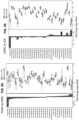
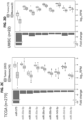
- 129 miRs including 77 increased and 53 decreased miRs (FDR ⁇ 0.2; Table 3, FIG. 1 ; FIG. 2A and 2B ) were identified.
- miR-30-5p family members were again present among this highly selected class of miRs, supporting the biologic and functional importance of miR-30-5p family members in HNSCC.
- miR-30a-5p and miR-30e-5p were the most highly expressed in mucosa samples and decreased across the tumor specimens ( FIG. 3D ). Table 5.
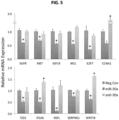
- miR-30a-5p, miR-30b-5p, miR-30d-5p, miR-30e-5p, miR-26a-5p, miR-26b-5p, miR-145-5p, miR-205-5p, and miR-375 were each analyzed for inverse correlation with mRNAs of potentially biologic importance in cancer.
- Linear regression analysis was performed between each miRNA and genome-wide mRNA expression levels obtained from RNA-seq performed on 279 HNSCC tumor specimens in the TCGA dataset. The results are shown in Tables 6-14.
- 91 mRNAs were detected as inversely expressed to miR-30a using an FDR ⁇ 0.05, and also contained predicted or verified binding sites for miR-30a-5p in the 3' UTR based on the Ingenuity Pathway Analysis (IPA) microRNA target filter (Table 6).
- IPA Ingenuity Pathway Analysis
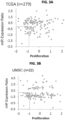
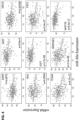
- FIG. 4 The significant anti-correlation of miR-30a-5p with several representative target genes is presented in FIG. 4 .
- miR-30a-5p expression displayed an inverse relationship to several oncogenes previously shown to be overexpressed in HNSCC, including EGFR, MET, ITGA6 and SERPINE1 ( FIG. 4 ) ( Van Waes et al., Cancer Res. 55:5434-5444, 1995 ; Van Waes et al., Int.
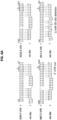
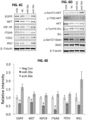
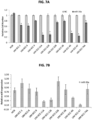
- luciferase constructs containing the 3' UTR of EGFR, MET, IGF1R and IRS-1, which contains that target binding sites for miR-30a-5p were utilized ( FIG. 6A ).
- Vectors with a deletion in the binding site complementary to the seed sequence of miR-30a-5p were also constructed ( FIG. 6A ).
- miR-30a-5p, but not anti-miR30a, suppressed reporter activity, and this was abrogated by ⁇ miR-30 site deletion FIG. 6B ).
- miR-30a Inhibits Cell Proliferation, Motility, and Invasion by HNSCC Cells
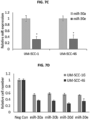
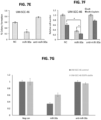
- miR-30a-5p also suppressed colony formation by >50% in UM-SCC-46 cells ( FIG. 7E and 7H ).
- the most common chemotherapy drug used to treat HNSCC was examined.
- Sensitivity to cisplatin was enhanced by ectopic expression of miR-30a-5p ( FIG. 7F and FIG. 7I ).
- a stable cell line of UM-SCC-46 was created over-expressing the EGFR coding sequence without its regulatory 3'UTR in UM-SCC-46. This cell line displayed a significant reduction in the effect of miR-30a-5p on proliferation ( FIG. 7G ).
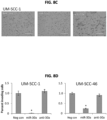
- FIGS. 8A and 8B significantly reduced EGF stimulated invasiveness in MATRIGEL coated transwell migration assays.
- FIGS. 8C and 8D significantly reduced EGF stimulated invasiveness in MATRIGEL coated transwell migration assays.
- increased expression of miR-30a-5p significantly inhibited cell proliferation, colony formation, migration, and invasion, as well as enhanced chemosensitivity in HNSCC.
- Mimic Suppresses Tumor Growth of Human HNSCC Xenografts
- a miR-30a-5p mimic was formulated into a cationic liposomal nanodelivery system (scL) bearing single chain antibody fragment (TfRscFv), which targets overexpressed transferrin receptor on tumor cells for delivery ( Pirollo et al., Cancer Res. 68:1247-1250, 2008 ; Pirollo et al., Hum. Gene Ther. 17:117-124, 2006 ).
- the scL carriers containing FITC-conjugated control oligonucleotide undergo preferential uptake in HNSCC xenografts, when compared to lung or liver, or are excreted via the kidney ( FIG. 9A ).
- Nanoliposome particles complexed with a modified miR-30a-5p mimic (miR-30a-scL) or control miR (60 ⁇ g or ⁇ 3 mg/kg) given in 9 doses intravenously (IV) on Monday, Wednesday, and Friday (MWF) for 3 weeks were tested in mice bearing UM-SCC-46 xenograft tumors.
- a significant tumor growth delay and prolongation of survival was observed with miR-30a-scL treatment ( FIGS. 9B-D ).
- Treatment with miR-30a-scL did not cause a significant reduction in weight suggesting the treatment was well tolerated ( FIG. 9C ).
- a similar inhibitory effect on tumor growth in vivo was observed in a second HNSCC xenograft model, UM-SCC47, which is HPV positive ( FIG. 9E ).
- FIG. 10A and 10F Quantitative RT-PCR of six miR-30a-5p target genes was performed and substantially decreased gene expression was observed after treatment by four doses of miR-30a-scL nanoparticles.
- FIGS. 10B and 10C Decreased expression of EGFR and MET by immunofluorescent staining was also observed in frozen sections harvested from xenograft tumors after treatment in vivo ( FIGS. 10B and 10C ).
- FIGS. 10B and 10C Decreased expression of EGFR and MET by immunofluorescent staining was also observed in frozen sections harvested from xenograft tumors after treatment in vivo.
- FIGS. 10B and 10C With confirmation both in vitro and in vivo of several target genes of miR-30a-5p, a pathway diagram connecting reported interactions and function in relation to proliferation and migration as predicted by Ingenuity Pathway Analysis was constructed ( FIG. 10D ). Confirming miR-30a-5p family's anti-proliferative effect,
- FIGS. 11A and 11B copy number variation of miR-30 family members from the HNSCC TCGA datasets was analyzed ( FIGS. 11A and 11B ).
- the MIR30A and MIR30C2 genes are clustered together on chromosome 6, and the MIR30E and MIR30C1 gene are clustered together on chromosome 1, where 19.7% and 14.7% display at least heterozygous loss at these genetic loci, respectively.
- Bases 1, 6, and 20 of the passenger strand were mutated to increase the stability of the resulting duplex.
- a two base overhang was placed on the 3' end of the passenger strand.
- a 5' amino C6 modification at the 5' end of the passenger strand was also tested. It is known that modification of the 2' position of individual nucleic acids in an oligonucleotide can improve affinity to complementary strands and also confer resistance to nucleases. However it is unknown what effect these modification have on microRNA function.
- oligonucleotides that contain 2' modification of the three bases at the ends of the passenger strand (Passenger strand 7) were synthesized. Consecutive bases between position 7 and 18 were also modified in separate oligonucleotides (guide strands 1-5). The strands were hybridized to create six different duplex mimics of miR-30a that may bias maturation of the 5p strand.
- Modified miR-30 constructs Oligo Sequence (5'-3')* SEQ ID NO: Guide strand 1 (G1) UGUAAA CAUCCU CGACUGGAAGCU 37 Guide strand 2 (G2) UGUAAAC AUCCUC GACUGGAAGCU 38 Guide strand 3 (G3) UGUAAACA UCCUCGAC UGGAAGCU 39 Guide stand 4 (G4) UGUAAACAU CCUCGACU GGAAGCU 40 Guide strand 5 (G5) UGUAAACAUC CUCGACUG GAAGCU 41 Guide strand 11 (G11) UGUAAACAUC CUCGACUG GAAG 42 Guide strand 13 (G13) UGUAAACAUC CUCGACUG GAApsG 43 Guide strand 15 (G15) UGUAAACAUC CUCGACUG GApsApsG 44 Guide strand 16 (G16) UGUAAACAUC CUCGACUG GAAd-mpG 45 Guide strand 17 (G17) UGUAAACAUC CUCGACUG GAd-mpG 46 Guide strand 17
- the M-miR30a-006 oligonucleotide was also tested in a mouse model of UMSCC-46 xenograft tumors. Mice with a UMSCC-46 xenograft tumor ⁇ 100 mm 3 were injected IV with nine doses of 60 ⁇ g (-3 mg/kg) of complexed miR-30a mimic or control vehicle on MWF for 3 weeks. Mice were treated with 10 ⁇ 2 Gy fractions of radiation therapy daily (20 Gy total) on day 24 ( FIGS. 14A-14B ).
- the four miRNA mixture decreased cell density in all cell lines ( FIG. 15 ), particularly at 15 nM concentration. Similarly, the two miRNA combinations also decreased cell density ( FIGS. 16A-16D ).
- UM-SCC-1 or UM-SCC-46 cells were transfected with miR27-5p or miR-2b-1-5p duplexes.
- UM-SCC-1 cells were seeded at 1.5 ⁇ 10 3 cells/well and UM-SCC-46 cells were seeded at 2x10³ cells/well in 96-well plates and reverse transfected with 7.5 nM or 15 nM duplex for 48 hours with 0.15 ⁇ L of RNAiMAX. Following transfection, media was replaced and cells were incubated for 5 days. Cell viability was measured by XTT assay.
- miR mimics and/or mimetics Design of several miR mimics and/or mimetics was carried out. Exemplary miR mimics and/or mimetics are shown in Table 20. Table 20. Modified miRs Oligo Sequence (5'-3') SEQ ID NO: hsa-miR-375 mimic/mimetic Guide strand (G29) UUU GUU CGU UCG GCU CGC GUG A 62 Passenger strand (P30) Amino C6- AC G CG AGC C GA A CG A AC AAA 63 miR-26a-5p mimic/mimetic Guide strand 31 (G31) UUC AAG U AA UCC AGG AUA GGC U 64 Passenger strand (P32) Amino C6-CCU AUC CCU G G A UUA CUU G A A 65 miR-145-5p mimic/mimetic Guide strand (G33) GUC CAG UUU UCC CAG GAA UCC CU 66 Passenger strand (P34
- This example describes methods that can be used to treat or inhibit HNSCC in a subject. However, one skilled in the art will appreciate based on the teachings herein that methods that deviate from these specific methods can also be used to successfully treat HNSCC. One of skill in the art will also recognize that these methods can also be used to treat or inhibit other cancers in a subject.
- a subject with HNSCC (or another type of tumor) is selected.
- the subject has an HNSCC tumor.
- the subject has an HNSCC tumor that is determined to have decreased expression of one or more miRNAs (such as one or more of miR-30a family member, miR-26 family member, miR-145-5p, miR-338-3p, and miR-375).
- the subject has a tumor with a deletion in the DNA encoding of one or more miRNAs (such as one or more of MIR30 gene, MIR26 gene, MIR145 gene, MIR338 gene, and MIR375 gene).
- the subject has a tumor with increased methylation of the promoter or in the DNA encoding for one or more miRNAs (such as one or more of MIR30 gene, MIR26 gene, MIR145 gene, MIR338 gene, and MIR375 gene).
- miRNAs such as one or more of MIR30 gene, MIR26 gene, MIR145 gene, MIR338 gene, and MIR375 gene.
- an effective amount of an miRNA nucleic acid (such as miR-30a-5p or a mimic or mimetic thereof) or a mixture of miRNA nucleic acids (such as a mixture of miR-30a, miR-145, miR-26a, and miR-375 or a mimic or mimetic of one or more thereof) is administered to the subject.
- the amount of the composition administered the subject depends on the subject being treated, the severity (such as TNM stage) of the tumor, and the manner of administration of the composition.
- an effective amount of the miRNA(s) is the amount sufficient to decrease one or more signs and symptoms of the HNSCC in the subject without causing a substantial cytotoxic effect in the subject.
- a decrease in the number and/or size of tumors, number and/or size of metastases, a decrease (or halt) in disease progression, an increase in survival (such as disease-free survival, progression-free survival, and/or metastasis-free survival), or a combination of two or more thereof, indicates the effectiveness of the treatment.
- M-miR30-018 and M-miR30-019 still maintained potency inhibiting proliferation of cancer cells equal to M-006 which is vastly improved over the biological microRNA ( FIG. 19 and Table 22).
- Table 22 Effect of modified miR-30a mimics on UMSCC-46 cell viability Mimic name Strands % viability control (15 nM) SEM M-miR30-017 G35+P28 0.281711 0.038428 M-miR30-018 G36+P28 0.363828 0.024757 M-miR30-019 G37+P28 0.457675 0.100329
Landscapes
- Health & Medical Sciences (AREA)
- Life Sciences & Earth Sciences (AREA)
- Chemical & Material Sciences (AREA)
- Engineering & Computer Science (AREA)
- General Health & Medical Sciences (AREA)
- Organic Chemistry (AREA)
- Genetics & Genomics (AREA)
- Medicinal Chemistry (AREA)
- Pharmacology & Pharmacy (AREA)
- Animal Behavior & Ethology (AREA)
- Bioinformatics & Cheminformatics (AREA)
- Public Health (AREA)
- Veterinary Medicine (AREA)
- Molecular Biology (AREA)
- Wood Science & Technology (AREA)
- Zoology (AREA)
- Biomedical Technology (AREA)
- Epidemiology (AREA)
- Biotechnology (AREA)
- General Engineering & Computer Science (AREA)
- Immunology (AREA)
- Proteomics, Peptides & Aminoacids (AREA)
- Biochemistry (AREA)
- Physics & Mathematics (AREA)
- Microbiology (AREA)
- Biophysics (AREA)
- Nuclear Medicine, Radiotherapy & Molecular Imaging (AREA)
- General Chemical & Material Sciences (AREA)
- Chemical Kinetics & Catalysis (AREA)
- Analytical Chemistry (AREA)
- Pathology (AREA)
- Plant Pathology (AREA)
- Oncology (AREA)
- Hospice & Palliative Care (AREA)
- Cell Biology (AREA)
- Dispersion Chemistry (AREA)
- Pharmaceuticals Containing Other Organic And Inorganic Compounds (AREA)
- Measuring Or Testing Involving Enzymes Or Micro-Organisms (AREA)
- Medicines That Contain Protein Lipid Enzymes And Other Medicines (AREA)
- Medicinal Preparation (AREA)
Claims (13)
- Composition destinée à être utilisée dans un procédé de traitement d'un sujet atteint d'un cancer, consistant à administrer au sujet une quantité efficace d'un acide nucléique microARN (miARN) isolé comprenant un acide nucléique miR-30-5p ou un acide nucléique mimique ou mimétique miR-30-5p, l'acide nucléique mimique ou mimétique comprenant un ou plusieurs acides nucléiques modifiés, une modification de l'extrémité 5' et/ou une modification de l'extrémité 3', l'acide nucléique mimique ou mimétique comprenant un ou plusieurs des nucléotides 2'-O-méthyl-, 2'-méthoxyéthoxy-, 2'-diméthylaminooxyéthoxy-, 2'-aminopropoxy-, et 2'-fluoro-modifiés, et/ou l'acide nucléique mimique ou mimétique comprenant une modification 5'-amino C3, une modification 5'-amino C6 ou une modification 5'-amino C12, ou un vecteur d'expression comprenant l'acide nucléique miR-30-5p ou l'acide nucléique mimique ou mimétique miR-30-5p, ce qui permet de traiter le sujet atteint d'un cancer, le cancer comprenant un carcinome à cellules squameuses de la tête et du cou ou un carcinome à cellules squameuses du col de l'utérus.
- Composition destinée à être utilisée selon la revendication 1, dans laquelle l'acide nucléique miR-30-5p et/ou l'acide nucléique mimique ou mimétique correspondant diminuent l'expression d'un ou plusieurs ARNm énumérés dans les tableaux 6 à 9.
- Composition destinée à être utilisée selon la revendication 1 ou 2, dans laquelle l'acide nucléique miR-30-5p est un acide nucléique miR-30a-5p, un acide nucléique miR-30b-5p, un acide nucléique miR-30c-5p, un acide nucléique miR-30d-5p, un acide nucléique miR-30e-5p ou un acide nucléique mimique ou mimétique correspondant.
- Composition destinée à être utilisée selon l'une quelconque des revendications 1 à 3, dans laquelle l'acide nucléique miR-30-5p et/ou l'acide nucléique mimique ou mimétique correspondant comprennent l'une quelconque des SEQ ID NO 1 à 5, 37 à 53, 73 à 91, un duplex des SEQ ID NO 41 et 55, un duplex des SEQ ID NO 42 et 56, un duplex des SEQ ID NO 42 et 57, un duplex des SEQ ID NO 50 et 61, un duplex des SEQ ID NO 73 et 61, un duplex des SEQ ID NO 74 et 61 ou un duplex d'un brin guide et d'un brin passager choisi parmi les SEQ ID NO 37 à 61 et 73 à 92.
- Composition destinée à être utilisée selon l'une quelconque des revendications 1 à 4, le procédé consistant en outre à administrer au sujet une quantité efficace d'un acide nucléique microARN (miARN) isolé comprenant un acide nucléique miR-26a-5p, un acide nucléique miR-26b-5p, un acide nucléique miR-145-5p, un acide nucléique miR-338-3p, un acide nucléique miR-205-5p, un acide nucléique miR-375, un acide nucléique miR-29, un acide nucléique miR-27, un acide nucléique miR-101, un acide nucléique mimique ou mimétique correspondant ou une combinaison de deux acides nucléiques ou plus correspondants.
- Composition destinée à être utilisée selon la revendication 5, dans laquelle l'acide nucléique miR-26a-5p comprend SEQ ID NO 12, l'acide nucléique miR-26b-5p comprend SEQ ID NO 15, l'acide nucléique miR-145-5p comprend SEQ ID NO 18, l'acide nucléique miR-338-3p comprend SEQ ID NO 21, l'acide nucléique miR-375 comprend SEQ ID NO 17 ou un acide nucléique mimique et/ou mimétique correspondant.
- Composition destinée à être utilisée selon l'une quelconque des revendications 1 à 6, le procédé consistant à administrer une quantité efficace de l'acide nucléique miR-30-5p, de l'acide nucléique miR-26a-5p, de l'acide nucléique miR-145-5p et de l'acide nucléique miR-375 ou d'un acide nucléique mimique ou mimétique correspondant.
- Composition destinée à être utilisée selon l'une quelconque des revendications 1 à 7, dans laquelle un ou plusieurs acides nucléiques miARN isolés sont administrés dans une composition de liposomes.
- Composition destinée à être utilisée selon la revendication 8, dans laquelle le liposome comprend en outre une ou plusieurs molécules ciblant le liposome sur le cancer.
- Composition destinée à être utilisée selon la revendication 9, dans laquelle la molécule de ciblage comprend un anticorps anti-récepteur de la transferrine ou un fragment correspondant.
- Composition destinée à être utilisée selon l'une quelconque des revendications 1 à 10, le procédé consistant en outre à administrer une ou plusieurs thérapies supplémentaires.
- Composition destinée à être utilisée selon la revendication 11, dans laquelle la ou les thérapies supplémentaires comprennent une chirurgie, une radiothérapie et une chimiothérapie.
- Composition destinée à être utilisée selon l'une quelconque des revendications 1 à 12, dans laquelle ladite quantité efficace est comprise entre 100 µg/kg et 10 mg/kg chez un sujet atteint d'un cancer.
Applications Claiming Priority (2)
| Application Number | Priority Date | Filing Date | Title |
|---|---|---|---|
| US201662304844P | 2016-03-07 | 2016-03-07 | |
| PCT/US2017/021178 WO2017156015A2 (fr) | 2016-03-07 | 2017-03-07 | Micro-arn et leurs procédés d'utilisation |
Publications (2)
| Publication Number | Publication Date |
|---|---|
| EP3426781A2 EP3426781A2 (fr) | 2019-01-16 |
| EP3426781B1 true EP3426781B1 (fr) | 2024-06-26 |
Family
ID=58361152
Family Applications (1)
| Application Number | Title | Priority Date | Filing Date |
|---|---|---|---|
| EP17712348.6A Active EP3426781B1 (fr) | 2016-03-07 | 2017-03-07 | Micro-arn et leurs procédés d'utilisation |
Country Status (7)
| Country | Link |
|---|---|
| US (2) | US11655469B2 (fr) |
| EP (1) | EP3426781B1 (fr) |
| JP (1) | JP2019512489A (fr) |
| CN (3) | CN109312341B (fr) |
| DK (1) | DK3426781T3 (fr) |
| ES (1) | ES2986046T3 (fr) |
| WO (1) | WO2017156015A2 (fr) |
Families Citing this family (21)
| Publication number | Priority date | Publication date | Assignee | Title |
|---|---|---|---|---|
| EP3492607A3 (fr) * | 2017-11-30 | 2019-08-14 | Università Degli Studi Di Torino | Miarns urinaires pour le diagnostic in vitro du cancer de la vessie |
| WO2020227604A1 (fr) * | 2019-05-08 | 2020-11-12 | Nova Southeastern University | Régulation de la réparation d'excision de nucléotides (ner) par microarn pour le traitement du cancer du sein |
| EP3976058A4 (fr) * | 2019-06-03 | 2023-07-19 | Carmel-Haifa University Economic Corporation Ltd. | Traitement du cancer de la tête et du cou humain |
| CN111235274A (zh) * | 2020-01-18 | 2020-06-05 | 山西医科大学第一医院 | 喉鳞癌血清外泌体标志物筛选方法和外泌体来源miR-941应用 |
| KR20230023612A (ko) * | 2020-04-02 | 2023-02-17 | 마이레큘, 인크. | 조작된 올리고뉴클레오티드를 사용한 표적화된 억제 |
| CN112007043B (zh) * | 2020-08-24 | 2021-07-20 | 谢琦 | 抗结直肠癌的药物或组合物 |
| WO2022056454A2 (fr) * | 2020-09-14 | 2022-03-17 | President And Fellows Of Harvard College | Procédés et compositions pour le traitement de cancers positifs au hpv |
| CN112294960B (zh) * | 2020-10-30 | 2022-02-08 | 浙江大学 | 微小分子RNA-30b-5p作为靶分子的用途 |
| CN112359115B (zh) * | 2020-11-30 | 2022-08-30 | 河北仁博科技有限公司 | 与肿瘤细胞顺铂耐药性相关的miR-517a-3p及其应用 |
| CN112481273B (zh) * | 2020-12-29 | 2023-11-24 | 南通大学附属医院 | 结直肠癌抑癌基因及其启动子区高dna甲基化的验证方法 |
| EP4124656A1 (fr) * | 2021-07-26 | 2023-02-01 | Martin-Luther-Universität Halle-Wittenberg | Micro arn pd-l1 |
| CN113528669A (zh) * | 2021-08-19 | 2021-10-22 | 柳州市工人医院 | 一种利用Small RNA测序技术揭示miRNA对肝癌作用机制的方法 |
| EP4466382A4 (fr) * | 2022-01-21 | 2026-01-07 | Univ Griffith | Biomarqueurs et leurs utilisations |
| CN114574596B (zh) * | 2022-03-11 | 2023-06-23 | 浙江省农业科学院 | SNPs分子标记g.43851G>A及其在湖羊分子标记辅助育种中的应用 |
| CN115161321B (zh) * | 2022-06-24 | 2023-04-18 | 天津市农业科学院 | ssc-miR-30c-3p在制备抗PDCoV增殖药物中的应用 |
| CA3261027A1 (fr) * | 2022-07-10 | 2024-01-18 | Precigen, Inc. | Constructions de miarn polycistroniques pour l'inhibition de point de contrôle immunitaire |
| JPWO2024142962A1 (fr) * | 2022-12-28 | 2024-07-04 | ||
| WO2024163383A2 (fr) * | 2023-01-30 | 2024-08-08 | Academia Sinica | Traitement de l'amyotrophie spinale (sma) par modulation de mir34 et utilisation de mir34 en tant que biomarqueur prédictif de sma |
| EP4417709A1 (fr) * | 2023-02-14 | 2024-08-21 | Gemeinnützige Salzburger Landeskliniken Betriebsges.mbH | Dosage diagnostique à base de miarn pour la détection d'un risque de développement de tumeurs cutanées contre le fond de lésions cutanées graves |
| EP4683644A1 (fr) * | 2023-03-23 | 2026-01-28 | Purdue Research Foundation | Mir-34 a entièrement modifié et conjugués associés, compositions et méthodes d'utilisation |
| WO2025258687A1 (fr) * | 2024-06-14 | 2025-12-18 | 国立大学法人東海国立大学機構 | Agent thérapeutique d'acide nucléique pour tous les types de cancer |
Family Cites Families (42)
| Publication number | Priority date | Publication date | Assignee | Title |
|---|---|---|---|---|
| US4235871A (en) | 1978-02-24 | 1980-11-25 | Papahadjopoulos Demetrios P | Method of encapsulating biologically active materials in lipid vesicles |
| US4501728A (en) | 1983-01-06 | 1985-02-26 | Technology Unlimited, Inc. | Masking of liposomes from RES recognition |
| US5019369A (en) | 1984-10-22 | 1991-05-28 | Vestar, Inc. | Method of targeting tumors in humans |
| US4837028A (en) | 1986-12-24 | 1989-06-06 | Liposome Technology, Inc. | Liposomes with enhanced circulation time |
| US8137910B2 (en) | 2002-05-03 | 2012-03-20 | Duke University | Method of regulating gene expression |
| WO2005017145A1 (fr) * | 2003-08-13 | 2005-02-24 | Japan Biological Informatics Consortium | Methode d'identification reelle ou presumee d'un gene soumis a une regulation commandee par un arn fonctionnel et utilisation de cette methode |
| EP1768998A2 (fr) | 2004-04-27 | 2007-04-04 | Alnylam Pharmaceuticals Inc. | Oligonucleotides mono-brin et double brin a fraction 2-arylpropyle |
| AU2005323437B2 (en) | 2004-04-30 | 2011-10-06 | Alnylam Pharmaceuticals, Inc. | Oligonucleotides comprising a C5-modified pyrimidine |
| EP1789553B1 (fr) | 2004-06-30 | 2014-03-26 | Alnylam Pharmaceuticals Inc. | Oligonucléotides comprenant une liaison de squelette non-phosphate |
| WO2006093526A2 (fr) | 2004-07-21 | 2006-09-08 | Alnylam Pharmaceuticals, Inc. | Oligonucleotides comprenant une nucleobase modifiee ou non naturelle |
| EP2338994B1 (fr) * | 2004-09-02 | 2014-03-19 | Yale University | Régulation d'oncogènes par des micro-ARN |
| JP2006248978A (ja) | 2005-03-10 | 2006-09-21 | Mebiopharm Co Ltd | 新規なリポソーム製剤 |
| WO2006133022A2 (fr) | 2005-06-03 | 2006-12-14 | The Johns Hopkins University | Compositions et procedes pour diminuer l'expression de microarn pour le traitement de la neoplasie |
| US20070213292A1 (en) | 2005-08-10 | 2007-09-13 | The Rockefeller University | Chemically modified oligonucleotides for use in modulating micro RNA and uses thereof |
| JP2009507918A (ja) | 2005-09-12 | 2009-02-26 | ジ・オハイオ・ステイト・ユニバーシティ・リサーチ・ファウンデイション | Bcl2関連癌の診断及び療法のための組成物及び方法 |
| US8603991B2 (en) | 2005-11-18 | 2013-12-10 | Gradalis, Inc. | Individualized cancer therapy |
| KR101485071B1 (ko) | 2005-12-12 | 2015-01-26 | 더 유니버시티 오브 노쓰 캐롤라이나 엣 채플 힐 | 마이크로 rna를 이용한 근육 세포 증식 및 분화 조절방법과 근육 세포 치료방법 및 유전자 발현 억제방법그리고 마이크로 rna 분자의 발현용 벡터와 이를 이용한키트 및 미오사이트 |
| EP1969147B1 (fr) | 2006-01-05 | 2014-07-30 | The Ohio State University Research Foundation | Méthodes à base de microARN pour le diagnostic de cancer de l'estomac |
| WO2007143752A2 (fr) | 2006-06-09 | 2007-12-13 | The Regents Of The University Of California | Cibles pour le pronostic ou la thérapie dans le cancer du sein |
| US20100292299A1 (en) | 2006-06-20 | 2010-11-18 | Mendell Joshua T | Nucleotide Motifs Providing Localization Elements and Methods of Use |
| CA2658183A1 (fr) * | 2006-07-17 | 2008-01-24 | Sirna Therapeutics Inc. | Inhibition mediee par une interference de l'arn de l'expression du gene de la proproteine convertase subtilisine kexine de type 9 (pcsk9) au moyen de petits acides nucleiques interferants(ansi) |
| US8114982B2 (en) | 2006-12-06 | 2012-02-14 | Albert Einstein College Of Medicine Of Yeshiva University | Multi-microRNA methods and compositions |
| WO2008073915A2 (fr) | 2006-12-08 | 2008-06-19 | Asuragen, Inc. | Microarn exprimés de manière différentielle en cas de leucémie et leurs utilisations |
| WO2008088858A2 (fr) | 2007-01-17 | 2008-07-24 | The Johns Hopkins University | Compositions et procédés comprenant des microarn pour traiter une néoplasie |
| EP2187896B1 (fr) | 2007-07-31 | 2016-01-13 | The Board of Regents of The University of Texas System | Inhibiteurs de mir-499 et mir-208b pour le traitement de l'hypertrophie cardiaque pathologique, l'infarctus du myocarde ou l'insuffisance cardiaque |
| US20090148535A1 (en) * | 2007-12-06 | 2009-06-11 | Minerva Biotechnologies Corporation | Method for treating cancer using interference rna |
| US8900627B2 (en) | 2008-06-06 | 2014-12-02 | Mirna Therapeutics, Inc. | Compositions for the in vivo delivery of RNAi agents |
| JP2010094122A (ja) | 2008-06-12 | 2010-04-30 | Keio Gijuku | バイオマーカーとしてのマイクロrnaを用いた頭頸部腫瘍の診断・治療選択 |
| US8729041B2 (en) | 2008-12-03 | 2014-05-20 | The Johns Hopkins University | Compositions and methods for treating hepatic neoplasia |
| SG176716A1 (en) | 2009-06-08 | 2012-01-30 | Miragen Therapeutics | CHEMICAL MODIFICATION MOTIFS FOR miRNA INHIBITORS AND MIMETICS |
| US8796238B2 (en) | 2009-09-17 | 2014-08-05 | Sigma-Aldrich Co. Llc | Short RNA mimetics |
| US8754059B2 (en) * | 2010-02-16 | 2014-06-17 | University Of Miami | Use of miR-30e to treat vascular lesions |
| MX354217B (es) * | 2010-05-14 | 2018-02-19 | Dana Farber Cancer Inst Inc | Composiciones y metodos para el tratamiento de leucemia. |
| SG10201600836PA (en) | 2011-02-03 | 2016-03-30 | Mirna Therapeutics Inc | Synthetic mimics of mir-34 |
| JP2014506789A (ja) * | 2011-02-03 | 2014-03-20 | マーナ セラピューティクス インコーポレイテッド | miR−124の合成模倣体 |
| GB201102283D0 (en) * | 2011-02-09 | 2011-03-23 | Ucl Business Plc | Treatment |
| KR20140091688A (ko) | 2011-10-06 | 2014-07-22 | 미라젠 세러퓨틱스 인코포레이티드 | 마이크로rna 조절에 의한 전신 에너지 항상성의 제어 |
| TWI516267B (zh) | 2011-11-07 | 2016-01-11 | 臺北榮民總醫院 | 抑制癌症或腫瘤細胞之類癌幹細胞特性及抗化學及放射治療特性的醫藥組合物 |
| WO2014117050A2 (fr) * | 2013-01-26 | 2014-07-31 | Mirimus, Inc. | Arnmi modifié en tant qu'échafaudage pour de l'arnsh |
| JP6587142B2 (ja) * | 2013-02-15 | 2019-10-09 | 国立大学法人 東京医科歯科大学 | マイクロrnaからなるがん治療剤 |
| US9518300B2 (en) * | 2014-04-14 | 2016-12-13 | Dana-Farber Cancer Institute, Inc. | Composition and method for treating a hematological malignancy |
| MX375592B (es) * | 2014-04-25 | 2025-03-06 | The Children´S Medical Center Corp | Composiciones y su uso para tratar hemoglobinopatias. |
-
2017
- 2017-03-07 EP EP17712348.6A patent/EP3426781B1/fr active Active
- 2017-03-07 ES ES17712348T patent/ES2986046T3/es active Active
- 2017-03-07 DK DK17712348.6T patent/DK3426781T3/da active
- 2017-03-07 US US16/082,852 patent/US11655469B2/en active Active
- 2017-03-07 CN CN201780027750.XA patent/CN109312341B/zh active Active
- 2017-03-07 CN CN202410174429.6A patent/CN117757795A/zh active Pending
- 2017-03-07 WO PCT/US2017/021178 patent/WO2017156015A2/fr not_active Ceased
- 2017-03-07 CN CN202410174426.2A patent/CN117757794A/zh active Pending
- 2017-03-07 JP JP2018547943A patent/JP2019512489A/ja active Pending
-
2023
- 2023-04-14 US US18/301,040 patent/US20230295631A1/en not_active Abandoned
Non-Patent Citations (4)
| Title |
|---|
| ANONYMOUS: "Squamous cell carcinoma - Wikipedia", 13 August 2020 (2020-08-13), XP055722287, Retrieved from the Internet <URL:https://en.wikipedia.org/wiki/Squamous_cell_carcinoma> [retrieved on 20200813] * |
| DE PAULA DANIEL ET AL: "Hydrophobization and bioconjugation for enhanced siRNA delivery and targeting", RNA, COLD SPRING HARBOR LABORATORY PRESS, US, vol. 13, no. 4, 1 April 2007 (2007-04-01), pages 431 - 456, XP002617240, ISSN: 1355-8382 * |
| ELENA L CHERNOLOVSKAYA ET AL: "Chemical modification of siRNA", CURRENT OPINION IN MOLECULAR THERAPEUTICS, 1 April 2010 (2010-04-01), England, pages 158, XP055674638, Retrieved from the Internet <URL:https://www.researchgate.net/profile/Elena-Chernolovskaya/publication/43051525_Chemical_modification_of_siRNA/links/56d0575f08ae4d8d64a37864/Chemical-modification-of-siRNA.pdf> * |
| MANOHARAN ET AL: "RNA interference and chemically modified small interfering RNAs", CURRENT OPINION IN CHEMICAL BIOLOGY, CURRENT BIOLOGY LTD, LONDON, GB, vol. 8, no. 6, 1 December 2004 (2004-12-01), pages 570 - 579, XP027188192, ISSN: 1367-5931, [retrieved on 20041118] * |
Also Published As
| Publication number | Publication date |
|---|---|
| CN117757795A (zh) | 2024-03-26 |
| ES2986046T3 (es) | 2024-11-08 |
| US11655469B2 (en) | 2023-05-23 |
| CN117757794A (zh) | 2024-03-26 |
| WO2017156015A3 (fr) | 2017-10-19 |
| JP2019512489A (ja) | 2019-05-16 |
| US20190284554A1 (en) | 2019-09-19 |
| EP3426781A2 (fr) | 2019-01-16 |
| US20230295631A1 (en) | 2023-09-21 |
| CN109312341B (zh) | 2024-02-27 |
| CN109312341A (zh) | 2019-02-05 |
| WO2017156015A2 (fr) | 2017-09-14 |
| DK3426781T3 (da) | 2024-09-30 |
Similar Documents
| Publication | Publication Date | Title |
|---|---|---|
| US20230295631A1 (en) | Micrornas and methods of their use | |
| AU2011325956B2 (en) | Polycomb-associated non-coding RNAs | |
| US8580757B2 (en) | Methods of modulating mesenchymal stem cell differentiation | |
| US20100305188A1 (en) | Nucleic acid capable of regulating the proliferation of cell | |
| Hirota et al. | Genome-wide gene expression profiles of clear cell renal cell carcinoma: identification of molecular targets for treatment of renal cell carcinoma | |
| WO2012087983A1 (fr) | Arn non codants associés à polycomb | |
| EP2077326A1 (fr) | Nouvel acide nucléique | |
| CN107454843A (zh) | 包含微小核糖核酸作为活性成分的用于治疗癌症的药物组合物 | |
| Yamamoto et al. | Uncovering direct targets of MiR-19a involved in lung cancer progression | |
| EP2123752A2 (fr) | Nouvel acide nucléique | |
| CN101801419A (zh) | 作为治疗干预的靶标的miR-34调控的基因和路径 | |
| WO2012006181A2 (fr) | Compositions et procédés pour l'inhibition de micro-arn oncogènes et le traitement du cancer | |
| WO2011154553A2 (fr) | Nouveaux microarn pour la détection et l'isolement de types cellulaires cardiaques dérivés de cellules souches embryonnaires humaines | |
| Guan et al. | MicroRNA-205 directly targets Krüppel-like factor 12 and is involved in invasion and apoptosis in basal-like breast carcinoma | |
| US11639531B2 (en) | Composition, kit, and method for diagnosis and treatment of taxane anticancer agent-resistant cancer | |
| WO2012052953A1 (fr) | Miarn | |
| WO2011111715A1 (fr) | Acide nucléique apte à réguler le cycle cellulaire | |
| JP2025534768A (ja) | 特発性肺線維症のための低分子rnaベースの予後シグネチャ及び治療組成物 | |
| US20240011037A1 (en) | Mediators of gene silencing | |
| US20250333733A1 (en) | Novel targets against ovarian cancer | |
| Sun | Role of microRNA-host-lncRNAs in cell cycle | |
| Fenger | Investigating the Biological and Molecular Consequences of MiR-9 Dysregulation in Canine Mast Cell Tumors and Osteosarcoma | |
| Hwang | The Role Of P53/Mir34/Met Pathway In Epithelial Ovarian Cancer Pathogenesis | |
| Muniyappa | Investigation of the molecular mechanisms underlying the invasive phenotype in a panel of lung cancer cell lines | |
| CN108841964A (zh) | Loc105370108在直肠腺癌诊治中的应用 |
Legal Events
| Date | Code | Title | Description |
|---|---|---|---|
| STAA | Information on the status of an ep patent application or granted ep patent |
Free format text: STATUS: UNKNOWN |
|
| STAA | Information on the status of an ep patent application or granted ep patent |
Free format text: STATUS: THE INTERNATIONAL PUBLICATION HAS BEEN MADE |
|
| PUAI | Public reference made under article 153(3) epc to a published international application that has entered the european phase |
Free format text: ORIGINAL CODE: 0009012 |
|
| STAA | Information on the status of an ep patent application or granted ep patent |
Free format text: STATUS: REQUEST FOR EXAMINATION WAS MADE |
|
| 17P | Request for examination filed |
Effective date: 20181005 |
|
| AK | Designated contracting states |
Kind code of ref document: A2 Designated state(s): AL AT BE BG CH CY CZ DE DK EE ES FI FR GB GR HR HU IE IS IT LI LT LU LV MC MK MT NL NO PL PT RO RS SE SI SK SM TR |
|
| AX | Request for extension of the european patent |
Extension state: BA ME |
|
| DAV | Request for validation of the european patent (deleted) | ||
| DAX | Request for extension of the european patent (deleted) | ||
| STAA | Information on the status of an ep patent application or granted ep patent |
Free format text: STATUS: EXAMINATION IS IN PROGRESS |
|
| 17Q | First examination report despatched |
Effective date: 20200102 |
|
| GRAP | Despatch of communication of intention to grant a patent |
Free format text: ORIGINAL CODE: EPIDOSNIGR1 |
|
| STAA | Information on the status of an ep patent application or granted ep patent |
Free format text: STATUS: GRANT OF PATENT IS INTENDED |
|
| INTG | Intention to grant announced |
Effective date: 20240123 |
|
| GRAS | Grant fee paid |
Free format text: ORIGINAL CODE: EPIDOSNIGR3 |
|
| GRAA | (expected) grant |
Free format text: ORIGINAL CODE: 0009210 |
|
| STAA | Information on the status of an ep patent application or granted ep patent |
Free format text: STATUS: THE PATENT HAS BEEN GRANTED |
|
| AK | Designated contracting states |
Kind code of ref document: B1 Designated state(s): AL AT BE BG CH CY CZ DE DK EE ES FI FR GB GR HR HU IE IS IT LI LT LU LV MC MK MT NL NO PL PT RO RS SE SI SK SM TR |
|
| RAP3 | Party data changed (applicant data changed or rights of an application transferred) |
Owner name: MIRECULE, INC. Owner name: THE UNITED STATES OF AMERICA, AS REPRESENTED BY THE SECRETARY, DEPARTMENT OF HEALTH AND HUMAN SERVICES |
|
| REG | Reference to a national code |
Ref country code: GB Ref legal event code: FG4D |
|
| REG | Reference to a national code |
Ref country code: CH Ref legal event code: EP |
|
| REG | Reference to a national code |
Ref country code: DE Ref legal event code: R096 Ref document number: 602017082797 Country of ref document: DE |
|
| P01 | Opt-out of the competence of the unified patent court (upc) registered |
Free format text: CASE NUMBER: APP_37928/2024 Effective date: 20240625 |
|
| P02 | Opt-out of the competence of the unified patent court (upc) changed |
Free format text: CASE NUMBER: APP_37994/2024 Effective date: 20240626 |
|
| REG | Reference to a national code |
Ref country code: NL Ref legal event code: FP |
|
| REG | Reference to a national code |
Ref country code: DK Ref legal event code: T3 Effective date: 20240924 |
|
| PG25 | Lapsed in a contracting state [announced via postgrant information from national office to epo] |
Ref country code: BG Free format text: LAPSE BECAUSE OF FAILURE TO SUBMIT A TRANSLATION OF THE DESCRIPTION OR TO PAY THE FEE WITHIN THE PRESCRIBED TIME-LIMIT Effective date: 20240626 |
|
| REG | Reference to a national code |
Ref country code: SE Ref legal event code: TRGR |
|
| PG25 | Lapsed in a contracting state [announced via postgrant information from national office to epo] |
Ref country code: FI Free format text: LAPSE BECAUSE OF FAILURE TO SUBMIT A TRANSLATION OF THE DESCRIPTION OR TO PAY THE FEE WITHIN THE PRESCRIBED TIME-LIMIT Effective date: 20240626 Ref country code: HR Free format text: LAPSE BECAUSE OF FAILURE TO SUBMIT A TRANSLATION OF THE DESCRIPTION OR TO PAY THE FEE WITHIN THE PRESCRIBED TIME-LIMIT Effective date: 20240626 |
|
| REG | Reference to a national code |
Ref country code: LT Ref legal event code: MG9D |
|
| PG25 | Lapsed in a contracting state [announced via postgrant information from national office to epo] |
Ref country code: GR Free format text: LAPSE BECAUSE OF FAILURE TO SUBMIT A TRANSLATION OF THE DESCRIPTION OR TO PAY THE FEE WITHIN THE PRESCRIBED TIME-LIMIT Effective date: 20240927 |
|
| PG25 | Lapsed in a contracting state [announced via postgrant information from national office to epo] |
Ref country code: LV Free format text: LAPSE BECAUSE OF FAILURE TO SUBMIT A TRANSLATION OF THE DESCRIPTION OR TO PAY THE FEE WITHIN THE PRESCRIBED TIME-LIMIT Effective date: 20240626 |
|
| PG25 | Lapsed in a contracting state [announced via postgrant information from national office to epo] |
Ref country code: LV Free format text: LAPSE BECAUSE OF FAILURE TO SUBMIT A TRANSLATION OF THE DESCRIPTION OR TO PAY THE FEE WITHIN THE PRESCRIBED TIME-LIMIT Effective date: 20240626 Ref country code: HR Free format text: LAPSE BECAUSE OF FAILURE TO SUBMIT A TRANSLATION OF THE DESCRIPTION OR TO PAY THE FEE WITHIN THE PRESCRIBED TIME-LIMIT Effective date: 20240626 Ref country code: GR Free format text: LAPSE BECAUSE OF FAILURE TO SUBMIT A TRANSLATION OF THE DESCRIPTION OR TO PAY THE FEE WITHIN THE PRESCRIBED TIME-LIMIT Effective date: 20240927 Ref country code: FI Free format text: LAPSE BECAUSE OF FAILURE TO SUBMIT A TRANSLATION OF THE DESCRIPTION OR TO PAY THE FEE WITHIN THE PRESCRIBED TIME-LIMIT Effective date: 20240626 Ref country code: BG Free format text: LAPSE BECAUSE OF FAILURE TO SUBMIT A TRANSLATION OF THE DESCRIPTION OR TO PAY THE FEE WITHIN THE PRESCRIBED TIME-LIMIT Effective date: 20240626 Ref country code: RS Free format text: LAPSE BECAUSE OF FAILURE TO SUBMIT A TRANSLATION OF THE DESCRIPTION OR TO PAY THE FEE WITHIN THE PRESCRIBED TIME-LIMIT Effective date: 20240926 |
|
| REG | Reference to a national code |
Ref country code: ES Ref legal event code: FG2A Ref document number: 2986046 Country of ref document: ES Kind code of ref document: T3 Effective date: 20241108 |
|
| REG | Reference to a national code |
Ref country code: AT Ref legal event code: MK05 Ref document number: 1697738 Country of ref document: AT Kind code of ref document: T Effective date: 20240626 |
|
| PG25 | Lapsed in a contracting state [announced via postgrant information from national office to epo] |
Ref country code: PT Free format text: LAPSE BECAUSE OF FAILURE TO SUBMIT A TRANSLATION OF THE DESCRIPTION OR TO PAY THE FEE WITHIN THE PRESCRIBED TIME-LIMIT Effective date: 20241028 |
|
| PG25 | Lapsed in a contracting state [announced via postgrant information from national office to epo] |
Ref country code: PT Free format text: LAPSE BECAUSE OF FAILURE TO SUBMIT A TRANSLATION OF THE DESCRIPTION OR TO PAY THE FEE WITHIN THE PRESCRIBED TIME-LIMIT Effective date: 20241028 |
|
| PG25 | Lapsed in a contracting state [announced via postgrant information from national office to epo] |
Ref country code: PL Free format text: LAPSE BECAUSE OF FAILURE TO SUBMIT A TRANSLATION OF THE DESCRIPTION OR TO PAY THE FEE WITHIN THE PRESCRIBED TIME-LIMIT Effective date: 20240626 |
|
| PG25 | Lapsed in a contracting state [announced via postgrant information from national office to epo] |
Ref country code: EE Free format text: LAPSE BECAUSE OF FAILURE TO SUBMIT A TRANSLATION OF THE DESCRIPTION OR TO PAY THE FEE WITHIN THE PRESCRIBED TIME-LIMIT Effective date: 20240626 |
|
| PG25 | Lapsed in a contracting state [announced via postgrant information from national office to epo] |
Ref country code: IS Free format text: LAPSE BECAUSE OF FAILURE TO SUBMIT A TRANSLATION OF THE DESCRIPTION OR TO PAY THE FEE WITHIN THE PRESCRIBED TIME-LIMIT Effective date: 20241026 Ref country code: AT Free format text: LAPSE BECAUSE OF FAILURE TO SUBMIT A TRANSLATION OF THE DESCRIPTION OR TO PAY THE FEE WITHIN THE PRESCRIBED TIME-LIMIT Effective date: 20240626 |
|
| PG25 | Lapsed in a contracting state [announced via postgrant information from national office to epo] |
Ref country code: CZ Free format text: LAPSE BECAUSE OF FAILURE TO SUBMIT A TRANSLATION OF THE DESCRIPTION OR TO PAY THE FEE WITHIN THE PRESCRIBED TIME-LIMIT Effective date: 20240626 |
|
| PG25 | Lapsed in a contracting state [announced via postgrant information from national office to epo] |
Ref country code: SK Free format text: LAPSE BECAUSE OF FAILURE TO SUBMIT A TRANSLATION OF THE DESCRIPTION OR TO PAY THE FEE WITHIN THE PRESCRIBED TIME-LIMIT Effective date: 20240626 Ref country code: RO Free format text: LAPSE BECAUSE OF FAILURE TO SUBMIT A TRANSLATION OF THE DESCRIPTION OR TO PAY THE FEE WITHIN THE PRESCRIBED TIME-LIMIT Effective date: 20240626 |
|
| PG25 | Lapsed in a contracting state [announced via postgrant information from national office to epo] |
Ref country code: SM Free format text: LAPSE BECAUSE OF FAILURE TO SUBMIT A TRANSLATION OF THE DESCRIPTION OR TO PAY THE FEE WITHIN THE PRESCRIBED TIME-LIMIT Effective date: 20240626 |
|
| PG25 | Lapsed in a contracting state [announced via postgrant information from national office to epo] |
Ref country code: SM Free format text: LAPSE BECAUSE OF FAILURE TO SUBMIT A TRANSLATION OF THE DESCRIPTION OR TO PAY THE FEE WITHIN THE PRESCRIBED TIME-LIMIT Effective date: 20240626 Ref country code: SK Free format text: LAPSE BECAUSE OF FAILURE TO SUBMIT A TRANSLATION OF THE DESCRIPTION OR TO PAY THE FEE WITHIN THE PRESCRIBED TIME-LIMIT Effective date: 20240626 Ref country code: RO Free format text: LAPSE BECAUSE OF FAILURE TO SUBMIT A TRANSLATION OF THE DESCRIPTION OR TO PAY THE FEE WITHIN THE PRESCRIBED TIME-LIMIT Effective date: 20240626 Ref country code: PL Free format text: LAPSE BECAUSE OF FAILURE TO SUBMIT A TRANSLATION OF THE DESCRIPTION OR TO PAY THE FEE WITHIN THE PRESCRIBED TIME-LIMIT Effective date: 20240626 Ref country code: IS Free format text: LAPSE BECAUSE OF FAILURE TO SUBMIT A TRANSLATION OF THE DESCRIPTION OR TO PAY THE FEE WITHIN THE PRESCRIBED TIME-LIMIT Effective date: 20241026 Ref country code: EE Free format text: LAPSE BECAUSE OF FAILURE TO SUBMIT A TRANSLATION OF THE DESCRIPTION OR TO PAY THE FEE WITHIN THE PRESCRIBED TIME-LIMIT Effective date: 20240626 Ref country code: CZ Free format text: LAPSE BECAUSE OF FAILURE TO SUBMIT A TRANSLATION OF THE DESCRIPTION OR TO PAY THE FEE WITHIN THE PRESCRIBED TIME-LIMIT Effective date: 20240626 Ref country code: AT Free format text: LAPSE BECAUSE OF FAILURE TO SUBMIT A TRANSLATION OF THE DESCRIPTION OR TO PAY THE FEE WITHIN THE PRESCRIBED TIME-LIMIT Effective date: 20240626 |
|
| REG | Reference to a national code |
Ref country code: DE Ref legal event code: R097 Ref document number: 602017082797 Country of ref document: DE |
|
| PLBE | No opposition filed within time limit |
Free format text: ORIGINAL CODE: 0009261 |
|
| STAA | Information on the status of an ep patent application or granted ep patent |
Free format text: STATUS: NO OPPOSITION FILED WITHIN TIME LIMIT |
|
| 26N | No opposition filed |
Effective date: 20250327 |
|
| PGFP | Annual fee paid to national office [announced via postgrant information from national office to epo] |
Ref country code: ES Payment date: 20250401 Year of fee payment: 9 |
|
| PG25 | Lapsed in a contracting state [announced via postgrant information from national office to epo] |
Ref country code: MC Free format text: LAPSE BECAUSE OF FAILURE TO SUBMIT A TRANSLATION OF THE DESCRIPTION OR TO PAY THE FEE WITHIN THE PRESCRIBED TIME-LIMIT Effective date: 20240626 |
|
| REG | Reference to a national code |
Ref country code: CH Ref legal event code: H13 Free format text: ST27 STATUS EVENT CODE: U-0-0-H10-H13 (AS PROVIDED BY THE NATIONAL OFFICE) Effective date: 20251024 |
|
| PG25 | Lapsed in a contracting state [announced via postgrant information from national office to epo] |
Ref country code: LU Free format text: LAPSE BECAUSE OF NON-PAYMENT OF DUE FEES Effective date: 20250307 |
|
| PG25 | Lapsed in a contracting state [announced via postgrant information from national office to epo] |
Ref country code: CH Free format text: LAPSE BECAUSE OF NON-PAYMENT OF DUE FEES Effective date: 20250331 |
|
| PGFP | Annual fee paid to national office [announced via postgrant information from national office to epo] |
Ref country code: SE Payment date: 20260327 Year of fee payment: 10 |
|
| PGFP | Annual fee paid to national office [announced via postgrant information from national office to epo] |
Ref country code: GB Payment date: 20260327 Year of fee payment: 10 |
|
| PGFP | Annual fee paid to national office [announced via postgrant information from national office to epo] |
Ref country code: NO Payment date: 20260327 Year of fee payment: 10 Ref country code: DE Payment date: 20260327 Year of fee payment: 10 Ref country code: DK Payment date: 20260325 Year of fee payment: 10 Ref country code: IE Payment date: 20260327 Year of fee payment: 10 |
|
| PGFP | Annual fee paid to national office [announced via postgrant information from national office to epo] |
Ref country code: BE Payment date: 20260327 Year of fee payment: 10 Ref country code: IT Payment date: 20260319 Year of fee payment: 10 |
|
| PGFP | Annual fee paid to national office [announced via postgrant information from national office to epo] |
Ref country code: NL Payment date: 20260326 Year of fee payment: 10 |
|
| PGFP | Annual fee paid to national office [announced via postgrant information from national office to epo] |
Ref country code: FR Payment date: 20260325 Year of fee payment: 10 |