EP3430168B1 - Procédés et kits pour l'identification de souches de klebsiella - Google Patents
Procédés et kits pour l'identification de souches de klebsiella Download PDFInfo
- Publication number
- EP3430168B1 EP3430168B1 EP17767297.9A EP17767297A EP3430168B1 EP 3430168 B1 EP3430168 B1 EP 3430168B1 EP 17767297 A EP17767297 A EP 17767297A EP 3430168 B1 EP3430168 B1 EP 3430168B1
- Authority
- EP
- European Patent Office
- Prior art keywords
- dna
- primer
- pneumoniae
- artificial sequence
- sample
- Prior art date
- Legal status (The legal status is an assumption and is not a legal conclusion. Google has not performed a legal analysis and makes no representation as to the accuracy of the status listed.)
- Active
Links
Images


Classifications
-
- C—CHEMISTRY; METALLURGY
- C12—BIOCHEMISTRY; BEER; SPIRITS; WINE; VINEGAR; MICROBIOLOGY; ENZYMOLOGY; MUTATION OR GENETIC ENGINEERING
- C12Q—MEASURING OR TESTING PROCESSES INVOLVING ENZYMES, NUCLEIC ACIDS OR MICROORGANISMS; COMPOSITIONS OR TEST PAPERS THEREFOR; PROCESSES OF PREPARING SUCH COMPOSITIONS; CONDITION-RESPONSIVE CONTROL IN MICROBIOLOGICAL OR ENZYMOLOGICAL PROCESSES
- C12Q1/00—Measuring or testing processes involving enzymes, nucleic acids or microorganisms; Compositions therefor; Processes of preparing such compositions
- C12Q1/68—Measuring or testing processes involving enzymes, nucleic acids or microorganisms; Compositions therefor; Processes of preparing such compositions involving nucleic acids
- C12Q1/6876—Nucleic acid products used in the analysis of nucleic acids, e.g. primers or probes
- C12Q1/6888—Nucleic acid products used in the analysis of nucleic acids, e.g. primers or probes for detection or identification of organisms
- C12Q1/689—Nucleic acid products used in the analysis of nucleic acids, e.g. primers or probes for detection or identification of organisms for bacteria
-
- A—HUMAN NECESSITIES
- A61—MEDICAL OR VETERINARY SCIENCE; HYGIENE
- A61P—SPECIFIC THERAPEUTIC ACTIVITY OF CHEMICAL COMPOUNDS OR MEDICINAL PREPARATIONS
- A61P31/00—Antiinfectives, i.e. antibiotics, antiseptics, chemotherapeutics
- A61P31/10—Antimycotics
-
- C—CHEMISTRY; METALLURGY
- C12—BIOCHEMISTRY; BEER; SPIRITS; WINE; VINEGAR; MICROBIOLOGY; ENZYMOLOGY; MUTATION OR GENETIC ENGINEERING
- C12Q—MEASURING OR TESTING PROCESSES INVOLVING ENZYMES, NUCLEIC ACIDS OR MICROORGANISMS; COMPOSITIONS OR TEST PAPERS THEREFOR; PROCESSES OF PREPARING SUCH COMPOSITIONS; CONDITION-RESPONSIVE CONTROL IN MICROBIOLOGICAL OR ENZYMOLOGICAL PROCESSES
- C12Q1/00—Measuring or testing processes involving enzymes, nucleic acids or microorganisms; Compositions therefor; Processes of preparing such compositions
- C12Q1/68—Measuring or testing processes involving enzymes, nucleic acids or microorganisms; Compositions therefor; Processes of preparing such compositions involving nucleic acids
- C12Q1/6813—Hybridisation assays
- C12Q1/6827—Hybridisation assays for detection of mutation or polymorphism
-
- C—CHEMISTRY; METALLURGY
- C12—BIOCHEMISTRY; BEER; SPIRITS; WINE; VINEGAR; MICROBIOLOGY; ENZYMOLOGY; MUTATION OR GENETIC ENGINEERING
- C12Q—MEASURING OR TESTING PROCESSES INVOLVING ENZYMES, NUCLEIC ACIDS OR MICROORGANISMS; COMPOSITIONS OR TEST PAPERS THEREFOR; PROCESSES OF PREPARING SUCH COMPOSITIONS; CONDITION-RESPONSIVE CONTROL IN MICROBIOLOGICAL OR ENZYMOLOGICAL PROCESSES
- C12Q1/00—Measuring or testing processes involving enzymes, nucleic acids or microorganisms; Compositions therefor; Processes of preparing such compositions
- C12Q1/68—Measuring or testing processes involving enzymes, nucleic acids or microorganisms; Compositions therefor; Processes of preparing such compositions involving nucleic acids
- C12Q1/6844—Nucleic acid amplification reactions
- C12Q1/6853—Nucleic acid amplification reactions using modified primers or templates
-
- C—CHEMISTRY; METALLURGY
- C12—BIOCHEMISTRY; BEER; SPIRITS; WINE; VINEGAR; MICROBIOLOGY; ENZYMOLOGY; MUTATION OR GENETIC ENGINEERING
- C12Q—MEASURING OR TESTING PROCESSES INVOLVING ENZYMES, NUCLEIC ACIDS OR MICROORGANISMS; COMPOSITIONS OR TEST PAPERS THEREFOR; PROCESSES OF PREPARING SUCH COMPOSITIONS; CONDITION-RESPONSIVE CONTROL IN MICROBIOLOGICAL OR ENZYMOLOGICAL PROCESSES
- C12Q1/00—Measuring or testing processes involving enzymes, nucleic acids or microorganisms; Compositions therefor; Processes of preparing such compositions
- C12Q1/68—Measuring or testing processes involving enzymes, nucleic acids or microorganisms; Compositions therefor; Processes of preparing such compositions involving nucleic acids
- C12Q1/6844—Nucleic acid amplification reactions
- C12Q1/686—Polymerase chain reaction [PCR]
-
- C—CHEMISTRY; METALLURGY
- C12—BIOCHEMISTRY; BEER; SPIRITS; WINE; VINEGAR; MICROBIOLOGY; ENZYMOLOGY; MUTATION OR GENETIC ENGINEERING
- C12Q—MEASURING OR TESTING PROCESSES INVOLVING ENZYMES, NUCLEIC ACIDS OR MICROORGANISMS; COMPOSITIONS OR TEST PAPERS THEREFOR; PROCESSES OF PREPARING SUCH COMPOSITIONS; CONDITION-RESPONSIVE CONTROL IN MICROBIOLOGICAL OR ENZYMOLOGICAL PROCESSES
- C12Q2600/00—Oligonucleotides characterized by their use
- C12Q2600/156—Polymorphic or mutational markers
-
- C—CHEMISTRY; METALLURGY
- C12—BIOCHEMISTRY; BEER; SPIRITS; WINE; VINEGAR; MICROBIOLOGY; ENZYMOLOGY; MUTATION OR GENETIC ENGINEERING
- C12Q—MEASURING OR TESTING PROCESSES INVOLVING ENZYMES, NUCLEIC ACIDS OR MICROORGANISMS; COMPOSITIONS OR TEST PAPERS THEREFOR; PROCESSES OF PREPARING SUCH COMPOSITIONS; CONDITION-RESPONSIVE CONTROL IN MICROBIOLOGICAL OR ENZYMOLOGICAL PROCESSES
- C12Q2600/00—Oligonucleotides characterized by their use
- C12Q2600/158—Expression markers
-
- C—CHEMISTRY; METALLURGY
- C12—BIOCHEMISTRY; BEER; SPIRITS; WINE; VINEGAR; MICROBIOLOGY; ENZYMOLOGY; MUTATION OR GENETIC ENGINEERING
- C12Q—MEASURING OR TESTING PROCESSES INVOLVING ENZYMES, NUCLEIC ACIDS OR MICROORGANISMS; COMPOSITIONS OR TEST PAPERS THEREFOR; PROCESSES OF PREPARING SUCH COMPOSITIONS; CONDITION-RESPONSIVE CONTROL IN MICROBIOLOGICAL OR ENZYMOLOGICAL PROCESSES
- C12Q2600/00—Oligonucleotides characterized by their use
- C12Q2600/16—Primer sets for multiplex assays
Definitions
- the present invention relates to the field of detection of at least Klebsiella quasipneumoniae or Klebsiella variicola species that cause health care-acquired infection (HAI) in patients and healthcare workers.
- HAI health care-acquired infection
- Klebsiella pneumoniae has been a leading HAI agent for decades (1, 2).
- the emergence of multidrug-resistant K. pneumoniae especially extended-spectrum ⁇ -lactamase (ESBL) producers and carbapenemase producers, has elevated the morbidity and mortality rates and health care costs associated with K. pneumoniae to highly significant levels (3-6).
- Health care- and outbreak-associated strain types of K. pneumoniae that appear highly transmissible and have a propensity for antimicrobial resistance (AMR) or virulence gene acquisition are a growing proportion of the K. pneumoniae species (7-18).
- Sequence type 258 (ST258), the crux of the worldwide carbapenemase-producing Enterobacteriaceae (CPE) threat, has disseminated rapidly around the world's health care systems despite its recent emergence (17). Its progenitor strains in clonal group 258 (CG258) also cause outbreaks and carry many important ESBL- and carbapenemase-encoding genes (9, 19-21). Several other strain types, such as those in CG14, CG20, and CG37, also frequently appear as multidrug resistant and in outbreak situations (7, 10, 12, 15).
- K. pneumoniae colonization is a risk factor for infection (22-24), and carriers of CPE are at high risk for invasive disease (25). Rates of CPE and ESBL-producing K. pneumoniae colonization are rising in patient and health care worker populations, increasing the size of the reservoir and increasing chances of transmission (26, 27). Asymptomatic transmission of multidrug-resistant strains is rapid (16, 28), and transmission events that lead to outbreaks often go undetected (29, 30). Early detection of K. pneumoniae colonization of patients, especially multidrug-resistant K. pneumoniae or epidemic strain type colonization, is now considered critical to infection control (24, 30-33).
- Infection control programs that include the detection and isolation of carriers have repeatedly been successful in markedly decreasing multidrug-resistant or epidemic strain infections (31, 34-37), but this practice is uncommon for several reasons. Many of these programs use culture-based methods for detecting CPE or ESBL producers, which have several limitations, including turnaround time, narrow application, fair sensitivity and specificity, and extensive labor for high-throughput screening (31, 38). PCR-based assays are rapid but often use DNA from culture, and a limited number of tests can be run simultaneously, potentially missing important AMR genes not previously known to circulate in a given locale (31, 39).
- Multiplex PCR reactions using species-specific primers can detect the presence of specific bacterial species in a sample ( WO 2017/079461 ; Chander Y et al., 2011 Intern J Appl Res Vet Med, 9:2, 138-142 ; Lui Y et al., 2008, Int J Food Microbiol, 125:3, 230-235 ).
- Next-generation sequencing has gained a foothold in health care with whole-genome sequencing (WGS) for outbreak detection, transmission mapping, and source tracing (40, 41), microbiome sequencing (e.g., targeted 16S rRNA gene sequencing) to understand microbial population structure (42, 43) and with metagenomic sequencing to attempt to determine all of the genetic factors present (44).
- WGS whole-genome sequencing
- microbiome sequencing e.g., targeted 16S rRNA gene sequencing
- metagenomic sequencing to attempt to determine all of the genetic factors present (44).
- metagenomic sequencing does not require an a priori understanding of the genetic targets in a clinical sample, it does have significant drawbacks, limiting its translation to the clinical microbiology laboratory.
- Targeted amplicon sequencing allows for rapid, cost-effective, highly multiplexed, and accurate detection of numerous clinically important targets directly in clinical samples (45). Such assays have recently been approved by the FDA for clinical diagnostics (46). There is a continuing need for compositions and methods for the diagnosis of HAI caused by Klebsiella species that address these challenges to efficient detection and treatment.
- WO2017079461A2 discloses methods of identifying microorganisms and/or diagnosing infections in subjects cause by microorganisms and also includes further characterizingthe microorganisms and determining a strain identity of the microorganisms.
- Chander et al., Int. J App. Res. Vet. Med. (9)2, 2011 p138-142 discloses a multiplex PCR for use as a diagnostic tool for correct identification and differentiation of K. pneumoniae and K. oxytoca. Liu et al. In.t J. Microbiol. (125)3, 2008, p230-235 .
- HAIs kill tens of thousands of people each year and add significantly to health care costs. Multidrug-resistant and epidemic strains are a large proportion of HAI agents, and multidrug-resistant strains of Klebsiella pneumoniae , a leading HAI agent, have caused an urgent public health crisis. In the health care environment, patient colonization by K . pneumoniae precedes infection, and transmission via colonization leads to outbreaks. Periodic patient screening for K. pneumoniae colonization has the potential to curb the number of HAIs.
- the present disclosure relates to a new amplicon sequencing tool, KlebSeq, for screening and surveillance that detects and characterizes Klebsiella bacteria in complex samples such as wound and nasal swabs or fecal samples without culturing.
- KlebSeq includes a sizeable panel of assays for species identification, strain identification, and important AMR and virulence gene targets designed to generate information for health care epidemiology and infection prevention.
- KlebSeq also includes an analysis pipeline for instant interpretation of the data. Results from the screening of a patient population with this system would rule in or rule out the possibilities of particular transmission events and identify patients carrying high-risk strains like ST258 or other multidrug-resistant Klebsiella strains.
- the highly multiplexed nature of KlebSeq greatly expands the capacity of a single sequencing run, minimizing costs, and allows for high-throughput patient sample testing.
- KlebSeq a highly informative screening tool that detects Klebsiella species and identifies clinically important strains and characteristics by using highly multiplexed amplicon sequencing without a live-culturing step.
- Use of this amplicon sequencing tool to screen patients for Klebsiella carriage could inform health care staff of the risk of infection and outbreak potential.
- KlebSeq also serves as a model for next-generation molecular tools for public health and health care, as expansion of this tool can be used for several other HAI agents or applications.
- the present invention provides a method of detecting at least K. quasipneumoniae or K. variicola within a sample from a subject, comprising: subjecting DNA, RNA, or both from the sample to a PCR amplification reaction using a primer pair selected from the group consisting of: SEQ ID NOs: 7-8, being specific for K. variicola , and SEQ ID NOs: 9-10, being specific for K. quasipneumoniae ; and analyzing amplification products resulting from the PCR amplification reaction to detect species-specific canonical single nucleotide polymorphisms (canSNPs) to detect K . quasipneumoniae , K. variicola , or both in the sample.
- a primer pair selected from the group consisting of: SEQ ID NOs: 7-8, being specific for K. variicola , and SEQ ID NOs: 9-10, being specific for K. quasipneumoniae ; and analyzing amplification products resulting from the PCR amplification
- the invention also provides a kit for detection of at least K. quasipneumoniae or K. variicola , comprising a primer pair selected from the group consisting of SEQ ID NOs: 7-8, being specific for K. variicola , and SEQ ID NOs: 9-10, being specific for K. quasipneumoniae.
- the method may further comprise subjecting DNA and/or RNA from the sample to a PCR amplification reaction using primer pairs targeting K. pneumoniae genes M1 and M2; and analyzing amplification products resulting from the PCR amplification reaction to detect the K. pneumoniae genes M1 and M2.
- the primer pairs may comprise a universal tail sequence.
- a method described herein may further comprise detecting one or more Klebsiella clonal groups in the sample by subjecting DNA and/or RNA from the sample to a PCR amplification reaction using primer pairs targeting clonal group-specific canSNPs and analyzing amplification products resulting from the PCR amplification reaction to detect the one or more Klebsiella clonal groups.
- the primer pairs targeting clonal group-specific canSNPs may contain sequences selected from the group consisting of SEQ ID NOs: 11-84.
- the method may further comprise detecting one or more antimicrobial resistance resistance (AMR) genes in the Klebsiella species in the sample by subjecting DNA and/or RNA from the sample to a PCR amplification reaction using primer pairs targeting AMR genes and analyzing amplification products resulting from the PCR amplification reaction to detect the one or more AMR genes.
- AMR antimicrobial resistance resistance
- the primer pairs targeting AMR genes may contain sequences selected from the group consisting of SEQ ID Nos: 85-248.
- the method may further comprise detecting one or more virulence genes in the Klebsiella species in the sample by subjecting DNA and/or RNA from the sample to a PCR amplification reaction using primer pairs targeting virulence genes and analyzing amplification products resulting from the PCR amplification reaction to detect the one or more virulence genes.
- the primer pairs targeting virulence genes contain sequences selected from the group consisting of SEQ ID NOs: 249-281.
- the PCR amplification reaction may be a multiplex amplification reaction.
- the amplification products may be analyzed by next-generation sequencing (NGS) to determine the sequence of each amplification product.
- NGS next-generation sequencing
- the sample may be a wound swab, a nasal swab, rectal swab, skin swab, saliva, feces, urine, whole blood, serum, plasma, or buffy coat.
- the subject may be an animal.
- the animal may be a human.
- kits for detection of one or more Klebsiella species, Klebsiella clonal groups, AMR genes, and/or virulence genes comprising primer pairs targeting species-specific canSNPs, K. pneumoniae genes M1 and M2, clonal group-specific canSNPs, AMR genes, and/or virulence genes.
- the primer pairs may comprise a universal tail sequence.
- the primer pairs may contain sequences selected from the group consisting of SEQ ID NOs: 1-281.
- the kit may further comprise a nucleotide polymerase, buffer, diluent, and/or excipient.
- amplification reaction refers to a method of detecting target nucleic acid by in vitro amplification of DNA or RNA.
- PCR polymerase chain reaction
- primer refers to DNA oligonucleotides complementary to a region of DNA and serves as the initiation of amplification reaction from the 5' to 3' direction.
- primer pair refers to the forward and reverse primers in an amplification reaction leading to amplification of a double-stranded DNA region of the target.
- target refers to a nucleic acid region bound by a primer pair that is amplified through an amplification reaction.
- the PCR “product” or “amplicon” is the amplified nucleic acid resulting from PCR of a set of primer pairs.
- multiplex amplification reaction refers to the detection of more than one template in a mixture by the addition of more than one set of oligonucleotide primers.
- the methods and kits of the present invention are used as a surveillance tool for a health care facility. If the KlebSeq assays, methods, and/or kits produce positive results (i.e., detect the presence of the Klebsiella species, clonal group, AMR gene, and/or virulence gene) this result could be used be to limit the subsequent infection and transmission of the pathogenic organism to another patient or health care worker. The specific measures taken would depend on the facility.
- the KlebSeq assays, methods, and/or kits disclosed herein are used as a diagnostic tool.
- the subject Upon detection of a positive result in a subject, the subject is treated with an antibiotic regimen.
- the antibiotic regimen depends on which assays are positive and/or on the facility.
- the subject in cases of detection of pneumonia caused by Klebsiella the subject is treated with aminoglycosides and/or cephalosporins. In another embodiment, with results indicating ESBL production by the Klebsiella the subject is treated with carbapenem. In some aspects, the specific treatment also depends on which organ system is affected.
- a threshold is used to generate a positive result.
- an amplicon sequence must match the reference sequence at the threshold or above in order to know that the organism being identified is indeed what the assay tests for. For example, if the threshold is 97% for a Klebsiella pneumoniae assay, then amplicon sequences that are less than 97% identical to the reference sequence will be ignored, as they represent organisms that are not Klebsiella pneumoniae and are a negative result on the assay. Sequences at 97% or greater similarity to the reference are a positive result for the Klebsiella pneumoniae assay. This may be particularly useful for certain assays where there is cross-reactivity of the primers with non-targets, but amplicon sequencing can distinguish targets from non-targets.
- the threshold is about 90%, about 91%, about 92%, about 93%, about 94%, about 95%, about 96%, about 97%, about 98%, about 99% or about 100%.
- some embodiments of the disclosure may include amplicon-based sequencing of the one or more markers to make the aforementioned determinations.
- Some embodiments of the dislcosure include systems and methods of preparing samples for one or more downstream processes that can be used for assessing one or more markers for any of the previously mentioned purposes.
- Some embodiments of the dislcosure may comprise a universal indexing sequencing strategy for use in downstream sequencing platform processes.
- some embodiments of the dislcosure comprise a universal indexing sequencing strategy that can be used to amplify multiple genomic regions (e.g., markers, as described below) from a DNA sample simultaneously in a single reaction for the sequencing of one or more amplicons.
- One or more embodiments of the dislcosure can be used with any desired sequencing platform, such as the ILLUMINA® Next Generation Sequencing (e.g., MiSEQ) platform, Life Technologies' Ion Torrent System, or any other sequencing system now known or developed in the future.
- ILLUMINA® Next Generation Sequencing e.g., MiSEQ
- Life Technologies' Ion Torrent System or any other sequencing system now known or developed in the future.
- Some embodiments may be configured to enable relatively simple, rapid (e.g., microorganism-culture independent), inexpensive, and efficient preparation of samples for use on, in, and/or with downstream sequencing platforms.
- some embodiments may use a sequence coupled to one or more oligonucleotides / primers (as used herein, oligonucleotides and primers are used interchangeably).
- one or more amplicons per sample can be generated using a hybrid oligonucleotide that is designed for amplification of a marker and incorporation of at least one universal tail sequence into the resulting amplicon.
- additional steps that may be conventionally required to prepare samples for sequencing can be limited or removed entirely. Further information regarding the universal tail, amplicon-based sequencing strategy can be found in PCT/US2014/064890 .
- the methodology may include performing downstream sequencing on one or more amplicons.
- methodologies of the instant invention include an initial PCR step to create amplicons that correspond to the one or more pre-selected markers.
- some embodiments require only limited amounts of starting material are necessary and the starting material need not be of high quality (e.g., genomic DNA, crude DNA extracts, single stranded DNA, RNA, cDNA, etc.).
- many conventional sample preparation systems may require relatively large amounts of starting material of relatively high quality, which can limit the use of some conventional systems.
- Some embodiments disclosed herein can be used for and/or in complement with high-throughput amplicon sequencing of markers, which can be very useful for a variety of molecular genetic genotyping / predicted-phenotyping applications, including clinical sample analysis.
- use of the systems and methods disclosed herein can be employed with sequencing platforms to provide rapid, high-yield sequence data, which can enable the sequencing of multiple markers/amplicons from many samples in a relatively short period of time.
- amplicons can be selected and PCR reactions can be designed to provide information that can be used to make clinically relevant determinations after sequencing of the amplicons.
- the methodology may include creating a series of oligonucleotides designed to provide multiplexed amplification of one or more markers to produce the desired amplicons.
- the one or more markers and amplicons thereof can be selected / amplified to provide users with clinically relevant information related to identification of one or more potentially infectious microorganisms and phenotypic and genotypic information about the microorganisms.
- the method may include processing the resulting amplicons for downstream sequencing and thereafter sequencing the processed amplicons.
- processing and analysis of the resulting sequencing data one of skill in the art can make any necessary determinations regarding the identification of one or more microorganisms that may have been contained within the sample and predicted-phenotypic and/or genotypic information revealed.
- a marker may be any molecular structure produced by a cell, expressed inside the cell, accessible on the cell surface or secreted by the cell.
- a marker may be any protein, carbohydrate, fatty acid, nucleic acid, catalytic site, or any combination of these such as an enzyme, glycoprotein, cell membrane, virus, a particular cell, or other uni- or multimolecular structure.
- a marker may be represented by a sequence of a nucleic acid or any other molecules derived from the nucleic acid.
- nucleic acids examples include miRNA, tRNA, siRNA, mRNA, cDNA, genomic DNA sequences, single-stranded DNA, or complementary sequences thereof.
- a marker may be represented by a protein sequence.
- the concept of a marker is not limited to the exact nucleic acid sequence or protein sequence or products thereof; rather it encompasses all molecules that may be detected by a method of assessing the marker. Without being limited by the theory, the detection, identification, assessment, sequencing, or any other evaluation of the marker may encompass an assessment of a change in copy number (e.g., copy number of a gene or other forms of nucleic acid) or in the detection of one or more translocations.
- the marker may be relevant to a particular phenotype or genotype.
- the marker may be related to phenotypes including antibiotic resistance, virulence, or any other phenotype.
- examples of molecules encompassed by a marker represented by a particular sequence further include alleles of the gene used as a marker.
- An allele includes any form of a particular nucleic acid that may be recognized as a form of the particular nucleic acid on account of its location, sequence, or any other characteristic that may identify it as being a form of the particular gene. Alleles include but need not be limited to forms of a gene that include point mutations, silent mutations, deletions, frameshift mutations, single nucleotide polymorphisms (SNPs), inversions, translocations, heterochromatic insertions, and differentially methylated sequences relative to a reference gene, whether alone or in combination.
- SNPs single nucleotide polymorphisms
- An allele of a gene may or may not produce a functional protein; may produce a protein with altered function, localization, stability, dimerization, or protein-protein interaction; may have overexpression, underexpression or no expression; may have altered temporal or spatial expression specificity; or may have altered copy number (e.g., greater or less numbers of copies of the allele).
- An allele may also be called a mutation or a mutant.
- An allele may be compared to another allele that may be termed a wild type form of an allele. In some cases, the wild type allele is more common than the mutant.
- the markers may include one or more sets of amplifiable nucleic acids that can provide diagnostic information about the microorganisms.
- the markers may include amplifiable nucleic acid sequences that can be used to assess the presence and/or absence of one or more microorganism that may have the potential to cause a diseased state in the subject.
- the markers may include amplifiable nucleic acid sequences that are used to identify at least at least K. quasipneumoniae or K. variicola .
- the methods may include the use of one or more than one marker per microorganism.
- one or more of the microorganisms may not be considered pathogenic to certain subjects, but the methodology employed herein can still rely on detection of pathogenic and non-pathogenic microorganisms for differential diagnoses / diagnostics.
- the oligonucleotides (with or without the universal tail sequences detailed herein) listed in Table 4 can be used with embodiments of the dislosure to amplify one or more markers from the microorganisms to provide diagnostic / identification information to the user.
- one or more the markers associated with the plurality of microorganisms can be amplified in a multiplex manner.
- nucleic acids can be obtained from the sample and the oligonucleotides used to amplify one or more of the markers used to identify / diagnose can be added to a single mixture to produce a plurality of amplicons in a single reaction mixture.
- the oligonucleotides can be added to multiple mixtures to provide for the creation of multiple amplicons in multiple mixtures.
- one or more the markers can be amplified in a multiplex manner.
- nucleic acids can be obtained from the sample and the oligonucleotides used to amplify one or more of the markers used to identify the strain of the microorganism can be added to a single mixture to produce a plurality of amplicons in a single reaction mixture.
- the oligonucleotides can be added to multiple mixtures to provide for the creation of multiple amplicons in multiple mixtures.
- amplification of the markers used to identify microorganisms / diagnose an infection can also occur in a multiplex manner such that some or all of the amplicons are generated in a single reaction for a particular sample.
- amplification of the markers used to identify microorganisms / diagnose an infection can occur in multiple reaction vessels.
- the method may include processing and sequencing the resulting amplicons to provide information related to the identification, characterization, and strain identity of one or more microorganisms that may be present within the sample.
- Some embodiments of the disclosure may comprise the use of one or more methods of amplifying a nucleic acid-based starting material (i.e., a template, including genomic DNA, crude DNA extract, single-stranded DNA, double-stranded DNA, cDNA, RNA, or any other single-stranded or double-stranded nucleic acids).
- Nucleic acids may be selectively and specifically amplified from a template nucleic acid contained in a sample. In some nucleic acid amplification methods, the copies are generated exponentially.
- nucleic acid amplification methods include: polymerase chain reaction (PCR), ligase chain reaction (LCR), self-sustained sequence replication (3SR), nucleic acid sequence based amplification (NASBA), strand displacement amplification (SDA), amplification with Q ⁇ replicase, whole genome amplification with enzymes such as ⁇ 29, whole genome PCR, in vitro transcription with T7 RNA polymerase or any other RNA polymerase, or any other method by which copies of a desired sequence are generated.
- PCR polymerase chain reaction
- LCR ligase chain reaction
- 3SR self-sustained sequence replication
- NASBA nucleic acid sequence based amplification
- SDA strand displacement amplification
- Q ⁇ replicase Q ⁇ replicase
- whole genome amplification with enzymes such as ⁇ 29
- whole genome PCR in vitro transcription with T7 RNA polymerase or any other RNA polymerase, or any other method by which copies of a desired sequence are generated.
- any polynucleotide sequence can be amplified with an appropriate set of primer molecules.
- the amplified segments created by the PCR process itself are, themselves, efficient templates for subsequent PCR amplifications.
- PCR generally involves the mixing of a nucleic acid sample, two or more primers or oligonucleotides (primers and oligonucleotides are used interchangeably herein) that are designed to recognize the template DNA, a DNA polymerase, which may be a thermostable DNA polymerase such as Taq or Pfu, and deoxyribose nucleoside triphosphates (dNTP's).
- a DNA polymerase which may be a thermostable DNA polymerase such as Taq or Pfu, and deoxyribose nucleoside triphosphates (dNTP's).
- the DNA polymerase used can comprise a high fidelity Taq polymerase such that the error rate of incorrect incorporation of dNTPs is less than one per 1,000 base pairs.
- Reverse transcription PCR, quantitative reverse transcription PCR, and quantitative real time reverse transcription PCR are other specific examples of PCR.
- the reaction mixture is subjected to temperature cycles comprising a denaturation stage (typically 80-100° C), an annealing stage with a temperature that is selected based on the melting temperature (Tm) of the primers and the degeneracy of the primers, and an extension stage (for example 40-75° C).
- a denaturation stage typically 80-100° C
- an annealing stage with a temperature that is selected based on the melting temperature (Tm) of the primers and the degeneracy of the primers
- an extension stage for example 40-75° C.
- additional reagents, methods, optical detection systems, and devices known in the art are used that allow a measurement of the magnitude of fluorescence in proportion to concentration of amplified template. In such analyses, incorporation of fluorescent dye into the amplified strands may be detected or measured.
- RNA may be detected by PCR analysis by first creating a DNA template from RNA through a reverse transcriptase enzyme (i.e., the creation of cDNA).
- the marker expression may be detected by quantitative PCR analysis facilitating genotyping analysis of the samples.
- Amplification is a special case of nucleic acid replication involving template specificity.
- Amplification may be a template-specific replication or a non-template-specific replication (i.e., replication may be specific template-dependent or not).
- Template specificity is here distinguished from fidelity of replication (synthesis of the proper polynucleotide sequence) and nucleotide (ribo- or deoxyribo-) specificity. Template specificity is frequently described in terms of “target” specificity.
- Target sequences are “targets” in the sense that they are sought to be sorted out from other nucleic acid.
- Amplification techniques have been designed primarily for this sorting out. The amplification process may result in the production of one or more amplicons.
- template refers to nucleic acid originating from a sample that is analyzed for the presence of one or more markers.
- background template or “control” is used in reference to nucleic acid other than sample template that may or may not be present in a sample. Background template is most often inadvertent. It may be the result of carryover, or it may be due to the presence of nucleic acid contaminants sought to be purified out of the sample. For example, nucleic acids from organisms other than those to be detected may be present as background in a test sample.
- Amplification enzymes are enzymes that, under the conditions in which they are used, will process only specific sequences of nucleic acid in a heterogeneous mixture of nucleic acid. Other nucleic acid sequences will not be replicated by this amplification enzyme.
- this amplification enzyme has a stringent specificity for its own promoters ( Chamberlin et al. (1970) Nature (228):227 ).
- T4 DNA ligase the enzyme will not ligate the two oligonucleotides or polynucleotides, where there is a mismatch between the oligonucleotide or polynucleotide substrate and the template at the ligation junction ( Wu and Wallace (1989) Genomics (4):560 ).
- Taq and Pfu polymerases by virtue of their ability to function at high temperature, are found to display high specificity for the sequences bounded and thus defined by the primers; the high temperature results in thermodynamic conditions that favor primer hybridization with the target sequences and not hybridization with non-target sequences ( H. A. Erlich (ed.) (1989) PCR Technology, Stockton Press ).
- amplifiable nucleic acid refers to nucleic acids that may be amplified by any amplification method. It is contemplated that "amplifiable nucleic acid” will usually comprise “sample template.”
- PCR product refers to the resultant mixture of compounds after two or more cycles of the PCR steps of denaturation, annealing and extension. These terms encompass the case where there has been amplification of one or more segments of one or more target sequences.
- quantification of a target in an unknown sample is often required. Such quantification may be determined in reference to the quantity of a control sample.
- the control sample starting material / template may be co-amplified in the same tube in a multiplex assay or may be amplified in a separate tube. Generally, the control sample contains template at a known concentration.
- the control sample template may be a plasmid construct comprising only one copy of the amplification region to be used as quantification reference.
- various mathematical models are established. Calculations are based on the comparison of the distinct cycle determined by various methods, e.g., crossing points (C P ) and cycle threshold values (C t ) at a constant level of fluorescence; or C P acquisition according to established mathematic algorithm.
- Some embodiments of the disclosure may comprise a multiplex assay.
- the term "multiplex" refers to the production of more than one amplicon, PCR product, PCR fragment, amplification product, etc. in a single reaction vessel.
- multiplex is to be construed as the amplification of more than one marker-specific sequences within a PCR reaction or assay within the same PCR assay mixture (e.g., more than one amplicon is produced within a single vessel that contains all of the reagents necessary to perform a PCR reaction).
- a step prior to performing the PCR (or RT-PCR, quantitative RT-PCR, etc.) reaction can occur such that sets of primers and/or primers and probes are designed, produced, and optimized within a given set of reaction conditions to ensure proper amplicon production during the performance of the PCR.
- the algorithm for Ct values in real time-PCR calculates the cycle at which each PCR amplification reaches a significant threshold.
- the calculated Ct value is proportional to the number of marker copies present in the sample, and the Ct value is a precise quantitative measurement of the copies of the marker found in any sample. In other words, Ct values represent the presence of respective marker that the primer sets are designed to recognize. If the marker is missing in a sample, there should be no amplification in the Real Time-PCR reaction.
- the C p value may be utilized.
- a C p value represents the cycle at which the increase of fluorescence is highest and where the logarithmic phase of a PCR begins.
- the LIGHTCYCLER ® 480 Software calculates the second derivatives of entire amplification curves and determines where this value is at its maximum. By using the second-derivative algorithm, data obtained are more reliable and reproducible, even if fluorescence is relatively low.
- the various and non-limiting embodiments of the PCR-based method detecting marker expression level as described herein may comprise one or more probes and/or primers.
- the probe or primer contains a sequence complementary to a sequence specific to a region of the nucleic acid of the marker gene.
- a sequence having less than 60% 70%, 80%, 90%, 95%, 99% or 100% identity to the identified gene sequence may also be used for probe or primer design if it is capable of binding to its complementary sequence of the desired target sequence in marker nucleic acid.
- Some embodiments of the disclosure may include a method of comparing a marker in a sample relative to one or more control samples.
- a control may be any sample with a previously determined level of expression.
- a control may comprise material within the sample or material from sources other than the sample.
- the expression of a marker in a sample may be compared to a control that has a level of expression predetermined to signal or not signal a cellular or physiological characteristic. This level of expression may be derived from a single source of material including the sample itself or from a set of sources.
- sample is preferably a biological sample from a subject.
- sample or “biological sample” is used in its broadest sense.
- a sample may comprise a bodily fluid including whole blood, serum, plasma, urine, saliva, cerebral spinal fluid, semen, vaginal fluid, pulmonary fluid, tears, perspiration, mucus and the like; an extract from a cell, chromosome, organelle, or membrane isolated from a cell; a cell; genomic DNA, RNA, or cDNA, in solution or bound to a substrate; a tissue; a tissue print, or any other material isolated in whole or in part from a living subject or organism.
- Biological samples may also include sections of tissues such as biopsy and autopsy samples, and frozen sections taken for histologic purposes such as blood, plasma, serum, sputum, stool, tears, mucus, hair, skin, and the like. Biological samples also include explants and primary and/or transformed cell cultures derived from patient tissues.
- sample or biological sample may include a bodily tissue, fluid, or any other specimen that may be obtained from a living organism that may comprise additional living organisms.
- sample or biological sample may include a specimen from a first organism (e.g., a human) that may further comprise an additional organism (e.g., bacteria, including pathogenic or non-pathogenic / commensal bacteria, viruses, parasites, fungi, including pathogenic or non-pathogenic fungi, etc.).
- the additional organism may be separately cultured after isolation of the sample to provide additional starting materials for downstream analyses.
- the sample or biological sample may comprise a direct portion of the additional, non-human organism and the host organism (e.g., a biopsy or sputum sample that contains human cells and bacteria).
- embodiments of the claimed methodology provide improvements compared to conventional methodologies.
- conventional methodologies of identifying and characterizing microorganisms include the need for morphological identification and culture growth.
- conventional methodologies may take an extended period of time to identify the microorganism and may then require further time to identify whether the microorganism possesses and certain markers.
- Some embodiments of the disclosure can provide a user with information about any microorganisms present in a sample without the need for additional culturing because of the reliance of nucleic acid amplification and sequencing. In other words, direct extraction of nucleic acids coupled with amplification of the desired markers and downstream sequencing can reduce significantly the time required to obtain diagnostic and strain identifying information.
- the invention further comprises the step of sequencing the amplicon.
- Methods of sequencing include but need not be limited to any form of DNA sequencing including next-generation sequencing.
- a single-stranded DNA template, a primer, a DNA polymerase, nucleotides and a label such as a radioactive label conjugated with the nucleotide base or a fluorescent label conjugated to the primer, and one chain terminator base comprising a dideoxynucleotide (ddATP, ddGTP, ddCTP, or ddTTP, are added to each of four reaction (one reaction for each of the chain terminator bases).
- the sequence may be determined by electrophoresis of the resulting strands.
- dye terminator sequencing each of the chain termination bases is labeled with a fluorescent label of a different wavelength that allows the sequencing to be performed in a single reaction.
- pyrosequencing the addition of a base to a single-stranded template to be sequenced by a polymerase results in the release of a pyrophosphate upon nucleotide incorporation.
- An ATP sulfuryrlase enzyme converts pyrophosphate into ATP that in turn catalyzes the conversion of luciferin to oxyluciferin which results in the generation of visible light that is then detected by a camera or other sensor capable of capturing visible light.
- the molecule to be sequenced is fragmented and used to prepare a population of clonal magnetic beads (in which each bead is conjugated to a plurality of copies of a single fragment) with an adaptor sequence and alternatively a barcode sequence.
- the beads are bound to a glass surface. Sequencing is then performed through 2-base encoding.
- Nucleic acid sequences may be identified by the IUAPC letter code which is as follows: A - Adenine base; C- Cytosine base; G - guanine base; T or U - thymine or uracil base; I - inosine base.
- T or U may be used interchangeably depending on whether the nucleic acid is DNA or RNA.
- a sequence having less than 60%, 70%, 80%, 90%, 95%, 99% or 100% identity to the identifying sequence may still be encompassed by the invention if it is able of binding to its complimentary sequence and/or facilitating nucleic acid amplification of a desired target sequence.
- the method may include the use of massively parallel sequencing, as detailed in U.S. Patent Nos. 8,431,348 and 7,754,429 .
- Some embodiments of the disclosure comprise multiple steps and/or processes that are carried out to execute the universal tail indexing strategy to prepare amplicons corresponding to desired markers for sequencing.
- one or more makers for a given sample or template can be selected, as described above.
- Some embodiments of the disclosure can be used in conjunction with an analysis of one or more markers (e.g., genes / alleles) associated with a particular phenotype (e.g., virulence).
- marker-specific primers / oligonucleotides can be designed for the amplification of the markers to produce the desired amplicons, as detailed above.
- a forward and a reverse marker-specific primer can be designed to amplify the marker from a nucleic acid sample.
- the forward and reverse primers can be designed to produce an amplicon (e.g., some or all of the sequence of the marker) of a desired length.
- the length of the amplicon may comprise approximately 50 base pairs (bp), 100 bp, 150 bp, 200 bp, 250 bp, 300 bp, 350 bp, 400 bp, 450 bp, 500 bp, 1,000 bp, or any size amplicon greater in size or therebetween.
- some embodiments of the invention may include a multiplex PCR reaction.
- marker-specific primers can be designed for multiple markers or multiple regions of the same marker such that multiple amplicons of between about 50 bp and 1,000 bp are being produced within a single PCR reaction vessel.
- the forward and reverse primers can be designed to function within a given set of temperature parameters such that more than one amplicon can be successfully amplified from a given template within a single PCR reaction mixture.
- multiple amplicons can be prepared using the universal tail indexing strategy for sequencing preparation.
- the forward and reverse primers that have been designed for each of the markers can be modified to include a universal tail.
- the universal tail sequences can be relatively or completely unique sequences of nucleotides that are coupled to the 5' ends of some or all of the forward and reverse marker-specific primers.
- the universal tail sequences can be selected such that there is little to no overlap in sequence between portions of the markers that are being amplified and the universal tail sequences.
- the universal tail sequences can comprise a length between ten and twenty nucleotides in length. In some embodiments, the universal tail sequences can be any other length, as desired by the user to meet the needs and requirements of the reaction.
- the universal tail sequences can exhibit a relatively negligible impact on binding of the forward and reverse marker-specific primers to the template sequence to enable amplification. Moreover, as a result of being included on the 5' end of the forward and reverse marker-specific primers, the universal tail sequences will form a portion of the resulting amplicons.
- the sequences selected for the universal tail sequences can be at least partially correlated with the chemical composition of the template nucleic acids. For example, in some aspects, the sequences selected for the universal tail sequences can be at least partially correlated with the G-C content of the organism from which the template is isolated.
- each of the 5' ends of all of the forward marker-specific primers within a given PCR assay mixture can comprise the same or a similar universal tail sequence (e.g., a first universal tail sequence or UT1).
- each of the 5' ends of all of the reverse marker-specific primers within the same PCR assay mixture can comprise a second universal tail sequence (UT2) that differs from the first universal tail sequence.
- UT2 universal tail sequence
- each respective sample from which a template sequence is used in the multiplex PCR assay will have two unique universal tail sequences.
- each forward and reverse marker-specific primer within a multiplex PCR mixture will include a unique universal tail sequence.
- 35 universal tail sequences can be employed for the forward primers in each of the 35 unique reactions (i.e., not including technical replicates) and 35 universal tail sequences can be employed for the reverse primers in each of the 35 unique reactions (i.e., not including technical replicates).
- the forward and reverse marker-specific primers that each comprise the universal tail sequences can comprise a generally short length (e.g., 25-50 bp), which can facilitate simultaneous amplification of multiple targets in a single reaction.
- some embodiments of the disclosure may comprise performing quantitative PCR to optimize the multiplex PCR assay.
- the contemplated multiplex PCR assays can be performed using quantitative PCR (e.g., using DNA as a template) to assess relative quantities of the amplicons produced. Accordingly, the sequence coverage of each amplicon is considered to be equal if the quantities of the amplicons produced by the multiplex quantitative PCR appear to be equal. If the quantities of the amplicons produced by the multiplex quantitative PCR do not appear to be equal, the forward and/or reverse marker-specific primers can be altered and re-optimized until adequate quantities of amplicons are produced.
- the multiplex PCR can be performed to obtain the amplicons associated with the above-described markers.
- template that has been previously isolated from a sample can be used for the amplification of the amplicons.
- multiple PCR reaction replicates can be performed for each sample template and one or more control templates.
- the resulting amplicons can be further processed to provide sequencing-ready amplicons.
- some embodiments of the disclosure may comprise an indexing extension step.
- the indexing extension step may comprise extending the optimized multiplex amplicons using a set of indexing and common primers that recognize the respective universal tail sequences used for the particular group of amplicons in a minimal cycle PCR assay (e.g., 5-10 total cycles).
- each multiplex set of amplicons to be sequenced can be extended with a different set of index oligonucleotides and common oligonucleotides that recognize UT1 and UT2, respectively.
- the index sequence of the index oligonucleotides can be custom designed to allow for the selection of an index sequence from potentially thousands of different index sequences.
- the resulting products include a set of amplicons for each sample / template that comprise the same index and any necessary sequences that may be required for a particular sequencing platform (e.g., platform sequences associated with the ILLUMINA® Next Generation sequencing platform).
- a particular sequencing platform e.g., platform sequences associated with the ILLUMINA® Next Generation sequencing platform.
- the resulting extension-reaction products can be quantified, pooled, and sequenced using a desired platform.
- the inclusion of the universal tail sequences on the index and common primers can coincide with the use of genomic and index read primers in the mixture of sequencing primer reagents.
- some embodiments of the disclosure are capable of pooling multiple amplicons with multiple indices in a single sequencing run to provide 40,000x-95,000x coverage across the amplicons.
- the systems and methods associated with the invention can be configured to provide any level of sequencing coverage that is desirable to the user (e.g., higher or lower that the coverage levels discussed above).
- the resulting data can be demultiplexed and the sequence files can be aligned to the appropriate references sequences for subsequent sequence analyses.
- Embodiments of the invention offer additional advantages relative to conventional systems.
- some embodiments of the invention comprise the use of PCR before sequencing such that only limited amounts of starting material are necessary and the starting material need not be of high quality (e.g., genomic DNA, crude DNA extracts, single stranded DNA, RNA, cDNA, etc.).
- many conventional sample preparation systems may require relatively large amounts of starting material of relatively high quality, which can limit the use of these systems.
- the inclusion of non-desirable template materials can also interfere in one or more downstream processes in conventional systems and methods. For example, if an investigation is being conducted that focuses on one or more organisms that may be associated with another organism (e.g., bacteria associated with a human); the sampling of the target organism may result in template contamination from the host organism.
- obtaining samples of pathogenic or commensal bacteria from, on, or within a human may also result in the collection of human tissue.
- human nucleic acids may contaminate the bacterial template.
- Some embodiments of the disclosure are configured such that the contaminating template (e.g., from a human) would not interfere with downstream processes, including sequencing.
- some embodiments of the disclosure operate such that only a limited amount of starting template (e.g., 500 femtograms or greater) can be used.
- some embodiments are also configured such that the starting material (e.g., template contaminated with foreign nucleic acids) can still produce the required amplicons for sequencing in the presence of more than a 1,000-fold excess of contaminating template with no discernible inhibition of the multiplex PCR.
- the starting material e.g., template contaminated with foreign nucleic acids
- the present disclosure provides an assay that works with as little as about 1pg, about 900fg, about 800fg, about 700fg, about 600fg, about 500fg, about 400fg, about 300fg, about 200fg, or about 100fg of genomic DNA.
- Isolates for target identification and assay validation and DNA extracted from clinical specimens were acquired through collaborations with a large hospital reference laboratory that receives specimens from 10 system-wide medical centers in Arizona and from a high-volume private reference laboratory that receives specimens from regional inpatient, long-term care, and outpatient facilities. Isolates were identified with Vitek 2 (bioMerieux). Clinical specimen types included various respiratory specimens (nasal, ear, and throat swabs; sputum samples; tracheal aspirates; and bronchial alveolar lavage samples), urine, and wound swabs or tissue. DNA was extracted from isolates with the Qiagen DNeasy Blood and Tissue kit with additional lytic enzymes when appropriate.
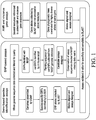
- FIG. 1 illustrates the methodologies and resources, also described below, utilized to amass a target library and develop several types of amplicon sequencing assays.
- In-house genome libraries were prepared from 31 Klebsiella isolates and 6 non- Klebsiella isolates (to validate KlebSeq assays) with a 500-bp insert size with the KAPA Library Preparation kit and Standard PCR Library Amplification (Kapa Biosystems, Wilmington, MA) and sequenced on Illumina's GAIIx or MiSeq. Additional in-house genomes that we have previously described were also included and comprised 111 K. pneumoniae , 1 K. quasipneumoniae , and 5 K. variicola genomes. Public genome sequence data from 256 K. pneumoniae , 18 K. quasipneumoniae , and 13 K.
- variicola isolates were downloaded from the SRA database (http://www.ncbi.nlm.nih.gov/Traces/sra/), and genome sequence data from 177 K. pneumoniae , 4 K. quasipneumoniae , and 11 K. variicola isolates were downloaded from the Assembly database (http://www.ncbi.nlm.nih.gov/assembly), and all passed filters for high quality; i.e., assemblies and SRA data aligned with ⁇ 80% of MGH 78578 or ⁇ 88% of the strict core genome multilocus sequence typing (scgMLST) references (described below), SRA data at a ⁇ 10 ⁇ read depth.
- SRA database http://www.ncbi.nlm.nih.gov/Traces/sra/
- Assembly database http://www.ncbi.nlm.nih.gov/assembly
- all passed filters for high quality i.e., assemblies and S
- NASP (48), developed for microbial genome analysis, was used to detect SNPs among genomes.
- reads were aligned with a reference genome, either one concatenated from scgMLST alleles (10) or MGH 78578 (GenBank accession no. CP000647) with Novoalign V3.04.04 (Novocraft Technologies, Selangor, Malaysia) and SNPs were called with GATK version 2.7-2 (49).
- Data filtered out included SNP loci with ⁇ 10 ⁇ coverage or with ⁇ 90% consensus in any one sample, regions duplicated in the reference genome as identified by Nucmer, and SNP loci that were not present in all of the genomes in the data set.
- results were output in a SNP matrix from a core genome common to all of the isolates in the analysis.
- Phylogenetic trees were generated from the NASP SNP matrices with MEGA 6.0 (50) and subsequently plotted by means of ITOL v2 or v3 (51).
- UGAP which uses the SPAdes genome assembler, version 3.6, for this work (52). Assemblies were then run through LS-BSR (53), which generates a list of open reading frames (ORFs) that have high identity among target species genomes and that have low identity or are not present in nontarget genomes. Alleles of the candidate target ORFs were collected by BLAST, including alleles from nontarget genomes, if present. Lastly, alleles of candidate ORFs were aligned for assay design. Canonical SNPs (canSNPs) were identified from the SNP matrix generated by NASP. Sequence flanking each SNP was collected from the NASP reference genome.
- canSNPs Canonical SNPs
- AMR and virulence gene sequences were identified and collected in several ways, including from the Klebsiella BIGSdb, public literature, and the NCBI.
- Public literature included a paper by Holt et al. (54) in which a species-wide analysis of K. pneumoniae genomes revealed several siderophore systems and other virulence factors associated more with infectious than with colonizing strains.
- AMR genes included the major ESBL and carbapenemase genes and plasmid-mediated quinolone resistance determinants, as well as the gyrA and parC chromosomal genes, several aminoglycoside resistance genes, trimethoprim-sulfamethoxazole, tetracycline, streptomycin, chloramphenicol, and fosfomycin resistance genes, and the recently discovered plasmid-mediated colistin resistance gene mcr-1.
- Virulence targets included several siderophore systems, for which multiple genes from each were used as assay targets; the regulator of the mucoid phenotype (an indicator of hypervirulence); the wzi gene for capsule typing, for which we used the previously published assay (55); and two genes highly associated with invasive infection, pK2044_00025 and pK2044_00325 (54).
- genes that consist of highly diverse alleles for example, blaCTX-M, qnrB, or dfrA, phylogenetic trees based on nucleotide sequences were generated in order to group similar alleles for assay design.
- Amplicon library preparation with universal tails was described in detail previously (56).
- assays were combined into three assay pools for multiplex PCR (see Table 4 ), requiring three initial PCRs for each sample.
- the initial gene-specific PCR mixture comprised 12.5 ⁇ l of Kapa Multiplex PCR Mastermix (Kapa Biosystems, Wilmington, MA), 10 ⁇ l of primer mix (final concentration of 200 nM each), and 2.5 ⁇ l of template DNA from each sample and was denatured at 95°C for 3 min; cycled 25 times at 95°C for 15 s, 60°C for 30 s, and 72°C for 1 min 30 s; and subjected to a final extension at 72°C for 1 min.
- PCR products from the same sample were combined, and PCR products were cleaned with 1 ⁇ Agencourt AMPure XP beads (Beckman Coulter, Indianapolis, IN).
- a second PCR with the universal tail-specific primers added Illumina's sample-specific index and sequencing adapters.
- This PCR mixture comprised 12.5 ⁇ l of 2 ⁇ Kapa HiFi HotStart Ready Mix (Kapa Biosystems), 400 nM each primer, and 1 to 10 ⁇ l of cleaned gene-specific PCR product and was denatured at 98°C for 2 min; cycled 6 to 12 times at 98°C for 30 s, 65°C for 20s, and 72°C for 30 s; and subjected to a final extension at 72°C for 30 s.
- Amplicon sequencing results were automatically analyzed with a newly developed amplicon sequencing analysis pipeline (ASAP) (45) that uses a JavaScript Object Notation (JSON) file customized to describe all of the assays in a multiplex.
- the information in the JSON file includes (i) a category for each assay (presence/absence, SNP, gene variant, or region of interest) that dictates how ASAP will report results and (ii) reference sequences for read mapping.
- amplicon sequence reads are first trimmed of adapter or readthrough sequences with Trimmomatic (57) and then mapped to the reference sequences with an aligner of choice.
- BAM alignment files are analyzed alongside the JSON file assay descriptions to determine the presence, percent identity, and breadth and depth of coverage of the reference and proportions of nucleotide polymorphisms for each amplicon.
- User-defined parameters for KlebSeq-prepared samples included the bowtie2 aligner (58) for all of the assays except for wzi, for which bwa (59) was chosen (because the reference sequence is shorter than the expected amplicon and reads need to be clipped to align [55]), and thresholds for determining results of screening included percent identities listed in Table 4 , 80% breadth at 100 ⁇ depth of coverage for isolate DNA, 80% at 20 ⁇ (clinical specimens) or 10 ⁇ (fecal specimens) depth, and a ⁇ 10% proportion of polymorphism for informative SNP loci for complex-specimen DNA (meaning that at least 10% of the reads had to share a SNP state at a given locus for it to be reported).
- the parameters were bwa aligner (for clipping) and 80% breadth at 5 ⁇ depth.
- the ASAP output includes an XML file containing details of the analysis of each assay target for each sample, which can be converted into a webpage interface by XSLT transformations.
- An example of a KlebSeq ASAP output for one sample is shown in FIG. 2 .
- SeqMan NGEN DNAStar, Madison, WI
- Tablet 60 were used to verify results.
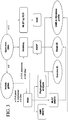
- FIG. 3 and the following text outline the processes used to validate KlebSeq, and Table 4 shows the extent to which each assay was validated in multiplex.
- WGS data from 73 K. pneumoniae samples were analyzed for AMR genes, subjected to MLST via SRST2 (61) and species identification confirmation via phylogenetic analysis, and also analyzed by ASAP.
- gDNA from these same 73 samples plus gDNA from 149 other species was screened with KlebSeq.
- KlebSeq's K. pneumoniae strain identification and AMR gene profiles in specimens six isolates that had been cultured and identified in six of the specimens were sequenced and analyzed.
- PCR for MLST was performed with selected specimen DNAs by the protocol from the Klebsiella BIGSdb. DNA libraries from the PCR products were prepared for sequencing by the same protocol as for whole gDNA. Sequence data were run through SRST2 to determine the ST of the K. pneumoniae present in the specimen.
- Klebsiella scgMLST (10) assembly as a reference, SNPs among a diverse set of genomes from K. pneumoniae and genomes from newly defined K. quasipneumoniae (22 from the public databases and 1 from in-house isolates) and K. variicola (24 from the public databases and 5 from in-house isolates) were identified with NASP. canSNPs that differentiate K. quasipneumoniae and K. variicola from K. pneumoniae were selected for assay development.
- NASP generated a SNP matrix from which canSNPs for each of the major clonal groups were selected for assay development.
- Clonal groups and locations of canSNPs identifying 21 clonal groups and 12 STs in the context of the K. pneumoniae species are illustrated in FIG. 4 . Redundancy was intentionally included in identifying canSNPs for the most epidemic strains of K. pneumoniae , such as ST14, ST20, and strains in CG258, in order to increase sensitivity and confidence in positive results.
- Kp-M1 and Kp-M2 assays specific to K. pneumoniae
- Koxy UT K. oxytoca
- Kvari UT K. variicola
- Kquasi_UT K. quasipneumoniae
- 37 assays to identify clonal groups or lineages within clonal groups of K. pneumoniae 76 AMR gene assays, and 15 virulence gene assays (see Table 4 ).
- the canSNP states for each strain identification assay are specific to that clonal group of K.
- CG35 where the amplicon must match the reference sequence 98%, allowing up to four additional SNPs, in order to be called CG35. Otherwise, identity thresholds for each strain identification assay are optional; they merely make the assays completely Klebsiella specific, regardless of the canSNP state.
- gDNA from 73 K. pneumoniae isolates whose whole genomes were sequenced (4 of which were later identified as K. quasipneumoniae and K. variicola [see below]), 22 K. oxytoca isolates, and 157 other enteric opportunistic pathogen isolates, which included E. coli, Enterobacter aerogenes, E. amnigenus, E. cloacae, E. hormaechei, Enterococcus faecalis, E.
- Kp-M1 and Kp-M2 are K. pneumoniae species identification assays that detect targets M1 and M2 in the K. pneumoniae genome.
- Kquasi_UT, Kvari_UT, and Koxy UT are K. quasipneumoniae- , K. variicola- , and K. oxytoca -specific assays, respectively.
- c These species were found as mixtures with K. pneumoniae on the basis of a proportion ( ⁇ 10%) of the sequencing reads containing the species-defining SNP.
- Table 2 shows the KlebSeq results of the K. pneumoniae clonal group identification and capsule typing assays of isolate DNA. Each isolate's strain type was correctly captured by the appropriate assays or not captured in cases where no assay was designed for that clonal group. Included in Table 2 are results from partial sequencing of the wzi gene for capsule typing. This gave surprisingly clear results, given that approximately 75 bp of the informative region are missing from our sequence output, as the PCR amplicon is approximately 580 bp (55), which is too long to cover with the Illumina version 2 sequencing chemistry. However, full capsule typing by wzi sequencing would be possible with longer-read chemistry (i.e., Illumina version 3 chemistry, for 600-bp reads).
- results from screening of nontarget organisms showed that several of the K. pneumoniae clonal group assays amplified DNA from other organisms, as expected.
- An identity threshold can be applied (see Table 4 ); however, all of the SNP states that define a particular clonal group are specific to that clonal group, except for CG35, so the identity threshold is optional except for this assay.
- Sequence analysis by ASAP reports when a clonal group is present only if the defining canSNP state is present and reports nothing if it is not. Table 2. Isolates used for assay validation and results of strain typing by amplicon sequencing a Isolate ST No.
- AMR gene detection by amplicon sequencing was validated by comparing ASAP results with AMR gene screening of WGS with SRST2 (61) and with ASAP. Results showed an almost perfect correlation between KlebSeq ASAP and WGS ASAP, indicating that the KlebSeq PCRs are performing well. There were a few discrepancies with SRST2, which reported uncertainty (SNPs or low-coverage indicators) for most of the discrepancies. Some discrepancies were in the presence of the dfrA gene. This group of genes is very diverse, so it may be that KlebSeq does not capture the full repertoire of dfrA genes. Virulence gene detection was validated by comparing ASAP results from WGS data with those from amplicon sequence data, and results showed concordance. In addition, by targeting multiple genes that are part of the same virulence factors (i.e., siderophore systems), sensitivity and confidence in results were increased.
- KlebSeq is applicable to pure isolates as well as complex specimens. Screening of isolate DNA has the added benefit of traceability of the AMR and virulence genes, which are often carried on mobile genetic elements, to their host. Isolate screening could be used for surveillance and other purposes for identifying or characterizing Klebsiella.
- KlebSeq was run on DNA from 87 respiratory specimens, 46 urine specimens, 40 wound specimens, and 89 fecal samples from healthy. Sensitivity and specificity results of the species identification assays compared with those of clinical microbiological methods are shown in Table 1. In most cases, sensitivity was high, except in the wound specimens, where the one sample clinically identified as K. pneumoniae was identified as K. variicola. Some sensitivity and specificity calculations may be misleadingly low, as amplicon sequencing identified some samples as containing K. pneumoniae that actually contained K. quasipneumoniae or K. variicola , and several as containing Klebsiella that went undetected by clinical microbiological methods, including several in which clonal groups were also detected.
- ST20 CG37, and CG76, which are all members of multidrug-resistant outbreak strain types (11, 12, 15), along with ST133 and ST380.
- ST380 is associated with a K2 capsule type and hypervirulence and causes pyogenic liver abscesses in healthy people, especially those of Asian ethnicity (63). Many Asians are colonized by hypervirulent K1 or K2 capsule strain types; however, the level of risk of subsequent liver infection is unknown (63). For this sample, no wzi gene sequence was obtained; thus, the capsule type is unknown.
- a majority of the K. pneumoniae isolates in our samples did not fall into the major clonal groups targeted by KlebSeq. These strains probably all belong to lesser-known clonal groups, as more studies are showing that many K . pneumoniae infections are caused by nonepidemic, sporadic strains (64, 65).
- AMR genes Numerous and variable AMR genes were detected in the specimens, including different variants of the same gene that confer different phenotypes. With sequence-based information, we demonstrate that seven of the K. pneumoniae had key mutations in the gyrA gene known to confer resistance to fluoroquinolones. Additionally, several samples contained the aac(6')-Ib gene for aminoglycoside resistance, and five of those contained the sequence variant aac(6')-Ib-cr for fluoroquinolone resistance; mixtures of these two genes were also detected. Many of the infection specimens (nonhealthy donor specimens), both positive and negative for K.
- pneumoniae were positive for other aminoglycoside resistance genes, as well as tetracycline, trimethoprim-sulfamethoxazole, streptomycin, fosfomycin, and chloramphenicol resistance genes. A few contained plasmid-mediated quinolone resistance genes. Several samples, especially the respiratory specimens, were also positive for KPC and CTX-M group 1 and 9 genes. Most of the healthy donor specimens were positive for trimethoprim-sulfamethoxazole resistance genes, and many were positive for streptomycin, aminoglycoside, tetracycline, and fosfomycin resistance genes.
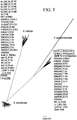
- Table 3 shows MLST results from WGS data of six isolates cultured from specimens run on KlebSeq and from MLST PCR and sequencing of 11 specimens run on KlebSeq. In each case, KlebSeq appears to have identified the correct strain. Two isolates for which no strain type was identified by KlebSeq have novel STs. Sample TG75900 was identified as K . quasipneumoniae by KlebSeq and typed as ST196 on the basis of whole-genome data. This genome was added to the phylogeny of the three species and clustered with K . quasipneumoniae ( FIG. 5 ).
- HAI is estimated to affect 1 in 25 hospital patients, totaling hundreds of thousands of patients, with significant mortality (2). HAIs have a significant impact on health care costs; a 2009 CDC report estimated upwards of $45 billion in annual additional cost (67). Infections with AMR organisms cause significantly higher mortality rates, significantly more intensive care unit (ICU) admissions, and significant excess costs, including hospitalization, medical care, and antimicrobial therapy, than do infections with susceptible strains (5, 68). HAI prevention measures, although costly in and of themselves (69), have the potential to save thousands of lives and billions of dollars (67). Periodic patient screening and isolation of AMR organism carriers have proven successful in controlling transmission and outbreaks in several hospitals (31, 34-37). Use of a highly informative screening and surveillance tool such as KlebSeq has cost-effective and life-saving potential.
- pneumoniae infections including HAIs and non-multidrug-resistant infections, are caused by nonepidemic, lesser-known strain types (64, 65). Classifying the K. pneumoniae isolate in each patient sample would help an institution to decide when and which intervention procedures should be enacted and also to understand more about transmission dynamics and local strain type circulation.
- KlebSeq has several characteristics that make it attractive as a health care screening approach. With a single assay, enough information is garnered about a patient's Klebsiella carriage status to contribute greatly to patient management and to infection control decisions. Indexing samples by means of the universal tail during sample preparation allows the characterization of a large number of specimens in one run, minimizing sequencing costs per specimen and allowing for high-throughput screening of hundreds of patient samples simultaneously at a cost of tens of dollars per patient. KlebSeq uses DNA extracted directly from a specimen, so targets from entire populations of a species are analyzed to capture different strains in the same sample, which can be numerous (71, 72).
- culture-based methods are used for screening, different strains are missed when one genotype (i.e., colony) is chosen for characterization, and the resulting information is limited. Additionally, culture-based methods can miss "silent" multidrug-resistant K. pneumoniae strains that test negative for carbapenemases in vitro (16), and if used for high-throughput screening, they can be laborious, time-consuming, costly, and subjective (31, 38).
- amplicon sequencing is cost-prohibitive, it can be limited to the highest-risk groups of patients, i.e., long-term care facility patients (31, 73), travelers returning from regions where Klebsiella carriage is endemic (74, 75), ICU patients (28), patients with previous K. pneumoniae carriage (75-77), patients who have shared a room with a known carrier (78) or case contacts of carriers (79), those who have recently taken antibiotics (80, 81), or patients on mechanical ventilation or enteral feeds or who have had prior Clostridium difficile infections (82). Additionally, using ASAP makes the analysis in KlebSeq streamlined and results are easily interpretable. Lastly, the amplicon sequencing and ASAP package is customizable and updateable (45). Individual assays can be added or removed, adding only the cost of new primers.
- KlebSeq is effective with DNA from numerous sample types, including pure organism culture, or complex, multiorganism samples and swab samples with low-level microbial DNA in a presumably high human DNA background without culture methods.
- KlebSeq also reliably distinguishes among the Klebsiella species, two of which, K. quasipneumoniae and K. variicola , are continuously misidentified as K. pneumoniae (as exemplified in our study) and cause invasive disease (83, 84).
- K. pneumoniae exemplified in our study
- KlebSeq The sensitivity of KlebSeq is superior to that of culture-based methods for complex specimens, lowering the risk of false negatives in patient screening.
- KlebSeq is an important step toward a comprehensive yet accessible tool for all pathogen identification and characterization. Metagenomic analysis is attractive in its breadth of coverage capabilities, but its current costs and complexities are prohibitive.
- Amplicon assays targeting the other ESKAPE Enterococcus faecium, Staphylococcus aureus, Klebsiella pneumoniae, Acinetobacter baumannii, Pseudomonas aeruginosa, and Enterobacter species
- pathogens and more AMR determinants could relatively easily be added to the tool described here, with a step-by-step validation process. We have not found the limit of the multiplexing capacity.
- KlebSeq is designed for screening and periodic surveillance in high-risk situations with a rule-in/rule-out determination of the possibility of transmission events and through identification of high-risk multidrug-resistant or epidemic strains of Klebsiella. For these purposes, KlebSeq is ideal.
- the specimen types used for validation could be considered a limitation, as we did not test rectal swabs, a specimen type commonly used for CPE surveillance.
- KlebSeq works with different swab types and fecal specimens, which addresses the challenges of detection in rectal swabs.
- Rapid amplicon sequencing with automated analysis and reporting is a promising response to the need for constant surveillance for highly transmissible or highly drug-resistant pathogens.
- Our model system directed at Klebsiella, can easily be adapted to multiple other pathogens and to different purposes, such as environmental sampling and community host screening and, as smaller, more on-demand next-generation systems become available, to diagnostics and individual patient monitoring.
- Kp_M2_UT presence/ absence Kp_M2_UT1_F 3 366 See Table 1 97% (15) 1 Kp_M2_UT1_R 4 Koxy UT presence/absence Koxy_UT_F 5 362 See Table 1 1 Koxy_UT_R 6 Kvari_UT SNP (T43 to G, T67 to C, C91 to T, G126 to A, G143 to T, T181 to C, G184 to T, A220 to G, A235 to G) Kvari_UT_F 7 287 See Table 4 , FIG 3 91% (26) 3 Kvari_UT_R 8 Kquasi_UT SNP (A39 to G, A51 to G, G63 to A, A78 to C, G82 to C, T147 to C) Kquasi_UT_F 9 187 See Table 4 , FIG 3 92% (15) 3 Kquasi_UT_R 10 Clonal Group Identification Assays ST3_UT SNP (C25 to T)
- CG220_UT SNP G31 to A
- Sequence type not available KlebSeq on non-CG220 K . pneumonia e 98% (6) also identifies K . variicola and K. quasipneumoniae 3 CG220_UT_R 62
- CG258_UT SNP G45 to A
- CG258_UT_F 63 234 See Table 4 98% (5)
- 3 CG258_UT_R 64 CG258wo3 95_UT SNP (T42 to G)
- b CG35 is the only assay for which the identity threshold must be applied if the SNP state indicates CG35 is present (Some strains of Enterobacter aerogenes amplify and have C34T for this target).
- CG258wo395 is the assay that captures all of CG258 except for ST395 (as shown in Figure 4 ).
- d From Bowers JR, Kitchel B, Driebe EM, MacCannell DR, Roe C, Lemmer D, de Man T, Rasheed JK, Engelthaler DM, Keim P, Limbago BM. 2015. Genomic Analysis of the Emergence and Rapid Global Dissemination of the Clonal Group 258 Klebsiella pneumoniae Pandemic. PLoS One 10:e0133727 .
- the clonal group and/or subgroup detected is one or more of those shown in Table 6.
- Table 6 Clonal subgroup Assay name SEQ ID NOs CG258 CG258 CG258 UT 63/64 CG258wo395 UT 65/66 ST258 ST258 UT1 67/68 ST258 UT2 69/70 ST258clade1 UT 71/72 ST258clade2 UT 73/74 ST340 ST340 UT 75/76 ST395 ST395 _ UT 81/82 ST437 ST437 _ UT 83/84 CG20 CG20 _UT 21/22 ST20 ST20 UT 23/24 ST23 ST23 UT 25/26 ST380 ST380 _ UT 77/78 CG37 CG37 UT 37/38 CG14 CG14 UT 13/14 ST14 ST14 UT 15/16 innerST14 UT 17/18 ST15 ST15 UT 19/20
- the AMR gene detected is one or more of those shown in Table 7.
- Table 7 AMR genes Assay name SEQ ID NOs beta-lactamase genes c blaKPC UT 1 85/86 blaKPC_UT2 87/88 blaNDM_UT1 89/90 blaNDM _UT2 91/92 blaVIM UT 93/94-95 blaOXA-48 _UT 96-97/98-99 blaCTX-M-G1_64_UT 100/101 blaCTX-M-G1_UT 102/103 blaCTX-M-G2 _UT1 104/105 blaCTX-M-G2_UT2 106/107 blaCTX-M-G8_G25_UT1 108/109 blaCTX-M-G8_G25_UT2 110/111 blaCTX-M-G9 _UT1 112/113 blaCTX-M-G9_UT2 114/115 blaGES UT 116/
- the virulence gene detected is one or more of those shown in Table 8 .
- Table 8 Virulence genes Assay name SEQ ID NOs rmpA blaKPC_UT1 249/250 wzi wzi_UT 280/281
Landscapes
- Chemical & Material Sciences (AREA)
- Life Sciences & Earth Sciences (AREA)
- Organic Chemistry (AREA)
- Health & Medical Sciences (AREA)
- Proteomics, Peptides & Aminoacids (AREA)
- Zoology (AREA)
- Wood Science & Technology (AREA)
- Engineering & Computer Science (AREA)
- Analytical Chemistry (AREA)
- General Health & Medical Sciences (AREA)
- Physics & Mathematics (AREA)
- Molecular Biology (AREA)
- Biophysics (AREA)
- Microbiology (AREA)
- Immunology (AREA)
- Biochemistry (AREA)
- Bioinformatics & Cheminformatics (AREA)
- General Engineering & Computer Science (AREA)
- Biotechnology (AREA)
- Genetics & Genomics (AREA)
- Chemical Kinetics & Catalysis (AREA)
- Communicable Diseases (AREA)
- Oncology (AREA)
- General Chemical & Material Sciences (AREA)
- Medicinal Chemistry (AREA)
- Nuclear Medicine, Radiotherapy & Molecular Imaging (AREA)
- Pharmacology & Pharmacy (AREA)
- Animal Behavior & Ethology (AREA)
- Public Health (AREA)
- Veterinary Medicine (AREA)
- Measuring Or Testing Involving Enzymes Or Micro-Organisms (AREA)
Claims (15)
- Procédé de détection d'au moins K. quasipneumoniae et K. variicola dans un échantillon prélevé chez un sujet, comprenant :la soumission d'un ADN, d'un ARN, ou des deux provenant de l'échantillon à une réaction d'amplification par PCR en utilisant une paire d'amorce sélectionnées dans le groupe consistant en: les SEQ ID NO : 7-8, spécifiques de K. variicola, et les SEQ ID NO : 9-10, spécifiques de K. quasipneumoniae ; etl'analyse des produits d'amplification résultant de la réaction d'amplification par PCR pour détecter des polymorphismes mononucléotidiques canoniques (canSNP) spécifiques d'espèces pour détecter K. quasipneumoniae, K. variicola, ou les deux dans l'échantillon.
- Kit de détection d'au moins K. quasipneumoniae ou K. variicola, comprenant une paire d'amorce sélectionnées dans le groupe consistant en les SEQ ID NO : 7-8, spécifiques de K. variicola, et les SEQ ID NO : 9-10, spécifiques de K. quasipneumoniae.
- Procédé selon la revendication 1 ou kit selon la revendication 2, dans lequel la paire d'amorces comprend une séquence de queue universelle.
- Procédé selon la revendication 1 ou 3 ou kit selon la revendication 2 ou 3, dans lequel K. quasipneumoniae est détecté.
- Procédé selon l'une quelconque des revendications 1 et 3-4, dans lequel la réaction d'amplification par PCR est une réaction d'amplification multiplex.
- Procédé selon l'une quelconque des revendications 1 et 3-5, dans lequel les produits d'amplification sont analysés par séquençage de nouvelle génération (NGS) pour déterminer une séquence de chaque produit d'amplification.
- Procédé selon l'une quelconque des revendications 1 et 3-6, dans lequel l'échantillon est un écouvillon de plaie, un écouvillon nasal, un écouvillon rectal, un écouvillon cutané, de la salive, des matières fécales, de l'urine, du sang entier, du sérum, du plasma ou une couche leucocyto-plaquettaire, et/ou le sujet est un animal.
- Procédé selon l'une quelconque des revendications 1 et 3-7, comprenant en outre la détection d'un ou de plusieurs gènes de résistance aux antimicrobiens (AMR) chez au moins K. quasipneumoniae ou K. variicola dans l'échantillon en soumettant l'ADN et/ou l'ARN provenant de l'échantillon à une réaction d'amplification par PCR en utilisant des paires d'amorces ciblant des gènes AMR et en analysant les produits d'amplification résultant de la réaction d'amplification par PCR pour détecter les un ou plusieurs gènes AMR ; ou
le kit selon l'une quelconque des revendications 2-4 pour détecter un ou plusieurs gènes de résistance aux antimicrobiens (AMR) chez au moins K. quasipneumoniae ou K. variicola, dans lequel le kit comprend en outre une paire d'amorces ciblant un ou plusieurs gènes AMR. - Procédé ou kit selon la revendication 8, dans lequel la paire d'amorces ciblant les un ou plusieurs gènes AMR contient une séquence sélectionnée dans le groupe consistant en les SEQ ID NO : 85-248.
- Procédé ou kit selon la revendication 9, dans lequel la paire d'amorces ciblant les gènes AMR contient une séquence sélectionnée dans le groupe consistant en les SEQ ID NO : 131-132, 137-139, 153-154, 157-158, et 216-217.
- Procédé ou kit selon la revendication 9, dans lequel la paire d'amorces ciblant les un ou plusieurs gènes AMR cible un gène de bêta-lactamase, un gène de résistance à la colistine, ou les deux.
- Procédé ou kit selon la revendication 11, dans lequel la paire d'amorces ciblant le gène de bêta-lactamase contient une séquence sélectionnée dans le groupe consistant en les SEQ ID NO : 85-86, 89-90, 93-99, 102-105, 108-109, 112-113, et 116-117 et/ou la paire d'amorces ciblant le gène de résistance à la colistine contient une séquence sélectionnée dans le groupe consistant en les SEQ ID NO : 236-237.
- Procédé selon l'une quelconque des revendications 1 et 3-12, comprenant en outre la détection d'un ou de plusieurs groupes clonaux de Klebsiella dans l'échantillon en soumettant l'ADN et/ou l'ARN provenant de l'échantillon à une réaction d'amplification par PCR en utilisant des paires d'amorces ciblant des polymorphismes mononucléotidiques canoniques (canSNP) spécifiques de groupes clonaux et en analysant les produits d'amplification résultant de la réaction d'amplification par PCR pour détecter les un ou plusieurs canSNP spécifiques de groupes clonaux de Klebsiella ; ou
le kit selon l'une quelconque des revendications 2-4 et 8-12 pour détecter un ou plusieurs groupes clonaux de Klebsiella, dans lequel le kit comprend en outre une paire d'amorces ciblant les un ou plusieurs canSNP spécifiques de groupes clonaux de Klebsiella. - Procédé selon l'une quelconque des revendications 1 et 3-13, comprenant en outre la détection d'un ou de plusieurs gènes de virulence chez au moins K. quasipneumoniae ou K. variicola dans l'échantillon en soumettant l'ADN et/ou l'ARN provenant de l'échantillon à une réaction d'amplification par PCR en utilisant des paires d'amorces ciblant des gènes de virulence et en analysant les produits d'amplification résultant de la réaction d'amplification par PCR pour détecter les un ou plusieurs gènes de virulence ; ou
le kit selon l'une quelconque des revendications 2-4 et 8-13 pour détecter un ou plusieurs gènes de virulence chez au moins K. quasipneumoniae ou K. variicola, dans lequel le kit comprend en outre une paire d'amorces ciblant un ou plusieurs gènes de virulence. - Procédé ou kit selon la revendication 13 ou 14, dans lequel la paire d'amorces ciblant les un ou plusieurs groupes clonaux de Klebsiella contient une séquence sélectionnée dans le groupe consistant en les SEQ ID NO : 11-84 et/ou la paire d'amorces ciblant les un ou plusieurs gènes de virulence contient une séquence sélectionnée dans le groupe consistant en les SEQ ID NO : 249-281.
Applications Claiming Priority (2)
| Application Number | Priority Date | Filing Date | Title |
|---|---|---|---|
| US201662307632P | 2016-03-14 | 2016-03-14 | |
| PCT/US2017/022211 WO2017160779A2 (fr) | 2016-03-14 | 2017-03-14 | Procédés et kits pour l'identification de souches de klebsiella |
Publications (3)
| Publication Number | Publication Date |
|---|---|
| EP3430168A2 EP3430168A2 (fr) | 2019-01-23 |
| EP3430168A4 EP3430168A4 (fr) | 2019-09-04 |
| EP3430168B1 true EP3430168B1 (fr) | 2021-10-20 |
Family
ID=59852374
Family Applications (1)
| Application Number | Title | Priority Date | Filing Date |
|---|---|---|---|
| EP17767297.9A Active EP3430168B1 (fr) | 2016-03-14 | 2017-03-14 | Procédés et kits pour l'identification de souches de klebsiella |
Country Status (3)
| Country | Link |
|---|---|
| US (2) | US11248270B2 (fr) |
| EP (1) | EP3430168B1 (fr) |
| WO (1) | WO2017160779A2 (fr) |
Families Citing this family (7)
| Publication number | Priority date | Publication date | Assignee | Title |
|---|---|---|---|---|
| KR101951846B1 (ko) | 2017-11-02 | 2019-03-04 | 대한민국 | 콜리스틴(Colistin) 내성세균을 검출하기 위한 프라이머 및 이를 이용한 콜리스틴 내성세균의 검출방법 |
| CN109182192B (zh) * | 2018-09-26 | 2021-02-19 | 北京化工大学 | 一株好氧反硝化菌hy3-2及其在污水脱氮中的应用 |
| CN110079623B (zh) * | 2019-05-27 | 2022-11-11 | 深圳市人民医院 | 一种适用于鲍曼不动杆菌毒力的检测方法 |
| CN110408712B (zh) * | 2019-07-29 | 2023-07-04 | 上海市农业科学院 | 细菌中喹诺酮类耐药基因的快速筛查试剂盒及引物 |
| CN110669852A (zh) * | 2019-11-04 | 2020-01-10 | 深圳市人民医院 | 用于检测高毒力非粘液型肺炎克雷伯菌的试剂盒 |
| CN112430677A (zh) * | 2020-12-15 | 2021-03-02 | 深圳市第三人民医院 | 用于鉴定肺炎克雷伯菌毒力和碳青霉烯酶耐药性的试剂盒 |
| WO2025096569A1 (fr) * | 2023-10-30 | 2025-05-08 | The Penn State Research Foundation | Procédés et compositions pour profilage de résistance antimicrobienne en temps réel |
Family Cites Families (9)
| Publication number | Priority date | Publication date | Assignee | Title |
|---|---|---|---|---|
| US6610836B1 (en) * | 1999-01-29 | 2003-08-26 | Genome Therapeutics Corporation | Nucleic acid amino acid sequences relating to Klebsiella pneumoniae for diagnostics and therapeutics |
| US20040029129A1 (en) * | 2001-10-25 | 2004-02-12 | Liangsu Wang | Identification of essential genes in microorganisms |
| SI1858920T1 (sl) * | 2005-02-18 | 2016-07-29 | Glaxosmithkline Biologicals S.A. | Proteini in nukleinske kisline iz escherichia coli, povezane z meningitisom/sepso |
| US7754429B2 (en) | 2006-10-06 | 2010-07-13 | Illumina Cambridge Limited | Method for pair-wise sequencing a plurity of target polynucleotides |
| EP1975253A1 (fr) * | 2007-03-30 | 2008-10-01 | Institut Pasteur | Procédé pour la discrimination des espèces de la famille des entérobactéries par génotypage et ses applications |
| US20130065790A1 (en) | 2010-05-05 | 2013-03-14 | Check-Points Holding B.V. | Assays, compositions and methods for detecting drug resistant micro-organisms |
| US10550427B2 (en) | 2013-11-11 | 2020-02-04 | The Translational Genomics Research Institute | Systems and methods for universal tail-based indexing strategies for amplicon sequencing |
| US10214782B2 (en) * | 2015-07-21 | 2019-02-26 | The Translational Genomics Research Institute | Methods and kits to identify klebsiella strains |
| EP3371320A4 (fr) * | 2015-11-04 | 2018-12-05 | The Translational Genomics Research Institute | Systèmes et méthodes de diagnostic et de caractérisation des infections |
-
2017
- 2017-03-14 WO PCT/US2017/022211 patent/WO2017160779A2/fr not_active Ceased
- 2017-03-14 EP EP17767297.9A patent/EP3430168B1/fr active Active
- 2017-03-14 US US16/083,860 patent/US11248270B2/en active Active
-
2022
- 2022-01-28 US US17/588,196 patent/US12203143B2/en active Active
Non-Patent Citations (1)
| Title |
|---|
| None * |
Also Published As
| Publication number | Publication date |
|---|---|
| US20220145375A1 (en) | 2022-05-12 |
| WO2017160779A2 (fr) | 2017-09-21 |
| EP3430168A2 (fr) | 2019-01-23 |
| WO2017160779A3 (fr) | 2017-10-19 |
| US20190078141A1 (en) | 2019-03-14 |
| US12203143B2 (en) | 2025-01-21 |
| US11248270B2 (en) | 2022-02-15 |
| EP3430168A4 (fr) | 2019-09-04 |
Similar Documents
| Publication | Publication Date | Title |
|---|---|---|
| US12203143B2 (en) | Methods and kits to identify Klebsiella strains | |
| Deurenberg et al. | Application of next generation sequencing in clinical microbiology and infection prevention | |
| US11186867B2 (en) | Next generation genomic sequencing methods | |
| AU2014342414B2 (en) | Next generation genomic sequencing methods | |
| Bowers et al. | KlebSeq, a diagnostic tool for surveillance, detection, and monitoring of Klebsiella pneumoniae | |
| US20150344973A1 (en) | Method and System for Detection of an Organism | |
| AU2017203556B2 (en) | Ion torrent genomic sequencing | |
| US20220325324A1 (en) | Systems and methods for the detection of infectious diseases | |
| US20250095782A1 (en) | Single-loci and multi-loci targeted single point amplicon fragment sequencing | |
| US11993812B2 (en) | Systems and methods of diagnosing and characterizing infections | |
| Popova et al. | The use of next-generation sequencing in personalized medicine | |
| Das et al. | Genetic heterogeneity revealed by sequence analysis of Mycobacterium tuberculosis isolates from extra-pulmonary tuberculosis patients | |
| JP2020115793A (ja) | 肺炎桿菌及び近縁菌種の遺伝子型タイピング法及びこれに用いるプライマーセット | |
| US20260028669A1 (en) | Methods and compositions for nucleic acid analysis | |
| Jilani et al. | Phylogeographic characterization of Burkholderia pseudomallei isolated from Bangladesh | |
| Nava-Soberanes et al. | Draft genome sequence of first Vibrio diabolicus in Mexico strain InDRE-D1-M1, an emergent threat | |
| US20230295743A1 (en) | Methods and assays for subtyping staphylococcus aureus clonal complex 8 strains | |
| Codda | Next Generation Sequencing-based detection and characterization of microbial pathogens causing invasive infections and outbreaks in ICU: towards improved management of the high-risk patient | |
| JP6387500B2 (ja) | 大腸菌の遺伝子型タイピング法及びこれに用いるプライマーセット | |
| US11359251B2 (en) | Methods for the detection of enterovirus D68 in complex samples | |
| US11572591B2 (en) | Methods and assays for subtyping Staphylococcus aureus clonal complex 8 strains | |
| Chiang et al. | Whole Genome Sequencing for Outbreak Investigation | |
| Noecker et al. | A widespread gut bacterial lineage distinguished by redox metabolism and phage defense | |
| Khan et al. | Genomic insights reveal zoonotic potential of Morganella morganii strains from diarrhoeal patients in Dhaka, Bangladesh | |
| 이준기 | Whole Genome Analysis of Mycoplasma pneumoniae isolated from Children with Pneumonia: Comparative Genomics in regard to the presence of Macrolide Resistance |
Legal Events
| Date | Code | Title | Description |
|---|---|---|---|
| STAA | Information on the status of an ep patent application or granted ep patent |
Free format text: STATUS: THE INTERNATIONAL PUBLICATION HAS BEEN MADE |
|
| PUAI | Public reference made under article 153(3) epc to a published international application that has entered the european phase |
Free format text: ORIGINAL CODE: 0009012 |
|
| STAA | Information on the status of an ep patent application or granted ep patent |
Free format text: STATUS: REQUEST FOR EXAMINATION WAS MADE |
|
| 17P | Request for examination filed |
Effective date: 20181015 |
|
| AK | Designated contracting states |
Kind code of ref document: A2 Designated state(s): AL AT BE BG CH CY CZ DE DK EE ES FI FR GB GR HR HU IE IS IT LI LT LU LV MC MK MT NL NO PL PT RO RS SE SI SK SM TR |
|
| AX | Request for extension of the european patent |
Extension state: BA ME |
|
| RIC1 | Information provided on ipc code assigned before grant |
Ipc: C12N 1/14 20060101ALI20181016BHEP Ipc: C12N 15/11 20060101ALI20181016BHEP Ipc: C12R 1/01 20060101ALI20181016BHEP Ipc: C12N 1/20 20060101ALI20181016BHEP Ipc: C12Q 1/70 20060101ALI20181016BHEP Ipc: A61P 31/10 20060101ALI20181016BHEP Ipc: G06F 19/10 20110101ALI20181016BHEP Ipc: C12Q 1/68 20180101AFI20181016BHEP |
|
| DAV | Request for validation of the european patent (deleted) | ||
| DAX | Request for extension of the european patent (deleted) | ||
| REG | Reference to a national code |
Ref country code: DE Ref legal event code: R079 Ref document number: 602017047934 Country of ref document: DE Free format text: PREVIOUS MAIN CLASS: C12Q0001680000 Ipc: C12Q0001689000 |
|
| A4 | Supplementary search report drawn up and despatched |
Effective date: 20190802 |
|
| RIC1 | Information provided on ipc code assigned before grant |
Ipc: C12Q 1/689 20180101AFI20190729BHEP |
|
| STAA | Information on the status of an ep patent application or granted ep patent |
Free format text: STATUS: EXAMINATION IS IN PROGRESS |
|
| 17Q | First examination report despatched |
Effective date: 20200504 |
|
| GRAP | Despatch of communication of intention to grant a patent |
Free format text: ORIGINAL CODE: EPIDOSNIGR1 |
|
| STAA | Information on the status of an ep patent application or granted ep patent |
Free format text: STATUS: GRANT OF PATENT IS INTENDED |
|
| INTG | Intention to grant announced |
Effective date: 20210617 |
|
| GRAS | Grant fee paid |
Free format text: ORIGINAL CODE: EPIDOSNIGR3 |
|
| GRAA | (expected) grant |
Free format text: ORIGINAL CODE: 0009210 |
|
| STAA | Information on the status of an ep patent application or granted ep patent |
Free format text: STATUS: THE PATENT HAS BEEN GRANTED |
|
| AK | Designated contracting states |
Kind code of ref document: B1 Designated state(s): AL AT BE BG CH CY CZ DE DK EE ES FI FR GB GR HR HU IE IS IT LI LT LU LV MC MK MT NL NO PL PT RO RS SE SI SK SM TR |
|
| REG | Reference to a national code |
Ref country code: GB Ref legal event code: FG4D |
|
| REG | Reference to a national code |
Ref country code: CH Ref legal event code: EP |
|
| REG | Reference to a national code |
Ref country code: IE Ref legal event code: FG4D |
|
| REG | Reference to a national code |
Ref country code: DE Ref legal event code: R096 Ref document number: 602017047934 Country of ref document: DE |
|
| REG | Reference to a national code |
Ref country code: AT Ref legal event code: REF Ref document number: 1440017 Country of ref document: AT Kind code of ref document: T Effective date: 20211115 |
|
| REG | Reference to a national code |
Ref country code: LT Ref legal event code: MG9D |
|
| REG | Reference to a national code |
Ref country code: NL Ref legal event code: MP Effective date: 20211020 |
|
| REG | Reference to a national code |
Ref country code: AT Ref legal event code: MK05 Ref document number: 1440017 Country of ref document: AT Kind code of ref document: T Effective date: 20211020 |
|
| PG25 | Lapsed in a contracting state [announced via postgrant information from national office to epo] |
Ref country code: RS Free format text: LAPSE BECAUSE OF FAILURE TO SUBMIT A TRANSLATION OF THE DESCRIPTION OR TO PAY THE FEE WITHIN THE PRESCRIBED TIME-LIMIT Effective date: 20211020 Ref country code: LT Free format text: LAPSE BECAUSE OF FAILURE TO SUBMIT A TRANSLATION OF THE DESCRIPTION OR TO PAY THE FEE WITHIN THE PRESCRIBED TIME-LIMIT Effective date: 20211020 Ref country code: FI Free format text: LAPSE BECAUSE OF FAILURE TO SUBMIT A TRANSLATION OF THE DESCRIPTION OR TO PAY THE FEE WITHIN THE PRESCRIBED TIME-LIMIT Effective date: 20211020 Ref country code: BG Free format text: LAPSE BECAUSE OF FAILURE TO SUBMIT A TRANSLATION OF THE DESCRIPTION OR TO PAY THE FEE WITHIN THE PRESCRIBED TIME-LIMIT Effective date: 20220120 Ref country code: AT Free format text: LAPSE BECAUSE OF FAILURE TO SUBMIT A TRANSLATION OF THE DESCRIPTION OR TO PAY THE FEE WITHIN THE PRESCRIBED TIME-LIMIT Effective date: 20211020 |
|
| PG25 | Lapsed in a contracting state [announced via postgrant information from national office to epo] |
Ref country code: IS Free format text: LAPSE BECAUSE OF FAILURE TO SUBMIT A TRANSLATION OF THE DESCRIPTION OR TO PAY THE FEE WITHIN THE PRESCRIBED TIME-LIMIT Effective date: 20220220 Ref country code: SE Free format text: LAPSE BECAUSE OF FAILURE TO SUBMIT A TRANSLATION OF THE DESCRIPTION OR TO PAY THE FEE WITHIN THE PRESCRIBED TIME-LIMIT Effective date: 20211020 Ref country code: PT Free format text: LAPSE BECAUSE OF FAILURE TO SUBMIT A TRANSLATION OF THE DESCRIPTION OR TO PAY THE FEE WITHIN THE PRESCRIBED TIME-LIMIT Effective date: 20220221 Ref country code: PL Free format text: LAPSE BECAUSE OF FAILURE TO SUBMIT A TRANSLATION OF THE DESCRIPTION OR TO PAY THE FEE WITHIN THE PRESCRIBED TIME-LIMIT Effective date: 20211020 Ref country code: NO Free format text: LAPSE BECAUSE OF FAILURE TO SUBMIT A TRANSLATION OF THE DESCRIPTION OR TO PAY THE FEE WITHIN THE PRESCRIBED TIME-LIMIT Effective date: 20220120 Ref country code: NL Free format text: LAPSE BECAUSE OF FAILURE TO SUBMIT A TRANSLATION OF THE DESCRIPTION OR TO PAY THE FEE WITHIN THE PRESCRIBED TIME-LIMIT Effective date: 20211020 Ref country code: LV Free format text: LAPSE BECAUSE OF FAILURE TO SUBMIT A TRANSLATION OF THE DESCRIPTION OR TO PAY THE FEE WITHIN THE PRESCRIBED TIME-LIMIT Effective date: 20211020 Ref country code: HR Free format text: LAPSE BECAUSE OF FAILURE TO SUBMIT A TRANSLATION OF THE DESCRIPTION OR TO PAY THE FEE WITHIN THE PRESCRIBED TIME-LIMIT Effective date: 20211020 Ref country code: GR Free format text: LAPSE BECAUSE OF FAILURE TO SUBMIT A TRANSLATION OF THE DESCRIPTION OR TO PAY THE FEE WITHIN THE PRESCRIBED TIME-LIMIT Effective date: 20220121 Ref country code: ES Free format text: LAPSE BECAUSE OF FAILURE TO SUBMIT A TRANSLATION OF THE DESCRIPTION OR TO PAY THE FEE WITHIN THE PRESCRIBED TIME-LIMIT Effective date: 20211020 |
|
| REG | Reference to a national code |
Ref country code: DE Ref legal event code: R097 Ref document number: 602017047934 Country of ref document: DE |
|
| PG25 | Lapsed in a contracting state [announced via postgrant information from national office to epo] |
Ref country code: SM Free format text: LAPSE BECAUSE OF FAILURE TO SUBMIT A TRANSLATION OF THE DESCRIPTION OR TO PAY THE FEE WITHIN THE PRESCRIBED TIME-LIMIT Effective date: 20211020 Ref country code: SK Free format text: LAPSE BECAUSE OF FAILURE TO SUBMIT A TRANSLATION OF THE DESCRIPTION OR TO PAY THE FEE WITHIN THE PRESCRIBED TIME-LIMIT Effective date: 20211020 Ref country code: RO Free format text: LAPSE BECAUSE OF FAILURE TO SUBMIT A TRANSLATION OF THE DESCRIPTION OR TO PAY THE FEE WITHIN THE PRESCRIBED TIME-LIMIT Effective date: 20211020 Ref country code: EE Free format text: LAPSE BECAUSE OF FAILURE TO SUBMIT A TRANSLATION OF THE DESCRIPTION OR TO PAY THE FEE WITHIN THE PRESCRIBED TIME-LIMIT Effective date: 20211020 Ref country code: DK Free format text: LAPSE BECAUSE OF FAILURE TO SUBMIT A TRANSLATION OF THE DESCRIPTION OR TO PAY THE FEE WITHIN THE PRESCRIBED TIME-LIMIT Effective date: 20211020 Ref country code: CZ Free format text: LAPSE BECAUSE OF FAILURE TO SUBMIT A TRANSLATION OF THE DESCRIPTION OR TO PAY THE FEE WITHIN THE PRESCRIBED TIME-LIMIT Effective date: 20211020 |
|
| PLBE | No opposition filed within time limit |
Free format text: ORIGINAL CODE: 0009261 |
|
| STAA | Information on the status of an ep patent application or granted ep patent |
Free format text: STATUS: NO OPPOSITION FILED WITHIN TIME LIMIT |
|
| 26N | No opposition filed |
Effective date: 20220721 |
|
| PG25 | Lapsed in a contracting state [announced via postgrant information from national office to epo] |
Ref country code: MC Free format text: LAPSE BECAUSE OF FAILURE TO SUBMIT A TRANSLATION OF THE DESCRIPTION OR TO PAY THE FEE WITHIN THE PRESCRIBED TIME-LIMIT Effective date: 20211020 Ref country code: AL Free format text: LAPSE BECAUSE OF FAILURE TO SUBMIT A TRANSLATION OF THE DESCRIPTION OR TO PAY THE FEE WITHIN THE PRESCRIBED TIME-LIMIT Effective date: 20211020 |
|
| REG | Reference to a national code |
Ref country code: CH Ref legal event code: PL |
|
| PG25 | Lapsed in a contracting state [announced via postgrant information from national office to epo] |
Ref country code: SI Free format text: LAPSE BECAUSE OF FAILURE TO SUBMIT A TRANSLATION OF THE DESCRIPTION OR TO PAY THE FEE WITHIN THE PRESCRIBED TIME-LIMIT Effective date: 20211020 |
|
| REG | Reference to a national code |
Ref country code: BE Ref legal event code: MM Effective date: 20220331 |
|
| PG25 | Lapsed in a contracting state [announced via postgrant information from national office to epo] |
Ref country code: LU Free format text: LAPSE BECAUSE OF NON-PAYMENT OF DUE FEES Effective date: 20220314 Ref country code: LI Free format text: LAPSE BECAUSE OF NON-PAYMENT OF DUE FEES Effective date: 20220331 Ref country code: IE Free format text: LAPSE BECAUSE OF NON-PAYMENT OF DUE FEES Effective date: 20220314 Ref country code: CH Free format text: LAPSE BECAUSE OF NON-PAYMENT OF DUE FEES Effective date: 20220331 |
|
| PG25 | Lapsed in a contracting state [announced via postgrant information from national office to epo] |
Ref country code: BE Free format text: LAPSE BECAUSE OF NON-PAYMENT OF DUE FEES Effective date: 20220331 |
|
| PG25 | Lapsed in a contracting state [announced via postgrant information from national office to epo] |
Ref country code: IT Free format text: LAPSE BECAUSE OF FAILURE TO SUBMIT A TRANSLATION OF THE DESCRIPTION OR TO PAY THE FEE WITHIN THE PRESCRIBED TIME-LIMIT Effective date: 20211020 |
|
| PG25 | Lapsed in a contracting state [announced via postgrant information from national office to epo] |
Ref country code: HU Free format text: LAPSE BECAUSE OF FAILURE TO SUBMIT A TRANSLATION OF THE DESCRIPTION OR TO PAY THE FEE WITHIN THE PRESCRIBED TIME-LIMIT; INVALID AB INITIO Effective date: 20170314 |
|
| PG25 | Lapsed in a contracting state [announced via postgrant information from national office to epo] |
Ref country code: MK Free format text: LAPSE BECAUSE OF FAILURE TO SUBMIT A TRANSLATION OF THE DESCRIPTION OR TO PAY THE FEE WITHIN THE PRESCRIBED TIME-LIMIT Effective date: 20211020 Ref country code: CY Free format text: LAPSE BECAUSE OF FAILURE TO SUBMIT A TRANSLATION OF THE DESCRIPTION OR TO PAY THE FEE WITHIN THE PRESCRIBED TIME-LIMIT Effective date: 20211020 |
|
| PG25 | Lapsed in a contracting state [announced via postgrant information from national office to epo] |
Ref country code: MT Free format text: LAPSE BECAUSE OF FAILURE TO SUBMIT A TRANSLATION OF THE DESCRIPTION OR TO PAY THE FEE WITHIN THE PRESCRIBED TIME-LIMIT Effective date: 20211020 |
|
| PG25 | Lapsed in a contracting state [announced via postgrant information from national office to epo] |
Ref country code: TR Free format text: LAPSE BECAUSE OF FAILURE TO SUBMIT A TRANSLATION OF THE DESCRIPTION OR TO PAY THE FEE WITHIN THE PRESCRIBED TIME-LIMIT Effective date: 20211020 |
|
| PGFP | Annual fee paid to national office [announced via postgrant information from national office to epo] |
Ref country code: FR Payment date: 20251231 Year of fee payment: 10 |
|
| PGFP | Annual fee paid to national office [announced via postgrant information from national office to epo] |
Ref country code: GB Payment date: 20260106 Year of fee payment: 10 |
|
| PGFP | Annual fee paid to national office [announced via postgrant information from national office to epo] |
Ref country code: DE Payment date: 20260102 Year of fee payment: 10 |