EP3430794B1 - Panneau de touches portable pour système d'intercommunication - Google Patents
Panneau de touches portable pour système d'intercommunication Download PDFInfo
- Publication number
- EP3430794B1 EP3430794B1 EP17712050.8A EP17712050A EP3430794B1 EP 3430794 B1 EP3430794 B1 EP 3430794B1 EP 17712050 A EP17712050 A EP 17712050A EP 3430794 B1 EP3430794 B1 EP 3430794B1
- Authority
- EP
- European Patent Office
- Prior art keywords
- button
- alphanumeric
- alphanumeric identifier
- channel
- list
- Prior art date
- Legal status (The legal status is an assumption and is not a legal conclusion. Google has not performed a legal analysis and makes no representation as to the accuracy of the status listed.)
- Active
Links
Images







Classifications
-
- H—ELECTRICITY
- H04—ELECTRIC COMMUNICATION TECHNIQUE
- H04M—TELEPHONIC COMMUNICATION
- H04M1/00—Substation equipment, e.g. for use by subscribers
- H04M1/72—Mobile telephones; Cordless telephones, i.e. devices for establishing wireless links to base stations without route selection
- H04M1/725—Cordless telephones
-
- H—ELECTRICITY
- H04—ELECTRIC COMMUNICATION TECHNIQUE
- H04M—TELEPHONIC COMMUNICATION
- H04M1/00—Substation equipment, e.g. for use by subscribers
- H04M1/02—Constructional features of telephone sets
- H04M1/0202—Portable telephone sets, e.g. cordless phones, mobile phones or bar type handsets
-
- H—ELECTRICITY
- H04—ELECTRIC COMMUNICATION TECHNIQUE
- H04M—TELEPHONIC COMMUNICATION
- H04M11/00—Telephonic communication systems specially adapted for combination with other electrical systems
- H04M11/02—Telephonic communication systems specially adapted for combination with other electrical systems with bell or annunciator systems
- H04M11/025—Door telephones
-
- H—ELECTRICITY
- H04—ELECTRIC COMMUNICATION TECHNIQUE
- H04M—TELEPHONIC COMMUNICATION
- H04M9/00—Arrangements for interconnection not involving centralised switching
- H04M9/001—Two-way communication systems between a limited number of parties
Definitions
- the present invention relates to portable devices for intercom systems.
- Some intercom systems include multiple devices that provide audio communication.
- Some of the connected devices are portable and are designed to be carried or worn by a user.
- Other connected devices such as "keypanels,” are not intended to be portable or carried and are instead provided as desktop or rack-mounted units. Because the "keypanel" does not need to be portable, it can often include more buttons, controls, and more advanced display capabilities than the portable devices.
- Various examples described herein provide a portable, wireless "beltpack” device for use in an intercom system that provides a level of functionality that is more comparable to the non-portable "keypanel” device. Some such “beltpacks” provide easy access to multiple audio channels and quick, clear identification of those channels. In some embodiments, the beltpack displays the audio channel's alphanumeric name/identifier (i.e., "Alpha") in the user's native language and provides easy answering or responding to calls coming from the intercom.
- Alpha alphanumeric name/identifier
- a mobile intercom device is configured to facilitate the assignment and reassignment of functions during use.
- a plurality of button pairs each including a talk button and a listen button, and a display screen are provided on the mobile intercom device.
- An electronic processor of the mobile intercom device is configured to display a list of alphanumeric identifiers on the display screen, each alphanumeric identifier in the list of alphanumeric identifiers corresponding to a different one of a plurality of channels on the intercom system.
- a selection of a first alphanumeric identifier from the list is received and a channel on the intercom system corresponding to the first alphanumeric identifier is assigned to a first button pair of the plurality of button pairs.
- Some examples provide a "beltpack"-type device for use with a digital wireless intercom system.
- the beltpack includes a display screen capable of displaying graphical images.
- the user navigates through an icon-driven graphical user interface displayed on the screen.
- an icon-driven interface instead of a text-based interface, the beltpacks can be used internationally without multiple translations and text-assisted navigation.
- the display fits ergonomically in the beltpack and is large enough and with high enough resolution to show icon detail for a variety of icons.
- the icons are defined with an international meaning of their function. All of the beltpack functions are indicated by only icons for major operations. Navigation of various menus is also based only on icons, thereby enabling faster navigation by recognition of icons that show both the current position in the menu structure and the functions that are available within the current menu.
- Fig. 1 illustrates an example of an intercom system with multiple connected devices.
- three wireless "beltpack" keypanels 101 and three wired keypanels 103 are all connected to a communications interface 105.
- the wireless beltpacks 101 are portable devices sized and configured to be carried or worn by a user.
- the wireless belt packs communicate with the communications interface 105 wirelessly using, for example, RF, Wifi, or other wireless communication protocol.
- the wired keypanels are sized and configured to be rack-mounted or placed on a desk surface. They are not portable and, in this example, are coupled to the communications interface 105 through a wired connection (e.g., CAT-5 or other cabling).
- the wired keypanels 103 are not designed to be portable, they can be designed to include complex displays, numerous controls, and other user interface elements.
- the wireless beltpack keypanels 101 must have a physically smaller housing and, as such, the user interface elements must be adapted to accommodate the smaller form factor. In some implementations, this may be accomplished by providing a reduced number of switches on the portable beltpack or by omitting some of the display elements.
- the user interface is adapted on the wireless keypanel 101 to provide functionality that is more comparable to that provided by the wired keypanel 103.
- Figs. 2A and 2B illustrate one example of a portable beltpack "keypanel" 200 with a user interface that is designed to provide a robust set of functionality.
- Fig. 2A shows the user interface elements mounted on a front face surface 201 of the device housing in the inset image.
- the front face user interface 201 includes a display screen 203, a "MENU” button, a "SET” button, an "UP” button, a “DOWN” button, and a "POWER” button.
- the device is turned on by pressing the "POWER” button momentarily and is turned off by holding the "POWER” button for two seconds. Pressing the "MENU” button once activates the LCD backlight of the display screen 203.
- buttons are used to navigate through the menus and graphical interfaces shown on the display screen 203.
- the front face surface user interface 201 includes a display screen and a series of buttons, in other implementations, the display screen 201 and the buttons illustrated in Fig. 2A may be replaced with a touch-sensitive screen.
- Fig. 2B illustrates the details of various user interface elements positioned on the top surface 205 of the beltpack 200.
- the top surface user interface 205 includes a series of four "TALK” buttons 207 and four corresponding "LISTEN” buttons 209, a rotary encoder/button control 211, a display screen 213, a "REPLY” button 215, and a "CLEAR” button 217.
- each pairing of a "TALK” button 207 and "LISTEN” button 209 can be assigned to a different channel on the intercom system. Pressing or, in some cases, pressing and holding one of the "TALK” buttons 207 or "LISTEN” buttons 209 allows the user to talk on a particular channel or listen to audio from a particular channel, respectively.
- the volume of a particular channel can be adjusted by rotating the rotary encoder 211 while holding one of the "LISTEN” buttons 209. Double-tapping the rotary encoder 211 causes the device to enter or exit a "dark mode" which suppresses illumination.
- the display window 213 - referred to below as the "Call Waiting Window” or CWW 213 - indicates when another device not currently assigned to a key is attempting to contact the user.
- the REPLY button 215 By pressing and holding the REPLY button 215, the user can reply to a waiting "call” from another device. Pressing the "CLEAR" button 217 then releases the current call in the call waiting window 213.
- the beltpack device 200 illustrated in Figs. 2A & 2B provides many of the functions of a full-sized wired keypanel. It provides easy access from the beltpack to multiple audio channels and a quick, clear identification of those channels.
- the beltpack device 200 includes four "TALK” buttons 207 and "LISTEN” buttons 209. Each pair can be assigned to a different communication channel.
- an alphanumeric identifier e.g., an "Alpha”
- the Alpha corresponding to each channel assigned to one of the four TALK/LISTEN button combinations on the beltpack is displayed in 4, 6, or 8 character formats on the display screen 203 or the CWW window 213.
- a small display may be provided below the TALK and LISTEN buttons such that the individual buttons identify the corresponding channel.
- the status screen Alpha assignments and associated "Talk/Listen" indicators shown on the display screen 203 are presented to closely represent the same look and function of the rack mounted or desktop keypanel. In this way, the user experience has commonality between the portable keypanel and all of the other rack mounted/desktop keypanels.
- the Alphas are provided in Unicode such that all of the languages available from the intercom can be displayed on the beltpack and, therefore, the audio channel's Alpha is displayed on the beltpack 200 in the user's native language.
- the Alpha's for each of the four channels assigned to one of the TALK/LISTEN button pairings are all displayed simultaneously on the display screen 203 and continue to be valid as the user navigates through the various menus provided on the display screen 203.
- the value for each individual audio channel can be adjusted by rotating the rotary encoder 211 while holding the appropriate "LISTEN” button 209.
- the "master" volume for the beltpack can be adjusted by rotating the rotary encoder 211 without holding any of the "LISTEN” buttons 209.
- the user is able to access a list of available audio channels through a menu provided on the display screen 203.
- the list identifies the available audio channels by their "Alpha.” The user scrolls through the list and selects a channel to be assigned to a particular TALK/LISTEN button pairing.
- the user interface provided on the display screen 203 enables the user to assign other ancillary functions (such as, for example, relays) to one or more of the TALK/LISTEN button pairings.
- the TALK/LISTEN buttons provided on the top face of the portable keypanel are not necessarily limited specifically to the "talk" and "listen” functions and instead their functionality may be customized based on user preference.
- Fig. 3 illustrates one example of a wireless intercom system.
- the system includes an access point 301 and multiple "beltpack" devices 303, 305, 307, 309. Each beltpack device is carried or worn by a different user and used to verbally communicate with one or more other users.
- the example of Fig. 3 shows only a single access point 301, in some implementations, the intercom system can include multiple interconnected access points.
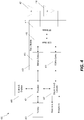
- Fig. 4 further illustrates the details of one example of a beltpack device 400 connectable to the intercom system through the access point.
- the beltpack device 400 includes a processor 401 communicatively coupled to a memory 403.
- the memory 403 stores instructions that, when executed by the processor 401, control the functionality and operation of the beltpack device 400.
- the beltpack 400 also includes a user interface including one or more buttons and displays 405.
- the processor 401 is connected to an analog-to-digital/digital-to-analog converter 407.
- the converter 407 is connected to a microphone for receiving audio and a headphone for outputting audio.
- the beltpack 400 also includes a radio module 409.
- the radio module includes a COM & Control module 411, multiple stored codecs 413, a COM stack 415, and an RF module 417 communicative coupled to one or more antennas 419, 421.
- the analog audio is converted to digital using one of the stored codecs 413.
- the codec defines the format and structure of the digital audio stream created by the beltpack device.
- the digital audio stream is then transmitted through the antenna to an access point and is further transmitted from the access point to one or more other devices connected to the intercom system.
- the codec is used to "decode" the digital data so that it can be output as analog audio through the headphone.
- Fig. 2A illustrates the exterior housing 200 of the beltpack of Fig. 4 .
- Various controls, buttons, and a first display are provided on a top face of the beltpack housing so that they are visible and accessible while the beltpack is being worn.
- a further user interface is provided on the front face of the exterior housing of the beltpack.
- the user interface on the front face includes a graphical display screen 203, a "POWER” button, a "MENU” button, a "SET” button, an "UP” button, and a “DOWN” button.
- An icon-driven user interface is displayed on the screen 203 and used to navigate various menus, adjust settings, and access functionality of the beltpack (or the intercom system).
- the icon-drive user interface is navigated using the up, down, menu, and set buttons as described in further detail below.
- the display screen and the buttons positioned on the front face of the exterior housing of the beltpack might be replaced with a touch-sensitive display screen.
- a splash screen is displayed followed by a status screen.
- the display screen shows a start/home “MENU” screen such as illustrated in Fig. 5 .
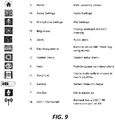
- the home MENU screen in this example shows eight icons displayed in two columns of four including an "audio setup” icon, a microphone setup icon, a backlight/brightness setup icon, an "alerts” screen icon, a key assign icon, a system settings icon, a help icon, and a “scroll list” icon.
- the display screen will show a microphone setup screen such as the one illustrated in Fig. 6 .
- the "microphone setup” screen shows a number of settings that can be adjusted through this sub-menu including microphone gain, system volume, microphone noise gate, and "hot mic.”
- the "microphone setup” screen is a sub-menu, the screen also include an indicator in the upper left corner indicated the current sub-menu. The user interface returns to the main menu screen when the "MENU" button is pressed on the beltpack.
- Some selected sub-menus in the icon-driven user interface include multiple pages. For example, if the user selects the "Alerts" screen from the main menu (of Fig. 5 ), the icon-drive user interface will then first display the "Alerts" screen of Fig. 7 . This first page allows the user to select which "alerts” will be activated including "low battery,” “call,” “out of range,” and “no matrix.” The numeric indicator in the upper right corner of the screen indicates that the current menu includes multiple pages and the display screen is currently showing only the first page. Using the scroll bar positioned along the right side of the screen, the user can advance to the second page as illustrated in Fig. 8 . On this second page, the user can adjust other alert settings.
- the beltpack intercom device provides a portable intercom system that can be used by multiple users in multiple different countries speaking multiple different languages without the need for translations and "language" settings. Furthermore, a user can pick up a beltpack device and start using it immediately regardless of her country of origin or spoken language.
- the invention provides, among other things, a portable wireless device for use with an intercom system that replicates much of the robust functionality of the full wired keypanel, but in a smaller form factor for portable use.
- some implementation of the beltpack keypanel provide, among other things, separate TALK/LISTEN buttons assigned to particular audio channels, displayed Alphas for each assigned channel in 4, 6, or 8 character format, Unicode format for Alphas such that they can be displayed in a user's native language, separate "CLEAR" and "REPLY" buttons on the belt pack for incoming call responding, the ability to move between pages (lists of preassigned key assignments) which on a user interface while continuing to display the Alphas identifying the channel assigned to each TALK/LISTEN button on the beltpack, the ability to adjust the audio volume on individual channels, and the ability to assign and access any of the available intercom audio channels to the TALK/LISTEN buttons.
- the invention is defined by the following claims.
Landscapes
- Engineering & Computer Science (AREA)
- Signal Processing (AREA)
- Computer Networks & Wireless Communication (AREA)
- Mobile Radio Communication Systems (AREA)
- Telephone Function (AREA)
- Circuit For Audible Band Transducer (AREA)
- Interconnected Communication Systems, Intercoms, And Interphones (AREA)
Claims (17)
- Dispositif d'intercommunication mobile (101, 200, 303, 305, 307, 309, 400) comprenant :une pluralité de paires de touches (207, 209), chaque paire de touches (207, 209) comportant une touche de parole (207) et une touche d'écoute (209) ;un écran d'affichage (203, 213) ; etun processeur électronique (401) configuré pourafficher une liste d'identifiants alphanumériques sur l'écran d'affichage (203, 213), chaque identifiant alphanumérique dans la liste d'identifiants alphanumériques correspondant à un canal différent d'une pluralité de canaux sur un système d'intercommunication (107),recevoir une sélection d'un premier identifiant alphanumérique de la liste d'identifiants alphanumériques affichée sur l'écran d'affichage (203, 213),assigner un canal sur le système d'intercommunication (107) correspondant au premier identifiant alphanumérique à une première paire de touches (207, 209) de la pluralité de paires de touches (207, 209) en réponse à la réception de la sélection du premier identifiant alphanumérique de la liste, ettransmettre des données de flux audio du dispositif d'intercommunication mobile (101, 200, 303, 305, 307, 309, 400) au canal sur le système d'intercommunication (107) correspondant au premier identifiant alphanumérique quand la touche de parole (207) de la première paire de touches (207, 209) est actionnée,le dispositif d'intercommunication mobile (101, 200, 303, 305, 307, 309, 400) comprenant en outre une commande rotative (211), etdans lequel le processeur électronique (401) est configuré en outre pour amener le dispositif d'intercommunication mobile à passer sur un mode qui supprime l'éclairage, ou à en sortir, quand la commande rotative (211) fait l'objet d'un double tapotement.
- Dispositif d'intercommunication mobile selon la revendication l, dans lequel le processeur électronique est configuré en outre pour
recevoir une deuxième sélection d'un deuxième identifiant alphanumérique de la liste d'identifiants alphanumériques affichée sur l'écran d'affichage,
réassigner la première paire de touches à un canal sur le système d'intercommunication correspondant au deuxième identifiant alphanumérique en réponse à la réception de la deuxième sélection du deuxième identifiant alphanumérique de la liste, et
transmettre des données de flux audio du dispositif d'intercommunication mobile au canal sur le système d'intercommunication correspondant au deuxième identifiant alphanumérique quand la touche de parole de la première paire de touches est actionnée. - Dispositif d'intercommunication mobile selon la revendication 1, dans lequel le processeur électronique est configuré en outre pour assigner une nouvelle fonction opérationnelle à la touche de parole de la première paire de touches en réponse à l'ajustement de la commande rotative (211) pendant qu'un utilisateur appuie sur la touche de parole de la première paire de touches.
- Dispositif d'intercommunication mobile selon la revendication 1, comprenant en outre un second écran d'affichage (203, 213) et une touche de réponse (215), et dans lequel le processeur électronique est configuré en outre pour
recevoir un appel depuis un second canal sur le système d'intercommunication,
afficher un deuxième identifiant alphanumérique sur le second écran d'affichage, le deuxième identifiant alphanumérique correspondant au second canal, et
transmettre des données de flux audio du dispositif d'intercommunication mobile au second dispositif d'intercommunication mobile en réponse à un actionnement de la touche de réponse (215). - Dispositif d'intercommunication mobile selon la revendication 4, dans lequel le processeur électronique est configuré en outre pour
recevoir une deuxième sélection d'un troisième identifiant alphanumérique de la liste d'identifiants alphanumériques affichée sur l'écran d'affichage,
afficher le troisième identifiant alphanumérique sur le second écran d'affichage en réponse à la réception de la deuxième sélection, et
transmettre des données de flux audio du dispositif d'intercommunication mobile à un troisième canal du système d'intercommunication en réponse à un actionnement de la touche de réponse, le troisième canal correspondant au troisième identifiant alphanumérique. - Dispositif d'intercommunication mobile selon la revendication 1, dans lequel chaque identifiant alphanumérique dans la liste d'identifiants alphanumériques correspond à un utilisateur différent du système d'intercommunication, et dans lequel le processeur électronique est configuré pour assigner le canal sur le système d'intercommunication correspondant au premier identifiant alphanumérique à la première paire de touches en assignant un canal associé à un utilisateur correspondant au premier identifiant alphanumérique sélectionné à la première paire de touches.
- Dispositif d'intercommunication mobile selon la revendication 1, dans lequel chaque identifiant alphanumérique dans la liste d'identifiants alphanumériques correspond à un dispositif d'intercommunication différent (103) connecté au système d'intercommunication, et dans lequel le processeur électronique est configuré pour assigner le canal sur le système d'intercommunication correspondant au premier identifiant alphanumérique à la première paire de touches en assignant un canal associé à un premier dispositif d'intercommunication mobile correspondant au premier identifiant alphanumérique à la première paire de touches.
- Dispositif d'intercommunication mobile selon la revendication l, dans lequel le processeur électronique est configuré en outre pour
accéder à une pluralité d'identifiants alphanumériques Unicode, et
déterminer un langage d'exploitation du dispositif d'intercommunication mobile,
dans lequel le processeur électronique est configuré pour afficher la liste d'identifiants alphanumériques sur l'écran d'affichage en affichant une liste des identifiants alphanumériques Unicode de la pluralité d'identifiants alphanumériques Unicode dans le langage d'exploitation déterminé du dispositif d'intercommunication mobile. - Dispositif d'intercommunication mobile selon la revendication 1, comprenant en outre un boîtier du type portable à la ceinture (200), dans lequel l'écran d'affichage et la pluralité de paires de touches sont montés sur un extérieur du boîtier du type portable à la ceinture (200), et dans lequel le processeur électronique est logé au moins partiellement dans le boîtier du type portable à la ceinture (200).
- Procédé d'exploitation d'un dispositif d'intercommunication mobile (101, 200, 303, 305, 307, 309, 400), le dispositif d'intercommunication mobile (101, 200, 303, 305, 307, 309, 400) comportant une pluralité de paires de touches (207, 209), chaque paire de touches (207, 209) comportant une touche de parole (207) et une touche d'écoute (209), et un écran d'affichage (203, 213), le procédé comprenant :l'affichage d'une liste d'identifiants alphanumériques sur l'écran d'affichage (203, 213), chaque identifiant alphanumérique dans la liste d'identifiants alphanumériques correspondant à un canal différent d'une pluralité de canaux sur un système d'intercommunication (107),la réception d'une sélection d'un premier identifiant alphanumérique de la liste d'identifiants alphanumériques affichée sur l'écran d'affichage (203, 213),l'assignation d'un canal sur le système d'intercommunication correspondant au premier identifiant alphanumérique à une première paire de touches (207, 209) de la pluralité de paires de touches (207, 209) en réponse à la réception de la sélection du premier identifiant alphanumérique de la liste, etla transmission de données de flux audio du dispositif d'intercommunication mobile (101, 200, 303, 305, 307, 309, 400) au canal sur le système d'intercommunication (107) correspondant au premier identifiant alphanumérique quand la touche de parole (207) de la première paire de touches (207, 209) est actionnée,dans lequel le dispositif d'intercommunication mobile (101, 200, 303, 305, 307, 309, 400) comprend en outre une commande rotative (211), etle procédé comprenant en outre un double tapotement de la commande rotative (211) pour amener le dispositif d'intercommunication mobile à passer sur un mode qui supprime l'éclairage, ou à en sortir.
- Procédé selon la revendication 10, comprenant en outre :la réception d'une deuxième sélection d'un deuxième identifiant alphanumérique de la liste d'identifiants alphanumériques affichée sur l'écran d'affichage,la réassignation de la première paire de touches à un canal sur le système d'intercommunication correspondant au deuxième identifiant alphanumérique en réponse à la réception de la deuxième sélection du deuxième identifiant alphanumérique de la liste, etla transmission de données de flux audio du dispositif d'intercommunication mobile au canal sur le système d'intercommunication correspondant au deuxième identifiant alphanumérique quand la touche de parole de la première paire de touches est actionnée.
- Procédé selon la revendication 10, comprenant l'assignation d'une nouvelle fonction opérationnelle à la touche de parole de la première paire de touches en réponse à l'ajustement de la commande rotative (211) quand un utilisateur appuie sur la touche de parole de la première paire de touches.
- Procédé selon la revendication 10, dans lequel le dispositif d'intercommunication mobile comporte en outre un second écran d'affichage (203, 213) et une touche de réponse (215), le procédé comprenant en outre :la réception d'un appel depuis un second canal sur le système d'intercommunication,l'affichage d'un deuxième identifiant alphanumérique sur le second écran d'affichage, le deuxième identifiant alphanumérique correspondant au second canal, etla transmission de données de flux audio du dispositif d'intercommunication mobile au second dispositif d'intercommunication mobile en réponse à un actionnement de la touche de réponse (215).
- Procédé selon la revendication 13, comprenant en outre :la réception d'une deuxième sélection d'un troisième identifiant alphanumérique de la liste d'identifiants alphanumériques affichée sur l'écran d'affichage,l'affichage du troisième identifiant alphanumérique sur le second écran d'affichage en réponse à la réception de la deuxième sélection, etla transmission de données de flux audio du dispositif d'intercommunication mobile à un troisième canal du système d'intercommunication en réponse à un actionnement de la touche de réponse, le troisième canal correspondant au troisième identifiant alphanumérique.
- Procédé selon la revendication 10, dans lequel chaque identifiant alphanumérique dans la liste d'identifiants alphanumériques correspond à un utilisateur différent du système d'intercommunication, et dans lequel l'assignation du canal sur le système d'intercommunication correspondant au premier identifiant alphanumérique à la première paire de touches comporte l'assignation d'un canal associé à un utilisateur correspondant au premier identifiant alphanumérique sélectionné à la première paire de touches.
- Procédé selon la revendication 10, dans lequel chaque identifiant alphanumérique dans la liste d'identifiants alphanumériques correspond à un dispositif d'intercommunication différent (103) connecté au système d'intercommunication, et dans lequel l'assignation du canal sur le système d'intercommunication correspondant au premier identifiant alphanumérique à la première paire de touches en assignant un canal associé à un premier dispositif d'intercommunication mobile correspondant au premier identifiant alphanumérique à la première paire de touches.
- Procédé selon la revendication 10, comprenant en outre
l'accès à une pluralité d'identifiants alphanumériques Unicode, et
la détermination d'un langage d'exploitation du dispositif d'intercommunication mobile,
dans lequel l'affichage de la liste d'identifiants alphanumériques sur l'écran d'affichage comporte l'affichage d'une liste des identifiants alphanumériques de la pluralité d'identifiants alphanumériques Unicode dans le langage d'exploitation déterminé du dispositif d'intercommunication mobile.
Applications Claiming Priority (3)
| Application Number | Priority Date | Filing Date | Title |
|---|---|---|---|
| US201662307983P | 2016-03-14 | 2016-03-14 | |
| US201662307978P | 2016-03-14 | 2016-03-14 | |
| PCT/EP2017/055935 WO2017157905A1 (fr) | 2016-03-14 | 2017-03-14 | Panneau de touches portable pour système d'intercommunication |
Publications (2)
| Publication Number | Publication Date |
|---|---|
| EP3430794A1 EP3430794A1 (fr) | 2019-01-23 |
| EP3430794B1 true EP3430794B1 (fr) | 2020-07-29 |
Family
ID=58360971
Family Applications (1)
| Application Number | Title | Priority Date | Filing Date |
|---|---|---|---|
| EP17712050.8A Active EP3430794B1 (fr) | 2016-03-14 | 2017-03-14 | Panneau de touches portable pour système d'intercommunication |
Country Status (6)
| Country | Link |
|---|---|
| US (1) | US11412083B2 (fr) |
| EP (1) | EP3430794B1 (fr) |
| CN (1) | CN108781242B (fr) |
| AU (1) | AU2017235284B2 (fr) |
| SG (1) | SG11201807000XA (fr) |
| WO (1) | WO2017157905A1 (fr) |
Families Citing this family (4)
| Publication number | Priority date | Publication date | Assignee | Title |
|---|---|---|---|---|
| SG11201807000XA (en) | 2016-03-14 | 2018-09-27 | Bosch Gmbh Robert | Portable keypanel for intercom system |
| DE102017116002A1 (de) * | 2017-03-28 | 2018-10-04 | Riedel Communications International GmbH | Belt-Pack |
| US11423717B2 (en) * | 2018-08-01 | 2022-08-23 | The Chamberlain Group Llc | Movable barrier operator and transmitter pairing over a network |
| USD965549S1 (en) | 2020-11-10 | 2022-10-04 | Robert Bosch Gmbh | Intercom beltpack |
Citations (1)
| Publication number | Priority date | Publication date | Assignee | Title |
|---|---|---|---|---|
| US20050111629A1 (en) * | 2003-11-20 | 2005-05-26 | International Business Machines Corporation | Telephony based remote location monitoring |
Family Cites Families (22)
| Publication number | Priority date | Publication date | Assignee | Title |
|---|---|---|---|---|
| AU2364095A (en) * | 1994-05-12 | 1995-12-05 | Ast Research, Inc. | Cpu activity monitoring through cache watching |
| KR0144388B1 (ko) * | 1995-08-24 | 1998-08-01 | 김광호 | 키폰시스템에서 언어다중화 표시방법 |
| KR100228911B1 (ko) | 1997-08-14 | 1999-11-01 | 윤종용 | 시분할 방식의 무선전화기에서 휴대장치간 인터컴 방법 |
| CN1091992C (zh) * | 1998-03-12 | 2002-10-02 | 黄德祥 | 无线对话装置 |
| DE19925384A1 (de) | 1999-06-02 | 2000-12-07 | Oxeno Olefinchemie Gmbh | Verfahren zur katalytischen Durchführung von Mehrphasenreaktionen, insbesondere Hydroformylierungen |
| US7103392B2 (en) * | 2002-01-15 | 2006-09-05 | 3M Innovative Properties Company | Wireless intercom system |
| US20030140343A1 (en) | 2002-01-18 | 2003-07-24 | General Instrument Corporation | Remote wireless device with EPG display, intercom and emulated control buttons |
| JP2004179833A (ja) | 2002-11-26 | 2004-06-24 | Matsushita Electric Works Ltd | ワイヤレスインターホンシステム |
| US7120388B2 (en) | 2002-12-16 | 2006-10-10 | 3M Innovative Properties Company | Wireless intercom system and method of communicating using wireless intercom system |
| US7123142B2 (en) | 2003-03-06 | 2006-10-17 | Unitone | Integrated intercom and security system |
| US7400716B1 (en) | 2004-07-09 | 2008-07-15 | Gibson Sr Aaron | Multifunctional intercom system with message recording/retrieval functions |
| KR100730718B1 (ko) * | 2005-10-11 | 2007-06-21 | 삼성전자주식회사 | 영상처리장치 및 영상처리방법 |
| CN101039347A (zh) | 2006-06-02 | 2007-09-19 | 深圳泰丰网络技术有限公司 | 无绳无线电话机及利用其的电话系统和无线会议电话系统 |
| US8839146B2 (en) | 2006-09-05 | 2014-09-16 | Qualcomm Incorporated | User interface for a wireless device |
| US8451232B2 (en) | 2007-01-07 | 2013-05-28 | Apple Inc. | Portable multifunction device, method, and graphical user interface for interacting with user input elements in displayed content |
| US20100256529A1 (en) * | 2009-04-07 | 2010-10-07 | Graco Children's Products Inc. | Prenatal Listening Device |
| US20100285750A1 (en) | 2009-05-06 | 2010-11-11 | Chris Simonelic | Wireless Audio Stereo and Intercom System |
| JP2011205227A (ja) | 2010-03-24 | 2011-10-13 | Panasonic Electric Works Co Ltd | インターホンシステム |
| US9906637B2 (en) | 2012-12-27 | 2018-02-27 | Kyocera Corporation | Wireless terminal device |
| CN203352569U (zh) | 2013-07-02 | 2013-12-18 | 中国计量学院 | 一种适用于多路广播通道的无线对讲机应急通知装置 |
| KR102108439B1 (ko) | 2013-08-23 | 2020-05-08 | 삼성전자주식회사 | 휴대 장치 및 휴대 장치의 사용 제한 방법 |
| SG11201807000XA (en) | 2016-03-14 | 2018-09-27 | Bosch Gmbh Robert | Portable keypanel for intercom system |
-
2017
- 2017-03-14 SG SG11201807000XA patent/SG11201807000XA/en unknown
- 2017-03-14 EP EP17712050.8A patent/EP3430794B1/fr active Active
- 2017-03-14 US US16/328,568 patent/US11412083B2/en active Active
- 2017-03-14 WO PCT/EP2017/055935 patent/WO2017157905A1/fr not_active Ceased
- 2017-03-14 AU AU2017235284A patent/AU2017235284B2/en active Active
- 2017-03-14 CN CN201780017171.7A patent/CN108781242B/zh active Active
Patent Citations (1)
| Publication number | Priority date | Publication date | Assignee | Title |
|---|---|---|---|---|
| US20050111629A1 (en) * | 2003-11-20 | 2005-05-26 | International Business Machines Corporation | Telephony based remote location monitoring |
Also Published As
| Publication number | Publication date |
|---|---|
| CN108781242B (zh) | 2021-05-11 |
| SG11201807000XA (en) | 2018-09-27 |
| CN108781242A (zh) | 2018-11-09 |
| WO2017157905A1 (fr) | 2017-09-21 |
| EP3430794A1 (fr) | 2019-01-23 |
| AU2017235284B2 (en) | 2020-03-19 |
| AU2017235284A1 (en) | 2018-09-06 |
| US20210029237A1 (en) | 2021-01-28 |
| US11412083B2 (en) | 2022-08-09 |
Similar Documents
| Publication | Publication Date | Title |
|---|---|---|
| EP3430794B1 (fr) | Panneau de touches portable pour système d'intercommunication | |
| US20020168947A1 (en) | Integral navigation keys for a mobile handset | |
| US8121650B2 (en) | Menu displaying method in a mobile terminal | |
| US8600445B2 (en) | Mobile communication terminal including rotary key and method of controlling operation thereof | |
| CN101355757B (zh) | 无线终端及其中处理呼叫信号的方法 | |
| US8552996B2 (en) | Mobile terminal apparatus and method of starting application | |
| EP2899905A2 (fr) | Procédé de liaison d'affichage de programme de diffusion de télévision entre un appareil de communication mobile et une télévision numérique et appareil de communication mobile et télévision numérique associée | |
| KR20010054519A (ko) | 통신단말기에서 사용자 정의에 따른 단축키 설정 방법 | |
| KR100672343B1 (ko) | 문자 입력 장치 및 이의 입력 방법 | |
| JP2008525885A (ja) | 携帯無線装置用キーパッド | |
| JP2006352875A (ja) | 移動通信端末機及び移動通信端末機におけるデータ処理方法 | |
| KR100661584B1 (ko) | 네비게이션키 기능이 구비된 이동통신단말기 및 그제어방법 | |
| EP2838030B1 (fr) | Appareil terminal mobile, système de communication mobile, procédé et programme de communication mobile | |
| KR100628769B1 (ko) | 부가서비스메뉴 쥐유아이 표시기능이 구비된이동통신단말기 및 그 제어방법 | |
| CN101388921B (zh) | 手持电子设备 | |
| EP3563216B1 (fr) | Procédé et appareil pour commander un terminal mobile | |
| KR101239950B1 (ko) | 이동통신기기와 디지털 tv 간의 tv 방송 프로그램 연계 시청방법과, 그 이동통신기기 및 디지털 tv | |
| KR100810237B1 (ko) | 휴대 단말기에서 다중언어를 이용한 텍스트 입력 방법 | |
| KR20050077606A (ko) | 휴대단말기의 메뉴 마지막 항목 표시방법 | |
| KR101208981B1 (ko) | 방송 수신 가능한 이동통신단말기의 전력 소모 감소 방법및 이를 적용한 이동통신단말기 | |
| KR100409278B1 (ko) | 문자 입력 방법 | |
| KR20000030928A (ko) | 이동통신 단말기의 문자 메시지 입력방법과표시방법 | |
| JP2010081079A (ja) | 無線通信システム | |
| KR20050039106A (ko) | 이동통신단말기에서 화면 확대 표시 방법 | |
| KR20060095712A (ko) | 그룹통신 중 사용자 감정을 표시하기 위한 기능을 갖는 이동통신 단말기 및 그룹통신 제어방법 |
Legal Events
| Date | Code | Title | Description |
|---|---|---|---|
| STAA | Information on the status of an ep patent application or granted ep patent |
Free format text: STATUS: UNKNOWN |
|
| STAA | Information on the status of an ep patent application or granted ep patent |
Free format text: STATUS: THE INTERNATIONAL PUBLICATION HAS BEEN MADE |
|
| PUAI | Public reference made under article 153(3) epc to a published international application that has entered the european phase |
Free format text: ORIGINAL CODE: 0009012 |
|
| STAA | Information on the status of an ep patent application or granted ep patent |
Free format text: STATUS: REQUEST FOR EXAMINATION WAS MADE |
|
| 17P | Request for examination filed |
Effective date: 20181015 |
|
| AK | Designated contracting states |
Kind code of ref document: A1 Designated state(s): AL AT BE BG CH CY CZ DE DK EE ES FI FR GB GR HR HU IE IS IT LI LT LU LV MC MK MT NL NO PL PT RO RS SE SI SK SM TR |
|
| AX | Request for extension of the european patent |
Extension state: BA ME |
|
| DAV | Request for validation of the european patent (deleted) | ||
| DAX | Request for extension of the european patent (deleted) | ||
| STAA | Information on the status of an ep patent application or granted ep patent |
Free format text: STATUS: EXAMINATION IS IN PROGRESS |
|
| 17Q | First examination report despatched |
Effective date: 20190716 |
|
| GRAP | Despatch of communication of intention to grant a patent |
Free format text: ORIGINAL CODE: EPIDOSNIGR1 |
|
| STAA | Information on the status of an ep patent application or granted ep patent |
Free format text: STATUS: GRANT OF PATENT IS INTENDED |
|
| INTG | Intention to grant announced |
Effective date: 20200327 |
|
| RAP1 | Party data changed (applicant data changed or rights of an application transferred) |
Owner name: ROBERT BOSCH GMBH |
|
| GRAS | Grant fee paid |
Free format text: ORIGINAL CODE: EPIDOSNIGR3 |
|
| GRAA | (expected) grant |
Free format text: ORIGINAL CODE: 0009210 |
|
| STAA | Information on the status of an ep patent application or granted ep patent |
Free format text: STATUS: THE PATENT HAS BEEN GRANTED |
|
| AK | Designated contracting states |
Kind code of ref document: B1 Designated state(s): AL AT BE BG CH CY CZ DE DK EE ES FI FR GB GR HR HU IE IS IT LI LT LU LV MC MK MT NL NO PL PT RO RS SE SI SK SM TR |
|
| REG | Reference to a national code |
Ref country code: CH Ref legal event code: EP |
|
| REG | Reference to a national code |
Ref country code: DE Ref legal event code: R096 Ref document number: 602017020538 Country of ref document: DE |
|
| REG | Reference to a national code |
Ref country code: AT Ref legal event code: REF Ref document number: 1297187 Country of ref document: AT Kind code of ref document: T Effective date: 20200815 |
|
| REG | Reference to a national code |
Ref country code: IE Ref legal event code: FG4D |
|
| REG | Reference to a national code |
Ref country code: LT Ref legal event code: MG4D |
|
| REG | Reference to a national code |
Ref country code: NL Ref legal event code: MP Effective date: 20200729 |
|
| REG | Reference to a national code |
Ref country code: AT Ref legal event code: MK05 Ref document number: 1297187 Country of ref document: AT Kind code of ref document: T Effective date: 20200729 |
|
| PG25 | Lapsed in a contracting state [announced via postgrant information from national office to epo] |
Ref country code: PT Free format text: LAPSE BECAUSE OF FAILURE TO SUBMIT A TRANSLATION OF THE DESCRIPTION OR TO PAY THE FEE WITHIN THE PRESCRIBED TIME-LIMIT Effective date: 20201130 Ref country code: FI Free format text: LAPSE BECAUSE OF FAILURE TO SUBMIT A TRANSLATION OF THE DESCRIPTION OR TO PAY THE FEE WITHIN THE PRESCRIBED TIME-LIMIT Effective date: 20200729 Ref country code: AT Free format text: LAPSE BECAUSE OF FAILURE TO SUBMIT A TRANSLATION OF THE DESCRIPTION OR TO PAY THE FEE WITHIN THE PRESCRIBED TIME-LIMIT Effective date: 20200729 Ref country code: SE Free format text: LAPSE BECAUSE OF FAILURE TO SUBMIT A TRANSLATION OF THE DESCRIPTION OR TO PAY THE FEE WITHIN THE PRESCRIBED TIME-LIMIT Effective date: 20200729 Ref country code: NO Free format text: LAPSE BECAUSE OF FAILURE TO SUBMIT A TRANSLATION OF THE DESCRIPTION OR TO PAY THE FEE WITHIN THE PRESCRIBED TIME-LIMIT Effective date: 20201029 Ref country code: HR Free format text: LAPSE BECAUSE OF FAILURE TO SUBMIT A TRANSLATION OF THE DESCRIPTION OR TO PAY THE FEE WITHIN THE PRESCRIBED TIME-LIMIT Effective date: 20200729 Ref country code: GR Free format text: LAPSE BECAUSE OF FAILURE TO SUBMIT A TRANSLATION OF THE DESCRIPTION OR TO PAY THE FEE WITHIN THE PRESCRIBED TIME-LIMIT Effective date: 20201030 Ref country code: ES Free format text: LAPSE BECAUSE OF FAILURE TO SUBMIT A TRANSLATION OF THE DESCRIPTION OR TO PAY THE FEE WITHIN THE PRESCRIBED TIME-LIMIT Effective date: 20200729 Ref country code: LT Free format text: LAPSE BECAUSE OF FAILURE TO SUBMIT A TRANSLATION OF THE DESCRIPTION OR TO PAY THE FEE WITHIN THE PRESCRIBED TIME-LIMIT Effective date: 20200729 Ref country code: BG Free format text: LAPSE BECAUSE OF FAILURE TO SUBMIT A TRANSLATION OF THE DESCRIPTION OR TO PAY THE FEE WITHIN THE PRESCRIBED TIME-LIMIT Effective date: 20201029 |
|
| PG25 | Lapsed in a contracting state [announced via postgrant information from national office to epo] |
Ref country code: PL Free format text: LAPSE BECAUSE OF FAILURE TO SUBMIT A TRANSLATION OF THE DESCRIPTION OR TO PAY THE FEE WITHIN THE PRESCRIBED TIME-LIMIT Effective date: 20200729 Ref country code: LV Free format text: LAPSE BECAUSE OF FAILURE TO SUBMIT A TRANSLATION OF THE DESCRIPTION OR TO PAY THE FEE WITHIN THE PRESCRIBED TIME-LIMIT Effective date: 20200729 Ref country code: RS Free format text: LAPSE BECAUSE OF FAILURE TO SUBMIT A TRANSLATION OF THE DESCRIPTION OR TO PAY THE FEE WITHIN THE PRESCRIBED TIME-LIMIT Effective date: 20200729 Ref country code: IS Free format text: LAPSE BECAUSE OF FAILURE TO SUBMIT A TRANSLATION OF THE DESCRIPTION OR TO PAY THE FEE WITHIN THE PRESCRIBED TIME-LIMIT Effective date: 20201129 |
|
| PG25 | Lapsed in a contracting state [announced via postgrant information from national office to epo] |
Ref country code: NL Free format text: LAPSE BECAUSE OF FAILURE TO SUBMIT A TRANSLATION OF THE DESCRIPTION OR TO PAY THE FEE WITHIN THE PRESCRIBED TIME-LIMIT Effective date: 20200729 |
|
| PG25 | Lapsed in a contracting state [announced via postgrant information from national office to epo] |
Ref country code: IT Free format text: LAPSE BECAUSE OF FAILURE TO SUBMIT A TRANSLATION OF THE DESCRIPTION OR TO PAY THE FEE WITHIN THE PRESCRIBED TIME-LIMIT Effective date: 20200729 Ref country code: EE Free format text: LAPSE BECAUSE OF FAILURE TO SUBMIT A TRANSLATION OF THE DESCRIPTION OR TO PAY THE FEE WITHIN THE PRESCRIBED TIME-LIMIT Effective date: 20200729 Ref country code: SM Free format text: LAPSE BECAUSE OF FAILURE TO SUBMIT A TRANSLATION OF THE DESCRIPTION OR TO PAY THE FEE WITHIN THE PRESCRIBED TIME-LIMIT Effective date: 20200729 Ref country code: RO Free format text: LAPSE BECAUSE OF FAILURE TO SUBMIT A TRANSLATION OF THE DESCRIPTION OR TO PAY THE FEE WITHIN THE PRESCRIBED TIME-LIMIT Effective date: 20200729 Ref country code: DK Free format text: LAPSE BECAUSE OF FAILURE TO SUBMIT A TRANSLATION OF THE DESCRIPTION OR TO PAY THE FEE WITHIN THE PRESCRIBED TIME-LIMIT Effective date: 20200729 Ref country code: CZ Free format text: LAPSE BECAUSE OF FAILURE TO SUBMIT A TRANSLATION OF THE DESCRIPTION OR TO PAY THE FEE WITHIN THE PRESCRIBED TIME-LIMIT Effective date: 20200729 |
|
| REG | Reference to a national code |
Ref country code: DE Ref legal event code: R097 Ref document number: 602017020538 Country of ref document: DE |
|
| PG25 | Lapsed in a contracting state [announced via postgrant information from national office to epo] |
Ref country code: AL Free format text: LAPSE BECAUSE OF FAILURE TO SUBMIT A TRANSLATION OF THE DESCRIPTION OR TO PAY THE FEE WITHIN THE PRESCRIBED TIME-LIMIT Effective date: 20200729 |
|
| PLBE | No opposition filed within time limit |
Free format text: ORIGINAL CODE: 0009261 |
|
| STAA | Information on the status of an ep patent application or granted ep patent |
Free format text: STATUS: NO OPPOSITION FILED WITHIN TIME LIMIT |
|
| PG25 | Lapsed in a contracting state [announced via postgrant information from national office to epo] |
Ref country code: SK Free format text: LAPSE BECAUSE OF FAILURE TO SUBMIT A TRANSLATION OF THE DESCRIPTION OR TO PAY THE FEE WITHIN THE PRESCRIBED TIME-LIMIT Effective date: 20200729 |
|
| 26N | No opposition filed |
Effective date: 20210430 |
|
| PG25 | Lapsed in a contracting state [announced via postgrant information from national office to epo] |
Ref country code: SI Free format text: LAPSE BECAUSE OF FAILURE TO SUBMIT A TRANSLATION OF THE DESCRIPTION OR TO PAY THE FEE WITHIN THE PRESCRIBED TIME-LIMIT Effective date: 20200729 |
|
| PG25 | Lapsed in a contracting state [announced via postgrant information from national office to epo] |
Ref country code: MC Free format text: LAPSE BECAUSE OF FAILURE TO SUBMIT A TRANSLATION OF THE DESCRIPTION OR TO PAY THE FEE WITHIN THE PRESCRIBED TIME-LIMIT Effective date: 20200729 |
|
| REG | Reference to a national code |
Ref country code: CH Ref legal event code: PL |
|
| REG | Reference to a national code |
Ref country code: BE Ref legal event code: MM Effective date: 20210331 |
|
| PG25 | Lapsed in a contracting state [announced via postgrant information from national office to epo] |
Ref country code: LI Free format text: LAPSE BECAUSE OF NON-PAYMENT OF DUE FEES Effective date: 20210331 Ref country code: LU Free format text: LAPSE BECAUSE OF NON-PAYMENT OF DUE FEES Effective date: 20210314 Ref country code: CH Free format text: LAPSE BECAUSE OF NON-PAYMENT OF DUE FEES Effective date: 20210331 Ref country code: IE Free format text: LAPSE BECAUSE OF NON-PAYMENT OF DUE FEES Effective date: 20210314 |
|
| PG25 | Lapsed in a contracting state [announced via postgrant information from national office to epo] |
Ref country code: BE Free format text: LAPSE BECAUSE OF NON-PAYMENT OF DUE FEES Effective date: 20210331 |
|
| PG25 | Lapsed in a contracting state [announced via postgrant information from national office to epo] |
Ref country code: CY Free format text: LAPSE BECAUSE OF FAILURE TO SUBMIT A TRANSLATION OF THE DESCRIPTION OR TO PAY THE FEE WITHIN THE PRESCRIBED TIME-LIMIT Effective date: 20200729 |
|
| PG25 | Lapsed in a contracting state [announced via postgrant information from national office to epo] |
Ref country code: HU Free format text: LAPSE BECAUSE OF FAILURE TO SUBMIT A TRANSLATION OF THE DESCRIPTION OR TO PAY THE FEE WITHIN THE PRESCRIBED TIME-LIMIT; INVALID AB INITIO Effective date: 20170314 |
|
| PG25 | Lapsed in a contracting state [announced via postgrant information from national office to epo] |
Ref country code: MK Free format text: LAPSE BECAUSE OF FAILURE TO SUBMIT A TRANSLATION OF THE DESCRIPTION OR TO PAY THE FEE WITHIN THE PRESCRIBED TIME-LIMIT Effective date: 20200729 |
|
| PG25 | Lapsed in a contracting state [announced via postgrant information from national office to epo] |
Ref country code: TR Free format text: LAPSE BECAUSE OF FAILURE TO SUBMIT A TRANSLATION OF THE DESCRIPTION OR TO PAY THE FEE WITHIN THE PRESCRIBED TIME-LIMIT Effective date: 20200729 |
|
| PG25 | Lapsed in a contracting state [announced via postgrant information from national office to epo] |
Ref country code: MT Free format text: LAPSE BECAUSE OF FAILURE TO SUBMIT A TRANSLATION OF THE DESCRIPTION OR TO PAY THE FEE WITHIN THE PRESCRIBED TIME-LIMIT Effective date: 20200729 |
|
| PGFP | Annual fee paid to national office [announced via postgrant information from national office to epo] |
Ref country code: GB Payment date: 20250324 Year of fee payment: 9 |
|
| PGFP | Annual fee paid to national office [announced via postgrant information from national office to epo] |
Ref country code: DE Payment date: 20260305 Year of fee payment: 10 |
|
| PGFP | Annual fee paid to national office [announced via postgrant information from national office to epo] |
Ref country code: FR Payment date: 20260324 Year of fee payment: 10 |