EP3433992B1 - Stockage de données dans un cloud - Google Patents
Stockage de données dans un cloud Download PDFInfo
- Publication number
- EP3433992B1 EP3433992B1 EP17710982.4A EP17710982A EP3433992B1 EP 3433992 B1 EP3433992 B1 EP 3433992B1 EP 17710982 A EP17710982 A EP 17710982A EP 3433992 B1 EP3433992 B1 EP 3433992B1
- Authority
- EP
- European Patent Office
- Prior art keywords
- evaluation result
- client
- cloud
- storage device
- cloud storage
- Prior art date
- Legal status (The legal status is an assumption and is not a legal conclusion. Google has not performed a legal analysis and makes no representation as to the accuracy of the status listed.)
- Active
Links
Images


Classifications
-
- G—PHYSICS
- G06—COMPUTING OR CALCULATING; COUNTING
- G06F—ELECTRIC DIGITAL DATA PROCESSING
- G06F21/00—Security arrangements for protecting computers, components thereof, programs or data against unauthorised activity
- G06F21/60—Protecting data
- G06F21/62—Protecting access to data via a platform, e.g. using keys or access control rules
- G06F21/6218—Protecting access to data via a platform, e.g. using keys or access control rules to a system of files or objects, e.g. local or distributed file system or database
-
- G—PHYSICS
- G06—COMPUTING OR CALCULATING; COUNTING
- G06F—ELECTRIC DIGITAL DATA PROCESSING
- G06F21/00—Security arrangements for protecting computers, components thereof, programs or data against unauthorised activity
- G06F21/60—Protecting data
- G06F21/62—Protecting access to data via a platform, e.g. using keys or access control rules
- G06F21/6209—Protecting access to data via a platform, e.g. using keys or access control rules to a single file or object, e.g. in a secure envelope, encrypted and accessed using a key, or with access control rules appended to the object itself
-
- G—PHYSICS
- G06—COMPUTING OR CALCULATING; COUNTING
- G06F—ELECTRIC DIGITAL DATA PROCESSING
- G06F21/00—Security arrangements for protecting computers, components thereof, programs or data against unauthorised activity
- G06F21/60—Protecting data
- G06F21/602—Providing cryptographic facilities or services
-
- H—ELECTRICITY
- H04—ELECTRIC COMMUNICATION TECHNIQUE
- H04L—TRANSMISSION OF DIGITAL INFORMATION, e.g. TELEGRAPHIC COMMUNICATION
- H04L63/00—Network architectures or network communication protocols for network security
- H04L63/10—Network architectures or network communication protocols for network security for controlling access to devices or network resources
- H04L63/102—Entity profiles
-
- H—ELECTRICITY
- H04—ELECTRIC COMMUNICATION TECHNIQUE
- H04L—TRANSMISSION OF DIGITAL INFORMATION, e.g. TELEGRAPHIC COMMUNICATION
- H04L9/00—Cryptographic mechanisms or cryptographic arrangements for secret or secure communications; Network security protocols
- H04L9/06—Cryptographic mechanisms or cryptographic arrangements for secret or secure communications; Network security protocols the encryption apparatus using shift registers or memories for block-wise or stream coding, e.g. DES systems or RC4; Hash functions; Pseudorandom sequence generators
- H04L9/0643—Hash functions, e.g. MD5, SHA, HMAC or f9 MAC
-
- H—ELECTRICITY
- H04—ELECTRIC COMMUNICATION TECHNIQUE
- H04L—TRANSMISSION OF DIGITAL INFORMATION, e.g. TELEGRAPHIC COMMUNICATION
- H04L9/00—Cryptographic mechanisms or cryptographic arrangements for secret or secure communications; Network security protocols
- H04L9/08—Key distribution or management, e.g. generation, sharing or updating, of cryptographic keys or passwords
- H04L9/0816—Key establishment, i.e. cryptographic processes or cryptographic protocols whereby a shared secret becomes available to two or more parties, for subsequent use
- H04L9/0819—Key transport or distribution, i.e. key establishment techniques where one party creates or otherwise obtains a secret value, and securely transfers it to the other(s)
- H04L9/083—Key transport or distribution, i.e. key establishment techniques where one party creates or otherwise obtains a secret value, and securely transfers it to the other(s) involving central third party, e.g. key distribution center [KDC] or trusted third party [TTP]
-
- H—ELECTRICITY
- H04—ELECTRIC COMMUNICATION TECHNIQUE
- H04L—TRANSMISSION OF DIGITAL INFORMATION, e.g. TELEGRAPHIC COMMUNICATION
- H04L9/00—Cryptographic mechanisms or cryptographic arrangements for secret or secure communications; Network security protocols
- H04L9/08—Key distribution or management, e.g. generation, sharing or updating, of cryptographic keys or passwords
- H04L9/0894—Escrow, recovery or storing of secret information, e.g. secret key escrow or cryptographic key storage
- H04L9/0897—Escrow, recovery or storing of secret information, e.g. secret key escrow or cryptographic key storage involving additional devices, e.g. trusted platform module [TPM], smartcard or USB
-
- H—ELECTRICITY
- H04—ELECTRIC COMMUNICATION TECHNIQUE
- H04L—TRANSMISSION OF DIGITAL INFORMATION, e.g. TELEGRAPHIC COMMUNICATION
- H04L9/00—Cryptographic mechanisms or cryptographic arrangements for secret or secure communications; Network security protocols
- H04L9/32—Cryptographic mechanisms or cryptographic arrangements for secret or secure communications; Network security protocols including means for verifying the identity or authority of a user of the system or for message authentication, e.g. authorization, entity authentication, data integrity or data verification, non-repudiation, key authentication or verification of credentials
- H04L9/3218—Cryptographic mechanisms or cryptographic arrangements for secret or secure communications; Network security protocols including means for verifying the identity or authority of a user of the system or for message authentication, e.g. authorization, entity authentication, data integrity or data verification, non-repudiation, key authentication or verification of credentials using proof of knowledge, e.g. Fiat-Shamir, GQ, Schnorr, ornon-interactive zero-knowledge proofs
-
- H—ELECTRICITY
- H04—ELECTRIC COMMUNICATION TECHNIQUE
- H04L—TRANSMISSION OF DIGITAL INFORMATION, e.g. TELEGRAPHIC COMMUNICATION
- H04L9/00—Cryptographic mechanisms or cryptographic arrangements for secret or secure communications; Network security protocols
- H04L9/32—Cryptographic mechanisms or cryptographic arrangements for secret or secure communications; Network security protocols including means for verifying the identity or authority of a user of the system or for message authentication, e.g. authorization, entity authentication, data integrity or data verification, non-repudiation, key authentication or verification of credentials
- H04L9/3236—Cryptographic mechanisms or cryptographic arrangements for secret or secure communications; Network security protocols including means for verifying the identity or authority of a user of the system or for message authentication, e.g. authorization, entity authentication, data integrity or data verification, non-repudiation, key authentication or verification of credentials using cryptographic hash functions
-
- H—ELECTRICITY
- H04—ELECTRIC COMMUNICATION TECHNIQUE
- H04L—TRANSMISSION OF DIGITAL INFORMATION, e.g. TELEGRAPHIC COMMUNICATION
- H04L63/00—Network architectures or network communication protocols for network security
- H04L63/10—Network architectures or network communication protocols for network security for controlling access to devices or network resources
Definitions
- the present invention relates to cloud storage of data. More in particular, the present invention relates to a method for a client device to request data from a cloud storage device, a method for a cloud storage device to provide data to a client device, and to an apparatus embodying these methods.
- Each data retrieval request may involve an access policy check, in which an entity determines whether it is allowed to retrieve the data: both a cloud storage device and a client device may check whether the particular requesting user is allowed to retrieve the data.
- an access policy check in which an entity determines whether it is allowed to retrieve the data: both a cloud storage device and a client device may check whether the particular requesting user is allowed to retrieve the data.
- one of the devices may be faulty or compromised, in which case the access policy check may be abused.
- United States Patent Application US2012/0321086 discloses a data storage system which receives encrypted data from a user.
- the data storage system stores the received encrypted data according to a predefined policy.
- the policy allows the encrypted data to be released when a threshold number of requests from verified third parties is received.
- This known system requires a number of third parties to allow data access. In the absence of third parties, or when communications with third parties fail, this known system cannot work.
- United States Patent Application US2016/078239 discloses a method for managing data in a computer network environment.
- the method comprises the step of a service provider receiving, from a user, a policy describing permissible use of a piece of data, and the service provider requesting the cryptographic key to access the piece of data from a trust authority.
- the trust authority may request additional assurance from the service provider stating that a condition in the policy is fulfilled.
- United States Patent Application US2015/150075 discloses a system for verifying compliance with a data access policy, by verifying permission for access to a query result, based on a representation of the data access policy included in the query result.
- a method for a client device to request data from a cloud storage device comprises:
- the client device By evaluating an access policy associated with the requested data and producing a client evaluation result, the client device checks whether the requesting user may access the requested data. In other words, the client device checks whether the user request complies with the access policy.
- the cloud evaluation result which has been produced by the cloud storage device by also evaluating the access policy associated with the requested data, it is possible to compare the evaluation results and to determine whether both devices correctly applied the same policy. If the evaluation results differ, a warning message is produced which may be transmitted to the user. The warning message may additionally, or alternatively, be sent to another entity, such as a systems administrator, an events handling center, or a key management device.
- the access policy may be stored in both the client device and the cloud storage device, so that each device may independently evaluate the access policy.
- the access policy may additionally, or alternatively, be stored in a further device, such as a key management device.
- information such as the user request, the cloud evaluation result and the client evaluation result may be encrypted before transmission and be decrypted upon receipt to increase the data security of the method.
- the warning message may also be encrypted before transmission.
- the warning message is transmitted when the client evaluation result fails to match the cloud evaluation result, that is, when the policy evaluation carried out by the client device and the policy evaluation carried out by the cloud storage device yield different results. This may be an indication of a compromised device.
- the client device By producing and transmitting a commitment on its evaluation result to the cloud storage device, the client device lets the cloud storage device know that it has evaluated the access policy without, however, disclosing the outcome of the evaluation.
- the cloud storage device may later use the commitment to check whether the client device's evaluation result was influenced by the cloud storage device's evaluation, as the client device's evaluation result should conform with the commitment. Producing and transmitting a commitment thus allows checking the evaluation result.
- the client cryptographic commitment may be transmitted together with the user request, but may also be transmitted separately.
- An embodiment of the method further comprises transmitting the client evaluation result to the cloud storage device. This may be done unconditionally, but is preferably only carried out if the client evaluation result matches the cloud evaluation result, and if the evaluation result is positive. That is, if the comparison of the evaluation results carried out by the client device produces a match, indicating that the client device and the cloud storage device agree on the access policy of the requested data, then the client device transmits its evaluation result to the cloud storage device. This allows the cloud storage device to also carry out a comparison of the evaluation results. As the cloud storage device has already received the commitment on the evaluation result of the client device, receiving the actual evaluation result allows the cloud storage device to verify the client evaluation result, thus ensuring that it is unaltered. In addition, it can be required that the evaluation result is positive, that is, that the evaluation result indicates that the request matches the access policy.
- the evaluation result may comprise a single bit, or a limited number of bits.
- the client evaluation result may be extended by a random number, which may have a length of 128, 256 bits or even more. Both the client device and the cloud storage device may store this common random number, allowing both devices to reproduce the commitments. Alternatively, or additionally, this random number may be transmitted together with the client evaluation result.
- the client evaluation result may always be sent to the cloud storage device, independent of the outcome of the comparing action, but preferably after the comparing action.
- the evaluation results produced by the client device and the cloud storage device may be positive, indicating that the requested data may be accessed by the requesting user, or negative, indicating that the requesting user may not access the requested data. If the comparison produces a match, and if the evaluation results are positive, the client device may receive the requested data from the cloud storage device. Subsequently, the client device may transmit the received data to the user. If the evaluation results are negative, the client device may transmit a suitable message to the user, indicating that access to the requested data is denied.
- the client device can transmit its commitment on its evaluation result to the cloud storage device.
- This measure enhances the security, as the cloud storage device first has to transmit its evaluation result before receiving the client evaluation result, thus excluding the possibility that a compromised cloud storage device mimics the evaluation of the client device.
- the security is further enhanced by the cloud storage device initially transmitting a commitment on the cloud evaluation result, instead of the actual cloud evaluation result. More in particular, in an embodiment of the method receiving a cloud evaluation result from the cloud storage device is preceded by receiving a cloud cryptographic commitment on the cloud evaluation result, while transmitting the client evaluation result to the cloud storage device is carried out after receiving the cloud cryptographic commitment.
- the client device may not only check the cloud evaluation itself, but also the cloud evaluation commitment.
- a warning message is produced, and may be sent to the user and/or another entity, when cloud cryptographic commitment is found not to match with the cloud evaluation result.
- a cryptographic commitment is produced by using a hash function, preferably a cryptographic hash function, which may be known per se.
- the data stored in the cloud storage device may be encrypted.
- the data stored in the cloud storage device are encrypted data
- at least one decryption key is stored in a key storage device separate from the cloud storage device
- a key identification is associated with the at least one decryption key
- the client device may receive the key identification from the user.
- the cloud storage device may also store the key identification.
- the client device may be a user device, such as a smartphone, smartwatch, smartglasses, tablet device or (laptop or desktop) computer which is trusted by the user.
- the client device may be a device separate from the user device, such as a separate computer, server, or dedicated device.
- the client device may in some embodiment be constituted by a central server of a hospital or company, for example.
- the client device may be a device embodied in hardware and/or software on a user device, such as a hardware module in a computer or smartphone of a user, or a software module in a computer or smartphone of a user.
- the present invention also provides a method for a cloud storage device to provide data to a client device, the method comprising:
- the method for the cloud storage device also involves comparing evaluation results.
- the cloud storage device may determine that the client device is not compromised.
- the method further comprises receiving a client cryptographic commitment, wherein the client cryptographic commitment is a cryptographic commitment on a client evaluation result produced by the client device by evaluating an access policy associated with the requested data.
- Receiving the client cryptographic commitment allows the cloud storage device to check, if desired, the client evaluation result.
- the present invention further provides a method for a client device to test a cloud storage device using an access policy, the method comprising:
- a client evaluation result By intentionally providing a client evaluation result which is known to fail to comply with the access policy, it can be checked whether a warning message is actually produced.
- a client evaluation result may be used which is known to comply with the access policy, in which case a warning message should not be produced. It is noted that embodiments can be envisaged in which the client device, cloud storage device and/or key storage device always produces a message in response to the comparing of evaluation results, which message may be positive (the evaluation results match) or negative (the evaluation results do not match).
- the present invention yet further provides a software program product comprising instructions allowing a processor to carry out one or more of the methods described above.
- the software program product may be stored on a tangible carrier, such as a DVD or a USB stick. Alternatively, the software program product may be stored on a server from which it may be downloaded using the Internet.
- the software program product contains software instructions which can be carried out by the processor of a device, such as a server, a user device (for example a smartphone), and/or a monitoring device.
- the present invention still further provides a client device configured for utilizing the client device method described above, as well as a cloud storage device configured for utilizing the cloud storage method described above.
- the present provides a client device configured to request data from a cloud storage device, the client device comprising:
- the client device may further comprise a commitment unit configured to produce a client cryptographic commitment on the client evaluation result, while the transmission unit is configured to also transmit the client cryptographic commitment to the cloud storage device.
- the present invention further provides a cloud storage device configured to receive a client cryptographic commitment and a user request specifying requested data, wherein the client cryptographic commitment is a cryptographic commitment on a client evaluation result produced by the client device by evaluating an access policy associated with the requested data, the cloud storage device comprising:
- the present invention additionally provides a data storage system, comprising at least one client device and at least one cloud storage device as described above.
- the data storage system may additionally comprise at least key storage device.
- the invention allows to check the enforcement of data access policies when a data access request is processed. Checking can be achieved by evaluating an access policy both in a client device and in a cloud storage device, and in some embodiments also in a key storage device, and comparing the resulting evaluation results of the devices. According to the invention, therefore, an access policy is checked by multiple devices.
- a device may initially send a commitment to another device, before revealing its evaluation result. In such and other embodiments, a device may only reveal its evaluation result after receiving the evaluation result of another device, or at least the commitment on the evaluation result of the other device.
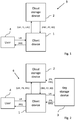
- the embodiment of a data storage system schematically illustrated in Fig. 1 comprises a client device 1, a cloud storage device 2 and a user 4.
- the client device 1 can be a (desktop or laptop) computer, a tablet device, a smartphone, a hardware module in any of these devices mentioned, and/or a software module in any of these devices.
- the user 3 can be a person or another computer, tablet device or smartphone. The user may or may not be the owner of the stored data.
- the cloud storage device 2 may include a single server but will typically include a plurality of interconnected servers, each server having data storage capacity.
- a single client device 1 For the sake of simplicity, only a single client device 1, a single cloud storage device 2 and a single user 4 are shown in Fig. 1 . It will be understood that multiple users, multiple cloud storage devices and/or multiple client devices may be utilized in a data storage system without departing from the present invention.
- the user 4 may transmit a user request UR to the client device 1.
- the user request can specify requested data, that is, data requested by the user 1.
- the client device 1 evaluates the access policy of the requested data.
- the access policies of various sets of data and/or of various users may be stored in the client device 1.
- the access policies may be stored in a separate policies storage device (not shown in Fig. 1 ), separate from the client device 1.
- the result of the access policy evaluation by the client device is the (first) evaluation result ER1, which the client device 1 may send to the cloud storage device 2.
- the client device 1 may only send its evaluation results if one or more conditions have been fulfilled.
- the client device may initially send its commitment P1 on its evaluation result to the cloud storage device 2, before or instead of sending its evaluation result ER1.
- the cloud storage device can also evaluate the access policy of the requested data. That is, the cloud storage device 2 may also store the access policies of various sets of data and/or of various users, or may retrieve these access policies from a separate policies storage device.
- the result of the access policy evaluation by the cloud storage device is the (second) evaluation result ER2, which the cloud storage device 2 may send to the client device 1.
- the cloud storage device 2 may only send its evaluation results if one or more conditions have been fulfilled.
- the cloud storage device may initially send its commitment P2 on its evaluation result to the client device 1, before or instead of sending its evaluation result ER2.
- the cloud storage device 2 will transmit the requested data RD to the client device 1, which may then forward the requested data to the user 4.
- These conditions may include one or more of:
- the requested data may be stored in plaintext, but typically the data stored in the cloud storage device will be encrypted.
- Decryption keys are, in the embodiment of Fig. 2 , stored in a separate key storage device 3.
- the client device 1 passes on a user request UR to the cloud storage device 2, it can also pass on the user request UR to the key storage device 3.
- the user request itself contains a reference to a key identification (KI), or the client device 1 derives a key identification from the user request and transmits the key identification KI to the key storage device 3, with or without the user request UR.
- KI key identification
- the key storage device 3 evaluates the access policy of the requested key. Similar to the (first) evaluation result ER1 of the client device 1 and the (second) evaluation result ER2 of the cloud storage device 2, the key storage device 3 produces a (third) evaluation result ER3. Additionally, the key storage device 3 may produce a (third) commitment P3 on the (third) evaluation result ER3.
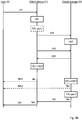
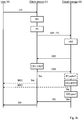
- FIG. 3a An exemplary interaction between a client device, a user and a cloud storage device is illustrated in Fig. 3a .
- the interaction is initiated by the user 4 sending a user request UR to the client device 1.
- the user request UR specifies the requested data and identifies the requesting user.
- the client device After receipt of the user request UR, the client device evaluates the access policy of the requested data and produces its evaluation result ER1. A positive evaluation result indicates that access is granted, while a negative result indicates that access is denied.
- the evaluation may involve comparing the (identification of the) requesting user with a list of accepted users, which list is associated with the stored data and constitutes, or is part of, an access policy.
- the user request UR is forwarded to the cloud storage (device) 2, irrespective of the evaluation result ER1 of the client device.
- This allows the evaluation results of different entities (in this case, the client device and the cloud storage device) to be compared.
- the cloud storage device also evaluates the user request and produces an evaluation result ER2.
- this second evaluation result ER2 is sent to the client device, which can then compare the evaluation results: is ER1 equal to ER2?
- the client device may produce a warning message WM1 and send this message to the user, and/or to another entity, such as a supervising entity. If the evaluation results do match, the client device can send its evaluation result ER1 to the cloud storage device, which can then compare the evaluation results. If the cloud storage device determines that the evaluation results fail to match, it can send a warning message WM2 to the user and/or to another entity, as mentioned above. If the cloud storage device determines that the evaluation results ER1 and ER2 correspond, then it may additionally determine whether its evaluation result is positive, that is, whether the evaluation of the access policy yields that the requested data may be accessed. It is noted that the test for a positive evaluation result may be carried out earlier, for example as soon as the (second) evaluation result ER2 is known.
- the cloud storage device can transmit the requested data RD to the client device, which may in turn transmit the requested data RD to the user.
- the client device may, in some embodiments, only send the requested data to the user if its (first) evaluation result is positive, indicating that the access policy allows the requested data to be accessed.
- the client device may carry out the test for a positive (first) evaluation result ER1 at various points in the interaction, for example immediately after determining the (first) evaluation result, or immediately before forwarding the requested data RD to the user, as schematically illustrated in Fig. 3a .
- both the client device and the cloud storage device may independently check the access policy of the requested data, and the devices may each check whether the evaluation result of the other device matches their own evaluation result. This allows the detection of fraud, in case one of the devices is compromised, or at least when one of the devices does not trust the other device.
- the client device only transmits its (first) evaluation result ER1 after receiving the (second) evaluation result ER2 from the cloud storage device.
- the cloud storage device cannot simply mimic the evaluation result of the client device but must itself evaluate the access policy of the requested data.
- the cloud storage device shows that it is in possession of the access policy.
- the client device shows the cloud evaluation device that it is (also) in possession of the access policy.
- a compromised client device could mimic the evaluation result ER2 of the cloud storage device, which might not be noticed by the cloud storage device. This can be prevented by using one or more commitments, as will later be explained in more detail with reference to Fig. 3c and 3d .
- the embodiment of Fig. 3b is identical to the one of Fig. 3a , with the exception of the transmission of the first evaluation result ER1 from the client device to the cloud storage device. IN the embodiment of Fig. 3b , this transmission is carried out before the client device receives the second evaluation result ER2 from the cloud storage device. Although this embodiment is feasible, the embodiment of Fig. 3a provides a higher level of security.
- commitments are values which may be derived from another, original value, such as an evaluation result value, by using a hash function or another one-way function.
- a one-way function does not allow the original value (for example an evaluation result value) to be derived from the outcome (for example a commitment value).
- the client device produces a (first) commitment P1 on its (first) evaluation result ER1 and transmits this commitment to the cloud storage device.
- the commitment P1 is transmitted together with the user request UR, but the commitment and the user request may also be sent separately.
- the cloud storage device By receiving the commitment P1, the cloud storage device has the possibility to check whether the commitment matches the evaluation result ER1, which it receives later during the interaction.
- the cloud storage device may or may not check the evaluation result ER1, but the client device knows that the cloud storage device may do so, and that any discrepancy between the evaluation result ER1 and the commitment P1 may be detected.
- the checking of the validity of the commitment P1 ("P1 valid") is an optional action in the embodiment of Fig. 3c , while in other embodiments this action may be compulsory.
- the cloud storage device may produce a warning message WM2 and send this warning message to the user, for example. The interaction may then be aborted. If the commitment P1 is found to be valid, the interaction typically continues.
- the client device produces a commitment.
- This embodiment is particularly suitable when the client device does not trust the cloud storage device.
- the cloud storage device may produce a commitment on its evaluation result, while the client device produces no commitment. Such embodiments are particularly suitable when the cloud storage device does not trust the client device.
- both the client device and the cloud storage device produce a commitment. Such embodiments are particularly suitable when the client device and the cloud storage device do not trust each other, or simply to enhance the overall security of the interaction.
- Fig. 3d An exemplary embodiment in which both the client device and the cloud storage device produce a commitment is schematically illustrated in Fig. 3d .
- the client device produces and transmits a (first) commitment P1 on its (first) evaluation result ER1
- the cloud storage device produces and transmits a (second) commitment P2 on its (second) evaluation result ER2.
- P1 valid?; "P2 valid?” are shown as optional actions, but in some embodiments they may be compulsory. If a commitment is found to be invalid, that is, if it fails to match the corresponding evaluation result, a warning message may be issued. Additionally, or alternatively, the interaction may be aborted.
- the client device may check the validity of the (second) commitment P2 which it received earlier, for example by reproducing the commitment using the evaluation result. If the reproduced commitment is not equal to the received commitment P2, the validity check fails and a warning message WM1 may be produced.
- the data stored in the server may be encrypted data.
- the data may have been encrypted by using a secret key.
- asymmetric encryption may be used involving a public encryption key and a secret decryption key.
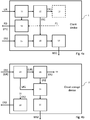
- Exemplary embodiments of devices implementing the present invention are schematically illustrated in Figs. 4a, 4b , 5a and 5b .
- the embodiments shown include a client device 1, a cloud storage device 2, a key storage device 3, and a user device 4. It is noted that the user device may include a handheld device, such as a smartphone.
- the client device 1 may include another device, separate from the user device, but may in some embodiments include a hardware or software module located in the user device.
- a client device 1 configured to request data from a cloud storage device 2 may comprise:
- a client device 1 may further comprise: a commitment unit 13 configured to produce a client cryptographic commitment P1 on the client evaluation result ER1.
- a cloud storage device 2 configured to receive a user request UR specifying requested data may comprise:
- a data storage system may comprise at least one client device 1 as mentioned above and at least one cloud storage device 2 as mentioned above.
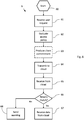
- FIG. 6 An embodiment of the method according to the present invention is schematically illustrated in Fig. 6 .
- the embodiment illustrates a method 6 for a client device 1 to request data from a cloud storage device 2, the method comprising:
- a cryptographic commitment (P1; P2) may be produced by using a cryptographic hash function.
- the software program product 70 may include a tangible carrier, such as a DVD, which stores instructions which allow a processor to carry out the method or methods according to the invention. Additionally, or alternatively, a software program product may be stored on a remote server and be downloaded to a user device, a client device, a cloud storage device and/or a key storage device, for example by using the Internet.
Landscapes
- Engineering & Computer Science (AREA)
- Computer Security & Cryptography (AREA)
- Signal Processing (AREA)
- Computer Networks & Wireless Communication (AREA)
- Theoretical Computer Science (AREA)
- Computer Hardware Design (AREA)
- General Engineering & Computer Science (AREA)
- Software Systems (AREA)
- Physics & Mathematics (AREA)
- General Physics & Mathematics (AREA)
- Health & Medical Sciences (AREA)
- General Health & Medical Sciences (AREA)
- Bioethics (AREA)
- Power Engineering (AREA)
- Computing Systems (AREA)
- Databases & Information Systems (AREA)
- Storage Device Security (AREA)
Claims (15)
- Procédé pour un dispositif client (1) permettant de demander des données à un dispositif de mémorisation en nuage (2), ledit procédé comprenant :la réception, au niveau du dispositif client, d'une demande utilisateur (UR) spécifiant les données demandées (RD) générant, au niveau du dispositif client, un résultat d'évaluation client (ER1) par évaluation d'une politique d'accès associée aux données demandées,la transmission, par le dispositif client, de la demande utilisateur (UR) au dispositif de mémorisation en nuage (2),la réception, au niveau du dispositif client, d'un résultat d'évaluation en nuage (ER2) du dispositif de mémorisation en nuage (2), le résultat d'évaluation en nuage (ER2) étant généré par le dispositif de mémorisation en nuage (2) par évaluation de la politique d'accès associée aux données demandées,la comparaison, au niveau du dispositif client, du résultat d'évaluation client (ER1) et du résultat d'évaluation en nuage (ER2), etla génération, lorsque le résultat de l'évaluation client (ER1) ne correspond pas au résultat de l'évaluation en nuage (ER2), d'un message d'avertissement (WM).
- Procédé selon la revendication 1, comprenant en outre :la génération d'un engagement cryptographique client (P1) sur le résultat d'évaluation client (ER1), etla transmission de l'engagement cryptographique client (P1) au dispositif de mémorisation en nuage (2), de préférence conjointement avec la demande utilisateur (UR).
- Procédé selon la revendication 2, comprenant en outre :la transmission du résultat d'évaluation client (ER1) au dispositif de mémorisation en nuage (2), de préférence uniquement lorsque le résultat de l'évaluation client (ER1) correspond au résultat de l'évaluation en nuage (ER2) et lorsque le résultat de l'évaluation (ER1) est positif,et dans lequel la réception d'un résultat d'évaluation en nuage (ER2) du dispositif de mémorisation en nuage (2) est de préférence mise en œuvre :par réception d'un engagement cryptographique en nuage (P2) sur le résultat d'évaluation en nuage (ER2), etpar transmission du résultat d'évaluation client (ER1) au dispositif de mémorisation en nuage (2), ledit procédé peut en outre comprendre :la reproduction de l'engagement cryptographique en nuage (P2) à l'aide du résultat d'évaluation en nuage (ER2), etla génération, lorsque l'engagement cryptographique en nuage reproduit ne correspond pas à l'engagement cryptographique en nuage reçu, d'un message d'avertissement (WM).
- Procédé selon la revendication 3, dans lequel la politique d'accès est mémorisée à la fois dans le dispositif client (1) et dans le dispositif de mémorisation en nuage (2).
- Procédé selon la revendication 4, dans lequel les données mémorisées dans le dispositif de mémorisation en nuage (2) sont des données cryptées, dans lequel au moins une clé de déchiffrement (DK) est mémorisée dans un dispositif de mémorisation de clés (3) séparé du dispositif de mémorisation en nuage (2), et dans lequel une identification de clé (KID) est associée à l'au moins une clé de déchiffrement, ledit procédé comprenant en outre :la réception d'une identification de clé (KID) pour les données demandées (RD),la récupération, à l'aide de l'identification de clé (KID), d'une clé de déchiffrement (DK) à partir du dispositif de mémorisation de clés (3), etle décryptage des données reçues.
- Procédé pour un dispositif de mémorisation en nuage (2) permettant de fournir des données à un dispositif client (1), ledit procédé comprenant :la réception, au niveau du dispositif de mémorisation en nuage, d'une demande utilisateur (UR) précisant les données demandées,la génération, au niveau du dispositif de mémorisation en nuage, d'un résultat d'évaluation en nuage (ER2) par évaluation de la politique d'accès associée aux données demandées,la transmission, par le dispositif de mémorisation en nuage, du résultat d'évaluation en nuage (ER2) au dispositif client (1),la réception, au niveau du dispositif de mémorisation en nuage, d'un résultat d'évaluation client (ER1) du dispositif client (1),la comparaison, au niveau du dispositif de mémorisation en nuage, du résultat d'évaluation client (ER1) et du résultat d'évaluation en nuage (ER2), etla génération, lorsque le résultat de l'évaluation client (ER1) ne correspond pas au résultat de l'évaluation en nuage (ER2), d'un message d'avertissement (WM), ledit procédé, de préférence comprenant en outre :
la réception d'un engagement cryptographique client (P1), dans lequel l'engagement cryptographique client (P1) est un engagement cryptographique sur un résultat d'évaluation client (ER1) généré par le dispositif client (1) par évaluation d'une politique d'accès associée aux données demandées. - Procédé selon la revendication 6, comprenant en outre :
la transmission, lorsque le résultat d'évaluation client (ER1) correspond au résultat de l'évaluation en nuage (ER2) et lorsque le résultat de l'évaluation (ER2) est positif, des données demandées (RD) au dispositif client (1). - Procédé selon la revendication 6 ou 7, dans lequel la transmission du résultat d'évaluation en nuage (ER2) au dispositif client (1) est mise en œuvre :par génération d'un engagement cryptographique en nuage (P2) sur le résultat de l'évaluation en nuage (ER2), etpar transmission de l'engagement cryptographique en nuage (P2) au dispositif client (1),par réception d'un résultat d'évaluation client (ER1) du dispositif client (1).
- Procédé pour un dispositif de mémorisation de clés (3) permettant de fournir une clé de déchiffrement (DK) à un dispositif client (1), ledit procédé comprenant :la réception d'un engagement cryptographique client (P1) et d'une demande utilisateur (UR) spécifiant les données demandées, dans lequel l'engagement cryptographique client (P1) est un engagement cryptographique sur un résultat d'évaluation client (ER1) généré par le dispositif client (1) par évaluation d'une politique d'accès associée avec la clé de décryptage demandée, la génération d'un résultat d'évaluation de clé (ER3) par évaluation de la politique d'accès associée à la clé de décryptage demandée (DK),la transmission du résultat de l'évaluation de clé (ER3) au dispositif client (1),la réception du résultat d'évaluation client (ER1) du dispositif client (1),la comparaison du résultat d'évaluation client (ER1) et du résultat d'évaluation de clé (ER3), etla génération, lorsque le résultat de l'évaluation client (ER1) ne correspond pas au résultat de l'évaluation de clé (ER3), d'un message d'avertissement (WM).
- Procédé pour un dispositif client (1) permettant de tester un dispositif de mémorisation en nuage (2) à l'aide d'une politique d'accès, ledit procédé comprenant :la génération d'un résultat d'évaluation client (ER1) par évaluation d'une politique d'accès associée aux données demandées,la génération d'un engagement cryptographique client (P1) sur le résultat d'évaluation client (ER1), et la transmission d'une demande utilisateur (UR) et de l'engagement cryptographique client (P1) au dispositif de mémorisation en nuage (2),la réception d'un résultat d'évaluation en nuage (ER2) du dispositif de mémorisation en nuage (2), le résultat d'évaluation en nuage (ER2) étant généré par le dispositif de mémorisation en nuage (2) par évaluation de la politique d'accès associée aux données demandées,la comparaison du résultat de l'évaluation client (ER1) et du résultat de l'évaluation en nuage (ER2), etla génération, lorsque le résultat de l'évaluation client (ER1) ne correspond pas au résultat de l'évaluation en nuage (ER2), d'un message d'avertissement (WM).
- Produit de programme logiciel comprenant des instructions permettant à un processeur de mettre en œuvre le procédé selon l'une quelconque des revendications précédentes.
- Dispositif client (1) conçu pour demander des données à un dispositif de mémorisation en nuage (2), ledit dispositif client comprenant :une première unité de réception (11) conçue pour recevoir une demande utilisateur (UR) spécifiant les données demandées (RD),une unité d'évaluation (12) conçue pour générer un résultat d'évaluation client (ER1) par évaluation d'une politique d'accès associée aux données demandées,une unité de transmission (14) conçue pour transmettre la demande utilisateur (UR) au dispositif de mémorisation en nuage (2),une seconde unité de réception (15) conçue pour recevoir un résultat d'évaluation en nuage (ER2) du dispositif de mémorisation en nuage (2), le résultat d'évaluation en nuage (ER2) étant généré par le dispositif de mémorisation en nuage (2) par évaluation de la politique d'accès associée aux données demandées,une unité de comparaison (16) conçue pour comparer le résultat d'évaluation client (ER1) et le résultat d'évaluation en nuage (ER2), etune unité d'avertissement (17) conçue pour générer, lorsque le résultat d'évaluation client (ER1) ne correspond pas au résultat d'évaluation en nuage (ER2), d'un message d'avertissement (WM).
- Dispositif client selon la revendication 12, comprenant en outre :
une unité d'engagement (13) conçue pour générer un engagement cryptographique client (P1) sur le résultat d'évaluation client (ER1), dans lequel l'unité de transmission (14) est en outre conçue pour transmettre l'engagement cryptographique client (P1). - Dispositif de mémorisation en nuage (2) conçu pour recevoir une demande utilisateur (UR) spécifiant les données demandées, ledit dispositif de mémorisation en nuage comprenant :une unité d'évaluation (21) conçue pour générer un résultat d'évaluation en nuage (ER2) par évaluation d'une politique d'accès associée aux données demandées,une unité de transmission (22) conçue pour transmettre le résultat d'évaluation en nuage (ER2) au dispositif client (1),une unité de réception (23) conçue pour recevoir un résultat d'évaluation client (ER1) du dispositif client (1),une unité de comparaison (24) conçue pour comparer le résultat d'évaluation client (ER1) et le résultat d'évaluation en nuage (ER2), etune unité d'avertissement (25) conçue pour générer, lorsque le résultat d'évaluation client (ER1) ne correspond pas au résultat d'évaluation en nuage (ER2), d'un message d'avertissement (WM).
- Système de mémorisation de données (9), comprenant au moins un dispositif client (1) selon la revendication 12 et au moins un dispositif de mémorisation en nuage (2) selon la revendication 14.
Applications Claiming Priority (3)
| Application Number | Priority Date | Filing Date | Title |
|---|---|---|---|
| EP16161633 | 2016-03-22 | ||
| EP16173742 | 2016-06-09 | ||
| PCT/EP2017/056603 WO2017162615A1 (fr) | 2016-03-22 | 2017-03-21 | Stockage en nuage de données |
Publications (2)
| Publication Number | Publication Date |
|---|---|
| EP3433992A1 EP3433992A1 (fr) | 2019-01-30 |
| EP3433992B1 true EP3433992B1 (fr) | 2020-12-23 |
Family
ID=58314266
Family Applications (1)
| Application Number | Title | Priority Date | Filing Date |
|---|---|---|---|
| EP17710982.4A Active EP3433992B1 (fr) | 2016-03-22 | 2017-03-21 | Stockage de données dans un cloud |
Country Status (4)
| Country | Link |
|---|---|
| US (1) | US10902141B2 (fr) |
| EP (1) | EP3433992B1 (fr) |
| CN (1) | CN108886519B (fr) |
| WO (1) | WO2017162615A1 (fr) |
Family Cites Families (14)
| Publication number | Priority date | Publication date | Assignee | Title |
|---|---|---|---|---|
| US8209744B2 (en) * | 2008-05-16 | 2012-06-26 | Microsoft Corporation | Mobile device assisted secure computer network communication |
| US8418236B1 (en) * | 2009-04-10 | 2013-04-09 | Open Invention Network Llc | System and method for streaming application isolation |
| EP2438547B1 (fr) * | 2009-06-01 | 2017-10-18 | Koninklijke Philips N.V. | Détermination dynamique de droits d'accès |
| RU2602790C2 (ru) * | 2011-02-01 | 2016-11-20 | Конинклейке Филипс Электроникс Н.В. | Безопасный доступ к персональным записям о состоянии здоровья в экстренных ситуациях |
| US8891772B2 (en) | 2011-06-17 | 2014-11-18 | Microsoft Corporation | Cloud key escrow system |
| EP2704389B1 (fr) | 2011-11-09 | 2017-04-05 | Huawei Technologies Co., Ltd. | Procédé, dispositif et système pour la protection de la sécurité de données dans le cloud |
| EP2784717A1 (fr) | 2012-10-17 | 2014-10-01 | Box, Inc. | Gestion de clé à distance dans un environnement sur Cloud |
| WO2014142858A1 (fr) | 2013-03-14 | 2014-09-18 | Intel Corporation | Traitement de données sécurisées dans le nuage public |
| EP3028214A1 (fr) * | 2013-07-30 | 2016-06-08 | Hewlett Packard Enterprise Development LP | Gestion de données |
| US10536545B2 (en) * | 2013-09-27 | 2020-01-14 | Oracle International Corporation | Cloud database connection multiplexing |
| US9171174B2 (en) * | 2013-11-27 | 2015-10-27 | At&T Intellectual Property I, L.P. | Methods, systems, and computer program products for verifying user data access policies when server and/or user are not trusted |
| US20150281185A1 (en) | 2014-03-26 | 2015-10-01 | Cisco Technology, Inc. | Cloud Collaboration System With External Cryptographic Key Management |
| CN104717297A (zh) | 2015-03-30 | 2015-06-17 | 上海交通大学 | 一种安全云存储方法及系统 |
| US11115417B2 (en) * | 2015-05-19 | 2021-09-07 | Microsoft Technology Licensing, Llc. | Secured access control to cloud-based applications |
-
2017
- 2017-03-21 US US16/083,900 patent/US10902141B2/en active Active
- 2017-03-21 WO PCT/EP2017/056603 patent/WO2017162615A1/fr not_active Ceased
- 2017-03-21 CN CN201780019154.7A patent/CN108886519B/zh active Active
- 2017-03-21 EP EP17710982.4A patent/EP3433992B1/fr active Active
Non-Patent Citations (1)
| Title |
|---|
| None * |
Also Published As
| Publication number | Publication date |
|---|---|
| CN108886519A (zh) | 2018-11-23 |
| US10902141B2 (en) | 2021-01-26 |
| US20190080110A1 (en) | 2019-03-14 |
| EP3433992A1 (fr) | 2019-01-30 |
| CN108886519B (zh) | 2021-09-14 |
| WO2017162615A1 (fr) | 2017-09-28 |
Similar Documents
| Publication | Publication Date | Title |
|---|---|---|
| RU2718689C2 (ru) | Управление конфиденциальной связью | |
| US10810315B2 (en) | Enabling access to data | |
| US8196186B2 (en) | Security architecture for peer-to-peer storage system | |
| US10122529B2 (en) | System and method of enforcing a computer policy | |
| US11374767B2 (en) | Key-based authentication for backup service | |
| EP2956852B1 (fr) | Service de sécurité des données | |
| CN109450633B (zh) | 信息加密发送方法及装置、电子设备、存储介质 | |
| US20160173461A1 (en) | Utilization of a protected module to prevent offline dictionary attacks | |
| US20220070000A1 (en) | Managing passwords for network-accessible service accounts | |
| WO2020000786A1 (fr) | Procédé et appareil de vote, et dispositif informatique et support de stockage lisible par ordinateur | |
| EP3785409B1 (fr) | Partage de messages de données | |
| US11218304B2 (en) | System and method for detecting breached passwords without disclosing identifiable information | |
| US20250062895A1 (en) | Computer system and key exchange method | |
| EP3433992B1 (fr) | Stockage de données dans un cloud | |
| CN116305313B (zh) | 一种权限管理系统、方法、装置及电子设备 | |
| Pir | Data integrity verification in cloud storage without using trusted third party auditor | |
| HK40105172A (zh) | 一种基於区块链的数据交易方法、装置及电子设备 | |
| HK40105172B (zh) | 一种基於区块链的数据交易方法、装置及电子设备 | |
| CN116707922A (zh) | 数据的处理方法和系统 | |
| JP2009212687A (ja) | 暗号管理システムおよび暗号管理プログラム | |
| Spirintseva et al. | The models of the information security in the cloud storage |
Legal Events
| Date | Code | Title | Description |
|---|---|---|---|
| STAA | Information on the status of an ep patent application or granted ep patent |
Free format text: STATUS: UNKNOWN |
|
| STAA | Information on the status of an ep patent application or granted ep patent |
Free format text: STATUS: THE INTERNATIONAL PUBLICATION HAS BEEN MADE |
|
| PUAI | Public reference made under article 153(3) epc to a published international application that has entered the european phase |
Free format text: ORIGINAL CODE: 0009012 |
|
| STAA | Information on the status of an ep patent application or granted ep patent |
Free format text: STATUS: REQUEST FOR EXAMINATION WAS MADE |
|
| 17P | Request for examination filed |
Effective date: 20181022 |
|
| AK | Designated contracting states |
Kind code of ref document: A1 Designated state(s): AL AT BE BG CH CY CZ DE DK EE ES FI FR GB GR HR HU IE IS IT LI LT LU LV MC MK MT NL NO PL PT RO RS SE SI SK SM TR |
|
| AX | Request for extension of the european patent |
Extension state: BA ME |
|
| DAV | Request for validation of the european patent (deleted) | ||
| DAX | Request for extension of the european patent (deleted) | ||
| REG | Reference to a national code |
Ref country code: DE Ref legal event code: R079 Ref document number: 602017029963 Country of ref document: DE Free format text: PREVIOUS MAIN CLASS: H04L0029060000 Ipc: H04L0009060000 |
|
| STAA | Information on the status of an ep patent application or granted ep patent |
Free format text: STATUS: EXAMINATION IS IN PROGRESS |
|
| RIC1 | Information provided on ipc code assigned before grant |
Ipc: H04L 29/06 20060101ALI20200114BHEP Ipc: H04L 9/32 20060101ALI20200114BHEP Ipc: H04L 9/06 20060101AFI20200114BHEP Ipc: G06F 21/62 20130101ALI20200114BHEP |
|
| 17Q | First examination report despatched |
Effective date: 20200131 |
|
| RAP1 | Party data changed (applicant data changed or rights of an application transferred) |
Owner name: KONINKLIJKE PHILIPS N.V. |
|
| GRAP | Despatch of communication of intention to grant a patent |
Free format text: ORIGINAL CODE: EPIDOSNIGR1 |
|
| STAA | Information on the status of an ep patent application or granted ep patent |
Free format text: STATUS: GRANT OF PATENT IS INTENDED |
|
| INTG | Intention to grant announced |
Effective date: 20200717 |
|
| GRAS | Grant fee paid |
Free format text: ORIGINAL CODE: EPIDOSNIGR3 |
|
| GRAA | (expected) grant |
Free format text: ORIGINAL CODE: 0009210 |
|
| STAA | Information on the status of an ep patent application or granted ep patent |
Free format text: STATUS: THE PATENT HAS BEEN GRANTED |
|
| AK | Designated contracting states |
Kind code of ref document: B1 Designated state(s): AL AT BE BG CH CY CZ DE DK EE ES FI FR GB GR HR HU IE IS IT LI LT LU LV MC MK MT NL NO PL PT RO RS SE SI SK SM TR |
|
| REG | Reference to a national code |
Ref country code: GB Ref legal event code: FG4D |
|
| REG | Reference to a national code |
Ref country code: DE Ref legal event code: R096 Ref document number: 602017029963 Country of ref document: DE |
|
| REG | Reference to a national code |
Ref country code: AT Ref legal event code: REF Ref document number: 1348766 Country of ref document: AT Kind code of ref document: T Effective date: 20210115 |
|
| REG | Reference to a national code |
Ref country code: IE Ref legal event code: FG4D |
|
| PG25 | Lapsed in a contracting state [announced via postgrant information from national office to epo] |
Ref country code: GR Free format text: LAPSE BECAUSE OF FAILURE TO SUBMIT A TRANSLATION OF THE DESCRIPTION OR TO PAY THE FEE WITHIN THE PRESCRIBED TIME-LIMIT Effective date: 20210324 Ref country code: FI Free format text: LAPSE BECAUSE OF FAILURE TO SUBMIT A TRANSLATION OF THE DESCRIPTION OR TO PAY THE FEE WITHIN THE PRESCRIBED TIME-LIMIT Effective date: 20201223 Ref country code: RS Free format text: LAPSE BECAUSE OF FAILURE TO SUBMIT A TRANSLATION OF THE DESCRIPTION OR TO PAY THE FEE WITHIN THE PRESCRIBED TIME-LIMIT Effective date: 20201223 Ref country code: NO Free format text: LAPSE BECAUSE OF FAILURE TO SUBMIT A TRANSLATION OF THE DESCRIPTION OR TO PAY THE FEE WITHIN THE PRESCRIBED TIME-LIMIT Effective date: 20210323 |
|
| REG | Reference to a national code |
Ref country code: AT Ref legal event code: MK05 Ref document number: 1348766 Country of ref document: AT Kind code of ref document: T Effective date: 20201223 |
|
| REG | Reference to a national code |
Ref country code: NL Ref legal event code: MP Effective date: 20201223 |
|
| PG25 | Lapsed in a contracting state [announced via postgrant information from national office to epo] |
Ref country code: BG Free format text: LAPSE BECAUSE OF FAILURE TO SUBMIT A TRANSLATION OF THE DESCRIPTION OR TO PAY THE FEE WITHIN THE PRESCRIBED TIME-LIMIT Effective date: 20210323 Ref country code: LV Free format text: LAPSE BECAUSE OF FAILURE TO SUBMIT A TRANSLATION OF THE DESCRIPTION OR TO PAY THE FEE WITHIN THE PRESCRIBED TIME-LIMIT Effective date: 20201223 Ref country code: SE Free format text: LAPSE BECAUSE OF FAILURE TO SUBMIT A TRANSLATION OF THE DESCRIPTION OR TO PAY THE FEE WITHIN THE PRESCRIBED TIME-LIMIT Effective date: 20201223 |
|
| PG25 | Lapsed in a contracting state [announced via postgrant information from national office to epo] |
Ref country code: NL Free format text: LAPSE BECAUSE OF FAILURE TO SUBMIT A TRANSLATION OF THE DESCRIPTION OR TO PAY THE FEE WITHIN THE PRESCRIBED TIME-LIMIT Effective date: 20201223 Ref country code: HR Free format text: LAPSE BECAUSE OF FAILURE TO SUBMIT A TRANSLATION OF THE DESCRIPTION OR TO PAY THE FEE WITHIN THE PRESCRIBED TIME-LIMIT Effective date: 20201223 |
|
| REG | Reference to a national code |
Ref country code: LT Ref legal event code: MG9D |
|
| PG25 | Lapsed in a contracting state [announced via postgrant information from national office to epo] |
Ref country code: PT Free format text: LAPSE BECAUSE OF FAILURE TO SUBMIT A TRANSLATION OF THE DESCRIPTION OR TO PAY THE FEE WITHIN THE PRESCRIBED TIME-LIMIT Effective date: 20210423 Ref country code: RO Free format text: LAPSE BECAUSE OF FAILURE TO SUBMIT A TRANSLATION OF THE DESCRIPTION OR TO PAY THE FEE WITHIN THE PRESCRIBED TIME-LIMIT Effective date: 20201223 Ref country code: SK Free format text: LAPSE BECAUSE OF FAILURE TO SUBMIT A TRANSLATION OF THE DESCRIPTION OR TO PAY THE FEE WITHIN THE PRESCRIBED TIME-LIMIT Effective date: 20201223 Ref country code: LT Free format text: LAPSE BECAUSE OF FAILURE TO SUBMIT A TRANSLATION OF THE DESCRIPTION OR TO PAY THE FEE WITHIN THE PRESCRIBED TIME-LIMIT Effective date: 20201223 Ref country code: EE Free format text: LAPSE BECAUSE OF FAILURE TO SUBMIT A TRANSLATION OF THE DESCRIPTION OR TO PAY THE FEE WITHIN THE PRESCRIBED TIME-LIMIT Effective date: 20201223 Ref country code: CZ Free format text: LAPSE BECAUSE OF FAILURE TO SUBMIT A TRANSLATION OF THE DESCRIPTION OR TO PAY THE FEE WITHIN THE PRESCRIBED TIME-LIMIT Effective date: 20201223 Ref country code: SM Free format text: LAPSE BECAUSE OF FAILURE TO SUBMIT A TRANSLATION OF THE DESCRIPTION OR TO PAY THE FEE WITHIN THE PRESCRIBED TIME-LIMIT Effective date: 20201223 |
|
| PG25 | Lapsed in a contracting state [announced via postgrant information from national office to epo] |
Ref country code: AT Free format text: LAPSE BECAUSE OF FAILURE TO SUBMIT A TRANSLATION OF THE DESCRIPTION OR TO PAY THE FEE WITHIN THE PRESCRIBED TIME-LIMIT Effective date: 20201223 Ref country code: PL Free format text: LAPSE BECAUSE OF FAILURE TO SUBMIT A TRANSLATION OF THE DESCRIPTION OR TO PAY THE FEE WITHIN THE PRESCRIBED TIME-LIMIT Effective date: 20201223 |
|
| REG | Reference to a national code |
Ref country code: DE Ref legal event code: R097 Ref document number: 602017029963 Country of ref document: DE |
|
| PG25 | Lapsed in a contracting state [announced via postgrant information from national office to epo] |
Ref country code: IS Free format text: LAPSE BECAUSE OF FAILURE TO SUBMIT A TRANSLATION OF THE DESCRIPTION OR TO PAY THE FEE WITHIN THE PRESCRIBED TIME-LIMIT Effective date: 20210423 |
|
| PG25 | Lapsed in a contracting state [announced via postgrant information from national office to epo] |
Ref country code: MC Free format text: LAPSE BECAUSE OF FAILURE TO SUBMIT A TRANSLATION OF THE DESCRIPTION OR TO PAY THE FEE WITHIN THE PRESCRIBED TIME-LIMIT Effective date: 20201223 Ref country code: IT Free format text: LAPSE BECAUSE OF FAILURE TO SUBMIT A TRANSLATION OF THE DESCRIPTION OR TO PAY THE FEE WITHIN THE PRESCRIBED TIME-LIMIT Effective date: 20201223 Ref country code: AL Free format text: LAPSE BECAUSE OF FAILURE TO SUBMIT A TRANSLATION OF THE DESCRIPTION OR TO PAY THE FEE WITHIN THE PRESCRIBED TIME-LIMIT Effective date: 20201223 |
|
| PLBE | No opposition filed within time limit |
Free format text: ORIGINAL CODE: 0009261 |
|
| REG | Reference to a national code |
Ref country code: CH Ref legal event code: PL |
|
| STAA | Information on the status of an ep patent application or granted ep patent |
Free format text: STATUS: NO OPPOSITION FILED WITHIN TIME LIMIT |
|
| PG25 | Lapsed in a contracting state [announced via postgrant information from national office to epo] |
Ref country code: DK Free format text: LAPSE BECAUSE OF FAILURE TO SUBMIT A TRANSLATION OF THE DESCRIPTION OR TO PAY THE FEE WITHIN THE PRESCRIBED TIME-LIMIT Effective date: 20201223 |
|
| 26N | No opposition filed |
Effective date: 20210924 |
|
| REG | Reference to a national code |
Ref country code: BE Ref legal event code: MM Effective date: 20210331 |
|
| PG25 | Lapsed in a contracting state [announced via postgrant information from national office to epo] |
Ref country code: ES Free format text: LAPSE BECAUSE OF FAILURE TO SUBMIT A TRANSLATION OF THE DESCRIPTION OR TO PAY THE FEE WITHIN THE PRESCRIBED TIME-LIMIT Effective date: 20201223 Ref country code: CH Free format text: LAPSE BECAUSE OF NON-PAYMENT OF DUE FEES Effective date: 20210331 Ref country code: LI Free format text: LAPSE BECAUSE OF NON-PAYMENT OF DUE FEES Effective date: 20210331 Ref country code: LU Free format text: LAPSE BECAUSE OF NON-PAYMENT OF DUE FEES Effective date: 20210321 Ref country code: IE Free format text: LAPSE BECAUSE OF NON-PAYMENT OF DUE FEES Effective date: 20210321 |
|
| PG25 | Lapsed in a contracting state [announced via postgrant information from national office to epo] |
Ref country code: SI Free format text: LAPSE BECAUSE OF FAILURE TO SUBMIT A TRANSLATION OF THE DESCRIPTION OR TO PAY THE FEE WITHIN THE PRESCRIBED TIME-LIMIT Effective date: 20201223 |
|
| PG25 | Lapsed in a contracting state [announced via postgrant information from national office to epo] |
Ref country code: IS Free format text: LAPSE BECAUSE OF FAILURE TO SUBMIT A TRANSLATION OF THE DESCRIPTION OR TO PAY THE FEE WITHIN THE PRESCRIBED TIME-LIMIT Effective date: 20210423 |
|
| PG25 | Lapsed in a contracting state [announced via postgrant information from national office to epo] |
Ref country code: BE Free format text: LAPSE BECAUSE OF NON-PAYMENT OF DUE FEES Effective date: 20210331 |
|
| PG25 | Lapsed in a contracting state [announced via postgrant information from national office to epo] |
Ref country code: CY Free format text: LAPSE BECAUSE OF FAILURE TO SUBMIT A TRANSLATION OF THE DESCRIPTION OR TO PAY THE FEE WITHIN THE PRESCRIBED TIME-LIMIT Effective date: 20201223 |
|
| PG25 | Lapsed in a contracting state [announced via postgrant information from national office to epo] |
Ref country code: HU Free format text: LAPSE BECAUSE OF FAILURE TO SUBMIT A TRANSLATION OF THE DESCRIPTION OR TO PAY THE FEE WITHIN THE PRESCRIBED TIME-LIMIT; INVALID AB INITIO Effective date: 20170321 |
|
| PG25 | Lapsed in a contracting state [announced via postgrant information from national office to epo] |
Ref country code: MK Free format text: LAPSE BECAUSE OF FAILURE TO SUBMIT A TRANSLATION OF THE DESCRIPTION OR TO PAY THE FEE WITHIN THE PRESCRIBED TIME-LIMIT Effective date: 20201223 |
|
| PGFP | Annual fee paid to national office [announced via postgrant information from national office to epo] |
Ref country code: FR Payment date: 20240326 Year of fee payment: 8 |
|
| PG25 | Lapsed in a contracting state [announced via postgrant information from national office to epo] |
Ref country code: MT Free format text: LAPSE BECAUSE OF FAILURE TO SUBMIT A TRANSLATION OF THE DESCRIPTION OR TO PAY THE FEE WITHIN THE PRESCRIBED TIME-LIMIT Effective date: 20201223 |
|
| PG25 | Lapsed in a contracting state [announced via postgrant information from national office to epo] |
Ref country code: TR Free format text: LAPSE BECAUSE OF FAILURE TO SUBMIT A TRANSLATION OF THE DESCRIPTION OR TO PAY THE FEE WITHIN THE PRESCRIBED TIME-LIMIT Effective date: 20201223 |
|
| PG25 | Lapsed in a contracting state [announced via postgrant information from national office to epo] |
Ref country code: FR Free format text: LAPSE BECAUSE OF NON-PAYMENT OF DUE FEES Effective date: 20250331 |
|
| PGFP | Annual fee paid to national office [announced via postgrant information from national office to epo] |
Ref country code: GB Payment date: 20260319 Year of fee payment: 10 |
|
| PGFP | Annual fee paid to national office [announced via postgrant information from national office to epo] |
Ref country code: DE Payment date: 20260320 Year of fee payment: 10 |