EP3434690A2 - Anticorps qui se lie à la protéine d'enveloppe du virus du syndrome de fièvre sévère avec thrombocytopénie, et son utilisation - Google Patents
Anticorps qui se lie à la protéine d'enveloppe du virus du syndrome de fièvre sévère avec thrombocytopénie, et son utilisation Download PDFInfo
- Publication number
- EP3434690A2 EP3434690A2 EP17770648.8A EP17770648A EP3434690A2 EP 3434690 A2 EP3434690 A2 EP 3434690A2 EP 17770648 A EP17770648 A EP 17770648A EP 3434690 A2 EP3434690 A2 EP 3434690A2
- Authority
- EP
- European Patent Office
- Prior art keywords
- antibody
- seq
- nos
- sftsv
- group
- Prior art date
- Legal status (The legal status is an assumption and is not a legal conclusion. Google has not performed a legal analysis and makes no representation as to the accuracy of the status listed.)
- Withdrawn
Links
Images


Classifications
-
- C—CHEMISTRY; METALLURGY
- C07—ORGANIC CHEMISTRY
- C07K—PEPTIDES
- C07K16/00—Immunoglobulins [IG], e.g. monoclonal or polyclonal antibodies
- C07K16/08—Immunoglobulins [IG], e.g. monoclonal or polyclonal antibodies against material from viruses
- C07K16/10—RNA viruses
-
- A—HUMAN NECESSITIES
- A61—MEDICAL OR VETERINARY SCIENCE; HYGIENE
- A61K—PREPARATIONS FOR MEDICAL, DENTAL OR TOILETRY PURPOSES
- A61K39/00—Medicinal preparations containing antigens or antibodies
- A61K39/395—Antibodies; Immunoglobulins; Immune serum, e.g. antilymphocytic serum
- A61K39/42—Antibodies; Immunoglobulins; Immune serum, e.g. antilymphocytic serum viral
-
- A—HUMAN NECESSITIES
- A61—MEDICAL OR VETERINARY SCIENCE; HYGIENE
- A61K—PREPARATIONS FOR MEDICAL, DENTAL OR TOILETRY PURPOSES
- A61K39/00—Medicinal preparations containing antigens or antibodies
- A61K39/395—Antibodies; Immunoglobulins; Immune serum, e.g. antilymphocytic serum
-
- A—HUMAN NECESSITIES
- A61—MEDICAL OR VETERINARY SCIENCE; HYGIENE
- A61P—SPECIFIC THERAPEUTIC ACTIVITY OF CHEMICAL COMPOUNDS OR MEDICINAL PREPARATIONS
- A61P31/00—Antiinfectives, i.e. antibiotics, antiseptics, chemotherapeutics
- A61P31/12—Antivirals
- A61P31/14—Antivirals for RNA viruses
-
- C—CHEMISTRY; METALLURGY
- C07—ORGANIC CHEMISTRY
- C07K—PEPTIDES
- C07K14/00—Peptides having more than 20 amino acids; Gastrins; Somatostatins; Melanotropins; Derivatives thereof
- C07K14/005—Peptides having more than 20 amino acids; Gastrins; Somatostatins; Melanotropins; Derivatives thereof from viruses
-
- C—CHEMISTRY; METALLURGY
- C07—ORGANIC CHEMISTRY
- C07K—PEPTIDES
- C07K14/00—Peptides having more than 20 amino acids; Gastrins; Somatostatins; Melanotropins; Derivatives thereof
- C07K14/005—Peptides having more than 20 amino acids; Gastrins; Somatostatins; Melanotropins; Derivatives thereof from viruses
- C07K14/08—RNA viruses
- C07K14/175—Bunyaviridae, e.g. California encephalitis virus, Rift valley fever virus, Hantaan virus
-
- C—CHEMISTRY; METALLURGY
- C07—ORGANIC CHEMISTRY
- C07K—PEPTIDES
- C07K16/00—Immunoglobulins [IG], e.g. monoclonal or polyclonal antibodies
- C07K16/08—Immunoglobulins [IG], e.g. monoclonal or polyclonal antibodies against material from viruses
- C07K16/10—RNA viruses
- C07K16/102—Coronaviridae (F)
- C07K16/104—Severe acute respiratory syndrome coronavirus 2 [SARS‐CoV‐2]
-
- C—CHEMISTRY; METALLURGY
- C12—BIOCHEMISTRY; BEER; SPIRITS; WINE; VINEGAR; MICROBIOLOGY; ENZYMOLOGY; MUTATION OR GENETIC ENGINEERING
- C12N—MICROORGANISMS OR ENZYMES; COMPOSITIONS THEREOF; PROPAGATING, PRESERVING, OR MAINTAINING MICROORGANISMS; MUTATION OR GENETIC ENGINEERING; CULTURE MEDIA
- C12N15/00—Mutation or genetic engineering; DNA or RNA concerning genetic engineering, vectors, e.g. plasmids, or their isolation, preparation or purification; Use of hosts therefor
- C12N15/09—Recombinant DNA-technology
- C12N15/11—DNA or RNA fragments; Modified forms thereof; Non-coding nucleic acids having a biological activity
- C12N15/62—DNA sequences coding for fusion proteins
-
- G—PHYSICS
- G01—MEASURING; TESTING
- G01N—INVESTIGATING OR ANALYSING MATERIALS BY DETERMINING THEIR CHEMICAL OR PHYSICAL PROPERTIES
- G01N33/00—Investigating or analysing materials by specific methods not covered by groups G01N1/00 - G01N31/00
- G01N33/48—Biological material, e.g. blood, urine; Haemocytometers
- G01N33/50—Chemical analysis of biological material, e.g. blood, urine; Testing involving biospecific ligand binding methods; Immunological testing
- G01N33/53—Immunoassay; Biospecific binding assay; Materials therefor
- G01N33/543—Immunoassay; Biospecific binding assay; Materials therefor with an insoluble carrier for immobilising immunochemicals
- G01N33/54313—Immunoassay; Biospecific binding assay; Materials therefor with an insoluble carrier for immobilising immunochemicals the carrier being characterised by its particulate form
- G01N33/54326—Magnetic particles
-
- G—PHYSICS
- G01—MEASURING; TESTING
- G01N—INVESTIGATING OR ANALYSING MATERIALS BY DETERMINING THEIR CHEMICAL OR PHYSICAL PROPERTIES
- G01N33/00—Investigating or analysing materials by specific methods not covered by groups G01N1/00 - G01N31/00
- G01N33/48—Biological material, e.g. blood, urine; Haemocytometers
- G01N33/50—Chemical analysis of biological material, e.g. blood, urine; Testing involving biospecific ligand binding methods; Immunological testing
- G01N33/53—Immunoassay; Biospecific binding assay; Materials therefor
- G01N33/569—Immunoassay; Biospecific binding assay; Materials therefor for microorganisms, e.g. protozoa, bacteria, viruses
- G01N33/56983—Viruses
-
- G—PHYSICS
- G01—MEASURING; TESTING
- G01N—INVESTIGATING OR ANALYSING MATERIALS BY DETERMINING THEIR CHEMICAL OR PHYSICAL PROPERTIES
- G01N35/00—Automatic analysis not limited to methods or materials provided for in any single one of groups G01N1/00 - G01N33/00; Handling materials therefor
- G01N35/00029—Automatic analysis not limited to methods or materials provided for in any single one of groups G01N1/00 - G01N33/00; Handling materials therefor provided with flat sample substrates, e.g. slides
-
- G—PHYSICS
- G01—MEASURING; TESTING
- G01N—INVESTIGATING OR ANALYSING MATERIALS BY DETERMINING THEIR CHEMICAL OR PHYSICAL PROPERTIES
- G01N35/00—Automatic analysis not limited to methods or materials provided for in any single one of groups G01N1/00 - G01N33/00; Handling materials therefor
- G01N35/0098—Automatic analysis not limited to methods or materials provided for in any single one of groups G01N1/00 - G01N33/00; Handling materials therefor involving analyte bound to insoluble magnetic carrier, e.g. using magnetic separation
-
- C—CHEMISTRY; METALLURGY
- C07—ORGANIC CHEMISTRY
- C07K—PEPTIDES
- C07K2317/00—Immunoglobulins specific features
- C07K2317/50—Immunoglobulins specific features characterized by immunoglobulin fragments
- C07K2317/56—Immunoglobulins specific features characterized by immunoglobulin fragments variable (Fv) region, i.e. VH and/or VL
- C07K2317/565—Complementarity determining region [CDR]
-
- C—CHEMISTRY; METALLURGY
- C07—ORGANIC CHEMISTRY
- C07K—PEPTIDES
- C07K2317/00—Immunoglobulins specific features
- C07K2317/60—Immunoglobulins specific features characterized by non-natural combinations of immunoglobulin fragments
- C07K2317/62—Immunoglobulins specific features characterized by non-natural combinations of immunoglobulin fragments comprising only variable region components
- C07K2317/622—Single chain antibody (scFv)
-
- C—CHEMISTRY; METALLURGY
- C07—ORGANIC CHEMISTRY
- C07K—PEPTIDES
- C07K2317/00—Immunoglobulins specific features
- C07K2317/70—Immunoglobulins specific features characterized by effect upon binding to a cell or to an antigen
- C07K2317/76—Antagonist effect on antigen, e.g. neutralization or inhibition of binding
-
- C—CHEMISTRY; METALLURGY
- C12—BIOCHEMISTRY; BEER; SPIRITS; WINE; VINEGAR; MICROBIOLOGY; ENZYMOLOGY; MUTATION OR GENETIC ENGINEERING
- C12N—MICROORGANISMS OR ENZYMES; COMPOSITIONS THEREOF; PROPAGATING, PRESERVING, OR MAINTAINING MICROORGANISMS; MUTATION OR GENETIC ENGINEERING; CULTURE MEDIA
- C12N2760/00—MICROORGANISMS OR ENZYMES; COMPOSITIONS THEREOF; PROPAGATING, PRESERVING, OR MAINTAINING MICROORGANISMS; MUTATION OR GENETIC ENGINEERING; CULTURE MEDIA ssRNA viruses negative-sense
- C12N2760/00011—Details
- C12N2760/12011—Bunyaviridae
- C12N2760/12211—Phlebovirus, e.g. Rift Valley fever virus
Definitions
- the present invention relates to an antibody which specifically binds to the envelope glycoprotein of severe fever with thrombocytopenia syndrome virus (SFTSV), the pathogen of severe fever with thrombocytopenia syndrome (SFTS), and is used in order to detect or diagnosis SFTSV and treat SFTS.
- SFTSV thrombocytopenia syndrome virus
- SFTS pathogen of severe fever with thrombocytopenia syndrome
- Severe Fever with Thrombocytopenia Syndrome is a new kind of mite-mediated infectious disease, and is mostly occurred by Severe Fever with Thrombocytopenia Syndrome Virus (SFTSV) mediated by Haemaphysalis longicornis or Amblyomma testudinarium.
- SFTSV Severe Fever with Thrombocytopenia Syndrome Virus
- SFTS was firstly reported in China in 2009, and the disease and virus was reported in Japan and Korea in 2012.
- the main symptoms of SFTS are fever, abdominal pain, nausea, vomiting, thrombocytopenia or leukopenia, etc., and in case of serious case, multiple organ failure may occur and result in death.
- SFTS has consistently occurred in China, Japan or Korea every year, and the fatality rate caused thereby is very high, and it mostly occurs in the period between spring and summer.
- a black-stripped field mouse is probable as the wild host of SFTSV, and it was presumed that domestic animals can play a role of host, since the serum antibody was found at the high ratio in domestic animals such as goat, cow, dog or chicken, etc. in the major outbreak areas of China. It has been reported that the infection from person to person occurred by mediating a body fluid of an infected person, but there is no approved therapeutic agent or prevention method to effectively treat SFTS until now.
- the anti-SFTSV antibody titer is mostly measured with an antibody for N protein of SFTSV.
- the antibody is an antibody for SFTSV internal protein exposed when SFTSV becomes extinct.
- the conventional diagnosis by confirming the anti-SFTSV antibody titer has limitation that the existence of virus which is alive and actively acts cannot be accurately figured out.
- the method for detecting the RNA sequence of SFTSV in a subject derived from a human body has been known as having high accuracy, but it has a difficulty to isolate virus RNA of good quality from the subject.
- the problem to be solved by the present invention is to provide an antibody which can effectively detect or diagnose SFTSV and treat SFTS.
- the other problem to be solved by the present invention is to provide an antibody which specifically binds to SFTSV, particularly an envelope glycoprotein of SFTSV.
- the present invention provides a novel antibody which specifically binds to SFTSV, particularly its envelope glycoprotein.
- the present invention provides a method for effectively detecting, isolating or purifying SFTSV using the antibody.
- the present invention a method for effectively preventing or treating SFTS using the antibody.
- SFTSV is a minus single strand RNA virus, and belongs to Bunyaviridae family, phlebovirus species.
- the virus is a globular virus of 80 ⁇ 100nm diameter and uses Haemaphysalis longicornis as a mediator.
- the genome of the virus consists of large (L), Medium (M) and small (S) segments, and these encode 6 proteins of RNA dependent RNA polymerase (RdRp), glycoprotein precursor (M), glycoprotein N (Gn), glycoprotein C (Gc), nucleocapsid protein (NP) and non-structural protein (NSs).
- RdRp RNA dependent RNA polymerase
- M glycoprotein precursor
- Gn glycoprotein N
- Gc glycoprotein C
- NP nucleocapsid protein
- NSs non-structural protein
- an “antibody” may include whole antibodies and any antigen binding portion or single chains thereof.
- a naturally occurring “antibody” is a glycoprotein comprising at least two heavy chains (H) and two light chains (L) interconnected by disulfide bonds.
- Each heavy chain consists of a heavy chain variable region (VH) and a heavy chain constant region (CH).
- the heavy chain constant region consists of three domains, CH1, CH2 and CH3.
- Each light chain consists of a light chain variable region (VL) and a light chain constant region (CL).
- the light chain constant region consists of one domain, CL.
- VH and VL regions may be further subdivided into regions of hypervariability, referred to as complementarity determining regions (CDR), interspersed with regions that are more conserved, referred to as framework regions (FR).
- CDR complementarity determining regions
- FR framework regions
- Each VH and VL consists of three CDRs and four FRs arranged from amino-terminus to carboxy-terminus in the following order: FR1, CDR1, FR2, CDR2, FR3, CDR3, FR4.
- the variable regions of the heavy and light chains contain a binding domain that interacts with an antigen.
- the present invention provides an antibody which specifically binds to an envelope glycoprotein of SFTSV, particularly an envelope glycoprotein of SFTSV, Gc or Gn.
- the antibody may be comprise a specific amino acid sequence as follows or consists of them.
- certain modifications which are obvious in constant regions of heavy chains and light chains are included in the scope of the present invention in the range having same or similar binding specificity.
- an antibody binding to other envelope glycoproteins of SFTSV of the present invention can be produced by mixing and matching VH, VL, full length light chain and full length heavy chain sequences (amino acid sequences and nucleotide sequences encoding the amino acid sequences).
- amino acid sequences of antibody clones which binds to Gc envelope glycoprotein of the present invention are shown in the following Tables 1 ⁇ 8.
- LFR1 or HFR1 Amino acid sequences of light chain or heavy chain framework region 1 (LFR1 or HFR1) of the antibody binding to Gc envelope glycoprotein [Table 2] SEQ ID NO Antibody and site Sequence 11 LFR1 of Ab1 ELTLTQSPATLSLSPGETATLSC 12 LFR1 of Ab2 ELVVTQPPSVSGAPGQRVTISC 13 LFR1 of Ab3 ELELTQPPSVSGAPGQRVTISC 14 LFR1 of Ab4 ELVLTQPPSASGTPGQRVTISC 15 LFR1 of Ab5 ELVVTQEPSLTVPPGGTVTLTC 16 HFR1 of Ab1 QVQLVQSGPEVKKPGSSVKVSCKAS 17 HFR1 of Ab2 EVQLVESGGGLVKPGGSLRLSCAAS 18 HFR1 of Ab3 QVQLQESGPGLVKPSETLSLTCTVS 19 HFR1 of Ab4 EVQLVESGGGLVQPGGSLRLSCAAS 20 HFR1 of Ab5 QV
- LCDR1 or HCDR1 Amino acid sequences of light chain or heavy chain complementarity determining region 1 (LCDR1 or HCDR1) of the antibody binding to Gc envelope glycoprotein [Table 3] SEQ ID NO Antibody and site Sequence 21 LCDR1 of Ab1 GASQSVSTNYLA 22 LCDR1 of Ab2 SGSSSNIGNNTVN 23 LCDR1 of Ab3 TGSSSNIGAGYDVH 24 LCDR1 of Ab4 SGSSSNIGSNTVN 25 LCDR1 of Ab5 GSSTGPVTTTQYPY 26 HCDR1 of Ab1 GGTFSTYAIS 27 HCDR1 of Ab2 GFTFSSYSMN 28 HCDR1 of Ab3 GGSFSGYYWS 29 HCDR1 of Ab4 GFTFSSYSMN 30 HCDR1 of Ab5 GFTFSSYAMH
- LFR2 or HFR2 Light chain or heavy chain framework region 2 (LFR2 or HFR2) of the antibody binding to Gc envelope glycoprotein [Table 4] SEQ ID NO Antibody and site Sequence 31 LFR2 of Ab1 WYQQKPGLAPRLLIY 32 LFR2 of Ab2 WYQQLPGTAPKLLIY 33 LFR2 of Ab3 WYQQLPGTAPKLLIY 34 LFR2 of Ab4 WYQQLPGTAPKLLIY 35 LFR2 of Ab5 WFQQKPGQAPRTLIY 36 HFR2 of Ab1 WVRQAPGQGLEWMG 37 HFR2 of Ab2 WVRQAPGKGLEWVS 38 HFR2 of Ab3 WIRQPPGKGLEWIG 39 HFR2 of Ab4 WVRQAPGKGLEWVS 40 HFR2 of Ab5 WVRQAPGKGLEYVS
- LCDR2 or HCDR2 Amino acid sequences of light chain or heavy chain complementarity determining region 2 (LCDR2 or HCDR2) of the antibody binding to Gc envelope glycoprotein [Table 5]
- LFR4 or HFR4 Amino acid sequences of light chain or heavy chain framework region 4 (LFR4 or HFR4) of the antibody binding to Gc envelope glycoprotein [Table 8] SEQ ID NO Antibody and site Sequence 71 LFR4 of Ab1 FGGGTKLEIK 72 LFR4 of Ab2 FGGGTKL TVL 73 LFR4 of Ab3 FGGGTKLTVL 74 LFR4 of Ab4 FGTGTKVTVL 75 LFR4 of Ab5 FGGGTKLTVL 76 HFR4 of Ab1 QGTLVTVSS 77 HFR4 of Ab2 QGTMVTVSS 78 HFR4 of Ab3 QGTLVTVSS 79 HFR4 of Ab4 QGTMVTVSS 80 HFR4 of Ab5 QGTLVTVSS
- the antibody specifically binding to the envelope glycoprotein of SFTSV, Gc may comprise a light chain comprising any one of amino acid sequences selected from the group consisting of SEQ ID NOs 1, 2, 3, 4 and 5, and a heavy chain comprising any one of amino acid sequences selected from the group consisting of SEQ ID NOs 6, 7, 8, 9 and 10.
- the antibody consisting of these specific sequences can specifically and effectively bind to the envelope glycoprotein, Gc, and thus can be very usefully used for detection of SFTSV.
- the antibody which specifically binds to the envelope glycoprotein of SFTSV, Gc of the present invention can be provided as an antibody comprising a light chain comprising an amino acid sequence of SEQ ID NO 1 and a heavy chain comprising an amino acid of SEQ ID NO 6, an antibody comprising a light chain comprising an amino acid sequence of SEQ ID NO 2 and a heavy chain comprising an amino acid of SEQ ID NO 7, an antibody comprising a light chain comprising an amino acid sequence of SEQ ID NO 3 and a heavy chain comprising an amino acid of SEQ ID NO 8, an antibody comprising a light chain comprising an amino acid sequence of SEQ ID NO 4 and a heavy chain comprising an amino acid of SEQ ID NO 9, and an antibody comprising a light chain comprising an amino acid sequence of SEQ ID NO 5 and a heavy chain comprising an amino acid of SEQ ID NO 10.
- the antibody which specifically binds to the envelope glycoprotein of SFTSV, Gc of the present invention can comprise a light chain complementarity determining region 1 (LCDR1) comprising any one of amino acid sequences selected from the group consisting of SEQ ID NOs 21, 22, 23, 24 and 25, a light chain complementarity determining region 2 (LCDR2) comprising any one of amino acid sequences selected from the group consisting of SEQ ID NOs 41, 42, 43, 44 and 45, a light chain complementarity determining region 3 (LCDR3) comprising any one of amino acid sequences selected from the group consisting of SEQ ID NOs 61, 62, 63, 64 and 65, a heavy chain complementarity determining region 1 (HCDR1) comprising any one of amino acid sequences selected from the group consisting of SEQ ID NOs 26, 27, 28, 29 and 30, a heavy chain complementarity determining region 2 (HCDR2) comprising any one of amino acid sequences selected from the group consisting of SEQ ID NOs 46, 47, 48, 49 and 50
- the antibody which specifically binds to the envelope glycoprotein of SFTSV, Gc of the present invention can be provided as an antibody comprising a light chain complementarity determining region 1 (LCDR1) of SEQ ID NO 21, a light chain complementarity determining region 2 (LCDR2) of SEQ ID NO 41, a light chain complementarity determining region 3 (LCDR3) of SEQ ID NO 61, a heavy chain complementarity determining region 1 (HCDR1) of SEQ ID NO 26, a heavy chain complementarity determining region 2 (HCDR2) of SEQ ID NO 46, and a heavy chain complementarity determining region 3 (HCDR3) of SEQ ID NO 66; an antibody comprising a light chain complementarity determining region 1 (LCDR1) of SEQ ID NO 22, a light chain complementarity determining region 2 (LCDR2) of SEQ ID NO 42, a light chain complementarity determining region 3 (LCDR3) of SEQ ID NO 62, a heavy chain complementarity determining region 1 (HCDR1)
- amino acid sequences of antibody clones (Ab6 ⁇ 10) which binds to Gn envelope glycoprotein of the present invention are shown in the following Tables 9 ⁇ 16.
- LFR1 or HFR1 Amino acid sequences of light chain or heavy chain framework region 1 (LFR1 or HFR1) of the antibody binding to Gn envelope glycoprotein [Table 10] SEQ ID NO Antibody and site Sequence 91 LFR1 of Ab6 ELALTQPPSVSVAPGKTAKITC 92 LFR1 of Ab7 ELVLTQPPSVSAAPGQKVTISC 93 LFR1 of Ab8 ELALTQPPSVSVAPAMTAKITC 94 LFR1 of Ab9 ELELTQPPSVSGTPGKRVSMSC 95 LFR1 of Ab10 ELVMTQSPSSLSASVGDTVTITC 96 HFR1 of Ab6 QVQLVQSGAEVKKPGESLKISCKGS 97 HFR1 of Ab7 QVQLVQSGAEVKKPGESLKISCKGS 98 HFR1 of Ab8 QVQLVQSGAEVKKPGESLKISCKGS 99 HFR1 of Ab9 QVQLVQSGAEVKKPGESLKISCKGS 100 HFR1
- LCDR1 or HCDR1 Amino acid sequences of light chain or heavy chain complementarity determining region 1 (LCDR1 or HCDR1) of the antibody binding to Gn envelope glycoprotein [Table 11]
- SEQ ID NO Antibody and site Sequence 101 LCDR1 of Ab6 GGDDIGSKTVQ 102 LCDR1 of Ab7 SGSSSNIGNNVVS 103 LCDR1 of Ab8 GGDDIGSTTVQ 104 LCDR1 of Ab9 SGSRSNIGGNVVN 105 LCDR1 of Ab10 RASQSIYTYLN 106 HCDR1 of Ab6 GYIFTNYWIG 107 HCDR1 of Ab7 GYSFTSYWIG 108 HCDR1 of Ab8 GYIFTNYWIG 109 HCDR1 of Ab9 GYNFTNYWIG 110 HCDR1 of Ab10 GFTFSGYGIH
- LFR3 or HFR3 Amino acid sequences of light chain or heavy chain framework region 3 (LFR3 or HFR3) of the antibody binding to Gn envelope glycoprotein [Table 14]
- LFR4 or HFR4 Amino acid sequences of light chain or heavy chain framework region 4 (LFR4 or HFR4) of the antibody binding to Gn envelope glycoprotein [Table 16]
- the antibody which specifically binds to the envelope glycoprotein of SFTSV, Gn of the present invention may comprise a light chain comprising any one of amino acid sequences selected from the group consisting of SEQ ID NO 81, 82, 83, 84 and 85, and a heavy chain comprising any one of amino acid sequences selected from the group consisting of SEQ ID NO 86, 87, 88, 89 and 90.
- the antibody consisting of these specific sequences can specifically and effectively bind to the envelope glycoprotein, Gn, and thus can be very usefully used for detection of SFTSV.
- the antibody which specifically binds to the envelope glycoprotein of SFTSV, Gn of the present invention can be provided as an antibody comprising a light chain comprising an amino acid sequence of SEQ ID NO 81 and a heavy chain comprising an amino acid of SEQ ID NO 86, an antibody comprising a light chain comprising an amino acid sequence of SEQ ID NO 82 and a heavy chain comprising an amino acid of SEQ ID NO 87, an antibody comprising a light chain comprising an amino acid sequence of SEQ ID NO 83 and a heavy chain comprising an amino acid of SEQ ID NO 88, an antibody comprising a light chain comprising an amino acid sequence of SEQ ID NO 84 and a heavy chain comprising an amino acid of SEQ ID NO 89, and an antibody comprising a light chain comprising an amino acid sequence of SEQ ID NO 85 and a heavy chain comprising an amino acid of SEQ ID NO 90.
- the antibody which specifically binds to the envelope glycoprotein of SFTSV, Gn of the present invention can comprise a light chain complementarity determining region 1 (LCDR1) comprising any one of amino acid sequences selected from the group consisting of SEQ ID NOs 101, 102, 103, 104 and 105, a light chain complementarity determining region 2 (LCDR2) comprising any one of amino acid sequences selected from the group consisting of SEQ ID NOs 121, 122, 123, 124 and 125, a light chain complementarity determining region 3 (LCDR3) comprising any one of amino acid sequences selected from the group consisting of SEQ ID NOs 141, 142, 143, 144 and 145, a heavy chain complementarity determining region 1 (HCDR1) comprising any one of amino acid sequences selected from the group consisting of SEQ ID NOs 106, 107, 108, 109 and 110, a heavy chain complementarity determining region 2 (HCDR2) comprising any one of amino acid
- the antibody which specifically binds to the envelope glycoprotein of SFTSV, Gn of the present invention can be provided as an antibody comprising a light chain complementarity determining region 1 (LCDR1) of SEQ ID NO 101, a light chain complementarity determining region 2 (LCDR2) of SEQ ID NO 121, a light chain complementarity determining region 3 (LCDR3) of SEQ ID NO 141, a heavy chain complementarity determining region 1 (HCDR1) of SEQ ID NO 106, a heavy chain complementarity determining region 2 (HCDR2) of SEQ ID NO 126, and a heavy chain complementarity determining region 3 (HCDR3) of SEQ ID NO 146; an antibody comprising a light chain complementarity determining region 1 (LCDR1) of SEQ ID NO 102, a light chain complementarity determining region 2 (LCDR2) of SEQ ID NO 122, a light chain complementarity determining region 3 (LCDR3) of SEQ ID NO 142, a heavy chain complementarity
- the antibody of the present invention may include an antibody comprising an amino acid which is a homologue of an antibody comprising heavy chains and light chains described in the above Table 1 or Table 9.
- the antibody of the present invention may comprise a light chain variable region comprising the LCDR1, LCDR2 and LCDR3 sequences, and a heavy chain variable region comprising HCDR1, HCDR2 and HCDR3 sequences, and at least one of these CDR sequences may have the antibody disclosed herein or a specific amino acid sequence based on its conservative modification.
- the antibody of the present invention may be an antibody possessing functional properties of antibody binding to the envelope glycoprotein of SFTSV, Gc or Gn, and may be an antibody which binds to a same epitope as an antibody comprising heavy chains and light chains disclosed in Table 1 or Table 9.
- the antibody of the present invention may be prepared using an antibody having one or more kinds of light chains or antibody sequences suggested herein as a starting material for engineering the modified antibody, and comprise all the antibodies having partially modified properties from the starting antibody.
- the antibody may comprise a modification to the framework region in the light chain or heavy chain in order to improve properties of the antibody.
- the antibody may have at least 1 ⁇ 10 7 M -1 , 1 ⁇ 10 8 M -1 , 1 ⁇ 10 9 M -1 , 1 ⁇ 10 10 M -1 or 1 ⁇ 10 11 M -1 of affinity constant (K A ) for the envelope glycoprotein of SFTSV.
- the antibody of the present invention may be a complete human antibody which specifically binds to the SFTSV envelope glycoprotein. This can have further reduced antigenicity when administered into a human subject, compared with chimera antibody, etc.
- the human antibody may comprise a heavy chain or light chain variable region, or a full length of heavy chain or light chain that are products of or one derived from a specific germline sequence, when it is collected from a system using a variable region or full length chain human germline immunoglobulin gene.
- the antibody of the present invention may be an De-immunized antibody having antigenicity.
- the antigen may be a bispecific or a multispecific antibody.
- the antibody or its antigen-binding fragment of the present invention may be a bispecific molecule binding to two or more of different binding sites or target molecules.
- the antibody of the present invention may be a monoclonal antibody which specifically binds to the envelope glycoprotein of SFTSV.
- the antibody of the present invention may be a human or humanized monoclonal antibody or chimera antibody which specifically binds to the envelope glycoprotein of SFTSV, and the antibody of the present invention may comprise a human heavy chain constant region and a human light chain constant region.
- the antibody of the present invention may be a single chain antibody, and the antibody of the present invention may be a Fab fragment, and may be a scFv (Single-chain variable fragment), and may be an IgG isotype.
- the antibody of the present invention may be the scFv.
- the monoclonal antibody may be produced by common monoclonal antibody methods, and the synthesized antibody genes can be expressed and purified by inserting them into a vector for antibody expression, preferably pcDNA, pCI, pCMV or pCEP4.
- a vector for antibody expression preferably pcDNA, pCI, pCMV or pCEP4.
- viral or carcinogenic transformation of B lymphocytes may be used, and it may be prepared on the basis of the sequence of murine monoclonal antibody prepared using a murine system. For example, using a standard molecule biology technology, a DNA encoding heavy chain and light chain immunoglobulins is obtained from a murine hybridoma, and a non-murine immunoglobulin sequence can be contained with it.
- the present invention provides an antibody comprising a framework in which an amino acid is substituted with an antibody framework from each human VH or VL germline sequence, or its antigen binding fragment.
- the present invention provides a nucleic acid comprising a nucleotide sequence encoding a polypeptide comprising a light chain comprising any one of amino acid sequences selected from the group consisting of SEQ ID NOs 1, 2, 3, 4 and 5, and a polypeptide comprising a heavy chain comprising any one of amino acid sequences selected from the group consisting of SEQ ID NOs 6, 7, 8, 9 and 10.
- the nucleic acid may be any one of nucleic acid sequences selected from the group consisting of SEQ ID NOs 161, 162, 163, 164, 165, 166, 167, 168, 169 and 170, and this is shown in the following Table 17 (The bolded parts are light chain variable regions (VL), and the underlined parts are heavy chain variable regions (VH)).
- the antibody of the present invention may comprise an amino acid sequence having at least 90%, 95%, 97%, 98% or 99% sequence identity with any one of amino acid sequences disclosed in the above Tables 1 ⁇ 16, within the range that the antibody specificity to the envelope glycoprotein of SFTSV is maintained.
- a nucleic acid which can express the antibody of the present invention may comprise a nucleic acid having at least 90%, 95%, 97%, 98% or 99% sequence identity with any one of nucleic acid sequences disclosed in the above Table 17.
- the present invention provides a vector and a host cell comprising the nucleic acid.
- the vector of the present invention may comprise a nucleic acid encoding an amino acid sequence of the antibody binding to the envelope glycoprotein of SFTSV, Gc, or a nucleic acid encoding an amino acid of the antibody binding to Gn. Otherwise, the vector of the present invention may express a bispecific antibody, by comprising all the two kinds of nucleic acids.
- the present invention provides (1) a first recombinant DNA fragment encoding a heavy chain of the antibody of the present invention, and (2) a second recombinant DNA fragment encoding a light chain of the antibody of the present invention.
- the present invention provides a host cell comprising a recombinant DNA fragment encoding a heavy chain and a light chain of the present invention, respectively.
- the antibody or its antigen binding fragment is a human monoclonal antibody or its antigen binding fragment.
- virus-based or non-viral expression vector may be used.
- vectors such as pcDNA, pCI, pCMV or pCEP4, and the like and host cells such as HEK293, CHO or CHO-DG44, and the like may be used.
- the host cell possessing and expressing the antibody of the present invention may be a prokaryotic or eukaryotic cell.
- the host cell may be E.Coli, preferably, E.coli ER2738. HB2151, BL21 and the like, and they may be useful for cloning and expressing the polynucleotide of the present invention.
- Bacillus for example, Bacillus subtilis or other intestinal bacteria, for example, Salmonella or Serratia, or various Pseudomonas species may be used.
- other microorganisms for example, yeasts can be used, and an insect cell combined with a baculovirus vector may be also used.
- a mammalian host cell may be used for expressing and preparing the SFTSV envelope glycoprotein binding polypeptide of the present invention.
- it may be a hybridoma cell line expressing an endogenous immunoglobulin gene or a mammalian cell line possessing an exogenous expression vector.
- it may comprise for example, CHO cell line, Cos cell line, HeLa cell, myeloma cell line, HEK cell line, transformed B-cell and hybridoma, as any animal or human cell.
- numerous appropriate host cell lines which can secret an immunoglobulin can be used, and preferably, HEK293, CHO or CHO-DG44 may be used.
- the present invention provides a composition for diagnosing SFTSV comprising one or more kinds of SFTSV envelope glycoprotein binding molecules (for example, Gc or Gn binding antibody or its antigen binding fragment).
- the composition for diagnosis of the present invention may be usefully used for detection, isolation or purification of SFTSV.
- the composition may further comprise one or more kinds of other agents appropriate for diagnosing SFTSV.
- the present invention provides a method for diagnosing SFTSV using the antibody of the present invention. The method may be used for quantitative or qualitative detection or diagnosis of SFTSV.
- the diagnosis method may comprise a diagnosis examination to determine the expression of envelope glycoprotein and/or nucleic acid of SFTSV and the function of envelope glycoprotein of SFTSV from a biological sample (for example, blood, serum, cell or tissue) or a subject who is suffering from or at risk of developing SFTS.
- a biological sample for example, blood, serum, cell or tissue
- the detection includes quantitative and/or qualitative analysis, and includes detection of existence and absence and detection of virus titer, and this method has been known in the art, and those skilled in the art may select a proper method to conduct the present invention.
- the detection of diagnosis or diagnosis of SFTSV may be detected by radio immunoassay, western blot, ELISA (Enzyme linked immunosorbent assay) or immune fluorescence assay, etc. which detects an antigen-antibody complex.
- an antigen may be labeled with a label such as a radioactive material, enzyme or fluorescent material, etc.
- the method of diagnosis of the present invention may use a complex in which the antibody to the envelope glycoprotein of SFTSV is conjugated to magnetic beads.
- the method can more effectively detect, isolate or purify SFTSV, using the complex in which the antibody specific to the envelope glycoprotein of SFTSV, Gc or Gn is combined to magnetic beads.
- the antibody to the SFTSV envelope glycoprotein-magnetic bead complex combines with SFTSV existed in a subject using properties of the antibody and at that time, when the magnetic beads are pulled by magnetic power, viruses and other materials in the subject are separated, thereby effectively purifying the virus.
- the virus purified in this way is relatively useful for RNA isolation, as impurities are removed, and through this, purification result data of good quality can be obtained.
- an immunochemical response using another antibody can be processed for the virus attached to magnetic beads, and through this, SFTSV existed in the subject can be rapidly confirmed.
- the schematic figure of the diagnosis method was shown in FIG. 4 .
- the present invention provides a kit for diagnosing SFTSV comprising an antibody binding to an envelope glycoprotein of SFTSV.
- the kit may comprise any one or more aforementioned antibodies and a reagent for detecting an antigen-antibody complex.
- reagents used for radio immunoassay, ELISA (Enzyme linked immunosorbent assay) or immune fluorescence assay and the like may be used.
- the detection reagent may be labeled directly or indirectly in the form of sandwich.
- a serum sample used for array, etc. may be labeled by a fluorescence label such as Cy3 or Cy5.
- the detection may be performed by combining a target protein with a labeled detection antibody, after combining a non-labeled serum sample with an array in which a detection reagent is attached in advance.
- sandwich method as the sensitivity and specificity can be increased, the detection in the level of pg/mL is possible.
- a radioactive material a color material, a magnetic particle or a dense electron particle and the like may be used as a labeling material.
- a confocal microscope may be used for the fluorescence strength, and for example, may be obtained from Affymetrix, Inc. or Agilent Technologies, Inc, etc.
- the kit of the present invention may further comprise one or more additional components needed for binding analysis, and for example, may further comprise a binding buffer, a reagent needed for sample preparation, a syringe for blood collection or negative and/or positive control.
- the kit of the present invention which can comprise various detection reagents may be provided for ELISA analysis, dip stick rapid kit analysis, microarray, gene amplification, or immunoassay, etc. according to analysis aspects, and proper detection reagents may be sorted according to the analysis aspects.
- the present invention provides a pharmaceutical composition comprising the antibody binding to SFTSV envelope glycoprotein of the present invention.
- the pharmaceutical composition may be used for prevention or treatment of SFTS.
- the antibody of the present invention can effectively prevent or treat SFTS, by neutralizing SFTSV and blocking proliferation of virus.
- the composition may further contain one or more kinds of other agents appropriate for treating or preventing an SFTSV related disease.
- the carrier which can be used for the pharmaceutical composition may enhance the effect of composition, or stabilize the composition, or make preparation of the composition easy.
- the pharmaceutically acceptable carrier may comprise a physiologically acceptable solvent, a dispersive medium, a coating agent, an anti-bacterial agent, an antifungal agent, an isotonic agent or an absorption delaying agent and the like.
- the pharmaceutical composition may be administered by a variety of methods known in the art, and the administration route and/or method may vary depending on the desired result.
- the pharmaceutical composition may be administered by administration methods, for example, intravenous, intramuscular, intraperitoneal or subcutaneous, and the like.
- the active compound, antibody may be coated with a material protecting the compound from the action of acids and other natural conditions which may inactivate the compound.
- the composition may be a sterile fluid.
- a coating material such as lecithin or a surfactant may be used.
- the composition may comprise an isotonic agent (for example, sugar, polyalcohol, mannitol, sorbitol, and sodium chloride, etc.) or an absorption delaying agent (aluminum monostearate or gelatin, etc.).
- the pharmaceutical composition may be prepared according to methods known in the art and commonly conducted, and preferably, may be prepared under GMP condition.
- the pharmaceutical composition may comprise a therapeutically effective dose or efficacious dose of the SFTSV envelope glycoprotein binding antibody.
- the dosage level of active ingredients in the pharmaceutical composition may be enough to achieve a therapeutic effect without toxicity to a patient.
- the treatment dosage may be titrated to optimize safety and efficacy.
- the range of dosage may be about 0.0001 to 100 mg, more commonly 0.01 to 15 mg per 1 kg of the host body weight.
- An exemplary treatment method entails systemic administration once per two weeks, or once per one month, or once per three months to 6 months.
- the dosage is, and in some methods, the dosage may be adjusted to achieve the serum antibody concentration of 1 to 1000 ⁇ g/mL in some methods of systemic administration and 25 to 500 ⁇ g/mL in some methods.
- the antibody may be administered by a time-release agent.
- the dosage and frequency may be differed according to the half-life of the antibody in a patient. In prophylactic purposes, the relatively low dosage may be administered at relatively infrequent intervals for a long period of time.
- the present invention provides a method for preventing or treating SFTS using the pharmaceutical composition.
- the prevention or treatment method may comprise administering the composition comprising the antibody of the present invention in an therapeutically effective amount.
- the "therapeutically effective amount” indicates an amount of the antibody of the present invention or the composition comprising thereof which is effective for prevention or treatment of SFTS diseases.
- the present invention provides a use of an SFTSV envelope glycoprotein binding antibody for preparation of a composition for diagnosis of SFTSV.
- the antibody or composition comprising thereof of the present invention may comprise additional components such as an acceptable carrier, etc.
- the present invention provides a use of an SFTSV envelope glycoprotein binding antibody.
- the antibody which specifically binds to SFTSV of the present invention may be used for SFTSV diagnosis, and may be used as a diagnosis use determining expression of the envelope glycoprotein and/or nucleic acid of SFTSV and the function of the protein from a subject who is suffering from or at risk of developing SFTS.
- the antibody of the present invention may be used as a use of prevention or treatment of SFTS occurred by SFTSV for a who is at risk of developing or suffering from SFTS.
- the antibody of the present invention can specifically bind to envelope glycoprotein of SFTSV, Gc or Gn, and thus SFTSV can be effectively detected or diagnosed and SFTS can be treated, using the antibody of the present invention.
- Vero cells derived from African green monkey kidneys were purchased from Korean Cell Line Bank, and cultured at 37°C under 5% carbon dioxide circumstance with Roswell Park Memorial Institute (RPMI)-1640 medium (Welgene) supplemented with 2% heat inactivated fetal bovine serum (Gibco) and penicillin-streptomycin (Gibco).
- RPMI Roswell Park Memorial Institute
- Gibco heat inactivated fetal bovine serum
- Gibco penicillin-streptomycin
- the SFTS virus used in the present experiment was KF358691 which was isolated from a serum sample of 63-year-old female patient who was hospitalized in Seoul National University hospital and dead in 2012 [ Kim KH, Yi J, Kim G, Choi SJ, Jun KI, Kim NH, et al. Severe fever with thrombocytopenia syndrome, South Korea, 2012. Emerging infectious diseases. 2013;19(11):1892-4 .].
- the isolated virus was inoculated into a single layer of Vero cells and cultured at 37°C under 5% carbon dioxide circumstance. The virus was proliferated in Vero cells and all the experiments were performed at the third viral passage of virus culturing. Using Reed-Muench method, 50% tissue culture infection dose (TCID50) was titrated in Vero cells.
- Example 3 Preparation of recombinant SFTS virus glycoprotein and single chain variable fragment antibody fusion protein
- the SFTS glycoprotein-encoding gene was prepared according to the method disclosed in [ Park S, Lee DH, Park JG, Lee YT, Chung J. A sensitive enzyme immunoassay for measuring cotinine in passive smokers. Clinicazia acta; international journal of clinical chemistry. 2010;411(17-18):1238-42 .], [ Lee Y, Kim H, Chung J. An antibody reactive to the Gly63-Lys68 epitope of NT-proBNP exhibits O-glycosylation-independent binding. Experimental & molecular medicine. 2014;46:e114 .].
- the gene sequence to be added was cloned in a modified pCEP4 vector (Invitrogen) to enable gene addition by SfiI restriction enzyme.
- the antibody clone was produced in the form of single chain variable fragment-human IgG1 Fc region fusion protein (scFv-Fc) using scFv coding DNA of each clone. Then, the vector was transfected into HEK293F cell (Invitrogen) using polyethyleneimine (Polysciences), and the transfected cell was cultured in FreeStyleTM 293 expression medium containing 100 U/L penicillin-streptomycin. The overexpressed recombinant SFTS virus glycoprotein fusion protein was purified through an affinity chromatography using A/KappaSelect column and AKTA pure chromatography system (GE Healthcare).
- scFv-Fc single chain variable fragment-human IgG1 Fc region fusion protein
- RNAs Peripheral blood monocytes of patient recovered from SFTS were collected using Ficoll-Paque solution (GE Healthcare). The total RNAs were separated using TRIzol reagent (Invitrogen), and cDNA was synthesized from the total RNAs using SuperScript III first strand cDNA synthesis kit with oligo(dT) priming. Using the cDNA, the phage-display library of human single chain variable fragment (scFv) was constructed using pComb3XSS phagemid vector. In addition, to select scFv clone from the library, as disclosed in [ Barbas CF, Burton DR, Scott JK, Silverman GJ.
- the phage clone was selected form the last round of biopanning, and scFv-display phage was prepared for phage enzyme immunoassay.
- Microtiter plate (Corning) was coated with 100 ng of recombinant Gc, Gn human Ig k-chain constant region fusion proteins (Gc-Ck, Gn-Ck) per well at 4°C overnight.
- the well was blocked with 3%(w/v) BSA in 100 ⁇ l of PBS at 37°C for 1 hour, and cultured with 50 ⁇ l of culture supernatant containing phage at 37°C for 2 hours, and washed with 0.05%(v/v) Tween20 in 150 ⁇ l of PBS three times. Then, 50 ml of horseradish peroxidase (HRP)-bound anti-M 13 antibody distilled in a blocking buffer (1:5000) was added to each well, and then the plate was cultured at 37°C for 1 hour.
- HRP horseradish peroxidase
- ABTS 2,2-azino-bis-3-ethylbenzothiazoline-6-sulfonic acid
- the SFTS virus specific scFv-Fc fusion antibody (100 ⁇ l/ml) was serially diluted to be decreased 10 folds each by 0.01 ⁇ l/ml.
- scFvs of each concentration was mixed in an equivalent volume of 100 TCID50 SFTS virus (strain KF358691) and cultured at 37°C for 1 hours. Then, the virus-antibody mixture was transferred to the single layer of Vero cells in an 8-well confocal microscope chamber and cultured at 37°C for 1 hour. After removing the virus-antibody mixture, samples were cultured in RPMI-1640 medium containing 2% FBS and antibiotics at 37°C under 5% carbon dioxide circumstance.
- Vero cells in the 8-well confocal microscope chamber were used for immune fluorescence assay (IFA). All the experiments were performed three times and the relative neutralization effect was measured by comparing with MAb 4-5 [ Xiling Guo et al. A human antibody neutralizing SFTS virus, an emerging hemorrhagic fever virus, 2013. Clin. Vaccine Immunol. 2013;20(9):1426-32 ).] as a positive control and anti-newcastle disease virus (NDV) antibody as a negative control
- MAb 4-5 [ Xiling Guo et al. A human antibody neutralizing SFTS virus, an emerging hemorrhagic fever virus, 2013. Clin. Vaccine Immunol. 2013;20(9):1426-32 ).] as a positive control and anti-newcastle disease virus (NDV) antibody as a negative control
- the relative neutralization effect was measured using immune fluorescence assay (IFA).
- IFA immune fluorescence assay
- Cells with or without treatment with virus-antibody mixture having or not having Ab10, MAb 4-5 (positive control), anti-NDV (negative control) were cultured for 2 days.
- the cells were fixed with 4% paraformaldehyde in phosphate-buffer saline (PBS) for 1 hour.
- PBS phosphate-buffer saline
- BSA fetal bovine serum
- FITC fluorescein isothiocyanate
- DAPI fluorescein isothiocyanate
- FITC fluorescein isothiocyanate
- 4',6-diamidino-2-phenylindole dihydrochloride (DAPI) was used for dying a nucleus.
- Samples were experimented with a confocal microscope (Leica, Buffalo Grove, IL, USA). Fluorescence signal strength was measured using computer assisted Leica application suite advanced fluorescence (LAS AF). The microscope photographs were taken in 5 regions of each slide using x10/0.3 lens, and 3 median values were used for analysis.
- DAPI signal was set with 405 nm blue diode laser and Alexa 488 was adjusted with a argon ion laser.
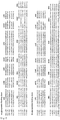
- Human scFv library was biopanned for the recombinant SFTS virus glycoprotein. After 4 rounds of panning, the antibody clone was screened by enzyme-linked immunosorbent assay analysis (ELISA). It was shown that 10 clones (Ab1 to 5 for Gc and Ab6 to 10 for Gn) recognized the SFTS virus through ELISA. The ELISA analysis result was shown in FIG. 2 , and the amino acid sequences of each antibody clone were shown in FIG. 1 .
- ELISA enzyme-linked immunosorbent assay analysis
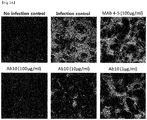
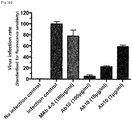
- the neutralization activity of scFv-hFc antibody purified for the SFTS virus was experimented in Vero cells. Among 10 clones (Ab1 to Ab10) experimented, Ab10 exhibited the strongest neutralization activity. The Ab10 scFv-hFc antibody (100 ⁇ l/ml) was diluted 10 folds and titrated for 100 TCID50 SFTS virus (KF358691 strain). The immune fluorescence analysis result and fluorescence strength measurement result of SFTSV infection were shown in FIG. 3 .
- the cell treated with Ab10(100 ⁇ l/ml) exhibited the least virus infection and its neutralization activity was dose-dependent.
- MAb 4-5 positive control
- Ab10 showed significantly high neutralization activity.
- the negative control antibody did not exhibit the neutralization activity at all.
Landscapes
- Health & Medical Sciences (AREA)
- Life Sciences & Earth Sciences (AREA)
- Chemical & Material Sciences (AREA)
- Virology (AREA)
- Organic Chemistry (AREA)
- Molecular Biology (AREA)
- Engineering & Computer Science (AREA)
- General Health & Medical Sciences (AREA)
- Immunology (AREA)
- Medicinal Chemistry (AREA)
- Genetics & Genomics (AREA)
- Biochemistry (AREA)
- Biomedical Technology (AREA)
- Biophysics (AREA)
- Microbiology (AREA)
- Physics & Mathematics (AREA)
- Biotechnology (AREA)
- Proteomics, Peptides & Aminoacids (AREA)
- Bioinformatics & Cheminformatics (AREA)
- Urology & Nephrology (AREA)
- Hematology (AREA)
- Pharmacology & Pharmacy (AREA)
- Animal Behavior & Ethology (AREA)
- Public Health (AREA)
- Veterinary Medicine (AREA)
- General Physics & Mathematics (AREA)
- Analytical Chemistry (AREA)
- Pathology (AREA)
- Gastroenterology & Hepatology (AREA)
- General Engineering & Computer Science (AREA)
- Wood Science & Technology (AREA)
- Zoology (AREA)
- Food Science & Technology (AREA)
- Cell Biology (AREA)
- Chemical Kinetics & Catalysis (AREA)
- Communicable Diseases (AREA)
- Oncology (AREA)
- Nuclear Medicine, Radiotherapy & Molecular Imaging (AREA)
- General Chemical & Material Sciences (AREA)
- Epidemiology (AREA)
Applications Claiming Priority (2)
| Application Number | Priority Date | Filing Date | Title |
|---|---|---|---|
| KR20160034727 | 2016-03-23 | ||
| PCT/KR2017/003156 WO2017164678A2 (fr) | 2016-03-23 | 2017-03-23 | Anticorps qui se lie à la protéine d'enveloppe du virus du syndrome de fièvre sévère avec thrombocytopénie, et son utilisation |
Publications (2)
| Publication Number | Publication Date |
|---|---|
| EP3434690A2 true EP3434690A2 (fr) | 2019-01-30 |
| EP3434690A4 EP3434690A4 (fr) | 2020-04-01 |
Family
ID=59900424
Family Applications (1)
| Application Number | Title | Priority Date | Filing Date |
|---|---|---|---|
| EP17770648.8A Withdrawn EP3434690A4 (fr) | 2016-03-23 | 2017-03-23 | Anticorps qui se lie à la protéine d'enveloppe du virus du syndrome de fièvre sévère avec thrombocytopénie, et son utilisation |
Country Status (8)
| Country | Link |
|---|---|
| US (2) | US10947299B2 (fr) |
| EP (1) | EP3434690A4 (fr) |
| JP (2) | JP7328479B2 (fr) |
| KR (3) | KR20210019491A (fr) |
| CN (1) | CN109071637B (fr) |
| AU (2) | AU2017237543B2 (fr) |
| MY (1) | MY196095A (fr) |
| WO (1) | WO2017164678A2 (fr) |
Families Citing this family (22)
| Publication number | Priority date | Publication date | Assignee | Title |
|---|---|---|---|---|
| AU2017237543B2 (en) * | 2016-03-23 | 2020-02-06 | Institut Pasteur Korea | Antibody that binds to envelope glycoprotein of severe fever with thrombocytopenia syndrome virus, and use for same |
| KR102097994B1 (ko) * | 2018-04-25 | 2020-04-07 | 아이디바이오 주식회사 | 신규한 중증열성혈소판감소증후군 바이러스 |
| JP7171737B2 (ja) * | 2019-07-23 | 2022-11-15 | 源道隆(蘇州)医学科技有限公司 | Sftsvに結合可能なナノ抗体及びその使用 |
| CN110437332B (zh) * | 2019-08-20 | 2020-03-06 | 江苏省疾病预防控制中心(江苏省公共卫生研究院) | 一种抗病毒感染的sftsv蛋白结合分子 |
| CN110437333B (zh) * | 2019-08-20 | 2020-04-28 | 江苏省疾病预防控制中心(江苏省公共卫生研究院) | Sftsv抑制剂及其应用 |
| KR102545412B1 (ko) * | 2019-09-24 | 2023-06-21 | 서울대학교산학협력단 | 중증열성혈소판감소증후증 바이러스에 대한 백신 조성물 |
| CA3166832A1 (fr) * | 2020-01-08 | 2021-07-15 | Board Of Regents, The University Of Texas Systems | Procede de modification de cellules tueuses naturelles pour cibler des tumeurs positives cd70 |
| CN113249334B (zh) * | 2021-03-16 | 2023-12-08 | 贵州省人民医院 | 一种分泌抗发热伴血小板减少综合征病毒单克隆抗体的杂交瘤细胞株sftsn5g12 |
| JP2024512135A (ja) * | 2021-03-31 | 2024-03-18 | ヤンセン バイオテツク,インコーポレーテツド | 免疫エフェクター細胞再指向のための材料及び方法 |
| CN113980125B (zh) * | 2021-10-15 | 2024-03-26 | 中国科学院武汉病毒研究所 | 一种抗sftsv的中和性单克隆抗体及其应用 |
| KR102760674B1 (ko) | 2021-11-24 | 2025-02-03 | 대한민국(질병관리청 국립보건연구원장) | 중증열성혈소판감소증후군 바이러스 Gc 항원에 특이적으로 결합하는 항체 및 이의 용도 |
| CN116120407A (zh) * | 2022-07-26 | 2023-05-16 | 滨州医学院 | 一种分离株新布尼亚病毒M段的序列及其编码的Gn蛋白 |
| KR102865150B1 (ko) * | 2023-02-03 | 2025-09-26 | 한국화학연구원 | 중증열성혈소판감소증후군 바이러스 항원 및 이를 포함하는 고효능 백신 조성물 |
| KR102926551B1 (ko) * | 2023-07-04 | 2026-02-13 | 한국기초과학지원연구원 | 중증열성혈소판감소증후군 바이러스의 뉴클레오캡시드 단백질 유래 올리고 펩타이드 및 이의 용도 |
| CN117126271B (zh) * | 2023-07-19 | 2024-12-13 | 首都医科大学 | 靶向发热伴血小板减少综合征病毒囊膜蛋白的人源中和抗体及双特异性抗体 |
| CN117229413B (zh) * | 2023-09-04 | 2024-07-23 | 中国人民解放军军事科学院军事医学研究院 | 一种针对SFTSV-Gn和CD3的双特异性抗体及其制备方法 |
| KR20250095812A (ko) * | 2023-12-19 | 2025-06-27 | (재) 스크립스코리아항체연구원 | 항-sfts 바이러스 항체 및 이의 용도 |
| CN117964747B (zh) * | 2024-01-31 | 2025-09-23 | 武汉大学 | 一种靶向发热伴血小板减少综合征病毒Gn糖蛋白的保护性单克隆抗体及其应用 |
| CN117964748B (zh) * | 2024-01-31 | 2025-09-23 | 武汉大学 | 一种靶向发热伴血小板减少综合征病毒Gn糖蛋白的中和单克隆抗体及其应用 |
| CN118373906B (zh) * | 2024-06-21 | 2024-08-20 | 中国人民解放军军事科学院军事医学研究院 | 抗发热伴血小板减少综合征病毒人源中和抗体及应用 |
| CN119874892B (zh) * | 2024-06-24 | 2025-07-22 | 上海市病毒研究院 | 发热伴血小板减少综合征病毒的抗体及应用 |
| CN119529076B (zh) * | 2025-01-20 | 2025-05-06 | 中国人民解放军军事科学院军事医学研究院 | 一株抗新布尼亚病毒Gn蛋白的单克隆抗体及其应用 |
Family Cites Families (21)
| Publication number | Priority date | Publication date | Assignee | Title |
|---|---|---|---|---|
| US6255455B1 (en) | 1996-10-11 | 2001-07-03 | The Trustees Of The University Of Pennsylvania | Rh(D)-binding proteins and magnetically activated cell sorting method for production thereof |
| US8372954B2 (en) | 2000-12-22 | 2013-02-12 | National Research Council Of Canada | Phage display libraries of human VH fragments |
| MXPA05000511A (es) | 2001-07-12 | 2005-09-30 | Jefferson Foote | Anticuepros super humanizados. |
| CA2474616A1 (fr) | 2002-01-28 | 2003-08-07 | Medarex, Inc. | Anticorps monoclonaux humains de l'antigene d'enveloppe prostatique specifique (psma) |
| CN101160324B (zh) * | 2005-02-18 | 2013-04-24 | 米德列斯公司 | 缺乏岩藻糖残基的抗前列腺特异性膜抗原(psma)单克隆抗体 |
| WO2010045388A2 (fr) * | 2008-10-14 | 2010-04-22 | Dyax Corp. | Utilisation des protéines de liaison aux mmp-9 et mmp-12 dans le traitement et la prévention de la sclérose systémique |
| US20110286916A1 (en) * | 2008-11-20 | 2011-11-24 | Jose Miguel Aste-Amezaga | Generation and characterization of anti-notch antibodies for therapeutic and diagnostic use |
| KR101093717B1 (ko) | 2008-11-26 | 2011-12-19 | 한국생명공학연구원 | Vegf―특이적인 인간항체 |
| CN103382222B (zh) * | 2009-03-20 | 2016-12-28 | 安姆根有限公司 | α-4-β-7异二聚体特异性拮抗剂抗体 |
| WO2010141249A2 (fr) | 2009-06-02 | 2010-12-09 | Merck Sharp & Dohme Corp. | Génération, caractérisation et utilisations d'anticorps anti-notch3 |
| UA109888C2 (uk) | 2009-12-07 | 2015-10-26 | ІЗОЛЬОВАНЕ АНТИТІЛО АБО ЙОГО ФРАГМЕНТ, ЩО ЗВ'ЯЗУЄТЬСЯ З β-КЛОТО, РЕЦЕПТОРАМИ FGF І ЇХНІМИ КОМПЛЕКСАМИ | |
| CA2814047C (fr) * | 2010-10-08 | 2017-11-14 | President And Fellows Of Harvard College | Sequencage immunitaire a haut debit |
| GB201020995D0 (en) * | 2010-12-10 | 2011-01-26 | Bioinvent Int Ab | Biological materials and uses thereof |
| CN103619883A (zh) | 2011-01-19 | 2014-03-05 | 拜耳知识产权有限责任公司 | 凝血因子抑制剂的结合蛋白 |
| US9574002B2 (en) | 2011-06-06 | 2017-02-21 | Amgen Inc. | Human antigen binding proteins that bind to a complex comprising β-Klotho and an FGF receptor |
| HK1200322A1 (en) | 2011-10-24 | 2015-08-07 | Abbvie Inc. | Immunobinders directed against sclerostin |
| EP2793947B1 (fr) * | 2011-12-23 | 2021-02-03 | Innate Pharma | Conjugaison enzymatique de polypeptides |
| CN102942629B (zh) | 2012-11-21 | 2014-03-19 | 江苏省疾病预防控制中心 | 一种抗sftsv的人源抗体 |
| WO2014119969A1 (fr) * | 2013-01-31 | 2014-08-07 | 서울대학교 산학협력단 | Anticorps anti-c5 et méthode de prévention et de traitement de maladies liées au complément |
| KR101630499B1 (ko) | 2013-10-11 | 2016-06-15 | 서울대학교산학협력단 | 중증열성혈소판감소증후군 바이러스 및 이를 이용한 sfts 진단 방법 및 키트 |
| AU2017237543B2 (en) * | 2016-03-23 | 2020-02-06 | Institut Pasteur Korea | Antibody that binds to envelope glycoprotein of severe fever with thrombocytopenia syndrome virus, and use for same |
-
2017
- 2017-03-23 AU AU2017237543A patent/AU2017237543B2/en not_active Ceased
- 2017-03-23 KR KR1020217000284A patent/KR20210019491A/ko not_active Ceased
- 2017-03-23 KR KR1020187030681A patent/KR102039189B1/ko active Active
- 2017-03-23 EP EP17770648.8A patent/EP3434690A4/fr not_active Withdrawn
- 2017-03-23 WO PCT/KR2017/003156 patent/WO2017164678A2/fr not_active Ceased
- 2017-03-23 JP JP2018549916A patent/JP7328479B2/ja active Active
- 2017-03-23 MY MYPI2018703399A patent/MY196095A/en unknown
- 2017-03-23 KR KR1020197031770A patent/KR102201391B1/ko active Active
- 2017-03-23 US US16/086,761 patent/US10947299B2/en not_active Expired - Fee Related
- 2017-03-23 CN CN201780020024.5A patent/CN109071637B/zh active Active
-
2020
- 2020-05-04 AU AU2020202948A patent/AU2020202948A1/en not_active Abandoned
-
2021
- 2021-02-09 US US17/171,044 patent/US20210171611A1/en not_active Abandoned
- 2021-06-30 JP JP2021109690A patent/JP7235256B2/ja active Active
Also Published As
| Publication number | Publication date |
|---|---|
| AU2017237543B2 (en) | 2020-02-06 |
| US20190112360A1 (en) | 2019-04-18 |
| AU2020202948A1 (en) | 2020-05-21 |
| JP2019516348A (ja) | 2019-06-20 |
| WO2017164678A2 (fr) | 2017-09-28 |
| WO2017164678A3 (fr) | 2018-09-07 |
| CN109071637B (zh) | 2022-03-22 |
| JP7235256B2 (ja) | 2023-03-08 |
| KR20180122456A (ko) | 2018-11-12 |
| MY196095A (en) | 2023-03-14 |
| CN109071637A (zh) | 2018-12-21 |
| KR102201391B1 (ko) | 2021-01-11 |
| EP3434690A4 (fr) | 2020-04-01 |
| KR20210019491A (ko) | 2021-02-22 |
| US10947299B2 (en) | 2021-03-16 |
| JP7328479B2 (ja) | 2023-08-17 |
| AU2017237543A1 (en) | 2018-10-04 |
| KR20190123816A (ko) | 2019-11-01 |
| US20210171611A1 (en) | 2021-06-10 |
| KR102039189B1 (ko) | 2019-11-01 |
| JP2021184710A (ja) | 2021-12-09 |
Similar Documents
| Publication | Publication Date | Title |
|---|---|---|
| US20210171611A1 (en) | Antibody that binds to envelope glycoprotein of sever fever with thrombocytopenia syndrome virus and use for same | |
| CN111620945B (zh) | 一种抗新型冠状病毒的单克隆抗体或其衍生体 | |
| EP3712170A1 (fr) | Anticorps cd96, fragment de liaison à l'antigène de celui-ci et utilisation pharmaceutique associée | |
| CN118496360A (zh) | 一种Claudin18.2抗体及其应用 | |
| WO2006089141A2 (fr) | Anticorps contre cxcr4 et leurs procédés d'utilisation | |
| KR20150001728A (ko) | Cdim 결합 단백질 및 이의 용도 | |
| CN115362176A (zh) | 用于抑制cd73免疫检查点的单克隆抗体及其抗原结合片段以及其用途 | |
| CN114075289A (zh) | 抗cd73的抗体及其用途 | |
| US20220073619A1 (en) | Btn3a binding proteins and uses thereof | |
| EP4206224A1 (fr) | Anticorps humain ou fragment de liaison à l'antigène de celui-ci dirigé contre une protéine de spicule de coronavirus | |
| CN114716542B (zh) | 一种针对新冠病毒刺突蛋白的单克隆抗体及应用 | |
| WO2022143815A1 (fr) | Anticorps neutralisant dirigé contre des épitopes du domaine de liaison au récepteur du nouveau coronavirus et son utilisation | |
| WO2022096704A1 (fr) | Domaine de liaison à l'antigène à taux de coupure réduit | |
| WO2025086564A1 (fr) | Anticorps anti-vsig4 humain et son utilisation pharmaceutique | |
| WO2021227138A1 (fr) | Anticorps monoclonal du nouveau coronavirus, ou partie de liaison à l'antigène de celui-ci | |
| CN104861068A (zh) | 一种全人源抗her3抗体及含有该抗体的组合物和其用于制备治疗her3相关疾病的药物中的用途 | |
| CN109957013B (zh) | 抗h7n9全人源单克隆抗体7o2及其制法与应用 | |
| CN109957011B (zh) | 抗h7n9全人源单克隆抗体6e9及其制法与应用 | |
| CN109957012B (zh) | 抗h7n9全人源单克隆抗体8e17及其制法与应用 | |
| HK1260815A1 (en) | Antibody that binds to envelope glycoprotein of severe fever with thrombocytopenia syndrome virus, and use for same | |
| CN111116741A (zh) | 抗h3n2流感病毒的全人中和性抗体及其应用 | |
| CN117285628A (zh) | 抗vista抗体及其应用 | |
| WO2026029035A1 (fr) | Anticorps humain dirigé contre une souche mutante de coronavirus, ou fragment de liaison à l'antigène de celui-ci | |
| CN116478288A (zh) | 红细胞弱结合型人源化cd47抗体及其应用 | |
| CN115850458A (zh) | 一种抗冠状病毒rbd蛋白的抗体、制备方法和应用 |
Legal Events
| Date | Code | Title | Description |
|---|---|---|---|
| STAA | Information on the status of an ep patent application or granted ep patent |
Free format text: STATUS: THE INTERNATIONAL PUBLICATION HAS BEEN MADE |
|
| PUAI | Public reference made under article 153(3) epc to a published international application that has entered the european phase |
Free format text: ORIGINAL CODE: 0009012 |
|
| STAA | Information on the status of an ep patent application or granted ep patent |
Free format text: STATUS: REQUEST FOR EXAMINATION WAS MADE |
|
| 17P | Request for examination filed |
Effective date: 20180907 |
|
| AK | Designated contracting states |
Kind code of ref document: A2 Designated state(s): AL AT BE BG CH CY CZ DE DK EE ES FI FR GB GR HR HU IE IS IT LI LT LU LV MC MK MT NL NO PL PT RO RS SE SI SK SM TR |
|
| AX | Request for extension of the european patent |
Extension state: BA ME |
|
| DAV | Request for validation of the european patent (deleted) | ||
| DAX | Request for extension of the european patent (deleted) | ||
| RIN1 | Information on inventor provided before grant (corrected) |
Inventor name: CHUNG, JUNHO Inventor name: MIN, JI-YOUNG Inventor name: KIM, KI-HYUN Inventor name: PARK, WAN BEOM Inventor name: KIM, JINHEE Inventor name: KIM, HYORI Inventor name: KO, MEEHYUN Inventor name: KIM, SEUNGTAEK Inventor name: OH, MYOUNG-DON |
|
| RIC1 | Information provided on ipc code assigned before grant |
Ipc: G01N 33/543 20060101ALI20191008BHEP Ipc: C07K 14/005 20060101ALI20191008BHEP Ipc: A61K 39/42 20060101ALI20191008BHEP Ipc: G01N 35/00 20060101ALI20191008BHEP Ipc: C07K 16/10 20060101AFI20191008BHEP Ipc: C07K 14/175 20060101ALI20191008BHEP Ipc: G01N 33/569 20060101ALI20191008BHEP |
|
| A4 | Supplementary search report drawn up and despatched |
Effective date: 20200228 |
|
| RIC1 | Information provided on ipc code assigned before grant |
Ipc: G01N 33/543 20060101ALI20200224BHEP Ipc: C07K 14/005 20060101ALI20200224BHEP Ipc: G01N 33/569 20060101ALI20200224BHEP Ipc: A61K 39/42 20060101ALI20200224BHEP Ipc: C07K 16/10 20060101AFI20200224BHEP Ipc: G01N 35/00 20060101ALI20200224BHEP Ipc: C07K 14/175 20060101ALI20200224BHEP |
|
| STAA | Information on the status of an ep patent application or granted ep patent |
Free format text: STATUS: EXAMINATION IS IN PROGRESS |
|
| 17Q | First examination report despatched |
Effective date: 20221011 |
|
| STAA | Information on the status of an ep patent application or granted ep patent |
Free format text: STATUS: THE APPLICATION IS DEEMED TO BE WITHDRAWN |
|
| 18D | Application deemed to be withdrawn |
Effective date: 20230422 |