EP3435103B1 - Methode d'estimation d'un etat d'energie d'une batterie - Google Patents
Methode d'estimation d'un etat d'energie d'une batterie Download PDFInfo
- Publication number
- EP3435103B1 EP3435103B1 EP18178171.7A EP18178171A EP3435103B1 EP 3435103 B1 EP3435103 B1 EP 3435103B1 EP 18178171 A EP18178171 A EP 18178171A EP 3435103 B1 EP3435103 B1 EP 3435103B1
- Authority
- EP
- European Patent Office
- Prior art keywords
- state
- battery
- discrepancy
- charge
- charge soc
- Prior art date
- Legal status (The legal status is an assumption and is not a legal conclusion. Google has not performed a legal analysis and makes no representation as to the accuracy of the status listed.)
- Active
Links
Images

Classifications
-
- G—PHYSICS
- G01—MEASURING; TESTING
- G01R—MEASURING ELECTRIC VARIABLES; MEASURING MAGNETIC VARIABLES
- G01R31/00—Arrangements for testing electric properties; Arrangements for locating electric faults; Arrangements for electrical testing characterised by what is being tested not provided for elsewhere
- G01R31/36—Arrangements for testing, measuring or monitoring the electrical condition of accumulators or electric batteries, e.g. capacity or state of charge [SoC]
- G01R31/385—Arrangements for measuring battery or accumulator variables
- G01R31/387—Determining ampere-hour charge capacity or SoC
-
- G—PHYSICS
- G01—MEASURING; TESTING
- G01R—MEASURING ELECTRIC VARIABLES; MEASURING MAGNETIC VARIABLES
- G01R31/00—Arrangements for testing electric properties; Arrangements for locating electric faults; Arrangements for electrical testing characterised by what is being tested not provided for elsewhere
- G01R31/36—Arrangements for testing, measuring or monitoring the electrical condition of accumulators or electric batteries, e.g. capacity or state of charge [SoC]
- G01R31/367—Software therefor, e.g. for battery testing using modelling or look-up tables
-
- G—PHYSICS
- G01—MEASURING; TESTING
- G01R—MEASURING ELECTRIC VARIABLES; MEASURING MAGNETIC VARIABLES
- G01R31/00—Arrangements for testing electric properties; Arrangements for locating electric faults; Arrangements for electrical testing characterised by what is being tested not provided for elsewhere
- G01R31/36—Arrangements for testing, measuring or monitoring the electrical condition of accumulators or electric batteries, e.g. capacity or state of charge [SoC]
- G01R31/382—Arrangements for monitoring battery or accumulator variables, e.g. SoC
-
- G—PHYSICS
- G01—MEASURING; TESTING
- G01R—MEASURING ELECTRIC VARIABLES; MEASURING MAGNETIC VARIABLES
- G01R31/00—Arrangements for testing electric properties; Arrangements for locating electric faults; Arrangements for electrical testing characterised by what is being tested not provided for elsewhere
- G01R31/36—Arrangements for testing, measuring or monitoring the electrical condition of accumulators or electric batteries, e.g. capacity or state of charge [SoC]
- G01R31/382—Arrangements for monitoring battery or accumulator variables, e.g. SoC
- G01R31/3828—Arrangements for monitoring battery or accumulator variables, e.g. SoC using current integration
- G01R31/3832—Arrangements for monitoring battery or accumulator variables, e.g. SoC using current integration without measurement of battery voltage
- G01R31/3833—Arrangements for monitoring battery or accumulator variables, e.g. SoC using current integration without measurement of battery voltage using analog integrators, e.g. coulomb-meters
-
- G—PHYSICS
- G01—MEASURING; TESTING
- G01R—MEASURING ELECTRIC VARIABLES; MEASURING MAGNETIC VARIABLES
- G01R31/00—Arrangements for testing electric properties; Arrangements for locating electric faults; Arrangements for electrical testing characterised by what is being tested not provided for elsewhere
- G01R31/36—Arrangements for testing, measuring or monitoring the electrical condition of accumulators or electric batteries, e.g. capacity or state of charge [SoC]
- G01R31/382—Arrangements for monitoring battery or accumulator variables, e.g. SoC
- G01R31/3835—Arrangements for monitoring battery or accumulator variables, e.g. SoC involving only voltage measurements
-
- G—PHYSICS
- G01—MEASURING; TESTING
- G01R—MEASURING ELECTRIC VARIABLES; MEASURING MAGNETIC VARIABLES
- G01R31/00—Arrangements for testing electric properties; Arrangements for locating electric faults; Arrangements for electrical testing characterised by what is being tested not provided for elsewhere
- G01R31/36—Arrangements for testing, measuring or monitoring the electrical condition of accumulators or electric batteries, e.g. capacity or state of charge [SoC]
- G01R31/389—Measuring internal impedance, internal conductance or related variables
-
- G—PHYSICS
- G01—MEASURING; TESTING
- G01R—MEASURING ELECTRIC VARIABLES; MEASURING MAGNETIC VARIABLES
- G01R31/00—Arrangements for testing electric properties; Arrangements for locating electric faults; Arrangements for electrical testing characterised by what is being tested not provided for elsewhere
- G01R31/36—Arrangements for testing, measuring or monitoring the electrical condition of accumulators or electric batteries, e.g. capacity or state of charge [SoC]
- G01R31/392—Determining battery ageing or deterioration, e.g. state of health
-
- H—ELECTRICITY
- H01—ELECTRIC ELEMENTS
- H01M—PROCESSES OR MEANS, e.g. BATTERIES, FOR THE DIRECT CONVERSION OF CHEMICAL ENERGY INTO ELECTRICAL ENERGY
- H01M10/00—Secondary cells; Manufacture thereof
- H01M10/42—Methods or arrangements for servicing or maintenance of secondary cells or secondary half-cells
- H01M10/425—Structural combination with electronic components, e.g. electronic circuits integrated to the outside of the casing
-
- H—ELECTRICITY
- H01—ELECTRIC ELEMENTS
- H01M—PROCESSES OR MEANS, e.g. BATTERIES, FOR THE DIRECT CONVERSION OF CHEMICAL ENERGY INTO ELECTRICAL ENERGY
- H01M10/00—Secondary cells; Manufacture thereof
- H01M10/42—Methods or arrangements for servicing or maintenance of secondary cells or secondary half-cells
- H01M10/425—Structural combination with electronic components, e.g. electronic circuits integrated to the outside of the casing
- H01M2010/4271—Battery management systems including electronic circuits, e.g. control of current or voltage to keep battery in healthy state, cell balancing
-
- Y—GENERAL TAGGING OF NEW TECHNOLOGICAL DEVELOPMENTS; GENERAL TAGGING OF CROSS-SECTIONAL TECHNOLOGIES SPANNING OVER SEVERAL SECTIONS OF THE IPC; TECHNICAL SUBJECTS COVERED BY FORMER USPC CROSS-REFERENCE ART COLLECTIONS [XRACs] AND DIGESTS
- Y02—TECHNOLOGIES OR APPLICATIONS FOR MITIGATION OR ADAPTATION AGAINST CLIMATE CHANGE
- Y02E—REDUCTION OF GREENHOUSE GAS [GHG] EMISSIONS, RELATED TO ENERGY GENERATION, TRANSMISSION OR DISTRIBUTION
- Y02E60/00—Enabling technologies; Technologies with a potential or indirect contribution to GHG emissions mitigation
- Y02E60/10—Energy storage using batteries
Definitions
- the invention belongs to the field of electric storage batteries.
- the invention relates to a method for estimating an energy state of a battery.
- the batteries of electric vehicles or hybrids HEV include a management system implementing an estimator SOC state of charge of the battery.
- the management system provides an operator or an operator of the vehicle with an estimate of a remaining electrical charge on the battery capacity, for example presented in the form of an operating autonomy.
- estimators are limited in their use to the extent that they are valid only in limited cases. For example, some estimators are valid only at the beginning of life because they do not take into account in their estimation the aging of the battery.
- X. Liu et al. also describe, in A method for the state of energy estimation of lithium-ion batteries at dynamic currents and temperatures, an estimator of the energy state of the neural network type.
- the invention provides an alternative to existing energy condition estimators.
- the implementation of the solution of the invention proves simpler to implement in comparison with the solutions of the prior art using neural networks.
- At least one abacus is produced experimentally.
- At least one chart is made by simulation.
- the difference ⁇ determined is a maximum deviation ⁇ op, max determined over a lifetime of the battery.
- the maximum deviation ⁇ op, max is determined under the most unfavorable battery operating conditions.
- the method further comprises a step of estimating the available energy remaining in the battery.
- the invention relates to a method 100 for estimating a state of energy SOE ( State Of Energy in English terminology) of a battery.
- SOE State Of Energy in English terminology
- the energy state SOE which will be expressed as a percentage, corresponds to the ratio of an available energy in the battery at a given instant t on a maximum energy that said battery is able to store at this instant t.
- the state of charge SOC is the ratio of an available electrical charge in the battery at a time t to a capacity of the battery at this moment, that is to say the maximum electric charge that it is likely to store considering, for example, its aging state.
- a Coulomb counter can be set up.
- the British patent GB 2490295 describes a method of managing the charge of a battery using a Coulomb counter.
- French patent FR 2853081 discloses a system for determining an instantaneous state of charge of a battery implementing a Kalman filter.
- the SOC state of charge estimated during this step is noted in the SOC op .
- the difference ⁇ for the state of charge SOC op is determined 130.
- ⁇ SOC - SOE
- the evolution of the difference ⁇ as a function of the state of charge SOC is deduced from abacuses carried out experimentally.
- the experimental realization of the abacuses is done in the following way: one carries out tests on a discharge cell with constant power, with different states of health SOH, different temperature cells and different powers of discharge.
- the recorded parameters are at a minimum: current, voltage, power, capacity, energy, temperature.
- the maximum capacity discharged is calculated and thus the SOC state of charge is changed during the discharge (capacity discharged at all times / maximum capacity).
- the maximum energy discharged is calculated and the evolution of the SOE energy state during the discharge (energy discharged at any time / maximum energy).
- the difference ⁇ is simulated numerically.
- the battery can be modeled by an Open Circuit Voltage (OCV) open-circuit voltage source connected to an internal resistance R placed in series (Rint model). Internal resistance, associated with Joule losses, increases over the life of the battery.
- OCV Open Circuit Voltage
- R internal resistance
- SOE t f SOE t i + 1 E SOH T P ⁇ t i tf OCV t I t dt - ⁇ t i tf R t I 2 t dt
- the difference ⁇ between the state of charge SOC and the state of energy SOE is simulated on the basis of this equation, relying for example on mappings of the voltage in circuit open OCV and R depending on the battery temperature and the state of health SOH.
- one or more numerically simulated abacuses can be used in addition to one or more experimental charts to consolidate the experimental results.
- the charts are made beforehand, during a step of realizing 110 of at least one abacus to the implementation of the invention.
- the current at the terminals of the battery is taken into account in the production of the charts.
- This mode of implementation is particularly suited to an implementation of the method in hybrid systems, in which the battery is caused to undergo significant variations in current at its terminals.
- discharge discharges of interest P 1 , P 2 and P 3 correspond to orders of magnitude typically encountered in the field of aeronautics, for stage phases, continuous rise and initial climb respectively.
- the determination 130 of the difference ⁇ is done by means of the abacuses carried out experimentally or by simulation. We denote by ⁇ op the difference noted corresponding to the state of charge SOC op .
- the energy state SOE is calculated 140.
- the charts of the figure 3 are valid for a given state of health SOH of the battery.
- a difference ⁇ op, max independent of the state SOH health, for a given SOC op charge state, and equal to the maximum deviations observed at this state of charge over the entire lifetime of the battery In an alternative mode of implementation, this difference is also taken independent of the power across the battery and its temperature. The difference is then determined under the most unfavorable conditions.
- SOE op energy status is equal to 52.5% over the entire battery life for this state of charge.
- the deviation ⁇ is close to zero at the beginning of discharge and at the end of discharge of the battery, and maximum for a charge state SOC of approximately 45%.
- the figure 4 illustrates the SOC op charge state and SOE op energy state profiles estimated, as a function of time, for a power across the battery equal to P 1 , ie 6.3W, during a discharge phase .
- the power delivered by the battery is considered constant over this time interval.
- the SOE energy state decreases linearly over said time interval.
- P 1 is the power delivered by the battery and t d -t 2 the remaining time estimated by linear extrapolation before total discharge of the battery.
- the invention also relates to a battery comprising a battery management system BMS ( Battery Management System in English terminology) implementing the method according to the invention.
- BMS Battery Management System in English terminology
- the invention takes into account the aging of the battery since the difference ⁇ depends on the state of health of the battery.
Landscapes
- Physics & Mathematics (AREA)
- General Physics & Mathematics (AREA)
- Engineering & Computer Science (AREA)
- Microelectronics & Electronic Packaging (AREA)
- Manufacturing & Machinery (AREA)
- Chemical & Material Sciences (AREA)
- Chemical Kinetics & Catalysis (AREA)
- Electrochemistry (AREA)
- General Chemical & Material Sciences (AREA)
- Secondary Cells (AREA)
Description
- L'invention appartient au domaine des batteries d'accumulateurs électriques.
- Plus particulièrement, l'invention concerne une méthode d'estimation d'un état d'énergie d'une batterie.
- Il est répandu que les batteries des véhicules électriques ou hybrides HEV (Hybrid Electric Vehicles en terminologie anglo-saxonne) comportent un système de gestion implémentant un estimateur de l'état de charge SOC de la batterie. Le système de gestion fournit à un opérateur ou à un pilote du véhicule une estimation d'une charge électrique restante sur la capacité de la batterie, par exemple présentée sous la forme d'une autonomie de fonctionnement.
- Toutefois, l'opérateur ou le pilote a davantage besoin d'une information concernant l'énergie disponible dans la batterie plutôt qu'une information concernant sa charge. Dans cette optique, l'état d'énergie SOE traduisant un pourcentage d'énergie restante dans la batterie. est une information pertinente.
- Actuellement, il existe un nombre restreint d'estimateurs de l'état d'énergie SOE.
- Un inconvénient de certains des estimateurs existant est qu'ils sont limités dans leur utilisation dans la mesure où ils ne sont valables que dans des cas restreints. Par exemple, certains estimateurs ne sont valables qu'en début de vie car ils ne prennent pas en compte dans leur estimation le vieillissement de la batterie.
- Dans leur publication scientifique A method for state of energy estimation of lithium-ion batteries based on neural network model, G. Dong et al. décrivent une méthode visant à estimer l'état d'énergie de batteries de type lithium-ion sur la base d'un modèle de réseaux de neurones.
- X. Liu et al. décrivent également, dans A method for state of energy estimation of lithium-ion batteries at dynamic currents and temperatures, un estimateur de l'état d'énergie de type réseau de neurones.
- Un inconvénient de ces estimateurs est qu'ils sont complexes à mettre en oeuvre.
- La demande internationale de brevet
WO2016112960 décrit une méthode pour déterminer l'état d'énergie SOE par intégration de la courbe de tension aux bornes de la batterie sur un intervalle d'état de charge SOC donné. - La demande de brevet
DE 10 2015 114652 A1 , la demande de brevetUS2017/088072A1 , ainsi que la publication scientifique Maximum Available Capacity and Energy Estimation Based on Support Vector Machine Regression for Lithium-ion Battery de Zhongwei Deng et al., décrivent des méthodes pour déterminer l'état d'énergie SOE d'une batterie. - L'invention propose une alternative aux estimateurs d'état d'énergie existant. La mise en oeuvre de la solution de l'invention s'avère plus simple à mettre en oeuvre en comparaison avec les solutions de l'art antérieur mettant en oeuvre des réseaux de neurones.
- L'invention concerne une méthode pour l'estimation d'un état d'énergie SOE d'une batterie, comportant une étape d'estimation d'un état de charge SOC de la batterie, ladite méthode étant caractérisée en ce qu'elle comporte en outre les étapes suivantes de :
- détermination préalable de l'évolution d'un écart Δ entre l'état de charge SOC et l'état d'énergie SOE en fonction dudit état de charge SOC ;
- détermination d'un écart Δ entre l'état de charge SOC et l'état d'énergie SOE en fonction d'une part dudit état de charge estimé à l'étape d'estimation et d'autre part de l'évolution de l'écart Δ déterminée lors de l'étape de détermination préalable ;
- calcul de l'état d'énergie SOE en fonction de l'état de charge SOC estimé à l'étape d'estimation et de l'écart Δ déterminé à l'étape de détermination.
- Dans un mode de mise en oeuvre :
- l'étape de détermination préalable de l'évolution d'un écart Δ entre l'état de charge SOC et l'état d'énergie SOE en fonction dudit état de charge SOC correspond à la réalisation d'au moins un abaque représentant une évolution de l'écart Δ en fonction de l'état de charge de la batterie SOC ;
- l'écart Δ est déterminé, à l'étape de détermination, par le biais d'au moins un abaque réalisé au cours de ladite étape préalable.
- Dans un mode de mise en oeuvre, au moins un abaque est réalisé expérimentalement.
- Dans un mode de mise en oeuvre, au moins un abaque est réalisé par simulation.
- Dans un mode de mise en oeuvre, l'écart Δ dépend d'au moins un des paramètres suivants de la batterie :
- une puissance aux bornes de ladite batterie ;
- un état de santé SOH (« State Of Health » en terminologie anglo-saxonne) ;
- une température de ladite batterie.
- Dans un mode de mise en oeuvre, l'écart Δ déterminé est un écart maximal Δop,max déterminé sur une durée de vie de la batterie.
- Dans un mode de mise en oeuvre, l'écart maximal Δop,max est déterminé dans des conditions d'utilisation de la batterie les plus défavorables.
- Dans un mode de mise en oeuvre, la méthode comporte en outre une étape d'estimation de l'énergie disponible restant dans la batterie.
- L'invention concerne également une batterie comportant un système de gestion de batterie BMS implémentant la méthode selon l'invention. Ledit système de gestion comporte :
- des moyens pour estimer l'état de charge SOC de la batterie ;
- des moyens pour déterminer l'écart Δ, et notamment au moins un abaque de l'évolution de l'écart Δ en fonction dudit état de charge ;
- des moyens pour calculer l'état d'énergie SOE de la batterie en fonction de l'état de charge SOC estimé et de l'écart Δ déterminé.
- Dans une forme de réalisation, les moyens pour estimer l'état de charge SOC comportent un dispositif parmi :
- des moyens de mesure de tension ou d'impédance ;
- un estimateur de type compteur de Coulomb ;
- un système adaptatif mettant en oeuvre un filtre de Kalman ou des réseaux de neurones.
- L'invention sera mieux comprise à la lecture de la description qui suit et à l'examen des figures qui l'accompagnent. Celles-ci ne sont présentées qu'à titre indicatif et nullement limitatif de l'invention.
- La
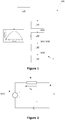
figure 1 représente les étapes principales de la méthode selon l'invention. - La
figure 2 représente un modèle électrique d'une batterie. - La
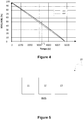
figure 3 représente une évolution, pour une batterie donnée, de l'écart entre l'état de charge et l'état d'énergie en fonction de l'état de charge, de la puissance de décharge aux bornes de la batterie, et du mode de détermination par l'expérimentation ou par simulation. - La
figure 4 représente les évolutions temporelles de l'état de charge et de l'état d'énergie pour la batterie de lafigure 3 , pour une puissance donnée. - La
Figure 5 représente de manière schématique une batterie selon l'invention. - En référence à la
figure 1 , l'invention concerne une méthode 100 pour l'estimation d'un état d'énergie SOE (State Of Energy en terminologie anglo-saxonne) d'une batterie. - L'état d'énergie SOE, qui sera exprimé en pourcentage, correspond au rapport d'une énergie disponible dans la batterie à un instant t donné sur une énergie maximale que ladite batterie est en mesure de stocker à cet instant t.
- La méthode selon l'invention comporte les étapes suivantes :
- estimation 120 d'un état de charge SOC (State Of Charge en terminologie anglo-saxonne) de la batterie ;
- détermination 130 d'un écart Δ quantifiant une différence entre l'état de charge SOC et l'état d'énergie SOE, pour l'état de charge de la batterie estimé à l'étape précédente ;
- calcul 140 de l'état d'énergie SOE.
- L'état de charge SOC, exprimé en pourcentage, est le rapport d'une charge électrique disponible dans la batterie à un instant t sur une capacité de la batterie à cet instant, c'est-à-dire la charge électrique maximale qu'elle est susceptible de stocker compte-tenu par exemple de son état de vieillissement.
- L'état de charge SOC et l'état d'énergie SOE sont des grandeurs qui dépendent notamment des paramètres suivants :
- une puissance P fournie à la batterie (cas de la charge) ou délivrée par ladite batterie (cas de la décharge) ;
- un état de santé SOH (State Of Health en terminologie anglo-saxonne) de la batterie, tenant compte des vieillissements calendaire et en cyclage ;
- une température T de la batterie.
- L'état de charge SOC et l'état d'énergie SOE s'expriment formellement de la manière suivante :


- ti : instant de début de charge (ou de décharge) ;
- tf : instant de fin de charge (ou de décharge) ;
- I(t) : intensité fournie à ou délivrée par la batterie ;
- U(t) : tension aux bornes de la batterie ;
- C : capacité de la batterie ;
- E : énergie maximale de la batterie.
- L'estimation 110 de l'état de charge SOC peut être réalisée par tout moyen connu, notamment :
- mesure directe (méthode de la tension en circuit ouvert, méthode de la tension terminale, méthode par impédance,...) ;
- estimateurs ;
- systèmes adaptatifs.
- Par exemple, un compteur de Coulomb peut être mis en place. Selon la méthode du compteur de Coulomb, l'état de charge SOC est estimé à l'instant nΔt à partir d'un instant (n-1)Δt précédent selon la formule :

- Où K est une constante.
- Le brevet britannique
GB 2490295 - Un système adaptatif de type réseaux de neurones ou filtre de Kalman peut également être mis en place. Le brevet français
FR 2853081 - L'état de charge SOC estimé lors de cette étape est noté dans la suite SOCop.
- Une fois l'état de charge SOCop estimé, par exemple par un des moyens décrits ci-dessus, l'écart Δ, pour cet état de charge SOCop, est déterminé 130.
- L'écart Δ est défini de manière générale par la relation :

- Dans un mode de mise en oeuvre de l'invention, l'évolution de l'écart Δ en fonction de l'état de charge SOC est déduite d'abaques réalisés de manière expérimentale.
- La réalisation expérimentale des abaques se fait de la manière suivante : on réalise des essais sur une cellule de décharge à puissance constante, à différents états de santé SOH, différentes températures cellules et différentes puissances de décharge. Les paramètres enregistrées sont a minima : courant, tension, puissance, capacité, énergie, température. Lorsque l'essai est fini on calcule la capacité maximale déchargée et on a ainsi l'évolution de l'état de charge SOC au cours de la décharge (capacité déchargée à tout instant / capacité maximale). De même on calcule l'énergie maximale déchargée et on a ainsi l'évolution de l'état d'énergie SOE au cours de la décharge (énergie déchargée à tout instant / énergie maximale).
- On peut alors tracer différents abaques de Δ pour différents SOH, températures cellules, puissance de décharge.
- Dans un mode de mise en oeuvre alternatif, l'écart Δ est simulé numériquement. En référence à la
figure 2 , la batterie peut être modélisée par une source de tension en circuit ouvert OCV (Open Circuit Voltage en terminologie anglo-saxonne) connectée à une résistance interne R placée en série (modèle de Rint). La résistance interne, associée aux pertes par effet Joule, augmente au cours de la durée de vie de la batterie. Selon ce modèle, et suivant les conventions retenues sur lafigure 2 , la tension U aux bornes de la batterie est égale à :
- L'état d'énergie SOE peut être réécrit, à partir de l'équation (2) :

- Cette équation (3) fait apparaître qu'un écart entre l'état de charge SOC et l'état d'énergie SOE est imputable à :
- la tension en circuit ouvert OCV ;
- la puissance dissipée par effet Joule du fait de la résistance interne R.
- Dans cette forme de mise en oeuvre, l'écart Δ entre l'état de charge SOC et l'état d'énergie SOE est simulé sur la base de cette équation, en s'appuyant par exemple sur des cartographies de la tension en circuit ouvert OCV et R en fonction de la température de la batterie et de l'état de santé SOH.
- Avantageusement, un ou plusieurs abaques simulés numériquement peuvent être utilisés en complément d'un ou plusieurs abaques expérimentaux pour consolider les résultats expérimentaux.
- De manière générale, il convient de noter que l'écart Δ dépend de :
- une puissance aux bornes de la batterie ;
- l'état de santé SOH de la batterie ;
- la température de la batterie.
- Dans tous les cas, les abaques sont réalisés préalablement, lors d'une étape de réalisation 110 d'au moins un abaque à la mise en oeuvre de l'invention.
- Dans un mode de mise en oeuvre, le courant aux bornes de la batterie est pris en compte dans la réalisation des abaques. Ce mode de mise en oeuvre est particulièrement adapté à une implémentation de la méthode dans des systèmes hybrides, au sein desquels la batterie est amenée à subir des variations importantes de courant à ses bornes.
- La
figure 3 illustre un exemple d'abaques donnant l'écart Δ en fonction de l'état de charge SOC. Ces abaques ont été réalisés dans les conditions suivantes : - phase de décharge de la batterie, pour trois puissances de décharge différentes :
- P1 = 6.3 W ;
- P1 = 15 W ;
- P1 = 17.6 W ;
- en début de vie de la batterie (SOH ≥ 98%) ;
- température de batterie T de 23°C ;
- Les puissances de décharge d'intérêt P1, P2 et P3 correspondent à des ordres de grandeur typiquement rencontrés dans le domaine de l'aéronautique, pour des phases de palier, montée continue et montée initiale respectivement.
- Les abaques sont réalisés de manière expérimentale d'une part et par simulation d'autre part. Le nom des courbes réalisées expérimentalement apparaît dans la légende de la
figure 3 avec le suffixe « - Exp ». Le nom des courbes réalisées par simulation apparaît dans la légende de cette figure avec le suffixe « - Sim ». - Il apparaît que l'écart Δ obtenu augmente avec la puissance de décharge. De manière générale, l'écart Δ augmente avec :
- la puissance de charge ou de décharge aux bornes de la batterie ;
- la résistance interne dissipant la puissance par effet Joule, laquelle résistance interne, augmente avec :
- l'âge de la batterie ;
- une diminution de la température de batterie.
- La détermination 130 de l'écart Δ se fait par le biais des abaques réalisés de manière expérimentale ou par simulation. On note Δop l'écart relevé correspondant à l'état de charge SOCop.
- Par la suite, l'état d'énergie SOE est calculé 140. L'état d'énergie SOEop correspondant à l'état de charge SOCop est calculé suivant la relation suivante :

- En référence à la
figure 3 , pour un état de charge SOCop de 57% et une puissance de décharge de 17.6 W, l'écart Δop,exp maximal, basé sur les résultats expérimentaux, est égal à 4.15%. L'état d'énergie SOEop,exp associé est égal à :
- De même, pour un état de charge SOCop de 57% et une puissance de décharge de 17.6W, l'écart Δop,sim maximal, basé sur les résultats de simulation, est égal à 3.65%. L'état d'énergie SOEop,sim associé est égal à :

- Les abaques de la
figure 3 sont valables pour un état de santé SOH donné de la batterie. Afin de prévenir une surestimation excessive de l'état d'énergie SOE, il est fait l'hypothèse, dans un mode de mise en oeuvre de la méthode selon l'invention, d'un écart Δop,max indépendant de l'état de santé SOH, pour un état de charge SOCop donné, et égal au maximum des écarts observés à cet état de charge sur toute la durée de vie de la batterie. Dans un mode alternatif de mise en oeuvre, cet écart est également pris indépendant de la puissance aux bornes de la batterie et de sa température. L'écart est alors déterminé dans les conditions les plus défavorables. - A titre d'exemple, si un abaque indique que l'écart Δop maximal est de 4.5%, quelles que soient l'âge de la batterie, la puissance à ses bornes et sa température, et sous l'hypothèse d'un état de charge SOCop de 57%, l'état d'énergie SOEop est égal à 52.5% sur toute la durée de vie de la batterie pour cet état de charge.
- En référence à la
figure 3 , il convient de noter que l'écart Δ est proche de zéro en début de décharge et en fin de décharge de la batterie, et maximal pour un état de charge SOC d'environ 45%. - Par la suite, il est possible d'estimer 150 l'énergie disponible dans la batterie.
- La
figure 4 illustre les profils d'état de charge SOCop et d'état d'énergie SOEop estimés, en fonction du temps, pour une puissance aux bornes de la batterie égale à P1, soit 6.3W, lors d'une phase de décharge. - On considère un intervalle temporel [t1;t2] sur lequel l'état d'énergie SOE a été estimé, de la manière décrite plus haut, par exemple :


- La puissance délivrée par la batterie est considérée comme constante sur cet intervalle temporel. En conséquence, l'état d'énergie SOE décroît de manière linéaire sur ledit intervalle temporel.
- Par extrapolation linéaire, il est possible d'estimer l'instant td auquel l'état d'énergie SOE sera nul, ce qui correspond à une décharge totale de la batterie. Dans l'exemple de la
figure 4 , on obtient :
- On en déduit une estimation de l'énergie restante E2 à l'instant t2 dans la batterie :

- Où P1 est la puissance délivrée par la batterie et td-t2 le temps restant estimé par extrapolation linéaire avant décharge totale de la batterie.
- On en déduit, dans l'exemple de la
figure 4 :
- Il convient de noter que, si l'exemple de mise en oeuvre des
figures 3 et4 illustre une phase de décharge d'une batterie, la méthode selon l'invention s'applique, mutatis mutandis, à une phase de charge de ladite batterie. - L'invention concerne également une batterie comportant un système de gestion de batterie BMS (Battery Management System en terminologie anglo-saxonne) implémentant la méthode selon l'invention.
- Le système de gestion de batterie BMS selon l'invention comporte des moyens pour :
- estimer l'état de charge SOC de la batterie ;
- déterminer l'écart Δ, et notamment des moyens pour utiliser et éventuellement mémoriser au moins un abaque de l'évolution de l'écart Δ en fonction dudit état de charge ;
- calculer l'état d'énergie SOE de la batterie.
- Les moyens pour estimer l'état de charge SOC peuvent être par exemple :
- des moyens de mesure de tension ou d'impédance ;
- un estimateur de type compteur de Coulomb ;
- un système adaptatif mettant en oeuvre par exemple un filtre de Kalman ou des réseaux de neurones.
- L'invention permet d'indiquer à un opérateur un niveau ou un pourcentage d'énergie estimés à disposition dans une batterie à un instant donné. L'invention est simple à mettre en oeuvre dans la mesure où :
- elle se base sur des estimateurs de l'état de charge SOC classiquement utilisés pour estimer l'état de charge SOC de la batterie ;
- le nombre d'essais expérimentaux est limité en comparaison des estimateurs d'état d'énergie existant ;
- il n'est pas nécessaire d'estimer la chute de tension aux bornes de la batterie, par exemple par estimation de l'impédance de la batterie, car sa connaissance n'est pas nécessaire à la mise en oeuvre de l'invention.
- Par ailleurs, l'invention prend en compte le vieillissement de la batterie puisque l'écart Δ dépend de l'état de santé de la batterie.
Claims (10)
- Méthode (100) pour l'estimation d'un état d'énergie SOE d'une batterie, comportant une étape d'estimation (120) d'un état de charge SOC de la batterie, ladite méthode étant caractérisée en ce qu'elle comporte en outre les étapes suivantes de :- détermination préalable (110) de l'évolution d'un écart Δ entre l'état de charge SOC et l'état d'énergie SOE en fonction dudit état de charge SOC ;- détermination (130) d'un écart Δ entre l'état de charge SOC et l'état d'énergie SOE en fonction d'une part dudit état de charge estimé à l'étape d'estimation (120) et d'autre part l'évolution de l'écart Δ déterminée lors de l'étape de détermination préalable (110) ;- calcul (140) de l'état d'énergie SOE en fonction de l'état de charge SOC estimé à l'étape d'estimation (120) et de l'écart Δ déterminé à l'étape de détermination (130).
- Méthode (100) selon la revendication 1 caractérisée en ce que :- l'étape de détermination préalable (110) de l'évolution d'un écart Δ entre l'état de charge SOC et l'état d'énergie SOE en fonction dudit état de charge SOC correspond à la réalisation d'au moins un abaque représentant une évolution de l'écart Δ en fonction de l'état de charge de la batterie SOC ;- l'écart Δ est déterminé à l'étape (130) par le biais d'au moins un abaque réalisé au cours de ladite étape préalable (110).
- Méthode (100) selon la revendication 2 caractérisée en ce qu'au moins un abaque est réalisé expérimentalement.
- Méthode (100) selon la revendication 2 ou la revendication 3 caractérisée en ce qu'au moins un abaque est réalisé par simulation.
- Méthode (100) selon l'une quelconque des revendications précédentes caractérisée en ce que l'écart Δ dépend d'au moins un des paramètres de la batterie parmi :- une puissance aux bornes de ladite batterie ;- un état de santé SOH (« State Of Health » en terminologie anglo-saxonne);- une température de ladite batterie.
- Méthode (100) selon la revendication 5 caractérisée en que l'écart Δ déterminé est un écart maximal Δop,max déterminé sur une durée de vie de la batterie.
- Méthode (100) selon la revendication 6 caractérisée en ce que l'écart maximal Δop,max est déterminé dans des conditions d'utilisation de la batterie les plus défavorables.
- Méthode (100) selon l'une quelconque des revendications précédentes caractérisée en ce qu'elle comporte en outre une étape d'estimation (150) de l'énergie disponible restant dans la batterie.
- Batterie (10) comportant un système de gestion de batterie BMS implémentant la méthode selon l'une quelconque des revendications 1 à 8, caractérisée en ce que ledit système de gestion comporte :- des moyens (11) pour estimer l'état de charge SOC de la batterie ;- des moyens (12) pour déterminer l'écart Δ, et notamment au moins un abaque de l'évolution de l'écart D en fonction dudit état de charge ;- des moyens (13) pour calculer l'état d'énergie SOE de la batterie en fonction de l'état de charge SOC estimé et de l'écart Δ déterminé.
- Batterie selon la revendication 9 caractérisée en ce que les moyens (11) pour estimer l'état de charge SOC comportent un dispositif parmi :- des moyens de mesure de tension ou d'impédance ;- un estimateur de type compteur de Coulomb ;- un système adaptatif mettant en oeuvre un filtre de Kalman ou des réseaux de neurones.
Applications Claiming Priority (1)
| Application Number | Priority Date | Filing Date | Title |
|---|---|---|---|
| FR1757153A FR3069647B1 (fr) | 2017-07-27 | 2017-07-27 | Methode d'estimation d'un etat d'energie d'une batterie et batterie mettant en oeuvre une telle methode |
Publications (2)
| Publication Number | Publication Date |
|---|---|
| EP3435103A1 EP3435103A1 (fr) | 2019-01-30 |
| EP3435103B1 true EP3435103B1 (fr) | 2019-10-16 |
Family
ID=59746221
Family Applications (1)
| Application Number | Title | Priority Date | Filing Date |
|---|---|---|---|
| EP18178171.7A Active EP3435103B1 (fr) | 2017-07-27 | 2018-06-18 | Methode d'estimation d'un etat d'energie d'une batterie |
Country Status (3)
| Country | Link |
|---|---|
| US (1) | US10641834B2 (fr) |
| EP (1) | EP3435103B1 (fr) |
| FR (1) | FR3069647B1 (fr) |
Families Citing this family (2)
| Publication number | Priority date | Publication date | Assignee | Title |
|---|---|---|---|---|
| CN115542177A (zh) * | 2021-06-29 | 2022-12-30 | 比亚迪股份有限公司 | 一种电池能量状态估算方法 |
| FR3135146B1 (fr) * | 2022-04-27 | 2024-10-25 | Safran Electrical & Power | Procédé et système d’estimation de l’état de charge disponible d’une batterie en fonction de la tension instantanée. |
Family Cites Families (5)
| Publication number | Priority date | Publication date | Assignee | Title |
|---|---|---|---|---|
| FR2853081B1 (fr) | 2003-03-26 | 2005-06-24 | Peugeot Citroen Automobiles Sa | Systeme et procede de determination de l'etat de charge instantane d'une batterie, et utilisation de ce procede dans un gestionnaire de charge |
| WO2011098771A1 (fr) | 2010-02-12 | 2011-08-18 | Poweroasis Ltd | Gestion de charge de batterie par comptage de coulombs |
| US10338150B2 (en) * | 2014-09-19 | 2019-07-02 | Gm Global Technology Operations Llc. | Systems and methods for estimating battery system energy capability |
| CN107406004B (zh) | 2015-01-13 | 2021-05-07 | 沃尔沃汽车公司 | 用于确定车辆中的电池的能量状态的值的方法及设备 |
| US9656621B2 (en) * | 2015-09-14 | 2017-05-23 | Pearl Automation Inc. | System and method for sensor module power management |
-
2017
- 2017-07-27 FR FR1757153A patent/FR3069647B1/fr not_active Expired - Fee Related
-
2018
- 2018-06-18 EP EP18178171.7A patent/EP3435103B1/fr active Active
- 2018-07-17 US US16/037,392 patent/US10641834B2/en active Active
Non-Patent Citations (1)
| Title |
|---|
| None * |
Also Published As
| Publication number | Publication date |
|---|---|
| US10641834B2 (en) | 2020-05-05 |
| EP3435103A1 (fr) | 2019-01-30 |
| FR3069647A1 (fr) | 2019-02-01 |
| FR3069647B1 (fr) | 2019-08-02 |
| US20190033379A1 (en) | 2019-01-31 |
Similar Documents
| Publication | Publication Date | Title |
|---|---|---|
| CN112572233B (zh) | 一种电池管理方法、装置及车辆 | |
| EP3677465B1 (fr) | Procédé et système d'égalisation de batterie, véhicule, support d'informations, et dispositif électronique | |
| EP2797157B1 (fr) | Système de batterie de puissance pour la determination de l'impedance d'un etage | |
| EP3191337B1 (fr) | Procédé de gestion de la plage d'utilisation d'une batterie | |
| US9533597B2 (en) | Parameter identification offloading using cloud computing resources | |
| US20150197159A1 (en) | Impedance based battery parameter estimation | |
| US20180246173A1 (en) | Online determination of model parameters of lead acid batteries and computation of soc and soh | |
| CN104360286B (zh) | 一种锂离子电池荷电状态估算修正方法 | |
| EP2707738B1 (fr) | Procede d'estimation de l'etat de sante d'une batterie et systeme de gestion de batterie adapte | |
| US11579201B2 (en) | Method and system for identifying third-order model parameters of lithium battery based on likelihood function | |
| EP3324197B1 (fr) | Procédé de détermination de l'état de santé d'une cellule de batterie | |
| CN107076801A (zh) | 电池管理系统中的电化学阻抗谱 | |
| EP3052953A1 (fr) | Procede et appareil d'evaluation de l'etat de sante d'une batterie lithium | |
| JP2019090684A (ja) | 内部状態推定装置 | |
| JP2017032294A (ja) | 二次電池の充電率推定方法、充電率推定装置、及び健全度推定装置 | |
| US9874588B2 (en) | Method for determining the average value of a periodic or quasi-periodic voltage signal | |
| EP2001074B1 (fr) | Système et procédé de détermination de la perte de capacité et de l'énergie d'une batterie | |
| EP3435103B1 (fr) | Methode d'estimation d'un etat d'energie d'une batterie | |
| CN111044909B (zh) | 电池的状态预测方法及装置 | |
| FR2961352A1 (fr) | Procede d'estimation des etats de charge et de sante d'une batterie d'un vehicule, estimateur et vehicule comportant un tel estimateur | |
| CN114355200A (zh) | 电池许用电流模型的建立方法、装置及电池管理系统 | |
| FR2976130A1 (fr) | Procede et dispositif de surveillance d'une source d'energie | |
| FR3009754A1 (fr) | Diagnostic de la resistance interne d'une batterie electrique | |
| Schweighofer et al. | Fast and accurate battery model including temperature dependency | |
| CN110391473A (zh) | 用于对电能量存储单元充电的方法 |
Legal Events
| Date | Code | Title | Description |
|---|---|---|---|
| PUAI | Public reference made under article 153(3) epc to a published international application that has entered the european phase |
Free format text: ORIGINAL CODE: 0009012 |
|
| STAA | Information on the status of an ep patent application or granted ep patent |
Free format text: STATUS: REQUEST FOR EXAMINATION WAS MADE |
|
| 17P | Request for examination filed |
Effective date: 20180618 |
|
| AK | Designated contracting states |
Kind code of ref document: A1 Designated state(s): AL AT BE BG CH CY CZ DE DK EE ES FI FR GB GR HR HU IE IS IT LI LT LU LV MC MK MT NL NO PL PT RO RS SE SI SK SM TR |
|
| AX | Request for extension of the european patent |
Extension state: BA ME |
|
| GRAP | Despatch of communication of intention to grant a patent |
Free format text: ORIGINAL CODE: EPIDOSNIGR1 |
|
| STAA | Information on the status of an ep patent application or granted ep patent |
Free format text: STATUS: GRANT OF PATENT IS INTENDED |
|
| RIC1 | Information provided on ipc code assigned before grant |
Ipc: G01R 31/382 20190101ALI20190315BHEP Ipc: G01R 31/367 20190101ALI20190315BHEP Ipc: G01R 31/36 20190101AFI20190315BHEP |
|
| INTG | Intention to grant announced |
Effective date: 20190418 |
|
| GRAS | Grant fee paid |
Free format text: ORIGINAL CODE: EPIDOSNIGR3 |
|
| GRAJ | Information related to disapproval of communication of intention to grant by the applicant or resumption of examination proceedings by the epo deleted |
Free format text: ORIGINAL CODE: EPIDOSDIGR1 |
|
| GRAL | Information related to payment of fee for publishing/printing deleted |
Free format text: ORIGINAL CODE: EPIDOSDIGR3 |
|
| STAA | Information on the status of an ep patent application or granted ep patent |
Free format text: STATUS: REQUEST FOR EXAMINATION WAS MADE |
|
| INTC | Intention to grant announced (deleted) | ||
| RBV | Designated contracting states (corrected) |
Designated state(s): AL AT BE BG CH CY CZ DE DK EE ES FI FR GB GR HR HU IE IS IT LI LT LU LV MC MK MT NL NO PL PT RO RS SE SI SK SM TR |
|
| GRAR | Information related to intention to grant a patent recorded |
Free format text: ORIGINAL CODE: EPIDOSNIGR71 |
|
| STAA | Information on the status of an ep patent application or granted ep patent |
Free format text: STATUS: GRANT OF PATENT IS INTENDED |
|
| GRAA | (expected) grant |
Free format text: ORIGINAL CODE: 0009210 |
|
| STAA | Information on the status of an ep patent application or granted ep patent |
Free format text: STATUS: THE PATENT HAS BEEN GRANTED |
|
| AK | Designated contracting states |
Kind code of ref document: B1 Designated state(s): AL AT BE BG CH CY CZ DE DK EE ES FI FR GB GR HR HU IE IS IT LI LT LU LV MC MK MT NL NO PL PT RO RS SE SI SK SM TR |
|
| INTG | Intention to grant announced |
Effective date: 20190906 |
|
| REG | Reference to a national code |
Ref country code: GB Ref legal event code: FG4D Free format text: NOT ENGLISH |
|
| REG | Reference to a national code |
Ref country code: CH Ref legal event code: EP |
|
| REG | Reference to a national code |
Ref country code: DE Ref legal event code: R096 Ref document number: 602018000898 Country of ref document: DE |
|
| REG | Reference to a national code |
Ref country code: IE Ref legal event code: FG4D Free format text: LANGUAGE OF EP DOCUMENT: FRENCH |
|
| REG | Reference to a national code |
Ref country code: AT Ref legal event code: REF Ref document number: 1191800 Country of ref document: AT Kind code of ref document: T Effective date: 20191115 |
|
| REG | Reference to a national code |
Ref country code: NL Ref legal event code: MP Effective date: 20191016 |
|
| REG | Reference to a national code |
Ref country code: LT Ref legal event code: MG4D |
|
| REG | Reference to a national code |
Ref country code: AT Ref legal event code: MK05 Ref document number: 1191800 Country of ref document: AT Kind code of ref document: T Effective date: 20191016 |
|
| PG25 | Lapsed in a contracting state [announced via postgrant information from national office to epo] |
Ref country code: LV Free format text: LAPSE BECAUSE OF FAILURE TO SUBMIT A TRANSLATION OF THE DESCRIPTION OR TO PAY THE FEE WITHIN THE PRESCRIBED TIME-LIMIT Effective date: 20191016 Ref country code: SE Free format text: LAPSE BECAUSE OF FAILURE TO SUBMIT A TRANSLATION OF THE DESCRIPTION OR TO PAY THE FEE WITHIN THE PRESCRIBED TIME-LIMIT Effective date: 20191016 Ref country code: NL Free format text: LAPSE BECAUSE OF FAILURE TO SUBMIT A TRANSLATION OF THE DESCRIPTION OR TO PAY THE FEE WITHIN THE PRESCRIBED TIME-LIMIT Effective date: 20191016 Ref country code: LT Free format text: LAPSE BECAUSE OF FAILURE TO SUBMIT A TRANSLATION OF THE DESCRIPTION OR TO PAY THE FEE WITHIN THE PRESCRIBED TIME-LIMIT Effective date: 20191016 Ref country code: PL Free format text: LAPSE BECAUSE OF FAILURE TO SUBMIT A TRANSLATION OF THE DESCRIPTION OR TO PAY THE FEE WITHIN THE PRESCRIBED TIME-LIMIT Effective date: 20191016 Ref country code: GR Free format text: LAPSE BECAUSE OF FAILURE TO SUBMIT A TRANSLATION OF THE DESCRIPTION OR TO PAY THE FEE WITHIN THE PRESCRIBED TIME-LIMIT Effective date: 20200117 Ref country code: NO Free format text: LAPSE BECAUSE OF FAILURE TO SUBMIT A TRANSLATION OF THE DESCRIPTION OR TO PAY THE FEE WITHIN THE PRESCRIBED TIME-LIMIT Effective date: 20200116 Ref country code: BG Free format text: LAPSE BECAUSE OF FAILURE TO SUBMIT A TRANSLATION OF THE DESCRIPTION OR TO PAY THE FEE WITHIN THE PRESCRIBED TIME-LIMIT Effective date: 20200116 Ref country code: FI Free format text: LAPSE BECAUSE OF FAILURE TO SUBMIT A TRANSLATION OF THE DESCRIPTION OR TO PAY THE FEE WITHIN THE PRESCRIBED TIME-LIMIT Effective date: 20191016 Ref country code: AT Free format text: LAPSE BECAUSE OF FAILURE TO SUBMIT A TRANSLATION OF THE DESCRIPTION OR TO PAY THE FEE WITHIN THE PRESCRIBED TIME-LIMIT Effective date: 20191016 Ref country code: PT Free format text: LAPSE BECAUSE OF FAILURE TO SUBMIT A TRANSLATION OF THE DESCRIPTION OR TO PAY THE FEE WITHIN THE PRESCRIBED TIME-LIMIT Effective date: 20200217 |
|
| PG25 | Lapsed in a contracting state [announced via postgrant information from national office to epo] |
Ref country code: RS Free format text: LAPSE BECAUSE OF FAILURE TO SUBMIT A TRANSLATION OF THE DESCRIPTION OR TO PAY THE FEE WITHIN THE PRESCRIBED TIME-LIMIT Effective date: 20191016 Ref country code: HR Free format text: LAPSE BECAUSE OF FAILURE TO SUBMIT A TRANSLATION OF THE DESCRIPTION OR TO PAY THE FEE WITHIN THE PRESCRIBED TIME-LIMIT Effective date: 20191016 Ref country code: IS Free format text: LAPSE BECAUSE OF FAILURE TO SUBMIT A TRANSLATION OF THE DESCRIPTION OR TO PAY THE FEE WITHIN THE PRESCRIBED TIME-LIMIT Effective date: 20200224 |
|
| PG25 | Lapsed in a contracting state [announced via postgrant information from national office to epo] |
Ref country code: AL Free format text: LAPSE BECAUSE OF FAILURE TO SUBMIT A TRANSLATION OF THE DESCRIPTION OR TO PAY THE FEE WITHIN THE PRESCRIBED TIME-LIMIT Effective date: 20191016 |
|
| REG | Reference to a national code |
Ref country code: DE Ref legal event code: R097 Ref document number: 602018000898 Country of ref document: DE |
|
| PG2D | Information on lapse in contracting state deleted |
Ref country code: IS |
|
| PG25 | Lapsed in a contracting state [announced via postgrant information from national office to epo] |
Ref country code: RO Free format text: LAPSE BECAUSE OF FAILURE TO SUBMIT A TRANSLATION OF THE DESCRIPTION OR TO PAY THE FEE WITHIN THE PRESCRIBED TIME-LIMIT Effective date: 20191016 Ref country code: EE Free format text: LAPSE BECAUSE OF FAILURE TO SUBMIT A TRANSLATION OF THE DESCRIPTION OR TO PAY THE FEE WITHIN THE PRESCRIBED TIME-LIMIT Effective date: 20191016 Ref country code: DK Free format text: LAPSE BECAUSE OF FAILURE TO SUBMIT A TRANSLATION OF THE DESCRIPTION OR TO PAY THE FEE WITHIN THE PRESCRIBED TIME-LIMIT Effective date: 20191016 Ref country code: CZ Free format text: LAPSE BECAUSE OF FAILURE TO SUBMIT A TRANSLATION OF THE DESCRIPTION OR TO PAY THE FEE WITHIN THE PRESCRIBED TIME-LIMIT Effective date: 20191016 Ref country code: ES Free format text: LAPSE BECAUSE OF FAILURE TO SUBMIT A TRANSLATION OF THE DESCRIPTION OR TO PAY THE FEE WITHIN THE PRESCRIBED TIME-LIMIT Effective date: 20191016 Ref country code: IS Free format text: LAPSE BECAUSE OF FAILURE TO SUBMIT A TRANSLATION OF THE DESCRIPTION OR TO PAY THE FEE WITHIN THE PRESCRIBED TIME-LIMIT Effective date: 20200216 |
|
| PLBE | No opposition filed within time limit |
Free format text: ORIGINAL CODE: 0009261 |
|
| STAA | Information on the status of an ep patent application or granted ep patent |
Free format text: STATUS: NO OPPOSITION FILED WITHIN TIME LIMIT |
|
| PG25 | Lapsed in a contracting state [announced via postgrant information from national office to epo] |
Ref country code: SM Free format text: LAPSE BECAUSE OF FAILURE TO SUBMIT A TRANSLATION OF THE DESCRIPTION OR TO PAY THE FEE WITHIN THE PRESCRIBED TIME-LIMIT Effective date: 20191016 Ref country code: SK Free format text: LAPSE BECAUSE OF FAILURE TO SUBMIT A TRANSLATION OF THE DESCRIPTION OR TO PAY THE FEE WITHIN THE PRESCRIBED TIME-LIMIT Effective date: 20191016 Ref country code: IT Free format text: LAPSE BECAUSE OF FAILURE TO SUBMIT A TRANSLATION OF THE DESCRIPTION OR TO PAY THE FEE WITHIN THE PRESCRIBED TIME-LIMIT Effective date: 20191016 |
|
| 26N | No opposition filed |
Effective date: 20200717 |
|
| PG25 | Lapsed in a contracting state [announced via postgrant information from national office to epo] |
Ref country code: SI Free format text: LAPSE BECAUSE OF FAILURE TO SUBMIT A TRANSLATION OF THE DESCRIPTION OR TO PAY THE FEE WITHIN THE PRESCRIBED TIME-LIMIT Effective date: 20191016 |
|
| PG25 | Lapsed in a contracting state [announced via postgrant information from national office to epo] |
Ref country code: MC Free format text: LAPSE BECAUSE OF FAILURE TO SUBMIT A TRANSLATION OF THE DESCRIPTION OR TO PAY THE FEE WITHIN THE PRESCRIBED TIME-LIMIT Effective date: 20191016 |
|
| PG25 | Lapsed in a contracting state [announced via postgrant information from national office to epo] |
Ref country code: LU Free format text: LAPSE BECAUSE OF NON-PAYMENT OF DUE FEES Effective date: 20200618 |
|
| REG | Reference to a national code |
Ref country code: BE Ref legal event code: MM Effective date: 20200630 |
|
| PG25 | Lapsed in a contracting state [announced via postgrant information from national office to epo] |
Ref country code: IE Free format text: LAPSE BECAUSE OF NON-PAYMENT OF DUE FEES Effective date: 20200618 |
|
| PG25 | Lapsed in a contracting state [announced via postgrant information from national office to epo] |
Ref country code: BE Free format text: LAPSE BECAUSE OF NON-PAYMENT OF DUE FEES Effective date: 20200630 |
|
| REG | Reference to a national code |
Ref country code: CH Ref legal event code: PL |
|
| PG25 | Lapsed in a contracting state [announced via postgrant information from national office to epo] |
Ref country code: LI Free format text: LAPSE BECAUSE OF NON-PAYMENT OF DUE FEES Effective date: 20210630 Ref country code: CH Free format text: LAPSE BECAUSE OF NON-PAYMENT OF DUE FEES Effective date: 20210630 |
|
| PG25 | Lapsed in a contracting state [announced via postgrant information from national office to epo] |
Ref country code: TR Free format text: LAPSE BECAUSE OF FAILURE TO SUBMIT A TRANSLATION OF THE DESCRIPTION OR TO PAY THE FEE WITHIN THE PRESCRIBED TIME-LIMIT Effective date: 20191016 Ref country code: MT Free format text: LAPSE BECAUSE OF FAILURE TO SUBMIT A TRANSLATION OF THE DESCRIPTION OR TO PAY THE FEE WITHIN THE PRESCRIBED TIME-LIMIT Effective date: 20191016 Ref country code: CY Free format text: LAPSE BECAUSE OF FAILURE TO SUBMIT A TRANSLATION OF THE DESCRIPTION OR TO PAY THE FEE WITHIN THE PRESCRIBED TIME-LIMIT Effective date: 20191016 |
|
| PG25 | Lapsed in a contracting state [announced via postgrant information from national office to epo] |
Ref country code: MK Free format text: LAPSE BECAUSE OF FAILURE TO SUBMIT A TRANSLATION OF THE DESCRIPTION OR TO PAY THE FEE WITHIN THE PRESCRIBED TIME-LIMIT Effective date: 20191016 |
|
| PGFP | Annual fee paid to national office [announced via postgrant information from national office to epo] |
Ref country code: DE Payment date: 20250618 Year of fee payment: 8 |
|
| PGFP | Annual fee paid to national office [announced via postgrant information from national office to epo] |
Ref country code: GB Payment date: 20250618 Year of fee payment: 8 |
|
| PGFP | Annual fee paid to national office [announced via postgrant information from national office to epo] |
Ref country code: FR Payment date: 20250625 Year of fee payment: 8 |