EP3437312B1 - Microphones de mise en sourdine de dispositifs co-implantés physiquement - Google Patents
Microphones de mise en sourdine de dispositifs co-implantés physiquement Download PDFInfo
- Publication number
- EP3437312B1 EP3437312B1 EP16908326.8A EP16908326A EP3437312B1 EP 3437312 B1 EP3437312 B1 EP 3437312B1 EP 16908326 A EP16908326 A EP 16908326A EP 3437312 B1 EP3437312 B1 EP 3437312B1
- Authority
- EP
- European Patent Office
- Prior art keywords
- devices
- microphone
- physically colocated
- teleconference
- physically
- Prior art date
- Legal status (The legal status is an assumption and is not a legal conclusion. Google has not performed a legal analysis and makes no representation as to the accuracy of the status listed.)
- Active
Links
Images

Classifications
-
- H—ELECTRICITY
- H04—ELECTRIC COMMUNICATION TECHNIQUE
- H04R—LOUDSPEAKERS, MICROPHONES, GRAMOPHONE PICK-UPS OR LIKE ACOUSTIC ELECTROMECHANICAL TRANSDUCERS; ELECTRIC HEARING AIDS; PUBLIC ADDRESS SYSTEMS
- H04R29/00—Monitoring arrangements; Testing arrangements
- H04R29/004—Monitoring arrangements; Testing arrangements for microphones
-
- H—ELECTRICITY
- H04—ELECTRIC COMMUNICATION TECHNIQUE
- H04N—PICTORIAL COMMUNICATION, e.g. TELEVISION
- H04N7/00—Television systems
- H04N7/14—Systems for two-way working
- H04N7/141—Systems for two-way working between two video terminals, e.g. videophone
- H04N7/147—Communication arrangements, e.g. identifying the communication as a video-communication, intermediate storage of the signals
-
- H—ELECTRICITY
- H04—ELECTRIC COMMUNICATION TECHNIQUE
- H04M—TELEPHONIC COMMUNICATION
- H04M3/00—Automatic or semi-automatic exchanges
- H04M3/42—Systems providing special services or facilities to subscribers
- H04M3/56—Arrangements for connecting several subscribers to a common circuit, i.e. affording conference facilities
- H04M3/568—Arrangements for connecting several subscribers to a common circuit, i.e. affording conference facilities audio processing specific to telephonic conferencing, e.g. spatial distribution, mixing of participants
-
- H—ELECTRICITY
- H04—ELECTRIC COMMUNICATION TECHNIQUE
- H04R—LOUDSPEAKERS, MICROPHONES, GRAMOPHONE PICK-UPS OR LIKE ACOUSTIC ELECTROMECHANICAL TRANSDUCERS; ELECTRIC HEARING AIDS; PUBLIC ADDRESS SYSTEMS
- H04R1/00—Details of transducers, loudspeakers or microphones
- H04R1/08—Mouthpieces; Microphones; Attachments therefor
-
- H—ELECTRICITY
- H04—ELECTRIC COMMUNICATION TECHNIQUE
- H04R—LOUDSPEAKERS, MICROPHONES, GRAMOPHONE PICK-UPS OR LIKE ACOUSTIC ELECTROMECHANICAL TRANSDUCERS; ELECTRIC HEARING AIDS; PUBLIC ADDRESS SYSTEMS
- H04R3/00—Circuits for transducers
-
- H—ELECTRICITY
- H04—ELECTRIC COMMUNICATION TECHNIQUE
- H04M—TELEPHONIC COMMUNICATION
- H04M2203/00—Aspects of automatic or semi-automatic exchanges
- H04M2203/20—Aspects of automatic or semi-automatic exchanges related to features of supplementary services
- H04M2203/2094—Proximity
-
- H—ELECTRICITY
- H04—ELECTRIC COMMUNICATION TECHNIQUE
- H04M—TELEPHONIC COMMUNICATION
- H04M2203/00—Aspects of automatic or semi-automatic exchanges
- H04M2203/50—Aspects of automatic or semi-automatic exchanges related to audio conference
-
- H—ELECTRICITY
- H04—ELECTRIC COMMUNICATION TECHNIQUE
- H04M—TELEPHONIC COMMUNICATION
- H04M3/00—Automatic or semi-automatic exchanges
- H04M3/42—Systems providing special services or facilities to subscribers
- H04M3/56—Arrangements for connecting several subscribers to a common circuit, i.e. affording conference facilities
- H04M3/568—Arrangements for connecting several subscribers to a common circuit, i.e. affording conference facilities audio processing specific to telephonic conferencing, e.g. spatial distribution, mixing of participants
- H04M3/569—Arrangements for connecting several subscribers to a common circuit, i.e. affording conference facilities audio processing specific to telephonic conferencing, e.g. spatial distribution, mixing of participants using the instant speaker's algorithm
-
- H—ELECTRICITY
- H04—ELECTRIC COMMUNICATION TECHNIQUE
- H04N—PICTORIAL COMMUNICATION, e.g. TELEVISION
- H04N7/00—Television systems
- H04N7/14—Systems for two-way working
- H04N7/15—Conference systems
Definitions
- US2007/0050451 A1 discloses a system and method for detecting whether plural devices connected in a multimedia teleconferencing session are collocated, and if plural devices are collocated, all microphones except the microphone of a designated device are muted.
- US2013/0044871 A1 discloses a teleconferencing system that detects input lines with duplicated audio signals and uses only one of the input lines to generate mixed output, wherein the weaker ones of duplicated audio signals are suppressed.
- the terms “device” may be used interchangeably and refer to any one of various smartphones, cellular telephones, tablets, laptop computers, personal data assistants (PDA's), VolP phones, wireless enabled televisions, wireless enabled entertainment systems, and other similar electronic devices that include a processor and are capable of sending and receiving wireless or wired communication signals.
- Examples of other devices include, but are not limited to, a wearable device, an in-room installed speakerphone, an attachable large form factor speakerphone, a handheld speakerphone, and a Bluetooth earpiece.
- a large number of the people who participate in meetings today carry at least one mobile device, where the device is equipped with a diverse set of communication or radio interfaces. Through these interfaces, the mobile device can establish communications with the devices of other users, a central processing system, reach the Internet, or access various data services through wireless or wired networks,
- each user may be logged into the teleconference from their respective devices.
- each user may be logged into the teleconference from their respective devices.
- feedback and reverberation for example, from multiple microphones being live and transmitting on various devices being in proximity to each other.
- the audio of the teleconference may be distorted and/or obscured.
- Examples disclosed herein provide the ability to determine whether devices are physically colocated, for example, in a conference room, and intelligently mute all but one microphone among the physically colocated devices.
- feedback and reverberation can be reduced on a teleconference, in a way that solves any issues automatically, rather than forcing users to manually address any feedback (e.g., by users muting devices one by one until feedback is reduced).
- Time and productivity may be gained by users on the teleconference because they are not expending efforts by trying to manage live and active devices on the teleconference that may create the feedback.
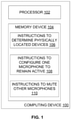
- FIG. 1 illustrates a computing device 100 for configuring one microphone at a time from physically colocated devices to remain active for participating in a teleconference, according to an example.
- the computing device 100 may be disposed in a conference room, to control devices participating in the teleconference that are physically colocated in the conference room.
- the computing device 100 depicts a processor 102 and a memory device 104 and, as an example of the computing device 100 performing its operations, the memory device 104 may include instructions 106-110 that are executable by the processor 102.
- memory device 104 can be said to store program instructions that, when executed by processor 102, implement the components of the computing device 100.
- the executable program instructions stored in the memory device 104 include instructions to determine whether there are physically colocated devices on a teleconference 106, instructions to configure one microphone at a time from the physically colocated devices to remain active 108, and instructions to mute other microphones from the physically colocated devices 1 10.
- instructions to determine whether there are physically colocated devices on a teleconference 106 represent program instructions that when executed by the processor 102 cause the computing device 100 to determine whether there are multiple devices on the teleconference that are in physical proximity to each other to potentially cause feedback, such as the devices in the conference room.
- feedback and reverberation for example, from microphones of the multiple devices being live and transmitting on the various devices while in close proximity to each other.
- the audio of the teleconference may be distorted and/or obscured.
- the multiple devices on the teleconference may share the same physical colocation if audio sensed by each device are the same or similar.
- Meetings almost always involve people talking. Therefore, audio sensing offers a useful way to determine the group of members in the meeting (or teleconference), where each member brings his or her device to the meeting.
- almost all devices include microphones, and hearing the same conversation provides a human-centric notion of being physically colocated or attending the same gathering.
- the description proposes using a particular kind of audio sensing and comparing patterns of relative audio silence (i.e., silence signatures) of audio signals from devices used by users on the teleconference.
- each device on the teleconference uses the collection of ambient noise in the environment around the device to create a silence signature.
- This silence signature is a collection of non-sensitive audio data signifying the highs and lows of the ambient audio.
- the computing device 100 may then collect the audio sensed by each device on the teleconference at a particular time interval.
- Devices on the teleconference with very similar sound signatures are either in the same physical location at the same time, or participating in the teleconference remotely, because they are hearing the same ambient noises. Therefore, all devices hearing the same sound signature can be determined to be within the same room or conference call and marked for vulnerability to feedback.
- the determination of whether multiple devices on the teleconference share the same physical colocation may be based on positioning or geolocation. If the multiple devices share a geolocation, it is likely that the devices share the same physical colocation (e.g., the multiple devices in the conference room), and there is the possibility of feedback and reverberation.
- the technology for determining the geolocation of the devices may vary. Examples include, but are not limited to, utilizing GPS or utilizing the knowledge of Wi-Fi terminal locations surrounding the devices on the teleconference. As an example, determining the location of the devices on the teleconference may use any of the techniques described above by itself or in combination.
- instructions to configure one microphone at a time from the physically colocated devices to remain active 108 represent program instructions that when executed by the processor 102 cause the computing device 100 to ensure that any feedback between the physically colocated devices are reduced or eliminated.
- the active microphone is selected manually.
- the active microphone is selected based on prioritized classes. For example, each device may be assigned a priority, based on its audio certification or ability, with a higher priority device likely providing a higher quality audio experience for the teleconference.
- the following example list of devices may be prioritized as follows: in-room installed speakerphone, attachable large form factor speakerphone, handheld speakerphone, notebook computer, and Bluetooth earpiece.
- the computing device 100 may configure the microphone from the physically colocated device that belongs to the higher priority class to remain active.
- the physically colocated devices include a speakerphone and a Bluetooth earpiece, it is likely that a user may prefer to use the speakerphone and its audio, and not the Bluetooth earpiece, due to higher quality audio experience the speakerphone may provide.
- the computing device 100 may configure only the microphone of the speakerphone to remain active, according to it higher priority class.
- Instructions to mute other microphones from the physically colocated devices 110 represent program instructions that when executed by the processor 102 cause the computing device 100 to continue the above instruction by ensuring that the microphone from only one of the physically colocated devices to remain active while the microphone of the other physically colocated devices are muted. This is particularly useful, for example, when one of the physically colocated devices is unmuted.
- the computing device 100 intelligently governs that only one microphone from the physically colocated devices can be active. As a result, when one of the physically colocated devices is unmuted, the computing device automatically mutes the earlier active device, in order to avoid any feedback or reverberation.
- Memory device 104 represents generally any number of memory components capable of storing instructions that can be executed by processor 102.
- Memory device 104 is non-transitory in the sense that it does not encompass a transitory signal but instead is made up of at least one memory component configured to store the relevant instructions.
- the memory device 104 may be a non-transitory computer-readable storage medium.
- Memory device 104 may be implemented in a single device or distributed across devices,
- processor 102 represents any number of processors capable of executing instructions stored by memory device 104, Processor 102 may be integrated in a single device or distributed across devices. Further, memory device 104 may be fully or partially integrated in the same device as processor 102, or it may be separate but accessible to that device and processor 102.
- the program instructions 106-110 can be part of an installation package that when installed can be executed by processor 102 to implement the components of the computing device 100.
- memory device 104 may be a portable medium such as a CD, DVD, or flash drive or a memory maintained by a server from which the installation package can be downloaded and installed.
- the program instructions may be part of an application or applications already installed.
- memory device 104 can include integrated memory such as a hard drive, solid state drive, or the like.
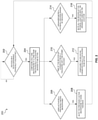
- FIG. 2 illustrates a method 200 of operation at a computing device for configuring one microphone at a time from physically colocaled devices to remain active for participating in a teleconference, according to an example.
- method 200 is described with reference to computing device 1 00.
- the computing device 100 determines whether devices on a teleconference are physically colocated with respect to each other.
- the computing device 100 determines whether devices on a teleconference are physically colocated with respect to each other.
- the computing device 100 determines whether devices on a teleconference are physically colocated with respect to each other.
- the determination of whether devices on the teleconference are physically colocated with respect to each other may be made based on audio sensing and/or geolocation, among other examples.
- the computing device 100 configures only one microphone at a time from the physically colocated devices to be active, while the microphones from the other physically colocated devices are muted.
- the microphone configured to be active may be selected based on a priority class that is likely to provide a better audio experience than the other physically colocated devices may be able to provide.
- the computing device 100 determines whether a user activates a previously-muted microphone from the group of physically colocated devices. This scenario may occur, for example, when a user prefers to use a microphone from a physically colocated device that may belong to a lower priority class than the currently active microphone. At 208, if the user does activate the previously-muted microphone, the computing device 100 automatically mutes the now previously-active microphone, in order to avoid any feedback between the physically colocated devices.
- the computing device 100 determines whether one of the devices on the teleconference is no longer physically colocated with the other devices. This may occur, for example, when a user leaves a conference room with his device, but desires to continue to be on the teleconference.
- the computing device 100 configures the device no longer physically colocated with the other devices to be active. As an example, if this device was muted when in the conference room with the other physically colocated devices, the computing device 100 automatically unmutes this device once no longer physically colocated with the other devices. As an example, if the device no longer physically colocated with the devices was the active device while in the conference room, the computing device 100 may configure the microphone of the physically colocated device belonging to the next higher priority class to be active.
- the computing device 100 determines whether an organizer of the teleconference muted a physical location shared by devices. For example, if sensitive material is being discussed in the conference room, a mute room option may be available for the organizer to select, eliminating the risk of a microphone from one of the physically colocated devices in the conference room being unintentionally active while users in the conference room is discussing the sensitive material.
- the computing device 100 mutes all devices at the shared physical location (e.g., the conference room), until the organizer unmutes the location. Once the organizer unmutes the location, the computing device 100 returns to 202, by determining whether devices on the teleconference remain physically colocated, and configuring only one microphone at a time from the physically colocated devices to be active.
- FIG. 3 is a flow diagram 300 of steps taken to implement a method for configuring one microphone at a time from physically colocated devices to remain active for participating in a teleconference, according to an example.
- FIG. 3 reference may be made to the example computing device 1 00 illustrated in FIG. 1 . Such reference is made to provide contextual examples and not to limit the manner in which the method depicted by FIG. 3 may be implemented.
- the computing device determines whether a first device with a first microphone on the teleconference is physically colocated with respect to a second device with a second microphone on the teleconference.
- the first and second devices on the teleconference are physically colocated with respect to each other when the first and second microphones are in proximity to each other for the first and second devices to be vulnerable to producing feedback. This may be determined based on the audio sensing, as described above.
- the first device may use the collection of ambient noise in the environment around it to create a silence signature.
- the second devices may create its own silence signature as well.
- the computing device may then collect the audio sensed by the first and second devices, and determine whether they are physically colocated, based on the similarity of the silence signatures (e.g., physically colocated if substantially similar silence signatures). As described above, the determination of whether the first and second device are physically colocated may also be based on whether the first and second devices share a geolocation.
- the computing device configures either the first or second microphone to remain active for participating in the teleconference while the other of the first or second microphone is to be muted.
- either of the first or second microphone to remain active is selected by the computing device based on a prioritization of the physically colocated devices to provide an improved audio experience for the teleconference.
- the prioritization of the physically colocated devices may be based on an audio certification or ability of each device from the physically colocated devices, as described above.
- either of the first or second microphone to remain active is manually selected by a user from the physically colocated devices.
- FIG. 3 shows a specific order of execution
- the order of execution may differ from that which is depicted.
- the order of execution of two or more blocks or arrows may be scrambled relative to the order shown.
- two or more blocks shown in succession may be executed concurrently or with partial concurrence. All such variations are within the scope of the present invention.
- examples described may include various components and features. It is also appreciated that numerous specific details are set forth to provide a thorough understanding of the examples. However, it is appreciated that the examples may be practiced without limitations to these specific details. In other instances, well known methods and structures may not be described in detail to avoid unnecessarily obscuring the description of the examples. Also, the examples may be used in combination with each other.
Landscapes
- Engineering & Computer Science (AREA)
- Signal Processing (AREA)
- Multimedia (AREA)
- Physics & Mathematics (AREA)
- Acoustics & Sound (AREA)
- Health & Medical Sciences (AREA)
- General Health & Medical Sciences (AREA)
- Otolaryngology (AREA)
- Telephonic Communication Services (AREA)
- Circuit For Audible Band Transducer (AREA)
- Telephone Function (AREA)
Claims (9)
- Procédé comprenant :la détermination du fait de savoir si un premier dispositif avec un premier microphone lors d'une téléconférence est physiquement colocalisé par rapport à un second dispositif avec un second microphone lors de la téléconférence ; etaprès la détermination selon laquelle les premier et second dispositifs sont physiquement colocalisés l'un par rapport à l'autre, la configuration du premier ou du second microphone pour rester actif afin de participer à la téléconférence tandis que l'autre parmi le premier ou le second microphone doit être mis en sourdine,le premier ou le second microphone devant rester actif étant sélectionné manuellement par un utilisateur parmi les dispositifs physiquement colocalisés, et le procédé comprenant en outre :la mise en sourdine d'un microphone précédemment actif d'un dispositif parmi les dispositifs physiquement colocalisés lorsque l'utilisateur doit activer manuellement un microphone d'un autre dispositif parmi les dispositifs physiquement colocalisés, etla configuration automatique d'un microphone précédemment mis en sourdine d'un dispositif parmi les dispositifs physiquement colocalisés pour être actif lorsqu'il est déterminé que le dispositif n'est plus physiquement colocalisé avec les autres dispositifs physiquement colocalisés et que l'utilisateur du dispositif continue à être présent lors de la téléconférence.
- Procédé selon la revendication 1, dans lequel les premier et second dispositifs lors de la téléconférence sont physiquement colocalisés l'un par rapport à l'autre lorsque les premier et second microphones sont à proximité l'un de l'autre de manière à ce que les premier et second dispositifs soient vulnérables à la production de rétroaction.
- Procédé selon la revendication 1, dans lequel les premier et second dispositifs lors de la téléconférence sont physiquement colocalisés l'un par rapport à l'autre lorsque les premier et second dispositifs partagent une géolocalisation.
- Procédé selon la revendication 1, comprenant la mise en sourdine de tous les microphones des dispositifs physiquement colocalisés lorsqu'un emplacement des dispositifs physiquement colocalisés est désigné pour être mis en sourdine.
- Support de stockage non transitoire lisible par ordinateur comprenant des instructions de programme qui, lorsqu'elles sont exécutées par un processeur, amènent le processeur à :déterminer quels dispositifs lors d'une téléconférence sont physiquement colocalisés les uns par rapport aux autres ;pour lesdits dispositifs lors de la téléconférence qui sont déterminés comme étant physiquement colocalisés les uns par rapport aux autres, configurer un microphone unique parmi les dispositifs physiquement colocalisés pour rester actif afin de participer à la téléconférence, le microphone unique devant rester actif étant sélectionné manuellement par un utilisateur parmi les dispositifs physiquement colocalisés ;mettre en sourdine d'autres microphones des dispositifs physiquement colocalisés ;mettre en sourdine un microphone précédemment actif d'un dispositif parmi les dispositifs physiquement colocalisés lorsque l'utilisateur active manuellement un microphone d'un autre dispositif parmi les dispositifs physiquement colocalisés ; etactiver automatiquement un microphone précédemment mis en sourdine d'un dispositif parmi les dispositifs physiquement colocalisés lorsqu'il est déterminé que le dispositif n'est plus physiquement colocalisé avec les autres dispositifs physiquement colocalisés et que l'utilisateur du dispositif continue à être présent lors de la téléconférence.
- Support de stockage non transitoire lisible par ordinateur selon la revendication 5, dans lequel les dispositifs lors de la téléconférence sont physiquement colocalisés les uns par rapport aux autres lorsque des microphones des dispositifs sont à proximité les uns des autres de manière à ce que les dispositifs soient vulnérables à la production de rétroaction.
- Support de stockage non transitoire lisible par ordinateur selon la revendication 5, dans lequel les dispositifs lors de la téléconférence sont physiquement colocalisés les uns par rapport aux autres lorsque les dispositifs partagent une géolocalisation.
- Support de stockage non transitoire lisible par ordinateur selon la revendication 5, comprenant la mise en sourdine de tous les microphones des dispositifs physiquement colocalisés lorsqu'un emplacement des dispositifs physiquement colocalisés est désigné pour être mis en sourdine.
- Dispositif informatique comprenant un processeur devant :déterminer si un premier dispositif avec un premier microphone lors d'une téléconférence est physiquement colocalisé par rapport à un second dispositif avec un second microphone lors de la téléconférence, les premier et second dispositifs lors de la téléconférence étant physiquement colocalisés l'un par rapport à l'autre lorsque les premier et second microphones sont à proximité l'un de l'autre de manière à ce que les premier et second dispositifs soient vulnérables à la production de rétroaction ; etaprès la détermination selon laquelle les premier et second dispositifs sont physiquement colocalisés l'un par rapport à l'autre, configurer le premier ou le second microphone pour rester actif afin de participer à la téléconférence tandis que l'autre parmi le premier ou le second microphone doit être mis en sourdine,le premier ou le second microphone devant rester actif étant sélectionné manuellement par un utilisateur parmi les dispositifs physiquement colocalisés, et le processeur devant en outre :mettre en sourdine un microphone précédemment actif d'un dispositif parmi les dispositifs physiquement colocalisés lorsque l'utilisateur doit activer manuellement un microphone d'un autre dispositif parmi les dispositifs physiquement colocalisés, etactiver automatiquement un microphone précédemment mis en sourdine d'un dispositif parmi les dispositifs physiquement colocalisés lorsqu'il est déterminé que le dispositif n'est plus physiquement colocalisé avec les autres dispositifs physiquement colocalisés et que l'utilisateur du dispositif continue à être présent lors de la téléconférence.
Applications Claiming Priority (1)
| Application Number | Priority Date | Filing Date | Title |
|---|---|---|---|
| PCT/US2016/041468 WO2018009209A1 (fr) | 2016-07-08 | 2016-07-08 | Microphones de mise en sourdine de dispositifs co-implantés physiquement |
Publications (3)
| Publication Number | Publication Date |
|---|---|
| EP3437312A1 EP3437312A1 (fr) | 2019-02-06 |
| EP3437312A4 EP3437312A4 (fr) | 2019-10-02 |
| EP3437312B1 true EP3437312B1 (fr) | 2022-02-23 |
Family
ID=60913049
Family Applications (1)
| Application Number | Title | Priority Date | Filing Date |
|---|---|---|---|
| EP16908326.8A Active EP3437312B1 (fr) | 2016-07-08 | 2016-07-08 | Microphones de mise en sourdine de dispositifs co-implantés physiquement |
Country Status (5)
| Country | Link |
|---|---|
| US (1) | US11019442B2 (fr) |
| EP (1) | EP3437312B1 (fr) |
| CN (1) | CN109076129B (fr) |
| TW (1) | TWI715780B (fr) |
| WO (1) | WO2018009209A1 (fr) |
Cited By (1)
| Publication number | Priority date | Publication date | Assignee | Title |
|---|---|---|---|---|
| WO2025049182A1 (fr) * | 2023-08-28 | 2025-03-06 | Cisco Technology, Inc. | Systèmes et procédés de téléconférence sans interruption |
Families Citing this family (7)
| Publication number | Priority date | Publication date | Assignee | Title |
|---|---|---|---|---|
| US10552114B2 (en) * | 2017-05-31 | 2020-02-04 | International Business Machines Corporation | Auto-mute redundant devices in a conference room |
| US10825460B1 (en) | 2019-07-03 | 2020-11-03 | Cisco Technology, Inc. | Audio fingerprinting for meeting services |
| CN114157828A (zh) * | 2021-12-03 | 2022-03-08 | 北京达佳互联信息技术有限公司 | 设备音频调节方法、装置、电子设备、介质及程序产品 |
| JP7837804B2 (ja) * | 2022-06-03 | 2026-03-31 | 株式会社Nttドコモ | 遠隔会議制御装置 |
| US12307157B2 (en) * | 2022-07-29 | 2025-05-20 | Lenovo (Singapore) Pte. Ltd. | Systems and methods for controlling microphones of communication devices at a common location |
| TWI829282B (zh) * | 2022-08-11 | 2024-01-11 | 明基電通股份有限公司 | 多媒體系統 |
| US20240348719A1 (en) * | 2023-04-03 | 2024-10-17 | Meta Platforms Technologies, Llc | Audio adjustment based on colocation of users |
Family Cites Families (22)
| Publication number | Priority date | Publication date | Assignee | Title |
|---|---|---|---|---|
| US4078155A (en) * | 1977-01-17 | 1978-03-07 | Northern Telecom Limited | Telephone apparatus for use in a conference room |
| US4348549A (en) | 1978-02-06 | 1982-09-07 | Emmanuel Berlant | Loudspeaker system |
| US4837829A (en) * | 1986-01-15 | 1989-06-06 | Jaffe Acoustics, Inc. | Acoustic sound system for a room |
| US6952471B1 (en) | 2000-06-09 | 2005-10-04 | Agere Systems Inc. | Handset proximity muting |
| US7978838B2 (en) | 2001-12-31 | 2011-07-12 | Polycom, Inc. | Conference endpoint instructing conference bridge to mute participants |
| DE102005002803B3 (de) * | 2005-01-20 | 2006-08-31 | Infineon Technologies Ag | Kommunikationssystem mit einer Konferenz-Servereinrichtung, einer Konferenz-Steuereinheit, mehreren Moderator-Einheiten, mehreren Telekommunikations-Einrichtungen und einem Verfahren zum Steuern einer Konferenz |
| US8000466B2 (en) * | 2005-09-01 | 2011-08-16 | Siemens Enterprise Communications, Inc. | Method and apparatus for multiparty collaboration enhancement |
| US8379876B2 (en) * | 2008-05-27 | 2013-02-19 | Fortemedia, Inc | Audio device utilizing a defect detection method on a microphone array |
| US20090316870A1 (en) * | 2008-06-19 | 2009-12-24 | Motorola, Inc. | Devices and Methods for Performing N-Way Mute for N-Way Voice Over Internet Protocol (VOIP) Calls |
| US8520821B2 (en) * | 2009-07-24 | 2013-08-27 | Citrix Systems, Inc. | Systems and methods for switching between computer and presenter audio transmission during conference call |
| GB2477156A (en) | 2010-01-25 | 2011-07-27 | Iml Ltd | Reducing feedback between adjacent handsets in a communication system |
| JP5418327B2 (ja) * | 2010-03-16 | 2014-02-19 | 株式会社リコー | ビデオ会議装置 |
| US8416281B2 (en) * | 2010-11-24 | 2013-04-09 | International Business Machines Corporation | Multipoint conference scalability for co-located participants |
| US9288331B2 (en) * | 2011-08-16 | 2016-03-15 | Cisco Technology, Inc. | System and method for muting audio associated with a source |
| GB2493801B (en) * | 2011-08-18 | 2014-05-14 | Ibm | Improved audio quality in teleconferencing |
| EP2795884A4 (fr) * | 2011-12-20 | 2015-07-29 | Nokia Corp | Audioconférence |
| US8681203B1 (en) | 2012-08-20 | 2014-03-25 | Google Inc. | Automatic mute control for video conferencing |
| US9307337B2 (en) * | 2013-03-11 | 2016-04-05 | Arris Enterprises, Inc. | Systems and methods for interactive broadcast content |
| US9294859B2 (en) * | 2013-03-12 | 2016-03-22 | Google Technology Holdings LLC | Apparatus with adaptive audio adjustment based on surface proximity, surface type and motion |
| CN104427049A (zh) * | 2013-08-30 | 2015-03-18 | 深圳富泰宏精密工业有限公司 | 便携式电子装置 |
| US9049299B2 (en) * | 2013-10-31 | 2015-06-02 | Citrix Systems, Inc. | Using audio signals to identify when client devices are co-located |
| US9313621B2 (en) | 2014-04-15 | 2016-04-12 | Motorola Solutions, Inc. | Method for automatically switching to a channel for transmission on a multi-watch portable radio |
-
2016
- 2016-07-08 US US16/097,129 patent/US11019442B2/en active Active
- 2016-07-08 CN CN201680085271.9A patent/CN109076129B/zh active Active
- 2016-07-08 WO PCT/US2016/041468 patent/WO2018009209A1/fr not_active Ceased
- 2016-07-08 EP EP16908326.8A patent/EP3437312B1/fr active Active
-
2017
- 2017-06-15 TW TW106119996A patent/TWI715780B/zh not_active IP Right Cessation
Cited By (1)
| Publication number | Priority date | Publication date | Assignee | Title |
|---|---|---|---|---|
| WO2025049182A1 (fr) * | 2023-08-28 | 2025-03-06 | Cisco Technology, Inc. | Systèmes et procédés de téléconférence sans interruption |
Also Published As
| Publication number | Publication date |
|---|---|
| US11019442B2 (en) | 2021-05-25 |
| WO2018009209A1 (fr) | 2018-01-11 |
| EP3437312A4 (fr) | 2019-10-02 |
| EP3437312A1 (fr) | 2019-02-06 |
| US20200329323A1 (en) | 2020-10-15 |
| CN109076129A (zh) | 2018-12-21 |
| TWI715780B (zh) | 2021-01-11 |
| TW201803328A (zh) | 2018-01-16 |
| CN109076129B (zh) | 2021-11-12 |
Similar Documents
| Publication | Publication Date | Title |
|---|---|---|
| EP3437312B1 (fr) | Microphones de mise en sourdine de dispositifs co-implantés physiquement | |
| JP6799099B2 (ja) | 気を散らすものからの分離を提供すること | |
| US10182138B2 (en) | Smart way of controlling car audio system | |
| US8451996B2 (en) | Automatic mute detection | |
| CA3047918C (fr) | Traitement doppler de micros lors d`appel-conference | |
| US9800220B2 (en) | Audio system with noise interference mitigation | |
| US11785055B2 (en) | Extending communication services to a consumption device using a proxy device | |
| US10764442B1 (en) | Muting an audio device participating in a conference call | |
| US20140314242A1 (en) | Ambient Sound Enablement for Headsets | |
| US20140194059A1 (en) | Teleconferencing system, method of communication, computer program product and master communication device | |
| CN104202485B (zh) | 一种安全通话方法、装置和移动终端 | |
| US9706056B2 (en) | Participant-specific volume control | |
| EP2636212B1 (fr) | Commande de signaux audio | |
| JP5890289B2 (ja) | 携帯端末、音声制御プログラムおよび音声制御方法 | |
| CN107277208A (zh) | 通话方法、第一通话装置及终端 | |
| US9706287B2 (en) | Sidetone-based loudness control for groups of headset users | |
| US10879949B2 (en) | Device, system and method for reducing communications crosstalk between channels | |
| US20160165344A1 (en) | Mutual permission customized audio source connection system | |
| Gunn et al. | Call Manager for an Incoming Phone Call |
Legal Events
| Date | Code | Title | Description |
|---|---|---|---|
| STAA | Information on the status of an ep patent application or granted ep patent |
Free format text: STATUS: THE INTERNATIONAL PUBLICATION HAS BEEN MADE |
|
| PUAI | Public reference made under article 153(3) epc to a published international application that has entered the european phase |
Free format text: ORIGINAL CODE: 0009012 |
|
| STAA | Information on the status of an ep patent application or granted ep patent |
Free format text: STATUS: REQUEST FOR EXAMINATION WAS MADE |
|
| 17P | Request for examination filed |
Effective date: 20181018 |
|
| AK | Designated contracting states |
Kind code of ref document: A1 Designated state(s): AL AT BE BG CH CY CZ DE DK EE ES FI FR GB GR HR HU IE IS IT LI LT LU LV MC MK MT NL NO PL PT RO RS SE SI SK SM TR |
|
| AX | Request for extension of the european patent |
Extension state: BA ME |
|
| RAP1 | Party data changed (applicant data changed or rights of an application transferred) |
Owner name: HEWLETT-PACKARD DEVELOPMENT COMPANY, L.P. |
|
| A4 | Supplementary search report drawn up and despatched |
Effective date: 20190903 |
|
| RIC1 | Information provided on ipc code assigned before grant |
Ipc: H04M 3/56 20060101AFI20190828BHEP Ipc: H04N 7/14 20060101ALI20190828BHEP Ipc: H04N 7/15 20060101ALI20190828BHEP |
|
| DAV | Request for validation of the european patent (deleted) | ||
| DAX | Request for extension of the european patent (deleted) | ||
| STAA | Information on the status of an ep patent application or granted ep patent |
Free format text: STATUS: EXAMINATION IS IN PROGRESS |
|
| 17Q | First examination report despatched |
Effective date: 20201015 |
|
| GRAP | Despatch of communication of intention to grant a patent |
Free format text: ORIGINAL CODE: EPIDOSNIGR1 |
|
| STAA | Information on the status of an ep patent application or granted ep patent |
Free format text: STATUS: GRANT OF PATENT IS INTENDED |
|
| INTG | Intention to grant announced |
Effective date: 20211104 |
|
| RIN1 | Information on inventor provided before grant (corrected) |
Inventor name: BIGGS, KENT E. Inventor name: BAKER, MARY G. Inventor name: CLARK, ALEXANDER W. |
|
| GRAS | Grant fee paid |
Free format text: ORIGINAL CODE: EPIDOSNIGR3 |
|
| GRAA | (expected) grant |
Free format text: ORIGINAL CODE: 0009210 |
|
| STAA | Information on the status of an ep patent application or granted ep patent |
Free format text: STATUS: THE PATENT HAS BEEN GRANTED |
|
| AK | Designated contracting states |
Kind code of ref document: B1 Designated state(s): AL AT BE BG CH CY CZ DE DK EE ES FI FR GB GR HR HU IE IS IT LI LT LU LV MC MK MT NL NO PL PT RO RS SE SI SK SM TR |
|
| REG | Reference to a national code |
Ref country code: GB Ref legal event code: FG4D |
|
| REG | Reference to a national code |
Ref country code: CH Ref legal event code: EP |
|
| REG | Reference to a national code |
Ref country code: AT Ref legal event code: REF Ref document number: 1471357 Country of ref document: AT Kind code of ref document: T Effective date: 20220315 |
|
| REG | Reference to a national code |
Ref country code: IE Ref legal event code: FG4D |
|
| REG | Reference to a national code |
Ref country code: DE Ref legal event code: R096 Ref document number: 602016069486 Country of ref document: DE |
|
| REG | Reference to a national code |
Ref country code: LT Ref legal event code: MG9D |
|
| REG | Reference to a national code |
Ref country code: NL Ref legal event code: MP Effective date: 20220223 |
|
| REG | Reference to a national code |
Ref country code: AT Ref legal event code: MK05 Ref document number: 1471357 Country of ref document: AT Kind code of ref document: T Effective date: 20220223 |
|
| PG25 | Lapsed in a contracting state [announced via postgrant information from national office to epo] |
Ref country code: SE Free format text: LAPSE BECAUSE OF FAILURE TO SUBMIT A TRANSLATION OF THE DESCRIPTION OR TO PAY THE FEE WITHIN THE PRESCRIBED TIME-LIMIT Effective date: 20220223 Ref country code: RS Free format text: LAPSE BECAUSE OF FAILURE TO SUBMIT A TRANSLATION OF THE DESCRIPTION OR TO PAY THE FEE WITHIN THE PRESCRIBED TIME-LIMIT Effective date: 20220223 Ref country code: PT Free format text: LAPSE BECAUSE OF FAILURE TO SUBMIT A TRANSLATION OF THE DESCRIPTION OR TO PAY THE FEE WITHIN THE PRESCRIBED TIME-LIMIT Effective date: 20220623 Ref country code: NO Free format text: LAPSE BECAUSE OF FAILURE TO SUBMIT A TRANSLATION OF THE DESCRIPTION OR TO PAY THE FEE WITHIN THE PRESCRIBED TIME-LIMIT Effective date: 20220523 Ref country code: NL Free format text: LAPSE BECAUSE OF FAILURE TO SUBMIT A TRANSLATION OF THE DESCRIPTION OR TO PAY THE FEE WITHIN THE PRESCRIBED TIME-LIMIT Effective date: 20220223 Ref country code: LT Free format text: LAPSE BECAUSE OF FAILURE TO SUBMIT A TRANSLATION OF THE DESCRIPTION OR TO PAY THE FEE WITHIN THE PRESCRIBED TIME-LIMIT Effective date: 20220223 Ref country code: HR Free format text: LAPSE BECAUSE OF FAILURE TO SUBMIT A TRANSLATION OF THE DESCRIPTION OR TO PAY THE FEE WITHIN THE PRESCRIBED TIME-LIMIT Effective date: 20220223 Ref country code: ES Free format text: LAPSE BECAUSE OF FAILURE TO SUBMIT A TRANSLATION OF THE DESCRIPTION OR TO PAY THE FEE WITHIN THE PRESCRIBED TIME-LIMIT Effective date: 20220223 Ref country code: BG Free format text: LAPSE BECAUSE OF FAILURE TO SUBMIT A TRANSLATION OF THE DESCRIPTION OR TO PAY THE FEE WITHIN THE PRESCRIBED TIME-LIMIT Effective date: 20220523 |
|
| PG25 | Lapsed in a contracting state [announced via postgrant information from national office to epo] |
Ref country code: PL Free format text: LAPSE BECAUSE OF FAILURE TO SUBMIT A TRANSLATION OF THE DESCRIPTION OR TO PAY THE FEE WITHIN THE PRESCRIBED TIME-LIMIT Effective date: 20220223 Ref country code: LV Free format text: LAPSE BECAUSE OF FAILURE TO SUBMIT A TRANSLATION OF THE DESCRIPTION OR TO PAY THE FEE WITHIN THE PRESCRIBED TIME-LIMIT Effective date: 20220223 Ref country code: GR Free format text: LAPSE BECAUSE OF FAILURE TO SUBMIT A TRANSLATION OF THE DESCRIPTION OR TO PAY THE FEE WITHIN THE PRESCRIBED TIME-LIMIT Effective date: 20220524 Ref country code: FI Free format text: LAPSE BECAUSE OF FAILURE TO SUBMIT A TRANSLATION OF THE DESCRIPTION OR TO PAY THE FEE WITHIN THE PRESCRIBED TIME-LIMIT Effective date: 20220223 Ref country code: AT Free format text: LAPSE BECAUSE OF FAILURE TO SUBMIT A TRANSLATION OF THE DESCRIPTION OR TO PAY THE FEE WITHIN THE PRESCRIBED TIME-LIMIT Effective date: 20220223 |
|
| PG25 | Lapsed in a contracting state [announced via postgrant information from national office to epo] |
Ref country code: IS Free format text: LAPSE BECAUSE OF FAILURE TO SUBMIT A TRANSLATION OF THE DESCRIPTION OR TO PAY THE FEE WITHIN THE PRESCRIBED TIME-LIMIT Effective date: 20220623 |
|
| PG25 | Lapsed in a contracting state [announced via postgrant information from national office to epo] |
Ref country code: SM Free format text: LAPSE BECAUSE OF FAILURE TO SUBMIT A TRANSLATION OF THE DESCRIPTION OR TO PAY THE FEE WITHIN THE PRESCRIBED TIME-LIMIT Effective date: 20220223 Ref country code: SK Free format text: LAPSE BECAUSE OF FAILURE TO SUBMIT A TRANSLATION OF THE DESCRIPTION OR TO PAY THE FEE WITHIN THE PRESCRIBED TIME-LIMIT Effective date: 20220223 Ref country code: RO Free format text: LAPSE BECAUSE OF FAILURE TO SUBMIT A TRANSLATION OF THE DESCRIPTION OR TO PAY THE FEE WITHIN THE PRESCRIBED TIME-LIMIT Effective date: 20220223 Ref country code: EE Free format text: LAPSE BECAUSE OF FAILURE TO SUBMIT A TRANSLATION OF THE DESCRIPTION OR TO PAY THE FEE WITHIN THE PRESCRIBED TIME-LIMIT Effective date: 20220223 Ref country code: DK Free format text: LAPSE BECAUSE OF FAILURE TO SUBMIT A TRANSLATION OF THE DESCRIPTION OR TO PAY THE FEE WITHIN THE PRESCRIBED TIME-LIMIT Effective date: 20220223 Ref country code: CZ Free format text: LAPSE BECAUSE OF FAILURE TO SUBMIT A TRANSLATION OF THE DESCRIPTION OR TO PAY THE FEE WITHIN THE PRESCRIBED TIME-LIMIT Effective date: 20220223 |
|
| REG | Reference to a national code |
Ref country code: DE Ref legal event code: R097 Ref document number: 602016069486 Country of ref document: DE |
|
| PG25 | Lapsed in a contracting state [announced via postgrant information from national office to epo] |
Ref country code: AL Free format text: LAPSE BECAUSE OF FAILURE TO SUBMIT A TRANSLATION OF THE DESCRIPTION OR TO PAY THE FEE WITHIN THE PRESCRIBED TIME-LIMIT Effective date: 20220223 |
|
| PLBE | No opposition filed within time limit |
Free format text: ORIGINAL CODE: 0009261 |
|
| STAA | Information on the status of an ep patent application or granted ep patent |
Free format text: STATUS: NO OPPOSITION FILED WITHIN TIME LIMIT |
|
| 26N | No opposition filed |
Effective date: 20221124 |
|
| PG25 | Lapsed in a contracting state [announced via postgrant information from national office to epo] |
Ref country code: SI Free format text: LAPSE BECAUSE OF FAILURE TO SUBMIT A TRANSLATION OF THE DESCRIPTION OR TO PAY THE FEE WITHIN THE PRESCRIBED TIME-LIMIT Effective date: 20220223 Ref country code: MC Free format text: LAPSE BECAUSE OF FAILURE TO SUBMIT A TRANSLATION OF THE DESCRIPTION OR TO PAY THE FEE WITHIN THE PRESCRIBED TIME-LIMIT Effective date: 20220223 |
|
| REG | Reference to a national code |
Ref country code: CH Ref legal event code: PL |
|
| REG | Reference to a national code |
Ref country code: BE Ref legal event code: MM Effective date: 20220731 |
|
| PG25 | Lapsed in a contracting state [announced via postgrant information from national office to epo] |
Ref country code: LU Free format text: LAPSE BECAUSE OF NON-PAYMENT OF DUE FEES Effective date: 20220708 Ref country code: LI Free format text: LAPSE BECAUSE OF NON-PAYMENT OF DUE FEES Effective date: 20220731 Ref country code: CH Free format text: LAPSE BECAUSE OF NON-PAYMENT OF DUE FEES Effective date: 20220731 |
|
| PG25 | Lapsed in a contracting state [announced via postgrant information from national office to epo] |
Ref country code: BE Free format text: LAPSE BECAUSE OF NON-PAYMENT OF DUE FEES Effective date: 20220731 |
|
| PG25 | Lapsed in a contracting state [announced via postgrant information from national office to epo] |
Ref country code: IT Free format text: LAPSE BECAUSE OF FAILURE TO SUBMIT A TRANSLATION OF THE DESCRIPTION OR TO PAY THE FEE WITHIN THE PRESCRIBED TIME-LIMIT Effective date: 20220223 Ref country code: IE Free format text: LAPSE BECAUSE OF NON-PAYMENT OF DUE FEES Effective date: 20220708 |
|
| PGFP | Annual fee paid to national office [announced via postgrant information from national office to epo] |
Ref country code: FR Payment date: 20230621 Year of fee payment: 8 |
|
| PGFP | Annual fee paid to national office [announced via postgrant information from national office to epo] |
Ref country code: GB Payment date: 20230620 Year of fee payment: 8 |
|
| PG25 | Lapsed in a contracting state [announced via postgrant information from national office to epo] |
Ref country code: HU Free format text: LAPSE BECAUSE OF FAILURE TO SUBMIT A TRANSLATION OF THE DESCRIPTION OR TO PAY THE FEE WITHIN THE PRESCRIBED TIME-LIMIT; INVALID AB INITIO Effective date: 20160708 |
|
| PG25 | Lapsed in a contracting state [announced via postgrant information from national office to epo] |
Ref country code: MK Free format text: LAPSE BECAUSE OF FAILURE TO SUBMIT A TRANSLATION OF THE DESCRIPTION OR TO PAY THE FEE WITHIN THE PRESCRIBED TIME-LIMIT Effective date: 20220223 Ref country code: CY Free format text: LAPSE BECAUSE OF FAILURE TO SUBMIT A TRANSLATION OF THE DESCRIPTION OR TO PAY THE FEE WITHIN THE PRESCRIBED TIME-LIMIT Effective date: 20220223 |
|
| PG25 | Lapsed in a contracting state [announced via postgrant information from national office to epo] |
Ref country code: TR Free format text: LAPSE BECAUSE OF FAILURE TO SUBMIT A TRANSLATION OF THE DESCRIPTION OR TO PAY THE FEE WITHIN THE PRESCRIBED TIME-LIMIT Effective date: 20220223 |
|
| PG25 | Lapsed in a contracting state [announced via postgrant information from national office to epo] |
Ref country code: MT Free format text: LAPSE BECAUSE OF FAILURE TO SUBMIT A TRANSLATION OF THE DESCRIPTION OR TO PAY THE FEE WITHIN THE PRESCRIBED TIME-LIMIT Effective date: 20220223 |
|
| GBPC | Gb: european patent ceased through non-payment of renewal fee |
Effective date: 20240708 |
|
| PG25 | Lapsed in a contracting state [announced via postgrant information from national office to epo] |
Ref country code: FR Free format text: LAPSE BECAUSE OF NON-PAYMENT OF DUE FEES Effective date: 20240731 |
|
| PG25 | Lapsed in a contracting state [announced via postgrant information from national office to epo] |
Ref country code: GB Free format text: LAPSE BECAUSE OF NON-PAYMENT OF DUE FEES Effective date: 20240708 |
|
| REG | Reference to a national code |
Ref country code: DE Ref legal event code: R082 Ref document number: 602016069486 Country of ref document: DE Representative=s name: NOVAGRAAF BREVETS, FR |
|
| PGFP | Annual fee paid to national office [announced via postgrant information from national office to epo] |
Ref country code: DE Payment date: 20250620 Year of fee payment: 10 |