EP3438277B1 - Verfahren zur bestimmung, ob eine testprobe phytopathogene pilze enthält oder nicht - Google Patents
Verfahren zur bestimmung, ob eine testprobe phytopathogene pilze enthält oder nicht Download PDFInfo
- Publication number
- EP3438277B1 EP3438277B1 EP16908739.2A EP16908739A EP3438277B1 EP 3438277 B1 EP3438277 B1 EP 3438277B1 EP 16908739 A EP16908739 A EP 16908739A EP 3438277 B1 EP3438277 B1 EP 3438277B1
- Authority
- EP
- European Patent Office
- Prior art keywords
- fungus
- test sample
- cellulose film
- back surface
- phytopathogenic
- Prior art date
- Legal status (The legal status is an assumption and is not a legal conclusion. Google has not performed a legal analysis and makes no representation as to the accuracy of the status listed.)
- Active
Links
Images






Classifications
-
- C—CHEMISTRY; METALLURGY
- C08—ORGANIC MACROMOLECULAR COMPOUNDS; THEIR PREPARATION OR CHEMICAL WORKING-UP; COMPOSITIONS BASED THEREON
- C08L—COMPOSITIONS OF MACROMOLECULAR COMPOUNDS
- C08L1/00—Compositions of cellulose, modified cellulose or cellulose derivatives
- C08L1/02—Cellulose; Modified cellulose
-
- C—CHEMISTRY; METALLURGY
- C12—BIOCHEMISTRY; BEER; SPIRITS; WINE; VINEGAR; MICROBIOLOGY; ENZYMOLOGY; MUTATION OR GENETIC ENGINEERING
- C12M—APPARATUS FOR ENZYMOLOGY OR MICROBIOLOGY; APPARATUS FOR CULTURING MICROORGANISMS FOR PRODUCING BIOMASS, FOR GROWING CELLS OR FOR OBTAINING FERMENTATION OR METABOLIC PRODUCTS, i.e. BIOREACTORS OR FERMENTERS
- C12M25/00—Means for supporting, enclosing or fixing the microorganisms, e.g. immunocoatings
- C12M25/06—Plates; Walls; Drawers; Multilayer plates
-
- C—CHEMISTRY; METALLURGY
- C12—BIOCHEMISTRY; BEER; SPIRITS; WINE; VINEGAR; MICROBIOLOGY; ENZYMOLOGY; MUTATION OR GENETIC ENGINEERING
- C12N—MICROORGANISMS OR ENZYMES; COMPOSITIONS THEREOF; PROPAGATING, PRESERVING, OR MAINTAINING MICROORGANISMS; MUTATION OR GENETIC ENGINEERING; CULTURE MEDIA
- C12N1/00—Microorganisms; Compositions thereof; Processes of propagating, maintaining or preserving microorganisms or compositions thereof; Processes of preparing or isolating a composition containing a microorganism; Culture media therefor
- C12N1/14—Fungi; Culture media therefor
-
- C—CHEMISTRY; METALLURGY
- C12—BIOCHEMISTRY; BEER; SPIRITS; WINE; VINEGAR; MICROBIOLOGY; ENZYMOLOGY; MUTATION OR GENETIC ENGINEERING
- C12Q—MEASURING OR TESTING PROCESSES INVOLVING ENZYMES, NUCLEIC ACIDS OR MICROORGANISMS; COMPOSITIONS OR TEST PAPERS THEREFOR; PROCESSES OF PREPARING SUCH COMPOSITIONS; CONDITION-RESPONSIVE CONTROL IN MICROBIOLOGICAL OR ENZYMOLOGICAL PROCESSES
- C12Q1/00—Measuring or testing processes involving enzymes, nucleic acids or microorganisms; Compositions therefor; Processes of preparing such compositions
- C12Q1/02—Measuring or testing processes involving enzymes, nucleic acids or microorganisms; Compositions therefor; Processes of preparing such compositions involving viable microorganisms
- C12Q1/04—Determining presence or kind of microorganism; Use of selective media for testing antibiotics or bacteriocides; Compositions containing a chemical indicator therefor
-
- G—PHYSICS
- G01—MEASURING; TESTING
- G01N—INVESTIGATING OR ANALYSING MATERIALS BY DETERMINING THEIR CHEMICAL OR PHYSICAL PROPERTIES
- G01N2333/00—Assays involving biological materials from specific organisms or of a specific nature
- G01N2333/37—Assays involving biological materials from specific organisms or of a specific nature from fungi
Definitions
- the present invention relates to a method for determining whether or not a test sample contains a phytopathogenic fungus.
- Patent Literature 1 discloses a method for counting the number of mold cells in a specimen by the culture for a short time and capable of accurately counting the cell number.
- FIG. 12 shows a cross-sectional view of a microporous membrane supporting material used for the method disclosed therein. According to this method, the extended multiple pseudomycelia of a mold cell 13 cultured by a liquid culture or a mold cell 13 cultured on a microporous membrane 1 of a microporous membrane supporting material 4 are photographed and the shape, area and luminous intensity are recognized and analyzed by an image analytic means 10. The number of the mold cells 13 can be counted by the culture for a short time.
- the microporous membrane 1 is interposed between a pressing ring 2 and a base 3.
- Patent Literature 2 discloses a method to selectively detect a live pathogen in a sample containing a live and dead pathogens, without detecting the dead pathogen, the method comprising the steps of immobilizing at least a portion of the live and dead pathogens on a solid support with a physical barrier; incubating the solid support in a growth medium, where the live pathogen can multiply and the multiplied pathogen move from the solid support to a supernatant of the growth medium; and detecting the multiplied pathogen in the supernatant by a pathogen assay.
- Non-Patent Literature 1 discloses that pseudohypha of Phytophthora sojae, which is one kind of phytopathogenic fungi, penetrates a PET film having through holes each having diameter of 3 micrometers.
- Non-Patent Literature 1 Paul F. Morris. et. al. "Chemotropic and Contact Responses of Phytophthora sojae Hyphae to Soybean Isoflavonoids and Artificial Substrates", Plant Physiol. (1998) 117: 1171-1178 discloses that hyphae of Phytophthora sojae, which is one of phytopathogenic oomycetes, penetrates the PET membrane having 3-micrometer pores.
- An object of the present invention is to provide a method for determining whether or not a test sample contains a phytopathogenic fungielectively from two kinds of fungi of a phytopathogenic fungus and a non-phytopathogenic fungus.
- the present invention provides a method for determining whether or not a test sample contains a phytopathogenic fungus, the method comprising:
- the present invention provides a method for determining whether or not a test sample contains a phytopathogenic fungus, wherein the phytopathogenic fungus is selected from the group consisting of fusarium genus, pyricularia genus, and colletotrichum genus.
- the phytopathogenic fungus is a Fusarium genus, a Pyricularia genus, or a Colletotrichum genus.
- An example of the phytopathogenic fungus is Fusarium oxysporum, Pyricularia grisea, or Colletotrichum gloeosporioides. These phytopathogenic fungi cause root rot disease, blast, anthrax, or gray mold. These phytopathogenic fungi kill the plant.
- An example of the non-phytopathogenic fungus is Saccharomyces cerevisiae, Penicillium chysogeum or Aspergillus oryzae.
- the term "phytopathogenic” means to have pathogenicity to plants.
- the term “non-phytopathogenic” means not to have pathogenicity to plants. Even if a fungus has pathogenicity, however, if the fungus has no pathogenicity to plants, the fungus is non-phytopathogenic. In other words, if a fungus does not have adverse effects on plants, the fungus is non-phytopathogenic.
- the prefix “non-” included in the term “non-phytopathogenic” does not modify "phyto”. The prefix "non-" modifies "pathogenic".
- a test sample is put on a front surface of a substrate 170 comprising through holes 172.
- a cellulose film 104 is adhered to a back surface 170b of the substrate 170.
- a front surface 140a of the cellulose film 104 is in contact with the back surface 170b of the substrate 170.
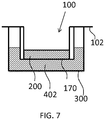
- a container 100 is prepared. It is desirable that the container 100 comprises a flange 102 at the upper end thereof. The bottom surface of the container 100 is formed of the substrate 170.
- the substrate 170 comprises the cellulose film 104 on the back surface 170b thereof (i.e., on an outside surface of the bottom part of the container 100).
- the substrate 170 comprises the through hole 172 which penetrates from the front surface 170a to the back surface 170b of the substrate 170.
- the through hole 172 has a diameter of not less than 3 micrometers and not more than 5 micrometers. In other words, the through hole 172 has a cross-sectional area of not less than 7.065 square micrometers and not more than 19.625 square micrometers.
- a test sample 200 is supplied to an inside of this container 100.
- the test sample 200 is put on the front surface 170a of the substrate 170 (i.e., on an inside surface of the bottom part of the container 100).
- the test sample 200 contains a phytopathogenic fungus 202
- the phytopathogenic fungus 202 is put on the front surface 170a of the substrate 170, as shown in FIG. 4 .
- the test sample 200 is solid, liquid, or gaseous. It is desirable that the test sample 200 is solid or liquid.
- An example of the solid test sample 200 is soil or a crushed plant.
- Another example is an agricultural material such as vermiculite, rock wool or urethane.
- An example of the liquid test sample 200 is agricultural water, a solution used for hydroponic culture, a liquid used for washing a plant, a liquid extracted from a plant, a liquid used for washing an agricultural material, or a liquid used for washing clothing or shoes of a worker.
- the test sample 200 is left at rest for a certain incubation time after the step (a). Desirably, the test sample 200 is left at rest for 24 hours. In this way, the fungus is incubated. In other words, the incubation time is approximately 24 hours.
- the importance of the thickness of the cellulose film 104 and the size of the through hole 172 will be described.
- step (b) various fungi contained in the test sample 200 are grown.
- the phytopathogenic fungus 202 grows up so as to penetrate both the through hole 172 and the cellulose film 104, as shown in FIG. 5 .
- the phytopathogenic fungus 202 appears on a back surface 104b of the cellulose film 104.
- the cellulose film 104 has a thickness of not less than 0.5 micrometers and not more than 2 micrometers.
- the through hole 172 has a cross-sectional area of not less than 7.065 square micrometers and not more than 19.625 square micrometers.
- the non-phytopathogenic fungus hardly penetrates the cellulose film 104.
- the number of hyphae which penetrated cellulose film 104 is 31.9.
- the non-phytopathogenic fungus hardly appears on the back surface 104b of the cellulose film 104.
- the phytopathogenic fungus 202 appears on the back surface 104b selectively.
- the number of hyphae which penetrated cellulose film 104 is 77.4.
- the phytopathogenic fungus 202 appears outside of the container 100 selectively.
- the selectivity is lost.
- the selectivity is lost when the cellulose film 104 has a thickness of less than 0.5 micrometers.
- the through hole 172 has a cross-sectional area of less than 7.065 square micrometers (namely, a diameter of less than 3 micrometers)
- neither the non-phytopathogenic fungus nor the phytopathogenic fungus penetrates the cellulose film 104.
- the through hole 172 has a cross-sectional area of more than 19.625 square micrometers (namely, a diameter of more than 5 micrometers)
- the number of hyphae which penetrated cellulose film 104 tends to be lowered, compared to the case where the through hole 172 has a cross-sectional area of 19.625 square micrometers (namely, a diameter of 5 micrometers).
- the cellulose film 104 is stretched tautly on the back surface 170b of the substrate 170. In this way, the substrate 170 supports the cellulose film 104.
- the substrate 170 has a plurality of through holes 172.
- the thickness of the substrate 170 is not limited; however, as one example, it is desirable that the substrate 170 has a thickness of not less than 1 micrometer and not more than 500 micrometers.
- the cellulose film 104 is significantly thin. However, if the cellulose film 104 is arranged on the substrate 170, it is easy to handle the cellulose film 104.
- a culture medium may be supplied to the test sample 200 to accelerate the incubation of the fungus.
- a culture medium may be supplied to the inside of the container 100 containing the test sample 200. It is desirable that the culture medium is liquid.
- the culture medium may be supplied in the step (b).
- the culture medium may be supplied prior to the step (b).
- the culture medium may be supplied in the step (a).
- the culture medium may be supplied to the inside of the container 100 prior to the step (a).
- FIG. 6 shows another method for accelerating the incubation of the fungus.
- the back surface 104b of the cellulose film 104 is in contact with a liquid culture medium 302.
- a second container 300 having the liquid culture medium 302 therein is prepared.
- the container 100 is referred to as "first container 100" to distinguish it from the second container 300.
- the first container 100 is stacked on the second container 300 in such a manner that the lower surface of the flange 102 is in contact with the upper end of the second container 300. In other words, the first container 100 is supported by the upper end of the second container 300. In this way, the liquid culture medium 302 is sandwiched between the back surface 104b of the cellulose film 104 and the bottom surface of the second container 300.
- the liquid culture medium 302 may be supplied between the back surface 104b of the cellulose film 104 and the bottom surface of the second container 300.
- a viscous solid culture medium may also be used. As shown in FIG. 6 , both of a solid culture medium 304 and the liquid culture medium 302 may be used. In this case, the liquid culture medium 302 is sandwiched between the solid culture medium 304 and the cellulose film 104. As shown in FIG. 5 , the incubation of the phytopathogenic fungus which has appeared on the back surface 104b is accelerated by at least one of the liquid culture medium 302 and the solid culture medium 304.
- the back surface 104b of the cellulose film 104 is observed after the step (b). It is desirable that the back surface 104b is observed using an optical microscope.
- the phytopathogenic fungus 202 appears on the back surface 104b of the cellulose film 104, as described in the step (b). On the other hand, the non-phytopathogenic fungus does not appear on the back surface 104b of the cellulose film 104. In this way, in the present invention, the phytopathogenic fungus 202 appears on the back surface 104b of the cellulose film 104 selectively.
- the phytopathogenic fungus 202 penetrates the cellulose film 104, whereas the non-phytopathogenic fungus does not penetrate the cellulose film 104. For this reason, the non-phytopathogenic fungus does not appear on the back surface 104b of the cellulose film 104. In this way, the phytopathogenic fungus 202 appears on the back surface 104b selectively. In other words, the phytopathogenic fungus 202 appears outside of the first container 100 selectively.
- step (c) it is observed whether or not the phytopathogenic fungus 202 appears on the back surface 104b of the cellulose film 104.
- the phytopathogenic fungus 202 is observed optically using a microscope 600 arranged below the back surface 104b of the cellulose film 104.
- the liquid culture medium 302 and the solid culture medium 304 are removed from the second container 300.
- a fluorescent agent having fungus combining ability is added to the inside of the second container 300.
- fungus fluorescent agent such a fluorescent agent is referred to as "fungus fluorescent agent”.
- the reference number of the fungus fluorescent agent is 402.
- the first container 100 is stacked on the second container 300 having the fungus fluorescent agent 402 therein.
- the fungus fluorescent agent 402 may be supplied between the back surface 104b of the cellulose film 104 and the bottom surface of the second container 300 after the first container 100 is stacked on the second container 300.
- a part of the phytopathogenic fungus 202 which has appeared on the back surface 104b of the cellulose film 104 may be dyed with the fungus fluorescent agent 402. Since the first container 100 is separated from the second container 300 by the cellulose film 104, the fungus fluorescent agent 402 does not spread into the first container 100. For this reason, the non-phytopathogenic fungus contained in the first container 100 is not dyed with the fungus fluorescent agent 402.
- the phytopathogenic fungus 202 dyed with the fungus fluorescent agent 402 is observed using the epifluorescence microscope 600 located under the back surface 104b of the cellulose film 104. Needless to say, the phytopathogenic fungus 202 may be observed without using the fungus fluorescent agent.
- step (d) it is determined that the test sample contains a phytopathogenic fungus, if a fungus is found on the back surface 104b of the cellulose film 104 in the step (c). Needless to say, it is determined that the test sample does not contain a phytopathogenic fungus, if a fungus is not found on the back surface 104b of the cellulose film 104 in the step (c).
- Fusarium oxysporum one of phytopathogenic fungi, was inoculated on a potato dextrose agar culture medium. Then, the culture medium was left at rest at a temperature of 25 degrees Celsius for one week. Fusarium oxysporum was given by an associate professor, Mr. Shimizu, who belongs to graduate School of Applied Biological Sciences and Faculty of Applied Biological Sciences, Gifu University .
- a part including ends of hyphae was cut together with the culture medium at a size of 1 centimeter x 1 centimeter.
- the cut part was immersed in pure water disposed on a 12-well plate. Each of the pure water has a volume of 1 milliliter.
- a potato dextrose culture medium having a volume of 650 microliters was added as the liquid culture medium 302 to the second container 300. In this way, the second container 300 containing the liquid culture medium 302 was prepared.
- the experiment 1 is composed of inventive examples 1A - 1D, and comparative examples 1E - 1L.
- the first container 100 shown in FIG. 1 was prepared as below.
- cellulose available from SIGMA-ALDRICH Co. LLC, trade name: Avicel PH-101
- ionic liquid was 1-butyl-3-methyl imidazolium chloride (available from SIGMA-ALDRICH Co. LLC).
- the cellulose solution was warmed to 60 degrees Celsius. Then, the cellulose solution was applied by a spin coat method for thirty seconds at a rotation speed of 2,000 rpm onto a back surface of a container having a polyethylene terephthalate film on the bottom surface thereof (available from Merck KGaA, trade name: Millicell PISP 12R 48).
- the polyethylene terephthalate film was served as the substrate 170.
- the polyethylene terephthalate film randomly had a plurality of through holes 172 each having a diameter of three micrometers. In this way, the cellulose film 104 having a thickness of 2.0 micrometers was formed on the back surface of the polyethylene terephthalate film. According to Merck KGaA, the diameter of the through-hole 172 may have a margin of error of approximately ⁇ 10%.
- the container was left at rest in ethanol at room temperature for 12 hours. In this way, 1-butyl-3-methyl imidazolium chloride was replaced with ethanol. In other words, 1-butyl-3-methyl imidazolium chloride was removed from the cellulose film 104.
- the container was dried in a vacuum desiccator. In this way, the first container 100 shown in FIG. 1 was obtained.
- the polyethylene terephthalate film serving as the substrate 170 is not illustrated.
- the first container 100 was stacked on the second container 300.
- the back surface 104b of the cellulose film 104 was in contact with the liquid culture medium 302.
- water having a volume of 200 microliters was added to the inside of the first container 100.
- the phytopathogenic fungus aqueous solution containing 200 spores of Fusarium oxysporum was added to the inside of the first container 100.
- the first container 100 was left at rest at a temperature of 25 degrees Celsius for 24 hours.
- the incubation time was 24 hours.
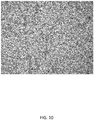
- FIG. 10 is a microscope photograph of the back surface of the cellulose film 104 in the inventive example 1A.
- each of the through holes 172 had a diameter of 5 micrometers.
- the container having a bottom surface comprising the through holes each having a diameter of 5 micrometers was available from Merck KGaA as a trade name: Millicell PIMP 12R 48.
- each of the through holes 172 had a diameter of 1 micrometer.
- the container having a bottom surface comprising the through holes each having a diameter of 1 micrometer was available from Merck KGaA as a trade name: Millicell PIRP 12R 48.
- each of the through holes 172 had a diameter of 8 micrometers.
- the container having a bottom surface comprising the through holes each having a diameter of 8 micrometers was available from Merck KGaA as a trade name: Millicell PIEP 12R 48.
- the cellulose film 104 had a thickness of 0.5 micrometers (namely, the cellulose solution had a concentration of 1.0%) and that the each of the through holes 172 had a diameter of 1 micrometer.
- the cellulose film 104 had a thickness of 0.5 micrometers (namely, the cellulose solution had a concentration of 1.0%) and that the each of the through holes 172 had a diameter of 8 micrometers.
- a non-phytopathogenic fungus aqueous solution containing spores of Saccharomyces cerevisiae was used in place of the phytopathogenic fungus aqueous solution containing spores of Fusarium oxysporum.
- Saccharomyces cerevisiae is one kind of non-phytopathogenic fungus.
- a non-phytopathogenic fungus aqueous solution containing spores of Saccharomyces cerevisiae was prepared similarly to the case of the phytopathogenic fungus aqueous solution containing spores of Fusarium oxysporum.
- the experiment 2 is composed of comparative examples 2A - 2L.
- the comparative examples 2A - 2L were similar to the inventive example 1A - the comparative example 1L, except of using another fungus.
- FIG. 11 is a microscope photograph of the back surface of the cellulose film 104 in the comparative example 2A.
- a non-phytopathogenic fungus aqueous solution containing spores of Pyricularia grisea was used in place of the phytopathogenic fungus aqueous solution containing spores of Fusarium oxysporum.
- Pyricularia grisea is one kind of phytopathogenic fungus.
- a phytopathogenic fungus aqueous solution containing spores of Pyricularia grisea was prepared as below.
- Pyricularia grisea one of phytopathogenic fungi, was inoculated on an oatmeal agar culture medium containing 2% sucrose. Then, the culture medium was left at rest at a temperature of 25 degrees Celsius for one week. Subsequently, the culture medium was left at rest for four days under near-ultraviolet radiation.
- a part including ends of hyphae was cut together with the culture medium at a size of 1 centimeter x 1 centimeter.
- the cut part was immersed in pure water disposed on a 12-well plate. Each of the pure water has a volume of 1 milliliter.
- the water contained in the 12-well plate was observed using an optical microscope. As a result, the present inventors confirmed that spores of Pyricularia grisea were released in the water disposed on the 12-well plate. In this way, an aqueous solution containing Pyricularia grisea was provided.
- the experiment 3 is composed of the inventive examples 3A- 3D and the comparative examples 3E - 3L.
- the inventive examples 3A- 3D and the comparative examples 3E - 3L were similar to the inventive examples 1A - 1D and the comparative examples 1E - 1L, respectively, except of using another fungus.
- a non-phytopathogenic fungus aqueous solution containing spores of Colletotrichum gloeosporioides was used in place of the phytopathogenic fungus aqueous solution containing spores of Fusarium oxysporum.
- Colletotrichum gloeosporioides is one kind of phytopathogenic fungus.
- a phytopathogenic fungus aqueous solution containing spores of Colletotrichum gloeosporioides was prepared similarly to the case of the phytopathogenic fungus aqueous solution containing spores of Fusarium oxysporum.
- the experiment 4 is composed of the inventive examples 4A - 4D and the comparative examples 4E - 4L.
- the inventive examples 4A - 4D and the comparative examples 4E - 4L were similar to the inventive examples 1A - 1D and the comparative examples 1 E - 1L, respectively, except of using another fungus.
- a non-phytopathogenic fungus aqueous solution containing spores of Penicillium chysogeum was used in place of the phytopathogenic fungus aqueous solution containing spores of Fusarium oxysporum.
- Penicillium chysogeum is one kind of non-phytopathogenic fungus.
- a non-phytopathogenic fungus aqueous solution containing spores of Penicillium chysogeum was prepared similarly to the case of the phytopathogenic fungus aqueous solution containing spores of Fusarium oxysporum.
- the experiment 5 is composed of comparative examples 5A - 5L.
- the comparative examples 5A - 5L were similar to the inventive example 1A - the comparative example 1L, except of using another fungus.
- a non-phytopathogenic fungus aqueous solution containing spores of Aspergillus oryzae was used in place of the phytopathogenic fungus aqueous solution containing spores of Fusarium oxysporum.
- Aspergillus oryzae is one kind of non-phytopathogenic fungus.
- a non-phytopathogenic fungus aqueous solution containing spores of Aspergillus oryzae was prepared similarly to the case of the phytopathogenic fungus aqueous solution containing spores of Fusarium oxysporum.
- the experiment 6 is composed of comparative examples 6A - 6L.
- the comparative examples 6A- 6L were similar to the inventive example 1A - the comparative example 1L, except of using another fungus.
- Table 1 - Table 6 show the number of the hyphae which penetrated the cellulose film 104 in the experiments.
- Table 1 Film thickness ( ⁇ m) Diameter of Through hole ( ⁇ m) Name of Fungus Number of hyphae which penetrated cellulose film 104 C.
- example 1E 2 1 Fusarium oxysporum (phytopathogenic) 0 I.
- example 1G 0.5 1 0.5 I. example 1C 3 106.5 I.
- example 3A 3 64.1 I.
- example 3G 0.5 1 8 I.
- example 3C 3 85.3 I.
- example 4E 2 1 Colletotrichum gloeosporioides (phytopathogenic) 0 I.
- example 4A 3 83.3 I.
- example 5E 2 1 Penicillium chysogeum (non-phytopathogenic) 0 C.
- example 5B 5 0 C.
- the phytopathogenic fungus appears on the back surface 104b of the cellulose film 104 selectively.
- the phytopathogenic fungus 202 appears outside of the container 100 selectively.
- the cellulose film 104 has a thickness of not less than 0.5 micrometers and not more than 2 micrometers.
- the through hole 172 has a diameter of not less than 3 micrometers and not more than 5 micrometers.
- the number of hyphae which penetrated cellulose film 104 is 77.4 at a minimum.
- the non-phytopathogenic fungus hardly appears the back surface 104b of the cellulose film 104.
- the number of hyphae which penetrated cellulose film 104 is 31.9 at a maximum.
- the present invention can be used to determine easily whether or not a test sample such as agricultural water or soil contains a phytopathogenic fungus.
Landscapes
- Chemical & Material Sciences (AREA)
- Health & Medical Sciences (AREA)
- Life Sciences & Earth Sciences (AREA)
- Organic Chemistry (AREA)
- Engineering & Computer Science (AREA)
- Zoology (AREA)
- Wood Science & Technology (AREA)
- Bioinformatics & Cheminformatics (AREA)
- Genetics & Genomics (AREA)
- Biotechnology (AREA)
- General Health & Medical Sciences (AREA)
- General Engineering & Computer Science (AREA)
- Biochemistry (AREA)
- Microbiology (AREA)
- Proteomics, Peptides & Aminoacids (AREA)
- Immunology (AREA)
- Biomedical Technology (AREA)
- Medicinal Chemistry (AREA)
- Physics & Mathematics (AREA)
- Biophysics (AREA)
- Molecular Biology (AREA)
- Toxicology (AREA)
- Analytical Chemistry (AREA)
- Sustainable Development (AREA)
- Chemical Kinetics & Catalysis (AREA)
- Polymers & Plastics (AREA)
- Botany (AREA)
- Mycology (AREA)
- Tropical Medicine & Parasitology (AREA)
- Virology (AREA)
- Measuring Or Testing Involving Enzymes Or Micro-Organisms (AREA)
- Apparatus Associated With Microorganisms And Enzymes (AREA)
Claims (11)
- Verfahren zum Bestimmen, ob eine Testprobe einen phytopathogenen Pilz enthält oder nicht, wobei das Verfahren umfasst:(a) die Testprobe auf eine vordere Oberfläche eine Substrats zu geben, welches eine Durchlassöffnung umfasst; wobei
das Substrat auf seiner hinteren Oberfläche eine Cellulosefolie umfasst;
die Cellulosefolie eine Dicke von nicht weniger als 0,5 Mikrometer und nicht mehr als 2 Mikrometer aufweist und
die Durchlassöffnung eine Querschnittsfläche von nicht weniger als 7,065 Quadrat-Mikrometer und nicht mehr als 19,625 Quadrat-Mikrometer aufweist;(b) die Testprobe nach dem Schritt (a) ruhen zu lassen;(c) eine hintere Oberfläche der Folie nach dem Schritt (b) zu betrachten und(d) zu bestimmen, dass die Testprobe den phytopathogenen Pilz enthält, falls ein Pilz auf der hinteren Oberfläche der Folie in Schritt (c) gefunden wird,wobei der phytopathogene Pilz aus der Gruppe ausgewählt ist, bestehend aus der Gattung Fusarium, der Gattung Pyricularia und der Gattung Colletotrichum. - Verfahren gemäß Anspruch 1, wobei
der phytopathogene Pilz aus der Gruppe ausgewählt ist, bestehend aus Fusarium oxysporum, Pyricularia grisea und Colletotrichum gloeosporioides. - Verfahren gemäß Anspruch 1, ferner umfassend:
einen Schritt, bestehend im In-Kontakt-Bringen der hinteren Oberfläche der Cellulosefolie mit einem fluoreszierenden Mittel zum Färben des Pilzes zwischen dem Schritt (b) und dem Schritt (c). - Verfahren gemäß Anspruch 1, ferner umfassend:
einen Schritt, bestehend im Bereitstellen eines Kulturmediums zu der Testprobe vor dem Schritt (b). - Verfahren gemäß Anspruch 4, wobei
es sich bei dem Kulturmedium um ein flüssiges Kulturmedium handelt. - Verfahren gemäß Anspruch 4, wobei
im Schritt (b) die Testprobe ruhen gelassen wird, während die hintere Oberfläche der Cellulosefolie mit dem Kulturmedium in Kontakt ist. - Verfahren gemäß Anspruch 4, wobei
es sich bei dem Kulturmedium um ein festes Kulturmedium handelt. - Verfahren gemäß Anspruch 1, wobei
die Testprobe fest ist. - Verfahren gemäß Anspruch 8, wobei
es sich bei der festen Testprobe um mindestens eine handelt, ausgewählt aus der Gruppe, bestehend aus einem Boden und einer zerkleinerten Pflanze. - Verfahren gemäß Anspruch 1, wobei
die Testprobe flüssig ist. - Verfahren gemäß Anspruch 10, wobei
es sich bei der flüssigen Testprobe um mindestens eine handelt, ausgewählt aus der Gruppe, bestehend aus landwirtschaftlichem Wasser, einer für Hydrokultur verwendeten Flüssigkeit, einer zum Waschen einer Pflanze verwendeten Flüssigkeit, einer aus einer Pflanze extrahierten Flüssigkeit, einer zum Waschen eines landwirtschaftlichen Materials verwendeten Flüssigkeit und einer zum Waschen von Kleidung oder eines Schuhs verwendeten Flüssigkeit.
Applications Claiming Priority (2)
| Application Number | Priority Date | Filing Date | Title |
|---|---|---|---|
| JP2016139916 | 2016-07-15 | ||
| PCT/JP2016/004417 WO2018011835A1 (ja) | 2016-07-15 | 2016-09-30 | 試験試料が植物病原性真菌を含有するかどうかを判定する方法 |
Publications (3)
| Publication Number | Publication Date |
|---|---|
| EP3438277A1 EP3438277A1 (de) | 2019-02-06 |
| EP3438277A4 EP3438277A4 (de) | 2019-03-06 |
| EP3438277B1 true EP3438277B1 (de) | 2020-06-24 |
Family
ID=60952875
Family Applications (1)
| Application Number | Title | Priority Date | Filing Date |
|---|---|---|---|
| EP16908739.2A Active EP3438277B1 (de) | 2016-07-15 | 2016-09-30 | Verfahren zur bestimmung, ob eine testprobe phytopathogene pilze enthält oder nicht |
Country Status (6)
| Country | Link |
|---|---|
| US (2) | US11098340B2 (de) |
| EP (1) | EP3438277B1 (de) |
| JP (1) | JP6739005B2 (de) |
| AU (1) | AU2016414842B2 (de) |
| BR (1) | BR112018072475A2 (de) |
| WO (1) | WO2018011835A1 (de) |
Families Citing this family (7)
| Publication number | Priority date | Publication date | Assignee | Title |
|---|---|---|---|---|
| AU2017396004B2 (en) | 2017-01-25 | 2024-08-29 | Panasonic Intellectual Property Management Co., Ltd. | Method for determining whether or not test sample contains phytopathogenic fungus |
| EP3617319B1 (de) | 2017-04-28 | 2022-12-07 | Panasonic Intellectual Property Management Co., Ltd. | Verfahren zur bestimmung der anwesenheit oder abwesenheit von phytopathogenen mikroben in einer testprobe |
| SG11202010655WA (en) * | 2018-05-23 | 2020-12-30 | Panasonic Ip Man Co Ltd | Tomato pathogenic fungus detecting apparatus and detecting method using same |
| JP7394393B2 (ja) | 2018-05-23 | 2023-12-08 | パナソニックIpマネジメント株式会社 | トマト病原性真菌の検出装置およびそれを用いた検出方法 |
| WO2020012781A1 (ja) * | 2018-07-09 | 2020-01-16 | パナソニックIpマネジメント株式会社 | 植物病原性真菌の検出装置、並びに、それを用いた検出方法および農薬濃度の選択方法 |
| CN112074595B (zh) | 2018-09-05 | 2024-06-21 | 松下知识产权经营株式会社 | 番茄病原性真菌的检测装置和使用该装置的检测方法 |
| WO2020202161A1 (en) * | 2019-04-04 | 2020-10-08 | Technion Research & Development Foundation Limited | A method for identifying a fungal symbiont |
Citations (1)
| Publication number | Priority date | Publication date | Assignee | Title |
|---|---|---|---|---|
| WO2011090802A1 (en) * | 2010-01-22 | 2011-07-28 | Hitachi Chemical Co., Ltd. | Rapid pathogen detection techniques and apparatus |
Family Cites Families (7)
| Publication number | Priority date | Publication date | Assignee | Title |
|---|---|---|---|---|
| AU2002255333A1 (en) * | 2001-05-09 | 2002-11-18 | Ebara Corporation | Affinity reaction probe detection/analysis chips and detection system and apparatus using the same |
| JP2006515065A (ja) * | 2002-08-16 | 2006-05-18 | ディシジョン バイオマーカーズ インコーポレイテッド | 蛍光配列の読み取り |
| US6698880B1 (en) * | 2002-09-20 | 2004-03-02 | Eastman Kodak Company | Porous inkjet recording system comprising ink-pigment-trapping surface layer |
| JP4590902B2 (ja) * | 2004-03-31 | 2010-12-01 | パナソニック株式会社 | 糸状菌計量方法 |
| FR2957354B1 (fr) | 2010-03-11 | 2012-03-30 | Agronomique Inst Nat Rech | Traitement des vegetaux contre l'infection par des oomycetes |
| EP2576812A1 (de) * | 2010-06-07 | 2013-04-10 | 3M Innovative Properties Company | Filterverfahren und -vorrichtungen |
| JP6167309B2 (ja) * | 2015-08-03 | 2017-07-26 | パナソニックIpマネジメント株式会社 | 試験試料が植物病原性卵菌を含有するかどうかを判定する方法 |
-
2016
- 2016-09-30 WO PCT/JP2016/004417 patent/WO2018011835A1/ja not_active Ceased
- 2016-09-30 BR BR112018072475-0A patent/BR112018072475A2/pt not_active Application Discontinuation
- 2016-09-30 AU AU2016414842A patent/AU2016414842B2/en not_active Ceased
- 2016-09-30 JP JP2017503624A patent/JP6739005B2/ja not_active Expired - Fee Related
- 2016-09-30 EP EP16908739.2A patent/EP3438277B1/de active Active
-
2018
- 2018-10-17 US US16/162,467 patent/US11098340B2/en active Active
-
2021
- 2021-07-16 US US17/378,468 patent/US11807740B2/en active Active
Patent Citations (1)
| Publication number | Priority date | Publication date | Assignee | Title |
|---|---|---|---|---|
| WO2011090802A1 (en) * | 2010-01-22 | 2011-07-28 | Hitachi Chemical Co., Ltd. | Rapid pathogen detection techniques and apparatus |
Also Published As
| Publication number | Publication date |
|---|---|
| AU2016414842B2 (en) | 2023-05-11 |
| EP3438277A4 (de) | 2019-03-06 |
| WO2018011835A1 (ja) | 2018-01-18 |
| JP6739005B2 (ja) | 2020-08-12 |
| US11098340B2 (en) | 2021-08-24 |
| BR112018072475A2 (pt) | 2019-02-19 |
| EP3438277A1 (de) | 2019-02-06 |
| US20190048388A1 (en) | 2019-02-14 |
| US11807740B2 (en) | 2023-11-07 |
| AU2016414842A2 (en) | 2018-11-22 |
| JPWO2018011835A1 (ja) | 2019-04-25 |
| AU2016414842A1 (en) | 2018-11-15 |
| US20210340589A1 (en) | 2021-11-04 |
Similar Documents
| Publication | Publication Date | Title |
|---|---|---|
| EP3438277B1 (de) | Verfahren zur bestimmung, ob eine testprobe phytopathogene pilze enthält oder nicht | |
| EP3128002B1 (de) | Verfahren zur bestimmung, ob eine testprobe ein phytopathogenes oomyzet enthält oder nicht | |
| US11913057B2 (en) | Method for determining whether or not test sample contains phytopathogenic fungus | |
| US11713479B2 (en) | Method for determining whether or not test sample contains phytopathogenic fungus | |
| US10526636B2 (en) | Method for determining whether or not test sample contains phytopathogenic fungus | |
| US10538801B2 (en) | Method for determining whether or not test sample contains exserohilum phytopathogenic fungus | |
| US11104932B2 (en) | Method for determining whether or not all of pythiums contained in test sample are non-phytopathogenic |
Legal Events
| Date | Code | Title | Description |
|---|---|---|---|
| STAA | Information on the status of an ep patent application or granted ep patent |
Free format text: STATUS: THE INTERNATIONAL PUBLICATION HAS BEEN MADE |
|
| PUAI | Public reference made under article 153(3) epc to a published international application that has entered the european phase |
Free format text: ORIGINAL CODE: 0009012 |
|
| STAA | Information on the status of an ep patent application or granted ep patent |
Free format text: STATUS: REQUEST FOR EXAMINATION WAS MADE |
|
| 17P | Request for examination filed |
Effective date: 20181030 |
|
| AK | Designated contracting states |
Kind code of ref document: A1 Designated state(s): AL AT BE BG CH CY CZ DE DK EE ES FI FR GB GR HR HU IE IS IT LI LT LU LV MC MK MT NL NO PL PT RO RS SE SI SK SM TR |
|
| AX | Request for extension of the european patent |
Extension state: BA ME |
|
| A4 | Supplementary search report drawn up and despatched |
Effective date: 20190205 |
|
| RIC1 | Information provided on ipc code assigned before grant |
Ipc: C12Q 1/04 20060101AFI20190130BHEP |
|
| DAV | Request for validation of the european patent (deleted) | ||
| DAX | Request for extension of the european patent (deleted) | ||
| STAA | Information on the status of an ep patent application or granted ep patent |
Free format text: STATUS: EXAMINATION IS IN PROGRESS |
|
| 17Q | First examination report despatched |
Effective date: 20191121 |
|
| GRAP | Despatch of communication of intention to grant a patent |
Free format text: ORIGINAL CODE: EPIDOSNIGR1 |
|
| STAA | Information on the status of an ep patent application or granted ep patent |
Free format text: STATUS: GRANT OF PATENT IS INTENDED |
|
| INTG | Intention to grant announced |
Effective date: 20200127 |
|
| GRAS | Grant fee paid |
Free format text: ORIGINAL CODE: EPIDOSNIGR3 |
|
| GRAA | (expected) grant |
Free format text: ORIGINAL CODE: 0009210 |
|
| STAA | Information on the status of an ep patent application or granted ep patent |
Free format text: STATUS: THE PATENT HAS BEEN GRANTED |
|
| AK | Designated contracting states |
Kind code of ref document: B1 Designated state(s): AL AT BE BG CH CY CZ DE DK EE ES FI FR GB GR HR HU IE IS IT LI LT LU LV MC MK MT NL NO PL PT RO RS SE SI SK SM TR |
|
| REG | Reference to a national code |
Ref country code: GB Ref legal event code: FG4D |
|
| REG | Reference to a national code |
Ref country code: CH Ref legal event code: EP |
|
| REG | Reference to a national code |
Ref country code: AT Ref legal event code: REF Ref document number: 1283946 Country of ref document: AT Kind code of ref document: T Effective date: 20200715 |
|
| REG | Reference to a national code |
Ref country code: DE Ref legal event code: R096 Ref document number: 602016038943 Country of ref document: DE |
|
| REG | Reference to a national code |
Ref country code: IE Ref legal event code: FG4D |
|
| REG | Reference to a national code |
Ref country code: NL Ref legal event code: FP |
|
| PG25 | Lapsed in a contracting state [announced via postgrant information from national office to epo] |
Ref country code: LT Free format text: LAPSE BECAUSE OF FAILURE TO SUBMIT A TRANSLATION OF THE DESCRIPTION OR TO PAY THE FEE WITHIN THE PRESCRIBED TIME-LIMIT Effective date: 20200624 Ref country code: FI Free format text: LAPSE BECAUSE OF FAILURE TO SUBMIT A TRANSLATION OF THE DESCRIPTION OR TO PAY THE FEE WITHIN THE PRESCRIBED TIME-LIMIT Effective date: 20200624 Ref country code: GR Free format text: LAPSE BECAUSE OF FAILURE TO SUBMIT A TRANSLATION OF THE DESCRIPTION OR TO PAY THE FEE WITHIN THE PRESCRIBED TIME-LIMIT Effective date: 20200925 Ref country code: NO Free format text: LAPSE BECAUSE OF FAILURE TO SUBMIT A TRANSLATION OF THE DESCRIPTION OR TO PAY THE FEE WITHIN THE PRESCRIBED TIME-LIMIT Effective date: 20200924 Ref country code: SE Free format text: LAPSE BECAUSE OF FAILURE TO SUBMIT A TRANSLATION OF THE DESCRIPTION OR TO PAY THE FEE WITHIN THE PRESCRIBED TIME-LIMIT Effective date: 20200624 |
|
| REG | Reference to a national code |
Ref country code: LT Ref legal event code: MG4D |
|
| PG25 | Lapsed in a contracting state [announced via postgrant information from national office to epo] |
Ref country code: RS Free format text: LAPSE BECAUSE OF FAILURE TO SUBMIT A TRANSLATION OF THE DESCRIPTION OR TO PAY THE FEE WITHIN THE PRESCRIBED TIME-LIMIT Effective date: 20200624 Ref country code: HR Free format text: LAPSE BECAUSE OF FAILURE TO SUBMIT A TRANSLATION OF THE DESCRIPTION OR TO PAY THE FEE WITHIN THE PRESCRIBED TIME-LIMIT Effective date: 20200624 Ref country code: BG Free format text: LAPSE BECAUSE OF FAILURE TO SUBMIT A TRANSLATION OF THE DESCRIPTION OR TO PAY THE FEE WITHIN THE PRESCRIBED TIME-LIMIT Effective date: 20200924 Ref country code: LV Free format text: LAPSE BECAUSE OF FAILURE TO SUBMIT A TRANSLATION OF THE DESCRIPTION OR TO PAY THE FEE WITHIN THE PRESCRIBED TIME-LIMIT Effective date: 20200624 |
|
| REG | Reference to a national code |
Ref country code: AT Ref legal event code: MK05 Ref document number: 1283946 Country of ref document: AT Kind code of ref document: T Effective date: 20200624 |
|
| PG25 | Lapsed in a contracting state [announced via postgrant information from national office to epo] |
Ref country code: AL Free format text: LAPSE BECAUSE OF FAILURE TO SUBMIT A TRANSLATION OF THE DESCRIPTION OR TO PAY THE FEE WITHIN THE PRESCRIBED TIME-LIMIT Effective date: 20200624 |
|
| PG25 | Lapsed in a contracting state [announced via postgrant information from national office to epo] |
Ref country code: PT Free format text: LAPSE BECAUSE OF FAILURE TO SUBMIT A TRANSLATION OF THE DESCRIPTION OR TO PAY THE FEE WITHIN THE PRESCRIBED TIME-LIMIT Effective date: 20201026 Ref country code: ES Free format text: LAPSE BECAUSE OF FAILURE TO SUBMIT A TRANSLATION OF THE DESCRIPTION OR TO PAY THE FEE WITHIN THE PRESCRIBED TIME-LIMIT Effective date: 20200624 Ref country code: RO Free format text: LAPSE BECAUSE OF FAILURE TO SUBMIT A TRANSLATION OF THE DESCRIPTION OR TO PAY THE FEE WITHIN THE PRESCRIBED TIME-LIMIT Effective date: 20200624 Ref country code: CZ Free format text: LAPSE BECAUSE OF FAILURE TO SUBMIT A TRANSLATION OF THE DESCRIPTION OR TO PAY THE FEE WITHIN THE PRESCRIBED TIME-LIMIT Effective date: 20200624 Ref country code: EE Free format text: LAPSE BECAUSE OF FAILURE TO SUBMIT A TRANSLATION OF THE DESCRIPTION OR TO PAY THE FEE WITHIN THE PRESCRIBED TIME-LIMIT Effective date: 20200624 Ref country code: SM Free format text: LAPSE BECAUSE OF FAILURE TO SUBMIT A TRANSLATION OF THE DESCRIPTION OR TO PAY THE FEE WITHIN THE PRESCRIBED TIME-LIMIT Effective date: 20200624 Ref country code: AT Free format text: LAPSE BECAUSE OF FAILURE TO SUBMIT A TRANSLATION OF THE DESCRIPTION OR TO PAY THE FEE WITHIN THE PRESCRIBED TIME-LIMIT Effective date: 20200624 |
|
| PG25 | Lapsed in a contracting state [announced via postgrant information from national office to epo] |
Ref country code: SK Free format text: LAPSE BECAUSE OF FAILURE TO SUBMIT A TRANSLATION OF THE DESCRIPTION OR TO PAY THE FEE WITHIN THE PRESCRIBED TIME-LIMIT Effective date: 20200624 Ref country code: PL Free format text: LAPSE BECAUSE OF FAILURE TO SUBMIT A TRANSLATION OF THE DESCRIPTION OR TO PAY THE FEE WITHIN THE PRESCRIBED TIME-LIMIT Effective date: 20200624 Ref country code: IS Free format text: LAPSE BECAUSE OF FAILURE TO SUBMIT A TRANSLATION OF THE DESCRIPTION OR TO PAY THE FEE WITHIN THE PRESCRIBED TIME-LIMIT Effective date: 20201024 |
|
| REG | Reference to a national code |
Ref country code: DE Ref legal event code: R097 Ref document number: 602016038943 Country of ref document: DE |
|
| REG | Reference to a national code |
Ref country code: DE Ref legal event code: R119 Ref document number: 602016038943 Country of ref document: DE |
|
| PG25 | Lapsed in a contracting state [announced via postgrant information from national office to epo] |
Ref country code: DK Free format text: LAPSE BECAUSE OF FAILURE TO SUBMIT A TRANSLATION OF THE DESCRIPTION OR TO PAY THE FEE WITHIN THE PRESCRIBED TIME-LIMIT Effective date: 20200624 |
|
| PLBE | No opposition filed within time limit |
Free format text: ORIGINAL CODE: 0009261 |
|
| REG | Reference to a national code |
Ref country code: CH Ref legal event code: PL |
|
| STAA | Information on the status of an ep patent application or granted ep patent |
Free format text: STATUS: NO OPPOSITION FILED WITHIN TIME LIMIT |
|
| GBPC | Gb: european patent ceased through non-payment of renewal fee |
Effective date: 20200930 |
|
| 26N | No opposition filed |
Effective date: 20210325 |
|
| REG | Reference to a national code |
Ref country code: BE Ref legal event code: MM Effective date: 20200930 |
|
| PG25 | Lapsed in a contracting state [announced via postgrant information from national office to epo] |
Ref country code: LU Free format text: LAPSE BECAUSE OF NON-PAYMENT OF DUE FEES Effective date: 20200930 |
|
| PG25 | Lapsed in a contracting state [announced via postgrant information from national office to epo] |
Ref country code: DE Free format text: LAPSE BECAUSE OF NON-PAYMENT OF DUE FEES Effective date: 20210401 |
|
| PG25 | Lapsed in a contracting state [announced via postgrant information from national office to epo] |
Ref country code: BE Free format text: LAPSE BECAUSE OF NON-PAYMENT OF DUE FEES Effective date: 20200930 Ref country code: CH Free format text: LAPSE BECAUSE OF NON-PAYMENT OF DUE FEES Effective date: 20200930 Ref country code: SI Free format text: LAPSE BECAUSE OF FAILURE TO SUBMIT A TRANSLATION OF THE DESCRIPTION OR TO PAY THE FEE WITHIN THE PRESCRIBED TIME-LIMIT Effective date: 20200624 Ref country code: GB Free format text: LAPSE BECAUSE OF NON-PAYMENT OF DUE FEES Effective date: 20200930 Ref country code: LI Free format text: LAPSE BECAUSE OF NON-PAYMENT OF DUE FEES Effective date: 20200930 Ref country code: IE Free format text: LAPSE BECAUSE OF NON-PAYMENT OF DUE FEES Effective date: 20200930 |
|
| PG25 | Lapsed in a contracting state [announced via postgrant information from national office to epo] |
Ref country code: TR Free format text: LAPSE BECAUSE OF FAILURE TO SUBMIT A TRANSLATION OF THE DESCRIPTION OR TO PAY THE FEE WITHIN THE PRESCRIBED TIME-LIMIT Effective date: 20200624 Ref country code: MT Free format text: LAPSE BECAUSE OF FAILURE TO SUBMIT A TRANSLATION OF THE DESCRIPTION OR TO PAY THE FEE WITHIN THE PRESCRIBED TIME-LIMIT Effective date: 20200624 Ref country code: CY Free format text: LAPSE BECAUSE OF FAILURE TO SUBMIT A TRANSLATION OF THE DESCRIPTION OR TO PAY THE FEE WITHIN THE PRESCRIBED TIME-LIMIT Effective date: 20200624 |
|
| PG25 | Lapsed in a contracting state [announced via postgrant information from national office to epo] |
Ref country code: MK Free format text: LAPSE BECAUSE OF FAILURE TO SUBMIT A TRANSLATION OF THE DESCRIPTION OR TO PAY THE FEE WITHIN THE PRESCRIBED TIME-LIMIT Effective date: 20200624 Ref country code: MC Free format text: LAPSE BECAUSE OF FAILURE TO SUBMIT A TRANSLATION OF THE DESCRIPTION OR TO PAY THE FEE WITHIN THE PRESCRIBED TIME-LIMIT Effective date: 20200624 |
|
| PGFP | Annual fee paid to national office [announced via postgrant information from national office to epo] |
Ref country code: FR Payment date: 20240925 Year of fee payment: 9 |
|
| PGFP | Annual fee paid to national office [announced via postgrant information from national office to epo] |
Ref country code: NL Payment date: 20240918 Year of fee payment: 9 |
|
| PGFP | Annual fee paid to national office [announced via postgrant information from national office to epo] |
Ref country code: IT Payment date: 20240924 Year of fee payment: 9 |