EP3439231A1 - Privater knoten, verarbeitungsverfahren für privaten knoten und programm dafür - Google Patents
Privater knoten, verarbeitungsverfahren für privaten knoten und programm dafür Download PDFInfo
- Publication number
- EP3439231A1 EP3439231A1 EP17775213.6A EP17775213A EP3439231A1 EP 3439231 A1 EP3439231 A1 EP 3439231A1 EP 17775213 A EP17775213 A EP 17775213A EP 3439231 A1 EP3439231 A1 EP 3439231A1
- Authority
- EP
- European Patent Office
- Prior art keywords
- block
- nodes
- private
- node
- transaction
- Prior art date
- Legal status (The legal status is an assumption and is not a legal conclusion. Google has not performed a legal analysis and makes no representation as to the accuracy of the status listed.)
- Withdrawn
Links
Images



Classifications
-
- H—ELECTRICITY
- H04—ELECTRIC COMMUNICATION TECHNIQUE
- H04L—TRANSMISSION OF DIGITAL INFORMATION, e.g. TELEGRAPHIC COMMUNICATION
- H04L9/00—Cryptographic mechanisms or cryptographic arrangements for secret or secure communications; Network security protocols
- H04L9/50—Cryptographic mechanisms or cryptographic arrangements for secret or secure communications; Network security protocols using hash chains, e.g. blockchains or hash trees
-
- H—ELECTRICITY
- H04—ELECTRIC COMMUNICATION TECHNIQUE
- H04L—TRANSMISSION OF DIGITAL INFORMATION, e.g. TELEGRAPHIC COMMUNICATION
- H04L9/00—Cryptographic mechanisms or cryptographic arrangements for secret or secure communications; Network security protocols
- H04L9/32—Cryptographic mechanisms or cryptographic arrangements for secret or secure communications; Network security protocols including means for verifying the identity or authority of a user of the system or for message authentication, e.g. authorization, entity authentication, data integrity or data verification, non-repudiation, key authentication or verification of credentials
- H04L9/3236—Cryptographic mechanisms or cryptographic arrangements for secret or secure communications; Network security protocols including means for verifying the identity or authority of a user of the system or for message authentication, e.g. authorization, entity authentication, data integrity or data verification, non-repudiation, key authentication or verification of credentials using cryptographic hash functions
-
- G—PHYSICS
- G06—COMPUTING OR CALCULATING; COUNTING
- G06F—ELECTRIC DIGITAL DATA PROCESSING
- G06F16/00—Information retrieval; Database structures therefor; File system structures therefor
- G06F16/10—File systems; File servers
- G06F16/18—File system types
- G06F16/182—Distributed file systems
-
- G—PHYSICS
- G06—COMPUTING OR CALCULATING; COUNTING
- G06F—ELECTRIC DIGITAL DATA PROCESSING
- G06F21/00—Security arrangements for protecting computers, components thereof, programs or data against unauthorised activity
- G06F21/60—Protecting data
- G06F21/64—Protecting data integrity, e.g. using checksums, certificates or signatures
-
- G—PHYSICS
- G09—EDUCATION; CRYPTOGRAPHY; DISPLAY; ADVERTISING; SEALS
- G09C—CIPHERING OR DECIPHERING APPARATUS FOR CRYPTOGRAPHIC OR OTHER PURPOSES INVOLVING THE NEED FOR SECRECY
- G09C1/00—Apparatus or methods whereby a given sequence of signs, e.g. an intelligible text, is transformed into an unintelligible sequence of signs by transposing the signs or groups of signs or by replacing them by others according to a predetermined system
-
- H—ELECTRICITY
- H04—ELECTRIC COMMUNICATION TECHNIQUE
- H04L—TRANSMISSION OF DIGITAL INFORMATION, e.g. TELEGRAPHIC COMMUNICATION
- H04L9/00—Cryptographic mechanisms or cryptographic arrangements for secret or secure communications; Network security protocols
- H04L9/06—Cryptographic mechanisms or cryptographic arrangements for secret or secure communications; Network security protocols the encryption apparatus using shift registers or memories for block-wise or stream coding, e.g. DES systems or RC4; Hash functions; Pseudorandom sequence generators
- H04L9/0618—Block ciphers, i.e. encrypting groups of characters of a plain text message using fixed encryption transformation
- H04L9/0637—Modes of operation, e.g. cipher block chaining [CBC], electronic codebook [ECB] or Galois/counter mode [GCM]
-
- H—ELECTRICITY
- H04—ELECTRIC COMMUNICATION TECHNIQUE
- H04L—TRANSMISSION OF DIGITAL INFORMATION, e.g. TELEGRAPHIC COMMUNICATION
- H04L9/00—Cryptographic mechanisms or cryptographic arrangements for secret or secure communications; Network security protocols
- H04L9/08—Key distribution or management, e.g. generation, sharing or updating, of cryptographic keys or passwords
- H04L9/0816—Key establishment, i.e. cryptographic processes or cryptographic protocols whereby a shared secret becomes available to two or more parties, for subsequent use
-
- H—ELECTRICITY
- H04—ELECTRIC COMMUNICATION TECHNIQUE
- H04L—TRANSMISSION OF DIGITAL INFORMATION, e.g. TELEGRAPHIC COMMUNICATION
- H04L9/00—Cryptographic mechanisms or cryptographic arrangements for secret or secure communications; Network security protocols
- H04L9/32—Cryptographic mechanisms or cryptographic arrangements for secret or secure communications; Network security protocols including means for verifying the identity or authority of a user of the system or for message authentication, e.g. authorization, entity authentication, data integrity or data verification, non-repudiation, key authentication or verification of credentials
-
- H—ELECTRICITY
- H04—ELECTRIC COMMUNICATION TECHNIQUE
- H04L—TRANSMISSION OF DIGITAL INFORMATION, e.g. TELEGRAPHIC COMMUNICATION
- H04L9/00—Cryptographic mechanisms or cryptographic arrangements for secret or secure communications; Network security protocols
- H04L9/32—Cryptographic mechanisms or cryptographic arrangements for secret or secure communications; Network security protocols including means for verifying the identity or authority of a user of the system or for message authentication, e.g. authorization, entity authentication, data integrity or data verification, non-repudiation, key authentication or verification of credentials
- H04L9/3236—Cryptographic mechanisms or cryptographic arrangements for secret or secure communications; Network security protocols including means for verifying the identity or authority of a user of the system or for message authentication, e.g. authorization, entity authentication, data integrity or data verification, non-repudiation, key authentication or verification of credentials using cryptographic hash functions
- H04L9/3239—Cryptographic mechanisms or cryptographic arrangements for secret or secure communications; Network security protocols including means for verifying the identity or authority of a user of the system or for message authentication, e.g. authorization, entity authentication, data integrity or data verification, non-repudiation, key authentication or verification of credentials using cryptographic hash functions involving non-keyed hash functions, e.g. modification detection codes [MDCs], MD5, SHA or RIPEMD
Definitions
- the present invention relates to a node device and a computer program for a private node/public node, in particular to a network mechanism that takes in transactions in each of which information regarding a transaction is described into a distributed database after forming a block from the transactions.
- blockchain may refer to a structure of a database in which blocks are linked in a chain, but in some cases the term is used in a broad sense including a mechanism that operates as a P2P network and a mechanism of approval of a transaction. Thus, at present, a definition of the term is not certain. Therefore, in the present specification, “blockchain” is used when being used in a narrow sense as in the former, and “blockchain technology” is used when being used in a broad sense as in the latter, in order to prevent confusion.
- Non Patent Literature 1 discloses use of the blockchain that can play an important role for establishing reliability for proof of existence of various documents and identity verification.
- Non Patent Literature 1 Blockchain Establishes Relationship of Trust in Cyberspace -- Important Meaning of "Proof of Existence " and " Identity Verification”, [online], [Retrieved on March 28, 2016], the Internet ⁇ URL:http://diamond.jp/articles/-/53050>
- a blockchain technology mainly includes a public node method and a private node method.
- the public node method is a method in which anyone can participate as a node on a network and is adopted also in bitcoin and the like. The fact that anyone can participate means that there can be an unreliable node. Therefore, to prevent falsification of data and the like, a high cost and slow consensus algorithm such as proof of work (POW) or proof of stake (POS) is required.
- the private node method is a method in which only a person authorized as the node on the network can participate. This method includes only reliable nodes. Therefore, sufficient reliability can be secured without use of an advanced consensus algorithm as in the public method.
- the private node method is better to secure high reliability.
- the private node method has a disadvantage that application areas are limited due to limitation of the node as described above.
- the public node method can flexibly deal with various application areas.
- the public node method has problems such as the falsification of data by the unreliable node, and therefore is disadvantageous in terms of reliability of recording.
- the present invention has been made in view of such circumstances, and an object of the present invention is to compatibly secure the reliability of recording and expandability of application areas in a network that takes in transactions in each of which transaction information is described into a distributed database after forming a block from the transactions.
- a first aspect of the invention provides a node device for a private node in a transaction processing network including: a plurality of public nodes for generating a transaction in which transaction information is described; a plurality of private nodes with a limited number of nodes; and a distributed database in which the same record content is held synchronously in each node and blocks serving as recording units are linked according to recording order.
- the node device includes a block generation unit, an approval request unit, and a block finalization unit.
- the block generation unit generates a first block including a first transaction generated by a first public node.
- the approval request unit transmits an approval request of the first block to a group of predetermined m (m ⁇ 2) private nodes after attaching a signature by a secret key of an own node to the first block.
- the block finalization unit receives an approval result of the first block from the private node serving as a request destination of approval
- the block finalization unit finalizes, after verifying validity of a signature attached to the approval result using a public key of the request destination of approval, addition of the first block to the distributed database on condition that approvals of n (m ⁇ n ⁇ 1) or more nodes among a group of m private nodes are obtained.
- the block finalization unit notifies the first public node of a processing result of the first transaction in the case where the addition of the first block to the distributed database is finalized.
- an approval response unit may be further provided.
- the approval response unit receives the approval request of the first block from the private node serving as a request source of approval
- the approval response unit verifies, after verifying validity of the signature attached to the approval request using a public key of the request source of approval, content of the first block that is related to the approval request by referring to data regarding a transaction stored in a processing standby area of the own node, and also transmits the approval result with a signature by a secret key of the own node to the private node serving as the request source of approval.
- n is a majority of m.
- the block generation unit may stand by without continuously transmitting an approval request of a new block at least until finalization of addition of another block generated by another node to the distributed database.
- a protocol that adds or invalidates a public key of the private node is prepared in advance.
- a second aspect of the invention provides a node device for a public node in a transaction processing network including: a plurality of public nodes for generating a transaction in which transaction information is described; a plurality of private nodes with a limited number of nodes; and a distributed database in which the same record content is held synchronously in each node and blocks serving as recording units are linked according to recording order.
- the node device includes a transaction generation unit, a recording request unit, and a result reception unit.
- the transaction generation unit generates a first transaction.
- the recording request unit transmits the first transaction to at least one private node and requests recording of the first transaction.
- the result reception unit receives a processing result indicating that the recording of the first transaction transmitted by one of the private nodes that received the first transaction is completed.
- the block finalization condition is that approvals of n (m ⁇ n ⁇ 1) or more nodes among a group of predetermined m (m ⁇ 2) private nodes are obtained by an approval protocol between the private nodes using multisignature by public key cryptography.
- a third aspect of the invention provides a computer program for a private node in a transaction processing network including: a plurality of public nodes configured to generate a transaction in which transaction information is described; a plurality of private nodes with a limited number of nodes; and a distributed database in which the same record content is held synchronously in each node and blocks serving as recording units are linked according to recording order.
- the computer program causes a computer to execute processing including: a first step of generating a first block including a first transaction generated by a first public node; a second step of transmitting an approval request of the first block to predetermined m (m ⁇ 2) private nodes after attaching a signature by a secret key of an own node to the first block; and a third step of finalizing, in a case where an approval result of the first block is received from the private node serving as a request destination of approval, addition of the first block to a distributed database after verifying validity of a signature attached to the approval result using a public key of the request destination of approval, on condition that approvals of n (m > n ⁇ 1) among m private nodes are obtained.
- the third step includes a step of notifying the first public node of a processing result of the first transaction in the case where the addition of the first block to the distributed database is finalized.
- the third aspect of the invention may further includes a fourth step of, in a case where the approval request of the first block is received from the private node serving as a request source of approval, verifying, after verifying validity of the signature attached to the approval request using a public key of the request source of approval, content of the first block that is related to the approval request by referring to data regarding a transaction stored in a processing standby area of the own node, and also transmitting the approval result with a signature by a secret key of the own node to the private node serving as the request source of approval.
- n is a majority of m.
- the first step may include a step of standing by without continuously transmitting an approval request of a new block at least until finalization of addition of another block generated by another node to the distributed database.
- a protocol that adds or invalidates a public key of the private node is prepared in advance.
- a fourth aspect of the invention provides a computer program for a public node in a transaction processing network including: a plurality of public nodes configured to generate a transaction in which transaction information is described; a plurality of private nodes with a limited number of nodes; and a distributed database in which the same record content is held synchronously in each node and blocks serving as recording units are linked according to recording order.
- the computer program causes a computer to execute processing including: a first step of generating a first transaction; a second step of transmitting the first transaction to at least one of the private nodes and requesting recording of the first transaction; and a third step of receiving a processing result indicating that the recording of the first transaction transmitted by one of the private nodes that received the first transaction is completed in a case where addition of a first block to the distributed database is finalized on condition that, for a block that is generated by one of the private nodes that received the first transaction and including the first transaction, approvals of n (m ⁇ n ⁇ 1) or more among predetermined m (m ⁇ 2) private nodes are obtained by an approval protocol between the private nodes using multisignature by public key cryptography.
- nodes constituting a transaction processing network are divided into a public node and a private node.
- the public node plays a role of generating a transaction in which transaction information is described, and subsequent processing is performed by cooperation of private nodes using a low cost and quick consensus algorithm called multisignature (multisig) using public key cryptography.
- multisignature multisig
- the subsequent processing such as generation and finalization of a block is limited to the reliable private node. This makes it possible to compatibly secure expandability of application areas, which is an advantage of a public node method, and reliability of recording, which is an advantage of a private node method.
- Fig. 1 is a physical configuration diagram of a transaction processing network according to an embodiment of the present invention.
- a transaction processing network 1 is used as a management system that manages information regarding transactions.
- the transaction to be managed is determined in advance as a specification of the system according to the purpose of use.
- a transaction of actual currencies is managed in a banking system
- a transaction of securities is managed in a security system.
- "transaction” refers to a concept including contract in addition to assets such as actual currencies, virtual currencies, securities, and real estates, and retaining (stock) of states of such assets and transferring (flow) of such assets.
- the contract can be the asset or liability.
- a wider range of the transaction can be defined by introducing a concept of derivatives.
- “remitting 100 million yen from A to B” or “receiving 500 specified shares from A to B” means the transferring (flow) of the asset and can be regarded as a transaction in one direction.
- “A has a deposit of 100 million yen” or “A has 500 specified shares” can be regarded as the asset itself or the concept of retaining (stock) of the state of the asset.
- “A purchases US dollars for 100 million yen from B” or "A purchases 500 specified shares for 1,000 yen per share from B” can be regarded as a transaction in two directions in which two types of transfer (flow) of the asset occur simultaneously.
- the transaction processing network 1 is a peer to peer (P2P) type network and includes not only a pure P2P but also a so-called hybrid type (which includes a client server type configuration in part).
- Nodes 2 participating in (connecting to) the transaction processing network 1 performs communication (P2P communication) in a one-to-one, equal relationship.
- Each node 2 includes a computer 3 and a database 4a as a node device.
- the information regarding a transaction is managed by a distributed database 4 on the network 1, that is, an aggregation of the databases 4a provided for each node 2. All the databases 4a existing on the network 1 are synchronized by a blockchain technology and basically hold the same record content.
- the authorized node 2 updates the distributed database 4
- another node 2 connected to an own node 2 is notified thereof.
- the notification finally spreads throughout the network 1.
- the databases 4a of all the nodes 2 are updated and shared as the same record content.
- the P2P communication in the network 1 is performed by SSL communication in order to secure security.
- validity of the transaction exchanged among the nodes 2 is verified by a digital signature using public key cryptography.
- a public key is uniquely specified by a secret key.
- the public key itself may be used, or a public key which is hashed and to which a checksum is added as in bitcoin and the like may be used.
- a transmitter of the transaction (a source of the asset) transmits the transaction after attaching a signature by the secret key of the address managed by itself to the transaction to be sent.
- a recipient of the transaction verifies validity of the signature attached to the received transaction by the public key corresponding to the secret key.
- the public key cryptography used here is different from public key cryptography of multisignature (multisig) regarding an approval of a block to be described later.
- a secret key of the multisig is owned only by a private node 2b irrespective of the above network address.
- Fig. 1 illustrates a full connect type in which each node 2 is connected to all other nodes 2, but this is only an example, and any topology may be adopted.
- a protocol may be introduced that enables direct transmission to a destination by designation of the address rather than indirect transmission by the P2P communication.
- Fig. 2 is a logical configuration diagram of the transaction processing network 1 in an embodiment.
- the nodes 2 constituting the transaction processing network 1 include a public node 2a and the private node 2b.
- the public node 2a is an application node serving as a subject of a transaction (which may include an unreliable node).
- the public node 2a generates a transaction in which information regarding a transaction is described and directly or indirectly transmits the transaction to a group of private nodes 2b after attaching a signature to the transaction.
- the public node 2a only requests recording of the transaction to the group of private nodes 2b and does not perform recording processing to the distributed database 4 on its own.
- the record content of the database 4a may be managed with an index at part of a plurality of public nodes 2a. Since data in the distributed database 4 is basically a Key-Value type, there is a disadvantage that a conditional query takes a very long time. An application range can be extended by providing a node with an own index for retrieval to eliminate the disadvantage.
- the private nodes 2b are reliable nodes with a number limit, and perform the recording processing of the transaction requested by a public node 2a to the distributed database 4.
- the recording processing is performed by cooperation of the group of private nodes 2b as will be described later.
- a processing result is notified to the public node 2a serving as a request source.
- What is important for the private node 2b is that the transactions are added to the distributed database 4 after approving transactions and forming a block from the transactions, and a reward (incentive) such as mining commission employed in virtual currencies such as bitcoin is not always necessary.
- a plurality of private nodes 2b approves a block by the multisignature (multisig) regarding an approval of a block using the public key cryptography. Therefore, as illustrated in Fig. 3 , each private node 2b has a secret key of the own node.
- public keys are shared among the private nodes 2b by reading config files in which the public keys are described at the time of system startup.
- a protocol that adds or invalidates the public key of the private node 2b is prepared, and by execution of the protocol, the public key can be added or invalidated without rewriting the config file. Since information regarding the public key is required to be strictly managed, the information is exchanged by SSL or the like in order to secure safety.
- Fig. 4 is a functional block diagram of a node device for the public node 2a (hereinafter referred to as a "public node device 20").
- the public node device 20 includes a transaction generation unit 20a, a recording request unit 20b, and a result reception unit 20c.
- the transaction generation unit 20a generates a transaction in which information regarding a transaction is described in accordance with a predetermined format.
- the information regarding a transaction is obtained from input information input by a user according to an instruction on a display screen or from received information received through another network, for example.
- the recording request unit 20b transmits, after attaching a signature by a secret key of an address managed by itself to the transaction generated by the transaction generation unit 20a, the transaction to the group of private nodes 2b via the P2P communication between the nodes 2, and requests the group of private nodes 2b to record the transaction.
- the result reception unit 20c receives a processing result of the transaction transmitted from one of the private nodes 2b, and presents the processing result to the user.
- Fig. 5 is a functional block diagram of a node device for the private node 2b (hereinafter referred to as a "private node device 21").
- the private node device 21 includes a signature verification unit 22 and a transaction processing unit 23.
- the signature verification unit 22 verifies validity of the signature attached to the transaction accepted as a recording request from the public node 2a using a public key corresponding to the secret key. Note that, in addition to the signature, it is also verified that double-use of the asset does not exist.
- the transaction processing unit 23 records the transaction in the distributed database 4 in a case where a predetermined condition is satisfied.
- the transaction processing unit 23 includes a block generation unit 23a, an approval request unit 23b, a block finalization unit 23c, and an approval response unit 23d.
- the private node device 21 plays two roles. One is a role in which an own node 2b generates a block and requests another node 2b to approve the block, and as configurations for the role, the block generation unit 23a, the approval request unit 23b, and the block finalization unit 23c are included. The other is a role of approving the block generated by the other private node 2b, and as a configuration for the role, the approval response unit 23d is included.
- the private node 2b can be both of a request side that requests the other node 2b to approve the block generated by the own node 2b, and an approval side that approves, by the own node 2b, the block generated by the other node 2b.
- the block generation unit 23a generates a block by combining a plurality of transactions, a request for recording processing of which is received from the public node 2a serving as a request source of the recording of the transaction.
- the approval request unit 23b transmits, after attaching a signature by a secret key of the own node 2b to the block generated by the block generation unit 23a, an approval request of the block to a group of predetermined m (m ⁇ 2) private nodes 2b as config of the system.
- the node serving as a request destination of approval may include the own node.
- the block finalization unit 23c determines whether or not the following block finalization condition is satisfied after verifying validity of a signature attached to the approval result using a public key corresponding to the secret key of the request destination of approval.
- n is a majority of m.
- reliability of the approval can be secured within a reasonable and realistic range.
- n is a specified predetermined number of equal to or more than the majority of m.
- the block finalization condition although one node is allowed to make one approval by one vote in the above description, it is also possible to give an arbitrary positive real number of votes to each node and determine that the approvals are obtained by the votes of a majority. Note that, in this case, the "majority" is the number exceeding half of the total number of votes.
- addition of the block to the distributed database 4 is finalized, and in a case where the condition is not satisfied, addition of the block to the distributed database 4 is not performed.
- the block finalization unit 23c notifies the public node 2a serving as the request source of the recording of the transaction of a processing result (OK/NG) of the transaction.
- the addition of the block to the distributed database 4 is finalized, it is notified to all the nodes 2 of the transaction processing network 1 that the block is added to the database 4a of the own node 2b and a new block is added in accordance with the finalization of the block. With this notification, the databases 4a of all the nodes 2, that is, the distributed database 4 is updated.
- the notification is required to be issued to all the nodes 2 directly or indirectly, there may be also cases where the notification is issued to all of the private nodes 2b and part of the public nodes 2a, all of the private nodes 2b, part of the private nodes 2b and part of the public nodes 2a, or part of the private nodes 2b, besides a case where the notification that the new block is added in accordance with the finalization of the block is issued to all the nodes 2 directly.
- the approval response unit 23d verifies validity of the signature attached to the approval request using a public key (corresponding to the secret key of the request source of approval) .
- the approval response unit 23d refers to data regarding the transactions recorded in the own node 2b to verify content of the block relating to the approval request (including consistency of the transactions in the block) . Then, in a case where a verification result that the content is valid is obtained, the approval response unit 23d transmits an approval result with a signature by a secret key of the own node 2b to the private node 2b serving as the request source of approval.
- the block generation unit 23a stands by without continuously transmitting an approval request of a new block at least until finalization of addition of another block generated by another node 2b to the distributed database 4. That is, it is prohibited to continuously perform processing of finalizing the block in the same private node 2b.
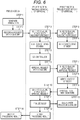
- a transaction Tr in which information regarding a transaction is described is generated in the public node 2a (Step 1), and a recording request of the transaction Tr is transmitted to the group of private nodes 2b after attachment of a signature to the transaction Tr by a secret key of an address managed by itself (Step 2).
- a signature "a" by a secret key of an address managed by a source a of an asset is attached to a transaction Tr1 regarding the source a, and signatures are attached to transactions Tr2 and Tr3 in a similar way.
- Each of the private nodes 2b that received the recording request of the transaction Tr verifies the signature attached to the recording request using a public key corresponding to the secret key of the source of the transfer (Step 3).
- the signature "a" attached to the transaction Tr1 is verified using a public key corresponding to the secret key of the transfer source a, and the transactions Tr2 and Tr3 are similarly verified. Note that, as described above, in addition to the signature, it is also verified that the double-use of the asset does not exist.
- Step 4 In a case where the validity of the signature and the like are confirmed in each of the private nodes 2b, the transactions Tr1 to Tr3 are temporarily stored in a predetermined storage area (processing standby area) in a storage device of the own node 2b (Step 4) . In addition, in Step 4, in a case where it is determined that the transfer source of the asset is not valid, the public node 2a serving as a request source is notified thereof.
- Step 5 a block is generated in one of the private nodes 2b.
- the block is a combination of a plurality of transactions Tr stored in the processing standby area of the own node 2b.
- Step 6 an approval request with a signature having a data structure as illustrated in Fig. 8(a) is generated.
- the data structure includes a signature column for a request source that requests an approval of the block, a block main body that combines the plurality of transactions Tr, and signature columns for approval destinations of the block.
- a configuration in the figure is for convenience of explanation, and actually it is not necessary to provide the signature columns for the request source/approval destination separately.
- a node A generates a block among a group of four private nodes 2b illustrated in Fig.
- the nodes are named A to D
- the signature column for a request source in Fig. 8(a) a signature "A" by a secret key of the node A is entered, and the signature columns for approval destinations (the columns where signatures of the nodes B to D are entered) are blank.
- the approval request generated in the node A is transmitted to the other private nodes 2b, that is, the three nodes B to D.
- Steps 7 to 9 are processing of the private node 2b that received the approval request of the block, that is, the request destinations B to D of approval.
- Step 7 validity of the signature "A" and the like attached to the approval request is verified using the public key of the node A and the like serving as the request source of approval (Step 7).
- Step 7 not only the node A but also other signatures attached at the time of the verification are verified together.
- the signatures are attached in the order such as node A ⁇ B ⁇ C ⁇ D, and the block is finalized when the signatures of a majority (n) are obtained.
- Various implementation methods are conceivable as to how to maintain the order.
- Step 8 the processing after Step 8 is not performed.
- Step 9 an approval result with a signature is generated.
- the signature by the own secret key is entered in a column assigned to the own node 2b among the signature columns for an approval destination.
- the approval result with the signature is transmitted to a request source A of approval.
- Steps 10 to 12 are processing of the private node 2b that received the approval result of the block, that is, the request source A of approval.
- Step 10 validity of the signature attached to the approval result is verified using public keys of the request sources B to D of approval (Step 10) .
- Step 11 In a case where it is determined that the request destination of approval is valid, the processing proceeds to Step 11, and in a case where it is determined to be not valid, the processing after Step 12 is not performed.
- Step 11 in a case where approvals of n (m ⁇ n ⁇ 1) or more among m private nodes are obtained, the block finalization condition is satisfied and addition of the block to the distributed database 4 is finalized.
- processing of recording the finalized block in the distributed database 4 is performed by the request source A of approval. Specifically, first, in the own node A, the transaction Tr included in the finalized block is deleted from the processing standby area, and the finalized block is added to the own database 4. Further, a notification that the finalized block is newly added is transmitted to the whole of the transaction processing network 1 including the other nodes B to D connected to the own node A. Upon receiving the notification of the finalized block, all the nodes 2 add the finalized block to the own database 4a after verifying a signature of a notification source.
- Fig. 9 is an explanatory diagram of a structure of the database 4a.
- the blocks serving as recording units are linked in a chain according to recording order.
- Each block (finalized block) includes a plurality of transactions and a hash of a preceding block.
- a certain block 2 includes a hash H1 of a previous block 1 succeeded from a further previous block 1.
- a hash H2 of the block 2 is calculated including a group of transaction of the own block 2 and the hash H1 succeeded from the previous block 1, and the hash H2 is succeeded by the next block.
- the blocks are linked in a chain according to the recording order, such that the record content has consistent continuity to effectively prevent falsification of the record content.
- a value of the hash of the block becomes different from that before the change of the record content, and in order to pretend that a falsified block as a correct block, it is necessary to recreate all subsequent blocks. This is very difficult in reality.
- Step 12 a processing result (OK/NG) of the transaction Tr relating to the recording request is notified from one of the private nodes 2b (request source A of approval) to the public node 2a serving as the request source of the recording of the transaction Tr.
- the public node 2a receives the processing result and presents the processing result to a user (Step 14).
- the nodes 2 constituting the transaction processing network 1 are divided into the public node 2a and the private node 2b.
- the public node 2a plays a role of generating the transaction to be recorded, and the subsequent recording processing to the distributed database 4 is performed by cooperation of the group of private nodes 2b.
- the recording processing to the distributed database 4 is limited to the reliable private node 2b.
- multisignature using public key cryptography is used instead of a costly and slow consensus algorithm such as POW or POS. This makes it possible to process a large amount of transaction quickly and reliably without impairing reliability of recording.
- the present invention can also be regarded as a computer program that implements the public node device 20 or the private node device 21 described above.
Landscapes
- Engineering & Computer Science (AREA)
- Computer Security & Cryptography (AREA)
- Computer Networks & Wireless Communication (AREA)
- Signal Processing (AREA)
- Theoretical Computer Science (AREA)
- General Physics & Mathematics (AREA)
- Physics & Mathematics (AREA)
- General Engineering & Computer Science (AREA)
- General Health & Medical Sciences (AREA)
- Health & Medical Sciences (AREA)
- Bioethics (AREA)
- Computer Hardware Design (AREA)
- Software Systems (AREA)
- Databases & Information Systems (AREA)
- Data Mining & Analysis (AREA)
- Information Retrieval, Db Structures And Fs Structures Therefor (AREA)
- Storage Device Security (AREA)
Applications Claiming Priority (2)
| Application Number | Priority Date | Filing Date | Title |
|---|---|---|---|
| JP2016071341 | 2016-03-31 | ||
| PCT/JP2017/012875 WO2017170679A1 (ja) | 2016-03-31 | 2017-03-29 | プライベートノード、プライベートノードにおける処理方法、及びそのためのプログラム |
Publications (2)
| Publication Number | Publication Date |
|---|---|
| EP3439231A1 true EP3439231A1 (de) | 2019-02-06 |
| EP3439231A4 EP3439231A4 (de) | 2019-11-13 |
Family
ID=59965941
Family Applications (1)
| Application Number | Title | Priority Date | Filing Date |
|---|---|---|---|
| EP17775213.6A Withdrawn EP3439231A4 (de) | 2016-03-31 | 2017-03-29 | Privater knoten, verarbeitungsverfahren für privaten knoten und programm dafür |
Country Status (4)
| Country | Link |
|---|---|
| US (1) | US20190036702A1 (de) |
| EP (1) | EP3439231A4 (de) |
| CN (1) | CN109219940B (de) |
| WO (1) | WO2017170679A1 (de) |
Families Citing this family (30)
| Publication number | Priority date | Publication date | Assignee | Title |
|---|---|---|---|---|
| US8874477B2 (en) | 2005-10-04 | 2014-10-28 | Steven Mark Hoffberg | Multifactorial optimization system and method |
| US9774578B1 (en) * | 2016-05-23 | 2017-09-26 | Accenture Global Solutions Limited | Distributed key secret for rewritable blockchain |
| US11481360B2 (en) * | 2017-04-07 | 2022-10-25 | Hwa-Shang CHANG | Blockchain network and method of operation thereof |
| US10560270B2 (en) | 2017-05-03 | 2020-02-11 | International Business Machines Corporation | Optimal data storage configuration in a blockchain |
| US10749670B2 (en) * | 2017-05-18 | 2020-08-18 | Bank Of America Corporation | Block chain decoding with fair delay for distributed network devices |
| US10868673B2 (en) * | 2017-09-25 | 2020-12-15 | Sap Se | Network access control based on distributed ledger |
| CN111543032B (zh) * | 2017-10-23 | 2022-05-03 | 西门子股份公司 | 用于控制和/或监控装置的方法和控制系统 |
| RU2754778C1 (ru) * | 2017-11-15 | 2021-09-07 | Гуандун Оппо Мобайл Телекоммьюникейшнз Корп., Лтд. | Способ определения ресурса произвольного доступа без конкуренции, сетевое устройство и терминальное устройство |
| EP3678086A1 (de) * | 2017-12-04 | 2020-07-08 | Sony Corporation | Informationsverarbeitungsvorrichtung, informationsverarbeitungsverfahren und programm |
| EP3496020B1 (de) * | 2017-12-08 | 2025-10-08 | CoreLedger AG | Verfahren zur durchführung von transaktionen |
| US10701053B2 (en) * | 2018-02-28 | 2020-06-30 | Bank Of America Corporation | Authentication and approval control system for distributed ledger platform |
| JP6487091B1 (ja) * | 2018-03-29 | 2019-03-20 | 株式会社電通 | Ico管理方法、通信デバイス、ico管理システム及びプログラム |
| JP2021103342A (ja) * | 2018-04-02 | 2021-07-15 | ソニーグループ株式会社 | 情報処理装置、情報処理方法、およびプログラム |
| CN108647962B (zh) * | 2018-04-27 | 2023-04-07 | 腾讯科技(深圳)有限公司 | 征信系统、征信数据的存储方法、装置、设备及介质 |
| US20190361869A1 (en) * | 2018-05-24 | 2019-11-28 | Imagerights International, Inc. | Systems, devices, and methods for tracking creation and modification of digital records |
| CN109040014A (zh) * | 2018-06-13 | 2018-12-18 | 湖南搜云网络科技股份有限公司 | 区块链处理方法及装置、区块链节点及存储介质 |
| KR102107237B1 (ko) * | 2018-07-02 | 2020-06-03 | 김도영 | 블록체인 및 분산 인프라 P2P 모델 기반 PoR 증명을 이용한 인터넷 서비스 제공 방법 |
| GB201811263D0 (en) * | 2018-07-10 | 2018-08-29 | Netmaster Solutions Ltd | A method and system for managing digital using a blockchain |
| US11336430B2 (en) | 2018-09-07 | 2022-05-17 | Sap Se | Blockchain-incorporating distributed authentication system |
| CN109377364A (zh) * | 2018-09-27 | 2019-02-22 | 中国联合网络通信集团有限公司 | 一种建组方法和装置、交易方法和系统 |
| US10938573B2 (en) * | 2018-11-06 | 2021-03-02 | Accenture Global Solutions Limited | Distributed transaction processing |
| JP6921266B2 (ja) * | 2018-12-21 | 2021-08-18 | アドバンスド ニュー テクノロジーズ カンパニー リミテッド | パブリックサイドチェーンを使用してコンソーシアムブロックチェーンに記憶されたデータの完全性を検証すること |
| PL3571825T3 (pl) * | 2018-12-21 | 2021-08-16 | Advanced New Technologies Co., Ltd. | Weryfikacja integralności danych przechowywanych w łańcuchu bloków konsorcjum przy użyciu publicznego łańcucha bocznego |
| WO2020138606A1 (ko) * | 2018-12-28 | 2020-07-02 | 연세대학교 산학협력단 | 블록체인 네트워크의 합의 방해요인 제거를 위한 장애 허용 합의 방법 |
| US11012506B2 (en) * | 2019-03-15 | 2021-05-18 | Microsoft Technology Licensing, Llc | Node and cluster management on distributed self-governed ecosystem |
| US11159308B2 (en) * | 2019-03-20 | 2021-10-26 | PolySign, Inc. | Preventing an erroneous transmission of a copy of a record of data to a distributed ledger system |
| JP6650157B1 (ja) * | 2019-05-08 | 2020-02-19 | 株式会社モールサービス | 情報管理システム、情報管理方法及び情報管理プログラム |
| CN111275395A (zh) * | 2020-01-19 | 2020-06-12 | 重庆科技学院 | 一种基于区块链的去中心化的企业绩效考核方法 |
| US11915014B2 (en) * | 2021-08-18 | 2024-02-27 | Microsoft Technology Licensing | Consensus based determination of stable configuration |
| JP2024151673A (ja) * | 2023-04-12 | 2024-10-25 | 富士通株式会社 | 情報処理プログラム、情報処理方法及び情報処理装置 |
Family Cites Families (18)
| Publication number | Priority date | Publication date | Assignee | Title |
|---|---|---|---|---|
| US20050144516A1 (en) * | 2003-12-30 | 2005-06-30 | Gonzalez Carlos J. | Adaptive deterministic grouping of blocks into multi-block units |
| KR100612255B1 (ko) * | 2005-01-11 | 2006-08-14 | 삼성전자주식회사 | 무선 네트워크 시스템에서의 데이터 보안장치 및 그 방법 |
| US20080065835A1 (en) * | 2006-09-11 | 2008-03-13 | Sun Microsystems, Inc. | Offloading operations for maintaining data coherence across a plurality of nodes |
| US20100111298A1 (en) * | 2008-10-27 | 2010-05-06 | Advanced Micro Devices, Inc. | Block cipher decryption apparatus and method |
| US20180315046A1 (en) * | 2013-06-17 | 2018-11-01 | Raymond Anthony Joao | Apparatus and method for providing transaction security and/or account security |
| US9553982B2 (en) * | 2013-07-06 | 2017-01-24 | Newvoicemedia, Ltd. | System and methods for tamper proof interaction recording and timestamping |
| US10340038B2 (en) * | 2014-05-13 | 2019-07-02 | Nant Holdings Ip, Llc | Healthcare transaction validation via blockchain, systems and methods |
| US11055707B2 (en) * | 2014-06-24 | 2021-07-06 | Visa International Service Association | Cryptocurrency infrastructure system |
| JP5858506B1 (ja) * | 2015-04-09 | 2016-02-10 | 株式会社Orb | 仮想通貨管理プログラム、及び仮想通貨管理方法 |
| CN104935657A (zh) * | 2015-06-15 | 2015-09-23 | 清华大学深圳研究生院 | 主动推送信息的方法和嵌入式节点操作系统 |
| US10402792B2 (en) * | 2015-08-13 | 2019-09-03 | The Toronto-Dominion Bank | Systems and method for tracking enterprise events using hybrid public-private blockchain ledgers |
| BR112018007449B1 (pt) * | 2015-10-17 | 2024-02-20 | Banqu, Inc | Dispositivo de computação, método implementado por computador e dispositivo de memória legível por computador |
| US20170116693A1 (en) * | 2015-10-27 | 2017-04-27 | Verimatrix, Inc. | Systems and Methods for Decentralizing Commerce and Rights Management for Digital Assets Using a Blockchain Rights Ledger |
| US20170132625A1 (en) * | 2015-11-05 | 2017-05-11 | Mastercard International Incorporated | Method and system for use of a blockchain in a transaction processing network |
| US20170132619A1 (en) * | 2015-11-06 | 2017-05-11 | SWFL, Inc., d/b/a "Filament" | Systems and methods for autonomous device transacting |
| US20170213221A1 (en) * | 2016-01-26 | 2017-07-27 | Bank Of America Corporation | System for tracking and validation of multiple instances of an entity in a process data network |
| US10447478B2 (en) * | 2016-06-06 | 2019-10-15 | Microsoft Technology Licensing, Llc | Cryptographic applications for a blockchain system |
| US11146535B2 (en) * | 2016-10-12 | 2021-10-12 | Bank Of America Corporation | System for managing a virtual private ledger and distributing workflow of authenticated transactions within a blockchain distributed network |
-
2017
- 2017-03-29 WO PCT/JP2017/012875 patent/WO2017170679A1/ja not_active Ceased
- 2017-03-29 US US16/077,032 patent/US20190036702A1/en not_active Abandoned
- 2017-03-29 CN CN201780033768.0A patent/CN109219940B/zh active Active
- 2017-03-29 EP EP17775213.6A patent/EP3439231A4/de not_active Withdrawn
Also Published As
| Publication number | Publication date |
|---|---|
| WO2017170679A1 (ja) | 2017-10-05 |
| US20190036702A1 (en) | 2019-01-31 |
| CN109219940A (zh) | 2019-01-15 |
| CN109219940B (zh) | 2022-01-11 |
| EP3439231A4 (de) | 2019-11-13 |
Similar Documents
| Publication | Publication Date | Title |
|---|---|---|
| EP3439231A1 (de) | Privater knoten, verarbeitungsverfahren für privaten knoten und programm dafür | |
| JP6199518B1 (ja) | プライベートノード、プライベートノードにおける処理方法、及びそのためのプログラム | |
| JP6389350B2 (ja) | トランザクション処理装置、トランザクション処理方法、及びそのためのプログラム | |
| EP3438903B1 (de) | Hierarchisches netzwerksystem sowie knoten und programm dafür | |
| US12177359B2 (en) | Methods and systems for introducing self-contained intent functionality into a decentralized computer network | |
| CN113595734B (zh) | 用于管理多个区块链网络中的交易的方法、系统和装置 | |
| US20200051041A1 (en) | System and method for arbitrating a blockchain transaction | |
| JP2017200196A (ja) | プライベートノード、プライベートノードにおける処理方法、及びそのためのプログラム | |
| CN111527489A (zh) | 基于去中心化标识的数据授权 | |
| CN111448565A (zh) | 基于去中心化标识的数据授权 | |
| EP3902227B1 (de) | Verfahren zum teilen und überprüfen von blöcken und elektronischen dokumenten zwischen knoten in einer blockchain | |
| US12093349B2 (en) | Method for distributing certificate of right to use digital content, and computer program stored in medium in order to carry out method | |
| US20250062964A1 (en) | Methods and systems for introducing self contained intent functionality into decentralized computer networks | |
| US20230419285A1 (en) | NFT Enforcement Control System | |
| US20240412207A1 (en) | Composable Digital Assets | |
| CN113011941A (zh) | 虚拟资源的处理方法、装置、设备及计算机可读存储介质 | |
| NL2038183B1 (en) | Method, system, and device for property transaction management involving distributed ledger technologies | |
| CN112513906B (en) | Managing transactions on a blockchain network | |
| US12174827B2 (en) | Trustless operations for blockchain networks | |
| HK40045996A (en) | Method, apparatus and device for processing virtual resource, and computer readable storage medium | |
| KR20220037171A (ko) | 암호화폐 거래 시스템 | |
| HK40048533A (en) | Managing transactions on blockchain networks | |
| CN112513906A (zh) | 管理区块链网络上的交易 |
Legal Events
| Date | Code | Title | Description |
|---|---|---|---|
| STAA | Information on the status of an ep patent application or granted ep patent |
Free format text: STATUS: THE INTERNATIONAL PUBLICATION HAS BEEN MADE |
|
| PUAI | Public reference made under article 153(3) epc to a published international application that has entered the european phase |
Free format text: ORIGINAL CODE: 0009012 |
|
| STAA | Information on the status of an ep patent application or granted ep patent |
Free format text: STATUS: REQUEST FOR EXAMINATION WAS MADE |
|
| 17P | Request for examination filed |
Effective date: 20181019 |
|
| AK | Designated contracting states |
Kind code of ref document: A1 Designated state(s): AL AT BE BG CH CY CZ DE DK EE ES FI FR GB GR HR HU IE IS IT LI LT LU LV MC MK MT NL NO PL PT RO RS SE SI SK SM TR |
|
| AX | Request for extension of the european patent |
Extension state: BA ME |
|
| DAV | Request for validation of the european patent (deleted) | ||
| DAX | Request for extension of the european patent (deleted) | ||
| A4 | Supplementary search report drawn up and despatched |
Effective date: 20191016 |
|
| RIC1 | Information provided on ipc code assigned before grant |
Ipc: G06Q 20/38 20120101ALI20191010BHEP Ipc: G09C 1/00 20060101ALI20191010BHEP Ipc: G06F 21/64 20130101ALI20191010BHEP Ipc: H04L 9/32 20060101AFI20191010BHEP |
|
| RAP1 | Party data changed (applicant data changed or rights of an application transferred) |
Owner name: BITFLYER BLOCKCHAIN, INC. |
|
| RAP1 | Party data changed (applicant data changed or rights of an application transferred) |
Owner name: BITFLYER BLOCKCHAIN, INC. |
|
| STAA | Information on the status of an ep patent application or granted ep patent |
Free format text: STATUS: EXAMINATION IS IN PROGRESS |
|
| 17Q | First examination report despatched |
Effective date: 20211007 |
|
| STAA | Information on the status of an ep patent application or granted ep patent |
Free format text: STATUS: THE APPLICATION IS DEEMED TO BE WITHDRAWN |
|
| 18D | Application deemed to be withdrawn |
Effective date: 20220420 |