EP3440829B1 - Vorrichtung und verfahren zur bildverarbeitung - Google Patents
Vorrichtung und verfahren zur bildverarbeitung Download PDFInfo
- Publication number
- EP3440829B1 EP3440829B1 EP17820514.2A EP17820514A EP3440829B1 EP 3440829 B1 EP3440829 B1 EP 3440829B1 EP 17820514 A EP17820514 A EP 17820514A EP 3440829 B1 EP3440829 B1 EP 3440829B1
- Authority
- EP
- European Patent Office
- Prior art keywords
- image
- color
- black
- image sensor
- white image
- Prior art date
- Legal status (The legal status is an assumption and is not a legal conclusion. Google has not performed a legal analysis and makes no representation as to the accuracy of the status listed.)
- Active
Links
Images


Classifications
-
- H—ELECTRICITY
- H04—ELECTRIC COMMUNICATION TECHNIQUE
- H04N—PICTORIAL COMMUNICATION, e.g. TELEVISION
- H04N23/00—Cameras or camera modules comprising electronic image sensors; Control thereof
- H04N23/60—Control of cameras or camera modules
- H04N23/698—Control of cameras or camera modules for achieving an enlarged field of view, e.g. panoramic image capture
-
- H—ELECTRICITY
- H04—ELECTRIC COMMUNICATION TECHNIQUE
- H04N—PICTORIAL COMMUNICATION, e.g. TELEVISION
- H04N23/00—Cameras or camera modules comprising electronic image sensors; Control thereof
- H04N23/95—Computational photography systems, e.g. light-field imaging systems
- H04N23/951—Computational photography systems, e.g. light-field imaging systems by using two or more images to influence resolution, frame rate or aspect ratio
-
- H—ELECTRICITY
- H04—ELECTRIC COMMUNICATION TECHNIQUE
- H04N—PICTORIAL COMMUNICATION, e.g. TELEVISION
- H04N23/00—Cameras or camera modules comprising electronic image sensors; Control thereof
- H04N23/10—Cameras or camera modules comprising electronic image sensors; Control thereof for generating image signals from different wavelengths
- H04N23/13—Cameras or camera modules comprising electronic image sensors; Control thereof for generating image signals from different wavelengths with multiple sensors
-
- H—ELECTRICITY
- H04—ELECTRIC COMMUNICATION TECHNIQUE
- H04N—PICTORIAL COMMUNICATION, e.g. TELEVISION
- H04N23/00—Cameras or camera modules comprising electronic image sensors; Control thereof
- H04N23/45—Cameras or camera modules comprising electronic image sensors; Control thereof for generating image signals from two or more image sensors being of different type or operating in different modes, e.g. with a CMOS sensor for moving images in combination with a charge-coupled device [CCD] for still images
-
- H—ELECTRICITY
- H04—ELECTRIC COMMUNICATION TECHNIQUE
- H04N—PICTORIAL COMMUNICATION, e.g. TELEVISION
- H04N23/00—Cameras or camera modules comprising electronic image sensors; Control thereof
- H04N23/60—Control of cameras or camera modules
- H04N23/68—Control of cameras or camera modules for stable pick-up of the scene, e.g. compensating for camera body vibrations
- H04N23/682—Vibration or motion blur correction
- H04N23/683—Vibration or motion blur correction performed by a processor, e.g. controlling the readout of an image memory
-
- H—ELECTRICITY
- H04—ELECTRIC COMMUNICATION TECHNIQUE
- H04N—PICTORIAL COMMUNICATION, e.g. TELEVISION
- H04N23/00—Cameras or camera modules comprising electronic image sensors; Control thereof
- H04N23/70—Circuitry for compensating brightness variation in the scene
- H04N23/71—Circuitry for evaluating the brightness variation
-
- H—ELECTRICITY
- H04—ELECTRIC COMMUNICATION TECHNIQUE
- H04N—PICTORIAL COMMUNICATION, e.g. TELEVISION
- H04N23/00—Cameras or camera modules comprising electronic image sensors; Control thereof
- H04N23/70—Circuitry for compensating brightness variation in the scene
- H04N23/73—Circuitry for compensating brightness variation in the scene by influencing the exposure time
-
- H—ELECTRICITY
- H04—ELECTRIC COMMUNICATION TECHNIQUE
- H04N—PICTORIAL COMMUNICATION, e.g. TELEVISION
- H04N23/00—Cameras or camera modules comprising electronic image sensors; Control thereof
- H04N23/70—Circuitry for compensating brightness variation in the scene
- H04N23/741—Circuitry for compensating brightness variation in the scene by increasing the dynamic range of the image compared to the dynamic range of the electronic image sensors
-
- H—ELECTRICITY
- H04—ELECTRIC COMMUNICATION TECHNIQUE
- H04N—PICTORIAL COMMUNICATION, e.g. TELEVISION
- H04N23/00—Cameras or camera modules comprising electronic image sensors; Control thereof
- H04N23/80—Camera processing pipelines; Components thereof
- H04N23/84—Camera processing pipelines; Components thereof for processing colour signals
- H04N23/841—Camera processing pipelines; Components thereof for processing colour signals to modify gamut
-
- H—ELECTRICITY
- H04—ELECTRIC COMMUNICATION TECHNIQUE
- H04N—PICTORIAL COMMUNICATION, e.g. TELEVISION
- H04N23/00—Cameras or camera modules comprising electronic image sensors; Control thereof
- H04N23/80—Camera processing pipelines; Components thereof
- H04N23/84—Camera processing pipelines; Components thereof for processing colour signals
- H04N23/88—Camera processing pipelines; Components thereof for processing colour signals for colour balance, e.g. white-balance circuits or colour temperature control
-
- H—ELECTRICITY
- H04—ELECTRIC COMMUNICATION TECHNIQUE
- H04N—PICTORIAL COMMUNICATION, e.g. TELEVISION
- H04N25/00—Circuitry of solid-state image sensors [SSIS]; Control thereof
- H04N25/50—Control of the SSIS exposure
- H04N25/57—Control of the dynamic range
-
- H—ELECTRICITY
- H04—ELECTRIC COMMUNICATION TECHNIQUE
- H04N—PICTORIAL COMMUNICATION, e.g. TELEVISION
- H04N5/00—Details of television systems
- H04N5/222—Studio circuitry; Studio devices; Studio equipment
- H04N5/262—Studio circuits, e.g. for mixing, switching-over, change of character of image, other special effects ; Cameras specially adapted for the electronic generation of special effects
- H04N5/265—Mixing
-
- H—ELECTRICITY
- H04—ELECTRIC COMMUNICATION TECHNIQUE
- H04N—PICTORIAL COMMUNICATION, e.g. TELEVISION
- H04N7/00—Television systems
- H04N7/01—Conversion of standards, e.g. involving analogue television standards or digital television standards processed at pixel level
- H04N7/0127—Conversion of standards, e.g. involving analogue television standards or digital television standards processed at pixel level by changing the field or frame frequency of the incoming video signal, e.g. frame rate converter
-
- H—ELECTRICITY
- H04—ELECTRIC COMMUNICATION TECHNIQUE
- H04N—PICTORIAL COMMUNICATION, e.g. TELEVISION
- H04N9/00—Details of colour television systems
- H04N9/77—Circuits for processing the brightness signal and the chrominance signal relative to each other, e.g. adjusting the phase of the brightness signal relative to the colour signal, correcting differential gain or differential phase
Definitions
- the image quality of an electronic device may be proportional to the performance of a lens, an image sensor, and so on provided in the electronic device.
- the use of a high-performance lens, image sensor, and the like in the electronic device to achieve high-quality images may increase manufacture cost for the electronic device.
- US 6788338 B1 discusses a video signal generating apparatus where the video signal is produced using two different image sensors.
- EP 2549763 A2 discusses imaging device which automatically utilize simultaneous image captures in an image processing pipeline.
- an example aspect of the present disclosure addresses at least the above-mentioned problems and/or disadvantages and provides at least the advantages described below. Accordingly, an example aspect of the present disclosure is to provide an image processing apparatus and method for converting a frame rate by means of two sensors having different characteristics.
- Another example aspect of the present disclosure is to provide an image processing apparatus and method for generating a new image based on a plurality of images acquired by means of at least two sensors for which different capturing conditions are set.
- Another example aspect of the present disclosure is to provide an image processing apparatus and method for generating a high-resolution color image through image synthesis between a high-resolution black-and-white image acquired by a black-and-white image sensor and a low-resolution color image acquired by a color image sensor, in a low-illumination situation.
- Another example aspect of the present disclosure is to provide an image processing apparatus and method for capturing an object by activating a black-and-white image sensor and deactivating a color image sensor in an ultra-low-illumination situation.
- an electronic device includes a memory, a first black-and-white image sensor, a second image sensor, and a processor.
- the processor is configured to: set different values as a first setting value for the first black-and-white image sensor and a plurality of different second setting values for the second image sensor, if an illuminance value indicating an illuminance at an arbitrary time point does not satisfy a predetermined illuminance value, wherein the first setting value and the plurality of different second setting values are set to values that allow acquisition of at least two color images using the second image sensor, during acquisition of one black-and-white image using the first black-and-white image sensor; acquire the one black-and-white image of an object based on the first setting value using the first black-and-white image sensor; acquire the at least two color images of the object based on the plurality of different second setting values using the second image sensor; generate a color image by synthesizing the black-and-white image with a
- the term 'have', 'may have', 'include', or 'may include' signifies the presence of a specific feature (for example, number, function, operation, or component such as a part), not excluding the presence of one or more other features.
- 'first' or 'second' may modify the names of various components irrespective of sequence and/or importance. These expressions are used to distinguish one component from another component, not limiting the components.
- a first user equipment (UE) and a second UE may indicate different UEs irrespective of sequence or importance.
- UE user equipment
- a first component may be referred to as a second component and vice versa without departing from the scope of the present disclosure.
- the term 'configured to' as used herein may be used interchangeably with, for example, the term 'suitable for' 'having the capacity to', 'designed to', 'adapted to', 'made to', or 'capable of under circumstances.
- the term 'configured to' may not necessarily mean 'specifically designed to' in hardware. Instead, the term 'configured to' may refer to a situation in which a device is 'capable of with another device or part.
- an electronic device may be at least one of, for example, a smart phone, a tablet personal computer (PC), a mobile phone, a video phone, an e-book reader, a desktop PC, a laptop PC, a netbook computer, a workstation, a server, a personal digital assistant (PDA), a portable multimedia player (PMP), an MP3 player, mobile medical equipment, a camera, or a wearable device, or the like, but is not limited thereto.
- a smart phone a tablet personal computer (PC)
- PC personal computer
- PDA personal digital assistant
- PMP portable multimedia player
- MP3 player MP3 player
- the wearable device may be at least one of an accessory type (for example, a watch, a ring, a bracelet, an ankle bracelet, a necklace, glasses, contact lenses, or a head-mounted device (HMD)), a fabric or clothes type (for example, electronic clothes), an attached type (for example, a skin pad or a tattoo), or an implantable type (for example, an implantable circuit), or the like, but is not limited thereto.
- an accessory type for example, a watch, a ring, a bracelet, an ankle bracelet, a necklace, glasses, contact lenses, or a head-mounted device (HMD)
- a fabric or clothes type for example, electronic clothes
- an attached type for example, a skin pad or a tattoo
- an implantable type for example, an implantable circuit
- an electronic device may be a home appliance.
- the home appliance may be at least one of, for example, a television (TV), a digital versatile disk (DVD) player, an audio player, a refrigerator, an air conditioner, a vacuum cleaner, an oven, a microwave oven, a washer, an air purifier, a set-top box, a home automation control panel, a security control panel, a TV box (for example, Samsung HomeSyncTM, Apple TVTM, or Google TVTM), a game console (for example, XboxTM or PlayStationTM), an electronic dictionary, an electronic key, a camcorder, or an electronic picture frame, or the like, but is not limited thereto.
- TV television
- DVD digital versatile disk
- an electronic device may be at least one of a medical device (for example, a portable medical meter such as a blood glucose meter, a heart rate meter, a blood pressure meter, or a body temperature meter, a magnetic resonance angiography (MRA) device, a magnetic resonance imaging (MRI) device, a computed tomography (CT) device, an imaging device, an ultrasonic device, or the like), a navigation device, a global positioning system (GPS) receiver, an event data recorder (EDR), a flight data recorder (FDR), an automotive infotainment device, a naval electronic device (for example, a naval navigation device, a gyrocompass, or the like), an avionic electronic device, a security device, an in-vehicle head unit, an industrial or consumer robot, an automatic teller machine (ATM) in a financial facility, a point of sales (POS) device in a shop, or an Internet of things (IoT) device (for example,
- an electronic device may be at least one of furniture, part of a building/structure, an electronic board, an electronic signature receiving device, a projector, and various measuring devices (for example, water, electricity, gas or electro-magnetic wave measuring devices), or the like, but is not limited thereto.
- an electronic device may be one or a combination of two or more of the foregoing devices.
- an electronic device may be a flexible electronic device.
- an electronic device may cover a new electronic device which will emerge owing to technology development, not limited to the foregoing devices.
- Various embodiments of the present disclosure provide a method for acquiring a color image having a high frame rate (a high-quality, high-pixel color image) by matching a color image having a relatively low frame rate (a low-quality, low-pixel color image) to a black-and-white (BW) image having a relatively high frame rate (a high-quality, high-pixel BW image).
- BW black-and-white
- many techniques for matching between a color image having a low frame rate and a BW image having a high frame rate may be available.
- a color image having a high frame rate may be generated by diffusing colors into a BW image having a high frame rate (a high-quality BW image) based on color information that may be acquired from a color image having a low frame rate.
- the term 'user' refers to a person or device (for example, intelligent electronic device) that uses an electronic device.
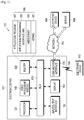
- FIG. 1 is a diagram illustrating an electronic device 101 in a network environment 100 according to various example embodiments.
- the electronic device 101 may include a bus 110, a processor (e.g., including processing circuitry) 120, a memory 130, an input/output (I/O) interface (e.g., including input/output circuitry) 150, a display 160, a communication interface (e.g., including communication circuitry) 170, and a video processing module (e.g., including video processing circuitry) 140.
- I/O input/output
- a display 160 e.g., including communication circuitry
- a communication interface e.g., including communication circuitry
- a video processing module e.g., including video processing circuitry
- the processor 120 may include various processing circuitry, such as, for example, and without limitation, one or more of a dedicated processor, a CPU, an AP, or a communication processor (CP).
- the processor 120 may, for example, execute computation or data processing related to control and/or communication of at least one other component of the electronic device 101.
- the middleware 183 may process one or more task requests received from the application programs 187 according to their priority levels. For example, the middleware 183 may assign priority levels for using system resources (the bus 110, the processor 120, or the memory 130) of the electronic device 101 to at least one of the application programs 187. For example, the middleware 183 may process the one or more task requests according to the priority levels, thereby achieving scheduling or load balancing of the one or more task requests.
- system resources the bus 110, the processor 120, or the memory 130
- the API 185 is, for example, an interface for the applications 187 to control functions that the kernel 181 or the middleware 183 provides.
- the API 185 may include at least one interface or function (for example, a command) for file control, window control, video processing, or text control.
- the I/O interface 150 may serve, for example, as an interface for providing a command or data received from a user or an external device to the other component(s) of the electronic device 101. Further, the I/O interface 150 may output a command or data received from the other component(s) of the electronic device 101 to the user or the external device.
- the I/O interface 150 may include various input/ output circuitry, such as, for example, and without limitation, a plurality of image sensors having different characteristics.
- the I/O interface 150 may provide images captured by the plurality of image sensors to the video processing module 140, the memory 130, the display 160, the communication interface 170, and so on through the bus 110. The captured images may have different image characteristics, which may be attributed to different characteristics of the image sensors, different capturing conditions, and the like.
- the display 160 may include, for example, a liquid crystal display (LCD), a light emitting diode (LED) display, an organic LED (OLED) display, a microelectrome-chanical systems (MEMS) display, or an electronic paper display, or the like, but is not limited thereto.
- the display 160 may display, for example, various types of content (for example, text, an image, a video, an icon, or a symbol).
- the display 160 may include a touch screen and receive, for example, a touch input, a gesture input, a proximity input, or a hovering input through an electronic pen or a user's body part.
- the communication interface 170 may include various communication circuitry and establish communication, for example, between the electronic device 101 and an external device (for example, a first external electronic device 102, a second external electronic device 104, or a server 106).
- the communication interface 170 may be connected to a network 162 by wireless communication or wired communication, and communicate with the external device (for example, the second external electronic device 104 or the server 106) over the network 162.
- the communication interface 170 may establish a short-range wireless communication connection 164 with an external electronic device (e.g., first external electronic device 102).
- the wireless communication may be conducted in conformance to, for example, at least one of long term evolution (LTE), LTE-advanced (LTE-A), code division multiple access (CDMA), wideband CDMA (WCDMA), universal mobile telecommunication system (UMTS), wireless broadband (WiBro), or global system for mobile communications (GSM), as a cellular communication protocol.
- LTE long term evolution
- LTE-A LTE-advanced
- CDMA code division multiple access
- WCDMA wideband CDMA
- UMTS universal mobile telecommunication system
- WiBro wireless broadband
- GSM global system for mobile communications
- the wireless communication may include short-range communication 164.
- the short-range communication 164 may be conducted in conformance to, for example, at least one of wireless fidelity (WiFi), Bluetooth, near field communication (NFC), magnetic secure transmission (MST), or Zigbee.
- the wireless communication may include, for example, GPS or GNSS.
- GNSS may be, for example, global positioning system (GPS) or global navigation satellite system (GNSS).
- the wired communication may be conducted in conformance to, for example, at least one of universal serial bus (USB), high definition multimedia interface (HDMI), recommended standard 232 (RS-232), or plain old telephone service (POTS).
- the network 162 may be a telecommunication network, for example, at least one of a computer network (for example, local area network (LAN) or wide area network (WAN)), the Internet, or a telephone network.
- the video processing module 140 may include various video processing circuitry and acquire additional information (for example, binary data, high-frequency component information, color information, brightness information, pattern information, motion information, or black label value of edge information or scale information) based on, for example, part of the edge information (for example, the high-frequency component information) or scale information (for example, a down-scaled image) related to an input image, and generate an output image corresponding to at least a part of the input image based on the acquired additional information.
- the video processing module 140 may, for example, up-scale the down-scaled input image included in the scale information and generate the output image using the up-scaled input image and the edge information.
- the video processing module 140 may generate a new image based on a plurality of images received from a plurality of image sensors having different characteristics in the I/O interface 150. That is, the video processing module 140 may generate an image having new characteristics by extracting information about the characteristics of the plurality of image sensors from images in which the characteristics have been reflected, and processing an image having different characteristics, using the extracted information.
- the video processing module 140 may acquire a color image having a relatively low resolution from a color image sensor being one of the plurality of image sensors, and a BW image having a relatively high resolution from a BW image sensor being another one of the plurality of image sensors.
- the video processing module 140 may generate a color image having a high resolution by synthesizing or matching the BW image having the relatively high resolution with the color image having the relatively low resolution.
- the video processing module 140 may generate a color image having a high resolution by acquiring color information from a color image having a relatively low resolution, and diffusing colors into a BW image having a relatively high resolution, using the acquired color information.
- video processing module 140 is illustrated in FIG. 1 as a component independent of the processor 120 and the memory 130, this does not limit various embodiments.
- the video processing module 140 may be integrated with the processor 120, or may be stored in the form of software in the memory 130 and executed by the processor 120. Further, the video processing module 140 may, for example, be distributed to the processor 120 and the memory 130.
- Each of the first and second external electronic devices 102 and 104 may be of the same type as or a different type from the electronic device 101.
- the server 106 may include a group of one or more servers. According to various embodiments, all or a part of operations performed in the electronic device 101 may be performed in one or more other electronic devices (for example, the electronic devices 102 and 104, or the server 106). According to an embodiment, if the electronic device 101 is to perform a function or a service automatically or upon request, the electronic device 101 may request at least a part of functions related to the function or the service to another device (for example, the electronic device 102 or 104 or the server 106), instead of performing the function or the service autonomously, or additionally.
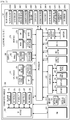
- FIG. 2 is a block diagram illustrating an example electronic device 201 according to various example embodiments of the present disclosure.
- the processor 210 may include various processing circuitry and may, for example, control a plurality of hardware or software components that are connected to the processor 210 by executing an OS or an application program, and may process or compute various types of data.
- the processor 210 may be implemented, for example, as a system on chip (SoC).
- SoC system on chip
- the processor 210 may further include a graphics processing unit (GPU) and/or an image signal processor.
- the processor 210 may include at least a part (for example, a cellular module 221) of the components illustrated in FIG. 2 .
- the processor 210 may load a command or data received from at least one of other components (for example, a non-volatile memory), process the loaded command or data, and store result data in the non-volatile memory.
- the communication module 220 may have the same configuration as or a similar configuration to the communication interface 170 illustrated in FIG. 1 .
- the communication module 220 may include various communication circuitry, such as, for example, and without limitation, the cellular module 221, a WiFi module 223, a Bluetooth (BT) module 225, a GPS module 227, an NFC module 228, and a radio frequency (RF) module 229.
- BT Bluetooth
- RF radio frequency
- Each of the WiFi module 223, the BT module 225, the GPS module 227, or the NFC module 228 may include, for example, a processor for processing data transmitted and received by the module. According to an embodiment, at least a part (two or more) of the cellular module 221, the WiFi module 223, the BT module 225, the GPS module 227, or the NFC module 228 may be included in a single integrated chip (IC) or IC package.
- IC integrated chip
- the RF module 229 may transmit and receive, for example, communication signals (for example, RF signals).
- the RF module 229 may include, for example, a transceiver, a power amplifier module (PAM), a frequency filter, a low noise amplifier (LNA), an antenna, or the like.
- PAM power amplifier module
- LNA low noise amplifier
- at least one of the cellular module 221, the WiFi module 223, the BT module 225, the GPS module 227, or the NFC module 228 may transmit and receive RF signals via a separate RF module.
- the SIM 224 may include, for example, a card including the SIM and/or an embedded SIM.
- the SIM 224 may include a unique identifier (for example, integrated circuit card identifier (ICCID)) or subscriber information (for example, international mobile subscriber identity (IMSI)).
- ICCID integrated circuit card identifier
- IMSI international mobile subscriber identity
- the memory 230 may include, for example, an internal memory 232 and/or an external memory 234.
- the internal memory 232 may be at least one of, for example, a volatile memory (for example, dynamic RAM (DRAM), static RAM (SRAM), or synchronous dynamic RAM (SDRAM)), and a non-volatile memory (for example, one time programmable ROM (OTPROM), programmable ROM (PROM), erasable and programmable ROM (EPROM), electrically erasable and programmable ROM (EEPROM), mask ROM, flash ROM, flash memory (for example, NAND flash or NOR flash), a hard drive, and a solid state drive (SSD)).
- a volatile memory for example, dynamic RAM (DRAM), static RAM (SRAM), or synchronous dynamic RAM (SDRAM)
- OTPROM one time programmable ROM
- PROM programmable ROM
- EPROM erasable and programmable ROM
- EEPROM electrically erasable and programmable ROM
- the sensor module 240 may, for example, measure physical quantities or detect operational states of the electronic device 201, and convert the measured or detected information into electrical signals.
- the sensor module 240 may include at least one of, for example, a gesture sensor 240A, a gyro sensor 240B, an atmospheric pressure sensor 240C, a magnetic sensor 240D, an accelerometer sensor 240E, a grip sensor 240F, a proximity sensor 240G, a color sensor (for example, a red, green, blue (RGB) sensor) 240H, a biometric sensor 2401, a temperature/humidity sensor 240J, an illumination sensor 240K, or an ultra violet (UV) sensor 240M.
- a gesture sensor 240A for example, a gyro sensor 240B, an atmospheric pressure sensor 240C, a magnetic sensor 240D, an accelerometer sensor 240E, a grip sensor 240F, a proximity sensor 240G, a color sensor (for example, a red, green
- the (digital) pen sensor 254 may include, for example, a detection sheet which is a part of the touch panel or separately configured from the touch panel.
- the key 256 may include, for example, a physical button, an optical key, or a keypad.
- the ultrasonic input device 258 may sense ultrasonic signals generated by an input tool using a microphone, and identify data corresponding to the sensed ultrasonic signals.
- the panel 262 may include at least one sensor.
- the panel 262 may include a pressure sensor (or a force sensor).
- the pressure sensor may measure the strength of the pressure of a user touch.
- the pressure sensor may be integrated with the touch panel 252, or configured as one or more sensors separately from the touch panel 252.
- the hologram device 264 may utilize the interference of light waves to provide a three-dimensional image in empty space.
- the projector 266 may display an image by projecting light on a screen.
- the screen may be positioned, for example, inside or outside the electronic device 201.
- the display 260 may further include a control circuit for controlling the panel 262, the hologram device 264, or the projector 266.
- the interface 270 may include various interface circuitry, such as, for example, and without limitation, an HDMI 272, a USB 274, an optical interface 276, or a D-subminiature (D-sub) 278.
- the interface 270 may be included, for example, in the communication interface 170 illustrated in FIG. 1 .
- the interface 270 may include, for example, a mobile high-definition link (MHL) interface, an SD/multimedia card (MMC) interface, or an infrared data association (IrDA) interface.
- MHL mobile high-definition link
- MMC SD/multimedia card
- IrDA infrared data association
- the audio module 280 may, for example, convert a sound to an electrical signal, and vice versa. At least a part of the components of the audio module 280 may be included, for example, in the I/O interface 150 illustrated in FIG. 1 .
- the audio module 280 may process sound information input into, or output from, for example, a speaker 282, a receiver 284, an earphone 286, or a microphone 288.
- the camera module 291 may set different capturing conditions for the plurality of image sensors.
- the capturing conditions may include an exposure value, a shutter speed, an iris value, white balance, sensitivity, and so on.
- the plurality of image sensors may generate different resulting images according to the set capturing conditions.
- Each of the above-described components of the electronic device may include one or more parts and the name of the component may vary with the type of the electronic device.
- an electronic device may be configured to include at least one of the above-described components. Some component may be omitted from or added to the electronic device. Further, one entity may be configured by combining a part of the components of the electronic device, to thereby perform the same functions of the components prior to the combining.
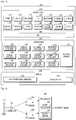
- a programming module 310 may include an OS that controls resources related to an electronic device and/or various applications executed on the OS (for example, the application programs 187).
- the OS may be AndroidTM, iOSTM, WindowsTM, SymbianTM, TizenTM, or Bada TM
- the runtime library 335 may include, for example, a library module that a complier uses to add a new function in a programming language during execution of an application 370.
- the runtime library 335 may perform input/output management, memory management, or arithmetic function processing.
- the application manager 341 may manage, for example, the life cycle of at least one of the applications 370.
- the window manager 342 may manage GUI resources used for a screen.
- the multimedia manager 343 may determine formats required to play back various media files and may encode or decode a media file using a CODEC suitable for the format of the media file.
- the resource manager 344 may manage a source code or a memory or storage space.
- the power manager 345 may, for example, manage a battery or a power source and provide power information required for an operation of the electronic device, in conjunction with a basic input/output system (BIOS).
- the database manager 346 may, for example, generate, search, or modify a database to be used for the applications 370.
- the package manager 347 may manage installation or update of an application distributed as a package file.
- the connectivity manager 348 may manage, for example, wireless connectivity such as WiFi or Bluetooth.
- the notification manager 349 may provide a user with an event such as message arrival, a schedule, a proximity notification, or the like in a manner that does not bother the user.
- the location manager 350 may mange position information about the electronic device.
- the graphic manager 351 may manage graphical effects to be provided to the user or related user interfaces.
- the security manager 352 may provide various security functions required for system security or user authentication. According to an embodiment, if the electronic device is equipped with a telephone function, the middleware 330 may further include a telephony manager to manage a voice or video call function of the electronic device.
- the middleware 330 may include a middleware module for combining various functions of the above-described components. To provide differentiated functions, the middleware 330 may provide a customized module for each OS type. Further, the middleware 330 may dynamically delete a part of the existing components or add a new component.
- the applications 370 may include one or more applications capable of executing functions such as home 371, dialer 372, short message service/multimedia messaging service (SMS/MMS) 373, instant message (IM) 374, browser 375, camera 376, alarm 377, contacts 378, voice dial 379, email 380, calendar 381, media player 382, album 383, or clock 384.
- the applications 370 may also include applications capable of executing functions such as health care (for example, measurement of an exercise amount or a glucose level), or provisioning of environment information (for example, information about atmospheric pressure, humidity, or temperature).
- the applications 370 may include an application supporting information exchange between the electronic device and an external electronic device (for the convenience of description, referred to as 'information exchange application').
- the information exchange application may include, for example, a notification relay application for transmitting specific information to the external electronic device, or a device management application for managing the external electronic device.
- the notification relay application may transmit notification information generated from another application (for example, the SMS/MMS application, the email application, the health care application, or the environment information application) of the electronic device to the external electronic device. Further, the notification relay application may, for example, receive notification information from the external electronic device and transmit the received notification information to a user.
- another application for example, the SMS/MMS application, the email application, the health care application, or the environment information application
- the notification relay application may, for example, receive notification information from the external electronic device and transmit the received notification information to a user.
- the device management application may manage (for example, install, delete, or update) at least one function of an external electronic device communicating with the electronic device (for example, turn-on/turn-off of the external electronic device (or a part of its components) or control of the brightness (or resolution) of the display), an application executed in the external electronic device, or a service (for example, a call service or a message service) provided by the external electronic device.
- an external electronic device communicating with the electronic device
- the electronic device for example, turn-on/turn-off of the external electronic device (or a part of its components) or control of the brightness (or resolution) of the display
- a service for example, a call service or a message service
- the applications 370 may include an application designated according to a property of the external electronic device (for example, a health care application of a mobile medical equipment). According to an embodiment, the applications 370 may include an application received from an external electronic device. According to an embodiment, the applications 370 may include a preloaded application or a third application downloadable from a server.
- the names of the components of the programming module 310 according to the illustrated embodiment may vary depending on OS types.
- At least part of the programming module 310 may be realized in software, firmware, hardware, or a combination of at least two of them. At least part of the programming module 310 may be realized (for example, implemented), for example, by a processor (for example, the processor 210). At least part of the programming module 310 may include, for example, a module, a program, a routine, a set of instructions, or a process to execute one or more functions.
- the term 'module' as used herein includes a unit including one or a combination of two or more of, for example, hardware, software, or firmware.
- the term 'module' may be used interchangeably with other terms, for example, unit, logic, logical block, part, or circuit.
- a 'module' may be the smallest unit of integrated components, or a portion thereof.
- a 'module' may be the smallest unit for executing one or more functions, or a portion thereof.
- a 'module' may be implemented mechanically, or electronically.
- At least a part of devices (for example, modules or their functions) or methods (for example, operations) may be implemented as commands stored in a computer-readable storage medium.
- the commands are executed by a processor (for example, the processor 120), the processor may execute functions corresponding to the commands.
- the computer-readable storage medium may be, for example, the memory 130.
- the computer-readable storage medium may include hard disk, floppy disk, magnetic media (for example, magnetic tape), optical media (for example, compact disc read-only memory (CD-ROM)), digital versatile disc (DVD), or magneto-optical media (for example, floptical disk)), a hardware device (for example, ROM, RAM, or flash memory), or the like.
- Program instructions may include a premium language code executable by a computer using an interpreter as well as a machine language code such as a code produced by a compiler.
- the foregoing hardware device may be configured to operate as one or more software module for performing operations according to various embodiments, and vice versa.
- a module or a programming module according to various embodiments of the present disclosure may include one or more of the above-described components, may omit a portion thereof, or may include additional components. Operations that are performed by a module, a programming module or other components according to various embodiments may be processed in a serial, parallel, repetitive or heuristic manner. Or some operations may be performed in a different order or omitted, or other operations may be added.
- the embodiments of the present disclosure are presented to describe and provide understanding of the present disclosure, not limiting the scope of the present disclosure. Therefore, the scope of the present disclosure should be interpreted as including all modifications or various other embodiments based on the spirit of the present disclosure.
- FIG. 4 is a diagram illustrating an example configuration of an image processing apparatus according to various example embodiments.
- the lens 410 includes a transparent (e.g., glass) body for refracting light reflected from an object, may be attached in the form of a cylinder onto the front of a camera body irrespective of a camera type such as a TV camera, a film camera, or a photo camera.
- the lens 410 executes the same function of reproducing an image of an object, as an eye of a camera, even though the lens 410 has a different shape and size.
- the lens 410 may classified into various types. For example, lenses may classified into a wide-angle lens, a normal lens, a telephoto lens, and a zoom lens according to their focal distances.
- the lens 410 may also be classified according to its property such as brightness or speed.
- the brightness or speed of the lens 410 may be a property related to a minimum iris value f.
- the brightness of the lens 410 refers to a minimum iris value f (a maximum iris opening value).
- the lens 410 gets brighter, a faster shutter speed may be obtained, which makes it possible to acquire a brighter image even in a dark capturing environment (an environment in which a small amount of light is received).
- the distributor 420 may include an element to distribute the light refracted through the lens 410 into a predetermined number of paths. For example, the light refracted through the lens 410 may be reflected to two paths by means of media such as mirrors, thereby transferring the same light to desired locations.
- the first sensor 430 and the second sensor 440 may detect the light provided through the distributor 420, and generate electrical image signals (image frames) based on the detected light.
- the first sensor 430 and the second sensor 440 may include metal oxide semiconductor (MOS), charge coupled device (CCD), or complementary MOS (CMOS) components.
- MOS metal oxide semiconductor
- CCD charge coupled device
- CMOS complementary MOS
- the first sensor 430 and the second sensor 440 may be classified as a BW image sensor and a color image sensor.
- a main reason for not increasing a frame rate in a sensor is that the amount of light received by the sensor is limited.
- Other constraints imposed by the number of analog-to-digital converters (ADCs), the bandwidth of a mobile industry processor interface (MIPI), and so on may be issues that can be tackled during fabrication of an image sensor.
- ADCs analog-to-digital converters
- MIPI mobile industry processor interface
- the first and second sensors 430 and 440 may support different resolutions. That is, the first sensor 430 may support a high resolution, whereas the second sensor 440 may support a low resolution. Further, the first sensor 430 may generate a BW image based on detected light, whereas the second sensor 440 may generate a color image based on detected light. The first and second sensors 430 and 440 may generate images at different angles of view. Besides, the first sensor 430 and/ or the second sensor 440 may differ in a plurality of characteristics. That is, the first sensor 430 may be a BW image sensor capable of acquiring a BW image having a relatively high resolution, whereas the second sensor 440 may be a color image sensor capable of acquiring a color image having a relatively low resolution.
- the BW image sensor may provide a high frame rate (frames per second (fps)) relative to the color image sensor. That is, the BW image sensor may acquire more image frames than the color image sensor during the same time period in the same capturing environment.
- fps frames per second
- first and second sensors 430 and 440 independent capturing conditions may be set. For example, different exposure values, shutter speeds (exposure times), sensor sensitivities (international standard organization (ISO) characteristic values), iris values, or the like may be set for the first and second sensors 430 and 440. In this case, an image acquired from the first sensor 430 and an image acquired from the second sensor 440 may have different characteristics.
- ISO international standard organization
- a plurality of color images having a low resolution and a BW image having a high resolution may be acquired during the same time period by the first and second sensors 430 and 440 for which different capturing conditions are set. That is, a plurality of color images may be captured under a plurality of capturing conditions during the read time of one BW image.
- image capturing may be attempted only using a BW image sensor (for example, the first image sensor 43), while a color image sensor (for example, the second image sensor 440) is turned off.
- a single BW image may be generated by synthesizing a plurality of BW images output from the BW image sensor (for example, the first image sensor 430).
- different capturing conditions may be set for the color image sensor (for example, the second image sensor 440) and the BW image sensor (for example, the first image sensor 430), and thus the color image sensor (for example, the second image sensor 440) and the BW image sensor (for example, the first image sensor 430) may generate a BW image and at least one color image for an object based on the different capturing conditions.
- the processor 450 may set an independent capturing condition for each of the first and second sensors 430 and 440, and perform image matching including color synthesis and image synthesis based on image frames received from the first and second sensors 430 and 440.
- the sensor driver 454 of the processor 450 may control driving of each of the first and second sensors 430 and 440. That is, the sensor driver 454 may turn on or off both of the first and second sensors 430 and 440 or turn on only one of the first and second sensors 430 and 440.
- an independent capturing condition a first or second setting value
- an exposure value, a shutter speed, a sensor sensitivity (ISO characteristic value), an iris value, or the like may be set for each of the first and second sensors 430 and 440.
- the sensor driver 454 may set different camera setting values (capturing conditions such as exposure) for the first and second sensors 430 and 440 in a low-illumination environment.
- the image processor 452 may acquire images having different characteristics based on the different camera setting values, and synthesize the acquired images, thereby acquiring a bright, clear image even in the low-illumination environment.
- the image processor 452 may use the wide dynamic range (DR) of a BW image, and the DR and color reproduction characteristics of a color image during the image synthesis.
- DR wide dynamic range
- the sensor driver 454 may turn off the second sensor 440 being a color image sensor, and turn on the first sensor 430 being a BW image sensor.
- the image processor 452 may generate a new image by synthesizing BW images captured by the first sensor 430.
- the first sensor 430 may capture the BW images based on different settings.
- the sensor driver 454 may set a plurality of capturing conditions for each sensor.
- the image processor 454 of the processor 450 may include various processing circuitry and/or program elements that perform frame rate conversion (FRC) on first image frames received from the first sensor 430 and second image frames received from the second sensor 440.
- FRC frame rate conversion
- the FRC may be performed by a duplicated frame-based scheme or a motion compensation-based scheme.
- the color synthesis may be performed by color diffusion into the BW image frame having the high resolution, based on color information acquired from the color image frames having the low resolution.
- the color diffusion may be performed by diffusing the acquired color information into the BW image frame.
- the image synthesis may be performed by applying luminance information acquired from the BW image frame having the high resolution to the color image frames having the low resolution.
- a computation volume may be reduced by detecting a global motion in a color image frame having a low resolution, and local dense matching may be performed on a part having the global motion.
- the local dense matching may also be another factor that reduces the computation volume.
- the local dense matching defines an area with no motion variation between successive image frames, the local dense matching may be used to reduce the amount of compressed data.
- the first sensor 430 may be configured as a BW image sensor
- the second sensor 440 may be configured as a color image sensor.
- the BW image sensor is characterized by providing a larger amount of received light than the color image sensor by about three times.
- the BW image sensor may process 480fps, while the color image sensor may process 240fps.
- the BW image sensor is generally capable of processing up to 720 fps, it may be possible to control fps according to an AP codec performance, the number of ADCs, and an MIPI bandwidth.
- the first sensor 430 may output BW image frames at a high frame rate, relative to the second sensor 450.
- the second sensor 440 may output color image frames at a low frame rate, relative to the first sensor 430.
- the color image sensor corresponding to the second sensor 440 may output a color image of the object.
- the second sensor 440 may output a plurality of color images during a time period between the first time and the second time.
- the image processing apparatus illustrated in FIG. 5 is configured so as to have an independent lens for each sensor, instead of the distributor 420 of the image processing apparatus illustrated in FIG. 4 .
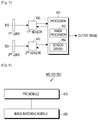
- FIG. 6 is a block diagram illustrating an example image processing module according to various example embodiments.
- Each of the image processors 452 and 552 may acquire color image frames having a data rate or resolution converted by the image matching, as an output image.
- the FRC module 610 may perform FRC based on edged block scaling (EBS).
- EBS is a technique of processing images in a 3-layer hierarchical structure including an edged layer, a block layer, and a scaling layer.
- the edged layer may transmit, to the scaling layer, edge information including mode information and block size information, which may be acquired by compressing edges.
- the block layer may acquire additional information such as the brightness, texture, complexity, and so on of an image in a block unit, and output the additional information.
- the scaling layer may down-scale an input image based on the edge information including the mode information and the block size information, received from the edged layer, and output the resulting scaling information.
- the additional information may include the edge information acquired by the edged layer and the scaling information acquired by the scaling layer.
- EBS may enable extraction of a more accurate motion vector by detecting a global motion in a color image, extracting edges of a BW image, and performing FRC on the extracted edges.
- the image matching module 620 may acquire a motion vector from a color image frame having a relatively low resolution, and detect a global motion using the acquired motion vector. The image matching module 620 may also search for a simple real motion based on the global motion from a BW image frame.
- a computation volume may be reduced, and local dense matching may be performed on a part having the global motion. This may also reduce the computation volume.
- FIG. 7 is a flowchart illustrating an example control operation for an image processing procedure according to various example embodiments.
- an image processing apparatus may receive a captured image in operation 710.
- the captured image may refer, for example, to detection of light refracted by one or more lenses in a plurality of sensors.
- Each of the sensors may output the detected light as an electrical image signal (image frames).
- the image processing apparatus may extract a BW image frame using one of the plurality of sensors.
- the image processing apparatus may perform FRC using the extracted BW image frame in operation 714.
- a duplicated image frame (or an extended image frame) may be acquired from a BW image frame (a source BW image frame) having a relatively high data rate. That is, FRC may be performed using the BW image frame (source BW image frame) to thereby acquire the duplicated image frame (extended image frame).
- the FRC may be performed by a duplicated frame-based scheme or a motion compensation-based scheme.
- FRC may be performed based on EBS.
- EBS may enable extraction of a more accurate motion vector by detecting a global motion in a color image, extracting edges of a BW image, and performing FRC on the extracted edges.
- the image processing apparatus may extract color image frames having a relatively low resolution using one of the plurality of sensors in operation 716, and detect a motion vector using the extracted color image frames in operation 718.
- the image processing apparatus may perform image matching using the color image frames having the relatively low data rate, and then perform color diffusion on the BW image frame.
- a motion vector may be acquired from the color image frames having the low resolution.
- a global motion vector may be detected using the acquired motion vector.
- a simple real motion may be detected based on the global motion vector from the BW image frame having the high resolution.
- the image processing apparatus may color the FRC-processed BW image frame or the acquired BW image frame based on the detected motion vector in operation 720. As a consequence, the image processing apparatus may acquire color image frames with a changed resolution, as an output image.
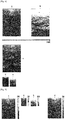
- FIG. 8 is a diagram illustrating example images captured by two image sensors in an electronic device according to various example embodiments.
- two upper color images a and b are captured under different exposure conditions by a color image sensor, and one lower BW image c is captured by a BW image sensor.
- the reason for being able to capture the two color images a and b in correspondence with the single BW image c during the same time period is that the BW image and the color images differ in resolution. That is, the BW image may have a high resolution relative to the color images. In this case, the read time of the high-resolution BW image may be long relative to the read time of the low-resolution color image. Therefore, it is possible to capture the two color images a and b during the read time of the single BW image c.
- the two color images have a low resolution, they are shown as small images d and e under the single high-resolution BW image c.
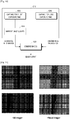
- FIG. 9 is a diagram illustrating example image synthesis in an electronic device according to various example embodiments.
- luminance information may be acquired from the single BW image c
- chrominance information may be acquired from the two color images a and b
- the single composite image d may be acquired using the acquired luminance information and chrominance information.
- an image synthesis procedure for a low-illuminance situation may include information extraction in operation 1010 and image combining in operation 1020.
- the color image sensor may be deactivated in an ultra-low-illumination environment.
- a plurality of BW images may be captured under different conditions only by means of the BW image sensor, and a BW image with improved quality may be generated based on the BW images.
- FIG. 11 is a diagram illustrating an example image processing result according to various example embodiments.
- two left images are an example of a color image and a BW image acquired respectively by a color image sensor and a BW image sensor in a low-illumination environment
- two right images are an example of images resulting from processing the color image and the BW image according to an example embodiment. It may be noted that the images prior to the image processing become bright and clear after the image processing.
- the electronic device may measure an illuminance at any time point, and acquire the measured illuminance value in operation 1210.
- the electronic device may measure an ambient illuminance at a time point when an object is to be captured by use of at least one of a BW image sensor and a color image sensor.
- the electronic device determines whether the acquired illuminance value is lower than a first threshold in operation 1212.
- the first threshold may be predetermined based on an illuminance value with which to determine a situation that provides an illuminance with no influence on capturing.
- the first threshold may be preset to a reference illuminance value with which to determine a low-illuminance situation. In this case, the first threshold may be set to 50lux.
- the electronic device additionally determines whether the acquired illuminance value is smaller than a predetermined second threshold in operation 1214.
- the second threshold may be preset to a reference illuminance value with which to determine an ultra-low-illuminance situation. In this case, the second threshold may be set to 10lux.
- the electronic device may acquire a BW image of the object based on the first setting value by means of the BW image sensor, and at least one color image of the object based on the second setting value by means of the color image sensor in operation 1220.
- the electronic device may include a plurality of setting values in information that defines the second setting value, and acquire a color image based on each of the setting values by means of the color image sensor.
- the electronic device may acquire a plurality of color images having low resolutions according to various settings by means of the color image sensor during a time period over which the electronic device acquires one BW image having a high resolution by means of the BW image sensor.
- the electronic device performs image synthesis on the acquired BW image and the at least one color image, thereby generating a color image having a high resolution in operation 1222.
- the electronic device may acquire color information or part of the color information from the color images having the low resolution, and generate a color image having a high resolution by performing image matching on the BW image having the high resolution using the acquired color information or the part of the color information.
- the electronic device may acquire low-resolution color images based on various setting values that determine exposure during a read time over which one BW image is acquired. Therefore, the electronic device may acquire a desired color image just by processing low-resolution multiple frames (color image frames), not high-resolution multiple frames, and processing one high-resolution frame.
- the electronic device may store as video data in a memory, one of the BW or color image captured in the normal mode, the high-resolution color image generated in the low-illuminance environment, and the BW image acquired in the ultra-low-illuminance environment in operation 1228.
- the electronic device may display, on a screen, one of the BW or color image captured in the normal mode, the high-resolution color image generated in the low-illuminance environment, and the BW image acquired in the ultra-low-illuminance environment.
- the apparatus and method for processing an image may overcome problems related to the amount of received light and a computation volume, which obstruct acquisition of an image having a high frame rate.
Landscapes
- Engineering & Computer Science (AREA)
- Multimedia (AREA)
- Signal Processing (AREA)
- Human Computer Interaction (AREA)
- Computing Systems (AREA)
- Theoretical Computer Science (AREA)
- Image Processing (AREA)
- Telephone Function (AREA)
- Studio Devices (AREA)
Claims (12)
- Elektronische Vorrichtung (101; 201), umfassend:einen Speicher (130; 230);einen ersten Schwarz-Weiß-Bildsensor (430; 530);einen zweiten Bildsensor (440; 540); undeinen Prozessor (120; 210; 450; 550),wobei der Prozessor konfiguriert ist, um:unterschiedliche Werte als einen ersten Einstellwert für den ersten Schwarz-Weiß-Bildsensor einzustellen und eine Vielzahl unterschiedlicher zweiter Einstellwerte für den zweiten Bildsensor einzustellen, wenn ein Beleuchtungsstärkenwert, der eine Beleuchtungsstärke zu einem beliebigen Zeitpunkt anzeigt, einen vorgegebenen Beleuchtungsstärkenwert nicht erfüllt, wobei der erste Einstellwert und die Vielzahl unterschiedlicher zweiter Einstellwerte auf Werte eingestellt sind, die das Erwerben von mindestens zwei Farbbildern mithilfe des zweiten Bildsensors während des Erwerbens eines Schwarz-Weiß-Bilds mithilfe des ersten Schwarz-Weiß-Bildsensors ermöglicht;das eine Schwarz-Weiß-Bild eines Objekts basierend auf dem ersten Einstellwert mithilfe des ersten Schwarz-Weiß-Bildsensors zu erwerben;die mindestens zwei Farbbilder des Objekts basierend auf der Vielzahl unterschiedlicher zweiter Einstellwerte mithilfe des zweiten Bildsensors zu erwerben;ein Farbbild durch Synthetisieren des Schwarz-Weiß-Bilds mit einer Farbe, die basierend auf mindestens einem Teil von Farbinformationen der mindestens zwei Farbbilder bestimmt wird, zu generieren; unddas generierte Farbbild als Videodaten im Speicher zu speichern, wobei das eine Schwarz-Weiß-Bild eine Auflösung aufweist, die größer als eine Auflösung der mindestens zwei Farbbilder ist.
- Elektronische Vorrichtung (101; 201) nach Anspruch 1, wobei der Prozessor (120; 210; 450; 550) konfiguriert ist, um den beliebigen Zeitpunkt als eine Zeit zum Erfassen des Objekts mithilfe mindestens eines des ersten Schwarz-Weiß-Bildsensors (430; 530) und des zweiten Bildsensors (440; 540) einzustellen.
- Elektronische Vorrichtung (101; 201) nach Anspruch 1, wobei der Prozessor (120; 210; 450; 550) konfiguriert ist, um den ersten Einstellwert als einen Wert einzustellen, der die Belichtungszeit des ersten Schwarz-Weiß-Bildsensors (430; 530) bestimmt, und die Vielzahl unterschiedlicher zweiter Einstellwerte als Werte einzustellen, die die Belichtungszeit des zweiten Bildsensors (440; 540) bestimmen, und
wobei der erste Einstellwert und die Vielzahl unterschiedlicher zweiter Einstellwerte als Werte eingestellt sind, die mindestens eines der Folgenden bestimmen: eine Verschlusszeit, einen ISO-(International Standard Organization)-Wert und einen Automatischen Weißabgleichs-(AWA)/Automatischen Belichtungs-(AB)-Wert. - Elektronische Vorrichtung (101; 201) nach Anspruch 1, wobei der Prozessor (120; 210; 450; 550) konfiguriert ist, um den ersten Schwarz-Weiß-Bildsensor (430; 530) zu aktivieren, während der zweite Bildsensor (440; 540) deaktiviert wird, um nur mindestens ein Schwarz-Weiß-Bild mithilfe des ersten Schwarz-Weiß-Bildsensors zu erwerben, wenn der die Beleuchtungsstärke zum beliebigen Zeitpunkt anzeigende Beleuchtungsstärkenwert einen zweiten Schwellwert nicht erfüllt, der niedriger als ein dem vorgegebenen Beleuchtungsstärkenwert entsprechender erster Schwellwert ist, und
wobei der Prozessor konfiguriert ist, um den ersten Schwellwert auf 50 Lux und den zweiten Schwellwert auf 10 Lux einzustellen. - Elektronische Vorrichtung (101; 201) nach Anspruch 1, wobei der Prozessor (120; 210; 450; 550) konfiguriert ist, um das Farbbild aus dem einen Schwarz-Weiß-Bild mithilfe von mindestens Teilinformationen eines ersten Farbbilds, bei dem es sich um eines der mindestens zwei Farbbilder handelt, und von mindestens Teilinformationen eines zweiten Farbbilds unter den mindestens zwei Farbbildern, das sich vom ersten Farbbild unterscheidet, zu generieren, und
wobei die Vielzahl unterschiedlicher zweiter Einstellwerte einen zweiten Einstellwert zum Erwerben des ersten Farbbilds und einen zweiten Einstellwert zum Erwerben des zweiten Farbbilds umfasst. - Verfahren zum Betreiben einer elektronischen Vorrichtung (101; 201), enthaltend einen ersten Schwarz-Weiß-Bildsensor (430; 530) und einen zweiten Bildsensor (440; 540), wobei das Verfahren umfasst:ein Einstellen unterschiedlicher Werte als einen ersten Einstellwert für den ersten Schwarz-Weiß-Bildsensor und einer Vielzahl unterschiedlicher zweiter Einstellwerte für den zweiten Bildsensor, wenn einBeleuchtungsstärkenwert, der eine Beleuchtungsstärke zu einem beliebigen Zeitpunkt anzeigt, einen vorgegebenen Beleuchtungsstärkenwert nicht erfüllt, wobei der erste Einstellwert und die Vielzahl unterschiedlicher zweiter Einstellwerte auf Werte eingestellt sind, die das Erwerben von mindestens zwei Farbbildern mithilfe des zweiten Bildsensors während des Erwerbens eines Schwarz-Weiß-Bilds mithilfe des ersten Schwarz-Weiß-Bildsensors ermöglicht;ein Erwerben des einen Schwarz-Weiß-Bilds eines Objekts basierend auf dem ersten Einstellwert mithilfe des ersten Schwarz-Weiß-Bildsensors;ein Erwerben der mindestens zwei Farbbilder des Objekts basierend auf der Vielzahl unterschiedlicher zweiter Einstellwerte mithilfe des zweiten Bildsensors;ein Generieren eines Farbbilds durch Synthetisieren des einen Schwarz-Weiß-Bilds mit einer Farbe, die basierend auf mindestens einem Teil von Farbinformationen der mindestens zwei Farbbilder bestimmt wird; undein Speichern des generierten Farbbilds als Videodaten in einem Speicher,wobei das eine Schwarz-Weiß-Bild eine Auflösung aufweist, die größer als eine Auflösung der mindestens zwei Farbbilder ist.
- Verfahren nach Anspruch 6, wobei der beliebige Zeitpunkt eine Zeit ist, um das Objekt mithilfe mindestens eines des ersten Schwarz-Weiß-Bildsensors (430; 530) und des zweiten Bildsensors (440; 540) zu erfassen.
- Verfahren nach Anspruch 6, wobei der erste Einstellwert ein Wert ist, der die Belichtungszeit des ersten Schwarz-Weiß-Bildsensors (430; 530) bestimmt, und die Vielzahl unterschiedlicher zweiter Einstellwerte Werte sind, die die Belichtungszeit des zweiten Bildsensors (440; 540) bestimmen, und
wobei der erste Einstellwert und die Vielzahl unterschiedlicher zweiter Einstellwerte Werte sind, die mindestens eines der Folgenden bestimmen: eine Verschlusszeit, einen ISO-(International Standard Organization)-Wert und einen Automatischen Weißabgleichs-(AWA)-/Automatischen Belichtungs-(AB)-Wert. - Verfahren nach Anspruch 6, ferner umfassend ein Aktivieren des ersten Schwarz-Weiß-Bildsensors (430; 530), während der zweite Bildsensor (440; 540) deaktiviert wird, um nur mindestens ein Schwarz-Weiß-Bild mithilfe des ersten Schwarz-Weiß-Bildsensors zu erwerben, wenn der die Beleuchtungsstärke zum beliebigen Zeitpunkt anzeigende Beleuchtungsstärkenwert einen zweiten Schwellwert nicht erfüllt, der niedriger als ein dem vorgegebenen Beleuchtungsstärkenwert entsprechender erster Schwellwert ist, und
wobei der erste Schwellwert 50 Lux und der zweite Schwellwert 10 Lux ist. - Verfahren nach Anspruch 6, wobei das Generieren eines Farbbilds ein Generieren des Farbbilds aus dem einen Schwarz-Weiß-Bild mithilfe von mindestens Teilinformationen eines ersten Farbbilds, bei dem es sich um eines der mindestens zwei Farbbilder handelt, und von mindestens Teilinformationen eines zweiten Farbbilds unter den mindestens zwei Farbbildern, das sich vom ersten Farbbild unterscheidet, umfasst.
- Verfahren nach Anspruch 9, wobei die Vielzahl unterschiedlicher zweiter Einstellwerte einen zweiten Einstellwert zum Erwerben des ersten Farbbilds und einen zweiten Einstellwert zum Erwerben des zweiten Farbbilds umfasst.
- Computerlesbares Aufzeichnungsmedium, das ein Programm zum Steuern einer elektronischen Vorrichtung (101; 201), enthaltend einen ersten Schwarz-Weiß-Bildsensor (430; 530) und einen zweiten Bildsensor (440; 540), speichert, wobei das Programm, wenn es durch einen Prozessor (120; 210; 450; 550) ausgeführt wird, die elektronische Vorrichtung veranlasst, mindestens einen Vorgang aus den folgenden auszuführen:ein Einstellen unterschiedlicher Werte als einen ersten Einstellwert für den ersten Schwarz-Weiß-Bildsensor und einer Vielzahl unterschiedlicher zweiter Einstellwerte für den zweiten Bildsensor, wenn einBeleuchtungsstärkenwert, der eine Beleuchtungsstärke zu einem beliebigen Zeitpunkt anzeigt, einen vorgegebenen Beleuchtungsstärkenwert nicht erfüllt, wobei der erste Einstellwert und die Vielzahl unterschiedlicher zweiter Einstellwerte auf Werte eingestellt sind, die das Erwerben von mindestens zwei Farbbildern mithilfe des zweiten Bildsensors während des Erwerbens eines Schwarz-Weiß-Bilds mithilfe des ersten Schwarz-Weiß-Bildsensors ermöglicht;ein Erwerben des einen Schwarz-Weiß-Bilds eines Objekts basierend auf dem ersten Einstellwert mithilfe des ersten Schwarz-Weiß-Bildsensors;ein Erwerben mindestens zweier Farbbilder des Objekts basierend auf der Vielzahl unterschiedlicher zweiter Einstellwerte mithilfe des zweiten Bildsensors;ein Generieren eines Farbbilds durch Synthetisieren des einen Schwarz-Weiß-Bilds mit einer Farbe, die basierend auf mindestens einem Teil von Farbinformationen der mindestens zwei Farbbilder bestimmt wird; undein Speichern des generierten Farbbilds als Videodaten in einem Speicher, wobei das eine Schwarz-Weiß-Bild eine Auflösung aufweist, die größer als eine Auflösung der mindestens zwei Farbbilder ist.
Applications Claiming Priority (2)
| Application Number | Priority Date | Filing Date | Title |
|---|---|---|---|
| KR1020160080143A KR102603426B1 (ko) | 2016-06-27 | 2016-06-27 | 이미지 처리장치 및 방법 |
| PCT/KR2017/006777 WO2018004238A1 (en) | 2016-06-27 | 2017-06-27 | Apparatus and method for processing image |
Publications (3)
| Publication Number | Publication Date |
|---|---|
| EP3440829A1 EP3440829A1 (de) | 2019-02-13 |
| EP3440829A4 EP3440829A4 (de) | 2019-03-13 |
| EP3440829B1 true EP3440829B1 (de) | 2020-08-05 |
Family
ID=60678104
Family Applications (1)
| Application Number | Title | Priority Date | Filing Date |
|---|---|---|---|
| EP17820514.2A Active EP3440829B1 (de) | 2016-06-27 | 2017-06-27 | Vorrichtung und verfahren zur bildverarbeitung |
Country Status (4)
| Country | Link |
|---|---|
| US (1) | US10469742B2 (de) |
| EP (1) | EP3440829B1 (de) |
| KR (1) | KR102603426B1 (de) |
| WO (1) | WO2018004238A1 (de) |
Families Citing this family (16)
| Publication number | Priority date | Publication date | Assignee | Title |
|---|---|---|---|---|
| US10827107B2 (en) * | 2016-10-28 | 2020-11-03 | Huawei Technologies Co., Ltd. | Photographing method for terminal and terminal |
| JP6803982B2 (ja) * | 2016-11-03 | 2020-12-23 | 華為技術有限公司Huawei Technologies Co.,Ltd. | 光学撮像方法および装置 |
| KR20180119281A (ko) * | 2017-04-25 | 2018-11-02 | 엘지전자 주식회사 | 이동 단말기 및 그 제어 방법 |
| CN109348124B (zh) * | 2018-10-23 | 2021-06-11 | Oppo广东移动通信有限公司 | 图像传输方法、装置、电子设备和存储介质 |
| US11793399B2 (en) | 2019-06-20 | 2023-10-24 | Cilag Gmbh International | Super resolution and color motion artifact correction in a pulsed hyperspectral imaging system |
| US11288772B2 (en) | 2019-06-20 | 2022-03-29 | Cilag Gmbh International | Super resolution and color motion artifact correction in a pulsed fluorescence imaging system |
| US11398011B2 (en) | 2019-06-20 | 2022-07-26 | Cilag Gmbh International | Super resolution and color motion artifact correction in a pulsed laser mapping imaging system |
| US11276148B2 (en) | 2019-06-20 | 2022-03-15 | Cilag Gmbh International | Super resolution and color motion artifact correction in a pulsed fluorescence imaging system |
| US11280737B2 (en) | 2019-06-20 | 2022-03-22 | Cilag Gmbh International | Super resolution and color motion artifact correction in a pulsed fluorescence imaging system |
| KR102680342B1 (ko) | 2019-09-23 | 2024-07-03 | 삼성전자주식회사 | 복수의 이미지 센서들에 의해 획득되는 이미지 데이터에 기초하여 비디오 hdr 처리를 수행하기 위한 전자 장치 |
| CN111064899B (zh) * | 2019-12-06 | 2021-06-08 | 成都华为技术有限公司 | 一种曝光参数的调节方法及装置 |
| CN113518172B (zh) * | 2020-03-26 | 2023-06-20 | 华为技术有限公司 | 图像处理方法和装置 |
| CN112734866B (zh) * | 2020-12-24 | 2024-06-04 | 努比亚技术有限公司 | 一种图像处理方法、终端和存储介质 |
| CN115802183B (zh) * | 2021-09-10 | 2023-10-20 | 荣耀终端有限公司 | 图像处理方法及其相关设备 |
| CN117676120B (zh) * | 2023-12-14 | 2025-03-28 | 深圳市眼科医院(深圳市眼病防治研究所) | 一种用于扩大视野缺损患者视野范围的智能助视眼镜 |
| WO2025143382A1 (en) * | 2023-12-29 | 2025-07-03 | Samsung Electronics Co., Ltd. | Method of identifying and colorizing partially colorized image and electronic device |
Family Cites Families (21)
| Publication number | Priority date | Publication date | Assignee | Title |
|---|---|---|---|---|
| US7057647B1 (en) * | 2000-06-14 | 2006-06-06 | E-Watch, Inc. | Dual-mode camera system for day/night or variable zoom operation |
| US6788338B1 (en) * | 2000-11-20 | 2004-09-07 | Petko Dimitrov Dinev | High resolution video camera apparatus having two image sensors and signal processing |
| US7453510B2 (en) * | 2003-12-11 | 2008-11-18 | Nokia Corporation | Imaging device |
| US8139130B2 (en) * | 2005-07-28 | 2012-03-20 | Omnivision Technologies, Inc. | Image sensor with improved light sensitivity |
| KR100843087B1 (ko) | 2006-09-06 | 2008-07-02 | 삼성전자주식회사 | 영상 생성 장치 및 방법 |
| US8242426B2 (en) | 2006-12-12 | 2012-08-14 | Dolby Laboratories Licensing Corporation | Electronic camera having multiple sensors for capturing high dynamic range images and related methods |
| US7978239B2 (en) * | 2007-03-01 | 2011-07-12 | Eastman Kodak Company | Digital camera using multiple image sensors to provide improved temporal sampling |
| DE102007026337B4 (de) * | 2007-06-06 | 2016-11-03 | Arnold & Richter Cine Technik Gmbh & Co. Betriebs Kg | Digitale Kamera |
| US20090086074A1 (en) | 2007-09-27 | 2009-04-02 | Omnivision Technologies, Inc. | Dual mode camera solution apparatus, system, and method |
| US8319822B2 (en) * | 2007-12-27 | 2012-11-27 | Google Inc. | High-resolution, variable depth of field image device |
| US8866920B2 (en) * | 2008-05-20 | 2014-10-21 | Pelican Imaging Corporation | Capturing and processing of images using monolithic camera array with heterogeneous imagers |
| KR101633893B1 (ko) * | 2010-01-15 | 2016-06-28 | 삼성전자주식회사 | 다중노출 영상을 합성하는 영상합성장치 및 방법 |
| US8699821B2 (en) | 2010-07-05 | 2014-04-15 | Apple Inc. | Aligning images |
| US9270875B2 (en) * | 2011-07-20 | 2016-02-23 | Broadcom Corporation | Dual image capture processing |
| JP2013183353A (ja) * | 2012-03-02 | 2013-09-12 | Toshiba Corp | 画像処理装置 |
| JP6108680B2 (ja) | 2012-04-19 | 2017-04-05 | キヤノン株式会社 | 撮像装置及びその制御方法、プログラム、並びに記憶媒体 |
| JP5877277B2 (ja) * | 2013-04-26 | 2016-03-02 | 富士フイルム株式会社 | 撮像装置及び画像表示方法 |
| US9473708B1 (en) * | 2013-08-07 | 2016-10-18 | Google Inc. | Devices and methods for an imaging system with a dual camera architecture |
| KR101477505B1 (ko) | 2013-12-23 | 2015-01-07 | 이동현 | 하이 다이나믹 레인지 영상 형성 방법 |
| JP2015177258A (ja) | 2014-03-13 | 2015-10-05 | コニカミノルタ株式会社 | 画像入力装置 |
| US9319585B1 (en) * | 2014-12-18 | 2016-04-19 | Omnivision Technologies, Inc. | High resolution array camera |
-
2016
- 2016-06-27 KR KR1020160080143A patent/KR102603426B1/ko active Active
-
2017
- 2017-06-27 WO PCT/KR2017/006777 patent/WO2018004238A1/en not_active Ceased
- 2017-06-27 US US15/634,078 patent/US10469742B2/en not_active Expired - Fee Related
- 2017-06-27 EP EP17820514.2A patent/EP3440829B1/de active Active
Non-Patent Citations (1)
| Title |
|---|
| None * |
Also Published As
| Publication number | Publication date |
|---|---|
| WO2018004238A1 (en) | 2018-01-04 |
| KR102603426B1 (ko) | 2023-11-20 |
| KR20180001254A (ko) | 2018-01-04 |
| EP3440829A4 (de) | 2019-03-13 |
| EP3440829A1 (de) | 2019-02-13 |
| US10469742B2 (en) | 2019-11-05 |
| US20170374281A1 (en) | 2017-12-28 |
Similar Documents
| Publication | Publication Date | Title |
|---|---|---|
| EP3440829B1 (de) | Vorrichtung und verfahren zur bildverarbeitung | |
| US10871798B2 (en) | Electronic device and image capture method thereof | |
| US10484589B2 (en) | Electronic device and image capturing method thereof | |
| CN110462572B (zh) | 电子装置及其控制方法 | |
| KR102565847B1 (ko) | 전자 장치 및 전자 장치에서의 디스플레이 제어 방법 | |
| KR102547104B1 (ko) | 전자 장치 및 복수의 영상을 처리하는 방법 | |
| US9792878B2 (en) | Method for content adaptation based on ambient environment of electronic device and electronic device thereof | |
| US20180013955A1 (en) | Electronic device including dual camera and method for controlling dual camera | |
| KR102469426B1 (ko) | 이미지 처리 장치 및 이의 동작 방법 | |
| EP3352449B1 (de) | Elektronische vorrichtung und fotografieverfahren | |
| US10467471B2 (en) | Electronic device and method for authenticating biometric data through plural cameras | |
| KR102489279B1 (ko) | 이미지 처리장치 및 방법 | |
| US10412339B2 (en) | Electronic device and image encoding method of electronic device | |
| US10033921B2 (en) | Method for setting focus and electronic device thereof | |
| US10200705B2 (en) | Electronic device and operating method thereof | |
| US9942467B2 (en) | Electronic device and method for adjusting camera exposure | |
| US11210828B2 (en) | Method and electronic device for outputting guide | |
| KR102317624B1 (ko) | 전자 장치 및 그의 이미지 처리 방법 | |
| KR102519803B1 (ko) | 촬영 장치 및 그 제어 방법 |
Legal Events
| Date | Code | Title | Description |
|---|---|---|---|
| STAA | Information on the status of an ep patent application or granted ep patent |
Free format text: STATUS: THE INTERNATIONAL PUBLICATION HAS BEEN MADE |
|
| PUAI | Public reference made under article 153(3) epc to a published international application that has entered the european phase |
Free format text: ORIGINAL CODE: 0009012 |
|
| STAA | Information on the status of an ep patent application or granted ep patent |
Free format text: STATUS: REQUEST FOR EXAMINATION WAS MADE |
|
| 17P | Request for examination filed |
Effective date: 20181106 |
|
| AK | Designated contracting states |
Kind code of ref document: A1 Designated state(s): AL AT BE BG CH CY CZ DE DK EE ES FI FR GB GR HR HU IE IS IT LI LT LU LV MC MK MT NL NO PL PT RO RS SE SI SK SM TR |
|
| AX | Request for extension of the european patent |
Extension state: BA ME |
|
| A4 | Supplementary search report drawn up and despatched |
Effective date: 20190213 |
|
| RIC1 | Information provided on ipc code assigned before grant |
Ipc: H04N 5/235 20060101ALI20190207BHEP Ipc: H04N 5/265 20060101ALI20190207BHEP Ipc: H04N 5/225 20060101ALI20190207BHEP Ipc: H04N 5/355 20110101ALI20190207BHEP Ipc: H04N 5/232 20060101AFI20190207BHEP |
|
| DAV | Request for validation of the european patent (deleted) | ||
| DAX | Request for extension of the european patent (deleted) | ||
| GRAP | Despatch of communication of intention to grant a patent |
Free format text: ORIGINAL CODE: EPIDOSNIGR1 |
|
| STAA | Information on the status of an ep patent application or granted ep patent |
Free format text: STATUS: GRANT OF PATENT IS INTENDED |
|
| RIC1 | Information provided on ipc code assigned before grant |
Ipc: H04N 5/225 20060101ALI20200102BHEP Ipc: H04N 5/235 20060101ALI20200102BHEP Ipc: H04N 5/265 20060101ALI20200102BHEP Ipc: H04N 5/355 20110101ALI20200102BHEP Ipc: H04N 5/232 20060101AFI20200102BHEP Ipc: H04N 9/77 20060101ALN20200102BHEP Ipc: H04N 7/01 20060101ALN20200102BHEP |
|
| INTG | Intention to grant announced |
Effective date: 20200204 |
|
| GRAS | Grant fee paid |
Free format text: ORIGINAL CODE: EPIDOSNIGR3 |
|
| GRAA | (expected) grant |
Free format text: ORIGINAL CODE: 0009210 |
|
| STAA | Information on the status of an ep patent application or granted ep patent |
Free format text: STATUS: THE PATENT HAS BEEN GRANTED |
|
| AK | Designated contracting states |
Kind code of ref document: B1 Designated state(s): AL AT BE BG CH CY CZ DE DK EE ES FI FR GB GR HR HU IE IS IT LI LT LU LV MC MK MT NL NO PL PT RO RS SE SI SK SM TR |
|
| REG | Reference to a national code |
Ref country code: GB Ref legal event code: FG4D |
|
| REG | Reference to a national code |
Ref country code: CH Ref legal event code: EP |
|
| REG | Reference to a national code |
Ref country code: AT Ref legal event code: REF Ref document number: 1300372 Country of ref document: AT Kind code of ref document: T Effective date: 20200815 |
|
| REG | Reference to a national code |
Ref country code: DE Ref legal event code: R096 Ref document number: 602017021333 Country of ref document: DE |
|
| REG | Reference to a national code |
Ref country code: IE Ref legal event code: FG4D |
|
| REG | Reference to a national code |
Ref country code: LT Ref legal event code: MG4D |
|
| REG | Reference to a national code |
Ref country code: NL Ref legal event code: MP Effective date: 20200805 |
|
| REG | Reference to a national code |
Ref country code: AT Ref legal event code: MK05 Ref document number: 1300372 Country of ref document: AT Kind code of ref document: T Effective date: 20200805 |
|
| PG25 | Lapsed in a contracting state [announced via postgrant information from national office to epo] |
Ref country code: LT Free format text: LAPSE BECAUSE OF FAILURE TO SUBMIT A TRANSLATION OF THE DESCRIPTION OR TO PAY THE FEE WITHIN THE PRESCRIBED TIME-LIMIT Effective date: 20200805 Ref country code: HR Free format text: LAPSE BECAUSE OF FAILURE TO SUBMIT A TRANSLATION OF THE DESCRIPTION OR TO PAY THE FEE WITHIN THE PRESCRIBED TIME-LIMIT Effective date: 20200805 Ref country code: GR Free format text: LAPSE BECAUSE OF FAILURE TO SUBMIT A TRANSLATION OF THE DESCRIPTION OR TO PAY THE FEE WITHIN THE PRESCRIBED TIME-LIMIT Effective date: 20201106 Ref country code: NO Free format text: LAPSE BECAUSE OF FAILURE TO SUBMIT A TRANSLATION OF THE DESCRIPTION OR TO PAY THE FEE WITHIN THE PRESCRIBED TIME-LIMIT Effective date: 20201105 Ref country code: BG Free format text: LAPSE BECAUSE OF FAILURE TO SUBMIT A TRANSLATION OF THE DESCRIPTION OR TO PAY THE FEE WITHIN THE PRESCRIBED TIME-LIMIT Effective date: 20201105 Ref country code: AT Free format text: LAPSE BECAUSE OF FAILURE TO SUBMIT A TRANSLATION OF THE DESCRIPTION OR TO PAY THE FEE WITHIN THE PRESCRIBED TIME-LIMIT Effective date: 20200805 Ref country code: ES Free format text: LAPSE BECAUSE OF FAILURE TO SUBMIT A TRANSLATION OF THE DESCRIPTION OR TO PAY THE FEE WITHIN THE PRESCRIBED TIME-LIMIT Effective date: 20200805 Ref country code: FI Free format text: LAPSE BECAUSE OF FAILURE TO SUBMIT A TRANSLATION OF THE DESCRIPTION OR TO PAY THE FEE WITHIN THE PRESCRIBED TIME-LIMIT Effective date: 20200805 Ref country code: PT Free format text: LAPSE BECAUSE OF FAILURE TO SUBMIT A TRANSLATION OF THE DESCRIPTION OR TO PAY THE FEE WITHIN THE PRESCRIBED TIME-LIMIT Effective date: 20201207 Ref country code: SE Free format text: LAPSE BECAUSE OF FAILURE TO SUBMIT A TRANSLATION OF THE DESCRIPTION OR TO PAY THE FEE WITHIN THE PRESCRIBED TIME-LIMIT Effective date: 20200805 |
|
| PG25 | Lapsed in a contracting state [announced via postgrant information from national office to epo] |
Ref country code: RS Free format text: LAPSE BECAUSE OF FAILURE TO SUBMIT A TRANSLATION OF THE DESCRIPTION OR TO PAY THE FEE WITHIN THE PRESCRIBED TIME-LIMIT Effective date: 20200805 Ref country code: PL Free format text: LAPSE BECAUSE OF FAILURE TO SUBMIT A TRANSLATION OF THE DESCRIPTION OR TO PAY THE FEE WITHIN THE PRESCRIBED TIME-LIMIT Effective date: 20200805 Ref country code: LV Free format text: LAPSE BECAUSE OF FAILURE TO SUBMIT A TRANSLATION OF THE DESCRIPTION OR TO PAY THE FEE WITHIN THE PRESCRIBED TIME-LIMIT Effective date: 20200805 Ref country code: NL Free format text: LAPSE BECAUSE OF FAILURE TO SUBMIT A TRANSLATION OF THE DESCRIPTION OR TO PAY THE FEE WITHIN THE PRESCRIBED TIME-LIMIT Effective date: 20200805 Ref country code: IS Free format text: LAPSE BECAUSE OF FAILURE TO SUBMIT A TRANSLATION OF THE DESCRIPTION OR TO PAY THE FEE WITHIN THE PRESCRIBED TIME-LIMIT Effective date: 20201205 |
|
| PG25 | Lapsed in a contracting state [announced via postgrant information from national office to epo] |
Ref country code: DK Free format text: LAPSE BECAUSE OF FAILURE TO SUBMIT A TRANSLATION OF THE DESCRIPTION OR TO PAY THE FEE WITHIN THE PRESCRIBED TIME-LIMIT Effective date: 20200805 Ref country code: CZ Free format text: LAPSE BECAUSE OF FAILURE TO SUBMIT A TRANSLATION OF THE DESCRIPTION OR TO PAY THE FEE WITHIN THE PRESCRIBED TIME-LIMIT Effective date: 20200805 Ref country code: RO Free format text: LAPSE BECAUSE OF FAILURE TO SUBMIT A TRANSLATION OF THE DESCRIPTION OR TO PAY THE FEE WITHIN THE PRESCRIBED TIME-LIMIT Effective date: 20200805 Ref country code: EE Free format text: LAPSE BECAUSE OF FAILURE TO SUBMIT A TRANSLATION OF THE DESCRIPTION OR TO PAY THE FEE WITHIN THE PRESCRIBED TIME-LIMIT Effective date: 20200805 Ref country code: SM Free format text: LAPSE BECAUSE OF FAILURE TO SUBMIT A TRANSLATION OF THE DESCRIPTION OR TO PAY THE FEE WITHIN THE PRESCRIBED TIME-LIMIT Effective date: 20200805 |
|
| REG | Reference to a national code |
Ref country code: DE Ref legal event code: R097 Ref document number: 602017021333 Country of ref document: DE |
|
| PG25 | Lapsed in a contracting state [announced via postgrant information from national office to epo] |
Ref country code: AL Free format text: LAPSE BECAUSE OF FAILURE TO SUBMIT A TRANSLATION OF THE DESCRIPTION OR TO PAY THE FEE WITHIN THE PRESCRIBED TIME-LIMIT Effective date: 20200805 |
|
| PLBE | No opposition filed within time limit |
Free format text: ORIGINAL CODE: 0009261 |
|
| STAA | Information on the status of an ep patent application or granted ep patent |
Free format text: STATUS: NO OPPOSITION FILED WITHIN TIME LIMIT |
|
| PG25 | Lapsed in a contracting state [announced via postgrant information from national office to epo] |
Ref country code: SK Free format text: LAPSE BECAUSE OF FAILURE TO SUBMIT A TRANSLATION OF THE DESCRIPTION OR TO PAY THE FEE WITHIN THE PRESCRIBED TIME-LIMIT Effective date: 20200805 |
|
| 26N | No opposition filed |
Effective date: 20210507 |
|
| PG25 | Lapsed in a contracting state [announced via postgrant information from national office to epo] |
Ref country code: IT Free format text: LAPSE BECAUSE OF FAILURE TO SUBMIT A TRANSLATION OF THE DESCRIPTION OR TO PAY THE FEE WITHIN THE PRESCRIBED TIME-LIMIT Effective date: 20200805 |
|
| PG25 | Lapsed in a contracting state [announced via postgrant information from national office to epo] |
Ref country code: SI Free format text: LAPSE BECAUSE OF FAILURE TO SUBMIT A TRANSLATION OF THE DESCRIPTION OR TO PAY THE FEE WITHIN THE PRESCRIBED TIME-LIMIT Effective date: 20200805 |
|
| PG25 | Lapsed in a contracting state [announced via postgrant information from national office to epo] |
Ref country code: MC Free format text: LAPSE BECAUSE OF FAILURE TO SUBMIT A TRANSLATION OF THE DESCRIPTION OR TO PAY THE FEE WITHIN THE PRESCRIBED TIME-LIMIT Effective date: 20200805 |
|
| REG | Reference to a national code |
Ref country code: CH Ref legal event code: PL |
|
| REG | Reference to a national code |
Ref country code: BE Ref legal event code: MM Effective date: 20210630 |
|
| PG25 | Lapsed in a contracting state [announced via postgrant information from national office to epo] |
Ref country code: LU Free format text: LAPSE BECAUSE OF NON-PAYMENT OF DUE FEES Effective date: 20210627 |
|
| PG25 | Lapsed in a contracting state [announced via postgrant information from national office to epo] |
Ref country code: LI Free format text: LAPSE BECAUSE OF NON-PAYMENT OF DUE FEES Effective date: 20210630 Ref country code: IE Free format text: LAPSE BECAUSE OF NON-PAYMENT OF DUE FEES Effective date: 20210627 Ref country code: CH Free format text: LAPSE BECAUSE OF NON-PAYMENT OF DUE FEES Effective date: 20210630 |
|
| PG25 | Lapsed in a contracting state [announced via postgrant information from national office to epo] |
Ref country code: FR Free format text: LAPSE BECAUSE OF NON-PAYMENT OF DUE FEES Effective date: 20210630 |
|
| PG25 | Lapsed in a contracting state [announced via postgrant information from national office to epo] |
Ref country code: BE Free format text: LAPSE BECAUSE OF NON-PAYMENT OF DUE FEES Effective date: 20210630 |
|
| REG | Reference to a national code |
Ref country code: DE Ref legal event code: R079 Ref document number: 602017021333 Country of ref document: DE Free format text: PREVIOUS MAIN CLASS: H04N0005232000 Ipc: H04N0023600000 |
|
| PG25 | Lapsed in a contracting state [announced via postgrant information from national office to epo] |
Ref country code: CY Free format text: LAPSE BECAUSE OF FAILURE TO SUBMIT A TRANSLATION OF THE DESCRIPTION OR TO PAY THE FEE WITHIN THE PRESCRIBED TIME-LIMIT Effective date: 20200805 |
|
| PG25 | Lapsed in a contracting state [announced via postgrant information from national office to epo] |
Ref country code: HU Free format text: LAPSE BECAUSE OF FAILURE TO SUBMIT A TRANSLATION OF THE DESCRIPTION OR TO PAY THE FEE WITHIN THE PRESCRIBED TIME-LIMIT; INVALID AB INITIO Effective date: 20170627 |
|
| PG25 | Lapsed in a contracting state [announced via postgrant information from national office to epo] |
Ref country code: MK Free format text: LAPSE BECAUSE OF FAILURE TO SUBMIT A TRANSLATION OF THE DESCRIPTION OR TO PAY THE FEE WITHIN THE PRESCRIBED TIME-LIMIT Effective date: 20200805 |
|
| PG25 | Lapsed in a contracting state [announced via postgrant information from national office to epo] |
Ref country code: TR Free format text: LAPSE BECAUSE OF FAILURE TO SUBMIT A TRANSLATION OF THE DESCRIPTION OR TO PAY THE FEE WITHIN THE PRESCRIBED TIME-LIMIT Effective date: 20200805 |
|
| PG25 | Lapsed in a contracting state [announced via postgrant information from national office to epo] |
Ref country code: MT Free format text: LAPSE BECAUSE OF FAILURE TO SUBMIT A TRANSLATION OF THE DESCRIPTION OR TO PAY THE FEE WITHIN THE PRESCRIBED TIME-LIMIT Effective date: 20200805 |
|
| PGFP | Annual fee paid to national office [announced via postgrant information from national office to epo] |
Ref country code: DE Payment date: 20250520 Year of fee payment: 9 |
|
| PGFP | Annual fee paid to national office [announced via postgrant information from national office to epo] |
Ref country code: GB Payment date: 20250520 Year of fee payment: 9 |