EP3442152B1 - Procédés de communication sans fil multiple non orthogonaux et appareil associé - Google Patents
Procédés de communication sans fil multiple non orthogonaux et appareil associé Download PDFInfo
- Publication number
- EP3442152B1 EP3442152B1 EP18161107.0A EP18161107A EP3442152B1 EP 3442152 B1 EP3442152 B1 EP 3442152B1 EP 18161107 A EP18161107 A EP 18161107A EP 3442152 B1 EP3442152 B1 EP 3442152B1
- Authority
- EP
- European Patent Office
- Prior art keywords
- data
- repetition
- pattern
- frequency
- spreading
- Prior art date
- Legal status (The legal status is an assumption and is not a legal conclusion. Google has not performed a legal analysis and makes no representation as to the accuracy of the status listed.)
- Active
Links
Images





Classifications
-
- H—ELECTRICITY
- H04—ELECTRIC COMMUNICATION TECHNIQUE
- H04L—TRANSMISSION OF DIGITAL INFORMATION, e.g. TELEGRAPHIC COMMUNICATION
- H04L5/00—Arrangements affording multiple use of the transmission path
- H04L5/0001—Arrangements for dividing the transmission path
-
- H—ELECTRICITY
- H04—ELECTRIC COMMUNICATION TECHNIQUE
- H04L—TRANSMISSION OF DIGITAL INFORMATION, e.g. TELEGRAPHIC COMMUNICATION
- H04L27/00—Modulated-carrier systems
- H04L27/26—Systems using multi-frequency codes
Definitions
- the present disclosure is generally related to wireless communications and, more particularly, to non-orthogonal multiple access for wireless communications.
- Non-orthogonal multiple access may be a technology beneficial for supporting a massive number of user equipment (UE) requesting intermitting transmissions of small data packets in 5 th -Generation (5G) massive machine type communication (mMTC) and two-step random-access channel (RACH) applications.
- 5G 5 th -Generation
- mMTC massive machine type communication
- RACH random-access channel
- 3GPP 3 rd Generation Partnership Project
- NOMA resource spreading multiple access
- NOCA non-orthogonal coded access
- IDMA interleave division multiple access
- IGMA interleaved-grid multiple access
- the proposed NOMA schemes for uplink (UL) transmissions share the following common features: (1) using multiple access (MA) feature(s) at the transmitter side, and (2) allowing multi-user detector at the receiver side.
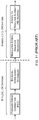
- the proposed NOMA schemes for UL transmissions on a high level follow a basic diagram as that depicted in FIG. 11 , including bit-level operations and symbol-level operations.
- RSMA single UEs are differentiated by scrambling sequences. While this technique allows for simple sequence generation, the performance is relatively poor.
- IDMA multiple UEs are differentiated by interleave patterns. While this technique allows for better utilization of diversity, a system implementing IDMA would likely be associated with higher complexity.
- IGMA multiple UEs are differentiated based on different bit-level interleavers, different grid mapping patterns, and different combinations of bit-level interleavers and grid mapping patterns. While this technique allows for more flexibility, a system implementing IGMA would likely be associated with higher complexity.
- MEDIATEK INC "New Uplink Non-Orthogonal Multiple Access Schemes for NR", 3GPP DRAFT; R1-167535 NEW UPLINK NON-ORTHOGONAL MULTIPLE ACCESS SCHEMES FOR NR, 3RD GENERATION PARTNERSHIP PROJECT (3GPP), MOBILE COMPETENCE CENTRE ; 650, ROUTE DES LUCIOLES ; F-06921 SOPHIA-ANTIPOLIS, Vol. RAN WG1, no. Gothenburg, Sweden; 20160822-20160826 21 August 2016 (2016-08-21 ).
- US 2016/353446 A1 describes methods and systems for signal transmission in millimeter wave (mmW) range.
- mmW millimeter wave
- An objective of the present disclosure is to propose various novel concepts and schemes pertaining to NOMA wireless communications. Specifically, the present disclosure provides schemes, or proposed solutions, that provide NOMA wireless communications without aforementioned issues.
- the present invention is defined by the attached independent claims. Other preferred embodiments may be found in the dependent claims. Further embodiments as described in the following not falling under the scope of the claims are provided for explanatory purpose only.
- Various novel concepts and schemes pertaining to NOMA wireless communications in accordance with the present disclosure includes a group orthogonal coded access (GOCA) scheme to reduce multi-user interference (MUI) and improve performance.
- GOCA group orthogonal coded access
- MUI multi-user interference
- RDMA repetition division multiple access
- RDMA repetition division multiple access
- LDS low-density spreading
- FIG. 1 illustrates an example GOCA scheme 100 in accordance with an implementation of the present disclosure.
- a UE may use a multi-stage sequence structure to spread data into shared time and frequency resources.
- a coding sequence may be orthogonal or non-orthogonal.
- multiple UEs may be divided into several groups with each group having more than one UE, and the UEs belonging to a same group may use different coding sequences for a first stage while using a same coding sequence for subsequent stages. That is, for UEs of the same group, different and orthogonal coding sequences may be used in a first stage.
- a respective nonorthogonal coding sequence may be used for all the UEs in that group.
- FIG. 1 a two-stage example is illustrated in FIG. 1 although the GOCA scheme 100 can be implemented in more than two stages.
- composite coding sequences may be generated in a two-stage sequence generation process. Each composite coding sequence may be multiplied with source symbols of a respective UE to generate complex symbols.
- first stage denoted as "stage 1" in FIG. 1
- second stage denoted as "stage 2" in FIG. 1
- a non-orthogonal coding sequence may be used for each group.
- three UEs are in each of two groups of UEs, namely Group 1 and Group 2.
- a resultant composite coding sequence for a first UE in Group 1 (denoted as "GOS(1)" in FIG.
- a resultant composite coding sequence for a second UE in Group 1 (denoted as "GOS(2)" in FIG. 1 ) may be generated as a result of multiplication of a second orthogonal coding sequence (denoted as "OS(2)” in FIG. 1 ) and the first non-orthogonal coding sequence (denoted as "NOS(1)” in FIG. 1 ).
- a resultant composite coding sequence for a third UE in Group 1 (denoted as "GOS(3)" in FIG.
- OS(3) orthogonal coding sequence
- NOS(1) first non-orthogonal coding sequence
- a resultant composite coding sequence for a first UE in Group 2 may be generated as a result of multiplication of the first orthogonal coding sequence (denoted as "OS(1)” in FIG. 1 ) and a second non-orthogonal coding sequence (denoted as "NOS(2)" in FIG. 1 ).
- a resultant composite coding sequence for a second UE in Group 2 (denoted as "GOS(5)” in FIG. 1 ) may be generated as a result of multiplication of the second orthogonal coding sequence (denoted as "OS(2)” in FIG. 1 ) and the second non-orthogonal coding sequence (denoted as "NOS(2)" in FIG.
- a resultant composite coding sequence for a third UE in Group 2 may be generated as a result of multiplication of the third orthogonal coding sequence (denoted as “OS(3)” in FIG. 1 ) and the second non-orthogonal coding sequence (denoted as "NOS(2)" in FIG. 1 ).
- the composite coding sequences are orthogonal to one another since each composite coding sequence is a product of a different orthogonal coding sequence. That is, in Group 1, the OS(1) used in generating GOS(1), the OS(2) used in generating GOS(2), and the OS(3) used in generating GOS(3) are different and orthogonal to one another. Likewise, in Group 2, the OS(1) used in generating GOS(4), the OS(2) used in generating GOS(5), and the OS(3) used in generating GOS(6) are different and orthogonal to one another. Accordingly, a first composite coding sequence for a first UE is orthogonal to a second composite coding sequence of a second UE in the same group.
- the composite coding sequence of a UE in one group is different from the composite coding sequence of another UE in another group.
- NOS(1) is used to generate GOS(1), GOS(2) and GOS(3) for Group 1
- NOS(2) is used to generate GOS(4), GOS(5) and GOS(6) for Group 2.
- multi-user interference may be reduced while performance may be improved.
- time resources and frequency resources which are shared resources, may be allocated with localized time repetition or localized frequency repetition.
- information bits for transmission may be processed through a modulation and coding scheme (MCS) into a number of source symbols.
- MCS modulation and coding scheme
- the process of MCS produces twelve source symbols (denoted as s(1), s(2), s(3), s(4), s(5), s(6), s(7), s(8), s(9), s(10), s(11) and s(12) in FIG. 1 ).
- encoded copies of the source symbols may be allocated to shared time and frequency resources repeatedly for a predefined number of times, which may equal to the spreading factor.
- the spreading factor is three
- encoded copies of the source symbols may be allocated to the shared time and frequency resources three times with either localized time repetition or localized frequency repetition.
- the three copies of the twelve complex symbols may be allocated to the shared resources repeatedly in a way such that each of x(1), x(2), x(3), x(4), x(5), x(6), x(7), x(8), x(9), x(10), x(11) and x(12) is allocated to a respective frequency three times consecutively.
- x(1), x(2), x(3), x(4), x(5), x(6), x(7), x(8), x(9), x(10), x(11) and x(12) is allocated to a respective frequency three times consecutively.
- the three copies of the twelve complex symbols may be allocated to the shared resources repeatedly in a way such that each of x(1), x(2), x(3), x(4), x(5), x(6), x(7), x(8), x(9), x(10), x(11) and x(12) is allocated to a respective time slot three times consecutively.
- x(1), x(2), x(3), x(4), x(5), x(6), x(7), x(8), x(9), x(10), x(11) and x(12) is allocated to a respective time slot three times consecutively.
- FIG. 2 illustrates example system structures 200 and 250 implementing the example GOCA scheme 100.
- Structure 200 may represent functional blocks of an orthogonal frequency-division multiplexing (OFDM)-based GOCA transmitter of a UE in accordance with the present disclosure.
- Structure 250 may represent functional blocks of a single-carrier GOCA transmitter of a UE in accordance with the present disclosure.
- OFDM orthogonal frequency-division multiplexing
- Structure 200 may include a forward error correction (FEC) encoder 212, a quadrature amplitude modulation (QAM) modulator 214, a GOCA encoder 216, a pilot insertion module 218, an Inverse Fast Fourier Transformation (IFFT) plus cyclic prefix (CP) insertion module 220, and a baseband-to-radio frequency (RF) front end 230.
- FEC forward error correction
- QAM quadrature amplitude modulation
- GOCA encoder 216 may be configured to perform the two-stage sequence generation and resource allocation described above with respect to FIG. 1 .
- Structure 250 may include a FEC encoder 262, a QAM modulator 264, a GOCA encoder 266, a pilot insertion module 268, and a baseband-to-RF front end 270.
- GOCA encoder 266 may be configured to perform the two-stage sequence generation and resource allocation described above with respect to FIG. 1 .
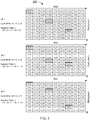
- FIG. 3 illustrates an example RDMA scheme 300 in accordance with an implementation of the present disclosure.
- a UE may spread data into shared time and frequency resources according to a repetition pattern. Additionally or alternatively, for each repeated part of UE data, the data may pass through the same or different permutation function(s) and then be combined. In spreading the data (e.g., encoded source symbols or data pieces) into the shared resources using the repetition pattern, data pieces of the data (e.g., complex symbols) may first be allocated to a first portion of shared time and frequency resources, and a predefined number of copies or repetitions of the data pieces may be allocated to a second portion of the shared time and frequency resources.
- data pieces of the data e.g., complex symbols
- each repetition of the predefined number of repetitions may differ from the data pieces allocated to the first portion of the shared time and frequency resources by a respective amount of shift in time or frequency.
- the respective amount of shift in time or frequency of a first repetition of the predefined number of repetitions for a given UE of multiple UEs may be different from the respective amount of shift in time or frequency of a first repetition of the predefined number of repetitions for at least one other UE of the multiple UEs.
- the respective amount of shift in time or frequency of a second repetition of the predefined number of repetitions for the given UE may be different from the respective amount of shift in time or frequency of a second repetition of the predefined number of repetitions for at least one other UE of the multiple UEs.
- multi-user interference may be reduced while performance may be improved.
- a non-limiting example of the RDMA scheme 300 is shown in FIG. 3 .
- each of three UEs may have twenty-seven complex symbols as data pieces to be spread into the shared time and frequency resources.
- UE 1 may have data pieces x 1 (1) - x 1 (27)
- UE 2 may have data pieces x 2 (1) - x 2 (27)
- UE 3 may have data pieces x 3 (1) - x 3 (27).
- the predefined number of repetitions may equal a spreading factor of the encoding, which is three in the example shown in FIG. 3 .
- three copies of the twenty-seven data pieces x 1 (1) - x 1 (27) of UE 1 are allocated to ninety-one shared time and frequency resources with a cyclic-shift permutation performed on the first instance or the original copy of data pieces x 1 (1) - x 1 (27) when allocating the first and second repetitions of the original copy of data pieces x 1 (1) - x 1 (27).
- the first data piece x 1 (1) of the series of data pieces x 1 (1) - x 1 (27) of UE 1 in each copy or repetition is highlighted to show that, for UE 1 in this example, the data pieces in the first repetition and the data pieces in the second repetition have a shift of three and six, respectively, relative to the original or first copy of the data pieces in the allocated shared resources.
- the first data piece x 2 (1) of the series of data pieces x 2 (1) - x 2 (27) of UE 2 in each copy or repetition is highlighted to show that, for UE 2 in this example, the data pieces in the first repetition and the data pieces in the second repetition have a shift of four and five, respectively, relative to the original or first copy of the data pieces in the allocated shared resources.
- the first data piece x 2 (1) of the series of data pieces x 2 (1) - x 2 (27) of UE 2 in each copy or repetition is highlighted to show that, for UE 2 in this example, the data pieces in the first repetition and the data pieces in the second repetition have a shift of two and seven, respectively, relative to the original or first copy of the data pieces in the allocated shared resources.
- the spreading of the data into the shared resources using the repetition pattern of the data pieces of the data may involve permutating the repetition pattern according to Equation (1) expressed below.
- Equation (1) expressed below.
- M rep is a number of permutations of the repetition pattern when there are L possible positions to choose from for a permutation and L Mrep possible sequences for M rep permutations for N ue sequences to be drawn from the L Mrep sequences for N ue UEs.
- P i denotes a repetition pattern for an i th UE
- P k denotes repetition pattern for a k th UE
- d ik ( m ) denotes a difference between an amount of shift in time or frequency of an m th repetition of P i and an amount of shift in time or frequency of an m th repetition of P k . with 1 ⁇ m ⁇ M rep .
- FIG. 4 illustrates a non-limiting example 400 of repetition patterns produced by Equation (1) and following the above described design principle.
- Example 400 shows possible repetition patterns under the RDMA scheme 300 of two-time repetition (denoted as "RDMA pattern of 2x repetition"), three-time repetition (denoted as “RDMA pattern of 3x repetition”), and four-time repetition (denoted as "RDMA pattern of 4x repetition”). It is noteworthy that it is preferable that the absolute value of each element in a repetition pattern is as small as possible for better utilization of diversity.
- FIG. 5 illustrates example system structures 500 and 550 implementing the example RDMA scheme 300.
- Structure 500 may represent functional blocks of an OFDM-based RDMA transmitter of a UE in accordance with the present disclosure.
- Structure 550 may represent functional blocks of a single-carrier RDMA transmitter of a UE in accordance with the present disclosure.
- Structure 500 may include a FEC encoder 512, a QAM modulator 514, a RDMA encoder 516, a pilot insertion module 518, an IFFT plus CP insertion module 520, and a baseband-to-RF front end 530.
- RDMA encoder 516 may be configured to perform the permutations described above with respect to FIG. 3 .
- Structure 550 may include a FEC encoder 562, a QAM modulator 564, a RDMA encoder 566, a pilot insertion module 568, and a baseband-to-RF front end 570.
- RDMA encoder 566 may be configured to perform the permutations described above with respect to FIG. 3 .
- FIG. 6 illustrates an example LDS scheme 600 in accordance with an implementation of the present disclosure.
- a UE may use a part of shared time and frequency resources according to an LDS pattern, rather than using the entire shared time and frequency resources.
- the LDS pattern which includes used resources or shared resources to which data pieces or complex symbols have been allocated, may be centralized or distributed.
- the LDS pattern may be centralized within one or more portions of the entire pattern of the shared resources.
- the LDS pattern may be distributed across the entire pattern of the shared resources.
- multi-user interference may be reduced while performance may be improved.
- the data when data is encoded by spreading data pieces of the data into shared resources using the LDS pattern, the data may be processed using a NOMA scheme in spreading the data into the shared resources using the LDS pattern.
- NOMA scheme e.g., RSMA, IDMA and sparse code multiple access (SCMA)
- SCMA sparse code multiple access
- data may be spread into the shared resources using a repetition pattern of the data pieces of the data under the RDMA scheme 300.
- the process of MCS may produce a number of source symbols for encoding into a corresponding number of complex symbols.
- the complex symbols may then be spread into shared time and frequency resources under the LDS scheme 300 following processing by a NOMA scheme (e.g., the RDMA scheme 300).
- NOMA scheme e.g., the RDMA scheme 300.
- the data pieces may be spread into 2/3 of the shared resources towards the left side of the time-frequency diagram.
- the data pieces may be spread into 2/3 of the shared resources in a distributed fashion across the shared resources, such as on the two ends of the time-frequency diagram.
- the data pieces may be spread into 2/3 of the shared resources towards the right side of the time-frequency diagram. It is noteworthy that there are other possible ways to spread the data pieces into some but not all of the shared resources. Thus, the scope of the LDS scheme 600 in accordance with the present disclosure is not limited to that shown in FIG. 6 .
- FIG. 7 illustrates an example apparatus 700 in accordance with an implementation of the present disclosure.
- Apparatus 700 may perform various functions to implement schemes, techniques, processes and methods described herein pertaining to non-orthogonal multiple access for wireless communications, including the various schemes and structures described above with respect to FIG. 1 - FIG. 6 as well as processes 800, 900 and 1000 described below.
- Apparatus 700 may be a part of an electronic apparatus, which may be a UE such as a portable or mobile apparatus, a wearable apparatus, a wireless communication apparatus or a computing apparatus.
- apparatus 700 may be implemented in or as a smartphone, a smartwatch, a personal digital assistant, a digital camera, or a computing equipment such as a tablet computer, a laptop computer or a notebook computer.
- Apparatus 700 may also be a part of a machine type apparatus, which may be an Internet-of-Things (loT) apparatus such as an immobile or a stationary apparatus, a home apparatus, a wire communication apparatus or a computing apparatus.
- LoT Internet-of-Things
- Apparatus 700 may further include one or more other components not pertinent to the proposed scheme of the present disclosure (e.g., internal power supply, display device and/or user interface device), and, thus, such component(s) of apparatus 700 are neither shown in FIG. 7 nor described below in the interest of simplicity and brevity.
- other components e.g., internal power supply, display device and/or user interface device
- processor 710 may be implemented in the form of one or more single-core processors, one or more multi-core processors, or one or more CISC processors. That is, even though a singular term "a processor" is used herein to refer to processor 710, processor 710 may include multiple processors in some implementations and a single processor in other implementations in accordance with the present disclosure.
- processor 710 may be implemented in the form of hardware (and, optionally, firmware) with electronic components including, for example and without limitation, one or more transistors, one or more diodes, one or more capacitors, one or more resistors, one or more inductors, one or more memristors and/or one or more varactors that are configured and arranged to achieve specific purposes in accordance with the present disclosure.
- processor 710 is a special-purpose machine with circuitry specifically designed, arranged and configured to perform specific tasks pertaining to non-orthogonal multiple access for wireless communications between a user equipment (e.g., apparatus 700) and a network in accordance with various implementations of the present disclosure.
- apparatus 700 may also include a transceiver 730 coupled to processor 710 and capable of wirelessly transmitting and receiving data. Accordingly, apparatus 700 may wirelessly communicate with a wireless network (e.g., a LTE network, a LTE-Advanced network, a 5 th -Generation (5G) network, a New Radio (NR) network, a Wi-Fi network or a wireless network of a different radio access technology) or one or more other UEs via transceiver 730.
- Transceiver 730 may include a transmitter 732 and a receiver 734.
- Transmitter 732 may include circuits configured as functional blocks similar to one or more of the transmitters shown in FIG. 2 and FIG. 5 .
- transmitter 732 may include hardware and software components for transmitter 732 to function as an OFDM-based GOCA transmitter, a single-carrier GOCA transmitter, an OFDM-based RDMA transmitter and/or a single-carrier RDMA transmitter.
- apparatus 700 may further include a memory 720 coupled to processor 710 and capable of being accessed by processor 710 and storing data therein.
- Memory 720 may include a type of random-access memory (RAM) such as dynamic RAM (DRAM), static RAM (SRAM), thyristor RAM (T-RAM) and/or zero-capacitor RAM (Z-RAM).
- RAM random-access memory
- SRAM static RAM
- T-RAM thyristor RAM
- Z-RAM zero-capacitor RAM
- memory 720 may include a type of read-only memory (ROM) such as mask ROM, programmable ROM (PROM), erasable programmable ROM (EPROM) and/or electrically erasable programmable ROM (EEPROM).
- ROM read-only memory
- memory 720 may include a type of non-volatile random-access memory (NVRAM) such as flash memory, solid-state memory, ferroelectric RAM (FeRAM), magnetoresistive RAM (MRAM) and/or phase-change memory.
- NVRAM non-volatile random-access memory
- FeRAM ferroelectric RAM
- MRAM magnetoresistive RAM
- Memory 720 may store therein one or more sets of processor-executable instructions the execution of which by processor 710 may cause processor 710 to carry out various functions and operations pertaining to NOMA for wireless communications in accordance with the present disclosure.
- Memory 720 may also store therein data 724 such as data pieces, source symbols, complex symbols, coding sequences and/or composite coding sequences described herein.
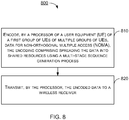
- FIG. 8 illustrates an example process 800 in accordance with an implementation of the present disclosure.
- Process 800 may represent an aspect of implementing the proposed concepts and schemes such as one or more of the various schemes described above pertaining to NOMA for wireless communications. More specifically, process 800 may represent an example implementation of the GOCA scheme 100.
- Process 800 may include one or more operations, actions, or functions as illustrated by one or more of blocks 810 and 820. Although illustrated as discrete blocks, various blocks of process 800 may be divided into additional blocks, combined into fewer blocks, or eliminated, depending on the desired implementation. Moreover, the blocks/sub-blocks of process 800 may be executed in the order shown in FIG. 8 or, alternatively in a different order. The blocks/sub-blocks of process 800 may be executed iteratively.
- Process 800 may be implemented by or in apparatus 700 as well as any variations thereof. Solely for illustrative purposes and without limiting the scope, process 800 is described below in the context of apparatus 700 implemented as an UE among a first group of UEs of multiple groups of UEs in a wireless network. Process 800 may begin at block 810.
- process 800 may involve processor 710 of apparatus 700 encoding data for NOMA.
- process 800 may involve processor 710 spreading the data into shared resources using a multi-stage sequence generation process.
- Process 800 may proceed from 810 to 820.
- process 800 may involve processor 710 transmitting, via transceiver 730, the encoded data to a wireless receiver (e.g., a wireless receiver of a network or another UE).
- a wireless receiver e.g., a wireless receiver of a network or another UE.
- process 800 may involve processor 710 performing a number of operations. For instance, process 800 may involve processor 710 generating an orthogonal coding sequence for a first stage of the multi-stage sequence generation process. Additionally, process 800 may involve processor 710, for at least a second sequence of one or more subsequent stages of the multi-stage sequence generation process, generating a non-orthogonal coding sequence. Moreover, process 800 may involve processor 710 generating a composite coding sequence by multiplying the orthogonal coding sequence and the non-orthogonal coding sequence.
- process 800 may involve processor 710 generating a plurality of complex symbols for the data by multiplying a predefined number of copies of a plurality of source symbols of the data and the composite coding sequence. Additionally, process 800 may involve processor 710 allocating the plurality of complex symbols to shared time and frequency resources.
- the orthogonal coding sequence may be different from another orthogonal coding sequence used by another UE of the first group of UEs.
- the non-orthogonal coding sequence may be different from another non-orthogonal coding sequence used by another UE of a second group of UEs of the multiple groups of UEs.
- process 800 may involve processor 710 allocating the plurality of complex symbols to the shared time and frequency resources with localized time repetition, and wherein the plurality of complex symbols are allocated to the shared time and frequency resources repeatedly in a way such that each complex symbol of the plurality of complex symbols is consecutively allocated to a respective frequency for the predefined number of times.
- process 800 may involve processor 710 allocating the plurality of complex symbols to the shared time and frequency resources with localized frequency repetition, and wherein the plurality of complex symbols are allocated to the shared time and frequency resources repeatedly in a way such that each complex symbol of the plurality of complex symbols is consecutively allocated to a respective time slot for the predefined number of times.
- FIG. 9 illustrates an example process 900 in accordance with an implementation of the present disclosure.
- Process 900 may represent an aspect of implementing the proposed concepts and schemes such as one or more of the various schemes described above pertaining to NOMA for wireless communications. More specifically, process 900 may represent an example implementation of the RDMA scheme 300.
- Process 900 may include one or more operations, actions, or functions as illustrated by one or more of blocks 910 and 920. Although illustrated as discrete blocks, various blocks of process 900 may be divided into additional blocks, combined into fewer blocks, or eliminated, depending on the desired implementation. Moreover, the blocks/sub-blocks of process 900 may be executed in the order shown in FIG. 9 or, alternatively in a different order. The blocks/sub-blocks of process 900 may be executed iteratively.
- Process 900 may be implemented by or in apparatus 700 as well as any variations thereof. Solely for illustrative purposes and without limiting the scope, process 900 is described below in the context of apparatus 700 implemented as an UE among a plurality of UEs in a wireless network. Process 900 may begin at block 910.
- process 900 may involve processor 710 of apparatus 700 encoding data for NOMA.
- process 900 may involve processor 710 spreading the data into shared resources using a repetition pattern of a plurality of data pieces of the data.
- Process 900 may proceed from 910 to 920.
- process 900 may involve processor 710 transmitting, via transceiver 730, the encoded data to a wireless receiver (e.g., a wireless receiver of a network or another UE).
- a wireless receiver e.g., a wireless receiver of a network or another UE.
- process 900 may involve processor 710 allocating the plurality of data pieces of the data to a first portion of shared time and frequency resources. Additionally, process 900 may involve processor 710 allocating a predefined number of repetitions of the plurality of data pieces of the data to a second portion of the shared time and frequency resources. Each repetition of the predefined number of repetitions may differ from the data pieces allocated to the first portion of the shared time and frequency resources by a respective amount of shift in time or frequency.
- the respective amount of shift in time or frequency of a first repetition of the predefined number of repetitions for the UE may be different from the respective amount of shift in time or frequency of a first repetition of the predefined number of repetitions for at least one other UE of the plurality of UEs.
- the predefined number may equal a spreading factor of the encoding.
- M rep denotes a number of permutations of the repetition pattern when there are L possible positions to choose from for a permutation and L Mrep possible sequences for M rep permutations for N ue sequences to be drawn from the L Mrep sequences for N ue UEs.
- P i denotes a repetition pattern for an i th UE
- P k denotes repetition pattern for a k th UE
- d ik ( m ) denotes a difference between an amount of shift in time or frequency of an m th repetition of P i and an amount of shift in time or frequency of an m th repetition of P k , with 1 ⁇ m ⁇ M rep .
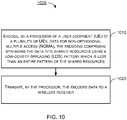
- FIG. 10 illustrates an example process 1000 in accordance with an implementation of the present disclosure.
- Process 1000 may represent an aspect of implementing the proposed concepts and schemes such as one or more of the various schemes described above pertaining to NOMA for wireless communications. More specifically, process 1000 may represent an example implementation of the LDS scheme 600.
- Process 1000 may include one or more operations, actions, or functions as illustrated by one or more of blocks 1010 and 1020. Although illustrated as discrete blocks, various blocks of process 1000 may be divided into additional blocks, combined into fewer blocks, or eliminated, depending on the desired implementation. Moreover, the blocks/sub-blocks of process 1000 may be executed in the order shown in FIG. 10 or, alternatively in a different order. The blocks/sub-blocks of process 1000 may be executed iteratively.
- Process 1000 may be implemented by or in apparatus 700 as well as any variations thereof. Solely for illustrative purposes and without limiting the scope, process 1000 is described below in the context of apparatus 700 implemented as an UE among a plurality of UEs in a wireless network. Process 1000 may begin at block 1010.
- process 1000 may involve processor 710 of apparatus 700 encoding data for NOMA.
- process 1000 may involve processor 710 spreading the data into shared resources using a low-density spreading (LDS) pattern which is less than an entire pattern of the shared resources.
- LDS low-density spreading
- process 1000 may involve processor 710 transmitting, via transceiver 730, the encoded data to a wireless receiver (e.g., a wireless receiver of a network or another UE).
- a wireless receiver e.g., a wireless receiver of a network or another UE.
- the LDS pattern may be centralized within one or more portions of the entire pattern of the shared resources. Alternatively, the LDS pattern may be distributed across the entire pattern of the shared resources.
- process 1000 may further involve processor 710 processing the data using a NOMA scheme in spreading the data into the shared resources with the LDS pattern.
- process 1000 in processing the data using the NOMA scheme in spreading the data into the shared resources with the LDS pattern, may involve processor 710 processing the data using a repetition division multiple access (RDMA) scheme in spreading the data into the shared resources using the LDS pattern.
- RDMA repetition division multiple access
- process 1000 may involve processor 710 spreading the data into the shared resources using a repetition pattern of a plurality of data pieces of the data.
- process 900 may involve processor 710 allocating the plurality of data pieces of the data to a first portion of shared time and frequency resources. Additionally, process 900 may involve processor 710 allocating a predefined number of repetitions of the plurality of data pieces of the data to a second portion of the shared time and frequency resources. Each repetition of the predefined number of repetitions may differ from the data pieces allocated to the first portion of the shared time and frequency resources by a respective amount of shift in time or frequency.
- the respective amount of shift in time or frequency of a first repetition of the predefined number of repetitions for the UE may be different from the respective amount of shift in time or frequency of a first repetition of the predefined number of repetitions for at least one other UE of the plurality of UEs.
- the predefined number may equal a spreading factor of the encoding.
- M rep denotes a number of permutations of the repetition pattern when there are L possible positions to choose from for a permutation and L Mrep possible sequences for M rep permutations for N ue sequences to be drawn from the L Mrep sequences for N ue UEs.
- P i denotes a repetition pattern for an i th UE
- P k denotes repetition pattern for a k th UE
- d ik ( m ) denotes a difference between an amount of shift in time or frequency of an m th repetition of P i and an amount of shift in time or frequency of an m th repetition of P k , with 1 ⁇ m ⁇ M rep .
- process 900 may involve processor 710 performing a same permutation or different permutations on each of the data pieces in one or more repetitions. Moreover, process 900 may involve processor 710 combining the permutated data pieces to generate the encoded data.
- any two components so associated can also be viewed as being “operably connected”, or “operably coupled”, to each other to achieve the desired functionality, and any two components capable of being so associated can also be viewed as being “operably couplable”, to each other to achieve the desired functionality.
- operably couplable include but are not limited to physically mateable and/or physically interacting components and/or wirelessly interactable and/or wirelessly interacting components and/or logically interacting and/or logically interactable components.
Landscapes
- Engineering & Computer Science (AREA)
- Signal Processing (AREA)
- Computer Networks & Wireless Communication (AREA)
- Mobile Radio Communication Systems (AREA)
Claims (5)
- Un procédé (1000), comprenant :le codage (1010), par un processeur (710) d'un équipement utilisateur, UE, (700) d'une pluralité d'UE, de données pour accès multiple non orthogonal, NOMA, le codage comprenant la diffusion des données dans des ressources partagées en utilisant un modèle de diffusion à faible densité, LDS, qui est inférieur à un modèle entier des ressources partagées ; etla transmission (1020), par le processeur, des données codées à un récepteur sans fil ;dans lequel le traitement des données en utilisant le schéma NOMA dans la diffusion des données dans les ressources partagées avec le modèle LDS comprend le traitement des données en utilisant un schéma d'accès multiple par répartition en répétition, RDMA, dans la diffusion des données dans les ressources partagées en utilisant le modèle LDS, dans lequel le schéma RDMA comprend la diffusion des données dans les ressources partagées en utilisant un modèle de répétition d'une pluralité d'éléments de données des données.
- Le procédé (1000) selon la revendication 1, dans lequel le modèle LDS est centralisé dans une ou plusieurs parties du modèle entier des ressources partagées, ou le modèle LDS est distribué à travers le modèle entier des ressources partagées.
- Le procédé (1000) selon la revendication 1, dans lequel la diffusion des données dans les ressources partagées en utilisant le modèle de répétition de la pluralité d'éléments de données des données comprend :l'attribution de la pluralité d'éléments de données des données à une première partie de ressources partagées en temps et en fréquence ; etl'attribution d'un nombre prédéfini de répétitions de la pluralité d'éléments de données des données à une deuxième partie des ressources partagées en temps et en fréquence,dans lequel chaque répétition du nombre prédéfini de répétitions diffère des éléments de données attribués à la première partie des ressources partagées en temps et en fréquence par une quantité respective de décalage en temps ou en fréquence, etdans lequel la quantité respective de décalage en temps ou en fréquence d'une première répétition du nombre prédéfini de répétitions pour l'UE est différente de la quantité respective de décalage en temps ou en fréquence d'une première répétition du nombre prédéfini de répétitions pour au moins un autre UE de la pluralité d'UE.
- Le procédé (1000) selon la revendication 3, dans lequel le nombre prédéfini est égal à un facteur de diffusion du codage.
- Le procédé (1000) selon la revendication 1, dans lequel la diffusion des données dans les ressources partagées en utilisant le modèle de répétition de la pluralité d'éléments de données des données comprend :l'exécution d'une même permutation ou de permutations différentes sur chacun des éléments de données dans une ou plusieurs répétitions ; etla combinaison des éléments de données permutés pour générer les données codées.
Applications Claiming Priority (1)
| Application Number | Priority Date | Filing Date | Title |
|---|---|---|---|
| US15/674,498 US10727897B2 (en) | 2016-08-11 | 2017-08-10 | Non-orthogonal multiple access wireless communications methods and apparatus thereof |
Publications (2)
| Publication Number | Publication Date |
|---|---|
| EP3442152A1 EP3442152A1 (fr) | 2019-02-13 |
| EP3442152B1 true EP3442152B1 (fr) | 2020-07-29 |
Family
ID=61626941
Family Applications (1)
| Application Number | Title | Priority Date | Filing Date |
|---|---|---|---|
| EP18161107.0A Active EP3442152B1 (fr) | 2017-08-10 | 2018-03-09 | Procédés de communication sans fil multiple non orthogonaux et appareil associé |
Country Status (1)
| Country | Link |
|---|---|
| EP (1) | EP3442152B1 (fr) |
Family Cites Families (1)
| Publication number | Priority date | Publication date | Assignee | Title |
|---|---|---|---|---|
| US9742608B2 (en) * | 2015-05-29 | 2017-08-22 | Huawei Technologies Co., Ltd. | Low PAPR waveform for mmW |
-
2018
- 2018-03-09 EP EP18161107.0A patent/EP3442152B1/fr active Active
Non-Patent Citations (1)
| Title |
|---|
| None * |
Also Published As
| Publication number | Publication date |
|---|---|
| EP3442152A1 (fr) | 2019-02-13 |
Similar Documents
| Publication | Publication Date | Title |
|---|---|---|
| US10727897B2 (en) | Non-orthogonal multiple access wireless communications methods and apparatus thereof | |
| CN115189855B (zh) | 信号处理的方法和装置 | |
| CN107534638B (zh) | 具有低峰值平均功率比多载波波形的mc-cdma | |
| JP7266529B2 (ja) | 上り復調基準信号の伝送方法及びデバイス | |
| WO2018050094A1 (fr) | Pucch court dans des réseaux nr | |
| JP7221958B2 (ja) | シーケンスを基にした信号処理方法および信号処理装置 | |
| US20190149298A1 (en) | Reference Signals With Improved Cross-Correlation Properties In Wireless Communications | |
| EP3142274B1 (fr) | Terminal, station de base, procédé de transmission et procédé de réception | |
| CN114884634B (zh) | 一种通信方法、装置及设备 | |
| WO2023159535A1 (fr) | Configuration de signal de référence de démodulation et schémas d'indication | |
| CN105610480A (zh) | 数据传输方法及装置 | |
| CN107710853A (zh) | 传输信息的方法和设备 | |
| WO2018100428A1 (fr) | Procédé et dispositif de traitement de signal dans un système de communication | |
| WO2023143620A1 (fr) | Procédé et appareil de communication, et support de stockage lisible par ordinateur | |
| CN117811713A (zh) | 一种通信方法、装置及设备 | |
| US10917221B2 (en) | Base station apparatus, terminal apparatus, and communication method | |
| EP3442152B1 (fr) | Procédés de communication sans fil multiple non orthogonaux et appareil associé | |
| US11329691B2 (en) | Non-orthogonal multiple access wireless communications methods and apparatus thereof | |
| WO2021109469A1 (fr) | Schémas de mappage pour transmissions de commande de liaison montante dans des systèmes de communication sans fil | |
| JP7549730B2 (ja) | アップリンク制御伝送のための循環シフトベースのマッピングスキーム | |
| KR20190073489A (ko) | 데이터 처리 방법 및 송신 디바이스 | |
| CN110798289B (zh) | 用于无线通信的方法 | |
| KR20200102826A (ko) | 통신 시스템에서 비-직교 상향링크 통신을 위한 방법 및 장치 | |
| WO2024065562A1 (fr) | Schémas de mappage et d'indication de port de signal de référence de démodulation | |
| JP2022517477A (ja) | 参考信号のためのシーケンスを発生させること |
Legal Events
| Date | Code | Title | Description |
|---|---|---|---|
| PUAI | Public reference made under article 153(3) epc to a published international application that has entered the european phase |
Free format text: ORIGINAL CODE: 0009012 |
|
| STAA | Information on the status of an ep patent application or granted ep patent |
Free format text: STATUS: THE APPLICATION HAS BEEN PUBLISHED |
|
| AK | Designated contracting states |
Kind code of ref document: A1 Designated state(s): AL AT BE BG CH CY CZ DE DK EE ES FI FR GB GR HR HU IE IS IT LI LT LU LV MC MK MT NL NO PL PT RO RS SE SI SK SM TR |
|
| AX | Request for extension of the european patent |
Extension state: BA ME |
|
| STAA | Information on the status of an ep patent application or granted ep patent |
Free format text: STATUS: REQUEST FOR EXAMINATION WAS MADE |
|
| 17P | Request for examination filed |
Effective date: 20190802 |
|
| RBV | Designated contracting states (corrected) |
Designated state(s): AL AT BE BG CH CY CZ DE DK EE ES FI FR GB GR HR HU IE IS IT LI LT LU LV MC MK MT NL NO PL PT RO RS SE SI SK SM TR |
|
| GRAP | Despatch of communication of intention to grant a patent |
Free format text: ORIGINAL CODE: EPIDOSNIGR1 |
|
| STAA | Information on the status of an ep patent application or granted ep patent |
Free format text: STATUS: GRANT OF PATENT IS INTENDED |
|
| INTG | Intention to grant announced |
Effective date: 20200220 |
|
| GRAS | Grant fee paid |
Free format text: ORIGINAL CODE: EPIDOSNIGR3 |
|
| GRAA | (expected) grant |
Free format text: ORIGINAL CODE: 0009210 |
|
| STAA | Information on the status of an ep patent application or granted ep patent |
Free format text: STATUS: THE PATENT HAS BEEN GRANTED |
|
| AK | Designated contracting states |
Kind code of ref document: B1 Designated state(s): AL AT BE BG CH CY CZ DE DK EE ES FI FR GB GR HR HU IE IS IT LI LT LU LV MC MK MT NL NO PL PT RO RS SE SI SK SM TR |
|
| REG | Reference to a national code |
Ref country code: CH Ref legal event code: EP |
|
| REG | Reference to a national code |
Ref country code: AT Ref legal event code: REF Ref document number: 1297062 Country of ref document: AT Kind code of ref document: T Effective date: 20200815 |
|
| REG | Reference to a national code |
Ref country code: IE Ref legal event code: FG4D |
|
| REG | Reference to a national code |
Ref country code: DE Ref legal event code: R096 Ref document number: 602018006330 Country of ref document: DE |
|
| REG | Reference to a national code |
Ref country code: LT Ref legal event code: MG4D |
|
| REG | Reference to a national code |
Ref country code: NL Ref legal event code: MP Effective date: 20200729 |
|
| REG | Reference to a national code |
Ref country code: AT Ref legal event code: MK05 Ref document number: 1297062 Country of ref document: AT Kind code of ref document: T Effective date: 20200729 |
|
| PG25 | Lapsed in a contracting state [announced via postgrant information from national office to epo] |
Ref country code: AT Free format text: LAPSE BECAUSE OF FAILURE TO SUBMIT A TRANSLATION OF THE DESCRIPTION OR TO PAY THE FEE WITHIN THE PRESCRIBED TIME-LIMIT Effective date: 20200729 Ref country code: HR Free format text: LAPSE BECAUSE OF FAILURE TO SUBMIT A TRANSLATION OF THE DESCRIPTION OR TO PAY THE FEE WITHIN THE PRESCRIBED TIME-LIMIT Effective date: 20200729 Ref country code: BG Free format text: LAPSE BECAUSE OF FAILURE TO SUBMIT A TRANSLATION OF THE DESCRIPTION OR TO PAY THE FEE WITHIN THE PRESCRIBED TIME-LIMIT Effective date: 20201029 Ref country code: SE Free format text: LAPSE BECAUSE OF FAILURE TO SUBMIT A TRANSLATION OF THE DESCRIPTION OR TO PAY THE FEE WITHIN THE PRESCRIBED TIME-LIMIT Effective date: 20200729 Ref country code: GR Free format text: LAPSE BECAUSE OF FAILURE TO SUBMIT A TRANSLATION OF THE DESCRIPTION OR TO PAY THE FEE WITHIN THE PRESCRIBED TIME-LIMIT Effective date: 20201030 Ref country code: LT Free format text: LAPSE BECAUSE OF FAILURE TO SUBMIT A TRANSLATION OF THE DESCRIPTION OR TO PAY THE FEE WITHIN THE PRESCRIBED TIME-LIMIT Effective date: 20200729 Ref country code: ES Free format text: LAPSE BECAUSE OF FAILURE TO SUBMIT A TRANSLATION OF THE DESCRIPTION OR TO PAY THE FEE WITHIN THE PRESCRIBED TIME-LIMIT Effective date: 20200729 Ref country code: PT Free format text: LAPSE BECAUSE OF FAILURE TO SUBMIT A TRANSLATION OF THE DESCRIPTION OR TO PAY THE FEE WITHIN THE PRESCRIBED TIME-LIMIT Effective date: 20201130 Ref country code: FI Free format text: LAPSE BECAUSE OF FAILURE TO SUBMIT A TRANSLATION OF THE DESCRIPTION OR TO PAY THE FEE WITHIN THE PRESCRIBED TIME-LIMIT Effective date: 20200729 Ref country code: NO Free format text: LAPSE BECAUSE OF FAILURE TO SUBMIT A TRANSLATION OF THE DESCRIPTION OR TO PAY THE FEE WITHIN THE PRESCRIBED TIME-LIMIT Effective date: 20201029 |
|
| PG25 | Lapsed in a contracting state [announced via postgrant information from national office to epo] |
Ref country code: LV Free format text: LAPSE BECAUSE OF FAILURE TO SUBMIT A TRANSLATION OF THE DESCRIPTION OR TO PAY THE FEE WITHIN THE PRESCRIBED TIME-LIMIT Effective date: 20200729 Ref country code: RS Free format text: LAPSE BECAUSE OF FAILURE TO SUBMIT A TRANSLATION OF THE DESCRIPTION OR TO PAY THE FEE WITHIN THE PRESCRIBED TIME-LIMIT Effective date: 20200729 Ref country code: PL Free format text: LAPSE BECAUSE OF FAILURE TO SUBMIT A TRANSLATION OF THE DESCRIPTION OR TO PAY THE FEE WITHIN THE PRESCRIBED TIME-LIMIT Effective date: 20200729 Ref country code: IS Free format text: LAPSE BECAUSE OF FAILURE TO SUBMIT A TRANSLATION OF THE DESCRIPTION OR TO PAY THE FEE WITHIN THE PRESCRIBED TIME-LIMIT Effective date: 20201129 |
|
| PG25 | Lapsed in a contracting state [announced via postgrant information from national office to epo] |
Ref country code: NL Free format text: LAPSE BECAUSE OF FAILURE TO SUBMIT A TRANSLATION OF THE DESCRIPTION OR TO PAY THE FEE WITHIN THE PRESCRIBED TIME-LIMIT Effective date: 20200729 |
|
| PG25 | Lapsed in a contracting state [announced via postgrant information from national office to epo] |
Ref country code: IT Free format text: LAPSE BECAUSE OF FAILURE TO SUBMIT A TRANSLATION OF THE DESCRIPTION OR TO PAY THE FEE WITHIN THE PRESCRIBED TIME-LIMIT Effective date: 20200729 Ref country code: SM Free format text: LAPSE BECAUSE OF FAILURE TO SUBMIT A TRANSLATION OF THE DESCRIPTION OR TO PAY THE FEE WITHIN THE PRESCRIBED TIME-LIMIT Effective date: 20200729 Ref country code: EE Free format text: LAPSE BECAUSE OF FAILURE TO SUBMIT A TRANSLATION OF THE DESCRIPTION OR TO PAY THE FEE WITHIN THE PRESCRIBED TIME-LIMIT Effective date: 20200729 Ref country code: RO Free format text: LAPSE BECAUSE OF FAILURE TO SUBMIT A TRANSLATION OF THE DESCRIPTION OR TO PAY THE FEE WITHIN THE PRESCRIBED TIME-LIMIT Effective date: 20200729 Ref country code: DK Free format text: LAPSE BECAUSE OF FAILURE TO SUBMIT A TRANSLATION OF THE DESCRIPTION OR TO PAY THE FEE WITHIN THE PRESCRIBED TIME-LIMIT Effective date: 20200729 Ref country code: CZ Free format text: LAPSE BECAUSE OF FAILURE TO SUBMIT A TRANSLATION OF THE DESCRIPTION OR TO PAY THE FEE WITHIN THE PRESCRIBED TIME-LIMIT Effective date: 20200729 |
|
| REG | Reference to a national code |
Ref country code: DE Ref legal event code: R097 Ref document number: 602018006330 Country of ref document: DE |
|
| PG25 | Lapsed in a contracting state [announced via postgrant information from national office to epo] |
Ref country code: AL Free format text: LAPSE BECAUSE OF FAILURE TO SUBMIT A TRANSLATION OF THE DESCRIPTION OR TO PAY THE FEE WITHIN THE PRESCRIBED TIME-LIMIT Effective date: 20200729 |
|
| PLBE | No opposition filed within time limit |
Free format text: ORIGINAL CODE: 0009261 |
|
| STAA | Information on the status of an ep patent application or granted ep patent |
Free format text: STATUS: NO OPPOSITION FILED WITHIN TIME LIMIT |
|
| PG25 | Lapsed in a contracting state [announced via postgrant information from national office to epo] |
Ref country code: SK Free format text: LAPSE BECAUSE OF FAILURE TO SUBMIT A TRANSLATION OF THE DESCRIPTION OR TO PAY THE FEE WITHIN THE PRESCRIBED TIME-LIMIT Effective date: 20200729 |
|
| 26N | No opposition filed |
Effective date: 20210430 |
|
| PG25 | Lapsed in a contracting state [announced via postgrant information from national office to epo] |
Ref country code: SI Free format text: LAPSE BECAUSE OF FAILURE TO SUBMIT A TRANSLATION OF THE DESCRIPTION OR TO PAY THE FEE WITHIN THE PRESCRIBED TIME-LIMIT Effective date: 20200729 |
|
| PG25 | Lapsed in a contracting state [announced via postgrant information from national office to epo] |
Ref country code: MC Free format text: LAPSE BECAUSE OF FAILURE TO SUBMIT A TRANSLATION OF THE DESCRIPTION OR TO PAY THE FEE WITHIN THE PRESCRIBED TIME-LIMIT Effective date: 20200729 |
|
| REG | Reference to a national code |
Ref country code: CH Ref legal event code: PL |
|
| REG | Reference to a national code |
Ref country code: BE Ref legal event code: MM Effective date: 20210331 |
|
| PG25 | Lapsed in a contracting state [announced via postgrant information from national office to epo] |
Ref country code: CH Free format text: LAPSE BECAUSE OF NON-PAYMENT OF DUE FEES Effective date: 20210331 Ref country code: IE Free format text: LAPSE BECAUSE OF NON-PAYMENT OF DUE FEES Effective date: 20210309 Ref country code: LU Free format text: LAPSE BECAUSE OF NON-PAYMENT OF DUE FEES Effective date: 20210309 Ref country code: LI Free format text: LAPSE BECAUSE OF NON-PAYMENT OF DUE FEES Effective date: 20210331 |
|
| PG25 | Lapsed in a contracting state [announced via postgrant information from national office to epo] |
Ref country code: BE Free format text: LAPSE BECAUSE OF NON-PAYMENT OF DUE FEES Effective date: 20210331 |
|
| PG25 | Lapsed in a contracting state [announced via postgrant information from national office to epo] |
Ref country code: CY Free format text: LAPSE BECAUSE OF FAILURE TO SUBMIT A TRANSLATION OF THE DESCRIPTION OR TO PAY THE FEE WITHIN THE PRESCRIBED TIME-LIMIT Effective date: 20200729 |
|
| P01 | Opt-out of the competence of the unified patent court (upc) registered |
Effective date: 20230607 |
|
| PG25 | Lapsed in a contracting state [announced via postgrant information from national office to epo] |
Ref country code: HU Free format text: LAPSE BECAUSE OF FAILURE TO SUBMIT A TRANSLATION OF THE DESCRIPTION OR TO PAY THE FEE WITHIN THE PRESCRIBED TIME-LIMIT; INVALID AB INITIO Effective date: 20180309 |
|
| PG25 | Lapsed in a contracting state [announced via postgrant information from national office to epo] |
Ref country code: MK Free format text: LAPSE BECAUSE OF FAILURE TO SUBMIT A TRANSLATION OF THE DESCRIPTION OR TO PAY THE FEE WITHIN THE PRESCRIBED TIME-LIMIT Effective date: 20200729 |
|
| PG25 | Lapsed in a contracting state [announced via postgrant information from national office to epo] |
Ref country code: MT Free format text: LAPSE BECAUSE OF FAILURE TO SUBMIT A TRANSLATION OF THE DESCRIPTION OR TO PAY THE FEE WITHIN THE PRESCRIBED TIME-LIMIT Effective date: 20200729 |
|
| PG25 | Lapsed in a contracting state [announced via postgrant information from national office to epo] |
Ref country code: TR Free format text: LAPSE BECAUSE OF FAILURE TO SUBMIT A TRANSLATION OF THE DESCRIPTION OR TO PAY THE FEE WITHIN THE PRESCRIBED TIME-LIMIT Effective date: 20200729 |
|
| PGFP | Annual fee paid to national office [announced via postgrant information from national office to epo] |
Ref country code: FR Payment date: 20251231 Year of fee payment: 9 |
|
| PGFP | Annual fee paid to national office [announced via postgrant information from national office to epo] |
Ref country code: GB Payment date: 20260106 Year of fee payment: 9 |
|
| PGFP | Annual fee paid to national office [announced via postgrant information from national office to epo] |
Ref country code: DE Payment date: 20260102 Year of fee payment: 9 |