EP3442178B1 - Procédé de recherche de routage et dispositif - Google Patents
Procédé de recherche de routage et dispositif Download PDFInfo
- Publication number
- EP3442178B1 EP3442178B1 EP17792386.9A EP17792386A EP3442178B1 EP 3442178 B1 EP3442178 B1 EP 3442178B1 EP 17792386 A EP17792386 A EP 17792386A EP 3442178 B1 EP3442178 B1 EP 3442178B1
- Authority
- EP
- European Patent Office
- Prior art keywords
- node
- prefix
- searching
- field
- allocation
- Prior art date
- Legal status (The legal status is an assumption and is not a legal conclusion. Google has not performed a legal analysis and makes no representation as to the accuracy of the status listed.)
- Active
Links
Images





Classifications
-
- H—ELECTRICITY
- H04—ELECTRIC COMMUNICATION TECHNIQUE
- H04L—TRANSMISSION OF DIGITAL INFORMATION, e.g. TELEGRAPHIC COMMUNICATION
- H04L45/00—Routing or path finding of packets in data switching networks
- H04L45/74—Address processing for routing
- H04L45/745—Address table lookup; Address filtering
- H04L45/748—Address table lookup; Address filtering using longest matching prefix
-
- H—ELECTRICITY
- H04—ELECTRIC COMMUNICATION TECHNIQUE
- H04L—TRANSMISSION OF DIGITAL INFORMATION, e.g. TELEGRAPHIC COMMUNICATION
- H04L45/00—Routing or path finding of packets in data switching networks
- H04L45/48—Routing tree calculation
-
- H—ELECTRICITY
- H04—ELECTRIC COMMUNICATION TECHNIQUE
- H04L—TRANSMISSION OF DIGITAL INFORMATION, e.g. TELEGRAPHIC COMMUNICATION
- H04L61/00—Network arrangements, protocols or services for addressing or naming
- H04L61/50—Address allocation
- H04L61/5007—Internet protocol [IP] addresses
Definitions
- the present invention relates to the field of communications technology, and in particular, to a route searching method and apparatus, an allocation node, a searching node, and an ingress node.
- a main task of a router is forwarding a internet protocol (English: Internet Protocol, IP for short) packet, that is, forwarding a packet that arrives at a router input port to a correct egress port according to a destination IP address in a packet header.
- Route searching is a process of searching a routing table in a router according to a destination IP address of a packet to obtain egress port information of the packet.
- Scale Out Scale Out
- Performance is improved mainly by increasing a quantity of boxes, and a scale effect is easily implemented, so that costs are reduced.
- the distributed router includes an ingress computing node, a bounce computing node, and an egress computing node. Further, the distributed router may further include another computing node.
- the ingress computing node receives a network packet, and determines a bounce computing node to which the received network packet is routed. Specifically, the ingress computing node generates a hash key based on a received destination IP address, and hash ciphers are corresponding to different computing nodes (for example, bounce computing nodes) of the distributed router. In this way, after determining a specific bounce computing node, the ingress computing node sends the network packet to the determined bounce computing node without route searching.
- the bounce computing node determines, based on the destination IP address, a location to which the network packet is routed. Specifically, the bounce computing nodes store different routing entry sets (for example, subsets or parts). The bounce computing node determines a specific egress computing node by using which the network packet leaves from the distributed router.
- routing tables are stored in a distributed manner by using the hash key generated based on the destination IP address, and consequently, a large quantity of routing entries are repeated.
- distributed route searching is performed based on the hash key, a hash (Hash) conflict occurs, an extra mechanism is required to resolve the hash conflict, and a false hit is caused. As a result, entire routing efficiency is relatively low.
- US 2015/0312144 A1 discloses technologies for distributed table lookup via a distributed router which includes an ingress computing node, an intermediate computing node, and an egress computing node.
- Each computing node of the distributed router includes a forwarding table to store a different set of network routing entries obtained from a routing table of the distributed router.
- the ingress computing node generates a hash key based on the destination address included in a received network packet.
- the hash key identifies the intermediate computing node of the distributed router that stores the forwarding table that includes a network routing entry corresponding to the destination address.
- the ingress computing node forwards the received network packet to the intermediate computing node for routing.
- the intermediate computing node receives the forwarded network packet, determines a destination address of the network packet, and determines the egress computing node for transmission of the network packet from the distributed router.
- US 2015/0098470 A1 discloses a system for hierarchical hashing for longest prefix matching which may include a memory and a processor.
- the memory may be configured to store hash tables that include prefixes and associated next hop information, where the hash tables are associated with lengths of the prefixes and at least one of the hash tables is associated with a range of lengths of the prefixes.
- the processor may be configured to determine a destination address associated with a packet received over a first port, determine next hop information associated with a longest prefix that matches the destination address by searching at least a first hash table of the hash tables that stores a largest number of the prefixes relative to the hash tables, and prepare the packet for transmission over a second port that is determined based at least on the next hop information.
- Embodiments of the present invention provide a route searching method and apparatus, as set out in the appended set of claims, to resolve a prior-art technical problem that route mechanism efficiency of a distributed router is relatively low.
- routing tables are stored on different searching nodes in a distributed manner. Therefore, the routing tables may be distributed more evenly, and pressure of a single node from a routing table specification may be reduced. Further, both the allocation node and the searching node use an LPM matching principle during matching. Therefore, when the searching node is allocated, no conflict occurs, and no fault hit occurs. Therefore, entire route searching efficiency is relatively high.
- Embodiments of the present invention provide a route searching method and apparatus, an allocation node, a searching node, and an ingress node, to resolve a prior-art technical problem that route mechanism efficiency of a distributed router is relatively low.
- FIG. 1a and FIG. 1b are structural diagrams of a possible packet forwarding device according to an embodiment of the present invention.
- the packet forwarding device includes a controller, at least one ingress node, at least one allocation node, at least one searching node, and at least one egress node.
- a physical box may include only one node, or may be a set of a plurality of nodes.
- a physical box may include both an ingress node and an allocation node.
- a physical box may include both an ingress node and a searching node.
- a physical box may include both an ingress node and an egress node.
- a physical box may include both an allocation node and a searching node.
- a physical box may include both a searching node and an egress node.
- a physical box may include all of an ingress node, an allocation node, and a searching node.
- a physical box may include all of an ingress node, an allocation node, and an egress node.
- a physical box may include all of an ingress node, a searching node, and an egress node.
- a physical box may include all of an allocation node, a searching node, and an egress node.
- a physical box may include all of an ingress node, an allocation node, a searching node, and an egress node.
- the controller and each node may be separately disposed, or the controller and any node may be disposed in a same physical box. These physical boxes are stacked to obtain an entire system of a router. Certainly, in actual application, these physical boxes may be distributed in different areas and manufactured by different manufacturers.
- a packet is transmitted between nodes. For example, an ingress node receives a packet, and then sends the packet to any allocation node. After performing searching, the allocation node transmits the packet to a found searching node. After determining an egress node of the packet, the searching node transmits the packet to the determined egress node. Then, the egress node forwards the packet to another network element.
- a difference from the structure shown in FIG. 1a lies in that searching and exchange are decoupled, that is, an ingress node and an egress node form an exchange plane, and the ingress node can transmit a packet to the egress node.
- An allocation node and a searching node form a searching plane.
- the ingress node may not send the entire packet to the allocation node, but sends a destination IP address of the packet to the allocation node.
- the searching node sends a determined result and the destination IP address of the packet to the ingress node or the egress node.
- the packet forwarding device may further include another component. This is not limited in this embodiment of the present invention.
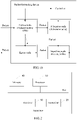
- FIG. 2 is a possible structural diagram of an apparatus according to an embodiment of the present invention.
- the apparatus is, for example, the ingress node, the allocation node, the searching node, the egress node, or the controller described above.
- the apparatus includes a processor 10, a transmitter 20, a receiver 30, and a memory 40.
- the memory 40, the transmitter 20, the receiver 30, and the processor 10 may be connected by using a bus.
- the memory 40, the transmitter 20, the receiver 30, and the processor 10 may not be of a bus structure, but may be of another structure such as a star-shaped structure. This is not specifically limited in this application.
- the processor 10 may be specifically a general-purpose central processing unit or an application-specific integrated circuit (English: Application Specific Integrated Circuit, ASIC for short), may be one or more integrated circuits configured to control program execution, may be a hardware circuit developed by using a field programmable gate array (English: Field Programmable Gate Array, FPGA for short), or may be a baseband processor.
- ASIC Application Specific Integrated Circuit
- FPGA Field Programmable Gate Array
- the processor 10 may include at least one processing core.
- the memory 40 may include one or more of a read-only memory (English: Read Only Memory, ROM for short), a random access memory (English: Random Access Memory, RAM for short), or a magnetic disk memory.
- the memory 40 is configured to store data and/or an instruction that are/is required when the processor 10 runs. There may be one or more memories 40.
- the transmitter 20 and the receiver 30 may be physically independent of each other, or may be physically integrated together.
- the transmitter 20 may send data by using an antenna.
- the receiver 30 may receive data by using an antenna.
- the apparatus when the apparatus is the egress node, the apparatus may further include an egress port for packet output.
- the apparatus when the apparatus is the ingress node, the apparatus may further include an ingress port for packet input.
- FIG. 3A and FIG. 3B are a flowchart of a method for configuring a routing table entry according to an embodiment of the present invention. As shown in FIG. 3A and FIG. 3B , the method includes the following steps.
- Step 101 A controller receives a protocol packet sent by an ingress node. For example, after receiving a packet, the ingress node finds, by means of identification, that the packet is a protocol packet, and reports the protocol packet to the controller.
- Step 102 The controller processes the protocol packet to obtain a prefix, a physical box number of an egress node, and an egress port that are in a routing table entry.
- the controller may process the protocol packet to obtain the routing table entry in a plurality of implementations.
- the protocol packet is a Border Gateway Protocol (English: Border Gateway Protocol, BGP for short) packet
- the protocol packet provides routing information indicating that a data packet arrives at a prefix, and the controller directly uses the prefix and the routing information as the routing table entry.
- the protocol packet is an open shortest path first (English: Open Shortest Path First, OSPF for short) protocol packet
- the protocol packet includes a status of a link between a packet forwarding device and an adjacent device.
- the controller obtains a shortest path tree by means of calculation by using a shortest path first (English: Shortest Path First, SPF for short) algorithm. This tree provides information about a route to each network element.
- this step may vary with a protocol packet.
- routing information obtaining is content well-known to a person skilled in the art. Therefore, details are not described herein.
- the prefix may be represented by a ternary bit string formed by "0”, "1", and "*".
- the routing table entry includes a prefix field and an egress port field.
- the prefix field and the egress port field are shown in Table 1.
- Table 1 Prefix Egress port field 0000 ⁇ 31-02
- the prefix obtained in step 102 is 0000 ⁇
- content of the egress port field is 31-02, which indicates that the physical box number of the egress node is 31, and an egress port number is 02.
- the routing table entry indicates that a packet matching the prefix 0000 ⁇ needs to be forwarded from an egress port that is corresponding to the egress port number 02 and that is of the egress node whose physical box number is 31.
- Step 103 Group the prefix into a prefix subtree in a prefix tree (Trie).
- the prefix tree may be a binary tree, or may be a multi-way tree.
- the prefix tree is a binary tree or a multi-way tree established according to a bit string in a prefix. If one bit is considered each time, a binary tree is established, and the binary tree is also referred to as a single-bit trie tree.
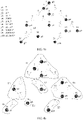
- FIG. 4a shows a single-bit prefix tree.
- the prefix tree includes 11 proper prefixes, that is, p0 to p10 on the left of FIG. 4a .
- corresponding nodes of the proper prefixes are represented by black circles, and a connection point is represented by a white circle. If a plurality of bits are considered each time, a multi-bit trie tree is established. A quantity of bits that is considered each time is usually fixed and is referred to as a stride (English: stride) of a trie tree.
- the multi-bit trie tree may be obtained after a single-bit trie tree is divided into a plurality of subtrees according to a stride and a trie node is created for each subtree.
- Each trie node has an associated prefix, and the associated prefix of the trie node is a prefix value on a root node of a subtree corresponding to the trie node.
- FIG. 4b shows a multi-bit trie tree that is established based on the prefixes in FIG. 4a and whose stride is equal to 3.
- the multi-bit trie tree includes seven trie nodes, that is, a trie node T1 to a trie node T7 shown in FIG. 4b .
- Each trie node is a prefix subtree.
- Each prefix subtree includes at least one proper prefix.
- Each trie node is provided with a prefix node.
- a prefix corresponding to a root node of a prefix subtree T1 is p0
- a prefix corresponding to a root node of a prefix subtree T2 is 000 ⁇
- the prefix corresponding to the root node of the prefix subtree T2 is not a proper prefix.
- a threshold of a quantity of prefixes of the subtree is 4.
- a threshold of a quantity of prefixes of the subtree is 4.
- the prefix subtree may be obtained in advance by means of grouping according to a rule.
- the prefix in the routing table entry is obtained in step 102
- the prefix is grouped into a prefix subtree, that is, a prefix subtree in which the prefix is located is determined, for example, it is determined that the prefix is located in the prefix subtree T2.
- an allocation table entry shown in Table 2 or Table 3
- step 104 to step 106 are performed.
- Step 104 If the prefix subtree is a newly established subtree, allocate a searching node to the routing table entry obtained in step 102.
- each searching node may store all proper prefixes of some prefix subtrees. In this way, each searching node only needs to maintain routing table entries of some proper prefixes. Therefore, fewer resources are consumed for routing table maintenance, and quick searching performed by the searching node is facilitated.
- a searching node or a group of searching nodes need to be allocated to the routing table entry. If a group of searching nodes are allocated to the routing table entry, a searching node in the group of searching nodes is used as an active searching node, and remaining searching nodes may be used as standby searching nodes.
- a searching node that is to be allocated to the routing table entry may be determined according to a quantity of routing table entries stored on each searching node. For example, a searching node in all searching nodes that currently has fewest routing table entries is allocated to the routing table entry obtained in step 102.
- Step 105 The controller delivers the routing table entry to the allocated searching node such as a searching node 1 in FIG. 3A and FIG. 3B .
- Step 106 The controller generates an allocation table entry, and the allocation table entry includes a match field and a searching node number field.
- the match item field is a prefix corresponding to a root node of the prefix subtree
- the searching node number is a physical box number of the searching node.
- the match item field is a prefix 111 ⁇ corresponding to a root node of the prefix subtree T4 (shown in FIG. 4b ), and the searching node number is a physical box number of the searching node 1, for example, the searching node number is 10.
- the allocation table entry further includes a field indicating whether there is a default route flag bit and a default route field, the field indicating whether there is a default route flag bit indicates whether the prefix subtree has a default route, the default route is a default route of the prefix subtree, and the default route is routing information corresponding to a longest match prefix (which is a proper prefix) before the root node. Details are shown in Table 3. Table 3 Match item Whether there is a default route Default route Searching node number 111 ⁇ Yes ⁇ -20-03 10
- Step 107 Deliver the allocation table entry to all allocation nodes such as an allocation node 1 to an allocation node M in FIG. 3A and FIG. 3B .
- M is an integer greater than or equal to 1.
- allocation nodes store a same allocation table entry.
- Step 108 Determine whether there is a prefix before the root node, and if there is a prefix before the root node, the controller delivers, to the searching node, a longest match prefix (a proper prefix) before the root node and routing information corresponding to the longest match prefix that are used as a default route of the prefix subtree.
- the default route has a same meaning as the foregoing description. However, a difference from the foregoing description lies in that step 109 is directly performed in this example, that is, the default route is directly delivered to the allocated searching node such as the searching node 1, and may be not filled in an allocation table entry. Therefore, a format of the allocation table entry may be shown in Table 2.
- the searching node When receiving the default route, stores the default route in a routing table, and adds a new routing table entry.
- Step 110 If the prefix subtree already exists, the controller delivers the routing table entry to a searching node corresponding to the prefix subtree, for example, a searching node 2 in FIG. 3A and FIG. 3B .
- the prefix obtained in step 102 is p6, and a prefix subtree allocated to the prefix p6 is T4.
- a prefix p3 is grouped into a prefix subtree
- the prefix subtree T4 is obtained. Therefore, when the prefix is p6, the prefix subtree already exists. That the prefix subtree already exists means that routing table entries corresponding to some proper prefixes in proper prefixes included in the prefix subtree have been stored on a searching node.
- routing table entries corresponding to all proper prefixes included in a same prefix subtree are stored on a same searching node, there is no need to reallocate a searching node to a routing table entry of the prefix p6, but step 110 is directly performed, that is, the routing table entry corresponding to the prefix p6 is delivered to the searching node corresponding to the prefix subtree, for example, a searching node 1.
- Step 111 If the prefix and routing information corresponding to the prefix are a default route of another subtree, the controller updates a default route field and a field indicating whether there is a default route that are of the another prefix subtree and that are on all the allocation nodes.
- the controller instructs all the allocation nodes to update the allocation table entry and modify a default route field and a field indicating whether there is a default route that are of the prefix subtree T3.
- the modification is shown in Table 4.
- Table 4 Match item Whether there is a default route Default route Searching node number 100 ⁇ Yes 10 ⁇ -15-01 20
- step 112 may be further performed, that is, the prefix and the routing information corresponding to the prefix are delivered to a searching node corresponding to the another prefix subtree.
- the controller delivers p2 and 15-01 to a searching node whose physical box number is 20.
- the searching node respectively updates the prefix field and the egress port field of the routing table entry with p2 and 15-01 in the default route.
- the allocation node receives the allocation table entry delivered by the controller, and stores the newly received allocation table entry to form a new allocation table.
- the allocation table includes at least one allocation table entry described above.
- the searching node receives the routing table entry delivered by the controller, and stores the newly received routing table entry to form a new routing table.
- the routing table includes at least one routing table entry described above.
- Steps of configuring the routing table entry are basically completed.
- the controller may further maintain information about an established prefix subtree, and the information includes but is not limited to a prefix corresponding to a root node of the prefix subtree, all effective routing information in the prefix subtree, a default route of the prefix subtree, a correspondence between the prefix subtree and a searching node, and a relationship between the prefix subtree and an allocation table entry on an allocation node. Therefore, in the foregoing steps, the controller may find a searching node corresponding to a prefix subtree that already exists.
- the following describes a route searching method in the embodiments.
- the method may be applied to the packet forwarding device shown in FIG. 1a and FIG. 1b .
- the method includes the following steps.
- Step 201 An ingress node receives a packet.
- the ingress node receives the packet from another network element such as a router.
- the packet usually includes a packet header, a packet text, verification code, and the like.
- the packet header may include a source IP address and a destination IP address.
- Step 202 The ingress node searches a hotspot routing table according to a destination IP address.
- a routing table entry of the hotspot routing table and a routing table entry stored in the foregoing searching node may include a same field, for example, may include a prefix field and an egress port field.
- the prefix field is a proper prefix
- the egress port field is a physical box number of an egress node and an egress port number.
- a prefix in the hotspot routing table may be a frequently-used prefix determined by means of statistics collection, or may be determined by using another rule.
- the ingress node may perform searching in a longest prefix match (English: Longest Prefix Match, LPM for short) principle.
- LPM Longest Prefix Match
- the LPM principle is an algorithm that is in an IP protocol and that is used by the router to perform selection in the routing table.
- a destination IP address may match a plurality of table entries.
- a most specific table entry that is, a table entry with a longest subnet mask, is referred to as a longest prefix match.
- a reason why the table entry is referred to as the longest prefix match is that the table entry is a table entry that is in the routing table and that matches most high-order bits of the destination IP address.
- IPv4 routing table For example, the following IPv4 routing table is considered:
- both the two table entries When there is a need to search for an address 192.168.20.19, both the two table entries "match". That is, both the two table entries include the address to be searched for. In this case, a route with a longest prefix is 192.168.20.16/28. Because a subnet mask (/28) of this route is longer than a mask (/16) of another table entry, the route is more specific.
- Table 5 Prefix Egress port field 0000 ⁇ 31-02 000011 ⁇ 40-02 1110100 ⁇ 50-01
- an IP address may be translated into a binary bit value.
- the IP address is usually of 32 bits, that is, includes 32 bits.
- LPM searching is performed on prefix match fields in Table 5, that is, matching is started from a most significant bit to a low-order bit.
- a prefix matching most high-order bits is a first prefix field.
- the destination IP address is represented as 000011001 in binary, and then matching is performed in Table 5.
- a prefix 000011 ⁇ is a successfully matched prefix.
- a first egress node is an egress node whose physical box number is 40, and an egress port is an egress port that is numbered 01 and that is of the first egress node.
- the destination IP address is represented as 111101101 in binary.
- the ingress node When the matching succeeds, that is, a hit occurs, the ingress node performs step 203, that is, sends the packet to a first egress node corresponding to a hit routing table entry.
- the ingress node performs step 204, that is, sends the IP address of the packet to any allocation node such as a first allocation node.
- the ingress node may consider load balancing, and sends the destination IP address of the packet to an allocation node whose workload is relatively low currently.
- the allocation node may be randomly allocated, or may be allocated in turn.
- step 202 is an optional step, that is, the ingress node may directly send the IP address to the first allocation node when receiving the packet. If step 202 is performed, by using the method, the packet may be quickly forwarded, and load of the allocation node and load of a searching node may be reduced.
- the ingress node may send the destination IP address of the packet to the first allocation node in a manner that includes but is not limited to the following two manners.
- a first manner the ingress node sends the entire packet to the first allocation node.
- the first allocation node may obtain the destination IP address by reading the packet header. This manner is applicable to the packet forwarding device shown in FIG. 1a .
- the first allocation node sends the entire packet to a first searching node.
- the first searching node may obtain the destination IP address by reading the packet header.
- the first searching node sends the entire packet to a first egress node.
- the method further includes: The ingress node extracts the destination IP address of the packet; and the ingress node processes the destination IP address, an identifier (ID) of the packet, and a physical box number of the ingress node as a control message.
- ID an identifier
- the ID of the packet is a unique identifier of the packet.
- the ID of the packet can not only be used to uniquely distinguish a packet from another, but also represent a storage address of the packet on the ingress node. Therefore, the ID of the packet may be the storage address of the packet on the ingress node, or may be an identifier that is of another type and that is uniquely corresponding to the storage address.
- the control message may further include a length of the packet, other service information, and a forwarding type.
- the other service information is other service information obtained on the ingress node, for example, whether unicast reverse path forwarding (English: Unicast Reverse Path Forwarding, URPF for short) is enabled, and whether an access control list (English: Access Control List, ACL for short) is enabled after route searching.
- the forwarding type is, for example, IPv4 unicast, IPv6 unicast, or the like.
- Table 6 A format of a possible control message is shown in Table 6.
- Table 6 ID of the packet Length Physical box number of the ingress node Another service Forwarding type Destination IP address A/packet 20 bytes 12 URPF IPv4 unicast 192.168.20.16
- the packet header includes the destination IP address
- a destination IP address field may be replaced with the packet header.
- the physical box number of the ingress node is a physical box number of an ingress node receiving the packet, for example, the physical box number of the ingress node is 12.
- the ingress node sends the destination IP address of the packet to the first allocation node includes: The ingress node sends the control message to the first allocation node. After receiving the control message, the first allocation node may obtain the destination IP address of the packet by reading the destination IP address field in the control message.
- the method is applicable to the packet forwarding device shown in FIG. 1b .
- exchange congestion caused by distributed route searching may be relieved, interconnection load of a searching plane may be reduced, and pin occupation may be reduced.
- the first allocation node When the ingress node sends the destination IP address of the packet to the first allocation node in the foregoing two manners or in another manner, the first allocation node performs step 205, that is, performs matching of a match item field in an allocation table according to the destination IP address in an LPM principle.
- An allocation table entry in the allocation table is, for example, shown in Table 2 and Table 3.
- the allocation table stored on the first allocation node is, for example, configured by using the method described in the embodiment of FIG. 3A and FIG. 3B with reference to FIG. 3A and FIG. 3B . Certainly, in actual application, the allocation table may be configured by using another method.
- step 206 the first allocation node obtains a physical box number of a first searching node on which routing information of a first prefix subtree corresponding to the first match item field is located (corresponding to the allocation table entry shown in Table 2).
- the first allocation node further determines whether the first prefix subtree has a default route, and if a field indicating whether there is a default route is "yes", the first allocation node obtains a default route in a default route field.
- the allocation table entry may further include a field indicating whether it is a local flag bit, and the field is used to indicate whether a physical box number of the first allocation node is the same as that of the first searching node.
- the first allocation node and the first searching node may be disposed in a same physical box. Therefore, if the physical box number of the first egress node in the allocation table entry is the same as the physical box number of the first allocation node, the field indicating whether it is a local flag bit may be set to 0 or 1, or may be expressed by "yes" or "no".
- step 207 is performed, that is, the first allocation node sends the destination IP address to a first searching node.
- the first allocation node sends the packet to the first searching node, and if there is a default route, the first allocation node further sends the default route to the first searching node.
- the first allocation node may add the default route to the packet header.
- the first allocation node may not need to send content of the packet, but send only the destination IP address or the packet header.
- the first allocation node further sends the ID of the packet and the physical box number of the ingress node to the first searching node.
- Step 208 The first searching node performs matching of a prefix field in a routing table according to the destination IP address in an LPM principle.
- a routing table entry of the routing table stored on the first searching node is, for example, the routing table entry shown in Table 1.
- the routing table stored on the first searching node is, for example, configured in the manner described in the embodiment of FIG. 3A and FIG. 3B with reference to FIG. 3A and FIG. 3B , or may be configured in another manner.
- the first searching node performs step 209, that is, performs, according to a matching result, an operation corresponding to the matching result.
- this step may be implemented in a plurality of manners, and details are described in the following.
- step 209 includes: If the matching result is that the destination IP address successfully matches a first prefix field in the routing table, the first searching node sends, to a first egress node corresponding to the first prefix field, the packet and a first egress port number corresponding to the first prefix field. The first egress node sends the packet by using the first egress port.
- the first searching node sends the packet and an egress port number 02 to an egress node whose physical box number is 31. Then, the egress node forwards the packet from an egress port corresponding to the egress port number 02.
- step 209 includes: If the matching result is that the destination IP address successfully matches a first prefix field in the routing table, the first searching node processes the ID, a physical box number of a first egress node corresponding to the first prefix field, and a first egress port as a first instruction message, and the first searching node sends the first instruction message to the ingress node.
- the ingress node obtains the packet according to the ID, and sends the packet and the first egress port to the first egress node; then, the first egress node sends the packet by using the first egress port.
- the first instruction message may further include an editing instruction.
- the editing instruction is, for example, one or more of replacement, deletion, addition, discard, four rules of arithmetic, a bit operation, or a checksum.
- a new IP packet header is obtained after a forwarding service is performed on an IPv4 unicast packet in the previous step, and the editing instruction may be "replacement".
- An instruction parameter includes: a to-be-replaced location, that is, a location of the IP header in the packet, for example, a 14 th byte; a to-be-replaced length, that is, a length of the IP header, for example, 20 bytes; and replaced content, that is, the new IP packet header.
- the editing instruction may be "discard", that is, forwarding processing of the packet is terminated, and a cache on the ingress node is released.
- the ingress node may read data of the packet from a local cache according to the ID of the packet, edit the packet according to the editing instruction such as the "replacement" instruction, and replace the original IP packet header with a new IP header.
- the ingress node sends the edited packet and the first egress port to the first egress node according to the physical box number of the first egress node in the first instruction message. Then, the first egress node forwards the edited packet by using the first egress port.
- step 209 includes: If the matching result is that the destination IP address successfully matches a first prefix field in the routing table, the first searching node processes the ID and a first egress port that is corresponding to the first prefix field as a second instruction message, and the first searching node sends the second instruction message and the physical box number of the ingress node to a first egress node corresponding to the first prefix field.
- the first egress node sends a request message to the ingress node.
- the request message includes the ID.
- the ingress node obtains the packet according to the ID, and sends the packet to the first egress node.
- the first egress node receives the packet, and sends the packet by using the first egress port.
- the second instruction message may further include an editing instruction.
- a difference from the previous embodiment lies in that the egress node edits the packet according to the editing instruction and forwards the edited packet by using the first egress port.
- step 209 includes: If the matching result is that the destination IP address does not successfully match a first prefix field in the routing table, the first searching node processes the ID of the packet and an editing instruction as a third instruction message, and sends the third instruction message to the ingress node, where an editing instruction field is a discard instruction. After receiving the third instruction message, the ingress node may obtain the packet according to the ID of the packet, and discard the packet, to release storage space occupied by the packet.
- the first searching node further receives a first flag bit that indicates whether there is a default route, that is corresponding to the first prefix subtree, and that is sent by the first allocation node.
- the first flag bit that indicates whether there is a default route is yes, the first searching node receives a first default route that is of the first prefix subtree and that is sent by the first allocation node.
- step 209 includes: If the matching result is that the destination IP address does not successfully match a first prefix field in the routing table, the first searching node determines whether the first flag bit that indicates whether there is a default route is yes; if the first flag bit that indicates whether there is a default route is yes, the first searching node obtains the first default route; and the first searching node obtains a second egress port and a physical box number of a second egress node corresponding to the first default route.
- the searching node when the controller directly delivers the default route to the searching node, the searching node has updated the routing table with the default route. Therefore, the searching node directly performs matching in the routing table by using the destination IP address. This is the same as the method used when there is no default route. Details are not described herein again.
- routing tables are stored on different searching nodes in a distributed manner. Therefore, the routing tables may be distributed more evenly, and pressure of a single node from a routing table specification may be reduced. Further, both the allocation node and the searching node use the LPM matching principle during matching. Therefore, when the searching node is allocated, no conflict occurs, and no fault hit occurs. Therefore, entire route searching efficiency is relatively high.
- an embodiment of the present invention further provides an apparatus (shown in FIG 2 ).
- the apparatus is configured to implement any one of the foregoing methods.
- the apparatus when the apparatus is an allocation node, the apparatus includes a processor 10, a transmitter 20, and a receiver 30.
- the receiver 30 is configured to receive a destination internet protocol IP address of a packet sent by an ingress node of a packet forwarding device.
- the allocation node stores an allocation table, an allocation table entry of the allocation table includes a match item field and a searching node number field, the match item field is a prefix corresponding to a root node of a prefix subtree, and the searching node number field is a physical box number of a searching node on which routing information of the prefix subtree is located.
- the processor 10 is configured to: perform matching of the match item field in the allocation table according to the destination IP address in a longest prefix match LPM principle, and if the destination IP address successfully matches a first match item field in the allocation table, obtain, by the allocation node, a physical box number of a first searching node on which routing information of a first prefix subtree corresponding to the first match item field is located.
- the first searching node is a searching node of the packet forwarding device.
- the transmitter 20 is configured to send the destination IP address to the first searching node.
- the first searching node stores a routing table, a routing table entry of the routing table includes a prefix field and an egress port field, the prefix field is a proper prefix in the first prefix subtree, the egress port field is a physical box number of an egress node and an egress port number, and the egress node is an egress node of the packet forwarding device.
- the receiver 30 is configured to receive the packet sent by the ingress node.
- the receiver 30 is configured to receive a control message sent by the ingress node.
- the control message includes the destination IP address, an identifier ID of the packet, and a physical box number of the ingress node.
- the transmitter 20 is further configured to send the ID and the physical box number of the ingress node to the first searching node.
- the allocation table entry of the allocation table further includes a field indicating whether there is a default route flag bit and a default route field, the field indicating whether there is a default route flag bit indicates whether the prefix subtree has a default route, the default route is a default route of the prefix subtree, and the default route is a longest match prefix before the root node and routing information corresponding to the longest match prefix.
- the transmitter 20 is further configured to: if the destination IP address successfully matches the first match item field in the allocation table, send, to the first searching node, a first flag bit that indicates whether there is a default route and that is corresponding to the first match item field, and when the first flag bit that indicates whether there is a default route is yes, send, by the first allocation node to the first searching node, a first default route corresponding to the first match item field.
- the receiver 30 is further configured to receive an allocation table entry delivered by a controller of the packet forwarding device.
- the processor 10 is further configured to update the allocation table according to the received allocation table entry.
- the allocation table entry of the allocation table further includes a field indicating whether there is a default route flag bit and a default route field, the field indicating whether there is a default route flag bit indicates whether the prefix subtree has a default route, the default route is a default route of the prefix subtree, and the default route is a longest match prefix before the root node and routing information corresponding to the longest match prefix.
- the receiver 30 is further configured to receive a default route delivered by a controller of the packet forwarding device.
- the delivered default route is a default route of the first prefix subtree.
- the processor 10 is further configured to: fill the delivered default route into a first default route field corresponding to the first match item field, and set, as yes, a first flag bit that indicates whether there is a default route and that is corresponding to the first match item field.
- the apparatus in FIG. 2 when the apparatus in FIG. 2 is a searching node, the apparatus includes a processor 10, a transmitter 20, and a receiver 30.
- the receiver 30 is configured to receive a destination internet protocol IP address of a packet sent by an allocation node of a packet forwarding device.
- the allocation node stores an allocation table, an allocation table entry of the allocation table includes a match item field and a searching node number field, the match item field is a prefix corresponding to a root node of a prefix subtree, and the searching node number field is a physical box number of a searching node on which routing information of the prefix subtree is located.
- the searching node is a searching node on which routing information of a first prefix subtree in the prefix subtree is located.
- the searching node stores a routing table, a routing table entry of the routing table includes a prefix field and an egress port field, the prefix field is a prefix in the first prefix subtree, the egress port field is a physical box number of an egress node and an egress port number, and the egress node is an egress node of the packet forwarding device.
- the processor 10 is configured to: perform matching of the prefix field in the routing table according to the destination IP address in the LPM principle, and perform, according to a matching result, an operation corresponding to the matching result.
- the receiver 30 is configured to receive the packet sent by the allocation node.
- the processor 10 is configured to: if the matching result is that the destination IP address successfully matches a first prefix field in the routing table, send, by using the transmitter 20 to a first egress node corresponding to the first prefix field, the packet and a first egress port number corresponding to the first prefix field.
- the receiver 30 is further configured to receive an identifier ID of the packet sent by the allocation node and a physical box number of an ingress node of the packet forwarding device.
- the ingress node is an ingress node by using which the packet is received from an external network.
- the processor 10 is configured to: if the matching result is that the destination IP address successfully matches a first prefix field in the routing table, process the ID, a physical box number of a first egress node corresponding to the first prefix field, and a first egress port as a first instruction message, and send the first instruction message to the ingress node by using the transmitter 20.
- the first instruction message further includes an editing instruction, and the editing instruction is used to instruct the ingress node to edit the packet.
- the receiver 30 is further configured to receive an identifier ID of the packet sent by the allocation node and a physical box number of an ingress node of the packet forwarding device.
- the ingress node is an ingress node by using which the packet is received from an external network.
- the processor 10 is further configured to: if the matching result is that the destination IP address successfully matches a first prefix field in the routing table, process the ID and a first egress port that is corresponding to the first prefix field as a second instruction message, and send, by using the transmitter 20, the second instruction message and the physical box number of the ingress node to a first egress node corresponding to the first prefix field.
- the second instruction message further includes an editing instruction, and the editing instruction is used to instruct the ingress node to edit the packet.
- the allocation table entry of the allocation table further includes a field indicating whether there is a default route flag bit and a default route field, the field indicating whether there is a default route flag bit indicates whether the prefix subtree has a default route, the default route is a default route of the prefix subtree, and the default route is a longest match prefix before the root node and routing information corresponding to the longest match prefix.
- the receiver 30 is further configured to: receive a first flag bit that indicates whether there is a default route, that is corresponding to the first prefix subtree, and that is sent by the first allocation node, and when the first flag bit that indicates whether there is a default route is yes, receive, by the first searching node, a first default route that is of the first prefix subtree and that is sent by the first allocation node.
- the processor 10 is configured to: if the matching result is that the destination IP address does not successfully match a first prefix field in the routing table, determine whether the first flag bit that indicates whether there is a default route is yes; if the first flag bit that indicates whether there is a default route is yes, obtain the first default route; and obtain a second egress port and a physical box number of a second egress node corresponding to the first default route.
- the receiver 30 is further configured to receive a routing table entry sent by a controller of the packet forwarding device.
- the processor 10 is further configured to update the routing table according to the received routing table entry.
- the receiver 30 is further configured to receive a default route that is of the first prefix subtree and that is delivered by a controller of the packet forwarding device.
- the default route is a longest match prefix before a root node of the first prefix subtree and routing information corresponding to the longest match prefix.
- the processor 10 is further configured to update the routing table with the default route of the first prefix subtree.
- the apparatus in FIG. 2 may be an ingress node, and the apparatus includes a processor 10, a transmitter 20, and a receiver 30.
- the receiver 30 is configured to receive a packet.
- the processor 10 is configured to process an identifier ID of the packet, a destination internet protocol IP address of the packet, and a physical box number of the ingress node as a control message.
- the transmitter 20 is configured to send the control message to a first allocation node in at least one allocation node of a packet forwarding device.
- the at least one allocation node stores a same allocation table, an allocation table entry of the allocation table includes a match item field and a searching node number field, the match item field is a prefix corresponding to a root node of a prefix subtree, and the searching node number field is a physical box number of a searching node on which routing information of the prefix subtree is located.
- the receiver 30 is further configured to receive a first instruction message sent by a first searching node in at least one searching node of the packet forwarding device.
- the first instruction message includes the ID, a physical box number of a first egress node, and a first egress port.
- the first searching node is a searching node on which routing information of a first prefix subtree in the prefix subtree is located.
- the first searching node stores a routing table, a routing table entry of the routing table includes a prefix field and an egress port field, the prefix field is a prefix in the first prefix subtree, and the egress port field is a physical box number of an egress node and an egress port number.
- the processor 10 further obtains the packet according to the ID, and sends the packet and the first egress port to the first egress node.
- the processor 10 is further configured to store the packet.
- the ID represents a storage address of the packet.
- the processor 10 is further configured to: before the control message is sent to the first allocation node in the at least one allocation node of the packet forwarding device, perform matching in a hotspot routing table according to the destination IP address, and determine that the matching does not succeed.
- a routing table entry of the hotspot routing table includes a prefix field and an egress port field, and the egress port field includes a physical box number of an egress node and an egress port.
- the first instruction message further includes an editing instruction.
- the processor 10 is further configured to: before the packet is sent to the first egress node, edit the packet according to the editing instruction.
- an embodiment of the present invention further provides a route searching apparatus.
- the route searching apparatus includes function modules configured to perform the foregoing method steps.
- the route searching apparatus includes a receiving unit 301, a processing unit 302, and a sending unit 303.
- the receiving unit 301 is configured to receive a destination internet protocol IP address of a packet sent by an ingress node of a packet forwarding device.
- the route searching apparatus stores an allocation table, an allocation table entry of the allocation table includes a match item field and a searching node number field, the match item field is a prefix corresponding to a root node of a prefix subtree, and the searching node number field is a physical box number of a searching node on which routing information of the prefix subtree is located.
- the processing unit 302 is configured to: perform matching of the match item field in the allocation table according to the destination IP address in a longest prefix match LPM principle, and if the destination IP address successfully matches a first match item field in the allocation table, obtain, by the allocation node, a physical box number of a first searching node on which routing information of a first prefix subtree corresponding to the first match item field is located.
- the first searching node is a searching node of the packet forwarding device.
- the sending unit 303 is configured to send the destination IP address to the first searching node.
- the first searching node stores a routing table, a routing table entry of the routing table includes a prefix field and an egress port field, the prefix field is a proper prefix in the first prefix subtree, the egress port field is a physical box number of an egress node and an egress port number, and the egress node is an egress node of the packet forwarding device.
- the receiving unit 301 is configured to receive the packet sent by the ingress node.
- the receiving unit 301 is configured to receive a control message sent by the ingress node.
- the control message includes the destination IP address, an identifier ID of the packet, and a physical box number of the ingress node.
- the sending unit 303 is further configured to send the ID and the physical box number of the ingress node to the first searching node.
- the allocation table entry of the allocation table further includes a field indicating whether there is a default route flag bit and a default route field, the field indicating whether there is a default route flag bit indicates whether the prefix subtree has a default route, the default route is a default route of the prefix subtree, and the default route is a longest match prefix before the root node and routing information corresponding to the longest match prefix.
- the sending unit 303 is further configured to: if the destination IP address successfully matches the first match item field in the allocation table, send, to the first searching node, a first flag bit that indicates whether there is a default route and that is corresponding to the first match item field, and when the first flag bit that indicates whether there is a default route is yes, send, by the first allocation node to the first searching node, a first default route corresponding to the first match item field.
- the receiving unit 301 is further configured to receive an allocation table entry delivered by a controller of the packet forwarding device.
- the processing unit 302 is further configured to update the allocation table according to the received allocation table entry.
- the allocation table entry of the allocation table further includes a field indicating whether there is a default route flag bit and a default route field, the field indicating whether there is a default route flag bit indicates whether the prefix subtree has a default route, the default route is a default route of the prefix subtree, and the default route is a longest match prefix before the root node and routing information corresponding to the longest match prefix.
- the receiving unit 301 is further configured to receive a default route delivered by a controller of the packet forwarding device.
- the delivered default route is a default route of the first prefix subtree.
- the processing unit 302 is further configured to: fill the delivered default route into a first default route field corresponding to the first match item field, and set, as yes, a first flag bit that indicates whether there is a default route and that is corresponding to the first match item field.
- the receiving unit 301 is configured to receive a destination internet protocol IP address of a packet sent by an allocation node of a packet forwarding device.
- the allocation node stores an allocation table, an allocation table entry of the allocation table includes a match item field and a searching node number field, the match item field is a prefix corresponding to a root node of a prefix subtree, and the searching node number field is a physical box number of a searching node on which routing information of the prefix subtree is located.
- the route searching apparatus is a searching node on which routing information of a first prefix subtree in the prefix subtree is located.
- the route searching apparatus stores a routing table, a routing table entry of the routing table includes a prefix field and an egress port field, the prefix field is a prefix in the first prefix subtree, the egress port field is a physical box number of an egress node and an egress port number, and the egress node is an egress node of the packet forwarding device.
- the processing unit 302 is configured to: perform matching of the prefix field in the routing table according to the destination IP address in the LPM principle, and perform, according to a matching result, an operation corresponding to the matching result.
- the receiving unit 301 is configured to receive the packet sent by the allocation node.
- the processing unit 302 is configured to: if the matching result is that the destination IP address successfully matches a first prefix field in the routing table, send, by using the sending unit 303 to a first egress node corresponding to the first prefix field, the packet and a first egress port number corresponding to the first prefix field.
- the receiving unit 301 is further configured to receive an identifier ID of the packet sent by the allocation node and a physical box number of an ingress node of the packet forwarding device.
- the ingress node is an ingress node by using which the packet is received from an external network.
- the processing unit 302 is configured to: if the matching result is that the destination IP address successfully matches a first prefix field in the routing table, process the ID, a physical box number of a first egress node corresponding to the first prefix field, and a first egress port as a first instruction message, and send the first instruction message to the ingress node by using the sending unit 303.
- the first instruction message further includes an editing instruction, and the editing instruction is used to instruct the ingress node to edit the packet.
- the receiving unit 301 is further configured to receive an identifier ID of the packet sent by the allocation node and a physical box number of an ingress node of the packet forwarding device.
- the ingress node is an ingress node by using which the packet is received from an external network.
- the processing unit 302 is further configured to: if the matching result is that the destination IP address successfully matches a first prefix field in the routing table, process the ID and a first egress port that is corresponding to the first prefix field as a second instruction message, and send, by using the sending unit 303, the second instruction message and the physical box number of the ingress node to a first egress node corresponding to the first prefix field.
- the second instruction message further includes an editing instruction, and the editing instruction is used to instruct the ingress node to edit the packet.
- the allocation table entry of the allocation table further includes a field indicating whether there is a default route flag bit and a default route field, the field indicating whether there is a default route flag bit indicates whether the prefix subtree has a default route, the default route is a default route of the prefix subtree, and the default route is a longest match prefix before the root node and routing information corresponding to the longest match prefix.
- the receiving unit 301 is further configured to: receive a first flag bit that indicates whether there is a default route, that is corresponding to the first prefix subtree, and that is sent by the first allocation node, and when the first flag bit that indicates whether there is a default route is yes, receive, by the first searching node, a first default route that is of the first prefix subtree and that is sent by the first allocation node.
- the processing unit 302 is configured to: if the matching result is that the destination IP address does not successfully match a first prefix field in the routing table, determine whether the first flag bit that indicates whether there is a default route is yes; if the first flag bit that indicates whether there is a default route is yes, obtain the first default route; and obtain a second egress port and a physical box number of a second egress node corresponding to the first default route.
- the receiving unit 301 is further configured to receive a routing table entry sent by a controller of the packet forwarding device.
- the processing unit 302 is further configured to update the routing table according to the received routing table entry.
- the receiving unit 301 is further configured to receive a default route that is of the first prefix subtree and that is delivered by a controller of the packet forwarding device.
- the default route is a longest match prefix before a root node of the first prefix subtree and routing information corresponding to the longest match prefix.
- the processing unit 302 is further configured to update the routing table with the default route of the first prefix subtree.
- the receiving unit 301 is configured to receive a packet.
- the processing unit 302 is configured to process an identifier ID of the packet, a destination internet protocol IP address of the packet, and a physical box number of the route searching apparatus as a control message.
- the sending unit 303 is configured to send the control message to a first allocation node in at least one allocation node of a packet forwarding device.
- the at least one allocation node stores a same allocation table, an allocation table entry of the allocation table includes a match item field and a searching node number field, the match item field is a prefix corresponding to a root node of a prefix subtree, and the searching node number field is a physical box number of a searching node on which routing information of the prefix subtree is located.
- the receiving unit 301 is further configured to receive a first instruction message sent by a first searching node in at least one searching node of the packet forwarding device.
- the first instruction message includes the ID, a physical box number of a first egress node, and a first egress port.
- the first searching node is a searching node on which routing information of a first prefix subtree in the prefix subtree is located.
- the first searching node stores a routing table, a routing table entry of the routing table includes a prefix field and an egress port field, the prefix field is a prefix in the first prefix subtree, and the egress port field is a physical box number of an egress node and an egress port number.
- the processing unit 302 further obtains the packet according to the ID, and sends the packet and the first egress port to the first egress node.
- the processing unit 302 is further configured to store the packet.
- the ID represents a storage address of the packet.
- the processing unit 302 is further configured to: before the control message is sent to the first allocation node in the at least one allocation node of the packet forwarding device, perform matching in a hotspot routing table according to the destination IP address, and determine that the matching does not succeed.
- a routing table entry of the hotspot routing table includes a prefix field and an egress port field, and the egress port field includes a physical box number of an egress node and an egress port.
- the first instruction message further includes an editing instruction.
- the processing unit 302 is further configured to: before the packet is sent to the first egress node, edit the packet according to the editing instruction.
- the embodiments of the present invention may be provided as a method, a system, or a computer program product. Therefore, the present invention may use a form of hardware only embodiments, software only embodiments, or embodiments with a combination of software and hardware. Moreover, the present invention may use a form of a computer program product that is implemented on one or more computer-usable storage media (including but not limited to a magnetic disk memory, an optical memory, and the like) that include computer-usable program code.
- computer-usable storage media including but not limited to a magnetic disk memory, an optical memory, and the like
- These computer program instructions may be provided for a general-purpose computer, a dedicated computer, an embedded processor, or a processor of another programmable data processing device to generate a machine, so that the instructions executed by a computer or a processor of another programmable data processing device generate an apparatus for implementing a specific function in one or more processes in the flowcharts and/or in one or more blocks in the block diagrams.
- These computer program instructions may also be stored in a computer readable memory that can instruct the computer or another programmable data processing device to work in a specific manner, so that the instructions stored in the computer readable memory generate an artifact that includes an instruction apparatus.
- the instruction apparatus implements a specific function in one or more processes in the flowcharts and/or in one or more blocks in the block diagrams.
- These computer program instructions may also be loaded onto a computer or another programmable data processing device, so that a series of operations and steps are performed on the computer or the another programmable device, thereby generating computer-implemented processing. Therefore, the instructions executed on the computer or the another programmable device provide steps for implementing a specific function in one or more processes in the flowcharts and/or in one or more blocks in the block diagrams.
Landscapes
- Engineering & Computer Science (AREA)
- Computer Networks & Wireless Communication (AREA)
- Signal Processing (AREA)
- Data Exchanges In Wide-Area Networks (AREA)
Claims (11)
- Procédé de recherche de routage pour un dispositif d'envoi de paquets, comprenant :la réception, par un nœud d'attribution du dispositif d'envoi de paquets, d'une adresse de protocole Internet, IP, de destination d'un paquet envoyé par un nœud d'entrée du dispositif d'envoi de paquets, le nœud d'attribution stockant une table d'attribution, une entrée de table d'attribution de la table d'attribution comprenant un champ d'élément de mise en correspondance et un champ de numéro de nœud de recherche, le champ d'élément de mise en correspondance étant un préfixe correspondant à un nœud racine d'un sous-arbre de préfixe, et le champ de numéro de nœud de recherche étant un numéro de boîte physique d'un nœud de recherche sur lequel des informations de routage du sous-arbre de préfixe sont situées ;la réalisation (205), par le nœud d'attribution, de la mise en correspondance du champ d'élément de mise en correspondance dans la table d'attribution en fonction de l'adresse IP de destination dans un principe de mise en correspondance de préfixe le plus long, LPM, le principe LPM étant un algorithme qui est dans un protocole IP et qui est utilisé par un routeur pour réaliser une sélection dans une table de routage ;si l'adresse IP de destination correspond avec succès à un premier champ d'élément de mise en correspondance dans la table d'attribution, l'obtention (206), par le nœud d'attribution, d'un numéro de boîte physique d'un premier nœud de recherche sur lequel des informations de routage d'un premier sous-arbre de préfixe correspondant au premier champ d'élément de mise en correspondance sont situées, le premier nœud de recherche étant l'un d'une pluralité de nœuds de recherche du dispositif d'envoi de paquets ; etl'envoi (207), par le nœud d'attribution, de l'adresse IP de destination au premier nœud de recherche, le premier nœud de recherche stockant une table de routage, une entrée de table de routage de la table de routage comprenant un champ de préfixe et un champ de port de sortie, le champ de préfixe étant un préfixe correct dans le premier sous-arbre de préfixe, le champ de port de sortie étant un numéro de boîte physique d'un nœud de sortie et un numéro de port de sortie, et le nœud de sortie étant un nœud de sortie du dispositif d'envoi de paquets.
- Procédé selon la revendication 1, la réception, par un nœud d'attribution, d'une adresse IP de destination comprenant :la réception, par le nœud d'attribution, d'un message de commande envoyé par le nœud d'entrée, le message de commande comprenant l'adresse IP de destination, un identifiant, ID, du paquet, et un numéro de boîte physique du nœud d'entrée ; etde manière correspondante, le procédé comprenant en outre :
l'envoi, par le nœud d'attribution, de l'ID et du numéro de boîte physique du nœud d'entrée au premier nœud de recherche. - Procédé selon les revendications 1 ou 2, l'entrée de table d'attribution de la table d'attribution comprenant en outre un champ indiquant s'il existe un bit indicateur de routage par défaut et un champ de routage par défaut, le champ indiquant s'il existe un bit indicateur de routage par défaut indiquant si le sous-arbre de préfixe a un routage par défaut, le routage par défaut étant un routage par défaut du sous-arbre de préfixe, et le routage par défaut étant la mise en correspondance de préfixe la plus longue avant le nœud racine et les informations de routage correspondant à la mise en correspondance de préfixe la plus longue ; et le procédé comprenant en outre :
si l'adresse IP de destination correspond avec succès au premier champ d'élément de mise en correspondance dans la table d'attribution, l'envoi, par le nœud d'attribution au premier nœud de recherche, d'un premier bit indicateur qui indique s'il existe un routage par défaut et qui correspond au premier champ d'élément de mise en correspondance, et lorsque le premier bit indicateur qui indique s'il existe un routage par défaut est oui, l'envoi, par un premier nœud d'attribution au premier nœud de recherche, d'un premier routage par défaut correspondant au premier champ d'élément de mise en correspondance. - Procédé selon l'une quelconque des revendications 1 à 3, le procédé comprenant en outre :la réception, par le nœud d'attribution, d'une entrée de table d'attribution délivrée par un dispositif de commande du dispositif d'envoi de paquets ; etla mise à jour, par le nœud d'attribution, de la table d'attribution en fonction de l'entrée de table d'attribution reçue.
- Procédé selon les revendications 1 ou 2, l'entrée de table d'attribution de la table d'attribution comprenant en outre un champ indiquant s'il existe un bit indicateur de routage par défaut et un champ de routage par défaut, le champ indiquant s'il existe un bit indicateur de routage par défaut indiquant si le sous-arbre de préfixe a un routage par défaut, le routage par défaut étant un routage par défaut du sous-arbre de préfixe, et le routage par défaut étant la mise en correspondance de préfixe la plus longue avant le nœud racine et les informations de routage correspondant à la mise en correspondance de préfixe la plus longue ; et le procédé comprenant en outre :la réception, par le nœud d'attribution, d'un routage par défaut délivré par un dispositif de commande du dispositif d'envoi de paquets, le routage par défaut délivré étant un routage par défaut du premier sous-arbre de préfixe ; etle remplissage, par le nœud d'attribution, du routage par défaut fourni dans un premier champ de routage par défaut correspondant au premier champ d'élément de mise en correspondance, et l'établissement, comme oui, d'un premier bit indicateur qui indique s'il y a un routage par défaut et qui correspond au premier champ d'élément de mise en correspondance.
- Procédé de recherche de routage pour un premier nœud de recherche d'une pluralité de nœuds de recherche d'un dispositif d'envoi de paquets, comprenant :la réception, par le premier nœud de recherche du dispositif d'envoi de paquets, d'une adresse de protocole Internet, IP, de destination d'un paquet envoyé par un nœud d'attribution du dispositif d'envoi de paquets, le nœud d'attribution stockant une table d'attribution, une entrée de table d'attribution de la table d'attribution comprenant un champ d'élément de mise en correspondance et un champ de numéro de nœud de recherche, le champ d'élément de mise en correspondance étant un préfixe correspondant à un nœud racine d'un sous-arbre de préfixe, le champ de numéro de nœud de recherche étant un numéro de boîte physique d'un nœud de recherche sur lequel des informations de routage du sous-arbre de préfixe sont situées, le premier nœud de recherche étant un nœud de recherche sur lequel des informations de routage d'un premier sous-arbre de préfixe dans le sous-arbre de préfixe sont situées, le premier nœud de recherche stockant une table de routage, une entrée de table de routage de la table de routage comprenant un champ de préfixe et un champ de port de sortie, le champ de préfixe étant un préfixe dans le premier sous-arbre de préfixe, le champ de port de sortie étant un numéro de boîte physique d'un nœud de sortie et un numéro de port de sortie, et le nœud de sortie étant un nœud de sortie du dispositif d'envoi de paquets ;la réalisation (208), par le premier nœud de recherche, d'une mise en correspondance du champ de préfixe dans la table de routage en fonction de l'adresse IP de destination sur un principe de mise en correspondance de préfixe le plus long, LPM, le principe LPM étant un algorithme qui est dans un protocole IP et qui est utilisé par un routeur pour réaliser une sélection dans une table de routage ; etla réalisation (209), par le premier nœud de recherche en fonction d'un résultat de mise en correspondance, d'une opération correspondant au résultat de la mise en correspondance.
- Procédé selon la revendication 6, le procédé comprenant en outre :la réception, par le premier nœud de recherche, d'un identifiant, ID, du paquet envoyé par le nœud d'attribution et d'un numéro de boîte physique d'un nœud d'entrée du dispositif d'envoi de paquets, le nœud d'entrée étant un nœud d'entrée par lequel le paquet est reçu d'un réseau externe ; etde manière correspondante, la réalisation (209), par le premier nœud de recherche en fonction du résultat de mise en correspondance, d'une opération correspondant au résultat de la mise en correspondance comprenant :si le résultat de la mise en correspondance est que l'adresse IP de destination correspond avec succès à un premier champ de préfixe dans la table de routage, le traitement, par le premier nœud de recherche, de l'ID, d'un numéro de boîte physique d'un premier nœud de sortie correspondant au premier champ de préfixe, et d'un premier port de sortie en tant que premier message d'instruction ; etl'envoi, par le premier nœud de recherche, du premier message d'instruction au nœud d'entrée.
- Procédé selon la revendication 6, le procédé comprenant en outre :la réception, par le premier nœud de recherche, d'un identifiant, ID, du paquet envoyé par le nœud d'attribution et d'un numéro de boîte physique d'un nœud d'entrée du dispositif d'envoi de paquets, le nœud d'entrée étant un nœud d'entrée par lequel le paquet est reçu depuis un réseau externe ; etde manière correspondante, la réalisation (209), par le premier nœud de recherche en fonction du résultat de mise en correspondance, d'une opération correspondant au résultat de mise en correspondance comprenant :si le résultat de la mise en correspondance est que l'adresse IP de destination correspond avec succès à un premier champ de préfixe dans la table de routage, le traitement, par le premier nœud de recherche, de l'ID et d'un premier port de sortie qui correspond au premier champ de préfixe en tant que second message d'instruction ; etl'envoi, par le premier nœud de recherche, du second message d'instruction et du numéro de boîte physique du nœud d'entrée à un premier nœud de sortie correspondant au premier champ de préfixe.
- Procédé selon la revendication 6, l'entrée de table d'attribution de la table d'attribution comprenant en outre un champ indiquant s'il existe un bit indicateur de routage par défaut et un champ de routage par défaut, le champ indiquant s'il existe un bit indicateur de routage par défaut indiquant si le sous-arbre de préfixe a un routage par défaut, le routage par défaut étant un routage par défaut du sous-arbre de préfixe, et le routage par défaut étant la mise en correspondance de préfixe la plus longue avant le nœud racine et les informations de routage correspondant à la mise en correspondance de préfixe la plus longue ; et le procédé comprenant en outre :la réception, par le premier nœud de recherche, d'un premier bit indicateur qui indique s'il existe un routage par défaut, qui correspond au premier sous-arbre de préfixe, et qui est envoyé par le premier nœud d'attribution, et lorsque le premier bit indicateur qui indique s'il existe un routage par défaut est oui, la réception, par le premier nœud de recherche, d'un premier routage par défaut qui est du premier sous-arbre de préfixe et qui est envoyé par le premier nœud d'attribution ; etde manière correspondante, la réalisation (209), par le premier nœud de recherche en fonction d'un résultat de mise en correspondance, d'une opération correspondant au résultat de mise en correspondance comprenant :si le résultat de la mise en correspondance est que l'adresse IP de destination ne correspond pas avec succès à un premier champ de préfixe dans la table de routage, la détermination, par le premier nœud de recherche, si le premier bit indicateur qui indique s'il existe un routage par défaut est oui ;si le premier bit indicateur qui indique s'il existe un routage par défaut est oui, l'obtention, par le premier nœud de recherche, du premier routage par défaut ; etl'obtention, par le premier nœud de recherche, d'un second port de sortie et d'un numéro de boîte physique d'un second nœud de sortie correspondant au premier routage par défaut.
- Appareil de recherche de routage, l'appareil étant un premier nœud de recherche d'une pluralité de nœuds de recherche d'un dispositif d'envoi de paquets, comprenant :une unité de réception (301), configurée pour recevoir une adresse de protocole Internet, IP, de destination d'un paquet envoyé par un nœud d'attribution d'un dispositif d'envoi de paquets, l'appareil de recherche de routage étant un nœud de recherche sur lequel sont situées des informations de routage d'un premier sous-arbre de préfixe dans le sous-arbre de préfixe, l'appareil de recherche de routage stockant une table de routage, une entrée de table de routage de la table de routage comprenant un champ de préfixe et un champ de port de sortie, le champ de préfixe étant un préfixe dans le premier sous-arbre de préfixe, le champ de port de sortie étant un numéro de boîte physique d'un nœud de sortie et un numéro de port de sortie ; etune unité de traitement (302), configurée pour : réaliser une mise en correspondance du champ de préfixe dans la table de routage en fonction de l'adresse IP de destination dans un principe de mise en correspondance de préfixe le plus long, LPM, le principe LPM étant un algorithme qui est dans un protocole IP et qui est utilisé par un routeur pour réaliser une sélection dans une table de routage, et réaliser, en fonction d'un résultat de mise en correspondance, une opération correspondant au résultat de la mise en correspondance.
- Appareil selon la revendication 10, l'appareil comprenant en outre une unité d'envoi (303),l'unité de réception (301) étant en outre configurée pour recevoir un identifiant, ID, du paquet envoyé par le nœud d'attribution et un numéro de boîte physique d'un nœud d'entrée du dispositif d'envoi de paquets ; etl'unité de traitement (302) étant configurée pour : si le résultat de la mise en correspondance est que l'adresse IP de destination correspond avec succès à un premier champ de préfixe dans la table de routage, traiter l'ID, un numéro de boîte physique d'un premier nœud de sortie correspondant au premier champ de préfixe, et un premier port de sortie comme un premier message d'instruction, et envoyer le premier message d'instruction au nœud d'entrée en utilisant l'unité d'envoi.
Applications Claiming Priority (2)
| Application Number | Priority Date | Filing Date | Title |
|---|---|---|---|
| CN201610298938.5A CN107347035B (zh) | 2016-05-06 | 2016-05-06 | 路由查找方法、装置、分配节点、查找节点及入口节点 |
| PCT/CN2017/077099 WO2017190559A1 (fr) | 2016-05-06 | 2017-03-17 | Procédé de recherche de routage, dispositif, nœud d'attribution, nœud de recherche et nœud d'entrée |
Publications (3)
| Publication Number | Publication Date |
|---|---|
| EP3442178A1 EP3442178A1 (fr) | 2019-02-13 |
| EP3442178A4 EP3442178A4 (fr) | 2019-04-17 |
| EP3442178B1 true EP3442178B1 (fr) | 2022-10-26 |
Family
ID=60202679
Family Applications (1)
| Application Number | Title | Priority Date | Filing Date |
|---|---|---|---|
| EP17792386.9A Active EP3442178B1 (fr) | 2016-05-06 | 2017-03-17 | Procédé de recherche de routage et dispositif |
Country Status (4)
| Country | Link |
|---|---|
| US (1) | US10680950B2 (fr) |
| EP (1) | EP3442178B1 (fr) |
| CN (1) | CN107347035B (fr) |
| WO (1) | WO2017190559A1 (fr) |
Families Citing this family (9)
| Publication number | Priority date | Publication date | Assignee | Title |
|---|---|---|---|---|
| CN107347035B (zh) * | 2016-05-06 | 2020-05-08 | 华为技术有限公司 | 路由查找方法、装置、分配节点、查找节点及入口节点 |
| US10623316B2 (en) * | 2017-04-27 | 2020-04-14 | Mellanox Technologies Tlv Ltd. | Scaling of switching tables with high bandwidth |
| CN108718277B (zh) * | 2018-04-11 | 2021-11-09 | 新华三技术有限公司 | 基于路由表的报文转发方法与路由表维护方法及相关装置 |
| CN110290117B (zh) * | 2019-06-06 | 2021-11-05 | 新华三信息安全技术有限公司 | 一种匹配ip地址的方法及装置 |
| WO2022015212A1 (fr) * | 2020-07-15 | 2022-01-20 | Telefonaktiebolaget Lm Ericsson (Publ) | Unité nœud de réseau, élément de réception et procédés en leur sein de gestion de traitement de paquets et de paquets |
| CN115190071B (zh) * | 2021-04-02 | 2025-08-22 | 华为技术有限公司 | 一种缓存方法及集成电路 |
| CN116112191A (zh) * | 2021-11-11 | 2023-05-12 | 中国移动通信集团山东有限公司 | 基于路由表配置acl的方法、装置和网络设备 |
| CN116137606A (zh) * | 2021-11-17 | 2023-05-19 | 华为技术有限公司 | 转发报文的方法以及相关设备 |
| CN115442288B (zh) * | 2022-08-19 | 2023-06-27 | 中国信息通信研究院 | 一种SRv6网络数据包检查方法和装置 |
Family Cites Families (12)
| Publication number | Priority date | Publication date | Assignee | Title |
|---|---|---|---|---|
| US20030236793A1 (en) * | 2002-06-19 | 2003-12-25 | Ericsson Inc. | Compressed prefix tree structure and method for traversing a compressed prefix tree |
| US20050083937A1 (en) * | 2003-10-15 | 2005-04-21 | Hyesook Lim | IP address lookup method using pipeline binary tree, hardware architecture, and recording medium |
| CN101588299B (zh) | 2009-07-07 | 2012-01-04 | 杭州华三通信技术有限公司 | 分布式设备的报文转发方法及分布式设备和该设备的单板 |
| US8331371B2 (en) * | 2009-12-17 | 2012-12-11 | Amazon Technologies, Inc. | Distributed routing architecture |
| US9178806B2 (en) * | 2012-07-31 | 2015-11-03 | Alcatel Lucent | High-speed content routing |
| US9647941B2 (en) * | 2013-10-04 | 2017-05-09 | Avago Technologies General Ip (Singapore) Pte. Ltd. | Hierarchical hashing for longest prefix matching |
| CN103581023A (zh) * | 2013-11-06 | 2014-02-12 | 盛科网络(苏州)有限公司 | 实现最长掩码匹配的方法及装置 |
| US9847935B2 (en) * | 2014-04-29 | 2017-12-19 | Intel Corporation | Technologies for distributed routing table lookup |
| CN105227468B (zh) * | 2014-06-20 | 2019-01-08 | 华为技术有限公司 | 一种查找装置、查找方法和配置方法 |
| CN104158743B (zh) * | 2014-08-22 | 2017-08-25 | 福建星网锐捷网络有限公司 | 分布式路由器的报文跨卡转发方法及装置 |
| CN107347035B (zh) * | 2016-05-06 | 2020-05-08 | 华为技术有限公司 | 路由查找方法、装置、分配节点、查找节点及入口节点 |
| US10148571B2 (en) * | 2016-06-20 | 2018-12-04 | Mellanox Technologies Tlv Ltd. | Jump on a match optimization for longest prefix match using a binary search tree |
-
2016
- 2016-05-06 CN CN201610298938.5A patent/CN107347035B/zh active Active
-
2017
- 2017-03-17 WO PCT/CN2017/077099 patent/WO2017190559A1/fr not_active Ceased
- 2017-03-17 EP EP17792386.9A patent/EP3442178B1/fr active Active
-
2018
- 2018-11-05 US US16/180,722 patent/US10680950B2/en active Active
Also Published As
| Publication number | Publication date |
|---|---|
| US20190075053A1 (en) | 2019-03-07 |
| CN107347035A (zh) | 2017-11-14 |
| EP3442178A4 (fr) | 2019-04-17 |
| EP3442178A1 (fr) | 2019-02-13 |
| CN107347035B (zh) | 2020-05-08 |
| WO2017190559A1 (fr) | 2017-11-09 |
| US10680950B2 (en) | 2020-06-09 |
Similar Documents
| Publication | Publication Date | Title |
|---|---|---|
| EP3442178B1 (fr) | Procédé de recherche de routage et dispositif | |
| CN115733784B (zh) | 经压缩的路由报头 | |
| CN106059924B (zh) | 一种管理信息的方法,装置及系统 | |
| US10284472B2 (en) | Dynamic and compressed trie for use in route lookup | |
| CN107770073B (zh) | 一种信息同步的方法,装置及系统 | |
| CN110401599B (zh) | 数据包的处理方法及装置、存储介质、电子装置 | |
| KR102777222B1 (ko) | Sr 네트워크에서의 패킷 포워딩 방법, 장치 및 시스템 | |
| US8923298B2 (en) | Optimized trie-based address lookup | |
| US20190020584A1 (en) | Packet Processing Method and System, and Device | |
| US9787585B2 (en) | Distributed storage system, control apparatus, client terminal, load balancing method and program | |
| EP4300913A1 (fr) | Procédé et dispositif d'envoi de paquets de multidiffusion | |
| WO2018184487A1 (fr) | Procédé et dispositif de transfert de message bier | |
| US11134129B2 (en) | System for determining whether to forward packet based on bit string within the packet | |
| US20240195729A1 (en) | Communication method and apparatus | |
| US9300583B2 (en) | Maintaining routing information in memory constrained routers | |
| JP7289303B2 (ja) | ネットワーク通信方法および装置 | |
| WO2022052709A1 (fr) | Procédé d'obtention de bond suivant, et procédé et appareil pour générer une entrée de table de transfert |
Legal Events
| Date | Code | Title | Description |
|---|---|---|---|
| STAA | Information on the status of an ep patent application or granted ep patent |
Free format text: STATUS: THE INTERNATIONAL PUBLICATION HAS BEEN MADE |
|
| PUAI | Public reference made under article 153(3) epc to a published international application that has entered the european phase |
Free format text: ORIGINAL CODE: 0009012 |
|
| STAA | Information on the status of an ep patent application or granted ep patent |
Free format text: STATUS: REQUEST FOR EXAMINATION WAS MADE |
|
| 17P | Request for examination filed |
Effective date: 20181108 |
|
| AK | Designated contracting states |
Kind code of ref document: A1 Designated state(s): AL AT BE BG CH CY CZ DE DK EE ES FI FR GB GR HR HU IE IS IT LI LT LU LV MC MK MT NL NO PL PT RO RS SE SI SK SM TR |
|
| AX | Request for extension of the european patent |
Extension state: BA ME |
|
| A4 | Supplementary search report drawn up and despatched |
Effective date: 20190320 |
|
| RIC1 | Information provided on ipc code assigned before grant |
Ipc: H04L 12/745 20130101AFI20190314BHEP Ipc: H04L 12/753 20130101ALI20190314BHEP |
|
| DAV | Request for validation of the european patent (deleted) | ||
| DAX | Request for extension of the european patent (deleted) | ||
| STAA | Information on the status of an ep patent application or granted ep patent |
Free format text: STATUS: EXAMINATION IS IN PROGRESS |
|
| 17Q | First examination report despatched |
Effective date: 20200903 |
|
| REG | Reference to a national code |
Ref country code: DE Ref legal event code: R079 Ref document number: 602017063065 Country of ref document: DE Free format text: PREVIOUS MAIN CLASS: H04L0012745000 Ipc: H04L0045748000 |
|
| GRAP | Despatch of communication of intention to grant a patent |
Free format text: ORIGINAL CODE: EPIDOSNIGR1 |
|
| STAA | Information on the status of an ep patent application or granted ep patent |
Free format text: STATUS: GRANT OF PATENT IS INTENDED |
|
| RIC1 | Information provided on ipc code assigned before grant |
Ipc: H04L 45/48 20220101ALN20220527BHEP Ipc: H04L 45/748 20220101AFI20220527BHEP |
|
| INTG | Intention to grant announced |
Effective date: 20220628 |
|
| GRAS | Grant fee paid |
Free format text: ORIGINAL CODE: EPIDOSNIGR3 |
|
| GRAA | (expected) grant |
Free format text: ORIGINAL CODE: 0009210 |
|
| STAA | Information on the status of an ep patent application or granted ep patent |
Free format text: STATUS: THE PATENT HAS BEEN GRANTED |
|
| AK | Designated contracting states |
Kind code of ref document: B1 Designated state(s): AL AT BE BG CH CY CZ DE DK EE ES FI FR GB GR HR HU IE IS IT LI LT LU LV MC MK MT NL NO PL PT RO RS SE SI SK SM TR |
|
| REG | Reference to a national code |
Ref country code: GB Ref legal event code: FG4D |
|
| REG | Reference to a national code |
Ref country code: CH Ref legal event code: EP |
|
| REG | Reference to a national code |
Ref country code: AT Ref legal event code: REF Ref document number: 1527901 Country of ref document: AT Kind code of ref document: T Effective date: 20221115 |
|
| REG | Reference to a national code |
Ref country code: DE Ref legal event code: R096 Ref document number: 602017063065 Country of ref document: DE |
|
| REG | Reference to a national code |
Ref country code: IE Ref legal event code: FG4D |
|
| REG | Reference to a national code |
Ref country code: LT Ref legal event code: MG9D |
|
| REG | Reference to a national code |
Ref country code: NL Ref legal event code: MP Effective date: 20221026 |
|
| REG | Reference to a national code |
Ref country code: AT Ref legal event code: MK05 Ref document number: 1527901 Country of ref document: AT Kind code of ref document: T Effective date: 20221026 |
|
| PG25 | Lapsed in a contracting state [announced via postgrant information from national office to epo] |
Ref country code: NL Free format text: LAPSE BECAUSE OF FAILURE TO SUBMIT A TRANSLATION OF THE DESCRIPTION OR TO PAY THE FEE WITHIN THE PRESCRIBED TIME-LIMIT Effective date: 20221026 |
|
| PG25 | Lapsed in a contracting state [announced via postgrant information from national office to epo] |
Ref country code: SE Free format text: LAPSE BECAUSE OF FAILURE TO SUBMIT A TRANSLATION OF THE DESCRIPTION OR TO PAY THE FEE WITHIN THE PRESCRIBED TIME-LIMIT Effective date: 20221026 Ref country code: PT Free format text: LAPSE BECAUSE OF FAILURE TO SUBMIT A TRANSLATION OF THE DESCRIPTION OR TO PAY THE FEE WITHIN THE PRESCRIBED TIME-LIMIT Effective date: 20230227 Ref country code: NO Free format text: LAPSE BECAUSE OF FAILURE TO SUBMIT A TRANSLATION OF THE DESCRIPTION OR TO PAY THE FEE WITHIN THE PRESCRIBED TIME-LIMIT Effective date: 20230126 Ref country code: LT Free format text: LAPSE BECAUSE OF FAILURE TO SUBMIT A TRANSLATION OF THE DESCRIPTION OR TO PAY THE FEE WITHIN THE PRESCRIBED TIME-LIMIT Effective date: 20221026 Ref country code: FI Free format text: LAPSE BECAUSE OF FAILURE TO SUBMIT A TRANSLATION OF THE DESCRIPTION OR TO PAY THE FEE WITHIN THE PRESCRIBED TIME-LIMIT Effective date: 20221026 Ref country code: ES Free format text: LAPSE BECAUSE OF FAILURE TO SUBMIT A TRANSLATION OF THE DESCRIPTION OR TO PAY THE FEE WITHIN THE PRESCRIBED TIME-LIMIT Effective date: 20221026 Ref country code: AT Free format text: LAPSE BECAUSE OF FAILURE TO SUBMIT A TRANSLATION OF THE DESCRIPTION OR TO PAY THE FEE WITHIN THE PRESCRIBED TIME-LIMIT Effective date: 20221026 |
|
| PG25 | Lapsed in a contracting state [announced via postgrant information from national office to epo] |
Ref country code: RS Free format text: LAPSE BECAUSE OF FAILURE TO SUBMIT A TRANSLATION OF THE DESCRIPTION OR TO PAY THE FEE WITHIN THE PRESCRIBED TIME-LIMIT Effective date: 20221026 Ref country code: PL Free format text: LAPSE BECAUSE OF FAILURE TO SUBMIT A TRANSLATION OF THE DESCRIPTION OR TO PAY THE FEE WITHIN THE PRESCRIBED TIME-LIMIT Effective date: 20221026 Ref country code: LV Free format text: LAPSE BECAUSE OF FAILURE TO SUBMIT A TRANSLATION OF THE DESCRIPTION OR TO PAY THE FEE WITHIN THE PRESCRIBED TIME-LIMIT Effective date: 20221026 Ref country code: IS Free format text: LAPSE BECAUSE OF FAILURE TO SUBMIT A TRANSLATION OF THE DESCRIPTION OR TO PAY THE FEE WITHIN THE PRESCRIBED TIME-LIMIT Effective date: 20230226 Ref country code: HR Free format text: LAPSE BECAUSE OF FAILURE TO SUBMIT A TRANSLATION OF THE DESCRIPTION OR TO PAY THE FEE WITHIN THE PRESCRIBED TIME-LIMIT Effective date: 20221026 Ref country code: GR Free format text: LAPSE BECAUSE OF FAILURE TO SUBMIT A TRANSLATION OF THE DESCRIPTION OR TO PAY THE FEE WITHIN THE PRESCRIBED TIME-LIMIT Effective date: 20230127 |
|
| REG | Reference to a national code |
Ref country code: DE Ref legal event code: R097 Ref document number: 602017063065 Country of ref document: DE |
|
| PG25 | Lapsed in a contracting state [announced via postgrant information from national office to epo] |
Ref country code: SM Free format text: LAPSE BECAUSE OF FAILURE TO SUBMIT A TRANSLATION OF THE DESCRIPTION OR TO PAY THE FEE WITHIN THE PRESCRIBED TIME-LIMIT Effective date: 20221026 Ref country code: RO Free format text: LAPSE BECAUSE OF FAILURE TO SUBMIT A TRANSLATION OF THE DESCRIPTION OR TO PAY THE FEE WITHIN THE PRESCRIBED TIME-LIMIT Effective date: 20221026 Ref country code: EE Free format text: LAPSE BECAUSE OF FAILURE TO SUBMIT A TRANSLATION OF THE DESCRIPTION OR TO PAY THE FEE WITHIN THE PRESCRIBED TIME-LIMIT Effective date: 20221026 Ref country code: DK Free format text: LAPSE BECAUSE OF FAILURE TO SUBMIT A TRANSLATION OF THE DESCRIPTION OR TO PAY THE FEE WITHIN THE PRESCRIBED TIME-LIMIT Effective date: 20221026 Ref country code: CZ Free format text: LAPSE BECAUSE OF FAILURE TO SUBMIT A TRANSLATION OF THE DESCRIPTION OR TO PAY THE FEE WITHIN THE PRESCRIBED TIME-LIMIT Effective date: 20221026 |
|
| PG25 | Lapsed in a contracting state [announced via postgrant information from national office to epo] |
Ref country code: SK Free format text: LAPSE BECAUSE OF FAILURE TO SUBMIT A TRANSLATION OF THE DESCRIPTION OR TO PAY THE FEE WITHIN THE PRESCRIBED TIME-LIMIT Effective date: 20221026 Ref country code: AL Free format text: LAPSE BECAUSE OF FAILURE TO SUBMIT A TRANSLATION OF THE DESCRIPTION OR TO PAY THE FEE WITHIN THE PRESCRIBED TIME-LIMIT Effective date: 20221026 |
|
| PLBE | No opposition filed within time limit |
Free format text: ORIGINAL CODE: 0009261 |
|
| STAA | Information on the status of an ep patent application or granted ep patent |
Free format text: STATUS: NO OPPOSITION FILED WITHIN TIME LIMIT |
|
| 26N | No opposition filed |
Effective date: 20230727 |
|
| PG25 | Lapsed in a contracting state [announced via postgrant information from national office to epo] |
Ref country code: MC Free format text: LAPSE BECAUSE OF FAILURE TO SUBMIT A TRANSLATION OF THE DESCRIPTION OR TO PAY THE FEE WITHIN THE PRESCRIBED TIME-LIMIT Effective date: 20221026 |
|
| REG | Reference to a national code |
Ref country code: CH Ref legal event code: PL |
|
| PG25 | Lapsed in a contracting state [announced via postgrant information from national office to epo] |
Ref country code: SI Free format text: LAPSE BECAUSE OF FAILURE TO SUBMIT A TRANSLATION OF THE DESCRIPTION OR TO PAY THE FEE WITHIN THE PRESCRIBED TIME-LIMIT Effective date: 20221026 |
|
| REG | Reference to a national code |
Ref country code: BE Ref legal event code: MM Effective date: 20230331 |
|
| PG25 | Lapsed in a contracting state [announced via postgrant information from national office to epo] |
Ref country code: LU Free format text: LAPSE BECAUSE OF NON-PAYMENT OF DUE FEES Effective date: 20230317 |
|
| REG | Reference to a national code |
Ref country code: IE Ref legal event code: MM4A |
|
| PG25 | Lapsed in a contracting state [announced via postgrant information from national office to epo] |
Ref country code: LI Free format text: LAPSE BECAUSE OF NON-PAYMENT OF DUE FEES Effective date: 20230331 Ref country code: IE Free format text: LAPSE BECAUSE OF NON-PAYMENT OF DUE FEES Effective date: 20230317 Ref country code: FR Free format text: LAPSE BECAUSE OF NON-PAYMENT OF DUE FEES Effective date: 20230331 Ref country code: CH Free format text: LAPSE BECAUSE OF NON-PAYMENT OF DUE FEES Effective date: 20230331 |
|
| PG25 | Lapsed in a contracting state [announced via postgrant information from national office to epo] |
Ref country code: BE Free format text: LAPSE BECAUSE OF NON-PAYMENT OF DUE FEES Effective date: 20230331 |
|
| PG25 | Lapsed in a contracting state [announced via postgrant information from national office to epo] |
Ref country code: IT Free format text: LAPSE BECAUSE OF FAILURE TO SUBMIT A TRANSLATION OF THE DESCRIPTION OR TO PAY THE FEE WITHIN THE PRESCRIBED TIME-LIMIT Effective date: 20221026 |
|
| PG25 | Lapsed in a contracting state [announced via postgrant information from national office to epo] |
Ref country code: BG Free format text: LAPSE BECAUSE OF FAILURE TO SUBMIT A TRANSLATION OF THE DESCRIPTION OR TO PAY THE FEE WITHIN THE PRESCRIBED TIME-LIMIT Effective date: 20221026 |
|
| PG25 | Lapsed in a contracting state [announced via postgrant information from national office to epo] |
Ref country code: BG Free format text: LAPSE BECAUSE OF FAILURE TO SUBMIT A TRANSLATION OF THE DESCRIPTION OR TO PAY THE FEE WITHIN THE PRESCRIBED TIME-LIMIT Effective date: 20221026 |
|
| PG25 | Lapsed in a contracting state [announced via postgrant information from national office to epo] |
Ref country code: CY Free format text: LAPSE BECAUSE OF FAILURE TO SUBMIT A TRANSLATION OF THE DESCRIPTION OR TO PAY THE FEE WITHIN THE PRESCRIBED TIME-LIMIT; INVALID AB INITIO Effective date: 20170317 |
|
| PG25 | Lapsed in a contracting state [announced via postgrant information from national office to epo] |
Ref country code: HU Free format text: LAPSE BECAUSE OF FAILURE TO SUBMIT A TRANSLATION OF THE DESCRIPTION OR TO PAY THE FEE WITHIN THE PRESCRIBED TIME-LIMIT; INVALID AB INITIO Effective date: 20170317 |
|
| PG25 | Lapsed in a contracting state [announced via postgrant information from national office to epo] |
Ref country code: TR Free format text: LAPSE BECAUSE OF FAILURE TO SUBMIT A TRANSLATION OF THE DESCRIPTION OR TO PAY THE FEE WITHIN THE PRESCRIBED TIME-LIMIT Effective date: 20221026 |
|
| PGFP | Annual fee paid to national office [announced via postgrant information from national office to epo] |
Ref country code: GB Payment date: 20260202 Year of fee payment: 10 |
|
| PGFP | Annual fee paid to national office [announced via postgrant information from national office to epo] |
Ref country code: DE Payment date: 20260204 Year of fee payment: 10 |