EP3442253A2 - Dispositif de récupération de spectre dans un système à spectre loué - Google Patents
Dispositif de récupération de spectre dans un système à spectre loué Download PDFInfo
- Publication number
- EP3442253A2 EP3442253A2 EP18195380.3A EP18195380A EP3442253A2 EP 3442253 A2 EP3442253 A2 EP 3442253A2 EP 18195380 A EP18195380 A EP 18195380A EP 3442253 A2 EP3442253 A2 EP 3442253A2
- Authority
- EP
- European Patent Office
- Prior art keywords
- spectrum
- owner
- operator
- reclaiming
- leased
- Prior art date
- Legal status (The legal status is an assumption and is not a legal conclusion. Google has not performed a legal analysis and makes no representation as to the accuracy of the status listed.)
- Withdrawn
Links
Images




Classifications
-
- H—ELECTRICITY
- H04—ELECTRIC COMMUNICATION TECHNIQUE
- H04W—WIRELESS COMMUNICATION NETWORKS
- H04W16/00—Network planning, e.g. coverage or traffic planning tools; Network deployment, e.g. resource partitioning or cells structures
- H04W16/14—Spectrum sharing arrangements between different networks
-
- H—ELECTRICITY
- H04—ELECTRIC COMMUNICATION TECHNIQUE
- H04W—WIRELESS COMMUNICATION NETWORKS
- H04W28/00—Network traffic management; Network resource management
- H04W28/16—Central resource management; Negotiation of resources or communication parameters, e.g. negotiating bandwidth or QoS [Quality of Service]
-
- H—ELECTRICITY
- H04—ELECTRIC COMMUNICATION TECHNIQUE
- H04W—WIRELESS COMMUNICATION NETWORKS
- H04W72/00—Local resource management
- H04W72/50—Allocation or scheduling criteria for wireless resources
- H04W72/54—Allocation or scheduling criteria for wireless resources based on quality criteria
- H04W72/542—Allocation or scheduling criteria for wireless resources based on quality criteria using measured or perceived quality
-
- H—ELECTRICITY
- H04—ELECTRIC COMMUNICATION TECHNIQUE
- H04W—WIRELESS COMMUNICATION NETWORKS
- H04W88/00—Devices specially adapted for wireless communication networks, e.g. terminals, base stations or access point devices
- H04W88/02—Terminal devices
Definitions
- the present disclosure relates to wireless communication, and more particularly, to a system for allowing a spectrum owner to reclaim leased spectrum from at least one operator.
- wireless technology continues to evolve. Not only are devices emerging that are primarily tasked with wireless communication (e.g., cellular handsets, smartphones, etc.), but also applications that did not previously include any form of communication functionality are becoming able to interact wirelessly. For example, vehicles, appliances, heating, ventilation and air conditioning (HVAC) systems, thermostats, manufacturing equipment, security systems, street signs etc. may all be configured to interact wirelessly, with other wireless applications being devised daily.
- HVAC heating, ventilation and air conditioning
- Wireless communication bandwidth may generally be divided into two categories: regulated spectrum and unregulated spectrum.
- Regulated spectrum may be reserved for government services (e.g., police, fire, etc.) or licensed to a wireless service provider for use exclusively by their subscribers.
- Unregulated spectrum may be used by anyone and is typically limited to short-range wireless communication mediums (e.g., Bluetooth, wireless local area networking (WLAN), etc.) in relatively "noisy" bandwidths. It might seem logical that designers would want to use unregulated spectrum whenever possible due to availability, cost savings, etc. While unregulated spectrum may be attractive for some uses, the limitations on its use (e.g., only for short-range wireless communication), interference caused by other signal sources operating in the same spectrum, etc. do not allow it to be a direct replacement for regulated spectrum.
- the amount of regulated spectrum is very limited. Emerging systems that seek to maximize utilization for regulated spectrum by sharing access amongst a plurality of users face many challenges. For example, some systems may allow an owner of spectrum (e.g., a governmental entity) to lease their bandwidth to another party (e.g., a mobile operator) based on a limited agreement. However, there may be instances where there is an immediate need on the part of the owner to reclaim the leased bandwidth, such as the occurrence of an emergency or another change in the status of the owner of the spectrum.
- an owner of spectrum e.g., a governmental entity
- another party e.g., a mobile operator
- This disclosure is directed to spectrum reclaiming in a leased spectrum system.
- the use of licensed spectrum may be maximized through a system that may facilitate spectrum owners (e.g., a governmental entity) leasing unused portions of spectrum to at least one operator (e.g., cellular provider).
- spectrum owners e.g., a governmental entity
- a spectrum exchange coordinator may be interposed between the spectrum owner and at least one operator to facilitate the leasing and reclaiming of spectrum.
- the SEC may then determine a procedure for allowing the spectrum owner to reclaim the leased spectrum.
- the spectrum owner may be allowed to reclaim at least a portion of the leased spectrum based on an agreement between the spectrum owner and at least one operator.
- a variety of operations may be employed to allow the spectrum owner to reclaim the leased spectrum. These operations may include a dual risk evaluation that may determine how reclaiming the leased spectrum will affect quality of service (QoS) for both the spectrum owner and the at least one operator. Based on the dual risk evaluation, a partial or gradual reclaiming operation may allow the leased spectrum to be reclaimed with as little impact to the spectrum owner and at least one operator as possible. Examples of gradual reclaiming may be based on a time domain, frequency domain, or on a regional (e.g., cellular) basis.
- the at least one device may comprise, for example, at least a communication module and a spectrum leasing and reclaiming (SLR) module.
- the communication module may be to communicate with at least one of a spectrum owner and at least one operator.
- the SLR module may be to determine operations for allowing the spectrum owner to reclaim at least part of a leased spectrum from the at least one operator and allow the spectrum owner to reclaim the at least part of the leased spectrum from the at least one operator based on the operations.
- the operations may comprise the spectrum leasing and reclaiming module being further to allow the spectrum owner to reclaim at least part of the leased spectrum upon request or after a delay after the request is received based on an agreement between the spectrum owner and the at least one operator.
- the operations may also comprise the spectrum leasing and reclaiming module being further to determine whether the spectrum owner and the at least one operator can operate concurrently within the leased spectrum based on a quality of service measurement obtained from at least one of the spectrum owner or the at least one operator.
- the operations may also comprise the spectrum leasing and reclaiming module being further to, upon determining that the spectrum owner and the at least one operator cannot operate concurrently within the leased spectrum, cause the spectrum owner and the at least one operator to perform a dual risk evaluation.
- the dual risk evaluation may comprise the spectrum leasing and reclaiming module being further to cause at least one of the spectrum owner and the at least one operator to measure interference at corresponding base station pairs in a frequency band or a group of frequency bands, and to determine a signal-to-interference noise ratio for each base station pair based on the interference.
- the operations may also comprise the spectrum leasing and reclaiming module being further to rank the impact on quality of service of allowing spectrum to be reclaimed for each base station pair, the impact on the quality of service being based at least on the signal-to-interference noise ratio.
- the ranking may be determined using at least one of a linear program or quadratic program to maximize the quality of service based on at least one of a current load for each base station pair or a projected load for each base station pair.
- the operations comprise the spectrum leasing and reclaiming module being further to allow the spectrum owner to reclaim the spectrum gradually based on the dual risk evaluation.
- Reclaiming the spectrum gradually may comprise returning full use of the leased spectrum to the spectrum owner over increasing durations in a series of time periods or over increasing frequencies in the series of time periods.
- Reclaiming the spectrum gradually may also comprise returning full use of the leased spectrum to the spectrum owner on a regional basis based at least on the ranking.
- a method for allowing leased spectrum to be reclaimed consistent with the present disclosure may comprise determining if a spectrum owner and at least one operator leasing spectrum from the spectrum owner can operate concurrently within the leased spectrum, and if it is determined that the spectrum owner and at least one operator cannot operate concurrently within the leased spectrum, determining how to allow the spectrum owner to reclaim at least part of the leased spectrum while minimizing a negative impact on quality of service for the at least one operator.
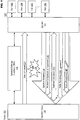
- FIG. 1 illustrates an example of spectrum reclaiming in a leased spectrum system accordance with at least one embodiment of the present disclosure.
- system 100 may be configured to facilitate the brokering of spectrum.
- Spectrum as referenced herein, may refer to certain wireless frequencies or channels in which at least one licensed entity is allowed to operate.
- Wireless service providers may license spectrum from a governmental entity so that their users may have exclusive right to operate within the licensed frequencies.
- worldwide demand for wireless service is quickly exhausting the available licensed bandwidth. Modes of operation are needed that allow licensed spectrum to be leveraged in a more efficient manner.
- system 100 may provide a manner in which the usage of licensed bandwidth may be increased through shared access.
- System 100 may comprise, for example, spectrum owner 102, at least one operator 104 and SEC 108.
- spectrum owner 102 may include, but are not limited to, a governmental entity, a regulatory body or a private organization that is licensed to exclusive use of certain spectrum.
- Operator 104 may be a public or private entity that seeks to utilize the licensed spectrum at least on a temporary basis such as a wireless service provider that seeks bandwidth to accommodate wireless operation for user 106A, user 106B, user 106C to user 106n (collectively "users 106A...n).
- operator 104 may interact with users 106A...n through a cellular network complying with, or otherwise compatible with, the Third Generation Partnership Project (3GPP) Long Term Evolution (LTE) and/or LTE-Advanced (LTE-A) based wireless network standard, including current, previous and future versions of that standard. While more than one operator 104 may lease the spectrum owned by spectrum owner 102, for the sake of clarity the examples disclosed herein will discuss interactions between a single spectrum owner 102 and a single operator 104. Functionality associated with SEC 108 may be added into the overall network architecture of system 100, or alternatively, may be incorporated into components already existing in system 100.
- 3GPP Third Generation Partnership Project
- LTE Long Term Evolution
- LTE-A LTE-Advanced
- SEC 108 may facilitate the leasing of spectrum owned by spectrum owner 102 to operator 104, as well as the reclaiming of the spectrum by spectrum owner 102 from operator 104.
- Example SEC 108 may comprise at least one device accessible via a network such as a local-area network (LAN), a wide-area network (WAN) like the Internet, a global-area network (GAN), etc.
- SEC 108 may include at least one computing device (e.g., server) organized in a cloud-computing configuration accessible via the Internet.
- SEC 108 may facilitate the leasing of certain spectrum owned by spectrum owner 102 to operator 104 as shown at 110.
- the leasing of the spectrum may be controlled by an agreement that dictates the terms of the lease.
- Example terms in the agreement may include, but are not limited to, a cost for the leased spectrum, how and when the cost is payable, a duration of the lease, how the spectrum may be used and provisions for reclaiming the spectrum.
- Reclaiming provisions may be important in a variety of scenarios.
- spectrum owner 102 may be a governmental agency and the leased spectrum may typically be reserved for emergency communications.
- spectrum owner 102 may require the ability to reclaim the spectrum given the occurrence of a national emergency.
- spectrum owner 102 is private (e.g., another cellular service provider)
- the spectrum may be overhead reserved for substantial spikes in communications traffic (e.g., in the occurrence of a traffic "hot spot" during a major event, in the instance of an emergency, etc.).
- an allowance for an adjustment in the terms of the agreement e.g., due to anticipated fluctuation in the requirements of spectrum owner 102
- spectrum owner 102 may insist on defining the ability to reclaim spectrum prior to the end of the lease to operator 104 in the terms of the spectrum lease agreement.
- Trigger 112 may include, for example, a manually or automatically generated message requesting to reclaim the leased spectrum transmitted to SEC 108 and possibly to operator 104 from spectrum owner 102. SEC 108 may then determine a procedure (e.g., including one or more operations) to manage the return of the leased spectrum to spectrum owner 102. Examples of different types of spectrum reclaiming procedures are disclosed at 114. For example, the agreement established between spectrum owner 102 and operator 104 may dictate that following the occurrence of trigger 112 the full leased spectrum will be returned to spectrum owner 102.
- This procedure is shown at 114A wherein spectrum owner 102 may reclaim full spectrum per agreement.
- a delay or lead time may be arranged to allow operator 104 to exit the leased spectrum in an orderly manner (e.g., to maintain the QoS for users 106A...n).
- spectrum owner 102 and operator 104 may coexist within the same leased spectrum as shown at 114B.
- spectrum owner 102 may need to transmit small and/or infrequent messages that may not negatively influence the QoS experienced by users 106A...n.
- QoS may be defined based on the type of interaction being pursued by users 106A...n.
- QoS may include dropped calls, poor audio quality, intermittent data connections from user equipment (UE) to base stations (BS) that are part of a wireless data network maintained by operator 104, slow data connections, etc. If the traffic (e.g., wireless communication load) added by spectrum owner 102 does not negatively affect QoS, then spectrum owner 102 and operator 104 may use the leased spectrum concurrently.
- traffic e.g., wireless communication load
- the leased spectrum may be reclaimed by spectrum owner 102 utilizing a partial or gradual reclaiming procedure that may allow operator 104 to surrender the leased spectrum in a manner that minimizes, to the degree possible, impact on the QoS of users 106A...n.
- a partial reclaiming of leased spectrum as shown at 114C may comprise, for example, operator 104 immediately surrendering some frequencies or channels in the leased spectrum to spectrum owner 102. Partial reclaiming may allow operator 104 to temporarily preserve some users 106A...n within the retained portion of the leased spectrum while pushing other users 106A...n to other bands either owned or leased by operator 104.
- operator 104 may transmit a message to users 106A...n advising of the need to leave the leased spectrum. Users 106A...n that leave the leased spectrum may experience negative QoS issues.
- operator 104 may organize users 106A...n into different classes (e.g., a preferred user class and a normal user class) and may then push users 106A...n out of the leased spectrum based on their classification.
- the gradual reclaiming of leased spectrum as shown at 114D may involve a variety of procedures that allow a gradual transfer of leased spectrum back to spectrum owner 102 (e.g., to reduce the negative impact on QoS for users 106A...n). More detailed examples of gradual reclaiming will be explained further with respect to FIG. 3 .
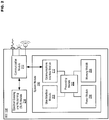
- FIG. 2 illustrates an example configuration for an SEC usable in accordance with at least one embodiment of the present disclosure.
- SEC 108' may perform example functionality such as shown in FIG. 1 , it is meant only as an example of equipment that may be used in accordance with embodiments consistent with the present disclosure, and is not meant to limit these various embodiments to any particular manner of implementation, For example, a plurality of devices operating individually or collaboratively may be required based on the size of system 100 (e.g., the number of spectrum owners 102 and operators 104).
- SEC 108' may comprise system module 200 configured to manage device operations.
- System module 200 may include, for example, processing module 202, memory module 204, power module 206, user interface module 208 and communication interface module 210.
- SEC 108' may further comprise at least communication module 212 configured to interact with at least communication module 210 and SLR module 214 configured to interact with at least communication module 212. While communication module 212 and SLR module 214 have been shown as separate from system module 200, this configuration is merely for the sake of explanation herein. Some or all of the functionality associated with communication module 212 and/or SLR module 214 may also be incorporated within system module 200.
- processing module 202 may comprise one or more processors situated in separate components, or alternatively, may comprise one or more processing cores embodied in a single component (e.g., in a System-on-a-Chip (SoC) configuration) and any processor-related support circuitry (e.g., bridging interfaces, etc.).
- Example processors may include, but are not limited to, various x86-based microprocessors available from the Intel Corporation including those in the Pentium, Xeon, Itanium, Celeron, Atom, Core i-series product families, Advanced RISC (e.g., Reduced Instruction Set Computing) Machine or "ARM" processors, etc.
- support circuitry may include chipsets (e.g., Northbridge, Southbridge, etc. available from the Intel Corporation) configured to provide an interface through which processing module 202 may interact with other system components that may be operating at different speeds, on different buses, etc. in SEC 108'. Some or all of the functionality commonly associated with the support circuitry may also be included in the same physical package as the processor (e.g., an SoC package like the Sandy Bridge integrated circuit available from the Intel Corporation).
- chipsets e.g., Northbridge, Southbridge, etc. available from the Intel Corporation
- processing module 202 may interact with other system components that may be operating at different speeds, on different buses, etc. in SEC 108'.
- Some or all of the functionality commonly associated with the support circuitry may also be included in the same physical package as the processor (e.g., an SoC package like the Sandy Bridge integrated circuit available from the Intel Corporation).
- Processing module 202 may be configured to execute various instructions in SEC 108'. Instructions may include program code configured to cause processing module 202 to perform activities related to reading data, writing data, processing data, formulating data, converting data, transforming data, etc. Information (e.g., instructions, data, etc.) may be stored in memory module 204.
- Memory module 204 may comprise random access memory (RAM) or read-only memory (ROM) in a fixed or removable format.
- RAM may include memory configured to hold information during the operation of SEC 108' such as, for example, static RAM (SRAM) or Dynamic RAM (DRAM).
- ROM may include nonvolatile memory loaded with boot code employing basic input/output instructions (BIOS), Unified Extensible Firmware Interface (UEFI), etc.
- BIOS basic input/output instructions
- UEFI Unified Extensible Firmware Interface
- programmable memories such as electronic programmable ROMs (EPROMS), Flash, etc.
- Other fixed and/or removable memory may include magnetic memories such as, for example, floppy disks, hard drives, etc., electronic memories such as solid state flash memory (e.g., embedded multimedia card (eMMC), etc.), removable memory cards or sticks (e.g., micro storage device (uSD), USB, etc.), optical memories such as compact disc-based ROM (CD-ROM), a Digital Video Disc (DVD), a Blu-Ray disc, etc.
- Power module 206 may include internal power sources (e.g., a battery, fuel cell, etc.) and/or external power sources (e.g., an electromechanical or solar generator, power grid, an external fuel cell, etc.), and related circuitry configured to supply SEC 108' with the power needed to operate.
- User interface module 208 may be optional in that some devices (e.g., a server) may not comprise user interface module 208, and may instead rely upon a separate device (e.g., a management terminal) to provide user interface functionality.
- User interface module 208 may include circuitry configured to allow users to interact with SEC 108' such as, for example, various input mechanisms (e.g., microphones, switches, buttons, knobs, keyboards, speakers, touch-sensitive surfaces, one or more sensors configured to capture images and/or sense proximity, distance, motion, gestures, etc.) and output mechanisms (e.g., speakers, displays, lighted/flashing indicators, electromechanical components for vibration, motion, etc.).
- various input mechanisms e.g., microphones, switches, buttons, knobs, keyboards, speakers, touch-sensitive surfaces, one or more sensors configured to capture images and/or sense proximity, distance, motion, gestures, etc.
- output mechanisms e.g., speakers, displays, lighted/flashing indicators, electromechanical components for vibration, motion, etc.
- Communication interface module 210 may be configured to handle packet routing and other control functions for communication module 212, which may include resources configured to support wired and/or wireless communications.
- SEC 108' may comprise more than one communication module 212 (e.g., including separate physical interface modules for wired protocols and/or wireless radios) all managed by a centralized communication interface module 210.
- Wired communications may include serial and parallel wired mediums such as, for example, Ethernet, Universal Serial Bus (USB), Firewire, Digital Visual Interface (DVI), High-Definition Multimedia Interface (HDMI), etc.
- Wireless communications may include, for example, close-proximity wireless mediums (e.g., radio frequency (RF) such as based on the Near Field Communications (NFC) standard, infrared (IR), optical character recognition (OCR), magnetic character sensing, etc.), short-range wireless mediums (e.g., Bluetooth, WLAN, Wi-Fi, etc.), long range wireless mediums (e.g., cellular wide area radio communication technology that may include, for example, a Global System for Mobile Communications (GSM) radio communication technology, a General Packet Radio Service (GPRS) radio communication technology, an Enhanced Data Rates for GSM Evolution (EDGE) radio communication technology, and/or a Third Generation Partnership Project (3GPP) radio communication technology (e.g.
- GSM Global System for Mobile Communications
- GPRS General Packet Radio Service
- EDGE Enhanced Data Rates for GSM Evolution
- 3GPP Third Generation Partnership Project
- UMTS Universal Mobile Telecommunications System
- FOMA Freedom of Multimedia Access
- 3GPP LTE Long Term Evolution
- 3GPP LTE Advanced Long Term Evolution Advanced
- CDMA2000 Code division multiple access 2000
- CDPD Cellular Digital Packet Data
- Mobitex 3G (Third Generation)
- CSD Circuit Switched Data
- HSCSD High-Speed Circuit-Switched Data
- UMTS 3G
- W-CDMA UMTS
- HSPA High Speed Packet Access
- HSDPA High-Speed Downlink Packet Access
- HSUPA High-Speed Uplink Packet Access
- HSPA+ High Speed Packet Access Plus
- UMTS-TDD Universal Mobile Telecommunications System - Time-Division Duplex
- TD-CDMA Time Division - Code Division Multiple Access
- TD-CDMA Time Division -CDMA (Time Division -CDMA (Time Division -CDMA (Time Division -CDMA (Time Division
- communication interface module 210 may be configured to prevent wireless communications that are active in communication module 212 from interfering with each other. In performing this function, communication interface module 210 may schedule activities for communication module 212 based on, for example, the relative priority of messages awaiting transmission. Moreover, while the embodiment disclosed in FIG. 2 illustrates communication interface module 210 being separate from communication module 212, it may also be possible for the functionality of communication interface module 210 and communication module 212 to be incorporated within the same module.
- SLR module 214 may interact with at least communication module 212.
- SLR module 214 may utilize at least communication module 212 to interact with spectrum owner 102 and/or operator 104.
- SLR module 214 may receive lease agreements and/or requests to reclaim leased spectrum from spectrum owner 102 and/or operator 104 via communication module 212, and may also transmit instructions for allowing spectrum reclaiming to spectrum owner 102 and operator 104 via communication module 212.
- SLR module 214 may also interact with other modules within SEC 108' during spectrum leasing or reclaiming activities. For example, agreements may be stored in a database within memory module 204, processing tasks related to spectrum leasing/reclaiming may be handled by processing module 202, etc.
- FIG. 3 illustrates examples of spectrum reclaiming in accordance with at least one embodiment of the present disclosure.
- leased spectrum may be reclaimed based on, for example, provisions set forth in an agreement between spectrum owner 102 and operator 104, a dual risk evaluation, etc.
- the examples illustrated in FIG. 3 show possible reclaiming operations based on the occurrence of trigger 112.
- spectrum owner 102 is allowed to reclaim the full leased spectrum following the occurrence of trigger 112.
- Reclaiming operations 300 may be defined within the agreement established when the spectrum was first leased to operator 104. While these operations may be defined by agreement, the immediate handover of leased spectrum may negatively impact the QoS of users 106A...n.
- reclaiming operations 302 present an alternative procedure wherein, following the occurrence of trigger 112, delay 308 allows operator 104 some time to transition users 106A...n out of the leased spectrum in an orderly manner prior to spectrum owner 102 being allowed to reclaim the leased spectrum.
- Reclaiming operations 304 disclose an example time domain reclaiming procedure.
- Spectrum owner 102 may be permitted full use of the leased spectrum over an increasing duration in each of time periods 310 to 316 until the leased spectrum is fully reclaimed by spectrum owner 102.
- spectrum owner 102 is permitted to use the full leased spectrum for about a 33% of the duration time period 310. This percentage in increased to about 50% of the duration of time period 312 and 75% of the duration of time period 314 until the spectrum is full reclaimed in time period 316.
- the gradual rate of reclaiming that may be provided by reclaiming operations 304 may allow operator 104 to relocate users 106A...n out of the leased spectrum in a manner that will minimize the effect on QoS.
- reclaiming operations 306 may operate gradually but in frequency domain. For example, following the occurrence of trigger 112 spectrum owner 102 may be allowed to reclaim certain frequencies or channels within the leased spectrum until the leased spectrum is fully reclaimed. Reclaiming operations 306 may allow operator 104 to gradually transfer users 106A...n to other channels within the leased spectrum while gradually moving other users 106A...n out of the leased spectrum, which may smooth out the transition out of the leased spectrum to alternative bandwidth, and thus, may reduce the negative impact to QoS.
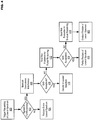
- FIG. 4 illustrates example operations for spectrum reclaiming in accordance with at least one embodiment of the present disclosure.
- trigger 112 may be detected.
- at least SEC 108 may receive a message from spectrum owner 102 requesting to reclaim leased spectrum.
- a determination may be made in operation 402 as to whether full reclaiming was agreed to when the spectrum was leased. If it is determined in operation 402 that full reclaiming was agreed to, then in operation 404 the entire leased spectrum may be reclaimed. If it is determined in operation 402 that there was no agreement, then in operation 406 interference may be measured during coexistence of spectrum owner 102 and operator 104 within the leased bandwidth.
- an acceptable QoS e.g., the service provided would still be acceptable to users 106A...n.
- a dual risk evaluation may be performed to estimate the impact of allowing spectrum owner 102 to partially reclaim the leased spectrum.
- a determination may then be performed in operation 414 as to whether the QoS resulting from allowing a partial reclaiming of the leased spectrum by spectrum owner 102 would still allow for an acceptable QoS. If in operation 414 it is determined that the resulting QoS would be acceptable, then in operation 416 spectrum owner 102 may be allowed to partially reclaim the leased spectrum. In one embodiment, the amount of spectrum that spectrum owner 102 is allowed to reclaim may be based on the dual risk evaluation.
- a dual risk evaluation may be performed based on a procedure that allows spectrum owner 102 to gradually reclaim the leased spectrum.
- the results of the dual risk evaluation in operation 418 may dictate how spectrum may be reclaimed by spectrum owner 102 in operation 42o (e.g., the rate at which the leased spectrum may be reclaimed by spectrum owner 102 to ensure an acceptable QoS).
- FIG. 5 illustrates example operations for dual risk evaluation in accordance with at least one embodiment of the present disclosure.
- dual risk evaluation 312' and/or 314' may determine how quickly leased spectrum may be returned to spectrum owner 102 while minimizing the negative impact to QoS for users 106A...n.
- FIG. 5 discloses general operations for dual risk evaluation, which may in practice be based on different mathematical models as will be disclosed in regard to FIG. 6 to 8 .
- the operations disclosed in FIG. 5 may be performed by one or both of spectrum owner 102 and operator 104.
- a band or group of bands within the leased spectrum may be selected.
- An interference measure may then be determined for each BS pair at the selected band or groups of bands in operation 502.
- Example BS pairs may include a BS from the communication architecture of spectrum owner 102 along with a BS from the communication architecture of operator 104 operating within the same region or cell in a cellular communication system. Each BS in the pair, if operating concurrently, may cause interference for the corresponding BS in the other system. Interference for BS pairs may continue to be measured until it is determined in operation 504 that all BS pairs have been scanned in a particular geographic area of effectiveness.
- the deactivation of one BS may have a ripple effect on adjacent BSs within the same system (e.g., some wireless traffic may be moved from a deactivated BS to another) and thus, the area of effectiveness may need to be limited otherwise the dual risk evaluation may become too ponderous to effect a transition.
- a QoS may then be determined for each BS pair.
- the QoS may characterize the impact of having the corresponding BS active on users 106A...n.
- the BS pairs may then be ranked based on the impact of coexistence to QoS in operation 508. For example, BS pairs that have high QoS may be more resilient to reclaiming while BS pairs having lower QoS may be much more susceptible to interference from a corresponding BS, and thus, much vulnerable to reclaiming.
- Operations 500 to 508 may continue until it is determined in operation 510 that the scanning of all bands, or groups of bands, is complete.
- the completed BS pair rankings may be utilized to generate a procedure for allowing spectrum owner 102 to reclaim the leased spectrum in a manner that will minimize the negative impact to QoS for at least users 106A...n.
- FIG. 6 illustrates example interference criteria for dual risk evaluation in accordance with at least one embodiment of the present disclosure.
- An important operation in allowing spectrum owner 102 to reclaim the leased spectrum is dual risk evaluation.
- KPIs key performance indicators
- Example KPIs may include, but are not limited to, candidate band usage level, interference levels, mobility range of the desired bands and propagation characteristics.
- Interference level KPI iKPI
- evaluating overall interference may involve a combination of results based on at least two of the above methods.
- At least one objective consistent with the present disclosure may be to allow spectrum owner 102 to reclaim spectrum in consideration of iKPI so as to minimize the impact on QoS to operator 104.
- risks in reclaiming the leased spectrum may be evaluated prior to spectrum owner 102 making a request to reclaim the leased spectrum.
- the evaluation may include, for example, a ranking the of spectrum channels to determine an order for reclaiming that will minimize interference.
- SINR P I + N
- I ⁇ i ⁇ s ⁇ i / PL i,r represents the interference power of other simultaneous transmissions
- N Background noise power, which is typically fixed
- ⁇ s Transmit power of the sender ( s ) in a uniform power network that is assumed to be the same for all stations
- PL s,r Path loss between the sender (s) and receiver (r) taking into account the Euclidean distance between them.
- the combinatorial assessment of the spectrum owner-to-operator pairing across the base station population involved in an agreement may be more efficiently managed (with respect to risk) by dynamically ranking the reclaiming characteristics that may minimize the negative effects on both parties (e.g., may provide spectrum operator 104 with spectrum to meet its immediate communication need while minimizing the negative impact on QoS for operator 104).
- a series of overlapping station signals must work with the installed BS infrastructure of operator 104 on a band-by-band basis. This is illustrated in FIG.
- BS pairs may exist, with a BS from the communication infrastructure of spectrum owner 102 (e.g., BS1o, BS2o, BS3o, etc.) being collocated with a BS from the communication infrastructure of operator 104 (e.g., BS1r, BS2r, BS3r, etc.).
- a multi-input and multi-output (MIMO) model may be formulated to characterize the health of the local network relationships.
- SINR table 602 describes these relationships for a specific band (or group of bands). It should be noted that SINR may be computed between sender (e.g., operator 104) and receiver (e.g., users 106A...n). Thus, SINR (dB) in table 602 refers to the aggregated representation of SINR (dB) (e.g., total, average, delta from max, or other statistics) across all send and receive activities for a specific BS. If SINR is available on a per BS basis then this signal would be used instead.
- SINR may be computed between sender (e.g., operator 104) and receiver (e.g., users 106A...n).
- SINR (dB) in table 602 refers to the aggregated representation of SINR (dB) (e.g., total, average, delta from max, or other statistics) across all send and receive activities for a specific BS. If SINR is available on a per BS basis then this signal would be used instead.
- BS-specific bands need to be off-loaded or reclaimed, they can be reclaimed in an order that minimizes impact to operator 104 while meeting the needs of spectrum owner 102.
- the best service path can be preserved over time.
- the reclaiming operations may involve a more direct pull-back of leased spectrum.
- the reclamation of leased spectrum may be managed in a more robust manner for all parties involved.
- Each pairing may then be ranked 1...n based on the QoS Score strength, defining the pullback priority for a given geography, band and/or spectrum range.
- the implication in this example pull-back algorithm is that the higher the score the better the quality and available station load, and thus, the lower the risk of pull-back related drops relative to the available power limits of the impacted BS.
- the leased spectrum may then be reclaimed in the order computed for a given frequency, interval in time and pull-back demand quantity as a post ranking processing event as measured against the available power per base station.
- Pull-back may also be executed evenly or weighted in a defined way by spectrum owner 102 to achieve pull-back objectives.
- the filtering of raw results may be found to be desirable.
- Pre- and post-filtering algorithms may be employed to manage a range of system non-linearities, to propagate desired behavior or to block undesired behavior under different operational scenarios, etc.
- Example filtering techniques may include, but are not limited to, low pass filters techniques that allow the passage of low frequencies while blocking higher frequency propagation, high pass filter techniques that pass high frequencies but block lower frequency propagation, Band-pass filters techniques that allow passage of a defined range of frequencies, Band-stop filters that allow the propagation of frequencies outside of a defined frequency band to pass, notch-filters can be used to provide a null response at set frequencies as needed, all-pass filtering techniques that pass all frequencies but may modify the phase relationship between frequencies, equalization filters that may gradually vary the amplitude of response as a function of frequency, etc. These techniques may be utilized individually or in-combination to achieve the desired system response characteristics,
- TP represents the total power of the BS
- I ⁇ i ⁇ s ⁇ i / PL i,r represents the interference power of other simultaneous transmissions
- N Background noise power, which is typically fixed
- ⁇ s Transmit power of the sender ( s ) in a uniform power network that is assumed to be the same for all stations
- PL s,r Path loss between the sender ( s ) and receiver ( r ) taking into account the Euclidean distance between them.
- Each BS pairing may then be ranked 1...n based on ⁇ SINR strength, defining pull-back priority for a given geography, band and/or spectrum range. In this example scenario the implication is that the higher the score the better the quality and available station load, which lowers the risk of pull-back related drops relative to the available power limits of the impacted base station.
- the leased spectrum may then be reclaimed in the order computed for a given frequency, interval in time and pull back demand quantity as a post ranking processing event measured against the available power per BS.
- Pull-back may also be executed evenly or weighted in a defined way by spectrum owner 102 to achieve pull-back objectives.
- pull-back optimization may further be based on demand signal integration using linear programming methods.
- the TP allowed for each BS of operator 104 may then be loaded into the above relationship and used to set as the high limit constraints for the BS of operator 104 variables.
- the TP allowed for each BS of spectrum owner 102 may then be loaded and used to set as the high limit constraints for the BS of spectrum owner 102 variables.
- Table 606 in FIG. 6 discloses an example of this calculation and includes two pull-back signals disclosed as PB1 (PB1o and PB1d) and PB2 (PB2o and PB2d) respectively.
- K s#o#r may represent an operator - owner BS pairing and Pull-Back gain is K s#opb# and Kp b#dpb# .
- the pull-back demand signal request for the current interval (PB1d and PB2d) may then be loaded into relationship (3).
- BS pairings exist for a pull-back request i.e. K > 0
- a feasible power loading pull-back vector profile change may be computed across all operator 104 BSs (BS1r...BS3r) that maximizes QoS by minimizing the change in base station loading (subject to MV and CV constraints) required to fully satisfy all pull-back request quantities. For example, based on table 606: min u J u s . t .
- y min and y max the controlled variable low limit and high limit in dB units for variables y 1...3 (e.g., this would be a low and high power limit for spectrum owner 102 BSs), u ml ...
- m3 the manipulated variable for operator 104 BSs (e.g., BS1r, BS2r, and BS3r) in dB units
- iKPI select (Heuristic Result, LP pull-back, QP pull-back, or SQP pull-back), wherein all pull-back requests are satisfied and QoS of customers is maximized.
- a comparison of the BS1r...BS3r pullback quantities may be performed relative to PB1o and PB2o pull-back satisfaction for any specific pull-back interval request.
- Weighting of any pull back method may be controlled by specific weights applied to the ranking for the reclaiming operation. For linear programming (LP) or quadratic programming (QP) methods, weighting may be applied using the high and low limits of the PB1o and PB2o pull-back inventories. While the pull-back inventory targets may be set to zero in the most extreme cases, non-zero values can be set as required to balance pull-back with QoS as agreed to by the parties involved. For all methods, the pull-back assumption may be that the volume of pull-back needed can be reclaimed from the feasible pairings available.
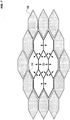
- FIG. 7 illustrates an example of the effects of spectrum reclaiming on adjacent cells in a single layer cellular system accordance with at least one embodiment of the present disclosure.
- a network of cells 600 is shown that may comprise certain cells 700 targeted for reclaiming surrounded by border zone 702.
- An important aspect of spectrum reclaiming is that in some situations a change in spectrum allocation in a portion of a cellular network may propagate throughout the entire network.
- a change of spectrum allocation in a cells 600 may imply changes in its neighboring cells 600 (e.g., due to an altered interference situation), and likewise, may result in changes that may continue to propagate through adjacent cells 600.
- it becomes important that spectrum reclaiming is contained within a limited geographic area such that the spectrum reclaiming only impacts a limited set of BS configurations, and thus, a reconfiguration of the entire network may be avoided.
- Limiting spectrum reallocation to a "contained" cell area may avoid the propagation of changes throughout the network.
- the size of the contained cell area 700 should be evaluated for both spectrum owner 102 and operator 104.
- a spectrum reclaiming approach may be selected that leads to the smallest "contained” cell area 700.
- another solution may need to be selected for which the size of the contained cell area 700 should be as small as possible while satisfying other relevant KPIs.
- other coverage models may be used (e.g., allotments for TV broadcasting, etc.).
- the spectrum-reallocation cell area 700 is contained in case that spectrum owner 102 reclaims the leased spectrum. This may in particular be achieved by separating such contained area from neighboring areas by using different frequency allocations in between as border zones 702. Those different frequency allocations are preferably licensed bands, but also unlicensed spectrum or leased spectrum may be used, preferably leased from different spectrum owner stakeholders such that a re-allocation within contained area 700 does not automatically imply reallocation of border zone 702.
- FIG. 8 illustrates an example of the effects of spectrum reclaiming on adjacent cells in a multilayer cellular system in accordance with at least one embodiment of the present disclosure.
- a second layer of cells 800 is illustrated in FIG. 8 including contained cells 802 and border zones 804.
- Second layer of cells 800 may pertain to, for example, other operators with BSs in the same geographic area as spectrum owner 102 and operator 104, Depending on the spectrum reclaiming needs of spectrum owner 102, contained cell area 800 may change as well as the area of the cells outside of the contained area with border zone 804 changing at the same time.
- cell partitioning may be controlled by definition of the scope of a given algorithm with design flexibility achieved by supporting a distributed control architecture implementation.
- feasible BS pairings may be based on signal quality with specific signal quality limits set to define the allowed partition scope for any reclamation activity. This prevents the adjacent weaker BS signal from being included in the reclamation task. Partitioning can also be controlled by designing control algorithms on a per-band ID basis. If required, dynamic construction of a matrix for any given reclamation activity can be limited to a small physical number of BSs for the networks of spectrum owner 102 and operator 104 to provide hard limits geographically, Many different instances of a control algorithm may be running in the same geographical area subject to defined partitioning (e.g. by band id, frequency, physical number of base stations etc.). When the combined effect of multiple algorithms operating in a larger geography must be considered, a supervisory LP or heuristic may be defined to protect broader system constraints, as required.
- FIG. 4 to 5 illustrates operations according to different embodiments, it is to be understood that not all of the operations depicted in FIG. 4 to 5 are necessary for other embodiments. Indeed, it is fully contemplated herein that in other embodiments of the present disclosure, the operations depicted in FIG. 4 to 5 , and/or other operations described herein, may be combined in a manner not specifically shown in any of the drawings, but still fully consistent with the present disclosure. Thus, claims directed to features and/or operations that are not exactly shown in one drawing are deemed within the scope and content of the present disclosure.
- a list of items joined by the term “and/or” can mean any combination of the listed items.
- the phrase “A, B and/or C” can mean A; B; C; A and B; A and C; B and C; or A, B and C.
- a list of items joined by the term "at least one of” can mean any combination of the listed terms.
- the phrases "at least one of A, B or C” can mean A; B; C; A and B; A and C; B and C; or A, B and C.
- module may refer to software, firmware and/or circuitry configured to perform any of the aforementioned operations.
- Software may be embodied as a software package, code, instructions, instruction sets and/or data recorded on non-transitory machine readable storage mediums.
- Firmware may be embodied as code, instructions or instruction sets and/or data that are hard-coded (e.g., nonvolatile) in memory devices.
- Circuitry as used in any embodiment herein, may comprise, for example, singly or in any combination, hardwired circuitry, programmable circuitry such as computer processors comprising one or more individual instruction processing cores, state machine circuitry, and/or firmware that stores instructions executed by programmable circuitry.
- the modules may, collectively or individually, be embodied as circuitry that forms part of a larger system, for example, an integrated circuit (IC), system on-chip (SoC), desktop computers, laptop computers, tablet computers, servers, smartphones, etc.
- IC integrated circuit
- SoC system on-chip
- any of the operations described herein may be implemented in a system that includes one or more storage mediums (e.g., non-transitory mediums) having stored thereon, individually or in combination, instructions that when executed by one or more processors perform the methods.
- the processor may include, for example, a server CPU, a mobile device CPU, and/or other programmable circuitry. Also, it is intended that operations described herein may be distributed across a plurality of physical devices, such as processing structures at more than one different physical location.
- the storage medium may include any type of tangible medium, for example, any type of disk including hard disks, floppy disks, optical disks, compact disk read-only memories (CD-ROMs), compact disk rewritables (CD-RWs), and magneto-optical disks, semiconductor devices such as read-only memories (ROMs), random access memories (RAMs) such as dynamic and static RAMs, erasable programmable read-only memories (EPROMs), electrically erasable programmable read-only memories (EEPROMs), flash memories, Solid State Disks (SSDs), embedded multimedia cards (eMMCs), secure digital input/output (SDIO) cards, magnetic or optical cards, or any type of media suitable for storing electronic instructions.
- ROMs read-only memories
- RAMs random access memories
- EPROMs erasable programmable read-only memories
- EEPROMs electrically erasable programmable read-only memories
- flash memories Solid State Disks (SSDs), embedded multimedia cards (eMMC
- a spectrum exchange coordinator may be interposed between a spectrum owner and at least one operator to facilitate the leasing and reclaiming of spectrum.
- the SEC may then determine a procedure for allowing the spectrum owner to reclaim the leased spectrum.
- the spectrum owner may be allowed to reclaim the leased spectrum in full based on an agreement. If not previously agreed to, the spectrum owner may be allowed to reclaim at least part of the spectrum.
- QoS quality of service
- Partial or gradual reclaiming may then allow the leased spectrum to be reclaimed while minimizing impact. Examples of gradual reclaiming may be based on a time domain, frequency domain, or cellular basis.
- the following examples pertain to further embodiments.
- the following examples of the present disclosure may comprise subject material such as a device, a method, at least one machine-readable medium for storing instructions that when executed cause a machine to perform acts based on the method, means for performing acts based on the method and/or a system for spectrum reclaiming in a leased spectrum system, as provided below.
Landscapes
- Engineering & Computer Science (AREA)
- Computer Networks & Wireless Communication (AREA)
- Signal Processing (AREA)
- Quality & Reliability (AREA)
- Mobile Radio Communication Systems (AREA)
Priority Applications (1)
| Application Number | Priority Date | Filing Date | Title |
|---|---|---|---|
| EP18195380.3A EP3442253A3 (fr) | 2013-12-26 | 2013-12-26 | Dispositif de récupération de spectre dans un système à spectre loué |
Applications Claiming Priority (3)
| Application Number | Priority Date | Filing Date | Title |
|---|---|---|---|
| EP13900230.7A EP3087775A4 (fr) | 2013-12-26 | 2013-12-26 | Récupération de spectre dans un système à spectre loué |
| EP18195380.3A EP3442253A3 (fr) | 2013-12-26 | 2013-12-26 | Dispositif de récupération de spectre dans un système à spectre loué |
| PCT/US2013/077747 WO2015099720A1 (fr) | 2013-12-26 | 2013-12-26 | Récupération de spectre dans un système à spectre loué |
Related Parent Applications (1)
| Application Number | Title | Priority Date | Filing Date |
|---|---|---|---|
| EP13900230.7A Division EP3087775A4 (fr) | 2013-12-26 | 2013-12-26 | Récupération de spectre dans un système à spectre loué |
Publications (2)
| Publication Number | Publication Date |
|---|---|
| EP3442253A2 true EP3442253A2 (fr) | 2019-02-13 |
| EP3442253A3 EP3442253A3 (fr) | 2019-03-13 |
Family
ID=53479386
Family Applications (2)
| Application Number | Title | Priority Date | Filing Date |
|---|---|---|---|
| EP18195380.3A Withdrawn EP3442253A3 (fr) | 2013-12-26 | 2013-12-26 | Dispositif de récupération de spectre dans un système à spectre loué |
| EP13900230.7A Withdrawn EP3087775A4 (fr) | 2013-12-26 | 2013-12-26 | Récupération de spectre dans un système à spectre loué |
Family Applications After (1)
| Application Number | Title | Priority Date | Filing Date |
|---|---|---|---|
| EP13900230.7A Withdrawn EP3087775A4 (fr) | 2013-12-26 | 2013-12-26 | Récupération de spectre dans un système à spectre loué |
Country Status (4)
| Country | Link |
|---|---|
| US (1) | US9326156B2 (fr) |
| EP (2) | EP3442253A3 (fr) |
| CN (2) | CN109660994B (fr) |
| WO (1) | WO2015099720A1 (fr) |
Families Citing this family (7)
| Publication number | Priority date | Publication date | Assignee | Title |
|---|---|---|---|---|
| US9596623B2 (en) * | 2014-08-11 | 2017-03-14 | Verizon Patent And Licensing Inc. | Shared spectrum load balancing |
| US9681307B2 (en) * | 2014-09-22 | 2017-06-13 | Illinois Institute Of Technology | System and method for determining and sharing spectrum availability |
| US10536858B2 (en) * | 2015-06-03 | 2020-01-14 | The Aerospace Corporation | Spectrum sharing based on signal-based shared access |
| US10136330B2 (en) * | 2016-08-09 | 2018-11-20 | Qualcomm Incorporated | Staggered channel changing for cells of spectrum sharing networks |
| US11665549B2 (en) * | 2020-10-23 | 2023-05-30 | Dish Wireless L.L.C. | Dynamic cellular network spectrum sharing |
| WO2022234418A2 (fr) * | 2021-05-03 | 2022-11-10 | Frequencz Ab | Système de communication multi-spectre et multi-réseau |
| US12238531B1 (en) | 2024-08-18 | 2025-02-25 | Peltbeam Inc. | Virtual fiber communication system and method for spectrum availability-based control of wireless backhaul mesh network |
Family Cites Families (20)
| Publication number | Priority date | Publication date | Assignee | Title |
|---|---|---|---|---|
| EP1437667A1 (fr) * | 2002-12-20 | 2004-07-14 | Motorola Inc. | Procédé de gestion du spectre et appareil de communication et système de communication associés |
| US8958810B2 (en) * | 2006-11-07 | 2015-02-17 | Alcatel Lucent | Method and apparatus for spectrum allocation in wireless networks |
| US20110077015A1 (en) * | 2006-12-29 | 2011-03-31 | Nokia Corporation | Methods, Computer Program Products And Apparatus Providing Shared Spectrum Allocation |
| WO2009009548A2 (fr) * | 2007-07-09 | 2009-01-15 | Qualcomm Incorporated | Procédés d'envoi de paquets de petite taille dans un réseau entre homologues (p2p) |
| US20090059856A1 (en) * | 2007-08-10 | 2009-03-05 | Nokia Corporation | Spectrum sharing |
| GB2461724B (en) * | 2008-07-09 | 2011-02-23 | Toshiba Res Europ Ltd | Wireless network access |
| US8948085B2 (en) * | 2010-03-17 | 2015-02-03 | Qualcomm Incorporated | Methods and apparatus for best-effort radio backhaul among cells on unlicensed or shared spectrum |
| US8576817B2 (en) * | 2010-04-08 | 2013-11-05 | Spectrum Bridge, Inc. | System and method for managing radio access to spectrum and to a spectrum management system |
| US20120120887A1 (en) * | 2010-11-12 | 2012-05-17 | Battelle Energy Alliance, Llc | Systems, apparatuses, and methods to support dynamic spectrum access in wireless networks |
| EP2712223A4 (fr) * | 2011-05-19 | 2015-11-18 | Nec Corp | Système et procédé de gestion du spectre, système de communication sans fil et supports lisibles par ordinateur |
| CN102802161A (zh) * | 2011-05-27 | 2012-11-28 | 国际商业机器公司 | 一种减少无线网络间的频谱干扰的方法及设备 |
| CN102355671B (zh) * | 2011-08-17 | 2014-08-20 | 电信科学技术研究院 | 可用频谱的确定方法和设备 |
| US8892109B2 (en) * | 2012-05-02 | 2014-11-18 | Alcatel Lucent | Method and apparatus of dynamic spectrum sharing in cellular networks |
| US20140162667A1 (en) | 2012-12-07 | 2014-06-12 | Markus Mueck | Radio resource distribution devices, and methods for controlling a radio resource distribution device |
| US8977254B2 (en) | 2012-12-07 | 2015-03-10 | Intel Corporation | Method for device configuration, database, mobile communication device and network entity |
| US9491661B2 (en) | 2012-12-17 | 2016-11-08 | Intel Corporation | Cloud spectrum management system |
| US9226160B2 (en) | 2012-12-17 | 2015-12-29 | Intel Corporation | Radio spectrum trading |
| US9565658B2 (en) | 2013-01-08 | 2017-02-07 | Intel Corporation | Dynamic selection of spectrum access in a spectrum sharing context |
| US9554416B2 (en) | 2013-04-26 | 2017-01-24 | Intel IP Corporation | Shared spectrum reassignment in a spectrum sharing context |
| EP3014917A4 (fr) | 2013-06-26 | 2017-02-22 | Intel Corporation | Coordination des droits d'utilisation du spectre entre entités |
-
2013
- 2013-12-26 US US14/361,745 patent/US9326156B2/en active Active
- 2013-12-26 EP EP18195380.3A patent/EP3442253A3/fr not_active Withdrawn
- 2013-12-26 CN CN201811037472.9A patent/CN109660994B/zh active Active
- 2013-12-26 EP EP13900230.7A patent/EP3087775A4/fr not_active Withdrawn
- 2013-12-26 WO PCT/US2013/077747 patent/WO2015099720A1/fr not_active Ceased
- 2013-12-26 CN CN201380081196.5A patent/CN105766012B/zh active Active
Non-Patent Citations (1)
| Title |
|---|
| None |
Also Published As
| Publication number | Publication date |
|---|---|
| EP3442253A3 (fr) | 2019-03-13 |
| EP3087775A4 (fr) | 2017-08-16 |
| CN109660994B (zh) | 2023-07-25 |
| WO2015099720A1 (fr) | 2015-07-02 |
| US20150304852A1 (en) | 2015-10-22 |
| CN105766012A (zh) | 2016-07-13 |
| US9326156B2 (en) | 2016-04-26 |
| CN105766012B (zh) | 2019-07-12 |
| CN109660994A (zh) | 2019-04-19 |
| EP3087775A1 (fr) | 2016-11-02 |
Similar Documents
| Publication | Publication Date | Title |
|---|---|---|
| US11523287B2 (en) | Machine-learning framework for spectrum allocation | |
| US9326156B2 (en) | Spectrum reclaiming in a leased spectrum system | |
| EP4156742B1 (fr) | Réseau de contrôle de quarantaine dans un réseau d'accès radio 5g pour résilience multicouche coordonnée de ressources de tranche de réseau | |
| Al-Turjman et al. | Small cells in the forthcoming 5G/IoT: Traffic modelling and deployment overview | |
| US9813916B2 (en) | Carrier aggregation using unlicensed frequency bands | |
| US9271179B2 (en) | Customized coexistence management based on user behavior | |
| KR102197555B1 (ko) | 무선 통신 시스템의 장치 및 방법 | |
| US9565577B2 (en) | Method and apparatus for maximizing network capacity of cell sites in a wireless network | |
| US20120244869A1 (en) | Network scaling for network energy savings | |
| JP7670679B2 (ja) | セルラネットワークの基地局のための複数の同時帯域幅部分 | |
| US11838766B2 (en) | Facilitating implementation of communication network deployment through network planning in advanced networks | |
| US20170055268A1 (en) | Recommending channels for accessing an unlicensed radio frequency spectrum band | |
| EP3209045A1 (fr) | Dispositif de commande de communication, station de base, dispositif terminal, procédé de commande de communication et procédé de communication sans fil | |
| WO2024011575A1 (fr) | Systèmes et procédés de transfert conditionnel et améliorations de capacité de réalité étendue | |
| WO2018111166A1 (fr) | Attribution de ressources radio pour une communication entre un nœud de réseau radio multiopérateur et un dispositif sans fil | |
| US10327152B2 (en) | Method and apparatus for virtualizing unlicensed spectrum | |
| US12150034B2 (en) | Radio frequency signal prioritization and selection | |
| Martínez-Vargas et al. | Deployment analysis and optimization of heterogeneous networks under the spectrum underlay strategy | |
| KR20230132561A (ko) | 경로 스위칭 방법, 단말 및 네트워크 측 장치 | |
| Zeydan et al. | Performance comparison of QoS deployment strategies for cellular network services | |
| Abdulkafi et al. | Energy‐aware load adaptive framework for LTE heterogeneous network | |
| Malandrino et al. | A fix-and-relax model for heterogeneous LTE-based networks | |
| CN107005850A (zh) | 蜂窝通信网络中的频谱使用重新配置 | |
| US9769672B2 (en) | Anonymization of ASA/LSA repository data | |
| Teotia et al. | Markovian model based channel allocation in cognitive radio networks |
Legal Events
| Date | Code | Title | Description |
|---|---|---|---|
| PUAI | Public reference made under article 153(3) epc to a published international application that has entered the european phase |
Free format text: ORIGINAL CODE: 0009012 |
|
| STAA | Information on the status of an ep patent application or granted ep patent |
Free format text: STATUS: THE APPLICATION HAS BEEN PUBLISHED |
|
| PUAL | Search report despatched |
Free format text: ORIGINAL CODE: 0009013 |
|
| AC | Divisional application: reference to earlier application |
Ref document number: 3087775 Country of ref document: EP Kind code of ref document: P |
|
| AK | Designated contracting states |
Kind code of ref document: A2 Designated state(s): AL AT BE BG CH CY CZ DE DK EE ES FI FR GB GR HR HU IE IS IT LI LT LU LV MC MK MT NL NO PL PT RO RS SE SI SK SM TR |
|
| AK | Designated contracting states |
Kind code of ref document: A3 Designated state(s): AL AT BE BG CH CY CZ DE DK EE ES FI FR GB GR HR HU IE IS IT LI LT LU LV MC MK MT NL NO PL PT RO RS SE SI SK SM TR |
|
| RIC1 | Information provided on ipc code assigned before grant |
Ipc: H04W 88/02 20090101ALI20190206BHEP Ipc: H04W 88/18 20090101ALI20190206BHEP Ipc: H04W 16/14 20090101AFI20190206BHEP Ipc: H04W 88/14 20090101ALI20190206BHEP |
|
| STAA | Information on the status of an ep patent application or granted ep patent |
Free format text: STATUS: REQUEST FOR EXAMINATION WAS MADE |
|
| 17P | Request for examination filed |
Effective date: 20190912 |
|
| RBV | Designated contracting states (corrected) |
Designated state(s): AL AT BE BG CH CY CZ DE DK EE ES FI FR GB GR HR HU IE IS IT LI LT LU LV MC MK MT NL NO PL PT RO RS SE SI SK SM TR |
|
| STAA | Information on the status of an ep patent application or granted ep patent |
Free format text: STATUS: EXAMINATION IS IN PROGRESS |
|
| RAP1 | Party data changed (applicant data changed or rights of an application transferred) |
Owner name: APPLE INC. |
|
| 17Q | First examination report despatched |
Effective date: 20201201 |
|
| STAA | Information on the status of an ep patent application or granted ep patent |
Free format text: STATUS: THE APPLICATION IS DEEMED TO BE WITHDRAWN |
|
| 18D | Application deemed to be withdrawn |
Effective date: 20210413 |