EP3443087B1 - Exploration du répertoire immun - Google Patents
Exploration du répertoire immun Download PDFInfo
- Publication number
- EP3443087B1 EP3443087B1 EP17783053.6A EP17783053A EP3443087B1 EP 3443087 B1 EP3443087 B1 EP 3443087B1 EP 17783053 A EP17783053 A EP 17783053A EP 3443087 B1 EP3443087 B1 EP 3443087B1
- Authority
- EP
- European Patent Office
- Prior art keywords
- cells
- variable domain
- chain variable
- amplicons
- primer
- Prior art date
- Legal status (The legal status is an assumption and is not a legal conclusion. Google has not performed a legal analysis and makes no representation as to the accuracy of the status listed.)
- Active
Links
Images


















Classifications
-
- C—CHEMISTRY; METALLURGY
- C07—ORGANIC CHEMISTRY
- C07K—PEPTIDES
- C07K16/00—Immunoglobulins [IG], e.g. monoclonal or polyclonal antibodies
-
- C—CHEMISTRY; METALLURGY
- C07—ORGANIC CHEMISTRY
- C07K—PEPTIDES
- C07K16/00—Immunoglobulins [IG], e.g. monoclonal or polyclonal antibodies
- C07K16/005—Immunoglobulins [IG], e.g. monoclonal or polyclonal antibodies constructed by phage libraries
-
- C—CHEMISTRY; METALLURGY
- C12—BIOCHEMISTRY; BEER; SPIRITS; WINE; VINEGAR; MICROBIOLOGY; ENZYMOLOGY; MUTATION OR GENETIC ENGINEERING
- C12Q—MEASURING OR TESTING PROCESSES INVOLVING ENZYMES, NUCLEIC ACIDS OR MICROORGANISMS; COMPOSITIONS OR TEST PAPERS THEREFOR; PROCESSES OF PREPARING SUCH COMPOSITIONS; CONDITION-RESPONSIVE CONTROL IN MICROBIOLOGICAL OR ENZYMOLOGICAL PROCESSES
- C12Q1/00—Measuring or testing processes involving enzymes, nucleic acids or microorganisms; Compositions therefor; Processes of preparing such compositions
- C12Q1/68—Measuring or testing processes involving enzymes, nucleic acids or microorganisms; Compositions therefor; Processes of preparing such compositions involving nucleic acids
- C12Q1/6806—Preparing nucleic acids for analysis, e.g. for polymerase chain reaction [PCR] assay
-
- C—CHEMISTRY; METALLURGY
- C12—BIOCHEMISTRY; BEER; SPIRITS; WINE; VINEGAR; MICROBIOLOGY; ENZYMOLOGY; MUTATION OR GENETIC ENGINEERING
- C12Q—MEASURING OR TESTING PROCESSES INVOLVING ENZYMES, NUCLEIC ACIDS OR MICROORGANISMS; COMPOSITIONS OR TEST PAPERS THEREFOR; PROCESSES OF PREPARING SUCH COMPOSITIONS; CONDITION-RESPONSIVE CONTROL IN MICROBIOLOGICAL OR ENZYMOLOGICAL PROCESSES
- C12Q1/00—Measuring or testing processes involving enzymes, nucleic acids or microorganisms; Compositions therefor; Processes of preparing such compositions
- C12Q1/68—Measuring or testing processes involving enzymes, nucleic acids or microorganisms; Compositions therefor; Processes of preparing such compositions involving nucleic acids
- C12Q1/6844—Nucleic acid amplification reactions
- C12Q1/686—Polymerase chain reaction [PCR]
-
- C—CHEMISTRY; METALLURGY
- C07—ORGANIC CHEMISTRY
- C07K—PEPTIDES
- C07K2317/00—Immunoglobulins specific features
- C07K2317/10—Immunoglobulins specific features characterized by their source of isolation or production
-
- C—CHEMISTRY; METALLURGY
- C07—ORGANIC CHEMISTRY
- C07K—PEPTIDES
- C07K2317/00—Immunoglobulins specific features
- C07K2317/60—Immunoglobulins specific features characterized by non-natural combinations of immunoglobulin fragments
- C07K2317/62—Immunoglobulins specific features characterized by non-natural combinations of immunoglobulin fragments comprising only variable region components
- C07K2317/622—Single chain antibody (scFv)
-
- C—CHEMISTRY; METALLURGY
- C07—ORGANIC CHEMISTRY
- C07K—PEPTIDES
- C07K2319/00—Fusion polypeptide
Definitions
- the present disclosure relates to mining the antibody repertoire from pools of cells from a donor.
- the present invention relates to generating natively-paired scFv amplicons to enable screening for antibody binding and function.
- the present disclosure is concerned with a method for generating a library of natively-paired scFv amplicons that can be screened for antibody binding and function.
- the present disclosure is also concerned with the use of microfluidics for encapsulating single cells in droplets.
- the present disclosure permits encapsulation of single cells isolated from patients, e.g. B-cells, in water-in-oil droplets, with reagents to amplify and link native pairings of heavy and light chain variable domain amplicons from single encapsulated cells, in order to create a recombinant library of scFv.
- single cells isolated from patients e.g. B-cells
- water-in-oil droplets e.g., water-in-oil droplets
- the present disclosure involves cloning the variable domains (V H and V L ) from single encapsulated cells and joining them to form an scFv.
- V H and V L variable domains
- the library of scFv is a translatable scFv library that can either be directly screened for binding and function, enriched by phage-display panning, or deep-sequenced using next-generation sequencing.
- the present disclosure further permits coupling of the expression-ready scFv library with the screening methods (e.g. phase-display) to enrich for antigen-specific clones.
- the present disclosure allows the high throughput identification of antigen-specific antibodies, in particular by mining the natural B-cell diversity to rapidly isolate antigen-specific antibodies from human patients.
- the present invention allows the identification of antibodies that are not found by existing technologies.
- the present disclosure provides a method for producing encapsulated natively-paired scFv amplicons, the method comprising: encapsulating single B-cells in droplets, wherein the droplets further contain reagents for amplifying and linking native pairings of heavy and light chain variable domain amplicons from single encapsulated cells; lysing the single encapsulated cells and generating the encapsulated natively-paired scFv amplicons, wherein each scFv amplicon comprises a native pairing of heavy and light chain variable domain amplicons linked together by a linker, wherein the linker has a length of 10-20 amino acids.
- the scFv amplicon comprises the formula V1-L-V2.
- L is the linker.
- V1 is the heavy chain variable domain and V2 is the light chain variable domain i.e. the scFv amplicon has the formula VH-L-VL.
- V2 is the heavy chain variable domain and V1 is the light chain variable domain i.e. the scFv amplicon has the formula VL-L-VH.
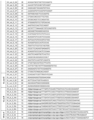
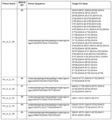
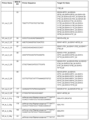
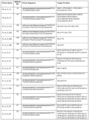
- the reagents for amplifying and linking native pairings of heavy and light chain variable domain amplicons as defined anywhere herein comprise primers designed to human Ig sequences. In one instance, the reagents for amplifying and linking native pairings of heavy and light chain variable domain amplicons as defined anywhere herein comprise a primer pool comprising the primers as set out in Table 1. In one instance, the reagents for amplifying and linking native pairings of heavy and light chain variable domain amplicons as defined anywhere herein comprise a primer pool comprising the primers as set out in Table 5.
- the group of primers in Table 1 or Table 5 may be further subdivided if desired, for instance, appropriate sets of primers may be used where the cells are separated into kappa or lambda expressing cells or into cells expressing different Ig H isotypes. Primers may be designed with custom software known in the art. Heavy and light chain variable domain amplicons are initially formed from the native heavy and light chain variable domain sequences in the generation of a scFv amplicon.
- the generating step for generating the encapsulated scFv amplicons as defined anywhere herein comprises initially forming heavy and light chain variable domain amplicons from native heavy and light chain variable domain sequences and the reagents comprise a primer pool comprising first and second heavy chain variable domain primers; and first and second light chain variable domain primers, wherein the first heavy chain variable domain primer and the first light chain variable domain primer interact to join the heavy and light chain variable domain amplicons.
- the primer pool comprises a lower concentration of the first primers than the second primers.
- the concentration of the first primers is reduced by a factor of between two and eight, e.g.
- the concentration is reduced by a factor of eight.
- the first heavy chain variable domain primer as defined anywhere herein is fused to a first overhang sequence and the first light chain variable domain primer as defined anywhere herein is fused to a second overhang sequence, wherein the overhang sequences interact to join the heavy and light chain variable domain amplicons.
- the first and second overhang sequences are at least partially complementary. More preferably, the first and second overhang sequences are fully complementary.
- the two domain amplicons may be linked using overlap-extension PCR to generate a scFv amplicon.
- the RT-PCR is used in combination with overlapping-extension PCR.
- the first heavy chain variable domain primer as defined anywhere herein is the reverse primer which binds inside (typically at the 3' terminus of FR4) the heavy chain variable domain of the native sequence/amplicon
- the second heavy chain variable domain primer as defined anywhere herein is the forward primer which binds outside the heavy chain variable domain of the native sequence/amplicon
- the first light chain variable domain primer as defined anywhere herein is the forward primer which binds inside (typically at the 5' terminus of FR1) the light chain variable domain of the native sequence/amplicon
- the second light chain variable domain primer as defined anywhere herein is the reverse primer which binds outside the light chain variable domain of the native sequence/amplicon.
- the first heavy chain variable domain primer as defined anywhere herein is the forward primer which binds inside (typically at the 5' terminus of FR1) the heavy chain variable domain of the native sequence/amplicon
- the second heavy chain variable domain primer as defined anywhere herein is the reverse primer which binds outside the heavy chain variable domain of the native sequence/amplicon
- the first light chain variable domain primer as defined anywhere herein is the reverse primer which binds inside (typically at the 3' terminus of FR4) the light chain variable domain of the native sequence/amplicon
- the second light chain variable domain primer as defined anywhere herein is the forward primer which binds outside the light chain variable domain of the native sequence/amplicon.
- the present disclosure also permits encapsulation of single cells isolated from patients.
- the encapsulating step as defined anywhere herein comprises using microfluidics.
- Microfluidics is able to capture millions of cells, potentially the entire repertoire, into picoliter-sized droplets for parallel amplification into a library and thus provides a high throughput approach.
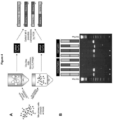
- the library is a scFv library ( Figure 1 ).
- the microfluidics as defined anywhere herein comprises using a glass microfluidic chip with pressure pumps.
- the microfluidic chip as defined anywhere herein is a fluorophillic chip.
- the microfluidic chip is designed to merge two streams of aqueous fluids: one carrying a suspension of cells and the other containing reagents for one-step reverse transcription (RT) and overlap-extension PCR.
- RT reverse transcription
- Microfluidics is used to reliably generate evenly sized droplets at high rates.
- droplets of 200pL in volume In one instance, the droplets as defined anywhere herein are from about 50 pL to about 600 pL in volume. In one instance, the droplets are from about 100 pL to about 300 pL in volume. In one instance, the droplets are about 200 pL in volume.
- the encapsulating step as defined anywhere herein comprises combining an aqueous suspension with an oil to form an emulsion comprising the encapsulated single cells in water-oil droplets, wherein the aqueous suspension comprises the cells and the reagents for amplifying and linking native pairings of amplicons.
- the method further comprises a step prior to the encapsulating step, the step comprising providing the aqueous suspension comprising the cells and the reagents for amplifying and linking native pairings of amplicons.
- the providing step comprises stimulating the cells in a first aqueous suspension comprising the cells and subsequently combining the cells with the reagents for amplifying and linking native pairings of amplicons to form the aqueous suspension comprising the cells and the reagents for amplifying and linking native pairings of amplicons. It is generally understood that the cells may be stimulated for about 48 hours, preferably at least 48 hours.
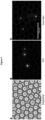
- the suspension of cells as defined anywhere herein is at a density of about 1 to about 5 million cells/ml. In one instance, the suspension of cells as defined anywhere herein is at a density of about 3.5 to about 4.5 million cells/ml. In a more preferred instance, the suspension of cells as defined anywhere herein is at a density of about 4 million cells/ml. These densities are optimal for obtaining single-cell encapsulation into droplets ( Figure 2 ). These densities also obtain single-cell encapsulation into droplets approximately 100 ⁇ m in diameter. Empty droplets may also be generated, although these do not contribute to the library since no template cells are present.
- the suspension of cells as defined anywhere herein comprises an anti-clumping agent.
- the suspension of cells as defined anywhere herein prior to encapsulation, is stirred e.g . with a paramagnetic stir disk.
- Use of an anti-clumping excipient and/or stirring prevents suspended cells from settling prior to encapsulation. Since stimulated cells, e.g . B-cells or T-cells, have a tendency to aggregate over time, use of an anti-clumping excipient and/or stirring prevents changes in flow rates, as well as multiple cells being encapsulated together.
- the suspension of cells as defined anywhere herein comprises a stabilizing agent.
- the stabilizing agent is an amphipathic molecule.
- the stabilizing agent is acetylated BSA.
- Acetylated BSA is an amphipathic molecule which can stabilize the water-oil interface and lower the interfacial tension ( Dalgleish, Trends in Food Science & Technology (1997), 8 (1): 1-6 ).
- the present inventors have determined that use of acetylated BSA decreases droplet coalescence during the harsh conditions of PCR cycling. Further, the presence of acetylated BSA may protect enzymes such as reverse transcriptase from denaturation at the interface.
- the generating step for generating the encapsulated amplicons as defined anywhere herein comprises RT-PCR.
- the oil as defined anywhere herein is a low viscosity oil.
- the oil as defined anywhere herein is fluorinated oil.
- the oil as defined anywhere herein is HFE-7500 fluorinated oil + 2% w/v 008-fluoro-surfactant (RAN Biotechnologies cat no 008-FLUOROSURFACTANT-HFE7500. Due to the life span of cells used in the present disclosure, the throughput of the present method is limited by the time it takes to encapsulate the cells. The present inventors have determined that throughput can be improved by reducing the viscosity of the oil used to form the water-oil droplets for encapsulating the cells.
- the present inventors have determined that a less viscous oil allows greater flow rates.
- the microfluidic flow rate for the oil is between 90 and 125 ⁇ L/min , preferably 100 ⁇ L/min and the aqueous fluid is between 5.6 and 7 ⁇ L/min, preferably 6.22 ⁇ L/min. Reducing the viscosity of the oil is preferred over alternatives such as increasing cell density because it reduces the risk of more than one cell being encapsulated in a single droplet.
- the methods of the invention as defined above allow millions of cells to be encapsulated. Preferably, at least 1, at least 2, at least 3, at least 4, at least 5, at least 6, at least 7, at least 8, at least 9 or at least 10 million cells are encapsulated.
- the methods of the disclosure as defined above allow one million cells to be encapsulated within about 40 minutes.
- the reagents for amplifying and linking native pairings of amplicons as defined anywhere herein comprise standard RT-PCR reagents. In one instance, the reagents as defined anywhere herein comprise Titan (Roche cat no 11855476001).
- the method as defined anywhere herein further comprises preventing at least some free nucleic acid from dead or dying cells from being encapsulated in droplets.
- the method as defined anywhere herein further comprises preventing substantially all free nucleic acid from dead or dying cells from being encapsulated in droplets.
- the method as defined anywhere herein further comprises preventing free nucleic acid from dead or dying cells from being encapsulated in droplets. It will be appreciated by the person skilled in the art that any method for achieving this is within the scope of the present disclosure.
- the method as defined anywhere herein further comprises reducing the levels of free nucleic acid from dead or dying cells that are encapsulated in droplets. It will be understood that the levels of free nucleic acid from dead or dying cells are reduced as compared to the levels that would be encapsulated if this method step had not been carried out. It will be appreciated by the person skilled in the art that any method for achieving this is within the scope of the present disclosure. In one instance, the levels of free nucleic acid from dead or dying cells are reduced by 10%, 20%, 30%, 40%, 50%, 60%, 70%, 80%,or 90%.
- the preventing comprises stimulating cells for less than 48 hours prior to encapsulating. In one instance, the reducing comprises stimulating cells in the first aqueous solution comprising cells for less than 48 hours.
- the preventing comprises selecting live cells prior to encapsulating.
- the reducing comprises selecting live cells for combining with the reagents for amplifying and linking native pairings of amplicons in the aqueous suspension.
- the selecting comprises Fluorescence-activated cell sorting (FACS).
- the selecting comprises bead-based selection of cells. It will be appreciated by the person skilled in the art that the desired cells selected for encapsulating are the live cells and not the dead or dying cells.
- the preventing comprises sequestering the free nucleic acid from dead or dying cells using magnetic beads.
- the reducing comprises sequestering the free nucleic acid from dead or dying cells from the first aqueous solution using magnetic beads.
- the reducing comprises sequestering the free nucleic acid from dead or dying cells from the aqueous suspension comprising the cells and the reagents. Sequestering the free nucleic acid from dead or dying cells allows removal of this nucleic acid such that the levels of free nucleic acid from dead or dying cells that are encapsulated in droplets are reduced.
- the magnetic beads are oligonucleotide-coated magnetic beads. In one instance, the magnetic beads are poly-dT beads.
- Magnetised beads with nucleic acid binding agents may be added to the cell suspension prior to encapsulation to 'mop up' free nucleic acid, in particular RNA, present in the surrounding media.
- the beads may be removed prior to encapsulation using a magnetic field, thereby removing the contaminating nucleic acid.
- the present disclosure further provides a method for producing a library of natively-paired amplicons, the method comprising producing encapsulated natively-paired amplicons according to the method as defined above; and lysing the droplets to produce a library of natively-paired amplicons.
- Commercial kits are available for lysing the droplets (for example, the Micellula kit from EURx).
- the DNA from the droplets can be purified using a PCR purification kit from Qiagen or by other methods such as using isobutanol ( Schutze, T. et al., Anal.Biochem. (2011), 410: 155-157 ) and diethyl ether ( Diehl, F.
- a library of natively-paired amplicons produced according to the above method is within the scope of the present disclosure.
- a library of natively-paired amplicons having the features of a library of natively-paired amplicons produced according to this method is also within the scope of the present disclosure.
- the present disclosure further provides a method for producing a library of natively-paired scFv amplicons for screening for antigen binding and/or function, the method comprising producing a library of natively-paired scFv amplicons according to the method as defined above; and producing a further library of natively-paired scFv amplicons, wherein the natively-paired scFv amplicons of the further library have the general formula R1-V1-L-V2-R2, wherein R1 and R2 are the same or different and each comprises a restriction enzyme site, V1 and V2 are the natively-paired heavy and light chain variable domain, wherein when V1 is the light chain variable domain, V2 is the heavy chain variable domain or when V1 is the heavy chain variable domain, V2 is the light chain variable domain, and L is a direct bond or linker.
- the natively-paired scFv amplicons of the further library have the general formula R1-VH-L-VL-R2 i.e. V1 is VH and V2 is VL.
- the natively-paired scFv amplicons of the further library have the general formula R1-VL-L-VH-R2 i.e. V1 is VL and V2 is VH.
- R1 and R2 as defined anywhere herein are different.
- L is a linker.
- R1 and R2 are different and L is a linker.
- the producing a further library of natively-paired amplicons as defined anywhere herein comprises using Nested PCR.
- Nested PCR uses a second set of primers to amplify the full amplicon, which are different to those used to generate the amplicon.
- a subsequent run of nested PCR therefore amplifies the final expression-ready amplicon and reduces amplification of alternative PCR products formed due to non-specific primer binding.
- the Nested PCR uses primers that bind to FR1 of V1 and FR4 of the V2.
- the full scFv amplicon product can therefore be amplified.
- the Nested PCR as defined anywhere herein uses primers that are fused to overhang sequences that comprise a restriction enzyme site.
- Preferred restriction enzyme sites are Sfi1 and Not1.
- R1 as defined anywhere herein comprises the Sfi1 restriction enzyme site and R2 as defined anywhere herein comprises the Not1 restriction enzyme site.
- the resulting amplicon forms an expression-ready amplicon that can easily be cloned into expression vectors for any number of expression systems for phage-display panning or direct screening.
- a library of natively-paired scFv amplicons for screening for antigen binding and/or function produced by the method as defined above is within the scope of the present disclosure.
- a library of natively-paired scFv amplicons for screening for antigen binding and/or function having the features of a library of natively-paired scFv amplicons for screening for antigen binding and/or function produced by the method as defined above is also within the scope of the present disclosure.
- the disclosure further provides a method for producing a natively-paired scFv library for screening for antigen binding and/or function, the method comprising producing a library of natively-paired scFv amplicons according to the method described herein; and expressing the natively-paired scFv.
- this method comprises expressing the natively-paired scFv as scFv-Fc.
- this method comprises reformatting the natively-paired scFv to IgG.
- this reformatted IgG may be directly screened for binding and function, enriched by phage-display panning, or deep-sequenced using next-generation sequencing for repertoire characterisation.
- this method comprises expressing the natively-paired scFv as a scFv phage display library.
- each scFv of the scFv library as defined anywhere herein comprises the heavy and light chain variable domains of a native pairing of a single cell linked together by a linker.
- the linker must be of a length to allow pairing between the heavy and light chain variable domains.
- the linker as defined anywhere herein is Glycine and/or Serine rich. More preferably the linker as defined anywhere herein is (Gly 4 Ser) 3 and encoded by the following sequence: ggaggcggcggtagcggcggaggtggctcaggcggtggcggaagt (SEQ ID NO: 168).
- linker as defined anywhere herein has a length of 10-20 amino acids. More preferably, the linker as defined anywhere herein has a length of 13-18 amino acids. Still more preferably, the linker as defined anywhere herein has a length of 15 amino acids. Suitable linkers will be well known to the person skilled in the art.
- a natively-paired scFv library for screening for antigen binding and/or function produced by the method as defined above is within the scope of the present disclosure.
- a natively-paired scFv library for screening for antigen binding and/or function having the features of a natively-paired scFv library for screening for antigen binding and/or function produced by the method as defined above is also within the scope of the present disclosure.
- the scFv library is expression-ready.
- the disclosure further provides a method for identifying an antigen-specific molecule, the method comprising producing a natively-paired scFv library according to the method described herein; interrogating the natively-paired scFv library with an antigen sample; and identifying an antigen-specific molecule.
- T-cell receptors can also be converted into scFv format and retain activity ( Grégoire et al., European Journal of Immunology (1996), 26 (10): 2410-16 ), the technology can equally be applied to the capture of the T-cell receptor repertoire.
- the present disclosure further provides a scFv library comprising natively-paired recombinant scFv for screening for antibody binding and/or function, wherein each scFv comprises the heavy and light chain variable domains of a native pairing of a single cell linked together as described herein.
- each scFv comprises the heavy and light chain variable domains of a native pairing of a single cell linked together as described herein.
- the libraries may be a translatable.
- the present libraries enable high throughput translation and subsequent screening of the sequences.
- the present disclosure further provides a method for identifying an antigen-specific molecule, the method comprising interrogating a natively-paired scFv as defined anywhere herein with an antigen sample; and identifying an antigen-specific molecule.
- the present disclosure further provides a method for identifying an antigen-specific molecule, the method comprising interrogating a scFv library as defined anywhere herein with an antigen sample; and identifying an antigen-specific molecule.
- the antigen-specific molecule is an antibody.
- the antibody as defined anywhere herein is a monoclonal antibody.
- the antigen sample as defined anywhere herein is tumour tissue. In one instance, the antigen sample as defined anywhere herein is whole bacteria. In one instance, the antigen sample as defined anywhere herein is viral particles. In one instance, the antigen sample as defined anywhere herein comprises hemagglutinin (HA) proteins.
- HA hemagglutinin
- multiple rounds of interrogating the library can be carried out, preferably with different antigen samples, so as to allow the identification of cross-reactive antigen-specific molecules.
- the antigen-specific molecule is cross reactive.
- the present disclosure also provides the use of a natively-paired scFv library as defined anywhere herein for identifying an antigen-specific molecule.
- the present disclosure also provides the use of a scFv library as defined anywhere herein for identifying an antigen-specific molecule.
- the use as defined above comprises interrogating the scFv library with an antigen sample and identifying an antigen-specific molecule. All instances as hereinbefore described in connection with the methods of the present invention apply equally to the above defined use.
- T cell receptor (TCR) repertoires (consisting of paired ⁇ / ⁇ or ⁇ / ⁇ chains) could also be captured in a similar recombinant format and single-chain TCR has been shown to be amenable to selection by phage and yeast display ( Li, Y. et al. Nat. Biotechnol. (2005), 23: 349-354 ; Smith, S. N. et al. Methods Mol. Biol. Clifton NJ (2015), 1319: 95-141 ).
- the methods enable the rapid capture of the native repertoire from millions of primary human B cells into a powerful and sensitive screening platform, with significant implications for therapeutic antibody development, immune repertoire characterization and rational vaccine design.
- linking the variable domains into a translatable scFv format allows the combination of the strengths of multiple technologies: using the immense screening power of display platforms to mine the full richness of a naturally evolved antibody response.
- the present disclosure provides a fast method for lead antibody generation from natural repertoires - a single researcher can rapidly progress from millions of primary B cells to specific monoclonal antibodies within 4 weeks. This could be especially valuable for combating emerging infectious diseases, e.g. an Ebola outbreak.
- the libraries of the present disclosure constitute a renewable resource that can be expanded as new donors are added, panned repeatedly against a multitude of targets (including whole bacteria or tumor tissue), or archived indefinitely for future use.
- Primers were designed using custom software written in Perl for maximal coverage of all human Ig sequences (Table 1 and Table 5). Nucleotide sequences for leader, variable and constant regions were downloaded from IMGT ( Lefranc et al., Nucleic Acids Research (2009), 37 ) for the human heavy, lambda and kappa genes (excluding pseudogenes and truncated transcripts) and four sets of primers were designed for each gene family. Outside primers (“out" subscript in the primer names) were designed by calling Primer3 and design primers to span the splice junction of the leader sequence ("out_5" primers) or bind within the first 50 bases of the constant domain (“out_3" primers).
- VK_out_3 a manually designed primer was created to span the variable domain-constant domain splice junction. All primers were designed to anneal with a minimal melting temperature of 60°C. Inside primers ("in” subscript in the primer names) were designed by fixing the 5' end of the primer at the start (“in_5") or end (“in_3") of the V coding sequence and extended until the Tm reached 60°C using the OligoTm module from Primer3. FR4 specific primers were also manually extended for increased specificity. Where possible, primers within each set were consolidated to have at most 4 degenerate bases. Where possible, primers within each set were fused to overhangs to enable linker formation (VH_in_3 and VK/L_in_5). Where possible, primers within each set were fused to overhangs to enable restriction digestion by Notl or Sfil. Where possible, primers within each set were barcoded for MiSeq deep sequencing (Table 1).
- Example 2 Recovering natively-paired scFv from cells using Immune Replica technology
- each B-cell is encapsulated into a water-in-oil droplet containing reagents for RT-PCR amplification of the heavy and light variable domain gene transcripts and their pairing by overlap-extension PCR to generate a scFv amplicon.
- B-cells were isolated from healthy human blood samples using the RoboSep Human B-cell Enrichment Kit (StemCell Technologies, 19054RF). Cells were centrifuged at 500xg for 10 minutes and re-suspended in RPMI1640 (Invitrogen, A10491-01), supplemented with insulin-transferrin-selenium (Invitrogen, 41400-045), 10% fetal bovine serum (Invitrogen, 10082-147), 0.5 ⁇ g/ml megaCD40L (Enzo, ALX-522-110-C010), 33ng/ml IL-21 (internally produced) and penicillin-streptomycin-glutamine (Invitrogen, 10378-016) and grown at 37°C and 5% CO 2 for 48 hours.
- RPMI1640 Invitrogen, A10491-01
- insulin-transferrin-selenium Invitrogen, 41400-045
- 10% fetal bovine serum Invitrogen, 10082
- Stimulated B-cells have a tendency to aggregate over time and this can cause changes in flow rates, as well as multiple cells being encapsulated together.
- Use of an anti-clumping excipient and a paramagnetic stir disk were found to keep cells from settling prior to encapsulation.
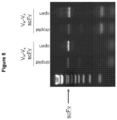
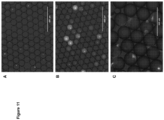
- Acetylated BSA is an amphipathic molecule which can stabilize the water-oil interface and lower the interfacial tension ( Dalgleish, Trends in Food Science & Technology (1997), 8 (1): 1-6 ). Droplet coalescence during the harsh conditions of PCR cycling was optimized. A combination of lower denaturation temperatures and the use of acetylated BSA decreased droplet coalescence and improved droplet stability ( Figure 7 ).
- the denaturation temperatures are within the range of about 85°C and about 95°C. More preferably, the denaturation temperatures are within the range of about 86°C and about 90°C. For instance, the denaturation temperature may be about 88°C.
- the presence of acetylated BSA may protect enzymes such as reverse transcriptase from denaturation at the interface.
- a reaction mixture was optimized to perform all steps in a single reaction mix.
- Cells were encapsulated at a 1:1 ratio with 2xRT-PCR master mix.
- Stock primers were mixed at 100 ⁇ M in equal amounts to create pools that were added to the RT-PCR mix.
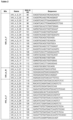
- a typical master mix of 300 ⁇ l was composed of 4.86 ⁇ l VH-out-F-T7, 4.86 ⁇ l VL-out-R-T3, 2 ⁇ l VH-in-R and 2 ⁇ l VL-in-F (Table 2), 120ul 5x OneStep RT-PCR buffer, 24 ⁇ l OneStep RT-PCR enzyme mix, 54.1 ⁇ l Q solution (Qiagen, 210212), 12 ⁇ l 10mM dNTP (Invitrogen, 18109-017) and 30 ⁇ l RNaseOUT (Invitrogen, 10777-019). Reagents were left to incubate on ice before centrifuging through a 0.22 ⁇ m spin filter (Corning, 8169).
- the organic phase of the emulsion was made using the Micellula emulsion PCR kit (EURx, 3600-02) using 60% component 1, 20% component 2 and 20% component 3. Reagents were mixed and vortexed for 60 seconds at maximum speed and incubated at room temperature for at least 30 minutes. Organic phase was filtered through a 0.22 ⁇ m filter prior to encapsulation.
- Encapsulation was performed on a 2-reagent droplet generation chip (Dolomite, 3200242) with fluids pumped using an OB1 flow controller (Elvesys). Aqueous liquids of cells and RT-PCR mix were each pumped at 57mbar while the oil liquid was pumped at 101mbar. The resulting emulsion was collected in 6-minute fractions (about 40 ⁇ l emulsion per fraction) in PCR strip tubes. As a control, an open PCR reaction was made by combining equal volumes of cell and RT-PCR mixes and divided in PCR strip tubes in 40 ⁇ l aliquots.
- Example 2.2 Generation of scFv containing natively-paired variable domain genes
- Encapsulated and open reverse-transcription PCR reactions were performed with a reverse transcription step of 30 minutes at 55°C followed by heat-inactivation of RT/activation of Taq polymerase of 2 minutes at 88°C. This was followed by 45 cycles of PCR (88°C for 30 seconds, 62°C for 30 seconds, 72°C for 1 minute) and a final extension step of 10 minutes at 72°C. Excess oil above the droplets was manually removed and the droplets were lysed by adding 5x excess of Buffer PB from the QiaQuick PCR purification kit (Qiagen, 28106) and PCR product was purified according to the manufacturer's instructions. The products were size-selected on 1% agarose to between 600-1200bp using the QiaQuick gel-extraction kit (Qiagen, 28706) and eluted in 40 ⁇ l EB buffer.
- Example 2.3 Amplification of scFv containing natively-paired variable domain genes
- Nested PCR amplification was performed in 15 ⁇ l reactions using mixtures of VH-in-F and either VK-in-R or VL-in-R (at 1:50 dilution, Table 2), consisting of 1 ⁇ l purified RT-PCR product as template, 3 ⁇ l diluted primer mix, 1.5 ⁇ l 10x Hifi Platinum PCR buffer, 0.3 ⁇ l 10mM dNTP, 0.6 ⁇ l 50mM MgSO 4 and 0.06 ⁇ l Hifi Platinum Taq (Invitrogen, 11304-011).
- Cycling conditions consisted of an initial denaturation step of 2 minutes at 94°C followed by 45 cycles of PCR (94°C for 15 sec, 61°C for 30 sec, 68°C for 60 sec) and a final extension step of 10 minutes at 68°C. Products were purified using the QiaQuick PCR purification kit and eluted in 40 ⁇ l EB buffer.
- a density of 4 million cells per ml was found to be optimal for obtaining mostly single-cell encapsulation into droplets of approximately 100 ⁇ m in diameter ( Figure 2 ). Although a number of empty droplets were generated using this process, these did not contribute to the scFv library as no template cells are present.
- Example 4 Comparison of droplet stability using syringe and pressure pumps
- droplets were generated with mouse hybridoma cells and RT-PCR buffer using two methods.
- the first method used two syringe pumps (Razel R-99) to deliver aqueous and oil fluids, respectively, to the microfluidic chip.
- Aqueous fluids were loaded into 1mL syringes and dispensed simultaneously from a single pump at 0.5 ⁇ l/min, whereas the oil:surfactant solution was loaded into a 3mL syringe and dispensed from a separate pump at 1.5 ⁇ l/min.
- the second method was as described above using a pulseless pressure pump.
- 0.5 ⁇ l emulsion was transferred to 96 well microtiter plates and imaged at 25x magnification to inspect for coalescence and droplet homogeneity. The emulsions were then subjected to 45 cycles of RT-PCR (as described above) and imaged once again.
- primary human B-cells from healthy donors were processed and stimulated as described above.
- Primary mouse B-cells were isolated from splenocytes using the Mouse B-cell Isolation Kit (StemCell Technologies, 19854) according to the manufacturer's instructions. These cells were stimulated in identical conditions as human B-cells, substituting megaCD40L with mouse CD40L (Enzo, ALX-522-120-C010) and mouse IL21 (internally produced). 48-hour stimulated cells were combined in a 1:1 ratio and 10,000 cells were encapsulated as described above. A parallel "open" reaction was performed by combining 10,000 cells directly in RT-PCR mix without encapsulation. ScFv-like amplicons were generated using RT-PCR and nested PCR as described above, with primer sets designed to amplify and pair the C H1 and C ⁇ domains.
- Example 6 Isolation of antigen-specific scFv from primary human B-cells
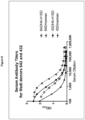
- Serum from two healthy donors (642 and 432) was isolated by centrifugation of whole blood at 500xg for 10 minutes, then diluted in ELISA blocking buffer (3% nonfat milk - Bio-Rad, 106404XTU + 0.1% Tween-20 - BDH,BDH4210 in PBS).
- ELISA blocking buffer 3% nonfat milk - Bio-Rad, 106404XTU + 0.1% Tween-20 - BDH,BDH4210 in PBS.
- C. albicans mannan and Influenza hemagglutinin (South Dakota) antigens were produced in-house and coated on 96-well High Binding plates (Corning, 3690) at 4 ⁇ g/ml and incubated overnight at 4°C.
- Plates were blocked in ELISA blocking buffer for 2 hours before being washed 3 times with ELISA washing buffer (PBS + 0.05% Tween-20) and incubated with serial dilutions of the sera for 1 hour. Plates were washed 3 times and bound IgG was detected with a 1:10,000 dilution of anti-human Fc-gamma-HRP (Jackson labs, 109-035-098), with TMB development over 5 minutes (KPL, 52-00-04). The reaction was stopped by adding an equal volume of 1M hydrochloric acid before colorimetric analysis was performed by measuring absorbance at 450nm.
- ELISA washing buffer PBS + 0.05% Tween-20
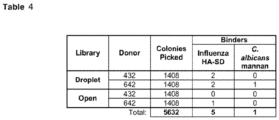
- Transformants from the 4 libraries (642-em, 642-op, 432-em and 432-op) were plated on Qtrays containing 2xYT agar+ 100 ⁇ g/ml carbenicillin + 2% glucose (Teknova, Y6260) and 1,408 colonies were picked for each into 384-well plates containing 60ul LB + 100 ⁇ g/ml carbenicillin (Invitrogen, 10177-012) + 2% glucose (Teknova, G0535) and grown overnight at 37°C. 5 ⁇ l of the overnight culture was used to inoculate 384 deep-well plates containing 250 ⁇ l reconstituted MagicMedia (Invitrogen, K6803) + 100 ⁇ g/ml carbenicillin and grown over 3 days at 25°C.
- MagicMedia Invitrogen, K6803
- Nested PCR amplification was performed in 15 ⁇ l reactions using mixtures of iVH-in-F/iVH-in-R, iVK-in-F/iVK-in-R and iVL-in-F/iVL-in-R (at 1:50 dilution, Table 2), consisting of 1 ⁇ l template, 3 ⁇ l 1:50 dilution of primer mix (VH-in-F + VL-in-R), 1.5 ⁇ l 10x Hifi Platinum PCR buffer, 0.3 ⁇ l 10mM dNTP, 0.6 ⁇ l 50mM MgSO 4 and 0.06 ⁇ l Hifi Platinum Taq (Invitrogen, 11304-011).
- RT-PCR components cell encapsulation buffers and microfluidic flow rates were further optimized to generate droplets from 10 6 B cells that had improved stability during RT-PCR and were homogenous in size.
- Example 8 Recombinant human B cell repertoires enable screening for rare, specific and natively-paired antibodies
- the method described below shows the capture of two million primary B cells into natively-paired expressible libraries that can be directly enriched and screened for function, while still maintaining the ability to profile the paired repertoire by next-generation sequencing ( Figure 1 ).
- This is achieved by encapsulating B cells into picoliter-sized droplets (approximately 200 pL in volume), in which their cognate V genes are fused in-frame to form an scFv cassette.
- Glass microfluidic chips were used with pressure pumps to reliably generate evenly sized droplets at high rates, such that one million B cells could be encapsulated within 40 minutes.
- Example 8.1 Capture of the paired immunoglobulin repertoire of primary human B cells into an expressible format using the optimized process for increased throughput
- primer sets for multiplex amplification of all known human V and J genes were computationally designed from IMGT consensus sequences as described in Example 1. In total, 92 primers were designed to amplify the 542 functional human V and J alleles with the appropriate overhangs for scFv generation (Table 5).
- B cells Two million B cells were separately isolated from the blood of two healthy donors: total B cells from Donor 1 and IgG + /IgA + switched memory B cells from Donor 2.
- the cells were washed in PBS (3 minutes at 700g) and split into two halves.
- encapsulation buffer hypo-osmolar electrofusion buffer (Eppendorf, 940002001) containing 1:1,000 dilution of Anti-Clumping Agent (Invitrogen, 01-0057AE) and 16% OptiPrep Density Gradient medium (Sigma, D1556).
- Cells were encapsulated at a 1:1 ratio with 2xRT-PCR master mix.
- the primers within each set were mixed in equal amounts and optimised concentrations of each set were added to the RT-PCR mix.
- a typical 2x master mix was composed of 139nM VH-out-F, 416nM VL-out-R, 39nM VH-in-R and 13nM VL-in-F (Table 3), 2x One Tube RT-PCR reaction buffer (Roche cat no 11855476001), 4% Titan One Tube RT-PCR enzyme mix (Roche, 11855476001), 18.2% Q solution (Qiagen, 210212), 0.4mM dNTP (Invitrogen, 18427013), 10mM DTT (Roche, 11855476001) and 120 units RNaseOUT (Invitrogen, 10777019).
- Encapsulation was performed on a 2-reagent droplet generation fluorophilic chip (Dolomite, 3200510) with fluids pumped using an OB1 flow controller (Elveflow, MKII). Aqueous liquids of cells and RT-PCR mix were each pumped at 30mbar while HFE-7500 fluorinated oil + 2% w/v 008-fluoro-surfactant (RAN Biotechnologies, 008-FLUOROSURFACTANT-HFE7500) was pumped at 67mbar, with pressures fine-tuned to obtain a 1:1 mix of aqueous fluids. The resulting emulsion was collected in fractions (about 40 ⁇ l emulsion per fraction) in PCR strip tubes and overlaid with mineral oil. Excess fluorinated oil was removed to maintain the overall volume at 100 ⁇ L.
- combinatorial library The remaining million cells were used to build a combinatorial scFv library ("combinatorial library"). Specifically, one million cells were processed for total RNA using the RNEasy RNA isolation kit (Qiagen) according to the manufacturer's instructions. 250ng total RNA was used for RT-PCR using the same master mix as with emulsions, except that the V H and V L sequences were amplified separately and then paired by overlap extension PCR (using the same primer sets).
- Example 8.2 Amplification of scFv containing natively-paired V-genes
- Encapsulated and combinatorial libraries were created by reverse transcription for 30 minutes at 50°C followed by heat-inactivation of RT/activation of Taq polymerase of 2 minutes at 88°C. This was followed by 45 (emulsion) or 35 (combinatorial) cycles of PCR (88°C for 10 seconds, 62°C for 30 seconds, 68°C for 45 seconds) and a final extension step of 7 minutes at 68°C. Excess oil below the droplets was manually removed and the droplets chemically coalesced using an equal volume of Pico-Break 1 (Dolomite). Amplified DNA was size-selected on 2% agarose using the QIAquick gel-extraction kit (Qiagen).
- the nested PCR primers contained barcoded overhangs that enable next-generation sequencing on the Illumina MiSeq ( Figure 13A ).
- Nested PCR amplification consisted of 25% purified RT-PCR product, 100nM VH-in-F and VL-in-R primer pools (Table 5), 1x Hifi Platinum PCR buffer, 0.15mM dNTP, 1.5mM MgSO 4 and 0.6 units Hifi Platinum Taq (Invitrogen). Cycling conditions consisted of an initial denaturation step of 2 minutes at 94°C followed by 50 cycles of PCR (94°C for 30 sec, 55°C for 30 sec, 68°C for 60 sec) and a final extension step of 10 minutes at 68°C. Products were again size-selected as above.
- a final scale-up PCR was performed using common forward (Illu scaleup_F) and barcoded reverse primers (Illu_R_N50X) to enable library construction and Illumina sequencing (Table 6).
- Each barcoded library was size-selected to 850bp, combined in equal amounts and subjected to 2 ⁇ 300bp MiSeq sequencing using a custom priming approach (SeqMatic).
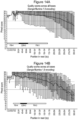
- the custom priming strategy was designed to obtain paired 300bp reads of the 3' ends of V H and V L , consisting of FR4, CDR3 and FR3 ( Figure 14 ).
- the R1 and R2 primers (Table 6) were used to generate V L and V H sequences, respectively, whereas the standard Illumina P5 primer was used for the index read.
- the V L read was obtained using a priming site introduced at the 3' end of the construct
- the V H read required an internal primer annealing to the (G 4 S) 3 linker sequence (Table 6).
- raw Fastq reads were quality-filtered using FastQC, paired by the Illumina Fastq ID, aligned to IMGT V and J genes and annotated according to Kabat definition ( Lloyd, C. et al. Protein Eng. Des. Sel. PEDS (2009) 22: 159-168 ) to extract CDR3 sequences. Subsequently, CDRH3 and CDRL3 sequences were concatenated and clustered where the amino acid identity was greater than 92%.
- the clustering parameters were validated using the error-corrected asymptotic Chao richness estimator ( Chiu, C.-H. & Chao, A. PeerJ (2016), 4: e1634 ) and it was found that the computed diversity of the amplicon library adjusted for sequencing artifacts is very close to the observed number of clusters. This provides evidence that the clustering parameters reliably corrected for sequencing errors while minimising the loss of truly unique sequences.
- Example 8.4.1 Validation using a mouse and human B-cell mixture
- Example 5 primary human and mouse B cells were isolated and stimulated as described in Example 5. Equal amounts of primary stimulated mouse and human B cells were mixed and 10,000 cells from this mixture were encapsulated as described in Example 8.1.
- RT-PCR and nested PCR conditions were as described in Example 8.2 with primer sets designed to amplify and pair the C H1 and C ⁇ domains (Table 3).
- a primer specific to the IM-9 CDRH3 sequence (RRGVTDIDPFDI; IM9-CDRH3-Fwd) was used with a generic reverse primer (R1, Table 6) to amplify all V L sequences that paired with the IM-9 heavy chain.
- R1, Table 6 a generic reverse primer
- the resulting amplicon was cloned and analysed by Sanger sequencing, which showed correct pairing with the known IM-9 V L (QHYNRPWT) in 97/101 colonies (96% pairing accuracy). This confirms that even with an overwhelming abundance of competing B cells; the present method maintains correct chain pairing.
- the number of unique CDRL3 sequences that paired with each CDRH3 sequence was determined.
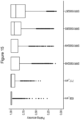
- the top-pair method has been used to validate cognate chain pairing in a previously published method that generates amplicons only suitable for sequencing, but not for screening ( DeKosky, B.J. et al., Nat. Med. (2015), 21: 86-91 ). However, using similar sequencing depth and starting cell numbers the pairing efficiency was found to be significantly better with the present method (p ⁇ 0.007, Figure 15 and Table 8).
- Example 8. 5 Imaging of single encapsulated a cells
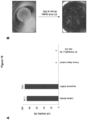
- B cells were stained using CellTracker Red CMTPX or CellTracker Green CMFDA dyes (Life Technologies) according to the manufacturer's instructions. Stained cells were re-suspended in PBS and encapsulated using the conditions described above, substituting the RT-PCR mix with PBS. Cell lysis was imaged in two ways: (1) stained cells were re-suspended in encapsulation buffer, encapsulated with RT-PCR mix and heated to 50°C for 5 minutes; (2) unstained cells were encapsulated with RT-PCR mix containing 2x SYBR-Green (Invitrogen) and heated to 50°C for 5 minutes. Droplets were collected in ⁇ -Slide 0.1 channel slides (lbidi) and imaged at 200x magnification using the Evos FL Auto Cell Imaging System (Invitrogen).
- the scFv libraries were used to isolate antibodies against influenza hemagglutinin, an antigen to which humans are commonly exposed.
- phagemid vector Vaughan, T. J. et al., Nat. Biotechnol. (1996), 14: 309-314 ) to construct phage-display libraries of over 1 ⁇ 10 8 transformants.
- emulsion and combinatorial amplicon libraries were subcloned into a phagemid vector (pCANTAB6) using Not1/Sfi1 restriction enzymes (NEB) and phage display libraries were generated as described in Vaughan, T. J. et al., Nat. Biotechnol. (1996), 14: 309-314 .
- 96 colonies from each of the 4 libraries were cultured to mid-log phase and infected with M13-K07 (Invitrogen) to initiate overnight monoclonal phage production.
- Antibody display was determined by ELISA.
- HA proteins used are as follows: H1 CA/09, A/California/07/2009 H1N1; H1 SD/07, A/South Dakota/06/2007 H1N1; H2 MO/06, A/Swine/Missouri/2006 H2N3; H5 VN/04, A/Vietnam/1194/2004 H5N1; H6 HK/97, A/teal/Hong Kong/W312/97 H6N1; H9 HK/97, A/chicken/Hong Kong/G9/97 H9N2; H3 PE/09, A/Perth/16/2009 H3N2; H7 NL/03, A/Netherlands/219/2003 H7N7; B FL/06, B/Florida/04/2006 Yamagata lineage; B BR/
- the four libraries were subjected to two rounds of enrichment using used 75nM biotinylated hemagglutinin H1 (A/California/07/2009 H1N1) as described in Vaughan, T. J. et al., Nat. Biotechnol. (1996), 14: 309-314 .
- Amplified phage outputs were profiled by polyclonal ELISA, using immobilised NeutrAvidin (Thermo Fisher Scientific) to capture specific biotinylated antigen prior to incubation with phage.
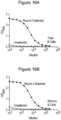
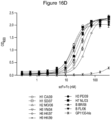
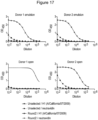
- Polyclonal phage ELISA confirmed robust enrichment for specific hemagglutinin H1 binders regardless of the B cell source ( Figures 16A and 16B , Figure 17 ).
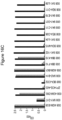
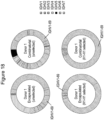
- the combinatorial libraries showed an overall stronger specific enrichment, monoclonal sequencing of the enriched clones revealed a strong bias (90%) for IGHV1-69 germline sequences as compared to the corresponding emulsion library (2.9%, Figure 18 ).
- the first round output was panned from the emulsion libraries on a non-circulating group 1 subtype, influenza A hemagglutinin H5 (75nM, A/Vietnam/1203/2004).
- Enriched libraries were bulk subcloned into an scFv-Fc expression vector ( Xiao, X. et al. PLoS ONE (2015), 10: e0140691 ) using Not1/Sfi1 restriction enzymes (NEB) and transformed into chemically competent Top10 cells (Invitrogen). Single clones were grown overnight in LB containing 100 ⁇ g/ml carbenicillin (Invitrogen) and 2% Glucose (TekNova) before being diluted 1:500 in reconstituted MagicMedia (Invitrogen) containing 100 ⁇ g/ml carbenicillin (Invitrogen). Cells were induced over 72 hours at 25°C and pelleted by centrifugation.
- NEB Not1/Sfi1 restriction enzymes
- Diluted supernatants were used to determine antigen reactivity by ELISA as described above, using an anti-Fc-gamma-HRP secondary antibody (Jackson ImmunoResearch). Following sequencing, unique clones were expressed in HEK-293 Freestyle cells for 6 days and supernatants were used to confirm binding by ELISA.
- yeast display systems might allow the identification of further antigen-specific sequences which might have existed in the repertoire, but were not selected because of differences in expression and folding of human antibodies in bacteria.
- Example 9 Cell lysis prior to encapsulation can contaminate droplets with RNA
- RNA encoding VH or VL domains might contaminate droplets and lead to non-natively paired products.
- 48h stimulated cells were incubated for the same duration (30 minutes) as a typical encapsulation and then bulk RT-PCR of VH domains was performed from either the supernatant or the cell pellet (positive control). A water control was included as a negative control.
- Results indicate that a significant amount of RNA is released from the cells ( Figure 12 ).
- Methods to mitigate this issue include reduced stimulation time, more stringent selection of live cells (e.g. FACS, bead-based), and sequestering RNA using oligo-coated magnetic beads.
- Example 10 Theoretical single-cell encapsulation percentage
Landscapes
- Chemical & Material Sciences (AREA)
- Organic Chemistry (AREA)
- Life Sciences & Earth Sciences (AREA)
- Health & Medical Sciences (AREA)
- Proteomics, Peptides & Aminoacids (AREA)
- Wood Science & Technology (AREA)
- Engineering & Computer Science (AREA)
- Zoology (AREA)
- Biochemistry (AREA)
- Genetics & Genomics (AREA)
- Immunology (AREA)
- Biophysics (AREA)
- Molecular Biology (AREA)
- General Health & Medical Sciences (AREA)
- Analytical Chemistry (AREA)
- Chemical Kinetics & Catalysis (AREA)
- Microbiology (AREA)
- Bioinformatics & Cheminformatics (AREA)
- General Engineering & Computer Science (AREA)
- Physics & Mathematics (AREA)
- Biotechnology (AREA)
- Medicinal Chemistry (AREA)
- Virology (AREA)
- Measuring Or Testing Involving Enzymes Or Micro-Organisms (AREA)
- Peptides Or Proteins (AREA)
- Micro-Organisms Or Cultivation Processes Thereof (AREA)
- Apparatus Associated With Microorganisms And Enzymes (AREA)
- Preparation Of Compounds By Using Micro-Organisms (AREA)
Claims (15)
- Procédé de production d'amplicons scFv encapsulés appariés de manière native, le procédé comprenant :a. l'encapsulation de lymphocytes B individuels dans des gouttelettes, les gouttelettes contenant en outre des réactifs pour amplifier et lier des appariements natifs d'amplicons de domaine variable de chaîne lourde et légère provenant de lymphocytes B individuels encapsulés ;b. la lyse des lymphocytes B individuels encapsulés ; etc. la génération des amplicons scFv encapsulés appariés de manière native, chaque amplicon scFv comprenant un appariement natif d'amplicons de domaine variable de chaîne lourde et légère liés conjointement par un lieur, le lieur ayant une longueur de 10 à 20 acides aminés.
- Procédé selon la revendication 1, dans lequel les réactifs comprennent des amorces conçues pour des séquences d'Ig humaines.
- Procédé selon la revendication 2, dans lequel les réactifs comprennent un groupe d'amorces comprenant des amorces ayant les séquences de SEQ ID NO : 1 à 94 ou ayant les séquences de SEQ ID NO : 1-3, 169, 76-79, 170, 171,82-91, 172,93, 94, 35, 37, 173, 174, 39, 40, 41, 175, 43, 44-46, 176, 48-54, 56-60, 177, 62, 178-184, 7-10, 185, 12, 13, 15-19, 186-189, 20-22, 190, 24, 191,26-34, 63, 192, 65, 66 et 193.
- Procédé selon l'une quelconque des revendications 1 à 3, dans lequel la génération des amplicons encapsulés comprend initialement la formation d'amplicons de domaine variable de chaîne lourde et légère à partir de séquences natives de domaine variable de chaîne lourde et légère et les réactifs comprennent un groupe d'amorces comprenanta. des première et deuxième amorces de domaine variable de chaîne lourde ; etb. des première et deuxième amorces de domaine variable de chaîne légère,la première amorce de domaine variable de chaîne lourde et la première amorce de domaine variable de chaîne légère interagissent pour assembler les amplicons de domaine variable de chaîne lourde et légère.
- Procédé selon la revendication 4, dans lequel le groupe d'amorces comprend une concentration de premières amorces plus faible que celle des deuxièmes amorces.
- Procédé selon la revendication 4 ou la revendication 5, dans lequel la première amorce de domaine variable de chaîne lourde est fusionnée à une première séquence saillante et la première amorce de domaine variable de chaîne légère est fusionnée à une deuxième séquence saillante, dans lequel les séquences saillantes interagissent pour assembler les amplicons de domaine variable de chaîne lourde et légère.
- Procédé selon la revendication 6, dans lequel les première et deuxième séquences saillantes sont au moins partiellement complémentaires.
- Procédé selon l'une quelconque des revendications 4 à 7, dans lequel :a. la première amorce de domaine variable de chaîne lourde est l'amorce antisens qui se lie à l'intérieur du domaine variable de chaîne lourde de la séquence native/de l'amplicon, et la deuxième amorce de domaine variable de chaîne lourde est l'amorce sens qui se lie à l'extérieur du domaine variable de chaîne lourde de la séquence native/de l'amplicon ; etb. la première amorce de domaine variable de chaîne légère est l'amorce sens qui se lie à l'intérieur du domaine variable de la chaîne légère de la séquence native/de l'amplicon, et la deuxième amorce de domaine variable de chaîne légère est l'amorce antisens qui se lie à l'extérieur du domaine variable de chaîne légère de la séquence native/de l'amplicon.
- Procédé selon l'une quelconque des revendications 1 à 8, dans lequel les réactifs comprennent Titan (Roche référence n° 11855476001).
- Procédé selon l'une quelconque des revendications 1 à 9, dans lequel l'encapsulation comprend l'utilisation de la microfluidique.
- Procédé selon l'une quelconque des revendications 1 à 10, dans lequel l'encapsulation comprend la combinaison d'une suspension aqueuse avec une huile pour former une émulsion comprenant les cellules individuelles encapsulées dans des gouttelettes, dans lequel la suspension aqueuse comprend les cellules et les réactifs pour amplifier et lier les appariements natifs d'amplicons.
- Procédé selon l'une quelconque des revendications 1 à 11, dans lequel la génération des amplicons encapsulés comprend l'utilisation de la RT-PCR.
- Procédé selon l'une quelconque des revendications 1 à 12, le procédé comprenant en outre le blocage de l'encapsulation d'au moins une partie de l'acide nucléique libre provenant de cellules mortes ou mourantes dans des gouttelettes.
- Procédé selon la revendication 13, dans lequel la prévention comprend la stimulation des cellules pendant moins de 48 heures avant l'encapsulation, dans lequel la prévention comprend la sélection de cellules vivantes avant l'encapsulation, ou la séquestration d'acide nucléique à l'aide de billes magnétiques enduites d'oligonucléotides.
- Procédé de production d'une banque d'amplicons appariés de manière native pour cribler la liaison et/ou la fonction d'un antigène, le procédé comprenanta. la production d'amplicons encapsulés appariés de manière native selon le procédé de l'une quelconque des revendications 1 à 14 ; etb. la lyse des gouttelettes pour produire une bibliothèque d'amplicons appariés de manière native, chacun des amplicons scFv codant pour un scFv comprenant un domaine variable de chaîne lourde et un domaine variable de chaîne légère liés conjointement par un lieur, le lieur ayant une longueur de 10 à 20 acides aminés.
Applications Claiming Priority (2)
| Application Number | Priority Date | Filing Date | Title |
|---|---|---|---|
| US201662321278P | 2016-04-12 | 2016-04-12 | |
| PCT/US2017/027199 WO2017180738A1 (fr) | 2016-04-12 | 2017-04-12 | Exploration du répertoire immun |
Publications (3)
| Publication Number | Publication Date |
|---|---|
| EP3443087A1 EP3443087A1 (fr) | 2019-02-20 |
| EP3443087A4 EP3443087A4 (fr) | 2019-09-11 |
| EP3443087B1 true EP3443087B1 (fr) | 2024-09-18 |
Family
ID=60042747
Family Applications (1)
| Application Number | Title | Priority Date | Filing Date |
|---|---|---|---|
| EP17783053.6A Active EP3443087B1 (fr) | 2016-04-12 | 2017-04-12 | Exploration du répertoire immun |
Country Status (6)
| Country | Link |
|---|---|
| US (2) | US20190367585A1 (fr) |
| EP (1) | EP3443087B1 (fr) |
| JP (2) | JP7086856B2 (fr) |
| ES (1) | ES2996699T3 (fr) |
| MA (1) | MA44679A (fr) |
| WO (1) | WO2017180738A1 (fr) |
Families Citing this family (7)
| Publication number | Priority date | Publication date | Assignee | Title |
|---|---|---|---|---|
| RU2019123063A (ru) * | 2016-12-23 | 2021-01-26 | Вистерра, Инк. | Связывающие полипептиды и способы их получения |
| CA3092794A1 (fr) | 2018-03-01 | 2019-09-06 | University Of Kansas | Techniques pour la generation d'agents therapeutiques a base de cellules a l'aide de genes du recepteur de lymphocytes t recombinant |
| EP4010472B1 (fr) * | 2019-08-05 | 2025-01-01 | Mission Bio, Inc. | Procédé et appareil d'analyse de cellules uniques pour la détermination d'une trajectoire cellulaire |
| GB202104943D0 (en) * | 2021-04-07 | 2021-05-19 | Petmedix Ltd | A method for identifying lead sequences |
| WO2023133895A1 (fr) * | 2022-01-17 | 2023-07-20 | 深圳华大生命科学研究院 | Procédé d'obtention d'informations sur un nano-anticorps reconnaissant spécifiquement un antigène |
| CN115029341A (zh) * | 2022-05-23 | 2022-09-09 | 立凌生物制药(苏州)有限公司 | 一种快速克隆配对tcr序列检测方法及其应用 |
| WO2025058951A1 (fr) * | 2023-09-14 | 2025-03-20 | Rutgers, The State University Of New Jersey | Procédés d'établissement de profils de répertoires immunitaires |
Citations (1)
| Publication number | Priority date | Publication date | Assignee | Title |
|---|---|---|---|---|
| WO2014004124A2 (fr) * | 2012-06-14 | 2014-01-03 | Gigagen, Inc. | Procédé pour l'amplification de complexes de fusion génique |
Family Cites Families (16)
| Publication number | Priority date | Publication date | Assignee | Title |
|---|---|---|---|---|
| US5661016A (en) * | 1990-08-29 | 1997-08-26 | Genpharm International Inc. | Transgenic non-human animals capable of producing heterologous antibodies of various isotypes |
| WO2002048401A2 (fr) * | 2000-12-11 | 2002-06-20 | Alexion Pharmaceuticals, Inc. | Oligonucleotides emboites contenant une structure en epingle a cheveux pour l'amplification des acides nucleiques |
| AU2003276403B2 (en) * | 2002-11-09 | 2010-04-15 | Adaptimmune Limited | T cell receptor display |
| TWI333977B (en) | 2003-09-18 | 2010-12-01 | Symphogen As | Method for linking sequences of interest |
| MX2008007477A (es) * | 2005-12-12 | 2008-09-03 | Ac Immune Sa | Anticuerpos monoclonales especificos 1-42 beta con propiedades terapeuticas. |
| WO2009011808A1 (fr) * | 2007-07-13 | 2009-01-22 | President And Fellows Of Harvard College | Sélection basée sur des gouttelettes |
| US8454906B2 (en) * | 2007-07-24 | 2013-06-04 | The Regents Of The University Of California | Microfabricated droplet generator for single molecule/cell genetic analysis in engineered monodispersed emulsions |
| AU2009298501A1 (en) * | 2008-09-30 | 2010-04-08 | Abbvie Inc. | Improved antibody libraries |
| HRP20181811T1 (hr) * | 2010-11-19 | 2018-12-28 | Morphosys Ag | Zbirka sljedova protutijela i njezina upotreba |
| ES2615733T3 (es) * | 2010-12-16 | 2017-06-08 | Gigagen, Inc. | Métodos para el análisis masivo paralelo de ácidos nucleicos en células individuales |
| US9701959B2 (en) | 2012-02-02 | 2017-07-11 | Invenra Inc. | High throughput screen for biologically active polypeptides |
| WO2013188772A1 (fr) * | 2012-06-14 | 2013-12-19 | Gigagen, Inc. | Procédés pour la découverte thérapeutique d'anticorps et de cellules |
| EP2861760B1 (fr) * | 2012-06-15 | 2020-01-01 | The Board of Regents of The University of Texas System | Séquençage à haut débit de multiples transcrits d'une cellule unique |
| JP6181751B2 (ja) * | 2012-06-18 | 2017-08-16 | ニューゲン テクノロジーズ, インコーポレイテッド | 望まれない核酸配列のネガティブ選択のための組成物および方法 |
| WO2014144495A1 (fr) * | 2013-03-15 | 2014-09-18 | Abvitro, Inc. | Attribution d'un code-barres à des cellules isolées pour la découverte d'anticorps |
| RU2578009C2 (ru) * | 2013-05-08 | 2016-03-20 | Закрытое акционерное общество "ЕВРОГЕН" | Способ идентификации нативных пар фрагментов днк или рнк, присутствующих в одних и тех же живых клетках |
-
2017
- 2017-04-12 ES ES17783053T patent/ES2996699T3/es active Active
- 2017-04-12 MA MA044679A patent/MA44679A/fr unknown
- 2017-04-12 US US16/093,015 patent/US20190367585A1/en not_active Abandoned
- 2017-04-12 JP JP2018553241A patent/JP7086856B2/ja active Active
- 2017-04-12 WO PCT/US2017/027199 patent/WO2017180738A1/fr not_active Ceased
- 2017-04-12 EP EP17783053.6A patent/EP3443087B1/fr active Active
-
2022
- 2022-06-08 JP JP2022092703A patent/JP7411016B2/ja active Active
-
2023
- 2023-10-19 US US18/490,743 patent/US20240150437A1/en active Pending
Patent Citations (1)
| Publication number | Priority date | Publication date | Assignee | Title |
|---|---|---|---|---|
| WO2014004124A2 (fr) * | 2012-06-14 | 2014-01-03 | Gigagen, Inc. | Procédé pour l'amplification de complexes de fusion génique |
Non-Patent Citations (4)
| Title |
|---|
| FERNANDA FESTA ET AL: "High-throughput cloning and expression library creation for functional proteomics", PROTEOMICS, vol. 13, no. 9, 5 April 2013 (2013-04-05), DE, pages 1381 - 1399, XP055716898, ISSN: 1615-9853, DOI: 10.1002/pmic.201200456 * |
| NAKANO M ET AL: "single-molecule PCR using water-in-oil emulsion", JOURNAL OF BIOTECHNOLOGY, ELSEVIER, AMSTERDAM NL, vol. 102, 1 January 2003 (2003-01-01), pages 117 - 124, XP002326273, ISSN: 0168-1656, DOI: 10.1016/S0168-1656(03)00023-3 * |
| PABLO H. SOTELO ET AL: "An efficient method for variable region assembly in the construction of scFv phage display libraries using independent strand amplification", MABS, vol. 4, no. 4, 1 July 2012 (2012-07-01), US, pages 542 - 550, XP055622734, ISSN: 1942-0862, DOI: 10.4161/mabs.20653 * |
| ZHU QINGHE ET AL: "Expression and Purification of the scFv from Hybridoma Cells Secreting a Monoclonal Antibody Against S Protein of PEDV", MONOCLONAL ANTIBODIES IN IMMUNODIAGNOSIS AND IMMUNOTHERAPY, vol. 32, no. 1, 1 February 2013 (2013-02-01), US, pages 41 - 46, XP055909825, ISSN: 2167-9436, DOI: 10.1089/mab.2012.0089 * |
Also Published As
| Publication number | Publication date |
|---|---|
| MA44679A (fr) | 2019-02-20 |
| ES2996699T3 (en) | 2025-02-13 |
| JP2019521642A (ja) | 2019-08-08 |
| EP3443087A4 (fr) | 2019-09-11 |
| US20190367585A1 (en) | 2019-12-05 |
| US20240150437A1 (en) | 2024-05-09 |
| WO2017180738A1 (fr) | 2017-10-19 |
| JP7086856B2 (ja) | 2022-06-20 |
| JP7411016B2 (ja) | 2024-01-10 |
| EP3443087A1 (fr) | 2019-02-20 |
| JP2022141629A (ja) | 2022-09-29 |
Similar Documents
| Publication | Publication Date | Title |
|---|---|---|
| US20240150437A1 (en) | Immune repertoire mining | |
| US10876107B2 (en) | Single cell bar-coding for antibody discovery | |
| AU2018235786B2 (en) | Systems and methods for massively parallel combinatorial analysis of single cells | |
| CN102459591B (zh) | 合成性的多肽文库以及用于建立具有天然多样性的多肽变体的方法 | |
| CA2999888C (fr) | Conjuges affinite-oligonucleotide et leurs utilisations | |
| US20230070140A1 (en) | Recombinant Fusion Proteins and Libraries from Immune Cell Repertoires | |
| EP3415619B1 (fr) | Identification de polynucléotides associés à un échantillon | |
| EP2626433B1 (fr) | Procédé pour lier les acides nucléiques dans un microsome provenant du réticulum endoplasmique | |
| AU2013273953A1 (en) | High throughput sequencing of multiple transcripts of a single cell | |
| CN105247050B (zh) | 用于文库构建、亲和力结合剂筛选和其表达的整合系统 | |
| Breous-Nystrom et al. | Retrocyte Display® technology: generation and screening of a high diversity cellular antibody library | |
| EP3307905B1 (fr) | Protéines de fusion recombinantes et bibliothèques provenant de répertoires de cellules immunitaires | |
| CN111808195A (zh) | 抗n-甲基-d-天冬氨酸受体脑炎的b细胞抗体基因获取方法及其免疫组库研究 | |
| EP3394256B1 (fr) | Procédé de génération d'une banque d'anticorps naïfs, ladite banque et son/ses application/s | |
| US11725306B2 (en) | Antibody fragment library, and uses thereof | |
| EP3072976A1 (fr) | Procédé de détermination et système de détermination d'une liaison polypeptidique à une molécule cible | |
| Watanabe et al. | Development of a new genotype–phenotype linked antibody screening system | |
| US9938522B2 (en) | High throughput sequencing of end regions of long linear DNAs | |
| CA2906076C (fr) | Attribution d'un code-barres a des cellules isolees pour la decouverte d'anticorps | |
| Sasso et al. | Research Article One-Step Recovery of scFv Clones from High-Throughput Sequencing-Based Screening of Phage Display Libraries Challenged to Cells Expressing Native Claudin-1 |
Legal Events
| Date | Code | Title | Description |
|---|---|---|---|
| STAA | Information on the status of an ep patent application or granted ep patent |
Free format text: STATUS: THE INTERNATIONAL PUBLICATION HAS BEEN MADE |
|
| PUAI | Public reference made under article 153(3) epc to a published international application that has entered the european phase |
Free format text: ORIGINAL CODE: 0009012 |
|
| STAA | Information on the status of an ep patent application or granted ep patent |
Free format text: STATUS: REQUEST FOR EXAMINATION WAS MADE |
|
| 17P | Request for examination filed |
Effective date: 20181112 |
|
| AK | Designated contracting states |
Kind code of ref document: A1 Designated state(s): AL AT BE BG CH CY CZ DE DK EE ES FI FR GB GR HR HU IE IS IT LI LT LU LV MC MK MT NL NO PL PT RO RS SE SI SK SM TR |
|
| AX | Request for extension of the european patent |
Extension state: BA ME |
|
| RAV | Requested validation state of the european patent: fee paid |
Extension state: MA Effective date: 20181112 |
|
| A4 | Supplementary search report drawn up and despatched |
Effective date: 20190808 |
|
| RIC1 | Information provided on ipc code assigned before grant |
Ipc: C07K 16/00 20060101ALI20190802BHEP Ipc: C07K 14/725 20060101ALI20190802BHEP Ipc: C12Q 1/68 20180101ALI20190802BHEP Ipc: C12N 15/10 20060101AFI20190802BHEP Ipc: C12Q 1/6806 20180101ALI20190802BHEP Ipc: C12N 15/09 20060101ALI20190802BHEP |
|
| STAA | Information on the status of an ep patent application or granted ep patent |
Free format text: STATUS: EXAMINATION IS IN PROGRESS |
|
| 17Q | First examination report despatched |
Effective date: 20200728 |
|
| GRAP | Despatch of communication of intention to grant a patent |
Free format text: ORIGINAL CODE: EPIDOSNIGR1 |
|
| STAA | Information on the status of an ep patent application or granted ep patent |
Free format text: STATUS: GRANT OF PATENT IS INTENDED |
|
| INTG | Intention to grant announced |
Effective date: 20240410 |
|
| GRAS | Grant fee paid |
Free format text: ORIGINAL CODE: EPIDOSNIGR3 |
|
| GRAA | (expected) grant |
Free format text: ORIGINAL CODE: 0009210 |
|
| STAA | Information on the status of an ep patent application or granted ep patent |
Free format text: STATUS: THE PATENT HAS BEEN GRANTED |
|
| AK | Designated contracting states |
Kind code of ref document: B1 Designated state(s): AL AT BE BG CH CY CZ DE DK EE ES FI FR GB GR HR HU IE IS IT LI LT LU LV MC MK MT NL NO PL PT RO RS SE SI SK SM TR |
|
| REG | Reference to a national code |
Ref country code: GB Ref legal event code: FG4D |
|
| P01 | Opt-out of the competence of the unified patent court (upc) registered |
Free format text: CASE NUMBER: APP_47720/2024 Effective date: 20240819 |
|
| REG | Reference to a national code |
Ref country code: CH Ref legal event code: EP |
|
| REG | Reference to a national code |
Ref country code: IE Ref legal event code: FG4D |
|
| REG | Reference to a national code |
Ref country code: DE Ref legal event code: R096 Ref document number: 602017084931 Country of ref document: DE |
|
| REG | Reference to a national code |
Ref country code: NL Ref legal event code: FP |
|
| REG | Reference to a national code |
Ref country code: SE Ref legal event code: TRGR |
|
| REG | Reference to a national code |
Ref country code: LT Ref legal event code: MG9D |
|
| PG25 | Lapsed in a contracting state [announced via postgrant information from national office to epo] |
Ref country code: NO Free format text: LAPSE BECAUSE OF FAILURE TO SUBMIT A TRANSLATION OF THE DESCRIPTION OR TO PAY THE FEE WITHIN THE PRESCRIBED TIME-LIMIT Effective date: 20241218 |
|
| PG25 | Lapsed in a contracting state [announced via postgrant information from national office to epo] |
Ref country code: GR Free format text: LAPSE BECAUSE OF FAILURE TO SUBMIT A TRANSLATION OF THE DESCRIPTION OR TO PAY THE FEE WITHIN THE PRESCRIBED TIME-LIMIT Effective date: 20241219 Ref country code: FI Free format text: LAPSE BECAUSE OF FAILURE TO SUBMIT A TRANSLATION OF THE DESCRIPTION OR TO PAY THE FEE WITHIN THE PRESCRIBED TIME-LIMIT Effective date: 20240918 |
|
| PG25 | Lapsed in a contracting state [announced via postgrant information from national office to epo] |
Ref country code: BG Free format text: LAPSE BECAUSE OF FAILURE TO SUBMIT A TRANSLATION OF THE DESCRIPTION OR TO PAY THE FEE WITHIN THE PRESCRIBED TIME-LIMIT Effective date: 20240918 |
|
| PG25 | Lapsed in a contracting state [announced via postgrant information from national office to epo] |
Ref country code: LV Free format text: LAPSE BECAUSE OF FAILURE TO SUBMIT A TRANSLATION OF THE DESCRIPTION OR TO PAY THE FEE WITHIN THE PRESCRIBED TIME-LIMIT Effective date: 20240918 |
|
| PG25 | Lapsed in a contracting state [announced via postgrant information from national office to epo] |
Ref country code: HR Free format text: LAPSE BECAUSE OF FAILURE TO SUBMIT A TRANSLATION OF THE DESCRIPTION OR TO PAY THE FEE WITHIN THE PRESCRIBED TIME-LIMIT Effective date: 20240918 |
|
| PG25 | Lapsed in a contracting state [announced via postgrant information from national office to epo] |
Ref country code: RS Free format text: LAPSE BECAUSE OF FAILURE TO SUBMIT A TRANSLATION OF THE DESCRIPTION OR TO PAY THE FEE WITHIN THE PRESCRIBED TIME-LIMIT Effective date: 20241218 |
|
| PG25 | Lapsed in a contracting state [announced via postgrant information from national office to epo] |
Ref country code: RS Free format text: LAPSE BECAUSE OF FAILURE TO SUBMIT A TRANSLATION OF THE DESCRIPTION OR TO PAY THE FEE WITHIN THE PRESCRIBED TIME-LIMIT Effective date: 20241218 Ref country code: NO Free format text: LAPSE BECAUSE OF FAILURE TO SUBMIT A TRANSLATION OF THE DESCRIPTION OR TO PAY THE FEE WITHIN THE PRESCRIBED TIME-LIMIT Effective date: 20241218 Ref country code: LV Free format text: LAPSE BECAUSE OF FAILURE TO SUBMIT A TRANSLATION OF THE DESCRIPTION OR TO PAY THE FEE WITHIN THE PRESCRIBED TIME-LIMIT Effective date: 20240918 Ref country code: HR Free format text: LAPSE BECAUSE OF FAILURE TO SUBMIT A TRANSLATION OF THE DESCRIPTION OR TO PAY THE FEE WITHIN THE PRESCRIBED TIME-LIMIT Effective date: 20240918 Ref country code: GR Free format text: LAPSE BECAUSE OF FAILURE TO SUBMIT A TRANSLATION OF THE DESCRIPTION OR TO PAY THE FEE WITHIN THE PRESCRIBED TIME-LIMIT Effective date: 20241219 Ref country code: FI Free format text: LAPSE BECAUSE OF FAILURE TO SUBMIT A TRANSLATION OF THE DESCRIPTION OR TO PAY THE FEE WITHIN THE PRESCRIBED TIME-LIMIT Effective date: 20240918 Ref country code: BG Free format text: LAPSE BECAUSE OF FAILURE TO SUBMIT A TRANSLATION OF THE DESCRIPTION OR TO PAY THE FEE WITHIN THE PRESCRIBED TIME-LIMIT Effective date: 20240918 |
|
| REG | Reference to a national code |
Ref country code: ES Ref legal event code: FG2A Ref document number: 2996699 Country of ref document: ES Kind code of ref document: T3 Effective date: 20250213 |
|
| REG | Reference to a national code |
Ref country code: AT Ref legal event code: MK05 Ref document number: 1724731 Country of ref document: AT Kind code of ref document: T Effective date: 20240918 |
|
| PG25 | Lapsed in a contracting state [announced via postgrant information from national office to epo] |
Ref country code: PT Free format text: LAPSE BECAUSE OF FAILURE TO SUBMIT A TRANSLATION OF THE DESCRIPTION OR TO PAY THE FEE WITHIN THE PRESCRIBED TIME-LIMIT Effective date: 20250120 Ref country code: IS Free format text: LAPSE BECAUSE OF FAILURE TO SUBMIT A TRANSLATION OF THE DESCRIPTION OR TO PAY THE FEE WITHIN THE PRESCRIBED TIME-LIMIT Effective date: 20250118 |
|
| PG25 | Lapsed in a contracting state [announced via postgrant information from national office to epo] |
Ref country code: RO Free format text: LAPSE BECAUSE OF FAILURE TO SUBMIT A TRANSLATION OF THE DESCRIPTION OR TO PAY THE FEE WITHIN THE PRESCRIBED TIME-LIMIT Effective date: 20240918 Ref country code: SM Free format text: LAPSE BECAUSE OF FAILURE TO SUBMIT A TRANSLATION OF THE DESCRIPTION OR TO PAY THE FEE WITHIN THE PRESCRIBED TIME-LIMIT Effective date: 20240918 |
|
| PG25 | Lapsed in a contracting state [announced via postgrant information from national office to epo] |
Ref country code: EE Free format text: LAPSE BECAUSE OF FAILURE TO SUBMIT A TRANSLATION OF THE DESCRIPTION OR TO PAY THE FEE WITHIN THE PRESCRIBED TIME-LIMIT Effective date: 20240918 Ref country code: AT Free format text: LAPSE BECAUSE OF FAILURE TO SUBMIT A TRANSLATION OF THE DESCRIPTION OR TO PAY THE FEE WITHIN THE PRESCRIBED TIME-LIMIT Effective date: 20240918 |
|
| PG25 | Lapsed in a contracting state [announced via postgrant information from national office to epo] |
Ref country code: PL Free format text: LAPSE BECAUSE OF FAILURE TO SUBMIT A TRANSLATION OF THE DESCRIPTION OR TO PAY THE FEE WITHIN THE PRESCRIBED TIME-LIMIT Effective date: 20240918 Ref country code: CZ Free format text: LAPSE BECAUSE OF FAILURE TO SUBMIT A TRANSLATION OF THE DESCRIPTION OR TO PAY THE FEE WITHIN THE PRESCRIBED TIME-LIMIT Effective date: 20240918 |
|
| PG25 | Lapsed in a contracting state [announced via postgrant information from national office to epo] |
Ref country code: SK Free format text: LAPSE BECAUSE OF FAILURE TO SUBMIT A TRANSLATION OF THE DESCRIPTION OR TO PAY THE FEE WITHIN THE PRESCRIBED TIME-LIMIT Effective date: 20240918 |
|
| REG | Reference to a national code |
Ref country code: DE Ref legal event code: R097 Ref document number: 602017084931 Country of ref document: DE |
|
| PGFP | Annual fee paid to national office [announced via postgrant information from national office to epo] |
Ref country code: DE Payment date: 20250319 Year of fee payment: 9 |
|
| PG25 | Lapsed in a contracting state [announced via postgrant information from national office to epo] |
Ref country code: DK Free format text: LAPSE BECAUSE OF FAILURE TO SUBMIT A TRANSLATION OF THE DESCRIPTION OR TO PAY THE FEE WITHIN THE PRESCRIBED TIME-LIMIT Effective date: 20240918 |
|
| PGFP | Annual fee paid to national office [announced via postgrant information from national office to epo] |
Ref country code: ES Payment date: 20250502 Year of fee payment: 9 |
|
| PGFP | Annual fee paid to national office [announced via postgrant information from national office to epo] |
Ref country code: CH Payment date: 20250501 Year of fee payment: 9 |
|
| PLBE | No opposition filed within time limit |
Free format text: ORIGINAL CODE: 0009261 |
|
| STAA | Information on the status of an ep patent application or granted ep patent |
Free format text: STATUS: NO OPPOSITION FILED WITHIN TIME LIMIT |
|
| 26N | No opposition filed |
Effective date: 20250619 |
|
| PG25 | Lapsed in a contracting state [announced via postgrant information from national office to epo] |
Ref country code: LU Free format text: LAPSE BECAUSE OF NON-PAYMENT OF DUE FEES Effective date: 20250412 |
|
| PG25 | Lapsed in a contracting state [announced via postgrant information from national office to epo] |
Ref country code: MC Free format text: LAPSE BECAUSE OF FAILURE TO SUBMIT A TRANSLATION OF THE DESCRIPTION OR TO PAY THE FEE WITHIN THE PRESCRIBED TIME-LIMIT Effective date: 20240918 |
|
| REG | Reference to a national code |
Ref country code: BE Ref legal event code: MM Effective date: 20250430 |
|
| PG25 | Lapsed in a contracting state [announced via postgrant information from national office to epo] |
Ref country code: BE Free format text: LAPSE BECAUSE OF NON-PAYMENT OF DUE FEES Effective date: 20250430 |
|
| VS25 | Lapsed in a validation state [announced via postgrant information from nat. office to epo] |
Ref country code: MA Free format text: FAILURE TO ELECT DOMICILE IN THE NATIONAL COUNTRY Effective date: 20241219 |
|
| VS25 | Lapsed in a validation state [announced via postgrant information from nat. office to epo] |
Ref country code: MA Free format text: LAPSE BECAUSE OF FAILURE TO SUBMIT A TRANSLATION OF THE DESCRIPTION OR TO PAY THE FEE WITHIN THE PRESCRIBED TIME-LIMIT Effective date: 20240918 |
|
| PGFP | Annual fee paid to national office [announced via postgrant information from national office to epo] |
Ref country code: SE Payment date: 20260319 Year of fee payment: 10 |
|
| PGFP | Annual fee paid to national office [announced via postgrant information from national office to epo] |
Ref country code: GB Payment date: 20260319 Year of fee payment: 10 |
|
| PG25 | Lapsed in a contracting state [announced via postgrant information from national office to epo] |
Ref country code: IE Free format text: LAPSE BECAUSE OF NON-PAYMENT OF DUE FEES Effective date: 20250412 |
|
| PGFP | Annual fee paid to national office [announced via postgrant information from national office to epo] |
Ref country code: IT Payment date: 20260319 Year of fee payment: 10 |
|
| PGFP | Annual fee paid to national office [announced via postgrant information from national office to epo] |
Ref country code: NL Payment date: 20260319 Year of fee payment: 10 |
|
| PGFP | Annual fee paid to national office [announced via postgrant information from national office to epo] |
Ref country code: FR Payment date: 20260319 Year of fee payment: 10 |
|
| PGFP | Annual fee paid to national office [announced via postgrant information from national office to epo] |
Ref country code: TR Payment date: 20260327 Year of fee payment: 10 |
|
| REG | Reference to a national code |
Ref country code: CH Ref legal event code: U11 Free format text: ST27 STATUS EVENT CODE: U-0-0-U10-U11 (AS PROVIDED BY THE NATIONAL OFFICE) Effective date: 20260501 |