EP3443580B1 - Zweidimensionale ms/ms - Google Patents
Zweidimensionale ms/ms Download PDFInfo
- Publication number
- EP3443580B1 EP3443580B1 EP17718978.4A EP17718978A EP3443580B1 EP 3443580 B1 EP3443580 B1 EP 3443580B1 EP 17718978 A EP17718978 A EP 17718978A EP 3443580 B1 EP3443580 B1 EP 3443580B1
- Authority
- EP
- European Patent Office
- Prior art keywords
- mass
- filter
- ions
- separator
- cycles
- Prior art date
- Legal status (The legal status is an assumption and is not a legal conclusion. Google has not performed a legal analysis and makes no representation as to the accuracy of the status listed.)
- Active
Links
Images
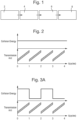


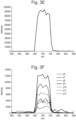


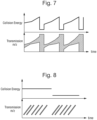
Classifications
-
- H—ELECTRICITY
- H01—ELECTRIC ELEMENTS
- H01J—ELECTRIC DISCHARGE TUBES OR DISCHARGE LAMPS
- H01J49/00—Particle spectrometers or separator tubes
- H01J49/0027—Methods for using particle spectrometers
- H01J49/0031—Step by step routines describing the use of the apparatus
-
- H—ELECTRICITY
- H01—ELECTRIC ELEMENTS
- H01J—ELECTRIC DISCHARGE TUBES OR DISCHARGE LAMPS
- H01J49/00—Particle spectrometers or separator tubes
- H01J49/0009—Calibration of the apparatus
-
- H—ELECTRICITY
- H01—ELECTRIC ELEMENTS
- H01J—ELECTRIC DISCHARGE TUBES OR DISCHARGE LAMPS
- H01J49/00—Particle spectrometers or separator tubes
- H01J49/004—Combinations of spectrometers, tandem spectrometers, e.g. MS/MS, MSn
-
- H—ELECTRICITY
- H01—ELECTRIC ELEMENTS
- H01J—ELECTRIC DISCHARGE TUBES OR DISCHARGE LAMPS
- H01J49/00—Particle spectrometers or separator tubes
- H01J49/004—Combinations of spectrometers, tandem spectrometers, e.g. MS/MS, MSn
- H01J49/0045—Combinations of spectrometers, tandem spectrometers, e.g. MS/MS, MSn characterised by the fragmentation or other specific reaction
- H01J49/005—Combinations of spectrometers, tandem spectrometers, e.g. MS/MS, MSn characterised by the fragmentation or other specific reaction by collision with gas, e.g. by introducing gas or by accelerating ions with an electric field
-
- H—ELECTRICITY
- H01—ELECTRIC ELEMENTS
- H01J—ELECTRIC DISCHARGE TUBES OR DISCHARGE LAMPS
- H01J49/00—Particle spectrometers or separator tubes
- H01J49/004—Combinations of spectrometers, tandem spectrometers, e.g. MS/MS, MSn
- H01J49/0045—Combinations of spectrometers, tandem spectrometers, e.g. MS/MS, MSn characterised by the fragmentation or other specific reaction
- H01J49/0072—Combinations of spectrometers, tandem spectrometers, e.g. MS/MS, MSn characterised by the fragmentation or other specific reaction by ion/ion reaction, e.g. electron transfer dissociation, proton transfer dissociation
-
- H—ELECTRICITY
- H01—ELECTRIC ELEMENTS
- H01J—ELECTRIC DISCHARGE TUBES OR DISCHARGE LAMPS
- H01J49/00—Particle spectrometers or separator tubes
- H01J49/02—Details
- H01J49/025—Detectors specially adapted to particle spectrometers
Definitions
- the present invention relates generally to mass spectrometers and in particular to mass spectrometers for obtaining two dimensional data sets.
- the targeted ion population is substantially unfiltered, although some components may be “profiled” if they cannot transmit the entire population while operating in a single state.
- One or more fragmentation devices may be operated in more than one state in order to produce "low energy” data in which the ion population is substantially unfragmented, and "high energy data” which predominantly consists of fragments of the original ion population.
- these acquisition modes will be referred to herein as multi-MS modes. While powerful, the qualitative and quantitative performance of multi-MS modes may be limited by the complexity of the samples involved and/or involve extra separation methods, such as ion mobility separation, which introduces extra cost and instrument complexity.
- the ion population is filtered or pre-separated by mass to charge (m/z), usually with the aim of reducing the complexity of the products of fragmentation experiments performed after the filter, thereby improving the confidence of assignment of fragment ions to precursor ions and reducing interferences.
- the filter may be operated in a static configuration in which a single m/z range is selected for fragmentation (MSMS), or stepped through a predetermined series of static configurations.
- MSMS mass to charge
- This latter category of DIA acquisition modes will be referred to herein as multi-MSMS for generality.
- the time-scale on which this stepping occurs is typically a minimum of around 1/20 second owing to limitations in instrument control and acquisition systems.
- US 2015/0136969 A1 describes a method of mass spectrometry comprising: mass selectively transmitting precursor ions of a range of mass to charge ratios, through a mass filter which is continuously scanned or stepped with time according to a scan function, and ions transmitted by the mass filter are fragmented, and the resulting product ions are mass analysed; and operating the mass filter in a second mode wherein one or more scans is performed in which precursor ions are detected rather than being fragmented
- the fragmentation energy or rate, or reaction energy or rate may vary in synchronism with the mass values transmitted by the mass separator or filter during a, or each, cycle.
- the method may further comprise a calibration procedure.
- the calibration procedure may comprise: performing said plurality of cycles of operation on a mixture including a plurality of standards to obtain mass spectral data; processing the data using a peak detection algorithm; matching detected mass peaks to theoretically expected mass peaks for the standards; and constructing a mapping or calibration relationship between the mass to charge ratio values for the standards and the time of transmission of the standards by the mass separator or mass filter.
- This method correlates the mass to charge ratio transmitted by the mass separator or filter with the time of its transmission.
- Standards may be used which do not fragment during the experiment.
- standards may be used that fragment prior to detection, as the peaks for the fragments of the standards will occur at the same time and have the same profile as the peaks of the precursor ions of the standards would have had, had they not been fragmented.
- the fragment peaks of the standards may be used in the step of matching detected mass peaks to theoretically expected mass peaks for the standards.
- the method may comprise using the time of detection of a fragment or product ion and said mapping or calibration relationship to determine the mass to charge ratio of the precursor ion of said fragment or product ion.
- the time of detection of any given fragment or product ion by the mass analyser is related to the time of transmission of its respective precursor ion by the mass separator or mass filter
- the time of detection of the fragment or product ion can be used to determine when its precursor ion was transmitted.
- the function of how the mass to charge ratios capable of being transmitted by the mass separator or filter varies with time is known (from the mapping or calibration relationship)
- the time determined for when the precursor ion was transmitted can be used to determine the mass to charge ratio of the precursor ion.
- the detected fragment or product ion can therefore be associated with its precursor ion.
- the precursor mass to charge ratio determined may be matched to a precursor ion mass analysed in the wideband mode.
- the period of time during which ions are capable of being mass selectively transmitted by the mass separator or filter may be longer than the period of time that one of the wideband modes is operated in.
- the mass to charge ratio, or range of mass to charge ratios, transmitted by the mass separator or mass filter may progressively increase (or decrease) from the start to the end of the cycle.
- the ions transmitted by the mass separator or filter in at least some of said cycles may be fragmented with a substantially constant collision energy or fragmentation rate to produce fragment ions.
- the collision energy or fragmentation rate may be maintained constant for substantially the whole of one or more of said cycles.
- Ions transmitted by the mass separator or filter in at least some of said cycles may be reacted at a substantially constant reaction rate to produce product ions.
- the reaction rate may be maintained constant for substantially the whole of one or more of said cycles.
- the methods may comprise performing a plurality of said cycles whilst varying the collision energy or fragmentation rate, or reaction rate, such that the energy or rate is different for different cycles.
- the energy or rate may increase progressively, increase in a continuous manner, or increase in a stepped manner, throughout each cycle such that the energy or rate is different for the different cycles; or the energy or rate may decrease progressively, decrease in a continuous manner, or decrease in a stepped manner, throughout each cycle such that the energy or rate is different for different cycles.
- the mass separator or filter may be an ion trap that mass selectively scans ions out of the trap in each of the cycles.
- the width of the range of mass to charge ratios that is capable of being transmitted by the mass separator or filter at any given time may be varied during one or more of the cycles and/or between different ones of said cycles.
- the mass to charge ratio range that is scanned or stepped through by the mass separator or filter may be different for different cycles.
- the methods may comprise operating the method in a mode which performs a plurality of successive ones of said cycles whilst maintaining the collision energy or fragmentation rate, or reaction rate, constant and so as to cause fragmentation or reaction of the ions.
- the methods may comprise operating the method in a mode which performs a plurality of successive ones of said cycles whilst maintaining the collision energy or fragmentation rate, or reaction rate, constant and so as to substantially not cause fragmentation or reaction of the ions.
- the methods may comprise performing ⁇ z cycles in the single experimental run, wherein z is selected from the group consisting of: 3, 4, 5, 6, 7, 8, 9, 10, 15, 20, 25, 30, 35, 40, 45, and 50.
- the mass separator or filter is operated such that in each cycle the mass, or mass range, capable of being transmitted therefrom is either continuously scanned or stepped in mass to charge ratio as a function of time.
- the mass to charge ratio (or mass to charge ratio range) capable of being transmitted is stepped as a function of time
- the mass to charge ratio (or mass to charge ratio range) may be stepped so as to bypass a mass to charge ratio range that is not of interest.
- the total mass to charge ratio range that is scanned or stepped through by the mass separator or filter in a cycle may be the same for a plurality of the cycles or all of the cycles.
- the mass filter may be a quadrupole mass filter or other multipole mass filter; or the mass separator or mass filter may be an ion trap that, optionally, mass selectively transmits ions of different mass to charge ratios downstream at different times during each cycle.
- the methods may comprise separating the precursor ions transmitted by the mass separator or filter according to ion mobility.
- the methods may comprise using the ion mobility separation to associate ion mobilities with the ions or mass spectra detected by the mass analyser.
- the precursor ions may be pulsed into an ion mobility separator such that different precursor ions elute from the ion mobility separator at different times, wherein the mass analyser acquires a plurality of mass spectra as the different precursor ions elute, and wherein each mass spectrum is recorded together with an ion mobility associated with ions giving rise to that mass spectrum; and/or in another mode the precursor ions may be pulsed into an ion mobility separator such that different precursor ions elute from the ion mobility separator at different times, wherein the ions are then fragmented or reacted to produce fragment or product ions that remain separated according to the ion mobility of their precursor ions, wherein the mass analyser acquires a plurality of mass spectra for the fragment or product ions, and wherein each mass spectrum is recorded together with an ion mobility associated with a precursor ion of the fragment or product ions giving rise to that mass spectrum.
- the methods may comprise separating components of an analyte sample in a sample separation device, such as a liquid chromatography device, ionising the sample eluting from the sample separation device and supplying the resulting ions to the mass separator or filter.
- a sample separation device such as a liquid chromatography device
- the methods may comprise using the sample separation to associate elution times from the sample separation device with the ions or mass spectra detected by the mass analyser; optionally wherein the mass analyser acquires a plurality of mass spectra as the sample elutes from the sample separation device, and wherein each mass spectrum is recorded together with an associated elution time from the sample separation device.
- the mass analyser may acquire a plurality of mass spectra for the precursor ions, and/or fragment or product ions derived therefrom, that are transmitted in each cycle of the mass separator or filter.
- the mass analyser may acquire ⁇ x mass spectra during each of the cycles, wherein x is selected from the group consisting of: 5, 10, 20, 30, 40, 50, 60, 70, 80, 90, 100, 150, 200, 250, 300, 35, 400, 450, 500, 600, 700, 800, 900 and 1000; and/or the mass analyser may acquire mass spectra at a rate of ⁇ y scans per second during each cycle, wherein y is selected from the group consisting of: 5, 10, 20, 30, 40, 50, 60, 70, 80, 90, 100, 150, 200, 250, 300, 35, 400, 450, 500, 600, 700, 800, 900, 1000, 1100, 1200, 1300, 1400, 1500, 1600, 1700, 1800, 1900, 2000, 2100, 2200, 2300, 2400, 2500, 2600, 2700, 2800, 2900, 3000, 4000, and 5000.
- x is selected from the group consisting of: 5, 10, 20, 30, 40, 50, 60, 70
- the duration of each cycle may be selected from the group consisting of: ⁇ 0.01 s; ⁇ 0.02 s; ⁇ 0.03 s; ⁇ 0.04 s; ⁇ 0.05 s; ⁇ 0.06 s; ⁇ 0.07 s; ⁇ 0.08 s; ⁇ 0.09 s; ⁇ 0.1 s; ⁇ 0.15 s; ⁇ 0.2 s; ⁇ 0.25 s; ⁇ 0.3 s; ⁇ 0.35 s; ⁇ 0.4 s; ⁇ 0.45 s; ⁇ 0.5 s; ⁇ 0.55 s; ⁇ 0.6 s; ⁇ 0.65 s; ⁇ 0.7 s; ⁇ 0.75 s; ⁇ 0.80 s; ⁇ 0.85 s; ⁇ 0.9 s; ⁇ 1 s; ⁇ 1.1 s; ⁇ 1.2 s; ⁇ 1.3 s; ⁇ 1.4 s; ⁇ 1.5 s; ⁇ 1.6 s; ⁇ 1.7 s; ⁇ 1.8
- the mass analyser may be a time of flight mass analyser, such as an orthogonal time of flight mass analyser.
- the period of time during which ions are mass selectively transmitted by the mass separator or filter may be longer than the period of time that one of the wideband modes is operated in.
- the width of the range of mass to charge ratios that is transmitted by the mass separator or filter at any given time may be varied during one or more of the cycles and/or between different ones of said cycles.
- the duration over which ions are mass selectively transmitted by the mass separator or filter time may be varied during one or more of the cycles and/or between different ones of said cycles.
- Different ones of said cycles may at least partially overlap each other in time.
- the step of mass analysing described herein may comprise obtaining mass spectral data repeatedly over each of said cycles and recording the data.
- the rate at which mass spectra are obtained is fast enough to profile sample eluting from the mass separator or mass filter in each cycle.
- the methods may comprise performing a calibration procedure that comprises: performing said plurality of cycles of operation on a mixture including a plurality of standards to obtain mass spectral data; processing the data using a peak detection algorithm; matching detected mass peaks to theoretically expected mass peaks for the standards; and constructing a mapping or calibration relationship between the mass to charge ratio values for the standards and the time of transmission of the standards by the mass separator or mass filter.
- This method correlates the mass to charge ratio transmitted by the mass separator or filter with the time of its transmission.
- Standards may be used which do not fragment during the experiment.
- standards may be used that fragment prior to detection, as the peaks for the fragments of the standards will occur at the same time and have the same profile as the peaks of the precursor ions of the standards would have had, had they not been fragmented.
- the fragment peaks of the standards may be used in the step of matching detected mass peaks to theoretically expected mass peaks for the standards.
- the methods may comprise using the time of detection of a fragment or product ion and said mapping or calibration relationship to determine the mass to charge ratio of the precursor ion of said fragment or product ion.
- the time of detection of any given fragment or product ion by the mass analyser is related to the time of transmission of its respective precursor ion by the mass separator or mass filter
- the time of detection of the fragment or product ion can be used to determine when its precursor ion was transmitted.
- the function of how the mass to charge ratios capable of being transmitted by the mass separator or filter varies with time is known (from the mapping or calibration relationship)
- the time determined for when the precursor ion was transmitted can be used to determine the mass to charge ratio of the precursor ion.
- the detected fragment or product ion can therefore be associated with its precursor ion.
- the methods may comprise assigning said fragment or product ion to said precursor ion.
- the methods may comprise selecting one or more mass to charge ratios of interest, using said mapping or calibration relationship to determine the time of transmission of those one or more mass to charge ratios of interest, and extracting or isolating mass spectral data obtained for the time of transmission of said one or more mass to charge ratios of interest.
- the mass spectrometer may be arranged and configured (e.g. set up to) perform any of the methods described herein.
- the plurality of cycles of operation may be performed in a single experimental run; optionally wherein the method comprises performing ⁇ z cycles in the single experimental run, wherein z is selected from the group consisting of: 2, 3, 4, 5, 6, 7, 8, 9, 10, 15, 20, 25, 30, 35, 40, 45, and 50.
- the total mass to charge ratio range that is scanned or stepped through by the mass separator or filter in a cycle may be the same for a plurality of the cycles or all of the cycles.
- the mass filter may be a quadrupole mass filter or other multipole mass filter; or the mass separator or mass filter may be an ion trap that, optionally, mass selectively transmits ions of different mass to charge ratios downstream at different times during each cycle.
- Ions transmitted by the mass separator or filter in at least some of said cycles may be fragmented or reacted to produce fragment or product ions, optionally with a constant or variable collision energy.
- the mass analyser may acquire a plurality of mass spectra for the precursor ions, and/or fragment or product ions derived therefrom, that are transmitted in each cycle of the mass separator or filter.
- the mass analyser may acquire ⁇ x mass spectra during each of the cycles, wherein x is selected from the group consisting of: 5, 10, 20, 30, 40, 50, 60, 70, 80, 90, 100, 150, 200, 250, 300, 35, 400, 450, 500, 600, 700, 800, 900 and 1000.
- the duration of each cycle may be selected from the group consisting of: ⁇ 0.01 s; ⁇ 0.02 s; ⁇ 0.03 s; ⁇ 0.04 s; ⁇ 0.05 s; ⁇ 0.06 s; ⁇ 0.07 s; ⁇ 0.08 s; ⁇ 0.09 s; ⁇ 0.1 s; ⁇ 0.15 s; ⁇ 0.2 s; ⁇ 0.25 s; ⁇ 0.3 s; ⁇ 0.35 s; ⁇ 0.4 s; ⁇ 0.45 s; ⁇ 0.5 s; ⁇ 0.55 s; ⁇ 0.6 s; ⁇ 0.65 s; ⁇ 0.7 s; 0.75 s; ⁇ 0.80 s; ⁇ 0.85 s; ⁇ 0.9 s; ⁇ 1 s; ⁇ 1.1 s; ⁇ 1.2 s; ⁇ 1.3 s; ⁇ 1.4 s; ⁇ 1.5 s; ⁇ 1.6 s; ⁇ 1.7 s; ⁇ 1.8 s
- the duration of each cycle may be selected from the group consisting of: ⁇ 0.02 s; ⁇ 0.03 s; ⁇ 0.04 s; ⁇ 0.05 s; ⁇ 0.06 s; ⁇ 0.07 s; ⁇ 0.08 s; ⁇ 0.09 s; ⁇ 0.1 s; ⁇ 0.15 s; ⁇ 0.2 s; ⁇ 0.25 s; ⁇ 0.3 s; ⁇ 0.35 s; ⁇ 0.4 s; ⁇ 0.45 s; ⁇ 0.5 s; ⁇ 0.55 s; ⁇ 0.6 s; ⁇ 0.65 s; ⁇ 0.7 s; ⁇ 0.75 s; ⁇ 0.80 s; ⁇ 0.85 s; ⁇ 0.9 s; ⁇ 1 s; ⁇ 1.1 s; ⁇ 1.2 s; ⁇ 1.3 s; ⁇ 1.4 s; ⁇ 1.5 s; ⁇ 1.6 s; ⁇ 1.7 s; ⁇ 1.8 s; ⁇
- the mass analyser may be a time of flight mass analyser such as an orthogonal time of flight mass analyser.
- the period of time during which ions are mass selectively transmitted by the mass separator or filter may be longer than the period of time that one of the wideband modes is operated in.
- the mass range that is scanned or stepped through by the mass separator or filter may be different for different cycles.
- the width of the range of masse to charge ratios that is transmitted by the mass separator or filter at any given time may be varied during one or more of the cycles and/or between different ones of said cycles.
- the duration over which ions are mass selectively transmitted by the mass separator or filter time may be varied during one or more of the cycles and/or between different ones of said cycles.
- Different ones of said cycles may at least partially overlap each other in time.
- Fig. 1 shows a schematic of an instrument according to an embodiment of the present invention, which may be operated in a mode of acquisition that will be referred to herein as 2D-MSMS.
- the instrument comprises an ion source 2, a resolving mass filter or mass separator 4, a fragmentation device 6 and a mass analyser 8.
- the sample may comprise multiple components which may be separated by a separation device prior to being passed to the ion source 2.
- the instrument may comprise a liquid chromatography device or capillary electrophoresis device for separating components of a liquid sample prior to ionisation in the ion source 2, or the instrument may comprise a gas chromatography device for separating components of a gaseous sample prior to ionisation in the ion source 2.
- the sample may be ionised without pre-separation.
- the sample may be ionised directly by use of direct ionisation techniques, such as DART, REIMS, DESI or MALDI.
- the mass separator or filter 4 is operated such that it transmits ions having only a single mass to charge ratio, or a limited window of mass to charge ratios, at any given time to the fragmentation device 6.
- the mass separator or filter 4 is operated such that the single mass to charge ratio, or window of mass to charge ratios, that is transmitted to the fragmentation device 6 varies with time.
- the mass separator or filter 4 continuously scans or steps the mass to charge ratio, or window of mass to charge ratios, that is transmitted as a function of time.
- the mass separator or filter 4 performs a plurality of cycles, in a single experimental run, wherein each cycle comprises continuously scanning or stepping the mass to charge ratio, or window of mass to charge ratios, that is transmitted as a function of time.
- the mass to charge ratio(s) are therefore repeatedly scanned or stepped over a target range of mass to charge ratios.
- An example device suitable to be used as the mass separator 4 includes an ion trap, such as a 3D quadrupole ion trap, Paul trap or linear ion trap.
- the ion trap may mass selectively eject ions, wherein the mass to charge ratios ejected by the ion trap to the fragmentation device 6 varies as a function of time, e.g., is scanned or stepped in each cycle. This may be achieved by varying one or more voltages applied to the ion trap as a function of time.
- An example device suitable to be used as the mass filter 4 includes a quadrupole mass filter. The mass filter may filter out all ions other than those transmitted to the fragmentation device 6 at any given time. One or more voltages applied to the mass filter may be varied as a function of time such that the mass to charge ratio(s) of the ion(s) that are transmitted by the filter is scanned or stepped in each cycle.
- Ions that are transmitted by the mass separator or filter 4 pass into the fragmentation device 6 and are fragmented so as to produce fragment ions. Additionally, or alternatively to the fragmentation device 6, the ions transmitted by the mass separator or filter 4 may pass into a reaction device 6 and may be reacted so as to produce product ions. For example, the analyte ions may be reacted with reagent ions, electrons or molecules in the reaction device to cause them to form the product ions.
- embodiments described herein are described as comprising a fragmentation device, it is contemplated that these embodiments may alternatively, or additionally, comprise a reaction device.
- the mass analyser 8 acquires a plurality of mass spectra within each cycle (e.g. within each scan) of the mass separator or filter 4.
- the mass analyser 8 may be an analyser that analyses ions in a short enough time scale to profile the ions being scanned or stepped out of the mass filter or separator 4 (e.g., typically tens of microseconds), which in turn may be profiling a fast chromatographic experiment.
- the mass analyser 8 may be an orthogonal acceleration time of flight (oa-ToF) analyser.
- Fig. 2 illustrates one possible mode of operation of the instrument shown in Fig. 1 , which is not in accordance with the claimed invention.
- the mass separator or filter 4 is scanned in each of a plurality of cycles.
- Four cycles are shown in Fig. 2 as diagonal bands, although fewer or more cycles may be performed.
- Each diagonal band represents the mass to charge ratios capable of being transmitted by the mass separator or filter 4 as a function of time. Ions falling outside of this band are not transmitted by the mass separator or filter 4. It can be seen that the mass to charge ratios capable of being transmitted by the mass separator or filter 4 increase with time from the start to the end of each cycle.
- the scan function is the same in each cycle, although it is contemplates that the scan functions may be different in different cycles.
- each cycle is substantially immediately followed by the next cycle, although it is also contemplated that there may be a time delay between one or more adjacent cycles.
- All ions scanned out of the mass separator or filter 4 (at all times) are caused to pass into the fragmentation device 6 with a constant collision energy, represented by the horizontal plot in the upper part of Fig. 2 .
- the ions are then fragmented in the fragmentation device 6 via this collision energy and pass into the mass analyser 8.
- the mass analyser 8 repeatedly mass analyses ions received from the fragmentation device 6 for each cycle of the mass separator or filter 4, thereby obtaining a plurality of mass spectra for each cycle of the mass separator or filter 4.
- the mass analyser 8 acquire 200 mass spectra for each cycle of the mass separator or filter 4, although it is contemplated that a fewer or greater number of mass spectra may be obtained in each cycle.
- the plurality of mass spectra obtained for each cycle may be obtained over a relatively short timescale, e.g. in only 1/10 second.
- the timescale, and hence the rate of obtaining the mass spectra is selected to be sufficiently fast to profile the sample being scanned out of the mass separator or filter 4.
- the sample may be separated upstream of the ion source 2 by chromatography, for example, high performance chromatography (e.g. HPLC).
- the time of each cycle of the mass separator or filter 4 may be selected to be sufficiently fast to profile the sample eluting from the chromatography device.
- the timescale, and hence the rate of obtaining the mass spectra may be selected to be sufficiently fast to profile the sample eluting from the chromatography device and being scanned out of the mass separator or filter.
- the time that the mass analyser 8 detects any given fragment ion may be used to determine or estimate the time that its corresponding precursor ion was transmitted by the mass filter or separator 4.
- the time that the precursor ion was transmitted by the mass filter or separator 4 may be used to determine or estimate the mass to charge ratio of the precursor ion.
- the technique described above may enable the mass to charge ratio of a precursor ion that corresponds to a particular mass analysed fragment species to be reconstructed to an accuracy of a fraction of the transmission window of the mass filter or separator 4.
- it is often desirable to obtain a more accurate measurement of mass to charge ratio for a precursor for example, for the purpose of databank or library searching, e.g., for mass confirmation in a screening experiment etc.
- Fig. 3A illustrates a mode of operation that is not in accordance with the claimed invention, and which is the same as that described in relation to Fig. 2 , except that the ions are transmitted into the fragmentation device 6 with a collision energy that is high for some cycles of the mass filter or separator 4 (e.g. such that the precursor ions are fragmented) and low for other cycles of the mass filter or separator 4 (e.g. such that the precursor ions are substantially not fragmented).
- the collision energy is high for alternate cycles of the mass filter or separator 4 and low for other alternate cycles of the mass filter or separator 4, although other patterns of variation in collision energy are contemplated.
- the collision energy may be high for a plurality of successive cycles and then low for at least one subsequent cycle, or the collision energy may be low for a plurality of successive cycles and then high for at least one subsequent cycle.
- both the low and high collision energy data may be obtained for mass filter or separator 4 scans that are scanned in an identical fashion. This has the advantage that both low energy data and high energy data can be processed in an identical way. Precursor ions can be associated with their respective fragment ions based on correlation or probabilistic comparisons of low and high energy peak profiles. The low energy data and high energy data may be stored in different data streams.
- the ion guide initially guides the ions along a section having a relatively large cross-sectional area 20 and then focusses the ions into a smaller cross-sectional area in an off-axis section 22.
- the ions are then be transferred into a further ion guide 24 and into a quadrupole mass filter 26.
- the quadrupole mass filter 26 can be operated in a transmission mode so that all the ions entering the filter 26 pass through it and into the downstream chamber 28.
- the ions are then collected in bunches within a trap cell 30 within the chamber 28.
- Each bunch of ions in the trap cell is pulsed into a helium cell 32 of an ion mobility separator 34.
- the ions temporally separate according to their ion mobility within the mobility separator 34.
- ions that elute from the liquid chromatography separator at the same time are separated according to ion mobility (i.e. according to drift time through the mobility separator 34).
- ions exit the separator 34 they are passed through a transfer cell 36, several lenses 38 and into a ToF pusher region 40 of an orthogonal acceleration ToF mass analyser.
- the pusher region 40 may be pulsed a plurality of times as ions originating from each bunch elute from the separator 34.
- groups of ions having small ranges of ion mobility are pulsed into a flight tube 42 and reflectron 44, in which they are reflected to a detection system 46.
- the flight times of the ions from the pusher 40 to the detection system 46 are recorded, together with a respective ion mobility value representative of their ion mobility through the ion mobility separator 34.
- the instrument has been described in a mode for analysing precursor ions, the instrument may also be used in a fragmentation mode in which the precursor ions are provided to the transfer cell 36 with sufficient energy to induce fragmentation of these ions.
- the resulting fragment ions are maintained separated according to the mobility of their respective precursor ions through separator 34, and are then mass analysed by the ToF mass analyser as described above.
- the fragment ions are associated with ion mobility values corresponding to the ion mobilities of their respective precursor ions.
- the Synapt instrument was modified so that the quadrupole mass filter was allowed to operate with a mass to charge ratio transmission window of up to 100 Da/e.
- a 1600 ⁇ g cytosolic E.coli tryptic digest standard was injected into a nano-LC system equipped with a C18 analytical reversed phase column (upstream of inlet 12). A gradient duration of 120 mins was used. The eluting sample was transferred to the inlet 12.
- the transmission of the instrument was set to 10% using a dynamic range enhancement (DRE) lens.
- DRE dynamic range enhancement
- the quadrupole was set to transmit a 100 m / z unit window which was continuously and repetitively scanned with a one second cycle time over the m / z range of 50-2000, in accordance with the scan function shown in Fig. 3A .
- the instrument was switched between the post-quadrupole high collision energy fragmentation mode (in the transfer cell 36) and the low collision energy non-fragmentation mode.
- the data acquisition system was configured to profile the ion mobility separations performed by the ion mobility separator 34 by adding individual ToF spectra (pushes) incrementally into a buffer containing 200 memory locations or 'bins'.
- the ToF pusher region 40 was pulsed 200 times so as to mass analyse the ions emerging from the separator 34, or to mass analyse ions derived therefrom (i.e. their fragment ions, in the high collision energy fragmentation mode).
- the precursor ions arrive at the ToF pusher region 40 at times related to their ion mobility through the separator 34.
- the fragment ions arrive at the ToF pusher region 40 at times related to the ion mobility through the separator 34 of their respective parent ions.
- each of the bins stores spectral data for ions associated with different drift times through the separator 34.
- the pusher period was determined by the ToF mode and mass range, and in this example was typically around 70 ⁇ s, corresponding to an ion mobility separation of 14 ms (i.e. 200 pushes per ion mobility separation cycle). Data may be added to the buffer in a cyclic fashion.
- data from the nth ToF pulse may be added to the nth bin so that the nth bin includes spectral data from the nth ToF pulse of all of the cycles. It is contemplated that at least 10 cycles may be added to the buffer before being read out and stored to disk as a two-dimensional data set (i.e. both the mass data and associated ion mobility data are read out).
- the acquisition system may be repurposed to add data from several consecutive pushes (for a given cycle) to the same spectral bin in the buffer before moving on to the next bin.
- the data is stored in 200 bins, and so the number of consecutive ToF pushes per bin may be set to be the number of pushes in 1/200th of the quadrupole cycle time (if there is no inter-scan delay between pushes).
- the quadrupole cycle time may be chosen to be, for example, about 1s, and so in this example the number of consecutive pushes added to each bin would be about 70.
- each bin contains mass spectral data from the ToF mass analyser and is also associated with a drift time of the precursor ions through the ion mobility separator 34
- this setup produces two-dimensional datasets resembling nested ion mobility (IMS)-MS data.
- the spectral data may also be associated with its respective retention time from the liquid chromatography separator.
- the data may be viewed using Driftscope, for example, as shown in Figs. 3C and 3D .
- Fig. 3E shows the reconstructed quadrupole profile for the precursor ion of the doubly charged peptide VIELQGIAGTSAAR and Fig. 3F shows the reconstructed quadrupole profiles of seven of its fragment ions.
- the inferred precursor m/ z is 693.2 +/- 4.2, whereas as described above the true value is 693.4.
- Fig. 3G shows the low energy spectrum at a retention time of 41.6 minutes and a quadrupole m/z of 693.4.
- the doubly charged precursor of the peptide VIELQGIAGTSAAR is clearly visible.
- Fig. 3H shows the corresponding high energy spectrum, in which part of the y-ion series of the same peptide is annotated.
- the effective loading was about 8 ng which is similar to the effective loading for the MS E experiment run at 0.5% transmission.
- the MS E data yielded 286 proteins and 2568 peptide matches.
- the acquisition method disclosed herein significantly outperforms MS E in a qualitative proteomics setting. This indicates that at least some of the benefits seen in qualitative ion mobility experiments (e.g., HDMS E ) could be realised through data independent tandem modes on non-IMS enabled instruments.
- wideband enhancement (utilising post-quadrupole ion mobility separation) could be employed, e.g., to improve the mass analyser duty cycle by up to, for example, 10-fold for singly charged fragment ions.
- the collision energy may be varied over the mass separator or filter cycle, e.g., using an optimised value or ramp at each mass to charge ratio being transmitted, thereby improving fragmentation efficiency.
- the peak detection algorithm (e.g., in PLGS) may be optimised for ion mobility peak shapes, rather than the more square mass separator or filter profiles shown herein. Further tuning may improve alignment.
- mass separator or filter 4 scanning speed and window size has been described. However, much of the mass to charge ratio range covered by the mass separator or filter may be empty, e.g., tryptic peptides tend to be concentrated between m/z 300-900. Mass ranges having species therein could be traversed more slowly and/or with a narrower m/z transmission window. The mass separator or filter programme could also be varied as a function of retention time (and, therefore, sample composition and complexity).
- the use of the fast ion mobility acquisition system allows two-dimensional data sets to be acquired at, for example, up to 10 Hz (i.e. a spectral acquisition rate of 2000 spectra per second), facilitating the profiling of faster chromatographic separations.
- the method could also be implemented on instruments other than that described above, such as the Waters Xevo-QTOF and the Vion IMS-QTOF which both have similar acquisition systems to Synapt.
- the positioning of the quadrupole after the ion mobility cell in Vion enables a different mode in which the quadrupole is programmed to scan along a trend line in drift time-m/z space corresponding to a single charge state.
- a significantly improved duty cycle would result.
- the method is well-suited to any trap-TOF geometry in which ions can be released from the trap in order of m / z and subsequently fragmented. With this configuration, duty cycles approaching 100% are possible.
- Fig. 3I illustrates some of the types of ions observed in 2D-MSMS experiments described herein.
- Band 10 represents precursor ions
- bands 12 represent ions formed due to neutral losses
- bands 14 represent common fragments.
- reconstructed mass separator or filter spectra e.g., quadrupole spectra
- 2D patterns can be used in library searching.
- mass separator or filter 4 may be desired to operate in a wideband mode (i.e. a substantially non-resolving mode), or to avoid trapping or filtering altogether, during the acquisition of the low collision energy data. In the case of a mass separator, this reduces the instantaneous ion current, reducing the likelihood or extent of detector saturation.
- Fig. 4 illustrates a possible mode of operation of the instrument shown in Fig. 1 , which is in accordance with the claimed invention.
- the mass separator or filter 4 is scanned in each of a plurality of cycles. All ions scanned out of the mass separator or filter 4 during each cycle are caused to pass into the fragmentation device 6 with a relatively high constant collision energy, as shown in the upper plot in Fig. 4 . These ions are then fragmented in the fragmentation device 6 and pass into the mass analyser 8 for mass analysis.
- the mass analyser 8 may repeatedly mass analyse ions received from the fragmentation device for each cycle of the mass separator or filter, thereby obtaining a plurality of mass spectra for each cycle of the mass separator or filter 4. However, for a period of time between adjacent cycles of the mass separator or filter 4, all ions are allowed to be onwardly transmitted from the ion source 2 to the mass analyser 8.
- the mass separator or filter 4 is operated in a wideband mode that does not separate or filter the ions for a period of time between adjacent scanning cycles of the mass separator or filter 4.
- the ions are caused to pass into the fragmentation device 6 with a relatively low constant collision energy, as shown in the upper plot in Fig. 4 .
- These ions are substantially not fragmented in these periods of time and the mass analyser 8 therefore mass analyses precursor ions.
- This technique increases the ion signal for the low collision energy portion of the data, by not separating or filtering the ions. This improves ion detection limits and ion statistics for the detection of the precursor ions.
- the scan functions of the cycles are depicted as the same, they may be different. Additionally, or alternatively, although the collision energy is the same for each cycle (per period between) the energy may be different for different cycles (or periods between).
- Fig. 5 illustrates a mode of operation that is not in accordance with the claimed invention, and which is the same as that described in relation to Fig. 3 , except that during each mass separator or filter 4 cycle the ions are transmitted into the fragmentation device 6 with a collision energy that is progressively increased.
- This technique may be used to optimise or enhance the dissociation of different analyte precursor ions in the sample. For example, for some classes of analyte, such as complex mixtures of peptides, a single collision energy does not yield an optimal fragmentation pattern for all species. For this reason, the collision energy may be varied during each mass separator or filter cycle so that the collision energy is optimised or enhanced for the different species being transmitted to the fragmentation device 6 at different points in the cycle.
- the collision energy may be varied during each cycle such that the collision energy is optimised or enhanced for the mass to charge ratio(s) currently being transmitted from the mass separator or filter 4 to the fragmentation device 6. This technique is therefore particularly useful for classes of analyte for which there is a strong correlation between their mass to charge ratios and the optimal collision energy.
- the collision energy is ramped linearly during each cycle.
- the collision energy may be varied in each cycle in other manners.
- the collision energy may be varied in each cycle as a function of time in a nonlinear manner.
- the collision energy may be varied in each cycle as a function of time in a manner that increases progressively, increases in a continuous manner, increases in a stepped manner, decreases progressively, decreases in a continuous manner, decreases in a stepped manner, increases and then decreases, or decreases then increases. Functions of time including curves, steps or very rapid changes of collision energy may be used.
- mass separator or filter 4 may transmit a particular mass to charge ratio, or a particular range of mass to charge ratios, at any point in mass separator or filter cycle
- species with similar mass to charge ratios may have different optimal collision energies. It can therefore be beneficial to subject the ions to different collision energies at substantially the same point in each mass separator or filter cycle. This may be achieved by performing a plurality of cycles of varying the collision energy within each mass separator or filter cycle, e.g., by nesting a series of short collision energy ramps within each mass separator or filter cycle. It can also be beneficial to subject the ions to different collision energies at the same point in different cycles. For example, the collision energy may be varied in a different manner for different mass separator or filter cycles.
- Fig. 6 illustrates a mode of operation that is not in accordance with the claimed invention, wherein the mass separator or filter 4 is scanned relatively rapidly, i.e. such that each mass separator or filter cycle is relatively short.
- This mode may be useful, for example, when the mass separator or filter 4 is an ion trap that mass selectively scans ions out of the trap in each of the cycles, because the trap fill time is relatively low, which reduces the charge capacity requirement for the ion trap.
- the trap scans the ions out relatively frequently and so only a relatively low charge capacity ion trap is required. This may mean that a smaller or less expensive ion trap could be utilised.
- the ions are scanned out of the mass separator or filter 4 (e.g., ion trap) and into the fragmentation device 6 with a certain collision energy at any given time, wherein the collision energy causes the ions to fragment in the fragmentation device 6.
- the collision energy may be varied as a function of time, for example, such that the collision energy is varied to different values over different mass separator or filter 4 cycles.
- the collision energy may be varied over the different cycles as a function of time in a manner that causes the ions scanned out of the mass separator or filter in the different cycles to be fragmented.
- the collision energy may be varied over the different cycles as a function of time in a manner that increases progressively, increases in a continuous manner, increases in a stepped manner, decreases progressively, decreases in a continuous manner, decreases in a stepped manner, increases and then decreases, or decreases then increases.
- Functions of time including curves, steps or very rapid changes of collision energy may be used.
- the collision energy is varied over the different cycles as a function of time in a manner that increases progressively for eleven mass separator or filter cycles, so as to cause fragmentation of the ions scanned out of the mass separator or filter in these cycles.
- This collision energy may also be set to a low energy value, or low energy values, for a plurality of different cycles of the mass separator or filter 4 so that ions scanned out of the mass separator or filter 4 in these cycles are not fragmented.
- the collision energy set to such a low value for eleven mass separator or filter cycles, so that the ions are not fragmented in these cycles.
- mass separator or filter resolution, or transmission window size may depend on the complexity of the sample being analysed. For simple mixtures, it may be beneficial to make use of a relatively wide transmission window in order to optimize ion transmission and/or reduce saturation. In contrast, for complex mixtures it may be beneficial to employ a relatively narrow transmission window so as to reduce the complexity of the data obtained at high collision energies, although this may be compromised by some cost in analytical dynamic range (i.e. loss of sensitivity or saturation).
- embodiments of the invention may include a sample separation device upstream of the ion source 2, such as a liquid chromatography (LC) or gas chromatography device.
- LC liquid chromatography
- the complexity and typical composition of the sample introduced into the ion source 2 of the mass spectrometer may vary significantly with time.
- the sample complexity may also vary with mass to charge ratio. For example, at an elution time from the sample separation device (e.g., at a given retention time during a chromatographic experiment), there may be portions of the mass to charge ratio range containing a relatively high concentration of precursor species, while other portions of the mass to charge ratio range may contain relatively few precursor species.
- the instrument may therefore be desired to vary the operation of the instrument as a function elution time from the sample separation device and/or mass to charge ratio, but still in a data independent way.
- start and end of the mass range to be scanned over may vary according to the elution time from the sample separation device.
- different mass separator or filter cycles may scan over mass ranges having different start and/or end masses.
- the width of the mass separator or filter transmission window may be varied with elution time from the sample separation device. Accordingly, different mass separator or filter cycles may scan over mass ranges with transmission windows of different sizes. Alternatively, or additionally, the width of the transmission window may vary during each of one of more of the mass separator or filter cycles.
- the transmission window may be relatively narrow in one or more regions of the mass separator or filter cycle of high complexity (i.e. containing a relatively large number precursor species) and relatively wide in one or more regions of the mass separator or filter cycle that is of low complexity (i.e. containing a relatively low number of precursor ion species).
- the duration over which a mass separator or filter cycle is performed may also be varied in the experimental run for different mass separator or filter cycles.
- the collision energy may be set to a value, or values, that causes ions scanned out of the mass separator or filter 4 in at least some of the mass separator or filter cycles to be fragmented in the fragmentation device. Variations in the mass transmission window during a mass separator or filter cycle may be synchronised with variations in the collision energy.
- the mass separator or filter cycle time and/or the proportions of time spent acquiring low and high energy collision data may also be varied during the experimental run.
- the optimization of the various parameters of the instrument described above may be performed based on user experience, analysis of the contents of a library from which predictions can be made about species likely to be observed during the experimental run, or by analyzing previous experimental data.
- the collision energy and/or other experimental parameters may be synchronized with the mass separator or filter cycle and may be optimized.
- optimal collision energy may be pre-calculated calculated on-the-fly using a pre-determined function of mass to charge range specific to an analyte class.
- Fig. 7 illustrates a mode of operation similar to that shown in Fig. 4 , except that the width of the transmission window varies with time within each mass separator or filter cycle. Also, the mass range that the mass separator or filter 4 is scanned across varies between the different mass separator or filter cycles. In the example shown, the mass range scanned increases progressively for subsequent cycles, although it is contemplated that the mass range scanned in a cycle may decrease with time or vary in another manner.
- the value of the collision energy may vary within each mass separator or filter cycle, e.g. as shown in Fig. 7 . In the example of Fig. 7 the collision energy increases during each cycle at a first substantially linear rate and then at a second substantially linear rate. However, it is contemplated that the collision energy may vary, increase or decrease in other manners. In any given cycle, the manner in which the collision energy is varied may be synchronised with the manner in which the mass to charge ratio transmission is varied.
- a multidimensional peak detection algorithm may be employed, such as those that have been developed for processing of multi-MS data (e.g. Apex). These may involve pre-processing the data using filters that have been matched to theoretically or experimentally determined peak shapes in mass to charge ratio, elution time or retention time from a sample separation device and the dimension of separation of the mass separator or filter. Alternatively, probabilistic peak detection algorithms may be employed. Separate peak lists may be compiled for low and high energy data. Peak properties may include, but are not limited to, measured mass to charge ratio, measured elution time or retention time from a sample separation device, measured mass separator or filter time, response (i.e. integrated signal), properties describing peak width/shape in any or all of the analytical dimensions.
- Detected high energy species may be associated with each other and/or with low energy species based on some or all of the above properties. For example peaks arising from the same precursor are expected to have the same elution time or retention time and/or the same elution time from the mass separator or filter 4 and/or the same peak shape properties. Associations between peaks may be based on the calculated probability that the peaks arise from the same precursor or, more simply, on properties that lie within calculated limits of each other. The probabilities and/or limits may depend on the measured response and the expected statistical behavior of the instrumentation.
- the data may be interpreted in a targeted manner.
- a targeted mass to charge ratio value may be provided including elution time or retention time limits.
- Data processing may include extracting a 1D or 2D dataset corresponding to each targeted mass to charge ratio value in the low and high energy data (where the dimensions may be mass separator or filter (e.g. quadrupole) position and optionally retention time) and deriving and thresholding on correlations or probabilities to establish that the ions originate from the same precursor.
- low energy data may be processed to determine species of interest, and then high energy data may be processed in a targeted manner to find fragments for these species of interest.
- a calibration procedure may be employed consisting of running a mixture of standards, processing the data using peak detection algorithms (e.g., as described above), matching the detected peaks to theoretically expected peaks, and constructing a mapping or calibration relationship (e.g., in software) between the known mass to charge ratio values and the measured mass separator or filter time, and then recording or storing this mapping or calibration relationship.
- peak detection algorithms e.g., as described above
- mapping or calibration relationship e.g., in software
- the calibration may be created using a low energy acquisition of any suitable mixture, using the downstream mass analyser to provide reference mass to charge ratio values.
- the quality of the mass separator or filter calibration is limited by the quality of the calibration of the downstream mass analyser.
- This alternative calibration procedure may be regarded as producing a mapping between the mass to charge ratio scale of the mass separator or filter 4 and that of the downstream mass analyser 8 which would remain valid even if the mass analyser was recalibrated.
- this low energy data may be used to create a calibration corresponding to these settings.
- This calibration may be used to calibrate other data acquired on the same instrument using the same settings (for example, high energy data in the same experiment).
- a sufficiently fast ion mobility separation may be performed inside each mass separator or filter cycle 4.
- the ion mobility separation may be performed upstream and/or downstream of the fragmentation device 6.
- the ion mobility separation may be used to add an extra dimension to the analytical space allowing, for example, separation of species overlapping in mass to charge ratios at different charge states. This separation may be preserved in the persisted data, or used to filter the data prior to persisting it, either to retain only selected features, or to reject unwanted features.
- the instrument may operate in both high and low energy collision modes in a single experimental run, thereby detecting both precursor and fragment ions.
- fragmentation is performed after the ion mobility separation
- the fragment ions may be associated with their respective precursors based on them having common ion mobility profiles, e.g. having the same or similar intensity profiles as a function of time. This may be done either in a targeted or untargeted way, as described above.
- ion mobility separation is used to separate ions in a dimension that is strongly correlated with mass to charge ratio so as to allow the duty cycle of the mass analyser (e.g., an oa-ToF mass analyser) to be significantly increased for a subset of species over a wide mass to charge ratio range.
- This is known as a High Duty Cycle (HDC) mode of operation.
- HDC High Duty Cycle
- HDC may be employed to increase the observed signal in high energy data.
- HDC may be employed during low energy acquisition. This may allow the proportion of time spent acquiring low energy data to be reduced, allowing an increase in the duty cycle of the high energy part of the experiment.
- the duty cycle of the mass analyser 8 may still be significantly increased over a narrower mass to charge ratio range. This is known as an Enhanced Duty Cycle (EDC) mode of operation.
- EDC Enhanced Duty Cycle
- the mass to charge ratio range enhanced by EDC may be varied during the separation or filter cycle or with retention time or alternatively may stay fixed.
- the instrument described herein may also include an attenuation device for attenuating ions.
- This device may be used in combination with the mass separator or filter to reduce the response of, or eliminate entirely, ions having a particular m/z range.
- the attenuation device may be located between the mass separator or filter and the mass analyser.
- the attenuation device may comprise part of the mass analyser, e.g. the pusher region of an oa-ToF mass analyser.
- the modes of acquisition described herein may be combined with other acquisition modes.
- 2D-MSMS cycles described above may be interspersed with standard MS cycles and/or MSMS cycles and/or ion mobility enabled experiments. These experiments may be pre-configured, in a data independent mode of operation, or triggered from data already acquired in a data dependent mode of operation.
- one or more MSMS experiments may be triggered from a 2D-MSMS experiment.
- the MSMS experiment may use a higher resolution mode of the mass separator or filter than the other modes in order to achieve increased specificity.
- the instrument may be operated in a mode of operation wherein the mass separator or filter cycles overlap each other in time.
- the mass separator or filter 4 performs a plurality of ion ejection or transmission scans, wherein the scans overlap.
- a second scan is begun.
- the second scan ends after the first scan has ended, although a third scan may have begun between the start and end of the second scan.
- the third scan ends after the second scan has ended, although a fourth scan may have begun between the start and end of the third scan. Any number of overlapping scans may be performed.
- This mode enables multiple mass ranges to be simultaneously ejected or transmitted by the mass separator or filter 4 and may therefore increase the duty cycle of the experiment, or may eliminate or reduce effects related to the finite space charge capacity in the mass separator or filter (e.g. an ion trap).
- the overlapping mass separator or filter cycles may start and/or end periodically (e.g. equally spaced apart in time) or may be arranged in a pre-determined or pseudorandom sequence. Such pre-determined or pseudorandom sequence may be used to facilitate subsequent de-multiplexing of overlapping product ion spectra from the overlapping scans.
- Fig. 8 shows an example of a mode that is not in accordance with the claimed invention, wherein the instrument is operated with overlapping mass separator or filter cycles.
- a series of five overlapping mass separator or filter cycles is performed whilst the collision energy is maintained high enough to cause fragmentation in the fragmentation device 6.
- a subsequent series of five overlapping mass separator or filter cycles is then performed whilst the collision energy is maintained low enough so as to substantially not cause fragmentation in the fragmentation device 6.
- the number of cycles in each of the two series need not be five, and the different series may comprise different numbers of cycles. Also, the cycles may not overlap as the collision energy transits from high to low collision energy or vice versa.
- the ions may be fragmented by other means.
- the ions may be fragmented by exciting ions within the fragmentation device so as to cause them to fragment.
- an electric field may be varied within the fragmentation device so as to excite the ions into fragmentation.
- Different levels of excitement may be generated so as to vary the collision energy with which the ions are fragmented.
- Fragmentation techniques other than CID are also contemplated for use in the fragmentation device.
- the precursor ions may be fragmented by ETD, ECD, photo-fragmentation via photons etc.
- the ions may be reacted with reactant ions, electrons, radicals or neutral atoms or molecules so as to produce product ions.
- the method may repeatedly alternate between high and low reaction modes.
Landscapes
- Chemical & Material Sciences (AREA)
- Analytical Chemistry (AREA)
- Chemical Kinetics & Catalysis (AREA)
- Other Investigation Or Analysis Of Materials By Electrical Means (AREA)
Claims (15)
- Verfahren zur Massenspektrometrie, umfassend:Durchführen einer Vielzahl von Betriebszyklen während eines einzelnen Versuchsdurchlaufs, wobei jeder Zyklus umfasst: massenselektives Übertragen von Vorläuferionen eines einzelnen Masse-Ladungs-Verhältnisses oder eines Bereichs von Masse-Ladungs-Verhältnissen durch oder aus einem Massenseparator oder Massenfilter zu einem beliebigen Zeitpunkt, wobei der Massenseparator oder Massenfilter betrieben wird, sodass das einzelne Masse-Ladungs-Verhältnis oder der Bereich von Masse-Ladungs-Verhältnissen, die imstande sind, von dort übertragen zu werden, über einen Zielbereich von Masse-Ladungs-Verhältnissen kontinuierlich abgetastet oder im Laufe der Zeit abgestuft wird, und durch den Massenseparator oder Massenfilter übertragene Ionen während der Zyklen fragmentiert oder umgesetzt werden; und Massenanalyse der resultierenden Fragmente oder Produktionen; undBetreiben des Massenseparators oder -filter in einem Breitbandmodus zwischen mindestens einigen der Vielzahl von Zyklen, wobei der Massenseparator oder -filter in jedem Breitbandmodus Vorläuferionen auf eine nicht massenauflösende Weise überträgt; und Massenanalyse der Vorläuferionen, wobei die vom Massenseparator oder -filter in jedem Breitbandmodus übertragenen Ionen vor der Massenanalyse nicht fragmentiert werden.
- Verfahren nach Anspruch 1, das Variieren der Fragmentierungsenergie oder - geschwindigkeit oder der Reaktionsenergie oder -geschwindigkeit während eines oder mehrerer der Zyklen umfasst.
- Verfahren nach Anspruch 1 oder 2, wobei die Fragmentierungsenergie oder - geschwindigkeit oder die Reaktionsenergie oder -geschwindigkeit synchron mit den Masse-Ladungs-Verhältniswerten variiert, die vom Massenseparator oder -filter während eines oder jedes Zyklus übertragen werden.
- Verfahren nach Ansprüchen 1, 2 oder 3, wobei die Fragmentierungsenergie oder - geschwindigkeit während jedes Zyklus progressiv zunehmen, kontinuierlich zunehmen oder schrittweise zunehmen kann, sodass die Energie oder Geschwindigkeit für die unterschiedlichen Zyklen unterschiedlich ist; oder die Energie oder Geschwindigkeit während jedes Zyklus progressiv abnehmen, kontinuierlich abnehmen oder schrittweise abnehmen kann, sodass die Energie oder Geschwindigkeit für unterschiedliche Zyklen unterschiedlich ist.
- Verfahren nach einem vorstehenden Anspruch, das weiter Durchführen eines Kalibrierungsvorgangs umfasst, welcher umfasst:Durchführen der Vielzahl von Betriebszyklen an einem Gemisch, das eine Vielzahl von Standards beinhaltet, um Massenspektraldaten zu erhalten;Verarbeiten der Daten unter Verwendung eines Spitzenwerterkennungsalgorithmus;Abgleichen erkannter Massenspitzenwerte mit theoretisch erwarteten Massenspitzenwerten für die Standards; undErstellen einer Zuordnungs- oder Kalibrierungsbeziehung zwischen den Masse-Ladungs-Verhältniswerten für die Standards und dem Zeitpunkt der Übertragung der Standards durch den Massenseparator oder Massenfilter.
- Verfahren nach Anspruch 5, das Verwenden des Zeitpunkts des Erkennens eines Fragments oder Produkt-Ions und der Zuordnungs- oder Kalibrierungsbeziehung umfasst, um das Masse-Ladungs-Verhältnis des Vorläuferions des Fragments oder Produkt-Ions zu bestimmen.
- Verfahren nach einem vorstehenden Anspruch, wobei durch den Massenseparator oder -filter in mindestens einigen der Zyklen übertragene Ionen mit einer im Wesentlichen konstanten Kollisionsenergie oder Fragmentierungsgeschwindigkeit fragmentiert werden, um Fragmentionen zu erzeugen, oder mit einer im Wesentlichen konstanten Reaktionsgeschwindigkeit umgesetzt werden, um Produkt-Ionen zu erzeugen.
- Verfahren nach einem vorstehenden Anspruch, wobei in mindestens einem oder mindestens einigen der Zyklen die Zeit, während der Ionen imstande sind, von dem Massenseparator oder -filter massenselektiv übertragen zu werden, länger ist als die Zeit, in der einer der Breitbandmodi betrieben wird.
- Verfahren nach einem vorstehenden Anspruch, das Durchführen einer Vielzahl von den Zyklen während die Kollisionsenergie oder Fragmentierungsgeschwindigkeit oder Reaktionsgeschwindigkeit variiert wird, sodass die Energie oder Geschwindigkeit für unterschiedliche Zyklen unterschiedlich ist, umfasst.
- Verfahren nach einem vorstehenden Anspruch, wobei der Bereich des Masse-Ladungs-Verhältnisses, der von dem Massenseparator oder -filter abgetastet oder abgestuft wird, für unterschiedliche Zyklen unterschiedlich ist.
- Verfahren nach einem vorstehenden Anspruch, das Trennen der von dem Massenseparator oder -filter übertragenen Vorläuferionen gemäß der lonenmobilität umfasst.
- Verfahren nach Anspruch 11, wobei die Vorläuferionen in einem Modus in einen lonenmobilitätsseparator gepulst werden, sodass unterschiedliche Vorläuferionen zu unterschiedlichen Zeiten aus dem lonenmobilitätsseparator eluieren, wobei der Massenanalysator eine Vielzahl von Massenspektren erfasst, wenn die unterschiedlichen Vorläuferionen eluieren, und wobei jedes Massenspektrum zusammen mit einer lonenmobilität aufgezeichnet wird, die mit Ionen, die dieses Massenspektrum hervorrufen, verknüpft ist; und
wobei die Vorläuferionen in einem anderen Modus in einen lonenmobilitätsseparator gepulst werden, sodass unterschiedliche Vorläuferionen zu unterschiedlichen Zeiten aus dem lonenmobilitätsseparator eluieren, wobei die Ionen dann fragmentiert oder umgesetzt werden, um Fragment- oder Produkt-Ionen zu erzeugen, die gemäß der lonenmobilität ihrer Vorläuferionen getrennt bleiben, wobei der Massenanalysator eine Vielzahl von Massenspektren für die Fragment- oder die ProduktIonen erfasst und wobei jedes Massenspektrum zusammen mit einer lonenmobilität aufgezeichnet wird, die mit einem Vorläuferion der Fragment- oder der Produkt-Ionen die dieses Massenspektrum hervorrufen, verknüpft ist. - Verfahren nach Anspruch 5, das Auswählen eines oder mehrerer Masse-Ladungs-Verhältnisse von Interesse unter Verwendung der Zuordnungs- oder Kalibrierungsbeziehung, um den Übertragungszeitpunkt dieser eines oder mehrerer Masse-Ladungs-Verhältnisse von Interesse zu bestimmen, und Extrahieren oder Isolieren der Massenspektraldaten, die für den Übertragungszeitpunkt des einen oder mehrerer Masse-Ladungs-Verhältnisse von Interesse erhalten werden, umfasst.
- Verfahren nach einem vorstehenden Anspruch, wobei der Massenanalysator für jeden Zyklus wiederholt eine Massenanalyse der von der Fragmentierungsvorrichtung empfangenen Ionen durchführt.
- Massenspektrometer, umfassend:einen Massenseparator oder Massenfilter;einen Massenanalysator; undeine Steuereinheit, die eingerichtet und angepasst ist, um das Spektrometer zu steuern, um:Durchführen einer Vielzahl von Betriebszyklen während eines einzelnen Versuchsdurchlaufs, wobei jeder Zyklus umfasst: massenselektives Übertragen von Vorläuferionen eines einzelnen Masse-Ladungs-Verhältnisses oder eines Bereichs von Masse-Ladungs-Verhältnissen durch oder aus dem Massenseparator oder Massenfilter zu einem beliebigen Zeitpunkt, wobei der Massenseparator oder Massenfilter betrieben wird, sodass das einzelne Masse-Ladungs-Verhältnis oder der Bereich von Masse-Ladungs-Verhältnissen, die imstande sind, von dort übertragen zu werden, über einen Zielbereich von Masse-Ladungs-Verhältnissen kontinuierlich abgetastet oder im Laufe der Zeit abgestuft wird, und die durch den Massenseparator oder Massenfilter übertragene Ionen während der Zyklen fragmentiert oder umgesetzt werden; und Massenanalyse der resultierenden Fragmente oder Produktionen in dem Massenanalysator; undBetreiben des Massenseparators oder -filters in einem Breitbandmodus zwischen mindestens einigen der Vielzahl von Zyklen, wobei der Massenseparator oder -filter in jedem Breitbandmodus Vorläuferionen auf eine nicht massenauflösende Weise überträgt; und Massenanalysieren der Vorläuferionen in dem Massenanalysator, wobei die vom Massenseparator oder -filter in jedem Breitbandmodus übertragenen Ionen vor der Massenanalyse nicht fragmentiert werden.
Priority Applications (1)
| Application Number | Priority Date | Filing Date | Title |
|---|---|---|---|
| EP24181145.4A EP4478394A1 (de) | 2016-04-14 | 2017-04-13 | Zweidimensionale ms/ms |
Applications Claiming Priority (2)
| Application Number | Priority Date | Filing Date | Title |
|---|---|---|---|
| US201662322404P | 2016-04-14 | 2016-04-14 | |
| PCT/GB2017/051052 WO2017178835A1 (en) | 2016-04-14 | 2017-04-13 | Two dimensional msms |
Related Child Applications (2)
| Application Number | Title | Priority Date | Filing Date |
|---|---|---|---|
| EP24181145.4A Division EP4478394A1 (de) | 2016-04-14 | 2017-04-13 | Zweidimensionale ms/ms |
| EP24181145.4A Division-Into EP4478394A1 (de) | 2016-04-14 | 2017-04-13 | Zweidimensionale ms/ms |
Publications (2)
| Publication Number | Publication Date |
|---|---|
| EP3443580A1 EP3443580A1 (de) | 2019-02-20 |
| EP3443580B1 true EP3443580B1 (de) | 2024-07-17 |
Family
ID=58609593
Family Applications (2)
| Application Number | Title | Priority Date | Filing Date |
|---|---|---|---|
| EP17718978.4A Active EP3443580B1 (de) | 2016-04-14 | 2017-04-13 | Zweidimensionale ms/ms |
| EP24181145.4A Pending EP4478394A1 (de) | 2016-04-14 | 2017-04-13 | Zweidimensionale ms/ms |
Family Applications After (1)
| Application Number | Title | Priority Date | Filing Date |
|---|---|---|---|
| EP24181145.4A Pending EP4478394A1 (de) | 2016-04-14 | 2017-04-13 | Zweidimensionale ms/ms |
Country Status (4)
| Country | Link |
|---|---|
| US (5) | US10727036B2 (de) |
| EP (2) | EP3443580B1 (de) |
| CN (1) | CN109075012B (de) |
| WO (1) | WO2017178835A1 (de) |
Families Citing this family (14)
| Publication number | Priority date | Publication date | Assignee | Title |
|---|---|---|---|---|
| EP3443580B1 (de) * | 2016-04-14 | 2024-07-17 | Micromass UK Limited | Zweidimensionale ms/ms |
| CN109830426B (zh) * | 2017-11-23 | 2021-04-02 | 株式会社岛津制作所 | 质谱数据采集方法 |
| JP6994921B2 (ja) * | 2017-12-05 | 2022-01-14 | 日本電子株式会社 | 質量分析データ処理装置および質量分析データ処理方法 |
| WO2019198010A1 (en) * | 2018-04-10 | 2019-10-17 | Dh Technologies Development Pte. Ltd. | Dynamically concentrating ion packets in the extraction region of a tof mass analyzer |
| US11380531B2 (en) * | 2019-11-08 | 2022-07-05 | Thermo Finnigan Llc | Methods and apparatus for high speed mass spectrometry |
| WO2021094846A1 (en) * | 2019-11-14 | 2021-05-20 | Dh Technologies Development Pte. Ltd. | Method of mass analysis –swath with orthogonal fragmentation methodology |
| EP3945314B1 (de) * | 2020-07-31 | 2022-10-26 | Bruker Daltonics GmbH & Co. KG | Verfahren und vorrichtung zur datenunabhängigen kombinierten ionenmobilitäts- und massenspektroskopieanalyse |
| GB2600985B (en) * | 2020-11-16 | 2024-10-30 | Thermo Fisher Scient Bremen Gmbh | Mass spectrometer and method of mass spectrometry |
| CN113205999B (zh) * | 2021-03-23 | 2024-03-22 | 复仪合契(南京)仪器科技有限公司 | 一种三重四极杆/离子淌度切换式质谱仪 |
| JP7715052B2 (ja) * | 2022-02-03 | 2025-07-30 | 株式会社島津製作所 | 質量分析方法及び質量分析装置 |
| GB202204104D0 (en) * | 2022-03-23 | 2022-05-04 | Micromass Ltd | Mass spectrometer having high duty cycle |
| WO2024194801A1 (en) * | 2023-03-22 | 2024-09-26 | Dh Technologies Development Pte. Ltd. | Multidimensional variable scanning swath mass spectrometry |
| GB202410202D0 (en) | 2024-07-12 | 2024-08-28 | Micromass Ltd | Ion separators |
| GB202411346D0 (en) | 2024-08-01 | 2024-09-18 | Micromass Ltd | Ion separators |
Citations (1)
| Publication number | Priority date | Publication date | Assignee | Title |
|---|---|---|---|---|
| US20150136969A1 (en) * | 2012-05-18 | 2015-05-21 | Micromass Uk Limited | Method of Identifying Precursor Ions |
Family Cites Families (21)
| Publication number | Priority date | Publication date | Assignee | Title |
|---|---|---|---|---|
| US7520851B2 (en) * | 1999-03-17 | 2009-04-21 | Neurominics Pty Limited | Tinnitus rehabilitation device and method |
| US7351957B2 (en) * | 2002-04-29 | 2008-04-01 | Mds Inc. | Broad ion fragmentation coverage in mass spectrometry by varying the collision energy |
| US6906319B2 (en) * | 2002-05-17 | 2005-06-14 | Micromass Uk Limited | Mass spectrometer |
| US6872939B2 (en) * | 2002-05-17 | 2005-03-29 | Micromass Uk Limited | Mass spectrometer |
| US7034292B1 (en) * | 2002-05-31 | 2006-04-25 | Analytica Of Branford, Inc. | Mass spectrometry with segmented RF multiple ion guides in various pressure regions |
| US6835928B2 (en) * | 2002-09-04 | 2004-12-28 | Micromass Uk Limited | Mass spectrometer |
| US6858840B2 (en) * | 2003-05-20 | 2005-02-22 | Science & Engineering Services, Inc. | Method of ion fragmentation in a multipole ion guide of a tandem mass spectrometer |
| GB0420408D0 (en) * | 2004-09-14 | 2004-10-20 | Micromass Ltd | Mass spectrometer |
| GB0522327D0 (en) * | 2005-11-01 | 2005-12-07 | Micromass Ltd | Mass spectrometer |
| GB0610752D0 (en) * | 2006-06-01 | 2006-07-12 | Micromass Ltd | Mass spectrometer |
| US8278620B2 (en) * | 2010-05-03 | 2012-10-02 | Thermo Finnigan Llc | Methods for calibration of usable fragmentation energy in mass spectrometry |
| CA2810143C (en) * | 2010-09-08 | 2019-03-26 | Dh Technologies Development Pte. Ltd. | Systems and methods for using variable mass selection window widths in tandem mass spectrometry |
| GB201122178D0 (en) * | 2011-12-22 | 2012-02-01 | Thermo Fisher Scient Bremen | Method of tandem mass spectrometry |
| GB2510837B (en) * | 2013-02-14 | 2017-09-13 | Thermo Fisher Scient (Bremen) Gmbh | Method of operating a mass filter in mass spectrometry |
| US20140252218A1 (en) * | 2013-03-05 | 2014-09-11 | David A. Wright | Methods and Apparatus for Decomposing Tandem Mass Spectra Generated by All-Ions Fragmentation |
| WO2015150806A1 (en) | 2014-04-01 | 2015-10-08 | Micromass Uk Limited | Method of optimising spectral data |
| WO2015189544A1 (en) | 2014-06-11 | 2015-12-17 | Micromass Uk Limited | Two dimensional ms/ms acquisition modes |
| EP3443580B1 (de) * | 2016-04-14 | 2024-07-17 | Micromass UK Limited | Zweidimensionale ms/ms |
| GB201608653D0 (en) * | 2016-05-17 | 2016-06-29 | Micromass Ltd | Ion mobility seperator |
| EP3410463B1 (de) * | 2017-06-02 | 2021-07-28 | Thermo Fisher Scientific (Bremen) GmbH | Hybrides massenspektrometer |
| GB2600985B (en) * | 2020-11-16 | 2024-10-30 | Thermo Fisher Scient Bremen Gmbh | Mass spectrometer and method of mass spectrometry |
-
2017
- 2017-04-13 EP EP17718978.4A patent/EP3443580B1/de active Active
- 2017-04-13 WO PCT/GB2017/051052 patent/WO2017178835A1/en not_active Ceased
- 2017-04-13 US US16/093,443 patent/US10727036B2/en active Active
- 2017-04-13 EP EP24181145.4A patent/EP4478394A1/de active Pending
- 2017-04-13 CN CN201780023755.5A patent/CN109075012B/zh active Active
-
2020
- 2020-06-24 US US16/910,960 patent/US11075063B2/en active Active
-
2021
- 2021-06-24 US US17/356,793 patent/US11769654B2/en active Active
-
2023
- 2023-08-15 US US18/450,232 patent/US12062532B2/en active Active
-
2024
- 2024-07-10 US US18/768,828 patent/US12424427B2/en active Active
Patent Citations (1)
| Publication number | Priority date | Publication date | Assignee | Title |
|---|---|---|---|---|
| US20150136969A1 (en) * | 2012-05-18 | 2015-05-21 | Micromass Uk Limited | Method of Identifying Precursor Ions |
Non-Patent Citations (2)
| Title |
|---|
| GRIFFITHS WILLIAM J ET AL: "Mass spectrometry: from proteomics to metabolomics and lipidomics", CHEMICAL SOCIETY REVIEWS, ROYAL SOCIETY OF CHEMISTRY, UK, vol. 38, no. 7, 1 January 2009 (2009-01-01), pages 1882 - 1896, XP002683308, ISSN: 0306-0012, [retrieved on 20090204], DOI: 10.1039/B618553N * |
| IGOR V. CHERNUSHEVICH ET AL: "An introduction to quadrupole-time-of-flight mass spectrometry", JOURNAL OF MASS SPECTROMETRY, vol. 36, no. 8, 1 August 2001 (2001-08-01), pages 849 - 865, XP055030374, ISSN: 1076-5174, DOI: 10.1002/jms.207 * |
Also Published As
| Publication number | Publication date |
|---|---|
| US11769654B2 (en) | 2023-09-26 |
| US12062532B2 (en) | 2024-08-13 |
| US10727036B2 (en) | 2020-07-28 |
| US11075063B2 (en) | 2021-07-27 |
| US20200321204A1 (en) | 2020-10-08 |
| US20230395362A1 (en) | 2023-12-07 |
| EP4478394A1 (de) | 2024-12-18 |
| US20210319993A1 (en) | 2021-10-14 |
| US20190214238A1 (en) | 2019-07-11 |
| CN109075012B (zh) | 2021-01-26 |
| US12424427B2 (en) | 2025-09-23 |
| EP3443580A1 (de) | 2019-02-20 |
| WO2017178835A1 (en) | 2017-10-19 |
| US20240363321A1 (en) | 2024-10-31 |
| CN109075012A (zh) | 2018-12-21 |
Similar Documents
| Publication | Publication Date | Title |
|---|---|---|
| EP3443580B1 (de) | Zweidimensionale ms/ms | |
| US11024491B2 (en) | Hybrid mass spectrometer | |
| US10541120B2 (en) | Method of tandem mass spectrometry | |
| EP3340275B1 (de) | Datenunabhängige massenspektraldatenerfassung mit datenabhängigen vorläuferionenuntersuchungen | |
| JP5198260B2 (ja) | 質量スペクトル測定における複数イオン注入 | |
| US20170263425A1 (en) | Multi-Dimensional Survey Scans for Improved Data Dependent Acquisitions | |
| US11699578B2 (en) | Method of mass spectrometry | |
| US11201043B2 (en) | Optimised targeted analysis | |
| WO2026057680A1 (en) | Tims with synchronized mobility and quadrupole filtering |
Legal Events
| Date | Code | Title | Description |
|---|---|---|---|
| STAA | Information on the status of an ep patent application or granted ep patent |
Free format text: STATUS: UNKNOWN |
|
| STAA | Information on the status of an ep patent application or granted ep patent |
Free format text: STATUS: THE INTERNATIONAL PUBLICATION HAS BEEN MADE |
|
| PUAI | Public reference made under article 153(3) epc to a published international application that has entered the european phase |
Free format text: ORIGINAL CODE: 0009012 |
|
| STAA | Information on the status of an ep patent application or granted ep patent |
Free format text: STATUS: REQUEST FOR EXAMINATION WAS MADE |
|
| 17P | Request for examination filed |
Effective date: 20180822 |
|
| AK | Designated contracting states |
Kind code of ref document: A1 Designated state(s): AL AT BE BG CH CY CZ DE DK EE ES FI FR GB GR HR HU IE IS IT LI LT LU LV MC MK MT NL NO PL PT RO RS SE SI SK SM TR |
|
| AX | Request for extension of the european patent |
Extension state: BA ME |
|
| DAV | Request for validation of the european patent (deleted) | ||
| DAX | Request for extension of the european patent (deleted) | ||
| STAA | Information on the status of an ep patent application or granted ep patent |
Free format text: STATUS: EXAMINATION IS IN PROGRESS |
|
| 17Q | First examination report despatched |
Effective date: 20200908 |
|
| GRAP | Despatch of communication of intention to grant a patent |
Free format text: ORIGINAL CODE: EPIDOSNIGR1 |
|
| STAA | Information on the status of an ep patent application or granted ep patent |
Free format text: STATUS: GRANT OF PATENT IS INTENDED |
|
| INTG | Intention to grant announced |
Effective date: 20240215 |
|
| GRAS | Grant fee paid |
Free format text: ORIGINAL CODE: EPIDOSNIGR3 |
|
| GRAA | (expected) grant |
Free format text: ORIGINAL CODE: 0009210 |
|
| STAA | Information on the status of an ep patent application or granted ep patent |
Free format text: STATUS: THE PATENT HAS BEEN GRANTED |
|
| AK | Designated contracting states |
Kind code of ref document: B1 Designated state(s): AL AT BE BG CH CY CZ DE DK EE ES FI FR GB GR HR HU IE IS IT LI LT LU LV MC MK MT NL NO PL PT RO RS SE SI SK SM TR |
|
| P01 | Opt-out of the competence of the unified patent court (upc) registered |
Free format text: CASE NUMBER: APP_34774/2024 Effective date: 20240610 |
|
| REG | Reference to a national code |
Ref country code: CH Ref legal event code: EP |
|
| REG | Reference to a national code |
Ref country code: DE Ref legal event code: R096 Ref document number: 602017083339 Country of ref document: DE |
|
| REG | Reference to a national code |
Ref country code: IE Ref legal event code: FG4D |
|
| REG | Reference to a national code |
Ref country code: LT Ref legal event code: MG9D |
|
| REG | Reference to a national code |
Ref country code: NL Ref legal event code: MP Effective date: 20240717 |
|
| PG25 | Lapsed in a contracting state [announced via postgrant information from national office to epo] |
Ref country code: PT Free format text: LAPSE BECAUSE OF FAILURE TO SUBMIT A TRANSLATION OF THE DESCRIPTION OR TO PAY THE FEE WITHIN THE PRESCRIBED TIME-LIMIT Effective date: 20241118 |
|
| REG | Reference to a national code |
Ref country code: AT Ref legal event code: MK05 Ref document number: 1704961 Country of ref document: AT Kind code of ref document: T Effective date: 20240717 |
|
| PG25 | Lapsed in a contracting state [announced via postgrant information from national office to epo] |
Ref country code: NL Free format text: LAPSE BECAUSE OF FAILURE TO SUBMIT A TRANSLATION OF THE DESCRIPTION OR TO PAY THE FEE WITHIN THE PRESCRIBED TIME-LIMIT Effective date: 20240717 |
|
| PG25 | Lapsed in a contracting state [announced via postgrant information from national office to epo] |
Ref country code: PT Free format text: LAPSE BECAUSE OF FAILURE TO SUBMIT A TRANSLATION OF THE DESCRIPTION OR TO PAY THE FEE WITHIN THE PRESCRIBED TIME-LIMIT Effective date: 20241118 Ref country code: NL Free format text: LAPSE BECAUSE OF FAILURE TO SUBMIT A TRANSLATION OF THE DESCRIPTION OR TO PAY THE FEE WITHIN THE PRESCRIBED TIME-LIMIT Effective date: 20240717 |
|
| PG25 | Lapsed in a contracting state [announced via postgrant information from national office to epo] |
Ref country code: NO Free format text: LAPSE BECAUSE OF FAILURE TO SUBMIT A TRANSLATION OF THE DESCRIPTION OR TO PAY THE FEE WITHIN THE PRESCRIBED TIME-LIMIT Effective date: 20241017 |
|
| PG25 | Lapsed in a contracting state [announced via postgrant information from national office to epo] |
Ref country code: PL Free format text: LAPSE BECAUSE OF FAILURE TO SUBMIT A TRANSLATION OF THE DESCRIPTION OR TO PAY THE FEE WITHIN THE PRESCRIBED TIME-LIMIT Effective date: 20240717 Ref country code: FI Free format text: LAPSE BECAUSE OF FAILURE TO SUBMIT A TRANSLATION OF THE DESCRIPTION OR TO PAY THE FEE WITHIN THE PRESCRIBED TIME-LIMIT Effective date: 20240717 Ref country code: GR Free format text: LAPSE BECAUSE OF FAILURE TO SUBMIT A TRANSLATION OF THE DESCRIPTION OR TO PAY THE FEE WITHIN THE PRESCRIBED TIME-LIMIT Effective date: 20241018 |
|
| PG25 | Lapsed in a contracting state [announced via postgrant information from national office to epo] |
Ref country code: BG Free format text: LAPSE BECAUSE OF FAILURE TO SUBMIT A TRANSLATION OF THE DESCRIPTION OR TO PAY THE FEE WITHIN THE PRESCRIBED TIME-LIMIT Effective date: 20240717 |
|
| PG25 | Lapsed in a contracting state [announced via postgrant information from national office to epo] |
Ref country code: LV Free format text: LAPSE BECAUSE OF FAILURE TO SUBMIT A TRANSLATION OF THE DESCRIPTION OR TO PAY THE FEE WITHIN THE PRESCRIBED TIME-LIMIT Effective date: 20240717 |
|
| PG25 | Lapsed in a contracting state [announced via postgrant information from national office to epo] |
Ref country code: IS Free format text: LAPSE BECAUSE OF FAILURE TO SUBMIT A TRANSLATION OF THE DESCRIPTION OR TO PAY THE FEE WITHIN THE PRESCRIBED TIME-LIMIT Effective date: 20241117 Ref country code: AT Free format text: LAPSE BECAUSE OF FAILURE TO SUBMIT A TRANSLATION OF THE DESCRIPTION OR TO PAY THE FEE WITHIN THE PRESCRIBED TIME-LIMIT Effective date: 20240717 |
|
| PG25 | Lapsed in a contracting state [announced via postgrant information from national office to epo] |
Ref country code: HR Free format text: LAPSE BECAUSE OF FAILURE TO SUBMIT A TRANSLATION OF THE DESCRIPTION OR TO PAY THE FEE WITHIN THE PRESCRIBED TIME-LIMIT Effective date: 20240717 |
|
| PG25 | Lapsed in a contracting state [announced via postgrant information from national office to epo] |
Ref country code: ES Free format text: LAPSE BECAUSE OF FAILURE TO SUBMIT A TRANSLATION OF THE DESCRIPTION OR TO PAY THE FEE WITHIN THE PRESCRIBED TIME-LIMIT Effective date: 20240717 Ref country code: RS Free format text: LAPSE BECAUSE OF FAILURE TO SUBMIT A TRANSLATION OF THE DESCRIPTION OR TO PAY THE FEE WITHIN THE PRESCRIBED TIME-LIMIT Effective date: 20241017 |
|
| PG25 | Lapsed in a contracting state [announced via postgrant information from national office to epo] |
Ref country code: RS Free format text: LAPSE BECAUSE OF FAILURE TO SUBMIT A TRANSLATION OF THE DESCRIPTION OR TO PAY THE FEE WITHIN THE PRESCRIBED TIME-LIMIT Effective date: 20241017 Ref country code: PL Free format text: LAPSE BECAUSE OF FAILURE TO SUBMIT A TRANSLATION OF THE DESCRIPTION OR TO PAY THE FEE WITHIN THE PRESCRIBED TIME-LIMIT Effective date: 20240717 Ref country code: NO Free format text: LAPSE BECAUSE OF FAILURE TO SUBMIT A TRANSLATION OF THE DESCRIPTION OR TO PAY THE FEE WITHIN THE PRESCRIBED TIME-LIMIT Effective date: 20241017 Ref country code: LV Free format text: LAPSE BECAUSE OF FAILURE TO SUBMIT A TRANSLATION OF THE DESCRIPTION OR TO PAY THE FEE WITHIN THE PRESCRIBED TIME-LIMIT Effective date: 20240717 Ref country code: IS Free format text: LAPSE BECAUSE OF FAILURE TO SUBMIT A TRANSLATION OF THE DESCRIPTION OR TO PAY THE FEE WITHIN THE PRESCRIBED TIME-LIMIT Effective date: 20241117 Ref country code: HR Free format text: LAPSE BECAUSE OF FAILURE TO SUBMIT A TRANSLATION OF THE DESCRIPTION OR TO PAY THE FEE WITHIN THE PRESCRIBED TIME-LIMIT Effective date: 20240717 Ref country code: GR Free format text: LAPSE BECAUSE OF FAILURE TO SUBMIT A TRANSLATION OF THE DESCRIPTION OR TO PAY THE FEE WITHIN THE PRESCRIBED TIME-LIMIT Effective date: 20241018 Ref country code: FI Free format text: LAPSE BECAUSE OF FAILURE TO SUBMIT A TRANSLATION OF THE DESCRIPTION OR TO PAY THE FEE WITHIN THE PRESCRIBED TIME-LIMIT Effective date: 20240717 Ref country code: ES Free format text: LAPSE BECAUSE OF FAILURE TO SUBMIT A TRANSLATION OF THE DESCRIPTION OR TO PAY THE FEE WITHIN THE PRESCRIBED TIME-LIMIT Effective date: 20240717 Ref country code: BG Free format text: LAPSE BECAUSE OF FAILURE TO SUBMIT A TRANSLATION OF THE DESCRIPTION OR TO PAY THE FEE WITHIN THE PRESCRIBED TIME-LIMIT Effective date: 20240717 Ref country code: AT Free format text: LAPSE BECAUSE OF FAILURE TO SUBMIT A TRANSLATION OF THE DESCRIPTION OR TO PAY THE FEE WITHIN THE PRESCRIBED TIME-LIMIT Effective date: 20240717 |
|
| PG25 | Lapsed in a contracting state [announced via postgrant information from national office to epo] |
Ref country code: RO Free format text: LAPSE BECAUSE OF FAILURE TO SUBMIT A TRANSLATION OF THE DESCRIPTION OR TO PAY THE FEE WITHIN THE PRESCRIBED TIME-LIMIT Effective date: 20240717 Ref country code: SM Free format text: LAPSE BECAUSE OF FAILURE TO SUBMIT A TRANSLATION OF THE DESCRIPTION OR TO PAY THE FEE WITHIN THE PRESCRIBED TIME-LIMIT Effective date: 20240717 Ref country code: DK Free format text: LAPSE BECAUSE OF FAILURE TO SUBMIT A TRANSLATION OF THE DESCRIPTION OR TO PAY THE FEE WITHIN THE PRESCRIBED TIME-LIMIT Effective date: 20240717 |
|
| REG | Reference to a national code |
Ref country code: DE Ref legal event code: R097 Ref document number: 602017083339 Country of ref document: DE |
|
| PG25 | Lapsed in a contracting state [announced via postgrant information from national office to epo] |
Ref country code: EE Free format text: LAPSE BECAUSE OF FAILURE TO SUBMIT A TRANSLATION OF THE DESCRIPTION OR TO PAY THE FEE WITHIN THE PRESCRIBED TIME-LIMIT Effective date: 20240717 |
|
| PG25 | Lapsed in a contracting state [announced via postgrant information from national office to epo] |
Ref country code: CZ Free format text: LAPSE BECAUSE OF FAILURE TO SUBMIT A TRANSLATION OF THE DESCRIPTION OR TO PAY THE FEE WITHIN THE PRESCRIBED TIME-LIMIT Effective date: 20240717 |
|
| PG25 | Lapsed in a contracting state [announced via postgrant information from national office to epo] |
Ref country code: SK Free format text: LAPSE BECAUSE OF FAILURE TO SUBMIT A TRANSLATION OF THE DESCRIPTION OR TO PAY THE FEE WITHIN THE PRESCRIBED TIME-LIMIT Effective date: 20240717 |
|
| PLBE | No opposition filed within time limit |
Free format text: ORIGINAL CODE: 0009261 |
|
| STAA | Information on the status of an ep patent application or granted ep patent |
Free format text: STATUS: NO OPPOSITION FILED WITHIN TIME LIMIT |
|
| 26N | No opposition filed |
Effective date: 20250422 |
|
| PGFP | Annual fee paid to national office [announced via postgrant information from national office to epo] |
Ref country code: DE Payment date: 20250319 Year of fee payment: 9 |
|
| PG25 | Lapsed in a contracting state [announced via postgrant information from national office to epo] |
Ref country code: SE Free format text: LAPSE BECAUSE OF FAILURE TO SUBMIT A TRANSLATION OF THE DESCRIPTION OR TO PAY THE FEE WITHIN THE PRESCRIBED TIME-LIMIT Effective date: 20240717 |
|
| REG | Reference to a national code |
Ref country code: CH Ref legal event code: H13 Free format text: ST27 STATUS EVENT CODE: U-0-0-H10-H13 (AS PROVIDED BY THE NATIONAL OFFICE) Effective date: 20251125 |
|
| PG25 | Lapsed in a contracting state [announced via postgrant information from national office to epo] |
Ref country code: LU Free format text: LAPSE BECAUSE OF NON-PAYMENT OF DUE FEES Effective date: 20250413 |
|
| PG25 | Lapsed in a contracting state [announced via postgrant information from national office to epo] |
Ref country code: MC Free format text: LAPSE BECAUSE OF FAILURE TO SUBMIT A TRANSLATION OF THE DESCRIPTION OR TO PAY THE FEE WITHIN THE PRESCRIBED TIME-LIMIT Effective date: 20240717 |
|
| REG | Reference to a national code |
Ref country code: BE Ref legal event code: MM Effective date: 20250430 |
|
| PG25 | Lapsed in a contracting state [announced via postgrant information from national office to epo] |
Ref country code: FR Free format text: LAPSE BECAUSE OF NON-PAYMENT OF DUE FEES Effective date: 20250430 |
|
| PG25 | Lapsed in a contracting state [announced via postgrant information from national office to epo] |
Ref country code: BE Free format text: LAPSE BECAUSE OF NON-PAYMENT OF DUE FEES Effective date: 20250430 |
|
| PG25 | Lapsed in a contracting state [announced via postgrant information from national office to epo] |
Ref country code: CH Free format text: LAPSE BECAUSE OF NON-PAYMENT OF DUE FEES Effective date: 20250430 |
|
| PG25 | Lapsed in a contracting state [announced via postgrant information from national office to epo] |
Ref country code: IT Free format text: LAPSE BECAUSE OF FAILURE TO SUBMIT A TRANSLATION OF THE DESCRIPTION OR TO PAY THE FEE WITHIN THE PRESCRIBED TIME-LIMIT Effective date: 20240717 |
|
| PGFP | Annual fee paid to national office [announced via postgrant information from national office to epo] |
Ref country code: GB Payment date: 20260319 Year of fee payment: 10 |
|
| PG25 | Lapsed in a contracting state [announced via postgrant information from national office to epo] |
Ref country code: IE Free format text: LAPSE BECAUSE OF NON-PAYMENT OF DUE FEES Effective date: 20250413 |