EP3443635B1 - Système de charge équilibrée de batterie - Google Patents
Système de charge équilibrée de batterie Download PDFInfo
- Publication number
- EP3443635B1 EP3443635B1 EP17719779.5A EP17719779A EP3443635B1 EP 3443635 B1 EP3443635 B1 EP 3443635B1 EP 17719779 A EP17719779 A EP 17719779A EP 3443635 B1 EP3443635 B1 EP 3443635B1
- Authority
- EP
- European Patent Office
- Prior art keywords
- battery
- power supply
- current
- voltage
- battery cells
- Prior art date
- Legal status (The legal status is an assumption and is not a legal conclusion. Google has not performed a legal analysis and makes no representation as to the accuracy of the status listed.)
- Active
Links
Images




Classifications
-
- H—ELECTRICITY
- H01—ELECTRIC ELEMENTS
- H01M—PROCESSES OR MEANS, e.g. BATTERIES, FOR THE DIRECT CONVERSION OF CHEMICAL ENERGY INTO ELECTRICAL ENERGY
- H01M10/00—Secondary cells; Manufacture thereof
- H01M10/42—Methods or arrangements for servicing or maintenance of secondary cells or secondary half-cells
- H01M10/4207—Methods or arrangements for servicing or maintenance of secondary cells or secondary half-cells for several batteries or cells simultaneously or sequentially
-
- H—ELECTRICITY
- H01—ELECTRIC ELEMENTS
- H01M—PROCESSES OR MEANS, e.g. BATTERIES, FOR THE DIRECT CONVERSION OF CHEMICAL ENERGY INTO ELECTRICAL ENERGY
- H01M10/00—Secondary cells; Manufacture thereof
- H01M10/42—Methods or arrangements for servicing or maintenance of secondary cells or secondary half-cells
- H01M10/44—Methods for charging or discharging
- H01M10/441—Methods for charging or discharging for several batteries or cells simultaneously or sequentially
-
- H—ELECTRICITY
- H01—ELECTRIC ELEMENTS
- H01M—PROCESSES OR MEANS, e.g. BATTERIES, FOR THE DIRECT CONVERSION OF CHEMICAL ENERGY INTO ELECTRICAL ENERGY
- H01M10/00—Secondary cells; Manufacture thereof
- H01M10/42—Methods or arrangements for servicing or maintenance of secondary cells or secondary half-cells
- H01M10/48—Accumulators combined with arrangements for measuring, testing or indicating the condition of cells, e.g. the level or density of the electrolyte
- H01M10/482—Accumulators combined with arrangements for measuring, testing or indicating the condition of cells, e.g. the level or density of the electrolyte for several batteries or cells simultaneously or sequentially
-
- H—ELECTRICITY
- H01—ELECTRIC ELEMENTS
- H01M—PROCESSES OR MEANS, e.g. BATTERIES, FOR THE DIRECT CONVERSION OF CHEMICAL ENERGY INTO ELECTRICAL ENERGY
- H01M50/00—Constructional details or processes of manufacture of the non-active parts of electrochemical cells other than fuel cells, e.g. hybrid cells
- H01M50/50—Current conducting connections for cells or batteries
- H01M50/569—Constructional details of current conducting connections for detecting conditions inside cells or batteries, e.g. details of voltage sensing terminals
-
- H—ELECTRICITY
- H02—GENERATION; CONVERSION OR DISTRIBUTION OF ELECTRIC POWER
- H02J—ELECTRIC POWER NETWORKS; CIRCUIT ARRANGEMENTS OR SYSTEMS FOR SUPPLYING OR DISTRIBUTING ELECTRIC POWER; SYSTEMS FOR STORING ELECTRIC ENERGY
- H02J7/00—Circuit arrangements for charging or discharging batteries or for supplying loads from batteries
- H02J7/50—Circuit arrangements for charging or discharging batteries or for supplying loads from batteries acting upon multiple batteries simultaneously or sequentially
- H02J7/52—Circuit arrangements for charging or discharging batteries or for supplying loads from batteries acting upon multiple batteries simultaneously or sequentially for charge balancing, e.g. equalisation of charge between batteries
-
- H—ELECTRICITY
- H02—GENERATION; CONVERSION OR DISTRIBUTION OF ELECTRIC POWER
- H02J—ELECTRIC POWER NETWORKS; CIRCUIT ARRANGEMENTS OR SYSTEMS FOR SUPPLYING OR DISTRIBUTING ELECTRIC POWER; SYSTEMS FOR STORING ELECTRIC ENERGY
- H02J7/00—Circuit arrangements for charging or discharging batteries or for supplying loads from batteries
- H02J7/50—Circuit arrangements for charging or discharging batteries or for supplying loads from batteries acting upon multiple batteries simultaneously or sequentially
- H02J7/52—Circuit arrangements for charging or discharging batteries or for supplying loads from batteries acting upon multiple batteries simultaneously or sequentially for charge balancing, e.g. equalisation of charge between batteries
- H02J7/56—Active balancing, e.g. using capacitor-based, inductor-based or DC-DC converters
-
- H—ELECTRICITY
- H02—GENERATION; CONVERSION OR DISTRIBUTION OF ELECTRIC POWER
- H02J—ELECTRIC POWER NETWORKS; CIRCUIT ARRANGEMENTS OR SYSTEMS FOR SUPPLYING OR DISTRIBUTING ELECTRIC POWER; SYSTEMS FOR STORING ELECTRIC ENERGY
- H02J7/00—Circuit arrangements for charging or discharging batteries or for supplying loads from batteries
- H02J7/80—Circuit arrangements for charging or discharging batteries or for supplying loads from batteries including monitoring or indicating arrangements
- H02J7/82—Control of state of charge [SOC]
-
- H—ELECTRICITY
- H02—GENERATION; CONVERSION OR DISTRIBUTION OF ELECTRIC POWER
- H02J—ELECTRIC POWER NETWORKS; CIRCUIT ARRANGEMENTS OR SYSTEMS FOR SUPPLYING OR DISTRIBUTING ELECTRIC POWER; SYSTEMS FOR STORING ELECTRIC ENERGY
- H02J7/00—Circuit arrangements for charging or discharging batteries or for supplying loads from batteries
- H02J7/90—Regulation of charging or discharging current or voltage
- H02J7/96—Regulation of charging or discharging current or voltage in response to battery voltage
-
- H—ELECTRICITY
- H01—ELECTRIC ELEMENTS
- H01M—PROCESSES OR MEANS, e.g. BATTERIES, FOR THE DIRECT CONVERSION OF CHEMICAL ENERGY INTO ELECTRICAL ENERGY
- H01M10/00—Secondary cells; Manufacture thereof
- H01M10/42—Methods or arrangements for servicing or maintenance of secondary cells or secondary half-cells
- H01M10/425—Structural combination with electronic components, e.g. electronic circuits integrated to the outside of the casing
- H01M2010/4271—Battery management systems including electronic circuits, e.g. control of current or voltage to keep battery in healthy state, cell balancing
-
- H—ELECTRICITY
- H02—GENERATION; CONVERSION OR DISTRIBUTION OF ELECTRIC POWER
- H02J—ELECTRIC POWER NETWORKS; CIRCUIT ARRANGEMENTS OR SYSTEMS FOR SUPPLYING OR DISTRIBUTING ELECTRIC POWER; SYSTEMS FOR STORING ELECTRIC ENERGY
- H02J2207/00—Details of circuit arrangements for charging or discharging batteries or supplying loads from batteries
- H02J2207/40—Details of circuit arrangements for charging or discharging batteries or supplying loads from batteries adapted for charging from various sources, e.g. AC, DC or multivoltage
-
- H—ELECTRICITY
- H02—GENERATION; CONVERSION OR DISTRIBUTION OF ELECTRIC POWER
- H02J—ELECTRIC POWER NETWORKS; CIRCUIT ARRANGEMENTS OR SYSTEMS FOR SUPPLYING OR DISTRIBUTING ELECTRIC POWER; SYSTEMS FOR STORING ELECTRIC ENERGY
- H02J7/00—Circuit arrangements for charging or discharging batteries or for supplying loads from batteries
- H02J7/50—Circuit arrangements for charging or discharging batteries or for supplying loads from batteries acting upon multiple batteries simultaneously or sequentially
- H02J7/52—Circuit arrangements for charging or discharging batteries or for supplying loads from batteries acting upon multiple batteries simultaneously or sequentially for charge balancing, e.g. equalisation of charge between batteries
- H02J7/54—Passive balancing, e.g. using resistors or parallel MOSFETs
-
- Y—GENERAL TAGGING OF NEW TECHNOLOGICAL DEVELOPMENTS; GENERAL TAGGING OF CROSS-SECTIONAL TECHNOLOGIES SPANNING OVER SEVERAL SECTIONS OF THE IPC; TECHNICAL SUBJECTS COVERED BY FORMER USPC CROSS-REFERENCE ART COLLECTIONS [XRACs] AND DIGESTS
- Y02—TECHNOLOGIES OR APPLICATIONS FOR MITIGATION OR ADAPTATION AGAINST CLIMATE CHANGE
- Y02E—REDUCTION OF GREENHOUSE GAS [GHG] EMISSIONS, RELATED TO ENERGY GENERATION, TRANSMISSION OR DISTRIBUTION
- Y02E60/00—Enabling technologies; Technologies with a potential or indirect contribution to GHG emissions mitigation
- Y02E60/10—Energy storage using batteries
Definitions
- the present disclosure relates to battery charging systems, and, in particular, to multi-cell battery pack charging systems.
- FIG. 6 shows a resistive charge balancing circuit that is used to discharges cells having a higher voltage until they match the charge voltage of lower voltage cells to balance the charge between the cells.
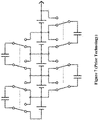
- Figure 7 shows a capacitive charge shuttling circuit used for moving charge from battery cell(s) having a higher voltage to battery cell(s) having a lower voltage.
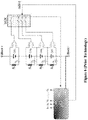
- Figure 8 shows an inductive charge shuttling circuit used for moving charge from battery cell(s) having a higher voltage to battery cell(s) having a lower voltage.
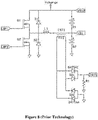
- Figure 9 shows an inductive switching system that takes charge from higher voltage battery cells and dumps the charge back into the full battery pack.
- Each of these methods removes charge from lower capacity batteries to charge higher capacity cells. The repeated charge/discharge reduces battery life and increases the losses in wasted energy during the battery charging balancing process.
- Document WO 2013088695 A2 discloses a battery cell voltage equalization apparatus, as discussed in the preceding.
- the setup of the reference includes, to equalize respective battery cells of a battery, a switch circuit provided between a charger and the battery and configured to electrically connect or disconnect the charger and the battery; a cell balance circuit configured to equalize the voltage of a plurality of battery cells; and a control unit configured to control the switch circuit using the charging control signal and to control the cell balance circuit using the balance control signal based on a state of the battery.
- the control unit controls the cell balance circuit to equalize the voltage of the plurality of battery cells while controlling the switch circuit so that the charger and the battery are electrically connected, when the charging state of the battery is lower than a prescribed threshold.
- Document US 2014/103857 is another example of prior art.
- the present invention provides battery systems according to claims 1 and 7 ; and methods as defined in claims 12 and 13. Preferred embodiments are defined in dependent claims. The invention is set out in the appended set of claims.
- a multi-cell battery pack charging system adjusts each battery cell's charging current to synchronize the completion of charge.
- the battery pack is charged as a whole.
- the battery pack need only be charged once, and without requiring charge shuttling, resistive charge balancing or inductive charge dumping.
- Charging current to each battery cell is based on voltage matching of the battery cells being charged. Additional charge may be given to higher capacity cells of the battery pack during the voltage matching and charging process.
- Any battery chemistry requiring charge balancing may be charged according to the teachings of this disclosure, for example, but not limited to, Lithium-ion (Li-ion), sealed lead acid, NiMh, NiCad, etc.
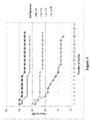
- Figure 1 shows a Li-ion battery charging curves.
- Figure 2 shows battery capacity depending on the number of charge cycles.
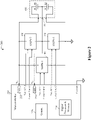
- FIG. 1 depicted is a schematic block diagram of a charging system for a multi-cell battery pack showing voltage and current relationships thereof, according to a specific example embodiment of this disclosure.
- a two-cell battery pack is shown and discussed hereinbelow. It is contemplated and within the scope of this disclosure that a battery pack may comprise more than two battery cells, according to specific embodiments disclosed and claimed herein.
- a battery pack 102 may comprise battery cells B1 and B2, and may further comprise an electrical connector 104 coupled to each terminal (node) of the battery cells B1 and B2.
- a first power supply 106 may be coupled through the electrical connector 104 to a positive terminal of battery cell B1 and a negative terminal of battery cell B2.
- a second power supply 108 may be coupled through the electrical connector 104 to the positive terminal of battery cell B1 and a negative terminal of battery cell B1.
- a third power supply 110 may be coupled through the electrical connector 104 to a positive terminal of battery cell B2 and the negative terminal of battery cell B2.
- the first power supply 106 may provide a first voltage, V 1 , and a first current, I 1 , to the series connected battery cells B1 and B2.
- the first power supply 106 may have operating voltage and current limit set-point inputs.
- the second power supply 108 may operate at a second voltage, V 2 , and provide a second current, I 2 , to the battery cell B1.
- the second power supply 108 may have operating voltage and current limit set-point inputs.
- the third power supply 110 may operate at a third voltage, V 3 , and provide a third current, I 3 , to the battery cell B2.
- the third power supply 110 may have operating voltage and current limit set-point inputs.
- the second power supply 108 may be a floating power supply, e.g., isolated flyback SMPS.
- the third power supply 110 may or may not be a floating power supply since its negative (-) or common node is coupled to the negative (-) or common nodes of the first power supply 106 and the battery pack 102.
- the first power supply 106 may comprise a higher current rated SMPS.
- the second power supply 108 may comprise an isolated lower current rated SMPS, e.g., an isolated flyback SMPS.
- the third power supply 110 may comprise a lower current rated SMPS.
- the second voltage, V 2 is less than the third voltage, V 3
- the first battery cell B1 requires more charge than the second battery cell B2. This is accomplished by the second power supply 108 supplying charging current I 2 to only the first battery cell B1.
- the second power supply 108 is providing the charging current I 2
- the first power supply 108 charging current I 1 will be reduced by the ampere (milliampere) value of the charging current I 2 .
- the second battery cell B2 requires more charge than the first battery cell B1.
- the third power supply 110 is providing the charging current I 3
- the first power supply 108 charging current I 1 will be reduced by the ampere (milliampere) value of the charging current I 3 .
- the charging current to the battery cell B1 will be reduced and thereby not charge as fast as will the battery cell B2.
- the third power supply 110 will cease supplying charging current I 3 and the first power supply 106 will go back to supplying the optimal charging current to both battery cells B1 and B2.
- FIG. 2 illustrates a schematic block diagram of a charging system for a battery pack comprising two battery cells, according to a specific example embodiment of this disclosure.
- a battery pack charging system may comprise a first power supply 106, a second power supply 108, a third power supply 110 and a microcontroller 220.
- a battery pack 102 comprising battery cells B1 and B2 may be coupled to the charging system 200 through an electrical connector 104.
- the first power supply 106 provides charging current and voltage to the series connected battery cells B1 and B2.
- the second power supply 108 provides charging current and voltage to only battery cell B1 when it is providing current.
- the third power supply 110 provides charging current and voltage to only battery cell B2 when it is providing current.
- the first power supply 106 provides charging current at either the optimum charging current rate for the chemistry of the battery cells B1 and B2, or a reduced charging current when one of the other two power supplies 108 or 110 is supplying charging current to its respective battery cell B1 or B2.
- the charging current from the first power supply 106 may be reduced by the charging current value provided by power supply 108 or 110. Therefore, the battery cell having the lower voltage will receive full and optimal charging current until its voltage is substantially the same as the other battery cell. While the other battery cell will receive a lower charging current until both battery cells B1 and B2 are at substantially the same voltage. Then whichever power supply 108 or 110 was supplying charging current will turn off and the first power supply 106 will resume supplying full and optimal charging current to both battery cells B1 and B2.
- the microcontroller 220 may comprise a digital processor and memory 226, a first analog-to-digital converter (ADC) 222, a second ADC 224, voltage set-point outputs 1, 2 and 3; and current limit outputs 1, 2 and 3.
- ADC analog-to-digital converter
- Input power connections are not shown to the microcontroller 220 or power supplies 106, 108 and 110, but one having ordinary skill in the electronic arts and the benefit of this disclosure would understand how to provide the appropriate power connections thereto.
- the voltage set-points and current limit outputs may be digital (e.g., serial or parallel) and/or analog depending upon the input requirements of the power supplies 106, 108 and 110.
- the first power supply 106 may provide most of the charging current to the battery pack 102, and it may be current and voltage limited to provide the necessary current/voltage charging for a specific battery chemistry.
- a battery charging program may reside in the memory of the digital processor and memory 226, and run by the processor to control battery charging operations, according to the teachings of this disclosure.
- the microcontroller 220 may provide all necessary analog and/or digital outputs to the power supplies, and analog inputs for measuring the battery cell voltages.
- the battery charging program may provide for charging many different types of battery packs, whose charging profile may be selected through a communications interface 228, e.g., serial, USB, etc.
- FIG. 3 illustrates a schematic block diagram of a charging system for a battery pack comprising a plurality of battery cells, according to a specific example embodiment of this disclosure.
- a battery pack charging system may comprise a first high current power supply 106, a second lower current power supply 108, a plurality of lower current power supplies 210n and a microcontroller 320.
- a battery pack 302 may comprise a plurality of battery cells B1 through Bn-1 and may be coupled to the charging system 300 through an electrical connector 304.
- the first power supply 106 provides charging current and voltage to the series connected battery cells B1 through Bn-1.
- the second power supply 108 provides charging current and voltage to only battery cell B1 when it is providing current.
- the plurality of power supplies 210n provide charging current and voltage to an associated battery cell B2 to Bn-1 when it is providing current thereto, where n is the number of battery cells minus 1.
- the first power supply 106 provides charging current at either the optimum charging current rate for the chemistry of the battery cells B1 through Bn-1, or a reduced charging current when one or more of the other power supplies 108 or 210n is supplying charging current to its respective battery cell B1 or B2 to Bn-1.
- the charging current from the first power supply 106 may be reduced by the charging current value provided by power supply 108 and/or 210n. Therefore, the battery cell(s) having the lower voltage(s) will receive full and optimal charging current until its (their) voltage(s) is (are) substantially the same as the other battery cells. While the other battery cells will receive a lower charging current until all battery cells B1 through Bn-1 are at substantially the same voltage.
- More than one lower current power supply may be supplying current to its associated battery cell when those battery cells have a lower voltage then some other ones of the plurality of battery cells.
- the microcontroller 320 may comprise a digital processor and memory 226, a first analog-to-digital converter (ADC) 322, a second ADC 324, a plurality of ADCs 326n-1, voltage set-point outputs 1 through n, and current limit outputs 1 through n.
- Input power connections are not shown to the microcontroller 320 or power supplies 106, 108 and the plurality of power supplies 210n, but one having ordinary skill in the electronic arts and the benefit of this disclosure would understand how to provide the appropriate power connections thereto.
- the voltage set-points and current limit outputs may be digital (e.g., serial or parallel) and/or analog depending upon the input requirements of the power supplies 106, 108 and the plurality of power supplies 210n.
- a single ADC and sample and hold multiplexer (not shown) may be used instead of a plurality of ADCs.
- the first power supply 106 may provide most of the charging current to the battery pack 302, it may be current and voltage limited to provide the necessary current/voltage charging for a specific battery chemistry.
- ADCs 322, 324 and a plurality of ADCs 326n-1 monitor the voltages across the battery cells B1 through Bn-1, and when a difference between these voltages is detected, the balanced charging system is enabled. Based on the difference in individual battery cell voltages, the current drive of the high current charge from the power supply 106 is reduced, and the appropriate power supply(ies) 108 and/or 210n may be enabled at a current output substantially equal to the reduction in the high current charger. In this way, the charging currents for each battery cell may be adjusted to bring the battery cell voltages to be substantially the same. If/when the battery cells charge to substantially the same voltage, then the power supply 108 or 110 may be shut down and the high current charge from the power supply 106 returns to its normal current limit.
- a battery charging program may reside in the memory of the digital processor and memory 226, and run by the processor thereof to control battery charging operations, according to the teachings of this disclosure.
- the microcontroller 320 may provide all necessary analog and/or digital outputs to the power supplies, and analog inputs for measuring the battery cell voltages.
- the battery charging program may provide for charging many different types of battery packs, whose charging profile may be selected through a communications interface 228, e.g., serial, USB, etc.
- each battery cell is charged once and the battery life is thereby maximized.
- Each battery cell is fully charged and no battery cell is over charged in the battery pack, whereby the charge time is optimized. Because charge current is never removed from a battery, the losses in battery life and heating due to repetitive charge and discharge of prior technology charge balancing systems are avoided.
- the voltage difference is charge and chemistry dependent. So, when one battery is low in voltage, then the amount of current would be added to just that battery and may be determined by the charge curves for that battery chemistry. This is just a starting point though, the system can keep track of the voltage increase during charging and if it remained low, then the current to the low cell could be increased. How much and how long would depend upon the chemistry, capacity of the cell, and probably temperature.
Landscapes
- Engineering & Computer Science (AREA)
- Chemical & Material Sciences (AREA)
- Chemical Kinetics & Catalysis (AREA)
- Electrochemistry (AREA)
- General Chemical & Material Sciences (AREA)
- Power Engineering (AREA)
- Manufacturing & Machinery (AREA)
- Charge And Discharge Circuits For Batteries Or The Like (AREA)
- Secondary Cells (AREA)
Claims (15)
- Système de charge de batterie destiné à charger une pluralité de cellules de batterie connectées en série dans un bloc batterie, sans retirer le courant de charge des cellules de batterie, ledit système comprenant :un premier connecteur électrique adapté pour être couplé à un deuxième connecteur électrique d'un bloc batterie (102, 302), ledit bloc batterie (102, 302) comprenant une pluralité de cellules de batterie couplées en série (B1, B2, Bn-1), dans lequel chaque nœud électrique de la pluralité de cellules de batterie (B1, B2, Bn-1) est couplé à l'un respectif d'une pluralité de contacts électriques du deuxième connecteur électrique ;une première alimentation (106) qui présente des entrées de consigne de tension et de limitation de courant, dans laquelle les sorties positive et négative de la première alimentation (106), sont couplées à des contacts électriques respectifs du premier connecteur électrique qui correspondent aux contacts électriques positif et négatif du deuxième connecteur, de telle sorte qu'un premier courant de charge d'alimentation soit fourni à toutes les cellules de la pluralité de cellules de batterie connectées en série (B1, B2, Bn-1) ;une pluralité de deuxièmes alimentations (108, 110), chacune d'elles présentant des entrées de consigne de tension et de limitation de courant, dans laquelle les sorties positive et négative de chacune de la pluralité de deuxièmes alimentations, sont couplées, par l'intermédiaire de connecteurs électriques, aux bornes associées de la pluralité de cellules de batterie (B1, B2, Bn-1), dans lequel chacune de la pluralité de deuxièmes alimentations, est configurée pour fournir un courant de charge à une seule cellule de batterie (B1, B2, Bn-1) associée à celle-ci ;des moyens de mesure d'une tension configurés pour mesurer les tensions de chacune de la pluralité de cellules de batterie (B1, B2, Bn-1) ; etcaractérisé en ce que ledit système comprend en outreune unité de commande de charge (220), configurée pour charger la pluralité de cellules de batterie connectées en série (B1, B2, Bn-1) avec le premier courant de charge d'alimentation en provenance de la première alimentation (106), et lors de la détection d'une différence entre les tensions de cellules de batterie, pour charger individuellement les cellules de batterie (B1, B2, Bn-1) présentant une tension inférieure à celle des autres cellules de batterie (B1, B2, Bn-1) avec des courants de charge supplémentaire en provenance des deuxièmes alimentations associées (108, 110) de la pluralité de deuxièmes alimentations (108, 110), dans lequel, lorsque des courants de charge supplémentaire en provenance des deuxièmes alimentations (108, 110) sont appliqués, un système de commande de limitation du courant, est configuré pour réduire le premier courant de charge d'alimentation, sur la base de la quantité de courants de charge supplémentaire en provenance des deuxièmes alimentations (108, 110) tant qu'il existe une différence entre les tensions de cellules de batterie.
- Système de charge de batterie selon la revendication 1, dans lequel les moyens de mesure d'une tension comprennent une pluralité de convertisseurs analogiques - numériques (ADC) couplés aux nœuds de tension de la pluralité de cellules de batterie connectées en série (B1, B2, Bn-1), ou dans lequel les moyens de mesure d'une tension comprennent un convertisseur analogique - numérique (ADC), et un multiplexeur couplé entre les nœuds de tension de la pluralité de cellules de batterie connectées en série (B1, B2, Bn-1), et l'ADC.
- Système de charge de batterie selon la revendication 1 ou 2, dans lequel la première alimentation (106) est une alimentation à découpage et à courant élevé, et la pluralité de deuxièmes alimentations (108, 110) sont des alimentations à découpage à flyback isolé.
- Système de charge de batterie selon l'une quelconque des revendications 1 à 3, dans lequel un microcontrôleur (220) est configuré afin de fournir :des signaux de consigne de tension et de limitation de courant à la première alimentation (106), et à la pluralité de deuxièmes alimentations (108, 110) ;des moyens de mesure d'une tension, destinés à mesurer la tension de chacune de la pluralité de cellules de batterie (B1, B2, Bn-1) ; etun processeur numérique et une mémoire, destinés à exécuter des programmes de charge de batterie, et à commander la consigne de tension et la limitation de courant de la première alimentation, et à commander les consignes de tension et les limitations de courant des deuxièmes alimentations.
- Système de charge de batterie selon la revendication 4, comprenant en outre un port de communication de microcontrôleur couplé au processeur numérique, destiné à fournir des profils de charge de batterie, et l'état de charge de la batterie.
- Système de charge de batterie selon l'une quelconque des revendications 1 à 5, dans lequel la pluralité de cellules de batterie (B1, B2, Bn-1) sont sélectionnées dans le groupe constitué de cellules de batterie, Lithium-ion (Li-Ion), au plomb sans entretien, NiMh, et NiCad.
- Système de charge de batterie destiné à charger deux cellules de batterie connectées en série dans un bloc batterie, sans retirer le courant de charge des cellules de batterie (B1, B2, Bn-1), ledit système comprenant :un premier connecteur électrique adapté pour être couplé à un deuxième connecteur électrique d'un bloc batterie (102, 302), ledit bloc batterie (102, 302) comprenant des première et deuxième cellules de batterie (B1, B2) couplées en série, dans lequel chaque nœud électrique des première et deuxième cellules de batterie (B1, B2) est couplé à l'un respectif d'une pluralité de contacts électriques du deuxième connecteur électrique ;une première alimentation (106) qui présente des entrées de consigne de tension et de limitation de courant, dans laquelle les sorties positive et négative de la première alimentation (106), sont couplées à des contacts électriques respectifs du premier connecteur électrique qui correspondent aux contacts électriques positif et négatif du deuxième connecteur, de telle sorte qu'un premier courant de charge d'alimentation soit fourni aux première et deuxième cellules de batterie connectées en série (B1, B2) ;une deuxième alimentation (108) qui présente une entrée de consigne de tension et de limitation de courant, dans laquelle les sorties positive et négative de la deuxième alimentation (108), sont couplées seulement aux bornes associées de la première cellule de batterie (B1);une troisième alimentation (110) qui présente une entrée de consigne de tension et de limitation de courant, dans laquelle les sorties positive et négative de la troisième alimentation (110), sont couplées seulement aux bornes associées de la deuxième cellule de batterie (B2) ;des moyens de mesure d'une tension, configurés pour mesurer les tensions des première et deuxième cellules de batterie (B1, B2) ; etcaractérisé en ce que ledit système comprend en outreune unité de commande de charge (220), configurée pour charger les première et deuxième cellules de batterie connectées en série (B1, B2) avec le premier courant de charge d'alimentation en provenance de la première alimentation (106), et lors de la détection d'une différence entre les première et deuxième tensions de cellules de batterie, pour charger individuellement la cellule de batterie (B1, B2) présentant une tension inférieure à celle de l'autre cellule de batterie (B2, B1) avec des courants de charge supplémentaire en provenance de la deuxième ou de la troisième alimentation associée (108, 110), dans lequel, quand un courant de charge supplémentaire en provenance de la deuxième ou de la troisième alimentation (108, 110) est appliqué, un système de commande de limitation du courant, est configuré pour réduire le courant de charge de la première alimentation, sur la base de la quantité de courant de charge supplémentaire en provenance de la deuxième ou de la troisième alimentation (108, 110) tant qu'il existe une différence entre les tensions de cellules de batterie.
- Système de charge de batterie selon la revendication 7, dans lequel les moyens de mesure d'une tension comprennent au moins deux convertisseurs analogiques - numériques (ADC) couplés aux nœuds de tension des première et deuxième cellules de batterie connectées en série (B1, B2), ou dans lequel les moyens de mesure d'une tension comprennent un convertisseur analogique - numérique (ADC), et un multiplexeur couplé entre les nœuds de tension des première et deuxième cellules de batterie connectées en série (B1, B2) et l'ADC.
- Système de charge de batterie selon la revendication 7 ou 8, dans lequel la première alimentation (106) est une alimentation à découpage et à courant élevé, et les deuxième et troisièmes alimentations (108, 110) sont des alimentations à découpageflyback isolé.
- Système de charge de batterie selon l'une quelconque des revendications 7 à 9, dans lequel un microcontrôleur (220) est configuré afin de fournir :des signaux de consigne de tension et de limitation de courant, aux première, deuxième, et troisième alimentations (106, 108, 110) ;des moyens de mesure d'une tension, destinés à mesurer les tensions des première et deuxième cellules de batterie (B1, B2) ; etun processeur numérique et une mémoire, destinés à exécuter des programmes de charge de batterie, et à commander les consignes de tension et les limitations de courant des première, deuxième, et troisième alimentations.
- Système de charge de batterie selon la revendication 10, comprenant en outre un port de communication de microcontrôleur couplé au processeur numérique, destiné à fournir des profils de charge de batterie, et l'état de charge de la batterie.
- Procédé destiné à charger un bloc batterie comprenant une pluralité de cellules de batterie, sans retirer le courant de charge des cellules de batterie, ledit procédé comprenant les étapes suivantes :fixer les valeurs de consigne de tension et de limitation du courant souhaités, dans une alimentation à courant élevé (106) d'une pluralité de cellules de batterie connectées en série (B1, B2, Bn-1) dans un bloc batterie (102, 302), dans lequel l'alimentation à courant élevé (106) fournit une tension et un courant de charge à la pluralité de cellules de batterie connectées en série (B1, B2, Bn-1) dans le bloc batterie (102, 302) ;déterminer la tension de chacune de la pluralité de cellules de batterie connectées en série (B1, B2, Bn-1) dans le bloc batterie (102, 302) ;caractérisé en ce quesi l'une quelconque ou plusieurs des cellules de batterie (B1, B2, Bn-1) présente une tension qui n'est pas sensiblement identique à celle des autres cellules de batterie (B1, B2, Bn-1), alorssi cette tension est inférieure aux autres tensions de cellules de batterie, alors augmenter le courant en provenance d'une autre alimentation (108, 110) couplée à cette cellule de batterie (B1, B2, Bn-1), et réduire la valeur limite du courant de l'alimentation à courant élevé (106) de la valeur du courant en provenance de l'autre alimentation (108, 110), etsi la tension est supérieure à celle des autres cellules de batterie (B1, B2, Bn-1), alors augmenter le courant fourni aux autres cellules de batterie (B1, B2, Bn-1) avec les autres alimentations associés (108, 110) couplées aux autres de la pluralité de cellules de batterie connectées en série (B1, B2, Bn-1), et réduire la valeur limite du courant de l'alimentation à courant élevé (106) de la valeur des courants en provenance des autres alimentations associées (108, 110).
- Procédé destiné à charger un bloc batterie comprenant deux cellules de batterie, sans retirer le courant de charge des cellules de batterie, ledit procédé comprenant les étapes suivantes :fixer les valeurs de consigne de tension et de limitation du courant souhaités, dans une alimentation à courant élevé, des première et deuxième cellules de batterie dans un bloc batterie, et connectées en séries, dans lequel la première alimentation à courant élevé fournit la tension et le courant souhaités aux première et deuxième cellules de batterie connectées en série dans le bloc batterie ; etdéterminer une première tension de la première cellule de batterie, et une deuxième tension de la deuxième cellule de batterie ;caractérisé en ce quesi la première tension est supérieure à la deuxième tension, alors augmenter le courant en provenance d'une deuxième alimentation couplée à la première cellule de batterie, et réduire la valeur limite du courant de l'alimentation à courant élevé, de la valeur du courant en provenance de la deuxième alimentation, etsi la première tension est inférieure à la deuxième tension, alors augmenter le courant en provenance d'une troisième alimentation couplée à la deuxième cellule de batterie, et réduire la valeur limite du courant de l'alimentation à courant élevé, de la valeur du courant en provenance de la troisième alimentation.
- Procédé selon la revendication 13, dans lequel les deuxième et troisième alimentations ne fournissent sensiblement pas de courant lorsque les première et deuxième tension sont sensiblement égales.
- Procédé selon la revendication 13 ou 14, dans lequel la deuxième alimentation ne fournit sensiblement pas de courant lorsque la première tension est supérieure à la deuxième tension, et /ou dans lequel la troisième alimentation ne fournit sensiblement pas de courant lorsque la première tension est inférieure à la deuxième tension.
Applications Claiming Priority (3)
| Application Number | Priority Date | Filing Date | Title |
|---|---|---|---|
| US201662320708P | 2016-04-11 | 2016-04-11 | |
| US15/483,685 US10283973B2 (en) | 2016-04-11 | 2017-04-10 | Balanced battery charging system |
| PCT/US2017/026971 WO2017180599A1 (fr) | 2016-04-11 | 2017-04-11 | Système de charge équilibrée de batterie |
Publications (2)
| Publication Number | Publication Date |
|---|---|
| EP3443635A1 EP3443635A1 (fr) | 2019-02-20 |
| EP3443635B1 true EP3443635B1 (fr) | 2022-08-24 |
Family
ID=59998338
Family Applications (1)
| Application Number | Title | Priority Date | Filing Date |
|---|---|---|---|
| EP17719779.5A Active EP3443635B1 (fr) | 2016-04-11 | 2017-04-11 | Système de charge équilibrée de batterie |
Country Status (5)
| Country | Link |
|---|---|
| US (1) | US10283973B2 (fr) |
| EP (1) | EP3443635B1 (fr) |
| CN (1) | CN108432085B (fr) |
| TW (1) | TW201743533A (fr) |
| WO (1) | WO2017180599A1 (fr) |
Families Citing this family (3)
| Publication number | Priority date | Publication date | Assignee | Title |
|---|---|---|---|---|
| WO2018081912A1 (fr) * | 2016-11-07 | 2018-05-11 | Corvus Energy Inc. | Équilibrage d'une batterie à cellules multiples |
| CN112204843A (zh) | 2018-05-30 | 2021-01-08 | 米沃奇电动工具公司 | 快速充电电池组 |
| CN114830486A (zh) * | 2019-12-13 | 2022-07-29 | 京瓷株式会社 | 蓄电装置以及蓄电方法 |
Citations (1)
| Publication number | Priority date | Publication date | Assignee | Title |
|---|---|---|---|---|
| US20140103857A1 (en) * | 2011-06-11 | 2014-04-17 | Sendyne Corp. | Charge redistribution method for cell arrays |
Family Cites Families (18)
| Publication number | Priority date | Publication date | Assignee | Title |
|---|---|---|---|---|
| US6009344A (en) * | 1997-07-25 | 1999-12-28 | Becton, Dickinson And Company | Iontophoretic drug delivery system |
| US6172480B1 (en) * | 1998-10-23 | 2001-01-09 | Primetech Electronics, Inc. | Compact fast battery charger |
| TW502900U (en) | 1998-11-30 | 2002-09-11 | Ind Tech Res Inst | Battery charging equalizing device |
| US7589500B2 (en) * | 2002-11-22 | 2009-09-15 | Milwaukee Electric Tool Corporation | Method and system for battery protection |
| CN100505471C (zh) * | 2004-01-14 | 2009-06-24 | 财团法人工业技术研究院 | 串联电池组的等化电路 |
| JP4148162B2 (ja) * | 2004-03-05 | 2008-09-10 | 株式会社デンソー | 回路システム |
| US7460930B1 (en) * | 2004-05-14 | 2008-12-02 | Admmicro Properties, Llc | Energy management system and method to monitor and control multiple sub-loads |
| US7688029B2 (en) * | 2005-11-08 | 2010-03-30 | Eveready Battery Company, Inc. | Portable battery powered appliance and method of operation |
| US7893562B2 (en) * | 2006-03-03 | 2011-02-22 | Nec Corporation | Electric power supply system |
| WO2008137764A1 (fr) | 2007-05-03 | 2008-11-13 | Sendyne Corporation | Système de chargement de batterie à contrôle fin |
| US8193768B2 (en) * | 2008-02-28 | 2012-06-05 | Jason S. Hallett | Contactless charging system for musical instruments |
| JP2010068571A (ja) * | 2008-09-09 | 2010-03-25 | Hitachi Koki Co Ltd | 充電装置 |
| JP5348312B2 (ja) * | 2010-02-26 | 2013-11-20 | トヨタ自動車株式会社 | 車両 |
| JP6030820B2 (ja) * | 2010-11-05 | 2016-11-24 | ミツミ電機株式会社 | 電池電圧監視回路 |
| JP2013123344A (ja) | 2011-12-12 | 2013-06-20 | Toyota Industries Corp | 電池セル電圧を均等化する装置 |
| FR2986075B1 (fr) | 2012-01-25 | 2015-07-17 | Accuwatt | Dispositif de gestion de charge d'une batterie a haute precision, et procede mis en œuvre par ce dispositif. |
| US20130214739A1 (en) * | 2012-02-20 | 2013-08-22 | Jia-Yuan Lee | Charge type battery management system and method thereof |
| CN103607001A (zh) * | 2013-11-04 | 2014-02-26 | 江苏嘉钰新能源技术有限公司 | 电池分流均衡方法 |
-
2017
- 2017-04-10 US US15/483,685 patent/US10283973B2/en active Active
- 2017-04-11 CN CN201780005573.5A patent/CN108432085B/zh active Active
- 2017-04-11 WO PCT/US2017/026971 patent/WO2017180599A1/fr not_active Ceased
- 2017-04-11 TW TW106112006A patent/TW201743533A/zh unknown
- 2017-04-11 EP EP17719779.5A patent/EP3443635B1/fr active Active
Patent Citations (1)
| Publication number | Priority date | Publication date | Assignee | Title |
|---|---|---|---|---|
| US20140103857A1 (en) * | 2011-06-11 | 2014-04-17 | Sendyne Corp. | Charge redistribution method for cell arrays |
Also Published As
| Publication number | Publication date |
|---|---|
| CN108432085B (zh) | 2023-08-29 |
| EP3443635A1 (fr) | 2019-02-20 |
| US10283973B2 (en) | 2019-05-07 |
| US20170294788A1 (en) | 2017-10-12 |
| WO2017180599A1 (fr) | 2017-10-19 |
| TW201743533A (zh) | 2017-12-16 |
| CN108432085A (zh) | 2018-08-21 |
Similar Documents
| Publication | Publication Date | Title |
|---|---|---|
| EP2418751B1 (fr) | Chargeur de batterie et procédé de charge de batterie | |
| EP3185388B1 (fr) | Procédé et appareil de commande de batterie et bloc-batterie | |
| EP2419987B1 (fr) | Systèmes et procédés d'utilisation de batteries | |
| US7928691B2 (en) | Method and system for cell equalization with isolated charging sources | |
| US20170288417A1 (en) | Fast Charging Apparatus and Method | |
| JP5618986B2 (ja) | 充電装置 | |
| US11277012B2 (en) | Battery control unit and battery system | |
| US8476869B2 (en) | Battery voltage equalizer circuit and method for using the same | |
| US20090267565A1 (en) | Method and system for cell equalization with charging sources and shunt regulators | |
| US20130141034A1 (en) | Charging management system and charger with the same | |
| CN105429212A (zh) | 电池组电压均衡控制电路及电池管理设备 | |
| CN103036268A (zh) | 电源装置 | |
| JP2021057988A (ja) | 電池制御ユニットおよび電池システム | |
| CN108512280A (zh) | 一种串联电池组均衡充电控制电路及控制方法 | |
| US20150048795A1 (en) | Charge control apparatus and charge control method | |
| EP3443635B1 (fr) | Système de charge équilibrée de batterie | |
| KR20190051483A (ko) | 충전 제어 장치 및 방법 | |
| CN104242374A (zh) | 充放电控制电路和电池装置 | |
| US20120256593A1 (en) | Cell charge management system | |
| US9634499B2 (en) | Adjusting device, battery pack device, and adjusting method | |
| CN116647013B (zh) | 一种均衡控制装置、均衡控制方法和相关系统 | |
| CN103560554B (zh) | 电池组电量均衡装置 | |
| CN219067895U (zh) | 充电均衡电路及电池 | |
| KR102008518B1 (ko) | 멀티 셀 충전 시스템 | |
| JPH03173323A (ja) | 二次電池の充電装置 |
Legal Events
| Date | Code | Title | Description |
|---|---|---|---|
| STAA | Information on the status of an ep patent application or granted ep patent |
Free format text: STATUS: UNKNOWN |
|
| STAA | Information on the status of an ep patent application or granted ep patent |
Free format text: STATUS: THE INTERNATIONAL PUBLICATION HAS BEEN MADE |
|
| PUAI | Public reference made under article 153(3) epc to a published international application that has entered the european phase |
Free format text: ORIGINAL CODE: 0009012 |
|
| STAA | Information on the status of an ep patent application or granted ep patent |
Free format text: STATUS: REQUEST FOR EXAMINATION WAS MADE |
|
| 17P | Request for examination filed |
Effective date: 20181112 |
|
| AK | Designated contracting states |
Kind code of ref document: A1 Designated state(s): AL AT BE BG CH CY CZ DE DK EE ES FI FR GB GR HR HU IE IS IT LI LT LU LV MC MK MT NL NO PL PT RO RS SE SI SK SM TR |
|
| AX | Request for extension of the european patent |
Extension state: BA ME |
|
| DAV | Request for validation of the european patent (deleted) | ||
| DAX | Request for extension of the european patent (deleted) | ||
| STAA | Information on the status of an ep patent application or granted ep patent |
Free format text: STATUS: EXAMINATION IS IN PROGRESS |
|
| 17Q | First examination report despatched |
Effective date: 20200909 |
|
| GRAP | Despatch of communication of intention to grant a patent |
Free format text: ORIGINAL CODE: EPIDOSNIGR1 |
|
| STAA | Information on the status of an ep patent application or granted ep patent |
Free format text: STATUS: GRANT OF PATENT IS INTENDED |
|
| INTG | Intention to grant announced |
Effective date: 20220316 |
|
| GRAS | Grant fee paid |
Free format text: ORIGINAL CODE: EPIDOSNIGR3 |
|
| GRAA | (expected) grant |
Free format text: ORIGINAL CODE: 0009210 |
|
| STAA | Information on the status of an ep patent application or granted ep patent |
Free format text: STATUS: THE PATENT HAS BEEN GRANTED |
|
| AK | Designated contracting states |
Kind code of ref document: B1 Designated state(s): AL AT BE BG CH CY CZ DE DK EE ES FI FR GB GR HR HU IE IS IT LI LT LU LV MC MK MT NL NO PL PT RO RS SE SI SK SM TR |
|
| REG | Reference to a national code |
Ref country code: CH Ref legal event code: EP |
|
| REG | Reference to a national code |
Ref country code: IE Ref legal event code: FG4D |
|
| REG | Reference to a national code |
Ref country code: AT Ref legal event code: REF Ref document number: 1514332 Country of ref document: AT Kind code of ref document: T Effective date: 20220915 Ref country code: DE Ref legal event code: R096 Ref document number: 602017060974 Country of ref document: DE |
|
| REG | Reference to a national code |
Ref country code: LT Ref legal event code: MG9D |
|
| REG | Reference to a national code |
Ref country code: NL Ref legal event code: MP Effective date: 20220824 |
|
| PG25 | Lapsed in a contracting state [announced via postgrant information from national office to epo] |
Ref country code: SE Free format text: LAPSE BECAUSE OF FAILURE TO SUBMIT A TRANSLATION OF THE DESCRIPTION OR TO PAY THE FEE WITHIN THE PRESCRIBED TIME-LIMIT Effective date: 20220824 Ref country code: RS Free format text: LAPSE BECAUSE OF FAILURE TO SUBMIT A TRANSLATION OF THE DESCRIPTION OR TO PAY THE FEE WITHIN THE PRESCRIBED TIME-LIMIT Effective date: 20220824 Ref country code: PT Free format text: LAPSE BECAUSE OF FAILURE TO SUBMIT A TRANSLATION OF THE DESCRIPTION OR TO PAY THE FEE WITHIN THE PRESCRIBED TIME-LIMIT Effective date: 20221226 Ref country code: NO Free format text: LAPSE BECAUSE OF FAILURE TO SUBMIT A TRANSLATION OF THE DESCRIPTION OR TO PAY THE FEE WITHIN THE PRESCRIBED TIME-LIMIT Effective date: 20221124 Ref country code: NL Free format text: LAPSE BECAUSE OF FAILURE TO SUBMIT A TRANSLATION OF THE DESCRIPTION OR TO PAY THE FEE WITHIN THE PRESCRIBED TIME-LIMIT Effective date: 20220824 Ref country code: LV Free format text: LAPSE BECAUSE OF FAILURE TO SUBMIT A TRANSLATION OF THE DESCRIPTION OR TO PAY THE FEE WITHIN THE PRESCRIBED TIME-LIMIT Effective date: 20220824 Ref country code: LT Free format text: LAPSE BECAUSE OF FAILURE TO SUBMIT A TRANSLATION OF THE DESCRIPTION OR TO PAY THE FEE WITHIN THE PRESCRIBED TIME-LIMIT Effective date: 20220824 Ref country code: FI Free format text: LAPSE BECAUSE OF FAILURE TO SUBMIT A TRANSLATION OF THE DESCRIPTION OR TO PAY THE FEE WITHIN THE PRESCRIBED TIME-LIMIT Effective date: 20220824 |
|
| REG | Reference to a national code |
Ref country code: AT Ref legal event code: MK05 Ref document number: 1514332 Country of ref document: AT Kind code of ref document: T Effective date: 20220824 |
|
| PG25 | Lapsed in a contracting state [announced via postgrant information from national office to epo] |
Ref country code: PL Free format text: LAPSE BECAUSE OF FAILURE TO SUBMIT A TRANSLATION OF THE DESCRIPTION OR TO PAY THE FEE WITHIN THE PRESCRIBED TIME-LIMIT Effective date: 20220824 Ref country code: IS Free format text: LAPSE BECAUSE OF FAILURE TO SUBMIT A TRANSLATION OF THE DESCRIPTION OR TO PAY THE FEE WITHIN THE PRESCRIBED TIME-LIMIT Effective date: 20221224 Ref country code: HR Free format text: LAPSE BECAUSE OF FAILURE TO SUBMIT A TRANSLATION OF THE DESCRIPTION OR TO PAY THE FEE WITHIN THE PRESCRIBED TIME-LIMIT Effective date: 20220824 Ref country code: GR Free format text: LAPSE BECAUSE OF FAILURE TO SUBMIT A TRANSLATION OF THE DESCRIPTION OR TO PAY THE FEE WITHIN THE PRESCRIBED TIME-LIMIT Effective date: 20221125 |
|
| PG25 | Lapsed in a contracting state [announced via postgrant information from national office to epo] |
Ref country code: SM Free format text: LAPSE BECAUSE OF FAILURE TO SUBMIT A TRANSLATION OF THE DESCRIPTION OR TO PAY THE FEE WITHIN THE PRESCRIBED TIME-LIMIT Effective date: 20220824 Ref country code: RO Free format text: LAPSE BECAUSE OF FAILURE TO SUBMIT A TRANSLATION OF THE DESCRIPTION OR TO PAY THE FEE WITHIN THE PRESCRIBED TIME-LIMIT Effective date: 20220824 Ref country code: ES Free format text: LAPSE BECAUSE OF FAILURE TO SUBMIT A TRANSLATION OF THE DESCRIPTION OR TO PAY THE FEE WITHIN THE PRESCRIBED TIME-LIMIT Effective date: 20220824 Ref country code: DK Free format text: LAPSE BECAUSE OF FAILURE TO SUBMIT A TRANSLATION OF THE DESCRIPTION OR TO PAY THE FEE WITHIN THE PRESCRIBED TIME-LIMIT Effective date: 20220824 Ref country code: CZ Free format text: LAPSE BECAUSE OF FAILURE TO SUBMIT A TRANSLATION OF THE DESCRIPTION OR TO PAY THE FEE WITHIN THE PRESCRIBED TIME-LIMIT Effective date: 20220824 Ref country code: AT Free format text: LAPSE BECAUSE OF FAILURE TO SUBMIT A TRANSLATION OF THE DESCRIPTION OR TO PAY THE FEE WITHIN THE PRESCRIBED TIME-LIMIT Effective date: 20220824 |
|
| REG | Reference to a national code |
Ref country code: DE Ref legal event code: R097 Ref document number: 602017060974 Country of ref document: DE |
|
| PG25 | Lapsed in a contracting state [announced via postgrant information from national office to epo] |
Ref country code: SK Free format text: LAPSE BECAUSE OF FAILURE TO SUBMIT A TRANSLATION OF THE DESCRIPTION OR TO PAY THE FEE WITHIN THE PRESCRIBED TIME-LIMIT Effective date: 20220824 Ref country code: EE Free format text: LAPSE BECAUSE OF FAILURE TO SUBMIT A TRANSLATION OF THE DESCRIPTION OR TO PAY THE FEE WITHIN THE PRESCRIBED TIME-LIMIT Effective date: 20220824 |
|
| PG25 | Lapsed in a contracting state [announced via postgrant information from national office to epo] |
Ref country code: AL Free format text: LAPSE BECAUSE OF FAILURE TO SUBMIT A TRANSLATION OF THE DESCRIPTION OR TO PAY THE FEE WITHIN THE PRESCRIBED TIME-LIMIT Effective date: 20220824 |
|
| PLBE | No opposition filed within time limit |
Free format text: ORIGINAL CODE: 0009261 |
|
| STAA | Information on the status of an ep patent application or granted ep patent |
Free format text: STATUS: NO OPPOSITION FILED WITHIN TIME LIMIT |
|
| P01 | Opt-out of the competence of the unified patent court (upc) registered |
Effective date: 20230528 |
|
| 26N | No opposition filed |
Effective date: 20230525 |
|
| PG25 | Lapsed in a contracting state [announced via postgrant information from national office to epo] |
Ref country code: SI Free format text: LAPSE BECAUSE OF FAILURE TO SUBMIT A TRANSLATION OF THE DESCRIPTION OR TO PAY THE FEE WITHIN THE PRESCRIBED TIME-LIMIT Effective date: 20220824 |
|
| REG | Reference to a national code |
Ref country code: CH Ref legal event code: PL |
|
| GBPC | Gb: european patent ceased through non-payment of renewal fee |
Effective date: 20230411 |
|
| PG25 | Lapsed in a contracting state [announced via postgrant information from national office to epo] |
Ref country code: LU Free format text: LAPSE BECAUSE OF NON-PAYMENT OF DUE FEES Effective date: 20230411 |
|
| REG | Reference to a national code |
Ref country code: BE Ref legal event code: MM Effective date: 20230430 |
|
| PG25 | Lapsed in a contracting state [announced via postgrant information from national office to epo] |
Ref country code: MC Free format text: LAPSE BECAUSE OF FAILURE TO SUBMIT A TRANSLATION OF THE DESCRIPTION OR TO PAY THE FEE WITHIN THE PRESCRIBED TIME-LIMIT Effective date: 20220824 |
|
| PG25 | Lapsed in a contracting state [announced via postgrant information from national office to epo] |
Ref country code: GB Free format text: LAPSE BECAUSE OF NON-PAYMENT OF DUE FEES Effective date: 20230411 |
|
| PG25 | Lapsed in a contracting state [announced via postgrant information from national office to epo] |
Ref country code: MC Free format text: LAPSE BECAUSE OF FAILURE TO SUBMIT A TRANSLATION OF THE DESCRIPTION OR TO PAY THE FEE WITHIN THE PRESCRIBED TIME-LIMIT Effective date: 20220824 Ref country code: LI Free format text: LAPSE BECAUSE OF NON-PAYMENT OF DUE FEES Effective date: 20230430 Ref country code: GB Free format text: LAPSE BECAUSE OF NON-PAYMENT OF DUE FEES Effective date: 20230411 Ref country code: FR Free format text: LAPSE BECAUSE OF NON-PAYMENT OF DUE FEES Effective date: 20230430 Ref country code: CH Free format text: LAPSE BECAUSE OF NON-PAYMENT OF DUE FEES Effective date: 20230430 |
|
| REG | Reference to a national code |
Ref country code: IE Ref legal event code: MM4A |
|
| PG25 | Lapsed in a contracting state [announced via postgrant information from national office to epo] |
Ref country code: BE Free format text: LAPSE BECAUSE OF NON-PAYMENT OF DUE FEES Effective date: 20230430 |
|
| PG25 | Lapsed in a contracting state [announced via postgrant information from national office to epo] |
Ref country code: IE Free format text: LAPSE BECAUSE OF NON-PAYMENT OF DUE FEES Effective date: 20230411 |
|
| PG25 | Lapsed in a contracting state [announced via postgrant information from national office to epo] |
Ref country code: IE Free format text: LAPSE BECAUSE OF NON-PAYMENT OF DUE FEES Effective date: 20230411 |
|
| PG25 | Lapsed in a contracting state [announced via postgrant information from national office to epo] |
Ref country code: IT Free format text: LAPSE BECAUSE OF FAILURE TO SUBMIT A TRANSLATION OF THE DESCRIPTION OR TO PAY THE FEE WITHIN THE PRESCRIBED TIME-LIMIT Effective date: 20220824 |
|
| PG25 | Lapsed in a contracting state [announced via postgrant information from national office to epo] |
Ref country code: BG Free format text: LAPSE BECAUSE OF FAILURE TO SUBMIT A TRANSLATION OF THE DESCRIPTION OR TO PAY THE FEE WITHIN THE PRESCRIBED TIME-LIMIT Effective date: 20220824 |
|
| PG25 | Lapsed in a contracting state [announced via postgrant information from national office to epo] |
Ref country code: BG Free format text: LAPSE BECAUSE OF FAILURE TO SUBMIT A TRANSLATION OF THE DESCRIPTION OR TO PAY THE FEE WITHIN THE PRESCRIBED TIME-LIMIT Effective date: 20220824 |
|
| PGFP | Annual fee paid to national office [announced via postgrant information from national office to epo] |
Ref country code: DE Payment date: 20250319 Year of fee payment: 9 |
|
| PG25 | Lapsed in a contracting state [announced via postgrant information from national office to epo] |
Ref country code: CY Free format text: LAPSE BECAUSE OF FAILURE TO SUBMIT A TRANSLATION OF THE DESCRIPTION OR TO PAY THE FEE WITHIN THE PRESCRIBED TIME-LIMIT; INVALID AB INITIO Effective date: 20170411 |
|
| PG25 | Lapsed in a contracting state [announced via postgrant information from national office to epo] |
Ref country code: HU Free format text: LAPSE BECAUSE OF FAILURE TO SUBMIT A TRANSLATION OF THE DESCRIPTION OR TO PAY THE FEE WITHIN THE PRESCRIBED TIME-LIMIT; INVALID AB INITIO Effective date: 20170411 |
|
| PG25 | Lapsed in a contracting state [announced via postgrant information from national office to epo] |
Ref country code: TR Free format text: LAPSE BECAUSE OF FAILURE TO SUBMIT A TRANSLATION OF THE DESCRIPTION OR TO PAY THE FEE WITHIN THE PRESCRIBED TIME-LIMIT Effective date: 20220824 |