EP3444292A1 - Farblose und transparente polyamidimidfolie und herstellungsverfahren dafür - Google Patents
Farblose und transparente polyamidimidfolie und herstellungsverfahren dafür Download PDFInfo
- Publication number
- EP3444292A1 EP3444292A1 EP17782632.8A EP17782632A EP3444292A1 EP 3444292 A1 EP3444292 A1 EP 3444292A1 EP 17782632 A EP17782632 A EP 17782632A EP 3444292 A1 EP3444292 A1 EP 3444292A1
- Authority
- EP
- European Patent Office
- Prior art keywords
- aromatic
- polyamide
- dicarbonyl compound
- imide film
- mol
- Prior art date
- Legal status (The legal status is an assumption and is not a legal conclusion. Google has not performed a legal analysis and makes no representation as to the accuracy of the status listed.)
- Granted
Links
- 0 *C(NC(*)=O)=O Chemical compound *C(NC(*)=O)=O 0.000 description 2
- KVPGDSWVKWYLAC-UHFFFAOYSA-N N[NH+](c(cc1)ccc1[NH+](N)[O-])[O-] Chemical compound N[NH+](c(cc1)ccc1[NH+](N)[O-])[O-] KVPGDSWVKWYLAC-UHFFFAOYSA-N 0.000 description 1
Images
Classifications
-
- C—CHEMISTRY; METALLURGY
- C08—ORGANIC MACROMOLECULAR COMPOUNDS; THEIR PREPARATION OR CHEMICAL WORKING-UP; COMPOSITIONS BASED THEREON
- C08G—MACROMOLECULAR COMPOUNDS OBTAINED OTHERWISE THAN BY REACTIONS ONLY INVOLVING UNSATURATED CARBON-TO-CARBON BONDS
- C08G73/00—Macromolecular compounds obtained by reactions forming a linkage containing nitrogen with or without oxygen or carbon in the main chain of the macromolecule, not provided for in groups C08G12/00 - C08G71/00
- C08G73/06—Polycondensates having nitrogen-containing heterocyclic rings in the main chain of the macromolecule
- C08G73/10—Polyimides; Polyester-imides; Polyamide-imides; Polyamide acids or similar polyimide precursors
- C08G73/1039—Polyimides; Polyester-imides; Polyamide-imides; Polyamide acids or similar polyimide precursors comprising halogen-containing substituents
-
- C—CHEMISTRY; METALLURGY
- C08—ORGANIC MACROMOLECULAR COMPOUNDS; THEIR PREPARATION OR CHEMICAL WORKING-UP; COMPOSITIONS BASED THEREON
- C08G—MACROMOLECULAR COMPOUNDS OBTAINED OTHERWISE THAN BY REACTIONS ONLY INVOLVING UNSATURATED CARBON-TO-CARBON BONDS
- C08G73/00—Macromolecular compounds obtained by reactions forming a linkage containing nitrogen with or without oxygen or carbon in the main chain of the macromolecule, not provided for in groups C08G12/00 - C08G71/00
- C08G73/06—Polycondensates having nitrogen-containing heterocyclic rings in the main chain of the macromolecule
- C08G73/10—Polyimides; Polyester-imides; Polyamide-imides; Polyamide acids or similar polyimide precursors
- C08G73/14—Polyamide-imides
-
- C—CHEMISTRY; METALLURGY
- C08—ORGANIC MACROMOLECULAR COMPOUNDS; THEIR PREPARATION OR CHEMICAL WORKING-UP; COMPOSITIONS BASED THEREON
- C08J—WORKING-UP; GENERAL PROCESSES OF COMPOUNDING; AFTER-TREATMENT NOT COVERED BY SUBCLASSES C08B, C08C, C08F, C08G or C08H
- C08J5/00—Manufacture of articles or shaped materials containing macromolecular substances
- C08J5/18—Manufacture of films or sheets
-
- C—CHEMISTRY; METALLURGY
- C08—ORGANIC MACROMOLECULAR COMPOUNDS; THEIR PREPARATION OR CHEMICAL WORKING-UP; COMPOSITIONS BASED THEREON
- C08L—COMPOSITIONS OF MACROMOLECULAR COMPOUNDS
- C08L79/00—Compositions of macromolecular compounds obtained by reactions forming in the main chain of the macromolecule a linkage containing nitrogen with or without oxygen or carbon only, not provided for in groups C08L61/00 - C08L77/00
- C08L79/04—Polycondensates having nitrogen-containing heterocyclic rings in the main chain; Polyhydrazides; Polyamide acids or similar polyimide precursors
- C08L79/08—Polyimides; Polyester-imides; Polyamide-imides; Polyamide acids or similar polyimide precursors
-
- C—CHEMISTRY; METALLURGY
- C08—ORGANIC MACROMOLECULAR COMPOUNDS; THEIR PREPARATION OR CHEMICAL WORKING-UP; COMPOSITIONS BASED THEREON
- C08J—WORKING-UP; GENERAL PROCESSES OF COMPOUNDING; AFTER-TREATMENT NOT COVERED BY SUBCLASSES C08B, C08C, C08F, C08G or C08H
- C08J2379/00—Characterised by the use of macromolecular compounds obtained by reactions forming in the main chain of the macromolecule a linkage containing nitrogen with or without oxygen, or carbon only, not provided for in groups C08J2361/00 - C08J2377/00
- C08J2379/04—Polycondensates having nitrogen-containing heterocyclic rings in the main chain; Polyhydrazides; Polyamide acids or similar polyimide precursors
- C08J2379/08—Polyimides; Polyester-imides; Polyamide-imides; Polyamide acids or similar polyimide precursors
-
- C—CHEMISTRY; METALLURGY
- C08—ORGANIC MACROMOLECULAR COMPOUNDS; THEIR PREPARATION OR CHEMICAL WORKING-UP; COMPOSITIONS BASED THEREON
- C08L—COMPOSITIONS OF MACROMOLECULAR COMPOUNDS
- C08L2201/00—Properties
- C08L2201/10—Transparent films; Clear coatings; Transparent materials
-
- C—CHEMISTRY; METALLURGY
- C08—ORGANIC MACROMOLECULAR COMPOUNDS; THEIR PREPARATION OR CHEMICAL WORKING-UP; COMPOSITIONS BASED THEREON
- C08L—COMPOSITIONS OF MACROMOLECULAR COMPOUNDS
- C08L2203/00—Applications
- C08L2203/16—Applications used for films
-
- C—CHEMISTRY; METALLURGY
- C08—ORGANIC MACROMOLECULAR COMPOUNDS; THEIR PREPARATION OR CHEMICAL WORKING-UP; COMPOSITIONS BASED THEREON
- C08L—COMPOSITIONS OF MACROMOLECULAR COMPOUNDS
- C08L2203/00—Applications
- C08L2203/20—Applications use in electrical or conductive gadgets
-
- G—PHYSICS
- G02—OPTICS
- G02F—OPTICAL DEVICES OR ARRANGEMENTS FOR THE CONTROL OF LIGHT BY MODIFICATION OF THE OPTICAL PROPERTIES OF THE MEDIA OF THE ELEMENTS INVOLVED THEREIN; NON-LINEAR OPTICS; FREQUENCY-CHANGING OF LIGHT; OPTICAL LOGIC ELEMENTS; OPTICAL ANALOGUE/DIGITAL CONVERTERS
- G02F1/00—Devices or arrangements for the control of the intensity, colour, phase, polarisation or direction of light arriving from an independent light source, e.g. switching, gating or modulating; Non-linear optics
- G02F1/01—Devices or arrangements for the control of the intensity, colour, phase, polarisation or direction of light arriving from an independent light source, e.g. switching, gating or modulating; Non-linear optics for the control of the intensity, phase, polarisation or colour
- G02F1/13—Devices or arrangements for the control of the intensity, colour, phase, polarisation or direction of light arriving from an independent light source, e.g. switching, gating or modulating; Non-linear optics for the control of the intensity, phase, polarisation or colour based on liquid crystals, e.g. single liquid crystal display cells
- G02F1/133—Constructional arrangements; Operation of liquid crystal cells; Circuit arrangements
- G02F1/1333—Constructional arrangements; Manufacturing methods
- G02F1/133308—Support structures for LCD panels, e.g. frames or bezels
- G02F1/133331—Cover glasses
-
- G—PHYSICS
- G02—OPTICS
- G02F—OPTICAL DEVICES OR ARRANGEMENTS FOR THE CONTROL OF LIGHT BY MODIFICATION OF THE OPTICAL PROPERTIES OF THE MEDIA OF THE ELEMENTS INVOLVED THEREIN; NON-LINEAR OPTICS; FREQUENCY-CHANGING OF LIGHT; OPTICAL LOGIC ELEMENTS; OPTICAL ANALOGUE/DIGITAL CONVERTERS
- G02F2201/00—Constructional arrangements not provided for in groups G02F1/00 - G02F7/00
- G02F2201/50—Protective arrangements
-
- G—PHYSICS
- G02—OPTICS
- G02F—OPTICAL DEVICES OR ARRANGEMENTS FOR THE CONTROL OF LIGHT BY MODIFICATION OF THE OPTICAL PROPERTIES OF THE MEDIA OF THE ELEMENTS INVOLVED THEREIN; NON-LINEAR OPTICS; FREQUENCY-CHANGING OF LIGHT; OPTICAL LOGIC ELEMENTS; OPTICAL ANALOGUE/DIGITAL CONVERTERS
- G02F2202/00—Materials and properties
- G02F2202/02—Materials and properties organic material
- G02F2202/022—Materials and properties organic material polymeric
Definitions
- the present invention relates to a polyamide-imide film which is colorless and transparent and exhibits superior mechanical properties including surface hardness, etc., and a method for preparing the same.
- Polyimide resin is a highly heat-resistant resin obtained by ring-closure imidization of a polyamic acid derivative solution polymerized from an aromatic dianhydride and an aromatic diamine or an aromatic diisocyanate.
- aromatic dianhydride pyromellitic dianhydride (PMDA), biphenyltetracarboxylic dianhydride (BPDA), etc.
- PMDA pyromellitic dianhydride
- BPDA biphenyltetracarboxylic dianhydride
- aromatic diamine oxydianiline (ODA), p-phenylenediamine (p-PDA), m-phenylenediamine (m-PDA), methylenedianiline (MDA), bisaminophenylhexafluoroproane (HFDA), etc.
- ODA oxydianiline
- p-PDA p-phenylenediamine
- m-PDA m-phenylenediamine
- MDA methylenedianiline
- HFDA bisaminophenylhexafluoroproane
- the polyimide resin is superior in thermal oxidation resistance, heat resistance, radiation resistance, low temperature properties, chemical resistance, etc. Therefore, the polyimide resin is commonly used as heat-resistant high-tech materials for automobiles, airplanes, spaceships, etc., or as electronic materials such as insulating coatings, insulating films, semiconductors, electrode protective films for TFT-LCD, etc.
- the polyimide resin tends to turn brown or yellow due to the high density of aromatic rings. Therefore, the polyimide resin cannot be used for the products requiring transparency such as films.
- Korean Patent Publication No. 10-2003-0009437 solved the transmittance and transparency problems without significantly decreasing thermal properties by using a monomer having a bent structure whose m-position, rather than its p-position, is connected with a functional group such as -O-, -SO2-, CH2-, etc. and an aromatic dianhydride having a substituent such as -CF3, etc. or an aromatic diamine monomer.
- a monomer having a bent structure whose m-position, rather than its p-position, is connected with a functional group such as -O-, -SO2-, CH2-, etc. and an aromatic dianhydride having a substituent such as -CF3, etc. or an aromatic diamine monomer.
- the film is still inappropriate for a display by exhibiting unsatisfactory birefringence properties or mechanical properties including surface hardness, elastic modulus, etc.
- the present invention has been made to solve the above-mentioned problems and limitations, and has the following purpose.
- the present invention is directed to providing a polyamide-imide film with superior mechanical and optical properties even without introduction of inorganic particles by adequately mixing polyimide and polyamide.
- the present invention can include the following:
- the present invention provides a polyamide-imide film which is a copolymer of an aromatic diamine, an aromatic dianhydride, a first aromatic dicarbonyl compound and a second aromatic dicarbonyl compound, wherein the first aromatic dicarbonyl compound is represented by Formula 3, the second aromatic dicarbonyl compound is represented by Formula 4, and the second aromatic dicarbonyl compound contains more aromatic rings than the first aromatic dicarbonyl compound: wherein X and X' are the same or different halogen ions and Cy is a substituted or unsubstituted monocyclic to tetracyclic aromatic ring; and wherein X and X' are the same or different halogen ions, each of Cy1 and Cy2, which are the same or different, is a substituted or unsubstituted monocyclic to tetracyclic aromatic ring, m is an integer from 0 to 5, n is an integer from 0 to 5 and m + n is 1 or
- the Cy may be a substituted or unsubstituted monocyclic aromatic ring.
- the Cy1 and the Cy2 may be substituted or unsubstituted monocyclic aromatic rings and the m + n is may be or greater.
- the Cy1 or the Cy2 may be a bicyclic aromatic ring.
- the copolymer may contain an imide unit derived from the aromatic diamine and the aromatic dianhydride; and an amide unit derived from the aromatic diamine and the first aromatic dicarbonyl compound or derived from the aromatic diamine and the second aromatic dicarbonyl compound, wherein the amide unit accounts for 50-80 mol% of 100 mol% of the units of the copolymer.
- the amide unit may accounts for 60-70 mol% of 100 mol% of the units of the copolymer.
- the aromatic diamine may be 2,2'-bis(trifluoromethyl)-4,4'-diaminodiphenyl (TFDB) and the aromatic dianhydride may be 2,2-bis(3,4-dicarboxyphenyl)hexafluoropropane dianhydride (6-FDA).
- TFDB 2,2'-bis(trifluoromethyl)-4,4'-diaminodiphenyl
- the aromatic dianhydride may be 2,2-bis(3,4-dicarboxyphenyl)hexafluoropropane dianhydride (6-FDA).
- the first aromatic dicarbonyl compound may be terephthaloyl chloride (TPC) and the second aromatic dicarbonyl compound may be selected from a group consisting of 1,1-biphenyl-4,4-dicarbonyl dichloride (BPDC), 2,6-naphthalene dicarbonyl dichloride (NADOC) and a mixture thereof.
- TPC terephthaloyl chloride
- BPDC 1,1-biphenyl-4,4-dicarbonyl dichloride
- NADOC 2,6-naphthalene dicarbonyl dichloride
- the unit derived from 1,1-biphenyl-4,4-dicarbonyl dichloride may accounts for 50-70 mol% of 100 mol% of the amide unit.
- the unit derived from 2,6-naphthalene dicarbonyl dichloride may accounts for 50-70 mol% of 100 mol% of the amide unit.
- the polyamide-imide film may have a surface hardness of H to 4H based on a thickness of 20-100 ⁇ m.
- the polyamide-imide film may have a transmittance of 89% or higher measured at 550 nm and a haze of lower than 1% based on a thickness of 20-100 ⁇ m.
- the polyamide-imide film may have a yellowness index (YI) of 3 or lower based on a thickness of 20-100 ⁇ m.
- YI yellowness index
- the polyamide-imide film may have a tensile strength of 5.0 GPa or greater based on a thickness of 20-100 ⁇ m.
- the present invention provides a cover window containing a polyamide-imide film which is a copolymer of an aromatic diamine, an aromatic dianhydride, a first aromatic dicarbonyl compound and a second aromatic dicarbonyl compound, wherein the first aromatic dicarbonyl compound is represented by Formula 3, the second aromatic dicarbonyl compound is represented by Formula 4, the second aromatic dicarbonyl compound contains more aromatic rings than the first aromatic dicarbonyl compound, and the polyamide-imide film has a transmittance of 89% or higher measured at 550 nm; a haze of lower than 1%; a yellowness index (YI) of 3 or lower; and a tensile strength of 5.0 GPa or greater, based on a thickness of 20-100 ⁇ m: wherein X and X' are the same as each other or different halogen ions and Cy is a substituted or unsubstituted monocyclic to tetracyclic aromatic ring; and wherein X and X' are
- the polyamide-imide film may have a tensile strength of 6 GPa or greater based on a thickness of 20-100 ⁇ m.
- the polyamide-imide film may have a surface hardness of H to 4H based on a thickness of 20-100 ⁇ m.
- the present invention provides a display device including: a display panel; and a cover window disposed on the display panel, wherein the cover window contains a polyamide-imide film, the polyamide-imide film being a copolymer of an aromatic diamine, an aromatic dianhydride, a first aromatic dicarbonyl compound and a second aromatic dicarbonyl compound, wherein the first aromatic dicarbonyl compound is represented by Formula 3, the second aromatic dicarbonyl compound is represented by Formula 4, the second aromatic dicarbonyl compound contains more aromatic rings than the first aromatic dicarbonyl compound, and the polyamide-imide film has a transmittance 89% or higher measured at 550 nm; a haze of lower than 1%; a yellowness index (YI) of 3 or lower; and a tensile strength of 5.0 GPa or greater.
- a display device including: a display panel; and a cover window disposed on the display panel, wherein the cover window contains a polyamide-imide film, the polyamide-imide film
- X and X' are the same as each other or different halogen ions and Cy is a substituted or unsubstituted monocyclic to tetracyclic aromatic ring; and wherein X and X' are the same as each other or different halogen ions; Cy1 and Cy2 are the same as or different from each other and each is a substituted or unsubstituted monocyclic to tetracyclic aromatic ring; m is an integer from 0 to 5; n is an integer from 0 to 5; and m + n is 1 or greater.
- the present invention includes the above-described configuration, the present invention provides the following advantageous effects.
- the polyamide-imide film according to the present invention exhibits excellent mechanical properties including surface hardness, elastic modulus, etc. while being colorless and transparent.
- the polyamide-imide film according to the present invention is suitable to be used for an optical film, a cover window, etc. for a flexible display.
- a colorless and transparent polyamide-imide film of the present invention may be a copolymer of an aromatic diamine, an aromatic dianhydride, a first aromatic dicarbonyl compound, and a second aromatic dicarbonyl compound.
- the copolymer may contain an imide unit derived from the aromatic diamine and the aromatic dianhydride; and an amide unit derived from either of the aromatic diamine and the first aromatic dicarbonyl compound, or the aromatic diamine and the second aromatic dicarbonyl compound.
- the copolymer is formed as the aromatic diamine forms imide bonding with the aromatic dianhydride and amide bonding with the first aromatic dicarbonyl compound or the second aromatic dicarbonyl compound.
- the aromatic diamine may be at least one selected from a group consisting of 2,2-bis[4-(4-aminophenoxy)-phenyl]propane (6HMDA), 2,2'-bis(trifluoromethyl)-4,4'-diaminobiphenyl (2,2'-TFDB), 3,3'-bis(trifluoromethyl)-4,4'-diaminobiphenyl (3,3'-TFDB), 4,4'-bis(3-aminophenoxy)diphenylsulfone (DBSDA), bis(3-aminophenyl)sulfone(3DDS), bis(4-aminophenyl)sulfone (4DDS), 1,3-bis(3-aminophenoxy)benzene (APB-133), 1,4-bis(4-aminophenoxy)benzene (APB-134), 2,2'-bis[3(3-aminophenoxy)phenyl]hexafluoropropane (3-BDAF),
- the aromatic dianhydride has a low birefringence value and thus can contribute to the improvement of optical properties of the polyamide-imide film such as transmittance, etc.
- the aromatic dianhydride may be one or more selected from a group consisting of 2,2-bis(3,4-dicarboxyphenyl)hexafluoropropane dianhydride (6-FDA), 4-(2,5-dioxotetrahydrofuran-3-yl)-1,2,3,4-tetrahydronaphthalene-1,2-dicarboxylic anhydride (TDA), 4,4'-(4,4'-isopropylidenediphenoxy)bis(phthalic anhydride) (HBDA), 3,3'-(4,4'-oxydiphthalic dianhydride) (ODPA) and 3,4,3',4'-biphenyltetracarboxylic dianhydride (BPDA). More specifically, the aromatic dianhydride may be 2,2-bis(3,4-dicarboxyphenyl)hexafluoropropane dianhydride (6-FDA) represented by Formula 2.
- the first aromatic dicarbonyl compound and the second aromatic dicarbonyl compound may contribute to the improvement of mechanical properties of the polyamide-imide film including surface hardness, tensile strength, etc.
- the first aromatic dicarbonyl compound may be represented by Formula 3: wherein X and X' are the same as each other or different halogen ions and Cy is a substituted or unsubstituted monocyclic to tetracyclic aromatic ring.
- the Cy may be a substituted or unsubstituted monocyclic aromatic ring.
- the second aromatic dicarbonyl compound may be represented by Formula 4: wherein X and X' are the same as each other or different halogen ions; Cy1 and Cy2 are the same as or different from each other and each is a substituted or unsubstituted monocyclic to tetracyclic aromatic ring; m is an integer from 0 to 5; n is an integer from 0 to 5; and m + n is 1 or greater.
- the Cy1 and the Cy2 may be substituted or unsubstituted monocyclic aromatic rings and the m + n may be 2 or greater.
- the Cy1 or the Cy2 may be a bicyclic aromatic ring.
- the second aromatic dicarbonyl compound may contain more aromatic rings than the first aromatic dicarbonyl compound.
- the first aromatic dicarbonyl compound may be terephthaloyl chloride (TPC) represented by Formula 5 and the second aromatic dicarbonyl compound may be selected from a group consisting of 1,1-biphenyl-4,4-dicarbonyl dichloride (BPDC) represented by Formula 6, 2,6-naphthalene dicarbonyl dichloride (NADOC) represented by 1 Formula 7 and a mixture thereof:
- TPC terephthaloyl chloride
- BPDC 1,1-biphenyl-4,4-dicarbonyl dichloride
- NADOC 2,6-naphthalene dicarbonyl dichloride
- the polyamide-imide film may contain terephthaloyl chloride (TPC) as the first aromatic dicarbonyl compound and 1,1-biphenyl-4,4-dicarbonyl dichloride (BPDC) as the second aromatic dicarbonyl compound; or may contain terephthaloyl chloride (TPC) as the first aromatic dicarbonyl compound and 2,6-naphthalene dicarbonyl dichloride (NADOC) as the second aromatic dicarbonyl compound.
- TPC terephthaloyl chloride
- BPDC 1,1-biphenyl-4,4-dicarbonyl dichloride
- NADOC 2,6-naphthalene dicarbonyl dichloride
- the imide unit derived from the aromatic diamine and the aromatic dianhydride contains the aromatic dianhydride and thus contributes to the improvement of optical properties including transmittance, haze, etc.
- the amide unit derived from the aromatic diamine and either of the first aromatic dicarbonyl compound or the second aromatic dicarbonyl compound contains the aromatic dicarbonyl compound, and thus contributes to the improvement of mechanical properties including surface hardness, etc.
- the contents of the imide unit and the amide unit are within a predetermined range, and a polyamide-imide film with balanced and improved optical properties; mechanical properties; and flexibility can be obtained.
- the amide unit may account for 50-80 mol%, more preferably 60-70 mol%, of 100 mol% of the units of the copolymer.
- the content of the amide unit is less than 50 mol%, surface may be defected by unsatisfactory surface hardness and be damaged by friction, etc. Also, the elastic modulus of the film may be unsatisfactory. For these reasons, the film may not be appropriated for a flexible display, a cover window, etc.
- the unit derived from 1,1-biphenyl-4,4-dicarbonyl dichloride (BPDC) may account for specifically 50-70 mol% of 100 mol% of the amide unit.
- the content of the unit derived from 1,1-biphenyl-4,4-dicarbonyl dichloride (BPDC) is less than 50 mol%, the film may not be appropriated for a flexible display, a cover window, etc. because it is easily deformed by external force due to unsatisfactory elastic modulus.
- haze may be severe and yellowing may occur due to increased yellowness index. In this case, it may be difficult to use the film as a film for a display because transmittance is unsatisfactory.
- the unit derived from 2,6-naphthalene dicarbonyl dichloride (NADOC) may account for specifically 50-70 mol% of 100 mol% of the amide unit.
- the content of the unit derived from 2,6-naphthalene dicarbonyl dichloride (NADOC) is less than 50 mol%, it may be difficult to use the film as an optical film for a flexible display, a film for a cover window, etc. because it is easily deformed by external force due to unsatisfactory elastic modulus.
- it exceeds 70 mol% haze may be severe and yellowing may occur due to increased yellowness index. In this case, it may be difficult to use the film as a film for a display because transmittance becomes unsatisfactory.
- the colorless and transparent polyamide-imide film of the present invention may be prepared by a process including a step of conducting reaction by adding an aromatic dianhydride to a solution of an aromatic diamine, a step of preparing a polyamic acid solution by adding a first aromatic dicarbonyl compound and a second aromatic dicarbonyl compound to the reaction product and a step of preparing a polyamide-imide film by coating and drying the polyamic acid solution.
- a solvent for the polymerization reaction is not particularly limited as long as it can dissolve the monomers.
- one or more polar solvent selected from a group consisting of m-cresol, N-methyl-2-pyrrolidone (NMP), dimethylformamide (DMF), dimethylacetamide (DMAc), dimethyl sulfoxide (DMSO), acetone, diethyl acetate, etc. may be used.
- the content of the solvent is not particularly limited, it may be specifically 40-95 wt%, more specifically 50-90 wt%, of the total solution to achieve suitable molecular weight and viscosity of the solution.
- reaction temperature may be specifically -20 to 80 °C and reaction time may be specifically 30 minutes to 24 hours. More specifically, the reaction may be conducted under an inert atmosphere such as such as argon, nitrogen, etc.
- the thickness of the obtained polyamide-imide film is not particularly limited, it may be specifically 10-250 ⁇ m, more specifically 20-100 ⁇ m.
- the polyamide-imide film according to the present invention may have a surface hardness of H to 4H based on a thickness of 20-100 ⁇ m, more specifically 30-70 ⁇ m.
- it may have a transmittance measured at 550 nm of 89% or higher, a haze of lower than 1% and a yellowness index (YI) of 3 or lower based on a thickness of 20-100 ⁇ m.
- YI yellowness index
- it may have a tensile strength of 5.0 GPa or greater based on a thickness of 20-100 ⁇ m.
- the polyamide-imide film according to the present invention is superior in both optical properties including transmittance, haze, yellowness index, etc. and mechanical properties including surface hardness, tensile strength, etc. it is suitable to be used for a cover window of a display device such as a liquid crystal display (LCD), an organic light-emitting display (OLED), etc.
- a display device such as a liquid crystal display (LCD), an organic light-emitting display (OLED), etc.
- a display device including the polyamide-imide film according to the present invention is configured as follows.
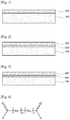
- the display device may include a display panel 100 and a cover window 200 disposed on the display panel 100.
- the display panel 100 may be a liquid crystal display panel or an organic light-emitting display panel.
- the cover window 200 is provided to protect the display panel and may contain the polyamide-imide film. A detailed description about the polyamide-imide film will be omitted because it is given above.
- the display device may further include a polarizing plate 300 interposed between the display panel 100 and the cover window 200 as shown in FIG. 2 or may further include a touch panel 400 interposed between the display panel 100 and the cover window 200 as shown in FIG. 3 .
- the polarizing plate 300 is provided to block transmission of light along a specific direction and a polarizing plate of any material and structure may be used if it can perform this function.
- the touch panel 400 is not particularly limited in constitution or structure and any one may be used if it can perform its function.
- the display device may further include a cover window 200 and a hard coating layer 500 disposed on at least one side of the cover window 200 as shown in FIG. 4 .
- the hard coating layer 500 is shown to be disposed on the upper side of the cover window 200.
- the hard coating layer 500 may be disposed on the lower side or on both sides of the cover window 200.
- the material of the hard coating layer 500 is not particularly limited. Various materials may be used without limitation if the surface hardness, etc. of the cover window can be improved.
- the cover window 200 may be attached to the display panel 100 by an adhesion member (not shown). However, without being limited thereto, the cover window 200 may be disposed on the display panel 100 using, for example, a case of the display panel 100.
- BPDC 1,1-biphenyl-4,4-dicarbonyl dichloride
- TPC terephthaloyl chloride
- the polymer solution was coated on a glass plate and dried with hot air of 80 °C for 30 minutes.
- the dried polyamide-imide copolymer was removed from the glass plate and then fixed to a pin frame. Then, a polyamide-imide film with a thickness of 30 ⁇ m was obtained by heating from 80 to 300 °C at a rate of 2 °C/min.
- a film was prepared in the same manner as in Example 1, except that 26.6 g (0.06 mol) of 6-FDA, 27.3 g (0.098 mol) of BPDC and 8.5 g (0.042 mol) of TPC were added.
- a film was prepared in the same manner as in Example 1, except that 35.5 g (0.08 mol) of 6-FDA, 20 g (0.072 mol) of BPDC and 9.8 g (0.048 mol) of TPC were added.
- a film was prepared in the same manner as in Example 1, except that 44.3 g (0.1 mol) of 6-FDA, 16.7 g (0.06 mol) of BPDC and 8.1 g (0.04 mol) of TPC were added.
- a film was prepared in the same manner as in Example 1, except that BPDC was not added and 26.6 g (0.06 mol) of 6-FDA and 28.5 g (0.14 mol) of TPC were added.
- a film was prepared in the same manner as in Example 1, except that TPC was not added and 26.6 g (0.06 mol) of 6-FDA and 39 g (0.14 mol) of BPDC were added.
- a film was prepared in the same manner as in Example 1, except that BPDC was not added and 17.7 g (0.04 mol) of 6-FDA and 32.6 g (0.16 mol) of TPC were added.
- a film was prepared in the same manner as in Example 1, except that 26.6 g (0.06 mol) of 6-FDA, 31.2 g (0.112 mol) of BPDC and 5.7 g (0.028 mol) of TPC were added.
- a film was prepared in the same manner as in Example 1, except that BPDC was not added and 44.3 g (0.1 mol) of 6-FDA and 20.3 g (0.1 mol) of TPC were added.
- a film was prepared in the same manner as in Example 1, except that 62.1 g (0.14 mol) of 6-FDA, 10 g (0.036 mol) of BPDC and 4.9 g (0.024 mol) of TPC were added.
- a film was prepared in the same manner as in Example 1, except that 8.9 g (0.02 mol) of 6-FDA, 30 g (0.108 mol) of BPDC and 14.6 g (0.072 mol) of TPC were added.
- Example 1 6-FDA [mol] TPC [mol] BPDC [mol] TFMB [mol]
- Example 2 0.06 0.042 0.098 0.2
- Example 3 0.08 0.048 0.072 0.2
- Example 4 0.1 0.040 0.06 0.2 Comparative Example 1 0.06 0.14 0 0.2 Comparative Example 2 0.06 0 0.14 0.2 Comparative Example 3 0.04 0.16 0 0.2 Comparative Example 4 0.06 0.028 0.112 0.2 Comparative Example 5 0.1 0.1 0 0.2 Comparative Example 6 0.14 0.024 0.036 0.2 Comparative Example 7 0.02 0.072 0.108 0.2
- Yellowness index was measured by a spectrophotometer (Hunter Associates Laboratory's UltraScan PRO).
- Haze was measured by the NDH-5000W haze meter (Nippon Denshoku Industries).
- Transmittance was measured at 380-780 nm by a UV spectrometer.
- Comparative Example 2 and Comparative Example 4 which contain the unit derived from 1,1-biphenyl-4,4-dicarbonyl dichloride (BPDC) in an amount exceeding 70 mol% showed high YI (yellowness index), haze and low transmittance.
- BPDC 1,1-biphenyl-4,4-dicarbonyl dichloride
- the film of Comparative Example 6 which contains the amide unit in an amount less than 50 mol% showed very low surface hardness and the film of Comparative Example 7 which contains the amide unit in an amount exceeding 80 mol% showed unsatisfactory transparency (transmittance, haze and YI) due to lack of the imide unit.
- the film of Comparative Example 6 which contains the amide unit in an amount less than 50 mol% showed very low surface hardness and the film of Comparative Example 7 which contains the amide unit in an amount exceeding 80 mol% showed unsatisfactory transparency (transmittance, haze and YI) due to lack of the imide unit.
- the polyamide-imide films of Examples 1-4 showed superior mechanical properties with a surface hardness of HB or higher and an elastic modulus of 5 GPa or greater. They also exhibited excellent optical properties with a transmittance of 89% or higher and a yellowness index (YI) of 3 or lower. Accordingly, it can be seen that the polyamide-imide film according to the present invention has excellent mechanical properties while being colorless and transparent.
- the polymer solution was coated on a glass plate and dried with hot air of 80 °C for 30 minutes.
- the dried polyamide-imide copolymer was removed from the glass plate and then fixed to a pin frame. Then, a polyamide-imide film with a thickness of 30 ⁇ m was obtained by heating from 80 to 300 °C at a rate of 2 °C/min.
- the polymer solution was transferred to a die using a pump, coated onto a belt and then dried with hot air of 80-120 °C.
- the line speed was about 1 m/min and the total belt length was about 10 m.
- the dried polyamide-imide copolymer was removed from the belt and then fixed to a pin frame.
- a polyamide-imide film with a thickness of 30 ⁇ m could be wound with a length of 300 m or longer by treating at 80-300 °C with the same line speed.
- polyamide-imide films having mechanical properties comparable to those of the films of Examples 1-4 could be prepared when terephthaloyl chloride (TPC) was used as the first aromatic dicarbonyl compound and 2,6-naphthalene dicarbonyl dichloride (NADOC) was used as the second aromatic dicarbonyl compound.
- TPC terephthaloyl chloride
- NADOC 2,6-naphthalene dicarbonyl dichloride
Landscapes
- Chemical & Material Sciences (AREA)
- Health & Medical Sciences (AREA)
- Chemical Kinetics & Catalysis (AREA)
- Medicinal Chemistry (AREA)
- Polymers & Plastics (AREA)
- Organic Chemistry (AREA)
- Engineering & Computer Science (AREA)
- Manufacturing & Machinery (AREA)
- Materials Engineering (AREA)
- Macromolecular Compounds Obtained By Forming Nitrogen-Containing Linkages In General (AREA)
- Manufacture Of Macromolecular Shaped Articles (AREA)
- Liquid Crystal (AREA)
Applications Claiming Priority (3)
| Application Number | Priority Date | Filing Date | Title |
|---|---|---|---|
| KR1020160044370A KR101811253B1 (ko) | 2016-04-11 | 2016-04-11 | 무색 투명한 폴리아마이드-이미드 필름 및 이의 제조방법 |
| KR1020170043801A KR101839293B1 (ko) | 2017-04-04 | 2017-04-04 | 무색 투명한 폴리아마이드-이미드 필름 및 이의 제조방법 |
| PCT/KR2017/003889 WO2017179877A1 (ko) | 2016-04-11 | 2017-04-11 | 무색 투명한 폴리아마이드-이미드 필름 및 이의 제조방법 |
Publications (3)
| Publication Number | Publication Date |
|---|---|
| EP3444292A1 true EP3444292A1 (de) | 2019-02-20 |
| EP3444292A4 EP3444292A4 (de) | 2019-12-11 |
| EP3444292B1 EP3444292B1 (de) | 2025-12-10 |
Family
ID=60041862
Family Applications (1)
| Application Number | Title | Priority Date | Filing Date |
|---|---|---|---|
| EP17782632.8A Active EP3444292B1 (de) | 2016-04-11 | 2017-04-11 | Farblose und transparente polyamidimidfolie und herstellungsverfahren dafür |
Country Status (6)
| Country | Link |
|---|---|
| US (1) | US11326030B2 (de) |
| EP (1) | EP3444292B1 (de) |
| JP (1) | JP6843224B2 (de) |
| CN (1) | CN109071814B (de) |
| TW (1) | TWI640552B (de) |
| WO (1) | WO2017179877A1 (de) |
Cited By (1)
| Publication number | Priority date | Publication date | Assignee | Title |
|---|---|---|---|---|
| EP3521338A1 (de) * | 2018-01-31 | 2019-08-07 | SKC Co., Ltd. | Polyamidimidfolie und herstellungsverfahren dafür |
Families Citing this family (22)
| Publication number | Priority date | Publication date | Assignee | Title |
|---|---|---|---|---|
| KR101831884B1 (ko) * | 2017-02-08 | 2018-02-26 | 에스케이씨 주식회사 | 폴리아마이드-이미드 필름 |
| KR102140287B1 (ko) | 2017-12-11 | 2020-07-31 | 주식회사 엘지화학 | 폴리아미드-이미드 공중합체 및 이를 포함하는 폴리아미드-이미드 필름 |
| WO2019117445A1 (ko) * | 2017-12-11 | 2019-06-20 | 주식회사 엘지화학 | 폴리아미드-이미드 공중합체 및 이를 포함하는 폴리아미드-이미드 필름 |
| KR102230059B1 (ko) * | 2018-01-11 | 2021-03-18 | 주식회사 엘지화학 | 폴리아미드이미드 수지 필름 |
| JP2019214699A (ja) * | 2018-06-08 | 2019-12-19 | 住友化学株式会社 | ポリアミドイミド系樹脂の製造方法 |
| JP2019214705A (ja) * | 2018-06-08 | 2019-12-19 | 住友化学株式会社 | ポリアミドイミド前駆体の製造方法 |
| JP2020019937A (ja) * | 2018-07-19 | 2020-02-06 | 住友化学株式会社 | ポリアミドイミド樹脂 |
| KR102334954B1 (ko) * | 2018-10-11 | 2021-12-02 | 주식회사 엘지화학 | 폴더블 디스플레이용 보호 필름 및 이를 포함하는 폴더블 디스플레이 장치 |
| TWI730820B (zh) * | 2019-06-28 | 2021-06-11 | 南韓商Skc股份有限公司 | 聚合物薄膜 |
| CN112142999B (zh) * | 2019-06-28 | 2023-03-28 | Skc株式会社 | 基膜、其制备方法以及包括该基膜的覆盖窗和显示装置 |
| US20200407520A1 (en) * | 2019-06-28 | 2020-12-31 | Skc Co., Ltd. | Polyimide-based film and preparation method thereof |
| KR102147349B1 (ko) | 2019-09-30 | 2020-08-25 | 에스케이이노베이션 주식회사 | 윈도우 커버 필름 및 이를 이용한 플렉서블 디스플레이 패널 |
| KR102147330B1 (ko) * | 2019-09-30 | 2020-08-24 | 에스케이이노베이션 주식회사 | 대전방지 폴리이미드계 필름 및 이를 이용한 플렉서블 디스플레이 패널 |
| KR102147299B1 (ko) | 2019-09-30 | 2020-08-24 | 에스케이이노베이션 주식회사 | 윈도우 커버 필름 및 이를 포함하는 플렉서블 디스플레이 패널 |
| KR102147367B1 (ko) | 2019-09-30 | 2020-08-24 | 에스케이이노베이션 주식회사 | 윈도우 커버 필름 및 이를 포함하는 플렉서블 디스플레이 패널 |
| KR102280933B1 (ko) * | 2020-04-14 | 2021-07-23 | 에스케이이노베이션 주식회사 | 윈도우 커버 필름 및 이를 포함하는 플렉서블 디스플레이 패널 |
| TWI811915B (zh) * | 2020-12-31 | 2023-08-11 | 南韓商可隆股份有限公司 | 包括改良聚合程度的聚合物樹脂之光學膜以及包括其之顯示裝置 |
| JP7487416B2 (ja) * | 2020-12-31 | 2024-05-20 | コーロン インダストリーズ インク | 光学特性が改善された光学フィルム、これを含む表示装置及びその製造方法 |
| JP7567131B2 (ja) * | 2021-01-15 | 2024-10-16 | エルジー・ケム・リミテッド | フレキシブルディスプレイ装置のカバーウィンドウ用保護フィルム、これを含むカバーウィンドウおよびディスプレイ装置 |
| TWI882202B (zh) * | 2021-07-14 | 2025-05-01 | 南韓商可隆股份有限公司 | 具有改良折疊後恢復力的光學膜以及包括其之顯示元件 |
| KR102926183B1 (ko) * | 2022-09-26 | 2026-02-10 | 코오롱인더스트리 주식회사 | 강성이 개선된 광학 필름 및 이를 포함하는 표시장치 |
| KR20240158594A (ko) * | 2023-04-27 | 2024-11-05 | 코오롱인더스트리 주식회사 | 낮은 황색도 변화를 갖는 광학 필름 및 이를 포함하는 표시장치 |
Family Cites Families (12)
| Publication number | Priority date | Publication date | Assignee | Title |
|---|---|---|---|---|
| JP3405022B2 (ja) * | 1995-10-26 | 2003-05-12 | 東レ株式会社 | 芳香族ポリアミド組成物 |
| JP3575190B2 (ja) * | 1995-10-26 | 2004-10-13 | 東レ株式会社 | 芳香族ポリアミドフィルム及び磁気記録媒体 |
| US7247367B2 (en) | 2001-02-23 | 2007-07-24 | Kaneka Corporation | Polyimide film and process for producing the same |
| KR100586107B1 (ko) * | 2004-05-28 | 2006-06-07 | 엘에스전선 주식회사 | 폴리이미드 유연성 절연필름을 포함하는 연성금속박막적층필름 |
| KR100584953B1 (ko) | 2004-05-28 | 2006-05-29 | 엘에스전선 주식회사 | 폴리(아미드-이미드) 유연성 절연필름을 포함하는연성금속박막 적층필름 |
| KR101229722B1 (ko) * | 2006-12-12 | 2013-02-04 | 도요보 가부시키가이샤 | 폴리아미드이미드 수지, 이것으로부터 얻어지는 무색 투명 플렉시블 금속 피복 적층체 및 배선판 |
| KR101523730B1 (ko) * | 2011-05-18 | 2015-05-29 | 삼성전자 주식회사 | 폴리(아미드-이미드) 블록 코폴리머, 이를 포함하는 성형품 및 상기 성형품을 포함하는 디스플레이 장치 |
| KR20130071650A (ko) | 2011-12-21 | 2013-07-01 | 코오롱인더스트리 주식회사 | 투명 폴리아마이드―이미드 필름 및 그 제조방법 |
| KR101968258B1 (ko) * | 2012-02-07 | 2019-04-12 | 삼성전자주식회사 | 폴리(아미드-이미드) 블록 코폴리머, 이를 포함하는 성형품 및 상기 성형품을 포함하는 디스플레이 장치 |
| KR20150077177A (ko) * | 2013-12-27 | 2015-07-07 | 주식회사 두산 | 폴리아믹산 용액, 및 이를 이용한 투명 폴리이미드 수지 필름 및 투명 기판 |
| KR20160083738A (ko) | 2015-01-02 | 2016-07-12 | 삼성전자주식회사 | 표시 장치용 윈도우 및 이를 포함하는 표시 장치 |
| KR20160003606A (ko) | 2015-12-21 | 2016-01-11 | 주식회사 두산 | 폴리아믹산 용액, 및 이를 이용한 투명 폴리이미드 수지 필름 및 투명 기판 |
-
2017
- 2017-04-10 TW TW106111884A patent/TWI640552B/zh active
- 2017-04-11 US US16/088,390 patent/US11326030B2/en active Active
- 2017-04-11 JP JP2019503885A patent/JP6843224B2/ja active Active
- 2017-04-11 CN CN201780020321.XA patent/CN109071814B/zh active Active
- 2017-04-11 WO PCT/KR2017/003889 patent/WO2017179877A1/ko not_active Ceased
- 2017-04-11 EP EP17782632.8A patent/EP3444292B1/de active Active
Cited By (1)
| Publication number | Priority date | Publication date | Assignee | Title |
|---|---|---|---|---|
| EP3521338A1 (de) * | 2018-01-31 | 2019-08-07 | SKC Co., Ltd. | Polyamidimidfolie und herstellungsverfahren dafür |
Also Published As
| Publication number | Publication date |
|---|---|
| CN109071814A (zh) | 2018-12-21 |
| TWI640552B (zh) | 2018-11-11 |
| US20200339769A1 (en) | 2020-10-29 |
| JP2019513887A (ja) | 2019-05-30 |
| WO2017179877A1 (ko) | 2017-10-19 |
| TW201739794A (zh) | 2017-11-16 |
| EP3444292A4 (de) | 2019-12-11 |
| EP3444292B1 (de) | 2025-12-10 |
| US11326030B2 (en) | 2022-05-10 |
| CN109071814B (zh) | 2023-12-01 |
| JP6843224B2 (ja) | 2021-03-17 |
Similar Documents
| Publication | Publication Date | Title |
|---|---|---|
| EP3444292B1 (de) | Farblose und transparente polyamidimidfolie und herstellungsverfahren dafür | |
| KR101839293B1 (ko) | 무색 투명한 폴리아마이드-이미드 필름 및 이의 제조방법 | |
| KR102116512B1 (ko) | 무색 투명한 폴리아마이드-이미드 필름 및 이의 제조방법 | |
| USRE48141E1 (en) | Transparent polyamide-imide resin and film using same | |
| EP3315534B1 (de) | Polyamidimidvorläufer, polyamidimidfolie und anzeigevorrichtung damit | |
| JP6016561B2 (ja) | ポリイミド前駆体及びそれを含有する樹脂組成物、ポリイミドフィルム及びその製造方法、並びに、積層体及びその製造方法 | |
| CN105646919B (zh) | 聚酰亚胺薄膜 | |
| EP3241860B1 (de) | Polyamidimidvorläufer, polyamidimidfolie und anzeigevorrichtung damit | |
| KR102017196B1 (ko) | 폴리아미드이미드 공중합체 및 이를 포함하는 무색 투명한 폴리아미드이미드 필름 | |
| KR101811253B1 (ko) | 무색 투명한 폴리아마이드-이미드 필름 및 이의 제조방법 | |
| EP3318592A1 (de) | Polyimid-polybenzoxazol-vorläuferlösung, polyimid-polybenzoxazol-film und herstellungsverfahren dafür | |
| KR101729731B1 (ko) | 인장신도가 개선된 무색 투명한 폴리아마이드-이미드 필름 | |
| CN107531902A (zh) | 聚酰亚胺树脂和使用该聚酰亚胺树脂的薄膜 | |
| KR102093696B1 (ko) | 마찰특성이 개선된 폴리이미드 수지 조성물 및 이의 필름 | |
| KR102271023B1 (ko) | 폴리아믹산, 폴리이미드, 폴리이미드 필름, 이를 포함하는 영상 표시소자 및 폴리아믹산의 제조방법 | |
| KR102109787B1 (ko) | 플라스틱 적층 필름 | |
| KR20190081459A (ko) | 폴리아믹산의 제조방법, 이로부터 제조된 폴리아믹산, 폴리이미드 수지 및 폴리이미드 필름 | |
| US20220227943A1 (en) | Polyamideimide Resin, and Polyamideimide Film and Window Cover Film Including the Same | |
| US20230122622A1 (en) | Composition Containing Polyamideimide Precursor or Polyamideimide, and Polyamideimide Film Produced Using the Same | |
| TW202229415A (zh) | 聚醯胺醯亞胺膜及包括其之窗覆蓋膜 | |
| TW202344566A (zh) | 聚醯亞胺前驅物組合物、及其製備方法與應用 |
Legal Events
| Date | Code | Title | Description |
|---|---|---|---|
| STAA | Information on the status of an ep patent application or granted ep patent |
Free format text: STATUS: THE INTERNATIONAL PUBLICATION HAS BEEN MADE |
|
| PUAI | Public reference made under article 153(3) epc to a published international application that has entered the european phase |
Free format text: ORIGINAL CODE: 0009012 |
|
| STAA | Information on the status of an ep patent application or granted ep patent |
Free format text: STATUS: REQUEST FOR EXAMINATION WAS MADE |
|
| 17P | Request for examination filed |
Effective date: 20181108 |
|
| AK | Designated contracting states |
Kind code of ref document: A1 Designated state(s): AL AT BE BG CH CY CZ DE DK EE ES FI FR GB GR HR HU IE IS IT LI LT LU LV MC MK MT NL NO PL PT RO RS SE SI SK SM TR |
|
| AX | Request for extension of the european patent |
Extension state: BA ME |
|
| DAV | Request for validation of the european patent (deleted) | ||
| DAX | Request for extension of the european patent (deleted) | ||
| A4 | Supplementary search report drawn up and despatched |
Effective date: 20191108 |
|
| RIC1 | Information provided on ipc code assigned before grant |
Ipc: C08G 73/10 20060101ALI20191104BHEP Ipc: C08J 5/18 20060101ALI20191104BHEP Ipc: C08G 73/14 20060101AFI20191104BHEP Ipc: C08L 79/08 20060101ALI20191104BHEP Ipc: G02F 1/1337 20060101ALI20191104BHEP |
|
| STAA | Information on the status of an ep patent application or granted ep patent |
Free format text: STATUS: EXAMINATION IS IN PROGRESS |
|
| 17Q | First examination report despatched |
Effective date: 20200911 |
|
| RAP1 | Party data changed (applicant data changed or rights of an application transferred) |
Owner name: SK MICROWORKS CO., LTD. |
|
| RAP1 | Party data changed (applicant data changed or rights of an application transferred) |
Owner name: SK MICROWORKS SOLUTIONS CO., LTD. |
|
| GRAP | Despatch of communication of intention to grant a patent |
Free format text: ORIGINAL CODE: EPIDOSNIGR1 |
|
| STAA | Information on the status of an ep patent application or granted ep patent |
Free format text: STATUS: GRANT OF PATENT IS INTENDED |
|
| INTG | Intention to grant announced |
Effective date: 20250714 |
|
| GRAS | Grant fee paid |
Free format text: ORIGINAL CODE: EPIDOSNIGR3 |
|
| GRAA | (expected) grant |
Free format text: ORIGINAL CODE: 0009210 |
|
| STAA | Information on the status of an ep patent application or granted ep patent |
Free format text: STATUS: THE PATENT HAS BEEN GRANTED |
|
| AK | Designated contracting states |
Kind code of ref document: B1 Designated state(s): AL AT BE BG CH CY CZ DE DK EE ES FI FR GB GR HR HU IE IS IT LI LT LU LV MC MK MT NL NO PL PT RO RS SE SI SK SM TR |
|
| REG | Reference to a national code |
Ref country code: CH Ref legal event code: F10 Free format text: ST27 STATUS EVENT CODE: U-0-0-F10-F00 (AS PROVIDED BY THE NATIONAL OFFICE) Effective date: 20251210 Ref country code: GB Ref legal event code: FG4D |
|
| REG | Reference to a national code |
Ref country code: DE Ref legal event code: R096 Ref document number: 602017093094 Country of ref document: DE |
|
| P01 | Opt-out of the competence of the unified patent court (upc) registered |
Free format text: CASE NUMBER: UPC_APP_0014188_3444292/2025 Effective date: 20251120 |
|
| REG | Reference to a national code |
Ref country code: IE Ref legal event code: FG4D |
|
| REG | Reference to a national code |
Ref country code: CH Ref legal event code: W10 Free format text: ST27 STATUS EVENT CODE: U-0-0-W10-W00 (AS PROVIDED BY THE NATIONAL OFFICE) Effective date: 20260204 |
|
| RAP4 | Party data changed (patent owner data changed or rights of a patent transferred) |
Owner name: MICROWORKS SOLUTIONS CO., LTD. |
|
| REG | Reference to a national code |
Ref country code: LT Ref legal event code: MG9D |
|
| PG25 | Lapsed in a contracting state [announced via postgrant information from national office to epo] |
Ref country code: NO Free format text: LAPSE BECAUSE OF FAILURE TO SUBMIT A TRANSLATION OF THE DESCRIPTION OR TO PAY THE FEE WITHIN THE PRESCRIBED TIME-LIMIT Effective date: 20260310 |
|
| PG25 | Lapsed in a contracting state [announced via postgrant information from national office to epo] |
Ref country code: FI Free format text: LAPSE BECAUSE OF FAILURE TO SUBMIT A TRANSLATION OF THE DESCRIPTION OR TO PAY THE FEE WITHIN THE PRESCRIBED TIME-LIMIT Effective date: 20251210 Ref country code: HR Free format text: LAPSE BECAUSE OF FAILURE TO SUBMIT A TRANSLATION OF THE DESCRIPTION OR TO PAY THE FEE WITHIN THE PRESCRIBED TIME-LIMIT Effective date: 20251210 |
|
| REG | Reference to a national code |
Ref country code: NL Ref legal event code: MP Effective date: 20251210 |
|
| PG25 | Lapsed in a contracting state [announced via postgrant information from national office to epo] |
Ref country code: RS Free format text: LAPSE BECAUSE OF FAILURE TO SUBMIT A TRANSLATION OF THE DESCRIPTION OR TO PAY THE FEE WITHIN THE PRESCRIBED TIME-LIMIT Effective date: 20260310 |
|
| PG25 | Lapsed in a contracting state [announced via postgrant information from national office to epo] |
Ref country code: LV Free format text: LAPSE BECAUSE OF FAILURE TO SUBMIT A TRANSLATION OF THE DESCRIPTION OR TO PAY THE FEE WITHIN THE PRESCRIBED TIME-LIMIT Effective date: 20251210 |