EP3444321B1 - Verfahren zur herstellung eines kraftstoffes und vorrichtung zur herstellung von kraftstoff - Google Patents
Verfahren zur herstellung eines kraftstoffes und vorrichtung zur herstellung von kraftstoff Download PDFInfo
- Publication number
- EP3444321B1 EP3444321B1 EP18796814.4A EP18796814A EP3444321B1 EP 3444321 B1 EP3444321 B1 EP 3444321B1 EP 18796814 A EP18796814 A EP 18796814A EP 3444321 B1 EP3444321 B1 EP 3444321B1
- Authority
- EP
- European Patent Office
- Prior art keywords
- reaction vessel
- temperature
- mpa
- stirring
- pressure
- Prior art date
- Legal status (The legal status is an assumption and is not a legal conclusion. Google has not performed a legal analysis and makes no representation as to the accuracy of the status listed.)
- Active
Links
Images
Classifications
-
- C—CHEMISTRY; METALLURGY
- C12—BIOCHEMISTRY; BEER; SPIRITS; WINE; VINEGAR; MICROBIOLOGY; ENZYMOLOGY; MUTATION OR GENETIC ENGINEERING
- C12P—FERMENTATION OR ENZYME-USING PROCESSES TO SYNTHESISE A DESIRED CHEMICAL COMPOUND OR COMPOSITION OR TO SEPARATE OPTICAL ISOMERS FROM A RACEMIC MIXTURE
- C12P5/00—Preparation of hydrocarbons or halogenated hydrocarbons
- C12P5/02—Preparation of hydrocarbons or halogenated hydrocarbons acyclic
- C12P5/023—Methane
-
- B—PERFORMING OPERATIONS; TRANSPORTING
- B09—DISPOSAL OF SOLID WASTE; RECLAMATION OF CONTAMINATED SOIL
- B09B—DISPOSAL OF SOLID WASTE NOT OTHERWISE PROVIDED FOR
- B09B3/00—Destroying solid waste or transforming solid waste into something useful or harmless
- B09B3/30—Destroying solid waste or transforming solid waste into something useful or harmless involving mechanical treatment
- B09B3/38—Stirring or kneading
-
- B—PERFORMING OPERATIONS; TRANSPORTING
- B09—DISPOSAL OF SOLID WASTE; RECLAMATION OF CONTAMINATED SOIL
- B09B—DISPOSAL OF SOLID WASTE NOT OTHERWISE PROVIDED FOR
- B09B3/00—Destroying solid waste or transforming solid waste into something useful or harmless
- B09B3/40—Destroying solid waste or transforming solid waste into something useful or harmless involving thermal treatment, e.g. evaporation
- B09B3/45—Steam treatment, e.g. supercritical water gasification or oxidation
-
- B—PERFORMING OPERATIONS; TRANSPORTING
- B09—DISPOSAL OF SOLID WASTE; RECLAMATION OF CONTAMINATED SOIL
- B09B—DISPOSAL OF SOLID WASTE NOT OTHERWISE PROVIDED FOR
- B09B3/00—Destroying solid waste or transforming solid waste into something useful or harmless
- B09B3/60—Biochemical treatment, e.g. by using enzymes
- B09B3/65—Anaerobic treatment
-
- C—CHEMISTRY; METALLURGY
- C02—TREATMENT OF WATER, WASTE WATER, SEWAGE, OR SLUDGE
- C02F—TREATMENT OF WATER, WASTE WATER, SEWAGE, OR SLUDGE
- C02F11/00—Treatment of sludge; Devices therefor
- C02F11/06—Treatment of sludge; Devices therefor by oxidation
- C02F11/08—Wet air oxidation
-
- C—CHEMISTRY; METALLURGY
- C10—PETROLEUM, GAS OR COKE INDUSTRIES; TECHNICAL GASES CONTAINING CARBON MONOXIDE; FUELS; LUBRICANTS; PEAT
- C10L—FUELS NOT OTHERWISE PROVIDED FOR; NATURAL GAS; SYNTHETIC NATURAL GAS OBTAINED BY PROCESSES NOT COVERED BY SUBCLASSES C10G OR C10K; LIQUIFIED PETROLEUM GAS; USE OF ADDITIVES TO FUELS OR FIRES; FIRE-LIGHTERS
- C10L3/00—Gaseous fuels; Natural gas; Synthetic natural gas obtained by processes not covered by subclass C10G, C10K; Liquefied petroleum gas
-
- C—CHEMISTRY; METALLURGY
- C12—BIOCHEMISTRY; BEER; SPIRITS; WINE; VINEGAR; MICROBIOLOGY; ENZYMOLOGY; MUTATION OR GENETIC ENGINEERING
- C12M—APPARATUS FOR ENZYMOLOGY OR MICROBIOLOGY; APPARATUS FOR CULTURING MICROORGANISMS FOR PRODUCING BIOMASS, FOR GROWING CELLS OR FOR OBTAINING FERMENTATION OR METABOLIC PRODUCTS, i.e. BIOREACTORS OR FERMENTERS
- C12M45/00—Means for pre-treatment of biological substances
- C12M45/06—Means for pre-treatment of biological substances by chemical means or hydrolysis
-
- Y—GENERAL TAGGING OF NEW TECHNOLOGICAL DEVELOPMENTS; GENERAL TAGGING OF CROSS-SECTIONAL TECHNOLOGIES SPANNING OVER SEVERAL SECTIONS OF THE IPC; TECHNICAL SUBJECTS COVERED BY FORMER USPC CROSS-REFERENCE ART COLLECTIONS [XRACs] AND DIGESTS
- Y02—TECHNOLOGIES OR APPLICATIONS FOR MITIGATION OR ADAPTATION AGAINST CLIMATE CHANGE
- Y02E—REDUCTION OF GREENHOUSE GAS [GHG] EMISSIONS, RELATED TO ENERGY GENERATION, TRANSMISSION OR DISTRIBUTION
- Y02E50/00—Technologies for the production of fuel of non-fossil origin
- Y02E50/10—Biofuels, e.g. bio-diesel
-
- Y—GENERAL TAGGING OF NEW TECHNOLOGICAL DEVELOPMENTS; GENERAL TAGGING OF CROSS-SECTIONAL TECHNOLOGIES SPANNING OVER SEVERAL SECTIONS OF THE IPC; TECHNICAL SUBJECTS COVERED BY FORMER USPC CROSS-REFERENCE ART COLLECTIONS [XRACs] AND DIGESTS
- Y02—TECHNOLOGIES OR APPLICATIONS FOR MITIGATION OR ADAPTATION AGAINST CLIMATE CHANGE
- Y02E—REDUCTION OF GREENHOUSE GAS [GHG] EMISSIONS, RELATED TO ENERGY GENERATION, TRANSMISSION OR DISTRIBUTION
- Y02E50/00—Technologies for the production of fuel of non-fossil origin
- Y02E50/30—Fuel from waste, e.g. synthetic alcohol or diesel
Definitions
- the present invention relates to a fuel production method and fuel production apparatus, particularly to a fuel production method and fuel production apparatus for conversion treatment of livestock excrement into appropriate properties for fuel for gasification power generation.
- Patent Literature 2 the present inventor has proposed a fuel production method to produce fuel using low-molecularization process.
- garbage is charged with supplying high-pressure steam in a reaction vessel and the condition inside of the vessel is kept at a pressure ranging from 1.50 MPa to 1.96 MPa, at a temperature ranging from 185 °C to 215 °C for 30 to 50 minutes, for separation of bonded molecules.
- This method enables to obtain methane gas usable for power generation through fermentation of the fuel.
- Patent Literature 3 relates to cecropin antibacterial peptide fermentation sterilization equipment and a sterilization method thereof.
- Patent Literature 4 relates to a process for fuel production and a fuel production apparatus which are suitable for use in converting and treating wastes with a high water content such as garbage, sludge, remainder of fish, dung and urine for use as a fuel for gasification power generation.
- Patent Literature 1 Technology for hydrothermal reaction treatment is described in the Patent Literature 1. It deals with solid waste which is difficult to use for gasification generation fuel due to high water content of garbage or sewage sludge. The waste is converted to reduce the water content to solid fuel with appropriate water content by hydrothermal reaction treatment; that is, the fuel described in the Patent Literature 1 is a solid body.
- ammonia generated from the excrement inhibits fermentation and this causes a problem of preventing smooth production of methane gas.
- the excrement contains feed as digested; organic substances such as hydrocarbons, proteins, fats. Feed as digested is not easily decomposed into low-molecular weight organic compounds such as a monosaccharide, amino acids, and higher fatty acids, and thus it is difficult to transfer the excrement to a methane fermentation process site and to perform high-speed fermentation. A stench of ammonia from the excrement is also problematic.
- the present invention is made in view of the above situation.
- the invention aims to provide a fuel production method and an apparatus thereof where ammonia that inhibits methane fermentation of livestock excrement is removed, and an increase of methane fermentation rate and an increase of gas generation amount can be achieved by low-molecularizing organic compounds such as hydrocarbons, proteins, and fats contained in the livestock excrement, and by decomposing them into compounds having low molecular weight.
- a fuel production method to achieve the aim includes a step of charging livestock excrement into a reaction furnace and charging water the amount of which is equal to or more than five (5) times or equal to or less than twenty (20) times as much as the charged livestock excrement, a step of injecting saturated steam at a pressure of 0.62 MPa or higher or 1.9 MPa or lower into the reaction vessel after the excrement and water are charged, a step of decomposing the excrement, with injecting steam, by starting stirring the content in the reaction vessel, removing ammonia, and low-molecularizing the organic bonded molecules, and a step of stopping stirring when the temperature of a bottom portion in the reaction vessel rises to 125 °C or above.
- the excrement refers to chicken droppings, pig excrement, bovine dung, dung of horses and sheep, and the like.
- the livestock excrement requires a large value of chemical oxygen demand measured with potassium dichromate (COD Cr ) and accordingly fermentation takes a longer time and economical loss increases.
- COD Cr potassium dichromate
- the predetermined amount of water to be put is less than five (5) times as much as the charged excrement, the total organic carbon (TOC) against the COD value is larger and the fermentation speed becomes low, which is not preferable.
- the predetermined amount of water is more than twenty (20) times as much as the charged excrement, due to the decreased TOC value the fermentation speed becomes slow and this causes to lose economic efficiency.
- Injection of saturated steam at a predetermined pressure into the reaction vessel causes a hydrothermal reaction.
- the pressure is less than 0.62 MPa, residual ammonia is observed and the efficiency of fermentation is not satisfactory.
- the predetermined pressure is higher than 1.9 MPa, a carbonization phenomenon of organic compounds occurs when reaction product is discharged after the end of the reaction.
- the stirring is preferably started at a time when the temperature at the bottom of the reaction vessel reaches 100 °C. Because the temperature of the liquid containing livestock excrement is lower at the bottom portion of the reaction vessel, by letting the temperature at the bottom of the reaction vessel be a reference and measuring the temperature thereof, the temperature of the whole organic compounds in the liquid can be confirmed to be higher than 100 °C.
- the reason why stirring is started at a time when the temperature at the bottom of the reaction vessel has reached 100 °C is that bonded molecules of the organic compounds contained in the excrement can be separated and decomposed; stirring is started to enhance the motion of molecules by colliding to the blades of the stirring means.
- a fuel production method preferably includes a step of charging chicken droppings into a reaction furnace and charging water the amount of which is equal to or more than five (5) times or equal to or less than ten (10) times as much as the charged chicken droppings, a step of injecting saturated steam at a pressure 0.69 MPa or higher or 0.84 MPa or lower into the reaction vessel after the chicken droppings and water are charged, a step of decomposing the chicken droppings, with keeping on injecting the steam, by starting stirring the content in the reaction vessel, removing ammonia, and decomposing the organic bonded molecules, and a step of stopping stirring when the temperature of the bottom portion in the reaction vessel reaches a temperature in a range of 135 °C to 140 °C.
- the inputted amount of water is equal to or more than five (5) times or equal to or less than ten (10) times as much as the charged chicken droppings
- the pressure of the injected steam into the reaction vessel is equal to or more than 0.69 MPa or equal to or less than 0.84 MPa
- stirring is stopped at a time when the temperature at the bottom of the reaction vessel reaches a temperature in a range of 135 °C to 140 °C.
- a fuel production method preferably includes a step of charging pig excrement into a reaction furnace and charging water the amount of which is equal to or more than ten (10) times or equal to or less than twelve (12) times as much as the charged pig excrement, a step of injecting saturated steam at a pressure 0.76 MPa or higher or 0.85 MPa or lower into the reaction vessel after the pig excrement and water are charged, a step of decomposing the pig excrement, with keeping on injecting the steam, by starting stirring the content in the reaction vessel, removing ammonia, and decomposing the organic bonded molecules, and a step of stopping stirring when the temperature of the bottom portion in the reaction vessel reaches a temperature in a range of 135 °C to 140 °C.
- the inputted amount of water is equal to or more than ten (10) times or equal to or less than twelve (12) times as much as the charged pig excrement
- the pressure of the injected steam into the reaction vessel is equal to or more than 0.76 MPa or equal to or less than 0.85 MPa
- stirring is stopped at a time when the temperature at the bottom of the reaction vessel reaches a temperature in a range of 135 °C to 140 °C.
- a fuel production apparatus to achieve the aim described above includes a reaction vessel having stirring means, steam injection means for injecting saturated high-pressure steam into the reaction vessel in which livestock excrement is charged, a temperature sensor which measures the temperature at a bottom portion of the reaction vessel, and control means that controls injection of the saturated steam using the steam injection means to keep the pressure of the reaction vessel in a range of 0.62 MPa to 1.9 MPa, controls to start operation of the stirring means at a time when the temperature at the bottom of the reaction vessel passes 100 °C, and controls to stop operation of the stirring means at a time when the temperature at the bottom reaches 125 °C.
- the apparatus preferably includes the control means that controls injection of the saturated steam using the steam injection means to keep the pressure of the reaction vessel in a range of 0.69 MPa to 0.84 MPa, controls to start operation of the stirring means at a time when the temperature at the bottom of the reaction vessel passes 100 °C, and controls to stop operation of the stirring means at a time when the temperature at the bottom reaches a temperature in a range of 135 °C to 140 °C.
- the apparatus preferably includes the control means that controls injection of the saturated steam using the steam injection means to keep the pressure of the reaction vessel in a range of 0.76 MPa to 0.85 MPa, controls to start operation of the stirring means at a time when the temperature at the bottom of the reaction vessel passes 100 °C, and controls to stop operation of the stirring means at a time when the temperature at the bottom reaches a temperature in a range of 135 °C to 140 °C.
- the present invention enables to obtain a fuel production method and a fuel production apparatus where ammonia that inhibits methane fermentation of livestock excrement is removed, and an increase of methane fermentation rate and an increase of gas generation amount can be achieved by decomposing organic compounds such as hydrocarbons, proteins, and fats contained in the livestock excrement, and by decomposing them into compounds having low molecular weight.
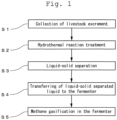
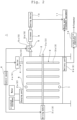
- a fuel production method will be explained in detail with reference to FIGS. 1 and 2 .
- a hydrothermal reaction treatment S2 is performed to collected livestock excrement (S1), as shown in FIG. 1 .
- collected livestock excrement (S1) is subjected to hydrothermal reaction treatment (S2), as shown in Fig.1 .
- a characteristic aspect of this method is in that the hydrothermal reaction treatment is performed under a predetermined condition.
- the livestock excrement charged in a reaction vessel with putting a predetermined amount of water and injecting saturated steam at a predetermined pressure is stirred until temperature of a bottom portion of the reaction vessel reaches a predetermined temperature; this operation suppresses ammonia generation and low-molecularizes by decomposing bonded compounds of organic matters contained in the excrement, and produces fuel that is decomposed into low-molecular weight compounds, aminated and saccharified.
- Detailed condition of the hydrothermal reaction treatment will be described later.
- the liquid and solid matters subjected to the hydrothermal reaction are separated into an organic-matter containing liquid that contains (simply referred to a liquid) fermented components of livestock excrement, decomposed low-molecular organic compounds, and solid matters (S3), using a solid-liquid separator.
- a publicly known apparatus can be employed as a solid-liquid separator.
- the separated organic-matter containing liquid is transferred to a fermenter (S4) and stored in the fermenter.
- a publicly known transferring means can be also usable for transferring the organic-matter containing liquid.
- the organic-matter containing liquid in the fermenter is kept at a predetermined temperature to perform fermentation treatment with methane bacteria; that is, methane gas production. This treatment can be performed similarly to the conventional method.
- the present invention directed to livestock excrement, aims at producing fuel from organic-matter containing liquid that contains organic compounds in livestock excrement, using processes in which an appropriate amount of water is added to livestock excrement and hydrothermal reaction treatment is performed under a predetermined condition.
- a fuel production apparatus 1 includes a reaction vessel 2 in which livestock excrement is stored and treated, a charging port 2a for charging the livestock excrement and water (tap water) into the reaction vessel 2, and a stirring means 3 for stirring a mixed liquid of the livestock and the water both charged into the reaction vessel.
- the fuel production apparatus 1 includes a steam injection means 4 for injecting high-pressure steam to the mixed liquid of livestock and water in the reaction vessel 2, a pressure adjusting means 5 for adjusting the pressure in the reaction vessel 2, and a control means 6 for control the stirring means 3, the steam injection means 4 and the pressure adjusting means 5.
- the reaction vessel 2 is composed of a pressure-resistant vessel in which the mixed liquid of livestock excrement and water is treated.
- a feeding port 2a is provided at the top of the reaction vessel and a delivery port 2b is provided at the bottom for leading the liquid containing low molecular weight organic compounds that is obtained by hydrothermal reaction treatment.
- the feeding port 2a and delivery port 2b have sealed structure with packings resistant to high temperature and high pressure of the reaction vessel when the liquid is subjected to hydrothermal treatment.
- the feeding port 2a and delivery port 2b are also provided with a system control function not to respond open/close operation unless the pressure comes down below 0.015 MPa for the sake of safety.
- a temperature sensor 7 is provided at the bottom of the reaction vessel and a pressure sensor 8 is provided at the inner top of the vessel to respectively detect the temperature and the pressure inside of the vessel 2.
- the temperature sensor 7, provided at the bottom of the vessel can measure the temperature of the organic-matters containing liquid at the bottom of the vessel; lower part of the liquid has a relatively lower temperature. Namely, it is possible to confirm that the temperature of the entire organic-matter containing liquid is higher than the temperature measured by the temperature sensor 7, by measuring the temperature of the lower part of the liquid located at the bottom of the reaction vessel 2.
- the stirring means 3 is provided for making the pressure and temperature of the liquid uniform over the entire liquid.
- the stirring means 3 is extended longitudinally in the reaction vessel 2 and is provided with a rotatably-journaled horizontal rotary shaft 3a and a stirring blade 3b attached to the horizontal rotary shaft 3a.
- a driving motor 3c is coupled to the horizontal rotary shaft 3a and drives the stirring blade 3b.
- the steam injection means 4 includes a boiler 4a to generate high-pressure steam, saturated steam, and a steam supply pipe 4b for feeding the steam generated by the boiler 4a, saturated steam, into the reaction vessel 2.
- the pressure of the steam, saturated steam, generated by the boiler 4a is maintained to be constant, and the pressure in the reaction vessel 2 is adjusted by injection amount of the high pressure steam, saturated steam.
- the pressure of the high-pressure steam, high-pressure saturated steam determines the temperature inside the reaction vessel 2 and the interior of the reaction vessel 2 is kept at a high temperature.
- the steam supply pipe 4b is disposed above the horizontal rotary shaft 3a and connected to the reaction vessel 2 in the substantially horizontal direction.
- the pressure adjusting means 5 includes a pressure adjusting valve 5a that is electrically controlled to achieve an open/close control, and an exhaust pipe 5b for exhausting the steam in the reaction vessel 2 through the pressure adjusting valve 5a.
- a pressure adjusting valve 5a that is electrically controlled to achieve an open/close control
- an exhaust pipe 5b for exhausting the steam in the reaction vessel 2 through the pressure adjusting valve 5a.
- the pressure adjusting valve 5a is released to depressurize the reaction vessel 2 to maintain the pressure to be the predetermined value.
- a cooling device 10 is connected to the exhaust pipe 5b through a silencer 9, and cools and liquefy the steam from the reaction vessel 2 to drain to waste water treatment equipment 11. It is designed, with the use of the silencer 9, to enables to meet the requirement of noise control regulations and to install the fuel production apparatus in an urban district.
- the control means 6 is electrically connected to the stirring means 3, steam injecting means 4 and pressure adjusting means 5, and controls them.
- the control means6 controls revolution direction and revolution speed of the driving motor 3c, and also controls to start and stop of stirring of the liquid in the reaction vessel 2.
- the control means 6 further controls the injection amount of steam injected by the steam injecting means 4 so as to keep the pressure at a predetermined value for a predetermined time at which pressure the liquid in the reaction vessel 2 is converted to have appropriate properties for gasification power generation.
- the control means 6 is electrically connected to the temperature sensor 7 and the pressure sensor 8 both in the reaction vessel and controls to start and stop the driving motor 3c by receiving a signal from the temperature sensor 7.
- the control means 6 performs a feedback control to keep the temperature and pressure respectively at a predetermined value on the basis of the detection results of the temperature sensor 7 and the pressure sensor 8 in the reaction vessel 2. Specifically, when the temperature or the pressure in the reaction vessel 2 decreases, the control means 6 controls to increase the temperature and pressure by increasing the injection amount of the high-pressure steam from the steam injection means 4. On the contrary, when the temperature or the pressure in the reaction vessel 2 rises above the predetermined values, the control means 6 controls to lower the temperature and pressure by discharging the high-pressure steam by releasing the pressure adjusting valve 51 of the pressure adjusting means 5.
- Livestock excrement is charged into the reaction vessel through the charging port 2a and a predetermined amount of water (tap water) is also charged corresponding to the amount of charged livestock excrement.
- a predetermined amount of water tap water
- the reason of charging the predetermined amount of water into the reaction vessel is to enhance fermentation efficiency by diluting the concentration of the organic components, because of high CODcr for the livestock excrement, longer time necessary for fermentation, and large loss in commercial economy.
- the predetermined amount of water is less than five (5) times as much as the amount of the charged livestock excrement, the total organic carbon (TOC) against the COD value is higher and the fermentation speed becomes low; this is not preferable.
- the predetermined amount of water is more than twenty (20) times as much as the charged excrement, the decreased TOC value causes lack of nutrition necessary for alternation of generation of methane bacteria, and consequently the fermentation speed becomes slow and this causes to lose economic efficiency; this is also not preferable.
- a pressure value in the reaction vessel during processing according to the amount of charged livestock excrement and a temperature values in the reaction vessel according to the pressure value are set in the control means 6 in advance.
- temperatures at which stirring is started and stopped are set in the control means 6 in advance.
- the pressure to be set is a necessary pressure to convert the livestock excrement into fuel appropriate for gasification power generation.
- High pressure saturated steam is supplied in the reaction vessel 2 through the steam supply pipe 4b disposed above the horizontal rotary shaft 3a.
- the temperature inside the reaction vessel is set to a temperature determined by a theoretical pressure of the saturated steam.
- the pressure inside the reaction vessel is set from 0.62 MPa to 1.92 MPa.
- the pressure in the reaction vessel is less than 0.62 MPa, it is not preferable that ammonia remains and the efficiency of fermentation is low.
- the pressure exceeds 1.9 MPa it is not preferable because carbonization of organic matters in the liquid proceeds and generation of methane gas takes longer time, therefore large economic effects is not expected.
- the pressure in the reaction vessel is desirably kept between 0.62 MPa and 1.9 MPa, and more preferably in a range of 0.69 MPa to 0.84 MPa.
- the pressure is desirably kept between 0.62 MPa and 1.9 MPa, more preferably in a range of 0.76 MPa to 0.85 MPa.
- Stirring in the reaction vessel is started, while injecting steam on, when the temperature of the bottom part of the reaction vessel reaches 100 °C and stopped when the temperature thereof exceeds 125 °C.
- the reason why the stirring is started when the temperature reaches 100 °C is that as the temperature of the organic compounds contained in the liquid also reaches 100 °C, stirring makes decomposition at a molecular level becomes easier and activates molecular motion by colliding organic compounds against the stirring blades.
- the control means 6 controls the steam injecting means 4 and pressure adjusting means 5 to maintain the temperature and the pressure in the reaction vessel 2 at a predetermined temperature and pressure on the basis of the detection results of the temperature sensor 7 and the pressure sensor 6, respectively.
- the control means 6 stops stirring when the temperature of the bottom of the reaction vessel reaches the predetermined temperature, controls the steam injecting means 4 to stop steam injection, and controls the pressure adjusting means 5 to release the pressure adjusting valve 51. This procedure causes the high-pressure steam in the reaction vessel to be discharged into the exhaust pipe 5b to reduce the pressure inside the reaction vessel 2.
- liquid containing low-molecular organic compounds is discharged through the delivery port 2b, and supplied through a liquid-solid separator 12 to a fermentation vessel for methane fermentation processing, and methane gas is extracted.
- Methane fermentation processing supplied to the fermentation vessel without passing through the liquid-solid separator 12, can be performed.
- the use of the liquid-solid separator 12, however, is preferable because foreign matters such as pieces of plastic bags or small stones can be eliminated.
- Embodiment 1 After treatment of chicken dropping, ammonia odor and an amount of methane gas were examined in Embodiment 1. 750kg of chicken droppings and 4550 kg of tap water, equivalent to 6 times of the chicken droppings, are charged into the reaction vessel. Hydrothermal treatments were performed with different condition, as shown in Table 1, of the temperature and pressure of the reaction vessel 2 and the number of revolution of stirring. CODcr, pH, odor of ammonia were measured and volume of generated methane gas was also measured after the liquid subjected to hydrothermal treatment was supplied to a fermentation vessel. Results are shown in Table 1. The temperature of the fermentation vessel, temperature condition of the fermentation used in the fermentation vessel, was in a range of 30 °C to 44 °C.
- the fuel after hydrothermal treatment preferably has features that detected ammonia is nearly detection limited, pH falls in a range from 5.6 to 7.5, and the amount of the generated gas is as much as possible.
- NG is given when ammonia odor is smelly
- Fair is given when the ammonia odor reduces and the amount of the gas volume is larger
- Excellent is given when the amount of the gas volume is large and the gas is free from ammonia odor.
- “Good” is given considering an economical viewpoint because necessary amount of steam is larger though the amount of the gas volume is large and the gas is free from ammonia odor.
- the condition where the temperature of the liquid in the vessel is equal to 160 °C or higher is also preferable because the amount of the generated gas is equal to 102 m 3 or more and the gas is free from ammonia odor, but it is uneconomical due to the need of large amount of steam.
- the liquid is acidic with a pH value of 5.6, in this case neutralization processing is necessary.
- the condition is desirable that the temperature of the liquid in the vessel 2 is in a range from 135 °C to 140 °C and the pressure inside the vessel is in a range from 0.76 MPa to 0.85 MPa, where the pH value is 7 and the amount of generated gas is in a range from 102 m 3 /day to 139 m 3 /day or more and the gas is free from ammonia odor.
- Embodiment 2 By changing the amount of water for dilution to a charged amount of chicken dropping, odor of ammonia and an amount of methane gas were examined in Embodiment 2. 750kg of chicken droppings and tap water equivalent to four (4) to twenty (20) times as much as the chicken droppings, are charged into the reaction vessel. Hydrothermal treatments were performed under different conditions, as shown in Experiments in Table 2, of the temperature ranging from 112 °C to 180 °C and pressure inside the reaction vessel 2 in a range of 0.38 MPa to 1.5 MPa and the number of revolution of stirring ranging from 3 to 6 rpm.
- the amount of the tap water is five (5) to twenty (20) as much as the charge chicken droppings.
- the condition where the temperature of the reaction vessel 2 is equal to 155 °C or higher is also desirable because the gas is free from ammonia odor, but it is uneconomical due to the need of a large amount of steam.
- Embodiment 3 After treatment of hog dung, ammonia odor and an amount of methane gas were examined in Embodiment 3. Hydrothermal treatments were performed with different condition, as shown in Experiments 19 to 25 in Table 3, of the temperature of the liquid in the reaction vessel 2, pressure inside the reaction vessel, the amount of dilution water, and the number of revolution of stirring. CODcr after hydrothermal treatment, pH, and ammonia odor were measured and volume of generated methane gas was also measured after the liquid subjected to hydrothermal treatment was supplied to a fermentation vessel. Results are shown in Table 3. The temperature of the fermentation vessel, temperature condition of the fermentation used in the fermentation vessel, was in a range of 30 °C to 44 °C.
- the condition was confirmed to be desirable that the pressure in the reaction vessel is in a range from 0.76 MPa to 0.85 MPa, the pH values falls in a range of 6.8 to 7.5, the gas is free from ammonia odor or the odor is reduced, the amount of generated methane gas is equal to 99 m 3 /day or more, and the temperature at the bottom of the reaction vessel is in a range of 135 °C to 140 °C.
- the condition where the temperature of the reaction vessel 2 is equal to 160 °C or higher is also desirable because the gas is free from ammonia odor, but it is uneconomical due to the need of a large amount of steam.
Landscapes
- Chemical & Material Sciences (AREA)
- Engineering & Computer Science (AREA)
- Environmental & Geological Engineering (AREA)
- Organic Chemistry (AREA)
- Life Sciences & Earth Sciences (AREA)
- Chemical Kinetics & Catalysis (AREA)
- General Chemical & Material Sciences (AREA)
- Biochemistry (AREA)
- Oil, Petroleum & Natural Gas (AREA)
- Zoology (AREA)
- Wood Science & Technology (AREA)
- Thermal Sciences (AREA)
- Bioinformatics & Cheminformatics (AREA)
- Biotechnology (AREA)
- Microbiology (AREA)
- Water Supply & Treatment (AREA)
- Hydrology & Water Resources (AREA)
- Health & Medical Sciences (AREA)
- Physics & Mathematics (AREA)
- General Engineering & Computer Science (AREA)
- General Health & Medical Sciences (AREA)
- Genetics & Genomics (AREA)
- Treatment Of Sludge (AREA)
- Processing Of Solid Wastes (AREA)
- Fuel-Injection Apparatus (AREA)
Claims (7)
- Verfahren zur Erzeugung von Kraftstoff, umfassend die folgenden Schritte:Einfüllen von tierischen Exkrementen in ein Reaktionsgefäß (2) und Einfüllen von Wasser, dessen Menge gleich oder mehr als das Fünffache oder gleich oder weniger als das Zwanzigfache der eingefüllten tierischen Exkremente beträgt;Einleiten von gesättigtem Dampf mit einem Druck von 0,62 MPa oder höher oder 1,9 MPa oder niedriger in das Reaktionsgefäß, nachdem die tierischen Exkremente und Wasser eingefüllt wurden;Niedermolekularisieren durch Zersetzen der in den tierischen Exkrementen enthaltenen organisch gebundenen Moleküle unter Entfernung von Ammoniak durch Rühren des Inhalts des Reaktionsgefäßes bei fortlaufender Dampfeinleitung; undBeenden des Rührvorgangs, wenn die Temperatur des Bodenbereichs im Reaktionsgefäß 125 °C oder mehr erreicht.
- Verfahren zur Erzeugung von Kraftstoff nach Anspruch 1, wobei der Rührvorgang zu einem Zeitpunkt einsetzt, an dem die Temperatur am Boden des Reaktionsgefäßes 100 °C erreicht.
- Verfahren zur Erzeugung von Kraftstoff nach Anspruch 1 oder 2, umfassend die folgenden Schritte:Einfüllen von Hühnerkot als tierische Extremente in das Reaktionsgefäß undEinfüllen von Wasser, dessen Menge gleich oder mehr als das Fünffache oder gleich oder weniger als das Zehnfache der Menge des eingefüllten Hühnerkots beträgt;Einleiten von gesättigtem Dampf mit einem Druck von 0,62 MPa oder höher oder 0,84 MPa oder niedriger in das Reaktionsgefäß, nachdem der Hühnerkot und Wasser eingefüllt wurden;Niedermolekularisieren durch Zersetzen der im Hühnerkot enthaltenen organisch gebundenen Moleküle unter Entfernung von Ammoniak durch Rühren des Inhalts des Reaktionsgefäßes bei fortlaufender Dampfeinleitung; undBeenden des Rührvorgangs, wenn die Temperatur des Bodenbereichs im Reaktionsgefäß auf einen Bereich von 125 °C bis 140 °C ansteigt.
- Verfahren zur Erzeugung von Kraftstoff nach Anspruch 1 oder 2,umfassend die folgenden Schritte;Einfüllen von Schweinekot als tierische Extremente in das Reaktionsgefäß undEinfüllen von Wasser, dessen Menge gleich oder mehr als das Zehnfache oder gleich oder weniger als das Zwölffache der Menge des eingefüllten Schweinekots beträgt;Einleiten von gesättigtem Dampf mit einem Druck von 0,76 MPa oder höher oder 0,85 MPa oder niedriger in das Reaktionsgefäß, nachdem der Schweinekot und Wasser eingefüllt wurden;Niedermolekularisieren durch Zersetzen der in dem Schweinekot enthaltenen organisch gebundenen Moleküle unter Entfernung von Ammoniak durch Rühren des Inhalts des Reaktionsgefäßes bei fortlaufender Dampfeinleitung; undBeenden des Rührvorgangs, wenn die Temperatur des Bodenbereichs im Reaktionsgefäß auf einen Bereich von 135 °C bis 140 °C ansteigt.
- Kraftstofferzeugungsvorrichtung (1) zur Verwendung bei der Erzeugung von Kraftstoff aus tierischen Exkrementen gemäß dem in Anspruch 1 oder 2 beschriebenen Verfahren, umfassend:ein Reaktionsgefäß (2) mit einer Rühreinrichtung (3), in dem die tierischen Exkremente gelagert und behandelt werden können;eine Einfüllöffnung (2a), die an dem Reaktionsgefäß vorgesehen ist, um die tierischen Exkremente und Wasser in das Reaktionsgefäß einzufüllen;eine Abgabeöffnung (2b), die an dem Reaktionsgefäß vorgesehen ist, um eine Flüssigkeit zu führen, die durch hydrothermale Reaktionsbehandlung der tierischen Exkremente gewonnene, organische Verbindungen mit niedrigem Molekulargewicht enthält, wobei die Einfüllöffnung und die Abgabeöffnung abgedichtete Strukturen mit hochtemperatur- und hochdruckbeständigen Packungen für das Reaktionsgefäß umfassen, wenn die Flüssigkeit der hydrothermalen Behandlung unterzogen wird;eine Dampfeinleiteinrichtung (4) zum Einleiten von gesättigtem Hochdruckdampf in das Reaktionsgefäß, in das tierische Exkremente eingefüllt sind,einen Temperatursensor (7), der die Temperatur an einem Bodenbereich des Reaktionsgefäßes misst, undeine Steuereinrichtung (6), die die Einleitung von gesättigtem Dampf unter Verwendung der Dampfeinleiteinrichtung steuert, um den Druck des Reaktionsgefäßes in einem Bereich von 0,62 MPa bis 1,9 MPa zu halten, den Betrieb der Rühreinrichtung zu einem Zeitpunkt startet, an dem die Temperatur am Boden des Reaktionsgefäßes 100 °C überschreitet, und den Betrieb der Rühreinrichtung zu einem Zeitpunkt beendet, an dem die Temperatur am Boden 125 °C erreicht.
- Kraftstofferzeugungsvorrichtung nach Anspruch 5, wobei es sich bei den tierischen Exkrementen um Hühnerkot handelt und wobei die Steuereinrichtung die Einleitung von gesättigtem Dampf unter Verwendung der Dampfeinleiteinrichtung steuert, um den Druck des Reaktionsgefäßes in einem Bereich von 0,69 MPa bis 0,84 MPa zu halten, den Betrieb der Rühreinrichtung zu einem Zeitpunkt startet, an dem die Temperatur am Boden des Reaktionsgefäßes 100 °C überschreitet, und den Betrieb der Rühreinrichtung zu einem Zeitpunkt beendet, an dem die Temperatur am Boden eine Temperatur in einem Bereich von 135 °C bis 140 °C erreicht.
- Kraftstofferzeugungsvorrichtung nach Anspruch 5, wobei es sich bei den tierischen Exkrementen um Schweinekot handelt und wobei die Steuereinrichtung die Einleitung von gesättigtem Dampf unter Verwendung der Dampfeinleiteinrichtung steuert, um den Druck des Reaktionsgefäßes in einem Bereich von 0,76 MPa bis 0,85 MPa zu halten, den Betrieb der Rühreinrichtung zu einem Zeitpunkt startet, an dem die Temperatur am Boden des Reaktionsgefäßes 100 °C überschreitet, und den Betrieb der Rühreinrichtung zu einem Zeitpunkt beendet, an dem die Temperatur am Boden eine Temperatur in einem Bereich von 135 °C bis 140 °C erreicht.
Applications Claiming Priority (2)
| Application Number | Priority Date | Filing Date | Title |
|---|---|---|---|
| JP2017108904A JP6725148B2 (ja) | 2017-06-01 | 2017-06-01 | 燃料製造方法および燃料製造装置 |
| PCT/JP2018/018878 WO2018221215A1 (ja) | 2017-06-01 | 2018-05-16 | 燃料製造方法および燃料製造装置 |
Publications (3)
| Publication Number | Publication Date |
|---|---|
| EP3444321A1 EP3444321A1 (de) | 2019-02-20 |
| EP3444321A4 EP3444321A4 (de) | 2020-01-15 |
| EP3444321B1 true EP3444321B1 (de) | 2024-05-22 |
Family
ID=64454771
Family Applications (1)
| Application Number | Title | Priority Date | Filing Date |
|---|---|---|---|
| EP18796814.4A Active EP3444321B1 (de) | 2017-06-01 | 2018-05-16 | Verfahren zur herstellung eines kraftstoffes und vorrichtung zur herstellung von kraftstoff |
Country Status (7)
| Country | Link |
|---|---|
| EP (1) | EP3444321B1 (de) |
| JP (1) | JP6725148B2 (de) |
| ES (1) | ES2979250T3 (de) |
| MA (1) | MA45482A (de) |
| MX (1) | MX2018013965A (de) |
| TW (1) | TWI782027B (de) |
| WO (1) | WO2018221215A1 (de) |
Families Citing this family (8)
| Publication number | Priority date | Publication date | Assignee | Title |
|---|---|---|---|---|
| CN109848187B (zh) * | 2019-03-25 | 2020-05-05 | 和县世宏肉鸽养殖家庭农场 | 一种鸽子粪便自动化处理装置 |
| TWI745698B (zh) * | 2019-05-29 | 2021-11-11 | 中國鋼鐵股份有限公司 | 廢棄物轉化裝置及其操作方法 |
| CN110484298A (zh) * | 2019-08-23 | 2019-11-22 | 天津大学 | 一种利用堆肥羊粪气化制备合成气的方法 |
| CN112250270A (zh) * | 2020-09-10 | 2021-01-22 | 浙江科技学院 | 一种沼液在厌氧发酵中高值回用的方法 |
| JP6887556B1 (ja) * | 2020-12-21 | 2021-06-16 | 三菱重工環境・化学エンジニアリング株式会社 | 水熱処理システム |
| JP7792636B2 (ja) * | 2021-12-24 | 2025-12-26 | 株式会社セレア | 家畜糞尿処理方法、及び土壌改質組成物の製造方法 |
| WO2023210144A1 (ja) * | 2022-04-30 | 2023-11-02 | 株式会社下瀬微生物研究所 | バイオガス生成システム |
| JP7721829B1 (ja) * | 2025-03-07 | 2025-08-12 | 株式会社神鋼環境ソリューション | 処理システム |
Family Cites Families (11)
| Publication number | Priority date | Publication date | Assignee | Title |
|---|---|---|---|---|
| GB1590776A (en) | 1977-03-16 | 1981-06-10 | Atomic Energy Authority Uk | Forming of materials by extrusion |
| JP3613567B1 (ja) * | 2004-03-26 | 2005-01-26 | 株式会社西村組 | 燃料製造装置および燃料製造方法 |
| JP2006028272A (ja) * | 2004-07-13 | 2006-02-02 | Nishimuragumi:Kk | 燃料製造方法および燃料製造装置 |
| TW200710214A (en) * | 2005-09-02 | 2007-03-16 | Livestock Res Inst Council Of Agriculture Executive Yuan | Method of converting animal feces to biofuel and reaction tank structure |
| JP2007203213A (ja) * | 2006-02-02 | 2007-08-16 | Nishimuragumi:Kk | 高湿潤廃棄物の脱水前処理方法、脱水前処理装置およびこれを備えた脱水処理システム |
| BRPI0721481B1 (pt) * | 2007-03-20 | 2018-01-30 | Yang Jun | Processo e dispositivo para tratamento de resíduo biogênico |
| CN101288874B (zh) * | 2007-04-18 | 2011-07-20 | 深圳市环源科技发展有限公司 | 废弃物处理装置 |
| JP4999650B2 (ja) * | 2007-11-15 | 2012-08-15 | メタウォーター株式会社 | 有機性廃棄物のメタン発酵処理方法及びメタン発酵処理システム |
| CN104511031B (zh) * | 2013-09-29 | 2017-04-19 | 林州中农颖泰生物肽有限公司 | 一种天蚕素抗菌肽发酵灭菌设备及其灭菌方法 |
| JP2016121253A (ja) | 2014-12-24 | 2016-07-07 | キヤノンマーケティングジャパン株式会社 | 炭化炉、水性ガス生成システム、および炭化炉の制御方法 |
| JP5865539B1 (ja) * | 2015-05-21 | 2016-02-17 | 株式会社三和商会 | 微細分散複合化装置及び微細分散複合化方法 |
-
2017
- 2017-06-01 JP JP2017108904A patent/JP6725148B2/ja active Active
-
2018
- 2018-05-16 MA MA045482A patent/MA45482A/fr unknown
- 2018-05-16 EP EP18796814.4A patent/EP3444321B1/de active Active
- 2018-05-16 MX MX2018013965A patent/MX2018013965A/es unknown
- 2018-05-16 ES ES18796814T patent/ES2979250T3/es active Active
- 2018-05-16 WO PCT/JP2018/018878 patent/WO2018221215A1/ja not_active Ceased
- 2018-05-28 TW TW107118124A patent/TWI782027B/zh active
Also Published As
| Publication number | Publication date |
|---|---|
| MA45482A (fr) | 2019-02-20 |
| ES2979250T3 (es) | 2024-09-25 |
| EP3444321A4 (de) | 2020-01-15 |
| JP2018203842A (ja) | 2018-12-27 |
| EP3444321A1 (de) | 2019-02-20 |
| TW201905188A (zh) | 2019-02-01 |
| JP6725148B2 (ja) | 2020-07-15 |
| WO2018221215A1 (ja) | 2018-12-06 |
| MX2018013965A (es) | 2019-03-21 |
| TWI782027B (zh) | 2022-11-01 |
Similar Documents
| Publication | Publication Date | Title |
|---|---|---|
| EP3444321B1 (de) | Verfahren zur herstellung eines kraftstoffes und vorrichtung zur herstellung von kraftstoff | |
| KR101276758B1 (ko) | 연속식 호기,혐기 건식발효시스템 및 방법 | |
| JP6472125B2 (ja) | 有機物含有廃棄物の処理方法 | |
| KR101714043B1 (ko) | 유기성 폐기물 처리장치와 그 방법 | |
| CA2754100A1 (en) | Method for producing non-putrescible sludge and energy and corresponding plant | |
| KR101472883B1 (ko) | 고효율 유기성 폐기물 처리장치 | |
| CN103624066A (zh) | 一种半干式餐厨垃圾连续处理系统及其处理方法 | |
| JP4590613B2 (ja) | メタンガスの製造方法 | |
| JP2009207957A (ja) | 被処理物の処理方法 | |
| JP5688724B2 (ja) | バイオマス処理方法 | |
| BR112015017052A2 (pt) | oxidação de biomassa por via úmida | |
| JP6893380B2 (ja) | 生ごみ廃棄物のメタン発酵処理方法及びシステム | |
| JP4512823B2 (ja) | 有機性廃棄物の処理方法および処理システム | |
| JP2007203213A (ja) | 高湿潤廃棄物の脱水前処理方法、脱水前処理装置およびこれを備えた脱水処理システム | |
| JP2006028272A (ja) | 燃料製造方法および燃料製造装置 | |
| JP4355109B2 (ja) | 有機性廃棄物の嫌気性消化方法及び装置 | |
| JP7055916B1 (ja) | 有機系廃棄物の処理システム | |
| JP4248865B2 (ja) | 乾式メタン発酵用有機性廃棄物の前処理方法 | |
| KR101634311B1 (ko) | 고함수 바이오매스 반탄화 장치 | |
| JP4852954B2 (ja) | 有機性廃棄物の処理方法および処理装置 | |
| EA037913B1 (ru) | Способ обработки органических отходов или биомассы | |
| JP7521847B1 (ja) | バイオガスプラント及びバイオガスプラントにおける廃棄物処理方法 | |
| KR101405876B1 (ko) | 슬러지 가용화 기술을 이용한 바이오 가스 생산방법 | |
| JP7821352B1 (ja) | 有機性廃棄物の処理設備、及び、有機性廃棄物の処理方法 | |
| KR100977020B1 (ko) | 음식물 쓰레기 탈리액의 연속식 처리 장치 및 처리 방법 |
Legal Events
| Date | Code | Title | Description |
|---|---|---|---|
| STAA | Information on the status of an ep patent application or granted ep patent |
Free format text: STATUS: UNKNOWN |
|
| STAA | Information on the status of an ep patent application or granted ep patent |
Free format text: STATUS: THE INTERNATIONAL PUBLICATION HAS BEEN MADE |
|
| PUAI | Public reference made under article 153(3) epc to a published international application that has entered the european phase |
Free format text: ORIGINAL CODE: 0009012 |
|
| STAA | Information on the status of an ep patent application or granted ep patent |
Free format text: STATUS: REQUEST FOR EXAMINATION WAS MADE |
|
| 17P | Request for examination filed |
Effective date: 20181116 |
|
| AK | Designated contracting states |
Kind code of ref document: A1 Designated state(s): AL AT BE BG CH CY CZ DE DK EE ES FI FR GB GR HR HU IE IS IT LI LT LU LV MC MK MT NL NO PL PT RO RS SE SI SK SM TR |
|
| AX | Request for extension of the european patent |
Extension state: BA ME |
|
| A4 | Supplementary search report drawn up and despatched |
Effective date: 20191213 |
|
| RIC1 | Information provided on ipc code assigned before grant |
Ipc: B09B 3/00 20060101ALI20191209BHEP Ipc: B09B 5/00 20060101ALI20191209BHEP Ipc: C12P 5/02 20060101ALI20191209BHEP Ipc: C12M 1/00 20060101ALI20191209BHEP Ipc: A01C 3/02 20060101ALI20191209BHEP Ipc: C02F 11/08 20060101ALI20191209BHEP Ipc: C12M 1/107 20060101ALI20191209BHEP Ipc: C10L 3/00 20060101AFI20191209BHEP |
|
| RIN1 | Information on inventor provided before grant (corrected) |
Inventor name: TAKASE, JOJI |
|
| DAV | Request for validation of the european patent (deleted) | ||
| DAX | Request for extension of the european patent (deleted) | ||
| STAA | Information on the status of an ep patent application or granted ep patent |
Free format text: STATUS: EXAMINATION IS IN PROGRESS |
|
| 17Q | First examination report despatched |
Effective date: 20220103 |
|
| GRAP | Despatch of communication of intention to grant a patent |
Free format text: ORIGINAL CODE: EPIDOSNIGR1 |
|
| STAA | Information on the status of an ep patent application or granted ep patent |
Free format text: STATUS: GRANT OF PATENT IS INTENDED |
|
| INTG | Intention to grant announced |
Effective date: 20231222 |
|
| GRAS | Grant fee paid |
Free format text: ORIGINAL CODE: EPIDOSNIGR3 |
|
| GRAA | (expected) grant |
Free format text: ORIGINAL CODE: 0009210 |
|
| STAA | Information on the status of an ep patent application or granted ep patent |
Free format text: STATUS: THE PATENT HAS BEEN GRANTED |
|
| AK | Designated contracting states |
Kind code of ref document: B1 Designated state(s): AL AT BE BG CH CY CZ DE DK EE ES FI FR GB GR HR HU IE IS IT LI LT LU LV MC MK MT NL NO PL PT RO RS SE SI SK SM TR |
|
| REG | Reference to a national code |
Ref country code: GB Ref legal event code: FG4D |
|
| REG | Reference to a national code |
Ref country code: CH Ref legal event code: EP |
|
| REG | Reference to a national code |
Ref country code: DE Ref legal event code: R096 Ref document number: 602018069825 Country of ref document: DE |
|
| REG | Reference to a national code |
Ref country code: IE Ref legal event code: FG4D |
|
| REG | Reference to a national code |
Ref country code: LT Ref legal event code: MG9D |
|
| REG | Reference to a national code |
Ref country code: NL Ref legal event code: MP Effective date: 20240522 Ref country code: ES Ref legal event code: FG2A Ref document number: 2979250 Country of ref document: ES Kind code of ref document: T3 Effective date: 20240925 |
|
| PG25 | Lapsed in a contracting state [announced via postgrant information from national office to epo] |
Ref country code: IS Free format text: LAPSE BECAUSE OF FAILURE TO SUBMIT A TRANSLATION OF THE DESCRIPTION OR TO PAY THE FEE WITHIN THE PRESCRIBED TIME-LIMIT Effective date: 20240922 |
|
| PG25 | Lapsed in a contracting state [announced via postgrant information from national office to epo] |
Ref country code: BG Free format text: LAPSE BECAUSE OF FAILURE TO SUBMIT A TRANSLATION OF THE DESCRIPTION OR TO PAY THE FEE WITHIN THE PRESCRIBED TIME-LIMIT Effective date: 20240522 |
|
| PG25 | Lapsed in a contracting state [announced via postgrant information from national office to epo] |
Ref country code: HR Free format text: LAPSE BECAUSE OF FAILURE TO SUBMIT A TRANSLATION OF THE DESCRIPTION OR TO PAY THE FEE WITHIN THE PRESCRIBED TIME-LIMIT Effective date: 20240522 Ref country code: FI Free format text: LAPSE BECAUSE OF FAILURE TO SUBMIT A TRANSLATION OF THE DESCRIPTION OR TO PAY THE FEE WITHIN THE PRESCRIBED TIME-LIMIT Effective date: 20240522 |
|
| PG25 | Lapsed in a contracting state [announced via postgrant information from national office to epo] |
Ref country code: GR Free format text: LAPSE BECAUSE OF FAILURE TO SUBMIT A TRANSLATION OF THE DESCRIPTION OR TO PAY THE FEE WITHIN THE PRESCRIBED TIME-LIMIT Effective date: 20240823 |
|
| PG25 | Lapsed in a contracting state [announced via postgrant information from national office to epo] |
Ref country code: PT Free format text: LAPSE BECAUSE OF FAILURE TO SUBMIT A TRANSLATION OF THE DESCRIPTION OR TO PAY THE FEE WITHIN THE PRESCRIBED TIME-LIMIT Effective date: 20240923 |
|
| REG | Reference to a national code |
Ref country code: AT Ref legal event code: MK05 Ref document number: 1688788 Country of ref document: AT Kind code of ref document: T Effective date: 20240522 |
|
| PG25 | Lapsed in a contracting state [announced via postgrant information from national office to epo] |
Ref country code: NL Free format text: LAPSE BECAUSE OF FAILURE TO SUBMIT A TRANSLATION OF THE DESCRIPTION OR TO PAY THE FEE WITHIN THE PRESCRIBED TIME-LIMIT Effective date: 20240522 |
|
| PG25 | Lapsed in a contracting state [announced via postgrant information from national office to epo] |
Ref country code: AT Free format text: LAPSE BECAUSE OF FAILURE TO SUBMIT A TRANSLATION OF THE DESCRIPTION OR TO PAY THE FEE WITHIN THE PRESCRIBED TIME-LIMIT Effective date: 20240522 |
|
| PG25 | Lapsed in a contracting state [announced via postgrant information from national office to epo] |
Ref country code: PL Free format text: LAPSE BECAUSE OF FAILURE TO SUBMIT A TRANSLATION OF THE DESCRIPTION OR TO PAY THE FEE WITHIN THE PRESCRIBED TIME-LIMIT Effective date: 20240522 |
|
| PG25 | Lapsed in a contracting state [announced via postgrant information from national office to epo] |
Ref country code: LV Free format text: LAPSE BECAUSE OF FAILURE TO SUBMIT A TRANSLATION OF THE DESCRIPTION OR TO PAY THE FEE WITHIN THE PRESCRIBED TIME-LIMIT Effective date: 20240522 |
|
| PG25 | Lapsed in a contracting state [announced via postgrant information from national office to epo] |
Ref country code: PT Free format text: LAPSE BECAUSE OF FAILURE TO SUBMIT A TRANSLATION OF THE DESCRIPTION OR TO PAY THE FEE WITHIN THE PRESCRIBED TIME-LIMIT Effective date: 20240923 Ref country code: PL Free format text: LAPSE BECAUSE OF FAILURE TO SUBMIT A TRANSLATION OF THE DESCRIPTION OR TO PAY THE FEE WITHIN THE PRESCRIBED TIME-LIMIT Effective date: 20240522 Ref country code: NO Free format text: LAPSE BECAUSE OF FAILURE TO SUBMIT A TRANSLATION OF THE DESCRIPTION OR TO PAY THE FEE WITHIN THE PRESCRIBED TIME-LIMIT Effective date: 20240822 Ref country code: NL Free format text: LAPSE BECAUSE OF FAILURE TO SUBMIT A TRANSLATION OF THE DESCRIPTION OR TO PAY THE FEE WITHIN THE PRESCRIBED TIME-LIMIT Effective date: 20240522 Ref country code: LV Free format text: LAPSE BECAUSE OF FAILURE TO SUBMIT A TRANSLATION OF THE DESCRIPTION OR TO PAY THE FEE WITHIN THE PRESCRIBED TIME-LIMIT Effective date: 20240522 Ref country code: IS Free format text: LAPSE BECAUSE OF FAILURE TO SUBMIT A TRANSLATION OF THE DESCRIPTION OR TO PAY THE FEE WITHIN THE PRESCRIBED TIME-LIMIT Effective date: 20240922 Ref country code: HR Free format text: LAPSE BECAUSE OF FAILURE TO SUBMIT A TRANSLATION OF THE DESCRIPTION OR TO PAY THE FEE WITHIN THE PRESCRIBED TIME-LIMIT Effective date: 20240522 Ref country code: GR Free format text: LAPSE BECAUSE OF FAILURE TO SUBMIT A TRANSLATION OF THE DESCRIPTION OR TO PAY THE FEE WITHIN THE PRESCRIBED TIME-LIMIT Effective date: 20240823 Ref country code: FI Free format text: LAPSE BECAUSE OF FAILURE TO SUBMIT A TRANSLATION OF THE DESCRIPTION OR TO PAY THE FEE WITHIN THE PRESCRIBED TIME-LIMIT Effective date: 20240522 Ref country code: BG Free format text: LAPSE BECAUSE OF FAILURE TO SUBMIT A TRANSLATION OF THE DESCRIPTION OR TO PAY THE FEE WITHIN THE PRESCRIBED TIME-LIMIT Effective date: 20240522 Ref country code: AT Free format text: LAPSE BECAUSE OF FAILURE TO SUBMIT A TRANSLATION OF THE DESCRIPTION OR TO PAY THE FEE WITHIN THE PRESCRIBED TIME-LIMIT Effective date: 20240522 Ref country code: RS Free format text: LAPSE BECAUSE OF FAILURE TO SUBMIT A TRANSLATION OF THE DESCRIPTION OR TO PAY THE FEE WITHIN THE PRESCRIBED TIME-LIMIT Effective date: 20240822 |
|
| PG25 | Lapsed in a contracting state [announced via postgrant information from national office to epo] |
Ref country code: DK Free format text: LAPSE BECAUSE OF FAILURE TO SUBMIT A TRANSLATION OF THE DESCRIPTION OR TO PAY THE FEE WITHIN THE PRESCRIBED TIME-LIMIT Effective date: 20240522 |
|
| PG25 | Lapsed in a contracting state [announced via postgrant information from national office to epo] |
Ref country code: EE Free format text: LAPSE BECAUSE OF FAILURE TO SUBMIT A TRANSLATION OF THE DESCRIPTION OR TO PAY THE FEE WITHIN THE PRESCRIBED TIME-LIMIT Effective date: 20240522 |
|
| PG25 | Lapsed in a contracting state [announced via postgrant information from national office to epo] |
Ref country code: CZ Free format text: LAPSE BECAUSE OF FAILURE TO SUBMIT A TRANSLATION OF THE DESCRIPTION OR TO PAY THE FEE WITHIN THE PRESCRIBED TIME-LIMIT Effective date: 20240522 |
|
| PG25 | Lapsed in a contracting state [announced via postgrant information from national office to epo] |
Ref country code: SK Free format text: LAPSE BECAUSE OF FAILURE TO SUBMIT A TRANSLATION OF THE DESCRIPTION OR TO PAY THE FEE WITHIN THE PRESCRIBED TIME-LIMIT Effective date: 20240522 Ref country code: RO Free format text: LAPSE BECAUSE OF FAILURE TO SUBMIT A TRANSLATION OF THE DESCRIPTION OR TO PAY THE FEE WITHIN THE PRESCRIBED TIME-LIMIT Effective date: 20240522 |
|
| PG25 | Lapsed in a contracting state [announced via postgrant information from national office to epo] |
Ref country code: SM Free format text: LAPSE BECAUSE OF FAILURE TO SUBMIT A TRANSLATION OF THE DESCRIPTION OR TO PAY THE FEE WITHIN THE PRESCRIBED TIME-LIMIT Effective date: 20240522 |
|
| PG25 | Lapsed in a contracting state [announced via postgrant information from national office to epo] |
Ref country code: SM Free format text: LAPSE BECAUSE OF FAILURE TO SUBMIT A TRANSLATION OF THE DESCRIPTION OR TO PAY THE FEE WITHIN THE PRESCRIBED TIME-LIMIT Effective date: 20240522 Ref country code: SK Free format text: LAPSE BECAUSE OF FAILURE TO SUBMIT A TRANSLATION OF THE DESCRIPTION OR TO PAY THE FEE WITHIN THE PRESCRIBED TIME-LIMIT Effective date: 20240522 Ref country code: RO Free format text: LAPSE BECAUSE OF FAILURE TO SUBMIT A TRANSLATION OF THE DESCRIPTION OR TO PAY THE FEE WITHIN THE PRESCRIBED TIME-LIMIT Effective date: 20240522 Ref country code: EE Free format text: LAPSE BECAUSE OF FAILURE TO SUBMIT A TRANSLATION OF THE DESCRIPTION OR TO PAY THE FEE WITHIN THE PRESCRIBED TIME-LIMIT Effective date: 20240522 Ref country code: DK Free format text: LAPSE BECAUSE OF FAILURE TO SUBMIT A TRANSLATION OF THE DESCRIPTION OR TO PAY THE FEE WITHIN THE PRESCRIBED TIME-LIMIT Effective date: 20240522 Ref country code: CZ Free format text: LAPSE BECAUSE OF FAILURE TO SUBMIT A TRANSLATION OF THE DESCRIPTION OR TO PAY THE FEE WITHIN THE PRESCRIBED TIME-LIMIT Effective date: 20240522 |
|
| PG25 | Lapsed in a contracting state [announced via postgrant information from national office to epo] |
Ref country code: IT Free format text: LAPSE BECAUSE OF FAILURE TO SUBMIT A TRANSLATION OF THE DESCRIPTION OR TO PAY THE FEE WITHIN THE PRESCRIBED TIME-LIMIT Effective date: 20240522 |
|
| REG | Reference to a national code |
Ref country code: DE Ref legal event code: R097 Ref document number: 602018069825 Country of ref document: DE |
|
| PLBE | No opposition filed within time limit |
Free format text: ORIGINAL CODE: 0009261 |
|
| STAA | Information on the status of an ep patent application or granted ep patent |
Free format text: STATUS: NO OPPOSITION FILED WITHIN TIME LIMIT |
|
| PG25 | Lapsed in a contracting state [announced via postgrant information from national office to epo] |
Ref country code: SI Free format text: LAPSE BECAUSE OF FAILURE TO SUBMIT A TRANSLATION OF THE DESCRIPTION OR TO PAY THE FEE WITHIN THE PRESCRIBED TIME-LIMIT Effective date: 20240522 |
|
| 26N | No opposition filed |
Effective date: 20250225 |
|
| PGFP | Annual fee paid to national office [announced via postgrant information from national office to epo] |
Ref country code: ES Payment date: 20250606 Year of fee payment: 8 |
|
| PG25 | Lapsed in a contracting state [announced via postgrant information from national office to epo] |
Ref country code: SE Free format text: LAPSE BECAUSE OF FAILURE TO SUBMIT A TRANSLATION OF THE DESCRIPTION OR TO PAY THE FEE WITHIN THE PRESCRIBED TIME-LIMIT Effective date: 20240522 |
|
| REG | Reference to a national code |
Ref country code: DE Ref legal event code: R119 Ref document number: 602018069825 Country of ref document: DE |
|
| REG | Reference to a national code |
Ref country code: CH Ref legal event code: H13 Free format text: ST27 STATUS EVENT CODE: U-0-0-H10-H13 (AS PROVIDED BY THE NATIONAL OFFICE) Effective date: 20251223 |
|
| PG25 | Lapsed in a contracting state [announced via postgrant information from national office to epo] |
Ref country code: LU Free format text: LAPSE BECAUSE OF NON-PAYMENT OF DUE FEES Effective date: 20250516 |
|
| PG25 | Lapsed in a contracting state [announced via postgrant information from national office to epo] |
Ref country code: CH Free format text: LAPSE BECAUSE OF NON-PAYMENT OF DUE FEES Effective date: 20250531 |
|
| GBPC | Gb: european patent ceased through non-payment of renewal fee |
Effective date: 20250516 |
|
| REG | Reference to a national code |
Ref country code: BE Ref legal event code: MM Effective date: 20250531 |
|
| PG25 | Lapsed in a contracting state [announced via postgrant information from national office to epo] |
Ref country code: MC Free format text: LAPSE BECAUSE OF FAILURE TO SUBMIT A TRANSLATION OF THE DESCRIPTION OR TO PAY THE FEE WITHIN THE PRESCRIBED TIME-LIMIT Effective date: 20240522 |
|
| PG25 | Lapsed in a contracting state [announced via postgrant information from national office to epo] |
Ref country code: GB Free format text: LAPSE BECAUSE OF NON-PAYMENT OF DUE FEES Effective date: 20250516 |
|
| PG25 | Lapsed in a contracting state [announced via postgrant information from national office to epo] |
Ref country code: IE Free format text: LAPSE BECAUSE OF NON-PAYMENT OF DUE FEES Effective date: 20250516 Ref country code: DE Free format text: LAPSE BECAUSE OF NON-PAYMENT OF DUE FEES Effective date: 20251202 |
|
| PG25 | Lapsed in a contracting state [announced via postgrant information from national office to epo] |
Ref country code: BE Free format text: LAPSE BECAUSE OF NON-PAYMENT OF DUE FEES Effective date: 20250531 |
|
| PG25 | Lapsed in a contracting state [announced via postgrant information from national office to epo] |
Ref country code: FR Free format text: LAPSE BECAUSE OF NON-PAYMENT OF DUE FEES Effective date: 20250531 |