EP3444332A1 - Medienadditionskit zur kultivierung von nk-zellen und nk-zellkulturverfahren mit dem kit - Google Patents
Medienadditionskit zur kultivierung von nk-zellen und nk-zellkulturverfahren mit dem kit Download PDFInfo
- Publication number
- EP3444332A1 EP3444332A1 EP16890777.2A EP16890777A EP3444332A1 EP 3444332 A1 EP3444332 A1 EP 3444332A1 EP 16890777 A EP16890777 A EP 16890777A EP 3444332 A1 EP3444332 A1 EP 3444332A1
- Authority
- EP
- European Patent Office
- Prior art keywords
- solution
- unit
- cells
- antibody
- medium
- Prior art date
- Legal status (The legal status is an assumption and is not a legal conclusion. Google has not performed a legal analysis and makes no representation as to the accuracy of the status listed.)
- Withdrawn
Links
Images
Classifications
-
- A—HUMAN NECESSITIES
- A61—MEDICAL OR VETERINARY SCIENCE; HYGIENE
- A61K—PREPARATIONS FOR MEDICAL, DENTAL OR TOILETRY PURPOSES
- A61K35/00—Medicinal preparations containing materials or reaction products thereof with undetermined constitution
- A61K35/12—Materials from mammals; Compositions comprising non-specified tissues or cells; Compositions comprising non-embryonic stem cells; Genetically modified cells
- A61K35/14—Blood; Artificial blood
- A61K35/17—Lymphocytes; B-cells; T-cells; Natural killer cells; Interferon-activated or cytokine-activated lymphocytes
-
- C—CHEMISTRY; METALLURGY
- C07—ORGANIC CHEMISTRY
- C07K—PEPTIDES
- C07K16/00—Immunoglobulins [IG], e.g. monoclonal or polyclonal antibodies
- C07K16/18—Immunoglobulins [IG], e.g. monoclonal or polyclonal antibodies against material from animals or humans
- C07K16/28—Immunoglobulins [IG], e.g. monoclonal or polyclonal antibodies against material from animals or humans against receptors, cell surface antigens or cell surface determinants
- C07K16/2803—Immunoglobulins [IG], e.g. monoclonal or polyclonal antibodies against material from animals or humans against receptors, cell surface antigens or cell surface determinants against the immunoglobulin superfamily
-
- C—CHEMISTRY; METALLURGY
- C07—ORGANIC CHEMISTRY
- C07K—PEPTIDES
- C07K16/00—Immunoglobulins [IG], e.g. monoclonal or polyclonal antibodies
- C07K16/18—Immunoglobulins [IG], e.g. monoclonal or polyclonal antibodies against material from animals or humans
- C07K16/28—Immunoglobulins [IG], e.g. monoclonal or polyclonal antibodies against material from animals or humans against receptors, cell surface antigens or cell surface determinants
- C07K16/2803—Immunoglobulins [IG], e.g. monoclonal or polyclonal antibodies against material from animals or humans against receptors, cell surface antigens or cell surface determinants against the immunoglobulin superfamily
- C07K16/2809—Immunoglobulins [IG], e.g. monoclonal or polyclonal antibodies against material from animals or humans against receptors, cell surface antigens or cell surface determinants against the immunoglobulin superfamily against the T-cell receptor (TcR)-CD3 complex
-
- C—CHEMISTRY; METALLURGY
- C07—ORGANIC CHEMISTRY
- C07K—PEPTIDES
- C07K16/00—Immunoglobulins [IG], e.g. monoclonal or polyclonal antibodies
- C07K16/18—Immunoglobulins [IG], e.g. monoclonal or polyclonal antibodies against material from animals or humans
- C07K16/28—Immunoglobulins [IG], e.g. monoclonal or polyclonal antibodies against material from animals or humans against receptors, cell surface antigens or cell surface determinants
- C07K16/2803—Immunoglobulins [IG], e.g. monoclonal or polyclonal antibodies against material from animals or humans against receptors, cell surface antigens or cell surface determinants against the immunoglobulin superfamily
- C07K16/283—Immunoglobulins [IG], e.g. monoclonal or polyclonal antibodies against material from animals or humans against receptors, cell surface antigens or cell surface determinants against the immunoglobulin superfamily against Fc-receptors, e.g. CD16, CD32, CD64
-
- C—CHEMISTRY; METALLURGY
- C12—BIOCHEMISTRY; BEER; SPIRITS; WINE; VINEGAR; MICROBIOLOGY; ENZYMOLOGY; MUTATION OR GENETIC ENGINEERING
- C12N—MICROORGANISMS OR ENZYMES; COMPOSITIONS THEREOF; PROPAGATING, PRESERVING, OR MAINTAINING MICROORGANISMS; MUTATION OR GENETIC ENGINEERING; CULTURE MEDIA
- C12N5/00—Undifferentiated human, animal or plant cells, e.g. cell lines; Tissues; Cultivation or maintenance thereof; Culture media therefor
- C12N5/06—Animal cells or tissues; Human cells or tissues
- C12N5/0602—Vertebrate cells
- C12N5/0634—Cells from the blood or the immune system
- C12N5/0646—Natural killers cells [NK], NKT cells
-
- A—HUMAN NECESSITIES
- A61—MEDICAL OR VETERINARY SCIENCE; HYGIENE
- A61P—SPECIFIC THERAPEUTIC ACTIVITY OF CHEMICAL COMPOUNDS OR MEDICINAL PREPARATIONS
- A61P35/00—Antineoplastic agents
-
- C—CHEMISTRY; METALLURGY
- C12—BIOCHEMISTRY; BEER; SPIRITS; WINE; VINEGAR; MICROBIOLOGY; ENZYMOLOGY; MUTATION OR GENETIC ENGINEERING
- C12N—MICROORGANISMS OR ENZYMES; COMPOSITIONS THEREOF; PROPAGATING, PRESERVING, OR MAINTAINING MICROORGANISMS; MUTATION OR GENETIC ENGINEERING; CULTURE MEDIA
- C12N2500/00—Specific components of cell culture medium
- C12N2500/30—Organic components
- C12N2500/38—Vitamins
-
- C—CHEMISTRY; METALLURGY
- C12—BIOCHEMISTRY; BEER; SPIRITS; WINE; VINEGAR; MICROBIOLOGY; ENZYMOLOGY; MUTATION OR GENETIC ENGINEERING
- C12N—MICROORGANISMS OR ENZYMES; COMPOSITIONS THEREOF; PROPAGATING, PRESERVING, OR MAINTAINING MICROORGANISMS; MUTATION OR GENETIC ENGINEERING; CULTURE MEDIA
- C12N2501/00—Active agents used in cell culture processes, e.g. differentation
- C12N2501/20—Cytokines; Chemokines
- C12N2501/23—Interleukins [IL]
- C12N2501/2302—Interleukin-2 (IL-2)
-
- C—CHEMISTRY; METALLURGY
- C12—BIOCHEMISTRY; BEER; SPIRITS; WINE; VINEGAR; MICROBIOLOGY; ENZYMOLOGY; MUTATION OR GENETIC ENGINEERING
- C12N—MICROORGANISMS OR ENZYMES; COMPOSITIONS THEREOF; PROPAGATING, PRESERVING, OR MAINTAINING MICROORGANISMS; MUTATION OR GENETIC ENGINEERING; CULTURE MEDIA
- C12N2501/00—Active agents used in cell culture processes, e.g. differentation
- C12N2501/20—Cytokines; Chemokines
- C12N2501/23—Interleukins [IL]
- C12N2501/2318—Interleukin-18 (IL-18)
-
- C—CHEMISTRY; METALLURGY
- C12—BIOCHEMISTRY; BEER; SPIRITS; WINE; VINEGAR; MICROBIOLOGY; ENZYMOLOGY; MUTATION OR GENETIC ENGINEERING
- C12N—MICROORGANISMS OR ENZYMES; COMPOSITIONS THEREOF; PROPAGATING, PRESERVING, OR MAINTAINING MICROORGANISMS; MUTATION OR GENETIC ENGINEERING; CULTURE MEDIA
- C12N2501/00—Active agents used in cell culture processes, e.g. differentation
- C12N2501/50—Cell markers; Cell surface determinants
- C12N2501/515—CD3, T-cell receptor complex
-
- C—CHEMISTRY; METALLURGY
- C12—BIOCHEMISTRY; BEER; SPIRITS; WINE; VINEGAR; MICROBIOLOGY; ENZYMOLOGY; MUTATION OR GENETIC ENGINEERING
- C12N—MICROORGANISMS OR ENZYMES; COMPOSITIONS THEREOF; PROPAGATING, PRESERVING, OR MAINTAINING MICROORGANISMS; MUTATION OR GENETIC ENGINEERING; CULTURE MEDIA
- C12N2501/00—Active agents used in cell culture processes, e.g. differentation
- C12N2501/50—Cell markers; Cell surface determinants
- C12N2501/599—Cell markers; Cell surface determinants with CD designations not provided for elsewhere
Definitions
- the present invention relates to a method for culturing natural killer cells (NK cells) applied to immunotherapy, and more particularly, to a method for culturing NK cells, which is effective for treating malignant tumors, by culturing lymphocytes derived from human peripheral blood Which is capable of efficiently amplifying and activating NK cells and significantly increasing the proportion of NK cells, and a method for culturing NK cells using the kit.
- NK cells natural killer cells
- Immunotherapy is a method of infusing a patient with strong acting immune cells such as natural killer cells (NK cells), dendritic cells (DC), B cells, T cells, etc extracted from the patient's blood. Since the blood of the patient is used, the side effect is less than that of conventional chemotherapy and the administration method is simple and has been actively studied recently.
- NK cells natural killer cells
- DC dendritic cells
- B cells B cells
- T cells etc extracted from the patient's blood. Since the blood of the patient is used, the side effect is less than that of conventional chemotherapy and the administration method is simple and has been actively studied recently.
- NK cells Among the immune cells activated by immunotherapy, NK cells have a characteristic as a large granular lymphocytes (LGLs), that are excellent in killing infected viruses and tumor cells, but do not kill most normal cells.
- the anticancer mechanism of the NK cells is necrosis, apoptosis, or both.
- NK cells respond to cytokines such as IL-2, IL-12, and interferon, thereby elevating cytotoxicity, secretory, and proliferative functions.
- the phenotypes of NK cells in human are CD16 (Fc ⁇ RIII) and CD56, which are used as markers for NK cells as they do not express TRC (T-cell receptor complex) on the cell surface.
- NK cells are known to play an important role in early defense mechanisms and tumor immunity of the human body. NK cells kill specific auto-cells, allogeneic cells, and even xenogeneic cancer cells without immunological acquisition due to the expression of Major Histocompatibility Complex (MHC). In particular, NK cells kill target cells better that are less or not expressing Class 1 MHC. Thus, NK cells can effectively kill most cancer cells that do not express MHC, as well as kill some virus-infected cells and bacteria such as salmonella typhi.
- MHC Major Histocompatibility Complex
- NK cells exert an excellent effect on cancer cell.
- peripheral blood lymphocytes are NK cells in normal persons and the percentage decreases to less than 1% in the cancer patients which gives a limitation in effectively attacking cancer cells without a separate amplification step.
- Cytokine such as IL-2 and antibodies such as CD3 are used to activate and proliferate immune cells, particularly NK cells.
- CD3 antibody plays a very important role in the proliferation of immune cells in the current technology. The problem is that it is very difficult to activate immune cells using this antibody. That is, the current common technique in immune cell culture is to immobilize CD3 antibody in a flask and to stimulate it for a predetermined time.
- each individual differs in susceptibility to immune cells and even the cell culture conditions differ in the skill level of the operator. For example, when the stimulation of the CD3 antibody is low or almost not, the immune cells do not proliferate well.
- NK cells hardly proliferate on the other hand NKT cells or T cells proliferate. In this case, since T cells are particularly proliferated, it is not easy to obtain a large number of NK cells.
- the inventor of the present invention has developed a method for stably amplifying NK cells in a lymphocyte culture solution without removing immobilized CD3 antibody after the stimulation.
- an object of the present invention is to provide a culture medium addition kit comprising a composition for stably amplifying NK cells in a final lymphocyte culture solution while eliminating the cumbersome process of culturing lymphocytes (immune cells) for a predetermined time while incubating immobilized anti-CD3 antibodies in a culture container to stimulate lymphocytes.
- the present invention provides the culture medium addition kit for culturing NK cells comprising:
- the A1 unit is added to the lymphoid culture medium prior to the D unit.
- the anti-CD16, anti-CD56 and the basic solution contained in the A1 Unit are packaged separately, mixed in the medium addition step.
- anti-CD16, anti-CD56 and the basic solution of the antibody 1 solution, and the basic solution contained in A2 unit are separately packaged and mixed in the medium addition step.
- the anti-CD3 and cytokine 1 solutions contained in the D unit are separately packaged and mixed in the medium addition step.
- the units are configured to be added to the lymphocyte culture medium in the order of A1 unit, D unit, C1 unit, A2 unit, C2 unit, A2 unit and B unit.
- the present invention provides a method for culturing NK cell comprising:
- the antibody 3 solution uses a portion of the antibody 2 solution constituting the A2 unit.
- the autologous plasma comprises more than 40 usp units of heparin per mL of blood.
- the added amount of autologous plasma, FBS or the like is less than 10% by volume of the total medium.
- the interval between the first step and the second step is 24 hours or more.
- the fourth step and the sixth step are each cultured in a culture vessel having a larger volume than the previous step.
- the present invention also provides an NK cell culture solution cultured by any one of the NK cell culture media cultured by the above-described culturing method or with any one of the above-described media addition kits described above.
- the number of cells contained in the NK cell culture solution is 3.1 x 10 9 or more, and the ratio of NK cells is 80% or more.
- the present invention has the following advantages.
- the NK cell culture medium addition kit of the invention provides a composition for stably amplifying NK cells from lymphoid culture medium while removing the cumbersome process of culturing cells with immobilized anti-CD3 antibody to stimulate lymphocytes in a predetermined period of time.
- the NK cell culture method of the present invention provides stable and active lymphocytes in which the ratio of T-cells is low and the ratio of NK cells is remarkably high, by sequentially using additives constituting units included in the medium addition kit by specifying the order in which the lymphocytes are stimulated.
- NK cells can be easily cultured by standardizing culture medium additives which must be added during culturing step so that NK cells can proliferate in a significantly higher ratio during lymphocyte culture.
- first, second, etc. may be used herein to describe various elements, these elements should not be limited by these terms. The terms are used to distinguish one element from another.
- first component can be referred to as a second component without departing from the scope of the present invention, similarly, the second component can be referred to as a first component.
- the technical feature of the present invention is the NK cell culture medium addition kit comprising the composition for stably amplifying NK cells in the final lymphocyte culture solution while eliminating the cumbersome process of culturing lymphocytes (immune cells) for the predetermined time while incubating immobilized anti-CD3 antibodies in a culture container to stimulate lymphocytes, and the culture method using the same.
- NK cells can stably proliferate up to 5,000 times or more at a minimum of 500 times by pre-stimulating with anti CD16 and anti CD56 antibody and then adding anti-CD3 antibody in the medium after about 24-48 hours.
- NK cells were proliferated in large quantities until anti-CD3 antibodies was degraded in the culture medium even with the additional stimulus.
- To stimulate lymphocytes it is possible to culture lymphocytes in a very high ratio of NK cells without the cumbersome process of culturing the lymphocytes (immune cells) for the predetermined time while incubating immobilized anti-CD3 antibodies in the culture container.
- the present invention relates to the medium-added kit for the NK cell culture, which is individually packaged so that it can be added to the medium in each step of the culture, comprising different components such as the B unit, the C1 unit, the C2 unit, the A1 unit, the A2 unit and the D unit.
- these units are determined to be included in consideration of the influence on the lymphocyte culture medium so that most of the cells cultured in the lymphocyte culture can be NK cells.
- the NK cells can be stably grown at least 500 to 5000 times as compared with the conventional culture method, in the order of the A1 unit, the D unit, the C1 unit, the A2 unit, the A2 unit and the B unit to the lymphocyte culture medium.
- the B unit comprises the basic solution, wherein the basic solution comprising IL-2, L-glutamine, and the cell culture medium.
- the amount of IL-2 is about 100 ng/mL-300 ng/mL, preferably about 200-250 ng/mL (3240 IU/mL to 4000 IU/mL).
- IL-2 is a glycoprotein having a molecular weight of 14-17 kDa, which is made when T cell is activated by recognizing an antigen. IL-2 is secreted from the T cells, reacts with T cells produced by, and promotes the growth of T cells. IL-2 also promotes growth and enhances the killing ability of NK cells, and promotes the growth of B cells. L-glutamine is an ingredient which acts as a nutrient for immune cell culture.
- a cell culture medium can be a basic culture medium for floating cells.
- the basic culture medium for floating cells a commercially available cell culture medium, if IL-2 or L-glutamine is already present in the basic medium, the amount thereof is adjusted so as to adjust the final concentration
- a final solution of 10 L to prepare the basic solution (B unit).
- the C1 unit comprises the cytokine 1 solution, wherein the cytokine 1 solution comprises IL-12, IL-18, and the basic solution.
- the amount of IL-12 in the cytokine 1 solution is about 0.5 ng/ml-5 ⁇ g/ml, preferably 1-3 ng/ml, more preferably 1.5-2.5 ⁇ g/mL.
- the amount of IL-18 in the cytokine 1 solution is about 2-50 ng/ml, and preferably 8-20 ng/mL, and more preferably 11-15 ng/mL.
- IL -12 is produced in dendritic cells (DC) and macrophages and B-cells.
- IL -12 induces the production of IFN- ⁇ and TNF-a from NK cells and T-lymphocytes and reduces the production of IL -4 which inhibits IFN-y.
- IL -12 has a close relationship with an IL -2 signal transduction system in NK cells.
- IL -2 induces the expression of IL -12 ⁇ 1 receptor and IL -12 ⁇ 2 receptor in NK cells, thereby expressing and activating proteins related to IL -12 signal transduction system.
- IL-12 ⁇ 2 receptor appears to play an important role in IL -12 function, the studies have been reported that it suppresses the production of Th2 and stimulates the production of Thl.
- IL-12 signaling in T cells and NK cells is involved in the JAK-STAT signaling pathway and the activity of IL-12 ⁇ 2 receptor plays an important role in inducing and activating the phosphorylation of the transcription factor STAT4.
- IL-18 is a proinflammatory cytokine gene which is also produced from macrophages. IL-18 binds to the IL-18 receptor and, in conjunction with IL-12, causes an immune response to bacteria or virus-infected cells and increases IFN- ⁇ production in NK cells and T cells.
- the C1 unit 10 ⁇ g of IL-12 and 50 ⁇ g of IL-18 were dissolved in water to make 10 ml of cytokine solution (the IL-12concentration: 1 ⁇ g/mL and the IL-18 concentration: 5 ⁇ g/mL).
- the cytokine 1 solution (C1 unit) is prepared by dissolving 1mL of above cytokine solution in 500mL of basic solution, so that IL-12 is contained at a concentration of 2 ng/mL and IL-18 is contained at a concentration of 10 ng/mL.
- the C2 unit comprises the cytokine 2 solution, wherein the cytokine 2 solution comprises IL-15 and the basic solution.
- the concentration of IL-15 in the cytokine 2 solution can be 10-50 ng/mL, preferably 15-25ng/mL.
- IL-15 is a pleiotropic cytokine which belongs to the four-helix bundle cytokine family and is known to play an important role in proliferation, survival and differentiation.
- IL-15 is expressed in a wider variety of cells, and thus can be more broadly regulated than IL-2. It affects each phase of the immune response and acts on many types of cells involved in the immune response at each stage. A series of studies have shown that IL-15 is directly involved in the formation of memory T cells.
- the cytokine 2 solution (C2 unit) can be prepared by dissolving IL-15 in the basic solution to a concentration of 20ng/mL.
- the A1 unit comprises the antibody 1 solution, wherein the antibody 1 solution comprises anti-CD16, anti-CD56 and the basic solution.
- the concentration of anti-CD16 and anti-CD56 in the antibody 1 solution constituting the A1 unit can be 0.1-2.0 ⁇ g/mL, preferably 0.5-0.7 ⁇ g/mL, respectively.
- CD16 and CD56 are surface proteins of NK cells.
- CD16 antigen is added to NK cells to cause signal transduction.
- Transferrin receptors such as the ⁇ -chain of the IL-2 receptor can be expressed, or tumor necrosis factor (TNF) or IFN- ⁇ can be produced from NK cells.
- TNF tumor necrosis factor
- the anti-CD56 antibody also performs a similar function to the anti-CD16 antibody.
- the A1 unit As a specific example of the A1 unit, 6 ⁇ L of the each anti-CD16 and anti-CD56 solutions (1 mg/mL) are dissolved in 10 mL of the basic solution to prepare the antibody 1 solution (A1 unit).
- the A2 unit is comprises the antibody 2 solution, wherein the antibody 2 solution comprising the antibody solution 1: basic solution in a volume ratio of 1: 6 to 10.
- the antibody solution 2 can be prepared by mixing 30 ml of the basic solution in 6.5 ml of the antibody 1 solution.
- Some of the antibody 2 solution may constitute the A2 unit, and some may constitute the A3 unit.
- the A1 unit to the A3 unit can be used for 1 to 2 months in the refrigeration storage when the antibody is already added to the basic solution.
- the anti-CD16, anti-CD56, and the basic solutions are separately packaged and mixed during the medium addition step to form antibody 1 solution, antibody 2 solution and antibody 3 solution, respectively.
- the D unit comprises the antibody-cytokine mixed solution, wherein the antibody-cytokine mixed solution comprising the anti-CD3 and the cytokine 1 solution.
- the content of the anti-CD3 is 1-12 ⁇ g/mL, preferably 3-8 ⁇ g/mL, more preferably 4-5 ⁇ g/mL.
- T cells are activated upon receipt of a signal through the TCR, but the TCR ⁇ or ⁇ chain cannot carry the activation signal by itself and transmit the signal through the CD3 chain around the TCR.
- the CD3 antigen transmits the signal into the cell.
- the TRC binds to the MHC + antigen
- the TCR binds to the CD3 antigen ( ⁇ , ⁇ , ⁇ , ⁇ or ⁇ ) and the CD3 antigen gives a signal into the cell.
- the antibody-cytokine mixed solution can be prepared by dissolving 5 ⁇ L of the anti-CD3 solution (1 mg / mL) in 1 mL of the cytokine 1 solution.
- the D unit can be used for 1 to 2 months in the refrigeration storage when the antibody is already added to the cytokine 1 solution. Therefore, to extend the shelf live, the anti-CD3 and the cytokine 1 solution constituting the D unit can be packaged separately and mixed during the medium addition step to form the antibody-cytokine mixed solution. In this case, the shelf life can be extended for more than six months.
- the present invention provides the NK cell culture method using the culture medium addition kit for NK cell culture comprising:
- the antibody 3 solution uses a portion of the antibody 2 solution constituting the A2 unit, and the content of added autologous plasma, FBS or like is less than 10% by volume of the whole medium.
- the fourth and sixth steps can be cultured in a culture vessel having a larger volume than the previous steps in order to not interfere the proliferation.
- the autologous plasma added during the culturing step of the present invention contains at least three times or more heparin than the amount contained in the known culture method.
- blood does not coagulate during blood collection when heparin is used at a concentration of 158 usp unit per 10 mL of blood, but coagulation occurs, and cells do not grow well due to the coagulation when heparin is added to the cell culture at a concentration of 158 usp unit per 5 ml of plasma.
- the proteins such as complement as well as the active ingredients for cell culture are removed by heating at 56 ° C for 30 minutes in the general plasma inactivation method.
- the present invention uses about 3 times or more of heparin concentration without the plasma inactivation method, only a small amount of plasma can be used as there is no loss of active ingredients for the culture.
- the conventional method uses 10% or more plasma by volume of the culture solution, but in the present invention, it was confirmed that the cultivation can be performed less than 10 % of plasma, even 3-7% of plasma by volume is sufficient.
- autologous plasma used in the culture method of the present invention may contain 40 usp unit or more, preferably 50-60 usp unit or more of heparin per 1 ml of blood.
- At least 24 hours of interval is needed between the first step and the second step in order to sufficiently stimulate lymphocytes with anti-CD16 and anti-CD56 of the antibody 1 solution in the presence of IL-2.
- the second step is performed, therefore the anti-CD3 contained in the D solution is added to the medium without being immobilized. NK cells proliferate without problem even further stimulation has occurred until the anti-CD3 antibody is degraded in the culture medium respectively.
- the conventional immune cell culture is cultured for 14 days to 17 days, at which time the most proliferated immune cells can be obtained.
- cells are transferred into a 1 L bag after 14 to 17 days of culture, no additional cytokine or antibody is added to stimulate the immune cells. That is, since the immune cells have already been sufficiently stimulated, they continue to proliferate in the 1 L bag. After the immune cells are sufficiently proliferated, apoptosis occurs as there is a proliferation limit. Therefore, it is possible to expect an anticancer effect by maximally increasing the number of immune cells over about 14 days. However, it is also possible to consider the method of harvesting the antibody before transferring to the 1 L bag.
- the number of immune cells (5 ⁇ 10 7 -25 ⁇ 10 7 ) administered to the patient is smaller than that of 14 days, but it is possible to live longer and to proliferate until reaching the limit as there are many young immune cells that have not reached the growth limit yet, and expect a different effect compare to the previous method.
- the anti-cancer effect or the cancer prevention effect may vary depending on the type of cancer, the period of time, or the characteristics of the immune system of a person, so that it may be preferable to cultivate 14 days for some people and preferable to cultivate about 7 to 8 days in a flask.
- the NK cell culture medium addition kit was prepared as follows:
- B solution 2.2 mg of IL-2 and 100 mL of 500 mM L-glutamine solution were added to the basic culture medium for floating cell (if the amount of IL-2 or L-glutamine already exists in the basic medium, the amount is adjusted to adjust the final concentration) to prepare the basic solution (B solution).
- the B unit was prepared using 3.8 L of this solution, each 36 mL of the B solution was placed in a container, labeled as "B solution, day7" and stored in the refrigerator. The remaining 6.2L was used to prepare other units.
- C solution 20 ⁇ g of IL-12 and 125 ⁇ g of IL-18 were added in distilled water to make 10 mL cytokine solution (C solution).
- the C solution (1 mL) was added in 500 mL of the basic solution (B solution) to prepare the cytokine 1 solution (C1 solution).
- the C1 unit was prepared using the 490 mL of this C1 solution, each 4.5 mL of the solution was placed in a container, labeled as "C1 solution, day3" and stored in the refrigerator. The remaining 110 mL was used to prepare the D unit.
- C2 solution cytokine 2 solution
- Antibody 1 solution (A1 solution) was prepared by dissolving 0.5 mg of each of anti-CD16 and anti-CD56 antibodies in 830 mL of the B solution.
- the A1 unit was prepared by placing 3.5 mL of the antibody 1 solution in a container, labeled as "A1 solution, day0", and store in the refrigerator. The remaining solution was used to prepare A2 and A3 units.
- the A2 unit was prepared by placing 9 mL of the A2 solution in a container, labeled as "A2 solution, day4" and store in the refrigerator.
- the A3 unit was prepared by placing 27 ml of the A2 solution to another container, labeled as "A3 solution, day6", and stored in the refrigerator.
- the A1 solution and the A2 solution have a shelf life of one month or less, they can be prepared as follow.
- A1 unit is prepared by dissolving 6 ⁇ L of the anti-CD16 and anti-CD56 antibody in 10 mL of the B solution.
- 3.5 mL of the A1 solution was placed to a container, labeled as "A1 solution, day 0" and stored in the refrigerator.
- About 6.5 mL of the remaining A1 solution was mixed with 30 mL of the B solution to prepare A2 solution.
- the antibody-cytokine mixed solution was prepared by dissolving 500 ⁇ g of the anti-CD3 antibody in the C1 solution to make 105 mL.
- the D unit was prepared by placing 1 mL of solution to a container respectively, labeled as "D solution, day1" and stored in the refrigerator.
- the solution D has a short shelf life of one month or less, it can be prepared as follows.
- the D unit 5 ⁇ L of the anti-CD3 antibody solution (1 mg/mL) and 1 mL of the C1 solution were packed in separate containers to prepare the D unit, and the D solution can be prepared by mixing them at the time of use.
- the D unit was prepared before use by dissolving 5 ⁇ L of anti-CD3 antibody in 1mL of C1 solution, labeled as "D1 solution, day 1", and stored in the refrigerator. In this case, the shelf life may be extended to six months or more.
- the NK cell culture medium addition kit can be prepared by arranging medium of the B unit, the C1 unit, the C2 unit, the A1 unit, the A2 unit (which can be separated into the A2 unit and the A3 unit, if necessary) and the D unit. If necessary, the order of the medium can be arranged in the order of the A1 unit, the D unit, the C1 unit, the A2 unit, the C2 unit, the A2 unit (the A3 unit) and the B unit.
- NK cells were cultured using the culture medium addition kit for NK cell culture obtained in Example 1 as follows:
- the blood of a patient to be treated is superimposed on a Ficoll-Paque Plus solution having a specific gravity of 1.077 and centrifuged at a constant centrifugal force.
- human lymphocytes or mononuclear cells have the specific gravity lower than 1.077, the red blood cells and granulocyte layers having the specific gravity larger than 1.077 were down, and the mononuclear cell layer and the platelets having the specific gravity smaller than 1.077 were separated to obtain a mononuclear cell layer containing the lymphocytes, and only the lymphocytes were extracted from the separated mononuclear cell layer.
- Prepared lymphocytes were dissolved in a vial (3.5mL) of the A1 solution (day0), placed in T25 flask, added 0.25-0.5mL of prepared autologous plasma and incubated in an incubator.
- the second step of adding the antibody-cytokine mixed solution of D unit to the medium from the first step as follows.
- the bottom of the cultured T150 flask was scraped off. After confirming the cells, 10 ml of all the remaining plasma or FBS (or similar) in the cells and the culture medium was added to make a cell suspension. After the cell suspension was added to the 1 L of CO 2 permeability culture bag, the cells were massaged as to mix well with the culture medium, and then the cells were spread evenly in a 37 ° C, 5% CO 2 incubator, incubated for 4 to 5 days. After the incubation, the final culture is placed in a centrifuge tube, and the cells are harvested by centrifugation several times. The harvested cells can be stored in a saline bag, refrigerated or frozen. The final number of cells obtained by culturing the lymphocytes isolated from 30 mL of patient A blood was 3.14 ⁇ 10 9 .
- the cells can be immediately harvested without the mass culture at this stage.
- the number of immune cells obtained after 8 days of culture was 12.7x10 7 cells.
- Example 2 The same procedure as in Example 2 was carried out except that the blood used was not the patient A but blood of the patient B.
- the number of immune cells obtained after 8 days of culture was 17.5x10 7 and the final number of lymphocytes isolated from the blood of patient was 4.33x10 9 cells.
- Example 2 The same procedure as in Example 2 was carried out except that the blood used was not the patient A but the blood of the patient C.
- the number of immune cells obtained after 8 days of culture was 8.5x10 7 and the final number of lymphocytes isolated from 30 mL of the patient C was 3.53x10 9 cells.
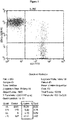
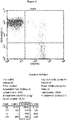
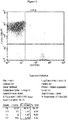
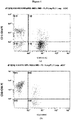
- Figures 1 to 3 show the analyze result of surface antigens of lymphocytes cultured in the same manner as in Examples 2 to 4 using flowcytometry.
- Figures 1 to 3 are graphs showing the phenotype change of lymphocytes before and after the culture obtained in examples 2 to 4.
- H1 Region represents the distribution of NK cells
- H4 Region represents the distribution of T cell
- H2 Region represents the distribution of NKT cells
- H3 region represents the distribution of other immune cells.
- the number of cells proliferated by the culture method of the present invention using the blood of patient A was 3.14x10 9
- the ratio of NK cells was 81.67%
- the ratio of NKT cells was 5.82%
- the ratio of gdT cells was 5.8%, indicating that about 94% or more of the proliferated cells are active killer cells capable of exhibiting the therapeutic effect.
- the number of cells proliferated by the culture method of the present invention using the blood of patient B was 4.33x10 9
- the ratio of NK cells was 86.85%
- the ratio of NKT cells was 3.45%
- the ratio of gdT cells was 0.82%, indicating that about 92% or more of the proliferated cells are active killer cells capable of exhibiting the therapeutic effect.
- the number of cells proliferated by the culture method of the present invention using the blood of patient C was 3.53x10 9
- the NK cell ratio was 97.81%
- the NKT cell ratio was 0.37%
- the ratio of gdT cell ratio was 0.06%, indicating that about 98% or more of the proliferated cells are active killer cells capable of exhibiting the therapeutic effect.
- Lymphocytes cultured in the same manner as in Examples 2 to 4 were used as effector cells and blood cancer cell lines (K562) were used as target cells.
- the ratio of activated lymphocytes to cancer cells was 10: 1, and a potency assay was performed to measure the killing ability of activated lymphocytes against blood cancer cell lines.
- the method for testing the activity of K562 cell line is evaluating the extent of killing cancer cells by reacting two cells at 10: 1 ratio of effector cell to target cell for 4 hours.
- the titer of lymphocytes cultured in the present invention was too high killing almost all cancer cells, and therefore, only reacted for two hours in order to increase the discrimination and shorten the time of analysis.
- Table 1 Classification Example 2
- Example 3 Example 4 Potency(%) 68.2% 65.9% 71.4%
- the high potency of the lymphocytes cultured according to the method of the present invention even when the reaction time is short is due to the high ratio of NK cells in lymphocytes.
Landscapes
- Health & Medical Sciences (AREA)
- Immunology (AREA)
- Chemical & Material Sciences (AREA)
- Life Sciences & Earth Sciences (AREA)
- Organic Chemistry (AREA)
- Engineering & Computer Science (AREA)
- Genetics & Genomics (AREA)
- General Health & Medical Sciences (AREA)
- Biomedical Technology (AREA)
- Biochemistry (AREA)
- Medicinal Chemistry (AREA)
- Biotechnology (AREA)
- Zoology (AREA)
- Cell Biology (AREA)
- Biophysics (AREA)
- Proteomics, Peptides & Aminoacids (AREA)
- Molecular Biology (AREA)
- Bioinformatics & Cheminformatics (AREA)
- Wood Science & Technology (AREA)
- Hematology (AREA)
- General Engineering & Computer Science (AREA)
- Microbiology (AREA)
- Developmental Biology & Embryology (AREA)
- Animal Behavior & Ethology (AREA)
- Public Health (AREA)
- Veterinary Medicine (AREA)
- Epidemiology (AREA)
- Pharmacology & Pharmacy (AREA)
- Virology (AREA)
- Micro-Organisms Or Cultivation Processes Thereof (AREA)
Applications Claiming Priority (2)
| Application Number | Priority Date | Filing Date | Title |
|---|---|---|---|
| KR1020160017073A KR101683614B1 (ko) | 2016-02-15 | 2016-02-15 | Nk세포배양용 배지첨가키트 및 상기 키트를 이용한 nk세포배양방법 |
| PCT/KR2016/015392 WO2017142187A1 (ko) | 2016-02-15 | 2016-12-28 | Nk세포배양용 배지첨가키트 및 상기 키트를 이용한 nk세포배양방법 |
Publications (2)
| Publication Number | Publication Date |
|---|---|
| EP3444332A1 true EP3444332A1 (de) | 2019-02-20 |
| EP3444332A4 EP3444332A4 (de) | 2019-11-27 |
Family
ID=57573354
Family Applications (1)
| Application Number | Title | Priority Date | Filing Date |
|---|---|---|---|
| EP16890777.2A Withdrawn EP3444332A4 (de) | 2016-02-15 | 2016-12-28 | Medienadditionskit zur kultivierung von nk-zellen und nk-zellkulturverfahren mit dem kit |
Country Status (6)
| Country | Link |
|---|---|
| US (2) | US11613730B2 (de) |
| EP (1) | EP3444332A4 (de) |
| JP (1) | JP6869994B2 (de) |
| KR (1) | KR101683614B1 (de) |
| CN (1) | CN108699523B (de) |
| WO (1) | WO2017142187A1 (de) |
Cited By (1)
| Publication number | Priority date | Publication date | Assignee | Title |
|---|---|---|---|---|
| CN106967682A (zh) * | 2017-05-25 | 2017-07-21 | 北京焕生汇生物技术研究院 | 一种nk细胞体外扩增方法 |
Families Citing this family (17)
| Publication number | Priority date | Publication date | Assignee | Title |
|---|---|---|---|---|
| KR101683614B1 (ko) * | 2016-02-15 | 2016-12-07 | 신동혁 | Nk세포배양용 배지첨가키트 및 상기 키트를 이용한 nk세포배양방법 |
| CN109294985B (zh) | 2018-10-25 | 2022-02-18 | 江苏普瑞康生物医药科技有限公司 | 一种用于nk细胞体外扩增的培养基体系及nk细胞体外扩增的方法 |
| CN109486760A (zh) * | 2019-01-17 | 2019-03-19 | 药鼎(北京)国际细胞医学技术有限公司 | 胎盘血cik细胞改良的培养方法 |
| KR102234394B1 (ko) * | 2019-03-08 | 2021-03-31 | 신지섭 | 타가면역세포배양방법, 그 방법으로 얻어진 면역세포배양액 및 이를 포함하는 면역세포치료제 |
| KR102216710B1 (ko) * | 2019-03-27 | 2021-02-17 | 신지섭 | Nk세포배양배지용 첨가조성물, 상기 첨가조성물을 이용한 nk세포배양방법 및 상기 배양방법으로 얻어진 피부트러블개선용 화장료조성물 |
| KR102233660B1 (ko) | 2019-05-15 | 2021-03-30 | (주)포에버엔케이 | 효율적 자연살해세포 배양방법 및 이의 배지첨가 키트 |
| WO2020231200A1 (ko) * | 2019-05-15 | 2020-11-19 | 오정훈 | 효율적 자연살해세포 배양방법 및 이의 배지첨가 키트 |
| KR102087710B1 (ko) | 2019-05-22 | 2020-03-11 | 주식회사 아리바이오 | 회전형 세포배양 장치를 이용한 nk 세포 활성과 증식 향상의 배양 방법 및 이에 생산된 nk 배양액의 용도 |
| US11453862B2 (en) | 2019-07-08 | 2022-09-27 | Immunitybio, Inc. | Mononuclear cell derived NK cells |
| AU2019456283B2 (en) * | 2019-07-08 | 2023-06-08 | Immunitybio, Inc. | Mononuclear cell derived NK cells |
| KR102736008B1 (ko) * | 2020-09-15 | 2024-12-03 | 주식회사 티에스바이오 | 고순도 및 고효율의 자연살해세포 제조방법 및 이의 용도 |
| KR102236011B1 (ko) * | 2020-11-11 | 2021-04-05 | 한바이오 주식회사 | Nk 세포의 대량증식 배양방법 |
| KR102420141B1 (ko) * | 2021-03-17 | 2022-07-13 | 구스타 주식회사 | Nk세포 배양 배지 조성물을 이용한 여성 면역활성 및 안정성이 향상된 신바이오틱스 유산균 제조방법 |
| CN113151168B (zh) * | 2021-04-21 | 2024-03-15 | 苏州科贝生物技术有限公司 | 一种人nk细胞培养体系及制备方法 |
| KR102566680B1 (ko) * | 2022-09-28 | 2023-08-14 | (주)포에버엔케이 | 면역세포 및 자연살해세포 배양을 위한 신규한 이중배양 제조방법 및 이의 용도 |
| KR102504039B1 (ko) * | 2022-10-25 | 2023-03-02 | 오정훈 | 자연살해세포 증식에 효과적인 배양 방법 및 이의 용도 |
| CN118325833A (zh) * | 2023-01-10 | 2024-07-12 | 上海恩凯细胞技术有限公司 | 体外诱导扩增高纯度、高细胞毒活性nk细胞的方法 |
Family Cites Families (12)
| Publication number | Priority date | Publication date | Assignee | Title |
|---|---|---|---|---|
| KR20090127974A (ko) * | 2008-06-10 | 2009-12-15 | 주식회사 엔케이바이오 | 자기활성화 림프구 배양용 배지 조성물 |
| KR20090127973A (ko) * | 2008-06-10 | 2009-12-15 | 주식회사 엔케이바이오 | 자기활성화 림프구 배양 방법 |
| EP2535052B1 (de) * | 2010-02-08 | 2016-09-07 | Biotherapy Institute Of Japan | Verfahren zur herstellung eines durch nk-zellen erweiterten blutprodukts |
| KR101039843B1 (ko) * | 2010-08-30 | 2011-06-09 | 주식회사 엔케이바이오 | 자기활성화 림프구 배양용 배지 조성물 및 이를 이용한 자기활성화 림프구 배양방법 |
| WO2012099093A1 (ja) * | 2011-01-21 | 2012-07-26 | 株式会社日本バイオセラピー研究所 | Nk細胞強化型血液製剤の製造方法 |
| ES2652666T3 (es) * | 2011-12-22 | 2018-02-05 | Mogam Biotechnology Institute | Procedimiento de producción de linfocitos citolíticos naturales, linfocitos citolíticos naturales producidos de este modo y composición para el tratamiento de cánceres y enfermedades infecciosas que contienen los mismos |
| JP5856025B2 (ja) * | 2012-08-02 | 2016-02-09 | 阿部 博幸 | 単球またはnk細胞を入手する方法 |
| KR101415039B1 (ko) * | 2013-09-30 | 2014-08-13 | 지엔에스바이오(주) | 자기유래 활성화 림프구의 대량 증식을 위한 배지 조성물 및 배양방법 |
| CN106687584B (zh) * | 2014-09-04 | 2021-08-13 | 干细胞技术公司 | 用于t细胞或nk细胞活化和扩增的可溶性抗体复合物 |
| CN104928243B (zh) * | 2015-07-13 | 2019-01-18 | 山西大医院 | 实体瘤患者自体nk细胞分离、活化扩增及活性检测方法 |
| KR101683614B1 (ko) * | 2016-02-15 | 2016-12-07 | 신동혁 | Nk세포배양용 배지첨가키트 및 상기 키트를 이용한 nk세포배양방법 |
| KR101969045B1 (ko) * | 2016-11-22 | 2019-04-19 | 신동혁 | 면역세포배양용 배지첨가키트, 상기 키트를 이용한 면역세포배양방법, 상기 키트 또는 배양방법에 의해 얻어진 무혈청면역세포배양액 및 상기 배양액을 포함하는 화장료조성물 |
-
2016
- 2016-02-15 KR KR1020160017073A patent/KR101683614B1/ko active Active
- 2016-12-28 WO PCT/KR2016/015392 patent/WO2017142187A1/ko not_active Ceased
- 2016-12-28 CN CN201680081904.9A patent/CN108699523B/zh active Active
- 2016-12-28 JP JP2018541288A patent/JP6869994B2/ja active Active
- 2016-12-28 EP EP16890777.2A patent/EP3444332A4/de not_active Withdrawn
-
2018
- 2018-08-15 US US15/998,432 patent/US11613730B2/en active Active
-
2023
- 2023-02-21 US US18/112,095 patent/US20230203444A1/en not_active Abandoned
Cited By (1)
| Publication number | Priority date | Publication date | Assignee | Title |
|---|---|---|---|---|
| CN106967682A (zh) * | 2017-05-25 | 2017-07-21 | 北京焕生汇生物技术研究院 | 一种nk细胞体外扩增方法 |
Also Published As
| Publication number | Publication date |
|---|---|
| JP6869994B2 (ja) | 2021-05-12 |
| JP2019504632A (ja) | 2019-02-21 |
| US20230203444A1 (en) | 2023-06-29 |
| CN108699523B (zh) | 2022-04-19 |
| EP3444332A4 (de) | 2019-11-27 |
| WO2017142187A1 (ko) | 2017-08-24 |
| KR101683614B1 (ko) | 2016-12-07 |
| US11613730B2 (en) | 2023-03-28 |
| US20180355317A1 (en) | 2018-12-13 |
| CN108699523A (zh) | 2018-10-23 |
Similar Documents
| Publication | Publication Date | Title |
|---|---|---|
| US20230203444A1 (en) | Method of culturing nk cells and kits containing medium additions | |
| KR101039843B1 (ko) | 자기활성화 림프구 배양용 배지 조성물 및 이를 이용한 자기활성화 림프구 배양방법 | |
| US20190276803A1 (en) | Method of culturing immune cells, kit for thereof, immune cell cultured medium obtained by same method, cosmetic composition and pharmaceutical composition comprising thereof | |
| KR101644984B1 (ko) | 자연살해세포의 제조방법, 이러한 방법에 의해 제조된 자연살해세포 및 이를 포함하는 종양 및 감염성 질환 치료용 조성물 | |
| US11566227B2 (en) | Kit containing medium for culturing natural killer cells and method of effectively culturing natural killer cells using the same | |
| KR102236011B1 (ko) | Nk 세포의 대량증식 배양방법 | |
| KR20090127973A (ko) | 자기활성화 림프구 배양 방법 | |
| KR20090127974A (ko) | 자기활성화 림프구 배양용 배지 조성물 | |
| US20230002731A1 (en) | Method of producing natural killer cells and compositions thereof | |
| KR101729348B1 (ko) | 메트포민을 유효성분으로 포함하는 면역질환의 예방 또는 치료용 조성물 | |
| KR20170000798A (ko) | 자연살해세포의 증식 방법 및 자연살해세포 증식용 조성물 | |
| KR101587687B1 (ko) | Sr11302 화합물을 유효성분으로 포함하는 면역질환의 예방 또는 치료용 조성물 | |
| KR102234394B1 (ko) | 타가면역세포배양방법, 그 방법으로 얻어진 면역세포배양액 및 이를 포함하는 면역세포치료제 | |
| KR102765799B1 (ko) | Cd56+ 자연살해세포를 포함하는 항암용 조성물 | |
| KR102504039B1 (ko) | 자연살해세포 증식에 효과적인 배양 방법 및 이의 용도 | |
| KR20210002205A (ko) | 면역세포 배양액 함유 조성물의 제조방법 및 기능성 화장품 조성물 | |
| CN111655272A (zh) | 活化肿瘤浸润淋巴细胞(TILs)的方法 | |
| KR101839413B1 (ko) | 말초혈액단핵구 유래 항암 활성화 림프구 배양용 배지 조성물 및 이를 이용한 항암 활성화 림프구 배양방법 | |
| KR20220031462A (ko) | 타가면역세포배양방법, 그 방법으로 얻어진 면역세포배양액 및 이를 포함하는 면역세포치료제 | |
| KR102566680B1 (ko) | 면역세포 및 자연살해세포 배양을 위한 신규한 이중배양 제조방법 및 이의 용도 | |
| KR100954315B1 (ko) | 종양성장 억제능을 갖는 광역동성 치료 매개 자가 유래수지상 세포 | |
| US20080152626A1 (en) | Method for Activating Cd8 T Cells | |
| CN116472344A (zh) | 免疫细胞增殖激活试剂盒以及利用该增殖激活试剂盒的免疫细胞培养方法 | |
| KR20220160987A (ko) | Nk 세포의 대량 증식 방법 |
Legal Events
| Date | Code | Title | Description |
|---|---|---|---|
| STAA | Information on the status of an ep patent application or granted ep patent |
Free format text: STATUS: THE INTERNATIONAL PUBLICATION HAS BEEN MADE |
|
| PUAI | Public reference made under article 153(3) epc to a published international application that has entered the european phase |
Free format text: ORIGINAL CODE: 0009012 |
|
| STAA | Information on the status of an ep patent application or granted ep patent |
Free format text: STATUS: REQUEST FOR EXAMINATION WAS MADE |
|
| 17P | Request for examination filed |
Effective date: 20180912 |
|
| AK | Designated contracting states |
Kind code of ref document: A1 Designated state(s): AL AT BE BG CH CY CZ DE DK EE ES FI FR GB GR HR HU IE IS IT LI LT LU LV MC MK MT NL NO PL PT RO RS SE SI SK SM TR |
|
| AX | Request for extension of the european patent |
Extension state: BA ME |
|
| DAV | Request for validation of the european patent (deleted) | ||
| DAX | Request for extension of the european patent (deleted) | ||
| A4 | Supplementary search report drawn up and despatched |
Effective date: 20191025 |
|
| RIC1 | Information provided on ipc code assigned before grant |
Ipc: C07K 16/28 20060101ALI20191021BHEP Ipc: A61K 35/17 20150101ALI20191021BHEP Ipc: C12N 5/0783 20100101AFI20191021BHEP |
|
| STAA | Information on the status of an ep patent application or granted ep patent |
Free format text: STATUS: EXAMINATION IS IN PROGRESS |
|
| 17Q | First examination report despatched |
Effective date: 20210602 |
|
| STAA | Information on the status of an ep patent application or granted ep patent |
Free format text: STATUS: THE APPLICATION IS DEEMED TO BE WITHDRAWN |
|
| 18D | Application deemed to be withdrawn |
Effective date: 20250701 |