EP3444340A1 - 7beta-hydroxystéroïdes déshydrogénases mutants et procédé de fabrication d'acide ursodésoxycholique - Google Patents
7beta-hydroxystéroïdes déshydrogénases mutants et procédé de fabrication d'acide ursodésoxycholique Download PDFInfo
- Publication number
- EP3444340A1 EP3444340A1 EP18196616.9A EP18196616A EP3444340A1 EP 3444340 A1 EP3444340 A1 EP 3444340A1 EP 18196616 A EP18196616 A EP 18196616A EP 3444340 A1 EP3444340 A1 EP 3444340A1
- Authority
- EP
- European Patent Office
- Prior art keywords
- hsdh
- nadh
- nadph
- dehydrogenases
- oder
- Prior art date
- Legal status (The legal status is an assumption and is not a legal conclusion. Google has not performed a legal analysis and makes no representation as to the accuracy of the status listed.)
- Granted
Links
- 0 CC(CCC(O*)=O)[C@@](CC[C@@]1[C@]([C@](C2)C(C)(CC[C@](C3)O)[C@]3C3)[C@]3O)[C@@]1(C)C2=O Chemical compound CC(CCC(O*)=O)[C@@](CC[C@@]1[C@]([C@](C2)C(C)(CC[C@](C3)O)[C@]3C3)[C@]3O)[C@@]1(C)C2=O 0.000 description 3
Images





Classifications
-
- C—CHEMISTRY; METALLURGY
- C12—BIOCHEMISTRY; BEER; SPIRITS; WINE; VINEGAR; MICROBIOLOGY; ENZYMOLOGY; MUTATION OR GENETIC ENGINEERING
- C12P—FERMENTATION OR ENZYME-USING PROCESSES TO SYNTHESISE A DESIRED CHEMICAL COMPOUND OR COMPOSITION OR TO SEPARATE OPTICAL ISOMERS FROM A RACEMIC MIXTURE
- C12P33/00—Preparation of steroids
- C12P33/02—Dehydrogenating; Dehydroxylating
-
- C—CHEMISTRY; METALLURGY
- C12—BIOCHEMISTRY; BEER; SPIRITS; WINE; VINEGAR; MICROBIOLOGY; ENZYMOLOGY; MUTATION OR GENETIC ENGINEERING
- C12N—MICROORGANISMS OR ENZYMES; COMPOSITIONS THEREOF; PROPAGATING, PRESERVING, OR MAINTAINING MICROORGANISMS; MUTATION OR GENETIC ENGINEERING; CULTURE MEDIA
- C12N9/00—Enzymes; Proenzymes; Compositions thereof; Processes for preparing, activating, inhibiting, separating or purifying enzymes
- C12N9/0004—Oxidoreductases (1.)
- C12N9/0006—Oxidoreductases (1.) acting on CH-OH groups as donors (1.1)
-
- C—CHEMISTRY; METALLURGY
- C12—BIOCHEMISTRY; BEER; SPIRITS; WINE; VINEGAR; MICROBIOLOGY; ENZYMOLOGY; MUTATION OR GENETIC ENGINEERING
- C12Y—ENZYMES
- C12Y101/00—Oxidoreductases acting on the CH-OH group of donors (1.1)
- C12Y101/01—Oxidoreductases acting on the CH-OH group of donors (1.1) with NAD+ or NADP+ as acceptor (1.1.1)
- C12Y101/01201—7-Beta-hydroxysteroid dehydrogenase (NADP+) (1.1.1.201)
Definitions
- the invention relates to novel 7 ⁇ -hydroxysteroid dehydrogenase mutants, the sequences coding for these mutant enzymes, processes for the preparation of the enzyme mutants and their use in enzymatic reactions of cholic acid compounds, and in particular in the preparation of ursodeoxycholic acid (UDCS);
- the invention also provides novel methods for the synthesis of UDCS using the enzyme mutants; and the production of UDCS using recombinant, multiply modified microorganisms.
- Bile acids are biomolecules required for the digestion and absorption of fats, fatty acids and hydrophobic vitamins.
- a bile acid which occurs in humans only in small proportions, is ursodeoxycholic acid (UDCA). She has now gained great therapeutic importance in the dissolution of cholesterol-containing gallstones. Industrially, this compound is produced by chemical or enzymatic steps on a ton scale.
- An important precursor for the synthesis of UDCA is 12-ketodesodeoxycholic acid, which can be converted into UDCA by a Wolff-Kishner reduction.
- a literature-described route for the synthesis of 12-ketoursodeoxycholic acid starts from cholic acid (3 ⁇ , 7 ⁇ , 12 ⁇ -trihydroxy-5 ⁇ -cholanic acid) catalyzed by two oxidative steps catalyzed by 7 ⁇ - and 12 ⁇ -HSDHs and a reductive step a 7 ⁇ -HSDH can be prepared ( Bovara R et al. (1996) A new enzymatic route to the synthesis of 12-ketoursodeoxycholic acid. Biotechnol. Lett. 18: 305-308 ; Monti D et al.
- DHCA dehydrocholic acid
- HSDHs 3 ⁇ - and 7 ⁇ -HSDHs
- the enzyme from C. aerofaciens has proven to be well suited. Meanwhile, the gene sequence of this enzyme from C. aerofaciens is known, so that on the one hand the enzyme can be made recombinantly available after cloning, on the other hand it is possible to use methods of protein engineering mutants of this enzyme to produce and thus find more advantageous enzyme variants.
- ursodeoxycholic acid ursodeoxycholic acid
- CDCS diastereomer chenodeoxycholic acid
- the 12 ⁇ -HSDH oxidizes CS selectively to 12-keto-CDCS.
- the two contactor steps required by the classical chemical method are eliminated.
- the CS is first extracted from 7 ⁇ -HSDH from Bacteroides fragilis ATCC 25285 ( Zhu, D., et al., Enzymatic enantioselective reduction of -ketoesters by a thermostable 7-hydroxysteroid dehydrogenase from Bacteroides fragilis. Tetrahedron, 2006. 62 (18): p. 4535-4539 ) and 12 ⁇ -HSDH are oxidized to 7,12-diketo LCS. These two enzymes each depend on NADH.
- lactate dehydrogenase for the regeneration of NAD +
- glucose dehydrogenase GlcDH or GDH, for the regeneration of NADPH
- DHCS The oxidation of CS takes place in a simple manner in a classical chemical way.
- the DHCS is reduced by enzyme pair 7 ⁇ -HSDH and 3 ⁇ -HSDH one by one or in one pot to 12-keto-UDCS.
- UDCS can thus be synthesized from CS in just three steps. While 7 ⁇ -HSDH is dependent on the cofactor NADPH, 3 ⁇ -HSDH requires the cofactor NADH.
- the availability of enzyme pairs dependent on the same cofactor or extended dependence e.g., of the cofactors NADH and NADPH) would be advantageous because it could facilitate cofactor regeneration.
- the WO 2012/080504 describes novel mutants of C. aerofaciens 7 ⁇ -HSDH in the sequence region of amino acid residues 36 to 42 of the C. aerofaciens sequence, as well as biocatalytic processes for the production of UDCS, and in particular novel whole cell processes.
- the WO 2011/147957 describes novel knock-out strains, which are particularly suitable for the production of UDCS, since the undesired 7alpha -HSDH enzyme activity could be targeted switched off.
- the object of the invention is to provide further improved 7 ⁇ -HSDHs.
- enzyme mutants should be provided which can be used even more advantageously for the enzymatic or microbial production of UDCS via the stereospecific reduction of DHCS in the 7-position to 3,12-diketo-7 ⁇ -CS, and in particular an improved activity for substrate and / or cofactor, and / or a lower substrate inhibition and / or altered cofactor use (increased, altered specificity or extended dependency).
- the improvement in activity is particularly evident in the increase in the specific activity, ie the activity value related to the amount of protein, in the mutants 7 ⁇ -HSDH-R64E as well as 7 ⁇ -HSDH-R64D and 7 ⁇ -HSDH-R64T.
- the notation 7 ⁇ -HSDH-R64E means that the arginine (R) in position 64 of the protein sequence was replaced by glutamic acid (E) in the 7 ⁇ -HSDH considered.
- E glutamic acid
- 7 ⁇ -HSDH-R64D where arginine at position 64 has been substituted for aspartic acid (D)
- the wild-type enzyme is the 7 ⁇ -HSDH, which can be obtained from C. aerofaciens .
- the above object has been achieved by providing a biocatalytic (microbial or enzymatic) process comprising the enzymatic conversion of DHCS via two by the 7 ⁇ -HSDH mutants or 3 ⁇ -HSDH catalysed herein reductive substeps that are simultaneously or temporally displaced in any sequence to 12-keto-UDCS and cofactor regeneration by using dehydrogenases that regenerate the spent cofactor from both reductive substeps.
- a biocatalytic (microbial or enzymatic) process comprising the enzymatic conversion of DHCS via two by the 7 ⁇ -HSDH mutants or 3 ⁇ -HSDH catalysed herein reductive substeps that are simultaneously or temporally displaced in any sequence to 12-keto-UDCS and cofactor regeneration by using dehydrogenases that regenerate the spent cofactor from both reductive substeps.
- a recombinant microorganism which is capable of simultaneously expressing a 7 ⁇ -HSDH mutant according to the invention, a GDH described herein and optionally a 3 ⁇ -HSDH described herein.
- Recombinant microorganism according to one of the embodiments 29 to 33 which carries the coding sequences for 7 ⁇ -HSDH mutant, GDH or mutants thereof and 3 ⁇ -HSDH on one or more (different) expression constructs.
- the invention thus relates to recombinant microorganisms which are modified (eg transformed) with a single-plasmid system comprising the coding sequences for 7 ⁇ -HSDH mutant, GDH or mutants thereof and 3 ⁇ -HSDH or mutants thereof in one or more copies, such as eg in 2, 3, 4, 5, or 6 to 10 copies.
- the invention thus also relates to recombinant microorganisms which are modified with a single-plasmid system (such as transformed) containing the coding sequences for 7 ⁇ -HSDH or mutants thereof, GDH or mutants thereof and 3 ⁇ -HSDH or mutants thereof in one or more multiple copies, such as in 2, 3, 4, 5 or 6 to 10 copies.
- a single-plasmid system such as transformed
- the enzymes (7 ⁇ -HSDH, GDH and 3 ⁇ -HSDH or their mutants) can also be present on 2 or 3 separate, mutually compatible plasmids in one or more copies.
- Suitable base vectors for the production of single-plasmid systems and multicopy plasmids are known to the person skilled in the art. As examples may be mentioned for Einplasmidsystem, e.g.
- pET21a and for multicopy plasmids e.g. the Duet vectors marketed by Novagen, such as pACYCDuet-1, pETDuet-1, pCDFDuet-1, pRSFDuet-1 and pCOLADuet-1.
- pACYCDuet-1 pETDuet-1
- pCDFDuet-1 pRSFDuet-1
- pCOLADuet-1 pCOLADuet-1
- Such vectors, their compatibility with other vectors and microbial host strains are e.g. the "User Protocol TB340 Rev. E0305 company Novagen refer.
- the optimum combination of enzymes for the generation of plasmid systems can be made by those skilled in the art without undue burden, taking into account the teaching of the present invention.
- the person skilled in the art may select the enzyme most suitable for cofactor regeneration, selected from the abovementioned dehydrogenases, in particular GDH and the respective mutants thereof.
- plasmids Furthermore, it is possible to distribute the enzymes chosen for the reaction to two or more plasmids and to produce two or more different recombinant microorganisms with the plasmids thus prepared, which are then used together for the biocatalytic reaction according to the invention.
- the particular enzyme combination used for the preparation of the plasmid can be carried out in particular under the specification of a comparable cofactor use.
- a first microorganism can be modified with a plasmid carrying the coding sequence for a 7 ⁇ -HSDH mutant and a GDH.
- a second microorganism may be modified with a plasmid containing the coding sequence for a 3 ⁇ -HSDH and carries the coding sequence for a GDH. Both enzyme pairs can be chosen so that they can regenerate the same cofactor pairs. Both microorganisms can then be used simultaneously for the biocatalytic reaction according to the invention.
- the present invention is not limited to the specific embodiments described herein.
- the person skilled in the art will be enabled by the teachings of the present invention to provide further embodiments of the invention without undue burden.
- it can generate targeted additional enzyme mutants and screen and optimize them for the desired property profile (improved cofactor dependency and / or stability, reduced substrate inhibition); or isolate other suitable wild-type enzymes (7 ⁇ - and 3 ⁇ -HSDHs, FDHs, GDHs ADHs, etc.) and use according to the invention.
- HSDHs used in particular 7 ⁇ -HSDH and 3 ⁇ -HSDH or mutants thereof, it can select suitable dehydrogenases useful for cofactor regeneration (GDH, FHD, ADH etc.) and mutants thereof, and distribute the selected enzymes to one or more expression constructs or vectors and, if necessary, generate one or more recombinant microorganisms which then allow for an optimized whole cell based production process.
- suitable dehydrogenases useful for cofactor regeneration GDH, FHD, ADH etc.
- 7 ⁇ -HSDH shall mean one Dehydrogenase enzyme, which is at least the stereospecific and / or regiospecific reduction of DHCS or 7,12-diketo-3 ⁇ -CS (7,12-diketo-LCS) to 3,12-diketo-7 ⁇ -CS or 12-keto-UDCS especially with stoichiometric consumption of NADPH, and optionally catalyzes the corresponding reverse reaction.
- the enzyme may be a native or recombinantly produced enzyme.
- the enzyme may in principle be in admixture with cellular, such as protein impurities, but preferably in pure form.
- Suitable detection methods are described, for example, in the following experimental section or known from the literature (eg characterization of NADP-dependent 7-beta-hydroxysteroid dehydrogenases from Peptostreptococcus productus and Eubacterium aerofaciens . S Hirano and N Masuda. Appl Environ Microbiol. 1982 ). Enzymes of this activity are classified under EC number 1.1.1.201.
- 3 ⁇ -HSDH refers to a dehydrogenase enzyme which has at least the stereospecific and / or regiospecific reduction of 3,12-diketo-7 ⁇ -CS or DHCS to 12-keto-UDCS or 7, 12-diketo-3 ⁇ -CS (7,12-diketo-LCS), especially with stoichiometric consumption of NADH and / or NADPH, and optionally catalyzes the corresponding inverse reaction.
- Suitable detection methods are described, for example, in the following experimental section or known from the literature. Suitable enzymes are available, for example, from Comanomonas testosteroni (eg ATCC11996).
- NADPH-dependent 3 ⁇ -HSDH is known, for example, from rodents and can also be used.
- 3 alphahydroxysteroid / dihydrodiol dehydrogenase JE Pawlowski, M. Huizinga and TM Penning, May 15, 1991 The Journal of Biological Chemistry, 266, 8820-8825 ).
- Enzymes of this activity are classified under EC number 1.1.1.50.
- GDH refers to a dehydrogenase enzyme which comprises at least the oxidation of ⁇ -D-glucose to D-glucono-1,5-lactone with stoichiometric consumption of NAD + and / or NADP + as well optionally catalyses the corresponding reverse reaction.
- Suitable enzymes are available, for example, from Bacillus subtili or Bacillus megaterium . Enzymes of this activity are classified under EC number 1.1.1.47.
- FDH refers to a dehydrogenase enzyme which comprises at least the oxidation of formic acid (or corresponding formate salts) to carbon dioxide with stoichiometric consumption of NAD + and / or NADP + , and optionally the corresponding reverse reaction catalyzed.
- Suitable detection methods are described, for example, in the following experimental section or known from the literature.
- Suitable enzymes are available, for example, from Candida boidinii, Pseudomonas sp or Mycobacterium vaccae . Enzymes of this activity are classified under EC number 1.2.1.2.
- a “pure form” or a “pure” or “substantially pure” enzyme is understood according to the invention to mean an enzyme having a purity of more than 80, preferably more than 90, in particular more than 95, and in particular more than 99% by weight. , based on the total protein content, determined by means of conventional protein detection methods, such as, for example, the biuret method or the protein detection according to Lowry et al RK Scopes, Protein Purification, Springer Verlag, New York, Heidelberg, Berlin (1982 )).
- a “redox equivalent” is understood to mean a low molecular weight organic compound which is useful as electron donor or electron acceptor, for example nicotinamide derivatives such as NAD + and NADH + or their reduced forms NADH or NADPH.
- Redox equivalent and “cofactor” are used synonymously in the context of the present invention.
- a “cofactor” in the context of the invention can also be described as a “redox-capable cofactor", ie as a cofactor, which may be in reduced and oxidized form.
- a "spent" cofactor is understood to mean that reduced or oxidized form of the cofactor which is converted into the corresponding oxidized or reduced form in the course of a given reduction or oxidation reaction of a substrate. By means of regeneration, the oxidized or reduced cofactor form formed in the reaction is converted back into the reduced or oxidized starting form so that it is available again for the reaction of the substrate.
- a "modified cofactor use” is understood to mean a qualitative or quantitative change in comparison to a reference, In particular, an altered cofactor utilization is to be observed by carrying out amino acid sequence mutations.This change is then detectable in comparison with the non-mutated starting enzyme.
- the activity with respect to a particular cofactor can be increased or decreased by a mutation, or completely inhibited.
- a modified cofactor use also includes changes such that instead of specificity for a single cofactor at least one other, from the first cofactor different, second cofactor is available (ie there is an extended use of cofactor) Conversely, but also an originally existing ability to use two different cofactors can be changed so that specificity only for one of these Cofactors increased or decreased for one of these cofactors or completely abolished.
- an enzyme that is dependent on the cofactor NAD may now be dependent on NAD (NADH) or the cofactor NADP (NADPH) due to a change in cofactor use, or may have the initial dependence on NAD (NADH) completely converted into a dependence on NADP (NADPH) and vice versa.
- NAD + / NADH dependence and "NADP + / NADPH dependence” are According to the invention, unless otherwise defined, to be interpreted broadly. These terms encompass both "specific" dependencies, ie exclusively dependence on NAD + / NADH or NADP + / NADPH, as well as the dependence of the enzymes used according to the invention on both cofactors, ie dependence on NAD + / NADH and NADP + / NADPH.
- NAD + / NADH-accepting or "NADP + / NADPH-accepting”.
- NAD + / NADH regenerating and "NADP + / NADPH regenerating” are according to the invention, unless otherwise defined, to be interpreted broadly. These terms include both "specific” ie exclusive ability to regenerate spent cofactor NAD + / NADH or NADP + / NADPH, as well as the ability to regenerate both cofactors, ie, NAD + / NADH and NADP + / NADPH.
- proteinogenic amino acids include (single-letter code): G, A, V, L, I, F, P, M, W, S, T, C, Y, N, Q, D, E, K, R and H.
- immobilization is meant according to the invention the covalent or non-covalent binding of a biocatalyst used in accordance with the invention, such as e.g. a 7 ⁇ -HSDH on a solid, i. substantially insoluble in the surrounding liquid medium, carrier material.
- a biocatalyst used in accordance with the invention such as e.g. a 7 ⁇ -HSDH on a solid, i. substantially insoluble in the surrounding liquid medium, carrier material.
- entire cells such as the recombinant microorganisms used according to the invention, can also be immobilized with the aid of such carriers.
- a “substrate inhibition reduced in comparison to the non-mutated enzyme” means that the substrate inhibition observed in the unmutated enzyme for a particular substrate is no longer observable, ie essentially no longer measurable, or only begins at a higher substrate concentration, ie the K i value is increased.
- a "cholic acid compound” is understood as meaning compounds having the basic carbon structure, in particular the steroid structure of cholic acid and the presence of keto and / or hydroxy or acyloxy groups in the ring position 7 and optionally the ring positions 3 and / or 12.
- a “cholic acid compound” or a “ursodeoxycholic acid compound” is also understood as meaning derivatives of the parent parent compound (such as cholic acid or ursodeoxycholic acid).
- Such derivatives include “salts” such as alkali metal salts such as lithium, sodium and potassium salts of the compounds; and ammonium salts, wherein the ammonium salt comprises the NH 4 + salt or those ammonium salts in which at least one hydrogen atom can be replaced by a C 1 -C 6 -alkyl radical.
- Typical alkyl radicals are in particular C 1 -C 4 -alkyl radicals, such as methyl, ethyl, n- or i-propyl, n-, sec- or tert-butyl, and n-pentyl and n-hexyl and the mono- or polysubstituted Analogs thereof
- Alkyl esters of compounds according to the invention are in particular lower alkyl esters, such as C 1 -C 6 alkyl esters.
- Non-limiting examples are methyl, ethyl, n- or i-propyl, n-, sec- or tert-butyl esters, or longer-chain esters, such as n-pentyl and n-hexyl esters and the on or multiply branched analogues thereof.
- Amides are, in particular, reaction products of acids according to the invention with ammonia or primary or secondary monoamines.
- Such amines are, for example, mono- or di-C 1 -C 6 -alkyl-monoamines, it being possible where appropriate for the alkyl radicals to be optionally further substituted, for example by carboxy, hydroxy, halogen (such as F, Cl, Br, J) , Nitro and sulfonate groups.
- Acyl groups are in particular nonaromatic groups having 2 to 4 carbon atoms, such as acetyl, propionyl and butyryl, and aromatic groups with optionally substituted mononuclear aromatic ring, suitable substituents being, for example, selected from hydroxy, halogen (such as F, Cl, Br , J), nitro and C 1 -C 6 alkyl groups, such as benzoyl or toluoyl.
- hydroxysteroid compounds used according to the invention such as e.g. Cholic acid, ursodeoxycholic acid, 12-keto-chenodeoxycholic acid, chenodeoxycholic acid and 7-keto-lithocholic acid can be used in stereoisomerically pure form or in admixture with other stereoisomers in the process of the invention or obtained therefrom.
- the compounds used or the compounds prepared are used or isolated in essentially stereoisomerically pure form.
- the present invention is not limited to the specifically disclosed proteins or enzymes with 7 ⁇ -HSDH, FDH, GDH or 3 ⁇ -HSDH activity or their mutants, but rather also extends to functional equivalents thereof.
- “Functional equivalents” or analogues of the enzymes specifically disclosed are, within the scope of the present invention, various polypeptides which also retain the desired biological activity, e.g. 7 ⁇ HSDH activity.
- enzymes which, in the assay used for 7 ⁇ -HSDH, FDH, GDH or 3 ⁇ -HSDH activity, are at least 1%, e.g. at least 10% or 20%, e.g. at least 50% or 75% or 90% higher or lower activity of a parent enzyme comprising an amino acid sequence as defined herein.
- Functional equivalents are also preferably stable between pH 4 to 11 and advantageously have a pH optimum in a range of pH 6 to 10, in particular 8.5 to 9.5, and a temperature optimum in the range of 15 ° C to 80 ° C. or 20 ° C to 70 ° C, such as about 45 to 60 ° C or about 50 to 55 ° C.
- 7 ⁇ -HSDH activity can be detected by several known tests. Without being limited to this, let a test be performed using a reference substrate, such as a reference substrate. CS or DHCS, under standardized conditions as defined in the experimental section.
- Tests to determine FDH, GDH or 3 ⁇ -HSDH activity are also known per se.
- “functional equivalents” are understood to mean, in particular, “mutants” which, in at least one sequence position of the abovementioned amino acid sequences, have a different amino acid than the one specifically mentioned but nevertheless possess one of the abovementioned biological activities.
- “Functional equivalents” thus include those represented by one or more, such as 1, 2, 3, 4, 5, 6, 7, 8, 9, 10, 11, 12, 13, 14 or 15, amino acid additions, substitutions , Deletions and / or inversions available mutants, said changes can occur in any sequence position, as long as they lead to a mutant with the property profile according to the invention.
- Precursors are natural or synthetic precursors of the polypeptides with or without the desired biological activity.
- salts means both salts of carboxyl groups and acid addition salts of amino groups of the protein molecules according to the invention.
- Salts of carboxyl groups can be prepared in a manner known per se and include inorganic salts such as sodium, calcium, ammonium, iron and zinc salts, as well as salts with organic bases such as amines such as triethanolamine, arginine, lysine, piperidine and the like.
- Acid addition salts such as, for example, salts with mineral acids, such as hydrochloric acid or sulfuric acid, and salts with organic acids, such as acetic acid and oxalic acid, are likewise provided by the invention.
- “Functional derivatives” of polypeptides of the invention may also be produced at functional amino acid side groups or at their N- or C-terminal end by known techniques.
- Such derivatives include, for example, aliphatic esters of carboxylic acid groups, amides of carboxylic acid groups, obtainable by reaction with ammonia or with a primary or secondary amine; N-acyl derivatives of free amino groups prepared by reaction with acyl groups; or O-acyl derivatives of free hydroxyl groups prepared by reaction with acyl groups.
- “functional equivalents” also include polypeptides that are accessible from other organisms, as well as naturally occurring variants. For example, it is possible to determine regions of homologous sequence regions by sequence comparison and to determine equivalent enzymes on the basis of the specific requirements of the invention.
- “Functional equivalents” also include fragments, preferably single domains or sequence motifs, of the polypeptides of the invention which are e.g. have the desired biological function.
- “Functional equivalents” are also fusion proteins which have one of the above-mentioned polypeptide sequences or functional equivalents derived therefrom and at least one further functionally distinct heterologous sequence in functional N- or C-terminal linkage (ie without substantial substantial functional impairment of the fusion protein moieties) ,
- Nonlimiting examples of such heterologous sequences are e.g. Signal peptides, histidine anchors, e.g. a hexahistidine anchor-containing peptide, e.g. "LEHHHHHH”, or enzymes.
- homologs to the specifically disclosed proteins have at least 60%, preferably at least 75%, in particular at least 85%, such as 90, 91, 92, 93, 94, 95, 96, 97.98 or 99% homology (or identity) to one of the specifically disclosed Amino acid sequences, calculated according to the algorithm of Pearson and Lipman, Proc. Natl. Acad, Sci. (USA) 85 (8), 1988, 2444-2448 ,
- a percent homology or identity of a homologous polypeptide of the invention means, in particular, percent identity of the amino acid residues relative to the total length of one of the amino acid sequences specifically described herein.
- the percent identity values can also be determined using BLAST alignments, blastp algorithm (protein-protein BLAST), or by applying the Clustal settings below.
- “functional equivalents” include proteins of the type indicated above in deglycosylated or glycosylated form as well as modified forms obtainable by altering the glycosylation pattern.
- Homologs of the proteins or polypeptides of the invention may be generated by mutagenesis, e.g. by point mutation, extension or shortening of the protein.
- Homologs of the proteins of the invention can be identified by screening combinatorial libraries of mutants such as truncation mutants.
- a variegated library of protein variants can be generated by combinatorial mutagenesis at the nucleic acid level, such as by enzymatic ligation of a mixture of synthetic oligonucleotides.
- methods that can be used to prepare libraries of potential homologs from a degenerate oligonucleotide sequence. The chemical synthesis of a degenerate gene sequence can be performed in a DNA synthesizer, and the synthetic gene can then be ligated into a suitable expression vector.
- degenerate gene set allows for the provision of all sequences in a mixture that encode the desired set of potential protein sequences.
- Methods for the synthesis of degenerate oligonucleotides are known in the art (eg Narang, SA (1983) Tetrahedron 39: 3 ; Itakura et al. (1984) Annu. Rev. Biochem. 53: 323 ; Itakura et al., (1984) Science 198: 1056 ; Ike et al. (1983) Nucleic Acids Res. 11: 477 ).
- Recursive ensemble mutagenesis (REM), a technique that increases the frequency of functional mutants in the banks, can be used in combination with screening tests to identify homologues ( Arkin and Yourvan (1992) PNAS 89: 7811-7815 ; Delgrave et al. (1993) Protein Engineering 6 (3): 327-331 ).
- the invention further encompasses the use of the wild type 7 ⁇ -HSDH from Collinsella aerofaciens ATCC 25986, as described in the WO2011 / 064404 the applicant is described, which is hereby incorporated by reference.
- This 7 ⁇ -HSDH obtainable from Collinsella aerofaciens DSM 3979 is characterized in particular by at least one of the following properties, such as 2, 3, 4, 5, 6 or 7 or all such properties: a) Molecular weight (SDS gel electrophoresis): about 28-32 kDa, especially about 29-31 kDa or about 30 kDa; b) Molecular weight (gel filtration, under non-denaturing conditions, such as in particular without SDS): about 53 to 60 kDa, in particular about 55 to 57 kDa, such as 56.1 kDa.
- SDS gel electrophoresis about 28-32 kDa, especially about 29-31 kDa or about 30 kDa
- this 7 ⁇ -HSDH exhibits the following properties or combinations of properties; a); b); a) and b); a) and / or b) and c); a) and / or b) and c) and d); a) and / or b) and c) and d) and e); a) and / or b) and c) and d) and e) and f).
- such a 7 ⁇ -HSDH has an amino acid sequence according to SEQ ID NO: 2 (Accession NO: ZP_01773061) or a sequence derived therefrom with an identity degree of at least 60%, such as e.g. at least 65, 70, 75, 80, 85, or 90, e.g.
- the invention also nucleic acid sequences encoding an enzyme with 7 ⁇ -HSDH, FDH, GDH and / or 3 ⁇ -HSDH activity and their mutants.
- the present invention also relates to nucleic acids having a certain degree of identity to the specific sequences described herein.
- Identity between two nucleic acids means the identity of the nucleotides over the respective entire nucleic acid length, in particular the identity which is determined by comparison with the aid of the Vector NTI Suite 7.1 software from Informax (USA) using the Clustal method (US Pat. Higgins DG, Sharp PM. Fast and sensitive multiple sequence alignments on a microcomputer. Comput Appl. Biosci.
- the identity may also be after Chenna, Ramu, Sugawara, Hideaki, Koike, Tadashi, Lopez, Rodrigo, Gibson, Toby J, Higgins, Desmond G, Thompson, Julie D. Multiple sequence alignment with the Clustal series of programs. (2003) Nucleic Acids Res 31 (13): 3497-500, according to Internet address: http://www.ebi.ac.uk/Tools/clustalw/index.html# and be determined with the following parameters: DNA gap open penalty 15.0 DNA gap extension penalty 6.66 DNA matrix Identity Protein gap open penalty 10.0 Protein gap extension penalty 0.2 Protein matrix Gonnet Protein / DNA ENDGAP -1 Protein / DNA GAPDIST 4
- nucleic acid sequences mentioned herein can be prepared in a manner known per se by chemical synthesis from the nucleotide units, for example by fragment condensation of individual overlapping, complementary nucleic acid units of the double helix.
- the chemical synthesis of oligonucleotides can, for example, in a known manner, by the phosphoamidite method ( Voet, Voet, 2nd Ed., Wiley Press New York, pp. 896-897 ) respectively.
- the invention also relates to nucleic acid sequences (single and double stranded DNA and RNA sequences, such as cDNA and mRNA) encoding one of the above polypeptides and their functional equivalents, e.g. accessible using artificial nucleotide analogs.
- the invention relates both to isolated nucleic acid molecules which code for polypeptides or proteins or biologically active portions thereof according to the invention, as well as nucleic acid fragments which are e.g. for use as hybridization probes or primers for the identification or amplification of coding nucleic acids of the invention.
- nucleic acid molecules of the invention may also contain untranslated sequences from the 3 'and / or 5' end of the coding gene region
- the invention further comprises the nucleic acid molecules complementary to the specifically described nucleotide sequences or a portion thereof.
- the nucleotide sequences of the invention enable the generation of probes and primers useful for the identification and / or cloning of homologous sequences in other cell types and organisms.
- probes or primers usually comprise a nucleotide sequence region which, under "stringent” conditions (see below), is at least about 12, preferably at least about 25, e.g. about 40, 50 or 75 consecutive nucleotides of a sense strand of a nucleic acid sequence of the invention or a corresponding antisense strand hybridizes.
- nucleic acid molecule is separated from other nucleic acid molecules present in the natural source of the nucleic acid and, moreover, may be substantially free of other cellular material or culture medium when produced by recombinant techniques, or free from chemical precursors or other chemicals if it is synthesized chemically.
- a nucleic acid molecule according to the invention can be isolated by means of standard molecular biological techniques and the sequence information provided according to the invention.
- cDNA can be isolated from a suitable cDNA library by using any of the specifically disclosed complete sequences, or a portion thereof, as a hybridization probe and standard hybridization techniques (such as described, for example, in US Pat Sambrook, J., Fritsch, EF and Maniatis, T. Molecular Cloning: A Laboratory Manual. 2nd ed., Cold Spring Harbor Laboratory, Cold Spring Harbor Laboratory Press, Cold Spring Harbor, NY, 1989 ) be used.
- nucleic acid molecule comprising one of the disclosed sequences or a portion thereof can be isolated by polymerase chain reaction, using the oligonucleotide primers prepared on the basis of this sequence.
- the thus amplified nucleic acid can be cloned into a suitable vector and characterized by DNA sequence analysis.
- the oligonucleotides according to the invention can furthermore be prepared by standard synthesis methods, for example using an automatic DNA synthesizer.
- Nucleic acid sequences according to the invention or derivatives thereof, homologs or parts of these sequences can be prepared, for example, by conventional hybridization methods or the PCR technique from other bacteria, e.g. isolate via genomic or cDNA libraries. These DNA sequences hybridize under standard conditions with the sequences according to the invention.
- hybridizing is meant the ability of a poly- or oligonucleotide to bind to a nearly complementary sequence under standard conditions, while under these conditions non-specific binding between non-complementary partners is avoided.
- the sequences may be 90-100% complementary.
- the property of complementary sequences to be able to specifically bind to one another for example, in the Northern or Southern Blot technique or in the primer binding in PCR or RT-PCR advantage.
- oligonucleotides For hybridization, it is advantageous to use short oligonucleotides of the conserved regions. However, it is also possible to use longer fragments of the nucleic acids according to the invention or the complete sequences for the hybridization. Depending on the nucleic acid used (oligonucleotide, longer fragment or complete sequence) or which nucleic acid type DNA or RNA is used for the hybridization, these standard conditions vary. For example, the melting temperatures for DNA: DNA hybrids are about 10 ° C lower than those of DNA: RNA hybrids of the same length.
- DNA hybrids are 0.1X SSC and temperatures between about 20 ° C to 45 ° C, preferably between about 30 ° C to 45 ° C.
- the hybridization conditions are advantageously 0.1 x SSC and temperatures between about 30 ° C to 55 ° C, preferably between about 45 ° C to 55 ° C. These indicated temperatures for the hybridization are exemplary calculated melting temperature values for a nucleic acid with a length of about 100 nucleotides and a G + C content of 50% in the absence of formamide.
- the experimental conditions for DNA hybridization are in relevant textbooks of genetics, such as Sambrook et al., Molecular Cloning, Cold Spring Harbor Laboratory, 1989 , described and can be, for example, by formulas known to those skilled in the art depending on the length of the nucleic acids, the type of hybrids or the G + C content.
- hybridization can be carried out in particular under stringent conditions.
- stringent conditions are for example Sambrook, J., Fritsch, EF, Maniatis, T., in: Molecular Cloning (A Laboratory Manual), 2nd Ed., Cold Spring Harbor Laboratory Press, 1989, pp. 9.31-9.57 or in Current Protocols in Molecular Biology, John Wiley & Sons, NY (1989), 6.3.1-6.3.6 described.
- stringent hybridization conditions are meant in particular: The incubation at 42 ° C overnight in a solution consisting of 50% formamide, 5 x SSC (750 mM NaCl, 75 mM trisodium citrate), 50 mM sodium phosphate ( pH7.6), 5x Denhardt's solution, 10% dextran sulfate and 20 g / ml denatured, salmon sperm spiked DNA, followed by a filter wash with 0.1x SSC at 65 ° C.
- the invention also relates to derivatives of the specifically disclosed or derivable nucleic acid sequences.
- nucleic acid sequences of the invention may be used e.g. of SEQ ID NO: 1, 7, or 9 (or of the nucleic acid sequences coding for the amino acid sequences 2 to 6, 8, 10 or 11) and differ therefrom by addition, substitution, insertion or deletion of single or multiple nucleotides, but continue to code for polypeptides with the desired property profile.
- nucleic acid sequences which comprise so-called silent mutations or are altered according to the codon usage of a specific source or host organism, in comparison with a specifically mentioned sequence, as well as naturally occurring variants, such as e.g. Splice variants or allelic variants, of which
- Articles are also provided by conservative nucleotide substitutions (i.e., the amino acid in question is replaced by an amino acid of like charge, size, polarity, and / or solubility).
- the invention also relates to the molecules derived by sequence polymorphisms from the specifically disclosed nucleic acids. These genetic polymorphisms can occur between individuals within a population due to natural variation exist. These natural variations usually cause a variance of 1 to 5% in the nucleotide sequence of a gene.
- Derivatives of the nucleic acid sequence according to the invention having the sequence SEQ ID NO: 1, 7, or 9 are, for example, allelic variants which have at least 60% homology on the derived amino acid level, preferably at least 80% homology, most preferably at least 90% homology over the entire sequence range (with respect to homology at the amino acid level, see the above remarks on the polypeptides referred to). About partial regions of the sequences, the homologies may be advantageous higher.
- derivatives also include homologs of the nucleic acid sequences according to the invention, in particular of SEQ ID NO: 1, 7 or 9 (or of the nucleic acid sequences coding for the amino acid sequences 2 to 6, 8, 10 or 11), for example fungal or bacterial homologs, truncated sequences, Single-stranded DNA or RNA of the coding and non-coding DNA sequence.
- homologs of the nucleic acid sequences according to the invention in particular of SEQ ID NO: 1, 7 or 9 (or of the nucleic acid sequences coding for the amino acid sequences 2 to 6, 8, 10 or 11), for example fungal or bacterial homologs, truncated sequences, Single-stranded DNA or RNA of the coding and non-coding DNA sequence.
- Homologues to the SEQ ID NO: 1, 7, or 9 (or of the nucleic acid sequences coding for the amino acid sequences 2 to 6, 8, 10 or 11) at the DNA level a homology of at least 40%, preferably of at least 60%, especially preferably of at least 70%, more preferably of at least 80%, over the entire SEQ ID NO: 1, 7 or 9 (or of the nucleic acid sequences coding for the amino acid sequences 2 to 6, 8, 10 or 11).
- the promoters which are upstream of the specified nucleotide sequences, can be modified by at least one nucleotide exchange, at least one insertions, inversions and / or deletions, without, however, impairing the functionality or effectiveness of the promoters.
- the promoters can be increased by changing their sequence in their effectiveness or completely replaced by more effective promoters of alien organisms.
- the person skilled in the art can introduce completely random or even more targeted mutations into genes or non-coding nucleic acid regions (which are important, for example, for the regulation of expression) and then generate gene banks.
- the molecular biological methods required for this purpose are known to the person skilled in the art and are described, for example, in US Pat Sambrook and Russell, Molecular Cloning. 3rd Edition, Cold Spring Harbor Laboratory Press 2001 ,
- directed evolution (described, inter alia, in Reetz MT and Jaeger KE (1999), Topics Curr Chem 200: 31 ; Zhao H, Moore JC, Volkov AA, Arnold FH (1999), Methods for optimizing industrial enzymes by directed evolution, In: Demain AL, Davies JE (ed.) Manual of industrial microbiology and biotechnology. American Society for Microbiology ), the skilled person can also produce functional mutants in a targeted manner and also on a large scale. Genebanks of the respective proteins are first generated in a first step, whereby, for example, the methods given above can be used. The libraries are appropriately expressed, for example, by bacteria or by phage display systems.
- the respective genes of host organisms expressing functional mutants with properties which largely correspond to the desired properties can be subjected to another round of mutation.
- the steps of mutation and selection or screening can be iteratively repeated until the functional mutants present have the desired properties to a sufficient extent respectively.
- a limited number of mutations such as 1 to 5 mutations, can be carried out step by step and evaluated and selected for their influence on the relevant enzyme property.
- the selected mutant can then be subjected in the same way to a further mutation step. This significantly reduces the number of single mutants to be studied.
- results according to the invention provide important information regarding the structure and sequence of the enzymes in question, which are required in order to selectively generate further enzymes with desired modified properties.
- so-called "hot spots” can be defined, i. Sequences that are potentially useful for modifying an enzyme property through the introduction of targeted mutations.
- the invention also relates to expression constructs comprising, under the genetic control of regulatory nucleic acid sequences, a nucleic acid sequence coding for at least one polypeptide according to the invention; and vectors comprising at least one of these expression constructs.
- an "expression unit” is understood as meaning a nucleic acid with expression activity which comprises a promoter as defined herein and, after functional linkage with a nucleic acid or a gene to be expressed, regulating the expression, ie the transcription and the translation, of this nucleic acid or gene ,
- a promoter as defined herein and, after functional linkage with a nucleic acid or a gene to be expressed, regulating the expression, ie the transcription and the translation, of this nucleic acid or gene .
- regulatory elements e.g. Enhancers
- an expression cassette or “expression construct” is understood according to the invention to mean an expression unit which is functionally linked to the nucleic acid to be expressed or to the gene to be expressed.
- an expression cassette comprises not only nucleic acid sequences that regulate transcription and translation, but also the nucleic acid sequences that are to be expressed as a protein as a result of transcription and translation.
- expression or “overexpression” in the context of the invention describe the production or increase of the intracellular activity of one or more enzymes in a microorganism which are encoded by the corresponding DNA.
- Such constructs according to the invention preferably comprise a promoter 5'-upstream of the respective coding sequence and a terminator sequence 3'-downstream and optionally further customary regulatory elements, in each case operatively linked to the coding sequence.
- a “promoter”, a “nucleic acid with promoter activity” or a “promoter sequence” is understood according to the invention to mean a nucleic acid which, in functional linkage with a nucleic acid to be transcribed, regulates the transcription of this nucleic acid.
- a “functional” or “operative” linkage in this context means, for example, the sequential arrangement of one of the nucleic acids with promoter activity and a nucleic acid sequence to be transcribed and, if appropriate, further regulatory elements, for example nucleic acid sequences which ensure the transcription of nucleic acids, and, for example a terminator such that each of the regulatory elements can fulfill its function in the transcription of the nucleic acid sequence.
- further regulatory elements for example nucleic acid sequences which ensure the transcription of nucleic acids, and, for example a terminator such that each of the regulatory elements can fulfill its function in the transcription of the nucleic acid sequence. This does not necessarily require a direct link in the chemical sense. Genetic control sequences, such as enhancer sequences, may also exert their function on the target sequence from more distant locations or even from other DNA molecules.
- nucleic acid sequence to be transcribed is positioned behind (i.e., at the 3 'end) of the promoter sequence such that both sequences are covalently linked together.
- the distance between the promoter sequence and the transgenic nucleic acid sequence to be expressed may be less than 200 base pairs, or less than 100 base pairs or less than 50 base pairs.
- regulatory elements include targeting sequences, enhancers, polyadenylation signals, selectable markers, amplification signals, origins of replication, and the like. Suitable regulatory sequences are described, for example in Goeddel, Gene Expression Technology: Methods in Enzymology 185, Academic Press, San Diego, CA (1990 ).
- Nucleic acid constructs according to the invention comprise, in particular, sequence SEQ ID NO: 1, 7 or 9 (or of the nucleic acid sequences coding for amino acid sequences 2 to 6, 8, 10 or 11) or derivatives and homologs thereof, as well as the nucleic acid sequences derivable therefrom, which are labeled with one or more nucleic acid sequences several regulation signals advantageously for control, eg Increased, the gene expression was operatively or functionally linked.
- the natural regulation of these sequences may still be present before the actual structural genes and may have been genetically altered so that natural regulation is switched off and the natural regulation Expression of the genes was increased.
- the nucleic acid construct can also be simpler, ie no additional regulatory signals have been inserted before the coding sequence and the natural promoter with its regulation has not been removed. Instead, the natural regulatory sequence is mutated so that regulation stops and gene expression is increased.
- a preferred nucleic acid construct advantageously also contains one or more of the already mentioned “enhancer” sequences, functionally linked to the promoter, which allow increased expression of the nucleic acid sequence. Additional advantageous sequences can also be inserted at the 3 'end of the DNA sequences, such as further regulatory elements or terminators.
- the nucleic acids of the invention may be contained in one or more copies in the construct.
- the construct may also contain further markers, such as antibiotic resistance or auxotrophic complementing genes, optionally for selection on the construct.
- promoters such as cos, tac, trp, tet, trp-tet, lpp, lac, lpp-lac, lacI q , T7, T5, T3, gal, , trc, ara, rhaP (rhaP BAD ) SP6, lambda P R - or contained in the lambda P L promoter, which are advantageously used in gram-negative bacteria application.
- Further advantageous regulatory sequences are contained, for example, in the gram-positive promoters amy and SPO2, in the yeast or fungal promoters ADC1, MFalpha, AC, P-60, CYC1, GAPDH, TEF, rp28, ADH. It is also possible to use artificial promoters for regulation.
- the nucleic acid construct, for expression in a host organism is advantageously inserted into a vector, such as a plasmid or a phage, which allows for optimal expression of the genes in the host.
- a vector such as a plasmid or a phage
- Vectors other than plasmids and phages are also all other vectors known to those skilled in the art, e.g. To understand viruses such as SV40, CMV, baculovirus and adenovirus, transposons, IS elements, phasmids, cosmids, and linear or circular DNA. These vectors can be autonomously replicated in the host organism or replicated chromosomally. These vectors represent a further embodiment of the invention.
- Suitable plasmids are described, for example, in E. coli pLG338, pACYC184, pBR322, pUC18, pUC19, pKC30, pRep4, pHS1, pKK223-3, pDHE19.2, pHS2, pPLc236, pMBL24, pLG200, pUR290, pIN-III 113 -B1, ⁇ gt11 or pBdCl, in Streptomyces pIJ101, pIJ364, pIJ702 or pIJ361, in Bacillus pUB110, pC194 or pBD214, in Corynebacterium pSA77 or pAJ667, in fungi pALS1, pIL2 or pBB116, in yeasts 2alphaM, pAG-1, YEp6, YEp13 or pEMBLYe23 or in Plants pLGV23, pGHlac +
- plasmids represent a small selection of the possible plasmids. Further plasmids are well known to the person skilled in the art and can be obtained, for example, from US Pat Book Cloning Vectors (Eds. Pouwels PH et al., Elsevier, Amsterdam-New York-Oxford, 1985, ISBN 0 444 904018 ).
- the vector containing the nucleic acid construct according to the invention or the nucleic acid according to the invention can also advantageously be introduced in the form of a linear DNA into the microorganisms and integrated into the genome of the host organism via heterologous or homologous recombination.
- This linear DNA can consist of a linearized vector such as a plasmid or only of the nucleic acid construct or of the nucleic acid according to the invention.
- An expression cassette according to the invention is produced by fusion of a suitable promoter with a suitable coding nucleotide sequence and a terminator or polyadenylation signal.
- a suitable promoter for this purpose, one uses common recombination and cloning techniques, such as in T. Maniatis, EF Fritsch and J. Sambrook, Molecular Cloning: A Laboratory Manual, Cold Spring Harbor Laboratory, Cold Spring Harbor, NY (1989 ) as in TJ Silhavy, ML Berman and LW Enquist, Experiments with Gene Fusion, Cold Spring Harbor Laboratory, Cold Spring Harbor, NY (1984 ) and in Ausubel, FM et al., Current Protocols in Molecular Biology, Greene Publishing Assoc. and Wiley Interscience (1987 ) are described.
- the recombinant nucleic acid construct or gene construct is advantageously inserted into a host-specific vector for expression in a suitable host organism, which enables optimal expression of the genes in the host.
- Vectors are well known to those skilled in the art and may be, for example, " Cloning Vectors "(Pouwels PH et al., Eds, Elsevier, Amsterdam-New York-Oxford, 1985 ).
- microorganism may be understood to mean the starting microorganism (wild-type) or a genetically modified, recombinant microorganism or both.
- recombinant microorganisms can be produced, which are transformed, for example, with at least one vector according to the invention and can be used to produce the polypeptides according to the invention.
- the above-described recombinant constructs according to the invention are introduced into a suitable host system and expressed.
- a suitable host system preferably Commonly known cloning and transfection methods known to those skilled in the art, such as co-precipitation, protoplast fusion, electroporation, retroviral transfection and the like, are used to express said nucleic acids in the particular expression system. Suitable systems are for example in Current Protocols in Molecular Biology, F.
- prokaryotic or eukaryotic organisms are suitable as recombinant host organisms for the nucleic acid or nucleic acid construct according to the invention.
- microorganisms such as bacteria, fungi or yeast are used as host organisms.
- gram-positive or gram-negative bacteria preferably bacteria of the families Enterobacteriaceae, Pseudomonadaceae, Rhizobiaceae, Streptomycetaceae or Nocardiaceae, more preferably bacteria of the genera Escherichia, Pseudomonas, Streptomyces, Nocardia, Burkholderia, Salmonella, Agrobacterium, Clostridium or Rhodococcus used.
- Very particularly preferred is the genus and species Escherichia coli.
- Further beneficial bacteria are also found in the group of alpha-proteobacteria, beta-proteobacteria or gamma-proteobacteria
- the host organism or host organisms according to the invention preferably contain at least one of the nucleic acid sequences, nucleic acid constructs or vectors described in this invention, which code for an enzyme with 7 ⁇ -HSDH activity as defined above.
- the organisms used in the method according to the invention are grown or grown, depending on the host organism, in a manner known to those skilled in the art.
- Microorganisms are usually in a liquid medium containing a carbon source usually in the form of sugars, a nitrogen source usually in the form of organic nitrogen sources such as yeast extract or salts such as ammonium sulfate, trace elements such as iron, manganese, magnesium salts and optionally vitamins, at temperatures between 0 ° C and 100 ° C, preferably between 10 ° C to 60 ° C attracted under oxygen fumigation.
- the pH of the nutrient fluid can be kept at a fixed value, that is regulated during the cultivation or not.
- the cultivation can take place batchwise, semi-batchwise or continuously. Nutrients can be presented at the beginning of the fermentation or fed in semi-continuously or continuously.
- hydroxy groups of CS are oxidized with chromic acid or chromates in acidic solution (eg H 2 SO 4 ) to carbonyl group in a conventional manner in a classical chemical way. This creates DHCS.
- DHCS is specifically reduced by 3 ⁇ -HSDH and 7 ⁇ -HSDH or mutants thereof to 12-keto-UDCS in the presence of NADPH and NADH, respectively.
- the cofactor NADPH or NADH can be regenerated by an ADH or FDH or GDH or mutants thereof from isopropanol or sodium formate or glucose.
- recombinant microorganisms which express the required enzyme activity (s) in the presence of the substrate to be reacted may be cultured anaerobically or aerobically in suitable liquid media.
- suitable cultivation conditions are known per se to the person skilled in the art. They include reactions in the pH range of for example 5 to 10 or 6 to 9, at temperatures in the range of 10 to 60 or 15 to 45 or 25 to 40 or 37 ° C.
- Suitable media include z, B, the LB and TB media described below.
- the reaction time may be z, B, batchwise or continuously or in other conventional process variants (as described above).
- the duration of the reaction can be, for example, in the range from minutes to several hours or days lying, and for example 1h to 48 h.
- the 12-carbonyl group of 12-keto-UDCS is removed by Wolff-Kishner reduction in a conventional manner, thereby forming UDCS from 12-keto-UDCS.
- the carbonyl group is first reacted with hydrazine to give the hydrazone.
- the hydrazone in the presence of a base eg KOH
- a base eg KOH
- the invention furthermore relates to processes for the recombinant production of polypeptides according to the invention or functional, biologically active fragments thereof, wherein a polypeptide-producing microorganism is cultivated, if appropriate, the expression of the polypeptides is induced and these are isolated from the culture.
- the polypeptides can thus also be produced on an industrial scale, if desired.
- microorganisms produced according to the invention can be cultured continuously or batchwise in the batch process (batch cultivation) or in the fed batch (feed process) or repeated fed batch process (repetitive feed process).
- batch cultivation or in the fed batch (feed process) or repeated fed batch process (repetitive feed process).
- Storhas Bioreactors and Peripheral Facilities (Vieweg Verlag, Braunschweig / Wiesbaden, 1994 ) to find.
- the culture medium to be used must suitably satisfy the requirements of the respective strains. Descriptions of culture media of various microorganisms are in the Handbook "Manual of Methods for General Bacteriology” of the American Society of Bacteriology (Washington DC, USA, 1981 ) contain.
- These media which can be used according to the invention usually comprise one or more carbon sources, nitrogen sources, inorganic salts, vitamins and / or trace elements.
- Preferred carbon sources are sugars, such as mono-, di- or polysaccharides.
- sugars such as mono-, di- or polysaccharides.
- very good carbon sources are glucose, fructose, mannose, galactose, ribose, sorbose, ribulose, lactose, maltose, sucrose, raffinose, starch or cellulose.
- Sugar can also be added to the media via complex compounds, such as molasses, or other by-products of sugar refining. It may also be advantageous to add mixtures of different carbon sources.
- Other possible sources of carbon are oils and fats such.
- Nitrogen sources are usually organic or inorganic nitrogen compounds or materials containing these compounds.
- Exemplary nitrogen sources include ammonia gas or ammonium salts such as ammonium sulfate, ammonium chloride, ammonium phosphate, ammonium carbonate or ammonium nitrate, nitrates, urea, amino acids or complex nitrogen sources such as corn steep liquor, soybean meal, soybean protein, yeast extract, meat extract and others.
- the nitrogen sources can be used singly or as a mixture.
- Inorganic salt compounds which may be included in the media include the chloride, phosphorus or sulfate salts of calcium, magnesium, sodium, cobalt, molybdenum, potassium, manganese, zinc, copper and iron.
- sulfur source inorganic sulfur-containing compounds such as sulfates, sulfites, dithionites, tetrathionates, thiosulfates, sulfides but also organic sulfur compounds, such as mercaptans and thiols can be used.
- Phosphoric acid potassium dihydrogen phosphate or dipotassium hydrogen phosphate or the corresponding sodium-containing salts can be used as the phosphorus source.
- Chelating agents can be added to the medium to keep the metal ions in solution.
- Particularly suitable chelating agents include dihydroxyphenols, such as catechol or protocatechuate, or organic acids, such as citric acid.
- the fermentation media used according to the invention usually also contain other growth factors, such as vitamins or growth promoters, which include, for example, biotin, riboflavin, thiamine, folic acid, nicotinic acid, panthothenate and pyridoxine.
- growth factors and salts are often derived from complex media components, such as yeast extract, molasses, corn steep liquor, and the like.
- suitable precursors can be added to the culture medium.
- the exact composition of the media compounds will depend heavily on the particular experiment and will be decided on a case by case basis. Information about the media optimization is available from the Textbook "Applied Microbiol. Physiology, A Practical Approach” (Editor PM Rhodes, PF Stanbury, IRL Press (1997) pp. 53-73, ISBN 019963577 3 ).
- Growth media may also be obtained from commercial suppliers such as Standard 1 (Merck) or BHI (Brain heart infusion, DIFCO) and the like.
- All media components are sterilized either by heat (20 min at 1.5 bar and 121 ° C) or by sterile filtration.
- the components can either be sterilized together or, if necessary, sterilized separately. All media components may be present at the beginning of the culture or added randomly or batchwise, as desired.
- the temperature of the culture is usually between 15 ° C and 45 ° C, preferably 25 ° C to 40 ° C and can be kept constant or changed during the experiment.
- the pH of the medium should be in the range of 5 to 8.5, preferably around 7.0.
- the pH for cultivation can be controlled during cultivation by addition of basic compounds such as sodium hydroxide, potassium hydroxide, ammonia or ammonia water or acidic compounds such as phosphoric acid or sulfuric acid.
- foam anti-foaming agents such as. As fatty acid polyglycol, are used.
- the medium can be selected selectively acting substances such. As antibiotics, are added.
- To be aerobic Maintain conditions are oxygen or oxygen-containing gas mixtures, such. B. ambient air, registered in the culture.
- the temperature of the culture is usually 20 ° C to 45 ° C and.
- the culture is continued until a maximum of the desired product has formed. This goal is usually reached within 10 hours to 160 hours.
- the fermentation broth is then further processed.
- the biomass can be wholly or partly by separation methods, such. As centrifugation, filtration, decantation or a combination of these methods are removed from the fermentation broth or completely left in it.
- the cells may be digested and the product recovered from the lysate by known protein isolation techniques.
- the cells may optionally be treated by high frequency ultrasound, high pressure, e.g. in a French pressure cell, by osmolysis, by the action of detergents, lytic enzymes or organic solvents, by homogenizers or by combining several of the listed methods.
- Purification of the polypeptides can be accomplished by known chromatographic techniques such as molecular sieve chromatography (gel filtration) such as Q-Sepharose chromatography, ion exchange chromatography and hydrophobic chromatography, as well as other conventional techniques such as ultrafiltration, crystallization, salting out, dialysis and native gel electrophoresis. Suitable methods are described, for example, in Cooper, F.G., Biochemische Harvey Methoden, Verlag Walter de Gruyter, Berlin, New York or in Scopes, R., Protein Purification, Springer Verlag, New York, Heidelberg, Berlin.
- vector systems or oligonucleotides for the isolation of the recombinant protein, which extend the cDNA by certain nucleotide sequences and thus code for altered polypeptides or fusion proteins, for example, serve a simpler purification.
- suitable modifications include, for example, so-called "tags" acting as anchors, such as the modification known as hexa-histidine anchors, or epitopes that can be recognized as antigens of antibodies (described, for example, in US Pat Harlow, E. and Lane, D., 1988, Antibodies: A Laboratory Manual. Cold Spring Harbor (NY) Press ).
- These anchors may serve to attach the proteins to a solid support, such as a polymer matrix, which may be filled, for example, in a chromatography column, or used on a microtiter plate or other support.
- these anchors can also be used to detect the proteins.
- conventional markers such as fluorescent dyes, enzyme markers which form a detectable reaction product upon reaction with a substrate, or radioactive markers, alone or in combination with the anchors for derivatization, may be used to recognize the proteins the proteins are used.
- the enzymes according to the invention can be used freely or immobilized in the methods described herein.
- An immobilized enzyme is an enzyme which is fixed to an inert carrier. Suitable carrier materials and the enzymes immobilized thereon are known from EP-A-1149849 . EP-A-1 069 183 and the DE-OS 100193773 and from the references cited therein. The disclosure of these documents is hereby incorporated by reference in its entirety.
- Suitable support materials include, for example, clays, clay minerals such as kaolinite, diatomaceous earth, perlite, silica, alumina, sodium carbonate, calcium carbonate, cellulose powders, anion exchange materials, synthetic polymers such as polystyrene, acrylic resins, phenolformaldehyde resins, polyurethanes and polyolefins such as polyethylene and polypropylene.
- the support materials are usually used to prepare the supported enzymes in a finely divided, particulate form, with porous forms being preferred.
- the particle size of the carrier material is usually not more than 5 mm, in particular not more than 2 mm (grading curve).
- Carrier materials are, for example, calcium alginate, and carrageenan.
- Enzymes as well as cells can also be cross-linked directly with glutaraldehyde (cross-linking to CLEAs).
- Corresponding and further immobilization methods are, for example, in J. Lalonde and A. Margolin "Immobilization of Enzyme”"in K. Drauz and H. Waldmann, Enzyme Catalysis in Organic Synthesis 2002, Vol.III, 991-1032, Wiley-VCH , Weinheim described.
- the cloning steps carried out in the context of the present invention e.g. Restriction cleavage, agarose gel electrophoresis, purification of DNA fragments, transfer of nucleic acids to nitrocellulose and nylon membranes, linkage of DNA fragments, transformation of microorganisms, growth of microorganisms, propagation of phages and sequence analysis of recombinant DNA as described in Sambrook et al. (1989) supra. be described described.
- the genomic DNA of Collinsella aerofaciens DSM 3979 was obtained from the German Collection of Microorganisms and Cell Cultures (DSMZ).
- DHCA, UDCS and 7-keto LCS are known starting compounds described in the literature. All other chemicals were purchased from Sigma-Aldrich and Fluka (Germany). All restriction endonucleases, T4 DNA ligase, Taq DNA polymerase, Phusion DNA polymerase and isopropyl- ⁇ -D-1-thiogalactopyranoside (IPTG) were purchased from Thermo Scientific (Germany).
- LB medium containing tryptone 10 g, yeast extract 5 g, NaCl 10 g per liter of medium Al medium (auto-induction medium) containing 24 g of yeast extract, 12 g of casein hydrolyzate, 5 g of glycerol, 50 g of glucose, 20 g of lactose in 100 mM KPi pH 7.0 per liter of medium.
- Al medium auto-induction medium containing 24 g of yeast extract, 12 g of casein hydrolyzate, 5 g of glycerol, 50 g of glucose, 20 g of lactose in 100 mM KPi pH 7.0 per liter of medium.
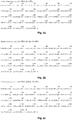
- FIG. 2 Listed are the amino acid sequences of the wild-type enzyme of 7 ⁇ -HSDH and of mutants, but all of which are each provided with a C-terminal hexa-histidine tag. In this way, all enzymes have been isolated and characterized
- the commercially available expression vector pET28a (+) was used, in which the respective 7 ⁇ -HSDH gene was cloned in via the cleavage sites of the restriction enzymes Nco I and Xho I in the usual way.
- the expression vector pET28a (+) makes it possible, directly in the cloning of the HSDH gene, to attach a gene sequence to the HSDH gene which codes for a sequence of 6 histidine molecules. This sequence (termed hexahistidine tag or His tag) then appears C-terminal on the HSDH protein after expression.
- the origin or wild-type HSDH gene is from the bacterium Collinsella aerofaciens ATCC 25986, the plasmid containing the respective 7 ⁇ -HSDH gene is designated pET28a (+) _ 7 ⁇ -HSDH.
- pET28a (+) _ 7 ⁇ -HSDH plasmid To transform the pET28a (+) _ 7 ⁇ -HSDH plasmid, 5 ⁇ l of ligation mixture with 100 ⁇ l of competent E. coli cells BL21 (DE3) ⁇ 7 ⁇ -HSDH and the transformation into Hanahan ( J. Mol. Biol. (1983), Vol. 166, pp. 557 ), wherein the same steps were performed with the plasmid containing the wild-type gene and with the plasmid containing mutated HSDH genes.
- the E. coli strain containing the expression construct (pET28a (+) _7 ⁇ -HSDH plasmid) in LB medium tryptone 10 g, yeast extract 5 g, NaCl 10 g per liter
- LB medium tryptone 10 g, yeast extract 5 g, NaCl 10 g per liter
- the cells were harvested by centrifugation (5,000 x g, 30 min, 4 ° C).
- the pellet was resuspended in digestion buffer (10 mM imidazole, 50 mM sodium phosphate, 300 mM NaCl, pH 8), with 4 ml of buffer added per 1 g of cells (wet weight).
- the cells were then disrupted under constant cooling by sonication for one minute (30 W power, 50% working interval and 1 min break) using a Sonopuls HD2070 ultrasound machine (Bandelin Co., Berlin, Germany).
- the digest was repeated three times.
- the cell suspension was centrifuged (18,000 xg, 30 min, 4 ° C), the supernatant being designated cell-free crude extract.
- the His tag allows a very simple purification of the HSDH protein, since this sequence of special chromatography material (NTA (Ni-nitrilotriacetate) -modified carrier material loaded with 2-valent nickel ions, eg "His Pur Ni-NTA” (Nimagen BV, Nijmegen, The Netherlands), using the cell-free crude extract on a dropping column containing this material, previously equilibrated with the digestion buffer (3 to 5 column volumes) by washing with 3 to 5 column volumes of wash buffer (20 mM imidazole, 50 mM sodium phosphate, 300 mM NaCl, pH 8).
- NTA Ni-nitrilotriacetate
- 2-valent nickel ions eg "His Pur Ni-NTA” (Nimagen BV, Nijmegen, The Netherlands)
- the His-tag 7 ⁇ -HSDH protein was eluted with imidazole-containing elution buffer (250 mM imidazole, 50 mM sodium phosphate, 300 mM NaCl, pH 8). The process was carried out at room temperature. By rebuffering, the imidazole containing was removed.
- imidazole-containing elution buffer 250 mM imidazole, 50 mM sodium phosphate, 300 mM NaCl, pH 8.
- the protein concentration was determined according to the method described by Bradford (100 ⁇ l sample mixed with 900 ⁇ l Bradford reagent, incubate for at least 15 min in the dark, then determined at 595 nm against a calibration line made with bovine serum albumin). For analysis by SDS-PAGE (SDS-polyacrylamide gel electrophoresis), the gel was stained with Coomassie Brilliant Blue.
- the activity of 7 ⁇ -HSDH and the mutants was determined by a photometric assay, with the decrease in absorbance being measured at 340 nm over a period of 30 seconds.
- the reaction solution contained in a total volume of 1 ml: 874 ⁇ l of 50 mM potassium phosphate (KPi) buffer, pH 8.0; 100 ⁇ l of 100 mM DHCA solution (DHCA dissolved in 50 mM KPi, pH 8); 10 ⁇ l of the enzyme solution (diluted in one part); 16 ⁇ l of a 12.5 mM NADPH solution (dissolved in distilled H 2 O).
- KPi potassium phosphate
- the activity is given below in units (U), where 1 U corresponds to the decrease of 1 ⁇ mol NADPH / min.
- mutagenesis primers listed below were used (see Table 2). The primers were selected based on the 7 ⁇ HSDH gene sequence to effect the desired amino acid exchange. The following primer pairs were used to generate the mutants: ⁇ b> Table 2: ⁇ / b> primers for site-directed mutagenesis of 7 ⁇ -HSDH at position 64 designation exchange primer SEQ ID NO 5 ' ⁇ 3' sequence R64E_for R64E forward 12 ACCAAGGTCGTGGAGGCCGACTTTAGC R64E_rev reverse 13 GCTAAAGTCGGCCTCCACGACCTTGGT R64D_for R64D forward 14 ACCAAGGTCGTGGACGCCGACTTTAGC R64D_rev reverse 15 GCTAAAGTCGGCGTCCACGACCTTGGT R64T_for R64T forward 16 ACCAAGGTCGTGACGGCCGACTTTAGC R64T_rev reverse 17 GCTAAAGTCGGCCGTCACGACCTTGGT R64W_
- a targeted replacement of an amino acid can be achieved using the "QuikChange®-PCR" method.
- the following PCR reaction (reaction see Table 3) was carried out: first a 2 min initial denaturation step at 95 ° C, followed by 20 cycles of denaturation (30 s at 95 ° C), primer hybridization (1 min at 60 ° C). 68 ° C) and elongation (13 min at 68 ° C) performed.
- the last step was a final elongation of 10 min at 68 ° C before the polymerase chain reaction was terminated by cooling to 4 ° C.
- the template used was a pET28a vector with the gene of 7 ⁇ -HSDH (wild-type).
- N6-adeninmethylATOR double-stranded plasmid DNA carrying the gene to be mutated.
- N6 adenine methylated plasmid DNA is obtained from a dam + E. coli strain such as E. coli DH5 ⁇ isolated.
- the polymerase chain reaction is carried out as described above.
- the primers are extended complementarily to the template, resulting in plasmids with the desired mutation, which have a strand break.
- the DNA yield only increases linearly because newly formed DNA molecules can not serve as templates for the PCR reaction.
- the PCR product was purified by means of a PCR purification kit (Analytik Jena AG, Jena, Germany) and the parent N6-adenine-methylated digested with the aid of the restriction enzyme dpn I.
- This enzyme has the peculiarity that it nonspecifically restricts N6 adenine methylated DNA, but not the newly formed, unmethylated DNA. Restriction was carried out by adding 1 ⁇ l dpn I to the PCR reaction mixture and incubating for 2 h or overnight at 37 ° C. For the transformation of 100 ⁇ l of chemically competent DH5 ⁇ cells, 7.5 ⁇ l of this mixture were used.
- mutagenesis primers listed in Table 6 were used for site-directed mutagenesis of 7 ⁇ -HSDH. The primers were selected based on the 7 ⁇ HSDH gene sequence to effect the desired amino acid exchange. The following primer pairs were used to generate the mutants: ⁇ b> Table 6 ⁇ / b>: primers for site-directed mutagenesis of 7 ⁇ -HSDH at position 39 designation exchange primer SEQ ID NO 5 ' -> 3' sequence G39S_for G39S forward 54 GTCGTCATGGTCAGCCGTCGCGAGGAG G39S_rev reverse 55 CTCCTCGCGACGGCTGACCATGACGAC G39V_for G39V forward 56 GTCGTCATGGTCGTCCGTCGCGAGGAG G39V_rev reverse 57 CTCCTCGCGACGGACGACCATGACGAC G39I_for G39I forward 58 GTCGTCATGGTCATCCGTCGCGAGGAG G39I_rev reverse 59 CTCCTCGCGACGGATGACCATGACGAC G39C_for
- the activity measurement (see Example 1) of the mutant containing serine at position 39 in place of glycine (7 ⁇ -HSDH [G39S]) gave a volumetric activity of 735 U / ml and a specific enzyme activity of 52.9 U / mg Protein, whereas the wild-type enzyme compared thereto had a volumetric activity of 96.8 U / ml and a specific activity of 8.7 U / mg.
- mutagenesis primers listed in Table 8 were used for site-directed mutagenesis of 7 ⁇ -HSDH. The following primer pairs were used to generate the mutants: ⁇ b> Table 8: ⁇ / b> primers for site-directed mutagenesis of 7 ⁇ -HSDH at position 17 designation exchange primer SEQ ID NO 5 ' -> 3' sequence T17F_for T17F forward 46 ATCCTGGGCGCGTTCGAGGGCGTCGGC T17F_rev reverse 47 GCCGACGCCCTCGAACGCGCCCAGGAT T171_for T17i forward 48 ATCCTGGGCGCGATCGAGGGCGTCGGC T17I_rev reverse 49 GCCGACGCCCTCGATCGCGCCCAGGAT T17A_for T17a forward 50 ATCCTGGGCGCGGCCGAGGGCGTCGGC T17A_rev reverse 51 GCCGACGCCCTCGGCCGCGCCCAGGAT T17S_for T17S forward 52 TCCTGGGCGCGAGCGAGGGCGTC T17S_rev reverse
- mutations can also be advantageously combined.
- a double mutant was created in which positions 39 and 64 were simultaneously changed.
- the best amino acid exchange in position 39 [G39S]
- was combined with the best exchange at position 64 [R64E]).
- the method for obtaining the double mutant and the activity test were based on the methods described under 2B and 2C.
- Tab. 10 summarizes the activity values for the double mutant compared to the values for the wild-type enzyme.
- Table 10 ⁇ / b> Activity levels of the 7 ⁇ -HSDH double mutant [G39S / R64E] compared to the wild-type enzyme.
- FIG. 5 shows such an SDS gel, which shows by application of the crude cell extract, that this mutant shows a very good overexpression; the thick band, which runs at about 30 kDa, proves that the intracellular soluble protein consists to a large extent only of the double mutant.
- the gel occupies the purity of the purified double mutant.
- the molecular weight of the mutant is about 29.9 k Da.
- the mutant [G39S / R64E] was purified (see point 3) and the kinetic parameters for the purified enzyme were determined.
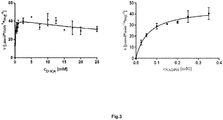
- FIG. 6 the graphs are shown and in Table 11 the kinetic constants are listed.
- (x no inhibition) enzyme substratum v max (U / mg) K M ( ⁇ M) K I (mM) 7 ⁇ -HSDH [G39S / R64E] DHCA 54.3 ⁇ 1.6 349.3 ⁇ 5.23 x NADPH 75.5 ⁇ 4.8 76.6 ⁇ 15.9 x
- nb not determined 7.beta.-type Vmax (DHCA) Substrate inhibition Ki Cofactor specificity WT NADPH R64E + 5 times better + reduced NADPH G39S + 6 times better + reduced NADPH T17F + 5 times better nb NADPH / low activity with NADH G39S / R64E + 7 times better ++ eliminated NADPH (Data compared to the wild type)
Landscapes
- Chemical & Material Sciences (AREA)
- Organic Chemistry (AREA)
- Life Sciences & Earth Sciences (AREA)
- Health & Medical Sciences (AREA)
- Engineering & Computer Science (AREA)
- Zoology (AREA)
- Wood Science & Technology (AREA)
- Genetics & Genomics (AREA)
- Bioinformatics & Cheminformatics (AREA)
- General Health & Medical Sciences (AREA)
- Biochemistry (AREA)
- General Engineering & Computer Science (AREA)
- Microbiology (AREA)
- Biotechnology (AREA)
- Biomedical Technology (AREA)
- Molecular Biology (AREA)
- Medicinal Chemistry (AREA)
- Chemical Kinetics & Catalysis (AREA)
- General Chemical & Material Sciences (AREA)
- Micro-Organisms Or Cultivation Processes Thereof (AREA)
- Preparation Of Compounds By Using Micro-Organisms (AREA)
- Enzymes And Modification Thereof (AREA)
Applications Claiming Priority (3)
| Application Number | Priority Date | Filing Date | Title |
|---|---|---|---|
| EP14178912 | 2014-07-29 | ||
| PCT/EP2015/067212 WO2016016213A1 (fr) | 2014-07-29 | 2015-07-28 | Mutants de la 7-bêta-hydroxystéroïde déshydrogénase et procédés de production d'acide ursodésoxycholique |
| EP15741571.2A EP3174977B1 (fr) | 2014-07-29 | 2015-07-28 | 7beta-hydroxystéroïdes déshydrogénases mutants et procédé de fabrication d'acide ursodésoxycholique |
Related Parent Applications (2)
| Application Number | Title | Priority Date | Filing Date |
|---|---|---|---|
| EP15741571.2A Division EP3174977B1 (fr) | 2014-07-29 | 2015-07-28 | 7beta-hydroxystéroïdes déshydrogénases mutants et procédé de fabrication d'acide ursodésoxycholique |
| EP15741571.2A Division-Into EP3174977B1 (fr) | 2014-07-29 | 2015-07-28 | 7beta-hydroxystéroïdes déshydrogénases mutants et procédé de fabrication d'acide ursodésoxycholique |
Publications (2)
| Publication Number | Publication Date |
|---|---|
| EP3444340A1 true EP3444340A1 (fr) | 2019-02-20 |
| EP3444340B1 EP3444340B1 (fr) | 2020-04-15 |
Family
ID=51225414
Family Applications (2)
| Application Number | Title | Priority Date | Filing Date |
|---|---|---|---|
| EP15741571.2A Active EP3174977B1 (fr) | 2014-07-29 | 2015-07-28 | 7beta-hydroxystéroïdes déshydrogénases mutants et procédé de fabrication d'acide ursodésoxycholique |
| EP18196616.9A Active EP3444340B1 (fr) | 2014-07-29 | 2015-07-28 | 7beta-hydroxystéroïdes déshydrogénases mutants et procédé de fabrication d'acide ursodésoxycholique |
Family Applications Before (1)
| Application Number | Title | Priority Date | Filing Date |
|---|---|---|---|
| EP15741571.2A Active EP3174977B1 (fr) | 2014-07-29 | 2015-07-28 | 7beta-hydroxystéroïdes déshydrogénases mutants et procédé de fabrication d'acide ursodésoxycholique |
Country Status (7)
| Country | Link |
|---|---|
| US (3) | US10358672B2 (fr) |
| EP (2) | EP3174977B1 (fr) |
| JP (1) | JP6582040B2 (fr) |
| KR (1) | KR102394701B1 (fr) |
| NZ (2) | NZ727413A (fr) |
| PT (2) | PT3444340T (fr) |
| WO (1) | WO2016016213A1 (fr) |
Families Citing this family (14)
| Publication number | Priority date | Publication date | Assignee | Title |
|---|---|---|---|---|
| KR20190018675A (ko) * | 2016-06-20 | 2019-02-25 | 파마젤 게엠베하 | 케노데옥시콜산의 우르소데옥시콜산으로의 커플링된 생체내변환 및 이러한 방법에 적용가능한 효소 돌연변이체 |
| WO2018036982A1 (fr) | 2016-08-22 | 2018-03-01 | Pharmazell Gmbh | Procédé chimico-biocatalytique de fabrication d'acide ursodésoxycholique |
| CN107841489B (zh) * | 2017-11-14 | 2020-02-18 | 重庆大学 | 撒丁岛梭菌7α-羟基类固醇脱氢酶突变体K179M |
| NL2020823B1 (en) * | 2018-04-25 | 2019-11-05 | Univ Delft Tech | NAD+ dependent 7ß-hydroxysteroid dehydrogenase |
| KR20200069649A (ko) | 2018-12-07 | 2020-06-17 | 박찬우 | 상변화 물질을 이용한 휴대폰 발열 줄이기 |
| CN109929896B (zh) * | 2019-04-23 | 2022-06-14 | 南京久安源环保科技有限公司 | 一种熊去氧胆酸的生产工艺 |
| IT201900017411A1 (it) * | 2019-09-27 | 2021-03-27 | Ice S P A | Processo di preparazione di acido ursodesossicolico |
| EP3933036B1 (fr) * | 2020-07-02 | 2025-12-17 | MICROMUN Institut für Mikrobiologische Forschung GmbH | Procédé d'hydroxylation 7-bêta de dérivés d'acide biliaire |
| CN114540338B (zh) * | 2020-11-25 | 2023-09-05 | 湖南引航生物科技有限公司 | 固定化经修饰的7β-羟基甾体脱氢酶及其应用 |
| CA3201311A1 (fr) * | 2020-11-30 | 2022-06-02 | Sandhill One, Llc | Procedes enzymatiques pour la conversion de lca et 3-kca en udca et 3-kudca |
| CN113462665B (zh) * | 2021-06-30 | 2023-03-10 | 中山百灵生物技术股份有限公司 | 一种7α-HSDH酶突变体及其编码基因和应用 |
| CN113388592B (zh) * | 2021-06-30 | 2022-06-24 | 中山百灵生物技术股份有限公司 | 一种7β-HSDH酶突变体及其编码基因和应用 |
| KR102747996B1 (ko) * | 2021-10-25 | 2024-12-31 | 에이스바이오팜 주식회사 | 7-Keto-LCA에서 우르소데옥시콜산으로의 전환율을 증진시키는 루미노코쿠스 나버스 균주 유래 7-beta-HSDH의 변이체 및 이를 이용한 우르소데옥시콜산 생산방법 |
| KR102886057B1 (ko) | 2022-10-31 | 2025-11-17 | 에이스바이오팜 주식회사 | 7-beta-HSDH의 변이체 및 7-alpha-HSDH를 이용한 단일 용기 반응 우르소데옥시콜산 생산방법 |
Citations (6)
| Publication number | Priority date | Publication date | Assignee | Title |
|---|---|---|---|---|
| EP1069183A2 (fr) | 1999-07-09 | 2001-01-17 | Basf Aktiengesellschaft | Lipase immobilisée |
| DE10019377A1 (de) | 2000-04-19 | 2001-10-25 | Basf Ag | Verfahren zur Immobilisierung von biologisch aktiven Stoffen auf Trägermaterialien und Verwendung der mit biologisch aktiven Stoffen geträgerten Materialien für chirale Synthesen |
| EP1149849A1 (fr) | 2000-04-19 | 2001-10-31 | Basf Aktiengesellschaft | Procédé pour la préparation de materieux bioactifs liées de maniere covalente à des mousses de polyuréthanne rt l'utilisation de supports de mousses polyuréthanne pour les sythèses chirales |
| WO2011064404A1 (fr) | 2009-11-30 | 2011-06-03 | Pharmazell Gmbh | NOUVELLES 7β-HYDROXYSTÉROÏDES DÉSHYDROGÉNASES ET LEUR UTILISATION |
| WO2011147957A1 (fr) | 2010-05-27 | 2011-12-01 | Pharmazell Gmbh | NOUVEAUX MUTANTS KNOCK-OUT DE LA 7α-HYDROXYSTÉROÏDE DÉSHYDROGÉNASE ET LEUR UTILISATION |
| WO2012080504A1 (fr) | 2010-12-16 | 2012-06-21 | Pharmazell Gmbh | NOUVEAUX MUTANTS DE 7ß-HYDROXYSTÉROÏDE DÉSHYDROGÉNASE ET PROCÉDÉ DE PRODUCTION D'ACIDE URSODÉSOXYCHOLIQUE |
-
2015
- 2015-07-28 EP EP15741571.2A patent/EP3174977B1/fr active Active
- 2015-07-28 US US15/320,213 patent/US10358672B2/en active Active
- 2015-07-28 NZ NZ727413A patent/NZ727413A/en unknown
- 2015-07-28 JP JP2017503814A patent/JP6582040B2/ja active Active
- 2015-07-28 PT PT181966169T patent/PT3444340T/pt unknown
- 2015-07-28 KR KR1020177003217A patent/KR102394701B1/ko active Active
- 2015-07-28 WO PCT/EP2015/067212 patent/WO2016016213A1/fr not_active Ceased
- 2015-07-28 NZ NZ765044A patent/NZ765044A/en unknown
- 2015-07-28 PT PT15741571T patent/PT3174977T/pt unknown
- 2015-07-28 EP EP18196616.9A patent/EP3444340B1/fr active Active
-
2019
- 2019-06-07 US US16/434,808 patent/US10724064B2/en active Active
-
2020
- 2020-07-10 US US16/926,082 patent/US11198896B2/en active Active
Patent Citations (6)
| Publication number | Priority date | Publication date | Assignee | Title |
|---|---|---|---|---|
| EP1069183A2 (fr) | 1999-07-09 | 2001-01-17 | Basf Aktiengesellschaft | Lipase immobilisée |
| DE10019377A1 (de) | 2000-04-19 | 2001-10-25 | Basf Ag | Verfahren zur Immobilisierung von biologisch aktiven Stoffen auf Trägermaterialien und Verwendung der mit biologisch aktiven Stoffen geträgerten Materialien für chirale Synthesen |
| EP1149849A1 (fr) | 2000-04-19 | 2001-10-31 | Basf Aktiengesellschaft | Procédé pour la préparation de materieux bioactifs liées de maniere covalente à des mousses de polyuréthanne rt l'utilisation de supports de mousses polyuréthanne pour les sythèses chirales |
| WO2011064404A1 (fr) | 2009-11-30 | 2011-06-03 | Pharmazell Gmbh | NOUVELLES 7β-HYDROXYSTÉROÏDES DÉSHYDROGÉNASES ET LEUR UTILISATION |
| WO2011147957A1 (fr) | 2010-05-27 | 2011-12-01 | Pharmazell Gmbh | NOUVEAUX MUTANTS KNOCK-OUT DE LA 7α-HYDROXYSTÉROÏDE DÉSHYDROGÉNASE ET LEUR UTILISATION |
| WO2012080504A1 (fr) | 2010-12-16 | 2012-06-21 | Pharmazell Gmbh | NOUVEAUX MUTANTS DE 7ß-HYDROXYSTÉROÏDE DÉSHYDROGÉNASE ET PROCÉDÉ DE PRODUCTION D'ACIDE URSODÉSOXYCHOLIQUE |
Non-Patent Citations (62)
| Title |
|---|
| "Current Protocols in Molecular Biology", 1989, JOHN WILEY & SONS, pages: 6.3.1 - 6.3.6 |
| "Handbuch ''Manual of Methods für General Bacteriology", 1981, AMERICAN SOCIETY FÜR BACTERIOLOGY |
| ARKIN; YOURVAN, PNAS, vol. 89, 1992, pages 7811 - 7815 |
| AUSUBEL ET AL.: "Current Protocols in Molecular Biology", 1985, JOHN WILEY & SONS |
| AUSUBEL, F.M. ET AL.: "Current Protocols in Molecular Biology", 1987, GREENE PUBLISHING ASSOC. AND WILEY INTERSCIENCE |
| BARETTINO D; FEIGENBUTZ M; VALCÄREL R; STUNNENBERG HG, NUCLEIC ACIDS RES, vol. 22, 1994, pages 541 |
| BARIK S, MOL BIOTECHNOL, vol. 3, 1995, pages 1 |
| BOVARA R ET AL.: "A new enzymatic route to the synthesis of 12-ketoursodeoxycholic acid", BIOTECHNOL. LETT., vol. 18, 1996, pages 305 - 308, XP002579162 |
| BROWN: "Essential Molecular Biology: A Practical Approach", 1991, IRL PRESS AT OXFORD UNIVERSITY PRESS |
| CARREA G ET AL.: "Enzymatic synthesis of 12-ketoursodeoxycholic acid from dehydrocholic acid in a membrane reactor", BIOTECHNOL. LETT., vol. 14, 1992, pages 1131 - 1135, XP002579160 |
| CHENNA, RAMU; SUGAWARA, HIDEAKI; KOIKE,TADASHI; LOPEZ, RODRIGO; GIBSON, TOBY J; HIGGINS, DESMOND G; THOMPSON, JULIE D: "Multiple sequence alignment with the Clustal series of programs", NUCLEIC ACIDS RES, vol. 31, no. 13, 2003, pages 3497 - 500, XP002316493, DOI: doi:10.1093/nar/gkg500 |
| CHMIEL: "Bioprozeßtechnik 1. Einführung in die Bioverfahrenstechnik", 1991, GUSTAV FISCHER VERLA |
| COOPER, F. G.: "Biochemische Arbeitsmethoden", VERLAG WALTER DE GRUYTER |
| DATABASE UniProt [online] 14 December 2011 (2011-12-14), "SubName: Full=Short-chain dehydrogenase/reductase SDR {ECO:0000313|EMBL:EHB54992.1};", XP002745820, retrieved from EBI accession no. UNIPROT:G4HWC6 Database accession no. G4HWC6 * |
| DELGRAVE ET AL., PROTEIN ENGINEERING, vol. 6, no. 3, 1993, pages 327 - 331 |
| DEMAIN AL, DAVIES JE: "Manual of industrial microbiology and biotechnology", 1999, AMERICAN SOCIETY FOR MICROBIOLOGY, article ZHAO H; MOORE JC; VOLKOV AA; ARNOLD FH: "Methods for optimizing industrial enzymes by directed evolution" |
| ECKERT KA; KUNKEL TA, NUCLEIC ACIDS RES, vol. 18, 1990, pages 3739 |
| F. AUSUBEL ET AL.: "Current Protocols in Molecular Biology", 1997, WILEY INTERSCIENCE |
| GOEDDEL: "Gene Expression Technology: Methods in Enzymology", vol. 185, 1990, ACADEMIC PRESS |
| HAMES AND HIGGINS: "Nucleic Acids Hybridization: A Practical Approach", 1985, IRL PRESS AT OXFORD UNIVERSITY PRESS |
| HARLOW, E.; LANE, D.: "Antibodies: A Laboratory Manual", 1988, COLD SPRING HARBOR |
| HIGASHI S ET AL.: "Conversion of 7-ketolithocholic acid to ursodeoxycholic acid by human intestinal anaerobic microorganisms: Interchangeability of chenodeoxycholic acid and ursodeoxycholic acid", GASTROENTEROLOGIA JAPONICA, vol. 14, 1979, pages 417 - 424 |
| HIGGINS DG; SHARP PM: "Fast and sensitive multiple sequence alignments on a microcomputer", COMPUT APPL. BIOSCI., vol. 5, no. 2, April 1989 (1989-04-01), pages 151 - 1 |
| HIRANO, S.; N. MASUDA: "Characterization of NADP-dependent 7 beta-hydroxysteroid dehydrogenases from Peptostreptococcus productus and Eubacterium aerofaciens", APPL ENVIRON MICROBIOL, vol. 43, no. 5, 1982, pages 1057 - 63, XP002579159 |
| IKE ET AL., NUCLEIC ACIDS RES., vol. 11, 1983, pages 477 |
| ITAKURA ET AL., ANNU. REV. BIOCHEM., vol. 53, 1984, pages 323 |
| ITAKURA ET AL., SCIENCE, vol. 198, 1984, pages 1056 |
| J E PAWLOWSKI; M HUIZINGA; T M PENNING, THE JOURNAL OF BIOLOGICAL CHEMISTRY, vol. 266, 15 May 1991 (1991-05-15), pages 8820 - 8825 |
| J. MOL. BIOL., vol. 166, 1983, pages 557 |
| J.-Y. LEE ET AL: "Contribution of the 7 -hydroxysteroid dehydrogenase from Ruminococcus gnavus N53 to ursodeoxycholic acid formation in the human colon", THE JOURNAL OF LIPID RESEARCH, vol. 54, no. 11, 1 June 2013 (2013-06-01), pages 3062 - 3069, XP055174301, ISSN: 0022-2275, DOI: 10.1194/jlr.M039834 * |
| K. DRAUZ UND H. WALDMANN: "Enzyme Catalysis in Organic Synthesis", vol. lll, 2002, WILEY-VCH, article J. LALONDE UND A. MARGOLIN: "Immobilization of Enzymes", pages: 991 - 1032 |
| KEGLER-EBO DM; DOCKTOR CM; DIMAIO D, NUCLEIC ACIDS RES, vol. 22, 1994, pages 1593 |
| LIU L ET AL.: "Identification, cloning, heterologous expression, and characterization of a NADPH-dependent 7 beta-hydroxysteroid dehydrogenase from Collinsella aerofaciens", APPL. MICROBIOL. BIOTECHNOL., vol. 90, 2011, pages 127 - 135, XP002634164, DOI: doi:10.1007/S00253-010-3052-Y |
| LIU L ET AL.: "One-step synthesis of 12-ketoursodeoxycholic acid from dehydrocholic acid using a multienzymatic system", APPL. MICROBIOL. BIOTECHNOL., vol. 97, 2013, pages 633 - 639, XP035165037, DOI: doi:10.1007/s00253-012-4340-5 |
| MACDONALD, I.A.; P.D. ROACH: "Bile induction of 7 alpha- and 7 beta-hydroxysteroid dehydrogenases in Clostridium absonum", BIOCHIM BIOPHYS ACTA, vol. 665, no. 2, 1981, pages 262 - 9 |
| MONTI D ET AL.: "One-pot multienzymatic synthesis of 12-ketoursodeoxycholic acid: Subtle cofactor specificities rule the reaction equilibria of five biocatalysts working in a row", ADV. SYNTH. CATAL., vol. 351, 2009, pages 1303 - 1311, XP002666468, DOI: doi:10.1002/adsc.200800727 |
| MONTI, D. ET AL.: "One-Pot Multienzymatic Synthesis of 12-Ketoursodeoxycholic Acid: Subtle Cofactor Specificities Rule the Reaction Equilibria of Five Biocatalysts Working in a Row", ADVANCED SYNTHESIS & CATALYSIS, 2009 |
| NARANG, S.A., TETRAHEDRON, vol. 39, January 1998 (1998-01-01), pages 3 |
| P.M. RHODES, P.F. STANBURY: "Applied Microbiol. Physiology, A Practical Approach", 1997, IRL PRESS, ISBN: 0 19 963577 3, pages: 53 - 73 |
| PEARSON; LIPMAN, PROC. NATL. ACAD, SCI. (USA, vol. 85, no. 8, 1988, pages 2444 - 2448 |
| POUWELS P. H. ET AL.: "Buch Cloning Vectors", 1985, ELSEVIER, ISBN: 0 444 904018 |
| POUWELS P. H. ET AL.: "Cloning Vectors", 1985, ELSEVIER |
| R.K. SCOPES: "Protein Purification", 1982, SPRINGER VERLAG |
| REETZ MT; JAEGER K-E, TOPICS CURR CHEM, vol. 200, 1999, pages 31 |
| S HIRANO; N MASUDA, APPL ENVIRON MICROBIOL, 1982 |
| SAMBROOK ET AL.: "Molecular Clon ing: A laboratory manual", 1989, COLD SPRING HARBOR LABORATORY PRESS |
| SAMBROOK ET AL.: "Molecular Cloning", 1989, COLD SPRING HARBOR LABORATORY |
| SAMBROOK ET AL.: "Molecular Cloning: A Laboratory Manual, 2nd ed.", 1989, COLD SPRING HARBOR LABORATORY PRESS |
| SAMBROOK, J.; FRITSCH, E.F.; MANIATIS, T.: "Molecular Cloning, A Laboratory Manual, 2nd ed.", 1989, COLD SPRING HARBOR LABORATORY PRESS, pages: 9.31 - 9.57 |
| SAMBROOK, J.; FRITSCH, E.F.; MANIATIS, T.: "Molecular Cloning: A Laboratory Manual, 2nd ed.", 1989, COLD SPRING HARBOR LABORATORY PRESS |
| SAMBROOK; RUSSELL: "Molecular Cloning, 3rd ed.", 2001, COLD SPRING HARBOR LABORATORY PRESS |
| SCOPES, R.: "Protein Purification", SPRINGER VERLAG |
| STEMMER WPC, NATURE, vol. 370, 1994, pages 389 |
| STEMMER WPC, PROC NATL ACAD SCI USA, vol. 91, 1994, pages 10747 |
| STORHAS: "Bioreaktoren und periphere Einrichtungen", 1994, VIEWEG VERLAG |
| T. MANIATIS; E.F. FRITSCH; J. SAMBROOK: "Molecular Cloning: A Laboratory Manual", 1989, COLD SPRING HARBOR LABORATORY |
| T.J. SILHAVY; M.L. BERMAN; L.W. ENQUIST: "Experiments with Gene Fusions", 1984, COLD SPRING HARBOR LABORATORY |
| TERPE, K., APPL. MICROBIOL. BIOTECHNOL., vol. 72, 2006, pages 211 - 222 |
| TROWER MK: "In vitro mutagenesis protocols", 1996, HUMANA PRESS |
| TROWER MK: "In vitro mutagenesis protocols", 1996, HUMANA PRESS, article GREENER A; CALLAHAN M; JERPSETH B: "An efficient random mutagenesis technique using an E.coli mutator strain" |
| VOET: "Voet, 2. Auflage", WILEY PRESS, pages: 896 - 897 |
| ZHU, D. ET AL.: "Enzymatic enantioselective reduction of -ketoesters by a thermostable 7 -hydroxysteroid dehydrogenase from Bacteroides fragilis", TETRAHEDRON, vol. 62, no. 18, 2006, pages 4535 - 4539, XP025001893, DOI: doi:10.1016/j.tet.2006.02.041 |
Also Published As
| Publication number | Publication date |
|---|---|
| US20200407767A1 (en) | 2020-12-31 |
| EP3444340B1 (fr) | 2020-04-15 |
| US10724064B2 (en) | 2020-07-28 |
| PT3174977T (pt) | 2019-07-16 |
| KR20170036693A (ko) | 2017-04-03 |
| NZ765044A (en) | 2022-04-29 |
| US20190338333A1 (en) | 2019-11-07 |
| US20170226556A1 (en) | 2017-08-10 |
| US10358672B2 (en) | 2019-07-23 |
| WO2016016213A1 (fr) | 2016-02-04 |
| KR102394701B1 (ko) | 2022-05-04 |
| JP6582040B2 (ja) | 2019-09-25 |
| JP2017522034A (ja) | 2017-08-10 |
| EP3174977A1 (fr) | 2017-06-07 |
| NZ727413A (en) | 2022-04-29 |
| EP3174977B1 (fr) | 2019-04-10 |
| PT3444340T (pt) | 2020-06-16 |
| US11198896B2 (en) | 2021-12-14 |
Similar Documents
| Publication | Publication Date | Title |
|---|---|---|
| EP3174977B1 (fr) | 7beta-hydroxystéroïdes déshydrogénases mutants et procédé de fabrication d'acide ursodésoxycholique | |
| EP2652129B1 (fr) | Nouveaux mutants de 7 bêta-hydroxystéroïde déshydrogénase et procédé de production d'acide ursodésoxycholique | |
| EP2507367B1 (fr) | Nouvelles 7 -hydroxystéroïdes déshydrogénases et leur utilisation | |
| EP2576600B1 (fr) | Nouveaux mutants knock-out de la 7alpha-hydroxystéroïde déshydrogénase et leur utilisation | |
| EP3180424B1 (fr) | 3alpha-hydroxystéroïdes déshydrogénases mutants et procédé de fabrication d'acide ursodésoxycholique | |
| EP2105500A1 (fr) | Nouveaux 12alpha-hydroxystéroïd-déhydrogénases, leur fabrication et leur utilisation | |
| EP3161144B1 (fr) | Procédé de réduction bio-catalytique par des cellules entières de composés du type acide déhydrocholique, et mutantes de 7béta-hydroxystéroïde déshydrogénases | |
| EP3201184B1 (fr) | Procédé de cyclisation bio-catalytique de géranyl-linalool et produits cyclisés ainsi obtenus | |
| NZ727548A (en) | Transponder module and access module for activating and configuring such transponder module | |
| WO2018036982A1 (fr) | Procédé chimico-biocatalytique de fabrication d'acide ursodésoxycholique | |
| EP2441771A1 (fr) | Nouveaux mutants 12-alpha-hydroxystéroïde-déhydrogénase, leur fabrication et leur utilisation | |
| EP2327790A1 (fr) | 7ß-hydroxystéroïdes déshydrogénases d'un nouveau type et leur utilisation | |
| WO2014086702A2 (fr) | Réduction enzymatique d'hydroxyméthylfurfurals | |
| EP2333100B1 (fr) | Système de régénération de cofacteur NAD(P)+ et ses applications | |
| NZ728430B2 (en) | 3-alpha-hydroxysteroid dehydrogenase mutants and process for the preparation of ursodeoxycholic acid |
Legal Events
| Date | Code | Title | Description |
|---|---|---|---|
| PUAI | Public reference made under article 153(3) epc to a published international application that has entered the european phase |
Free format text: ORIGINAL CODE: 0009012 |
|
| STAA | Information on the status of an ep patent application or granted ep patent |
Free format text: STATUS: THE APPLICATION HAS BEEN PUBLISHED |
|
| AC | Divisional application: reference to earlier application |
Ref document number: 3174977 Country of ref document: EP Kind code of ref document: P |
|
| AK | Designated contracting states |
Kind code of ref document: A1 Designated state(s): AL AT BE BG CH CY CZ DE DK EE ES FI FR GB GR HR HU IE IS IT LI LT LU LV MC MK MT NL NO PL PT RO RS SE SI SK SM TR |
|
| STAA | Information on the status of an ep patent application or granted ep patent |
Free format text: STATUS: REQUEST FOR EXAMINATION WAS MADE |
|
| STAA | Information on the status of an ep patent application or granted ep patent |
Free format text: STATUS: EXAMINATION IS IN PROGRESS |
|
| 17P | Request for examination filed |
Effective date: 20190513 |
|
| RBV | Designated contracting states (corrected) |
Designated state(s): AL AT BE BG CH CY CZ DE DK EE ES FI FR GB GR HR HU IE IS IT LI LT LU LV MC MK MT NL NO PL PT RO RS SE SI SK SM TR |
|
| 17Q | First examination report despatched |
Effective date: 20190604 |
|
| GRAP | Despatch of communication of intention to grant a patent |
Free format text: ORIGINAL CODE: EPIDOSNIGR1 |
|
| STAA | Information on the status of an ep patent application or granted ep patent |
Free format text: STATUS: GRANT OF PATENT IS INTENDED |
|
| INTG | Intention to grant announced |
Effective date: 20191029 |
|
| GRAS | Grant fee paid |
Free format text: ORIGINAL CODE: EPIDOSNIGR3 |
|
| GRAA | (expected) grant |
Free format text: ORIGINAL CODE: 0009210 |
|
| STAA | Information on the status of an ep patent application or granted ep patent |
Free format text: STATUS: THE PATENT HAS BEEN GRANTED |
|
| AC | Divisional application: reference to earlier application |
Ref document number: 3174977 Country of ref document: EP Kind code of ref document: P |
|
| AK | Designated contracting states |
Kind code of ref document: B1 Designated state(s): AL AT BE BG CH CY CZ DE DK EE ES FI FR GB GR HR HU IE IS IT LI LT LU LV MC MK MT NL NO PL PT RO RS SE SI SK SM TR |
|
| REG | Reference to a national code |
Ref country code: CH Ref legal event code: EP |
|
| REG | Reference to a national code |
Ref country code: DE Ref legal event code: R096 Ref document number: 502015012321 Country of ref document: DE |
|
| REG | Reference to a national code |
Ref country code: IE Ref legal event code: FG4D Free format text: LANGUAGE OF EP DOCUMENT: GERMAN |
|
| REG | Reference to a national code |
Ref country code: AT Ref legal event code: REF Ref document number: 1257319 Country of ref document: AT Kind code of ref document: T Effective date: 20200515 |
|
| REG | Reference to a national code |
Ref country code: PT Ref legal event code: SC4A Ref document number: 3444340 Country of ref document: PT Date of ref document: 20200616 Kind code of ref document: T Free format text: AVAILABILITY OF NATIONAL TRANSLATION Effective date: 20200602 |
|
| REG | Reference to a national code |
Ref country code: NL Ref legal event code: MP Effective date: 20200415 |
|
| REG | Reference to a national code |
Ref country code: LT Ref legal event code: MG4D |
|
| PG25 | Lapsed in a contracting state [announced via postgrant information from national office to epo] |
Ref country code: SE Free format text: LAPSE BECAUSE OF FAILURE TO SUBMIT A TRANSLATION OF THE DESCRIPTION OR TO PAY THE FEE WITHIN THE PRESCRIBED TIME-LIMIT Effective date: 20200415 Ref country code: FI Free format text: LAPSE BECAUSE OF FAILURE TO SUBMIT A TRANSLATION OF THE DESCRIPTION OR TO PAY THE FEE WITHIN THE PRESCRIBED TIME-LIMIT Effective date: 20200415 Ref country code: IS Free format text: LAPSE BECAUSE OF FAILURE TO SUBMIT A TRANSLATION OF THE DESCRIPTION OR TO PAY THE FEE WITHIN THE PRESCRIBED TIME-LIMIT Effective date: 20200815 Ref country code: NO Free format text: LAPSE BECAUSE OF FAILURE TO SUBMIT A TRANSLATION OF THE DESCRIPTION OR TO PAY THE FEE WITHIN THE PRESCRIBED TIME-LIMIT Effective date: 20200715 Ref country code: GR Free format text: LAPSE BECAUSE OF FAILURE TO SUBMIT A TRANSLATION OF THE DESCRIPTION OR TO PAY THE FEE WITHIN THE PRESCRIBED TIME-LIMIT Effective date: 20200716 Ref country code: LT Free format text: LAPSE BECAUSE OF FAILURE TO SUBMIT A TRANSLATION OF THE DESCRIPTION OR TO PAY THE FEE WITHIN THE PRESCRIBED TIME-LIMIT Effective date: 20200415 Ref country code: NL Free format text: LAPSE BECAUSE OF FAILURE TO SUBMIT A TRANSLATION OF THE DESCRIPTION OR TO PAY THE FEE WITHIN THE PRESCRIBED TIME-LIMIT Effective date: 20200415 |
|
| PG25 | Lapsed in a contracting state [announced via postgrant information from national office to epo] |
Ref country code: RS Free format text: LAPSE BECAUSE OF FAILURE TO SUBMIT A TRANSLATION OF THE DESCRIPTION OR TO PAY THE FEE WITHIN THE PRESCRIBED TIME-LIMIT Effective date: 20200415 Ref country code: BG Free format text: LAPSE BECAUSE OF FAILURE TO SUBMIT A TRANSLATION OF THE DESCRIPTION OR TO PAY THE FEE WITHIN THE PRESCRIBED TIME-LIMIT Effective date: 20200715 Ref country code: HR Free format text: LAPSE BECAUSE OF FAILURE TO SUBMIT A TRANSLATION OF THE DESCRIPTION OR TO PAY THE FEE WITHIN THE PRESCRIBED TIME-LIMIT Effective date: 20200415 |
|
| PG25 | Lapsed in a contracting state [announced via postgrant information from national office to epo] |
Ref country code: AL Free format text: LAPSE BECAUSE OF FAILURE TO SUBMIT A TRANSLATION OF THE DESCRIPTION OR TO PAY THE FEE WITHIN THE PRESCRIBED TIME-LIMIT Effective date: 20200415 |
|
| REG | Reference to a national code |
Ref country code: DE Ref legal event code: R097 Ref document number: 502015012321 Country of ref document: DE |
|
| PG25 | Lapsed in a contracting state [announced via postgrant information from national office to epo] |
Ref country code: RO Free format text: LAPSE BECAUSE OF FAILURE TO SUBMIT A TRANSLATION OF THE DESCRIPTION OR TO PAY THE FEE WITHIN THE PRESCRIBED TIME-LIMIT Effective date: 20200415 Ref country code: CZ Free format text: LAPSE BECAUSE OF FAILURE TO SUBMIT A TRANSLATION OF THE DESCRIPTION OR TO PAY THE FEE WITHIN THE PRESCRIBED TIME-LIMIT Effective date: 20200415 Ref country code: SM Free format text: LAPSE BECAUSE OF FAILURE TO SUBMIT A TRANSLATION OF THE DESCRIPTION OR TO PAY THE FEE WITHIN THE PRESCRIBED TIME-LIMIT Effective date: 20200415 Ref country code: EE Free format text: LAPSE BECAUSE OF FAILURE TO SUBMIT A TRANSLATION OF THE DESCRIPTION OR TO PAY THE FEE WITHIN THE PRESCRIBED TIME-LIMIT Effective date: 20200415 Ref country code: DK Free format text: LAPSE BECAUSE OF FAILURE TO SUBMIT A TRANSLATION OF THE DESCRIPTION OR TO PAY THE FEE WITHIN THE PRESCRIBED TIME-LIMIT Effective date: 20200415 Ref country code: ES Free format text: LAPSE BECAUSE OF FAILURE TO SUBMIT A TRANSLATION OF THE DESCRIPTION OR TO PAY THE FEE WITHIN THE PRESCRIBED TIME-LIMIT Effective date: 20200415 |
|
| PLBE | No opposition filed within time limit |
Free format text: ORIGINAL CODE: 0009261 |
|
| STAA | Information on the status of an ep patent application or granted ep patent |
Free format text: STATUS: NO OPPOSITION FILED WITHIN TIME LIMIT |
|
| PG25 | Lapsed in a contracting state [announced via postgrant information from national office to epo] |
Ref country code: SK Free format text: LAPSE BECAUSE OF FAILURE TO SUBMIT A TRANSLATION OF THE DESCRIPTION OR TO PAY THE FEE WITHIN THE PRESCRIBED TIME-LIMIT Effective date: 20200415 Ref country code: PL Free format text: LAPSE BECAUSE OF FAILURE TO SUBMIT A TRANSLATION OF THE DESCRIPTION OR TO PAY THE FEE WITHIN THE PRESCRIBED TIME-LIMIT Effective date: 20200415 Ref country code: MC Free format text: LAPSE BECAUSE OF FAILURE TO SUBMIT A TRANSLATION OF THE DESCRIPTION OR TO PAY THE FEE WITHIN THE PRESCRIBED TIME-LIMIT Effective date: 20200415 |
|
| REG | Reference to a national code |
Ref country code: CH Ref legal event code: PL |
|
| 26N | No opposition filed |
Effective date: 20210118 |
|
| REG | Reference to a national code |
Ref country code: BE Ref legal event code: MM Effective date: 20200731 |
|
| PG25 | Lapsed in a contracting state [announced via postgrant information from national office to epo] |
Ref country code: LI Free format text: LAPSE BECAUSE OF NON-PAYMENT OF DUE FEES Effective date: 20200731 Ref country code: LU Free format text: LAPSE BECAUSE OF NON-PAYMENT OF DUE FEES Effective date: 20200728 Ref country code: FR Free format text: LAPSE BECAUSE OF NON-PAYMENT OF DUE FEES Effective date: 20200731 Ref country code: CH Free format text: LAPSE BECAUSE OF NON-PAYMENT OF DUE FEES Effective date: 20200731 |
|
| PG25 | Lapsed in a contracting state [announced via postgrant information from national office to epo] |
Ref country code: SI Free format text: LAPSE BECAUSE OF FAILURE TO SUBMIT A TRANSLATION OF THE DESCRIPTION OR TO PAY THE FEE WITHIN THE PRESCRIBED TIME-LIMIT Effective date: 20200415 Ref country code: BE Free format text: LAPSE BECAUSE OF NON-PAYMENT OF DUE FEES Effective date: 20200731 |
|
| PG25 | Lapsed in a contracting state [announced via postgrant information from national office to epo] |
Ref country code: IE Free format text: LAPSE BECAUSE OF NON-PAYMENT OF DUE FEES Effective date: 20200728 |
|
| PG25 | Lapsed in a contracting state [announced via postgrant information from national office to epo] |
Ref country code: TR Free format text: LAPSE BECAUSE OF FAILURE TO SUBMIT A TRANSLATION OF THE DESCRIPTION OR TO PAY THE FEE WITHIN THE PRESCRIBED TIME-LIMIT Effective date: 20200415 Ref country code: MT Free format text: LAPSE BECAUSE OF FAILURE TO SUBMIT A TRANSLATION OF THE DESCRIPTION OR TO PAY THE FEE WITHIN THE PRESCRIBED TIME-LIMIT Effective date: 20200415 Ref country code: CY Free format text: LAPSE BECAUSE OF FAILURE TO SUBMIT A TRANSLATION OF THE DESCRIPTION OR TO PAY THE FEE WITHIN THE PRESCRIBED TIME-LIMIT Effective date: 20200415 |
|
| PG25 | Lapsed in a contracting state [announced via postgrant information from national office to epo] |
Ref country code: MK Free format text: LAPSE BECAUSE OF FAILURE TO SUBMIT A TRANSLATION OF THE DESCRIPTION OR TO PAY THE FEE WITHIN THE PRESCRIBED TIME-LIMIT Effective date: 20200415 |
|
| P01 | Opt-out of the competence of the unified patent court (upc) registered |
Effective date: 20230525 |
|
| PGFP | Annual fee paid to national office [announced via postgrant information from national office to epo] |
Ref country code: PT Payment date: 20250722 Year of fee payment: 11 |
|
| PGFP | Annual fee paid to national office [announced via postgrant information from national office to epo] |
Ref country code: DE Payment date: 20250729 Year of fee payment: 11 |
|
| PGFP | Annual fee paid to national office [announced via postgrant information from national office to epo] |
Ref country code: IT Payment date: 20250731 Year of fee payment: 11 |
|
| PGFP | Annual fee paid to national office [announced via postgrant information from national office to epo] |
Ref country code: GB Payment date: 20250724 Year of fee payment: 11 |
|
| PGFP | Annual fee paid to national office [announced via postgrant information from national office to epo] |
Ref country code: AT Payment date: 20250721 Year of fee payment: 11 |
|
| PGFP | Annual fee paid to national office [announced via postgrant information from national office to epo] |
Ref country code: LV Payment date: 20250722 Year of fee payment: 11 |