EP3444866A1 - Séparateur et dispositif électrochimique le comprenant - Google Patents
Séparateur et dispositif électrochimique le comprenant Download PDFInfo
- Publication number
- EP3444866A1 EP3444866A1 EP17839815.2A EP17839815A EP3444866A1 EP 3444866 A1 EP3444866 A1 EP 3444866A1 EP 17839815 A EP17839815 A EP 17839815A EP 3444866 A1 EP3444866 A1 EP 3444866A1
- Authority
- EP
- European Patent Office
- Prior art keywords
- porous
- separator
- solvent
- adhesive
- inorganic particles
- Prior art date
- Legal status (The legal status is an assumption and is not a legal conclusion. Google has not performed a legal analysis and makes no representation as to the accuracy of the status listed.)
- Granted
Links
Images


Classifications
-
- H—ELECTRICITY
- H01—ELECTRIC ELEMENTS
- H01M—PROCESSES OR MEANS, e.g. BATTERIES, FOR THE DIRECT CONVERSION OF CHEMICAL ENERGY INTO ELECTRICAL ENERGY
- H01M50/00—Constructional details or processes of manufacture of the non-active parts of electrochemical cells other than fuel cells, e.g. hybrid cells
- H01M50/40—Separators; Membranes; Diaphragms; Spacing elements inside cells
- H01M50/409—Separators, membranes or diaphragms characterised by the material
- H01M50/449—Separators, membranes or diaphragms characterised by the material having a layered structure
- H01M50/451—Separators, membranes or diaphragms characterised by the material having a layered structure comprising layers of only organic material and layers containing inorganic material
-
- H—ELECTRICITY
- H01—ELECTRIC ELEMENTS
- H01M—PROCESSES OR MEANS, e.g. BATTERIES, FOR THE DIRECT CONVERSION OF CHEMICAL ENERGY INTO ELECTRICAL ENERGY
- H01M10/00—Secondary cells; Manufacture thereof
- H01M10/05—Accumulators with non-aqueous electrolyte
- H01M10/052—Li-accumulators
- H01M10/0525—Rocking-chair batteries, i.e. batteries with lithium insertion or intercalation in both electrodes; Lithium-ion batteries
-
- H—ELECTRICITY
- H01—ELECTRIC ELEMENTS
- H01M—PROCESSES OR MEANS, e.g. BATTERIES, FOR THE DIRECT CONVERSION OF CHEMICAL ENERGY INTO ELECTRICAL ENERGY
- H01M10/00—Secondary cells; Manufacture thereof
- H01M10/42—Methods or arrangements for servicing or maintenance of secondary cells or secondary half-cells
- H01M10/4235—Safety or regulating additives or arrangements in electrodes, separators or electrolyte
-
- C—CHEMISTRY; METALLURGY
- C08—ORGANIC MACROMOLECULAR COMPOUNDS; THEIR PREPARATION OR CHEMICAL WORKING-UP; COMPOSITIONS BASED THEREON
- C08K—Use of inorganic or non-macromolecular organic substances as compounding ingredients
- C08K3/00—Use of inorganic substances as compounding ingredients
- C08K3/10—Metal compounds
- C08K3/12—Hydrides
-
- H—ELECTRICITY
- H01—ELECTRIC ELEMENTS
- H01M—PROCESSES OR MEANS, e.g. BATTERIES, FOR THE DIRECT CONVERSION OF CHEMICAL ENERGY INTO ELECTRICAL ENERGY
- H01M50/00—Constructional details or processes of manufacture of the non-active parts of electrochemical cells other than fuel cells, e.g. hybrid cells
- H01M50/40—Separators; Membranes; Diaphragms; Spacing elements inside cells
- H01M50/403—Manufacturing processes of separators, membranes or diaphragms
-
- H—ELECTRICITY
- H01—ELECTRIC ELEMENTS
- H01M—PROCESSES OR MEANS, e.g. BATTERIES, FOR THE DIRECT CONVERSION OF CHEMICAL ENERGY INTO ELECTRICAL ENERGY
- H01M50/00—Constructional details or processes of manufacture of the non-active parts of electrochemical cells other than fuel cells, e.g. hybrid cells
- H01M50/40—Separators; Membranes; Diaphragms; Spacing elements inside cells
- H01M50/409—Separators, membranes or diaphragms characterised by the material
- H01M50/411—Organic material
- H01M50/414—Synthetic resins, e.g. thermoplastics or thermosetting resins
-
- H—ELECTRICITY
- H01—ELECTRIC ELEMENTS
- H01M—PROCESSES OR MEANS, e.g. BATTERIES, FOR THE DIRECT CONVERSION OF CHEMICAL ENERGY INTO ELECTRICAL ENERGY
- H01M50/00—Constructional details or processes of manufacture of the non-active parts of electrochemical cells other than fuel cells, e.g. hybrid cells
- H01M50/40—Separators; Membranes; Diaphragms; Spacing elements inside cells
- H01M50/409—Separators, membranes or diaphragms characterised by the material
- H01M50/411—Organic material
- H01M50/414—Synthetic resins, e.g. thermoplastics or thermosetting resins
- H01M50/417—Polyolefins
-
- H—ELECTRICITY
- H01—ELECTRIC ELEMENTS
- H01M—PROCESSES OR MEANS, e.g. BATTERIES, FOR THE DIRECT CONVERSION OF CHEMICAL ENERGY INTO ELECTRICAL ENERGY
- H01M50/00—Constructional details or processes of manufacture of the non-active parts of electrochemical cells other than fuel cells, e.g. hybrid cells
- H01M50/40—Separators; Membranes; Diaphragms; Spacing elements inside cells
- H01M50/409—Separators, membranes or diaphragms characterised by the material
- H01M50/411—Organic material
- H01M50/429—Natural polymers
- H01M50/4295—Natural cotton, cellulose or wood
-
- H—ELECTRICITY
- H01—ELECTRIC ELEMENTS
- H01M—PROCESSES OR MEANS, e.g. BATTERIES, FOR THE DIRECT CONVERSION OF CHEMICAL ENERGY INTO ELECTRICAL ENERGY
- H01M50/00—Constructional details or processes of manufacture of the non-active parts of electrochemical cells other than fuel cells, e.g. hybrid cells
- H01M50/40—Separators; Membranes; Diaphragms; Spacing elements inside cells
- H01M50/409—Separators, membranes or diaphragms characterised by the material
- H01M50/431—Inorganic material
-
- H—ELECTRICITY
- H01—ELECTRIC ELEMENTS
- H01M—PROCESSES OR MEANS, e.g. BATTERIES, FOR THE DIRECT CONVERSION OF CHEMICAL ENERGY INTO ELECTRICAL ENERGY
- H01M50/00—Constructional details or processes of manufacture of the non-active parts of electrochemical cells other than fuel cells, e.g. hybrid cells
- H01M50/40—Separators; Membranes; Diaphragms; Spacing elements inside cells
- H01M50/409—Separators, membranes or diaphragms characterised by the material
- H01M50/443—Particulate material
-
- H—ELECTRICITY
- H01—ELECTRIC ELEMENTS
- H01M—PROCESSES OR MEANS, e.g. BATTERIES, FOR THE DIRECT CONVERSION OF CHEMICAL ENERGY INTO ELECTRICAL ENERGY
- H01M50/00—Constructional details or processes of manufacture of the non-active parts of electrochemical cells other than fuel cells, e.g. hybrid cells
- H01M50/40—Separators; Membranes; Diaphragms; Spacing elements inside cells
- H01M50/409—Separators, membranes or diaphragms characterised by the material
- H01M50/446—Composite material consisting of a mixture of organic and inorganic materials
-
- H—ELECTRICITY
- H01—ELECTRIC ELEMENTS
- H01M—PROCESSES OR MEANS, e.g. BATTERIES, FOR THE DIRECT CONVERSION OF CHEMICAL ENERGY INTO ELECTRICAL ENERGY
- H01M50/00—Constructional details or processes of manufacture of the non-active parts of electrochemical cells other than fuel cells, e.g. hybrid cells
- H01M50/40—Separators; Membranes; Diaphragms; Spacing elements inside cells
- H01M50/409—Separators, membranes or diaphragms characterised by the material
- H01M50/449—Separators, membranes or diaphragms characterised by the material having a layered structure
-
- H—ELECTRICITY
- H01—ELECTRIC ELEMENTS
- H01M—PROCESSES OR MEANS, e.g. BATTERIES, FOR THE DIRECT CONVERSION OF CHEMICAL ENERGY INTO ELECTRICAL ENERGY
- H01M50/00—Constructional details or processes of manufacture of the non-active parts of electrochemical cells other than fuel cells, e.g. hybrid cells
- H01M50/40—Separators; Membranes; Diaphragms; Spacing elements inside cells
- H01M50/489—Separators, membranes, diaphragms or spacing elements inside the cells, characterised by their physical properties, e.g. swelling degree, hydrophilicity or shut down properties
- H01M50/491—Porosity
-
- H—ELECTRICITY
- H01—ELECTRIC ELEMENTS
- H01M—PROCESSES OR MEANS, e.g. BATTERIES, FOR THE DIRECT CONVERSION OF CHEMICAL ENERGY INTO ELECTRICAL ENERGY
- H01M10/00—Secondary cells; Manufacture thereof
- H01M10/05—Accumulators with non-aqueous electrolyte
- H01M10/052—Li-accumulators
-
- H—ELECTRICITY
- H01—ELECTRIC ELEMENTS
- H01M—PROCESSES OR MEANS, e.g. BATTERIES, FOR THE DIRECT CONVERSION OF CHEMICAL ENERGY INTO ELECTRICAL ENERGY
- H01M2300/00—Electrolytes
- H01M2300/0017—Non-aqueous electrolytes
- H01M2300/0065—Solid electrolytes
- H01M2300/0068—Solid electrolytes inorganic
-
- H—ELECTRICITY
- H01—ELECTRIC ELEMENTS
- H01M—PROCESSES OR MEANS, e.g. BATTERIES, FOR THE DIRECT CONVERSION OF CHEMICAL ENERGY INTO ELECTRICAL ENERGY
- H01M50/00—Constructional details or processes of manufacture of the non-active parts of electrochemical cells other than fuel cells, e.g. hybrid cells
- H01M50/40—Separators; Membranes; Diaphragms; Spacing elements inside cells
- H01M50/46—Separators, membranes or diaphragms characterised by their combination with electrodes
- H01M50/461—Separators, membranes or diaphragms characterised by their combination with electrodes with adhesive layers between electrodes and separators
-
- H—ELECTRICITY
- H01—ELECTRIC ELEMENTS
- H01M—PROCESSES OR MEANS, e.g. BATTERIES, FOR THE DIRECT CONVERSION OF CHEMICAL ENERGY INTO ELECTRICAL ENERGY
- H01M50/00—Constructional details or processes of manufacture of the non-active parts of electrochemical cells other than fuel cells, e.g. hybrid cells
- H01M50/40—Separators; Membranes; Diaphragms; Spacing elements inside cells
- H01M50/489—Separators, membranes, diaphragms or spacing elements inside the cells, characterised by their physical properties, e.g. swelling degree, hydrophilicity or shut down properties
-
- Y—GENERAL TAGGING OF NEW TECHNOLOGICAL DEVELOPMENTS; GENERAL TAGGING OF CROSS-SECTIONAL TECHNOLOGIES SPANNING OVER SEVERAL SECTIONS OF THE IPC; TECHNICAL SUBJECTS COVERED BY FORMER USPC CROSS-REFERENCE ART COLLECTIONS [XRACs] AND DIGESTS
- Y02—TECHNOLOGIES OR APPLICATIONS FOR MITIGATION OR ADAPTATION AGAINST CLIMATE CHANGE
- Y02E—REDUCTION OF GREENHOUSE GAS [GHG] EMISSIONS, RELATED TO ENERGY GENERATION, TRANSMISSION OR DISTRIBUTION
- Y02E60/00—Enabling technologies; Technologies with a potential or indirect contribution to GHG emissions mitigation
- Y02E60/10—Energy storage using batteries
-
- Y—GENERAL TAGGING OF NEW TECHNOLOGICAL DEVELOPMENTS; GENERAL TAGGING OF CROSS-SECTIONAL TECHNOLOGIES SPANNING OVER SEVERAL SECTIONS OF THE IPC; TECHNICAL SUBJECTS COVERED BY FORMER USPC CROSS-REFERENCE ART COLLECTIONS [XRACs] AND DIGESTS
- Y02—TECHNOLOGIES OR APPLICATIONS FOR MITIGATION OR ADAPTATION AGAINST CLIMATE CHANGE
- Y02P—CLIMATE CHANGE MITIGATION TECHNOLOGIES IN THE PRODUCTION OR PROCESSING OF GOODS
- Y02P70/00—Climate change mitigation technologies in the production process for final industrial or consumer products
- Y02P70/50—Manufacturing or production processes characterised by the final manufactured product
Definitions
- a polyolefin-based porous substrate used conventionally as a separator for an electrochemical device shows a severe heat shrinking behavior at a temperature of 100°C or higher due to its material property and a characteristic during its manufacturing process, including orientation, thereby causing a short-circuit between a cathode and an anode.
- a separator having a porous organic-inorganic coating layer formed by applying a mixture of an excessive amount of inorganic particles and a binder polymer onto at least one surface of a porous substrate having a plurality of pores.
- the present disclosure is designed to solve the problems of the related art, and therefore the present disclosure is directed to providing a separator which has improved adhesion with an electrode and an excellent effect of reducing resistance.
- the present disclosure is also directed to providing an electrochemical device including the separator.
- a separator including:
- the separator of any one of the first embodiment to the third embodiment wherein the porous polymer substrate has a thickness of 5-50 ⁇ m, a pore size of 0.01-50 ⁇ m and a porosity of 10-95%.
- the separator of the first embodiment to the fifth embodiment wherein the inorganic particles are boehmite particles alone or a combination of boehmite particles with non-boehmite particles.
- the separator of the sixth embodiment wherein the non-boehmite particles include inorganic particles having a dielectric constant of 5 or more, inorganic particles capable of transporting lithium ions or a mixture thereof.
- the separator of the sixth embodiment wherein the boehmite particles have an average particle diameter of 0.05-2 ⁇ m and the non-boehmite particles have an average particle diameter of 0.3-3 ⁇ m.
- the separator of any one of the first embodiment to the eighth embodiment wherein the adhesive resin is any one selected from the group consisting of polyvinylidene fluoride-co-hexafluoropropylene, polyvinylidene fluoride-co-trichloro ethylene, polymethyl methacrylate, polybutyl acrylate, polyacrylonitrile, polyvinyl pyrrolidone, polyvinyl acetate, polyethylene-co-vinyl acetate, polyethylene oxide, polyarylate, cellulose acetate, cellulose acetate butyrate, cellulose acetate propionate, cyanoethylpullulan, cyanoethylpolyvinylalchol, cyanoethyl cellulose, cyanoethyl sucrose, pullulan and carboxymethyl cellulose, or a mixture of at least two of them.
- the adhesive resin is any one selected from the group consisting of polyvinylidene fluoride-co-hexafluor
- a method for manufacturing a separator including the steps of:
- the method for manufacturing a separator of the tenth embodiment wherein the solvent is any one compound selected from acetone, tetrahydrofuran, methylene chloride, chloroform, dimethyl formamide, N-methyl-2-pyrrolidone, methyl ethyl ketone and cyclohexane, or a mixture thereof; and the non-solvent is any one compound selected from methanol, ethanol, isopropyl alcohol, propanol and water, or a mixture thereof.
- an electrochemical device including a cathode, an anode and a separator interposed between the cathode and the anode, wherein the separator is the separator as defined in any one of the first embodiment to the ninth embodiment.
- an electrochemical device of the twelfth embodiment which is a lithium secondary battery.
- a porous coating layer comprising inorganic particles and a binder polymer and an adhesive porous layer are coated sequentially to allow thin film coating, while maintaining excellent adhesion with an electrode.
- the adhesive porous layer formed through a dry phase separation process has an improved porous structure so that the problem of resistance of a separator may be alleviated and coating uniformity may be ensured.
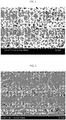
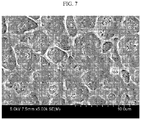
- FIGS. 1-7 show photographic images taken by field emission scanning electron microscopy (FE-EMS) of the surface morphology of each of the separators according to Examples 1-5 and Comparative Examples 1 and 2.
- FE-EMS field emission scanning electron microscopy
- a slurry for forming a porous organic-inorganic coating layer comprising inorganic particles in combination with a binder polymer is applied onto a porous polymer substrate, and then a structure enriched with the binder polymer on the surface is formed through a vapor-induced phase separation process in order to impart adhesive property with an electrode.
- vapor-induced phase separation refers to a process which includes preparing a slurry for forming a porous organic-inorganic coating layer merely by using a solvent for the binder polymer, and carrying out drying while the porous polymer substrate coated with the slurry is exposed to an environment abundant in water as a non-solvent for the binder polymer so that the binder polymer may be gelled on the surface of the coating layer that is in direct contact with the atmosphere of water as a non-solvent to form a layered structure relatively enriched with the binder polymer.
- the binder is distributed with a structure enriched with the polymer from the surface layer toward the interfacial layer, resulting in an increase in resistance of the coated separator.
- the separator according to an embodiment of the present disclosure is provided with a porous structure formed by phase separation caused by the evaporation rate of a solvent and that of a non-solvent, when applying and drying a coating composition including the adhesive resin, the solvent and the non-solvent on at least one surface of the separator base.
- the term 'solvent' refers to one capable of dissolving an adhesive resin in an amount of 5 wt% or more even at a low temperature of 60°C or less, while the term 'non-solvent' refers to one that cannot dissolve or swell an adhesive resin at a temperature up to the melting point of an adhesive resin or the boiling point of a liquid.
- the non-solvent corresponds to one that has a boiling point higher than that of the solvent and an evaporation rate lower than that of the solvent, and cannot dissolve or swell the adhesive resin forming the adhesive porous layer.
- the coating composition including the adhesive resin, solvent and non-solvent forms a homogeneous single phase. However, while the coating composition is applied and dried on at least one surface of the separator base, it becomes a thermodynamically unstable state at the initial stage, and thus is converted into a two-phase solution.
- the porous polymer substrate may be a porous polymer film substrate or porous polymer non-woven web substrate.
- the porous polymer film substrate may include a porous polymer film including a polyolefin, such as polyethylene or polypropylene.
- a polyolefin porous polymer film substrate realizes a shut-down function at a temperature of 80-130°C.
- the polyolefin porous polymer film may include a polymer formed of polyethylene, such as high-density polyethylene, linear low-density polyethylene, low-density polyethylene and ultrahigh-molecular weight polyethylene, polypropylene, polybutylene and polypentene alone or in combination.
- polyethylene such as high-density polyethylene, linear low-density polyethylene, low-density polyethylene and ultrahigh-molecular weight polyethylene, polypropylene, polybutylene and polypentene alone or in combination.
- the porous substrate may have a thickness of 1-100 ⁇ m, particularly 5-50 ⁇ m.
- the pore size and porosity of the pores present in the porous substrate are not also limited particularly, it is preferred that the pore size and porosity are 0.01-50 ⁇ m and 10-95%, respectively.
- the binder polymer used for forming the porous coating layer may be one used currently for forming a porous coating layer in the art.
- a polymer having a glass transition temperature (T g ) of -200 to 200°C may be used. This is because such a polymer can improve the mechanical properties, such as flexibility and elasticity, of the finally formed porous coating layer.
- T g glass transition temperature
- Such a binder polymer functions as a binder which connects and stably fixes the inorganic particles with each other, and thus contributes to prevention of degradation of mechanical properties of a separator having a porous coating layer.
- the binder polymer may be characterized in that it is gelled upon the impregnation with a liquid electrolyte and thus shows a high degree of swelling.
- the binder polymer has a solubility parameter (i.e., Hildebrand solubility parameter) of 15-45 MPa 1/2 or 15-25 MPa 1/2 and 30-45 MPa 1/2 . Therefore, hydrophilic polymers having many polar groups may be used more frequently as compared to hydrophobic polymers, such as polyolefins.
- the solubility parameter is less than 15 MPa 1/2 and more than 45 1/2 , it is difficult for the binder polymer to be swelled with a conventional liquid electrolyte for a battery.
- Non-limiting examples of the binder polymer include but are not limited to: polyvinylidene fluoride-co-hexafluoropropylene, polyvinylidene fluoride-co-trichloro ethylene, polymethyl methacrylate, polybutyl acrylate, polyacrylonitrile, polyvinyl pyrrolidone, polyvinyl acetate, polyethylene-co-vinyl acetate, polyethylene oxide, polyarylate, cellulose acetate, cellulose acetate butyrate, cellulose acetate propionate, cyanoethylpullulan, cyanoethylpolyvinylalchol, cyanoethyl cellulose, cyanoethyl sucrose, pullulan and carboxymethyl cellulose.
- the separator according to an embodiment of the present disclosure may further include other additives as ingredients for the porous coating layer.
- boehmite particles are used as inorganic particles alone or in combination with non-boehmite particles.
- the term 'non-boehmite particles' refers to inorganic particles other than boehmite particles.
- the porous coating layer according to the present disclosure includes two different types of inorganic particles, such as boehmite particles and inorganic particles other than boehmite particles.
- Boehmite is represented by the chemical formula of AIO(OH) or Al 2 O 3 ⁇ H 2 O and is a chemically stable alumina monohydrate obtained generally by heat treatment or hydrothermal treatment of alumina trihydrate in the air.
- Boehmite has a high dehydration temperature of 450-530°C and may be controlled to have various shapes, including plate-like boehmite, needle-like boehmite and hexangular plate-like boehmite, by adjusting the preparing condition.
- non-limiting examples of non-boehmite particles may include high-dielectric constant inorganic particles having a dielectric constant of 5 or more, particularly 10 or more, inorganic particles capable of transporting lithium ions or a mixture thereof.
- Non-limiting examples of the inorganic particles having a dielectric constant of 5 or more include BaTiO 3 , Pb(Zr,Ti)O 3 (PZT), Pb 1-x La x Zr 1-y Ti y O 3 (PLZT), PB(Mg 3 Nb 2/3 )O 3 -PbTiO 3 (PMN-PT), hafnia (HfO 2 ), SrTiO 3 , SnO 2 , CeO 2 , MgO, NiO, CaO, ZnO, ZrO 2 , Y 2 O 3 , Al 2 O 3 , TiO 2 , SiC or a mixture thereof.
- the term 'inorganic particles capable of transporting lithium ions' refers to inorganic particles which contains a lithium element and functions to transport lithium ions not to store lithium.
- Non-limiting examples of the inorganic particles capable of transporting lithium ions include lithium phosphate (Li 3 PO 4 ), lithium titanium phosphate (Li x Ti y (PO 4 ) 3 , 0 ⁇ x ⁇ 2, 0 ⁇ y ⁇ 3), lithium aluminum titanium phosphate (Li x Al y Ti z (PO 4 ) 3 , 0 ⁇ x ⁇ 2, 0 ⁇ y ⁇ 1, 0 ⁇ z ⁇ 3), (LiAlTiP) x O y -based glass (0 ⁇ x ⁇ 4, 0 ⁇ y ⁇ 13) such as 14Li 2 O-9Al 2 O 3 -38TiO 2 -39P 2 O 5 , lithium lanthanum titanate (Li x La y TiO 3 , 0 ⁇ x ⁇ 2, 0 ⁇ y ⁇ 3), lithium germanium thiophosphate (Li
- the weight ratio between the boehmite particles and the binder polymer may be 1:1-1:5.
- the weight ratio of the boehmite particles to the binder polymer is less than 1:1 (when the content of the binder polymer is decreased), the amount of binder which can bind boehmite particles among themselves or perform binding between boehmite particles and the substrate is insufficient, thereby causing separation.
- the weight ratio of the boehmite particles to the binder polymer is larger than 1:5 (when the content of the binder polymer is increased), an excessive amount of binder polymer is present to cause a decrease in pore size and porosity of the porous coating layer and an increase in resistance of the separator, which may result in degradation of the performance of a battery.
- the weight ratio of the non-boehmite particles to the boehmite particles may be 1:99-99:1.
- the weight ratio of the non-boehmite particles and the boehmite particles satisfies the above-defined range, it is not required to increase the amount of binder polymer significantly in order to prevent separation of boehmite caused by an increased amount of boehmite.
- the dispersion stability or processability of a coating composition for forming a porous coating layer is improved significantly, a porous coating layer having a uniform thickness can be formed, and the porosity of a porous coating layer can be controlled with ease.
- the boehmite particles may have an average particle diameter 0.01-0.9 times, particularly 0.015-0.85 times, and more particularly 0.02-0.08 times higher than the average particle diameter of the non-boehmite particles.
- the non-boehmite particles may have an average particle diameter of 0.3-3 ⁇ m, particularly 0.4-2.7 ⁇ m, and more particularly 0.5-2.5 ⁇ m, while the boehmite particles may have an average particle diameter of 0.05-2 ⁇ m, particularly 0.07-1.5 ⁇ m, and more particularly 0.09-1 ⁇ m.
- the inorganic particles may include non-boehmite particles having an average particle diameter different from the average particle diameter of boehmite particles. Therefore, the dispersibility and coating processability of the inorganic particles in a composition for forming a porous coating layer are improved, controlling of the thickness of a coating layer is facilitated, and degradation of mechanical properties and electrical properties can be improved.
- particles with a smaller particle diameter may be positioned in large pores formed between particles with a larger particle diameter, it is possible to control the size of pores of the resultant porous coating layer. It is also possible to prevent an internal short-circuit during charging and discharging of a battery by improving the density of the porous coating layer and inhibiting a heat shrinking phenomenon of the porous substrate.
- alumina particles are compounds of aluminum and oxygen which have a chemical formula of Al 2 O 3 and are known as electric insulators having relatively high heat conductivity and a density of 3.95-4.1 g/cm 3 .
- the boehmite particles generally have a density of about 2.4-3.1 g/cm 3 .
- boehmite particles have excellent heat-absorbing property and contain hydroxyl groups to provide high hydrophilicity and to be controlled to have a high specific surface area.
- boehmite particles can function as carriers provided with additives useful for electrochemical devices.
- boehmite has a heat conductivity similar to the heat conductivity of alumina and thus is useful as a heat conductive filler.
- boehmite having a high aspect ratio shows anisotropy, and thus can provide increased heat conductivity in a predetermined direction even when it is added in a small amount.
- boehmite can transfer heat to the outside by virtue of its high heat conductivity.
- boehmite particles can be disposed easily in various shapes of pores among the alumina particles.
- alumina particles having different average particle diameters, or larger-particle diameter alumina particles and smaller-particle diameter alumina particles are problematic in that they are significantly expensive and are difficult to handle as compared to larger-particle alumina particles.
- alumina particles are used in combination with boehmite particles having a smaller average particle diameter than that of alumina particles. Therefore, it is possible to overcome the above-mentioned problem.
- the porous coating layer may have a thickness of 1-10 ⁇ m, particularly 1.5-6 ⁇ m. Also, there is no particular limitation in the porosity of the porous coating layer, the porous coating layer may have a porosity of 35-65%.
- the porous coating layer may be an oil-based coating layer using an organic slurry or an aqueous coating layer using an aqueous slurry.
- an aqueous coating layer it may be more advantageous since it is favorable to thin film coating and reduces resistance of a separator.
- a method for manufacturing a separator including the steps of:
- the composition for forming a porous coating layer may be obtained by dissolving a binder into a solvent, adding inorganic particles thereto and dispersing them.
- the inorganic particles may be added after they are pulverized in advance to a predetermined average particle diameter. Otherwise, the inorganic particles may be added to a binder solution, and then pulverized and dispersed while controlling them to have a predetermined average particle diameter by using a ball milling process, or the like.
- a slot coating process includes coating a composition supplied through a slot die onto the whole surface of a substrate and is capable of controlling the thickness of a coating layer depending on the flux supplied from a metering pump.
- dip coating includes dipping a substrate into a tank containing a composition to carry out coating and is capable of controlling the thickness of a coating layer depending on the concentration of the composition and the rate of removing the substrate from the composition tank. Further, in order to control the coating thickness more precisely, it is possible to carry out post-metering through a Mayer bar or the like, after dipping.
- the porous substrate coated with the composition for forming a porous coating layer is dried by using a dryer, such as an oven, thereby forming porous coating layers having a symmetric structure on at least one surface of the porous substrate.
- the inorganic particles are bound among themselves by the binder while they are packed and are in contact with each other.
- interstitial volumes are formed among the inorganic particles and the interstitial volumes become vacant spaces to form pores.
- the binder attaches the inorganic particles to each other so that they may retain their binding states.
- the binder polymer connects and fixes the inorganic particles with each other.
- the pores of the porous coating layer are those formed by the interstitial volumes among the inorganic particles which become vacant spaces. The space is defined by the inorganic particles facing each other substantially in a closely packed or densely packed structure of the inorganic particles.
- an adhesive porous layer comprising an adhesive resin which shows adhesive property through heating at a temperature lower than a melting point of the porous polymer substrate is formed on at least one surface of the separator base.
- the step of forming an adhesive porous layer includes applying a coating composition including the adhesive resin, a solvent and a non-solvent onto at least one surface of the separator base; and drying the coating composition to form a porous structure through phase separation caused by the evaporation rate of the solvent and that of the non-solvent.
- the method for applying the coating composition onto at least one surface of the separator base preferably includes a slot coating or dip coating process.
- the solvent used herein preferably has a solubility parameter similar to the solubility parameter of the adhesive resin and a low boiling point. This is intended to facilitate uniform mixing and subsequent solvent removal.
- the solvent may include any one compound selected from acetone, tetrahydrofuran, methylene chloride, chloroform, dimethyl formamide, N-methyl-2-pyrrolidone, methyl ethyl ketone and cyclohexane, or a mixture thereof.
- non-limiting examples of the non-solvent may include any one compound selected from methanol, ethanol, isopropyl alcohol, propanol and water, or a mixture thereof.
- a suitable non-solvent may be selected depending on the particular type of adhesive resin used for the adhesive porous layer.
- the weight ratio between the solvent and the non-solvent may be 50:50-99:1, particularly 70:30-98:2, and more particularly 85:15-97:3.
- the adhesive porous layer may have a thickness of 0.1-8 ⁇ m, particularly 0.5-4 ⁇ m. There is no particular limitation in the porosity of the adhesive porous layer, the porosity may be 30-60% preferably.
- the electrochemical device includes a cathode, an anode and a separator interposed between the cathode and the anode, wherein the separator is the above-described separator according to an embodiment of the present disclosure.
- the electrochemical device includes any device which carries out electrochemical reaction, and particular examples thereof include all types of primary batteries, secondary batteries, fuel cells, solar cells or capacitors such as super capacitor devices. Particularly, among the secondary batteries, lithium secondary batteries, including lithium metal secondary batteries, lithium ion secondary batteries, lithium polymer secondary batteries or lithium ion polymer ion batteries, are preferred.
- the two electrodes, cathode and anode, used in combination with the separator according to the present disclosure are not particularly limited, and may be obtained by allowing electrode active materials to be bound to an electrode current collector through a method generally known in the art.
- the electrode active materials non-limiting examples of a cathode active material include conventional cathode active materials that may be used for the cathodes for conventional electrochemical devices. Particularly, lithium manganese oxides, lithium cobalt oxides, lithium nickel oxides, lithium iron oxides or lithium composite oxides containing a combination thereof are used preferably.
- Non-limiting examples of an anode active material include conventional anode active materials that may be used for the anodes for conventional electrochemical devices.
- lithium-intercalating materials such as lithium metal or lithium alloys, carbon, petroleum coke, activated carbon, graphite or other carbonaceous materials
- a cathode current collector include foil made of aluminum, nickel or a combination thereof.
- an anode current collector include foil made of copper, gold, nickel, nickel alloys or a combination thereof.
- the electrolyte that may be used in the electrochemical device according to the present disclosure is a salt having a structure of A + B - , wherein A + includes an alkali metal cation such as Li + , Na + , K + or a combination thereof and B - includes an anion such as PF 6 - , BF 4 - , Cl - , Br - , I - , ClO 4 - , AsF 6 - , CH 3 CO 2 - , CF 3 SO 3 - , N(CF 3 SO 2 ) 2 - , C(CF 2 SO 2 ) 3 - or a combination thereof, the salt being dissolved or dissociated in an organic solvent including propylene carbonate (PC), ethylene carbonate (EC), diethyl carbonate (DEC), dimethyl carbonate (DMC), dipropyl carbonate(DPC), dimethyl sulfoxide, acetonitrile, dimethoxyethane, diethoxyethane, t
- Injection of the electrolyte may be carried out in an adequate step during the process for manufacturing a battery depending on the manufacturing process of a final product and properties required for a final product. In other words, injection of the electrolyte may be carried out before the assemblage of a battery or in the final step of the assemblage of a battery.
- PVdF Polyvinylidene fluoride-co-hexafluoroproyplene
- HFP Polyvinylidene fluoride-co-hexafluoroproyplene
- the obtained slurry was coated onto one surface of a polyethylene porous membrane (air permeability 160sec/100 mL, resistance 0.6 ohm) having a thickness of 7 ⁇ m through a slot coating process and the coating thickness was controlled to about 2 ⁇ m to obtain a separator provided with a porous coating layer on one surface thereof.
- a polyethylene porous membrane air permeability 160sec/100 mL, resistance 0.6 ohm
- the binder polymer was 5 wt% based on the total weight of the porous coating layer and the weight ratio of the boehmite particles : binder polymer was 1:1.2.
- PVdF-HFP polyvinylidene fluoride-co-hexafluoroproyplene
- the obtained coating composition for an adhesive porous layer was applied onto the separator base through a dip coating process and subjected to a dry phase separation process including a drying step at 100°C or lower, thereby providing a separator having adhesive porous layers on both surfaces of the separator base.
- the resultant separator had an asymmetric structure on both surfaces in the order of adhesive porous layer/porous polymer substrate/porous coating layer/adhesive porous layer.
- the porous coating layer and the adhesive porous layer had a thickness of 2 ⁇ m and 1 ⁇ m, respectively.
- the resultant separator had an asymmetric structure on both surfaces in the order of adhesive porous layer/porous polymer substrate/porous coating layer/adhesive porous layer.
- the separators obtained according to Examples 1-5 and Comparative Examples 1 and 2 were cut into a size of 25 mm x 100 mm and two sheets of each separator were provided.
- the two separator sheets were overlapped with each other, inserted between PET films with a thickness of 100 ⁇ m and adhered to each other by passing them through a roll laminator at 100°C.
- the roll laminator speed was 0.3 m/min and heated for 30 seconds under a pressure of 2 kgf/cm 2 .
Landscapes
- Chemical & Material Sciences (AREA)
- Chemical Kinetics & Catalysis (AREA)
- Electrochemistry (AREA)
- General Chemical & Material Sciences (AREA)
- Engineering & Computer Science (AREA)
- Manufacturing & Machinery (AREA)
- Materials Engineering (AREA)
- Inorganic Chemistry (AREA)
- Composite Materials (AREA)
- Health & Medical Sciences (AREA)
- Medicinal Chemistry (AREA)
- Polymers & Plastics (AREA)
- Organic Chemistry (AREA)
- Life Sciences & Earth Sciences (AREA)
- Wood Science & Technology (AREA)
- Cell Separators (AREA)
- Battery Electrode And Active Subsutance (AREA)
Priority Applications (1)
| Application Number | Priority Date | Filing Date | Title |
|---|---|---|---|
| PL17839815T PL3444866T3 (pl) | 2016-08-09 | 2017-08-09 | Separator i zawierające go urządzenie elektrochemiczne |
Applications Claiming Priority (2)
| Application Number | Priority Date | Filing Date | Title |
|---|---|---|---|
| KR20160101471 | 2016-08-09 | ||
| PCT/KR2017/008651 WO2018030797A1 (fr) | 2016-08-09 | 2017-08-09 | Séparateur et dispositif électrochimique le comprenant |
Publications (3)
| Publication Number | Publication Date |
|---|---|
| EP3444866A1 true EP3444866A1 (fr) | 2019-02-20 |
| EP3444866A4 EP3444866A4 (fr) | 2019-03-20 |
| EP3444866B1 EP3444866B1 (fr) | 2020-09-30 |
Family
ID=61163075
Family Applications (1)
| Application Number | Title | Priority Date | Filing Date |
|---|---|---|---|
| EP17839815.2A Active EP3444866B1 (fr) | 2016-08-09 | 2017-08-09 | Séparateur et dispositif électrochimique le comprenant |
Country Status (6)
| Country | Link |
|---|---|
| US (1) | US10804519B2 (fr) |
| EP (1) | EP3444866B1 (fr) |
| KR (1) | KR102086129B1 (fr) |
| CN (1) | CN109314207B (fr) |
| PL (1) | PL3444866T3 (fr) |
| WO (1) | WO2018030797A1 (fr) |
Cited By (1)
| Publication number | Priority date | Publication date | Assignee | Title |
|---|---|---|---|---|
| WO2021204735A1 (fr) * | 2020-04-06 | 2021-10-14 | Carl Freudenberg Kg | Séparateur de batterie à compression stable |
Families Citing this family (39)
| Publication number | Priority date | Publication date | Assignee | Title |
|---|---|---|---|---|
| WO2017010779A1 (fr) * | 2015-07-10 | 2017-01-19 | 주식회사 엘지화학 | Séparateur et dispositif électrochimique le comprenant |
| PL3671899T3 (pl) * | 2017-12-27 | 2022-01-10 | Lg Chem, Ltd. | Sposób wytwarzania separatora, tak utworzony separator i zawierające go urządzenie elektrochemiczne |
| CN110212140A (zh) * | 2018-02-28 | 2019-09-06 | 宁德新能源科技有限公司 | 隔离膜和锂离子电池 |
| JP2019169245A (ja) * | 2018-03-22 | 2019-10-03 | 株式会社東芝 | 電極群、二次電池、電池パック、車両及び定置用電源 |
| CN110364666B (zh) * | 2018-04-11 | 2022-05-24 | 宁德新能源科技有限公司 | 隔离膜和锂离子电池 |
| KR102354261B1 (ko) * | 2018-06-12 | 2022-01-20 | 주식회사 엘지화학 | 패턴화 전극접착층이 구비된 전기화학소자용 분리막 및 상기 분리막의 제조방법 |
| KR101996642B1 (ko) | 2018-07-13 | 2019-07-04 | 주식회사 엘지화학 | 저저항 코팅층을 포함하는 전기화학소자용 분리막 및 이를 제조하는 방법 |
| EP4601102A3 (fr) * | 2018-07-26 | 2025-08-27 | LG Energy Solution, Ltd. | Séparateur et dispositif électrochimique le comprenant |
| KR102437371B1 (ko) * | 2018-09-28 | 2022-08-26 | 주식회사 엘지에너지솔루션 | 전기화학소자용 분리막 및 이를 제조하는 방법 |
| KR102385925B1 (ko) * | 2018-11-05 | 2022-04-11 | 주식회사 엘지에너지솔루션 | 전기화학소자용 세퍼레이터 및 이를 포함하는 전기화학소자 |
| WO2020130723A1 (fr) * | 2018-12-21 | 2020-06-25 | 주식회사 엘지화학 | Séparateur pour dispositif électrochimique et dispositif électrochimique le contenant |
| KR102190691B1 (ko) * | 2019-01-04 | 2020-12-16 | 에너에버배터리정보 주식회사 | Ev나 ess의 중대형 이차전지용 분리막 코팅제와 이를 이용한 ev나 ess의 중대형 이차전지용 코팅 분리막 제조방법 및 ev나 ess의 중대형 이차전지 |
| KR102331720B1 (ko) * | 2019-02-18 | 2021-11-26 | 삼성에스디아이 주식회사 | 분리막 및 이를 채용한 리튬전지 |
| CN111697184B (zh) * | 2019-03-15 | 2022-05-31 | 华为技术有限公司 | 一种锂离子电池隔膜及其制备方法和锂离子电池 |
| CN109980164A (zh) | 2019-03-18 | 2019-07-05 | 宁德新能源科技有限公司 | 隔离膜和电化学装置 |
| CN115693028B (zh) | 2019-03-27 | 2025-02-14 | 宁德新能源科技有限公司 | 隔离膜与包含其的电化学装置及电子装置 |
| KR102477643B1 (ko) | 2019-05-09 | 2022-12-13 | 주식회사 엘지에너지솔루션 | 전기화학소자용 분리막 및 이를 포함하는 전기화학소자 |
| KR102419160B1 (ko) | 2019-05-09 | 2022-07-08 | 주식회사 엘지에너지솔루션 | 분산제를 포함하는 이차전지용 분리막 및 이의 제조방법 |
| WO2020226370A1 (fr) * | 2019-05-09 | 2020-11-12 | 주식회사 엘지화학 | Séparateur pour dispositif électrochimique, et dispositif électrochimique le comprenant |
| CN113906594A (zh) * | 2019-06-04 | 2022-01-07 | 本田技研工业株式会社 | 电解液吸收颗粒、自立片、锂离子二次电池用电极、隔膜及锂离子二次电池 |
| KR102803836B1 (ko) * | 2019-06-14 | 2025-05-02 | 주식회사 엘지에너지솔루션 | 세퍼레이터의 제조방법 및 이에 의해 제조된 세퍼레이터 |
| CN114207189B (zh) * | 2019-07-05 | 2024-07-02 | 爱克发-格法特公司 | 用于碱性水电解的分隔器 |
| KR102788555B1 (ko) | 2019-10-29 | 2025-03-31 | 주식회사 엘지에너지솔루션 | 기체발생제를 포함하는 분리막 및 이의 제조방법 |
| JP7735864B2 (ja) * | 2019-10-31 | 2025-09-09 | 日本ゼオン株式会社 | 電気化学素子用機能層およびその製造方法、電気化学素子用機能層付きセパレータおよびその製造方法、並びに電気化学素子およびその製造方法 |
| KR102832157B1 (ko) * | 2019-11-01 | 2025-07-08 | 주식회사 엘지에너지솔루션 | 세퍼레이터, 세퍼레이터를 포함하는 리튬 이차 전지 및 이의 제조방법 |
| KR102787908B1 (ko) * | 2019-11-18 | 2025-03-26 | 주식회사 엘지에너지솔루션 | 전기화학소자용 분리막 및 이를 포함하는 전기화학소자 |
| KR102812151B1 (ko) * | 2019-11-19 | 2025-05-22 | 주식회사 엘지에너지솔루션 | 전기화학소자용 분리막 및 이를 포함하는 전기화학소자 |
| KR102580239B1 (ko) * | 2020-03-09 | 2023-09-19 | 삼성에스디아이 주식회사 | 복합 세퍼레이터 제조 방법, 복합세퍼레이터 및 이를 채용한 리튬 전지 |
| CN115088129B (zh) * | 2020-04-03 | 2024-12-31 | 株式会社Lg新能源 | 用于锂二次电池的隔板、制造该隔板的方法和包括该隔板的锂二次电池 |
| JP7551328B2 (ja) * | 2020-05-01 | 2024-09-17 | 旭化成株式会社 | 蓄電デバイス用積層セパレータ、及び蓄電デバイス |
| US11990643B2 (en) | 2020-07-07 | 2024-05-21 | Sk Innovation Co., Ltd. | Separator having inorganic composite layer including inorganic particles and one-dimensional inorganic material without polymer-based organic binder and electrochemical device using the same |
| US12021258B2 (en) * | 2020-07-07 | 2024-06-25 | Sk Innovation Co., Ltd. | Separator having inorganic composite layer including inorganic particles and one-dimensional inorganic material and electrochemical device using the same |
| JP7623112B2 (ja) * | 2020-07-17 | 2025-01-28 | 住友化学株式会社 | 非水電解液二次電池用積層体 |
| US20230268615A1 (en) * | 2020-09-07 | 2023-08-24 | Lg Energy Solution, Ltd. | Separator for electrochemical device and method for manufacturing the same |
| KR102906981B1 (ko) * | 2021-01-22 | 2026-01-02 | 주식회사 엘지화학 | 전기화학소자용 분리막 및 이를 포함하는 이차 전지 |
| KR102924314B1 (ko) * | 2021-03-26 | 2026-02-05 | 삼성에스디아이 주식회사 | 세퍼레이터 및 이를 채용한 리튬 전지 |
| CN118947002B (zh) * | 2022-04-13 | 2025-12-05 | 米莉巴特有限公司 | 用于沉积隔板材料的系统和方法 |
| KR102619394B1 (ko) * | 2022-08-11 | 2023-12-29 | 주식회사 엘지에너지솔루션 | 전기화학소자용 분리막의 제조 방법 |
| CN116769344B (zh) * | 2023-05-10 | 2024-10-18 | 广州特种设备检测研究院(广州市特种设备事故调查技术中心、广州市电梯安全运行监控中心) | 氟化石墨烯/SiO2/氟硅烷复合材料及其制备方法、超疏水涂层 |
Family Cites Families (24)
| Publication number | Priority date | Publication date | Assignee | Title |
|---|---|---|---|---|
| KR100409019B1 (ko) | 2001-06-13 | 2003-12-06 | 주식회사 엘지화학 | 다층 미세 기공막 및 그 제조방법 |
| KR100666821B1 (ko) * | 2004-02-07 | 2007-01-09 | 주식회사 엘지화학 | 유/무기 복합 다공성 코팅층이 형성된 전극 및 이를포함하는 전기 화학 소자 |
| EP2541645B1 (fr) | 2006-04-28 | 2014-08-27 | LG Chem, Ltd. | Procédé de préparation d'un séparateur pour une batterie avec une couche de polymère-gel |
| JP5168850B2 (ja) * | 2006-08-14 | 2013-03-27 | ソニー株式会社 | 非水電解質二次電池および非水電解質二次電池の製造方法 |
| CN101796669B (zh) * | 2008-01-29 | 2013-05-08 | 日立麦克赛尔株式会社 | 绝缘层形成用浆料、电化学元件用隔板及其制造方法、以及电化学元件 |
| WO2009125984A2 (fr) * | 2008-04-08 | 2009-10-15 | Sk Energy Co., Ltd. | Film composite polyoléfinique microporeux avec une couche poreuse thermiquement stable à haute température |
| JP5670626B2 (ja) | 2009-07-15 | 2015-02-18 | 日立マクセル株式会社 | 電気化学素子用セパレータ、電気化学素子およびその製造方法 |
| KR101246827B1 (ko) * | 2010-11-01 | 2013-03-28 | 주식회사 아모그린텍 | 전극 조립체 및 이를 이용한 이차 전지와 그의 제조방법 |
| WO2012073996A1 (fr) * | 2010-11-30 | 2012-06-07 | 日本ゼオン株式会社 | Bouillie pour membranes poreuses de batterie secondaire, membranes poreuses de batterie secondaire, électrode de batterie secondaire, séparateur de batterie secondaire, batterie secondaire et procédé de production d'une membrane poreuse de batterie secondaire |
| JP5834322B2 (ja) * | 2011-07-20 | 2015-12-16 | エルジー・ケム・リミテッド | セパレータ、その製造方法及びこれを備えた電気化学素子 |
| KR101915317B1 (ko) * | 2011-10-26 | 2018-11-06 | 주식회사 엘지화학 | 세퍼레이터, 그 제조방법 및 이를 구비한 전기화학소자 |
| KR101358764B1 (ko) | 2011-11-11 | 2014-02-07 | 주식회사 엘지화학 | 세퍼레이터 및 이를 구비한 전기화학소자 |
| KR101369326B1 (ko) * | 2011-12-27 | 2014-03-04 | 주식회사 엘지화학 | 세퍼레이터의 제조방법 및 이에 따라 제조된 세퍼레이터를 구비한 전기화학소자 |
| DE102012000910A1 (de) * | 2012-01-19 | 2013-07-25 | Sihl Gmbh | Separator umfassend eine poröse Schicht und Verfahren zu seiner Herstellung |
| KR101979053B1 (ko) | 2012-01-19 | 2019-05-15 | 가부시키가이샤 무라타 세이사쿠쇼 | 세퍼레이터, 비수 전해질 전지, 전지 팩, 전자 기기, 전동 차량, 축전 장치 및 전력 시스템 |
| KR101488918B1 (ko) * | 2012-02-29 | 2015-02-03 | 제일모직 주식회사 | 밀도가 조절된 코팅층을 포함하는 분리막 및 이를 이용한 전지 |
| EP2835844B1 (fr) * | 2012-04-05 | 2018-11-14 | Zeon Corporation | Séparateur pour élément secondaire de batterie |
| CN102738427B (zh) * | 2012-07-19 | 2015-01-28 | 河南义腾新能源科技有限公司 | 一种用作锂离子电池隔膜的无机复合微孔膜及其制备方法 |
| KR101455043B1 (ko) | 2012-07-31 | 2014-10-27 | 주식회사 엘지화학 | 세퍼레이터 도포용 슬러리, 그 슬러리를 이용한 세퍼레이터 및 그를 포함하는 전기화학소자 |
| CN103078075B (zh) * | 2012-12-31 | 2014-04-02 | 深圳中兴创新材料技术有限公司 | 具有耐高温层的复合膜、制备方法和电池 |
| KR101298340B1 (ko) * | 2013-02-12 | 2013-08-20 | 삼성토탈 주식회사 | 유/무기 복합 코팅 다공성 분리막 및 이를 이용한 이차전지소자 |
| KR101430975B1 (ko) | 2013-08-21 | 2014-08-18 | 에스케이씨 주식회사 | 내열성이 우수한 이차전지용 분리막 |
| KR20160049765A (ko) * | 2014-10-28 | 2016-05-10 | 에스케이이노베이션 주식회사 | 복합분리막 및 이의 제조방법 |
| JP6453611B2 (ja) * | 2014-10-29 | 2019-01-16 | マクセルホールディングス株式会社 | リチウム二次電池 |
-
2017
- 2017-08-09 WO PCT/KR2017/008651 patent/WO2018030797A1/fr not_active Ceased
- 2017-08-09 KR KR1020170101312A patent/KR102086129B1/ko active Active
- 2017-08-09 US US16/094,139 patent/US10804519B2/en active Active
- 2017-08-09 EP EP17839815.2A patent/EP3444866B1/fr active Active
- 2017-08-09 PL PL17839815T patent/PL3444866T3/pl unknown
- 2017-08-09 CN CN201780032205.XA patent/CN109314207B/zh active Active
Cited By (1)
| Publication number | Priority date | Publication date | Assignee | Title |
|---|---|---|---|---|
| WO2021204735A1 (fr) * | 2020-04-06 | 2021-10-14 | Carl Freudenberg Kg | Séparateur de batterie à compression stable |
Also Published As
| Publication number | Publication date |
|---|---|
| EP3444866B1 (fr) | 2020-09-30 |
| KR20180018408A (ko) | 2018-02-21 |
| US10804519B2 (en) | 2020-10-13 |
| WO2018030797A1 (fr) | 2018-02-15 |
| US20190131604A1 (en) | 2019-05-02 |
| EP3444866A4 (fr) | 2019-03-20 |
| CN109314207B (zh) | 2021-06-29 |
| PL3444866T3 (pl) | 2021-01-11 |
| CN109314207A (zh) | 2019-02-05 |
| KR102086129B1 (ko) | 2020-03-06 |
Similar Documents
| Publication | Publication Date | Title |
|---|---|---|
| US10804519B2 (en) | Separator and electrochemical device including the same | |
| US11177533B2 (en) | Separator and electrochemical device including the same | |
| EP3734700B1 (fr) | Séparateur et dispositif électrochimique le comprenant | |
| US11245158B2 (en) | Separator and electrochemical device including the same | |
| JP5719306B2 (ja) | リチウム二次電池 | |
| US11699831B2 (en) | Separator and electrochemical device comprising same | |
| EP2328220B1 (fr) | Séparateur pourvu d'une couche de revêtement poreux, procédé de fabrication de ce séparateur et dispositif électrochimique pourvu de ce séparateur | |
| EP3734701A1 (fr) | Séparateur et dispositif électrochimique le comprenant | |
| US11962034B2 (en) | Separator and electrochemical device including the same | |
| EP3671899B1 (fr) | Procédé de fabrication de séparateur, séparateur ainsi formé, et dispositif électrochimique le comprenant | |
| US11424511B2 (en) | Electrode assembly and electrochemical device comprising electrode assembly | |
| EP4478515A1 (fr) | Procédé de préparation pour séparateur, séparateur ainsi préparé et dispositif électrochimique le comprenant |
Legal Events
| Date | Code | Title | Description |
|---|---|---|---|
| STAA | Information on the status of an ep patent application or granted ep patent |
Free format text: STATUS: THE INTERNATIONAL PUBLICATION HAS BEEN MADE |
|
| PUAI | Public reference made under article 153(3) epc to a published international application that has entered the european phase |
Free format text: ORIGINAL CODE: 0009012 |
|
| STAA | Information on the status of an ep patent application or granted ep patent |
Free format text: STATUS: REQUEST FOR EXAMINATION WAS MADE |
|
| 17P | Request for examination filed |
Effective date: 20181116 |
|
| AK | Designated contracting states |
Kind code of ref document: A1 Designated state(s): AL AT BE BG CH CY CZ DE DK EE ES FI FR GB GR HR HU IE IS IT LI LT LU LV MC MK MT NL NO PL PT RO RS SE SI SK SM TR |
|
| AX | Request for extension of the european patent |
Extension state: BA ME |
|
| A4 | Supplementary search report drawn up and despatched |
Effective date: 20190215 |
|
| RIC1 | Information provided on ipc code assigned before grant |
Ipc: H01M 2/16 20060101AFI20190211BHEP Ipc: H01M 10/0525 20100101ALI20190211BHEP Ipc: H01M 10/42 20060101ALI20190211BHEP Ipc: H01M 10/052 20100101ALN20190211BHEP Ipc: H01M 2/14 20060101ALI20190211BHEP |
|
| STAA | Information on the status of an ep patent application or granted ep patent |
Free format text: STATUS: EXAMINATION IS IN PROGRESS |
|
| 17Q | First examination report despatched |
Effective date: 20191008 |
|
| DAV | Request for validation of the european patent (deleted) | ||
| DAX | Request for extension of the european patent (deleted) | ||
| GRAP | Despatch of communication of intention to grant a patent |
Free format text: ORIGINAL CODE: EPIDOSNIGR1 |
|
| STAA | Information on the status of an ep patent application or granted ep patent |
Free format text: STATUS: GRANT OF PATENT IS INTENDED |
|
| RIC1 | Information provided on ipc code assigned before grant |
Ipc: H01M 2/14 20060101ALI20200327BHEP Ipc: H01M 10/052 20100101ALN20200327BHEP Ipc: H01M 10/42 20060101ALI20200327BHEP Ipc: H01M 10/0525 20100101ALI20200327BHEP Ipc: H01M 2/16 20060101AFI20200327BHEP |
|
| INTG | Intention to grant announced |
Effective date: 20200417 |
|
| GRAS | Grant fee paid |
Free format text: ORIGINAL CODE: EPIDOSNIGR3 |
|
| GRAA | (expected) grant |
Free format text: ORIGINAL CODE: 0009210 |
|
| STAA | Information on the status of an ep patent application or granted ep patent |
Free format text: STATUS: THE PATENT HAS BEEN GRANTED |
|
| AK | Designated contracting states |
Kind code of ref document: B1 Designated state(s): AL AT BE BG CH CY CZ DE DK EE ES FI FR GB GR HR HU IE IS IT LI LT LU LV MC MK MT NL NO PL PT RO RS SE SI SK SM TR |
|
| REG | Reference to a national code |
Ref country code: CH Ref legal event code: EP Ref country code: GB Ref legal event code: FG4D |
|
| REG | Reference to a national code |
Ref country code: AT Ref legal event code: REF Ref document number: 1319714 Country of ref document: AT Kind code of ref document: T Effective date: 20201015 |
|
| REG | Reference to a national code |
Ref country code: DE Ref legal event code: R096 Ref document number: 602017024780 Country of ref document: DE |
|
| REG | Reference to a national code |
Ref country code: IE Ref legal event code: FG4D |
|
| REG | Reference to a national code |
Ref country code: DE Ref legal event code: R079 Ref document number: 602017024780 Country of ref document: DE Free format text: PREVIOUS MAIN CLASS: H01M0002160000 Ipc: H01M0050409000 |
|
| PG25 | Lapsed in a contracting state [announced via postgrant information from national office to epo] |
Ref country code: HR Free format text: LAPSE BECAUSE OF FAILURE TO SUBMIT A TRANSLATION OF THE DESCRIPTION OR TO PAY THE FEE WITHIN THE PRESCRIBED TIME-LIMIT Effective date: 20200930 Ref country code: SE Free format text: LAPSE BECAUSE OF FAILURE TO SUBMIT A TRANSLATION OF THE DESCRIPTION OR TO PAY THE FEE WITHIN THE PRESCRIBED TIME-LIMIT Effective date: 20200930 Ref country code: BG Free format text: LAPSE BECAUSE OF FAILURE TO SUBMIT A TRANSLATION OF THE DESCRIPTION OR TO PAY THE FEE WITHIN THE PRESCRIBED TIME-LIMIT Effective date: 20201230 Ref country code: FI Free format text: LAPSE BECAUSE OF FAILURE TO SUBMIT A TRANSLATION OF THE DESCRIPTION OR TO PAY THE FEE WITHIN THE PRESCRIBED TIME-LIMIT Effective date: 20200930 Ref country code: GR Free format text: LAPSE BECAUSE OF FAILURE TO SUBMIT A TRANSLATION OF THE DESCRIPTION OR TO PAY THE FEE WITHIN THE PRESCRIBED TIME-LIMIT Effective date: 20201231 Ref country code: NO Free format text: LAPSE BECAUSE OF FAILURE TO SUBMIT A TRANSLATION OF THE DESCRIPTION OR TO PAY THE FEE WITHIN THE PRESCRIBED TIME-LIMIT Effective date: 20201230 |
|
| REG | Reference to a national code |
Ref country code: AT Ref legal event code: MK05 Ref document number: 1319714 Country of ref document: AT Kind code of ref document: T Effective date: 20200930 |
|
| PG25 | Lapsed in a contracting state [announced via postgrant information from national office to epo] |
Ref country code: LV Free format text: LAPSE BECAUSE OF FAILURE TO SUBMIT A TRANSLATION OF THE DESCRIPTION OR TO PAY THE FEE WITHIN THE PRESCRIBED TIME-LIMIT Effective date: 20200930 Ref country code: RS Free format text: LAPSE BECAUSE OF FAILURE TO SUBMIT A TRANSLATION OF THE DESCRIPTION OR TO PAY THE FEE WITHIN THE PRESCRIBED TIME-LIMIT Effective date: 20200930 |
|
| REG | Reference to a national code |
Ref country code: NL Ref legal event code: MP Effective date: 20200930 |
|
| REG | Reference to a national code |
Ref country code: LT Ref legal event code: MG4D |
|
| PG25 | Lapsed in a contracting state [announced via postgrant information from national office to epo] |
Ref country code: LT Free format text: LAPSE BECAUSE OF FAILURE TO SUBMIT A TRANSLATION OF THE DESCRIPTION OR TO PAY THE FEE WITHIN THE PRESCRIBED TIME-LIMIT Effective date: 20200930 Ref country code: SM Free format text: LAPSE BECAUSE OF FAILURE TO SUBMIT A TRANSLATION OF THE DESCRIPTION OR TO PAY THE FEE WITHIN THE PRESCRIBED TIME-LIMIT Effective date: 20200930 Ref country code: CZ Free format text: LAPSE BECAUSE OF FAILURE TO SUBMIT A TRANSLATION OF THE DESCRIPTION OR TO PAY THE FEE WITHIN THE PRESCRIBED TIME-LIMIT Effective date: 20200930 Ref country code: RO Free format text: LAPSE BECAUSE OF FAILURE TO SUBMIT A TRANSLATION OF THE DESCRIPTION OR TO PAY THE FEE WITHIN THE PRESCRIBED TIME-LIMIT Effective date: 20200930 Ref country code: PT Free format text: LAPSE BECAUSE OF FAILURE TO SUBMIT A TRANSLATION OF THE DESCRIPTION OR TO PAY THE FEE WITHIN THE PRESCRIBED TIME-LIMIT Effective date: 20210201 Ref country code: EE Free format text: LAPSE BECAUSE OF FAILURE TO SUBMIT A TRANSLATION OF THE DESCRIPTION OR TO PAY THE FEE WITHIN THE PRESCRIBED TIME-LIMIT Effective date: 20200930 |
|
| PG25 | Lapsed in a contracting state [announced via postgrant information from national office to epo] |
Ref country code: IS Free format text: LAPSE BECAUSE OF FAILURE TO SUBMIT A TRANSLATION OF THE DESCRIPTION OR TO PAY THE FEE WITHIN THE PRESCRIBED TIME-LIMIT Effective date: 20210130 Ref country code: AT Free format text: LAPSE BECAUSE OF FAILURE TO SUBMIT A TRANSLATION OF THE DESCRIPTION OR TO PAY THE FEE WITHIN THE PRESCRIBED TIME-LIMIT Effective date: 20200930 Ref country code: AL Free format text: LAPSE BECAUSE OF FAILURE TO SUBMIT A TRANSLATION OF THE DESCRIPTION OR TO PAY THE FEE WITHIN THE PRESCRIBED TIME-LIMIT Effective date: 20200930 Ref country code: ES Free format text: LAPSE BECAUSE OF FAILURE TO SUBMIT A TRANSLATION OF THE DESCRIPTION OR TO PAY THE FEE WITHIN THE PRESCRIBED TIME-LIMIT Effective date: 20200930 |
|
| PG25 | Lapsed in a contracting state [announced via postgrant information from national office to epo] |
Ref country code: SK Free format text: LAPSE BECAUSE OF FAILURE TO SUBMIT A TRANSLATION OF THE DESCRIPTION OR TO PAY THE FEE WITHIN THE PRESCRIBED TIME-LIMIT Effective date: 20200930 Ref country code: NL Free format text: LAPSE BECAUSE OF FAILURE TO SUBMIT A TRANSLATION OF THE DESCRIPTION OR TO PAY THE FEE WITHIN THE PRESCRIBED TIME-LIMIT Effective date: 20200930 |
|
| REG | Reference to a national code |
Ref country code: DE Ref legal event code: R097 Ref document number: 602017024780 Country of ref document: DE |
|
| PLBE | No opposition filed within time limit |
Free format text: ORIGINAL CODE: 0009261 |
|
| STAA | Information on the status of an ep patent application or granted ep patent |
Free format text: STATUS: NO OPPOSITION FILED WITHIN TIME LIMIT |
|
| PG25 | Lapsed in a contracting state [announced via postgrant information from national office to epo] |
Ref country code: DK Free format text: LAPSE BECAUSE OF FAILURE TO SUBMIT A TRANSLATION OF THE DESCRIPTION OR TO PAY THE FEE WITHIN THE PRESCRIBED TIME-LIMIT Effective date: 20200930 |
|
| 26N | No opposition filed |
Effective date: 20210701 |
|
| PG25 | Lapsed in a contracting state [announced via postgrant information from national office to epo] |
Ref country code: IT Free format text: LAPSE BECAUSE OF FAILURE TO SUBMIT A TRANSLATION OF THE DESCRIPTION OR TO PAY THE FEE WITHIN THE PRESCRIBED TIME-LIMIT Effective date: 20200930 |
|
| PG25 | Lapsed in a contracting state [announced via postgrant information from national office to epo] |
Ref country code: SI Free format text: LAPSE BECAUSE OF FAILURE TO SUBMIT A TRANSLATION OF THE DESCRIPTION OR TO PAY THE FEE WITHIN THE PRESCRIBED TIME-LIMIT Effective date: 20200930 |
|
| REG | Reference to a national code |
Ref country code: CH Ref legal event code: PL |
|
| PG25 | Lapsed in a contracting state [announced via postgrant information from national office to epo] |
Ref country code: MC Free format text: LAPSE BECAUSE OF FAILURE TO SUBMIT A TRANSLATION OF THE DESCRIPTION OR TO PAY THE FEE WITHIN THE PRESCRIBED TIME-LIMIT Effective date: 20200930 |
|
| REG | Reference to a national code |
Ref country code: BE Ref legal event code: MM Effective date: 20210831 |
|
| PG25 | Lapsed in a contracting state [announced via postgrant information from national office to epo] |
Ref country code: LI Free format text: LAPSE BECAUSE OF NON-PAYMENT OF DUE FEES Effective date: 20210831 Ref country code: CH Free format text: LAPSE BECAUSE OF NON-PAYMENT OF DUE FEES Effective date: 20210831 |
|
| PG25 | Lapsed in a contracting state [announced via postgrant information from national office to epo] |
Ref country code: IS Free format text: LAPSE BECAUSE OF FAILURE TO SUBMIT A TRANSLATION OF THE DESCRIPTION OR TO PAY THE FEE WITHIN THE PRESCRIBED TIME-LIMIT Effective date: 20210130 Ref country code: LU Free format text: LAPSE BECAUSE OF NON-PAYMENT OF DUE FEES Effective date: 20210809 |
|
| PG25 | Lapsed in a contracting state [announced via postgrant information from national office to epo] |
Ref country code: IE Free format text: LAPSE BECAUSE OF NON-PAYMENT OF DUE FEES Effective date: 20210809 Ref country code: BE Free format text: LAPSE BECAUSE OF NON-PAYMENT OF DUE FEES Effective date: 20210831 |
|
| P01 | Opt-out of the competence of the unified patent court (upc) registered |
Effective date: 20230408 |
|
| PG25 | Lapsed in a contracting state [announced via postgrant information from national office to epo] |
Ref country code: CY Free format text: LAPSE BECAUSE OF FAILURE TO SUBMIT A TRANSLATION OF THE DESCRIPTION OR TO PAY THE FEE WITHIN THE PRESCRIBED TIME-LIMIT Effective date: 20200930 |
|
| PG25 | Lapsed in a contracting state [announced via postgrant information from national office to epo] |
Ref country code: HU Free format text: LAPSE BECAUSE OF FAILURE TO SUBMIT A TRANSLATION OF THE DESCRIPTION OR TO PAY THE FEE WITHIN THE PRESCRIBED TIME-LIMIT; INVALID AB INITIO Effective date: 20170809 |
|
| REG | Reference to a national code |
Ref country code: GB Ref legal event code: 732E Free format text: REGISTERED BETWEEN 20230824 AND 20230831 |
|
| REG | Reference to a national code |
Ref country code: DE Ref legal event code: R081 Ref document number: 602017024780 Country of ref document: DE Owner name: LG ENERGY SOLUTION, LTD., KR Free format text: FORMER OWNER: LG CHEM, LTD., SEOUL, KR |
|
| PG25 | Lapsed in a contracting state [announced via postgrant information from national office to epo] |
Ref country code: MK Free format text: LAPSE BECAUSE OF FAILURE TO SUBMIT A TRANSLATION OF THE DESCRIPTION OR TO PAY THE FEE WITHIN THE PRESCRIBED TIME-LIMIT Effective date: 20200930 |
|
| PG25 | Lapsed in a contracting state [announced via postgrant information from national office to epo] |
Ref country code: MT Free format text: LAPSE BECAUSE OF FAILURE TO SUBMIT A TRANSLATION OF THE DESCRIPTION OR TO PAY THE FEE WITHIN THE PRESCRIBED TIME-LIMIT Effective date: 20200930 |
|
| PGFP | Annual fee paid to national office [announced via postgrant information from national office to epo] |
Ref country code: DE Payment date: 20250721 Year of fee payment: 9 |
|
| PGFP | Annual fee paid to national office [announced via postgrant information from national office to epo] |
Ref country code: PL Payment date: 20250723 Year of fee payment: 9 |
|
| PGFP | Annual fee paid to national office [announced via postgrant information from national office to epo] |
Ref country code: GB Payment date: 20250722 Year of fee payment: 9 |
|
| PGFP | Annual fee paid to national office [announced via postgrant information from national office to epo] |
Ref country code: FR Payment date: 20250725 Year of fee payment: 9 |
|
| PG25 | Lapsed in a contracting state [announced via postgrant information from national office to epo] |
Ref country code: TR Free format text: LAPSE BECAUSE OF FAILURE TO SUBMIT A TRANSLATION OF THE DESCRIPTION OR TO PAY THE FEE WITHIN THE PRESCRIBED TIME-LIMIT Effective date: 20200930 |