EP3445896B1 - Procédé d'anodisation d'un article en aluminium ou en alliage de celui-ci - Google Patents
Procédé d'anodisation d'un article en aluminium ou en alliage de celui-ci Download PDFInfo
- Publication number
- EP3445896B1 EP3445896B1 EP17719737.3A EP17719737A EP3445896B1 EP 3445896 B1 EP3445896 B1 EP 3445896B1 EP 17719737 A EP17719737 A EP 17719737A EP 3445896 B1 EP3445896 B1 EP 3445896B1
- Authority
- EP
- European Patent Office
- Prior art keywords
- anodizing
- article
- electrolyte
- range
- metal
- Prior art date
- Legal status (The legal status is an assumption and is not a legal conclusion. Google has not performed a legal analysis and makes no representation as to the accuracy of the status listed.)
- Active
Links
Images
Classifications
-
- C—CHEMISTRY; METALLURGY
- C25—ELECTROLYTIC OR ELECTROPHORETIC PROCESSES; APPARATUS THEREFOR
- C25D—PROCESSES FOR THE ELECTROLYTIC OR ELECTROPHORETIC PRODUCTION OF COATINGS; ELECTROFORMING; APPARATUS THEREFOR
- C25D11/00—Electrolytic coating by surface reaction, i.e. forming conversion layers
- C25D11/02—Anodisation
- C25D11/04—Anodisation of aluminium or alloys based thereon
- C25D11/06—Anodisation of aluminium or alloys based thereon characterised by the electrolytes used
- C25D11/08—Anodisation of aluminium or alloys based thereon characterised by the electrolytes used containing inorganic acids
-
- C—CHEMISTRY; METALLURGY
- C25—ELECTROLYTIC OR ELECTROPHORETIC PROCESSES; APPARATUS THEREFOR
- C25D—PROCESSES FOR THE ELECTROLYTIC OR ELECTROPHORETIC PRODUCTION OF COATINGS; ELECTROFORMING; APPARATUS THEREFOR
- C25D11/00—Electrolytic coating by surface reaction, i.e. forming conversion layers
- C25D11/02—Anodisation
- C25D11/024—Anodisation under pulsed or modulated current or potential
-
- C—CHEMISTRY; METALLURGY
- C25—ELECTROLYTIC OR ELECTROPHORETIC PROCESSES; APPARATUS THEREFOR
- C25D—PROCESSES FOR THE ELECTROLYTIC OR ELECTROPHORETIC PRODUCTION OF COATINGS; ELECTROFORMING; APPARATUS THEREFOR
- C25D11/00—Electrolytic coating by surface reaction, i.e. forming conversion layers
- C25D11/02—Anodisation
- C25D11/04—Anodisation of aluminium or alloys based thereon
- C25D11/18—After-treatment, e.g. pore-sealing
-
- C—CHEMISTRY; METALLURGY
- C25—ELECTROLYTIC OR ELECTROPHORETIC PROCESSES; APPARATUS THEREFOR
- C25D—PROCESSES FOR THE ELECTROLYTIC OR ELECTROPHORETIC PRODUCTION OF COATINGS; ELECTROFORMING; APPARATUS THEREFOR
- C25D11/00—Electrolytic coating by surface reaction, i.e. forming conversion layers
- C25D11/02—Anodisation
- C25D11/04—Anodisation of aluminium or alloys based thereon
- C25D11/18—After-treatment, e.g. pore-sealing
- C25D11/24—Chemical after-treatment
-
- C—CHEMISTRY; METALLURGY
- C25—ELECTROLYTIC OR ELECTROPHORETIC PROCESSES; APPARATUS THEREFOR
- C25D—PROCESSES FOR THE ELECTROLYTIC OR ELECTROPHORETIC PRODUCTION OF COATINGS; ELECTROFORMING; APPARATUS THEREFOR
- C25D11/00—Electrolytic coating by surface reaction, i.e. forming conversion layers
- C25D11/02—Anodisation
- C25D11/04—Anodisation of aluminium or alloys based thereon
- C25D11/18—After-treatment, e.g. pore-sealing
- C25D11/24—Chemical after-treatment
- C25D11/246—Chemical after-treatment for sealing layers
-
- C—CHEMISTRY; METALLURGY
- C25—ELECTROLYTIC OR ELECTROPHORETIC PROCESSES; APPARATUS THEREFOR
- C25D—PROCESSES FOR THE ELECTROLYTIC OR ELECTROPHORETIC PRODUCTION OF COATINGS; ELECTROFORMING; APPARATUS THEREFOR
- C25D11/00—Electrolytic coating by surface reaction, i.e. forming conversion layers
- C25D11/02—Anodisation
- C25D11/04—Anodisation of aluminium or alloys based thereon
- C25D11/16—Pretreatment, e.g. desmutting
Definitions
- the invention relates to a method of anodizing an article of aluminium or aluminium alloy, applications thereof, manufacturing methods using article(s) thus anodized, an apparatus for performing the anodizing method and anodized articles and products, in particular aerostructural components.
- Anodizing is an electrolytic passivation process that is used to increase the thickness of the (natural) oxide layer on the surface of metal parts.
- Anodizing a direct current is passed through an electrolyte.
- the part to be treated forms the anode electrode (positive electrode) of the electrical circuit.
- Anodizing increases resistance to corrosion and wear, and provides better adhesion for paint primers and adhesives than does bare metal.
- anodizing in an electrolyte comprising chromic acid also referred to as "CAA”
- CAA chromic acid
- PAA phosphoric acid
- SAA sulphuric acid
- PSA phosphoric acid and sulphuric acid
- EP 607579 A1 has disclosed a method of anodic oxidation of structural elements as used in aerospace technology made of aluminium and its alloys or manganese and its alloys.
- the structural elements are brought into contact with an aqueous electrolyte comprising both sulphuric acid and phosphoric acid.
- Preferred conditions include a concentration of approximately 100 g/l of both sulphuric acid and phosphoric acid compounds, a temperature of about 27 °C, an applied voltage between 15-20 V, a dwell time at constant voltage of about 15 minutes following a so called ramp up time of about 3 minutes.
- This anodizing process was approved and qualified, and is known in the field as the standard PSA process.
- CN 101 280 449 A discusses an aluminium alloy structure and bonds and uses the mixed acid positive pole oxidation method, wherein an electrolyte comprising sulphuric acid, phosphoric acid and boric acid is used.
- Anodized articles of aluminium or its alloys are applied in structural adhesive metal bonding.
- panels, sheets or extruded profiles of aluminium or its alloys after being anodized as discussed above are bonded together using an adhesive.
- a further well-3D known application comprises a sandwich structure, wherein one or more (glass) fibre reinforced layers are interposed between aluminium panels or sheets using adhesive bonding resulting in a so called fibre metal laminate (FML).
- FML fibre metal laminate
- This known process has offered beneficial performance results with respect to durable adhesion with AA2024-T3 alclad and hot curing (thermosetting) epoxy adhesives in combination with the corrosion inhibiting bonding primer BR127, which is a modified epoxy primer that contains chromate (Cr(VI).
- the present invention relates to a method of anodizing an article of aluminium or aluminium alloy for applying a porous anodic oxide coating in preparation of the subsequent application of an adhesive bonding layer and/or a bonding primer layer, comprising the steps of:
- the article is treated as in the method known from EP 607579 A1 , but under substantially different conditions.
- the electrolyte contains sulphuric acid in the range of 5-50 g/l and phosphoric acid in the range of 2-50 g/l, while the temperature of the electrolyte is held in the range of 33-60 °C during anodizing.
- the structure has proven to be beneficial for the later application of a bonding primer and/or paint primer, in particular chromate free primers.
- the method according to the invention also allows a less stringent control of temperature of the electrolyte. The amount of spent electrolyte comprising sulphuric and phosphoric acids is reduced.
- the thus treated article can be manufactured into a bonded product, such as a layered aerostructure that comprises at least two anodized sheets or panels of aluminium or alloys thereof, which sheets are bonded together by a non-chromate adhesive binder system comprising a non-chromate bonding primer and a suitable adhesive, typically a thermosetting plastic such as epoxy, which aerostructure shows bonding performance and corrosion resistance at levels that equal those of the above BR127 bonding primer based structures.
- a bonded product such as a layered aerostructure that comprises at least two anodized sheets or panels of aluminium or alloys thereof, which sheets are bonded together by a non-chromate adhesive binder system comprising a non-chromate bonding primer and a suitable adhesive, typically a thermosetting plastic such as epoxy, which aerostructure shows bonding performance and corrosion resistance at levels that equal those of the above BR127 bonding primer based structures.
- the article that can be anodized according to the invention is made from aluminium or its alloys.
- suitable alloys are the AA1xxx (pure Al), AA2xxx (Al-Cu and Al-Cu-Li alloys), AA5xxx (Al-Mg alloy), AA6xxx (Al-Mg-Si alloy), AA7xxx (Al-Zn alloy) and AA8xxx (Al-Li) series, as well AA2xxx alclad and AA7xxx alclad.
- Typical examples include AA1050, AA2024, AA2060, AA2196, AA2198, AA2524, AA5052, AA6013, AA6061, AA7010, AA7050, AA7075, AA7175, AA7475 and AA8090, e.g. AA2024-T3 unclad, AA2024-T3 alclad and AA7075-T6 alclad.
- the anodizing treatment according to the invention can be applied to any article of aluminium or its alloys, in particular aerostructural components like hinges, stiffeners, as well as sheets and panels, that are to be treated by a suitable primer and then painted or manufactured into a metal-metal laminate or fibre-reinforced metal laminate (so called FML's).
- a suitable primer and then painted or manufactured into a metal-metal laminate or fibre-reinforced metal laminate (so called FML's).
- the sulphuric acid concentration is in the range of 5-50 g/l, preferably 10-40 g/l.
- the phosphoric acid concentration is in the range of 2-50 g/l, preferably 2-40 g/l, and most preferably in the range of 4-16 g/l.
- the preferred ranges offer improved bonding performance and corrosion resistance.
- the Al content of the electrolyte is 5 g/l or less, preferably 4.8 g/l or less.
- sulphuric acid is consumed and aluminium dissolves from the article being treated. It has appeared that at Al concentrations above 5 g/l, bondline corrosion increases.
- the temperature window in which the anodizing step of the method according to the invention is applicable in view of bonding performance and corrosion resistance is broad compared to the prior art and lies in the range of 33-60 °C.
- the process according to the invention is less temperature dependent and thus less critical to temperature.
- a preferred range is 40-54 °C, more preferably 40-50 °C, in particular 42-48 °C in view of optimum bonding and corrosion properties.
- the applied voltage is also less critical. Suitable anode voltages Va are in the range of 8-34 V.
- This total anodizing time is inter alia dependent from the component concentration(s) in the electrolyte, the applied (anodizing) voltage and desired thickness of the anodic oxide layer formed.
- Total anodizing times usually range from 10-45 minutes, such as 15-35 minutes. At anodizing periods of less than 15 minutes durability as measured by bondline corrosion tests is less than at longer anodizing periods.
- the anodizing treatment according to the invention provides a corrosion resistance at a required level for the aerostructural applications of the article. Therefore in an advantageous embodiment of the invention the electrolyte is free of any Cr(VI) compounds, and more preferably free from other additional corrosion inhibitors as well.
- the anodizing step comprises
- the anodizing step is divided into several substeps.
- a first substep stamp up time
- the gradient is not critical and is usually between 1-10 V/minute.
- the article is anodized for a first anodizing time t1 such as 10-15 minutes, after which the applied voltage is raised further to a second anode voltage Va2, 25 e.g. 25-30V in a third substep. Again the gradient is not critical.
- this second anode voltage is applied for a second anodizing time t2.
- the second time t2 is less than the first anodizing time t1, such as 2-5 minutes.
- sulphuric acid is the main reactant from the electrolyte in the reaction with aluminium oxide.
- aluminium (and other alloying elements) from the article being anodized dissolves into the electrolyte. In view of bonding and corrosion properties it has appeared beneficial to maintain the aluminium concentration in the electrolyte at a value below 5 g/1, such as 4.8 g/1 or less.
- the article having an anodic coating thus obtained is rinsed and dried.
- This article is a semi-product, which is advantageously further processed.
- the anodized article is primed with a suitable paint primer and then painted, advantageously using high solid solvent-based and/or water-based primer and paint systems.
- the invention relates to a method of manufacturing a painted anodized article, comprising providing an anodized article by the above anodizing method according to the invention, applying a paint primer to the surface(s) to be painted of the anodized article and painting the primed surface(s) of the article.
- a bonding primer may be applied between the anodized article and the paint primer.
- the anodized article is manufactured into a bonded product, such as an aircraft skin panel bonded together with a stiffener, or a metal metal laminate or a fibre-reinforced metal metal laminate.
- a bonded product such as an aircraft skin panel bonded together with a stiffener, or a metal metal laminate or a fibre-reinforced metal metal laminate.
- the metal articles are stacked having the surfaces to which the bonding primer and/or adhesive has been applied facing each other and then are bonded together typically at elevated pressure and at elevated temperature in a press or autoclave, or using standard out-of-autoclave techniques.
- a multilayered bonded product like a metal laminate can be manufactured.
- the bonding primer is preferably a solvent-based and/or a water based, non-chromated primer.
- a metal bonded laminate may be produced from metal sheets that were anodized according to the invention, using afibre-reinforced adhesive, such as a fibre layer that is preimpregnated with the adhesive ("pre-pregs”) in order to manufacture fibre-reinforced metal laminates.
- bonding primers suitable for use in the above applications include epoxy/phenolic, chromated, corrosion inhibited, solvent based adhesive primer, such as BR127 from Cytec Engineering Materials; epoxy, non-chromated, corrosion inhibited, water based adhesive primers available from 3M and Henkel; epoxy/phenolic, non-chromated, corrosion inhibited, water based adhesive primers, e.g. BR252 from Cytec Engineering Materials; epoxy, non-chromated, non-corrosion inhibited, solvent based adhesive primers, e.g.
- Redux 112 and Redux 119 available from Hexcel and those from Cytec Engineering Materials and 3M; phenol formaldehyde, non-chromated, non-corrosion inhibited, solvent based adhesive primers, such as Redux 101 from Hexcel.
- adhesives examples include cold curing adhesive pastes; 120°C curing adhesive epoxy films, such as available from 3M, Cytec Engineering Materials, Henkel and Hexcel; 150°C curing vinyl phenolic adhesive; and 177°C curing adhesive epoxy films.
- Fibre reinforced adhesives include inter alia 120°C curing epoxy prepreg FM94S2 available from Cytec Engineering Materials and 180°C curing epoxy prepreg FM906S2 from Cytec Engineering Materials.
- Paint primers to be applied to the anodized surfaces, or on top of above bonding primers include conventional paint primers, e.g. epoxy, chromated, corrosion inhibiting, solvent-based primer; modified epoxy, chromated, corrosion inhibited, solvent based primer, epoxy, water-based, corrosion inhibiting primer; isocyanate based modified epoxy (non-chromated) primer; as well as magnesium rich primer.
- paint primers e.g. epoxy, chromated, corrosion inhibiting, solvent-based primer; modified epoxy, chromated, corrosion inhibited, solvent based primer, epoxy, water-based, corrosion inhibiting primer; isocyanate based modified epoxy (non-chromated) primer; as well as magnesium rich primer.
- Further suitable paint primers are latest technology paint primers, like epoxy, non-chromated, corrosion inhibited, water based paint primer; and high-solid, non-chromated, corrosion inhibited paint primer.
- the articles of aluminium or aluminium alloy that are anodized according to the invention may be bonded together and/or bonded with anodized parts made of the same aluminium or alloy thereof or a metal or metal alloy other than aluminium or its alloys, for manufacturing a metal bonded product, such as a metal bonded structural aerostructural part (e.g. a metal aircraft skin with bonded metal stiffeners, or a metal laminate skin made of bonded aluminium sheets) or a fibre metal laminate, made of stacked aluminium sheets that are bonded together with layer(s) of reinforcing fibres embedded in an adhesive, which are positioned between the sheets of aluminium or aluminium alloys.
- a metal bonded structural aerostructural part e.g. a metal aircraft skin with bonded metal stiffeners, or a metal laminate skin made of bonded aluminium sheets
- a fibre metal laminate made of stacked aluminium sheets that are bonded together with layer(s) of reinforcing fibres embedded in an adhesive, which are positioned between the sheets of aluminium
- the invention further relates to an aerostructural component like a skin panel of a wing, horizontal tail plane, vertical tail plane or fuselage, that comprises a painted anodized article that was made according to the above manufacturing methods using paint and/or bonding systems.
- the aerostructural component comprises a chromate (Cr(VI)) free bonding primer.
- the invention relates to a metal bonded product made according to the metal bonding manufacturing method as described above, which product has a bondline corrosion of 5% or less as measured at machined edges of 25 mm wide strips of bonding surfaces, after exposure to neutral salt spray during 90 days according to ISO 9227.
- the method for anodizing an article of aluminium or aluminium alloy for applying a porous anodic oxide coating in preparation of the subsequent application of an adhesive bonding layer and/or a primer layer can be performed in an apparatus, comprising an immersion tank for containing a liquid electrolyte, a direct voltage source, one or more counter electrodes, an anode connector for connecting to the article to be anodized, and means for controlling the electrolyte temperature, wherein the electrolyte comprises sulphuric acid in a concentration in the range of 5-50 g/l, and phosphoric acid in a concentration in the range of 2-50 g/l.
- the electrolyte comprises sulphuric acid in a concentration in the range of 5-50 g/l, and phosphoric acid in a concentration in the range of 2-50 g/l.
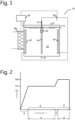
- FIG. 1 an embodiment of an apparatus for anodizing an article of aluminium or aluminium alloy according to the invention is represented diagrammatically.
- the apparatus in its entirety is indicated by reference numeral 10.
- the anodizing apparatus 10 comprises an immersion tank 12 having upstanding walls 14 and a bottom 16. Along one or more of the walls 14, in particular pair(s) of opposite walls counterelectrodes 18 are arranged, which are electrically connected as cathodes to a DC voltage source 20.
- a support 22 carries the article 24 to be anodized.
- the article 24 is electrically connected as an anode to the DC voltage source 20 by means of an anode connector 26.
- a heat exchanger 28 controlled by control unit 30 is provided as a temperature regulator enabling maintaining the anodizing temperature of a liquid electrolyte 32, that is contained in the tank 12, at a desired temperature value.
- the electrolyte 32 is an aqueous solution of sulphuric acid and phosphoric acid in a concentration of 5-50 g/l and 2-50 g/l respectively.
- the liquid electrolyte is typically replenished partially on a regular basis.
- the Al content is maintained at a level below 5 g/l.
- the tank 12 has an open top side so that the article 24 can be brought into the tank 12 from above and dipped into the electrolyte 32, and after anodizing can be lifted upwardly out of electrolyte 32 and the tank 12.
- Fig. 2 shows a preferred embodiment of the anodizing method according to the invention as a plot of the anodic voltage Va (V) as a function of time (minutes), wherein initially the anodic voltage is raised at 1-10 V/min in a first substep A to a first anodic voltage Va1, such as 17 V. During a second substep B the anodic voltage Va1 is maintained for a first period of time t1 such as 10-20 minutes. At the end of this first period of time the anodic voltage is increased to a second anodic voltage Va2 in a third substep C and held at this voltage Va2 in a fourth substep D during an additional period of time t2, which is usually in the range up to 5 minutes.
- V anodic voltage
- anodizing the electrolyte needs to be removed such as by spray rinsing or immersion rinsing.
- the samples can be rinsed within seconds, such as 5 seconds.
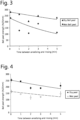
- the time between anodizing and rinsing is in the order of minutes, typically 2 ⁇ 1 minutes. It has appeared that additional dissolution and thus deterioration of the porous oxide coating occurs during the delay between anodizing and removal of the electrolyte from the article by rinsing. In particular it has appeared that dissolution is most pronounced upon treating unclad aluminium alloy (e.g. AA2024-T3 bare) articles.
- Figure 4 shows the Bell peel strength versus rinse delay time of AA2024-T3 unclad, anodized at 28 °C in an electrolyte comprising 75 g/l phosphoric acid and 50 g/l sulphuric acid, and subsequently provided with phenol formaldehyde bonding primer Redux101 and bonded with 125°C curing epoxy adhesive AF163-2K.
- the invention has solved the problems associated with oxide dissolution and resulting peel strength reduction by a totally different approach, allowing elimination of all chromate ((Cr(VI) compounds in the metal bonded products.
- a sulphuric acid concentration of 10 g/l was selected for anodizing experiments and compared with previously tested sulphuric acid concentration of 50 g/l. Additionally the phosphoric acid concentration was varied with 0, 40 and 80 g/I to distinguish the role of the acids separately. Voltages have been varied to achieve a current density of 0.8 ⁇ 0.4 A/dm 2 . Tests were first started on AA2024-T3 bare, because of the observed oxide dissolution problems, and AA7075-T6 alclad, because this alloy is in general most susceptible to bondline corrosion.
- the extent of bondline corrosion is typically determined with samples of metal to metal bonded sheets that are machined to 25 mm wide strips, in the same way as peel specimens are made (e.g. according to EN 2243-2). These samples are exposed to a desired duration of neutral salt spray according to ISO 9227. The exposure to salt may, without mechanical loading, result in delamination, initiated by corrosion at the unprotected edges of the strips that were cut by machining. After the exposure the strips are peeled open to measure the extent of bondline corrosion, defined as the relative portion of the area of delamination initiated by corrosion, compared to the initial bond area.
- Pretreated aluminium sheets have been provided with phenol formaldehyde bonding primer Redux101 and bonded with 125°C curing epoxy adhesive AF163-2K.
- Some typical results of bondline corrosion with AA7075-T6 alclad after 180 days salt spray exposure are given in Table 2.
- Table 3 offers wet Bell peel strength data for AA2024-T3. For both aluminium alloys in these Tables 2 and 3 respectively anodizing was performed at a constant voltage at the indicated current densities for 30 minutes, except #3 (20 min) in Table 3.
- Table 2 Bondline corrosion values after 180 days salt spray exposure of 0.8 mm and 1.6 mm AA7075-T6 alclad, provided with phenol formaldehyde bondprimer Redux101 and bonded with 125°C curing epoxy adhesive AF163-2K, with anodizing parameters varied.
- Sulphuric acid concentration g/l
- Phosphoric acid concentration g/l
- Anodizing temperature (°C) Current density (A/dm2) Wet Bell peel (N /25mm) #1 #2 #3 average 10 0 20 0,24 10 8 19 13 35 0,42 15 5 14 11 50 0,77 215 154 195 188 58 163 149 163 158 10 40 20 0,40 166 136 143 148 35 0,80 150 80 145 125 50 1,21 172 147 188 169 10 80 20 0,38 171 53 149 124 35 0,85 207 79 151 146 50 1,70 265 192 272 243 50 0 20 0,42 3 7 3 4 35 0,72 255 264 312 277 50 1,05 154 128 117 133 50 40 20 0,30 46 30 199 92 35 0,70 269 206 242 239 50 1,24 219 177 249 215 50 80 20 0,38 204 162 183 183 35 0,76 136 98 166 133 50 1,44 25
- Table 4 Wet Bell peel strength values of bonded samples, made of 0.5 mm and 1.6 mm AA2024-T3 bare sheets and of 0.5 mm and 1.6 mm AA7075-T6 bare sheets, by anodizing the sheets at an anodizing voltage of 15 V during 28 minutes, and by subsequent application of phenol formaldehyde bondprimer Redux101 and bonding with 125°C curing epoxy adhesive AF163-2K.
- the anodizing parameters regarding sulphuric acid concentration, phosphoric acid concentration, temperature and rinsing delay time were varied.
- H 2 SO 4 (g/l) H 3 PO 4 (g/l) Temp H 2 SO 4 (g/l) H 3 PO 4 (g/l) Temp.
- Table 6 shows that at aluminium concentrations below 5 g/l (Run no. 1-8) average bondline corrosion of AA2024-T3 alclad bonded with AF163-2K is less than 10%, which is considered acceptable in industry. At higher concentrations (Run no. 9-15) average bondline corrosion increases to an undesired level.
Landscapes
- Chemical & Material Sciences (AREA)
- Engineering & Computer Science (AREA)
- Chemical Kinetics & Catalysis (AREA)
- Electrochemistry (AREA)
- Materials Engineering (AREA)
- Metallurgy (AREA)
- Organic Chemistry (AREA)
- General Chemical & Material Sciences (AREA)
- Inorganic Chemistry (AREA)
- Adhesives Or Adhesive Processes (AREA)
- Application Of Or Painting With Fluid Materials (AREA)
- Laminated Bodies (AREA)
Claims (14)
- Procédé d'anodisation d'un article (24) d'aluminium ou d'alliage d'aluminium pour appliquer un revêtement d'oxyde anodique poreux en préparation de l'application subséquente d'une couche de liaison adhésive et/ou d'une couche d'apprêt, comprenant les étapes de- une étape d'immersion d'immersion de l'article devant être anodisé dans un électrolyte dans un réservoir (12), l'électrolyte étant constitué d'une solution aqueuse d'acide sulfurique et d'acide phosphorique, la concentration en aluminium dans l'électrolyte étant éventuellement maintenue à une valeur de 4,8 g/l ou moins, et d'agencement de l'article comme une anode par rapport à une ou plusieurs contre-électrodes (18) qui sont agencées comme cathodes dans l'électrolyte ;- une étape d'anodisation d'application d'une tension d'anode positive Va à l'article commuté comme anode,la concentration d'acide sulfurique dans l'électrolyte étant dans la plage de 5 à 50 g/l, la concentration d'acide phosphorique dans l'électrolyte étant dans la plage de 2 à 50 g/l, la température de l'électrolyte étant dans la plage de 33 à 60 °C pendant l'étape d'anodisation, et le temps d'anodisation étant dans la plage de 15 à 35 minutes et la tension d'anode positive étant modifiée pour atteindre une densité de courant de 0,8 ± 0,4 A/dm2.
- Procédé selon la revendication 1, comprenant en outre une étape de rinçage de rinçage de l'article anodisé avec un agent de rinçage et une étape de séchage de séchage de l'article anodisé rincé.
- Procédé selon la revendication 1 ou la revendication 2, la concentration en acide sulfurique étant dans la plage de 10 à 40 g/l.
- Procédé selon l'une quelconque des revendications précédentes 1 à 3, la concentration en acide phosphorique étant dans la plage de 2 à 40 g/l, préférablement dans la plage de 4 à 16 g/l.
- Procédé selon l'une quelconque des revendications précédentes, la température de l'électrolyte étant dans la plage de 40 à 54 °C, plus préférablement de 40 à 50 °C, en particulier de 42 à 48 °C.
- Procédé selon l'une quelconque des revendications précédentes, la tension d'anode étant dans la plage de 8 à 34 V.
- Procédé selon l'une quelconque des revendications précédentes, l'étape d'anodisation comprenant une première sous-étape d'augmentation de manière graduelle de la tension d'anode appliquée jusqu'à une première valeur dans la plage de 8 à 34 V,une deuxième sous-étape de maintien de la tension d'anode appliquée à ladite première valeur pendant un premier temps d'anodisation,une troisième sous-étape d'élévation de la tension d'anode appliquée jusqu'à une deuxième valeur dans la plage de 8 à 34 V, laquelle deuxième valeur est supérieure à la première valeur, etune quatrième sous-étape de maintien de la tension d'anode appliquée à ladite deuxième valeur pendant un deuxième temps d'anodisation.
- Procédé selon la revendication 7, le deuxième temps d'anodisation étant inférieur au premier temps d'anodisation.
- Procédé de fabrication d'un article anodisé peint, comprenant :- une anodisation d'un article par le procédé d'anodisation selon l'une quelconque des revendications précédentes,- une application d'un apprêt à peinture sur la ou les surfaces devant être peintes de l'article anodisé, et la peinture de la ou des surfaces apprêtées de l'article.
- Procédé selon la revendication 9, un apprêt de liaison exempt de chromate (Cr(VI)) étant appliqué sur l'article anodisé avant l'application de l'apprêt à peinture.
- Procédé de fabrication d'un produit lié métallique comprenant au moins deux articles métalliques d'aluminium ou d'alliage d'aluminium liés l'un à l'autre au moyen d'un adhésif, comprenant les étapes de :anodisation des au moins deux articles métalliques par le procédé d'anodisation selon l'une quelconque des revendications précédentes 1 à 8,application d'une couche d'un apprêt de liaison sur lesdites surfaces des articles métalliques devant être liées ensemble,- application d'une couche d'un adhésif sur au moins l'une desdites surfaces au-dessus de la couche d'apprêt de liaison,empilement des au moins deux articles métalliques de sorte que les surfaces de ceux-ci, sur lesquelles la couche d'apprêt de liaison et éventuellement l'adhésif est/sont appliqué(e)(s), se fassent face, etliaison des articles métalliques empilés ensemble sous pression élevée.
- Procédé de fabrication d'un produit lié métallique selon la revendication 11, les au moins deux articles métalliques étant des feuilles métalliques d'aluminium ou d'alliage d'aluminium, de sorte que le produit lié métallique est un stratifié lié métallique.
- Procédé de fabrication d'un produit lié métallique selon la revendication 12, l'adhésif étant un adhésif renforcé par des fibres ou l'adhésif étant imprégné dans des fibres de renforcement, de sorte que le produit lié métallique est un stratifié métallique de fibres.
- Procédé selon l'une quelconque des revendications précédentes 11 à 13, l'apprêt de liaison étant un apprêt de liaison exempt de chromate (Cr(VI)).
Applications Claiming Priority (2)
| Application Number | Priority Date | Filing Date | Title |
|---|---|---|---|
| NL2016630 | 2016-04-18 | ||
| PCT/NL2017/050240 WO2017183965A1 (fr) | 2016-04-18 | 2017-04-18 | Procédé d'anodisation d'un article en aluminium ou en alliage de celui-ci |
Publications (2)
| Publication Number | Publication Date |
|---|---|
| EP3445896A1 EP3445896A1 (fr) | 2019-02-27 |
| EP3445896B1 true EP3445896B1 (fr) | 2023-10-18 |
Family
ID=56117936
Family Applications (1)
| Application Number | Title | Priority Date | Filing Date |
|---|---|---|---|
| EP17719737.3A Active EP3445896B1 (fr) | 2016-04-18 | 2017-04-18 | Procédé d'anodisation d'un article en aluminium ou en alliage de celui-ci |
Country Status (6)
| Country | Link |
|---|---|
| US (1) | US11326269B2 (fr) |
| EP (1) | EP3445896B1 (fr) |
| JP (1) | JP7019671B2 (fr) |
| CN (1) | CN109415836B (fr) |
| CA (1) | CA3021184C (fr) |
| WO (1) | WO2017183965A1 (fr) |
Families Citing this family (11)
| Publication number | Priority date | Publication date | Assignee | Title |
|---|---|---|---|---|
| WO2019143322A1 (fr) * | 2018-01-17 | 2019-07-25 | Hewlett-Packard Development Company, L.P. | Électrodéposition non aqueuse à base d'électrolytes sur des substrats de magnésium |
| CN109778281A (zh) * | 2019-03-27 | 2019-05-21 | 珠海市玛斯特恒新铝合金加工有限公司 | 两段式电压氧化提高铝合金耐蚀性的方法 |
| CA3131624C (fr) | 2019-05-28 | 2024-11-19 | Novelis Koblenz Gmbh | Produit aerospatial de serie 2xxx plaque |
| ES2927229T3 (es) | 2019-08-22 | 2022-11-03 | Novelis Koblenz Gmbh | Producto aeroespacial de revestimiento de la serie 2XXX |
| EP3789507B1 (fr) | 2019-09-05 | 2022-08-10 | Novelis Koblenz GmbH | Produit aérospatial plaqué de la série 2xxx |
| CN110528043B (zh) * | 2019-09-17 | 2021-05-07 | 蓝思精密(东莞)有限公司 | 金属板材的防汗液处理工艺及金属板材、金属壳体和电子设备 |
| ES2947773T3 (es) | 2020-04-29 | 2023-08-18 | Novelis Koblenz Gmbh | Producto aeroespacial de revestimiento de la serie 2XXX |
| CN111876811B (zh) * | 2020-07-27 | 2022-02-25 | 上海交通大学 | 一种铝锂合金微弧氧化方法及其采用的电解液 |
| KR102562891B1 (ko) * | 2022-03-30 | 2023-08-02 | 동의대학교 산학협력단 | 프리패터닝 공정을 생략한 알루미늄 6000계열 합금에 균일한 pop 나노구조물 생성을 위한 최적의 양극산화 피막 제조 방법 |
| KR102562887B1 (ko) * | 2022-04-07 | 2023-08-02 | 동의대학교 산학협력단 | 프리패터닝 공정을 생략한 알루미늄 1000계열 합금에 균일한 pop 나노구조물 생성을 위한 최적의 양극산화 피막 제조 방법 |
| EP4269662A1 (fr) * | 2022-04-29 | 2023-11-01 | Airbus Operations GmbH | Procédés d'anodisation de la surface d'une pièce et de revêtement ultérieur de la surface anodisée de la pièce à des fins de protection contre la corrosion |
Citations (2)
| Publication number | Priority date | Publication date | Assignee | Title |
|---|---|---|---|---|
| US4859288A (en) * | 1986-02-03 | 1989-08-22 | Alcan International Limited | Porous anodic aluminum oxide films |
| CN101280449A (zh) * | 2007-04-06 | 2008-10-08 | 北京化工大学 | 一种铝合金结构粘接用混合酸阳极氧化方法 |
Family Cites Families (16)
| Publication number | Priority date | Publication date | Assignee | Title |
|---|---|---|---|---|
| GB1169647A (en) | 1966-09-05 | 1969-11-05 | Matsushita Electric Industrial Co Ltd | A Method for Forming Anodic Oxide Film on Aluminium or Aluminium Alloy |
| US4127451A (en) * | 1976-02-26 | 1978-11-28 | The Boeing Company | Method for providing environmentally stable aluminum surfaces for adhesive bonding and product produced |
| DE2836803A1 (de) | 1978-08-23 | 1980-03-06 | Hoechst Ag | Verfahren zur anodischen oxidation von aluminium und dessen verwendung als druckplatten-traegermaterial |
| DE4243164A1 (de) | 1992-12-19 | 1994-06-23 | Deutsche Aerospace Airbus | Verfahren zur anodischen Oxidation |
| US5486283A (en) * | 1993-08-02 | 1996-01-23 | Rohr, Inc. | Method for anodizing aluminum and product produced |
| FR2838754B1 (fr) * | 2002-04-22 | 2005-03-18 | Messier Bugatti | Procede d'anodisation d'une piece en alliage d'aluminium |
| DE10361888B3 (de) * | 2003-12-23 | 2005-09-22 | Airbus Deutschland Gmbh | Anodisierverfahren für Aluminiumwerkstoffe |
| US20050276743A1 (en) * | 2004-01-13 | 2005-12-15 | Jeff Lacombe | Method for fabrication of porous metal templates and growth of carbon nanotubes and utilization thereof |
| GB0500407D0 (en) | 2005-01-10 | 2005-02-16 | Short Brothers Plc | Anodising aluminium alloy |
| ES2324850B1 (es) | 2007-10-29 | 2010-06-07 | Airbus Operations, S.L. | Procedimiento de anodizado de aluminio o aleaciones de aluminio. |
| JP2013033956A (ja) * | 2011-07-04 | 2013-02-14 | Fujifilm Corp | 絶縁反射基板およびその製造方法 |
| CN103318102B (zh) | 2013-07-10 | 2015-11-18 | 宁波华翔特雷姆汽车饰件有限公司 | 一种汽车装饰板层结构以及层结构处理工艺 |
| JP6237999B2 (ja) | 2013-11-07 | 2017-11-29 | 株式会社サーテック永田 | 接合品の製造方法 |
| JP6094779B2 (ja) * | 2013-12-06 | 2017-03-15 | 株式会社豊田中央研究所 | 金属樹脂複合材料及びその製造方法、並びに酸化アルミニウム被膜を有するアルミニウム基材 |
| CN104015917A (zh) | 2014-06-16 | 2014-09-03 | 上海飞机制造有限公司 | 一种用作飞机壁板的纤维铝锂合金层板及其制备方法 |
| CN105274602A (zh) | 2014-07-09 | 2016-01-27 | 黄燕滨 | 基于稀土改性磷硫酸阳极氧化的防腐蚀表面处理方法 |
-
2017
- 2017-04-18 CA CA3021184A patent/CA3021184C/fr active Active
- 2017-04-18 EP EP17719737.3A patent/EP3445896B1/fr active Active
- 2017-04-18 WO PCT/NL2017/050240 patent/WO2017183965A1/fr not_active Ceased
- 2017-04-18 US US16/094,033 patent/US11326269B2/en active Active
- 2017-04-18 JP JP2019506336A patent/JP7019671B2/ja active Active
- 2017-04-18 CN CN201780024108.6A patent/CN109415836B/zh active Active
Patent Citations (2)
| Publication number | Priority date | Publication date | Assignee | Title |
|---|---|---|---|---|
| US4859288A (en) * | 1986-02-03 | 1989-08-22 | Alcan International Limited | Porous anodic aluminum oxide films |
| CN101280449A (zh) * | 2007-04-06 | 2008-10-08 | 北京化工大学 | 一种铝合金结构粘接用混合酸阳极氧化方法 |
Non-Patent Citations (2)
| Title |
|---|
| MORISAKI SHIGEYOSHI ET AL: "Morphology and Boron Content of Anodic Aluminum Oxide Films Formed in Boric/Sulfuric Acid Baths.", HYOMEN GIJUTSU - JOURNAL OF THE SURFACE FINISHING SOCIETY OFJAPAN, vol. 45, no. 11, 1 January 1994 (1994-01-01), JP, pages 1152 - 1157, XP055955970, ISSN: 0915-1869, DOI: 10.4139/sfj.45.1152 * |
| PAZ MARTÍNEZ-VIADEMONTE MARIANA ET AL: "A Review on Anodizing of Aerospace Aluminum Alloys for Corrosion Protection", COATINGS, vol. 10, no. 11, 18 November 2020 (2020-11-18), pages 1 - 30, XP055849321, DOI: 10.3390/coatings10111106 * |
Also Published As
| Publication number | Publication date |
|---|---|
| JP2019513906A (ja) | 2019-05-30 |
| CN109415836A (zh) | 2019-03-01 |
| US11326269B2 (en) | 2022-05-10 |
| CA3021184C (fr) | 2024-01-16 |
| JP7019671B2 (ja) | 2022-02-15 |
| EP3445896A1 (fr) | 2019-02-27 |
| CA3021184A1 (fr) | 2017-10-26 |
| BR112018071249A2 (pt) | 2019-02-05 |
| US20190112725A1 (en) | 2019-04-18 |
| WO2017183965A1 (fr) | 2017-10-26 |
| CN109415836B (zh) | 2021-05-07 |
Similar Documents
| Publication | Publication Date | Title |
|---|---|---|
| US11326269B2 (en) | Anodizing an article of aluminum or alloy thereof | |
| US4085012A (en) | Method for providing environmentally stable aluminum surfaces for adhesive bonding and product produced | |
| EP0405624B1 (fr) | Procédé pour anodiser de l'aluminium | |
| CN101994145B (zh) | 镁合金表面微弧氧化制备高耐蚀性陶瓷涂层溶液及其应用 | |
| EP1369503B1 (fr) | Traitement de surface résistant à la corosion pour collage structurel à des surfaces métalliques | |
| KR102660217B1 (ko) | 박형 양극처리된 필름 층을 함유하는 연속 코일 및 이를 제조하기 위한 시스템 및 방법 | |
| US7922889B2 (en) | Anodising aluminum alloy | |
| EP3109343A1 (fr) | Plaque d'alliage d'aluminium, corps assemblé et organe d'automobile | |
| US20050150771A1 (en) | Method for anodizing aluminum materials | |
| WO2016094380A1 (fr) | Traitement de surfaces métalliques portant une couche de conversion avec un agent aqueux contenant du calcium | |
| Rudawska | Adhesive properties of metals and metal alloys | |
| US11015259B2 (en) | Plasma electrolytic oxidation (PEO) coated peelable shims | |
| US20040050709A1 (en) | Accelerated sulfuric acid and boric sulfuric acid anodize process | |
| JP2004018906A (ja) | 表面処理アルミニウム材、その製造方法、アルミニウム成形体及びアルミニウム缶 | |
| BR112018071249B1 (pt) | Métodos para anodizar um artigo de alumínio ou liga de alumínio e para fabricar um artigo anodizado pintado e um produto unido de metal, e, componente aeroestrutural | |
| JP2003073853A (ja) | 耐食性に優れる表面処理アルミニウム材及びその製造方法 | |
| Surowska et al. | Structure and chemistry of fiber metal laminates | |
| Bijlmer | Chromic acid anodize process as used in Europe | |
| JP2017048456A (ja) | アルミニウム合金材、接合体、自動車用部材、アルミニウム合金材の製造方法及び接合体の製造方法 | |
| Bretz et al. | Adhesive bonding and corrosion protection of a die cast magnesium automotive door | |
| CA1118708A (fr) | Methode de fabrication de produits en aluminium enduits, a joints colles a l'epreuve des intemperies | |
| Eickner | Adhesive bonding properties of various metals as affected by chemical and anodizing treatments of the surfaces | |
| Eickner | Effect of surface treatment on the adhesive bonding properties of magnesium | |
| JP2024096890A (ja) | 金属基材の電解加工 | |
| JP2003154603A (ja) | フィルム密着性に優れた樹脂フィルム被覆用アルミニウム材および樹脂フィルム被覆アルミニウム材 |
Legal Events
| Date | Code | Title | Description |
|---|---|---|---|
| STAA | Information on the status of an ep patent application or granted ep patent |
Free format text: STATUS: UNKNOWN |
|
| STAA | Information on the status of an ep patent application or granted ep patent |
Free format text: STATUS: THE INTERNATIONAL PUBLICATION HAS BEEN MADE |
|
| PUAI | Public reference made under article 153(3) epc to a published international application that has entered the european phase |
Free format text: ORIGINAL CODE: 0009012 |
|
| STAA | Information on the status of an ep patent application or granted ep patent |
Free format text: STATUS: REQUEST FOR EXAMINATION WAS MADE |
|
| 17P | Request for examination filed |
Effective date: 20181119 |
|
| AK | Designated contracting states |
Kind code of ref document: A1 Designated state(s): AL AT BE BG CH CY CZ DE DK EE ES FI FR GB GR HR HU IE IS IT LI LT LU LV MC MK MT NL NO PL PT RO RS SE SI SK SM TR |
|
| AX | Request for extension of the european patent |
Extension state: BA ME |
|
| DAV | Request for validation of the european patent (deleted) | ||
| DAX | Request for extension of the european patent (deleted) | ||
| STAA | Information on the status of an ep patent application or granted ep patent |
Free format text: STATUS: EXAMINATION IS IN PROGRESS |
|
| 17Q | First examination report despatched |
Effective date: 20211014 |
|
| GRAP | Despatch of communication of intention to grant a patent |
Free format text: ORIGINAL CODE: EPIDOSNIGR1 |
|
| STAA | Information on the status of an ep patent application or granted ep patent |
Free format text: STATUS: GRANT OF PATENT IS INTENDED |
|
| INTG | Intention to grant announced |
Effective date: 20230524 |
|
| RIN1 | Information on inventor provided before grant (corrected) |
Inventor name: VAN DEN HEUVEL, VINCENT KORNELIS JOHANNES Inventor name: DE KOK, JOHANNES MARINUS MARIA |
|
| GRAS | Grant fee paid |
Free format text: ORIGINAL CODE: EPIDOSNIGR3 |
|
| GRAA | (expected) grant |
Free format text: ORIGINAL CODE: 0009210 |
|
| STAA | Information on the status of an ep patent application or granted ep patent |
Free format text: STATUS: THE PATENT HAS BEEN GRANTED |
|
| AK | Designated contracting states |
Kind code of ref document: B1 Designated state(s): AL AT BE BG CH CY CZ DE DK EE ES FI FR GB GR HR HU IE IS IT LI LT LU LV MC MK MT NL NO PL PT RO RS SE SI SK SM TR |
|
| REG | Reference to a national code |
Ref country code: GB Ref legal event code: FG4D |
|
| REG | Reference to a national code |
Ref country code: CH Ref legal event code: EP |
|
| REG | Reference to a national code |
Ref country code: DE Ref legal event code: R096 Ref document number: 602017075423 Country of ref document: DE |
|
| REG | Reference to a national code |
Ref country code: IE Ref legal event code: FG4D |
|
| P01 | Opt-out of the competence of the unified patent court (upc) registered |
Effective date: 20231214 |
|
| REG | Reference to a national code |
Ref country code: LT Ref legal event code: MG9D |
|
| REG | Reference to a national code |
Ref country code: NL Ref legal event code: MP Effective date: 20231018 |
|
| REG | Reference to a national code |
Ref country code: AT Ref legal event code: MK05 Ref document number: 1622536 Country of ref document: AT Kind code of ref document: T Effective date: 20231018 |
|
| PG25 | Lapsed in a contracting state [announced via postgrant information from national office to epo] |
Ref country code: NL Free format text: LAPSE BECAUSE OF FAILURE TO SUBMIT A TRANSLATION OF THE DESCRIPTION OR TO PAY THE FEE WITHIN THE PRESCRIBED TIME-LIMIT Effective date: 20231018 |
|
| PG25 | Lapsed in a contracting state [announced via postgrant information from national office to epo] |
Ref country code: GR Free format text: LAPSE BECAUSE OF FAILURE TO SUBMIT A TRANSLATION OF THE DESCRIPTION OR TO PAY THE FEE WITHIN THE PRESCRIBED TIME-LIMIT Effective date: 20240119 |
|
| PG25 | Lapsed in a contracting state [announced via postgrant information from national office to epo] |
Ref country code: IS Free format text: LAPSE BECAUSE OF FAILURE TO SUBMIT A TRANSLATION OF THE DESCRIPTION OR TO PAY THE FEE WITHIN THE PRESCRIBED TIME-LIMIT Effective date: 20240218 |
|
| PG25 | Lapsed in a contracting state [announced via postgrant information from national office to epo] |
Ref country code: LT Free format text: LAPSE BECAUSE OF FAILURE TO SUBMIT A TRANSLATION OF THE DESCRIPTION OR TO PAY THE FEE WITHIN THE PRESCRIBED TIME-LIMIT Effective date: 20231018 |
|
| PG25 | Lapsed in a contracting state [announced via postgrant information from national office to epo] |
Ref country code: AT Free format text: LAPSE BECAUSE OF FAILURE TO SUBMIT A TRANSLATION OF THE DESCRIPTION OR TO PAY THE FEE WITHIN THE PRESCRIBED TIME-LIMIT Effective date: 20231018 |
|
| PG25 | Lapsed in a contracting state [announced via postgrant information from national office to epo] |
Ref country code: ES Free format text: LAPSE BECAUSE OF FAILURE TO SUBMIT A TRANSLATION OF THE DESCRIPTION OR TO PAY THE FEE WITHIN THE PRESCRIBED TIME-LIMIT Effective date: 20231018 |
|
| PG25 | Lapsed in a contracting state [announced via postgrant information from national office to epo] |
Ref country code: LT Free format text: LAPSE BECAUSE OF FAILURE TO SUBMIT A TRANSLATION OF THE DESCRIPTION OR TO PAY THE FEE WITHIN THE PRESCRIBED TIME-LIMIT Effective date: 20231018 Ref country code: IS Free format text: LAPSE BECAUSE OF FAILURE TO SUBMIT A TRANSLATION OF THE DESCRIPTION OR TO PAY THE FEE WITHIN THE PRESCRIBED TIME-LIMIT Effective date: 20240218 Ref country code: GR Free format text: LAPSE BECAUSE OF FAILURE TO SUBMIT A TRANSLATION OF THE DESCRIPTION OR TO PAY THE FEE WITHIN THE PRESCRIBED TIME-LIMIT Effective date: 20240119 Ref country code: ES Free format text: LAPSE BECAUSE OF FAILURE TO SUBMIT A TRANSLATION OF THE DESCRIPTION OR TO PAY THE FEE WITHIN THE PRESCRIBED TIME-LIMIT Effective date: 20231018 Ref country code: BG Free format text: LAPSE BECAUSE OF FAILURE TO SUBMIT A TRANSLATION OF THE DESCRIPTION OR TO PAY THE FEE WITHIN THE PRESCRIBED TIME-LIMIT Effective date: 20240118 Ref country code: AT Free format text: LAPSE BECAUSE OF FAILURE TO SUBMIT A TRANSLATION OF THE DESCRIPTION OR TO PAY THE FEE WITHIN THE PRESCRIBED TIME-LIMIT Effective date: 20231018 Ref country code: PT Free format text: LAPSE BECAUSE OF FAILURE TO SUBMIT A TRANSLATION OF THE DESCRIPTION OR TO PAY THE FEE WITHIN THE PRESCRIBED TIME-LIMIT Effective date: 20240219 |
|
| PG25 | Lapsed in a contracting state [announced via postgrant information from national office to epo] |
Ref country code: SE Free format text: LAPSE BECAUSE OF FAILURE TO SUBMIT A TRANSLATION OF THE DESCRIPTION OR TO PAY THE FEE WITHIN THE PRESCRIBED TIME-LIMIT Effective date: 20231018 Ref country code: RS Free format text: LAPSE BECAUSE OF FAILURE TO SUBMIT A TRANSLATION OF THE DESCRIPTION OR TO PAY THE FEE WITHIN THE PRESCRIBED TIME-LIMIT Effective date: 20231018 Ref country code: PL Free format text: LAPSE BECAUSE OF FAILURE TO SUBMIT A TRANSLATION OF THE DESCRIPTION OR TO PAY THE FEE WITHIN THE PRESCRIBED TIME-LIMIT Effective date: 20231018 Ref country code: NO Free format text: LAPSE BECAUSE OF FAILURE TO SUBMIT A TRANSLATION OF THE DESCRIPTION OR TO PAY THE FEE WITHIN THE PRESCRIBED TIME-LIMIT Effective date: 20240118 Ref country code: LV Free format text: LAPSE BECAUSE OF FAILURE TO SUBMIT A TRANSLATION OF THE DESCRIPTION OR TO PAY THE FEE WITHIN THE PRESCRIBED TIME-LIMIT Effective date: 20231018 Ref country code: HR Free format text: LAPSE BECAUSE OF FAILURE TO SUBMIT A TRANSLATION OF THE DESCRIPTION OR TO PAY THE FEE WITHIN THE PRESCRIBED TIME-LIMIT Effective date: 20231018 |
|
| PG25 | Lapsed in a contracting state [announced via postgrant information from national office to epo] |
Ref country code: DK Free format text: LAPSE BECAUSE OF FAILURE TO SUBMIT A TRANSLATION OF THE DESCRIPTION OR TO PAY THE FEE WITHIN THE PRESCRIBED TIME-LIMIT Effective date: 20231018 |
|
| REG | Reference to a national code |
Ref country code: DE Ref legal event code: R097 Ref document number: 602017075423 Country of ref document: DE |
|
| PG25 | Lapsed in a contracting state [announced via postgrant information from national office to epo] |
Ref country code: CZ Free format text: LAPSE BECAUSE OF FAILURE TO SUBMIT A TRANSLATION OF THE DESCRIPTION OR TO PAY THE FEE WITHIN THE PRESCRIBED TIME-LIMIT Effective date: 20231018 |
|
| PG25 | Lapsed in a contracting state [announced via postgrant information from national office to epo] |
Ref country code: SK Free format text: LAPSE BECAUSE OF FAILURE TO SUBMIT A TRANSLATION OF THE DESCRIPTION OR TO PAY THE FEE WITHIN THE PRESCRIBED TIME-LIMIT Effective date: 20231018 |
|
| PG25 | Lapsed in a contracting state [announced via postgrant information from national office to epo] |
Ref country code: SM Free format text: LAPSE BECAUSE OF FAILURE TO SUBMIT A TRANSLATION OF THE DESCRIPTION OR TO PAY THE FEE WITHIN THE PRESCRIBED TIME-LIMIT Effective date: 20231018 Ref country code: SK Free format text: LAPSE BECAUSE OF FAILURE TO SUBMIT A TRANSLATION OF THE DESCRIPTION OR TO PAY THE FEE WITHIN THE PRESCRIBED TIME-LIMIT Effective date: 20231018 Ref country code: RO Free format text: LAPSE BECAUSE OF FAILURE TO SUBMIT A TRANSLATION OF THE DESCRIPTION OR TO PAY THE FEE WITHIN THE PRESCRIBED TIME-LIMIT Effective date: 20231018 Ref country code: IT Free format text: LAPSE BECAUSE OF FAILURE TO SUBMIT A TRANSLATION OF THE DESCRIPTION OR TO PAY THE FEE WITHIN THE PRESCRIBED TIME-LIMIT Effective date: 20231018 Ref country code: EE Free format text: LAPSE BECAUSE OF FAILURE TO SUBMIT A TRANSLATION OF THE DESCRIPTION OR TO PAY THE FEE WITHIN THE PRESCRIBED TIME-LIMIT Effective date: 20231018 Ref country code: DK Free format text: LAPSE BECAUSE OF FAILURE TO SUBMIT A TRANSLATION OF THE DESCRIPTION OR TO PAY THE FEE WITHIN THE PRESCRIBED TIME-LIMIT Effective date: 20231018 Ref country code: CZ Free format text: LAPSE BECAUSE OF FAILURE TO SUBMIT A TRANSLATION OF THE DESCRIPTION OR TO PAY THE FEE WITHIN THE PRESCRIBED TIME-LIMIT Effective date: 20231018 |
|
| PLBE | No opposition filed within time limit |
Free format text: ORIGINAL CODE: 0009261 |
|
| STAA | Information on the status of an ep patent application or granted ep patent |
Free format text: STATUS: NO OPPOSITION FILED WITHIN TIME LIMIT |
|
| 26N | No opposition filed |
Effective date: 20240719 |
|
| PG25 | Lapsed in a contracting state [announced via postgrant information from national office to epo] |
Ref country code: SI Free format text: LAPSE BECAUSE OF FAILURE TO SUBMIT A TRANSLATION OF THE DESCRIPTION OR TO PAY THE FEE WITHIN THE PRESCRIBED TIME-LIMIT Effective date: 20231018 |
|
| PG25 | Lapsed in a contracting state [announced via postgrant information from national office to epo] |
Ref country code: SI Free format text: LAPSE BECAUSE OF FAILURE TO SUBMIT A TRANSLATION OF THE DESCRIPTION OR TO PAY THE FEE WITHIN THE PRESCRIBED TIME-LIMIT Effective date: 20231018 |
|
| PG25 | Lapsed in a contracting state [announced via postgrant information from national office to epo] |
Ref country code: MC Free format text: LAPSE BECAUSE OF FAILURE TO SUBMIT A TRANSLATION OF THE DESCRIPTION OR TO PAY THE FEE WITHIN THE PRESCRIBED TIME-LIMIT Effective date: 20231018 |
|
| PG25 | Lapsed in a contracting state [announced via postgrant information from national office to epo] |
Ref country code: MC Free format text: LAPSE BECAUSE OF FAILURE TO SUBMIT A TRANSLATION OF THE DESCRIPTION OR TO PAY THE FEE WITHIN THE PRESCRIBED TIME-LIMIT Effective date: 20231018 |
|
| REG | Reference to a national code |
Ref country code: CH Ref legal event code: PL |
|
| PG25 | Lapsed in a contracting state [announced via postgrant information from national office to epo] |
Ref country code: LU Free format text: LAPSE BECAUSE OF NON-PAYMENT OF DUE FEES Effective date: 20240418 |
|
| REG | Reference to a national code |
Ref country code: BE Ref legal event code: MM Effective date: 20240430 |
|
| PG25 | Lapsed in a contracting state [announced via postgrant information from national office to epo] |
Ref country code: LU Free format text: LAPSE BECAUSE OF NON-PAYMENT OF DUE FEES Effective date: 20240418 |
|
| PG25 | Lapsed in a contracting state [announced via postgrant information from national office to epo] |
Ref country code: BE Free format text: LAPSE BECAUSE OF NON-PAYMENT OF DUE FEES Effective date: 20240430 |
|
| PG25 | Lapsed in a contracting state [announced via postgrant information from national office to epo] |
Ref country code: BE Free format text: LAPSE BECAUSE OF NON-PAYMENT OF DUE FEES Effective date: 20240430 Ref country code: CH Free format text: LAPSE BECAUSE OF NON-PAYMENT OF DUE FEES Effective date: 20240430 |
|
| PG25 | Lapsed in a contracting state [announced via postgrant information from national office to epo] |
Ref country code: IE Free format text: LAPSE BECAUSE OF NON-PAYMENT OF DUE FEES Effective date: 20240418 |
|
| PGFP | Annual fee paid to national office [announced via postgrant information from national office to epo] |
Ref country code: DE Payment date: 20250305 Year of fee payment: 9 |
|
| PG25 | Lapsed in a contracting state [announced via postgrant information from national office to epo] |
Ref country code: CY Free format text: LAPSE BECAUSE OF FAILURE TO SUBMIT A TRANSLATION OF THE DESCRIPTION OR TO PAY THE FEE WITHIN THE PRESCRIBED TIME-LIMIT; INVALID AB INITIO Effective date: 20170418 |
|
| PG25 | Lapsed in a contracting state [announced via postgrant information from national office to epo] |
Ref country code: HU Free format text: LAPSE BECAUSE OF FAILURE TO SUBMIT A TRANSLATION OF THE DESCRIPTION OR TO PAY THE FEE WITHIN THE PRESCRIBED TIME-LIMIT; INVALID AB INITIO Effective date: 20170418 |
|
| PG25 | Lapsed in a contracting state [announced via postgrant information from national office to epo] |
Ref country code: FI Free format text: LAPSE BECAUSE OF FAILURE TO SUBMIT A TRANSLATION OF THE DESCRIPTION OR TO PAY THE FEE WITHIN THE PRESCRIBED TIME-LIMIT Effective date: 20231019 |
|
| PGFP | Annual fee paid to national office [announced via postgrant information from national office to epo] |
Ref country code: GB Payment date: 20260312 Year of fee payment: 10 |
|
| PGFP | Annual fee paid to national office [announced via postgrant information from national office to epo] |
Ref country code: FR Payment date: 20260309 Year of fee payment: 10 |