EP3446122B1 - Markergene für die klassifizierung von kolorektalkarzinomen, verfahren zur beurteilung von lymphknotenmetastasen zur prognose von dickdarmkrebs und kit dafür - Google Patents
Markergene für die klassifizierung von kolorektalkarzinomen, verfahren zur beurteilung von lymphknotenmetastasen zur prognose von dickdarmkrebs und kit dafür Download PDFInfo
- Publication number
- EP3446122B1 EP3446122B1 EP17786247.1A EP17786247A EP3446122B1 EP 3446122 B1 EP3446122 B1 EP 3446122B1 EP 17786247 A EP17786247 A EP 17786247A EP 3446122 B1 EP3446122 B1 EP 3446122B1
- Authority
- EP
- European Patent Office
- Prior art keywords
- expression levels
- slc35d3
- determining
- ceacam5
- postn
- Prior art date
- Legal status (The legal status is an assumption and is not a legal conclusion. Google has not performed a legal analysis and makes no representation as to the accuracy of the status listed.)
- Active
Links
Images



Classifications
-
- C—CHEMISTRY; METALLURGY
- C12—BIOCHEMISTRY; BEER; SPIRITS; WINE; VINEGAR; MICROBIOLOGY; ENZYMOLOGY; MUTATION OR GENETIC ENGINEERING
- C12Q—MEASURING OR TESTING PROCESSES INVOLVING ENZYMES, NUCLEIC ACIDS OR MICROORGANISMS; COMPOSITIONS OR TEST PAPERS THEREFOR; PROCESSES OF PREPARING SUCH COMPOSITIONS; CONDITION-RESPONSIVE CONTROL IN MICROBIOLOGICAL OR ENZYMOLOGICAL PROCESSES
- C12Q1/00—Measuring or testing processes involving enzymes, nucleic acids or microorganisms; Compositions therefor; Processes of preparing such compositions
- C12Q1/68—Measuring or testing processes involving enzymes, nucleic acids or microorganisms; Compositions therefor; Processes of preparing such compositions involving nucleic acids
- C12Q1/6876—Nucleic acid products used in the analysis of nucleic acids, e.g. primers or probes
- C12Q1/6883—Nucleic acid products used in the analysis of nucleic acids, e.g. primers or probes for diseases caused by alterations of genetic material
- C12Q1/6886—Nucleic acid products used in the analysis of nucleic acids, e.g. primers or probes for diseases caused by alterations of genetic material for cancer
-
- G—PHYSICS
- G01—MEASURING; TESTING
- G01N—INVESTIGATING OR ANALYSING MATERIALS BY DETERMINING THEIR CHEMICAL OR PHYSICAL PROPERTIES
- G01N33/00—Investigating or analysing materials by specific methods not covered by groups G01N1/00 - G01N31/00
- G01N33/48—Biological material, e.g. blood, urine; Haemocytometers
- G01N33/50—Chemical analysis of biological material, e.g. blood, urine; Testing involving biospecific ligand binding methods; Immunological testing
- G01N33/53—Immunoassay; Biospecific binding assay; Materials therefor
- G01N33/575—Immunoassay; Biospecific binding assay; Materials therefor for cancer
- G01N33/57535—Immunoassay; Biospecific binding assay; Materials therefor for cancer of the large intestine, e.g. colon, rectum or anus
-
- C—CHEMISTRY; METALLURGY
- C12—BIOCHEMISTRY; BEER; SPIRITS; WINE; VINEGAR; MICROBIOLOGY; ENZYMOLOGY; MUTATION OR GENETIC ENGINEERING
- C12Q—MEASURING OR TESTING PROCESSES INVOLVING ENZYMES, NUCLEIC ACIDS OR MICROORGANISMS; COMPOSITIONS OR TEST PAPERS THEREFOR; PROCESSES OF PREPARING SUCH COMPOSITIONS; CONDITION-RESPONSIVE CONTROL IN MICROBIOLOGICAL OR ENZYMOLOGICAL PROCESSES
- C12Q1/00—Measuring or testing processes involving enzymes, nucleic acids or microorganisms; Compositions therefor; Processes of preparing such compositions
- C12Q1/68—Measuring or testing processes involving enzymes, nucleic acids or microorganisms; Compositions therefor; Processes of preparing such compositions involving nucleic acids
-
- C—CHEMISTRY; METALLURGY
- C12—BIOCHEMISTRY; BEER; SPIRITS; WINE; VINEGAR; MICROBIOLOGY; ENZYMOLOGY; MUTATION OR GENETIC ENGINEERING
- C12Q—MEASURING OR TESTING PROCESSES INVOLVING ENZYMES, NUCLEIC ACIDS OR MICROORGANISMS; COMPOSITIONS OR TEST PAPERS THEREFOR; PROCESSES OF PREPARING SUCH COMPOSITIONS; CONDITION-RESPONSIVE CONTROL IN MICROBIOLOGICAL OR ENZYMOLOGICAL PROCESSES
- C12Q1/00—Measuring or testing processes involving enzymes, nucleic acids or microorganisms; Compositions therefor; Processes of preparing such compositions
- C12Q1/68—Measuring or testing processes involving enzymes, nucleic acids or microorganisms; Compositions therefor; Processes of preparing such compositions involving nucleic acids
- C12Q1/6844—Nucleic acid amplification reactions
- C12Q1/6851—Quantitative amplification
-
- C—CHEMISTRY; METALLURGY
- C12—BIOCHEMISTRY; BEER; SPIRITS; WINE; VINEGAR; MICROBIOLOGY; ENZYMOLOGY; MUTATION OR GENETIC ENGINEERING
- C12Q—MEASURING OR TESTING PROCESSES INVOLVING ENZYMES, NUCLEIC ACIDS OR MICROORGANISMS; COMPOSITIONS OR TEST PAPERS THEREFOR; PROCESSES OF PREPARING SUCH COMPOSITIONS; CONDITION-RESPONSIVE CONTROL IN MICROBIOLOGICAL OR ENZYMOLOGICAL PROCESSES
- C12Q2600/00—Oligonucleotides characterized by their use
- C12Q2600/112—Disease subtyping, staging or classification
-
- C—CHEMISTRY; METALLURGY
- C12—BIOCHEMISTRY; BEER; SPIRITS; WINE; VINEGAR; MICROBIOLOGY; ENZYMOLOGY; MUTATION OR GENETIC ENGINEERING
- C12Q—MEASURING OR TESTING PROCESSES INVOLVING ENZYMES, NUCLEIC ACIDS OR MICROORGANISMS; COMPOSITIONS OR TEST PAPERS THEREFOR; PROCESSES OF PREPARING SUCH COMPOSITIONS; CONDITION-RESPONSIVE CONTROL IN MICROBIOLOGICAL OR ENZYMOLOGICAL PROCESSES
- C12Q2600/00—Oligonucleotides characterized by their use
- C12Q2600/118—Prognosis of disease development
-
- C—CHEMISTRY; METALLURGY
- C12—BIOCHEMISTRY; BEER; SPIRITS; WINE; VINEGAR; MICROBIOLOGY; ENZYMOLOGY; MUTATION OR GENETIC ENGINEERING
- C12Q—MEASURING OR TESTING PROCESSES INVOLVING ENZYMES, NUCLEIC ACIDS OR MICROORGANISMS; COMPOSITIONS OR TEST PAPERS THEREFOR; PROCESSES OF PREPARING SUCH COMPOSITIONS; CONDITION-RESPONSIVE CONTROL IN MICROBIOLOGICAL OR ENZYMOLOGICAL PROCESSES
- C12Q2600/00—Oligonucleotides characterized by their use
- C12Q2600/158—Expression markers
Definitions
- the present invention relates to the field of classification, prognostics and treatment of cancer, in particular colorectal cancer.
- CRC Colorectal cancer
- stage III CRC anyTN1-2M0
- stage I T1-2 N0M0
- stage II T3-4N0M0
- tumor cells in lymph nodes may vary in aggressiveness, and that presence of tumor cells in the node in many cases is missed by the present standard method.
- lymph node metastasis In clinical practice, presence or absence of lymph node metastasis is currently determined by histopathological examination of hematoxylin & eosin (H&E) stained tissue sections of resected regional lymph nodes.
- H&E hematoxylin & eosin
- Present guidelines require that at least 12 lymph nodes should be examined ( Tsai H. L. et al. BMC Surg., vol. 16, p. 17 (2016 ))
- N1 signifies that 1 to 3 examined nodes were positive for presence of tumor cells and N2 that 4 to 6 nodes were positive.
- N2 patients have poorer prognosis than N1 patients.
- the lymph node ratio i.e., number of positive lymph nodes over total number of examined lymph nodes
- the main reasons why tumor cells are missed by the routine method are twofold: too small sample size and inadequate sensitivity.
- too small sample size and inadequate sensitivity.
- only a few % of the volume of the lymph node is examined by H&E staining of tissue sections.
- An alternative method is to determine the mRNA level of one or several biomarkers that is expressed in all tumor cells of this type, and to extract RNA from the entire lymph node or, as for ethical reasons is the current option, half the node. It has been shown that real time quantitative reverse transcriptase-polymerase chain reaction (qRT-PCR) analysis with copy standard is a most useful method for mRNA analysis of biomarkers. It is highly sensitive, objective, quantitative, and amendable for automation. It was found that mRNA analysis of the biomarker carcinoembryonic antigen (CEA, CEACAMS) is very useful for detection of tumor cells originating from the large intestine.
- CEA biomarker carcinoembryonic antigen
- This biomarker allowed the identification of stage I and stage II patients with tumor cells in their lymph nodes that were not detected by the present gold standard, i.e. histopathology of H&E stained sections ( Ohlsson L. et al. Br. J. Cancer, vol. 95, p. 218-225 (2006 ); Ohlsson L. et al. Int. J. Cancer, vol. 130, p. 1833-1843 (2012 )). Some of these patients have succumbed from recurrent disease ( Ohlsson L. et al. Br. J. Cancer, vol. 95, p. 218-225 (2006 ); Ohlsson L. et al. Int. J. Cancer, vol. 130, p.
- biomarker cytokeratin 20 (CK20) is also useful for this purpose, albeit somewhat less sensitive ( Ohlsson L. et al. Br. J. Cancer, vol. 95, p. 218-225 (2006 ).
- Qi-Wen et al 2009 discloses a method to determine the metastatic potential /tumor aggressiveness of colorectal cancer by determining the expression level of POSTN in a tumor sample and comparing with a reference.
- KLK6 kallikrein related peptidase 6
- a generally accepted pathway for the development of distant metastases in CRC is that tumor cells leave the primary site in colon or rectum via lymphatic vessels, first settle in a regional lymph node, and thereafter, spread to distant sites like the liver. It is the distant metastasis that eventually kills the patient.
- Evidence for this pathway is the fact that presence or absence of tumor cells in a regional lymph node is the best prognostic marker for CRC death or survival.
- the present invention concerns: 1) the identification of two new aggression biomarkers for CRC; one expressed in the CRC tumor cells themselves and the other in supporting cells in the microenvironment of the lymph node. 2) A method for determination of lymph node status, which accurately detects presence or absence of tumor cells in the lymph nodes, and in addition provides information on the aggressiveness of these cells. In the proposed method, quantitative mRNA levels of the 2 new biomarkers and 3 previously described biomarkers are determined. If applied for CRC lymph node analysis, it will accurately determine lymph node involvement and allow classification of CRC patients into different risk groups with respect to risk for recurrence and cancer death after the primary treatment, i.e. surgical resection of the tumor. This goal has hitherto not been possible to achieve.
- the present inventors have identified the expression levels of the genes solute carrier family 35 member D3 (SLC35D3) (GenBank NM_001008783) and periostin, osteoblast specific factor (POSTN) (GenBank NM_006475) as molecular biomarkers that can be used for determining the metastatic potential and/or tumor aggressiveness of a colorectal cancer in a subject.
- SLC35D3 solute carrier family 35 member D3
- POSTN osteoblast specific factor
- Expression levels of the genes SLC35D3 and POSTN can preferable be used together with the expression levels of the gene kallikrein related peptidase 6 (KLK6) (GenBank NM_002774), and even more preferably also together with the expression level of the gen mucin 2, oligomeric mucus/gel-forming (MUC2) (GenBank NM_002457) for determining the metastatic potential and/or tumor aggressiveness.
- KLK6 gene kallikrein related peptidase 6
- MUC2 oligomeric mucus/gel-forming
- the method can be applied to determine gene expression levels in regional lymph node samples obtained from the subject, or in primary intestinal tumor, blood, and/or feces samples obtained from the subject.
- the expression levels of these genes can be related to the expression level of the gene carcinoembryonic antigen related cell adhesion molecule 5 (CEACAM5) (GenBank NM_004363), which is a known tumor marker, and/or related to the level of 18S rRNA.
- CEACAM5 gene carcinoembryonic antigen related cell adhesion molecule 5
- one aspect of the present invention provides methods for determining the metastatic potential and/or tumor aggressiveness of a colorectal cancer in a subject, comprising the steps:
- the method can further comprise determining the gene expression level of the gene KLK6 in said sample.
- the first aspect of the present invention provides methods for determining the metastatic potential and/or tumor aggressiveness of a colorectal cancer in a subject, comprising the steps:
- the method can further comprise determining the gene expression level of the gene MUC2 in said sample.
- the first aspect of the present invention provides methods for determining the metastatic potential and/or tumor aggressiveness of a colorectal cancer in a subject, comprising the steps:
- the method can further comprise the steps
- Said cut-off values can be the ratios of the 7th decile of said reference patient population, the ratios of the 3 rd quartile of said reference patient population, or the ratios of the 8th decile of said reference patient population.
- the methods can be performed in vitro and/or ex vivo.
- the methods can further comprise the additional step of treating colorectal cancer in a subject in need thereof.
- the present invention provides methods of determining the metastatic potential and/or tumor aggressiveness of a colorectal cancer in a subject, comprising:
- the methods can be performed in vitro and/or ex vivo.
- the gene expression levels can be determined by quantifying the amount of mRNA expressed from said genes.
- the amount of mRNA can be determined by hybridization, sequencing or quantitative RT-PCR.
- the amount of mRNA can be determined by use of a method selected from microarray and bead array technologies, transcriptome sequencing, real time quantitative RT-PCR, multiplex quantitative RT-PCR.
- the gene expression levels can be determined using RNA or DNA copy standard and/or the 18S rRNA level can be determined using 18S rRNA standard.
- Another aspect of the present invention provides methods for determining the prognosis of a subject diagnosed with colorectal cancer.
- Said method can comprise determining the metastatic potential and/or tumor aggressiveness of a colorectal cancer in a subject using a method according to the present invention.
- Said methods can comprise determining that the subject has a good prognosis if the metastatic potential and/or tumor aggressiveness is low, or determining that the subject has a poor prognosis if the metastatic potential and/or tumor aggressiveness is high. Poor prognosis can be a decrease in the likelihood of survival compared to the good prognosis.
- the methods can be performed in vitro and/or ex vivo.
- Another aspect of the present invention provides methods for determining the treatment for a subject diagnosed with colorectal cancer and having a tumor.
- Said method can comprise determining the metastatic potential and/or tumor aggressiveness of a colorectal cancer in a subject using a method according to the present invention and determining the treatment for said subject dependent on the metastatic potential and/or tumor aggressiveness determined.
- the methods can be performed in vitro and/or ex vivo.
- the methods can comprise a step of determining the treatment to be given.
- the treatment can be to give postoperative treatment, e.g. chemotherapy, to a patient determined to have a high metastatic potential and/or tumor aggressiveness.
- the treatment can be to abstain from postoperative treatment to a patient with a low metastatic potential and/or tumor aggressiveness.
- kits for determining metastatic potential and/or tumor aggressiveness of a subject diagnosed with colorectal cancer can comprise nucleic acid primers and probes for determination of the gene expression levels, of one or more of the genes CEACAM5, KLK6, POSTN, SLC35D3, and MUC2 and optionally nucleic acid primers and probes for determination of the level of 18S rRNA.
- the invention provides a kit for determining metastatic potential and/or tumor aggressiveness of a subject diagnosed with colorectal cancer, comprising nucleic acid primers and probes for determination of the gene expression levels of the genes SLC35D3 and POSTN.
- the invention provides a kit for determining metastatic potential and/or tumor aggressiveness of a subject diagnosed with colorectal cancer, comprising nucleic acid primers and probes for determination of the gene expression levels of the genes SLC35D3, POSTN and KLK6.
- the invention provides a kit for determining metastatic potential and/or tumor aggressiveness of a subject diagnosed with colorectal cancer, comprising nucleic acid primers and probes for determination of the gene expression levels of the genes SLC35D3, POSTN and MUC2.
- the invention provides a kit for determining metastatic potential and/or tumor aggressiveness of a subject diagnosed with colorectal cancer, comprising nucleic acid primers and probes for determination of the gene expression levels of the genes SLC35D3, POSTN, KLK6 and MUC2.
- the invention provides a kit for determining metastatic potential and/or tumor aggressiveness of a subject diagnosed with colorectal cancer, comprising nucleic acid primers and probes for determination of the gene expression levels of the genes SLC35D3, POSTN, KLK6, MUC2, and CEACAM5.
- nucleic acid primers and probes can be selected from those given in Table 1. More specifically the nucleic acid primers and probes can be selected from SEQ ID NO:1, 2, 3, 4, 5, 6, 7, 8, 9, 10, 11, 12, 13 ,14, or 15.
- the kit can further comprise mRNA, RNA and/or DNA copy standards.
- a gene that is of importance for tumor progression is most likely expressed both in the primary tumor tissue and in secondary tumors present in a regional lymph node draining the intestine.
- a microarray-search for progression markers was performed by analyzing RNA from 4 different H&E positive lymph nodes (i.e. tumor cell containing lymph nodes) of 4 patients with stage III CRC plus 3 primary tumors from 3 of these patients.
- RNA from 7 control patients (lymph nodes from 2 ulcerative colitis patients, 1 Crohns' colitis patient, 1 colon lipoma patient and 3 normal colon epithelial cells samples) were also analyzed. CRC samples were compared individually relative to all control samples as one group.
- microarray data were filtered by setting statistical significance to P ⁇ 0.05, fold change to ⁇ 5, and minimum intensity to 15. In this way a number of genes that were expressed in most of the CRC samples ( ⁇ 5/7) with a fold change ⁇ 5 times were identified. Among these were SLC35D3, POSTN and KLK6,
- RNA samples including primary CRC tumors, normal colon tissue and purified colon epithelial cells, CRC cell lines, peripheral blood mononuclear cells (PBMCs), different immune cell lines and a fibroblast cell line were analyzed ( Table 3 ).
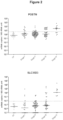
- the individual values of 56 primary CRC tumors and 5 normal colon samples are shown in Figure 1 .
- the result for CEACAM5 and MUC2 is included (Ohlsson L. Thesis, ISBN 978-91-7459-318-1 (2011)).
- the CRC cell lines express all marker mRNAs except POSTN, which instead is expressed at high levels in the fibroblast cell line.
- CEACAM5 is expressed at similar levels in primary CRC tumors and normal colon epithelial cells. Based on the latter finding and previous knowledge ( Ohlsson L. et al. Br. J. Cancer, vol. 95, p. 218-225 (2006 )), CEACAM5 was considered to be the preferable marker for cells originating from the large intestine. Moreover, its high expression level makes it a very sensitive marker for detection of colorectal cancer cells in lymph nodes.
- MUC2 measures to what extent a CRC tumor is mucinous or not, MUC2 being the dominant mucin in colon and rectum. Patients with mucinous tumors have a better prognosis than those with non-mucinous tumors ( Byrd J. C. and Bresalier R. S. Cancer Metastasis Review, vol. 23, p. 77-99 (204 ); Ohlsson L. et al. Int. J. Cancer, vol. 130, p. 1833-1843 (2012 )).
- both KLK6 and SLC35D3 were expressed in CRC tumors and most CRC lines but not in normal colon epithelial cells, i.e. they are ectopically expressed in CRC tumors.
- a clinical material of lymph nodes from 166 surgically treated patients with CRC representing all four TNM stages and with known CEACAM5 mRNA, KLK6 mRNA, MUC2 mRNA and 18S rRNA expression levels was analyzed for expression levels of SLC35D3 mRNA and POSTN mRNA. In total mRNA from more than 600 lymph nodes were analyzed. The mRNA values were normalized against 18S rRNA and expressed as mRNA copies/18S rRNA unit. Previous studies by our group have demonstrated that 18S rRNA is an excellent RNA species for normalization ( Bas A. et al, Scand. J. Immunol., vol. 59, p. 566-573 (2004 ); Ohlsson L. et al.
- the groups were compared with respect to disease-free survival using Cox regression analysis. From this analysis, the cut-off level was defined as the mRNA expression level at the 8 th decile because, for all five markers, the groups below the 8 th decile did not differ significantly in disease-free survival. Patients who died from causes other than CRC were considered as disease-free. Patients were divided into two groups, mRNA expression value above and mRNA expression value below the cut-off and for each group the mean survival time after surgery was calculated by cumulative survival analysis according to Kaplan-Meier and risk for recurrence of CRC estimated according to univariate Cox regression analysis. The result for the five biomarkers is shown in Table 4. As can be seen, mRNA values above the cut-off levels for all of them were correlated with poorer prognosis with highly significant P-values.
- the combined information derived from the biomarker analysis to predict survival after surgery is used as follows: For each highest lymph node the values for the biomarkers, SLC35D3, KLK6 and MUC2 is first divided by their corresponding CEACAM5 value. For SLC35D3/CEACAM5 and KLK6/CEACAM5 the ratios were then referred to one of two groups >0.00001 or ⁇ 0.00001 ( Figure 3 ). The former group was assigned a value of 1 and the latter a value of 0.
- the biomarker mRNA measurements were calculated in the same way as in Formula A except that in these formulas, e.g. Formula B to Formula E, one of the terms was systematically excluded.
- Figure 5 shows the cumulative survival according to Kaplan-Meier calculated according to formula E. Table 5 summarizes 3 and 5 years survival for biomarker mRNA measurements as determined by the 5 formulas (Formula A to Formula E) and Table 6 summarizes the hazards ratios for biomarker mRNA measurements as determined by Formula A, B and C. Although useful information with respect to survival after surgery is generated by biomarker data treated according to formula B to formula E it is clear that treating the biomarker mRNA data according to Formula A is the most informative demonstrating that all of these biomarkers contribute to the result.
- the invention also includes a kit for analysis of biomarker mRNA and 18S rRNA and transformation of raw data to clinically useful information as illustrated by formulas Formula A to Formula E.
- RNA specific copy standards
- the (1) and (O) values for each biomarker is transformed to an estimate of relative risk of cancer death, with a range -1, 0, +1, +2, +3, where -1. stands for the lowest risk and +3 for the highest risk, based on the formula: SLC35D3/CEACAM5 + KLK6/CEACAM5 + POSTN/18S rRNA-MUC2/CEACAM5.
- Bioinformatics Analysis results from microarray gene expression analysis were analyzed by using Illumina Beadstudio software (version 3.3) for direct hybridization assays. Intensity data were normalized by Beadstudios cubic spline algorithm with subtracted background. Significant difference in expression was calculated using Beadstudio software Error Model Illumina Custom with multiple testing corrections using Benjamini and Hochberg False Discovery Rate ( Reiner A. et al. Bioinformatics, vol. 19, p. 368-375 (2003 )). Difference in gene expression was calculated as fold change, dividing the signal in the CRC samples of interest over average signal of controls.
- PBMCs peripheral blood mononuclear cells
- PBMCs were activated in vitro by incubation with the OKT3 monoclonal antibody (50 ng/ml) in HEPES-buffered RPMI 1640 supplemented with 0.4% human serum albumin.
- PBMCs from seven individuals were incubated with the stimulus in parallel cultures for 4, 7, 20, 48 and 72 hours, washed, pooled and RNA extracted.
- stage I T1-2N0M0
- stage II T3-4N0M0
- 46 in stage III anyTN1-2M0
- stage IV anyTanyNM1
- Thirty-four patients (4 in stage II, 19 in stage III and 11 in stage IV) received chemotherapy after surgery.
- the median follow-up time was 75 (range 33-147) months and no patient was lost at follow-up.
- One hundred and thirteen samples from 85 primary CRC tumors were analyzed for biomarker mRNA levels (22 samples from 16 stage I patients, 44 samples from 35 stage II patients, 41 samples from 25 stage II patients, and 8 samples from 8 stage IV patients).
- Primary tumor stage distribution (pT1-pT4) was 2, 14, 55 and 13 respectively. The differentiation grade was poor in 11 tumors, moderate in 71 tumors and high in 3 tumors.
- Six normal colon samples, retrieved from the proximal or distal resection margin and two distant liver metastasis samples were collected and treated in the same way as the primary CRC tumors.
- Epithelial cells from colon tissue - Colonic epithelial cells were isolated from the normal colon mucosa at the resection margins as described ( Fahlgren A. et al. Clin. Exp. Immunol., vol. 131, p. 90-101 (2003 )).
- Lymph nodes - Lymph nodes were retrieved from the resected specimens and bisected with separate, sterile knives. One half of each node was fixed in 10% buffered formalin for routine H&E-staining. The other half was snap frozen in liquid nitrogen and stored at -70 ° C until RNA extraction. From CRC patients, 503 lymph nodes (91, 253, 107 and 52 nodes from stage I-IV patients, respectively) were collected. A median of 2 (range 1-15) lymph nodes was obtained per patient.
- lymph nodes (82, 9, 13 and 4 nodes from ulcerative colitis, Crohn's colitis, colon lipoma and rectal prolapse patients, respectively) were collected.
- RNA isolation - Total RNA was extracted from lymph nodes, normal and tumor colon tissues, colon epithelial cells, PBMCs and cell lines using the acid guanidine phenol chloroform method ( Chomczynski P and Sacchi N. Analyt. Biochem., vol. 162, p. 156-159 (1987 )) by adding 0.5 ml of a solution containing 4 M guanidinium thiocyanate, 25 mM sodium citrate (pH 7.0), 0.5% sarcosyl and 0.1 M 2-mercaptoethanol per 25 mg tissue and up to 2.5 ⁇ 10 6 cells in the first homogenization step.
- RNAse-free water containing the RNAse inhibitor RNAsin (1U/ ⁇ l; Promega, Madison, WI).
- the RNA concentration was measured in a NanoDrop ND-1000 Spectrophotometer (NanoDrop Technologies) and for bead microarray analysis the integrity of the RNA was analyzed in a 2100 Bioanalyzer using an RNA nano assay (Agilent Technologies).
- RNA copy standards - Total RNA from a primary CRC tumor, two lymph nodes from two patients with CRC and the colon carcinoma cell lines LS174T and T84 were used as starting material for copy standard preparations.
- the primers used for RT-PCR are given in Table 2 .
- the PCR products which include the respective sequences amplified in quantitative RT-PCR, were cloned, sequenced and used as template for in vitro transcription with T7 polymerase/RiboProbe In Vitro Transcription Systems (Promega). Linearized DNA, 3-7 ⁇ g, was used in large-scale synthesis reactions carried out at 37°C for 2-3 hr.
- Real-time qRT-PCR - Real-time qRT-PCR assays with RNA copy standards were constructed for SLC35D3, POSTN, KLK6, CEACAM5, and MUC2 using the Tacman EZ RT-PCR technology (Applied Biosystems Foster City Ca). Primer and probe sequences are shown in Table 1.
- the RT-PCR profile was 49° C for 2 min, 59° C for 30 min, 94° C for 5 min, followed by 45 cycles of 93° C for 20 sec and 61° C for 1 min.
- Serial dilutions of the respective RNA copy standard at concentrations from 10 3 to 10 8 copies/ ⁇ l were included in each analysis. All qRT-PCR analyses were carried out in triplicates.
- Emission from released reporter dye was monitored by the ABI Prism 7900 Sequence Detection System (Perkin-Elmer, Wellesley, Ma).
- concentration of 18S rRNA was determined in each sample by real-time qRT-PCR according to the manufacturer's protocol (Applied Biosystems) or by use of primers and probe given in Table 1 (SEQ ID NO: 16-18) and copy standard prepared by using the primers given in Table 2 (SEQ ID NO: 26,17). Results were expressed as mRNA copies per unit of 18S rRNA or as RNA copies per copy of 18S rRNA in both cases yielding directly comparable levels of biomarkers.
Landscapes
- Chemical & Material Sciences (AREA)
- Life Sciences & Earth Sciences (AREA)
- Health & Medical Sciences (AREA)
- Organic Chemistry (AREA)
- Proteomics, Peptides & Aminoacids (AREA)
- Engineering & Computer Science (AREA)
- Zoology (AREA)
- Wood Science & Technology (AREA)
- Immunology (AREA)
- Analytical Chemistry (AREA)
- Genetics & Genomics (AREA)
- Molecular Biology (AREA)
- Biochemistry (AREA)
- Microbiology (AREA)
- Physics & Mathematics (AREA)
- General Health & Medical Sciences (AREA)
- Biotechnology (AREA)
- Pathology (AREA)
- General Engineering & Computer Science (AREA)
- Bioinformatics & Cheminformatics (AREA)
- Biophysics (AREA)
- Oncology (AREA)
- Hospice & Palliative Care (AREA)
- Hematology (AREA)
- Biomedical Technology (AREA)
- Urology & Nephrology (AREA)
- Chemical Kinetics & Catalysis (AREA)
- Medicinal Chemistry (AREA)
- Cell Biology (AREA)
- General Physics & Mathematics (AREA)
- Food Science & Technology (AREA)
- Measuring Or Testing Involving Enzymes Or Micro-Organisms (AREA)
Claims (15)
- Verfahren zum Bestimmen des Metastasierungspotentials und/oder der Tumoraggressivität eines kolorektalen Krebses bei einem Subjekt, umfassend die Schritte:a) Bestimmen der Genexpressionsniveaus der Gene SLC35D3 und POSTN in einer von dem Subjekt entnommenen regionalen Lymphknotenprobe; undb) Vergleichen der in Schritt a) bestimmten Genexpressionsniveaus mit den Bezugsgenexpressionsniveaus derselben Gene in einer Bezugspatientenpopulation;wobei höhere Expressionsniveaus der Gene SLC35D3 und POSTN im Vergleich mit der Bezugnahme mit einem erhöhten Metastasierungspotential und/oder einer erhöhten Tumoraggressivität verbunden sind.
- Verfahren nach Anspruch 1, umfassend die Schritte:a) Bestimmen der Genexpressionsniveaus der Gene SLC35D3, POSTN und KLK6 in einer von dem Subjekt entnommenen regionalen Lymphknotenprobe; undb) Vergleichen der in Schritt a) bestimmten Genexpressionsniveaus mit den Bezugsgenexpressionsniveaus derselben Gene in einer Bezugspatientenpopulation;wobei höhere Expressionsniveaus der Gene SLC35D3, POSTN und KLK6 im Vergleich mit der Bezugnahme mit einem erhöhten Metastasierungspotential und/oder erhöhter Tumoraggressivität verbunden sind.
- Verfahren nach Anspruch 1, umfassend die Schritte:a) Bestimmen der Genexpressionsniveaus der Gene SLC35D3, POSTN und MUC2 in einer vom Subjekt entnommenen regionalen Lymphknotenprobe; undb) Vergleichen der in Schritt a) bestimmten Genexpressionsniveaus mit den Bezugsgenexpressionsniveaus derselben Gene in einer Bezugspatientenpopulation;wobei höhere Expressionsniveaus der Gene SLC35D3, POSTN und MUC2 im Vergleich mit der Bezugnahm mit einem erhöhten Metastasierungspotential und/oder erhöhter Tumoraggressivität verbunden sind.
- Verfahren nach Anspruch 1, 2 und 3, umfassend die Schritte:a) Bestimmen der Genexpressionsniveaus der Gene SLC35D3, POSTN, KLK6 und MUC2 in einer vom Subjekt entnommenen regionalen Lymphknotenprobe; undb) Vergleichen der in Schritt a) bestimmten Genexpressionsniveaus mit den Bezugsgenexpressionsniveaus derselben Gene in einer Bezugspatientenpopulation;wobei höhere Expressionsniveaus der Gene SLC35D3, POSTN, KLK6 und MUC2 im Vergleich mit der Bezugnahm mit einem erhöhten Metastasierungspotential und/oder erhöhter Tumoraggressivität verbunden sind.
- Verfahren nach Anspruch 4, ferner die Schritte umfassend:c) Bestimmen der Genexpressionsniveaus der Gene CEACAM5 und des Niveaus von 185 rRNA in der Probe;d) basierend auf den Ergebnissen, die in den Schritten a) und c) erhalten worden sind, Berechnen der Verhältnisse von SLC35D3/CEACAM5, KLK6/CEACAM5, POSTN-rRNA und MUC2/CEACAM5;e) Geben den in Schritt d) erhaltenen Verhältnissen die Werte (+1) oder (0), je nachdem, ob das Verhältnis höher als ein Grenzwert ist, der auf demselben Verhältnis in der Bezugspatientenpopulation basiert, und wobei die Verhältnisse, die höher als der Grenzwert sind, einen Wert von (+1) erreichen und Werte, die unter dem Grenzwert liegen, einen Wert von (0) erreichen; undf) Berechnen eines Indexes A unter Verwendung der in Schritt e) erhaltenen Verhältnisse und unter Verwendung der Formel [A = SLC35D3/CEACAM5 + KLK6/CEACAM5 + POSTN/18S rRNA-MUC2/CEACAM5];wobei ein Index (+3) mit sehr hohem Metastasierungspotential und/oder sehr hoher Tumoraggressivität, der Index (+2) und (+1) mit hohem Metastasierungspotential und/oder hoher Tumoraggressivität und der Index (0) und (-1) mit geringem Metastasierungspotential und/oder geringer Tumoraggressivität verbunden ist.
- Verfahren nach Anspruch 5, wobei die Grenzwerte die Verhältnisse des 7. Dezils der Bezugspatientenpopulation, die Verhältnisse des 3. Quartils der Bezugspatientenpopulation oder die Verhältnisse des 8. Dezils der Bezugspatientenbevölkerung sind.
- Verfahren zum Bestimmen des Metastasierungspotentials und/oder der Tumoraggressivität eines kolorektalen Krebses bei einem Subjekt, umfassend:a) Bestimmen der Genexpressionsniveaus der Gene SLC35D3, KLK6, MUC2 und CEACAM5 in einer primären Darmtumor-, Blut- oder Kotprobe, die von dem Subjekt entnommen worden ist;b) basierend auf dem in Schritt a) erhaltenen Ergebnis Berechnen der Verhältnisse von SLC35D3/CEACAM5, KLK6/CEACAM5 und MUC2/CEACAM5; undc) Vergleichen der in Schritt b) bestimmten Verhältnisse mit Bezugsverhältnissen, die aus den Expressionsniveaus derselben Gene in einer Bezugspatientenpopulation berechnet worden sind;wobei höhere Verhältnisse SLC35D3/CEACAM5 und KLK6/CEACAM5 im Vergleich mit einer Bezugnahme mit einem erhöhten Metastasierungspotential und/oder erhöhter Tumoraggressivität verbunden sind und ein höheres Verhältnis von MUC2/CEACAM5 im Vergleich mit einer Bezugnahme mit einem verringerten Metastasierungspotential und/oder verringerter Tumoraggressivität verbunden ist.
- Verfahren nach einem der Ansprüche 1 bis 7, wobei die Genexpressionsniveaus durch Quantifizieren der Menge der von den Genen exprimierten mRNA bestimmt werden.
- Verfahren nach Anspruch 8, wobei die Menge an mRNA durch Hybridisierung, Sequenzierung oder quantitative RT-PCR bestimmt wird und wobei die Menge an mRNA durch Verwendung eines Verfahrens bestimmt wird ausgewählt aus Microarray- und Bead-Array-Technologien, Transkriptomsequenzierung, quantitativer Echtzeit-RT-PCR, quantitativer Multiplex-RT-PCR.
- Verfahren zum Bestimmen der Prognose eines Subjekts, bei dem kolorektaler Krebs diagnostiziert worden ist und das einen Tumor aufweist, wobei das Verfahren die Schritte umfasst:a) Bestimmen des Metastasierungspotentials und/oder der Tumoraggressivität unter Verwendung des Verfahrens nach einem der Ansprüche 1 bis 9; undb) Bestimmen, dass das Subjekt eine gute Prognose hat, wenn das Metastasierungspotential und/oder die Tumoraggressivität gering sind, oder Bestimmen, dass das Subjekt eine schlechte Prognose hat, wenn das Metastasierungspotential und/oder die Tumoraggressivität hoch sind.
- Verfahren zum Bestimmen der Behandlung für ein Subjekt, bei dem kolorektaler Krebs diagnostiziert worden ist und das einen Tumor aufweist, wobei das Verfahren die Schritte umfasst:a) Bestimmen des Metastasierungspotentials und/oder der Tumoraggressivität unter Verwendung des Verfahrens nach einem der Ansprüche 1-9; undb) Bestimmen der Behandlung für das Subjekt, je nach dem in Schritt a) erhaltenen Ergebnis.
- Verfahren zum Bestimmen nach Anspruch 11, wobei das Bestimmen der Behandlung dem Zweck dient, eine postoperative Behandlung durchzuführen oder auf eine postoperative Behandlung zu verzichten.
- Verfahren zum Bestimmen nach Anspruch 11, wobei die Behandlung dem Zweck dient, eine postoperative Behandlung, z.B. Chemotherapie, einem Patienten zu verabreichen, bei dem ein hohes Metastasierungspotential und/oder eine hohe Tumoraggressivität festgestellt worden ist, oder wobei die Behandlung darin besteht, bei einem Patienten mit einem geringen Metastasierungspotential und/oder einer geringen Tumoraggressivität auf eine postoperative Behandlung zu verzichten.
- Kit zum Bestimmen des Metastasierungspotentials und/oder der Tumoraggressivität eines mit kolorektalem Krebs diagnostizierten Subjekts, umfassend Nukleinsäureprimer und -sonden zur Bestimmung der Genexpressionsniveaus der Gene:- SLC35D3 und POSTN; oder- SLC35D3, POSTN und KLK6; oder- SLC35D3, POSTN und MUC2; oder- SLC35D3, POSTN, KLK6 und MUC2; oder- SLC35D3, POSTN, KLK6, MUC2 und CEACAM5.
- Kit nach Anspruch 14, wobei die Nukleinsäureprimer und -sonden unter SEQ ID NO: I, 2, 3, 4, 5, 6, 7, 8, 9, 10, 11, 12, 13, 14 oder 15 ausgewählt werden.
Applications Claiming Priority (2)
| Application Number | Priority Date | Filing Date | Title |
|---|---|---|---|
| SE1630095A SE540173C2 (en) | 2016-04-20 | 2016-04-20 | Marker genes for colorectal cancer classification, method for judging lymph node metastasis for prognosis of colorectal cancer and kit therefor |
| PCT/SE2017/050368 WO2017184059A1 (en) | 2016-04-20 | 2017-04-12 | Marker genes for colorectal cancer classification, method for judging lymph node metastasis for prognosis of colorectal cancer and kit therefor |
Publications (4)
| Publication Number | Publication Date |
|---|---|
| EP3446122A1 EP3446122A1 (de) | 2019-02-27 |
| EP3446122A4 EP3446122A4 (de) | 2020-01-08 |
| EP3446122C0 EP3446122C0 (de) | 2024-03-27 |
| EP3446122B1 true EP3446122B1 (de) | 2024-03-27 |
Family
ID=60116279
Family Applications (1)
| Application Number | Title | Priority Date | Filing Date |
|---|---|---|---|
| EP17786247.1A Active EP3446122B1 (de) | 2016-04-20 | 2017-04-12 | Markergene für die klassifizierung von kolorektalkarzinomen, verfahren zur beurteilung von lymphknotenmetastasen zur prognose von dickdarmkrebs und kit dafür |
Country Status (9)
| Country | Link |
|---|---|
| US (2) | US10988811B2 (de) |
| EP (1) | EP3446122B1 (de) |
| JP (1) | JP6968822B2 (de) |
| KR (1) | KR102353374B1 (de) |
| CN (1) | CN109073651A (de) |
| AU (1) | AU2017254347B2 (de) |
| ES (1) | ES2981481T3 (de) |
| SE (1) | SE540173C2 (de) |
| WO (1) | WO2017184059A1 (de) |
Families Citing this family (3)
| Publication number | Priority date | Publication date | Assignee | Title |
|---|---|---|---|---|
| CN111781356A (zh) * | 2019-04-04 | 2020-10-16 | 清华大学 | 一种胃癌极早期细胞标志和胃癌前病变早期细胞标志及其在诊断试剂盒中的应用 |
| GB201907663D0 (en) * | 2019-05-30 | 2019-07-17 | Ab Mavatar | Method for diagnosing colorectal cancer |
| WO2022087754A1 (en) * | 2020-11-02 | 2022-05-05 | Societe De Commercialisation Des Produits De La Recherche Appliquee Socpra Sante Et Humaines, S.E.C. | Stratification methods for assessing the progression and risk of advanced colorectal adenoma and colorectal cancer |
Citations (1)
| Publication number | Priority date | Publication date | Assignee | Title |
|---|---|---|---|---|
| US20140148348A1 (en) * | 2010-01-13 | 2014-05-29 | Christine Kuslich | Dectection of gastrointestinal disorders |
Family Cites Families (18)
| Publication number | Priority date | Publication date | Assignee | Title |
|---|---|---|---|---|
| AU5926401A (en) * | 2000-05-01 | 2001-11-12 | Gen Probe Inc | Polynucleotide probes for detection and quantitation of candida species |
| JP2008507981A (ja) * | 2004-07-29 | 2008-03-21 | ステム セル イノベーションズ, インコーポレイテッド | 幹細胞の分化 |
| CN101389963A (zh) * | 2006-02-22 | 2009-03-18 | 菲洛根有限公司 | 血管性肿瘤标志物 |
| US20100009905A1 (en) * | 2006-03-24 | 2010-01-14 | Macina Roberto A | Compositions and Methods for Detection, Prognosis and Treatment of Colon Cancer |
| WO2008079269A2 (en) * | 2006-12-19 | 2008-07-03 | Genego, Inc. | Novel methods for functional analysis of high-throughput experimental data and gene groups identified therfrom |
| WO2009044899A1 (ja) * | 2007-10-03 | 2009-04-09 | Kyowa Hakko Kirin Co., Ltd. | 細胞の増殖を制御する核酸 |
| KR101007567B1 (ko) | 2007-10-30 | 2011-01-14 | 한국생명공학연구원 | 대장암 과발현 유전자를 이용한 대장암 진단 마커 |
| WO2009114185A2 (en) * | 2008-03-12 | 2009-09-17 | The Rockefeller University | Methods and compositions for translational profiling and molecular phenotyping |
| WO2010083252A2 (en) * | 2009-01-14 | 2010-07-22 | The United States Of America, As Represented By The Secretary, Department Of Health And Human Services | Ratio based biomarkers and methods of use thereof |
| WO2011018435A1 (en) * | 2009-08-10 | 2011-02-17 | Institut Curie | Method for predicting the sensitivity of a tumor to an epigenetic treatment |
| EP2593566B1 (de) * | 2010-07-14 | 2018-01-24 | The Regents of The University of California | Biomarker zur diagnose transitorischer ischämischer attacken |
| US8741905B2 (en) * | 2010-11-05 | 2014-06-03 | The Broad Institute, Inc. | Compounds and methods for treating autoimmune diseases |
| MX2013008252A (es) * | 2011-01-18 | 2014-04-14 | Everist Genomics Inc | Firma de pronostico para la recurrencia de cancer colorrectal. |
| HK1199100A1 (en) * | 2011-08-31 | 2015-06-19 | Oncocyte Corporation | Methods and compositions for the treatment and diagnosis of colorectal cancer |
| HK1199099A1 (en) * | 2011-08-31 | 2015-06-19 | Oncocyte Corporation | Methods and compositions for the treatment and diagnosis of cancer |
| WO2013052480A1 (en) | 2011-10-03 | 2013-04-11 | The Board Of Regents Of The University Of Texas System | Marker-based prognostic risk score in colon cancer |
| JP5805518B2 (ja) * | 2011-12-21 | 2015-11-04 | 株式会社島津製作所 | マルチプレックス大腸がんマーカーパネル |
| WO2015120069A1 (en) * | 2014-02-04 | 2015-08-13 | Beth Israel Deaconess Medical Center, Inc. | Methods and kits for the diagnosis and treatment of pancreatic cancer |
-
2016
- 2016-04-20 SE SE1630095A patent/SE540173C2/en not_active IP Right Cessation
-
2017
- 2017-04-12 CN CN201780024184.7A patent/CN109073651A/zh active Pending
- 2017-04-12 EP EP17786247.1A patent/EP3446122B1/de active Active
- 2017-04-12 ES ES17786247T patent/ES2981481T3/es active Active
- 2017-04-12 KR KR1020187029589A patent/KR102353374B1/ko active Active
- 2017-04-12 US US16/093,013 patent/US10988811B2/en active Active
- 2017-04-12 AU AU2017254347A patent/AU2017254347B2/en active Active
- 2017-04-12 JP JP2018554694A patent/JP6968822B2/ja active Active
- 2017-04-12 WO PCT/SE2017/050368 patent/WO2017184059A1/en not_active Ceased
-
2021
- 2021-03-24 US US17/210,768 patent/US12116634B2/en active Active
Patent Citations (1)
| Publication number | Priority date | Publication date | Assignee | Title |
|---|---|---|---|---|
| US20140148348A1 (en) * | 2010-01-13 | 2014-05-29 | Christine Kuslich | Dectection of gastrointestinal disorders |
Non-Patent Citations (1)
| Title |
|---|
| O. GALAMB ET AL: "Diagnostic mRNA Expression Patterns of Inflamed, Benign, and Malignant Colorectal Biopsy Specimen and their Correlation with Peripheral Blood Results", CANCER EPIDEMIOLOGY, BIOMARKERS & PREVENTION, vol. 17, no. 10, 1 October 2008 (2008-10-01), pages 2835 - 2845, XP055008197, ISSN: 1055-9965, DOI: 10.1158/1055-9965.EPI-08-0231 * |
Also Published As
| Publication number | Publication date |
|---|---|
| US20210246513A1 (en) | 2021-08-12 |
| ES2981481T3 (es) | 2024-10-09 |
| SE1630095A1 (en) | 2017-10-21 |
| JP2019514365A (ja) | 2019-06-06 |
| KR102353374B1 (ko) | 2022-01-18 |
| AU2017254347B2 (en) | 2023-04-20 |
| WO2017184059A1 (en) | 2017-10-26 |
| EP3446122C0 (de) | 2024-03-27 |
| SE540173C2 (en) | 2018-04-24 |
| JP6968822B2 (ja) | 2021-11-17 |
| EP3446122A4 (de) | 2020-01-08 |
| EP3446122A1 (de) | 2019-02-27 |
| US12116634B2 (en) | 2024-10-15 |
| US20190136328A1 (en) | 2019-05-09 |
| KR20180134896A (ko) | 2018-12-19 |
| AU2017254347A1 (en) | 2018-10-18 |
| CN109073651A (zh) | 2018-12-21 |
| US10988811B2 (en) | 2021-04-27 |
Similar Documents
| Publication | Publication Date | Title |
|---|---|---|
| Davison et al. | Clinicopathologic and molecular analysis of disseminated appendiceal mucinous neoplasms: identification of factors predicting survival and proposed criteria for a three-tiered assessment of tumor grade | |
| Artells et al. | Tumour CD133 mRNA expression and clinical outcome in surgically resected colorectal cancer patients | |
| Mas-Moya et al. | Clinicopathological comparison of colorectal and endometrial carcinomas in patients with Lynch-like syndrome versus patients with Lynch syndrome | |
| EP4332977B1 (de) | Verfahren zur diagnose und behandlung von patienten mit kutanem plattenepithelkarzinom | |
| US12116634B2 (en) | Marker genes for colorectal cancer classification, method for judging lymph node metastasis for prognosis of colorectal cancer and kit therefor | |
| WO2017210699A1 (en) | Methods for predicting risk of recurrence and/or metastasis in soft tissue sarcoma | |
| Charkiewicz et al. | Gene expression signature differentiates histology but not progression status of early-stage NSCLC | |
| Lerebours et al. | Hemoglobin overexpression and splice signature as new features of inflammatory breast cancer? | |
| EP3473729A1 (de) | Mmp1-gentranskript zur verwendung als marker für die diagnose von eierstockkrebsprognosen und testverfahren | |
| WO2021155377A1 (en) | Methods of diagnosing and treating patients with cutaneous squamous cell carcinoma | |
| US20160304961A1 (en) | Method for predicting the response to chemotherapy treatment in patients suffering from colorectal cancer | |
| US20130260384A1 (en) | Method for determining cancer prognosis and prediction with cancer stem cell associated genes | |
| EP4314344A1 (de) | Genomischer prädiktor des ausgangs von krebs | |
| WO2022036308A1 (en) | Methods of diagnosing and treating patients with cutaneous squamous cell carcinoma | |
| EP2083087A1 (de) | Verfahren zur bestimmung von zungenkrebs | |
| WO2025212419A1 (en) | Method for assessing microsatellite instability and homologous recombination repair deficiency in cancer | |
| García-Carbonero et al. | Method for predicting the response to chemotherapy treatment in patients suffering from colorectal cancer | |
| WO2016203476A1 (en) | Methods and compositions for diagnosing and treating urothelial cancer |
Legal Events
| Date | Code | Title | Description |
|---|---|---|---|
| STAA | Information on the status of an ep patent application or granted ep patent |
Free format text: STATUS: THE INTERNATIONAL PUBLICATION HAS BEEN MADE |
|
| PUAI | Public reference made under article 153(3) epc to a published international application that has entered the european phase |
Free format text: ORIGINAL CODE: 0009012 |
|
| STAA | Information on the status of an ep patent application or granted ep patent |
Free format text: STATUS: REQUEST FOR EXAMINATION WAS MADE |
|
| 17P | Request for examination filed |
Effective date: 20181025 |
|
| AK | Designated contracting states |
Kind code of ref document: A1 Designated state(s): AL AT BE BG CH CY CZ DE DK EE ES FI FR GB GR HR HU IE IS IT LI LT LU LV MC MK MT NL NO PL PT RO RS SE SI SK SM TR |
|
| AX | Request for extension of the european patent |
Extension state: BA ME |
|
| DAV | Request for validation of the european patent (deleted) | ||
| DAX | Request for extension of the european patent (deleted) | ||
| A4 | Supplementary search report drawn up and despatched |
Effective date: 20191210 |
|
| RIC1 | Information provided on ipc code assigned before grant |
Ipc: G01N 33/574 20060101AFI20191204BHEP Ipc: C12Q 1/68 20180101ALI20191204BHEP |
|
| GRAP | Despatch of communication of intention to grant a patent |
Free format text: ORIGINAL CODE: EPIDOSNIGR1 |
|
| STAA | Information on the status of an ep patent application or granted ep patent |
Free format text: STATUS: GRANT OF PATENT IS INTENDED |
|
| INTG | Intention to grant announced |
Effective date: 20230613 |
|
| GRAS | Grant fee paid |
Free format text: ORIGINAL CODE: EPIDOSNIGR3 |
|
| GRAJ | Information related to disapproval of communication of intention to grant by the applicant or resumption of examination proceedings by the epo deleted |
Free format text: ORIGINAL CODE: EPIDOSDIGR1 |
|
| GRAL | Information related to payment of fee for publishing/printing deleted |
Free format text: ORIGINAL CODE: EPIDOSDIGR3 |
|
| STAA | Information on the status of an ep patent application or granted ep patent |
Free format text: STATUS: REQUEST FOR EXAMINATION WAS MADE |
|
| GRAP | Despatch of communication of intention to grant a patent |
Free format text: ORIGINAL CODE: EPIDOSNIGR1 |
|
| STAA | Information on the status of an ep patent application or granted ep patent |
Free format text: STATUS: GRANT OF PATENT IS INTENDED |
|
| INTC | Intention to grant announced (deleted) | ||
| INTG | Intention to grant announced |
Effective date: 20231027 |
|
| GRAA | (expected) grant |
Free format text: ORIGINAL CODE: 0009210 |
|
| STAA | Information on the status of an ep patent application or granted ep patent |
Free format text: STATUS: THE PATENT HAS BEEN GRANTED |
|
| AK | Designated contracting states |
Kind code of ref document: B1 Designated state(s): AL AT BE BG CH CY CZ DE DK EE ES FI FR GB GR HR HU IE IS IT LI LT LU LV MC MK MT NL NO PL PT RO RS SE SI SK SM TR |
|
| REG | Reference to a national code |
Ref country code: GB Ref legal event code: FG4D |
|
| REG | Reference to a national code |
Ref country code: CH Ref legal event code: EP |
|
| REG | Reference to a national code |
Ref country code: DE Ref legal event code: R096 Ref document number: 602017080397 Country of ref document: DE |
|
| REG | Reference to a national code |
Ref country code: IE Ref legal event code: FG4D |
|
| U01 | Request for unitary effect filed |
Effective date: 20240419 |
|
| U07 | Unitary effect registered |
Designated state(s): AT BE BG DE DK EE FI FR IT LT LU LV MT NL PT SE SI Effective date: 20240425 |
|
| U20 | Renewal fee for the european patent with unitary effect paid |
Year of fee payment: 8 Effective date: 20240523 |
|
| PG25 | Lapsed in a contracting state [announced via postgrant information from national office to epo] |
Ref country code: GR Free format text: LAPSE BECAUSE OF FAILURE TO SUBMIT A TRANSLATION OF THE DESCRIPTION OR TO PAY THE FEE WITHIN THE PRESCRIBED TIME-LIMIT Effective date: 20240628 |
|
| PG25 | Lapsed in a contracting state [announced via postgrant information from national office to epo] |
Ref country code: HR Free format text: LAPSE BECAUSE OF FAILURE TO SUBMIT A TRANSLATION OF THE DESCRIPTION OR TO PAY THE FEE WITHIN THE PRESCRIBED TIME-LIMIT Effective date: 20240327 Ref country code: RS Free format text: LAPSE BECAUSE OF FAILURE TO SUBMIT A TRANSLATION OF THE DESCRIPTION OR TO PAY THE FEE WITHIN THE PRESCRIBED TIME-LIMIT Effective date: 20240627 |
|
| PG25 | Lapsed in a contracting state [announced via postgrant information from national office to epo] |
Ref country code: RS Free format text: LAPSE BECAUSE OF FAILURE TO SUBMIT A TRANSLATION OF THE DESCRIPTION OR TO PAY THE FEE WITHIN THE PRESCRIBED TIME-LIMIT Effective date: 20240627 Ref country code: HR Free format text: LAPSE BECAUSE OF FAILURE TO SUBMIT A TRANSLATION OF THE DESCRIPTION OR TO PAY THE FEE WITHIN THE PRESCRIBED TIME-LIMIT Effective date: 20240327 Ref country code: GR Free format text: LAPSE BECAUSE OF FAILURE TO SUBMIT A TRANSLATION OF THE DESCRIPTION OR TO PAY THE FEE WITHIN THE PRESCRIBED TIME-LIMIT Effective date: 20240628 |
|
| PG25 | Lapsed in a contracting state [announced via postgrant information from national office to epo] |
Ref country code: IS Free format text: LAPSE BECAUSE OF FAILURE TO SUBMIT A TRANSLATION OF THE DESCRIPTION OR TO PAY THE FEE WITHIN THE PRESCRIBED TIME-LIMIT Effective date: 20240727 |
|
| REG | Reference to a national code |
Ref country code: ES Ref legal event code: FG2A Ref document number: 2981481 Country of ref document: ES Kind code of ref document: T3 Effective date: 20241009 |
|
| PG25 | Lapsed in a contracting state [announced via postgrant information from national office to epo] |
Ref country code: SM Free format text: LAPSE BECAUSE OF FAILURE TO SUBMIT A TRANSLATION OF THE DESCRIPTION OR TO PAY THE FEE WITHIN THE PRESCRIBED TIME-LIMIT Effective date: 20240327 |
|
| PG25 | Lapsed in a contracting state [announced via postgrant information from national office to epo] |
Ref country code: CZ Free format text: LAPSE BECAUSE OF FAILURE TO SUBMIT A TRANSLATION OF THE DESCRIPTION OR TO PAY THE FEE WITHIN THE PRESCRIBED TIME-LIMIT Effective date: 20240327 |
|
| PG25 | Lapsed in a contracting state [announced via postgrant information from national office to epo] |
Ref country code: PL Free format text: LAPSE BECAUSE OF FAILURE TO SUBMIT A TRANSLATION OF THE DESCRIPTION OR TO PAY THE FEE WITHIN THE PRESCRIBED TIME-LIMIT Effective date: 20240327 |
|
| PG25 | Lapsed in a contracting state [announced via postgrant information from national office to epo] |
Ref country code: SK Free format text: LAPSE BECAUSE OF FAILURE TO SUBMIT A TRANSLATION OF THE DESCRIPTION OR TO PAY THE FEE WITHIN THE PRESCRIBED TIME-LIMIT Effective date: 20240327 |
|
| PG25 | Lapsed in a contracting state [announced via postgrant information from national office to epo] |
Ref country code: SM Free format text: LAPSE BECAUSE OF FAILURE TO SUBMIT A TRANSLATION OF THE DESCRIPTION OR TO PAY THE FEE WITHIN THE PRESCRIBED TIME-LIMIT Effective date: 20240327 Ref country code: SK Free format text: LAPSE BECAUSE OF FAILURE TO SUBMIT A TRANSLATION OF THE DESCRIPTION OR TO PAY THE FEE WITHIN THE PRESCRIBED TIME-LIMIT Effective date: 20240327 Ref country code: RO Free format text: LAPSE BECAUSE OF FAILURE TO SUBMIT A TRANSLATION OF THE DESCRIPTION OR TO PAY THE FEE WITHIN THE PRESCRIBED TIME-LIMIT Effective date: 20240327 Ref country code: PL Free format text: LAPSE BECAUSE OF FAILURE TO SUBMIT A TRANSLATION OF THE DESCRIPTION OR TO PAY THE FEE WITHIN THE PRESCRIBED TIME-LIMIT Effective date: 20240327 Ref country code: IS Free format text: LAPSE BECAUSE OF FAILURE TO SUBMIT A TRANSLATION OF THE DESCRIPTION OR TO PAY THE FEE WITHIN THE PRESCRIBED TIME-LIMIT Effective date: 20240727 Ref country code: CZ Free format text: LAPSE BECAUSE OF FAILURE TO SUBMIT A TRANSLATION OF THE DESCRIPTION OR TO PAY THE FEE WITHIN THE PRESCRIBED TIME-LIMIT Effective date: 20240327 |
|
| REG | Reference to a national code |
Ref country code: CH Ref legal event code: PL |
|
| REG | Reference to a national code |
Ref country code: DE Ref legal event code: R097 Ref document number: 602017080397 Country of ref document: DE |
|
| PG25 | Lapsed in a contracting state [announced via postgrant information from national office to epo] |
Ref country code: MC Free format text: LAPSE BECAUSE OF FAILURE TO SUBMIT A TRANSLATION OF THE DESCRIPTION OR TO PAY THE FEE WITHIN THE PRESCRIBED TIME-LIMIT Effective date: 20240327 |
|
| PG25 | Lapsed in a contracting state [announced via postgrant information from national office to epo] |
Ref country code: MC Free format text: LAPSE BECAUSE OF FAILURE TO SUBMIT A TRANSLATION OF THE DESCRIPTION OR TO PAY THE FEE WITHIN THE PRESCRIBED TIME-LIMIT Effective date: 20240327 Ref country code: CH Free format text: LAPSE BECAUSE OF NON-PAYMENT OF DUE FEES Effective date: 20240430 |
|
| PLBE | No opposition filed within time limit |
Free format text: ORIGINAL CODE: 0009261 |
|
| STAA | Information on the status of an ep patent application or granted ep patent |
Free format text: STATUS: NO OPPOSITION FILED WITHIN TIME LIMIT |
|
| 26N | No opposition filed |
Effective date: 20250103 |
|
| PG25 | Lapsed in a contracting state [announced via postgrant information from national office to epo] |
Ref country code: IE Free format text: LAPSE BECAUSE OF NON-PAYMENT OF DUE FEES Effective date: 20240412 |
|
| U20 | Renewal fee for the european patent with unitary effect paid |
Year of fee payment: 9 Effective date: 20250416 |
|
| PGFP | Annual fee paid to national office [announced via postgrant information from national office to epo] |
Ref country code: ES Payment date: 20250505 Year of fee payment: 9 |
|
| PG25 | Lapsed in a contracting state [announced via postgrant information from national office to epo] |
Ref country code: CY Free format text: LAPSE BECAUSE OF FAILURE TO SUBMIT A TRANSLATION OF THE DESCRIPTION OR TO PAY THE FEE WITHIN THE PRESCRIBED TIME-LIMIT; INVALID AB INITIO Effective date: 20170412 |
|
| PG25 | Lapsed in a contracting state [announced via postgrant information from national office to epo] |
Ref country code: HU Free format text: LAPSE BECAUSE OF FAILURE TO SUBMIT A TRANSLATION OF THE DESCRIPTION OR TO PAY THE FEE WITHIN THE PRESCRIBED TIME-LIMIT; INVALID AB INITIO Effective date: 20170412 |
|
| PGFP | Annual fee paid to national office [announced via postgrant information from national office to epo] |
Ref country code: GB Payment date: 20260317 Year of fee payment: 10 |
|
| PGFP | Annual fee paid to national office [announced via postgrant information from national office to epo] |
Ref country code: NO Payment date: 20260318 Year of fee payment: 10 |
|
| U20 | Renewal fee for the european patent with unitary effect paid |
Year of fee payment: 10 Effective date: 20260317 |