EP3447544B1 - Film optique pour la protection d'un polariseur, et plaque de polarisation et dispositif d'affichage d'images le comprenant - Google Patents
Film optique pour la protection d'un polariseur, et plaque de polarisation et dispositif d'affichage d'images le comprenant Download PDFInfo
- Publication number
- EP3447544B1 EP3447544B1 EP17834824.9A EP17834824A EP3447544B1 EP 3447544 B1 EP3447544 B1 EP 3447544B1 EP 17834824 A EP17834824 A EP 17834824A EP 3447544 B1 EP3447544 B1 EP 3447544B1
- Authority
- EP
- European Patent Office
- Prior art keywords
- refractive index
- acrylate
- meth
- optical film
- hard coating
- Prior art date
- Legal status (The legal status is an assumption and is not a legal conclusion. Google has not performed a legal analysis and makes no representation as to the accuracy of the status listed.)
- Active
Links
Images
Classifications
-
- G—PHYSICS
- G02—OPTICS
- G02B—OPTICAL ELEMENTS, SYSTEMS OR APPARATUS
- G02B1/00—Optical elements characterised by the material of which they are made; Optical coatings for optical elements
- G02B1/10—Optical coatings produced by application to, or surface treatment of, optical elements
- G02B1/14—Protective coatings, e.g. hard coatings
-
- C—CHEMISTRY; METALLURGY
- C08—ORGANIC MACROMOLECULAR COMPOUNDS; THEIR PREPARATION OR CHEMICAL WORKING-UP; COMPOSITIONS BASED THEREON
- C08J—WORKING-UP; GENERAL PROCESSES OF COMPOUNDING; AFTER-TREATMENT NOT COVERED BY SUBCLASSES C08B, C08C, C08F, C08G or C08H
- C08J5/00—Manufacture of articles or shaped materials containing macromolecular substances
- C08J5/18—Manufacture of films or sheets
-
- C—CHEMISTRY; METALLURGY
- C08—ORGANIC MACROMOLECULAR COMPOUNDS; THEIR PREPARATION OR CHEMICAL WORKING-UP; COMPOSITIONS BASED THEREON
- C08J—WORKING-UP; GENERAL PROCESSES OF COMPOUNDING; AFTER-TREATMENT NOT COVERED BY SUBCLASSES C08B, C08C, C08F, C08G or C08H
- C08J7/00—Chemical treatment or coating of shaped articles made of macromolecular substances
- C08J7/04—Coating
- C08J7/042—Coating with two or more layers, where at least one layer of a composition contains a polymer binder
-
- C—CHEMISTRY; METALLURGY
- C08—ORGANIC MACROMOLECULAR COMPOUNDS; THEIR PREPARATION OR CHEMICAL WORKING-UP; COMPOSITIONS BASED THEREON
- C08L—COMPOSITIONS OF MACROMOLECULAR COMPOUNDS
- C08L67/00—Compositions of polyesters obtained by reactions forming a carboxylic ester link in the main chain; Compositions of derivatives of such polymers
- C08L67/02—Polyesters derived from dicarboxylic acids and dihydroxy compounds
- C08L67/03—Polyesters derived from dicarboxylic acids and dihydroxy compounds the dicarboxylic acids and dihydroxy compounds having the carboxyl- and the hydroxy groups directly linked to aromatic rings
-
- C—CHEMISTRY; METALLURGY
- C09—DYES; PAINTS; POLISHES; NATURAL RESINS; ADHESIVES; COMPOSITIONS NOT OTHERWISE PROVIDED FOR; APPLICATIONS OF MATERIALS NOT OTHERWISE PROVIDED FOR
- C09D—COATING COMPOSITIONS, e.g. PAINTS, VARNISHES OR LACQUERS; FILLING PASTES; CHEMICAL PAINT OR INK REMOVERS; INKS; CORRECTING FLUIDS; WOODSTAINS; PASTES OR SOLIDS FOR COLOURING OR PRINTING; USE OF MATERIALS THEREFOR
- C09D133/00—Coating compositions based on homopolymers or copolymers of compounds having one or more unsaturated aliphatic radicals, each having only one carbon-to-carbon double bond, and at least one being terminated by only one carboxyl radical, or of salts, anhydrides, esters, amides, imides, or nitriles thereof; Coating compositions based on derivatives of such polymers
- C09D133/04—Homopolymers or copolymers of esters
- C09D133/06—Homopolymers or copolymers of esters of esters containing only carbon, hydrogen and oxygen, the oxygen atom being present only as part of the carboxyl radical
- C09D133/08—Homopolymers or copolymers of acrylic acid esters
-
- C—CHEMISTRY; METALLURGY
- C09—DYES; PAINTS; POLISHES; NATURAL RESINS; ADHESIVES; COMPOSITIONS NOT OTHERWISE PROVIDED FOR; APPLICATIONS OF MATERIALS NOT OTHERWISE PROVIDED FOR
- C09D—COATING COMPOSITIONS, e.g. PAINTS, VARNISHES OR LACQUERS; FILLING PASTES; CHEMICAL PAINT OR INK REMOVERS; INKS; CORRECTING FLUIDS; WOODSTAINS; PASTES OR SOLIDS FOR COLOURING OR PRINTING; USE OF MATERIALS THEREFOR
- C09D133/00—Coating compositions based on homopolymers or copolymers of compounds having one or more unsaturated aliphatic radicals, each having only one carbon-to-carbon double bond, and at least one being terminated by only one carboxyl radical, or of salts, anhydrides, esters, amides, imides, or nitriles thereof; Coating compositions based on derivatives of such polymers
- C09D133/04—Homopolymers or copolymers of esters
- C09D133/06—Homopolymers or copolymers of esters of esters containing only carbon, hydrogen and oxygen, the oxygen atom being present only as part of the carboxyl radical
- C09D133/10—Homopolymers or copolymers of methacrylic acid esters
-
- C—CHEMISTRY; METALLURGY
- C09—DYES; PAINTS; POLISHES; NATURAL RESINS; ADHESIVES; COMPOSITIONS NOT OTHERWISE PROVIDED FOR; APPLICATIONS OF MATERIALS NOT OTHERWISE PROVIDED FOR
- C09D—COATING COMPOSITIONS, e.g. PAINTS, VARNISHES OR LACQUERS; FILLING PASTES; CHEMICAL PAINT OR INK REMOVERS; INKS; CORRECTING FLUIDS; WOODSTAINS; PASTES OR SOLIDS FOR COLOURING OR PRINTING; USE OF MATERIALS THEREFOR
- C09D4/00—Coating compositions, e.g. paints, varnishes or lacquers, based on organic non-macromolecular compounds having at least one polymerisable carbon-to-carbon unsaturated bond ; Coating compositions, based on monomers of macromolecular compounds of groups C09D183/00 - C09D183/16
-
- C—CHEMISTRY; METALLURGY
- C09—DYES; PAINTS; POLISHES; NATURAL RESINS; ADHESIVES; COMPOSITIONS NOT OTHERWISE PROVIDED FOR; APPLICATIONS OF MATERIALS NOT OTHERWISE PROVIDED FOR
- C09D—COATING COMPOSITIONS, e.g. PAINTS, VARNISHES OR LACQUERS; FILLING PASTES; CHEMICAL PAINT OR INK REMOVERS; INKS; CORRECTING FLUIDS; WOODSTAINS; PASTES OR SOLIDS FOR COLOURING OR PRINTING; USE OF MATERIALS THEREFOR
- C09D5/00—Coating compositions, e.g. paints, varnishes or lacquers, characterised by their physical nature or the effects produced; Filling pastes
- C09D5/002—Priming paints
-
- C—CHEMISTRY; METALLURGY
- C09—DYES; PAINTS; POLISHES; NATURAL RESINS; ADHESIVES; COMPOSITIONS NOT OTHERWISE PROVIDED FOR; APPLICATIONS OF MATERIALS NOT OTHERWISE PROVIDED FOR
- C09D—COATING COMPOSITIONS, e.g. PAINTS, VARNISHES OR LACQUERS; FILLING PASTES; CHEMICAL PAINT OR INK REMOVERS; INKS; CORRECTING FLUIDS; WOODSTAINS; PASTES OR SOLIDS FOR COLOURING OR PRINTING; USE OF MATERIALS THEREFOR
- C09D7/00—Features of coating compositions, not provided for in group C09D5/00; Processes for incorporating ingredients in coating compositions
- C09D7/40—Additives
- C09D7/60—Additives non-macromolecular
- C09D7/61—Additives non-macromolecular inorganic
-
- C—CHEMISTRY; METALLURGY
- C09—DYES; PAINTS; POLISHES; NATURAL RESINS; ADHESIVES; COMPOSITIONS NOT OTHERWISE PROVIDED FOR; APPLICATIONS OF MATERIALS NOT OTHERWISE PROVIDED FOR
- C09D—COATING COMPOSITIONS, e.g. PAINTS, VARNISHES OR LACQUERS; FILLING PASTES; CHEMICAL PAINT OR INK REMOVERS; INKS; CORRECTING FLUIDS; WOODSTAINS; PASTES OR SOLIDS FOR COLOURING OR PRINTING; USE OF MATERIALS THEREFOR
- C09D7/00—Features of coating compositions, not provided for in group C09D5/00; Processes for incorporating ingredients in coating compositions
- C09D7/40—Additives
- C09D7/70—Additives characterised by shape, e.g. fibres, flakes or microspheres
-
- G—PHYSICS
- G02—OPTICS
- G02B—OPTICAL ELEMENTS, SYSTEMS OR APPARATUS
- G02B1/00—Optical elements characterised by the material of which they are made; Optical coatings for optical elements
- G02B1/04—Optical elements characterised by the material of which they are made; Optical coatings for optical elements made of organic materials, e.g. plastics
-
- G—PHYSICS
- G02—OPTICS
- G02B—OPTICAL ELEMENTS, SYSTEMS OR APPARATUS
- G02B1/00—Optical elements characterised by the material of which they are made; Optical coatings for optical elements
- G02B1/10—Optical coatings produced by application to, or surface treatment of, optical elements
- G02B1/11—Anti-reflection coatings
- G02B1/111—Anti-reflection coatings using layers comprising organic materials
-
- G—PHYSICS
- G02—OPTICS
- G02B—OPTICAL ELEMENTS, SYSTEMS OR APPARATUS
- G02B5/00—Optical elements other than lenses
- G02B5/30—Polarising elements
- G02B5/3025—Polarisers, i.e. arrangements capable of producing a definite output polarisation state from an unpolarised input state
- G02B5/3033—Polarisers, i.e. arrangements capable of producing a definite output polarisation state from an unpolarised input state in the form of a thin sheet or foil, e.g. Polaroid
-
- C—CHEMISTRY; METALLURGY
- C08—ORGANIC MACROMOLECULAR COMPOUNDS; THEIR PREPARATION OR CHEMICAL WORKING-UP; COMPOSITIONS BASED THEREON
- C08J—WORKING-UP; GENERAL PROCESSES OF COMPOUNDING; AFTER-TREATMENT NOT COVERED BY SUBCLASSES C08B, C08C, C08F, C08G or C08H
- C08J2333/00—Characterised by the use of homopolymers or copolymers of compounds having one or more unsaturated aliphatic radicals, each having only one carbon-to-carbon double bond, and only one being terminated by only one carboxyl radical, or of salts, anhydrides, esters, amides, imides, or nitriles thereof; Derivatives of such polymers
- C08J2333/04—Characterised by the use of homopolymers or copolymers of compounds having one or more unsaturated aliphatic radicals, each having only one carbon-to-carbon double bond, and only one being terminated by only one carboxyl radical, or of salts, anhydrides, esters, amides, imides, or nitriles thereof; Derivatives of such polymers esters
- C08J2333/06—Characterised by the use of homopolymers or copolymers of compounds having one or more unsaturated aliphatic radicals, each having only one carbon-to-carbon double bond, and only one being terminated by only one carboxyl radical, or of salts, anhydrides, esters, amides, imides, or nitriles thereof; Derivatives of such polymers esters of esters containing only carbon, hydrogen, and oxygen, the oxygen atom being present only as part of the carboxyl radical
- C08J2333/10—Homopolymers or copolymers of methacrylic acid esters
-
- C—CHEMISTRY; METALLURGY
- C08—ORGANIC MACROMOLECULAR COMPOUNDS; THEIR PREPARATION OR CHEMICAL WORKING-UP; COMPOSITIONS BASED THEREON
- C08J—WORKING-UP; GENERAL PROCESSES OF COMPOUNDING; AFTER-TREATMENT NOT COVERED BY SUBCLASSES C08B, C08C, C08F, C08G or C08H
- C08J2367/00—Characterised by the use of polyesters obtained by reactions forming a carboxylic ester link in the main chain; Derivatives of such polymers
- C08J2367/02—Polyesters derived from dicarboxylic acids and dihydroxy compounds
Definitions
- a polarizer is disposed on the image display surface of a liquid crystal cell. Therefore, in order to prevent damage on the polarizer when handling/using the liquid crystal display devices, it is generally known that a polarizer protecting film including a hard coating layer or the like having a hardness of a certain level or higher is applied onto the polarizer.
- the polyester-based film contains an aromatic ring having a high refractive index in its structure and has a disadvantage in that it causes a difference in refractive indexes (in-plane birefringence) and in-plane retardation due to a difference in elongation in the MD/TD direction during a film-forming process.
- the polyester-based film is used as a substrate film of an optical film for protecting a polarizer, the generation of interference fringes is induced due to transmission/reflection of light, thereby deteriorating the visibility of the display device.
- a photopolymerizable compound collectively refers to a compound which induces a cross-linking, curing or polymerization reaction when a light is irradiated, for example, when a visible light or ultraviolet light is irradiated.
- hollow silica particles refer to silica particles derived from a silicon compound or an organosilicon compound, in which empty voids are present on the surface and/or inside of the silica particles.
- an optical film for protecting a polarizer comprising:
- the present inventors have conducted extensive and intensive studies and experiments, and found that as the refractive index of the hard coating layer is controlled so as to exhibit the smallest difference from the refractive index of the substrate film in consideration of the refractive index of the polyester-based substrate film, for example, to have a refractive index of 1.53 to 1.60 or 1.53 to 1.56, or 1.54 to 1.56, the interference fringes showing when an external light is reflected from the polyester-base substrate film could be significantly reduced.
- the thickness of the hard coating layer is controlled to an appropriate level, for example, to a level of 13 to 25 ⁇ m, 15 to 25 ⁇ m , or 16 to 20 ⁇ m, destructive interference is generated, thereby further reducing the generation of interference fringes.
- the interference fringes by the application of the polyester-based substrate film are generated as supported by Examples and Comparative Examples described below, thereby confirming that the visibility of the image display device is significantly lowered.
- a specific binder that is, a bifunctional or higher unsaturated compound having an aromatic ring with a high refractive index and high stiffness, more specifically, a cross-linked copolymer of a first bifunctional or higher (meth)acrylate-based compound having an aromatic ring and a second (meth)acrylate-based compound having an aromatic ring with a structure different from that of the first (meth)acrylate-based compound.
- the hard coating layer having an appropriate thickness range as described above can exhibit the refractive index described above, but also the optical properties of the hard coating layer are optimized so that the generation of interference fringes can be minimized, while contraction caused by curing can be properly controlled during photocuring, whereby the mechanical properties and heat resistance/moisture resistance of the hard coating layer are optimized, and so the optical film can exhibit a low curling property.
- the optical properties of the hard coating layer are optimized so that the generation of interference fringes can be minimized, while contraction caused by curing can be properly controlled during photocuring, whereby the mechanical properties and heat resistance/moisture resistance of the hard coating layer are optimized, and so the optical film can exhibit a low curling property.
- a typical polyfunctional (meth)acrylate-based compound having no aromatic ring is used, or when only one kind of polyfunctional (meth)acrylate-based compound having an aromatic ring is used, it has been found that the properties of one embodiment described above could not be expressed.
- the optical film of one embodiment minimizes the generation of interference fringes and also exhibits an excellent curling property even while including the polyester-based substrate film, as compared to the case where a cellulose ester-based substrate is applied, thereby being preferably applied as an optical film for protecting a polarizer.
- the optical film of one embodiment includes a polyester-based substrate film exhibiting light transmittance at least to visible lights.
- a polyester-based substrate film a film including any polyester resins known to be applicable as a substrate film of an optical film from the past can be applied without particular limitation.
- the polyester-based substrate film is appropriately a polyethylene terephthalate (PET)-based substrate film having a thickness of 30 to 200 ⁇ m or 40 to 150 ⁇ m.
- PET polyethylene terephthalate
- the optical film of one embodiment comprises a hard coating layer formed on the substrate film.
- the thickness and refractive index of the hard coating layer are controlled to an appropriate level, the interference fringes caused by the polyester-base substrate film can be significantly reduced, and the visibility of the image display device can be significantly improved.
- the hard coating layer may include a cross-linked copolymer which is photocured by using a first bifunctional or higher (meth)acrylate-based compound having an aromatic ring together with a second (meth)acrylate-based compound having an aromatic ring having a structure different from that of the first (meth)acrylate-based compound.
- the phrase "the aromatic ring structure of the second acrylate-based compound has a structure different from that of the aromatic ring of the first acrylate-based compound” may mean that the numbers of aromatic rings contained in each compound are different from each other, or for example, when the numbers of aromatic rings are plural, it may differ in terms of the presence or absence of a carbon-containing linking group connecting the aromatic rings or whether carbon atoms of these linking groups or the aromatic rings are connected by a pi-bond (for example, a naphthalene structure or an anthracene structure, etc.).
- the second (meth)acrylate-based compound having an aromatic ring having a structure different from the first (meth)acrylate-based compound is further used.
- Examples of the second (meth)acrylate-based compound include compounds having at least one, for example, two benzene rings, wherein the two benzene rings are directly connected by a single bond without a carbon-containing connecting group, and also having a monofunctional (meth)acrylate functional group. More specific examples thereof include a compound represented by Chemical Formula 2 below, or a compound having at least one, for example, one benzene ring, and having a trifunctional to hexafunctional (meth)acrylate functional group (but having a functionality different from that of the first (meth) acrylate-based compound), and more specific examples thereof include a compound represented by Chemical Formula 3 below.
- the hard coating layer may be formed by a composition including a photopolymerizable compound, such as the (meth)acrylate-based compound described above, a photoinitiator and an organic solvent.
- any photoinitiator conventionally known in the art may be used without particular limitation.
- the photoinitiator include at least one selected from 1-hydroxycyclohexyl phenyl ketone, benzyl dimethyl ketal, hydroxydimethyl acetophenone, benzoin, benzoin methyl ether, benzoin ethyl ether, benzoin isopropyl ether, and benzoin butyl ether. They can be used singly or in a mixture of two or more.
- the photoinitiator may be added in an amount of 0.1 to 10 parts by weight, 0.5 to 7 parts by weight, or 1.0 to 5.0 parts by weight based on 100 parts by weight of the above-described photopolymerizable compound of the (meth)acrylate-based compound.
- the photoinitiator is added in an amount of less than 0.1 parts by weight based on 100 parts by weight of the photopolymerizable compound, sufficient photocuring due to ultraviolet irradiation may not occur.
- the photoinitiator is added in an amount of exceeding 10 parts by weight based on 100 parts by weight of the photopolymerizable compound, the adhesion with the low refractive index layer on the hard coating layer may be reduced.
- the photoinitiator is added in an excessively large amount, the hard coating layer and the optical film including the hard coating layer may show yellowing by the unreacted initiator over time, and the optical properties of the optical film may be deteriorated.
- the composition forming a hard coating layer may further include an organic solvent.
- an organic solvent When such an organic solvent is added, there is no limitation in its composition. However, considering ensuring of appropriate viscosity of the composition and the film strength of the finally formed film, the organic solvent may be used in an amount of 50 to 700 parts by weight, 100 to 500 parts by weight, or 150 to 450 parts by weight based on 100 parts by weight of the photopolymerizable compound.
- the type of the organic solvent that can be used herein is not limited in its constitution, but specific examples thereof may include at least one selected from the group consisting of lower alcohols having 1 to 6 carbon atoms, acetates, ketones, cellosolve, dimethylformamide, tetrahydrofuran, propylene glycol monomethyl ether, toluene and xylene. They may be used alone or in mixture of two or more.
- examples of the lower alcohols include methanol, ethanol, isopropyl alcohol, butyl alcohol, isobutyl alcohol, or diacetone alcohol.
- examples of the acetates may include methyl acetate, ethyl acetate, isopropyl acetate, butyl acetate, or cellosolve acetate.
- examples of the ketones may include methyl ethyl ketone, methyl isobutyl ketone, acetylacetone, or acetone.
- the composition for forming a hard coating layer may further include at least one additive selected from the group consisting of a leveling agent, a wetting agent, a defoaming agent, and an antistatic agent.
- the additives may each be added in the range of 0.01 to 10 parts by weight based on 100 parts by weight of the photopolymerizable compound.
- the hard coating layer may be formed by coating the composition for forming a hard coating layer described above onto one side of the polyester-based substrate film and then drying and photo-curing the composition.
- the conditions for drying and photocuring may comply with typical process conditions for forming a hard coating layer, and specific process conditions are described in Examples described below.
- the optical film of one embodiment described above may further include a primer layer formed between the substrate film and the hard coating layer.
- the adhesive force between the substrate film and the hard coating layer may be further improved by using such a primer layer.
- the refractive index of the primer layer is controlled to be smaller than the refractive index of the substrate film and larger than the refractive index of the hard coating layer, the difference in refractive indexes between the layers is further reduced, and thus, the generation of interference fringes by the polyester-based substrate film can be further reduced.
- the primer layer may have a refractive index of 1.54 to 1.60, or 1.55 to 1.57.
- it may include a binder layer containing a polymer resin or an organic compound, and high refractive index nanoparticles dispersed on the binder layer and having a refractive index of 1.57 or more.
- high refractive index nanoparticles include titania particles (TiO 2 ), zirconia particles (Zr 2 O 3 ), and high refractive index nanosilica particles having a diameter of 200 nm or less, or a diameter of 10 to 200 nm.
- the primer layer may have a thickness of, for example, 20 nm to 500 nm, or 50 nm to 500 nm, or 70 nm to 300 nm, in order not to impair the interference suppression effect (destructive interference effect) according to the thickness of the hard coating layer while appropriately improving the adhesive force between the hard coating layer and the substrate film.
- the optical film of one embodiment described above may further include a low refractive index layer formed on the hard coating layer.
- a low refractive index layer may include a binder resin containing a (co)polymer of a photopolymerizable compound and hollow silica particles dispersed on the binder resin.
- the photopolymerizable compound included in the low refractive index layer may include a monomer or an oligomer containing a (meth)acrylate or vinyl group.
- the photopolymerizable compound may include a monomer or an oligomer containing one or more or two or more, or three or more of (meth)acrylates or vinyl groups.
- the monomer or oligomer containing a (meth)acrylate include pentaerythritol tri(meth)acrylate, pentaerythritol tetra(meth)acrylate, dipentaerythritol penta(meth)acrylate, dipentaerythritol hexa(meth)acrylate, tripentaerythritol hepta(meth)acrylate, trilene diisocyanate, xylene diisocyanate, hexamethylene diisocyanate, trimethylolpropane tri(meth)acrylate, trimethylolpropane polyethoxy tri(meth)acrylate, trimethylolpropane trimethacrylate, ethylene glycol dimethacrylate, butanediol dimethacrylate, hexaethyl methacrylate, butyl methacrylate, or a mixture of two or more thereof, or a urethane
- monomer or oligomer containing a vinyl group examples include divinylbenzene, styrene, or para-methyl styrene.
- the fluorine-based compound containing a photoreactive functional group may include or be substituted with at least one photoreactive functional group, and the photoreactive functional group refers to a functional group which can participate in a polymerization reaction by irradiation of light, for example, by irradiation of visible light or ultraviolet light.
- the photoreactive functional group may include various functional groups known to be able to participate in a polymerization reaction by irradiation of light. Specific examples thereof include a (meth)acrylate group, an epoxide group, a vinyl group or a thiol group.
- the fluorine-based compound containing a photoreactive functional group may have a fluorine content of 1% by weight to 25% by weight or 3% by weight to 20% by weight.
- a fluorine content of 1% by weight to 25% by weight or 3% by weight to 20% by weight.
- the content of fluorine in the fluorine-based compound containing a photoreactive functional group is too small, it may be difficult to sufficiently secure the physical properties such as stain resistance or alkali resistance of the low refractive index layer.
- the content of fluorine in the fluorine-based compound containing a photoreactive functional group is too large, the surface properties such as scratch resistance of the low refractive index layer may be deteriorated.
- the fluorine-based compound containing a photoreactive functional group may further include silicon or a silicon compound. That is, the fluorine-based compound containing a photoreactive functional group may optionally contain silicon or a silicon compound therein.
- the photocurable coating composition may contain 0.1 to 50 parts by weight, or 1 to 45 parts by weight, or 10 to 42 parts by weight of the fluorine-based compound containing a photoreactive functional group based on 100 parts by weight of the photopolymerizable compound of a monomer or oligomer containing a (meth)acrylate or vinyl group.
- the fluorine-based compound containing a photoreactive functional group is added in excess relative to the photopolymerizable compound, the coating properties of the photocurable coating composition may be reduced, or the low refractive index layer obtained from the photocurable coating composition may not have sufficient durability or scratch resistance.
- the amount of the fluorine-based compound containing a photoreactive functional group is too small relative to the photopolymerizable compound, the low refractive index layer obtained from the photocurable coating composition may not have sufficient alkali resistance.
- the hollow silica particles may have a maximum diameter of less than 200 nm and refer to silica particles in which empty voids are present on the surface and/or inside of the silica particles.
- the hollow silica particles may have a diameter of 1 to 200 nm or 10 to 100 nm
- hollow inorganic nanoparticles whose surface is coated with a fluorine-based compound may be used either alone or in combination with hollow inorganic nanoparticles whose surface is not coated with a fluorine-based compound.
- the surface energy may be further reduced. Accordingly, the hollow inorganic nanoparticles may be more uniformly distributed in the photocurable coating composition, and the durability and scratch resistance of the film obtained from the photocurable coating composition may be further improved.
- the hollow silica particles may be included in the composition in a colloidal phase dispersed in a predetermined dispersion medium.
- the colloidal phase containing the hollow silica particles may contain an organic solvent as a dispersion medium.
- the photocurable coating composition may contain 10 to 500 parts by weight, or 50 to 400 parts by weight of the hollow silica particles based on 100 parts by weight of the photopolymerizable compound.
- the hollow silica particles are added in an excessive amount, the scratch resistance or abrasion resistance of the coating film may be reduced due to a decrease in the binder content.
- the hollow silica particles are added in a small amount, uniform film formation of the hollow silica particles may not occur, and reflectivity and refractive index increase, and thereby the desired effect may not be exhibited.
- the photopolymerization initiator may be used in an amount of 1 to 100 parts by weight based on 100 parts by weight of the photopolymerizable compound.
- the photocurable coating composition may be uncured in the photocuring step and thus residual substances may be generated.
- the amount of the photopolymerization initiator is too large, the unreacted initiator may remain as impurity, or the cross-linking density may decrease, which in turn may deteriorate the mechanical properties of the prepared low refractive index layer, or significantly increase the reflectivity.
- the photocurable coating composition may further include an organic solvent.
- Non-limiting examples of the organic solvent include ketones, alcohols, acetates and ethers, or mixtures of two or more thereof.
- organic solvent examples include ketones such as methyl ethyl ketone, methyl isobutyl ketone, acetylacetone or isobutyl ketone, etc.; alcohols such as methanol, ethanol, n-propanol, i-propanol, n-butanol, i-butanol or t-butanol, etc.; acetates such as ethyl acetate, i-propyl acetate, or polyethylene glycol monomethyl ether acetate, etc.; ethers such as tetrahydrofuran or propylene glycol monomethyl ether, etc.; or a mixture of two or more thereof.
- ketones such as methyl ethyl ketone, methyl isobutyl ketone, acetylacetone or isobutyl ketone, etc.
- alcohols such as methanol, ethanol, n-propanol, i-propano
- the organic solvent may be added at the time of mixing the respective components to be included in the photocurable coating composition, or may be included in the photocurable coating composition while the respective components are added to the organic solvent in a dispersed or mixed state.
- the low refractive index layer included in the optical film of one embodiment described above may be obtained by coating the photocurable coating composition onto the hard coating layer and drying and photocuring the coated product.
- the specific process conditions for the low refractive index layer may be based on the conditions obvious to those skilled in the art, and are also specifically described in Examples described below. Thus, additional description thereof will be omitted
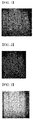
- the optical film of one embodiment may significantly reduce the generation of interference fringes derived from the polyester-base substrate film, and this can be clearly confirmed by the observational results on the presence or absence of rainbow stains as shown in FIG. 1 . Furthermore, the optical film of one embodiment exhibits a low curling property and thus can be preferably applied as a polarizer protective film.
- a polarizing plate comprising a polarizing element and the above-described optical film formed on the polarizing element.
- an image display device comprising the optical film or the polarizing plate.
- the image display device may be a liquid crystal display device comprising: a pair of polarizing plates facing each other; a thin film transistor, a color filter, and a liquid crystal cell sequentially stacked between the pair of polarizing plates; and a backlight unit.
- a polarizing element and the above-described optical film formed on the polarizing element may be included at least on the image display surface of the polarizing plate among the polarizing plates.
- an optical film which minimizes the generation of interference fringes and also exhibits an excellent curling property, even while including a polyester-based substrate film, compared to the case where a cellulose ester-based substrate is applied, thereby being suitably applied as a polarizer protective film.
- a polarizing plate exhibiting excellent properties and an image display device exhibiting high visibility by using the optical film.
- a composition for forming a hard coating layer was prepared by uniformly mixing the components of Table 1 below. The contents of all components used in Table 1 are expressed in the unit of parts by weight.
- Table 1 Preparation Example 1
- Preparation Example 2 Preparation Example 3
- Preparation Example 4 Comparative Preparation Example 1 Comparative Preparation Example 2 Binder EB600 40 23.8 23.8 17.85 OPPEA 7.6 23.8 11.9 UA-306T 23.8 17.85 PETA 47.6 DPHA 47.6 Initiator I184 1.2 1.2 1.2 1.2 1.2 1.2 1.2 D1173 1.2 1.2 1.2 1.2 1.2 1.2 1.2 1.2 1.2 1.2 1.2 1.2 1.2 1.2 1.2 1.2 1.2 1.2
- the composition prepared in Preparation Example 5 was coated onto the hard coating layer with Meyer Bar #3 and dried at 90°C for 1 minute.
- the thus-dried product was irradiated with ultraviolet rays of 180 mJ/cm 2 under nitrogen purging to prepare a low refractive index layer having a thickness of 100 nm. Thereby, an optical film was prepared.
- a black tape (Vinyl tape 472 Black, manufactured by 3M Company) was attached to the surface on which the hard coating layer was not formed to prevent a light from being transmitted. Then, a reflection image was photographed using a three-wavelength light source. The size of the photographed image was 640 ⁇ 480 pixels, and the amount of light was adjusted within the range of 70% of the maximum amount of light emitted from the three-wavelength lamp.
- the rainbow variation rate is a value obtained by quantifying the intensity of the rainbow using the fact that as the rainbow is stronger, the vibration width increases during measurement of 5-degree reflectivity.
- the 5-degree reflectivity of each film was measured, and the difference between the maximum reflectivity value and the minimum reflectivity value at a wavelength range of 450 nm to 650 nm was divided by the average reflectivity value to calculate the variation rate.
- the film required for the analysis was cut into a size of 4 cm x 4 cm, and a black tape (Vinyl tape 472 Black, manufactured by 3M Co., Ltd.) was attached to the opposite side of the coating layer to be measured.
- the average value (i.e ., the degree of occurrence of curl) of the distance at each vertex is spaced from the plane was measured when the 10 cm x 10 cm specimen of the optical film was placed on the plane, and the results are shown in Tables 3 and 4.
Landscapes
- Chemical & Material Sciences (AREA)
- Physics & Mathematics (AREA)
- Organic Chemistry (AREA)
- Engineering & Computer Science (AREA)
- Materials Engineering (AREA)
- Life Sciences & Earth Sciences (AREA)
- Wood Science & Technology (AREA)
- Optics & Photonics (AREA)
- General Physics & Mathematics (AREA)
- Health & Medical Sciences (AREA)
- Chemical Kinetics & Catalysis (AREA)
- Medicinal Chemistry (AREA)
- Polymers & Plastics (AREA)
- Manufacturing & Machinery (AREA)
- Inorganic Chemistry (AREA)
- Surface Treatment Of Optical Elements (AREA)
- Laminated Bodies (AREA)
- Polarising Elements (AREA)
Claims (13)
- Film optique pour la protection d'un polariseur comprenant :un film substrat à base de polyester ayant un indice de réfraction mesuré comme décrit dans la description de 1,6 à 1,7 ;
etune couche de revêtement dure formée sur le film de substrat et ayant un indice de réfraction de 1,53 à 1,60 et une épaisseur de 13 à 25 µm,dans lequel la couche de revêtement dure contient un copolymère réticulé d'un premier composé bifonctionnel ou d'un composé à base d'une teneur plus élevée en (méth)acrylate ayant un cycle aromatique et d'un deuxième composé à base de (méth)acrylate ayant un cycle aromatique avec une structure différente de celle du premier composé à base de (méth)acrylate. - Film optique pour la protection d'un polariseur selon la revendication 1, dans lequel le film substrat à base de polyester est un film substrat à base de polyéthylène téréphtalate (PET) ayant une épaisseur de 30 à 200 µm.
- Film optique pour la protection d'un polariseur selon la revendication 1, dans lequel le premier composé à base de (méth)acrylate est un composé polyfonctionnel ayant au moins un cycle benzène et un composé polyfonctionnel ayant un groupe (méth)acrylate bifonctionnel à hexafonctionnel, et
le deuxième composé à base de (méth)acrylate est un composé ayant au moins un cycle benzénique, ayant un certain nombre de cycles benzéniques ou une structure d'un groupe de liaison des cycles benzéniques différents de ceux du premier composé à base de (méth)acrylate et ayant un groupe fonctionnel de (méth)acrylate monofonctionnel ou trifonctionnel à hexafonctionnel. - Film optique pour la protection d'un polariseur selon la revendication 1, dans lequel le premier composé à base de (méth)acrylate et le deuxième composé à base de (méth)acrylate sont utilisés dans un rapport pondéral de 1 : 9 à 9 : 1.
- Film optique pour la protection d'un polariseur selon la revendication 1, comprenant en outre une couche primaire formée entre le film substrat et la couche de revêtement dure,
dans lequel la couche d'apprêt a un indice de réfraction qui est inférieur à celui du film substrat et supérieur à celui de la couche de revêtement dure. - Film optique pour la protection d'un polariseur selon la revendication 5, dans lequel la couche primaire contient une couche de liant et des nanoparticules à indice de réfraction élevé dispersées sur la couche de liant ayant un indice de réfraction de 1,57 ou supérieur.
- Film optique pour la protection d'un polariseur selon la revendication 5, dans lequel la couche d'apprêt a une épaisseur de 20 nm à 500 nm.
- Film optique pour la protection d'un polariseur selon la revendication 1, comprenant en outre une couche à faible indice de réfraction formée sur la couche de revêtement dure et contenant une résine liante contenant un (co)polymère d'un composé photopolymérisable et des particules de silice creuses dispersées sur la résine liante.
- Film optique pour la protection d'un polariseur selon la revendication 8, dans lequel la couche à faible indice de réfraction a un indice de réfraction de 1,3 à 1,5 et une épaisseur de 1 à 300 nm.
- Film optique pour la protection d'un polariseur selon la revendication 1, dans lequel la propriété de bouclage mesurée pour un échantillon de 10 cm x 10 cm du film optique est de 20 mm ou inférieure.
- Film optique pour la protection d'un polariseur comprenant :un film substrat à base de polyester ayant un indice de réfraction mesuré comme décrit dans la description de 1,6 à 1,7 ;une couche de revêtement dure formée sur le film substrat, ayant un indice de réfraction de 1,53 à 1,60 et une épaisseur de 13 µm à 25 µm et contenant un polymère réticulé d'un composé bifonctionnel ou ayant une plus forte teneur en contenu insaturé ;une couche primaire formée entre le film de substrat et la couche de revêtement dure et ayant un indice de réfraction inférieur à celui du film de substrat et supérieur à celui de la couche de revêtement dure ; etune couche à faible indice de réfraction formée sur la couche de revêtement dure et ayant un indice de réfraction de 1,3 à 1,5, la couche de revêtement dure comprenant un copolymère réticulé d'un premier composé bifonctionnel ou à base d'une teneur plus élevée en {méth)acrylate ayant un cycle aromatique et un deuxième composé à base de (méth)acrylate ayant un cycle aromatique avec une structure différente de celle du premier composé à base de (méth)acrylate.
- Plaque polarisante comprenant un élément polarisant et le film optique selon la revendication 1 ou 10 formé sur l'élément polarisant.
- Dispositif d'affichage d'image comprenant le film optique selon la revendication 1 ou 11 ou la plaque polarisante selon la revendication 12.
Applications Claiming Priority (2)
| Application Number | Priority Date | Filing Date | Title |
|---|---|---|---|
| KR20160096442 | 2016-07-28 | ||
| PCT/KR2017/008183 WO2018021883A1 (fr) | 2016-07-28 | 2017-07-28 | Film optique pour la protection d'un polariseur, et plaque de polarisation et dispositif d'affichage d'images le comprenant |
Publications (3)
| Publication Number | Publication Date |
|---|---|
| EP3447544A1 EP3447544A1 (fr) | 2019-02-27 |
| EP3447544A4 EP3447544A4 (fr) | 2019-03-06 |
| EP3447544B1 true EP3447544B1 (fr) | 2020-09-02 |
Family
ID=61204136
Family Applications (1)
| Application Number | Title | Priority Date | Filing Date |
|---|---|---|---|
| EP17834824.9A Active EP3447544B1 (fr) | 2016-07-28 | 2017-07-28 | Film optique pour la protection d'un polariseur, et plaque de polarisation et dispositif d'affichage d'images le comprenant |
Country Status (4)
| Country | Link |
|---|---|
| US (1) | US20200319378A1 (fr) |
| EP (1) | EP3447544B1 (fr) |
| KR (1) | KR101953860B1 (fr) |
| CN (1) | CN109313286B (fr) |
Families Citing this family (7)
| Publication number | Priority date | Publication date | Assignee | Title |
|---|---|---|---|---|
| CN111213078A (zh) * | 2018-03-06 | 2020-05-29 | 株式会社Lg化学 | 偏光板和包括其的图像显示装置 |
| KR102032316B1 (ko) * | 2018-07-09 | 2019-10-15 | 에스케이씨 주식회사 | 광학 다층 필름, 이를 포함하는 광학 부품 및 표시장치 |
| KR102281759B1 (ko) * | 2018-10-17 | 2021-07-26 | 주식회사 엘지화학 | 반사 방지 필름, 편광판 및 디스플레이 장치 |
| JP7321463B2 (ja) * | 2018-10-17 | 2023-08-07 | エルジー・ケム・リミテッド | 反射防止フィルム、偏光板およびディスプレイ装置 |
| JP7561512B2 (ja) * | 2020-04-03 | 2024-10-04 | マクセル株式会社 | 情報表示装置 |
| KR102458462B1 (ko) * | 2020-06-23 | 2022-10-24 | 코오롱인더스트리 주식회사 | 간섭 무늬가 개선된 다층 구조의 필름 및 이를 포함하는 표시장치 |
| JP2022069431A (ja) * | 2020-10-23 | 2022-05-11 | エルジー・ケム・リミテッド | 光学積層体 |
Family Cites Families (7)
| Publication number | Priority date | Publication date | Assignee | Title |
|---|---|---|---|---|
| US8309202B2 (en) * | 2006-10-06 | 2012-11-13 | Toray Industries, Inc. | Hard-coated film, method for production thereof and antireflection film |
| JP5051328B1 (ja) * | 2012-01-27 | 2012-10-17 | 大日本印刷株式会社 | 光学積層体、偏光板及び画像表示装置 |
| US9938426B2 (en) * | 2012-03-30 | 2018-04-10 | Teijin Limited | Hard coating composition and composition for forming a high refractive index antiblocking layer |
| JP5304939B1 (ja) * | 2012-05-31 | 2013-10-02 | 大日本印刷株式会社 | 光学積層体、偏光板、偏光板の製造方法、画像表示装置、画像表示装置の製造方法及び画像表示装置の視認性改善方法 |
| KR101696970B1 (ko) * | 2014-03-31 | 2017-01-17 | 제일모직주식회사 | 편광판, 이의 제조방법 및 이를 포함하는 광학표시장치 |
| WO2015178741A1 (fr) * | 2014-05-22 | 2015-11-26 | 주식회사 엘지화학 | Plaque de polarisation comprenant un film protecteur en polytéréphtalate d'éthylène, procédé de fabrication de celui-ci, et dispositif d'affichage d'image et dispositif d'affichage à cristaux liquides comprenant celui-ci |
| KR101822701B1 (ko) * | 2014-12-31 | 2018-01-30 | 삼성에스디아이 주식회사 | 편광판 및 이를 포함하는 액정표시장치 |
-
2017
- 2017-07-28 KR KR1020170095824A patent/KR101953860B1/ko active Active
- 2017-07-28 EP EP17834824.9A patent/EP3447544B1/fr active Active
- 2017-07-28 US US16/305,015 patent/US20200319378A1/en not_active Abandoned
- 2017-07-28 CN CN201780038903.0A patent/CN109313286B/zh active Active
Non-Patent Citations (1)
| Title |
|---|
| None * |
Also Published As
| Publication number | Publication date |
|---|---|
| CN109313286A (zh) | 2019-02-05 |
| US20200319378A1 (en) | 2020-10-08 |
| EP3447544A4 (fr) | 2019-03-06 |
| EP3447544A1 (fr) | 2019-02-27 |
| KR20180013786A (ko) | 2018-02-07 |
| CN109313286B (zh) | 2020-11-03 |
| KR101953860B1 (ko) | 2019-03-04 |
Similar Documents
| Publication | Publication Date | Title |
|---|---|---|
| EP3447544B1 (fr) | Film optique pour la protection d'un polariseur, et plaque de polarisation et dispositif d'affichage d'images le comprenant | |
| US11548992B2 (en) | Antireflection film | |
| KR102280263B1 (ko) | 광학 필름 형성용 조성물, 광학 필름 및 이를 포함하는 편광판 | |
| US12596205B2 (en) | Anti-reflective film, polarizing plate, and display apparatus | |
| KR102077318B1 (ko) | 광학 필름 및 이를 포함하는 화상 표시 장치 | |
| KR101988548B1 (ko) | 광학 필름 및 이를 포함하는 화상 표시 장치 | |
| CN109804277B (zh) | 光学膜和包括其的图像显示装置 | |
| JP7150384B2 (ja) | 反射防止フィルム、偏光板およびディスプレイ装置 | |
| WO2018021883A1 (fr) | Film optique pour la protection d'un polariseur, et plaque de polarisation et dispositif d'affichage d'images le comprenant | |
| CN110050206B (zh) | 光学膜和包括其的图像显示装置 |
Legal Events
| Date | Code | Title | Description |
|---|---|---|---|
| STAA | Information on the status of an ep patent application or granted ep patent |
Free format text: STATUS: THE INTERNATIONAL PUBLICATION HAS BEEN MADE |
|
| PUAI | Public reference made under article 153(3) epc to a published international application that has entered the european phase |
Free format text: ORIGINAL CODE: 0009012 |
|
| STAA | Information on the status of an ep patent application or granted ep patent |
Free format text: STATUS: REQUEST FOR EXAMINATION WAS MADE |
|
| 17P | Request for examination filed |
Effective date: 20181122 |
|
| AK | Designated contracting states |
Kind code of ref document: A1 Designated state(s): AL AT BE BG CH CY CZ DE DK EE ES FI FR GB GR HR HU IE IS IT LI LT LU LV MC MK MT NL NO PL PT RO RS SE SI SK SM TR |
|
| AX | Request for extension of the european patent |
Extension state: BA ME |
|
| A4 | Supplementary search report drawn up and despatched |
Effective date: 20190205 |
|
| RIC1 | Information provided on ipc code assigned before grant |
Ipc: C09D 133/10 20060101ALI20190130BHEP Ipc: C08L 67/03 20060101ALI20190130BHEP Ipc: G02B 1/04 20060101ALI20190130BHEP Ipc: G02B 1/14 20150101AFI20190130BHEP Ipc: G02B 5/30 20060101ALI20190130BHEP Ipc: C09D 133/08 20060101ALI20190130BHEP Ipc: C08J 5/18 20060101ALI20190130BHEP |
|
| RIN1 | Information on inventor provided before grant (corrected) |
Inventor name: SEO, JUNG HYUN Inventor name: KIM, JAE YOUNG Inventor name: BYUN, JIN SEOK Inventor name: CHANG, YEONG RAE |
|
| RIN1 | Information on inventor provided before grant (corrected) |
Inventor name: KIM, JAE YOUNG Inventor name: BYUN, JIN SEOK Inventor name: SEO, JUNG HYUN Inventor name: CHANG, YEONG RAE |
|
| DAV | Request for validation of the european patent (deleted) | ||
| DAX | Request for extension of the european patent (deleted) | ||
| STAA | Information on the status of an ep patent application or granted ep patent |
Free format text: STATUS: EXAMINATION IS IN PROGRESS |
|
| 17Q | First examination report despatched |
Effective date: 20191114 |
|
| GRAP | Despatch of communication of intention to grant a patent |
Free format text: ORIGINAL CODE: EPIDOSNIGR1 |
|
| STAA | Information on the status of an ep patent application or granted ep patent |
Free format text: STATUS: GRANT OF PATENT IS INTENDED |
|
| INTG | Intention to grant announced |
Effective date: 20200519 |
|
| GRAS | Grant fee paid |
Free format text: ORIGINAL CODE: EPIDOSNIGR3 |
|
| GRAA | (expected) grant |
Free format text: ORIGINAL CODE: 0009210 |
|
| STAA | Information on the status of an ep patent application or granted ep patent |
Free format text: STATUS: THE PATENT HAS BEEN GRANTED |
|
| AK | Designated contracting states |
Kind code of ref document: B1 Designated state(s): AL AT BE BG CH CY CZ DE DK EE ES FI FR GB GR HR HU IE IS IT LI LT LU LV MC MK MT NL NO PL PT RO RS SE SI SK SM TR |
|
| REG | Reference to a national code |
Ref country code: GB Ref legal event code: FG4D |
|
| REG | Reference to a national code |
Ref country code: AT Ref legal event code: REF Ref document number: 1309497 Country of ref document: AT Kind code of ref document: T Effective date: 20200915 Ref country code: CH Ref legal event code: EP |
|
| REG | Reference to a national code |
Ref country code: DE Ref legal event code: R096 Ref document number: 602017023038 Country of ref document: DE |
|
| REG | Reference to a national code |
Ref country code: IE Ref legal event code: FG4D |
|
| REG | Reference to a national code |
Ref country code: LT Ref legal event code: MG4D |
|
| PG25 | Lapsed in a contracting state [announced via postgrant information from national office to epo] |
Ref country code: GR Free format text: LAPSE BECAUSE OF FAILURE TO SUBMIT A TRANSLATION OF THE DESCRIPTION OR TO PAY THE FEE WITHIN THE PRESCRIBED TIME-LIMIT Effective date: 20201203 Ref country code: NO Free format text: LAPSE BECAUSE OF FAILURE TO SUBMIT A TRANSLATION OF THE DESCRIPTION OR TO PAY THE FEE WITHIN THE PRESCRIBED TIME-LIMIT Effective date: 20201202 Ref country code: HR Free format text: LAPSE BECAUSE OF FAILURE TO SUBMIT A TRANSLATION OF THE DESCRIPTION OR TO PAY THE FEE WITHIN THE PRESCRIBED TIME-LIMIT Effective date: 20200902 Ref country code: SE Free format text: LAPSE BECAUSE OF FAILURE TO SUBMIT A TRANSLATION OF THE DESCRIPTION OR TO PAY THE FEE WITHIN THE PRESCRIBED TIME-LIMIT Effective date: 20200902 Ref country code: FI Free format text: LAPSE BECAUSE OF FAILURE TO SUBMIT A TRANSLATION OF THE DESCRIPTION OR TO PAY THE FEE WITHIN THE PRESCRIBED TIME-LIMIT Effective date: 20200902 Ref country code: LT Free format text: LAPSE BECAUSE OF FAILURE TO SUBMIT A TRANSLATION OF THE DESCRIPTION OR TO PAY THE FEE WITHIN THE PRESCRIBED TIME-LIMIT Effective date: 20200902 Ref country code: BG Free format text: LAPSE BECAUSE OF FAILURE TO SUBMIT A TRANSLATION OF THE DESCRIPTION OR TO PAY THE FEE WITHIN THE PRESCRIBED TIME-LIMIT Effective date: 20201202 |
|
| REG | Reference to a national code |
Ref country code: NL Ref legal event code: MP Effective date: 20200902 |
|
| REG | Reference to a national code |
Ref country code: AT Ref legal event code: MK05 Ref document number: 1309497 Country of ref document: AT Kind code of ref document: T Effective date: 20200902 |
|
| PG25 | Lapsed in a contracting state [announced via postgrant information from national office to epo] |
Ref country code: PL Free format text: LAPSE BECAUSE OF FAILURE TO SUBMIT A TRANSLATION OF THE DESCRIPTION OR TO PAY THE FEE WITHIN THE PRESCRIBED TIME-LIMIT Effective date: 20200902 Ref country code: RS Free format text: LAPSE BECAUSE OF FAILURE TO SUBMIT A TRANSLATION OF THE DESCRIPTION OR TO PAY THE FEE WITHIN THE PRESCRIBED TIME-LIMIT Effective date: 20200902 Ref country code: LV Free format text: LAPSE BECAUSE OF FAILURE TO SUBMIT A TRANSLATION OF THE DESCRIPTION OR TO PAY THE FEE WITHIN THE PRESCRIBED TIME-LIMIT Effective date: 20200902 |
|
| PG25 | Lapsed in a contracting state [announced via postgrant information from national office to epo] |
Ref country code: SM Free format text: LAPSE BECAUSE OF FAILURE TO SUBMIT A TRANSLATION OF THE DESCRIPTION OR TO PAY THE FEE WITHIN THE PRESCRIBED TIME-LIMIT Effective date: 20200902 Ref country code: CZ Free format text: LAPSE BECAUSE OF FAILURE TO SUBMIT A TRANSLATION OF THE DESCRIPTION OR TO PAY THE FEE WITHIN THE PRESCRIBED TIME-LIMIT Effective date: 20200902 Ref country code: RO Free format text: LAPSE BECAUSE OF FAILURE TO SUBMIT A TRANSLATION OF THE DESCRIPTION OR TO PAY THE FEE WITHIN THE PRESCRIBED TIME-LIMIT Effective date: 20200902 Ref country code: PT Free format text: LAPSE BECAUSE OF FAILURE TO SUBMIT A TRANSLATION OF THE DESCRIPTION OR TO PAY THE FEE WITHIN THE PRESCRIBED TIME-LIMIT Effective date: 20210104 Ref country code: EE Free format text: LAPSE BECAUSE OF FAILURE TO SUBMIT A TRANSLATION OF THE DESCRIPTION OR TO PAY THE FEE WITHIN THE PRESCRIBED TIME-LIMIT Effective date: 20200902 |
|
| PG25 | Lapsed in a contracting state [announced via postgrant information from national office to epo] |
Ref country code: IS Free format text: LAPSE BECAUSE OF FAILURE TO SUBMIT A TRANSLATION OF THE DESCRIPTION OR TO PAY THE FEE WITHIN THE PRESCRIBED TIME-LIMIT Effective date: 20210102 Ref country code: AL Free format text: LAPSE BECAUSE OF FAILURE TO SUBMIT A TRANSLATION OF THE DESCRIPTION OR TO PAY THE FEE WITHIN THE PRESCRIBED TIME-LIMIT Effective date: 20200902 Ref country code: AT Free format text: LAPSE BECAUSE OF FAILURE TO SUBMIT A TRANSLATION OF THE DESCRIPTION OR TO PAY THE FEE WITHIN THE PRESCRIBED TIME-LIMIT Effective date: 20200902 Ref country code: ES Free format text: LAPSE BECAUSE OF FAILURE TO SUBMIT A TRANSLATION OF THE DESCRIPTION OR TO PAY THE FEE WITHIN THE PRESCRIBED TIME-LIMIT Effective date: 20200902 |
|
| REG | Reference to a national code |
Ref country code: DE Ref legal event code: R097 Ref document number: 602017023038 Country of ref document: DE |
|
| PG25 | Lapsed in a contracting state [announced via postgrant information from national office to epo] |
Ref country code: SK Free format text: LAPSE BECAUSE OF FAILURE TO SUBMIT A TRANSLATION OF THE DESCRIPTION OR TO PAY THE FEE WITHIN THE PRESCRIBED TIME-LIMIT Effective date: 20200902 |
|
| PLBE | No opposition filed within time limit |
Free format text: ORIGINAL CODE: 0009261 |
|
| STAA | Information on the status of an ep patent application or granted ep patent |
Free format text: STATUS: NO OPPOSITION FILED WITHIN TIME LIMIT |
|
| 26N | No opposition filed |
Effective date: 20210603 |
|
| PG25 | Lapsed in a contracting state [announced via postgrant information from national office to epo] |
Ref country code: SI Free format text: LAPSE BECAUSE OF FAILURE TO SUBMIT A TRANSLATION OF THE DESCRIPTION OR TO PAY THE FEE WITHIN THE PRESCRIBED TIME-LIMIT Effective date: 20200902 Ref country code: DK Free format text: LAPSE BECAUSE OF FAILURE TO SUBMIT A TRANSLATION OF THE DESCRIPTION OR TO PAY THE FEE WITHIN THE PRESCRIBED TIME-LIMIT Effective date: 20200902 |
|
| PG25 | Lapsed in a contracting state [announced via postgrant information from national office to epo] |
Ref country code: IT Free format text: LAPSE BECAUSE OF FAILURE TO SUBMIT A TRANSLATION OF THE DESCRIPTION OR TO PAY THE FEE WITHIN THE PRESCRIBED TIME-LIMIT Effective date: 20200902 |
|
| REG | Reference to a national code |
Ref country code: CH Ref legal event code: PL |
|
| PG25 | Lapsed in a contracting state [announced via postgrant information from national office to epo] |
Ref country code: MC Free format text: LAPSE BECAUSE OF FAILURE TO SUBMIT A TRANSLATION OF THE DESCRIPTION OR TO PAY THE FEE WITHIN THE PRESCRIBED TIME-LIMIT Effective date: 20200902 |
|
| REG | Reference to a national code |
Ref country code: BE Ref legal event code: MM Effective date: 20210731 |
|
| PG25 | Lapsed in a contracting state [announced via postgrant information from national office to epo] |
Ref country code: LI Free format text: LAPSE BECAUSE OF NON-PAYMENT OF DUE FEES Effective date: 20210731 Ref country code: CH Free format text: LAPSE BECAUSE OF NON-PAYMENT OF DUE FEES Effective date: 20210731 |
|
| PG25 | Lapsed in a contracting state [announced via postgrant information from national office to epo] |
Ref country code: LU Free format text: LAPSE BECAUSE OF NON-PAYMENT OF DUE FEES Effective date: 20210728 |
|
| PG25 | Lapsed in a contracting state [announced via postgrant information from national office to epo] |
Ref country code: IE Free format text: LAPSE BECAUSE OF NON-PAYMENT OF DUE FEES Effective date: 20210728 Ref country code: BE Free format text: LAPSE BECAUSE OF NON-PAYMENT OF DUE FEES Effective date: 20210731 |
|
| P01 | Opt-out of the competence of the unified patent court (upc) registered |
Effective date: 20230523 |
|
| PG25 | Lapsed in a contracting state [announced via postgrant information from national office to epo] |
Ref country code: NL Free format text: LAPSE BECAUSE OF NON-PAYMENT OF DUE FEES Effective date: 20200923 Ref country code: CY Free format text: LAPSE BECAUSE OF FAILURE TO SUBMIT A TRANSLATION OF THE DESCRIPTION OR TO PAY THE FEE WITHIN THE PRESCRIBED TIME-LIMIT Effective date: 20200902 |
|
| PG25 | Lapsed in a contracting state [announced via postgrant information from national office to epo] |
Ref country code: HU Free format text: LAPSE BECAUSE OF FAILURE TO SUBMIT A TRANSLATION OF THE DESCRIPTION OR TO PAY THE FEE WITHIN THE PRESCRIBED TIME-LIMIT; INVALID AB INITIO Effective date: 20170728 |
|
| PG25 | Lapsed in a contracting state [announced via postgrant information from national office to epo] |
Ref country code: MK Free format text: LAPSE BECAUSE OF FAILURE TO SUBMIT A TRANSLATION OF THE DESCRIPTION OR TO PAY THE FEE WITHIN THE PRESCRIBED TIME-LIMIT Effective date: 20200902 |
|
| PG25 | Lapsed in a contracting state [announced via postgrant information from national office to epo] |
Ref country code: TR Free format text: LAPSE BECAUSE OF FAILURE TO SUBMIT A TRANSLATION OF THE DESCRIPTION OR TO PAY THE FEE WITHIN THE PRESCRIBED TIME-LIMIT Effective date: 20200902 |
|
| PG25 | Lapsed in a contracting state [announced via postgrant information from national office to epo] |
Ref country code: MT Free format text: LAPSE BECAUSE OF FAILURE TO SUBMIT A TRANSLATION OF THE DESCRIPTION OR TO PAY THE FEE WITHIN THE PRESCRIBED TIME-LIMIT Effective date: 20200902 |
|
| REG | Reference to a national code |
Ref country code: DE Ref legal event code: R081 Ref document number: 602017023038 Country of ref document: DE Owner name: XINMEI FONTANA HOLDING (HONG KONG) LIMITED, HK Free format text: FORMER OWNER: LG CHEM, LTD., SEOUL, KR Ref country code: DE Ref legal event code: R081 Ref document number: 602017023038 Country of ref document: DE Owner name: LG CHEM, LTD., KR Free format text: FORMER OWNER: LG CHEM, LTD., SEOUL, KR |
|
| REG | Reference to a national code |
Ref country code: DE Ref legal event code: R082 Ref document number: 602017023038 Country of ref document: DE Representative=s name: WITTOP KONING, TOM HUGO, DR. PHIL. NAT., NL Ref country code: DE Ref legal event code: R081 Ref document number: 602017023038 Country of ref document: DE Owner name: XINMEI FONTANA HOLDING (HONG KONG) LIMITED, HK Free format text: FORMER OWNER: LG CHEM, LTD., SEOUL, KR |
|
| PGFP | Annual fee paid to national office [announced via postgrant information from national office to epo] |
Ref country code: GB Payment date: 20250617 Year of fee payment: 9 |
|
| PGFP | Annual fee paid to national office [announced via postgrant information from national office to epo] |
Ref country code: FR Payment date: 20250612 Year of fee payment: 9 |
|
| REG | Reference to a national code |
Ref country code: GB Ref legal event code: 732E Free format text: REGISTERED BETWEEN 20250724 AND 20250730 |
|
| PGFP | Annual fee paid to national office [announced via postgrant information from national office to epo] |
Ref country code: DE Payment date: 20250722 Year of fee payment: 9 |