EP3447645A1 - Approvisionnement intelligent d'applications logicielles sur des dispositifs périphériques dans un environnement d'internet des objets - Google Patents
Approvisionnement intelligent d'applications logicielles sur des dispositifs périphériques dans un environnement d'internet des objets Download PDFInfo
- Publication number
- EP3447645A1 EP3447645A1 EP17187959.6A EP17187959A EP3447645A1 EP 3447645 A1 EP3447645 A1 EP 3447645A1 EP 17187959 A EP17187959 A EP 17187959A EP 3447645 A1 EP3447645 A1 EP 3447645A1
- Authority
- EP
- European Patent Office
- Prior art keywords
- software application
- edge device
- real
- provisioning
- executing
- Prior art date
- Legal status (The legal status is an assumption and is not a legal conclusion. Google has not performed a legal analysis and makes no representation as to the accuracy of the status listed.)
- Withdrawn
Links
Images



Classifications
-
- H—ELECTRICITY
- H04—ELECTRIC COMMUNICATION TECHNIQUE
- H04L—TRANSMISSION OF DIGITAL INFORMATION, e.g. TELEGRAPHIC COMMUNICATION
- H04L43/00—Arrangements for monitoring or testing data switching networks
- H04L43/08—Monitoring or testing based on specific metrics, e.g. QoS, energy consumption or environmental parameters
- H04L43/0805—Monitoring or testing based on specific metrics, e.g. QoS, energy consumption or environmental parameters by checking availability
- H04L43/0817—Monitoring or testing based on specific metrics, e.g. QoS, energy consumption or environmental parameters by checking availability by checking functioning
-
- G—PHYSICS
- G06—COMPUTING OR CALCULATING; COUNTING
- G06F—ELECTRIC DIGITAL DATA PROCESSING
- G06F11/00—Error detection; Error correction; Monitoring
- G06F11/30—Monitoring
- G06F11/3003—Monitoring arrangements specially adapted to the computing system or computing system component being monitored
- G06F11/3006—Monitoring arrangements specially adapted to the computing system or computing system component being monitored where the computing system is distributed, e.g. networked systems, clusters, multiprocessor systems
-
- G—PHYSICS
- G06—COMPUTING OR CALCULATING; COUNTING
- G06F—ELECTRIC DIGITAL DATA PROCESSING
- G06F11/00—Error detection; Error correction; Monitoring
- G06F11/30—Monitoring
- G06F11/3003—Monitoring arrangements specially adapted to the computing system or computing system component being monitored
- G06F11/3013—Monitoring arrangements specially adapted to the computing system or computing system component being monitored where the computing system is an embedded system, i.e. a combination of hardware and software dedicated to perform a certain function in mobile devices, printers, automotive or aircraft systems
-
- G—PHYSICS
- G06—COMPUTING OR CALCULATING; COUNTING
- G06F—ELECTRIC DIGITAL DATA PROCESSING
- G06F11/00—Error detection; Error correction; Monitoring
- G06F11/30—Monitoring
- G06F11/34—Recording or statistical evaluation of computer activity, e.g. of down time, of input/output operation ; Recording or statistical evaluation of user activity, e.g. usability assessment
- G06F11/3409—Recording or statistical evaluation of computer activity, e.g. of down time, of input/output operation ; Recording or statistical evaluation of user activity, e.g. usability assessment for performance assessment
- G06F11/3433—Recording or statistical evaluation of computer activity, e.g. of down time, of input/output operation ; Recording or statistical evaluation of user activity, e.g. usability assessment for performance assessment for load management
-
- G—PHYSICS
- G06—COMPUTING OR CALCULATING; COUNTING
- G06F—ELECTRIC DIGITAL DATA PROCESSING
- G06F8/00—Arrangements for software engineering
- G06F8/60—Software deployment
-
- H—ELECTRICITY
- H04—ELECTRIC COMMUNICATION TECHNIQUE
- H04L—TRANSMISSION OF DIGITAL INFORMATION, e.g. TELEGRAPHIC COMMUNICATION
- H04L41/00—Arrangements for maintenance, administration or management of data switching networks, e.g. of packet switching networks
- H04L41/08—Configuration management of networks or network elements
- H04L41/0803—Configuration setting
- H04L41/0813—Configuration setting characterised by the conditions triggering a change of settings
- H04L41/082—Configuration setting characterised by the conditions triggering a change of settings the condition being updates or upgrades of network functionality
-
- H—ELECTRICITY
- H04—ELECTRIC COMMUNICATION TECHNIQUE
- H04L—TRANSMISSION OF DIGITAL INFORMATION, e.g. TELEGRAPHIC COMMUNICATION
- H04L67/00—Network arrangements or protocols for supporting network services or applications
- H04L67/34—Network arrangements or protocols for supporting network services or applications involving the movement of software or configuration parameters
-
- H—ELECTRICITY
- H04—ELECTRIC COMMUNICATION TECHNIQUE
- H04W—WIRELESS COMMUNICATION NETWORKS
- H04W4/00—Services specially adapted for wireless communication networks; Facilities therefor
- H04W4/70—Services for machine-to-machine communication [M2M] or machine type communication [MTC]
Definitions
- the present invention generally relates to the field of Internet-of-Things, and more particularly relates to a method and system for provisioning software applications on edge devices in an Internet-of-Things (IoT) environment.
- IoT Internet-of-Things
- a plurality of edge devices is connected to an IoT cloud platform and sensors and actuators via the Internet.
- the edge devices may be light weight, low cost devices which collect data from various sensors and actuators deployed in a plant, store and buffer the collected data, conduct analysis of the collected data, and perform an action (e.g., issuing a control command) based on the outcome of analysis.
- the edge devices may also be configured to aggregate, filter, selectively report, compress, encrypt, and/or otherwise pre-process the plant data, resulting in less data and/or value added data being communicated to the IoT cloud platform.
- each of the edge devices may perform the above functions using one or more software applications deployed therein.
- the IoT cloud platform is responsible for managing the edge devices, managing the data (raw or preprocessed) received from the edge devices, and provisioning software applications on the edge devices.
- Each of the edge devices in the IoT environment may vary in terms of hardware specification, and may have different real-time resource capabilities for executing new software applications provisioned by the IoT cloud platform.
- the edge device which runs on Raspberry Pi TM may be capable of executing different software applications than the edge device based on typical industrial PC.
- the real-time resource capabilities may vary based on number of software applications deployed on the edges device and resources utilized by the edge device in executing the software applications during run-time.
- a new software application deployed on an edge device having incompatible hardware and resource constraint may encounter performance issues (e.g., device up-time) during execution of the software application. Also, this may lead to erroneous analysis of the plant data.
- the object of the present invention is achieved by a method of smart provisioning a software application on the edge devices in the IoT environment.
- the method comprises detecting an event associated with provisioning a software application on at least one edge device communicatively coupled to an IoT cloud platform.
- the event can be a request for downloading the software application from the edge device.
- the event can be initiation of a task to provision the software application on the edge devices.
- the event can be a request to provision the software application on the edge device from a user device.
- the software application is an application for performing data analytics on the edge device.
- the software application can be any other application for performing a function on the edge device.
- the software application can be new application or upgrade patch.
- the method further includes evaluating real-time resource capabilities of the edge device to execute the software application based on a resource requirement specification associated with the software application in response to the detected event.
- the real-time resource capabilities indicate real-time resources available on the edge device for executing the software application.
- the real-time resource may include hardware as well as software resources.
- the real-time resources may include hardware capabilities and unutilized resources on the edge device.
- the resource requirement specification indicates minimal resources required for smooth execution of the software application on the edge device.
- the method includes provisioning the software application on the edge device based on the evaluation of the real-time resource capabilities of the edge device.
- the method may comprise obtaining the resource requirement specification associated with the software application from an application repository.
- the application repository stores the software application and the associated resource requirement specification.
- the method may comprise obtaining real-time resource availability information associated with the edge device. Also, the method may comprise determining whether the real-time resources available on the edge device are equal to or greater than the minimum resources required for executing the software application on the edge device.
- the method in provisioning the software application on the edge device, may comprise provisioning the software application on the edge device if the real-time resources available on the edge device are equal to or greater than the minimum resources required for executing the software application on the edge device.
- the method may comprise customizing the software application to meet the real-time resources available on the edge device, and provisioning the customized software application on the edge device.
- the method may comprise determining whether one or more resources on the edge device can be freed-up for provisioning the software application, releasing the one or more resources on the edge device, and deploying the software application on the edge device.
- the object of the present invention can also be achieved by a system for smart provisioning software applications on edge devices in an IoT environment.
- the system may be an IoT cloud platform in a cloud infrastructure communicatively connected to edge devices in a plant.
- the system can be a remove server(s) communicatively coupled to the edge devices in the plant.
- the system comprises one or more processors, and a memory unit coupled to the processors, an edge device management module, and a provisioning module.
- the memory unit comprises an application repository having software applications stored therein.
- the edge device management module is configured for detecting an event associated with provisioning a software application on at least one edge device, and evaluating real-time resource capabilities of the edge device to execute the software application based on a resource requirement specification associated with the software application in response to the detected event.
- the provisioning module is configured for provisioning the software application from the application repository on the edge device based on the outcome of evaluation of the real-time resource capabilities of the edge device.
- the edge device management module in evaluating real-time resource capabilities of the edge device, may be configured for obtaining the resource requirement specification associated with the software application from the application repository, and obtaining real-time resource availability information associated with the edge device.
- the edge device management module may be configured for determining whether the real-time resources available on the edge device are equal to or greater than the minimum resources required for executing the software application on the edge device.
- the provisioning module may be configured for provisioning the software application on the edge device.
- the provisioning module may be configured for customizing the software application to meet the real-time resources capabilities on the edge device, and provisioning the customized software application on the edge device.
- the object of the present invention can be achieved by an edge device in an IoT environment.
- the edge device comprises an edge operating system, and an edge device management module.
- the edge device management module is configured for receiving a request to evaluate real-time resource capabilities for executing a software application from an IoT cloud platform.
- the request comprises a resource requirement specification associated with the software application.
- the edge device management module is configured for evaluating real-time resource capabilities to execute the software application based on the resource requirement specification associated with the software application, and transmitting results of evaluation of the real-time resource capabilities to execute the software application to the IoT cloud platform.
- the edge device management module is configured for receiving the software application from the IoT cloud platform if the outcome of the evaluation indicates availability of sufficient real-time resource capabilities to execute the software application.
- the edge device management module is configured for installing the software application received from the IoT cloud platform.
- the edge device management module may be configured for computing real-time resources available for executing the software application, and determining whether the real-time resources available for executing the software application are equal to or greater than the minimum resources required for executing the software application.
- the edge device management module may be configured for determining whether one or more resources can be freed-up for executing the software application, and releasing the one or more resources in order to ensure that the sufficient real-time resources are available for executing the software application.
- the object of the present invention is achieved by a computer-program product, having machine-readable instructions stored therein, that when executed by a processor, cause the processor to perform method steps described above.
- the processor can be a processor of an IoT cloud platform or a processor of an edge device.
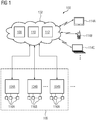
- FIG 1 is a schematic representation of an Internet-of-Things (IoT) environment 100, according to a first embodiment of the present invention.
- the internet-of-things (IoT) environment 100 comprises an IoT cloud platform 102, a plant 106 comprising edge devices 104A-N and groups of sensors/actuators 116AN, and user devices 114A-C.
- Each group of sensors/actuators 116A-N is connected to respective edge devices 104A-N via wired network or wireless network.
- Each of the edge devices 104A-N are connected to the IoT cloud platform 102 via a network connection such as wide area network.
- the user devices 114A-C are connected to the IoT cloud platform 102 via the wide area network.
- edge devices 104A-N can be connected to the IoT cloud platform 102 via an edge gateway. Also, the IoT cloud platform 102 can be connected to edge devices in plants 106 located in different geographical locations.
- the groups of sensors/actuators 116A-N are deployed for monitoring and controlling equipments and processes.
- the edge devices 104A-N may be battery-powered devices and equipped with an edge operating system.
- the edge devices 104A-N are configured for collecting plant data from the respective groups of sensors 116A-N, and analyzing the collected plant data using a set of software applications deployed on the edge devices 104A-N.
- the edge devices 104A-N may send commands to the respective actuators based on outcome of analysis of the collected plant data.
- the edge devices 104A-N may be also push the raw/processed plant data and/or results of analysis of the plant data to the IoT cloud platform 102.
- the IoT cloud platform 102 can be a cloud infrastructure capable of providing cloud-based services such as smart provisioning of software applications on the edge devices 104A-N.
- the IoT cloud platform 102 can be part of public cloud or a private cloud.
- the IoT cloud platform 102 may enable data scientists/software vendors to provide software application as a service, thereby eliminating need for software maintenance, upgrading, and backup by the users.
- the software application can be complete application, or software patch.
- the software application may be an analytical application for performing data analytics on the edge devices 104A-N.
- the software application may include an application for down-sampling of time series data, filtering time series data based on thresholds or moving averages, performing Fast-Fourier transform on vibration data and filtering frequencies which indicate anomaly, performing liner regression and trend prediction, local classification using support vector machine classifiers, neural network or deep learning classifiers, performing stream analytics, etc.
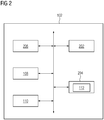
- the IoT cloud platform 102 is further illustrated in greater detail in FIG 2 .
- the IoT cloud platform 102 comprises a provisioning module 108, an edge device management module 110, a processor(s) 202, a memory unit 204, and a communication interface 206.
- the edge device management module 110 and the provisioning module 108 may take a form of hardware such as a processor with embedded software, or a computer program in the form machine-readable instructions stored on a computer program product (e.g., the memory unit 204) and executable by the processor(s) 202.
- the processor(s) 102 may be one or more processing units (e.g., servers) capable of processing requests from the edge devices 104A-N and the user devices 114A-C.
- the processor(s) 102 is also capable of executing machine-readable instructions stored on a computer-readable storage medium such as the memory unit 204 for performing various functions such as processing plant data, analyzing plant data, providing visualization of the analyzed plant data, issuing control commands to the actuators, managing the edge devices 104A-N and so on.
- the memory unit 204 can be volatile or non-volatile memory.
- the memory unit 204 is configured to store an application repository 112.
- the application repository 112 is capable of storing software applications for provisioning on the edge devices 104A-N.
- the software applications are stored in the application repository 112 as application binaries along with associated resource requirement specification in a configuration file.
- the communication interface 206 is configured to maintain a communication channel between the edge devices 104A-N and the IoT cloud platform 102. Also, the communication interface 206 is configured to maintain a communication channel between the IoT cloud platform 102 and the user devices 114A-C.
- the edge device management module 110 is configured for evaluating real-time resource capabilities of the edge devices 104A-N to execute a software application based on a resource requirement specification associated with the software application.
- the resources can be hardware as well as software resources.
- the resource can be network resources, storage resources, computational resources, etc.
- the resource requirement specification indicates minimum resources required to execute the software application on the edge devices 104A-N.
- the provisioning module 108 is configured for provisioning the software application on one or more edge devices 104A-N if the one or more edge devices 104A-N has sufficient real-time resource capabilities to execute the software application. The steps performed by the IoT cloud platform 102 to provision the software applications on the edge devices 104-N is explained in greater detail in following description.
- the user devices 114A-C may be cloud-aware device such as laptop, desktop, tablet computer, smart phone and the like devices.
- the user devices 114A-C are configured for accessing the IoT cloud platform 102 using a cloud user interface via the Internet.
- the user devices 114A-C are configured for viewing the raw/processed plant data and/or results of analysis of the plant data via the cloud user interface.
- the user devices 114A-C are configured for uploading software applications to be provisioned on the edge devices 104A-N in the application repository 112.
- the software applications are typically created by data scientists or software vendors for targeted use cases and uploaded on the IoT cloud platform 102 for provisioning on the edge devices 104A-N.
- the user devices 114A-C are configured for triggering a request to provision a desired software application on one of the edge devices 104A-N in the plant 106.
- the user devices 114A-C may act as a portable human-machine interface device for issuing commands to the actuators 116A-N via the edge devices 104A-N based on the results of the analysis of the plant data.
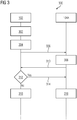
- FIG 3 is a flow diagram 300 illustrating an exemplary method of smart provisioning a software application on the edge device 104A by the IoT cloud platform 102, according to the first embodiment of the present invention.
- the IoT cloud platform 102 detects an event associated with provisioning a software application on the edge device 104A.
- the IoT cloud platform 102 detects occurrence of the event when a request for provisioning the software application is received from the edge device 104A.
- the IoT cloud platform 102 detects occurrence of the event when a task to deploy the software application is triggered by a scheduling algorithm.
- the IoT cloud platform 102 detects occurrence of the event when a request to provision the software application is received from one of the user devices 114A-C.
- the IoT cloud platform 102 obtains a resource requirement specification associated with the software application from the application repository 112.
- the resource requirement specification indicates minimum resources required for smooth execution the software application on the edge devices in real-time.
- the resources that the software application might require for smooth execution may include hardware and/or software resources including but not limited to Random access memory, processor cycles, persistent storage on disk, processor type or instruction set, graphical processing unit, tensor processing unit, data throughput, etc.
- the IoT cloud platform 102 sends a request to provide real-time resource availability information to the edge device 104A.
- the edge device 104A computes real-time resources available for executing the software application.
- the edge device 104A sends the real-time resource availability information to the IoT cloud platform 102 via the Internet based on the computed real-time resources.
- the IoT cloud platform 102 determines whether the real-time resources available on the edge device 104A are equal to or greater than the minimum resources required for executing the software application on the edge device 104A.
- the IoT cloud platform 102 provisions the software application on the edge device 104A.
- the IoT cloud platform 102 obtains application binary associated with the software application from the application repository 112 and pushes the application binary to the edge device 104A via the Internet.
- the edge device 104A deploys the application binary received from the IoT cloud platform 102. If the real-time resources available are less than the minimum resources required, then at step 318, the IoT cloud platform 102 generates an error notification indicating that the software application cannot be provisioned on the edge device 104A due to unavailability of sufficient resources on the edge device 104A for executing the software application.
- FIG 4 is a flow diagram 400 illustrating another exemplary method of smart provisioning a software application on the edge device 104A by the IoT cloud platform 102, according to the first embodiment of the present invention.
- the IoT cloud platform 102 detects an event associated with provisioning a software application on the edge device 104A.
- the IoT cloud platform 102 obtains a resource requirement specification associated with the software application from the application repository 112.
- the IoT cloud platform 102 sends a request to provide real-time resource availability information to the edge device 104A.
- the edge device 104A computes real-time resources available for executing the software application.
- the edge device 104A sends the real-time resource availability information to the IoT cloud platform 102 via the Internet based on the computed real-time resources.
- the IoT cloud platform 102 determines whether the real-time resources available on the edge device 104A are equal to or greater than the minimum resources required for executing the software application on the edge device 104A.
- the IoT cloud platform 102 provisions the software application on the edge device 104A.
- the edge device 104A installs the software application provisioned by the IoT cloud platform 102.
- the IoT cloud platform 102 customizes the software application in such a manner that the resources required for executing the software application are within the real-time resources available on the edge device 104A.
- the IoT cloud platform 102 provides a data scientist with the real-time resources available at the edge expensive (e.g. K-Nearest Neighbor device 104A. Accordingly, the data scientist customizes the software application in such a manner that minimal resources required are less than or equal to the real-time resources available at the edge device 104A.
- the data scientist may customize the software application by adjusting data sampling or throughput to lower computational and memory requirements required for executing the software application.
- the data scientist may choose an algorithm that is less computationally instead of a complex Neural Network).
- the data scientist may split the software application into different parts which can be installed and executed on multiple edge devices in a synchronized manner.
- the IoT cloud platform 102 automatically customizes the software application to meet the real-time resources available based on artificial intelligence methods.
- the IoT cloud platform 102 provisions the customized software application on the edge device 104A.
- the edge device 104A installs the customized software application provisioned by the IoT cloud platform 102.
- FIG 5 is a schematic representation of an IoT environment 500, according to a second embodiment of the present invention. It can be seen from FIG 5 that the IoT environment 500 is similar to the IoT environment 100 of FIG 1 except that the edge device management module 110 resides in the edge devices 104A-N instead of the IoT cloud platform 102. The operational details of the edge devices 104A-N comprising the edge device management module 110 is described in greater detail below.
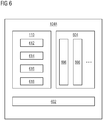
- FIG 6 is a block diagram of an exemplary edge device 104A in the IoT environment 500, according to the second embodiment of the present invention.
- the edge device 104A comprises an edge operating system 602, an application runtime 604, and an edge device management module 110.
- the edge operating system 602 is an embedded real-time operating system (OS) such as the Linux TM operating system.
- the edge operating system 602 enables communication with the sensors and actuators 116A and with the IoT cloud platform 102.
- the edge operating system 602 also allows running one or more software applications 606, 608 deployed in the edge device 104A.
- the application runtime 604 is a layer on which the one or more software applications 606, 608 are installed and executed in real-time.
- the software applications 606, 608 are installed for processing plant data collected from the sensors and actuators 116A.
- the edge management module 110 comprises an application management module 612, a resource management module 614, a connectivity management module 616, and a data management module 618.
- the application management module 612 is configured for receiving, deploying, updating and managing the software applications 606, 608 on the edge device 104A.
- the resource management module 614 is configured for evaluating real-time resource capabilities for hosting and executing a new software application on the edge device 104A. In some embodiments, the resource management module 614 computes real-time resources available for hosting and executing the new software application based on a request from the IoT cloud platform 102. For example, the resource management module 614 makes calls to the edge operating system 602 to determine real-time availability of resources on the edge device 104A.
- the resource management module 614 determines net available resources after considering resources consumed by the software applications 606, 608 in the application runtime 604. In these embodiments, the resource management module 614 determines whether the real-time resources available are sufficient for hosting and executing the software application being provisioned based on a resource requirement specification received from the IoT cloud platform 102.
- the resource requirement specification 102 indicates minimal resources required for executing the software application on the edge device 104A. Additionally, the resource management module 614 monitors resources on the edge device 104A.
- the connectivity management module 616 is configured to manage connections with the IoT cloud platform 102 and the sensors and actuators 116A and other edge devices 104B-N in the IoT environment 500.
- the data management module 618 is configured to buffer, save and manage the plant data collected from the sensors and actuators 116A.
- the edge device 104A may also comprise a processor, memory coupled to the processor, power modules, communication interfaces, etc.
- FIG 7 is a flow diagram 700 illustrating an exemplary method of smart provisioning a software application on the edge device 104A by the IoT cloud platform 102, according to the second embodiment of the present invention.
- the IoT cloud platform 102 detects an event associated with provisioning a software application on the edge device 104A.
- the IoT cloud platform 102 obtains a resource requirement specification associated with the software application from the application repository 112.
- the IoT cloud platform 102 sends a request to provide real-time resource availability information to the edge device 104A.
- the request comprises the resource requirement specification associated with the software application.
- the resource requirement specification indicates minimal resources required for executing the software application on the edge device 104A.
- the edge device 104A computes real-time resources available for executing the software application.
- the edge device 104A evaluates the real-time resources available for executing the software application based on the resource requirement specification. The edge device 104A evaluates whether the real-time resources available are equal to or greater than the minimal resources required for executing the software application.
- the edge device 104A sends results of the evaluation of the available real-time resource to the IoT cloud platform 102 via the Internet.
- the evaluation results may be displayed on one of the user devices 114A-C via the cloud user interface.
- the IoT cloud platform 102 determines whether the real-time resources available on the edge device 104A are sufficient for executing the software application based on the results of evaluation. If the real-time resources available are sufficient, then at step 716, the IoT cloud platform 102 provisions the software application on the edge device 104A. For example, the IoT cloud platform 102 pushes corresponding application binary to the edge device 104A.
- the edge device 104A deploys the software application provisioned by the IoT cloud platform 102 in the application runtime 604.
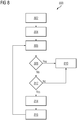
- FIG 8 is a process flowchart illustrating another exemplary method of computing real-time resources available for executing a software application on the edge device 104A prior to provisioning the application, according to the second embodiment of the present invention.
- a request to evaluate real-time resources available for executing the software application is received from the IoT cloud platform 102 by the edge device 104A.
- the request comprises a resource requirement specification associated with the software application.
- real-time resources available for executing the software application if provisioned by the IoT cloud platform 102 are computed.
- the real-time resources available may include hardware resources as well as software resources.
- the real-time resources available may include resources which are currently not utilized by the software applications running on the edge device 104A.
- the real-time resources available may also mean hardware and software specification of the edge device 104A.
- the real-time resources available may be computed by subtracting resources utilized from total amount of resources originally present on the edge device 104A.
- the real-time resources available for executing the software application are compared with the minimal resources required for smooth execution of the software application.
- the real-time resources available are less than the minimal resources required, then at step 812, it is determined whether one or more resources can be freed up for deploying the software application on the edge device 104A. If none of the utilized resources can be freed-up, then at step 810, results of evaluation indicating that the real-time resources available on the edge device 104A are insufficient for executing the software application are sent to the IoT cloud platform 102 via the Internet. If one or more resources can be freed up, then at step 814, the one or more resources are freed up to deploy the software application. The resources on the edge device 104A are freed up by stopping execution of one or more software applications 606, 608 having lower priority than the software application to be provisioned.
- the resources on the edge device 104A are freed up by uninstalling one or more software applications 606, 608 having least priority than the software application to be provisioned.
- real-time resources available at the edge device 104A for executing the software application is recomputed.
- the process 800 is directed to step 806 and repeats the steps 806 to 816.
- the present invention can take a form of a computer program product comprising program modules accessible from computer-usable or computer-readable medium storing program code for use by or in connection with one or more computers, processors, or instruction execution system.
- a computer-usable or computer-readable medium can be any apparatus that can contain, store, communicate, propagate, or transport the program for use by or in connection with the instruction execution system, apparatus, or device.
- the medium can be electronic, magnetic, optical, electromagnetic, infrared, or semiconductor system (or apparatus or device) or a propagation mediums in and of themselves as signal carriers are not included in the definition of physical computer-readable medium include a semiconductor or solid state memory, magnetic tape, a removable computer diskette, random access memory (RAM), a read only memory (ROM), a rigid magnetic disk and optical disk such as compact disk read-only memory (CD-ROM), compact disk read/write, and DVD.
- RAM random access memory
- ROM read only memory
- CD-ROM compact disk read-only memory
- DVD compact disk read/write
- Both processors and program code for implementing each aspect of the technology can be centralized or distributed (or a combination thereof) as known to those skilled in the art.
Landscapes
- Engineering & Computer Science (AREA)
- Theoretical Computer Science (AREA)
- Physics & Mathematics (AREA)
- General Engineering & Computer Science (AREA)
- Computing Systems (AREA)
- Signal Processing (AREA)
- General Physics & Mathematics (AREA)
- Computer Networks & Wireless Communication (AREA)
- Quality & Reliability (AREA)
- Mathematical Physics (AREA)
- Software Systems (AREA)
- Environmental & Geological Engineering (AREA)
- Computer Hardware Design (AREA)
- Stored Programmes (AREA)
Priority Applications (2)
| Application Number | Priority Date | Filing Date | Title |
|---|---|---|---|
| EP17187959.6A EP3447645A1 (fr) | 2017-08-25 | 2017-08-25 | Approvisionnement intelligent d'applications logicielles sur des dispositifs périphériques dans un environnement d'internet des objets |
| PCT/EP2018/072808 WO2019038399A1 (fr) | 2017-08-25 | 2018-08-23 | Mise à disposition intelligente d'applications logicielles sur des dispositifs de bord dans un environnement de l'internet des objets |
Applications Claiming Priority (1)
| Application Number | Priority Date | Filing Date | Title |
|---|---|---|---|
| EP17187959.6A EP3447645A1 (fr) | 2017-08-25 | 2017-08-25 | Approvisionnement intelligent d'applications logicielles sur des dispositifs périphériques dans un environnement d'internet des objets |
Publications (1)
| Publication Number | Publication Date |
|---|---|
| EP3447645A1 true EP3447645A1 (fr) | 2019-02-27 |
Family
ID=59745209
Family Applications (1)
| Application Number | Title | Priority Date | Filing Date |
|---|---|---|---|
| EP17187959.6A Withdrawn EP3447645A1 (fr) | 2017-08-25 | 2017-08-25 | Approvisionnement intelligent d'applications logicielles sur des dispositifs périphériques dans un environnement d'internet des objets |
Country Status (2)
| Country | Link |
|---|---|
| EP (1) | EP3447645A1 (fr) |
| WO (1) | WO2019038399A1 (fr) |
Cited By (3)
| Publication number | Priority date | Publication date | Assignee | Title |
|---|---|---|---|---|
| EP4004825A4 (fr) * | 2019-12-09 | 2022-09-14 | Samsung Electronics Co., Ltd. | Dispositif électronique et procédé de commande de dispositif électronique |
| EP4181549A4 (fr) * | 2020-08-18 | 2024-04-10 | Vivo Mobile Communication Co., Ltd. | Procédé et appareil de transmission d'informations, dispositif de communication et support de stockage |
| US12475366B2 (en) | 2020-06-11 | 2025-11-18 | Sony Group Corporation | Updating a neural network model on a computation device |
Families Citing this family (2)
| Publication number | Priority date | Publication date | Assignee | Title |
|---|---|---|---|---|
| CN111934899B (zh) * | 2020-06-19 | 2023-05-16 | 深圳奇迹智慧网络有限公司 | 物联网用户信息的配置方法、装置、计算机设备 |
| CN115756651A (zh) * | 2022-11-28 | 2023-03-07 | 苏州赫里奥网络技术有限公司 | 基于物联网的业务模块动态加载系统和方法 |
Citations (4)
| Publication number | Priority date | Publication date | Assignee | Title |
|---|---|---|---|---|
| WO2003032183A2 (fr) * | 2001-10-12 | 2003-04-17 | Matsushita Electric Industrial Co., Ltd. | Gestion efficace de services dans des passerelles domestiques |
| US20140033199A1 (en) * | 2009-04-29 | 2014-01-30 | Adobe Systems Incorporated | Software selection based on estimated available storage space |
| WO2016113750A1 (fr) * | 2015-01-12 | 2016-07-21 | Telefonaktiebolaget Lm Ericsson (Publ) | Procédé et appareil de contrôle et de gestion de l'usage de ressources dans un réseau de communication |
| WO2017035536A1 (fr) * | 2015-08-27 | 2017-03-02 | FogHorn Systems, Inc. | Plateforme intelligente d'extrémité et système de flux de capteur de l'internet des objets |
-
2017
- 2017-08-25 EP EP17187959.6A patent/EP3447645A1/fr not_active Withdrawn
-
2018
- 2018-08-23 WO PCT/EP2018/072808 patent/WO2019038399A1/fr not_active Ceased
Patent Citations (4)
| Publication number | Priority date | Publication date | Assignee | Title |
|---|---|---|---|---|
| WO2003032183A2 (fr) * | 2001-10-12 | 2003-04-17 | Matsushita Electric Industrial Co., Ltd. | Gestion efficace de services dans des passerelles domestiques |
| US20140033199A1 (en) * | 2009-04-29 | 2014-01-30 | Adobe Systems Incorporated | Software selection based on estimated available storage space |
| WO2016113750A1 (fr) * | 2015-01-12 | 2016-07-21 | Telefonaktiebolaget Lm Ericsson (Publ) | Procédé et appareil de contrôle et de gestion de l'usage de ressources dans un réseau de communication |
| WO2017035536A1 (fr) * | 2015-08-27 | 2017-03-02 | FogHorn Systems, Inc. | Plateforme intelligente d'extrémité et système de flux de capteur de l'internet des objets |
Cited By (7)
| Publication number | Priority date | Publication date | Assignee | Title |
|---|---|---|---|---|
| EP4004825A4 (fr) * | 2019-12-09 | 2022-09-14 | Samsung Electronics Co., Ltd. | Dispositif électronique et procédé de commande de dispositif électronique |
| US11914688B2 (en) | 2019-12-09 | 2024-02-27 | Samsung Electronics Co., Ltd. | Electronic device and controlling method of electronic device for identifying transition suitability of a neural network model included in an external device |
| EP4471577A1 (fr) * | 2019-12-09 | 2024-12-04 | Samsung Electronics Co., Ltd | Dispositif électronique et procédé de commande de dispositif électronique |
| US12321427B2 (en) | 2019-12-09 | 2025-06-03 | Samsung Electronics Co., Ltd. | Electronic device and controlling method for installing neural network models suitable for hardware of the electronic device |
| US12475366B2 (en) | 2020-06-11 | 2025-11-18 | Sony Group Corporation | Updating a neural network model on a computation device |
| EP4181549A4 (fr) * | 2020-08-18 | 2024-04-10 | Vivo Mobile Communication Co., Ltd. | Procédé et appareil de transmission d'informations, dispositif de communication et support de stockage |
| US12598455B2 (en) | 2020-08-18 | 2026-04-07 | Vivo Mobile Communication Co., Ltd. | Information transmission method and apparatus, communications device, and storage medium |
Also Published As
| Publication number | Publication date |
|---|---|
| WO2019038399A1 (fr) | 2019-02-28 |
Similar Documents
| Publication | Publication Date | Title |
|---|---|---|
| EP3462705B1 (fr) | Approvisionnement d'applications logicielles sur des dispositifs périphériques dans un environnement d'internet des objets | |
| US11121919B2 (en) | Methods and apparatus to determine a duration estimate and risk estimate of performing a maintenance operation in a networked computing environment | |
| EP3447645A1 (fr) | Approvisionnement intelligent d'applications logicielles sur des dispositifs périphériques dans un environnement d'internet des objets | |
| CN102414674B (zh) | 应用效率引擎 | |
| EP3550426B1 (fr) | Amélioration de l'efficacité d'une consommation de ressource informatique par l'intermédiaire d'un déploiement de portefeuille d'applications amélioré | |
| US10262019B1 (en) | Distributed management optimization for IoT deployments | |
| US11403088B2 (en) | Upgrade of hosts hosting application units of a container-based application based on analysis of the historical workload pattern of the cluster | |
| US11106560B2 (en) | Adaptive thresholds for containers | |
| US10817275B2 (en) | Automated internet of things based software patching | |
| WO2019137636A1 (fr) | Validation d'artefacts pouvant être déployés sur un système informatique en nuage | |
| US10771562B2 (en) | Analyzing device-related data to generate and/or suppress device-related alerts | |
| WO2016040699A1 (fr) | Heures de lancement d'instances informatiques | |
| US20190163528A1 (en) | Automated capacity management in distributed computing systems | |
| US11677634B1 (en) | Selecting and deploying models based on sensor availability | |
| US20150019722A1 (en) | Determining, managing and deploying an application topology in a virtual environment | |
| JP2017027601A (ja) | バックアップランタイム制約に基づいて仮想マシンをサーバ上に設置するシステム | |
| KR20250008674A (ko) | 쿠버네티스 클러스터의 이벤트 감시 장치, 방법 및 프로그램 | |
| CN112395072A (zh) | 模型部署的方法、装置、存储介质及电子设备 | |
| CN112579398B (zh) | 监控部署方法及装置 | |
| US12530186B2 (en) | Smart xclarity | |
| EP4627780A1 (fr) | Système et procédé pour optimiser la planification de noeuds o-cloud dans un réseau de télécommunications | |
| US20250138887A1 (en) | Machine learning-based device provisioning management in an information processing system | |
| CN115022317B (zh) | 基于云平台的应用管理方法、装置、电子设备及存储介质 | |
| US12541401B2 (en) | Intelligent auto-scaling of containerized workloads in container computing environment | |
| US20240069982A1 (en) | Automated kubernetes adaptation through a digital twin |
Legal Events
| Date | Code | Title | Description |
|---|---|---|---|
| STAA | Information on the status of an ep patent application or granted ep patent |
Free format text: STATUS: EXAMINATION IS IN PROGRESS |
|
| PUAI | Public reference made under article 153(3) epc to a published international application that has entered the european phase |
Free format text: ORIGINAL CODE: 0009012 |
|
| 17P | Request for examination filed |
Effective date: 20180605 |
|
| AK | Designated contracting states |
Kind code of ref document: A1 Designated state(s): AL AT BE BG CH CY CZ DE DK EE ES FI FR GB GR HR HU IE IS IT LI LT LU LV MC MK MT NL NO PL PT RO RS SE SI SK SM TR |
|
| AX | Request for extension of the european patent |
Extension state: BA ME |
|
| STAA | Information on the status of an ep patent application or granted ep patent |
Free format text: STATUS: THE APPLICATION IS DEEMED TO BE WITHDRAWN |
|
| 18D | Application deemed to be withdrawn |
Effective date: 20200218 |