EP3447972B1 - Dispositif mobile et son procédé de commande - Google Patents
Dispositif mobile et son procédé de commande Download PDFInfo
- Publication number
- EP3447972B1 EP3447972B1 EP18199982.2A EP18199982A EP3447972B1 EP 3447972 B1 EP3447972 B1 EP 3447972B1 EP 18199982 A EP18199982 A EP 18199982A EP 3447972 B1 EP3447972 B1 EP 3447972B1
- Authority
- EP
- European Patent Office
- Prior art keywords
- mobile device
- network
- counterpart
- community activity
- user
- Prior art date
- Legal status (The legal status is an assumption and is not a legal conclusion. Google has not performed a legal analysis and makes no representation as to the accuracy of the status listed.)
- Not-in-force
Links
Images



Classifications
-
- H—ELECTRICITY
- H04—ELECTRIC COMMUNICATION TECHNIQUE
- H04W—WIRELESS COMMUNICATION NETWORKS
- H04W4/00—Services specially adapted for wireless communication networks; Facilities therefor
- H04W4/06—Selective distribution of broadcast services, e.g. multimedia broadcast multicast service [MBMS]; Services to user groups; One-way selective calling services
- H04W4/08—User group management
-
- H—ELECTRICITY
- H04—ELECTRIC COMMUNICATION TECHNIQUE
- H04L—TRANSMISSION OF DIGITAL INFORMATION, e.g. TELEGRAPHIC COMMUNICATION
- H04L51/00—User-to-user messaging in packet-switching networks, transmitted according to store-and-forward or real-time protocols, e.g. e-mail
- H04L51/52—User-to-user messaging in packet-switching networks, transmitted according to store-and-forward or real-time protocols, e.g. e-mail for supporting social networking services
-
- A—HUMAN NECESSITIES
- A63—SPORTS; GAMES; AMUSEMENTS
- A63F—CARD, BOARD, OR ROULETTE GAMES; INDOOR GAMES USING SMALL MOVING PLAYING BODIES; VIDEO GAMES; GAMES NOT OTHERWISE PROVIDED FOR
- A63F13/00—Video games, i.e. games using an electronically generated display having two or more dimensions
- A63F13/30—Interconnection arrangements between game servers and game devices; Interconnection arrangements between game devices; Interconnection arrangements between game servers
-
- A—HUMAN NECESSITIES
- A63—SPORTS; GAMES; AMUSEMENTS
- A63F—CARD, BOARD, OR ROULETTE GAMES; INDOOR GAMES USING SMALL MOVING PLAYING BODIES; VIDEO GAMES; GAMES NOT OTHERWISE PROVIDED FOR
- A63F13/00—Video games, i.e. games using an electronically generated display having two or more dimensions
- A63F13/30—Interconnection arrangements between game servers and game devices; Interconnection arrangements between game devices; Interconnection arrangements between game servers
- A63F13/31—Communication aspects specific to video games, e.g. between several handheld game devices at close range
-
- A—HUMAN NECESSITIES
- A63—SPORTS; GAMES; AMUSEMENTS
- A63F—CARD, BOARD, OR ROULETTE GAMES; INDOOR GAMES USING SMALL MOVING PLAYING BODIES; VIDEO GAMES; GAMES NOT OTHERWISE PROVIDED FOR
- A63F13/00—Video games, i.e. games using an electronically generated display having two or more dimensions
- A63F13/30—Interconnection arrangements between game servers and game devices; Interconnection arrangements between game devices; Interconnection arrangements between game servers
- A63F13/33—Interconnection arrangements between game servers and game devices; Interconnection arrangements between game devices; Interconnection arrangements between game servers using wide area network [WAN] connections
- A63F13/332—Interconnection arrangements between game servers and game devices; Interconnection arrangements between game devices; Interconnection arrangements between game servers using wide area network [WAN] connections using wireless networks, e.g. cellular phone networks
-
- H—ELECTRICITY
- H04—ELECTRIC COMMUNICATION TECHNIQUE
- H04L—TRANSMISSION OF DIGITAL INFORMATION, e.g. TELEGRAPHIC COMMUNICATION
- H04L12/00—Data switching networks
- H04L12/02—Details
- H04L12/16—Arrangements for providing special services to substations
- H04L12/18—Arrangements for providing special services to substations for broadcast or conference, e.g. multicast
- H04L12/1813—Arrangements for providing special services to substations for broadcast or conference, e.g. multicast for computer conferences, e.g. chat rooms
- H04L12/1822—Conducting the conference, e.g. admission, detection, selection or grouping of participants, correlating users to one or more conference sessions, prioritising transmission
-
- H—ELECTRICITY
- H04—ELECTRIC COMMUNICATION TECHNIQUE
- H04L—TRANSMISSION OF DIGITAL INFORMATION, e.g. TELEGRAPHIC COMMUNICATION
- H04L51/00—User-to-user messaging in packet-switching networks, transmitted according to store-and-forward or real-time protocols, e.g. e-mail
- H04L51/21—Monitoring or handling of messages
- H04L51/214—Monitoring or handling of messages using selective forwarding
-
- H—ELECTRICITY
- H04—ELECTRIC COMMUNICATION TECHNIQUE
- H04L—TRANSMISSION OF DIGITAL INFORMATION, e.g. TELEGRAPHIC COMMUNICATION
- H04L51/00—User-to-user messaging in packet-switching networks, transmitted according to store-and-forward or real-time protocols, e.g. e-mail
- H04L51/58—Message adaptation for wireless communication
-
- H—ELECTRICITY
- H04—ELECTRIC COMMUNICATION TECHNIQUE
- H04L—TRANSMISSION OF DIGITAL INFORMATION, e.g. TELEGRAPHIC COMMUNICATION
- H04L67/00—Network arrangements or protocols for supporting network services or applications
- H04L67/01—Protocols
- H04L67/10—Protocols in which an application is distributed across nodes in the network
- H04L67/104—Peer-to-peer [P2P] networks
-
- H—ELECTRICITY
- H04—ELECTRIC COMMUNICATION TECHNIQUE
- H04N—PICTORIAL COMMUNICATION, e.g. TELEVISION
- H04N21/00—Selective content distribution, e.g. interactive television or video on demand [VOD]
- H04N21/40—Client devices specifically adapted for the reception of or interaction with content, e.g. set-top-box [STB]; Operations thereof
- H04N21/41—Structure of client; Structure of client peripherals
- H04N21/414—Specialised client platforms, e.g. receiver in car or embedded in a mobile appliance
- H04N21/41407—Specialised client platforms, e.g. receiver in car or embedded in a mobile appliance embedded in a portable device, e.g. video client on a mobile phone, PDA, laptop
-
- H—ELECTRICITY
- H04—ELECTRIC COMMUNICATION TECHNIQUE
- H04N—PICTORIAL COMMUNICATION, e.g. TELEVISION
- H04N21/00—Selective content distribution, e.g. interactive television or video on demand [VOD]
- H04N21/40—Client devices specifically adapted for the reception of or interaction with content, e.g. set-top-box [STB]; Operations thereof
- H04N21/45—Management operations performed by the client for facilitating the reception of or the interaction with the content or administrating data related to the end-user or to the client device itself, e.g. learning user preferences for recommending movies, resolving scheduling conflicts
- H04N21/4508—Management of client data or end-user data
- H04N21/4532—Management of client data or end-user data involving end-user characteristics, e.g. viewer profile, preferences
-
- H—ELECTRICITY
- H04—ELECTRIC COMMUNICATION TECHNIQUE
- H04N—PICTORIAL COMMUNICATION, e.g. TELEVISION
- H04N21/00—Selective content distribution, e.g. interactive television or video on demand [VOD]
- H04N21/40—Client devices specifically adapted for the reception of or interaction with content, e.g. set-top-box [STB]; Operations thereof
- H04N21/47—End-user applications
- H04N21/478—Supplemental services, e.g. displaying phone caller identification, shopping application
- H04N21/4788—Supplemental services, e.g. displaying phone caller identification, shopping application communicating with other users, e.g. chatting
-
- H—ELECTRICITY
- H04—ELECTRIC COMMUNICATION TECHNIQUE
- H04W—WIRELESS COMMUNICATION NETWORKS
- H04W76/00—Connection management
- H04W76/40—Connection management for selective distribution or broadcast
-
- A—HUMAN NECESSITIES
- A63—SPORTS; GAMES; AMUSEMENTS
- A63F—CARD, BOARD, OR ROULETTE GAMES; INDOOR GAMES USING SMALL MOVING PLAYING BODIES; VIDEO GAMES; GAMES NOT OTHERWISE PROVIDED FOR
- A63F13/00—Video games, i.e. games using an electronically generated display having two or more dimensions
- A63F13/30—Interconnection arrangements between game servers and game devices; Interconnection arrangements between game devices; Interconnection arrangements between game servers
- A63F13/35—Details of game servers
-
- A—HUMAN NECESSITIES
- A63—SPORTS; GAMES; AMUSEMENTS
- A63F—CARD, BOARD, OR ROULETTE GAMES; INDOOR GAMES USING SMALL MOVING PLAYING BODIES; VIDEO GAMES; GAMES NOT OTHERWISE PROVIDED FOR
- A63F13/00—Video games, i.e. games using an electronically generated display having two or more dimensions
- A63F13/50—Controlling the output signals based on the game progress
- A63F13/53—Controlling the output signals based on the game progress involving additional visual information provided to the game scene, e.g. by overlay to simulate a head-up display [HUD] or displaying a laser sight in a shooting game
- A63F13/533—Controlling the output signals based on the game progress involving additional visual information provided to the game scene, e.g. by overlay to simulate a head-up display [HUD] or displaying a laser sight in a shooting game for prompting the player, e.g. by displaying a game menu
-
- A—HUMAN NECESSITIES
- A63—SPORTS; GAMES; AMUSEMENTS
- A63F—CARD, BOARD, OR ROULETTE GAMES; INDOOR GAMES USING SMALL MOVING PLAYING BODIES; VIDEO GAMES; GAMES NOT OTHERWISE PROVIDED FOR
- A63F13/00—Video games, i.e. games using an electronically generated display having two or more dimensions
- A63F13/70—Game security or game management aspects
- A63F13/79—Game security or game management aspects involving player-related data, e.g. identities, accounts, preferences or play histories
- A63F13/795—Game security or game management aspects involving player-related data, e.g. identities, accounts, preferences or play histories for finding other players; for building a team; for providing a buddy list
-
- A—HUMAN NECESSITIES
- A63—SPORTS; GAMES; AMUSEMENTS
- A63F—CARD, BOARD, OR ROULETTE GAMES; INDOOR GAMES USING SMALL MOVING PLAYING BODIES; VIDEO GAMES; GAMES NOT OTHERWISE PROVIDED FOR
- A63F13/00—Video games, i.e. games using an electronically generated display having two or more dimensions
- A63F13/80—Special adaptations for executing a specific game genre or game mode
- A63F13/822—Strategy games; Role-playing games
-
- A—HUMAN NECESSITIES
- A63—SPORTS; GAMES; AMUSEMENTS
- A63F—CARD, BOARD, OR ROULETTE GAMES; INDOOR GAMES USING SMALL MOVING PLAYING BODIES; VIDEO GAMES; GAMES NOT OTHERWISE PROVIDED FOR
- A63F13/00—Video games, i.e. games using an electronically generated display having two or more dimensions
- A63F13/85—Providing additional services to players
- A63F13/87—Communicating with other players during game play, e.g. by e-mail or chat
-
- A—HUMAN NECESSITIES
- A63—SPORTS; GAMES; AMUSEMENTS
- A63F—CARD, BOARD, OR ROULETTE GAMES; INDOOR GAMES USING SMALL MOVING PLAYING BODIES; VIDEO GAMES; GAMES NOT OTHERWISE PROVIDED FOR
- A63F2300/00—Features of games using an electronically generated display having two or more dimensions, e.g. on a television screen, showing representations related to the game
- A63F2300/40—Features of games using an electronically generated display having two or more dimensions, e.g. on a television screen, showing representations related to the game characterised by details of platform network
- A63F2300/406—Transmission via wireless network, e.g. pager or GSM
-
- H—ELECTRICITY
- H04—ELECTRIC COMMUNICATION TECHNIQUE
- H04L—TRANSMISSION OF DIGITAL INFORMATION, e.g. TELEGRAPHIC COMMUNICATION
- H04L51/00—User-to-user messaging in packet-switching networks, transmitted according to store-and-forward or real-time protocols, e.g. e-mail
- H04L51/04—Real-time or near real-time messaging, e.g. instant messaging [IM]
-
- H—ELECTRICITY
- H04—ELECTRIC COMMUNICATION TECHNIQUE
- H04L—TRANSMISSION OF DIGITAL INFORMATION, e.g. TELEGRAPHIC COMMUNICATION
- H04L51/00—User-to-user messaging in packet-switching networks, transmitted according to store-and-forward or real-time protocols, e.g. e-mail
- H04L51/21—Monitoring or handling of messages
- H04L51/222—Monitoring or handling of messages using geographical location information, e.g. messages transmitted or received in proximity of a certain spot or area
-
- H—ELECTRICITY
- H04—ELECTRIC COMMUNICATION TECHNIQUE
- H04L—TRANSMISSION OF DIGITAL INFORMATION, e.g. TELEGRAPHIC COMMUNICATION
- H04L67/00—Network arrangements or protocols for supporting network services or applications
- H04L67/01—Protocols
- H04L67/10—Protocols in which an application is distributed across nodes in the network
- H04L67/104—Peer-to-peer [P2P] networks
- H04L67/1044—Group management mechanisms
- H04L67/1046—Joining mechanisms
-
- H—ELECTRICITY
- H04—ELECTRIC COMMUNICATION TECHNIQUE
- H04M—TELEPHONIC COMMUNICATION
- H04M2250/00—Details of telephonic subscriber devices
- H04M2250/62—Details of telephonic subscriber devices user interface aspects of conference calls
-
- H—ELECTRICITY
- H04—ELECTRIC COMMUNICATION TECHNIQUE
- H04W—WIRELESS COMMUNICATION NETWORKS
- H04W84/00—Network topologies
- H04W84/18—Self-organising networks, e.g. ad-hoc networks or sensor networks
Definitions
- the present invention relates generally to a mobile device and a control method of the same, and more particularly, to a method and apparatus in which a mobile device voluntarily and easily forms a network under a ubiquitous environment to perform various services.
- a plurality of users connected to a network form a community and may communicate with each other.
- a network for community activity may be set up in a state where communication is enabled with prior consent, such as network for community activity set up by users connected to a server providing a service.
- a more convenient method of constituting a network between groups is desired.
- US 2007/030824 A1 relates to a mobile device proximity determination method that involves determining that devices are in proximity, when network address information received from devices match each other.
- US 2008/0281622 A1 relates to a social networking system.
- This document provides a method of managing an online social network for peer interactions, the method comprising: a) creating at least one sphere for users to associate over a common interest; b) identifying patterns associated with activity indicative of the common interest; c) monitoring the online actions of at least one user of the social network; d) evaluating the online actions taken by the at least one user; and e) comparing the online actions to the identified patterns associated with interest in the sphere category.
- US 2005/0177614 A1 relates to a method and computer system for matching mobile device users for business and social networking.
- the business or social networking method is operative in a server.
- the method enables mobile device users to meet one another, on a permission basis.
- the determination of whether a given pair of mobile device users are introduced depends on whether the server determines they are in intellectual or "cognitive" proximity, which is typically a function of one or more factors, such as: each user's reciprocal networking objective, the nature of the industry in which the user works, the user's level within the management hierarchy of his or her company, any specialty function the individual may possess, and so on. Individuals who are matched in one or more of such attributes to a given degree or threshold are said to be in intellectual proximity.
- the server determines whether the users are also within a given intellectual proximity. If so, and if both users have opted to receive new introductions, the server issues a mutual collaboration opportunity message to each of the mobile device users to determine whether they desire to be introduced to one another. Preferably, the mutual collaboration opportunity message masks personally identifying information. If the mobile device users agree to be introduced, the server establishes a direct private messaging session between them.
- certain embodiments of the present invention provide a mobile device, which voluntarily and easily forms a network under a ubiquitous environment, to perform various services and a control method of the same.
- a mobile device according to claim 1 is provided.
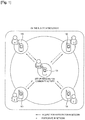
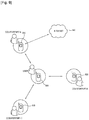
- FIG. 1 schematically illustrates a configuration of a network for a community activity according to an embodiment of the present invention.
- a network for a community activity for example a game room, using his or her mobile device 100.
- the user searches for a counterpart to participate in the network and to perform the community activity among the plurality of counterparts existing in the same place.
- user's mobile device 100 communicates with mobile devices of the counterparts to search for counterpart mobile devices, which satisfy a predetermined condition.
- user's mobile device 100 may search for a mobile device of a counterpart playing a game, a mobile device of a counterpart playing the same game as that to be played in the set up game room, and the like.
- FIG. 1 mobile device 110 of counterpart A, mobile device 120 of counterpart B, mobile device 130 of counterpart C, and mobile device 140 of counterpart D are found.
- mobile device 100 of the user requests that device 110 of counterpart A, mobile device 120 of counterpart B, mobile device 130 of counterpart C, and mobile device 140 of counterpart D participate in the network.
- the user when a counterpart accepts the request and participates in the network, the user performs the community activity with the counterpart. That is, in FIG. 1 , the mobile device 100 of the user plays the game with device 110 of counterpart A, mobile device 120 of counterpart B, mobile device 130 of counterpart C, and mobile device 140 of counterpart D.
- FIG. 2 is a block diagram of a mobile device according to an embodiment of the present invention.
- the mobile device 200 may be a mobile terminal, a laptop computer, a personal digital assistant (PDA), an MP3 (MPEG audio layer-3) player, and the like. Further, mobile device 200 according to the present embodiment may include any electronic device carried by the user and capable of communicating with other mobile devices.
- PDA personal digital assistant
- MP3 MPEG audio layer-3) player
- Mobile device 200 includes a communication unit 210, a signal processing unit 220, a display unit 230, a user input unit 240, and a controller 250.
- Communication unit 210 communicates with a plurality of counter mobile devices.
- communication unit 210 performs communication via Wi-Fi, Bluetooth ® , and Zigbee to constitute an ad hoc network with the plurality of counterpart mobile devices.
- communication unit 210 includes Wi-Fi, Bluetooth ® and Zigbee communication modules.
- communication unit 210 performs mobile communication, such as wireless local area network (WLAN), 3G, 3G transitional, and 4G communication, to constitute an infrastructure network with the plurality of counterpart mobile devices.
- communication unit 210 includes a WLAN communication module, a 3G communication module, a 3G transitional communication module, and a 4G communication module.
- the signal processing unit 220 processes a signal transmitted and received through communication unit 210.
- signal processing unit 220 may perform encoding, decoding, and demodulation of a signal.
- the display unit 230 displays an image based on a signal processed by signal processing unit 220.
- display unit 230 may include a display panel configured as a liquid crystal display (LCD), an organic light emitting display (OLED), a plasma display panel (PDP), and the like.
- LCD liquid crystal display
- OLED organic light emitting display
- PDP plasma display panel
- the user input unit 240 receives input by a user.
- the input by the user may be associated with a network for a community activity.
- the input may include setting up the network, searching for participants in the network, a community activity, or terminating the network.
- user input unit 240 may receive user's input through a touch screen, a touch pad, or a button of mobile device 200.
- Controller 250 controls communication unit 210 to request that at least one counterpart mobile device having a profile corresponding to a profile of the user participates in the network for the community activity among a plurality of connectable counterpart mobile devices. Prior to the request, controller 250 controls communication unit 210 to request participation in the network when a signal allowing constitution of the network for the community activity is received from the user through user input unit 240.
- Controller 250 controls communication unit 210 to search for at least one counterpart mobile device having a profile corresponding to the profile of the user.
- controller 250 controls communication unit 210 to transmit a request signal for the profile of at least one counterpart mobile device to the mobile device existing within a predetermined range.
- the predetermined range may include a preset range of physical distance from the mobile device.
- Controller 250 receives the profile from at least one counterpart mobile device in response to the request signal and selects at least one counterpart mobile device having a profile corresponding to the profile of the user among the received profiles.
- Controller 250 enables display unit 230 to display a list of at least one selected counterpart mobile device.
- Controller 250 may control communication unit 210 to transmit a request signal for participation in the network for the community activity to a counterpart mobile device selected through user input unit 240 from a list of at least one displayed counterpart mobile device.
- controller 250 transmits a request signal for a profile to a plurality of connectable counterpart mobile devices, identifies whether a received profile in response to the request signal corresponds to the profile of the user, and determines a candidate counterpart mobile device to constitute the network for the community activity.
- controller 250 transmits a request signal for a profile to each counterpart mobile device, identifies whether a received profile in response to the request signal corresponds to the profile of the user, and determines a candidate counterpart mobile device to constitute the network for the community activity.
- the profile of the user may include an application being implemented, content being implemented, a preferred application, or preferred content.
- the application may include a game, listening to music, chatting, instant messaging, watching movies, or watching broadcasts.
- the content may include an image, a video, an audio file, or a text.
- the community activity may be various activities performed by users having corresponding profiles.
- community activity may include joint implementation of an application, sharing content implemented by a user with another user, transmitting and receiving content between users, and the like.
- joint implementation of the application may be activity where a plurality of users plays an online game or chat.
- Sharing content implemented by the user with the other user may be an activity where a plurality of users watch a video reproduced by a user at the same time.
- Transmitting and receiving content between users may be an activity where a user transmits an audio file to a plurality of users in a broadcasting method.
- the network for the community activity is connected in an ad hoc mode, which will be described with reference to FIG. 3 .
- the network for the community activity is connected in an infrastructure mode, which will be described with reference with FIG. 4 .
- Mobile device 200 may constitute a network with a plurality of counterpart mobile devices in various processes.
- Mobile device 200 connects to all found counterpart mobile devices and may disconnect from counterparts which do not accept a request for participation.
- controller 250 controls communication unit 210 to connect to at least one counterpart mobile device having a profile corresponding to the profile of the user and then to terminate connection to a counterpart mobile device which does not accept the request.
- mobile device 200 identifies whether each found counterpart mobile device accepts a request in participation one to one and then connects.
- controller 250 controls communication unit 210 to connect to a counterpart mobile device which accepts the request when at least one counterpart mobile device having a profile corresponding to the profile of the user accepts the request.
- Controller 250 may control communication unit 210 to perform community activity with at least one counterpart mobile device which accepts the request for participation in the network for the community activity based on input by the user.
- Mobile device 200 may receive a request to participate in a network for a community activity from a counterpart mobile device.
- controller 250 may control communication unit 210 to perform the community activity with at least one counterpart mobile device based on input by the user when participating in the network for the community activity requested by at least one counterpart mobile among a plurality of connectable counterpart mobile devices.
- Controller 250 may control communication unit 210 to transmit an acceptance signal corresponding to a request signal for participation in the network for the community activity and to perform the community activity with at least one counterpart mobile device based on the input by the user when the request signal is received from a counterpart mobile device among at least one connectable counterpart mobile devices. Controller 250 may control communication unit 210 to transmit the acceptance signal when a signal to allow constituting the network for the community activity is received through the user input unit 240. Further, controller 250 may control communication unit 210 to transmit a profile corresponding to a request signal when the request signal for a profile is received from at least one counterpart mobile device.
- FIG. 3 illustrates a network for a community activity connected in ad hoc mode.
- An ad hoc network is an infrastructure-free network that enables nodes to wirelessly communicate with each other without relying on a base station or an access point (AP). That is, each node constituting the ad hoc network directly routes packets to another node without passing through the AP. Thus, the ad hoc network does not need a base station or an AP. In the ad hoc network, since nodes transfer freely, network topology changes dynamically. Further, each node may perform as a server or a client.
- the ad hoc network may be configured by Wi-Fi, Bluetooth ® and Zigbee communication.
- a mobile device 310 of A sets up a first network 340 for a community activity.
- mobile device 310 of A searches for a counterpart mobile device having a profile corresponding to its own profile.
- Mobile device 310 of A requests that a found mobile device 320 of B and a found mobile device 330 of C participate in the first network 340.
- mobile device 320 of B and mobile device 330 of C accept the request for participation in the first network 340, mobile device 320 of B and mobile device 330 of C are respectively connected to the first network 340 to participate in the community activity.
- mobile device 320 of B and mobile device 330 of C may respectively perform the community activity with mobile device 310 of A.
- mobile device 310 of A functions as a server
- mobile device 320 of B and mobile device 330 of C function as clients.
- a mobile device 350 of D may independently set up a second network 380 for another community activity.
- mobile device 350 of D searches for mobile device 310 of A, a mobile device 360 of E, and a mobile device 370 of F in the same manner and requests that the found mobile devices 310, 360, and 370 participate in the second network 380.
- mobile device 310 of A and mobile device 360 of E accept the request for participation in the second network 380, but mobile device 370 of F rejects the request for participation in the second network 380.
- mobile device 350 of D performs the community activity only with mobile device 310 of A and mobile device 360 of E.
- mobile devices connected via the ad hoc network perform as a server or a client to communicate with each other.
- mobile device 310 of A is a server in the first network 340 but is a client in the second network 380.
- the ad hoc network enables a plurality of nodes to be connected one to one and may be formed in a small space without a server.
- the network may be formed in a small space without a server, such as a subway or a bus, to share and transmit content.
- FIG. 4 illustrates a network for a community activity connected in infrastructure mode.
- An infrastructure network is a network in which a plurality of nodes, positioned within a predetermined range of a base station or AP, constitute one network and communicate with each other.
- the infrastructure network may be formed by mobile communication such as WLAN communication, 3G communication, 3G transitional communication including long term evolution communication, and 4G communication.
- FIG. 4 shows an example of an infrastructure network by WLAN communication via AP relay.
- a mobile device 410 of A, a mobile device 420 of B, a mobile device 430 of C, and a mobile device 440 of D constitute one network via AP relay, and mobile devices 410, 420, 430, and 440 transmit and receive data with a server 400 through an AP 450.
- the mobile device 410 of A requests setup of a network 460 for a community activity from the server 400 through the AP 450.
- mobile device 410 of A also transmits its own profile.
- server 400 searches for a counterpart mobile device having a profile corresponding to the received profile of the mobile device 410 of A.
- server 400 may search for a counterpart mobile device having a profile corresponding to the profile of mobile device 410 of A among mobile devices connected to the AP 450.
- Server 400 finds mobile devices 420, 430, and 440 of B, C, and D having the profile corresponding to mobile device 410 of A among the mobile devices connected to the AP 450 and requests that mobile device 420 of B, mobile device 430 of C, and mobile device 440 of D participate in the network 460 through the AP 450.
- mobile device 420 of B, mobile device 430 of C, and mobile device 440 of D receiving the request for the participation in the network 460 transmit an acceptance signal regarding the request for the participation in the network 460 to server 400 through the AP 450
- server 400 connects mobile device 420 of B, mobile device 430 of C, and mobile device 440 of D to the network 460 for the community activity through the AP 450.
- the AP 450 may route a packet transmitted and received between the mobile devices so that the mobile devices constituting the network 460 for the community activity communicate with each other. Accordingly, mobile device 410 of A, mobile device 420 of B, mobile device 430 of C, and mobile device 440 of D may communicate with each other.
- the network 460 for the community activity When the network 460 for the community activity is connected in infrastructure mode, the network may be enabled by mobile communication via relay of a base station, such as 3G, 3G transitional, and 4G communication.
- a base station such as 3G, 3G transitional, and 4G communication.
- 3G communication is an IMT-2000 system and includes communication performed by cdma2000, WCDMA, CDMA TDD, UWC-136/EDGE, and DECT standards
- 3G transitional communication is 3.5G, 3.7G, and 3.9G communication and includes communication performed by HSDPA, HSUPA, LTE, EV-DO , and Mobile WiMAX standards
- 4G communication is an IMT-Advanced system and includes communication performed by LTE Advanced and IEEE 802.16m standards.
- mobile devices 410, 420, 430, and 440 in FIG. 4 include a module to enable 3G communication, 3G transitional communication, or 4G communication
- mobile devices 210, 420, 430, and 440 communicate with server 400 through a base station to relay mobile communication to enable connection of the network for the community activity.
- server 400 communicates with server 400 through a base station to relay mobile communication to enable connection of the network for the community activity.
- one of the mobile devices 410, 420, 430, and 440 requests setup of the network for the community activity from server 400 through the base station and also transmits its own profile.
- Server 400 searches for a counterpart mobile device having a profile corresponding to the received profile among the mobile devices connected to the base station and transmits a request signal for participation in the network.
- a counterpart mobile device receiving the request signal transmits an acceptance signal, the network for the community activity is set up.
- a network for a community activity may be set up in a state where communication is enabled with prior consent. That is, the network for the community activity may be set up by users connected to a server providing a service.
- a user sets up a network for a community activity and suggests participation in the network to adjacent users. Accordingly, users existing in the same space may set up an instant network and perform various community activities.
- FIG. 5 illustrates examples of screen displays on a mobile device setting up a network for a community activity.
- a user may set up a network game, traveling on public transportation.
- mobile device 200 displays a screen asking whether to set up a network game.
- mobile device 200 displays a screen including a phrase "set up ad hoc game room?" a Yes button to select setup of the network game, and a No button to cancel setup of the network game (510).
- mobile device 200 recruits participants in the game. For example, mobile device 200 searches for a mobile device being implementing a game or a mobile device being implementing the same game to be implemented by the user among adjacent mobile devices, and requests participation in the network from a found mobile device. Here, mobile device 200 displays a phrase "waiting for participants in game"(511).
- a counterpart mobile device receiving the request for the participation in the network approves the participation in the game
- the counterpart mobile device is connected to the network.
- mobile device 200 and the counterpart mobile device perform one-to-one communication with each other.
- mobile device 200 displays a phrase "participants are waiting" on the screen (512).
- mobile device 200 may display detailed information about the participants on the screen. For example, as shown in FIG. 5 , a phrase "three participants joined" is displayed.
- a game start button and a game cancel button may further be displayed.
- the user of mobile device 200 selects the game start button, the user starts the game with the approved participants connected to the network (513).
- FIG. 6 illustrates examples of screen displays on a mobile device receiving a request for participation in a network.
- a user may receive a request for participation in a network game from an anonymous counterpart while traveling on public transportation.
- mobile device 200 displays a screen to report about the request. Referring to FIG. 6 , mobile device 200 displays a screen including a phrase "received a request for participation in ad hoc game room," a selection button to view details, and a rejection button to reject the request for the participation(520).
- mobile device 200 displays detailed information about the ad hoc game room on the screen. In detail, as shown in FIG. 6 , it is displayed that a game to be implemented is Diablo and two participants joined the room (521).
- mobile device 200 displays a screen asking whether to participate in a network.
- a screen including a phrase "participate in game?,” a Yes button to select participation in the game, and a No button to reject participation in the game is displayed (522).
- mobile device 200 When the user of mobile device 200 selects the Yes button to approve the participation in the game, mobile device 200 is connected to the set-up network. Here, mobile device 200 may be loaded with content to implement the game. When the content is completely loaded, mobile device 200 displays a screen including a phrase "content is loaded," a game start button, and a game cancel button (523).
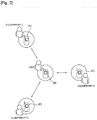
- FIG. 7 illustrates a network for a community activity according to an embodiment of the present invention.
- a mobile device 600 of a user setting up a network becomes a server.
- a mobile device 610 of a counterpart A, a mobile device 620 of a counterpart B, and a mobile device 630 of a counterpart C become a client.
- the clients do not communicate with each other.
- the mobile device 600 of the user sets up the network and provides an instant DJ service. That is, the user of the mobile device 600 may set up an instant music broadcasting channel to listen to music in the mobile device 600 with the users of the counterpart mobile devices 610, 620, and 630, and share a playlist stored in the mobile device 600 of the user with the counterpart mobile devices 610, 620, and 630 to provide recommendation and purchase services of content.
- the counterpart mobile devices 610, 620, and 630 do not provide content, and thus the mobile devices610, 620, and 630 do not serve as a server. Therefore, the mobile device 610 of the counterpart A, the mobile device 620 of the counterpart B, and the mobile device 630 of the counterpart C do not communicate with each other.
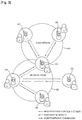
- FIG. 8 illustrates a network for a community activity according to another embodiment of the present invention.
- both a mobile device 700 of a user setting up a network and counterpart mobile devices 710, 720, and 730 become a server. That is, a mobile device 710 of a counterpart A, a mobile device 720 of a counterpart B, and a mobile device 730 of a counterpart C communicate with each other, and accordingly all mobile devices 700, 710, 720, and 730 connected to the network may serve as a server or client.
- the mobile device 700 of the user sets up the network to provide services such as an instant game, instant chatting, and sharing information about acquaintances.
- an instant game service a plurality of participants 700, 710, 720, and 730 may play a game at the same time.
- instant chatting an instant discussion room is created for debate and chatting over common issues and interests.
- sharing the information about the acquaintances information may be shared and identified with each other based on a security level of profile information set in the mobile devices 700, 710, 720, and 730 of the plurality of participants.
- the counterpart mobile devices 710, 720, and 730 transmit and receive information with each other in addition to the mobile device 700 of the user.
- mobile device 710 of counterpart A, mobile device 720 of counterpart B, and mobile device 730 of counterpart C communicate with each other.
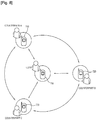
- FIG. 9 illustrates a network for a community activity according to still another embodiment of the present invention.
- the plurality of mobile devices may use the Internet.
- mobile device 800 of the user which serves as a server may receive content provided to mobile device 810 of counterpart A connected to the Internet, and may transmit the content to mobile device 820 of counterpart B and mobile device 830 of counterpart C, respectively.
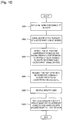
- FIG. 10 illustrates a control method of a mobile device according to an embodiment of the present invention.
- Mobile device 200 sets up a network for a community activity in step S901.
- Mobile device 200 communicates with a plurality of counterpart mobile devices in step S902.
- Mobile device 200 searches for at least one counterpart mobile device having a profile corresponding to a profile of a user among a plurality of connectable counterpart mobile devices in step S903.
- mobile device 200 transmits a request signal for a profile to the plurality of connectable counterpart mobile devices, selects at least one counterpart mobile device having a profile corresponding to the profile of the user among profiles received in response to the request signal, and displays a list of a counterpart mobile device on a display unit.
- Mobile device 200 requests that a found counterpart mobile device participates in the network for the community activity in step S904.
- Mobile device 200 may transmit a request signal for participation in the network to at least one counterpart mobile device selected from a list of at least one displayed counterpart mobile display when requesting the participation in the network.
- Mobile device 200 receives input by the user in step S905.
- Mobile device 200 performs the community activity with at least one counterpart mobile device which accepts the request based on the input by the user in step S906.
- mobile device 200 may perform the community activity by constituting a network with at least one counterpart mobile device which transmits an acceptance signal in response to the request signal for the participation in the network.
Landscapes
- Engineering & Computer Science (AREA)
- Multimedia (AREA)
- Signal Processing (AREA)
- Computer Networks & Wireless Communication (AREA)
- General Engineering & Computer Science (AREA)
- Databases & Information Systems (AREA)
- Computing Systems (AREA)
- Mobile Radio Communication Systems (AREA)
- Telephonic Communication Services (AREA)
- Telephone Function (AREA)
- Two-Way Televisions, Distribution Of Moving Picture Or The Like (AREA)
Claims (4)
- Dispositif mobile (200) ayant un profil utilisateur, comprenant :une unité de communication (210), mise en œuvre par un circuit de communication ;une unité d'affichage (230), mise en œuvre par un panneau d'affichage ; etun contrôleur (250), mis en œuvre par au moins un processeur matériel, configuré :sur la base du profil utilisateur comprenant une application étant mise en œuvre dans le dispositif mobile (200), pour identifier un dispositif mobile homologue (100) qui met en œuvre une même application que l'application étant mise en œuvre dans le dispositif mobile (200) parmi une pluralité de dispositifs mobiles homologues,pour commander à l'unité de communication (210) de transmettre une demande de participation à un réseau ad-hoc pour une activité de communauté au dispositif mobile homologue identifié, le dispositif mobile homologue (100) ayant un profil correspondant au profil utilisateur du dispositif mobile (200) et existant dans une plage prédéterminée qui comprend une plage prédéfinie de distance physique à partir du dispositif mobile (200),sur la base d'un signal d'acceptation correspondant à la demande étant reçue du dispositif mobile homologue identifié, pour commander à l'unité d'affichage (230) d'afficher un bouton de démarrage pour démarrer l'activité de communauté et un bouton d'annulation (523) pour annuler l'activité de communauté, etsur la base du bouton de démarrage étant sélectionné par un utilisateur, pour exécuter l'activité de communauté avec le dispositif mobile homologue identifié dans le réseau ad-hoc ;dans lequel l'activité de communauté comprend la mise en œuvre conjointe de l'application.
- Dispositif mobile (200) selon la revendication 1, dans lequel le contrôleur (250) est en outre configuré pour commander à l'unité de communication (210) de se connecter au dispositif mobile homologue identifié pour transmettre la demande de participation, puis pour mettre fin à la connexion au dispositif mobile homologue identifié s'il n'accepte pas la demande.
- Procédé de commande d'un dispositif mobile (200) ayant un profil utilisateur, le procédé comprenant :sur la base du profil utilisateur comprenant une application étant mise en œuvre dans le dispositif mobile (200), l'identification d'un dispositif mobile homologue (100) qui met en œuvre une même application que l'application étant mise en œuvre dans le dispositif mobile (200) parmi une pluralité de dispositifs mobiles homologues,la transmission d'une demande de participation à un réseau ad hoc pour une activité de communauté au dispositif mobile homologue identifié, le dispositif mobile homologue (100) ayant un profil correspondant au profil utilisateur du dispositif mobile (200) et existant dans une plage prédéterminée qui comprend une plage prédéfinie de distance physique par rapport au dispositif mobile (200),sur la base d'un signal d'acceptation correspondant à la demande étant reçue du dispositif mobile homologue identifié, l'affichage d'un bouton de démarrage pour démarrer l'activité de communauté et d'un bouton d'annulation (523) pour annuler l'activité de communauté ; etsur la base du bouton de démarrage étant sélectionné par un utilisateur, l'exécution de l'activité de communauté avec le dispositif mobile homologue identifié dans le réseau ad-hoc ;dans lequel l'activité de communauté comprend la mise en œuvre conjointe de l'application.
- Procédé selon la revendication 3, comprenant en outre :la connexion au dispositif mobile homologue identifié pour transmettre la demande de participation, etl'arrêt de la connexion au dispositif mobile homologue identifié s'il n'accepte pas la demande.
Applications Claiming Priority (3)
| Application Number | Priority Date | Filing Date | Title |
|---|---|---|---|
| KR1020090104430A KR101635615B1 (ko) | 2009-10-30 | 2009-10-30 | 모바일 기기 및 모바일 기기의 제어 방법 |
| PCT/KR2010/007403 WO2011052980A2 (fr) | 2009-10-30 | 2010-10-27 | Dispositif mobile et procédé de commande de celui-ci |
| EP10827064.6A EP2494796B1 (fr) | 2009-10-30 | 2010-10-27 | Dispositif mobile et procédé de commande de celui-ci |
Related Parent Applications (2)
| Application Number | Title | Priority Date | Filing Date |
|---|---|---|---|
| EP10827064.6A Division EP2494796B1 (fr) | 2009-10-30 | 2010-10-27 | Dispositif mobile et procédé de commande de celui-ci |
| EP10827064.6A Division-Into EP2494796B1 (fr) | 2009-10-30 | 2010-10-27 | Dispositif mobile et procédé de commande de celui-ci |
Publications (2)
| Publication Number | Publication Date |
|---|---|
| EP3447972A1 EP3447972A1 (fr) | 2019-02-27 |
| EP3447972B1 true EP3447972B1 (fr) | 2021-12-08 |
Family
ID=43922813
Family Applications (2)
| Application Number | Title | Priority Date | Filing Date |
|---|---|---|---|
| EP18199982.2A Not-in-force EP3447972B1 (fr) | 2009-10-30 | 2010-10-27 | Dispositif mobile et son procédé de commande |
| EP10827064.6A Not-in-force EP2494796B1 (fr) | 2009-10-30 | 2010-10-27 | Dispositif mobile et procédé de commande de celui-ci |
Family Applications After (1)
| Application Number | Title | Priority Date | Filing Date |
|---|---|---|---|
| EP10827064.6A Not-in-force EP2494796B1 (fr) | 2009-10-30 | 2010-10-27 | Dispositif mobile et procédé de commande de celui-ci |
Country Status (7)
| Country | Link |
|---|---|
| US (3) | US9037121B2 (fr) |
| EP (2) | EP3447972B1 (fr) |
| JP (1) | JP2013509780A (fr) |
| KR (1) | KR101635615B1 (fr) |
| CN (2) | CN106059908B (fr) |
| AU (1) | AU2010314008B2 (fr) |
| WO (1) | WO2011052980A2 (fr) |
Families Citing this family (13)
| Publication number | Priority date | Publication date | Assignee | Title |
|---|---|---|---|---|
| CN103297446B (zh) * | 2012-02-23 | 2016-10-12 | 腾讯科技(深圳)有限公司 | 游戏资源分配的方法及服务器 |
| JP2014161673A (ja) * | 2013-02-27 | 2014-09-08 | Nintendo Co Ltd | 情報端末制御システム、情報端末制御システムの制御方法、情報処理装置および情報処理装置の制御プログラム |
| US20140298195A1 (en) * | 2013-04-01 | 2014-10-02 | Harman International Industries, Incorporated | Presence-aware information system |
| JP2014209279A (ja) * | 2013-04-16 | 2014-11-06 | 任天堂株式会社 | 情報処理装置、情報処理システム、情報処理装置の制御方法、およびその制御プログラム |
| JP6131090B2 (ja) | 2013-04-16 | 2017-05-17 | 任天堂株式会社 | 情報処理装置、情報を表示する方法、プログラム、および情報処理システム |
| KR102057944B1 (ko) | 2013-09-17 | 2019-12-23 | 삼성전자주식회사 | 단말 장치 및 그의 공유 방법 |
| KR101533738B1 (ko) * | 2013-11-26 | 2015-07-03 | 주식회사 엠투브 | 네트워크 멀티미디어 공유 시스템 |
| KR102248745B1 (ko) * | 2014-08-29 | 2021-05-07 | 삼성전자주식회사 | 디스플레이 장치, 서버, 및 콘텐츠 제공 방법 |
| DE102015117335A1 (de) * | 2015-10-12 | 2017-04-13 | Ufuk Tanriverdi | Anordnung zur Ermöglichung drahtloser Kommunikation in einem begrenzten Raum |
| US10554705B2 (en) * | 2017-07-26 | 2020-02-04 | Sony Corporation | System and method for controlling client electronic devices in wireless local ad hoc network |
| WO2019170810A1 (fr) * | 2018-03-07 | 2019-09-12 | Playfinity As | Procédé de création d'un réseau, en particulier éphémère |
| US12555548B2 (en) | 2021-02-19 | 2026-02-17 | Vizio, Inc. | Systems and methods for enhancing television display for video conferencing and video watch party applications |
| KR102376407B1 (ko) * | 2021-04-26 | 2022-03-21 | 주식회사 화컴 | 근거리 통신망을 활용한 근접 사용자 네트워킹 서비스 제공 방법 및 이를 위한 시스템 |
Family Cites Families (39)
| Publication number | Priority date | Publication date | Assignee | Title |
|---|---|---|---|---|
| EP0717545A3 (fr) * | 1994-12-13 | 1998-06-17 | AT&T Corp. | Service de réseau téléphonique interactif |
| US6287200B1 (en) * | 1999-12-15 | 2001-09-11 | Nokia Corporation | Relative positioning and virtual objects for mobile devices |
| US7715533B2 (en) * | 2001-04-27 | 2010-05-11 | Hewlett-Packard Development Company, L.P. | Brokering of information acquisition by devices in a wireless network |
| US20020165630A1 (en) * | 2001-05-01 | 2002-11-07 | Penn Arthur | Method and apparatus for player lead tracking and playback of multi-player computer games |
| US6757517B2 (en) * | 2001-05-10 | 2004-06-29 | Chin-Chi Chang | Apparatus and method for coordinated music playback in wireless ad-hoc networks |
| JP2003195969A (ja) * | 2001-12-25 | 2003-07-11 | Toshihiro Handa | ネットワークを介したゲームソフト配信管理システム及び方法 |
| US20040203363A1 (en) * | 2002-04-19 | 2004-10-14 | Carlton Stephen J. | Portable communication apparatus and method for match-making with unique user ID |
| US7254406B2 (en) * | 2002-06-10 | 2007-08-07 | Suman Beros | Method and apparatus for effecting a detection of mobile devices that are proximate and exhibit commonalities between specific data sets, or profiles, associated with the persons transporting the mobile devices |
| GB0222926D0 (en) * | 2002-10-03 | 2002-11-13 | Koninkl Philips Electronics Nv | Media communications apparatus and method |
| JP2004136009A (ja) * | 2002-10-21 | 2004-05-13 | Nintendo Co Ltd | 無線通信ゲームシステム |
| CN1823492A (zh) * | 2003-05-27 | 2006-08-23 | 诺基亚公司 | 对等环境中的用户交互作用系统和方法 |
| ES2359053T3 (es) * | 2003-06-30 | 2011-05-18 | Nokia Corporation | Procedimiento y dispositivo para determinar y notificar a los usuarios que tienen perfiles de preferencia coincidentes para acceder a una aplicación en línea de acceso múltiple. |
| DE60331107D1 (de) * | 2003-06-30 | 2010-03-11 | Nokia Corp | Verfahren und vorrichtung zum automatischen verbinden eines mobilen endgerätes mit einem mobiltelefonnetzserver mittels eines auswechselbaren speichers |
| JP2005085154A (ja) * | 2003-09-10 | 2005-03-31 | Ricoh Co Ltd | ネットワークシステムおよび端末装置 |
| US7310676B2 (en) * | 2004-02-09 | 2007-12-18 | Proxpro, Inc. | Method and computer system for matching mobile device users for business and social networking |
| JP4628162B2 (ja) * | 2004-04-16 | 2011-02-09 | 株式会社ソニー・コンピュータエンタテインメント | 通信端末装置、通信システムおよび電力制御方法 |
| JP3761091B2 (ja) * | 2004-05-07 | 2006-03-29 | 株式会社ソニー・コンピュータエンタテインメント | アプリケーション実行方法、ファイルデータダウンロード方法、ファイルデータアップロード方法、通信方法および無線通信端末装置 |
| US7769409B2 (en) | 2004-06-23 | 2010-08-03 | Sony Computer Entertainment America Inc. | Network participant status evaluation |
| KR20060129892A (ko) * | 2005-06-13 | 2006-12-18 | 스미스앤모바일 주식회사 | 네트워크 게임 제어 장치 및 그 방법 |
| JP2007013704A (ja) * | 2005-06-30 | 2007-01-18 | Sony Corp | データシェアリングシステム、コントローラ端末、プレーヤー端末、データシェアリング同時再生方法及びデータシェアリング同時再生プログラム |
| US8150416B2 (en) * | 2005-08-08 | 2012-04-03 | Jambo Networks, Inc. | System and method for providing communication services to mobile device users incorporating proximity determination |
| US20070047505A1 (en) * | 2005-08-31 | 2007-03-01 | Sony Ericsson Mobile Communications Ab | Mobile wireless communication terminals, systems and methods for providing a slideshow |
| JP2007089025A (ja) | 2005-09-26 | 2007-04-05 | Sharp Corp | 通話中にコンテンツの視聴可能な情報処理装置、情報処理方法、および、プログラム |
| JP2007104464A (ja) | 2005-10-06 | 2007-04-19 | Sharp Corp | 携帯端末の機能制御システム、情報処理装置、方法、プログラム、及び記録媒体 |
| US8832760B2 (en) * | 2006-03-17 | 2014-09-09 | Sony Corporation | System and method for organizing group content presentations and group communications during the same |
| US20080013701A1 (en) * | 2006-04-04 | 2008-01-17 | Barhydt William J | Voting And Multi-Media Actionable Messaging Services For Mobile Social Networks |
| JP5285843B2 (ja) * | 2006-06-28 | 2013-09-11 | 任天堂株式会社 | 無線通信システム |
| US8676961B2 (en) * | 2006-07-27 | 2014-03-18 | Yahoo! Inc. | System and method for web destination profiling |
| KR20080017968A (ko) * | 2006-08-23 | 2008-02-27 | 삼성전자주식회사 | 휴대 단말기에서 게임 서비스 제공 방법 및 그 장치 |
| US20080109412A1 (en) * | 2006-10-24 | 2008-05-08 | Drayer Jay A | System and method for community-based needs for communication and fulfillment |
| US20080126113A1 (en) * | 2006-11-29 | 2008-05-29 | Steve Manning | Systems and methods for creating and participating in ad-hoc virtual communities |
| JP2008268308A (ja) | 2007-04-16 | 2008-11-06 | Sony Ericsson Mobilecommunications Japan Inc | 携帯情報端末及び情報共有システム、情報共有管理方法 |
| US20080282324A1 (en) * | 2007-05-10 | 2008-11-13 | Mary Kay Hoal | Secure Social Networking System with Anti-Predator Monitoring |
| KR100913902B1 (ko) | 2007-05-25 | 2009-08-26 | 삼성전자주식회사 | 지그비 개인영역 네트워크에서 이동통신 단말기를 이용하여데이터를 송수신하는 통신방법 및 그를 위한 통신 시스템 |
| CN100461740C (zh) * | 2007-06-05 | 2009-02-11 | 华为技术有限公司 | 一种客户端节点网络拓扑构造方法及流媒体分发系统 |
| US9731202B2 (en) * | 2007-06-26 | 2017-08-15 | Gosub 60, Inc. | Methods and systems for updating in-game content |
| US20100153521A1 (en) * | 2008-12-15 | 2010-06-17 | Kar-Wing Edward Lor | Method and Device for Providing Offline Web Services |
| CN101521874B (zh) | 2009-04-02 | 2014-08-13 | 腾讯科技(深圳)有限公司 | 一种实现单机手机游戏对战交互的方法、系统及客户端 |
| US20100317419A1 (en) * | 2009-06-11 | 2010-12-16 | John Osborne | Method and System for Synchronous Social Gaming via Mobile Devices |
-
2009
- 2009-10-30 KR KR1020090104430A patent/KR101635615B1/ko not_active Expired - Fee Related
-
2010
- 2010-10-27 JP JP2012536669A patent/JP2013509780A/ja active Pending
- 2010-10-27 WO PCT/KR2010/007403 patent/WO2011052980A2/fr not_active Ceased
- 2010-10-27 CN CN201610679907.4A patent/CN106059908B/zh not_active Expired - Fee Related
- 2010-10-27 US US12/913,383 patent/US9037121B2/en active Active
- 2010-10-27 EP EP18199982.2A patent/EP3447972B1/fr not_active Not-in-force
- 2010-10-27 EP EP10827064.6A patent/EP2494796B1/fr not_active Not-in-force
- 2010-10-27 CN CN201080048618.5A patent/CN102598725B/zh not_active Expired - Fee Related
- 2010-10-27 AU AU2010314008A patent/AU2010314008B2/en not_active Ceased
-
2013
- 2013-06-06 US US13/911,573 patent/US9226118B2/en not_active Expired - Fee Related
-
2015
- 2015-04-28 US US14/698,496 patent/US20150231494A1/en not_active Abandoned
Non-Patent Citations (1)
| Title |
|---|
| None * |
Also Published As
| Publication number | Publication date |
|---|---|
| KR101635615B1 (ko) | 2016-07-05 |
| KR20110047704A (ko) | 2011-05-09 |
| CN106059908B (zh) | 2020-03-10 |
| EP2494796A2 (fr) | 2012-09-05 |
| US20150231494A1 (en) | 2015-08-20 |
| WO2011052980A2 (fr) | 2011-05-05 |
| US9037121B2 (en) | 2015-05-19 |
| US20110105093A1 (en) | 2011-05-05 |
| JP2013509780A (ja) | 2013-03-14 |
| CN106059908A (zh) | 2016-10-26 |
| EP3447972A1 (fr) | 2019-02-27 |
| US20130273961A1 (en) | 2013-10-17 |
| AU2010314008B2 (en) | 2015-10-29 |
| AU2010314008A1 (en) | 2012-05-17 |
| WO2011052980A3 (fr) | 2011-10-13 |
| CN102598725A (zh) | 2012-07-18 |
| US9226118B2 (en) | 2015-12-29 |
| EP2494796B1 (fr) | 2018-12-05 |
| CN102598725B (zh) | 2016-09-14 |
| EP2494796A4 (fr) | 2016-04-06 |
Similar Documents
| Publication | Publication Date | Title |
|---|---|---|
| EP3447972B1 (fr) | Dispositif mobile et son procédé de commande | |
| US8622840B2 (en) | Information processing device and information processing method | |
| CN112020046B (zh) | 用于无线设备的临时配对 | |
| EP3073703A1 (fr) | Procédé et système de partage de contenu audio de la musique et d'autres dispositifs mobiles | |
| TWI496497B (zh) | 於局部個人區域網路上之行動裝置中之社群網路連結與廣告技術 | |
| US20090247197A1 (en) | Creating online resources using information exchanged between paired wireless devices | |
| US20150026261A1 (en) | Information processing apparatus, information processing system, information processing method, and program | |
| CN102037679A (zh) | 通过不同的通信网络建立并行组服务的方法 | |
| US20070160004A1 (en) | Local Radio Group | |
| KR101543425B1 (ko) | 채팅 제공 방법 및 시스템 | |
| US9137029B1 (en) | State and availability monitoring for customer support services for multimedia conferences | |
| US9408059B2 (en) | Method and apparatus for communicating between mobile devices | |
| KR101079550B1 (ko) | 이동 통신 단말기 사용자들 간의 만남 주선 방법 및 시스템 | |
| JP4559459B2 (ja) | モバイルアドホックネットワークで通信するように動作可能なモバイル装置、及びその装置間のデータ交換セッションを確立する方法、及びコンピュータ読取り可能な媒体 | |
| KR20160085302A (ko) | 동기식 통신 시스템 및 방법 | |
| KR102222370B1 (ko) | 게임 초대 서비스 시스템 및 방법 | |
| JP2014154003A (ja) | 情報処理装置、制御方法、及び、プログラム | |
| CN101146005A (zh) | 在移动自组织网络中交换数据的设备和方法 | |
| CN104106306A (zh) | 用于促进远程参与社区的方法和装置 | |
| CN102483788A (zh) | 信息处理系统、信息处理方法、信息处理设备、信息处理设备控制方法、信息处理终端、信息处理终端控制方法、信息存储介质以及程序 | |
| JP2015114698A (ja) | ソーシャルネットワーキングサービス提供システムおよびサーバ | |
| KR20160111342A (ko) | 휴대 전화 번호를 이용한 ptt 서비스 제공 시스템 및 방법 |
Legal Events
| Date | Code | Title | Description |
|---|---|---|---|
| PUAI | Public reference made under article 153(3) epc to a published international application that has entered the european phase |
Free format text: ORIGINAL CODE: 0009012 |
|
| STAA | Information on the status of an ep patent application or granted ep patent |
Free format text: STATUS: THE APPLICATION HAS BEEN PUBLISHED |
|
| AC | Divisional application: reference to earlier application |
Ref document number: 2494796 Country of ref document: EP Kind code of ref document: P |
|
| AK | Designated contracting states |
Kind code of ref document: A1 Designated state(s): AL AT BE BG CH CY CZ DE DK EE ES FI FR GB GR HR HU IE IS IT LI LT LU LV MC MK MT NL NO PL PT RO RS SE SI SK SM TR |
|
| STAA | Information on the status of an ep patent application or granted ep patent |
Free format text: STATUS: REQUEST FOR EXAMINATION WAS MADE |
|
| 17P | Request for examination filed |
Effective date: 20190530 |
|
| RBV | Designated contracting states (corrected) |
Designated state(s): AL AT BE BG CH CY CZ DE DK EE ES FI FR GB GR HR HU IE IS IT LI LT LU LV MC MK MT NL NO PL PT RO RS SE SI SK SM TR |
|
| STAA | Information on the status of an ep patent application or granted ep patent |
Free format text: STATUS: EXAMINATION IS IN PROGRESS |
|
| 17Q | First examination report despatched |
Effective date: 20200529 |
|
| GRAP | Despatch of communication of intention to grant a patent |
Free format text: ORIGINAL CODE: EPIDOSNIGR1 |
|
| STAA | Information on the status of an ep patent application or granted ep patent |
Free format text: STATUS: GRANT OF PATENT IS INTENDED |
|
| INTG | Intention to grant announced |
Effective date: 20210727 |
|
| GRAS | Grant fee paid |
Free format text: ORIGINAL CODE: EPIDOSNIGR3 |
|
| GRAA | (expected) grant |
Free format text: ORIGINAL CODE: 0009210 |
|
| STAA | Information on the status of an ep patent application or granted ep patent |
Free format text: STATUS: THE PATENT HAS BEEN GRANTED |
|
| REG | Reference to a national code |
Ref country code: DE Ref legal event code: R079 Ref document number: 602010067905 Country of ref document: DE Free format text: PREVIOUS MAIN CLASS: H04L0012580000 Ipc: H04L0051000000 |
|
| AC | Divisional application: reference to earlier application |
Ref document number: 2494796 Country of ref document: EP Kind code of ref document: P |
|
| AK | Designated contracting states |
Kind code of ref document: B1 Designated state(s): AL AT BE BG CH CY CZ DE DK EE ES FI FR GB GR HR HU IE IS IT LI LT LU LV MC MK MT NL NO PL PT RO RS SE SI SK SM TR |
|
| REG | Reference to a national code |
Ref country code: GB Ref legal event code: FG4D |
|
| REG | Reference to a national code |
Ref country code: AT Ref legal event code: REF Ref document number: 1454588 Country of ref document: AT Kind code of ref document: T Effective date: 20211215 Ref country code: CH Ref legal event code: EP |
|
| REG | Reference to a national code |
Ref country code: DE Ref legal event code: R096 Ref document number: 602010067905 Country of ref document: DE |
|
| REG | Reference to a national code |
Ref country code: IE Ref legal event code: FG4D |
|
| REG | Reference to a national code |
Ref country code: LT Ref legal event code: MG9D |
|
| REG | Reference to a national code |
Ref country code: NL Ref legal event code: MP Effective date: 20211208 |
|
| PG25 | Lapsed in a contracting state [announced via postgrant information from national office to epo] |
Ref country code: RS Free format text: LAPSE BECAUSE OF FAILURE TO SUBMIT A TRANSLATION OF THE DESCRIPTION OR TO PAY THE FEE WITHIN THE PRESCRIBED TIME-LIMIT Effective date: 20211208 Ref country code: LT Free format text: LAPSE BECAUSE OF FAILURE TO SUBMIT A TRANSLATION OF THE DESCRIPTION OR TO PAY THE FEE WITHIN THE PRESCRIBED TIME-LIMIT Effective date: 20211208 Ref country code: FI Free format text: LAPSE BECAUSE OF FAILURE TO SUBMIT A TRANSLATION OF THE DESCRIPTION OR TO PAY THE FEE WITHIN THE PRESCRIBED TIME-LIMIT Effective date: 20211208 Ref country code: BG Free format text: LAPSE BECAUSE OF FAILURE TO SUBMIT A TRANSLATION OF THE DESCRIPTION OR TO PAY THE FEE WITHIN THE PRESCRIBED TIME-LIMIT Effective date: 20220308 |
|
| REG | Reference to a national code |
Ref country code: AT Ref legal event code: MK05 Ref document number: 1454588 Country of ref document: AT Kind code of ref document: T Effective date: 20211208 |
|
| PG25 | Lapsed in a contracting state [announced via postgrant information from national office to epo] |
Ref country code: SE Free format text: LAPSE BECAUSE OF FAILURE TO SUBMIT A TRANSLATION OF THE DESCRIPTION OR TO PAY THE FEE WITHIN THE PRESCRIBED TIME-LIMIT Effective date: 20211208 Ref country code: NO Free format text: LAPSE BECAUSE OF FAILURE TO SUBMIT A TRANSLATION OF THE DESCRIPTION OR TO PAY THE FEE WITHIN THE PRESCRIBED TIME-LIMIT Effective date: 20220308 Ref country code: LV Free format text: LAPSE BECAUSE OF FAILURE TO SUBMIT A TRANSLATION OF THE DESCRIPTION OR TO PAY THE FEE WITHIN THE PRESCRIBED TIME-LIMIT Effective date: 20211208 Ref country code: HR Free format text: LAPSE BECAUSE OF FAILURE TO SUBMIT A TRANSLATION OF THE DESCRIPTION OR TO PAY THE FEE WITHIN THE PRESCRIBED TIME-LIMIT Effective date: 20211208 Ref country code: GR Free format text: LAPSE BECAUSE OF FAILURE TO SUBMIT A TRANSLATION OF THE DESCRIPTION OR TO PAY THE FEE WITHIN THE PRESCRIBED TIME-LIMIT Effective date: 20220309 Ref country code: ES Free format text: LAPSE BECAUSE OF FAILURE TO SUBMIT A TRANSLATION OF THE DESCRIPTION OR TO PAY THE FEE WITHIN THE PRESCRIBED TIME-LIMIT Effective date: 20211208 |
|
| PG25 | Lapsed in a contracting state [announced via postgrant information from national office to epo] |
Ref country code: NL Free format text: LAPSE BECAUSE OF FAILURE TO SUBMIT A TRANSLATION OF THE DESCRIPTION OR TO PAY THE FEE WITHIN THE PRESCRIBED TIME-LIMIT Effective date: 20211208 |
|
| PG25 | Lapsed in a contracting state [announced via postgrant information from national office to epo] |
Ref country code: SM Free format text: LAPSE BECAUSE OF FAILURE TO SUBMIT A TRANSLATION OF THE DESCRIPTION OR TO PAY THE FEE WITHIN THE PRESCRIBED TIME-LIMIT Effective date: 20211208 Ref country code: SK Free format text: LAPSE BECAUSE OF FAILURE TO SUBMIT A TRANSLATION OF THE DESCRIPTION OR TO PAY THE FEE WITHIN THE PRESCRIBED TIME-LIMIT Effective date: 20211208 Ref country code: RO Free format text: LAPSE BECAUSE OF FAILURE TO SUBMIT A TRANSLATION OF THE DESCRIPTION OR TO PAY THE FEE WITHIN THE PRESCRIBED TIME-LIMIT Effective date: 20211208 Ref country code: PT Free format text: LAPSE BECAUSE OF FAILURE TO SUBMIT A TRANSLATION OF THE DESCRIPTION OR TO PAY THE FEE WITHIN THE PRESCRIBED TIME-LIMIT Effective date: 20220408 Ref country code: EE Free format text: LAPSE BECAUSE OF FAILURE TO SUBMIT A TRANSLATION OF THE DESCRIPTION OR TO PAY THE FEE WITHIN THE PRESCRIBED TIME-LIMIT Effective date: 20211208 Ref country code: CZ Free format text: LAPSE BECAUSE OF FAILURE TO SUBMIT A TRANSLATION OF THE DESCRIPTION OR TO PAY THE FEE WITHIN THE PRESCRIBED TIME-LIMIT Effective date: 20211208 |
|
| PG25 | Lapsed in a contracting state [announced via postgrant information from national office to epo] |
Ref country code: PL Free format text: LAPSE BECAUSE OF FAILURE TO SUBMIT A TRANSLATION OF THE DESCRIPTION OR TO PAY THE FEE WITHIN THE PRESCRIBED TIME-LIMIT Effective date: 20211208 Ref country code: AT Free format text: LAPSE BECAUSE OF FAILURE TO SUBMIT A TRANSLATION OF THE DESCRIPTION OR TO PAY THE FEE WITHIN THE PRESCRIBED TIME-LIMIT Effective date: 20211208 |
|
| REG | Reference to a national code |
Ref country code: DE Ref legal event code: R097 Ref document number: 602010067905 Country of ref document: DE |
|
| PG25 | Lapsed in a contracting state [announced via postgrant information from national office to epo] |
Ref country code: IS Free format text: LAPSE BECAUSE OF FAILURE TO SUBMIT A TRANSLATION OF THE DESCRIPTION OR TO PAY THE FEE WITHIN THE PRESCRIBED TIME-LIMIT Effective date: 20220408 |
|
| PLBE | No opposition filed within time limit |
Free format text: ORIGINAL CODE: 0009261 |
|
| STAA | Information on the status of an ep patent application or granted ep patent |
Free format text: STATUS: NO OPPOSITION FILED WITHIN TIME LIMIT |
|
| PG25 | Lapsed in a contracting state [announced via postgrant information from national office to epo] |
Ref country code: DK Free format text: LAPSE BECAUSE OF FAILURE TO SUBMIT A TRANSLATION OF THE DESCRIPTION OR TO PAY THE FEE WITHIN THE PRESCRIBED TIME-LIMIT Effective date: 20211208 Ref country code: AL Free format text: LAPSE BECAUSE OF FAILURE TO SUBMIT A TRANSLATION OF THE DESCRIPTION OR TO PAY THE FEE WITHIN THE PRESCRIBED TIME-LIMIT Effective date: 20211208 |
|
| PGFP | Annual fee paid to national office [announced via postgrant information from national office to epo] |
Ref country code: GB Payment date: 20220920 Year of fee payment: 13 |
|
| 26N | No opposition filed |
Effective date: 20220909 |
|
| PG25 | Lapsed in a contracting state [announced via postgrant information from national office to epo] |
Ref country code: SI Free format text: LAPSE BECAUSE OF FAILURE TO SUBMIT A TRANSLATION OF THE DESCRIPTION OR TO PAY THE FEE WITHIN THE PRESCRIBED TIME-LIMIT Effective date: 20211208 |
|
| PGFP | Annual fee paid to national office [announced via postgrant information from national office to epo] |
Ref country code: DE Payment date: 20220621 Year of fee payment: 13 |
|
| PG25 | Lapsed in a contracting state [announced via postgrant information from national office to epo] |
Ref country code: MC Free format text: LAPSE BECAUSE OF FAILURE TO SUBMIT A TRANSLATION OF THE DESCRIPTION OR TO PAY THE FEE WITHIN THE PRESCRIBED TIME-LIMIT Effective date: 20211208 Ref country code: IT Free format text: LAPSE BECAUSE OF FAILURE TO SUBMIT A TRANSLATION OF THE DESCRIPTION OR TO PAY THE FEE WITHIN THE PRESCRIBED TIME-LIMIT Effective date: 20211208 |
|
| REG | Reference to a national code |
Ref country code: CH Ref legal event code: PL |
|
| REG | Reference to a national code |
Ref country code: BE Ref legal event code: MM Effective date: 20221031 |
|
| PG25 | Lapsed in a contracting state [announced via postgrant information from national office to epo] |
Ref country code: LU Free format text: LAPSE BECAUSE OF NON-PAYMENT OF DUE FEES Effective date: 20221027 |
|
| PG25 | Lapsed in a contracting state [announced via postgrant information from national office to epo] |
Ref country code: LI Free format text: LAPSE BECAUSE OF NON-PAYMENT OF DUE FEES Effective date: 20221031 Ref country code: FR Free format text: LAPSE BECAUSE OF NON-PAYMENT OF DUE FEES Effective date: 20221031 Ref country code: CH Free format text: LAPSE BECAUSE OF NON-PAYMENT OF DUE FEES Effective date: 20221031 |
|
| PG25 | Lapsed in a contracting state [announced via postgrant information from national office to epo] |
Ref country code: BE Free format text: LAPSE BECAUSE OF NON-PAYMENT OF DUE FEES Effective date: 20221031 |
|
| PG25 | Lapsed in a contracting state [announced via postgrant information from national office to epo] |
Ref country code: IE Free format text: LAPSE BECAUSE OF NON-PAYMENT OF DUE FEES Effective date: 20221027 |
|
| PG25 | Lapsed in a contracting state [announced via postgrant information from national office to epo] |
Ref country code: HU Free format text: LAPSE BECAUSE OF FAILURE TO SUBMIT A TRANSLATION OF THE DESCRIPTION OR TO PAY THE FEE WITHIN THE PRESCRIBED TIME-LIMIT; INVALID AB INITIO Effective date: 20101027 |
|
| PG25 | Lapsed in a contracting state [announced via postgrant information from national office to epo] |
Ref country code: CY Free format text: LAPSE BECAUSE OF FAILURE TO SUBMIT A TRANSLATION OF THE DESCRIPTION OR TO PAY THE FEE WITHIN THE PRESCRIBED TIME-LIMIT Effective date: 20211208 |
|
| REG | Reference to a national code |
Ref country code: DE Ref legal event code: R119 Ref document number: 602010067905 Country of ref document: DE |
|
| PG25 | Lapsed in a contracting state [announced via postgrant information from national office to epo] |
Ref country code: MK Free format text: LAPSE BECAUSE OF FAILURE TO SUBMIT A TRANSLATION OF THE DESCRIPTION OR TO PAY THE FEE WITHIN THE PRESCRIBED TIME-LIMIT Effective date: 20211208 |
|
| GBPC | Gb: european patent ceased through non-payment of renewal fee |
Effective date: 20231027 |
|
| PG25 | Lapsed in a contracting state [announced via postgrant information from national office to epo] |
Ref country code: GB Free format text: LAPSE BECAUSE OF NON-PAYMENT OF DUE FEES Effective date: 20231027 |
|
| PG25 | Lapsed in a contracting state [announced via postgrant information from national office to epo] |
Ref country code: GB Free format text: LAPSE BECAUSE OF NON-PAYMENT OF DUE FEES Effective date: 20231027 Ref country code: DE Free format text: LAPSE BECAUSE OF NON-PAYMENT OF DUE FEES Effective date: 20240501 |
|
| PG25 | Lapsed in a contracting state [announced via postgrant information from national office to epo] |
Ref country code: MT Free format text: LAPSE BECAUSE OF FAILURE TO SUBMIT A TRANSLATION OF THE DESCRIPTION OR TO PAY THE FEE WITHIN THE PRESCRIBED TIME-LIMIT Effective date: 20211208 |
|
| PG25 | Lapsed in a contracting state [announced via postgrant information from national office to epo] |
Ref country code: TR Free format text: LAPSE BECAUSE OF FAILURE TO SUBMIT A TRANSLATION OF THE DESCRIPTION OR TO PAY THE FEE WITHIN THE PRESCRIBED TIME-LIMIT Effective date: 20211208 |