EP3447987A1 - Procédé de détermination assistée par ordinateur de communications autorisées à travers un ou plusieurs pare-feu dans un réseau de communication - Google Patents
Procédé de détermination assistée par ordinateur de communications autorisées à travers un ou plusieurs pare-feu dans un réseau de communication Download PDFInfo
- Publication number
- EP3447987A1 EP3447987A1 EP17187704.6A EP17187704A EP3447987A1 EP 3447987 A1 EP3447987 A1 EP 3447987A1 EP 17187704 A EP17187704 A EP 17187704A EP 3447987 A1 EP3447987 A1 EP 3447987A1
- Authority
- EP
- European Patent Office
- Prior art keywords
- communication
- network
- security
- data
- relations
- Prior art date
- Legal status (The legal status is an assumption and is not a legal conclusion. Google has not performed a legal analysis and makes no representation as to the accuracy of the status listed.)
- Withdrawn
Links
- 238000004891 communication Methods 0.000 title claims abstract description 282
- 238000000034 method Methods 0.000 title claims abstract description 44
- 238000004590 computer program Methods 0.000 claims description 6
- 238000004519 manufacturing process Methods 0.000 claims description 2
- 238000010248 power generation Methods 0.000 claims description 2
- 238000013507 mapping Methods 0.000 description 5
- 238000013519 translation Methods 0.000 description 2
- 238000012795 verification Methods 0.000 description 2
- 230000005540 biological transmission Effects 0.000 description 1
- 230000001419 dependent effect Effects 0.000 description 1
- 238000013461 design Methods 0.000 description 1
- 238000010586 diagram Methods 0.000 description 1
- 238000012423 maintenance Methods 0.000 description 1
- 230000011664 signaling Effects 0.000 description 1
Images
Classifications
-
- H—ELECTRICITY
- H04—ELECTRIC COMMUNICATION TECHNIQUE
- H04L—TRANSMISSION OF DIGITAL INFORMATION, e.g. TELEGRAPHIC COMMUNICATION
- H04L63/00—Network architectures or network communication protocols for network security
- H04L63/02—Network architectures or network communication protocols for network security for separating internal from external traffic, e.g. firewalls
- H04L63/0227—Filtering policies
- H04L63/0263—Rule management
-
- H—ELECTRICITY
- H04—ELECTRIC COMMUNICATION TECHNIQUE
- H04L—TRANSMISSION OF DIGITAL INFORMATION, e.g. TELEGRAPHIC COMMUNICATION
- H04L63/00—Network architectures or network communication protocols for network security
- H04L63/20—Network architectures or network communication protocols for network security for managing network security; network security policies in general
-
- H—ELECTRICITY
- H04—ELECTRIC COMMUNICATION TECHNIQUE
- H04L—TRANSMISSION OF DIGITAL INFORMATION, e.g. TELEGRAPHIC COMMUNICATION
- H04L63/00—Network architectures or network communication protocols for network security
- H04L63/10—Network architectures or network communication protocols for network security for controlling access to devices or network resources
- H04L63/105—Multiple levels of security
-
- H—ELECTRICITY
- H04—ELECTRIC COMMUNICATION TECHNIQUE
- H04L—TRANSMISSION OF DIGITAL INFORMATION, e.g. TELEGRAPHIC COMMUNICATION
- H04L67/00—Network arrangements or protocols for supporting network services or applications
- H04L67/01—Protocols
- H04L67/12—Protocols specially adapted for proprietary or special-purpose networking environments, e.g. medical networks, sensor networks, networks in vehicles or remote metering networks
-
- Y—GENERAL TAGGING OF NEW TECHNOLOGICAL DEVELOPMENTS; GENERAL TAGGING OF CROSS-SECTIONAL TECHNOLOGIES SPANNING OVER SEVERAL SECTIONS OF THE IPC; TECHNICAL SUBJECTS COVERED BY FORMER USPC CROSS-REFERENCE ART COLLECTIONS [XRACs] AND DIGESTS
- Y04—INFORMATION OR COMMUNICATION TECHNOLOGIES HAVING AN IMPACT ON OTHER TECHNOLOGY AREAS
- Y04S—SYSTEMS INTEGRATING TECHNOLOGIES RELATED TO POWER NETWORK OPERATION, COMMUNICATION OR INFORMATION TECHNOLOGIES FOR IMPROVING THE ELECTRICAL POWER GENERATION, TRANSMISSION, DISTRIBUTION, MANAGEMENT OR USAGE, i.e. SMART GRIDS
- Y04S40/00—Systems for electrical power generation, transmission, distribution or end-user application management characterised by the use of communication or information technologies, or communication or information technology specific aspects supporting them
- Y04S40/18—Network protocols supporting networked applications, e.g. including control of end-device applications over a network
-
- Y—GENERAL TAGGING OF NEW TECHNOLOGICAL DEVELOPMENTS; GENERAL TAGGING OF CROSS-SECTIONAL TECHNOLOGIES SPANNING OVER SEVERAL SECTIONS OF THE IPC; TECHNICAL SUBJECTS COVERED BY FORMER USPC CROSS-REFERENCE ART COLLECTIONS [XRACs] AND DIGESTS
- Y04—INFORMATION OR COMMUNICATION TECHNOLOGIES HAVING AN IMPACT ON OTHER TECHNOLOGY AREAS
- Y04S—SYSTEMS INTEGRATING TECHNOLOGIES RELATED TO POWER NETWORK OPERATION, COMMUNICATION OR INFORMATION TECHNOLOGIES FOR IMPROVING THE ELECTRICAL POWER GENERATION, TRANSMISSION, DISTRIBUTION, MANAGEMENT OR USAGE, i.e. SMART GRIDS
- Y04S40/00—Systems for electrical power generation, transmission, distribution or end-user application management characterised by the use of communication or information technologies, or communication or information technology specific aspects supporting them
- Y04S40/20—Information technology specific aspects, e.g. CAD, simulation, modelling, system security
Definitions
- the invention refers to a method for computer-assisted determination of allowable communications through one or more firewalls in a communication network. Furthermore, the invention refers to a corresponding apparatus as well as a computer program product and a computer program.
- Network products are available that monitor already ongoing network traffic in communication networks and have the capability to propose firewall rule sets based on the monitored communication. However, those products only apply when a network is already in operation. Furthermore, those products are not able to determine whether a monitored communication should be allowed in the communication network or not.
- the method of the invention enables a computer-assisted determination of allowable communications through one or more firewalls in a communication network which is preferably an IP based communication network.
- the network comprises a plurality of nodes within several network zones, each network zone being associated with a security level, where the communications between the network zones go through the one or more firewalls.
- the method of the invention can be applied to a real deployed communication network. However, the invention may also be applied to a network not yet deployed which is appropriately described by digital data.
- the method comprises steps a) to d) which are described in the following. Those steps are performed automatically by the use of a computer. In case that steps of the invention or preferred embodiments refer to the reading of data, this means that corresponding digital data are provided as input data to the method.
- step a) network data of the communication network are read, where the network data include a plurality of communication relations, each communication relation defining parameters, the parameters comprising a source node and a destination node (i.e. corresponding address information of the source node and the destination node) having a communication link therebetween as well as a communication protocol used for the communication link and the network zones to which the source node and the destination node belong.
- the communication relations refer to communication links between nodes, those relations define a communication which is physically possible between the nodes but which may not be allowable, e.g. due to security constraints.
- step b) security level data defining the security levels of the respective network zones in the communication network are read.
- step c) policy data describing a security policy for the communication network are read, the security policy comprising a set of security rules for communications in the communication network, the set of security rules depending (inter alia) on the security level of at least one network zone.
- Security policies with corresponding rules are well-known in the prior art.
- the security policy i.e. at least one rule of the policy, depends on the security level of at least one network zone.
- policy rules may be as follows:
- step d) allowable communication relations out of the plurality of communication relations are determined by analyzing the network data, the security level data and the policy data, where the allowable communication relations are permitted based on the security policy.
- step d) refers to the mapping of the network data and the security level data to the policy data in order to derive policy-compliant and thus allowable communication relations.
- the allowable communication relations represent the allowable communications determined by the method of the invention.
- the invention has the advantage that policy-compliant communication rules in the form of allowable communication relations can be automatically derived for a network comprising several security zones.
- the policy-compliant rules can then be used to generate configuration data for firewalls compliant with the security policy or to verify already existing configuration data of firewalls in order to check their compliance with the security policy.
- one or more communication relations of the plurality of communication relations refer to a communication link comprising at least one external communication path lying outside the network zones, where a security level is assigned to a respective external communication path and where the security policy depends on the security level of at least one external communication path.
- the method of the invention includes the additional step of reading path data comprising the external communication path or communication paths and the respective security levels of the respective external communication paths. This embodiment enables to consider security policies depending on external communication paths.
- one or more communication relations and particularly each communication relation of the plurality of communication relations additionally define as a parameter a communication class to which the respective communication relation belongs, where the security policy depends on the communication class of at least one communication relation.
- a communication class to which the respective communication relation belongs
- the security policy depends on the communication class of at least one communication relation.
- the method of the invention not only considers security levels for network zones but also security levels for single network nodes.
- the security level data additionally define security levels for respective network nodes of at least a part of the network nodes in the communication network, where the security policy depends on the security level for at least one network node.
- the method comprises the additional step of calculating configuration data for the one or more firewalls based on the allowable communication relations.
- the allowable communication relations are translated in corresponding configuration data which are understandable by the respective firewall.
- policy-compliant configuration data can be automatically generated. If the network is a real network, those configuration data are preferably transferred to the one or more firewalls of this real network. This results in a security-compliant configuration of the real network.
- the method comprises the following additional steps:
- This embodiment allows a verification whether already existing configuration data in firewalls of a real network comply with a security policy. If not, i.e. in case that there are differences between the extracted and the allowable communication relations, appropriate counter measures can be taken. E.g., an alarm may be output to notify a user or configuration data based on the allowable communication relations are transferred to the firewall in order to replace the current configuration data.
- the method of the invention is used for a communication network in an industrial automation system.
- the automation system may be any industrial system controlling a process automatically.
- the automation system may be an electric power generation and/or distribution system, particularly a substation automation system, or a production automation system for producing a product.
- the invention refers to an apparatus for computer-assisted determination of allowable communications through one or more firewalls in a communication network which comprises a plurality of nodes within several network zones, each network zone being associated with a security level, where the communications between the network zones go through the one or more firewalls.
- This apparatus comprises the following means:
- the above apparatus is configured to perform one or more preferred variants of the method according to the invention.
- the invention also comprises a computer program product with program code, which is stored on a machine-readable carrier, for carrying out the method according to the invention or one or more preferred embodiments of this method when the program code is executed on a computer.
- the invention refers to a computer program with a program code for carrying out the method according to the invention or one or more preferred embodiments of this method when the program code is executed on a computer.
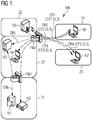
- Fig. 1 shows a communication network NW which has a design compliant with the standard IEC 62443 referring to the security of industrial communication networks.
- the network is used for controlling a substation automation system in a power grid and it comprises several zones Z1, Z2, Z3, Z4 and Z5.
- Security levels abbreviated SL
- SL Security levels
- SL Security levels
- a higher number of the security level denotes a higher security of the corresponding zone with respect to security attacks of third parties.
- zones with higher security levels can be trusted more than zones with lower security levels.
- the security levels can be defined according to the standard IEC 62443-3-3.
- the zone Z1 has the security level SL3, the zone Z2 the security level SL2, the zone Z3 the security level SL2, the zone Z4 the security level SL0 and the zone Z5 the security level SL2.
- the network comprises several nodes N1, N2, N3, ..., N7 which refer to different components in the automation system. Furthermore, the network comprises two firewalls FW1 and FW2. For ease of understanding, only a low number of nodes is shown in Fig. 1 . In a real substation automation system, the number of nodes is higher.
- the zone Z1 is directly connected to the zone Z2 via the firewall FW1.
- the zone Z1 comprises the nodes N1 and N2.
- the zone Z2 comprises the nodes N3 and N4.
- the node N3 refers to a time server for generating a time signal in the automation system whereas the node N4 refers to a computer with a local user control system.
- the zone Z2 is directly connected to the zone Z3 via the firewall FW2.
- the zone Z3 refers to a so-called demilitarized zone comprising the server N5 providing an access control to the network.
- the network NW further comprises the zones Z4 and Z5.
- those zones are not directly connected to another zone. Instead, the connections to the other zones comprise an external communication path not belonging to any zone.
- the communications between each of the zones Z4 and Z5 and the other zones run over the firewall FW2.
- the zone Z4 comprises a node N6 for a remote access to the substation automation system.
- the zone Z5 comprises a node N7 which is a control center of the substation automation system.
- the communications between the nodes of the network are described by communication relations CR1, CR2, ..., CR6.
- the information about those communication relations are stored as digital data.
- the following table 1 indicates the stored information with respect to the communication relations CR1 to CR6.
- the communication relations represent unidirectional communication links.
- the communication relations CR1 and CR2 refer to a remote access to the substation automation system.
- the communication relations CR3 and CR4 refer to automation signaling between the substation automation system and an external control center.
- the communication relations CR5 and CR6 refer to the transmission of time signals.
- each communication relation is specified by a source node and the source zone to which the source node belongs as well as a port of the source node. Furthermore, each communication relation includes a destination node and a destination zone to which the destination node belongs as well as a port of the destination node. Furthermore, each communication relation indicates the communication protocol used between the source node and the destination node as well as a communication class out of the classes M, E, P, N where the class E does not occur in the above table. Those classes will be explained later on.
- the source nodes and the destination nodes in table 1 are indicated by the respective reference numerals of Fig. 1 .
- the source nodes and destination nodes are specified by corresponding IP addresses within the network.
- the ports of the source nodes in table 1 include for some communication relations no port number. This means that the port of the corresponding source node is a dynamic port not having a fixed port number.
- the security levels of the different zones are indicated in parentheses in table 1. In a real implementation, this information is stored in digital form in a separate table. The following table 2 shows such a separate table. Table 2 Zone Security Level Z1 SL3 Z2 SL2 Z3 SL2 Z4 SL0 Z5 SL2
- the communication relations CR1 to CR6 are indicated in Fig. 1 by corresponding double arrows between the source node and the destination node.
- the double arrows with a solid line refer to communication relations of the communication class M
- the double arrows with a dashed line refer to communication relations of the communication class N
- the double arrows with a dash-dotted line refer to communication relations of the communication class P.
- the communication classes will be described in the following.
- the communication class M refers to management/maintenance communications with respect to the IT administration without being directly related to the automation system.
- a communication in class M may refer to the configuration of an operating system or the configuration of switches.
- the communication class E refers to engineering communications with respect to functions of the automation system, such as electric parameters in the system.
- the communication in class E can be used to configure components of the automation system.
- the communication class P refers to process communications for controlling the technical process performed by the automation system, i.e. this communication has a relation to the automation system.
- the communication class N refers to network communications with no direct relation to the automation system. E.g., IP addresses may be assigned or switches and routers may be monitored via communications in class N.
- the communication relation CR1 comprises the source node N6 and the destination node N5.
- This communication relation uses the communication protocol RTP/IPsec which is regarded as a protected protocol communication in the security policy SP which will be described later on.
- the communication relation CR2 has the same source node and the same destination node as the communication relation CR1.
- the communication protocol for this communication relation is RDP which is regarded as an unprotected protocol communication in the security policy SP described later on. Both communication relations CR1 and CR2 run through the firewall FW2.
- the communication relation CR3 has node N2 as a source node and node N7 as a destination node.
- the communication based on this communication relation runs through both firewalls FW1 and FW2 and uses the protocol IEC 60870-5-104.
- This communication protocol is regarded as an unprotected protocol communication in the security policy SP described later on.
- the communication relation CR4 has node N4 as a source node and node N7 as a destination node.
- the communication of this communication relation runs via the firewall FW2.
- the communication protocol for this communication is once again IEC 60870-5-104.
- the communication relation CR5 has node N3 as a source node and node N5 as a destination node.
- NTP Network Time Protocol
- the communication relation CR6 has node N3 as a source node and node N1 as a destination node.
- the communication of this communication relation runs over the firewall FW1 and uses the unprotected communication protocol NTP.
- some communication relations namely the communication relations CR1, CR2, CR3 and CR4, additionally comprise external communication paths not belonging to specific network zones.
- Security levels are also assigned to those communication paths.
- the communication paths CP1 and CP2 run between the network zones Z3 and Z4.
- the communication path CP1 is used by the communication relation CR1 and has a high security level SL3 due to the use of IPsec.
- the communication path CP2 is used by the communication relation CR2 and has a low security level SL0 as IPsec is not used for this path.
- the communication path CP3 is located between zones Z3 and Z5 and is used by the communication relations CR3 and CR4. This path has a high security level SL3. This is because the part of the communication between firewall FW2 and node N7 is protected by IPsec.
- the communication paths with their security levels are also used in the security policy SP described later on.
- unprotected communication paths are paths which have the security level SL0.
- the information about the communication paths and their security levels are provided as digital data on the basis of the following table 3.
- a user has a software-tool on a computer which has access to digital information with respect to the network as well as about the security policy which shall be implemented in a network.
- the software-tool enables the automatic implementation of the security policy by generating configuration data for the firewalls FW1 and FW2 which conform with the policy.
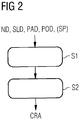
- step S1 of Fig. 2 digital information about the network, the security levels of the network zones, the policy as well as about the external communication paths is read by the above mentioned software-tool.
- the following information is read in this step:
- the communication protocols RDP, IEC 60870-5-104 and NTP refer to unprotected protocol communications whereas the communication protocol RDP/IPsec refers to a protected protocol communication. Furthermore, an external communication path with the security level SL0 is regarded as unprotected whereas communication paths with a higher security level are regarded as protected.
- step S2 of Fig. 2 the network data ND, the security level data SLD as well as the path data PAD, i.e. tables 1 to 3, are mapped to the above security policy comprising rules 1 to 3. Based on this mapping, it is determined which of the above communication relations CR1 to CR6 are permitted or allowable based on the security policy. A skilled person can implement this mapping based on his expert knowledge so that a detailed description of this mapping will not be given.
- the communication relation CR2 is regarded as non-allowable because the above rule 1 applies to this communication relation.
- the communication relation CR3 is regarded as non-allowable because rule 2 applies to this communication relation.
- the communication relation CR6 is regarded as non-allowable because rule 3 applies to this communication relation.
- the communication relations CR1, CR4 and CR5 are regarded as allowable based on the above security policy. Those communication relations refer to communications only passing through firewall FW2.
- the allowable communication relations are designated as CRA in the diagram of Fig. 2 .
- the firewalls of the network NW are configured based on the allowable communication relations.
- concrete configuration data are generated for the respective firewalls.
- the information with respect to the allowable communication relations is translated into configuration data understandable by the respective firewall.
- a skilled person can implement this translation step based on his expert knowledge so that this step is not described in detail.
- the translated configuration data are then transmitted to the respective firewalls.
- the firewall FW2 will allow the communication relations CR1, CR4 and CR5 and block the other communication relations CR2, CR3 and CR6.
- the firewall FW1 will not allow communications based on the communication relations CR3 and CR6 going through this firewall because those communication relations do not comply with the security policy.
- the information about the allowable communication relations is used for configuring firewalls of a network.
- this information may also be used in order to verify whether existing configuration data in the firewalls comply with a security policy.
- the configuration data of the firewalls are exported therefrom and translated into communication relations on the basis of the above table 1.
- a skilled person can implement this translation step based on his expert knowledge.
- the translated communication relations are compared with the allowable communication relations.
- appropriate counter measures can be taken, e.g. an alarm signal may be given to a user in order to indicate that a specific firewall does not comply with the security policy.
- the invention as described in the foregoing has several advantages. Particularly, policy-compliant communication rules are automatically generated for firewalls in a network having zones with different security levels. Therefore, a manual or semi-automated configuration of firewalls can be avoided. Such a configuration is error-prone and increasingly complex for larger networks. Moreover, the method of the invention may provide an automatic verification of existing configuration data in firewalls in order to check their compliance with a security policy.
Landscapes
- Engineering & Computer Science (AREA)
- Computer Security & Cryptography (AREA)
- Computer Hardware Design (AREA)
- Computing Systems (AREA)
- General Engineering & Computer Science (AREA)
- Computer Networks & Wireless Communication (AREA)
- Signal Processing (AREA)
- Business, Economics & Management (AREA)
- General Business, Economics & Management (AREA)
- Data Exchanges In Wide-Area Networks (AREA)
- Computer And Data Communications (AREA)
Priority Applications (1)
| Application Number | Priority Date | Filing Date | Title |
|---|---|---|---|
| EP17187704.6A EP3447987A1 (fr) | 2017-08-24 | 2017-08-24 | Procédé de détermination assistée par ordinateur de communications autorisées à travers un ou plusieurs pare-feu dans un réseau de communication |
Applications Claiming Priority (1)
| Application Number | Priority Date | Filing Date | Title |
|---|---|---|---|
| EP17187704.6A EP3447987A1 (fr) | 2017-08-24 | 2017-08-24 | Procédé de détermination assistée par ordinateur de communications autorisées à travers un ou plusieurs pare-feu dans un réseau de communication |
Publications (1)
| Publication Number | Publication Date |
|---|---|
| EP3447987A1 true EP3447987A1 (fr) | 2019-02-27 |
Family
ID=59745725
Family Applications (1)
| Application Number | Title | Priority Date | Filing Date |
|---|---|---|---|
| EP17187704.6A Withdrawn EP3447987A1 (fr) | 2017-08-24 | 2017-08-24 | Procédé de détermination assistée par ordinateur de communications autorisées à travers un ou plusieurs pare-feu dans un réseau de communication |
Country Status (1)
| Country | Link |
|---|---|
| EP (1) | EP3447987A1 (fr) |
Cited By (3)
| Publication number | Priority date | Publication date | Assignee | Title |
|---|---|---|---|---|
| FR3139963A1 (fr) * | 2022-09-21 | 2024-03-22 | Airbus Defence And Space Sas | Systeme et procede d’exposition de donnees d’un domaine noir vers un domaine rouge |
| WO2024110170A1 (fr) * | 2022-11-23 | 2024-05-30 | Nchain Licensing Ag | Protocole de communication |
| US12574833B2 (en) | 2022-11-09 | 2026-03-10 | Cisco Technology, Inc. | Auto-configuration of private mobile network for operational technology (OT) processing for industrial devices |
Citations (2)
| Publication number | Priority date | Publication date | Assignee | Title |
|---|---|---|---|---|
| US7143283B1 (en) * | 2002-07-31 | 2006-11-28 | Cisco Technology, Inc. | Simplifying the selection of network paths for implementing and managing security policies on a network |
| EP3196716A1 (fr) * | 2016-01-22 | 2017-07-26 | Rockwell Automation Technologies, Inc. | Configuration de politique de sécurité basée sur un modèle et mise en application dans un système d'automatisation industrielle |
-
2017
- 2017-08-24 EP EP17187704.6A patent/EP3447987A1/fr not_active Withdrawn
Patent Citations (2)
| Publication number | Priority date | Publication date | Assignee | Title |
|---|---|---|---|---|
| US7143283B1 (en) * | 2002-07-31 | 2006-11-28 | Cisco Technology, Inc. | Simplifying the selection of network paths for implementing and managing security policies on a network |
| EP3196716A1 (fr) * | 2016-01-22 | 2017-07-26 | Rockwell Automation Technologies, Inc. | Configuration de politique de sécurité basée sur un modèle et mise en application dans un système d'automatisation industrielle |
Non-Patent Citations (1)
| Title |
|---|
| DINESHA RANATHUNGA ET AL: "The Mathematical Foundations for Mapping Policies to Network Devices (Technical Report)", ARXIV.ORG, CORNELL UNIVERSITY LIBRARY, 201 OLIN LIBRARY CORNELL UNIVERSITY ITHACA, NY 14853, 30 May 2016 (2016-05-30), XP080704403 * |
Cited By (4)
| Publication number | Priority date | Publication date | Assignee | Title |
|---|---|---|---|---|
| FR3139963A1 (fr) * | 2022-09-21 | 2024-03-22 | Airbus Defence And Space Sas | Systeme et procede d’exposition de donnees d’un domaine noir vers un domaine rouge |
| EP4344132A1 (fr) * | 2022-09-21 | 2024-03-27 | Airbus Defence and Space SAS | Systeme et procede d'exposition de donnees d'un domaine noir vers un domaine rouge |
| US12574833B2 (en) | 2022-11-09 | 2026-03-10 | Cisco Technology, Inc. | Auto-configuration of private mobile network for operational technology (OT) processing for industrial devices |
| WO2024110170A1 (fr) * | 2022-11-23 | 2024-05-30 | Nchain Licensing Ag | Protocole de communication |
Similar Documents
| Publication | Publication Date | Title |
|---|---|---|
| Kim | Security and vulnerability of SCADA systems over IP-based wireless sensor networks | |
| US8443190B2 (en) | Method for securing a two-way communications channel and device for implementing said method | |
| CN105577637B (zh) | 用于安全虚拟网络功能间通信的计算设备、方法和机器可读存储介质 | |
| US8555373B2 (en) | Network security module for Ethernet-receiving industrial control devices | |
| US20190104107A1 (en) | Poisoning Protection for Process Control Switches | |
| US9760731B2 (en) | Configurable cross-domain information assurance | |
| US12549517B2 (en) | Communication system and method for securely transmitting time-critical data within the communication system | |
| CN110611665B (zh) | 一种电力二次系统远动运维的安全运维网关的方法 | |
| EP3447987A1 (fr) | Procédé de détermination assistée par ordinateur de communications autorisées à travers un ou plusieurs pare-feu dans un réseau de communication | |
| US20190372939A1 (en) | Malicious network activity mitigation | |
| CN111052705A (zh) | 检查在工业自动化系统内传输的数据报的方法和自动化和/或通信设备 | |
| US12407650B2 (en) | Smart network switching systems and related methods | |
| EP3613193A1 (fr) | Procédé, dispositifs et produit-programme d'ordinateur pour vérifier des paramètres de liaison d'une liaison de communication protégée de manière cryptographique pendant l'établissement de la liaison | |
| Tippenhauer et al. | Vbump: Securing ethernet-based industrial control system networks with vlan-based traffic aggregation | |
| US20250030709A1 (en) | Detecting anomalous network behavior in operational technology protocols | |
| O'Raw et al. | IEC 61850 substation configuration language as a basis for automated security and SDN configuration | |
| US20230022849A1 (en) | Methods and systems for providing data from an internal data processing system of an industrial plant to an external data processing system | |
| Hohmann et al. | Bridge me if you can! evaluating the latency of securing profinet | |
| CN118827149A (zh) | 应用于物联网场景的多域隔离管控方法和系统 | |
| US9940116B2 (en) | System for performing remote services for a technical installation | |
| EP4029189A1 (fr) | Vérification et/ou certification le long d'une chaîne de service | |
| CN105556926A (zh) | 用于第一网络和第二网络之间的数据交换的访问规则的匹配 | |
| CN109587134A (zh) | 接口总线的安全认证的方法、装置、设备和介质 | |
| Konoplev | Universal national security platform for distributed information and telecommunication systems | |
| Zhou | Evaluating Security Mechanisms of Substation Automation Systems |
Legal Events
| Date | Code | Title | Description |
|---|---|---|---|
| PUAI | Public reference made under article 153(3) epc to a published international application that has entered the european phase |
Free format text: ORIGINAL CODE: 0009012 |
|
| AK | Designated contracting states |
Kind code of ref document: A1 Designated state(s): AL AT BE BG CH CY CZ DE DK EE ES FI FR GB GR HR HU IE IS IT LI LT LU LV MC MK MT NL NO PL PT RO RS SE SI SK SM TR |
|
| AX | Request for extension of the european patent |
Extension state: BA ME |
|
| STAA | Information on the status of an ep patent application or granted ep patent |
Free format text: STATUS: THE APPLICATION IS DEEMED TO BE WITHDRAWN |
|
| 18D | Application deemed to be withdrawn |
Effective date: 20190828 |