EP3448068B1 - Procédé, terminal et support de stockage lisible par ordinateur pour afficher une entrée mise à jour - Google Patents
Procédé, terminal et support de stockage lisible par ordinateur pour afficher une entrée mise à jour Download PDFInfo
- Publication number
- EP3448068B1 EP3448068B1 EP18190265.1A EP18190265A EP3448068B1 EP 3448068 B1 EP3448068 B1 EP 3448068B1 EP 18190265 A EP18190265 A EP 18190265A EP 3448068 B1 EP3448068 B1 EP 3448068B1
- Authority
- EP
- European Patent Office
- Prior art keywords
- target
- terminal
- updated entry
- historical
- preset
- Prior art date
- Legal status (The legal status is an assumption and is not a legal conclusion. Google has not performed a legal analysis and makes no representation as to the accuracy of the status listed.)
- Active
Links
Images



Classifications
-
- H—ELECTRICITY
- H04—ELECTRIC COMMUNICATION TECHNIQUE
- H04W—WIRELESS COMMUNICATION NETWORKS
- H04W4/00—Services specially adapted for wireless communication networks; Facilities therefor
- H04W4/02—Services making use of location information
- H04W4/029—Location-based management or tracking services
-
- H—ELECTRICITY
- H04—ELECTRIC COMMUNICATION TECHNIQUE
- H04L—TRANSMISSION OF DIGITAL INFORMATION, e.g. TELEGRAPHIC COMMUNICATION
- H04L67/00—Network arrangements or protocols for supporting network services or applications
- H04L67/50—Network services
- H04L67/52—Network services specially adapted for the location of the user terminal
-
- H—ELECTRICITY
- H04—ELECTRIC COMMUNICATION TECHNIQUE
- H04L—TRANSMISSION OF DIGITAL INFORMATION, e.g. TELEGRAPHIC COMMUNICATION
- H04L67/00—Network arrangements or protocols for supporting network services or applications
- H04L67/50—Network services
- H04L67/55—Push-based network services
-
- H—ELECTRICITY
- H04—ELECTRIC COMMUNICATION TECHNIQUE
- H04L—TRANSMISSION OF DIGITAL INFORMATION, e.g. TELEGRAPHIC COMMUNICATION
- H04L67/00—Network arrangements or protocols for supporting network services or applications
- H04L67/50—Network services
- H04L67/56—Provisioning of proxy services
- H04L67/568—Storing data temporarily at an intermediate stage, e.g. caching
- H04L67/5681—Pre-fetching or pre-delivering data based on network characteristics
-
- H—ELECTRICITY
- H04—ELECTRIC COMMUNICATION TECHNIQUE
- H04W—WIRELESS COMMUNICATION NETWORKS
- H04W4/00—Services specially adapted for wireless communication networks; Facilities therefor
- H04W4/02—Services making use of location information
- H04W4/023—Services making use of location information using mutual or relative location information between multiple location based services [LBS] targets or of distance thresholds
-
- H—ELECTRICITY
- H04—ELECTRIC COMMUNICATION TECHNIQUE
- H04W—WIRELESS COMMUNICATION NETWORKS
- H04W4/00—Services specially adapted for wireless communication networks; Facilities therefor
- H04W4/18—Information format or content conversion, e.g. adaptation by the network of the transmitted or received information for the purpose of wireless delivery to users or terminals
-
- H—ELECTRICITY
- H04—ELECTRIC COMMUNICATION TECHNIQUE
- H04W—WIRELESS COMMUNICATION NETWORKS
- H04W4/00—Services specially adapted for wireless communication networks; Facilities therefor
- H04W4/30—Services specially adapted for particular environments, situations or purposes
- H04W4/33—Services specially adapted for particular environments, situations or purposes for indoor environments, e.g. buildings
-
- H—ELECTRICITY
- H04—ELECTRIC COMMUNICATION TECHNIQUE
- H04W—WIRELESS COMMUNICATION NETWORKS
- H04W88/00—Devices specially adapted for wireless communication networks, e.g. terminals, base stations or access point devices
- H04W88/02—Terminal devices
Definitions
- the present disclosure relates to Internet technologies, and more particularly to a method, terminal and computer-readable storage medium for displaying updated entry.
- APPs reader applications
- the user when a user wants to browse news or other updated entries, the user can trigger the terminal to send a request for acquiring updated entries to the server. After the server receives the request, it can determine the currently updated entry and send it to the terminal. Correspondingly, after the terminal receives the updated entry from the server, it can display the updated entry. The user can then browse the updated entry that is displayed on the terminal.
- US2011081895A1 discloses an information browsing system, in some embodiments, at the time when information stored in a server is browsed with the use of a mobile terminal, if the mobile phone is predicted to enter an out-of-service area, information that a user is going to browse is predicted and temporarily stored in the mobile terminal as cache.
- information corresponding to the request is acquired from the server, and when the mobile phone is located in an out-of-service area, the information is acquired from the information stored as cache and is displayed.
- the information stored as cache is deleted when the browsing is ended or when the mobile terminal enters a service area. Therefore, the user can browse desired information even in the out-of-service area with and high security level secured.
- US2014095943A1 discloses a device and method for predictively precaching content on a mobile communication device, which includes monitoring numerous data sources for contextual data on the activities of the user.
- the mobile communication device predicts network connectivity outages and affected applications using the contextual data.
- the mobile communication device notifies the affected applications of the predicted network connectivity outage, and in response the affected applications precache suitable content.
- the affected applications may employ several precaching strategies in response to the notification, such as downloading content from a remote content server, adjusting content streaming, or adjusting content buffering prior to the predicted network connectivity outage.
- application service is provided using the precached content.
- Such precaching may also be accomplished using a local caching proxy server.
- US2016025497A1 discloses an example navigation system, which includes map data memory, a position sensor that determines the present location of the navigation system and provides a navigation system position signal indicative thereof, a wireless transmitter that transmits the navigation system position data, and a wireless receiver that receives cellular data including cellular white spot map data and cellular non-white spot map data in response to the transmitted navigation system position data and stores the received cellular white spot map data and the cellular non-white spot map data in the map data memory.
- the example navigation system also includes a processor that receives the navigation system position signal and forms a map image based upon received cellular white spot map data when the wireless receiver is not receiving cellular data.
- the inventors of the present disclosure have recognized that, if a user's current location (for example, in an elevator or a basement) is not covered by the wireless network, the network connection cannot be established between the terminal and the server. In this case, the terminal is unable to receive the updated entry from the server and fails to display the updated entry.
- the device includes: a detection portion configured to acquire a pre-stored target geographic location that is not covered by a wireless network and detect a current geographic location of a terminal; a first acquisition portion configured to acquire a current target updated entry from a backend server of a target application if a distance between the current geographic location of the terminal and the target geographic location is detected to reach a preset distance threshold, where the target application is installed in the terminal and for users to browse the updated entry; and a display portion configured to display the acquired target updated entry if a state where the wireless network is not connected is maintained if an instruction for displaying the updated entry for the target application is received.
- the method can be applied to the terminal.
- the terminal can be mobile phone, tablet or other mobile terminals where a reader application is installed.
- the terminal can be a mobile phone or other devices where a newsreader application is installed.
- the terminal may include processor, storage, transceiver, screen, etc.
- the processor can be CPU (Central Processing Unit) etc. that is used for the related process like acquiring updated target entry.
- Storage can be RAM (Random Access Memory), Flash, etc. that is used to store the received data, the data needed in the process, or the generated data during the process, etc. For example, the target geographic location or the updated target entry.
- the screen can be a touch screen that is used to display the updated entry or other information and can also be used to detect the touch signals.
- the transceiver can be used to transmit data between other devices, for example, to receive the updated target entry from the server, including antenna, matching circuit, modem, etc.
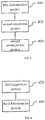
- step 101 a pre-stored target geographic location that is not covered by the wireless network can be acquired and the current geographic location of the terminal can be detected.
- the terminal can have the feature of preloading an updated entry.
- An event for triggering the preloading updated entry may be preset in the terminal and the terminal may detect the event during working. If the terminal detects that preloading updated entry is triggered, it may preload the updated entry. For example, the terminal can preload the corresponding updated entry before a user who carries the terminal enters a certain geographic location that is not covered by the wireless network. In detail, the terminal can pre-store the geographic location that is not covered by the wireless network (that is, the target geographic location).
- the target geographic location can be position coordinates or predetermined by the terminal.
- a switch button for preloading the updated entry may be set in the terminal. If a user wants to use the function of preloading the updated entry, he may click the switch button to open it.
- the terminal receives the instruction for turning on the feature of preloading the updated entry, and can acquire the pre-stored geographic location that is not covered by the wireless network (for example, an elevator and the like) and detect the geographic location of the terminal itself. That is, if the terminal receives the instruction to enable the function of preloading the updated entry, it may acquire the pre-saved target geographic location that is not covered by the wireless network and may detect the current location of the terminal in real time when the function of preloading the updated entry is enabled.
- the geographic location can be the determined geographic location where the terminal is frequently disconnected from the wireless network.
- the corresponding process procedure can be: if it is detected that the wireless network is disconnected in the state that the wireless network function is on, the current geographic location of the terminal is determined and recorded; a plurality of geographic locations recorded within a historical period of time are acquired; the frequency of occurrence for each geographic location is counted and the target geographic location for which the frequency of occurrence satisfies the preset times is determined among the plurality of geographic locations.
- the terminal can timely detect currently whether it, itself, is connected to the wireless network. Whenever the terminal detects that it is disconnected from the wireless network, it can determine the current geographic location of the terminal and save it.
- the wireless network function may be a mobile data network function or a WIFI (Wireless Fidelity) wireless network function
- the terminal can acquire a plurality of geographic locations recorded within a historical period of time (the plurality of recorded geographic locations may include the same geographic location). All the plurality of recorded geographic locations may be the geographic locations that are not covered the wireless network, i.e., the geographic locations where the terminal cannot be connected to the wireless network.
- the terminal can calculate the statistics of the frequency of occurrence of each geographic location among the plurality of recorded geographic locations.
- the plurality of recorded geographic locations may respectively be A, B, C, A, B, D, A and B. It can be seen that the frequency of occurrence of geographic locations A, B, C and D is 3, 3, 1 and 1 respectively..
- the terminal can select the corresponding the geographic location for which the frequency of occurrence satisfies the preset times from the plurality of geographic locations and take the determined geographic location as the target geographic location.
- the terminal can save it. It can be seen that the determined target geographic location is in conformity with the user's habit. That is, the determined target geographic location may be the geographic location that is not covered by the wireless network and the user usually goes to. Therefore, it can avoid that the terminal acquires the updated entry from the server when the user approaches the geographic location that is not covered by the wireless network and the user usually does not go to, thereby preventing a waste of data flow.
- the preset times may be a preset time threshold.
- the geographic location for which the frequency of occurrence is greater than the threshold can be determined among the plurality of geographic locations and the determined geographic location can be set as the target geographic location.
- the preset times may also be a preset quantity.
- the terminal calculates the statistics of the frequency of occurrence of the corresponding geographic locations, it can determine the quantity of the target geographic locations that appear the most and set a preset number of geographic locations as the target geographic locations.
- the terminal may sort the geographic locations in a descending order and further select the preset number of the target geographic locations that are list front from the sorted geographic location list.
- the terminal may further update the target geographic location.
- a determined cycle may be saved in the terminal in advance.
- the terminal may acquire a plurality of geographic locations recorded within the current determined cycle so as to count the frequency of occurrence for each of the plurality of geographic locations.
- the geographic location for which the frequency of occurrence satisfies the preset number may be determined among the plurality of geographic locations and be determined as the target geographic location.
- step 102 if it is detected that the distance between the current geographic location of the terminal and the target geographic location reaches the preset distance threshold, the target updated entry can be acquired from the backend server of the target application.
- the target application can be the application installed in the terminal that a user browses the news with, the target updated entry can be the updated entry acquired by the terminal this time, and the updated entry can be the information that needs to be displayed if the target application is turned on or the interface is refreshed.
- a distance threshold can be preset in the terminal.
- the preset distance threshold can preset by a technical person or independently set by a user. After the terminal detects its current geographic location, it can calculate the distance between the current geographic location and the acquired target geographic location. If the detected distance between the two locations reaches the preset distance threshold, the terminal can send a request for acquiring the updated entry to the backend server of the application.
- the current updated entry (that is, the target updated entry) can be acquired, where the target updated entry may include a plurality of target entries. Further, the target updated entry can be sent to the terminal. After the server sends the target updated entry to the terminal, the terminal can receive the target updated entry sent from the server.
- the terminal has acquired the target updated entry and further can save it as shown in FIG. 3 .
- the target application may be a newsreader application and the updated entry may be news.
- the backend server of the newsreader application After the backend server of the newsreader application receives the request for acquiring the updated entry, it can determine the current news and send the determined news to the terminal, that is, the target updated entry may be the current news.
- the target updated entry may be a story reader application that has a function of personalized recommendation and the updated entry may be a story.
- the backend server of the story reader application After the backend server of the story reader application receives the request for acquiring the updated entry, it may determine the story to be recommended to the terminal this time and send the story to the terminal, that is, the target updated entry may be the currently determined story to be recommended to the terminal.
- the abovementioned target application can be predetermined by the terminal based upon the historical use information.
- the corresponding process procedure can be: the historical use information for each installed application is acquired; in each application, based upon the historical use information for each installed application, the target application whose historical use information satisfies the preset use condition is determined.
- the historical use information can be the information to characterize the use of the application within a historical period of time.
- the terminal can record the use information of the application (for example, use duration). After a period of time, the terminal can acquire the use information of each application within this historical period of time (that is, historical use information) and further determine the application whose historical use information satisfies the preset use condition in accordance with the use information of each application within the historical duration so as to determine the determined application as the target application and save the identifier of the target application.
- the determined target application may be in conformity with the user's habit. That is, the determined target application may be the application that the user usually uses. Therefore, it can avoid that the terminal acquires the updated entry of the application that the user rarely uses from the server if the user approaches the target geographic location, thereby preventing from a waste of data flow.
- the terminal may update the determined target application.
- a determined cycle may be pre-saved in the terminal. Whenever the preset determined cycle passes, the terminal may acquire the use information of each application in the currently determined cycle so as to determine the target application whose historical use information satisfies a preset use condition among the plurality of applications based on the use information of each application in the currently determined cycle (historical use information) and save the identifier of the target application.
- the historical use information can be one or some of the use times, historical use duration, or the time interval between a time point of a previous use and a current time point.
- the historical use duration may be an accumulated use duration or a duration of a historical single use.
- the historical use information is the historical use times
- the terminal after the terminal receives the historical use information for each application, it can determine a preset number of applications whose historical use times are the greatest among the applications and set the preset number of applications as determined as the target applications. Alternatively, it can determine applications whose historical use times are greater than the preset time threshold among the applications and set the applications as determined as the target applications. If the historical use information is the historical use duration, after the terminal receives the historical use information for each application, it can determine the preset number of applications whose historical use duration is the longest among the applications and set the applications as determined as the target application.
- the final determined target application can be the application that satisfies every preset use condition for each corresponding information in the combination.
- the terminal may determine the target application among the applications whose application type is the preset application type.
- the terminal may acquire the historical use information through acquiring the historical use information of each of the installed applications whose application type is the preset application type.
- the preset application type may be preset in the terminal.
- the preset application type may be applications for reading, application for shopping and the like.
- the terminal may correspondingly record the use information (for example, the use duration and the like) of the application.
- the terminal may acquire the use information of each application in the historical duration (i.e., the historical use information). That is, the terminal does not record the use information of other types of applications any more.
- step 103 when the instruction for displaying the updated entry of the corresponding target application can be received, if it is in the state that wireless network is disconnected, the acquired target updated entry can be displayed.
- the terminal may receive the instruction for displaying the updated entry of the corresponding target application. Furthermore, the terminal can determine whether it is currently in the state that the wireless network is disconnected. If it is currently in the state that the wireless network is disconnected, the terminal can acquire preloaded target updated entry and further display the updated entry. In this way, when a use wants to browse the updated entry, if the user is at a location that is not covered by the wireless network, the terminal may display the pre-acquired target updated entry to avoid the updated entry from failing to be displayed.
- the process can also be: when the instruction for displaying the updated entry of the corresponding target application is received, if the terminal is in the state that the wireless network is connected, the terminal can acquire the updated entry to be displayed from the backend server of the target application and further display the acquired updated entry to be displayed.
- the terminal when the instruction for displaying the updated entry of the corresponding target application is received and if the terminal is in the state that the wireless network is connected, the terminal can send a request for acquiring the updated entry to the backend server of the target application.
- the backend server After the backend server receives the request for acquiring the updated entry, it can acquire the updated entry to be displayed (that is, the server determines the updated entry according to the request for acquiring the updated entry) and further send the updated entry to be displayed to the terminal.
- the terminal can receive the updated entry to be displayed from the server.
- the terminal has acquired the updated entry to be displayed and further displays the received updated entry.
- the terminal can delete the updated entry if a certain condition is satisfied.
- the corresponding process can be: starting from the time point if the target updated entry is received and within the preset duration, if the target updated entry is detected to be not displayed, it will be deleted.
- the terminal after the terminal acquires the target updated entry, it can start timing. If the timed duration is detected to reach the preset duration but the target updated entry is still not displayed yet, the terminal can delete the pre-stored target updated entry in order to free up storage space and increase the operating speed. In other words, if timed duration reaches the preset duration, a user who carries the terminal has not yet entered the target geographic location or the user enters the target geographic location but does not trigger the terminal to receive the updated entry, the terminal can delete the pre-stored target updated entry.
- the pre-stored target geographic location that is not covered by the wireless network can be acquired and the current geographic location of the terminal can be detected. If it is detected that the distance between the current geographic location of the terminal and the target geographic location reaches the preset distance threshold, a request for the acquiring updated entry can be sent to the backend server of the application. When the instruction for displaying the updated entry of the corresponding target application is received, if it is currently in the state that wireless network is disconnected, the acquired target updated entry can be displayed. Thus, when a user wants to browse the update entry, if the geographic location of the user is not covered by the wireless network, the terminal can display pre-acquired target updated entry to prevent the updated entry from failing to be displayed.
- the present disclosure further provides a device for displaying an updated entry.
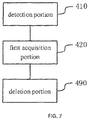
- the device includes: a detection portion 410 configured to acquire a pre-saved geographic location that is not covered by a wireless network and detect current geographic location of a terminal; a first acquisition portion 420 configured to acquire the current target updated entry from the backend server of the target application if the distance between the current geographic location of the terminal and the target geographic location reaches a preset distance threshold, where the target application is installed in the terminal and for users to browse the updated entry; and a display portion 430 configured to display the acquired target updated entry if it is in a state that the wireless network is disconnected if the instruction for displaying the updated entry of the corresponding target application is received.
- the various portions may be in modular form, and may be referred to as modules.
- the various portions can be discrete components, integrally formed, hardware implemented, software implemented, or a mix thereof.
- the device may further include: a first determination portion 440 configured to determine and record the current geographic location of the terminal when the wireless network function is in an on state and it is detected that the wireless network is disconnected; a second acquisition portion 450 configured to acquire a plurality of geographic locations recorded within a historical period of time; and a second determination portion 460 configured to count a frequency of occurrence and determine a target geographic location for which the frequency of occurrence satisfies the preset times among the plurality of geographic locations.
- a first determination portion 440 configured to determine and record the current geographic location of the terminal when the wireless network function is in an on state and it is detected that the wireless network is disconnected
- a second acquisition portion 450 configured to acquire a plurality of geographic locations recorded within a historical period of time
- a second determination portion 460 configured to count a frequency of occurrence and determine a target geographic location for which the frequency of occurrence satisfies the preset times among the plurality of geographic locations.
- the device further includes: a third acquisition portion 470 configured to acquire historical use information of each installed application, where the historical use information represents usage of a corresponding application.
- a third determination portion 480 configured to determine a target application whose historical use information satisfies the preset use condition based upon the corresponding historical use information of each application.
- the historical use information includes one or more of the following information: historical use times, historical use duration, and the use time interval between the time point of the previous use and the current time point.
- the historical use duration may be an accumulated historical duration or a duration for a historical single use.
- the third acquisition portion 470 may be configured to: acquire the corresponding historical use information of each of the plurality of installed applications whose type is a preset application type.
- the device further includes: a deletion portion 490 configured to delete the target updated entry when the acquired target updated entry is detected to be not displayed within a preset duration starting from the time point that the target updated entry is acquired.
- the display portion 430 may be further configured to: when the instruction for displaying the updated entry of the corresponding application is received, if it is in the state that the wireless network is connected, acquire the updated entry to be displayed from the backend server of the target application, and display the acquired updated entry.
- the pre-stored target geographic location that is not covered by the wireless network can be acquired and the current geographic location of the terminal can be detected.
- a request for the acquiring updated entry can be sent to the backend server of the application.
- the acquired target updated entry can be displayed.
- the device for displaying an updated entry provided by the above embodiment is exemplified only by the above division of each of the functional portions when the updated entry is displayed.
- the above-described functions may be assigned and completed by different functional portions in accordance with requirements, such that the internal structure of the terminal can be divided into different functional portions to complete all or some of the functions described above.
- the device and method for displaying an updated entry provided in the above embodiment follow the same principle, and the specific implementation process thereof can be described in the method embodiment and may not be described again.
- the structural schematic diagram of a terminal 800 is illustrated in yet another example of present disclosure.
- the terminal 800 may be a mobile phone , a tablet computer, a digital broadcast device, a messaging device, a fitness device, a personal digital assistant or the like.
- the terminal 800 may include one or more of the following components: a processing component 802, a memory 804, a power component 806, a multimedia component 808, an audio component 810, an input/output (I/O) interface 812, a sensor component 814, and a communication component 816.
- the processing component 802 typically controls overall operations of the terminal 800, such as the operations associated with display, telephone calls, data communications, camera operations, and recording operations.
- the processing component 802 may include one or more processors 820 to execute instructions to perform all or part of the steps in the above described methods.
- the processing component 802 may include one or more portions which facilitate the interaction between the processing component 802 and other components.
- the processing component 802 may include a multimedia portion to facilitate the interaction between the multimedia component 808 and the processing component 802.
- the memory 804 may be configured to store various types of data to support the operation of the terminal 800. Examples of such data include instructions for any applications or methods operated on the terminal 800, contact data, phonebook data, messages, pictures, video, etc.
- the memory 804 may be implemented using any type of volatile or non-volatile memory devices, or a combination thereof, such as a static random-access memory (SRAM), an electrically erasable programmable read-only memory (EEPROM), an erasable programmable read-only memory (EPROM), a programmable read-only memory (PROM), a read-only memory (ROM), a magnetic memory, a flash memory, a magnetic or optical disk.
- SRAM static random-access memory
- EEPROM electrically erasable programmable read-only memory
- EPROM erasable programmable read-only memory
- PROM programmable read-only memory
- ROM read-only memory
- magnetic memory a magnetic memory
- flash memory a flash memory
- magnetic or optical disk a
- the power component 806 provides power to various components of the terminal 800.
- the power component 806 may include a power management system, one or more power sources, and any other components associated with the generation, management, and distribution of power in the terminal 800.
- the multimedia component 808 includes a screen providing an output interface between the terminal 800 and the user.
- the screen may include a liquid crystal display (LCD) and a touch panel (TP). If the screen includes the touch panel, the screen may be implemented as a touch screen to receive input signals from the user.
- the touch panel includes one or more touch sensors to sense touches, swipes, and gestures on the touch panel. The touch sensors may not only sense a boundary of a touch or swipe action, but also sense a period of time and a pressure associated with the touch or swipe action.
- the multimedia component 808 includes a front camera and/or a rear camera. The front camera and the rear camera may receive an external multimedia datum while the terminal 800 is in an operation mode, such as a photographing mode or a video mode. Each of the front camera and the rear camera may be a fixed optical lens system or have focus and optical zoom capability.
- the audio component 810 may be configured to output and/or input audio signals.
- the audio component 810 includes a microphone ("MIC") configured to receive an external audio signal when the terminal 800 is in an operation mode, such as a call mode, a recording mode, and a voice recognition mode.
- the received audio signal may be further stored in the memory 804 or transmitted via the communication component 816.
- the audio component 810 further includes a speaker to output audio signals.
- the I/O interface 812 provides an interface between the processing component 802 and peripheral interface portions, such as a keyboard, a click wheel, buttons, and the like.
- the buttons may include, but are not limited to, a home button, a volume button, a starting button, and a locking button.
- the sensor component 814 includes one or more sensors to provide status assessments of various aspects of the terminal 800. For instance, the sensor component 814 may detect an open/closed status of the terminal 800, relative positioning of components, e.g., the display and the keypad, of the terminal 800, a change in position of the terminal 800 or a component of the terminal 800, a presence or absence of user contact with the terminal 800, an orientation or an acceleration/deceleration of the terminal 800, and a change in temperature of the terminal 800.
- the sensor component 814 may include a proximity sensor configured to detect the presence of nearby objects without any physical contact.
- the sensor component 814 may also include a light sensor, such as a CMOS or CCD image sensor, for use in imaging applications.
- the sensor component 814 may also include an accelerometer sensor, a gyroscope sensor, a magnetic sensor, a pressure sensor, or a temperature sensor.
- the communication component 816 may be configured to facilitate communication, wired or wirelessly, between the terminal 800 and other devices.
- the terminal 800 can access a wireless network based on a communication standard, such as WiFi, 2G, or 3G, or a combination thereof.
- the communication component 816 receives a broadcast signal or broadcast associated information from an external broadcast management system via a broadcast channel.
- the communication component 816 further includes a near field communication (NFC) portion to facilitate short-range communications.
- the NFC portion may be implemented based on a radio frequency identification (RFID) technology, an infrared data association (IrDA) technology, an ultra-wideband (UWB) technology, a Bluetooth (BT) technology, and other technologies.
- RFID radio frequency identification
- IrDA infrared data association
- UWB ultra-wideband
- BT Bluetooth
- the terminal 800 may be implemented with one or more application specific integrated circuits (ASICs), digital signal processors (DSPs), digital signal processing devices (DSPDs), programmable logic devices (PLDs), field programmable gate arrays (FPGAs), controllers, micro-controllers, microprocessors, or other electronic components, for performing the above described methods for displaying an updated entry.
- ASICs application specific integrated circuits
- DSPs digital signal processors
- DSPDs digital signal processing devices
- PLDs programmable logic devices
- FPGAs field programmable gate arrays
- controllers micro-controllers, microprocessors, or other electronic components, for performing the above described methods for displaying an updated entry.
- non-transitory computer-readable storage medium including instructions, such as included in the memory 804, executable by the processor 820 in the terminal 800, for performing the above-described methods for displaying an updated entry.
- the non-transitory computer-readable storage medium may be a ROM, a RAM, a CD-ROM, a magnetic tape, a floppy disc, an optical data storage device, and the like.
- a non-transitory computer-readable storage medium having a set of computer program instructions stored thereon, in which the computer program instructions are executable by a processor to implement a method for displaying an updated entry.
- the computer-readable storage medium may be a ROM, a RAM, a CD-ROM, a magnetic tape, a floppy disk, an optical storage device and the like.
- the method includes: acquiring a pre-stored target geographic location that is not covered by a wireless network and detecting a current geographic location of a terminal; acquiring a current target updated entry from a backend server of a target application when a distance between the current geographic location of the terminal and the target geographic location is detected to reach a preset distance threshold, in which the target application is installed in the terminal and for users to browse the updated entry; and displaying the acquired target updated entry if a state where the wireless network is not connected is maintained when an instruction for displaying the updated entry for the target application is received.
- the method may further include determining and recording the current geographic location of the terminal when the wireless network is detected to be disconnected in a condition of the wireless network function is in an on state; acquiring a plurality of geographic locations recorded within a historical period of time; counting a frequency of occurrence for each of the plurality of geographic locations; and determining the target geographic location for which the frequency of occurrence satisfy a preset number.
- the method may further include: acquiring corresponding historical use information of each of a plurality of installed applications, in which the historical use information represents usage of a corresponding application; and determining, among the plurality of installed applications, the target application whose historical use information satisfies a preset use condition based upon the corresponding historical use information of each of the plurality of installed applications.
- the historical use information may include one or more of following information: historical use times, historical use duration, and time interval between a time point of a previous use and a current time point, where the historical use duration may be an accumulated historical duration or a duration for a historical single use.
- the method may further include: deleting the target updated entry when the target updated entry is detected to be not displayed within a preset duration starting from a time point that the target updated entry is acquired.
- the method may further include: acquiring an updated entry ready to be displayed from the backend server of the target application if a state where the wireless network is connected is maintained when the instruction for displaying the updated entry for the target application is received; and displaying the acquired updated entry.
- the pre-stored target geographic location that is not covered by the wireless network can be acquired and the current geographic location of the terminal can be detected.
- a request for the acquiring updated entry can be sent to the backend server of the application.
- the acquired target updated entry can be displayed.
- first and second are used for descriptive purposes only and are not to be construed as indicating or implying a relative importance or implicitly indicating the number of technical features indicated.
- elements referred to as “first” and “second” may include one or more of the features either explicitly or implicitly.
- a plurality indicates two or more unless specifically defined otherwise.
- the terms “installed,” “connected,” “coupled,” “fixed” and the like shall be understood broadly, and may be either a fixed connection or a detachable connection, or integrated, unless otherwise explicitly defined. These terms can refer to mechanical or electrical connections, or both. Such connections can be direct connections or indirect connections through an intermediate medium. These terms can also refer to the internal connections or the interactions between elements. The specific meanings of the above terms in the present disclosure can be understood by those of ordinary skill in the art on a case-by-case basis.
- a first element being "on,” “over,” or “below” a second element may indicate direct contact between the first and second elements, without contact, or indirect through an intermediate medium, unless otherwise explicitly stated and defined.
- a first element being "above,” “over,” or “at an upper surface of” a second element may indicate that the first element is directly above the second element, or merely that the first element is at a level higher than the second element.
- the first element “below,” “underneath,” or “at a lower surface of” the second element may indicate that the first element is directly below the second element, or merely that the first element is at a level lower than the second feature.
- the first and second elements may or may not be in contact with each other.
- the terms “one embodiment,” “some embodiments,” “example,” “specific example,” or “some examples,” and the like may indicate a specific feature described in connection with the embodiment or example, a structure, a material or feature included in at least one embodiment or example.
- the schematic representation of the above terms is not necessarily directed to the same embodiment or example.
- control and/or interface software or app can be provided in a form of a non-transitory computer-readable storage medium having instructions stored thereon is further provided.
- the non-transitory computer-readable storage medium may be a Read-Only Memory (ROM), a Random-Access Memory (RAM), a Compact Disc Read-Only Memory (CD-ROM), a magnetic tape, a floppy disk, optical data storage equipment, a flash drive such as a USB drive or an SD card, and the like.
- Implementations of the subject matter and the operations described in this disclosure can be implemented in digital electronic circuitry, or in computer software, firmware, or hardware, including the structures disclosed herein and their structural equivalents, or in combinations of one or more of them. Implementations of the subject matter described in this disclosure can be implemented as one or more computer programs, i.e., one or more portions of computer program instructions, encoded on one or more computer storage medium for execution by, or to control the operation of, data processing apparatus.
- the program instructions can be encoded on an artificially-generated propagated signal, e.g., a machine-generated electrical, optical, or electromagnetic signal, that is generated to encode information for transmission to suitable receiver apparatus for execution by a data processing apparatus.
- an artificially-generated propagated signal e.g., a machine-generated electrical, optical, or electromagnetic signal
- a computer storage medium can be, or be included in, a computer-readable storage device, a computer-readable storage substrate, a random or serial access memory array or device, or a combination of one or more of them.
- a computer storage medium is not a propagated signal
- a computer storage medium can be a source or destination of computer program instructions encoded in an artificially-generated propagated signal.
- the computer storage medium can also be, or be included in, one or more separate components or media (e.g., multiple CDs, disks, drives, or other storage devices). Accordingly, the computer storage medium may be tangible.
- the operations described in this disclosure can be implemented as operations performed by a data processing apparatus on data stored on one or more computer-readable storage devices or received from other sources.
- the devices in this disclosure can include special purpose logic circuitry, e.g., an FPGA (field-programmable gate array), or an ASIC (application-specific integrated circuit).
- the device can also include, in addition to hardware, code that creates an execution environment for the computer program in question, e.g., code that constitutes processor firmware, a protocol stack, a database management system, an operating system, a cross-platform runtime environment, a virtual machine, or a combination of one or more of them.
- the devices and execution environment can realize various different computing model infrastructures, such as web services, distributed computing, and grid computing infrastructures.
- a computer program (also known as a program, software, software application, app, script, or code) can be written in any form of programming language, including compiled or interpreted languages, declarative or procedural languages, and it can be deployed in any form, including as a stand-alone program or as a portion, component, subroutine, object, or other portion suitable for use in a computing environment.
- a computer program may, but need not, correspond to a file in a file system.
- a program can be stored in a portion of a file that holds other programs or data (e.g., one or more scripts stored in a markup language document), in a single file dedicated to the program in question, or in multiple coordinated files (e.g., files that store one or more portions, sub-programs, or portions of code).
- a computer program can be deployed to be executed on one computer or on multiple computers that are located at one site or distributed across multiple sites and interconnected by a communication network.
- the processes and logic flows described in this disclosure can be performed by one or more programmable processors executing one or more computer programs to perform actions by operating on input data and generating output.
- the processes and logic flows can also be performed by, and apparatus can also be implemented as, special purpose logic circuitry, e.g., an FPGA, or an ASIC.
- processors suitable for the execution of a computer program include, by way of example, both general and special purpose microprocessors, and any one or more processors of any kind of digital computer.
- a processor will receive instructions and data from a read-only memory, or a random-access memory, or both.
- Elements of a computer can include a processor configured to perform actions in accordance with instructions and one or more memory devices for storing instructions and data.
- a computer will also include, or be operatively coupled to receive data from or transfer data to, or both, one or more mass storage devices for storing data, e.g., magnetic, magneto-optical disks, or optical disks.
- mass storage devices for storing data
- a computer need not have such devices.
- a computer can be embedded in another device, e.g., a mobile telephone, a personal digital assistant (PDA), a mobile audio or video player, a game console, a Global Positioning System (GPS) receiver, or a portable storage device (e.g., a universal serial bus (USB) flash drive), to name just a few.
- PDA personal digital assistant
- GPS Global Positioning System
- USB universal serial bus
- Devices suitable for storing computer program instructions and data include all forms of non-volatile memory, media and memory devices, including by way of example semiconductor memory devices, e.g., EPROM, EEPROM, and flash memory devices; magnetic disks, e.g., internal hard disks or removable disks; magneto-optical disks; and CD-ROM and DVD-ROM disks.
- semiconductor memory devices e.g., EPROM, EEPROM, and flash memory devices
- magnetic disks e.g., internal hard disks or removable disks
- magneto-optical disks e.g., CD-ROM and DVD-ROM disks.
- the processor and the memory can be supplemented by, or incorporated in, special purpose logic circuitry.
- implementations of the subject matter described in this specification can be implemented with a computer and/or a display device, e.g., a VR/AR device, a head-mount display (HMD) device, a head-up display (HUD) device, smart eyewear (e.g., glasses), a CRT (cathode-ray tube), LCD (liquid-crystal display), OLED (organic light emitting diode), TFT (thin-film transistor), plasma, other flexible configuration, or any other monitor for displaying information to the user and a keyboard, a pointing device, e.g., a mouse, trackball, etc., or a touch screen, touch pad, etc., by which the user can provide input to the computer.
- a display device e.g., a VR/AR device, a head-mount display (HMD) device, a head-up display (HUD) device, smart eyewear (e.g., glasses), a CRT (cathode-ray tube), LCD (liquid-
- Implementations of the subject matter described in this specification can be implemented in a computing system that includes a back-end component, e.g., as a data server, or that includes a middleware component, e.g., an application server, or that includes a front-end component, e.g., a client computer having a graphical user interface or a Web browser through which a user can interact with an implementation of the subject matter described in this specification, or any combination of one or more such back-end, middleware, or front-end components.
- the components of the system can be interconnected by any form or medium of digital data communication, e.g., a communication network.
- Examples of communication networks include a local area network (“LAN”) and a wide area network (“WAN”), an inter-network (e.g., the Internet), and peer-to-peer networks (e.g., ad hoc peer-to-peer networks).
- LAN local area network
- WAN wide area network
- inter-network e.g., the Internet
- peer-to-peer networks e.g., ad hoc peer-to-peer networks.
Landscapes
- Engineering & Computer Science (AREA)
- Computer Networks & Wireless Communication (AREA)
- Signal Processing (AREA)
- Telephonic Communication Services (AREA)
- Information Transfer Between Computers (AREA)
- Telephone Function (AREA)
- Mobile Radio Communication Systems (AREA)
Claims (11)
- Procédé pour afficher une entrée mise à jour comprenant :une acquisition d'une information d'utilisation historique correspondante de chacune d'une pluralité d'applications installées, dans lequel l'information d'utilisation historique représente une utilisation d'une application correspondante dans une période de temps historique ;une détermination, parmi la pluralité d'applications installées, d'une application cible dont une information d'utilisation historique satisfait à une condition d'utilisation prédéfinie sur la base de l'information d'utilisation historique correspondante de chacune de la pluralité d'applications installées ;dans lequel l'information d'utilisation historique satisfaisant à une condition d'utilisation prédéfinie inclut un ou plusieurs parmi :des temps d'utilisation historique qui sont supérieurs à un seuil de temps prédéfini, une durée d'utilisation historique qui est plus longue que le seuil prédéfini, ou un intervalle de temps entre un point temporel d'une utilisation précédente et un point temporel actuel qui est plus court que le seuil prédéfini, dans lequel la durée d'utilisation historique est une durée historique cumulée ou une durée pour une unique utilisation historique ;une acquisition (101) d'un emplacement géographique cible pré-stocké qui n'est pas couvert par un réseau sans fil et une détection d'un emplacement géographique actuel d'un terminal ;une acquisition (102) d'une entrée mise à jour cible actuelle à partir d'un serveur dorsal de l'application cible si une distance entre l'emplacement géographique actuel du terminal et l'emplacement géographique cible est détecté comme atteignant un seuil de distance prédéfini, dans lequel l'application cible est installée dans le terminal et destinée à un utilisateur pour explorer l'entrée mise à jour ; etune affichage (103) de l'entrée mise à jour cible acquise à l'utilisateur si un état où le réseau sans fil n'est pas connecté est maintenu si une instruction pour afficher l'entrée mise à jour pour l'application cible est reçue.
- Procédé selon la revendication 1, comprenant en outre :une détermination et un enregistrement de l'emplacement géographique actuel du terminal si le réseau sans fil est détecté comme étant déconnecté dans une condition où le réseau sans fil fonctionne dans un état activé ;une acquisition d'une pluralité d'emplacements géographiques enregistrés dans une période de temps historique ;un comptage d'une fréquence de survenance pour chacun de la pluralité d'emplacements géographiques ;une détermination de l'emplacement géographique cible pour lequel la fréquence de survenance satisfait à un nombre prédéfini.
- Procédé selon la revendication 1, dans lequel l'acquisition de l'information d'utilisation historique correspondante de chacune d'une pluralité d'applications installées inclut :
une acquisition de l'information d'utilisation historique correspondante de chacune de la pluralité d'applications installées ayant un type d'application prédéfini. - Procédé selon la revendication 1, comprenant en outre :
une suppression de l'entrée mise à jour cible si l'entrée mise à jour cible est détectée comme n'étant pas affichée dans une durée prédéfinie partant d'un point temporel où l'entrée mise à jour cible est acquise. - Procédé selon la revendication 1, comprenant en outre :une acquisition d'une entrée mise à jour à afficher à partir du serveur dorsal de l'application cible si un état où le réseau sans fil est connecté est maintenu quand l'instruction pour afficher l'entrée mise à jour pour l'application cible est reçue ; etun affichage de l'entrée mise à jour cible.
- Terminal (800) comprenant :un processeur (820) ; etun dispositif de mémoire (804) configuré pour stocker un ensemble d'instructions exécutables par le processeur (820),dans lequel le processeur (820) est configuré, sur la base des instructions, pour :acquérir une information d'utilisation historique correspondante de chacune d'une pluralité d'applications installées, dans lequel l'information d'utilisation historique représente une utilisation d'une application correspondante dans une période de temps historique ;déterminer, parmi la pluralité d'applications installées, une application cible dont une information d'utilisation historique satisfait à une condition d'utilisation prédéfinie sur la base de l'information d'utilisation historique correspondante de chacune de la pluralité d'applications installées ;dans lequel l'information d'utilisation historique satisfaisant à une condition d'utilisation prédéfinie inclut un ou plusieurs parmi :des temps d'utilisation historique qui sont supérieurs à un seuil de temps prédéfini, une durée d'utilisation historique qui est plus longue que le seuil prédéfini, ou un intervalle de temps entre un point temporel d'une utilisation précédente et un point temporel actuel qui est plus court que le seuil prédéfini, dans lequel la durée d'utilisation historique est une durée historique cumulée ou une durée pour une unique utilisation historique ;acquérir (101) un emplacement géographique cible pré-stocké qui n'est pas couvert par un réseau sans fil et détecter un emplacement géographique actuel d'un terminal ;acquérir (102) une entrée mise à jour cible actuelle à partir d'un serveur dorsal de l'application cible quand une distance entre l'emplacement géographique actuel du terminal et l'emplacement géographique cible est détecté comme atteignant un seuil de distance prédéfini, dans lequel l'application cible est installée dans le terminal et destinée à des utilisateurs pour explorer l'entrée mise à jour ; etafficher (103) l'entrée mise à jour cible acquise si un état où le réseau sans fil n'est pas connecté est maintenu quand une instruction pour afficher l'entrée mise à jour pour l'application cible est reçue.
- Terminal selon la revendication 6, dans lequel le processeur (820) est configuré en outre pour :déterminer et enregistrer l'emplacement géographique actuel du terminal quand le réseau sans fil est détecté comme étant déconnecté dans une condition où le réseau sans fil fonctionne dans un état activé ;acquérir une pluralité d'emplacements géographiques enregistrés dans une période de temps historique ;compter une fréquence de survenance pour chacun de la pluralité d'emplacements géographiques ;déterminer l'emplacement géographique cible pour lequel la fréquence de survenance satisfait à un nombre prédéfini.
- Terminal selon la revendication 6, dans lequel le processeur (820) est configuré en outre pour :
acquérir l'information d'utilisation historique correspondante de chacune de la pluralité d'applications installées dont un type est un type d'application prédéfini. - Terminal selon la revendication 6, dans lequel le processeur (820) est configuré en outre pour :
supprimer l'entrée mise à jour cible quand l'entrée mise à jour cible est détectée comme n'étant pas affichée dans une durée prédéfinie partant d'un point temporel où l'entrée mise à jour cible est acquise. - Terminal selon la revendication 6, dans lequel le processeur (820) est configuré en outre pour :acquérir une entrée mise à jour à afficher à partir du serveur dorsal de l'application cible si un état où le réseau sans fil est connecté est maintenu quand l'instruction pour afficher l'entrée mise à jour pour l'application cible est reçue ; etafficher l'entrée mise à jour cible.
- Support de stockage lisible par ordinateur non transitoire (804) ayant un ensemble d'instructions de programme informatique stockées dessus, dans lequel les instructions de programme informatique sont exécutables par un processeur (820) pour mettre en œuvre un procédé pour afficher une entrée mise à jour, dans lequel le procédé comprend :une acquisition d'une information d'utilisation historique correspondante de chacune d'une pluralité d'applications installées, dans lequel l'information d'utilisation historique représente une utilisation d'une application correspondante dans une période de temps historique ;une détermination, parmi la pluralité d'applications installées, d'une application cible dont une information d'utilisation historique satisfait à une condition d'utilisation prédéfinie sur la base de l'information d'utilisation historique correspondante de chacune de la pluralité d'applications installées ;dans lequel l'information d'utilisation historique satisfaisant à une condition d'utilisation prédéfinie inclut un ou plusieurs parmi :des temps d'utilisation historique qui sont supérieurs à un seuil de temps prédéfini, une durée d'utilisation historique qui est plus longue que le seuil prédéfini, ou un intervalle de temps entre un point temporel d'une utilisation précédente et un point temporel actuel qui est plus court que le seuil prédéfini, dans lequel la durée d'utilisation historique est une durée historique cumulée ou une durée pour une unique utilisation historique ;une acquisition (101) d'un emplacement géographique cible pré-stocké qui n'est pas couvert par un réseau sans fil et une détection d'un emplacement géographique actuel d'un terminal ;une acquisition (102) d'une entrée mise à jour cible actuelle à partir d'un serveur dorsal de l'application cible si une distance entre l'emplacement géographique actuel du terminal et l'emplacement géographique cible est détecté comme atteignant un seuil de distance prédéfini, dans lequel l'application cible est installée dans le terminal et destinée à des utilisateurs pour explorer l'entrée mise à jour; etun affichage (103) de l'entrée mise à jour cible acquise si un état où le réseau sans fil n'est pas connecté est maintenu si une instruction pour afficher l'entrée mise à jour pour l'application cible est reçue.
Applications Claiming Priority (1)
| Application Number | Priority Date | Filing Date | Title |
|---|---|---|---|
| CN201710726383.4A CN107483594A (zh) | 2017-08-22 | 2017-08-22 | 显示更新条目的方法和装置 |
Publications (2)
| Publication Number | Publication Date |
|---|---|
| EP3448068A1 EP3448068A1 (fr) | 2019-02-27 |
| EP3448068B1 true EP3448068B1 (fr) | 2020-09-30 |
Family
ID=60601339
Family Applications (1)
| Application Number | Title | Priority Date | Filing Date |
|---|---|---|---|
| EP18190265.1A Active EP3448068B1 (fr) | 2017-08-22 | 2018-08-22 | Procédé, terminal et support de stockage lisible par ordinateur pour afficher une entrée mise à jour |
Country Status (3)
| Country | Link |
|---|---|
| US (1) | US20190069135A1 (fr) |
| EP (1) | EP3448068B1 (fr) |
| CN (1) | CN107483594A (fr) |
Families Citing this family (9)
| Publication number | Priority date | Publication date | Assignee | Title |
|---|---|---|---|---|
| CN113542048B (zh) * | 2020-04-21 | 2022-07-01 | 中国移动通信集团贵州有限公司 | 哑资源监测方法、装置、电子设备和计算机可读存储介质 |
| CN113709086B (zh) * | 2020-05-22 | 2023-07-18 | 深圳市万普拉斯科技有限公司 | 网络侦测方法、装置、电子设备和存储介质 |
| CN114531512B (zh) * | 2020-10-30 | 2025-02-11 | 北京广厦网络技术股份公司 | 获取位置信息的方法、装置、存储介质及电子设备 |
| CN115204788A (zh) * | 2021-02-19 | 2022-10-18 | 拉扎斯网络科技(上海)有限公司 | 智能存取方法、装置、电子设备、存储介质及程序产品 |
| CN113158029B (zh) * | 2021-03-12 | 2023-10-31 | 腾讯科技(深圳)有限公司 | 一种内容展示方法、装置和计算机可读存储介质 |
| WO2022227049A1 (fr) * | 2021-04-30 | 2022-11-03 | 京东方科技集团股份有限公司 | Procédé et appareil de traitement d'informations de défaut de produit, et procédé et appareil de demande d'informations de défaut de produit |
| CN113746985A (zh) * | 2021-08-30 | 2021-12-03 | 深圳壹账通智能科技有限公司 | 一种蓝牙控制方法、装置、设备及存储介质 |
| CN115038043B (zh) * | 2021-11-08 | 2023-04-18 | 荣耀终端有限公司 | 一种信息码弹出的方法、介质及其电子设备 |
| CN118034827A (zh) * | 2022-11-11 | 2024-05-14 | 中兴通讯股份有限公司 | 应用信息处理方法、电子设备和存储介质 |
Family Cites Families (7)
| Publication number | Priority date | Publication date | Assignee | Title |
|---|---|---|---|---|
| US7613692B2 (en) * | 2006-07-25 | 2009-11-03 | Microsoft Corporation | Persona-based application personalization |
| CN100518379C (zh) * | 2007-01-05 | 2009-07-22 | 华为技术有限公司 | 无线通信网络中实现位置更新的方法及装置 |
| JP2011082756A (ja) * | 2009-10-06 | 2011-04-21 | Fujifilm Corp | 情報閲覧システム |
| US20130268656A1 (en) * | 2012-04-10 | 2013-10-10 | Seven Networks, Inc. | Intelligent customer service/call center services enhanced using real-time and historical mobile application and traffic-related statistics collected by a distributed caching system in a mobile network |
| US9058324B2 (en) * | 2012-09-28 | 2015-06-16 | Intel Corporation | Predictive precaching of data based on context |
| US20160025497A1 (en) * | 2014-07-24 | 2016-01-28 | Harman International Industries, Incorporated | Pre-caching of navigation content based on cellular network coverage |
| US10212551B2 (en) * | 2015-07-10 | 2019-02-19 | Verizon Patent And Licensing Inc. | Location-based buffer management systems and methods |
-
2017
- 2017-08-22 CN CN201710726383.4A patent/CN107483594A/zh active Pending
-
2018
- 2018-08-19 US US16/104,913 patent/US20190069135A1/en not_active Abandoned
- 2018-08-22 EP EP18190265.1A patent/EP3448068B1/fr active Active
Also Published As
| Publication number | Publication date |
|---|---|
| CN107483594A (zh) | 2017-12-15 |
| EP3448068A1 (fr) | 2019-02-27 |
| US20190069135A1 (en) | 2019-02-28 |
Similar Documents
| Publication | Publication Date | Title |
|---|---|---|
| EP3448068A1 (fr) | Procédé, terminal et support de stockage lisible par ordinateur pour afficher une entrée mise à jour | |
| US10887801B2 (en) | Method for implementing edge computing of network and device thereof | |
| US10917514B1 (en) | Method and apparatus for activating near field communication card | |
| US10824333B2 (en) | Keyboard display method and device, terminal and storage medium based on a split-screen window state | |
| US9912490B2 (en) | Method and device for deleting smart scene | |
| US20180121040A1 (en) | Method and device for managing notification messages | |
| US20130275260A1 (en) | Information providing system and mobile electronic device | |
| US20200125223A1 (en) | Method, device, apparatus, and system for displaying dynamic list | |
| KR101824248B1 (ko) | 휴대단말기에서 위치 정보를 공유하여 사용하는 방법 및 시스템 | |
| US11087116B2 (en) | Method and apparatus for determining fingerprint collection region | |
| EP3754458B1 (fr) | Procédé et appareil pour le balayage d'un écran tactile et support | |
| US20180240069A1 (en) | Method and apparatus for updating information, and storage medium | |
| US11062119B2 (en) | Fingerprint recognition method and device | |
| US20210182421A1 (en) | Information acquisition method and device, and storage medium | |
| US9672026B2 (en) | Light app offline updating method, device and terminal | |
| US20200409725A1 (en) | Method for page displaying, display terminal and storage medium | |
| US11644942B2 (en) | Method and device for displaying application, and storage medium | |
| US20200341615A1 (en) | Method and device for controlling window, and storage medium | |
| US11164024B2 (en) | Method, apparatus and storage medium for controlling image acquisition component | |
| US11157085B2 (en) | Method and apparatus for switching display mode, mobile terminal and storage medium | |
| US11513679B2 (en) | Method and apparatus for processing touch signal, and medium | |
| US20210072832A1 (en) | Contactless gesture control method, apparatus and storage medium | |
| US11432231B2 (en) | AC barring methods and apparatuses | |
| CN110502169B (zh) | 一种显示控制方法及终端 | |
| US11665778B2 (en) | Function controlling method, function controlling device and storage medium |
Legal Events
| Date | Code | Title | Description |
|---|---|---|---|
| PUAI | Public reference made under article 153(3) epc to a published international application that has entered the european phase |
Free format text: ORIGINAL CODE: 0009012 |
|
| STAA | Information on the status of an ep patent application or granted ep patent |
Free format text: STATUS: THE APPLICATION HAS BEEN PUBLISHED |
|
| AK | Designated contracting states |
Kind code of ref document: A1 Designated state(s): AL AT BE BG CH CY CZ DE DK EE ES FI FR GB GR HR HU IE IS IT LI LT LU LV MC MK MT NL NO PL PT RO RS SE SI SK SM TR |
|
| AX | Request for extension of the european patent |
Extension state: BA ME |
|
| STAA | Information on the status of an ep patent application or granted ep patent |
Free format text: STATUS: REQUEST FOR EXAMINATION WAS MADE |
|
| 17P | Request for examination filed |
Effective date: 20190826 |
|
| RBV | Designated contracting states (corrected) |
Designated state(s): AL AT BE BG CH CY CZ DE DK EE ES FI FR GB GR HR HU IE IS IT LI LT LU LV MC MK MT NL NO PL PT RO RS SE SI SK SM TR |
|
| GRAP | Despatch of communication of intention to grant a patent |
Free format text: ORIGINAL CODE: EPIDOSNIGR1 |
|
| STAA | Information on the status of an ep patent application or granted ep patent |
Free format text: STATUS: GRANT OF PATENT IS INTENDED |
|
| RIC1 | Information provided on ipc code assigned before grant |
Ipc: H04W 4/029 20180101ALI20200331BHEP Ipc: H04W 4/02 20180101AFI20200331BHEP Ipc: H04W 4/18 20090101ALI20200331BHEP Ipc: H04L 29/08 20060101ALI20200331BHEP |
|
| INTG | Intention to grant announced |
Effective date: 20200416 |
|
| RIN1 | Information on inventor provided before grant (corrected) |
Inventor name: WANG, KE |
|
| GRAS | Grant fee paid |
Free format text: ORIGINAL CODE: EPIDOSNIGR3 |
|
| GRAA | (expected) grant |
Free format text: ORIGINAL CODE: 0009210 |
|
| STAA | Information on the status of an ep patent application or granted ep patent |
Free format text: STATUS: THE PATENT HAS BEEN GRANTED |
|
| AK | Designated contracting states |
Kind code of ref document: B1 Designated state(s): AL AT BE BG CH CY CZ DE DK EE ES FI FR GB GR HR HU IE IS IT LI LT LU LV MC MK MT NL NO PL PT RO RS SE SI SK SM TR |
|
| REG | Reference to a national code |
Ref country code: CH Ref legal event code: EP Ref country code: GB Ref legal event code: FG4D |
|
| REG | Reference to a national code |
Ref country code: AT Ref legal event code: REF Ref document number: 1320047 Country of ref document: AT Kind code of ref document: T Effective date: 20201015 |
|
| REG | Reference to a national code |
Ref country code: DE Ref legal event code: R096 Ref document number: 602018008252 Country of ref document: DE |
|
| REG | Reference to a national code |
Ref country code: IE Ref legal event code: FG4D |
|
| PG25 | Lapsed in a contracting state [announced via postgrant information from national office to epo] |
Ref country code: HR Free format text: LAPSE BECAUSE OF FAILURE TO SUBMIT A TRANSLATION OF THE DESCRIPTION OR TO PAY THE FEE WITHIN THE PRESCRIBED TIME-LIMIT Effective date: 20200930 Ref country code: BG Free format text: LAPSE BECAUSE OF FAILURE TO SUBMIT A TRANSLATION OF THE DESCRIPTION OR TO PAY THE FEE WITHIN THE PRESCRIBED TIME-LIMIT Effective date: 20201230 Ref country code: SE Free format text: LAPSE BECAUSE OF FAILURE TO SUBMIT A TRANSLATION OF THE DESCRIPTION OR TO PAY THE FEE WITHIN THE PRESCRIBED TIME-LIMIT Effective date: 20200930 Ref country code: FI Free format text: LAPSE BECAUSE OF FAILURE TO SUBMIT A TRANSLATION OF THE DESCRIPTION OR TO PAY THE FEE WITHIN THE PRESCRIBED TIME-LIMIT Effective date: 20200930 Ref country code: GR Free format text: LAPSE BECAUSE OF FAILURE TO SUBMIT A TRANSLATION OF THE DESCRIPTION OR TO PAY THE FEE WITHIN THE PRESCRIBED TIME-LIMIT Effective date: 20201231 Ref country code: NO Free format text: LAPSE BECAUSE OF FAILURE TO SUBMIT A TRANSLATION OF THE DESCRIPTION OR TO PAY THE FEE WITHIN THE PRESCRIBED TIME-LIMIT Effective date: 20201230 |
|
| REG | Reference to a national code |
Ref country code: AT Ref legal event code: MK05 Ref document number: 1320047 Country of ref document: AT Kind code of ref document: T Effective date: 20200930 |
|
| PG25 | Lapsed in a contracting state [announced via postgrant information from national office to epo] |
Ref country code: LV Free format text: LAPSE BECAUSE OF FAILURE TO SUBMIT A TRANSLATION OF THE DESCRIPTION OR TO PAY THE FEE WITHIN THE PRESCRIBED TIME-LIMIT Effective date: 20200930 Ref country code: RS Free format text: LAPSE BECAUSE OF FAILURE TO SUBMIT A TRANSLATION OF THE DESCRIPTION OR TO PAY THE FEE WITHIN THE PRESCRIBED TIME-LIMIT Effective date: 20200930 |
|
| REG | Reference to a national code |
Ref country code: NL Ref legal event code: MP Effective date: 20200930 |
|
| REG | Reference to a national code |
Ref country code: LT Ref legal event code: MG4D |
|
| PG25 | Lapsed in a contracting state [announced via postgrant information from national office to epo] |
Ref country code: LT Free format text: LAPSE BECAUSE OF FAILURE TO SUBMIT A TRANSLATION OF THE DESCRIPTION OR TO PAY THE FEE WITHIN THE PRESCRIBED TIME-LIMIT Effective date: 20200930 Ref country code: SM Free format text: LAPSE BECAUSE OF FAILURE TO SUBMIT A TRANSLATION OF THE DESCRIPTION OR TO PAY THE FEE WITHIN THE PRESCRIBED TIME-LIMIT Effective date: 20200930 Ref country code: RO Free format text: LAPSE BECAUSE OF FAILURE TO SUBMIT A TRANSLATION OF THE DESCRIPTION OR TO PAY THE FEE WITHIN THE PRESCRIBED TIME-LIMIT Effective date: 20200930 Ref country code: PT Free format text: LAPSE BECAUSE OF FAILURE TO SUBMIT A TRANSLATION OF THE DESCRIPTION OR TO PAY THE FEE WITHIN THE PRESCRIBED TIME-LIMIT Effective date: 20210201 Ref country code: CZ Free format text: LAPSE BECAUSE OF FAILURE TO SUBMIT A TRANSLATION OF THE DESCRIPTION OR TO PAY THE FEE WITHIN THE PRESCRIBED TIME-LIMIT Effective date: 20200930 Ref country code: EE Free format text: LAPSE BECAUSE OF FAILURE TO SUBMIT A TRANSLATION OF THE DESCRIPTION OR TO PAY THE FEE WITHIN THE PRESCRIBED TIME-LIMIT Effective date: 20200930 |
|
| PG25 | Lapsed in a contracting state [announced via postgrant information from national office to epo] |
Ref country code: PL Free format text: LAPSE BECAUSE OF FAILURE TO SUBMIT A TRANSLATION OF THE DESCRIPTION OR TO PAY THE FEE WITHIN THE PRESCRIBED TIME-LIMIT Effective date: 20200930 Ref country code: IS Free format text: LAPSE BECAUSE OF FAILURE TO SUBMIT A TRANSLATION OF THE DESCRIPTION OR TO PAY THE FEE WITHIN THE PRESCRIBED TIME-LIMIT Effective date: 20210130 Ref country code: ES Free format text: LAPSE BECAUSE OF FAILURE TO SUBMIT A TRANSLATION OF THE DESCRIPTION OR TO PAY THE FEE WITHIN THE PRESCRIBED TIME-LIMIT Effective date: 20200930 Ref country code: AT Free format text: LAPSE BECAUSE OF FAILURE TO SUBMIT A TRANSLATION OF THE DESCRIPTION OR TO PAY THE FEE WITHIN THE PRESCRIBED TIME-LIMIT Effective date: 20200930 Ref country code: AL Free format text: LAPSE BECAUSE OF FAILURE TO SUBMIT A TRANSLATION OF THE DESCRIPTION OR TO PAY THE FEE WITHIN THE PRESCRIBED TIME-LIMIT Effective date: 20200930 |
|
| PG25 | Lapsed in a contracting state [announced via postgrant information from national office to epo] |
Ref country code: SK Free format text: LAPSE BECAUSE OF FAILURE TO SUBMIT A TRANSLATION OF THE DESCRIPTION OR TO PAY THE FEE WITHIN THE PRESCRIBED TIME-LIMIT Effective date: 20200930 Ref country code: NL Free format text: LAPSE BECAUSE OF FAILURE TO SUBMIT A TRANSLATION OF THE DESCRIPTION OR TO PAY THE FEE WITHIN THE PRESCRIBED TIME-LIMIT Effective date: 20200930 |
|
| REG | Reference to a national code |
Ref country code: DE Ref legal event code: R097 Ref document number: 602018008252 Country of ref document: DE |
|
| PLBE | No opposition filed within time limit |
Free format text: ORIGINAL CODE: 0009261 |
|
| STAA | Information on the status of an ep patent application or granted ep patent |
Free format text: STATUS: NO OPPOSITION FILED WITHIN TIME LIMIT |
|
| PG25 | Lapsed in a contracting state [announced via postgrant information from national office to epo] |
Ref country code: DK Free format text: LAPSE BECAUSE OF FAILURE TO SUBMIT A TRANSLATION OF THE DESCRIPTION OR TO PAY THE FEE WITHIN THE PRESCRIBED TIME-LIMIT Effective date: 20200930 |
|
| 26N | No opposition filed |
Effective date: 20210701 |
|
| PG25 | Lapsed in a contracting state [announced via postgrant information from national office to epo] |
Ref country code: IT Free format text: LAPSE BECAUSE OF FAILURE TO SUBMIT A TRANSLATION OF THE DESCRIPTION OR TO PAY THE FEE WITHIN THE PRESCRIBED TIME-LIMIT Effective date: 20200930 |
|
| PG25 | Lapsed in a contracting state [announced via postgrant information from national office to epo] |
Ref country code: SI Free format text: LAPSE BECAUSE OF FAILURE TO SUBMIT A TRANSLATION OF THE DESCRIPTION OR TO PAY THE FEE WITHIN THE PRESCRIBED TIME-LIMIT Effective date: 20200930 |
|
| REG | Reference to a national code |
Ref country code: CH Ref legal event code: PL |
|
| PG25 | Lapsed in a contracting state [announced via postgrant information from national office to epo] |
Ref country code: MC Free format text: LAPSE BECAUSE OF FAILURE TO SUBMIT A TRANSLATION OF THE DESCRIPTION OR TO PAY THE FEE WITHIN THE PRESCRIBED TIME-LIMIT Effective date: 20200930 |
|
| REG | Reference to a national code |
Ref country code: BE Ref legal event code: MM Effective date: 20210831 |
|
| PG25 | Lapsed in a contracting state [announced via postgrant information from national office to epo] |
Ref country code: LI Free format text: LAPSE BECAUSE OF NON-PAYMENT OF DUE FEES Effective date: 20210831 Ref country code: CH Free format text: LAPSE BECAUSE OF NON-PAYMENT OF DUE FEES Effective date: 20210831 |
|
| PG25 | Lapsed in a contracting state [announced via postgrant information from national office to epo] |
Ref country code: IS Free format text: LAPSE BECAUSE OF FAILURE TO SUBMIT A TRANSLATION OF THE DESCRIPTION OR TO PAY THE FEE WITHIN THE PRESCRIBED TIME-LIMIT Effective date: 20210130 Ref country code: LU Free format text: LAPSE BECAUSE OF NON-PAYMENT OF DUE FEES Effective date: 20210822 |
|
| PG25 | Lapsed in a contracting state [announced via postgrant information from national office to epo] |
Ref country code: IE Free format text: LAPSE BECAUSE OF NON-PAYMENT OF DUE FEES Effective date: 20210822 Ref country code: BE Free format text: LAPSE BECAUSE OF NON-PAYMENT OF DUE FEES Effective date: 20210831 |
|
| P01 | Opt-out of the competence of the unified patent court (upc) registered |
Effective date: 20230523 |
|
| PG25 | Lapsed in a contracting state [announced via postgrant information from national office to epo] |
Ref country code: CY Free format text: LAPSE BECAUSE OF FAILURE TO SUBMIT A TRANSLATION OF THE DESCRIPTION OR TO PAY THE FEE WITHIN THE PRESCRIBED TIME-LIMIT Effective date: 20200930 |
|
| PG25 | Lapsed in a contracting state [announced via postgrant information from national office to epo] |
Ref country code: HU Free format text: LAPSE BECAUSE OF FAILURE TO SUBMIT A TRANSLATION OF THE DESCRIPTION OR TO PAY THE FEE WITHIN THE PRESCRIBED TIME-LIMIT; INVALID AB INITIO Effective date: 20180822 |
|
| PG25 | Lapsed in a contracting state [announced via postgrant information from national office to epo] |
Ref country code: MK Free format text: LAPSE BECAUSE OF FAILURE TO SUBMIT A TRANSLATION OF THE DESCRIPTION OR TO PAY THE FEE WITHIN THE PRESCRIBED TIME-LIMIT Effective date: 20200930 |
|
| PG25 | Lapsed in a contracting state [announced via postgrant information from national office to epo] |
Ref country code: MT Free format text: LAPSE BECAUSE OF FAILURE TO SUBMIT A TRANSLATION OF THE DESCRIPTION OR TO PAY THE FEE WITHIN THE PRESCRIBED TIME-LIMIT Effective date: 20200930 |
|
| PGFP | Annual fee paid to national office [announced via postgrant information from national office to epo] |
Ref country code: DE Payment date: 20250820 Year of fee payment: 8 |
|
| PGFP | Annual fee paid to national office [announced via postgrant information from national office to epo] |
Ref country code: GB Payment date: 20250821 Year of fee payment: 8 |
|
| PGFP | Annual fee paid to national office [announced via postgrant information from national office to epo] |
Ref country code: FR Payment date: 20250828 Year of fee payment: 8 |
|
| PG25 | Lapsed in a contracting state [announced via postgrant information from national office to epo] |
Ref country code: TR Free format text: LAPSE BECAUSE OF FAILURE TO SUBMIT A TRANSLATION OF THE DESCRIPTION OR TO PAY THE FEE WITHIN THE PRESCRIBED TIME-LIMIT Effective date: 20200930 |