EP3448100B1 - Verfahren zur übertragung von uplink-informationen, basisstation und benutzergerät - Google Patents
Verfahren zur übertragung von uplink-informationen, basisstation und benutzergerät Download PDFInfo
- Publication number
- EP3448100B1 EP3448100B1 EP16901237.4A EP16901237A EP3448100B1 EP 3448100 B1 EP3448100 B1 EP 3448100B1 EP 16901237 A EP16901237 A EP 16901237A EP 3448100 B1 EP3448100 B1 EP 3448100B1
- Authority
- EP
- European Patent Office
- Prior art keywords
- cell
- base station
- uplink information
- group
- unlicensed spectrum
- Prior art date
- Legal status (The legal status is an assumption and is not a legal conclusion. Google has not performed a legal analysis and makes no representation as to the accuracy of the status listed.)
- Active
Links
Images





Classifications
-
- H—ELECTRICITY
- H04—ELECTRIC COMMUNICATION TECHNIQUE
- H04W—WIRELESS COMMUNICATION NETWORKS
- H04W72/00—Local resource management
- H04W72/20—Control channels or signalling for resource management
- H04W72/21—Control channels or signalling for resource management in the uplink direction of a wireless link, i.e. towards the network
-
- H—ELECTRICITY
- H04—ELECTRIC COMMUNICATION TECHNIQUE
- H04W—WIRELESS COMMUNICATION NETWORKS
- H04W28/00—Network traffic management; Network resource management
- H04W28/16—Central resource management; Negotiation of resources or communication parameters, e.g. negotiating bandwidth or QoS [Quality of Service]
- H04W28/18—Negotiating wireless communication parameters
-
- H—ELECTRICITY
- H04—ELECTRIC COMMUNICATION TECHNIQUE
- H04B—TRANSMISSION
- H04B7/00—Radio transmission systems, i.e. using radiation field
- H04B7/02—Diversity systems; Multi-antenna system, i.e. transmission or reception using multiple antennas
-
- H—ELECTRICITY
- H04—ELECTRIC COMMUNICATION TECHNIQUE
- H04W—WIRELESS COMMUNICATION NETWORKS
- H04W16/00—Network planning, e.g. coverage or traffic planning tools; Network deployment, e.g. resource partitioning or cells structures
- H04W16/14—Spectrum sharing arrangements between different networks
-
- H—ELECTRICITY
- H04—ELECTRIC COMMUNICATION TECHNIQUE
- H04W—WIRELESS COMMUNICATION NETWORKS
- H04W16/00—Network planning, e.g. coverage or traffic planning tools; Network deployment, e.g. resource partitioning or cells structures
- H04W16/24—Cell structures
- H04W16/32—Hierarchical cell structures
-
- H—ELECTRICITY
- H04—ELECTRIC COMMUNICATION TECHNIQUE
- H04W—WIRELESS COMMUNICATION NETWORKS
- H04W72/00—Local resource management
- H04W72/20—Control channels or signalling for resource management
Definitions
- Embodiments of the present invention relate to data transmission technologies, and in particular, to an uplink information transmission method, a base station, and user equipment.
- the 3rd Generation Partnership Project uses unlicensed spectrums to provide wireless communication services.
- a licensed spectrum cell and an unlicensed spectrum cell are deployed in a co-site manner.
- Manner 1 Co-site deployment of a licensed spectrum cell and an unlicensed spectrum cell.
- cells of a base station include a licensed spectrum cell and an unlicensed spectrum cell.
- Manner 2 Non co-site deployment of a licensed spectrum cell and an unlicensed spectrum cell. In this case, at least one base station exists, and cells of the base station are all unlicensed spectrum cells.
- CA Carrier Aggregation
- User Equipment User Equipment
- UE user equipment
- PCell Primary Cell
- SCell Secondary Cell
- CA may be classified into intra-base-station cell aggregation, inter-base-station cell aggregation, and the like.
- the intra-base-station cell aggregation means that, for one UE, to-be-aggregated serving cells belong to a same base station.
- the inter-base-station cell aggregation means that, for one UE, to-be-aggregated serving cells belong to a plurality of different base stations
- a serving base station in which the PCell is located is a master eNB (Master eNB, MeNB), and other serving base stations are secondary eNBs (Secondary eNB, SeNB).
- master eNB Master eNB, MeNB
- secondary eNBs Secondary eNB, SeNB
- one cell is a primary secondary cell (Primary Secondary Cell, PSCell).
- uplink information includes uplink control information and uplink data information.
- the SCell is configured to transmit the uplink data information.
- the PCell transmits the uplink control information for other SCells that transmit the uplink data information.
- an unlicensed spectrum cell in an aggregated serving cell serves as an SCell, and transmits only uplink data information of UE.
- All uplink control information of the UE is transmitted by using a licensed spectrum cell PCell. If the PCell is a narrowband cell, a limited capacity of the narrowband cell may lead to a limited capacity of the PCell, and the PCell transmits limited uplink control information. This further affects transmission of the uplink data information by the SCell, and results in poor reliability of uplink information transmission.
- unlicensed spectrum cells are deployed in the manner 2, all cells of one base station are unlicensed spectrum cells. At present, no uplink information transmission method is proposed for such a scenario. Therefore, in the CA technology, how to transmit uplink information is actually a problem to be urgently resolved in the industry.
- EP3244666 describes grouping, by a base station, N serving cells into K cell groups, where N is an integer greater than zero, and K is an integer less than N; sending, by the base station, a cell grouping message to UE, where the cell grouping message is used to indicate that the N serving cells are grouped into the K cell groups; and communicating, by the base station, with the UE according to the K cell groups
- Embodiments of the present invention provide an uplink information transmission method, a system and user equipment, as recited in the appended claims, to distribute uplink information to a plurality of cells in a cell group for transmission, thereby implementing high-reliability transmission of the uplink information.
- an uplink information transmission method and the method is described from a perspective of user equipment.
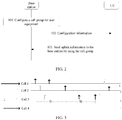
- user equipment receives configuration information that is about a cell group and that is sent by a base station, and sends uplink information based on the configuration information by using the cell group, to distribute the uplink information to a plurality of cells in the cell group for transmission, thereby implementing high-reliability transmission of the uplink information.
- applying the method to a scenario of co-site deployment of an unlicensed cell and a licensed cell can resolve a problem of a limited PCell capacity; applying the method to a scenario of non co-site deployment of an unlicensed cell and a licensed cell can implement uplink information transmission in such a scenario.
- uplink information of the cell is distributed to the cell or another cell, so that uplink information of the entire cell group is distributed to a plurality of cells in the cell group for transmission.
- a second cell is an unlicensed spectrum cell
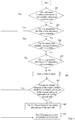
- the method before the sending, by the UE, uplink information of a first cell to the base station by using the second cell, the method further includes: determining, by the UE, that the second cell is an available unlicensed spectrum cell.
- a second cell is an unlicensed spectrum cell
- the method further includes: determining, by the UE, that the second cell is an unavailable unlicensed spectrum cell.
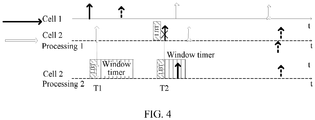
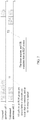
- the sending, by the UE, uplink information of a first cell to the base station by using the second cell includes: starting, by the UE, a window timer at a time point of sending the uplink information of the first cell; detecting, by the UE during running of the window timer, that the second cell is available; and sending, by the UE, the uplink information of the first cell to the base station by using the second cell.
- the transmission is stopped or a window timer is started.
- the unlicensed spectrum cell is detected, in the window timer, to be available, the uplink information transmission continues. Therefore, reliability of uplink information transmission by using an unlicensed spectrum cell is improved.
- the sending, by the UE, uplink information of a first cell to the base station by using the second cell includes: determining, by the UE, that there is an available alternative cell in at least one alternative cell of the second cell; and sending, by the UE, the uplink information of the first cell to the base station by using the available alternative cell of the second cell.
- the method further includes: determining, by the UE, a radio link monitoring RLM group; sequentially performing, by the UE, RLM on cells in the RLM cell group; determining, by the UE based on the RLM, that the cells in the RLM group are all unavailable; and starting, by the UE, an RLM timer, and detecting, during running of the RLM timer, whether there is an available unlicensed spectrum cell in the RLM cell group; and stopping the RLM timer if there is an available unlicensed spectrum cell in the RLM cell group, or if there is no available unlicensed spectrum cell in the RLM cell group, determining, after the RLM timer expires, that a radio link failure RLF occurs in all unlicensed spectrum cells in the RLM cell group.
- radio signals of a plurality of cells in the RLM group are detected, and the RLF is only considered to occur when signals of all cells are unavailable and the situation has lasted for a period of time.
- This increases an RLF determining threshold, improves availability of unlicensed spectrum cells, and resolves a problem of RLF misjudgment caused by unavailability of the unlicensed spectrum cells.
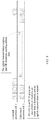
- the method further includes: determining, by the UE, an uplink time reference group; and determining, by the UE, whether there is an available unlicensed spectrum cell in the uplink time reference group; and if there is an available unlicensed spectrum cell in the uplink time reference group, selecting one from the available unlicensed spectrum cell as an uplink time reference, or if there is no available unlicensed spectrum cell in the uplink reference time group, starting, by the UE, an uplink transmit timer, and detecting, during running of the uplink transmit timer, whether there is an available unlicensed spectrum cell in the uplink time reference group; and if there is an available unlicensed spectrum cell in the uplink time reference group, stopping the uplink transmit timer, or if there is no available unlicensed spectrum cell in the uplink time reference group, determining, after the uplink transmit timer expires, that the UE and the base station are asynchronous.
- the UE determines that the UE and the base station are asynchronous, and further abandons sending the uplink information. This resolves a problem that the UE sends the uplink time reference because of unavailability of the unlicensed spectrum cells.
- the uplink time reference group further includes a licensed spectrum cell
- the method further includes: receiving, by the UE, a time difference sent by the base station, where the time difference indicates a subframe boundary difference between the licensed spectrum cell and each unlicensed spectrum cell in the uplink time reference group; and after the determining, by the UE after the uplink transmit timer expires, that the UE and the base station are asynchronous, the method further includes: determining, by the UE, an uplink transmit time reference based on the licensed spectrum cell and the time difference.
- the uplink time reference group further includes the licensed spectrum cell.
- the UE uses the licensed spectrum cell as the time reference, and uses the "time difference" together with a downlink subframe boundary of the licensed spectrum cell as the uplink transmit time reference. This resolves the problem that the UE sends the uplink time reference because of unavailability of the unlicensed spectrum cells.
- the method further includes: determining, by the UE, a third cell from the cell group based on a Single Cell Point To Multipoint SC-PTM priority, where the third cell is a cell with a highest SC-PTM priority in the cell group, or the third cell is a cell with a lowest SC-PTM priority in the cell group; and receiving, by the UE in one multicast control channel MCCH period by using the third cell, a single cell multicast control channel SC-MCCH message sent by the base station.
- a plurality of unlicensed spectrum cells are bound together to collaboratively send an SC-MCCH or an SC-MTCH, thereby improving a success rate of transmission.
- the method further includes: determining, by the UE based on the SC-MCCH, an SC-MTCH window for sending SC-MTCH information by the base station; determining, by the UE, a fourth cell from the cell group based on the SC-PTM priority; and receiving, by the UE by using the fourth cell, the SC-MTCH information sent by the base station in the SC-MTCH.
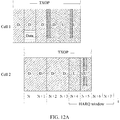
- the method before the sending, by the UE, uplink information to the base station by using the cell group, the method further includes: receiving, by the UE by using a fifth cell in the cell group, downlink data sent by the base station, where the fifth cell is an unlicensed spectrum cell; and determining, by the UE, a sixth cell from the cell group, where the sixth group is a cell that occurs earliest within a hybrid automatic repeat request window HARQ windows time of the downlink data and that has an available physical uplink shared channel PUCCH opportunity; and the sending, by the UE, uplink information to the base station by using the cell group includes: sending, by the UE, a HARQ of the downlink data to the base station by using the PUCCH opportunity of the sixth cell.
- the UE can send the HARQ by selecting one cell from the cell group. Compared with the prior-art practice of sending the HARQ only by using the PUCCH of the PCell, this improves a probability of feeding back the HARQ by the UE.
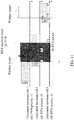
- the method before the sending, by the UE, uplink information to the base station by using the cell group, the method further includes: determining, by the UE, a channel state indication CSI resource.
- the determining, by the UE, a CSI resource includes:
- the determining, by the UE, a CSI resource includes:
- an uplink information transmission method and the method is described from a perspective of a base station.
- a base station configures a cell group for UE, and sends configuration information of the cell group to the UE, so that the UE sends uplink information by using the cell group, to distribute the uplink information to a plurality of cells in the cell group for transmission, thereby implementing high-reliability transmission of the uplink information.
- applying the method to a scenario of co-site deployment of an unlicensed cell and a licensed cell can resolve a problem of a limited PCell capacity; applying the method to a scenario of non co-site deployment of an unlicensed cell and a licensed cell can implement uplink information transmission in such a scenario.
- the uplink information includes uplink information of a first cell
- the receiving, by the base station, uplink information sent by the UE by using the cell group includes: receiving, by the base station, the uplink information of the first cell sent by the UE by using the first cell; or receiving, by the base station, the uplink information of the first cell sent by the UE by using a second cell; where the first cell is a cell in the cell group, and the second cell is another cell different from the first cell in the cell group.
- the second cell is an unlicensed spectrum cell
- the receiving, by the base station, the uplink information of the first cell sent by the UE by using a second cell includes: receiving, by the base station, the uplink information of the first cell sent by the UE by using the second cell after the UE determines that the second cell is an available unlicensed spectrum cell.
- the second cell is an unlicensed spectrum cell
- the receiving, by the base station, the uplink information of the first cell sent by the UE by using a second cell includes: receiving, by the base station, the uplink information of the first cell sent by the UE by using an available alternative cell of the second cell, where the available alternative cell is determined by the UE from at least one alternative cell of the second cell after the UE determines that the second cell is an unavailable unlicensed spectrum cell.
- the method further includes: sending, by the base station in one multicast control channel MCCH period, downlink control information to the UE by using a third cell and a single cell multicast control channel SC-MCCH, where the third cell is determined by the UE from the cell group based on an SC-PTM priority, and the third cell is a cell with a highest SC-PTM priority in the cell group, or the third cell is a cell with a lowest SC-PTM priority in the cell group.
- the method further includes: sending, by the base station by using a fourth cell, downlink data information to the UE in a single cell multicast traffic channel SC-MTCH window by using an SC-MTCH, where the fourth cell is determined by the UE from the cell group based on the SC-PTM priority.
- the method before the receiving, by the base station, uplink information sent by the UE by using the cell group, the method further includes:
- the method before the receiving, by the base station, uplink information sent by the UE by using the cell group, the method further includes: sending, by the base station, first CSI resource indication information to the UE, where the first CSI resource indication information indicates a time position of the CSI resource.
- the method before the receiving, by the base station, uplink information sent by the UE by using the cell group, the method further includes: sending, by the base station, second CSI resource indication information to the UE, where the second CSI resource indication information indicates a time position of the CSI resource and a seventh cell.
- user equipment including:
- the uplink information includes uplink information of a first cell; and the sending module is specifically configured to send the uplink information of the first cell to the base station by using the first cell; or, the sending module is specifically configured to send the uplink information of the first cell to the base station by using a second cell; where the first cell is a cell in the cell group, and the second cell is another cell different from the first cell in the cell group.
- the second cell is an unlicensed spectrum cell
- the user equipment further includes: a processing module, configured to determine, before the sending module sends the uplink information of the first cell to the base station by using the second cell, that the second cell is an available unlicensed spectrum cell.
- the second cell is an unlicensed spectrum cell
- the user equipment further includes: a processing module, configured to determine, before the sending module sends the uplink information of the first cell to the base station by using the second cell, that the second cell is an unavailable unlicensed spectrum cell.
- the sending module is configured to send the uplink information of the first cell to the base station by using the second cell when the processing module detects, during running of a window timer that is started at a time point of sending the uplink information of the first cell, that the second cell is available.
- the sending module is configured to send, when the processing module determines that there is an available alternative cell in at least one alternative cell of the second cell, the uplink information of the first cell to the base station by using the available alternative cell of the second cell.
- the processing module is further configured to: determine a radio link monitoring RLM group, and sequentially perform RLM on cells in the RLM cell group; determine, based on the RLM, that the cells in the RLM group are all unavailable; start an RLM timer; detect, during running of the RLM timer, whether there is an available unlicensed spectrum cell in the RLM cell group; and stop the RLM timer if there is an available unlicensed spectrum cell in the RLM cell group; or if there is no available unlicensed spectrum cell in the RLM cell group, determine, after the RLM timer expires, that a radio link failure RLF occurs in all unlicensed spectrum cells in the RLM cell group.
- the processing module is further configured to: determine an uplink time reference group; determine whether there is an available unlicensed spectrum cell in the uplink time reference group; and if there is an available unlicensed spectrum cell in the uplink time reference group, select one from the available unlicensed spectrum cell as an uplink time reference; or if there is no available unlicensed spectrum cell in the uplink time reference group, start an uplink transmit timer, and detect, during running of the uplink transmit timer, whether there is an available unlicensed spectrum cell in the uplink time reference group, and if there is an available unlicensed spectrum cell in the uplink time reference group, stop the uplink transmit timer, or if there is no available unlicensed spectrum cell in the uplink time reference group, determine, after the uplink transmit timer expires, that the UE and the base station are asynchronous.
- the uplink time reference group further includes a licensed spectrum cell
- the receiving module is further configured to: receive a time difference sent by the base station, where the time difference indicates a subframe boundary difference between the licensed spectrum cell and each unlicensed spectrum cell in the uplink time reference group; and determine an uplink transmit time reference based on the licensed spectrum cell and the time difference after it is determined, after the uplink transmit timer expires, that the UE and the base station are asynchronous.
- the processing module is further configured to determine, based on a Single Cell Point To Multipoint SC-PTM priority, a third cell from the cell group, where the third cell is a cell with a highest SC-PTM priority in the cell group, or the third cell is a cell with a lowest SC-PTM priority in the cell group; and the receiving module is configured to receive, in one multicast control channel MCCH period by using the third cell, a single cell multicast control channel SC-MCCH message sent by the base station.
- the processing module is further configured to: after the receiving module receives, in one multicast control channel MCCH period by using the third cell, a single cell multicast control channel SC-MCCH message sent by the base station, determine, based on the SC-MCCH, an SC-MTCH window for sending SC-MTCH information by the base station, and determine, based on the SC-PTM priority, a fourth cell from the cell group; and the receiving module is further configured to receive, by using the fourth cell, the SC-MTCH information sent by the base station in the SC-MTCH.
- the receiving module is further configured to: before the sending module sends the uplink information to the base station by using the cell group, receive, by using a fifth cell in the cell group, downlink data sent by the base station, where the fifth cell is an unlicensed spectrum cell; the processing module is further configured to determine a sixth cell from the cell group, where the sixth group is a cell that occurs earliest within a hybrid automatic repeat request window HARQ windows time and that has an available physical uplink shared channel PUCCH opportunity; and the sending module is further configured to send a HARQ of the downlink data to the base station by using the PUCCH opportunity of the sixth cell.
- the processing module is further configured to: before the sending module sends the uplink information to the base station by using the cell group, determine a channel state indication CSI resource.
- the receiving module is further configured to receive first CSI resource indication information sent by the base station, where the first CSI resource indication information indicates a time position of the CSI resource; and the receiving module is specifically configured to reserve, based on the first CSI resource indication information, the time position in each cell of the cell group as a position of the CSI resource.
- the receiving module is further configured to receive second CSI resource indication information sent by the base station, where the second CSI resource indication information indicates a time position of the CSI resource and a seventh cell; and the processing module is further configured to reserve, based on the second indication information, the time position in the seventh cell as a position of the CSI resource.
- a base station including:
- the uplink information includes uplink information of a first cell; and the receiving module is specifically configured to receive the uplink information of the first cell sent by the UE by using the first cell; or, the receiving module is specifically configured to receive the uplink information of the first cell sent by the UE by using a second cell; where the first cell is a cell in the cell group, and the second cell is another cell different from the first cell in the cell group.
- the second cell is an unlicensed spectrum cell; and the receiving module is specifically configured to receive the uplink information of the first cell sent by using the second cell after the UE determines that the second cell is an available unlicensed spectrum cell.
- the second cell is an unlicensed spectrum cell
- the receiving module is specifically configured to receive the uplink information of the first cell sent by the UE by using an available alternative cell of the second cell, where the available alternative cell is determined by the UE from at least one alternative cell of the second cell after the UE determines that the second cell is an unavailable unlicensed spectrum cell.
- the sending module is further configured to send, in one multicast control channel MCCH period, downlink control information to the UE by using a third cell and a single cell multicast control channel SC-MCCH, where the third cell is determined by the UE from the cell group based on an SC-PTM priority, and the third cell is a cell with a highest SC-PTM priority in the cell group, or the third cell is a cell with a lowest SC-PTM priority in the cell group.
- the sending module is further configured to send, by using a fourth cell, downlink data information to the UE in a single cell multicast traffic channel SC-MTCH window by using an SC-MTCH, where the fourth cell is determined by the UE from the cell group based on the SC-PTM priority.
- the sending module is further configured to: before the receiving module receives the uplink information sent by the UE by using the cell group, send downlink data to the UE by using a fifth cell in the cell group; and the receiving module is configured to receive a hybrid automatic repeat request HARQ of the downlink data that is sent by the UE to the base station by using a PUCCH opportunity of a sixth cell, where the sixth cell is determined by the UE from the cell group, and the sixth cell is a cell that occurs earliest within a hybrid automatic repeat request window HARQ windows time of the downlink data and that has an available physical uplink shared channel PUCCH opportunity.
- the sending module further sends, before the receiving module receives the uplink information sent by the UE by using the cell group, first CSI resource indication information to the UE, where the first CSI resource indication information indicates a time position of the CSI resource.
- the sending module further sends, before the receiving module receives the uplink information sent by the UE by using the cell group, second CSI resource indication information to the UE, where the second CSI resource indication information indicates a time position of the CSI resource and a seventh cell.
- user equipment including: a processor, a memory, a communications interface, and a system bus, where the memory and the communications interface are connected to and communicate with the processor by using the system bus, the memory is configured to store a computer-executable instruction, the communications interface is configured to communicate with another device, and the processor is configured to run the computer-executable instruction, to cause the user equipment to perform the steps of the foregoing method applied to user equipment.
- a base station including: a processor, a memory, a communications interface, and a system bus, where the memory and the communications interface are connected to and communicate with the processor by using the system bus, the memory is configured to store a computer-executable instruction, the communications interface is configured to communicate with another device, and the processor is configured to run the computer-executable instruction, to cause the base station to perform the steps of the foregoing method applied to a base station.
- the apparatus, and the user equipment provided configures the cell group for the UE, and sends configuration information of the cell group to the UE, so that the UE sends the uplink information by using the cell group, to distribute the uplink information to a plurality of cells in the cell group for transmission, thereby implementing high-reliability transmission of the uplink information.
- applying the method to a scenario of co-site deployment of an unlicensed cell and a licensed cell can resolve a problem of a limited PCell capacity; applying the method to a scenario of non co-site deployment of an unlicensed cell and a licensed cell can implement uplink information transmission in such a scenario.
Landscapes
- Engineering & Computer Science (AREA)
- Computer Networks & Wireless Communication (AREA)
- Signal Processing (AREA)
- Quality & Reliability (AREA)
- Mobile Radio Communication Systems (AREA)
Claims (11)
- Verfahren zur Übertragung von Uplink-Informationen, umfassend:Empfangen, durch ein Benutzergerät, UE, von Konfigurationsinformationen, die durch eine Basisstation gesendet werden, wobei die Konfigurationsinformationen eine Zellgruppe angeben, die für das UE durch die Basisstation konfiguriert ist, undSenden (103), durch das UE, von Uplink-Informationen an die Basisstation durch Verwenden der Zellgruppe,wobei die Uplink-Informationen Uplink-Informationen einer ersten Zelle umfassen und das Senden, durch das UE, von Uplink-Informationen an die Basisstation durch Verwenden der Zellgruppe umfasst:Bestimmen (201), durch das UE, ob eine zweite Zelle eine verfügbare Zelle des unlizenzierten Spektrums ist, undwenn die zweite Zelle eine verfügbare Zelle des unlizenzierten Spektrums ist:Senden, durch das UE, der Uplink-Informationen der ersten Zelle an die Basisstation durch Verwenden der zweiten Zelle, wobeidie erste Zelle eine Zelle in der Zellgruppe ist und eine zweite Zelle eine andere Zelle ist, die von der ersten Zelle in der Zellgruppe verschieden ist.
- Verfahren nach Anspruch 1, wobei, wenn die zweite Zelle eine verfügbare Zelle des unlizenzierten Spektrums ist, das Senden, durch das UE, der Uplink-Informationen der ersten Zelle an die Basisstation durch Verwenden einer zweiten Zelle umfasst:Starten (206), durch das UE, eines Fenster-Timers zu einem Zeitpunkt des Sendens der Uplink-Informationen der ersten Zelle,Detektieren, durch das UE während des Ausführens des Fenster-Timers, dass die zweite Zelle eine verfügbare Zelle des unlizenzierten Spektrums ist, undSenden, durch das UE, der Uplink-Informationen der ersten Zelle an die Basisstation durch Verwenden der zweiten Zelle.
- Verfahren nach Anspruch 1, wobei das Verfahren ferner umfasst:
wenn die zweite Zelle eine nicht verfügbare Zelle des unlizenzierten Spektrums ist:Bestimmen (203), durch das UE, dass zumindest eine verfügbar alternative Zelle für die zweite Zelle vorhanden ist, undSenden, durch das UE, der Uplink-Informationen der ersten Zelle an die Basisstation durch Verwenden der verfügbaren alternativen Zelle für die zweite Zelle. - Verfahren zur Übertragung von Uplink-Informationen, umfassend:Konfigurieren (101), durch eine Basisstation, einer Zellgruppe für ein Benutzergerät, UE;Senden (102), durch die Basisstation, von Konfigurationsinformationen an das UE,wobei die Konfigurationsinformationen die Zellgruppe angeben, undEmpfangen, durch die Basisstation, von Uplink-Informationen, die durch das UE durch Verwenden der Zellgruppe gesendet werden,wobei die Uplink-Informationen Uplink-Informationen einer ersten Zelle umfassen und das Empfangen, durch die Basisstation, von Uplink-Informationen, die durch das UE durch Verwenden der Zellgruppe gesendet werden, umfasst:Bestimmen, durch das UE, ob die zweite Zelle eine verfügbare Zelle des unlizenzierten Spektrums ist, undwenn die zweite Zelle eine verfügbare Zelle des unlizenzierten Spektrums ist:Empfangen, durch die Basisstation, der Uplink-Informationen der ersten Zelle, die durch das UE durch Verwenden einer zweiten Zelle gesendet werden, wobei die erste Zelle eine Zelle in der Zellgruppe ist und die zweite Zelle eine andere Zelle ist, die von der ersten Zelle in der Zellgruppe verschieden ist.
- Verfahren nach Anspruch 4, wobei das Verfahren ferner umfasst:wenn die zweite Zelle eine nicht verfügbare Zelle des unlizenzierten Spektrums ist, Empfangen, durch die Basisstation, der Uplink-Informationen der ersten Zelle, die durch das UE durch Verwenden einer verfügbaren alternativen Zelle der zweiten Zelle gesendet werden, wobei die verfügbare alternative Zelle durch das UE aus zumindest einer alternativen Zelle der zweiten Zelle bestimmt wird, nachdem das UE bestimmt,dass die zweite Zelle eine nicht verfügbare Zelle des unlizenzierten Spektrums ist.
- Benutzergerät, umfassend:ein Empfangsmodul (11), das dazu konfiguriert ist, Konfigurationsinformationen zu empfangen, die durch eine Basisstation gesendet werden, wobei die Konfigurationsinformationen eine Zellgruppe angeben, die für das UE durch die Basisstation konfiguriert ist, undein Sendemodul (12), das dazu konfiguriert ist, Uplink-Informationen an die Basisstation durch Verwenden der Zellgruppe zu senden,wobei die Uplink-Informationen Uplink-Informationen einer ersten Zelle umfassen,ein Verarbeitungsmodul (13), das dazu konfiguriert ist, zu bestimmen, bevor das Sendemodul die Uplink-Informationen der ersten Zelle an die Basisstation durch Verwenden der zweiten Zelle sendet, ob die zweite Zelle eine verfügbare Zelle des unlizenzierten Spektrums ist; undwenn die zweite Zelle eine verfügbare Zelle des unlizenzierten Spektrums ist:das Sendemodul (12) insbesondere dazu konfiguriert ist, die Uplink-Informationen der ersten Zelle an die Basisstation durch Verwenden einer zweiten Zelle zu senden,wobei die erste Zelle eine Zelle in der Zellgruppe ist und die zweite Zelle eine andere Zelle ist, die von der ersten Zelle in der Zellgruppe verschieden ist.
- Benutzergerät nach Anspruch 6, wobei, wenn die zweite Zelle eine verfügbare Zelle des unlizenzierten Spektrums ist:
das Sendemodul (12) dazu konfiguriert ist, die Uplink-Informationen der ersten Zelle an die Basisstation durch Verwenden der zweiten Zelle zu senden, wenn das Verarbeitungsmodul, während des Ausführens eines Fenster-Timers, der zu einem Zeitpunkt des Sendens der Uplink-Informationen der ersten Zelle gestartet wird, detektiert, dass die zweite Zelle eine verfügbare Zelle des unlizenzierten Spektrums ist. - Benutzergerät nach Anspruch 6, wobei, wenn die zweite Zelle eine verfügbare Zelle des unlizenzierten Spektrums ist:
das Sendemodul (12) dazu konfiguriert ist, wenn das Verarbeitungsmodul (13) bestimmt, dass eine verfügbare alternative Zelle für die zweite Zelle vorhanden ist, die Uplink-Informationen der ersten Zelle durch Verwenden der verfügbaren alternativen Zelle der zweiten Zelle an die Basisstation zu senden. - System, umfassend ein Benutzergerät, UE, nach einem der Ansprüche 6-8 und eine Basisstation, umfassend:ein Verarbeitungsmodul (21), das dazu konfiguriert ist, eine Zellgruppe für ein Benutzergerät, UE, zu konfigurieren;ein Sendemodul (22), das dazu konfiguriert ist, Konfigurationsinformationen an das UE zu senden, wobei die Konfigurationsinformationen die Zellgruppe angeben, undein Empfangsmodul (23), das dazu konfiguriert ist, Uplink-Informationen, die durch das UE durch Verwenden der Zellgruppe gesendet werden, zu empfangen,wobei die Uplink-Informationen Uplink-Informationen einer ersten Zelle umfassen und das Empfangsmodul (23) insbesondere dazu konfiguriert ist, die Uplink-Informationen der ersten Zelle, die durch das UE durch Verwenden einer zweiten Zelle gesendet werden, zu empfangen, wobeidie erste Zelle eine Zelle in der Zellgruppe ist und die zweite Zelle eine andere Zelle ist, die von der ersten Zelle in der Zellgruppe verschieden ist.
- System nach Anspruch 9, wobei die zweite Zelle eine Zelle des unlizenzierten Spektrums ist und
das Empfangsmodul (23) insbesondere dazu konfiguriert ist, die Uplink-Informationen der ersten Zelle, die durch Verwenden der zweiten Zelle gesendet werden, zu empfangen. - System nach Anspruch 9, wobei die zweite Zelle eine Zelle des unlizenzierten Spektrums ist und
das Empfangsmodul (23) insbesondere dazu konfiguriert ist, die Uplink-Informationen der ersten Zelle, die durch das UE durch Verwenden einer verfügbaren alternativen Zelle für die zweite Zelle gesendet werden, zu empfangen.
Applications Claiming Priority (1)
| Application Number | Priority Date | Filing Date | Title |
|---|---|---|---|
| PCT/CN2016/081555 WO2017193282A1 (zh) | 2016-05-10 | 2016-05-10 | 上行信息传输方法、基站与用户设备 |
Publications (3)
| Publication Number | Publication Date |
|---|---|
| EP3448100A1 EP3448100A1 (de) | 2019-02-27 |
| EP3448100A4 EP3448100A4 (de) | 2019-04-24 |
| EP3448100B1 true EP3448100B1 (de) | 2020-09-09 |
Family
ID=60266609
Family Applications (1)
| Application Number | Title | Priority Date | Filing Date |
|---|---|---|---|
| EP16901237.4A Active EP3448100B1 (de) | 2016-05-10 | 2016-05-10 | Verfahren zur übertragung von uplink-informationen, basisstation und benutzergerät |
Country Status (5)
| Country | Link |
|---|---|
| US (1) | US20190082436A1 (de) |
| EP (1) | EP3448100B1 (de) |
| CN (1) | CN109076514A (de) |
| BR (1) | BR112018073149A2 (de) |
| WO (1) | WO2017193282A1 (de) |
Families Citing this family (14)
| Publication number | Priority date | Publication date | Assignee | Title |
|---|---|---|---|---|
| CN108605312A (zh) * | 2016-02-05 | 2018-09-28 | 华为技术有限公司 | 传输控制数据的方法和装置 |
| CN107295663B (zh) * | 2016-04-01 | 2021-06-29 | 上海诺基亚贝尔股份有限公司 | 获取混合自动重传请求确认信息反馈的方法和装置 |
| US10904826B2 (en) * | 2016-09-15 | 2021-01-26 | Telefonaktiebolaget Lm Ericsson (Publ) | Methods and systems for autonomous device selection of transmission resources |
| KR102205894B1 (ko) * | 2016-11-01 | 2021-01-20 | 엘지전자 주식회사 | 무선 통신 시스템에서 우선 순위 기반 간섭 제어 방법 및 이를 위한 장치 |
| CN118215151A (zh) * | 2018-04-03 | 2024-06-18 | 交互数字专利控股公司 | 用于信道接入管理的方法 |
| US10925093B2 (en) * | 2018-11-13 | 2021-02-16 | Mediatek Singapore Pte. Ltd. | Method and apparatus for detecting consistent listen before talk failure in mobile communications |
| CN111385912A (zh) * | 2018-12-28 | 2020-07-07 | 展讯通信(上海)有限公司 | 一种小区变更方法及装置、存储介质、终端 |
| CN111294871A (zh) | 2019-01-31 | 2020-06-16 | 展讯通信(上海)有限公司 | 触发小区重选的方法及装置、存储介质、用户终端 |
| CN111866961B (zh) * | 2019-04-25 | 2023-05-09 | 中国移动通信有限公司研究院 | 一种备用小区重选方法、装置和计算机可读存储介质 |
| US11616558B2 (en) * | 2019-11-20 | 2023-03-28 | Qualcomm Incorporated | Procedural delays and scheduling restriction based on component carrier groups |
| CN111465106B (zh) * | 2020-03-02 | 2023-11-14 | 浙江华云信息科技有限公司 | 一种用于智能电网的免授权频段通信方法 |
| EP4033687B1 (de) | 2021-01-25 | 2024-09-18 | Nokia Technologies Oy | Halbstatisches muster zum wechseln der zelle für einen physikalischen uplink-steuerkanal (pucch) |
| US12574932B2 (en) * | 2021-07-13 | 2026-03-10 | Apple Inc. | Transmission padding efficiency improvement |
| CN117015072A (zh) * | 2022-04-27 | 2023-11-07 | 大唐移动通信设备有限公司 | 一种直接sl通信方法及装置 |
Family Cites Families (10)
| Publication number | Priority date | Publication date | Assignee | Title |
|---|---|---|---|---|
| CN102932908B (zh) * | 2011-08-12 | 2016-03-23 | 上海贝尔股份有限公司 | 控制用户设备在从小区组中的从小区上的上行传输的方法 |
| CN107248906B (zh) * | 2012-06-28 | 2023-03-10 | 华为技术有限公司 | 辅助主小区的调整方法以及基站 |
| CN104081745B (zh) * | 2013-01-30 | 2017-02-15 | 华为技术有限公司 | 上行传输方法、基站和用户设备 |
| KR101566943B1 (ko) * | 2013-03-28 | 2015-11-06 | 주식회사 케이티 | 복수의 서빙 셀에서 상향 링크 제어 정보의 전송을 제어하는 방법 및 그 장치 |
| CN104735672B (zh) * | 2013-12-24 | 2018-09-04 | 中国移动通信集团公司 | 一种小区配置方法及装置 |
| US10142945B2 (en) * | 2014-06-05 | 2018-11-27 | Samsung Electronics Co., Ltd. | Power control for transmission of uplink control information on two cells in carrier aggregation |
| CN105376812B (zh) * | 2014-08-29 | 2019-05-24 | 电信科学技术研究院 | 上行传输主载波切换及其控制方法、装置、基站及ue |
| US10158473B2 (en) * | 2014-10-03 | 2018-12-18 | Intel IP Corporation | Methods, apparatuses, and systems for transmitting hybrid automatic repeat request transmissions using channels in an unlicensed shared medium |
| CN105490789B (zh) * | 2014-10-10 | 2019-08-16 | 电信科学技术研究院 | 一种数据传输方法及装置 |
| WO2016119174A1 (zh) * | 2015-01-29 | 2016-08-04 | 华为技术有限公司 | 多载波聚合通信方法和设备 |
-
2016
- 2016-05-10 EP EP16901237.4A patent/EP3448100B1/de active Active
- 2016-05-10 BR BR112018073149A patent/BR112018073149A2/pt not_active Application Discontinuation
- 2016-05-10 CN CN201680085507.9A patent/CN109076514A/zh active Pending
- 2016-05-10 WO PCT/CN2016/081555 patent/WO2017193282A1/zh not_active Ceased
-
2018
- 2018-11-09 US US16/185,436 patent/US20190082436A1/en not_active Abandoned
Non-Patent Citations (1)
| Title |
|---|
| None * |
Also Published As
| Publication number | Publication date |
|---|---|
| CN109076514A (zh) | 2018-12-21 |
| BR112018073149A2 (pt) | 2019-03-12 |
| US20190082436A1 (en) | 2019-03-14 |
| EP3448100A1 (de) | 2019-02-27 |
| EP3448100A4 (de) | 2019-04-24 |
| WO2017193282A1 (zh) | 2017-11-16 |
Similar Documents
| Publication | Publication Date | Title |
|---|---|---|
| US10931515B2 (en) | Method for detecting and processing radio link and apparatus | |
| EP2874460B1 (de) | Verfahren und vorrichtung zur wiederherstellung nach funkverbindungsausfällen | |
| EP3316641B1 (de) | Verfahren zur drahtlosressourcenplanung und zugehöriges endgerät | |
| EP3439383B1 (de) | Uplink-synchronisationsverarbeitungsverfahren, benutzergerät und basisstation | |
| AU2014312564B2 (en) | Method and system for random access procedure and Radio Link Failure in inter-eNB carrier aggregation | |
| US9832806B2 (en) | Method for processing radio link failure and device therefor | |
| EP3171632B1 (de) | Vorrichtung und verfahren zur handhabung eines kommunikationsfehlers | |
| EP3577827B1 (de) | Verfahren und knoten zur aktivierung oder deaktivierung eines trägers in einem kommunikationsnetz mit unterstützung von trägeraggregation | |
| US10349450B2 (en) | Methods and devices for random access | |
| EP2680658B1 (de) | Verfahren zur Handhabung einer Direktzugriffsreaktion | |
| CN112534897A (zh) | 通信系统、通信终端及基站 | |
| EP3101967B1 (de) | Benutzervorrichtung und übertragungssteuerungsverfahren | |
| EP3448100A1 (de) | Verfahren zur übertragung von uplink-informationen, basisstation und benutzergerät | |
| US20190306896A1 (en) | User equipment and method | |
| KR20120081558A (ko) | 이동통신 시스템에서 랜덤 액세스 절차를 수행하는 방법 및 장치 | |
| EP3542579B1 (de) | Bedingte ressourcennutzung für d2d-kommunikation | |
| CN110035552A (zh) | 一种laa调度方法和装置 | |
| EP2958396A1 (de) | Benutzervorrichtung, funkbasisstation und verfahren | |
| CN102265669B (zh) | 小区无线链路失败处理方法和用户设备 | |
| CN107306169A (zh) | 一种上行控制信息传输方法、装置及系统 | |
| CN110234162B (zh) | 用于eNB间载波聚合中的随机接入过程的方法和装置 |
Legal Events
| Date | Code | Title | Description |
|---|---|---|---|
| STAA | Information on the status of an ep patent application or granted ep patent |
Free format text: STATUS: THE INTERNATIONAL PUBLICATION HAS BEEN MADE |
|
| PUAI | Public reference made under article 153(3) epc to a published international application that has entered the european phase |
Free format text: ORIGINAL CODE: 0009012 |
|
| STAA | Information on the status of an ep patent application or granted ep patent |
Free format text: STATUS: REQUEST FOR EXAMINATION WAS MADE |
|
| 17P | Request for examination filed |
Effective date: 20181121 |
|
| AK | Designated contracting states |
Kind code of ref document: A1 Designated state(s): AL AT BE BG CH CY CZ DE DK EE ES FI FR GB GR HR HU IE IS IT LI LT LU LV MC MK MT NL NO PL PT RO RS SE SI SK SM TR |
|
| AX | Request for extension of the european patent |
Extension state: BA ME |
|
| A4 | Supplementary search report drawn up and despatched |
Effective date: 20190321 |
|
| RIC1 | Information provided on ipc code assigned before grant |
Ipc: H04W 72/04 20090101AFI20190315BHEP |
|
| DAV | Request for validation of the european patent (deleted) | ||
| DAX | Request for extension of the european patent (deleted) | ||
| STAA | Information on the status of an ep patent application or granted ep patent |
Free format text: STATUS: EXAMINATION IS IN PROGRESS |
|
| 17Q | First examination report despatched |
Effective date: 20191209 |
|
| GRAP | Despatch of communication of intention to grant a patent |
Free format text: ORIGINAL CODE: EPIDOSNIGR1 |
|
| STAA | Information on the status of an ep patent application or granted ep patent |
Free format text: STATUS: GRANT OF PATENT IS INTENDED |
|
| INTG | Intention to grant announced |
Effective date: 20200408 |
|
| GRAS | Grant fee paid |
Free format text: ORIGINAL CODE: EPIDOSNIGR3 |
|
| GRAA | (expected) grant |
Free format text: ORIGINAL CODE: 0009210 |
|
| STAA | Information on the status of an ep patent application or granted ep patent |
Free format text: STATUS: THE PATENT HAS BEEN GRANTED |
|
| AK | Designated contracting states |
Kind code of ref document: B1 Designated state(s): AL AT BE BG CH CY CZ DE DK EE ES FI FR GB GR HR HU IE IS IT LI LT LU LV MC MK MT NL NO PL PT RO RS SE SI SK SM TR |
|
| REG | Reference to a national code |
Ref country code: GB Ref legal event code: FG4D |
|
| REG | Reference to a national code |
Ref country code: AT Ref legal event code: REF Ref document number: 1313173 Country of ref document: AT Kind code of ref document: T Effective date: 20200915 Ref country code: CH Ref legal event code: EP |
|
| REG | Reference to a national code |
Ref country code: DE Ref legal event code: R096 Ref document number: 602016043936 Country of ref document: DE |
|
| REG | Reference to a national code |
Ref country code: IE Ref legal event code: FG4D |
|
| REG | Reference to a national code |
Ref country code: LT Ref legal event code: MG4D |
|
| PG25 | Lapsed in a contracting state [announced via postgrant information from national office to epo] |
Ref country code: HR Free format text: LAPSE BECAUSE OF FAILURE TO SUBMIT A TRANSLATION OF THE DESCRIPTION OR TO PAY THE FEE WITHIN THE PRESCRIBED TIME-LIMIT Effective date: 20200909 Ref country code: GR Free format text: LAPSE BECAUSE OF FAILURE TO SUBMIT A TRANSLATION OF THE DESCRIPTION OR TO PAY THE FEE WITHIN THE PRESCRIBED TIME-LIMIT Effective date: 20201210 Ref country code: FI Free format text: LAPSE BECAUSE OF FAILURE TO SUBMIT A TRANSLATION OF THE DESCRIPTION OR TO PAY THE FEE WITHIN THE PRESCRIBED TIME-LIMIT Effective date: 20200909 Ref country code: LT Free format text: LAPSE BECAUSE OF FAILURE TO SUBMIT A TRANSLATION OF THE DESCRIPTION OR TO PAY THE FEE WITHIN THE PRESCRIBED TIME-LIMIT Effective date: 20200909 Ref country code: SE Free format text: LAPSE BECAUSE OF FAILURE TO SUBMIT A TRANSLATION OF THE DESCRIPTION OR TO PAY THE FEE WITHIN THE PRESCRIBED TIME-LIMIT Effective date: 20200909 Ref country code: NO Free format text: LAPSE BECAUSE OF FAILURE TO SUBMIT A TRANSLATION OF THE DESCRIPTION OR TO PAY THE FEE WITHIN THE PRESCRIBED TIME-LIMIT Effective date: 20201209 Ref country code: BG Free format text: LAPSE BECAUSE OF FAILURE TO SUBMIT A TRANSLATION OF THE DESCRIPTION OR TO PAY THE FEE WITHIN THE PRESCRIBED TIME-LIMIT Effective date: 20201209 |
|
| REG | Reference to a national code |
Ref country code: AT Ref legal event code: MK05 Ref document number: 1313173 Country of ref document: AT Kind code of ref document: T Effective date: 20200909 |
|
| REG | Reference to a national code |
Ref country code: NL Ref legal event code: MP Effective date: 20200909 |
|
| PG25 | Lapsed in a contracting state [announced via postgrant information from national office to epo] |
Ref country code: RS Free format text: LAPSE BECAUSE OF FAILURE TO SUBMIT A TRANSLATION OF THE DESCRIPTION OR TO PAY THE FEE WITHIN THE PRESCRIBED TIME-LIMIT Effective date: 20200909 Ref country code: PL Free format text: LAPSE BECAUSE OF FAILURE TO SUBMIT A TRANSLATION OF THE DESCRIPTION OR TO PAY THE FEE WITHIN THE PRESCRIBED TIME-LIMIT Effective date: 20200909 Ref country code: LV Free format text: LAPSE BECAUSE OF FAILURE TO SUBMIT A TRANSLATION OF THE DESCRIPTION OR TO PAY THE FEE WITHIN THE PRESCRIBED TIME-LIMIT Effective date: 20200909 |
|
| PG25 | Lapsed in a contracting state [announced via postgrant information from national office to epo] |
Ref country code: EE Free format text: LAPSE BECAUSE OF FAILURE TO SUBMIT A TRANSLATION OF THE DESCRIPTION OR TO PAY THE FEE WITHIN THE PRESCRIBED TIME-LIMIT Effective date: 20200909 Ref country code: SM Free format text: LAPSE BECAUSE OF FAILURE TO SUBMIT A TRANSLATION OF THE DESCRIPTION OR TO PAY THE FEE WITHIN THE PRESCRIBED TIME-LIMIT Effective date: 20200909 Ref country code: CZ Free format text: LAPSE BECAUSE OF FAILURE TO SUBMIT A TRANSLATION OF THE DESCRIPTION OR TO PAY THE FEE WITHIN THE PRESCRIBED TIME-LIMIT Effective date: 20200909 Ref country code: PT Free format text: LAPSE BECAUSE OF FAILURE TO SUBMIT A TRANSLATION OF THE DESCRIPTION OR TO PAY THE FEE WITHIN THE PRESCRIBED TIME-LIMIT Effective date: 20210111 Ref country code: RO Free format text: LAPSE BECAUSE OF FAILURE TO SUBMIT A TRANSLATION OF THE DESCRIPTION OR TO PAY THE FEE WITHIN THE PRESCRIBED TIME-LIMIT Effective date: 20200909 |
|
| PG25 | Lapsed in a contracting state [announced via postgrant information from national office to epo] |
Ref country code: AL Free format text: LAPSE BECAUSE OF FAILURE TO SUBMIT A TRANSLATION OF THE DESCRIPTION OR TO PAY THE FEE WITHIN THE PRESCRIBED TIME-LIMIT Effective date: 20200909 Ref country code: AT Free format text: LAPSE BECAUSE OF FAILURE TO SUBMIT A TRANSLATION OF THE DESCRIPTION OR TO PAY THE FEE WITHIN THE PRESCRIBED TIME-LIMIT Effective date: 20200909 Ref country code: ES Free format text: LAPSE BECAUSE OF FAILURE TO SUBMIT A TRANSLATION OF THE DESCRIPTION OR TO PAY THE FEE WITHIN THE PRESCRIBED TIME-LIMIT Effective date: 20200909 Ref country code: IS Free format text: LAPSE BECAUSE OF FAILURE TO SUBMIT A TRANSLATION OF THE DESCRIPTION OR TO PAY THE FEE WITHIN THE PRESCRIBED TIME-LIMIT Effective date: 20210109 |
|
| REG | Reference to a national code |
Ref country code: DE Ref legal event code: R097 Ref document number: 602016043936 Country of ref document: DE |
|
| PG25 | Lapsed in a contracting state [announced via postgrant information from national office to epo] |
Ref country code: SK Free format text: LAPSE BECAUSE OF FAILURE TO SUBMIT A TRANSLATION OF THE DESCRIPTION OR TO PAY THE FEE WITHIN THE PRESCRIBED TIME-LIMIT Effective date: 20200909 |
|
| PLBE | No opposition filed within time limit |
Free format text: ORIGINAL CODE: 0009261 |
|
| STAA | Information on the status of an ep patent application or granted ep patent |
Free format text: STATUS: NO OPPOSITION FILED WITHIN TIME LIMIT |
|
| 26N | No opposition filed |
Effective date: 20210610 |
|
| PG25 | Lapsed in a contracting state [announced via postgrant information from national office to epo] |
Ref country code: DK Free format text: LAPSE BECAUSE OF FAILURE TO SUBMIT A TRANSLATION OF THE DESCRIPTION OR TO PAY THE FEE WITHIN THE PRESCRIBED TIME-LIMIT Effective date: 20200909 Ref country code: SI Free format text: LAPSE BECAUSE OF FAILURE TO SUBMIT A TRANSLATION OF THE DESCRIPTION OR TO PAY THE FEE WITHIN THE PRESCRIBED TIME-LIMIT Effective date: 20200909 |
|
| PG25 | Lapsed in a contracting state [announced via postgrant information from national office to epo] |
Ref country code: IT Free format text: LAPSE BECAUSE OF FAILURE TO SUBMIT A TRANSLATION OF THE DESCRIPTION OR TO PAY THE FEE WITHIN THE PRESCRIBED TIME-LIMIT Effective date: 20200909 |
|
| REG | Reference to a national code |
Ref country code: CH Ref legal event code: PL |
|
| GBPC | Gb: european patent ceased through non-payment of renewal fee |
Effective date: 20210510 |
|
| PG25 | Lapsed in a contracting state [announced via postgrant information from national office to epo] |
Ref country code: LI Free format text: LAPSE BECAUSE OF NON-PAYMENT OF DUE FEES Effective date: 20210531 Ref country code: MC Free format text: LAPSE BECAUSE OF FAILURE TO SUBMIT A TRANSLATION OF THE DESCRIPTION OR TO PAY THE FEE WITHIN THE PRESCRIBED TIME-LIMIT Effective date: 20200909 Ref country code: LU Free format text: LAPSE BECAUSE OF NON-PAYMENT OF DUE FEES Effective date: 20210510 Ref country code: CH Free format text: LAPSE BECAUSE OF NON-PAYMENT OF DUE FEES Effective date: 20210531 |
|
| REG | Reference to a national code |
Ref country code: BE Ref legal event code: MM Effective date: 20210531 |
|
| PG25 | Lapsed in a contracting state [announced via postgrant information from national office to epo] |
Ref country code: IE Free format text: LAPSE BECAUSE OF NON-PAYMENT OF DUE FEES Effective date: 20210510 Ref country code: GB Free format text: LAPSE BECAUSE OF NON-PAYMENT OF DUE FEES Effective date: 20210510 |
|
| PG25 | Lapsed in a contracting state [announced via postgrant information from national office to epo] |
Ref country code: FR Free format text: LAPSE BECAUSE OF NON-PAYMENT OF DUE FEES Effective date: 20210531 |
|
| PG25 | Lapsed in a contracting state [announced via postgrant information from national office to epo] |
Ref country code: BE Free format text: LAPSE BECAUSE OF NON-PAYMENT OF DUE FEES Effective date: 20210531 |
|
| PG25 | Lapsed in a contracting state [announced via postgrant information from national office to epo] |
Ref country code: NL Free format text: LAPSE BECAUSE OF NON-PAYMENT OF DUE FEES Effective date: 20200923 Ref country code: CY Free format text: LAPSE BECAUSE OF FAILURE TO SUBMIT A TRANSLATION OF THE DESCRIPTION OR TO PAY THE FEE WITHIN THE PRESCRIBED TIME-LIMIT Effective date: 20200909 |
|
| PG25 | Lapsed in a contracting state [announced via postgrant information from national office to epo] |
Ref country code: HU Free format text: LAPSE BECAUSE OF FAILURE TO SUBMIT A TRANSLATION OF THE DESCRIPTION OR TO PAY THE FEE WITHIN THE PRESCRIBED TIME-LIMIT; INVALID AB INITIO Effective date: 20160510 |
|
| PG25 | Lapsed in a contracting state [announced via postgrant information from national office to epo] |
Ref country code: MK Free format text: LAPSE BECAUSE OF FAILURE TO SUBMIT A TRANSLATION OF THE DESCRIPTION OR TO PAY THE FEE WITHIN THE PRESCRIBED TIME-LIMIT Effective date: 20200909 |
|
| PG25 | Lapsed in a contracting state [announced via postgrant information from national office to epo] |
Ref country code: MT Free format text: LAPSE BECAUSE OF FAILURE TO SUBMIT A TRANSLATION OF THE DESCRIPTION OR TO PAY THE FEE WITHIN THE PRESCRIBED TIME-LIMIT Effective date: 20200909 |
|
| PG25 | Lapsed in a contracting state [announced via postgrant information from national office to epo] |
Ref country code: TR Free format text: LAPSE BECAUSE OF FAILURE TO SUBMIT A TRANSLATION OF THE DESCRIPTION OR TO PAY THE FEE WITHIN THE PRESCRIBED TIME-LIMIT Effective date: 20200909 |
|
| PGFP | Annual fee paid to national office [announced via postgrant information from national office to epo] |
Ref country code: DE Payment date: 20260331 Year of fee payment: 11 |