EP3448107B1 - Procédé de traitement d'informations de commande, station de base et terminal - Google Patents
Procédé de traitement d'informations de commande, station de base et terminal Download PDFInfo
- Publication number
- EP3448107B1 EP3448107B1 EP16901220.0A EP16901220A EP3448107B1 EP 3448107 B1 EP3448107 B1 EP 3448107B1 EP 16901220 A EP16901220 A EP 16901220A EP 3448107 B1 EP3448107 B1 EP 3448107B1
- Authority
- EP
- European Patent Office
- Prior art keywords
- terminal
- control information
- starting time
- uplink subframe
- cca
- Prior art date
- Legal status (The legal status is an assumption and is not a legal conclusion. Google has not performed a legal analysis and makes no representation as to the accuracy of the status listed.)
- Active
Links
Images



Classifications
-
- H—ELECTRICITY
- H04—ELECTRIC COMMUNICATION TECHNIQUE
- H04W—WIRELESS COMMUNICATION NETWORKS
- H04W74/00—Wireless channel access
- H04W74/002—Transmission of channel access control information
- H04W74/006—Transmission of channel access control information in the downlink, i.e. towards the terminal
-
- H—ELECTRICITY
- H04—ELECTRIC COMMUNICATION TECHNIQUE
- H04W—WIRELESS COMMUNICATION NETWORKS
- H04W16/00—Network planning, e.g. coverage or traffic planning tools; Network deployment, e.g. resource partitioning or cells structures
- H04W16/14—Spectrum sharing arrangements between different networks
-
- H—ELECTRICITY
- H04—ELECTRIC COMMUNICATION TECHNIQUE
- H04W—WIRELESS COMMUNICATION NETWORKS
- H04W24/00—Supervisory, monitoring or testing arrangements
- H04W24/02—Arrangements for optimising operational condition
-
- H—ELECTRICITY
- H04—ELECTRIC COMMUNICATION TECHNIQUE
- H04W—WIRELESS COMMUNICATION NETWORKS
- H04W28/00—Network traffic management; Network resource management
- H04W28/02—Traffic management, e.g. flow control or congestion control
- H04W28/06—Optimizing the usage of the radio link, e.g. header compression, information sizing, discarding information
-
- H—ELECTRICITY
- H04—ELECTRIC COMMUNICATION TECHNIQUE
- H04W—WIRELESS COMMUNICATION NETWORKS
- H04W72/00—Local resource management
- H04W72/12—Wireless traffic scheduling
-
- H—ELECTRICITY
- H04—ELECTRIC COMMUNICATION TECHNIQUE
- H04W—WIRELESS COMMUNICATION NETWORKS
- H04W74/00—Wireless channel access
- H04W74/08—Non-scheduled access, e.g. ALOHA
- H04W74/0808—Non-scheduled access, e.g. ALOHA using carrier sensing, e.g. carrier sense multiple access [CSMA]
Definitions
- the present invention relates to the field of communications technologies, and in particular, to a control information processing method, a base station, and a terminal.
- LAA-LTE licensed-assisted access using Long Term Evolution
- Data transmission performed by the LAA-LTE on the unlicensed spectrum encounters co-channel interference from different operators and different wireless communications standards, for example, co-channel interference from a Wireless Fidelity (Wireless Fidelity, WiFi) system.
- co-channel interference from a Wireless Fidelity (Wireless Fidelity, WiFi) system.
- the LAA-LTE system usually detects a communication channel through clear channel assessment (Clear Channel Assessment, CCA) by using a listen before talk (Listen-Before-Talk, LBT) channel access mechanism.
- CCA Clear Channel Assessment
- LBT listen before talk
- uplink transmission of the LAA-LTE system is finished by a base station through scheduling.
- a terminal sends uplink information in a scheduled uplink subframe based on control information used by the base station to schedule the terminal to send an uplink subframe.
- the terminal may perform LBT, or may not perform LBT. If the terminal performs the LBTK, the terminal may perform single timeslot-based CCA or random backoff-based CCA.
- the terminal may not need to perform the random backoff-based CCA within a maximum channel occupancy time (Maximum Channel Occupancy Time, MCOT) initiated by the base station, but performs the single timeslot-based CCA. If it is detected that a channel is idle, an uplink channel is accessed. The random backoff-based CCA needs to be performed for an uplink subframe falling beyond a range of the MCOT.
- a length of the MCOT initiated by the base station varies with a downlink service type, and ranges from 2 ms to 10 ms.
- the MCOT is initiated by the base station, and the terminal does not know a starting time of the MCOT and the length of the MCOT. Therefore, an easy-to-implement method for enabling the terminal to determine a type of the CCA and a length of the uplink subframe is that the base station separately notifies the terminal of the type of the CCA and a starting time of the uplink subframe.
- An indication state used when the base station notifies the terminal of the starting time of the uplink subframe includes 0, 16 ⁇ s, 25 ⁇ s, or 1 symbol.
- 0 represents that the LBT does not need to be performed, and the terminal (e.g. UE) occupies a first symbol of the uplink subframe.
- 16 ⁇ s represents that the UE does not need to perform the LBT, spares the first 16 ⁇ s of the first symbol of the uplink subframe, and occupies a part of the first symbol after the 16 ⁇ s of the first symbol and remaining symbols after the first symbol to send the uplink information.
- 25 ⁇ s represents that the UE spares the first 25 ⁇ s of the first symbol of the uplink subframe, performs the single timeslot-based CCA within the 25 ⁇ s, and if the LBT succeeds, occupies the second half of the first symbol and remaining symbols after the first symbol to send the uplink information.
- 1 symbol represents that the UE spares the first symbol of the uplink subframe, performs the random backoff-based CCA within the 1 symbol, and if the LBT succeeds, occupies remaining symbols after the first symbol to send the uplink information.
- the base station adds all combinations of the type of the CCA and the indication state for the starting time of the uplink subframe to indication information. Because matching between 16 ⁇ s and the single timeslot-based CCA, matching between 16 ⁇ s and the random backoff-based CCA, and matching between 25 ⁇ s and the random backoff-based CCA do not occur, redundancy occurs in the indication information, and consequently control signaling overheads are increased.
- ZTE Microelectronics Technology et al "Discussion on UL Scheduling for LAA", 3GPP DRAFT; R1-162322, vol. RAN WG1, no. Busan, Korea, 20160411 - 20160415 discloses LAA UL scheduling scheme and analysis the candidate options for multiple subframes schedule in LAAUL.
- the present invention provides control information processing methods of claims 1 and 2, a base station of claim 6, a terminal of claim 5 and a computer program product of claim 7, so as to reduce control signaling overheads.
- Embodiments are disclosed in the dependent claims. Further embodiments of the description not covered by the claims are provided for explanatory purpose. Where the following description uses the word "may” in conjunction with certain features of the independent claims, this shall not be interpreted as meaning that those features are optional. The broadest scope of the invention is defined by the independent claims.
- a control information processing method is provided.
- a base station sends jointly encoded control information after using a joint encoding manner to jointly encode different control information used to perform different scheduling on a terminal, so as to avoid a problem of control signaling overheads caused by separately sending the different control information, and reduce control signaling overheads.
- a control information processing method, a base station, and a terminal provided in the embodiments of the present invention may be applied to a wireless communications system operating on an unlicensed spectrum, for example, an LAA-LTE communications system or an enhanced licensed-assisted access (enhanced LAA, eLAA) communications system.
- the base station in the wireless communications system sends downlink information on the unlicensed spectrum
- the terminal in the wireless communications system sends uplink information on the unlicensed spectrum.
- the terminal sends the uplink information on the unlicensed spectrum based on scheduling of the base station.
- the base station sends, in a downlink subframe, control information used to schedule the terminal to send the uplink information, and the terminal receives the control information, and sends the uplink information in a scheduled uplink subframe based on the control information.
- the terminal may perform LBT before sending the uplink information. For example, the terminal may perform single timeslot-based CCA or random backoff-based CCA based on the control information sent by the base station. Certainly, the terminal may alternatively skip performing LBT, and directly occupies the uplink subframe to send the uplink information.
- An implementation process of performing the single timeslot-based CCA by the terminal is as follows: The terminal performs single timeslot-based CCA listening. For example, a timeslot length of the single timeslot is 25 ⁇ s, 34 ⁇ s, or 43 ⁇ s. If it is detected, by performing the single timeslot-based CCA, that a channel is idle, the terminal may immediately access the channel. Further, if it is detected, by performing the single timeslot-based CCA, that the channel is busy, the terminal may immediately enter a next CCA timeslot until the channel is idle. Alternatively, the terminal may abandon sending the information, and perform next single timeslot-based CCA listening before a next scheduled uplink subframe.
- An implementation process of performing the random backoff-based CCA by the terminal is as follows: A wireless communications device evenly and randomly generates a backoff counter N between 0 and a contention window size (Contention Window Size, CWS), and performs listening by using an extended CCA (Extended CCA, ECCA) timeslot as a granularity.
- CWS Contention Window Size
- ECCA Extended CCA
- the backoff counter is reduced by 1; if it is detected that the channel is busy, the backoff counter is suspended, that is, the backoff counter N remains unchanged within a time during which the channel is busy, until it is detected that the channel is idle.
- the terminal may immediately occupy the channel.
- the CWS may be dynamically adjusted within a set, and a typical value of the CWS is, for example, 3 or 7.
- a typical value of a random backoff-based CCA timeslot is, for example, 9 ⁇ s.
- the terminal may determine, in the following manner, whether the channel is idle or busy: The terminal compares channel power received within a CCA timeslot or an ECCA timeslot with an energy detection threshold, and if the power is higher than the threshold, determines that the channel is busy, or if the power is lower than the threshold, determines that the channel is idle.
- the embodiments of the present invention provide a control information processing method.
- the base station sends jointly encoded control information after using a joint encoding manner to jointly encode different control information used to perform different scheduling on the terminal, so as to avoid a problem of control signaling overheads caused by separately sending the different control information, and reduce control signaling overheads.
- the base station may be a macro base station (Macro eNB), a remote radio antenna (Remote Radio Head, RRH), a micro base station (Pico eNodeB, Pico eNB), a home base station (Home eNodeB, HeNB), a relay device (Relay Node, RN), an access point (Access Point, AP), or the like.
- Mocro eNB macro base station
- RRH Remote Radio Head
- RRH Remote Radio Head
- RRH Remote Radio Head
- Pico eNodeB, Pico eNB a micro base station
- Home eNodeB, HeNB home base station
- RN relay device
- Access Point Access Point
- the terminal may be a handheld device, an in-vehicle device, a wearable device, or a computing device that has a wireless communication function; another processing device connected to a wireless modem; or user equipment (User Equipment, UE), a mobile station (Mobile Station, MS), a terminal device (Terminal Equipment), or the like in various forms.
- user equipment User Equipment, UE
- mobile station Mobile Station, MS
- Terminal Equipment Terminal Equipment
- FIG. 1 is a flowchart of implementing a control information sending method according to an embodiment of the present invention. As shown in FIG. 1 , the method includes the following steps.
- a base station determines jointly encoded control information obtained by jointly encoding first control information and second control information.
- information content indicated by the first control information is different from information content indicated by the second control information. Therefore, jointly encoded control information obtained by jointly encoding different control information indicating different information content may be used to indicate that a terminal performs operation behaviors corresponding to more than one piece of message content.
- the jointly encoded control information may be indicated by different indicator bits, and includes different indication states.
- the indicator bit may be a bit or a q-nary symbol bit
- the indication state is an indicator bit having a state value
- different state values of the indicator bit correspondingly indicate different message content. For example, four state values "00", “01", “10", and " 11" included in two bits may indicate four different pieces of message content.
- the jointly encoded control information may be used to indicate that the terminal performs more than one operation behavior. Therefore, a terminal operation behavior indicated by an indication state of the jointly encoded control information may be one operation behavior, or may be a plurality of operation behaviors. In this embodiment of the present invention, the jointly encoded control information includes at least an indication state indicating a plurality of operation behaviors of the terminal.
- terminal operation behaviors that may be indicated by different state values of an indicator bit including two bits may be as follows: '00' indicates that a starting time when UE starts to send a signal in an uplink subframe is 25 ⁇ s+, and the UE performs single timeslot-based CCA before the starting time for sending a signal; '01' indicates that a starting time when UE starts to send a signal in an uplink subframe is 1 symbol+ (that is, a signal is not sent on a first symbol of the uplink subframe, but starts to be sent on a second symbol), and the UE performs random backoff-based CCA; '10' indicates that a starting time when UE starts to send a signal in an uplink subframe is 0 ⁇ s+ (that is, a signal starts to be sent at a starting time of the uplink subframe), and the UE performs single timeslot-based CCA before the starting time for sending a signal; '11' indicates that a starting time when UE starts to send a signal in
- each of the states of the indicator bit '00', '01', '10', and '11' instructs the terminal to perform two operation behaviors.
- '00' or '10' indicates the starting time of the uplink subframe and the type of the CCA to-be-performed by the terminal: the single timeslot-based CCA;
- '01' or '11' indicates the starting time of the uplink subframe and the type of the CCA to-be-performed by the terminal: the single timeslot-based CCA.
- the jointly encoded control information includes an indication state indicating M operation behaviors of the terminal and an indication state indicating N operation behaviors of the terminal, and M is not equal to N.
- terminal operation behaviors that may be indicated by different state values of an indicator bit including two bits may be as follows: '00' instructs the terminal to perform single timeslot-based CCA.
- '00' instructs the terminal to perform one operation behavior, that is, instructs the terminal to perform the single timeslot-based CCA.
- '01' instructs the terminal to perform random backoff-based, and a CWS is 3; and
- '10' instructs the terminal to perform random backoff-based CCA, and a CWS is 7.
- '0 1' or '10' instructs the terminal to perform two operation behaviors, that is, indicates the type of the CCA to-be-performed by the terminal: the random backoff-based CCA and the value of the CWS of the random backoff-based CCA to-be-performed by the terminal.
- terminal operation behaviors that may be indicated by different state values of an indicator bit including three bits may be as follows: '000' indicates that a starting time when UE starts to send a signal in an uplink subframe is 25 ⁇ s+, and the UE performs single timeslot-based CCA before the starting time for sending a signal; '001' indicates that a starting time when UE starts to send a signal in an uplink subframe is 1 symbol+, the UE performs random backoff-based CCA, and a CWS is 3; '010' indicates that a starting time when UE starts to send a signal in an uplink subframe is 1 symbol+, the UE performs random backoff-based CCA, and a CWS is 7; '011' indicates that a starting time when UE starts to send a signal in an uplink subframe is 0 ⁇ s+, and the UE performs single timeslot-based CCA before the starting time for sending a signal; '100' indicates that a starting time when
- '000' or '011' instructs the terminal to perform two operation behaviors, that is, indicates the starting time of the uplink subframe and the type of the CCA to-be-performed by the terminal: the single timeslot-based CCA; '001', '010', '100', or '101' instructs the terminal to perform three operation behaviors, that is, indicates the starting time of the uplink subframe, the type of the CCA to-be-performed by the terminal: the random backoff-based CCA, and the value of the CWS of the random backoff-based CCA to-be-performed by the terminal.
- the base station sends the jointly encoded control information
- a terminal receives the jointly encoded control information sent by the base station.
- the base station may send the jointly encoded control information to the terminal by using downlink control signaling in common search space (Common Search Space) or user-specific search space (terminal-specific Search Space) in a physical downlink control channel (Physical Downlink Control Channel, PDCCH).
- common search space Common Search Space
- terminal-specific Search Space terminal-specific Search Space
- PDCCH Physical Downlink Control Channel
- the base station may send the jointly encoded control information to the terminal by using an uplink grant (UL grant) in the jointly encoded control information.
- UL grant uplink grant
- the terminal performs an operation based on the jointly encoded control information.
- the operation to-be-performed by the terminal may include one or more operations of determining a type of CCA to-be-performed by the terminal for the uplink subframe, determining a starting time when the terminal starts to send a signal in the uplink subframe, and determining a CWS or a backoff counter initial value of random backoff-based CCA.
- the terminal may send, based on the jointly encoded information, an uplink signal in an uplink service channel, an uplink control channel, or a channel corresponding to an uplink reference signal. That the terminal sends an uplink signal based on the jointly encoded information includes: performing CCA based on the jointly encoded control information, and after the CCA is finished, occupying the uplink subframe to send a signal.
- finishing the CCA includes that the LBT succeeds. That is, when the LBT succeeds, the terminal occupies the uplink subframe to send a signal. If LBT is not performed, finishing the CCA includes skipping performing the LBT. That is, the terminal may skip performing the LBT, and directly accesses the channel to send a signal.
- the type of the CCA to-be-performed by the terminal for the uplink subframe includes: The terminal performs the LBT for channel listening before accessing an uplink channel, or the terminal skips performing the LBT before accessing an uplink channel.
- Performing the LBT includes performing single timeslot-based CCA or backoff-based CCA.
- the terminal if the terminal performs the LBT for channel listening, the terminal needs to access the channel after the LBT succeeds, and if the terminal skips performing the LBT, the terminal may directly access the channel.
- finishing the LBT includes: detecting, in a CCA timeslot based on the single timeslot-based CCA, that the channel is idle, and accessing a channel corresponding to the uplink subframe; or finishing CCA backoff based on the random backoff-based CCA, and accessing a channel corresponding to the uplink subframe.
- message content indicated by the first control information and message content indicated by the second control information may not overlap, but have an association relationship, and may be the type of the CCA and a listening parameter of the random backoff-based CCA including the contention window size CWS or the backoff counter initial value, or may be the starting time when the terminal starts to send a signal in the uplink subframe and a listening parameter of channel listening to-be-performed by the terminal in the uplink subframe.
- the listening parameter of the channel listening to-be-performed by the terminal in the uplink subframe includes the type of the clear channel assessment CCA to-be-performed by the terminal, or includes the type of the clear channel assessment CCA to-be-performed by the terminal and the listening parameter of the random backoff-based CCA to-be-performed by the terminal.
- the listening parameter of the random backoff-based CCA includes the contention window size CWS or the backoff counter initial value.
- the type of the CCA and the listening parameter of the random backoff-based CCA are jointly encoded.
- the first control information indicates the type of the clear channel assessment CCA to-be-performed by the terminal in the uplink subframe
- the second control information indicates the listening parameter of the random backoff-based CCA to-be-performed by the terminal.
- the listening parameter of the random backoff-based CCA includes the contention window size CWS or the backoff counter initial value.
- the random backoff-based CCA requires listening parameter information such as the CWS or the backoff counter initial value, but the single timeslot-based CCA does not require the listening parameter information. Therefore, if two pieces of control signaling are used to respectively indicate the listening type and the listening parameter of the random backoff-based CCA, redundancy of matching between listening parameters of the single timeslot-based CCA and the random backoff-based CCA is generated.
- the first control information and the second control information are jointly encoded, only a situation in which the information content indicated by the first control information matches the information content indicated by the second control information is retained, including at least one of the following situations:
- the first control information instructs the terminal to perform the single timeslot-based CCA in the uplink subframe, and the information content indicated by the second control information is null; and the first control information instructs the terminal to perform the random backoff-based CCA in the uplink subframe, and the second control information indicates the listening parameter of the random backoff-based CCA.
- the first control information instructs the terminal to skip performing LBT (No LBT), and occupies the uplink subframe to send a signal, and the information content indicated by the second control information is null.
- the jointly encoded control information includes control information in which the content indicated by the first control information matches the content indicated by the second control information, and does not include information in which the content indicated by the first control information does not match the content indicated by the second control information.
- the first control information indicates the single timeslot-based CCA
- the second control information indicates the listening parameter of the random backoff-based CCA.
- the first control information indicates no LBT
- the second control information indicates the listening parameter of the random backoff-based CCA.
- the information content indicated by the first control information matches the information content indicated by the second control information, so that a situation in which the first control information indicates the single timeslot-based CCA, and the second control information indicates the listening parameter of the random backoff-based CCA, or a situation in which the first control information indicates no LBT, and the second control information indicates the listening parameter of the random backoff-based CCA can be avoided.
- a terminal behavior that cannot occur in a combination of at least two pieces of control information is removed from the jointly encoded control information, so as to avoid signaling redundancy caused by separately notifying the terminal of the at least two pieces of control information at the same time, and improve control information transmission efficiency.
- an indication state of the jointly encoded control information may be a state set including at least two indication states of the following N+1 indication states.
- N is a quantity of elements in a value set of the CWS. For example, if a value of the CWS is 3 or 7, N is 2.
- a first indication state indicates that the single timeslot-based CCA is performed.
- a second indication state to an (N+1) th indication state are respectively used to indicate that the random backoff-based CCA is performed and the value of the CWS is a first value to an N th value.
- the indication state of the jointly encoded control information may be a state set including at least two indication states of the following N+2 indication states.
- a first indication state indicates that the single timeslot-based CCA is performed.
- a second indication state to an (N+1) th indication state are respectively used to indicate that the random backoff-based CCA is performed and the value of the CWS is a first value to an N th value.
- An (N+2) th indication state indicates that the LBT is not performed (NO LBT), and the channel is directly accessed to send a signal.
- an indication state of the jointly encoded control information may be a state set including at least two indication states of the following M+1 indication states.
- M is a quantity of elements in a backoff counter initial value set. For example, if the backoff counter initial value is 0 to 7, M is 8.
- a first indication state indicates that the single timeslot-based CCA is performed.
- a second indication state to an (M+1) th indication state are respectively used to indicate that the random backoff-based CCA is performed and the backoff counter initial value is a first value to an M th value.
- the indication state of the jointly encoded control information is a state set including at least two indication states of the following M+2 indication states.
- a first indication state indicates that the single timeslot-based CCA is performed.
- a second indication state to an (M+1) th indication state are respectively used to indicate that the random backoff-based CCA is performed and the backoff counter initial value is a first value to an M th value.
- An (M+2) th indication state indicates that the LBT is not performed (NO LBT), and the channel is directly accessed to send a signal.
- This embodiment of the present invention is described by using an example in which the value of the CWS is 3 or 7, and the backoff counter initial value is 0 to 7.
- the indication state of the jointly encoded control information is shown in Table 1 and Table 2.
- Table 1 Indication State Type of the CCA CWS Value 1 Single timeslot-based CCA Not involved 2 Random backoff-based CCA 3 3 Random backoff-based CCA 7 4 (optional) No LBT Not involved Table 2 Indication State Type of the CCA Random Backoff Counter Value 1 Single timeslot-based CCA Not involved 2 to 9 Random backoff-based CCA 0 to 7 10 (optional) No LBT Not involved
- Table 1 and Table 2 list all situations, when the type of the CCA and the listening parameter of the random backoff-based CCA are jointly encoded, of operations that are to-be-performed by the terminal and that can be indicated by all indication states included in the jointly encoded control information.
- the jointly encoded control information may indicate one of the situations, and the terminal performs a corresponding operation based on the jointly encoded control information.
- the performing, by the terminal, clear channel assessment CCA based on the jointly encoded control information, and occupying, after finishing the CCA, the uplink subframe to send a signal includes: determining, by the terminal, the type of the CCA based on the jointly encoded control information, performing, by the terminal, the CCA based on the type of the CCA, and occupying, after finishing the CCA, the uplink subframe to send a signal; and further, if the type of the CCA is the random backoff-based CCA, further determining, by the terminal, the CCA listening parameter of the random backoff-based CCA based on the jointly encoded control information, performing, by the terminal, the CCA based on the type of the CCA and the CCA listening parameter of the random backoff-based CCA, and occupying, after finishing the CCA, the uplink subframe to send a signal.
- an implementation in which the type of the CCA and the listening parameter of the random backoff-based CCA are jointly encoded is used, so as to reduce signaling overheads. For example, when a bit indicates message content of control information, a state value 1 indicates that the single timeslot-based CCA is performed, a state value 2 indicates that the random backoff-based CCA when the CWS is 3 is performed, and a state value 3 indicates that the random backoff-based CCA when the CWS is 7 is performed.
- a state value 1 indicates that no LBT is performed
- a state value 2 indicates that the single timeslot-based CCA is performed
- a state value 3 indicates that the random backoff-based CCA when the CWS is 3 is performed
- a state value 4 indicates that the random backoff-based CCA when the CWS is 7 is performed. Therefore, operation behaviors of the terminal can be completely indicated by using 2-bit control signaling in total. Compared with a case in which 2-bit control signaling indicates the listening type (No LBT/the single timeslot-based CCA/the random backoff-based CCA), and 1-bit control signaling indicates that the CWS is 3 or 7, 1-bit control signaling overheads are saved.
- a state value 1 indicates that the single timeslot-based CCA is performed, and a state value 2 to a state value 9 are respectively used to indicate that the random backoff-based CCA is performed when the backoff counter initial value is 0 to 7.
- a state value 1 indicates that no LBT is performed
- a state value 2 indicates that the single timeslot-based CCA is performed
- a state value 3 to a state value 10 are respectively used to indicate that the random backoff-based CCA is performed when the backoff counter initial value is 0 to 7. Therefore, operation behaviors of the terminal can be completely indicated by using 4-bit control signaling in total.
- 2-bit control signaling indicates the listening type (No LBT/the single timeslot-based CCA/the random backoff-based CCA)
- 2-bit control signaling indicates the operation behaviors of the terminal that are respectively indicated by the backoff counter initial values 0 to 7
- 1-bit control signaling overheads are saved.
- the terminal may send a signal in a predefined manner after receiving the jointly encoded control information. For example, if the terminal is instructed by the base station to perform the single timeslot-based CCA and an operation behavior matching any CWS/backoff counter initial value of the random backoff-based CCA, the terminal always performs the single timeslot-based CCA, or performs the random backoff-based CCA based on an indicated CWS or backoff counter initial value. This may be predefined.
- the starting time for sending a signal in the uplink subframe and the type of the CCA to-be-performed by the terminal are jointly encoded.
- the first control information includes the starting time when the terminal starts to send a signal in the uplink subframe
- the second control information includes the type of the clear channel assessment CCA to-be-performed by the terminal.
- Table 3 Starting Time of the Uplink Subframe Type of the CCA Description 0 ⁇ s+ No LBT
- the terminal continuously occupies the channel before the uplink subframe.
- Single timeslot-based CCA The terminal does not continuously occupy the channel before the uplink subframe, and the uplink subframe is within an MCOT.
- Random backoff-based CCA The terminal does not continuously occupy the channel before the uplink subframe, and the uplink subframe is beyond an MCOT. 16 ⁇ s+/0 ⁇ s+/25 ⁇ s+/1 symbol+ No LBT Used to send a HARQ feedback. 25 ⁇ s+/1 symbol+ Single timeslot-based CCA
- the uplink subframe is within an MCOT. 1 symbol+ Random backoff-based CCA
- the uplink subframe is beyond an MCOT.
- the base station separately notifies the terminal of the starting time of the uplink subframe (0 ⁇ s/16 ⁇ s/25 ⁇ s/1 symbol) or the type of the CCA (No LBT/the single timeslot-based CCA/the random backoff-based CCA), when the terminal does not successfully receive an indication of a starting time of a previous uplink subframe or a type of CCA for a previous uplink subframe, the terminal does not know whether the uplink subframe is within the MCOT or beyond the MCOT, and therefore cannot determine the type of the CCA.
- the base station separately notifies the terminal of the starting time of the uplink subframe and the type of the CCA at the same time, redundancy of matching between 16 ⁇ s and the single timeslot-based CCA/the random backoff-based CCA, matching between 25 ⁇ s and no LBT/the random backoff-based CCA, and matching between 16 ⁇ s and no LBT/the random backoff-based CCA is generated.
- the first control information and the second control information are jointly encoded, only a situation in which the information content indicated by the first control information matches the information content indicated by the second control information is retained, including at least one of the following situations:
- the first control information indicates that the starting time when the terminal starts to send a signal in the uplink subframe is after a starting time of the uplink subframe, and an interval between the starting time for sending a signal and the starting time of the uplink subframe is a first time; and the second control information instructs the terminal to perform single timeslot-based CCA before the starting time for sending a signal.
- the first control information indicates that the starting time when the terminal starts to send a signal in the uplink subframe is after a starting time of the uplink subframe, and an interval between the starting time for sending a signal and the starting time of the uplink subframe is a second time; and the second control information instructs the terminal to perform random backoff-based CCA before the starting time for sending a signal.
- the first control information indicates that the starting time when the terminal starts to send a signal in the uplink subframe is the same as a starting time of the uplink subframe, and the second control information instructs the terminal to perform single timeslot-based CCA before the starting time for sending a signal.
- the first control information indicates that the starting time when the terminal starts to send a signal in the uplink subframe is the same as a starting time of the uplink subframe, and the second control information instructs the terminal to perform random backoff-based CCA before the starting time for sending a signal.
- the first control information indicates that the starting time when the terminal starts to send a signal in the uplink subframe is after a starting time of the uplink subframe, and an interval between the starting time for sending a signal and the starting time of the uplink subframe is a third time; and the second control information instructs the terminal to skip performing LBT, and occupies the uplink subframe to send a signal.
- the jointly encoded control information does not include information about the CWS or the backoff counter initial value. Therefore, the CWS or the backoff counter initial value may be maintained on a base station side and notified to the terminal, or may be maintained on a terminal side.
- the first time is an idle gap reserved for the terminal to perform the single timeslot-based CCA, for example, 25 ⁇ s or 1 symbol
- the second time is an idle gap reserved for the terminal to perform the random backoff-based CCA, for example, 1 symbol.
- the first time may be equal to the second time, or may not be equal to the second time.
- the third time in the foregoing embodiment is a time period from the starting time of the uplink subframe to a time when the terminal skips performing the LBT, and directly occupies the uplink subframe to start to send the uplink signal.
- the third time is less than or equal to a maximum time interval during which the terminal does not perform the LBT, but directly accesses the channel.
- a value interval of the third time is (0 ⁇ s, 16 ⁇ s].
- the third time is equal to 0, that is, the base station adjusts the starting time of the uplink subframe, so that a time interval from a time when downlink transmission ends to the starting time of the uplink subframe is less than or equal to a maximum time interval during which the terminal skips performing the LBT, and directly starts to accesse the channel, that is, (0 ⁇ s, 16 ⁇ s].
- the third time is equal to 25 ⁇ s or 1 symbol, that is, the base station adjusts the starting time of the uplink subframe, to meet a maximum time interval during which the terminal skips performing the LBT, and directly accesses the channel. It should be noted that the third time may be equal to 0, or may be greater than 0.
- the third time may be equal to the first time or the second time, or may not be equal to the first time or the second time.
- the indication state of the jointly encoded control information may be a state set including at least two indication states in indication states shown in Table 4 and Table 5.
- 0 ⁇ s+ indicates that the starting time for sending the uplink signal is equal to the starting time of the uplink subframe.
- 25 ⁇ s+ indicates that the starting time for sending the uplink signal is 25 ⁇ s after the starting time of the uplink subframe.
- 1 symbol+ indicates that the starting time for sending the uplink signal is one SC-FDMA symbol after the starting time of the uplink subframe.
- 25 ⁇ s+/1 symbol+ indicates that the starting time for sending the uplink signal is 25 ⁇ s after the starting time of the uplink subframe when the single timeslot-based CCA is performed (different from the idle gap of the random backoff-based CCA), or the starting time for sending the uplink signal is one symbol after the starting time of the uplink subframe when the single timeslot-based CCA is performed (the same as the idle gap of the random backoff-based CCA).
- 16 ⁇ s+ indicates that the starting time for sending the uplink signal is 16 ⁇ s after the starting time of the uplink subframe.
- 2-bit control signaling is required to completely indicate operation behaviors of the terminal. Compared with a case in which 2-bit control signaling indicates the starting time for sending the uplink signal (0 ⁇ s+/25 ⁇ s+/1 symbol+), and 1-bit control signaling indicates the type of the CCA (the single timeslot-based CCA/the random backoff-based CCA), 1-bit control signaling overheads are saved.
- 3-bit control signaling is required to completely indicate operation behaviors of the terminal. Compared with a case in which 2-bit control signaling indicates the starting time for sending the uplink signal (0 ⁇ s/16 ⁇ s/25 ⁇ s/1 symbol), and 2-bit control signaling indicates the type of the CCA (No LBT/the single timeslot-based CCA/the random backoff-based CCA), 1-bit control signaling overheads are saved.
- the jointly encoded control information is sent, so that a problem that the type of the CCA to-be-performed by the terminal cannot be explicitly indicated in some scenarios when the starting time of the uplink subframe or the type of the CCA is separately notified can be resolved.
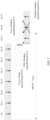
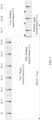
- the terminal does not know a type of CCA for a subframe #n+8
- the base station indicates an indication state 4 in Table 5 for a subframe #n+9, so that the terminal can perform the random backoff-based CCA.
- FIG. 2 although the terminal does not know a type of CCA for a subframe #n+8, the base station indicates an indication state 4 in Table 5 for a subframe #n+9, so that the terminal can perform the random backoff-based CCA.
- the terminal learns that the base station indicates an indication state 3 in Table 5 for a subframe #n+7, so that the terminal can occupy the subframe #n+7 at a starting time of the subframe after successfully performing the single timeslot-based CCA.
- the jointly encoded control information includes control information in which the content indicated by the first control information matches the content indicated by the second control information, and does not include information in which the content indicated by the first control information does not match the content indicated by the second control information.
- the first control information indicates that the interval between the starting time when the terminal starts to send a signal in the uplink subframe and the starting time of the uplink subframe is the second time
- the second control information instructs the terminal to perform the single timeslot-based CCA before the starting time.
- the first control information indicates that the interval between the starting time when the terminal starts to send a signal in the uplink subframe and the starting time of the uplink subframe is the first time, and the second control information instructs the terminal to perform the random backoff-based CCA before the starting time.
- the first control information indicates that the interval between the starting time when the terminal starts to send a signal in the uplink subframe and the starting time of the uplink subframe is the third time, and the second control information instructs the terminal to perform the single timeslot-based CCA or the random backoff-based CCA before the starting time.
- the first control information indicates that the interval between the starting time when the terminal starts to send a signal in the uplink subframe and the starting time of the uplink subframe is the first time or the second time, or the starting time when the terminal starts to send a signal in the uplink subframe is the same as the starting time of the uplink subframe; and the second control information instructs the terminal to skip performing the LBT, but starts to send a signal at the starting time for sending a signal.
- the information content indicated by the first control information matches the information content indicated by the second control information, so that matching between the single timeslot-based CCA and 1 symbol+, matching between the random backoff-based CCA and 25 ⁇ s+, matching between the single timeslot-based CCA/the random backoff-based CCA and 16 ⁇ s+, and matching between no LBT and 1 symbol/25 ⁇ s/0 ⁇ s can be avoided.
- a terminal behavior that cannot occur in a combination of at least two pieces of control information is removed from the jointly encoded control information, so as to avoid signaling redundancy caused by separately notifying the terminal of the at least two pieces of control information at the same time, and improve control information transmission efficiency.
- the terminal may send a signal in a predefined manner after receiving the jointly encoded control information. For example, if the jointly encoded control information received by the terminal indicates that an operation behavior for the matching between the single timeslot-based CCA and 1 symbol+ is to be performed, the terminal may always perform an operation behavior for matching between the single timeslot-based CCA and 25 ⁇ s+, or perform an operation behavior for matching between the random backoff-based CCA and 1 symbol+.
- the terminal may always perform an operation behavior for matching between the single timeslot-based CCA and 25 ⁇ s+, or perform an operation behavior for matching between the random backoff-based CCA and 1 symbol+.
- the terminal may always perform an operation behavior for matching between the single timeslot-based CCA and 25 ⁇ s+, perform an operation behavior for matching between the random backoff-based CCA and 1 symbol+, or perform an operation behavior for matching between no LBT and 16 ⁇ s+.
- the terminal may always perform an operation behavior for matching between the single timeslot-based CCA and 25 ⁇ s+, perform an operation behavior for matching between the random backoff-based CCA and 1 symbol+, or perform an operation behavior for matching between no LBT and 16 ⁇ s+.
- Table 4 and Table 5 list all situations, when the starting time for sending a signal in the uplink subframe and the type of the CCA to-be-performed by the terminal are jointly encoded, of operations that are to-be-performed by the terminal and that can be indicated by all indication states included in the jointly encoded control information.
- the jointly encoded control information may indicate one of the situations, and the terminal performs a corresponding operation based on a situation indicated by the jointly encoded control information.
- the performing, by the terminal, clear channel assessment CCA based on the jointly encoded control information, and occupying, after finishing the CCA, the uplink subframe to send a signal at the starting time for sending a signal in the uplink subframe includes: determining, by the terminal based on the jointly encoded control information, the type of the CCA and the starting time for sending a signal in the uplink subframe; performing, by the terminal, the CCA based on the type of the CCA; and occupying, after finishing the CCA, the uplink subframe to send a signal at the starting time for sending a signal in the uplink subframe.
- an operation behavior indicated by the jointly encoded control information received by the terminal is that the starting time when the terminal starts to send a signal in the uplink subframe is equal to the starting time of the uplink subframe and the terminal performs the single timeslot-based CCA, or the starting time when the terminal starts to send a signal in the uplink subframe is equal to the starting time of the uplink subframe and the terminal performs the random backoff-based CCA
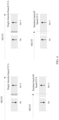
- the terminal may not need to perform the LBT, but continue to occupy the channel to send a signal in the uplink subframe; or if the terminal does not continuously occupy the channel until the starting time of the uplink subframe (a listening gap is reserved on a tail of a previous subframe, or a type of CCA for a previous subframe is missing)
- the previous subframe of the uplink subframe is a downlink subframe or an uplink subframe.
- the base station does not occupy all symbols of the previous downlink subframe, and retains at least a last symbol to serve as an idle gap.
- the terminal does not occupy all symbols of the previous uplink subframe, and retains at least a last symbol to serve as an idle gap.
- the terminal may perform the single timeslot-based CCA or the random backoff-based CCA within a time period corresponding to a last idle symbol of the previous subframe. If the LBT succeeds, the terminal occupies a first symbol of the uplink subframe, and does not need to reserve an idle gap. This is shown in FIG. 4 .
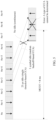
- a situation in which a type of the LBT for the previous subframe is missing is as follows:
- the base station schedules the terminal to occupy an uplink subframe before the uplink subframe and continuously occupy the channel until an ending time of the uplink subframe. Therefore, the LBT does not need to be performed.
- the terminal does not receive a UL grant of the uplink subframe before the uplink subframe scheduled by the base station, the terminal cannot occupy the uplink subframe before the uplink subframe, and therefore needs to perform the LBT in the uplink subframe to access the channel.
- the base station instructs the terminal to occupy a first symbol of the uplink subframe, the terminal can perform the LBT only before the uplink subframe. This is shown in FIG. 5 .
- the starting time for sending a signal in the uplink subframe, the type of the CCA, and the listening parameter of the random backoff-based CCA are jointly encoded.
- the listening parameter of the random backoff-based CCA may also be jointly encoded and added to the control information, so as to further reduce control signaling overheads.
- the first control information includes the starting time when the terminal starts to send a signal in the uplink subframe
- the second control information includes the type of the clear channel assessment CCA to-be-performed by the terminal and the listening parameter of the random backoff-based CCA to-be-performed by the terminal.
- the listening parameter of the random backoff-based CCA includes the contention window size CWS or the backoff counter initial value.
- the first control information indicates that the starting time when the terminal starts to send a signal in the uplink subframe is after a starting time of the uplink subframe, and an interval between the starting time for sending a signal and the starting time of the uplink subframe is a fourth time; and the second control information instructs the terminal to perform single timeslot-based CCA before the starting time for sending a signal.
- the first control information indicates that the starting time when the terminal starts to send a signal in the uplink subframe is after a starting time of the uplink subframe, and an interval between the starting time for sending a signal and the starting time of the uplink subframe is a fifth time; and the second control information instructs the terminal to perform the random backoff-based CCA before the starting time for sending a signal, and indicates the listening parameter of the random backoff-based CCA.
- the first control information indicates that the starting time when the terminal starts to send a signal in the uplink subframe is the same as a starting time of the uplink subframe, and the second control information instructs the terminal to perform single timeslot-based CCA before the starting time for sending a signal.
- the first control information indicates that the starting time when the terminal starts to send a signal in the uplink subframe is the same as a starting time of the uplink subframe, and the second control information instructs the terminal to perform the random backoff-based CCA before the starting time for sending a signal, and indicates the listening parameter of the random backoff-based CCA.
- the first control information indicates that the starting time when the terminal starts to send a signal in the uplink subframe is after a starting time of the uplink subframe, and an interval between the starting time for sending a signal and the starting time of the uplink subframe is a sixth time; and the second control information instructs the terminal to skip performing listen before talk LBT, and occupies the uplink subframe to send a signal, and message content of the listening parameter of the random backoff-based CCA is null.
- the fourth time and the first time may be the same, or may be different; the fifth time and the second time may be the same, or may be different; and the sixth time and the third time may be the same, or may be different.
- the fourth time, the fifth time, and the sixth time refer to the relationship among the first time, the second time, and the third time.
- an indication state of the jointly encoded control information may be a state set including at least two indication states of the following 2*N+2 indication states.
- N is a quantity of elements in a value set of the CWS. For example, if a value of the CWS is 3 or 7, N is 2.
- a first indication state indicates that the starting time for sending a signal in the uplink subframe is after the starting time of the uplink subframe, the interval between the starting time for sending a signal in the uplink subframe and the starting time of the uplink subframe is the fourth time, and the single timeslot-based CCA is performed.
- a second indication state indicates that the starting time when the UE starts to send a signal in the uplink subframe is equal to the starting time of the uplink subframe, and the single timeslot-based CCA is performed.
- a third indication state to an (N+2) th indication state are respectively used to indicate that the starting time when the UE starts to send a signal in the uplink subframe is after the starting time of the uplink subframe, the interval between the starting time when the UE starts to send a signal in the uplink subframe and the starting time of the uplink subframe is the fifth time, the random backoff-based CCA is performed, and the value of the CWS is a first value to an N th value.
- An (N+3) th indication state to a (2*N+2) th indication state are respectively used to indicate that the starting time when the UE starts to send a signal in the uplink subframe is equal to the starting time of the uplink subframe, the random backoff-based CCA is performed, and the value of the CWS is a first value to an N th value.
- the indication state of the jointly encoded control information may further include a (2*N+3) th indication state.
- the (2*N+3) th indication state indicates that the starting time when the UE starts to send a signal in the uplink subframe is after the starting time of the uplink subframe, the interval between the starting time when the UE starts to send a signal in the uplink subframe and the starting time of the uplink subframe is the sixth time, and the LBT does not need to be performed, but the channel is directly accessed.
- an indication state of the jointly encoded control information may be a state set including at least two indication states of the following 2*M+2 indication states.
- M is a quantity of elements in a backoff counter initial value set. For example, if the backoff counter initial value is 0 to 7, M is 8.
- a first indication state indicates that the starting time for sending a signal in the uplink subframe is after the starting time of the uplink subframe, the interval between the starting time for sending a signal in the uplink subframe and the starting time of the uplink subframe is the fourth time, and the single timeslot-based CCA is performed.
- a second indication state indicates that the starting time when the UE starts to send a signal in the uplink subframe is equal to the starting time of the uplink subframe, and the single timeslot-based CCA is performed.
- a third indication state to an (M+2) th indication state are respectively used to indicate that the starting time when the UE starts to send a signal in the uplink subframe is after the starting time of the uplink subframe, the interval between the starting time when the UE starts to send a signal in the uplink subframe and the starting time of the uplink subframe is the fifth time, the random backoff-based CCA is performed, and the backoff counter initial value is a first value to an M th value.
- An (M+3) th indication state to a (2*M+2) th indication state are respectively used to indicate that the starting time when the UE starts to send a signal in the uplink subframe is equal to the starting time of the uplink subframe, the random backoff-based CCA is performed, and the backoff counter initial value is a first value to an M th value.
- the indication state of the jointly encoded control information may further include a (2*M+3) th indication state.
- the (2*M+3) th indication state indicates that the starting time when the UE starts to send a signal in the uplink subframe is after the starting time of the uplink subframe, the interval between the starting time when the UE starts to send a signal in the uplink subframe and the starting time of the uplink subframe is the sixth time, and the LBT does not need to be performed, but the channel is directly accessed.
- This embodiment of the present invention is described by using an example in which the value of the CWS is 3 or 7, and the backoff counter initial value is 0 to 7.
- the indication state of the jointly encoded control information is shown in Table 6 to Table 9.
- Table 6 Indication State Starting Time of the Uplink Subframe Type of the CCA CWS Value 1 25 ⁇ s+/1 symbol+ Single timeslot-based CCA Not involved 2 0 ⁇ s+ Single timeslot-based CCA Not involved 3 1 symbol+ Random backoff-based CCA 3 4 1 symbol+ Random backoff-based CCA 7 5 0 ⁇ s+ Random backoff-based CCA 3 6 0 ⁇ s+ Random backoff-based CCA 7
- Table 7 Indication State Starting Time of the Uplink Subframe Type of the CCA CWS Value 1 25 ⁇ s+/1 symbol+ Single timeslot-based CCA Not involved 2 0 ⁇ s+ Single timeslot-based CCA Not involved 3 1 symbol+ Random backoff-based CCA 3 4 1 symbol+ Random backoff-based CCA 7 5 0 ⁇ s+ Random backoff-based CCA 3 6 0 ⁇ s+ Random backoff-based CCA 7 7 16 ⁇ s+/0 ⁇ s+/25 ⁇ s+/1 symbol+ No LBT Not involved
- 3-bit control signaling is required to completely indicate operation behaviors of the terminal.
- 2-bit control signaling indicates the starting time for sending the uplink signal (0 ⁇ s/16 ⁇ s/25 ⁇ s/1 symbol)
- 2-bit control signaling indicates the type of the CCA (No LBT/the single timeslot-based CCA/the random backoff-based CCA)
- 1-bit control signaling indicates the value of the CWS (3/7)
- 2-bit control signaling overheads are saved.
- a possible time gap value is considered to be only 0 ⁇ s/1 symbol, 0 ⁇ s corresponds to no LBT, and 1 symbol corresponds to the single timeslot-based CCA and the random backoff-based CCA, compared with a case in which 1-bit control signaling indicates the starting time for sending the uplink signal (0 ⁇ s/1 symbol), 2-bit control signaling indicates the type of the CCA (No LBT/the single timeslot-based CCA/the random backoff-based CCA), and 1-bit control signaling indicates the value of the CWS (3/7), 1-bit overheads are saved.
- 5-bit control signaling is required to completely indicate operation behaviors of the terminal.
- 2-bit control signaling indicates the starting time for sending the uplink signal (0 ⁇ s/16 ⁇ s/25 ⁇ s/1 symbol)
- 2-bit control signaling indicates the type of the CCA (No LBT/the single timeslot-based CCA/the random backoff-based CCA)
- 3-bit control signaling indicates the backoff counter initial value (0 to 7)
- 2-bit overheads are saved.
- a possible time gap value is considered to be only 0 ⁇ s/1 symbol, 0 ⁇ s corresponds to no LBT, and 1 symbol corresponds to the single timeslot-based CCA and the random backoff-based CCA, compared with a case in which 1-bit control signaling indicates the starting time for sending the uplink signal (0 ⁇ s/1 symbol), 2-bit control signaling indicates the type of the CCA (No LBT/the single timeslot-based CCA/the random backoff-based CCA), and 3-bit control signaling indicates the backoff counter initial value (0 to 7), 1-bit overheads are saved.
- the jointly encoded control information includes control information in which the content indicated by the first control information matches the content indicated by the second control information, and does not include information in which the content indicated by the first control information does not match the content indicated by the second control information.
- the second control information instructs the terminal to perform the single timeslot-based CCA before the starting time, and indicates the CWS or the backoff counter initial value of the random backoff-based CCA.
- the first control information indicates that the interval between the starting time when the terminal starts to send a signal in the uplink subframe and the starting time of the uplink subframe is the fifth time, and the second control information instructs the terminal to perform the single timeslot-based CCA before the starting time.
- the first control information indicates that the interval between the starting time when the terminal starts to send a signal in the uplink subframe and the starting time of the uplink subframe is the fourth time, and the second control information instructs the terminal to perform the random backoff-based CCA before the starting time, and indicate the CWS or the backoff counter initial value.
- the first control information indicates that the interval between the starting time when the terminal starts to send a signal in the uplink subframe and the starting time of the uplink subframe is the sixth time, and the second control information instructs the terminal to perform the single timeslot-based CCA before the starting time, or the second control information indicates the random backoff-based CCA and the CWS or the backoff counter initial value.
- the first control information indicates that the interval between the starting time when the terminal starts to send a signal in the uplink subframe and the starting time of the uplink subframe is the fourth time or the fifth time, or the starting time when the terminal starts to send a signal in the uplink subframe is the same as the starting time of the uplink subframe; and the second control information instructs the terminal to skip performing the LBT, but starts to send information at the starting time for sending a signal.
- the information content indicated by the first control information matches the information content indicated by the second control information, so that matching between the single timeslot-based CCA and any CWS/backoff counter initial value of the random backoff-based CCA, matching between the single timeslot-based CCA and 1 symbol+, matching between the random backoff-based CCA and 25 ⁇ s+, matching between the single timeslot-based CCA/the random backoff-based CCA and 16 ⁇ s+, and matching between no LBT and 1 symbol+/25 ⁇ s+/0 ⁇ s+ can be avoided.
- a terminal behavior that cannot occur in a combination of at least two pieces of control information is removed from the jointly encoded control information, so as to avoid signaling redundancy caused by separately notifying the terminal of the at least two pieces of control information at the same time, and improve control information transmission efficiency.
- the terminal may send a signal in a predefined manner after receiving the jointly encoded control information.
- the terminal may send a signal in a predefined manner after receiving the jointly encoded control information.
- Table 6 to Table 9 list all situations, when the starting time for sending a signal in the uplink subframe, the type of the CCA, and the listening parameter of the random backoff-based CCA are jointly encoded, of operations that are to-be-performed by the terminal and that can be indicated by all indication states included in the jointly encoded control information.
- the jointly encoded control information may indicate one of the situations, and the terminal performs a corresponding operation based on a situation indicated by the jointly encoded control information.
- the performing, by the terminal, clear channel assessment CCA based on the jointly encoded control information, and occupying, after finishing the CCA, the uplink subframe to send a signal at the starting time for sending a signal in the uplink subframe includes: determining, by the terminal based on the jointly encoded control information, the type of the CCA and the starting time for sending a signal in the uplink subframe, performing, by the terminal, the CCA based on the type of the CCA, and occupying, after finishing the CCA, the uplink subframe to send a signal at the starting time for sending a signal in the uplink subframe; and further, if the type of the CCA is the random backoff-based CCA, further determining, by the terminal, the CCA listening parameter of the random backoff-based CCA based on the jointly encoded control information, performing, by the terminal, the CCA based on the type of the CCA and the CCA listening parameter of the random backoff-based CCA, and occupying, after finishing the CCA, the up
- the indication state of the jointly encoded control information received by the terminal is that the first control information indicates that the starting time when the terminal starts to send a signal in the uplink subframe is after the starting time of the uplink subframe, and the interval between the starting time for sending a signal and the starting time of the uplink subframe is the fifth time
- the second control information instructs the terminal to perform the random backoff-based CCA before the starting time for sending a signal, and indicates the listening parameter of the random backoff-based CCA
- the first control information indicates that the starting time when the terminal starts to send a signal in the uplink subframe is the same as the starting time of the uplink subframe
- the second control information instructs the terminal to perform the random backoff-based CCA before the starting time for sending a signal, and indicates the listening parameter of the random backoff-based CCA
- first, second, and the like in the specification, claims, and accompanying drawings of the embodiments of the present invention are intended to distinguish between similar objects, but do not necessarily indicate a specific order or sequence.
- first control information and the second control information in the embodiments of the present invention are for distinguishing between different control information for ease of description, and do not constitute a limitation on control information.
- data used in such a way are interchangeable in proper circumstances, so that the embodiments of the present invention described herein can be implemented in other orders than the order illustrated or described herein.
- FIG. 6 is a schematic structural diagram of a base station according to an embodiment of the present invention.
- a base station 100 includes a processing unit 101 and a sending unit 102.
- the processing unit 101 is configured to determine jointly encoded control information for an uplink subframe, where the jointly encoded control information is control information obtained by jointly encoding first control information and second control information.
- the sending unit 102 is configured to send the jointly encoded control information determined by the processing unit.
- FIG. 7 is another schematic structural diagram of a base station according to an embodiment of the present invention.
- a base station 100 includes a processor 1001 and a transmitter 1002.
- the processor 1001 is configured to determine jointly encoded control information for an uplink subframe.
- the transmitter 1002 is configured to have the capability to send the jointly encoded control information, to support communication with a terminal.
- the base station 100 may further include a memory 1003, where the memory 1003 is configured to couple to the processor and store a program instruction and data that are necessary for the base station 100.
- the base station 100 in this embodiment of the present invention may be configured to implement all functions of the base station in the foregoing method embodiment.
- the base station 100 in this embodiment of the present invention may be configured to implement all functions of the base station in the foregoing method embodiment.
- FIG. 8 is a schematic structural diagram of a terminal according to an embodiment of the present invention.
- a terminal 200 includes a receiving unit 201, a processing unit 202, and a sending unit 203.
- the receiving unit 201 is configured to receive jointly encoded control information sent by a base station, where the jointly encoded control information is for an uplink subframe, and is control information obtained by jointly encoding first control information and second control information.
- the processing unit 202 is configured to perform clear channel assessment CCA based on the jointly encoded control information received by the receiving unit 201.
- the sending unit 203 is configured to occupy, after the processing unit 202 finishes the CCA, the uplink subframe to send a signal.
- FIG. 9 is another schematic structural diagram of a terminal 200 according to an embodiment of the present invention.
- the terminal 100 includes a receiver 2001, a processor 2002, and a transmitter 2003.
- the processor 2002 is configured to support the terminal in implementing corresponding functions in the foregoing method.
- the receiver 2001 is configured to have the capability to receive jointly encoded control information sent by a base station.
- the transmitter 2003 is configured to have the capability to send a signal.
- the terminal 200 may further include a memory 2004, where the memory 2004 is configured to couple to the processor 2002 and store a program instruction and data that are necessary for the terminal.
- the terminal 200 in this embodiment of the present invention may be configured to implement all functions of the terminal in the foregoing method embodiment.
- the processor in this embodiment of the present invention may be a general-purpose central processing unit (CPU), a microprocessor, an application-specific integrated circuit (application-specific integrated circuit, ASIC), or one or more integrated circuits for controlling program execution of the solution of the present invention.
- One or more memories included in a computer system may be a read-only memory (read-only memory, ROM) or an another-type static storage device that can store static information and instructions, or a random access memory (random access memory, RAM) or an another-type dynamic storage device that can store information and instructions; or may be a magnetic disk storage. These memories are connected to the processor by using a bus.
- the receiver and the transmitter may be an apparatus of a transceiver type, so as to communicate with another device or communications network, for example, an Ethernet, a radio access network (RAN), or a wireless local area network (WLAN).
- RAN radio access network
- WLAN wireless local area network
- the memory for example, a RAM, stores an operating system and a program used to execute the solution of the present invention.
- the operating system is a program used to control running of another program and manage a system resource.
- the storage medium may be a non-transitory (non-transitory) medium, such as a random-access memory, a read-only memory, a flash memory, a hard disk, a solid state drive, a magnetic tape (magnetic tape), a floppy disk (floppy disk), an optical disc (optical disc), or any combination thereof.
Landscapes
- Engineering & Computer Science (AREA)
- Computer Networks & Wireless Communication (AREA)
- Signal Processing (AREA)
- Mobile Radio Communication Systems (AREA)
Claims (7)
- Procédé de traitement d'informations de commande comprenant :une réception (S102), par un terminal, d'informations de commande codées conjointement pour une sous-trame de liaison montante envoyée par une station de base, dans lequel les informations de commande codées conjointement sont des premières informations de commande et des secondes informations de commande codées conjointement ;une mise en oeuvre (S103), par le terminal, d'une évaluation de canal libre, CCA, sur la base des informations de commande codées conjointement, et un envoi, après avoir fini la CCA, d'un signal en occupant la sous-trame de liaison montante ;dans lequel de manière codée conjointement, un premier temps de départ pour envoyer un signal dans la sous-trame de liaison montante et un type de la CCA à mettre en oeuvre par le terminal sont codés conjointement, dans lequel les premières informations de commande incluent le temps de départ lorsque le terminal commence à envoyer un signal dans la sous-trame de liaison montante, et les secondes informations de commande incluent le type de la CCA à mettre en oeuvre par le terminal, et une relation d'association entre le temps de départ de la sous-trame de liaison montante et le type de la CCA comprend :lorsque le terminal n'occupe pas de manière continue le canal avant la sous-trame de liaison montante, et que la sous-trame de liaison montante est à l'intérieur d'un temps maximal d'occupation de canal, MCOT, les premières informations de commande indiquent que le premier temps de départ est le même qu'un second temps de départ, dans lequel le second temps de départ est un temps de départ de la sous-trame de liaison montante, et les secondes informations de commande donnent l'instruction au terminal de mettre en oeuvre une CCA basée sur un intervalle de temps unique avant le premier temps de départ ;lorsque le terminal n'occupe pas de manière continue le canal avant la sous-trame de liaison montante, et que la sous-trame de liaison montante est au-delà d'un MCOT, les premières informations de commande indiquent que le premier temps de départ est le même qu'un second temps de départ, dans lequel le second temps de départ est un temps de départ de la sous-trame de liaison montante, et les secondes informations de commande donnent l'instruction au terminal de mettre en oeuvre une CCA basée sur une réduction de puissance aléatoire avant le premier temps de départ ;lorsque le terminal occupe de manière continue le canal avant la sous-trame de liaison montante, le terminal saute une mise en oeuvre d'une écoute avant de parler, LBT, et occupe la sous-trame de liaison montante pour envoyer un signal.
- Procédé selon la revendication 1, si le terminal met en oeuvre la CCA basée sur un intervalle de temps unique avant le second temps de départ, et lorsque la LBT réussit, envoie un signal au second temps de départ.
- Procédé selon la revendication 1, si le terminal met en oeuvre la CCA basée sur une réduction de puissance aléatoire avant le second temps de départ, et lorsque la LBT réussit, envoie un signal au second temps de départ.
- Procédé de traitement d'informations de commande comprenant :une détermination (S101), par une station de base, d'informations de commande codées conjointement pour une sous-trame de liaison montante, dans lequel les informations de commande codées conjointement sont des informations de commande obtenues par codage conjoint de premières informations de commande et de secondes informations de commande ; etun envoi (S102), par la station de base, des informations de commande codées conjointement ;dans lequel de manière codée conjointement, un premier temps de départ pour envoyer un signal dans la sous-trame de liaison montante et un type de la CCA à mettre en oeuvre par le terminal sont codés conjointement, dans lequel les premières informations de commande incluent le temps de départ lorsque le terminal commence à envoyer un signal dans la sous-trame de liaison montante, et les secondes informations de commande incluent le type de l'évaluation de canal libre CCA à mettre en oeuvre par le terminal, et une relation d'association entre le temps de départ de la sous-trame de liaison montante et le type de la CCA comprend :lorsque le terminal n'occupe pas de manière continue le canal avant la sous-trame de liaison montante, et que la sous-trame de liaison montante est à l'intérieur d'un MCOT, les premières informations de commande indiquent que le premier temps de départ est le même qu'un second temps de départ, dans lequel le second temps de départ est un temps de départ de la sous-trame de liaison montante, et les secondes informations de commande donnent l'instruction au terminal de mettre en oeuvre une CCA basée sur un intervalle de temps unique avant le premier temps de départ ;lorsque le terminal n'occupe pas de manière continue le canal avant la sous-trame de liaison montante, et que la sous-trame de liaison montante est au-delà d'un MCOT, les premières informations de commande indiquent que le premier temps de départ est le même qu'un second temps de départ, dans lequel le second temps de départ est un temps de départ de la sous-trame de liaison montante, et les secondes informations de commande donnent l'instruction au terminal de mettre en oeuvre une CCA basée sur une réduction de puissance aléatoire avant le premier temps de départ ;lorsque le terminal occupe de manière continue le canal avant la sous-trame de liaison montante, le terminal saute une mise en oeuvre d'une LBT et occupe la sous-trame de liaison montante pour envoyer un signal.
- Terminal mettant en oeuvre le procédé selon la revendication 1, la revendication 2 ou la revendication 3.
- Station de base mettant en oeuvre le procédé selon la revendication 4.
- Produit programme informatique comprenant des instructions qui, lorsqu'elles sont exécutées par un ordinateur, amènent l'ordinateur à réaliser le procédé selon l'une quelconque des revendications 1 à 4.
Applications Claiming Priority (1)
| Application Number | Priority Date | Filing Date | Title |
|---|---|---|---|
| PCT/CN2016/081462 WO2017193265A1 (fr) | 2016-05-09 | 2016-05-09 | Procédé de traitement d'informations de commande, station de base et terminal |
Publications (4)
| Publication Number | Publication Date |
|---|---|
| EP3448107A1 EP3448107A1 (fr) | 2019-02-27 |
| EP3448107A4 EP3448107A4 (fr) | 2019-04-17 |
| EP3448107B1 true EP3448107B1 (fr) | 2024-04-24 |
| EP3448107B8 EP3448107B8 (fr) | 2024-05-29 |
Family
ID=60266085
Family Applications (1)
| Application Number | Title | Priority Date | Filing Date |
|---|---|---|---|
| EP16901220.0A Active EP3448107B8 (fr) | 2016-05-09 | 2016-05-09 | Procédé de traitement d'informations de commande, station de base et terminal |
Country Status (6)
| Country | Link |
|---|---|
| US (1) | US10805951B2 (fr) |
| EP (1) | EP3448107B8 (fr) |
| JP (1) | JP6676192B2 (fr) |
| CN (1) | CN109076571B (fr) |
| BR (1) | BR112018072983A2 (fr) |
| WO (1) | WO2017193265A1 (fr) |
Families Citing this family (11)
| Publication number | Priority date | Publication date | Assignee | Title |
|---|---|---|---|---|
| EP3456134B1 (fr) * | 2016-05-12 | 2020-09-16 | Telefonaktiebolaget LM Ericsson (Publ) | Technique destinée à transmettre des informations d'autorisation de liaison montante |
| KR102307242B1 (ko) | 2016-05-20 | 2021-09-30 | 텔레호낙티에볼라게트 엘엠 에릭슨(피유비엘) | 비면허 스펙트럼에서의 다수의 서브프레임들의 스케줄링 |
| CA3039722C (fr) * | 2016-11-03 | 2023-08-22 | Guangdong Oppo Mobile Telecommunications Corp., Ltd. | Procede de transmission d'informations de commande en liaison montante, dispositif de terminal et dispositif de reseau |
| WO2018167576A1 (fr) * | 2017-03-17 | 2018-09-20 | Alcatel Lucent | Découverte de nœuds cachés pour entrées multiples-sorties multiples (mimo) dans des bandes de fréquences non autorisées |
| TW201939983A (zh) * | 2018-01-10 | 2019-10-01 | 美商Idac控股公司 | 無需特許頻段新無線電操作之頻道存取方法及先聽候送解決方案 |
| US10945238B2 (en) * | 2018-06-12 | 2021-03-09 | Shanghai Langbo Communication Technology Company Limited | Method and device in UE and base station used for wireless communication |
| WO2020069135A2 (fr) | 2018-09-26 | 2020-04-02 | Idac Holdings, Inc. | Procédé et appareil de transmission par rafales |
| US11483095B2 (en) * | 2018-10-02 | 2022-10-25 | Qualcomm Incorporated | Time varying code block group granularity for hybrid automatic receipt request processes in new radio-unlicensed operations |
| KR20200127393A (ko) | 2019-05-02 | 2020-11-11 | 삼성전자주식회사 | 무선 통신 시스템에서 채널 접속 절차 판단 방법 및 장치 |
| US11758580B2 (en) * | 2019-08-14 | 2023-09-12 | Qualcomm Incorporated | Channel access procedures for an unlicensed radio frequency spectrum band |
| CN115399048B (zh) * | 2020-04-17 | 2025-01-10 | 联想(北京)有限公司 | 用于考虑到cho及lbt进行快速mcg链路恢复的方法及设备 |
Family Cites Families (11)
| Publication number | Priority date | Publication date | Assignee | Title |
|---|---|---|---|---|
| EP1936853B1 (fr) * | 2006-12-20 | 2018-11-21 | Panasonic Intellectual Property Corporation of America | Neutralisation de collisions de signaux de retour pour des communications mobiles |
| CN101572896B (zh) * | 2008-04-29 | 2011-01-26 | 大唐移动通信设备有限公司 | 一种配置上行探测参考信号的方法和装置 |
| WO2010088536A1 (fr) * | 2009-01-30 | 2010-08-05 | Interdigital Patent Holdings, Inc. | Procédé et appareil permettant une agrégation de porteuse composante dans des communications sans fil |
| US8767846B2 (en) * | 2009-04-30 | 2014-07-01 | Qualcomm Incorporated | Joint layer 3 signalling coding for multicarrier operation |
| EP2600580B1 (fr) * | 2010-07-26 | 2018-04-18 | LG Electronics Inc. | Procédé et dispositif de transmission d'informations de commande |
| US9743432B2 (en) * | 2013-09-23 | 2017-08-22 | Qualcomm Incorporated | LTE-U uplink waveform and variable multi-subframe scheduling |
| EP3016312B1 (fr) * | 2014-10-28 | 2019-06-19 | HTC Corporation | Dispositif de gestion d'une transmission sur une porteuse de composante sans licence |
| US9930654B2 (en) * | 2015-03-17 | 2018-03-27 | Motorola Mobility Llc | Method and apparatus for scheduling user equipment uplink transmissions on an unlicensed carrier |
| CN107660348B (zh) * | 2015-04-08 | 2021-08-13 | 交互数字专利控股公司 | 用于未许可频带中的lte操作的系统和方法 |
| CN105307180B (zh) * | 2015-09-25 | 2018-09-14 | 宇龙计算机通信科技(深圳)有限公司 | 一种基于laa系统的数据传输方法及装置 |
| US11304226B2 (en) * | 2016-05-09 | 2022-04-12 | Sharp Kabushiki Kaisha | User equipments, base stations and methods |
-
2016
- 2016-05-09 EP EP16901220.0A patent/EP3448107B8/fr active Active
- 2016-05-09 JP JP2018559358A patent/JP6676192B2/ja not_active Expired - Fee Related
- 2016-05-09 WO PCT/CN2016/081462 patent/WO2017193265A1/fr not_active Ceased
- 2016-05-09 BR BR112018072983-3A patent/BR112018072983A2/pt not_active Application Discontinuation
- 2016-05-09 CN CN201680085465.9A patent/CN109076571B/zh active Active
-
2018
- 2018-11-08 US US16/184,472 patent/US10805951B2/en active Active
Non-Patent Citations (1)
| Title |
|---|
| SAMSUNG: "Discussion on enhanced Cat 2-based UL LBT", vol. RAN WG1, no. St Julian's, Malta; 20160215 - 20160219, 14 February 2016 (2016-02-14), XP051053902, Retrieved from the Internet <URL:http://www.3gpp.org/ftp/Meetings_3GPP_SYNC/RAN1/Docs/> [retrieved on 20160214] * |
Also Published As
| Publication number | Publication date |
|---|---|
| US10805951B2 (en) | 2020-10-13 |
| JP6676192B2 (ja) | 2020-04-08 |
| BR112018072983A2 (pt) | 2019-02-26 |
| CN109076571A (zh) | 2018-12-21 |
| EP3448107A4 (fr) | 2019-04-17 |
| EP3448107A1 (fr) | 2019-02-27 |
| EP3448107B8 (fr) | 2024-05-29 |
| CN109076571B (zh) | 2021-02-12 |
| WO2017193265A1 (fr) | 2017-11-16 |
| JP2019519977A (ja) | 2019-07-11 |
| US20190075592A1 (en) | 2019-03-07 |
Similar Documents
| Publication | Publication Date | Title |
|---|---|---|
| EP3448107B1 (fr) | Procédé de traitement d'informations de commande, station de base et terminal | |
| US11540325B2 (en) | Method and apparatus for random access on a wireless communication network | |
| KR102662810B1 (ko) | 디바이스-투-디바이스 통신들에서 다중 송신들을 위한 자동 리소스 선택 | |
| TWI679910B (zh) | 處理共同搜尋空間的裝置及方法 | |
| US20170202007A1 (en) | Uplink signal transmission method and related device | |
| JP7400770B2 (ja) | 端末装置及びネットワークデバイス | |
| EP3941152B1 (fr) | Procédé et dispositif de transmission de signal | |
| US20210176017A1 (en) | HARQ Feedback Method And Apparatus | |
| CN109392107A (zh) | 一种通信的方法和装置 | |
| US11412546B2 (en) | Wireless communications system, communications apparatus, and processing method | |
| CN110213819B (zh) | 波束失败恢复方法及装置 | |
| US10299248B2 (en) | Method and apparatus for transmitting system information, and method and apparatus for receiving system information | |
| EP3941150B1 (fr) | Procédé d'accès aléatoire, dispositif terminal et dispositif de réseau | |
| US9560674B2 (en) | Virtual busy-tone for full-duplex wireless networks | |
| EP3346793B1 (fr) | Procédé et appareil de transmission de données dans un système de communication sans fil | |
| EP3193552B1 (fr) | Procédé et appareil de communication dispositif à dispositif | |
| EP3944525B1 (fr) | Procédé, dispositif et appareil de détermination d'un mécanisme de détection de canal et support de stockage | |
| WO2016171595A1 (fr) | Commande d'accès à un support radio pour communication sans fil | |
| CN113852997B (zh) | 一种资源预留方法及相关设备 | |
| EP3497957B1 (fr) | Procédé et dispositifs de détection de porteuse | |
| US20250365742A1 (en) | Method, device and computer readable medium for communications | |
| CN114286443B (zh) | 一种时隙确定方法、装置及终端 | |
| EP3911103B1 (fr) | Procédé de communication sans fil, dispositif terminal et dispositif de réseau | |
| US20140369277A1 (en) | Method and Apparatus for Communication Using a Shared Uplink Wireless Communication Channel | |
| EP4543112A1 (fr) | Procédé de sélection de ressources et premier terminal |
Legal Events
| Date | Code | Title | Description |
|---|---|---|---|
| STAA | Information on the status of an ep patent application or granted ep patent |
Free format text: STATUS: THE INTERNATIONAL PUBLICATION HAS BEEN MADE |
|
| PUAI | Public reference made under article 153(3) epc to a published international application that has entered the european phase |
Free format text: ORIGINAL CODE: 0009012 |
|
| STAA | Information on the status of an ep patent application or granted ep patent |
Free format text: STATUS: REQUEST FOR EXAMINATION WAS MADE |
|
| 17P | Request for examination filed |
Effective date: 20181122 |
|
| AK | Designated contracting states |
Kind code of ref document: A1 Designated state(s): AL AT BE BG CH CY CZ DE DK EE ES FI FR GB GR HR HU IE IS IT LI LT LU LV MC MK MT NL NO PL PT RO RS SE SI SK SM TR |
|
| AX | Request for extension of the european patent |
Extension state: BA ME |
|
| A4 | Supplementary search report drawn up and despatched |
Effective date: 20190315 |
|
| RIC1 | Information provided on ipc code assigned before grant |
Ipc: H04W 72/12 20090101AFI20190311BHEP |
|
| DAV | Request for validation of the european patent (deleted) | ||
| DAX | Request for extension of the european patent (deleted) | ||
| STAA | Information on the status of an ep patent application or granted ep patent |
Free format text: STATUS: EXAMINATION IS IN PROGRESS |
|
| 17Q | First examination report despatched |
Effective date: 20201123 |
|
| REG | Reference to a national code |
Ref country code: DE Ref legal event code: R079 Ref document number: 602016087185 Country of ref document: DE Free format text: PREVIOUS MAIN CLASS: H04W0072120000 Ipc: H04W0028060000 Ref country code: DE Ref legal event code: R079 Free format text: PREVIOUS MAIN CLASS: H04W0072120000 Ipc: H04W0028060000 |
|
| GRAP | Despatch of communication of intention to grant a patent |
Free format text: ORIGINAL CODE: EPIDOSNIGR1 |
|
| STAA | Information on the status of an ep patent application or granted ep patent |
Free format text: STATUS: GRANT OF PATENT IS INTENDED |
|
| RIC1 | Information provided on ipc code assigned before grant |
Ipc: H04W 74/08 20090101ALI20231024BHEP Ipc: H04W 74/00 20090101ALI20231024BHEP Ipc: H04W 28/06 20090101AFI20231024BHEP |
|
| INTG | Intention to grant announced |
Effective date: 20231123 |
|
| GRAS | Grant fee paid |
Free format text: ORIGINAL CODE: EPIDOSNIGR3 |
|
| GRAA | (expected) grant |
Free format text: ORIGINAL CODE: 0009210 |
|
| STAA | Information on the status of an ep patent application or granted ep patent |
Free format text: STATUS: THE PATENT HAS BEEN GRANTED |
|
| AK | Designated contracting states |
Kind code of ref document: B1 Designated state(s): AL AT BE BG CH CY CZ DE DK EE ES FI FR GB GR HR HU IE IS IT LI LT LU LV MC MK MT NL NO PL PT RO RS SE SI SK SM TR |
|
| REG | Reference to a national code |
Ref country code: GB Ref legal event code: FG4D |
|
| REG | Reference to a national code |
Ref country code: CH Ref legal event code: EP |
|
| RAP4 | Party data changed (patent owner data changed or rights of a patent transferred) |
Owner name: GODO KAISHA IP BRIDGE 1 |
|
| REG | Reference to a national code |
Ref country code: CH Ref legal event code: PK Free format text: BERICHTIGUNG B8 Ref country code: DE Ref legal event code: R081 Ref document number: 602016087185 Country of ref document: DE Owner name: GODO KAISHA IP BRIDGE 1, JP Free format text: FORMER OWNER: HUAWEI TECHNOLOGIES CO., LTD., SHENZHEN, GUANGDONG, CN |
|
| REG | Reference to a national code |
Ref country code: DE Ref legal event code: R096 Ref document number: 602016087185 Country of ref document: DE |
|
| REG | Reference to a national code |
Ref country code: IE Ref legal event code: FG4D |
|
| REG | Reference to a national code |
Ref country code: LT Ref legal event code: MG9D |
|
| REG | Reference to a national code |
Ref country code: NL Ref legal event code: MP Effective date: 20240424 |
|
| REG | Reference to a national code |
Ref country code: AT Ref legal event code: MK05 Ref document number: 1680922 Country of ref document: AT Kind code of ref document: T Effective date: 20240424 |
|
| PG25 | Lapsed in a contracting state [announced via postgrant information from national office to epo] |
Ref country code: NL Free format text: LAPSE BECAUSE OF FAILURE TO SUBMIT A TRANSLATION OF THE DESCRIPTION OR TO PAY THE FEE WITHIN THE PRESCRIBED TIME-LIMIT Effective date: 20240424 |
|
| PG25 | Lapsed in a contracting state [announced via postgrant information from national office to epo] |
Ref country code: NL Free format text: LAPSE BECAUSE OF FAILURE TO SUBMIT A TRANSLATION OF THE DESCRIPTION OR TO PAY THE FEE WITHIN THE PRESCRIBED TIME-LIMIT Effective date: 20240424 |
|
| PG25 | Lapsed in a contracting state [announced via postgrant information from national office to epo] |
Ref country code: IS Free format text: LAPSE BECAUSE OF FAILURE TO SUBMIT A TRANSLATION OF THE DESCRIPTION OR TO PAY THE FEE WITHIN THE PRESCRIBED TIME-LIMIT Effective date: 20240824 |
|
| PG25 | Lapsed in a contracting state [announced via postgrant information from national office to epo] |
Ref country code: BG Free format text: LAPSE BECAUSE OF FAILURE TO SUBMIT A TRANSLATION OF THE DESCRIPTION OR TO PAY THE FEE WITHIN THE PRESCRIBED TIME-LIMIT Effective date: 20240424 |
|
| PG25 | Lapsed in a contracting state [announced via postgrant information from national office to epo] |
Ref country code: HR Free format text: LAPSE BECAUSE OF FAILURE TO SUBMIT A TRANSLATION OF THE DESCRIPTION OR TO PAY THE FEE WITHIN THE PRESCRIBED TIME-LIMIT Effective date: 20240424 Ref country code: FI Free format text: LAPSE BECAUSE OF FAILURE TO SUBMIT A TRANSLATION OF THE DESCRIPTION OR TO PAY THE FEE WITHIN THE PRESCRIBED TIME-LIMIT Effective date: 20240424 |
|
| PG25 | Lapsed in a contracting state [announced via postgrant information from national office to epo] |
Ref country code: GR Free format text: LAPSE BECAUSE OF FAILURE TO SUBMIT A TRANSLATION OF THE DESCRIPTION OR TO PAY THE FEE WITHIN THE PRESCRIBED TIME-LIMIT Effective date: 20240725 |
|
| PG25 | Lapsed in a contracting state [announced via postgrant information from national office to epo] |
Ref country code: PT Free format text: LAPSE BECAUSE OF FAILURE TO SUBMIT A TRANSLATION OF THE DESCRIPTION OR TO PAY THE FEE WITHIN THE PRESCRIBED TIME-LIMIT Effective date: 20240826 |
|
| PG25 | Lapsed in a contracting state [announced via postgrant information from national office to epo] |
Ref country code: ES Free format text: LAPSE BECAUSE OF FAILURE TO SUBMIT A TRANSLATION OF THE DESCRIPTION OR TO PAY THE FEE WITHIN THE PRESCRIBED TIME-LIMIT Effective date: 20240424 |
|
| PG25 | Lapsed in a contracting state [announced via postgrant information from national office to epo] |
Ref country code: AT Free format text: LAPSE BECAUSE OF FAILURE TO SUBMIT A TRANSLATION OF THE DESCRIPTION OR TO PAY THE FEE WITHIN THE PRESCRIBED TIME-LIMIT Effective date: 20240424 |
|
| PG25 | Lapsed in a contracting state [announced via postgrant information from national office to epo] |
Ref country code: PL Free format text: LAPSE BECAUSE OF FAILURE TO SUBMIT A TRANSLATION OF THE DESCRIPTION OR TO PAY THE FEE WITHIN THE PRESCRIBED TIME-LIMIT Effective date: 20240424 |
|
| PG25 | Lapsed in a contracting state [announced via postgrant information from national office to epo] |
Ref country code: LV Free format text: LAPSE BECAUSE OF FAILURE TO SUBMIT A TRANSLATION OF THE DESCRIPTION OR TO PAY THE FEE WITHIN THE PRESCRIBED TIME-LIMIT Effective date: 20240424 |
|
| PG25 | Lapsed in a contracting state [announced via postgrant information from national office to epo] |
Ref country code: PT Free format text: LAPSE BECAUSE OF FAILURE TO SUBMIT A TRANSLATION OF THE DESCRIPTION OR TO PAY THE FEE WITHIN THE PRESCRIBED TIME-LIMIT Effective date: 20240826 Ref country code: PL Free format text: LAPSE BECAUSE OF FAILURE TO SUBMIT A TRANSLATION OF THE DESCRIPTION OR TO PAY THE FEE WITHIN THE PRESCRIBED TIME-LIMIT Effective date: 20240424 Ref country code: NO Free format text: LAPSE BECAUSE OF FAILURE TO SUBMIT A TRANSLATION OF THE DESCRIPTION OR TO PAY THE FEE WITHIN THE PRESCRIBED TIME-LIMIT Effective date: 20240724 Ref country code: LV Free format text: LAPSE BECAUSE OF FAILURE TO SUBMIT A TRANSLATION OF THE DESCRIPTION OR TO PAY THE FEE WITHIN THE PRESCRIBED TIME-LIMIT Effective date: 20240424 Ref country code: IS Free format text: LAPSE BECAUSE OF FAILURE TO SUBMIT A TRANSLATION OF THE DESCRIPTION OR TO PAY THE FEE WITHIN THE PRESCRIBED TIME-LIMIT Effective date: 20240824 Ref country code: HR Free format text: LAPSE BECAUSE OF FAILURE TO SUBMIT A TRANSLATION OF THE DESCRIPTION OR TO PAY THE FEE WITHIN THE PRESCRIBED TIME-LIMIT Effective date: 20240424 Ref country code: GR Free format text: LAPSE BECAUSE OF FAILURE TO SUBMIT A TRANSLATION OF THE DESCRIPTION OR TO PAY THE FEE WITHIN THE PRESCRIBED TIME-LIMIT Effective date: 20240725 Ref country code: FI Free format text: LAPSE BECAUSE OF FAILURE TO SUBMIT A TRANSLATION OF THE DESCRIPTION OR TO PAY THE FEE WITHIN THE PRESCRIBED TIME-LIMIT Effective date: 20240424 Ref country code: ES Free format text: LAPSE BECAUSE OF FAILURE TO SUBMIT A TRANSLATION OF THE DESCRIPTION OR TO PAY THE FEE WITHIN THE PRESCRIBED TIME-LIMIT Effective date: 20240424 Ref country code: BG Free format text: LAPSE BECAUSE OF FAILURE TO SUBMIT A TRANSLATION OF THE DESCRIPTION OR TO PAY THE FEE WITHIN THE PRESCRIBED TIME-LIMIT Effective date: 20240424 Ref country code: AT Free format text: LAPSE BECAUSE OF FAILURE TO SUBMIT A TRANSLATION OF THE DESCRIPTION OR TO PAY THE FEE WITHIN THE PRESCRIBED TIME-LIMIT Effective date: 20240424 Ref country code: RS Free format text: LAPSE BECAUSE OF FAILURE TO SUBMIT A TRANSLATION OF THE DESCRIPTION OR TO PAY THE FEE WITHIN THE PRESCRIBED TIME-LIMIT Effective date: 20240724 |
|
| REG | Reference to a national code |
Ref country code: CH Ref legal event code: PL |
|
| PG25 | Lapsed in a contracting state [announced via postgrant information from national office to epo] |
Ref country code: DK Free format text: LAPSE BECAUSE OF FAILURE TO SUBMIT A TRANSLATION OF THE DESCRIPTION OR TO PAY THE FEE WITHIN THE PRESCRIBED TIME-LIMIT Effective date: 20240424 |
|
| PG25 | Lapsed in a contracting state [announced via postgrant information from national office to epo] |
Ref country code: LU Free format text: LAPSE BECAUSE OF NON-PAYMENT OF DUE FEES Effective date: 20240509 |
|
| PG25 | Lapsed in a contracting state [announced via postgrant information from national office to epo] |
Ref country code: EE Free format text: LAPSE BECAUSE OF FAILURE TO SUBMIT A TRANSLATION OF THE DESCRIPTION OR TO PAY THE FEE WITHIN THE PRESCRIBED TIME-LIMIT Effective date: 20240424 |
|
| PG25 | Lapsed in a contracting state [announced via postgrant information from national office to epo] |
Ref country code: CZ Free format text: LAPSE BECAUSE OF FAILURE TO SUBMIT A TRANSLATION OF THE DESCRIPTION OR TO PAY THE FEE WITHIN THE PRESCRIBED TIME-LIMIT Effective date: 20240424 |
|
| PG25 | Lapsed in a contracting state [announced via postgrant information from national office to epo] |
Ref country code: RO Free format text: LAPSE BECAUSE OF FAILURE TO SUBMIT A TRANSLATION OF THE DESCRIPTION OR TO PAY THE FEE WITHIN THE PRESCRIBED TIME-LIMIT Effective date: 20240424 Ref country code: SK Free format text: LAPSE BECAUSE OF FAILURE TO SUBMIT A TRANSLATION OF THE DESCRIPTION OR TO PAY THE FEE WITHIN THE PRESCRIBED TIME-LIMIT Effective date: 20240424 |
|
| REG | Reference to a national code |
Ref country code: DE Ref legal event code: R097 Ref document number: 602016087185 Country of ref document: DE |
|
| PG25 | Lapsed in a contracting state [announced via postgrant information from national office to epo] |
Ref country code: SM Free format text: LAPSE BECAUSE OF FAILURE TO SUBMIT A TRANSLATION OF THE DESCRIPTION OR TO PAY THE FEE WITHIN THE PRESCRIBED TIME-LIMIT Effective date: 20240424 |
|
| PG25 | Lapsed in a contracting state [announced via postgrant information from national office to epo] |
Ref country code: SM Free format text: LAPSE BECAUSE OF FAILURE TO SUBMIT A TRANSLATION OF THE DESCRIPTION OR TO PAY THE FEE WITHIN THE PRESCRIBED TIME-LIMIT Effective date: 20240424 Ref country code: SK Free format text: LAPSE BECAUSE OF FAILURE TO SUBMIT A TRANSLATION OF THE DESCRIPTION OR TO PAY THE FEE WITHIN THE PRESCRIBED TIME-LIMIT Effective date: 20240424 Ref country code: RO Free format text: LAPSE BECAUSE OF FAILURE TO SUBMIT A TRANSLATION OF THE DESCRIPTION OR TO PAY THE FEE WITHIN THE PRESCRIBED TIME-LIMIT Effective date: 20240424 Ref country code: LU Free format text: LAPSE BECAUSE OF NON-PAYMENT OF DUE FEES Effective date: 20240509 Ref country code: EE Free format text: LAPSE BECAUSE OF FAILURE TO SUBMIT A TRANSLATION OF THE DESCRIPTION OR TO PAY THE FEE WITHIN THE PRESCRIBED TIME-LIMIT Effective date: 20240424 Ref country code: DK Free format text: LAPSE BECAUSE OF FAILURE TO SUBMIT A TRANSLATION OF THE DESCRIPTION OR TO PAY THE FEE WITHIN THE PRESCRIBED TIME-LIMIT Effective date: 20240424 Ref country code: CZ Free format text: LAPSE BECAUSE OF FAILURE TO SUBMIT A TRANSLATION OF THE DESCRIPTION OR TO PAY THE FEE WITHIN THE PRESCRIBED TIME-LIMIT Effective date: 20240424 Ref country code: CH Free format text: LAPSE BECAUSE OF NON-PAYMENT OF DUE FEES Effective date: 20240531 Ref country code: MC Free format text: LAPSE BECAUSE OF FAILURE TO SUBMIT A TRANSLATION OF THE DESCRIPTION OR TO PAY THE FEE WITHIN THE PRESCRIBED TIME-LIMIT Effective date: 20240424 |
|
| REG | Reference to a national code |
Ref country code: BE Ref legal event code: MM Effective date: 20240531 |
|
| PLBE | No opposition filed within time limit |
Free format text: ORIGINAL CODE: 0009261 |
|
| STAA | Information on the status of an ep patent application or granted ep patent |
Free format text: STATUS: NO OPPOSITION FILED WITHIN TIME LIMIT |
|
| 26N | No opposition filed |
Effective date: 20250127 |
|
| PG25 | Lapsed in a contracting state [announced via postgrant information from national office to epo] |
Ref country code: IE Free format text: LAPSE BECAUSE OF NON-PAYMENT OF DUE FEES Effective date: 20240509 |
|
| PG25 | Lapsed in a contracting state [announced via postgrant information from national office to epo] |
Ref country code: SI Free format text: LAPSE BECAUSE OF FAILURE TO SUBMIT A TRANSLATION OF THE DESCRIPTION OR TO PAY THE FEE WITHIN THE PRESCRIBED TIME-LIMIT Effective date: 20240424 Ref country code: BE Free format text: LAPSE BECAUSE OF NON-PAYMENT OF DUE FEES Effective date: 20240531 |
|
| PG25 | Lapsed in a contracting state [announced via postgrant information from national office to epo] |
Ref country code: FR Free format text: LAPSE BECAUSE OF NON-PAYMENT OF DUE FEES Effective date: 20240624 |
|
| PGFP | Annual fee paid to national office [announced via postgrant information from national office to epo] |
Ref country code: DE Payment date: 20250521 Year of fee payment: 10 |
|
| PGFP | Annual fee paid to national office [announced via postgrant information from national office to epo] |
Ref country code: GB Payment date: 20250527 Year of fee payment: 10 |
|
| PG25 | Lapsed in a contracting state [announced via postgrant information from national office to epo] |
Ref country code: CY Free format text: LAPSE BECAUSE OF FAILURE TO SUBMIT A TRANSLATION OF THE DESCRIPTION OR TO PAY THE FEE WITHIN THE PRESCRIBED TIME-LIMIT; INVALID AB INITIO Effective date: 20160509 |
|
| PG25 | Lapsed in a contracting state [announced via postgrant information from national office to epo] |
Ref country code: HU Free format text: LAPSE BECAUSE OF FAILURE TO SUBMIT A TRANSLATION OF THE DESCRIPTION OR TO PAY THE FEE WITHIN THE PRESCRIBED TIME-LIMIT; INVALID AB INITIO Effective date: 20160509 |
|
| PG25 | Lapsed in a contracting state [announced via postgrant information from national office to epo] |
Ref country code: SE Free format text: LAPSE BECAUSE OF FAILURE TO SUBMIT A TRANSLATION OF THE DESCRIPTION OR TO PAY THE FEE WITHIN THE PRESCRIBED TIME-LIMIT Effective date: 20240424 |
|
| PG25 | Lapsed in a contracting state [announced via postgrant information from national office to epo] |
Ref country code: IT Free format text: LAPSE BECAUSE OF FAILURE TO SUBMIT A TRANSLATION OF THE DESCRIPTION OR TO PAY THE FEE WITHIN THE PRESCRIBED TIME-LIMIT Effective date: 20240424 |