EP3448522B1 - Neuartige substituierte imidazopyridinverbindungen als inhibitoren der indolamin-2,3-dioxygenase und/oder tryptophan-2,3-dioxygenase - Google Patents
Neuartige substituierte imidazopyridinverbindungen als inhibitoren der indolamin-2,3-dioxygenase und/oder tryptophan-2,3-dioxygenase Download PDFInfo
- Publication number
- EP3448522B1 EP3448522B1 EP17790165.9A EP17790165A EP3448522B1 EP 3448522 B1 EP3448522 B1 EP 3448522B1 EP 17790165 A EP17790165 A EP 17790165A EP 3448522 B1 EP3448522 B1 EP 3448522B1
- Authority
- EP
- European Patent Office
- Prior art keywords
- pyridin
- decane
- dione
- alkyl
- triazaspiro
- Prior art date
- Legal status (The legal status is an assumption and is not a legal conclusion. Google has not performed a legal analysis and makes no representation as to the accuracy of the status listed.)
- Active
Links
- 0 C1*2C1CCC2 Chemical compound C1*2C1CCC2 0.000 description 5
- ZOTCSZPLMLFDHA-UHFFFAOYSA-N CC(C)(CN(CC1)c2cc(C(F)(F)F)c[n]3c2cnc3)C1(C(N1)=O)NC1=O Chemical compound CC(C)(CN(CC1)c2cc(C(F)(F)F)c[n]3c2cnc3)C1(C(N1)=O)NC1=O ZOTCSZPLMLFDHA-UHFFFAOYSA-N 0.000 description 1
- UBMTZODMRPHSBC-UHFFFAOYSA-N CC(C)(CN(CC1)c2cc(C(F)(F)F)cc3cnc[n]23)C1(C(N1)=O)NC1=O Chemical compound CC(C)(CN(CC1)c2cc(C(F)(F)F)cc3cnc[n]23)C1(C(N1)=O)NC1=O UBMTZODMRPHSBC-UHFFFAOYSA-N 0.000 description 1
- IAFLIUKIMPNMGO-UHFFFAOYSA-N CC(C)(CN(CC1)c2cc(Cl)cc3cnc[n]23)C1(C(N1)=O)NC1=O Chemical compound CC(C)(CN(CC1)c2cc(Cl)cc3cnc[n]23)C1(C(N1)=O)NC1=O IAFLIUKIMPNMGO-UHFFFAOYSA-N 0.000 description 1
- JKJHITIBNOWSNY-UHFFFAOYSA-N CC(N1CCC2(CCN(C)CC2)CC1)=O Chemical compound CC(N1CCC2(CCN(C)CC2)CC1)=O JKJHITIBNOWSNY-UHFFFAOYSA-N 0.000 description 1
- UEKVEPQDQOYBHB-UHFFFAOYSA-N CN(C(C1(CCN(C)CC1)N1)=O)C1=O Chemical compound CN(C(C1(CCN(C)CC1)N1)=O)C1=O UEKVEPQDQOYBHB-UHFFFAOYSA-N 0.000 description 1
- DPBFUEDCYHKTBF-UHFFFAOYSA-N CN(CC1)CCC1(C(N1CC2CCOCC2)=O)NC1=O Chemical compound CN(CC1)CCC1(C(N1CC2CCOCC2)=O)NC1=O DPBFUEDCYHKTBF-UHFFFAOYSA-N 0.000 description 1
- LCOMMPANBJEMLN-UHFFFAOYSA-N FC(c1cc2cnc[n]2c(Cl)c1)(F)F Chemical compound FC(c1cc2cnc[n]2c(Cl)c1)(F)F LCOMMPANBJEMLN-UHFFFAOYSA-N 0.000 description 1
- RBXNWTZWXJMNLL-UHFFFAOYSA-N O=C(C(CC1)(CCN1I)NC1=O)N1c1ccccc1 Chemical compound O=C(C(CC1)(CCN1I)NC1=O)N1c1ccccc1 RBXNWTZWXJMNLL-UHFFFAOYSA-N 0.000 description 1
- HRSWSISJJJDBOQ-UHFFFAOYSA-N O=C(C1(CCNCC1)N1)NC1=O Chemical compound O=C(C1(CCNCC1)N1)NC1=O HRSWSISJJJDBOQ-UHFFFAOYSA-N 0.000 description 1
- XHMUMCUNBGRGJA-UHFFFAOYSA-N O=C(CC1(CC2)CCN2I)NC1=O Chemical compound O=C(CC1(CC2)CCN2I)NC1=O XHMUMCUNBGRGJA-UHFFFAOYSA-N 0.000 description 1
- GGTOBYVWDBWTJG-UHFFFAOYSA-N O=C(CC1(CC2)CCN2c2cc(C(F)(F)F)cc3cnc[n]23)NC1=O Chemical compound O=C(CC1(CC2)CCN2c2cc(C(F)(F)F)cc3cnc[n]23)NC1=O GGTOBYVWDBWTJG-UHFFFAOYSA-N 0.000 description 1
- WODIALSWFWKWMM-UHFFFAOYSA-O O=C(CC12CC[NH2+]CC1)NC2=O Chemical compound O=C(CC12CC[NH2+]CC1)NC2=O WODIALSWFWKWMM-UHFFFAOYSA-O 0.000 description 1
- NOXWBSVPCQAVLC-UHFFFAOYSA-N O=C1OCCC1(CC1)CCN1c1cc(C(F)(F)F)cc2cnc[n]12 Chemical compound O=C1OCCC1(CC1)CCN1c1cc(C(F)(F)F)cc2cnc[n]12 NOXWBSVPCQAVLC-UHFFFAOYSA-N 0.000 description 1
- HZLUMDLSMBEFMQ-UHFFFAOYSA-O O=C1OCCC11CC[NH2+]CC1 Chemical compound O=C1OCCC11CC[NH2+]CC1 HZLUMDLSMBEFMQ-UHFFFAOYSA-O 0.000 description 1
- HUVJJBUHGMXRTC-UHFFFAOYSA-N OC1NCCC11CCNCC1 Chemical compound OC1NCCC11CCNCC1 HUVJJBUHGMXRTC-UHFFFAOYSA-N 0.000 description 1
Classifications
-
- A—HUMAN NECESSITIES
- A61—MEDICAL OR VETERINARY SCIENCE; HYGIENE
- A61K—PREPARATIONS FOR MEDICAL, DENTAL OR TOILETRY PURPOSES
- A61K31/00—Medicinal preparations containing organic active ingredients
- A61K31/33—Heterocyclic compounds
- A61K31/395—Heterocyclic compounds having nitrogen as a ring hetero atom, e.g. guanethidine or rifamycins
- A61K31/435—Heterocyclic compounds having nitrogen as a ring hetero atom, e.g. guanethidine or rifamycins having six-membered rings with one nitrogen as the only ring hetero atom
- A61K31/438—The ring being spiro-condensed with carbocyclic or heterocyclic ring systems
-
- A—HUMAN NECESSITIES
- A61—MEDICAL OR VETERINARY SCIENCE; HYGIENE
- A61K—PREPARATIONS FOR MEDICAL, DENTAL OR TOILETRY PURPOSES
- A61K31/00—Medicinal preparations containing organic active ingredients
- A61K31/33—Heterocyclic compounds
- A61K31/395—Heterocyclic compounds having nitrogen as a ring hetero atom, e.g. guanethidine or rifamycins
- A61K31/435—Heterocyclic compounds having nitrogen as a ring hetero atom, e.g. guanethidine or rifamycins having six-membered rings with one nitrogen as the only ring hetero atom
- A61K31/4353—Heterocyclic compounds having nitrogen as a ring hetero atom, e.g. guanethidine or rifamycins having six-membered rings with one nitrogen as the only ring hetero atom ortho- or peri-condensed with heterocyclic ring systems
- A61K31/437—Heterocyclic compounds having nitrogen as a ring hetero atom, e.g. guanethidine or rifamycins having six-membered rings with one nitrogen as the only ring hetero atom ortho- or peri-condensed with heterocyclic ring systems the heterocyclic ring system containing a five-membered ring having nitrogen as a ring hetero atom, e.g. indolizine, beta-carboline
-
- A—HUMAN NECESSITIES
- A61—MEDICAL OR VETERINARY SCIENCE; HYGIENE
- A61P—SPECIFIC THERAPEUTIC ACTIVITY OF CHEMICAL COMPOUNDS OR MEDICINAL PREPARATIONS
- A61P17/00—Drugs for dermatological disorders
- A61P17/02—Drugs for dermatological disorders for treating wounds, ulcers, burns, scars, keloids, or the like
-
- A—HUMAN NECESSITIES
- A61—MEDICAL OR VETERINARY SCIENCE; HYGIENE
- A61P—SPECIFIC THERAPEUTIC ACTIVITY OF CHEMICAL COMPOUNDS OR MEDICINAL PREPARATIONS
- A61P25/00—Drugs for disorders of the nervous system
- A61P25/24—Antidepressants
-
- A—HUMAN NECESSITIES
- A61—MEDICAL OR VETERINARY SCIENCE; HYGIENE
- A61P—SPECIFIC THERAPEUTIC ACTIVITY OF CHEMICAL COMPOUNDS OR MEDICINAL PREPARATIONS
- A61P25/00—Drugs for disorders of the nervous system
- A61P25/28—Drugs for disorders of the nervous system for treating neurodegenerative disorders of the central nervous system, e.g. nootropic agents, cognition enhancers, drugs for treating Alzheimer's disease or other forms of dementia
-
- A—HUMAN NECESSITIES
- A61—MEDICAL OR VETERINARY SCIENCE; HYGIENE
- A61P—SPECIFIC THERAPEUTIC ACTIVITY OF CHEMICAL COMPOUNDS OR MEDICINAL PREPARATIONS
- A61P27/00—Drugs for disorders of the senses
- A61P27/02—Ophthalmic agents
- A61P27/12—Ophthalmic agents for cataracts
-
- A—HUMAN NECESSITIES
- A61—MEDICAL OR VETERINARY SCIENCE; HYGIENE
- A61P—SPECIFIC THERAPEUTIC ACTIVITY OF CHEMICAL COMPOUNDS OR MEDICINAL PREPARATIONS
- A61P31/00—Antiinfectives, i.e. antibiotics, antiseptics, chemotherapeutics
- A61P31/12—Antivirals
-
- A—HUMAN NECESSITIES
- A61—MEDICAL OR VETERINARY SCIENCE; HYGIENE
- A61P—SPECIFIC THERAPEUTIC ACTIVITY OF CHEMICAL COMPOUNDS OR MEDICINAL PREPARATIONS
- A61P31/00—Antiinfectives, i.e. antibiotics, antiseptics, chemotherapeutics
- A61P31/12—Antivirals
- A61P31/14—Antivirals for RNA viruses
-
- A—HUMAN NECESSITIES
- A61—MEDICAL OR VETERINARY SCIENCE; HYGIENE
- A61P—SPECIFIC THERAPEUTIC ACTIVITY OF CHEMICAL COMPOUNDS OR MEDICINAL PREPARATIONS
- A61P35/00—Antineoplastic agents
-
- A—HUMAN NECESSITIES
- A61—MEDICAL OR VETERINARY SCIENCE; HYGIENE
- A61P—SPECIFIC THERAPEUTIC ACTIVITY OF CHEMICAL COMPOUNDS OR MEDICINAL PREPARATIONS
- A61P35/00—Antineoplastic agents
- A61P35/02—Antineoplastic agents specific for leukemia
-
- A—HUMAN NECESSITIES
- A61—MEDICAL OR VETERINARY SCIENCE; HYGIENE
- A61P—SPECIFIC THERAPEUTIC ACTIVITY OF CHEMICAL COMPOUNDS OR MEDICINAL PREPARATIONS
- A61P37/00—Drugs for immunological or allergic disorders
- A61P37/02—Immunomodulators
- A61P37/06—Immunosuppressants, e.g. drugs for graft rejection
-
- A—HUMAN NECESSITIES
- A61—MEDICAL OR VETERINARY SCIENCE; HYGIENE
- A61P—SPECIFIC THERAPEUTIC ACTIVITY OF CHEMICAL COMPOUNDS OR MEDICINAL PREPARATIONS
- A61P43/00—Drugs for specific purposes, not provided for in groups A61P1/00-A61P41/00
-
- C—CHEMISTRY; METALLURGY
- C07—ORGANIC CHEMISTRY
- C07D—HETEROCYCLIC COMPOUNDS
- C07D519/00—Heterocyclic compounds containing more than one system of two or more relevant hetero rings condensed among themselves or condensed with a common carbocyclic ring system not provided for in groups C07D453/00 or C07D455/00
Definitions
- the kynurenine pathway (KP) is responsible for >95% of the degradation of the essential amino acid tryptophan.
- the kynurenine pathway for tryptophan metabolism leads to the production of the essential pyridine nucleotide NAD+ and a number of neuroactive metabolites, including kynurenine (KYN), kynurenic acid (KYNA), the neurotoxic free-radical generator 3-hydroxykynurenine (3-HK), anthranilic acid, 3-HAA, picolinic acid (PIC), and the excitatory N-methyl-D-aspartate (NMDA) receptor agonist and neurotoxin, quinolinic acid (QUIN).
- the remaining 5% of tryptophan is metabolized by tryptophan hydroxylase to 5-hydroxytryptophan and then further to 5-hydroxytryptamine (serotonin) and melatonin.
- tryptophan catabolites act to suppress antigen-specific T-cell and natural killer cell responses and induce the formation of regulatory T cells.
- tryptophan catabolism is induced by inflammatory mediators, notably IFN- ⁇ , it is thought to represent an endogenous mechanism that restricts excessive immune responses, thereby preventing immunopathology.
- this feedback loop may not be beneficial (reviewed in Munn and Mellor, 2013).
- the first step of tryptophan catabolism is catalyzed by either tryptophan-2,3-dioxygenase (TDO) or indoleamine-2,3-dioxygenase (IDO). Both enzymes catalyze the oxidative cleavage of the 2,3 double bond in the indole ring, converting tryptophan to N-formylkynurenine. This is the rate-limiting step in tryptophan catabolism by the kynurenine pathway (Grohmann et al., 2003; Stone and Darlington, 2002).
- TDO is a homotetramer with each monomer having a molecular mass of 48 kDa, whereas IDO has a molecular mass of 45 kDa and a monomeric structure (Sugimoto et al., 2006; Thackray et al., 2008; Zhang et al., 2007). Despite mediating the same reaction, TDO and IDO are structurally distinct, sharing only 10% homology mainly within the active site (Thackray et al., 2008).
- TDO is expressed at high levels in the liver and is responsible for regulating systemic tryptophan levels. TDO is not induced or regulated by signals from the immune system, however TDO expression can be induced by tryptophan or corticosteroids (Miller et al., 2004; Salter and Pogson, 1985). More recently, TDO has been found to be expressed in the brain, where it regulates the production of neuroactive tryptophan metabolites such as kynurenic acid and quinolinic acid (Kanai et al., 2009).
- IDO is the predominant tryptophan catabolizing enzyme extra hepatically and is found in numerous cells, including macrophages, microglia, neurons and astrocytes (Guillemin et al., 2007; Guillemin et al., 2001; Guillemin et al., 2003; Guillemin et al., 2005). IDO transcription is stringently controlled, responding to specific inflammatory mediators.
- the mouse and human IDO gene promoters contain multiple sequence elements that confer responsiveness to type I (IFN- ⁇ / ⁇ ) and, more potently, type II (IFN- ⁇ ) interferons (Chang et al., 2011; Dai and Gupta, 1990; Hassanain et al., 1993; Mellor et al., 2003).
- IDO myeloid-lineage cells
- fibroblasts endothelial cells
- tumor-cell lines express IDO after exposure to IFN- ⁇ (Burke et al., 1995; Hwu et al., 2000; Mellor et al., 2003; Munn et al., 1999; Varga et al., 1996).
- IFN- ⁇ myeloid-lineage cells
- the control of IDO transcription is complex and cell-type specific. IDO activity is found constitutively at the maternal-fetal interface, expressed by human extravillous trophoblast cells (Kudo and Boyd, 2000).
- IDO2 indoleamine-2,3-dioxygenase 2
- IDO2 indoleamine-2,3-dioxygenase 2
- its physiological relevance remains unclear due to its very low activity, the presence of common polymorphisms that inactivate its enzymatic activity in approximately half of all Caucasians and Asians, and the presence of multiple splice variants (Lob et al., 2008; Meininger et al., 2011; Metz et al., 2007).
- IDO-deficient mice are at a gross level phenotypical normal (Mellor et al., 2003), however, they are slightly more prone to induction of autoimmunity and stimulation of the innate immune system. IDO -/- knockout mice also display enhanced inflammatory-mediated colon carcinogenesis and exhibit resistance to inflammation-driven lung and skin cancers (Chang et al., 2011; Y an et al., 2010).
- TDO -/- knockout mice appears phenotypically normal. However, the TDO knockout mice have a 9-fold increase in the plasma concentration of L-Trp, while IDO -/knockout mice had WT levels of L-Trp, this suggests that TDO and not IDO regulates systemic Trp.
- TDO ablation increases Trp in the brain as well as serotonin (5-HT) and is therefore a modulator of anxiety related behavior (Kanai et al., 2009).
- TDO also plays a role in the maintenance of brain morphology in adult mice as TDO -/- mice show increased neurogenesis in the hippocampus and subventricular zone during adulthood (Funakoshi et al., 2011).
- Immunoregulation by tryptophan metabolism modulates the immune system by depletion of the TDO/IDO substrate (tryptophan) in the microenvironment and the accumulation of products such as kynurenine.
- Effector T cells are particularly susceptible to low tryptophan concentrations, therefore, depletion of the essential amino acid tryptophan from the local microenvironment resulting in effector T-cell anergy and apoptosis.
- the depletion of tryptophan is detected by the general control non-derepressible-2 kinase (GCN2) (Munn et al., 2005).
- GCN2 general control non-derepressible-2 kinase
- the activation of GCN2 triggers a stress-response program that results in cell-cycle arrest, differentiation, adaptation or apoptosis.
- T cells lacking GCN2 in mice are not susceptible to IDO-mediated anergy by myeloid cells, including dendritic cells in tumor-draining lymph nodes (Munn et al., 2005).
- AHR aryl hydrocarbon receptor
- KYN binds the AHR, translocates to the nucleus and activates transcription of target genes regulated by dioxin-responsive elements (DREs).
- DREs dioxin-responsive elements
- kynurenine results in the generation of regulatory T cells (Treg).
- WO 2014/159248 discloses tricyclic compounds as inhibitors of immunosuppression mediated by tryptophan metabolization.
- novel compounds of formula (I) which are inhibitors of IDO and /or TDO enzymes. Also disclosed herein are uses of these compounds in the potential treatment or prevention of an IDO- and/or TDO-associated disease or disorder. Also disclosed herein are compositions comprising one or more of the compounds. Further disclosed herein are uses of these compositions in the potential prevention or treatment of an IDO- and/or TDO-associated disease or disorder.
- IDO and/or TDO inhibitors are IDO and/or TDO inhibitors.
- disclosed herein is a compound of formula (I), or pharmaceutically acceptable salt thereof: wherein:
- each of R 1 and R 2 is H.
- m is 1.
- each of R 4 and R 5 is independently selected from the group consisting of (1) H, (2) halogen, (3) C 1-4 alkyl, optionally substituted with one to three halogens; and m is 1.
- each of R 4 and R 5 is independently selected from the group consisting of (1) H, (2) halogen, (3) C 1-4 alkyl, optionally substituted with one to three halogens.
- R 3 is H and R 6 is Y 2 having the following formula: wherein
- R 3 is H and R 6 is Y 3 having the following formula: wherein
- Y 1 is selected from the group consisting of:
- Y 1 is selected from the group consisting of:
- a compound is of formula I(a): wherein:
- R 6 is Y 3 having the following formula: wherein
- R a is selected from the group consisting of (1) H, (2) C 1-4 alkyl, optionally substituted with one to three substituents independently selected from halogen and tetrahydropyranyl, and (3) phenyl.
- Y 3 is selected from the group consisting of:
- a compound is of formula I(b): wherein
- R 3 is Y 3 having the following formula: wherein
- R a is selected from the group consisting of (1) H, (2) C 1-4 alkyl, optionally substituted with one to three substituents independently selected from halogen and tetrahydropyranyl, and (3) phenyl.
- Y 3 is selected from the group consisting of:
- a compound disclosed herein is selected from the group consisting of:
- composition comprising a compound of formula I, (Ia) or (Ib), and at least one pharmaceutically acceptable carrier.
- Also disclosed herein is a method of inhibiting activity of an IDO enzyme comprising contacting the IDO with a compound of formula I, (Ia) or (Ib), or a pharmaceutically acceptable salt thereof.
- Also disclosed herein is a method of inhibiting activity of a TDO enzyme comprising contacting the TDO with a compound of formula I, (Ia) or (Ib), or a pharmaceutically acceptable salt thereof.
- Also disclosed herein is a method of inhibiting activity of both an IDO enzyme and a TDO enzyme comprising contacting the IDO and TDO with a compound of formula I, (Ia) or (Ib), or a pharmaceutically acceptable salt thereof.
- Also disclosed herein is a method of inhibiting immunosuppression associated with an IDO and/or TDO activities in a patient comprising administering to said patient an effective amount of a compound of formula I, (Ia) or (Ib), or a pharmaceutically acceptable salt thereof.
- Also disclosed herein is a potential method of treating cancer, viral infection, depression, a neurodegenerative disorder, trauma, age-related cataracts, organ transplant rejection, or an autoimmune disease in a patient comprising administering to said patient an effective amount of a compound of formula I, (Ia) or (Ib), or a pharmaceutically acceptable salt thereof.
- Also disclosed herein is a potential method of treating melanoma in a patient comprising administering to said patient an effective amount of a compound of formula I, (Ia) or (Ib), or a pharmaceutically acceptable salt thereof.
- a compound of formula I, (Ia) or (Ib), or a pharmaceutically acceptable salt thereof for use in therapy.
- a compound of formula I, (Ia) or (Ib), or a pharmaceutically acceptable salt thereof for the preparation of a medicament for use in therapy.
- alkyl refers to both branched- and straight-chain saturated aliphatic hydrocarbon groups of 1 to 18 carbon atoms, or more specifically, 1 to 12 carbon atoms. Examples of such groups include, but are not limited to, methyl (Me), ethyl (Et), n-propyl (Pr), n-butyl (Bu), n-pentyl, n-hexyl, and the isomers thereof such as isopropyl (i-Pr), isobutyl (i-Bu), sec -butyl (s-Bu), tert -butyl (t-Bu), isopentyl, and isohexyl. Alkyl groups may be optionally substituted with one or more substituents as defined herein. "C 1-6 alkyl” refers to an alkyl group as defined herein having 1 to 6 carbon atoms.
- Aryl refers to an aromatic monocyclic or multicyclic ring moiety comprising 6 to 14 ring carbon atoms, or more specifically, 6 to 10 ring carbon atoms.
- Monocyclic aryl rings include, but are not limited to, phenyl.
- Multicyclic rings include, but are not limited to, naphthyl and bicyclic rings wherein phenyl is fused to a C 5-7 cycloalkyl or C 5-7 cycloalkenyl ring.
- Aryl groups may be optionally substituted with one or more substituents as defined herein. Bonding can be through any of the carbon atoms of any ring.
- Cycloalkyl refers to a monocyclic saturated carbocyclic ring having the specified number of carbon atoms.
- C 3-7 cycloalkyl refers to a cycloalkyl group as defined herein having 3 to 7 carbon atoms.
- Examples of cycloalkyl include, but are not limited to, cyclopropyl, cyclobutyl, cyclopentyl, cyclohexyl and cycloheptanyl. Cycloalkyl groups may be optionally substituted with one or more substituents as defined herein.
- Halo or halogen refers to fluoro, chloro, bromo or iodo, unless otherwise noted.
- Heterocycle refers to a saturated, partially unsaturated or aromatic ring moiety having at least one ring heteroatom and at least one ring carbon atom.
- the heteroatom is oxygen, sulfur, or nitrogen.
- a heterocycle containing more than one heteroatom may contain different heteroatoms.
- Heterocyclyl moieties include both monocyclic and multicyclic (e.g., bicyclic) ring moieties.
- Bicyclic ring moieties include fused, spirocycle and bridged bicyclic rings and may comprise one or more heteroatoms in either of the rings. The ring attached to the remainder of the molecule may or may not contain a heteroatom.
- Either ring of a bicyclic heterocycle may be saturated, partially unsaturated or aromatic.
- the heterocycle may be attached to the rest of the molecule via a ring carbon atom, a ring oxygen atom or a ring nitrogen atom.
- Non-limiting examples of heterocycles are described below.
- partially unsaturated and aromatic 4-7 membered monocyclic heterocyclyl moieties include, but are not limited to, 2,3-dihydro-1,4-dioxinyl, dihydropyranyl, dihydropyrazinyl, dihydropyridazinyl, dihydropyridinyl, dihydropyrimidinyl, furanyl, imidazolyl, isothiazolyl, isoxazolyl, oxadiazolyl, oxazolyl, pyranyl, pyrazinyl, pyrazolyl, pyridazinyl, pyridinyl, pyrimidinyl, pyrrolyl, tetrahydropyrazinyl, tetrahydropyridazinyl, tetrahydropyridinyl, tetrahydropyrimidinyl, tetrazolyl, thiadiazolyl, thiazolyl, thiazolyl
- saturated 4-7 membered monocyclic heterocyclyl moieties include, but are not limited to, azetidinyl, 1,4-dioxanyl, hexahydroazepinyl, morpholinyl, 1,4-oxazepanyl, oxazolidinyl, oxetanyl, piperazinyl, piperidinyl, pyridin-2-onyl, pyrrolidinyl, tetrahydrofuranyl, tetrahydropyranyl, thiomorpholinyl, tetrahydrothienyl, and tetrahydrothiophenyl.
- a saturated 4-7 membered monocyclic heterocyclyl is azetidinyl.
- Heterocyclic groups may be optionally substituted with one or more substituents as defined herein.
- Optionally substituted refers to "unsubstituted or substituted,” and therefore, the generic structural formulas described herein encompass compounds containing the specified optional substituent(s) as well as compounds that do not contain the optional substituent(s). Each substituent is independently defined each time it occurs within the generic structural formula definitions.
- a compound of formula (I), (Ia) or (Ib), including a salt or solvate thereof may exist in crystalline form, non-crystalline form, or a mixture thereof.
- a compound or a salt or solvate thereof may also exhibit polymorphism, i.e. the capacity of occurring in different crystalline forms. These different crystalline forms are typically known as "polymorphs". Polymorphs have the same chemical composition but differ in packing, geometrical arrangement, and other descriptive properties of crystalline solid state. Polymorphs, therefore, may have different physical properties such as shape, density, hardness, deformability, stability, and dissolution properties. Polymorphs typically exhibit different melting points, IR spectra, and X-ray powder diffraction patterns, all of which may be used for identification. One of ordinary skill in the art will appreciate that different polymorphs may be produced, for example, by changing or adjusting the conditions used in crystallizing/recrystallizing a compound of formula (I), (Ia) or (Ib).
- isomers refers to compounds that have the same composition and molecular weight but differ in physical and/or chemical properties. The structural difference may be in constitution (geometric isomers) or in the ability to rotate the plane of polarized light (stereosiomers).
- a compound of formula (I), (Ia) or (Ib) may have one or more asymmetric carbon atom and may occur as a racemic mixture or as individual enantiomers or diastereomers. All such isomeric forms are included herein, including mixtures thereof. If a compound of formula (I), (Ia) or (Ib) contains a double bond, the substituent may be in the E or Z configuration. If a compound of formula (I), (Ia) or (Ib) contains a disubstituted cycloalkyl, the cycloalkyl substituent may have a cis- or trans- configuration.
- any asymmetric atom (e.g., carbon) of a compound of formula (I), (Ia) or (Ib) can be present in racemic mixture or enantiomerically enriched, for example the (R)-, (S)- or (R,S)-configuration.
- each asymmetric atom has at least 50 % enantiomeric excess, at least 60 % enantiomeric excess, at least 70 % enantiomeric excess, at least 80 % enantiomeric excess, at least 90 % enantiomeric excess, at least 95 % enantiomeric excess, or at least 99 % enantiomeric excess in the (R)- or (S)- configuration.
- Substituents at atoms with unsaturated double bonds may, if possible, be present in cis- (Z)- or trans- (E)- form.
- a compound of formula (I), (Ia) or (Ib) can be in the form of one of the possible isomers, rotamers, atropisomers, tautomers or mixtures thereof, for example, as substantially pure geometric (cis or trans) isomers, diastereomers, optical isomers (antipodes), racemates or mixtures thereof.
- Any resulting mixtures of isomers can be separated on the basis of the physicochemical differences of the constituents, into the pure or substantially pure geometric or optical isomers, diastereomers, racemates, for example, by chromatography and/or fractional crystallization.
- any resulting racemates of the final compounds of the examples or intermediates can be resolved into the optical antipodes by known methods, e.g., by separation of the diastereomeric salts thereof, obtained with an optically active acid or base, and liberating the optically active acidic or basic compound.
- a basic moiety may thus be employed to resolve the compounds of the present invention into their optical antipodes, e.g., by fractional crystallization of a salt formed with an optically active acid, e.g., tartaric acid, dibenzoyl tartaric acid, diacetyl tartaric acid, di-O,O'- p -toluoyl tartaric acid, mandelic acid, malic acid or camphor-10-sulfonic acid. Racemic compounds can also be resolved by chiral chromatography, e.g., high pressure liquid chromatography (HPLC) using a chiral adsorbent.
- HPLC high pressure liquid chromatography
- Compounds of formula (I), (Ia) or (Ib) include unlabeled forms, as well as isotopically labeled forms.
- Isotopically labeled compounds have structures depicted by the formulas given herein except that one or more atoms are replaced by an atom having a selected atomic mass or mass number.
- isotopes that can be incorporated into compounds disclosed herein include isotopes of hydrogen, carbon, nitrogen, oxygen, phosphorous, sulfur, fluorine, iodine and chlorine, such as 2 H (i.e., Deuterium or "D"), 3 H, 11 C, 13 C, 14 C, 13 N, 15 N, 15 O, 17 O, 18 O, 32 P, 35 S , 18 F, 123 I, 125 I and 36 Cl.
- the invention includes various isotopically labeled compounds as defined herein, for example those into which radioactive isotopes, such as 3 H and 14 C, or those into which non-radioactive isotopes, such as 2 H and 13 C are present.
- Such isotopically labelled compounds are useful in metabolic studies (with 14 C), reaction kinetic studies (with, for example 2 H or 3 H), detection or imaging techniques, such as positron emission tomography (PET) or single-photon emission computed tomography (SPECT) including drug or substrate tissue distribution assays, or in radioactive treatment of patients.
- PET positron emission tomography
- SPECT single-photon emission computed tomography
- substitution with positron emitting isotopes such as 11 C, 18 F, 15 O and 13 N, may be particularly desirable for PET or SPECT studies.
- Isotopically-labeled compounds of formula (I), (Ia) or (Ib) can generally be prepared by conventional techniques known to those skilled in the art. Furthermore, substitution with heavier isotopes, particularly deuterium (i.e., 2 H or D) may afford certain therapeutic advantages resulting from greater metabolic stability, for example increased in vivo half-life or reduced dosage requirements or an improvement in therapeutic index.
- salts derived from inorganic bases include aluminum, ammonium, calcium, copper, ferric, ferrous, lithium, magnesium, manganic salts, manganous, potassium, sodium, zinc, and the like. Particular embodiments include ammonium, calcium, magnesium, potassium, and sodium salts. Salts in the solid form may exist in more than one crystal structure, and may also be in the form of hydrates.
- Salts derived from pharmaceutically acceptable organic non-toxic bases include salts of primary, secondary, and tertiary amines, substituted amines including naturally occurring substituted amines, cyclic amines, and basic ion exchange resins, such as arginine, betaine, caffeine, choline, N,N'-dibenzylethylene-diamine, diethylamine, 2-diethylaminoethanol, 2-dimethylaminoethanol, ethanolamine, ethylenediamine, N-ethylmorpholine, N-ethylpiperidine, glucamine, glucosamine, histidine, hydrabamine, isopropylamine, lysine, methylglucamine, morpholine, piperazine, piperidine, polyamine resins, procaine, purines, theobromine, triethylamine, trimethylamine, tripropylamine, tromethamine, and the like.
- basic ion exchange resins such as
- a salt may be prepared from a pharmaceutically acceptable non-toxic acid, including an inorganic and organic acid.
- acids include acetic, benzenesulfonic, benzoic, camphorsulfonic, citric, ethanesulfonic, fumaric, gluconic, glutamic, hydrobromic, hydrochloric, isethionic, lactic, maleic, malic, mandelic, methanesulfonic, mucic, nitric, pamoic, pantothenic, phosphoric, succinic, sulfuric, tartaric, p-toluenesulfonic acid, trifluoroacetic acid (TFA) and the like.
- TFA trifluoroacetic acid
- Particular embodiments include the citric, hydrobromic, hydrochloric, maleic, phosphoric, sulfuric, fumaric, tartaric and trifluoroacetic acids. It will be understood that, as used herein, references to the compounds disclosed herein are meant to also include pharmaceutically acceptable salts thereof.
- These compounds disclosed herein may be useful in the potential treatment or prevention of IDO- and/or TDO-associated diseases.
- these compounds may potentially inhibit the activity of the IDO enzyme, TDO enzyme or both IDO and TDO enzymes.
- the compounds disclosed herein can potentially be used to inhibit the activity of IDO and/or TDO in cells or in an individual in need of modulation of the enzyme by administering an effective amount of a compound.
- Further disclosed herein are methods of inhibiting the degradation of tryptophan in a system containing cells expressing IDO and/or TDO such as a tissue, living organism, or cell culture.
- the present invention provides methods of altering (e.g., increasing) extracellular tryptophan levels in a mammal by administering an effective amount of a compound or composition provided herein. Methods of measuring tryptophan levels and tryptophan degradation are routine in the art.
- IDO- and/or TDO-mediated immunosuppression are methods of inhibiting immunosuppression such as IDO- and/or TDO-mediated immunosuppression in a patient by administering to the patient an effective amount of a compound or composition recited herein.
- IDO- and/or TDO-mediated immunosuppression has been associated with, for example, cancers, tumor growth, metastasis, viral infection, viral replication, etc.
- exemplary diseases include any disease, disorder or condition that may be directly or indirectly linked to expression or activity of the IDO and/or TDO enzyme, such as over expression or abnormal activity.
- An IDO- and/or TDO-associated disease can also include any disease, disorder or condition that may be prevented, ameliorated, or cured by modulating enzyme activity.
- IDO- and/or TDO-associated diseases include cancer, viral infection such as HIV and HCV, depression, neurodegenerative disorders such as Alzheimer's disease and Huntington's disease, trauma, age-related cataracts, organ transplantation (e.g., organ transplant rejection), and autoimmune diseases including asthma, rheumatoid arthritis, multiple sclerosis, allergic inflammation, inflammatory bowel disease, psoriasis and systemic lupus erythematosusor.
- Example cancers potentially treatable by the methods herein include cancer of the colon, pancreas, breast, prostate, lung, brain, ovary, cervix, testes, renal, head and neck, lymphoma, leukemia, melanoma, and the like.
- an ex vivo cell can be part of a tissue sample excised from an organism such as a mammal.
- an in vitro cell can be a cell in a cell culture.
- an in vivo cell is a cell living in an organism such as a mammal.
- contacting refers to the bringing together of indicated moieties in an in vitro system or an in vivo system.
- "contacting" the IDO enzyme with a compound disclosed herein includes the administration of a compound of the present invention to an individual or patient, such as a human, as well as, for example, introducing a compound of the invention into a sample containing a cellular or purified preparation containing the IDO and/or TDO enzyme.
- a subject administered with a compound disclosed herein, or a pharmaceutically acceptable salt thereof is generally a mammal, such as a human being, male or female.
- a subject also refers to cows, sheep, goats, horses, dogs, cats, rabbits, rats, mice, fish, and birds. In one embodiment, the subject is a human.
- treatment refers to all processes wherein there may be a slowing, interrupting, arresting, controlling, or stopping of the progression of a disease or disorder that may be associated with IDO and/or TDO enzyme activity.
- the terms do not necessarily indicate a total elimination of all disease or disorder symptoms.
- the terms also include the potential prophylactic therapy of the mentioned conditions, particularly in a subject that is predisposed to such disease or disorder.
- administering should be understood to include providing a compound described herein, or a pharmaceutically acceptable salt thereof, and compositions of the foregoing to a subject.
- the amount of a compound administered to a subject is an amount sufficient to inhibit IDO and/or TDO enzyme activity in the subject.
- the amount of a compound can be an "effective amount", wherein the subject compound is administered in an amount that will elicit a biological or medical response of a tissue, system, animal or human that is being sought by a researcher, veterinarian, medical doctor or other clinician.
- An effective amount does not necessarily include considerations of toxicity and safety related to the administration of a compound.
- one skilled in the art may affect physiological disorders associated with IDO and/or TDO enzyme activity by treating a subject presently afflicted with the disorders, or by prophylactically treating a subject likely to be afflicted with the disorders, with an effective amount of a compound disclosed herein, or a pharmaceutically acceptable salt thereof.
- An effective amount of a compound will vary with the particular compound chosen (e.g. considering the potency, efficacy, and/or half-life of the compound); the route of administration chosen; the condition being treated; the severity of the condition being treated; the age, size, weight, and physical condition of the subject being treated; the medical history of the subject being treated; the duration of the treatment; the nature of a concurrent therapy; the desired therapeutic effect; and like factors and can be routinely determined by the skilled artisan.
- the compounds disclosed herein may be administered by any suitable route including oral and parenteral administration.
- Parenteral administration is typically by injection or infusion and includes intravenous, intramuscular, and subcutaneous injection or infusion.
- the compounds disclosed herein may be administered once or according to a dosing regimen wherein a number of doses are administered at varying intervals of time for a given period of time. For example, doses may be administered one, two, three, or four times per day. Doses may be administered until the desired therapeutic effect is achieved or indefinitely to maintain the desired therapeutic effect. Suitable dosing regimens for a compound disclosed herein depend on the pharmacokinetic properties of that compound, such as absorption, distribution and half-life which can be determined by a skilled artisan.
- suitable dosing regimens including the duration such regimens are administered, for a compound disclosed herein depend on the disease or condition being treated, the severity of the disease or condition, the age and physical condition of the subject being treated, the medical history of the subject being treated, the nature of concurrent therapy, the desired therapeutic effect, and like factors within the knowledge and expertise of the skilled artisan. It will be further understood by such skilled artisans that suitable dosing regimens may require adjustment given an individual subject's response to the dosing regimen or over time as the individual subject needs change. Typical daily dosages may vary depending upon the particular route of administration chosen.
- Typical daily dosages for oral administration, to a human weighing approximately 70 kg would range from about 0.1 mg to about 2 grams, or more specifically, 0.1 mg to 500 mg, or even more specifically, 0.2 mg to 100 mg, of a compound of formula (I), (Ia) or (Ib).
- One embodiment of the present invention provides for a method of potentially treating a disease or disorder associated with IDO and/or TDO enzyme activity comprising administration of an effective amount of a compound of formula (I), (Ia) or (Ib) to a subject in need of treatment thereof.
- the disease or disorder associated with an IDO and/or TDO enzyme is a cell proliferation disorder.
- a compound of formula (I), (Ia) or (Ib) in a therapy.
- the compound may be useful in a method of inhibiting IDO and/or TDO enzyme activity in a subject, such as a mammal in need of such inhibition, comprising administering an effective amount of the compound to the subject.
- a pharmaceutical composition comprising a compound of formula (I), (Ia) or (Ib), or a pharmaceutically acceptable salt thereof, for use in potential treatment of a disorder or disease related to IDO and/or TDO enzyme activity.
- composition as used herein is intended to encompass a dosage form comprising a specified compound in a specified amount, as well as any dosage form which results, directly or indirectly, from combination of a specified compound in a specified amount. Such term is intended to encompass a dosage form comprising a compound of formula (I) or (Ia), or a pharmaceutically acceptable salt thereof, and one or more pharmaceutically acceptable carriers or excipients. Accordingly, the compositions of the present invention encompass any composition made by admixing a compound of the present invention and one or more pharmaceutically acceptable carrier or excipients. By “pharmaceutically acceptable” it is meant the carriers or excipients are compatible with the compound disclosed herein and with other ingredients of the composition.
- compositions comprising a compound of formula (I) or (Ia), or a pharmaceutically acceptable salt thereof, and one or more pharmaceutically acceptable carriers or excipients.
- the composition may be prepared and packaged in bulk form wherein an effective amount of a compound of the invention can be extracted and then given to a subject, such as with powders or syrups.
- the composition may be prepared and packaged in unit dosage form wherein each physically discrete unit contains an effective amount of a compound of formula (I), (Ia) or (Ib).
- the composition of the invention typically contains from about 0.1 mg to 2 grams, or more specifically, 0.1 mg to 500 mg, or even more specifically, 0.2 mg to 100 mg, of a compound of formula (I), (Ia) or (Ib), or a pharmaceutically acceptable salt thereof.
- a compound disclosed herein and a pharmaceutically acceptable carrier or excipient(s) will typically be formulated into a dosage form adapted for administration to a subject by a desired route of administration.
- dosage forms include those adapted for (1) oral administration, such as tablets, capsules, caplets, pills, troches, powders, syrups, elixirs, suspensions, solutions, emulsions, sachets, and cachets; and (2) parenteral administration, such as sterile solutions, suspensions, and powders for reconstitution.
- suitable pharmaceutically acceptable carriers or excipients will vary depending upon the particular dosage form chosen.
- suitable pharmaceutically acceptable carriers or excipients may be chosen for a particular function that they may serve in the composition.
- certain pharmaceutically acceptable carriers or excipients may be chosen for their ability to facilitate the production of uniform dosage forms. Certain pharmaceutically acceptable carriers or excipients may be chosen for their ability to facilitate the production of stable dosage forms. Certain pharmaceutically acceptable carriers or excipients may be chosen for their ability to facilitate the carrying or transporting of a compound disclosed herein, once administered to the subject, from one organ or portion of the body to another organ or another portion of the body. Certain pharmaceutically acceptable carriers or excipients may be chosen for their ability to enhance patient compliance.
- Suitable pharmaceutically acceptable excipients include the following types of excipients: diluents, lubricants, binders, disintegrants, fillers, glidants, granulating agents, coating agents, wetting agents, solvents, co-solvents, suspending agents, emulsifiers, sweeteners, flavoring agents, flavor masking agents, coloring agents, anti-caking agents, hemectants, chelating agents, plasticizers, viscosity increasing agents, antioxidants, preservatives, stabilizers, surfactants, and buffering agents.
- compositions of the invention are prepared using techniques and methods known to those skilled in the art. Some methods commonly used in the art are described in Remington's Pharmaceutical Sciences (Mack Publishing Company ).
- the invention is directed to a solid oral dosage form such as a tablet or capsule comprising an effective amount of a compound of the invention and a diluent or filler.
- Suitable diluents and fillers include lactose, sucrose, dextrose, mannitol, sorbitol, starch (e.g. corn starch, potato starch, and pre-gelatinized starch), cellulose and its derivatives, (e.g. microcrystalline cellulose), calcium sulfate, and dibasic calcium phosphate.
- the oral solid dosage form may further comprise a binder. Suitable binders include starch (e.g.
- the oral solid dosage form may further comprise a disintegrant. Suitable disintegrants include crospovidone, sodium starch glycolate, croscarmelose, alginic acid, and sodium carboxymethyl cellulose.
- the oral solid dosage form may further comprise a lubricant. Suitable lubricants include stearic acid, magnesium stearate, calcium stearate, and talc.
- dosage unit formulations for oral administration can be microencapsulated.
- the composition can also be prepared to prolong or sustain the release as, for example, by coating or embedding particulate material in polymers, wax, or the like.
- the compounds disclosed herein may also be coupled with soluble polymers as targetable drug carriers.
- soluble polymers can include polyvinylpyrrolidone, pyrancopolymer, polyhydroxypropylmethacrylamidephenol, polyhydroxyethylaspartamidephenol, or polyethyleneoxidepolylysine substituted with palmitoyl residues.
- the compounds of the invention may be coupled to a class of biodegradable polymers useful in achieving controlled release of a drug, for example polylactic acid, polepsilon caprolactone, polyhydroxy butyric acid, polyorthoesters, polyacetals, polydihydropyrans, polycyanacrylates and crosslinked or amphipathic block copolymers of hydrogels.
- the invention is directed to a liquid oral dosage form.
- Oral liquids such as solution, syrups and elixirs can be prepared in dosage unit form so that a given quantity contains a predetermined amount of a compound disclosed herein.
- Syrups can be prepared by dissolving the compound of the invention in a suitably flavored aqueous solution; while elixirs are prepared through the use of a non-toxic alcoholic vehicle.
- Suspensions can be formulated by dispersing a compound disclosed herein in a non-toxic vehicle.
- Solubilizers and emulsifiers such as ethoxylated isostearyl alcohols and polyoxy ethylene sorbitol ethers, preservatives, flavor additives such as peppermint oil or other natural sweeteners or saccharin or other artificial sweeteners and the like can also be added.
- compositions for parenteral administration include aqueous and non-aqueous sterile injection solutions which may contain anti-oxidants, buffers, bacteriostats and solutes which render the formulation isotonic with the blood of the intended recipient; and aqueous and non-aqueous sterile suspensions which may include suspending agents and thickening agents.
- the compositions may be presented in unit-dose or multi-dose containers, for example sealed ampoules and vials, and may be stored in a freeze dried (lyophilized) condition requiring only the addition of the sterile liquid carrier, for example water for injections, immediately prior to use.
- Extemporaneous injection solutions and suspensions may be prepared from sterile powders, granules and tablets.
- a compound disclosed herein may be used in combination with one or more other active agents, including but not limited to, other anti-cancer agents, that are used in the prevention, treatment, control, amelioration, or reduction of risk of a particular disease or condition (e.g., cell proliferation disorders).
- a compound disclosed herein is combined with one or more other anti-cancer agents for use in the prevention, treatment, control amelioration, or reduction of risk of a particular disease or condition for which the compounds disclosed herein are useful.
- Such other active agents may be administered, by a route and in an amount commonly used therefor, contemporaneously or sequentially with a compound of the present invention.
- compositions of the present invention include those that also contain one or more other active ingredients, in addition to a compound disclosed herein.
- a compound disclosed herein may be administered either simultaneously with, or before or after, one or more other therapeutic agent(s).
- a compound disclosed herein may be administered separately, by the same or different route of administration, or together in the same pharmaceutical composition as the other agent(s).
- Products provided as a combined preparation include a composition comprising a compound of formula (I), (Ia) or (Ib) and one or more other active agent(s) together in the same pharmaceutical composition, or a compound of formula (I), (Ia) or (Ib) and one or more other therapeutic agent(s) in separate form, e.g. in the form of a kit.
- the weight ratio of a compound disclosed herein to a second active agent may be varied and will depend upon the effective dose of each agent. Generally, an effective dose of each will be used. Thus, for example, when a compound disclosed herein is combined with another agent, the weight ratio of the compound disclosed herein to the other agent will generally range from about 1000:1 to about 1:1000, such as about 200:1 to about 1:200. Combinations of a compound disclosed herein and other active agents will generally also be within the aforementioned range, but in each case, an effective dose of each active agent should be used. In such combinations, the compound disclosed herein and other active agents may be administered separately or in conjunction. In addition, the administration of one element may be prior to, concurrent to, or subsequent to the administration of other agent(s).
- the invention provides a composition comprising a compound of formula (I), (Ia) or (Ib) and at least one other therapeutic agent as a combined preparation for simultaneous, separate or sequential use in therapy.
- the therapy is the treatment of a disease or disorder associated with IDO and/or TDO enzyme activity.
- the invention provides a kit comprising two or more separate pharmaceutical compositions, at least one of which contains a compound of formula (I), (Ia) or (Ib).
- the kit comprises means for separately retaining said compositions, such as a container, divided bottle, or divided foil packet.
- a container, divided bottle, or divided foil packet An example of such a kit is a blister pack, as typically used for the packaging of tablets, capsules and the like.
- kits disclosed herein may be used for administering different dosage forms, for example, oral and parenteral, for administering the separate compositions at different dosage intervals, or for titrating the separate compositions against one another.
- a kit of the invention typically comprises directions for administration.
- Disclosed herein is a use of a compound of formula (I), (Ia) or (Ib) for treating a disease or disorder associated with IDO and/or TDO enzyme activity, wherein the medicament is prepared for administration with another active agent.
- the invention also provides the use of another active agent for treating a disease or disorder associated with an IDO and/or TDO enzyme, wherein the medicament is administered with a compound of formula (I), (Ia) or (Ib).
- the invention also provides the use of a compound of formula (I), (Ia) or (Ib) for treating a disease or disorder associated with IDO and/or TDO enzyme activity, wherein the patient has previously (e.g. within 24 hours) been treated with another active agent.
- the invention also provides the use of another therapeutic agent for treating a disease or disorder associated with IDO and/or TDO enzyme activity, wherein the patient has previously (e.g. within 24 hours) been treated with a compound of formula (I), (Ia) or (Ib).
- the second agent may be applied a week, several weeks, a month, or several months after the administration of a compound disclosed herein.
- the other active agent is selected from the group consisting of vascular endothelial growth factor (VEGF) receptor inhibitors, topoisomerase II inhibitors, smoothen inhibitors, alkylating agents, anti-tumor antibiotics, anti-metabolites, retinoids, immunomodulatory agents including but not limited to anti-cancer vaccines, CTLA-4, LAG-3 and PD-1 antagonists.
- VEGF vascular endothelial growth factor
- vascular endothelial growth factor (VEGF) receptor inhibitors include, but are not limited to, bevacizumab (sold under the trademark AVASTIN by Genentech/Roche), axitinib, (N-methyl-2-[[3-[([pound])-2-pyridin-2-ylethenyl]-1H-indazol-6-yl]sulfanyl]benzamide, also known as AG013736, and described in PCT Publication No.
- topoisomerase II inhibitors include but are not limited to, etoposide (also known as VP-16 and Etoposide phosphate, sold under the tradenames TOPOSAR, VEPESID and ETOPOPHOS), and teniposide (also known as VM-26, sold under the tradename VUMON).
- etoposide also known as VP-16 and Etoposide phosphate, sold under the tradenames TOPOSAR, VEPESID and ETOPOPHOS
- teniposide also known as VM-26, sold under the tradename VUMON.
- alkylating agents include but are not limited to, 5-azacytidine (sold under the trade name VIDAZA), decitabine (sold under the trade name of DECOGEN), temozolomide (sold under the trade names TEMODAR and TEMODAL by Schering-Plough/Merck), dactinomycin (also known as actinomycin-D and sold under the tradename COSMEGEN), melphalan (also known as L-PAM, L-sarcolysin, and phenylalanine mustard, sold under the tradename ALKERAN), altretamine (also known as hexamethylmelamine (HMM), sold under the tradename HEXALEN), carmustine (sold under the tradename BCNU), bendamustine (sold under the tradename TREANDA), busulfan (sold under the tradenames BUSULFEX and MYLERAN), carboplatin (sold under the tradename PARAPLATIN), lomustine (also known as CCNU, sold
- anti-tumor antibiotics include, but are not limited to, doxorubicin (sold under the tradenames ADRIAMYCIN and RUBEX), bleomycin (sold under the tradename LENOXANE), daunorubicin (also known as dauorubicin hydrochloride, daunomycin, and rubidomycin hydrochloride, sold under the tradename CERUBIDINE), daunorubicin liposomal (daunorubicin citrate liposome, sold under the tradename DAUNOXOME), mitoxantrone (also known as DHAD, sold under the tradename NOVANTRONE), epirubicin (sold under the tradename ELLENCE), idarubicin (sold under the tradenames IDAMYCIN, IDAMYCIN PFS), and mitomycin C (sold under the tradename MUTAMYCIN).
- doxorubicin sold under the tradenames ADRIAMYCIN and RUBEX
- anti-metabolites include, but are not limited to, claribine (2-chlorodeoxyadenosine, sold under the tradename LEUSTATIN), 5-fluorouracil (sold under the tradename ADRUCIL), 6-thioguanine (sold under the tradename PURINETHOL), pemetrexed (sold under the tradename ALIMTA), cytarabine (also known as arabinosylcytosine (Ara-C), sold under the tradename CYTOSAR-U), cytarabine liposomal (also known as Liposomal Ara-C, sold under the tradename DEPOCYT), decitabine (sold under the tradename DACOGEN), hydroxyurea (sold under the tradenames HYDREA, DROXIA and MYLOCEL), fludarabine (sold under the tradename FLUDARA), floxuridine (sold under the tradename FUDR), cladribine (also known as 2-chlorodeoxyadeno
- retinoids examples include, but are not limited to, alitretinoin (sold under the tradename PANRETIN), tretinoin (all-trans retinoic acid, also known as ATRA, sold under the tradename VESANOID), Isotretinoin (13-c/s-retinoic acid, sold under the tradenames ACCUTANE, AMNESTEEM, CLARAVIS, CLARUS, DECUTAN, ISOTANE, IZOTECH, ORATANE, ISOTRET, and SOTRET), and bexarotene (sold under the tradename TARGRETIN).
- PANRETIN alitretinoin
- tretinoin all-trans retinoic acid
- VESANOID all-trans retinoic acid
- Isotretinoin 13-c/s-retinoic acid, sold under the tradenames ACCUTANE, AMNESTEEM, CLARAVIS, CLARUS, DECUTAN, ISOTANE, IZOTECH, OR
- PD-1 antagonist means any chemical compound or biological molecule that blocks binding of PD-L1 expressed on a cancer cell to PD-1 expressed on an immune cell (T cell, B cell or NKT cell) and preferably also blocks binding of PD-L2 expressed on a cancer cell to the immune-cell expressed PD-1.
- Alternative names or synonyms for PD-1 and its ligands include: PDCD1, PD1, CD279 and SLEB2 for PD-1; PDCD1L1, PDL1, B7H1, B7-4, CD274 and B7-H for PD-L1; and PDCD1L2, PDL2, B7-DC, Btdc and CD273 for PD-L2.
- the PD-1 antagonist blocks binding of human PD-L1 to human PD-1, and preferably blocks binding of both human PD-L1 and PD-L2 to human PD-1.
- Human PD-1 amino acid sequences can be found in NCBI Locus No.: NP_005009.
- Human PD-L1 and PD-L2 amino acid sequences can be found in NCBI Locus No.: NP_054862 and NP_079515, respectively.
- PD-1 antagonists useful in any of the treatment method, medicaments and uses of the present invention include a monoclonal antibody (mAb), or antigen binding fragment thereof, which specifically binds to PD-1 or PD-L1, and preferably specifically binds to human PD-1 or human PD-L1.
- the mAb may be a human antibody, a humanized antibody or a chimeric antibody, and may include a human constant region.
- the human constant region is selected from the group consisting of IgG1, IgG2, IgG3 and IgG4 constant regions, and in preferred embodiments, the human constant region is an IgG1 or IgG4 constant region.
- the antigen binding fragment is selected from the group consisting of Fab, Fab'-SH, F(ab') 2 , scFv and Fv fragments.
- PD-1 antagonists include, but are not limited to, pembrolizumab (sold under the tradename KEYTRUDA) and nivolumab (sold under the tradename OPDIVO).
- mAbs that bind to human PD-1 are described in US7488802 , US7521051 , US8008449 , US8354509 , US8168757 , WO2004/004771 , WO2004/072286 , WO2004/056875 , and US2011/0271358 .
- mAbs that bind to human PD-L1 are described in WO2013/019906 , WO2010/077634 A1 and US8383796 .
- Specific anti-human PD-L1 mAbs useful as the PD-1 antagonist in the treatment method, medicaments and uses of the present invention include MPDL3280A, BMS-936559, MEDI4736, MSB0010718C and an antibody which comprises the heavy chain and light chain variable regions of SEQ ID NO:24 and SEQ ID NO:21, respectively, of WO2013/019906 .
- PD-1 antagonists useful in any of the treatment method, medicaments and uses of the present invention include an immunoadhesin that specifically binds to PD-1 or PD-L1, and preferably specifically binds to human PD-1 or human PD-L1, e.g., a fusion protein containing the extracellular or PD-1 binding portion of PD-L1 or PD-L2 fused to a constant region such as an Fc region of an immunoglobulin molecule.
- immunoadhesion molecules that specifically bind to PD-1 are described in WO2010/027827 and WO2011/066342 .
- Specific fusion proteins useful as the PD-1 antagonist in the treatment method, medicaments and uses of the present invention include AMP-224 (also known as B7-DCIg), which is a PD-L2-FC fusion protein and binds to human PD-1.
- cytotoxic agents include, but are not limited to, arsenic trioxide (sold under the tradename TRISENOX), asparaginase (also known as L-asparaginase, and Erwinia L-asparaginase, sold under the tradenames ELSPAR and KIDROLASE).
- TRISENOX arsenic trioxide
- asparaginase also known as L-asparaginase
- Erwinia L-asparaginase sold under the tradenames ELSPAR and KIDROLASE
- the compounds of formula (I), (Ia) or (Ib) may be prepared by methods known in the art of organic synthesis as set forth in part by the following synthetic schemes and synthetic procedures and conditions for the illustrative intermediates and examples.
- protecting groups for sensitive or reactive groups are employed where necessary in accordance with general principles or chemistry.
- Protecting groups are manipulated according to standard methods of organic synthesis ( T. W. Greene and P. G. M. Wuts, "Protective Groups in Organic Synthesis", Third edition, Wiley, New York 1999 ). These groups are removed at a convenient stage of the compound synthesis using methods that are readily apparent to those skilled in the art.
- the compounds described herein may be made from commercially available starting materials or synthesized using known organic, inorganic, and/or enzymatic processes.
- the reaction mixture was heated at 100°C for 2 h.
- the reaction mixture was concentrated under reduced pressure, diluted with water (50 mL), basified with aqueous NaOH solution (6 N, 20 mL) and was extracted with EtOAc (3 ⁇ 100 mL).
- the organic phase was separated, dried over anhydrous Na 2 SO 4 and concentrated in vacuo.
- the residue was purified by combiflash column chromatography using redisep® column (12 g, hexanes/EtOAc, 8:2) to afford 1-78 as a solid.
- I-36 A mixture of I-35 (170 mg, 6.2 mmol) and HCl in 1,4-dioxane (4 M, 5.0 mL) was stirred at RT for 12 h. The solvent was evaporated under reduced pressure to afford 1-36 as a solid.
- Example 7 3-((Tetrahydro-2H-pyran-4-yl)methyl)-8-(7-(trifluoromethyl)imidazo[1.5-a]pyridin-5 - yl)-1,3,8-triazaspiro[4.5]decane-2,4-dione
- I-39 A mixture of I-38 (170 mg, 6.2 mmol) and HCl in 1,4-dioxane (4 M, 5.0 mL) was stirred at RT for 12 h. The solvent was evaporated under reduced pressure to afford 1-39 as a solid.
- I-42 A mixture of I-41 (170 mg, 6.2 mmol) and HCl in 1,4-dioxane (4 M, 5.0 mL) was stirred at RT for 12 h. The solvent was evaporated under reduced pressure to afford 1-42 as a solid. MS (MM) m / z 346.1 [M + H] + .
- I-46 A mixture of I-45 (350 mg, 6.2 mmol) and HCl in 1,4-dioxane (4 M, 10 mL) was stirred at RT for 12 h. The solvent was evaporated under reduced pressure to afford 1-46 as a solid.
- I-48 A mixture of I-47 (1.20 g, 3.03 mmol) and HCl in 1,4-dioxane (4 M, 20 mL) was stirred at RT for 12 h. The solvent was evaporated under reduced pressure to afford 1-48 as a solid, which was used for next step without further purification.
- Example 18 this compound was synthesized in an analogous fashion to Ex. 17, except that 2-methyl-1,3,8-triazaspiro[4.5]dec-1-en-4-one (commerically available from Ark Pharm, Inc.) was used in place of 2-oxa-8-azaspiro[4.5]decan-1-one hydrochloride.
- Example 19 this compound was synthesized in an analogous fashion to Ex. 17, expect that 2,8-diazaspiro[4.5]decan-1-one hydrochloride (commercially available from Ark Pharm, Inc.) was used in place of 2-oxa-8-azaspiro[4.5]decan-1-one hydrochloride.
- tert-butyl 9-acetyl-3,9-diazaspiro[5.5]undecane-3-carboxylate (I-51), which was used without further purification.
- Tert-butyl 9-acetyl-3,9-diazaspiro[5.5]undecane-3-carboxylate (I-51) was then dissolved in dioxane (1 ml) and HCl in dioxane (4M, 1 ml, 4.0 mmol) was added.
- Exemplary compounds disclosed herein were prepared, and tested to determine their effect as IDO and/or TDO inhibitors.
- Two different assays were employed: 1. a cell-based assay for detecting the effect of test compounds on kynurenine production in two different cancer cell types. This assay utilized cancer cells which expressed either TDO or IDO and as such was used as a means of testing compound activity at these two enzymes in a cell-based context. 2. a TDO and IDO biochemical coupled assay which utilized recombinantly produced and purified TDO and IDO enzymes in combination with the enzyme formamidase.
- A172 (human glioblastoma) and SKOV3 (human ovarian adenocarcinoma) cells were seeded in a 96 well plate at 30,000 or 40,000 cells per well respectively in phenol red-free RPMI supplemented with 10% FCS, 2 mM L-glutamine and 500 ⁇ M L-tryptophan.
- IDO expression was induced in the SKOV3 cells by the addition of 500 ng/ml IFN-y. Cells were incubated at 37°C with or without the addition of test compound. After 48 hours, the cells were removed by centrifugation and Erhlich's reagent was added to the supernatant. The Erhlich's reagent was incubated for 5 minutes before the absorbance was read at 490 nM.
- Recombinant human IDO or TDO was incubated in 50 mM KPO4 (pH 7.0), 0.5 mM EGTA, 0.5 mM EDTA, 0.05 % TritonTM X100, 20 mM ascorbate, 10 ⁇ M methylene blue, 500 U/ml catalase, 50 ⁇ g/ml KynB (kynurenine formamidase).
- TDO assays were carried out in the presence of 330 ⁇ M L-tryptophan, while IDO assays had the addition of 45 ⁇ M L-tryptophan. After incubation for 17 minutes at room temperature the reactions were stopped by the addition of Erhlich's reagent and incubated at room temperature for 5 minutes before the fluorescence was read.
- the activities of certain exemplary compounds were determined using the following IDO1 enzyme and IDO1 cellular assays.
- HIS-tagged IDO1 protein was recombinantly expressed in Escherichia coli using ZYP5052 autoinduction media supplemented with 500 ⁇ M delta aminolevulinic acid for 48 hours at 16 degrees Celcius.
- IDO1 protein was purified using Ni 2+ -affinity resin and size exclusion chromatography. Purified protein was then diluted in assay buffer (50 mM Tris pH 7.0, 1% glycerol, 20 ⁇ M methylene blue, 0.05% Tween-20, 20 mM sodium ascorbate, 100 units/mL catalase to obtain a final IDO1 concentration of 40 nM.
- IDO1 solution (30 ⁇ M) or buffer alone (30 ⁇ M) were dispensed to wells of the assay plate using a BioRAPTR liquid dispenser (Beckman Coulter).
- Assay plates containing compound and IDO1 enzyme were incubated at room temperature for 30 minutes. Afterwards, 10 ⁇ L of 400 ⁇ M tryptophan in assay buffer were added to each well of the assay plate using a BioRAPTR liquid dispenser. Plates were incubated at room temperature for 60 minutes and reactions were quenched by addition of 10 ⁇ L of 0.5 M methyl isonipecotate in dimethyl sulfoxide. Plates were sealed and incubated at 37 degrees Celcius for 4 hours or 50 degrees Celcius for 2 hours. The plates are allowed to cool and then centrifuged for 1 minute at 1000xg. The resulting fluoresence was measured in an Envision plate reader (Perkin Elmer) with a 400/25 nm excitation filter and an 510/20 nm emission filter.
- HEK293 cell pellets were resuspended to 5 x 10 5 cells/mL in complete HEK293 culture media (89% DMEM, 10% FBS, 1% penicilllin/streptomycin). Suspended cells (2 mL) were dispensed into each well of a 6-well Corning plate (Catalog# 3516). Cells were allowed to attach and were incubated for 20 hours at 37 degrees Celcius in a 5% CO 2 incubator. Flag-IDOl vector (Genscript True ORF Gold, 2 ug) in 150 uL of Opti-MEM medium was added to to each well of a Corning 24 well plate (Cat# 3527) and incubated for 5 minutes at room temperature.
- HEK293 culture media 4 mL was added to each well and cells were collected and pooled into a conical tube. Cells were pelleted at 200xg for 5 minutes and resuspended in an equal volume of complete DMEM medium. Cells were diluted to 4x10 5 cells per mL in complete HEK293 media.
- L-Tryptophan was added to added to give a final concentraiton of 200 ⁇ M.
- the diluted transfected cells (50 ⁇ L) or nontransfected cells (50 ⁇ L) were dispensed into wells of Greiner black 384-well assay plates (catalog #781086) containing previously diluted compounds.
- the plate is briefly mixed and centrifuged at 200xg for 10 seconds to collect cells at the bottom of the plate. Plates were covered and incubated for 20-24 hours at 37 degrees C in a 5% CO 2 incubator. Afterwards 10 ⁇ L of 0.5 M methyl isonipecotate in dimethyl sulfoxide was added to each well, mixed, sealed, and centrifuged at 500 rpm for 10 seconds.
- pIC50 values for a variety of test compounds are shown in the following table. Ex. No. IDO1 Enzyme Assay, pIC 50 HEK293 Cell Assay, pIC 50 17 5.7 5.8 18 5.7 5.8 19 5.1 5.2 20 5.2 5.7
- compounds disclosed herein are inhibitors of the IDO and/or TDO enzymes.
Landscapes
- Health & Medical Sciences (AREA)
- Chemical & Material Sciences (AREA)
- Organic Chemistry (AREA)
- Life Sciences & Earth Sciences (AREA)
- Veterinary Medicine (AREA)
- Medicinal Chemistry (AREA)
- Pharmacology & Pharmacy (AREA)
- Animal Behavior & Ethology (AREA)
- General Health & Medical Sciences (AREA)
- Public Health (AREA)
- Chemical Kinetics & Catalysis (AREA)
- General Chemical & Material Sciences (AREA)
- Nuclear Medicine, Radiotherapy & Molecular Imaging (AREA)
- Engineering & Computer Science (AREA)
- Bioinformatics & Cheminformatics (AREA)
- Epidemiology (AREA)
- Oncology (AREA)
- Neurosurgery (AREA)
- Immunology (AREA)
- Virology (AREA)
- Biomedical Technology (AREA)
- Neurology (AREA)
- Communicable Diseases (AREA)
- Ophthalmology & Optometry (AREA)
- Psychiatry (AREA)
- Molecular Biology (AREA)
- Hospice & Palliative Care (AREA)
- Pain & Pain Management (AREA)
- Hematology (AREA)
- Dermatology (AREA)
- Transplantation (AREA)
- Pharmaceuticals Containing Other Organic And Inorganic Compounds (AREA)
- Nitrogen And Oxygen Or Sulfur-Condensed Heterocyclic Ring Systems (AREA)
- Nitrogen Condensed Heterocyclic Rings (AREA)
Claims (16)
- Eine Verbindung der Formel (I) oder ein pharmazeutisch annehmbares Salz davon:
 jeder der Reste R1 und R2 unabhängig ausgewählt ist aus der Gruppe bestehend aus (1) H und (2) NH2,einer der Reste R3 und R6 H oder Halogen ist und der andere Rest Y1 ist,jeder der Reste R4 und R5 unabhängig ausgewählt ist aus der Gruppe bestehend aus (1) H, (2) Halogen, (3) C1-6-Alkyl, gegebenenfalls substituiert mit ein bis drei Halogenen, (4) C3-6-Cycloalkyl, (5) C1-6-Alkoxy, gegebenenfalls substituiert mit ein bis drei Halogenen, und (6) CN, und (7) -NRgRg', wobei jeder der Reste Rg und Rg' unabhängig ausgewählt ist aus der Gruppe bestehend aus H, C1-6-Alkyl, -COH und -COC1-6-Alkyl,Y1 eine Gruppe mit der folgenden Formel ist:
 wobei die gestrichelte Linie "------" eine optionale Doppelbindung bedeutet,Q -C(Ra)(Ra')-, -N(Ra)- oder -O- ist,T -C(Ra)(Ra')-, -N(Ra)- oder -O- ist,W -S(O)2- oder
 Ra ausgewählt ist aus der Gruppe bestehend aus (1) H, (2) C1-10-Alkyl, (3) Aryl, (4) -C(O)-Re, (5) -SO2-NH2 und (6) -SO2-C1-4-Alkyl, wobei jede der Alkyl- und Aryl-Gruppen gegebenenfalls substituiert ist mit ein bis drei Substituenten, unabhängig ausgewählt aus Halogen und Heterocyclyl,Ra' ausgewählt ist aus der Gruppe bestehend aus (1) H und (2) C1-6-Alkyl,Rb C1-6-Alkyl oder Halogen ist,jedes von Rc und Rd unabhängig ausgewählt ist aus der Gruppe bestehend aus (1) H, (2) C1-6-Alkyl, (3) -C(O)-C1-6-Alkyl und (4) Oxo,Re ausgewählt ist aus der Gruppe bestehend aus (1) C1-6-Alkyl, (2) Aryl und (3) Heteroaryl,m 0, 1 oder 2 ist,n 0, 1 oder 2 ist, undp 0, 1 oder 2 ist.
 - Die Verbindung nach Anspruch 1 oder ein pharmazeutisch annehmbares Salz davon, wobei jeder der Reste R1 und R2 H ist.
- Die Verbindung nach einem der Ansprüche 1-2 oder ein pharmazeutisch annehmbares Salz davon, wobei jeder der Reste R4 und R5 unabhängig ausgewählt ist aus der Gruppe bestehend aus (1) H, (2) Halogen, (3) C1-4-Alkyl, gegebenenfalls substituiert mit ein bis drei Halogen.
- Die Verbindung nach einem der Ansprüche 1-3 oder ein pharmazeutisch annehmbares Salz davon, wobei jeder der Reste R4 und R5 unabhängig ausgewählt ist aus der Gruppe bestehend aus (1) H, (2) Halogen, (3) -CF3, und m 1 ist.
- Die Verbindung nach einem der Ansprüche 1-4 oder ein pharmazeutisch annehmbares Salz davon, wobei:R3 H ist,R6 Y2 ist mit der folgenden Formel:wobei
 die gestrichelte Linie "------" eine optionale Doppelbindung bedeutet,Q-CH(Ra)- oder -N(Ra)- ist,T -CH2- oder-NH- ist,Ra ausgewählt ist aus der Gruppe bestehend aus (1) H, (2) C1-6-Alkyl und (3) Phenyl, wobei jede der Alkyl- und Phenyl-Gruppe gegebenenfalls substituiert ist mit ein bis drei Substituenten, unabhängig ausgewählt aus Halogen und einer 5- oder 6-gliedrigen heteromonocyclischen Gruppe, die ein Heteroringatom enthält, ausgewählt aus Sauerstoff, Schwefel und Stickstoff,Rb C1-4-Alkyl ist,jedes von Rc und Rd unabhängig H oder Oxo ist, undm 1 ist.
 - Die Verbindung nach einem der Ansprüche 1-5 oder ein pharmazeutisch annehmbares Salz davon, wobei:R3 H ist,R6 Y3 mit der folgenden Formel ist:wobei
 Q-N(Ra)- ist,T -CH2- oder -NH- ist,Ra ausgewählt ist aus der Gruppe bestehend aus (1) H, (2) C1-6-Alkyl, gegebenenfalls substituiert mit ein bis drei Substituenten, unabhängig ausgewählt aus Halogen und einer 5- oder 6-gliedrigen heteromonocyclischen Gruppe, die ein Sauerstoffringatom enthält, und (3) Phenyl,Rb Methyl oder Ethyl ist, undn 0, 1 oder 2 ist.
 - Die Verbindung nach einem der Ansprüche 1-4 oder ein pharmazeutisch annehmbares Salz davon, wobei Y1 ausgewählt ist aus der Gruppe bestehend aus:


- Die Verbindung nach Anspruch 1 mit der Formel (la) oder ein pharmazeutisch annehmbares Salz davon:
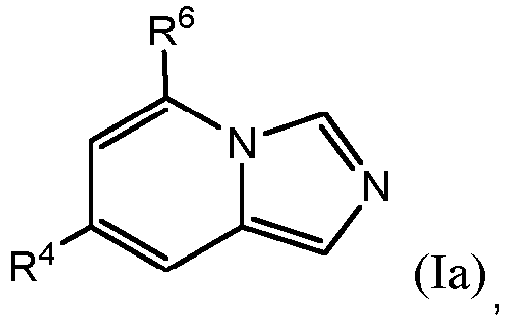 R4 ausgewählt ist aus der Gruppe bestehend aus (1) Halogen und (2) C1-4-Alkyl, gegebenenfalls substituiert mit ein bis drei Halogenen,R6 Y2 ist mit der folgenden Formel:wobei
 die gestrichelte Linie "------" eine optionale Doppelbindung bedeutet,Q -CH(Ra)- oder -N(Ra)- ist,T -CH2- oder-NH- ist,Ra ausgewählt ist aus der Gruppe bestehend aus (1) H, (2) C1-4-Alkyl und (3) Phenyl, wobei jede der Alkyl- und Phenyl-Gruppen gegebenenfalls substituiert ist mit ein bis drei Substituenten, unabhängig ausgewählt aus Halogen und Heterocyclyl,Rb C1-4-Alkyl ist,jeder der Reste Rc und Rd unabhängig H oder Oxo ist,m 1 ist undn 0, 1 oder 2 ist.
 - Die Verbindung nach Anspruch 8 oder ein pharmazeutisch annehmbares Salz davon, wobei R6 Y3 ist mit der folgenden Formel:
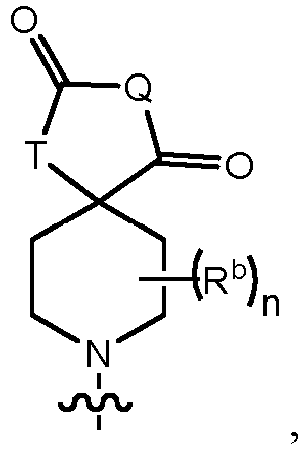 Q -N(Ra)- ist,T -CH2- oder-NH- ist,Ra ausgewählt ist aus der Gruppe bestehend aus (1) H, (2) C1-4-Alkyl, gegebenenfalls substituiert mit ein bis drei Substituenten, unabhängig ausgewählt aus Halogen und Tetrahydropyranyl, und (3) Phenyl, undRb Methyl ist.
 - Die Verbindung nach Anspruch 1 mit der Formel (Ib) oder ein pharmazeutisch annehmbares Salz davon:
 R5 ausgewählt ist aus der Gruppe bestehend aus (1) Halogen und (2) C1-4-Alkyl, gegebenenfalls substituiert mit ein bis drei Halogenen,R3 Y2 ist mit der folgenden Formel:wobei
 die gestrichelte Linie "------" eine optionale Doppelbindung bedeutet,Q -CH(Ra)- oder -N(Ra)- ist,T -CH2- oder -NH- ist,Ra ausgewählt ist aus der Gruppe bestehend aus (1) H, (2) C1-6-Alkyl und (3) Phenyl, wobei jede der Alkyl- und Phenyl-Gruppen gegebenenfalls substituiert ist mit ein bis drei Substituenten, unabhängig ausgewählt aus Halogen und Heterocyclyl,Rb C1-4-Alkyl ist,jeder der Reste Rc und Rd unabhängig H oder Oxo ist,m 1 ist undn 0, 1 oder 2 ist.
 - Die Verbindung nach Anspruch 10 oder ein pharmazeutisch annehmbares Salz davon, wobei R3 Y3 ist mit der folgenden Formel:
 Q -N(Ra)- ist,T -CH2- oder -NH- ist,Ra ausgewählt ist aus der Gruppe bestehend aus (1) H, (2) C1-4-Alkyl, gegebenenfalls substituiert mit ein bis drei Substituenten, unabhängig ausgewählt aus Halogen und Tetrahydropyranyl, und (3) Phenyl, undRb Methyl ist.
 - Die Verbindung nach Anspruch 1, ausgewählt aus der Gruppe bestehend aus:8-(7-(Trifluormethyl)imidazo[1,5-a]pyridin-5-yl)-1,3,8-triazaspiro[4.5]decan-2,4-dion,8-(7-Bromimidazo[1,5-a]pyridin-5-yl)-1,3,8-triazaspiro[4.5]decan-2,4-dion,8-(7-Chlorimidazo[1,5-a]pyridin-5-yl)-1,3,8-triazaspiro[4.5]decan-2,4-dion,8-(6-(Trifluormethyl)imidazo[1,5-a]pyridin-8-yl)-1,3,8-triazaspiro[4.5]decan-2,4-dion,6,6-Dimethyl-8-(7-(trifluormethyl)imidazo[1,5-a]pyridin-5-yl)-1,3,8-triazaspiro[4.5]decan-2,4-dion,3-Methyl-8-(7-(trifluormethyl)imidazo[1,5-a]pyridin-5-yl)-1,3,8-triazaspiro[4.5]decan-2,4-dion,3-((Tetrahydro-2H-pyran-4-yl)methyl)-8-(7-(trifluormethyl)imidazo[1,5-a]pyridin-5-yl)-1,3,8-triazaspiro[4.5]decan-2,4-dion,8-(7-Chlorimidazo[1,5-a]pyridin-5-yl)-6,6-dimethyl-1,3,8-triazaspiro[4.5]decan-2,4-dion,3-Phenyl-8-(7-(trifluormethyl)imidazo[1,5-a]pyridin-5-yl)-1,3,8-triazaspiro[4.5]decan-2,4-dion,3,6,6-Trimethyl-8-(7-(trifluormethyl)imidazo[1,5-a]pyridin-5-yl)-1,3,8-triazaspiro[4.5]decan-2,4-dion,8-(7-Chlorimidazo[1,5-a]pyridin-5-yl)-6,6-dimethyl-1,3,8-triazaspiro[4.5]decan-2,4-dion,6,6-Dimethyl-8-(6-(trifluormethyl)imidazo[1,5-a]pyridin-8-yl)-1,3,8-triazaspiro[4.5]decan-2,4-dion,8-(7-(Trifluormethyl)imidazo[1,5-a]pyridin-5-yl)-2,8-diazaspiro[4.5]decan-1,3-dion,6,6-Dimethyl-3-((tetrahydro-2H-pyran-4-yl)methyl)-8-(7-(trifluormethyl)imidazo[1,5-a]pyridin-5-yl)-1,3,8-triazaspiro[4.5]decan-2,4-dion,6,6-Dimethyl-3-phenyl-8-(7-(trifluormethyl)imidazo[1,5-a]pyridin-5-yl)-1,3,8-triazaspiro[4.5]decan-2,4-dion,8-(7-Bromimidazo[1,5-a]pyridin-5-yl)-6,6-dimethyl-1,3,8-triazaspiro[4.5]decan-2,4-dion,8-(7-Bromimidazo[1,5-a]pyridin-5-yl)-6,6-dimethyl-1,3,8-triazaspiro[4.5]decan-2,4-dion,8-(7-(Trifluormethyl)imidazo[1,5-a]pyridin-5-yl)-2-oxa-8-azaspiro[4,5]decan-1-on,2-Methyl-8-(7-(trifluormethyl)imidazo[1,5-a]pyridin-5-yl)-1,3,8-triazaspiro[4.5]dec-1-en-4-on,1-(9-(7-(Trifluormethyl)imidazo[1,5-a]pyridin-5-yl)-3,9-diazaspiro[5.5]undecan-3-yl)ethan-1-on,8-(7-(Trifluormethyl)imidazo[1,5-a]pyridin-5-yl)-2,8-diazaspiro[4.5]decan-1-on,6,6-Dimethyl-8-(7-(trifluormethyl)imidazo[1,5-a]pyridin-5-yl)-1,3,8-triazaspiro[4.5]decan-2,4-dion,8-(7-Bromimidazo[1,5-a]pyridin-5-yl)-6,6-dimethyl-1,3,8-triazaspiro[4.5]decan-2,4-dion,8-(7-Chlorimidazo[1,5-a]pyridin-5-yl)-2-thia-1,3,8-triazaspiro[4.5]decan-4-on-2,2-dioxid,(R)- oder (S)-8-(7-Bromimidazo[1,5-a]pyridin-5-yl)-6,6-dimethyl-2,8-diazaspiro[4.5]decan-1,3-dion,(S)- oder (R)-6,6-Dimethyl-8-(7-(trifluormethyl)imidazo[1,5-a]pyridin-5-yl)-2,8-diazaspiro[4.5]decan-1,3-dion,(R)- oder (S)-8-(7-Chlorimidazo[1,5-a]pyridin-5-yl)-6,6-dimethyl-2,8-diazaspiro[4.5]decan-1,3-dion,(R)- oder (S)-4-Methyl-8-(7-(trifluormethyl)imidazo[1,5-a]pyridin-5-yl)-2,8-diazaspiro[4.5]decan-1,3-dion,6,6-Difluor-8-(7-(trifluormethyl)imidazo[1,5-a]pyridin-5-yl)-2,8-diazaspiro[4.5]decan-1,3-dion,8-(7-Bromimidazo[1,5-a]pyridin-5-yl)-2,8-diazaspiro[4.5]decan-1,3-dion,8-(7-Methoxyimidazo[1,5-a]pyridin-5-yl)-1,3,8-triazaspiro[4,5]decan-2,4-dion, und8-(7,8-Dichlorimidazo[1,5-a]pyridin-5-yl)-1,3,8-triazaspiro[4.5]decan-2,4-dion,oder ein pharmazeutisch annehmbares Salz davon.
- Eine Zusammensetzung, die eine Verbindung nach einem der Ansprüche 1-12 oder ein pharmazeutisch annehmbares Salz davon und einen pharmazeutisch annehmbaren Träger umfasst.
- Eine Verbindung nach einem der Ansprüche 1-12 oder ein pharmazeutisch annehmbares Salz davon zur Verwendung bei der Behandlung oder Prävention von Krebs, einer Virusinfektion wie z.B. HIV und HCV, Depression, neurodegenerativen Störungen wie z.B. Alzheimer-Krankheit und Huntington-Krankheit, Trauma, altersbedingten Katarakten, Organtransplantation (z.B. Organtransplantatabstoßung) oder Autoimmunerkrankungen einschließlich Asthma, rheumatoider Arthritis, multipler Sklerose, allergischer Entzündung, entzündlicher Darmerkrankung, Psoriasis und systemischem Lupus erythematodes.
- Eine Verbindung nach einem der Ansprüche 1-12 oder ein pharmazeutisch annehmbares Salz davon zur Verwendung in der Therapie.
- Eine Kombination, die eine Verbindung nach einem der Ansprüche 1-12 oder ein pharmazeutisch annehmbares Salz davon und einen oder mehrere andere Wirkstoffe umfasst.
Applications Claiming Priority (2)
| Application Number | Priority Date | Filing Date | Title |
|---|---|---|---|
| US201662329579P | 2016-04-29 | 2016-04-29 | |
| PCT/US2017/029042 WO2017189386A1 (en) | 2016-04-29 | 2017-04-24 | Novel substituted imidazopyridine compounds as inhibitors of indoleamine 2,3-dioxygenase and/or tryptophan-2,3-dioxygenase |
Publications (3)
| Publication Number | Publication Date |
|---|---|
| EP3448522A1 EP3448522A1 (de) | 2019-03-06 |
| EP3448522A4 EP3448522A4 (de) | 2019-11-27 |
| EP3448522B1 true EP3448522B1 (de) | 2021-01-20 |
Family
ID=60161057
Family Applications (1)
| Application Number | Title | Priority Date | Filing Date |
|---|---|---|---|
| EP17790165.9A Active EP3448522B1 (de) | 2016-04-29 | 2017-04-24 | Neuartige substituierte imidazopyridinverbindungen als inhibitoren der indolamin-2,3-dioxygenase und/oder tryptophan-2,3-dioxygenase |
Country Status (11)
| Country | Link |
|---|---|
| US (1) | US11096930B2 (de) |
| EP (1) | EP3448522B1 (de) |
| JP (1) | JP6948345B2 (de) |
| KR (1) | KR102456521B1 (de) |
| CN (1) | CN109069873B (de) |
| AU (1) | AU2017257377B2 (de) |
| BR (1) | BR112018071602B1 (de) |
| CA (1) | CA3021589A1 (de) |
| MX (1) | MX380677B (de) |
| RU (1) | RU2741911C2 (de) |
| WO (1) | WO2017189386A1 (de) |
Families Citing this family (10)
| Publication number | Priority date | Publication date | Assignee | Title |
|---|---|---|---|---|
| CA3072989A1 (en) | 2017-08-17 | 2019-02-21 | Idorsia Pharmaceuticals Ltd | Inhibitors of indoleamine 2,3-dioxygenase and/or tryptophan 2,3-dioxygenase |
| EP3740493B1 (de) | 2018-01-15 | 2021-12-01 | Idorsia Pharmaceuticals Ltd | Inhibitoren von indolamin-2,3-dioxygenase und/oder tryptophan-2,3-dioxygenase |
| EP3765006A4 (de) | 2018-03-13 | 2022-02-23 | Merck Sharp & Dohme Corp. | Arginasehemmer und verfahren zur verwendung |
| EP3556760A1 (de) * | 2018-04-19 | 2019-10-23 | F. Hoffmann-La Roche AG | Spiroverbindungen |
| CN119751456A (zh) | 2018-04-16 | 2025-04-04 | C4医药公司 | 螺环化合物 |
| WO2019206800A1 (en) * | 2018-04-24 | 2019-10-31 | Phenex Discovery Verwaltungs-GmbH | Spirocyclic compounds as modulators of indoleamine 2,3-dioxygenase |
| EP3810615B1 (de) | 2018-06-20 | 2026-01-28 | Merck Sharp & Dohme LLC | Arginase-inhibitoren und verfahren zur verwendung |
| US12240867B2 (en) | 2018-12-18 | 2025-03-04 | Merck Sharp & Dohme Llc | Arginase inhibitors and methods of use |
| JP2022540146A (ja) | 2019-07-11 | 2022-09-14 | イドーシア ファーマシューティカルズ リミテッド | インドールアミン 2,3-ジオキシゲナーゼ及び/又はトリプトファン 2,3-ジオキシゲナーゼの阻害剤 |
| KR102642194B1 (ko) | 2019-10-11 | 2024-03-05 | 삼성전자주식회사 | 전압 컨트롤러 및 이를 포함하는 메모리 장치 |
Family Cites Families (13)
| Publication number | Priority date | Publication date | Assignee | Title |
|---|---|---|---|---|
| US6887870B1 (en) * | 1999-10-12 | 2005-05-03 | Bristol-Myers Squibb Company | Heterocyclic sodium/proton exchange inhibitors and method |
| WO2008085302A1 (en) * | 2006-12-20 | 2008-07-17 | Merck & Co., Inc. | Imidazopyridine analogs as cb2 receptor modulators, useful in the treatment of pain, respiratory and non-respiratory diseases |
| US7803810B2 (en) * | 2007-03-09 | 2010-09-28 | Probiodrug Ag | Inhibitors |
| PL2315756T3 (pl) * | 2008-07-08 | 2015-02-27 | Incyte Holdings Corp | 1,2,5-oksadiazole jako inhibitory 2,3-dioksygenazy indoloaminy |
| CA2863723C (en) * | 2012-02-21 | 2020-09-22 | Carl Deutsch | 8-substituted 2-amino-[1,2,4]triazolo[1,5-a]pyrazines as syk tryrosine kinase inhibitors and gcn2 serin kinase inhibitors |
| SG11201507255QA (en) * | 2013-03-14 | 2015-10-29 | Newlink Genetics Corp | Tricyclic compounds as inhibitors of immunosuppression mediated by tryptophan metabolization |
| SG11201506920QA (en) * | 2013-03-15 | 2015-09-29 | Bristol Myers Squibb Co | Ido inhibitors |
| WO2015082499A2 (en) | 2013-12-03 | 2015-06-11 | Iomet Pharma Ltd | Pharmaceutical compound |
| RU2674027C2 (ru) | 2014-05-28 | 2018-12-04 | Астразенека Аб | Способ получения AZD5363 (варианты) и применяемое в нем новое промежуточное соединение |
| GB201414730D0 (en) * | 2014-08-19 | 2014-10-01 | Tpp Global Dev Ltd | Pharmaceutical compound |
| WO2016060941A1 (en) * | 2014-10-14 | 2016-04-21 | Merck Sharp & Dohme Corp. | Inhibitors of the renal outer medullary potassium channel |
| RU2719446C2 (ru) * | 2014-11-03 | 2020-04-17 | Айомет Фарма Лтд | Фармацевтическое соединение |
| GB201511790D0 (en) | 2015-07-06 | 2015-08-19 | Iomet Pharma Ltd | Pharmaceutical compound |
-
2017
- 2017-04-24 BR BR112018071602-2A patent/BR112018071602B1/pt not_active IP Right Cessation
- 2017-04-24 RU RU2018140732A patent/RU2741911C2/ru active
- 2017-04-24 US US16/088,873 patent/US11096930B2/en active Active
- 2017-04-24 AU AU2017257377A patent/AU2017257377B2/en not_active Ceased
- 2017-04-24 KR KR1020187034045A patent/KR102456521B1/ko active Active
- 2017-04-24 CN CN201780026630.8A patent/CN109069873B/zh not_active Expired - Fee Related
- 2017-04-24 JP JP2018555971A patent/JP6948345B2/ja not_active Expired - Fee Related
- 2017-04-24 WO PCT/US2017/029042 patent/WO2017189386A1/en not_active Ceased
- 2017-04-24 CA CA3021589A patent/CA3021589A1/en active Pending
- 2017-04-24 MX MX2018013164A patent/MX380677B/es unknown
- 2017-04-24 EP EP17790165.9A patent/EP3448522B1/de active Active
Non-Patent Citations (1)
| Title |
|---|
| None * |
Also Published As
| Publication number | Publication date |
|---|---|
| US11096930B2 (en) | 2021-08-24 |
| KR20190003619A (ko) | 2019-01-09 |
| RU2018140732A (ru) | 2020-05-29 |
| CA3021589A1 (en) | 2017-11-02 |
| AU2017257377B2 (en) | 2022-06-23 |
| MX380677B (es) | 2025-03-12 |
| BR112018071602B1 (pt) | 2024-02-27 |
| KR102456521B1 (ko) | 2022-10-20 |
| JP2019515923A (ja) | 2019-06-13 |
| JP6948345B2 (ja) | 2021-10-13 |
| CN109069873B (zh) | 2021-07-20 |
| RU2018140732A3 (de) | 2020-06-02 |
| RU2741911C2 (ru) | 2021-01-29 |
| AU2017257377A1 (en) | 2018-10-11 |
| EP3448522A1 (de) | 2019-03-06 |
| US20200230117A1 (en) | 2020-07-23 |
| BR112018071602A2 (pt) | 2019-02-12 |
| MX2018013164A (es) | 2019-06-24 |
| WO2017189386A1 (en) | 2017-11-02 |
| EP3448522A4 (de) | 2019-11-27 |
| CN109069873A (zh) | 2018-12-21 |
Similar Documents
| Publication | Publication Date | Title |
|---|---|---|
| EP3448522B1 (de) | Neuartige substituierte imidazopyridinverbindungen als inhibitoren der indolamin-2,3-dioxygenase und/oder tryptophan-2,3-dioxygenase | |
| EP3319606B1 (de) | Pharmazeutische verbindung | |
| EP3877366B1 (de) | Neuartige substituierte tricyclische verbindungen als indolamin-2,3-dioxygenase-inhibitoren | |
| EP3840747B1 (de) | Neuartige aryloxypiperidin-pyrazol-verbindungen als indoleamin-2,3-dioxygenase-inhibitoren | |
| WO2020112581A1 (en) | Novel substituted piperazine amide compounds as indoleamine 2, 3-dioxygenase (ido) inhibitors | |
| EP3873464A1 (de) | Neuartige substituierte pyrazolverbindungen als indolamin-2,3-dioxygenase-inhibitoren | |
| EP3867232B1 (de) | Neuartige arylalkylpyrazolverbindungen als inhibitoren der indolamin-2,3-dioxygenase | |
| EP3694506B1 (de) | Neuartige substituierte phenyloxetan- und phenyltetrahydrofuranverbindungen als inhibitoren von indolamin- 2,3-dioxygenase (ido) | |
| EP3982959A2 (de) | Neuartige substituierte tetrahydrochinolinverbindungen als indolamin-2,3-dioxygenase(ido)-inhibitoren | |
| EP3661910B1 (de) | Neuartige substituierte pyridinverbindungen als indoleamin-2,3-dioxygenase (ido)-inhibitoren | |
| EP3836928B1 (de) | Neuartige substituierte tetrahydrochinolinverbindungen als indolamin-2,3-dioxygenase-inhibitoren | |
| US11267786B2 (en) | [3.3.1] bicyclo compounds as indoleamine 2,3-dioxygenase inhibitors | |
| EP4076443B1 (de) | Substituierte 1,3,8-triazaspiro[4,5]dekan-2,4-dionverbindung als indiolamin-2,3-dioxygenoxyse-(ido)- und/oder tryptophan-2,3-dioxygenoxyse-(tdo)-hemmer | |
| EP3810116B1 (de) | Neuartige substituierte [1.1.1]-bicyclo-verbindungen als indolamin-2,3-dioxygenase-inhibitoren |
Legal Events
| Date | Code | Title | Description |
|---|---|---|---|
| STAA | Information on the status of an ep patent application or granted ep patent |
Free format text: STATUS: THE INTERNATIONAL PUBLICATION HAS BEEN MADE |
|
| PUAI | Public reference made under article 153(3) epc to a published international application that has entered the european phase |
Free format text: ORIGINAL CODE: 0009012 |
|
| STAA | Information on the status of an ep patent application or granted ep patent |
Free format text: STATUS: REQUEST FOR EXAMINATION WAS MADE |
|
| 17P | Request for examination filed |
Effective date: 20181129 |
|
| AK | Designated contracting states |
Kind code of ref document: A1 Designated state(s): AL AT BE BG CH CY CZ DE DK EE ES FI FR GB GR HR HU IE IS IT LI LT LU LV MC MK MT NL NO PL PT RO RS SE SI SK SM TR |
|
| AX | Request for extension of the european patent |
Extension state: BA ME |
|
| A4 | Supplementary search report drawn up and despatched |
Effective date: 20191030 |
|
| RIC1 | Information provided on ipc code assigned before grant |
Ipc: A61P 35/00 20060101AFI20191024BHEP Ipc: C07D 401/10 20060101ALI20191024BHEP Ipc: C07D 519/00 20060101ALI20191024BHEP Ipc: A61K 31/437 20060101ALI20191024BHEP |
|
| GRAP | Despatch of communication of intention to grant a patent |
Free format text: ORIGINAL CODE: EPIDOSNIGR1 |
|
| STAA | Information on the status of an ep patent application or granted ep patent |
Free format text: STATUS: GRANT OF PATENT IS INTENDED |
|
| RIC1 | Information provided on ipc code assigned before grant |
Ipc: A61K 31/437 20060101ALI20200706BHEP Ipc: A61P 43/00 20060101ALI20200706BHEP Ipc: A61P 25/28 20060101ALI20200706BHEP Ipc: C07D 519/00 20060101ALI20200706BHEP Ipc: C07D 401/10 20060101ALI20200706BHEP Ipc: A61P 31/12 20060101ALI20200706BHEP Ipc: A61P 37/06 20060101ALI20200706BHEP Ipc: A61P 17/02 20060101ALI20200706BHEP Ipc: A61P 27/12 20060101ALI20200706BHEP Ipc: A61P 35/02 20060101ALI20200706BHEP Ipc: A61P 35/00 20060101AFI20200706BHEP Ipc: A61P 31/14 20060101ALI20200706BHEP Ipc: A61P 25/24 20060101ALI20200706BHEP |
|
| INTG | Intention to grant announced |
Effective date: 20200804 |
|
| GRAS | Grant fee paid |
Free format text: ORIGINAL CODE: EPIDOSNIGR3 |
|
| GRAA | (expected) grant |
Free format text: ORIGINAL CODE: 0009210 |
|
| STAA | Information on the status of an ep patent application or granted ep patent |
Free format text: STATUS: THE PATENT HAS BEEN GRANTED |
|
| AK | Designated contracting states |
Kind code of ref document: B1 Designated state(s): AL AT BE BG CH CY CZ DE DK EE ES FI FR GB GR HR HU IE IS IT LI LT LU LV MC MK MT NL NO PL PT RO RS SE SI SK SM TR |
|
| AX | Request for extension of the european patent |
Extension state: BA ME |
|
| REG | Reference to a national code |
Ref country code: GB Ref legal event code: FG4D |
|
| REG | Reference to a national code |
Ref country code: CH Ref legal event code: EP |
|
| REG | Reference to a national code |
Ref country code: DE Ref legal event code: R096 Ref document number: 602017031738 Country of ref document: DE |
|
| REG | Reference to a national code |
Ref country code: AT Ref legal event code: REF Ref document number: 1355858 Country of ref document: AT Kind code of ref document: T Effective date: 20210215 |
|
| REG | Reference to a national code |
Ref country code: IE Ref legal event code: FG4D |
|
| REG | Reference to a national code |
Ref country code: NL Ref legal event code: MP Effective date: 20210120 |
|
| REG | Reference to a national code |
Ref country code: LT Ref legal event code: MG9D |
|
| REG | Reference to a national code |
Ref country code: AT Ref legal event code: MK05 Ref document number: 1355858 Country of ref document: AT Kind code of ref document: T Effective date: 20210120 |
|
| PG25 | Lapsed in a contracting state [announced via postgrant information from national office to epo] |
Ref country code: PT Free format text: LAPSE BECAUSE OF FAILURE TO SUBMIT A TRANSLATION OF THE DESCRIPTION OR TO PAY THE FEE WITHIN THE PRESCRIBED TIME-LIMIT Effective date: 20210520 Ref country code: NO Free format text: LAPSE BECAUSE OF FAILURE TO SUBMIT A TRANSLATION OF THE DESCRIPTION OR TO PAY THE FEE WITHIN THE PRESCRIBED TIME-LIMIT Effective date: 20210420 Ref country code: HR Free format text: LAPSE BECAUSE OF FAILURE TO SUBMIT A TRANSLATION OF THE DESCRIPTION OR TO PAY THE FEE WITHIN THE PRESCRIBED TIME-LIMIT Effective date: 20210120 Ref country code: FI Free format text: LAPSE BECAUSE OF FAILURE TO SUBMIT A TRANSLATION OF THE DESCRIPTION OR TO PAY THE FEE WITHIN THE PRESCRIBED TIME-LIMIT Effective date: 20210120 Ref country code: GR Free format text: LAPSE BECAUSE OF FAILURE TO SUBMIT A TRANSLATION OF THE DESCRIPTION OR TO PAY THE FEE WITHIN THE PRESCRIBED TIME-LIMIT Effective date: 20210421 Ref country code: LT Free format text: LAPSE BECAUSE OF FAILURE TO SUBMIT A TRANSLATION OF THE DESCRIPTION OR TO PAY THE FEE WITHIN THE PRESCRIBED TIME-LIMIT Effective date: 20210120 Ref country code: BG Free format text: LAPSE BECAUSE OF FAILURE TO SUBMIT A TRANSLATION OF THE DESCRIPTION OR TO PAY THE FEE WITHIN THE PRESCRIBED TIME-LIMIT Effective date: 20210420 |
|
| PG25 | Lapsed in a contracting state [announced via postgrant information from national office to epo] |
Ref country code: AT Free format text: LAPSE BECAUSE OF FAILURE TO SUBMIT A TRANSLATION OF THE DESCRIPTION OR TO PAY THE FEE WITHIN THE PRESCRIBED TIME-LIMIT Effective date: 20210120 Ref country code: RS Free format text: LAPSE BECAUSE OF FAILURE TO SUBMIT A TRANSLATION OF THE DESCRIPTION OR TO PAY THE FEE WITHIN THE PRESCRIBED TIME-LIMIT Effective date: 20210120 Ref country code: LV Free format text: LAPSE BECAUSE OF FAILURE TO SUBMIT A TRANSLATION OF THE DESCRIPTION OR TO PAY THE FEE WITHIN THE PRESCRIBED TIME-LIMIT Effective date: 20210120 Ref country code: PL Free format text: LAPSE BECAUSE OF FAILURE TO SUBMIT A TRANSLATION OF THE DESCRIPTION OR TO PAY THE FEE WITHIN THE PRESCRIBED TIME-LIMIT Effective date: 20210120 Ref country code: SE Free format text: LAPSE BECAUSE OF FAILURE TO SUBMIT A TRANSLATION OF THE DESCRIPTION OR TO PAY THE FEE WITHIN THE PRESCRIBED TIME-LIMIT Effective date: 20210120 |
|
| PG25 | Lapsed in a contracting state [announced via postgrant information from national office to epo] |
Ref country code: IS Free format text: LAPSE BECAUSE OF FAILURE TO SUBMIT A TRANSLATION OF THE DESCRIPTION OR TO PAY THE FEE WITHIN THE PRESCRIBED TIME-LIMIT Effective date: 20210520 |
|
| REG | Reference to a national code |
Ref country code: DE Ref legal event code: R097 Ref document number: 602017031738 Country of ref document: DE |
|
| PG25 | Lapsed in a contracting state [announced via postgrant information from national office to epo] |
Ref country code: SM Free format text: LAPSE BECAUSE OF FAILURE TO SUBMIT A TRANSLATION OF THE DESCRIPTION OR TO PAY THE FEE WITHIN THE PRESCRIBED TIME-LIMIT Effective date: 20210120 Ref country code: CZ Free format text: LAPSE BECAUSE OF FAILURE TO SUBMIT A TRANSLATION OF THE DESCRIPTION OR TO PAY THE FEE WITHIN THE PRESCRIBED TIME-LIMIT Effective date: 20210120 Ref country code: EE Free format text: LAPSE BECAUSE OF FAILURE TO SUBMIT A TRANSLATION OF THE DESCRIPTION OR TO PAY THE FEE WITHIN THE PRESCRIBED TIME-LIMIT Effective date: 20210120 |
|
| PLBE | No opposition filed within time limit |
Free format text: ORIGINAL CODE: 0009261 |
|
| STAA | Information on the status of an ep patent application or granted ep patent |
Free format text: STATUS: NO OPPOSITION FILED WITHIN TIME LIMIT |
|
| PG25 | Lapsed in a contracting state [announced via postgrant information from national office to epo] |
Ref country code: DK Free format text: LAPSE BECAUSE OF FAILURE TO SUBMIT A TRANSLATION OF THE DESCRIPTION OR TO PAY THE FEE WITHIN THE PRESCRIBED TIME-LIMIT Effective date: 20210120 Ref country code: SK Free format text: LAPSE BECAUSE OF FAILURE TO SUBMIT A TRANSLATION OF THE DESCRIPTION OR TO PAY THE FEE WITHIN THE PRESCRIBED TIME-LIMIT Effective date: 20210120 Ref country code: RO Free format text: LAPSE BECAUSE OF FAILURE TO SUBMIT A TRANSLATION OF THE DESCRIPTION OR TO PAY THE FEE WITHIN THE PRESCRIBED TIME-LIMIT Effective date: 20210120 Ref country code: MC Free format text: LAPSE BECAUSE OF FAILURE TO SUBMIT A TRANSLATION OF THE DESCRIPTION OR TO PAY THE FEE WITHIN THE PRESCRIBED TIME-LIMIT Effective date: 20210120 |
|
| VS25 | Lapsed in a validation state [announced via postgrant information from nat. office to epo] |
Ref country code: MD Free format text: LAPSE BECAUSE OF FAILURE TO SUBMIT A TRANSLATION OF THE DESCRIPTION OR TO PAY THE FEE WITHIN THE PRESCRIBED TIME-LIMIT Effective date: 20210120 |
|
| 26N | No opposition filed |
Effective date: 20211021 |
|
| PG25 | Lapsed in a contracting state [announced via postgrant information from national office to epo] |
Ref country code: LU Free format text: LAPSE BECAUSE OF NON-PAYMENT OF DUE FEES Effective date: 20210424 |
|
| REG | Reference to a national code |
Ref country code: BE Ref legal event code: MM Effective date: 20210430 |
|
| PG25 | Lapsed in a contracting state [announced via postgrant information from national office to epo] |
Ref country code: ES Free format text: LAPSE BECAUSE OF FAILURE TO SUBMIT A TRANSLATION OF THE DESCRIPTION OR TO PAY THE FEE WITHIN THE PRESCRIBED TIME-LIMIT Effective date: 20210120 Ref country code: LI Free format text: LAPSE BECAUSE OF NON-PAYMENT OF DUE FEES Effective date: 20210430 Ref country code: AL Free format text: LAPSE BECAUSE OF FAILURE TO SUBMIT A TRANSLATION OF THE DESCRIPTION OR TO PAY THE FEE WITHIN THE PRESCRIBED TIME-LIMIT Effective date: 20210120 Ref country code: CH Free format text: LAPSE BECAUSE OF NON-PAYMENT OF DUE FEES Effective date: 20210430 |
|
| PG25 | Lapsed in a contracting state [announced via postgrant information from national office to epo] |
Ref country code: SI Free format text: LAPSE BECAUSE OF FAILURE TO SUBMIT A TRANSLATION OF THE DESCRIPTION OR TO PAY THE FEE WITHIN THE PRESCRIBED TIME-LIMIT Effective date: 20210120 |
|
| PG25 | Lapsed in a contracting state [announced via postgrant information from national office to epo] |
Ref country code: IT Free format text: LAPSE BECAUSE OF FAILURE TO SUBMIT A TRANSLATION OF THE DESCRIPTION OR TO PAY THE FEE WITHIN THE PRESCRIBED TIME-LIMIT Effective date: 20210120 Ref country code: IE Free format text: LAPSE BECAUSE OF NON-PAYMENT OF DUE FEES Effective date: 20210424 |
|
| PG25 | Lapsed in a contracting state [announced via postgrant information from national office to epo] |
Ref country code: IS Free format text: LAPSE BECAUSE OF FAILURE TO SUBMIT A TRANSLATION OF THE DESCRIPTION OR TO PAY THE FEE WITHIN THE PRESCRIBED TIME-LIMIT Effective date: 20210520 |
|
| PG25 | Lapsed in a contracting state [announced via postgrant information from national office to epo] |
Ref country code: BE Free format text: LAPSE BECAUSE OF NON-PAYMENT OF DUE FEES Effective date: 20210430 |
|
| REG | Reference to a national code |
Ref country code: DE Ref legal event code: R081 Ref document number: 602017031738 Country of ref document: DE Owner name: MERCK SHARP & DOHME LLC, RAHWAY, US Free format text: FORMER OWNERS: IOMET PHARMA LTD., EDINBURGH, GB; MERCK SHARP & DOHME CORP., RAHWAY, N.J., US Ref country code: DE Ref legal event code: R081 Ref document number: 602017031738 Country of ref document: DE Owner name: IOMET PHARMA LTD., GB Free format text: FORMER OWNERS: IOMET PHARMA LTD., EDINBURGH, GB; MERCK SHARP & DOHME CORP., RAHWAY, N.J., US |
|
| REG | Reference to a national code |
Ref country code: GB Ref legal event code: 732E Free format text: REGISTERED BETWEEN 20221013 AND 20221019 |
|
| PG25 | Lapsed in a contracting state [announced via postgrant information from national office to epo] |
Ref country code: NL Free format text: LAPSE BECAUSE OF NON-PAYMENT OF DUE FEES Effective date: 20210120 Ref country code: CY Free format text: LAPSE BECAUSE OF FAILURE TO SUBMIT A TRANSLATION OF THE DESCRIPTION OR TO PAY THE FEE WITHIN THE PRESCRIBED TIME-LIMIT Effective date: 20210120 |
|
| P01 | Opt-out of the competence of the unified patent court (upc) registered |
Effective date: 20230526 |
|
| PG25 | Lapsed in a contracting state [announced via postgrant information from national office to epo] |
Ref country code: HU Free format text: LAPSE BECAUSE OF FAILURE TO SUBMIT A TRANSLATION OF THE DESCRIPTION OR TO PAY THE FEE WITHIN THE PRESCRIBED TIME-LIMIT; INVALID AB INITIO Effective date: 20170424 |
|
| PG25 | Lapsed in a contracting state [announced via postgrant information from national office to epo] |
Ref country code: MK Free format text: LAPSE BECAUSE OF FAILURE TO SUBMIT A TRANSLATION OF THE DESCRIPTION OR TO PAY THE FEE WITHIN THE PRESCRIBED TIME-LIMIT Effective date: 20210120 |
|
| VS25 | Lapsed in a validation state [announced via postgrant information from nat. office to epo] |
Ref country code: MA Free format text: LAPSE BECAUSE OF FAILURE TO SUBMIT A TRANSLATION OF THE DESCRIPTION OR TO PAY THE FEE WITHIN THE PRESCRIBED TIME-LIMIT Effective date: 20210120 |
|
| PG25 | Lapsed in a contracting state [announced via postgrant information from national office to epo] |
Ref country code: MT Free format text: LAPSE BECAUSE OF FAILURE TO SUBMIT A TRANSLATION OF THE DESCRIPTION OR TO PAY THE FEE WITHIN THE PRESCRIBED TIME-LIMIT Effective date: 20210120 |
|
| PGFP | Annual fee paid to national office [announced via postgrant information from national office to epo] |
Ref country code: DE Payment date: 20250317 Year of fee payment: 9 |
|
| PG25 | Lapsed in a contracting state [announced via postgrant information from national office to epo] |
Ref country code: TR Free format text: LAPSE BECAUSE OF FAILURE TO SUBMIT A TRANSLATION OF THE DESCRIPTION OR TO PAY THE FEE WITHIN THE PRESCRIBED TIME-LIMIT Effective date: 20210120 |
|
| PGFP | Annual fee paid to national office [announced via postgrant information from national office to epo] |
Ref country code: GB Payment date: 20260320 Year of fee payment: 10 |
|
| PGFP | Annual fee paid to national office [announced via postgrant information from national office to epo] |
Ref country code: FR Payment date: 20260317 Year of fee payment: 10 |