EP3449253B1 - Trennung von glykanen, die mit stark basischen amphipathischen fraktionen modifiziert sind, mittels umkehrphasenchromatographischen materialien mit einer geladenen oberfläche - Google Patents
Trennung von glykanen, die mit stark basischen amphipathischen fraktionen modifiziert sind, mittels umkehrphasenchromatographischen materialien mit einer geladenen oberfläche Download PDFInfo
- Publication number
- EP3449253B1 EP3449253B1 EP17790151.9A EP17790151A EP3449253B1 EP 3449253 B1 EP3449253 B1 EP 3449253B1 EP 17790151 A EP17790151 A EP 17790151A EP 3449253 B1 EP3449253 B1 EP 3449253B1
- Authority
- EP
- European Patent Office
- Prior art keywords
- chromatographic
- glycan
- glycans
- acid
- group
- Prior art date
- Legal status (The legal status is an assumption and is not a legal conclusion. Google has not performed a legal analysis and makes no representation as to the accuracy of the status listed.)
- Active
Links
Images






Classifications
-
- G—PHYSICS
- G01—MEASURING; TESTING
- G01N—INVESTIGATING OR ANALYSING MATERIALS BY DETERMINING THEIR CHEMICAL OR PHYSICAL PROPERTIES
- G01N30/00—Investigating or analysing materials by separation into components using adsorption, absorption or similar phenomena or using ion-exchange, e.g. chromatography or field flow fractionation
- G01N30/89—Inverse chromatography
-
- C—CHEMISTRY; METALLURGY
- C08—ORGANIC MACROMOLECULAR COMPOUNDS; THEIR PREPARATION OR CHEMICAL WORKING-UP; COMPOSITIONS BASED THEREON
- C08B—POLYSACCHARIDES; DERIVATIVES THEREOF
- C08B37/00—Preparation of polysaccharides not provided for in groups C08B1/00 - C08B35/00; Derivatives thereof
- C08B37/006—Heteroglycans, i.e. polysaccharides having more than one sugar residue in the main chain in either alternating or less regular sequence; Gellans; Succinoglycans; Arabinogalactans; Tragacanth or gum tragacanth or traganth from Astragalus; Gum Karaya from Sterculia urens; Gum Ghatti from Anogeissus latifolia; Derivatives thereof
-
- B—PERFORMING OPERATIONS; TRANSPORTING
- B01—PHYSICAL OR CHEMICAL PROCESSES OR APPARATUS IN GENERAL
- B01D—SEPARATION
- B01D15/00—Separating processes involving the treatment of liquids with solid sorbents; Apparatus therefor
- B01D15/08—Selective adsorption, e.g. chromatography
- B01D15/26—Selective adsorption, e.g. chromatography characterised by the separation mechanism
- B01D15/32—Bonded phase chromatography
- B01D15/325—Reversed phase
- B01D15/327—Reversed phase with hydrophobic interaction
-
- B—PERFORMING OPERATIONS; TRANSPORTING
- B01—PHYSICAL OR CHEMICAL PROCESSES OR APPARATUS IN GENERAL
- B01D—SEPARATION
- B01D15/00—Separating processes involving the treatment of liquids with solid sorbents; Apparatus therefor
- B01D15/08—Selective adsorption, e.g. chromatography
- B01D15/26—Selective adsorption, e.g. chromatography characterised by the separation mechanism
- B01D15/36—Selective adsorption, e.g. chromatography characterised by the separation mechanism involving ionic interaction, e.g. ion-exchange, ion-pair, ion-suppression or ion-exclusion
-
- B—PERFORMING OPERATIONS; TRANSPORTING
- B01—PHYSICAL OR CHEMICAL PROCESSES OR APPARATUS IN GENERAL
- B01D—SEPARATION
- B01D15/00—Separating processes involving the treatment of liquids with solid sorbents; Apparatus therefor
- B01D15/08—Selective adsorption, e.g. chromatography
- B01D15/26—Selective adsorption, e.g. chromatography characterised by the separation mechanism
- B01D15/36—Selective adsorption, e.g. chromatography characterised by the separation mechanism involving ionic interaction, e.g. ion-exchange, ion-pair, ion-suppression or ion-exclusion
- B01D15/361—Ion-exchange
- B01D15/363—Anion-exchange
-
- B—PERFORMING OPERATIONS; TRANSPORTING
- B01—PHYSICAL OR CHEMICAL PROCESSES OR APPARATUS IN GENERAL
- B01D—SEPARATION
- B01D15/00—Separating processes involving the treatment of liquids with solid sorbents; Apparatus therefor
- B01D15/08—Selective adsorption, e.g. chromatography
- B01D15/26—Selective adsorption, e.g. chromatography characterised by the separation mechanism
- B01D15/38—Selective adsorption, e.g. chromatography characterised by the separation mechanism involving specific interaction not covered by one or more of groups B01D15/265 and B01D15/30 - B01D15/36, e.g. affinity, ligand exchange or chiral chromatography
- B01D15/3847—Multimodal interactions
-
- C—CHEMISTRY; METALLURGY
- C07—ORGANIC CHEMISTRY
- C07H—SUGARS; DERIVATIVES THEREOF; NUCLEOSIDES; NUCLEOTIDES; NUCLEIC ACIDS
- C07H1/00—Processes for the preparation of sugar derivatives
- C07H1/06—Separation; Purification
-
- C—CHEMISTRY; METALLURGY
- C07—ORGANIC CHEMISTRY
- C07H—SUGARS; DERIVATIVES THEREOF; NUCLEOSIDES; NUCLEOTIDES; NUCLEIC ACIDS
- C07H13/00—Compounds containing saccharide radicals esterified by carbonic acid or derivatives thereof, or by organic acids, e.g. phosphonic acids
- C07H13/12—Compounds containing saccharide radicals esterified by carbonic acid or derivatives thereof, or by organic acids, e.g. phosphonic acids by acids having the group -X-C(=X)-X-, or halides thereof, in which each X means nitrogen, oxygen, sulfur, selenium or tellurium, e.g. carbonic acid, carbamic acid
-
- G—PHYSICS
- G01—MEASURING; TESTING
- G01N—INVESTIGATING OR ANALYSING MATERIALS BY DETERMINING THEIR CHEMICAL OR PHYSICAL PROPERTIES
- G01N30/00—Investigating or analysing materials by separation into components using adsorption, absorption or similar phenomena or using ion-exchange, e.g. chromatography or field flow fractionation
- G01N30/02—Column chromatography
- G01N30/88—Integrated analysis systems specially adapted therefor, not covered by a single one of the groups G01N30/04 - G01N30/86
-
- G—PHYSICS
- G01—MEASURING; TESTING
- G01N—INVESTIGATING OR ANALYSING MATERIALS BY DETERMINING THEIR CHEMICAL OR PHYSICAL PROPERTIES
- G01N33/00—Investigating or analysing materials by specific methods not covered by groups G01N1/00 - G01N31/00
- G01N33/48—Biological material, e.g. blood, urine; Haemocytometers
- G01N33/50—Chemical analysis of biological material, e.g. blood, urine; Testing involving biospecific ligand binding methods; Immunological testing
- G01N33/58—Chemical analysis of biological material, e.g. blood, urine; Testing involving biospecific ligand binding methods; Immunological testing involving labelled substances
-
- G—PHYSICS
- G01—MEASURING; TESTING
- G01N—INVESTIGATING OR ANALYSING MATERIALS BY DETERMINING THEIR CHEMICAL OR PHYSICAL PROPERTIES
- G01N30/00—Investigating or analysing materials by separation into components using adsorption, absorption or similar phenomena or using ion-exchange, e.g. chromatography or field flow fractionation
- G01N30/02—Column chromatography
- G01N30/88—Integrated analysis systems specially adapted therefor, not covered by a single one of the groups G01N30/04 - G01N30/86
- G01N2030/8809—Integrated analysis systems specially adapted therefor, not covered by a single one of the groups G01N30/04 - G01N30/86 analysis specially adapted for the sample
- G01N2030/8813—Integrated analysis systems specially adapted therefor, not covered by a single one of the groups G01N30/04 - G01N30/86 analysis specially adapted for the sample biological materials
- G01N2030/8836—Integrated analysis systems specially adapted therefor, not covered by a single one of the groups G01N30/04 - G01N30/86 analysis specially adapted for the sample biological materials involving saccharides
Definitions
- Glycans are found throughout biological systems in both a free state as well as in conjugated forms as parts of glycoproteins, glycolipids, and proteoglycans. Glycans play a role in a variety of biological and physiological processes. Furthermore, the structures of glycans are diverse and complex. As a result, the full analysis of glycan profiles has been difficult.
- N-glycans that have been released from glycoproteins such as human immunoglobulin G (hIgG) are quite different unto themselves.
- released N-glycans exhibit different charge characteristics than peptides, as they will generally contain only neutral or acidic hydrophilic residues.
- New column technology such as that described in United States Patent Publication No. 2013/0319086 , has provided new multimodal chromatographic media and methods of analyzing glycans that provide high resolution between different biological macromolecules, unique selectivity based on size, composition, structure (e.g., isomerism, linkages), and/or charge. Furthermore, these columns allow the macromolecules eluted from the media to be detected by standard methodology (e.g., mass spectrometry, fluorescence detection) with no, or minimal, clean up or purification post-analysis and pre-detection (e.g., fluorescent tagging), this would greatly simplify and facilitate macromolecular analysis.
- standard methodology e.g., mass spectrometry, fluorescence detection
- pre-detection e.g., fluorescent tagging
- Fluorescent labeling of N-glycans is beneficial to detecting glycans because it improves both sensitivity and selectivity of the detection as well as the chromatographic behavior of glycans.
- Glycan analysis is important to pharmaceutical manufacturers as glycosylation profiling of proteins must be monitored to ensure consistency of a therapeutic product.
- the identity of a glycan can be estimated.
- Mass spectrometry (“MS”) is then required to identify the specific compound.
- MS has reached a high degree of development with respect to glycan and amino acid analysis and proteomics.
- the current state of the art utilizes tagging molecules that react quickly and give good MS/fluorescence signals.
- a combination of MS and fluorescence detection is desirable, however, because fluorescence detection is very useful tool in determining the relative quantities of different quantitatively how much is present.
- MS is used to determine what the molecular makeup is.
- the labels of choice for state-of-art glycan detection have tended to be unique in having relatively high hydrophobicity paired with a high pKa ionizable residue, making them so-called 'amphipathic, strongly basic' moieties.
- HPCMs high purity chromatographic materials
- the chromatographic surface comprises a hydrophobic surface group and one or more ionizable modifier and a labeling reagent which is capable of providing amphipathic and strongly basic labeling moieties to a sample to be analyzed.
- the invention provides a method for selectively isolating a glycan from a sample as defined in appended claim 1.
- the glycan is an N-glycan or an O-glycan.
- the glycan is an hIgG glycan, a fetuin glycan, FA2BG2S2, FA2G2S1, or FA2G2.
- the glycan labeling reagent is an MS- active, rapid fluorescence tagging compound, a procainamide reagent, or a procaine reagent.
- the glycan labeling reagent provides an amphipatic, strongly basic moiety having a Log P value between 0 and 5; between 1 and 5; or between 1 and 3.
- the glycan labeling reagent provides an amphipatic, strongly basic moiety having a pKa value greater than 6; greater than 7; or greater than 8.
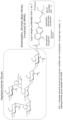
- the glycan labeling reagent is a reagent having the formula:
- the high purity chromatographic material further comprises a chromatographic core material.
- the hydrophobic surface group of the HPCM is a C4 to C30 bonded phase, an aromatic, a phenylalkyl, a fluoro-aromatic, a phenylhexyl, a pentafluorophenylalkyl, or a chiral bonded phase.
- the secondary chromatographic separations device is a device is selected from the group consisting of a chromatographic column, a thin layer plate, a filtration membrane, a microfluidic separation device, a sample cleanup device, a solid support, a solid phase extraction device, a microchip separation device, and a microtiter plate.
- High Purity or “high purity chromatographic material” includes a material which is prepared form high purity precursors.
- high purity materials have reduced metal contamination and/or non-diminished chromatographic properties including, but not limited to, the acidity of surface silanols and the heterogeneity of the surface.
- the chromatographic surface material may be disposed on or bonded to or annealed to the chromatographic core in such a way that a discrete or distinct transition is discernable or may be bound to the chromatographic core in such a way as to blend with the surface of the chromatographic core resulting in a gradation of materials and no discrete internal core surface.
- the chromatographic surface material may be the same or different from the material of the chromatographic core and may exhibit different physical or physiochemical properties from the chromatographic core, including, but not limited to, pore volume, surface area, average pore diameter, carbon content or hydrolytic pH stability
- Suitable alkylthio groups include groups having 1 to about 12 carbon atoms, preferably from 1 to about 6 carbon atoms.
- alkylcarboxyl as used herein means an alkyl group, as defined above, having a carboxyl group attached thereto.
- alkoxy as used herein means an alkyl group, as defined above, having an oxygen atom attached thereto.
- Representative alkoxy groups include groups having 1 to about 12 carbon atoms, preferably 1 to about 6 carbon atoms, e.g. , methoxy, ethoxy, propoxy, tert-butoxy and the like.
- alkenyl and alkynyl refer to unsaturated aliphatic groups analogous to alkyls, but which contain at least one double or triple bond respectively. Suitable alkenyl and alkynyl groups include groups having 2 to about 12 carbon atoms, preferably from 1 to about 6 carbon atoms.
- substituents can include, for example, halogen, hydroxyl, alkylcarbonyloxy, arylcarbonyloxy, alkoxycarbonyloxy, aryloxycarbonyloxy, carboxylate, alkylcarbonyl, alkoxycarbonyl, aminocarbonyl, alkylthiocarbonyl, alkoxyl, phosphate, phosphonato, phosphinato, cyano, amino (including alkyl amino, dialkylamino, arylamino, diarylamino and alkylarylamino), acylamino (including alkylcarbonylamino, arylcarbonylamino, carbamoyl and ureido), amidino, imino, sulfhydryl, alkylthio, arylthio, thiocarboxylate, sulfate, sulfonato, sulfamoyl, sulfonamido, nitro, trifluoromethyl
- aralkyl is an alkyl substituted with an aryl, e.g., having 1 to 3 separate or fused rings and from 6 to about 18 carbon ring atoms, e.g ., phenylmethyl (benzyl).
- amino refers to an unsubstituted or substituted moiety of the formula -NRaRb, in which Ra and Rb are each independently hydrogen, alkyl, aryl, or heterocyclyl, or Ra and Rb, taken together with the nitrogen atom to which they are attached, form a cyclic moiety having from 3 to 8 atoms in the ring.
- amino includes cyclic amino moieties such as piperidinyl or pyrrolidinyl groups, unless otherwise stated.
- An “amino-substituted amino group” refers to an amino group in which at least one of Ra and Rb, is further substituted with an amino group.
- aromatic group includes unsaturated cyclic hydrocarbons containing one or more rings.
- Aromatic groups include 5- and 6-membered single-ring groups which may include from zero to four heteroatoms, for example, benzene, pyrrole, furan, thiophene, imidazole, oxazole, thiazole, triazole, pyrazole, pyridine, pyrazine, pyridazine and pyrimidine and the like.
- the aromatic ring may be substituted at one or more ring positions with, for example, a halogen, a lower alkyl, a lower alkenyl, a lower alkoxy, a lower alkylthio, a lower alkylamino, a lower alkylcarboxyl, a nitro, a hydroxyl, -CF3, -CN, or the like.
- aryl includes 5- and 6-membered single-ring aromatic groups that may include from zero to four heteroatoms, for example, unsubstituted or substituted benzene, pyrrole, furan, thiophene, imidazole, oxazole, thiazole, triazole, pyrazole, pyridine, pyrazine, pyridazine and pyrimidine and the like.
- Aryl groups also include polycyclic fused aromatic groups such as naphthyl, quinolyl, indolyl and the like. The aromatic ring can be substituted at one or more ring positions with such substituents, e.g ., as described above for alkyl groups.
- Suitable aryl groups include unsubstituted and substituted phenyl groups.
- aryloxy as used herein means an aryl group, as defined above, having an oxygen atom attached thereto.
- aralkoxy as used herein means an aralkyl group, as defined above, having an oxygen atom attached thereto. Suitable aralkoxy groups have 1 to 3 separate or fused rings and from 6 to about 18 carbon ring atoms, e.g., O-benzyl.
- ceramic precursor is intended include any compound that results in the formation of a ceramic material.
- Chiral moiety is intended to include any functionality that allows for chiral or stereoselective syntheses.
- Chiral moieties include, but are not limited to, substituent groups having at least one chiral center, natural and unnatural amino-acids, peptides and proteins, derivatized cellulose, macrocyclic antibiotics, cyclodextrins, crown ethers, and metal complexes.
- embedded polar functionality is a functionality that provides an integral polar moiety such that the interaction with basic samples due to shielding of the unreacted silanol groups on the silica surface is reduced.
- Embedded polar functionalities include, but are not limited to carbonate, amide, urea, ether, thioether, sulfinyl, sulfoxide, sulfonyl, thiourea, thiocarbonate, thiocarbamate, ethylene glycol, heterocyclic, triazole functionalities or carbamate functionalities such as disclosed in U. S. Patent No. 5,374,755 , and chiral moieties.
- chromatographically-enhancing pore geometry includes the geometry of the pore configuration of the presently-disclosed materials, which has been found to enhance the chromatographic separation ability of the material, e.g ., as distinguished from other chromatographic media in the art.
- a geometry can be formed, selected or constructed, and various properties and/or factors can be used to determine whether the chromatographic separations ability of the material has been "enhanced", e.g., as compared to a geometry known or conventionally used in the art. Examples of these factors include high separation efficiency, longer column life and high mass transfer properties (as evidenced by, e.g., reduced band spreading and good peak shape.) These properties can be measured or observed using art-recognized techniques.
- the chromatographically-enhancing pore geometry of the present porous inorganic/organic hybrid materials is distinguished from the prior art materials by the absence of "ink bottle” or "shell shaped" pore geometry or morphology, both of which are undesirable because they, e.g., reduce mass transfer rates, leading to lower efficiencies.
- Chromatographically-enhancing pore geometry is found in hybrid materials containing only a small population of micropores.
- a small population of micropores is achieved in hybrid materials when all pores of a diameter of about ⁇ 34 ⁇ contribute less than about 110 m 2 /g to the specific surface area of the material.
- Hybrid materials with such a low micropore surface area give chromatographic enhancements including high separation efficiency and good mass transfer properties (as evidenced by, e.g., reduced band spreading and good peak shape).
- Micropore surface area (MSA) is defined as the surface area in pores with diameters less than or equal to 34 ⁇ , determined by multipoint nitrogen sorption analysis from the adsorption leg of the isotherm using the BJH method. As used herein, the acronyms "MSA" and “MPA” are used interchangeably to denote "micropore surface area”.
- the term "functionalizing group” includes organic functional groups which impart a certain chromatographic functionality to a chromatographic stationary phase.
- heterocyclic group includes closed ring structures in which one or more of the atoms in the ring is an element other than carbon, for example, nitrogen, sulfur, or oxygen.
- Heterocyclic groups can be saturated or unsaturated and heterocyclic groups such as pyrrole and furan can have aromatic character. They include fused ring structures such as quinoline and isoquinoline. Other examples of heterocyclic groups include pyridine and purine.
- Heterocyclic groups can also be substituted at one or more constituent atoms with, for example, a halogen, a lower alkyl, a lower alkenyl, a lower alkoxy, a lower alkylthio, a lower alkylamino, a lower alkylcarboxyl, a nitro, a hydroxyl, -CF3, -CN, or the like.
- Suitable heteroaromatic and heteroalicyclic groups generally will have 1 to 3 separate or fused rings with 3 to about 8 members per ring and one or more N, O or S atoms, e.g.
- metal oxide precursor includes any compound that contains a metal and results in the formation of a metal oxide, e.g ., alumina, silica, titanium oxide, zirconium oxide.
- the term "monolith” is intended to include a collection of individual particles packed into a bed formation, in which the shape and morphology of the individual particles are maintained.
- the particles are advantageously packed using a material that binds the particles together.
- Any number of binding materials that are well known in the art can be used such as, for example, linear or cross-linked polymers of divinylbenzene, methacrylate, urethanes, alkenes, alkynes, amines, amides, isocyanates, or epoxy groups, as well as condensation reactions of organoalkoxysilanes, tetraalkoxysilanes, polyorganoalkoxysiloxanes, polyethoxysiloxanes, and ceramic precursors.
- the term “monolith” also includes hybrid monoliths made by other methods, such as hybrid monoliths detailed in US Patent No. 7,250,214 ; hybrid monoliths prepared from the condensation of one or more monomers that contain 0-99 mole percent silica (e.g., SiO 2 ); hybrid monoliths prepared from coalesced porous inorganic/organic particles; hybrid monoliths that have a chromatographically-enhancing pore geometry; hybrid monoliths that do not have a chromatographically-enhancing pore geometry; hybrid monoliths that have ordered pore structure; hybrid monoliths that have non-periodic pore structure; hybrid monoliths that have non-crystalline or amorphous molecular ordering; hybrid monoliths that have crystalline domains or regions; hybrid monoliths with a variety of different macropore and mesopore properties; and hybrid monoliths in a variety of different aspect ratios.
- the term “monolith” also includes inorganic monoliths, such as those described in G.
- nanoparticle is a microscopic particle/grain or microscopic member of a powder/nanopowder with at least one dimension less than about 100 nm, e.g., a diameter or particle thickness of less than about 100 nm (0.1 mm), which may be crystalline or noncrystalline. Nanoparticles have properties different from, and often superior to those of conventional bulk materials including, for example, greater strength, hardness, ductility, sinterability, and greater reactivity among others. Considerable scientific study continues to be devoted to devoted to determining the properties of nanomaterials, small amounts of which have been synthesized (mainly as nano-size powders) by a number of processes including colloidal precipitation, mechanical grinding, and gas-phase nucleation and growth.
- the nanoparticles comprise oxides or nitrides of the following: silicon carbide, aluminum, diamond, cerium, carbon black, carbon nanotubes, zirconium, barium, cerium, cobalt, copper, europium, gadolinium, iron, nickel, samarium, silicon, silver, titanium, zinc, boron, and mixtures thereof.
- the nanoparticles of the present invention are selected from diamonds, zirconium oxide (amorphous, monoclinic, tetragonal and cubic forms), titanium oxide (amorphous, anatase, brookite and rutile forms), aluminum (amorphous, alpha, and gamma forms), and boronitride (cubic form).
- the nanoparticles of the present invention are selected from nano-diamonds, silicon carbide, titanium dioxide (anatase form), cubic-boronitride, and any combination thereof.
- the nanoparticles may be crystalline or amorphous.
- the nanoparticles are less than or equal to 100 mm in diameter, e.g., less than or equal to 50 mm in diameter, e.g., less than or equal to 20 mm in diameter.
- nanoparticles that are characterized as dispersed within the composites of the invention are intended to describe exogenously added nanoparticles. This is in contrast to nanoparticles, or formations containing significant similarity with putative nanoparticles, that are capable of formation in situ, wherein, for example, macromolecular structures, such as particles, may comprise an aggregation of these endogenously created.
- substantially disordered refers to a lack of pore ordering based on x-ray powder diffraction analysis. Specifically, “substantially disordered” is defined by the lack of a peak at a diffraction angle that corresponds to a d value (or d-spacing) of at least 1 nm in an x-ray diffraction pattern.
- “Surface modifiers” include (typically) organic functional groups which impart a certain chromatographic functionality to a chromatographic stationary phase.
- the porous inorganic/organic hybrid materials possess both organic groups and silanol groups which may additionally be substituted or derivatized with a surface modifier.
- surface modified is used herein to describe the composite material of the present invention that possess both organic groups and silanol groups which may additionally be substituted or derivatized with a surface modifier.
- Surface modifiers include (typically) organic functional groups which impart a certain chromatographic functionality to a chromatographic stationary phase. Surface modifiers such as disclosed herein are attached to the base material, e.g ., via derivatization or coating and later crosslinking, imparting the chemical character of the surface modifier to the base material.
- the organic groups of a hybrid material react to form an organic covalent bond with a surface modifier.
- the modifiers can form an organic covalent bond to the material's organic group via a number of mechanisms well known in organic and polymer chemistry including but not limited to nucleophilic, electrophilic, cycloaddition, free-radical, carbene, nitrene, and carbocation reactions.
- Organic covalent bonds are defined to involve the formation of a covalent bond between the common elements of organic chemistry including but not limited to hydrogen, boron, carbon, nitrogen, oxygen, silicon, phosphorus, sulfur, and the halogens.
- carbon-silicon and carbon-oxygen-silicon bonds are defined as organic covalent bonds, whereas silicon-oxygen-silicon bonds that are not defined as organic covalent bonds.
- a variety of synthetic transformations are well known in the literature, see, e.g., March, J. Advanced Organic Chemistry, 3rd Edition, Wiley, New York, 1985 .
- mother sample includes any sample including one or more glycans, including, but not limited to, a sample derived from a biological fluid selected from the group consisting of blood, urine, spinal fluid, synovial fluid, sputum, semen, saliva, tears, gastric juices and extracts and/or dilutions/solutions thereof, which is subjected to chromatographic or other separation means prior to obtain a sample for isolation, separation, purification, or detection by the materials and methods of the invention.
- a biological fluid selected from the group consisting of blood, urine, spinal fluid, synovial fluid, sputum, semen, saliva, tears, gastric juices and extracts and/or dilutions/solutions thereof, which is subjected to chromatographic or other separation means prior to obtain a sample for isolation, separation, purification, or detection by the materials and methods of the invention.
- Chromatographic separations device includes any device capable of performing a chromatographic separation, including, but not limited to, a chromatographic column, a thin layer plate, a filtration membrane, a microfluidic separation device, a sample cleanup device, a solid support, a solid phase extraction device, a microchip separation device, and a microtiter plate.
- secondary chromatographic separations means includes chromatographic separations devices and chromatographic materials comprised by chromatographic separation devices.
- a secondary chromatographic separations means is a separate or additional chromatographic separation device than the chromatographic separations device utilized in the methods of the invention.
- the secondary chromatographic separations means is a separate or additional chromatographic material housed by the same chromatographic separations device utilized in the methods of the invention.
- HPCM high purity chromatographic material
- the HPCM may further comprise a chromatographic core material.
- the chromatographic core is a silica material; a hybrid inorganic/organic material; a superficially porous material; or a superficially porous particle.
- the chromatographic core material may be in the form of discrete particles or may be a monolith.
- the chromatographic core material may be any porous material and may be commercially available or may be produced by known methods, such as those methods described in, for example, in U.S. Patent Nos. 4,017,528 , 6,528,167 , 6,686,035 and 7,175,913 .
- the chromatographic core material may be a non-porous core.
- composition of the chromatographic surface material and the chromatographic core material may be varied by one of ordinary skill in the art to provide enhanced chromatographic selectivity, enhanced column chemical stability, enhanced column efficiency, and/or enhanced mechanical strength.
- composition of the surrounding material provides a change in hydrophilic/lipophilic balance (HLB), surface charge (e.g. , isoelectric point or silanol pKa), and/or surface functionality for enhanced chromatographic separation.
- HLB hydrophilic/lipophilic balance
- surface charge e.g. , isoelectric point or silanol pKa
- the composition of the chromatographic material may also provide a surface functionality available for further surface modification.
- the ionizable modifiers and the hydrophobic surface groups of the HPCMs can be prepared using known methods.
- Some of the ionizable modifier reagents are commercially available.
- silanes having amino alkyl trialkoxysilanes, methyl amino alkyl trialkoxysilanes, and pyridyl alkyl trialkoxysilanes are commercially available.
- Other silanes such as chloropropyl alkyl trichlorosilane and chloropropyl alkyl trialkoxysilane are also commercially available.
- acidic modifiers are also commercially available, including, but not limited to, sulfopropyltrisilanol, carboxyethylsilanetriol, 2-(carbomethoxy)ethylmethyldichlorosilane, 2-(carbomethoxy)ethyltrichlorosilane, 2-(carbomethoxy)ethyltrimethoxysilane, n-(trimethoxysilylpropyl)ethylenediamine, triacetic acid, (2-diethylphosphatoethyl)triethoxysilane, 2-(chlorosulfonylphenyl)ethyltrichlorosilane, and 2-(chlorosulfonylphenyl)eth
- isocyanates are also commercially available or can be synthesized by one skilled in the art.
- a common isocyanate forming protocol is the reaction of a primary amine with phosgene or a reagent known as Triphosgene.
- the ionizable modifier may contain a carboxylic acid group, a sulfonic acid group, a phosphoric acid group, a boronic acid group, an amino group, an imido group, an amido group, a pyridyl group, an imidazolyl group, an ureido group, a thionyl-ureido group, an amidino group, a guanidine group, or an aminosilane group.
- the ionizable modifier reagent may be selected from groups formula (I) the formula (II): the formula (III): wherein
- the inoizable modifier may be aminopropyltriethoxysilane, aminopropyltrimethoxysilane, 2-(2-(trichlorosilyl)ethyl)pyridine, 2-(2-(trimethoxy)ethyl)pyridine, 2-(2-(triethoxy)ethyl)pyridine, 2-(4-pyridylethyl)triethoxysilane, 2-(4-pyridylethyl)trimethoxysilane, 2-(4-pyridylethyl)trichlorosilane, chloropropyltrimethoxysilane, chloropropyltrichlorosilane, chloropropyltrichlorosilane, chloropropyltriethoxysilane, imidazolylpropyltrimethoxysilane, imidazolylpropyltriethoxysilane, imidazolylpropyltriethoxysilane, imidazoly
- the acidic ionizable modifiers may be a protected or deprotected forms of trisilanol, trialkoxysilane or trichlorosilane; or a salt of sulfonic acid alkyl silanes, sulfonic acid phenylalkyl silanes, sulfonic acid benzylalkyl silanes, sulfonic acid phenyl silanes, sulfonic acid benzyl silanes, carboxylic acid alkyl silanes, carboxylic acid phenylalkyl silanes, carboxylic acid benzylalkyl silanes, carboxylic acid phenyl silanes, carboxylic acid benzyl silanes, phosphoric acid alkyl silanes, phosphonic acid phenylalkyl silanes, phosphonic acid benzylalkyl silanes, phosphonic acid phenyl silanes, phosphonic acid phenyl silanes
- the acidic ionizable modifiers may be a protected or deprotected version or a salt of sulfonic acid alkyl isocyanates, sulfonic acid phenylalkyl isocyanates, sulfonic acid benzylalkyl isocyanates, sulfonic acid phenyl isocyanates, sulfonic acid benzyl isocyanates carboxylic acid alkyl isocyanates, carboxylic acid phenylalkyl isocyanates, carboxylic acid benzylalkyl isocyanates, carboxylic acid phenyl isocyanates, carboxylic acid benzyl isocyanates, phosphoric acid alkyl isocyanates, phosphonic acid phenylalkyl isocyanates, phosphonic acid benzylalkyl isocyanates, phosphonic acid phenyl isocyanates, phosphonic acid benzyl isocyanates, phosphonic acid benzyl is
- A may represent a dual charge ionizable modifier moiety. While not limited to theory; the dual charge ionizable modifier moiety has two sub-groups that can display opposite charges. Under some conditions the dual charge ionizable modifier moiety can act similarly to a zwitterions and ampholytes to display both a positive and negative charge and maintain a zero net charge. Under other conditions the dual charge ionizable modifier moiety may only have one group ionized and may display a net positive or negative charge.
- Dual charge ionizable modifier moieties include, but are not limited to, alkyl, branched alkyl, aryl, cyclic, polyaromatic, polycyclic, hertocyclic and polyheterocyclic groups that can display a positive charge (commonly on a nitrogen or oxygen atom), and a negative charge through an acidic group that includes a carboxylic, sulfonic, phosphonic or boronic acid.
- some metal containing complexes can display both positive and negative charges.
- Dual charge ionizable modifier moieties may also include, but are not limited to zwitterions, ampholyte, amino acid, aminoalkyl sulfonic acid, aminoalkyl carboxylic acid, mono and di-methylaminoalkyl sulfonic acid, mono and di-methylaminoalkyl carboxylic acid, pyridinium alkyl sulfonic acid, and pyridinium alkyl carboxylic acid groups.
- the dual charge ionizable modifier moiety may be 2-(N-morpholino)ethanesulfonic acid, 3-(N-morpholino)propanesulfonic acid, 4-(2-hydroxyethyl)-1-piperazine ethanesulfonic acid), piperazine-N,N'-bis(2-ethanesulfonic acid), N-cyclohexyl-3-aminopropanesulfonic acid, N-cyclohexyl-2-hydroxyl-3-aminopropanesulfonic acid, 3-[(3-cholamidopropyl)dimethylammonio]-1-propanesulfonate, 6-Methyl-9,10-didehydro-ergoline-8-carboxylic acid, phenolsulfonphthalein, betaines, quinonoids, N,N-bis(2-hydroxyethyl)glycine, and N-[tris(hydroxymethyl)methyl]glycine groups.
- a charged surface reversed phase material in which a HPCM weakly basic, ionizable modifier (pKa ⁇ 7) is replaced with a strongly basic ionizable modifier (pKa>7). Without changing the coverage of the ionizable modifier, a charged surface reversed phase material with different physicochemical properties can thereby be obtained.
- phase 1A utilizes a diethylaminoethyl, dimethylaminoethyl, dimethylaminopropyl, dimethylaminoethyl, or diethylaminopropyl (DEAP) modifier; C18 bonding; and subsequent endcapping (Example 1, Phase 1A).
- DEMP diethylaminopropyl
- the ratio of the hydrophobic surface group : ionizable modifier in the HPCM of the invention is from about 4:1 to about 150:1; from about 20:1 to about 100:1; or from about 25:1 to about 100:1.
- the concentration of ionizable modifier in the HPCM of the invention is less than about 0.5 ⁇ mol/m 2 ; less than about 0.4 ⁇ mol/m 2 ; less than about 0.3 ⁇ mol/m 2 ; from about 0.01 ⁇ mol/m 2 to about 0.5 ⁇ mol/m 2 ; from about 0.1 ⁇ mol/m 2 to about 0.4 ⁇ mol/m 2 ; or from about 0.2 ⁇ mol/m 2 to about 0.3 ⁇ mol/m 2 .
- the HPCM of the invention has a quantified surface coverage ratio, B/A, from about 2.5 to about 300 wherein A represents the ionizable modifier and B represents the hydrophobic group.
- the quantified surface coverage ratio, B/A is from about 3 to about 200, from about 4 to about 35 or from about 5 to about 22.
- the hydrophobic surface group of the HPCM of the invention is a C4 to C18 bonded phase. In certain aspects, the hydrophobic surface group is a C18 bonded phase. In still other aspects, the hydrophobic surface group is an embedded polar bonded phase. In other aspects, the hydrophobic surface group is an aromatic, phenylalkyl, fluoro-aromatic, phenylhexyl, or pentafluorophenylalkyl bonded phase. In another aspect, the hydrophobic surface group is a C 4 -C 30 , embedded polar, chiral, phenylalkyl, or pentafluorophenyl bonding or coating.
- the HPCM of the invention may be in the form of a particle, a monolith or a superficially porous material. In certain other aspects, the HPCM of the invention is a non-porous material.
- the HPCM of the invention may be an inorganic material (e.g., silica,), a hybrid organic/inorganic material, an inorganic material (e.g., silica) with a hybrid surface layer, a hybrid particle with a inorganic (e.g., silica) surface layer, or a hybrid particle with a different hybrid surface layer.
- an inorganic material e.g., silica,
- a hybrid organic/inorganic material e.g., an inorganic material with a hybrid surface layer
- an inorganic material e.g., silica
- an inorganic material e.g., silica
- a hybrid particle with a inorganic (e.g., silica) surface layer e.g., silica) surface layer
- a hybrid particle with a different hybrid surface layer e.g., silica
- the HPCM of the invention does not have chromatographically enhancing pore geometry. In another aspect, the HPCM of the invention has chromatographically enhancing pore geometry.
- the HPCM of the invention has a surface area of about 25 to 1100 m 2 /g; about 80 to 500 m 2 /g; or about 120 to 330 m 2 /g.
- the HPCM of the invention a pore volume of about 0.15 to 1.7 cm 3 /g; or about 0.5 to 1.3 cm 3 /g.
- the HPCM of the invention is non-porous.
- the HPCM of the invention has a micropore surface area of less than about 110 m 2 /g; less than about 105 m 2 /g; less than about 80 m 2 /g; or less than about 50 m 2 /g.
- the HPCM of the invention has an average pore diameter of about 20 to 1500 ⁇ ; about 50 to 1000 ⁇ ; about 100 to 750 ⁇ ; or about 150 to 500 ⁇ .
- the HPCM of the invention is hydrolytically stable at a pH of about 1 to about 14; at a pH of about 10 to about 14; or at a pH of about 1 to about 5.
- the invention provides materials as described herein wherein the HPCM material further comprises a nanoparticle or a mixture of more than one nanoparticles dispersed within the chromatographic surface.
- the nanoparticle is present in ⁇ 20% by weight of the nanocomposite, ⁇ 10% by weight of the nanocomposite, or ⁇ 5% by weight of the nanocomposite.
- the nanoparticle is crystalline or amorphous and may be silicon carbide, aluminum, diamond, cerium, carbon black, carbon nanotubes, zirconium, barium, cerium, cobalt, copper, europium, gadolinium, iron, nickel, samarium, silicon, silver, titanium, zinc, boron, oxides thereof, or a nitride thereof.
- the nanoparticle is a substance which comprises one or more moieties selected from the group consisting of nano-diamonds, silicon carbide, titanium dioxide, and cubic-boronitride.
- the nanoparticles may be less than or equal to 200 nm in diameter, less than or equal to 100 nm in diameter, less than or equal to 50 nm in diameter, or less than or equal to 20 nm in diameter.
- HPCM materials of the invention may further be surface modified.
- the materials have been surface modified by coating with a polymer.
- R' is selected from the group consisting of methyl, ethyl, propyl, isopropyl, butyl, t-butyl, sec-butyl, pentyl, isopentyl, hexyl and cyclohexyl.
- R' is selected from the group consisting of alkyl, alkenyl, alkynyl, aryl, cyano, amino, diol, nitro, ester, a cation or anion exchange group, an alkyl or aryl group containing an embedded polar functionality and a chiral moiety.
- R' is selected from the group consisting of aromatic, phenylalkyl, fluoroaromatic, phenylhexyl, pentafluorophenylalkyl and chiral moieties.
- R" is a C 1 - C 30 alkyl group. In a further embodiment, R" comprises a chiral moiety. In another further embodiment, R" is a C 1 - C 20 alkyl group.
- the surface modifier comprises an embedded polar functionality.
- embedded polar functionality includes carbonate, amide, urea, ether, thioether, sulfinyl, sulfoxide, sulfonyl, thiourea, thiocarbonate, thiocarbamate, ethylene glycol, heterocyclic, or triazole functionalities.
- such embedded polar functionality includes carbamate functionalities such as disclosed in U. S. Patent No. 5,374,755 , and chiral moieties.
- Such groups include those of the general formula wherein l, m, o, r and s are 0 or 1, n is 0, 1, 2 or 3 p is 0, 1, 2, 3 or 4 and q is an integer from 0 to 19; R 3 is selected from the group consisting of hydrogen, alkyl, cyano and phenyl; and Z, R', a and b are defined as above.
- the carbamate functionality has the general structure indicated below: wherein R 5 may be, e.g., cyanoalkyl, t-butyl, butyl, octyl, dodecyl, tetradecyl, octadecyl, or benzyl.
- R 5 is octyl, dodecyl, or octadecyl.
- the surface modifier is selected from the group consisting of phenylhexyltrichlorosilane, pentafluorophenylpropyltrichlorosilane, octyltrichlorosilane, octadecyltrichlorosilane, octyldimethylchlorosilane and octadecyldimethylchlorosilane.
- the surface modifier is selected from the group consisting of octyltrichlorosilane and octadecyltrichlorosilane.
- the surface modifier is selected from the group consisting of an isocyanate or 1,1'-carbonyldiimidazole (particularly when the hybrid group contains a (CH 2 ) 3 OH group).
- the material has been surface modified by a combination of organic group and silanol group modification.
- the material has been surface modified by a combination of organic group modification and coating with a polymer.
- the organic group comprises a chiral moiety.
- the material has been surface modified by a combination of silanol group modification and coating with a polymer.
- the material has been surface modified via formation of an organic covalent bond between the particle's organic group and the modifying reagent.
- the material has been surface modified by a combination of organic group modification, silanol group modification and coating with a polymer.
- the material has been surface modified by silanol group modification.
- the surface modified layer may be porous or non-porous.
- Another aspect of the invention is the use of a labeling reagent which is capable of providing amphipathic and strongly basic labeling moieties to a sample to be analyzed.
- a variety of labeling reagents may be used to provide the desired moieties for analysis and separation.
- the glycan labeling reagent of the invention provides an amphipatic, strongly basic moiety having Log P values between 0 and 5; between 0 and 3; between 1 and 5; or between 1 and 3. In certain embodiments, the glycan labeling reagent of the invention provides an amphipatic, strongly basic moiety having pKa values greater than 6; greater than 7; or greather than 8.
- the labeling reagent is an MS active, rapid fluorescence tagging compound which providesa a moiet of the structural Formula:
- the compounds of the formulas described herein may have optical centers and therefore may occur in different enantiomeric and disastereomeric configurations.
- the invention described herein includes all enantiomers, diastereomers and other stereoisomers of such compounds of each formula, as well as racemic compounds and racemic mixtures and other mixtures of stereoisomers thereof.
- a hydrogen bond is an electromagnetic attractive interaction between polar molecules, where hydrogen is bonded to an electronegative atom such as nitrogen or oxygen.
- the hydrogen bond represents a strong dipole-dipole attraction. These hydrogen-bond attractions can occur between molecules (intermolecular) or within different parts of a single molecule (intramolecular).
- a hydrogen atom is attached to an electronegative atom, it is considered a hydrogen bond donor.
- the electronegative atom is considered a hydrogen bond acceptor, whether it is bonded to a hydrogen atom or not.
- Individual stereoisomers of compounds can be prepared synthetically from commercially available starting materials which contain chiral centers or by preparation of mixtures of enantiomeric products followed by separation such as conversion to a mixture of diastereomers followed by separation or recrystallization, chromatographic techniques, direct separation of enantiomers on chiral chromatographic columns, or any other appropriate method known in the art.
- Starting compounds of particular stereochemistry are either commercially available or can be made and resolved by techniques known in the art.
- the compounds of the present invention may exist as geometric isomers.
- the present invention includes all cis, trans, syn, anti,
- compounds may exist as tautomers; all tautomeric isomers are provided by this invention.
- the compounds of the present invention can exist in unsolvated as well as solvated forms with pharmaceutically acceptable solvents such as water, ethanol, and the like. In general, the solvated forms are considered equivalent to the unsolvated forms for the purposes of the present invention.
- the compounds described herein can also be in the form of a salt or solvate, in particular acid addition salts.
- a salt for example, in acid-base neutralization, an acid and a base react to form water and a salt. Basically, to react together, there must be the transfer of protons between acids and bases.
- different acids can produce different ions. For example, an Arrhenius acid produces hydronium ions when it dissociates in water.
- a Bronsted-Lowry acid is a proton donor that donates hydrogen ions to the base.
- proton acceptors and proton donors are the basis for the reaction and are referred to sometimes as a conjugate base or a conjugate acid.
- a conjugate pair refers to acids and bases with common features, where there is an equal loss/gain of protons between the pairs.
- NH4 + is the conjugate acid to the base NH3 because NH3 gains a hydrogen ion to form NH4 + as H2O donates a hydrogen ion to form OH-, the conjugate base.
- a Lewis acid accepts an electron pair and a Lewis base donates an electron pair donor.
- the proton H+ can be an electron pair acceptor.
- a compound can be both, a Lewis acid and a Lewis base, depending on the reaction.
- methyl iodide can behave as both, a Lewis acid and a Lewis base, where the methyl group is donated to form a salt.
- acids which can be employed to form a salt of any of the compounds provided herein include inorganic acids and organic acids as well known to those skilled in the art such as, but not limited to, N-hydroxysuccinimide, hydrochloric, hydrofluoric, hydroiodic, hydrobromic, sulfuric, hydrosulfuric, thiosulfuric, hydrocyanic, phosphoric, phosphorous, hydrochlorous, chlorous, nitrous, nitric, chloric, perchloric, sulfurous, oxalic, maleic, succinic, and citric. Salts may also be formed by coordination of the compounds with an alkali metal or alkaline earth ion.
- acids can form a salt including, but not limited to, 1-hydroxy-2-naphthoic acid, 2,2-dichloroacetic acid, 2-hydroxyethanesulfonic acid, 2-oxoglutaric acid, 4-acetamidobenzoic acid, 4-aminosalicylic acid, acetic acid, adipic acid, ascorbic acid (L), aspartic acid (L), benzenesulfonic acid, benzoic acid, camphoric acid (+), camphor-10-sulfonic acid (+), capric acid (decanoic acid), caproic acid (hexanoic acid), caprylic acid (octanoic acid), carbonic acid, cinnamic acid, citric acid, cyclamic acid, dodecylsulfuric acid, ethane-1,2-disulfonic acid, ethanesulfonic acid, ethanesulfonic acid, formic acid, fumaric acid, galactaric acid, gent
- the counterion can be the conjugate base formed after reacting a compound or groups of compounds with an acid. In other words, counterion holds the opposite charge to that of the compound or compounds it is associated with.
- the counterion represents the anionic part of the salt.
- counterions of a salt compound described herein can include, but are not limited to, any of the following common anions and oxoanions: N-hydroxysuccinimidyl, hydride (H-), fluoride (F-), chloride (C-), bromide (Br-), iodide (I-), oxide (O2-), hydroxide (OH-), peroxide (O2 2-), sulfide (S2-), hydrogen sulfide (HS-), selenide (Se2-), nitride (N3-), azide (N3 -), phosphide (P3-), arsinide (As3-), carbide (C4-), cyanide (CN-), hypochlorite (ClO1 -), chlorite (ClO2 -), chlorate (ClO3 -), perchlorate (ClO4 -), sulfite (SO3 2-), sulfate (SO4 2-), hydrogen sulf
- the glycan labeling reagent is a reagent having the formula:
- the labeleing reagent is a procainamide or procaine reagent.
- the labeling reagent and their corresponding label moieties that are include, but not be limited to, labeling reagents and moieties described in United States patent application numbers 14/342,131 ; 14/193,418 , 14/458,760 ; and 15/005,619 ; and in United States Patent Nos. 5,296,599 ; 7,148,069 ; 7,494,815 ; and 8, 124,792.
- the labeling moiety is covalently bonded to the glycan through a secondary amine, urea, or amide linkage.
- the labeling reagent can be applied to either an N-glycan or an O-glycan such that an amphipathic, strongly basic labeling moiety is incorporated and that the chromatographic methods decribed herein can be advantageously used.
- HPCM materials described herein can be utilized in a variety of separation devices having a stationary phase comprising the HPCM materials.
- the separation devices include, e.g., chromatographic columns, thin layer plates, filtration membranes, sample cleanup devices and microtiter plates.
- HPCM materials impart to these devices improved lifetimes because of their improved stability.
- Such devices include:
- Another such device includes a chromatographic device, comprising
- the HPCM materials may also be utilized as a kit comprising the HPCM materials as described herein, and instructions for use.
- the kit may be for use with a separations device, e.g., chromatographic columns, thin layer plates, filtration membranes, sample cleanup devices and microtiter plates.
- the instructions may be for the separation, isolation, purification, or detection of one or more glycans.
- the disclosure provides methods for selectively isolating/separating, purifying, detecting and/or analyzing a glycan or mixture of glycans using the HPCM materials as described herein.
- the methods and the HPCM materials described herein may be utilized to selectively isolate/separate, purify, detect and/or analyze glycopeptides, glycoproteins, or glycolipids.
- the methods are capable of separating and thereby resolving complex mixtures of compounds, allowing rapid isolation/separation, purification, detection and/or analysis of component compounds of such mixtures.
- the disclosure provides a method for selectively isolating a glycan from a sample, the method comprising the steps of:
- the disclosure provides a method for separating a plurality of glycans from a sample, the method comprising the steps of:
- the disclosure provides a method for detecting a glycan in a sample, the method comprising the steps of:
- the glycan is an N-glycan or an O-glycan.
- the glycan is an hIgG glycan, a fetuin glycan, FA2BG2S2, FA2G2S1, or FA2G2.
- the glycan labeling reagent is an MS-active, rapid fluorescence tagging compound; a procainamide reagent or a procaine reagent.
- the glycan labeling reagent is a reagent having the formula:
- the methods can be used to selectively isolate, purify and/or detect glycans from a variety of samples.
- the sample is or is derived from a biological fluid selected from the group consisting of blood, urine, spinal fluid, synovial fluid, sputum, semen, saliva, tears, gastric juices and extracts and/or dilutions/solutions thereof.
- the sample comprises a biological mixture of compounds.
- the materials of the invention are found to produce significantly improved peak shape as compared to traditional chromatographic materials which do not utilize a charged surface.
- the materials of the invention are found to produce advantageous selectivity by way of producing coulombic interactions between their charged surface and the same or opposite charges of analyte molecules.
- the materials of the invention are found to mitigate non-specific binding issues associated with traditional chromatographic materials which do not utilize a charged surface. Such benefits, in particular, allow for the identification or confirmation by mass spectrometry of low abundant macromolecules because they are not lost to non-specific binding and are not obscured by the degraded peak shapes that have been shown for abundant species, with traditional chromatographic materials, with the increase in sample mass needed to see the low abundant species.
- the methods of the invention utilize a mobile phase in which separations coupled to ESI+MS detection yield high signal-to-noise mass spectra.
- mobile phases include, but are not limited to, mobile phases comprising buffer solutions having pH 1 to pH8; pH2 to pH7; or pH3 to pH6.
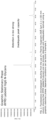
- buffering additives in the aqueous mobile phase of the separation can significantly modulate MS sensitivity, retentivity and selectivity ( FIG. 5 ).
- the aqueous mobile phase comprises a buffer solution of pH 3.6 - 1 mM ammonium formate/1mM formic acid.
- This solution is effective in yielding separations that show high resolution isomer separation as well as some class separation driven by analyte charge state. Nevertheless, as also shown in FIG. 6 , an aqueous mobile phase comprising 17 mM acetic acid and 1mM ammonium formate is also effective.
- the methods of the invention are performed under constant ionic strength conditions. This is evidenced in the separations of labeled glycans from bovine fetuin ( FIG. 6 ). These glycans are unique in being highly sialylated and highly branched. Without any ionic strength in the eluent mobile phase, tetrasialylated labeled glycans would not be expected to be eluted from a column of the invention.
- Use of an additive in the eluent mobile phase one that mirrors that of the aqueous mobile phase, facilitates the recovery of highly sialylated structures. As such, one embodiment of the invention utilizes the appropriate selection of additives along with optimization of gradient steepness. FIG.
- FIG 7 shows these example separations wherein labeled glycans from hIgG and bovine fetuin are analyzed.
- the chromatogram obtained for labeled hIgG glycans is noteworthy in showing high resolution clustering of the so-called neutral N-glycan structures (afucosylated species and fucosylated species with or without a bisecting N-acetyl glucosamine) along with a high degree of resolution between and among the multiple mono- and di-sialylated N-glycan species ( FIG 7A ).
- the chromatogram obtained for labeled fetuin glycans ( FIG 7B ) is notable for demonstrating that reasonable resolution can be obtained among glycans that contain three and four sialic acid residues.
- the HPCM of the invention is a stationary phase prepared with a diethylaminopropyl (DEAP) modifier, including but not limited to a 1.7 ⁇ m, 130 ⁇ average pore diameter material prepared from an organosilica particle, a diethylaminopropyl (DEAP) modifier; C18 bonding; and subsequent endcapping .
- DEP diethylaminopropyl
- Example 1A Phase 1A
- This 'DEAP" material Phase 1A, described in Example 1 has been evaluated for its ability to resolve glycans labeled with amphipathic, strongly basic moieties as described below.
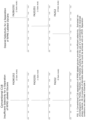
- the invention provides the analysis of labeled hIgG glycans with this DEAP stationary phase with simultaneous gradients that deliver increasing concentrations of both organic solvent and buffer ( FIG. 8 ).
- the magnitude of ionic strength change that is needed for these separations may be defined via separations of labeled glycans prepared from both hIgG and bovine fetuin ( FIG. 9 ).
- these separations are optimized with a gradient from 0 to 100 mM ammonium formate and 100 mM formic acid.
- HPCM high purity chromatographic materials
- the HPCM as described above is made with a charge ratio, B'/A', from about 3 to about 133 wherein A' represents the ionizable modifier reagent charged in the preparation and B' represents the hydrophobic group charged in the preparation.
- the charge ratio, B'/A' is from about 4 to about 80, from about 4 to about 15, or from about 6 to about 7.
- the methods described herein may further comprise the step of endcapping remaining silanol groups.
- the surfaces of the high purity chromatographic materials are modified with various agents.
- Such “surface modifiers” include (typically) organic functional groups which impart a certain chromatographic functionality to a chromatographic stationary phase.
- the HPCM when it is a hybrid material, it possesses possess both organic groups and silanol groups which may additionally be substituted or derivatized with a surface modifier.
- the surface of the hydrothermally treated high purity chromatographic materials contains organic groups, which can be derivatized by reacting with a reagent that is reactive towards the materials' organic group.
- a reagent that is reactive towards the materials' organic group For example, vinyl groups on the material can be reacted with a variety of olefin reactive reagents such as bromine (Br 2 ), hydrogen (H 2 ), free radicals, propagating polymer radical centers, dienes and the like.
- hydroxyl groups on the material can be reacted with a variety of alcohol reactive reagents such as isocyanates, carboxylic acids, carboxylic acid chlorides and reactive organosilanes as described below. Reactions of this type are well known in the literature, see, e.g., March, J. Advanced Organic Chemistry, 3rd Edition, Wiley, New York, 1985 ; Odian, G. The Principles of Polymerization, 2nd Edition, Wiley, New York, 1981 .
- the surface of the hydrothermally treated high purity chromatographic materials also contains silanol groups, which can be derivatized by reacting with a reactive organosilane.
- the surface derivatization of the high purity chromatographic materials is conducted according to standard methods, for example by reaction with octadecyltrichlorosilane or octadecyldimethylchlorosilane in an organic solvent under reflux conditions.
- An organic solvent such as toluene is typically used for this reaction.
- An organic base such as pyridine or imidazole is added to the reaction mixture to catalyze the reaction. The product of this reaction is then washed with water, toluene and acetone.
- This material can be further treated by hydrolysis in a pH modified aqueous organic solution at ambient or elevated temperatures.
- An organic solvent such as acetone is typically used for this hydrolysis.
- Modification of pH can be achieved using acid or base modifiers, including trifluoroacetic acid, formic acid, hydrochloric acid, acetic acid, sodium or ammonium formate, sodium, potassium or ammonium acetate, phosphate buffers, ammonium hydroxide, ammonium carbonate, or ammonium bicarbonate.
- the product of the hydrolysis is then washed with water, toluene and acetone and dried at 80°C to 100°C under reduced pressure for 16 h.
- the resultant materials can be further reacted with a short-chain silane such as trimethylchlorosilane to endcap the remaining silanol groups, by using a similar procedure described above.
- Surface modifiers such as disclosed herein are attached to the base material, e.g., via derivatization or coating and later crosslinking, imparting the chemical character of the surface modifier to the base material.
- the organic groups of the high purity chromatographic materials react to form an organic covalent bond with a surface modifier.
- the modifiers can form an organic covalent bond to the materials organic group via a number of mechanisms well known in organic and polymer chemistry including but not limited to nucleophilic, electrophilic, cycloaddition, free-radical, carbene, nitrene and carbocation reactions.
- Organic covalent bonds are defined to involve the formation of a covalent bond between the common elements of organic chemistry including but not limited to hydrogen, boron, carbon, nitrogen, oxygen, silicon, phosphorus, sulfur and the halogens.
- carbon-silicon and carbon-oxygen-silicon bonds are defined as organic covalent bonds, whereas silicon-oxygen-silicon bonds that are not defined as organic covalent bonds.
- the term "functionalizing group” includes organic functional groups which impart a certain chromatographic functionality to a chromatographic stationary phase, including, e.g., octadecyl (C 18 ) or phenyl. Such functionalizing groups are incorporated into base material directly, or present in, e.g., surface modifiers such as disclosed herein which are attached to the base material, e.g., via derivatization or coating and later crosslinking, imparting the chemical character of the surface modifier to the base material.
- silanol groups are surface modified.
- organic groups are surface modified.
- the high purity chromatographic materials' organic groups and silanol groups are both surface modified or derivatized.
- the high purity chromatographic materials are surface modified by coating with a polymer.
- surface modification by coating with a polymer is used in conjunction with silanol group modification, organic group modification, or both silanol and organic group modification.
- the ionizable modifier may be added to the material by silanol group modification, organic group modification, or by both silanol and organic group modification.
- the hydrophobic surface group may be added to the material by silanol group modification, organic group modification, or by both silanol and organic group modification.
- such materials have been surface modified by coating with a polymer.
- R' includes, e.g., methyl, ethyl, propyl, isopropyl, butyl, t-butyl, sec-butyl, pentyl, isopentyl, hexyl or cyclohexyl; preferably, R' is methyl.
- the functionalizing group R" may include alkyl, alkenyl, alkynyl, aryl, cyano, amino, diol, nitro, ester, cation or anion exchange groups, an alkyl or aryl group containing an embedded polar functionalities or chiral moieties.
- R" functionalizing groups include chiral moieties, C1-C30 alkyl, including C1-C20, such as octyl (C 8 ), octadecyl (C 18 ) and triacontyl (C 30 ); alkaryl, e.g., C 1 -C 4 -phenyl; cyanoalkyl groups, e.g., cyanopropyl; diol groups, e.g., propyldiol; amino groups, e.g., aminopropyl; and alkyl or aryl groups with embedded polar functionalities, e.g., .carbonate, amide, urea, ether, thioether, sulfinyl, sulfoxide, sulfonyl, thiourea, thiocarbonate, thiocarbamate, ethylene glycol, heterocyclic, and triazole functionalities or carbamate functionalities such as disclosed in
- R" is selected from the group consisting of aromatic, phenylalkyl, fluoroaromatic, phenylhexyl, pentafluorophenylalkyl and chiral moieties.
- groups include those of the general formula wherein l, m, o, r and s are 0 or 1, n is 0, 1, 2 or 3 p is 0, 1, 2, 3 or 4 and q is an integer from 0 to 19;
- R 3 is selected from the group consisting of hydrogen, alkyl, cyano and phenyl; and Z, R', a and b are defined as above.
- the carbamate functionality has the general structure indicated below: wherein R 5 may be, e.g., cyanoalkyl, t-butyl, butyl, octyl, dodecyl, tetradecyl, octadecyl, or benzyl.
- R 5 is octyl, dodecyl, or octadecyl.
- Polymer coatings are known in the literature and may be provided generally by polymerization or polycondensation of physisorbed monomers onto the surface without chemical bonding of the polymer layer to the support (type I), polymerization or polycondensation of physisorbed monomers onto the surface with chemical bonding of the polymer layer to the support (type II), immobilization of physisorbed prepolymers to the support (type III) and chemisorption of presynthesized polymers onto the surface of the support (type IV). see, e.g., Hanson, et al. , J. Chromat. A656 (1993) 369-380 . As noted above, coating the hybrid material with a polymer may be used in conjunction with various surface modifications described herein.
- the hydrophobic surface modifier is selected from the group consisting of phenylhexyltrichlorosilane, pentafluorophenylpropyltrichlorosilane, octyltrichlorosilane, octadecyltrichlorosilane, octyldimethylchlorosilane and octadecyldimethylchlorosilane.
- the surface modifier is selected from the group consisting of octyltrichlorosilane and octadecyltrichlorosilane.
- the high purity chromatographic materials have been surface modified by a combination of organic group and silanol group modification.
- the high purity chromatographic materials have been surface modified by a combination of organic group modification and coating with a polymer.
- the high purity chromatographic materials have been surface modified by a combination of silanol group modification and coating with a polymer.
- the high purity chromatographic materials have been surface modified via formation of an organic covalent bond between the hybrid cores' and/or surrounding material materials' organic group and the modifying reagent.
- the high purity chromatographic materials have been surface modified by a combination of organic group modification, silanol group modification and coating with a polymer.
- the high purity chromatographic materials have been surface modified by silanol group modification.
- a method wherein the high purity chromatographic materials are modified by further including a porogen is provided.
- the porogen is selected from the group consisting of cyclohexanol, toluene, mesitylene, 2-ethylhexanoic acid, dibutylphthalate, 1-methyl-2-pyrrolidinone, 1-dodecanol and Triton X-45.
- the porogen is toluene or mesitylene.
- a method wherein the high purity chromatographic materials are further modified by including a surfactant or stabilizer is provided.
- the surfactant is Triton X-45, Triton X100, Triton X305, TLS, Pluronic F-87, Pluronic P-105, Pluronic P-123, sodium dodecylsulfate (SDS), ammonia docecylsulfate, TRIS docecylsulfate, or Triton X-165.
- the surfactant is sodium dodecylsulfate (SDS), ammonia docecylsulfate, or TRIS docecylsulfate.
- HPCMs of the invention can be made using the exemplary protocols outlined in United States Patent Application No. 2013/0319086 .
- the %C, %H, %N values were measured by combustion analysis (CE-440 Elemental Analyzer; Morris Analytical Inc., North Chelmsford, MA) or %C by Coulometric Carbon Analyzer (modules CM5300, CM5014, UIC Inc., Joliet, IL).
- the specific surface areas (SSA), specific pore volumes (SPV) and the average pore diameters (APD) of these materials were measured using the multi-point N 2 sorption method (Micromeritics ASAP 2400; Micromeritics Instruments Inc., Norcross, GA).
- the SSA was calculated using the BET method, the SPV was the single point value determined for P/P 0 > 0.98 and the APD was calculated from the desorption leg of the isotherm using the BJH method.
- Scanning electron microscopic (SEM) image analyses were performed (JEOL JSM-5600 instrument, Tokyo, Japan) at 7 kV. Particle sizes were measured using a Beckman Coulter Multisizer 3 analyzer (30 ⁇ m aperture, 70,000 counts; Miami, FL). The particle diameter (dp) was measured as the 50% cumulative diameter of the volume based particle size distribution. The width of the distribution was measured as the 90% cumulative volume diameter divided by the 10% cumulative volume diameter (denoted 90 10 ratio).
- Multinuclear ( 13 C, 29 Si) CP-MAS NMR spectra were obtained using a Bruker Instruments Avance-300 spectrometer (7 mm double broadband probe). The spinning speed was typically 5.0-6.5 kHz, recycle delay was 5 sec. and the cross-polarization contact time was 6 msec. Reported 13 C and 29 Si CP-MAS NMR spectral shifts were recorded relative to tetramethylsilane using the external standards adamantane ( 13 C CP-MAS NMR, ⁇ 38.55) and hexamethylcyclotrisiloxane ( 29 Si CP-MAS NMR, ⁇ -9.62). Populations of different silicon environments were evaluated by spectral deconvolution using DMFit software.
- % C values were measured by Coulometric Carbon Analyzer (modules CM5300, CM5014, UIC Inc., Joliet, IL).
- the specific surface areas (SSA), specific pore volumes (SPV) and the average pore diameters (APD) of these materials were measured using the multi-point N 2 sorption method (Micromeritics ASAP 2400; Micromeritics Instruments Inc., Norcross, GA).
- the SSA was calculated using the BET method, the SPV was the single point value determined for P/P 0 > 0.98 and the APD was calculated from the desorption leg of the isotherm using the BJH method.
- Particle sizes were measured using a Beckman Coulter Multisizer 3 analyzer (30 ⁇ m aperture, 70,000 counts; Miami, FL).
- the particle diameter (dp) was measured as the 50% cumulative diameter of the volume based particle size distribution.
- Total surface coverages of the octadecyltrichlorosilane were determined by the difference in particle %C before and after the surface modification as measured by elemental analysis.
- N-glycans labeled in accordance with the claimed invention were prepared from Labeling Reagent-1 (RFMS) from human IgG (Sigma I4506) according to previously published conditions.
- RFMS Labeling Reagent-1
- human IgG Human IgG
- Polarity ES+ Acquisition 700-2000 m/z (1 Hz) Capillary (kV) 3 Source Temperature (°C) 100 Sampling Cone 30 Source Offset 50 Desolvation Temperature (°C) 300 Desolvation Gas Flow (L/Hr) 800 Nebuliser Gas Flow (Bar) 7.0
- Polarity ES+ Acquisition 700-2000 m/z (1 Hz) Capillary (kV) 3 Source Temperature (°C) 100 Sampling Cone 30 Source Offset 50 Desolvation Temperature (°C) 300 Desolvation Gas Flow (L/Hr) 800 Nebuliser Gas Flow (Bar) 7.0
- Labeled N-glycans were prepared from bovine fetuin (Sigma F3004) according to a previously published protocol ( Lauber, M. A.; Yu, Y. Q.; Brousmiche, D. W.; Hua, Z.; Koza, S. M.; Magnelli, P.; Guthrie, E.; Taron, C. H.; Fountain, K. J., Rapid Preparation of Released N-Glycans for HILIC Analysis Using a Labeling Reagent that Facilitates Sensitive Fluorescence and ESI-MS Detection.
- Polarity ES+ Acquisition 700-2000 m/z (1 Hz) Capillary (kV) 3 Source Temperature (°C) 100 Sampling Cone 30 Source Offset 50 Desolvation Temperature (°C) 300 Desolvation Gas Flow (L/Hr) 800 Nebuliser Gas Flow (Bar) 7.0
- Polarity ES+ Acquisition 700-2000 m/z (1 Hz) Capillary (kV) 3 Source Temperature (°C) 100 Sampling Cone 30 Source Offset 50 Desolvation Temperature (°C) 300 Desolvation Gas Flow (L/Hr) 800 Nebuliser Gas Flow (Bar) 7.0
- Polarity ES+ Acquisition 700-2000 m/z (1 Hz) Capillary (kV) 3 Source Temperature (°C) 100 Sampling Cone 30 Source Offset 50 Desolvation Temperature (°C) 300 Desolvation Gas Flow (L/Hr) 800 Nebuliser Gas Flow (Bar) 7.0
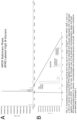
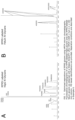
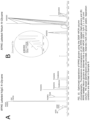
- FIG. 10A presents a chromatogram for labeled hIgG N-glycans in which superior resolution is achieved among the mono- and di-sialylated structures (S1 and S2 structures).
- Neutral structures are separated with slightly inferior resolution compared to other materials (refer to FIG. 7A ), though implementing higher ionic strengths during the initial condition of the gradient can increase resolution on the DEAP stationary phase, especially with respect to afucosylated and bisecting GlcNAc (N-acetylglucosamine) structures ( FIG. 11 ).
- FIG. 10B presents an exemplary result for the use of DEAP to analyze highly sialylated, high antennarity labeled glycans from bovine fetuin.
- a striking capability of this methodology is the ability to resolve fine structure at the front of the retention window corresponding to the trisialylated (S3) structures.
- MS analysis this chromatographic fine structure has been confirmed to correspond to +16 Da forms of the S3 species, which can usually be attributed to the presence of a form of a non-human sialic acid known as N-glycolyl neuraminic acid, NGNA (versus N-acetyl neuraminic acid, NANA) ( FIG. 10B inset).
- NGNA non-human sialic acid
- NANA N-acetyl neuraminic acid
- Procaine and procainamide labeled N-glycans were prepared from bovine fetuin (Sigma F3004) according to a previously published protocol ( Lauber, M. A.; Yu, Y. Q.; Brousmiche, D. W.; Hua, Z.; Koza, S. M.; Magnelli, P.; Guthrie, E.; Taron, C. H.; Fountain, K. J., Rapid Preparation of Released N-Glycans for HILIC Analysis Using a Labeling Reagent that Facilitates Sensitive Fluorescence and ESI-MS Detection.
- Liu, Aich, and Pohl defined a stationary phase (Phase 21) that was created via bonding with one ligand comprised of a neutral, ten carbon alkyl chain terminated in a hydrophilic amide group and a second ligand consisting of an eleven carbon alkyl chain terminated in a dimethylated, tertiary amine.
- Phase 21 has been made commercially available by Thermo Scientific in the form of the GlycanPac AXR-1 columns (i.e. Thermo Scientific Catalog 088136).
- chromatographic separations achieved with DEAP HPCM are contrasted with those obtained with GlycanPac AXR-1.
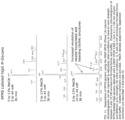
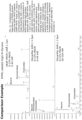
- FIG. 14 shows separations of labeled hIgG glycans using the charged surface reverse phase material (DEAP HPCM, Phase 1A) with its optimal use conditions versus a commercially available mixed mode GlycanPac AXR-1 column with identical use conditions and others tailored to improve performance for these types of glycans.
- DEAP HPCM charged surface reverse phase material
- MS detection of labeled glycans that compares well with the established technique of fluorescence detection is enabling in that the similar chromatographic profiles are obtained with either detection mode.
- MS detectors are still not routinely employed in QC laboratories.
- the strongly basic moiety and the quinoline ring structure of the Labeled labeling reagent are the key to providing similar signal to noise ratios in both MS and fluorescence modes. This reagent characteristic enables the immediate interrogation of unknown peaks that might be observed during QC testing. The same sample can be examined by MS in a support facility running under the exact conditions used in a QC laboratory.
- FIG. 16 accentuates the ion-exchange character of the column, which is to the detriment of separating glycans with a positively charged label.
- the ionic strength of the mobile phase can be increased to mitigate ionic repulsion and increase retention, but this can also mitigate the ionic attraction that is desirable in the class separation of sialylated glycans.
- the charged surface reversed phase materials are optimized to provide good peak shape (enabling high resolution), and retention (necessary for the selective separation of charged analytes) under low ionic strength conditions (required for sensitive MS analyses).
- FIG.14 clearly illustrates the impact of the placement on the charged group at the surface compared to the end of the ligand.
- the glycans of importance to this invention can only be retained on a GlycanPac AXR-1 column when high ionic strength conditions are used during the initial step of the separation; and even then, retention and resolution remain inadequate for an analysis.
- labeled tri- and tetra-sialylated glycans are better retained on the GlycanPac AXR-1 stationary phase.
- the GlycanPac AXR-1 stationary phase yields separation resolution that is observed to be inferior to that of the like particle size, DEAP HPCM (Phase 1A) ( FIG. 15 ).
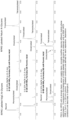
- the inferior performance of the GlycanPac AXR-1 material is due to the positioning and accessibility of its ionizable modifier ( FIG. 16 ).
- the tertiary amine, ionizable modifier is at the terminal end of a ligand that is equivalent in length to the other, more abundant neutral group, which itself is comprised of an alkyl chain and an amide terminal group. Accordingly, the interface of the bonded phase and mobile phase will itself have a positive potential. In addition, the interface will be dominated with polar amide terminal groups. It is these attributes of Phase 21 that are believed to be responsible for its poor applicability to glycans that are modified with amphipathic, strongly basic residues.
- Example 9 The conditions provided in Example 9 were used here to produce an exemplary separation of labeled human IgG and fetuin N-glycans using the DEAP HPCM stationary phase. The same method conditions were also used, as shown in FIG. 14 and FIG. 15 , for separations using a Thermo Scientific GlycanPac AXR-1 column. In addition, the following conditions were employed in an attempt to optimize the use of a GlycanPac AXR-1 column for separations of labeled human IgG N-glycans:
- Polarity ES+ Acquisition 700-2000 m/z (1 Hz) Capillary (kV) 3 Source Temperature (°C) 100 Sampling Cone 30 Source Offset 50 Desolvation Temperature (°C) 300 Desolvation Gas Flow (L/Hr) 800 Nebuliser Gas Flow (Bar) 7.0
Landscapes
- Chemical & Material Sciences (AREA)
- Life Sciences & Earth Sciences (AREA)
- Health & Medical Sciences (AREA)
- Analytical Chemistry (AREA)
- Engineering & Computer Science (AREA)
- Chemical Kinetics & Catalysis (AREA)
- General Health & Medical Sciences (AREA)
- Biochemistry (AREA)
- Molecular Biology (AREA)
- Organic Chemistry (AREA)
- Immunology (AREA)
- Pathology (AREA)
- Biotechnology (AREA)
- General Physics & Mathematics (AREA)
- Physics & Mathematics (AREA)
- Hematology (AREA)
- Medicinal Chemistry (AREA)
- Urology & Nephrology (AREA)
- Biomedical Technology (AREA)
- Genetics & Genomics (AREA)
- Cell Biology (AREA)
- Food Science & Technology (AREA)
- Microbiology (AREA)
- Materials Engineering (AREA)
- Polymers & Plastics (AREA)
- Treatment Of Liquids With Adsorbents In General (AREA)
- Solid-Sorbent Or Filter-Aiding Compositions (AREA)
- Polysaccharides And Polysaccharide Derivatives (AREA)
- Measuring Or Testing Involving Enzymes Or Micro-Organisms (AREA)
Claims (11)
- Verfahren zum selektiven Isolieren eines Glykans aus einer Probe, wobei das Verfahren die Schritte umfasst:a) Umsetzen einer Probe, die ein sialyliertes Glykan umfasst, mit einem Markierungsreagens, um eine markierte Glykanprobe herzustellen;b) Laden der markierten Glykanprobe auf eine chromatographische Trennvorrichtung, die ein chromatographisches Material umfasst, das eine chromatographische Oberfläche umfasst, wobei die chromatographische Oberfläche eine hydrophobe Oberflächengruppe und einen ionisierbaren Modifizierer umfasst, wobei der ionisierbare Modifizierer eine Aminogruppe enthält, und wobei das chromatographische Material eine stationäre Phase ist, die mit einem ionisierbaren Diethylaminopropyl (DEAP)-Modifizierer hergestellt wurde;c) Leiten einer Lösungsmittelphase, die ein organisches Lösungsmittel und ein Puffer-Lösungsmittel umfasst, durch die chromatographische Trennvorrichtung unter Verwendung von simultanen Gradienten, um das markierte Glykan von der Probe durch Wechselwirkung mit der geladenen chromatographischen Oberfläche des chromatographischen Materials zu trennen; undd) Eluieren des adsorbierten markierten Glykans aus dem chromatographischen Material, wodurch das markierte Glykan selektiv aus der Probe isoliert wird.
- Verfahren nach Anspruch 1, wobei das Glykan ein N-Glykan, ein O-Glykan, ein hlgG-Glykan, ein Fetuin-Glykan, FA2BG2S2, FA2G2S1 oder FA2G2 ist.
- Verfahren nach Anspruch 1, wobei das Glykan-Markierungsreagenz eine für die Massenspektrometrie (MS) aktive, schnell fluoreszierende Kennzeichnungsverbindung, ein Procainamid-Reagenz oder ein Procain-Reagenz ist.
- Verfahren nach Anspruch 1, wobei das Glykan-Markierungsreagenz eine amphipathische, stark basische Fraktion mit einem log P-Wert zwischen 0 und 5 bereitstellt, oder wobei das Glykan-Markierungsreagenz eine amphipathische, stark basische Fraktion mit einem pKa-Wert größer als 6 bereitstellt.
- Verfahren nach Anspruch 1, wobei das Glykan-Markierungsreagenz ein Reagenz mit der Formel ist:

- Verfahren nach Anspruch 1, wobei die chromatographische Oberfläche ein organisches Kernmaterial umhüllt.
- Verfahren nach Anspruch 1, wobei die hydrophobe Oberflächengruppe eine C4-bis C30-gebundene Phase, ein Aromat, ein Phenylalkyl, ein Fluoraromat, ein Phenylhexyl, ein Pentafluorphenylalkyl oder eine chirale gebundene Phase ist.
- Verfahren nach Anspruch 1, wobei die chromatographische Oberfläche ein Siliciumdioxid-Kernmaterial oder ein hybrides anorganisch/organisches Kernmaterial umhüllt.
- Verfahren nach Anspruch 1, wobei der Elutionsschritt eine mobile Phase verwendet, die eine Pufferlösung mit einem pH-Wert von 1 bis 8 umfasst.
- Verfahren nach Anspruch 1, wobei die chromatographische Trennvorrichtung eine Vorrichtung ist, die aus der Gruppe ausgewählt ist, die aus einer Chromatographiesäule, einer Dünnschichtplatte, einer Filtrationsmembran, einer mikrofluidischen Trennvorrichtung, einer Probenreinigungsvorrichtung, einem festen Träger, einer Festphasenextraktionsvorrichtung, einer Mikrochip-Trennvorrichtung und einer Mikrotiterplatte besteht.
- Verfahren nach Anspruch 1, ferner umfassend den Schritt des Behandelns des in Schritt d) eluierten markierten Glykans mit einem sekundären chromatographischen Mittel umfasst, um die Glykane weiter zu isolieren, zu reinigen oder zu trennen.
Priority Applications (1)
| Application Number | Priority Date | Filing Date | Title |
|---|---|---|---|
| EP25169154.9A EP4559924A3 (de) | 2016-04-24 | 2017-04-21 | Trennung von glykanen, die mit stark basischen amphipathischen fraktionen modifiziert sind, mittels umkehrphasenchromatographischen materialien mit einer geladenen oberfläche |
Applications Claiming Priority (2)
| Application Number | Priority Date | Filing Date | Title |
|---|---|---|---|
| US201662326783P | 2016-04-24 | 2016-04-24 | |
| PCT/US2017/028856 WO2017189357A2 (en) | 2016-04-24 | 2017-04-21 | Charged surface reversed phase chromatographic materials method for analysis of glycans modified with amphipathic, strongly basic moieties |
Related Child Applications (2)
| Application Number | Title | Priority Date | Filing Date |
|---|---|---|---|
| EP25169154.9A Division EP4559924A3 (de) | 2016-04-24 | 2017-04-21 | Trennung von glykanen, die mit stark basischen amphipathischen fraktionen modifiziert sind, mittels umkehrphasenchromatographischen materialien mit einer geladenen oberfläche |
| EP25169154.9A Division-Into EP4559924A3 (de) | 2016-04-24 | 2017-04-21 | Trennung von glykanen, die mit stark basischen amphipathischen fraktionen modifiziert sind, mittels umkehrphasenchromatographischen materialien mit einer geladenen oberfläche |
Publications (3)
| Publication Number | Publication Date |
|---|---|
| EP3449253A2 EP3449253A2 (de) | 2019-03-06 |
| EP3449253A4 EP3449253A4 (de) | 2019-12-25 |
| EP3449253B1 true EP3449253B1 (de) | 2025-05-28 |
Family
ID=60161044
Family Applications (2)
| Application Number | Title | Priority Date | Filing Date |
|---|---|---|---|
| EP17790151.9A Active EP3449253B1 (de) | 2016-04-24 | 2017-04-21 | Trennung von glykanen, die mit stark basischen amphipathischen fraktionen modifiziert sind, mittels umkehrphasenchromatographischen materialien mit einer geladenen oberfläche |
| EP25169154.9A Pending EP4559924A3 (de) | 2016-04-24 | 2017-04-21 | Trennung von glykanen, die mit stark basischen amphipathischen fraktionen modifiziert sind, mittels umkehrphasenchromatographischen materialien mit einer geladenen oberfläche |
Family Applications After (1)
| Application Number | Title | Priority Date | Filing Date |
|---|---|---|---|
| EP25169154.9A Pending EP4559924A3 (de) | 2016-04-24 | 2017-04-21 | Trennung von glykanen, die mit stark basischen amphipathischen fraktionen modifiziert sind, mittels umkehrphasenchromatographischen materialien mit einer geladenen oberfläche |
Country Status (5)
| Country | Link |
|---|---|
| US (2) | US12252557B2 (de) |
| EP (2) | EP3449253B1 (de) |
| JP (1) | JP7005515B2 (de) |
| CN (2) | CN117054585A (de) |
| WO (1) | WO2017189357A2 (de) |
Families Citing this family (20)
| Publication number | Priority date | Publication date | Assignee | Title |
|---|---|---|---|---|
| US12181452B2 (en) | 2017-09-18 | 2024-12-31 | Waters Technologies Corporation | Use of vapor deposition coated flow paths for improved chromatography of metal interacting analytes |
| US12180581B2 (en) | 2017-09-18 | 2024-12-31 | Waters Technologies Corporation | Use of vapor deposition coated flow paths for improved chromatography of metal interacting analytes |
| US11709155B2 (en) | 2017-09-18 | 2023-07-25 | Waters Technologies Corporation | Use of vapor deposition coated flow paths for improved chromatography of metal interacting analytes |
| US11709156B2 (en) | 2017-09-18 | 2023-07-25 | Waters Technologies Corporation | Use of vapor deposition coated flow paths for improved analytical analysis |
| EP3821238B1 (de) | 2018-07-11 | 2022-08-31 | Waters Technologies Corporation | Chromatographisches system und verfahren zur fallen-elutionschromatography im gemischten modus |
| TWI902667B (zh) | 2018-07-13 | 2025-11-01 | 美商再生元醫藥公司 | 醣基化肽之偵測及定量 |
| US11994499B2 (en) * | 2019-02-27 | 2024-05-28 | Waters Technologies Corporation | Coated flow path components for chromatographic effects |
| US12048926B2 (en) * | 2019-06-26 | 2024-07-30 | Waters Technologies Corporation | Coatings with immobilized affinity ligands and enzymes and use thereof in liquid chromatography assays |
| EP4054757A1 (de) * | 2019-11-07 | 2022-09-14 | Waters Technologies Corporation | Materialien und verfahren für mischmodus, anionenaustausch-umkehrphasenflüssigchromatografie |
| WO2021111418A1 (en) | 2019-12-05 | 2021-06-10 | Waters Technologies Corporation | Polyphosphonic acids for improving recovery and minimizing system loss |
| US11918936B2 (en) | 2020-01-17 | 2024-03-05 | Waters Technologies Corporation | Performance and dynamic range for oligonucleotide bioanalysis through reduction of non specific binding |
| US20210255196A1 (en) * | 2020-01-17 | 2021-08-19 | Waters Technologies Corporation | Low binding surfaces for peptide mapping |
| CN115552239A (zh) * | 2020-05-05 | 2022-12-30 | 沃特世科技公司 | 磷酸前药及其活性代谢物的基于液相色谱的检测和定量 |
| WO2022064447A1 (en) | 2020-09-24 | 2022-03-31 | Waters Technologies Corporation | Chromatographic hardware improvements for the separation of reactive molecules |
| CN112945925B (zh) * | 2021-02-07 | 2022-07-05 | 中国科学院新疆理化技术研究所 | 一种香豆素基探针检测高锰酸根的方法 |
| CN117279712B (zh) * | 2021-06-29 | 2026-01-06 | 株式会社力森诺科 | 填充剂及其制造方法、以及尺寸排阻色谱用柱 |
| CN113466391B (zh) * | 2021-08-12 | 2022-08-05 | 深圳波顿香料有限公司 | 同时测定发酵液中乳糖酸与葡萄糖酸钠含量的方法 |
| CN116148363B (zh) * | 2021-11-22 | 2024-12-10 | 中国科学院大连化学物理研究所 | 一种中药中生物碱类成分的分析方法 |
| US12442801B2 (en) * | 2022-05-16 | 2025-10-14 | Waters Technologies Corporation | Dual stationary phase gradient columns for new selectivities in liquid chromatography |
| US20250237658A1 (en) | 2024-01-19 | 2025-07-24 | Waters Technologies Corporation | Rapid multiplexed analysis of released glycans by dual-stage microfluidic capture and parallel fluorescent tagging prior to lc analysis |
Family Cites Families (31)
| Publication number | Priority date | Publication date | Assignee | Title |
|---|---|---|---|---|
| DE2357184A1 (de) | 1973-11-16 | 1975-05-22 | Merck Patent Gmbh | Verfahren zur herstellung von organisch modifizierten siliciumdioxiden |
| JPH0650306B2 (ja) | 1985-06-03 | 1994-06-29 | ガスクロ工業株式会社 | シリカゲル系充填剤の改良法 |
| US5296599A (en) | 1991-09-19 | 1994-03-22 | Millipore Corporation | Activated carbamates compounds |
| US5268097A (en) * | 1992-06-19 | 1993-12-07 | Sepracor Inc. | Passivated and stabilized porous mineral oxide supports and method for the preparation and use of same |
| US5374755A (en) | 1992-07-17 | 1994-12-20 | Millipore Corporation | Liquid chromatography stationary phases with reduced silanol interactions |
| US6686035B2 (en) | 1999-02-05 | 2004-02-03 | Waters Investments Limited | Porous inorganic/organic hybrid particles for chromatographic separations and process for their preparation |
| US6524863B1 (en) * | 1999-08-04 | 2003-02-25 | Scynexis Chemistry & Automation, Inc. | High throughput HPLC method for determining Log P values |
| DE60102327T3 (de) * | 2000-08-11 | 2012-07-05 | Rohm And Haas Co. | Polymerabsorbentien und zugehöriges Herstellungsverfahren |
| US6528167B2 (en) | 2001-01-31 | 2003-03-04 | Waters Investments Limited | Porous hybrid particles with organic groups removed from the surface |
| EP1417366A4 (de) | 2001-08-09 | 2010-10-27 | Waters Technologies Corp | Poröse anorganisch-organisch hybridartige monolithmaterialien für chromatographische trennungen sowie verfahren zu deren herstellung |
| EP2317307B1 (de) | 2002-02-14 | 2013-11-20 | Ajinomoto Co., Inc. | Verfahren zur Analyse von Verbindungen mit einer Amino- und/oder Imino-gruppe, und analytisches Reagens dafür |
| US7125488B2 (en) | 2004-02-12 | 2006-10-24 | Varian, Inc. | Polar-modified bonded phase materials for chromatographic separations |
| JP5030586B2 (ja) | 2004-05-26 | 2012-09-19 | 味の素株式会社 | アミノ官能性化合物の分析方法及び装置 |
| ES2608484T3 (es) | 2008-02-04 | 2017-04-11 | Prozyme, Inc. | Compuestos y métodos para un marcaje rápido de N-glicanos |
| EP2153877A1 (de) * | 2008-07-30 | 2010-02-17 | MERCK PATENT GmbH | Mischpfropfpolymere für die Ionenaustauschchromatographie |
| CN101498697A (zh) * | 2009-02-25 | 2009-08-05 | 中国海洋大学 | 一种用液相色谱法测定羧甲基壳聚糖中杂质的方法 |
| EP2462188A4 (de) | 2009-08-04 | 2016-11-23 | Waters Technologies Corp | Hochreine chromatographiematerialien mit einem ionisierbaren modifikator |
| US10159911B2 (en) | 2009-08-04 | 2018-12-25 | Waters Technologies Corporation | High purity chromatographic materials comprising an ionizable modifier |
| KR101545914B1 (ko) | 2009-09-22 | 2015-08-20 | 프로바이오겐 아게 | 특수화된 글리칸 구조를 함유하는 분자의 생산 방법 |
| EP2761296B1 (de) * | 2011-09-28 | 2017-08-30 | Waters Technologies Corporation | Schnelle fluoreszenzmarkierung von glykanen und anderen biomolekülen mit verbesserten ms-signalen |
| JP6189218B2 (ja) * | 2011-12-15 | 2017-08-30 | 旭化成株式会社 | タンパク質吸着材を製造する方法 |
| US20150136700A1 (en) * | 2012-05-15 | 2015-05-21 | Waters Technologies Corporation | Chromatographic materials |
| CN102759596B (zh) * | 2012-07-09 | 2014-08-20 | 山东大学 | 一种低分子肝素的离子对反相色谱质谱联用检测方法 |
| US9169331B2 (en) * | 2012-12-21 | 2015-10-27 | Dionex Corporation | Separation of glycans by mixed-mode liquid chromatography |
| EP2745905A1 (de) * | 2012-12-21 | 2014-06-25 | ThyssenKrupp Uhde GmbH | Verfahren zur Reinigung von Carboxylsäuren durch subkritische oder superkritische Chromatography |
| SG11201601788SA (en) * | 2013-09-30 | 2016-04-28 | Yakult Honsha Kk | Method for detecting and determining quantity of galacto-oligosaccharides |
| US10119944B2 (en) * | 2013-12-24 | 2018-11-06 | Waters Technologies Corporation | Materials for hydrophilic interaction chromatography and processes for preparation and use thereof for analysis of glycoproteins and glycopeptides |
| CA2945588A1 (en) * | 2014-04-30 | 2015-11-05 | Beckman Coulter, Inc. | Glycan sample preparation |
| JP6774748B2 (ja) * | 2014-08-13 | 2020-10-28 | ウオーターズ・テクノロジーズ・コーポレイシヨン | 強められたms信号を有するグリカンおよび他の生体分子の迅速蛍光タグ付け |
| CN104785230B (zh) * | 2015-03-27 | 2017-04-12 | 武汉大学 | 一种两性键合硅胶固定相及其制备方法和应用 |
| CN110023763A (zh) | 2016-10-03 | 2019-07-16 | 沃特世科技公司 | 可用于lc-ms分析的标记的聚糖氨基酸复合物及其制备方法 |
-
2017
- 2017-04-21 EP EP17790151.9A patent/EP3449253B1/de active Active
- 2017-04-21 US US16/095,919 patent/US12252557B2/en active Active
- 2017-04-21 WO PCT/US2017/028856 patent/WO2017189357A2/en not_active Ceased
- 2017-04-21 EP EP25169154.9A patent/EP4559924A3/de active Pending
- 2017-04-21 JP JP2018555667A patent/JP7005515B2/ja active Active
- 2017-04-21 CN CN202310817329.6A patent/CN117054585A/zh active Pending
- 2017-04-21 CN CN201780031836.XA patent/CN109154604B/zh active Active
-
2025
- 2025-03-13 US US19/079,183 patent/US20250223382A1/en active Pending
Also Published As
| Publication number | Publication date |
|---|---|
| JP2019516969A (ja) | 2019-06-20 |
| EP3449253A4 (de) | 2019-12-25 |
| WO2017189357A3 (en) | 2017-12-21 |
| EP4559924A3 (de) | 2025-08-06 |
| CN109154604B (zh) | 2023-07-21 |
| CN109154604A (zh) | 2019-01-04 |
| US20200332028A1 (en) | 2020-10-22 |
| EP3449253A2 (de) | 2019-03-06 |
| EP4559924A2 (de) | 2025-05-28 |
| US12252557B2 (en) | 2025-03-18 |
| CN117054585A (zh) | 2023-11-14 |
| US20250223382A1 (en) | 2025-07-10 |
| WO2017189357A2 (en) | 2017-11-02 |
| JP7005515B2 (ja) | 2022-02-10 |
Similar Documents
| Publication | Publication Date | Title |
|---|---|---|
| US20250223382A1 (en) | Charged surface reversed phase chromatographic materials method for analysis of glycans modified with amphipathic, strongly basic moieties | |
| US10974167B2 (en) | High purity chromatographic materials comprising an ionizable modifier | |
| EP3288658B1 (de) | Hochreine chromatographiematerialien mit ionenpaarweise gebundenen phasen für superkritische fluidchromatographie | |
| EP4129466A1 (de) | Hochreine chromatographiematerialien mit einem ionisierbaren modifikator | |
| US20230256413A1 (en) | High purity chromatographic materials comprising an ionizable modifier for retention of acidic analytes | |
| JP6557306B2 (ja) | サイズ排除クロマトグラフィーを行うための装置および方法 | |
| CN103877748B (zh) | 通过混合模式液相色谱法分离聚糖 | |
| CN104428045A (zh) | 色谱材料 | |
| US20140338429A1 (en) | Method of separation of lipid and biological molecular species using high purity chromatographic materials comprising an ionizable modifier | |
| US20190092800A1 (en) | Liquid chromatographic separation of carbohydrate tautomers | |
| HK40002484A (en) | Device and methods for performing size exclusion chromatography | |
| HK1179202A (en) | Device and methods of performing size exclusion chromatography |
Legal Events
| Date | Code | Title | Description |
|---|---|---|---|
| STAA | Information on the status of an ep patent application or granted ep patent |
Free format text: STATUS: THE INTERNATIONAL PUBLICATION HAS BEEN MADE |
|
| PUAI | Public reference made under article 153(3) epc to a published international application that has entered the european phase |
Free format text: ORIGINAL CODE: 0009012 |
|
| STAA | Information on the status of an ep patent application or granted ep patent |
Free format text: STATUS: REQUEST FOR EXAMINATION WAS MADE |
|
| 17P | Request for examination filed |
Effective date: 20181029 |
|
| AK | Designated contracting states |
Kind code of ref document: A2 Designated state(s): AL AT BE BG CH CY CZ DE DK EE ES FI FR GB GR HR HU IE IS IT LI LT LU LV MC MK MT NL NO PL PT RO RS SE SI SK SM TR |
|
| AX | Request for extension of the european patent |
Extension state: BA ME |
|
| DAV | Request for validation of the european patent (deleted) | ||
| DAX | Request for extension of the european patent (deleted) | ||
| A4 | Supplementary search report drawn up and despatched |
Effective date: 20191126 |
|
| RIC1 | Information provided on ipc code assigned before grant |
Ipc: B01D 15/36 20060101ALI20191120BHEP Ipc: G01N 30/52 20060101ALI20191120BHEP Ipc: G01N 30/89 20060101ALI20191120BHEP Ipc: G01N 30/88 20060101ALI20191120BHEP Ipc: G01N 33/53 20060101AFI20191120BHEP Ipc: B01D 15/32 20060101ALI20191120BHEP Ipc: C07H 1/06 20060101ALI20191120BHEP Ipc: C07H 13/12 20060101ALI20191120BHEP |
|
| STAA | Information on the status of an ep patent application or granted ep patent |
Free format text: STATUS: EXAMINATION IS IN PROGRESS |
|
| 17Q | First examination report despatched |
Effective date: 20221212 |
|
| GRAP | Despatch of communication of intention to grant a patent |
Free format text: ORIGINAL CODE: EPIDOSNIGR1 |
|
| STAA | Information on the status of an ep patent application or granted ep patent |
Free format text: STATUS: GRANT OF PATENT IS INTENDED |
|
| INTG | Intention to grant announced |
Effective date: 20241126 |
|
| GRAS | Grant fee paid |
Free format text: ORIGINAL CODE: EPIDOSNIGR3 |
|
| GRAA | (expected) grant |
Free format text: ORIGINAL CODE: 0009210 |
|
| STAA | Information on the status of an ep patent application or granted ep patent |
Free format text: STATUS: THE PATENT HAS BEEN GRANTED |
|
| P01 | Opt-out of the competence of the unified patent court (upc) registered |
Free format text: CASE NUMBER: APP_16072/2025 Effective date: 20250402 |
|
| AK | Designated contracting states |
Kind code of ref document: B1 Designated state(s): AL AT BE BG CH CY CZ DE DK EE ES FI FR GB GR HR HU IE IS IT LI LT LU LV MC MK MT NL NO PL PT RO RS SE SI SK SM TR |
|
| REG | Reference to a national code |
Ref country code: GB Ref legal event code: FG4D |
|
| REG | Reference to a national code |
Ref country code: CH Ref legal event code: EP |
|
| REG | Reference to a national code |
Ref country code: IE Ref legal event code: FG4D Ref country code: DE Ref legal event code: R096 Ref document number: 602017089686 Country of ref document: DE |
|
| REG | Reference to a national code |
Ref country code: NL Ref legal event code: MP Effective date: 20250528 |
|
| PG25 | Lapsed in a contracting state [announced via postgrant information from national office to epo] |
Ref country code: FI Free format text: LAPSE BECAUSE OF FAILURE TO SUBMIT A TRANSLATION OF THE DESCRIPTION OR TO PAY THE FEE WITHIN THE PRESCRIBED TIME-LIMIT Effective date: 20250528 Ref country code: ES Free format text: LAPSE BECAUSE OF FAILURE TO SUBMIT A TRANSLATION OF THE DESCRIPTION OR TO PAY THE FEE WITHIN THE PRESCRIBED TIME-LIMIT Effective date: 20250528 |
|
| REG | Reference to a national code |
Ref country code: LT Ref legal event code: MG9D |
|
| PG25 | Lapsed in a contracting state [announced via postgrant information from national office to epo] |
Ref country code: NO Free format text: LAPSE BECAUSE OF FAILURE TO SUBMIT A TRANSLATION OF THE DESCRIPTION OR TO PAY THE FEE WITHIN THE PRESCRIBED TIME-LIMIT Effective date: 20250828 Ref country code: GR Free format text: LAPSE BECAUSE OF FAILURE TO SUBMIT A TRANSLATION OF THE DESCRIPTION OR TO PAY THE FEE WITHIN THE PRESCRIBED TIME-LIMIT Effective date: 20250829 |
|
| PG25 | Lapsed in a contracting state [announced via postgrant information from national office to epo] |
Ref country code: PL Free format text: LAPSE BECAUSE OF FAILURE TO SUBMIT A TRANSLATION OF THE DESCRIPTION OR TO PAY THE FEE WITHIN THE PRESCRIBED TIME-LIMIT Effective date: 20250528 Ref country code: NL Free format text: LAPSE BECAUSE OF FAILURE TO SUBMIT A TRANSLATION OF THE DESCRIPTION OR TO PAY THE FEE WITHIN THE PRESCRIBED TIME-LIMIT Effective date: 20250528 |
|
| PG25 | Lapsed in a contracting state [announced via postgrant information from national office to epo] |
Ref country code: BG Free format text: LAPSE BECAUSE OF FAILURE TO SUBMIT A TRANSLATION OF THE DESCRIPTION OR TO PAY THE FEE WITHIN THE PRESCRIBED TIME-LIMIT Effective date: 20250528 |
|
| PG25 | Lapsed in a contracting state [announced via postgrant information from national office to epo] |
Ref country code: HR Free format text: LAPSE BECAUSE OF FAILURE TO SUBMIT A TRANSLATION OF THE DESCRIPTION OR TO PAY THE FEE WITHIN THE PRESCRIBED TIME-LIMIT Effective date: 20250528 |
|
| PG25 | Lapsed in a contracting state [announced via postgrant information from national office to epo] |
Ref country code: RS Free format text: LAPSE BECAUSE OF FAILURE TO SUBMIT A TRANSLATION OF THE DESCRIPTION OR TO PAY THE FEE WITHIN THE PRESCRIBED TIME-LIMIT Effective date: 20250828 |
|
| PG25 | Lapsed in a contracting state [announced via postgrant information from national office to epo] |
Ref country code: IS Free format text: LAPSE BECAUSE OF FAILURE TO SUBMIT A TRANSLATION OF THE DESCRIPTION OR TO PAY THE FEE WITHIN THE PRESCRIBED TIME-LIMIT Effective date: 20250928 |
|
| PG25 | Lapsed in a contracting state [announced via postgrant information from national office to epo] |
Ref country code: LV Free format text: LAPSE BECAUSE OF FAILURE TO SUBMIT A TRANSLATION OF THE DESCRIPTION OR TO PAY THE FEE WITHIN THE PRESCRIBED TIME-LIMIT Effective date: 20250528 |
|
| REG | Reference to a national code |
Ref country code: AT Ref legal event code: MK05 Ref document number: 1798855 Country of ref document: AT Kind code of ref document: T Effective date: 20250528 |
|
| PG25 | Lapsed in a contracting state [announced via postgrant information from national office to epo] |
Ref country code: SM Free format text: LAPSE BECAUSE OF FAILURE TO SUBMIT A TRANSLATION OF THE DESCRIPTION OR TO PAY THE FEE WITHIN THE PRESCRIBED TIME-LIMIT Effective date: 20250528 Ref country code: AT Free format text: LAPSE BECAUSE OF FAILURE TO SUBMIT A TRANSLATION OF THE DESCRIPTION OR TO PAY THE FEE WITHIN THE PRESCRIBED TIME-LIMIT Effective date: 20250528 Ref country code: DK Free format text: LAPSE BECAUSE OF FAILURE TO SUBMIT A TRANSLATION OF THE DESCRIPTION OR TO PAY THE FEE WITHIN THE PRESCRIBED TIME-LIMIT Effective date: 20250528 |
|
| PG25 | Lapsed in a contracting state [announced via postgrant information from national office to epo] |
Ref country code: CZ Free format text: LAPSE BECAUSE OF FAILURE TO SUBMIT A TRANSLATION OF THE DESCRIPTION OR TO PAY THE FEE WITHIN THE PRESCRIBED TIME-LIMIT Effective date: 20250528 |
|
| PG25 | Lapsed in a contracting state [announced via postgrant information from national office to epo] |
Ref country code: EE Free format text: LAPSE BECAUSE OF FAILURE TO SUBMIT A TRANSLATION OF THE DESCRIPTION OR TO PAY THE FEE WITHIN THE PRESCRIBED TIME-LIMIT Effective date: 20250528 |
|
| PG25 | Lapsed in a contracting state [announced via postgrant information from national office to epo] |
Ref country code: SK Free format text: LAPSE BECAUSE OF FAILURE TO SUBMIT A TRANSLATION OF THE DESCRIPTION OR TO PAY THE FEE WITHIN THE PRESCRIBED TIME-LIMIT Effective date: 20250528 Ref country code: RO Free format text: LAPSE BECAUSE OF FAILURE TO SUBMIT A TRANSLATION OF THE DESCRIPTION OR TO PAY THE FEE WITHIN THE PRESCRIBED TIME-LIMIT Effective date: 20250528 |
|
| PG25 | Lapsed in a contracting state [announced via postgrant information from national office to epo] |
Ref country code: IT Free format text: LAPSE BECAUSE OF FAILURE TO SUBMIT A TRANSLATION OF THE DESCRIPTION OR TO PAY THE FEE WITHIN THE PRESCRIBED TIME-LIMIT Effective date: 20250528 |
|
| REG | Reference to a national code |
Ref country code: DE Ref legal event code: R097 Ref document number: 602017089686 Country of ref document: DE |
|
| PLBE | No opposition filed within time limit |
Free format text: ORIGINAL CODE: 0009261 |
|
| STAA | Information on the status of an ep patent application or granted ep patent |
Free format text: STATUS: NO OPPOSITION FILED WITHIN TIME LIMIT |
|
| PGFP | Annual fee paid to national office [announced via postgrant information from national office to epo] |
Ref country code: GB Payment date: 20260319 Year of fee payment: 10 |
|
| REG | Reference to a national code |
Ref country code: CH Ref legal event code: L10 Free format text: ST27 STATUS EVENT CODE: U-0-0-L10-L00 (AS PROVIDED BY THE NATIONAL OFFICE) Effective date: 20260409 |
|
| 26N | No opposition filed |
Effective date: 20260303 |
|
| PG25 | Lapsed in a contracting state [announced via postgrant information from national office to epo] |
Ref country code: LT Free format text: LAPSE BECAUSE OF FAILURE TO SUBMIT A TRANSLATION OF THE DESCRIPTION OR TO PAY THE FEE WITHIN THE PRESCRIBED TIME-LIMIT Effective date: 20250528 |
|
| PGFP | Annual fee paid to national office [announced via postgrant information from national office to epo] |
Ref country code: DE Payment date: 20260319 Year of fee payment: 10 |
|
| PG25 | Lapsed in a contracting state [announced via postgrant information from national office to epo] |
Ref country code: SE Free format text: LAPSE BECAUSE OF FAILURE TO SUBMIT A TRANSLATION OF THE DESCRIPTION OR TO PAY THE FEE WITHIN THE PRESCRIBED TIME-LIMIT Effective date: 20250528 |