EP3452491B1 - Profilage quantitatif de métabolites de la progestérone pour la prédiction de l'accouchement prématuré spontané - Google Patents
Profilage quantitatif de métabolites de la progestérone pour la prédiction de l'accouchement prématuré spontané Download PDFInfo
- Publication number
- EP3452491B1 EP3452491B1 EP17793219.1A EP17793219A EP3452491B1 EP 3452491 B1 EP3452491 B1 EP 3452491B1 EP 17793219 A EP17793219 A EP 17793219A EP 3452491 B1 EP3452491 B1 EP 3452491B1
- Authority
- EP
- European Patent Office
- Prior art keywords
- precursor
- isoform
- protein
- preproprotein
- glycoprotein
- Prior art date
- Legal status (The legal status is an assumption and is not a legal conclusion. Google has not performed a legal analysis and makes no representation as to the accuracy of the status listed.)
- Active
Links
Images




Classifications
-
- C—CHEMISTRY; METALLURGY
- C07—ORGANIC CHEMISTRY
- C07J—STEROIDS
- C07J7/00—Normal steroids containing carbon, hydrogen, halogen or oxygen substituted in position 17 beta by a chain of two carbon atoms
- C07J7/0005—Normal steroids containing carbon, hydrogen, halogen or oxygen substituted in position 17 beta by a chain of two carbon atoms not substituted in position 21
- C07J7/0065—Normal steroids containing carbon, hydrogen, halogen or oxygen substituted in position 17 beta by a chain of two carbon atoms not substituted in position 21 substituted in position 20 by an OH group free esterified or etherified
- C07J7/0075—Normal steroids containing carbon, hydrogen, halogen or oxygen substituted in position 17 beta by a chain of two carbon atoms not substituted in position 21 substituted in position 20 by an OH group free esterified or etherified substituted in position 17 alfa
-
- C—CHEMISTRY; METALLURGY
- C07—ORGANIC CHEMISTRY
- C07J—STEROIDS
- C07J1/00—Normal steroids containing carbon, hydrogen, halogen or oxygen, not substituted in position 17 beta by a carbon atom, e.g. estrane, androstane
- C07J1/0003—Androstane derivatives
- C07J1/0011—Androstane derivatives substituted in position 17 by a keto group
-
- C—CHEMISTRY; METALLURGY
- C07—ORGANIC CHEMISTRY
- C07J—STEROIDS
- C07J1/00—Normal steroids containing carbon, hydrogen, halogen or oxygen, not substituted in position 17 beta by a carbon atom, e.g. estrane, androstane
- C07J1/0003—Androstane derivatives
- C07J1/0018—Androstane derivatives substituted in position 17 beta, not substituted in position 17 alfa
- C07J1/0022—Androstane derivatives substituted in position 17 beta, not substituted in position 17 alfa the substituent being an OH group free esterified or etherified
-
- C—CHEMISTRY; METALLURGY
- C07—ORGANIC CHEMISTRY
- C07J—STEROIDS
- C07J1/00—Normal steroids containing carbon, hydrogen, halogen or oxygen, not substituted in position 17 beta by a carbon atom, e.g. estrane, androstane
- C07J1/0051—Estrane derivatives
- C07J1/0066—Estrane derivatives substituted in position 17 beta not substituted in position 17 alfa
- C07J1/007—Estrane derivatives substituted in position 17 beta not substituted in position 17 alfa the substituent being an OH group free esterified or etherified
-
- C—CHEMISTRY; METALLURGY
- C07—ORGANIC CHEMISTRY
- C07J—STEROIDS
- C07J5/00—Normal steroids containing carbon, hydrogen, halogen or oxygen, substituted in position 17 beta by a chain of two carbon atoms, e.g. pregnane and substituted in position 21 by only one singly bound oxygen atom, i.e. only one oxygen bound to position 21 by a single bond
- C07J5/0007—Normal steroids containing carbon, hydrogen, halogen or oxygen, substituted in position 17 beta by a chain of two carbon atoms, e.g. pregnane and substituted in position 21 by only one singly bound oxygen atom, i.e. only one oxygen bound to position 21 by a single bond not substituted in position 17 alfa
- C07J5/0015—Normal steroids containing carbon, hydrogen, halogen or oxygen, substituted in position 17 beta by a chain of two carbon atoms, e.g. pregnane and substituted in position 21 by only one singly bound oxygen atom, i.e. only one oxygen bound to position 21 by a single bond not substituted in position 17 alfa not substituted in position 16
-
- C—CHEMISTRY; METALLURGY
- C07—ORGANIC CHEMISTRY
- C07J—STEROIDS
- C07J5/00—Normal steroids containing carbon, hydrogen, halogen or oxygen, substituted in position 17 beta by a chain of two carbon atoms, e.g. pregnane and substituted in position 21 by only one singly bound oxygen atom, i.e. only one oxygen bound to position 21 by a single bond
- C07J5/0046—Normal steroids containing carbon, hydrogen, halogen or oxygen, substituted in position 17 beta by a chain of two carbon atoms, e.g. pregnane and substituted in position 21 by only one singly bound oxygen atom, i.e. only one oxygen bound to position 21 by a single bond substituted in position 17 alfa
- C07J5/0053—Normal steroids containing carbon, hydrogen, halogen or oxygen, substituted in position 17 beta by a chain of two carbon atoms, e.g. pregnane and substituted in position 21 by only one singly bound oxygen atom, i.e. only one oxygen bound to position 21 by a single bond substituted in position 17 alfa not substituted in position 16
-
- C—CHEMISTRY; METALLURGY
- C07—ORGANIC CHEMISTRY
- C07J—STEROIDS
- C07J7/00—Normal steroids containing carbon, hydrogen, halogen or oxygen substituted in position 17 beta by a chain of two carbon atoms
- C07J7/0005—Normal steroids containing carbon, hydrogen, halogen or oxygen substituted in position 17 beta by a chain of two carbon atoms not substituted in position 21
- C07J7/001—Normal steroids containing carbon, hydrogen, halogen or oxygen substituted in position 17 beta by a chain of two carbon atoms not substituted in position 21 substituted in position 20 by a keto group
- C07J7/0015—Normal steroids containing carbon, hydrogen, halogen or oxygen substituted in position 17 beta by a chain of two carbon atoms not substituted in position 21 substituted in position 20 by a keto group not substituted in position 17 alfa
- C07J7/002—Normal steroids containing carbon, hydrogen, halogen or oxygen substituted in position 17 beta by a chain of two carbon atoms not substituted in position 21 substituted in position 20 by a keto group not substituted in position 17 alfa not substituted in position 16
-
- C—CHEMISTRY; METALLURGY
- C07—ORGANIC CHEMISTRY
- C07J—STEROIDS
- C07J7/00—Normal steroids containing carbon, hydrogen, halogen or oxygen substituted in position 17 beta by a chain of two carbon atoms
- C07J7/0005—Normal steroids containing carbon, hydrogen, halogen or oxygen substituted in position 17 beta by a chain of two carbon atoms not substituted in position 21
- C07J7/001—Normal steroids containing carbon, hydrogen, halogen or oxygen substituted in position 17 beta by a chain of two carbon atoms not substituted in position 21 substituted in position 20 by a keto group
- C07J7/0015—Normal steroids containing carbon, hydrogen, halogen or oxygen substituted in position 17 beta by a chain of two carbon atoms not substituted in position 21 substituted in position 20 by a keto group not substituted in position 17 alfa
- C07J7/0025—Normal steroids containing carbon, hydrogen, halogen or oxygen substituted in position 17 beta by a chain of two carbon atoms not substituted in position 21 substituted in position 20 by a keto group not substituted in position 17 alfa substituted in position 16
- C07J7/0035—Normal steroids containing carbon, hydrogen, halogen or oxygen substituted in position 17 beta by a chain of two carbon atoms not substituted in position 21 substituted in position 20 by a keto group not substituted in position 17 alfa substituted in position 16 by a hydroxy group free esterified or etherified
-
- C—CHEMISTRY; METALLURGY
- C07—ORGANIC CHEMISTRY
- C07J—STEROIDS
- C07J7/00—Normal steroids containing carbon, hydrogen, halogen or oxygen substituted in position 17 beta by a chain of two carbon atoms
- C07J7/0005—Normal steroids containing carbon, hydrogen, halogen or oxygen substituted in position 17 beta by a chain of two carbon atoms not substituted in position 21
- C07J7/001—Normal steroids containing carbon, hydrogen, halogen or oxygen substituted in position 17 beta by a chain of two carbon atoms not substituted in position 21 substituted in position 20 by a keto group
- C07J7/004—Normal steroids containing carbon, hydrogen, halogen or oxygen substituted in position 17 beta by a chain of two carbon atoms not substituted in position 21 substituted in position 20 by a keto group substituted in position 17 alfa
- C07J7/0045—Normal steroids containing carbon, hydrogen, halogen or oxygen substituted in position 17 beta by a chain of two carbon atoms not substituted in position 21 substituted in position 20 by a keto group substituted in position 17 alfa not substituted in position 16
-
- C—CHEMISTRY; METALLURGY
- C07—ORGANIC CHEMISTRY
- C07J—STEROIDS
- C07J7/00—Normal steroids containing carbon, hydrogen, halogen or oxygen substituted in position 17 beta by a chain of two carbon atoms
- C07J7/0005—Normal steroids containing carbon, hydrogen, halogen or oxygen substituted in position 17 beta by a chain of two carbon atoms not substituted in position 21
- C07J7/0065—Normal steroids containing carbon, hydrogen, halogen or oxygen substituted in position 17 beta by a chain of two carbon atoms not substituted in position 21 substituted in position 20 by an OH group free esterified or etherified
- C07J7/007—Normal steroids containing carbon, hydrogen, halogen or oxygen substituted in position 17 beta by a chain of two carbon atoms not substituted in position 21 substituted in position 20 by an OH group free esterified or etherified not substituted in position 17 alfa
-
- G—PHYSICS
- G01—MEASURING; TESTING
- G01N—INVESTIGATING OR ANALYSING MATERIALS BY DETERMINING THEIR CHEMICAL OR PHYSICAL PROPERTIES
- G01N33/00—Investigating or analysing materials by specific methods not covered by groups G01N1/00 - G01N31/00
- G01N33/48—Biological material, e.g. blood, urine; Haemocytometers
-
- G—PHYSICS
- G01—MEASURING; TESTING
- G01N—INVESTIGATING OR ANALYSING MATERIALS BY DETERMINING THEIR CHEMICAL OR PHYSICAL PROPERTIES
- G01N33/00—Investigating or analysing materials by specific methods not covered by groups G01N1/00 - G01N31/00
- G01N33/48—Biological material, e.g. blood, urine; Haemocytometers
- G01N33/483—Physical analysis of biological material
- G01N33/487—Physical analysis of biological material of liquid biological material
- G01N33/4875—Details of handling test elements, e.g. dispensing or storage, not specific to a particular test method
-
- G—PHYSICS
- G01—MEASURING; TESTING
- G01N—INVESTIGATING OR ANALYSING MATERIALS BY DETERMINING THEIR CHEMICAL OR PHYSICAL PROPERTIES
- G01N33/00—Investigating or analysing materials by specific methods not covered by groups G01N1/00 - G01N31/00
- G01N33/48—Biological material, e.g. blood, urine; Haemocytometers
- G01N33/50—Chemical analysis of biological material, e.g. blood, urine; Testing involving biospecific ligand binding methods; Immunological testing
- G01N33/53—Immunoassay; Biospecific binding assay; Materials therefor
-
- G—PHYSICS
- G01—MEASURING; TESTING
- G01N—INVESTIGATING OR ANALYSING MATERIALS BY DETERMINING THEIR CHEMICAL OR PHYSICAL PROPERTIES
- G01N33/00—Investigating or analysing materials by specific methods not covered by groups G01N1/00 - G01N31/00
- G01N33/48—Biological material, e.g. blood, urine; Haemocytometers
- G01N33/50—Chemical analysis of biological material, e.g. blood, urine; Testing involving biospecific ligand binding methods; Immunological testing
- G01N33/53—Immunoassay; Biospecific binding assay; Materials therefor
- G01N33/566—Immunoassay; Biospecific binding assay; Materials therefor using specific carrier or receptor proteins as ligand binding reagents where possible specific carrier or receptor proteins are classified with their target compounds
-
- G—PHYSICS
- G01—MEASURING; TESTING
- G01N—INVESTIGATING OR ANALYSING MATERIALS BY DETERMINING THEIR CHEMICAL OR PHYSICAL PROPERTIES
- G01N33/00—Investigating or analysing materials by specific methods not covered by groups G01N1/00 - G01N31/00
- G01N33/48—Biological material, e.g. blood, urine; Haemocytometers
- G01N33/50—Chemical analysis of biological material, e.g. blood, urine; Testing involving biospecific ligand binding methods; Immunological testing
- G01N33/68—Chemical analysis of biological material, e.g. blood, urine; Testing involving biospecific ligand binding methods; Immunological testing involving proteins, peptides or amino acids
- G01N33/6803—General methods of protein analysis not limited to specific proteins or families of proteins
- G01N33/6848—Methods of protein analysis involving mass spectrometry
-
- G—PHYSICS
- G01—MEASURING; TESTING
- G01N—INVESTIGATING OR ANALYSING MATERIALS BY DETERMINING THEIR CHEMICAL OR PHYSICAL PROPERTIES
- G01N33/00—Investigating or analysing materials by specific methods not covered by groups G01N1/00 - G01N31/00
- G01N33/48—Biological material, e.g. blood, urine; Haemocytometers
- G01N33/50—Chemical analysis of biological material, e.g. blood, urine; Testing involving biospecific ligand binding methods; Immunological testing
- G01N33/68—Chemical analysis of biological material, e.g. blood, urine; Testing involving biospecific ligand binding methods; Immunological testing involving proteins, peptides or amino acids
- G01N33/689—Chemical analysis of biological material, e.g. blood, urine; Testing involving biospecific ligand binding methods; Immunological testing involving proteins, peptides or amino acids related to pregnancy or the gonads
-
- G—PHYSICS
- G01—MEASURING; TESTING
- G01N—INVESTIGATING OR ANALYSING MATERIALS BY DETERMINING THEIR CHEMICAL OR PHYSICAL PROPERTIES
- G01N33/00—Investigating or analysing materials by specific methods not covered by groups G01N1/00 - G01N31/00
- G01N33/48—Biological material, e.g. blood, urine; Haemocytometers
- G01N33/50—Chemical analysis of biological material, e.g. blood, urine; Testing involving biospecific ligand binding methods; Immunological testing
- G01N33/74—Chemical analysis of biological material, e.g. blood, urine; Testing involving biospecific ligand binding methods; Immunological testing involving hormones or other non-cytokine intercellular protein regulatory factors such as growth factors, including receptors to hormones and growth factors
-
- G—PHYSICS
- G01—MEASURING; TESTING
- G01N—INVESTIGATING OR ANALYSING MATERIALS BY DETERMINING THEIR CHEMICAL OR PHYSICAL PROPERTIES
- G01N33/00—Investigating or analysing materials by specific methods not covered by groups G01N1/00 - G01N31/00
- G01N33/48—Biological material, e.g. blood, urine; Haemocytometers
- G01N33/50—Chemical analysis of biological material, e.g. blood, urine; Testing involving biospecific ligand binding methods; Immunological testing
- G01N33/74—Chemical analysis of biological material, e.g. blood, urine; Testing involving biospecific ligand binding methods; Immunological testing involving hormones or other non-cytokine intercellular protein regulatory factors such as growth factors, including receptors to hormones and growth factors
- G01N33/743—Steroid hormones
-
- C—CHEMISTRY; METALLURGY
- C07—ORGANIC CHEMISTRY
- C07K—PEPTIDES
- C07K16/00—Immunoglobulins [IG], e.g. monoclonal or polyclonal antibodies
- C07K16/18—Immunoglobulins [IG], e.g. monoclonal or polyclonal antibodies against material from animals or humans
- C07K16/26—Immunoglobulins [IG], e.g. monoclonal or polyclonal antibodies against material from animals or humans against hormones ; against hormone releasing or inhibiting factors
-
- G—PHYSICS
- G01—MEASURING; TESTING
- G01N—INVESTIGATING OR ANALYSING MATERIALS BY DETERMINING THEIR CHEMICAL OR PHYSICAL PROPERTIES
- G01N2333/00—Assays involving biological materials from specific organisms or of a specific nature
- G01N2333/435—Assays involving biological materials from specific organisms or of a specific nature from animals; from humans
- G01N2333/46—Assays involving biological materials from specific organisms or of a specific nature from animals; from humans from vertebrates
- G01N2333/47—Assays involving proteins of known structure or function as defined in the subgroups
- G01N2333/4701—Details
- G01N2333/471—Pregnancy proteins, e.g. placenta proteins, alpha-feto-protein, pregnancy specific beta glycoprotein
-
- G—PHYSICS
- G01—MEASURING; TESTING
- G01N—INVESTIGATING OR ANALYSING MATERIALS BY DETERMINING THEIR CHEMICAL OR PHYSICAL PROPERTIES
- G01N2333/00—Assays involving biological materials from specific organisms or of a specific nature
- G01N2333/435—Assays involving biological materials from specific organisms or of a specific nature from animals; from humans
- G01N2333/575—Hormones
-
- G—PHYSICS
- G01—MEASURING; TESTING
- G01N—INVESTIGATING OR ANALYSING MATERIALS BY DETERMINING THEIR CHEMICAL OR PHYSICAL PROPERTIES
- G01N2333/00—Assays involving biological materials from specific organisms or of a specific nature
- G01N2333/435—Assays involving biological materials from specific organisms or of a specific nature from animals; from humans
- G01N2333/705—Assays involving receptors, cell surface antigens or cell surface determinants
- G01N2333/72—Assays involving receptors, cell surface antigens or cell surface determinants for hormones
- G01N2333/723—Steroid/thyroid hormone superfamily, e.g. GR, EcR, androgen receptor, oestrogen receptor
-
- G—PHYSICS
- G01—MEASURING; TESTING
- G01N—INVESTIGATING OR ANALYSING MATERIALS BY DETERMINING THEIR CHEMICAL OR PHYSICAL PROPERTIES
- G01N2800/00—Detection or diagnosis of diseases
- G01N2800/36—Gynecology or obstetrics
- G01N2800/368—Pregnancy complicated by disease or abnormalities of pregnancy, e.g. preeclampsia, preterm labour
Definitions
- the present disclosure relates generally to the risk assessment of preterm delivery in a pregnant female. More particularly, the present disclosure relates to the prediction of spontaneous preterm delivery in a pregnant female using ratios of endogenous steroids in samples obtained from a pregnant female.
- Preterm birth is a major public health problem, leading to lifelong morbidities in premature newborns and high expenditures for health care systems and insurance companies. Each year, an estimated 15 million babies are born preterm (before 37 weeks gestation) according to the World Health Organization. Globally, preterm birth is the leading cause of newborn deaths (babies in the first four weeks of life) and the second leading cause of death in children under five years. Complications arising from preterm birth include acute respiratory, gastrointestinal, immunologic, central nervous system, hearing, and vision problems, as well as longer-term motor, cognitive, visual, hearing, behavioral, social-emotional, health, and growth problems. Many survivors face a lifetime of disability, including learning disabilities and visual and hearing problems.
- health care providers can implement various clinical strategies that may include surgical procedures such as cervical cerclage and cervical pessaries, preventive medications, restrictions on sexual activity and/or other physical activities, and alterations of treatments for chronic conditions that increase the risk of preterm labor.
- Women identified as high-risk can be scheduled for more intensive surveillance and interventions. Very few technologies exist to identify women at risk for preterm birth who could benefit from additional interventions. The tools that are currently available have limited sensitivity/specificity or identify molecular changes associated with preterm labor without offering any interventions to mitigate this process. Current strategies for risk assessment are based on the obstetric and medical history and clinical examination, but these strategies are only able to identify a small percentage of women who are at risk for preterm delivery. Clinically available tools for risk assessment are available in the mid-second trimester, after the period of maximal benefit from interventions. Reliable early identification of risk for preterm birth would allow for appropriate monitoring and clinical management to prevent preterm delivery.
- US 2014/0093900 A1 describes the use of concentrations of endogenous steroids in ovarian follicular fluid to develop steroid profiles which provide means for the diagnosis and prognosis of endocrine-related conditions and for identifying and developing appropriate treatments for related conditions.
- the present invention relates to the following items:
- the present disclosure is generally directed to methods for identifying whether a pregnant female is susceptible to spontaneous preterm delivery. More particularly, the present disclosure is directed to methods for identifying whether a pregnant female is susceptible to spontaneous preterm delivery based on ratios of DOC/16 ⁇ OHP and ratios of DOC/11-deoxycortisol.
- the present disclosure is directed to a method for identifying a pregnant female who is susceptible to spontaneous preterm delivery, the method comprising: obtaining a sample from the pregnant female; determining a concentration of a first steroid; determining a concentration of at least one additional steroid; calculating a ratio of the first steroid and at least one additional steroid; and identifying the pregnant female as being susceptible to spontaneous preterm delivery when the ratio in the sample is reduced below a threshold value.
- the present disclosure is directed to a method for identifying a pregnant female who is susceptible to spontaneous preterm delivery, the method comprising: obtaining a sample from the pregnant female; determining a concentration of deoxycorticosterone (DOC); determining a concentration of 16 ⁇ -hydroxyprogesterone (16 ⁇ OHP); calculating a ratio of DOC/16 ⁇ OHP; and identifying the pregnant female as being susceptible to spontaneous preterm delivery when the DOC/16 ⁇ OHP ratio in the sample is reduced below a threshold value.
- DOC deoxycorticosterone
- 16 ⁇ OHP 16 ⁇ -hydroxyprogesterone
- the present disclosure is directed to a method for identifying a pregnant female who is susceptible to spontaneous preterm delivery, the method comprising: obtaining a sample from the pregnant female; determining a concentration of deoxycorticosterone (DOC); determining a concentration of 11-deoxycortisol; calculating a ratio of DOC/11-deoxycortisol; and identifying the pregnant female as being susceptible to spontaneous preterm delivery when the DOC/11-deoxycortisol ratio in the sample is reduced below a threshold value.
- DOC deoxycorticosterone
- methods have been discovered that surprisingly allow for identifying a pregnant female who is susceptible to spontaneous preterm delivery.
- the methods of the present disclosure allow for determining whether a pregnant female is susceptible to having a spontaneous preterm delivery based on samples obtained weeks, and even months, prior to delivery.
- the methods of the present disclosure significantly allow for the identification of a pregnant female as being susceptible for spontaneous preterm birth allowing for appropriate monitoring and clinical management to prevent spontaneous preterm delivery.
- spontaneous preterm delivery and “spontaneous preterm birth” are used interchangeably herein to refer to delivery or birth at a gestational age less than 37 completed weeks.
- Other commonly used subcategories of spontaneous preterm birth delineate moderately preterm (birth at 33 to 37 weeks of gestation), very preterm (birth at less than 33 weeks of gestation), and extremely preterm (birth at less than 28 weeks of gestation).
- a number of methods can be used to determine the amount of a biomarker, including mass spectrometry approaches, such as MS/MS, LC-MS/MS, multiple reaction monitoring (MRM) or SRM and product-ion monitoring (PIM) and also including antibody based methods such as immunoassays such as Western blots, enzyme-linked immunosorbant assay (ELISA), immunopercipitation, immunohistochemistry, immunofluorescence, radioimmunoassay, dot blotting, and FACS.
- mass spectrometry approaches such as MS/MS, LC-MS/MS, multiple reaction monitoring (MRM) or SRM and product-ion monitoring (PIM)
- antibody based methods such as immunoassays such as Western blots, enzyme-linked immunosorbant assay (ELISA), immunopercipitation, immunohistochemistry, immunofluorescence, radioimmunoassay, dot blotting, and FACS.
- a detectable label can be used in the assays described herein for direct or indirect detection of the biomarkers in the methods described herein.
- a wide variety of detectable labels can be used, with the choice of label depending on the sensitivity required, ease of conjugation with the antibody, stability requirements, and available instrumentation and disposal provisions. Those skilled in the art are familiar with selection of a suitable detectable label based on the assay detection of the biomarkers in the methods described herein.
- Suitable detectable labels include, but are not limited to, fluorescent dyes (e.g., fluorescein, fluorescein isothiocyanate (FITC), Oregon GreenTM, rhodamine, Texas red, tetrarhodimine isothiocynate (TRITC), Cy3, Cy5, etc.), fluorescent markers (e.g., green fluorescent protein (GFP), phycoerythrin, etc.), enzymes (e.g., luciferase, horseradish peroxidase, alkaline phosphatase, etc.), nanoparticles, biotin, digoxigenin, metals, and the like.
- fluorescent dyes e.g., fluorescein, fluorescein isothiocyanate (FITC), Oregon GreenTM, rhodamine, Texas red, tetrarhodimine isothiocynate (TRITC), Cy3, Cy5, etc.
- fluorescent markers e.g., green fluorescent protein (GF
- the predictive ability of a model can be evaluated according to its ability to provide a quality metric, e.g. AUROC (area under the ROC curve) or accuracy, of a particular value, or range of values. Area under the curve measures are useful for comparing the accuracy of a classifier across the complete data range.
- AUROC area under the ROC curve
- a desired quality threshold is a predictive model that will classify a sample with an accuracy of at least about 0.5, at least about 0.55, at least about 0.6, at least about 0.7, at least about 0.75, at least about 0.8, at least about 0.85, at least about 0.9, at least about 0.95, or higher.
- a desired quality threshold can refer to a predictive model that will classify a sample with an AUC of at least about 0.7, at least about 0.75, at least about 0.8, at least about 0.85, at least about 0.9, or higher.
- the term "measurement” preferably comprises a qualitative, semi-qualitative or a quantitative measurement of ratios of steroids selected from progesterone, 16 ⁇ -hydroxyprogesterone, 6 ⁇ -hydroxyprogesterone, 6 ⁇ -hydroxyprogesterone, 17-hydroxyprogesterone, 11-deoxycortisol, cortisol, 11-deoxycorticosterone, 17-deoxycortisol, androstenedione, testosterone, estradiol, 20 ⁇ -dihydroprogesterone, 17 ⁇ ,20 ⁇ -dihydroxyprogesterone, and isopregnanolone in a sample.
- the measurement is a semi-quantitative measurement, i.e., it is determined whether the ratios of steroids selected from progesterone, 16 ⁇ -hydroxyprogesterone, 6 ⁇ -hydroxyprogesterone, 6 ⁇ -hydroxyprogesterone, 17-hydroxyprogesterone, 11-deoxycortisol, cortisol, 11-deoxycorticosterone, 17-deoxycortisol, androstenedione, testosterone, estradiol, 20 ⁇ -dihydroprogesterone, 17 ⁇ ,20 ⁇ -dihydroxyprogesterone, isopregnanolone are above or below a cut-off (threshold) value.
- the assay sensitivity is usually set to match the cut-off value.
- a cut-off value can for example be determined from the testing of a group of healthy individuals.
- the cut-off is set to result in a specificity of 90%, also preferred the cut-off is set to result in a specificity of 95%, or also preferred the cut-off is set to result in a specificity of 98%.
- a value below the cut-off value can for example be indicative for spontaneous preterm delivery.
- a value below the cut-off value can for example be indicative for spontaneous preterm delivery at less than 37 weeks gestation.
- a value below the cut-off value can for example be indicative for spontaneous preterm delivery at less than 34 weeks gestation.
- a value below the cut-off value can for example be indicative for spontaneous preterm delivery at less than 32 weeks gestation.
- a value below the cut-off value can for example be indicative for spontaneous preterm delivery at less than 30 weeks gestation.
- a value above the cut-off value can for example be indicative for less susceptibility to spontaneous preterm delivery.
- a value above the cut-off value can for example be indicative for less susceptibility to spontaneous preterm delivery at less than 37 weeks gestation.
- a value above the cut-off value can for example be indicative for less susceptibility to spontaneous preterm delivery at less than 34 weeks gestation.
- a value above the cut-off value can for example be indicative for less susceptibility to spontaneous preterm delivery at less than 32 weeks gestation.
- a value above the cut-off value can for example be indicative for less susceptibility to spontaneous preterm delivery at less than 30 weeks gestation.
- the cut-off is set to result in a sensitivity of 90%, also preferred the cut-off is set to result in a sensitivity of 95%, or also preferred the cut-off is set to result in a sensitivity of 98%.
- ratios of steroids selected from combinations of progesterone, 16 ⁇ -hydroxyprogesterone, 6 ⁇ -hydroxyprogesterone, 6 ⁇ -hydroxyprogesterone, 17-hydroxyprogesterone, 11-deoxycortisol, cortisol, 11-deoxycorticosterone, 17-deoxycortisol, androstenedione, testosterone, estradiol, 20 ⁇ -dihydroprogesterone, 17 ⁇ ,20 ⁇ -dihydroxyprogesterone, and isopregnanolone measured in samples obtained from patients can be used to identify whether a subject is susceptible to spontaneous preterm delivery.
- Statistical models permit ROC curve analysis of the multi marker assay, and the results confirm the diagnostic accuracy.
- none of the compounds when analyzed alone indicates spontaneous preterm delivery.
- DA discriminant analysis
- SVM Kernel Methods
- PLS Partial Least Squares
- Tree-Based Methods i.e., Logic Regression, CART, Random Forest Methods, Boosting/Bagging Methods
- Generalized Linear Models i.e., Logic Regression, CART, Random Forest Methods, Boosting/Bagging Methods
- the ROC graph is a plot of all of the sensitivity/specificity pairs resulting from continuously varying the decision thresh-hold over the entire range of data observed. Diagnostic accuracy measures the test's ability to correctly distinguish two different conditions of the subjects being investigated such as, for example, health and disease.
- the ROC plot depicts the overlap between the two distributions by plotting the sensitivity versus 1-specificity for the complete range of decision thresholds. On the y-axis is sensitivity, or the true-positive fraction [defined as (number of true-positive test results)/(number of true-positive+number of false-negative test results)].
- Each point on the ROC plot represents a sensitivity/1-specificity pair corresponding to a particular decision threshold.
- a test with perfect discrimination has a ROC plot that passes through the upper left corner, where the true-positive fraction is 1.0, or 100% (perfect sensitivity), and the false-positive fraction is 0 (perfect specificity).
- the theoretical plot for a test with no discrimination is a 45° diagonal line from the lower left corner to the upper right corner. Most plots fall in between these two extremes.
- Values range between 1.0 (perfect separation of the test values of the two groups) and 0.5 (no apparent distributional difference between the two groups of test values).
- novel methods for identifying pregnant female subjects susceptible to spontaneous preterm delivery are disclosed.
- ratios of steroids selected from progesterone, 16 ⁇ -hydroxyprogesterone, 6 ⁇ -hydroxyprogesterone, 6 ⁇ -hydroxyprogesterone, 17-hydroxyprogesterone, 11-deoxycortisol, cortisol, 11-deoxycorticosterone, 17-deoxycortisol, androstenedione, testosterone, estradiol, 20 ⁇ -dihydroprogesterone, 17 ⁇ ,20 ⁇ -dihydroxyprogesterone, isopregnanolone, and combinations thereof, allow for identifying whether a pregnant female is susceptible to spontaneous preterm delivery.
- the cortexone (deoxycorticosterone (DOC))/ 16 ⁇ -hydroxyprogesterone ratio in the second trimester is predictive of spontaneous preterm delivery.
- the cortexone (deoxycorticosterone(DOC))/cortexolone (11-deoxycortisol) ratio in the third trimester is predictive of spontaneous preterm delivery.
- the present disclosure is directed to a method for identifying a pregnant female who is susceptible to spontaneous preterm delivery.
- the method includes obtaining a sample from the pregnant female; determining a concentration of a first steroid; determining a concentration of at least one additional steroid; calculating a ratio of the first steroid and the at least one additional steroid; and identifying the pregnant female as being susceptible to spontaneous preterm delivery when the ratio in the sample is reduced below a threshold value.
- a pregnant female can be identified as being susceptible to spontaneous preterm delivery if a ratio of DOC/16 ⁇ OHP is reduced below a threshold value of 0.2.
- a pregnant female can be identified as being susceptible to spontaneous preterm delivery if a ratio of DOC/11-deoxycortisol is reduced below a threshold value of 0.18.
- the ratio can be calculated between the first steroid and the second steroid, for example. In another embodiment, the ratio can be calculated between the first steroid and the second steroid and the third steroid, for example. In another embodiment, the ratio can be calculated between the first steroid and the second steroid, the third steroid, the fourth steroid, and so-forth.
- Particularly suitable steroids include progesterone, 16 ⁇ -hydroxyprogesterone, 6 ⁇ -hydroxyprogesterone, 6 ⁇ -hydroxyprogesterone, 17-hydroxyprogesterone, 11-deoxycortisol, cortisol, 11-deoxycorticosterone, 17-deoxycortisol, androstenedione, testosterone, estradiol, 20 ⁇ -dihydroprogesterone, 17 ⁇ ,20 ⁇ -dihydroxyprogesterone, and isopregnanolone.
- the method can further include determining a change in a concentration of at least one additional biomarker selected from insulin-like growth factor binding protein 4, sex-hormone binding globulin (SHBG), lipopolysaccharide-binding protein (LBP), lipopolysaccharide-binding protein (LBP) precursor, prothrombin (THRB), complement component C5 (C5 or CO5), plasminogen (PLMN), complement component C8 gamma chain (C8G or CO8G), Complement factor B, Ectonucleotide pyrophosphatase/phosphodiesterase family member 2, Gelsolin, N-acetylmuramoyl-L-alanine amidase, N-acetylmuramoyl-L-alanine amidase precursor, Hyaluronan-binding protein 2, BPI fold-containing family B member 1, complement component C8 alpha chain, apolipoprotein A-II, Ectonucleotide pyrophosphat
- Ratios can be obtained by pairing these biomarkers with the steroids described above. Methods of measuring concentrations of these biomarkers in pregnant females are described Saade et al., Am J of Obstetrics & Gynecology, May 2016 633e1-633e24 .
- the method can further include determining a change in nucleic acids of the pregnant female.
- nucleic acids for combinatorial use in the methods of the present disclosure can include nucleic acid primers and/or probes that bind with specific nucleic acid sequences as well as the nucleic acids that are increased or decreased in concentration in pregnant females that are susceptible to preterm delivery.
- the nucleic acids can include cell free plasma (CFP) RNA such as disclosed in U.S. Publication No. 2015/0376709 to Dong et al. (September 11, 2015 ).
- the sample can be obtained at gestational times ranging from about 8 weeks to about 41 weeks. In one embodiment, the sample is obtained at a gestational age ranging from about 8 weeks to about 24 weeks. In another embodiment, the sample is obtained at a gestational age ranging from about 25 weeks to about 35 weeks. In one embodiment, the sample is obtained at less than 34 weeks gestation. In another embodiment, the sample is obtained at less than 32 weeks gestation. In another embodiment, the sample is obtained at less than 30 weeks.
- the sample is obtained from the pregnant female in the first trimester, generally considered from the date of the last menstrual period to 13 weeks. In one embodiment, the sample is obtained from the pregnant female in the second trimester, generally considered from about the 14 th week to about the 27 th week. In one embodiment, the sample is obtained from the pregnant female in the third trimester, generally considered from about the 28 th week to about the 42 nd week.
- Suitable samples include a plasma sample, a serum sample, a whole blood sample, and a urine sample. Plasma samples and urine samples are particularly suitable.
- the method can further include analyzing at least one pregnancy risk factor.
- Suitable risk factors include, for example, age, prior pregnancy, history of previous low birth weight or preterm delivery, multiple 2nd trimester spontaneous abortion, prior first trimester induced abortion, preeclampsia, familial and intergenerational factors, history of infertility, nulliparity, placental abnormalities, cervical and uterine anomalies, gestational bleeding, intrauterine growth restriction, in utero diethylstilbestrol exposure, multiple gestations, infant sex, short stature, low prepregnancy weight/low body mass index, diabetes, hypertension, hypothyroidism, asthma, education level, tobacco use, and urogenital infections.
- Suitable methods for determining concentrations of steroids and biomarkers can be, for example, immunoassays, chromatography, mass spectrometry, amplification, microarray analysis, and combinations thereof.
- a particularly suitable chromatography-mass spectrometry method includes ultraperformance liquid chromatography-tandem mass spectrometry (UPLC/MS-MS).
- Particularly suitable immunoassay methods include, for example, enzyme-linked immunosorbent assay (ELISA), Western blot, sandwich immunoassay.
- ESI-MS electrospray ionization mass spectrometry
- ESI-MS/MS ESI-MS/(MS)n
- MALDI-TOF-MS matrix-assisted laser desorption ionization time-of-flight mass spectrometry
- SELDI-TOF-MS surface-enhanced laser desorption/ionization time-of-flight mass spectrometry
- DIOS desorption/ionization on silicon
- SIMS secondary ion mass spectrometry
- Q-TOF quadrupole time-of-flight
- APCI-MS atmospheric pressure chemical ionization mass spectrometry
- APCI-MS atmospheric pressure chemical ionization mass spectrometry
- APPI-MS atmospheric pressure photoionization mass spectrometry
- APPI-MS atmospheric pressure photoionization mass spectrometry
- APPI-MS atmospheric pressure photoionization mass spectrometry
- APPI-MS atmospheric pressure photoionization mass spect
- the present disclosure is directed to a method for identifying a pregnant female who is susceptible to spontaneous preterm delivery.
- the method includes obtaining a sample from the pregnant female; determining a concentration of deoxycorticosterone (DOC); determining a concentration of 16 ⁇ -hydroxyprogesterone (16 ⁇ OHP); calculating a ratio of DOC/16 ⁇ OHP; and identifying the pregnant female as being susceptible to spontaneous preterm delivery when the DOC/16 ⁇ OHP ratio in the sample is reduced below a threshold value.
- DOC deoxycorticosterone
- 16 ⁇ OHP 16 ⁇ -hydroxyprogesterone
- the sample can be obtained at gestational times ranging from about 8 weeks to about 41 weeks. In one embodiment, the sample is obtained at a gestational age ranging from about 8 weeks to about 24 weeks. In another embodiment, the sample is obtained at a gestational age ranging from about 25 weeks to about 35 weeks. In one embodiment, the sample is obtained at less than 34 weeks gestation. In another embodiment, the sample is obtained at less than 32 weeks gestation. In another embodiment, the sample is obtained at less than 30 weeks.
- the sample is obtained from the pregnant female in the first trimester. In one embodiment, the sample is obtained from the pregnant female in the second trimester. In one embodiment, the sample is obtained from the pregnant female in the third trimester.
- Suitable samples include a plasma sample, a serum sample, a whole blood sample, and a urine sample. Plasma samples and urine samples are particularly suitable.
- the concentration of DOC is determined using an assay that contacts the sample with an antibody that specifically binds to DOC.
- the concentration of 16 ⁇ OHP is determined using an assay that contacts the sample with an antibody that specifically binds to 16 ⁇ OHP.
- Suitable assays for contacting antibodies that specifically bind to DOC and for contacting antibodies that specifically bind to 16 ⁇ OHP include enzyme immunoassay (EIA), enzyme-linked immunosorbent assay (ELISA), and radioimmunoassay (RIA).
- EIA enzyme immunoassay
- ELISA enzyme-linked immunosorbent assay
- RIA radioimmunoassay
- the method can further include analyzing at least one pregnancy risk factor.
- Suitable risk factors include, for example, age, race, medication exposure (e.g., administration or previous administration to (e.g., 17 hydroxyprogesterone, progesterone), prior pregnancy, history of previous low birth weight or preterm delivery, multiple 2nd trimester spontaneous abortion, prior first trimester induced abortion, preeclampsia, familial and intergenerational factors, history of infertility, nulliparity, placental abnormalities, cervical and uterine anomalies, gestational bleeding, intrauterine growth restriction, in utero diethylstilbestrol exposure, multiple gestations, infant sex, short stature, low prepregnancy weight/low body mass index, diabetes, hypertension, hypothyroidism, asthma, education level, tobacco use, and urogenital infections.
- the method can further include determining a concentration of at least one additional biomarker as described herein.
- the present disclosure is directed to a method for identifying a pregnant female who is susceptible to spontaneous preterm delivery.
- the method includes obtaining a sample from the pregnant female; determining a concentration of deoxycorticosterone (DOC); determining a concentration of 11-deoxycortisol; calculating a ratio of DOC/11-deoxycortisol; and identifying the pregnant female as being susceptible to spontaneous preterm delivery when the DOC/11-deoxycortisol ratio in the sample is reduced below a threshold value.
- DOC deoxycorticosterone
- the sample can be obtained at gestational times ranging from about 8 weeks to about 41 weeks. In one embodiment, the sample is obtained at a gestational age ranging from about 8 weeks to about 24 weeks. In another embodiment, the sample is obtained at a gestational age ranging from about 25 weeks to about 35 weeks. In one embodiment, the sample is obtained at less than 34 weeks gestation. In another embodiment, the sample is obtained at less than 32 weeks. In another embodiment, the sample is obtained at less than 30 weeks.
- the sample is obtained from the pregnant female in the first trimester. In one embodiment, the sample is obtained from the pregnant female in the second trimester. In one embodiment, the sample is obtained from the pregnant female in the third trimester.
- Suitable samples include a plasma sample, a serum sample, a whole blood sample, and a urine sample. Plasma samples and urine samples are particularly suitable.
- the concentration of DOC is determined using an assay that contacts the sample with an antibody that specifically binds to DOC.
- the concentration of 16 ⁇ OHP is determined using an assay that contacts the sample with an antibody that specifically binds to 16 ⁇ OHP.
- Suitable assays for contacting antibodies that specifically bind to DOC and for contacting antibodies that specifically bind to 16 ⁇ OHP include enzyme immunoassay (EIA), enzyme-linked immunosorbent assay (ELISA), and radioimmunoassay (RIA).
- EIA enzyme immunoassay
- ELISA enzyme-linked immunosorbent assay
- RIA radioimmunoassay
- the method can further include analyzing at least one pregnancy risk factor.
- Suitable risk factors include, for example, age, prior pregnancy, history of previous low birth weight or preterm delivery, multiple 2nd trimester spontaneous abortion, prior first trimester induced abortion, familial and intergenerational factors, history of infertility, nulliparity, placental abnormalities, cervical and uterine anomalies, gestational bleeding, intrauterine growth restriction, in utero diethylstilbestrol exposure, multiple gestations, infant sex, short stature, low prepregnancy weight/low body mass index, diabetes, hypertension, hypothyroidism, asthma, education level, tobacco use, and urogenital infections.
- the method can further include determining a concentration of at least one additional biomarker as described herein.
- the present disclosure is directed to a method for identifying a pregnant female who is susceptible to spontaneous preterm delivery.
- the method includes obtaining a sample from the pregnant female; determining a concentration of deoxycorticosterone (DOC); determining a concentration of 16 ⁇ OHP; determining a concentration of 6 ⁇ OHP; calculating a ratio of DOC/16 ⁇ OHP and 6 ⁇ OHP; and identifying the pregnant female as being susceptible to spontaneous preterm delivery when the DOC/16 ⁇ OHP and 6 ⁇ OHP ratio in the sample is reduced below a threshold value.
- DOC deoxycorticosterone
- the sample can be obtained at gestational times ranging from about 8 weeks to about 41 weeks. In one embodiment, the sample is obtained at a gestational age ranging from about 8 weeks to about 24 weeks. In another embodiment, the sample is obtained at a gestational age ranging from about 25 weeks to about 35 weeks. In one embodiment, the sample is obtained at less than 34 weeks gestation. In another embodiment, the sample is obtained at less than 32 weeks. In another embodiment, the sample is obtained at less than 30 weeks.
- the sample is obtained from the pregnant female in the first trimester. In one embodiment, the sample is obtained from the pregnant female in the second trimester. In one embodiment, the sample is obtained from the pregnant female in the third trimester.
- Suitable samples include a plasma sample, a serum sample, a whole blood sample, and a urine sample. Plasma samples and urine samples are particularly suitable.
- the method can further include analyzing at least one pregnancy risk factor.
- Suitable risk factors include, for example, age, prior pregnancy, history of previous low birth weight or preterm delivery, multiple 2nd trimester spontaneous abortion, prior first trimester induced abortion, familial and intergenerational factors, history of infertility, nulliparity, placental abnormalities, cervical and uterine anomalies, gestational bleeding, intrauterine growth restriction, in utero diethylstilbestrol exposure, multiple gestations, infant sex, short stature, low prepregnancy weight/low body mass index, diabetes, hypertension, hypothyroidism, asthma, education level, tobacco use, and urogenital infections.
- the method can further include determining a concentration of at least one additional biomarker as described herein.
- Plasma samples were divided into 2 epochs for analysis: epoch 1 (second trimester) and epoch 2 (third trimester, within 2 weeks of delivery).
- a targeted metabolomics approach was used to quantify 15 endogenous steroids using ultraperformance liquid chromatography-tandem mass spectrometry (UPLC/MS-MS) analysis: progesterone, 16 ⁇ -hydroxyprogesterone, 6 ⁇ -hydroxyprogesterone, 6 ⁇ -hydroxyprogesterone, 17-hydroxyprogesterone, 11-deoxycortisol, cortisol, 11-deoxycorticosterone, 17-deoxycortisol, androstenedione, testosterone, estradiol, 20 ⁇ -dihydroprogesterone, 17 ⁇ ,20 ⁇ -dihydroxyprogesterone, and isopregnanolone.
- UPLC/MS-MS ultraperformance liquid chromatography-tandem mass spectrometry
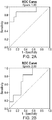
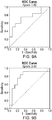
- FIG. 2A is a ROC graph depicting the DOC/16 ⁇ -OHP ratio and spontaneous preterm birth (sPTB) at less than 30 weeks in Epoch 1.
- AUC 0.882, 95% CI 0.720-1.00 (p 0.002), 88% sensitivity, 83% specificity (threshold ⁇ 0.17).
- FIG. 2B is a ROC graph depicting the DOC/16 ⁇ -OHP ratio and spontaneous preterm birth (sPTB) at less than 30 weeks in Epoch 2.
- AUC 0.738, 95% CI 0.537-0.939 (p 0.08), 83% sensitivity, 67% specificity (threshold ⁇ 0.25).
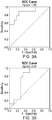
- FIG. 3A is a ROC graph depicting the DOC/16 ⁇ -OHP ratio and spontaneous preterm birth (sPTB) at less than 32 weeks in Epoch 1.
- AUC 0.869, 95% CI 0.717-1.00 (p 0.002), 89% sensitivity, 77% specificity (threshold ⁇ 0.20).
- FIG. 3B is a ROC graph depicting the DOC/16 ⁇ -OHP ratio and spontaneous preterm birth (sPTB) at less than 32 weeks in Epoch 2.
- AUC 0.741, 95% CI 0.553-0.929 (p 0.045), 89% sensitivity, 67% specificity (threshold ⁇ 0.29).
- FIG. 4A is a ROC graph depicting the DOC/16 ⁇ -OHP ratio and spontaneous preterm birth (sPTB) at less than 34 weeks in Epoch 1.
- AUC 0.702, 95% CI 0.487-0.918 (p 0.08), 67% sensitivity, 71% specificity (threshold ⁇ 0.20).
- FIG. 4B is a ROC graph depicting the DOC/16 ⁇ -OHP ratio and spontaneous preterm birth (sPTB) at less than 34 weeks in Epoch 2.
- AUC 0.756, 95% CI 0.557-0.954 (p 0.025), 83% sensitivity, 73% specificity (threshold ⁇ 0.29).
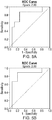
- FIG. 5A is a ROC graph depicting the DOC/6 ⁇ -OHP ratio and spontaneous preterm birth (sPTB) at less than 32 weeks in Epoch 2.
- AUC 0.789, 95% CI 0.580-0.998 (p 0.02), 88% sensitivity, 75% specificity (threshold ⁇ 0.19).
- FIG. 5B is a ROC graph depicting the DOC/6 ⁇ -OHP ratio and spontaneous preterm birth (sPTB) at less than 34 weeks in Epoch 2.
- AUC 0.822, 95% CI 0.628-1.00 (p 0.009), 89% sensitivity, 80% specificity (threshold ⁇ 0.19).
- FIG. 6A is a ROC graph depicting the DOC/11-deoxycortisol ratio and spontaneous preterm birth (sPTB) at less than 30 weeks in Epoch 2.
- AUC 0.825, 95% CI 0.658-0.992 (p 0.018), 83% sensitivity, 80% specificity (threshold ⁇ 0.16).
- FIG. 6B is a ROC graph depicting the DOC/11-deoxycortisol ratio and spontaneous preterm birth (sPTB) at less than 32 weeks in Epoch 2.
- AUC 0.843, 95% CI 0.688-0.999 (p 0.005), 89% sensitivity, 82% specificity (threshold ⁇ 0.18).
- FIG. 7A is a ROC graph depicting the DOC/(16 ⁇ -OHP + 6 ⁇ -OHP) and spontaneous preterm birth (sPTB) at less than 30 weeks in Epoch 1.
- AUC 0.840, 95% CI 0.648-1.00 (p 0.006), 75% sensitivity, 94% specificity (threshold ⁇ 0.05).
- FIG. 7B is a ROC graph depicting the DOC/(16 ⁇ -OHP + 6 ⁇ -OHP) and spontaneous preterm birth (sPTB) at less than 30 weeks in Epoch 2.
- AUC 0.825, 95% CI 0.638-1.00 (p 0.017), 67% sensitivity, 95% specificity (threshold ⁇ 0.058).
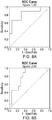
- FIG. 8A is a ROC graph depicting the DOC/(16 ⁇ -OHP + 6 ⁇ -OHP) and spontaneous preterm birth (sPTB) at less than 32 weeks in Epoch 1.
- AUC 0.830, 95% CI 0.651-1.00 (p 0.006), 89% sensitivity, 71% specificity (threshold ⁇ 0.12).
- FIG. 8B is a ROC graph depicting the DOC/(16 ⁇ -OHP + 6 ⁇ -OHP) and spontaneous preterm birth (sPTB) at less than 32 weeks in Epoch 2.
- AUC 0.815, 95% CI 0.656-0.974 (p 0.009), 100% sensitivity, 61% specificity (threshold ⁇ 0.13).
- FIG. 9A is a ROC graph depicting the DOC/(16 ⁇ -OHP + 6 ⁇ -OHP) and spontaneous preterm birth (sPTB) at less than 34 weeks in Epoch 1.
- AUC 0.744, 95% CI 0.547-0.941 (p 0.035), 75% sensitivity, 71% specificity (threshold ⁇ 0.12).
- FIG. 9B is a ROC graph depicting the DOC/(16 ⁇ -OHP + 6 ⁇ -OHP) and spontaneous preterm birth (sPTB) at less than 34 weeks in Epoch 2.
- AUC 0.794, 95% CI 0.606-0.983 (p 0.01), 92% sensitivity, 67% specificity (threshold ⁇ 0.13).
- the present disclosure improves upon the current technologies in several ways: (1) the sensitivity/specificity of the algorithm is equal to or better than the existing diagnostic tools; (2) the algorithm was able to predict the occurrence of spontaneous preterm delivery in the early second trimester, a complete month before the earliest of the current serologic testing options; (3) the algorithm is associated with a specific pathway that is presumed to be dysfunctional in women who go on to delivery spontaneous preterm - this opens the possibility of developing a therapeutic agent that can be paired with the diagnostic algorithm; (4) the invention allows for a single blood draw early in pregnancy to determine risk, which is an improvement upon the multi-step assessments that have traditionally been used; and (5) the timing of these methods at the beginning of the second trimester allow for timely implementation of clinical interventions for maximal benefit.
- the ideal service that would develop from this invention is a serologic test that could be offered to all pregnant women in the late first trimester or early second trimester to determine their risk of spontaneous preterm delivery.
- the development of a paired therapeutic option makes it more likely that clinicians would choose to use this invention over other existing diagnostic options.
Landscapes
- Health & Medical Sciences (AREA)
- Chemical & Material Sciences (AREA)
- Life Sciences & Earth Sciences (AREA)
- Engineering & Computer Science (AREA)
- Organic Chemistry (AREA)
- General Health & Medical Sciences (AREA)
- Molecular Biology (AREA)
- Biomedical Technology (AREA)
- Immunology (AREA)
- Hematology (AREA)
- Urology & Nephrology (AREA)
- Physics & Mathematics (AREA)
- Pathology (AREA)
- General Physics & Mathematics (AREA)
- Biochemistry (AREA)
- Food Science & Technology (AREA)
- Medicinal Chemistry (AREA)
- Analytical Chemistry (AREA)
- Biotechnology (AREA)
- Cell Biology (AREA)
- Microbiology (AREA)
- Endocrinology (AREA)
- Proteomics, Peptides & Aminoacids (AREA)
- Gynecology & Obstetrics (AREA)
- Reproductive Health (AREA)
- Pregnancy & Childbirth (AREA)
- Biophysics (AREA)
- Optics & Photonics (AREA)
- Bioinformatics & Cheminformatics (AREA)
- Bioinformatics & Computational Biology (AREA)
- Spectroscopy & Molecular Physics (AREA)
- Investigating Or Analysing Biological Materials (AREA)
- Other Investigation Or Analysis Of Materials By Electrical Means (AREA)
Claims (10)
- Procédé d'identification d'une femme enceinte susceptible d'accoucher prématurément de manière spontanée, le procédé comprenant :la mise à disposition d'un échantillon obtenu de la femme enceinte, dans lequel l'échantillon est choisi parmi le groupe consistant en un échantillon de plasma, un échantillon de sérum, un échantillon de sang complet et un échantillon d'urine ;la détermination de la concentration d'un premier stéroïde choisi parmi le groupe consistant en la désoxycorticostérone, la corticostérone, la 18-hydroxycorticostérone, l'aldostérone, le désoxycortisol, le cortisol et leurs combinaisons dans l'échantillon ;la détermination de la concentration d'au moins un deuxième stéroïde, dans lequel le deuxième stéroïde est différent du premier stéroïde ;le calcul du rapport entre le premier stéroïde et l'au moins deuxième stéroïde ; etl'identification de la susceptibilité de la femme enceinte d'accoucher prématurément de manière spontanée lorsque le rapport dans l'échantillon se situe sous une valeur seuil.
- Procédé selon la revendication 1, dans lequel le deuxième stéroïde est choisi parmi le groupe consistant en la progestérone, la 16α-hydroxyprogestérone, la 6β-hydroxyprogestérone, la 6α-hydroxyprogestérone, la 17-hydroxyprogestérone, le 11-désoxycortisol, le cortisol, la 11-désoxycorticostérone, le 17-désoxycortisol, l'androstènedione, la testostérone, l'œstradiol, la 20a-dihydroprogestérone, la 17a,20a-dihydroxyprogestérone, l'isoprégnanolone et leurs combinaisons.
- Procédé selon la revendication 1, comprenant en outre, la détermination de la concentration en un biomarqueur choisi parmi le groupe consistant en la protéine liant le facteur de croissance de type insuline 4, la globuline liant une hormone sexuelle, la protéine liant un lipopolysaccharide (LBP), le précurseur de la protéine liant un lipopolysaccharide (LBP), la prothrombine (THRB), le composant C5 du complément (C5 ou CO5), le plasminogène (PLMN), la chaîne gamma du composant C8 du complément (C8G ou C08G), le facteur B du complément, le membre 2 de la famille de l'ectonucléotide pyrophosphatase/phosphodiestérase, la gelsoline, la N-acétylmuramoyl-L-alanine amidase, le précurseur de la N-acétylmuramoyl-L-alanine amidase, la protéine 2 liant l'hyaluronane, le membre 1 de la 'BPI fold-containing family B', la chaîne alpha du composant C8 du complément, l'apolipoprotéine A-II, le membre 2 de la famille de l'ectonucléotide pyrophosphatase/phosphodiestérase, le profiling-1, le pro-neuropeptide Y, la chaîne bêta du composant C8 du complément, la chaîne B du facteur XIIII de coagulation, la N-acétylmuramoyl-L-alanine amidase, la chaîne lourde H4 de l'inhibiteur d'inter-alpha-trypsine, la préproprotéine de la chaîne lourde H3 de l'inhibiteur d'inter-alpha-trypsine, la leucyl-cystinylaminopeptidase, l'alpha-2-HS-glycoprotéine, la sous-unité gamma-3 de la protéine kinase activée 5'-AMP, le précurseur de l'afamine, le précurseur de l'alpha-1-antichymotrypsine, le précurseur de l'alpha-1B-glycoprotéine, le précurseur de l'isoforme a de l'alpha-2-antiplasmine, la préproprotéine de l'alpha-2-HS-glycoprotéine, le précurseur de l'alpha-2-HS-macroglobuline, la préproprotéine de l'angiotensinogène, le précurseur de l'antithrombine-III, la préproprotéine de l'apolipoprotéine A-II, le précurseur de l'apolipoprotéine A-IV, le précurseur de l'apolipoprotéine B-100, le précurseur de l'apolipoprotéine C-I, le précurseur de l'apolipoprotéine C-II, le précurseur de l'apolipoprotéine C-III, le précurseur de l'apolipoprotéine E, le membre 4 de la sous-famille D de la cassette liant ATP, le membre 3 de la sous-famille F de la cassette liant ATP, le précurseur de la bêta-2-glycoprotéine 1, le précurseur de la bêta-Ala-His dipeptidase, le précurseur de la biotinidase, la préproprotéine de la carboxypeptidase B2, le précurseur de la chaîne catalytique de la carboxypeptidase N, le précurseur de la sous-unité 2 de la carboxypeptidase N, la catalase, le précurseur de la céruloplasmine, le précurseur de la cholinestérase, la préproprotéine de la clustérine, la préproprotéine du facteur de coagulation IX, l'isoforme a du facteur de coagulation VII, la préproprotéine de l'isoforme a du facteur de coagulation VII, la préproprotéine du facteur de coagulation X, la chaîne B du facteur de coagulation XIII, la protéine 13 contenant un domaine de superhélice, le précurseur de la sous-unité A du sous-composant du complément C1q, le précurseur de la sous-unité B du sous-composant du complément C1q, le précurseur de la sous-unité C du sous-composant du complément C1q, le précurseur du sous-composant du complément C1r, le précurseur du sous-composant du complément C1s, l'isoforme 3 du complément C2, le précurseur du complément C3, l'isoforme 1 du complément C4-A, la préproprotéine du complément C5, le précurseur du composant C6, le précurseur du composant C7, le précurseur de la chaîne alpha du composant C8, le précurseur du composant C9 du complément, la préproprotéine du facteur B du complément, le précurseur de l'isoforme a du facteur H du complément, le précurseur de l'isoforme b du facteur H du complément, le précurseur de la protéine 1 reliée à H du facteur H du complément, la préproprotéine du facteur I du complément, l'isoforme de la sous-unité 6 du complexe oligomère conservé de Golgi, le précurseur de la globuline liant les corticostéroïdes, le précurseur de la protéine C réactive, le précurseur de la bêta-hydroxylase de la dopamine, l'éditase B2 spécifique de l'ARN double brin, le précurseur de l'oxydase 2 double, la protéine 8 contenant un domaine FERM, le précurseur de la fétuine-B, le précurseur de l'isoforme 1 de la ficoline-3, le précurseur du facteur gastrique intrinsèque, l'isoforme d de la gelsoline, le précurseur de la peroxydase 3 de la glutathione, le précurseur de l'hémopexine, le précurseur du cofacteur 2 de l'héparine, le précurseur de la molécule d'adhésion aux cellules hépatiques, la préproprotéine de l'activateur du facteur de croissance des hépatocytes, le précurseur de la glycoprotéine riche en histidine, la préproprotéine de l'isoforme 1 de la protéine liant l'hyaluronane 2, la caspase 12 inactive, l'isoforme 1 de l'enzyme dégradant l'insuline, le précurseur de l'isoforme 2 de la sous-unité labile acide du complexe protéique liant le facteur de croissance de type insuline, le précurseur de l'isoforme a de la chaîne lourde H1 de l'inhibiteur de l'inter-alpha-trypsine, le précurseur de la chaîne lourde H2 de l'inhibiteur de l'inter-alpha-trypsine, le précurseur de l'isoforme 1 de la chaîne lourde H4 de l'inhibiteur de l'inter-alpha-trypsine, le précurseur de la kallistatine, le précurseur de l'isoforme 2 du kininogène-1, le précurseur de l'alpha-2-glycoprotéine riche en leucine, le précurseur du lumican, la m7GpppX diphosphatase, la préproprotéine de l'isoforme 1 de la métalloprotéinase matricielle 19, la protéine 1 contenant le domaine MBT, le précurseur de l'antigène CD14 de différenciation de monocyte, la préproprotéine de pappalysine-1, le précurseur de la phospholipase D spécifique du phosphatidylinositol-glycane, le précurseur du facteur dérivé de l'épithélium pigmentaire, la préproprotéine de la kallikréine plasmatique, le précurseur de l'inhibiteur de la protéase C1 plasmatique, le précurseur de l'isoforme 1 du plasminogène, la préproprotéine de la protéine plaquettaire basique, le précurseur de la glycoprotéine plaquettaire V, le précurseur de la protéine de zone de grossesse, la bêta-1-glycoprotéine 5 spécifique à la grossesse, le précurseur de la bêta-1-glycoprotéine 5 spécifique à la grossesse, la bêta-1-glycoprotéine 6 spécifique à la grossesse, le précurseur de la bêta-1-glycoprotéine 6 spécifique à la grossesse, la bêta-1-glycoprotéine 7 spécifique à la grossesse, la bêta-1-glycoprotéine 8 spécifique à la grossesse, la bêta-1-glycoprotéine 9 spécifique à la grossesse, la bêta-1-glycoprotéine 11 spécifique à la grossesse, la bêta-1-glycoprotéine 2 spécifique à la grossesse, la bêta-1-glycoprotéine 3 spécifique à la grossesse, la bêta-1-glycoprotéine 4 spécifique à la grossesse, le facteur 1 de blocage induit de la progestérone, la préproprotéine de la protéine AMBP, l'isoforme MTGR1b de la protéine CBFA2T2, la protéine FAM98C, la protéine NLRC3, le précurseur de l'inhibiteur de protéase dépendant de la protéine Z, la préproprotéine de la prothrombine, l'isoforme 1 de l'isomérase supposée de l'hydroxypyruvate, le précurseur du membre 10A de la famille de protéine de type ras, la protéine A liant à la GTP reliée à ras, le précurseur de la protéine 4 liant le rétinol, le précurseur de l'isoforme 1 de la globuline liant une hormone sexuelle, le précurseur de l'isoforme 4 de la globuline liant une hormone sexuelle, le transducteur de signal et activateur de transcription 2, la chaîne bêta de la spectrine non érythrocytaire 1, le précurseur de la stabiline-1, la déshydrogénase mitochondriale du semi-aldéhyde du succinate, le précurseur de la tétranectine, la protéine 6 contenant un domaine THAP, le précurseur de la globuline liant la thyroxine, la protéine 5 contenant un motif tripartite, le précurseur de l'isoforme 1 de la protéine liant la vitamine D, le précurseur de la vitronectine, la protéine 142 à doigt de zinc, la préproprotéine de l'isoforme 2 de l'attractine, le précurseur de la protéine ig-h3 du facteur de croissance transformant bêta-induit, le précurseur de la transthyrétine, la protéine C3orf20 non caractérisée, le précurseur de la bêta-2-microglobuline, la préproprotéine de l'isoforme 1 du protéoglycane de moelle osseuse, le précurseur du polypeptide 8 de la gonadotropine bêta chorionique, le précurseur de l'isoforme 2 de l'hormone somatomammotropine chorionique 2, le précurseur du récepteur du facteur 1 de stimulation des colonies de macrophages, le précurseur de la zinc-alpha-2-glycoprotéine, le PAN-PSG, le précurseur du composant C6 du complément, la protéine matricielle extracellulaire 1 de type fibuline contenant EGF, la protéine 12 contenant un domaine de disintégrine et de métalloprotéinase, et leurs combinaisons.
- Procédé selon la revendication 1, comprenant en outre, la détermination du changement de concentration de l'ARN plasmatique sans cellule (CFP).
- Procédé selon la revendication 1, dans lequel le premier stéroïde est la désoxycorticostérone (DOC) et le deuxième stéroïde est la 16a-hydroxyprogestérone (16aOHP), et dans lequel le rapport DOC/16αOHP est réduit à moins de 0,2.
- Procédé selon la revendication 1, dans lequel l'échantillon est obtenu à moins de 32 semaines.
- Procédé selon la revendication 1, dans lequel l'échantillon est obtenu de la femme enceinte au deuxième trimestre ou au premier trimestre.
- Procédé selon la revendication 1, dans lequel la concentration du DOC est déterminée à l'aide d'un dosage qui met en contact l'échantillon avec un anticorps qui se lie spécifiquement au DOC, et la concentration du 16αOHP est déterminée à l'aide d'un dosage qui met en contact l'échantillon avec un anticorps qui se lie spécifiquement au 16αOHP.
- Procédé selon la revendication 1, comprenant en outre, l'analyse d'au moins un facteur de risque choisi parmi le groupe consistant en : l'âge, la race, l'exposition médicamenteuse, une grossesse antérieure, des antécédents d'accouchement avec un faible poids ou avant terme, de multiples avortements spontanés au 2e trimestre, un avortement induit antérieur au premier trimestre, une prééclampsie, des facteurs familiaux ou intergénérationnels, des antécédents d'infertilité, la nulliparité, des anomalies placentaires, des anomalies cervicales et utérines, des saignements gestationnels, une restriction de croissance intra-utérine, une exposition in utero au diéthylstilbestrol, des gestations multiples, le sexe du nourrisson, une petite stature, un faible poids/indice de masse corporelle avant la grossesse, du diabète, de l'hypertension, de l'hypothyroïdie, de l'asthme, le niveau d'éducation, le tabagisme, des infections urogénitales et leurs combinaisons.
- Procédé selon la revendication 1, dans lequel le premier stéroïde est la désoxycorticostérone (DOC) et le deuxième stéroïde est le 11-désoxycortisol et le rapport DOC/11-désoxycortisol est réduit à moins de 0,18.
Applications Claiming Priority (2)
| Application Number | Priority Date | Filing Date | Title |
|---|---|---|---|
| US201662332174P | 2016-05-05 | 2016-05-05 | |
| PCT/US2017/030759 WO2017192668A1 (fr) | 2016-05-05 | 2017-05-03 | Profilage quantitatif de métabolites de la progestérone pour la prédiction de l'accouchement prématuré spontané |
Publications (3)
| Publication Number | Publication Date |
|---|---|
| EP3452491A1 EP3452491A1 (fr) | 2019-03-13 |
| EP3452491A4 EP3452491A4 (fr) | 2020-01-08 |
| EP3452491B1 true EP3452491B1 (fr) | 2021-07-07 |
Family
ID=60203327
Family Applications (1)
| Application Number | Title | Priority Date | Filing Date |
|---|---|---|---|
| EP17793219.1A Active EP3452491B1 (fr) | 2016-05-05 | 2017-05-03 | Profilage quantitatif de métabolites de la progestérone pour la prédiction de l'accouchement prématuré spontané |
Country Status (7)
| Country | Link |
|---|---|
| US (1) | US11280795B2 (fr) |
| EP (1) | EP3452491B1 (fr) |
| CN (1) | CN109415402B (fr) |
| AU (1) | AU2017260320B2 (fr) |
| IL (1) | IL262769B (fr) |
| WO (1) | WO2017192668A1 (fr) |
| ZA (1) | ZA201807505B (fr) |
Families Citing this family (7)
| Publication number | Priority date | Publication date | Assignee | Title |
|---|---|---|---|---|
| US11682495B2 (en) * | 2016-10-13 | 2023-06-20 | Carnegie Mellon University | Structured medical data classification system for monitoring and remediating treatment risks |
| CN110187043A (zh) * | 2019-04-25 | 2019-08-30 | 中南民族大学 | 一种同时检测血清中13种甾体激素的方法 |
| EP3861340A4 (fr) * | 2019-12-04 | 2022-08-10 | Garbha Health, Inc | Analyse de profils d'hormones permettant la prédiction d'un accouchement prématuré spontané |
| CN113514642A (zh) * | 2020-04-09 | 2021-10-19 | 武汉市朗典精医生物科技有限公司 | 制备检测igfbp4/shbg双指标免疫层析试剂盒 |
| CA3217598A1 (fr) | 2021-05-06 | 2022-11-10 | Par Ingemar Johansson | Diagnostic et traitement de sujets gravement malades |
| CN117147869A (zh) * | 2022-05-24 | 2023-12-01 | 天津市中心妇产科医院 | 用于鉴定早产的四种生物标志物组合及其应用 |
| WO2024227356A1 (fr) * | 2023-12-28 | 2024-11-07 | 深圳华大基因股份有限公司 | Marqueur protéique associé à un accouchement prématuré, procédé de construction d'un modèle de prédiction d'accouchement prématuré, et leur utilisation |
Family Cites Families (8)
| Publication number | Priority date | Publication date | Assignee | Title |
|---|---|---|---|---|
| DE10037389A1 (de) * | 2000-08-01 | 2002-02-14 | Solvay Pharm Gmbh | Verfahren und Vorrichtung zur Anreicherung und Stabilisierung von konjugierten Oestrogenen aus Stutenharn |
| CN101454488A (zh) * | 2006-05-26 | 2009-06-10 | 阿普里拉股份有限公司 | 用于羟基化化合物的标签试剂和方法 |
| CA2807050C (fr) * | 2009-12-08 | 2019-06-18 | Ozlem Equils | Bio-marqueur de diagnostic pour identifier des femmes qui presentent un risque d'accouchement avant terme |
| ES2586153T3 (es) | 2010-11-30 | 2016-10-11 | Yafeng Dong | Predicción de nacimiento prematuro espontáneo mediante la medición de ácidos nucleicos libres de células en sangre materna |
| US20140093900A1 (en) | 2011-01-03 | 2014-04-03 | Mark M. Kushnir | Steroid profile in ovarian follicular fluid for diagnosis, prognosis and determining strategies for treatment |
| CN103443621B (zh) * | 2011-02-07 | 2016-06-29 | 美国控股实验室公司 | 用于测定睾酮在样品中的存在或量的方法和系统 |
| CA2907120C (fr) | 2013-03-15 | 2023-10-17 | Sera Prognostics, Inc. | Biomarqueurs et procedes de prediction d'une naissance prematuree |
| CN105899950B (zh) * | 2013-12-19 | 2017-11-24 | 根特大学 | 鱼鳞中作为对于慢性应激的生物标记物的糖皮质激素的量化 |
-
2017
- 2017-05-03 EP EP17793219.1A patent/EP3452491B1/fr active Active
- 2017-05-03 US US16/099,017 patent/US11280795B2/en active Active
- 2017-05-03 AU AU2017260320A patent/AU2017260320B2/en not_active Ceased
- 2017-05-03 CN CN201780040607.4A patent/CN109415402B/zh not_active Expired - Fee Related
- 2017-05-03 WO PCT/US2017/030759 patent/WO2017192668A1/fr not_active Ceased
-
2018
- 2018-11-04 IL IL262769A patent/IL262769B/en unknown
- 2018-11-08 ZA ZA2018/07505A patent/ZA201807505B/en unknown
Non-Patent Citations (1)
| Title |
|---|
| None * |
Also Published As
| Publication number | Publication date |
|---|---|
| CN109415402A (zh) | 2019-03-01 |
| WO2017192668A1 (fr) | 2017-11-09 |
| AU2017260320B2 (en) | 2021-11-11 |
| CN109415402B (zh) | 2021-10-19 |
| IL262769B (en) | 2021-10-31 |
| EP3452491A4 (fr) | 2020-01-08 |
| AU2017260320A1 (en) | 2018-11-22 |
| CA3023242A1 (fr) | 2017-11-09 |
| US20190137507A1 (en) | 2019-05-09 |
| IL262769A (en) | 2018-12-31 |
| ZA201807505B (en) | 2024-07-31 |
| US11280795B2 (en) | 2022-03-22 |
| EP3452491A1 (fr) | 2019-03-13 |
Similar Documents
| Publication | Publication Date | Title |
|---|---|---|
| EP3452491B1 (fr) | Profilage quantitatif de métabolites de la progestérone pour la prédiction de l'accouchement prématuré spontané | |
| US20240318250A1 (en) | Biomarker pairs for predicting preterm birth | |
| US20250085293A1 (en) | Biomarkers for predicting preterm birth due to preterm premature rupture of membranes (pprom) versus idiopathic spontaneous labor (ptl) | |
| US20100016173A1 (en) | Maternal serum biomarkers for detection of pre-eclampsia | |
| US20210057039A1 (en) | Systems and methods of using machine learning analysis to stratify risk of spontaneous preterm birth | |
| CA2859295A1 (fr) | Biomarqueurs et parametres pour troubles hypertensifs de grossesse | |
| JP7698821B2 (ja) | 子宮内膜症バイオマーカー | |
| Belovic et al. | Biochemical markers for prediction of hypertensive disorders of pregnancy | |
| US20190234954A1 (en) | Pregnancy clock proteins for predicting due date and time to birth | |
| JP5926722B2 (ja) | 子癇前症の初期段階マーカーとしてのHbFおよびA1M | |
| US20220291243A1 (en) | Analyzing hormone panels for the prediction of spontaneous preterm delivery | |
| CA3023242C (fr) | Profilage quantitatif de metabolites de la progesterone pour la prediction de l'accouchement premature spontane | |
| US11293931B2 (en) | Quantitative profiling of progesterone metabolites for the prediction of spontaneous preterm delivery | |
| HK40000466B (en) | Quantitative profiling of progesterone metabolites for the prediction of spontaneous preterm delivery | |
| EP3194979B1 (fr) | Procédé pour déterminer le risque de naissance avant terme | |
| CN108614118A (zh) | 妊娠期高血压疾病相关标志物组合物及其应用 | |
| US20240264170A1 (en) | Biomarker pairs and triplets for predicting preterm birth | |
| US20250116674A1 (en) | Methods for prediction and monitoring of spontaneous preterm birth | |
| WO2018199849A1 (fr) | Métabolites caractéristiques dans des fausses couches | |
| KS et al. | Impact of Hormonal Imbalance and Cytokines Inflammatory Response on Leukemia Inhibitory Factor Gene (LIF) Dysregulation in Endometriosis Pathogenesis. |
Legal Events
| Date | Code | Title | Description |
|---|---|---|---|
| STAA | Information on the status of an ep patent application or granted ep patent |
Free format text: STATUS: THE INTERNATIONAL PUBLICATION HAS BEEN MADE |
|
| PUAI | Public reference made under article 153(3) epc to a published international application that has entered the european phase |
Free format text: ORIGINAL CODE: 0009012 |
|
| STAA | Information on the status of an ep patent application or granted ep patent |
Free format text: STATUS: REQUEST FOR EXAMINATION WAS MADE |
|
| 17P | Request for examination filed |
Effective date: 20181204 |
|
| AK | Designated contracting states |
Kind code of ref document: A1 Designated state(s): AL AT BE BG CH CY CZ DE DK EE ES FI FR GB GR HR HU IE IS IT LI LT LU LV MC MK MT NL NO PL PT RO RS SE SI SK SM TR |
|
| AX | Request for extension of the european patent |
Extension state: BA ME |
|
| DAV | Request for validation of the european patent (deleted) | ||
| DAX | Request for extension of the european patent (deleted) | ||
| A4 | Supplementary search report drawn up and despatched |
Effective date: 20191206 |
|
| RIC1 | Information provided on ipc code assigned before grant |
Ipc: G01N 33/48 20060101ALI20191202BHEP Ipc: G01N 33/53 20060101ALI20191202BHEP Ipc: C07J 5/00 20060101ALI20191202BHEP Ipc: G01N 33/74 20060101ALI20191202BHEP Ipc: C07J 51/00 20060101ALI20191202BHEP Ipc: C07J 1/00 20060101AFI20191202BHEP |
|
| REG | Reference to a national code |
Ref country code: HK Ref legal event code: DE Ref document number: 40000466 Country of ref document: HK |
|
| RIC1 | Information provided on ipc code assigned before grant |
Ipc: C07J 1/00 20060101AFI20200929BHEP Ipc: G01N 33/48 20060101ALI20200929BHEP Ipc: C07J 51/00 20060101ALI20200929BHEP Ipc: G01N 33/53 20060101ALI20200929BHEP Ipc: C07J 7/00 20060101ALI20200929BHEP Ipc: G01N 33/487 20060101ALI20200929BHEP Ipc: G01N 33/68 20060101ALI20200929BHEP Ipc: C07J 5/00 20060101ALI20200929BHEP Ipc: G01N 33/74 20060101ALI20200929BHEP |
|
| GRAP | Despatch of communication of intention to grant a patent |
Free format text: ORIGINAL CODE: EPIDOSNIGR1 |
|
| STAA | Information on the status of an ep patent application or granted ep patent |
Free format text: STATUS: GRANT OF PATENT IS INTENDED |
|
| INTG | Intention to grant announced |
Effective date: 20201214 |
|
| RIN1 | Information on inventor provided before grant (corrected) |
Inventor name: PATIL, AVINASH SHIVAPUTRAPPA |
|
| GRAS | Grant fee paid |
Free format text: ORIGINAL CODE: EPIDOSNIGR3 |
|
| GRAA | (expected) grant |
Free format text: ORIGINAL CODE: 0009210 |
|
| STAA | Information on the status of an ep patent application or granted ep patent |
Free format text: STATUS: THE PATENT HAS BEEN GRANTED |
|
| AK | Designated contracting states |
Kind code of ref document: B1 Designated state(s): AL AT BE BG CH CY CZ DE DK EE ES FI FR GB GR HR HU IE IS IT LI LT LU LV MC MK MT NL NO PL PT RO RS SE SI SK SM TR |
|
| REG | Reference to a national code |
Ref country code: GB Ref legal event code: FG4D |
|
| REG | Reference to a national code |
Ref country code: AT Ref legal event code: REF Ref document number: 1408529 Country of ref document: AT Kind code of ref document: T Effective date: 20210715 |
|
| REG | Reference to a national code |
Ref country code: DE Ref legal event code: R096 Ref document number: 602017041748 Country of ref document: DE |
|
| REG | Reference to a national code |
Ref country code: SE Ref legal event code: TRGR |
|
| REG | Reference to a national code |
Ref country code: IE Ref legal event code: FG4D |
|
| REG | Reference to a national code |
Ref country code: LT Ref legal event code: MG9D |
|
| REG | Reference to a national code |
Ref country code: NL Ref legal event code: MP Effective date: 20210707 |
|
| REG | Reference to a national code |
Ref country code: AT Ref legal event code: MK05 Ref document number: 1408529 Country of ref document: AT Kind code of ref document: T Effective date: 20210707 |
|
| PG25 | Lapsed in a contracting state [announced via postgrant information from national office to epo] |
Ref country code: LT Free format text: LAPSE BECAUSE OF FAILURE TO SUBMIT A TRANSLATION OF THE DESCRIPTION OR TO PAY THE FEE WITHIN THE PRESCRIBED TIME-LIMIT Effective date: 20210707 Ref country code: AT Free format text: LAPSE BECAUSE OF FAILURE TO SUBMIT A TRANSLATION OF THE DESCRIPTION OR TO PAY THE FEE WITHIN THE PRESCRIBED TIME-LIMIT Effective date: 20210707 Ref country code: BG Free format text: LAPSE BECAUSE OF FAILURE TO SUBMIT A TRANSLATION OF THE DESCRIPTION OR TO PAY THE FEE WITHIN THE PRESCRIBED TIME-LIMIT Effective date: 20211007 Ref country code: NO Free format text: LAPSE BECAUSE OF FAILURE TO SUBMIT A TRANSLATION OF THE DESCRIPTION OR TO PAY THE FEE WITHIN THE PRESCRIBED TIME-LIMIT Effective date: 20211007 Ref country code: NL Free format text: LAPSE BECAUSE OF FAILURE TO SUBMIT A TRANSLATION OF THE DESCRIPTION OR TO PAY THE FEE WITHIN THE PRESCRIBED TIME-LIMIT Effective date: 20210707 Ref country code: PT Free format text: LAPSE BECAUSE OF FAILURE TO SUBMIT A TRANSLATION OF THE DESCRIPTION OR TO PAY THE FEE WITHIN THE PRESCRIBED TIME-LIMIT Effective date: 20211108 Ref country code: FI Free format text: LAPSE BECAUSE OF FAILURE TO SUBMIT A TRANSLATION OF THE DESCRIPTION OR TO PAY THE FEE WITHIN THE PRESCRIBED TIME-LIMIT Effective date: 20210707 Ref country code: ES Free format text: LAPSE BECAUSE OF FAILURE TO SUBMIT A TRANSLATION OF THE DESCRIPTION OR TO PAY THE FEE WITHIN THE PRESCRIBED TIME-LIMIT Effective date: 20210707 Ref country code: RS Free format text: LAPSE BECAUSE OF FAILURE TO SUBMIT A TRANSLATION OF THE DESCRIPTION OR TO PAY THE FEE WITHIN THE PRESCRIBED TIME-LIMIT Effective date: 20210707 Ref country code: HR Free format text: LAPSE BECAUSE OF FAILURE TO SUBMIT A TRANSLATION OF THE DESCRIPTION OR TO PAY THE FEE WITHIN THE PRESCRIBED TIME-LIMIT Effective date: 20210707 |
|
| PG25 | Lapsed in a contracting state [announced via postgrant information from national office to epo] |
Ref country code: PL Free format text: LAPSE BECAUSE OF FAILURE TO SUBMIT A TRANSLATION OF THE DESCRIPTION OR TO PAY THE FEE WITHIN THE PRESCRIBED TIME-LIMIT Effective date: 20210707 Ref country code: LV Free format text: LAPSE BECAUSE OF FAILURE TO SUBMIT A TRANSLATION OF THE DESCRIPTION OR TO PAY THE FEE WITHIN THE PRESCRIBED TIME-LIMIT Effective date: 20210707 Ref country code: GR Free format text: LAPSE BECAUSE OF FAILURE TO SUBMIT A TRANSLATION OF THE DESCRIPTION OR TO PAY THE FEE WITHIN THE PRESCRIBED TIME-LIMIT Effective date: 20211008 |
|
| REG | Reference to a national code |
Ref country code: DE Ref legal event code: R097 Ref document number: 602017041748 Country of ref document: DE |
|
| PG25 | Lapsed in a contracting state [announced via postgrant information from national office to epo] |
Ref country code: DK Free format text: LAPSE BECAUSE OF FAILURE TO SUBMIT A TRANSLATION OF THE DESCRIPTION OR TO PAY THE FEE WITHIN THE PRESCRIBED TIME-LIMIT Effective date: 20210707 |
|
| PLBE | No opposition filed within time limit |
Free format text: ORIGINAL CODE: 0009261 |
|
| STAA | Information on the status of an ep patent application or granted ep patent |
Free format text: STATUS: NO OPPOSITION FILED WITHIN TIME LIMIT |
|
| PG25 | Lapsed in a contracting state [announced via postgrant information from national office to epo] |
Ref country code: SM Free format text: LAPSE BECAUSE OF FAILURE TO SUBMIT A TRANSLATION OF THE DESCRIPTION OR TO PAY THE FEE WITHIN THE PRESCRIBED TIME-LIMIT Effective date: 20210707 Ref country code: SK Free format text: LAPSE BECAUSE OF FAILURE TO SUBMIT A TRANSLATION OF THE DESCRIPTION OR TO PAY THE FEE WITHIN THE PRESCRIBED TIME-LIMIT Effective date: 20210707 Ref country code: RO Free format text: LAPSE BECAUSE OF FAILURE TO SUBMIT A TRANSLATION OF THE DESCRIPTION OR TO PAY THE FEE WITHIN THE PRESCRIBED TIME-LIMIT Effective date: 20210707 Ref country code: EE Free format text: LAPSE BECAUSE OF FAILURE TO SUBMIT A TRANSLATION OF THE DESCRIPTION OR TO PAY THE FEE WITHIN THE PRESCRIBED TIME-LIMIT Effective date: 20210707 Ref country code: CZ Free format text: LAPSE BECAUSE OF FAILURE TO SUBMIT A TRANSLATION OF THE DESCRIPTION OR TO PAY THE FEE WITHIN THE PRESCRIBED TIME-LIMIT Effective date: 20210707 Ref country code: AL Free format text: LAPSE BECAUSE OF FAILURE TO SUBMIT A TRANSLATION OF THE DESCRIPTION OR TO PAY THE FEE WITHIN THE PRESCRIBED TIME-LIMIT Effective date: 20210707 |
|
| 26N | No opposition filed |
Effective date: 20220408 |
|
| PG25 | Lapsed in a contracting state [announced via postgrant information from national office to epo] |
Ref country code: MC Free format text: LAPSE BECAUSE OF FAILURE TO SUBMIT A TRANSLATION OF THE DESCRIPTION OR TO PAY THE FEE WITHIN THE PRESCRIBED TIME-LIMIT Effective date: 20210707 Ref country code: LU Free format text: LAPSE BECAUSE OF NON-PAYMENT OF DUE FEES Effective date: 20220503 |
|
| P01 | Opt-out of the competence of the unified patent court (upc) registered |
Effective date: 20230507 |
|
| PG25 | Lapsed in a contracting state [announced via postgrant information from national office to epo] |
Ref country code: HU Free format text: LAPSE BECAUSE OF FAILURE TO SUBMIT A TRANSLATION OF THE DESCRIPTION OR TO PAY THE FEE WITHIN THE PRESCRIBED TIME-LIMIT; INVALID AB INITIO Effective date: 20170503 |
|
| PG25 | Lapsed in a contracting state [announced via postgrant information from national office to epo] |
Ref country code: MK Free format text: LAPSE BECAUSE OF FAILURE TO SUBMIT A TRANSLATION OF THE DESCRIPTION OR TO PAY THE FEE WITHIN THE PRESCRIBED TIME-LIMIT Effective date: 20210707 Ref country code: CY Free format text: LAPSE BECAUSE OF FAILURE TO SUBMIT A TRANSLATION OF THE DESCRIPTION OR TO PAY THE FEE WITHIN THE PRESCRIBED TIME-LIMIT Effective date: 20210707 |
|
| PGFP | Annual fee paid to national office [announced via postgrant information from national office to epo] |
Ref country code: IE Payment date: 20240527 Year of fee payment: 8 |
|
| PGFP | Annual fee paid to national office [announced via postgrant information from national office to epo] |
Ref country code: GB Payment date: 20240527 Year of fee payment: 8 |
|
| PGFP | Annual fee paid to national office [announced via postgrant information from national office to epo] |
Ref country code: DE Payment date: 20240530 Year of fee payment: 8 |
|
| PGFP | Annual fee paid to national office [announced via postgrant information from national office to epo] |
Ref country code: CH Payment date: 20240602 Year of fee payment: 8 |
|
| PGFP | Annual fee paid to national office [announced via postgrant information from national office to epo] |
Ref country code: FR Payment date: 20240527 Year of fee payment: 8 |
|
| PGFP | Annual fee paid to national office [announced via postgrant information from national office to epo] |
Ref country code: SE Payment date: 20240527 Year of fee payment: 8 Ref country code: BE Payment date: 20240527 Year of fee payment: 8 |
|
| PG25 | Lapsed in a contracting state [announced via postgrant information from national office to epo] |
Ref country code: MT Free format text: LAPSE BECAUSE OF FAILURE TO SUBMIT A TRANSLATION OF THE DESCRIPTION OR TO PAY THE FEE WITHIN THE PRESCRIBED TIME-LIMIT Effective date: 20210707 |
|
| PGFP | Annual fee paid to national office [announced via postgrant information from national office to epo] |
Ref country code: IT Payment date: 20240521 Year of fee payment: 8 |
|
| REG | Reference to a national code |
Ref country code: DE Ref legal event code: R119 Ref document number: 602017041748 Country of ref document: DE |
|
| PG25 | Lapsed in a contracting state [announced via postgrant information from national office to epo] |
Ref country code: TR Free format text: LAPSE BECAUSE OF FAILURE TO SUBMIT A TRANSLATION OF THE DESCRIPTION OR TO PAY THE FEE WITHIN THE PRESCRIBED TIME-LIMIT Effective date: 20210707 |
|
| REG | Reference to a national code |
Ref country code: CH Ref legal event code: H13 Free format text: ST27 STATUS EVENT CODE: U-0-0-H10-H13 (AS PROVIDED BY THE NATIONAL OFFICE) Effective date: 20251223 |
|
| PG25 | Lapsed in a contracting state [announced via postgrant information from national office to epo] |
Ref country code: CH Free format text: LAPSE BECAUSE OF NON-PAYMENT OF DUE FEES Effective date: 20250531 |
|
| PG25 | Lapsed in a contracting state [announced via postgrant information from national office to epo] |
Ref country code: SE Free format text: LAPSE BECAUSE OF NON-PAYMENT OF DUE FEES Effective date: 20250504 |
|
| REG | Reference to a national code |
Ref country code: SE Ref legal event code: EUG |
|
| GBPC | Gb: european patent ceased through non-payment of renewal fee |
Effective date: 20250503 |
|
| REG | Reference to a national code |
Ref country code: BE Ref legal event code: MM Effective date: 20250531 |
|
| PG25 | Lapsed in a contracting state [announced via postgrant information from national office to epo] |
Ref country code: GB Free format text: LAPSE BECAUSE OF NON-PAYMENT OF DUE FEES Effective date: 20250503 |
|
| PG25 | Lapsed in a contracting state [announced via postgrant information from national office to epo] |
Ref country code: IE Free format text: LAPSE BECAUSE OF NON-PAYMENT OF DUE FEES Effective date: 20250503 Ref country code: DE Free format text: LAPSE BECAUSE OF NON-PAYMENT OF DUE FEES Effective date: 20251202 |
|
| PG25 | Lapsed in a contracting state [announced via postgrant information from national office to epo] |
Ref country code: IT Free format text: LAPSE BECAUSE OF NON-PAYMENT OF DUE FEES Effective date: 20250503 Ref country code: BE Free format text: LAPSE BECAUSE OF NON-PAYMENT OF DUE FEES Effective date: 20250531 |
|
| PG25 | Lapsed in a contracting state [announced via postgrant information from national office to epo] |
Ref country code: FR Free format text: LAPSE BECAUSE OF NON-PAYMENT OF DUE FEES Effective date: 20250531 |