EP3454204A1 - Système de partitionnement d'application automatisé - Google Patents
Système de partitionnement d'application automatisé Download PDFInfo
- Publication number
- EP3454204A1 EP3454204A1 EP17190250.5A EP17190250A EP3454204A1 EP 3454204 A1 EP3454204 A1 EP 3454204A1 EP 17190250 A EP17190250 A EP 17190250A EP 3454204 A1 EP3454204 A1 EP 3454204A1
- Authority
- EP
- European Patent Office
- Prior art keywords
- application
- subset
- automated
- partitioning system
- software
- Prior art date
- Legal status (The legal status is an assumption and is not a legal conclusion. Google has not performed a legal analysis and makes no representation as to the accuracy of the status listed.)
- Withdrawn
Links
Images



Classifications
-
- G—PHYSICS
- G06—COMPUTING OR CALCULATING; COUNTING
- G06F—ELECTRIC DIGITAL DATA PROCESSING
- G06F8/00—Arrangements for software engineering
- G06F8/70—Software maintenance or management
- G06F8/71—Version control; Configuration management
-
- G—PHYSICS
- G06—COMPUTING OR CALCULATING; COUNTING
- G06F—ELECTRIC DIGITAL DATA PROCESSING
- G06F8/00—Arrangements for software engineering
- G06F8/40—Transformation of program code
- G06F8/41—Compilation
- G06F8/43—Checking; Contextual analysis
- G06F8/433—Dependency analysis; Data or control flow analysis
-
- G—PHYSICS
- G06—COMPUTING OR CALCULATING; COUNTING
- G06F—ELECTRIC DIGITAL DATA PROCESSING
- G06F8/00—Arrangements for software engineering
- G06F8/60—Software deployment
- G06F8/61—Installation
-
- G—PHYSICS
- G06—COMPUTING OR CALCULATING; COUNTING
- G06F—ELECTRIC DIGITAL DATA PROCESSING
- G06F8/00—Arrangements for software engineering
- G06F8/70—Software maintenance or management
- G06F8/75—Structural analysis for program understanding
-
- G—PHYSICS
- G06—COMPUTING OR CALCULATING; COUNTING
- G06F—ELECTRIC DIGITAL DATA PROCESSING
- G06F9/00—Arrangements for program control, e.g. control units
- G06F9/06—Arrangements for program control, e.g. control units using stored programs, i.e. using an internal store of processing equipment to receive or retain programs
- G06F9/44—Arrangements for executing specific programs
- G06F9/445—Program loading or initiating
- G06F9/44521—Dynamic linking or loading; Link editing at or after load time, e.g. Java class loading
-
- G—PHYSICS
- G06—COMPUTING OR CALCULATING; COUNTING
- G06F—ELECTRIC DIGITAL DATA PROCESSING
- G06F9/00—Arrangements for program control, e.g. control units
- G06F9/06—Arrangements for program control, e.g. control units using stored programs, i.e. using an internal store of processing equipment to receive or retain programs
- G06F9/44—Arrangements for executing specific programs
- G06F9/455—Emulation; Interpretation; Software simulation, e.g. virtualisation or emulation of application or operating system execution engines
- G06F9/45504—Abstract machines for programme code execution, e.g. Java virtual machine [JVM], interpreters, emulators
Definitions
- the invention concerns an automated application partitioning system and computer implemented method. More particularly an automated application partitioning system for a software application comprising two or more entry points of the software application for initiating execution of two or more corresponding subsets of the software application.
- Software applications such as for example mobile software applications or mobile apps, require a download, configuration and subsequent installation on the user device of the entire mobile software application package before the functionality of the application is available on the user device.
- download, configuration and installation on the user device must be performed by means of accessing a particular mobile application referred to as an application store, such as for example the "Google Play” application for distributing applications to Android compatible user devices, the "App Store” application for distributing applications to iOS compatible user devices, ... .
- Developers typically must provide the software application to the application store in a predetermined application package compatible with the application store and/or the user devices and their operating system which the application store serves.
- software applications for user devices running the Android operating system are for example packaged as .apk package files according to the Android Package Kit or APK package file format.
- software applications for user devices running alternative operating systems are typically provided as a predetermined application package, such as for example an .ipa file or an iOS application archive file which stores an iOS app for user devices running the iOS operating system, a .xap file for user devices running the Windows Phone operating system, etc.
- a predetermined application package such as for example an .ipa file or an iOS application archive file which stores an iOS app for user devices running the iOS operating system, a .xap file for user devices running the Windows Phone operating system, etc.
- Android Instant Apps https://developer.android.com/topic/instant-apps/index.html for user devices comprising the Android operating system.
- Such software applications are accessible from a web browser via a URL without installation.
- the software application is partitioned into a number of smaller independently executable applications referred to as features. These features are provided as a set of .apk files which can be downloaded and run independently of one another.
- an initial feature of the software application is downloaded and executed.
- functionality provided by another feature of the software application that feature is then downloaded and executed.
- the software application can be instantly executed without the need for the download, installation and configuration of the entire software application.
- a single small shared partition of the software application referred to as a base feature, in which code and resources shared among a plurality of features can be arranged.
- the partitions of the software application are smaller than a predetermined maximum size limit. For the Android Instant Apps, this currently means that the size of each feature when summed with the size of the optional base feature must remain smaller than 4MB.
- an automated application partitioning system configured to:
- the automated application partitioning system allows to reduce the work to refactor and re-partition a software application in a shorter time period, such as for example a few minutes or less, as compared to the prior art solution which would lead to a time period of for example a few weeks. Additionally, the problems with respect to flexibility and complexity during development of the software application are reduced.
- the developer only needs to specify the entry points for the plurality of application features and the automated partitioning system will automatically determine and group the application components in a way that supports separate execution of each application feature. This is particularly advantageous, when for example adapting an existing software application to make it available in a more instantaneous way, as the developer only needs to specify the entry points. It also improves flexibility, as removing, adding, modifying, ... of separately executable feature applications can be enabled by modification of the provided entry points, without the need for an extensive and elaborate manual analysis, coordination, modification of the application code during the development process of the software application.
- an automated application partitioning system configured to:
- the specification of the entry points can be provided by means of a reference to a particular item or part of the application code, which allows initiation of the execution of a particular application feature by a suitable processor.
- alternative embodiments are possible, such as for example a specification of the entry points that refers to a particular entry or reference, for example in a resource of the software application.
- the specification of the entry points could for example comprise a reference to an entry in the manifest file of an Android software package which allows for the initiation of the execution of a particular application feature of the software application.
- Software applications for the Android operating system are particularly suited for being processed by the automated partitioning system as such applications typically comprise multiple entry points which define application features, such as for example activities and services, which the Android operating system can instantiate and run as needed. It is however clear that alternative software applications running on alternative operating systems are also suitable for being processed by the automatic application partitioning system, as long as a plurality of entry points can be specified for a plurality of separately executable application features of the software application.
- an automated application partitioning system wherein the automated application partitioning system is configured to group the application components such that there is provided one shared subset comprising all application components part of a plurality of dependency subsets.
- an automated application partitioning system wherein the software application comprises: application code; and resources comprising data available to the application code of the software application.
- an application component respectively comprises:
- a respective application component for example at least partly comprises one or more classes, fields, methods, instructions, routines, ... of the application code.
- the respective application component for example at least partly comprises data from a resource file, asset file, ... of an application package.
- an automated application partitioning system wherein the automated application partitioning system is further configured to remove any application components from the set which are not part of at least one entry point dependency subset.
- an automated application partitioning system wherein the software application is automatically adapted such that for the number of dependency relations between the application components of the set is reduced.
- an automated application partitioning system wherein the automated application partitioning system is further configured to replace any direct call for an application component of another feature subset or shared subset by an indirect call to the location where that application component and its feature subset or shared subset will be retrievable.
- the application code is automatically adapted to handle any dependencies between the different feature subsets and the shared subset indirectly, which ensures that the partitioned application is executable in an optimized way, without the need to take into account a particular partitioning scheme during development of the software application.
- an automated application partitioning system wherein:
- an automated application partitioning system wherein the automated application partitioning system is further configured to generate the respective application features as a software package comprising the corresponding feature subset and the shared subsets from which this feature subset depends.
- the partitioned application can be made available as a set of separately executable application packages.
- an automated application partitioning system wherein the application code comprises one or more of the following:
- the application partitioning system can be applied before, during and/or after compilation, both on application code provided by the developer of the software application as well as for example on the application code resulting from standard software libraries of the software application. It is clear that the term application code, in the context of this description, thus relates to all software code of the software application.
- an automated application partitioning system wherein the automated application partitioning system is further configured to group the application components, such that each feature subset and/or shared subset is respectively smaller than or equal to a predetermined maximum size threshold.
- the predetermined maximum size threshold is preferably in the range of 2MB to 20MB, preferably in the range of 2MB to 6MB, for example 4MB.
- the size of the part of the partitioned software application which needs to be available for execution is small enough to be perceived as instantaneously available.
- a computer readable storage medium comprising computer-executable instructions which, when executed by a computing system, perform the computer-implemented method according to the second aspect of the invention.
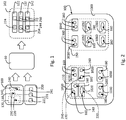
- FIG. 1 shows an embodiment of an automated application partitioning system 10.
- the automated application partitioning system 10 receives as input a software application 100.
- the software application 100 comprises application code 110 and resources 112. It is clear that further alternative embodiments of a software application 100 are possible, for example comprising still further elements in addition to the application code 110 and the resources 112, as long as in general the software application 100 at least comprises the application code 110.
- the application partitioning system 10 further also receives as input a specification 200 comprising entry point specifications 221, 231, 241 of three entry points 220, 230, 240. It is clear that alternative embodiments are possible in which the specification 200 comprises entry point specifications 221, 231, 241 of any suitable number of entry points 220, 230, 240, as long as in general the specification 200, by means of the entry point specifications, specifies two or more entry points of the software application 100.
- these three entry points 220, 230, 240 of the software application 100 define three corresponding predetermined items of the software application 100 at which the execution of three particular subsets 120, 130, 140 of the software application 100 can be initiated, such that when executed these particular subsets 120, 130, 140 of the software application 100 provide for three corresponding application features 122, 132, 142.
- Each of the application features 122, 132, 142 as already mentioned above, thus respectively providing for a separately executable part of the partitioned software application 102. In this way, this allows execution of the software application 100 to be initiated by means of one of the separately executable application features 122, 132, 142, without the need to download, install and/or configure the software application 100 in its entirety.
- application features 122, 132, 142 could also be referred to as separately executable software modules of the software application 100.
- the application features 122, 132, 142 could respectively comprise: the provision of a search interface for inputting and processing a search query for an item for sale on the e-commerce shopping software application 100; the presentation of result list comprising the items retrieved by means of the search query; and a checkout functionality for one or more of the items selected from the result list of the software application 100. It is clear that the respective part of the software application 100 required for each of these application features 122, 132, 142 thus forms a respective particular corresponding subset 120, 130, 140 of the overall software application 100.
- Such a subset 120, 130, 140 preferably thus only comprises the respective parts of the application code 110 and resources 150 required for enabling the functionality of the corresponding application feature 122, 132, 142, when executed.
- the subsets 120, 130, 140 of the software application 100 could be at least partly overlapping.
- the entry point specifications 221, 231, 241 of the entry points 220, 230, 240 only needs to provide a suitable reference to an item in or of the software application 100 for allowing the initiation of the corresponding application feature 122, 132, 142 of the partitioned application 102 when executed.
- an exemplary software application 100 provided as an application package 1000.
- this could for example be an application package 1000 according to the Android Package Kit or APK package file format, also referred to as a .apk file already mentioned above, suitable for use on user devices comprising the Android operating system.
- the application package 1000 of the software application 100 comprises for example the following items in the form of application code 110 and resources 150 as generally known to a man skilled in the art:
- the software application 100 comprises application code 110.
- the software application 100 could optionally also comprise suitable resources 150 comprising data accessible by the application code 110 during execution of the software application 100.
- the application partitioning system 10 is configured to determine a set 170 comprising a plurality of dependent application components 160.
- an application component 160 could comprise at least partly one of the items of the software application 100.
- an application component 160 could for example comprise at least partly a class file 1020, a native code file 1030, a resource file 1040, a further resource file 1050 or an asset file 1060.
- an item of the software application 100 could also comprise a plurality of application components 160.
- a plurality of application components could comprise a different part of the same native code file 1060, for example providing for different sets standard functionality as provided by a particular software library.
- each entry point 220, 230, 240 of the application code 110 is arranged in a separate application component 160. It is however clear that alternative embodiments are possible in which one or more of the entry points are arranged in the same application component 160, as long as in general there are two or more different entry points of the software application 100 which define two or more corresponding application features.
- a first entry point 220 in an application component 160 of a class file 1020 for initiating the search functionality of the software application 100 a second entry point 230 in an application component of another class file 1020 for initiating the result list functionality of the software application 100 and a third entry point 240 for initiating the checkout functionality of the software application 100.
- the set 170 of application components 160 as determined by the application partitioning system thus comprises all parts of the application code 110 and the optional resources 150 required for allowing execution of the software application 100.
- typically some of these application components 160 are dependent on other application components 160 for their execution.
- An application component 160 comprising at least a part of the application code 110 of a class file 1020 could for example depend for its execution on a plurality of standard classes, functions, methods, fields, etc. made available in another application component 160 comprising at least part of the application code of a native code file 1030 comprising a suitable software library. Additionally, this application component 160 comprising at least part of the class file 1020 could also be dependent on data available from one or more suitable application components 160 of the resources 150.
- the application partitioning system 10 will execute a dependence analysis.
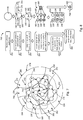
- the application component 160 comprising entry point 230
- all dependent application components 160 are determined from which the execution of the application component 160 directly or indirectly depends.
- These dependency relations 180 between these application components 160 are schematically represented by means of arrows 180.
- a corresponding entry point dependency subset 232 comprising all dependent application components 160 required for enabling execution of the corresponding application feature 132 are determined.
- a respective corresponding entry point dependency subset 222, 242 is determined.
- the automated application partitioning system 10 then groups the application components 160.
- the feature subset 224 comprises the application components 160 which are only part of the entry point dependency subset 222 comprising the application component 160 of which entry point 220 is part. This means that these application components 160 of the feature subset 224 are not part of the other entry point dependency subsets 232, 242.
- the application components 160 which are only part of dependency subset 232 are grouped in a corresponding feature subset 234 and the application components which are only part of dependency subset 242 are grouped in a corresponding feature subset 244.
- the automated application partitioning system 10 is configured to group the application components 160 in such a way that, for each entry point dependency subset, there is provided a corresponding feature subset respectively comprising application components 160 which are only part of the corresponding entry point dependency subset and are not part of another entry point dependency subset.
- the automated application partitioning system 10 is further configured to group the application components 160 in such a way that one shared subset 250 is provided comprising all application components 160 which are part of a plurality of dependency subsets 222, 232, 242.
- Each of these shared subsets comprising application components 160 part of a plurality of dependency subsets.
- shared subset 252 comprises application components 160 only part of both dependency subset 222 and 232.
- shared subset 254 comprises those of both dependency subset 232 and 242, shared subset 256, those only part of both dependency subset 242 and 222.
- shared subset 258 comprises the application components 160 part of all dependency subsets 222, 232 and 242. It is clear that still further alternative embodiments are possible, as long as in general the application partitioning system 10 provides at least one shared subset 250 grouping application components 160 part of a plurality of dependency subsets 222, 232, 242.
- the application partitioning system 10 removes any application components 160 from the set 170 which are not part of at least one entry point dependency subset 222, 232, 242.
- the software application is preferably screened for parts of the application code 110 or resources 150 which are not used during execution of the software application 100. These unused parts of the application code 110 or resources 150 provide for application components 160 which will not have any dependency to or from an application component 160 in which an entry point 220, 230, 240 is arranged.
- Such application components 160 can preferably be removed by the application partitioning system 10 in order to reduce the size of the partitioned application 102 and the application features 122, 132, 142.
- the application partitioning system 10 optimizes the partitioned application 102.
- the application code 110 is automatically adapted such that for the number of dependency relations 180 between the application components 160 of the set 170 is reduced.
- any direct call for an application component 160 of another feature subset or shared subset is replaced by an indirect call to the location where that application component and its feature subset or shared subset will be retrievable.
- this could for example be implemented by replacing such direct calls by means of a corresponding URL of the location where that application component and its feature subset or shared subset will be retrievable.
- Figure 8 schematically shows an embodiment of the computer-implemented method 260 of operating the above-mentioned automated application partitioning system.
- the computer-implemented method 260 receives a software application 100 at step 261 and specifications 221, 231, 241 of two or more different entry points 220, 230, 240 of the software application 100 at step 262.
- the specifications 221, 231, 241 of these different entry points 220, 230, 240 define two or more corresponding application features 122, 132, 142, as already mentioned above with reference to Figure 1 - 7 .
- a set 170 comprising a plurality of dependent application components 160 of the application features 122, 132, 142 of the software application 100.
- a dependence analysis is executed at step 264. As described above, the dependence analysis will, starting from the entry point 220, 230, 240 of each application feature 122, 132, 142, determine a corresponding entry point dependency subset 222, 232, 242. Each entry point dependency subset 222, 232, 242 thus comprises all dependent application components 160 required for enabling execution of its corresponding application feature 122, 132, 142.
- application components 160 are grouped in feature subsets 224, 234, 244, one for each application feature 122, 132, 142; or alternatively at step 266 in at least one shared subset 250 for shared use by a plurality of application features 122, 132, 142.
- the application components 160 are grouped in such a way that for each entry point dependency subset 222, 232, 242 there is provided a corresponding feature subset 224, 234, 244 respectively comprising all application components 160 which are only part of the corresponding entry point dependency subset 224, 234, 244 and not of another entry point dependency subset 224, 234, 244.
- the automated application partitioning system in this way preferably generates the respective application features 122, 132, 142 as a software package.
- This for example means, as shown according to the embodiment one software package for each application feature 122, 132, 142, in which next to the corresponding feature subset of that application feature also any shared subset 250 from which this feature subset depends is integrated.
- each of the feature subsets are packaged individually, and also the one or more shared subsets are packaged individually.
- the partitioned application 102 and for example the corresponding application packages of each application feature can be distributed in a grouped way, for example in the form of an archive, application package file, ... which comprises the plurality of the application packages of the partitioned application 102.
- the application features 122, 132, 142, after distribution are accessible in an individual way, for example by making them available to end user devices individually at a particular correlation URL or any other suitable location, as will be explained in further detail below.
- the specification 200 comprising the entry point specifications 221, 231, 241 of the entry points 220, 230, 240 is provided as input to the automated application partitioning system 10 in the form of a configuration file.
- this configuration file which embodies the specification 200, could be structured as for example illustrated below, in which there is provided one line for each entry point specification 221, 231, 241.
- each line, and thus each entry point specification 221, 231, 241 for example comprises the name of the corresponding application feature of the entry point, a reference to the entry point and a URL providing the location where the application feature will be made available.
- the entry points are specified as an Android Activity class of the software application 100 as generally known to a man skilled in the art.
- the entry point specifications thus specify the entry points by means of a reference to the name of this Android Activity class.
- Such an embodiment of the specification 200 in the form of a configuration file for the embodiment of Figure 1 could for example comprise the following three entry point specifications 221, 231, 241:
- the automated application partitioning system 10 will generate the respective application features 122, 132, 142 as a software package comprising the corresponding feature subset 224, 234, 244 and the shared subsets 250 from which this feature subset depends.
- Such software packages for the application features could be similarly structured as described with reference to Figure 2 , such for example a .apk package file, or any other suitable embodiment of such a software package.
- this thus means that the automated application partitioning system 10 will partition the software application 100 by for example automatically adapting the application code 110, the resources 150, the manifest file, ...
- the automated partitioning system will for example output the following .apk package files:
- the application partitioning system 10 also shrinks, optimizes, obfuscates, ... the software application 100 before partitioning it as described above.
- the shrinking step in which for example application components without any dependency from the entry points are removed, is useful to reach a predetermined maximum size threshold, which is preferably in the range of 2MB to 20MB, preferably in the range of 2MB to 6MB, for example 4MB.
- the automated application partitioning system could for example be part of or coupled to a suitable build system, such that it can execute its automated application partitioning method before, during or after a build operation of the software application. It is further clear that the automated application partitioning system could for example be part of or coupled to software applications for use during a build operation, for example for optimizing, securing, ... a software application.
- a software application is for example known as ProGuard, available at http://proguard.sourceforge.net/ .
- Proguard is a known software application for use during a build operation, which for example reduces the size of the software application by making use of a dependence analysis for detecting and removing unused application components such as classes, fields, methods, resources, etc..
- An alternative known software application for use during the build operation is DexGuard available at http://www.guardsquare.com/dexguard . Dexguard focuses on the protection of mobile software applications, with additional features such as for example resource obfuscation, string encryption, class encryption, and executable application file splitting.
- DexGuard is focussed on Android applications and directly creates Dalvik bytecode during the Android build operation in which Android programs are compiled into .dex or Dalvik Executable files, which are in turn packaged into a software package or .apk file.
- Such known software applications during the build operation, make use of dependence analysis of application components, such as classes, fields, methods, resources, etc, to detect unused application components which can be removed to reduce the size and increase the efficiency of the software application.
- Still a further alternative known software application is known as iXGuard available at https://www.guardsquare.com/ixguard and provides similar functionality for software applications for the iOS operating system.
- FIG. 9 shows a suitable computing system 300, 400 for hosting the automated application partitioning system 10 or any of its components as described with reference to the above-mentioned embodiments.
- Computing system 300 may in general be formed as a suitable general-purpose computer and comprise a bus 310, a processor 302, a local memory 304, one or more optional input interfaces 314, one or more optional output interfaces 316, a communication interface 312, a storage element interface 306 and one or more storage elements 308.
- Bus 310 may comprise one or more conductors that permit communication among the components of the computing system.
- Processor 302 may include any type of conventional processor or microprocessor that interprets and executes programming instructions.
- Local memory 304 may include a random access memory (RAM) or another type of dynamic storage device that stores information and instructions for execution by processor 302 and/or a read only memory (ROM) or another type of static storage device that stores static information and instructions for use by processor 302.
- Input interface 314 may comprise one or more conventional mechanisms that permit an operator to input information to the computing device 300, such as a keyboard 320, a mouse 330, a pen, voice recognition and/or biometric mechanisms, etc.
- Output interface 316 may comprise one or more conventional mechanisms that output information to the operator, such as a display 340, a printer, a speaker, etc.
- Communication interface 312 may comprise one or more transceiver-like mechanisms such as for example two 1 Gb Ethernet interfaces that enables computing system 300 to communicate with other devices and/or systems, for example mechanisms for communicating with one or more other computing systems 400.
- the communication interface 312 of computing system 300 may be connected to such another computing system 400 by means of a local area network (LAN) or a wide area network (WAN), such as for example the internet.
- Storage element interface 306 may comprise a storage interface such as for example a Serial Advanced Technology Attachment (SATA) interface or a Small Computer System Interface (SCSI) for connecting bus 310 to one or more storage elements 308, such as one or more local disks, for example 1TB SATA disk drives, and control the reading and writing of data to and/or from these storage elements 308.
- SATA Serial Advanced Technology Attachment
- SCSI Small Computer System Interface
- storage elements 308 above is described as a local disk, in general any other suitable computer-readable media such as a removable magnetic disk, optical storage media such as a CD or DVD,
- the automated application partitioning system 10 could be part of a suitable build automation utility running on a computing system 300 locally available to a developer, such as a personal computer, laptop, etc. or on a remotely accessible computing system such as one or more servers available to a plurality of application developers.
- the automated application partitioning system 10 may also be part of build automation servers, for example comprising web based build tools, which execute build automation utilities on a scheduled or triggered basis, such as for example a continuous integration server. It is clear that the automated application partitioning system 10, etc. and their associated computer implemented method of operation, can be implemented as programming instructions stored in the local memory 304 of the computing system 300 for execution by its processor 302.
- the automated application partitioning system 10 and the associated computer implemented method are provided as a computer program comprising software code adapted to perform this computer-implemented method when executed by a computing system.
- the automated application partitioning system 10 and the associated computer implemented method could also be provided as a computer readable storage medium comprising computer-executable instructions which, when executed by a computing system, perform the computer-implemented method.
- top, bottom, over, under, and the like are introduced for descriptive purposes and not necessarily to denote relative positions. It is to be understood that the terms so used are interchangeable under appropriate circumstances and embodiments of the invention are capable of operating according to the present invention in other sequences, or in orientations different from the one(s) described or illustrated above.
Landscapes
- Engineering & Computer Science (AREA)
- General Engineering & Computer Science (AREA)
- Theoretical Computer Science (AREA)
- Software Systems (AREA)
- Physics & Mathematics (AREA)
- General Physics & Mathematics (AREA)
- Computer Security & Cryptography (AREA)
- Stored Programmes (AREA)
Priority Applications (2)
| Application Number | Priority Date | Filing Date | Title |
|---|---|---|---|
| EP17190250.5A EP3454204A1 (fr) | 2017-09-08 | 2017-09-08 | Système de partitionnement d'application automatisé |
| US16/110,065 US11221844B2 (en) | 2017-09-08 | 2018-08-23 | Automated application partitioning system |
Applications Claiming Priority (1)
| Application Number | Priority Date | Filing Date | Title |
|---|---|---|---|
| EP17190250.5A EP3454204A1 (fr) | 2017-09-08 | 2017-09-08 | Système de partitionnement d'application automatisé |
Publications (1)
| Publication Number | Publication Date |
|---|---|
| EP3454204A1 true EP3454204A1 (fr) | 2019-03-13 |
Family
ID=59858554
Family Applications (1)
| Application Number | Title | Priority Date | Filing Date |
|---|---|---|---|
| EP17190250.5A Withdrawn EP3454204A1 (fr) | 2017-09-08 | 2017-09-08 | Système de partitionnement d'application automatisé |
Country Status (2)
| Country | Link |
|---|---|
| US (1) | US11221844B2 (fr) |
| EP (1) | EP3454204A1 (fr) |
Cited By (1)
| Publication number | Priority date | Publication date | Assignee | Title |
|---|---|---|---|---|
| CN110716765A (zh) * | 2019-09-29 | 2020-01-21 | 浙江网新恒天软件有限公司 | 一种单体应用Faas化的方法 |
Families Citing this family (2)
| Publication number | Priority date | Publication date | Assignee | Title |
|---|---|---|---|---|
| US20200236210A1 (en) * | 2019-01-17 | 2020-07-23 | Heiko Thomas Kempe | Message Storage and Retrieval Software Application |
| CN119225857B (zh) * | 2024-09-18 | 2025-10-21 | 前锦网络信息技术(上海)有限公司 | 一种应用项目的组件拆分、对接和加载处理方法及装置 |
Citations (1)
| Publication number | Priority date | Publication date | Assignee | Title |
|---|---|---|---|---|
| US20120278439A1 (en) * | 2011-04-28 | 2012-11-01 | Approxy Inc., Ltd | Adaptive Cloud Based Application Streaming |
Family Cites Families (6)
| Publication number | Priority date | Publication date | Assignee | Title |
|---|---|---|---|---|
| US20080148277A1 (en) * | 2006-12-18 | 2008-06-19 | Nokia Corporation | Optimizing calls from a managed runtime environment to microkernel extended functionality |
| US8881104B2 (en) * | 2012-04-09 | 2014-11-04 | Accenture Global Services Limited | Component discovery from source code |
| US8930899B2 (en) * | 2012-08-18 | 2015-01-06 | International Business Machines Corporation | Artifact divider for large scale application builds |
| US20140122302A1 (en) * | 2012-11-01 | 2014-05-01 | At&T Mobility Ii Llc | Customized Data Delivery |
| CN104516738A (zh) * | 2014-12-15 | 2015-04-15 | 北京金和软件股份有限公司 | 一种app应用的开发与发布一体化实现方法 |
| US9811327B2 (en) * | 2015-12-21 | 2017-11-07 | Quixey, Inc. | Dependency-aware transformation of multi-function applications for on-demand execution |
-
2017
- 2017-09-08 EP EP17190250.5A patent/EP3454204A1/fr not_active Withdrawn
-
2018
- 2018-08-23 US US16/110,065 patent/US11221844B2/en active Active
Patent Citations (1)
| Publication number | Priority date | Publication date | Assignee | Title |
|---|---|---|---|---|
| US20120278439A1 (en) * | 2011-04-28 | 2012-11-01 | Approxy Inc., Ltd | Adaptive Cloud Based Application Streaming |
Cited By (2)
| Publication number | Priority date | Publication date | Assignee | Title |
|---|---|---|---|---|
| CN110716765A (zh) * | 2019-09-29 | 2020-01-21 | 浙江网新恒天软件有限公司 | 一种单体应用Faas化的方法 |
| CN110716765B (zh) * | 2019-09-29 | 2023-04-07 | 浙江网新恒天软件有限公司 | 一种单体应用Faas化的方法 |
Also Published As
| Publication number | Publication date |
|---|---|
| US20190079756A1 (en) | 2019-03-14 |
| US11221844B2 (en) | 2022-01-11 |
Similar Documents
| Publication | Publication Date | Title |
|---|---|---|
| US20240045850A1 (en) | Systems and methods for database orientation transformation | |
| JP7776247B2 (ja) | コード更新時におけるソースコード有効性のチェック | |
| EP3342145B1 (fr) | Liaison profonde vers des états d'application mobile par relecture programmatique d'évènements d'interface utilisateur | |
| KR102077360B1 (ko) | 애플리케이션에 대한 중간 언어 코드로부터 네이티브 코드를 생성하는 기법 | |
| US9841953B2 (en) | Pluggable components for runtime-image generation | |
| EP3035191B1 (fr) | Identification d'un code source utilisé pour construire des fichiers exécutables | |
| US20170277524A1 (en) | Dynamic container deployment with parallel conditional layers | |
| KR20220092615A (ko) | 적시(Just-In-Time) 컨테이너 | |
| CN108614701A (zh) | 一种Linux操作系统定制方法及装置 | |
| Salvador et al. | Embedded Linux Development with Yocto Project | |
| US11221844B2 (en) | Automated application partitioning system | |
| US12014195B2 (en) | System for providing an adaptable plugin framework for application transformation to cloud | |
| WO2017081558A1 (fr) | Surveillance et actionnement de paramètres de dispositif de commande de visualisation permettant d'atteindre des états profonds sans intervention manuelle d'un développeur | |
| US10514940B2 (en) | Virtual application package reconstruction | |
| Nurmuradov et al. | Caret-HM: recording and replaying Android user sessions with heat map generation using UI state clustering | |
| Do et al. | Toward an automated benchmark management system | |
| EP3195120A1 (fr) | Chargement sélectif d'en-tête(s) précompilé(s) et/ou de leur(s) partie(s) | |
| KR102780898B1 (ko) | 소프트웨어 모듈 개발을 위한 시스템 | |
| CN110389754A (zh) | 业务处理方法、系统、服务器、终端、电子设备及存储介质 | |
| Del Sole | Visual Studio 2015 Succinctly | |
| Michaels et al. | Mobile test suite generation via combinatorial sequences | |
| US9891894B1 (en) | Code continuity preservation during automatic code generation | |
| US10255050B2 (en) | Method for code disambiguation | |
| Mongkolluksame et al. | A management system for software package distribution | |
| Schumacker et al. | R Fundamentals |
Legal Events
| Date | Code | Title | Description |
|---|---|---|---|
| PUAI | Public reference made under article 153(3) epc to a published international application that has entered the european phase |
Free format text: ORIGINAL CODE: 0009012 |
|
| STAA | Information on the status of an ep patent application or granted ep patent |
Free format text: STATUS: THE APPLICATION HAS BEEN PUBLISHED |
|
| AK | Designated contracting states |
Kind code of ref document: A1 Designated state(s): AL AT BE BG CH CY CZ DE DK EE ES FI FR GB GR HR HU IE IS IT LI LT LU LV MC MK MT NL NO PL PT RO RS SE SI SK SM TR |
|
| AX | Request for extension of the european patent |
Extension state: BA ME |
|
| STAA | Information on the status of an ep patent application or granted ep patent |
Free format text: STATUS: THE APPLICATION IS DEEMED TO BE WITHDRAWN |
|
| 18D | Application deemed to be withdrawn |
Effective date: 20190914 |