EP3454372A1 - Lichtemittierende diode - Google Patents
Lichtemittierende diode Download PDFInfo
- Publication number
- EP3454372A1 EP3454372A1 EP17792825.6A EP17792825A EP3454372A1 EP 3454372 A1 EP3454372 A1 EP 3454372A1 EP 17792825 A EP17792825 A EP 17792825A EP 3454372 A1 EP3454372 A1 EP 3454372A1
- Authority
- EP
- European Patent Office
- Prior art keywords
- light emitting
- layer
- type semiconductor
- contact
- emitting diode
- Prior art date
- Legal status (The legal status is an assumption and is not a legal conclusion. Google has not performed a legal analysis and makes no representation as to the accuracy of the status listed.)
- Granted
Links
Images













Classifications
-
- H—ELECTRICITY
- H10—SEMICONDUCTOR DEVICES; ELECTRIC SOLID-STATE DEVICES NOT OTHERWISE PROVIDED FOR
- H10H—INORGANIC LIGHT-EMITTING SEMICONDUCTOR DEVICES HAVING POTENTIAL BARRIERS
- H10H20/00—Individual inorganic light-emitting semiconductor devices having potential barriers, e.g. light-emitting diodes [LED]
- H10H20/80—Constructional details
- H10H20/85—Packages
- H10H20/857—Interconnections, e.g. lead-frames, bond wires or solder balls
-
- H—ELECTRICITY
- H10—SEMICONDUCTOR DEVICES; ELECTRIC SOLID-STATE DEVICES NOT OTHERWISE PROVIDED FOR
- H10H—INORGANIC LIGHT-EMITTING SEMICONDUCTOR DEVICES HAVING POTENTIAL BARRIERS
- H10H20/00—Individual inorganic light-emitting semiconductor devices having potential barriers, e.g. light-emitting diodes [LED]
- H10H20/80—Constructional details
- H10H20/83—Electrodes
- H10H20/831—Electrodes characterised by their shape
- H10H20/8312—Electrodes characterised by their shape extending at least partially through the bodies
-
- H—ELECTRICITY
- H10—SEMICONDUCTOR DEVICES; ELECTRIC SOLID-STATE DEVICES NOT OTHERWISE PROVIDED FOR
- H10H—INORGANIC LIGHT-EMITTING SEMICONDUCTOR DEVICES HAVING POTENTIAL BARRIERS
- H10H20/00—Individual inorganic light-emitting semiconductor devices having potential barriers, e.g. light-emitting diodes [LED]
- H10H20/80—Constructional details
- H10H20/81—Bodies
- H10H20/814—Bodies having reflecting means, e.g. semiconductor Bragg reflectors
-
- H—ELECTRICITY
- H10—SEMICONDUCTOR DEVICES; ELECTRIC SOLID-STATE DEVICES NOT OTHERWISE PROVIDED FOR
- H10H—INORGANIC LIGHT-EMITTING SEMICONDUCTOR DEVICES HAVING POTENTIAL BARRIERS
- H10H20/00—Individual inorganic light-emitting semiconductor devices having potential barriers, e.g. light-emitting diodes [LED]
- H10H20/80—Constructional details
- H10H20/81—Bodies
- H10H20/822—Materials of the light-emitting regions
- H10H20/824—Materials of the light-emitting regions comprising only Group III-V materials, e.g. GaP
- H10H20/825—Materials of the light-emitting regions comprising only Group III-V materials, e.g. GaP containing nitrogen, e.g. GaN
- H10H20/8252—Materials of the light-emitting regions comprising only Group III-V materials, e.g. GaP containing nitrogen, e.g. GaN characterised by the dopants
-
- H—ELECTRICITY
- H10—SEMICONDUCTOR DEVICES; ELECTRIC SOLID-STATE DEVICES NOT OTHERWISE PROVIDED FOR
- H10H—INORGANIC LIGHT-EMITTING SEMICONDUCTOR DEVICES HAVING POTENTIAL BARRIERS
- H10H20/00—Individual inorganic light-emitting semiconductor devices having potential barriers, e.g. light-emitting diodes [LED]
- H10H20/80—Constructional details
- H10H20/83—Electrodes
-
- H—ELECTRICITY
- H10—SEMICONDUCTOR DEVICES; ELECTRIC SOLID-STATE DEVICES NOT OTHERWISE PROVIDED FOR
- H10H—INORGANIC LIGHT-EMITTING SEMICONDUCTOR DEVICES HAVING POTENTIAL BARRIERS
- H10H20/00—Individual inorganic light-emitting semiconductor devices having potential barriers, e.g. light-emitting diodes [LED]
- H10H20/80—Constructional details
- H10H20/83—Electrodes
- H10H20/831—Electrodes characterised by their shape
-
- H—ELECTRICITY
- H10—SEMICONDUCTOR DEVICES; ELECTRIC SOLID-STATE DEVICES NOT OTHERWISE PROVIDED FOR
- H10H—INORGANIC LIGHT-EMITTING SEMICONDUCTOR DEVICES HAVING POTENTIAL BARRIERS
- H10H20/00—Individual inorganic light-emitting semiconductor devices having potential barriers, e.g. light-emitting diodes [LED]
- H10H20/80—Constructional details
- H10H20/83—Electrodes
- H10H20/831—Electrodes characterised by their shape
- H10H20/8314—Electrodes characterised by their shape extending at least partially onto an outer side surface of the bodies
-
- H—ELECTRICITY
- H10—SEMICONDUCTOR DEVICES; ELECTRIC SOLID-STATE DEVICES NOT OTHERWISE PROVIDED FOR
- H10H—INORGANIC LIGHT-EMITTING SEMICONDUCTOR DEVICES HAVING POTENTIAL BARRIERS
- H10H20/00—Individual inorganic light-emitting semiconductor devices having potential barriers, e.g. light-emitting diodes [LED]
- H10H20/80—Constructional details
- H10H20/83—Electrodes
- H10H20/832—Electrodes characterised by their material
- H10H20/835—Reflective materials
-
- H—ELECTRICITY
- H10—SEMICONDUCTOR DEVICES; ELECTRIC SOLID-STATE DEVICES NOT OTHERWISE PROVIDED FOR
- H10H—INORGANIC LIGHT-EMITTING SEMICONDUCTOR DEVICES HAVING POTENTIAL BARRIERS
- H10H20/00—Individual inorganic light-emitting semiconductor devices having potential barriers, e.g. light-emitting diodes [LED]
- H10H20/80—Constructional details
- H10H20/84—Coatings, e.g. passivation layers or antireflective coatings
-
- H—ELECTRICITY
- H10—SEMICONDUCTOR DEVICES; ELECTRIC SOLID-STATE DEVICES NOT OTHERWISE PROVIDED FOR
- H10H—INORGANIC LIGHT-EMITTING SEMICONDUCTOR DEVICES HAVING POTENTIAL BARRIERS
- H10H20/00—Individual inorganic light-emitting semiconductor devices having potential barriers, e.g. light-emitting diodes [LED]
- H10H20/80—Constructional details
- H10H20/85—Packages
-
- H—ELECTRICITY
- H10—SEMICONDUCTOR DEVICES; ELECTRIC SOLID-STATE DEVICES NOT OTHERWISE PROVIDED FOR
- H10H—INORGANIC LIGHT-EMITTING SEMICONDUCTOR DEVICES HAVING POTENTIAL BARRIERS
- H10H20/00—Individual inorganic light-emitting semiconductor devices having potential barriers, e.g. light-emitting diodes [LED]
- H10H20/80—Constructional details
- H10H20/85—Packages
- H10H20/851—Wavelength conversion means
-
- H—ELECTRICITY
- H10—SEMICONDUCTOR DEVICES; ELECTRIC SOLID-STATE DEVICES NOT OTHERWISE PROVIDED FOR
- H10H—INORGANIC LIGHT-EMITTING SEMICONDUCTOR DEVICES HAVING POTENTIAL BARRIERS
- H10H20/00—Individual inorganic light-emitting semiconductor devices having potential barriers, e.g. light-emitting diodes [LED]
- H10H20/80—Constructional details
- H10H20/85—Packages
- H10H20/852—Encapsulations
-
- H—ELECTRICITY
- H10—SEMICONDUCTOR DEVICES; ELECTRIC SOLID-STATE DEVICES NOT OTHERWISE PROVIDED FOR
- H10H—INORGANIC LIGHT-EMITTING SEMICONDUCTOR DEVICES HAVING POTENTIAL BARRIERS
- H10H20/00—Individual inorganic light-emitting semiconductor devices having potential barriers, e.g. light-emitting diodes [LED]
- H10H20/80—Constructional details
- H10H20/85—Packages
- H10H20/855—Optical field-shaping means, e.g. lenses
- H10H20/856—Reflecting means
-
- H—ELECTRICITY
- H10—SEMICONDUCTOR DEVICES; ELECTRIC SOLID-STATE DEVICES NOT OTHERWISE PROVIDED FOR
- H10H—INORGANIC LIGHT-EMITTING SEMICONDUCTOR DEVICES HAVING POTENTIAL BARRIERS
- H10H20/00—Individual inorganic light-emitting semiconductor devices having potential barriers, e.g. light-emitting diodes [LED]
- H10H20/80—Constructional details
- H10H20/85—Packages
- H10H20/858—Means for heat extraction or cooling
-
- H—ELECTRICITY
- H10—SEMICONDUCTOR DEVICES; ELECTRIC SOLID-STATE DEVICES NOT OTHERWISE PROVIDED FOR
- H10H—INORGANIC LIGHT-EMITTING SEMICONDUCTOR DEVICES HAVING POTENTIAL BARRIERS
- H10H29/00—Integrated devices, or assemblies of multiple devices, comprising at least one light-emitting semiconductor element covered by group H10H20/00
- H10H29/10—Integrated devices comprising at least one light-emitting semiconductor component covered by group H10H20/00
- H10H29/14—Integrated devices comprising at least one light-emitting semiconductor component covered by group H10H20/00 comprising multiple light-emitting semiconductor components
-
- H—ELECTRICITY
- H10—SEMICONDUCTOR DEVICES; ELECTRIC SOLID-STATE DEVICES NOT OTHERWISE PROVIDED FOR
- H10W—GENERIC PACKAGES, INTERCONNECTIONS, CONNECTORS OR OTHER CONSTRUCTIONAL DETAILS OF DEVICES COVERED BY CLASS H10
- H10W90/00—Package configurations
-
- F—MECHANICAL ENGINEERING; LIGHTING; HEATING; WEAPONS; BLASTING
- F21—LIGHTING
- F21S—NON-PORTABLE LIGHTING DEVICES; SYSTEMS THEREOF; VEHICLE LIGHTING DEVICES SPECIALLY ADAPTED FOR VEHICLE EXTERIORS
- F21S41/00—Illuminating devices specially adapted for vehicle exteriors, e.g. headlamps
- F21S41/10—Illuminating devices specially adapted for vehicle exteriors, e.g. headlamps characterised by the light source
- F21S41/14—Illuminating devices specially adapted for vehicle exteriors, e.g. headlamps characterised by the light source characterised by the type of light source
- F21S41/141—Light emitting diodes [LED]
-
- H—ELECTRICITY
- H10—SEMICONDUCTOR DEVICES; ELECTRIC SOLID-STATE DEVICES NOT OTHERWISE PROVIDED FOR
- H10H—INORGANIC LIGHT-EMITTING SEMICONDUCTOR DEVICES HAVING POTENTIAL BARRIERS
- H10H20/00—Individual inorganic light-emitting semiconductor devices having potential barriers, e.g. light-emitting diodes [LED]
- H10H20/80—Constructional details
- H10H20/81—Bodies
- H10H20/813—Bodies having a plurality of light-emitting regions, e.g. multi-junction LEDs or light-emitting devices having photoluminescent regions within the bodies
-
- H—ELECTRICITY
- H10—SEMICONDUCTOR DEVICES; ELECTRIC SOLID-STATE DEVICES NOT OTHERWISE PROVIDED FOR
- H10H—INORGANIC LIGHT-EMITTING SEMICONDUCTOR DEVICES HAVING POTENTIAL BARRIERS
- H10H20/00—Individual inorganic light-emitting semiconductor devices having potential barriers, e.g. light-emitting diodes [LED]
- H10H20/80—Constructional details
- H10H20/81—Bodies
- H10H20/819—Bodies characterised by their shape, e.g. curved or truncated substrates
-
- H—ELECTRICITY
- H10—SEMICONDUCTOR DEVICES; ELECTRIC SOLID-STATE DEVICES NOT OTHERWISE PROVIDED FOR
- H10H—INORGANIC LIGHT-EMITTING SEMICONDUCTOR DEVICES HAVING POTENTIAL BARRIERS
- H10H20/00—Individual inorganic light-emitting semiconductor devices having potential barriers, e.g. light-emitting diodes [LED]
- H10H20/80—Constructional details
- H10H20/81—Bodies
- H10H20/819—Bodies characterised by their shape, e.g. curved or truncated substrates
- H10H20/82—Roughened surfaces, e.g. at the interface between epitaxial layers
-
- H—ELECTRICITY
- H10—SEMICONDUCTOR DEVICES; ELECTRIC SOLID-STATE DEVICES NOT OTHERWISE PROVIDED FOR
- H10H—INORGANIC LIGHT-EMITTING SEMICONDUCTOR DEVICES HAVING POTENTIAL BARRIERS
- H10H20/00—Individual inorganic light-emitting semiconductor devices having potential barriers, e.g. light-emitting diodes [LED]
- H10H20/80—Constructional details
- H10H20/81—Bodies
- H10H20/819—Bodies characterised by their shape, e.g. curved or truncated substrates
- H10H20/821—Bodies characterised by their shape, e.g. curved or truncated substrates of the light-emitting regions, e.g. non-planar junctions
-
- H—ELECTRICITY
- H10—SEMICONDUCTOR DEVICES; ELECTRIC SOLID-STATE DEVICES NOT OTHERWISE PROVIDED FOR
- H10H—INORGANIC LIGHT-EMITTING SEMICONDUCTOR DEVICES HAVING POTENTIAL BARRIERS
- H10H20/00—Individual inorganic light-emitting semiconductor devices having potential barriers, e.g. light-emitting diodes [LED]
- H10H20/80—Constructional details
- H10H20/84—Coatings, e.g. passivation layers or antireflective coatings
- H10H20/841—Reflective coatings, e.g. dielectric Bragg reflectors
Definitions
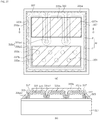
- Another problem to be solved by the present disclosure is to provide a light emitting diode comprising a plurality of light emitting cells and alleviating light emission area reduction, and a light emitting device and a light emitting module having the light emitting diode.
- each of the n-type semiconductor layers of the first and second light emitting cell may be flush with the respective side surfaces of the substrate.
- the outer side surfaces of the n-type semiconductor layers may be formed by scribing the n-type semiconductor layer together with the substrate, and thus may be formed together with the side surfaces of the substrate.
- each of the mesas may have a through-hole exposing the n-type semiconductor layer through the p-type semiconductor layer and the active layer, and each of the first contact layer and the second contact layer may further contact the n-type semiconductor layer through the through-hole of the mesa. Therefore, the current spreading capability in the n-type semiconductor layer is further improved.
- the through-holes have elongated shapes and may be disposed along a same line.
- the through-holes may pass through centers of the mesas, respectively.
- a single through-hole may be disposed in each mesa, and an elongated shape through-hole is disposed in a central region, which is advantageous for current spreading.
- a manufacturing process may be simplified and a process stability may be achieved.
- the light emitting diode may further comprise a lower insulation layer covering the mesas and the reflection structures and disposed between the mesas and the first and second contact layers.
- the lower insulation layer may have a hole exposing the reflection structure on the first light emitting cell and the second contact layer may be connected to the reflection structure on the first light emitting cell through the hole.
- the second contact layer may extend from the second light emitting cell to the first light emitting cell via an upper region of the isolation region. At this time, the second contact layer located in the upper region of the isolation region may be disposed within a width of the mesas.
- the second contact layer is disposed within the width of the mesas, the second contact layer may be prevented from being short-circuited to the n-type semiconductor layer of the first light emitting cell.
- the light emitting diode may further comprise an upper insulation layer disposed between the first and second contact layers and the n-electrode and p-electrode pads.
- the upper insulation layer may have a first via-hole exposing the first contact layer and a second via-hole exposing the reflection structure on the second light emitting cell, the n-electrode pad may be connected to the first contact layer through the first via-hole, and the p-electrode pad may be connected to the reflection structure through the second via-hole.
- the light emitting device may further comprise reflection sidewalls disposed on both side surfaces of the light emitting diode, respectively, and the wavelength conversion layer covering the side surfaces of the light emitting diode may be interposed between the sidewalls and the light emitting diode.
- a light emitting diode in accordance with another embodiment of the present disclosure comprises: a first light emitting cell and a second light emitting cell each comprising an n-type semiconductor layer, a p-type semiconductor layer, and an active layer disposed between the n-type semiconductor layer and the p-type semiconductor layer, and having a first through-hole and a second through-hole passing through the active layers and the p-type semiconductor layers and exposing the n-type semiconductor layers, respectively; reflection structures having openings for exposing the first through-hole and the second through-hole and contacting the p-type semiconductor layers; a first contact layer in ohmic-contact with the n-type semiconductor layer on the first light emitting cell through the first through-hole; a second contact layer in ohmic-contact with the n-type semiconductor layer of the second light emitting cell through the second through-hole and connected to the reflection structure on the first light emitting cell; a resin layer covering the first and second contact layers over the first and second light emitting cells; an n-
- the n-electrode pad and the p-electrode pad may have a shape partially surrounding the first through-hole and the second through-hole in plan view, respectively.
- Concave portions may be formed in the resin layer formed on the first and second through-holes due to the first and second through-holes.
- relatively deep concave portions are formed in a region surrounded by the n-electrode pad and the p-electrode pad. Accordingly, when the light emitting diode is mounted on a printed circuit board or others using a conductive adhesive such as solder, it is possible to prevent the solder or the like from being melted and overflowing to the outside in the reflow process.
- one n-electrode pad and one p-electrode pad may be disposed on the first and second light emitting cells to partially surround the first through-hole and the second through-hole, respectively.
- the present disclosure is not limited thereto, and the n-electrode pad and the p-electrode pad may comprise at least two portions partially surrounding the first through-hole and the second via-hole, respectively. That is, the electrode pad disposed on each light emitting cell may be divided into two or more portions as electrode pads of the same polarity.
- the first and second through-holes have a circular shape.
- the present disclosure is not limited thereto, and they may have an elongated shape.
- a portion of the first contact layer may overlap with the reflection structure on the first light emitting cell, and a portion of the second contact layer may overlap with the reflection structure on the second light emitting cell.
- the substrate 21 may be a growth substrate for growing a III-V nitride based semiconductor layer, for example, a sapphire substrate, and particularly a patterned sapphire substrate.
- the substrate 21 is preferably an insulating substrate, but is not limited to an insulating substrate. However, when light emitting cells disposed on the substrate 21 are connected to each other in series, the substrate 21 must be insulated from the light emitting cells. Therefore, the substrate 21 is insulative, or when the substrate 21 is conductive, an insulation material layer is formed between the light emitting cells C1 and C2 and the substrate 21 for the light emitting cells C1 and C2 to be insulated from the substrate 21.
- the substrate 21 may have a rectangular outer shape as shown in Fig. 1 . A side surface of the substrate 21 may be formed by laser scribing and cracking using the laser scribing.
- the display panel 3210 is not particularly limited and may be, for example, a liquid crystal panel including a liquid crystal layer.
- a gate driving PCB may be further disposed at the periphery of the display panel 3210 to supply driving signals to a gate line.
- the gate driving PCB may be formed on a thin film transistor substrate instead of being formed on a separate PCB.
- the display panel 3210 is secured by the covers 3240, 3280 disposed at upper and lower sides thereof, and the cover 3280 disposed at the lower side of the display panel 3210 may be coupled to the backlight unit.
- the light emitting diodes according to the exemplary embodiments may be applied to headlights like the headlight according to this exemplary embodiment, particularly, vehicular headlights.
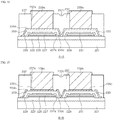
- the mesa M comprises a p-type semiconductor layer 227 and an active layer 225.
- the active layer 225 is interposed between the n-type semiconductor layer 223 and the p-type semiconductor layer 227.
- an inner side surface of the mesa M is shown as being inclined in the same manner as outer side surfaces, the present disclosure is not limited thereto, but the inner side surface of the mesa M may be more gentle than the outer side surfaces. Accordingly, a stability of a second contact layer 235b described later may be improved.
- the reflection structure 231 may comprise a metal layer having reflectivity, or a transparent oxide layer such as ITO(indium tin oxide) or ZnO as described with reference to FIGs. 1 to 4 .
- a preliminary insulation layer 229 may cover the mesa M in a periphery of the reflection structure 231.
- the preliminary insulation layer 229 may be formed of SiO 2 using a chemical vapor deposition technique, for example, and may cover a side of the mesa M and may further cover a partial region of the n-type semiconductor layer 223.
- the preliminary insulation layer 229 may be removed from a lower inclined surface but remain on an upper inclined surface and the stepped surface at the stepped inclined surface of the isolation region I.
- the opening 233c exposes the n-type semiconductor layer 223 in the through-hole 227a and provides a passage for the first contact layer 235a and the second contact layer 235b to be connected to the n-type semiconductor layer 223.
- the first contact layer 235a is disposed on the first light emitting cell C1 and is in ohmic-contact with the n-type semiconductor layer 223.
- the first contact layer 235a may be in ohmic-contact with the n-type semiconductor layer 223 in a region between an outer side surface of the n-type semiconductor layer 223 and the mesa M along the periphery of the mesa M.
- the first contact layer 235a may be in ohmic-contact with the n-type semiconductor layer 223 exposed by the opening 233c of the lower insulation layer 233 in the through-hole 227a of the mesa M.
- the first contact layer 235a may cover the upper region and sides of the mesa M except for a partial region around the hole 233a.
- FIG. 17 is a schematic plan view illustrating a light emitting diode according to another embodiment of the present disclosure.
- the n-electrode pad 239a is divided into two portions and disposed on the first light emitting cell C1, and the p-electrode pad 239a is also divided into two portions and disposed on the second light emitting cell C2.
- the electrode pads 239a and 239b may be divided into a larger number of portions.
- the conductive adhesive such as solder and the like can fill a region between concave portions 237c and the respective portions of the electrode pads 239a and 239b, and thus it is prevented from overflowing to the outside beyond a region of the electrode pads.
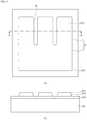
- mesas Ms are formed by patterning the p-type semiconductor layer 227 and the active layer 225.
- the mesas Ms are formed on the respective light emitting cell regions C1 and C2.
- the mesas Ms may be formed using photolithography and etching processes.
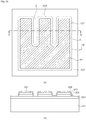
- a preliminary insulation layer 229 which is not shown, is formed to cover the mesas Ms, and then the preliminary insulation layer 229 on a region for forming a reflection structure 231 is etched by using a photoresist pattern. Then, the reflection structure 231 is formed by the lift-off technique using the same photoresist pattern.
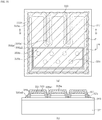
- a resin layer 237, an n-electrode pad 239a, and a p-pad electrode 239b are sequentially formed, scribing lines SC1 and SC2 are formed using a laser scribing process.
- the n-electrode pad 239a and the p-electrode pad 239b may be formed to fill a first and second via-holes 237a and 237b in the resin layer 237 using a technique such as electrolytic plating or electroless plating.
- the isolation region ISO is formed between the first and second light emitting cells C1 and C2 in the light emitting diode
- inner side surfaces of the n-type semiconductor layers 223 disposed at positions where the first light emitting cell C1 faces the second light emitting cell C2 are formed to have a relatively gentle slope.
- the outer side surfaces of the n-type semiconductor layers 223 are formed by laser scribing and cracking, they have a relatively steep slope, and further the outer side surfaces of the n-type semiconductor layers 223 may be flush with sides of the substrate 221.
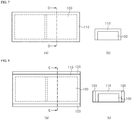
- FIG. 19 is a schematic plan view and a cross-sectional view illustrating a light emitting device comprising a light emitting diode according to an embodiment of the present disclosure
- FIG. 19a is a plan view
- FIG. 19b is a cross-sectional view taken along the line D - D in FIG. 19a .
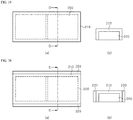
- the light emitting device according to the present embodiment is substantially similar to the light emitting device described with reference to FIG. 19 , but differs in that reflection sidewalls 220 are disposed along both sides of the light emitting diode 200.
- the reflection sidewalls 220 are disposed along long sides of the light emitting diode 200 and may be omitted on short sides of the light emitting diode 200. Meanwhile, a wavelength conversion layer 210 is disposed between the reflection sidewalls 220 and the light emitting diode 200.
- the reflection sidewalls 220 may be formed by a LED reflector such as PCT, PA9T or SMC (Silicon Molding Compound) and thus may be easily formed using a molding process.
- the light emitting device may be disposed on a side surface of a light guide plate to emit light toward the side surface of the light guide plate, and may be used as a backlight light source, for example.
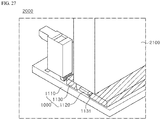
- a light emitting module 1000 comprises a printed circuit board (PCB) 1110, a light emitting device 1120, and a spacer 1130.
- PCB printed circuit board
- the light emitting device 1120 is the same as the light emitting device described with reference to FIG. 19 or FIG. 20 and may be a light emitting device comprising the light emitting diode 200 and the wavelength conversion layer 210, or may be a light emitting diode 200 without the wavelength conversion layer 210.
- a plurality of light emitting devices 1120 are mounted on an upper surface of the printed circuit board 1110. The plurality of light emitting devices 1120 do not need to be all the same, and only a portion of them may comprise the light emitting diodes 200 described above.
- the spacer 1130 is disposed on the upper surface of the printed circuit board 1110.
- a through-hole shaped cavity 1131 is formed in the spacer 1130.
- the cavity 1131 of the spacer 1130 exposes the printed circuit board 1110.
- the light emitting devices 1120 are located inside the cavity 1131 formed in this way.
- a plurality of cavities 1131 are formed in the spacer 1130.
- a plurality of light emitting devices 1120 may be disposed inside of each cavity 1131.
- at least one cavity 1131 of the plurality of cavities 1131 may be different in length from the other cavities 1131.
- at least one cavity 1131 of the plurality of cavities 1131 may be provided with a different number of light emitting devices 1120 from the other cavities 1131.
- the spacer 1130 may be thicker than the light emitting device 1120. That is, an upper surface of the spacer 1130 is located higher than an upper surface of the light emitting device 1120. For example, a thickness of the light emitting device 1120 is 0.4 mm, and a thickness of the spacer 1130 is 0.7 mm.
- the printed circuit board 1110 may be thermally expanded by heat emitted from the light emitting devices 1120, and thus the light emitting devices 1120 may be damaged by touching a light guide plate (not shown).
- the spacer 1130 keeps the light emitting device 1120 away from the light guide plate to prevent the light emitting devices 1120 from being damaged by the light guide plate.
- the cavity 1131 of the spacer 1130 is formed to increase its width from a lower portion to an upper portion. Further, a side surface of the cavity 1131 may be formed as a curved surface. Therefore, light emitted from a side of the light emitting device 1120 may be reflected to a light incident portion of the light guide plate at the side surface of the cavity 1131 (not shown), and thus it is possible to improve light condensing efficiency of the light emitting module 1000.
- One side wall and another side wall of the spacer 1130 may be formed to have different widths.
- one of both side walls formed in a longitudinal direction of the spacer 1130 becomes the one side wall, and the other one becomes the another side wall.
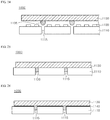
- FIGs. 23 to 26 are cross-sectional views illustrating various methods of attaching spacers.
- the a spacer 1130 may be attached to the printed circuit board 1110 by a protrusion 1135 of the spacer 1130 and a concave portion 1115 of the printed circuit board 1110.
- the spacer 1130 comprises the protrusion 1135.
- the protrusion 1135 is formed on a lower surface of the spacer 1130, and is formed to protrude downward.
- the printed circuit board 1110 comprises the through-hole shaped concave portion 1115.
- the concave portion 1115 is formed at a location corresponding to the protrusion 1135 of the spacer 1130.
- the upper surface of the spacer 1130 is located higher than an upper surface of the light emitting device 1120. Therefore, the spacer 1130 may prevent the light guide plate 2100 from being deformed by heat and damaging the light emitting device 1120.
- FIG. 29 is an enlarged view of a portion indicated by I in FIG. 28
- FIG. 30 is a partial cross-sectional view taken along the line B2 - B2 and a partial cross-sectional view taken along the line C2 - C2 in FIG. 29 .
- the light emitting diode comprises a substrate 321, a first conductivity type semiconductor layer 323, an active layer 325, a second conductivity type semiconductor layer 327, a first contact layer 335a, a second contact layer 331, first insulation layers 329 and 333, an upper insulation layer 337, a first electrode pad 339a, and a second electrode pad 339b.
- the first conductivity type semiconductor layer 321 is disposed on the substrate 321.
- the first conductivity type semiconductor layer 321 is a layer grown on the substrate 321 and is a gallium nitride based semiconductor layer.
- the first conductivity type semiconductor layer 321 may be a gallium nitride based semiconductor layer doped with an impurity, for example, Si.
- the outer contact portion 335a2 and the inner contact portion 335a1 described above may be formed by the opening regions 333a1 and 333a2 formed in the lower insulation layer 333 and the preliminary insulation layer 329.
- the lower insulation layer 333 may also be interposed between the intermediate connection portion 335b and the second contact layer 331, and may have an opening 333b exposing the second contact layer 331.
- the intermediate connection portion 335b may be connected to the second contact layer 331 through these openings 333b.
- FIG. 30 (a) is a cross-sectional view taken along the line B2 - B2 passing through a recess 333r in FIG. 29
- FIG. 30 (b) is a cross-sectional view taken along the line C2 - C2 passing through a protrusion 333p in FIG. 29
- a front line of the first contact layer 335a is located on the protrusion 333p and also contacts the first conductivity type semiconductor layer 323 near the recess 333r.
- the first contact layer 335a contacts the first conductivity type semiconductor layer 323 exposed by the recess 333r and forms the outer contact portion 335a2. Accordingly, the outer contact portions 335a2 and the protrusions 333p alternately contact with the first conductivity type semiconductor layer along the periphery of the mesa M, and thus a contact area of the outer contact portion 335a2 is reduced. Therefore, light loss due to the first contact layer 335a can be reduced.
- the first insulation layers 329 and 333 and the upper insulation layer 337 may be formed of a single layer of SiO 2 , but the present disclosure is not limited thereto.
- the lower insulation layer 333 or the upper insulation layer 337 may have a multiple layer structure comprising a silicon nitride layer and a silicon oxide layer, or may be a distributed Bragg reflector where a silicon oxide layer and a titanium oxide layer are alternately laminated.
- the lower insulation layer 333 is formed of the distributed Bragg reflector with high reflectance, light extraction efficiency may be increased by reflecting light by using the protrusion 333p of the lower insulation layer 333.
- the first electrode pad 339a is electrically connected to the first contact layer 335a through the opening 337a of the upper insulation layer 337
- the second electrode pad 339b is electrically connected to the intermediate connection portion 335b through the opening 337b. Accordingly, the second electrode pad may be electrically connected to the second contact layer 331 via the intermediate connection portion 335b.
- the outer contact portion 335a2 does not continuously contact the first conductivity type semiconductor layer 323 along the periphery of the mesa M, and the outer contact portions 335a2 and first protrusions 333p alternately contact the first conductivity type semiconductor layer along the periphery of the mesa M.
- the technical features are not limited to the present embodiment, but can be similarly applied to the embodiment with the plurality of light emitting cells C1 and C2 described above.
- a first conductivity type semiconductor layer 323, an active layer 325, and a second conductivity type semiconductor layer 327 are grown on a substrate 321.
- the substrate 321 any substrate capable of growing a gallium nitride-based semiconductor layer may be used without limitation.
- the substrate 321 there can be various kinds such as a sapphire substrate, a gallium nitride substrate, a SiC substrate, a Si substrate, or others.
- the first conductivity type semiconductor layer 323, the active layer 325 and the second conductivity type semiconductor layer 327 may be grown on the substrate 321 by Metal Organic Chemical Vapor Deposition (MOCVD).
- MOCVD Metal Organic Chemical Vapor Deposition
- the first conductivity type semiconductor layer 323 may be doped with an n-type impurity, for example, Si.
- the first conductivity type semiconductor layer 323 may have a doping concentration within a range of 8E17/cm 3 to 1E18/cm 3 , for example.
- a side surface of the mesa M may be formed to be inclined by using a process such as photoresist reflow.
- An inclined profile of the side surface of the mesa M improves an extraction efficiency of light generated in the active layer 325.
- a preliminary insulation layer 329 is formed to cover the first conductivity type semiconductor layer 323 and the mesa M.
- the preliminary insulation layer 329 may be formed of SiO 2 using a chemical vapor deposition technique, for example.
- a photoresist pattern 330 is formed on the preliminary insulation layer 329.
- the photoresist pattern 330 has an opening exposing an upper region of the mesa M.
- the opening may be substantially similar to a shape of the mesa M, but may be formed slightly smaller than the mesa M. That is, the photoresist may cover edge portions of the mesa M. Further, the opening may be formed to have larger width of a bottom portion than a width of an inlet. For example, by using a negative type photoresist, the photoresist pattern 330 having an opening with the shape described above may be easily formed.
- the preliminary insulation layer 329 is etched by using the photoresist pattern 330 as an etching mask, and thus the second conductivity type semiconductor layer 327 is exposed.
- the preliminary insulation layer 329 may be etched by using a wet etching technique, for example.
- a second contact layer (e.g., p contact layer 331) is formed.
- the second contact layer 331 may be formed on the mesa M by a coating technique using an electron beam evaporation method.
- the reflection layer may be formed of Ni / Ag / Ni / Au, for example, and the capping layer may cover an upper surface and side surfaces of the reflection layer to protect the reflection layer.
- the reflection layer is formed using an electron beam evaporation method, and the capping layer is formed using a sputtering technique or an electron-beam evaporation method (e.g., planetary e-beam evaporation) in which a layer is vacuum deposited while the substrate 321 is tilted and rotated.
- the capping layer may comprise Ni, Pt, Ti, or Cr, and may be formed by depositing one pair or more of Ni / Pt or one pair or more of of Ni/ Ti, for example.
- the capping layer may comprise TiW, W, or Mo.
- the stress relieving layer is interposed between the reflection layer and the capping layer to relieve stress, and thus may be variously selected depending on metal materials of the reflection layer and the capping layer.
- the stress relieving layer may be a single layer of Ag, Cu, Ni, Pt, Ti, Rh, Pd, or Cr, or may be multiple layers of Cu, Ni, Pt, Ti, Rh, Pd, or Ag.
- the stress relieving layer may be a single layer of Ag or Cu, or multiple layers of Ni, Au, Cu or Ag.
- an antioxidant layer contains Au to prevent oxidation of the capping layer, and may be formed of Au / Ni or Au / Ti, for example. Ti is preferred because of good adhesion of an oxide layer such as SiO2.
- the antioxidant layer may also be formed by using sputtering or electron-beam evaporation (e.g., planetary e-beam evaporation) in which a layer is vacuum deposited while the substrate 321 is tilted and rotated.
- the second contact layer 331 is described as a metal layer, it is not limited thereto, but any material being in ohmic-contact with the second conductivity type semiconductor layer 327 may be used as the second contact layer 331.
- the second contact layer 331 may be a transparent conductive layer such as ITO or ZnO.
- a lower insulation layer 333 covering the mesa M and the first conductivity type semiconductor layer 323 is formed.
- the lower insulation layer 333 covers the second contact layer 331 and also covers the preliminary insulation layer 329. Accordingly, the lower insulation layer 333 is integrated with the insulation layer 329 into one insulation layer and may be patterned together with the insulation layer 329.
- the preliminary insulation layer 329 is formed in advance, but the preliminary insulation layer 329 may be omitted.
- the preliminary insulation layer 329 may be limitedly located on the mesa M. It is not easy to distinguish the preliminary insulation layer 329 from the lower insulation layer 333 because a thickness of the preliminary insulation layer 329 is small. Accordingly, all insulation layers disposed between the mesa M and a first contact layer 335a are referred to as the first insulation layer 329 and 333, unless otherwise noted.
- the first insulation layer 329 and 333 expose the first conductivity type semiconductor layer 323 along a periphery of the mesa M to allow electrical connection to the first conductivity type semiconductor layer 323 in a specific region, and expose the first conductivity type semiconductor layer 323 in a region between the fingers Fs. These opening areas are indicated by reference numerals 333a1 and 333a2. Further, the first insulation layer 329 and 333 have openings 333b to allow electrical connection to the second contact layer 331. The first insulation layer 329 and 333 may have different thicknesses at respective positions depending on whether or not the preliminary insulation layer 329 is present.
- a thickness of the first insulation layer 329 and 333 located on the second contact layer 331 is greater than a thickness of the first insulation layer 329 and 333 located around the second contact layer 331.
- a thickness of the first insulation layer 329 and 333 located around the second contact layer 331 on the mesa M is greater than a thickness of the first insulation layer 333 located on the second contact layer 331 or on the first conductivity type semiconductor layer 323.
- the opening regions 333a1 and 333a2 may be formed by patterning the lower insulation layer 333 and the preliminary insulation layer 329 together, and the opening 333b may be formed by patterning only the lower insulation layer 333 without the preliminary insulation layer 329. Further, the opening 333b is located on the second contact layer 331, and overlaps with the second contact layer 331.
- the opening region 333a2 is determined by a location of a front line of the first insulation layer 329 and 333. That is, the opening region 333a2 between an edge of an upper surface of the first conductivity type semiconductor layer 323 and the front line of the first insulation layer 329 and 333 is exposed.
- the front line of the first insulation layer 329 and 333 comprises protrusions 333p and recesses 333r.
- the front line may have a triangular waveform, for example, it is not limited thereto, but it may have various forms.
- the protrusions 333p and the recesses 333 may be alternately repeated. Accordingly, the opening area 333a2 has a shape in which a large area and a narrow area are repeated.
- opening 333 b is disposed on the palm P of the mesa M.
- a number of openings 333b is not particularly limited, but it may be one or more. Further, when there are a plurality of openings 333b, they may be arranged so as to have a symmetrical structure, but the present disclosure is not limited thereto.
- the lower insulation layer 333 may be formed of an oxide layer such as SiO 2 or others, a nitride layer such as SiNx or others, or an insulating layer of MgF 2 using a chemical vapor deposition (CVD) technique or the like, and may be patterned by using a photolithography and etching technique.
- oxide layer such as SiO 2 or others
- nitride layer such as SiNx or others
- insulating layer of MgF 2 using a chemical vapor deposition (CVD) technique or the like
- the lower insulation layer 333 may be formed of a distributed Bragg reflector (DBR) in which a low refractive index material layer and an high refractive index material layer are alternately laminated.
- DBR distributed Bragg reflector
- an insulating reflection layer having a high reflectance may be formed by laminating layers such as SiO 2 / TiO 2 , SiO 2 / Nb 2 O 5 , or others.
- the first contact layer 335a and an intermediate connection portion 335b are formed on the first insulation layer 329 and 333.
- the first contact layer 335a and the intermediate connection portion 335b may be formed simultaneously with the same material using a lift-off technique, for example.
- the first contact layer 335a covers over most of the first conductivity type semiconductor layer 323 except for a region where the intermediate connection portion 335b is to be formed.
- the first contact layer 335a is insulated from the mesa M and the second contact layer 331 by the first insulation layer 329 and 333.
- the first contact layer 335a has an opening surrounding the intermediate connection portion 335b, and the intermediate connection portion 335b is formed in the opening.
- the first contact layer 335a comprises an inner contact portion 335a1 contacting the first conductivity type semiconductor layer 323 exposed in the opening 333a1 and an outer contact portion 335a2 contacting the first conductivity type semiconductor layer 323 through the opening region 333a2.
- the outer contact portion 335a2 contacts the first conductivity type semiconductor layer 323 near the edge of the first conductivity type semiconductor layer 323 along the periphery of the mesa M.
- a portion of the front line of the first contact layer 335a is located on the protrusions 333p of the first insulation layer 329 and 333 and is separated from the first conductivity type semiconductor layer 323, and another portion is located on the first conductivity type semiconductor layer 323 exposed in the recess portions 333r of the first insulation layer 329 and 333 and forms the outer contact portion 335a2. Therefore, the outer contact portions 335a of the first contact layer 335a alternately contact the first conductivity type semiconductor layer 323 along a side surface of the mesa M with the first insulation layer 329 and 333.
- an opening of the first contact layer 335a is formed to surround the opening 333b of the first insulation layer, for example, the lower insulation layer 333, and the intermediate connection portion 335b covers the opening 333b of the lower insulation layer 333. Therefore, the intermediate connection portion 335b is connected to the second contact layer 331 through the opening 333b of the lower insulation layer 333.
- the intermediate connection portion 335b is also overlapped with and disposed on the second contact layer 331, and particularly may be limitedly located on the palm P of the mesa M.
- the first contact layer 335a is formed over almost an entire region of the first conductivity type semiconductor layer 323 except for openings. Therefore, current may be easily spread through the first contact layer 335a.
- the first contact layers 335a may comprise a highly reflective metal layer such as an Al layer, and the highly reflective metal layer may be formed on an adhesive layer such as Ti, Cr, Ni, or others.
- a protective layer of a single layer or a multilayer structure of Ni, Cr, Au, or others may be formed on the highly reflective metal layer.
- the first contact layer 335a may have a multilayer structure of Cr / Al / Ni / Ti / Ni / Ti / Au / Ti, for example.
- an upper insulation layer 337 is formed on the first contact layer 335a.
- the upper insulation layer 337 has an opening 337a exposing the first contact layer 335a and an opening 337b exposing the intermediate connection portion 335b.
- the opening 337a may be formed to overlap the first contact layer 335a over the fingers Fs of the mesa M, and the opening 337b may be formed on the intermediate contact portion 335b to overlap the second contact layer 331 on the palm P of the mesa M.
- the opening 337b is located to overlap the second contact layer 331, and may have a smaller size than the intermediate connection portion 335b. Therefore, an edge and sidewalls of the intermediate connection portion 335b are covered with the upper insulation layer 337. Further, sidewalls of the opening of the first contact layer 335a are also covered with the upper insulation layer 337.
- the upper insulation layer 337 may be formed of a single layer of a silicon nitride layer or a silicon oxide layer, it is not limited thereto, but may be formed of multiple layers or a distributed Bragg reflector structure.
- the upper insulation layer 337 may cover an inclined surface L1 and may cover side surfaces of the first conductivity type semiconductor layer 323.
- a distance D between first and second electrode pads may be about 80 ⁇ m or more to prevent a short circuit.
- first and second electrode pads 339a and 339b may be formed together using the same process, for example, a lift-off technique.
- FIG. 38 is a schematic plan view illustrating a light emitting diode according to another embodiment of the present disclosure.
- the inner contact portions 335a1 are formed in the indent portions, however, there is a difference in the present embodiment that the inner contact portions 335a1 are in contact with a first conductivity type semiconductor layer 323 exposed in a groove formed in a mesa M.
- the mesa M has the groove passing through the second conductivity type semiconductor layer 327 and the active layer 325 and exposing the first conductivity type semiconductor layer 323.
- the groove is surrounded by the second conductivity type semiconductor layer 327 and the active layer 325, and the inner contact portions 335a1 are in contact with the first conductivity type semiconductor layer 323 exposed in the groove. Therefore, the inner contact portions 335a1 are separated from outer contact portions 335a2.
- the groove may have an H shape comprising two straight lines and a connection line connecting the straight lines.
- the groove may be disposed in a central region of the mesa.
- the inner contact portions 335a1 may be formed in the two straight lines in the H-shaped groove, but the inner contact portions 335a1 may not be formed in the connection line. That is, the first contact layer 335a may be disposed over the connection line, but it may be separated from the first conductivity type semiconductor layer 323 by the first insulation layer 329 and 333.
- At least one of end terminal portions of the groove may have a wider width than other portions of the straight lines. These terminal portions are located near regions, respectively where a first electrode pad 339a and a second electrode pad 339b are located. As shown in FIG. 38 , the first electrode pad 339a may be disposed to overlap with two terminal portions of the terminal portions, and the second electrode pad 339b may be formed to surround the other two terminal portions.
- a shortest distance between the inner contact portions 335a1 and the outer contact portions 335a2 may be the same at any point of the inner contact portions 335a1. Further, a distance between the inner contact portions 335a1 formed on the two straight lines in the H-shaped groove may be the same as the shortest distance between the inner contact portions 335a1 and the outer contact portions 335a2. Therefore, current may be evenly spread over an entire light emitting region.
- FIG. 39 (a) shows that light is mainly emitted from regions of the indent portions where the inner contact portions 335a1 are formed, but light is not emitted well in a region where the second electrode pad 339b is disposed.
- FIG. 39 (b) shows that light is preferably emitted from most of regions of the light emitting surface.
Landscapes
- Led Devices (AREA)
- Led Device Packages (AREA)
Priority Applications (3)
| Application Number | Priority Date | Filing Date | Title |
|---|---|---|---|
| EP25155542.1A EP4543170A3 (de) | 2016-05-03 | 2017-04-26 | Leuchtdiode |
| EP20194164.8A EP3767688B1 (de) | 2016-05-03 | 2017-04-26 | Lichtemittierende diode |
| EP22203445.6A EP4145543B1 (de) | 2016-05-03 | 2017-04-26 | Leuchtdiode |
Applications Claiming Priority (4)
| Application Number | Priority Date | Filing Date | Title |
|---|---|---|---|
| KR1020160054885A KR102495483B1 (ko) | 2016-05-03 | 2016-05-03 | 복수의 발광셀들을 갖는 발광 다이오드 및 그것을 갖는 발광 소자 |
| KR1020160065501A KR102440222B1 (ko) | 2016-05-27 | 2016-05-27 | 발광 다이오드 |
| KR1020160079392A KR102562064B1 (ko) | 2016-06-24 | 2016-06-24 | 복수의 발광셀들을 갖는 발광 다이오드 및 그것을 갖는 발광 모듈 |
| PCT/KR2017/004420 WO2017191923A1 (ko) | 2016-05-03 | 2017-04-26 | 발광 다이오드 |
Related Child Applications (4)
| Application Number | Title | Priority Date | Filing Date |
|---|---|---|---|
| EP22203445.6A Division EP4145543B1 (de) | 2016-05-03 | 2017-04-26 | Leuchtdiode |
| EP20194164.8A Division-Into EP3767688B1 (de) | 2016-05-03 | 2017-04-26 | Lichtemittierende diode |
| EP20194164.8A Division EP3767688B1 (de) | 2016-05-03 | 2017-04-26 | Lichtemittierende diode |
| EP25155542.1A Division EP4543170A3 (de) | 2016-05-03 | 2017-04-26 | Leuchtdiode |
Publications (3)
| Publication Number | Publication Date |
|---|---|
| EP3454372A1 true EP3454372A1 (de) | 2019-03-13 |
| EP3454372A4 EP3454372A4 (de) | 2019-11-20 |
| EP3454372B1 EP3454372B1 (de) | 2020-12-23 |
Family
ID=60202961
Family Applications (4)
| Application Number | Title | Priority Date | Filing Date |
|---|---|---|---|
| EP25155542.1A Pending EP4543170A3 (de) | 2016-05-03 | 2017-04-26 | Leuchtdiode |
| EP20194164.8A Active EP3767688B1 (de) | 2016-05-03 | 2017-04-26 | Lichtemittierende diode |
| EP17792825.6A Active EP3454372B1 (de) | 2016-05-03 | 2017-04-26 | Lichtemittierende diode |
| EP22203445.6A Active EP4145543B1 (de) | 2016-05-03 | 2017-04-26 | Leuchtdiode |
Family Applications Before (2)
| Application Number | Title | Priority Date | Filing Date |
|---|---|---|---|
| EP25155542.1A Pending EP4543170A3 (de) | 2016-05-03 | 2017-04-26 | Leuchtdiode |
| EP20194164.8A Active EP3767688B1 (de) | 2016-05-03 | 2017-04-26 | Lichtemittierende diode |
Family Applications After (1)
| Application Number | Title | Priority Date | Filing Date |
|---|---|---|---|
| EP22203445.6A Active EP4145543B1 (de) | 2016-05-03 | 2017-04-26 | Leuchtdiode |
Country Status (4)
| Country | Link |
|---|---|
| US (3) | US10998479B2 (de) |
| EP (4) | EP4543170A3 (de) |
| CN (2) | CN111128987A (de) |
| WO (1) | WO2017191923A1 (de) |
Cited By (4)
| Publication number | Priority date | Publication date | Assignee | Title |
|---|---|---|---|---|
| EP3731277A1 (de) * | 2018-08-09 | 2020-10-28 | Seoul Viosys Co., Ltd | Lichtemittierende vorrichtung |
| WO2021032512A1 (de) * | 2019-08-21 | 2021-02-25 | Osram Opto Semiconductors Gmbh | Optoelektronischer halbleiterchip und verfahren zur herstellung eines solchen |
| WO2021032397A1 (de) * | 2019-08-22 | 2021-02-25 | Osram Opto Semiconductors Gmbh | Optoelektronischer halbleiterchip |
| US10937938B2 (en) | 2018-08-09 | 2021-03-02 | Seoul Viosys Co., Ltd. | Light emitting device |
Families Citing this family (29)
| Publication number | Priority date | Publication date | Assignee | Title |
|---|---|---|---|---|
| US10991861B2 (en) | 2015-10-01 | 2021-04-27 | Cree, Inc. | Low optical loss flip chip solid state lighting device |
| US11031527B2 (en) | 2018-01-29 | 2021-06-08 | Creeled, Inc. | Reflective layers for light-emitting diodes |
| US11923481B2 (en) | 2018-01-29 | 2024-03-05 | Creeled, Inc. | Reflective layers for light-emitting diodes |
| US11387389B2 (en) | 2018-01-29 | 2022-07-12 | Creeled, Inc. | Reflective layers for light-emitting diodes |
| DE102018107673A1 (de) | 2018-03-15 | 2019-09-19 | Osram Opto Semiconductors Gmbh | Optoelektronischer Halbleiterchip und Herstellungsverfahren für einen optoelektronischen Halbleiterchip |
| US11799058B2 (en) | 2018-03-15 | 2023-10-24 | Osram Oled Gmbh | Optoelectronic semiconductor chip |
| US10879419B2 (en) * | 2018-08-17 | 2020-12-29 | Seoul Viosys Co., Ltd. | Light emitting device |
| US10879441B2 (en) | 2018-12-17 | 2020-12-29 | Cree, Inc. | Interconnects for light emitting diode chips |
| US11152553B2 (en) * | 2019-01-15 | 2021-10-19 | Seoul Viosys Co., Ltd. | Light emitting device package and display device having the same |
| US11282982B2 (en) * | 2019-01-25 | 2022-03-22 | Epistar Corporation | Light-emitting device and manufacturing method thereof |
| US10985294B2 (en) * | 2019-03-19 | 2021-04-20 | Creeled, Inc. | Contact structures for light emitting diode chips |
| JP7480125B2 (ja) * | 2019-04-08 | 2024-05-09 | 廈門三安光電有限公司 | 複合絶縁反射層 |
| CN110164322A (zh) * | 2019-05-22 | 2019-08-23 | 深圳市华星光电半导体显示技术有限公司 | 一种显示面板及电子装置 |
| CN111987083A (zh) * | 2019-05-23 | 2020-11-24 | 群创光电股份有限公司 | 电子装置以及发光单元 |
| US11094848B2 (en) | 2019-08-16 | 2021-08-17 | Creeled, Inc. | Light-emitting diode chip structures |
| JP7339517B2 (ja) * | 2019-09-12 | 2023-09-06 | 日亜化学工業株式会社 | 発光装置の製造方法および発光装置 |
| WO2022039509A1 (ko) * | 2020-08-19 | 2022-02-24 | 서울바이오시스주식회사 | 발광 다이오드 및 그것을 갖는 디스플레이 장치 |
| KR102903839B1 (ko) * | 2020-12-16 | 2025-12-24 | 삼성전자주식회사 | 반도체 발광소자 및 이를 구비한 발광소자 패키지 |
| US12272721B2 (en) | 2021-02-25 | 2025-04-08 | Asahi Kasei Microdevices Corporation | Optical element and optical concentration measuring apparatus |
| CN113451472B (zh) * | 2021-06-29 | 2023-01-13 | 厦门三安光电有限公司 | 一种深紫外发光二极管 |
| US20230007967A1 (en) * | 2021-07-12 | 2023-01-12 | Xiamen San'an Optoelectronics Co., Ltd. | Light emitting diode device |
| CN114725262A (zh) * | 2021-11-26 | 2022-07-08 | 泉州三安半导体科技有限公司 | 一种发光二极管芯片、发光装置 |
| CN116936706A (zh) * | 2022-04-02 | 2023-10-24 | 厦门三安光电有限公司 | 高压紫外发光二极管及发光装置 |
| US12464878B2 (en) * | 2022-04-22 | 2025-11-04 | Seoul Viosys Co., Ltd. | Light emitting module and display device including the same |
| JP2023172069A (ja) * | 2022-05-23 | 2023-12-06 | スタンレー電気株式会社 | 半導体発光装置 |
| CN114975721B (zh) * | 2022-05-31 | 2024-06-14 | 京东方科技集团股份有限公司 | 显示面板及其制作方法、以及显示装置 |
| CN115207178B (zh) * | 2022-07-14 | 2023-09-29 | 淮安澳洋顺昌光电技术有限公司 | 一种倒装高压发光二极管 |
| CN115528164B (zh) * | 2022-09-30 | 2025-09-19 | 厦门三安光电有限公司 | 一种发光二极管 |
| CN116581225B (zh) * | 2023-07-13 | 2023-10-17 | 江西兆驰半导体有限公司 | 一种倒装发光二极管芯片及其制备方法 |
Family Cites Families (33)
| Publication number | Priority date | Publication date | Assignee | Title |
|---|---|---|---|---|
| KR20100003321A (ko) | 2008-06-24 | 2010-01-08 | 삼성전자주식회사 | 발광 소자, 이를 포함하는 발광 장치, 상기 발광 소자 및발광 장치의 제조 방법 |
| KR101056740B1 (ko) | 2009-06-01 | 2011-08-12 | 주식회사 세미라인 | 발광 다이오드 패키지 모듈 및 그의 제조방법 |
| JP2011035017A (ja) * | 2009-07-30 | 2011-02-17 | Hitachi Cable Ltd | 発光素子 |
| JP2011066073A (ja) * | 2009-09-15 | 2011-03-31 | Showa Denko Kk | 半導体発光素子 |
| KR20110087579A (ko) * | 2010-01-26 | 2011-08-03 | 삼성엘이디 주식회사 | Led 모듈과 이를 구비하는 백라이트 유닛 |
| US20120037946A1 (en) * | 2010-08-12 | 2012-02-16 | Chi Mei Lighting Technology Corporation | Light emitting devices |
| US9070851B2 (en) * | 2010-09-24 | 2015-06-30 | Seoul Semiconductor Co., Ltd. | Wafer-level light emitting diode package and method of fabricating the same |
| KR101142965B1 (ko) * | 2010-09-24 | 2012-05-08 | 서울반도체 주식회사 | 웨이퍼 레벨 발광 다이오드 패키지 및 그것을 제조하는 방법 |
| KR101106139B1 (ko) * | 2011-04-04 | 2012-01-20 | 서울옵토디바이스주식회사 | 확장된 금속 반사층을 갖는 플립 본딩형 발광다이오드 및 그 제조방법 |
| CN202150484U (zh) * | 2011-05-06 | 2012-02-22 | 福建省万邦光电科技有限公司 | Led光源模块封装用凸杯底座结构 |
| JP5869678B2 (ja) * | 2011-09-16 | 2016-02-24 | ソウル バイオシス カンパニー リミテッドSeoul Viosys Co.,Ltd. | 発光ダイオード及びそれを製造する方法 |
| JP5543514B2 (ja) * | 2012-03-23 | 2014-07-09 | 株式会社東芝 | 半導体発光素子及びその製造方法 |
| KR20130128841A (ko) | 2012-05-18 | 2013-11-27 | 삼성전자주식회사 | 멀티셀 어레이를 갖는 반도체 발광장치 및 그 제조방법, 그리고 발광모듈 및 조명장치 |
| KR20140006485A (ko) * | 2012-07-05 | 2014-01-16 | 삼성전자주식회사 | 멀티셀 어레이를 갖는 반도체 발광장치 및 그 제조 방법 |
| KR20140028803A (ko) * | 2012-08-30 | 2014-03-10 | 서울바이오시스 주식회사 | 반사 절연층을 갖는 플립 본딩을 위한 발광다이오드 및 그의 제조방법 |
| CN202839604U (zh) * | 2012-09-22 | 2013-03-27 | 歌尔声学股份有限公司 | 发光二极管装置 |
| KR101420788B1 (ko) * | 2012-12-05 | 2014-07-18 | 주식회사 세미콘라이트 | 반도체 발광소자 |
| US9356212B2 (en) * | 2012-12-21 | 2016-05-31 | Seoul Viosys Co., Ltd. | Light emitting diode and method of fabricating the same |
| KR101958419B1 (ko) | 2013-01-29 | 2019-03-14 | 삼성전자 주식회사 | 반도체 발광 소자 |
| US20140362603A1 (en) * | 2013-05-09 | 2014-12-11 | Seoul Semiconductor Co., Ltd. | Light source module and backlight unit having the same |
| KR102135625B1 (ko) | 2013-11-29 | 2020-07-21 | 서울반도체 주식회사 | 발광 소자, 이를 포함하는 차량용 램프 및 백라이트 유닛 |
| WO2015016561A1 (en) * | 2013-07-29 | 2015-02-05 | Seoul Viosys Co., Ltd. | Light emitting diode, method of fabricating the same and led module having the same |
| US9847457B2 (en) * | 2013-07-29 | 2017-12-19 | Seoul Viosys Co., Ltd. | Light emitting diode, method of fabricating the same and LED module having the same |
| US9461209B2 (en) * | 2013-11-27 | 2016-10-04 | Epistar Corporation | Semiconductor light-emitting device |
| KR20150014353A (ko) | 2014-03-31 | 2015-02-06 | 서울바이오시스 주식회사 | 발광 다이오드 |
| US9831387B2 (en) * | 2014-06-14 | 2017-11-28 | Hiphoton Co., Ltd. | Light engine array |
| KR102197082B1 (ko) * | 2014-06-16 | 2020-12-31 | 엘지이노텍 주식회사 | 발광 소자 및 이를 포함하는 발광소자 패키지 |
| US9930750B2 (en) * | 2014-08-20 | 2018-03-27 | Lumens Co., Ltd. | Method for manufacturing light-emitting device packages, light-emitting device package strip, and light-emitting device package |
| WO2016032193A1 (ko) * | 2014-08-27 | 2016-03-03 | 서울바이오시스 주식회사 | 발광 소자 및 이의 제조 방법 |
| KR20160027875A (ko) * | 2014-08-28 | 2016-03-10 | 서울바이오시스 주식회사 | 발광소자 |
| KR102335452B1 (ko) * | 2015-06-16 | 2021-12-07 | 서울바이오시스 주식회사 | 발광 소자 |
| TWI772253B (zh) * | 2015-11-13 | 2022-08-01 | 晶元光電股份有限公司 | 發光元件 |
| CN109196667B (zh) * | 2016-03-07 | 2022-02-25 | 世迈克琉明有限公司 | 半导体发光元件及其制造方法 |
-
2017
- 2017-04-26 WO PCT/KR2017/004420 patent/WO2017191923A1/ko not_active Ceased
- 2017-04-26 EP EP25155542.1A patent/EP4543170A3/de active Pending
- 2017-04-26 CN CN201911378761.XA patent/CN111128987A/zh not_active Withdrawn
- 2017-04-26 EP EP20194164.8A patent/EP3767688B1/de active Active
- 2017-04-26 CN CN201780024878.0A patent/CN109075184B/zh active Active
- 2017-04-26 EP EP17792825.6A patent/EP3454372B1/de active Active
- 2017-04-26 EP EP22203445.6A patent/EP4145543B1/de active Active
-
2018
- 2018-10-12 US US16/158,305 patent/US10998479B2/en active Active
-
2021
- 2021-05-03 US US17/246,856 patent/US12439749B2/en active Active
-
2025
- 2025-06-02 US US19/225,199 patent/US20250294937A1/en active Pending
Cited By (4)
| Publication number | Priority date | Publication date | Assignee | Title |
|---|---|---|---|---|
| EP3731277A1 (de) * | 2018-08-09 | 2020-10-28 | Seoul Viosys Co., Ltd | Lichtemittierende vorrichtung |
| US10937938B2 (en) | 2018-08-09 | 2021-03-02 | Seoul Viosys Co., Ltd. | Light emitting device |
| WO2021032512A1 (de) * | 2019-08-21 | 2021-02-25 | Osram Opto Semiconductors Gmbh | Optoelektronischer halbleiterchip und verfahren zur herstellung eines solchen |
| WO2021032397A1 (de) * | 2019-08-22 | 2021-02-25 | Osram Opto Semiconductors Gmbh | Optoelektronischer halbleiterchip |
Also Published As
| Publication number | Publication date |
|---|---|
| EP3454372B1 (de) | 2020-12-23 |
| US12439749B2 (en) | 2025-10-07 |
| US10998479B2 (en) | 2021-05-04 |
| EP4543170A3 (de) | 2025-05-07 |
| EP3767688A1 (de) | 2021-01-20 |
| US20250294937A1 (en) | 2025-09-18 |
| CN109075184A (zh) | 2018-12-21 |
| US20190051805A1 (en) | 2019-02-14 |
| CN111128987A (zh) | 2020-05-08 |
| EP4145543A1 (de) | 2023-03-08 |
| EP4145543C0 (de) | 2025-02-12 |
| US20210257528A1 (en) | 2021-08-19 |
| EP4543170A2 (de) | 2025-04-23 |
| WO2017191923A1 (ko) | 2017-11-09 |
| EP3767688B1 (de) | 2022-10-26 |
| EP3454372A4 (de) | 2019-11-20 |
| CN109075184B (zh) | 2023-07-21 |
| EP4145543B1 (de) | 2025-02-12 |
Similar Documents
| Publication | Publication Date | Title |
|---|---|---|
| US20250294937A1 (en) | Light emitting diode | |
| US9165977B2 (en) | Light emitting device and light emitting device package including series of light emitting regions | |
| KR102641239B1 (ko) | 발광 다이오드, 그것을 제조하는 방법 및 그것을 갖는 발광 소자 모듈 | |
| US9240433B2 (en) | Light emitting device | |
| EP2372791B1 (de) | Leuchtdiode | |
| US9153622B2 (en) | Series of light emitting regions with an intermediate pad | |
| CN111048547B (zh) | 具有多个发光单元的发光二极管 | |
| CN110010737B (zh) | 发光器件和照明设备 | |
| CN111164753B (zh) | 半导体装置及包括该半导体装置的前照灯 | |
| KR20160025455A (ko) | 발광 소자 및 이의 제조 방법 | |
| JP2011171743A (ja) | 発光素子及び発光素子パッケージ | |
| KR20140022640A (ko) | 반도체 발광소자 및 발광장치 | |
| KR20160025456A (ko) | 발광 다이오드 및 그 제조 방법 | |
| EP2830094A1 (de) | Lichtemittierende Vorrichtung | |
| EP3471156B1 (de) | Lichtemittierende vorrichtungsverpackung | |
| KR102562064B1 (ko) | 복수의 발광셀들을 갖는 발광 다이오드 및 그것을 갖는 발광 모듈 | |
| KR101221643B1 (ko) | 플립칩 구조의 발광 소자 및 이의 제조 방법 | |
| KR20170082889A (ko) | 발광소자 | |
| KR102475409B1 (ko) | 금속 벌크를 포함하는 발광 소자 | |
| KR100646636B1 (ko) | 발광 소자 및 이의 제조 방법 | |
| KR101115533B1 (ko) | 플립칩 구조의 발광 소자 및 이의 제조 방법 | |
| KR101205524B1 (ko) | 플립칩 구조의 발광 소자 및 이의 제조 방법 |
Legal Events
| Date | Code | Title | Description |
|---|---|---|---|
| STAA | Information on the status of an ep patent application or granted ep patent |
Free format text: STATUS: THE INTERNATIONAL PUBLICATION HAS BEEN MADE |
|
| PUAI | Public reference made under article 153(3) epc to a published international application that has entered the european phase |
Free format text: ORIGINAL CODE: 0009012 |
|
| STAA | Information on the status of an ep patent application or granted ep patent |
Free format text: STATUS: REQUEST FOR EXAMINATION WAS MADE |
|
| 17P | Request for examination filed |
Effective date: 20181004 |
|
| AK | Designated contracting states |
Kind code of ref document: A1 Designated state(s): AL AT BE BG CH CY CZ DE DK EE ES FI FR GB GR HR HU IE IS IT LI LT LU LV MC MK MT NL NO PL PT RO RS SE SI SK SM TR |
|
| AX | Request for extension of the european patent |
Extension state: BA ME |
|
| DAV | Request for validation of the european patent (deleted) | ||
| DAX | Request for extension of the european patent (deleted) | ||
| A4 | Supplementary search report drawn up and despatched |
Effective date: 20191017 |
|
| RIC1 | Information provided on ipc code assigned before grant |
Ipc: H01L 33/36 20100101ALI20191011BHEP Ipc: H01L 33/22 20100101ALN20191011BHEP Ipc: H01L 33/38 20100101ALI20191011BHEP Ipc: H01L 33/44 20100101ALI20191011BHEP Ipc: H01L 27/15 20060101ALI20191011BHEP Ipc: H01L 33/46 20100101ALN20191011BHEP Ipc: H01L 33/40 20100101ALI20191011BHEP Ipc: H01L 33/08 20100101AFI20191011BHEP |
|
| REG | Reference to a national code |
Ref country code: DE Ref legal event code: R079 Ref document number: 602017030139 Country of ref document: DE Free format text: PREVIOUS MAIN CLASS: H01L0027150000 Ipc: H01L0033080000 |
|
| GRAP | Despatch of communication of intention to grant a patent |
Free format text: ORIGINAL CODE: EPIDOSNIGR1 |
|
| STAA | Information on the status of an ep patent application or granted ep patent |
Free format text: STATUS: GRANT OF PATENT IS INTENDED |
|
| RIC1 | Information provided on ipc code assigned before grant |
Ipc: H01L 33/46 20100101ALN20200624BHEP Ipc: H01L 27/15 20060101ALI20200624BHEP Ipc: H01L 33/22 20100101ALN20200624BHEP Ipc: H01L 33/40 20100101ALI20200624BHEP Ipc: H01L 33/38 20100101ALI20200624BHEP Ipc: H01L 33/44 20100101ALI20200624BHEP Ipc: H01L 33/08 20100101AFI20200624BHEP Ipc: H01L 33/36 20100101ALI20200624BHEP |
|
| INTG | Intention to grant announced |
Effective date: 20200716 |
|
| GRAS | Grant fee paid |
Free format text: ORIGINAL CODE: EPIDOSNIGR3 |
|
| GRAA | (expected) grant |
Free format text: ORIGINAL CODE: 0009210 |
|
| STAA | Information on the status of an ep patent application or granted ep patent |
Free format text: STATUS: THE PATENT HAS BEEN GRANTED |
|
| AK | Designated contracting states |
Kind code of ref document: B1 Designated state(s): AL AT BE BG CH CY CZ DE DK EE ES FI FR GB GR HR HU IE IS IT LI LT LU LV MC MK MT NL NO PL PT RO RS SE SI SK SM TR |
|
| REG | Reference to a national code |
Ref country code: GB Ref legal event code: FG4D |
|
| REG | Reference to a national code |
Ref country code: DE Ref legal event code: R096 Ref document number: 602017030139 Country of ref document: DE |
|
| REG | Reference to a national code |
Ref country code: AT Ref legal event code: REF Ref document number: 1348565 Country of ref document: AT Kind code of ref document: T Effective date: 20210115 |
|
| REG | Reference to a national code |
Ref country code: IE Ref legal event code: FG4D |
|
| REG | Reference to a national code |
Ref country code: NL Ref legal event code: FP |
|
| PG25 | Lapsed in a contracting state [announced via postgrant information from national office to epo] |
Ref country code: FI Free format text: LAPSE BECAUSE OF FAILURE TO SUBMIT A TRANSLATION OF THE DESCRIPTION OR TO PAY THE FEE WITHIN THE PRESCRIBED TIME-LIMIT Effective date: 20201223 Ref country code: RS Free format text: LAPSE BECAUSE OF FAILURE TO SUBMIT A TRANSLATION OF THE DESCRIPTION OR TO PAY THE FEE WITHIN THE PRESCRIBED TIME-LIMIT Effective date: 20201223 Ref country code: NO Free format text: LAPSE BECAUSE OF FAILURE TO SUBMIT A TRANSLATION OF THE DESCRIPTION OR TO PAY THE FEE WITHIN THE PRESCRIBED TIME-LIMIT Effective date: 20210323 Ref country code: GR Free format text: LAPSE BECAUSE OF FAILURE TO SUBMIT A TRANSLATION OF THE DESCRIPTION OR TO PAY THE FEE WITHIN THE PRESCRIBED TIME-LIMIT Effective date: 20210324 |
|
| REG | Reference to a national code |
Ref country code: AT Ref legal event code: MK05 Ref document number: 1348565 Country of ref document: AT Kind code of ref document: T Effective date: 20201223 |
|
| PG25 | Lapsed in a contracting state [announced via postgrant information from national office to epo] |
Ref country code: SE Free format text: LAPSE BECAUSE OF FAILURE TO SUBMIT A TRANSLATION OF THE DESCRIPTION OR TO PAY THE FEE WITHIN THE PRESCRIBED TIME-LIMIT Effective date: 20201223 Ref country code: LV Free format text: LAPSE BECAUSE OF FAILURE TO SUBMIT A TRANSLATION OF THE DESCRIPTION OR TO PAY THE FEE WITHIN THE PRESCRIBED TIME-LIMIT Effective date: 20201223 Ref country code: BG Free format text: LAPSE BECAUSE OF FAILURE TO SUBMIT A TRANSLATION OF THE DESCRIPTION OR TO PAY THE FEE WITHIN THE PRESCRIBED TIME-LIMIT Effective date: 20210323 |
|
| PG25 | Lapsed in a contracting state [announced via postgrant information from national office to epo] |
Ref country code: HR Free format text: LAPSE BECAUSE OF FAILURE TO SUBMIT A TRANSLATION OF THE DESCRIPTION OR TO PAY THE FEE WITHIN THE PRESCRIBED TIME-LIMIT Effective date: 20201223 |
|
| REG | Reference to a national code |
Ref country code: LT Ref legal event code: MG9D |
|
| PG25 | Lapsed in a contracting state [announced via postgrant information from national office to epo] |
Ref country code: LT Free format text: LAPSE BECAUSE OF FAILURE TO SUBMIT A TRANSLATION OF THE DESCRIPTION OR TO PAY THE FEE WITHIN THE PRESCRIBED TIME-LIMIT Effective date: 20201223 Ref country code: CZ Free format text: LAPSE BECAUSE OF FAILURE TO SUBMIT A TRANSLATION OF THE DESCRIPTION OR TO PAY THE FEE WITHIN THE PRESCRIBED TIME-LIMIT Effective date: 20201223 Ref country code: EE Free format text: LAPSE BECAUSE OF FAILURE TO SUBMIT A TRANSLATION OF THE DESCRIPTION OR TO PAY THE FEE WITHIN THE PRESCRIBED TIME-LIMIT Effective date: 20201223 Ref country code: SM Free format text: LAPSE BECAUSE OF FAILURE TO SUBMIT A TRANSLATION OF THE DESCRIPTION OR TO PAY THE FEE WITHIN THE PRESCRIBED TIME-LIMIT Effective date: 20201223 Ref country code: RO Free format text: LAPSE BECAUSE OF FAILURE TO SUBMIT A TRANSLATION OF THE DESCRIPTION OR TO PAY THE FEE WITHIN THE PRESCRIBED TIME-LIMIT Effective date: 20201223 Ref country code: PT Free format text: LAPSE BECAUSE OF FAILURE TO SUBMIT A TRANSLATION OF THE DESCRIPTION OR TO PAY THE FEE WITHIN THE PRESCRIBED TIME-LIMIT Effective date: 20210423 Ref country code: SK Free format text: LAPSE BECAUSE OF FAILURE TO SUBMIT A TRANSLATION OF THE DESCRIPTION OR TO PAY THE FEE WITHIN THE PRESCRIBED TIME-LIMIT Effective date: 20201223 |
|
| PG25 | Lapsed in a contracting state [announced via postgrant information from national office to epo] |
Ref country code: AT Free format text: LAPSE BECAUSE OF FAILURE TO SUBMIT A TRANSLATION OF THE DESCRIPTION OR TO PAY THE FEE WITHIN THE PRESCRIBED TIME-LIMIT Effective date: 20201223 Ref country code: PL Free format text: LAPSE BECAUSE OF FAILURE TO SUBMIT A TRANSLATION OF THE DESCRIPTION OR TO PAY THE FEE WITHIN THE PRESCRIBED TIME-LIMIT Effective date: 20201223 |
|
| REG | Reference to a national code |
Ref country code: DE Ref legal event code: R097 Ref document number: 602017030139 Country of ref document: DE |
|
| PG25 | Lapsed in a contracting state [announced via postgrant information from national office to epo] |
Ref country code: IS Free format text: LAPSE BECAUSE OF FAILURE TO SUBMIT A TRANSLATION OF THE DESCRIPTION OR TO PAY THE FEE WITHIN THE PRESCRIBED TIME-LIMIT Effective date: 20210423 |
|
| PG25 | Lapsed in a contracting state [announced via postgrant information from national office to epo] |
Ref country code: AL Free format text: LAPSE BECAUSE OF FAILURE TO SUBMIT A TRANSLATION OF THE DESCRIPTION OR TO PAY THE FEE WITHIN THE PRESCRIBED TIME-LIMIT Effective date: 20201223 |
|
| PLBE | No opposition filed within time limit |
Free format text: ORIGINAL CODE: 0009261 |
|
| STAA | Information on the status of an ep patent application or granted ep patent |
Free format text: STATUS: NO OPPOSITION FILED WITHIN TIME LIMIT |
|
| PG25 | Lapsed in a contracting state [announced via postgrant information from national office to epo] |
Ref country code: MC Free format text: LAPSE BECAUSE OF FAILURE TO SUBMIT A TRANSLATION OF THE DESCRIPTION OR TO PAY THE FEE WITHIN THE PRESCRIBED TIME-LIMIT Effective date: 20201223 Ref country code: DK Free format text: LAPSE BECAUSE OF FAILURE TO SUBMIT A TRANSLATION OF THE DESCRIPTION OR TO PAY THE FEE WITHIN THE PRESCRIBED TIME-LIMIT Effective date: 20201223 |
|
| 26N | No opposition filed |
Effective date: 20210924 |
|
| PG25 | Lapsed in a contracting state [announced via postgrant information from national office to epo] |
Ref country code: LU Free format text: LAPSE BECAUSE OF NON-PAYMENT OF DUE FEES Effective date: 20210426 |
|
| REG | Reference to a national code |
Ref country code: BE Ref legal event code: MM Effective date: 20210430 |
|
| PG25 | Lapsed in a contracting state [announced via postgrant information from national office to epo] |
Ref country code: ES Free format text: LAPSE BECAUSE OF FAILURE TO SUBMIT A TRANSLATION OF THE DESCRIPTION OR TO PAY THE FEE WITHIN THE PRESCRIBED TIME-LIMIT Effective date: 20201223 Ref country code: CH Free format text: LAPSE BECAUSE OF NON-PAYMENT OF DUE FEES Effective date: 20210430 Ref country code: LI Free format text: LAPSE BECAUSE OF NON-PAYMENT OF DUE FEES Effective date: 20210430 |
|
| PG25 | Lapsed in a contracting state [announced via postgrant information from national office to epo] |
Ref country code: SI Free format text: LAPSE BECAUSE OF FAILURE TO SUBMIT A TRANSLATION OF THE DESCRIPTION OR TO PAY THE FEE WITHIN THE PRESCRIBED TIME-LIMIT Effective date: 20201223 |
|
| PG25 | Lapsed in a contracting state [announced via postgrant information from national office to epo] |
Ref country code: IE Free format text: LAPSE BECAUSE OF NON-PAYMENT OF DUE FEES Effective date: 20210426 |
|
| PG25 | Lapsed in a contracting state [announced via postgrant information from national office to epo] |
Ref country code: IS Free format text: LAPSE BECAUSE OF FAILURE TO SUBMIT A TRANSLATION OF THE DESCRIPTION OR TO PAY THE FEE WITHIN THE PRESCRIBED TIME-LIMIT Effective date: 20210423 |
|
| PG25 | Lapsed in a contracting state [announced via postgrant information from national office to epo] |
Ref country code: BE Free format text: LAPSE BECAUSE OF NON-PAYMENT OF DUE FEES Effective date: 20210430 |
|
| PG25 | Lapsed in a contracting state [announced via postgrant information from national office to epo] |
Ref country code: CY Free format text: LAPSE BECAUSE OF FAILURE TO SUBMIT A TRANSLATION OF THE DESCRIPTION OR TO PAY THE FEE WITHIN THE PRESCRIBED TIME-LIMIT Effective date: 20201223 |
|
| PG25 | Lapsed in a contracting state [announced via postgrant information from national office to epo] |
Ref country code: HU Free format text: LAPSE BECAUSE OF FAILURE TO SUBMIT A TRANSLATION OF THE DESCRIPTION OR TO PAY THE FEE WITHIN THE PRESCRIBED TIME-LIMIT; INVALID AB INITIO Effective date: 20170426 |
|
| PG25 | Lapsed in a contracting state [announced via postgrant information from national office to epo] |
Ref country code: MK Free format text: LAPSE BECAUSE OF FAILURE TO SUBMIT A TRANSLATION OF THE DESCRIPTION OR TO PAY THE FEE WITHIN THE PRESCRIBED TIME-LIMIT Effective date: 20201223 |
|
| PG25 | Lapsed in a contracting state [announced via postgrant information from national office to epo] |
Ref country code: MT Free format text: LAPSE BECAUSE OF FAILURE TO SUBMIT A TRANSLATION OF THE DESCRIPTION OR TO PAY THE FEE WITHIN THE PRESCRIBED TIME-LIMIT Effective date: 20201223 |
|
| REG | Reference to a national code |
Ref country code: DE Ref legal event code: R079 Ref document number: 602017030139 Country of ref document: DE Free format text: PREVIOUS MAIN CLASS: H01L0033080000 Ipc: H10H0020813000 |
|
| PGFP | Annual fee paid to national office [announced via postgrant information from national office to epo] |
Ref country code: DE Payment date: 20250220 Year of fee payment: 9 |
|
| PG25 | Lapsed in a contracting state [announced via postgrant information from national office to epo] |
Ref country code: TR Free format text: LAPSE BECAUSE OF FAILURE TO SUBMIT A TRANSLATION OF THE DESCRIPTION OR TO PAY THE FEE WITHIN THE PRESCRIBED TIME-LIMIT Effective date: 20201223 |
|
| PGFP | Annual fee paid to national office [announced via postgrant information from national office to epo] |
Ref country code: NL Payment date: 20260220 Year of fee payment: 10 |
|
| PGFP | Annual fee paid to national office [announced via postgrant information from national office to epo] |
Ref country code: GB Payment date: 20260224 Year of fee payment: 10 |
|
| PGFP | Annual fee paid to national office [announced via postgrant information from national office to epo] |
Ref country code: IT Payment date: 20260223 Year of fee payment: 10 |
|
| PGFP | Annual fee paid to national office [announced via postgrant information from national office to epo] |
Ref country code: FR Payment date: 20260224 Year of fee payment: 10 |