EP3454596B1 - Procédé et appareil permettant de déterminer une séquence temporelle de rétroaction, et dispositif et support de stockage - Google Patents
Procédé et appareil permettant de déterminer une séquence temporelle de rétroaction, et dispositif et support de stockage Download PDFInfo
- Publication number
- EP3454596B1 EP3454596B1 EP17795633.1A EP17795633A EP3454596B1 EP 3454596 B1 EP3454596 B1 EP 3454596B1 EP 17795633 A EP17795633 A EP 17795633A EP 3454596 B1 EP3454596 B1 EP 3454596B1
- Authority
- EP
- European Patent Office
- Prior art keywords
- tti
- special subframe
- downlink
- configuration
- harq
- Prior art date
- Legal status (The legal status is an assumption and is not a legal conclusion. Google has not performed a legal analysis and makes no representation as to the accuracy of the status listed.)
- Active
Links
Images








Classifications
-
- H—ELECTRICITY
- H04—ELECTRIC COMMUNICATION TECHNIQUE
- H04L—TRANSMISSION OF DIGITAL INFORMATION, e.g. TELEGRAPHIC COMMUNICATION
- H04L1/00—Arrangements for detecting or preventing errors in the information received
- H04L1/12—Arrangements for detecting or preventing errors in the information received by using return channel
- H04L1/16—Arrangements for detecting or preventing errors in the information received by using return channel in which the return channel carries supervisory signals, e.g. repetition request signals
- H04L1/18—Automatic repetition systems, e.g. Van Duuren systems
- H04L1/1829—Arrangements specially adapted for the receiver end
- H04L1/1854—Scheduling and prioritising arrangements
-
- H—ELECTRICITY
- H04—ELECTRIC COMMUNICATION TECHNIQUE
- H04L—TRANSMISSION OF DIGITAL INFORMATION, e.g. TELEGRAPHIC COMMUNICATION
- H04L1/00—Arrangements for detecting or preventing errors in the information received
- H04L1/12—Arrangements for detecting or preventing errors in the information received by using return channel
- H04L1/16—Arrangements for detecting or preventing errors in the information received by using return channel in which the return channel carries supervisory signals, e.g. repetition request signals
- H04L1/18—Automatic repetition systems, e.g. Van Duuren systems
- H04L1/1812—Hybrid protocols; Hybrid automatic repeat request [HARQ]
-
- H—ELECTRICITY
- H04—ELECTRIC COMMUNICATION TECHNIQUE
- H04W—WIRELESS COMMUNICATION NETWORKS
- H04W28/00—Network traffic management; Network resource management
- H04W28/02—Traffic management, e.g. flow control or congestion control
- H04W28/04—Error control
-
- H—ELECTRICITY
- H04—ELECTRIC COMMUNICATION TECHNIQUE
- H04L—TRANSMISSION OF DIGITAL INFORMATION, e.g. TELEGRAPHIC COMMUNICATION
- H04L1/00—Arrangements for detecting or preventing errors in the information received
- H04L1/12—Arrangements for detecting or preventing errors in the information received by using return channel
- H04L1/16—Arrangements for detecting or preventing errors in the information received by using return channel in which the return channel carries supervisory signals, e.g. repetition request signals
- H04L1/18—Automatic repetition systems, e.g. Van Duuren systems
- H04L1/1806—Go-back-N protocols
-
- H—ELECTRICITY
- H04—ELECTRIC COMMUNICATION TECHNIQUE
- H04L—TRANSMISSION OF DIGITAL INFORMATION, e.g. TELEGRAPHIC COMMUNICATION
- H04L5/00—Arrangements affording multiple use of the transmission path
- H04L5/003—Arrangements for allocating sub-channels of the transmission path
- H04L5/0053—Allocation of signalling, i.e. of overhead other than pilot signals
- H04L5/0055—Physical resource allocation for ACK/NACK
-
- H—ELECTRICITY
- H04—ELECTRIC COMMUNICATION TECHNIQUE
- H04L—TRANSMISSION OF DIGITAL INFORMATION, e.g. TELEGRAPHIC COMMUNICATION
- H04L5/00—Arrangements affording multiple use of the transmission path
- H04L5/14—Two-way operation using the same type of signal, i.e. duplex
-
- H—ELECTRICITY
- H04—ELECTRIC COMMUNICATION TECHNIQUE
- H04W—WIRELESS COMMUNICATION NETWORKS
- H04W72/00—Local resource management
- H04W72/04—Wireless resource allocation
- H04W72/044—Wireless resource allocation based on the type of the allocated resource
- H04W72/0446—Resources in time domain, e.g. slots or frames
-
- H—ELECTRICITY
- H04—ELECTRIC COMMUNICATION TECHNIQUE
- H04W—WIRELESS COMMUNICATION NETWORKS
- H04W72/00—Local resource management
- H04W72/20—Control channels or signalling for resource management
- H04W72/23—Control channels or signalling for resource management in the downlink direction of a wireless link, i.e. towards a terminal
Definitions
- the invention relates to the technical field of wireless communications, and in particular to a method and device for determining a Hybrid Automatic Repeat Request (HARQ) feedback timing, and a piece of communication equipment and a computer storage medium.
- HARQ Hybrid Automatic Repeat Request
- An HARQ is a combination of an Automatic Repeat Request (ARQ) and a Forward Error Correction (FEC), and is a means of LTE system link adaptation.
- ARQ Automatic Repeat Request
- FEC Forward Error Correction
- An LTE system adopts a stop-and-wait HARQ protocol of N channels, that is, N processes exist simultaneously, and each process adopts a stop-and-wait ARQ protocol for transmission.
- a transmitting end stops temporarily to wait for an Acknowledgement (ACK) message of a receiving end; when data reaches the receiving end, the reaching end checks the data; and if the received data is correct, the receiving end feeds back an ACK message to the transmitting end; or else, the receiving end feeds back a Negative Acknowledgement (NACK) message to the transmitting end.
- the transmitting end sends new data after receiving an ACK signal, otherwise the transmitting end retransmits the last data packet.
- the parallel N processes are in the stop-and-wait process, and other processes may use channel resources for transmission.
- the minimum Round Trip Time (RTT) of the HARQ is defined as the completion time of a data packet transmission process, including a process in which the data packet is sent; the receiving end receives and processes the data packet, and then feeds back the ACK/NACK message; and after receiving and demodulating the ACK/NACK signal, the transmitting end determines to retransmit data or send a new data packet.
- RTT Round Trip Time
- FDD Frequency Division Duplex
- Time Division Duplex (TDD) frame structure since the uplink and downlink transmissions are in time division multiplexing, it is impossible to find for each subframe feedback time intervals which are fixed and the same. For different uplink/downlink configurations of TDD and different subframes, the time intervals of ACK/NACK feedback and retransmission are different.
- TDD Time Division Duplex
- TTI Transmission Time Interval
- PDSCH Physical Downlink Shared Channel
- PDCCH Physical Downlink Control Channel
- EPDCCH Enhanced Physical Downlink Control Channel
- 3GPP DRAFT, R1-162866 discloses HARQ timing design for reduced TTI.
- serial numbers of processes do not mean an execution sequence.
- the execution sequence of each process should be determined according to its function and inherent logic, but should not form any limit to the implementation process of the embodiments of the invention.
- system and “network” in this application are often used interchangeably.
- a method for determining an HARQ feedback timing provided by the embodiments of the invention is applied to an LTE system adopting a TDD frame structure.
- the HARQ in this application may be an HARQ feedback aiming at downlink data, then the HARQ feedback is transmitted on an uplink TTI.
- the HARQ may also be the HARQ feedback aiming at uplink data, then the HARQ feedback is transmitted on a downlink TTI.
- a transmission TTI is the TTI for transmitting data; the data may be the uplink data or the downlink data.
- the transmission TTI has a transmission direction, for example, an uplink direction or a downlink direction.
- the subsequent numbering processing in this application is numbering the TTIs in the same transmission direction.
- the transmission TTI when being used for transmitting data, is also called a data transmission TTI.
- a feedback TTI is the TTI for feeding back control information of transmitted data on the data transmission TTI; the control information may be ACK/NACK information.
- the transmission TTI may transmit the data on the PDSCH or the PDCCH/EPDCCH indicating the SPS release, and the feedback TTI corresponding to the transmission TTI may transmit ACK/NACK feedback information.
- the transmission TTI for initially transmitting data may also be called an initial transmission TTI, then the feedback TTI is the TTI for feeding back the control information of the transmitted data on the initial transmission TTI.
- the transmission TTI for retransmitting the data is called a retransmission TTI.
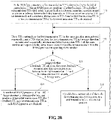
- the method for determining an HARQ feedback timing may include the following operations.
- a configuration of a currently-used TDD frame structure is determined; the configuration of the TDD frame structure includes uplink-downlink configurations and a special subframe configuration.
- a length of a currently-used TTI is determined.
- a relative position association between a data transmission TTI and a feedback TTI of the data transmission TTI in an HARQ process, or a relative position association between an initial transmission TTI, a feedback TTI and a retransmission TTI is determined.
- the length of the TTI can be understood as the duration of the TTI.
- the data may be transmitted successfully, then the retransmission TTI is not needed, or for an asynchronous HARQ, the TTI for retransmission may be scheduled by a base station, so it is only needed to determine a first relative position association between the data transmission TTI and the feedback TTI of the data transmission TTI.
- the HARQ is a synchronous HARQ
- the relative position association between the initial transmission TTI and the feedback TTI in the second relative position association between the initial transmission TTI, the feedback TTI and the retransmission TTI is the first relative position association.
- the relative position association between the data transmission TTI and the feedback TTI thereof in the HARQ process, or the relative position association between the initial transmission TTI, the feedback TTI and the retransmission TTI may be obtained by determining the position of the initial transmission TTI in each HARQ process, and according to a preset feedback retransmission time association, selecting the feedback TTI and the retransmission TTI in the HARQ process from the TDD frame structure.
- One TTI may transmit data of no more than one HARQ process.
- the preset feedback retransmission time association is that the interval between the feedback TTI and the initial transmission TTI is greater than a first threshold, and the interval between the feedback TTI and the retransmission TTI is greater than a second threshold.
- operation 13 may specifically include the following actions.
- a first transmission TTI is taken as the initial transmission TTI in an HARQ process, the positions of a first feedback TTI and a first retransmission TTI which satisfy the preset feedback retransmission time association and minimize the interval between the initial transmission TTI and the retransmission TTI are determined, and the number n of the transmission TTIs from the first transmission TTI to the previous transmission TTI of the first retransmission TTI is determined.
- the preset feedback retransmission time association is that the interval between the feedback TTI and the initial transmission TTI is greater than the first threshold, and the interval between the feedback TTI and the retransmission TTI is greater than the second threshold.
- the transmission TTI is an uplink transmission TTI or a downlink transmission TTI.
- the first threshold and the second threshold may usually be set according to a data transmission delay, time of processing the data by equipment and other factors.
- the first threshold and the second threshold may usually be the length of time of 3 or 4 TTIs.
- the n TTIs starting from the first transmission TTI in the same direction are numbered sequentially, the same direction means that both the n TTIs and the first transmission TTI are downlink transmissions or uplink transmissions, and the n TTIs starting from the first retransmission TTI in the same direction are numbered sequentially; the two transmission TTIs with the same number are the initial transmission TTI and the retransmission TTI respectively in the HARQ process corresponding to the number.
- the number of the transmission TTI may be regarded as the number of the HARQ process.
- the two transmission TTIs with the same number are the initial transmission TTI and the retransmission TTI respectively in the same HARQ process.
- the transmission TTIs with different numbers are the transmission TTIs in the different HARQ processes.
- all the transmission TTIs starting from the first transmission TTI in the same direction are numbered sequentially. For example, by taking that the direction of the transmission TTI is the downlink direction, all the downlink transmission TTIs starting from the first transmission TTI are numbered, until all of n transmission TTIs are numbered. Similarly, all the transmission TTIs starting from the first retransmission TTI in the same direction are numbered sequentially. For example, by taking that the direction of the transmission TTI is the downlink direction, all the downlink transmission TTIs starting from the first retransmission TTI are numbered, until all of the n transmission TTIs are numbered.
- the start numbers of the above two numbering processes may be 0 or 1, and may also be other numbers. The start numbers of the two numbering processes should be the same, so as to ensure that the transmission TTIs in the same process have the same number.
- the number of the HARQ processes of the TDD frame structure is determined to be n, and the relative position association between the data transmission TTI and the feedback TTI of the data transmission TTI in each HARQ process, or the relative position association between the initial transmission TTI, the feedback TTI and the retransmission TTI is obtained.
- a radio frame of 10ms includes ten subframes of 1ms, and each subframe may include multiple TTIs.
- the embodiment may number sequentially in each radio frame all the TTIs included in the radio frame, and the TTIs in all radio frames are numbered circularly, then the relative position association between the feedback TTI and the initial transmission TTI is a TTI interval between the feedback TTI and the initial transmission TTI.
- the embodiment may number sequentially in each subframe all the TTIs included in the subframe, and the TTIs in all subframes are numbered circularly, then the relative position association between the feedback TTI and the initial transmission TTI is a subframe interval between the feedback TTI and the initial transmission TTI, and the numbers of the feedback TTI and the initial transmission TTI in the subframes they belong to.
- the embodiments of the invention may provide the corresponding HARQ feedback timings for the configurations of the frame structure with different lengths of the TTI, thereby providing a support for the low-delay transmission. Moreover, the embodiments of the invention may also carry the HARQ feedbacks on all the feedback TTIs as evenly as possible.
- an optional position of the feedback TTI, which is between the initial transmission TTI and the retransmission TTI in the HARQ process and satisfies the preset feedback retransmission time association, in the HARQ process may be determined according to the positions of the initial transmission TTI and the retransmission TTI in the same HARQ process; then, according to the positions of the initial transmission TTI and the retransmission TTI in each HARQ process, and the optional position of the feedback TTI, the relative position association between the data transmission TTI and the feedback TTI thereof in each HARQ process, or the relative position association between the initial transmission TTI, the feedback TTI and the retransmission TTI is obtained.
- the positions of the initial transmission TTI and the retransmission TTI in the HARQ process may be directly determined.
- any optional position of the feedback TTI which is between the initial transmission TTI and the retransmission TTI in the HARQ process and satisfies the preset feedback retransmission time association may be taken as the feedback TTI of the HARQ process, so that the position of the feedback TTI in the HARQ process is obtained, and the relative position association between the feedback TTI and the initial transmission TTI is output.
- the feedback TTI and the retransmission TTI is obtained according to the positions of the initial transmission TTI and the retransmission TTI in each HARQ process, and the optional position of the feedback TTI, it is feasible to first determine the optional position of the feedback TTI in each HARQ process; then, when it is needed to perform HARQ feedbacks of y HARQ processes on x optional positions, the HARQ feedbacks of the y HARQ processes are distributed evenly on the x optional positions, the number of the HARQ processes fed back on each optional position is z or z+1, and the position of the feedback TTI in each HARQ process is obtained, the z is obtained
- the embodiments of the invention may also distribute the HARQ feedbacks of the y HARQ processes evenly on the x optional positions based on at least one of a first constraint condition or a second constraint condition.
- the first constraint condition is that: when the time of initial transmission of a first HARQ process is earlier than the time of initial transmission of a second HARQ process, the HARQ feedback of the initial transmission of the first HARQ process is not later than the HARQ feedback of the initial transmission of the second HARQ process, the second HARQ process and the first HARQ process are different processes.
- the second constraint condition is that: when a transmission TTI in the first HARQ process and a transmission TTI in a third HARQ process are at the same position in different downlink-to-uplink switch-point periodicities, the HARQ feedback of a transmission TTI in the first HARQ process and the HARQ feedback of a transmission TTI in the third HARQ process are at another same position in the different downlink-to-uplink switch-point periodicities.
- the third HARQ process and the first HARQ process are the same processes or different processes.
- the transmission TTI in the first HARQ process may be the initial transmission TTI or the retransmission TTI; similarly, the transmission TTI in the third HARQ process may also be the initial transmission TTI or the retransmission TTI.
- the downlink-to-uplink switch-point periodicity may refer to the following description.
- each smallest square represents a TTI
- each radio frame includes 20 TTIs numbered from 0-19.
- " ⁇ n" represents the downlink HARQ process n
- " ⁇ n” represents the uplink HARQ feedback of the downlink HARQ process n
- “ ⁇ n” represents an optional TTI for transmitting the uplink HARQ feedback of the downlink HARQ process n.
- FIG. 12 is a schematic diagram of an HARQ feedback timing, which is obtained according to the second constraint condition, of the TTI whose length is 0.5ms in the case of TDD uplink-downlink configuration 2.
- the downlink-to-uplink switch-point periodicity of the TDD uplink-downlink configuration 2 is 5ms, and each downlink-to-uplink switch-point periodicity includes ten TTIs.
- the HARQ process 0 is in the first TTI of the first downlink-to-uplink switch-point periodicity
- the HARQ process 7 is in the first TTI of the second downlink-to-uplink switch-point periodicity, that is, a transmission TTI in the HARQ process 0 and a transmission TTI in the HARQ process 7 are at the same position in the different downlink-to-uplink switch-point periodicities, then their feedback TTIs should also be at another same position in the different downlink-to-uplink switch-point periodicities.
- the position of the feedback TTI of the first TTI of the HARQ process 0 in the first downlink-to-uplink switch-point periodicity is the fifth TTI of the first downlink-to-uplink switch-point periodicity
- the position of the feedback TTI of the first TTI of the HARQ process 7 in the second downlink-to-uplink switch-point periodicity is the fifth TTI of the second downlink-to-uplink switch-point periodicity.
- the HARQ process 1 and the HARQ process 8 also satisfy the above constraint condition
- the HARQ process 2 and the HARQ process 9 also satisfy the above constraint condition.
- each smallest square represents a TTI
- each radio frame includes 20 TTIs numbered from 0-19.
- " ⁇ n" represents the downlink HARQ process n
- " ⁇ n” represents the uplink HARQ feedback of the downlink HARQ process n
- “ ⁇ n” represents the optional TTI for transmitting the uplink HARQ feedback of the downlink HARQ process n.
- the HARQ feedback of eight downlink HARQ processes numbered from 2 to 9 needs to be performed on three uplink TTIs numbered from 13 to 15; on the premise of satisfying the preset feedback retransmission time association, distribution is performed according to the principle of even distribution. That is, each of two TTIs needs to carry three feedbacks, and another one TTI carries two feedbacks, so a distribution way is obtained. As illustrated in FIG. 11 , the HARQ feedback of eight downlink HARQ processes numbered from 2 to 9 needs to be performed on three uplink TTIs numbered from 13 to 15; on the premise of satisfying the preset feedback retransmission time association, distribution is performed according to the principle of even distribution. That is, each of two TTIs needs to carry three feedbacks, and another one TTI carries two feedbacks, so a distribution way is obtained. As illustrated in FIG.
- the average delay of HARQ feedback may be the shortest by allocating HARQ feedbacks of the processes 2 to 4 on the TTI 13, distributing HARQ feedbacks of the processes 5 to 7 on the TTI 14, and distributing HARQ feedbacks of the processes 8 and 9 on the TTI 15 under the condition of distributing the HARQ feedbacks on the continuous uplink TTIs as evenly as possible.
- both the first threshold and the second threshold in the preset feedback retransmission time association are four TTIs.
- the downlink-to-uplink switch-point periodicity is 5ms, that is, each radio frame of 10ms includes two downlink-to-uplink switch-point periodicities;
- the downlink-to-uplink switch-point periodicity is 10ms, that is, each radio frame of 10ms includes one downlink-to-uplink switch-point periodicity.
- the 3GPP TS 36.211 also defines special subframe configurations 0-9. Based on the special subframe configurations 0-9, the embodiments of the invention add a special subframe configuration in which the ratio of DwPTS to GP to UpPTS is 6:2:6.
- the new special subframe configuration is called the special subframe configuration 10, that is, the ratio of DwPTS to GP to UpPTS of the special subframe configuration 10 is 6:2:6.
- the embodiments of the invention may be applied to a variety of newly-defined TDD frame structures.
- the embodiments of the invention provide three TDD frame structures not defined in the existing standards, and for facilitating description, they are called the new uplink-downlink configurations 1-3, as illustrated in Table 1.
- Table 1 illustrates a radio frame structure of 10ms of each configuration.
- the radio frames of these configurations are also 10ms, and include ten subframes of 1ms.
- their downlink-to-uplink switch-point periodicities are 5ms, that is, each radio frame of 10ms includes two downlink-to-uplink switch-point periodicities.
- its downlink-to-uplink switch-point periodicity is 10ms, that is, each radio frame of 10ms includes one downlink-to-uplink switch-point periodicity.
- the radio frame structure of the new uplink-downlink configuration 1 replaces subframes 3, 4, 8 and 9 in the LTE TDD uplink-downlink configuration 2 with the first bidirectional subframe in which a ratio of downlink to GP to uplink is 7:1:6, and the ratio of DwPTS to GP to UpPTS is 9:1:4.
- the radio frame structure of the new uplink-downlink configuration 2 replaces subframes 3, 4, 7, 8 and 9 in the LTE TDD uplink-downlink configuration 2 with the second bidirectional subframe in which a ratio of downlink to GP to uplink is 11:1:2, and the ratio of DwPTS to GP to UpPTS is 9:1:4.
- the radio frame structure of the new uplink-downlink configuration 3 replaces downlink subframes 3, 4, 8 and 9 in the LTE TDD uplink-downlink configuration 2 with the third bidirectional subframe in which ratio of downlink to GP to uplink is 6:2:6, and the ratio of DwPTS to GP to UpPTS is 6:2:6.
- the embodiments of the invention may also include the following operation.
- each subframe of the TDD frame structure is divided into multiple TTIs, and the transmission TTI and the feedback TTI in each TTI are determined, the transmission directions of the feedback TTI and the transmission TTI are opposite, and the transmission TTI is the uplink transmission TTI or the downlink transmission TTI.
- all the transmission TTIs are the TTIs which have the same transmission direction and may be used for data transmission.
- a bidirectional TTI including the uplink transmission and the downlink transmission its transmission direction may be determined according to the length of time of the uplink transmission or the downlink transmission and a preset system condition (for example, the system may define, aiming at each bidirectional TTI, whether it may be used for the uplink or downlink transmission).
- Any frame structure in the LTE TDD uplink-downlink configurations 0-6 may adopt any special subframe ratio in the special subframe configurations 0-10.
- each subframe of the TDD frame structure is divided into multiple TTIs.
- each normal subframe is divided into two TTIs, and the transmission direction of the TTI in each normal subframe is as same as the transmission direction of the normal subframe.
- a special subframe is divided into two TTIs.
- the ratios of DwPTS to GP to UpPTS in the two TTIs of the special subframe are respectively:
- the UpPTS of the special subframe When the UpPTS of the special subframe is not allowed to transmit an uplink feedback, in the special subframe configurations 0, 5, 9 and 10, the first TTI in the two TTIs of the special subframe is used for the downlink transmission, and the second TTI is not used for data transmission; and in the special subframe configurations 1, 2, 3, 4, 6, 7 and 8, both the two TTIs of the special subframe are used for the downlink transmission.
- the UpPTS of the special subframe When the UpPTS of the special subframe is allowed to transmit the uplink feedback, in the special subframe configurations 0, 5, 9 and 10, the first TTI in the two TTIs of the special subframe is used for the downlink transmission, and the second TTI is used for the uplink transmission; and in the special subframe configurations 1, 2, 3, 4, 6, 7 and 8, the first TTI in the two TTIs of the special subframe is used for the downlink transmission, and the second TTI is used for at least one of the uplink transmission or the downlink transmission.
- each subframe of the TDD frame structure is divided into multiple TTIs.
- each time slot of each normal subframe is divided into two TTIs whose lengths are respectively four OFDM symbols and three OFDM symbols; the transmission direction of the TTIs in each normal subframe is as same as the transmission direction of the normal subframe.
- the special subframe is divided into four TTIs whose lengths are respectively four OFDM symbols, three OFDM symbols, four OFDM symbols and three OFDM symbols.
- the ratios of DwPTS to GP to UpPTS in the four TTIs of the special subframe are respectively:
- each subframe of the TDD frame structure is divided into multiple TTIs.
- each normal subframe is divided into seven TTIs; the transmission direction of the TTIs in each normal subframe is as same as the transmission direction of the normal subframe.
- the special subframe is divided into seven TTIs.
- the ratios of DwPTS to GP to UpPTS in the seven TTIs of the special subframe are respectively:
- the TTIs numbered from 1 to 2 in the seven TTIs of the special subframe are used for the downlink transmission, and the TTIs numbered from 3 to 6 are not used for data transmission, and the seventh TTI is used for the uplink transmission.
- the TTIs numbered from 1 to 5 in the seven TTIs of the special subframe are used for the downlink transmission, the sixth TTI is not used for data transmission, and the seventh TTI is used for the uplink transmission.
- the TTIs numbered from 1 to 6 in the seven TTIs of the special subframe are used for the downlink transmission, and the seventh TTI is used for the uplink transmission.
- the TTIs numbered from 1 to 3 in the seven TTIs of the special subframe are used for the downlink transmission, the TTIs numbered from 4 to 6 are not used for data transmission, and the seventh TTI is used for the uplink transmission.
- the TTIs numbered from 1 to 3 in the seven TTIs of the special subframe are used for the downlink transmission, the fourth TTI is not used for data transmission, and the TTIs numbered from 5 to 7 are used for the uplink transmission.
- the TDD frame structure of the new uplink-downlink configurations 1-3 may also adopt the TTIs with other lengths, which will not be covered for saving space.
- the radio frame structure of the new uplink-downlink configuration 1 includes ten subframes of 1ms, which are respectively downlink subframe, special subframe, uplink subframe, first bidirectional subframe, first bidirectional subframe, downlink subframe, special subframe, uplink subframe, first bidirectional subframe and first bidirectional subframe.
- the ratio of downlink to GP to uplink in the first bidirectional subframe is 7:1:6, and the ratio of DwPTS to GP to UpPTS in the special subframe is 9:1:4.
- each subframe of the TDD frame structure is divided into multiple TTIs.
- each subframe is divided into seven TTIs, the transmission direction of the TTI in the uplink subframe or the downlink subframe is as same as the transmission direction of the subframe the TTI belongs to.
- the ratios of DwPTS to GP to UpPTS in the seven TTIs of the first bidirectional subframe are respectively 2:0:0, 2:0:0, 2:0:0, 1:1:0, 0:0:2, 0:0:2 and 0:0:2; the TTIs numbered from 1 to 4 in the first bidirectional subframe are used for the downlink transmission, and the TTIs numbered from 5 to 7 in the first bidirectional subframe are used for the uplink transmission.
- the ratios of DwPTS to GP to UpPTS in the seven TTIs of the special subframe are respectively 2:0:0, 2:0:0, 2:0:0, 2:0:0, 1:1:0, 0:0:2 and 0:0:2; the TTIs numbered from 1 to 5 in the special subframe are used for the downlink transmission, and the TTIs numbered from 6 to 7 in the special subframe are used for the uplink transmission.
- the radio frame structure of the new uplink-downlink configuration 2 includes ten subframes of 1ms, which are respectively downlink subframe, special subframe, uplink subframe, second bidirectional subframe, second bidirectional subframe, downlink subframe, special subframe, second bidirectional subframe, second bidirectional subframe and second bidirectional subframe.
- the ratio of downlink to GP to uplink in the second bidirectional subframe is 11:1:2, and the ratio of DwPTS to GP to UpPTS in the special subframe is 9:1:4.
- each subframe of the TDD frame structure is divided into multiple TTIs.
- each subframe is divided into seven TTIs, the transmission direction of the TTI in the uplink subframe or the downlink subframe is as same as the transmission direction of the subframe the TTI belongs to.
- the ratios of DwPTS to GP to UpPTS in the seven TTIs of the second bidirectional subframe are respectively 2:0:0, 2:0:0, 2:0:0, 2:0:0, 2:0:0, 1:1:0 and 0:0:2; the TTIs numbered from 1 to 6 in the second bidirectional subframe are used for the downlink transmission, and the seventh TTI is used for the uplink transmission.
- the ratios of DwPTS to GP to UpPTS in the seven TTIs of the special subframe are respectively 2:0:0, 2:0:0, 2:0:0, 2:0:0, 1:1:0, 0:0:2 and 0:0:2.
- the TTIs numbered from 1 to 5 in the special subframe are used for the downlink transmission, and the TTIs numbered from 6 to 7 are used for the uplink transmission.
- the radio frame structure of the new uplink-downlink configuration 3 includes ten subframes of 1ms, which are respectively downlink subframe, special subframe, uplink subframe, third bidirectional subframe, third bidirectional subframe, downlink subframe, special subframe, uplink subframe, third bidirectional subframe and third bidirectional subframe.
- the ratio of downlink to GP to uplink in the third bidirectional subframe is 6:2:6, and the ratio of DwPTS to GP to UpPTS in the special subframe is 6:2:6.
- each subframe of the TDD frame structure is divided into multiple TTIs.
- each subframe is divided into seven TTIs, the transmission direction of the TTI in the uplink subframe or the downlink subframe is as same as the transmission direction of the subframe the TTI belongs to.
- the ratios of DwPTS to GP to UpPTS in the seven TTIs of the third bidirectional subframe are respectively 2:0:0, 2:0:0, 2:0:0, 0:2:0, 0:0:2, 0:0:2 and 0:0:2; the TTIs numbered from 1 to 3 in the third bidirectional subframe are used for the downlink transmission, the fourth TTI is not used for data transmission, and the TTIs numbered from 5 to 7 are used for the uplink transmission.
- the ratios of DwPTS to GP to UpPTS in the seven TTIs of the special subframe are respectively 2:0:0, 2:0:0, 2:0:0, 0:2:0, 0:0:2, 0:0:2 and 0:0:2; the TTIs numbered from 1 to 3 in the special subframe are used for the downlink transmission, the fourth TTI is not used for data transmission, and the TTIs numbered from 5 to 7 are used for the uplink transmission.
- a device for determining an HARQ feedback timing includes a configuration determining unit 21, a TTI determining unit 22 and a position determining unit 23.
- the configuration determining unit 21 is configured to determine a configuration of the currently-used TDD frame structure, and the configuration of the TDD frame structure includes the uplink-downlink configurations and a special subframe configuration.
- the TTI determining unit 22 is configured to determine a length of the currently-used TTI.
- the position determining unit 23 is configured to determine, according to the configuration of the TDD frame structure and the length of the TTI, a relative position association between the data transmission TTI and the feedback TTI of the data transmission TTI in the HARQ process, or a relative position association between an initial transmission TTI, a feedback TTI and a retransmission TTI.
- the position determining unit 23 is configured to determine the position of the initial transmission TTI in each HARQ process, and according to the preset feedback retransmission time association, select the feedback TTI and the retransmission TTI in the HARQ process from the TDD frame structure, and obtain the relative position association between the data transmission TTI and the feedback TTI thereof in the HARQ process, or the relative position association between the initial transmission TTI, the feedback TTI and the retransmission TTI.
- Data of no more than one HARQ process is transmitted in one TTI.
- the preset feedback retransmission time association is that the interval between the feedback TTI and the initial transmission TTI is greater than the first threshold, and the interval between the feedback TTI and the retransmission TTI is greater than the second threshold.
- the position determining unit 23 includes an initial processing unit 231, a numbering unit 232, a timing determining unit 233, and a loop control unit 234.
- the initial processing unit 231 is configured to, in the TDD frame structure, take the first transmission TTI as the initial transmission TTI in an HARQ process, determine the positions of the first feedback TTI and the first retransmission TTI which satisfy the preset feedback retransmission time association and minimize the interval between the initial transmission TTI and the retransmission TTI, and determine the number n of the transmission TTIs from the first transmission TTI to the previous transmission TTI of the first retransmission TTI.
- the preset feedback retransmission time association is that the interval between the feedback TTI and the initial transmission TTI is greater than the first threshold, and the interval between the feedback TTI and the retransmission TTI is greater than the second threshold.
- the transmission TTI is the uplink transmission TTI or the downlink transmission TTI.
- the numbering unit 232 is configured to number sequentially the n TTIs starting from the first transmission TTI in the same transmission direction, and number sequentially the n TTIs starting from the first retransmission TTI in the same transmission direction; the two transmission TTIs with the same number are the initial transmission TTI and the retransmission TTI respectively in the HARQ process corresponding to the number; judge whether there is a feedback TTI satisfying the preset feedback retransmission time association between the initial transmission TTI and the retransmission TTI in each HARQ process.
- the timing determining unit 233 is configured to, when the judging unit determines that there is a feedback TTI satisfying the preset feedback retransmission time association between the initial transmission TTI and the retransmission TTI in each HARQ process, determine the number of the HARQ processes of the TDD frame structure to be n, and obtain the relative position association between the data transmission TTI and the feedback TTI of the data transmission TTI in the HARQ process, or the relative position association between the initial transmission TTI, the feedback TTI and the retransmission TTI.
- the loop control unit 234 is configured to, when the judging unit determines that there is not a feedback TTI satisfying the preset feedback retransmission time association between the initial transmission TTI and the retransmission TTI in any one HARQ process, add 1 to the current value of the n, move the first retransmission TTI to the next transmission TTI of the current position in the same transmission direction, and trigger the judging unit.
- the timing determining unit includes an optional position obtaining unit and an obtaining unit.
- the optional position obtaining unit is configured to determine the optional position of the feedback TTI, which is between the initial transmission TTI and the retransmission TTI in the HARQ process and satisfies the preset feedback retransmission time association, in the HARQ process according to the positions of the initial transmission TTI and the retransmission TTI in the same HARQ process.
- the obtaining unit is configured to obtain the relative position association between the data transmission TTI and the feedback TTI thereof in each HARQ process, or the relative position association between the initial transmission TTI, the feedback TTI and the retransmission TTI according to the positions of the initial transmission TTI and the retransmission TTI in each HARQ process, and the optional position of the feedback TTI.
- the obtaining unit includes a first determining unit, a distributing unit, and an outputting unit.
- the first determining unit is configured to determine the optional position of the feedback TTI in each HARQ process.
- the distributing unit is configured to, when it is needed to perform the HARQ feedbacks of y HARQ processes on the x optional positions, distribute the HARQ feedbacks of the y HARQ processes evenly on the x optional positions, the number of the HARQ processes fed back on each optional position is z or z+1, and obtain the position of the feedback TTI in each HARQ process; the z is equal to ⁇ y x ⁇ .
- the outputting unit is configured to output the relative position association between the data transmission TTI and the feedback TTI thereof in each HARQ process, or the relative position association between the initial transmission TTI, the feedback TTI and the retransmission TTI according to the positions of the initial transmission TTI, the feedback TTI and the retransmission TTI in each HARQ process.
- the distributing unit is configured to, distribute the HARQ feedbacks of the y HARQ processes evenly on the x optional positions based on at least one of the first constraint condition or the second constraint condition.
- the first constraint condition is that: when the time of initial transmission of a first HARQ process is earlier than the time of initial transmission of a second HARQ process, the HARQ feedback of the initial transmission of the first HARQ process is not later than the HARQ feedback of the initial transmission of the second HARQ process; the second HARQ process and the first HARQ process are different processes.
- the second constraint condition is that: when a transmission TTI in the first HARQ process and a transmission TTI in the third HARQ process are at the same position in different downlink-to-uplink switch-point periodicities, the HARQ feedback of a transmission TTI in the first HARQ process and the HARQ feedback of a transmission TTI in the third HARQ process are at another same position in the different downlink-to-uplink switch-point periodicities.
- the third HARQ process and the first HARQ process are the same processes or different processes.
- the timing determining unit is specifically configured to determines any one of feedback TTIs, which is between the initial transmission TTI and the retransmission TTI in each HARQ process and satisfies the preset feedback retransmission time association to be the feedback TTI of the HARQ process, obtain the position of the feedback TTI in the HARQ process, and output the relative position association between the feedback TTI and the initial transmission TTI.
- the relative position association between the feedback TTI and the initial transmission TTI is the TTI interval between the feedback TTI and the initial transmission TTI.
- the relative position association between the feedback TTI and the initial transmission TTI is the subframe interval between the feedback TTI and the initial transmission TTI, and the numbers of the feedback TTI and the initial transmission TTI in the subframes they belong to.
- the above device further includes a dividing unit (not illustrasted in FIG. 3 ).
- the dividing unit is configured to determine the type of the TDD frame structure and the special subframe configuration adopted by the special subframe in the TDD frame structure, divide each subframe of the TDD frame structure into multiple TTIs according to the predetermined length of the TTI, and determine the transmission TTI and the feedback TTI in each TTI.
- the transmission directions of the feedback TTI and the transmission TTI are opposite, and the transmission TTI is the uplink transmission TTI or the downlink transmission TTI.
- the TDD frame structure is one of the following frame structures: the LTE TDD uplink-downlink configurations 0-6 defined in the 3GPP TS 36.211, or the new uplink-downlink configurations 1-3.
- the special subframe configurations include the special subframe configurations 0-9 defined in the 3GPP TS 36.211 and the new special subframe configuration 10.
- the ratio of DwPTS to GP to UpPTS in the special subframe configuration 10 is 6:2:6.
- the length of the TTI may be 0.5ms, four or three OFDM symbols, or two OFDM symbols.
- each smallest square represents a TTI
- “ ⁇ n” represents the downlink HARQ process n
- “ ⁇ n” represents the uplink HARQ feedback of the downlink HARQ process n
- “ ⁇ n” represents an optional feedback position for transmitting the uplink HARQ feedback of the downlink HARQ process n
- " ⁇ ” represents the special subframe
- " ⁇ ” represents the uplink direction
- “ ⁇ ” represents the downlink direction
- a:b:c in the TTI represents the ratio of DwPTS to GP to UpPTS.
- Example 1 the TDD uplink-downlink configuration 0
- the feedback timing determined according to the method of the embodiments of the invention when the TDD uplink-downlink configuration is 0 (corresponding to a TDD ratio DSUUUDSUUU) and the lengths of the TTIs are different is introduced below.
- the TTIs in one radio frame are as illustrated in FIG. 4.
- FIG. 4 illustrates the situation of normal CP, and the TTIs in the radio frame are numbered sequentially to be 0-19.
- the numbers of the TTIs in each subframe are 0-1.
- FIG. 4 illustrates the direction of each TTI in the special subframe configurations 0-9 and the ratio of DwPTS to GP to UpPTS in the special subframe.
- situation 1 it is set that the UpPTS in the special subframe may not transmit HARQ feedback information of the PDSCH; in situation 2, it is set that the UpPTS in the special subframe may transmit the HARQ feedback information of the PDSCH.
- the special subframe configurations may also divided into two categories.
- One category is the special subframe configurations 0, 5, 9 and 10, which are set to not perform the downlink transmission in the TTI 3; another is the special subframe configurations 1, 2, 3, 4, 6, 7 and 8, which are set to perform the downlink transmission in the TTI 3.
- the HARQ feedback timing of a PDSCH transmission or a PDCCH/EPDCCH indicating an SPS release is as illustrated in FIG. 5A and FIG. 5B .
- an RTT is ten TTIs, namely 5ms.
- the HARQ feedback of the PDSCH or the PDCCH/EPDCCH indicating the SPS release transmitted in the downlink TTI 0 is in the TTI 4;
- FIG. 5A and FIG. 5B respectively correspond to different TTI numbering manners.
- FIG. 5A and FIG. 5B are the downlink HARQ process and the feedback timing of the corresponding TTI of 0.5ms in the TDD uplink-downlink configuration 0 and the special subframe configurations 0, 5, 9 and 10.
- the TTIs are numbered sequentially in the radio frame; in FIG. 5B , the TTIs are numbered sequentially in the subframe.
- the UE when UE detects, in the TTI n-k, k ⁇ K', the PDSCH transmission or the PDCCH/EPDCCH indicating the downlink SPS release, and a corresponding HARQ-ACK response for the PDSCH transmission or the PDCCH/EPDCCH shall be provided, the UE transmits the HARQ-ACK response in the uplink TTI n.
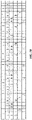
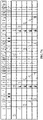
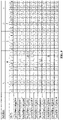
- the values of the K' corresponding to the different uplink TTIs are as illustrated in Table 2.
- k ⁇ K', K': ⁇ k 0 , k 1 , ..., K M'-1 ⁇ , M' represents the number of the downlink transmission TTIs fed back in a certain uplink feedback TTI according to the determined HARQ time association.
- the descriptions of all the following tables corresponding to the second numbering manner of the other configurations are as same as this; in order to describe simply and conveniently, the descriptions of some tables may be simplified, but the meanings of the parameters in the tables are unchanged.
- the downlink-to-uplink switch-point periodicity is 5ms
- the numbers of the TTIs may also only correspond to 5ms of the existing LTE, that is, the numbers are 0-9.
- the configuration of the TDD frame structure is the LTE TDD uplink-downlink configuration 0, and it is preset that the UpPTS of the special subframe may not transmit the HARQ feedback information of the PDSCH, if the special subframe configurations are 0, 5, 9 and 10, and the numbering manner of numbering sequentially the TTIs from 0 in the radio frame is adopted, the HARQ feedback of the PDSCH or the PDCCH/EPDCCH indicating the SPS release which is transmitted in the downlink TTI n-k, k ⁇ K', is performed in the uplink TTI n; all the values of the feedback timing K' are the values of K' corresponding to TTI 4, TTI 5, TTI 6, TTI 14, TTI 15 and TTI 16, namely 4.
- the special subframe configurations are 1, 2, 3, 4, 6, 7 and 8, and the numbering manner of numbering sequentially the TTIs from 0 in the radio frame is adopted, the HARQ feedback of the PDSCH or the PDCCH/EPDCCH indicating the SPS release which is transmitted in the downlink TTI n-k, k ⁇ K', is performed in the uplink TTI n; all the values of the feedback timing K' are the values of K' corresponding to TTI 4, TTI 5, TTI 6, TTI 7, TTI 14, TTI 15, TTI 16 and TTI 17, namely 4.
- the TTIs are numbered sequentially only in a subframe starting from 0, when the UE detects, in the TTI j of the subframe n-k, wherein k ⁇ K', and the values of j are from 0 to J-1, and the J is the number of TTIs in a subframe of 1ms, the PDSCH transmission or the PDCCH/EPDCCH indicating the downlink SPS release, and the corresponding HARQ-ACK response for the PDSCH transmission or the PDCCH/EPDCCH indicating the downlink SPS release shall be provided, the UE transmits the corresponding HARQ-ACK response in the TTI m of the uplink subframe n.
- the values of (k, j) corresponding to the in-subframe TTI m are as illustrated in Table 3.
- k ⁇ K', K': ⁇ k 0 , k 1 , ..., K M'-1 ⁇ , M' represents the number of the downlink subframes fed back in a certain uplink feedback TTI according to the determined HARQ time association.
- the second row represents the number n of the subframe
- the third row represents the number m of the TTI in the subframe.
- the configuration of the TDD frame structure is the LTE TDD uplink-downlink configuration 0, and it is preset that the UpPTS of the special subframe may not transmit the HARQ feedback information of the PDSCH, if the special subframe configurations are 0, 5, 9 and 10, and the TTIs are numbered sequentially in the radio frame starting from 0, when the HARQ feedback of the PDSCH or the PDCCH/EPDCCH indicating the SPS release corresponding to the TTI j in the subframe n-k is detected in the in-subframe TTI m of the uplink subframe n, a downlink association set (k, j) of the feedback timing is that: the (k, j) corresponding to the TTI 0 of the subframe 2 is (2, 0), the (k, j) corresponding to the TTI 1 of the subframe 2 is (2, 1), the (k, j) corresponding to the TTI 0 of the subframe 3
- the downlink association set (k, j) of the feedback timing is that: the (k, j) corresponding to the TTI 0 of the subframe 2 is (2, 0), the (k, j) corresponding to the TTI 1 of the subframe 2 is (2, 1), the (k, j) corresponding to the TTI 0 of the subframe 3 is (2, 0), the (k, j) corresponding to the TTI 1 of the subframe 3 is (2, 1), the (k, j) corresponding to the TTI 0 of the subframe 7 is (2, 0), the (k, j) corresponding to the TTI 1 of
- situation 1 it is set that the UpPTS in the special subframe may not transmit the HARQ feedback information of the PDSCH; in situation 2, it is set that the UpPTS in the special subframe may transmit the HARQ feedback information of the PDSCH.
- the UpPTS in the special subframe may not transmit the HARQ feedback information of the PDSCH.
- the HARQ feedback timing of the PDSCH transmission or the PDCCH/EPDCCH indicating the SPS release in situation 1 are slightly different due to the different special subframe ratios.
- FIG. 7A illustrates the downlink HARQ process and the timing.
- the downlink process is numbered in the figures. Compared with the feedback position of " ⁇ n", " ⁇ n" may obtain a lower feedback delay, but a feedback load of the same uplink subframe is heavy.
- FIG. 7A illustrates the situation where the shortened TTIs are numbered sequentially in a frame; and
- FIG. 7B illustrates the situation where the shortened TTIs are numbered sequentially only in each subframe.
- the length of the RTT is 5ms.
- the values of the K' corresponding to the different uplink TTIs are as illustrated in Table 4.
- the numbers of the TTIs may also only correspond to 5ms of the existing LTE, that is, the numbers are 0-19.
- the values in square bracket [] in Table 4 represent the HARQ timing defined according to the criterion of the maximum feedback delay, and the values outside of [] represent the HARQ timing defined according to the criterion of evenly feeding back on each uplink TTI.
- the UpPTS in the special subframe may transmit the HARQ feedback information of the PDSCH.
- the HARQ feedback may be faster.
- the TTI composed of the DwPTS OS and the GP it is assumed that the downlink process is transmitted by the TTI composed of the DwPTS OS and the GP, the TTI composed of the GP and the UpPTS OS may perform the uplink feedback; the downlink process and the feedback are as illustrated in FIG. 8A and FIG. 8B .
- the TTIs of FIG. 8B are numbered sequentially in each subframe.
- other special subframe configurations are not illustrated through the accompanying drawings.
- the values of the K' corresponding to the different uplink TTIs are as illustrated in Table 6.
- the numbers of the TTIs may also only correspond to 5ms of the existing LTE, that is, the numbers are 0-19.
- FIG. 9 illustrates the situation of normal CP.
- the downlink-to-uplink switch-point periodicity is 5ms for the configuration 0
- FIG. 9 illustrates the numbering situation of the former 5ms in the radio frame, that is, the TTIs are numbered to 34. If the TTIs are numbered sequentially in one radio frame, the maximum number of the TTI in one radio frame is 69. For the situation where the number of the subframe stays constant, and the TTIs are numbered only in the subframe, the numbers of the TTIs in each subframe are 0-6.
- the TTI composed of the downlink OS and the GP may transmit the downlink process
- the TTI composed of the GP and the uplink OS may feed back the ACK/NACK information of the downlink process.
- the special subframe configurations 0 and 5 have the same process and feedback timing
- the special subframe configurations 1, 2, 6 and 7 have the same downlink process and feedback timing
- the special subframe configurations 3, 4 and 8 have the same downlink process and feedback timing.
- the downlink processes and the feedback timings of other configurations 9 and 10 are different.
- the HARQ feedback timings of the PDSCH transmission or the PDCCH/EPDCCH indicating the SPS release in the case of different special time slot configurations are described below.
- the downlink-to-uplink switch-point periodicity of the TDD uplink-downlink configuration 0 is 5ms
- the downlink-to-uplink switch-point periodicity of the TDD uplink-downlink configuration 0 is 5ms
- the downlink-to-uplink switch-point periodicity of the TDD uplink-downlink configuration 0 is 5ms
- the numbers of the TTIs are numbered by taking the radio frame of 10ms as a unit, the numbers of the TTIs are 0-69.
- the numbers of the subframes are 0-9, and the numbers of the TTIs in each subframe are 0-6. Only the situations of the HARQ timings when the numbers of the TTIs are 0-34 and the numbers of the subframes are 0-4 are illustrated in the figure.
- the downlink HARQ process and the feedback timing are as illustrated in FIG. 10A and FIG. 10B .
- TTIs in FIG. 10A are numbered sequentially in one radio frame, and TTIs in FIG. 10B are numbered sequentially in each subframe.
- the downlink processes are numbered in the figures. Compared with the feedback position of " ⁇ n", " ⁇ n" may obtain a lower feedback delay, but a feedback load of the same uplink subframe is heavy.
- the length of the RTT is 5ms.
- the values of the K' corresponding to the different uplink TTIs are as illustrated in Table 8.
- the numbers of the TTIs may also only correspond to 5ms of the existing LTE, that is, the numbers are 0-34.
- the columns where the TTIs numbered from 0-9, 30-44 and 65-69 do not have a corresponding feedback relationship are omitted, and moreover, the TTI n and TTI n+35 having the same feedback timing are merged.
- the forms corresponding to the omitted numbers of the TTIs may be restored, and these merged numbers of the TTIs may be expanded.
- the other configurations later may also be omitted, which does not influence these relative relationships between the feedback TTIs and corresponding downlink transmissions thereof.
- Example 2 the TDD uplink-downlink configuration 1
- the number of (SC-) OFDM symbols included in one TTI is as same as that of one existing time slot, namely 7 (6 in the condition of extended CP).
- situation 1 it is set that the UpPTS in the special subframe may not transmit the HARQ feedback information of the PDSCH; in situation 2, it is set that the UpPTS in the special subframe may transmit the HARQ feedback information of the PDSCH.
- the special subframe configurations may also divided into two categories.
- One category is the special subframe configurations 0, 5, 9 and 10, which are set to not perform the downlink transmission in the TTI 3; another is the special subframe configurations 1, 2, 3, 4, 6, 7 and 8, which are set to perform the downlink transmission in the TTI 3.
- One category is the special subframe configurations 0, 5, 9 and 10, which are set to not perform the downlink transmission in the TTI 3; another is the special subframe configurations 1, 2, 3, 4, 6, 7 and 8, which are set to perform the downlink transmission in the TTI 3.
- the values of the K' corresponding to the different uplink TTIs are as illustrated in Table 10.
- the numbers of the TTIs may also only correspond to 5ms of the existing LTE, that is, the numbers are 0-9.
- the UpPTS in the special subframe may not transmit the HARQ feedback information of the PDSCH.
- the HARQ feedback timing of the PDSCH transmission or the PDCCH/EPDCCH indicating the SPS release in situation 1 are slightly different due to the different special subframe configuration ratios.
- the values of the K' corresponding to the different uplink TTIs are as illustrated in Table 12.
- the numbers of the TTIs may also only correspond to 5ms of the existing LTE, that is, the numbers are 0-19.
- the UpPTS in the special subframe may transmit the HARQ feedback information of the PDSCH.
- the UpPTS may transmit the HARQ feedback information of the corresponding downlink transmission, for some downlink processes, the HARQ feedback may be faster.
- the values of the K' corresponding to the different uplink TTIs are as illustrated in Table 14.
- the numbers of the TTIs may also only correspond to 5ms of the existing LTE, that is, the numbers are 0-19.
- the TTI whose length is two OSs that is, 14 OSs of one existing subframe are divided into seven TTIs.
- the situation of normal CP is described here for example.
- the downlink-to-uplink switch-point periodicity is 5ms for the uplink-downlink configuration 1
- the numbers of the TTIs in the former 5ms in the radio frame are 0-34
- the maximum number of the TTI in one radio frame is 69.
- the numbers of the TTIs in each subframe are 0-6.
- the TTI composed of the downlink OS and the GP may transmit the downlink process
- the TTI composed of the GP and the uplink OS may feed back the ACK/NACK information of the downlink process.
- the special subframe configurations 0 and 5 have the same process and feedback timing
- the special subframe configurations 1, 2, 6 and 7 have the same downlink process and feedback timing
- the special subframe configurations 3, 4 and 8 have the same downlink process and feedback timing.
- the downlink processes and the feedback timings of configuration 9 and configuration with the ratio of 6:2:6 are different.
- the HARQ feedback timings of the PDSCH transmission or the PDCCH/EPDCCH indicating the SPS release in the case of different special time slot configurations are described below.
- the downlink-to-uplink switch-point periodicity of the TDD uplink-downlink configuration 0 is 5ms
- the downlink-to-uplink switch-point periodicity of the TDD uplink-downlink configuration 0 is 5ms
- the numbers of the TTIs are 0-69.
- the numbers of the subframes are 0-9, and the numbers of the TTIs in each subframe are 0-6.
- the values of the K' corresponding to the different uplink TTIs are as illustrated in Table 16.
- the numbers of the TTIs may also only correspond to 5ms of the existing LTE, that is, the numbers are 0-34.
- "0/35" represents TTI 0 or TTI 35
- "1/36" represents TTI 1 or TTI 36
- the downlink-to-uplink switch-point periodicity is 5ms, and each period includes 35 TTIs, the TTIs with intervals of 35 TTIs among them have the similar feedback timing, and there are also similar representations in the following tables.
- Example 3 the TDD uplink-downlink configuration 2
- the number of (SC-) OFDM symbols included in one TTI is as same as that of one existing time slot, namely 7 (6 in the condition of extended CP). What is described here is the situation of normal CP. For the situation where the number of the subframe stays constant, and the TTIs are numbered only in the subframe, the numbers of the TTIs in each subframe are 0-1.
- situation 1 it is set that the UpPTS in the special subframe may not transmit HARQ feedback information of the PDSCH; in situation 2, it is set that the UpPTS in the special subframe may transmit the HARQ feedback information of the PDSCH.
- the special subframe configurations may also divided into two categories.
- One category is the special subframe configurations 0, 5, 9 and 10, which are set to not perform the downlink transmission in the second TTI; another is the special subframe configurations 1, 2, 3, 4, 6, 7 and 8, which are set to perform the downlink transmission in the second TTI.
- the RTT is 100 TTIs in which seven processes are transmitted, and the length of the RTT is about 7.143ms.
- the RTT is 15 TTIs, and the length of the RTT is about 7.5ms.
- the values of the K' corresponding to the different uplink TTIs are as illustrated in Table 18.
- the numbers of the TTIs may also only correspond to 5ms of the existing LTE, that is, the numbers of the TTIs are 0-9.
- situation 2 compared with situation 1, there will be one more subframe which may perform the uplink feedback, which is beneficial to reducing an RTT delay.
- special subframe configurations are 0, 5, 9 and 10, there are nine downlink processes in the HARQ feedback timing of the PDSCH transmission or the PDCCH/EPDCCH indicating the SPS release, and the length of the RTT is about 6.43ms.
- the RTT is 15 TTIs, and the length of the RTT is about 7.5ms.
- the values of the K' corresponding to the different uplink TTIs are as illustrated in Table 20.
- the numbers of the TTIs may also only correspond to 5ms of the existing LTE, that is, the numbers are 0-9.
- the corresponding values of (k, j) are as illustrated in Table 21.
- k ⁇ K', K': ⁇ k 0 , k 1 , ..., K M'-1 ⁇ , M' represents the number of the downlink subframes fed back in a certain uplink feedback TTI according to the determined HARQ time association.
- the length of one TTI is four OS symbols, and the length of another TTI is three OS symbols.
- the situation of normal CP is given here for example.
- the first TTI in a time slot may be four OSs, and the second TTI may be three OSs; or, the first TTI may be three OSs, and the second TTI may be four OSs.
- the numbers of the TTIs in each subframe are 0-3.
- situation 1 it is set that the UpPTS in the special subframe may not transmit HARQ feedback information of the PDSCH; in situation 2, it is set that the UpPTS in the special subframe may transmit the HARQ feedback information of the PDSCH.
- the HARQ feedback timing of the PDSCH transmission or the PDCCH/EPDCCH indicating the SPS release in situation 1 are slightly different due to the different special subframe configuration ratios.
- the TTI composed of the DwPTS OS and the GP transmits the downlink process, there are 15 downlink HARQ processes in the downlink processes and feedbacks, and the length of the RTT is 5ms.
- HARQ timings in this configuration are as same as that of the special subframe configurations 1, 2, 3, 6, 7 and 8. However, if it is assumed that the TTI whose ratio of DwPTS to GP to UpPTS is 1:1:1 in the special subframe configuration 4 may transmit the downlink process, there are 16 downlink HARQ processes in the downlink processes and HARQ timings, and the length of the RTT is 5ms.
- the values of the K' corresponding to the different uplink TTIs are as illustrated in Table 22.
- the numbers of the TTIs may also only correspond to 5ms of the existing LTE, that is, the numbers are 0-19.
- the UpPTS may transmit the HARQ feedback information corresponding to downlink transmission, for some downlink processes, the HARQ feedback may be faster.
- the special subframe configurations are analyzed below.
- the TTI composed of the DwPTS OS and the GP transmits the downlink process
- the TTI composed of the GP and the UpPTS OS may perform the uplink feedback
- the length of the RTT is 5ms.
- the TTI composed of the DwPTS OS and the GP transmits the downlink process
- the TTI composed of the GP and the UpPTS OS may perform the uplink feedback
- there are 15 downlink HARQ processes in the downlink processes and feedbacks and the length of the RTT is 5ms.
- the HARQ timings in the configuration are as same as that of the special subframe configurations 1, 2, 3, 6, 7 and 8.
- the TTI whose ratio of DwPTS to GP to UpPTS is 1:1:1 may transmit the downlink process
- one uplink SC-OFDM symbols of the TTI may perform the HARQ feedback of the downlink process, there are 16 downlink HARQ processes in the downlink processes and HARQ timings, and the length of the RTT is still 5ms.
- the TTI composed of the DwPTS OS and the GP transmits the downlink process
- the TTI composed of the GP and the UpPTS OS may perform the uplink feedback
- the length of the RTT is 5ms.
- the TTI composed of the DwPTS OS and the GP transmits the downlink process
- the TTI composed of the GP and the UpPTS OS may perform the uplink feedback
- the length of the RTT is 5ms.
- the values of the K' corresponding to the different uplink TTIs are as illustrated in Table 24.
- the numbers of the TTIs may also only correspond to 5ms of the existing LTE, that is, the numbers are 0-19.
- the TTI whose length is two OSs that is, 14 OSs of one existing subframe are divided into seven TTIs.
- the situation of normal CP is described here for example.
- the downlink-to-uplink switch-point periodicity is 5ms for the uplink-downlink configuration 2
- the TTIs in the former 5ms in the radio frame are numbered to 34. If the TTIs are numbered sequentially in one radio frame, the maximum number of the TTI in one radio frame is 69. For the situation where the number of the subframe stays constant, and the TTIs are numbered only in the subframe, the numbers of the TTIs in each subframe are 0-6.
- the TTI composed of the downlink OS and the GP may transmit the downlink process
- the TTI composed of the GP and the uplink OS may feed back the ACK/NACK information of the downlink process.
- the special subframe configurations 0 and 5 have the same process and feedback timing
- the special subframe configurations 1, 2, 6 and 7 have the same downlink process and feedback timing
- the special subframe configurations 3, 4 and 8 have the same downlink process and feedback timing.
- the downlink processes and the feedback timings of configuration 9 and confirmation with the ratio of 6:2:6 are different.
- the HARQ feedback timing of the PDSCH transmission or the PDCCH/EPDCCH indicating the SPS release in the case of different special time slot configurations are described below.
- the downlink-to-uplink switch-point periodicity of the TDD uplink-downlink configuration 2 is 5ms
- the numbers of the TTIs are 0-69.
- the numbers of the subframes are 0-9, and the numbers of the TTIs in each subframe are 0-6.
- the length of the RTT is 5ms.
- the values of the K' corresponding to the different uplink TTIs are as illustrated in Table 26.
- the numbers of the TTIs may also only correspond to 5ms of the existing LTE, that is, the numbers are 0-34.
- the TDD uplink-downlink configurations 3, 4, 5 and 6 it may be obtained by designing the downlink HARQ process correspondingly that in the case of the length of the TTI being 0.5ms, four/three OSs and two OSs, when the UE detects, in the TTI n-k, wherein k ⁇ K', the PDSCH transmission or the PDCCH/EPDCCH indicating the downlink SPS release and the corresponding HARQ-ACK response for the PDSCH transmission or the PDCCH/EPDCCH indicating the downlink SPS release shall be provided, the UE transmits the HARQ-ACK response in the uplink TTI n.
- the different uplink TTIs correspond to the different values of the K'.
- the situation where the TTIs are numbered sequentially in the radio frame is described; the situation where the TTIs are numbered in the subframe may be obtained according to the correspondences between the subframe and the number of the TTI.
- the values of the K' in the different TTIs are as illustrated in Table 30.
- the values of the K' in the different TTIs are as illustrated in Table 32.
- the HARQ feedback timings obtained by applying the method provided by the embodiments of the invention are given.
- the HARQ feedback of the PDSCH or the PDCCH/EPDCCH indicating the SPS release transmitted in the downlink TTI n-k, wherein k ⁇ K', is performed in the uplink TTI n.
- the values of the K' are as illustrated in Table 33.
- both the first threshold and the second threshold in the preset feedback retransmission time association are two TTIs
- an example of the HARQ time association in the case of the TDD uplink-downlink configuration 2 and the length of the TTI being 0.5ms is provided.
- the HARQ feedback of the PDSCH or the PDCCH/EPDCCH indicating the SPS release transmitted in the downlink TTI n-k, wherein k ⁇ K', is performed in the uplink TTI n.
- the values of the K' are as illustrated in Table 34 (situation 1) and Table 35 (situation 2).
- the embodiments of the invention also provide a piece of communication equipment, which includes a memory and a processor.
- the memory is configured to store a computer program.
- the processor is connected with the memory, and is configured to be able to execute the method for determining an HARQ feedback timing provided by any above technical solution by executing the computer program.
- the processors here may include: an Application Processor (AP), a Central Processing Unit (CPU), a Digital Signal Processor (DSP) or a Field Programmable Gate Array (FPGA).
- AP Application Processor
- CPU Central Processing Unit
- DSP Digital Signal Processor
- FPGA Field Programmable Gate Array
- the memory may include: a storage medium for storaging the computer program non-instantaneously.
- the communication equipment here may be the aforementioned base station.
- the processor is connected with the memory through a bus.
- the bus may include Integrated Circuit (IC) bus.
- the embodiments of the invention provide a computer storage medium, in which a computer executable instruction is stored.
- the computer executable instruction is used for executing the method for determining an HARQ feedback timing provided by any above embodiment.
- the storage media provided by the embodiments may be various types of storage media.
- the storage media may be a non-transitory storage media.
- the relative position association between the data transmission TTI and the feedback TTI of the data transmission TTI in the HARQ process, or the relative position association between the initial transmission TTI, the feedback TTI and the retransmission TTI is determined according to the length of the TTI.
- the number of the HARQ processes corresponding to diffenrt lengths of the TTI may be determined, and the HARQ feedback timings in these cases may be obtained, thereby providing a support for the low-delay transmission, and producing a positive effect in industry; and moreover, the technical soluitons provided by the invention may be implemented by inputting computer program instructions in base stations and terminals, so the technical soluitons have the characterisitcs of being easy to be implemented in industry.
- Table 1 New uplink-downlink configuration The number of subframes 0 D S U First bidirectional subframe First bidirectional subframe D S U First bidirectional subframe First bidirectional subframe 1 D S U Second bidirectional subframe Second bidirectional subframe D S Second bidirectional subframe First bidirectional subframe First bidirectional subframe 2 D S U Third bidirectional subframe Third bidirectional subframe Third bidirectional subframe Third bidirectional subframe Third bidirectional subframe Table 2
- Special subframe configurations 0, 5, 9 and 10 - - - - 4 4 4 4 - - - Special subframe configurations 1, 2, 3, 4, 6, 7 and 8 4 4 4 4 4 TDD uplink-downlink configuration 0 TTI n 10 11 12 13 14 15 16 17 18 19
Landscapes
- Engineering & Computer Science (AREA)
- Signal Processing (AREA)
- Computer Networks & Wireless Communication (AREA)
- Mobile Radio Communication Systems (AREA)
- Detection And Prevention Of Errors In Transmission (AREA)
- Time-Division Multiplex Systems (AREA)
Claims (4)
- Un procédé pour déterminer une synchronisation de rétroaction de demande de répétition automatique hybride, HARQ, comprenant :déterminer (11) une configuration d'une structure de trame duplex à répartition dans le temps, TDD, actuellement utilisée ;déterminer (12) une longueur d'un intervalle de temps de transmission, TTI, actuellement utilisé ; etdéterminer (13), selon la configuration de la structure de trame TDD et la longueur du TTI, une association de positions relatives entre un TTI de transmission de données et un TTI de rétroaction du TTI de transmission de données dans un processus HARQ, ou une association de positions relatives entre un TTI de transmission initial, un TTI de rétroaction et un TTI de retransmission dans un processus HARQ ;dans lequel, lorsque la longueur du TTI est de 0,5 ms, la configuration de la structure de trame TDD est une configuration de liaison montante-descendante 0 du LTE TDD,pour une configuration de sous-trame spéciale 0, 5, 9 ou 10, dans un cas où les TTI sont numérotés séquentiellement dans une trame radio à partir de 0, lors d'une détection d'une transmission PDSCH ou d'un canal de commande de liaison descendante physique, PDCCH/canal de commande de liaison descendante physique amélioré, EPDCCH, indiquant une libération de programmation semi-persistante de liaison descendante, SPS, dans TTI n-k, où k∈K', destinée à l'UE et d'une réponse HARQ-ACK pour la transmission PDSCH ou le PDCCH/EPDCCH indiquant que la libération SPS de liaison descendante doit être fournie, l'UE transmet la réponse HARQ-ACK dans le TTI de liaison montante n ; des valeurs de la K' correspondant à différents TTI de rétroaction comprennent : une valeur de K' correspondant au TTI 4, TTI 5, TTI 6, TTI 14, TTI 15 ou TTI 16 est {4} ;pour la configuration de sous-trame spéciale 1, 2, 3, 4, 6, 7 ou 8, dans un cas où les TTI sont numérotés séquentiellement dans la trame radio à partir de 0, lors de la détection de la transmission PDSCH ou du PDCCH/EPDCCH indiquant la libération SPS de liaison descendante dans le TTI n-k, où k∈K', destinée à l'UE et de la réponse HARQ-ACK pour la transmission PDSCH ou le PDCCH/EPDCCH indiquant que la libération SPS de liaison descendante doit être fournie, l'UE transmet la réponse HARQ-ACK dans le TTI de liaison montante n ; une valeur de la K' correspondant au TTI de rétroaction comprend : la K' correspondant au TTI 4, TTI 5, TTI 6, TTI 7, TTI 14, TTI 15, TTI 16 ou TTI 17 est {4} ; oudans lequel, lorsque la longueur du TTI est de 0,5 ms, la configuration de la structure de trame TDD est la configuration de liaison montante-descendante 1 du LTE TDD,pour une configuration de sous-trame spéciale 0, 5, 9 ou 10, dans un cas où les TTI sont numérotés séquentiellement dans une trame radio à partir de 0, lors d'une détection d'une transmission PDSCH ou d'un canal de commande de liaison descendante physique, PDCCH/canal de commande de liaison descendante physique amélioré, EPDCCH, indiquant une libération de programmation semi-persistante, SPS, de liaison descendante, dans TTI n-k, où k∈K', destinée à l'UE et d'une réponse HARQ-ACK pour la transmission PDSCH ou le PDCCH/EPDCCH indiquant que la libération SPS de liaison descendante doit être fournie, l'UE transmet la réponse HARQ-ACK dans le TTI de liaison montante n ; des valeurs de K' correspondant à différents TTI de rétroaction comprennent : une valeur de K' correspondant au TTI 4 ou TTI 14 est {6, 5}, une valeur de K' correspondant au TTI 5, TTI 6, TTI 7, TTI 15, TTI 16 ou TTI 17 est {5} ;pour une configuration de sous-trame spéciale 1, 2, 3, 4, 6, 7 ou 8, dans un cas où les TTI sont numérotés séquentiellement dans la trame radio à partir de 0, lors d'une détection de la transmission PDSCH ou du PDCCH/EPDCCH indiquant la libération de SPS de liaison descendante dans le TTI n-k, où k ∈ K', destinée à l'UE et la réponse HARQ-ACK pour la transmission PDSCH ou le PDCCH/EPDCCH indiquant que la libération SPS de liaison descendante doit être fournie, l'UE transmet la réponse HARQ-ACK dans le TTI de liaison montante n ; des valeurs de K' correspondant à différents TTI de rétroaction comprennent : une valeur de K' correspondant à TTI 4 ou TTI 14 est {6, 5}, une valeur de K' correspondant à TTI 5 ou TTI 15 est {5, 4}, une valeur de K' correspondant à TTI 6, TTI 7, TTI 16 ou TTI 17 est {4} ; oudans lequel, lorsque la longueur du TTI est de 0,5 ms, la configuration de la structure de trame TDD est la configuration de liaison montante-descendante 2 du LTE TDD,pour une configuration de sous-trame spéciale 0, 5, 9 ou 10, dans un cas où les TTI sont numérotés séquentiellement dans une trame radio à partir de 0, lors d'une détection d'une transmission PDSCH ou d'un canal de commande de liaison descendante physique, PDCCH/canal de commande de liaison descendante physique amélioré, EPDCCH, indiquant une libération de programmation semi-persistante, SPS, de liaison descendante dans TTI n-k, où k∈K', destinée à l'UE et d'une réponse HARQ-ACK pour la transmission PDSCH ou le PDCCH/EPDCCH indiquant que la libération SPS de liaison descendante doit être fournie, l'UE transmet la réponse HARQ-ACK dans le TTI de liaison montante n ; des valeurs de K' correspondant à différents TTI de rétroaction comprennent : une valeur de K' correspondant au TTI 4 ou TTI 14 est {12, 8, 7, 6}, une valeur de K' correspondant au TTI 5 ou TTI 15 est {6, 5, 4} ;pour une configuration de sous-trame spéciale 1, 2, 3, 4, 6, 7 ou 8, dans un cas où les TTI sont numérotés séquentiellement dans la trame radio à partir de 0, lors d'une détection de la transmission PDSCH ou du PDCCH/EPDCCH indiquant la libération SPS de liaison descendante dans le TTI n-k, où k∈K', destinée à l'UE et la réponse HARQ-ACK pour la transmission PDSCH ou le PDCCH/EPDCCH indiquant que la libération SPS de liaison descendante doit être fournie, l'UE transmet la réponse HARQ-ACK dans le TTI de liaison montante n ; des valeurs de K' correspondant à différents TTI de rétroaction comprennent : une valeur de K' correspondant au TTI 4 ou TTI 14 est {12, 11, 8, 7}, une valeur de K' correspondant au TTI 5 ou TTI 15 est {7, 6, 5, 4} ; oudans lequel, lorsque la longueur du TTI est de 0,5 ms, la configuration de la structure de trame TDD est la configuration de liaison montante-descendante 3 du LTE TDD,pour une configuration de sous-trame spéciale 0, 5, 9 ou 10, dans un cas où les TTI sont numérotés séquentiellement dans une trame radio à partir de 0, lors d'une détection d'une transmission PDSCH ou d'un canal de commande de liaison descendante physique, PDCCH/canal de commande de liaison descendante physique amélioré, EPDCCH , indiquant une libération de programmation semi-persistante, SPS, de liaison descendante, dans TTI n-k, où k∈K', destinée à l'UE et d'une réponse HARQ-ACK pour la transmission PDSCH ou le PDCCH/EPDCCH indiquant que la libération SPS de liaison descendante doit être fournie, l'UE transmet la réponse HARQ-ACK dans le TTI de liaison montante n ; des valeurs de K' correspondant aux différents TTI de rétroaction comprennent : une valeur de K' correspondant au TTI 4 est {14, 13, 12}, une valeur de K' correspondant au TTI 5 est {12, 11}, une valeur de K' correspondant au TTI 6 est {11, 10}, une valeur de K' correspondant au TTI 7 est {10, 9}, une valeur de K' correspondant au TTI 8 est {9, 8}, une valeur de K' correspondant au TTI 9 est {8, 7} ;pour une configuration de sous-trame spéciale 1, 2, 3, 4, 6, 7 ou 8, dans un cas où les TTI sont numérotés séquentiellement dans la trame radio à partir de 0, lors d'une détection de la transmission PDSCH ou du PDCCH/EPDCCH indiquant la libération SPS de liaison descendante dans le TTI n-k, où k∈ K', destinée à l'UE et de la réponse HARQ-ACK pour la transmission PDSCH ou le PDCCH/EPDCCH indiquant que la libération SPS de liaison descendante doit être fournie, l'UE transmet la réponse HARQ-ACK dans le TTI de liaison montante n ; des valeurs de K' correspondant à différents TTI de rétroaction comprennent : une valeur de K' correspondant au TTI 4 est {14, 13, 12}, une valeur de K' correspondant au TTI 5 est {12, 11, 10}, une valeur de K' correspondant au TTI 6 est {10, 9}, une valeur de K' correspondant au TTI 7 est {9, 8}, une valeur de K' correspondant au TTI 8 est {8, 7}, une valeur de K' correspondant au TTI 9 est {7, 6} ; oudans lequel, lorsque la longueur du TTI est de 0,5 ms, la configuration de la structure de trame TDD est la configuration de liaison montante-descendante 4 du LTE TDD,pour une configuration de sous-trame spéciale 0, 5, 9 ou 10, dans un cas où les TTI sont numérotés séquentiellement dans une trame radio à partir de 0, lors d'une détection d'une transmission PDSCH ou d'un canal de commande de liaison descendante physique, PDCCH/canal de commande de liaison descendante physique amélioré, EPDCCH, indiquant une libération de programmation semi-persistante, SPS, de liaison descendante, dans TTI n-k, où k∈K', destinée à l'UE et d'une réponse HARQ-ACK pour la transmission PDSCH ou le PDCCH/EPDCCH indiquant que la libération SPS de liaison descendante doit être fournie, l'UE transmet la réponse HARQ-ACK dans le TTI de liaison montante n ; des valeurs de K' correspondant à différents TTI de rétroaction comprennent : une valeur de K' correspondant au TTI 4 est {16, 15, 14, 13}, une valeur de K' correspondant au TTI 5 est {13, 12, 11, 10}, une valeur de K' correspondant au TTI 6 est {10, 9, 8, 7}, une valeur de K' correspondant au TTI 7 est {7, 6, 5} ;pour une configuration de sous-trame spéciale 1, 2, 3, 4, 6, 7 ou 8, dans un cas où les TTI sont numérotés séquentiellement dans la trame radio à partir de 0, lors d'une détection de la transmission PDSCH ou du PDCCH/EPDCCH indiquant la libération SPS de liaison descendante dans le TTI n-k, où k∈K', destinée à l'UE et de la réponse HARQ-ACK pour la transmission PDSCH ou le PDCCH/EPDCCH indiquant que la libération SPS de liaison descendante doit être fournie, l'UE transmet la réponse HARQ-ACK dans le TTI de liaison montante n ; des valeurs de K' correspondant à différents TTI de rétroaction comprennent : une valeur de K' correspondant au TTI 4 est {16, 15, 14, 13}, une valeur de K' correspondant au TTI 5 est {13, 12, 11, 10}, une valeur de K' correspondant au TTI 6 est {10, 9, 8, 7}, une valeur de K' correspondant au TTI 7 est {7, 6, 5, 4} ; oudans lequel, lorsque la longueur du TTI est de 0,5 ms, la configuration de la structure de trame TDD est la configuration liaison montante-descendante 5 du LTE TDD,pour une configuration de sous-trame spéciale 0, 5, 9 ou 10, dans le cas où les TTI sont numérotés séquentiellement dans une trame radio à partir de 0, lors d'une détection d'une transmission PDSCH ou d'un canal de commande de liaison descendante physique, PDCCH/canal de commande de liaison descendante physique amélioré, EPDCCH, indiquant une libération de programmation semi-persistante, SPS, de liaison descendante, dans TTI n-k, où k∈K', destinée à l'UE et d'une réponse HARQ-ACK pour la transmission PDSCH ou le PDCCH/EPDCCH indiquant que la libération SPS de liaison descendante doit être fournie, l'UE transmet la réponse HARQ-ACK dans le TTI de liaison montante n ; des valeurs de K' correspondant à différents TTI de rétroaction comprennent : une valeur de K' correspondant au TTI 4 est {22, 18, 17, 16, 15, 14, 13, 12, 11}, une valeur de K' correspondant au TTI 5 est {11, 10, 9, 8, 7, 6, 5, 4} ;pour une configuration de sous-trame spéciale 1, 2, 3, 4, 6, 7 ou 8, dans un cas où les TTI sont numérotés séquentiellement dans la trame radio à partir de 0, lors d'une détection de la transmission PDSCH ou du PDCCH/EPDCCH indiquant la libération SPS de liaison descendante dans le TTI n-k, où k ∈ K', destinée à l'UE et de la réponse HARQ-ACK pour la transmission PDSCH ou le PDCCH/EPDCCH indiquant que la libération SPS de liaison descendante doit être fournie, l'UE transmet la réponse HARQ-ACK dans le TTI de liaison montante n ; des valeurs de K' correspondant à différents TTI de rétroaction comprennent : une valeur de K' correspondant au TTI 4 est {22, 21, 18, 17, 16, 15, 14, 13, 12}, une valeur de K' correspondant au TTI 5 est {12, 11, 10, 9, 8, 7, 6, 5, 4} ; oudans lequel, lorsque la longueur du TTI est de 0,5 ms, la configuration de la structure de trame TDD est la configuration de liaison montante-descendante 6 du LTE TDD,pour une configuration de sous-trame spéciale 0, 5, 9 ou 10, dans un cas où les TTI sont numérotés séquentiellement dans une trame radio à partir de 0, lors d'une détection d'une transmission PDSCH ou d'un canal de commande de liaison descendante physique PDCCH/canal de commande de liaison descendante physique amélioré, EPDCCH, indiquant une libération de programmation semi-persistante, SPS, de liaison descendante dans TTI n-k, où k∈K', destinée à l'UE et d'une réponse HARQ-ACK pour la transmission PDSCH ou le PDCCH/EPDCCH indiquant que la libération SPS de liaison descendante doit être fournie, l'UE transmet la réponse HARQ-ACK dans le TTI de liaison montante n ; des valeurs de K' correspondant à différents TTI de rétroaction comprennent : une valeur de K' correspondant au TTI 4, TTI 5, TTI 6, TTI 7 ou TTI 8 est {6}, une valeur de K' correspondant au TTI 14, TTI 15 ou TTI 16 est {4} ;pour une configuration de sous-trame spéciale 1, 2, 3, 4, 6, 7 ou 8, dans un cas où les TTI sont numérotés séquentiellement dans la trame radio à partir de 0, lors d'une détection de la transmission PDSCH ou du PDCCH/EPDCCH indiquant la libération SPS de liaison descendante dans le TTI n-k, où k∈K', destinée à l'UE et de la réponse HARQ-ACK pour la transmission PDSCH ou le PDCCH/EPDCCH indiquant que la libération SPS de liaison descendante doit être fournie, l'UE transmet la réponse HARQ-ACK dans le TTI de liaison montante n ; des valeurs de K' correspondant à différents TTI de rétroaction comprennent : une valeur de K' correspondant au TTI 4, TTI 5, TTI 6, TTI 7, TTI 8 ou TTI 9 est {6}, une valeur de K' correspondant au TTI 14, TTI 15, TTI 16 ou TTI 17 est {4}.
- Le procédé selon la revendication 1, dans lequel la détermination, selon la configuration de la structure de trame TDD et la longueur du TTI, de l'association de positions entre le TTI de transmission de données et le TTI de rétroaction du TTI de transmission de données dans le processus HARQ, ou de l'association de positions entre le TTI de transmission initial, le TTI de rétroaction et le TTI de retransmission dans le processus HARQ comprend :déterminer une position du TTI de transmission initial dans chaque processus HARQ;sélectionner, selon une association de temps de retransmission de rétroaction prédéfinie, le TTI de rétroaction et le TTI de retransmission dans le processus HARQ à partir de la structure de trame TDD ; etobtenir l'association de positions entre le TTI de transmission de données et le TTI de rétroaction du TTI de transmission de données dans le processus HARQ, ou l'association de positions entre le TTI de transmission initial, le TTI de rétroaction et le TTI de retransmission dans le processus HARQ,dans lequel les données de pas plus d'un processus HARQ sont transmises dans un TTI ; l'association de temps de retransmission de rétroaction prédéfinie comprend : un intervalle entre le TTI de rétroaction et le TTI de transmission initial est supérieur à un premier seuil, et un intervalle entre le TTI de rétroaction et le TTI de retransmission est supérieur à un second seuil,dans lequel le premier seuil et le second seuil sont N TTI, N étant un nombre entier supérieur ou égal à 2.
- Un dispositif pour déterminer une synchronisation de rétroaction de demande de répétition automatique hybride, HARQ, comprenant :une unité de détermination de configuration (21), qui est configurée pour déterminer une configuration d'une structure de trame duplex à répartition dans le temps, TDD, actuellement utilisée ;une unité de détermination d'intervalle de temps de transmission, TTI (22), qui est configurée pour déterminer la longueur d'un TTI actuellement utilisé ; etune unité de détermination de position (23), qui est configurée pour déterminer, selon la configuration de la structure de trame TDD et la longueur du TTI, une association de positions relatives entre un TTI de transmission de données et un TTI de rétroaction du TTI de transmission de données dans un processus HARQ, ou une association de positions relatives entre un TTI de transmission initial, un TTI de rétroaction et un TTI de retransmission dans un processus HARQ,lorsque la longueur du TTI est de 0,5 ms, la configuration de la structure de trame TDD est une configuration de liaison montante-descendante 0 du LTE TDD,pour une configuration de sous-trame spéciale 0, 5, 9 ou 10, dans un cas où les TTI sont numérotés séquentiellement dans une trame radio à partir de 0, une rétroaction HARQ d'un PDSCH ou d'un canal de commande de liaison descendante physique, PDCCH/canal de commande de liaison descendante physique amélioré, EPDCCH, indiquant une libération de programmation semi-persistante, SPS, qui est transmise dans un TTI de liaison descendante n-k et destinée à l'UE, où k ∈ K', est effectuée dans un TTI de liaison montante n ; des valeurs de la synchronisation de rétroaction K' comprennent : une valeur de la K' correspondant au TTI 4, TTI 5, TTI 6, TTI 14, TTI 15 ou TTI 16 est 4 ;pour une configuration de sous-trame spéciale 1, 2, 3, 4, 6, 7 ou 8, dans un cas où les TTI sont numérotés séquentiellement dans la trame radio à partir de 0, la rétroaction HARQ du PDSCH ou du PDCCH/EPDCCH indiquant la libération SPS qui est transmise dans le TTI de liaison descendante n-k et destinée à l'UE, où k ∈ K', est effectuée dans le TTI de liaison montante n ; des valeurs de la synchronisation de rétroaction K' comprennent : une valeur de K' correspondant au TTI 4, TTI 5, TTI 6, TTI 7, TTI 14, TTI 15, TTI 16 ou TTI 17 est 4 ; oudans lequel, lorsque la longueur du TTI est de 0,5 ms, la configuration de la structure de trame TDD est la configuration liaison montante-descendante 1 du LTE TDD,pour une configuration de sous-trame spéciale 0, 5, 9 ou 10, dans un cas où les TTI sont numérotés séquentiellement dans une trame radio à partir de 0, lors d'une détection d'une transmission PDSCH ou d'un canal de commande de liaison descendante physique, PDCCH/canal de commande de liaison descendante physique amélioré, EPDCCH, indiquant une libération de programmation semi-persistante, SPS, de liaison descendante, dans TTI n-k, où k∈K', destinée à l'UE et d'une réponse HARQ-ACK pour la transmission PDSCH ou le PDCCH/EPDCCH indiquant que la libération SPS de liaison descendante doit être fournie, l'UE transmet la réponse HARQ-ACK dans le TTI de liaison montante n ; des valeurs de K' correspondant à différents TTI de rétroaction comprennent : une valeur de K' correspondant au TTI 4 ou TTI 14 est {6, 5}, une valeur de K' correspondant au TTI 5, TTI 6, TTI 7, TTI 15, TTI 16 ou TTI 17 est {5} ;pour une configuration de sous-trame spéciale 1, 2, 3, 4, 6, 7 ou 8, dans un cas où les TTI sont numérotés séquentiellement dans la trame radio à partir de 0, lors d'une détection de la transmission PDSCH ou du PDCCH/EPDCCH indiquant la libération SPS de liaison descendante dans le TTI n-k, où k ∈ K', destinée à l'UE et de la réponse HARQ-ACK pour la transmission PDSCH ou le PDCCH/EPDCCH indiquant que la libération SPS de liaison descendante doit être fournie, l'UE transmet la réponse HARQ-ACK dans le TTI de liaison montante n ; des valeurs de K' correspondant à différents TTI de rétroaction comprennent : une valeur de K' correspondant au TTI 4 ou TTI 14 est {6, 5}, une valeur de K' correspondant au TTI 5 ou TTI 15 est {5, 4}, une valeur de K' correspondant au TTI 6, TTI 7, TTI 16 ou TTI 17 est {4} ; oudans lequel, lorsque la longueur du TTI est de 0,5 ms, la configuration de la structure de trame TDD est la configuration de liaison montante-descendante 2 du LTE TDD,pour une configuration de sous-trame spéciale 0, 5, 9 ou 10, dans le cas où les TTI sont numérotés séquentiellement dans une trame radio à partir de 0, lors d'une détection d'une transmission PDSCH ou d'un canal de commande de liaison descendante physique, PDCCH/canal de commande de liaison descendante physique amélioré, EPDCCH, indiquant une libération de programmation semi-persistante, SPS, de liaison descendante dans TTI n-k, où k∈K', destinée à l'UE et d'une réponse HARQ-ACK pour la transmission PDSCH ou le PDCCH/EPDCCH indiquant que la libération SPS de liaison descendante doit être fournie, l'UE transmet la réponse HARQ-ACK dans le TTI de liaison montante n ; des valeurs de K' correspondant à différents TTI de rétroaction comprennent : une valeur de K' correspondant au TTI 4 ou TTI 14 est {12, 8, 7, 6}, une valeur de K' correspondant au TTI 5 ou TTI 15 est {6, 5, 4} ;pour une configuration de sous-trame spéciale 1, 2, 3, 4, 6, 7 ou 8, dans un cas où les TTI sont numérotés séquentiellement dans la trame radio à partir de 0, lors d'une détection de la transmission PDSCH ou du PDCCH/EPDCCH indiquant la libération SPS de liaison descendante dans le TTI n-k, où k∈K', destinée à l'UE et la réponse HARQ-ACK pour la transmission PDSCH ou le PDCCH/EPDCCH indiquant que la libération SPS de liaison descendante doit être fournie, l'UE transmet la réponse HARQ-ACK dans le TTI de liaison montante n ; des valeurs de K' correspondant à différents TTI de rétroaction comprennent : une valeur de K' correspondant au TTI 4 ou TTI 14 est {12, 11, 8, 7}, une valeur de K' correspondant au TTI 5 ou TTI 15 est {7, 6, 5, 4} ; oudans lequel, lorsque la longueur du TTI est de 0,5 ms, la configuration de la structure de trame TDD est la configuration de liaison montante-descendante 3 du LTE TDD,pour une configuration de sous-trame spéciale 0, 5, 9 ou 10, dans un cas où les TTI sont numérotés séquentiellement dans une trame radio à partir de 0, lors d'une détection d'une transmission PDSCH ou d'un canal de commande de liaison descendante physique, PDCCH/canal de commande de liaison descendante physique amélioré, EPDCCH , indiquant une libération de programmation semi-persistante, SPS, de liaison descendante, dans le TTI n-k, où k∈K', destinée à l'UE et d'une réponse HARQ-ACK pour la transmission PDSCH ou le PDCCH/EPDCCH indiquant que la libération SPS de liaison descendante doit être fournie, l'UE transmet la réponse HARQ-ACK dans le TTI de liaison montante n ; des valeurs de K' correspondant aux différents TTI de rétroaction comprennent : une valeur de K' correspondant au TTI 4 est {14, 13, 12}, une valeur de K' correspondant au TTI 5 est {12, 11}, une valeur de K' correspondant au TTI 6 est {11, 10}, une valeur de K' correspondant au TTI 7 est {10, 9}, une valeur de K' correspondant au TTI 8 est {9, 8}, une valeur de K' correspondant au TTI 9 est {8, 7} ;pour la configuration de sous-trame spéciale 1, 2, 3, 4, 6, 7 ou 8, dans un cas où les TTI sont numérotés séquentiellement dans la trame radio à partir de 0, lors d'une détection de la transmission PDSCH ou du PDCCH/EPDCCH indiquant la libération SPS de liaison descendante dans le TTI n-k, où k∈K', destinée à l'UE et de la réponse HARQ-ACK pour la transmission PDSCH ou le PDCCH/EPDCCH indiquant que la libération SPS de liaison descendante doit être fournie, l'UE transmet la réponse HARQ-ACK dans le TTI de liaison montante n ; des valeurs de K' correspondant à différents TTI de rétroaction comprennent : une valeur de K' correspondant au TTI 4 est {14, 13, 12}, une valeur de K' correspondant au TTI 5 est {12, 11, 10}, une valeur de K' correspondant au TTI 6 est {10, 9}, une valeur de K' correspondant au TTI 7 est {9, 8}, une valeur de K' correspondant au TTI 8 est {8, 7}, une valeur de K' correspondant au TTI 9 est {7, 6} ; oudans lequel, lorsque la longueur du TTI est de 0,5 ms, la configuration de la structure de trame TDD est la configuration de liaison montante-descendante 4 du LTE TDD,pour une configuration de sous-trame spéciale 0, 5, 9 ou 10, dans un cas où les TTI sont numérotés séquentiellement dans une trame radio à partir de 0, lors d'une détection d'une transmission PDSCH ou d'un canal de commande de liaison descendante physique, PDCCH/canal de commande de liaison descendante physique amélioré, EPDCCH, indiquant une libération de programmation semi-persistante, SPS, de liaison descendante, dans le TTI n-k, où k∈K', destinée à l'UE et d'une réponse HARQ-ACK pour la transmission PDSCH ou le PDCCH/EPDCCH indiquant que la libération SPS de liaison descendante doit être fournie, l'UE transmet la réponse HARQ-ACK dans le TTI de liaison montante n ; des valeurs de K' correspondant à différents TTI de rétroaction comprennent : une valeur de K' correspondant au TTI 4 est {16, 15, 14, 13}, une valeur de K' correspondant au TTI 5 est {13, 12, 11, 10}, une valeur de K' correspondant au TTI 6 est {10, 9, 8, 7}, une valeur de K' correspondant au TTI 7 est {7, 6, 5} ;pour une configuration de sous-trame spéciale 1, 2, 3, 4, 6, 7 ou 8, dans un cas où les TTI sont numérotés séquentiellement dans la trame radio à partir de 0, lors d'une détection de la transmission PDSCH ou du PDCCH/EPDCCH indiquant la libération SPS de liaison descendante dans le TTI n-k, où k∈K', destinée à l'UE et de la réponse HARQ-ACK pour la transmission PDSCH ou le PDCCH/EPDCCH indiquant que la libération SPS de liaison descendante doit être fournie, l'UE transmet la réponse HARQ-ACK dans le TTI de liaison montante n ; des valeurs de K' correspondant à différents TTI de rétroaction comprennent : une valeur de K' correspondant au TTI 4 est {16, 15, 14, 13}, une valeur de K' correspondant au TTI 5 est {13, 12, 11, 10}, une valeur de K' correspondant au TTI 6 est {10, 9, 8, 7}, une valeur de K' correspondant au TTI 7 est {7, 6, 5, 4} ; oudans lequel, lorsque la longueur du TTI est de 0,5 ms, la configuration de la structure de trame TDD est la configuration liaison montante-descendante 5 du LTE TDD,pour une configuration de sous-trame spéciale 0, 5, 9 ou 10, dans le cas où les TTI sont numérotés séquentiellement dans une trame radio à partir de 0, lors d'une détection d'une transmission PDSCH ou d'un canal de commande de liaison descendante physique, PDCCH/canal de commande de liaison descendante physique amélioré, EPDCCH, indiquant une libération de programmation semi-persistante, SPS, de liaison descendante, dans TTI n-k, où k∈K', destinée à l'UE et d'une réponse HARQ-ACK pour la transmission PDSCH ou le PDCCH/EPDCCH indiquant que la libération SPS de liaison descendante doit être fournie, l'UE transmet la réponse HARQ-ACK dans le TTI de liaison montante n ; des valeurs de K' correspondant à différents TTI de rétroaction comprennent : une valeur de K' correspondant au TTI 4 est {22, 18, 17, 16, 15, 14, 13, 12, 11}, une valeur de K' correspondant au TTI 5 est {11, 10, 9, 8, 7, 6, 5, 4} ;pour une configuration de sous-trame spéciale 1, 2, 3, 4, 6, 7 ou 8, dans un cas où les TTI sont numérotés séquentiellement dans la trame radio à partir de 0, lors d'une détection de la transmission PDSCH ou du PDCCH/EPDCCH indiquant la libération SPS de liaison descendante dans le TTI n-k, où k ∈ K', destinée à l'UE et de la réponse HARQ-ACK pour la transmission PDSCH ou le PDCCH/EPDCCH indiquant que la libération SPS de liaison descendante doit être fournie, l'UE transmet la réponse HARQ-ACK dans le TTI de liaison montante n ; des valeurs de K' correspondant à différents TTI de rétroaction comprennent : une valeur de K' correspondant au TTI 4 est {22, 21, 18, 17, 16, 15, 14, 13, 12}, une valeur de K' correspondant au TTI 5 est {12, 11, 10, 9, 8, 7, 6, 5, 4} ; oudans lequel, lorsque la longueur du TTI est de 0,5 ms, la configuration de la structure de trame TDD est la configuration de liaison montante-descendante 6 du LTE TDD,pour une configuration de sous-trame spéciale 0, 5, 9 ou 10, dans un cas où les TTI sont numérotés séquentiellement dans une trame radio à partir de 0, lors d'une détection d'une transmission PDSCH ou d'un canal de commande de liaison descendante physique PDCCH/canal de commande de liaison descendante physique amélioré, EPDCCH, indiquant une libération de programmation semi-persistante, SPS, de liaison descendante dans TTI n-k, où k∈K', destinée à l'UE et d'une réponse HARQ-ACK pour la transmission PDSCH ou le PDCCH/EPDCCH indiquant que la libération SPS de liaison descendante doit être fournie, l'UE transmet la réponse HARQ-ACK dans le TTI de liaison montante n ; des valeurs de K' correspondant à différents TTI de rétroaction comprennent : une valeur de K' correspondant au TTI 4, TTI 5, TTI 6, TTI 7 ou TTI 8 est {6}, une valeur de K' correspondant au TTI 14, TTI 15 ou TTI 16 est {4} ;pour une configuration de sous-trame spéciale 1, 2, 3, 4, 6, 7 ou 8, dans un cas où les TTI sont numérotés séquentiellement dans la trame radio à partir de 0, lors d'une détection de la transmission PDSCH ou du PDCCH/EPDCCH indiquant la libération SPS de liaison descendante dans le TTI n-k, où k∈K', destinée à l'UE et de la réponse HARQ-ACK pour la transmission PDSCH ou le PDCCH/EPDCCH indiquant que la libération SPS de liaison descendante doit être fournie, l'UE transmet la réponse HARQ-ACK dans le TTI de liaison montante n ; des valeurs de K' correspondant à différents TTI de rétroaction comprennent : une valeur de K' correspondant au TTI 4, TTI 5, TTI 6, TTI 7, TTI 8 ou TTI 9 est {6}, une valeur de K' correspondant au TTI 14, TTI 15, TTI 16 ou TTI 17 est {4}.
- Le dispositif selon la revendication 3, dans lequel l'unité de détermination de position (23) est configurée pour :déterminer une position du TTI de transmission initial dans chaque processus HARQ,sélectionner, selon une association de temps de retransmission de rétroaction prédéfinie, sélectionner le TTI de rétroaction et le TTI de retransmission dans le processus HARQ à partir de la structure de trame TDD ; etobtenir l'association de positions entre le TTI de transmission de données et le TTI de rétroaction du TTI de transmission de données dans le processus HARQ, ou l'association de positions entre le TTI de transmission initial, le TTI de rétroaction et le TTI de retransmission du processus HARQ, dans lequel des données de pas plus d'un processus HARQ sont transmises dans un TTI ; l'association de temps de retransmission de rétroaction prédéfinie comprend : un intervalle entre le TTI de rétroaction et le TTI de transmission initial est supérieur à un premier seuil, et un intervalle entre le TTI de rétroaction et le TTI de retransmission est supérieur à un second seuil,dans lequel le premier seuil et le second seuil sont N TTI, N étant un nombre entier supérieur ou égal à 2.
Applications Claiming Priority (2)
| Application Number | Priority Date | Filing Date | Title |
|---|---|---|---|
| CN201610319419.2A CN107370576B (zh) | 2016-05-12 | 2016-05-12 | 一种确定混合自动重传请求反馈时序的方法及装置 |
| PCT/CN2017/084245 WO2017194015A1 (fr) | 2016-05-12 | 2017-05-12 | Procédé et appareil permettant de déterminer une séquence temporelle de rétroaction, et dispositif et support de stockage |
Publications (3)
| Publication Number | Publication Date |
|---|---|
| EP3454596A1 EP3454596A1 (fr) | 2019-03-13 |
| EP3454596A4 EP3454596A4 (fr) | 2019-06-26 |
| EP3454596B1 true EP3454596B1 (fr) | 2022-12-21 |
Family
ID=60266719
Family Applications (1)
| Application Number | Title | Priority Date | Filing Date |
|---|---|---|---|
| EP17795633.1A Active EP3454596B1 (fr) | 2016-05-12 | 2017-05-12 | Procédé et appareil permettant de déterminer une séquence temporelle de rétroaction, et dispositif et support de stockage |
Country Status (5)
| Country | Link |
|---|---|
| US (1) | US10715280B2 (fr) |
| EP (1) | EP3454596B1 (fr) |
| JP (2) | JP2019521564A (fr) |
| CN (1) | CN107370576B (fr) |
| WO (1) | WO2017194015A1 (fr) |
Families Citing this family (11)
| Publication number | Priority date | Publication date | Assignee | Title |
|---|---|---|---|---|
| US10548118B2 (en) | 2016-05-13 | 2020-01-28 | Qualcomm Incorporated | Multiple transmission time interval coordination with time division duplexing |
| US11146377B2 (en) * | 2016-08-02 | 2021-10-12 | Samung Electronics Co., Ltd | Method and apparatus for communicating in a wireless communication system |
| US11071127B2 (en) * | 2016-11-04 | 2021-07-20 | Telefonaktiebolaget Lm Ericsson (Publ) | Semi-persistent transmission scheduling |
| WO2019028703A1 (fr) * | 2017-08-09 | 2019-02-14 | Oppo广东移动通信有限公司 | Procédé de détermination de longueur d'informations de réponse de rétroaction et produit associé |
| CN110034866B (zh) * | 2018-01-12 | 2020-08-07 | 华为技术有限公司 | 一种用于反馈的方法、装置及计算机存储介质 |
| EP3955601B1 (fr) * | 2019-04-09 | 2026-04-29 | Beijing Xiaomi Mobile Software Co., Ltd. | Procédé et dispositif permettant de retransmettre une rétroaction pour une communication de connexion directe, et support de stockage |
| WO2020261389A1 (fr) * | 2019-06-25 | 2020-12-30 | 株式会社Nttドコモ | Terminal et procédé de communication sans fil |
| CN115516954B (zh) * | 2020-03-26 | 2025-09-19 | 上海诺基亚贝尔股份有限公司 | 调度释放反馈 |
| WO2022021205A1 (fr) * | 2020-07-30 | 2022-02-03 | Telefonaktiebolaget Lm Ericsson (Publ) | Procédé et appareil pour le traitement de retards |
| WO2022047754A1 (fr) * | 2020-09-04 | 2022-03-10 | 北京小米移动软件有限公司 | Procédé et appareil de communication, et support d'enregistrement |
| CN113543332B (zh) * | 2020-12-24 | 2022-10-28 | 中兴通讯股份有限公司 | 帧结构的配置方法、装置、电子设备和可读存储介质 |
Family Cites Families (10)
| Publication number | Priority date | Publication date | Assignee | Title |
|---|---|---|---|---|
| CN101414900B (zh) * | 2007-10-15 | 2011-08-31 | 电信科学技术研究院 | 时分双工系统混合自动重传方法及装置 |
| CN102204154B (zh) | 2008-10-31 | 2014-05-21 | 诺基亚公司 | 在基于分组的无线通信系统中用于时分双工操作的子帧调度的动态分配 |
| CN101888661B (zh) | 2009-05-11 | 2015-03-11 | 电信科学技术研究院 | 一种无线通信方法、系统及装置 |
| CN102752089B (zh) | 2011-04-22 | 2017-02-08 | 北京三星通信技术研究有限公司 | 反馈ack/nack的方法 |
| EP2709299B1 (fr) * | 2011-05-12 | 2016-04-13 | LG Electronics Inc. | Procédé et dispositif pour la transmission de données de contrôle |
| CN102447538B (zh) | 2011-11-16 | 2017-08-01 | 中兴通讯股份有限公司 | 下行控制信息传输方法和系统 |
| KR101713917B1 (ko) * | 2012-09-28 | 2017-03-09 | 노키아 솔루션스 앤드 네트웍스 오와이 | 통신 시스템에서의 e-pdcch를 위한 pucch 자원 할당 |
| CN105580307A (zh) | 2014-05-15 | 2016-05-11 | 华为技术有限公司 | 数据传输装置和方法 |
| US10454624B2 (en) * | 2016-03-31 | 2019-10-22 | Innovative Technology Lab Co., Ltd. | Method and apparatus for HARQ operation-supporting uplink data transmission in a special subframe in a wireless communication system |
| US10790942B2 (en) * | 2016-04-01 | 2020-09-29 | Samsung Electronics Co., Ltd | Method and apparatus for feeding back HARQ-ACK information |
-
2016
- 2016-05-12 CN CN201610319419.2A patent/CN107370576B/zh active Active
-
2017
- 2017-05-12 EP EP17795633.1A patent/EP3454596B1/fr active Active
- 2017-05-12 JP JP2018559783A patent/JP2019521564A/ja active Pending
- 2017-05-12 WO PCT/CN2017/084245 patent/WO2017194015A1/fr not_active Ceased
- 2017-05-12 US US16/300,946 patent/US10715280B2/en active Active
-
2020
- 2020-11-20 JP JP2020193425A patent/JP7203074B2/ja active Active
Also Published As
| Publication number | Publication date |
|---|---|
| US20190296863A1 (en) | 2019-09-26 |
| WO2017194015A1 (fr) | 2017-11-16 |
| JP2021036726A (ja) | 2021-03-04 |
| CN107370576A (zh) | 2017-11-21 |
| JP7203074B2 (ja) | 2023-01-12 |
| CN107370576B (zh) | 2019-11-19 |
| US10715280B2 (en) | 2020-07-14 |
| EP3454596A1 (fr) | 2019-03-13 |
| EP3454596A4 (fr) | 2019-06-26 |
| JP2019521564A (ja) | 2019-07-25 |
Similar Documents
| Publication | Publication Date | Title |
|---|---|---|
| EP3454596B1 (fr) | Procédé et appareil permettant de déterminer une séquence temporelle de rétroaction, et dispositif et support de stockage | |
| USRE49490E1 (en) | HARQ-ACK handling for unintended downlink sub-frames | |
| JP2016077019A (ja) | セミパーシステントスケジューリングデータパケットの確認応答情報をフィードバックおよび受信する方法および装置 | |
| US10334574B2 (en) | Uplink data transmission method and device | |
| CN103036657B (zh) | 一种数据传输方法和装置 | |
| CN106160983A (zh) | 一种增强载波聚合系统的harq-ack传输方法和设备 | |
| EP2911332A1 (fr) | Procédé et dispositif d'envoi d'informations de réponse | |
| CN106571895B (zh) | 混合自动重传请求的定时方法及装置 | |
| CN108574564A (zh) | 混合自动重传请求方法与装置 | |
| CN103248464A (zh) | 上行数据传输方法和装置 | |
| WO2012142853A2 (fr) | Procédé et dispositif de transmission de données, et structure de trame de système de duplexage par répartition temporelle | |
| US20190207718A1 (en) | Information transmission method and device | |
| EP2549674A1 (fr) | Procédé de rétroaction en liaison descendante pour système de duplexage par répartition dans le temps et liaison relais correspondante | |
| WO2018000373A1 (fr) | Procédé, dispositif et système de transmission de données | |
| CN101309522A (zh) | 上行应答消息反馈方法以及移动终端 | |
| CN103873214B (zh) | 一种数据传输方法及装置 | |
| CN102377550A (zh) | 一种时分双工系统的中继链路harq传输方法及装置 | |
| WO2023231910A1 (fr) | Procédé d'envoi d'informations de renvoi, procédé de réception d'informations de renvoi, terminal et support de stockage | |
| CN106301706A (zh) | 混合自动重传请求处理方法及系统 | |
| HK1243841B (zh) | 非预期的下行链路子帧的harq-ack处置方法 |
Legal Events
| Date | Code | Title | Description |
|---|---|---|---|
| STAA | Information on the status of an ep patent application or granted ep patent |
Free format text: STATUS: THE INTERNATIONAL PUBLICATION HAS BEEN MADE |
|
| PUAI | Public reference made under article 153(3) epc to a published international application that has entered the european phase |
Free format text: ORIGINAL CODE: 0009012 |
|
| STAA | Information on the status of an ep patent application or granted ep patent |
Free format text: STATUS: REQUEST FOR EXAMINATION WAS MADE |
|
| 17P | Request for examination filed |
Effective date: 20181127 |
|
| AK | Designated contracting states |
Kind code of ref document: A1 Designated state(s): AL AT BE BG CH CY CZ DE DK EE ES FI FR GB GR HR HU IE IS IT LI LT LU LV MC MK MT NL NO PL PT RO RS SE SI SK SM TR |
|
| AX | Request for extension of the european patent |
Extension state: BA ME |
|
| A4 | Supplementary search report drawn up and despatched |
Effective date: 20190524 |
|
| RIC1 | Information provided on ipc code assigned before grant |
Ipc: H04W 28/04 20090101AFI20190520BHEP Ipc: H04L 1/18 20060101ALI20190520BHEP |
|
| DAV | Request for validation of the european patent (deleted) | ||
| DAX | Request for extension of the european patent (deleted) | ||
| STAA | Information on the status of an ep patent application or granted ep patent |
Free format text: STATUS: EXAMINATION IS IN PROGRESS |
|
| 17Q | First examination report despatched |
Effective date: 20200706 |
|
| GRAP | Despatch of communication of intention to grant a patent |
Free format text: ORIGINAL CODE: EPIDOSNIGR1 |
|
| STAA | Information on the status of an ep patent application or granted ep patent |
Free format text: STATUS: GRANT OF PATENT IS INTENDED |
|
| INTG | Intention to grant announced |
Effective date: 20220907 |
|
| GRAS | Grant fee paid |
Free format text: ORIGINAL CODE: EPIDOSNIGR3 |
|
| GRAA | (expected) grant |
Free format text: ORIGINAL CODE: 0009210 |
|
| STAA | Information on the status of an ep patent application or granted ep patent |
Free format text: STATUS: THE PATENT HAS BEEN GRANTED |
|
| AK | Designated contracting states |
Kind code of ref document: B1 Designated state(s): AL AT BE BG CH CY CZ DE DK EE ES FI FR GB GR HR HU IE IS IT LI LT LU LV MC MK MT NL NO PL PT RO RS SE SI SK SM TR |
|
| REG | Reference to a national code |
Ref country code: GB Ref legal event code: FG4D |
|
| REG | Reference to a national code |
Ref country code: CH Ref legal event code: EP |
|
| REG | Reference to a national code |
Ref country code: DE Ref legal event code: R096 Ref document number: 602017064834 Country of ref document: DE |
|
| REG | Reference to a national code |
Ref country code: AT Ref legal event code: REF Ref document number: 1539791 Country of ref document: AT Kind code of ref document: T Effective date: 20230115 |
|
| REG | Reference to a national code |
Ref country code: IE Ref legal event code: FG4D |
|
| REG | Reference to a national code |
Ref country code: LT Ref legal event code: MG9D |
|
| REG | Reference to a national code |
Ref country code: NL Ref legal event code: MP Effective date: 20221221 |
|
| PG25 | Lapsed in a contracting state [announced via postgrant information from national office to epo] |
Ref country code: SE Free format text: LAPSE BECAUSE OF FAILURE TO SUBMIT A TRANSLATION OF THE DESCRIPTION OR TO PAY THE FEE WITHIN THE PRESCRIBED TIME-LIMIT Effective date: 20221221 Ref country code: NO Free format text: LAPSE BECAUSE OF FAILURE TO SUBMIT A TRANSLATION OF THE DESCRIPTION OR TO PAY THE FEE WITHIN THE PRESCRIBED TIME-LIMIT Effective date: 20230321 Ref country code: LT Free format text: LAPSE BECAUSE OF FAILURE TO SUBMIT A TRANSLATION OF THE DESCRIPTION OR TO PAY THE FEE WITHIN THE PRESCRIBED TIME-LIMIT Effective date: 20221221 Ref country code: FI Free format text: LAPSE BECAUSE OF FAILURE TO SUBMIT A TRANSLATION OF THE DESCRIPTION OR TO PAY THE FEE WITHIN THE PRESCRIBED TIME-LIMIT Effective date: 20221221 |
|
| REG | Reference to a national code |
Ref country code: AT Ref legal event code: MK05 Ref document number: 1539791 Country of ref document: AT Kind code of ref document: T Effective date: 20221221 |
|
| PG25 | Lapsed in a contracting state [announced via postgrant information from national office to epo] |
Ref country code: RS Free format text: LAPSE BECAUSE OF FAILURE TO SUBMIT A TRANSLATION OF THE DESCRIPTION OR TO PAY THE FEE WITHIN THE PRESCRIBED TIME-LIMIT Effective date: 20221221 Ref country code: LV Free format text: LAPSE BECAUSE OF FAILURE TO SUBMIT A TRANSLATION OF THE DESCRIPTION OR TO PAY THE FEE WITHIN THE PRESCRIBED TIME-LIMIT Effective date: 20221221 Ref country code: HR Free format text: LAPSE BECAUSE OF FAILURE TO SUBMIT A TRANSLATION OF THE DESCRIPTION OR TO PAY THE FEE WITHIN THE PRESCRIBED TIME-LIMIT Effective date: 20221221 Ref country code: GR Free format text: LAPSE BECAUSE OF FAILURE TO SUBMIT A TRANSLATION OF THE DESCRIPTION OR TO PAY THE FEE WITHIN THE PRESCRIBED TIME-LIMIT Effective date: 20230322 |
|
| PG25 | Lapsed in a contracting state [announced via postgrant information from national office to epo] |
Ref country code: NL Free format text: LAPSE BECAUSE OF FAILURE TO SUBMIT A TRANSLATION OF THE DESCRIPTION OR TO PAY THE FEE WITHIN THE PRESCRIBED TIME-LIMIT Effective date: 20221221 |
|
| PG25 | Lapsed in a contracting state [announced via postgrant information from national office to epo] |
Ref country code: SM Free format text: LAPSE BECAUSE OF FAILURE TO SUBMIT A TRANSLATION OF THE DESCRIPTION OR TO PAY THE FEE WITHIN THE PRESCRIBED TIME-LIMIT Effective date: 20221221 Ref country code: RO Free format text: LAPSE BECAUSE OF FAILURE TO SUBMIT A TRANSLATION OF THE DESCRIPTION OR TO PAY THE FEE WITHIN THE PRESCRIBED TIME-LIMIT Effective date: 20221221 Ref country code: PT Free format text: LAPSE BECAUSE OF FAILURE TO SUBMIT A TRANSLATION OF THE DESCRIPTION OR TO PAY THE FEE WITHIN THE PRESCRIBED TIME-LIMIT Effective date: 20230421 Ref country code: ES Free format text: LAPSE BECAUSE OF FAILURE TO SUBMIT A TRANSLATION OF THE DESCRIPTION OR TO PAY THE FEE WITHIN THE PRESCRIBED TIME-LIMIT Effective date: 20221221 Ref country code: EE Free format text: LAPSE BECAUSE OF FAILURE TO SUBMIT A TRANSLATION OF THE DESCRIPTION OR TO PAY THE FEE WITHIN THE PRESCRIBED TIME-LIMIT Effective date: 20221221 Ref country code: CZ Free format text: LAPSE BECAUSE OF FAILURE TO SUBMIT A TRANSLATION OF THE DESCRIPTION OR TO PAY THE FEE WITHIN THE PRESCRIBED TIME-LIMIT Effective date: 20221221 Ref country code: AT Free format text: LAPSE BECAUSE OF FAILURE TO SUBMIT A TRANSLATION OF THE DESCRIPTION OR TO PAY THE FEE WITHIN THE PRESCRIBED TIME-LIMIT Effective date: 20221221 |
|
| PG25 | Lapsed in a contracting state [announced via postgrant information from national office to epo] |
Ref country code: SK Free format text: LAPSE BECAUSE OF FAILURE TO SUBMIT A TRANSLATION OF THE DESCRIPTION OR TO PAY THE FEE WITHIN THE PRESCRIBED TIME-LIMIT Effective date: 20221221 Ref country code: PL Free format text: LAPSE BECAUSE OF FAILURE TO SUBMIT A TRANSLATION OF THE DESCRIPTION OR TO PAY THE FEE WITHIN THE PRESCRIBED TIME-LIMIT Effective date: 20221221 Ref country code: IS Free format text: LAPSE BECAUSE OF FAILURE TO SUBMIT A TRANSLATION OF THE DESCRIPTION OR TO PAY THE FEE WITHIN THE PRESCRIBED TIME-LIMIT Effective date: 20230421 Ref country code: AL Free format text: LAPSE BECAUSE OF FAILURE TO SUBMIT A TRANSLATION OF THE DESCRIPTION OR TO PAY THE FEE WITHIN THE PRESCRIBED TIME-LIMIT Effective date: 20221221 |
|
| REG | Reference to a national code |
Ref country code: DE Ref legal event code: R097 Ref document number: 602017064834 Country of ref document: DE |
|
| PLBE | No opposition filed within time limit |
Free format text: ORIGINAL CODE: 0009261 |
|
| STAA | Information on the status of an ep patent application or granted ep patent |
Free format text: STATUS: NO OPPOSITION FILED WITHIN TIME LIMIT |
|
| PG25 | Lapsed in a contracting state [announced via postgrant information from national office to epo] |
Ref country code: DK Free format text: LAPSE BECAUSE OF FAILURE TO SUBMIT A TRANSLATION OF THE DESCRIPTION OR TO PAY THE FEE WITHIN THE PRESCRIBED TIME-LIMIT Effective date: 20221221 |
|
| 26N | No opposition filed |
Effective date: 20230922 |
|
| REG | Reference to a national code |
Ref country code: CH Ref legal event code: PL |
|
| PG25 | Lapsed in a contracting state [announced via postgrant information from national office to epo] |
Ref country code: MC Free format text: LAPSE BECAUSE OF FAILURE TO SUBMIT A TRANSLATION OF THE DESCRIPTION OR TO PAY THE FEE WITHIN THE PRESCRIBED TIME-LIMIT Effective date: 20221221 |
|
| REG | Reference to a national code |
Ref country code: BE Ref legal event code: MM Effective date: 20230531 |
|
| PG25 | Lapsed in a contracting state [announced via postgrant information from national office to epo] |
Ref country code: SI Free format text: LAPSE BECAUSE OF FAILURE TO SUBMIT A TRANSLATION OF THE DESCRIPTION OR TO PAY THE FEE WITHIN THE PRESCRIBED TIME-LIMIT Effective date: 20221221 Ref country code: MC Free format text: LAPSE BECAUSE OF FAILURE TO SUBMIT A TRANSLATION OF THE DESCRIPTION OR TO PAY THE FEE WITHIN THE PRESCRIBED TIME-LIMIT Effective date: 20221221 Ref country code: LU Free format text: LAPSE BECAUSE OF NON-PAYMENT OF DUE FEES Effective date: 20230512 Ref country code: LI Free format text: LAPSE BECAUSE OF NON-PAYMENT OF DUE FEES Effective date: 20230531 Ref country code: CH Free format text: LAPSE BECAUSE OF NON-PAYMENT OF DUE FEES Effective date: 20230531 |
|
| REG | Reference to a national code |
Ref country code: IE Ref legal event code: MM4A |
|
| PG25 | Lapsed in a contracting state [announced via postgrant information from national office to epo] |
Ref country code: IE Free format text: LAPSE BECAUSE OF NON-PAYMENT OF DUE FEES Effective date: 20230512 |
|
| PG25 | Lapsed in a contracting state [announced via postgrant information from national office to epo] |
Ref country code: IE Free format text: LAPSE BECAUSE OF NON-PAYMENT OF DUE FEES Effective date: 20230512 |
|
| PG25 | Lapsed in a contracting state [announced via postgrant information from national office to epo] |
Ref country code: IT Free format text: LAPSE BECAUSE OF FAILURE TO SUBMIT A TRANSLATION OF THE DESCRIPTION OR TO PAY THE FEE WITHIN THE PRESCRIBED TIME-LIMIT Effective date: 20221221 Ref country code: BE Free format text: LAPSE BECAUSE OF NON-PAYMENT OF DUE FEES Effective date: 20230531 |
|
| PG25 | Lapsed in a contracting state [announced via postgrant information from national office to epo] |
Ref country code: BG Free format text: LAPSE BECAUSE OF FAILURE TO SUBMIT A TRANSLATION OF THE DESCRIPTION OR TO PAY THE FEE WITHIN THE PRESCRIBED TIME-LIMIT Effective date: 20221221 |
|
| PG25 | Lapsed in a contracting state [announced via postgrant information from national office to epo] |
Ref country code: BG Free format text: LAPSE BECAUSE OF FAILURE TO SUBMIT A TRANSLATION OF THE DESCRIPTION OR TO PAY THE FEE WITHIN THE PRESCRIBED TIME-LIMIT Effective date: 20221221 |
|
| PGFP | Annual fee paid to national office [announced via postgrant information from national office to epo] |
Ref country code: FR Payment date: 20250324 Year of fee payment: 9 |
|
| PGFP | Annual fee paid to national office [announced via postgrant information from national office to epo] |
Ref country code: DE Payment date: 20250325 Year of fee payment: 9 |
|
| PG25 | Lapsed in a contracting state [announced via postgrant information from national office to epo] |
Ref country code: CY Free format text: LAPSE BECAUSE OF FAILURE TO SUBMIT A TRANSLATION OF THE DESCRIPTION OR TO PAY THE FEE WITHIN THE PRESCRIBED TIME-LIMIT; INVALID AB INITIO Effective date: 20170512 |
|
| PG25 | Lapsed in a contracting state [announced via postgrant information from national office to epo] |
Ref country code: HU Free format text: LAPSE BECAUSE OF FAILURE TO SUBMIT A TRANSLATION OF THE DESCRIPTION OR TO PAY THE FEE WITHIN THE PRESCRIBED TIME-LIMIT; INVALID AB INITIO Effective date: 20170512 |
|
| PG25 | Lapsed in a contracting state [announced via postgrant information from national office to epo] |
Ref country code: TR Free format text: LAPSE BECAUSE OF FAILURE TO SUBMIT A TRANSLATION OF THE DESCRIPTION OR TO PAY THE FEE WITHIN THE PRESCRIBED TIME-LIMIT Effective date: 20221221 |
|
| PGFP | Annual fee paid to national office [announced via postgrant information from national office to epo] |
Ref country code: GB Payment date: 20260324 Year of fee payment: 10 |