EP3456028B1 - Reconstruction de session de système multimédia à protocole internet - Google Patents
Reconstruction de session de système multimédia à protocole internet Download PDFInfo
- Publication number
- EP3456028B1 EP3456028B1 EP17820913.6A EP17820913A EP3456028B1 EP 3456028 B1 EP3456028 B1 EP 3456028B1 EP 17820913 A EP17820913 A EP 17820913A EP 3456028 B1 EP3456028 B1 EP 3456028B1
- Authority
- EP
- European Patent Office
- Prior art keywords
- ims
- mobile device
- ims session
- security association
- session
- Prior art date
- Legal status (The legal status is an assumption and is not a legal conclusion. Google has not performed a legal analysis and makes no representation as to the accuracy of the status listed.)
- Active
Links
Images


Classifications
-
- H—ELECTRICITY
- H04—ELECTRIC COMMUNICATION TECHNIQUE
- H04L—TRANSMISSION OF DIGITAL INFORMATION, e.g. TELEGRAPHIC COMMUNICATION
- H04L63/00—Network architectures or network communication protocols for network security
- H04L63/02—Network architectures or network communication protocols for network security for separating internal from external traffic, e.g. firewalls
- H04L63/0272—Virtual private networks
-
- H—ELECTRICITY
- H04—ELECTRIC COMMUNICATION TECHNIQUE
- H04L—TRANSMISSION OF DIGITAL INFORMATION, e.g. TELEGRAPHIC COMMUNICATION
- H04L63/00—Network architectures or network communication protocols for network security
- H04L63/06—Network architectures or network communication protocols for network security for supporting key management in a packet data network
-
- H—ELECTRICITY
- H04—ELECTRIC COMMUNICATION TECHNIQUE
- H04L—TRANSMISSION OF DIGITAL INFORMATION, e.g. TELEGRAPHIC COMMUNICATION
- H04L63/00—Network architectures or network communication protocols for network security
- H04L63/08—Network architectures or network communication protocols for network security for authentication of entities
- H04L63/0876—Network architectures or network communication protocols for network security for authentication of entities based on the identity of the terminal or configuration, e.g. MAC address, hardware or software configuration or device fingerprint
-
- H—ELECTRICITY
- H04—ELECTRIC COMMUNICATION TECHNIQUE
- H04L—TRANSMISSION OF DIGITAL INFORMATION, e.g. TELEGRAPHIC COMMUNICATION
- H04L65/00—Network arrangements, protocols or services for supporting real-time applications in data packet communication
- H04L65/10—Architectures or entities
- H04L65/1016—IP multimedia subsystem [IMS]
-
- H—ELECTRICITY
- H04—ELECTRIC COMMUNICATION TECHNIQUE
- H04L—TRANSMISSION OF DIGITAL INFORMATION, e.g. TELEGRAPHIC COMMUNICATION
- H04L65/00—Network arrangements, protocols or services for supporting real-time applications in data packet communication
- H04L65/10—Architectures or entities
- H04L65/1045—Proxies, e.g. for session initiation protocol [SIP]
-
- H—ELECTRICITY
- H04—ELECTRIC COMMUNICATION TECHNIQUE
- H04L—TRANSMISSION OF DIGITAL INFORMATION, e.g. TELEGRAPHIC COMMUNICATION
- H04L65/00—Network arrangements, protocols or services for supporting real-time applications in data packet communication
- H04L65/1066—Session management
- H04L65/1069—Session establishment or de-establishment
-
- H—ELECTRICITY
- H04—ELECTRIC COMMUNICATION TECHNIQUE
- H04L—TRANSMISSION OF DIGITAL INFORMATION, e.g. TELEGRAPHIC COMMUNICATION
- H04L65/00—Network arrangements, protocols or services for supporting real-time applications in data packet communication
- H04L65/1066—Session management
- H04L65/1101—Session protocols
- H04L65/1104—Session initiation protocol [SIP]
-
- H—ELECTRICITY
- H04—ELECTRIC COMMUNICATION TECHNIQUE
- H04L—TRANSMISSION OF DIGITAL INFORMATION, e.g. TELEGRAPHIC COMMUNICATION
- H04L67/00—Network arrangements or protocols for supporting network services or applications
- H04L67/14—Session management
- H04L67/142—Managing session states for stateless protocols; Signalling session states; State transitions; Keeping-state mechanisms
-
- H—ELECTRICITY
- H04—ELECTRIC COMMUNICATION TECHNIQUE
- H04L—TRANSMISSION OF DIGITAL INFORMATION, e.g. TELEGRAPHIC COMMUNICATION
- H04L67/00—Network arrangements or protocols for supporting network services or applications
- H04L67/14—Session management
- H04L67/143—Termination or inactivation of sessions, e.g. event-controlled end of session
- H04L67/145—Termination or inactivation of sessions, e.g. event-controlled end of session avoiding end of session, e.g. keep-alive, heartbeats, resumption message or wake-up for inactive or interrupted session
-
- H—ELECTRICITY
- H04—ELECTRIC COMMUNICATION TECHNIQUE
- H04M—TELEPHONIC COMMUNICATION
- H04M7/00—Arrangements for interconnection between switching centres
- H04M7/006—Networks other than PSTN/ISDN providing telephone service, e.g. Voice over Internet Protocol (VoIP), including next generation networks with a packet-switched transport layer
-
- H—ELECTRICITY
- H04—ELECTRIC COMMUNICATION TECHNIQUE
- H04W—WIRELESS COMMUNICATION NETWORKS
- H04W12/00—Security arrangements; Authentication; Protecting privacy or anonymity
- H04W12/04—Key management, e.g. using generic bootstrapping architecture [GBA]
- H04W12/043—Key management, e.g. using generic bootstrapping architecture [GBA] using a trusted network node as an anchor
- H04W12/0433—Key management protocols
-
- H—ELECTRICITY
- H04—ELECTRIC COMMUNICATION TECHNIQUE
- H04W—WIRELESS COMMUNICATION NETWORKS
- H04W12/00—Security arrangements; Authentication; Protecting privacy or anonymity
- H04W12/06—Authentication
Definitions
- IP Multimedia Subsystem provides a framework for delivering IP multimedia services to devices.
- the wireless standards body 3rd Generation Partnership Project (3GPP) initially designed IMS to expand mobile networks beyond Global System for Mobile Communications (GSM) so that mobile networks could provide Internet services.
- 3GPP 3rd Generation Partnership Project
- 4G telecommunications technologies such as Long Term Evolution (LTE) (e.g., LTE Advanced, Evolved High-Speed Packet Access (HSPA+), etc.) can use IMS to deliver Internet services.
- LTE Long Term Evolution
- HSPA+ Evolved High-Speed Packet Access
- IMS uses Internet Engineering Task Force (IETF) protocols such as Session Initiation Protocol (SIP).
- SIP Session Initiation Protocol
- a mobile device can initiate an IMS session (e.g., a VoLTE call) by requesting SIP registration from the IMS.
- IMS requires the mobile device to establish a security association between the mobile device and the IMS (e.g., a Proxy Call Session Control Function (P-CSCF) server of the IMS) and/or an end-point device (e.g., a receiver device of the VoLTE call).
- a security association comprises security information (e.g., shared security attributes or "secrets”) between two network entities to support secure communication.
- the security association can include attributes such as: a cryptographic algorithm and/or mode to be used, encryption keys, and/or and parameters for the data to be passed over the connection (e.g., IP addresses). Consequently, the security association defines security mechanisms that bind IP addresses used to establish an IMS session so that communications via the IMS session are secure.
- a problem with various access networks and/or the "mobility" of mobile devices is that connectivity interruptions to IMS sessions can occur. That is, a mobile device can lose connectivity to an access network (e.g., lose a coverage signal based on a change in location). Moreover, a mobile device can switch from one access network (e.g., LTE) to another access network (e.g., Wi-Fi) due to a change in coverage and/or a change in location.
- LTE long-term evolution
- Wi-Fi wireless local area network
- the previously established security association is lost and the IMS session is subsequently terminated, thereby causing an inconvenience to the user (e.g., the VoLTE call is dropped). Consequently, the user experience is frustrated because the user has to initiate another IMS session (e.g., make another VoLTE call to the same person/device).
- US2008089290A1 describes a method and apparatus for management of inactive connections for service continuity in an agnostic access Internet protocol multimedia communication.
- US2004117657A1 describes a method to set up a security association (SA) between a first node and a second node in a packet switched environment, comprising the steps of forwarding a prefix value in a message from the first node to the second node, and creating a security association between the first node and the second node using the prefix value.
- SA security association
- the techniques described herein are configured to map a new security association to an active IMS session subsequent to the occurrence of a connectivity interruption to the IMS session.
- the connectivity interruption occurs in an access network supporting IMS.
- the new security association is established using an updated IP address that is configured for (e.g., assigned to) a mobile device after the connectivity interruption to the IMS session occurs.
- a mobile device may be referred to herein as a user equipment (UE).
- UE user equipment
- network components can determine that a new security association is associated with an active IMS session being maintained by the IMS, and the network components can map the new security association to the active IMS session (e.g., an IMS session for which the IMS has not released the IMS bearer).
- the techniques described herein also improve the user experience because the user can automatically be re-connected to a previous IMS session (e.g., a VoLTE call) without having to re-establish a new IMS session.
- a security association comprises information that enables two network devices to communicate securely.
- the information can include encryption algorithms, authentication mechanisms, and parameters for the data to be passed over the secure connection (e.g., IP addresses).
- the framework for establishing a security association is provided by the Internet Security Association and Key Management Protocol (e.g., the Internet Key Exchange (IKE) protocol such as IKEv2). Since a security association is established based on an IP address, the security association can be lost if the UE experiences an interruption that causes a loss of connectivity to an access network (e.g., loses a coverage signal based on a change in location, switches from one access network to another, etc.).
- IKE Internet Key Exchange
- the UE Upon re-attachment or re-registration to an access network, the UE is often configured with a new IP address that is different than the previous IP address that was lost due to the connectivity interruption. Accordingly, a new security association must be established using the new IP address.
- the UE was required to establish a new IMS session in response to a connectivity interruption.
- the UE may have experienced a dropped VoLTE call due to a change in location and/or a loss of radio access coverage.
- the access network typically releases the access network bearer and then the UE must expend resources to establish a new IMS session (e.g., make the same VoLTE call to continue the conversation).
- the initial IMS session is still active on the IMS network, at least for a period of time (e.g., four seconds, five seconds, etc.) until the access network instructs the IMS to also release the IMS bearer due to the connectivity interruption.
- network components are configured to map a new security association to an active IMS session subsequent to the occurrence of a connectivity interruption to the IMS session. Stated another way, the a previously established security association can be "updated” based on a new IP address associated with a UE that experienced a connectivity interruption. Consequently, the UE does not have to complete all the procedures required to establish a new IMS session.
- FIG. 1 depicts an illustrative environment 100 in which a new security association can be mapped to an active IMS session subsequent to the occurrence of a connectivity interruption to the IMS session.
- a UE 102 initiates an IMS session with an end-point device via an access network 104 that supports the IMS framework 106 (referred to herein as IMS 106 or an IMS network).
- the end-point device can comprise another UE 108 that receives a VoLTE call, for example.
- the IMS 106 can be supported by various types of access networks, such as fixed access networks (e.g., Digital Subscriber Line (DSL), cable modems, Ethernet, etc.), mobile access networks (e.g., LTE, W-CDMA, CDMA2000, etc.) and/or wireless access (e.g., WLAN, WiMAX, etc.).
- fixed access networks e.g., Digital Subscriber Line (DSL), cable modems, Ethernet, etc.
- mobile access networks e.g., LTE, W-CDMA, CDMA2000, etc.
- wireless access e.g., WLAN, WiMAX, etc.
- the UE 102 can include, but is not limited to: a smartphone device, a cell phone device, a tablet computer device, a laptop computer device, a mobile hotspot device, a personal digital assistant (PDA) device, an electronic book device, a handheld gaming device, a personal media player device, or any other portable or mobile electronic device that may generate voice and/or digital data, request voice and/or digital data over an access network 104, receive voice and/or digital data over an access network 104, and/or exchange voice and/or digital data over an access network 104.
- the UE 102 may operate in accordance with a service or a subscription plan offered by a commercial cellular service provider and purchased by a user of the UE 102.
- the UE 102 includes user credentials (e.g., a Subscriber Identity Module (SIM), an IP Multimedia Service Identity Module (ISIM), Universal Mobile Telecommunications System Subscriber Identity Module (USIM), etc.) that enables the UE 102 (e.g., a user or subscriber associated with the UE) to be identified and authenticated.
- SIM Subscriber Identity Module
- ISIM IP Multimedia Service Identity Module
- USIM Universal Mobile Telecommunications System Subscriber Identity Module
- the UE 102 attaches to an access network 104 (e.g., LTE, Wi-Fi, etc.). Attaching to the access network 104 can also be referred to as registering with the access network 104 (e.g., camping on an LTE network). For instance, upon power up or upon entrance into a coverage area, the UE 102 sends a request to attach to the access network 104. The request causes components of the access network 104 to establish a bearer for the UE 102, where the bearer is capable of offering, to the UE 102, a connection to the IMS 106.
- an access network 104 e.g., LTE, Wi-Fi, etc.
- Attaching to the access network 104 can also be referred to as registering with the access network 104 (e.g., camping on an LTE network). For instance, upon power up or upon entrance into a coverage area, the UE 102 sends a request to attach to the access network 104. The request causes components of the access network 104 to
- an access network 104 can comprise a mobile telephone network (MTN) that includes components (e.g., devices, equipment, nodes, etc.) such as base stations (e.g., NodeBs, Enhanced-NodeBs), Radio Network Controllers (RNCs), serving GPRS support nodes (SGSNs), gateway GPRS support nodes (GGSNs), proxies, a mobile switching center (MSC), a mobility management entity (MME), a serving gateway (SGW), a packet data network (PDN) gateway (PGW), an evolved packet data gateway (e-PDG), or any other data traffic control entity configured to communicate and/or route data between the UE 102 and the IMS 106.
- MTN mobile telephone network
- WAN wide area network
- WLAN wireless local area network
- other network components can comprise, for example: a Packet Data Gateway (PDG), Dynamic Host Control Protocol (DHCP), and Domain Name System (DNS).
- PGW Packet Data Gateway
- DHCP Dynamic Host Control Protocol
- DNS Domain Name System
- the UE 102 comprises a user agent (UA) client 112 configured to handle multimedia communications for an application or device functionality (e.g., a client of network protocol used in communications between end-points).
- UA user agent
- the P-GW server 110 or another network component is configured to assign IP addresses to the UA client 112.
- the P-GW server 110 is also configured to provide the UA client 112 with information regarding how to connect to the IMS 106.
- the P-GW server 110 can provide an IP address of a Proxy Call Session Control Function (P-CSCF) server 116 or another network component of the IMS 106.
- P-CSCF Proxy Call Session Control Function
- the UE 102 has an assigned IP address, such as the first IP address 118 in FIG. 1 , and the UE 102 is aware of an IP address for the IMS 106 (e.g., an IP address for the P-CSCF server 1168) which is useable to establish an IMS session (e.g., a VoLTE call).
- an IP address for the IMS 106 e.g., an IP address for the P-CSCF server 1168
- an IMS session e.g., a VoLTE call.
- the UE 102 initiates the IMS session by requesting SIP registration from the IMS 106.
- the UA client 112 sends a first register message that allows the IMS 106 (e.g., an I-CSCF server and/or the S-CSCF server) to authenticate the UE 102 and/or a user of the UE 102, via retrieval of a subscriber profile from the home subscriber server (HSS).
- the IMS 106 returns a message (e.g., a 401 Unauthorized message) that includes a security challenge.
- the UA client 112 produces and sends a second register message that contains credentials (e.g., the UE's SIM credentials).
- the credentials allow for a security association between the UE 102 and another end-point device 120 to be established via the IMS 106, as referenced by 122.
- the end-point device 120 can be the UE 108 receiving the VoLTE call from the UE 102.
- Components of the IMS 106 such as the P-CSCF server 118, help establish the security association between the UE 102 and the end-point device 120.
- a security association comprises information that enables two network devices to communicate securely.
- the information can include encryption algorithms, authentication mechanisms, and parameters for the data to be passed over the secure connection (e.g., IP addresses).
- the framework for establishing a security association is provided by the Internet Security Association and Key Management Protocol (e.g., the Internet Key Exchange (IKE) protocol such as IKEv2).
- IKE Internet Key Exchange
- the security association established in association with reference 122 is based on the first IP address 118 (e.g., an IP address assigned to the UE 102 by the P-GW server 110).
- the UA client 112 is configured to use the security association to establish and secure an IMS session (e.g., in accordance with a SIP invite), as referenced by 124.
- the security association comprises an Internet Protocol Security (IPsec) security association that enables secure Internet Protocol (IP) communications by authenticating and encrypting each IP packet of the IMS session.
- IPsec includes protocols for establishing mutual authentication between agents at the beginning of the IMS session and IPsec negotiates cryptographic keys to be used during the IMS session.
- the IMS session can deliver audio and video over the access network 104 and the IMS 106 using the Real-Time Transport Protocol (RTP) or Internet Protocol version 6 (IPv6).
- RTP Real-Time Transport Protocol
- IPv6 Internet Protocol version 6
- FIG. 1 further illustrates that, during the IMS session, a connectivity interruption occurs 126 (as illustrated by the "X" between the UE 102 and the access network 104).
- This interruption may temporarily disconnect the UE 102 from the access network 104 for a period of time (e.g., a few seconds).
- the UE 102 may lose a coverage signal based on a change in location (e.g., entrance into a structure or the closing of an elevator door to move from one floor to another).
- the UE 102 may switch from one type of access network 104 (e.g., LTE) to another type of access network 104 (e.g., Wi-Fi) due to a change in coverage (e.g., strength of an acquired signal) and/or a change in location (e.g., this may be referred to as a "handover").
- LTE Long Term Evolution
- Wi-Fi Wireless Fidelity
- the UA client 112 is configured with a second IP address 128 that is different than the first IP address 118.
- the second IP address 128 is assigned to the UA client 112 by the P-GW server 110.
- the UE 102 must establish a new security association.
- the IMS session is still active on the IMS side of the secure connection (e.g., the opposite side of an IPsec tunnel). Accordingly, rather than having the access network 104 instruct the IMS 106 to release the IMS bearer due to the connectivity interruption 126 after a period of time has expired (e.g., four seconds, five seconds, etc.), the techniques described herein allow the IMS 106 to maintain the IMS bearer and keep the IMS session 130 active for an extended period of time (e.g., a threshold period of time such as ten seconds, twenty seconds, thirty seconds, forty seconds, and so forth). Stated another way, since the IMS side of the secure connection is still intact, the access network does not instruct the IMS 106 to release the IMS bearer and as a result, the IMS session is not dropped in the IMS 106.
- a threshold period of time such as ten seconds, twenty seconds, thirty seconds, forty seconds, and so forth.
- the UA client 112 is configured to establish a new security association, as referenced by 132.
- the new security association is established by, or with, one or more network component(s) 134 (e.g., the P-GW server 110, the P-CSCF server 116, etc.).
- a network component 134 is configured to determine that the new security association is associated with the active IMS session 130, and therefore, the network component 134 maps the new security association (SA) to the active IMS session 130, as referenced by 136, so that communications can continue without the UE 102 having to (i) implement a complete new authentication exchange to establish a new SA with the end-point device 120 and/or (ii) establish a new IMS session (e.g., make a new VoLTE call). Stated another way, the network component 134 is configured to resurrect a previously interrupted IMS session by updating the initial security association with new parameters (e.g., the second IP address 128) that have changed due to a connectivity interruption 126 that occurs on only one side of the secure connection.
- new parameters e.g., the second IP address 128
- the network component 134 uses SIM credentials to determine that the UE 102 was a participant in a recent IMS session that was interrupted, yet is still active in the IMS 106 (e.g., the active IMS session 130).
- the network component 134 can use a SIP re-invite to resurrect the IMS session by mapping (e.g., matching) the SIM credentials of the new security association with the SIM credentials used to establish the initial security association and the IMS session that has since been interrupted, yet is still active. Consequently, via the techniques provided herein, the UE 102 is provided with an opportunity to re-register with, and re-connect to, an access network to continue an active IMS session 130 rather than start a new IMS session.
- a network component 134 is configured to inform the UE 102 of the status of the re-connection and/or resurrection. That is, the network component 134 can cause the UE 102 to display a status notification so a user is aware that the UE 102, the access network 104, and/or the IMS 106 are in the process of resurrecting the IMS session (e.g., a VoLTE call). For example, the UE 102 can display a message that indicates "RECONNECTING" along with a count-down timer until the reconnection and resurrection attempt is abandoned. In various implementation, the count-down timer is configured in association with a pre-defined period of time allowed for reconnection and resurrection (e.g., twenty seconds, thirty seconds, forty seconds, etc.).
- a pre-defined period of time allowed for reconnection and resurrection e.g., twenty seconds, thirty seconds, forty seconds, etc.
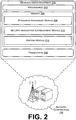
- FIG. 2 depicts example details of network component(s) 134 that are configured to establish an IMS session for the UE 102 and map a new security association to an active IMS session subsequent to the occurrence of a connectivity interruption to the IMS session.
- the network component(s) 134 comprise device(s) (e.g., servers) and/or other equipment 200 configured within an access network 104 and/or the IMS 106.
- a device can include one or more processor(s) 202 and memory 204.
- the device or equipment associated with the device can include transceivers 206 (e.g., antennas).
- Processor(s) 202 may include a microprocessor, a microcomputer, a microcontroller, a digital signal processor, a central processing unit (CPU), a graphics processing unit (GPU), etc.
- CPU central processing unit
- GPU graphics processing unit
- some or all of the techniques described herein can be performed, at least in part, by one or more hardware logic components.
- illustrative types of hardware logic components include a Field-Programmable Gate Array (FPGA), an Application-Specific Integrated Circuit (ASIC), an Application-Specific Standard Products (ASSP), a state machine, a Complex Programmable Logic Device (CPLD), other logic circuitry, a system on chip (SoC), and/or any other devices that perform operations based on instructions.
- the processor(s) 202 may be configured to fetch and execute computer-readable instructions stored in the memory 204.
- the memory 204 may be implemented using computer readable media, such as computer storage media.
- Computer-readable media includes, at least, two types of computer-readable media, namely computer storage media and communications media.
- Computer storage media includes volatile and nonvolatile, removable and non-removable media implemented in any method or technology for storage of information such as computer readable instructions, data structures, program modules, or other data.
- Computer storage media includes, but is not limited to, phase change memory (PCM), static random-access memory (SRAM), dynamic random-access memory (DRAM), other types of random access memory (RAM), read only memory (ROM), electrically erasable programmable ROM (EEPROM), flash memory or other memory technology, compact disk ROM (CD-ROM), digital versatile disks (DVD) or other optical storage, magnetic cassettes, magnetic tape, magnetic disk storage or other magnetic storage devices, or any other medium that can be used to store information for access by a computing device.
- communication media may embody computer readable instructions, data structures, program modules, or other data in a modulated data signal, such as a carrier wave, or other transmission mechanism.
- the memory 204 can include one or more of: an IP address assignment module 208, a security association establishment module 210, and/or a mapping module 212.
- module is intended to represent example divisions of executable instructions for purposes of discussion, and is not intended to represent any type of requirement or required method, manner or organization. Accordingly, while various "modules" are discussed herein with respect to FIG. 2 , their functionality and/or similar functionality could be arranged differently and/or across a number of devices (e.g., combined into a fewer number of modules, broken into a larger number of modules, etc.).
- any or all of the modules may be implemented in whole or in part by hardware (e.g., a specialized processing unit, etc.) to execute the described functions.
- the IP address assignment module 208 is configured to assign an IP address, or issue an IP address, to the UE 102.
- the IP address assignment module 208 can be implemented in a P-GW server 110, or alternatively, a DHCP server, and the IP address assignment module 208 can assign the first IP address 118 and/or the second IP address 128 to the UE 102 (e.g. the user agent client 112 of the UE 102).
- the assignment of an IP address may be implemented in accordance with movement of the UE 102 (e.g., in and out of radio access coverage areas, a switch from access network to another, etc.).
- the security association establishment module 210 is configured to help establish security associations for the UE 102.
- a security association comprises information that enables two network devices to communicate securely.
- the information can include encryption algorithms, authentication mechanisms (e.g., based on UE credentials such as SIM credentials), and parameters for the data to be passed over the secure connection (e.g., IP addresses).
- the security association establishment module 210 uses the Internet Security Association and Key Management Protocol (e.g., the Internet Key Exchange (IKE) protocol such as IKEv2) to establish a security association.
- IKE Internet Key Exchange
- the mapping module 212 is configured to determine that credentials used to establish a new security association match credentials used to establish a security association that was lost (e.g., due to a connectivity interruption 126). Consequently, the mapping module 212 is configured to determine that the UE 102 was a participant in a recent IMS session that was interrupted, and the mapping module 212 discovers that the IMS session is still active in the IMS 106 (e.g., the active IMS session 130). Subsequently, the mapping module 212 can use a SIP re-invite to resurrect the IMS session by reconnecting the UE 102 to the active IMS session 130, and enabling secure communications based on the new security association.
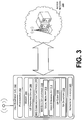
- FIG. 3 depicts example components of a mobile device, such as UE 102, that is configured to establish a security association useable to conduct an IMS session.
- the UE 102 may include one or more processor(s) 302 and memory 304.
- processor(s) 302 and memory 304 are discussed above with respect to the processor(s) and the memory of FIG. 2 .
- the memory 304 of the UE 102 can include an operating system (OS) 306, which is configured to manage hardware and services within and coupled to the UE 102 for the benefit of other modules or components.
- OS operating system
- the memory 304 may also store module(s) associated with IMS communication function(s) 308 (e.g., VoLTE voice of video calls, RCS messaging, etc.). Additionally, the memory 304 may include IMS data application(s) 310.
- the IMS data applications 310 may include, but are not limited to, a social media application 312 and/or a video streaming application 314. Other types of applications can also be configured to perform IMS communications.
- the UE 102 can also comprise the user agent client 316, as described above with respect to FIG. 1 , as well as a security association datastore 318 and one or more network interface(s) 320.
- the security association datastore 318 is configured to store information useable to establish a security association (e.g., SIM credentials).
- a network interface 320 is configured to register the UE 102 with an access network 104, for example.
- a network interface 320 can be a transceiver configured to receive reference signals broadcast from antennas of an access network 104 and use control channel information in the reference signals to camp on a cell.
- the network interface 320 can handle communication exchanges via a secure IMS session, as discussed herein.
- FIG. 4 presents an illustrative process illustrated as a collection of blocks in a logical flow chart, which represents a sequence of operations that can be implemented in hardware, software, or a combination thereof.
- the blocks represent computer-executable instructions that, when executed by one or more processors, perform the recited operations.
- computer-executable instructions may include routines, programs, objects, components, data structures, and the like that perform particular functions or implement particular abstract data types.
- the order in which the operations are described is not intended to be construed as a limitation, and any number of the described blocks can be combined in any order and/or in parallel to implement the process.
- the process in FIG. 4 can be implemented in association with the description of any one or more of FIGS. 1-3 .
- FIG. 4 is a flow chart of an example process 400 for establishing an IMS session for a UE and mapping a new security association to an active IMS session subsequent to the occurrence of a connectivity interruption to the IMS session.
- the example process 400 may be performed by the components (e.g., the modules) of the devices and equipment 200 illustrated in FIG. 2 , and implemented in the environment described with respect to FIG. 1 . However, the example process 400 may be performed by other devices, and in other environments, as well.
- a first IP address is assigned to a UE.
- the UE 102 may register with an access network 104, and as a result, the IP address assignment module 208 of a network component such as the PG-W server 110 may assign the first IP address 118 to the UE 102.
- a security association is established for the UE using the first IP address.
- the security association establishment module 210 of a network component 134 e.g., an I-CSCF server of the IMS 106 and/or a S-CSCF server of the IMS 106
- HSS home subscriber server
- the security association establishment module 210 returns a message (e.g., a 401 Unauthorized message) that includes a security challenge.
- the security association establishment module 210 establishes a security association between the UE 102 and an end-point device 120 (e.g., another UE 108 that is receiving a VoLTE call).
- an IMS session is established using the security association.
- the UA client 112 of the UE 102 and/or network components 134 are configured to use the security association to establish a secure IMS session (e.g., in accordance with a SIP invite).
- the secure IMS session comprises a VoLTE call to another UE 108 over the access network 104 and the IMS 106.
- network components 134 of the access network 104 can determine that the UE 102 is no longer registered and/or connected to the access network 104. This can be due to a loss of coverage (e.g., the inability for the UE 102 to receive a signal from an antenna of the access network 104). Or, this can be due to a switch from one access network (e.g., LTE) to another (e.g., Wi-Fi), which can also be referred to as a handover.
- LTE Long Term Evolution
- Wi-Fi Wi-Fi
- a second IP address is assigned to the UE. For example, upon re-entry into a coverage area, the UE 102 may re-register with an access network 104. Or, the UE 102 may implement a new registration via a different access network (e.g., Wi-Fi). As a result, the IP address assignment module 208 of a network component may assign the second IP address 128 to the UE 102.
- a different access network e.g., Wi-Fi
- a new security association is established for the UE using the second IP address. For instance, based on the connectivity interruption, the UA client 112 has to re-submit its credentials so that the new security association can be established by the security association establishment module 210 using the second IP address 128.
- the credentials are used to determine that the UE previously experienced a connectivity interruption to the IMS session.
- the mapping module 212 of a network component 134 of the access network 104 and/or the IMS 106 can maintain a log of IMS sessions and determine that the UE was a participant in a recent IMS session (e.g., occurring in the last 30 seconds or the last minute).
- an active IMS session is one in which a bearer (e.g., an IMS bearer) is still in place and has not been released (e.g., by an instruction from the access network 104, by intentional termination of the IMS session by the UE, and so forth).
- a bearer e.g., an IMS bearer
- an active IMS session can be associated with a communication tunnel (e.g., an IPsec tunnel) that was interrupted, and not intentionally ended by a participant to a VoLTE call, for example.
- the new security association is mapped to the active IMS session.
- the mapping module 212 can use the credentials (e.g., SIM credentials) provided by the UE to map the new security association to the active IMS session.
- the IMS session is continued (e.g., resurrected) using the new security association without requiring the UE to establish a new IMS session.
Landscapes
- Engineering & Computer Science (AREA)
- Signal Processing (AREA)
- Computer Networks & Wireless Communication (AREA)
- Computer Security & Cryptography (AREA)
- Multimedia (AREA)
- Computer Hardware Design (AREA)
- Computing Systems (AREA)
- General Engineering & Computer Science (AREA)
- Business, Economics & Management (AREA)
- General Business, Economics & Management (AREA)
- Power Engineering (AREA)
- Health & Medical Sciences (AREA)
- Cardiology (AREA)
- General Health & Medical Sciences (AREA)
- Mobile Radio Communication Systems (AREA)
Claims (12)
- Dispositif(s) à protocole Internet, IP, de sous-système multimédia, IMS (134) comprenant :un ou plusieurs processeurs (202) ; etune mémoire (204) stockant des instructions qui, lorsqu'elles sont exécutées par le ou les processeurs, amènent le ou les dispositif(s) à°:établir (404) une association de sécurité pour un dispositif mobile (102) à l'aide d'une première adresse de protocole Internet, IP, associée au dispositif mobile°;établir (406) une session de sous-système multimédia IP, IMS, pour le dispositif mobile à l'aide de l'association de sécurité, la session IMS permettant des communications réseau sécurisées entre le dispositif mobile et un dispositif d'extrémité sur un réseau d'accès et un réseau IMS°;en réponse (408, 410) à une interruption de connectivité qui désactive les communications réseau sécurisées entre le dispositif mobile et le dispositif d'extrémité par le biais de la session IMS, recevoir des authentifiants en provenance du dispositif mobile, les authentifiants comprenant des authentifiants de module d'identité d'abonné, SIM°;établir (412) une nouvelle association de sécurité pour le dispositif mobile à l'aide d'une seconde adresse IP associée au dispositif mobile et aux authentifiants reçus en provenance du dispositif mobile°;utiliser (414, 416) les authentifiants SIM reçus en provenance du dispositif mobile pour déterminer que le dispositif mobile était un participant à la session IMS avant l'interruption de la connectivité et que la session IMS est une session IMS active dans le réseau IMS, l'utilisation des authentifiants SIM pour déterminer que le dispositif mobile était le participant à la session IMS avant l'interruption de la connectivité comprenant la mise en correspondance des authentifiants SIM reçus avec les authentifiants SIM précédents reçus en provenance du dispositif mobile en association avec l'établissement de l'association de sécurité°; etassocier (418, 420) la nouvelle association de sécurité à la session IMS active de sorte que le dispositif mobile est capable de poursuivre les communications réseau sécurisées avec le dispositif de point d'extrémité.
- Dispositif(s) selon la revendication°1, le dispositif mobile (102) poursuivant les communications réseau sécurisées avec le dispositif d'extrémité (134) sans avoir à établir une nouvelle session IMS.
- Dispositif(s) selon la revendication°1, l'association de sécurité (210) comprenant un algorithme de chiffrement, un mécanisme d'authentification et un ou plusieurs paramètres permettant la communication sécurisée de données par le biais de la session IMS.
- Dispositif(s) selon la revendication°1, l'interruption de connectivité étant amenée soit par (i) une perte de couverture par le réseau d'accès, soit par (ii) un passage du réseau d'accès à un autre réseau d'accès.
- Dispositif(s) selon la revendication°1, les instructions amenant en outre le ou les dispositif(s) à maintenir la session IMS en tant que session IMS active dans le réseau IMS pendant une période de temps prédéterminée après la survenue de l'interruption de la connectivité, la période de temps prédéterminée dépassant dix secondes.
- Dispositif(s) selon la revendication°1, les instructions amenant en outre le ou les dispositif(s) à fournir, au dispositif mobile (102), une adresse IP d'un serveur de fonction de contrôle de session d'appel mandataire, P-CSCF, de sorte que le dispositif mobile peut établir la session IMS.
- Dispositif(s) selon la revendication°1, la session IMS comprenant un appel vocal sur LTE, VoLTE, ou étant établie à l'aide d'un protocole de lancement de session, SIP.
- Procédé pour dispositif(s) à protocole Internet, IP, de sous-système multimédia, IMS, comprenant°:l'attribution (402), par un ou plusieurs dispositif(s) de réseau (134), d'une première adresse de protocole Internet, IP, à un dispositif mobile (102)°;l'établissement (404), par le ou les dispositif(s) de réseau, d'une association de sécurité pour le dispositif mobile à l'aide de la première adresse IP°;l'établissement (406), par le ou les dispositif(s) de réseau, d'une session de sous-système multimédia IP, IMS, pour le dispositif mobile à l'aide de l'association de sécurité, la session IMS permettant des communications réseau sécurisées entre le dispositif mobile et un dispositif d'extrémité sur un réseau d'accès et un réseau IMS°;en réponse (408, 410) à une interruption de connectivité qui désactive les communications réseau sécurisées entre le dispositif mobile et le dispositif d'extrémité par le biais de la session IMS, la réception d'authentifiants en provenance du dispositif mobile, les authentifiants comportant des authentifiants module d'identité de l'abonné, SIM, utilisables pour déterminer que le dispositif mobile était un participant à la session IMS avant l'interruption de connectivité, cette détermination (414) comprenant la mise en correspondance des authentifiants SIM reçus avec des authentifiants SIM précédents reçus en provenance du dispositif mobile en association avec l'établissement de l'association de sécurité°;l'établissement (412), par le ou les dispositif(s) réseau, d'une nouvelle association de sécurité pour le dispositif mobile à l'aide d'une seconde adresse IP associée au dispositif mobile et aux authentifiants reçus en provenance du dispositif mobile ;la détermination (416) du fait que la session IMS est encore active dans l'IMS ; et l'association (418, 420) de la nouvelle association de sécurité à la session IMS qui est toujours active dans le réseau IMS de sorte que le dispositif mobile est capable de poursuivre les communications réseau sécurisées avec le dispositif d'extrémité.
- Procédé selon la revendication°8, le dispositif mobile (102) poursuivant les communications réseau sécurisées avec le dispositif de point d'extrémité (134) sans avoir à établir une nouvelle session IMS.
- Procédé selon la revendication°8, comprenant en outre l'association de sécurité comportant un algorithme de chiffrement et/ou un mécanisme d'authentification et/ou un ou plusieurs paramètre(s) permettant la communication sécurisée de données par le biais de la session IMS.
- Procédé selon la revendication°8, comprenant en outre le maintien (420) de la session IMS en tant que session IMS active dans le réseau IMS pendant une période de temps prédéterminée après la survenue de l'interruption de la connectivité, la période de temps prédéterminée dépassant dix secondes.
- Support(s) de stockage informatique(s) non transitoire(s) comprenant des instructions qui, lorsqu'elles sont exécutées par un ou plusieurs processeur(s), amènent un ou plusieurs éléments de réseau à effectuer le procédé selon l'une quelconque des revendications°8 à 11.
Applications Claiming Priority (2)
| Application Number | Priority Date | Filing Date | Title |
|---|---|---|---|
| US15/196,930 US10306468B2 (en) | 2016-06-29 | 2016-06-29 | Internet protocol multimedia system session resurrection |
| PCT/US2017/037861 WO2018005130A1 (fr) | 2016-06-29 | 2017-06-16 | Reconstruction de session de système multimédia à protocole internet |
Publications (3)
| Publication Number | Publication Date |
|---|---|
| EP3456028A1 EP3456028A1 (fr) | 2019-03-20 |
| EP3456028A4 EP3456028A4 (fr) | 2019-10-02 |
| EP3456028B1 true EP3456028B1 (fr) | 2020-08-05 |
Family
ID=60787824
Family Applications (1)
| Application Number | Title | Priority Date | Filing Date |
|---|---|---|---|
| EP17820913.6A Active EP3456028B1 (fr) | 2016-06-29 | 2017-06-16 | Reconstruction de session de système multimédia à protocole internet |
Country Status (4)
| Country | Link |
|---|---|
| US (1) | US10306468B2 (fr) |
| EP (1) | EP3456028B1 (fr) |
| CN (1) | CN109417551A (fr) |
| WO (1) | WO2018005130A1 (fr) |
Families Citing this family (7)
| Publication number | Priority date | Publication date | Assignee | Title |
|---|---|---|---|---|
| CN107809496B (zh) * | 2016-09-09 | 2020-05-12 | 新华三技术有限公司 | 网络访问控制方法和装置 |
| US10579322B1 (en) | 2017-05-22 | 2020-03-03 | Parallels International Gmbh | Connecting to remote access session based on proximity of mobile device |
| US11284463B2 (en) * | 2019-07-16 | 2022-03-22 | T-Mobile Usa, Inc. | Automatically resetting interrupted network connections |
| US11665212B2 (en) | 2019-07-16 | 2023-05-30 | T-Mobile Usa, Inc. | Timer-initiated fallback |
| DE102019126304A1 (de) | 2019-09-30 | 2021-04-01 | Audi Ag | Befeuchter, Brennstoffzellenvorrichtung sowie Kraftfahrzeug mit einer Brennstoffzellenvorrichtung |
| US11711367B2 (en) * | 2020-03-19 | 2023-07-25 | Juniper Networks, Inc. | Continuing a media access control security (MACsec) key agreement (MKA) session upon a network device becoming temporarily unavailable |
| US11856063B2 (en) * | 2021-04-01 | 2023-12-26 | Hewlett Packard Enterprise Development Lp | Systems and methods for cloud survivability for cloud orchestrated internet protocol security (IPsec) security associations (SA) |
Family Cites Families (14)
| Publication number | Priority date | Publication date | Assignee | Title |
|---|---|---|---|---|
| GB0216000D0 (en) | 2002-07-10 | 2002-08-21 | Nokia Corp | A method for setting up a security association |
| US20080092224A1 (en) * | 2006-10-16 | 2008-04-17 | Motorola, Inc. | Method and apparatus for seamless connections and service continuity in an agnostic access internet protocol multimedia communication system |
| US8213394B2 (en) | 2006-10-16 | 2012-07-03 | Motorola Mobility, Inc. | Method and apparatus for management of inactive connections for service continuity in an agnostic access internet protocol multimedia communication |
| WO2009018312A2 (fr) | 2007-07-30 | 2009-02-05 | Marvell World Trade Ltd. | Système et procédé permettant d'établir et de gérer des sessions multimédias entre des terminaux |
| US7979558B2 (en) | 2008-08-06 | 2011-07-12 | Futurewei Technologies, Inc. | Remote session control |
| US9294965B2 (en) * | 2008-11-07 | 2016-03-22 | Panasonic Intellectual Property Corporation Of America | Handover control system, user terminal, signaling relay apparatus, and session control apparatus |
| US8559299B2 (en) * | 2010-11-30 | 2013-10-15 | Telefonaktiebolaget L M Ericsson (Publ) | Mobile gateways in pool for session resilience |
| CN102540844B (zh) * | 2012-02-01 | 2014-09-24 | 珠海天威飞马打印耗材有限公司 | 一种可回收废粉的处理盒 |
| US9686284B2 (en) | 2013-03-07 | 2017-06-20 | T-Mobile Usa, Inc. | Extending and re-using an IP multimedia subsystem (IMS) |
| WO2014169937A1 (fr) * | 2013-04-15 | 2014-10-23 | Telefonaktiebolaget L M Ericsson (Publ) | Contrôle locale de session multimédia supplémentaire pour un appel par paquets |
| US9503963B1 (en) * | 2014-07-31 | 2016-11-22 | Sprint Communications Company L.P | Wireless communication system to track data records |
| US20170251514A1 (en) * | 2014-10-01 | 2017-08-31 | Nokia Solutions And Networks Oy | Session transfer by tunnel endpoint identifier renumbering |
| US9826401B2 (en) * | 2015-03-11 | 2017-11-21 | Verizon Patent And Licensing Inc. | Authenticated communication session for wireless roaming |
| US9792953B2 (en) * | 2015-07-23 | 2017-10-17 | Lg Electronics Inc. | Mobile terminal and control method for the same |
-
2016
- 2016-06-29 US US15/196,930 patent/US10306468B2/en active Active
-
2017
- 2017-06-16 EP EP17820913.6A patent/EP3456028B1/fr active Active
- 2017-06-16 CN CN201780040644.5A patent/CN109417551A/zh active Pending
- 2017-06-16 WO PCT/US2017/037861 patent/WO2018005130A1/fr not_active Ceased
Non-Patent Citations (1)
| Title |
|---|
| None * |
Also Published As
| Publication number | Publication date |
|---|---|
| EP3456028A4 (fr) | 2019-10-02 |
| US20180007550A1 (en) | 2018-01-04 |
| CN109417551A (zh) | 2019-03-01 |
| WO2018005130A1 (fr) | 2018-01-04 |
| US10306468B2 (en) | 2019-05-28 |
| EP3456028A1 (fr) | 2019-03-20 |
Similar Documents
| Publication | Publication Date | Title |
|---|---|---|
| EP3456028B1 (fr) | Reconstruction de session de système multimédia à protocole internet | |
| US11051165B2 (en) | Authentication failure handling for access to services through untrusted wireless networks | |
| US9826378B2 (en) | Methods and devices for facilitating emergency calls over wireless communication systems | |
| CN108574969B (zh) | 多接入场景中的连接处理方法和装置 | |
| US9544939B2 (en) | Intelligent policy and charging rule function (PCRF) restoration | |
| WO2016095115A1 (fr) | Transfert effectué au moyen de connexions actives doubles | |
| US20170289883A1 (en) | Emergency services handover between untrusted wlan access and cellular access | |
| WO2015184418A1 (fr) | Appel wi-fi à l'aide d'un combiné sip-ims et passerelle évoluée de données par paquets | |
| US10004021B2 (en) | System and method for providing services to a user equipment in an inter-national location | |
| US10966260B2 (en) | Device, system and method for VoLTE setup | |
| US20190159160A1 (en) | Methods and network nodes for providing ue location for vowifi calls | |
| JP6522799B2 (ja) | モバイル通信ネットワークのハンドオーバ機能を発見するための方法、モバイル通信ネットワークのハンドオーバ機能を発見するためのシステム、ユーザ装置、プログラム及びコンピュータプログラム製品 | |
| US9888515B2 (en) | Device, system and method for synchronizing network states during handover between VoLTE and WiFi | |
| EP3340691A1 (fr) | Procédé d'initiation de service vocal wi-fi, dispositif de communication lte, terminal, et système de communication | |
| EP3132623A1 (fr) | Appel wi-fi à l'aide d'un combiné sip-ims et passerelle évoluée de données par paquets | |
| WO2019216392A1 (fr) | Équipement utilisateur (ue) | |
| US10397965B2 (en) | System and method of determining real-time location and status of voice-over Wi-Fi (VoWiFi) users in heterogeneous network environment | |
| EP4485861A1 (fr) | Maintien de porte pour appelants wifi itinérants | |
| CN105379379A (zh) | 用于专用移动无线电服务的节点和方法 | |
| CN108632936B (zh) | 一种锚定核心网的方法、ue和pgw |
Legal Events
| Date | Code | Title | Description |
|---|---|---|---|
| STAA | Information on the status of an ep patent application or granted ep patent |
Free format text: STATUS: THE INTERNATIONAL PUBLICATION HAS BEEN MADE |
|
| PUAI | Public reference made under article 153(3) epc to a published international application that has entered the european phase |
Free format text: ORIGINAL CODE: 0009012 |
|
| STAA | Information on the status of an ep patent application or granted ep patent |
Free format text: STATUS: REQUEST FOR EXAMINATION WAS MADE |
|
| 17P | Request for examination filed |
Effective date: 20181211 |
|
| AK | Designated contracting states |
Kind code of ref document: A1 Designated state(s): AL AT BE BG CH CY CZ DE DK EE ES FI FR GB GR HR HU IE IS IT LI LT LU LV MC MK MT NL NO PL PT RO RS SE SI SK SM TR |
|
| AX | Request for extension of the european patent |
Extension state: BA ME |
|
| A4 | Supplementary search report drawn up and despatched |
Effective date: 20190902 |
|
| DAV | Request for validation of the european patent (deleted) | ||
| DAX | Request for extension of the european patent (deleted) | ||
| RIC1 | Information provided on ipc code assigned before grant |
Ipc: H04L 29/06 20060101AFI20190827BHEP |
|
| GRAP | Despatch of communication of intention to grant a patent |
Free format text: ORIGINAL CODE: EPIDOSNIGR1 |
|
| STAA | Information on the status of an ep patent application or granted ep patent |
Free format text: STATUS: GRANT OF PATENT IS INTENDED |
|
| INTG | Intention to grant announced |
Effective date: 20200414 |
|
| GRAS | Grant fee paid |
Free format text: ORIGINAL CODE: EPIDOSNIGR3 |
|
| GRAA | (expected) grant |
Free format text: ORIGINAL CODE: 0009210 |
|
| STAA | Information on the status of an ep patent application or granted ep patent |
Free format text: STATUS: THE PATENT HAS BEEN GRANTED |
|
| AK | Designated contracting states |
Kind code of ref document: B1 Designated state(s): AL AT BE BG CH CY CZ DE DK EE ES FI FR GB GR HR HU IE IS IT LI LT LU LV MC MK MT NL NO PL PT RO RS SE SI SK SM TR |
|
| REG | Reference to a national code |
Ref country code: GB Ref legal event code: FG4D |
|
| REG | Reference to a national code |
Ref country code: CH Ref legal event code: EP |
|
| REG | Reference to a national code |
Ref country code: AT Ref legal event code: REF Ref document number: 1300326 Country of ref document: AT Kind code of ref document: T Effective date: 20200815 |
|
| REG | Reference to a national code |
Ref country code: DE Ref legal event code: R096 Ref document number: 602017021335 Country of ref document: DE |
|
| REG | Reference to a national code |
Ref country code: IE Ref legal event code: FG4D |
|
| REG | Reference to a national code |
Ref country code: LT Ref legal event code: MG4D |
|
| REG | Reference to a national code |
Ref country code: NL Ref legal event code: MP Effective date: 20200805 |
|
| REG | Reference to a national code |
Ref country code: AT Ref legal event code: MK05 Ref document number: 1300326 Country of ref document: AT Kind code of ref document: T Effective date: 20200805 |
|
| PG25 | Lapsed in a contracting state [announced via postgrant information from national office to epo] |
Ref country code: SE Free format text: LAPSE BECAUSE OF FAILURE TO SUBMIT A TRANSLATION OF THE DESCRIPTION OR TO PAY THE FEE WITHIN THE PRESCRIBED TIME-LIMIT Effective date: 20200805 Ref country code: HR Free format text: LAPSE BECAUSE OF FAILURE TO SUBMIT A TRANSLATION OF THE DESCRIPTION OR TO PAY THE FEE WITHIN THE PRESCRIBED TIME-LIMIT Effective date: 20200805 Ref country code: AT Free format text: LAPSE BECAUSE OF FAILURE TO SUBMIT A TRANSLATION OF THE DESCRIPTION OR TO PAY THE FEE WITHIN THE PRESCRIBED TIME-LIMIT Effective date: 20200805 Ref country code: ES Free format text: LAPSE BECAUSE OF FAILURE TO SUBMIT A TRANSLATION OF THE DESCRIPTION OR TO PAY THE FEE WITHIN THE PRESCRIBED TIME-LIMIT Effective date: 20200805 Ref country code: PT Free format text: LAPSE BECAUSE OF FAILURE TO SUBMIT A TRANSLATION OF THE DESCRIPTION OR TO PAY THE FEE WITHIN THE PRESCRIBED TIME-LIMIT Effective date: 20201207 Ref country code: BG Free format text: LAPSE BECAUSE OF FAILURE TO SUBMIT A TRANSLATION OF THE DESCRIPTION OR TO PAY THE FEE WITHIN THE PRESCRIBED TIME-LIMIT Effective date: 20201105 Ref country code: LT Free format text: LAPSE BECAUSE OF FAILURE TO SUBMIT A TRANSLATION OF THE DESCRIPTION OR TO PAY THE FEE WITHIN THE PRESCRIBED TIME-LIMIT Effective date: 20200805 Ref country code: NO Free format text: LAPSE BECAUSE OF FAILURE TO SUBMIT A TRANSLATION OF THE DESCRIPTION OR TO PAY THE FEE WITHIN THE PRESCRIBED TIME-LIMIT Effective date: 20201105 Ref country code: GR Free format text: LAPSE BECAUSE OF FAILURE TO SUBMIT A TRANSLATION OF THE DESCRIPTION OR TO PAY THE FEE WITHIN THE PRESCRIBED TIME-LIMIT Effective date: 20201106 Ref country code: FI Free format text: LAPSE BECAUSE OF FAILURE TO SUBMIT A TRANSLATION OF THE DESCRIPTION OR TO PAY THE FEE WITHIN THE PRESCRIBED TIME-LIMIT Effective date: 20200805 |
|
| PG25 | Lapsed in a contracting state [announced via postgrant information from national office to epo] |
Ref country code: NL Free format text: LAPSE BECAUSE OF FAILURE TO SUBMIT A TRANSLATION OF THE DESCRIPTION OR TO PAY THE FEE WITHIN THE PRESCRIBED TIME-LIMIT Effective date: 20200805 Ref country code: LV Free format text: LAPSE BECAUSE OF FAILURE TO SUBMIT A TRANSLATION OF THE DESCRIPTION OR TO PAY THE FEE WITHIN THE PRESCRIBED TIME-LIMIT Effective date: 20200805 Ref country code: RS Free format text: LAPSE BECAUSE OF FAILURE TO SUBMIT A TRANSLATION OF THE DESCRIPTION OR TO PAY THE FEE WITHIN THE PRESCRIBED TIME-LIMIT Effective date: 20200805 Ref country code: PL Free format text: LAPSE BECAUSE OF FAILURE TO SUBMIT A TRANSLATION OF THE DESCRIPTION OR TO PAY THE FEE WITHIN THE PRESCRIBED TIME-LIMIT Effective date: 20200805 Ref country code: IS Free format text: LAPSE BECAUSE OF FAILURE TO SUBMIT A TRANSLATION OF THE DESCRIPTION OR TO PAY THE FEE WITHIN THE PRESCRIBED TIME-LIMIT Effective date: 20201205 |
|
| PG25 | Lapsed in a contracting state [announced via postgrant information from national office to epo] |
Ref country code: SM Free format text: LAPSE BECAUSE OF FAILURE TO SUBMIT A TRANSLATION OF THE DESCRIPTION OR TO PAY THE FEE WITHIN THE PRESCRIBED TIME-LIMIT Effective date: 20200805 Ref country code: EE Free format text: LAPSE BECAUSE OF FAILURE TO SUBMIT A TRANSLATION OF THE DESCRIPTION OR TO PAY THE FEE WITHIN THE PRESCRIBED TIME-LIMIT Effective date: 20200805 Ref country code: RO Free format text: LAPSE BECAUSE OF FAILURE TO SUBMIT A TRANSLATION OF THE DESCRIPTION OR TO PAY THE FEE WITHIN THE PRESCRIBED TIME-LIMIT Effective date: 20200805 Ref country code: CZ Free format text: LAPSE BECAUSE OF FAILURE TO SUBMIT A TRANSLATION OF THE DESCRIPTION OR TO PAY THE FEE WITHIN THE PRESCRIBED TIME-LIMIT Effective date: 20200805 Ref country code: DK Free format text: LAPSE BECAUSE OF FAILURE TO SUBMIT A TRANSLATION OF THE DESCRIPTION OR TO PAY THE FEE WITHIN THE PRESCRIBED TIME-LIMIT Effective date: 20200805 |
|
| REG | Reference to a national code |
Ref country code: DE Ref legal event code: R097 Ref document number: 602017021335 Country of ref document: DE |
|
| PG25 | Lapsed in a contracting state [announced via postgrant information from national office to epo] |
Ref country code: AL Free format text: LAPSE BECAUSE OF FAILURE TO SUBMIT A TRANSLATION OF THE DESCRIPTION OR TO PAY THE FEE WITHIN THE PRESCRIBED TIME-LIMIT Effective date: 20200805 |
|
| PLBE | No opposition filed within time limit |
Free format text: ORIGINAL CODE: 0009261 |
|
| STAA | Information on the status of an ep patent application or granted ep patent |
Free format text: STATUS: NO OPPOSITION FILED WITHIN TIME LIMIT |
|
| PG25 | Lapsed in a contracting state [announced via postgrant information from national office to epo] |
Ref country code: SK Free format text: LAPSE BECAUSE OF FAILURE TO SUBMIT A TRANSLATION OF THE DESCRIPTION OR TO PAY THE FEE WITHIN THE PRESCRIBED TIME-LIMIT Effective date: 20200805 |
|
| 26N | No opposition filed |
Effective date: 20210507 |
|
| PG25 | Lapsed in a contracting state [announced via postgrant information from national office to epo] |
Ref country code: IT Free format text: LAPSE BECAUSE OF FAILURE TO SUBMIT A TRANSLATION OF THE DESCRIPTION OR TO PAY THE FEE WITHIN THE PRESCRIBED TIME-LIMIT Effective date: 20200805 |
|
| PG25 | Lapsed in a contracting state [announced via postgrant information from national office to epo] |
Ref country code: SI Free format text: LAPSE BECAUSE OF FAILURE TO SUBMIT A TRANSLATION OF THE DESCRIPTION OR TO PAY THE FEE WITHIN THE PRESCRIBED TIME-LIMIT Effective date: 20200805 |
|
| REG | Reference to a national code |
Ref country code: DE Ref legal event code: R079 Ref document number: 602017021335 Country of ref document: DE Free format text: PREVIOUS MAIN CLASS: H04L0029060000 Ipc: H04L0065000000 |
|
| PG25 | Lapsed in a contracting state [announced via postgrant information from national office to epo] |
Ref country code: MC Free format text: LAPSE BECAUSE OF FAILURE TO SUBMIT A TRANSLATION OF THE DESCRIPTION OR TO PAY THE FEE WITHIN THE PRESCRIBED TIME-LIMIT Effective date: 20200805 |
|
| REG | Reference to a national code |
Ref country code: CH Ref legal event code: PL |
|
| REG | Reference to a national code |
Ref country code: BE Ref legal event code: MM Effective date: 20210630 |
|
| PG25 | Lapsed in a contracting state [announced via postgrant information from national office to epo] |
Ref country code: LU Free format text: LAPSE BECAUSE OF NON-PAYMENT OF DUE FEES Effective date: 20210616 |
|
| PG25 | Lapsed in a contracting state [announced via postgrant information from national office to epo] |
Ref country code: LI Free format text: LAPSE BECAUSE OF NON-PAYMENT OF DUE FEES Effective date: 20210630 Ref country code: IE Free format text: LAPSE BECAUSE OF NON-PAYMENT OF DUE FEES Effective date: 20210616 Ref country code: CH Free format text: LAPSE BECAUSE OF NON-PAYMENT OF DUE FEES Effective date: 20210630 |
|
| PG25 | Lapsed in a contracting state [announced via postgrant information from national office to epo] |
Ref country code: FR Free format text: LAPSE BECAUSE OF NON-PAYMENT OF DUE FEES Effective date: 20210630 |
|
| PG25 | Lapsed in a contracting state [announced via postgrant information from national office to epo] |
Ref country code: BE Free format text: LAPSE BECAUSE OF NON-PAYMENT OF DUE FEES Effective date: 20210630 |
|
| PG25 | Lapsed in a contracting state [announced via postgrant information from national office to epo] |
Ref country code: CY Free format text: LAPSE BECAUSE OF FAILURE TO SUBMIT A TRANSLATION OF THE DESCRIPTION OR TO PAY THE FEE WITHIN THE PRESCRIBED TIME-LIMIT Effective date: 20200805 |
|
| PG25 | Lapsed in a contracting state [announced via postgrant information from national office to epo] |
Ref country code: HU Free format text: LAPSE BECAUSE OF FAILURE TO SUBMIT A TRANSLATION OF THE DESCRIPTION OR TO PAY THE FEE WITHIN THE PRESCRIBED TIME-LIMIT; INVALID AB INITIO Effective date: 20170616 |
|
| PG25 | Lapsed in a contracting state [announced via postgrant information from national office to epo] |
Ref country code: MK Free format text: LAPSE BECAUSE OF FAILURE TO SUBMIT A TRANSLATION OF THE DESCRIPTION OR TO PAY THE FEE WITHIN THE PRESCRIBED TIME-LIMIT Effective date: 20200805 |
|
| PG25 | Lapsed in a contracting state [announced via postgrant information from national office to epo] |
Ref country code: TR Free format text: LAPSE BECAUSE OF FAILURE TO SUBMIT A TRANSLATION OF THE DESCRIPTION OR TO PAY THE FEE WITHIN THE PRESCRIBED TIME-LIMIT Effective date: 20200805 |
|
| PG25 | Lapsed in a contracting state [announced via postgrant information from national office to epo] |
Ref country code: MT Free format text: LAPSE BECAUSE OF FAILURE TO SUBMIT A TRANSLATION OF THE DESCRIPTION OR TO PAY THE FEE WITHIN THE PRESCRIBED TIME-LIMIT Effective date: 20200805 |
|
| PGFP | Annual fee paid to national office [announced via postgrant information from national office to epo] |
Ref country code: DE Payment date: 20250520 Year of fee payment: 9 |
|
| PGFP | Annual fee paid to national office [announced via postgrant information from national office to epo] |
Ref country code: GB Payment date: 20250520 Year of fee payment: 9 |