EP3460073A1 - Matériels et méthode pour l'identification de vecteurs d'amyotrophie spinale - Google Patents
Matériels et méthode pour l'identification de vecteurs d'amyotrophie spinale Download PDFInfo
- Publication number
- EP3460073A1 EP3460073A1 EP18187402.5A EP18187402A EP3460073A1 EP 3460073 A1 EP3460073 A1 EP 3460073A1 EP 18187402 A EP18187402 A EP 18187402A EP 3460073 A1 EP3460073 A1 EP 3460073A1
- Authority
- EP
- European Patent Office
- Prior art keywords
- allele
- smn1
- sma
- haplotype
- nucleic acid
- Prior art date
- Legal status (The legal status is an assumption and is not a legal conclusion. Google has not performed a legal analysis and makes no representation as to the accuracy of the status listed.)
- Withdrawn
Links
- 208000002320 spinal muscular atrophy Diseases 0.000 title claims abstract description 163
- 238000000034 method Methods 0.000 title claims abstract description 96
- 239000000969 carrier Substances 0.000 title abstract description 70
- 239000000463 material Substances 0.000 title abstract description 4
- 108700028369 Alleles Proteins 0.000 claims abstract description 166
- 239000000523 sample Substances 0.000 claims abstract description 42
- 230000002068 genetic effect Effects 0.000 claims abstract description 21
- 101150081851 SMN1 gene Proteins 0.000 claims abstract description 10
- 102000054766 genetic haplotypes Human genes 0.000 claims description 104
- 239000002773 nucleotide Substances 0.000 claims description 97
- 125000003729 nucleotide group Chemical group 0.000 claims description 94
- 238000012217 deletion Methods 0.000 claims description 67
- 230000037430 deletion Effects 0.000 claims description 67
- 150000007523 nucleic acids Chemical class 0.000 claims description 64
- 108020004707 nucleic acids Proteins 0.000 claims description 62
- 102000039446 nucleic acids Human genes 0.000 claims description 62
- 238000012216 screening Methods 0.000 claims description 33
- 238000007838 multiplex ligation-dependent probe amplification Methods 0.000 claims description 26
- 108091092878 Microsatellite Proteins 0.000 claims description 19
- 238000009223 counseling Methods 0.000 claims description 12
- 108020004414 DNA Proteins 0.000 claims description 9
- 238000003745 diagnosis Methods 0.000 claims description 3
- 102100033697 DNA cross-link repair 1A protein Human genes 0.000 claims 1
- 101000871548 Homo sapiens DNA cross-link repair 1A protein Proteins 0.000 claims 1
- 102000054765 polymorphisms of proteins Human genes 0.000 abstract description 37
- 238000007894 restriction fragment length polymorphism technique Methods 0.000 abstract description 29
- 238000001514 detection method Methods 0.000 abstract description 27
- 108090000623 proteins and genes Proteins 0.000 abstract description 25
- 238000004458 analytical method Methods 0.000 abstract description 24
- 210000000349 chromosome Anatomy 0.000 abstract description 22
- 230000001419 dependent effect Effects 0.000 abstract description 4
- 238000012300 Sequence Analysis Methods 0.000 abstract description 3
- 210000003917 human chromosome Anatomy 0.000 abstract description 2
- 101000617738 Homo sapiens Survival motor neuron protein Proteins 0.000 description 52
- 102100021947 Survival motor neuron protein Human genes 0.000 description 50
- 230000035772 mutation Effects 0.000 description 22
- 239000003550 marker Substances 0.000 description 20
- 238000006243 chemical reaction Methods 0.000 description 11
- 238000012163 sequencing technique Methods 0.000 description 10
- 208000037265 diseases, disorders, signs and symptoms Diseases 0.000 description 7
- TWRXJAOTZQYOKJ-UHFFFAOYSA-L Magnesium chloride Chemical compound [Mg+2].[Cl-].[Cl-] TWRXJAOTZQYOKJ-UHFFFAOYSA-L 0.000 description 6
- 201000010099 disease Diseases 0.000 description 6
- 239000012634 fragment Substances 0.000 description 6
- 238000003780 insertion Methods 0.000 description 6
- 230000037431 insertion Effects 0.000 description 6
- 230000003321 amplification Effects 0.000 description 5
- 238000003556 assay Methods 0.000 description 5
- 238000003199 nucleic acid amplification method Methods 0.000 description 5
- 108700024394 Exon Proteins 0.000 description 4
- 108091028043 Nucleic acid sequence Proteins 0.000 description 4
- 238000012408 PCR amplification Methods 0.000 description 4
- 238000010367 cloning Methods 0.000 description 4
- BASFCYQUMIYNBI-UHFFFAOYSA-N platinum Chemical compound [Pt] BASFCYQUMIYNBI-UHFFFAOYSA-N 0.000 description 4
- 108091008146 restriction endonucleases Proteins 0.000 description 4
- 238000012360 testing method Methods 0.000 description 4
- 108091093088 Amplicon Proteins 0.000 description 3
- 230000004536 DNA copy number loss Effects 0.000 description 3
- 238000005516 engineering process Methods 0.000 description 3
- 229910001629 magnesium chloride Inorganic materials 0.000 description 3
- 238000006467 substitution reaction Methods 0.000 description 3
- BZTDTCNHAFUJOG-UHFFFAOYSA-N 6-carboxyfluorescein Chemical compound C12=CC=C(O)C=C2OC2=CC(O)=CC=C2C11OC(=O)C2=CC=C(C(=O)O)C=C21 BZTDTCNHAFUJOG-UHFFFAOYSA-N 0.000 description 2
- 102000004190 Enzymes Human genes 0.000 description 2
- 108090000790 Enzymes Proteins 0.000 description 2
- 208000003954 Spinal Muscular Atrophies of Childhood Diseases 0.000 description 2
- 108010006785 Taq Polymerase Proteins 0.000 description 2
- 230000004075 alteration Effects 0.000 description 2
- 150000001413 amino acids Chemical class 0.000 description 2
- 230000008901 benefit Effects 0.000 description 2
- 230000008859 change Effects 0.000 description 2
- 238000000546 chi-square test Methods 0.000 description 2
- 108020004999 messenger RNA Proteins 0.000 description 2
- 238000012986 modification Methods 0.000 description 2
- 230000004048 modification Effects 0.000 description 2
- 229910052697 platinum Inorganic materials 0.000 description 2
- 108091033319 polynucleotide Proteins 0.000 description 2
- 102000040430 polynucleotide Human genes 0.000 description 2
- 239000002157 polynucleotide Substances 0.000 description 2
- 238000000746 purification Methods 0.000 description 2
- 239000011541 reaction mixture Substances 0.000 description 2
- 238000003753 real-time PCR Methods 0.000 description 2
- 230000002441 reversible effect Effects 0.000 description 2
- 102100021676 Baculoviral IAP repeat-containing protein 1 Human genes 0.000 description 1
- 108091026890 Coding region Proteins 0.000 description 1
- 238000007399 DNA isolation Methods 0.000 description 1
- 206010061818 Disease progression Diseases 0.000 description 1
- 108700039691 Genetic Promoter Regions Proteins 0.000 description 1
- 206010071602 Genetic polymorphism Diseases 0.000 description 1
- 208000028782 Hereditary disease Diseases 0.000 description 1
- 108091092195 Intron Proteins 0.000 description 1
- 208000035752 Live birth Diseases 0.000 description 1
- 208000024556 Mendelian disease Diseases 0.000 description 1
- 208000010428 Muscle Weakness Diseases 0.000 description 1
- 206010028289 Muscle atrophy Diseases 0.000 description 1
- 206010028372 Muscular weakness Diseases 0.000 description 1
- 108010006696 Neuronal Apoptosis-Inhibitory Protein Proteins 0.000 description 1
- 108700026244 Open Reading Frames Proteins 0.000 description 1
- 239000012807 PCR reagent Substances 0.000 description 1
- 208000032225 Proximal spinal muscular atrophy type 1 Diseases 0.000 description 1
- 108091081062 Repeated sequence (DNA) Proteins 0.000 description 1
- 208000004756 Respiratory Insufficiency Diseases 0.000 description 1
- 101150015954 SMN2 gene Proteins 0.000 description 1
- 108091023045 Untranslated Region Proteins 0.000 description 1
- 208000026481 Werdnig-Hoffmann disease Diseases 0.000 description 1
- 238000000246 agarose gel electrophoresis Methods 0.000 description 1
- 210000002226 anterior horn cell Anatomy 0.000 description 1
- 238000013459 approach Methods 0.000 description 1
- 230000037444 atrophy Effects 0.000 description 1
- 208000025341 autosomal recessive disease Diseases 0.000 description 1
- 238000013476 bayesian approach Methods 0.000 description 1
- 210000000133 brain stem Anatomy 0.000 description 1
- 238000004364 calculation method Methods 0.000 description 1
- 238000005251 capillar electrophoresis Methods 0.000 description 1
- 210000004027 cell Anatomy 0.000 description 1
- 238000012512 characterization method Methods 0.000 description 1
- 238000003776 cleavage reaction Methods 0.000 description 1
- 230000000295 complement effect Effects 0.000 description 1
- 230000001351 cycling effect Effects 0.000 description 1
- 238000007405 data analysis Methods 0.000 description 1
- 230000007850 degeneration Effects 0.000 description 1
- 230000002939 deleterious effect Effects 0.000 description 1
- 238000004925 denaturation Methods 0.000 description 1
- 230000036425 denaturation Effects 0.000 description 1
- 238000002405 diagnostic procedure Methods 0.000 description 1
- 238000012631 diagnostic technique Methods 0.000 description 1
- 230000029087 digestion Effects 0.000 description 1
- 230000005750 disease progression Effects 0.000 description 1
- 208000035475 disorder Diseases 0.000 description 1
- 230000000694 effects Effects 0.000 description 1
- 239000003623 enhancer Substances 0.000 description 1
- ZINJLDJMHCUBIP-UHFFFAOYSA-N ethametsulfuron-methyl Chemical compound CCOC1=NC(NC)=NC(NC(=O)NS(=O)(=O)C=2C(=CC=CC=2)C(=O)OC)=N1 ZINJLDJMHCUBIP-UHFFFAOYSA-N 0.000 description 1
- 230000004545 gene duplication Effects 0.000 description 1
- 238000012252 genetic analysis Methods 0.000 description 1
- 238000010448 genetic screening Methods 0.000 description 1
- 210000004602 germ cell Anatomy 0.000 description 1
- 230000006801 homologous recombination Effects 0.000 description 1
- 238000002744 homologous recombination Methods 0.000 description 1
- 238000009396 hybridization Methods 0.000 description 1
- 230000006872 improvement Effects 0.000 description 1
- 208000021005 inheritance pattern Diseases 0.000 description 1
- 231100000518 lethal Toxicity 0.000 description 1
- 230000001665 lethal effect Effects 0.000 description 1
- 238000004519 manufacturing process Methods 0.000 description 1
- 238000013507 mapping Methods 0.000 description 1
- 230000007246 mechanism Effects 0.000 description 1
- 239000000203 mixture Substances 0.000 description 1
- 201000000585 muscular atrophy Diseases 0.000 description 1
- 238000010606 normalization Methods 0.000 description 1
- 210000004940 nucleus Anatomy 0.000 description 1
- 210000005259 peripheral blood Anatomy 0.000 description 1
- 239000011886 peripheral blood Substances 0.000 description 1
- 239000013612 plasmid Substances 0.000 description 1
- 229920002401 polyacrylamide Polymers 0.000 description 1
- 238000004393 prognosis Methods 0.000 description 1
- 230000000750 progressive effect Effects 0.000 description 1
- 238000011002 quantification Methods 0.000 description 1
- 230000006798 recombination Effects 0.000 description 1
- 238000005215 recombination Methods 0.000 description 1
- 230000009467 reduction Effects 0.000 description 1
- 201000004193 respiratory failure Diseases 0.000 description 1
- 230000007017 scission Effects 0.000 description 1
- 238000005204 segregation Methods 0.000 description 1
- 210000000278 spinal cord Anatomy 0.000 description 1
- 238000007619 statistical method Methods 0.000 description 1
- 208000032471 type 1 spinal muscular atrophy Diseases 0.000 description 1
- 238000011179 visual inspection Methods 0.000 description 1
Images


Classifications
-
- C—CHEMISTRY; METALLURGY
- C12—BIOCHEMISTRY; BEER; SPIRITS; WINE; VINEGAR; MICROBIOLOGY; ENZYMOLOGY; MUTATION OR GENETIC ENGINEERING
- C12Q—MEASURING OR TESTING PROCESSES INVOLVING ENZYMES, NUCLEIC ACIDS OR MICROORGANISMS; COMPOSITIONS OR TEST PAPERS THEREFOR; PROCESSES OF PREPARING SUCH COMPOSITIONS; CONDITION-RESPONSIVE CONTROL IN MICROBIOLOGICAL OR ENZYMOLOGICAL PROCESSES
- C12Q1/00—Measuring or testing processes involving enzymes, nucleic acids or microorganisms; Compositions therefor; Processes of preparing such compositions
- C12Q1/68—Measuring or testing processes involving enzymes, nucleic acids or microorganisms; Compositions therefor; Processes of preparing such compositions involving nucleic acids
- C12Q1/6876—Nucleic acid products used in the analysis of nucleic acids, e.g. primers or probes
- C12Q1/6883—Nucleic acid products used in the analysis of nucleic acids, e.g. primers or probes for diseases caused by alterations of genetic material
-
- C—CHEMISTRY; METALLURGY
- C12—BIOCHEMISTRY; BEER; SPIRITS; WINE; VINEGAR; MICROBIOLOGY; ENZYMOLOGY; MUTATION OR GENETIC ENGINEERING
- C12Q—MEASURING OR TESTING PROCESSES INVOLVING ENZYMES, NUCLEIC ACIDS OR MICROORGANISMS; COMPOSITIONS OR TEST PAPERS THEREFOR; PROCESSES OF PREPARING SUCH COMPOSITIONS; CONDITION-RESPONSIVE CONTROL IN MICROBIOLOGICAL OR ENZYMOLOGICAL PROCESSES
- C12Q1/00—Measuring or testing processes involving enzymes, nucleic acids or microorganisms; Compositions therefor; Processes of preparing such compositions
- C12Q1/68—Measuring or testing processes involving enzymes, nucleic acids or microorganisms; Compositions therefor; Processes of preparing such compositions involving nucleic acids
- C12Q1/6813—Hybridisation assays
- C12Q1/6827—Hybridisation assays for detection of mutation or polymorphism
-
- C—CHEMISTRY; METALLURGY
- C12—BIOCHEMISTRY; BEER; SPIRITS; WINE; VINEGAR; MICROBIOLOGY; ENZYMOLOGY; MUTATION OR GENETIC ENGINEERING
- C12Q—MEASURING OR TESTING PROCESSES INVOLVING ENZYMES, NUCLEIC ACIDS OR MICROORGANISMS; COMPOSITIONS OR TEST PAPERS THEREFOR; PROCESSES OF PREPARING SUCH COMPOSITIONS; CONDITION-RESPONSIVE CONTROL IN MICROBIOLOGICAL OR ENZYMOLOGICAL PROCESSES
- C12Q2600/00—Oligonucleotides characterized by their use
- C12Q2600/156—Polymorphic or mutational markers
-
- C—CHEMISTRY; METALLURGY
- C12—BIOCHEMISTRY; BEER; SPIRITS; WINE; VINEGAR; MICROBIOLOGY; ENZYMOLOGY; MUTATION OR GENETIC ENGINEERING
- C12Q—MEASURING OR TESTING PROCESSES INVOLVING ENZYMES, NUCLEIC ACIDS OR MICROORGANISMS; COMPOSITIONS OR TEST PAPERS THEREFOR; PROCESSES OF PREPARING SUCH COMPOSITIONS; CONDITION-RESPONSIVE CONTROL IN MICROBIOLOGICAL OR ENZYMOLOGICAL PROCESSES
- C12Q2600/00—Oligonucleotides characterized by their use
- C12Q2600/172—Haplotypes
Definitions
- the disclosed technology generally relates to the field of genetic counseling and, more particularly, to methods of identifying carriers of genetic determinants associated with deleterious conditions.
- Type I disease (Werdnig-Hoffmann disease, MIM# 253300), which occurs in 60-70% of patients, is characterized by onset of respiratory insufficiency at birth or before six months of age leading to death within two years. Type I patients never sit or walk.
- Type II disease typically occurs after 6 months of age; these infants can sit, but never walk unaided, and have significantly reduced life expectancy.
- Patients with Type III disease (Kugelberg-Welander syndrome, MIM# 253400) present after 18 months of age, stand and walk, but often become wheelchair-bound during childhood or early adulthood.
- Type IV disease (MIM# 271150) is characterized by adult onset (mean age of 35 years) and slow disease progression.
- SMN1 Homozygous mutations of the SMN1 gene on chromosome 5q13.2 are the major cause of SMA ( Lefebvre et al., Cell 80:155-165, 1995 ). In approximately 95-98% of SMA patients, both copies of SMN1 exons 7 and 8 are either deleted or are rendered non-functional due to gene conversion of SMN1 to SMN2 ( Ogino et al., J. Hum. Genet. 12:1015-1023 (2004 )). The remaining 2-5% of patients are compound heterozygotes that carry an intragenic mutation(s) on one allele and either a deletion or gene conversion mutation on the other allele ( Wirth et al., Am J. Hum. Genet.
- SMN1 and SMN2 are separated by approximately 1.4 Megabases and comprise the telomeric and centromeric members, respectively, of a set of genes, including NAIP , present within a segmental duplication on 5q13.2.
- the SMN1 (NCBI Reference Sequence NG_008691) and SMN2 genes have high sequence similarity even in the promoter regions and there are no encoded amino acid differences.
- a single base change affecting a putative splice enhancer in exon 7 (840C>T; position 27006 of SEQ ID NO:1), however, accounts for splicing differences such that the majority of SMN2 transcripts lack exon 7 ( Lorson et al., Proc. Natl.
- Types I-IV SMA types
- Mutation detection typically involves PCR amplification of SMN1 exon 7, which is homozygously absent in most affected individuals.
- Carrier screening is performed by dosage-sensitive but location-insensitive methods that can distinguish SMN1 and SMN2, but that provide no information on gene location. These carrier screens are currently performed using quantitative PCR (qPCR), Multiplex Ligation-Dependent Probe Amplification (MLPA), and/or Taqman quantitative technology. These methods cannot determine the number of SMN1 copies present on individual chromosomes.
- the frequency of silent (2+0) carriers varies based on ethnicity and is directly proportional to the product of the frequency of deletion and duplication alleles in a given population.
- the SMA carrier frequency has been reported at 1 in 41 with a detectability of approximately 90%.
- about 8% are silent (2+0) carriers and the rest carry intragenic mutations.
- the frequency of SMN1 silent (2+0) carriers in any population modifies the risk of being a carrier after a negative screening result.
- the frequency of duplication (2+1) individuals is relatively high (47%), and consequently there are more silent (2+0) carriers, such that the carrier detection rate is only 71% with a residual risk of 1 in 121 after a negative result.
- the disclosure provides methods of identifying carriers of SMA, such as silent SMA carriers, as exemplified by silent (2+0) carriers of SMA.
- the ability to identify silent (2+0) carriers would significantly improve carrier detection and, therefore, efforts were directed to identifying ethnic-specific SMN1 founder deletion and/or duplication alleles by detecting a genotype unique to either the deletion or duplication alleles present in silent (2+0) carriers.
- the disclosure provides AJ founder alleles for SMN1 , including one that is present in approximately half of all AJ SMN1 duplication (2+1) individuals.
- This duplication haplotype can be identified by two tightly linked, highly specific polymorphisms in SMN1 (SEQ ID NO:1), g.27134T>G (position 27134 of SEQ ID NO:1) in intron 7 and g.27706_27707delAT (positions 27706 and 27707 of SEQ ID NO:1) in exon 8.
- SEQ ID NO:1 SEQ ID NO:1
- g.27134T>G position 27134 of SEQ ID NO:1 in intron 7
- g.27706_27707delAT positions 27706 and 27707 of SEQ ID NO:1 in exon 8.
- NG_008691.1 (cognate mRNA reference sequence NM_000344.3; encoded amino acid reference sequence NP_000335.1), all incorporated herein by reference in their entireties.
- These polymorphisms can be used in conjunction with dosage-sensitive methods to detect silent (2+0) carriers and improve the overall carrier detection rate in a particular ethnic group, such as the Ashkenazi Jewish group, and in other ethnic or racial groups, such as Caucasians, Asians, African-Americans and Hispanics.
- either or both of these polymorphisms can be detected using any known technique, including but not limited to, probe hybridization under stringent conditions, wherein the probe sequence is perfectly complementary to a sequence including the polymorphic site, a PCR amplification coupled to sequence analysis, restriction fragment length polymorphism, and the like.
- these relative hotspots might yield other forms of localized nucleic acid sequence changes, such as deletions of 1-5 or 1-10 nucleotides, insertions of 1-5 or 1-10 nucleotides and substitutions at position 27134 of SEQ ID NO:1 wherein any conventional nucleotide replaces the wild type T/U and/or the wild type AT at positions 27706-27707 of SEQ ID NO:1.
- SMA Spinal Muscular Atrophy
- SMN1 and SMN2 are highly homologous, with a telomeric relative location for SMN1 and a centromeric relative location for SMN2.
- the SMN2 gene sequence differs from the SMN1 sequence in exon 7 due to a point mutation, and this difference alone is sufficient to result in SMA.
- SMA SMA-associated genetics
- a "polymorphism” is a difference in DNA or RNA sequence among individuals, groups, or populations that gives rise to different alleles.
- the alleles may be alleles of a gene encoding a gene product, such as SMN1, and the polymorphism may involve a sequence change (relative to wild type sequence) in the coding region, in the transcribed but untranslated region associated with a gene, in the expression control region of a gene, in the proximal nucleic acid environment of a gene or located at some distance from the gene.
- polymorphisms of interest in identifying SMA carriers will be genetically linked to the SMN1 gene.
- Exemplary polymorphisms include substitutions of one or more (e.g., 2, 3, 4, 5, 6, 7, 8, 9, 10, or more) nucleotides, deletions of a polynucleotide region comprising at least 1, 2, 3 ,4, 5, 6, 7, 8, 9, 10, 15, 20, 25, 30, 40, 50, 75, 100, 150, 200, 250, 500, 1,000, or more nucleotides, and insertions of nucleotides into a polynucleotide region wherein the insertion is of a length defined above in the context of addressing deletions.
- a "SNP” is a single-nucleotide polymorphism, or single nucleotide difference in the nucleic acid sequence relative to the wild type sequence.
- haplotype is a partial genotype of at least one determinant containing at least one polymorphism, such as single-nucleotide polymorphism (SNP), a deletion or an insertion, on a chromosome.
- SNP single-nucleotide polymorphism
- the individual polymorphisms exhibit statistically significant linkage disequilibrium.
- Exemplary polymorphisms are single- or multiple-nucleotide substitutions, insertions or deletions and each polymorphism may be localized to a determinant that is a gene recognized in the art, such as SMN1, a new gene, or an extragenic region of a chromosome.
- Codon number refers to the number of physical copies of a genetic determinant, such as a gene, or region of the genome of an organism.
- a “carrier” or genetic “carrier” is an individual containing at least one copy of an allele of a genetic determinant that is involved in elaborating a given phenotype, such as SMA, provided that the individual containing the copy or copies of the determinant does not exhibit the phenotype.
- a "silent carrier” is a carrier that cannot be detected using a copy number-based diagnostic technique conventional in the art.
- SMA is a pan-ethnic disease, and the frequency of single SMN1 exon 7 copy number in various ethnic groups are known.
- the single-copy exon 7 genotype frequencies range from 2.7% (1 in 37) in the Caucasian population, 2.2% (1 in 46) in the Ashkenazi Jewish population, 1.8% (1 in 56) in the Asian population, 1.1% (1 in 92) in the African American population, down to 0.8% (1 in 125) in the Hispanic population.
- the disclosure is not limited to the exemplified application of identifying carriers in the Ashkenazi Jewish population, but rather extends to identification of SMA carriers such as silent (2+0) SMA carriers in any ethnic population, including the populations characterized herein.
- Identification of deletion/duplication founder alleles provides a general approach to identify silent carriers and improve carrier detection in various ethnic/racial groups, as exemplified by the data disclosed herein that relates to the Ashkenazi Jewish (AJ) population.
- the data identify founder alleles in the Ashkenazi Jewish (AJ) population.
- Carrier screening of 692 healthy AJ adults was conducted by Multiplex Ligation-dependent Probe Analysis (MLPA), which identified 1 in 46 (2.2%) deletion (1+0) carriers, and 1 in 7 duplication (2+1) individuals. These data indicate that carrier detectability using only SMN1 gene dosage in this population is around 90%.
- MLPA Multiplex Ligation-dependent Probe Analysis
- Microsatellite analyses of markers flanking the SMA locus identified two deletion haplotypes and one major duplication founder haplotype.
- D5S681-D5S435-MS1-D5S610 SEQ ID NOS:5, 6, 2, and 7, respectively
- D5S681 was reported in Morrison et al., Hum Mol Genet. 2(10): 1753 (1993 ); Soares et al., Genomics. 15(2):365-71 (1993 ) reported D5S435; for D5S610, see Velasco et al., Eur J Hum Genet. 3(2):96-101 (1995 ).
- MS1 is a newly identified microsatellite marker, as are MS2 (SEQ ID NO:3) and MS3 (SEQ ID NO:4).
- Microsatellites are also called simple sequence repeats, and constitute a class of genetic polymorphisms commonly used for mapping, linkage analysis and the tracing of inheritance patterns. Typically, microsatellites are tandemly repeated sequences. The number of times the unit is repeated in a given microsatellite can be highly variable, a characteristic that makes them useful as genetic markers.
- Example 1 discloses materials and methods used in the studies disclosed herein.
- Example 2 provides the results of genetic screening of the AJ population for deletions and insertions associated with SMN1, along with a determination of the frequency of silent (2+0) carriers of SMN1 mutations associated with SMA.
- Example 3 is the results of genetic analyses of the deletion (1+0) and duplication (2+1) mutation groups in the AJ population.
- Example 4 discloses haplotype reconstruction in individuals with deletions (1+0) or duplications (2+1).
- Example 5 describes the sequencing of the major duplication allele in the AJ population, identification of an additional two polymorphisms, and characterization of these polymorphisms in several human populations.
- Example 6 provides the results of RFLP analyses based on the g.27134T>G SNP from SMN1 exon 7.
- Example 7 discloses data and analyses thereof that establish the improved identification of SMA carriers, e.g., SMA silent (2+0) carriers, in various racial and ethnic groups.
- Genomic DNA was obtained with informed consent from the peripheral blood specimens of anonymous individuals of Ashkenazi Jewish, African American, Hispanic and European ancestry living in the Greater New York Metropolitan area. DNA was isolated using the Puregene® DNA Purification kit (Qiagen, Valencia, CA) according to the manufacturer's instructions.
- MLPA multiplex ligation-dependent probe analysis
- the peak-heights for each of the 38 MLPA probe ligation products in the test sample were compared to the mean peak-heights of at least three normal controls, and the test/wild-type peak-height ratios for each probe ligation product were determined.
- the peak-height ratios less than 0.8 and/or greater than 1.3 would indicate the loss or gain of the copy number for each probe, respectively.
- Microsatellite analysis was performed with previously described markers, D5S681, D5S435, D5S610 that flank the SMN1 and SMN2 genes on 5q13 ( Scheffer et al., Eur. J. Hum. Genet. 9:484-494 (2001 )).
- Three novel markers, MS1 (SEQ ID NO:2), MS2 (SEQ ID NO:3) and MS3 (SEQ ID NO:4), were based on publicly available human genomic sequence using the UCSC genome database.
- MS1F MS1F (5'- TAAATGTCAAATTTATGTATGGG-3'; SEQ ID NO:12) and MS1R (5'-CTGTGATTGAAAC AAAGACACCT-3'; SEQ ID NO:13); MS2: MS2F (5'-TCCATGGATACGGAGAGCTG-3'; SEQ ID NO.:16) and MS2R (5'-TGATGGCACCACAACCATGC-3'; SEQ ID NO.:17) and MS3: MS3F (5'-TCAGGA CCCTCCTCATCATC-3'; SEQ ID NO.:18) and MS3R (5'-CGGGATCTCTTCTCCACAGA-3'; SEQ ID NO.:19).
- All forward primers were 6-carboxy Fluorescein-labeled or 6-FAM-labeled (Invitrogen). Each primer pair was amplified separately in a total volume of 25 ⁇ l using 200 ng of genome DNA, 1X PCR buffer (Invitrogen), 1.5 mM MgCl 2 , 0.3 ⁇ M forward and reverse primers and 0.3 ⁇ l of platinum Taq polymerase (Invitrogen). The amplifications were initiated with 10 minutes at 94°C, followed by 35 cycles of 30 seconds at 94°C, 30 seconds at 58°C and 30 seconds at 72°C, with a final extension for 10 minutes at 72°C. PCR products were diluted 1:10 and run on an ABI 3730 DNA analyzer (Applied Biosystems) and the results were analyzed with GeneMapper software v3.7 (Applied Biosystems).
- PCR amplification was performed according to the manufacturer's instructions in 50 ⁇ l of reaction mixture containing 500 mM dNTP, 1X PCR buffer, 2.5 mM MgCl 2 , 2 units (U) of long-range enzyme, 400 nM of each primer, and 250 ng of purified DNA. After 3 minutes of initial denaturation at 93°C, 35 cycles of amplification were performed as follows: 15 seconds at 93°C, 30 seconds at 59°C, and 1.5 minutes at 68°C.
- PCR amplicons were purified using QIAquick PCR Purification Kit (Qiagen). The fragment was sequenced using the BigDye Terminator v1.1 Cycle Sequencing Kit (Applied Biosystems) and the products were run on the ABI 3730 automated sequencer (Applied Biosystems). The same primers used for PCR amplification were also used in the sequencing reactions. Additional primers SMN1 -17F2 (5'-AGGAAATGC TGGCATAGAGC-3'; SEQ ID NO.:22) and SMN-E8Ra (5'-CTGCTCTATGCCAGCATTTC-3'; SEQ ID NO.:23) were designed to confirm sequencing results in both directions. Sequence traces were analyzed using both Mutation Surveyor software v3.01 (SoftGenetics) and SequencherTM version 4.8 (Gene Codes, Ann Arbor, MI) and by visual inspection.
- PCR fragments (1025 bp) from five AJ major duplication (2+1) alleles were subjected to TA-cloning.
- amplicons were gel-purified (Qiagen) and cloned into the PCR vector from the TOPO TA Cloning® Kit (Invitrogen) according to the manufacturer's instructions. Twelve clones from each of these duplication carrier individuals were isolated for PCR screening. Clones with the expected insert size (1025 bp) were subsequently sub-cultured, and plasmids were purified using the QIAprep Spin Miniprep Kit (Qiagen) and sequenced as described above using M13 primers (Fisher Scientific, Pittsburgh, PA).
- PCR reactions were performed to amplify a 372 bp fragment containing the g.27134T>G single nucleotide alteration with the primers SMN1 -E7F (above) and SMN1- I7R1 (5' AAAAGTCTGCTGGTCTGCCTAC-3'; SEQ ID NO.:24).
- the amplification was carried out in a 25 ⁇ l reaction mixture with 400 nM of each primer, 200 ⁇ M dNTP, 1.5 mM MgCl 2 and 1 U of Platinum®Taq DNA Polymerase (Invitrogen, Carlsbad, CA).
- Genotype frequencies for each microsatellite marker were tested for Hardy-Weinberg equilibrium (HWE) using the ⁇ 2 test.
- Haplotypes of the markers, D5S681-D5S435-MS1-D5S610, were estimated for AJ controls and AJ SMN1 deletion (1+0), duplication (2+1), and silent (2+0) carriers using SAS/Genetics version 9.2.
- Lengths of the various alleles for each microsatellite marker are provided in Table 8. Putative haplotypes were inferred from their frequency among all examined individuals and reconstructed based on the most likely combination of alleles.
- the overall carrier frequency for SMA among AJ individuals was approximately 1 in 41.1 (2.4%), which includes carriers identified by MLPA with loss of one SMN1 (1+0) copy, silent (2+0) carriers not detected by dosage-sensitive, location-insensitive methods, and the small fraction of individuals that carry intragenic mutations (0.00047).
- r 2 is 0.00014 ( Pearns, J Med Genet 15:409-413 (1978 )) and that 2% of affected individuals have an intragenic mutation, as has been previously reported (Wirth et al., 1999).
- the carrier detection rate in the AJ population by MLPA assays was about 90% based on this analysis with about 8% silent (2+0) carriers and about 2% intragenic mutation carriers. Therefore, the residual risk of being a carrier after a negative screening result was 1/402 (Table 2).
- D5S681 (Genbank NT_006713.15; SEQ ID NO:5), D5S435 (Genbank NT_006713.15; SEQ ID NO:6) and D5S610 (NT_006713.15; SEQ ID NO:7) that flank the SMN1 and SMN2 genes (Scheffer et al., 2001), and three novel markers, MS1 (Genbank NT006713.15; SEQ ID NO:2), MS2 (Genbank NT006713.15; SEQ ID NO:3) and MS3 (Genbank NT006713.15; SEQ ID NO:4) that were created from the publicly available human genomic reference sequence using the UCSC genome database browser.
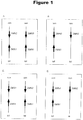
- FIG. 2 A schematic representation of this region of the human genome is present in Fig. 2 .
- 78 AJ control individuals with two (1+1) SMN1 copies were genotyped.
- the four consecutive loci chosen for marker association studies were D5S681-D5S435-MS1-D5S610. Their most likely marker configurations are shown in Table 3.
- Haplotypes for these markers were constructed for the 20 SMN1 deletion (1+0) carriers, including all individuals from groups 1del, 2del, and 3del (Table 5). Group 4del was excluded because all three individuals only had loss of exon 7 and 8 sequences.
- the six microsatellite markers were genotyped in 69 of the 99 AJ individuals identified with three copies of SMN1 and in three additional AJ individuals that were subsequently identified with four copies of SMN1 (Table 6).
- 26 individuals had three SMN1 copies and no SMN2 copies, and 16 had three SMN1 copies and one SMN2 copy; 31 of these duplication (2+1) individuals chosen for the analysis had MS1 allele 6 (Table 8).
- a separate analysis was performed for the nine group 3dup individuals that carried three SMN1 copies and two SMN2 copies, as they presumably represented a separate duplication group.
- the most likely marker haplotypes for the three groups are shown in Table 3.
- one of the group 3dup individuals (no. 59, Table 6) had the 2-5-6-10 haplotype indicating that this individual most likely carried an SMN2 duplication on the wild-type allele.
- the major duplication haplotype was also positive in two of the individuals with four SMN1 copies, one of which was homozygous for the 5-6-10 haplotype (no. 70, Table 6). There were two haplotypes that were significantly enriched in group 3dup individuals, 2-5-4-5 and 2-5-9-4, as compared to controls (p ⁇ 0.0001). The 2-5-4-5 haplotype was also the major deletion haplotype, which was also present in a small fraction of the controls.
- Sequencing 1025 bp between SMN1 intron 7 and exon 8 in individuals that carried the major duplication haplotype identified two tightly linked polymorphisms, i.e., g.27134T>G in intron 7 and g.27706_27707delAT in exon 8. Neither of these polymorphisms had been described in the literature or in the NCBI ENTREZ (SNP) database as being found in or associated with either the SMN1 or SMN2 genes.
- the g.27134T>G transversion introduced an hpyCH4III restriction site that was present in most of the duplication (2+1) individuals, but not in any of the 315 healthy (1+1) AJ controls tested.
- an AJ individual with two copies of SMN1 as determined by MLPA (or another dosage-sensitive method) who is positive for the g.27134T>G generated hpyCH4III cleavage site and its linked g.27706_27707delAT polymorphism is highly likely to be an SMN1 silent (2+0) carrier. Therefore, detection of g.27134T>G and/or g.27706_27707delAT would increase SMA carrier detection in the AJ population from 90% to 94% and reduce the residual risk after a negative carrier screening result from 1 in about 400 to 1 in about 700 (Table 2).
- the two linked polymorphisms were also present at different frequencies among AA, AS and HI, but not in the EU population.
- the g.27134T>G and g.27706_27707delAT polymorphisms were more frequent in duplication (2+1) individuals than in those with 1 or 2 SMN1 copies.
- the linked polymorphisms were exclusive to individuals with SMN1 duplications although they were only present in about 11.5% (3 of 26) of the duplication alleles examined. Testing for these polymorphisms would increase SMA carrier detection by approximately 0.7% in the AS population and would increase carrier detectability to about 93.3% (Table 2).
- the linked polymorphisms were not specific to the duplication alleles and were present in a minority of SMN1 single-copy alleles.
- the AA population has the lowest rate of SMA carrier detection (71%) due to the high prevalence of duplication alleles.
- Both g.27134T>G and g.27706_27707delAT were present in the majority of AA duplication alleles (83.7%) indicating that they likely arose from an ancient allele that was involved in the original gene conversion/recombination event that led to the SMN1 duplication, which is present in the AJ, AA, AS and HI populations.
- a total of 49 of the 99 duplication (2+1) individuals identified during the population screening carried the 27134T>G polymorphism as determined by RFLP analysis. Therefore, testing for this polymorphism in the AJ population would increase SMA carrier detection by approximately 4%, identifying about half of the silent (2+0) carriers, for a total detection rate of 94%. Moreover, the residual risk of being an SMA carrier after a negative screening result would decrease from 1 in about 400 to 1 in about 700.
- MLPA and RFLP analyses were performed on genomic DNAs from 276 African American (AA), 250 Asian (AS), 262 Hispanic (HI) and 137 European (EU) individuals.
- AA African American
- AS Asian
- HI 262 Hispanic
- EU 137 European
- Table 4 indicate that g.27134T>G was present on duplication alleles in all populations examined except for the EU individuals.
- the RFLP was observed in individuals with 1, 2, 3 or 4 copies of SMN1 indicating that it is not specific to their duplication alleles.
- polymorphisms disclosed in the examples above are expected to be useful in assessing the residual risk of SMA due to the carrier status of one or both parents.
- these novel polymorphisms can occur throughout the SMN1 gene, including within introns 1, 2a, 6, 7 and 8. With these polymorphisms and the polymorphisms disclosed above, the risk of erring in identifying SMA carrier status is minimized, allowing potential parents, guided by genetic counselors, to be better informed in making family planning decisions. Table 1.
- SMN1 Carrier Screening of 692 Ashkenazi Jewish Individuals SMN1 copy number Genotype n % Expected* (n) Expected* (%) 0 0+0 0 0 0.1 0.01 1 1+0 15 2 14 2 2 1+1 578 84 583 84 2+0 - - 1 0.2 3 1+2 99 14 91 13 4 2+2 0 0.0 4 0.5 *Expected frequencies were calculated using the observed wild-type (p 2 with 2 SMN1 copies) and the observed carrier frequency (2pq with 1 SMN1 copy) and the equation p 2 +2pq+q 2 +2qr+2pr+r 2 1 Table 2 SMA Carrier Detection and Residual Risk with addition of SMN1 g.27134T>G and g.27706_27707delAT Ethnicity Carrier Frequency Detection Rate Residual risk after negative carrier screen Detection rate with addition of SMN1 g.27
Landscapes
- Chemical & Material Sciences (AREA)
- Life Sciences & Earth Sciences (AREA)
- Organic Chemistry (AREA)
- Health & Medical Sciences (AREA)
- Proteomics, Peptides & Aminoacids (AREA)
- Engineering & Computer Science (AREA)
- Zoology (AREA)
- Wood Science & Technology (AREA)
- Analytical Chemistry (AREA)
- Genetics & Genomics (AREA)
- Bioinformatics & Cheminformatics (AREA)
- Immunology (AREA)
- Microbiology (AREA)
- Molecular Biology (AREA)
- Physics & Mathematics (AREA)
- Biotechnology (AREA)
- Biochemistry (AREA)
- Biophysics (AREA)
- General Engineering & Computer Science (AREA)
- General Health & Medical Sciences (AREA)
- Pathology (AREA)
- Measuring Or Testing Involving Enzymes Or Micro-Organisms (AREA)
Applications Claiming Priority (3)
| Application Number | Priority Date | Filing Date | Title |
|---|---|---|---|
| US201161494282P | 2011-06-07 | 2011-06-07 | |
| EP12797596.9A EP2718466B1 (fr) | 2011-06-07 | 2012-06-07 | Matériels et méthode pour l'identification de vecteurs d'amyotrophie spinale |
| PCT/US2012/041406 WO2012170725A2 (fr) | 2011-06-07 | 2012-06-07 | Matériels et méthode pour l'identification de vecteurs d'amyotrophie spinale |
Related Parent Applications (1)
| Application Number | Title | Priority Date | Filing Date |
|---|---|---|---|
| EP12797596.9A Division EP2718466B1 (fr) | 2011-06-07 | 2012-06-07 | Matériels et méthode pour l'identification de vecteurs d'amyotrophie spinale |
Publications (1)
| Publication Number | Publication Date |
|---|---|
| EP3460073A1 true EP3460073A1 (fr) | 2019-03-27 |
Family
ID=47296745
Family Applications (2)
| Application Number | Title | Priority Date | Filing Date |
|---|---|---|---|
| EP12797596.9A Active EP2718466B1 (fr) | 2011-06-07 | 2012-06-07 | Matériels et méthode pour l'identification de vecteurs d'amyotrophie spinale |
| EP18187402.5A Withdrawn EP3460073A1 (fr) | 2011-06-07 | 2012-06-07 | Matériels et méthode pour l'identification de vecteurs d'amyotrophie spinale |
Family Applications Before (1)
| Application Number | Title | Priority Date | Filing Date |
|---|---|---|---|
| EP12797596.9A Active EP2718466B1 (fr) | 2011-06-07 | 2012-06-07 | Matériels et méthode pour l'identification de vecteurs d'amyotrophie spinale |
Country Status (6)
| Country | Link |
|---|---|
| US (2) | US9994898B2 (fr) |
| EP (2) | EP2718466B1 (fr) |
| ES (1) | ES2698114T3 (fr) |
| IL (2) | IL229825A (fr) |
| PL (1) | PL2718466T3 (fr) |
| WO (1) | WO2012170725A2 (fr) |
Families Citing this family (22)
| Publication number | Priority date | Publication date | Assignee | Title |
|---|---|---|---|---|
| EP2425240A4 (fr) | 2009-04-30 | 2012-12-12 | Good Start Genetics Inc | Procédés et compositions d'évaluation de marqueurs génétiques |
| US9163281B2 (en) | 2010-12-23 | 2015-10-20 | Good Start Genetics, Inc. | Methods for maintaining the integrity and identification of a nucleic acid template in a multiplex sequencing reaction |
| US8209130B1 (en) | 2012-04-04 | 2012-06-26 | Good Start Genetics, Inc. | Sequence assembly |
| US8812422B2 (en) | 2012-04-09 | 2014-08-19 | Good Start Genetics, Inc. | Variant database |
| US10227635B2 (en) | 2012-04-16 | 2019-03-12 | Molecular Loop Biosolutions, Llc | Capture reactions |
| WO2014113540A1 (fr) * | 2013-01-16 | 2014-07-24 | Iowa State University Research Foundation, Inc. | Cible intronique profonde pour la correction d'épissure sur le gène de l'amyotrophie spinale (sma) |
| WO2015058086A1 (fr) * | 2013-10-18 | 2015-04-23 | Good Start Genetics, Inc. | Procédé pour la détermination du nombre de copies |
| US10851414B2 (en) | 2013-10-18 | 2020-12-01 | Good Start Genetics, Inc. | Methods for determining carrier status |
| US20160048608A1 (en) | 2014-08-15 | 2016-02-18 | Good Start Genetics, Inc. | Systems and methods for genetic analysis |
| US11408024B2 (en) | 2014-09-10 | 2022-08-09 | Molecular Loop Biosciences, Inc. | Methods for selectively suppressing non-target sequences |
| US10429399B2 (en) | 2014-09-24 | 2019-10-01 | Good Start Genetics, Inc. | Process control for increased robustness of genetic assays |
| US10227650B2 (en) | 2014-11-14 | 2019-03-12 | Athena Diagnostics, Inc. | Methods to detect a silent carrier of a null allele genotype |
| EP4095261B1 (fr) | 2015-01-06 | 2025-05-28 | Molecular Loop Biosciences, Inc. | Criblage de variantes structurales |
| EP3303663A4 (fr) * | 2015-05-28 | 2019-07-03 | Genepeeks, Inc. | Systèmes et procédés pour fournir une meilleure prédiction du statut de porteur de l'amyotrophie spinale |
| WO2019134003A1 (fr) * | 2017-12-31 | 2019-07-04 | Myriad Women's Health, Inc. | Méthodes d'identification de l'état porteur/non-porteur d'amyotrophie spinale et d'évaluation du risque |
| TWI712693B (zh) * | 2018-05-25 | 2020-12-11 | 豐技生物科技股份有限公司 | Smn基因的snp位點的檢測方法 |
| CN110527718A (zh) * | 2018-05-25 | 2019-12-03 | 丰技生物科技股份有限公司 | Sma基因的snp位点的检测方法 |
| WO2020146519A1 (fr) * | 2019-01-09 | 2020-07-16 | Coyote Bioscience Usa Inc. | Procédés et systèmes d'identification de l'amyotrophie spinale |
| CN111172254B (zh) * | 2020-03-19 | 2023-09-08 | 浙江中创生物医药有限公司 | 一种smn1基因突变的检测方法及试剂盒 |
| CN111961713B (zh) * | 2020-07-24 | 2024-07-16 | 天津华大医学检验所有限公司 | 用于遗传病致病基因携带者筛查的探针组合物、试剂盒及其制备方法 |
| WO2022155442A1 (fr) * | 2021-01-15 | 2022-07-21 | Laboratory Corporation Of America Holdings | Procédés, compositions et systèmes pour détecter des porteurs silencieux d'une amyotrophie spinale |
| CN116287192B (zh) * | 2023-01-18 | 2025-07-22 | 浙江大学 | 一种整合smn1与smn2拷贝数、微小变异与家系连锁分析的试剂盒及其应用 |
Citations (3)
| Publication number | Priority date | Publication date | Assignee | Title |
|---|---|---|---|---|
| JP2004344072A (ja) * | 2003-05-22 | 2004-12-09 | Japan Science & Technology Agency | Smn遺伝子のスプライシング調節エレメント |
| EP2019148A1 (fr) * | 2002-09-28 | 2009-01-28 | Inoko, Hidetoshi, Dr. | Procédé de cartographie de gène à l'aide de marqueurs de polymorphismes génétiques microsatellites |
| US20110118145A1 (en) * | 2009-11-12 | 2011-05-19 | Genzyme Corporation | Copy number analysis of genetic locus |
Family Cites Families (2)
| Publication number | Priority date | Publication date | Assignee | Title |
|---|---|---|---|---|
| EP0708178A1 (fr) * | 1994-10-19 | 1996-04-24 | Institut National De La Sante Et De La Recherche Medicale (Inserm) | Gène de la survie des neurones moteurs: gène de l'atrophie musculaire spinale |
| WO2009151546A2 (fr) * | 2008-05-27 | 2009-12-17 | Ptc Therapeutics, Inc. | Procédés de traitement d'une atrophie musculaire spinale |
-
2012
- 2012-06-07 EP EP12797596.9A patent/EP2718466B1/fr active Active
- 2012-06-07 PL PL12797596T patent/PL2718466T3/pl unknown
- 2012-06-07 US US14/122,871 patent/US9994898B2/en active Active
- 2012-06-07 WO PCT/US2012/041406 patent/WO2012170725A2/fr not_active Ceased
- 2012-06-07 ES ES12797596T patent/ES2698114T3/es active Active
- 2012-06-07 EP EP18187402.5A patent/EP3460073A1/fr not_active Withdrawn
-
2013
- 2013-12-05 IL IL229825A patent/IL229825A/en active IP Right Grant
-
2016
- 2016-12-05 IL IL249396A patent/IL249396B/en active IP Right Grant
-
2018
- 2018-05-21 US US15/984,659 patent/US11279977B2/en active Active
Patent Citations (3)
| Publication number | Priority date | Publication date | Assignee | Title |
|---|---|---|---|---|
| EP2019148A1 (fr) * | 2002-09-28 | 2009-01-28 | Inoko, Hidetoshi, Dr. | Procédé de cartographie de gène à l'aide de marqueurs de polymorphismes génétiques microsatellites |
| JP2004344072A (ja) * | 2003-05-22 | 2004-12-09 | Japan Science & Technology Agency | Smn遺伝子のスプライシング調節エレメント |
| US20110118145A1 (en) * | 2009-11-12 | 2011-05-19 | Genzyme Corporation | Copy number analysis of genetic locus |
Non-Patent Citations (18)
| Title |
|---|
| "Genbank", Database accession no. NG_008691.1 |
| "Genbank", Database accession no. NT_006713.15 |
| "Genbank", Database accession no. NT006713.15 |
| "NCBI", Database accession no. NG_008691 |
| BURLET PHILIPPE ET AL: "Single-sperm analysis for recurrence risk assessment of spinal muscular atrophy", EUROPEAN JOURNAL OF HUMAN GENETICS : EJHG SEP 2010,, vol. 18, no. 4, 31 March 2010 (2010-03-31), pages 505 - 508, XP009509776, ISSN: 1476-5438, DOI: 10.1038/EJHG.2009.198 * |
| H SCHEFFER ET AL: "Best practice guidelines for molecular analysis in spinal muscular atrophy", EUROPEAN JOURNAL OF HUMAN GENETICS, 1 July 2001 (2001-07-01), England, pages 484 - 491, XP055529264, Retrieved from the Internet <URL:https://www.nature.com/articles/5200667.pdf> [retrieved on 20181203], DOI: 10.1038/sj.ejhg.5200667 * |
| HENDRICKSON ET AL., J. MED. GENET., vol. 46, 2009, pages 641 - 644 |
| LEFEBVRE ET AL., CELL, vol. 80, 1995, pages 155 - 165 |
| LORSON ET AL., PROC. NATL. ACAD. SCI. (USA, vol. 96, 1999, pages 6307 - 6311 |
| MORRISON ET AL., HUM MOL GENET., vol. 2, no. 10, 1993, pages 1753 |
| OGINO ET AL., J. HUM. GENET., vol. 12, 2004, pages 1015 - 1023 |
| PEARNS, J MED GENET, vol. 15, 1978, pages 409 - 413 |
| SCHEFFER ET AL., EUR. J. HUM. GENET., vol. 9, 2001, pages 484 - 494 |
| SHENG-YUAN ZHU ET AL: "Molecular characterization of SMN copy number derived from carrier screening and from core families with SMA in a Chinese population.", EUROPEAN JOURNAL OF HUMAN GENETICS : EJHG SEP 2010, vol. 18, no. 9, September 2010 (2010-09-01), pages 978 - 984, XP002729952, ISSN: 1476-5438 * |
| SOARES ET AL., GENOMICS, vol. 15, no. 2, 1993, pages 365 - 71 |
| VELASCO ET AL., EUR J HUM GENET., vol. 3, no. 2, 1995, pages 96 - 101 |
| WIRTH ET AL., AM J. HUM. GENET., vol. 64, 1999, pages 1340 - 1356 |
| YI-NING SU ET AL: "Carrier Screening for Spinal Muscular Atrophy (SMA) in 107,611 Pregnant Women during the Period 2005-2009: A Prospective Population-Based Cohort Study", PLOS ONE, vol. 6, no. 2, 25 February 2011 (2011-02-25), pages e17067, XP055529721, DOI: 10.1371/journal.pone.0017067 * |
Also Published As
| Publication number | Publication date |
|---|---|
| WO2012170725A3 (fr) | 2013-02-28 |
| EP2718466B1 (fr) | 2018-08-08 |
| IL229825A (en) | 2017-10-31 |
| US20180340227A1 (en) | 2018-11-29 |
| US20140199695A1 (en) | 2014-07-17 |
| WO2012170725A2 (fr) | 2012-12-13 |
| EP2718466A2 (fr) | 2014-04-16 |
| ES2698114T3 (es) | 2019-01-31 |
| PL2718466T3 (pl) | 2019-01-31 |
| US11279977B2 (en) | 2022-03-22 |
| IL249396B (en) | 2020-10-29 |
| US9994898B2 (en) | 2018-06-12 |
| IL249396A0 (en) | 2017-02-28 |
| EP2718466A4 (fr) | 2015-05-20 |
Similar Documents
| Publication | Publication Date | Title |
|---|---|---|
| US11279977B2 (en) | Materials and methods for identifying spinal muscular atrophy carriers | |
| Luo et al. | An Ashkenazi Jewish SMN1 haplotype specific to duplication alleles improves pan-ethnic carrier screening for spinal muscular atrophy | |
| US20200270692A1 (en) | Predicting age-related macular degeneration with single nucleotide polymorphisms within or near the genes for complement component c2, factor b, plekha1, htra1, prelp, or loc387715 | |
| CN104120132B (zh) | Fbn1基因突变体及其应用 | |
| US20110182872A1 (en) | Methods of analysis of polymorphisms and uses thereof | |
| US20090305900A1 (en) | Genemap of the human genes associated with longevity | |
| CA2658563A1 (fr) | Gene de susceptibilite a la maladie de crohn | |
| EP1566449A1 (fr) | Utilisation des haplotypes et des SNPs des gènes associés au métabolisme des lipides pour l'analyse et le diagnostic des maladies cardiovasculaires | |
| WO2006123955A2 (fr) | Procedes et compositions d'evaluation des fonctions et troubles pulmonaires | |
| WO2008087049A1 (fr) | Marqueur de diagnostic et plate-forme de conception de médicament dans les cas d'infarctus du myocarde et d'insuffisance cardiaque | |
| US9752195B2 (en) | TTC8 as prognostic gene for progressive retinal atrophy in dogs | |
| US20130281319A1 (en) | Methods and compositions for assessment of pulmonary function and disorders | |
| JP5895317B2 (ja) | 第10染色体長腕24領域の一塩基多型に基づく骨・関節疾患の検査方法 | |
| KR20150092937A (ko) | 한국인의 고혈압 예측용 snp 마커 | |
| WO2006123954A1 (fr) | Methodes et compositions pour evaluation de la fonction et de troubles pulmonaires | |
| AU2017265006A1 (en) | Methods of analysis of polymorphisms and uses thereof | |
| KR20110011306A (ko) | 텔로미어 유지 유전자를 이용한 폐암 감수성 진단용 마커 및 폐암 감수성 예측 및 판단 방법 | |
| JP4825956B2 (ja) | 気道粘膜炎症性疾患の罹患リスクの判定 | |
| EP4689178A1 (fr) | Nouveau dosage pour la mise en phase de loci génomiques distants avec résolution de la zygosité via l'analyse de données hybrides de séquençage à lecture longue | |
| JP2017006074A (ja) | 末梢動脈疾患検査方法及び検査用試薬 | |
| JP2018134060A (ja) | 側弯症の検査方法 |
Legal Events
| Date | Code | Title | Description |
|---|---|---|---|
| PUAI | Public reference made under article 153(3) epc to a published international application that has entered the european phase |
Free format text: ORIGINAL CODE: 0009012 |
|
| AC | Divisional application: reference to earlier application |
Ref document number: 2718466 Country of ref document: EP Kind code of ref document: P |
|
| AK | Designated contracting states |
Kind code of ref document: A1 Designated state(s): AL AT BE BG CH CY CZ DE DK EE ES FI FR GB GR HR HU IE IS IT LI LT LU LV MC MK MT NL NO PL PT RO RS SE SI SK SM TR |
|
| 17P | Request for examination filed |
Effective date: 20191212 |
|
| RBV | Designated contracting states (corrected) |
Designated state(s): AL AT BE BG CH CY CZ DE DK EE ES FI FR GB GR HR HU IE IS IT LI LT LU LV MC MK MT NL NO PL PT RO RS SE SI SK SM TR |
|
| 17Q | First examination report despatched |
Effective date: 20200206 |
|
| STAA | Information on the status of an ep patent application or granted ep patent |
Free format text: STATUS: THE APPLICATION IS DEEMED TO BE WITHDRAWN |
|
| 18D | Application deemed to be withdrawn |
Effective date: 20200818 |