EP3461196B1 - Procédé de coordination de brouillage - Google Patents
Procédé de coordination de brouillage Download PDFInfo
- Publication number
- EP3461196B1 EP3461196B1 EP16904361.9A EP16904361A EP3461196B1 EP 3461196 B1 EP3461196 B1 EP 3461196B1 EP 16904361 A EP16904361 A EP 16904361A EP 3461196 B1 EP3461196 B1 EP 3461196B1
- Authority
- EP
- European Patent Office
- Prior art keywords
- cell
- configuration information
- parameter
- terminal
- served
- Prior art date
- Legal status (The legal status is an assumption and is not a legal conclusion. Google has not performed a legal analysis and makes no representation as to the accuracy of the status listed.)
- Active
Links
Images




Classifications
-
- H—ELECTRICITY
- H04—ELECTRIC COMMUNICATION TECHNIQUE
- H04W—WIRELESS COMMUNICATION NETWORKS
- H04W76/00—Connection management
- H04W76/10—Connection setup
- H04W76/15—Setup of multiple wireless link connections
-
- H—ELECTRICITY
- H04—ELECTRIC COMMUNICATION TECHNIQUE
- H04W—WIRELESS COMMUNICATION NETWORKS
- H04W72/00—Local resource management
- H04W72/20—Control channels or signalling for resource management
- H04W72/23—Control channels or signalling for resource management in the downlink direction of a wireless link, i.e. towards a terminal
-
- H—ELECTRICITY
- H04—ELECTRIC COMMUNICATION TECHNIQUE
- H04L—TRANSMISSION OF DIGITAL INFORMATION, e.g. TELEGRAPHIC COMMUNICATION
- H04L5/00—Arrangements affording multiple use of the transmission path
- H04L5/0001—Arrangements for dividing the transmission path
- H04L5/0003—Two-dimensional division
- H04L5/0005—Time-frequency
- H04L5/0007—Time-frequency the frequencies being orthogonal, e.g. OFDM(A) or DMT
-
- H—ELECTRICITY
- H04—ELECTRIC COMMUNICATION TECHNIQUE
- H04W—WIRELESS COMMUNICATION NETWORKS
- H04W28/00—Network traffic management; Network resource management
- H04W28/02—Traffic management, e.g. flow control or congestion control
- H04W28/0215—Traffic management, e.g. flow control or congestion control based on user or device properties, e.g. MTC-capable devices
-
- H—ELECTRICITY
- H04—ELECTRIC COMMUNICATION TECHNIQUE
- H04W—WIRELESS COMMUNICATION NETWORKS
- H04W72/00—Local resource management
- H04W72/04—Wireless resource allocation
-
- H—ELECTRICITY
- H04—ELECTRIC COMMUNICATION TECHNIQUE
- H04W—WIRELESS COMMUNICATION NETWORKS
- H04W72/00—Local resource management
- H04W72/04—Wireless resource allocation
- H04W72/044—Wireless resource allocation based on the type of the allocated resource
- H04W72/0446—Resources in time domain, e.g. slots or frames
-
- H—ELECTRICITY
- H04—ELECTRIC COMMUNICATION TECHNIQUE
- H04W—WIRELESS COMMUNICATION NETWORKS
- H04W72/00—Local resource management
- H04W72/20—Control channels or signalling for resource management
- H04W72/21—Control channels or signalling for resource management in the uplink direction of a wireless link, i.e. towards the network
-
- H—ELECTRICITY
- H04—ELECTRIC COMMUNICATION TECHNIQUE
- H04W—WIRELESS COMMUNICATION NETWORKS
- H04W28/00—Network traffic management; Network resource management
- H04W28/16—Central resource management; Negotiation of resources or communication parameters, e.g. negotiating bandwidth or QoS [Quality of Service]
- H04W28/18—Negotiating wireless communication parameters
-
- Y—GENERAL TAGGING OF NEW TECHNOLOGICAL DEVELOPMENTS; GENERAL TAGGING OF CROSS-SECTIONAL TECHNOLOGIES SPANNING OVER SEVERAL SECTIONS OF THE IPC; TECHNICAL SUBJECTS COVERED BY FORMER USPC CROSS-REFERENCE ART COLLECTIONS [XRACs] AND DIGESTS
- Y02—TECHNOLOGIES OR APPLICATIONS FOR MITIGATION OR ADAPTATION AGAINST CLIMATE CHANGE
- Y02D—CLIMATE CHANGE MITIGATION TECHNOLOGIES IN INFORMATION AND COMMUNICATION TECHNOLOGIES [ICT], I.E. INFORMATION AND COMMUNICATION TECHNOLOGIES AIMING AT THE REDUCTION OF THEIR OWN ENERGY USE
- Y02D30/00—Reducing energy consumption in communication networks
- Y02D30/70—Reducing energy consumption in communication networks in wireless communication networks
Definitions
- This application relates to the field of communications technologies, and in particular, to an interference coordination method and apparatus.
- UDN Ultra Dense Network
- UE User Equipment
- enhanced inter-cell interference coordination may be used to enhance throughputs of a system and a cell edge.
- eICIC enhanced inter-cell interference coordination
- a macro cell uses an almost blank subframe (English: almost blank subframe, ABS for short) to protect resources that are subject to strong cell interference, where the ABS subframe means reducing transmit power or not performing transmission in some physical channels.
- WO2016/036158 A1 discloses a method of allocating sounding reference signal resources applicable with cell edge and cell center terminals whereby a base station of a target cell receives information of cell edge terminals transmitted by an adjacent cell.
- Embodiments of this application provide an interference coordination method and apparatus to reduce interference in uplink transmission.
- an embodiment of this application provides an interference coordination method, where the method includes:
- the served terminal is a terminal that is served by the first cell and on which an absolute value of a difference between signal strength received from the first cell and signal strength received from the second cell is less than a preset threshold.
- the first configuration information is determined for the served terminal, so that when the served terminal transmits the UCI by using a resource indicated by the parameter included in the first configuration information, it is ensured that no interference is caused to other terminals that are located in an area of the second cell and access the second cell and terminals that are located in an area of the first cell and access the first cell during uplink transmission in the second cell and uplink transmission in the first cell.
- a resource configured in the prior art may be used to transmit UCI.
- the parameter included in the first configuration information is configured for the served terminal. Specifically, when the terminal accesses the first cell and the terminal is located in the overlapping area between the first cell and the second cell, the first cell may allocate the parameter to the terminal, and deliver the parameter to the terminal, so that the terminal can transmit the UCI by using the resource indicated by the parameter.
- the parameter included in the first configuration information includes at least one of a cyclic shift value and an orthogonal sequence code.
- the determining, by a first cell, first configuration information of the first cell may be implemented in the following manner:
- the first parameter pool may include a plurality of sequence codes and a plurality of cyclic shift values.
- Any two sequence codes included in the first parameter pool are orthogonal to each other, or any two cyclic shift values included in the first parameter pool are orthogonal to each other.
- the parameters included in the first parameter pool are orthogonal to parameters included in a second parameter pool preconfigured for the second cell.
- the method may further include: receiving, by the first cell, second configuration information of the second cell notified by the second cell, where the second configuration information includes a parameter preconfigured for the second cell and used for transmitting UCI by a terminal served by the second cell.
- the determining, by a first cell, first configuration information of the first cell may be implemented in the following manner: determining, by the first cell, the first configuration information of the first cell based on the second configuration information of the second cell, where the parameter in the first configuration information is orthogonal to the parameter in the second configuration information.
- the notifying, by the first cell, the first configuration information to the served terminal may be implemented in the following manner:
- the first cell is a secondary cell of the served terminal, and the served terminal is further connected to a primary cell; and the notifying, by the first cell, the first configuration information to the served terminal may be implemented in the following manner: instructing, by the first cell, the primary cell to send the first configuration information to the served terminal.
- the first cell is the secondary cell of the served terminal, the served terminal is further connected to the primary cell, and before the determining, by a first cell, first configuration information of the first cell, the method further includes:
- the first cell is the secondary cell of the served terminal, the served terminal is further connected to the primary cell, and before the determining, by a first cell, first configuration information of the first cell, the method further includes:
- the determining, by a first cell, first configuration information of the first cell may be implemented in the following manner: receiving, by the first cell, the at least one parameter allocated to the first cell and sent by the primary cell; and selecting, by the first cell, a parameter from the at least one parameter allocated to the first cell, and generating the first configuration information.
- the first cell is the secondary cell of the served terminal, the served terminal is further connected to the primary cell, and before the determining, by a first cell, first configuration information of the first cell, the method further includes:
- the determining, by a first cell, first configuration information of the first cell may be implemented in the following manner:
- an embodiment of this application further provides an interference coordination method, where the method includes: determining, by a primary cell, first configuration information of a secondary cell, where a terminal of dual connectivity is connected to the primary cell and the secondary cell separately, and a parameter included in the first configuration information is a parameter allocated to the secondary cell and is a parameter orthogonal to a parameter allocated to a neighboring cell of the secondary cell; and notifying, by the primary cell, the first configuration information to the terminal of dual connectivity.
- the primary cell determines, for the secondary cell, the parameter used for transmitting UCI by the terminal of dual connectivity, and the parameter corresponding to the secondary cell is orthogonal to the parameter of the neighboring cell of the secondary cell, thereby ensuring that no interference is caused to the neighboring cell when a terminal served by the secondary cell transmits UCI.
- the parameter included in the first configuration information is used for transmitting uplink control information UCI by the terminal of dual connectivity.
- the terminal of dual connectivity is located in an overlapping area between the secondary cell and the neighboring cell of the secondary cell.
- the first configuration information includes at least one of a cyclic shift value and an orthogonal sequence code.
- the first configuration information is configured for the terminal of dual connectivity.
- the method may further include: receiving, by the primary cell, second configuration information sent by the secondary cell, and receiving third configuration information sent by the neighboring cell, where the second configuration information includes at least one parameter used for transmitting UCI by a terminal served by the secondary cell, and the third configuration information includes at least one parameter used for transmitting UCI by a terminal served by the neighboring cell.
- the determining, by a primary cell, first configuration information of a secondary cell may be implemented in the following manner: determining, by the primary cell, the first configuration information based on the second configuration information and the third configuration information.
- the determining, by the primary cell, the first configuration information based on the second configuration information and the third configuration information may be implemented in the following manner: selecting, by the primary cell from the at least one parameter included in the second configuration information, a parameter that is orthogonal to a parameter included in the third configuration information, and generating the first configuration information.
- the method may further include:
- the determining, by a primary cell, first configuration information of the secondary cell may be implemented in the following manner: receiving, by the primary cell, the first configuration information sent by the secondary cell, where the first configuration information is generated based on a parameter that is selected from the at least one UCI parameter allocated to the secondary cell and used for sending the UCI by the terminal of dual connectivity after the secondary cell receives the at least one parameter allocated to the secondary cell and sent by the primary cell.
- the method may further include: determining, by the primary cell based on the second configuration information and the third configuration information, a first configuration mode for optimizing the second configuration information by the secondary cell and a second configuration mode for optimizing the third configuration information by the neighboring cell, and sending the first configuration mode to the secondary cell and sending the second configuration mode to the neighboring cell; where at least one parameter included in the second configuration information optimized by the secondary cell based on the first configuration mode is orthogonal to at least one parameter included in the third configuration information optimized by the neighboring cell based on the second configuration mode.
- the determining, by a primary cell, first configuration information of the secondary cell may be implemented in the following manner: receiving, by the primary cell, the first configuration information sent by the secondary cell, where the first configuration information is generated based on a parameter that is selected from the at least one parameter included in the optimized second configuration information and used for transmitting the UCI by the terminal of dual connectivity after the secondary cell optimizes the second configuration information based on the first configuration mode.
- the notifying, by the primary cell, the first configuration information to the terminal of dual connectivity includes: sending, by the primary cell, the first configuration information to the terminal of dual connectivity by using RRC signaling.
- the notifying, by the primary cell, the first configuration information to the terminal of dual connectivity includes: sending, by the primary cell, a notification message to the terminal of dual connectivity, where the notification message is used to instruct the terminal of dual connectivity to obtain the first configuration information from the secondary cell.
- an embodiment of this application provides an interference coordination method, where the method includes:
- the terminal served by the first cell When transmitting the uplink signal, the terminal served by the first cell is prevented from using a subframe in the first subframe set. Therefore, it can be ensured that interference to uplink reception by a neighboring cell of the first cell is reduced.
- the uplink signal includes at least one of an uplink sounding signal, a preamble, and a sequence code.
- the first uplink information is at least one of the uplink signal, a physical uplink control channel PUCCH, a physical uplink shared channel PUSCH, and a physical random access channel PRACH.
- the first subframe set includes a muted subframe of a physical resource block for transmitting the PUCCH or muted subframes of all physical resource blocks.
- the notifying, by the first cell, subframe configuration information to a terminal served by the first cell may be implemented in the following manner:
- the method may further include:
- the first cell is a primary cell, and the second cell is a secondary cell; or the first cell is a macro cell, and the second cell is a micro cell.
- the configuration information of the second subframe set is used to instruct the second cell to configure, based on the configuration information of the second subframe set, a third subframe set used for uplink transmission.
- a subframe included in the third subframe set is used for uplink transmission in the second cell.
- the subframe included in the third subframe set is different from the subframe included in the second subframe set.
- the subframe in the second subframe set is further used for uplink transmission in an uplink hybrid automatic repeat request HARQ process in the first cell.
- the configuring, by the first cell, a second subframe set used for uplink transmission for a second cell may be implemented in the following manner: configuring, by the first cell, the second subframe set for the second cell based on a radio resource configuration of the first cell and system information.
- the configuring, by the first cell, the second subframe set for the second cell based on a radio resource configuration of the first cell and system information may be implemented in the following manner: selecting, by the first cell from subframes scheduled in a scheduling window of a system information block and subframes scheduled for paging detection, uplink subframes used for performing message feedbacks by a terminal, to form the subframe set.
- the configuration information of the second subframe set is used to indicate that a terminal served by the second cell needs to be forbidden to perform uplink transmission in the second subframe set when the second cell performs uplink or downlink scheduling.
- the configuration information of the second subframe set is used to instruct the second cell to schedule a physical downlink shared channel PDSCH in a preconfigured first subframe, to prevent the terminal served by the second cell from performing a hybrid automatic repeat request HARQ feedback in the second subframe set; or the configuration information of the second subframe set is used to instruct the second cell to schedule a physical uplink shared channel PUSCH in a preconfigured second subframe, to prevent the terminal served by the second cell from first sending or retransmitting a data packet in the second subframe set.
- an embodiment of this application provides an interference coordination method, where the method includes:
- a terminal served by the second cell When transmitting an uplink signal, a terminal served by the second cell is prevented from using a subframe in the first subframe set, and the second cell configures the second subframe set, to schedule the served terminal to use a subframe in the second subframe set for uplink transmission. Therefore, it can be ensured that uplink interference to a neighboring cell of the second cell is reduced.
- the first cell is a primary cell, and the second cell is a secondary cell; or the first cell is a macro cell, and the second cell is a micro cell.
- a subframe included in the second subframe set is different from a subframe included in the first subframe set.
- the subframe included in the second subframe set is used for uplink transmission in the second cell.
- the method includes: forbidding a terminal served by the second cell to perform uplink transmission in the first subframe set when the second cell performs uplink or downlink scheduling.
- the forbidding a terminal served by the second cell to perform uplink transmission in the first subframe set when the second cell performs uplink or downlink scheduling may be implemented in the following manner:
- an embodiment of this application provides an interference coordination apparatus, where the apparatus is applied to a first cell and includes:
- the served terminal is a terminal that is served by the first cell and on which an absolute value of a difference between signal strength received from the first cell and signal strength received from the second cell is less than a preset threshold.
- the parameter included in the first configuration information is configured for the served terminal.
- the parameter included in the first configuration information includes at least one of a cyclic shift value and an orthogonal sequence code.
- the processor is specifically configured to select, by the first cell, a parameter from a first parameter pool, and generate the first configuration information, where the first parameter pool includes a plurality of parameters preconfigured for the first cell and used for transmitting the UCI by the terminal served by the first cell, and any two parameters are orthogonal to each other.
- the first parameter pool includes a plurality of sequence codes and a plurality of cyclic shift values.
- any two sequence codes included in the first parameter pool are orthogonal to each other, or any two cyclic shift values included in the first parameter pool are orthogonal to each other.
- the parameters included in the first parameter pool are orthogonal to parameters included in a second parameter pool preconfigured for the second cell.
- the transceiver is further configured to: before the processor determines the first configuration information of the first cell, receive second configuration information of the second cell notified by the second cell, where the second configuration information includes a parameter preconfigured for the second cell and used for transmitting UCI by a terminal served by the second cell.
- the processor is specifically configured to determine the first configuration information of the first cell based on the second configuration information of the second cell, where the parameter in the first configuration information is orthogonal to the parameter in the second configuration information.
- the transceiver is specifically configured to send the first configuration information to the served terminal by using radio resource control RRC signaling.
- the first cell is a secondary cell of the served terminal, and the served terminal is further connected to a primary cell; and the transceiver is specifically configured to instruct the primary cell to send the first configuration information to the served terminal.
- the first cell is the secondary cell of the served terminal, and the served terminal is further connected to the primary cell; and the transceiver is further configured to: before the processor determines the first configuration information of the first cell, notify third configuration information preconfigured for the first cell to the primary cell, so that the primary cell selects, from at least one UCI parameter included in the third configuration information, a parameter that is orthogonal to a parameter included in received fourth configuration information sent by the second cell, and after generating the first configuration information, sends the first configuration information to the first cell; where the third configuration information includes at least one parameter used for transmitting the UCI by the terminal served by the first cell, and the fourth configuration information includes at least one parameter preconfigured for the second cell and used for transmitting UCI by a terminal served by the second cell.
- the first cell is the secondary cell of the served terminal, and the served terminal is further connected to the primary cell; and the transceiver is further configured to: before the processor determines the first configuration information of the first cell, notify third configuration information preconfigured for the first cell to the primary cell, so that the primary cell reallocates at least one parameter to the first cell and the second cell separately based on the third configuration information and received fourth configuration information sent by the second cell; where the at least one parameter allocated to the first cell is orthogonal to the at least one parameter allocated to the second cell, the third configuration information includes at least one parameter used for transmitting the UCI by the terminal served by the first cell, and the fourth configuration information includes at least one parameter preconfigured for the second cell and used for transmitting UCI by a terminal served by the second cell.
- the transceiver is further configured to receive the at least one parameter allocated to the first cell and sent by the primary cell; and the processor is specifically configured to select a parameter from the at least one parameter allocated to the first cell, and generate the first configuration information.
- the first cell is the secondary cell of the served terminal, and the served terminal is further connected to the primary cell; and the transceiver is further configured to: before the processor determines the first configuration information of the first cell, notify third configuration information preconfigured for the first cell to the primary cell, so that the primary cell determines, based on the third configuration information and received fourth configuration information sent by the second cell, a first configuration mode for optimizing the third configuration information by the first cell and a second configuration mode for optimizing the fourth configuration information by the second cell; where at least one parameter included in the third configuration information optimized by the first cell based on the first configuration mode is orthogonal to at least one parameter included in the fourth configuration information optimized by the second cell based on the second configuration mode, the third configuration information includes at least one parameter used for transmitting the UCI
- the transceiver is further configured to receive the first configuration mode sent by the primary cell; and the processor is specifically configured to optimize the third configuration information based on the first configuration mode, and select a parameter from the at least one parameter included in the optimized third configuration information to generate the first configuration information.
- an embodiment of this application further provides an interference coordination apparatus, where the apparatus is applied to a primary cell and includes:
- the parameter included in the first configuration information is used for transmitting uplink control information UCI by the terminal of dual connectivity.
- the terminal of dual connectivity is located in an overlapping area between the secondary cell and the neighboring cell of the secondary cell.
- the first configuration information includes at least one of a cyclic shift value and an orthogonal sequence code.
- the first configuration information is configured for the terminal of dual connectivity.
- the transceiver is further configured to: before the processor determines the first configuration information of the secondary cell, receive second configuration information sent by the secondary cell, and receive third configuration information sent by the neighboring cell, where the second configuration information includes at least one parameter used for transmitting UCI by a terminal served by the secondary cell, and the third configuration information includes at least one parameter used for transmitting UCI by a terminal served by the neighboring cell.
- the processor is specifically configured to determine the first configuration information based on the second configuration information and the third configuration information.
- the processor is specifically configured to select, from the at least one parameter included in the second configuration information, a parameter that is orthogonal to a parameter included in the third configuration information, and generate the first configuration information.
- the processor is further configured to: after the transceiver receives the second configuration information sent by the secondary cell and receives the third configuration information sent by the neighboring cell, and before determining the first configuration information of the secondary cell, allocate at least one parameter to the secondary cell and the neighboring cell separately based on the second configuration information and the third configuration information, and notify the secondary cell and the neighboring cell, where the at least one parameter allocated to the secondary cell is orthogonal to the at least one parameter allocated to the neighboring cell.
- the transceiver is further configured to receive the first configuration information sent by the secondary cell, where the first configuration information is generated based on a parameter that is selected from the at least one UCI parameter allocated to the secondary cell and used for sending the UCI by the terminal of dual connectivity after the secondary cell receives the at least one parameter allocated to the secondary cell and sent by the primary cell.
- the processor is further configured to: after the transceiver receives the second configuration information sent by the secondary cell and receives the third configuration information sent by the neighboring cell, and before determining the first configuration information of the secondary cell, determine, based on the second configuration information and the third configuration information, a first configuration mode for optimizing the second configuration information by the secondary cell and a second configuration mode for optimizing the third configuration information by the neighboring cell; and the transceiver is further configured to send the first configuration mode to the secondary cell and send the second configuration mode to the neighboring cell; where at least one parameter included in the second configuration information optimized by the secondary cell based on the first configuration mode is orthogonal to at least one parameter included in the third configuration information optimized by the neighboring cell based on the second configuration mode.
- the transceiver is further configured to receive the first configuration information sent by the secondary cell, where the first configuration information is generated based on a parameter that is selected from the at least one parameter included in the optimized second configuration information and used for transmitting the UCI by the terminal of dual connectivity after the secondary cell optimizes the second configuration information based on the first configuration mode.
- the transceiver is specifically configured to send the first configuration information to the terminal of dual connectivity by using RRC signaling.
- the transceiver is specifically configured to send a notification message to the terminal of dual connectivity, where the notification message is used to instruct the terminal of dual connectivity to obtain the first configuration information from the secondary cell.
- an embodiment of this application further provides an interference coordination apparatus, where the apparatus is applied to a first cell and includes:
- the uplink signal includes at least one of an uplink sounding signal, a preamble, and a sequence code.
- the first uplink information is at least one of the uplink signal, a physical uplink control channel PUCCH, a physical uplink shared channel PUSCH, and a physical random access channel PRACH.
- the first subframe set includes a muted subframe of a physical resource block for transmitting the PUCCH or muted subframes of all physical resource blocks.
- the transceiver is specifically configured to: send a broadcast message to the terminal served by the first cell, where the broadcast message carries the subframe configuration information; or send RRC signaling carrying the subframe configuration information to the terminal served by the first cell.
- the processor is further configured to configure a second subframe set used for uplink transmission, where a subframe included in the second subframe set is used for uplink communication in the first cell; and the transceiver is further configured to send configuration information of the second subframe set to a second cell.
- the first cell is a primary cell, and the second cell is a secondary cell; or the first cell is a macro cell, and the second cell is a micro cell.
- the configuration information of the second subframe set is used to instruct the second cell to configure, based on the configuration information of the second subframe set, a third subframe set used for uplink transmission.
- a subframe included in the third subframe set is used for uplink transmission in the second cell.
- the subframe included in the third subframe set is different from the subframe included in the second subframe set.
- the subframe in the second subframe set is further used for uplink transmission in an uplink hybrid automatic repeat request HARQ process in the first cell.
- the processor is specifically configured to configure the second subframe set for the second cell based on a radio resource configuration of the first cell and system information.
- the processor is specifically configured to select, from subframes scheduled in a scheduling window of a system information block and subframes scheduled for paging detection, uplink subframes used for performing message feedbacks by a terminal, to form the subframe set.
- the configuration information of the second subframe set is used to indicate that a terminal served by the second cell needs to be forbidden to perform uplink transmission in the second subframe set when the second cell performs uplink or downlink scheduling.
- the configuration information of the second subframe set is used to instruct the second cell to schedule a physical downlink shared channel PDSCH in a preset first subframe, to prevent the terminal served by the secondary cell from performing a hybrid automatic repeat request HARQ feedback in the second subframe set.
- the configuration information of the second subframe set is used to instruct the second cell to schedule a physical uplink shared channel PUSCH in a preconfigured second subframe, to prevent the terminal served by the second cell from first sending or retransmitting a data packet in the second subframe set.
- this application further provides an interference coordination apparatus, where the apparatus is applied to a second cell and includes:
- the first cell is a primary cell, and the second cell is a secondary cell; or the first cell is a macro cell, and the second cell is a micro cell.
- a subframe included in the second subframe set is different from a subframe included in the first subframe set.
- the subframe included in the second subframe set is used for uplink transmission in the second cell.
- the processor when performing uplink or downlink scheduling, is further configured to forbid a terminal served by the second cell to perform uplink transmission in the first subframe set.
- the processor is specifically configured to schedule a physical downlink shared channel PDSCH in a subframe included in the second subframe set, thereby forbidding the terminal served by the secondary cell to perform a hybrid automatic repeat request HARQ feedback in the first subframe set.
- the processor is specifically configured to schedule a physical uplink shared channel PUSCH in a subframe included in the second subframe set, thereby preventing the terminal served by the second cell from first sending or retransmitting a data packet in the first subframe set.
- this application further provides an interference coordination apparatus, where the apparatus is applied to a first cell and includes:
- the served terminal is a terminal that is served by the first cell and on which an absolute value of a difference between signal strength received from the first cell and signal strength received from the second cell is less than a preset threshold.
- the parameter included in the first configuration information is configured for the served terminal.
- the parameter included in the first configuration information includes at least one of a cyclic shift value and an orthogonal sequence code.
- the processing unit is specifically configured to:
- the first parameter pool includes a plurality of sequence codes and a plurality of cyclic shift values.
- any two sequence codes included in the first parameter pool are orthogonal to each other, or any two cyclic shift values included in the first parameter pool are orthogonal to each other.
- the parameters included in the first parameter pool are orthogonal to parameters included in a second parameter pool preconfigured for the second cell.
- the apparatus further includes a receiving unit, configured to: before the processing unit determines the first configuration information of the first cell, receive second configuration information of the second cell notified by the second cell, where the second configuration information includes a parameter preconfigured for the second cell and used for transmitting UCI by a terminal served by the second cell.
- the processing unit is specifically configured to determine the first configuration information of the first cell based on the second configuration information of the second cell, where the parameter in the first configuration information is orthogonal to the parameter in the second configuration information.
- the notifying unit is specifically configured to send the first configuration information to the served terminal by using radio resource control RRC signaling.
- the first cell is a secondary cell of the served terminal, and the served terminal is further connected to a primary cell; and the notifying unit is specifically configured to instruct the primary cell to send the first configuration information to the served terminal.
- the first cell is the secondary cell of the served terminal, and the served terminal is further connected to the primary cell; and the notifying unit is further configured to: before the processing unit determines the first configuration information of the first cell, notify third configuration information preconfigured for the first cell to the primary cell, so that the primary cell selects, from at least one UCI parameter included in the third configuration information, a parameter that is orthogonal to a parameter included in received fourth configuration information sent by the second cell, and after generating the first configuration information, sends the first configuration information to the first cell; where the third configuration information includes at least one parameter used for transmitting the UCI by the terminal served by the first cell, and the fourth configuration information includes at least one parameter preconfigured for the second cell and used for transmitting UCI by a terminal served by the second cell.
- the first cell is the secondary cell of the served terminal, and the served terminal is further connected to the primary cell; and the notifying unit is further configured to: before the processing unit determines the first configuration information of the first cell, notify third configuration information preconfigured for the first cell to the primary cell, so that the primary cell reallocates at least one parameter to the first cell and the second cell separately based on the third configuration information and received fourth configuration information sent by the second cell; where the at least one parameter allocated to the first cell is orthogonal to the at least one parameter allocated to the second cell, the third configuration information includes at least one parameter used for transmitting the UCI by the terminal served by the first cell, and the fourth configuration information includes at least one parameter preconfigured for the second cell and used for transmitting UCI by a terminal served by the second cell.
- the apparatus further includes a receiving unit, configured to receive the at least one parameter allocated to the first cell and sent by the primary cell; and the processing unit is specifically configured to select a parameter from the at least one parameter allocated to the first cell, and generate the first configuration information.
- the first cell is the secondary cell of the served terminal, and the served terminal is further connected to the primary cell; and the notifying unit is further configured to: before the processing unit determines the first configuration information of the first cell, notify third configuration information preconfigured for the first cell to the primary cell, so that the primary cell determines, based on the third configuration information and received fourth configuration information sent by the second cell, a first configuration mode for optimizing the third configuration information by the first cell and a second configuration mode for optimizing the fourth configuration information by the second cell; where at least one parameter included in the third configuration information optimized by the first cell based on the first configuration mode is orthogonal to at least one parameter included in the fourth configuration information optimized by the second cell based on the second configuration mode, the third configuration information includes at least one parameter used for transmitting the UCI by the terminal served by the first cell, and the fourth configuration information includes at least one parameter preconfigured for the second cell and used for transmitting UCI by a terminal served by the second cell.
- the apparatus further includes a receiving unit, configured to receive the first configuration mode sent by the primary cell; and the processing unit is specifically configured to optimize the third configuration information based on the first configuration mode, and select a parameter from the at least one parameter included in the optimized third configuration information to generate the first configuration information.
- an embodiment of this application provides an interference coordination apparatus, where the apparatus is applied to a primary cell and includes:
- the terminal of dual connectivity is located in an overlapping area between the secondary cell and the neighboring cell of the secondary cell.
- the first configuration information includes at least one of a cyclic shift value and an orthogonal sequence code.
- the first configuration information is configured for the terminal of dual connectivity.
- the apparatus further includes a receiving unit, configured to: before the processing unit determines the first configuration information of the secondary cell, receive second configuration information sent by the secondary cell, and receive third configuration information sent by the neighboring cell, where the second configuration information includes at least one parameter used for transmitting UCI by a terminal served by the secondary cell, and the third configuration information includes at least one parameter used for transmitting UCI by a terminal served by the neighboring cell.
- the processing unit is specifically configured to determine the first configuration information based on the second configuration information and the third configuration information.
- the processing unit is specifically configured to select, from the at least one parameter included in the second configuration information, a parameter that is orthogonal to a parameter included in the third configuration information, and generate the first configuration information.
- the processing unit is further configured to: after the receiving unit receives the second configuration information sent by the secondary cell and receives the third configuration information sent by the neighboring cell, and before determining the first configuration information of the secondary cell, allocate at least one parameter to the secondary cell and the neighboring cell separately based on the second configuration information and the third configuration information, and notify the secondary cell and the neighboring cell, where the at least one parameter allocated to the secondary cell is orthogonal to the at least one parameter allocated to the neighboring cell.
- the receiving unit is further configured to receive the first configuration information sent by the secondary cell, where the first configuration information is generated based on a parameter that is selected from the at least one UCI parameter allocated to the secondary cell and used for sending the UCI by the terminal of dual connectivity after the secondary cell receives the at least one parameter allocated to the secondary cell and sent by the primary cell.
- the processing unit is further configured to: after the receiving unit receives the second configuration information sent by the secondary cell and receives the third configuration information sent by the neighboring cell, and before determining the first configuration information of the secondary cell, determine, based on the second configuration information and the third configuration information, a first configuration mode for optimizing the second configuration information by the secondary cell and a second configuration mode for optimizing the third configuration information by the neighboring cell; and the notifying unit is further configured to send the first configuration mode to the secondary cell and send the second configuration mode to the neighboring cell; where at least one parameter included in the second configuration information optimized by the secondary cell based on the first configuration mode is orthogonal to at least one parameter included in the third configuration information optimized by the neighboring cell based on the second configuration mode.
- the receiving unit is further configured to receive the first configuration information sent by the secondary cell, where the first configuration information is generated based on a parameter that is selected from the at least one parameter included in the optimized second configuration information and used for transmitting the UCI by the terminal of dual connectivity after the secondary cell optimizes the second configuration information based on the first configuration mode.
- the notifying unit is specifically configured to send the first configuration information to the terminal of dual connectivity by using RRC signaling.
- the notifying unit is specifically configured to send a notification message to the terminal of dual connectivity, where the notification message is used to instruct the terminal of dual connectivity to obtain the first configuration information from the secondary cell.
- an embodiment of this application provides an interference coordination apparatus, where the apparatus is applied to a first cell and includes:
- the uplink signal includes at least one of an uplink sounding signal, a preamble, and a sequence code.
- the first uplink information is at least one of the uplink signal, a physical uplink control channel PUCCH, a physical uplink shared channel PUSCH, and a physical random access channel PRACH.
- the first subframe set includes a muted subframe of a physical resource block for transmitting the PUCCH or muted subframes of all physical resource blocks.
- the first notifying unit is specifically configured to: send a broadcast message to the terminal served by the first cell, where the broadcast message carries the subframe configuration information; or send RRC signaling carrying the subframe configuration information to the terminal served by the first cell.
- the apparatus further includes:
- the first cell is a primary cell, and the second cell is a secondary cell; or the first cell is a macro cell, or the first cell is a micro cell.
- the configuration information of the second subframe set is used to instruct the second cell to configure, based on the configuration information of the second subframe set, a third subframe set used for uplink transmission.
- a subframe included in the third subframe set is used for uplink transmission in the second cell.
- the subframe included in the third subframe set is different from the subframe included in the second subframe set.
- the subframe in the second subframe set is further used for uplink transmission in an uplink hybrid automatic repeat request HARQ process in the first cell.
- the second processing unit is specifically configured to configure the second subframe set for the second cell based on a radio resource configuration of the first cell and system information.
- the second processing unit is specifically configured to select, from subframes scheduled in a scheduling window of a system information block and subframes scheduled for paging detection, uplink subframes used for performing message feedbacks by a terminal, to form the subframe set.
- the configuration information of the second subframe set is used to indicate that a terminal served by the second cell needs to be forbidden to perform uplink transmission in the second subframe set when the second cell performs uplink or downlink scheduling.
- the configuration information of the second subframe set is used to instruct the second cell to schedule a physical downlink shared channel PDSCH in a preset first subframe, to prevent the terminal served by the secondary cell from performing a hybrid automatic repeat request HARQ feedback in the second subframe set.
- the configuration information of the second subframe set is used to instruct the second cell to schedule a physical uplink shared channel PUSCH in a preconfigured second subframe, to prevent the terminal served by the second cell from first sending or retransmitting a data packet in the second subframe set.
- an embodiment of this application provides an interference coordination apparatus, where the apparatus is applied to a second cell and includes:
- the first cell is a primary cell, and the second cell is a secondary cell; or the first cell is a macro cell, and the second cell is a micro cell.
- a subframe included in the second subframe set is different from a subframe included in the first subframe set.
- the subframe included in the second subframe set is used for uplink transmission in the second cell.
- the processing unit when performing uplink or downlink scheduling, is further configured to prevent a terminal served by the second cell from performing uplink transmission in the first subframe set.
- the processing unit is specifically configured to schedule a physical downlink shared channel PDSCH in a subframe included in the second subframe set, thereby forbidding the terminal served by the secondary cell to perform a hybrid automatic repeat request HARQ feedback in the first subframe set.
- the processing unit is specifically configured to schedule a physical uplink shared channel PUSCH in a subframe included in the second subframe set, thereby preventing the terminal served by the second cell from first sending or retransmitting a data packet in the first subframe set.
- Embodiments of this application provide an interference coordination method and apparatus to reduce interference in uplink transmission.
- the method and the apparatus are based on a same inventive concept.
- the method and the apparatus have similar principles for resolving the problems. Therefore, for implementation of the apparatus and the method, reference may be made to each other, and details of repeated parts are not described.
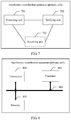
- FIG. 1 is a schematic architectural diagram of a system to which an embodiment of this application is applicable.
- a terminal 101 is located in an overlapping coverage area between a first cell 102a and a second cell 102b.
- the terminal 101 establishes a connection to the first cell 102b.
- This embodiment of this application is applicable to a plurality of scenarios.
- the terminal When this embodiment is applicable to a concept of a virtual cell, and the terminal is located in the virtual cell, the terminal usually keeps a radio resource control (English: Radio Resource Control, RRC for short) connection with a main transmission point or a cluster head (cluster head).
- the main transmission point or the cluster head is referred to as a primary cell, as shown by a primary cell 103 in FIG. 1 .
- the terminal adds, changes, transfers, or switches a link in the virtual cell, the terminal usually needs to exchange information with the primary cell.
- Other cells than the primary cell in the virtual cell are secondary cells.
- the terminal is connected to both the primary cell and a secondary cell; data is transmitted between the secondary cell and the terminal; and signaling needs to be transmitted between the secondary cell and the terminal through the primary cell.
- the terminal refers to a device (device) providing voice and/or data connectivity for a user, and includes a wireless terminal or a wired terminal.
- the wireless terminal may be a handheld device with a wireless connection function, another processing device connected to a wireless modem, or a mobile terminal that communicates with one or more core networks by using a radio access network.
- the wireless terminal may be a mobile phone (also referred to as a "cellular" phone) and a computer with a mobile terminal.
- the wireless terminal may be a portable, pocket-sized, handheld, computer-built-in, or in-vehicle mobile apparatus.
- the wireless terminal may be a part of a mobile station (mobile station), an access point (access point), or user equipment (user equipment, UE for short).
- This embodiment of this application may be applied to a low-frequency system, or may be applied to a high-frequency system.
- Control information or control channels in this embodiment of this application may be all based on beamforming (beamforming).
- An embodiment of this application provides an interference coordination method to avoid uplink interference.
- a parameter used for transmitting uplink control information (English: Uplink Control Information, UCI for short) is configured for a serving cell of a terminal or a terminal, where the parameter is a parameter allocated to the serving cell and is a parameter orthogonal to a parameter allocated to a neighboring cell of the serving cell, and is therefore notified by the serving cell to the terminal. Therefore, the terminal can transmit the UCI based on a resource indicated by the parameter. This can ensure that the terminal is free from interference even if the terminal is located in an overlapping area between the serving cell and the neighboring cell.
- UCI Uplink Control Information
- the cell may also configure a subframe set used for transmitting a sounding signal or a sounding reference signal or any uplink signal by the terminal served by the cell.
- a subframe included in the configured subframe set is a subframe in which uplink coordination is performed.
- the served terminal is allowed to use only the subframe in the subframe set to transmit the sounding signal or the sounding reference signal or any uplink signal. Therefore, when the terminal uses the subframe set to transmit the sounding signal or the sounding reference signal or any uplink signal, it is ensured that interference to uplink reception by any neighboring cell is reduced.
- FIG. 2 is an example of a flowchart of an interference coordination method. The method includes the following steps.
- a first cell determines first configuration information of the first cell, where the first configuration information includes a parameter for transmitting UCI by a terminal served by the first cell, the parameter included in the first configuration information is a parameter configured for the first cell and is a parameter orthogonal to a parameter configured for a second cell, and the second cell is a neighboring cell of the first cell.
- the first cell notifies the first configuration information to the served terminal.
- the served terminal is a terminal that is served by the first cell and on which an absolute value of a difference between signal strength received from the first cell and signal strength received from the second cell is less than a preset threshold.
- the served terminal is located in an overlapping area between the first cell and the second cell.
- the served terminal in subsequent descriptions is a terminal connected to the first cell, that is, a terminal served by the first cell.
- the parameter configured for the second cell may be one or more parameters.
- the parameter included in the first configuration information is a parameter configured for the first cell and is a parameter orthogonal to the plurality of parameters configured for the second cell.
- the received signal strength may be at least one of reference signal received power (English: Reference Signal Receiving Power, RSRP for short), reference signal received quality (English: Reference Signal Receiving Quality, RSRQ for short), a received signal strength indicator (English: Received Signal Strength Indication, RSSI for short), and the like.
- reference signal received power English: Reference Signal Receiving Power, RSRP for short
- reference signal received quality English: Reference Signal Receiving Quality, RSRQ for short
- a received signal strength indicator English: Received Signal Strength Indication, RSSI for short
- the first configuration information is determined for the served terminal, so that when the served terminal transmits the UCI by using a resource indicated by the parameter included in the first configuration information, it is ensured that no interference is caused to other terminals that are located in an area of the second cell and access the second cell and terminals that are located in an area of the first cell and access the first cell during uplink transmission in the second cell and uplink transmission in the first cell.
- a resource configured in the prior art may be used to transmit UCI.
- the parameter included in the first configuration information may be preconfigured for the served terminal. Specifically, when the terminal accesses the first cell and the terminal is located in the overlapping area between the first cell and the second cell, the first cell may allocate the parameter to the terminal, and deliver the parameter to the terminal, so that the terminal can transmit the UCI by using the resource indicated by the parameter.
- the first configuration information may include at least one of a cyclic shift value and an orthogonal sequence.
- a base station may preconfigure a common parameter pool for neighboring cells in which severe interference exists, where any two parameters included in the parameter pool are orthogonal to each other, and a parameter in the parameter pool indicates a resource used for transmitting UCI by a terminal served by any one of the neighboring cells. Therefore, any one of the neighboring cells can select a parameter from the parameter pool and notify the parameter to the terminal, so that the terminal transmits the UCI by using the resource indicated by the parameter for transmitting the UCI.
- the base station may further preconfigure a parameter pool separately for each of the neighboring cells in which severe interference exists, where parameter pools configured for different cells are orthogonal to each other, and a parameter configured for each cell indicates a resource used for transmitting UCI by a terminal served by the cell.
- a first cell determines first configuration information of the first cell may be implemented in the following manner: The first cell selects a parameter from a preconfigured first parameter pool, and generates the first configuration information, where the first parameter pool includes a plurality of parameters preconfigured for the first cell and used for transmitting the UCI by the terminal served by the first cell, and any two parameters are orthogonal to each other.
- the first parameter pool includes a plurality of sequence codes or a plurality of cyclic shift values. Any two sequence codes included in the first parameter pool are orthogonal to each other, or any two cyclic shift values included in the first parameter pool are orthogonal to each other.
- parameters included in the first parameter pool preconfigured for the first cell are orthogonal to parameters included in a second parameter pool preconfigured for the second cell.
- cells share a parameter used for transmitting UCI. Therefore, a cell may preconfigure, according to a parameter of a neighboring cell, a parameter used for transmitting UCI by a served terminal, where the parameter configured for the cell is orthogonal to the parameter of the neighboring cell. Therefore, before the first cell determines the first configuration information of the first cell, the first cell receives second configuration information of the second cell notified by the second cell, where the second configuration information is used to indicate at least one parameter for transmitting UCI by a terminal served by the second cell.
- the first cell determines the first configuration information of the first cell based on the second configuration information of the second cell, where the parameter in the first configuration information is orthogonal to the parameter in the second configuration information.
- the parameter in the first configuration information is orthogonal to the plurality of parameters included in the second configuration information.
- the first cell when the first cell notifies the first configuration information to the served terminal, the first cell may send the first configuration information to the served terminal by using radio resource control (English: Radio Resource Control, RRC for short) signaling.
- radio resource control English: Radio Resource Control, RRC for short
- the first cell is a secondary cell of the served terminal, and the served terminal is further connected to a primary cell. Both the secondary cell and the primary cell are serving cells of the served terminal. Therefore, when the first cell notifies the first configuration information to the served terminal, the secondary cell (the first cell) of the served terminal may instruct the primary cell to send the first configuration information to the served terminal; or the primary cell may instruct the served terminal to obtain the first configuration information from the secondary cell.
- Each secondary cell located in the virtual cell separately notifies, to the primary cell, a parameter that is preallocated by the base station to the secondary cell and is used for transmitting UCI by a terminal served by the secondary cell.
- the primary cell after receiving the parameter corresponding to each secondary cell, the primary cell reallocates a parameter to each secondary cell based on the parameters, to ensure that parameters allocated to neighboring secondary cells are orthogonal to each other.
- the primary cell sends each reallocated parameter to each secondary cell.
- the primary cell may separately determine a configuration mode for optimizing the parameter by each secondary cell, and separately send the determined configuration mode to each secondary cell. Therefore, parameters optimized by different secondary cells based on the configuration modes are orthogonal to each other.
- the first cell is the secondary cell of the served terminal, the served terminal is further connected to the primary cell, and before the first cell determines the first configuration information of the first cell, the first cell notifies third configuration information preconfigured for the first cell to the primary cell, so that the primary cell selects, from at least one parameter included in the third configuration information, at least one parameter that is orthogonal to a parameter included in received fourth configuration information sent by the second cell, and sends the at least one parameter to the first cell; where the third configuration information includes at least one parameter used for transmitting the UCI by the terminal served by the first cell, and the fourth configuration information includes at least one parameter preconfigured for the second cell and used for transmitting UCI by a terminal served by the second cell.
- the third configuration information and the fourth configuration information are preconfigured by the base station for the first cell and the second cell respectively.
- the first cell may select a parameter from the received orthogonal parameters sent by the primary cell to generate the first configuration information and then instruct the primary cell to send the first configuration information to the terminal served by the first cell; or the primary cell may select a parameter from the orthogonal parameters to generate the first configuration information and then send the first configuration information to the first cell and the terminal served by the first cell.
- the first cell before the first cell determines the first configuration information of the first cell, the first cell notifies third configuration information allocated to the first cell to the primary cell, so that the primary cell reallocates at least one parameter to the first cell and the second cell separately based on the third configuration information and received fourth configuration information sent by the second cell; where the at least one parameter allocated to the first cell is orthogonal to the at least one parameter allocated to the second cell.
- a first cell determines first configuration information of the first cell may be implemented in the following manner: The first cell receives the at least one parameter allocated by the primary cell to the first cell and sent by the primary cell; and the first cell selects a parameter from the at least one parameter allocated by the primary cell to the first cell, and generates the first configuration information.
- the first cell before the first cell determines the first PUCCH configuration information of the first cell, the first cell notifies third configuration information allocated to the first cell to the primary cell, so that the primary cell determines, based on the third configuration information and received fourth configuration information sent by the second cell, a first configuration mode for optimizing the third configuration information by the first cell and a second configuration mode for optimizing the fourth configuration information by the second cell; where at least one parameter included in the third configuration information optimized by the first cell based on the first configuration mode is orthogonal to at least one parameter included in the fourth configuration information optimized by the second cell based on the second configuration mode.
- a first cell determines first configuration information of the first cell may be implemented in the following manner: The first cell receives the first configuration mode sent by the primary cell; and the first cell optimizes the third configuration information based on the first configuration mode, and selects a parameter from the at least one parameter included in the optimized third configuration information to generate the first configuration information.
- An embodiment of this application further provides an interference coordination method, where the method is applicable to a scenario of a virtual cell. As shown in FIG. 3 , the method includes the following steps.
- a primary cell determines first configuration information of a secondary cell, where a terminal of dual connectivity is connected to the primary cell and the secondary cell separately, and a parameter included in the first configuration information is a parameter allocated to the secondary cell and is a parameter orthogonal to a parameter allocated to a neighboring cell of the secondary cell.
- the parameter included in the first configuration information is used for transmitting UCI by the terminal of dual connectivity.
- the primary cell notifies the first configuration information to the terminal of dual connectivity.
- the terminal of dual connectivity is located in an overlapping area between the secondary cell and the neighboring cell of the secondary cell.
- the primary cell determines, for the secondary cell, the parameter used for transmitting the UCI by the terminal of dual connectivity, and the parameter corresponding to the secondary cell is orthogonal to the parameter of the neighboring cell of the secondary cell, thereby ensuring that no interference is caused to the neighboring cell when a terminal served by the secondary cell transmits UCI.
- the first configuration information includes at least one of a cyclic shift value and an orthogonal sequence code.
- the first configuration information is preconfigured for the terminal of dual connectivity.
- the method before the primary cell determines the first configuration information of the secondary cell, the method further includes: the primary cell receives second configuration information sent by the secondary cell, and receives third configuration information sent by the neighboring cell, where the second configuration information includes at least one parameter used for transmitting UCI by a terminal served by the secondary cell, and the third configuration information includes at least one parameter used for transmitting UCI by a terminal served by the neighboring cell.
- a primary cell determines first configuration information of a secondary cell may be implemented in the following manner: The primary cell determines the first configuration information based on the second configuration information and the third configuration information.
- the primary cell determines the first configuration information based on the second configuration information and the third configuration information may be implemented in the following manner:
- the primary cell after the primary cell receives the second configuration information sent by the secondary cell, and receives the third configuration information sent by the neighboring cell, the primary cell allocates at least one parameter to the secondary cell and the neighboring cell separately based on the second configuration information and the third configuration information, and notifies the secondary cell and the neighboring cell, where the at least one parameter allocated to the secondary cell is orthogonal to the at least one parameter allocated to the neighboring cell.
- the secondary cell After receiving the at least one parameter allocated to the secondary cell and sent by the primary cell, the secondary cell selects, from the allocated at least one parameter, a parameter used for sending the UCI by the terminal of dual connectivity, and generates the first configuration information based on the selected parameter. Therefore, that a primary cell determines first configuration information of the secondary cell may be implemented in the following manner: The primary cell receives the first configuration information sent by the secondary cell, where the first configuration information is generated based on a parameter that is selected from the at least one parameter allocated to the secondary cell and used for sending the UCI by the terminal of dual connectivity after the secondary cell receives the at least one parameter allocated to the secondary cell and sent by the primary cell.
- the primary cell may directly send the first configuration information to the terminal of dual connectivity, or may send a notification message to the terminal of dual connectivity, where the notification message is used to instruct the terminal of dual connectivity to obtain the first configuration information from the secondary cell.
- the primary cell determines, based on the second configuration information and the third configuration information, a first configuration mode for optimizing the second configuration information by the secondary cell and a second configuration mode for optimizing the third configuration information by the neighboring cell, and sends the first configuration mode to the secondary cell and sends the second configuration mode to the neighboring cell; where at least one parameter included in the second configuration information optimized by the secondary cell based on the first configuration mode is orthogonal to at least one parameter included in the third configuration information optimized by the neighboring cell based on the second configuration mode.
- the secondary cell After receiving the first configuration mode, the secondary cell optimizes the second configuration information based on the first configuration mode, selects, from the optimized second configuration information, a parameter used for transmitting the UCI by the terminal of dual connectivity, generates the first configuration information based on the selected parameter, and sends the first configuration information to the primary cell.
- a primary cell determines first configuration information of the secondary cell may be implemented in the following manner: The primary cell receives the first configuration information sent by the secondary cell, where the first configuration information is generated based on a parameter that is selected from the at least one parameter included in the optimized second configuration information and used for transmitting the UCI by the terminal of dual connectivity after the secondary cell optimizes the second configuration information based on the first configuration mode.
- the primary cell may directly send the first configuration information to the terminal of dual connectivity, or may send a notification message to the terminal of dual connectivity, where the notification message is used to instruct the terminal of dual connectivity to obtain the first configuration information from the secondary cell.
- the secondary cell may not send the first configuration information to the primary cell either, but directly notifies the primary cell that the parameter used for transmitting the UCI by the terminal of dual connectivity has been configured. Therefore, the primary cell instructs the terminal of dual connectivity to obtain the first configuration information from the secondary cell.
- that the primary cell notifies the first configuration information to the terminal of dual connectivity may be implemented in the following manner: The primary cell sends the first configuration information to the terminal of dual connectivity by using RRC signaling; or the primary cell sends a notification message to the terminal of dual connectivity, where the notification message is used to instruct the terminal of dual connectivity to obtain the first configuration information from the secondary cell.
- An embodiment of this application further provides an interference coordination method.
- uplink transmission of a terminal is limited to coordinated fixed subframes, so that interference between uplink transmission of the terminal and uplink transmission of a base station is reduced.
- the method includes the following steps.
- a first cell configures a first subframe set for first uplink information.
- the first cell notifies subframe configuration information to a terminal served by the first cell, where the subframe configuration information includes at least one of the following: the first subframe set, a subset of the first subframe set, a complementary set of the first subframe set, and a subset of the complementary set of the first subframe set, and a subframe included in the subframe configuration information is used by the served terminal to transmit an uplink signal.
- the uplink signal includes at least one of an uplink sounding signal, a preamble, and a sequence code.
- the terminal served by the first cell When transmitting the uplink signal, the terminal served by the first cell is prevented from using a subframe in the first subframe set. Therefore, it can be ensured that interference to uplink reception by a neighboring cell of the first cell is reduced.
- the first uplink information is at least one of the uplink signal, a physical uplink control channel (English: Physical Uplink Control CHannel, PUCCH for short), a physical uplink shared channel (English: Physical Uplink Shared Channel, PUSCH for short), and a physical random access channel (English: Physical Random Access Channel, PRACH for short).
- a physical uplink control channel English: Physical Uplink Control CHannel, PUCCH for short
- a physical uplink shared channel English: Physical Uplink Shared Channel, PUSCH for short
- a physical random access channel English: Physical Random Access Channel, PRACH for short.
- the first subframe set may include a muted subframe of a physical resource block for transmitting the PUCCH or muted subframes of all physical resource blocks.
- that the first cell notifies subframe configuration information to a terminal served by the first cell may be implemented in the following manner: The first cell sends a broadcast message to the terminal served by the first cell, where the broadcast message carries the subframe configuration information; or the first cell sends higher layer signaling carrying the subframe configuration information to the terminal served by the first cell.
- the higher layer signaling may be RRC signaling.
- the first cell configures a second subframe set used for uplink transmission, where a subframe included in the second subframe set is used for uplink communication in the first cell; and the first cell sends configuration information of the second subframe set to a second cell.
- the first cell is a primary cell
- the second cell is a secondary cell
- the first cell is a macro cell
- the second cell is a micro cell
- the second subframe set may include first N uplink subframes in every M subframes. Both M and N are positive integers, and M ⁇ N.
- the primary cell configures, for each secondary cell, a second subframe set used for uplink transmission, so that the secondary cell performs uplink transmission in a subframe in the second subframe set.
- the configuration information of the second subframe set is used to instruct the second cell to configure, based on the configuration information of the second subframe set, a third subframe set used for uplink transmission.
- a subframe included in the third subframe set is used for uplink transmission in the second cell.
- the subframe included in the third subframe set is different from the subframe included in the second subframe set.
- the subframe in the second subframe set is further used for uplink transmission in an uplink HARQ process in the first cell.
- a subset in every frame or all frames may be reserved for uplink transmission in the uplink HARQ process in the first cell.
- the first cell configures a second subframe set used for uplink transmission for the second cell may be implemented in the following manner: The first cell configures the second subframe set for the second cell based on a radio resource configuration of the first cell and system information.
- the first cell configures the second subframe set for the second cell based on a radio resource configuration of the first cell and system information may be implemented in the following manner: The first cell selects, from subframes scheduled in a scheduling window of a system information block and subframes scheduled for paging detection, uplink subframes used for performing message feedbacks by a terminal, to form the second subframe set.
- the configuration information of the second subframe set is used to indicate that a terminal served by the second cell needs to be forbidden to perform uplink transmission in the second subframe set when the second cell performs uplink or downlink scheduling.
- the second cell receives the first subframe set sent by the first cell and used for uplink transmission in the first cell; and the terminal served by the second cell is forbidden to perform uplink transmission in the second subframe set when the second cell performs uplink or downlink scheduling.
- the configuration information of the second subframe set is used to instruct the second cell to schedule a PDSCH in a preset first subframe, to prevent the terminal served by the secondary cell from performing a HARQ feedback in the second subframe set.
- the preset first subframe may be a subframe in the third subframe set.
- the second cell schedules the PDSCH in the preset first subframe, thereby forbidding the terminal served by the second cell to perform the HARQ feedback in the second subframe set.
- the first subframe may be preconfigured based on the second subframe set, and may be specifically a subframe in the third subframe set.
- the configuration information of the second subframe set is used to instruct the second cell to schedule a PUSCH in a preconfigured second subframe, to prevent the terminal served by the second cell from first sending or retransmitting a data packet in the second subframe set.
- the second cell schedules the PUSCH in the preconfigured second subframe, to prevent the terminal served by the second cell from first sending or retransmitting a data packet in the second subframe set.
- the second subframe may be preconfigured based on the second subframe set, and may be specifically a subframe in the third subframe set.
- This application further provides an interference coordination apparatus, where the apparatus is applied to a first cell.
- the apparatus includes:
- the served terminal is a terminal that is served by the first cell and on which an absolute value of a difference between signal strength received from the first cell and signal strength received from the second cell is less than a preset threshold.
- the parameter included in the first configuration information is configured for the served terminal.
- the parameter included in the first configuration information includes at least one of a cyclic shift value and an orthogonal sequence code.
- the processing unit 501 is specifically configured to select, by the first cell, a parameter from a first parameter pool, and generate the first configuration information, where the first parameter pool includes a plurality of parameters preconfigured for the first cell and used for transmitting the UCI by the terminal served by the first cell, and any two parameters are orthogonal to each other.
- the first parameter pool includes a plurality of sequence codes and a plurality of cyclic shift values.
- Any two sequence codes included in the first parameter pool are orthogonal to each other, or any two cyclic shift values included in the first parameter pool are orthogonal to each other.
- the parameters included in the first parameter pool are orthogonal to parameters included in a second parameter pool preconfigured for the second cell.
- the apparatus may further include a receiving unit 503, configured to: before the processing unit 501 determines the first configuration information of the first cell, receive second configuration information of the second cell notified by the second cell, where the second configuration information includes a parameter preconfigured for the second cell and used for transmitting UCI by a terminal served by the second cell.
- a receiving unit 503 configured to: before the processing unit 501 determines the first configuration information of the first cell, receive second configuration information of the second cell notified by the second cell, where the second configuration information includes a parameter preconfigured for the second cell and used for transmitting UCI by a terminal served by the second cell.
- the processing unit 501 is specifically configured to determine the first configuration information of the first cell based on the second configuration information of the second cell, where the parameter in the first configuration information is orthogonal to the parameter in the second configuration information.
- the notifying unit 502 is specifically configured to send the first configuration information to the served terminal by using radio resource control RRC signaling.
- the first cell is a secondary cell of the served terminal, and the served terminal is further connected to a primary cell; and the notifying unit 502 is specifically configured to instruct the primary cell to send the first configuration information to the served terminal.
- the first cell is the secondary cell of the served terminal, and the served terminal is further connected to the primary cell; and the notifying unit 502 is further configured to: before the processing unit 501 determines the first configuration information of the first cell, notify third configuration information preconfigured for the first cell to the primary cell, so that the primary cell selects, from at least one UCI parameter included in the third configuration information, a parameter that is orthogonal to a parameter included in received fourth configuration information sent by the second cell, and after generating the first configuration information, sends the first configuration information to the first cell; where the third configuration information includes at least one parameter used for transmitting the UCI by the terminal served by the first cell, and the fourth configuration information includes at least one parameter preconfigured for the second cell and used for transmitting UCI by a terminal served by the second cell.
- the first cell is the secondary cell of the served terminal, and the served terminal is further connected to the primary cell; and the notifying unit 502 is further configured to: before the processing unit 501 determines the first configuration information of the first cell, notify third configuration information preconfigured for the first cell to the primary cell, so that the primary cell reallocates at least one parameter to the first cell and the second cell separately based on the third configuration information and received fourth configuration information sent by the second cell; where the at least one parameter allocated to the first cell is orthogonal to the at least one parameter allocated to the second cell, the third configuration information includes at least one parameter used for transmitting the UCI by the terminal served by the first cell, and the fourth configuration information includes at least one parameter preconfigured for the second cell and used for transmitting UCI by a terminal served by the second cell.
- the receiving unit 503 is configured to receive the at least one parameter allocated to the first cell and sent by the primary cell; and the processing unit 501 is specifically configured to select a parameter from the at least one parameter allocated to the first cell, and generate the first configuration information.
- the first cell is the secondary cell of the served terminal, and the served terminal is further connected to the primary cell; and the notifying unit 502 is further configured to: before the processing unit 501 determines the first configuration information of the first cell, notify third configuration information preconfigured for the first cell to the primary cell, so that the primary cell determines, based on the third configuration information and received fourth configuration information sent by the second cell, a first configuration mode for optimizing the third configuration information by the first cell and a second configuration mode for optimizing the fourth configuration information by the second cell; where at least one parameter included in the third configuration information optimized by the first cell based on the first configuration mode is orthogonal to at least one parameter included in the fourth configuration information optimized by the second cell based on the second configuration mode, the third configuration information includes at least one parameter used for transmitting the UCI by the terminal served by the first cell, and the fourth configuration information includes at least one parameter preconfigured for the second cell and used for transmitting UCI by a terminal served by the second cell.
- the receiving unit 503 is configured to receive the first configuration mode sent by the primary cell; and the processing unit 501 is specifically configured to optimize the third configuration information based on the first configuration mode, and select a parameter from the at least one parameter included in the optimized third configuration information to generate the first configuration information.
- the unit division is an example and is merely logical function division, and may be other division in an actual implementation.
- functional units in each embodiment of this embodiment may be integrated into one processor, or each functional unit may exist independently, or two or more units may be integrated into one unit.
- the integrated unit may be implemented in a form of hardware, or may be implemented in a form of a software functional module.
- functions corresponding to the receiving unit 503 and the notifying unit 502 may be implemented by using a transceiver 601, and functions corresponding to the processing unit 501 may be implemented by using a processor 602, as shown in FIG. 6 .
- the apparatus may further include a memory 603.
- the memory 603 is configured to store program code executed by the processor 602.
- the processor 602 may be a central processing unit (English: central processing unit, CPU for short), a digital processing unit, or the like.
- the processor 602 receives and sends messages by using the transceiver 601.
- a specific connection medium between the transceiver 601, the processor 602, and the memory 603 is not limited.
- the memory 603, the processor 602, and the transceiver 601 are connected by a bus 604 in FIG. 6 .
- the bus is indicated by a bold line.
- the foregoing is merely an example for description. Connection modes of other components are not limited thereto.
- the bus may be categorized as an address bus, a data bus, a control bus, or the like. For ease of indication, the bus is indicated by using only one bold line in FIG. 6 . However, it does not indicate that there is only one bus or only one type of bus.
- the memory 603 may be a volatile memory (English: volatile memory), for example, a random access memory (English: random access memory, RAM for short); the memory 603 may also be a non-volatile memory (English: non-volatile memory), for example, a read-only memory (English: read-only memory, ROM for short), a flash memory (English: flash memory), a hard disk drive (English: hard disk drive, HDD for short), or a solid-state drive (English: solid-state drive, SSD for short); or the memory 603 is any other medium that can be used to carry or store expected program code in a form of an instruction or a data structure and can be accessed by a computer, but is not limited thereto.
- the memory 603 may be a combination of the foregoing memories.
- the processor 602 is configured to determine first configuration information of the first cell, where the first configuration information includes a parameter for transmitting uplink control information UCI by a terminal served by the first cell, the parameter included in the first configuration information is a parameter configured for the first cell and is a parameter orthogonal to a parameter configured for a second cell, and the second cell is a neighboring cell of the first cell.
- the transceiver 601 is configured to notify the first configuration information determined by the processor 602 to the served terminal.
- the served terminal is a terminal that is served by the first cell and on which an absolute value of a difference between signal strength received from the first cell and signal strength received from the second cell is less than a preset threshold.
- the parameter included in the first configuration information is configured for the served terminal.
- the parameter included in the first configuration information includes at least one of a cyclic shift value and an orthogonal sequence code.
- the processor 602 is specifically configured to select, by the first cell, a parameter from a first parameter pool, and generate the first configuration information, where the first parameter pool includes a plurality of parameters preconfigured for the first cell and used for transmitting the UCI by the terminal served by the first cell, and any two parameters are orthogonal to each other.
- the first parameter pool includes a plurality of sequence codes and a plurality of cyclic shift values.
- Any two sequence codes included in the first parameter pool are orthogonal to each other, or any two cyclic shift values included in the first parameter pool are orthogonal to each other.
- the parameters included in the first parameter pool are orthogonal to parameters included in a second parameter pool preconfigured for the second cell.
- the transceiver 601 is further configured to: before the processor 602 determines the first configuration information of the first cell, receive second configuration information of the second cell notified by the second cell, where the second configuration information includes a parameter preconfigured for the second cell and used for transmitting UCI by a terminal served by the second cell.
- the processor 602 is specifically configured to determine the first configuration information of the first cell based on the second configuration information of the second cell, where the parameter in the first configuration information is orthogonal to the parameter in the second configuration information.
- the transceiver 601 is specifically configured to send the first configuration information to the served terminal by using radio resource control RRC signaling.
- the first cell is a secondary cell of the served terminal, and the served terminal is further connected to a primary cell; and the transceiver 601 is specifically configured to instruct the primary cell to send the first configuration information to the served terminal.
- the first cell is the secondary cell of the served terminal, and the served terminal is further connected to the primary cell; and the transceiver 601 is further configured to: before the processor 602 determines the first configuration information of the first cell, notify third configuration information preconfigured for the first cell to the primary cell, so that the primary cell selects, from at least one UCI parameter included in the third configuration information, a parameter that is orthogonal to a parameter included in received fourth configuration information sent by the second cell, and after generating the first configuration information, sends the first configuration information to the first cell; where the third configuration information includes at least one parameter used for transmitting the UCI by the terminal served by the first cell, and the fourth configuration information includes at least one parameter preconfigured for the second cell and used for transmitting UCI by a terminal served by the second cell.
- the first cell is the secondary cell of the served terminal, and the served terminal is further connected to the primary cell; and the transceiver 601 is further configured to: before the processor 602 determines the first configuration information of the first cell, notify third configuration information preconfigured for the first cell to the primary cell, so that the primary cell reallocates at least one parameter to the first cell and the second cell separately based on the third configuration information and received fourth configuration information sent by the second cell; where the at least one parameter allocated to the first cell is orthogonal to the at least one parameter allocated to the second cell, the third configuration information includes at least one parameter used for transmitting the UCI by the terminal served by the first cell, and the fourth configuration information includes at least one parameter preconfigured for the second cell and used for transmitting UCI by a terminal served by the second cell.
- the transceiver 601 is further configured to receive the at least one parameter allocated to the first cell and sent by the primary cell; and the processor 602 is specifically configured to select a parameter from the at least one parameter allocated to the first cell, and generate the first configuration information.
- the first cell is the secondary cell of the served terminal, and the served terminal is further connected to the primary cell; and the transceiver 601 is further configured to: before the processor 602 determines the first configuration information of the first cell, notify third configuration information preconfigured for the first cell to the primary cell, so that the primary cell determines, based on the third configuration information and received fourth configuration information sent by the second cell, a first configuration mode for optimizing the third configuration information by the first cell and a second configuration mode for optimizing the fourth configuration information by the second cell; where at least one parameter included in the third configuration information optimized by the first cell based on the first configuration mode is orthogonal to at least one parameter included in the fourth configuration information optimized by the second cell based on the second configuration mode, the third configuration information includes at least one parameter used for transmitting the UCI by the terminal served by the first cell, and the fourth configuration information includes at least one parameter preconfigured for the second cell and used for transmitting UCI by a terminal served by the second cell.
- the transceiver 601 is further configured to receive the first configuration mode sent by the primary cell; and the processor 602 is specifically configured to optimize the third configuration information based on the first configuration mode, and select a parameter from the at least one parameter included in the optimized third configuration information to generate the first configuration information.
- An embodiment of this application provides an interference coordination apparatus, where the apparatus is applied to a primary cell. As shown in FIG. 7 , the apparatus includes:
- the terminal of dual connectivity is located in an overlapping area between the secondary cell and the neighboring cell of the secondary cell.
- the first configuration information includes at least one of a cyclic shift value and an orthogonal sequence code.
- the first configuration information is configured for the terminal of dual connectivity.
- the apparatus further includes a receiving unit 703, configured to: before the processing unit 701 determines the first configuration information of the secondary cell, receive second configuration information sent by the secondary cell, and receive third configuration information sent by the neighboring cell, where the second configuration information includes at least one parameter used for transmitting UCI by a terminal served by the secondary cell, and the third configuration information includes at least one parameter used for transmitting UCI by a terminal served by the neighboring cell.
- a receiving unit 703 configured to: before the processing unit 701 determines the first configuration information of the secondary cell, receive second configuration information sent by the secondary cell, and receive third configuration information sent by the neighboring cell, where the second configuration information includes at least one parameter used for transmitting UCI by a terminal served by the secondary cell, and the third configuration information includes at least one parameter used for transmitting UCI by a terminal served by the neighboring cell.
- the processing unit 701 is specifically configured to determine the first configuration information based on the second configuration information and the third configuration information.
- the processing unit 701 is specifically configured to select, from the at least one parameter included in the second configuration information, a parameter that is orthogonal to a parameter included in the third configuration information, and generate the first configuration information.
- the processing unit 701 is further configured to: after the receiving unit 703 receives the second configuration information sent by the secondary cell and receives the third configuration information sent by the neighboring cell, and before determining the first configuration information of the secondary cell, allocate at least one parameter to the secondary cell and the neighboring cell separately based on the second configuration information and the third configuration information, and notify the secondary cell and the neighboring cell, where the at least one parameter allocated to the secondary cell is orthogonal to the at least one parameter allocated to the neighboring cell.
- the receiving unit 703 is further configured to receive the first configuration information sent by the secondary cell, where the first configuration information is generated based on a parameter that is selected from the at least one UCI parameter allocated to the secondary cell and used for sending the UCI by the terminal of dual connectivity after the secondary cell receives the at least one parameter allocated to the secondary cell and sent by the primary cell.
- the processing unit 701 is further configured to: after the receiving unit 703 receives the second configuration information sent by the secondary cell and receives the third configuration information sent by the neighboring cell, and before determining the first configuration information of the secondary cell, determine, based on the second configuration information and the third configuration information, a first configuration mode for optimizing the second configuration information by the secondary cell and a second configuration mode for optimizing the third configuration information by the neighboring cell; and the notifying unit 702 is further configured to send the first configuration mode to the secondary cell and send the second configuration mode to the neighboring cell; where at least one parameter included in the second configuration information optimized by the secondary cell based on the first configuration mode is orthogonal to at least one parameter included in the third configuration information optimized by the neighboring cell based on the second configuration mode.
- the receiving unit 703 is further configured to receive the first configuration information sent by the secondary cell, where the first configuration information is generated based on a parameter that is selected from the at least one parameter included in the optimized second configuration information and used for transmitting the UCI by the terminal of dual connectivity after the secondary cell optimizes the second configuration information based on the first configuration mode.
- the notifying unit 702 is specifically configured to send the first configuration information to the terminal of dual connectivity by using RRC signaling.
- the notifying unit 702 is specifically configured to send a notification message to the terminal of dual connectivity, where the notification message is used to instruct the terminal of dual connectivity to obtain the first configuration information from the secondary cell.
- the unit division is an example and is merely logical function division, and may be other division in an actual implementation.
- functional units in each embodiment of this embodiment may be integrated into one processor, or each functional unit may exist independently, or two or more units may be integrated into one unit.
- the integrated unit may be implemented in a form of hardware, or may be implemented in a form of a software functional module.
- functions corresponding to the receiving unit 703 and the notifying unit 702 may be implemented by using a transceiver 801, and functions corresponding to the processing unit 701 may be implemented by using a processor 802, as shown in FIG. 8 .
- the apparatus may further include a memory 803.
- the memory 803 is configured to store program code executed by the processor 802.
- the processor 802 may be a central processing unit (English: central processing unit, CPU for short), a digital processing unit, or the like.
- the processor 802 receives and sends messages by using the transceiver 801.
- a specific connection medium between the transceiver 801, the processor 802, and the memory 803 is not limited.
- the memory 803, the processor 802, and the transceiver 801 are connected by a bus 804 in FIG. 8 .
- the bus is indicated by a bold line.
- the foregoing is merely an example for description. Connection modes of other components are not limited thereto.
- the bus may be categorized as an address bus, a data bus, a control bus, or the like. For ease of indication, the bus is indicated by using only one bold line in FIG. 8 . However, it does not indicate that there is only one bus or only one type of bus.
- the memory 803 may be a volatile memory, for example, a RAM; the memory 803 may also be a non-volatile memory, for example, a ROM, a flash memory, an HDD, or an SSD; or the memory 803 is any other medium that can be used to carry or store expected program code in a form of an instruction or a data structure and can be accessed by a computer, but is not limited thereto.
- the memory 803 may be a combination of the foregoing memories.
- the processor 802 is configured to determine first configuration information of a secondary cell, where a terminal of dual connectivity is connected to the primary cell and the secondary cell separately, and a parameter included in the first configuration information is a parameter allocated to the secondary cell and is a parameter orthogonal to a parameter allocated to a neighboring cell of the secondary cell.
- the transceiver 801 is configured to notify the first configuration information to the terminal of dual connectivity.
- the parameter included in the first configuration information is used for transmitting uplink control information UCI by the terminal of dual connectivity.
- the terminal of dual connectivity is located in an overlapping area between the secondary cell and the neighboring cell of the secondary cell.
- the first configuration information includes at least one of a cyclic shift value and an orthogonal sequence code.
- the first configuration information is configured for the terminal of dual connectivity.
- the transceiver 801 is further configured to: before the processor 802 determines the first configuration information of the secondary cell, receive second configuration information sent by the secondary cell, and receive third configuration information sent by the neighboring cell, where the second configuration information includes at least one parameter used for transmitting UCI by a terminal served by the secondary cell, and the third configuration information includes at least one parameter used for transmitting UCI by a terminal served by the neighboring cell.
- the processor 802 is specifically configured to determine the first configuration information based on the second configuration information and the third configuration information.
- the processor 802 is specifically configured to select, from the at least one parameter included in the second configuration information, a parameter that is orthogonal to a parameter included in the third configuration information, and generate the first configuration information.
- the processor 802 is further configured to: after the transceiver 801 receives the second configuration information sent by the secondary cell and receives the third configuration information sent by the neighboring cell, and before determining the first configuration information of the secondary cell, allocate at least one parameter to the secondary cell and the neighboring cell separately based on the second configuration information and the third configuration information, and notify the secondary cell and the neighboring cell, where the at least one parameter allocated to the secondary cell is orthogonal to the at least one parameter allocated to the neighboring cell.
- the transceiver 801 is further configured to receive the first configuration information sent by the secondary cell, where the first configuration information is generated based on a parameter that is selected from the at least one UCI parameter allocated to the secondary cell and used for sending the UCI by the terminal of dual connectivity after the secondary cell receives the at least one parameter allocated to the secondary cell and sent by the primary cell.
- the processor 802 is further configured to: after the transceiver 801 receives the second configuration information sent by the secondary cell and receives the third configuration information sent by the neighboring cell, and before determining the first configuration information of the secondary cell, determine, based on the second configuration information and the third configuration information, a first configuration mode for optimizing the second configuration information by the secondary cell and a second configuration mode for optimizing the third configuration information by the neighboring cell; and the transceiver 801 is further configured to send the first configuration mode to the secondary cell and send the second configuration mode to the neighboring cell; where at least one parameter included in the second configuration information optimized by the secondary cell based on the first configuration mode is orthogonal to at least one parameter included in the third configuration information optimized by the neighboring cell based on the second configuration mode.
- the transceiver 801 is further configured to receive the first configuration information sent by the secondary cell, where the first configuration information is generated based on a parameter that is selected from the at least one parameter included in the optimized second configuration information and used for transmitting the UCI by the terminal of dual connectivity after the secondary cell optimizes the second configuration information based on the first configuration mode.
- the transceiver 801 is specifically configured to send the first configuration information to the terminal of dual connectivity by using RRC signaling.
- the transceiver 801 is specifically configured to send a notification message to the terminal of dual connectivity, where the notification message is used to instruct the terminal of dual connectivity to obtain the first configuration information from the secondary cell.
- An embodiment of this application provides an interference coordination apparatus, where the apparatus is applied to a first cell. As shown in FIG. 9 , the apparatus includes:
- the uplink signal includes at least one of an uplink sounding signal, a preamble, and a sequence code.
- the first uplink information is at least one of the uplink signal, a physical uplink control channel PUCCH, a physical uplink shared channel PUSCH, and a physical random access channel PRACH.
- the first subframe set includes a muted subframe of a physical resource block for transmitting the PUCCH or muted subframes of all physical resource blocks.
- the first notifying unit 902 is specifically configured to: send a broadcast message to the terminal served by the first cell, where the broadcast message carries the subframe configuration information; or send RRC signaling carrying the subframe configuration information to the terminal served by the first cell.
- the apparatus further includes:
- the first cell is a primary cell, and the second cell is a secondary cell; or the first cell is a macro cell, or the first cell is a micro cell.
- the configuration information of the second subframe set is used to instruct the second cell to configure, based on the configuration information of the second subframe set, a third subframe set used for uplink transmission.
- a subframe included in the third subframe set is used for uplink transmission in the second cell.
- the subframe included in the third subframe set is different from the subframe included in the second subframe set.
- the subframe in the second subframe set is further used for uplink transmission in an uplink hybrid automatic repeat request HARQ process in the first cell.
- the second processing unit 903 is specifically configured to configure the second subframe set for the second cell based on a radio resource configuration of the first cell and system information.
- the second processing unit 903 is specifically configured to select, from subframes scheduled in a scheduling window of a system information block and subframes scheduled for paging detection, uplink subframes used for performing message feedbacks by a terminal, to form the subframe set.
- the configuration information of the second subframe set is used to indicate that a terminal served by the second cell needs to be forbidden to perform uplink transmission in the second subframe set when the second cell performs uplink or downlink scheduling.
- the configuration information of the second subframe set is used to instruct the second cell to schedule a physical downlink shared channel PDSCH in a preset first subframe, to prevent the terminal served by the secondary cell from performing a hybrid automatic repeat request HARQ feedback in the second subframe set.
- the configuration information of the second subframe set is used to instruct the second cell to schedule a physical uplink shared channel PUSCH in a preconfigured second subframe, to prevent the terminal served by the second cell from first sending or retransmitting a data packet in the second subframe set.
- the unit division is an example and is merely logical function division, and may be other division in an actual implementation.
- functional units in each embodiment of this embodiment may be integrated into one processor, or each functional unit may exist independently, or two or more units may be integrated into one unit.
- the integrated unit may be implemented in a form of hardware, or may be implemented in a form of a software functional module.
- functions corresponding to the first notifying unit 902 and the second notifying unit 904 may be implemented by using a transceiver 1001
- functions corresponding to the first processing unit 901 and the second processing unit 903 may be implemented by using a processor 1002, as shown in FIG. 10 .
- the apparatus may further include a memory 1003.
- the memory 1003 is configured to store program code executed by the processor 1002.
- the processor 1002 may be a central processing unit (English: central processing unit, CPU for short), a digital processing unit, or the like.
- the processor 1002 receives and sends messages by using the transceiver 1001.
- a specific connection medium between the transceiver 1001, the processor 1002, and the memory 1003 is not limited.
- the memory 1003, the processor 1002, and the transceiver 1001 are connected by a bus 1004 in FIG. 10 .
- the bus is indicated by a bold line.
- the foregoing is merely an example for description. Connection modes of other components are not limited thereto.
- the bus may be categorized as an address bus, a data bus, a control bus, or the like.
- the memory 1003 may be a volatile memory, for example, a RAM; the memory 1003 may also be a non-volatile memory, for example, a ROM, a flash memory, an HDD, or an SSD; or the memory 1003 is any other medium that can be used to carry or store expected program code in a form of an instruction or a data structure and can be accessed by a computer, but is not limited thereto.
- the memory 1003 may be a combination of the foregoing memories.
- the processor 1002 is configured to configure a first subframe set for first uplink information.
- the transceiver 1001 is configured to notify subframe configuration information to a terminal served by the first cell.
- the sub frame configuration information includes at least one of the following: the first subframe set, a subset of the first subframe set, a complementary set of the first subframe set, and a subset of the complementary set of the first subframe set, and a subframe included in the subframe configuration information is used by the served terminal to transmit an uplink signal.
- the uplink signal includes at least one of an uplink sounding signal, a preamble, and a sequence code.
- the first uplink information is at least one of the uplink signal, a physical uplink control channel PUCCH, a physical uplink shared channel PUSCH, and a physical random access channel PRACH.
- the first subframe set includes a muted subframe of a physical resource block for transmitting the PUCCH or muted subframes of all physical resource blocks.
- the transceiver 1001 is specifically configured to: send a broadcast message to the terminal served by the first cell, where the broadcast message carries the subframe configuration information; or send RRC signaling carrying the subframe configuration information to the terminal served by the first cell.
- the processor 1002 is further configured to configure a second subframe set used for uplink transmission, where a subframe included in the second subframe set is used for uplink communication in the first cell; and the transceiver 1001 is further configured to send configuration information of the second subframe set to a second cell.
- the first cell is a primary cell, and the second cell is a secondary cell; or the first cell is a macro cell, and the second cell is a micro cell.
- the configuration information of the second subframe set is used to instruct the second cell to configure, based on the configuration information of the second subframe set, a third subframe set used for uplink transmission.
- a subframe included in the third subframe set is used for uplink transmission in the second cell.
- the subframe included in the third subframe set is different from the subframe included in the second subframe set.
- the subframe in the second subframe set is further used for uplink transmission in an uplink hybrid automatic repeat request HARQ process in the first cell.
- the processor 1002 is specifically configured to configure the second subframe set for the second cell based on a radio resource configuration of the first cell and system information.
- the processor 1002 is specifically configured to select, from subframes scheduled in a scheduling window of a system information block and subframes scheduled for paging detection, uplink subframes used for performing message feedbacks by a terminal, to form the subframe set.
- the configuration information of the second subframe set is used to indicate that a terminal served by the second cell needs to be forbidden to perform uplink transmission in the second subframe set when the second cell performs uplink or downlink scheduling.
- the configuration information of the second subframe set is used to instruct the second cell to schedule a physical downlink shared channel PDSCH in a preset first subframe, to prevent the terminal served by the secondary cell from performing a hybrid automatic repeat request HARQ feedback in the second subframe set.
- the configuration information of the second subframe set is used to instruct the second cell to schedule a physical uplink shared channel PUSCH in a preconfigured second subframe, to prevent the terminal served by the second cell from first sending or retransmitting a data packet in the second subframe set.
- An embodiment of this application provides an interference coordination apparatus, where the apparatus is applied to a second cell. As shown in FIG. 11 , the apparatus includes:
- a subframe included in the second subframe set is different from a subframe included in the first subframe set.
- the subframe included in the second subframe set is used for uplink transmission in the second cell.
- the processing unit 1102 when performing uplink or downlink scheduling, is further configured to prevent a terminal served by the second cell from performing uplink transmission in the first subframe set.
- the processing unit 1102 is specifically configured to schedule a physical downlink shared channel PDSCH in a subframe included in the second subframe set, thereby forbidding the terminal served by the secondary cell to perform a hybrid automatic repeat request HARQ feedback in the first subframe set.
- the processing unit 1102 is specifically configured to schedule a physical uplink shared channel PUSCH in a subframe included in the second subframe set, thereby preventing the terminal served by the second cell from first sending or retransmitting a data packet in the first subframe set.
- the unit division is an example and is merely logical function division, and may be other division in an actual implementation.
- functional units in each embodiment of this embodiment may be integrated into one processor, or each functional unit may exist independently, or two or more units may be integrated into one unit.
- the integrated unit may be implemented in a form of hardware, or may be implemented in a form of a software functional module.
- functions corresponding to the receiving unit 1101 may be implemented by using a transceiver 1201
- functions corresponding to the processing unit 1102 may be implemented by using a processor 1202, as shown in FIG. 12 .
- the apparatus may further include a memory 1203.
- the memory 1203 is configured to store program code executed by the processor 1202.
- the processor 1202 may be a central processing unit (English: central processing unit, CPU for short), a digital processing unit, or the like.
- the processor 1202 receives and sends messages by using the transceiver 1201.
- a specific connection medium between the transceiver 1201, the processor 1202, and the memory 1203 is not limited.
- the memory 1203, the processor 1202, and the transceiver 1201 are connected by a bus 1204 in FIG. 12 .
- the bus is indicated by a bold line.
- the foregoing is merely an example for description. Connection modes of other components are not limited thereto.
- the bus may be categorized as an address bus, a data bus, a control bus, or the like.
- the memory 1203 may be a volatile memory, for example, a RAM; the memory 1203 may also be a non-volatile memory, for example, a ROM, a flash memory, an HDD, or an SSD; or the memory 1203 is any other medium that can be used to carry or store expected program code in a form of an instruction or a data structure and can be accessed by a computer, but is not limited thereto.
- the memory 1203 may be a combination of the foregoing memories.
- the transceiver 1201 is configured to receive a first subframe set sent by the first cell and used for uplink transmission in the first cell.
- the processor 1202 is configured to configure, based on the first subframe set, a second subframe set used for uplink transmission.
- the first cell is a primary cell, and the second cell is a secondary cell; or the first cell is a macro cell, and the second cell is a micro cell.
- a subframe included in the second subframe set is different from a subframe included in the first subframe set.
- the subframe included in the second subframe set is used for uplink transmission in the second cell.
- the processor 1202 is further configured to forbid a terminal served by the second cell to perform uplink transmission in the first subframe set.
- the processor 1202 is specifically configured to schedule a physical downlink shared channel PDSCH in a subframe included in the second subframe set, thereby forbidding the terminal served by the secondary cell to perform a hybrid automatic repeat request HARQ feedback in the first subframe set.
- the processor 1202 is specifically configured to schedule a physical uplink shared channel PUSCH in a subframe included in the second subframe set, thereby preventing the terminal served by the second cell from first sending or retransmitting a data packet in the first subframe set.
- this application may be provided as a method, a system, or a computer program product. Therefore, this application may use a form of hardware only embodiments, software only embodiments, or embodiments with a combination of software and hardware. Moreover, this application may use a form of a computer program product that is implemented on one or more computer-usable storage media (including but not limited to a disk memory, a CD-ROM, an optical memory, and the like) that include computer usable program code.
- a computer-usable storage media including but not limited to a disk memory, a CD-ROM, an optical memory, and the like
- These computer program instructions may be provided for a general-purpose computer, a dedicated computer, an embedded processor, or a processor of any other programmable data processing device to generate a machine, so that the instructions executed by a computer or a processor of any other programmable data processing device generate an apparatus for implementing a specific function in one or more processes in the flowcharts and/or in one or more blocks in the block diagrams.
- These computer program instructions may be stored in a computer readable memory that can instruct the computer or any other programmable data processing device to work in a specific manner, so that the instructions stored in the computer readable memory generate an artifact that includes an instruction apparatus.
- the instruction apparatus implements a specified function in one or more processes in the flowcharts and/or in one or more blocks in the block diagrams.
- These computer program instructions may also be loaded onto a computer or another programmable data processing device, so that a series of operations and steps are performed on the computer or the another programmable device, thereby generating computer-implemented processing. Therefore, the instructions executed on the computer or the another programmable device provide steps for implementing a specific function in one or more processes in the flowcharts and/or in one or more blocks in the block diagrams.
Landscapes
- Engineering & Computer Science (AREA)
- Signal Processing (AREA)
- Computer Networks & Wireless Communication (AREA)
- Quality & Reliability (AREA)
- Mobile Radio Communication Systems (AREA)
Claims (2)
- Procédé de coordination d'interférence, comprenant :la détermination (S201), par une première cellule, de premières informations de configuration de la première cellule, les premières informations de configuration comprenant un paramètre de transmission d'informations de commande de liaison montante (UCI) par un terminal desservi par la première cellule, le paramètre contenu dans les premières informations de configuration étant un paramètre configuré pour la première cellule et étant un paramètre orthogonal à un paramètre configuré pour une seconde cellule, et la seconde cellule étant une cellule voisine de la première cellule ; etla notification (S202), par la première cellule, des premières informations de configuration au terminal desservi, la détermination, par une première cellule, des premières informations de configuration de la première cellule comprenant :
la sélection, par la première cellule, d'un paramètre à partir d'un premier groupe de paramètres, et la génération des premières informations de configuration, le premier groupe de paramètres comprenant une pluralité de paramètres préconfigurés pour la première cellule et utilisés pour transmettre les UCI par le terminal desservi par la première cellule, et deux paramètres quelconques étant orthogonaux l'un à l'autre, le premier groupe de paramètres comprenant une pluralité de codes de séquence et une pluralité de valeurs de décalage cyclique, et deux codes de séquence quelconques contenus dans le premier groupe de paramètres étant orthogonaux l'un à l'autre, ou deux valeurs quelconques de décalage cyclique contenues dans le premier groupe de paramètres étant orthogonales l'une à l'autre. - Procédé selon la revendication 1, dans lequel les paramètres contenus dans le premier groupe de paramètres sont orthogonaux à des paramètres contenus dans un second groupe de paramètres préconfigurés pour la seconde cellule.
Applications Claiming Priority (1)
| Application Number | Priority Date | Filing Date | Title |
|---|---|---|---|
| PCT/CN2016/085366 WO2017210909A1 (fr) | 2016-06-08 | 2016-06-08 | Procédé et appareil de coordination de brouillage |
Publications (3)
| Publication Number | Publication Date |
|---|---|
| EP3461196A1 EP3461196A1 (fr) | 2019-03-27 |
| EP3461196A4 EP3461196A4 (fr) | 2019-09-18 |
| EP3461196B1 true EP3461196B1 (fr) | 2021-02-24 |
Family
ID=60577518
Family Applications (1)
| Application Number | Title | Priority Date | Filing Date |
|---|---|---|---|
| EP16904361.9A Active EP3461196B1 (fr) | 2016-06-08 | 2016-06-08 | Procédé de coordination de brouillage |
Country Status (4)
| Country | Link |
|---|---|
| US (1) | US11109433B2 (fr) |
| EP (1) | EP3461196B1 (fr) |
| CN (1) | CN108702743B (fr) |
| WO (1) | WO2017210909A1 (fr) |
Families Citing this family (1)
| Publication number | Priority date | Publication date | Assignee | Title |
|---|---|---|---|---|
| MY190449A (en) * | 2014-06-24 | 2022-04-21 | Ericsson Telefon Ab L M | Method and apparatuses for operating a wireless communication network |
Family Cites Families (29)
| Publication number | Priority date | Publication date | Assignee | Title |
|---|---|---|---|---|
| CN101237670B (zh) * | 2007-02-02 | 2012-01-11 | 华为技术有限公司 | 一种分时共享信道模式下的上行资源分配方法和基站 |
| CN101772176B (zh) | 2008-12-30 | 2012-05-02 | 电信科学技术研究院 | 干扰协调方法及接入网设备 |
| CN101848501B (zh) * | 2009-03-27 | 2014-01-01 | 中兴通讯股份有限公司 | 载波聚合的实现方法以及基站 |
| CN101997659B (zh) * | 2009-08-25 | 2012-12-26 | 电信科学技术研究院 | 配置上行控制资源以及上行控制信息的传输方法及装置 |
| WO2011055986A2 (fr) * | 2009-11-08 | 2011-05-12 | Lg Electronics Inc. | Procédé et station de base permettant de transmettre un csi-rs, et procédé et équipement d'utilisateur permettant de le recevoir |
| EP2537282B1 (fr) * | 2010-02-15 | 2015-09-16 | Koninklijke Philips N.V. | Atténuation de l'interférence de canal de commande |
| WO2012093289A1 (fr) * | 2011-01-04 | 2012-07-12 | Nokia Corporation | Structure de trame et agencement de signalisation pour une planification consciente d'une interférence |
| WO2012119636A1 (fr) | 2011-03-04 | 2012-09-13 | Nokia Siemens Networks Oy | Approche du type « diviser pour régner » pour atténuer des interférences de relais à relais |
| US9083497B2 (en) * | 2011-03-04 | 2015-07-14 | Lg Electronics Inc. | Method and device for setting backhaul link subframe in wireless communication system having carrier aggregation technique applied thereto |
| CN103178926B (zh) * | 2011-12-21 | 2016-01-06 | 华为技术有限公司 | 传输控制信息的方法、用户设备和基站 |
| CN103313402B (zh) | 2012-03-16 | 2016-12-14 | 华为技术有限公司 | 一种上行资源分配的方法、装置及系统 |
| CN103391552B (zh) * | 2012-05-11 | 2016-04-13 | 北京邮电大学 | 分层异构无线网络系统上行干扰协调方法和装置 |
| WO2014003791A1 (fr) * | 2012-06-29 | 2014-01-03 | Hewlett-Packard Development Company, Lp | Réseau sans fil avec des secteurs coordonnés pour atténuer un brouillage |
| WO2014047946A1 (fr) * | 2012-09-29 | 2014-04-03 | Nec(China) Co., Ltd. | Procédé et appareil de réutilisation de fréquence dans un système de communication à relais et nœud de réseau associé |
| US11064329B2 (en) * | 2013-04-17 | 2021-07-13 | Qualcomm Incorporated | Control-less operation for coverage limited machine-type-communications |
| US9565641B2 (en) * | 2013-07-12 | 2017-02-07 | Sharp Kabushiki Kaisha | Terminal device, method, and integrated circuit |
| EP3021619B1 (fr) * | 2013-07-12 | 2023-08-30 | Sharp Kabushiki Kaisha | Dispositif terminal et procédé |
| US10271343B2 (en) * | 2013-08-09 | 2019-04-23 | Telefonaktiebolaget Lm Ericsson (Publ) | Resource allocation for mobile terminal configured for dual connectivity |
| DK3031151T3 (en) | 2013-08-09 | 2017-06-06 | ERICSSON TELEFON AB L M (publ) | Methods and network nodes for use in a communication network using flexible subframes |
| CN105191463B (zh) * | 2013-08-23 | 2020-11-17 | 华为技术有限公司 | 信息传输方法和设备 |
| WO2015098250A1 (fr) * | 2013-12-26 | 2015-07-02 | シャープ株式会社 | Terminal, station de base et procédé de communication |
| WO2015098880A1 (fr) * | 2013-12-27 | 2015-07-02 | シャープ株式会社 | Dispositif de terminal, dispositif de station de base et procédé |
| US9635621B2 (en) * | 2014-01-17 | 2017-04-25 | Samsung Electronics Co., Ltd. | Adaptations of dual connectivity operation to UE capability |
| CN105472745B (zh) * | 2014-09-04 | 2020-09-08 | 北京三星通信技术研究有限公司 | 一种探测导频信号资源的分配方法及设备 |
| KR102398646B1 (ko) * | 2014-12-02 | 2022-05-17 | 삼성전자주식회사 | 하이브리드 다중-입력 다중-출력 방식을 지원하는 통신 시스템에서 빔 운용 장치 및 방법 |
| CN115333711B (zh) * | 2015-04-21 | 2025-01-07 | 苹果公司 | 用于pucch资源分配和通信的用户设备和方法 |
| US10547426B2 (en) * | 2016-03-14 | 2020-01-28 | Samsung Electronics Co., Ltd. | Transmission of sounding reference signals in communication systems with carrier aggregation |
| EP3429107B1 (fr) * | 2016-03-31 | 2026-05-06 | Huawei Technologies Co., Ltd. | Procédé pour mesurer des informations d'état de canal |
| US10772044B2 (en) * | 2016-04-18 | 2020-09-08 | Huawei Technologies Co., Ltd. | Power control method, network-side device, and user equipment |
-
2016
- 2016-06-08 EP EP16904361.9A patent/EP3461196B1/fr active Active
- 2016-06-08 CN CN201680082321.8A patent/CN108702743B/zh active Active
- 2016-06-08 WO PCT/CN2016/085366 patent/WO2017210909A1/fr not_active Ceased
- 2016-06-08 US US16/308,264 patent/US11109433B2/en active Active
Non-Patent Citations (1)
| Title |
|---|
| None * |
Also Published As
| Publication number | Publication date |
|---|---|
| CN108702743A (zh) | 2018-10-23 |
| EP3461196A1 (fr) | 2019-03-27 |
| CN108702743B (zh) | 2022-04-22 |
| WO2017210909A1 (fr) | 2017-12-14 |
| US11109433B2 (en) | 2021-08-31 |
| US20190268957A1 (en) | 2019-08-29 |
| EP3461196A4 (fr) | 2019-09-18 |
Similar Documents
| Publication | Publication Date | Title |
|---|---|---|
| US9319130B2 (en) | Flexible subframes | |
| EP3138361B1 (fr) | Mécanisme de configurations de groupe de ressources pour une communication de dispositif à dispositif | |
| US9144059B2 (en) | Super scheduling control channel | |
| JP7653470B2 (ja) | サイドリンクにおける伝送モードの決定方法、端末装置及びネットワーク装置 | |
| JP6328561B2 (ja) | アップリンクでの制御信号に関する通信リソース割当 | |
| US20170171855A1 (en) | Network assistance for distributed unscheduled transmissions | |
| CN112655261A (zh) | 传输侧行链路数据的方法和终端设备 | |
| CN105407532B (zh) | 一种d2d通信方法及装置 | |
| US20230232375A1 (en) | Method for determining resource set and terminal device | |
| KR20170020234A (ko) | 통신 네트워크에서 d2d 통신을 지원하는 통신 노드의 동작 방법 | |
| US12495425B2 (en) | Method for physical channel transmission, and corresponding terminal device and communication device | |
| KR102759800B1 (ko) | 직접 통신 자원의 할당 방법 및 장치 | |
| US11109433B2 (en) | Method, apparatus, and medium for configuring a first subframe set | |
| US12526774B2 (en) | Sidelink resource indication information determination method, first terminal device, and second terminal device | |
| US12501487B2 (en) | Wireless communication method, terminal device and network device | |
| US9577777B2 (en) | Method and apparatus for controlling inter-cellular interference in HetNet system | |
| EP3709754B1 (fr) | Procédé et dispositif d'accès aléatoire | |
| CN117223365A (zh) | 侧行传输资源的确定方法、发送方法、装置、设备及介质 | |
| CN117242861A (zh) | 资源选择方法和终端设备 | |
| CN119052923A (zh) | 无线通信的方法及终端设备 | |
| CN117835408A (zh) | 资源确定方法及装置 | |
| CN116686364A (zh) | 一种无线通信的方法及装置、通信设备 | |
| CN117716713A (zh) | 无线通信的方法和终端设备 |
Legal Events
| Date | Code | Title | Description |
|---|---|---|---|
| STAA | Information on the status of an ep patent application or granted ep patent |
Free format text: STATUS: THE INTERNATIONAL PUBLICATION HAS BEEN MADE |
|
| PUAI | Public reference made under article 153(3) epc to a published international application that has entered the european phase |
Free format text: ORIGINAL CODE: 0009012 |
|
| STAA | Information on the status of an ep patent application or granted ep patent |
Free format text: STATUS: REQUEST FOR EXAMINATION WAS MADE |
|
| 17P | Request for examination filed |
Effective date: 20181218 |
|
| AK | Designated contracting states |
Kind code of ref document: A1 Designated state(s): AL AT BE BG CH CY CZ DE DK EE ES FI FR GB GR HR HU IE IS IT LI LT LU LV MC MK MT NL NO PL PT RO RS SE SI SK SM TR |
|
| AX | Request for extension of the european patent |
Extension state: BA ME |
|
| RIC1 | Information provided on ipc code assigned before grant |
Ipc: H04W 72/04 20090101AFI20190509BHEP |
|
| DAV | Request for validation of the european patent (deleted) | ||
| DAX | Request for extension of the european patent (deleted) | ||
| A4 | Supplementary search report drawn up and despatched |
Effective date: 20190819 |
|
| RIC1 | Information provided on ipc code assigned before grant |
Ipc: H04W 72/04 20090101AFI20190812BHEP |
|
| GRAP | Despatch of communication of intention to grant a patent |
Free format text: ORIGINAL CODE: EPIDOSNIGR1 |
|
| STAA | Information on the status of an ep patent application or granted ep patent |
Free format text: STATUS: GRANT OF PATENT IS INTENDED |
|
| INTG | Intention to grant announced |
Effective date: 20201012 |
|
| GRAS | Grant fee paid |
Free format text: ORIGINAL CODE: EPIDOSNIGR3 |
|
| GRAA | (expected) grant |
Free format text: ORIGINAL CODE: 0009210 |
|
| STAA | Information on the status of an ep patent application or granted ep patent |
Free format text: STATUS: THE PATENT HAS BEEN GRANTED |
|
| AK | Designated contracting states |
Kind code of ref document: B1 Designated state(s): AL AT BE BG CH CY CZ DE DK EE ES FI FR GB GR HR HU IE IS IT LI LT LU LV MC MK MT NL NO PL PT RO RS SE SI SK SM TR |
|
| REG | Reference to a national code |
Ref country code: CH Ref legal event code: EP |
|
| REG | Reference to a national code |
Ref country code: DE Ref legal event code: R096 Ref document number: 602016053392 Country of ref document: DE |
|
| REG | Reference to a national code |
Ref country code: AT Ref legal event code: REF Ref document number: 1366065 Country of ref document: AT Kind code of ref document: T Effective date: 20210315 |
|
| REG | Reference to a national code |
Ref country code: IE Ref legal event code: FG4D |
|
| REG | Reference to a national code |
Ref country code: LT Ref legal event code: MG9D |
|
| REG | Reference to a national code |
Ref country code: NL Ref legal event code: MP Effective date: 20210224 |
|
| PG25 | Lapsed in a contracting state [announced via postgrant information from national office to epo] |
Ref country code: LT Free format text: LAPSE BECAUSE OF FAILURE TO SUBMIT A TRANSLATION OF THE DESCRIPTION OR TO PAY THE FEE WITHIN THE PRESCRIBED TIME-LIMIT Effective date: 20210224 Ref country code: BG Free format text: LAPSE BECAUSE OF FAILURE TO SUBMIT A TRANSLATION OF THE DESCRIPTION OR TO PAY THE FEE WITHIN THE PRESCRIBED TIME-LIMIT Effective date: 20210524 Ref country code: PT Free format text: LAPSE BECAUSE OF FAILURE TO SUBMIT A TRANSLATION OF THE DESCRIPTION OR TO PAY THE FEE WITHIN THE PRESCRIBED TIME-LIMIT Effective date: 20210624 Ref country code: NO Free format text: LAPSE BECAUSE OF FAILURE TO SUBMIT A TRANSLATION OF THE DESCRIPTION OR TO PAY THE FEE WITHIN THE PRESCRIBED TIME-LIMIT Effective date: 20210524 Ref country code: FI Free format text: LAPSE BECAUSE OF FAILURE TO SUBMIT A TRANSLATION OF THE DESCRIPTION OR TO PAY THE FEE WITHIN THE PRESCRIBED TIME-LIMIT Effective date: 20210224 Ref country code: GR Free format text: LAPSE BECAUSE OF FAILURE TO SUBMIT A TRANSLATION OF THE DESCRIPTION OR TO PAY THE FEE WITHIN THE PRESCRIBED TIME-LIMIT Effective date: 20210525 Ref country code: HR Free format text: LAPSE BECAUSE OF FAILURE TO SUBMIT A TRANSLATION OF THE DESCRIPTION OR TO PAY THE FEE WITHIN THE PRESCRIBED TIME-LIMIT Effective date: 20210224 |
|
| REG | Reference to a national code |
Ref country code: AT Ref legal event code: MK05 Ref document number: 1366065 Country of ref document: AT Kind code of ref document: T Effective date: 20210224 |
|
| PG25 | Lapsed in a contracting state [announced via postgrant information from national office to epo] |
Ref country code: SE Free format text: LAPSE BECAUSE OF FAILURE TO SUBMIT A TRANSLATION OF THE DESCRIPTION OR TO PAY THE FEE WITHIN THE PRESCRIBED TIME-LIMIT Effective date: 20210224 Ref country code: PL Free format text: LAPSE BECAUSE OF FAILURE TO SUBMIT A TRANSLATION OF THE DESCRIPTION OR TO PAY THE FEE WITHIN THE PRESCRIBED TIME-LIMIT Effective date: 20210224 Ref country code: LV Free format text: LAPSE BECAUSE OF FAILURE TO SUBMIT A TRANSLATION OF THE DESCRIPTION OR TO PAY THE FEE WITHIN THE PRESCRIBED TIME-LIMIT Effective date: 20210224 Ref country code: RS Free format text: LAPSE BECAUSE OF FAILURE TO SUBMIT A TRANSLATION OF THE DESCRIPTION OR TO PAY THE FEE WITHIN THE PRESCRIBED TIME-LIMIT Effective date: 20210224 Ref country code: NL Free format text: LAPSE BECAUSE OF FAILURE TO SUBMIT A TRANSLATION OF THE DESCRIPTION OR TO PAY THE FEE WITHIN THE PRESCRIBED TIME-LIMIT Effective date: 20210224 |
|
| PG25 | Lapsed in a contracting state [announced via postgrant information from national office to epo] |
Ref country code: IS Free format text: LAPSE BECAUSE OF FAILURE TO SUBMIT A TRANSLATION OF THE DESCRIPTION OR TO PAY THE FEE WITHIN THE PRESCRIBED TIME-LIMIT Effective date: 20210624 |
|
| PG25 | Lapsed in a contracting state [announced via postgrant information from national office to epo] |
Ref country code: CZ Free format text: LAPSE BECAUSE OF FAILURE TO SUBMIT A TRANSLATION OF THE DESCRIPTION OR TO PAY THE FEE WITHIN THE PRESCRIBED TIME-LIMIT Effective date: 20210224 Ref country code: EE Free format text: LAPSE BECAUSE OF FAILURE TO SUBMIT A TRANSLATION OF THE DESCRIPTION OR TO PAY THE FEE WITHIN THE PRESCRIBED TIME-LIMIT Effective date: 20210224 Ref country code: AT Free format text: LAPSE BECAUSE OF FAILURE TO SUBMIT A TRANSLATION OF THE DESCRIPTION OR TO PAY THE FEE WITHIN THE PRESCRIBED TIME-LIMIT Effective date: 20210224 Ref country code: SM Free format text: LAPSE BECAUSE OF FAILURE TO SUBMIT A TRANSLATION OF THE DESCRIPTION OR TO PAY THE FEE WITHIN THE PRESCRIBED TIME-LIMIT Effective date: 20210224 |
|
| REG | Reference to a national code |
Ref country code: DE Ref legal event code: R097 Ref document number: 602016053392 Country of ref document: DE |
|
| PG25 | Lapsed in a contracting state [announced via postgrant information from national office to epo] |
Ref country code: SK Free format text: LAPSE BECAUSE OF FAILURE TO SUBMIT A TRANSLATION OF THE DESCRIPTION OR TO PAY THE FEE WITHIN THE PRESCRIBED TIME-LIMIT Effective date: 20210224 Ref country code: RO Free format text: LAPSE BECAUSE OF FAILURE TO SUBMIT A TRANSLATION OF THE DESCRIPTION OR TO PAY THE FEE WITHIN THE PRESCRIBED TIME-LIMIT Effective date: 20210224 Ref country code: DK Free format text: LAPSE BECAUSE OF FAILURE TO SUBMIT A TRANSLATION OF THE DESCRIPTION OR TO PAY THE FEE WITHIN THE PRESCRIBED TIME-LIMIT Effective date: 20210224 |
|
| PLBE | No opposition filed within time limit |
Free format text: ORIGINAL CODE: 0009261 |
|
| STAA | Information on the status of an ep patent application or granted ep patent |
Free format text: STATUS: NO OPPOSITION FILED WITHIN TIME LIMIT |
|
| PG25 | Lapsed in a contracting state [announced via postgrant information from national office to epo] |
Ref country code: ES Free format text: LAPSE BECAUSE OF FAILURE TO SUBMIT A TRANSLATION OF THE DESCRIPTION OR TO PAY THE FEE WITHIN THE PRESCRIBED TIME-LIMIT Effective date: 20210224 Ref country code: AL Free format text: LAPSE BECAUSE OF FAILURE TO SUBMIT A TRANSLATION OF THE DESCRIPTION OR TO PAY THE FEE WITHIN THE PRESCRIBED TIME-LIMIT Effective date: 20210224 Ref country code: MC Free format text: LAPSE BECAUSE OF FAILURE TO SUBMIT A TRANSLATION OF THE DESCRIPTION OR TO PAY THE FEE WITHIN THE PRESCRIBED TIME-LIMIT Effective date: 20210224 |
|
| REG | Reference to a national code |
Ref country code: CH Ref legal event code: PL |
|
| 26N | No opposition filed |
Effective date: 20211125 |
|
| PG25 | Lapsed in a contracting state [announced via postgrant information from national office to epo] |
Ref country code: SI Free format text: LAPSE BECAUSE OF FAILURE TO SUBMIT A TRANSLATION OF THE DESCRIPTION OR TO PAY THE FEE WITHIN THE PRESCRIBED TIME-LIMIT Effective date: 20210224 |
|
| REG | Reference to a national code |
Ref country code: BE Ref legal event code: MM Effective date: 20210630 |
|
| PG25 | Lapsed in a contracting state [announced via postgrant information from national office to epo] |
Ref country code: LU Free format text: LAPSE BECAUSE OF NON-PAYMENT OF DUE FEES Effective date: 20210608 |
|
| PG25 | Lapsed in a contracting state [announced via postgrant information from national office to epo] |
Ref country code: LI Free format text: LAPSE BECAUSE OF NON-PAYMENT OF DUE FEES Effective date: 20210630 Ref country code: IT Free format text: LAPSE BECAUSE OF FAILURE TO SUBMIT A TRANSLATION OF THE DESCRIPTION OR TO PAY THE FEE WITHIN THE PRESCRIBED TIME-LIMIT Effective date: 20210224 Ref country code: IE Free format text: LAPSE BECAUSE OF NON-PAYMENT OF DUE FEES Effective date: 20210608 Ref country code: CH Free format text: LAPSE BECAUSE OF NON-PAYMENT OF DUE FEES Effective date: 20210630 |
|
| PG25 | Lapsed in a contracting state [announced via postgrant information from national office to epo] |
Ref country code: IS Free format text: LAPSE BECAUSE OF FAILURE TO SUBMIT A TRANSLATION OF THE DESCRIPTION OR TO PAY THE FEE WITHIN THE PRESCRIBED TIME-LIMIT Effective date: 20210624 Ref country code: FR Free format text: LAPSE BECAUSE OF NON-PAYMENT OF DUE FEES Effective date: 20210630 |
|
| PG25 | Lapsed in a contracting state [announced via postgrant information from national office to epo] |
Ref country code: BE Free format text: LAPSE BECAUSE OF NON-PAYMENT OF DUE FEES Effective date: 20210630 |
|
| PG25 | Lapsed in a contracting state [announced via postgrant information from national office to epo] |
Ref country code: CY Free format text: LAPSE BECAUSE OF FAILURE TO SUBMIT A TRANSLATION OF THE DESCRIPTION OR TO PAY THE FEE WITHIN THE PRESCRIBED TIME-LIMIT Effective date: 20210224 |
|
| PG25 | Lapsed in a contracting state [announced via postgrant information from national office to epo] |
Ref country code: HU Free format text: LAPSE BECAUSE OF FAILURE TO SUBMIT A TRANSLATION OF THE DESCRIPTION OR TO PAY THE FEE WITHIN THE PRESCRIBED TIME-LIMIT; INVALID AB INITIO Effective date: 20160608 |
|
| PG25 | Lapsed in a contracting state [announced via postgrant information from national office to epo] |
Ref country code: MK Free format text: LAPSE BECAUSE OF FAILURE TO SUBMIT A TRANSLATION OF THE DESCRIPTION OR TO PAY THE FEE WITHIN THE PRESCRIBED TIME-LIMIT Effective date: 20210224 |
|
| PG25 | Lapsed in a contracting state [announced via postgrant information from national office to epo] |
Ref country code: TR Free format text: LAPSE BECAUSE OF FAILURE TO SUBMIT A TRANSLATION OF THE DESCRIPTION OR TO PAY THE FEE WITHIN THE PRESCRIBED TIME-LIMIT Effective date: 20210224 |
|
| PG25 | Lapsed in a contracting state [announced via postgrant information from national office to epo] |
Ref country code: MT Free format text: LAPSE BECAUSE OF FAILURE TO SUBMIT A TRANSLATION OF THE DESCRIPTION OR TO PAY THE FEE WITHIN THE PRESCRIBED TIME-LIMIT Effective date: 20210224 |
|
| PGFP | Annual fee paid to national office [announced via postgrant information from national office to epo] |
Ref country code: DE Payment date: 20250429 Year of fee payment: 10 |
|
| PGFP | Annual fee paid to national office [announced via postgrant information from national office to epo] |
Ref country code: GB Payment date: 20250501 Year of fee payment: 10 |