EP3461207B1 - Évitement d'interférence intercellulaire pour une transmission de liaison descendante - Google Patents
Évitement d'interférence intercellulaire pour une transmission de liaison descendante Download PDFInfo
- Publication number
- EP3461207B1 EP3461207B1 EP18205506.1A EP18205506A EP3461207B1 EP 3461207 B1 EP3461207 B1 EP 3461207B1 EP 18205506 A EP18205506 A EP 18205506A EP 3461207 B1 EP3461207 B1 EP 3461207B1
- Authority
- EP
- European Patent Office
- Prior art keywords
- codebook
- codebook set
- interference
- threshold
- recommended
- Prior art date
- Legal status (The legal status is an assumption and is not a legal conclusion. Google has not performed a legal analysis and makes no representation as to the accuracy of the status listed.)
- Active
Links
Images




Classifications
-
- H—ELECTRICITY
- H04—ELECTRIC COMMUNICATION TECHNIQUE
- H04B—TRANSMISSION
- H04B7/00—Radio transmission systems, i.e. using radiation field
- H04B7/02—Diversity systems; Multi-antenna system, i.e. transmission or reception using multiple antennas
- H04B7/022—Site diversity; Macro-diversity
- H04B7/024—Co-operative use of antennas of several sites, e.g. in co-ordinated multipoint or co-operative multiple-input multiple-output [MIMO] systems
-
- H—ELECTRICITY
- H04—ELECTRIC COMMUNICATION TECHNIQUE
- H04B—TRANSMISSION
- H04B7/00—Radio transmission systems, i.e. using radiation field
- H04B7/02—Diversity systems; Multi-antenna system, i.e. transmission or reception using multiple antennas
- H04B7/04—Diversity systems; Multi-antenna system, i.e. transmission or reception using multiple antennas using two or more spaced independent antennas
- H04B7/06—Diversity systems; Multi-antenna system, i.e. transmission or reception using multiple antennas using two or more spaced independent antennas at the transmitting station
- H04B7/0613—Diversity systems; Multi-antenna system, i.e. transmission or reception using multiple antennas using two or more spaced independent antennas at the transmitting station using simultaneous transmission
- H04B7/0615—Diversity systems; Multi-antenna system, i.e. transmission or reception using multiple antennas using two or more spaced independent antennas at the transmitting station using simultaneous transmission of weighted versions of same signal
- H04B7/0619—Diversity systems; Multi-antenna system, i.e. transmission or reception using multiple antennas using two or more spaced independent antennas at the transmitting station using simultaneous transmission of weighted versions of same signal using feedback from receiving side
- H04B7/0636—Feedback format
- H04B7/0639—Using selective indices, e.g. of a codebook, e.g. pre-distortion matrix index [PMI] or for beam selection
-
- H—ELECTRICITY
- H04—ELECTRIC COMMUNICATION TECHNIQUE
- H04B—TRANSMISSION
- H04B7/00—Radio transmission systems, i.e. using radiation field
- H04B7/02—Diversity systems; Multi-antenna system, i.e. transmission or reception using multiple antennas
- H04B7/04—Diversity systems; Multi-antenna system, i.e. transmission or reception using multiple antennas using two or more spaced independent antennas
- H04B7/06—Diversity systems; Multi-antenna system, i.e. transmission or reception using multiple antennas using two or more spaced independent antennas at the transmitting station
- H04B7/0613—Diversity systems; Multi-antenna system, i.e. transmission or reception using multiple antennas using two or more spaced independent antennas at the transmitting station using simultaneous transmission
- H04B7/0615—Diversity systems; Multi-antenna system, i.e. transmission or reception using multiple antennas using two or more spaced independent antennas at the transmitting station using simultaneous transmission of weighted versions of same signal
- H04B7/0619—Diversity systems; Multi-antenna system, i.e. transmission or reception using multiple antennas using two or more spaced independent antennas at the transmitting station using simultaneous transmission of weighted versions of same signal using feedback from receiving side
- H04B7/0658—Feedback reduction
-
- H—ELECTRICITY
- H04—ELECTRIC COMMUNICATION TECHNIQUE
- H04L—TRANSMISSION OF DIGITAL INFORMATION, e.g. TELEGRAPHIC COMMUNICATION
- H04L25/00—Baseband systems
- H04L25/02—Details ; arrangements for supplying electrical power along data transmission lines
- H04L25/03—Shaping networks in transmitter or receiver, e.g. adaptive shaping networks
- H04L25/03006—Arrangements for removing intersymbol interference
- H04L25/03821—Inter-carrier interference cancellation [ICI]
-
- H—ELECTRICITY
- H04—ELECTRIC COMMUNICATION TECHNIQUE
- H04L—TRANSMISSION OF DIGITAL INFORMATION, e.g. TELEGRAPHIC COMMUNICATION
- H04L25/00—Baseband systems
- H04L25/02—Details ; arrangements for supplying electrical power along data transmission lines
- H04L25/03—Shaping networks in transmitter or receiver, e.g. adaptive shaping networks
- H04L25/03891—Spatial equalizers
- H04L25/03961—Spatial equalizers design criteria
- H04L25/03968—Spatial equalizers design criteria mean-square error [MSE]
-
- H—ELECTRICITY
- H04—ELECTRIC COMMUNICATION TECHNIQUE
- H04W—WIRELESS COMMUNICATION NETWORKS
- H04W72/00—Local resource management
- H04W72/50—Allocation or scheduling criteria for wireless resources
- H04W72/54—Allocation or scheduling criteria for wireless resources based on quality criteria
- H04W72/541—Allocation or scheduling criteria for wireless resources based on quality criteria using the level of interference
-
- H—ELECTRICITY
- H04—ELECTRIC COMMUNICATION TECHNIQUE
- H04B—TRANSMISSION
- H04B7/00—Radio transmission systems, i.e. using radiation field
- H04B7/02—Diversity systems; Multi-antenna system, i.e. transmission or reception using multiple antennas
- H04B7/04—Diversity systems; Multi-antenna system, i.e. transmission or reception using multiple antennas using two or more spaced independent antennas
- H04B7/0413—MIMO systems
- H04B7/0417—Feedback systems
-
- H—ELECTRICITY
- H04—ELECTRIC COMMUNICATION TECHNIQUE
- H04L—TRANSMISSION OF DIGITAL INFORMATION, e.g. TELEGRAPHIC COMMUNICATION
- H04L1/00—Arrangements for detecting or preventing errors in the information received
- H04L1/0001—Systems modifying transmission characteristics according to link quality, e.g. power backoff
- H04L1/0002—Systems modifying transmission characteristics according to link quality, e.g. power backoff by adapting the transmission rate
-
- H—ELECTRICITY
- H04—ELECTRIC COMMUNICATION TECHNIQUE
- H04L—TRANSMISSION OF DIGITAL INFORMATION, e.g. TELEGRAPHIC COMMUNICATION
- H04L1/00—Arrangements for detecting or preventing errors in the information received
- H04L1/004—Arrangements for detecting or preventing errors in the information received by using forward error control
- H04L1/0041—Arrangements at the transmitter end
Definitions
- a wireless communications network includes a plurality of base stations and a plurality of subscriber stations. At least two of said base stations are capable of performing interference avoidance. At least one base station including a receiver capable of receiving compressed feedback information from at least one subscriber station. The compressed feedback information comprising at least one of a recommended set of codebook information and a restricted set of codebook information. The base station also includes a controller configured to use the compressed feedback information to select codebook vector information in order to avoid interference in communications between the serving base station and the subscriber station.
- the LTE term “node B” is another term for “base station” used below.
- the term “cell” is a logic concept which can represent a “base station” or a “sector” belongs to a “base station”.
- “cell” and “base station” are used interchangeably to indicate the actual transmission units (may be “sector” or “base station” etc.) in the wireless system.
- the LTE term “user equipment” or “UE” is another term for "subscriber station” used below.
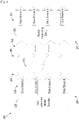
- base stations 101-103 may communicate with each other and with subscriber stations 111-116 using an IEEE-802.16 wireless metropolitan area network standard, such as, for example, an IEEE-802.16e standard. In another embodiment, however, a different wireless protocol may be employed, such as, for example, a HIPERMAN wireless metropolitan area network standard.
- Base station 101 may communicate through direct line-of-sight or non-line-of-sight with base station 102 and base station 103, depending on the technology used for the wireless backhaul.
- Base station 102 and base station 103 may each communicate through non-line-of-sight with subscriber stations 111-116 using OFDM and/or OFDMA techniques.
- Base station 102 may provide a T1 level service to subscriber station 112 associated with the enterprise and a fractional T1 level service to subscriber station 111 associated with the small business.
- Base station 102 may provide wireless backhaul for subscriber station 113 associated with the WiFi hotspot, which may be located in an airport, café, hotel, or college campus.
- Base station 102 may provide digital subscriber line (DSL) level service to subscriber stations 114, 115 and 116.
- DSL digital subscriber line
- Dotted lines show the approximate extents of coverage areas 120 and 125, which are shown as approximately circular for the purposes of illustration and explanation only. It should be clearly understood that the coverage areas associated with base stations, for example, coverage areas 120 and 125, may have other shapes, including irregular shapes, depending upon the configuration of the base stations and variations in the radio environment associated with natural and man-made obstructions.
- the coverage areas associated with base stations are not constant over time and may be dynamic (expanding or contracting or changing shape) based on changing transmission power levels of the base station and/or the subscriber stations, weather conditions, and other factors.
- the radius of the coverage areas of the base stations for example, coverage areas 120 and 125 of base stations 102 and 103, may extend in the range from less than 2 kilometers to about fifty kilometers from the base stations.
- the connection to network 130 from base station 101 may comprise a broadband connection, for example, a fiber optic line, to servers located in a central office or another operating company point-of-presence.
- the servers may provide communication to an Internet gateway for internet protocol-based communications and to a public switched telephone network gateway for voice-based communications.
- voice-based communications in the form of voice-over-IP (VoIP)
- VoIP voice-over-IP
- the traffic may be forwarded directly to the Internet gateway instead of the PSTN gateway.
- the servers, Internet gateway, and public switched telephone network gateway are not shown in FIGURE 1A .
- the connection to network 130 may be provided by different network nodes and equipment.
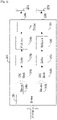
- FIGURE 3 illustrates details of multi-codeword MIMO encoder 220 according to an embodiment of the present disclosure.
- encoder 220 comprises a demultiplexer (demux) 305, a plurality of cyclic redundancy code (CRC) blocks 310, a plurality of coders 315, a plurality of modulators 320, and a pre-coder 325.
- Encoder 220 is operable to receive an information block and to generate data streams 230 based on the information block for transmission over antennas 225.
- Demultiplexer 305 is operable to demultiplex the information block into a plurality of smaller information blocks, or streams 340.
- Each CRC block 310 is operable to add CRC data to the associated stream 340.
- each coder 315 is operable to code the stream 340 and each modulator 320 is operable to modulate the coded stream 340.
- the resulting streams are processed through a precoding algorithm 325 and transmitted from separate antennas 225.
- Precoding 325 is used for multi-layer beamforming in order to maximize the throughput performance of a multiple receive antenna system.
- the multiple streams of the signals are emitted from the transmit antennas with independent and appropriate weighting per each antenna such that the link through-put is maximized at the receiver output.
- Precoding algorithms for multi-codeword MIMO can be sub-divided into linear and nonlinear precoding types.
- Linear precoding approaches can achieve reasonable throughput performance with lower complexity relateved to nonlinear precoding approaches.
- Linear precoding includes unitary precoding and zero-forcing (hereinafter "ZF") precoding.
- Nonlinear precoding can achieve near optimal capacity at the expense of complexity.
- Nonlinear precoding is designed based on the concept of Dirty paper coding (hereinafter "DPC") which shows that any known interference at the transmitter can be subtracted without the penalty of radio resources if the optimal precoding scheme can be applied on the transmit signal.
- DPC Dirty paper coding
- Transmitter (TX) processing circuitry 415 receives analog or digital voice data from microphone 420 or other outgoing baseband data (e.g., web data, e-mail, interactive video game data) from main processor 440. Transmitter (TX) processing circuitry 415 encodes, multiplexes, and/or digitizes the outgoing baseband data to produce a processed baseband or IF signal. Radio frequency (RF) transceiver 410 receives the outgoing processed baseband or IF signal from transmitter (TX) processing circuitry 415. Radio frequency (RF) transceiver 410 up-converts the baseband or IF signal to a radio frequency (RF) signal that is transmitted via antenna 405.
- RF radio frequency
- Main processor 440 is capable of executing other processes and programs resident in memory 460. Main processor 440 can move data into or out of memory 460, as required by an executing process. Main processor 440 is also coupled to I/O interface 445. I/O interface 445 provides mobile station 116 with the ability to connect to other devices such as laptop computers and handheld computers. I/O interface 445 is the communication path between these accessories and main controller 440.
- Main processor 440 is also coupled to keypad 450 and display unit 455.
- the operator of SS 116 uses keypad 450 to enter data into SS 116.
- Display 455 may be a liquid crystal display capable of rendering text and/or at least limited graphics from web sites. Alternate embodiments may use other types of displays.
- codebook partitioner 470 is a plurality of instructions contained within memory 460.
- codebook partitioner 470 is configured to cause the main processor 440 to perform the functions described herein above with respect to the component codebook partitioner 470. For example, in such embodiments the main processor 440 divides the codebook into the preferred set and the restricted set.
- the threshold ⁇ 462 is a configurable parameter indicating an interference that SS 116 is able to tolerate.
- the main processor 440 is operable to adjust threshold ⁇ 462.
- the threshold ⁇ 462 is adjusted to increase or decrease an identified number of codebook vectors or matrices that will cause an interference in a received signal to be less than or equal to ( ⁇ ) the threshold ⁇ 462.
- BS 102 e.g., the serving base station, is operable to adjust threshold ⁇ 462.
- the threshold ⁇ 462 is adjusted to increase or decrease an identified number of codebook vectors or matrices that will cause an interference in a received signal to be less than or equal to ( ⁇ ) the threshold ⁇ 462.
- a feedback based mechanism is used to provide information related to the channel gains from BS 102 (e.g., the serving base station) to SS 116 based on various criteria. For example, after performing the channel estimation using the training signals, SS 116 informs BS 102 which codebook vector or matrix that maximizes the signal-to-noise ratio (SNR) of the received signal based on the channel from BS 102 to SS 116. SS 116 also includes a value of the expected SNR. Then, BS 102 adapts the format of the data based on the information fed back from the SS 116. BS 102 transmits the data to SS 116. In this way, the performance (mainly the throughput) of the wireless system improves under the standardized codebook constraint.
- SNR signal-to-noise ratio
- SS 115 is denoted as “2” such that Y 2 is the the N R ⁇ 1 vector of received signal at SS 115.
- BS 102 is denoted as "1” such that X 1 is the N T ⁇ 1 vector of transmitted signal at BS 102.
- BS 103 is denoted as "2” such that X 2 is the N T ⁇ 1 vector of transmitted signal at BS 103.
- SS 116 chooses the transmitted codebook vector at BS 102 based on H 11 and SS 115 chooses the transmitted codebook vector at BS 103 based on H 2 2 .
- a strong interference may be created to the received signal at the other subscriber stations from different cells using the same bandwidth.
- the received power level of the interference signal and that of the intended signal are usually comparable which leads a very low signal-to-interference-and-noise ratio (SINR) at the subscriber station.
- SINR signal-to-interference-and-noise ratio
- the transmitted signal from BS 102 to SS 116 ( X 1 ) 140 may cause strong interference for the received signal at SS 115 ( X 2 ) 150 and vice-versa.
- the throughput of the cell-edge subscriber station suffers greatly from the interference because the received power levels of the intended signal and interference are comparable. This is one of the reasons why the average cell-edge throughput is significantly lower than the average cell throughput.
- the cell-edge throughput is improved by coordinating between BS 102, BS 103 and SS 116 in a unified way.
- SS 116 When SS 116 is a cell-edge user, SS 116 may experience a low throughput.
- the low throughput of SS 116 results mainly the interference from BS 103.
- SS 116 can divide the standardized codebook into two subsets.
- the codebook partitioner 470 divides the codebook by creating a first set 505 (set one) and a second set 510 (set two) based on the configurable parameter threshold ⁇ 462.
- Set one 505 also referred to as the preferable set, contains the codebook vectors or matrices that will cause interference to the receive signals less than threshold ⁇ 462.
- Set two 510 also referred to as the restricted set, contains the complement of the first set 505.
- the main processor 440 estimates the channel matrices for BS 103 (e.g., an interfering base station).
- the codebook partitioner 470 receives the interfering channel gain H 21 .
- Equation 4 illustrates the checking function according to one exemplary criterion.
- V is a filter at SS 116.
- SS 116 can feedback a combination of the precoding vectors and matrices for each interfering base station such that a total interference level is less than ( ⁇ ) a tolerable threshold ⁇ 462.
- the checking function is f ( H 21 ,.. H K 1 , P 2 ,..., P K , ⁇ ) .
- K is the number of base stations seen by SS 116 such that K-1 is the number of interfering base stations.
- H K1 515 are the channel matrices from the K-1 interfering base stations to SS 116, P 2 ,..., P K are the K-1 codebooks for the K-1 interfering base stations, while S i 525 and ⁇ i 530 are the preferred set and restricted set for an interfering base station " i ".
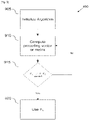
- SS 115 performs channel estimation in step 610.
- SS 115 performs measurements based on reference signals received from BS 103 and from BS 102.
- SS 115 divides the codebook and identifies the preferred set 505 and restricted set 510. Thereafter, SS 115 sends feedback information to BS 103 in step 620.
- the feedback information includes the codebook information such as the preferred set 505, restricted set 510 or both.
- interfering base stations can avoid interference with each other by choosing different codebook vectors within a standardized codebook. This is achieved by allowing the base stations to choose codebook vectors or matrices to transmit their own signals in the space which creates little or even no interference to the other cells' subscriber stations in the same bandwidth.
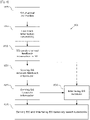
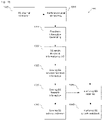
- SS 116 generates feedback information in step 710.
- SS 116 identifies preferred codebook vectors or matrices. Based on the estimated channel matrices, SS 116 searches for a codebook vector or matrix that maximizes a receive signal power for SS 116. Thus, SS 116 generates a precoding vector or matrix for its own serving cell (e.g. from BS 102) to maximize the received power for SS 116. Additionally, SS 116 can search for a codebook vector or matrix that maximizes some other performance measures. SS 116 searches the codebook vector or matrix from BS 102 together with the codebook vectors or matrices from BS 103 subject to the configurable parameter threshold ⁇ 462.
- the interfering channel matrix received at SS 116 is H 21 140.
- SS 116 can send the direction of the eigen-channels of H 21 140 where the corresponding singular value is substantial.
- SS 116 may also elect to feedback the receive channel vector from each antenna to BS 103 directly or indirectly through BS 102.
- BS 102 and BS 103 respectively select codebook vectors or matrices for future transmissions.
- BS 103 upon receiving feedback information from either BS 102 or SS 116, BS 103 chooses a codebook vector or matrix to send to SS 115 (.e.g., the intended subscriber station for BS 103).
- BS 103 can select the codebook vector or matrix to send to SS 115 based on the feedback information from SS 116.
- BS 102 also chooses a codebook vector or matrix to send to SS 116 in step 735.
- SS 116 performs channel estimation.
- SS 116 may be, for example, a cell-edge subscriber station.
- SS 116 estimates the channel matrix from BS 102 (e.g., the serving base station). Further, SS 116 estimates the channel matrices from BS 103 (e.g., a strong interfering base station).
- SS 116 estimates the channel matrices from BS 102 and BS 103, respectively, through reference signals.
- SS 116 generates channel feedback information in step 810 based on the estimated channel matrices.
- SS 116 sends, to BS 102, channel feedback information related to the channel matrices to BS 102 and the channel matrices to BS 103 in step 815.
- SS 116 sends the channel feedback information directly to BS 103 in step 815.
- BS 103 receives the channel feedback information from BS 102 in step 830. In some embodiments, BS 103 receives the channel feedback information directly from SS 116 in step 830.
- BS 102 computes a precoding vector and matrix for BS 103 to maximize or minimize some performance measures based on the fact that BS 102 is using P 1 (update the resulting vector or matrix to P 2 ). BS 102 further updates its precoding vector or matrix under some performance measures based on the assumption that BS 103 is using P 2 (update the resulting vector or matrix to P 1 ).
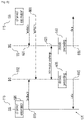
- FIGURE 10 illustrates a process for interference avoidance according to embodiments of the present disclosure.
- the embodiment of the interference avoidance process 1000 shown in FIGURE 10 is for illustration only. Other embodiments of the interference avoidance process 1000 can be used without departing from the scope of this disclosure.
- the interference avoidance message is a value that represents the codebook information, e.g., represents either the preferred set or restricted set of the codebook, or both.
- the IAM may be a single PMI vector and a variable.
- BS 103 calculates the preferred set based on the single PMI vector and variable.
- the configuration message includes the threshold ⁇ 462.
- the configuration message contains commands for SS 116 to adjust the threshold ⁇ 462.
- Threshold ⁇ 462 indicates the interference level at SS 116.
- the threshold ⁇ 462 may represent a target interference level (e.g., tolerable interference level) for SS 116. Receiving the threshold ⁇ 462 by SS 116 triggers precoding vector or matrix reporting for inter-cell interference avoidance (or mitigation).
- the information related to the average SINR improvement is a change in channel quality information ( ⁇ CQI) when BS 103 is using the recommended set of precoding vectors or matrices.
- ⁇ CQI channel quality information
- SS 116 sends the feedback information directly to BS 103.
- SS 116 sends one or more of the codebook information related to codebook vector or matrices for the interference channel, the IAM message indicating the set of recommended (e.g., preferred) or restricted precoding vectors or matrices, and the information related to SINR improvement if the set is applied at BS 103.
- BS 102 receives the feedback information in step 1025.
- BS 102 processes the information and identifies that the interfering base station is BS 103. Then BS 102 forwards the feedback information to BS 103 in step 1030.
- the IAM indicating the recommended (preferred) or the restricted set of the precoding vectors or matrices are reported to BS 103.
- the corresponding IAMs for different base stations and the SINR (or other performance measures) improvements are forwarded to their respective base stations as well.
- BS 103 when BS 103 receives a request from BS 102, BS 103 chooses to follow the recommendation based the SINR improvement report. Once BS 103 decides to follow the recommendation, BS 103 may choose a precoding codebook vector or matrix among the set specified by the IAM. In some such embodiments, BS 103 chooses the precoding codebook vector or matrix which maximizes the SINR (or other performance measures) from BS 103 to SS 115 within the set.
- Equation 4 illustrates the checking function according to one exemplary criterion.
- V is a filter at SS 116.
- the codebook partitioner 470 computes the distance from the elements in one particular set to the precoding codebook vector or matrix that maximizes the interference power (or other performance measure) received at SS 116.
- An IAM threshold ⁇ can then be used to distinguish these two sets.
- the IAM threshold ⁇ is a threshold of the distance measurements.
- SS 116 can partition the precoding codebook vectors and matrices into two sets 505, 510 and compute the IAM threshold ⁇ based on different distance measures.
- the examples of the distance measures can be the cross-correlation between different precoding codebook vectors and the chordal distance between different precoding codebook matrices.
Landscapes
- Engineering & Computer Science (AREA)
- Computer Networks & Wireless Communication (AREA)
- Signal Processing (AREA)
- Quality & Reliability (AREA)
- Power Engineering (AREA)
- Physics & Mathematics (AREA)
- Mathematical Physics (AREA)
- Mobile Radio Communication Systems (AREA)
Claims (15)
- Dispositif d'une station de base, BS (102, 103), dans un réseau de communication sans fil comprenant une pluralité de BS, le dispositif comprenant :un récepteur configuré pour recevoir des informations de rétroaction d'au moins un équipement d'utilisateur, UE (115, 116), caractérisé en ce que les informations de rétroaction comprennent des informations concernant au moins l'un parmi un ensemble de livres de codes recommandés ou un ensemble de livres de codes restreints ; etun contrôleur (470) configuré pour identifier l'au moins l'un parmi l'ensemble de livres de codes recommandés ou l'ensemble de livres de codes restreints et sélectionner un vecteur de livres de codes sur la base de l'au moins un ensemble identifié parmi l'ensemble de livres de codes recommandés ou l'ensemble de livres de codes restreints afin d'éviter une interférence,où l'ensemble de livres de codes recommandés comprend au moins un vecteur de livres de codes qui provoque qu'une interférence dans des signaux reçus de l'au moins un UE en provenance d'au moins une BS de desserte soit inférieure à un seuil, etoù l'ensemble de livres de codes restreints comprend au moins un vecteur de livres de codes qui provoque qu'une interférence dans des signaux reçus de l'au moins un UE en provenance de l'au moins une BS de desserte soit supérieure au seuil.
- Dispositif selon la revendication 1, où le récepteur est configuré pour recevoir les informations de rétroaction directement ou par l'intermédiaire de l'au moins une BS de desserte de l'au moins un UE.
- Dispositif selon la revendication 1, comprenant en outre :
un émetteur configuré pour transmettre un message de configuration comprenant le seuil. - Dispositif selon la revendication 1, où le récepteur est configuré en outre pour recevoir un indicateur identifiant l'un parmi l'ensemble de livres de codes recommandés et l'ensemble de livres de codes restreints de l'au moins un UE ; et
où le contrôleur est configuré pour identifier l'au moins l'un parmi l'ensemble de livres de codes recommandés ou l'ensemble de livres de codes restreints sur la base de l'indicateur. - Dispositif selon la revendication 1, où le récepteur est configuré en outre pour recevoir un indicateur de surcharge lorsque tous les vecteurs de livres de codes du livre de codes provoquent qu'une interférence dans des signaux reçus de l'au moins un UE soit supérieure au seuil.
- Dispositif selon la revendication 1, où le contrôleur est configuré en outre pour sélectionner un vecteur de livres de codes de manière indépendante et itérative comme lors de la communication avec une autre BS.
- Procédé de fonctionnement d'une station de base, BS (102, 103), dans un réseau de communication sans fil comprenant une pluralité de BS, le procédé comprenant :recevoir, à partir d'au moins un équipement d'utilisateur, UE (115, 116), des informations de rétroaction comprenant des informations concernant au moins l'un parmi un ensemble de livres de codes recommandés ou un ensemble de livres de codes restreints, identifier l'au moins un parmi l'ensemble de livres de codes recommandés ou l'ensemble de livres de codes restreints ; etsélectionner un vecteur de livres de codes sur la base de l'au moins un ensemble identifié parmi l'ensemble de livres de codes recommandés ou l'ensemble de livres de codes restreints afin d'éviter l'interférence,où l'ensemble de livres de codes recommandés comprend au moins un vecteur de livres de codes qui provoque qu'une interférence dans des signaux reçus de l'au moins un UE en provenance d'au moins une BS de desserte soit inférieure à un seuil, etoù l'ensemble de livres de codes restreints comprend au moins un vecteur de livres de codes qui provoque qu'une interférence dans des signaux reçus de l'au moins un UE en provenance de l'au moins une BS de desserte soit supérieure au seuil.
- Procédé selon la revendication 7, où la réception d'informations de rétroaction comprend la réception des informations de rétroaction directement à partir de l'au moins un UE ou la réception des informations de rétroaction par l'intermédiaire de l'au moins une BS de desserte de l'au moins un UE.
- Procédé selon la revendication 7, le procédé comprenant en outre :
transmettre un message de configuration comprenant le seuil. - Procédé selon la revendication 7, le procédé comprenant en outre :recevoir un indicateur identifiant l'un parmi l'ensemble de livres de codes recommandés et l'ensemble de livres de codes restreints en provenance d'au moins un UE,où l'identification de l'au moins un parmi l'ensemble de livres de codes recommandés ou l'ensemble de livres de codes restreints comprend l'identification de l'au moins un parmi l'ensemble de livres de codes recommandés ou l'ensemble de livres de codes restreints sur la base de l'indicateur.
- Procédé selon la revendication 7, le procédé comprenant en outre :
recevoir un indicateur de surcharge lorsque tous les vecteurs de livres de codes du livre de codes provoquent qu'une interférence dans des signaux reçus de l'au moins un UE soit supérieure au seuil. - Procédé selon la revendication 7, où la sélection du vecteur de livres de codes comprend la sélection du vecteur de livres de codes de manière indépendante et itérative comme lors de la communication avec une autre BS.
- Dispositif d'un équipement d'utilisateur, UE (115, 116), destiné à recevoir un service à partir d'une station de base de desserte, BS (102, 103), dans un réseau de communication sans fil, le dispositif comprenant :au moins un émetteur-récepteur (410) ;au moins un processeur (440, 470) couplé de manière fonctionnelle à l'au moins un émetteur-récepteur (410),où l'au moins un processeur (440, 470) est configuré pour :recevoir un signal mélangé comprenant un premier signal transmis à partir de la BS de desserte et un deuxième signal transmis à partir d'une BS brouilleuse, où le deuxième signal est transmis pour un autre UE ;diviser le livre de codes en un ensemble de livres de codes recommandés et un ensemble de livres de codes restreints ;
caractérisé en ce que le dispositif de l'UE (115, 116) transmet, à la BS brouilleuse, des informations de rétroaction comprenant au moins l'un parmi l'ensemble de livres de codes recommandés ou l'ensemble de livres de codes restreints,où l'ensemble de livres de codes recommandés comprend au moins un vecteur de livres de codes qui provoque qu'une interférence dans des signaux reçus de l'au moins un UE en provenance d'au moins une BS de desserte soit inférieure à un seuil, etoù l'ensemble de livres de codes restreints comprend au moins un vecteur de livres de codes qui provoque qu'une interférence dans des signaux reçus de l'au moins un UE en provenance de l'au moins une BS de desserte soit supérieure au seuil. - Dispositif selon la revendication 13, où l'au moins un processeur (440, 470) est configuré pour transmettre au moins l'un parmi l'ensemble de livres de codes recommandés ou l'ensemble de livres de codes restreints à la BS brouilleuse directement ou par l'intermédiaire de la BS de desserte.
- Dispositif selon la revendication 13, où l'au moins un processeur (440, 470) est configuré en outre pour :
recevoir un message de configuration en provenance de la BS de desserte, le message de configuration comprenant le seuil.
Applications Claiming Priority (5)
| Application Number | Priority Date | Filing Date | Title |
|---|---|---|---|
| US13309408P | 2008-06-25 | 2008-06-25 | |
| US13384608P | 2008-07-03 | 2008-07-03 | |
| US12/454,531 US8238954B2 (en) | 2008-06-25 | 2009-05-19 | Inter-cell interference avoidance for downlink transmission |
| PCT/KR2009/003396 WO2009157705A2 (fr) | 2008-06-25 | 2009-06-24 | Évitement d'interférence entre cellules dans une transmission de liaison descendante |
| EP09770377.1A EP2292037B1 (fr) | 2008-06-25 | 2009-06-24 | Évitement d'interférence entre cellules dans une transmission de liaison descendante |
Related Parent Applications (2)
| Application Number | Title | Priority Date | Filing Date |
|---|---|---|---|
| EP09770377.1A Division EP2292037B1 (fr) | 2008-06-25 | 2009-06-24 | Évitement d'interférence entre cellules dans une transmission de liaison descendante |
| EP09770377.1A Division-Into EP2292037B1 (fr) | 2008-06-25 | 2009-06-24 | Évitement d'interférence entre cellules dans une transmission de liaison descendante |
Publications (2)
| Publication Number | Publication Date |
|---|---|
| EP3461207A1 EP3461207A1 (fr) | 2019-03-27 |
| EP3461207B1 true EP3461207B1 (fr) | 2022-08-10 |
Family
ID=41445103
Family Applications (2)
| Application Number | Title | Priority Date | Filing Date |
|---|---|---|---|
| EP18205506.1A Active EP3461207B1 (fr) | 2008-06-25 | 2009-06-24 | Évitement d'interférence intercellulaire pour une transmission de liaison descendante |
| EP09770377.1A Not-in-force EP2292037B1 (fr) | 2008-06-25 | 2009-06-24 | Évitement d'interférence entre cellules dans une transmission de liaison descendante |
Family Applications After (1)
| Application Number | Title | Priority Date | Filing Date |
|---|---|---|---|
| EP09770377.1A Not-in-force EP2292037B1 (fr) | 2008-06-25 | 2009-06-24 | Évitement d'interférence entre cellules dans une transmission de liaison descendante |
Country Status (5)
| Country | Link |
|---|---|
| US (1) | US8238954B2 (fr) |
| EP (2) | EP3461207B1 (fr) |
| KR (1) | KR101578133B1 (fr) |
| CN (1) | CN102077637B (fr) |
| WO (1) | WO2009157705A2 (fr) |
Families Citing this family (30)
| Publication number | Priority date | Publication date | Assignee | Title |
|---|---|---|---|---|
| US6807405B1 (en) | 1999-04-28 | 2004-10-19 | Isco International, Inc. | Method and a device for maintaining the performance quality of a code-division multiple access system in the presence of narrow band interference |
| WO2009120048A2 (fr) * | 2008-03-28 | 2009-10-01 | Lg Electronics Inc. | Procédé permettant d’éviter les interférences intercellulaires dans un environnement multicellulaire |
| US9867203B2 (en) | 2008-07-11 | 2018-01-09 | Qualcomm Incorporated | Synchronous TDM-based communication in dominant interference scenarios |
| US8385483B2 (en) | 2008-11-11 | 2013-02-26 | Isco International, Llc | Self-adaptive digital RF bandpass and bandstop filter architecture |
| EP2192698A1 (fr) * | 2008-11-28 | 2010-06-02 | Alcatel Lucent | Séléction de précodage pour une station de base radio avec plusieurs antennes |
| WO2010123295A2 (fr) * | 2009-04-24 | 2010-10-28 | 한국전자통신연구원 | Procédé collaboratif de communication dans un système cellulaire de communications sans fil et terminal destiné à mettre en oeuvre le procédé |
| US9565011B2 (en) * | 2009-06-04 | 2017-02-07 | Qualcomm Incorporated | Data transmission with cross-subframe control in a wireless network |
| US8718658B2 (en) * | 2009-06-25 | 2014-05-06 | Samsung Electronics Co., Ltd. | Communication system for distributedly managing interference using feedback message |
| US8699610B2 (en) * | 2009-07-30 | 2014-04-15 | Lg Electronics Inc. | Feedback scheme for multi-cell interference mitigation consideration legacy mobile users |
| KR101578650B1 (ko) * | 2009-08-18 | 2015-12-21 | 삼성전자주식회사 | 프리코딩 행렬을 이용한 데이터 송수신 방법 및 단말기 |
| US8737505B2 (en) * | 2009-12-15 | 2014-05-27 | Electronics And Telecommunications Research Institute | Method and apparatus of codebook transformation for interference mitigation in codebook-based precoding |
| US8948800B2 (en) * | 2010-03-30 | 2015-02-03 | Qualcomm Incorporated | Systems, apparatuses, and methods to facilitate coordinated scheduling in wireless communication systems |
| US9609536B2 (en) | 2010-04-13 | 2017-03-28 | Qualcomm Incorporated | Measurement of received power and received quality in a wireless communication network |
| US8509194B2 (en) * | 2010-10-26 | 2013-08-13 | Qualcomm Incorporated | Dirty paper coding and reference signal design |
| US8687727B2 (en) * | 2010-11-05 | 2014-04-01 | Intel Corporation | Coordinated multi-point transmission using interference feedback |
| EP2845405B1 (fr) * | 2012-05-04 | 2017-10-11 | Nokia Solutions and Networks Oy | Configuration d'une bande de fréquences partagée entre des systèmes de communication sans fil |
| CN102647770B (zh) * | 2012-05-07 | 2018-11-09 | 南京中兴软件有限责任公司 | 一种通信的方法、设备和基站 |
| US9780843B2 (en) * | 2012-11-16 | 2017-10-03 | Avago Technologies General Ip (Singapore) Pte. Ltd. | Interference suppression and alignment for cellular networks |
| US9319916B2 (en) | 2013-03-15 | 2016-04-19 | Isco International, Llc | Method and appartus for signal interference processing |
| DE102013113457B4 (de) | 2013-12-04 | 2017-07-06 | Intel IP Corporation | Verfahren und vorrichtung zum erkennen eines interferenzszenarios |
| US9525466B2 (en) * | 2014-04-14 | 2016-12-20 | Lg Electronics Inc. | Method of performing interference cancellation and apparatus therefor |
| US9775116B2 (en) | 2014-05-05 | 2017-09-26 | Isco International, Llc | Method and apparatus for increasing performance of communication links of cooperative communication nodes |
| FI3651386T3 (fi) | 2015-05-04 | 2023-11-15 | Isco Int Llc | Menetelmä ja laitteisto viestintäpolkujen suorituskyvyn lisäämiseksi viestintäsolmuille |
| US9615263B2 (en) * | 2015-05-27 | 2017-04-04 | Telefonaktiebolaget L M Ericsson (Publ) | Method to improve the performance in cell range expansion using location based codebook subset restriction |
| MX2018014697A (es) | 2016-06-01 | 2019-09-13 | Isco Int Llc | Metodo y aparato para realizar acondicionamiento de señales para mitigar la interferencia detectada en un sistema de comunicacion. |
| US10298279B2 (en) | 2017-04-05 | 2019-05-21 | Isco International, Llc | Method and apparatus for increasing performance of communication paths for communication nodes |
| US10284313B2 (en) | 2017-08-09 | 2019-05-07 | Isco International, Llc | Method and apparatus for monitoring, detecting, testing, diagnosing and/or mitigating interference in a communication system |
| US10812121B2 (en) | 2017-08-09 | 2020-10-20 | Isco International, Llc | Method and apparatus for detecting and analyzing passive intermodulation interference in a communication system |
| US11523377B2 (en) | 2020-02-14 | 2022-12-06 | T-Mobile Usa, Inc. | LTE resource allocation controller |
| WO2022268297A1 (fr) * | 2021-06-22 | 2022-12-29 | Huawei Technologies Co., Ltd. | Dispositifs et procédés permettant un sondage destiné à une formation de faisceau coordonnée |
Family Cites Families (14)
| Publication number | Priority date | Publication date | Assignee | Title |
|---|---|---|---|---|
| US5768254A (en) * | 1995-09-29 | 1998-06-16 | Lucent Technologies Inc. | Multiple access cellular communication with signal cancellation to reduce co-channel interference |
| US6137991A (en) | 1996-12-19 | 2000-10-24 | Ericsson Telefon Ab L M | Estimating downlink interference in a cellular communications system |
| GB2412036A (en) | 2004-03-08 | 2005-09-14 | Ipwireless Inc | Mitigation of intercell and intracell interference in a cellular communication system |
| RU2527748C2 (ru) * | 2005-10-27 | 2014-09-10 | Квэлкомм Инкорпорейтед | Предварительное кодирование для зависящего от сегмента планирования в беспроводных системах связи |
| KR100923913B1 (ko) * | 2005-11-17 | 2009-10-28 | 삼성전자주식회사 | 다중 사용자 간섭 제거 장치 및 방법 |
| US7426198B2 (en) * | 2006-02-06 | 2008-09-16 | Motorola, Inc. | Method and apparatus for performing spatial-division multiple access |
| US7689177B2 (en) * | 2006-05-24 | 2010-03-30 | Samsung Electronics Co., Ltd. | Method and apparatus for transmitting/receiving feedback information and system supporting the same in a multi-user multi-antenna system |
| JP4845640B2 (ja) * | 2006-08-23 | 2011-12-28 | 富士通株式会社 | 無線通信システムおよび無線通信方法 |
| US8023457B2 (en) * | 2006-10-02 | 2011-09-20 | Freescale Semiconductor, Inc. | Feedback reduction for MIMO precoded system by exploiting channel correlation |
| CN1972150A (zh) * | 2006-10-10 | 2007-05-30 | 中国科学技术大学 | 一种有限反馈线性离散码的发射与接收方法 |
| EP1912347A1 (fr) * | 2006-10-11 | 2008-04-16 | Nokia Siemens Networks Gmbh & Co. Kg | Procédé, station mobile et station de base pour transmission de données dans un système de communication mobile |
| US8073069B2 (en) * | 2007-01-05 | 2011-12-06 | Apple Inc. | Multi-user MIMO-SDMA for finite rate feedback systems |
| CN101159462A (zh) * | 2007-11-01 | 2008-04-09 | 中国科学技术大学 | 一种多天线多小区系统中的有限反馈预编码干扰抑制方法 |
| US8521089B2 (en) * | 2008-03-31 | 2013-08-27 | Intel Corporation | Reducing co-channel interference |
-
2009
- 2009-05-19 US US12/454,531 patent/US8238954B2/en not_active Expired - Fee Related
- 2009-06-24 WO PCT/KR2009/003396 patent/WO2009157705A2/fr not_active Ceased
- 2009-06-24 KR KR1020117001743A patent/KR101578133B1/ko not_active Expired - Fee Related
- 2009-06-24 EP EP18205506.1A patent/EP3461207B1/fr active Active
- 2009-06-24 EP EP09770377.1A patent/EP2292037B1/fr not_active Not-in-force
- 2009-06-24 CN CN200980124586.XA patent/CN102077637B/zh not_active Expired - Fee Related
Also Published As
| Publication number | Publication date |
|---|---|
| EP3461207A1 (fr) | 2019-03-27 |
| WO2009157705A2 (fr) | 2009-12-30 |
| EP2292037B1 (fr) | 2018-12-26 |
| EP2292037A4 (fr) | 2016-05-04 |
| US20090325590A1 (en) | 2009-12-31 |
| CN102077637A (zh) | 2011-05-25 |
| WO2009157705A3 (fr) | 2010-04-15 |
| KR101578133B1 (ko) | 2015-12-17 |
| US8238954B2 (en) | 2012-08-07 |
| EP2292037A2 (fr) | 2011-03-09 |
| KR20110025838A (ko) | 2011-03-11 |
| CN102077637B (zh) | 2014-03-12 |
Similar Documents
| Publication | Publication Date | Title |
|---|---|---|
| EP3461207B1 (fr) | Évitement d'interférence intercellulaire pour une transmission de liaison descendante | |
| EP3672115B1 (fr) | Schémas de transmission sans fil en liaison descendante avec réduction des interférences intercellulaires | |
| US8442566B2 (en) | Coordinated multipoint (CoMP) joint transmission using channel information feedback and higher rank dedicated beam-forming | |
| US10498416B2 (en) | System and method for downlink channel sounding in wireless communications systems | |
| EP2944111B1 (fr) | Conception de rétroaction d'informations d'état de canal dans des systèmes de communication sans fil avancés | |
| KR101241910B1 (ko) | 다중 셀 환경에서 사운딩 채널을 이용한 협력적 mimo 기법 | |
| KR101844290B1 (ko) | 무선 네트워크에서 pucch 서브밴드 피드백을 위한 시스템 및 방법 | |
| US8488440B2 (en) | Coordinated linear beamforming in downlink multi-cell wireless networks | |
| US8620280B2 (en) | Downlink single-user multi-cell mimo systems for interference mitigation | |
| US8699589B2 (en) | System and method for multi-cell joint codebook feedback in wireless communications systems | |
| EP3163767B1 (fr) | Procédé pour rapporter un index de matrice de précodage pour une communication en bande haute fréquence dans un système de communication sans fil et appareil associé | |
| US20120189077A1 (en) | Method and apparatus for mode switching between a multi-cell coordinated communication mode and a single-cell mimo communication mode | |
| KR20170091664A (ko) | 부분 프리코딩 csi-rs 및 csi 피드백을 위한 다운링크 시그널링 방법 및 장치 | |
| EP2891260A1 (fr) | Procédé et terminal sans fil pour atténuer le brouillage en liaison descendante | |
| US9319115B2 (en) | Method for providing precoding information in a multi-user MIMO system |
Legal Events
| Date | Code | Title | Description |
|---|---|---|---|
| PUAI | Public reference made under article 153(3) epc to a published international application that has entered the european phase |
Free format text: ORIGINAL CODE: 0009012 |
|
| STAA | Information on the status of an ep patent application or granted ep patent |
Free format text: STATUS: REQUEST FOR EXAMINATION WAS MADE |
|
| 17P | Request for examination filed |
Effective date: 20181109 |
|
| AC | Divisional application: reference to earlier application |
Ref document number: 2292037 Country of ref document: EP Kind code of ref document: P |
|
| AK | Designated contracting states |
Kind code of ref document: A1 Designated state(s): AT BE BG CH CY CZ DE DK EE ES FI FR GB GR HR HU IE IS IT LI LT LU LV MC MK MT NL NO PL PT RO SE SI SK TR |
|
| STAA | Information on the status of an ep patent application or granted ep patent |
Free format text: STATUS: EXAMINATION IS IN PROGRESS |
|
| 17Q | First examination report despatched |
Effective date: 20200616 |
|
| GRAP | Despatch of communication of intention to grant a patent |
Free format text: ORIGINAL CODE: EPIDOSNIGR1 |
|
| STAA | Information on the status of an ep patent application or granted ep patent |
Free format text: STATUS: GRANT OF PATENT IS INTENDED |
|
| RIC1 | Information provided on ipc code assigned before grant |
Ipc: H04L 1/00 20060101ALN20211021BHEP Ipc: H04B 7/0417 20170101ALN20211021BHEP Ipc: H04W 72/08 20090101ALI20211021BHEP Ipc: H04L 25/03 20060101ALI20211021BHEP Ipc: H04B 7/024 20170101AFI20211021BHEP |
|
| RIC1 | Information provided on ipc code assigned before grant |
Ipc: H04L 1/00 20060101ALN20211110BHEP Ipc: H04B 7/0417 20170101ALN20211110BHEP Ipc: H04W 72/08 20090101ALI20211110BHEP Ipc: H04L 25/03 20060101ALI20211110BHEP Ipc: H04B 7/024 20170101AFI20211110BHEP |
|
| INTG | Intention to grant announced |
Effective date: 20211122 |
|
| GRAJ | Information related to disapproval of communication of intention to grant by the applicant or resumption of examination proceedings by the epo deleted |
Free format text: ORIGINAL CODE: EPIDOSDIGR1 |
|
| REG | Reference to a national code |
Ref country code: DE Ref legal event code: R079 Ref document number: 602009064557 Country of ref document: DE Free format text: PREVIOUS MAIN CLASS: H04W0072080000 Ipc: H04B0007024000 |
|
| STAA | Information on the status of an ep patent application or granted ep patent |
Free format text: STATUS: EXAMINATION IS IN PROGRESS |
|
| GRAP | Despatch of communication of intention to grant a patent |
Free format text: ORIGINAL CODE: EPIDOSNIGR1 |
|
| STAA | Information on the status of an ep patent application or granted ep patent |
Free format text: STATUS: GRANT OF PATENT IS INTENDED |
|
| INTC | Intention to grant announced (deleted) | ||
| RIC1 | Information provided on ipc code assigned before grant |
Ipc: H04L 1/00 20060101ALN20220302BHEP Ipc: H04B 7/0417 20170101ALN20220302BHEP Ipc: H04W 72/08 20090101ALI20220302BHEP Ipc: H04L 25/03 20060101ALI20220302BHEP Ipc: H04B 7/024 20170101AFI20220302BHEP |
|
| INTG | Intention to grant announced |
Effective date: 20220316 |
|
| GRAS | Grant fee paid |
Free format text: ORIGINAL CODE: EPIDOSNIGR3 |
|
| GRAA | (expected) grant |
Free format text: ORIGINAL CODE: 0009210 |
|
| STAA | Information on the status of an ep patent application or granted ep patent |
Free format text: STATUS: THE PATENT HAS BEEN GRANTED |
|
| AC | Divisional application: reference to earlier application |
Ref document number: 2292037 Country of ref document: EP Kind code of ref document: P |
|
| AK | Designated contracting states |
Kind code of ref document: B1 Designated state(s): AT BE BG CH CY CZ DE DK EE ES FI FR GB GR HR HU IE IS IT LI LT LU LV MC MK MT NL NO PL PT RO SE SI SK TR |
|
| REG | Reference to a national code |
Ref country code: AT Ref legal event code: REF Ref document number: 1511338 Country of ref document: AT Kind code of ref document: T Effective date: 20220815 Ref country code: CH Ref legal event code: EP |
|
| REG | Reference to a national code |
Ref country code: IE Ref legal event code: FG4D |
|
| REG | Reference to a national code |
Ref country code: DE Ref legal event code: R096 Ref document number: 602009064557 Country of ref document: DE |
|
| REG | Reference to a national code |
Ref country code: NL Ref legal event code: MP Effective date: 20220810 |
|
| REG | Reference to a national code |
Ref country code: LT Ref legal event code: MG9D |
|
| PG25 | Lapsed in a contracting state [announced via postgrant information from national office to epo] |
Ref country code: SE Free format text: LAPSE BECAUSE OF FAILURE TO SUBMIT A TRANSLATION OF THE DESCRIPTION OR TO PAY THE FEE WITHIN THE PRESCRIBED TIME-LIMIT Effective date: 20220810 Ref country code: PT Free format text: LAPSE BECAUSE OF FAILURE TO SUBMIT A TRANSLATION OF THE DESCRIPTION OR TO PAY THE FEE WITHIN THE PRESCRIBED TIME-LIMIT Effective date: 20221212 Ref country code: NO Free format text: LAPSE BECAUSE OF FAILURE TO SUBMIT A TRANSLATION OF THE DESCRIPTION OR TO PAY THE FEE WITHIN THE PRESCRIBED TIME-LIMIT Effective date: 20221110 Ref country code: NL Free format text: LAPSE BECAUSE OF FAILURE TO SUBMIT A TRANSLATION OF THE DESCRIPTION OR TO PAY THE FEE WITHIN THE PRESCRIBED TIME-LIMIT Effective date: 20220810 Ref country code: LV Free format text: LAPSE BECAUSE OF FAILURE TO SUBMIT A TRANSLATION OF THE DESCRIPTION OR TO PAY THE FEE WITHIN THE PRESCRIBED TIME-LIMIT Effective date: 20220810 Ref country code: LT Free format text: LAPSE BECAUSE OF FAILURE TO SUBMIT A TRANSLATION OF THE DESCRIPTION OR TO PAY THE FEE WITHIN THE PRESCRIBED TIME-LIMIT Effective date: 20220810 Ref country code: FI Free format text: LAPSE BECAUSE OF FAILURE TO SUBMIT A TRANSLATION OF THE DESCRIPTION OR TO PAY THE FEE WITHIN THE PRESCRIBED TIME-LIMIT Effective date: 20220810 |
|
| REG | Reference to a national code |
Ref country code: AT Ref legal event code: MK05 Ref document number: 1511338 Country of ref document: AT Kind code of ref document: T Effective date: 20220810 |
|
| PG25 | Lapsed in a contracting state [announced via postgrant information from national office to epo] |
Ref country code: PL Free format text: LAPSE BECAUSE OF FAILURE TO SUBMIT A TRANSLATION OF THE DESCRIPTION OR TO PAY THE FEE WITHIN THE PRESCRIBED TIME-LIMIT Effective date: 20220810 Ref country code: IS Free format text: LAPSE BECAUSE OF FAILURE TO SUBMIT A TRANSLATION OF THE DESCRIPTION OR TO PAY THE FEE WITHIN THE PRESCRIBED TIME-LIMIT Effective date: 20221210 Ref country code: HR Free format text: LAPSE BECAUSE OF FAILURE TO SUBMIT A TRANSLATION OF THE DESCRIPTION OR TO PAY THE FEE WITHIN THE PRESCRIBED TIME-LIMIT Effective date: 20220810 Ref country code: GR Free format text: LAPSE BECAUSE OF FAILURE TO SUBMIT A TRANSLATION OF THE DESCRIPTION OR TO PAY THE FEE WITHIN THE PRESCRIBED TIME-LIMIT Effective date: 20221111 |
|
| PG25 | Lapsed in a contracting state [announced via postgrant information from national office to epo] |
Ref country code: RO Free format text: LAPSE BECAUSE OF FAILURE TO SUBMIT A TRANSLATION OF THE DESCRIPTION OR TO PAY THE FEE WITHIN THE PRESCRIBED TIME-LIMIT Effective date: 20220810 Ref country code: ES Free format text: LAPSE BECAUSE OF FAILURE TO SUBMIT A TRANSLATION OF THE DESCRIPTION OR TO PAY THE FEE WITHIN THE PRESCRIBED TIME-LIMIT Effective date: 20220810 Ref country code: DK Free format text: LAPSE BECAUSE OF FAILURE TO SUBMIT A TRANSLATION OF THE DESCRIPTION OR TO PAY THE FEE WITHIN THE PRESCRIBED TIME-LIMIT Effective date: 20220810 Ref country code: CZ Free format text: LAPSE BECAUSE OF FAILURE TO SUBMIT A TRANSLATION OF THE DESCRIPTION OR TO PAY THE FEE WITHIN THE PRESCRIBED TIME-LIMIT Effective date: 20220810 Ref country code: AT Free format text: LAPSE BECAUSE OF FAILURE TO SUBMIT A TRANSLATION OF THE DESCRIPTION OR TO PAY THE FEE WITHIN THE PRESCRIBED TIME-LIMIT Effective date: 20220810 |
|
| REG | Reference to a national code |
Ref country code: DE Ref legal event code: R097 Ref document number: 602009064557 Country of ref document: DE |
|
| PG25 | Lapsed in a contracting state [announced via postgrant information from national office to epo] |
Ref country code: SK Free format text: LAPSE BECAUSE OF FAILURE TO SUBMIT A TRANSLATION OF THE DESCRIPTION OR TO PAY THE FEE WITHIN THE PRESCRIBED TIME-LIMIT Effective date: 20220810 Ref country code: EE Free format text: LAPSE BECAUSE OF FAILURE TO SUBMIT A TRANSLATION OF THE DESCRIPTION OR TO PAY THE FEE WITHIN THE PRESCRIBED TIME-LIMIT Effective date: 20220810 |
|
| PLBE | No opposition filed within time limit |
Free format text: ORIGINAL CODE: 0009261 |
|
| STAA | Information on the status of an ep patent application or granted ep patent |
Free format text: STATUS: NO OPPOSITION FILED WITHIN TIME LIMIT |
|
| 26N | No opposition filed |
Effective date: 20230511 |
|
| PGFP | Annual fee paid to national office [announced via postgrant information from national office to epo] |
Ref country code: DE Payment date: 20230522 Year of fee payment: 15 |
|
| PG25 | Lapsed in a contracting state [announced via postgrant information from national office to epo] |
Ref country code: SI Free format text: LAPSE BECAUSE OF FAILURE TO SUBMIT A TRANSLATION OF THE DESCRIPTION OR TO PAY THE FEE WITHIN THE PRESCRIBED TIME-LIMIT Effective date: 20220810 |
|
| PGFP | Annual fee paid to national office [announced via postgrant information from national office to epo] |
Ref country code: GB Payment date: 20230523 Year of fee payment: 15 |
|
| PG25 | Lapsed in a contracting state [announced via postgrant information from national office to epo] |
Ref country code: MC Free format text: LAPSE BECAUSE OF FAILURE TO SUBMIT A TRANSLATION OF THE DESCRIPTION OR TO PAY THE FEE WITHIN THE PRESCRIBED TIME-LIMIT Effective date: 20220810 |
|
| PG25 | Lapsed in a contracting state [announced via postgrant information from national office to epo] |
Ref country code: MC Free format text: LAPSE BECAUSE OF FAILURE TO SUBMIT A TRANSLATION OF THE DESCRIPTION OR TO PAY THE FEE WITHIN THE PRESCRIBED TIME-LIMIT Effective date: 20220810 |
|
| REG | Reference to a national code |
Ref country code: CH Ref legal event code: PL |
|
| REG | Reference to a national code |
Ref country code: BE Ref legal event code: MM Effective date: 20230630 |
|
| PG25 | Lapsed in a contracting state [announced via postgrant information from national office to epo] |
Ref country code: LU Free format text: LAPSE BECAUSE OF NON-PAYMENT OF DUE FEES Effective date: 20230624 |
|
| REG | Reference to a national code |
Ref country code: IE Ref legal event code: MM4A |
|
| PG25 | Lapsed in a contracting state [announced via postgrant information from national office to epo] |
Ref country code: LU Free format text: LAPSE BECAUSE OF NON-PAYMENT OF DUE FEES Effective date: 20230624 |
|
| PG25 | Lapsed in a contracting state [announced via postgrant information from national office to epo] |
Ref country code: IE Free format text: LAPSE BECAUSE OF NON-PAYMENT OF DUE FEES Effective date: 20230624 |
|
| PG25 | Lapsed in a contracting state [announced via postgrant information from national office to epo] |
Ref country code: IE Free format text: LAPSE BECAUSE OF NON-PAYMENT OF DUE FEES Effective date: 20230624 Ref country code: CH Free format text: LAPSE BECAUSE OF NON-PAYMENT OF DUE FEES Effective date: 20230630 |
|
| PG25 | Lapsed in a contracting state [announced via postgrant information from national office to epo] |
Ref country code: IT Free format text: LAPSE BECAUSE OF FAILURE TO SUBMIT A TRANSLATION OF THE DESCRIPTION OR TO PAY THE FEE WITHIN THE PRESCRIBED TIME-LIMIT Effective date: 20220810 Ref country code: FR Free format text: LAPSE BECAUSE OF NON-PAYMENT OF DUE FEES Effective date: 20230630 Ref country code: BE Free format text: LAPSE BECAUSE OF NON-PAYMENT OF DUE FEES Effective date: 20230630 |
|
| PG25 | Lapsed in a contracting state [announced via postgrant information from national office to epo] |
Ref country code: BG Free format text: LAPSE BECAUSE OF FAILURE TO SUBMIT A TRANSLATION OF THE DESCRIPTION OR TO PAY THE FEE WITHIN THE PRESCRIBED TIME-LIMIT Effective date: 20220810 |
|
| PG25 | Lapsed in a contracting state [announced via postgrant information from national office to epo] |
Ref country code: BG Free format text: LAPSE BECAUSE OF FAILURE TO SUBMIT A TRANSLATION OF THE DESCRIPTION OR TO PAY THE FEE WITHIN THE PRESCRIBED TIME-LIMIT Effective date: 20220810 |
|
| REG | Reference to a national code |
Ref country code: DE Ref legal event code: R119 Ref document number: 602009064557 Country of ref document: DE |
|
| GBPC | Gb: european patent ceased through non-payment of renewal fee |
Effective date: 20240624 |
|
| PG25 | Lapsed in a contracting state [announced via postgrant information from national office to epo] |
Ref country code: DE Free format text: LAPSE BECAUSE OF NON-PAYMENT OF DUE FEES Effective date: 20250101 |
|
| PG25 | Lapsed in a contracting state [announced via postgrant information from national office to epo] |
Ref country code: GB Free format text: LAPSE BECAUSE OF NON-PAYMENT OF DUE FEES Effective date: 20240624 |
|
| PG25 | Lapsed in a contracting state [announced via postgrant information from national office to epo] |
Ref country code: CY Free format text: LAPSE BECAUSE OF FAILURE TO SUBMIT A TRANSLATION OF THE DESCRIPTION OR TO PAY THE FEE WITHIN THE PRESCRIBED TIME-LIMIT; INVALID AB INITIO Effective date: 20090624 |
|
| PG25 | Lapsed in a contracting state [announced via postgrant information from national office to epo] |
Ref country code: HU Free format text: LAPSE BECAUSE OF FAILURE TO SUBMIT A TRANSLATION OF THE DESCRIPTION OR TO PAY THE FEE WITHIN THE PRESCRIBED TIME-LIMIT; INVALID AB INITIO Effective date: 20090624 |
|
| PG25 | Lapsed in a contracting state [announced via postgrant information from national office to epo] |
Ref country code: TR Free format text: LAPSE BECAUSE OF FAILURE TO SUBMIT A TRANSLATION OF THE DESCRIPTION OR TO PAY THE FEE WITHIN THE PRESCRIBED TIME-LIMIT Effective date: 20220810 |