EP3461247A1 - Procédé de dissipation de chaleur et terminal - Google Patents
Procédé de dissipation de chaleur et terminal Download PDFInfo
- Publication number
- EP3461247A1 EP3461247A1 EP16902074.0A EP16902074A EP3461247A1 EP 3461247 A1 EP3461247 A1 EP 3461247A1 EP 16902074 A EP16902074 A EP 16902074A EP 3461247 A1 EP3461247 A1 EP 3461247A1
- Authority
- EP
- European Patent Office
- Prior art keywords
- temperature
- terminal
- housing
- collector
- region
- Prior art date
- Legal status (The legal status is an assumption and is not a legal conclusion. Google has not performed a legal analysis and makes no representation as to the accuracy of the status listed.)
- Withdrawn
Links
Images

Classifications
-
- G—PHYSICS
- G06—COMPUTING OR CALCULATING; COUNTING
- G06F—ELECTRIC DIGITAL DATA PROCESSING
- G06F1/00—Details not covered by groups G06F3/00 - G06F13/00 and G06F21/00
- G06F1/16—Constructional details or arrangements
- G06F1/20—Cooling means
- G06F1/203—Cooling means for portable computers, e.g. for laptops
-
- H—ELECTRICITY
- H05—ELECTRIC TECHNIQUES NOT OTHERWISE PROVIDED FOR
- H05K—PRINTED CIRCUITS; CASINGS OR CONSTRUCTIONAL DETAILS OF ELECTRIC APPARATUS; MANUFACTURE OF ASSEMBLAGES OF ELECTRICAL COMPONENTS
- H05K7/00—Constructional details common to different types of electric apparatus
- H05K7/20—Modifications to facilitate cooling, ventilating, or heating
- H05K7/2039—Modifications to facilitate cooling, ventilating, or heating characterised by the heat transfer by conduction from the heat generating element to a dissipating body
-
- H—ELECTRICITY
- H05—ELECTRIC TECHNIQUES NOT OTHERWISE PROVIDED FOR
- H05K—PRINTED CIRCUITS; CASINGS OR CONSTRUCTIONAL DETAILS OF ELECTRIC APPARATUS; MANUFACTURE OF ASSEMBLAGES OF ELECTRICAL COMPONENTS
- H05K7/00—Constructional details common to different types of electric apparatus
- H05K7/20—Modifications to facilitate cooling, ventilating, or heating
-
- G—PHYSICS
- G05—CONTROLLING; REGULATING
- G05D—SYSTEMS FOR CONTROLLING OR REGULATING NON-ELECTRIC VARIABLES
- G05D23/00—Control of temperature
- G05D23/19—Control of temperature characterised by the use of electric means
- G05D23/20—Control of temperature characterised by the use of electric means with sensing elements having variation of electric or magnetic properties with change of temperature
- G05D23/24—Control of temperature characterised by the use of electric means with sensing elements having variation of electric or magnetic properties with change of temperature the sensing element having a resistance varying with temperature, e.g. a thermistor
-
- G—PHYSICS
- G06—COMPUTING OR CALCULATING; COUNTING
- G06F—ELECTRIC DIGITAL DATA PROCESSING
- G06F1/00—Details not covered by groups G06F3/00 - G06F13/00 and G06F21/00
- G06F1/16—Constructional details or arrangements
- G06F1/20—Cooling means
- G06F1/206—Cooling means comprising thermal management
Definitions
- the present invention relates to the field of communications and to, for example, a heat dissipation method and terminal.
- terminals have chips with increasing processing speed and have improving performance. Meanwhile, the heating problem of the terminals is also getting more and more serious.
- the heat dissipation methods in the existing art include: transferring heat from an internal chip of a terminal to a housing of the terminal by a heat dissipation material such as a thermal pad, a graphite heat sink and a heat dissipation copper foil to achieve a heal balance on the terminal; or, detecting the temperature of the chip by an thermal sensor in the chip of the terminal, and reducing the processing speed of the chip or limiting a data throughput of the terminal according a preset model when the temperature of the chip exceeds a preset temperature, thereby reducing the temperature of the terminal.
- a heat dissipation material such as a thermal pad, a graphite heat sink and a heat dissipation copper foil
- the temperature acceptable to terminal users varies with the actual environment of the terminal.
- the heat dissipation methods in the existing art adopt a single dissipation measure which cannot really lower temperature of the terminal to the temperature acceptable to the users, thereby reducing the heat dissipation performance of the terminal.
- Embodiments of the present invention provide a heat dissipation method and terminal capable of improving the heat dissipation performance of the terminal.
- an embodiment of the present invention provides a heat dissipation method applied to a terminal.
- the terminal includes a first temperature collector disposed in a first region of a housing of the terminal and a second temperature collector disposed in a second region of the housing of the terminal.
- the heat dissipation method includes:
- the step of adjusting the operation parameter of the terminal according to the difference between the first temperature and the temperature threshold includes:
- the method further includes: repeating the steps of acquiring, determining and adjusting when a next preset time reaches after adjusting the current operation parameter of the terminal.
- the first temperature collector includes at least two first temperature sub-collectors.
- the step of acquiring the current first temperature captured by the first temperature collector includes:
- the operation parameter of the to-be-operated level includes at least one of: a to-be-operated charging current value, to-be-operated backlight brightness and a first to-be-operated parameter.
- the correspondence between the second temperature and the temperature threshold is configured in the following manner: the correspondence between the second temperature and the temperature threshold is configured based on user behaviors.
- an embodiment of the present invention provides a terminal, which includes: a first temperature collector disposed in a first region of a housing of the terminal, a second temperature collector disposed in a second region of the housing of the terminal and a control chip connected to the first temperature collector and the second temperature collector.
- the first temperature collector is configured to acquire a current first temperature when a preset time reaches.
- the first temperature represents a highest temperature of the housing of the terminal.
- the second temperature collector is configured to acquire a current second temperature when the preset time reaches.
- the second temperature represents an environmental temperature of an environment of the terminal.
- the control chip is configured to determine, according to the second temperature and a preset correspondence between the second temperature and a temperature threshold, a corresponding current temperature threshold; adjust, according to a difference between the first temperature and the temperature threshold, an operation parameter of the terminal when the first temperature acquired by the first temperature collector is greater than the temperature threshold.
- the first region includes a middle position of an inner side of the housing of the terminal.
- the second region includes an edge position of the inner side of the housing of the terminal.
- the first temperature collector includes at least two first temperature sub-collectors.
- the first temperature collector is configured to acquire, when a preset time reaches, at least two first candidate temperatures acquired by the at least two first temperature sub-collectors, and to take a maximum of the at least two first candidate temperatures as the first temperature.
- each of the first temperature collector and the second temperature collector is implemented by a thermal sensor.
- the thermal sensor includes a thermistor and a flexible printed circuit. The flexible printed circuit and the thermistor are connected to the control chip.
- the terminal further includes an analog-to-digital converter connected to the flexible printed circuit and the control chip.
- the thermistor is configured to convert the temperature into an electrical signal.
- the flexible printed circuit is configured to transmit the electrical signal to the analog-to-digital converter.
- the analog-to-digital converter is configured to convert the electrical signal from an analog quantity to a digital quantity and transmit to the control chip.
- the embodiments of the present invention provide a heat dissipation method and terminal.
- the heat dissipation method is applied to the terminal.
- the terminal includes the first temperature collector disposed in the first region of the housing of the terminal and the second temperature collector disposed in the second region of the housing of the terminal.
- the heat dissipation method includes: when the preset time reaches, acquiring the current first temperature acquired by the first temperature collector and the current second temperature acquired by the second temperature collector, the first temperature representing the highest temperature of the housing of the terminal and the second temperature representing the environmental temperature of the environment of the terminal; determining the current temperature threshold according to the second temperature and the preset correspondence between the second temperature and the temperature threshold; and adjusting the current operation parameter of the terminal according to the difference between the first temperature and the temperature threshold when the first temperature is greater than the temperature threshold.
- the current temperature threshold of the current environmental temperature is determined according to the second temperature (that is, the environmental temperature), so that the terminal may adopt different values of the temperature threshold according to different environmental temperatures to perform the heat dissipation of the terminal.
- the terminal may adjust the operation parameter according to the determination according to the values of the temperature threshold in different situations to achieve good heat dissipation, thereby improving the heat dissipation performance of the terminal, and expanding the adaptability of the terminal for heat dissipation in different environmental temperatures.
- FIG. 1 is a flowchart of a heat dissipation method according to an embodiment of the present invention.
- the heat dissipation method is applied to the terminal.
- the terminal includes a first temperature collector disposed in a first region of a housing of the terminal and a second temperature collector disposed in a second region of the housing of the terminal.
- the heat dissipation method of this embodiment includes step 101, step 102 and step 103.
- step 101 when a preset time reaches, a current first temperature acquired by the first temperature collector and a current second temperature acquired by the second temperature collector are acquired.
- the first temperature is used for representing the highest temperature of the housing of the terminal and the second temperature is used for representing an environmental temperature of an environment in which the terminal is located.
- the preset time is used for representing a period during which the first temperature acquired by the first temperature collector and the second temperature is captured by the second temperature collector. When the preset time reaches, the terminal acquires the current first temperature and the current second temperature.
- the preset time may be configured according to actual requirements and is not limited in this embodiment of the present invention.
- the housing of the terminal protects device such as a Printed Circuit Board (PCB) and a battery in the terminal.
- An inner side of the housing of the terminal faces a mainboard of the terminal.
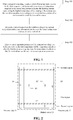
- the housing of the terminal includes a battery cover 21 and a housing side 22 (referring to FIG. 2 ).
- Heat generated by a chip on a PCB mainboard of the terminal during the operation of the chip may be delivered to the housing of the terminal through a shielding cover, a heat dissipation film and an air layer, etc.
- the housing of the terminal is held and touched by a terminal user.
- the temperature that the terminal user directly feels is the heat delivered to the housing of the terminal. Therefore, spaces are reserved for the first temperature collector and the second temperature collector on the housing of the terminal, and the first temperature collector and the second temperature collector are disposed on the first region and the second region of the terminal housing respectively (exemplarily referring to FIG. 2 )
- the first region of the housing includes a middle position of an inner side of the housing. That is, a position of the housing corresponding to a main heating chip on an internal terminal mainboard is covered, and this position is often touched by the user. Therefore, the temperature of the first region of the housing may be used for representing the temperature of the housing that the user may actually feel.
- the arrangement of the first region is not limited in the embodiment of the present invention.
- the second region of the housing includes an edge position of the inner side of the housing, that is, positions of the top and bottom of the housing when a terminal display screen is placed vertically. Because the regions of the top and bottom of the housing keep away from the heating chip on the internal mainboard of the terminal and are not often touched, the temperature of the second region of the housing is not affected by the heating chip of the terminal and user behaviors, and may be used for representing the environmental temperature of the environment in which the terminal is located.
- the arrangement of the second region is not limited in the embodiment of the present invention.
- FIG. 2 is merely one example of the positions of the first region and the second region.
- the first region and the second region may be arranged according to the actual using habits, which is not limited in the embodiment of the present invention.
- the first temperature is used for representing the highest temperature of the housing of the terminal, that is, the temperature that the user who operates the terminal feels. It is to be understood that the extremely high temperature of the housing of the terminal affects user experience of the terminal.
- the second temperature is used for representing the environmental temperature of the environment in which the terminal is located.
- the environmental temperature of the environment in which the terminal is located is susceptible to the current season and the environment in which the terminal is located. For example, there is a large difference of the environmental temperature between summer and winter or between indoor and outdoor. For different environmental temperatures, the terminal user has different requirements on the temperature of the housing of the terminal. Therefore, it is necessary to detect the environmental temperature of the environment in which the terminal is located, so that the terminal can perform corresponding heat dissipation measures at different environmental temperatures, thereby improving the adaptability for heat dissipation of the terminal at different environmental temperatures.
- the first temperature collector and the second temperature collector are temperature collection systems, thermal sensors, and thermistors, etc., and are not limited in this embodiment of the present invention.
- each of the first temperature collector and the second temperature collector includes a Negative Temperature Coefficient (NTC) thermistor and a Flexible Printed Circuit (FPC).
- NTC Negative Temperature Coefficient
- FPC Flexible Printed Circuit
- the FPC is provided with a "goldfinger" connected to a resilient piece on a corresponding position of the mainboard. When the temperature rises, the resistance of this thermistor changes and the corresponding voltage changes. The temperature change is detected based on the conversion relationship between the resistance and the voltage.
- the step in which the current first temperature captured by the first temperature collector includes: acquiring at least two first candidate temperatures captured by the at least two first temperature sub-collectors when a current preset time reaches; a maximum of the at least two first candidate temperatures is determined; and the maximum of the at least two first candidate temperatures is taken as the first temperature.
- the first temperature collector of the terminal includes at least two first temperature sub-collectors.
- the first temperature collector includes four first temperature sub-collectors disposed in the first region (referring to FIG. 2 ): a first temperature sub-collector A1 and a first temperature sub-collector A3 disposed on an inner side of the battery cover of the terminal, as well as a first temperature sub-collector A4 and a first temperature sub-collector A5 separately disposed on inner sides of two housing sides of the terminal.
- Four first candidate temperatures are acquired by the four first temperature sub-collectors, a maximum first candidate temperature is determined is taken as the first temperature of the terminal.
- the second temperature collector disposed on the second region (referring to FIG. 2 ) of the terminal is configured to capture the second temperature.
- the second temperature is used for representing the environmental temperature of the environment in which the terminal is located.
- a current temperature threshold is determined according to the second temperature and a preset correspondence between the second temperature and the temperature threshold.
- a horizontal axis represents the second temperature, and is used for representing the environmental temperature of the environment in which the terminal is located.
- a vertical axis represents a temperature threshold corresponding to the second temperature, that is, a maximum temperature of the housing acceptable to the user. That is, the temperature of the housing should not exceed the maximum temperature of the housing acceptable to the user. If the temperature of the housing exceeds the maximum temperature, a terminal heat dissipation processing such as reducing the processing speed of the terminal is required for reducing the heat generated by the terminal, thereby reducing the temperature of the housing of the terminal and achieving heat dissipation of the terminal.
- the preset correspondence between the second temperature and the temperature threshold means that the temperature threshold is a function of the second temperature.
- the temperature threshold corresponding to the second temperature is 40 degrees. If the second temperature is 5 degrees, the temperature threshold corresponding to the second temperature is 45 degrees.
- the terminal may reduce the temperature of the housing by reducing the performance of the Central Processing Unit (CPU) and Graphics Processing Unit (GPU) of the terminal.
- the terminal detects that the second temperature is 5 degrees and the first temperature exceeds the temperature threshold of 45 degrees, the terminal may reduce the temperature of the housing by reducing the performance of CPU and GPU of the terminal.
- the terminal may preset the correspondence between the second temperature and the temperature threshold by referring to International Electrotechnical Commission (IEC) regulations with reference to table 1.
- IEC International Electrotechnical Commission
- Table 1 Reference range of the temperature threshold Touched part of terminal Highest temperature °C Metal Glass and Ceramic Plastic and Rubber Handle and knob touched for a short time 60 70 85 Handle and knob touched continuously in normal use 55 65 75 External surface possibly touched of the terminal 70 80 95 Internal components possibly touched of the terminal 70 80 95
- the configuration of the correspondence between the second temperature and the temperature threshold includes configuration of the correspondence between the second temperature and the temperature threshold based on user behaviors.
- the users may open a configuration interface of the terminal to configure the correspondence between the temperature and the temperature threshold in options of heat dissipation configuration.
- the corresponding temperature threshold is configured to 40 degrees according to the requirement of the user.
- the correspondence between the second temperature and the temperature threshold may also be configured in other manners according to actual requirements in this embodiment of the present invention.
- a current operation parameter of the terminal is adjusted according to a difference between the first temperature and the temperature threshold when the first temperature is greater than the temperature threshold, so that the terminal can use the adjusted current operation parameter.
- the terminal presets the current operation parameter according to the difference between the first temperature and the temperature threshold.
- the terminal runs different applications, such as call, charging, data internet, Wireless-Fidelity (WIFI) video and game, heating situations of the terminal, that is, values of the first temperature, are different. Therefore, the terminal may configure the current operation parameter of the terminal according to the difference between the first temperature and the temperature threshold in conjunction with a current running application, so that the terminal can reduce the temperature of the housing of the terminal to the temperature threshold corresponding to the environmental temperature by corresponding heat dissipation measures. In addition, the terminal may recognize the current opening application of the terminal by using a scenario model recognition system.
- the current operation parameter of the terminal adjusted by the terminal according to the difference between the first temperature and the temperature threshold is a current radio-frequency power of the terminal. If the difference between the first temperature and the temperature threshold is a first-level difference, a corresponding amount to be adjusted on the current radio-frequency power of the terminal is 5% of a preset radio-frequency power. If the difference between the first temperature and the temperature threshold is a second-level difference, the corresponding amount to be adjusted on the current radio-frequency power of the terminal is 10% of the preset radio-frequency power. If the difference between the first temperature and the temperature threshold is a third-level difference, the corresponding amount to be adjusted on the current radio-frequency power of the terminal is 15% of the preset radio-frequency power.
- the amount to be adjusted at different levels on the operation parameter are obtained according to the difference between the first temperature and the temperature threshold by the terminal, thereby achieving grading heat dissipation of the terminal and improving the heat dissipation performance of the terminal.
- the correspondence of the difference between the first temperature and the temperature threshold to the amount to be adjusted on the current operation parameter configured by the terminal is not limited in this embodiment of the present invention.
- the step in which the current operation parameter of the terminal is adjusted according to the difference between the first temperature and the temperature threshold includes: determining the operation parameter of a to-be-operated level according to the difference between the first temperature and the temperature threshold, as well as a correspondence between a preset difference and the operation parameter of each level; and adjusting the current operation parameter of the terminal to the operation parameter of the to-be-operated level.
- the correspondence between the preset difference and the operation parameter of each level enables the terminal to achieve the grading heat dissipation by using the operation parameter of different levels according to the difference of the difference between the first temperature and the temperature threshold.
- the configuration of the correspondence between the difference and the operation parameter of each level is not limited in this embodiment of the present invention.
- the operation parameter of a to-be-operated level includes at least one of a to-be-operated charging current value, to-be-operated backlight brightness and a first to-be-operated parameter.
- the first to-be-operated parameter includes a to-be-operated radio-frequency power, a to-be-operated wording frequency of a Central Processing Unit (CPU) and a to-be-operated working frequency of a Graphic Processing Unit (GPU).
- CPU Central Processing Unit
- GPU Graphic Processing Unit
- the parameter of the to-be-operated level determined by the terminal according to the difference between the first temperature and the temperature threshold is a first charging current value or a first radio-frequency power.
- the current running application of the terminal may be one application or multiple applications.
- a radio-frequency power amplifier increases a transmit power.
- the terminal reduces the radio-frequency power of the radio-frequency power amplifier (that is, a current radio-frequency power of the terminal is adjusted into the first radio-frequency power) to achieve the heat dissipation of the terminal.
- the terminal is communicating while charging, the terminal further adjust a current charging current value of the terminal to the first charging current value (that is, reducing the charge current value) to achieve further heat dissipation of the terminal.
- the operation parameter of the to-be-operated level includes working parameters of various application software and function modules of the terminal, such as current backlight brightness of a Liquid Crystal Display (LCD) of the terminal, a current WIFI data throughput of the terminal, a current working frequency of a CPU of the terminal and a current working frequency of a GPU of the terminal.
- current backlight brightness of a Liquid Crystal Display (LCD) of the terminal a current WIFI data throughput of the terminal
- a current working frequency of a CPU of the terminal and a current working frequency of a GPU of the terminal.
- current running application software of the terminal may include multiple applications, such as call, high speed data transmission, WIFI video transmission and game scenario.
- the terminal may gradingly adjust working parameters of high power consumption components of various modules by a heating control system of the terminal according to different levels of operation parameters. In this way, system performance and user experience of the terminal may be both fully taken into account.
- the terminal performs the heat dissipation by adjusting current backlight brightness to the to-be-operated backlight brightness, and adjusting a current charging current value to the to-be-operated charging current value.
- the terminal determines that the first temperature is still greater than the temperature threshold based on a current real-time temperature acquired, then the terminal further adjusts a current radio-frequency power of the radio-frequency power amplifier to the to-be-operated radio-frequency power while adjusting the current backlight brightness and the current charge current value, thereby improving the heat dissipation performance of the terminal. It can be seen that for the heat dissipation process in each preset time period, because the current first temperature, the temperature threshold and the parameter of the to-be-operated level may be different, the terminal gradually achieves grading heat dissipation of the terminal according to the parameters of different to-be-operated level.
- the method further includes: executing next heat dissipation process when a next preset time reaches after adjusting the current operation parameter of the terminal.
- the heat dissipation process includes steps 101 to 103, that is, when the next preset time reaches, the terminal repeats the steps 101 to 103 to execute the next heat dissipation process by adopting a real-time temperature acquired at this time (a current temperature).
- the terminal in each heat dissipation process executed by the terminal, because the current first temperature, the temperature threshold and the parameter of the to-be-operated level may be different, the terminal gradually achieves grading heat dissipation of the terminal by the parameter of different to-be-operated levels.
- the terminal cyclically executes the heat dissipation process until the current first temperature is less than or equal to the corresponding temperature threshold of the terminal. Then the terminal maintains the current operation parameter and stops executing the heat dissipation process.
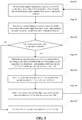
- FIG. 5 is a flowchart of a heat dissipation method according to an embodiment of the present invention. The method includes steps 201 to 207.
- step 201 when a current preset time reaches, a current first temperature captured by a first temperature collector and a current second temperature captured by a second temperature collector are acquired.
- the first temperature is used for representing the highest temperature of the housing of the terminal.
- the second temperature is used for representing an environmental temperature of an environment in which the terminal is located.
- a corresponding current temperature threshold is determined according to the second temperature and a preset correspondence between the second temperature and a temperature threshold.
- the terminal may configure, according to user behaviors, the correspondence between the second temperature and the temperature threshold.
- step 203 whether the first temperature is greater than the temperature threshold is determined; if the first temperature is greater than the temperature threshold, the process goes into step 204; if the first temperature is not greater than the temperature threshold, the process goes into step 207.
- step 204 an operation parameter of a to-be-operated level is determined according to the difference between the first temperature and the temperature threshold and a correspondence between a preset difference and the operation parameter of each level.
- the operation parameter of the to-be-operated level includes at least one of a to-be-operated charging current value, to be operated backlight brightness and a first to-be-operated parameter.
- the first to-be-operated parameter includes a to-be-operated radio-frequency power, a to-be-operated working frequency of a CPU and a to-be-operated working frequency of a GPU.
- step 205 a current operation parameter of the terminal is adjusted to the operation parameter of the to-be-operated level.
- the corresponding operation parameter of the to-be-operated level may also be different, so that the terminal achieves grading heat dissipation of the terminal by using the parameter of different to-be-operated levels, thereby improving the heat dissipation performance of the terminal.
- step 206 when a next preset time reaches after adjusting the current operation parameter of the terminal, the step 201 is executed.
- the terminal in each heat dissipation process executed by the terminal, because the current first temperature, the temperature threshold and the parameter of the to-be-operated level may be different, the terminal gradually achieves grading heat dissipation of the terminal by using the parameter of different to-be-operated levels.
- the terminal cyclically executes the heat dissipation process until the current first temperature is less than or equal to the corresponding temperature threshold of the terminal. Then the terminal maintains the current operation parameter and stops executing the heat dissipation process.
- step 207 the current operation parameter of the terminal is maintained.
- the embodiments of the present invention provide a heat dissipation method and a terminal.
- the heat dissipation method is applied to a terminal.
- the terminal includes a first temperature collector disposed in a first region of a housing of the terminal and a second temperature collector disposed in a second region of the housing of the terminal.
- the method includes: when a current preset time reaches, acquiring a current first temperature captured by the first temperature collector and a current second temperature captured by the second temperature collector, the first temperature representing the highest temperature of the housing of the terminal and the second temperature representing an environmental temperature of an environment of the terminal; determining a current temperature threshold according to a the second temperature as well as a preset correspondence between the second temperature and a temperature threshold; and adjusting a current operation parameter of the terminal according to a difference between the first temperature and the temperature threshold when the first temperature is greater than the temperature threshold.
- the current temperature threshold of the current environmental temperature is determined according to the second temperature, that is, the environmental temperature, so that the terminal may adopt different values of the temperature threshold according to different environmental temperatures to perform the heat dissipation of the terminal.
- the terminal may adjust the current operation parameter according to the determination based on the values of the temperature threshold in different situations to achieve good heat dissipation, thereby improving the heat dissipation performance of the terminal, and expanding the adaptability of the terminal for heat dissipation at different environmental temperatures.
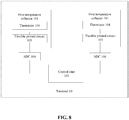
- FIG. 6 is a structural diagram of a terminal according to an embodiment of the present invention.
- the terminal 10 includes: a first temperature collector 101 disposed in a first region of the housing of the terminal, a second temperature collector 102 disposed in a second region of the housing of the terminal 10 and a control chip 103 connected to the first temperature collector 101 and the second temperature collector 102.
- the first temperature collector 101 is configured to acquire a current first temperature when the preset time reaches.
- the first temperature is used for representing the highest temperature of the housing of the terminal 10.
- the second temperature collector 102 is configured to acquire a current second temperature when the preset time reaches.
- the second temperature is used for representing an environmental temperature of an environment in which the terminal is located.
- the control chip 103 is configured to determine a corresponding current temperature threshold according to the second temperature acquired by the second temperature collector 102 and a correspondence between the second temperature and the temperature threshold; adjust, according to a difference between the first temperature and the temperature threshold, an operation parameter of the terminal 10 when the first temperature captured by the first temperature collector 101 is greater than the temperature threshold.
- the first region includes a middle position of an inner side of the housing in the terminal 10.
- the second region includes an edge position of the inner side of the housing in the terminal 10.
- the middle position of the inner side of the housing of the terminal 10 and the edge position of the inner side of the housing of the terminal belong to different positions.
- the first temperature collector 101 includes at least two first temperature sub-collectors. The first temperature collector 101 is configured to acquire, when a current preset time reaches, at least two first candidate temperatures captured by the at least two first temperature sub-collectors disposed on the terminal 10, and to determine a maximum of the at least two first candidate temperatures, and take the maximum of the at least two first candidate temperatures as the first temperature.
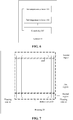
- FIG. 7 is a schematic diagram of a housing of the terminal according to an embodiment of the present invention.
- the housing 20 includes a battery cover 21 and a housing side 22.
- the housing 20 is configured to protect a Printed Circuit Board (PCB) mainboard and a terminal battery of the terminal.
- An inner side of the housing 20 faces a terminal mainboard.
- Heat generated by a operating chip on the terminal PCB mainboard may be delivered to the housing 20 through a shielding cover, a heat dissipation film and an air layer, etc.
- the housing 20 is held and touched by the terminal user.
- the temperature that the terminal user directly feel is the heat delivered to the housing 20.
- space may be reserved on the housing for the first temperature collector and the second temperature collector, and the first temperature collector and the second temperature collector are disposed on the first region and the second region of the housing 20 respectively (as shown in FIG. 7 ), and is not limited in this embodiment of the present disclosure.
- the first region (as shown in FIG. 7 ) includes a middle position of an inner side of the housing 20 of the terminal 10. That is, a position of the housing 20 corresponding to a main heating chip on an internal mainboard of the terminal, and the position is often touched by the user. Therefore, the temperature of the first region of the housing 20 may be used for representing the temperature of the housing 20 that the users may actually feel.
- the arrangement of the second region is not limited in this embodiment of the present invention.
- the second region (as shown in FIG. 7 ) includes an edge position of the inner side of the housing 20 of the terminal 10, that is, positions of the top and bottom of the housing 20 when a display screen of the terminal is placed vertically. Because the regions of the top and bottom of the housing keeps away from the heating chip on the internal mainboard of the terminal, and this position is not often touched by the user, the temperature of the second region of the housing 20 is not affected by the internal heating chip of the terminal and user behaviors, and may be used for representing the environmental temperature of the environment in which the terminal is located.
- the arrangement of the second region is not limited in the embodiment of the present invention.
- the first temperature collector includes four first temperature sub-collectors: a first temperature sub-collector A1 and a first temperature sub-collector A3 disposed on an inner side of the battery cover 21 of the terminal, as well as a first temperature sub-collector A4 and a first temperature sub-collector A5 separately disposed on inner sides of two housing sides 22 of the terminal.
- Four first candidate temperatures are acquired by the four first temperature sub-collectors, a maximum first candidate temperature is determined taken as the first temperature of the terminal.
- the second temperature collector A2 is disposed on the bottom of the battery cover 21 of the terminal, and the second temperature collector A2 is used for capturing the second temperature.
- the second temperature is used for representing the environmental temperature of the environment in which the terminal is located.
- each of the first temperature collector 101 and the second temperature collector 102 is implemented by a thermal sensor.
- the thermal sensor includes a thermistor 104 and a flexible printed circuit 105.
- the flexible printed circuit 105 and the thermistor 104 are connected to the control chip 103.
- the flexible printed circuit 105 is provided with a goldfinger connected to a resilient piece on a corresponding position of the mainboard.
- the terminal 10 further includes an analog-to-digital converter 106 connected between the flexible printed circuit 105 and the control chip 103.
- the thermistor 104 is configured to convert the temperature into an electrical signal.
- the flexible printed circuit 105 is configured to transmit the electrical signal to the analog-to-digital converter 106.
- the analog-to-digital converter 106 is configured to convert the electrical signal from analog quantity to digital quantity and transmit to the control chip 103.
- the terminal in this embodiment of the present invention includes a smart phone, a smart TV and a Tablet PC, etc.
- the embodiments of the present invention may be provided as methods, systems and computer program products. Therefore, the present invention may adopt a mode of a hardware embodiment, a software embodiment, or a combination of hardware and software embodiment.
- the present invention may adopt the form of a computer program product implemented in one or more computer-usable storage media (including, but not limited to, a disk memory and an optical memory) that includes computer-usable program codes.
- These computer program instructions may also be stored in a computer-readable memory which can direct a computer or another programmable data processing apparatus to operate in a particular manner so that the instructions stored in the computer-readable memory produce a manufactured product including an instruction device.
- the instruction device implements the functions specified in one or more flows in the flowcharts and/or one or more blocks in the block diagrams.
- the computer software products are stored in a storage medium (such as a ROM/RAM, a magnetic disk or an optical disk) and include instructions for enabling a terminal device (which may be a mobile phone, a computer, a server, an air-conditioner or a network device) to execute the method according to the embodiments of the present invention.
- a storage medium such as a ROM/RAM, a magnetic disk or an optical disk
- a terminal device which may be a mobile phone, a computer, a server, an air-conditioner or a network device
- the temperature threshold adapted to the current environmental temperature is determined in embodiments of the present invention, so that the terminal may perform the heat dissipation of the terminal according to different environmental temperatures.
- the terminal may adjust an operation parameter according to the determination of the temperature threshold in different situations to achieve good heat dissipation, thereby improving the heat dissipation performance of the terminal, and expanding the adaptability of the terminal for heat dissipation at different environmental temperatures.
Landscapes
- Engineering & Computer Science (AREA)
- Physics & Mathematics (AREA)
- Theoretical Computer Science (AREA)
- General Physics & Mathematics (AREA)
- Human Computer Interaction (AREA)
- General Engineering & Computer Science (AREA)
- Thermal Sciences (AREA)
- Microelectronics & Electronic Packaging (AREA)
- Automation & Control Theory (AREA)
- Computer Hardware Design (AREA)
- Telephone Function (AREA)
- Cooling Or The Like Of Electrical Apparatus (AREA)
Applications Claiming Priority (2)
| Application Number | Priority Date | Filing Date | Title |
|---|---|---|---|
| CN201610323963.4A CN107396591B (zh) | 2016-05-16 | 2016-05-16 | 一种散热方法及终端 |
| PCT/CN2016/085821 WO2017197692A1 (fr) | 2016-05-16 | 2016-06-15 | Procédé de dissipation de chaleur et terminal |
Publications (2)
| Publication Number | Publication Date |
|---|---|
| EP3461247A1 true EP3461247A1 (fr) | 2019-03-27 |
| EP3461247A4 EP3461247A4 (fr) | 2020-01-22 |
Family
ID=60324605
Family Applications (1)
| Application Number | Title | Priority Date | Filing Date |
|---|---|---|---|
| EP16902074.0A Withdrawn EP3461247A4 (fr) | 2016-05-16 | 2016-06-15 | Procédé de dissipation de chaleur et terminal |
Country Status (3)
| Country | Link |
|---|---|
| EP (1) | EP3461247A4 (fr) |
| CN (1) | CN107396591B (fr) |
| WO (1) | WO2017197692A1 (fr) |
Families Citing this family (15)
| Publication number | Priority date | Publication date | Assignee | Title |
|---|---|---|---|---|
| CN108366171B (zh) * | 2018-04-20 | 2020-11-06 | 维沃移动通信有限公司 | 一种温升控制方法和移动终端 |
| CN109032290A (zh) * | 2018-06-27 | 2018-12-18 | 北京小米移动软件有限公司 | 终端设备的温度控制方法及装置 |
| CN110888471A (zh) * | 2018-09-07 | 2020-03-17 | 中兴通讯股份有限公司 | 一种终端热处理的方法、装置、设备以及存储介质 |
| CN110209223A (zh) * | 2019-06-12 | 2019-09-06 | 江苏瑞奇海力科技有限公司 | 一种温度控制方法和装置 |
| CN110727561B (zh) * | 2019-10-22 | 2023-08-01 | Oppo广东移动通信有限公司 | 异常散热的检测方法、装置、终端及存储介质 |
| CN111010469B (zh) * | 2019-12-09 | 2021-04-13 | Oppo广东移动通信有限公司 | 电子设备及温度获取设备 |
| CN111831510B (zh) * | 2020-07-13 | 2022-10-18 | Oppo广东移动通信有限公司 | 一种功能调控方法、装置及计算机可读存储介质 |
| CN112543588B (zh) * | 2020-12-15 | 2021-08-17 | 南京贝迪新材料科技股份有限公司 | 一种改善超薄散热膜性能的方法及系统 |
| CN114816005A (zh) * | 2021-01-19 | 2022-07-29 | 深圳市万普拉斯科技有限公司 | 终端控制方法、装置、计算机设备和存储介质 |
| CN113342085B (zh) * | 2021-06-17 | 2022-11-08 | 南昌黑鲨科技有限公司 | 一种识别外置辅助散热设备的方法及系统 |
| CN114258251B (zh) * | 2021-12-20 | 2025-03-04 | 广东以诺通讯有限公司 | 一种终端散热管理的方法、装置、终端和存储介质 |
| CN114822607B (zh) * | 2022-04-01 | 2023-12-12 | 长鑫存储技术有限公司 | 散热装置和计算机系统 |
| CN118300203A (zh) * | 2022-12-28 | 2024-07-05 | 中兴通讯股份有限公司 | 充电控制方法、装置、电子设备及可读存储介质 |
| CN116600046A (zh) * | 2023-06-12 | 2023-08-15 | 杭州逗酷软件科技有限公司 | 终端的控制方法及其装置、终端和计算机可读存储介质 |
| CN116860042A (zh) * | 2023-07-31 | 2023-10-10 | 东集技术股份有限公司 | 功耗控制方法、装置、存储介质及5g终端 |
Family Cites Families (14)
| Publication number | Priority date | Publication date | Assignee | Title |
|---|---|---|---|---|
| KR100585750B1 (ko) * | 2003-12-10 | 2006-06-07 | 엘지전자 주식회사 | 휴대단말기의 온도보상 장치 및 방법 |
| US8768530B2 (en) * | 2010-06-04 | 2014-07-01 | Apple Inc. | Thermal zone monitoring in an electronic device |
| US8452463B2 (en) * | 2010-06-04 | 2013-05-28 | Apple Inc. | Adjusting the thermal behavior of a computing system using indirect information about ambient temperature |
| US20140163765A1 (en) * | 2012-12-07 | 2014-06-12 | Qualcomm Incorporated | System and method for estimating ambient temperaure from a portable computing device |
| CN103885473A (zh) * | 2012-12-19 | 2014-06-25 | 三星电子(中国)研发中心 | 屏幕温度自动调节装置及包括其的便携式电子装置 |
| KR102045290B1 (ko) * | 2013-06-11 | 2019-11-15 | 삼성전자주식회사 | 발열 제어 방법 및 그 전자 장치 |
| KR20150008950A (ko) * | 2013-06-26 | 2015-01-26 | 삼성전자주식회사 | 온도 제어 방법 및 이를 적용한 단말 장치 |
| CN104345876B (zh) * | 2013-08-07 | 2017-07-25 | 联想(北京)有限公司 | 一种信息处理方法及电子设备 |
| US10025329B2 (en) * | 2013-08-21 | 2018-07-17 | Google Technology Holdings LLC | Method and apparatus for adjusting portable electronic device operation based on ambient temperature |
| CN105094251B (zh) * | 2014-05-23 | 2020-03-27 | 西安中兴新软件有限责任公司 | 一种智能温控装置、方法及终端 |
| CN105324005A (zh) * | 2014-07-25 | 2016-02-10 | 中兴通讯股份有限公司 | 一种实现移动终端散热的方法、装置和移动终端 |
| CN105338167B (zh) * | 2014-08-08 | 2020-05-08 | 中兴通讯股份有限公司 | 一种移动终端操作的自动执行方法、装置及移动终端 |
| CN105187627A (zh) * | 2015-07-21 | 2015-12-23 | 小米科技有限责任公司 | 手机温度的调整方法及装置 |
| CN105549651A (zh) * | 2015-11-06 | 2016-05-04 | 东莞酷派软件技术有限公司 | 一种用户终端及温度控制方法 |
-
2016
- 2016-05-16 CN CN201610323963.4A patent/CN107396591B/zh active Active
- 2016-06-15 WO PCT/CN2016/085821 patent/WO2017197692A1/fr not_active Ceased
- 2016-06-15 EP EP16902074.0A patent/EP3461247A4/fr not_active Withdrawn
Also Published As
| Publication number | Publication date |
|---|---|
| WO2017197692A1 (fr) | 2017-11-23 |
| CN107396591B (zh) | 2020-08-07 |
| CN107396591A (zh) | 2017-11-24 |
| EP3461247A4 (fr) | 2020-01-22 |
Similar Documents
| Publication | Publication Date | Title |
|---|---|---|
| EP3461247A1 (fr) | Procédé de dissipation de chaleur et terminal | |
| CN104914944B (zh) | 一种信息处理方法以及电子设备 | |
| US10559969B2 (en) | Charging cable and charging control device | |
| CN108594120B (zh) | 电池状态的检测方法、装置及计算机可读存储介质 | |
| CN112311930A (zh) | 终端测试方法、装置、存储介质及移动终端 | |
| KR101860746B1 (ko) | 충전 배터리 어셈블리 및 단말 장비 | |
| CN112201879A (zh) | 一种电池包的加热控制方法、装置及电子设备 | |
| CN104423403B (zh) | 一种温控方法和装置 | |
| CN109962514B (zh) | 一种充电方法及移动终端 | |
| EP3160004B1 (fr) | Procédé et appareil de gestion de courant électrique, et dispositif électronique | |
| CN111092748A (zh) | 物联网设备的告警规则设置方法、装置、设备及存储介质 | |
| CN102789246A (zh) | 一种热保护方法、装置及具有热保护功能的设备 | |
| CN107249085B (zh) | 移动终端电量显示方法、移动终端及计算机可读存储介质 | |
| CN103855772A (zh) | 移动终端及其充电控制方法 | |
| CN114025419B (zh) | 射频功率的调节方法、调节装置、电子设备和存储介质 | |
| CN111131612B (zh) | 屏幕色温控制方法、装置、存储介质及移动终端 | |
| CN103714161A (zh) | 图像缩略图的生成方法、装置和终端 | |
| CN110649679B (zh) | 终端温度的控制方法、装置、设备以及存储介质 | |
| CN105376351A (zh) | 屏幕显示方法及装置、屏幕 | |
| CN108769321A (zh) | 电子设备与控制方法 | |
| CN103872732B (zh) | 移动终端及其充电控制方法 | |
| US20150340893A1 (en) | Portable device and method for controlling charging current thereof | |
| CN106663848A (zh) | 充电方法及移动终端 | |
| CN107145221A (zh) | 一种信息处理方法及电子设备 | |
| CN104806550A (zh) | 一种风扇控制装置、方法、以及一种路由器 |
Legal Events
| Date | Code | Title | Description |
|---|---|---|---|
| STAA | Information on the status of an ep patent application or granted ep patent |
Free format text: STATUS: THE INTERNATIONAL PUBLICATION HAS BEEN MADE |
|
| PUAI | Public reference made under article 153(3) epc to a published international application that has entered the european phase |
Free format text: ORIGINAL CODE: 0009012 |
|
| STAA | Information on the status of an ep patent application or granted ep patent |
Free format text: STATUS: REQUEST FOR EXAMINATION WAS MADE |
|
| 17P | Request for examination filed |
Effective date: 20181214 |
|
| AK | Designated contracting states |
Kind code of ref document: A1 Designated state(s): AL AT BE BG CH CY CZ DE DK EE ES FI FR GB GR HR HU IE IS IT LI LT LU LV MC MK MT NL NO PL PT RO RS SE SI SK SM TR |
|
| AX | Request for extension of the european patent |
Extension state: BA ME |
|
| DAV | Request for validation of the european patent (deleted) | ||
| DAX | Request for extension of the european patent (deleted) | ||
| A4 | Supplementary search report drawn up and despatched |
Effective date: 20191219 |
|
| RIC1 | Information provided on ipc code assigned before grant |
Ipc: H05K 7/20 20060101AFI20191213BHEP Ipc: G06F 1/20 20060101ALI20191213BHEP |
|
| STAA | Information on the status of an ep patent application or granted ep patent |
Free format text: STATUS: THE APPLICATION HAS BEEN WITHDRAWN |
|
| 18W | Application withdrawn |
Effective date: 20200618 |