EP3462016A1 - Utilisation d'un nouveau matériau en pièces de turbine d'éolienne et appareil et procédés associés - Google Patents
Utilisation d'un nouveau matériau en pièces de turbine d'éolienne et appareil et procédés associés Download PDFInfo
- Publication number
- EP3462016A1 EP3462016A1 EP17194393.9A EP17194393A EP3462016A1 EP 3462016 A1 EP3462016 A1 EP 3462016A1 EP 17194393 A EP17194393 A EP 17194393A EP 3462016 A1 EP3462016 A1 EP 3462016A1
- Authority
- EP
- European Patent Office
- Prior art keywords
- wind turbine
- blade
- functionalized graphene
- containing material
- graphene
- Prior art date
- Legal status (The legal status is an assumption and is not a legal conclusion. Google has not performed a legal analysis and makes no representation as to the accuracy of the status listed.)
- Withdrawn
Links
Images


Classifications
-
- F—MECHANICAL ENGINEERING; LIGHTING; HEATING; WEAPONS; BLASTING
- F03—MACHINES OR ENGINES FOR LIQUIDS; WIND, SPRING, OR WEIGHT MOTORS; PRODUCING MECHANICAL POWER OR A REACTIVE PROPULSIVE THRUST, NOT OTHERWISE PROVIDED FOR
- F03D—WIND MOTORS
- F03D1/00—Wind motors with rotation axis substantially parallel to the air flow entering the rotor
- F03D1/06—Rotors
- F03D1/065—Rotors characterised by their construction elements
- F03D1/0675—Rotors characterised by their construction elements of the blades
-
- B—PERFORMING OPERATIONS; TRANSPORTING
- B32—LAYERED PRODUCTS
- B32B—LAYERED PRODUCTS, i.e. PRODUCTS BUILT-UP OF STRATA OF FLAT OR NON-FLAT, e.g. CELLULAR OR HONEYCOMB, FORM
- B32B27/00—Layered products comprising a layer of synthetic resin
- B32B27/32—Layered products comprising a layer of synthetic resin comprising polyolefins
-
- B—PERFORMING OPERATIONS; TRANSPORTING
- B32—LAYERED PRODUCTS
- B32B—LAYERED PRODUCTS, i.e. PRODUCTS BUILT-UP OF STRATA OF FLAT OR NON-FLAT, e.g. CELLULAR OR HONEYCOMB, FORM
- B32B27/00—Layered products comprising a layer of synthetic resin
- B32B27/40—Layered products comprising a layer of synthetic resin comprising polyurethanes
-
- E—FIXED CONSTRUCTIONS
- E04—BUILDING
- E04H—BUILDINGS OR LIKE STRUCTURES FOR PARTICULAR PURPOSES; SWIMMING OR SPLASH BATHS OR POOLS; MASTS; FENCING; TENTS OR CANOPIES, IN GENERAL
- E04H12/00—Towers; Masts or poles; Chimney stacks; Water-towers; Methods of erecting such structures
- E04H12/02—Structures made of specified materials
- E04H12/12—Structures made of specified materials of concrete or other stone-like material, with or without internal or external reinforcements, e.g. with metal coverings, with permanent form elements
-
- F—MECHANICAL ENGINEERING; LIGHTING; HEATING; WEAPONS; BLASTING
- F03—MACHINES OR ENGINES FOR LIQUIDS; WIND, SPRING, OR WEIGHT MOTORS; PRODUCING MECHANICAL POWER OR A REACTIVE PROPULSIVE THRUST, NOT OTHERWISE PROVIDED FOR
- F03D—WIND MOTORS
- F03D13/00—Assembly, mounting or commissioning of wind motors; Arrangements specially adapted for transporting wind motor components
- F03D13/20—Arrangements for mounting or supporting wind motors; Masts or towers for wind motors
-
- F—MECHANICAL ENGINEERING; LIGHTING; HEATING; WEAPONS; BLASTING
- F03—MACHINES OR ENGINES FOR LIQUIDS; WIND, SPRING, OR WEIGHT MOTORS; PRODUCING MECHANICAL POWER OR A REACTIVE PROPULSIVE THRUST, NOT OTHERWISE PROVIDED FOR
- F03D—WIND MOTORS
- F03D80/00—Details, components or accessories not provided for in groups F03D1/00 - F03D17/00
- F03D80/50—Maintenance or repair
-
- B—PERFORMING OPERATIONS; TRANSPORTING
- B32—LAYERED PRODUCTS
- B32B—LAYERED PRODUCTS, i.e. PRODUCTS BUILT-UP OF STRATA OF FLAT OR NON-FLAT, e.g. CELLULAR OR HONEYCOMB, FORM
- B32B2255/00—Coating on the layer surface
- B32B2255/10—Coating on the layer surface on synthetic resin layer or on natural or synthetic rubber layer
-
- B—PERFORMING OPERATIONS; TRANSPORTING
- B32—LAYERED PRODUCTS
- B32B—LAYERED PRODUCTS, i.e. PRODUCTS BUILT-UP OF STRATA OF FLAT OR NON-FLAT, e.g. CELLULAR OR HONEYCOMB, FORM
- B32B2255/00—Coating on the layer surface
- B32B2255/20—Inorganic coating
-
- B—PERFORMING OPERATIONS; TRANSPORTING
- B32—LAYERED PRODUCTS
- B32B—LAYERED PRODUCTS, i.e. PRODUCTS BUILT-UP OF STRATA OF FLAT OR NON-FLAT, e.g. CELLULAR OR HONEYCOMB, FORM
- B32B2603/00—Vanes, blades, propellers, rotors with blades
-
- F—MECHANICAL ENGINEERING; LIGHTING; HEATING; WEAPONS; BLASTING
- F05—INDEXING SCHEMES RELATING TO ENGINES OR PUMPS IN VARIOUS SUBCLASSES OF CLASSES F01-F04
- F05B—INDEXING SCHEME RELATING TO WIND, SPRING, WEIGHT, INERTIA OR LIKE MOTORS, TO MACHINES OR ENGINES FOR LIQUIDS COVERED BY SUBCLASSES F03B, F03D AND F03G
- F05B2280/00—Materials; Properties thereof
- F05B2280/20—Inorganic materials, e.g. non-metallic materials
- F05B2280/2006—Carbon, e.g. graphite
-
- Y—GENERAL TAGGING OF NEW TECHNOLOGICAL DEVELOPMENTS; GENERAL TAGGING OF CROSS-SECTIONAL TECHNOLOGIES SPANNING OVER SEVERAL SECTIONS OF THE IPC; TECHNICAL SUBJECTS COVERED BY FORMER USPC CROSS-REFERENCE ART COLLECTIONS [XRACs] AND DIGESTS
- Y02—TECHNOLOGIES OR APPLICATIONS FOR MITIGATION OR ADAPTATION AGAINST CLIMATE CHANGE
- Y02E—REDUCTION OF GREENHOUSE GAS [GHG] EMISSIONS, RELATED TO ENERGY GENERATION, TRANSMISSION OR DISTRIBUTION
- Y02E10/00—Energy generation through renewable energy sources
- Y02E10/70—Wind energy
- Y02E10/72—Wind turbines with rotation axis in wind direction
-
- Y—GENERAL TAGGING OF NEW TECHNOLOGICAL DEVELOPMENTS; GENERAL TAGGING OF CROSS-SECTIONAL TECHNOLOGIES SPANNING OVER SEVERAL SECTIONS OF THE IPC; TECHNICAL SUBJECTS COVERED BY FORMER USPC CROSS-REFERENCE ART COLLECTIONS [XRACs] AND DIGESTS
- Y02—TECHNOLOGIES OR APPLICATIONS FOR MITIGATION OR ADAPTATION AGAINST CLIMATE CHANGE
- Y02E—REDUCTION OF GREENHOUSE GAS [GHG] EMISSIONS, RELATED TO ENERGY GENERATION, TRANSMISSION OR DISTRIBUTION
- Y02E10/00—Energy generation through renewable energy sources
- Y02E10/70—Wind energy
- Y02E10/728—Onshore wind turbines
Definitions
- the present invention relates to a general concept for improving wind turbine part by use of a new material.
- the environmental conditions surrounding the wind turbine may affect the design of wind turbine blades.
- offshore wind turbines amongst others has commenced the development in wind turbine blades.
- Offshore turbines experience an average wind speed of around 14 m/s off the coast of the UK, much higher than on-shore.
- the exposure to UV radiation combined with rain, the high humidity of the salty sea air, extreme wind conditions and high-speed spinning blades of an offshore wind turbine combine to form a highly erosive environment that far surpasses anything experienced by an aircraft. This seriously affects the durability of the wind turbine blades, towers and foundations.
- a major change is being driven by a desire for efficiently producing large, lightweight blades that can cope with the harsh environmental conditions in which they are operated including offshore conditions.
- a wind turbine blade with a blade structure comprising a surface and a load-carrying spar supporting a shell structure, wherein the blade structure comprises functionalized graphene-containing material.
- the load-carrying spar may also be referred to as a spar, spar web or main spar amongst others. It may be formed as a cylindrical structure, on or more bars. This is simply a few examples and the structure is by no means limited to this.
- the structure may also be referred to as a loadbearing structure.
- a wind turbine blade comprises a leading edge, a trailing edge, a suction side and a pressure side and extends from root to tip.
- the pressure side may also be referred to as the upwind side and the suction side as the downwind side.
- Graphene is a one-atom-thick layer of carbon atoms arranged in a honeycomb (hexagons or chicken-wire) crystal lattice.
- Graphene-based materials may be functionalized with different side groups for different properties.
- the number of side groups per carbon atoms may differ depending on the functionalization and/or which properties to achieve.
- Functionalized graphene-based materials may be in dry powder form, liquid or ink - these being inexhaustible examples.
- the functionalized graphene-based materials may have superior properties such as for example large surface area, mechanical stability, tuneable electrical and optical properties making it advantageous for use in wind turbines.
- the properties further includes that it is stronger than steel, has a thin two dimensional structure, is high conductive, high malleable, is stretchable with further properties of being transparent, flexible, hydrophobic, light absorbing, radar-absorbent and impermeable.
- Graphene-based materials may be structured, designed or presented in a number of ways: Porous wherein a number of carbon atoms are lacking in the structure, it may be stacked or folded to form 3D structures, the lateral size may be varied.
- Graphene-based materials and functionalized graphene-based materials may respectively be referred to as source graphene-based materials and functionalized source graphene-based materials.
- a method for functionalization of the graphene-based materials may comprise the following acts:
- Functionalized graphene-containing material may encompass one or more functionalized graphene-containing material(s).
- Functionalized graphene-based materials are extremely diverse materials, and may be embedded in a matrix additive host/carrier material to be used in material compositions matrix of intermediate or host/carrier materials to produce different materials with various significantly improved properties turning the mix into a high-performance functionalized graphene-containing material.
- the host/carrier material may have more than one functionalized graphene-containing material added, depending on which one or more properties are required to be synthesized into the functionalized graphene-containing material.
- the ratio for functionalized graphene-based materials comprised in the functionalized graphene-containing material depends on the host/carrier material and the properties to be achieve for the functionalized graphene-containing material.
- Correctly functionalized graphene-based materials have a unique ability to give its attributes to the matrix of intermediate or host/carrier materials.
- the functionalization may bring that the graphene-based materials' rough texture expands thereby creating a significant surface area.
- the planar structure of functionalized graphene-based materials create a significant surface inducing a large contact area with the host/carrier material because both the top and bottom surfaces of a graphene sheet are in close contact with the host/carrier material.
- the host/carrier material may be the material in the matrix binding to the functionalized graphene-based material.
- the graphene-based material may be functionalized to bond tightly with surrounding polymers, improving interfacial load transfers and boosts the surface area in contact with the polymers.
- the aspect ratio (ratio between a lateral dimension and the thickness of the graphene sheet) of a single graphene sheet can reach more than 2000.
- the surface area of a single graphene sheet can theoretically reach 2600 m2/g which may provide a significant amount of potential sites for advantageous chemical or physical interactions. This may accordingly improve bonding between graphene sheet(s) and host/carrier material.
- One effect of the embodiment comprising a blade structure comprising a functionalized graphene-containing material may be that the strength, stiffness and/or toughness of the blade may be increased compared to using a non-graphene-containing material. This may enable for longer, stiffer, lighter and/or more damage-tolerant blades.
- Non-graphene-containing material refers to a material not comprising functionalized graphene-based materials.
- the increased strength, stiffness and/or toughness of the blade may further be advantageous in regard to achieving a higher energy yield per area of blade as the blade has a smaller risk of being deflected by the wind forces acting on the blade.
- Blade length is a bottleneck and one of the most import factors in the development of rotor size and therefore a critical factor for the entire wind turbine generator (WTG) development today.
- the increased strength, stiffness and/or toughness for a comparable blade using a functionalized graphene-containing material compared to using a non-graphene-containing material may be advantageous in regard to that a reduced deflection/bending of the blade may achieve for reduced fatigue and thus prolonged lifetime. Further advantages may be mitigating the risk of cracks in the blades and/or in general achieving more damage-tolerant blades. Mitigating the risk of damages or increasing the damage-tolerance may generally result in reduced service costs and extend lifetime.
- the two-dimensional structure of graphene sheets may considerably reduce the cracks to emerge and/or develop thereby reducing service costs and extend lifetime.
- One effect of the embodiment comprising a blade structure comprising a functionalized graphene-containing material may be that the weight of the blade with a comparable strength, stiffness and/or toughness of the blade to a blade using a non-graphene-containing material may be reduced.
- New designs of the blades may include features such as a changed weight distribution of the blade, new blade profile as a few examples, however, by no means limited to these examples.
- New blade profiles and changed weigh distribution may be advantageous in regard to achieving a change in the centrifugal forces acting on the wind turbine caused by the rotation of the blades. It may be further advantageous in regard to achieving increased aerodynamic efficiency of the blades.
- the functionalized graphene-containing material may be comprised in the load-carrying spar.
- the functionalized graphene-containing material may be comprised in the shell structure.
- the functionalized graphene-containing material may be comprised in the blade structure to form part of the surface.
- the functionalized graphene-containing material may be comprised in any combination of the above parts.
- Comprising functionalized graphene-containing material in only a single part may have the effect that the weight of that part of the blade may be reduce while maintaining or improving properties for the entire blade such as strength, stiffness, toughness and/or flexibility compared to a blade using a non-graphene-containing material.
- This may be advantages in regard to that a reduced deflection/bending of the part and/or the entire blade may achieve for reduced fatigue and thus prolonged lifetime. Further advantages may be mitigating the risk of cracks in the part and/or the entire blade in general achieving more damage-tolerant blades. Mitigating the risk of damages or increasing the damage-tolerance may generally result in reduced service costs and extend lifetime.
- Comprising functionalized graphene-containing material in any combination of parts may have the effect that the weight of one or more parts may be reduced to achieve sufficient strength, stiffness, toughness and/or flexibility of the entire blade compared to a blade using a non-graphene-containing material part of the blade. This may have the above mentioned advantages of reduced deflection/bending and/or mitigated risk of cracks in the one part, multiple parts or the entire blade. This may be additional effects and advantages compared to those already described.
- this may achieve for new designs of the blades, as the change in one or more parts of the blade may affect changes in other parts of the blade for achieving the aimed properties of the entire blade.
- the shell structure may comprise multiple shell parts. These parts may comprise their own individual matrix of materials.
- the functionalized graphene-containing material may be comprised in the load-carrying spar, in the entire shell structure, in a single shell part, or any combination thereof.
- the percentage and type of functionalized graphene-based material comprised in the one or more of the parts may differ for each part depending on the properties to be achieved to that part and/or depending on the matrix of materials for that part.
- the percentage and type of functionalized graphene-based material comprised in a dedicated area or volume in each part may also differ depending on the properties to be achieved to that location and part depending on the matrix of materials for that location/part. This may be further advantageous in regard to a great freedom for designing the wind turbine blade thereby achieving wind turbine blades with specific properties in designated areas of the blade, with an advantageous weight distribution and optimized blade profile.
- the leading edge of a wind turbine blade is the region of the blade that typically experiences the highest level of erosion, as this is the edge that cuts through the air.
- the shell structure and/or the surface may thus be constructed with properties aiming at mitigating the occurrence and or development of erosion in this part for prolonged lifetime of the wind turbine blade.
- a conductive structure extends from a dedicated blade area to a blade root of the wind turbine blade, wherein at least part of the conductive structure is formed by the blade structure.
- the conductive structure may be partly or fully formed by the blade structure because the functionalized graphene-containing material comprised in the blade structure may provide a conductive material thereby forming a conductive structure.
- the conductive structure may comprise additional conductive structures forming further connections where the blade structure only forms part of the conductive structure.
- the conductive structure is partly formed by the surface.
- the dedicated blade area may be the blade tip.
- the additional conductive structures may be formed by the load-carrying spar.
- the embodiment may have the effect that a complete conductor system is achieved without incorporating further structures to the wind turbine blade. This may provide for a conductor system which is protected for reduced wear and tear.
- One effect of this embodiment may be to incorporate a lightning conductor system by use of functionalized graphene-containing material in the blade structure. This may be advantageous in regard to achieving new ways to design lightening protection systems.
- a further effect of the embodiment may be that the conductor system may be designed with an increased lightening conductivity by increasing the percentage of functionalized graphene-based material or the type of functionalized graphene-based material in the functionalized graphene-containing material in the shell structure, in specific areas of the shell structure or even in the load-carrying spar. This may have the advantage of achieving more efficient and/or safer lightning conductor system
- the lightning conductor system may achieve improved lightning strike prevention, improved resistance to lightning, ability to act as lightning rods to divert lightning away from vulnerable areas amongst other benefits.
- One effect of this embodiment may be to incorporate an electro-static conductor system by use of functionalized graphene-containing material in the blade structure.
- a further effect of the embodiment may be that the conductor system may be designed with improved electro-static properties by increasing the percentage of functionalized graphene-based material or the type of functionalized graphene-based material in the functionalized graphene-containing material in specific areas of the blade structure.
- the electricity conducting structure formed by the blade structure may be used for heating purposes for de-icing purposes.
- Functionalized graphene containing material may have both a high electrical and heat conducting capacity making it suitable for de-icing systems.
- the conductive structure is connected to a controlled power source which is powered on/off according to defined climatic conditions.
- a controlled power source which is powered on/off according to defined climatic conditions.
- One effect of this embodiment may be achieving de-icing system which may be activated when there is icing on the blades.
- Another effect may be achieving a de-icing system which may be activated under certain climatic conditions to prevent icing to accumulate on the blades.
- This may be advantageous in regard to achieving a low energy consuming de-icing system for wind turbine blades, where the passage of an electric current through a conductor produces heat, also known as Joule heating, Ohmic heating or resistive heating.
- a further advantage may be that no or considerably less operational time with reduction of power curve due to icing on the blades is achieved.
- Yet a further advantage may be that no or considerably less safety risk due to ice being thrown of the blades is achieved.
- Yet a further advantage may be that no or considerably less non-operational time where the wind turbines are shut down due to icing on the blades is achieved.
- Ice presents a major problem for wind turbine blades in cold climates. There is great potential for wind energy in those environments due to the favourable conditions. Available wind power in cold climates is approximately 10% higher than in other areas due to the increased air density at lower temperatures, and according to recent estimates, 45 to 50 GW of power will be installed in low-temperature regions by 2017.
- the blade structure comprises a surface which comprises functionalized graphene-containing material providing a functional surface area.
- the functional surface area may be light absorbing. In one aspect the functional surface area may be radar-absorbent. In one aspect the functional surface area may be heat- or electrical conductive. In one aspect the functional surface area provide may be wear resistant, thereby meaning having an improved wear resistance compared to a surface area, where non-graphene-containing material is used.
- the functional surface area may be hydrophobic.
- the blade structure comprises a surface which comprises functionalized graphene-containing material providing a hydrophobic surface.
- One effect of this embodiment may be to mitigating building up a surface adhering water layer on the blade surface This may be advantageous in regard to preventing excess weight on the blade from a thin layer of water thereby preventing a reduction in the power curve of the wind turbine.
- a similar effect of this embodiment may be to mitigate the build-up of ice on the surface of the blade thereby achieving no or considerably less need for de-icing of the blade.
- a further advantage may be no or considerably less operational time with reduction of power curve due to icing on the blades. Yet a further advantage may be no or considerably less safety risk due to ice being thrown of the blades. Yet a further advantage may be no or considerably less Non-operational time where the wind turbines are shut down due to icing on the blades.
- the shell structure, or part of the shell structure comprises a surface coating which comprises a functionalized graphene-containing material providing a light absorbing surface.
- One effect of this embodiment may be to considerably reduce or completely eliminate light reflections from the blade on a wind turbine during the rotation of the blades, which is a major issue of concern for on-shore turbines located in inhabited areas.
- A may have the advantage that no or considerably less visual pollution from wind turbines may be achieved. This is especially advantageous in regard to achieving new locations for on-shore wind turbines closer to inhabited areas.
- a further advantage may be no or considerably less non-operational time is achieved where the wind turbines are shut down due to light reflections from the blades.
- the shell structure, or part of the shell structure comprises a surface coating which comprises a functionalized graphene-containing material providing a radar-absorbent surface.
- One effect of this embodiment may be to considerably reduce or completely eliminate radar reflections from the blade on a wind turbine during the rotation of the blades to make them less visible (ideally invisible) to radar, which is a major issue of concern for wind turbines located close to airports and other sensitive areas.
- One of the main problems related to wind turbine blades is that they are extremely reflective to radar energy. This energy can cause problems not only for the radar, but also for the radar operators watching the display.
- the existing and new wind turbine blades surface can be modified so that it is less visible to the radar and hence causes fewer radar display plots. This is especially advantageous in regard to achieving new locations for wind turbines closer to airports areas and other sensitive areas.
- a further advantage may be no or considerably less non-operational time is achieved where the wind turbines are shut down due to radar reflections from the blades.
- the shell structure comprises a surface, or part of the surface, which comprises a functionalized graphene-containing material providing a wear resistant surface.
- One effect of this embodiment may be to improve the anti-erosion and/or durability properties. This may have the advantage to prevent or at least reduce erosion of the leading edge of the blade also referred to as leading edge erosion.
- Erosion of the leading blade edge may be a significant problem on off shore wind farms and on onshore wind farms located in sandy areas since the power curve is considerably reduced when leading edge erosion changes the roughness of the surface and the wind turbine have to be taken out of operation for maintenance.
- the advantage of maintaining a given smoothness of the leading edge and/or the entire blade surface may generally improve the power curve.
- a maintained smoothness of at least part of the blade may improve the power curve under certain weather conditions.
- a maintained smoothness of at least part of the blade may reduce noise emission from the blades in general and/or under certain weather conditions.
- the functionalized graphene-containing material comprised in the surface may provide for general improved barrier properties of the surface such as a hydrophobic surface, a wear resistant surface and/or an environmental resistant surface.
- One effect of this embodiment may be improved barrier properties of the surface may be to prevent dirt, salt, and/or insects amongst others from sticking to the surface.
- One advantage may be to mitigate excess weight on the blade or imbalance from different wear patterns on the surface and/or a layer of contaminations.
- Another advantage may be to prevent no or less reduction of the power curve due to contaminations on the blade surface, thereby increasing yearly production from the wind turbine.
- Yet another advantage may be reduced cost for cleaning the blades, thereby eliminating or reducing downtime for cleaning the blades, thereby increasing yearly output from the wind turbine.
- the wind turbine blade functionalized graphene-containing material may be chosen amongst: a resin, a polymer, an epoxy, a coating, foam, paint, liquid, ink, tape, combinations thereof, or a matrix comprising one or more thereof.
- functionalized graphene-based material may be mixed into a matrix of intermediary or host/carrier materials.
- the functionalized graphene-based material may be in dry powder form, In one aspect the functionalized graphene-based material may be in liquid form. In one aspect the functionalized graphene-based material may be an ink.
- correctly functionalized graphene-based material has a unique ability to give its attributes to intermediary or host/carrier materials to which it bonds, thereby achieving the effects and advantages previously described for the wind turbine blade comprising a functionalized graphene-containing material.
- the functionalized graphene-containing material may be a matrix of additive materials containing functionalized graphene-based material which can be used in material compositions to significantly improve mechanical and physical properties.
- the functionalized graphene-containing material may be materials at least suited for wind turbine blades, thereby achieving that the design of the wind turbine blades is not limited by one or two materials. Instead a broad range of designs may be possible choosing the functionalized graphene-containing material according to the properties to be obtained.
- An object of the invention may be achieved by use of functionalized graphene-containing material in a shell structure of a wind turbine blade.
- An object of the invention may be achieved by use of functionalized graphene-containing material in a load-carrying spar of a wind turbine blade.
- the shell structure and/or the load-carrying spar of a wind turbine blade are often made using a combination of several composite materials, making production significant complex, as each material will behave differently at each temperature. Even with careful control, you run the risk of exceeding the heat capability of one or more of the materials, destroying the blade's structural integrity before it even goes into use.
- the process by which the polymer matrix component hardens, and/or the effectiveness of this process, may have a huge impact on the strength of the final composite. This may also affect the functionalized graphene-containing material and the properties thereof.
- Use of functionalized graphene-containing material may provide for better terminal conductivity this may be advantageous in regard to achieving optimized formation of chemical bonds in the manufacturing process, and thus improved final performance of the blades.
- Use of functionalized graphene-containing material may also provide for better electrical conductivity. This may be advantageous in regard to achieving a low energy consuming heating system, where the passage of an electric current through a conductor produces heat, also known as Joule heating, Ohmic heating or resistive heating. This may be advantageous in regard to achieving optimized formation of chemical bonds in the manufacturing process, and thus improved final performance of the blades.
- An object of the invention may be achieved by use of functionalized graphene-containing material in a surface coating of a wind turbine blade.
- the surface coating may be paint. In one aspect the surface coating may be ink. In one aspect the surface coating may be tape. In one aspect the surface coating may be a blade coating and/or a gel coat systems. In one aspect, the surface coating may be in a liquid form with a suitable viscosity hardening by itself or by introducing an external hardening accelerator.
- One effect of this embodiment may be that the shell structure may be covered using different coating thickness or different percentages of functionalized graphene-based material or different types of functionalized graphene-based material in the functionalized graphene-containing material used in specific areas of the blade, thereby achieving individual properties for individual areas.
- Another effect may be that the shell structure may be covered by applying different functionalized graphene-containing material on different locations/areas of the blade depending on the wanted functionality.
- Use of a functionalized graphene-containing material may also provide for better electrical conductivity. This may be advantageous in regard to achieving a low energy consuming heating system, where the passage of an electric current through a conductor produces heat, also known as Joule heating, Ohmic heating or resistive heating. This may be advantageous in regard to achieving optimized fit to the blade shells and formation of chemical bonds in a hardening process, and thus improved final performance and longevity of the surface coating system.
- An object of the invention may be achieved by a method for retrofitting a blade structure of a wind turbine blade, the method comprising an act of applying a functionalized graphene-containing material to a surface area of the wind turbine blade.
- the functionalized graphene-containing material may be a blade coating, a gel coat systems and/or a liquid.
- functionalized graphene-containing material may be combined by using it in any combination of a shell structure, a load-carrying spar and/or a surface coating or in all three parts.
- the use of functionalized graphene-containing material multiple parts of a wind turbine blade may have the effect that the weight of one or more parts may be reduced to achieve sufficient strength, stiffness, toughness and/or flexibility of the entire blade compared to a blade using a non-graphene-containing material part of the blade. This may have the above mentioned advantages of reduced deflection/bending and/or mitigated risk of cracks in the one part, multiple parts or the entire blade.
- this may achieve for new designs of the blades, as the change in one or more parts of the blade may affect changes in other parts of the blade for achieving the aimed properties of the entire blade.
- the retrofitting may be a method applied for new blades or existing blades.
- the retrofitting may include repair of existing blades.
- the functionalized graphene-containing material may be applied by spraying functionalized graphene-containing material in liquid form onto the blade surface or by applying a functionalized graphene-containing material to the surface of the shell structure or on top of the existing surface or parts hereof.
- One effect of this embodiment may be that the shell structure may be retrofitted using different coating thickness, different percentages of functionalized graphene-based material in the functionalized graphene-containing material , and/or different types of functionalized graphene-based material in the functionalized graphene-containing material used in specific areas of the blade structure.
- the shell structure may be retrofitted by applying the functionalized graphene-containing material on different locations/areas of the blade depending on the wanted functionality.
- Use of a functionalized graphene-containing material may also provide for better electrical conductivity. This may be advantageous in regard to achieving a low energy consuming heating system, where the passage of an electric current through a conductor produces heat, also known as Joule heating, Ohmic heating or resistive heating. This may be advantageous in regard to achieving optimized fit and formation of chemical bonds in a hardening process, and thus improved final performance of the repair system.
- a further advantage may be no or considerably less visual pollution from existing wind turbines if surface coatings comprising a functionalized graphene-containing material is retrofitted to blades on existing wind turbines.
- the retrofitting system where new gelcoat, tape, paint, liquid or ink may be added on the existing surface or part of the existing surface.
- a repair system or retrofitting system may comprise a gelcoat, tape, paint, liquid or ink to be added on the leading edge of the wind turbine blade which may lead to an increased smoothness and a slower degrading surface.
- An increased smoothness of at least part of the blade may improve the power curve under certain weather conditions.
- An increased smoothness of at least part of the blade may also reduce noise emission from the blades in general and/or under certain weather conditions.
- a further object of the invention may be achieved by use of at least one sensor containing graphene arranged in the rotor of a wind turbine suitable for measuring mechanical movements.
- a sensor containing graphene may comprise one or more graphene-containing materials, and where the sensor's measuring properties are achieved by using at least one graphene-comprising material.
- the rotor of the wind turbine comprises the wind turbine blades.
- the rotor on a wind turbine harvest the energy from the wind, and therefore the rotor is often in popular terms described as the motor of a wind turbine.
- the mechanical movements may include for low frequency movements, vibrations, and/or acceleration in the rotor.
- a wind turbine rotor is made up of components integrated into a finely balanced construction designed to last for 20 years or more. Any damaged or faulty rotor blades can reduce overall productivity and result in premature wear and tear on turbine components and a significant drop in performance.
- the sensor may also be used to optimize the aerodynamic efficiency of the individual blades and of the entire rotor and in consequence hereof obtaining the best possible generator power production and lowest loads to be within the specifications.
- Wind farm operators and OEMs have been searching for a condition monitoring system for blades and rotors on individual wind turbines and on wind turbine fleets capable of detecting adverse conditions and predicting failures, in order to help minimize risks and prioritize preventive maintenance and repairs, including strain gauges, acoustics, lasers and thermography - but until now with limited success.
- a wind turbine concrete tower comprising a load-carrying structure extending vertically to a height, comprising functionalized graphene-containing material.
- wind turbine concrete tower comprises wind turbine towers wherein a concrete structure is comprised in the tower, and which concrete structure has a function for the tower.
- This function may be load-carrying, a supporting structure, strength reinforcing structure, function as a surface shell or a surface coating.
- the wind turbine concrete tower may - as a non-limiting example - be a concrete hybrid tower with concrete base and middle sections and steel top.
- Functionalized graphene-containing material may encompass one or more functionalized graphene-containing material(s).
- One effect of this embodiment may be improved strength of the tower with reduced weight per height meter. This may be advantageous in regard to achieving a reduction in the amount of concrete and/or the amount of steel reinforcement required of a tower of a given height and strength compared to previously suggested concrete towers.
- a further effect of this embodiment may be improved stiffness and thereby improved stability of the tower. This may have the advantage of achieving extended lifetime of the tower. Some indications points in the direction of an extended life time of up to 60 years may be achieved compared to steel towers which may have lifetimes in the range of 20 years and traditional concrete towers which are considered to have lifetimes in the range of 40 years.
- a further advantage improved stiffness and thereby improved stability of the tower may be mitigating unwanted movements and/or vibrations in the tower during the wind turbine start-up phase, in the operational phase and/or during the stop phase.
- a further effects of this embodiment may be increased terminal conductivity in the functionalized graphene-containing material and/or thereby the tower construction. This may be advantageous in the manufacturing process thereby achieving properties such as:
- micro-sized cracks in the load carrying concrete structure may be prevented or delayed considerably because nano-sized cracks are controlled before they develop into micro-sized cracks, which therefore further improve resistance to tensile stresses.
- a further effect of this embodiment may be that the functionalized graphene-containing material provides for an electrical conducive material constituting an entire or part of an electrical conductive structure of the wind turbine concrete tower.
- the conductive structure may comprise additional conductive structures forming further connections where the functionalized graphene-containing material only forms part of the conductive structure.
- the conductive structure may be partly formed by the surface.
- the functionalized graphene-containing material may constitute a dedicated area on the surface of the tower.
- the functionalized graphene-containing material may be of different coating thickness or different percentages of functionalized graphene-based material or different types of functionalized graphene-based material in the functionalized graphene-containing material used in dedicated areas of the tower structure.
- the embodiment may have the effect that a complete conductor system is achieved without incorporating further structures to the wind turbine concrete tower. This may provide for a conductor system which is protected for reduced wear and tear.
- One effect of this embodiment may be to incorporate a lightning conductor system by use of functionalized graphene-containing material in the tower structure and/or the tower surface.
- a further effect of the embodiment may be that the conductor system may be designed with an increased lightening conductivity by increasing the amount of functionalized graphene-based material in the functionalized graphene-containing material in specific areas of the tower structure. This may have the advantage of achieving more efficient and/or safer lightning conductor system
- the lightning conductor system may achieve improved lightning strike prevention, improved resistance to lightning, ability to act as lightning rods to divert lightning away from blades, nacelle and/or other vulnerable areas.
- One effect of this embodiment may be to incorporate an electro-static conductor system by use of functionalized graphene-containing material in the tower structure.
- This embodiment may be further advantageous in regard to achieving new ways to design electro-static conductor systems.
- a further effect of the embodiment may be that the conductor system may be designed with improved electro-static properties by increasing the amount of functionalized graphene-based material in the functionalized graphene-containing material in specific areas of the tower structure. This may provide for improved electro-static ability to act as anti-static rods to discharge and divert anti-static away from blades, nacelle and/or other vulnerable areas.
- the electricity conducting structure formed by the tower structure may be used for heating purposes for de-icing purposes.
- Functionalized graphene-containing material may have both a high electrical and heat conducting capacity making it suitable for de-icing systems.
- the conductive structure is connected to a controlled power source which is powered on/off according to defined climatic conditions.
- a controlled power source which is powered on/off according to defined climatic conditions.
- One effect of this embodiment may be achieving de-icing system which may be activated when there is icing on the tower.
- Another effect may be achieving a de-icing system which may be activated under certain climatic conditions to prevent icing to accumulate on the tower.
- This may be advantageous in regard to achieving a low energy consuming de-icing system for wind turbine towers, where the passage of an electric current through a conductor produces heat, also known as Joule heating, Ohmic heating or resistive heating.
- One further effect may be an increased toughness of the concrete offering advanced properties leading to improved such as fire retardation and/or a reduced level of maintenance leading to maintenance free towers.
- the functionalized graphene-containing material may provide for improved barrier properties of the surface such as hydrophobic surface.
- This may have the effect of preventing build-up of a surface adhering water layer. This may lead to no or considerably less build-up of ice on the surface of the tower, which may achieve for:
- the functionalized graphene-containing material may provide for a conductive material.
- Functionalized graphene-containing material may have both a high electrical and heat conducting capacity.
- the effects and advantages of these properties are in line with those already described previously for both wind turbine blades and towers.
- the height is above 80 meters.
- concrete towers containing functionalized graphene-containing material may offer a welcome opportunity to increase the height of wind turbine towers. This may also lead to wind turbines with an increased size in rotors. It may further offer the possibility of raising rotors to a height where a better wind regime may be reach with the opportunity to capture more and/or stronger wind, and therefore increase the efficiency of the wind turbines and at the same time reduce the service costs over lifetime. A better wind regime may also include more continuous wind with reduced risk of turbulence and gusts arising.
- a wind turbine tower with a height above 80 may have these above mentioned effects and advantages as a larger hub height of the rotor may achieve less turbulence in the wind turbine, stronger winds and more energy production - each meter gained in hub height is said to increases the yearly energy yield by 0.5-1%.
- tower heights both onshore and offshore are increasing based on this reason of achieving better wind regimes.
- tower heights now up to 150 meters are appearing.
- Onshore sites are moving more inland which means that the surroundings may have a significant influence on the wind regime. This may include forestry areas and/or hilly terrain.
- one effect of increasing the tower height to above 80 meters may be to achieve better wind regimes onshore unheeded the surroundings with the mentioned advantages hereof.
- An object of the invention may be achieved by use of functionalized graphene-containing material in a wind turbine concrete tower extending vertically to a height.
- a further object of the invention may be achieved by use of functionalized graphene-containing material in a surface coating of a wind turbine tower extending vertically to a height.
- functionalized graphene-based material may be mixed into a matrix of intermediary or host/carrier materials.
- the functionalized graphene-based material may be in dry powder form, In one aspect the functionalized graphene-based material may be in liquid form. In one aspect the functionalized graphene-based material may be an ink.
- a wind turbine foundation comprising a load carrying concrete structure comprising functionalized graphene-containing material anchoring the concrete tower to the ground
- One effect may be the use of functionalized graphene-containing material in foundations may offer an opportunity to reduce the amount and/or weight of steel reinforcement
- a further effect may be increased terminal conductivity, which may be advantageous in a manufacturing process due to:
- An object of the invention may be achieved by use of functionalized graphene-containing material in a repair system for wind turbine tower foundations.
- a wind turbine may comprise a load carrying concrete structure and an imbedded steel reinforcement and a foundation where the foundation is connected to the bottom of the tower.
- the advantages of such a repair system may be a system with additional strength, additional flexibility and/or more suitable viscosity in use e.g. during application.
- the use of functionalized graphene-containing material in such a repair system may also provide for better electrical conductivity. This may be advantageous in regard to achieving a low energy consuming heating system, where the passage of an electric current through a conductor produces heat, also known as Joule heating, Ohmic heating or resistive heating. This may be advantageous in regard to achieving optimized fit and bonding of a suitable liquid repair system using a functionalized graphene-containing material with a suitable viscosity when followed by a heat driven hardening process as part of the repair process, and thus improved final performance of the repair system.
- Item Use of functionalized graphene-containing material in material mix for nacelle covers and/or spinner.
- the functionalized graphene-containing material may be comprised in any combination of two or more of the described parts of the wind turbine (blade, tower, rotor, foundation repair system) and/or in combination with the graphene-containing sensor.
- Combining parts comprising functionalized graphene-containing material may have the effect that the weight of single parts of the wind turbine may be reduce while maintaining or improving properties for the entire wind turbine such as strength, stiffness, toughness, flexibility and/or functionalized surfaces compared to a wind turbine tower using non-graphene-containing material parts.
- This may be advantages in regard to that a reduced deflection/bending of the parts and/or the entire wind turbine may be achieve for reduced fatigue and thus prolonged lifetime.
- Further advantages may be mitigating the risk of cracks in the parts and/or the entire wind turbine in general achieving more damage-tolerant wind turbines. Mitigating the risk of damages or increasing the damage-tolerance may generally result in reduced service costs and extend lifetime.
- this may achieve for new designs of the wind turbines, as the change in some parts of the wind turbine may affect changes in other parts of the wind turbine for achieving the aimed properties of the entire wind turbine.
- the further combination with the graphene-containing sensor may have an effect of a change in which mechanical properties to survey and/or how to measure such properties. This may further achieve for new designs of control systems used in wind turbines.
- the use of functionalized graphene-containing material may be combined by using it in any combination of two or more of a blade structure, a wind turbine concrete tower, a surface coating of a wind turbine tower and/or repair system for wind turbine tower foundation.
- multiple functionalized graphene-containing material parts in a wind turbine may have the previously described effects achieved using a combination of multiple parts comprising functionalized graphene-containing material, but in this case for the entire wind turbine or dedicated areas of the wind turbine. In general, this may further achieve for new designs of the wind turbines, as the change in some parts of the wind turbine may affect changes in other parts of the wind turbine for achieving the aimed properties of the wind turbine. It may further achieve for new designs and implementation of how and/or where the wind turbine installation may be installed.
- Figure 1 illustrates a wind turbine 14 comprising a rotor 91, a nacelle, a tower 80 and foundation 88 for the wind turbine 14.
- the rotor 91 may comprise the wind turbine blades 10 comprising a blade structure 12, blade roots 50 and a hub 55.
- the nacelle 85 is illustrated with a cover.
- the illustrated embodiment comprises a wind turbine concrete tower 80 with a load-carrying structure 82.
- the load-carrying structure 82 constitutes a top part zone, a middle section zone and a base section zone.
- the middle section zone and the base section zone may be precast pre-stressed concrete shells. Alternatively the base section zone may be cast in situ.
- the top part of the tower is illustrated to comprise two sections which may comprise mainly steel elements.
- the upper section zone includes a transition piece 83.
- the transition piece 83 may be made in steel with flanges connecting to a yaw system and/or a nacelle 85.
- the upper section zone may comprise steel tubes or alternatively precast pre-stressed concrete shells.
- the illustrated embodiment presents a hybrid concrete tower, which is referred to as a concrete tower 80 in this invention.
- the tower has a height 84 and the hub height 301 is illustrated along with the blade length 302.
- the hub height 301 differs from the tower height 84 by an additional height given by the hub 55.
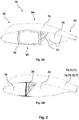
- FIG. 2A and 2B illustrate a wind turbine blade 10.
- the wind turbine blade 10 comprises a blade structure 12 with a leading edge 92, a tailing edge 93, a suction side 94 and a pressure side 95.
- the leading edge 92 is that edge of a wind turbine blade 10 that cuts through the air. It is generally that region of the blade 10 which experiences the highest level of erosion.
- the illustrated wind turbine blade 10 comprises a shell structure 20 and a load carrying spar 30.
- the wind turbine blade further comprises a surface 70.
- the load carrying spar 30 is illustrated as a load carrying box. It may also be referred to as a load-carrying box, a main spar, a spar web, a load carrying web, amongst others.
- the load carrying spar 30 is illustrated as a single load carrying structure. It may also be referred to as a main spar, a spar web, a load carrying web, amongst others.
- the blade structure may comprise a hydrophobic surface 72, a conductive surface 73, a wear resistant surface 74, a light absorbing surface 75 and/or a radar-absorbent surface 77.
- the blade structure may comprise a surface coating 76 which may constitute the surface 70.
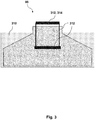
- Figure 3 illustrates an embodiment of a tower foundation.
- the foundation is typically arranged in the soil 310 for on shore wind turbines.
- a typical foundation 88 for a steel tower for a wind turbine may comprise a mounting element 312 comprising T- and L-flanges and an embedded ring, where the L-flange may be connecting to the steel tower and may constitute the foundation top flange 314.
- Figure 4 illustrates the roadmap to reach functionalized graphene-containing material 40.
- Graphene-based material 42 is functionalized using a method or process for functionalization 400 resulting in a functionalized graphene-based material 44.
- the functionalized graphene-based material 44 is/are mixed with host/carrier material 46 resulting in functionalized graphene-containing material 40.
Landscapes
- Engineering & Computer Science (AREA)
- Chemical & Material Sciences (AREA)
- Life Sciences & Earth Sciences (AREA)
- Mechanical Engineering (AREA)
- Sustainable Energy (AREA)
- Combustion & Propulsion (AREA)
- Sustainable Development (AREA)
- General Engineering & Computer Science (AREA)
- Architecture (AREA)
- Materials Engineering (AREA)
- Wood Science & Technology (AREA)
- Civil Engineering (AREA)
- Structural Engineering (AREA)
- Wind Motors (AREA)
Priority Applications (7)
| Application Number | Priority Date | Filing Date | Title |
|---|---|---|---|
| EP17194393.9A EP3462016A1 (fr) | 2017-10-02 | 2017-10-02 | Utilisation d'un nouveau matériau en pièces de turbine d'éolienne et appareil et procédés associés |
| EP18778525.8A EP3692256A1 (fr) | 2017-10-02 | 2018-10-02 | Utilisation d'un nouveau matériau dans des parties d'éolienne; appareil et procédés associés |
| CA3078273A CA3078273A1 (fr) | 2017-10-02 | 2018-10-02 | Utilisation d'un nouveau materiau dans des parties d'eolienne; appareil et procedes associes |
| CN201880064507.XA CN111164303B (zh) | 2017-10-02 | 2018-10-02 | 一种新材料在风力涡轮机的部件与装置中的应用及其方法 |
| PCT/EP2018/076808 WO2019068721A1 (fr) | 2017-10-02 | 2018-10-02 | Utilisation d'un nouveau matériau dans des parties d'éolienne; appareil et procédés associés |
| US16/652,305 US11530681B2 (en) | 2017-10-02 | 2018-10-02 | Use of a new material in wind turbine parts and apparatus and methods thereof |
| US17/987,556 US20230151580A1 (en) | 2017-10-02 | 2022-11-15 | Method of repairing a wind turbine tower foundation using a hardening liquid comprising functionalized graphene |
Applications Claiming Priority (1)
| Application Number | Priority Date | Filing Date | Title |
|---|---|---|---|
| EP17194393.9A EP3462016A1 (fr) | 2017-10-02 | 2017-10-02 | Utilisation d'un nouveau matériau en pièces de turbine d'éolienne et appareil et procédés associés |
Publications (1)
| Publication Number | Publication Date |
|---|---|
| EP3462016A1 true EP3462016A1 (fr) | 2019-04-03 |
Family
ID=60009511
Family Applications (2)
| Application Number | Title | Priority Date | Filing Date |
|---|---|---|---|
| EP17194393.9A Withdrawn EP3462016A1 (fr) | 2017-10-02 | 2017-10-02 | Utilisation d'un nouveau matériau en pièces de turbine d'éolienne et appareil et procédés associés |
| EP18778525.8A Withdrawn EP3692256A1 (fr) | 2017-10-02 | 2018-10-02 | Utilisation d'un nouveau matériau dans des parties d'éolienne; appareil et procédés associés |
Family Applications After (1)
| Application Number | Title | Priority Date | Filing Date |
|---|---|---|---|
| EP18778525.8A Withdrawn EP3692256A1 (fr) | 2017-10-02 | 2018-10-02 | Utilisation d'un nouveau matériau dans des parties d'éolienne; appareil et procédés associés |
Country Status (5)
| Country | Link |
|---|---|
| US (1) | US11530681B2 (fr) |
| EP (2) | EP3462016A1 (fr) |
| CN (1) | CN111164303B (fr) |
| CA (1) | CA3078273A1 (fr) |
| WO (1) | WO2019068721A1 (fr) |
Cited By (3)
| Publication number | Priority date | Publication date | Assignee | Title |
|---|---|---|---|---|
| CN110566420A (zh) * | 2019-09-18 | 2019-12-13 | 深圳市贝优通新能源技术开发有限公司 | 一种安全系数高的高效型风力发电设备 |
| WO2021007797A1 (fr) * | 2019-07-17 | 2021-01-21 | 3M Innovative Properties Company | Dispositif de chauffage de film électrothermique mince à sortie thermique variable |
| CN112879234A (zh) * | 2021-01-27 | 2021-06-01 | 江苏常友环保科技股份有限公司 | 一种风力发电机升降装置 |
Families Citing this family (4)
| Publication number | Priority date | Publication date | Assignee | Title |
|---|---|---|---|---|
| DK3559457T3 (da) | 2016-12-22 | 2020-09-21 | Vestas Wind Sys As | Temperaturstyring baseret på vejrudsigt |
| ES2774169B2 (es) * | 2019-01-16 | 2021-03-10 | Siemens Gamesa Renewable Energy Innovation & Technology SL | Sistema de disipación de la carga eléctrica para una pala de turbina eólica, pala de turbina eólica y método relacionado |
| GB202012135D0 (en) * | 2020-08-05 | 2020-09-16 | Blade Dynamics Ltd | Leading edge protection for a wind turbine blade |
| US12590560B2 (en) | 2024-01-29 | 2026-03-31 | Honeywell International Inc. | Vane heating system and method |
Citations (2)
| Publication number | Priority date | Publication date | Assignee | Title |
|---|---|---|---|---|
| EP2891793A1 (fr) * | 2014-01-02 | 2015-07-08 | Nicholas Pittas | Système automatique de stockage d'énergie photovoltaïque et éolienne pour la production d'énergie électrique non interruptible permettant une autonomie énergétique |
| US20160193751A1 (en) * | 2015-01-05 | 2016-07-07 | The Boeing Company | Graphene-augmented composite materials |
Family Cites Families (15)
| Publication number | Priority date | Publication date | Assignee | Title |
|---|---|---|---|---|
| US20090211173A1 (en) | 2008-02-27 | 2009-08-27 | General Electric Company | Composite wind turbine tower |
| CN103337553B (zh) | 2013-06-04 | 2016-03-23 | 南京日托光伏科技有限公司 | 一种薄膜覆盖正面电极的硅太阳能电池及其制造工艺 |
| DE102013213976A1 (de) * | 2013-07-17 | 2015-01-22 | Wobben Properties Gmbh | Verfahren zum Herstellen eines Fertigbetonteil-Segmentes eines Windenergieanlagen-Turmes |
| US20180222135A1 (en) * | 2014-08-27 | 2018-08-09 | Basf Se | Rotor blade element with anti-icing surface for wind turbine rotor blades |
| US11536045B2 (en) * | 2014-10-30 | 2022-12-27 | Byo Towers, S.L. | Method for installing a hollow concrete tower made from more than one segment and corresponding hollow concrete tower |
| CN104502631B (zh) * | 2015-01-05 | 2017-06-06 | 厦门烯成石墨烯科技有限公司 | 一种基于石墨烯的加速度传感器 |
| US20160348391A1 (en) * | 2015-05-29 | 2016-12-01 | Tindall Corporation | Method and apparatus for constructing a concrete tower |
| CN105505095A (zh) * | 2016-01-28 | 2016-04-20 | 赵栋 | 一种掺有石墨烯的冷喷锌防腐涂料 |
| CN105856586B (zh) * | 2016-04-12 | 2018-06-19 | 南京航空航天大学 | 一种石墨烯电热膜风力机叶片结冰防护系统 |
| US11752709B2 (en) * | 2016-11-17 | 2023-09-12 | Vestas Wind Systems A/S | Reinforcing structure for a wind turbine blade |
| GB2559979A (en) * | 2017-02-23 | 2018-08-29 | Graphene Composites Ltd | Graphene/Aerogel composite |
| US11519382B2 (en) * | 2017-10-02 | 2022-12-06 | Vestas Wind Systems A/S | Relating to structural components for wind turbine blades |
| US12409639B2 (en) * | 2018-02-22 | 2025-09-09 | Graphene Composites Limited | Laminate structure and wearable article |
| EP3581796B1 (fr) * | 2018-06-14 | 2022-03-23 | Siemens Gamesa Renewable Energy A/S | Interface de conductivité étagée |
| EP3738883A1 (fr) * | 2019-05-16 | 2020-11-18 | Airbus Operations, S.L.U. | Composant chauffé résistif d'aéronef et procédé de fabrication dudit composant d'aéronef |
-
2017
- 2017-10-02 EP EP17194393.9A patent/EP3462016A1/fr not_active Withdrawn
-
2018
- 2018-10-02 US US16/652,305 patent/US11530681B2/en active Active
- 2018-10-02 EP EP18778525.8A patent/EP3692256A1/fr not_active Withdrawn
- 2018-10-02 CN CN201880064507.XA patent/CN111164303B/zh not_active Expired - Fee Related
- 2018-10-02 WO PCT/EP2018/076808 patent/WO2019068721A1/fr not_active Ceased
- 2018-10-02 CA CA3078273A patent/CA3078273A1/fr active Pending
Patent Citations (2)
| Publication number | Priority date | Publication date | Assignee | Title |
|---|---|---|---|---|
| EP2891793A1 (fr) * | 2014-01-02 | 2015-07-08 | Nicholas Pittas | Système automatique de stockage d'énergie photovoltaïque et éolienne pour la production d'énergie électrique non interruptible permettant une autonomie énergétique |
| US20160193751A1 (en) * | 2015-01-05 | 2016-07-07 | The Boeing Company | Graphene-augmented composite materials |
Non-Patent Citations (4)
| Title |
|---|
| ANONIMOUS: "Enhancing Composite Materials with Functionalized Graphene & CNTs Haydale Technologies Thailand (HTT)", 9 November 2016 (2016-11-09), XP055464605, Retrieved from the Internet <URL:http://www.graphenemalaysiaconf.com/FILES/Presentations/GrapheneMalaysia2016_Frantz.pdf> [retrieved on 20180404] * |
| KRIS WALKER: "Renewable Energy Embraces Graphene: Improved Wind Turbine Technology", 14 November 2013 (2013-11-14), XP055464567, Retrieved from the Internet <URL:https://www.azocleantech.com/article.aspx?ArticleID=455> [retrieved on 20180404] * |
| PAUL DVORAK: "Graphene-reinforced composites may lead to longer, stronger blades, and more", 3 September 2014 (2014-09-03), XP055464563, Retrieved from the Internet <URL:https://www.windpowerengineering.com/blades/graphene-reinforced-composites-may-lead-longer-stronger-blades-2/> [retrieved on 20180404] * |
| TAY GIBBS: "Commercializing the 'wonder material' - nanotechweb.org", 18 August 2017 (2017-08-18), XP055464612, Retrieved from the Internet <URL:http://nanotechweb.org/cws/article/indepth/69723> [retrieved on 20180404] * |
Cited By (4)
| Publication number | Priority date | Publication date | Assignee | Title |
|---|---|---|---|---|
| WO2021007797A1 (fr) * | 2019-07-17 | 2021-01-21 | 3M Innovative Properties Company | Dispositif de chauffage de film électrothermique mince à sortie thermique variable |
| CN110566420A (zh) * | 2019-09-18 | 2019-12-13 | 深圳市贝优通新能源技术开发有限公司 | 一种安全系数高的高效型风力发电设备 |
| CN112879234A (zh) * | 2021-01-27 | 2021-06-01 | 江苏常友环保科技股份有限公司 | 一种风力发电机升降装置 |
| CN112879234B (zh) * | 2021-01-27 | 2022-06-07 | 江苏常友环保科技股份有限公司 | 一种风力发电机升降装置 |
Also Published As
| Publication number | Publication date |
|---|---|
| WO2019068721A1 (fr) | 2019-04-11 |
| US20200240391A1 (en) | 2020-07-30 |
| CA3078273A1 (fr) | 2019-04-11 |
| CN111164303A (zh) | 2020-05-15 |
| CN111164303B (zh) | 2022-07-01 |
| EP3692256A1 (fr) | 2020-08-12 |
| US11530681B2 (en) | 2022-12-20 |
Similar Documents
| Publication | Publication Date | Title |
|---|---|---|
| EP3462016A1 (fr) | Utilisation d'un nouveau matériau en pièces de turbine d'éolienne et appareil et procédés associés | |
| Dalili et al. | A review of surface engineering issues critical to wind turbine performance | |
| US20130045105A1 (en) | Wind turbine blade and method of protecting the same | |
| US7476985B2 (en) | Method of operating a wind turbine | |
| Tong | Fundamentals of wind energy | |
| EP2344756B1 (fr) | Anneau de renforcement permettant d'augmenter la puissance de turbines de production d'energie | |
| Afzal et al. | Review of icing effects on wind turbine in cold regions | |
| US20110142678A1 (en) | Erosion protection coating for rotor blade of wind turbine | |
| Liu et al. | Reliability analysis of blade of the offshore wind turbine supported by the floating foundation | |
| CN101956656A (zh) | 用于风力涡轮机叶片的被动式除冰 | |
| EP2469087B1 (fr) | Système de renforcement précontraint pour cadre de générateur d'éolienne | |
| US20230358207A1 (en) | A wind turbine rotor blade with a leading edge member | |
| Tong | Advanced materials enable renewable wind energy capture and generation | |
| US8786125B2 (en) | System, method and apparatus for capturing kinetic energy | |
| US20230151580A1 (en) | Method of repairing a wind turbine tower foundation using a hardening liquid comprising functionalized graphene | |
| Hasager et al. | How can we combat leading-edge erosion on wind turbine blades? | |
| TW202004011A (zh) | 用於操作漂浮式離岸風力機之方法 | |
| KR20100035206A (ko) | 풍력발전기용 블레이드 피치 자동 조절장치 | |
| Botta et al. | Effects of hostile terrains on wind turbine performances and loads: The Acqua Spruzza experience | |
| KR101117476B1 (ko) | 수직형 풍력발전장치 | |
| Kurian et al. | Towers for offshore wind turbines | |
| Menghani et al. | Wear and corrosion of wind turbines | |
| Ritschel et al. | Modern Wind Turbines | |
| Tahir et al. | Offshore wind energy in ice prone cold regions-An overview of technological gaps and needs | |
| Ragheb | Components of wind machines |
Legal Events
| Date | Code | Title | Description |
|---|---|---|---|
| PUAI | Public reference made under article 153(3) epc to a published international application that has entered the european phase |
Free format text: ORIGINAL CODE: 0009012 |
|
| AK | Designated contracting states |
Kind code of ref document: A1 Designated state(s): AL AT BE BG CH CY CZ DE DK EE ES FI FR GB GR HR HU IE IS IT LI LT LU LV MC MK MT NL NO PL PT RO RS SE SI SK SM TR |
|
| AX | Request for extension of the european patent |
Extension state: BA ME |
|
| STAA | Information on the status of an ep patent application or granted ep patent |
Free format text: STATUS: THE APPLICATION IS DEEMED TO BE WITHDRAWN |
|
| 18D | Application deemed to be withdrawn |
Effective date: 20191005 |