EP3462666B1 - Procédé et dispositif de traitement de service - Google Patents
Procédé et dispositif de traitement de service Download PDFInfo
- Publication number
- EP3462666B1 EP3462666B1 EP16904305.6A EP16904305A EP3462666B1 EP 3462666 B1 EP3462666 B1 EP 3462666B1 EP 16904305 A EP16904305 A EP 16904305A EP 3462666 B1 EP3462666 B1 EP 3462666B1
- Authority
- EP
- European Patent Office
- Prior art keywords
- key
- network server
- intermediary device
- server
- sent
- Prior art date
- Legal status (The legal status is an assumption and is not a legal conclusion. Google has not performed a legal analysis and makes no representation as to the accuracy of the status listed.)
- Active
Links
Images









Classifications
-
- H—ELECTRICITY
- H04—ELECTRIC COMMUNICATION TECHNIQUE
- H04L—TRANSMISSION OF DIGITAL INFORMATION, e.g. TELEGRAPHIC COMMUNICATION
- H04L9/00—Cryptographic mechanisms or cryptographic arrangements for secret or secure communications; Network security protocols
- H04L9/08—Key distribution or management, e.g. generation, sharing or updating, of cryptographic keys or passwords
- H04L9/0816—Key establishment, i.e. cryptographic processes or cryptographic protocols whereby a shared secret becomes available to two or more parties, for subsequent use
- H04L9/0819—Key transport or distribution, i.e. key establishment techniques where one party creates or otherwise obtains a secret value, and securely transfers it to the other(s)
- H04L9/083—Key transport or distribution, i.e. key establishment techniques where one party creates or otherwise obtains a secret value, and securely transfers it to the other(s) involving central third party, e.g. key distribution center [KDC] or trusted third party [TTP]
-
- H—ELECTRICITY
- H04—ELECTRIC COMMUNICATION TECHNIQUE
- H04L—TRANSMISSION OF DIGITAL INFORMATION, e.g. TELEGRAPHIC COMMUNICATION
- H04L63/00—Network architectures or network communication protocols for network security
- H04L63/30—Network architectures or network communication protocols for network security for supporting lawful interception, monitoring or retaining of communications or communication related information
- H04L63/306—Network architectures or network communication protocols for network security for supporting lawful interception, monitoring or retaining of communications or communication related information intercepting packet switched data communications, e.g. Web, Internet or IMS communications
-
- H—ELECTRICITY
- H04—ELECTRIC COMMUNICATION TECHNIQUE
- H04L—TRANSMISSION OF DIGITAL INFORMATION, e.g. TELEGRAPHIC COMMUNICATION
- H04L9/00—Cryptographic mechanisms or cryptographic arrangements for secret or secure communications; Network security protocols
- H04L9/08—Key distribution or management, e.g. generation, sharing or updating, of cryptographic keys or passwords
-
- H—ELECTRICITY
- H04—ELECTRIC COMMUNICATION TECHNIQUE
- H04L—TRANSMISSION OF DIGITAL INFORMATION, e.g. TELEGRAPHIC COMMUNICATION
- H04L9/00—Cryptographic mechanisms or cryptographic arrangements for secret or secure communications; Network security protocols
- H04L9/14—Cryptographic mechanisms or cryptographic arrangements for secret or secure communications; Network security protocols using a plurality of keys or algorithms
-
- H—ELECTRICITY
- H04—ELECTRIC COMMUNICATION TECHNIQUE
- H04L—TRANSMISSION OF DIGITAL INFORMATION, e.g. TELEGRAPHIC COMMUNICATION
- H04L9/00—Cryptographic mechanisms or cryptographic arrangements for secret or secure communications; Network security protocols
- H04L9/32—Cryptographic mechanisms or cryptographic arrangements for secret or secure communications; Network security protocols including means for verifying the identity or authority of a user of the system or for message authentication, e.g. authorization, entity authentication, data integrity or data verification, non-repudiation, key authentication or verification of credentials
- H04L9/3247—Cryptographic mechanisms or cryptographic arrangements for secret or secure communications; Network security protocols including means for verifying the identity or authority of a user of the system or for message authentication, e.g. authorization, entity authentication, data integrity or data verification, non-repudiation, key authentication or verification of credentials involving digital signatures
-
- H—ELECTRICITY
- H04—ELECTRIC COMMUNICATION TECHNIQUE
- H04W—WIRELESS COMMUNICATION NETWORKS
- H04W12/00—Security arrangements; Authentication; Protecting privacy or anonymity
- H04W12/03—Protecting confidentiality, e.g. by encryption
-
- H—ELECTRICITY
- H04—ELECTRIC COMMUNICATION TECHNIQUE
- H04W—WIRELESS COMMUNICATION NETWORKS
- H04W12/00—Security arrangements; Authentication; Protecting privacy or anonymity
- H04W12/04—Key management, e.g. using generic bootstrapping architecture [GBA]
- H04W12/041—Key generation or derivation
-
- H—ELECTRICITY
- H04—ELECTRIC COMMUNICATION TECHNIQUE
- H04W—WIRELESS COMMUNICATION NETWORKS
- H04W12/00—Security arrangements; Authentication; Protecting privacy or anonymity
- H04W12/04—Key management, e.g. using generic bootstrapping architecture [GBA]
- H04W12/043—Key management, e.g. using generic bootstrapping architecture [GBA] using a trusted network node as an anchor
- H04W12/0431—Key distribution or pre-distribution; Key agreement
-
- H—ELECTRICITY
- H04—ELECTRIC COMMUNICATION TECHNIQUE
- H04W—WIRELESS COMMUNICATION NETWORKS
- H04W12/00—Security arrangements; Authentication; Protecting privacy or anonymity
- H04W12/04—Key management, e.g. using generic bootstrapping architecture [GBA]
- H04W12/047—Key management, e.g. using generic bootstrapping architecture [GBA] without using a trusted network node as an anchor
- H04W12/0471—Key exchange
-
- H—ELECTRICITY
- H04—ELECTRIC COMMUNICATION TECHNIQUE
- H04W—WIRELESS COMMUNICATION NETWORKS
- H04W12/00—Security arrangements; Authentication; Protecting privacy or anonymity
- H04W12/50—Secure pairing of devices
- H04W12/55—Secure pairing of devices involving three or more devices, e.g. group pairing
-
- H—ELECTRICITY
- H04—ELECTRIC COMMUNICATION TECHNIQUE
- H04W—WIRELESS COMMUNICATION NETWORKS
- H04W12/00—Security arrangements; Authentication; Protecting privacy or anonymity
- H04W12/80—Arrangements enabling lawful interception [LI]
Definitions
- the present invention relates to the communications field, and in particular, to a service processing method and apparatus.
- the Secure Socket Layer (English: security socket layer, SSL for short) protocol and its successor: the Transport Layer Security (English: transport layer security, TLS for short) protocol are used to provide services such as encryption, identity authentication, and data integrity for network communication, and are already widely applied to secure communication between a browser and a network server.
- the SSL/TLS protocol is located between the Transmission Control Protocol (English: transmission control protocol, TCP for short) at a transport layer and the Hypertext Transfer Protocol (English: hypertext transfer protocol, HTTP for short) at an application layer.
- a service processing method provided by a related technology includes: User equipment (English: user equipment, UE for short) and a network server set up an encrypted connection based on the Hypertext Transfer Protocol over the SSL/TLS protocol (English: hypertext transfer protocol over secure socket layer, HTTPS for short), and agree upon a key; after encrypting service information by using the key, the user equipment sends the encrypted service information to the network server; the network server obtains the service information through decryption by using the key, generates service data based on the service information, and after encrypting the service data, sends the encrypted service data to the user equipment; and the user equipment obtains the service data through decryption by using the key.
- the service information may be used to request a web page from the network server, or may be used to request an object from the network server.
- an intermediary device may also be disposed between the user equipment and the network server. If an intermediary device exists, ciphertext obtained through encryption is transmitted between the user equipment and the network server when the encrypted connection is set up between the user equipment and the network server. Because the intermediary device cannot obtain the key, the intermediary device cannot decrypt the ciphertext. Consequently, the intermediary device cannot provide the service optimization function for the user equipment.
- US 2008/0052509 A1 describes a networked computer system in which a trusted intermediary device is allowed access to packets transmitted through a secured connection.
- An endpoint to a secured connection identifies a trusted intermediary device, such as by using identification information provided by a trusted server.
- the endpoint shares with the trusted intermediary device connection information that enables the intermediary device to access packets transmitted through the secured connection.
- US 2007/0260871 A1 describes a technique where encrypted communications between peers are inspected by a proxy server.
- the proxy server functions as a gateway processor between the peers and includes a security processor.
- the security processor is coupled to one of the peers via a channel that is separate from the channel carrying the encrypted communications between the peers.
- Cryptographic keys needed to decrypt the encrypted communications are provided via the separate channel to the security processor prior to commencement of encrypted communications.
- the security processor decrypts the encrypted communications utilizing the previously provided cryptographic keys.
- US 6,948,060 B1 describes a technique for monitoring encrypted communications in a network.
- US 2016/0142440 A1 describes a system for decrypting encrypted SSL data from packet traces without using private keys or a proxy. Decryption of encrypted SSL data is accomplished by intercepting a session key associated with a communication session transmitted from a user device to a server during handshaking between the user device and the server. The session key is then used to decrypt packet level traces of the communication session.
- US 8,843,750 B1 describes a technique for monitoring secured communication channels based on certificate authority impersonation.
- a first public key and a first private key pair for the intercepted certificate is generated.
- the public key in the intercepted certificate is replaced with the first public key.
- a modified intercepted certificate is transmitted including the first public key to the software application in place of the intercepted certificate.
- the security communication channel between the software application and the remote server is monitored, wherein the security communication channel is established based at least in part on the modified intercepted certificate.
- a service processing method of claim 1 is provided.
- the intermediary device Because data transmitted between the UE and the network server needs to be forwarded by the intermediary device, and the intermediary device is transparent to the UE, the intermediary device needs to negotiate with the UE and the server with the assistance of the key management function entity, then obtains the first key after the negotiation succeeds, and uses the first key to decrypt the ciphertext transmitted between the UE and the network server, to provide service optimization.
- the key management entity not only can assist the intermediary device in obtaining the first key from the network server, but also can assist the intermediary device in obtaining the first key from the UE. Therefore, a plurality of implementations are provided for obtaining the first key by the intermediary device.
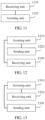
- a service processing apparatus of claim 2 is provided.
- a service processing apparatus of claim 3 is provided.
- FIG. 1 is a schematic structural diagram of a service processing system according to an example embodiment of the present invention.
- the service processing system includes UE 120, a key management function entity (key management function entity) 140, an intermediary device 160, and a network server 180.
- key management function entity key management function entity
- the UE 120 and the key management function entity 140 set up an encrypted connection, and the key management function entity 140 separately sets up an encrypted connection to the intermediary device 160 and the network server 180.
- the UE 120 and the key management function entity 140 set up an encrypted connection
- the key management function entity 140 and the intermediary device 160 set up an encrypted connection
- the intermediary device 160 and the network server 180 set up an encrypted connection.
- the key management function entity 140 separately sets up an encrypted connection to the intermediary device 160 and the network server 180.
- the encrypted connection may be a connection based on HTTPS over the SSLprotocol/TLS protocol.
- the UE 120 may be a cellphone (English: cellphone), a smartphone (English: smartphone), a computer (English: computer), a tablet computer (English: tablet computer), a wearable device (English: wearable device), a personal digital assistant (English: personal digital assistant, PDA), a mobile Internet device (English: mobile Internet device, MID), an e-book reader (English: e-book reader), and the like.
- the key management function entity 140 is configured to manage a key, may be a trusted and authoritative server such as an operator server, and can attempt to verify an identity of the UE by using a digital certificate.
- a domain name of the key management function entity is KeyManagement function entity.node.epc.mnc ⁇ MNC>.mcc ⁇ MCC>.3gppnetwork.org.
- the intermediary device 160 may be a TLS proxy, an edge server (English: edge server), and the like, and the edge server may include a content delivery network (English: Content Delivery Network, CDN for short) server. This is not limited in this embodiment.
- FIG. 2 is a schematic structural diagram of a device 200 shown in another example embodiment of the present invention.
- the device 200 may be the UE 120, the key management function entity 140, the intermediary device 160, or the network server 180 shown in FIG. 1 .
- the wireless device 200 includes a processor 220 and a transceiver 240 coupled to the processor 220.
- the transceiver 240 may include one or more antennas, and the antenna enables the device 200 to send or receive a radio signal.
- the transceiver 240 may be connected to a communications circuit 260.
- the communications circuit 260 may perform various processing on a signal received by using the transceiver 240 or a signal sent by using the transceiver 240, for example, modulate a signal sent by using the transceiver 240 and demodulate a signal received by using the transceiver 240.
- the communications circuit 260 may include a radio frequency (English: radio frequency, RF) chip and a baseband chip.
- the communications circuit 260 may be connected to the processor 220. Alternatively, the communications circuit 260 may be integrated into the processor 220.
- the processor 220 is a control center of the device 200.
- the processor 220 may be a central processing unit (English: central processing unit, CPU), a network processor (English: network processor, NP), or a combination of a CPU and an NP.
- the processor 220 may further include a hardware chip.
- the foregoing hardware chip may be an application-specific integrated circuit (English: application-specific integrated circuit, ASIC), a programmable logic device (English: programmable logic device, PLD), or a combination thereof.
- the PLD may be a complex programmable logic device (English: complex programmable logic device, CPLD), a field-programmable gate array (English: field-programmable gate array, FPGA), a generic array logic (English: generic array logic, GAL), or any combination thereof.
- CPLD complex programmable logic device
- FPGA field-programmable gate array
- GAL generic array logic
- a memory 280 is connected to the processor 220 by using a bus or in another manner, and the memory 280 may be a volatile memory (English: volatile memory), a non-volatile memory (English: non-volatile memory), or a combination thereof.
- the volatile memory may be a random access memory (English: random access memory, RAM), for example, a static random access memory (English: static random access memory, SRAM) or a dynamic random access memory (English: dynamic random access memory, DRAM).
- the nonvolatile memory may be a read-only memory (English: read-only memory image, ROM), for example, a programmable read-only memory (English: programmable read-only memory, PROM), an erasable programmable read-only memory (English: erasable programmable read-only memory, EPROM), or an electrically erasable programmable read-only memory (English: electrically erasable programmable read-only memory, EEPROM).
- the non-volatile memory may be a flash memory (English: flash memory) or a magnetic memory, for example, a magnetic tape (English: magnetic tape), a floppy disk (English: floppy disk), or a hard disk.
- the non-volatile memory may be an optical disc.
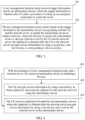
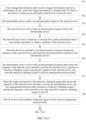
- FIG. 3 is a method flowchart of a service processing method according to an embodiment of the present invention.
- the service processing method may include the following steps.
- Step 301 A key management function entity receives trigger information sent by an intermediary device, where the trigger information is obtained after UE starts a procedure of setting up an encrypted connection to a network server.
- Step 302 The key management function entity assists, based on the trigger information, the intermediary device in negotiating with the UE and the network server, to enable the intermediary device to obtain a first key, where the first key is used by the intermediary device to decrypt ciphertext sent by the UE and the network server, the ciphertext is obtained after the UE or the network server encrypts service information by using a second key, and the first key is corresponding to the second key.
- the intermediary device because data transmitted between the UE and the network server needs to be forwarded by the intermediary device, and the intermediary device is transparent to the UE, the intermediary device needs to negotiate with the UE and the server with the assistance of the key management function entity, then obtains the first key after the negotiation succeeds, and uses the first key to decrypt the ciphertext transmitted between the UE and the network server, to provide service optimization.
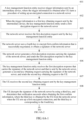
- FIG. 4 is a method flowchart of a service processing method according to an embodiment of the present invention.
- the service processing method may include the following steps.
- Step 401 With the assistance of a key management function entity and a network server, UE assists an intermediary device in obtaining a first key.
- Step 402 The UE encrypts service information by using a second key, to obtain ciphertext, and sends the ciphertext to the network server by using the intermediary device.
- Step 403 The UE receives ciphertext forwarded by the intermediary device, where the ciphertext is obtained after the network server encrypts service information by using a second key and is sent by the network server to the intermediary device.
- the first key is used by the intermediary device to decrypt the ciphertext, and the first key is corresponding to the second key.
- step 402 or step 403 may be performed.
- the UE needs to trigger, with the assistance of the key management function entity and the network server, the intermediary device to obtain the first key, so that the intermediary device uses the first key to decrypt the ciphertext transmitted between the UE and the network server, to provide service optimization.
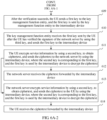
- FIG. 5 is a method flowchart of a service processing method according to an embodiment of the present invention.
- the service processing method may include the following steps.
- Step 501 With the assistance of a key management function entity and UE, a network server assists an intermediary device in obtaining a first key.
- Step 502 The network server receives ciphertext forwarded by the intermediary device, where the ciphertext is obtained after the UE encrypts service information by using a second key and is sent by the UE to the intermediary device.
- Step 503 The network server encrypts service information by using the second key to obtain ciphertext, and sends the ciphertext to the UE by using the intermediary device.
- the first key is used by the intermediary device to decrypt the ciphertext, and the first key is corresponding to the second key.
- step 502 or step 503 may be performed.
- the network server needs to trigger, with the assistance of the key management function entity and the UE, the intermediary device to obtain the first key, so that the intermediary device uses the first key to decrypt the ciphertext transmitted between the UE and the network server, to provide service optimization.
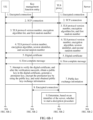
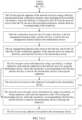
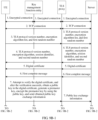
- FIG. 6A-1 and FIG. 6A-2 are a method flowchart of a service processing method according to an embodiment of the present invention.
- the service processing method is applied to the first implementation scenario.
- a key management function entity negotiates with a network server based on a request, obtains the first key from UE after the negotiation succeeds, and sends the first key to an intermediary device.
- the service processing method may include the following steps.
- Step 601 The key management function entity receives trigger information sent by the intermediary device, where the trigger information is obtained after the UE starts a procedure of setting up an encrypted connection to the network server.
- connection may be an unencrypted connection based on HTTP, or may be an encrypted connection based on HTTPS over the SSL protocol/TLS protocol.
- the intermediary device may be disposed between the UE and the network server, and the intermediary device is configured to forward data transmitted between the UE and the network server. Specifically, if an unencrypted connection is set up between the UE and the network server, and data transmitted between the UE and the network server is a plaintext, the intermediary device directly forwards the plaintext and does not perform service optimization for the plaintext. If an encrypted connection is set up between the UE and the network server, and service information transmitted between the UE and the network server is ciphertext, the intermediary device needs to decrypt the ciphertext and perform service optimization for the service information obtained through decryption. The intermediary device needs to use a key negotiated by the UE and the network server when decrypting the ciphertext. Therefore, the intermediary device needs to obtain the key from the UE or the network server.
- the intermediary device may set up, in place of the network server, an encrypted connection to the UE, and set up, in place of the UE, an encrypted connection to the network server.
- the UE sends a Transmission Control Protocol (English: Transmission Control Protocol, TCP for short) setup request to the network server.
- the TCP setup request includes an Internet Protocol (English: Internet Protocol, IP for short) address of the UE and an IP address of the network server.
- the intermediary device intercepts the TCP setup request sent by the UE to the network server, sets up, in place of the network server, a TCP connection to the UE based on the IP address of the network server, and sets up, in place of the UE, a TCP connection to the network server based on the IP address of the UE.
- the UE sends an encryption setup request to the network server by using the TCP connections.
- the intermediary device intercepts the encryption setup request that is sent by the UE to the network server by using the TCP connections, sets up, in place of the network server, an encrypted connection to the UE based on the encryption setup request, and sets up, in place of the UE, an encrypted connection to the network server based on the encryption setup request.
- Information in the TCP setup request includes a source IP address, a source port, a destination IP address, and a destination port.
- the source is the UE
- the destination is the network server.
- Ports of the TCP connection include port 80 and port 443. If the UE needs to access the network server based on the HTTP protocol, the port of the TCP connection is port 80. If the UE needs to access the network server based on the HTTPS protocol, the port of the TCP connection is port 443. In this embodiment, an example in which the UE accesses the network server based on the HTTPS protocol is used for description. In this case, the port of the TCP connection is port 443.
- the intermediary device uses the IP address of the network server as a source IP address of the intermediary device, uses the IP address of the UE as a destination IP address, interacts with the UE to complete a three-way handshake, and sets up, in place of the network server, a TCP connection to the UE.
- the intermediary device sends a TCP setup request to the network server, where a source IP address in the TCP setup request is the IP address of the UE, and a destination IP address is the IP address of the network server.
- the intermediary device uses the IP address of the UE as a source IP address of the intermediary device, uses the IP address of the network server as a destination IP address, interacts with the network server to complete a three-way handshake, and sets up, in place of the UE, a TCP connection to the network server.
- a path is formed between the UE, the intermediary device, and the network server.
- the UE may send an encryption setup connection to the network server by using the TCP connections.
- a process of setting up an encrypted connection based on the SSL protocol is similar to a process of setting up an encrypted connection based on the TLS protocol, the following uses the encrypted connection based on the TLS protocol as an example for description.
- the UE generates a second key based on the first random number, the second random number, the premaster key, and the encryption algorithm.
- the second key includes a client write message authentication code (English: message authentication code, MAC for short) secret (client write MAC secret), a server write MAC secret (server write MAC secret), a client write key (client write key), and a server write key (server write key).
- client write MAC secret and the server write MAC secret are used to verify whether a message is tampered halfway.
- the client write key is used by a client to encrypt information and is used by a server to decrypt information.
- the server write key is used by a server to encrypt information and is used by a client to decrypt information.
- the intermediary device intercepts the public key exchange information sent by the UE to the network server, and forwards the public key exchange information to the network server.
- the intermediary device intercepts a password change description sent by the UE to the network server, forwards the password change description to the network server, and instructs the network server to start negotiated parameters.
- the intermediary device intercepts a second complete message sent by the UE to the network server, and forwards the second complete message to the network server.
- the second complete message includes a hash value, so that the network server performs verification based on the hash value.
- the hash value is obtained after the UE performs a hash operation on all content sent to the network server.
- the intermediary device intercepts a password change description sent by the network server to the UE, forwards the password change description to the UE, and instructs the UE to start negotiated parameters.
- the network server decrypts the public key exchange information by using a private key, to obtain the premaster key, and generates a second key based on the first random number, the second random number, the premaster key, and the encryption algorithm.
- the second key generated by the network server is the same as the second key generated by the UE.
- the intermediary device intercepts a third complete message sent by the network server to the UE, and forwards the third complete message to the UE.
- the third complete message includes a hash value, so that the UE performs verification based on the hash value.
- the hash value is obtained after the network server performs a hash operation on all content sent to the UE.
- the intermediary device does not have the private key of the network server, the intermediary device cannot decrypt the public key exchange information and therefore cannot obtain the first key.
- the first key is the premaster key; or the first key includes the first random number, the second random number, the premaster key, and the encryption algorithm; or the first key is the second key generated by the UE or the network server based on the first random number, the second random number, the premaster key, and the encryption algorithm.
- the intermediary device may obtain the first key from the UE or the network server.
- the first key obtained by the intermediary device from the UE or the network server is the premaster key
- the intermediary device calculates the second key based on the first random number, the second random number, and the encryption algorithm that are previously intercepted.
- the first key obtained by the intermediary device from the UE or the network server includes the first random number, the second random number, the premaster key, and the encryption algorithm, and the intermediary device generates the second key based on the first key.
- the first key obtained by the intermediary device from the UE or the network server is the second key generated based on the first random number, the second random number, the premaster key, and the encryption algorithm.
- the step in which the intermediary device obtains the first key may be performed after it is determined that the UE needs to set up an encrypted connection to the network server, that is, performed after the UE sends the TLS protocol version number, the encryption algorithm list, and the first random number to the network server, and needs to be performed when ciphertext sent by the UE or the network server is received at the latest.
- the ciphertext is obtained after the UE or the network server encrypts service information by using the second key.
- the intermediary device negotiates with the UE and the network server to obtain the first key.
- the key management function entity and the intermediary device may be deployed in a same entity, or may be deployed in different entities. This is not limited in this embodiment.
- the key management function entity and the intermediary device may interact with each other by using an internal module.
- the key management function entity needs to separately set up an encrypted connection to the UE and the intermediary device, interaction between the key management function entity and the UE may be performed based on the SSL/TLS protocol, IPsec, and the like, and interaction between the key management function entity and the intermediary device may be performed based on the SSL/TLS protocol, IPsec, and the like.
- the UE may set up an encrypted connection to the key management function entity during power-on, or may set up an encrypted connection to the key management function entity in a communication process.
- the key management function entity may set up an encrypted connection to the intermediary device in advance, or may set up an encrypted connection to the intermediary device when the intermediary device needs to obtain the first key.
- This embodiment provides two manners of discovering the key management function entity by the UE. The following describes the two discovery manners separately.
- IP addresses or domain names of a plurality of key management function entities are configured in the UE, and the UE may set up encrypted connections to the key management function entities in turn based on the IP addresses or the domain names.
- the intermediary device and the key management function entity are both located in a PDN gateway (English: PDN GateWay, PGW for short), because the UE needs to access the PGW, and the PGW allocates an IP address to the UE, the UE may directly determine the key management function entity, and set up an encrypted connection to the key management function entity.
- PDN gateway English: PDN GateWay, PGW for short
- the trigger information is used to instruct the key management function entity to assist the intermediary device in obtaining the first key.
- the trigger information may be the TLS protocol version number, the encryption algorithm list, and the first random number that are intercepted by the intermediary device, or may be the ciphertext sent by the UE that is intercepted by the intermediary device, or may be information received at any moment between moments of receiving the foregoing two kinds of information.
- the trigger information may be information sent by the intermediary device to the key management function entity after the intermediary device obtains predetermined information.
- the predetermined information may be the TLS protocol version number, the encryption algorithm list, and the first random number that are intercepted by the intermediary device, or may be the ciphertext sent by the UE that is intercepted by the intermediary device, or may be information received at any moment between moments of receiving the foregoing two kinds of information.
- the intermediary device may further obtain an identifier of the network server, and determine, based on the identifier of the network server, whether service optimization needs to be provided for data transmitted between the UE and the network server. Specifically, the intermediary device presets a whitelist; after obtaining the identifier of the network server, the intermediary device detects whether the identifier of the network server is in the whitelist; and when the identifier of the network server is in the whitelist, the intermediary device sends a request to the key management function entity; or when the identifier of the network server is not in the whitelist, the procedure ends.
- the identifier of the network server may be a server name indication (English: Server Name Indication, SNI for short) or the IP address.
- SNI may be carried in the encrypted connection setup request that is sent by the UE to the network server and intercepted by the intermediary device.
- IP address may be carried in the TCP setup request that is sent by the UE to the network server and intercepted by the intermediary device.
- Step 602 When the trigger information is a first key obtaining request sent by the intermediary device, the key management function entity sends a first decryption request to the network server.
- Both the first key obtaining request and the first decryption request carry the session identifier, and the session identifier may be an IP 5-tuple to indicate a correspondence between the first key and a session connection.
- the IP 5-tuple includes the IP address of the UE, the IP address of the network server, the UE port, the server port, and a transport protocol TCP.
- the first key obtaining request is as follows:
- the first decryption request is as follows:
- Step 603 The network server receives the first decryption request sent by the key management function entity.
- Step 604 The network server uses a fourth key to encrypt first confirm information that is successfully negotiated, to obtain a signature of the network server.
- the network server After determining, based on the session identifier, that the negotiation succeeds, the network server generates the first confirm information, and encrypts the first confirm information by using the fourth key to obtain the signature of the network server.
- the fourth key may be the private key of the network server.
- Step 605 The network server generates a first decryption response carrying the signature of the network server, and sends the first decryption response to the key management function entity.
- the first decryption response further needs to include the session identifier.
- the first decryption response is as follows:
- Step 606 The key management function entity receives the first decryption response that carries the signature of the network server and that is sent by the network server, generates a second key obtaining request carrying the signature of the network server, and sends the second key obtaining request to the UE.
- the second key obtaining request further needs to include the session identifier.
- the second key obtaining request is as follows:
- Step 607 The UE receives the second key obtaining request sent by the key management function entity.
- Step 608 The UE decrypts the signature of the network server by using a third key, and determines that verification succeeds when obtaining the first confirm information, where the third key is obtained by the UE from the network server when the UE sets up the encrypted connection, and the third key is corresponding to the fourth key.
- the third key is the public key of the network server
- the public key of the network server is provided in the digital certificate of the network server.
- Step 609 After the verification succeeds, the UE sends the first key to the key management function entity, and the first key is sent by the key management function entity to the intermediary device.
- the UE determines the first key based on the session identifier, generates a key response carrying the first key and the session identifier, and sends the key response to the key management function entity.
- the key response is as follows:
- Step 610 The key management function entity receives the first key sent by the UE after the UE has verified the signature of the network server by using the third key, and sends the first key to the intermediary device.
- the key management function entity may forward the received key response to the intermediary device, and the intermediary device obtains the first key from the key response.
- the intermediary device After obtaining the first key, the intermediary device obtains the second key based on the first key and uses the second key to decrypt ciphertext sent by the UE and the network server. Steps 611 and 612 are performed when the intermediary device uses the second key to decrypt ciphertext sent by the UE. Steps 613 and 614 are performed when the intermediary device uses the second key to decrypt ciphertext sent by the network server.
- Step 611 The UE encrypts service information by using a second key, to obtain ciphertext, and sends the ciphertext to the network server by using the intermediary device, where the second key is corresponding to the first key, and the first key is used by the intermediary device to decrypt the ciphertext.
- the intermediary device When intercepting the ciphertext sent by the UE and obtaining the second key based on the first key, the intermediary device reads the client write key from the second key, decrypts the ciphertext by using the client write key, to obtain the service information.
- the intermediary device performs service optimization on the service information, encrypts, by using the client write key, the service information on which service optimization is performed, to obtain ciphertext, and sends the ciphertext to the network server.
- the intermediary device does not perform service optimization on the service information, directly encrypts the service information by using the client write key, to obtain ciphertext, and sends the ciphertext to the network server.
- Step 612 The network server receives the ciphertext forwarded by the intermediary device.
- the network server receives the ciphertext, decrypts the ciphertext by using the client write key, to obtain the service information, and processes the service information.
- Step 613 The network server encrypts service information by using a second key, to obtain ciphertext, and sends the ciphertext to the UE by using the intermediary device, where the second key is corresponding to the first key, and the first key is used by the intermediary device to decrypt the ciphertext.
- the intermediary device When intercepting the ciphertext sent by the network server and obtaining the second key based on the first key, the intermediary device reads the server write key from the second key, decrypts the ciphertext by using the server write key, to obtain the service information.
- the intermediary device performs service optimization on the service information, encrypts, by using the server write key, the service information on which service optimization is performed, to obtain ciphertext, and sends the ciphertext to the UE.
- the intermediary device does not perform service optimization on the service information, directly encrypts the service information by using the server write key, to obtain ciphertext, and sends the ciphertext to the UE.
- Step 614 The UE receives the ciphertext forwarded by the intermediary device.
- the UE receives the ciphertext, decrypts the ciphertext by using the server write key, to obtain the service information, and processes the service information.
- the intermediary device continues maintaining the correspondence between the session identifier and the first key for a period of time, so that when subsequently the UE and the intermediary device, and the intermediary device and the network server are quickly reconnected, the intermediary device can directly determine the first key based on the session identifier and the correspondence, and does not need to obtain the first key from the UE or the network server, thereby improving processing efficiency. Details are not described in the following again.
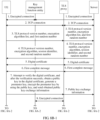
- the key management function entity is a key management function entity
- the intermediary device is a TLS proxy
- the network server is a server.
- the TLS proxy intercepts a TCP setup request sent by the UE to the server, sets up, in place of the server, a TCP connection to the UE based on an IP address of the server, and sets up, in place of the UE, a TCP connection to the server based on an IP address of the UE.
- the TLS proxy intercepts a TLS protocol version number, an encryption algorithm list, and a first random number that are sent by the UE to the server, and forwards the TLS protocol version number, the encryption algorithm list, and the first random number to the server.
- the server selects an encryption algorithm from the encryption algorithm list, and sends the TLS protocol version number, the encryption algorithm, a session identifier, and a second random number to the UE.
- the TLS proxy intercepts the TLS protocol version number, the encryption algorithm, the session identifier, and the second random number sent by the server to the UE, and forwards the TLS protocol version number, the encryption algorithm, the session identifier, and the second random number to the UE.
- the server sends a digital certificate to the UE, and the TLS proxy intercepts the digital certificate, and forwards the digital certificate to the UE.
- the server sends a first complete message to the UE, and the TLS proxy intercepts the first complete message, and forwards the first complete message to the UE.
- the UE attempts to verify the digital certificate, and after the verification succeeds, obtains a public key in the digital certificate, generates a premaster key, encrypts the premaster key by using the public key, and sends obtained public key exchange information to the server.
- the TLS proxy intercepts the public key exchange information, and forwards the public key exchange information to the server.
- the TLS proxy sets up an encrypted connection to the key management function entity.
- step 1, step 8, and steps 2 to 7 is not limited in this embodiment.
- the TLS proxy obtains an identifier of the server, determines, based on the identifier of the server, whether a decryption procedure needs to be started, and performs the next step when determining that the decryption procedure needs to be started.
- the TLS proxy sends a key obtaining request carrying the session identifier to the key management function entity.
- the key management function entity sends a decryption request carrying the session identifier to the server.
- the server sends a decryption request response carrying the session identifier and a signature of the server to the key management function entity.
- the key management function entity sends a key obtaining request carrying the session identifier and the signature of the server to the UE.
- the UE After the UE has verified the signature of the server, the UE sends a key response carrying the session identifier and a first key to the key management function entity.
- the key management function entity sends the key response carrying the session identifier and the first key to the TLS proxy.
- the UE sends a password change description to the server.
- the TLS proxy intercepts the password change description, and forwards the password change description to the server.
- the UE sends a second complete message to the server.
- the TLS proxy intercepts the second complete message, and forwards the second complete message to the server.
- the server sends a password change description to the UE.
- the TLS proxy intercepts the password change description, forwards the password change description to the UE, and instructs the UE to start negotiated parameters.
- the server sends a third complete message to the UE.
- the TLS proxy intercepts the third complete message, and forwards the third complete message to the UE.
- the UE needs to trigger, with the assistance of the key management function entity and the network server, the intermediary device to obtain the first key, so that the intermediary device uses the first key to decrypt the ciphertext transmitted between the UE and the network server, to provide service optimization.
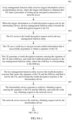
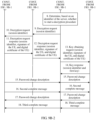
- FIG. 7A-1 and FIG. 7A-2 are a method flowchart of a service processing method according to an embodiment of the present invention.
- the service processing method is applied to the second implementation scenario.
- a key management function entity obtains a first key from UE after determining, based on a request, that negotiation with a network server succeeds, and sends the first key to an intermediary device.
- the service processing method may include the following steps.
- Step 701 The key management function entity receives trigger information sent by the intermediary device, where the trigger information is obtained after the UE starts a procedure of setting up an encrypted connection to the network server.
- step 701 For details about step 701, refer to the description of step 601. The details are not described herein.
- Step 702 The intermediary device sends a second decryption request to the network server.
- the intermediary device can directly send the second decryption request carrying a session identifier to the network server.
- the session identifier For details about the session identifier, refer to the description in step 604.
- Step 703 The network server receives the second decryption request sent by the intermediary device.
- Step 704 The network server uses a fourth key to encrypt first confirm information that is successfully negotiated, to obtain a signature of the network server.
- the network server After determining, based on the session identifier, that the negotiation succeeds, the network server generates the first confirm information, and encrypts the first confirm information by using the fourth key to obtain the signature of the network server.
- the fourth key may be a private key of the network server.
- Step 705 The network server generates a second decryption response carrying the signature of the network server, and sends the second decryption response to the intermediary device.
- the second decryption response further needs to include the session identifier.
- Step 706 The intermediary device receives the second decryption response that carries the signature of the network server and that is sent by the network server, generates a third key obtaining request carrying the signature of the network server, and sends the third key obtaining request to the key management function entity.
- the third key obtaining request further needs to include the session identifier.
- Step 707 When the trigger information is the third key obtaining request that carries the signature of the network server and that is sent by the intermediary device, the key management function entity generates a fourth key obtaining request carrying the signature of the network server, and sends the fourth key obtaining request to the UE.
- the fourth key obtaining request further needs to include the session identifier.
- Step 708 The UE receives the fourth key obtaining request sent by the key management function entity.
- Step 709 The UE decrypts the signature of the network server by using a third key, and determines that verification succeeds when obtaining the first confirm information, where the third key is obtained by the UE from the network server when the UE sets up the encrypted connection, and the third key is corresponding to the fourth key.
- the third key is a public key of the network server
- the public key of the network server is provided in a digital certificate of the network server.
- Step 710 After the verification succeeds, the UE sends the first key to the key management function entity, and the first key is sent by the key management function entity to the intermediary device.
- the UE determines the first key based on the session identifier, generates a key response carrying the first key and the session identifier, and sends the key response to the key management function entity.
- Step 711 The key management function entity receives the first key sent by the UE after the UE has verified the signature of the network server by using the third key, and sends the first key to the intermediary device.
- the key management function entity may forward the received key response to the intermediary device, and the intermediary device obtains the first key from the key response.
- the intermediary device After obtaining the first key, the intermediary device obtains a second key based on the first key and uses the second key to decrypt ciphertext sent by the UE and the network server. Steps 712 and 713 are performed when the intermediary device uses the second key to decrypt ciphertext sent by the UE. For a specific implementation procedure, refer to the description of steps 611 and 612. Steps 714 and 715 are performed when the intermediary device uses the second key to decrypt ciphertext sent by the network server. For a specific implementation procedure, refer to the description of steps 613 and 614.
- Step 712 The UE encrypts service information by using a second key, to obtain ciphertext, and sends the ciphertext to the network server by using the intermediary device, where the second key is corresponding to the first key, and the first key is used by the intermediary device to decrypt the ciphertext.
- Step 713 The network server receives the ciphertext forwarded by the intermediary device.
- Step 714 The network server encrypts service information by using a second key, to obtain ciphertext, and sends the ciphertext to the UE by using the intermediary device, where the second key is corresponding to the first key, and the first key is used by the intermediary device to decrypt the ciphertext.
- Step 715 The UE receives the ciphertext forwarded by the intermediary device.
- the key management function entity is a key management function entity
- the intermediary device is a TLS proxy
- the network server is a server.
- the TLS proxy intercepts a TCP setup request sent by the UE to the server, sets up, in place of the server, a TCP connection to the UE based on an IP address of the server, and sets up, in place of the UE, a TCP connection to the server based on an IP address of the UE.
- the TLS proxy intercepts a TLS protocol version number, an encryption algorithm list, and a first random number that are sent by the UE to the server, and forwards the TLS protocol version number, the encryption algorithm list, and the first random number to the server.
- the server selects an encryption algorithm from the encryption algorithm list, and sends the TLS protocol version number, the encryption algorithm, a session identifier, and a second random number to the UE.
- the TLS proxy intercepts the TLS protocol version number, the encryption algorithm, the session identifier, and the second random number sent by the server to the UE, and forwards the TLS protocol version number, the encryption algorithm, the session identifier, and the second random number to the UE.
- the server sends a digital certificate to the UE, and the TLS proxy intercepts the digital certificate, and forwards the digital certificate to the UE.
- the server sends a first complete message to the UE, and the TLS proxy intercepts the first complete message, and forwards the first complete message to the UE.
- the UE attempts to verify the digital certificate, and after the verification succeeds, obtains a public key in the digital certificate, generates a premaster key, encrypts the premaster key by using the public key, and sends obtained public key exchange information to the server.
- the TLS proxy intercepts the public key exchange information, and forwards the public key exchange information to the server.
- An execution sequence of step 1 and steps 2 to 7 is not limited in this embodiment.
- the TLS proxy obtains an identifier of the server, determines, based on the identifier of the server, whether a decryption procedure needs to be started, and performs the next step when determining that the decryption procedure needs to be started.
- the TLS proxy sends a decryption request carrying the session identifier to the server.
- the server sends a decryption request response carrying the session identifier and a signature of the server to the TLS proxy.
- the TLS proxy sends a key obtaining request carrying the session identifier and the signature of the server to the key management function entity.
- the key management function entity sends a key obtaining request carrying the session identifier and the signature of the server to the UE.
- the UE After the UE has verified the signature of the server, the UE sends a key response carrying the session identifier and a first key to the key management function entity.
- the key management function entity sends the key response carrying the session identifier and the first key to the TLS proxy.
- the UE sends a password change description to the server.
- the TLS proxy intercepts the password change description, and forwards the password change description to the server.
- the UE sends a second complete message to the server.
- the TLS proxy intercepts the second complete message, and forwards the second complete message to the server.
- the server sends a password change description to the UE.
- the TLS proxy intercepts the password change description, forwards the password change description to the UE, and instructs the UE to start negotiated parameters.
- the server sends a third complete message to the UE.
- the TLS proxy intercepts the third complete message, and forwards the third complete message to the UE.
- the UE needs to trigger, with the assistance of the key management function entity and the network server, the intermediary device to obtain the first key, so that the intermediary device uses the first key to decrypt the ciphertext transmitted between the UE and the network server, to provide service optimization.
- FIG. 8A-1 and FIG. 8A-2 are a method flowchart of a service processing method according to an embodiment of the present invention.
- the service processing method is applied to the first implementation scenario.
- a key management function entity negotiates with UE based on a request, obtains a first key from a network server after the negotiation succeeds, and sends the first key to an intermediary device.
- the service processing method may include the following steps.
- Step 801 The key management function entity receives trigger information sent by the intermediary device, where the trigger information is obtained after the UE starts a procedure of setting up an encrypted connection to the network server.
- step 801 For details about step 801, refer to the description of step 601. The details are not described herein.
- Step 802 When the trigger information is a fifth key obtaining request sent by the intermediary device, the key management function entity sends a third decryption request to the UE.
- Both the fifth key obtaining request and the third decryption request carry a session identifier.
- Step 803 The UE receives the third decryption request sent by the key management function entity.
- Step 804 The UE uses a sixth key to encrypt second confirm information that is successfully negotiated, to obtain a signature of the UE.
- the UE After determining, based on the session identifier, that the negotiation succeeds, the UE generates first confirm information, and encrypts the first confirm information by using the sixth key to obtain the signature of the UE.
- the sixth key may be a private key of the UE.
- Step 805 The UE generates a third decryption response carrying the signature of the UE and a fifth key, and sends the third decryption response to the key management function entity, where the sixth key is corresponding to the fifth key.
- the third decryption response further needs to include the session identifier and the fifth key.
- the sixth key is the private key of the UE
- the fifth key may be a public key of the UE.
- the fifth key in the third decryption response may be replaced with the digital certificate of the UE.
- Step 806 The key management function entity receives the third decryption response that carries the signature of the UE and the fifth key and that is sent by the UE, generates a fifth key obtaining request carrying the signature of the UE and the fifth key, and sends the fifth key obtaining request to the network server.
- the third decryption response is as follows:
- the fifth key obtaining request further needs to include the session identifier.
- the fifth key obtaining is as follows:
- Step 807 The network server receives the fifth key obtaining request sent by the key management function entity.
- Step 808 The network server decrypts the signature of the UE by using the fifth key, and when the second confirm information is obtained, determines that verification succeeds.
- Step 809 The network server sends the first key to the key management function entity after the verification succeeds.
- the network server determines the first key based on the session identifier, generates a key response carrying the first key and the session identifier, and sends the key response to the key management function entity.
- Step 810 The key management function entity receives the first key sent by the network server after the network server has verified the signature of the UE by using the fifth key, and sends the first key to the intermediary device.
- the key management function entity may forward the received key response to the intermediary device, and the intermediary device obtains the first key from the key response.
- the intermediary device After obtaining the first key, the intermediary device obtains a second key based on the first key and uses the second key to decrypt ciphertext sent by the UE and the network server. Steps 811 and 812 are performed when the intermediary device uses the second key to decrypt ciphertext sent by the UE. For a specific implementation procedure, refer to the description of steps 611 and 612. Steps 813 and 814 are performed when the intermediary device uses the second key to decrypt ciphertext sent by the network server. For a specific implementation procedure, refer to the description of steps 613 and 614.
- Step 811 The UE encrypts service information by using a second key, to obtain ciphertext, and sends the ciphertext to the network server by using the intermediary device, where the second key is corresponding to the first key, and the first key is used by the intermediary device to decrypt the ciphertext.
- Step 812 The network server receives the ciphertext forwarded by the intermediary device.
- Step 813 The network server encrypts service information by using a second key, to obtain ciphertext, and sends the ciphertext to the UE by using the intermediary device, where the second key is corresponding to the first key, and the first key is used by the intermediary device to decrypt the ciphertext.
- Step 814 The UE receives the ciphertext forwarded by the intermediary device.
- the key management function entity is a key management function entity
- the intermediary device is a TLS proxy
- the network server is a server.
- the TLS proxy intercepts a TCP setup request sent by the UE to the server, sets up, in place of the server, a TCP connection to the UE based on an IP address of the server, and sets up, in place of the UE, a TCP connection to the server based on an IP address of the UE.
- the TLS proxy intercepts a TLS protocol version number, an encryption algorithm list, and a first random number that are sent by the UE to the server, and forwards the TLS protocol version number, the encryption algorithm list, and the first random number to the server.
- the server selects an encryption algorithm from the encryption algorithm list, and sends the TLS protocol version number, the encryption algorithm, a session identifier, and a second random number to the UE.
- the TLS proxy intercepts the TLS protocol version number, the encryption algorithm, the session identifier, and the second random number sent by the server to the UE, and forwards the TLS protocol version number, the encryption algorithm, the session identifier, and the second random number to the UE.
- the server sends a digital certificate to the UE, and the TLS proxy intercepts the digital certificate, and forwards the digital certificate to the UE.
- the server sends a first complete message to the UE, and the TLS proxy intercepts the first complete message, and forwards the first complete message to the UE.
- the UE attempts to verify the digital certificate, and after the verification succeeds, obtains a public key in the digital certificate, generates a premaster key, encrypts the premaster key by using the public key, and sends obtained public key exchange information to the server.
- the TLS proxy intercepts the public key exchange information, and forwards the public key exchange information to the server.
- the TLS proxy sets up an encrypted connection to the key management function entity.
- step 1, step 8, and steps 2 to 7 is not limited in this embodiment.
- the TLS proxy obtains an identifier of the server, determines, based on the identifier of the server, whether a decryption procedure needs to be started, and performs the next step when determining that the decryption procedure needs to be started.
- the TLS proxy sends a key obtaining request carrying the session identifier to the key management function entity.
- the key management function entity sends a decryption request carrying the session identifier to the UE.
- the UE sends a decryption request response carrying the session identifier, a signature of the UE, and a digital certificate of the UE to the key management function entity.
- the key management function entity sends a key obtaining request carrying the session identifier, a signature of the server, and the digital certificate of the UE to the server.
- the server After the server has verified the signature of the UE, the server sends a key response carrying the session identifier and a first key to the key management function entity.
- the key management function entity sends the key response carrying the session identifier and the first key to the TLS proxy.
- the UE sends a password change description to the server.
- the TLS proxy intercepts the password change description, and forwards the password change description to the server.
- the UE sends a second complete message to the server.
- the TLS proxy intercepts the second complete message, and forwards the second complete message to the server.
- the server sends a password change description to the UE.
- the TLS proxy intercepts the password change description, forwards the password change description to the UE, and instructs the UE to start negotiated parameters.
- the server sends a third complete message to the UE.
- the TLS proxy intercepts the third complete message, and forwards the third complete message to the UE.
- the UE needs to trigger, with the assistance of the key management function entity and the network server, the intermediary device to obtain the first key, so that the intermediary device uses the first key to decrypt the ciphertext transmitted between the UE and the network server, to provide service optimization.
- FIG. 9A-1 and FIG. 9A-2 are a method flowchart of a service processing method according to an embodiment of the present invention.
- the service processing method is applied to the second implementation scenario.
- a key management function entity negotiates with UE based on a request, and after the negotiation succeeds, triggers an intermediary device to obtain a first key from a network server.
- the service processing method may include the following steps.
- Step 901 The key management function entity receives trigger information sent by the intermediary device, where the trigger information is obtained after the UE starts a procedure of setting up an encrypted connection to the network server.
- step 901 For details about step 901, refer to the description of step 601. The details are not described herein.
- Step 902 When the trigger information is a fourth decryption request sent by the intermediary device, the key management function entity forwards the fourth decryption request to the UE.
- the fourth decryption request carries a session identifier.
- Step 903 The UE receives the fourth decryption request sent by the key management function entity.
- Step 904 The UE uses a sixth key to encrypt second confirm information that is successfully negotiated, to obtain a signature of the UE.
- the UE After determining, based on the session identifier, that the negotiation succeeds, the UE generates first confirm information, and encrypts the first confirm information by using the sixth key to obtain the signature of the UE.
- the sixth key may be a private key of the UE.
- Step 905 The UE generates a fourth decryption response carrying the signature of the UE and a fifth key, and sends the fourth decryption response to the key management function entity, where the sixth key is corresponding to the fifth key.
- the fourth decryption response further needs to include the session identifier and the fifth key.
- the sixth key is the private key of the UE
- the fifth key may be a public key of the UE.
- the fifth key in the fourth decryption response may be replaced with the digital certificate of the UE.
- Step 906 The key management function entity receives the fourth decryption response that carries the signature of the UE and the fifth key and that is sent by the UE, and forwards the fourth decryption response to the intermediary device.
- Step 907 The intermediary device generates a sixth key obtaining request carrying the signature of the UE and the fifth key, and sends the sixth key obtaining request to the network server.
- the fifth key in the sixth key request may be replaced with the digital certificate of the UE.
- Step 908 The network server receives the sixth key obtaining request sent by the intermediary device.
- Step 909 The network server decrypts the signature of the UE by using the fifth key, and when the second confirm information is obtained, determines that verification succeeds.
- Step 910 The network server sends the first key to the intermediary device after the verification succeeds.
- the network server determines the first key based on the session identifier, generates a key response carrying the first key and the session identifier, and sends the key response to the intermediary device.
- the intermediary device After obtaining the first key, the intermediary device obtains a second key based on the first key and uses the second key to decrypt ciphertext sent by the UE and the network server. Steps 911 and 912 are performed when the intermediary device uses the second key to decrypt ciphertext sent by the UE. For a specific implementation procedure, refer to the description of steps 611 and 612. Steps 913 and 914 are performed when the intermediary device uses the second key to decrypt ciphertext sent by the network server. For a specific implementation procedure, refer to the description of steps 613 and 614.
- Step 911 The UE encrypts service information by using a second key, to obtain ciphertext, and sends the ciphertext to the network server by using the intermediary device, where the second key is corresponding to the first key, and the first key is used by the intermediary device to decrypt the ciphertext.
- Step 912 The network server receives the ciphertext forwarded by the intermediary device.
- Step 913 The network server encrypts service information by using a second key, to obtain ciphertext, and sends the ciphertext to the UE by using the intermediary device, where the second key is corresponding to the first key, and the first key is used by the intermediary device to decrypt the ciphertext.
- Step 914 The UE receives the ciphertext forwarded by the intermediary device.
- the key management function entity is a key management function entity
- the intermediary device is a TLS proxy
- the network server is a server.
- the TLS proxy intercepts a TCP setup request sent by the UE to the server, sets up, in place of the server, a TCP connection to the UE based on an IP address of the server, and sets up, in place of the UE, a TCP connection to the server based on an IP address of the UE.
- the TLS proxy intercepts a TLS protocol version number, an encryption algorithm list, and a first random number that are sent by the UE to the server, and forwards the TLS protocol version number, the encryption algorithm list, and the first random number to the server.
- the server selects an encryption algorithm from the encryption algorithm list, and sends the TLS protocol version number, the encryption algorithm, a session identifier, and a second random number to the UE.
- the TLS proxy intercepts the TLS protocol version number, the encryption algorithm, the session identifier, and the second random number sent by the server to the UE, and forwards the TLS protocol version number, the encryption algorithm, the session identifier, and the second random number to the UE.
- the server sends a digital certificate to the UE, and the TLS proxy intercepts the digital certificate, and forwards the digital certificate to the UE.
- the server sends a first complete message to the UE, and the TLS proxy intercepts the first complete message, and forwards the first complete message to the UE.
- the UE attempts to verify the digital certificate, and after the verification succeeds, obtains a public key in the digital certificate, generates a premaster key, encrypts the premaster key by using the public key, and sends obtained public key exchange information to the server.
- the TLS proxy intercepts the public key exchange information, and forwards the public key exchange information to the server.
- An execution sequence of step 1 and steps 2 to 7 is not limited in this embodiment.
- the TLS proxy obtains an identifier of the server, determines, based on the identifier of the server, whether a decryption procedure needs to be started, and performs the next step when determining that the decryption procedure needs to be started.
- the TLS proxy sends a decryption request carrying the session identifier to the key management function entity.
- the key management function entity sends the decryption request carrying the session identifier to the UE.
- the UE sends a decryption request response carrying the session identifier, a signature of the UE, and a digital certificate of the UE to the key management function entity.
- the key management function entity sends the decryption request response carrying the session identifier, the signature of the UE, and the digital certificate of the UE to the TLS proxy.
- the TLS proxy sends a key obtaining request carrying the session identifier, the signature of the UE, and the digital certificate of the UE to the server.
- the server sends a key response carrying the session identifier and the first key to the TLS proxy.
- the UE sends a password change description to the server.
- the TLS proxy intercepts the password change description, and forwards the password change description to the server.
- the UE sends a second complete message to the server.
- the TLS proxy intercepts the second complete message, and forwards the second complete message to the server.
- the server sends a password change description to the UE.
- the TLS proxy intercepts the password change description, forwards the password change description to the UE, and instructs the UE to start negotiated parameters.
- the server sends a third complete message to the UE.
- the TLS proxy intercepts the third complete message, and forwards the third complete message to the UE.
- the UE needs to trigger, with the assistance of the key management function entity and the network server, the intermediary device to obtain the first key, so that the intermediary device uses the first key to decrypt the ciphertext transmitted between the UE and the network server, to provide service optimization.
- FIG. 10A is a method flowchart of a service processing method according to an embodiment of the present invention.
- the service processing method is applied to the third implementation scenario.
- An intermediary device is an edge server, and when an encrypted connection is set up between a key management function entity and a network server, the key management function entity obtains a first key from the network server based on a request, and sends the first key to the intermediary device.
- the service processing method may include the following steps.
- Step 1001 The key management function entity receives trigger information sent by the intermediary device.
- step 100 For details about step 1001, refer to the description of step 601. The details are not described herein.
- Step 1002 When the trigger information is a seventh key obtaining request sent by the intermediary device and an encrypted connection is set up between the key management function entity and the network server, the key management function entity forwards the seventh key obtaining request to the network server.
- the key management function entity can obtain the first key from the network server without negotiating with the UE. Specifically, the key management function entity may forward, to the network server, the seventh key obtaining request sent by the intermediary device.
- the seventh key obtaining request carries a session identifier.
- Step 1003 The network server receives the seventh key obtaining request, and sends the first key to the key management function entity when determining that an encrypted connection is set up between the key management function entity and the network server.
- the network server generates a key response carrying the first key and the session identifier, and sends the key response to the key management function entity.
- Step 1004 The key management function entity receives the first key sent by the network server when the network server determines that an encrypted connection is set up between the key management function entity and the network server, and sends the first key to the intermediary device.
- the key management function entity may forward the received key response to the intermediary device, and the intermediary device obtains the first key from the key response.
- the intermediary device After obtaining the first key, the intermediary device obtains a second key based on the first key and uses the second key to decrypt ciphertext sent by the UE and the network server. Steps 1005 and 1006 are performed when the intermediary device uses the second key to decrypt ciphertext sent by the UE. For a specific implementation procedure, refer to the description of steps 611 and 612. Steps 1007 and 1008 are performed when the intermediary device uses the second key to decrypt ciphertext sent by the network server. For a specific implementation procedure, refer to the description of steps 613 and 614.
- Step 1005 The UE encrypts service information by using a second key, to obtain ciphertext, and sends the ciphertext to the network server by using the intermediary device, where the second key is corresponding to the first key, and the first key is used by the intermediary device to decrypt the ciphertext.
- Step 1006 The network server receives the ciphertext forwarded by the intermediary device.
- Step 1007 The network server encrypts service information by using a second key, to obtain ciphertext, and sends the ciphertext to the UE by using the intermediary device, where the second key is corresponding to the first key, and the first key is used by the intermediary device to decrypt the ciphertext.
- Step 1008 The UE receives the ciphertext forwarded by the intermediary device.
- the key management function entity is a key management function entity
- the intermediary device is an edge server
- the network server is a server.
- the edge server intercepts a TCP setup request sent by the UE to the server, sets up, in place of the server, a TCP connection to the UE based on an IP address of the server, and sets up, in place of the UE, a TCP connection to the server based on an IP address of the UE.
- the edge server intercepts a TLS protocol version number, an encryption algorithm list, and a first random number that are sent by the UE to the server, and forwards the TLS protocol version number, the encryption algorithm list, and the first random number to the server.
- the server selects an encryption algorithm from the encryption algorithm list, and sends the TLS protocol version number, the encryption algorithm, a session identifier, and a second random number to the UE.
- the edge server intercepts the TLS protocol version number, the encryption algorithm, the session identifier, and the second random number sent by the server to the UE, and forwards the TLS protocol version number, the encryption algorithm, the session identifier, and the second random number to the UE.
- the server sends a digital certificate to the UE, and the edge server intercepts the digital certificate, and forwards the digital certificate to the UE.
- the server sends a first complete message to the UE, and the edge server intercepts the first complete message, and forwards the first complete message to the UE.
- the UE attempts to verify the digital certificate, and after the verification succeeds, obtains a public key in the digital certificate, generates a premaster key, encrypts the premaster key by using the public key, and sends obtained public key exchange information to the server.
- the edge server intercepts the public key exchange information, and forwards the public key exchange information to the server.
- the edge server obtains an identifier of the server, determines, based on the identifier of the server, whether a decryption procedure needs to be started, and performs the next step when determining that the decryption procedure needs to be started.
- the edge server sends a key obtaining request carrying the session identifier to the key management function entity.
- the key management function entity sends the key obtaining request carrying the session identifier to the server.
- the server sends a key response carrying the session identifier and a first key to the key management function entity.
- the key management function entity sends the key response carrying the session identifier and the first key to the edge server.
- the UE sends a password change description to the server.
- the edge server intercepts the password change description, and forwards the password change description to the server.
- the UE sends a second complete message to the server.
- the edge server intercepts the second complete message, and forwards the second complete message to the server.
- the server sends a password change description to the UE.
- the edge server intercepts the password change description, forwards the password change description to the UE, and instructs the UE to start negotiated parameters.
- the server sends a third complete message to the UE.
- the edge server intercepts the third complete message, and forwards the third complete message to the UE.
- the UE needs to trigger, with the assistance of the key management function entity and the network server, the intermediary device to obtain the first key, so that the intermediary device uses the first key to decrypt the ciphertext transmitted between the UE and the network server, to provide service optimization.
- FIG. 11 is a schematic structural diagram of a service processing apparatus according to an embodiment of the present invention.
- the service processing apparatus may be implemented, by using hardware or a combination of hardware and software, as all or some of the foregoing key management function entity.
- the service processing apparatus may include:
- the receiving unit 1110 may be implemented by using a transceiver in the key management function entity
- the assisting unit 1120 may be implemented by using a processor in the key management function entity.
- FIG. 12 is a schematic structural diagram of a service processing apparatus according to an embodiment of the present invention.
- the service processing apparatus may be implemented, by using hardware or a combination of hardware and software, as all or some of the foregoing UE.
- the service processing apparatus may include:
- the assisting unit 1210 may be implemented by using a processor in the UE, and the sending unit 1220 and the receiving unit 1230 may be implemented by using a transceiver in the UE.
- FIG. 13 is a schematic structural diagram of a service processing apparatus according to an embodiment of the present invention.
- the service processing apparatus may be implemented, by using hardware or a combination of hardware and software, as all or some of the foregoing network server.
- the service processing apparatus may include:
- the assisting unit 1310 may be implemented by using a processor in the network server, and the receiving unit 1320 and the sending unit 1330 may be implemented by using a transceiver in the network server.
- the service processing apparatus provided in the foregoing embodiment performs service processing
- division of the foregoing functional modules is used only as an example for description.
- the foregoing functions may be allocated to different functional modules and implemented based on a requirement, that is, an internal structure of the service processing apparatus is divided into different functional modules for implementing all or some of the functions described above.
- the embodiments of the service processing apparatus and the service processing method provided in the foregoing embodiments belong to a same conception. For a specific implementation process thereof, refer to the method embodiment. Details are not described again herein.
- the disclosed system, apparatus, and method may be implemented in other manners.
- the described apparatus embodiment is merely an example.
- the unit division may merely be logical function division and may be other division in actual implementation.
- a plurality of units or components may be combined or integrated into another system, or some features may be ignored or not performed.
- the displayed or discussed mutual couplings or direct couplings or communication connections may be implemented by using some interfaces.
- the indirect couplings or communication connections between the apparatuses or units may be implemented in electronic, mechanical, or other forms.
- the units described as separate parts may or may not be physically separate, and parts displayed as units may or may not be physical units, may be located in one position, or may be distributed on a plurality of network units. Some or all of the units may be selected based on actual requirements to achieve the objectives of the solutions of the embodiments.
- functional units in the embodiments of the present invention may be integrated into one processing unit, or each of the units may exist alone physically, or two or more units are integrated into one unit.
- the functions When the functions are implemented in the form of a software functional unit and sold or used as an independent product, the functions may be stored in a computer-readable storage medium. Based on such an understanding, the technical solutions of the present invention essentially, or the part contributing to the prior art, or some of the technical solutions may be implemented in a form of a software product.
- the computer software product is stored in a storage medium, and includes several instructions for instructing a computer device (which may be a personal computer, a server, or a network device) to perform all or some of the steps of the methods described in the embodiments of the present invention.
- the foregoing storage medium includes: any medium that can store program code, such as a USB flash drive, a removable hard disk, a read-only memory (Read-Only Memory, ROM), a random access memory (Random Access Memory, RAM), a magnetic disk, or an optical disc.
- program code such as a USB flash drive, a removable hard disk, a read-only memory (Read-Only Memory, ROM), a random access memory (Random Access Memory, RAM), a magnetic disk, or an optical disc.
Landscapes
- Engineering & Computer Science (AREA)
- Computer Security & Cryptography (AREA)
- Computer Networks & Wireless Communication (AREA)
- Signal Processing (AREA)
- Technology Law (AREA)
- Computer Hardware Design (AREA)
- Computing Systems (AREA)
- General Engineering & Computer Science (AREA)
- Mobile Radio Communication Systems (AREA)
- Telephonic Communication Services (AREA)
Claims (3)
- Procédé de traitement de services, le procédé comprenant :la réception (301), par une entité de fonction de gestion de clé, d'informations de déclenchement, les informations de déclenchement étant obtenues après qu'un équipement utilisateur, UE, a commencé une procédure d'établissement d'une connexion chiffrée basée sur le protocole SSL/TLS à un serveur de réseau ; et,les informations de déclenchement étant une première demande d'obtention de clé envoyée par un dispositif intermédiaire, et le procédé comprenant en outre :l'envoi, par l'entité de fonction de gestion de clé, d'une première demande de déchiffrage au serveur de réseau, la réception d'une première réponse de déchiffrage qui porte une signature du serveur de réseau et qui est envoyée par le serveur de réseau, la génération d'une deuxième demande d'obtention de clé portant la signature du serveur de réseau, l'envoi de la deuxième demande d'obtention de clé à l'UE, la réception d'une première clé envoyée par l'UE, et l'envoi de la première clé au dispositif intermédiaire ; ou,les informations de déclenchement étant une troisième demande d'obtention de clé qui porte une signature du serveur de réseau et qui est envoyée par un dispositif intermédiaire, et le procédé comprenant en outre :la génération, par l'entité de fonction de gestion de clé, d'une quatrième demande d'obtention de clé portant la signature du serveur de réseau, l'envoi de la quatrième demande d'obtention de clé à l'UE, la réception d'une première clé envoyée par l'UE, et l'envoi de la première clé au dispositif intermédiaire, ou,les informations de déclenchement étant une demande d'obtention de clé envoyée par un dispositif intermédiaire, et le procédé comprenant en outre :l'envoi, par l'entité de fonction de gestion de clé, d'une demande de déchiffrage à l'UE, la réception d'une réponse de déchiffrage qui porte une signature de l'UE et une troisième clé et qui est envoyée par l'UE, la génération d'une demande d'obtention de clé portant la signature de l'UE et la troisième clé, l'envoi de la demande d'obtention de clé au serveur de réseau, la réception d'une première clé envoyée par le serveur de réseau, et l'envoi de la première clé au dispositif intermédiaire ; ou,les informations de déclenchement étant une demande d'obtention de clé envoyée par un dispositif intermédiaire et une connexion chiffrée étant établie entre l'entité de fonction de gestion de clé et le serveur de réseau, et le procédé comprenant en outre :la transmission, par l'entité de fonction de gestion de clé, de la demande d'obtention de clé au serveur de réseau, la réception d'une première clé qui est envoyée par le serveur de réseau, et l'envoi de la première clé au dispositif intermédiaire ;la première clé dans toutes les alternatives mentionnées ci-dessus comprenant une clé de pré-gravure et étant utilisée par le dispositif intermédiaire pour déchiffrer le cryptogramme envoyé par l'UE et le serveur de réseau, le cryptogramme étant obtenu après que l'UE ou le serveur de réseau ait chiffré les informations de service en utilisant une deuxième clé, et la première clé correspondant à la deuxième clé, la deuxième clé étant la clé privée du serveur de réseau et la première clé étant la clé publique du serveur de réseau, ou la deuxième clé étant la clé privée de l'UE et la première clé étant la clé publique de l'UE.
- Appareil de traitement de services mettant en oeuvre une entité de fonction de gestion de clé, l'appareil comprenant :une unité de réception (1110), configurée pour recevoir des informations de déclenchement envoyées par un dispositif intermédiaire, les informations de déclenchement étant obtenues après qu'un équipement utilisateur, UE, a commencé une procédure d'établissement d'une connexion chiffrée basée sur le protocole SSL/TLS à un serveur de réseau ; et une unité supplémentaire (1120) ;les informations de déclenchement étant une première demande d'obtention de clé envoyée par un dispositif intermédiaire, et l'unité supplémentaire (1120) étant configurée pourenvoyer une première demande de déchiffrage au serveur de réseau, recevoir une première réponse de déchiffrage qui porte une signature du serveur de réseau et qui est envoyée par le serveur de réseau, générer une deuxième demande d'obtention de clé portant la signature du serveur de réseau, envoyer la deuxième demande d'obtention de clé à l'UE, recevoir une première clé envoyée par l'UE, et envoyer la première clé au dispositif intermédiaire ; ou,les informations de déclenchement étant une troisième demande d'obtention de clé qui porte une signature du serveur de réseau et qui est envoyée par un dispositif intermédiaire, et l'unité supplémentaire (1120) étant configurée pourgénérer une quatrième demande d'obtention de clé portant la signature du serveur de réseau, envoyer la quatrième demande d'obtention de clé à l'UE, recevoir une première clé envoyée par l'UE, et envoyer la première clé au dispositif intermédiaire ; ou,les informations de déclenchement étant une demande d'obtention de clé envoyée par un dispositif intermédiaire, et l'unité supplémentaire (1120) étant configurée pour envoyer une demande de déchiffrage à l'UE, recevoir une réponse de déchiffrage qui porte une signature de l'UE et une troisième clé et qui est envoyée par l'UE, générer une demande d'obtention de clé portant la signature de l'UE et la troisième clé, envoyer la demande d'obtention de clé au serveur de réseau, recevoir une première clé envoyée par le serveur de réseau, et envoyer la première clé au dispositif intermédiaire ; ou,les informations de déclenchement étant une demande d'obtention de clé envoyée par un dispositif intermédiaire et une connexion chiffrée étant établie entre l'entité de fonction de gestion de clé et le serveur de réseau, et l'unité supplémentaire (1120) étant configurée pourtransmettre la demande d'obtention de clé au serveur de réseau, recevoir une première clé qui est envoyée par le serveur de réseau, et envoyer la première clé au dispositif intermédiaire ;la première clé dans toutes les alternatives mentionnées ci-dessus comprenant une clé de pré-gravure et étant utilisée par le dispositif intermédiaire pour déchiffrer le cryptogramme envoyé par l'UE et le serveur de réseau, le cryptogramme étant obtenu après que l'UE ou le serveur de réseau ait chiffré les informations de service en utilisant une deuxième clé, et la première clé correspondant à la deuxième clé, la deuxième clé étant la clé privée du serveur de réseau et la première clé étant la clé publique du serveur de réseau, ou la deuxième clé étant la clé privée de l'UE et la première clé étant la clé publique de l'UE.
- Appareil de traitement de services mettant en oeuvre un équipement utilisateur, UE, configuré pour établir une connexion chiffrée basée sur le protocole SSL/TLS à un serveur de réseau, l'appareil comprenant :une unité d'envoi (1220), configurée pour : chiffrer des informations de service en utilisant une deuxième clé, pour obtenir un cryptogramme, et envoyer le cryptogramme au serveur de réseau en utilisant un dispositif intermédiaire ; ouune unité de réception (1230), configurée pour recevoir un cryptogramme envoyé par un dispositif intermédiaire, le cryptogramme étant obtenu après qu'un serveur de réseau a chiffré des informations de service en utilisant une deuxième clé et étant envoyé par le serveur de réseau à un dispositif intermédiaire ; etune unité supplémentaire (1210) configurée pour :recevoir une demande d'obtention de clé envoyée par une entité de fonction de gestion de clé,la demande d'obtention de clé portant une signature du serveur de réseau ;déchiffrer la signature du serveur de réseau en utilisant une troisième clé, et déterminer que la vérification réussit lors de l'obtention des premières informations de confirmation, la troisième clé étant obtenue par l'UE à partir du serveur de réseau lorsque l'UE établit la connexion chiffrée ; etenvoyer une première clé à l'entité de fonction de gestion de clé après que la vérification a réussi ;la première clé comprenant une clé de pré-gravure et étant utilisée par le dispositif intermédiaire pour déchiffrer le cryptogramme, et la première clé correspondant à la deuxième clé, la deuxième clé étant la clé privée du serveur de réseau et la première clé étant la clé publique du serveur de réseau, ou la deuxième clé étant la clé privée de l'UE et la première clé étant la clé publique de l'UE.
Applications Claiming Priority (1)
| Application Number | Priority Date | Filing Date | Title |
|---|---|---|---|
| PCT/CN2016/085051 WO2017210852A1 (fr) | 2016-06-07 | 2016-06-07 | Procédé et dispositif de traitement de service |
Publications (3)
| Publication Number | Publication Date |
|---|---|
| EP3462666A1 EP3462666A1 (fr) | 2019-04-03 |
| EP3462666A4 EP3462666A4 (fr) | 2019-04-03 |
| EP3462666B1 true EP3462666B1 (fr) | 2023-05-31 |
Family
ID=60578340
Family Applications (1)
| Application Number | Title | Priority Date | Filing Date |
|---|---|---|---|
| EP16904305.6A Active EP3462666B1 (fr) | 2016-06-07 | 2016-06-07 | Procédé et dispositif de traitement de service |
Country Status (3)
| Country | Link |
|---|---|
| US (1) | US11108549B2 (fr) |
| EP (1) | EP3462666B1 (fr) |
| WO (1) | WO2017210852A1 (fr) |
Families Citing this family (6)
| Publication number | Priority date | Publication date | Assignee | Title |
|---|---|---|---|---|
| US11245589B2 (en) * | 2018-06-13 | 2022-02-08 | Citrix Systems, Inc. | IoT topology analyzer defining an IoT topology and associated methods |
| KR102885076B1 (ko) * | 2019-01-10 | 2025-11-13 | 삼성전자주식회사 | 전자 장치, 전자 장치 제어방법 및 네트워크 시스템 |
| CN114244846B (zh) * | 2021-12-15 | 2024-02-09 | 山石网科通信技术股份有限公司 | 一种流量报文转发方法、装置,中间设备及存储介质 |
| CN114845295B (zh) * | 2022-04-22 | 2025-04-04 | 中科华宸创新科技研发中心有限公司 | 一种移动安全定制终端加密系统 |
| CN114745199A (zh) * | 2022-05-06 | 2022-07-12 | 北京中睿天下信息技术有限公司 | 一种ssl解密设备上的证书替换方法 |
| CN116527324A (zh) * | 2023-04-06 | 2023-08-01 | 奇安信科技集团股份有限公司 | 一种数据处理方法、装置及存储介质 |
Citations (1)
| Publication number | Priority date | Publication date | Assignee | Title |
|---|---|---|---|---|
| US7055027B1 (en) * | 1999-03-22 | 2006-05-30 | Microsoft Corporation | System and method for trusted inspection of a data stream |
Family Cites Families (22)
| Publication number | Priority date | Publication date | Assignee | Title |
|---|---|---|---|---|
| US6760752B1 (en) * | 1999-06-28 | 2004-07-06 | Zix Corporation | Secure transmission system |
| US6948060B1 (en) * | 2000-08-11 | 2005-09-20 | Intel Corporation | Method and apparatus for monitoring encrypted communication in a network |
| US6711678B2 (en) * | 2002-04-05 | 2004-03-23 | Expand Beyond Corporation | Pre-authenticated communication within a secure computer network |
| US7412539B2 (en) * | 2002-12-18 | 2008-08-12 | Sonicwall, Inc. | Method and apparatus for resource locator identifier rewrite |
| US7562211B2 (en) * | 2005-10-27 | 2009-07-14 | Microsoft Corporation | Inspecting encrypted communications with end-to-end integrity |
| US8543808B2 (en) * | 2006-08-24 | 2013-09-24 | Microsoft Corporation | Trusted intermediary for network data processing |
| CN101207613B (zh) * | 2006-12-21 | 2012-01-04 | 松下电器产业株式会社 | 跨网域信息通信的认证方法、系统及其装置 |
| US8190875B2 (en) * | 2007-03-22 | 2012-05-29 | Cisco Technology, Inc. | Reducing processing load in proxies for secure communications |
| CN101800734B (zh) * | 2009-02-09 | 2013-10-09 | 华为技术有限公司 | 一种会话信息交互方法、装置及系统 |
| CN101515896B (zh) * | 2009-03-20 | 2011-01-19 | 成都市华为赛门铁克科技有限公司 | 安全套接字层协议报文转发方法、装置、系统及交换机 |
| US8352741B2 (en) * | 2009-06-11 | 2013-01-08 | Microsoft Corporation | Discovery of secure network enclaves |
| US8843750B1 (en) * | 2011-01-28 | 2014-09-23 | Symantec Corporation | Monitoring content transmitted through secured communication channels |
| US9021552B2 (en) * | 2011-04-05 | 2015-04-28 | Sap Se | User authentication for intermediate representational state transfer (REST) client via certificate authority |
| US8739243B1 (en) * | 2013-04-18 | 2014-05-27 | Phantom Technologies, Inc. | Selectively performing man in the middle decryption |
| US9021575B2 (en) * | 2013-05-08 | 2015-04-28 | Iboss, Inc. | Selectively performing man in the middle decryption |
| US10178086B2 (en) * | 2013-11-28 | 2019-01-08 | Telefonaktiebolaget Lm Ericsson (Publ) | Method and arrangements for intermediary node discovery during handshake |
| US8984635B1 (en) * | 2014-01-06 | 2015-03-17 | Cloudflare, Inc. | Authenticating the identity of initiators of TCP connections |
| US9379931B2 (en) * | 2014-05-16 | 2016-06-28 | Cisco Technology, Inc. | System and method for transporting information to services in a network environment |
| US10375112B2 (en) * | 2014-11-19 | 2019-08-06 | At&T Intellectual Property I, L.P. | Method and apparatus for decryption of encrypted SSL data from packet traces |
| US9538376B2 (en) * | 2014-12-23 | 2017-01-03 | Ssh Communications Security Oyj | Authenticating data communications |
| EP3242444A4 (fr) * | 2015-01-14 | 2018-01-24 | Huawei Technologies Co. Ltd. | Procédé et dispositif de traitement de service |
| CN105429962B (zh) * | 2015-11-03 | 2018-10-19 | 清华大学 | 一种通用的面向加密数据的中间网络服务构建方法与体系 |
-
2016
- 2016-06-07 WO PCT/CN2016/085051 patent/WO2017210852A1/fr not_active Ceased
- 2016-06-07 EP EP16904305.6A patent/EP3462666B1/fr active Active
-
2018
- 2018-12-06 US US16/212,630 patent/US11108549B2/en active Active
Patent Citations (1)
| Publication number | Priority date | Publication date | Assignee | Title |
|---|---|---|---|---|
| US7055027B1 (en) * | 1999-03-22 | 2006-05-30 | Microsoft Corporation | System and method for trusted inspection of a data stream |
Also Published As
| Publication number | Publication date |
|---|---|
| WO2017210852A1 (fr) | 2017-12-14 |
| US20190116027A1 (en) | 2019-04-18 |
| EP3462666A1 (fr) | 2019-04-03 |
| EP3462666A4 (fr) | 2019-04-03 |
| US11108549B2 (en) | 2021-08-31 |
Similar Documents
| Publication | Publication Date | Title |
|---|---|---|
| US11108549B2 (en) | Service processing method and apparatus | |
| EP3324571B1 (fr) | Procédé et appareil de traitement de service | |
| US8504822B2 (en) | Transparent proxy of encrypted sessions | |
| US10009183B2 (en) | Secure session capability using public-key cryptography without access to the private key | |
| US8966267B1 (en) | Secure session capability using public-key cryptography without access to the private key | |
| US9184911B2 (en) | Secure session capability using public-key cryptography without access to the private key | |
| US8782774B1 (en) | Secure session capability using public-key cryptography without access to the private key | |
| US12413412B2 (en) | Communication method and communications apparatus for authentication in a handshake process | |
| CN107517183B (zh) | 加密内容检测的方法和设备 | |
| EP3510803B1 (fr) | Connexion sécurisée de couche de liaison sur des réseaux locaux sans fil | |
| WO2021068777A1 (fr) | Procédés et systèmes d'optimisation de réauthentification par échange de clé internet | |
| CN110191052B (zh) | 一种跨协议网络传输方法及系统 | |
| JP2010539839A (ja) | サーバ基盤移動インターネットプロトコルシステムにおけるセキュリティ方法 | |
| WO2009082950A1 (fr) | Procédé, dispositif et système de distribution de clés | |
| JP2002344443A (ja) | 通信システムおよびセキュリティアソシエーション切断/継続方法 | |
| Rehman | Design and implementation of mobility for virtual private network users |
Legal Events
| Date | Code | Title | Description |
|---|---|---|---|
| STAA | Information on the status of an ep patent application or granted ep patent |
Free format text: STATUS: THE INTERNATIONAL PUBLICATION HAS BEEN MADE |
|
| PUAI | Public reference made under article 153(3) epc to a published international application that has entered the european phase |
Free format text: ORIGINAL CODE: 0009012 |
|
| STAA | Information on the status of an ep patent application or granted ep patent |
Free format text: STATUS: REQUEST FOR EXAMINATION WAS MADE |
|
| 17P | Request for examination filed |
Effective date: 20181228 |
|
| A4 | Supplementary search report drawn up and despatched |
Effective date: 20190221 |
|
| AK | Designated contracting states |
Kind code of ref document: A1 Designated state(s): AL AT BE BG CH CY CZ DE DK EE ES FI FR GB GR HR HU IE IS IT LI LT LU LV MC MK MT NL NO PL PT RO RS SE SI SK SM TR |
|
| AX | Request for extension of the european patent |
Extension state: BA ME |
|
| DAV | Request for validation of the european patent (deleted) | ||
| DAX | Request for extension of the european patent (deleted) | ||
| STAA | Information on the status of an ep patent application or granted ep patent |
Free format text: STATUS: EXAMINATION IS IN PROGRESS |
|
| 17Q | First examination report despatched |
Effective date: 20191202 |
|
| GRAP | Despatch of communication of intention to grant a patent |
Free format text: ORIGINAL CODE: EPIDOSNIGR1 |
|
| STAA | Information on the status of an ep patent application or granted ep patent |
Free format text: STATUS: GRANT OF PATENT IS INTENDED |
|
| RIC1 | Information provided on ipc code assigned before grant |
Ipc: H04W 12/80 20210101ALI20221231BHEP Ipc: H04W 12/55 20210101ALI20221231BHEP Ipc: H04W 12/0471 20210101ALI20221231BHEP Ipc: H04W 12/0431 20210101ALI20221231BHEP Ipc: H04W 12/03 20210101ALI20221231BHEP Ipc: H04L 9/40 20220101ALI20221231BHEP Ipc: H04W 12/00 20090101ALI20221231BHEP Ipc: H04W 12/04 20090101ALI20221231BHEP Ipc: H04L 9/08 19900101AFI20221231BHEP |
|
| INTG | Intention to grant announced |
Effective date: 20230124 |
|
| GRAS | Grant fee paid |
Free format text: ORIGINAL CODE: EPIDOSNIGR3 |
|
| GRAA | (expected) grant |
Free format text: ORIGINAL CODE: 0009210 |
|
| STAA | Information on the status of an ep patent application or granted ep patent |
Free format text: STATUS: THE PATENT HAS BEEN GRANTED |
|
| AK | Designated contracting states |
Kind code of ref document: B1 Designated state(s): AL AT BE BG CH CY CZ DE DK EE ES FI FR GB GR HR HU IE IS IT LI LT LU LV MC MK MT NL NO PL PT RO RS SE SI SK SM TR |
|
| REG | Reference to a national code |
Ref country code: GB Ref legal event code: FG4D Ref country code: CH Ref legal event code: EP |
|
| REG | Reference to a national code |
Ref country code: AT Ref legal event code: REF Ref document number: 1571628 Country of ref document: AT Kind code of ref document: T Effective date: 20230615 Ref country code: DE Ref legal event code: R096 Ref document number: 602016079759 Country of ref document: DE |
|
| REG | Reference to a national code |
Ref country code: IE Ref legal event code: FG4D |
|
| REG | Reference to a national code |
Ref country code: LT Ref legal event code: MG9D |
|
| REG | Reference to a national code |
Ref country code: NL Ref legal event code: MP Effective date: 20230531 |
|
| REG | Reference to a national code |
Ref country code: AT Ref legal event code: MK05 Ref document number: 1571628 Country of ref document: AT Kind code of ref document: T Effective date: 20230531 |
|
| PG25 | Lapsed in a contracting state [announced via postgrant information from national office to epo] |
Ref country code: SE Free format text: LAPSE BECAUSE OF FAILURE TO SUBMIT A TRANSLATION OF THE DESCRIPTION OR TO PAY THE FEE WITHIN THE PRESCRIBED TIME-LIMIT Effective date: 20230531 Ref country code: NO Free format text: LAPSE BECAUSE OF FAILURE TO SUBMIT A TRANSLATION OF THE DESCRIPTION OR TO PAY THE FEE WITHIN THE PRESCRIBED TIME-LIMIT Effective date: 20230831 Ref country code: ES Free format text: LAPSE BECAUSE OF FAILURE TO SUBMIT A TRANSLATION OF THE DESCRIPTION OR TO PAY THE FEE WITHIN THE PRESCRIBED TIME-LIMIT Effective date: 20230531 Ref country code: AT Free format text: LAPSE BECAUSE OF FAILURE TO SUBMIT A TRANSLATION OF THE DESCRIPTION OR TO PAY THE FEE WITHIN THE PRESCRIBED TIME-LIMIT Effective date: 20230531 |
|
| PG25 | Lapsed in a contracting state [announced via postgrant information from national office to epo] |
Ref country code: RS Free format text: LAPSE BECAUSE OF FAILURE TO SUBMIT A TRANSLATION OF THE DESCRIPTION OR TO PAY THE FEE WITHIN THE PRESCRIBED TIME-LIMIT Effective date: 20230531 Ref country code: PL Free format text: LAPSE BECAUSE OF FAILURE TO SUBMIT A TRANSLATION OF THE DESCRIPTION OR TO PAY THE FEE WITHIN THE PRESCRIBED TIME-LIMIT Effective date: 20230531 Ref country code: NL Free format text: LAPSE BECAUSE OF FAILURE TO SUBMIT A TRANSLATION OF THE DESCRIPTION OR TO PAY THE FEE WITHIN THE PRESCRIBED TIME-LIMIT Effective date: 20230531 Ref country code: LV Free format text: LAPSE BECAUSE OF FAILURE TO SUBMIT A TRANSLATION OF THE DESCRIPTION OR TO PAY THE FEE WITHIN THE PRESCRIBED TIME-LIMIT Effective date: 20230531 Ref country code: LT Free format text: LAPSE BECAUSE OF FAILURE TO SUBMIT A TRANSLATION OF THE DESCRIPTION OR TO PAY THE FEE WITHIN THE PRESCRIBED TIME-LIMIT Effective date: 20230531 Ref country code: IS Free format text: LAPSE BECAUSE OF FAILURE TO SUBMIT A TRANSLATION OF THE DESCRIPTION OR TO PAY THE FEE WITHIN THE PRESCRIBED TIME-LIMIT Effective date: 20230930 Ref country code: HR Free format text: LAPSE BECAUSE OF FAILURE TO SUBMIT A TRANSLATION OF THE DESCRIPTION OR TO PAY THE FEE WITHIN THE PRESCRIBED TIME-LIMIT Effective date: 20230531 Ref country code: GR Free format text: LAPSE BECAUSE OF FAILURE TO SUBMIT A TRANSLATION OF THE DESCRIPTION OR TO PAY THE FEE WITHIN THE PRESCRIBED TIME-LIMIT Effective date: 20230901 |
|
| PG25 | Lapsed in a contracting state [announced via postgrant information from national office to epo] |
Ref country code: FI Free format text: LAPSE BECAUSE OF FAILURE TO SUBMIT A TRANSLATION OF THE DESCRIPTION OR TO PAY THE FEE WITHIN THE PRESCRIBED TIME-LIMIT Effective date: 20230531 |
|
| REG | Reference to a national code |
Ref country code: DE Ref legal event code: R119 Ref document number: 602016079759 Country of ref document: DE |
|
| PG25 | Lapsed in a contracting state [announced via postgrant information from national office to epo] |
Ref country code: SK Free format text: LAPSE BECAUSE OF FAILURE TO SUBMIT A TRANSLATION OF THE DESCRIPTION OR TO PAY THE FEE WITHIN THE PRESCRIBED TIME-LIMIT Effective date: 20230531 |
|
| PG25 | Lapsed in a contracting state [announced via postgrant information from national office to epo] |
Ref country code: SM Free format text: LAPSE BECAUSE OF FAILURE TO SUBMIT A TRANSLATION OF THE DESCRIPTION OR TO PAY THE FEE WITHIN THE PRESCRIBED TIME-LIMIT Effective date: 20230531 Ref country code: SK Free format text: LAPSE BECAUSE OF FAILURE TO SUBMIT A TRANSLATION OF THE DESCRIPTION OR TO PAY THE FEE WITHIN THE PRESCRIBED TIME-LIMIT Effective date: 20230531 Ref country code: RO Free format text: LAPSE BECAUSE OF FAILURE TO SUBMIT A TRANSLATION OF THE DESCRIPTION OR TO PAY THE FEE WITHIN THE PRESCRIBED TIME-LIMIT Effective date: 20230531 Ref country code: PT Free format text: LAPSE BECAUSE OF FAILURE TO SUBMIT A TRANSLATION OF THE DESCRIPTION OR TO PAY THE FEE WITHIN THE PRESCRIBED TIME-LIMIT Effective date: 20231002 Ref country code: EE Free format text: LAPSE BECAUSE OF FAILURE TO SUBMIT A TRANSLATION OF THE DESCRIPTION OR TO PAY THE FEE WITHIN THE PRESCRIBED TIME-LIMIT Effective date: 20230531 Ref country code: DK Free format text: LAPSE BECAUSE OF FAILURE TO SUBMIT A TRANSLATION OF THE DESCRIPTION OR TO PAY THE FEE WITHIN THE PRESCRIBED TIME-LIMIT Effective date: 20230531 Ref country code: CZ Free format text: LAPSE BECAUSE OF FAILURE TO SUBMIT A TRANSLATION OF THE DESCRIPTION OR TO PAY THE FEE WITHIN THE PRESCRIBED TIME-LIMIT Effective date: 20230531 |
|
| REG | Reference to a national code |
Ref country code: CH Ref legal event code: PL |
|
| REG | Reference to a national code |
Ref country code: BE Ref legal event code: MM Effective date: 20230630 |
|
| PG25 | Lapsed in a contracting state [announced via postgrant information from national office to epo] |
Ref country code: MC Free format text: LAPSE BECAUSE OF FAILURE TO SUBMIT A TRANSLATION OF THE DESCRIPTION OR TO PAY THE FEE WITHIN THE PRESCRIBED TIME-LIMIT Effective date: 20230531 |
|
| PG25 | Lapsed in a contracting state [announced via postgrant information from national office to epo] |
Ref country code: MC Free format text: LAPSE BECAUSE OF FAILURE TO SUBMIT A TRANSLATION OF THE DESCRIPTION OR TO PAY THE FEE WITHIN THE PRESCRIBED TIME-LIMIT Effective date: 20230531 |
|
| PG25 | Lapsed in a contracting state [announced via postgrant information from national office to epo] |
Ref country code: LU Free format text: LAPSE BECAUSE OF NON-PAYMENT OF DUE FEES Effective date: 20230607 |
|
| REG | Reference to a national code |
Ref country code: IE Ref legal event code: MM4A |
|
| PG25 | Lapsed in a contracting state [announced via postgrant information from national office to epo] |
Ref country code: LU Free format text: LAPSE BECAUSE OF NON-PAYMENT OF DUE FEES Effective date: 20230607 |
|
| PLBE | No opposition filed within time limit |
Free format text: ORIGINAL CODE: 0009261 |
|
| STAA | Information on the status of an ep patent application or granted ep patent |
Free format text: STATUS: NO OPPOSITION FILED WITHIN TIME LIMIT |
|
| PG25 | Lapsed in a contracting state [announced via postgrant information from national office to epo] |
Ref country code: IE Free format text: LAPSE BECAUSE OF NON-PAYMENT OF DUE FEES Effective date: 20230607 |
|
| PG25 | Lapsed in a contracting state [announced via postgrant information from national office to epo] |
Ref country code: IE Free format text: LAPSE BECAUSE OF NON-PAYMENT OF DUE FEES Effective date: 20230607 Ref country code: DE Free format text: LAPSE BECAUSE OF NON-PAYMENT OF DUE FEES Effective date: 20240103 Ref country code: CH Free format text: LAPSE BECAUSE OF NON-PAYMENT OF DUE FEES Effective date: 20230630 |
|
| PG25 | Lapsed in a contracting state [announced via postgrant information from national office to epo] |
Ref country code: SI Free format text: LAPSE BECAUSE OF FAILURE TO SUBMIT A TRANSLATION OF THE DESCRIPTION OR TO PAY THE FEE WITHIN THE PRESCRIBED TIME-LIMIT Effective date: 20230531 |
|
| 26N | No opposition filed |
Effective date: 20240301 |
|
| PG25 | Lapsed in a contracting state [announced via postgrant information from national office to epo] |
Ref country code: SI Free format text: LAPSE BECAUSE OF FAILURE TO SUBMIT A TRANSLATION OF THE DESCRIPTION OR TO PAY THE FEE WITHIN THE PRESCRIBED TIME-LIMIT Effective date: 20230531 Ref country code: IT Free format text: LAPSE BECAUSE OF FAILURE TO SUBMIT A TRANSLATION OF THE DESCRIPTION OR TO PAY THE FEE WITHIN THE PRESCRIBED TIME-LIMIT Effective date: 20230531 Ref country code: FR Free format text: LAPSE BECAUSE OF NON-PAYMENT OF DUE FEES Effective date: 20230731 Ref country code: BE Free format text: LAPSE BECAUSE OF NON-PAYMENT OF DUE FEES Effective date: 20230630 |
|
| PG25 | Lapsed in a contracting state [announced via postgrant information from national office to epo] |
Ref country code: BG Free format text: LAPSE BECAUSE OF FAILURE TO SUBMIT A TRANSLATION OF THE DESCRIPTION OR TO PAY THE FEE WITHIN THE PRESCRIBED TIME-LIMIT Effective date: 20230531 |
|
| PG25 | Lapsed in a contracting state [announced via postgrant information from national office to epo] |
Ref country code: BG Free format text: LAPSE BECAUSE OF FAILURE TO SUBMIT A TRANSLATION OF THE DESCRIPTION OR TO PAY THE FEE WITHIN THE PRESCRIBED TIME-LIMIT Effective date: 20230531 |
|
| PGFP | Annual fee paid to national office [announced via postgrant information from national office to epo] |
Ref country code: GB Payment date: 20250501 Year of fee payment: 10 |
|
| PG25 | Lapsed in a contracting state [announced via postgrant information from national office to epo] |
Ref country code: CY Free format text: LAPSE BECAUSE OF FAILURE TO SUBMIT A TRANSLATION OF THE DESCRIPTION OR TO PAY THE FEE WITHIN THE PRESCRIBED TIME-LIMIT; INVALID AB INITIO Effective date: 20160607 |
|
| PG25 | Lapsed in a contracting state [announced via postgrant information from national office to epo] |
Ref country code: HU Free format text: LAPSE BECAUSE OF FAILURE TO SUBMIT A TRANSLATION OF THE DESCRIPTION OR TO PAY THE FEE WITHIN THE PRESCRIBED TIME-LIMIT; INVALID AB INITIO Effective date: 20160607 |
|
| PG25 | Lapsed in a contracting state [announced via postgrant information from national office to epo] |
Ref country code: TR Free format text: LAPSE BECAUSE OF FAILURE TO SUBMIT A TRANSLATION OF THE DESCRIPTION OR TO PAY THE FEE WITHIN THE PRESCRIBED TIME-LIMIT Effective date: 20230531 |