EP3463323B1 - Formes posologiques solides orales de 2r, 6r-hydroxynorkétamine ou leurs dérivés - Google Patents
Formes posologiques solides orales de 2r, 6r-hydroxynorkétamine ou leurs dérivés Download PDFInfo
- Publication number
- EP3463323B1 EP3463323B1 EP17728640.8A EP17728640A EP3463323B1 EP 3463323 B1 EP3463323 B1 EP 3463323B1 EP 17728640 A EP17728640 A EP 17728640A EP 3463323 B1 EP3463323 B1 EP 3463323B1
- Authority
- EP
- European Patent Office
- Prior art keywords
- dosage form
- hydroxynorketamine
- solid oral
- oral dosage
- use according
- Prior art date
- Legal status (The legal status is an assumption and is not a legal conclusion. Google has not performed a legal analysis and makes no representation as to the accuracy of the status listed.)
- Active
Links
- 0 *N[C@@](CCC[C@@]1O)(C1=O)c(cccc1)c1Cl Chemical compound *N[C@@](CCC[C@@]1O)(C1=O)c(cccc1)c1Cl 0.000 description 4
Images


Classifications
-
- A—HUMAN NECESSITIES
- A61—MEDICAL OR VETERINARY SCIENCE; HYGIENE
- A61K—PREPARATIONS FOR MEDICAL, DENTAL OR TOILETRY PURPOSES
- A61K31/00—Medicinal preparations containing organic active ingredients
- A61K31/13—Amines
- A61K31/135—Amines having aromatic rings, e.g. ketamine, nortriptyline
-
- A—HUMAN NECESSITIES
- A61—MEDICAL OR VETERINARY SCIENCE; HYGIENE
- A61K—PREPARATIONS FOR MEDICAL, DENTAL OR TOILETRY PURPOSES
- A61K31/00—Medicinal preparations containing organic active ingredients
- A61K31/13—Amines
- A61K31/135—Amines having aromatic rings, e.g. ketamine, nortriptyline
- A61K31/137—Arylalkylamines, e.g. amphetamine, epinephrine, salbutamol, ephedrine or methadone
-
- A—HUMAN NECESSITIES
- A61—MEDICAL OR VETERINARY SCIENCE; HYGIENE
- A61K—PREPARATIONS FOR MEDICAL, DENTAL OR TOILETRY PURPOSES
- A61K31/00—Medicinal preparations containing organic active ingredients
- A61K31/185—Acids; Anhydrides, halides or salts thereof, e.g. sulfur acids, imidic, hydrazonic or hydroximic acids
- A61K31/19—Carboxylic acids, e.g. valproic acid
- A61K31/195—Carboxylic acids, e.g. valproic acid having an amino group
-
- A—HUMAN NECESSITIES
- A61—MEDICAL OR VETERINARY SCIENCE; HYGIENE
- A61K—PREPARATIONS FOR MEDICAL, DENTAL OR TOILETRY PURPOSES
- A61K31/00—Medicinal preparations containing organic active ingredients
- A61K31/33—Heterocyclic compounds
- A61K31/335—Heterocyclic compounds having oxygen as the only ring hetero atom, e.g. fungichromin
- A61K31/34—Heterocyclic compounds having oxygen as the only ring hetero atom, e.g. fungichromin having five-membered rings with one oxygen as the only ring hetero atom, e.g. isosorbide
- A61K31/343—Heterocyclic compounds having oxygen as the only ring hetero atom, e.g. fungichromin having five-membered rings with one oxygen as the only ring hetero atom, e.g. isosorbide condensed with a carbocyclic ring, e.g. coumaran, bufuralol, befunolol, clobenfurol, amiodarone
-
- A—HUMAN NECESSITIES
- A61—MEDICAL OR VETERINARY SCIENCE; HYGIENE
- A61K—PREPARATIONS FOR MEDICAL, DENTAL OR TOILETRY PURPOSES
- A61K31/00—Medicinal preparations containing organic active ingredients
- A61K31/33—Heterocyclic compounds
- A61K31/38—Heterocyclic compounds having sulfur as a ring hetero atom
- A61K31/381—Heterocyclic compounds having sulfur as a ring hetero atom having five-membered rings
-
- A—HUMAN NECESSITIES
- A61—MEDICAL OR VETERINARY SCIENCE; HYGIENE
- A61K—PREPARATIONS FOR MEDICAL, DENTAL OR TOILETRY PURPOSES
- A61K31/00—Medicinal preparations containing organic active ingredients
- A61K31/33—Heterocyclic compounds
- A61K31/395—Heterocyclic compounds having nitrogen as a ring hetero atom, e.g. guanethidine or rifamycins
- A61K31/40—Heterocyclic compounds having nitrogen as a ring hetero atom, e.g. guanethidine or rifamycins having five-membered rings with one nitrogen as the only ring hetero atom, e.g. sulpiride, succinimide, tolmetin, buflomedil
- A61K31/403—Heterocyclic compounds having nitrogen as a ring hetero atom, e.g. guanethidine or rifamycins having five-membered rings with one nitrogen as the only ring hetero atom, e.g. sulpiride, succinimide, tolmetin, buflomedil condensed with carbocyclic rings, e.g. carbazole
- A61K31/404—Indoles, e.g. pindolol
- A61K31/4045—Indole-alkylamines; Amides thereof, e.g. serotonin, melatonin
-
- A—HUMAN NECESSITIES
- A61—MEDICAL OR VETERINARY SCIENCE; HYGIENE
- A61K—PREPARATIONS FOR MEDICAL, DENTAL OR TOILETRY PURPOSES
- A61K31/00—Medicinal preparations containing organic active ingredients
- A61K31/33—Heterocyclic compounds
- A61K31/395—Heterocyclic compounds having nitrogen as a ring hetero atom, e.g. guanethidine or rifamycins
- A61K31/41—Heterocyclic compounds having nitrogen as a ring hetero atom, e.g. guanethidine or rifamycins having five-membered rings with two or more ring hetero atoms, at least one of which being nitrogen, e.g. tetrazole
- A61K31/4164—1,3-Diazoles
- A61K31/417—Imidazole-alkylamines, e.g. histamine, phentolamine
-
- A—HUMAN NECESSITIES
- A61—MEDICAL OR VETERINARY SCIENCE; HYGIENE
- A61K—PREPARATIONS FOR MEDICAL, DENTAL OR TOILETRY PURPOSES
- A61K31/00—Medicinal preparations containing organic active ingredients
- A61K31/33—Heterocyclic compounds
- A61K31/395—Heterocyclic compounds having nitrogen as a ring hetero atom, e.g. guanethidine or rifamycins
- A61K31/435—Heterocyclic compounds having nitrogen as a ring hetero atom, e.g. guanethidine or rifamycins having six-membered rings with one nitrogen as the only ring hetero atom
- A61K31/44—Non condensed pyridines; Hydrogenated derivatives thereof
- A61K31/445—Non condensed piperidines, e.g. piperocaine
- A61K31/4523—Non condensed piperidines, e.g. piperocaine containing further heterocyclic ring systems
- A61K31/4525—Non condensed piperidines, e.g. piperocaine containing further heterocyclic ring systems containing a five-membered ring with oxygen as a ring hetero atom
-
- A—HUMAN NECESSITIES
- A61—MEDICAL OR VETERINARY SCIENCE; HYGIENE
- A61K—PREPARATIONS FOR MEDICAL, DENTAL OR TOILETRY PURPOSES
- A61K31/00—Medicinal preparations containing organic active ingredients
- A61K31/66—Phosphorus compounds
- A61K31/661—Phosphorus acids or esters thereof not having P—C bonds, e.g. fosfosal, dichlorvos, malathion or mevinphos
-
- A—HUMAN NECESSITIES
- A61—MEDICAL OR VETERINARY SCIENCE; HYGIENE
- A61K—PREPARATIONS FOR MEDICAL, DENTAL OR TOILETRY PURPOSES
- A61K31/00—Medicinal preparations containing organic active ingredients
- A61K31/66—Phosphorus compounds
- A61K31/661—Phosphorus acids or esters thereof not having P—C bonds, e.g. fosfosal, dichlorvos, malathion or mevinphos
- A61K31/6615—Compounds having two or more esterified phosphorus acid groups, e.g. inositol triphosphate, phytic acid
-
- A—HUMAN NECESSITIES
- A61—MEDICAL OR VETERINARY SCIENCE; HYGIENE
- A61K—PREPARATIONS FOR MEDICAL, DENTAL OR TOILETRY PURPOSES
- A61K47/00—Medicinal preparations characterised by the non-active ingredients used, e.g. carriers or inert additives; Targeting or modifying agents chemically bound to the active ingredient
- A61K47/30—Macromolecular organic or inorganic compounds, e.g. inorganic polyphosphates
- A61K47/36—Polysaccharides; Derivatives thereof, e.g. gums, starch, alginate, dextrin, hyaluronic acid, chitosan, inulin, agar or pectin
- A61K47/38—Cellulose; Derivatives thereof
-
- A—HUMAN NECESSITIES
- A61—MEDICAL OR VETERINARY SCIENCE; HYGIENE
- A61K—PREPARATIONS FOR MEDICAL, DENTAL OR TOILETRY PURPOSES
- A61K9/00—Medicinal preparations characterised by special physical form
- A61K9/0012—Galenical forms characterised by the site of application
- A61K9/0053—Mouth and digestive tract, i.e. intraoral and peroral administration
-
- A—HUMAN NECESSITIES
- A61—MEDICAL OR VETERINARY SCIENCE; HYGIENE
- A61K—PREPARATIONS FOR MEDICAL, DENTAL OR TOILETRY PURPOSES
- A61K9/00—Medicinal preparations characterised by special physical form
- A61K9/48—Preparations in capsules, e.g. of gelatin, of chocolate
- A61K9/4816—Wall or shell material
- A61K9/4825—Proteins, e.g. gelatin
Definitions
- This invention relates to solid oral dosage forms for administration in combination with a serotonin modulator, said solid oral dosage forms comprising 2R,6R-hydroxynorketamine or certain prodrugs of 2R,6R-hydroxynorketamine, or a pharmaceutically acceptable salt thereof, for use in a therapeutic method for the treatment of a depressive disorder in a patient.
- Depressive disorders are a category of mood disorders that cause a persistent feeling of sadness and loss of interest in the sufferer. Symptoms of depressive disorders include feelings of helplessness and hopelessness, loss of interest in daily activities, appetite or weight changes, sleep changes, anger or irritability, loss of energy, self-loathing, reckless behaviour, concentration problems, and unexplained aches and pains.
- Depressive disorders are generally treated with psychotherapy, medication, or both.
- Psychotherapy can help people with depressive disorders.
- Effective psychotherapies include Cognitive Behavioural Therapy (CBT), Self-Help or Support Groups, and Stress-Management Techniques.
- CBT is a type of psychotherapy that can help patients with depressive disorders. It teaches a patient different ways of thinking, behaving, and helps the patient exercise control on their mood. CBT can also help patients learn and practice social skills which can assist with depressive disorders.
- CBT may be conducted individually or with a group of patients who have similar problems. Group therapy is particularly effective for social depressive disorder. Often "homework" is assigned for participants to complete between sessions.
- medications are used as the initial treatment of a depressive disorder; more commonly medications are used if there is insufficient response to a course of psychotherapy.
- the most common classes of medications used to combat depressive disorders, also referred to as antidepressant agents, are serotonin modulators.
- Serotonin modulators can be effective in treating depressive disorders, but they take several weeks to start working and may cause side effects such as headache, nausea, or difficulty sleeping.
- typical dosing regimens start a patient on a low dose of the medication and increase the dose slowly over time.
- the present invention provides novel therapies for the treatment of depressive disorders. These therapies have the potential to provide greater efficacy than current treatment regimens, achieve greater compliance and/or improve outcomes in patients without introducing unacceptable side-effect liability.
- a first aspect of the present invention provides a solid oral dosage form comprising 2R,6R-hydroxynorketamine or a prodrug of 2R,6R-hydroxynorketamine having a structure of Formula Ib, or a pharmaceutically acceptable salt thereof, wherein:
- Intravenous infusions of 0.5mg/kg of ketamine hydrochloride administered over a period of 40 mins are known to exhibit potent and rapid anti-depressant effects in treatment-resistant depression patients, reported, for example, in Murrough et al; Anti-depressant Efficacy of Ketamine in Treatment-Resistant Major Depression: A Two-Site Randomized Controlled Trial; Am JPsychiatry. 1 October 2013; 170(10): 1134 ⁇ 1142 .
- the use of ketamine hydrochloride in the treatment of mental health is limited by the dosage form in which it is typically provided.
- Ketamine hydrochloride is approved in a form administrable only by intravenous infusion. This renders it inconvenient and/or inappropriate for use in depressed patients: it is preferable to be able to administer therapy in an out-patient setting.
- the present invention provides a solid oral dosage form comprising a compound selected from a metabolite of ketamine, and a prodrug of a metabolite of ketamine, or a pharmaceutically acceptable salt thereof, for use in the treatment of a depressive disorder in a patient, wherein the solid oral dosage form is suitable for use as a first-line therapy.
- the metabolite of ketamine is in the form of an acid-addition salt.
- the solid oral dosage form comprises the active ingredient 2R,6R-hydroxynorketamine, or a prodrug thereof, or pharmaceutically acceptable salts thereof, wherein the active ingredient is present in an amount equivalent to between 10mg and 100mg of 2R,6R-hydroxynorketamine freebase.
- the metabolite of ketamine, or a prodrug thereof, or pharmaceutically acceptable salts thereof are present in crystalline form.
- the solid oral dosage form is selected from a tablet and a capsule.
- the solid oral dosage forms of the first aspect comprise a blend of one or more diluent.
- the diluent blend comprises one or more, and preferably two or more, diluents selected from anhydrous lactose, D-mannitol, dicalcium phosphate, calcium carbonate, magnesium oxide, magnesium carbonate, glucose, sorbitol, sucrose, calcium sulphate, starch, dextrates, kaolinite, maltodextrin and lactitol. More preferred diluents are selected from microcrystalline cellulose, dicalcium phosphate, kaolinite, starch and calcium carbonate.
- the solid oral dosage form is a tablet and comprises a diluent blend comprising microcrystalline cellulose.
- the diluent blend comprises two or more diluents wherein one diluent is selected from microcrystalline cellulose and starch, and wherein a further diluent is an inorganic diluent.
- the diluent blend comprises dicalcium phosphate and microcrystalline cellulose.
- the diluent blend excludes lactose monohydrate.
- the solid oral dosage form is a capsule wherein the capsule shell comprises a constituent selected from gelatin and hydroxypropyl methylcellulose.
- the serotonin modulator is a selective serotonin reuptake inhibitor.
- Preferred serotonin modulators for use in the third aspect of the present invention are selected from vortioxetine, etoperidone, lorpiprazole, lubazodone, mepiprazole, nefazodone, trazodone, citalopram, escitalopram, fluoxetine, fluvoxamine, paroxetine, sertraline, dapoxetine, venlafaxine, milnacipran, duloxetine, levomilnacipran, desvenlafaxine, sibutramine, aptazapine, esmirtazapine, mianserin, mirtazapine, and setiptiline.
- Particularly preferred serotonin modulators for use in the third aspect of the present invention are selected from citalopram, escitalopram, fluoxetine, fluvoxamine, parox
- a fourth aspect of the present invention provides solid oral dosage forms according to the first, second or third aspect of the invention, in particular the third aspect, wherein the patient has experienced one or more manic episode or hypomanic episode, and/or is suffering or is at risk of suffering one or more manic episode or hypomanic episode.
- said patient is suffering from a condition selected from major depression, bipolar disorder Type I, bipolar disorder Type II, bipolar depression, postpartum depression, dementia-related depression, obsessive-compulsive disorder (OCD) with co-morbid depression, and post-traumatic stress disorder (PTSD) with co-morbid depression, tics with comorbid depression, and social anxiety with comorbid depression.
- a condition selected from major depression, bipolar disorder Type I, bipolar disorder Type II, bipolar depression, postpartum depression, dementia-related depression, obsessive-compulsive disorder (OCD) with co-morbid depression, and post-traumatic stress disorder (PTSD) with co-morbid depression, tics with comorbid depression, and social anxiety with comorbid depression.
- OCD obsessive-compulsive disorder
- PTSD post-traumatic stress disorder
- a sixth aspect of the present invention provides solid oral dosage forms for use according to any one of aspects 1 to 4 , wherein the solid oral dosage form is for use as a first-line therapy.
- the solid oral dosage form is for use in a patient who has failed to achieve adequate control of depression symptoms using psychotherapy alone.
- the solid oral dosage form is for use in a patient who has not previously been treated with an antidepressant agent.
- the pharmaceutically acceptable salt of the compounds described herein is a tartrate salt.
- a preferred embodiment of the seventh aspect of the present invention is a solid oral dosage form comprising a tartrate salt of a metabolite of ketamine or a prodrug of a metabolite of ketamine, for use in the treatment of a depressive disorder in a patient.
- the salt of the metabolite of ketamine is 2R,6R-hydroxynorketamine L-(+)-tartrate.
- the pharmaceutically acceptable salt comprises 2R,6R-hydroxynorketamine wherein the tartrate salt comprises L-(+)-tartrate, preferably wherein 80% or more of the metabolite of ketamine is 2R,6R-hydroxynorketamine.
- the tartrate salt of the metabolite of ketamine is crystalline.
- the solid oral dosage form according to the first, second, third, fourth or sixth aspect of the present invention comprises a tartrate salt of the seventh aspect of the present invention.
- the solid oral dosage form is selected from a tablet and a capsule.
- the tartrate salt is 2R,6R-hydroxynorketamine L(+)-tartrate.
- the solid oral dosage form comprises the active ingredient 2R,6R-hydroxynorketamine L-(+)-tartrate, wherein the active ingredient is present in an amount equivalent to between 10mg and 100mg of 2R,6R-hydroxynorketamine freebase.
- the solid oral dosage forms comprise a blend of one or more diluent.
- the diluent blend comprises one or more, and preferably two or more, diluents selected from anhydrous lactose, D-mannitol, dicalcium phosphate, calcium carbonate, magnesium oxide, magnesium carbonate, glucose, sorbitol, sucrose, calcium sulphate, starch, dextrates, kaolinite, maltodextrin and lactitol. More preferred diluents are selected from microcrystalline cellulose, dicalcium phosphate, kaolinite, starch and calcium carbonate.
- the solid oral dosage form is a tablet and comprises a diluent blend comprising microcrystalline cellulose.
- the diluent blend comprises two or more diluents wherein one diluent is selected from microcrystalline cellulose and starch, and wherein a further diluent is an inorganic diluent.
- the diluent blend comprises dicalcium phosphate and microcrystalline cellulose.
- the diluent blend excludes lactose monohydrate.
- the solid oral dosage form is a capsule wherein the capsule shell comprises a constituent selected from gelatin and hydroxypropyl methylcellulose.
- the present invention provides a solid oral dosage form for administration in combination with a serotonin modulator, said dosage form comprising a compound selected from 2R,6R-hydroxynorketamine and a prodrug of 2R,6R-hydroxynorketamine, or a pharmaceutically acceptable salt thereof, collectively referred to as 'compounds of the present invention', for use in the treatment of a depressive disorder in a patient.
- the term 'patient' preferably refers to a human patient, but may also refer to a domestic mammal. The term does not encompass laboratory mammals.
- first-line therapy' is defined as the first course of pharmaceutical treatment administered in response to an episode of a disorder.
- 'episode' refers to a single noteworthy happening in the course of a longer series of events, such as one critical period of several during a prolonged disorder.
- the term 'depressive disorder' is defined as a category of mental disorders characterized by at least one of: (a) depressed mood, such as feeling sad, empty or tearful, and (b) significantly reduced interest or feeling no pleasure in all or most activities over a two-week period, combined with at least one further symptom selected from: (c) significant weight loss when not dieting, weight gain, or decrease or increase in appetite, (d) insomnia or increased desire to sleep (e) either restlessness or slowed behaviour that can be observed by others (f) fatigue or loss of energy, (g) feelings of worthlessness, or excessive or inappropriate guilt, (h) trouble making decisions, or trouble thinking or concentrating, and (i) recurrent thoughts of death or suicide, or a suicide attempt.
- Depressive disorders include: major depression, persistent depressive disorder, bipolar disorder, psychotic depression, postpartum depression, premenstrual dysphoric disorder (PMDD) and atypical depression.
- Major depression also referred to as clinical depression, is defined as the presence of five or more of the following symptoms over a period of two-weeks or more (also referred to herein as a 'major depressive episode'), most of the day, nearly every day.
- At least one of the symptoms must be either a depressed mood or a loss of interest or pleasure.
- Persistent depressive disorder also known as dysthymia
- Bipolar disorder also known as manic-depressive illness, is a disorder that causes unusual shifts in mood, energy, activity levels, and the ability to carry out day-to-day tasks.
- bipolar disorder There are three defined sub-categories of bipolar disorder; all of them involve clear changes in mood, energy, and activity levels. These moods range from periods of extremely “up,” elated, and energized behaviour (known as manic episodes, and defined further below) to very sad, "down,” or hopeless periods (known as depressive episodes). Less severe manic periods are known as hypomanic episodes.
- Bipolar I Disorder defined by manic episodes that last at least 7 days, or by manic symptoms that are so severe that the person needs immediate hospital care. Usually, depressive episodes occur as well, typically lasting at least 2 weeks. Episodes of depression with mixed features (having depression and manic symptoms at the same time) are also possible.
- Bipolar II Disorder defined by a pattern of depressive episodes and hypomanic episodes, but not the full-blown manic episodes described above.
- Bipolar depression is defined as an individual who is experiencing depressive symptoms with a previous or coexisting episode of manic symptoms, but does not fit the clinical criteria for bipolar disorder.
- Cyclothymic Disorder also called cyclothymia— defined by numerous periods of hypomanic symptoms as well as numerous periods of depressive symptoms lasting for at least 2 years (1 year in children and adolescents). However, the symptoms do not meet the diagnostic requirements for a hypomanic episode and a depressive episode.
- Psychotic depression also known as depressive psychosis, is defined as a major depressive episode that is accompanied by psychotic symptoms including hallucinations and delusions.
- Postpartum depression also referred to as postnatal depression, as referred to herein refers to a diagnosis that meets the criteria for major depression when occurring in a mother within the first year from giving birth.
- Premenstrual dysphoric disorder as referred to herein, is present in a patient who meets the following criteria A-C.
- Criterion A is that in most menstrual cycles during the past year, at least 5 of the following 11 symptoms (including at least 1 of the 4 listed) must be present in the final week before the onset of menses, start to improve within a few days after the onset of menses, and become minimal or absent in the week postmenses.
- Criterion B one (or more) of the following symptoms must be present:
- Criterion C one (or more) of the following symptoms must be additionally be present, to reach a total of five symptoms when combined with symptoms from Criterion B above.
- Criteria A-C The symptoms in Criteria A-C must have been met for most menstrual cycles that occurred in the preceding year.
- Atypical depression is a subtype of major depression or dysthymic disorder that involves several specific symptoms, including increased appetite or weight gain, sleepiness or excessive sleep, marked fatigue or weakness, moods that are strongly reactive to environmental circumstances, and feeling extremely sensitive to rejection.
- Post-traumatic stress disorder is a condition which develops following a stressful event or situation of an exceptionally threatening or catastrophic nature, which is likely to cause pervasive distress in almost anyone. PTSD does not therefore develop following those upsetting situations that are described as 'traumatic' in everyday language, for example, divorce. PTSD symptoms include re-experiencing, such as flashbacks, avoidance of reminders of the trauma or rumination and hyperarousal or emotional numbing. PTSD with co-morbid depression is defined as PTSD in an individual who also meets the criteria for one or more depressive disorder.
- Obsessive-compulsive disorder is defined by the presence of either obsessions or compulsions, but commonly both. The symptoms can cause significant functional impairment and/or distress.
- An obsession is defined as an unwanted intrusive thought, image or urge that repeatedly enters the person's mind.
- Compulsions are repetitive behaviours or mental acts that the person feels driven to perform. A compulsion can either be overt and observable by others, such as checking that a door is locked, or a covert mental act that cannot be observed, such as repeating a certain phrase in one's mind.
- OCD with co-morbid depression is defined as OCD in an individual who also meets the criteria for one or more depressive disorder.
- Social anxiety disorder is defined as the persistent fear and anxiety about one or more social or performance situations.
- the two main forms are generalised social anxiety w performance social anxiety.
- Generalised social anxiety affects most, if not all areas of life. This is the more common type and affects around 70% of those affected by the disorder.
- Performance social anxiety is where these feelings only occur in a few specific situations such as public speaking, eating in public or dealing with figures of authority.
- Social anxiety disorder with co-morbid depression is defined as social anxiety disorder in an individual who also meets the criteria for one or more depressive disorder.
- Tic disorders are defined as neuropsychiatric syndrome, characterised by motor and vocal tics, which runs a fluctuating course. Tics can be defined as sudden, purposeless, repetitive, non-rhythmic, stereotyped movements or vocalisations for example eye twitching or blinking. Examples of vocal tics are throat clearing, grunting and barking. Tic disorder with co-morbid depression is defined as social anxiety disorder in an individual who also meets the criteria for one or more depressive disorder.
- the term 'ketamine' refers to 2-(2-Chlorophenyl)-2-(methylamino)-cyclohexanone.
- the term '2R,6R-hydroxynorketamine' refers to 2R,6R-2-(2-Chlorophenyl)-2-(amino)-6-hydroxycyclohexanone.
- the term 'metabolite of ketamine' includes R-norketamine, S-norketamine, 2R,6R-hydroxyketamine, 2R,6S-hydroxyketamine, 2S,6R-hydroxyketamine, 2S,6S-hydroxyketamine, R-(5,6)dehydroketamine, S-(5,6)dehydroketamine, R-(3,4)dehydroketamine, S-(3,4)dehydroketamine, R-(5,6)dehydronorketamine, S-(5,6)dehydronorketamine, R-(3,4)dehydronorketamine, S-(3,4)dehydronorketamine, 2R,6R-hydroxynorketamine, 2R,6S-hydroxynorketamine, 2S,6R-hydroxynorketamine, 2S,6S-hydroxynorketamine, 2R,5R-hydroxynorketamine, 2R,5S-hydroxynorketamine, 2S,5R-hydroxynorketamine, 2S,5R-hydroxynorketamine
- 'prodrug of a metabolite of ketamine' is defined as a compound formed by the covalent bonding of the amine group or hydroxyl group of a metabolite of ketamine with a biolabile moiety, or 'promoiety', as defined by Formula I.
- the term 'pharmaceutically acceptable salt' is defined as the product of a reaction with an acid or base to form a non-toxic salt.
- the term pharmaceutically acceptable salt includes solvates thereof. Wherever a compound is referred to by its generic or systematic name, the term is taken to include all pharmaceutically acceptable salts.
- the solid oral dosage forms of the present invention comprise a pharmaceutically acceptable salt of the compound of the present invention wherein said salt is not the hydrochloride salt, in particular wherein the solid oral dosage form comprises a metabolite of ketamine, rather than a prodrug thereof.
- the hydrochloride salt of metabolites of ketamine of the present invention are non-optimal for the preparation of solid oral dosage forms of the present invention.
- the compound for use according to the invention is for treating a depressive disorder selected from the list comprising major depression, persistent depressive disorder, bipolar disorder (type 1 or type 2), psychotic depression, postpartum depression, premenstrual dysphoric disorder (PMDD), atypical depression, post-traumatic stress disorder (PTSD) with comorbid depression, obsessive compulsive disorder (OCD) with comorbid depression, social anxiety with co-morbid depression, and tic disorders (eg. Tourette's Syndrome) with co-morbid depression.
- a depressive disorder selected from the list comprising major depression, persistent depressive disorder, bipolar disorder (type 1 or type 2), psychotic depression, postpartum depression, premenstrual dysphoric disorder (PMDD), atypical depression, post-traumatic stress disorder (PTSD) with comorbid depression, obsessive compulsive disorder (OCD) with comorbid depression, social anxiety with co-morbid depression, and tic disorders (eg. Tourette's Syndrome) with co-morbid depression
- the depressive disorder is major depression.
- the depressive disorder is persistent depressive disorder. In an alternative preferred embodiment the depressive disorder is bipolar disorder.
- the depressive disorder is selected from bipolar depression, postpartum depression, premenstrual dysphoric disorder (PMDD), atypical depression, post-traumatic stress disorder (PTSD) with comorbid depression, obsessive compulsive disorder (OCD) with comorbid depression, social anxiety with co-morbid depression, and tic disorders (eg. Tourette's Syndrome) with co-morbid depression.
- PMDD premenstrual dysphoric disorder
- PTSD post-traumatic stress disorder
- OCD obsessive compulsive disorder
- social anxiety with co-morbid depression
- tic disorders eg. Tourette's Syndrome
- prodrugs are acidic, and capable of forming salts with cationic counterions. This is particularly advantageous because acids generally have higher oral bioavailability than bases, which is thought to be a result of better solubility and lower clearance. Bases tend to be protonated in the gastrointestinal tract and have reduced lipophilicity, which limits passive absorption across membranes.
- Preferred cationic counterions for use in pharmaceutically acceptable salts of a compound of Formula (IV) are selected from sodium, potassium, magnesium, calcium, aluminium, meglumine, benzathine, procaine, ethylene diamine, lysine, tromethamine and zinc.
- Prodrugs with hydroxyl-bonded promoieties can be synthesized from the corresponding metabolite of ketamine or analogue thereof via the synthesis described in Scheme 1:
- O-phosphate prodrugs of ketamine metabolites may be synthesized from their corresponding ketamine metabolite via the synthesis provided in Scheme 2:
- Prodrugs with amine-bonded promoieties can be synthesized from the corresponding metabolite of ketamine or analogue thereof via the synthesis described in Scheme 3:
- N-methylenephosphate prodrugs of ketamine metabolites may be synthesized from their corresponding ketamine metabolite via the synthesis provided in Scheme 4:
- R 3 is H and X is a single ortho-Cl having Formula Ib: wherein:
- An aspect of the present invention provides tartrate salts of 2R,6R-hydroxynorketamine as described herein. It has been discovered that tartrate salts of metabolites of the present invention are suitable for use in oral formulations of the present invention.
- a further advantage of using tartrate salts in the solid dosage forms of the present invention is that either L-(+)-tartaric acid or D-(-)-tartaric acid may be employed in chiral recrystallization to aid separation of one metabolite of ketamine from its enantiomer.
- the appropriate tartrate salt of metabolites of ketamine described herein may be manufactured into solid oral dosage forms directly following chiral separation from its enantiomers and/or diastereomers.
- the 2R,6R-hydroxynorketamine described herein is in the form of its tartrate salt.
- a preferred embodiment of the present invention is a solid oral dosage form comprising a tartrate salt of a metabolite of ketamine or a prodrug of a metabolite of ketamine, for use in the treatment of a depressive disorder in a patient.
- a particularly preferred embodiment of the present invention comprises 2R,6R-hydroxynorketamine L-(+)-tartrate.
- the pharmaceutically acceptable salt comprises 2R,6R-hydroxynorketamine wherein the tartrate salt comprises L-(+)-tartrate, preferably wherein 80% or more of the metabolite of ketamine is 2R,6R-hydroxynorketamine.
- the pharmaceutically acceptable salt comprises 2S,6S-hydroxynorketamine wherein the tartrate salt comprises D-(-)-tartrate, preferably wherein 80% or more of the metabolite of ketamine is 2S,6S-hydroxynorketamine.
- the tartrate salt of the metabolite of ketamine is crystalline.
- the solid oral dosage form of the present invention comprises a tartrate salt.
- the solid oral dosage form is selected from tablet and capsule.
- the tartrate salt is 2R,6R-hydroxynorketamine L(+)-tartrate.
- the solid oral dosage form comprises the active ingredient 2R,6R-hydroxynorketamine L-(+)-tartrate, wherein the active ingredient is present in an amount equivalent to between 10mg and 100mg of 2R,6R-hydroxynorketamine freebase.
- the solid oral dosage forms comprise a blend of one or more diluents.
- the diluent blend comprises one or more, and preferably two or more, diluents selected from anhydrous lactose, D-mannitol, dicalcium phosphate, calcium carbonate, magnesium oxide, magnesium carbonate, glucose, sorbitol, sucrose, calcium sulphate, starch, dextrates, kaolinite, maltodextrin and lactitol. More preferred diluents are selected from microcrystalline cellulose, dicalcium phosphate, kaolinite, starch and calcium carbonate.
- the solid oral dosage form is a tablet and comprises a diluent blend comprising microcrystalline cellulose.
- the diluent blend comprises two or more diluents wherein one diluent is selected from microcrystalline cellulose and starch, and wherein a further diluent is an inorganic diluent.
- Preferred embodiments of solid oral dosage forms comprising tartrate salts of the present invention comprise dicalcium phosphate and microcrystalline cellulose.
- solid oral dosage form comprises a diluent blend which excludes lactose monohydrate.
- the solid oral dosage form is a capsule wherein the capsule shell comprises a constituent selected from gelatin and hydroxypropyl methylcellulose.
- the present invention provides a metabolite of ketamine or a pharmaceutically acceptable salt thereof, or a prodrug thereof, for co-administration with a serotonin modulator.
- a serotonin modulator is defined as any compound which affects the serotonin neurotransmitter (serotonergic system).
- Serotonin modulators include serotonin stimulators (e.g. vortioxetine), serotonin antagonist and reuptake inhibitors (SARIs; e.g.
- SSRIs selective serotonin reuptake inhibitors
- SNRIs serotonin-norepinephrine reuptake inhibitors
- NaSSAs noradrenergic and specific serotonergic antidepressants
- the term 'coadministration' is defined as either the administration of a formulation which contains both the dosage form of the present invention and the serotonin modulator, or the simultaneous, essentially simultaneous, sequential or separate administration within a given dosing period of separate formulations containing the solid oral dosage form of the present invention and the serotonin modulator, respectively.
- a problem common to all combination therapies is the risk of drug-drug interactions (DDIs) which can lead to unwanted side effects which are not present in one or other members of the combination.
- DDDIs drug-drug interactions
- the potential for adverse DDIs increases if one member of the combination affects the rate of metabolism of another member of the combination.
- a drug which interferes with the serotonergic system may result in adverse DDIs.
- ketamine metabolites according to the present invention do not adversely affect the rate of metabolism of serotonin modulators, nor do they interfere with the serotonergic system, and combinations of compounds of the present invention with serotonin modulators exhibit limited adverse DDIs.
- a preferred class of serotonin modulators for use according to the present invention are SSRIs.
- Preferred SSRIs are citalopram, escitalopram, fluoxetine, fluvoxamine, paroxetine, sertraline and dapoxetine.
- Most preferred SSRIs are citalopram or escitalopram.
- an aspect of the present invention provides a combination of an SSRI and the solid oral dosage form as described herein for use in the treatment of a depressive disorder in a patient.
- said combination is selected from the following list:
- the compound is for use in a patient who has not previously been treated with an antidepressant agent.
- an antidepressant agent As used herein, the term 'antidepressant agent' is defined as any pharmaceutical product that is administered to combat or reduce the symptoms of a depressive disorder.
- the patient is a patient who has failed to achieve adequate control of depression symptoms using psychotherapy alone.
- the term 'depression symptoms' include:
- 'psychotherapy is defined as the use of psychological methods to help a person change and overcome problems in desired ways.
- Depression symptoms may be quantified using a Patient Health Questionnaire-9 (PHQ-9).
- PHQ-9 Patient Health Questionnaire-9
- the PHQ-9 is a self-administered patient questionnaire which asks the patient the following question: 'Over the last two weeks, how often have you been bothered by any of the following problems?'
- the PHQ-9 score is calculated by assigning scores of 0, 1, 2, and 3, respectively, to the response categories of'not at all', 'several days', 'more than half the days', and 'nearly every day', and adding together the scores for the nine questions.
- a reduction in PHQ-9 score is achieved of 2 points or more, or 3 points or more, or 5 points or more, or 10 points or more, or 15 points or more, or 20 points or more over the period of a course.
- the term 'course' or 'course of treatment' is the period of time in which the patient is treated in accordance with the present invention.
- a course is between 2 weeks and 12 months, or between 3 weeks and 6 months, or between 4 weeks and 5 months or between 6 weeks and 4 months, or between 2 months and 3 months.
- a course is 6 months or less.
- a course is three months or less.
- solid oral dosage form' is defined as a solid pharmaceutical formulation which can be swallowed whole, chewed and swallowed, or dissolved, dispersed or absorbed via the oral cavity.
- Solid oral dosage forms include tablets, pills, capsules, caplets, orodispersible tablets, powders, granules and gums. Solid oral dosage forms are not taken to include liquid or aerosol formulations, powders for inhalation, or powders for injection.
- the metabolite of ketamine is in the form of an acid-addition salt.
- the solid oral dosage form for use according to the invention is for treating a depressive disorder selected from the list comprising major depression, persistent depressive disorder, bipolar disorder, psychotic depression, postpartum depression, premenstrual dysphoric disorder (PMDD) and atypical depression.
- a depressive disorder selected from the list comprising major depression, persistent depressive disorder, bipolar disorder, psychotic depression, postpartum depression, premenstrual dysphoric disorder (PMDD) and atypical depression.
- the solid oral dosage form is for use in treating major depression. In a preferred embodiment, the solid oral dosage form is for use in treating persistent depressive disorder.
- the solid oral dosage form is for use in treating a bipolar disorder. In a preferred embodiment, the solid oral dosage form is for use in treating bipolar depression.
- the solid oral dosage form is for use in treating postpartum depression.
- the solid oral dosage form is for use in treating OCD with co-morbid depression.
- the solid oral dosage form is for use in treating PTSD with co-morbid depression.
- the solid oral dosage form is for use in treating a social anxiety disorder with co-morbid depression.
- the solid oral dosage form further comprises a serotonin modulator.
- serotonin modulators comprised in the solid oral dosage form of the present invention are SSRIs.
- the solid oral dosage form of the present invention is for use in a patient who has not previously been treated with an antidepressant agent. In a preferred embodiment of the invention, the solid oral dosage form is for use in a patient who has failed to achieve adequate control of anxiety symptoms using psychotherapy alone.
- a preferred aspect of the present invention is a solid oral dosage form comprising (2R,6R)-hydroxynorketamine, or a pharmaceutically acceptable salt thereof, for use in the treatment of a depressive disorder.
- the solid oral dosage form may be for use in any method of treatment as described herein.
- the solid oral dosage form comprises 2R,6R-hydroxynorketamine in the form of an acid-addition salt. It has been found that metabolites of ketamine of the present invention, and 2R,6R-hydroxynorketamine, present challenges for solid oral dosage formulation as a freebase, because they are viscous oils at ambient conditions. Accordingly, the formulation of solid oral dosage forms metabolites of ketamine according to the present invention are preferably prepared using an acid addition salt of said metabolite.
- Solid oral dosage forms according to the present invention may be prepared by mixing the principle active agent(s) with a pharmaceutical carrier, e.g. corn starch, lactose, sucrose, sorbitol, talc, stearic acid, magnesium stearate, or dicalcium phosphate, and other pharmaceutical diluents, e.g. water, to form a solid preformulation composition containing a homogenous mixture of the active agent(s).
- a pharmaceutical carrier e.g. corn starch, lactose, sucrose, sorbitol, talc, stearic acid, magnesium stearate, or dicalcium phosphate
- other pharmaceutical diluents e.g. water
- Suitable unit doses of the solid oral dosage form according to the present invention contain between 0.5mg and 2000mg of the metabolite of ketamine, or pharmaceutically acceptable salt thereof, or prodrug thereof, or between 1mg and 900mg, or between 2mg and 800mg, or between 3mg and 700mg, or between 4mg and 600mg, or between 5mg and 500mg, or between 6mg and 400mg, or between 7mg and 300mg, or between 8mg and 200mg, or between 9mg and 150mg, or between 10 mg and 100 mg, or between 20mg and 90mg, or between 30mg and 80mg, or between 40mg and 70mg, or between 50mg and 60mg.
- the solid oral dosage form is provided in a unit dose containing between 10 mg and 100 mg of the metabolite of ketamine, or pharmaceutically acceptable salt thereof, or prodrug thereof. In preferred embodiments of the present invention, the solid oral dosage form is provided in a unit dose containing between 10 mg and 100 mg of 2R,6R-hydroxynorketamine, or pharmaceutically acceptable salt thereof, or prodrug thereof.
- Quantities of weight provided herein refer to the free-form equivalent of a compound of the present invention.
- a unit dose of 50mg 2R,6R-hydroxynorketamine hydrochloride contains the mass equivalent of 50mg freebase 2R,6R-hydroxynorketamine, and has an actual mass of 57.6 mg.
- Suitable unit doses of the serotonin modulators for use in aspects of the present invention include the unit doses for these compounds as described in Martindale: The Complete Drug Reference (London, the Pharmaceutical Press, 38th Editi on) and US Pharmacopoeia and National Formulary 2016 Edition.
- Suitable unit doses for citalopram include 10mg, 20mg and 40mg.
- Suitable unit doses for escitalopram include 5mg, 10mg and 20mg.
- Suitable unit doses for fluoxetine include 20mg and 60mg.
- Suitable unit doses for fluvoxamine include 50mg and 100mg.
- Suitable unit doses for paroxetine include 10mg, 20mg and 30mg.
- Suitable unit doses for sertraline include 50mg and 100mg.
- Suitable unit doses for dapoxetine include 30mg and 60mg.
- Solid oral dosage forms according to the present invention are preferably formulated in unit doses for administration between once a day and once a week, or between once every two days and twice a week.
- the unit dose is for administration once a day.
- Preferred embodiments of the invention are solid oral dosage forms comprising 2R,6R-hydroxynorketamine or a pharmaceutically acceptable salt thereof.
- the solid oral dosage form of 2R,6R-hydroxynorketamine or a pharmaceutically acceptable salt thereof is for use in treating a depressive disorder in a patient.
- the solid oral dosage form comprises between 10 mg and 100mg of 2R,6R-hydroxynorketamine, or the equivalent thereof.
- the solid oral dosage form comprises a crystalline form of 2R,6R-hydroxynorketamine or a pharmaceutically acceptable salt thereof.
- the solid oral dosage form of 2R,6R-hydroxynorketamine or a pharmaceutically acceptable salt thereof is a capsule or a tablet.
- the solid oral dosage form of 2R,6R-hydroxynorketamine or a pharmaceutically acceptable salt thereof comprises a blend of one or more diluent.
- the solid oral dosage form of 2R,6R-hydroxynorketamine or a pharmaceutically acceptable salt thereof is a tablet wherein the blend of one or more diluent comprises microcrystalline cellulose.
- the solid oral dosage form of 2R,6R-hydroxynorketamine or a pharmaceutically acceptable salt thereof comprises a blend of one or more diluent with the proviso that the dosage form does not contain lactose monohydrate.
- the solid oral dosage form of 2R,6R-hydroxynorketamine or a pharmaceutically acceptable salt thereof is a capsule and the capsule shell comprises a constituent selected from gelatin and hydroxypropyl methylcellulose.
- the solid oral dosage form of 2R,6R-hydroxynorketamine or a pharmaceutically acceptable salt thereof is for administration in combination with a serotonin modulator, wherein the serotonin modulator is preferably a selective serotonin reuptake inhibitor (SSRI), more preferably selected from Citalopram, Escitalopram, Paroxetine, Fluoxetine, Fluvoxamine, Sertraline, Desvenlafaxine, Duloxetine, Levomilnacipran, Milnacipran, Tofenacin, Venlafaxine, Vilazodone, Vortioxetine, Etoperidone, Nefazodone, and Trazodone, or a pharmaceutically acceptable salt thereof, and most preferably selected from Citalopram, Escitalopram, Paroxetine, Sertraline, Duloxetine, and Venlafaxine, or a pharmaceutically acceptable salt thereof.
- SSRI selective serotonin reuptake inhibitor
- the solid oral dosage form of 2R,6R-hydroxynorketamine or a pharmaceutically acceptable salt thereof and the serotonin modultator are for administration simultaneously, sequentially or separately.
- the solid oral dosage form of 2R,6R-hydroxynorketamine or a pharmaceutically acceptable salt thereof is for treating a patient wherein the patient has experienced one or more manic episode or hypomanic episode, or is suffering a manic episode or hypomanic episode, or is at risk of suffering one or more manic episode or hypomanic episode.
- the solid oral dosage form of 2R,6R-hydroxynorketamine or a pharmaceutically acceptable salt thereof is for use in treating a patient suffering from bipolar depression type 1, bipolar depression type 2, bipolar depression, or obsessive-compulsive disorder comorbid with depression.
- the solid oral dosage form of 2R,6R-hydroxynorketamine or a pharmaceutically acceptable salt thereof is for use as a first-line therapy.
- the solid oral dosage form comprises 2R,6R-hydroxynorketamine L-(+)-tartrate.
- the solid oral dosage forms of the present invention are useful in the treatment of a depressive disorder in a patient who has experienced one or more manic episode or hypomanic episode.
- the solid oral dosage forms of the present invention are for use in the treatment of a depressive disorder in a patient who is suffering or is at risk of suffering one or more manic episode or hypomanic episode.
- Such patients include, but are not limited to, patients suffering from major depressive disorder or bipolar disorder.
- the term 'manic episode' is defined as a distinct period of abnormally and persistently elevated, expansive, or irritable mood and abnormally and persistently increased activity or energy, lasting at least 1 week and present most of the day, nearly every day, or any duration if hospitalization is necessary.
- the term 'hypomanic episode' is defined as a mood state characterized by persistent disinhibition and pervasive elevated euphoria with or without irritable mood for a period of four days or more.
- Ketamine induced mania has been reported ( Ricke AK, Snook RJ, Anand A. Induction of prolonged mania during ketamine therapy for reflex sympathetic dystrophy. Biol Psychiatry. 2011;70(4):p13-14 ). It has now been discovered that compounds according to the present invention, in particular 2R,6R-hydroxynorketamine, exhibit neither dopamine receptor agonism, nor activity at dopamine transporters.
- an aspect of the present invention provides 2R,6R-hydroxynorketamine, or a pharmaceutically acceptable salt thereof, in combination with serotonin modulators described herein, for use in a patient who has experienced one or more manic episode or hypomanic episode, or in a patient who is suffering or at risk of suffering one or more manic episode or hypomanic episode.
- the metabolite of ketamine is 2R,6R-hydroxynorketamine, or a pharmaceutically acceptable salt thereof, or a prodrug thereof.
- the present invention provides a metabolite of ketamine, or a pharmaceutically acceptable salt thereof, or a prodrug thereof, for use in the treatment of a depressive disorder in a patient, wherein the compound is for use as a first-line therapy.
- Intravenous infusions of 0.5mg/kg of ketamine hydrochloride administered over a period of 40 mins are known to exhibit potent and rapid anti-depressant effects in treatment-resistant depression patients, reported, for example, in Murrough et al; Antidepressant Efficacy of Ketamine in Treatment-Resistant Major Depression: A Two-Site Randomized Controlled Trial; Am J Psychiatry. 1 October 2013; 170(10): 1134 ⁇ 1142 .
- the present invention provides, for the first time, a first-line therapy for use in the treatment of a patient suffering from a depressive disorder which overcomes drawbacks associated with existing first-line therapies.
- Ketamine hydrochloride is approved in a form administrable only by intravenous infusion. This renders it inconvenient and/or inappropriate for use as a first-line therapy: it is preferable to be able to administer first-line therapy in an out-patient setting.
- the present invention provides a solid oral dosage form for administration in combination with a serotonin modulator comprising a compound selected from ketamine, a metabolite of ketamine, a prodrug of ketamine, a prodrug of a metabolite of ketamine, or a pharmaceutically acceptable salt thereof for use in the treatment of a depressive disorder in a patient, wherein the solid oral dosage form is for use as a first-line therapy.
- Example 1 Formation of a crystalline solid form of 2R,6R-hydroxynorketamine
- Racemic cis -hydroxynorketamine was synthesized according to the synthesis provided in Scheme 5.
- Racemic cis -hydroxynorketamine was dissolved to 25 mg/mL in methanol/IPA (1:1) and was then purified by SFC. Combined fractions of each of 2R,6R-hydroxynorketamine and 2S,6S-hydroxynorketamine were then evaporated to near dryness using a rotary evaporator, transferred into final vessels with DCM, which was removed under a stream of compressed air at 40C before being stored in a vacuum oven at 40C and 5mbar for 16 hours to afford each of 2R,6R-hydroxynorketamine and 2S,6S-hydroxynorketamine. Both 2R,6R-hydroxynorketamine and 2S,6S-hydroxynorketamine form an amorphous oil at ambient conditions.
- the free acid form of CI was isolated as a crystalline salt, and the potassium salt was obtained, also as a crystalline salt, following neutralisation for 1 hour with aqueous KHCO 3 , followed by lyophilisation.
- Example 3 Solid oral dosage formulations of 2R,6R-hydroxynorketamine
- DSC Differential Scanning Calorimetry
- Example 5 Lack of drug-drug interactions (DDIs) between ketamine metabolites and serotonin modulators such as SSRIs
- ketamine metabolites of the present invention were investigated to determine whether co-administration with serotonin modulators, especially selective serotonin-reuptake inhibitors (SSRIs) affects the risk of serotonin syndrome.
- SSRIs selective serotonin-reuptake inhibitors
- Serotonin syndrome describes a specific set of symptoms resulting from an excess of serotonin within the central and peripheral nervous systems. Symptoms can vary largely, and range in severity, including possible increases in temperature, agitation and tremor, through to arrhythmias and seizure.
- SSRIs work by inhibiting the reuptake of neuronal serotonin, thus increasing the synaptic concentration of the neurotransmitter and therefore activation of 5HT receptors.
- No one 5HT receptor is thought to be responsible for the development of serotonin syndrome, although much focus has highlighted the importance of 5HT 2A receptors in the development of this serotonin related toxicity.
- the risk of serotonin syndrome is increased if SSRIs are taken in combination with another drug that increases extracellular serotonin, or that additively potentiates the 5HT receptors involved in its development.
- 2R,6R-hydroxynorketamine was investigated for binding to monoamine oxidases A and B, monoamine transporters, as well as a variety of 5HT receptors. It was found that 2R,6R-hydroxynorketamine does not interact with transporters or enzymes that directly affect synaptic monoamine concentration. In addition, studies revealed that 2R,6R-hydroxynorketamine does not bind 5HT 1A , 5HT 1B , 5HT 2A , 5HT 2B or 5HT 2C receptor subtypes, indicating no risk of additive, or indeed competitive, effects if given in combination with SSRIs.
- the p-gycloprotein-1 (p-gp) transporter mediates the efflux of drugs from cells. It is widely expressed throughout the body, including the luminal membrane of the small intestine, apical membranes of hepatocytes and kidney proximal tube epithelia, as well as the blood brain barrier (BBB). It is through its role at the BBB that p-gp plays a key role in limiting drug entry to the central nervous system.
- BBB blood brain barrier
- antidepressants have been shown to be substrates of p-gp; including: amitriptyline, citalopram, desipramine, doxepine, fluoxetine, fluvoxamine, imipramine, nortriptyline, paroxetine, trimipramine, venlafaxine.
- 2R,6R-hydroxynorketamine was tested using a bidirectional transcellular transport assay (Caco-2). No active efflux of 2R,6R-hydroxynorketamine was observed (efflux ratio ⁇ 2, Table 10) indicating that 2R,6R-hydroxynorketamine is not a substrate of either p-gp or Breast Cancer Resistance Protein (BCRP) efflux transporters.
- BCRP Breast Cancer Resistance Protein
- SSRIs also act as inhibitors of p-gp transporters, with sertraline and paroxetine displaying an IC 50 similar to that of established p-gp inhibitor quinidine.
- combination therapy with these SSRIs will not induce DDIs based on a reduction in 2R,6R-hydroxynorketamine efflux from the brain.
- SSRIs are highly protein bound (fluoxetine: 94%; paroxetine: 95%; sertraline: 98%), with advice that co-administration with another drug that also displays high protein binding may result in adverse effects due to an increase in plasma levels of either unbound drug.
- the fu was investigated for 2R,6R-hydroxynorketamine using a 100% plasma from 4 test species. 2R,6R-hydroxynorketamine was found to display low PPB in all species tested (mouse, rat, dog and human; Figure. 2 ).
- Cytochrome P450s are a family of enzymes that play a primary role in the metabolism of a wide variety of drugs. 2R,6R-hydroxynorketamine was investigated for its potential to inhibit the action of 7 key CYP enzymes using an inhibition assay measuring reduction in the formation of metabolites compared to control. These data were then used to calculate an IC 50 value.
- 2R,6R-hydroxynorketamine did not inhibit cytochrome P450 isoforms: CYP2B6, CYP2C8, CYP2C9, CYP2C19 and CYP2D6 (Table 11).
- 2R,6R-hydroxynorketamine displayed inhibition of CYP1A2, with an IC 50 of ⁇ 100 ⁇ M (Table 11).
- 2R,6R-hydroxynorketamine was found to inhibit the action of CYP3A4 on both substrate groups, midazolam and testosterone, with an IC 50 of 69 ⁇ M and 81 ⁇ M respectively (Table 11).
- CYP2D6 is the major enzyme involved in the metabolism of the majority of commonly used antidepressants, including fluoxetine, paroxetine and venlafaxine. 2R,6R-hydroxynorketamine does not cause inhibition of this CYP enzyme, evading potential DDIs due to decreased metabolism of such SSRIs.
- the free (unbound) concentration of 2R,6R-hydroxynorketamine producing pharmacodynamics activity in the brain is estimated to be approximately 10 ⁇ M. This concentration has been demonstrated to be sufficient in causing an increase in field excitatory postsynaptic potentials (fEPSPs) in in vitro electrophysiological experiments, a finding is dependent on the potentiation of ⁇ -amino-3-hydroxy-5-methyl-4-isoxazolepropionic acid receptor (AMPAR)-mediated currents.
- AMPAR ⁇ -amino-3-hydroxy-5-methyl-4-isoxazolepropionic acid receptor
- phase II metabolism Following phase I metabolism by CYP enzymes, many drugs undergo phase II metabolism, including glucuronidation, a process completed by the uridine glucuronyl transferase (UGT) family.
- UGT uridine glucuronyl transferase
- the SSRI sertraline is glucuronidated to sertraline N -carbamoyl glucuronide by a variety of UGT enzymes, with the greatest activity observed with UGT2B7. 2R,6R-hydroxynorketamine was therefore investigated for its potential to inhibit this isozyme, along with that of the major UGT isozyme, UGT1A1, using a UGT inhibition assay.
- Propranolol has a known human absorption of 90%.
- Mean apparent permeability coefficient (Papp) values for 2R,6R-hydroxynorketamine are greater than those seen for propranolol controls, suggestive of high human absorption.
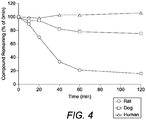
- 2R,6R-hydroxynorketamine was investigated using an in vitro hepatocyte stability assay, during which 2R,6R-hydroxynorketamine was incubated with cryopreserved hepatocytes from 3 test species.
- 2R,6R-hydroxynorketamine displayed a negative intrinsic clearance value (Clint) in a human hepatocyte stability assay, indicating it does not undergo hepatic clearance in humans (Table 14, Figure 4 ).
- Clint negative intrinsic clearance value
- Table 14 Species CL int ( ⁇ L/min/10 6 cells) SECL int t 1/2 (min) n Rat 55.2 4.24 25.1 5 Dog 4.72 1.15 294 6 Human -1.07 0.293 -1300 6
- phase I metabolism is supportive of 2R,6R-hydroxynorketamine being suitable for oral administration.
Landscapes
- Health & Medical Sciences (AREA)
- Chemical & Material Sciences (AREA)
- General Health & Medical Sciences (AREA)
- Public Health (AREA)
- Pharmacology & Pharmacy (AREA)
- Epidemiology (AREA)
- Life Sciences & Earth Sciences (AREA)
- Animal Behavior & Ethology (AREA)
- Veterinary Medicine (AREA)
- Medicinal Chemistry (AREA)
- Inorganic Chemistry (AREA)
- Nutrition Science (AREA)
- Physiology (AREA)
- Emergency Medicine (AREA)
- Acyclic And Carbocyclic Compounds In Medicinal Compositions (AREA)
- Medicines That Contain Protein Lipid Enzymes And Other Medicines (AREA)
- Pharmaceuticals Containing Other Organic And Inorganic Compounds (AREA)
Claims (15)
- Forme posologique orale solide pour l'administration en combinaison avec un modulateur de la sérotonine pour une utilisation dans le traitement d'un trouble dépressif chez un patient, ladite forme posologique comprenant de la 2R,6R-hydroxynorkétamme ou un sel pharmaceutiquement acceptable de celle-ci, ou un promédicament de 2R,6R-hydroxynorkétamine ayant une structure de formule Ib, ou sel pharmaceutiquement acceptable de celui-ci,
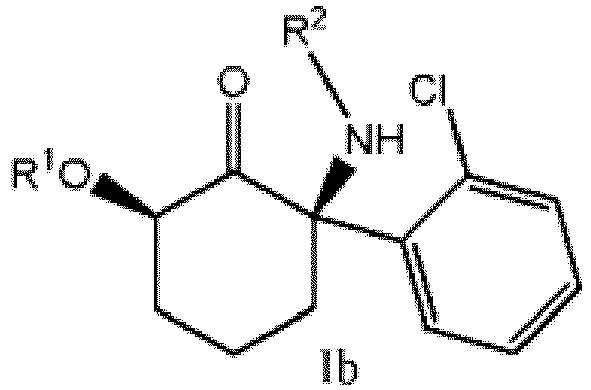 (i) R1 est choisi parmi PO3H2, SO3H, CO2H, et R5, R5 étant choisi parmi
 (ii) R1 est H ;
R2 est choisi parmi CH2OPO3H2, CH2OSO3H et R4, R4 étant choisi parmi les groupes listés dans le Tableau 1; ladite forme posologique orale solide et ledit modulateur de la sérotonine étant administrés simultanément, séquentiellement ou séparément.
- Forme posologique orale solide à utiliser selon la revendication 1 comprenant entre 10 mg et 100 mg de 2R,6R-hydroxynorkétamine, ou son équivalent.
- Forme posologique orale solide à utiliser selon la revendication 1 ou 2 comprenant une forme cristalline de 2R,6R-hydroxynorkétamine ou sel pharmaceutiquement acceptable de celle-ci, ou forme cristalline d'un promédicament de 2R,6R-hydroxynorkétamine ou d'un sel pharmaceutiquement acceptable de celui-ci.
- Forme posologique orale solide à utiliser selon l'une quelconque des revendications 1 à 3, la forme posologique étant une capsule ou un comprimé.
- Forme posologique orale solide à utiliser selon l'une quelconque des revendications 1 à 4 comprenant un mélange d'un ou plusieurs diluants.
- Forme posologique orale solide à utiliser selon l'une quelconque des revendications 1 à 5, la forme posologique étant un comprimé et dans laquelle le mélange d'un ou plusieurs diluants comprend de la cellulose microcristalline.
- Forme posologique orale solide à utiliser selon l'une quelconque des revendications 1 à 6, dans laquelle le mélange d'un ou plusieurs diluants ne contient pas de lactose monohydraté.
- Forme posologique orale solide à utiliser selon l'une quelconque des revendications 1 à 7, la forme posologique étant une capsule et l'enveloppe de la capsule comprenant un constituant choisi parmi la gélatine et l'hydroxypropylméthylcellulose.
- Forme posologique orale solide à utiliser selon la revendication 8, dans laquelle le modulateur de sérotonine est un inhibiteur sélectif de la recapture de la sérotonine (ISRS).
- Fonne posologique orale solide à utiliser selon la revendication 9, dans laquelle ledit modulateur de sérotonine est choisi parmi les citalopram, escitalopram, paroxétine, fluoxétine, fluvoxamine, sertraline, desvenlafaxine, duloxétine, lévomilnacipran, milnacipran, tofénacine, venlafaxine, vilazodone, vortioxetine, étopéridone, néfazodone, et trazodone, ou un sel pharmaceutiquement acceptable de ceux-ci, de préférence choisi parmi les citalopram, escitalopram, paroxétine, sertraline, duloxétine, et venlafaxine, ou un sel pharmaceutiquement acceptable de ceux-ci.
- Forme posologique orale solide à utiliser selon l'une quelconque des revendications 1 à 10, le patient ayant connu un ou plusieurs épisodes maniaques ou hypomaniaques, souffre d'un épisode maniaque ou hypomaniaque, ou risque de souffrir d'un ou plusieurs épisodes maniaques ou hypomaniaques.
- Fonne posologique orale solide à utiliser selon l'une quelconque des revendications 1 à 11, le patient souffrant de dépression bipolaire de type 1, de dépression bipolaire de type 2, de dépression bipolaire ou de trouble obsessionnel-compulsif comorbide avec la dépression.
- Fonne posologique orale solide à utiliser selon l'une quelconque des revendications 1 à 12, dans laquelle la forme posologique est destinée à être utilisée en tant que thérapie de première ligne.
- Forme posologique orale solide à utiliser selon l'une quelconque des revendications 1 à 13, dans laquelle ledit sel pharmaceutiquement acceptable est un sel de tartrate.
- Forme posologique orale solide à utiliser selon la revendication 14, comprenant le, L-(+)-tartrate de 2R,6R-hydroxynorkétamine.
Priority Applications (1)
| Application Number | Priority Date | Filing Date | Title |
|---|---|---|---|
| EP21203394.8A EP3970712A3 (fr) | 2016-06-03 | 2017-06-05 | Formes posologiques solides orales de 2r, 6r-hydroxynorkétamine ou leurs dérivés |
Applications Claiming Priority (3)
| Application Number | Priority Date | Filing Date | Title |
|---|---|---|---|
| GBGB1609790.9A GB201609790D0 (en) | 2016-06-03 | 2016-06-03 | Therapeutic compounds |
| GBGB1620690.6A GB201620690D0 (en) | 2016-12-05 | 2016-12-05 | Ketamine derivatives |
| PCT/GB2017/051618 WO2017208031A1 (fr) | 2016-06-03 | 2017-06-05 | Formes posologiques solides orales de 2r, 6r-hydroxynorkétamine ou leurs dérivés |
Related Child Applications (1)
| Application Number | Title | Priority Date | Filing Date |
|---|---|---|---|
| EP21203394.8A Division EP3970712A3 (fr) | 2016-06-03 | 2017-06-05 | Formes posologiques solides orales de 2r, 6r-hydroxynorkétamine ou leurs dérivés |
Publications (2)
| Publication Number | Publication Date |
|---|---|
| EP3463323A1 EP3463323A1 (fr) | 2019-04-10 |
| EP3463323B1 true EP3463323B1 (fr) | 2021-10-20 |
Family
ID=59021535
Family Applications (2)
| Application Number | Title | Priority Date | Filing Date |
|---|---|---|---|
| EP21203394.8A Pending EP3970712A3 (fr) | 2016-06-03 | 2017-06-05 | Formes posologiques solides orales de 2r, 6r-hydroxynorkétamine ou leurs dérivés |
| EP17728640.8A Active EP3463323B1 (fr) | 2016-06-03 | 2017-06-05 | Formes posologiques solides orales de 2r, 6r-hydroxynorkétamine ou leurs dérivés |
Family Applications Before (1)
| Application Number | Title | Priority Date | Filing Date |
|---|---|---|---|
| EP21203394.8A Pending EP3970712A3 (fr) | 2016-06-03 | 2017-06-05 | Formes posologiques solides orales de 2r, 6r-hydroxynorkétamine ou leurs dérivés |
Country Status (3)
| Country | Link |
|---|---|
| US (1) | US20190380978A1 (fr) |
| EP (2) | EP3970712A3 (fr) |
| WO (1) | WO2017208031A1 (fr) |
Families Citing this family (13)
| Publication number | Priority date | Publication date | Assignee | Title |
|---|---|---|---|---|
| US11191734B2 (en) | 2015-06-27 | 2021-12-07 | Shenox Pharmaceuticals, Llc | Ketamine transdermal delivery system |
| EP3532457B1 (fr) | 2017-07-31 | 2020-03-18 | Small Pharma Ltd | Formes cristallines de l'hydroxynorketamiine |
| ES2924188T3 (es) * | 2017-09-25 | 2022-10-05 | Small Pharma Ltd | Formas sólidas de dosificación oral de derivados de ketamina |
| IL275968B2 (en) | 2018-01-10 | 2024-07-01 | Xwpharma Ltd | Prodrugs of ketamine, compositions and uses thereof |
| CN110343050B (zh) * | 2018-04-04 | 2021-09-24 | 上海键合医药科技有限公司 | 芳香类化合物及其制备方法和用途 |
| US11324707B2 (en) | 2019-05-07 | 2022-05-10 | Clexio Biosciences Ltd. | Abuse-deterrent dosage forms containing esketamine |
| US12589083B2 (en) | 2019-05-07 | 2026-03-31 | Clexio Biosciences Ltd. | Abuse-deterrent dosage forms containing esketamine |
| EP3923920A4 (fr) * | 2019-08-05 | 2022-11-23 | The Ketamine Research Foundation | Kétamine pour le traitement de symptômes et de troubles post-partum |
| CN114716332B (zh) * | 2019-11-14 | 2023-06-02 | 宜昌人福药业有限责任公司 | 氯胺酮的制备方法 |
| CN112194602A (zh) * | 2020-03-17 | 2021-01-08 | 国药集团工业有限公司 | 一种氯胺酮及其衍生物和中间体的合成方法 |
| US20230331655A1 (en) * | 2020-08-27 | 2023-10-19 | University Of Maryland, Baltimore | Hydroxynorketamine compounds and methods of use thereof |
| WO2023018966A1 (fr) | 2021-08-13 | 2023-02-16 | XWPharma Ltd. | Compositions pharmaceutiques et formes posologiques orales de dérivés de kétamine |
| US12396981B2 (en) | 2023-03-09 | 2025-08-26 | William Shulman | Methods of using DMT |
Family Cites Families (1)
| Publication number | Priority date | Publication date | Assignee | Title |
|---|---|---|---|---|
| EP3904332B1 (fr) * | 2011-10-14 | 2024-12-04 | The United States of America, as represented by The Secretary, Department of Health and Human Services | Utilisation de (2r, 6r)-hydroxynorkétamine, (s)-déshydronorkétamine et autres métabolites déshydro et hydroxylés stéréo-isomères de (r,s)-kétamine dans le traitement de la dépression et de la douleur neuropathique |
-
2017
- 2017-06-05 US US16/306,226 patent/US20190380978A1/en not_active Abandoned
- 2017-06-05 EP EP21203394.8A patent/EP3970712A3/fr active Pending
- 2017-06-05 EP EP17728640.8A patent/EP3463323B1/fr active Active
- 2017-06-05 WO PCT/GB2017/051618 patent/WO2017208031A1/fr not_active Ceased
Non-Patent Citations (1)
| Title |
|---|
| None * |
Also Published As
| Publication number | Publication date |
|---|---|
| EP3970712A2 (fr) | 2022-03-23 |
| EP3970712A3 (fr) | 2022-03-30 |
| WO2017208031A1 (fr) | 2017-12-07 |
| US20190380978A1 (en) | 2019-12-19 |
| EP3463323A1 (fr) | 2019-04-10 |
Similar Documents
| Publication | Publication Date | Title |
|---|---|---|
| EP3463323B1 (fr) | Formes posologiques solides orales de 2r, 6r-hydroxynorkétamine ou leurs dérivés | |
| Wellington et al. | Venlafaxine extended-release: a review of its use in the management of major depression | |
| US6358944B1 (en) | Methods and compositions for treating generalized anxiety disorder | |
| CA3179785A1 (fr) | Compositions de benzofurane avantageuses pour troubles mentaux ou amelioration mentale | |
| JP2019112436A (ja) | ルキソリチニブの徐放性投薬形態 | |
| JP2010506845A (ja) | フェニルアルキルアミノカルバメート組成物 | |
| AU2020203874B2 (en) | Methods and compositions for treating depression using cyclobenzaprine | |
| WO2022177718A1 (fr) | Utilisation d'un stéroïde neuroactif pour le traitement d'un dysfonctionnement sexuel | |
| CA3187217A1 (fr) | Composes 2-aminoindane pour troubles mentaux ou amelioration mentale | |
| TW202345795A (zh) | 純質形式之結晶型阿替卡普蘭 | |
| US20220096444A1 (en) | Prophylactic or therapeutic agent for delirium | |
| CN118267382A (zh) | 用于痴呆和神经变性病况中的激越、精神病和认知衰退的环苯扎林治疗 | |
| JP2021511365A5 (fr) | ||
| MX2008000249A (es) | Combinaciones de eszopiclona y o-desmetilvenlafaxina y metodos de tratamiento de menopausia y trastornos del estado de animo, ansiedad y cognitivos. | |
| TW200835477A (en) | Methods for treating depression | |
| MX2008000248A (es) | Combinaciones de eszopiclona y un antidepresivo y metodos de tratamiento contra la menopausia y trastornos del estado de animo, la ansiedad y trastornos cognitivos. | |
| WO2024254505A2 (fr) | Compositions et procédés pour augmenter l'exposition de r (-)-mda | |
| CN104013638B (zh) | 当药黄素及其衍生物的用途 | |
| CN102026633A (zh) | 1-氨基-烷基环己烷衍生物用于治疗睡眠失调 | |
| JP2025530203A (ja) | うつ病を処置するための方法 | |
| HK40100385A (zh) | 用於神经精神病症的抗抑郁剂和右美沙芬的组合 | |
| AU2024204318A1 (en) | Treatment of Post-Traumatic Syndrome Disorder | |
| AU2012307535A1 (en) | Combinations comprising a S1P receptor modulator | |
| WO2020095979A1 (fr) | Agent thérapeutique pour une maladie du système nerveux central comprenant de la tipépidine | |
| NZ614725B2 (en) | Methods and compositions for treating depression using cyclobenzaprine |
Legal Events
| Date | Code | Title | Description |
|---|---|---|---|
| STAA | Information on the status of an ep patent application or granted ep patent |
Free format text: STATUS: UNKNOWN |
|
| STAA | Information on the status of an ep patent application or granted ep patent |
Free format text: STATUS: THE INTERNATIONAL PUBLICATION HAS BEEN MADE |
|
| PUAI | Public reference made under article 153(3) epc to a published international application that has entered the european phase |
Free format text: ORIGINAL CODE: 0009012 |
|
| STAA | Information on the status of an ep patent application or granted ep patent |
Free format text: STATUS: REQUEST FOR EXAMINATION WAS MADE |
|
| 17P | Request for examination filed |
Effective date: 20181221 |
|
| AK | Designated contracting states |
Kind code of ref document: A1 Designated state(s): AL AT BE BG CH CY CZ DE DK EE ES FI FR GB GR HR HU IE IS IT LI LT LU LV MC MK MT NL NO PL PT RO RS SE SI SK SM TR |
|
| AX | Request for extension of the european patent |
Extension state: BA ME |
|
| DAV | Request for validation of the european patent (deleted) | ||
| DAX | Request for extension of the european patent (deleted) | ||
| STAA | Information on the status of an ep patent application or granted ep patent |
Free format text: STATUS: EXAMINATION IS IN PROGRESS |
|
| 17Q | First examination report despatched |
Effective date: 20200406 |
|
| GRAP | Despatch of communication of intention to grant a patent |
Free format text: ORIGINAL CODE: EPIDOSNIGR1 |
|
| STAA | Information on the status of an ep patent application or granted ep patent |
Free format text: STATUS: GRANT OF PATENT IS INTENDED |
|
| RIC1 | Information provided on ipc code assigned before grant |
Ipc: A61P 25/24 20060101ALI20210420BHEP Ipc: A61K 31/6615 20060101ALI20210420BHEP Ipc: A61K 31/4525 20060101ALI20210420BHEP Ipc: A61K 31/417 20060101ALI20210420BHEP Ipc: A61K 31/4045 20060101ALI20210420BHEP Ipc: A61K 31/381 20060101ALI20210420BHEP Ipc: A61K 31/343 20060101ALI20210420BHEP Ipc: A61K 31/195 20060101ALI20210420BHEP Ipc: A61K 31/137 20060101ALI20210420BHEP Ipc: A61K 31/135 20060101AFI20210420BHEP |
|
| INTG | Intention to grant announced |
Effective date: 20210506 |
|
| GRAS | Grant fee paid |
Free format text: ORIGINAL CODE: EPIDOSNIGR3 |
|
| GRAA | (expected) grant |
Free format text: ORIGINAL CODE: 0009210 |
|
| STAA | Information on the status of an ep patent application or granted ep patent |
Free format text: STATUS: THE PATENT HAS BEEN GRANTED |
|
| AK | Designated contracting states |
Kind code of ref document: B1 Designated state(s): AL AT BE BG CH CY CZ DE DK EE ES FI FR GB GR HR HU IE IS IT LI LT LU LV MC MK MT NL NO PL PT RO RS SE SI SK SM TR |
|
| REG | Reference to a national code |
Ref country code: GB Ref legal event code: FG4D |
|
| REG | Reference to a national code |
Ref country code: CH Ref legal event code: EP |
|
| REG | Reference to a national code |
Ref country code: IE Ref legal event code: FG4D |
|
| REG | Reference to a national code |
Ref country code: DE Ref legal event code: R096 Ref document number: 602017047880 Country of ref document: DE |
|
| REG | Reference to a national code |
Ref country code: AT Ref legal event code: REF Ref document number: 1439332 Country of ref document: AT Kind code of ref document: T Effective date: 20211115 |
|
| REG | Reference to a national code |
Ref country code: LT Ref legal event code: MG9D |
|
| REG | Reference to a national code |
Ref country code: NL Ref legal event code: MP Effective date: 20211020 |
|
| REG | Reference to a national code |
Ref country code: AT Ref legal event code: MK05 Ref document number: 1439332 Country of ref document: AT Kind code of ref document: T Effective date: 20211020 |
|
| PG25 | Lapsed in a contracting state [announced via postgrant information from national office to epo] |
Ref country code: RS Free format text: LAPSE BECAUSE OF FAILURE TO SUBMIT A TRANSLATION OF THE DESCRIPTION OR TO PAY THE FEE WITHIN THE PRESCRIBED TIME-LIMIT Effective date: 20211020 Ref country code: LT Free format text: LAPSE BECAUSE OF FAILURE TO SUBMIT A TRANSLATION OF THE DESCRIPTION OR TO PAY THE FEE WITHIN THE PRESCRIBED TIME-LIMIT Effective date: 20211020 Ref country code: FI Free format text: LAPSE BECAUSE OF FAILURE TO SUBMIT A TRANSLATION OF THE DESCRIPTION OR TO PAY THE FEE WITHIN THE PRESCRIBED TIME-LIMIT Effective date: 20211020 Ref country code: BG Free format text: LAPSE BECAUSE OF FAILURE TO SUBMIT A TRANSLATION OF THE DESCRIPTION OR TO PAY THE FEE WITHIN THE PRESCRIBED TIME-LIMIT Effective date: 20220120 Ref country code: AT Free format text: LAPSE BECAUSE OF FAILURE TO SUBMIT A TRANSLATION OF THE DESCRIPTION OR TO PAY THE FEE WITHIN THE PRESCRIBED TIME-LIMIT Effective date: 20211020 |
|
| PG25 | Lapsed in a contracting state [announced via postgrant information from national office to epo] |
Ref country code: IS Free format text: LAPSE BECAUSE OF FAILURE TO SUBMIT A TRANSLATION OF THE DESCRIPTION OR TO PAY THE FEE WITHIN THE PRESCRIBED TIME-LIMIT Effective date: 20220220 Ref country code: SE Free format text: LAPSE BECAUSE OF FAILURE TO SUBMIT A TRANSLATION OF THE DESCRIPTION OR TO PAY THE FEE WITHIN THE PRESCRIBED TIME-LIMIT Effective date: 20211020 Ref country code: PT Free format text: LAPSE BECAUSE OF FAILURE TO SUBMIT A TRANSLATION OF THE DESCRIPTION OR TO PAY THE FEE WITHIN THE PRESCRIBED TIME-LIMIT Effective date: 20220221 Ref country code: PL Free format text: LAPSE BECAUSE OF FAILURE TO SUBMIT A TRANSLATION OF THE DESCRIPTION OR TO PAY THE FEE WITHIN THE PRESCRIBED TIME-LIMIT Effective date: 20211020 Ref country code: NO Free format text: LAPSE BECAUSE OF FAILURE TO SUBMIT A TRANSLATION OF THE DESCRIPTION OR TO PAY THE FEE WITHIN THE PRESCRIBED TIME-LIMIT Effective date: 20220120 Ref country code: NL Free format text: LAPSE BECAUSE OF FAILURE TO SUBMIT A TRANSLATION OF THE DESCRIPTION OR TO PAY THE FEE WITHIN THE PRESCRIBED TIME-LIMIT Effective date: 20211020 Ref country code: LV Free format text: LAPSE BECAUSE OF FAILURE TO SUBMIT A TRANSLATION OF THE DESCRIPTION OR TO PAY THE FEE WITHIN THE PRESCRIBED TIME-LIMIT Effective date: 20211020 Ref country code: HR Free format text: LAPSE BECAUSE OF FAILURE TO SUBMIT A TRANSLATION OF THE DESCRIPTION OR TO PAY THE FEE WITHIN THE PRESCRIBED TIME-LIMIT Effective date: 20211020 Ref country code: GR Free format text: LAPSE BECAUSE OF FAILURE TO SUBMIT A TRANSLATION OF THE DESCRIPTION OR TO PAY THE FEE WITHIN THE PRESCRIBED TIME-LIMIT Effective date: 20220121 Ref country code: ES Free format text: LAPSE BECAUSE OF FAILURE TO SUBMIT A TRANSLATION OF THE DESCRIPTION OR TO PAY THE FEE WITHIN THE PRESCRIBED TIME-LIMIT Effective date: 20211020 |
|
| REG | Reference to a national code |
Ref country code: DE Ref legal event code: R097 Ref document number: 602017047880 Country of ref document: DE |
|
| PG25 | Lapsed in a contracting state [announced via postgrant information from national office to epo] |
Ref country code: SM Free format text: LAPSE BECAUSE OF FAILURE TO SUBMIT A TRANSLATION OF THE DESCRIPTION OR TO PAY THE FEE WITHIN THE PRESCRIBED TIME-LIMIT Effective date: 20211020 Ref country code: SK Free format text: LAPSE BECAUSE OF FAILURE TO SUBMIT A TRANSLATION OF THE DESCRIPTION OR TO PAY THE FEE WITHIN THE PRESCRIBED TIME-LIMIT Effective date: 20211020 Ref country code: RO Free format text: LAPSE BECAUSE OF FAILURE TO SUBMIT A TRANSLATION OF THE DESCRIPTION OR TO PAY THE FEE WITHIN THE PRESCRIBED TIME-LIMIT Effective date: 20211020 Ref country code: EE Free format text: LAPSE BECAUSE OF FAILURE TO SUBMIT A TRANSLATION OF THE DESCRIPTION OR TO PAY THE FEE WITHIN THE PRESCRIBED TIME-LIMIT Effective date: 20211020 Ref country code: DK Free format text: LAPSE BECAUSE OF FAILURE TO SUBMIT A TRANSLATION OF THE DESCRIPTION OR TO PAY THE FEE WITHIN THE PRESCRIBED TIME-LIMIT Effective date: 20211020 Ref country code: CZ Free format text: LAPSE BECAUSE OF FAILURE TO SUBMIT A TRANSLATION OF THE DESCRIPTION OR TO PAY THE FEE WITHIN THE PRESCRIBED TIME-LIMIT Effective date: 20211020 |
|
| PLBE | No opposition filed within time limit |
Free format text: ORIGINAL CODE: 0009261 |
|
| STAA | Information on the status of an ep patent application or granted ep patent |
Free format text: STATUS: NO OPPOSITION FILED WITHIN TIME LIMIT |
|
| 26N | No opposition filed |
Effective date: 20220721 |
|
| PG25 | Lapsed in a contracting state [announced via postgrant information from national office to epo] |
Ref country code: AL Free format text: LAPSE BECAUSE OF FAILURE TO SUBMIT A TRANSLATION OF THE DESCRIPTION OR TO PAY THE FEE WITHIN THE PRESCRIBED TIME-LIMIT Effective date: 20211020 |
|
| PG25 | Lapsed in a contracting state [announced via postgrant information from national office to epo] |
Ref country code: SI Free format text: LAPSE BECAUSE OF FAILURE TO SUBMIT A TRANSLATION OF THE DESCRIPTION OR TO PAY THE FEE WITHIN THE PRESCRIBED TIME-LIMIT Effective date: 20211020 |
|
| PG25 | Lapsed in a contracting state [announced via postgrant information from national office to epo] |
Ref country code: MC Free format text: LAPSE BECAUSE OF FAILURE TO SUBMIT A TRANSLATION OF THE DESCRIPTION OR TO PAY THE FEE WITHIN THE PRESCRIBED TIME-LIMIT Effective date: 20211020 |
|
| REG | Reference to a national code |
Ref country code: CH Ref legal event code: PL |
|
| REG | Reference to a national code |
Ref country code: BE Ref legal event code: MM Effective date: 20220630 |
|
| PG25 | Lapsed in a contracting state [announced via postgrant information from national office to epo] |
Ref country code: LU Free format text: LAPSE BECAUSE OF NON-PAYMENT OF DUE FEES Effective date: 20220605 Ref country code: LI Free format text: LAPSE BECAUSE OF NON-PAYMENT OF DUE FEES Effective date: 20220630 Ref country code: CH Free format text: LAPSE BECAUSE OF NON-PAYMENT OF DUE FEES Effective date: 20220630 |
|
| PG25 | Lapsed in a contracting state [announced via postgrant information from national office to epo] |
Ref country code: IT Free format text: LAPSE BECAUSE OF FAILURE TO SUBMIT A TRANSLATION OF THE DESCRIPTION OR TO PAY THE FEE WITHIN THE PRESCRIBED TIME-LIMIT Effective date: 20211020 Ref country code: BE Free format text: LAPSE BECAUSE OF NON-PAYMENT OF DUE FEES Effective date: 20220630 |
|
| REG | Reference to a national code |
Ref country code: DE Ref legal event code: R081 Ref document number: 602017047880 Country of ref document: DE Owner name: CYBIN UK LTD., GB Free format text: FORMER OWNER: SMALL PHARMA LTD, LONDON, GB Ref country code: DE Ref legal event code: R081 Ref document number: 602017047880 Country of ref document: DE Owner name: CYBIN UK LTD., GB Free format text: FORMER OWNER: SMALL PHARMA LTD, LONDON, GREATER LONDON, GB |
|
| PG25 | Lapsed in a contracting state [announced via postgrant information from national office to epo] |
Ref country code: HU Free format text: LAPSE BECAUSE OF FAILURE TO SUBMIT A TRANSLATION OF THE DESCRIPTION OR TO PAY THE FEE WITHIN THE PRESCRIBED TIME-LIMIT; INVALID AB INITIO Effective date: 20170605 |
|
| PG25 | Lapsed in a contracting state [announced via postgrant information from national office to epo] |
Ref country code: MK Free format text: LAPSE BECAUSE OF FAILURE TO SUBMIT A TRANSLATION OF THE DESCRIPTION OR TO PAY THE FEE WITHIN THE PRESCRIBED TIME-LIMIT Effective date: 20211020 Ref country code: CY Free format text: LAPSE BECAUSE OF FAILURE TO SUBMIT A TRANSLATION OF THE DESCRIPTION OR TO PAY THE FEE WITHIN THE PRESCRIBED TIME-LIMIT Effective date: 20211020 |
|
| PG25 | Lapsed in a contracting state [announced via postgrant information from national office to epo] |
Ref country code: MT Free format text: LAPSE BECAUSE OF FAILURE TO SUBMIT A TRANSLATION OF THE DESCRIPTION OR TO PAY THE FEE WITHIN THE PRESCRIBED TIME-LIMIT Effective date: 20211020 |
|
| PGFP | Annual fee paid to national office [announced via postgrant information from national office to epo] |
Ref country code: DE Payment date: 20250618 Year of fee payment: 9 |
|
| PGFP | Annual fee paid to national office [announced via postgrant information from national office to epo] |
Ref country code: GB Payment date: 20250604 Year of fee payment: 9 |
|
| PGFP | Annual fee paid to national office [announced via postgrant information from national office to epo] |
Ref country code: FR Payment date: 20250606 Year of fee payment: 9 |
|
| PGFP | Annual fee paid to national office [announced via postgrant information from national office to epo] |
Ref country code: IE Payment date: 20250604 Year of fee payment: 9 |
|
| PG25 | Lapsed in a contracting state [announced via postgrant information from national office to epo] |
Ref country code: TR Free format text: LAPSE BECAUSE OF FAILURE TO SUBMIT A TRANSLATION OF THE DESCRIPTION OR TO PAY THE FEE WITHIN THE PRESCRIBED TIME-LIMIT Effective date: 20211020 |