EP3463585B1 - Duftstoffe in form von wässrigen mikroemulsionen - Google Patents
Duftstoffe in form von wässrigen mikroemulsionen Download PDFInfo
- Publication number
- EP3463585B1 EP3463585B1 EP17730885.5A EP17730885A EP3463585B1 EP 3463585 B1 EP3463585 B1 EP 3463585B1 EP 17730885 A EP17730885 A EP 17730885A EP 3463585 B1 EP3463585 B1 EP 3463585B1
- Authority
- EP
- European Patent Office
- Prior art keywords
- formula
- surfactant
- microemulsion
- salts
- surfactants
- Prior art date
- Legal status (The legal status is an assumption and is not a legal conclusion. Google has not performed a legal analysis and makes no representation as to the accuracy of the status listed.)
- Not-in-force
Links
- 0 C(C1)C2C1*CC2 Chemical compound C(C1)C2C1*CC2 0.000 description 1
- DIGYDJCOICLEJE-OZRTXJSJSA-N CO[C@@H](COC12)C1OC[C@H]2O Chemical compound CO[C@@H](COC12)C1OC[C@H]2O DIGYDJCOICLEJE-OZRTXJSJSA-N 0.000 description 1
- DIGYDJCOICLEJE-IBJXHFRJSA-N CO[C@H](COC12)C1OC[C@@H]2O Chemical compound CO[C@H](COC12)C1OC[C@@H]2O DIGYDJCOICLEJE-IBJXHFRJSA-N 0.000 description 1
Classifications
-
- A—HUMAN NECESSITIES
- A61—MEDICAL OR VETERINARY SCIENCE; HYGIENE
- A61K—PREPARATIONS FOR MEDICAL, DENTAL OR TOILETRY PURPOSES
- A61K8/00—Cosmetics or similar toiletry preparations
- A61K8/02—Cosmetics or similar toiletry preparations characterised by special physical form
- A61K8/04—Dispersions; Emulsions
- A61K8/06—Emulsions
- A61K8/068—Microemulsions
-
- A—HUMAN NECESSITIES
- A61—MEDICAL OR VETERINARY SCIENCE; HYGIENE
- A61K—PREPARATIONS FOR MEDICAL, DENTAL OR TOILETRY PURPOSES
- A61K8/00—Cosmetics or similar toiletry preparations
- A61K8/02—Cosmetics or similar toiletry preparations characterised by special physical form
- A61K8/04—Dispersions; Emulsions
- A61K8/06—Emulsions
- A61K8/062—Oil-in-water emulsions
-
- A—HUMAN NECESSITIES
- A61—MEDICAL OR VETERINARY SCIENCE; HYGIENE
- A61K—PREPARATIONS FOR MEDICAL, DENTAL OR TOILETRY PURPOSES
- A61K8/00—Cosmetics or similar toiletry preparations
- A61K8/18—Cosmetics or similar toiletry preparations characterised by the composition
- A61K8/30—Cosmetics or similar toiletry preparations characterised by the composition containing organic compounds
- A61K8/33—Cosmetics or similar toiletry preparations characterised by the composition containing organic compounds containing oxygen
-
- A—HUMAN NECESSITIES
- A61—MEDICAL OR VETERINARY SCIENCE; HYGIENE
- A61K—PREPARATIONS FOR MEDICAL, DENTAL OR TOILETRY PURPOSES
- A61K8/00—Cosmetics or similar toiletry preparations
- A61K8/18—Cosmetics or similar toiletry preparations characterised by the composition
- A61K8/30—Cosmetics or similar toiletry preparations characterised by the composition containing organic compounds
- A61K8/33—Cosmetics or similar toiletry preparations characterised by the composition containing organic compounds containing oxygen
- A61K8/34—Alcohols
-
- A—HUMAN NECESSITIES
- A61—MEDICAL OR VETERINARY SCIENCE; HYGIENE
- A61K—PREPARATIONS FOR MEDICAL, DENTAL OR TOILETRY PURPOSES
- A61K8/00—Cosmetics or similar toiletry preparations
- A61K8/18—Cosmetics or similar toiletry preparations characterised by the composition
- A61K8/30—Cosmetics or similar toiletry preparations characterised by the composition containing organic compounds
- A61K8/33—Cosmetics or similar toiletry preparations characterised by the composition containing organic compounds containing oxygen
- A61K8/34—Alcohols
- A61K8/342—Alcohols having more than seven atoms in an unbroken chain
-
- A—HUMAN NECESSITIES
- A61—MEDICAL OR VETERINARY SCIENCE; HYGIENE
- A61K—PREPARATIONS FOR MEDICAL, DENTAL OR TOILETRY PURPOSES
- A61K8/00—Cosmetics or similar toiletry preparations
- A61K8/18—Cosmetics or similar toiletry preparations characterised by the composition
- A61K8/30—Cosmetics or similar toiletry preparations characterised by the composition containing organic compounds
- A61K8/33—Cosmetics or similar toiletry preparations characterised by the composition containing organic compounds containing oxygen
- A61K8/34—Alcohols
- A61K8/345—Alcohols containing more than one hydroxy group
-
- A—HUMAN NECESSITIES
- A61—MEDICAL OR VETERINARY SCIENCE; HYGIENE
- A61K—PREPARATIONS FOR MEDICAL, DENTAL OR TOILETRY PURPOSES
- A61K8/00—Cosmetics or similar toiletry preparations
- A61K8/18—Cosmetics or similar toiletry preparations characterised by the composition
- A61K8/30—Cosmetics or similar toiletry preparations characterised by the composition containing organic compounds
- A61K8/33—Cosmetics or similar toiletry preparations characterised by the composition containing organic compounds containing oxygen
- A61K8/35—Ketones, e.g. benzophenone
-
- A—HUMAN NECESSITIES
- A61—MEDICAL OR VETERINARY SCIENCE; HYGIENE
- A61K—PREPARATIONS FOR MEDICAL, DENTAL OR TOILETRY PURPOSES
- A61K8/00—Cosmetics or similar toiletry preparations
- A61K8/18—Cosmetics or similar toiletry preparations characterised by the composition
- A61K8/30—Cosmetics or similar toiletry preparations characterised by the composition containing organic compounds
- A61K8/33—Cosmetics or similar toiletry preparations characterised by the composition containing organic compounds containing oxygen
- A61K8/37—Esters of carboxylic acids
-
- A—HUMAN NECESSITIES
- A61—MEDICAL OR VETERINARY SCIENCE; HYGIENE
- A61K—PREPARATIONS FOR MEDICAL, DENTAL OR TOILETRY PURPOSES
- A61K8/00—Cosmetics or similar toiletry preparations
- A61K8/18—Cosmetics or similar toiletry preparations characterised by the composition
- A61K8/30—Cosmetics or similar toiletry preparations characterised by the composition containing organic compounds
- A61K8/40—Cosmetics or similar toiletry preparations characterised by the composition containing organic compounds containing nitrogen
- A61K8/44—Aminocarboxylic acids or derivatives thereof, e.g. aminocarboxylic acids containing sulfur; Salts; Esters or N-acylated derivatives thereof
- A61K8/442—Aminocarboxylic acids or derivatives thereof, e.g. aminocarboxylic acids containing sulfur; Salts; Esters or N-acylated derivatives thereof substituted by amido group(s)
-
- A—HUMAN NECESSITIES
- A61—MEDICAL OR VETERINARY SCIENCE; HYGIENE
- A61K—PREPARATIONS FOR MEDICAL, DENTAL OR TOILETRY PURPOSES
- A61K8/00—Cosmetics or similar toiletry preparations
- A61K8/18—Cosmetics or similar toiletry preparations characterised by the composition
- A61K8/30—Cosmetics or similar toiletry preparations characterised by the composition containing organic compounds
- A61K8/46—Cosmetics or similar toiletry preparations characterised by the composition containing organic compounds containing sulfur
- A61K8/463—Cosmetics or similar toiletry preparations characterised by the composition containing organic compounds containing sulfur containing sulfuric acid derivatives, e.g. sodium lauryl sulfate
-
- A—HUMAN NECESSITIES
- A61—MEDICAL OR VETERINARY SCIENCE; HYGIENE
- A61K—PREPARATIONS FOR MEDICAL, DENTAL OR TOILETRY PURPOSES
- A61K8/00—Cosmetics or similar toiletry preparations
- A61K8/18—Cosmetics or similar toiletry preparations characterised by the composition
- A61K8/30—Cosmetics or similar toiletry preparations characterised by the composition containing organic compounds
- A61K8/46—Cosmetics or similar toiletry preparations characterised by the composition containing organic compounds containing sulfur
- A61K8/466—Cosmetics or similar toiletry preparations characterised by the composition containing organic compounds containing sulfur containing sulfonic acid derivatives; Salts
-
- A—HUMAN NECESSITIES
- A61—MEDICAL OR VETERINARY SCIENCE; HYGIENE
- A61K—PREPARATIONS FOR MEDICAL, DENTAL OR TOILETRY PURPOSES
- A61K8/00—Cosmetics or similar toiletry preparations
- A61K8/18—Cosmetics or similar toiletry preparations characterised by the composition
- A61K8/30—Cosmetics or similar toiletry preparations characterised by the composition containing organic compounds
- A61K8/49—Cosmetics or similar toiletry preparations characterised by the composition containing organic compounds containing heterocyclic compounds
- A61K8/4973—Cosmetics or similar toiletry preparations characterised by the composition containing organic compounds containing heterocyclic compounds with oxygen as the only hetero atom
-
- A—HUMAN NECESSITIES
- A61—MEDICAL OR VETERINARY SCIENCE; HYGIENE
- A61K—PREPARATIONS FOR MEDICAL, DENTAL OR TOILETRY PURPOSES
- A61K8/00—Cosmetics or similar toiletry preparations
- A61K8/18—Cosmetics or similar toiletry preparations characterised by the composition
- A61K8/30—Cosmetics or similar toiletry preparations characterised by the composition containing organic compounds
- A61K8/60—Sugars; Derivatives thereof
- A61K8/602—Glycosides, e.g. rutin
-
- A—HUMAN NECESSITIES
- A61—MEDICAL OR VETERINARY SCIENCE; HYGIENE
- A61Q—SPECIFIC USE OF COSMETICS OR SIMILAR TOILETRY PREPARATIONS
- A61Q13/00—Formulations or additives for perfume preparations
-
- A—HUMAN NECESSITIES
- A61—MEDICAL OR VETERINARY SCIENCE; HYGIENE
- A61K—PREPARATIONS FOR MEDICAL, DENTAL OR TOILETRY PURPOSES
- A61K2800/00—Properties of cosmetic compositions or active ingredients thereof or formulation aids used therein and process related aspects
- A61K2800/20—Chemical, physico-chemical or functional or structural properties of the composition as a whole
- A61K2800/30—Characterized by the absence of a particular group of ingredients
-
- A—HUMAN NECESSITIES
- A61—MEDICAL OR VETERINARY SCIENCE; HYGIENE
- A61K—PREPARATIONS FOR MEDICAL, DENTAL OR TOILETRY PURPOSES
- A61K2800/00—Properties of cosmetic compositions or active ingredients thereof or formulation aids used therein and process related aspects
- A61K2800/40—Chemical, physico-chemical or functional or structural properties of particular ingredients
- A61K2800/59—Mixtures
- A61K2800/596—Mixtures of surface active compounds
Definitions
- the invention relates to volatile aqueous perfuming microemulsions based on the use of surfactants.
- perfumes include as solvents alcohols, such as ethanol or isopropanol.
- alcohols such as ethanol or isopropanol.
- the use of these solvents has, however, a certain number of drawbacks: they are very volatile and flammable, which leads to a certain dangerousness during their production, and to a certain extent, their use.
- their own smell can interfere with that of the perfume.
- these scents can cause dryness, especially in consumers with sensitive skin.
- the objective is to reduce or even eliminate volatile organic compounds (such as alcohols) contained in perfumes, by developing perfume compositions in the form of stable aqueous solutions or dispersions.
- fragrance molecules are hydrophobic and therefore are not soluble in water.
- surfactants making it possible to solubilize the perfume molecules inside micelles forming microemulsions. It is desirable for the swollen micelles containing the perfumes to be small so that the perfume composition has a transparent or at least translucent appearance.
- the production of microemulsions meeting this criterion of transparent appearance is of major interest.
- thermodynamic stability of the microemulsion is linked to the thermodynamic stability of the microemulsion, the non-sticky nature of the latter and the absence of residue on the skin or on clothing. It is therefore important to be able to prepare them using the least amount of surfactant possible.
- the present invention aims to provide aqueous, transparent microemulsions, substantially free of ethanol, containing at least one hydrophobic substance.
- perfuming agent preferably at least 3% and preferably approximately 10% perfume
- at least one volatile solvo-surfactant preferably at least 3% and preferably approximately 10% perfume
- Such odoriferous or perfuming microemulsions are stable, and include as little as possible of substances causing undesirable effects, in particular on the skin and / or on the environment.
- a substance is "volatile” when its boiling point is below 250 ° C at atmospheric pressure.
- the “non-volatile” compounds have a boiling point above 250 ° C at atmospheric pressure.
- the microemulsion according to the invention comprises from 0.01% to 2% by weight of at least one preservative.
- the microemulsion according to the invention is substantially free of ethanol, ie it comprises less than 3% by weight of ethanol, preferably less than 2% by weight of ethanol, preferably less than 1% by weight of ethanol. More preferably, it is devoid of ethanol, ie it contains 0% by weight of ethanol.
- the monoalkylated glycerol derivatives are the derivatives of formula (I) below: in which the group “Alkyl” is a linear or branched alkyl group comprising from 1 to 6 carbon atoms, and R and R ′ are each independently H or a linear or branched alkyl group comprising from 1 to 5 carbon atoms, preferably a methyl or ethyl group, provided that R is different from R '.
- the monoalkylated glycerol derivatives are the derivatives of formula (I) below: in which the group “Alkyl” is a linear or branched alkyl group comprising 3, 4 or 5 carbon atoms, and R and R 'are each independently H or a linear or branched alkyl comprising from 1 to 5 carbon atoms, preferably a methyl or ethyl group, provided that R is different from R '.
- the monoalkylated glycerol derivatives are the derivatives of formula (I) below: in which the group "Alkyl” is a linear or branched alkyl group comprising 3, 4 or 5 carbon atoms, R is a methyl group, and R 'is H.
- oil-in-water type microemulsion is meant a liquid system in which an oily (or hydrophobic) phase is dispersed in an aqueous continuous (or hydrophilic) phase, so as to form drops of diameter less than 100 nm .
- the oil / water interface is stabilized by surfactant compounds.
- the drops Preferably, the drops have a diameter between 2 and 100 nm.
- microemulsions have drops which are invisible to the naked eye and to the light microscope. They are transparent, at least translucent, unlike emulsions, which is a property sought in particular for perfume compositions.
- hydrophobic substance is meant a pure body or a mixture which is insoluble or very sparingly soluble in water, by nature.
- One possible method for determining the hydrophobicity of the substances is to measure their solubility in different solvents or the retention time on a chromatographic column (by HPLC high performance liquid chromatography) of said hydrophobic substance.
- the hydrophobic substances according to the invention are perfumed, ie they are odorous and can be used in perfumes.
- odoriferous substance means a substance detectable olfactory by a subject and / or by olfactometry, according to principles known to those skilled in the art. An example of a method allowing the detection of an odoriferous substance is described in the document. EP 0003088 . Other techniques for detecting an odoriferous substance are applicable, such as gas chromatography techniques, mass spectroscopy or even analysis by infrared absorption.
- odoriferous substance is also understood to mean a substance which diffuses an odor, preferably pleasant for at least 20% of people, in particular a perfume.
- the hydrophobic perfuming substance is a natural or synthetic perfuming hydrophobic substance, more preferably natural. More preferably, it is chosen from terpenes, essential oils and natural compounds having odoriferous properties (terpenoids), in particular chosen from aldehydes, esters, ketones, alcohols, phenols, alkenes and ethers.
- terpenoids terpenoids
- terpenes hydrocarbons, the basic element of which is isoprene, their crude formula comprising a number of carbons multiple of 5, in particular terpenes containing in particular 10 or 15 carbon atoms, used in perfumery.
- terpenoids is meant derivatives of terpenes, for example alcohols, phenols, ketones, aldehydes, esters or ethers.
- essential oils designating the concentrated liquid, very often odorous, volatile, produced by plants.
- Essential oils are most often extracted from plant organs by hydrodistillation in particular, but the constituents of these oils are widely synthesized by industry.
- terpenes pinenes, camphens, limonene, cadinene, keel, caryophyllene, alcohols: linalol, geraniol, menthol, citronellol, ketones: menthone, carvone, beta-ionone, thujone, camphor, cyclopentadecanone, aldehydes: citral, citrannal, citronellal, cinnamic aldehyde, lilial, esters: linalyl acetate, menthyl acetate, geranyl acetate, geranyl succinate, phenols: thymol, carvacrol, eugenol, isoeugenol, ethers: anethole, eucalyptol, cineol, rose oxide, alkenes: limonene.
- the essential oils can be the oils of ylang-ylang, bergamot, eucalyptus, lavender, lavandin, lemongrass, patchouli, peppermint, pine, rose, coriander, Shiu, sage , geranium, palmarosa, LitseaCubeba, lemon, lemongrass, orange blossom, grapefruit, lime, mandarin, tangerine, orange, cajeput, camphor, rosemary, anise green, star anise, fennel, basil, tarragon, cloves, chilli, thyme, sassafras, wormwood, sagebrush, cedar, hyssop, tagetes, rue, elemi, galbanum, juniper berries, cabreuva, gaiac wood, sandalwood, vetiver, ambrette, angelica, iris rhizome, carrot, celery, cumin , lovage, parsley, cinnamon, cardamo
- the amount of hydrophobic perfuming substance in the microemulsions according to the invention is between 1% and 15% by weight, preferably between 5% and 12% by weight relative to the total weight of microemulsion.
- Solvo-surfactant denotes an amphiphilic compound which combines certain properties of the surfactants, in particular the reduction in surface water / air and oil / water interfacial tensions, the capacity for self-association in water, and certain properties of solvents, including the ability to evaporate without leaving residue.
- the solvo-surfactant is volatile and is chosen from monoalkylated glycerol derivatives of formula (I) below: in which the group “Alkyl” is a linear or branched alkyl group comprising 1 to 8 carbon atoms, and R and R 'are each independently H or a linear or branched alkyl group comprising from 1 to 5 carbon atoms, preferably a methyl or ethyl group, provided that R is different from R '.
- the surfactant is the monoalkylated glycerol derivative of formula (I) in which the “Alkyl” group is a linear alkyl group comprising 3, 4 or 5 carbon atoms, and R and R 'are each independently H or a methyl or ethyl group, provided that R is different from R '.
- the solvo-surfactant is the monoalkylated glycerol derivative of formula (I) in which the “Alkyl” group is a linear alkyl group comprising 3, 4 or 5 carbon atoms, R is a methyl or ethyl group and R ' is H.
- the amount of volatile solvosurfactant (s) in the microemulsion according to the invention is between 5% and 20% by weight, preferably between 7% and 18% by weight.
- microemulsions according to the invention have a quality of fragrance stable over time corresponding to the standard lifespan of a cosmetic product, and stable at temperature from 5 to 45 ° C or from 15 to 45 ° C, which corresponds to exposure and use temperatures of a cosmetic product.
- hydrotropic agent an amphiphilic compound, comprising hydrophilic functional groups, used to allow the solubilization of poorly soluble substances in an aqueous solution. They lower the cloud point temperature.
- the hydrotropic agent is chosen in particular from aryl sulfonic acids and alkyl glucosides.
- alkyl glucosides which can be used, mention may be made of heptyl glucoside, octyl glucoside or decyl glucoside.
- the hydrotropic agent is heptyl glucoside.
- the amount of surfactant (s) in the microemulsions according to the invention is between 1% and 10% by weight, preferably between 1% and 5% by weight relative to the total weight of microemulsion.
- the microemulsion of the invention comprises at least one anionic surfactant chosen from sodium dodecyl sulfate and sodium laureth sulfate.
- the microemulsions of the invention are thermodynamically stable and have a transparent or translucent appearance and even more advantageous, the microemulsions of the invention are thermodynamically stable and have a transparent or translucent appearance for at least one or two years.
- Microemulsions can be used in cosmetics. They can then contain one or more of the compounds chosen from silicones, paraffin oil, isooctane, isodecane, squalene, squalane, sebum and lanolin.
- the alcohol (1 mole) is condensed on the epichlorohydrin in a slight excess of epichlorohydrin (1.5 moles) in the presence of ZnCl 2 as catalyst.
- the epichlorohydrin is added dropwise for 1 hour at 100 ° C.
- the reaction medium is then maintained at 115 ° C for 5 h and then cooled to 50 ° C.
- a dropwise addition for 1 hour of 48% NaOH (2.3 moles) is then carried out. All these synthesis steps are carried out under strong agitation. Once the reaction is complete, distilled water is added and the product is thus washed twice with water to remove the residual salts.
- the product obtained is finally distilled under vacuum at 10-20 mbar between 75 and 80 ° C.
- the methanol is evaporated on a rotary evaporator once the reaction is complete.
- the product obtained is then washed with two aqueous saturated NaCl solutions: one containing 3.4% HCl and the other containing 10% NaHCO 3 .
- the isosorbide consists of two cycles, each having a hydroxyl function, the functions being non-equivalent in positions 2 and 5. They are called exo and endo positions respectively .
- the intramolecular hydrogen bond of the hydroxyl function in position 5 and the oxygen carried by the adjacent ring discriminates the reactivities of the two positions as well as the properties of the derivatives obtained.
- the reactivity of the hydroxyl groups is different. It is possible to play on the reaction parameters (solvent, base, reagents) to obtain different ratios of isosorbide derivatives ( endo monoether, exo monoether and diether).
- the solvents and bases used to carry out the alkylation are respectively DMSO and KOH. Indeed, with this combination, the expected endo / exo ratio will be 1/1. It is also possible to use LiOH making it possible mainly to obtain the exo form .
- the reaction is carried out in a “one-pot” with 1 equivalent of base, of isosorbide and of bromoalkyl C n Br. First, the isosorbide is dissolved in DMSO then the mixture is heated to 90 ° C., the KOH is then added. Once the latter has completely dissolved (1 h), the C n Br is added dropwise for 1 h at reflux at 90 ° C. The reaction is stopped after 24 hours:
- the separation of the mono- and diethers is carried out using a silica column. This separation step makes it possible to obtain only the two monoethers and to eliminate the diether and the remaining isosorbide.
- the eluent chosen is an ethyl acetate / petroleum ether mixture (20/80).
- CrodaSinic LS30 sodium lauroylsarcosinate
- CrodaSinic LS30 sodium lauroylsarcosinate
- the above formulations must be temperature stable over a range from 5 ° C to 45 ° C or preferably from 15 ° C to 45 ° C.
- the formulations are therefore placed in a bath at 5 ° C and 45 ° C, or from 15 ° C to 45 ° C, for 24 hours.
- the clear formulations are considered stable and the cloudy formulations are considered unstable.
- Table 1 below shows the stable compositions (“OK”) and the compositions which have led to destabilization (appearance of a disorder) (“KO”).
- C 3 Iso / SDS system shows stability over the entire temperature range for the 3 perfume concentrates.
- the formulations are not stable at all temperatures.
- C 3 Iso includes endo and exo forms.
- C401 and C501 have a cloud point reflecting the temperature from which the sol-surfactant is no longer soluble in water and aggregates to form a cloudy haze in water. This cloud point can explain the instability at 45 ° C of the formulations using C501 and C401.
- the cloud point of C501 is around 10 ° C, however the formulations remain clear at room temperature. This stability at a temperature higher than that of the cloud point of the solvo-surfactant is explained by the increase in the cloud point of C501 during the addition of SDS.
- formulations containing a mixture of 2 solvo-surfactants were prepared: one giving good temperature stability and the other good solubilization efficiency, in order to see if it is so. possible to increase the temperature stability range while increasing the solubilization efficiency.
- C501 was selected as having good efficiency and C 3 Iso allows good temperature stability to be obtained.
- the 2 solvo-surfactants were mixed at different ratios and for each mixture, the optimal formulation of solubilization in the presence of SDS was determined. For each formulation, 10% of PF2 was dissolved.
- the SDS concentrations necessary to dissolve the perfumes in water are similar to those necessary when C501 is used alone ( ⁇ 5-6%). Good temperature stability is obtained from 5 to 45 ° C for several C 3 Iso / C501 ratios.
- compositions are prepared:
- compositions prepared are transparent and stable.
- fragrances A, B and C are prepared: Perfume A % Gamma undecalactone 20 Methyl ionone gamma 20 Ionone beta 20 Cis 3 hexenyl acetate 20 Iso gamma super 20 Perfume B % Helional 20 Triplai 20 Hexyl cinnamic aldehyde 20 Cis 3 hexenyl benzoate 20 Eugenol 20 Perfume C % Helional 20 Methyl ionone gamma 20 Ionone beta 20 Cis 3 hexenyl acetate 20 Iso gamma super 20
- compositions prepared are transparent and stable.
- C401 and C410 are good solvo-surfactants for solubilizing P, in combination with laurylether (laureth) sodium sulfate (LES).
- laurylether (laureth) sodium sulfate (LES) Nature of the solvo-surfactant Solvo-Surfactant Perfume Surfactant LES Water C510 14% 5% 2.5% 78.5% C501 14.5% 5% 5% 75.5%
- C501 and C510 are therefore good surface-active agents for solubilizing P, in combination with sodium lauryl ether (laureth) sulphate (LES).
Landscapes
- Health & Medical Sciences (AREA)
- Life Sciences & Earth Sciences (AREA)
- General Health & Medical Sciences (AREA)
- Veterinary Medicine (AREA)
- Public Health (AREA)
- Animal Behavior & Ethology (AREA)
- Birds (AREA)
- Epidemiology (AREA)
- Emergency Medicine (AREA)
- Chemical & Material Sciences (AREA)
- Dispersion Chemistry (AREA)
- Oil, Petroleum & Natural Gas (AREA)
- Cosmetics (AREA)
Claims (10)
- Mikroemulsion vom Öl-in-Wasser-Typ, umfassend, vorzugsweise bestehend aus, als Gewicht relativ zum Gesamtgewicht der Mikroemulsion:• 70 % bis 94 % Wasser,• 1 % bis 15 % wenigstens einer hydrophoben Parfümsubstanz,• 4 % bis 20 % wenigstens eines vorzugsweise flüchtigen Solvat-Tensids, und• 0,1 % bis 15 %, vorzugsweise 1 % bis 13 %, wenigstens eines hydrotropen Mittels oder wenigstens eines Tensids, gewählt aus nichtionischen Tensiden, kationischen Tensiden, amphoteren Tensiden und nichtionischen Tensiden,
wobei das Solvat-Tensid gewählt ist aus Monoalkylglycerinderivaten der folgenden Formel (I):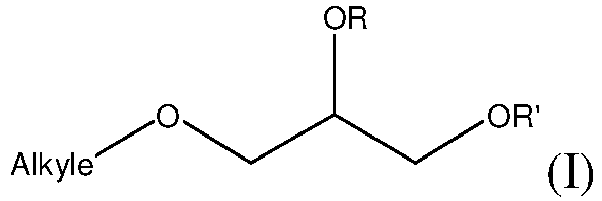
- Mikroemulsion nach Anspruch 1, wobei die hydrophobe Parfümsubstanz eine natürliche hydrophobe Parfümsubstanz ist, gewählt aus Terpenen, ätherischen Ölen und natürlichen Verbindungen mit duftenden Eigenschaften, insbesondere gewählt aus Aldehyden, Estern, Ketonen, Alkoholen, Phenolen, Alkenen und Ethern.
- Mikroemulsion nach Anspruch 1 oder 2, wobei in dem monoalkylierten Glycerinderivat der Formel (I) die "Alkyl"-Gruppe eine lineare Alkylgruppe, umfassend 3, 4 oder 5 Kohlenstoffatome, ist und R und R' jeweils unabhängig voneinander H oder eine Methyl- oder Ethylgruppe sind, mit der Maßgabe, dass R von R' verschieden ist.
- Mikroemulsion nach einem der Ansprüche 1 bis 3, wobei in dem monoalkylierten Glycerinderivat der Formel (I) die "Alkyl"-Gruppe eine lineare Alkylgruppe mit 3, 4 oder 5 Kohlenstoffatomen ist, R eine Methylgruppe ist und R' H ist.
- Mikroemulsion nach einem der Ansprüche 1 bis 4, die im Wesentlichen frei von Ethanol, vorzugsweise ganz frei von Ethanol ist.
- Mikroemulsion nach einem der Ansprüche 1 bis 5, umfassend :• 70 % bis 90 % Wasser,• 5 % bis 12 % wenigstens einer hydrophoben Parfümsubstanz,• 4 % bis 18 % wenigstens eines flüchtigen Solvat-Tensids, und• 0,1 % bis 10 % wenigstens eines hydrotropen Mittels oder wenigstens eines Tensids, gewählt aus nichtionischen Tensiden, kationischen Tensiden, amphoteren Tensiden und nichtionischen Tensiden.
- Mikroemulsion nach einem der Ansprüche 1 bis 6, wobei das Tensid ein nichtionisches Tensid ist, gewählt aus:• Alkylsulfonaten, insbesondere Dihexylsulfosuccinat der Formel

oder insbesondere für Ethyl-2-hexylsulfosuccinat der Formel • Alkylarylsulfonaten der Formel
 • Propoxysulfaten der Formel
 • Alkylsulfaten, einschließlich Salzen von Laurylsulfat wie Natriumdodecylsulfat und Natriumalkylethersulfat wie Natriumlaurylsulfat (Laureth),• und Salzen von Fettsäuren der Formel R-CO2 -M+, wobei R für eine lineare oder verzweigte, gesättigte oder ungesättigte Kohlenstoffkette mit 8 bis 18 Kohlenstoffatomen steht und M+ ein Kation darstellt, gewählt aus den Ionen Na+, K+, NH4 +, (HOCH2CH2)3NH+, insbesondere das Ölsäuresalz der Formel CH3(CH2)7CH=CH(CH2)7CO2 - M+ wobei M+ die oben definierten Bedeutungen hat.
 - Mikroemulsion nach einem der Ansprüche 1 bis 6, wobei das Tensid ein nichtionisches Tensid ist, gewählt aus:• Alkanolamiden, insbesondere Monoethanolamid der Formel
 • Alkylpolyglycosiden,• Polyglycerin-Ethern,• und Polyglycerinestern, oderdas Tensid ein amphoteres Tensid ist, gewählt aus:• Betainen, insbesondere Kokamidopropylbetain der Formel
 • und Aminoxiden, insbesondere Lauryldimethylaminoxid der Formel
das Tensid ein kationisches Tensid ist, gewählt aus:• Tetraalkylammoniumsalzen, insbesondere Dialkyldimethylammoniumsalzen der Formel X- für ein Anion steht, gewählt aus Cl- , Br-, I-, CH3COO- oder Lactat,n für die Methylenzahl von 6 bis 12 steht,vorzugsweise ein Didecyldimethylammoniumsalz der Formel
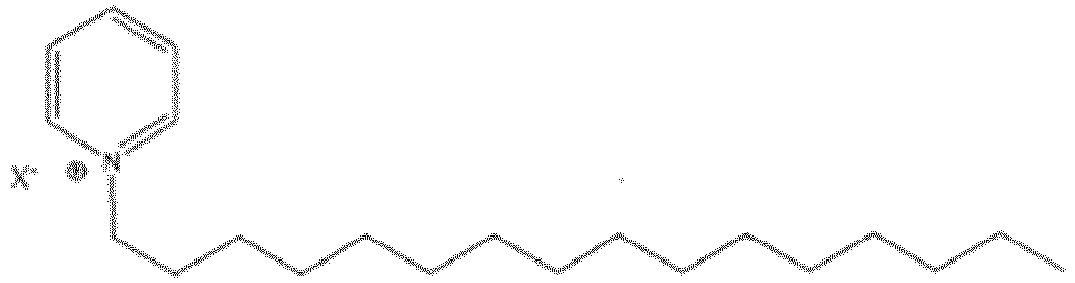
 • Trialkylammoniumsalzen, insbesondere Trialkylammoniumhalogeniden, insbesondere Dodecyltrimethylammoniumbromid der Formel H3C(CH2)11N+(CH3)3,• Pyridiniumsalzen, insbesondere Cetylpyridiniumsalz der Formel
 • Benzalkoniumsalzen, insbesondere Salzen der Formel
 X- die oben angegebenen Bedeutungen hat,p zwischen 8 und 18 liegt,• Ammoniumsalzen von Triethanolamin der Formel (HO-CH2-CH2)3NH+ X-, wobei X- die oben angegebenen Bedeutungen hat.
 - Mikroemulsion nach einem der Ansprüche 1 bis 6, wobei das hydrotrope Mittel gewählt ist aus Arylsulfonsäuren und Alkylglucosiden und vorzugsweise Heptylglucosid ist.
- Verwendung einer Mikroemulsion nach einem der Ansprüche 1 bis 9 zur Herstellung einer Zusammensetzung der feinen Parfümerie oder einer kosmetischen oder Körperpflege-Zusammensetzung.
Applications Claiming Priority (2)
| Application Number | Priority Date | Filing Date | Title |
|---|---|---|---|
| FR1654983A FR3052058A1 (fr) | 2016-06-01 | 2016-06-01 | Parfums sous forme de microemulsions aqueuses |
| PCT/FR2017/051373 WO2017207935A1 (fr) | 2016-06-01 | 2017-06-01 | Parfums sous forme de microémulsions aqueuses |
Publications (2)
| Publication Number | Publication Date |
|---|---|
| EP3463585A1 EP3463585A1 (de) | 2019-04-10 |
| EP3463585B1 true EP3463585B1 (de) | 2020-07-08 |
Family
ID=56611416
Family Applications (2)
| Application Number | Title | Priority Date | Filing Date |
|---|---|---|---|
| EP17730886.3A Withdrawn EP3463586A1 (de) | 2016-06-01 | 2017-06-01 | Duftstoffe in form von wässrigen mikroemulsionen |
| EP17730885.5A Not-in-force EP3463585B1 (de) | 2016-06-01 | 2017-06-01 | Duftstoffe in form von wässrigen mikroemulsionen |
Family Applications Before (1)
| Application Number | Title | Priority Date | Filing Date |
|---|---|---|---|
| EP17730886.3A Withdrawn EP3463586A1 (de) | 2016-06-01 | 2017-06-01 | Duftstoffe in form von wässrigen mikroemulsionen |
Country Status (8)
| Country | Link |
|---|---|
| US (1) | US11052025B2 (de) |
| EP (2) | EP3463586A1 (de) |
| JP (1) | JP2019517515A (de) |
| KR (1) | KR102251872B1 (de) |
| CN (1) | CN109843388A (de) |
| FR (2) | FR3052058A1 (de) |
| RU (1) | RU2018145861A (de) |
| WO (2) | WO2017207935A1 (de) |
Families Citing this family (5)
| Publication number | Priority date | Publication date | Assignee | Title |
|---|---|---|---|---|
| JP2023547434A (ja) * | 2020-10-27 | 2023-11-10 | ビーエーエスエフ ソシエタス・ヨーロピア | 有害生物防除用マイクロエマルジョン組成物 |
| CN112791015B (zh) * | 2021-01-25 | 2022-10-04 | 湖北煜韩环境科技有限公司 | 一种香精增溶剂及其制备方法 |
| JP7823308B2 (ja) * | 2021-02-17 | 2026-03-04 | エボニック オペレーションズ ゲーエムベーハー | 6-ウンデカノールエステルを含む水性組成物 |
| CN118201587A (zh) * | 2021-11-04 | 2024-06-14 | 科蒂公司 | 不含乙醇的芳香剂底座 |
| USD1116056S1 (en) | 2024-03-11 | 2026-03-03 | Atmos Fragrance, Inc. | Electronic fragrance diffuser |
Family Cites Families (14)
| Publication number | Priority date | Publication date | Assignee | Title |
|---|---|---|---|---|
| FR2414201A2 (fr) | 1978-01-10 | 1979-08-03 | Commissariat Energie Atomique | Olfactometre differentiel |
| EP0571677A1 (de) * | 1992-05-29 | 1993-12-01 | Unilever Plc | Parfümöle enthaltende wässrige Mikroemulsionen |
| EP0572080B1 (de) * | 1992-05-29 | 1995-11-15 | Quest International B.V. | Parfümöl enthaltende wässrige Mikroemulsionen |
| FR2795960B1 (fr) * | 1999-07-05 | 2001-10-19 | Sanofi Elf | Microemulsions stables pour l'administration d'acides gras a l'homme ou a l'animal, et utilisation de ces microemulsions |
| US20040209795A1 (en) * | 2003-04-21 | 2004-10-21 | Vlad Florin Joseph | VOC-free microemulsions |
| CN100393859C (zh) * | 2004-04-05 | 2008-06-11 | 新疆芳香植物科技开发股份有限公司 | 芳香类植物精油的微胶囊及其制备方法 |
| US20060165739A1 (en) * | 2005-01-06 | 2006-07-27 | Mary Kay Inc. | Alcohol-free microemulsion composition |
| US20090130029A1 (en) * | 2007-11-21 | 2009-05-21 | Foamix Ltd. | Glycerol ethers vehicle and pharmaceutical compositions thereof |
| CA2815504C (en) * | 2010-10-22 | 2018-01-02 | Agilex Flavor & Fragrances | Water-based air freshener compositions, systems, and methods of use thereof |
| EP2714635A4 (de) * | 2011-06-02 | 2015-06-24 | Ecolab Usa Inc | Verwendung von kurzkettigen von aliphatischen etherverbindungen aus glycerin |
| JP2015503514A (ja) * | 2011-12-22 | 2015-02-02 | ダウ グローバル テクノロジーズ エルエルシー | 透明水性芳香マイクロエマルジョン |
| FR2998476A1 (fr) * | 2012-11-26 | 2014-05-30 | Univ Lille 1 Sciences & Technologies | Microemulsions aqueuses volatiles de parfums et d huiles essentielles basees sur l utilisation de solvo- surfactifs |
| WO2014090959A1 (en) * | 2012-12-13 | 2014-06-19 | Firmenich Sa | Ethanol-free microemulsion perfuming compositions |
| CN105038985A (zh) * | 2015-07-13 | 2015-11-11 | 江南大学 | 一种天然玫瑰精油微乳液及其制备方法 |
-
2016
- 2016-06-01 FR FR1654983A patent/FR3052058A1/fr not_active Withdrawn
-
2017
- 2017-01-13 FR FR1750294A patent/FR3052059A1/fr not_active Withdrawn
- 2017-06-01 US US16/304,773 patent/US11052025B2/en not_active Expired - Fee Related
- 2017-06-01 JP JP2018563144A patent/JP2019517515A/ja active Pending
- 2017-06-01 WO PCT/FR2017/051373 patent/WO2017207935A1/fr not_active Ceased
- 2017-06-01 EP EP17730886.3A patent/EP3463586A1/de not_active Withdrawn
- 2017-06-01 WO PCT/FR2017/051374 patent/WO2017207936A1/fr not_active Ceased
- 2017-06-01 EP EP17730885.5A patent/EP3463585B1/de not_active Not-in-force
- 2017-06-01 CN CN201780034131.3A patent/CN109843388A/zh active Pending
- 2017-06-01 KR KR1020187034753A patent/KR102251872B1/ko not_active Expired - Fee Related
- 2017-06-01 RU RU2018145861A patent/RU2018145861A/ru not_active Application Discontinuation
Non-Patent Citations (1)
| Title |
|---|
| None * |
Also Published As
| Publication number | Publication date |
|---|---|
| US20200323749A1 (en) | 2020-10-15 |
| WO2017207936A1 (fr) | 2017-12-07 |
| WO2017207935A1 (fr) | 2017-12-07 |
| FR3052059A1 (fr) | 2017-12-08 |
| US11052025B2 (en) | 2021-07-06 |
| RU2018145861A3 (de) | 2020-07-09 |
| KR102251872B1 (ko) | 2021-05-12 |
| KR20190039670A (ko) | 2019-04-15 |
| CN109843388A (zh) | 2019-06-04 |
| EP3463586A1 (de) | 2019-04-10 |
| EP3463585A1 (de) | 2019-04-10 |
| RU2018145861A (ru) | 2020-07-09 |
| JP2019517515A (ja) | 2019-06-24 |
| FR3052058A1 (fr) | 2017-12-08 |
Similar Documents
| Publication | Publication Date | Title |
|---|---|---|
| EP3630057B1 (de) | Duftstoffe in form von wässrigen mikroemulsionen | |
| EP2922523B1 (de) | Flüchtige wässrige mikroemulsionen aus duftstoffen und ätherischen ölen auf basis der verwendung von solvotensiden | |
| EP3463585B1 (de) | Duftstoffe in form von wässrigen mikroemulsionen | |
| ES2875502T3 (es) | Composición | |
| JP2011136995A (ja) | フレグランスマイクロエマルション組成物 | |
| FR2676924A1 (fr) | Microemulsion contenant un concentre parfumant et produit correspondant. | |
| FR3039063A1 (fr) | Procede d'enrichissement en pongamol d'huile de karanja | |
| US9834739B2 (en) | Fragrance composition | |
| FR3072874A1 (fr) | Extrait particulier de plantes a parfums, aromatiques et medicinales, procede d'obtention, compositions l'incluant et utilisations | |
| EP1043015A2 (de) | Homogene flüssige Duftstoff-Zusammensetzung auf Basis von flüchtigen Silikonen | |
| EP1810664B1 (de) | Gefärbte ölige Zusammensetzung | |
| FR3143998A1 (fr) | Compositions de parfum et leurs utilisations | |
| JP2023547328A (ja) | 無水のアルコールフリーの滑らかな芳香剤配合物 | |
| FR3120793A1 (fr) | Agents solubilisants et compositions les comprenant | |
| EP4419065B1 (de) | Duftkomplex, duftzusammensetzung und parfümierte wässrige zusammensetzung natürlichen ursprungs | |
| FR2952529A1 (fr) | Composition parfumante anhydre comprenant au moins un alcool volatil et au moins un alcane lineaire volatil ; procede de parfumage | |
| EP4472605A1 (de) | Lösungsmittelmischungen mit 1,3-butylenglycol und triethylcitrat | |
| FR3166543A1 (fr) | Composition parfumée contenant une quantité d'eau ou d’eau hydrogénée et plus ou moins exempte d'éthanol et comprenant au moins un composé de formule ( C4H10O2 ), et au moins une matière colorante hydrosoluble et une substance parfumante. | |
| WO2021123110A1 (fr) | Parfum semi-solide naturel |
Legal Events
| Date | Code | Title | Description |
|---|---|---|---|
| STAA | Information on the status of an ep patent application or granted ep patent |
Free format text: STATUS: UNKNOWN |
|
| STAA | Information on the status of an ep patent application or granted ep patent |
Free format text: STATUS: THE INTERNATIONAL PUBLICATION HAS BEEN MADE |
|
| PUAI | Public reference made under article 153(3) epc to a published international application that has entered the european phase |
Free format text: ORIGINAL CODE: 0009012 |
|
| STAA | Information on the status of an ep patent application or granted ep patent |
Free format text: STATUS: REQUEST FOR EXAMINATION WAS MADE |
|
| 17P | Request for examination filed |
Effective date: 20181220 |
|
| AK | Designated contracting states |
Kind code of ref document: A1 Designated state(s): AL AT BE BG CH CY CZ DE DK EE ES FI FR GB GR HR HU IE IS IT LI LT LU LV MC MK MT NL NO PL PT RO RS SE SI SK SM TR |
|
| AX | Request for extension of the european patent |
Extension state: BA ME |
|
| DAV | Request for validation of the european patent (deleted) | ||
| DAX | Request for extension of the european patent (deleted) | ||
| GRAP | Despatch of communication of intention to grant a patent |
Free format text: ORIGINAL CODE: EPIDOSNIGR1 |
|
| STAA | Information on the status of an ep patent application or granted ep patent |
Free format text: STATUS: GRANT OF PATENT IS INTENDED |
|
| RIN1 | Information on inventor provided before grant (corrected) |
Inventor name: LEBEUF, RAPHAEL Inventor name: BOUCENNA VERDIER, ORIANA Inventor name: MAHE, CHRISTIAN Inventor name: RATAJ-NARDELLO, VERONIQUE Inventor name: AUBRY, JEAN-MARIE Inventor name: NOLLET, MAXIME |
|
| INTG | Intention to grant announced |
Effective date: 20200127 |
|
| GRAS | Grant fee paid |
Free format text: ORIGINAL CODE: EPIDOSNIGR3 |
|
| GRAA | (expected) grant |
Free format text: ORIGINAL CODE: 0009210 |
|
| STAA | Information on the status of an ep patent application or granted ep patent |
Free format text: STATUS: THE PATENT HAS BEEN GRANTED |
|
| AK | Designated contracting states |
Kind code of ref document: B1 Designated state(s): AL AT BE BG CH CY CZ DE DK EE ES FI FR GB GR HR HU IE IS IT LI LT LU LV MC MK MT NL NO PL PT RO RS SE SI SK SM TR |
|
| REG | Reference to a national code |
Ref country code: CH Ref legal event code: EP Ref country code: AT Ref legal event code: REF Ref document number: 1287808 Country of ref document: AT Kind code of ref document: T Effective date: 20200715 |
|
| REG | Reference to a national code |
Ref country code: DE Ref legal event code: R096 Ref document number: 602017019439 Country of ref document: DE |
|
| REG | Reference to a national code |
Ref country code: IE Ref legal event code: FG4D Free format text: LANGUAGE OF EP DOCUMENT: FRENCH |
|
| REG | Reference to a national code |
Ref country code: LT Ref legal event code: MG4D |
|
| REG | Reference to a national code |
Ref country code: AT Ref legal event code: MK05 Ref document number: 1287808 Country of ref document: AT Kind code of ref document: T Effective date: 20200708 |
|
| REG | Reference to a national code |
Ref country code: NL Ref legal event code: MP Effective date: 20200708 |
|
| PG25 | Lapsed in a contracting state [announced via postgrant information from national office to epo] |
Ref country code: ES Free format text: LAPSE BECAUSE OF FAILURE TO SUBMIT A TRANSLATION OF THE DESCRIPTION OR TO PAY THE FEE WITHIN THE PRESCRIBED TIME-LIMIT Effective date: 20200708 Ref country code: BG Free format text: LAPSE BECAUSE OF FAILURE TO SUBMIT A TRANSLATION OF THE DESCRIPTION OR TO PAY THE FEE WITHIN THE PRESCRIBED TIME-LIMIT Effective date: 20201008 Ref country code: SE Free format text: LAPSE BECAUSE OF FAILURE TO SUBMIT A TRANSLATION OF THE DESCRIPTION OR TO PAY THE FEE WITHIN THE PRESCRIBED TIME-LIMIT Effective date: 20200708 Ref country code: PT Free format text: LAPSE BECAUSE OF FAILURE TO SUBMIT A TRANSLATION OF THE DESCRIPTION OR TO PAY THE FEE WITHIN THE PRESCRIBED TIME-LIMIT Effective date: 20201109 Ref country code: HR Free format text: LAPSE BECAUSE OF FAILURE TO SUBMIT A TRANSLATION OF THE DESCRIPTION OR TO PAY THE FEE WITHIN THE PRESCRIBED TIME-LIMIT Effective date: 20200708 Ref country code: LT Free format text: LAPSE BECAUSE OF FAILURE TO SUBMIT A TRANSLATION OF THE DESCRIPTION OR TO PAY THE FEE WITHIN THE PRESCRIBED TIME-LIMIT Effective date: 20200708 Ref country code: FI Free format text: LAPSE BECAUSE OF FAILURE TO SUBMIT A TRANSLATION OF THE DESCRIPTION OR TO PAY THE FEE WITHIN THE PRESCRIBED TIME-LIMIT Effective date: 20200708 Ref country code: AT Free format text: LAPSE BECAUSE OF FAILURE TO SUBMIT A TRANSLATION OF THE DESCRIPTION OR TO PAY THE FEE WITHIN THE PRESCRIBED TIME-LIMIT Effective date: 20200708 Ref country code: GR Free format text: LAPSE BECAUSE OF FAILURE TO SUBMIT A TRANSLATION OF THE DESCRIPTION OR TO PAY THE FEE WITHIN THE PRESCRIBED TIME-LIMIT Effective date: 20201009 Ref country code: NO Free format text: LAPSE BECAUSE OF FAILURE TO SUBMIT A TRANSLATION OF THE DESCRIPTION OR TO PAY THE FEE WITHIN THE PRESCRIBED TIME-LIMIT Effective date: 20201008 |
|
| PG25 | Lapsed in a contracting state [announced via postgrant information from national office to epo] |
Ref country code: RS Free format text: LAPSE BECAUSE OF FAILURE TO SUBMIT A TRANSLATION OF THE DESCRIPTION OR TO PAY THE FEE WITHIN THE PRESCRIBED TIME-LIMIT Effective date: 20200708 Ref country code: LV Free format text: LAPSE BECAUSE OF FAILURE TO SUBMIT A TRANSLATION OF THE DESCRIPTION OR TO PAY THE FEE WITHIN THE PRESCRIBED TIME-LIMIT Effective date: 20200708 Ref country code: PL Free format text: LAPSE BECAUSE OF FAILURE TO SUBMIT A TRANSLATION OF THE DESCRIPTION OR TO PAY THE FEE WITHIN THE PRESCRIBED TIME-LIMIT Effective date: 20200708 Ref country code: IS Free format text: LAPSE BECAUSE OF FAILURE TO SUBMIT A TRANSLATION OF THE DESCRIPTION OR TO PAY THE FEE WITHIN THE PRESCRIBED TIME-LIMIT Effective date: 20201108 |
|
| PG25 | Lapsed in a contracting state [announced via postgrant information from national office to epo] |
Ref country code: NL Free format text: LAPSE BECAUSE OF FAILURE TO SUBMIT A TRANSLATION OF THE DESCRIPTION OR TO PAY THE FEE WITHIN THE PRESCRIBED TIME-LIMIT Effective date: 20200708 |
|
| REG | Reference to a national code |
Ref country code: DE Ref legal event code: R097 Ref document number: 602017019439 Country of ref document: DE |
|
| PG25 | Lapsed in a contracting state [announced via postgrant information from national office to epo] |
Ref country code: IT Free format text: LAPSE BECAUSE OF FAILURE TO SUBMIT A TRANSLATION OF THE DESCRIPTION OR TO PAY THE FEE WITHIN THE PRESCRIBED TIME-LIMIT Effective date: 20200708 Ref country code: EE Free format text: LAPSE BECAUSE OF FAILURE TO SUBMIT A TRANSLATION OF THE DESCRIPTION OR TO PAY THE FEE WITHIN THE PRESCRIBED TIME-LIMIT Effective date: 20200708 Ref country code: SM Free format text: LAPSE BECAUSE OF FAILURE TO SUBMIT A TRANSLATION OF THE DESCRIPTION OR TO PAY THE FEE WITHIN THE PRESCRIBED TIME-LIMIT Effective date: 20200708 Ref country code: RO Free format text: LAPSE BECAUSE OF FAILURE TO SUBMIT A TRANSLATION OF THE DESCRIPTION OR TO PAY THE FEE WITHIN THE PRESCRIBED TIME-LIMIT Effective date: 20200708 Ref country code: DK Free format text: LAPSE BECAUSE OF FAILURE TO SUBMIT A TRANSLATION OF THE DESCRIPTION OR TO PAY THE FEE WITHIN THE PRESCRIBED TIME-LIMIT Effective date: 20200708 Ref country code: CZ Free format text: LAPSE BECAUSE OF FAILURE TO SUBMIT A TRANSLATION OF THE DESCRIPTION OR TO PAY THE FEE WITHIN THE PRESCRIBED TIME-LIMIT Effective date: 20200708 |
|
| PLBE | No opposition filed within time limit |
Free format text: ORIGINAL CODE: 0009261 |
|
| STAA | Information on the status of an ep patent application or granted ep patent |
Free format text: STATUS: NO OPPOSITION FILED WITHIN TIME LIMIT |
|
| PG25 | Lapsed in a contracting state [announced via postgrant information from national office to epo] |
Ref country code: AL Free format text: LAPSE BECAUSE OF FAILURE TO SUBMIT A TRANSLATION OF THE DESCRIPTION OR TO PAY THE FEE WITHIN THE PRESCRIBED TIME-LIMIT Effective date: 20200708 |
|
| 26N | No opposition filed |
Effective date: 20210409 |
|
| PG25 | Lapsed in a contracting state [announced via postgrant information from national office to epo] |
Ref country code: SK Free format text: LAPSE BECAUSE OF FAILURE TO SUBMIT A TRANSLATION OF THE DESCRIPTION OR TO PAY THE FEE WITHIN THE PRESCRIBED TIME-LIMIT Effective date: 20200708 |
|
| PGFP | Annual fee paid to national office [announced via postgrant information from national office to epo] |
Ref country code: FR Payment date: 20210422 Year of fee payment: 5 Ref country code: DE Payment date: 20210616 Year of fee payment: 5 |
|
| PG25 | Lapsed in a contracting state [announced via postgrant information from national office to epo] |
Ref country code: SI Free format text: LAPSE BECAUSE OF FAILURE TO SUBMIT A TRANSLATION OF THE DESCRIPTION OR TO PAY THE FEE WITHIN THE PRESCRIBED TIME-LIMIT Effective date: 20200708 |
|
| PGFP | Annual fee paid to national office [announced via postgrant information from national office to epo] |
Ref country code: GB Payment date: 20210622 Year of fee payment: 5 |
|
| PG25 | Lapsed in a contracting state [announced via postgrant information from national office to epo] |
Ref country code: MC Free format text: LAPSE BECAUSE OF FAILURE TO SUBMIT A TRANSLATION OF THE DESCRIPTION OR TO PAY THE FEE WITHIN THE PRESCRIBED TIME-LIMIT Effective date: 20200708 |
|
| REG | Reference to a national code |
Ref country code: CH Ref legal event code: PL |
|
| REG | Reference to a national code |
Ref country code: BE Ref legal event code: MM Effective date: 20210630 |
|
| PG25 | Lapsed in a contracting state [announced via postgrant information from national office to epo] |
Ref country code: LU Free format text: LAPSE BECAUSE OF NON-PAYMENT OF DUE FEES Effective date: 20210601 |
|
| PG25 | Lapsed in a contracting state [announced via postgrant information from national office to epo] |
Ref country code: LI Free format text: LAPSE BECAUSE OF NON-PAYMENT OF DUE FEES Effective date: 20210630 Ref country code: IE Free format text: LAPSE BECAUSE OF NON-PAYMENT OF DUE FEES Effective date: 20210601 Ref country code: CH Free format text: LAPSE BECAUSE OF NON-PAYMENT OF DUE FEES Effective date: 20210630 |
|
| PG25 | Lapsed in a contracting state [announced via postgrant information from national office to epo] |
Ref country code: BE Free format text: LAPSE BECAUSE OF NON-PAYMENT OF DUE FEES Effective date: 20210630 |
|
| REG | Reference to a national code |
Ref country code: DE Ref legal event code: R119 Ref document number: 602017019439 Country of ref document: DE |
|
| GBPC | Gb: european patent ceased through non-payment of renewal fee |
Effective date: 20220601 |
|
| PG25 | Lapsed in a contracting state [announced via postgrant information from national office to epo] |
Ref country code: FR Free format text: LAPSE BECAUSE OF NON-PAYMENT OF DUE FEES Effective date: 20220630 |
|
| PG25 | Lapsed in a contracting state [announced via postgrant information from national office to epo] |
Ref country code: GB Free format text: LAPSE BECAUSE OF NON-PAYMENT OF DUE FEES Effective date: 20220601 Ref country code: DE Free format text: LAPSE BECAUSE OF NON-PAYMENT OF DUE FEES Effective date: 20230103 |
|
| PG25 | Lapsed in a contracting state [announced via postgrant information from national office to epo] |
Ref country code: CY Free format text: LAPSE BECAUSE OF FAILURE TO SUBMIT A TRANSLATION OF THE DESCRIPTION OR TO PAY THE FEE WITHIN THE PRESCRIBED TIME-LIMIT Effective date: 20200708 |
|
| PG25 | Lapsed in a contracting state [announced via postgrant information from national office to epo] |
Ref country code: HU Free format text: LAPSE BECAUSE OF FAILURE TO SUBMIT A TRANSLATION OF THE DESCRIPTION OR TO PAY THE FEE WITHIN THE PRESCRIBED TIME-LIMIT; INVALID AB INITIO Effective date: 20170601 |
|
| PG25 | Lapsed in a contracting state [announced via postgrant information from national office to epo] |
Ref country code: MK Free format text: LAPSE BECAUSE OF FAILURE TO SUBMIT A TRANSLATION OF THE DESCRIPTION OR TO PAY THE FEE WITHIN THE PRESCRIBED TIME-LIMIT Effective date: 20200708 |
|
| PG25 | Lapsed in a contracting state [announced via postgrant information from national office to epo] |
Ref country code: TR Free format text: LAPSE BECAUSE OF FAILURE TO SUBMIT A TRANSLATION OF THE DESCRIPTION OR TO PAY THE FEE WITHIN THE PRESCRIBED TIME-LIMIT Effective date: 20200708 |
|
| PG25 | Lapsed in a contracting state [announced via postgrant information from national office to epo] |
Ref country code: MT Free format text: LAPSE BECAUSE OF FAILURE TO SUBMIT A TRANSLATION OF THE DESCRIPTION OR TO PAY THE FEE WITHIN THE PRESCRIBED TIME-LIMIT Effective date: 20200708 |