EP3464656B1 - Appareil de fabrication et procédé - Google Patents
Appareil de fabrication et procédé Download PDFInfo
- Publication number
- EP3464656B1 EP3464656B1 EP17727311.7A EP17727311A EP3464656B1 EP 3464656 B1 EP3464656 B1 EP 3464656B1 EP 17727311 A EP17727311 A EP 17727311A EP 3464656 B1 EP3464656 B1 EP 3464656B1
- Authority
- EP
- European Patent Office
- Prior art keywords
- metallic
- feedstock
- cathode
- powder
- product
- Prior art date
- Legal status (The legal status is an assumption and is not a legal conclusion. Google has not performed a legal analysis and makes no representation as to the accuracy of the status listed.)
- Active
Links
Images

Classifications
-
- B—PERFORMING OPERATIONS; TRANSPORTING
- B22—CASTING; POWDER METALLURGY
- B22F—WORKING METALLIC POWDER; MANUFACTURE OF ARTICLES FROM METALLIC POWDER; MAKING METALLIC POWDER; APPARATUS OR DEVICES SPECIALLY ADAPTED FOR METALLIC POWDER
- B22F10/00—Additive manufacturing of workpieces or articles from metallic powder
-
- C—CHEMISTRY; METALLURGY
- C22—METALLURGY; FERROUS OR NON-FERROUS ALLOYS; TREATMENT OF ALLOYS OR NON-FERROUS METALS
- C22B—PRODUCTION AND REFINING OF METALS; PRETREATMENT OF RAW MATERIALS
- C22B34/00—Obtaining refractory metals
- C22B34/10—Obtaining titanium, zirconium or hafnium
- C22B34/12—Obtaining titanium or titanium compounds from ores or scrap by metallurgical processing; preparation of titanium compounds from other titanium compounds see C01G23/00 - C01G23/08
- C22B34/1263—Obtaining titanium or titanium compounds from ores or scrap by metallurgical processing; preparation of titanium compounds from other titanium compounds see C01G23/00 - C01G23/08 obtaining metallic titanium from titanium compounds, e.g. by reduction
-
- B—PERFORMING OPERATIONS; TRANSPORTING
- B22—CASTING; POWDER METALLURGY
- B22D—CASTING OF METALS; CASTING OF OTHER SUBSTANCES BY THE SAME PROCESSES OR DEVICES
- B22D23/00—Casting processes not provided for in groups B22D1/00 - B22D21/00
- B22D23/003—Moulding by spraying metal on a surface
-
- B—PERFORMING OPERATIONS; TRANSPORTING
- B22—CASTING; POWDER METALLURGY
- B22F—WORKING METALLIC POWDER; MANUFACTURE OF ARTICLES FROM METALLIC POWDER; MAKING METALLIC POWDER; APPARATUS OR DEVICES SPECIALLY ADAPTED FOR METALLIC POWDER
- B22F1/00—Metallic powder; Treatment of metallic powder, e.g. to facilitate working or to improve properties
- B22F1/06—Metallic powder characterised by the shape of the particles
- B22F1/065—Spherical particles
-
- B—PERFORMING OPERATIONS; TRANSPORTING
- B22—CASTING; POWDER METALLURGY
- B22F—WORKING METALLIC POWDER; MANUFACTURE OF ARTICLES FROM METALLIC POWDER; MAKING METALLIC POWDER; APPARATUS OR DEVICES SPECIALLY ADAPTED FOR METALLIC POWDER
- B22F10/00—Additive manufacturing of workpieces or articles from metallic powder
- B22F10/20—Direct sintering or melting
- B22F10/28—Powder bed fusion, e.g. selective laser melting [SLM] or electron beam melting [EBM]
-
- B—PERFORMING OPERATIONS; TRANSPORTING
- B22—CASTING; POWDER METALLURGY
- B22F—WORKING METALLIC POWDER; MANUFACTURE OF ARTICLES FROM METALLIC POWDER; MAKING METALLIC POWDER; APPARATUS OR DEVICES SPECIALLY ADAPTED FOR METALLIC POWDER
- B22F10/00—Additive manufacturing of workpieces or articles from metallic powder
- B22F10/70—Recycling
- B22F10/73—Recycling of powder
-
- B—PERFORMING OPERATIONS; TRANSPORTING
- B22—CASTING; POWDER METALLURGY
- B22F—WORKING METALLIC POWDER; MANUFACTURE OF ARTICLES FROM METALLIC POWDER; MAKING METALLIC POWDER; APPARATUS OR DEVICES SPECIALLY ADAPTED FOR METALLIC POWDER
- B22F12/00—Apparatus or devices specially adapted for additive manufacturing; Auxiliary means for additive manufacturing; Combinations of additive manufacturing apparatus or devices with other processing apparatus or devices
- B22F12/80—Plants, production lines or modules
- B22F12/82—Combination of additive manufacturing apparatus or devices with other processing apparatus or devices
- B22F12/86—Serial processing with multiple devices grouped
-
- B—PERFORMING OPERATIONS; TRANSPORTING
- B22—CASTING; POWDER METALLURGY
- B22F—WORKING METALLIC POWDER; MANUFACTURE OF ARTICLES FROM METALLIC POWDER; MAKING METALLIC POWDER; APPARATUS OR DEVICES SPECIALLY ADAPTED FOR METALLIC POWDER
- B22F3/00—Manufacture of workpieces or articles from metallic powder characterised by the manner of compacting or sintering; Apparatus specially adapted therefor ; Presses and furnaces
- B22F3/115—Manufacture of workpieces or articles from metallic powder characterised by the manner of compacting or sintering; Apparatus specially adapted therefor ; Presses and furnaces by spraying molten metal, i.e. spray sintering, spray casting
-
- B—PERFORMING OPERATIONS; TRANSPORTING
- B22—CASTING; POWDER METALLURGY
- B22F—WORKING METALLIC POWDER; MANUFACTURE OF ARTICLES FROM METALLIC POWDER; MAKING METALLIC POWDER; APPARATUS OR DEVICES SPECIALLY ADAPTED FOR METALLIC POWDER
- B22F9/00—Making metallic powder or suspensions thereof
- B22F9/16—Making metallic powder or suspensions thereof using chemical processes
- B22F9/18—Making metallic powder or suspensions thereof using chemical processes with reduction of metal compounds
- B22F9/20—Making metallic powder or suspensions thereof using chemical processes with reduction of metal compounds starting from solid metal compounds
-
- B—PERFORMING OPERATIONS; TRANSPORTING
- B23—MACHINE TOOLS; METAL-WORKING NOT OTHERWISE PROVIDED FOR
- B23K—SOLDERING OR UNSOLDERING; WELDING; CLADDING OR PLATING BY SOLDERING OR WELDING; CUTTING BY APPLYING HEAT LOCALLY, e.g. FLAME CUTTING; WORKING BY LASER BEAM
- B23K26/00—Working by laser beam, e.g. welding, cutting or boring
- B23K26/0006—Working by laser beam, e.g. welding, cutting or boring taking account of the properties of the material involved
-
- B—PERFORMING OPERATIONS; TRANSPORTING
- B23—MACHINE TOOLS; METAL-WORKING NOT OTHERWISE PROVIDED FOR
- B23K—SOLDERING OR UNSOLDERING; WELDING; CLADDING OR PLATING BY SOLDERING OR WELDING; CUTTING BY APPLYING HEAT LOCALLY, e.g. FLAME CUTTING; WORKING BY LASER BEAM
- B23K26/00—Working by laser beam, e.g. welding, cutting or boring
- B23K26/34—Laser welding for purposes other than joining
- B23K26/342—Build-up welding
-
- B—PERFORMING OPERATIONS; TRANSPORTING
- B33—ADDITIVE MANUFACTURING TECHNOLOGY
- B33Y—ADDITIVE MANUFACTURING, i.e. MANUFACTURING OF THREE-DIMENSIONAL [3D] OBJECTS BY ADDITIVE DEPOSITION, ADDITIVE AGGLOMERATION OR ADDITIVE LAYERING, e.g. BY 3D PRINTING, STEREOLITHOGRAPHY OR SELECTIVE LASER SINTERING
- B33Y40/00—Auxiliary operations or equipment, e.g. for material handling
-
- B—PERFORMING OPERATIONS; TRANSPORTING
- B33—ADDITIVE MANUFACTURING TECHNOLOGY
- B33Y—ADDITIVE MANUFACTURING, i.e. MANUFACTURING OF THREE-DIMENSIONAL [3D] OBJECTS BY ADDITIVE DEPOSITION, ADDITIVE AGGLOMERATION OR ADDITIVE LAYERING, e.g. BY 3D PRINTING, STEREOLITHOGRAPHY OR SELECTIVE LASER SINTERING
- B33Y40/00—Auxiliary operations or equipment, e.g. for material handling
- B33Y40/10—Pre-treatment
-
- B—PERFORMING OPERATIONS; TRANSPORTING
- B33—ADDITIVE MANUFACTURING TECHNOLOGY
- B33Y—ADDITIVE MANUFACTURING, i.e. MANUFACTURING OF THREE-DIMENSIONAL [3D] OBJECTS BY ADDITIVE DEPOSITION, ADDITIVE AGGLOMERATION OR ADDITIVE LAYERING, e.g. BY 3D PRINTING, STEREOLITHOGRAPHY OR SELECTIVE LASER SINTERING
- B33Y50/00—Data acquisition or data processing for additive manufacturing
- B33Y50/02—Data acquisition or data processing for additive manufacturing for controlling or regulating additive manufacturing processes
-
- B—PERFORMING OPERATIONS; TRANSPORTING
- B33—ADDITIVE MANUFACTURING TECHNOLOGY
- B33Y—ADDITIVE MANUFACTURING, i.e. MANUFACTURING OF THREE-DIMENSIONAL [3D] OBJECTS BY ADDITIVE DEPOSITION, ADDITIVE AGGLOMERATION OR ADDITIVE LAYERING, e.g. BY 3D PRINTING, STEREOLITHOGRAPHY OR SELECTIVE LASER SINTERING
- B33Y70/00—Materials specially adapted for additive manufacturing
-
- C—CHEMISTRY; METALLURGY
- C23—COATING METALLIC MATERIAL; COATING MATERIAL WITH METALLIC MATERIAL; CHEMICAL SURFACE TREATMENT; DIFFUSION TREATMENT OF METALLIC MATERIAL; COATING BY VACUUM EVAPORATION, BY SPUTTERING, BY ION IMPLANTATION OR BY CHEMICAL VAPOUR DEPOSITION, IN GENERAL; INHIBITING CORROSION OF METALLIC MATERIAL OR INCRUSTATION IN GENERAL
- C23C—COATING METALLIC MATERIAL; COATING MATERIAL WITH METALLIC MATERIAL; SURFACE TREATMENT OF METALLIC MATERIAL BY DIFFUSION INTO THE SURFACE, BY CHEMICAL CONVERSION OR SUBSTITUTION; COATING BY VACUUM EVAPORATION, BY SPUTTERING, BY ION IMPLANTATION OR BY CHEMICAL VAPOUR DEPOSITION, IN GENERAL
- C23C4/00—Coating by spraying the coating material in the molten state, e.g. by flame, plasma or electric discharge
- C23C4/12—Coating by spraying the coating material in the molten state, e.g. by flame, plasma or electric discharge characterised by the method of spraying
- C23C4/123—Spraying molten metal
-
- C—CHEMISTRY; METALLURGY
- C23—COATING METALLIC MATERIAL; COATING MATERIAL WITH METALLIC MATERIAL; CHEMICAL SURFACE TREATMENT; DIFFUSION TREATMENT OF METALLIC MATERIAL; COATING BY VACUUM EVAPORATION, BY SPUTTERING, BY ION IMPLANTATION OR BY CHEMICAL VAPOUR DEPOSITION, IN GENERAL; INHIBITING CORROSION OF METALLIC MATERIAL OR INCRUSTATION IN GENERAL
- C23C—COATING METALLIC MATERIAL; COATING MATERIAL WITH METALLIC MATERIAL; SURFACE TREATMENT OF METALLIC MATERIAL BY DIFFUSION INTO THE SURFACE, BY CHEMICAL CONVERSION OR SUBSTITUTION; COATING BY VACUUM EVAPORATION, BY SPUTTERING, BY ION IMPLANTATION OR BY CHEMICAL VAPOUR DEPOSITION, IN GENERAL
- C23C4/00—Coating by spraying the coating material in the molten state, e.g. by flame, plasma or electric discharge
- C23C4/18—After-treatment
- C23C4/185—Separation of the coating from the substrate
-
- C—CHEMISTRY; METALLURGY
- C25—ELECTROLYTIC OR ELECTROPHORETIC PROCESSES; APPARATUS THEREFOR
- C25C—PROCESSES FOR THE ELECTROLYTIC PRODUCTION, RECOVERY OR REFINING OF METALS; APPARATUS THEREFOR
- C25C3/00—Electrolytic production, recovery or refining of metals by electrolysis of melts
- C25C3/26—Electrolytic production, recovery or refining of metals by electrolysis of melts of titanium, zirconium, hafnium, tantalum or vanadium
- C25C3/28—Electrolytic production, recovery or refining of metals by electrolysis of melts of titanium, zirconium, hafnium, tantalum or vanadium of titanium
-
- C—CHEMISTRY; METALLURGY
- C25—ELECTROLYTIC OR ELECTROPHORETIC PROCESSES; APPARATUS THEREFOR
- C25C—PROCESSES FOR THE ELECTROLYTIC PRODUCTION, RECOVERY OR REFINING OF METALS; APPARATUS THEREFOR
- C25C5/00—Electrolytic production, recovery or refining of metal powders or porous metal masses
- C25C5/04—Electrolytic production, recovery or refining of metal powders or porous metal masses from melts
-
- C—CHEMISTRY; METALLURGY
- C25—ELECTROLYTIC OR ELECTROPHORETIC PROCESSES; APPARATUS THEREFOR
- C25C—PROCESSES FOR THE ELECTROLYTIC PRODUCTION, RECOVERY OR REFINING OF METALS; APPARATUS THEREFOR
- C25C7/00—Constructional parts, or assemblies thereof, of cells; Servicing or operating of cells
- C25C7/007—Constructional parts, or assemblies thereof, of cells; Servicing or operating of cells of cells comprising at least a movable electrode
-
- C—CHEMISTRY; METALLURGY
- C25—ELECTROLYTIC OR ELECTROPHORETIC PROCESSES; APPARATUS THEREFOR
- C25C—PROCESSES FOR THE ELECTROLYTIC PRODUCTION, RECOVERY OR REFINING OF METALS; APPARATUS THEREFOR
- C25C7/00—Constructional parts, or assemblies thereof, of cells; Servicing or operating of cells
- C25C7/06—Operating or servicing
-
- C—CHEMISTRY; METALLURGY
- C25—ELECTROLYTIC OR ELECTROPHORETIC PROCESSES; APPARATUS THEREFOR
- C25C—PROCESSES FOR THE ELECTROLYTIC PRODUCTION, RECOVERY OR REFINING OF METALS; APPARATUS THEREFOR
- C25C7/00—Constructional parts, or assemblies thereof, of cells; Servicing or operating of cells
- C25C7/06—Operating or servicing
- C25C7/08—Separating of deposited metals from the cathode
-
- B—PERFORMING OPERATIONS; TRANSPORTING
- B22—CASTING; POWDER METALLURGY
- B22F—WORKING METALLIC POWDER; MANUFACTURE OF ARTICLES FROM METALLIC POWDER; MAKING METALLIC POWDER; APPARATUS OR DEVICES SPECIALLY ADAPTED FOR METALLIC POWDER
- B22F1/00—Metallic powder; Treatment of metallic powder, e.g. to facilitate working or to improve properties
- B22F1/05—Metallic powder characterised by the size or surface area of the particles
- B22F1/052—Metallic powder characterised by the size or surface area of the particles characterised by a mixture of particles of different sizes or by the particle size distribution
-
- B—PERFORMING OPERATIONS; TRANSPORTING
- B22—CASTING; POWDER METALLURGY
- B22F—WORKING METALLIC POWDER; MANUFACTURE OF ARTICLES FROM METALLIC POWDER; MAKING METALLIC POWDER; APPARATUS OR DEVICES SPECIALLY ADAPTED FOR METALLIC POWDER
- B22F10/00—Additive manufacturing of workpieces or articles from metallic powder
- B22F10/30—Process control
- B22F10/34—Process control of powder characteristics, e.g. density, oxidation or flowability
-
- B—PERFORMING OPERATIONS; TRANSPORTING
- B22—CASTING; POWDER METALLURGY
- B22F—WORKING METALLIC POWDER; MANUFACTURE OF ARTICLES FROM METALLIC POWDER; MAKING METALLIC POWDER; APPARATUS OR DEVICES SPECIALLY ADAPTED FOR METALLIC POWDER
- B22F2301/00—Metallic composition of the powder or its coating
- B22F2301/20—Refractory metals
- B22F2301/205—Titanium, zirconium or hafnium
-
- B—PERFORMING OPERATIONS; TRANSPORTING
- B23—MACHINE TOOLS; METAL-WORKING NOT OTHERWISE PROVIDED FOR
- B23K—SOLDERING OR UNSOLDERING; WELDING; CLADDING OR PLATING BY SOLDERING OR WELDING; CUTTING BY APPLYING HEAT LOCALLY, e.g. FLAME CUTTING; WORKING BY LASER BEAM
- B23K2103/00—Materials to be soldered, welded or cut
- B23K2103/08—Non-ferrous metals or alloys
- B23K2103/14—Titanium or alloys thereof
-
- B—PERFORMING OPERATIONS; TRANSPORTING
- B33—ADDITIVE MANUFACTURING TECHNOLOGY
- B33Y—ADDITIVE MANUFACTURING, i.e. MANUFACTURING OF THREE-DIMENSIONAL [3D] OBJECTS BY ADDITIVE DEPOSITION, ADDITIVE AGGLOMERATION OR ADDITIVE LAYERING, e.g. BY 3D PRINTING, STEREOLITHOGRAPHY OR SELECTIVE LASER SINTERING
- B33Y10/00—Processes of additive manufacturing
-
- B—PERFORMING OPERATIONS; TRANSPORTING
- B33—ADDITIVE MANUFACTURING TECHNOLOGY
- B33Y—ADDITIVE MANUFACTURING, i.e. MANUFACTURING OF THREE-DIMENSIONAL [3D] OBJECTS BY ADDITIVE DEPOSITION, ADDITIVE AGGLOMERATION OR ADDITIVE LAYERING, e.g. BY 3D PRINTING, STEREOLITHOGRAPHY OR SELECTIVE LASER SINTERING
- B33Y30/00—Apparatus for additive manufacturing; Details thereof or accessories therefor
-
- B—PERFORMING OPERATIONS; TRANSPORTING
- B33—ADDITIVE MANUFACTURING TECHNOLOGY
- B33Y—ADDITIVE MANUFACTURING, i.e. MANUFACTURING OF THREE-DIMENSIONAL [3D] OBJECTS BY ADDITIVE DEPOSITION, ADDITIVE AGGLOMERATION OR ADDITIVE LAYERING, e.g. BY 3D PRINTING, STEREOLITHOGRAPHY OR SELECTIVE LASER SINTERING
- B33Y40/00—Auxiliary operations or equipment, e.g. for material handling
- B33Y40/20—Post-treatment, e.g. curing, coating or polishing
-
- Y—GENERAL TAGGING OF NEW TECHNOLOGICAL DEVELOPMENTS; GENERAL TAGGING OF CROSS-SECTIONAL TECHNOLOGIES SPANNING OVER SEVERAL SECTIONS OF THE IPC; TECHNICAL SUBJECTS COVERED BY FORMER USPC CROSS-REFERENCE ART COLLECTIONS [XRACs] AND DIGESTS
- Y02—TECHNOLOGIES OR APPLICATIONS FOR MITIGATION OR ADAPTATION AGAINST CLIMATE CHANGE
- Y02P—CLIMATE CHANGE MITIGATION TECHNOLOGIES IN THE PRODUCTION OR PROCESSING OF GOODS
- Y02P10/00—Technologies related to metal processing
- Y02P10/25—Process efficiency
Definitions
- the invention relates to an apparatus and a method for manufacturing a metallic article, and to a metallic article, and in particular to an apparatus, method and article involving additive manufacturing.
- Titanium is conventionally commercially manufactured using the Kroll and Hunter processes. These processes are carried out at very large scale, are energy intensive and involve the use of polluting materials, such as chlorine.
- the product of both processes is a solid mass of titanium sponge, and substantial further cost and energy consumption is required to fabricate titanium or titanium alloy articles from the titanium sponge, using consolidation, remelting and machining processes.
- titanium or titanium alloy components are often specified for use in aeroplanes because of the high strength and low density of titanium, and so the skilled person sometimes refers to the ratio mentioned above as the "buy-to-fly" ratio.
- the ratio is typically between 3:1 and 10:1.
- the wasted material is typically lost during machining, and has an undesirably-high oxygen content, such that it cannot easily be recycled.
- the high "buy-to-fly” ratio is an important factor in the high cost of conventional titanium manufactured articles, and the undesirably-high embedded energy in those articles.
- US 2014/186205 relates to a metal powder reconditioning apparatus and a method of reconditioning contaminated residual powder from an additive manufacturing device.
- This document discloses a reducing chamber which includes a reducing fluid.
- the reducing chamber receives contaminated residual powder resulting from an additive manufacturing process and removes oxygen from the contaminated residual powder to produce reconditioned powder.
- the reconditioned powder may be reused in the additive manufacturing process, or may be stored in a non-oxidizing atmosphere for later reuse.
- the invention provides an apparatus, a method, a product, a control system and a control method as defined in the appended independent claims, to which reference should now be made. Preferred or advantageous features of the invention are set out in dependent subclaims.
- the invention may thus provide an apparatus for manufacturing a metallic article, comprising a reduction apparatus for electrochemically reducing a feedstock to a metallic product, a processor for converting the metallic product to a metallic powder, and an additive-manufacturing apparatus for fabricating the metallic article from the metallic powder.
- the reduction apparatus, the processor and the additive-manufacturing apparatus are collocated, or are located on the same site, and may be arranged and controlled, by a suitably-programmed controller, to operate synergistically.
- the reduction apparatus may be controlled to produce a desired metallic product, for processing by the processor to form a desired metallic powder.
- the powder is then input to the additive-manufacturing apparatus to fabricate a desired article.
- the reduction apparatus and the processor may thus be controlled so as to produce the desired metallic powder only when, or shortly before, that powder is required for use in the additive-manufacturing apparatus, reducing waste and reducing the need to store, or stockpile, powder that is not yet required for additive manufacturing.
- references to titanium alloys may be taken to include titanium-based alloys, containing more than 50wt% titanium.
- the reduction apparatus, the processor and the additive-manufacturing apparatus may be located in a container or a portable building.
- This container or building may be portable to enable the apparatus to be manufactured and assembled at a central location, such as a factory, before the apparatus is transported as a unit to a location where metallic articles are to be manufactured.
- the apparatus may be transported by any convenient method, such as any container transport method.
- Such apparatus may be transportable to, for example, a building construction site, or a temporary factory, or a disaster area, where it may be desirable to be able to manufacture metallic articles.
- Additive manufacturing in such settings allows great freedom to make different shaped articles, and the apparatus allows the use of different feedstocks, so that metallic articles may be made of different metals or alloys, as required.
- the collocated apparatus may be implemented in otherwise inaccessible locations, such as on a ship, where it may be desirable to be able to manufacture metallic articles.
- a further advantage in such a location is that it is only necessary to store non-metallic feedstock for the manufacturing process, rather than storing metallic powder for additive manufacturing, which may be flammable or may deteriorate over time through oxidation.
- the reduction apparatus comprises an electrochemical cell in which, in use, an anode and a cathode are in contact with a fused salt and the feedstock contacts the cathode and the fused salt.
- An electrical power supply applies a cathode potential to the cathode so that the feedstock is reduced to the metallic product.
- the electroreduction, or electrodecomposition, process described for example in WO99/64638 may therefore be used.
- the feedstock is preferably in the form of a powder, and it is preferably reduced to a metallic product in the form of metallic particles corresponding to the particles of the feedstock powder. (The metallic particles in the product may be partially sintered by the reduction process, and can preferably be separated by a crushing or comminuting process.)
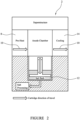
- the reduction apparatus may comprise a loading unit for loading the feedstock onto a cathode, and a pre-heat unit for heating the feedstock and the cathode for immersion into the fused salt, in order to avoid thermal shock, or undesirable cooling of the fused salt on immersion of the cathode.
- the cathode may be a tray-shaped cathode comprising a flat base and a raised peripheral flange at the edge for retaining a bed of a feedstock in the form of powder.
- the cathode carrying the metallic product is advantageously removable from the electrochemical cell, and movable into a cooling unit for cooling the cathode and the metallic product before the metallic product is processed by the processor.
- the cathode carrying the feedstock is movable horizontally within, or from, the loading unit until it is positioned beneath the anode, and the anode and the cathode can then be lowered vertically into the fused salt.
- the anode and the cathode carrying the metallic product may be raised vertically out of the fused salt, before the cathode carrying the metallic product is moved horizontally into the cooling unit.
- the horizontal movement of the cathode and the feedstock, and the cathode and the metallic product after reduction is selected in order to enhance the automation of the reduction process, and to enable the loading unit and the cooling unit to be conveniently positioned alongside the electrochemical cell to reduce the volume of the apparatus and the space required to house it.
- the horizontal and vertical movements of the cathode, and the vertical movement of the anode may then be controlled and performed by automated machinery.
- the metallic product is handled by the processor, where first it is preferably washed to remove any of the salt remaining on the product after cooling.
- the processor may additionally comprise a comminutor, or crushing apparatus, for comminuting or crushing the metallic product to produce metallic particles of the metallic product.
- These particles may not all be of the same shape or size, but it may be possible to use the metallic particles as the metallic powder for additive manufacturing after this comminution process, without further processing steps, if the nature of the particles is suitable for input to the additive-manufacturing process.
- an additive-manufacturing process such as plasma spraying may be relatively tolerant of the size and shape of the particles and so the comminuted particles may be suitable for this.
- processors may then comprise a classifier or screening apparatus for selecting a predetermined range of sizes of the metallic particles which are to form the metallic powder.
- the processor may additionally comprise a spheroidising apparatus for spheroidising the classified metallic particles to produce the metallic powder.
- the metallic particles may include particles, such as impurity particles, that should be removed before the additive-manufacturing process.
- the titanium feedstock may contain impurities such as iron, which is commonly found in combination with titanium ores.
- the processor may comprise an apparatus for removing undesired particles, such as impurity particles. This apparatus might comprise, for example, a magnetic separator for separating ferromagnetic particles from non-ferromagnetic particles in the metallic particles, or a floatation apparatus for removing low or high density particles.
- the feedstock is advantageously in the form of a powder of a metallic compound, or a mixture of metallic compounds, containing the metallic elements required for the desired metallic powder.
- the feedstock may have a particle size or particle size distribution that, when reduced, produces a suitable particle size or particle size distribution for the metallic powder.
- the additive-manufacturing apparatus may comprise an apparatus such as a 3D printer, a selective laser melting machine, a selective laser sintering machine, a selective electron-beam melting machine, or other apparatus for manufacturing the desired metallic article from the metallic powder.
- an apparatus such as a 3D printer, a selective laser melting machine, a selective laser sintering machine, a selective electron-beam melting machine, or other apparatus for manufacturing the desired metallic article from the metallic powder.
- a spray-coating apparatus such as a plasma-spray-coating apparatus.
- a significant proportion of the metallic powder supplied to the additive-manufacturing apparatus does not form part of the metallic product, but is oxidised by the additive-manufacturing process to form oxidised metallic powder.
- a 3D printing apparatus such as a selective laser melting apparatus
- successive layers of metallic powder are deposited in a bed of the apparatus, and each layer is scanned by the laser to melt the powder locally and to form the desired article.
- Powder that is not melted to form part of the article can be removed from the bed and in some cases may be reused for additive-manufacturing of further products, but in many cases it cannot be reused because the powder close to the scanning laser or electron beam is heated during the additive manufacturing and may be degraded by that heating even if the selective melting process is carried out under an inert gas.
- the powder is titanium powder
- the heating causes dissolution of the oxide surface layer into the bulk of the particles that have been heated.
- the oxygen remains in the bulk, and when the particle is exposed to air a new surface oxide layer forms. In this way the oxygen content of the particle increases, so that the additive-manufacturing process produces oxidised metallic particles (despite being carried out in an inert atmosphere).
- this problem may be addressed by recycling the oxidised metallic powder through the electrolytic cell.
- the oxidised metallic powder produced by the additive-manufacturing process may be used as the feedstock, or as a component of the feedstock, of the reduction apparatus.
- the oxidised metallic powder may in this way be efficiently processed to reduce its oxygen content and to optimise it for further use in the additive-manufacturing apparatus.
- the oxidised metallic powder may be loaded by itself onto a cathode for electrolytic reduction, or it may be mixed with new feedstock, in the form of metal compound or ore for producing the desired metallic powder.
- the decision as to which option to take depends on the desired composition of the metallic powder, and the quantities of the oxidised metallic powder and new feedstock available. It may be beneficial to mix a portion of the oxidised metallic powder with a portion of new feedstock on a cathode in order to accelerate the electro-reduction of the new feedstock by improving electrical conduction through the mass of feedstock on the cathode, due to the metallic nature of the oxidised metallic powder mixed with the non-conductive metal-compound feedstock powder.
- a significant advantage of preferred embodiments of the present invention lies in the flexibility of the apparatus to produce metallic articles from a wide range of different metallic compositions, including high-performance metallic compositions for technically-advanced applications, such as for medical equipment, or for medical implants, or for aerospace applications. Control of the quality of the metallic powder used for additive manufacturing of such articles is very important, as is control of the alloy composition to be used. If an additive-manufacturing apparatus is to be able to fabricate articles for a variety of applications, it is necessary to supply to the additive-manufacturing apparatus high-quality metal powders of the specific alloy composition required for each application.
- an additive-manufacturing operator would normally have to maintain stocks of each alloy that they might need, and to store those stocks in suitably-controlled conditions, but by collocating the electrolytic reduction apparatus with the additive-manufacturing apparatus, the operator can simply manufacture on site the desired metallic powder, solving the problem of the prior art and offering a flexible and high-quality manufacturing system.
- a suitable feedstock is selected and provided, comprising one or more compounds containing elements corresponding to the elements forming the desired metallic product. It is also desirable that the reduction and processing steps are carried out appropriately to reduce that feedstock to the desired metallic product, and that the processor is controlled to produce the desired metallic powder.
- the apparatus is controlled by a suitably-programmed controller, and optionally the controller is in communication with a remote server which can provide expert system control.
- a system operator may provide or install an apparatus embodying the invention, for reducing a feedstock and producing metallic articles by additive manufacturing.
- the system operator may then provide or specify a suitable feedstock for the electrochemical cell, and may provide control parameters, for example from the remote server to a locally-situated controller, to control the apparatus to produce the desired metallic powder and even to fabricate the desired metallic article.
- the production of the metallic article may be automated as far as possible by using the expert system operated by the remote server (or system controller), in combination with a local controller of the apparatus.
- the system operator may provide pre-packaged quantities of feedstock for electrolytic reduction.
- this may advantageously ensure high performance of the apparatus and a high-quality product, despite requirements for different alloys for making different metallic articles at different times.
- the expert system or remote server may also advantageously receive feedback from the apparatus, in order to maintain control during operation of the apparatus. Feedback may also be used if the apparatus is used to reduce a feedstock that has been prepared on site, such as a feedstock comprising a mixture of a metallic compound and oxidised metallic powder produced by the additive-manufacturing process, as described above.
- Feedstock parameters may advantageously be selected in order to produce not only a product having a desired composition but also other desired properties, such as a desired particle size.
- a feedstock may comprise particles within a particular size range that is known to be reducible to metallic particles having a desired, smaller, particle size range. This may minimise wastage of the metallic material in the processor.
- one remote server may be coupled to and control multiple manufacturing apparatus embodying the invention, which may be at different locations.
- the system operator may update the control provided by the remote server, if required, so as continuously to provide effective control of all of the manufacturing apparatus to which it is connected.
- the electrochemical cell and the processor are advantageously specified to be able to produce a quantity of metallic powder that is suitable for consumption by the additive-manufacturing apparatus with which they are collocated.
- the apparatus may advantageously be capable of producing between 6kg and 12kg of the metallic powder per day.
- the total size of the apparatus may therefore advantageously be much smaller than conventional machines for producing metallic products.
- the apparatus may advantageously be much smaller than a Kroll reactor.
- Embodiments of the invention may thus provide numerous advantages. For example, it may address the relatively inefficient ways in which materials such as titanium powder are obtained today. Other considerations are the health and safety implications of stocking large amount of titanium powders, well known for their flammability; flammability is also related to the size of the powder the finer the powder the more flammable it is. By reducing or eliminating the need to store or transport the metallic powder, the invention may solve these problems. Rather than buy and stock large amounts of costly and dangerous powders, the invention may advantageously provide an all-encompassing machine that can process an oxide feed to a metal powder to be utilised in conjunction with a 3D printer.
- the apparatus may also synergistically enable regeneration of out-of-specification powders, which have drifted off-specification with regards to oxygen content because of thermal cycling in a 3D printer as described above.
- regeneration of oxidised powder would require waste powder to be returned to a powder manufacturer to be de-oxidised off-site and then returned to the additive manufacturer.
- the invention may advantageously provide a small-footprint production unit with a collocated post-processing unit that may clean, dry and bag powder for utilisation in a 3D printer, as well as recycle powders oxidised in the 3D printer, all enabled in one machine on one site.
- the invention may also provide a method for manufacturing a metallic article by operation of the apparatus described herein, and a metallic product manufactured using the method or apparatus.
- a first embodiment of the invention is a highly-automated system that produces 6 to 12 kg of titanium and/or titanium alloy powder per 24 hours cycle with a reduced footprint compared to comparable conventional apparatus.
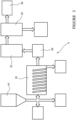
- the system, or unit encompasses a reduction apparatus 2, a processor 4, and a selective laser melting apparatus 6.
- the reduction apparatus comprises an electrochemical cell for reducing a feedstock, which is either in the form of a powder of a metal compound, or a powder of oxidised metal (produced as a by-product of an additive manufacturing process), or a mixture of the two.
- the processor comprises stages for processing the metallic product of the reduction stage and product cleaning, sizing and bagging in inert atmosphere.
- the size and design of the unit in this embodiment is based on the material feed requirements of the selective laser melting (SLM) machine 6.
- SLM selective laser melting
- Such machines have an average bed mass of 50 to 70 kg and a deposition rate between 40 and 160 g/h for a total of about 2.4kg/day.
- Electron beam melting (EBM) machines typically have a somewhat smaller bed mass between 20 to 50kg but a faster deposition rate around 500g/h which equates to a metallic powder feed requirement of about 12kg/day.
- Embodiments of the invention could be constructed to cover either of these scenarios.
- a feedstock is charged onto a cathode tray that is then put in a pre-heat apparatus 8.
- a tray transport machine 10 moves the tray from the pre-heat to the electrochemical reduction chamber 12 and when the electro-reduction cycle is over it moves the tray with reduced metallic product on it in to a cooling station 14.
- the reduction apparatus is then ready to accept another tray to continue the cycle.
- the tray will then be taken when at room temperature and enters the processor 4, where it is soaked in a bath (not shown) to remove unwanted salt from the metallic product.
- the resulting product in the form of a lightly-sintered block, is then further post processed by crushing or comminuting 16, further washing and milling 18, magnetic separation to remove ferromagnetic impurities 20, drying in argon 22, sieving or classifying 24, and packing 26 for supply to the SLM apparatus.
- the product is additionally plasma spheroidised (not shown) before it is packaged for supply, as spherical metallic powder, to the SLM apparatus.
- An object of a preferred embodiment of the invention is to provide a compact and highly-automated instrument for carrying out the following steps: place an oxide powder on a cathode tray, input the oxide powder on the tray to the apparatus, conduct electrolysis and retrieve the tray, feed the reduced metallic product to a processor which will crush the lightly-sintered block, or cake, of product, wash and dry the resulting metallic particulate, magnetically separate metallic impurities and subsequently bag the powder under argon for storage or spheroidisation, and supply to an additive manufacturing process.
- Such an apparatus could process any titanium alloy within a range of alloying elements as well as regenerate powder previously handled by the SLM apparatus, but which has not formed part of the metallic article produced by the SLM process.
- fused salt preferably a mixture of calcium chloride and calcium oxide
- the anode will have the ability to move up and down whilst the tray will travel transversely from the pre-heat, underneath the anode, then vertically with the anode in to the bath and (following reduction) upwards and sideways in to the cooling chamber as shown in figure 2 .
- the electrochemical cell is designed to the following specifications:
- Atmosphere Argon in the cooling station, CO/CO 2 atmosphere in the electrochemical cell and normal air in the pre-heat.
- the processor will comprise the following stages:
- the processor preferably also carried out spheroidisation, advantageously based on induction plasma technology to produce round powder particles. Particles are fed in to a chamber in which plasma is created, fall through the chamber and melt to then solidify again in spherical form.
- the preferred embodiment of the invention comprises a programmable control system, for controlling the functionality described above.
- the control system is coupled, for example over the internet or other remote communication, to a remote server operated by a system operator.
- a remote server operated by a system operator.
- the system operator can optimise the performance of the apparatus, and can control and optimise the performance of multiple similar apparatus, installed at different locations.
Landscapes
- Chemical & Material Sciences (AREA)
- Engineering & Computer Science (AREA)
- Materials Engineering (AREA)
- Manufacturing & Machinery (AREA)
- Organic Chemistry (AREA)
- Metallurgy (AREA)
- Chemical Kinetics & Catalysis (AREA)
- Electrochemistry (AREA)
- Mechanical Engineering (AREA)
- Physics & Mathematics (AREA)
- Plasma & Fusion (AREA)
- Life Sciences & Earth Sciences (AREA)
- Optics & Photonics (AREA)
- General Life Sciences & Earth Sciences (AREA)
- Geology (AREA)
- Environmental & Geological Engineering (AREA)
- Nanotechnology (AREA)
- Sustainable Development (AREA)
- General Chemical & Material Sciences (AREA)
- Electrolytic Production Of Metals (AREA)
- Powder Metallurgy (AREA)
- Manufacture Of Metal Powder And Suspensions Thereof (AREA)
- Manufacture And Refinement Of Metals (AREA)
Claims (14)
- Appareil de fabrication d'un objet métallique comprenant :un appareil de réduction pour réduire électrochimiquement un produit de départ en un produit métallique ;un processeur pour convertir le produit métallique en une poudre métallique ; etun appareil de fabrication additive pour fabriquer l'article métallique à partir de la poudre métallique ;dans lequel l'appareil de réduction, le processeur et l'appareil de fabrication additive sont colocalisés, ou situés sur le même site,et dans lequel l'appareil de réduction comprend une cellule électrochimique dans laquelle, en cours d'utilisation, une anode et une cathode sont en contact avec un sel fondu et le produit de départ entre en contact avec la cathode et le sel fondu, ainsi qu'une alimentation électrique pour appliquer un potentiel cathodique à la cathode de telle sorte que le produit de départ soit réduit au produit métallique.
- Appareil selon la revendication 1, dans lequel l'appareil de réduction, le processeur et l'appareil de fabrication additive sont colocalisés dans le même conteneur, ou bâtiment portable.
- Appareil selon la revendication 1, dans lequel l'appareil de réduction comprend une unité de chargement pour charger le produit de départ sur une cathode et une unité de préchauffage pour chauffer le produit de départ et la cathode en vue de leur immersion dans le sel fondu, et/ou dans lequel la cathode portant le produit métallique peut être retirée de la cellule électrochimique, et dans lequel l'appareil de réduction comprend une unité de refroidissement pour refroidir la cathode et le produit métallique avant que le processeur ne traite le produit métallique.
- Appareil selon la revendication 3, dans lequel, après le chargement du produit de départ sur la cathode de l'unité de chargement, la cathode portant le produit de départ est déplacée horizontalement jusqu'à ce qu'elle soit positionnée sous l'anode, et l'anode et la cathode sont ensuite abaissées dans le sel fondu, et/ou dans lequel, après réduction du produit de départ pour produire le produit métallique, l'anode et la cathode portant le produit métallique sont soulevées hors du sel fondu, avant de déplacer horizontalement la cathode portant le produit métallique dans l'unité de refroidissement.
- Appareil selon l'une quelconque des revendications précédentes, dans lequel le processeur comprend un broyeur pour broyer le produit métallique afin de produire des particules métalliques du produit métallique, et un classificateur ou appareil de criblage pour sélectionner une plage prédéterminée de tailles des particules métalliques pour former la poudre métallique, dans lequel le processeur comprend de préférence un appareil de sphéroïdisation pour sphéroïdiser les particules métalliques afin de produire la poudre métallique, dans lequel le processeur comprend de préférence un séparateur magnétique pour séparer les particules ferromagnétiques des particules non ferromagnétiques dans les particules métalliques ou la poudre métallique.
- Appareil selon l'une quelconque des revendications précédentes, dans lequel l'appareil de fabrication additive comprend une imprimante 3D, telle qu'une machine de fusion sélective par laser, une machine de frittage sélectif par laser, ou une machine de fusion sélective par faisceau d'électrons, ou un appareil de revêtement par pulvérisation, tel qu'un appareil de revêtement par pulvérisation plasma, et/ou dans lequel la poudre métallique comprend du titane ou un alliage à base de titane, et/ou dans lequel une partie de la poudre métallique fournie à l'appareil de fabrication additive ne fait pas partie du produit métallique, mais est oxydée par le procédé de fabrication additive pour former une poudre métallique oxydée, et dans lequel la poudre métallique oxydée est fournie en tant que produit de départ, ou en tant que composant du produit de départ, à l'appareil de réduction, et/ou dans lequel le produit de départ comprend un composé contenant des éléments correspondant aux éléments formant le produit métallique et/ou dans lequel le produit de départ comprend un minerai naturel des éléments formant le produit métallique, tel que le rutile, et/ou capable de produire entre 6 kg et 12 kg de la poudre métallique par jour.
- Procédé de fabrication d'un article métallique à partir d'un produit de départ pulvérulent, comprenant la commande de la réduction électrochimique d'un produit de départ prédéterminé pour produire un produit métallique, la conversion du produit métallique en une poudre métallique et la fabrication de l'article métallique à partir de la poudre métallique par fabrication additive,dans lequel l'appareil pour réaliser la réduction, la conversion et la fabrication sont colocalisés, ou situés dans le même conteneur, ou dans le même bâtiment, ou situés sur le même site,et dans lequel la réduction électrochimique du produit de départ comprend la mise en contact d'une anode et d'une cathode avec un sel fondu, la mise en contact du produit de départ avec la cathode et le sel fondu, et l'utilisation d'une alimentation électrique pour appliquer un potentiel cathodique à la cathode de telle sorte que le produit de départ soit réduit au produit métallique.
- Procédé selon la revendication 7, comprenant les étapes de chargement du produit de départ sur une cathode, de préchauffage du produit de départ et de la cathode puis d'immersion du produit de départ et de la cathode dans un sel fondu pour une électroréduction du produit de départ.
- Procédé selon la revendication 8, comprenant les étapes de retrait de la cathode portant le produit métallique d'une cellule électrochimique comprenant le sel fondu, et de refroidissement de la cathode et du produit métallique avant que le processeur ne traite le produit métallique, la cellule électrochimique et le processeur étant colocalisés, ou situés dans le même récipient, ou bâtiment, ou se trouvant sur le même site, et/ou comprenant après le chargement du produit de départ sur la cathode, les étapes de déplacement de la cathode portant le produit de départ horizontalement jusqu'à ce qu'elle soit positionnée sous une anode, et d'abaissement de l'anode et la cathode dans le sel fondu, et/ou comprenant, après réduction du produit de départ pour produire le produit métallique, les étapes de soulèvement de l'anode et la cathode portant le produit métallique hors du sel fondu, avant le déplacement de la cathode portant le produit métallique horizontalement dans une unité de refroidissement.
- Procédé selon l'une quelconque des revendications 7 à 9, dans lequel la conversion du produit métallique comprend le broyage du produit métallique pour produire des particules métalliques du produit métallique, et la classification ou le criblage des particules métalliques pour sélectionner une plage prédéterminée de tailles des particules métalliques pour former la poudre métallique, et/ou dans lequel la conversion du produit métallique comprend la sphéroïdisation des particules métalliques pour former la poudre métallique et/ou dans lequel la conversion du produit métallique comprend la séparation magnétique des particules ferromagnétiques des particules non ferromagnétiques dans les particules métalliques ou la poudre métallique, et/ou dans lequel la poudre métallique comprend du titane ou un alliage à base de titane, et/ou dans lequel une partie de la poudre métallique fournie à l'appareil de fabrication additive ne fait pas partie du produit métallique, mais est oxydée par le procédé de fabrication additive pour former une poudre métallique oxydée, et le procédé comprenant l'étape de fourniture de la poudre métallique oxydée en tant que matière première, ou en tant que composant du produit de départ, à l'appareil de réduction, et/ou comprenant la commande de l'appareil pour produire entre 6 kg et 12 kg de la poudre métallique par jour.
- Système de commande d'un appareil selon l'une quelconque des revendications 1 à 6 ou d'un procédé selon l'une quelconque des revendications 7 à 10, comprenant un contrôleur situé localement couplé à un appareil de manutention de matériaux, ou de fabrication comprenant l'appareil de réduction, le processeur et l'appareil de fabrication additive, pour commander le fonctionnement de l'appareil de manutention de matériaux et recevoir un retour d'informations de celui-ci, et un serveur distant couplé au contrôleur situé localement pour assurer une commande de système expert au contrôleur situé localement et, éventuellement, recevoir un retour d'informations du contrôleur situé localement.
- Système de commande selon la revendication 11, dans lequel une pluralité de contrôleurs situés localement, chacun pour commander un appareil de manutention de matériaux respectif, est couplée au même serveur distant pour assurer une commande de système expert, et/ou dans lequel le ou chaque contrôleur situé localement est cositué localement avec le ou chaque appareil de manutention de matériaux, et/ou dans lequel, lorsqu'un produit de départ particulier est fourni pour l'appareil de manutention de matériaux, le serveur distant fournit des paramètres de commande correspondants au contrôleur situé localement pour permettre au contrôleur situé localement de commander l'appareil de manutention de matériaux afin de traiter le produit de départ.
- Procédé de commande d'un appareil de manutention ou de fabrication comprenant l'appareil de réduction, le processeur et l'appareil de fabrication additive selon l'une quelconque des revendications précédentes, comprenant les étapes de fourniture de paramètres de commande ou d'une commande de système expert par un serveur distant à un contrôleur local, et d'exploitation du contrôleur situé localement pour commander l'appareil de manutention de matériaux afin de produire un article métallique souhaité.
- Procédé de commande selon la revendication 13, comportant l'étape de fourniture d'un retour d'informations de l'appareil de manutention de matériaux au contrôleur local, et éventuellement pour fournir un retour d'informations du contrôleur local, pour commander l'appareil de manutention de matériaux, et/ou comprenant l'étape de fourniture par le serveur distant de paramètres de commande ou d'une commande de système expert à une pluralité de processeurs situés localement couplés à des appareils de manutention respectifs, éventuellement sur différents sites, et éventuellement de réception d'un retour d'informations de celle-ci, et/ou dans lequel, lorsqu'un produit de départ particulier est fourni à l'appareil de manutention de matériaux, le serveur distant fournit des paramètres de commande au contrôleur situé localement pour permettre au contrôleur situé localement de commander l'appareil de manutention de matériaux afin de traiter le produit de départ.
Applications Claiming Priority (2)
| Application Number | Priority Date | Filing Date | Title |
|---|---|---|---|
| GBGB1609141.5A GB201609141D0 (en) | 2016-05-24 | 2016-05-24 | Manufacturing apparatus and method |
| PCT/GB2017/051454 WO2017203245A1 (fr) | 2016-05-24 | 2017-05-24 | Appareil de fabrication et procédé |
Publications (3)
| Publication Number | Publication Date |
|---|---|
| EP3464656A1 EP3464656A1 (fr) | 2019-04-10 |
| EP3464656C0 EP3464656C0 (fr) | 2024-01-03 |
| EP3464656B1 true EP3464656B1 (fr) | 2024-01-03 |
Family
ID=56369898
Family Applications (1)
| Application Number | Title | Priority Date | Filing Date |
|---|---|---|---|
| EP17727311.7A Active EP3464656B1 (fr) | 2016-05-24 | 2017-05-24 | Appareil de fabrication et procédé |
Country Status (7)
| Country | Link |
|---|---|
| US (1) | US11498128B2 (fr) |
| EP (1) | EP3464656B1 (fr) |
| CN (1) | CN109563564B (fr) |
| AU (1) | AU2017270686B2 (fr) |
| EA (1) | EA201892335A1 (fr) |
| GB (1) | GB201609141D0 (fr) |
| WO (1) | WO2017203245A1 (fr) |
Families Citing this family (13)
| Publication number | Priority date | Publication date | Assignee | Title |
|---|---|---|---|---|
| US11235389B2 (en) | 2018-09-19 | 2022-02-01 | Molyworks Materials Corp. | Deployable manufacturing center (DMC) system and process for manufacturing metal parts |
| CN109130189A (zh) * | 2018-09-27 | 2019-01-04 | 中北大学 | 一种回收3d打印废弃金属粉料的装置 |
| US11590574B2 (en) | 2018-12-18 | 2023-02-28 | Molyworks Materials Corp. | Method for manufacturing metal components using recycled feedstock and additive manufacturing |
| US11623278B2 (en) | 2019-07-10 | 2023-04-11 | MolyWorks Materials Corporation | Expeditionary additive manufacturing (ExAM) system and method |
| EP3812483B1 (fr) | 2019-10-24 | 2024-01-31 | Airbus Defence and Space GmbH | Dispositif d'électrolyse destiné à la production électrolytique d'oxygène à partir du matériau de départ contenant de l'oxygène |
| CN110732676B (zh) * | 2019-11-11 | 2022-08-02 | 重庆材料研究院有限公司 | 一种球形钨铼合金粉体的制备方法 |
| US12534818B2 (en) | 2021-10-25 | 2026-01-27 | Airbus Defence and Space GmbH | Method and system for extracting metal and oxygen from powdered metal oxides |
| US11987893B2 (en) | 2021-10-25 | 2024-05-21 | Airbus Defence and Space GmbH | System and method for extracting oxygen from powdered metal oxides |
| CN114474723B (zh) * | 2022-01-07 | 2024-12-27 | 张涵文 | 一种快速制造粉末铺粉设备 |
| WO2025064719A1 (fr) * | 2023-09-22 | 2025-03-27 | Beehive Industries, LLC | Cicatrisation de couches polycristallines |
| US20250135430A1 (en) | 2023-11-01 | 2025-05-01 | Airbus Defence and Space GmbH | Reactor Device for Converting Powdered Metal Oxides and Conversion System Comprising Same |
| WO2025111583A1 (fr) * | 2023-11-22 | 2025-05-30 | Divergent Technologies, Inc. | Passivation de poudre de déchets métalliques |
| CN120425419B (zh) * | 2025-07-07 | 2025-09-30 | 赣州辰鑫金属材料有限公司 | 稀土熔盐电解铸锭装置 |
Family Cites Families (10)
| Publication number | Priority date | Publication date | Assignee | Title |
|---|---|---|---|---|
| GB9812169D0 (en) | 1998-06-05 | 1998-08-05 | Univ Cambridge Tech | Purification method |
| JP2007509232A (ja) | 2003-10-14 | 2007-04-12 | ビーエイチピー ビリトン イノベーション プロプライアタリー リミテッド | 金属酸化物の電気化学的還元 |
| RU2007107083A (ru) | 2004-07-30 | 2008-09-10 | БиЭйчПи БИЛЛИТОН ИННОВЕЙШН ПТИ ЛТД (AU) | Электрохимическое восстановление оксидов металлов |
| DE112011101779T5 (de) | 2010-05-25 | 2013-03-14 | Panasonic Corporation | Metallpulver zum selektiven Lasersintern, Verfahren zur Herstellung eines dreidimensionalen Formgegenstands unter Verwendung desselben und davon erhaltener dreidimensionaler Formgegenstand |
| EP2764137B1 (fr) * | 2011-10-04 | 2017-04-05 | Metalysis Limited | Production électrolytique de poudre |
| US8961645B2 (en) * | 2012-12-17 | 2015-02-24 | General Electric Company | Method and system for recovering bond coat and barrier coat materials from overspray and articles |
| US9364897B2 (en) * | 2012-12-29 | 2016-06-14 | United Technologies Corporation | Method and apparatus for reconditioning oxidized powder |
| ES3007507T3 (en) * | 2013-07-31 | 2025-03-20 | Limacorporate Spa | Method for the recovery and regeneration of metal powder in ebm applications |
| PL2944401T3 (pl) * | 2014-05-15 | 2019-08-30 | Heraeus Deutschland GmbH & Co. KG | Sposób wytwarzania elementu konstrukcyjnego ze stopu metali zawierającego fazę amorficzną |
| CN204934612U (zh) * | 2015-08-19 | 2016-01-06 | 山西卓锋钛业有限公司 | 一种制备3d打印用的超细微球形钛粉的装置 |
-
2016
- 2016-05-24 GB GBGB1609141.5A patent/GB201609141D0/en not_active Ceased
-
2017
- 2017-05-24 US US16/302,419 patent/US11498128B2/en active Active
- 2017-05-24 WO PCT/GB2017/051454 patent/WO2017203245A1/fr not_active Ceased
- 2017-05-24 EP EP17727311.7A patent/EP3464656B1/fr active Active
- 2017-05-24 AU AU2017270686A patent/AU2017270686B2/en active Active
- 2017-05-24 CN CN201780031704.7A patent/CN109563564B/zh active Active
- 2017-05-24 EA EA201892335A patent/EA201892335A1/ru unknown
Also Published As
| Publication number | Publication date |
|---|---|
| CN109563564A (zh) | 2019-04-02 |
| EP3464656C0 (fr) | 2024-01-03 |
| WO2017203245A1 (fr) | 2017-11-30 |
| US11498128B2 (en) | 2022-11-15 |
| CA3025199A1 (fr) | 2017-11-30 |
| EP3464656A1 (fr) | 2019-04-10 |
| CN109563564B (zh) | 2022-05-03 |
| AU2017270686A1 (en) | 2019-01-17 |
| EA201892335A1 (ru) | 2019-06-28 |
| BR112018073859A2 (pt) | 2019-02-26 |
| GB201609141D0 (en) | 2016-07-06 |
| US20190275589A1 (en) | 2019-09-12 |
| AU2017270686B2 (en) | 2023-02-09 |
Similar Documents
| Publication | Publication Date | Title |
|---|---|---|
| AU2017270686B2 (en) | Manufacturing apparatus and method | |
| EP3909752B1 (fr) | Procédé pour la récupération et la régénération de poudre de métal dans des applications ebm | |
| Powell et al. | Understanding powder degradation in metal additive manufacturing to allow the upcycling of recycled powders | |
| AU2017279628B2 (en) | A system and method for extraction and refining of titanium | |
| Hu et al. | Development of the Fray-Farthing-Chen Cambridge process: towards the sustainable production of titanium and its alloys | |
| Dawes et al. | Introduction to the additive manufacturing powder metallurgy supply chain | |
| EP3423219B1 (fr) | Fabrication de pièces métalliques par fabrication additive | |
| EP3512970B1 (fr) | Procédé de production d'alliage de titane-aluminium-vanadium | |
| US20180339466A1 (en) | Material handling in additive manufacturing | |
| CN105339112B (zh) | 粉末状金属材料的表面处理方法 | |
| US20140186205A1 (en) | Method and apparatus for reconditioning oxidized powder | |
| WO2004113593A1 (fr) | Reduction electrochimique d'oxydes metalliques | |
| EP3426468B1 (fr) | Système et procédé de commande pour fabrication additive | |
| CA3025199C (fr) | Appareil de fabrication d'un article metallique et methode de fabrication d'un article metallique a partir d'une charge d'alimentation en poudre | |
| EA045176B1 (ru) | Устройство и способ производства | |
| JP4465798B2 (ja) | 使用済みアルミニウム缶の回収再生方法 | |
| BR112018073859B1 (pt) | Dispositivo de fabricação de um artigo metálico, método para manufaturar um artigo metálico de uma carga de alimentação de pó sistema de controle, e método de controle para controlar um dispositivo de tratamento de materiais ou de fabricação | |
| EP2907899B1 (fr) | Procédé pour la récupération de métaux et d'éléments non métalliques et métalliques à partir d'objets contenant des composés organiques | |
| US20240326131A1 (en) | Multi-material recoater for support removal | |
| WO2025231316A1 (fr) | Recyclage d'aluminium par électroraffinage dans une masse fondue de chloroaluminate | |
| JP2008189972A (ja) | 移動型炉床炉の操業方法 | |
| JP2020084286A (ja) | 合金粉末、造形体 | |
| WO2025149583A1 (fr) | Élimination d'oxygène dans des processus de fabrication additive à base de poudre | |
| Reijonen | Utilizing metallic waste streams as raw material for powder-based additive manufacturing | |
| Yi et al. | Evaluating the Cumulative Energy Demand of Additive Manufacturing Using Direct |
Legal Events
| Date | Code | Title | Description |
|---|---|---|---|
| STAA | Information on the status of an ep patent application or granted ep patent |
Free format text: STATUS: UNKNOWN |
|
| STAA | Information on the status of an ep patent application or granted ep patent |
Free format text: STATUS: THE INTERNATIONAL PUBLICATION HAS BEEN MADE |
|
| PUAI | Public reference made under article 153(3) epc to a published international application that has entered the european phase |
Free format text: ORIGINAL CODE: 0009012 |
|
| STAA | Information on the status of an ep patent application or granted ep patent |
Free format text: STATUS: REQUEST FOR EXAMINATION WAS MADE |
|
| 17P | Request for examination filed |
Effective date: 20181213 |
|
| AK | Designated contracting states |
Kind code of ref document: A1 Designated state(s): AL AT BE BG CH CY CZ DE DK EE ES FI FR GB GR HR HU IE IS IT LI LT LU LV MC MK MT NL NO PL PT RO RS SE SI SK SM TR |
|
| AX | Request for extension of the european patent |
Extension state: BA ME |
|
| DAV | Request for validation of the european patent (deleted) | ||
| DAX | Request for extension of the european patent (deleted) | ||
| STAA | Information on the status of an ep patent application or granted ep patent |
Free format text: STATUS: EXAMINATION IS IN PROGRESS |
|
| 17Q | First examination report despatched |
Effective date: 20200430 |
|
| GRAP | Despatch of communication of intention to grant a patent |
Free format text: ORIGINAL CODE: EPIDOSNIGR1 |
|
| STAA | Information on the status of an ep patent application or granted ep patent |
Free format text: STATUS: GRANT OF PATENT IS INTENDED |
|
| INTG | Intention to grant announced |
Effective date: 20210611 |
|
| RAP3 | Party data changed (applicant data changed or rights of an application transferred) |
Owner name: METALYSIS LIMITED |
|
| GRAJ | Information related to disapproval of communication of intention to grant by the applicant or resumption of examination proceedings by the epo deleted |
Free format text: ORIGINAL CODE: EPIDOSDIGR1 |
|
| STAA | Information on the status of an ep patent application or granted ep patent |
Free format text: STATUS: EXAMINATION IS IN PROGRESS |
|
| INTC | Intention to grant announced (deleted) | ||
| RAP1 | Party data changed (applicant data changed or rights of an application transferred) |
Owner name: POWER RESOURCES GROUP LTD |
|
| GRAP | Despatch of communication of intention to grant a patent |
Free format text: ORIGINAL CODE: EPIDOSNIGR1 |
|
| STAA | Information on the status of an ep patent application or granted ep patent |
Free format text: STATUS: GRANT OF PATENT IS INTENDED |
|
| INTG | Intention to grant announced |
Effective date: 20220222 |
|
| GRAJ | Information related to disapproval of communication of intention to grant by the applicant or resumption of examination proceedings by the epo deleted |
Free format text: ORIGINAL CODE: EPIDOSDIGR1 |
|
| STAA | Information on the status of an ep patent application or granted ep patent |
Free format text: STATUS: EXAMINATION IS IN PROGRESS |
|
| INTC | Intention to grant announced (deleted) | ||
| GRAP | Despatch of communication of intention to grant a patent |
Free format text: ORIGINAL CODE: EPIDOSNIGR1 |
|
| STAA | Information on the status of an ep patent application or granted ep patent |
Free format text: STATUS: GRANT OF PATENT IS INTENDED |
|
| INTG | Intention to grant announced |
Effective date: 20221220 |
|
| GRAS | Grant fee paid |
Free format text: ORIGINAL CODE: EPIDOSNIGR3 |
|
| P01 | Opt-out of the competence of the unified patent court (upc) registered |
Effective date: 20230523 |
|
| GRAA | (expected) grant |
Free format text: ORIGINAL CODE: 0009210 |
|
| STAA | Information on the status of an ep patent application or granted ep patent |
Free format text: STATUS: THE PATENT HAS BEEN GRANTED |
|
| AK | Designated contracting states |
Kind code of ref document: B1 Designated state(s): AL AT BE BG CH CY CZ DE DK EE ES FI FR GB GR HR HU IE IS IT LI LT LU LV MC MK MT NL NO PL PT RO RS SE SI SK SM TR |
|
| REG | Reference to a national code |
Ref country code: GB Ref legal event code: FG4D |
|
| REG | Reference to a national code |
Ref country code: CH Ref legal event code: EP |
|
| REG | Reference to a national code |
Ref country code: DE Ref legal event code: R096 Ref document number: 602017078096 Country of ref document: DE |
|
| REG | Reference to a national code |
Ref country code: IE Ref legal event code: FG4D |
|
| U01 | Request for unitary effect filed |
Effective date: 20240129 |
|
| P04 | Withdrawal of opt-out of the competence of the unified patent court (upc) registered |
Effective date: 20240202 |
|
| U07 | Unitary effect registered |
Designated state(s): AT BE BG DE DK EE FI FR IT LT LU LV MT NL PT SE SI Effective date: 20240207 |
|
| PG25 | Lapsed in a contracting state [announced via postgrant information from national office to epo] |
Ref country code: ES Free format text: LAPSE BECAUSE OF FAILURE TO SUBMIT A TRANSLATION OF THE DESCRIPTION OR TO PAY THE FEE WITHIN THE PRESCRIBED TIME-LIMIT Effective date: 20240103 |
|
| PG25 | Lapsed in a contracting state [announced via postgrant information from national office to epo] |
Ref country code: ES Free format text: LAPSE BECAUSE OF FAILURE TO SUBMIT A TRANSLATION OF THE DESCRIPTION OR TO PAY THE FEE WITHIN THE PRESCRIBED TIME-LIMIT Effective date: 20240103 |
|
| PG25 | Lapsed in a contracting state [announced via postgrant information from national office to epo] |
Ref country code: IS Free format text: LAPSE BECAUSE OF FAILURE TO SUBMIT A TRANSLATION OF THE DESCRIPTION OR TO PAY THE FEE WITHIN THE PRESCRIBED TIME-LIMIT Effective date: 20240503 |
|
| PG25 | Lapsed in a contracting state [announced via postgrant information from national office to epo] |
Ref country code: GR Free format text: LAPSE BECAUSE OF FAILURE TO SUBMIT A TRANSLATION OF THE DESCRIPTION OR TO PAY THE FEE WITHIN THE PRESCRIBED TIME-LIMIT Effective date: 20240404 |
|
| PG25 | Lapsed in a contracting state [announced via postgrant information from national office to epo] |
Ref country code: RS Free format text: LAPSE BECAUSE OF FAILURE TO SUBMIT A TRANSLATION OF THE DESCRIPTION OR TO PAY THE FEE WITHIN THE PRESCRIBED TIME-LIMIT Effective date: 20240403 Ref country code: HR Free format text: LAPSE BECAUSE OF FAILURE TO SUBMIT A TRANSLATION OF THE DESCRIPTION OR TO PAY THE FEE WITHIN THE PRESCRIBED TIME-LIMIT Effective date: 20240103 |
|
| PG25 | Lapsed in a contracting state [announced via postgrant information from national office to epo] |
Ref country code: CZ Free format text: LAPSE BECAUSE OF FAILURE TO SUBMIT A TRANSLATION OF THE DESCRIPTION OR TO PAY THE FEE WITHIN THE PRESCRIBED TIME-LIMIT Effective date: 20240103 |
|
| PG25 | Lapsed in a contracting state [announced via postgrant information from national office to epo] |
Ref country code: RS Free format text: LAPSE BECAUSE OF FAILURE TO SUBMIT A TRANSLATION OF THE DESCRIPTION OR TO PAY THE FEE WITHIN THE PRESCRIBED TIME-LIMIT Effective date: 20240403 Ref country code: NO Free format text: LAPSE BECAUSE OF FAILURE TO SUBMIT A TRANSLATION OF THE DESCRIPTION OR TO PAY THE FEE WITHIN THE PRESCRIBED TIME-LIMIT Effective date: 20240403 Ref country code: IS Free format text: LAPSE BECAUSE OF FAILURE TO SUBMIT A TRANSLATION OF THE DESCRIPTION OR TO PAY THE FEE WITHIN THE PRESCRIBED TIME-LIMIT Effective date: 20240503 Ref country code: HR Free format text: LAPSE BECAUSE OF FAILURE TO SUBMIT A TRANSLATION OF THE DESCRIPTION OR TO PAY THE FEE WITHIN THE PRESCRIBED TIME-LIMIT Effective date: 20240103 Ref country code: GR Free format text: LAPSE BECAUSE OF FAILURE TO SUBMIT A TRANSLATION OF THE DESCRIPTION OR TO PAY THE FEE WITHIN THE PRESCRIBED TIME-LIMIT Effective date: 20240404 Ref country code: CZ Free format text: LAPSE BECAUSE OF FAILURE TO SUBMIT A TRANSLATION OF THE DESCRIPTION OR TO PAY THE FEE WITHIN THE PRESCRIBED TIME-LIMIT Effective date: 20240103 |
|
| PG25 | Lapsed in a contracting state [announced via postgrant information from national office to epo] |
Ref country code: PL Free format text: LAPSE BECAUSE OF FAILURE TO SUBMIT A TRANSLATION OF THE DESCRIPTION OR TO PAY THE FEE WITHIN THE PRESCRIBED TIME-LIMIT Effective date: 20240103 |
|
| U1N | Appointed representative for the unitary patent procedure changed after the registration of the unitary effect |
Representative=s name: REDDIE & GROSE LLP; GB |
|
| PG25 | Lapsed in a contracting state [announced via postgrant information from national office to epo] |
Ref country code: PL Free format text: LAPSE BECAUSE OF FAILURE TO SUBMIT A TRANSLATION OF THE DESCRIPTION OR TO PAY THE FEE WITHIN THE PRESCRIBED TIME-LIMIT Effective date: 20240103 |
|
| REG | Reference to a national code |
Ref country code: DE Ref legal event code: R097 Ref document number: 602017078096 Country of ref document: DE |
|
| PG25 | Lapsed in a contracting state [announced via postgrant information from national office to epo] |
Ref country code: SM Free format text: LAPSE BECAUSE OF FAILURE TO SUBMIT A TRANSLATION OF THE DESCRIPTION OR TO PAY THE FEE WITHIN THE PRESCRIBED TIME-LIMIT Effective date: 20240103 |
|
| PG25 | Lapsed in a contracting state [announced via postgrant information from national office to epo] |
Ref country code: SK Free format text: LAPSE BECAUSE OF FAILURE TO SUBMIT A TRANSLATION OF THE DESCRIPTION OR TO PAY THE FEE WITHIN THE PRESCRIBED TIME-LIMIT Effective date: 20240103 |
|
| PG25 | Lapsed in a contracting state [announced via postgrant information from national office to epo] |
Ref country code: SM Free format text: LAPSE BECAUSE OF FAILURE TO SUBMIT A TRANSLATION OF THE DESCRIPTION OR TO PAY THE FEE WITHIN THE PRESCRIBED TIME-LIMIT Effective date: 20240103 Ref country code: SK Free format text: LAPSE BECAUSE OF FAILURE TO SUBMIT A TRANSLATION OF THE DESCRIPTION OR TO PAY THE FEE WITHIN THE PRESCRIBED TIME-LIMIT Effective date: 20240103 Ref country code: RO Free format text: LAPSE BECAUSE OF FAILURE TO SUBMIT A TRANSLATION OF THE DESCRIPTION OR TO PAY THE FEE WITHIN THE PRESCRIBED TIME-LIMIT Effective date: 20240103 |
|
| PLBE | No opposition filed within time limit |
Free format text: ORIGINAL CODE: 0009261 |
|
| STAA | Information on the status of an ep patent application or granted ep patent |
Free format text: STATUS: NO OPPOSITION FILED WITHIN TIME LIMIT |
|
| 26N | No opposition filed |
Effective date: 20241007 |
|
| REG | Reference to a national code |
Ref country code: CH Ref legal event code: PL |
|
| U21 | Renewal fee for the european patent with unitary effect paid with additional fee |
Year of fee payment: 8 Effective date: 20241126 |
|
| P05 | Withdrawal of opt-out of the competence of the unified patent court (upc) changed |
Free format text: CASE NUMBER: APP_6108/2024 Effective date: 20240207 |
|
| PG25 | Lapsed in a contracting state [announced via postgrant information from national office to epo] |
Ref country code: MC Free format text: LAPSE BECAUSE OF FAILURE TO SUBMIT A TRANSLATION OF THE DESCRIPTION OR TO PAY THE FEE WITHIN THE PRESCRIBED TIME-LIMIT Effective date: 20240103 |
|
| PG25 | Lapsed in a contracting state [announced via postgrant information from national office to epo] |
Ref country code: MC Free format text: LAPSE BECAUSE OF FAILURE TO SUBMIT A TRANSLATION OF THE DESCRIPTION OR TO PAY THE FEE WITHIN THE PRESCRIBED TIME-LIMIT Effective date: 20240103 Ref country code: CH Free format text: LAPSE BECAUSE OF NON-PAYMENT OF DUE FEES Effective date: 20240531 |
|
| PG25 | Lapsed in a contracting state [announced via postgrant information from national office to epo] |
Ref country code: IE Free format text: LAPSE BECAUSE OF NON-PAYMENT OF DUE FEES Effective date: 20240524 |
|
| PG25 | Lapsed in a contracting state [announced via postgrant information from national office to epo] |
Ref country code: CY Free format text: LAPSE BECAUSE OF FAILURE TO SUBMIT A TRANSLATION OF THE DESCRIPTION OR TO PAY THE FEE WITHIN THE PRESCRIBED TIME-LIMIT; INVALID AB INITIO Effective date: 20170524 |
|
| PG25 | Lapsed in a contracting state [announced via postgrant information from national office to epo] |
Ref country code: HU Free format text: LAPSE BECAUSE OF FAILURE TO SUBMIT A TRANSLATION OF THE DESCRIPTION OR TO PAY THE FEE WITHIN THE PRESCRIBED TIME-LIMIT; INVALID AB INITIO Effective date: 20170524 |
|
| U21 | Renewal fee for the european patent with unitary effect paid with additional fee |
Year of fee payment: 9 Effective date: 20251117 |
|
| PGFP | Annual fee paid to national office [announced via postgrant information from national office to epo] |
Ref country code: GB Payment date: 20251104 Year of fee payment: 9 |