EP3466384B1 - Connecteurs et enveloppe pour produit d'hygiène personnelle comportant un élément numérique - Google Patents
Connecteurs et enveloppe pour produit d'hygiène personnelle comportant un élément numérique Download PDFInfo
- Publication number
- EP3466384B1 EP3466384B1 EP18199119.1A EP18199119A EP3466384B1 EP 3466384 B1 EP3466384 B1 EP 3466384B1 EP 18199119 A EP18199119 A EP 18199119A EP 3466384 B1 EP3466384 B1 EP 3466384B1
- Authority
- EP
- European Patent Office
- Prior art keywords
- personal hygiene
- digital element
- hygiene product
- connector
- element according
- Prior art date
- Legal status (The legal status is an assumption and is not a legal conclusion. Google has not performed a legal analysis and makes no representation as to the accuracy of the status listed.)
- Active
Links
Images







Classifications
-
- A—HUMAN NECESSITIES
- A61—MEDICAL OR VETERINARY SCIENCE; HYGIENE
- A61F—FILTERS IMPLANTABLE INTO BLOOD VESSELS; PROSTHESES; DEVICES PROVIDING PATENCY TO, OR PREVENTING COLLAPSING OF, TUBULAR STRUCTURES OF THE BODY, e.g. STENTS; ORTHOPAEDIC, NURSING OR CONTRACEPTIVE DEVICES; FOMENTATION; TREATMENT OR PROTECTION OF EYES OR EARS; BANDAGES, DRESSINGS OR ABSORBENT PADS; FIRST-AID KITS
- A61F13/00—Bandages or dressings; Absorbent pads
- A61F13/15—Absorbent pads, e.g. sanitary towels, swabs or tampons for external or internal application to the body; Supporting or fastening means therefor; Tampon applicators
- A61F13/42—Absorbent pads, e.g. sanitary towels, swabs or tampons for external or internal application to the body; Supporting or fastening means therefor; Tampon applicators with wetness indicator or alarm
-
- A—HUMAN NECESSITIES
- A61—MEDICAL OR VETERINARY SCIENCE; HYGIENE
- A61F—FILTERS IMPLANTABLE INTO BLOOD VESSELS; PROSTHESES; DEVICES PROVIDING PATENCY TO, OR PREVENTING COLLAPSING OF, TUBULAR STRUCTURES OF THE BODY, e.g. STENTS; ORTHOPAEDIC, NURSING OR CONTRACEPTIVE DEVICES; FOMENTATION; TREATMENT OR PROTECTION OF EYES OR EARS; BANDAGES, DRESSINGS OR ABSORBENT PADS; FIRST-AID KITS
- A61F13/00—Bandages or dressings; Absorbent pads
- A61F13/15—Absorbent pads, e.g. sanitary towels, swabs or tampons for external or internal application to the body; Supporting or fastening means therefor; Tampon applicators
-
- A—HUMAN NECESSITIES
- A61—MEDICAL OR VETERINARY SCIENCE; HYGIENE
- A61F—FILTERS IMPLANTABLE INTO BLOOD VESSELS; PROSTHESES; DEVICES PROVIDING PATENCY TO, OR PREVENTING COLLAPSING OF, TUBULAR STRUCTURES OF THE BODY, e.g. STENTS; ORTHOPAEDIC, NURSING OR CONTRACEPTIVE DEVICES; FOMENTATION; TREATMENT OR PROTECTION OF EYES OR EARS; BANDAGES, DRESSINGS OR ABSORBENT PADS; FIRST-AID KITS
- A61F13/00—Bandages or dressings; Absorbent pads
- A61F13/15—Absorbent pads, e.g. sanitary towels, swabs or tampons for external or internal application to the body; Supporting or fastening means therefor; Tampon applicators
- A61F13/84—Accessories, not otherwise provided for, for absorbent pads
-
- A—HUMAN NECESSITIES
- A61—MEDICAL OR VETERINARY SCIENCE; HYGIENE
- A61B—DIAGNOSIS; SURGERY; IDENTIFICATION
- A61B5/00—Measuring for diagnostic purposes; Identification of persons
- A61B5/24—Detecting, measuring or recording bioelectric or biomagnetic signals of the body or parts thereof
-
- A—HUMAN NECESSITIES
- A61—MEDICAL OR VETERINARY SCIENCE; HYGIENE
- A61B—DIAGNOSIS; SURGERY; IDENTIFICATION
- A61B5/00—Measuring for diagnostic purposes; Identification of persons
- A61B5/24—Detecting, measuring or recording bioelectric or biomagnetic signals of the body or parts thereof
- A61B5/316—Modalities, i.e. specific diagnostic methods
- A61B5/369—Electroencephalography [EEG]
- A61B5/375—Electroencephalography [EEG] using biofeedback
-
- A—HUMAN NECESSITIES
- A61—MEDICAL OR VETERINARY SCIENCE; HYGIENE
- A61B—DIAGNOSIS; SURGERY; IDENTIFICATION
- A61B5/00—Measuring for diagnostic purposes; Identification of persons
- A61B5/43—Detecting, measuring or recording for evaluating the reproductive systems
- A61B5/4306—Detecting, measuring or recording for evaluating the reproductive systems for evaluating the female reproductive systems, e.g. gynaecological evaluations
- A61B5/4318—Evaluation of the lower reproductive system
- A61B5/4337—Evaluation of the lower reproductive system of the vagina
-
- A—HUMAN NECESSITIES
- A61—MEDICAL OR VETERINARY SCIENCE; HYGIENE
- A61B—DIAGNOSIS; SURGERY; IDENTIFICATION
- A61B5/00—Measuring for diagnostic purposes; Identification of persons
- A61B5/68—Arrangements of detecting, measuring or recording means, e.g. sensors, in relation to patient
- A61B5/6801—Arrangements of detecting, measuring or recording means, e.g. sensors, in relation to patient specially adapted to be attached to or worn on the body surface
- A61B5/6802—Sensor mounted on worn items
- A61B5/6808—Diapers
-
- A—HUMAN NECESSITIES
- A61—MEDICAL OR VETERINARY SCIENCE; HYGIENE
- A61F—FILTERS IMPLANTABLE INTO BLOOD VESSELS; PROSTHESES; DEVICES PROVIDING PATENCY TO, OR PREVENTING COLLAPSING OF, TUBULAR STRUCTURES OF THE BODY, e.g. STENTS; ORTHOPAEDIC, NURSING OR CONTRACEPTIVE DEVICES; FOMENTATION; TREATMENT OR PROTECTION OF EYES OR EARS; BANDAGES, DRESSINGS OR ABSORBENT PADS; FIRST-AID KITS
- A61F13/00—Bandages or dressings; Absorbent pads
- A61F13/15—Absorbent pads, e.g. sanitary towels, swabs or tampons for external or internal application to the body; Supporting or fastening means therefor; Tampon applicators
- A61F13/20—Tampons, e.g. catamenial tampons; Accessories therefor
- A61F13/2002—Tampons, e.g. catamenial tampons; Accessories therefor characterised by the use
- A61F13/202—Catamenial tampons
-
- A—HUMAN NECESSITIES
- A61—MEDICAL OR VETERINARY SCIENCE; HYGIENE
- A61F—FILTERS IMPLANTABLE INTO BLOOD VESSELS; PROSTHESES; DEVICES PROVIDING PATENCY TO, OR PREVENTING COLLAPSING OF, TUBULAR STRUCTURES OF THE BODY, e.g. STENTS; ORTHOPAEDIC, NURSING OR CONTRACEPTIVE DEVICES; FOMENTATION; TREATMENT OR PROTECTION OF EYES OR EARS; BANDAGES, DRESSINGS OR ABSORBENT PADS; FIRST-AID KITS
- A61F13/00—Bandages or dressings; Absorbent pads
- A61F13/15—Absorbent pads, e.g. sanitary towels, swabs or tampons for external or internal application to the body; Supporting or fastening means therefor; Tampon applicators
- A61F13/44—Absorbent pads, e.g. sanitary towels, swabs or tampons for external or internal application to the body; Supporting or fastening means therefor; Tampon applicators with radio-opaque material or signalling means for residual material
-
- A—HUMAN NECESSITIES
- A61—MEDICAL OR VETERINARY SCIENCE; HYGIENE
- A61F—FILTERS IMPLANTABLE INTO BLOOD VESSELS; PROSTHESES; DEVICES PROVIDING PATENCY TO, OR PREVENTING COLLAPSING OF, TUBULAR STRUCTURES OF THE BODY, e.g. STENTS; ORTHOPAEDIC, NURSING OR CONTRACEPTIVE DEVICES; FOMENTATION; TREATMENT OR PROTECTION OF EYES OR EARS; BANDAGES, DRESSINGS OR ABSORBENT PADS; FIRST-AID KITS
- A61F13/00—Bandages or dressings; Absorbent pads
- A61F13/15—Absorbent pads, e.g. sanitary towels, swabs or tampons for external or internal application to the body; Supporting or fastening means therefor; Tampon applicators
- A61F13/45—Absorbent pads, e.g. sanitary towels, swabs or tampons for external or internal application to the body; Supporting or fastening means therefor; Tampon applicators characterised by the shape
- A61F13/47—Sanitary towels, incontinence pads or napkins
- A61F13/472—Sanitary towels, incontinence pads or napkins specially adapted for female use
-
- A—HUMAN NECESSITIES
- A61—MEDICAL OR VETERINARY SCIENCE; HYGIENE
- A61F—FILTERS IMPLANTABLE INTO BLOOD VESSELS; PROSTHESES; DEVICES PROVIDING PATENCY TO, OR PREVENTING COLLAPSING OF, TUBULAR STRUCTURES OF THE BODY, e.g. STENTS; ORTHOPAEDIC, NURSING OR CONTRACEPTIVE DEVICES; FOMENTATION; TREATMENT OR PROTECTION OF EYES OR EARS; BANDAGES, DRESSINGS OR ABSORBENT PADS; FIRST-AID KITS
- A61F13/00—Bandages or dressings; Absorbent pads
- A61F13/15—Absorbent pads, e.g. sanitary towels, swabs or tampons for external or internal application to the body; Supporting or fastening means therefor; Tampon applicators
- A61F13/45—Absorbent pads, e.g. sanitary towels, swabs or tampons for external or internal application to the body; Supporting or fastening means therefor; Tampon applicators characterised by the shape
- A61F13/49—Absorbent pads, e.g. sanitary towels, swabs or tampons for external or internal application to the body; Supporting or fastening means therefor; Tampon applicators characterised by the shape specially adapted to be worn around the waist, e.g. diapers, nappies
-
- A—HUMAN NECESSITIES
- A61—MEDICAL OR VETERINARY SCIENCE; HYGIENE
- A61F—FILTERS IMPLANTABLE INTO BLOOD VESSELS; PROSTHESES; DEVICES PROVIDING PATENCY TO, OR PREVENTING COLLAPSING OF, TUBULAR STRUCTURES OF THE BODY, e.g. STENTS; ORTHOPAEDIC, NURSING OR CONTRACEPTIVE DEVICES; FOMENTATION; TREATMENT OR PROTECTION OF EYES OR EARS; BANDAGES, DRESSINGS OR ABSORBENT PADS; FIRST-AID KITS
- A61F13/00—Bandages or dressings; Absorbent pads
- A61F13/15—Absorbent pads, e.g. sanitary towels, swabs or tampons for external or internal application to the body; Supporting or fastening means therefor; Tampon applicators
- A61F13/45—Absorbent pads, e.g. sanitary towels, swabs or tampons for external or internal application to the body; Supporting or fastening means therefor; Tampon applicators characterised by the shape
- A61F13/49—Absorbent pads, e.g. sanitary towels, swabs or tampons for external or internal application to the body; Supporting or fastening means therefor; Tampon applicators characterised by the shape specially adapted to be worn around the waist, e.g. diapers, nappies
- A61F13/49007—Form-fitting, self-adjusting disposable diapers
-
- G—PHYSICS
- G08—SIGNALLING
- G08B—SIGNALLING SYSTEMS, e.g. PERSONAL CALLING SYSTEMS; ORDER TELEGRAPHS; ALARM SYSTEMS
- G08B21/00—Alarms responsive to a single specified undesired or abnormal condition and not otherwise provided for
- G08B21/18—Status alarms
- G08B21/182—Level alarms, e.g. alarms responsive to variables exceeding a threshold
-
- G—PHYSICS
- G08—SIGNALLING
- G08B—SIGNALLING SYSTEMS, e.g. PERSONAL CALLING SYSTEMS; ORDER TELEGRAPHS; ALARM SYSTEMS
- G08B21/00—Alarms responsive to a single specified undesired or abnormal condition and not otherwise provided for
- G08B21/18—Status alarms
- G08B21/20—Status alarms responsive to moisture
-
- G—PHYSICS
- G08—SIGNALLING
- G08B—SIGNALLING SYSTEMS, e.g. PERSONAL CALLING SYSTEMS; ORDER TELEGRAPHS; ALARM SYSTEMS
- G08B21/00—Alarms responsive to a single specified undesired or abnormal condition and not otherwise provided for
- G08B21/18—Status alarms
- G08B21/24—Reminder alarms, e.g. anti-loss alarms
- G08B21/245—Reminder of hygiene compliance policies, e.g. of washing hands
-
- G—PHYSICS
- G08—SIGNALLING
- G08B—SIGNALLING SYSTEMS, e.g. PERSONAL CALLING SYSTEMS; ORDER TELEGRAPHS; ALARM SYSTEMS
- G08B25/00—Alarm systems in which the location of the alarm condition is signalled to a central station, e.g. fire or police telegraphic systems
- G08B25/01—Alarm systems in which the location of the alarm condition is signalled to a central station, e.g. fire or police telegraphic systems characterised by the transmission medium
- G08B25/10—Alarm systems in which the location of the alarm condition is signalled to a central station, e.g. fire or police telegraphic systems characterised by the transmission medium using wireless transmission systems
-
- A—HUMAN NECESSITIES
- A61—MEDICAL OR VETERINARY SCIENCE; HYGIENE
- A61B—DIAGNOSIS; SURGERY; IDENTIFICATION
- A61B10/00—Instruments for taking body samples for diagnostic purposes; Other methods or instruments for diagnosis, e.g. for vaccination diagnosis, sex determination or ovulation-period determination; Throat striking implements
- A61B10/0045—Devices for taking samples of body liquids
- A61B2010/0074—Vaginal or cervical secretions
-
- A—HUMAN NECESSITIES
- A61—MEDICAL OR VETERINARY SCIENCE; HYGIENE
- A61B—DIAGNOSIS; SURGERY; IDENTIFICATION
- A61B2505/00—Evaluating, monitoring or diagnosing in the context of a particular type of medical care
- A61B2505/07—Home care
-
- A—HUMAN NECESSITIES
- A61—MEDICAL OR VETERINARY SCIENCE; HYGIENE
- A61B—DIAGNOSIS; SURGERY; IDENTIFICATION
- A61B2562/00—Details of sensors; Constructional details of sensor housings or probes; Accessories for sensors
- A61B2562/02—Details of sensors specially adapted for in-vivo measurements
- A61B2562/029—Humidity sensors
-
- A—HUMAN NECESSITIES
- A61—MEDICAL OR VETERINARY SCIENCE; HYGIENE
- A61B—DIAGNOSIS; SURGERY; IDENTIFICATION
- A61B5/00—Measuring for diagnostic purposes; Identification of persons
- A61B5/14—Devices for taking samples of blood ; Measuring characteristics of blood in vivo, e.g. gas concentration within the blood, pH-value of blood
- A61B5/1405—Devices for taking blood samples
-
- A—HUMAN NECESSITIES
- A61—MEDICAL OR VETERINARY SCIENCE; HYGIENE
- A61B—DIAGNOSIS; SURGERY; IDENTIFICATION
- A61B5/00—Measuring for diagnostic purposes; Identification of persons
- A61B5/15—Devices for taking samples of blood
- A61B5/150007—Details
- A61B5/150015—Source of blood
- A61B5/150045—Source of blood for blood from vagina, placenta, colon or mouth
-
- A—HUMAN NECESSITIES
- A61—MEDICAL OR VETERINARY SCIENCE; HYGIENE
- A61B—DIAGNOSIS; SURGERY; IDENTIFICATION
- A61B5/00—Measuring for diagnostic purposes; Identification of persons
- A61B5/15—Devices for taking samples of blood
- A61B5/150969—Low-profile devices which resemble patches or plasters, e.g. also allowing collection of blood samples for testing
-
- A—HUMAN NECESSITIES
- A61—MEDICAL OR VETERINARY SCIENCE; HYGIENE
- A61F—FILTERS IMPLANTABLE INTO BLOOD VESSELS; PROSTHESES; DEVICES PROVIDING PATENCY TO, OR PREVENTING COLLAPSING OF, TUBULAR STRUCTURES OF THE BODY, e.g. STENTS; ORTHOPAEDIC, NURSING OR CONTRACEPTIVE DEVICES; FOMENTATION; TREATMENT OR PROTECTION OF EYES OR EARS; BANDAGES, DRESSINGS OR ABSORBENT PADS; FIRST-AID KITS
- A61F13/00—Bandages or dressings; Absorbent pads
- A61F13/15—Absorbent pads, e.g. sanitary towels, swabs or tampons for external or internal application to the body; Supporting or fastening means therefor; Tampon applicators
- A61F13/42—Absorbent pads, e.g. sanitary towels, swabs or tampons for external or internal application to the body; Supporting or fastening means therefor; Tampon applicators with wetness indicator or alarm
- A61F2013/421—Absorbent pads, e.g. sanitary towels, swabs or tampons for external or internal application to the body; Supporting or fastening means therefor; Tampon applicators with wetness indicator or alarm the alarm being a temperature change
-
- A—HUMAN NECESSITIES
- A61—MEDICAL OR VETERINARY SCIENCE; HYGIENE
- A61F—FILTERS IMPLANTABLE INTO BLOOD VESSELS; PROSTHESES; DEVICES PROVIDING PATENCY TO, OR PREVENTING COLLAPSING OF, TUBULAR STRUCTURES OF THE BODY, e.g. STENTS; ORTHOPAEDIC, NURSING OR CONTRACEPTIVE DEVICES; FOMENTATION; TREATMENT OR PROTECTION OF EYES OR EARS; BANDAGES, DRESSINGS OR ABSORBENT PADS; FIRST-AID KITS
- A61F13/00—Bandages or dressings; Absorbent pads
- A61F13/15—Absorbent pads, e.g. sanitary towels, swabs or tampons for external or internal application to the body; Supporting or fastening means therefor; Tampon applicators
- A61F13/42—Absorbent pads, e.g. sanitary towels, swabs or tampons for external or internal application to the body; Supporting or fastening means therefor; Tampon applicators with wetness indicator or alarm
- A61F2013/424—Absorbent pads, e.g. sanitary towels, swabs or tampons for external or internal application to the body; Supporting or fastening means therefor; Tampon applicators with wetness indicator or alarm having an electronic device
-
- A—HUMAN NECESSITIES
- A61—MEDICAL OR VETERINARY SCIENCE; HYGIENE
- A61F—FILTERS IMPLANTABLE INTO BLOOD VESSELS; PROSTHESES; DEVICES PROVIDING PATENCY TO, OR PREVENTING COLLAPSING OF, TUBULAR STRUCTURES OF THE BODY, e.g. STENTS; ORTHOPAEDIC, NURSING OR CONTRACEPTIVE DEVICES; FOMENTATION; TREATMENT OR PROTECTION OF EYES OR EARS; BANDAGES, DRESSINGS OR ABSORBENT PADS; FIRST-AID KITS
- A61F13/00—Bandages or dressings; Absorbent pads
- A61F13/15—Absorbent pads, e.g. sanitary towels, swabs or tampons for external or internal application to the body; Supporting or fastening means therefor; Tampon applicators
- A61F13/42—Absorbent pads, e.g. sanitary towels, swabs or tampons for external or internal application to the body; Supporting or fastening means therefor; Tampon applicators with wetness indicator or alarm
- A61F2013/427—Absorbent pads, e.g. sanitary towels, swabs or tampons for external or internal application to the body; Supporting or fastening means therefor; Tampon applicators with wetness indicator or alarm pH indicator
-
- A—HUMAN NECESSITIES
- A61—MEDICAL OR VETERINARY SCIENCE; HYGIENE
- A61F—FILTERS IMPLANTABLE INTO BLOOD VESSELS; PROSTHESES; DEVICES PROVIDING PATENCY TO, OR PREVENTING COLLAPSING OF, TUBULAR STRUCTURES OF THE BODY, e.g. STENTS; ORTHOPAEDIC, NURSING OR CONTRACEPTIVE DEVICES; FOMENTATION; TREATMENT OR PROTECTION OF EYES OR EARS; BANDAGES, DRESSINGS OR ABSORBENT PADS; FIRST-AID KITS
- A61F13/00—Bandages or dressings; Absorbent pads
- A61F13/15—Absorbent pads, e.g. sanitary towels, swabs or tampons for external or internal application to the body; Supporting or fastening means therefor; Tampon applicators
- A61F13/45—Absorbent pads, e.g. sanitary towels, swabs or tampons for external or internal application to the body; Supporting or fastening means therefor; Tampon applicators characterised by the shape
- A61F13/47—Sanitary towels, incontinence pads or napkins
- A61F2013/4708—Panty-liner
-
- A—HUMAN NECESSITIES
- A61—MEDICAL OR VETERINARY SCIENCE; HYGIENE
- A61F—FILTERS IMPLANTABLE INTO BLOOD VESSELS; PROSTHESES; DEVICES PROVIDING PATENCY TO, OR PREVENTING COLLAPSING OF, TUBULAR STRUCTURES OF THE BODY, e.g. STENTS; ORTHOPAEDIC, NURSING OR CONTRACEPTIVE DEVICES; FOMENTATION; TREATMENT OR PROTECTION OF EYES OR EARS; BANDAGES, DRESSINGS OR ABSORBENT PADS; FIRST-AID KITS
- A61F13/00—Bandages or dressings; Absorbent pads
- A61F13/15—Absorbent pads, e.g. sanitary towels, swabs or tampons for external or internal application to the body; Supporting or fastening means therefor; Tampon applicators
- A61F13/84—Accessories, not otherwise provided for, for absorbent pads
- A61F2013/8473—Accessories, not otherwise provided for, for absorbent pads for diagnostic purposes
-
- A—HUMAN NECESSITIES
- A61—MEDICAL OR VETERINARY SCIENCE; HYGIENE
- A61F—FILTERS IMPLANTABLE INTO BLOOD VESSELS; PROSTHESES; DEVICES PROVIDING PATENCY TO, OR PREVENTING COLLAPSING OF, TUBULAR STRUCTURES OF THE BODY, e.g. STENTS; ORTHOPAEDIC, NURSING OR CONTRACEPTIVE DEVICES; FOMENTATION; TREATMENT OR PROTECTION OF EYES OR EARS; BANDAGES, DRESSINGS OR ABSORBENT PADS; FIRST-AID KITS
- A61F13/00—Bandages or dressings; Absorbent pads
- A61F13/15—Absorbent pads, e.g. sanitary towels, swabs or tampons for external or internal application to the body; Supporting or fastening means therefor; Tampon applicators
- A61F13/84—Accessories, not otherwise provided for, for absorbent pads
- A61F2013/8476—Accessories, not otherwise provided for, for absorbent pads with various devices or method
- A61F2013/8479—Accessories, not otherwise provided for, for absorbent pads with various devices or method including electric or magnetic devices
Definitions
- the present invention relates to personal hygiene products used for personal care, primarily for absorption or containment of bodily fluid, and more particularly, to a personal hygiene product with a digital element that may be utilized to sense and wirelessly communicate discharge related data to the user via a smart hand-held electronic device.
- Personal hygiene products include tampons, bed pads, disposable adult diapers, disposable adult briefs, disposable sanitary napkins, sanitary napkins with adhesive strips and wings, and panty liners. Most people will at some point in their life use a personal hygiene product for some time. Personal hygiene products historically involve a one-size-fits-all approach.
- a woman for example, will use an estimated average often thousand (10,000) personal hygiene products in a lifetime. Even though feminine hygiene products come in different sizes and shapes designed for varying absorbent capacity, no product is one hundred (100) percent effective in preventing spills or leakage because variance in menstruation may lead to oversaturation. Each woman's menstrual flow varies over the course of her menstruation, with some days being lighter or heavier than others. Because of menstrual variance, accidents or overflows may occur where the personal hygiene product becomes oversaturated and spills outside of the absorbent area. Continued use of an oversaturated hygiene product may potentially lead to negative health impacts such as bacterial infections or toxic shock syndrome.
- Personal hygiene products are also used, for example, by the elderly, injured, persons with disability, and persons with incontinence.
- Personal hygiene products may be used in a variety of settings, for example, community, home, hospital, and nursing homes.
- hospitals and nursing home staff have limited resources to constantly monitor patients or residents who wear a personal hygiene product. The result is that patients and residents risk prolonged wear of a personal hygiene product that may result in sores or infection.
- most hospitals and nursing homes are equipped with a lift team or machine to facilitate changing a personal hygiene product for a person who is not mobile. However, there may only be one lift team or machine per facility. As a result, a staff person changing a personal hygiene product alone risks injury on the job.
- the nursing and personal caretaker professions have the highest rates of injury resulting from on-the-job lifting because of individually lifting and maneuvering a patient's or resident's body to change a personal hygiene product during periodic checks during their shift.
- a personal hygiene product is situated either proximate to or inserted into the body and as a result can collect data about patterns of discharge and biometrics in a way that a manual-entry application is unable to capture.
- This data is beneficial, to avoid social embarrassment, and for a user's overall health, for example, to provide accurate data to a physician or to alert the user if there are disruptions in normal patterns of bodily fluid discharge.
- menstrual issues and patterns of discharge are one of the most common reasons for a woman to see a doctor.
- a doctor's first response will be for the woman to keep a "menstrual diary" as a record of the period dates, length of periods, flow, and the like.
- Menstruation that departs from a normal monthly cycle, such as lasting longer or shorter than usual or not occurring at all, may indicate an underlying health issue.
- abnormally long menstrual bleeding may indicate irregularities such as polyps, fibroids, cancer or infection within the uterus or cervix.
- menstrual flow data including dysmenorrhea (painful periods), oligomenorrhoea (irregular periods), amenorrhea (lack of periods), and menorrhagia (heavy periods).
- a personal hygiene product may enable it to gather internal and external biometric data such as temperature or pH.
- Menstruation for example, also includes discharge with biometric information.
- Monthly menstruation involves a process in which the uterus sheds the endometrium to allow a new lining to replace it.
- Menstrual fluid comprises uterine blood, meaning the endometrial tissue, vaginal secretions, and cervical fluids.
- Menstrual fluid also includes information on hormones such as estrogen and progesterone and enzymes related to pregnancy such as hydrolytic enzymes and lysosomes.
- a personal hygiene product with a digital element may facilitate remote monitoring either by a health care professional or family member.
- the proper combination of a personal hygiene product incorporated with a digital element capable of interfacing with a smart hand-held electronic device would meet the ultimate needs of personal hygiene product consumers.
- the digital element needs to be biocompatible and comprise an array capable of wireless communication. Accordingly, there exists a need for providing a personal hygiene product capable of gathering, processing, and communicating data about the product's absorbent capacity and individual user's bodily fluid discharge to the smart hand-held electronic device of a user. There are also exists a need for an individual user to be able to interface with the data once communicated to the smart hand-held electronic device.
- EP3061433 A1 relates to a personal hygiene product with a digital element.
- a conductive sensor assembly is disposed within the personal hygiene product that includes one or more moisture sensors that generate a resistive signal indicative of saturation of the personal hygiene product when in wetting contact with menstrual fluid.
- US2014296808 (A1) relates to a sensor device for sensing wetness in an absorbent article worn by a subject which includes one or more sensing elements; and a coupling for communicating sensor signals between the one or more sensing elements and a receiver.
- a change in environmental parameter causes a change in electrical behaviour of at least one of the sensing elements, which behaviour can be analysed to determine occurrence of a wetness event in the absorbent article.
- the changes in electrical behaviour are communicated in the sensor signals to the receiver.
- the analysis may be by the receiver or a processor in communication with the receiver.
- the sensing elements include capacitive elements and preferably, resonance circuits.
- US7250547 B1 relates to a wetness monitoring system that includes a data collection device that sends wetness measurement data to a central computer that detects changes in wetness measurement data caused by the presence of urine or other dielectric fluids.
- the data collection device includes a semi-reusable sensor and reusable data collector that are worn on a garment of the person.
- the data collector includes an internal power source so that the person can live a normal ambulatory life.
- the data collector has an electrical circuit that uses the changing resistance characteristics in the sensor to gather wetness measurement data.
- the data collector periodically generates and transmits a signal containing the actual wetness measurement data.
- the signals are coded to identify the particular data collector or person sending the signal.
- the data collector is programmed to conserve power by sending signals less frequently during periods when the sensor is clearly dry. Signals are sent more frequently when the sensor is damp or a wetness event may have occurred.
- the central computer receives the signals containing the wetness measurement data and compares the measurement data to an adjustable wetness sensitivity level to determine if a wetness event has occurred. When the central computer determines that a wetness event has occurred, the computer displays the name of the particular person wearing the data collector and the approximate time that the wetness event occurred. The system then pages an appropriate healthcare worker to inform them that the particular individual needs attention and tracks the approximate response times to ensure that the patient is continuously receiving prompt care.
- US2012040655 A1 relates to a cell phone based tampon monitoring system which features a tampon with a sensor in it, a sensor hub in a wired signal connection with the sensor and in a wireless signal connection with a cell phone.
- Software installed on the cell phone initially identifies the sensor hub upon connection of a fresh tampon, communicates with the sensor hub via a secondary wireless port of the cell phone, processes the received signals, and utilizes the cell phone's user interfaces to privately inform the tampon user and/or telephone forward logged sensor data to a remote third party device.
- women may simply and privately monitor their currently inserted tampon and get timely forecasts and alerts. Through ongoing use, a wealth of information about menstruation cycle and other related health issues may be utilized by women and/or their doctors without having to carry along any extra device.
- the present invention which is a personal hygiene product with a digital element in accordance with claim 1, overcomes the limitations with the prior art as briefly discussed above. Further embodiments of the invention are described in the dependent claims.
- the present disclosure includes a device comprising a personal hygiene product with a digital element.
- the personal hygiene product with a digital element comprises a digital element located on the exterior of a personal hygiene product that comes into direct contact with body fluid.
- the personal hygiene product with a digital element comprises a digital element that is embedded within the absorbent core of a personal hygiene product.
- the personal hygiene product with a digital element comprises a personal hygiene product with digital capabilities that connects to an external digital element.
- the personal hygiene product may be a feminine hygiene product used for menstruation or discharges of other bodily fluids.
- the hygiene product may be a diaper, pad, or material used by adults to absorb or contain the discharge of bodily fluids.
- a conductive sensor assembly is disposed within a core of the personal hygiene product.
- the conductive sensor assembly may include a sensor array including one or more moisture sensors.
- Each moisture sensor may include a moisture sensitive switch coupled to a resistor where the resistance value of the moisture sensitive switch is less than the resistance value of the resistor.
- the digital element of the personal hygiene product may comprise a sensor array within the absorbent core of the hygiene product that magnetically connects to an external digital element.
- the digital element may comprise a battery, communication circuit, and sensor array.
- the digital element may comprise a circuit board and battery power source.
- the digital element located on or within the personal hygiene product may comprise a sensor array and electrical components disposed on a substrate encapsulated by a biocompatible material.
- the digital element may be printed onto the personal hygiene product and comprise a sensor array and electrical components located on a substrate.
- the digital element located on or within the personal hygiene device may comprise a sensor array, electrical components, and wireless communication device located on a substrate encapsulated by a biocompatible material.
- the sensor array may send data or information to the wireless communication device via a processor in the electrical components.
- the wireless communication device may communicate with a smart hand-held electronic device.
- the digital element may be integrated into or embedded within the hygiene product and generate output information through a communication system with the ability to interface with a smart hand-held electronic device.
- a person may use one hygiene product with a digital element that communicates wirelessly with a smart hand-held electronic device.
- a person may also use two hygiene products simultaneously where the digital element in one hygiene product communicates with a communication system in a second hygiene product that communicates with a smart hand-held electronic device.
- the digital element may be activated by some physical step, for example, connecting the conductive ribbon to the external digital element, unfolding a pad or pushing a tampon through the applicator.
- the digital element may comprise a sensor system including a sensor array to detect fluid levels in the product.
- the sensor system may also include a system controller configured to sample each sensor array to calculate liquid levels and provide an output control signal, and at least one actuator configured to receive the output control signal.
- the digital element may comprise a sensor system including a transverse or longitudinal pair of sensors to detect fluid levels in the product.
- the sensor system may also include a system controller configured to sample each sensor array to calculate liquid levels and provide an output control signal, and at least one actuator configured to receive the output control signal.
- the digital element may comprise a sensor system including a sensor array capable of detecting biometrics, for example, pH level and temperature, and provide an output control signal, and at least one actuator configured to receive the output control signal.
- biometrics for example, pH level and temperature
- the digital element may comprise a sensor system including a sensor array capable of detecting biometrics, for example, hormonal levels, and provide an output control signal, and at least one actuator configured to receive the output control signal.
- the present disclosure relates to a personal hygiene product that incorporates a digital element capable of interfacing with a smart hand-held electronic device, for example, a smartphone, a smart watch and/or a tablet.
- the electronic device may gather data received from each use of a personal hygiene product with a digital element or combination of hygiene products with digital elements.
- the electronic device may comprise an event notification mechanism that may notify the user of an event that may occur, for example, within the personal hygiene product or an alert related to a biometric change.
- the electronic device may analyze and aggregate the data communicated from the digital element in the personal hygiene product to generate a report, summary, chart, or visual tool for the user, for example, reflecting menstrual flow patterns.
- the electronic device may provide a link for the purchase options of personal hygiene products based on data, for example, a home health program ordering weekly personal hygiene products for delivery to the user in the home.
- the application or software may receive data from the digital element on the level of saturation of the personal hygiene product and absorbent capacity of the product while the user is wearing it.
- the application or software may signal the user through a warning or alert if and/or when maximum saturation will occur, so the user can change the personal hygiene product prior to leakage or spillage.
- the application or software may use data gathered from each use of a personal hygiene product with a digital element to generate predictive analytics to advise the user of information related to the flow or discharge.
- a personal hygiene product with a digital element may, for example, provide a woman with information about her menstrual cycle such as her estimated start day and time of day.
- Such an example may also, for example, provide a woman with information on what personal hygiene product level of absorbency is recommended for a given day in her menstrual cycle.
- the electronic device may receive data from the digital element that convey personal health information such as body temperature for fertility monitoring or biometrics to indicate infection.
- personal health information such as body temperature for fertility monitoring or biometrics to indicate infection.
- Such an example may, for example, allow a user to present data aggregated by the external electronic device to a primary care physician.
- the application or software may use data gathered from the use of a personal hygiene product with a digital element to alert and/or mobilize facility resources to change the personal hygiene product.
- a personal hygiene product with a digital element to alert and/or mobilize facility resources to change the personal hygiene product.
- Such an example may alert a nursing station and then a lifting team, that a personal hygiene product needs changing.
- Such an example may also allow a facility to more accurately identify resources needed to best protect the health of patients, residents, or staff.
- the present invention is a personal hygiene product with a digital element in accordance with claim 1. Further embodiments of the invention are described in the dependent claims.
- a device comprising a personal hygiene product with a digital element capable of interface with a smart hand-held electronic device is disclosed in this specification.
- detailed descriptions of various embodiments are described. The descriptions of various embodiments are illustrative exemplary embodiments, and various modifications and alterations may be apparent to those skilled in the art. Therefore, the exemplary embodiments do not limit the scope of this application.
- the digital element is designed for use in or adjacent to the body of a living organism.
- Biocompatible refers to a material or device that performs with an appropriate host response in a specific application.
- a biocompatible device does not have toxic or injurious effects on biological systems.
- Communication system may refer to a wireless communication device that can be configured to transmit and receive information from a processor to a receiver in a smart hand-held electronic device.
- Digital element as used herein, may refer to electronic components on a substrate.
- Smart hand-held device may refer to a smartphone or tablet built on a mobile operating system and having advanced processing capabilities.
- “Feminine hygiene product” as used herein refers to but is not limited to a tampon, sanitary pad, panty liner, or other product used to absorb or contain menstruation or bodily fluid discharge.
- Hygiene product refers to any absorbent material or device used by adults to absorb or contain bodily fluid discharge, including tampons, liners, men's guards and shields, adult diapers and booster pads.
- Microfluidic analytical systems as used herein may refer to a low energy consumption system including one or more pore(s) from which a fluid sample may be collected, and in some embodiments, moved through a channel or diffused, for the characterization of one or more properties of the fluid sample.
- the microfluidic analytical systems can include microfluidic components, such as micro-pumps and micro-valves.
- Power source refers to any device or layer which can supply energy or place a logical or electrical device in an energized state.
- the power source may include batteries.
- the batteries can be formed from alkaline cell chemistry and may be solid-state batteries or wet cell batteries.
- Sensor array as used herein means a sensor or a plurality of sensors, which may include, for example, resistive or capacitive to detect liquid or moisture.
- Switch as used herein means a circuit element that controls the flow of electrical current in response to a physical or electrical input
- FIG. 1 a cross-section of an exemplary embodiment of a personal hygiene product 101 with a digital element 105 is illustrated.
- the digital element 105 is embedded in the absorbent core 103 of the personal hygiene product that is inserted into or placed against a user's body.
- the digital element 105 may be located on the body-side exterior surface of a personal hygiene product that is inserted into or placed against a user's body.
- the digital element 105 comprises a substrate, comprising, for example, a biocompatible polymer or other flexible, biocompatible material, incorporated with electronic components for power, sensing, and communication.
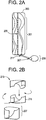
- the sensor assembly 205 comprising, for example, a sensor array, running through the center of the absorbent core 203 of the personal hygiene product 201 and connected to the external digital element 209.
- the sensor array 205 may comprise metalized fiber or may comprise conductive ink utilized in conjunction with the thread within the personal hygiene product 201.
- the conductive ink may be printed on a substrate within the personal hygiene product 201.
- the sensor array 205 may be capable of sensing conductive and ionic properties of bodily fluids absorbed by the personal hygiene product 201.
- the sensor array 205 may capture resistive change in the personal hygiene product 201 as it becomes saturated with bodily fluids.
- the sensor array 205 is electrically coupled to external digital element 209 via signal transmission conduit 211.
- the signal transmission conduit 211 may be magnetically connected to digital element 209. More specifically, a magnetic coupling device 207 may be utilized to connect the signal transmission conduit 211 to the digital element 209.
- the signal transmission conduit 211 may include a magnetic coupling 213 on a first end and digital element 209 may include a mating magnetic coupling 215, which, when joined, form secure coupling 207.
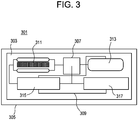
- a substrate 303 is encased or encapsulated within a biocompatible polymer layer 305.
- a power source 307 which may be, for example, an activation element or a battery, is attached to the substrate 303.
- the substrate 303 may comprise, for example, polyimide, cellulose Nano fibrillated fiber, or other biocompatible polymer or silicon.
- conductive traces 309 may electrically interconnect the power source 307 with electronic components 311, 313, 315, and 317 collectively.
- the electronic components may include a sensor array 311 that comprises a single sensor attached to the power source 307 and a first processor 315 capable of data collection.
- the sensor or sensor array may, for example, include an optical sensor, an oximetry sensor, an electrical sensor, a chemical sensor, a mechanical sensor, a MEMs sensor, a nanosensor, a biochemical sensor, an acoustic sensor, an immunologic sensor, a fluidic sensor, or a "lab on a chip" type sensor.
- the electronic components may include a sensor array 311 attached to the power source 307 and a first processor 315.
- the first processor 315 that collects data from the sensor array 311 communicates with a second processor 317 that is capable of wireless communication with a smart hand-held electronic device, which may be, for example, a smartphone, a smart watch and/or tablet.
- First and second processors 315 and 317 are preferably implemented in a single microprocessor.
- the electronic components may include a microfluidic analytical system 313 attached to a power source 307 that communicates with a first processor 315 that collects data.
- the first processor 315 communicates with a second processor 317 capable of wireless communication with a smart hand-held electronic device, which may be, for example, a smartphone, a smart watch and/or tablet.
- the electronic components may include a sensor array 311 that may capture data regarding the liquid absorption capacity and saturation level of the personal hygiene product and communicate that data to a first processor 315.
- the sensor array 311 may capture data regarding the absorption capacity of the personal hygiene product and communicate that data to the first processor 315.
- the first processor 315 may aggregate the collected data generated by the sensor array 311 and transmit the collected data to the second processor 317 that may wirelessly communicate the collected data to a smart hand-held electronic device.
- the electronic components may include a sensor array 311 that may capture biometric data, including, for example, temperature of the body, pH level, blood oxygen saturation, blood glucose levels, chemical composition, hormone levels, and body motion, and communicate that data to a first processor 315.
- the first processor 315 may aggregate the collected data generated by the microfluidic analytical system 313 and transmit the collected data to the second processor 317 that may wirelessly communicate the collected data to a smart hand-held electronic device by, for example, low power blue tooth wireless communication or near field wireless communication.
- the electronic components may include a microfluidic analytical system 313 that may capture data regarding biometrics, including, for example, the presence of harmful bacteria, hormone levels, cervical and uterine health indicators, or any cancerous markers, and communicate that data to a first processor 315.
- the first processor 315 may aggregate the collected data generated by the microfluidic analytical system 313 and transmit the data to the second processor 317 that may then wirelessly communicate the collected data to a smart hand-held electronic device.
- the digital element 401 attaches to the sensor array in the personal hygiene product by interlocking magnetic connection, such as that described above in connection with Figure 2B .
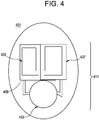
- the digital element 401 may comprise a substrate 409 with electronic components 411 mounted thereon.
- the substrate 409 may comprise, for example, polyimide, cellulose Nano fibrillated fiber, or any other suitable biocompatible polymer.
- the digital element 401 may be encapsulated in a biocompatible material, for example, silicone.
- the electronic components 411 may comprise a communication circuit 405, a processor circuit 407, and a power source 403.
- the communication circuit 405 and processor circuit 407 may be, for example, a flexible or rigid thin printed circuit board.
- the communication circuit 405 may facilitate wireless communication with a smart hand-held device by, for example, low power blue tooth or near field communication.
- the communication circuit 405 may include an antenna comprising, for example, graphene or a bioabsorbable or biologically inert conductive ink.
- the processor circuit 407 may include a sensor array capable of processing data generated by the user's wear of the personal hygiene product.
- the power source 403 may be, for example, a battery, fuel cell or any other power source suitable for powering microelectronic components. Such suitable devices include, but are not limited to, lithium manganese dioxide coin cells.
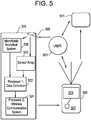
- the smart hand-held device 505 may comprise a hand-held personal electronic device such as a cell phone, a smart watch and/or tablet.
- the digital element 503 is capable of wireless communication with a smart hand-held electronic device 505 that has a receiver 507.
- the receiver 507 is capable of transmitting user-based data to a processor in the external device that may include, for example, a software application 509 capable of quantifying the user-based data.
- the user 501 may then interface with the external electronic device 505 and receive in some way the user-based quantified data.
- the software application 509 functions may include, for example, an interface that quantifies the user-based data received and generates a visual representation of quantified data for the user 501, including, for example, generation of a chart, display, or alert for the user 501.
- the software application 509 may be able to provide the user with a visual representation of the level of absorption by the personal hygiene product based on liquid absorption capacity and actual body fluid absorption. In some embodiments, the software application 509 may be able to provide the user with a time frame for absorbency and anticipated saturation points. In some embodiments, the software application 509 may generate an alert signal to the user if saturation of the personal hygiene product is impending or reached. In some embodiments, the software application 509 may generate a visual representation of the quantified data, including, for example, the user's rate of bodily fluid discharge or historical data of bodily fluid discharge.
- the software application 509 may be capable of accumulating data generated over time from use of multiple personal hygiene products. In some embodiments, the software application 509 may be able to generate a graphic, chart, or other interface to illustrate a baseline for the body fluid discharge based on the historical data. In some embodiments, the software application 509 may be able to generate predictive analytics and communicate that information to a user. Such information may allow the user 501 to anticipate start and end dates, for example, if the personal hygiene product with a digital element is used for a menstruation cycle. Such information may allow the user 501 to understand the course of a cycle, including days or time periods of heavier or lighter flow.
- a software application 509 may generate information on a consumable usage rate for the user, predicting how many personal hygiene products are needed, including, for example, per day, per week, or per cycle. In some embodiments, a software application 509 may generate a reminder or warning for a user to purchase personal hygiene products, including, for example, where a start date for menstruation has been identified. In some embodiments, a software application may provide the user an order quantity estimation based on historical data of the user's bodily fluid discharge. In some embodiments, the interface of the software application 509 may provide a direct link to an internet-based consumer service where a user 501 may order and purchase additional personal hygiene products for direct delivery. In some embodiments, the software application 509 may be capable of automatic direct order placement based on consumable usage rate for delivery direct to user 501. The software application 509 may facilitate purchase of additional personal hygiene products. The software application 509 may connect the user to internet-based consumer services.
- the digital element 503 as set forth above, comprises a sensor array 520, a first processor 522, a second processor 524 and a microfluidic analytical system 526.
- the digital element 503 is also illustrated as having a port 500 which allows fluid to enter and reach both the sensor array 520 and the microfluidic analytical system 526.
- a personal hygiene product 701 in the form of a tampon with a digital element is provided.
- the personal hygiene product 701 is coupled to an external digital element 709 via a signal transmission conduit 706.
- a conductive sensor assembly Disposed within personal hygiene product 701 is a conductive sensor assembly (not shown in this figure), for example, running through the center of the absorbent core 703 of the personal hygiene product 701.
- a conductive sensor assembly 805 generally comprises one or more moisture sensors 807 that may be capable of sensing conductive and ionic properties of menstrual fluid by, for example, measuring resistance.
- Moisture sensors 807 are disposed on a substrate 806 that may comprise PET, polyimide, cellulose Nano fibrillated fiber, or other biocompatible polymer or silicon.
- the substrate may comprise a flexible circuit board.
- Each moisture sensor includes a moisture sensitive switch 810 coupled to a resistor 812.
- Moisture sensitive switch 810 is configured to conduct or "tum on" when in wetting contact with menstrual fluid and thus generate a signal indicative of the saturation level of the personal hygiene product.
- Figure 9 illustrates a conductive sensor assembly 900 including resistors 912 connected to moisture sensitive switches in the form of interdigitated electrode patterns 914.
- the presence of salt and other ionic constituents of the menstrual fluid between and around interdigitated electrodes 914 facilitates conductivity between interdigitated electrodes 914. In the absence of menstrual fluid, there is no statistically significant conductivity between interdigitated electrodes 914. Essentially, when there is no fluid present and all is dry, there is no conductivity.
- a signal transmission conduit 920 is provided to carry the signal transmitted by the moisture sensitive switches to the digital element.
- signal transmission conduit 920 may be a cable connected to a digital element such as that described above in connection with Figure 4 .
- transmission conduit 920 may comprise conductive ink deposited on a flexible substrate.
- Resistors 912 may be formed from conductive ink deposited on substrate 925.
- resistors 912 may be on board resistors.
- conductivity of menstrual fluid may well vary by as + 50 percent or more from subject to subject due at least in part to differing ionic content as well as other factors. This conductivity inconsistency across subjects may cause moisture sensors to behave differently for different subjects. For example, due to the differences in menstrual fluid conductivity, a moisture sensor may indicate that a personal hygiene product used by a first subject is saturated and fail to indicate that a personal hygiene product used by a second subject is saturated when both personal hygiene products are exposed to identical amounts of menstrual fluid.
- resistance values for resistors 812 and moisture sensitive switches 810 are selected to minimize the impact of menstrual fluid conductivity variation. Accordingly, the resistance of resistors 812 is preferably much greater than the resistance of moisture sensitive switches 810. In some embodiments resistors 812 may have a resistance value between 1 k ⁇ and 10k ⁇ . However, these resistance values may be tuned to cause the personal hygiene product to behave in a specifically desired manner.
- conductive sensor assembly 805 may extend generally the entire axial length of the tampon to detect saturation at various points along the axial length of tampon.
- conductive sensor assembly may include only a single moisture sensor positioned at point along the tampon which indicates full saturation of the tampon.
- moisture sensors may be positioned at various points along the axial length of the tampon, e.g., 10 percent, 50 percent, 75 percent and 90 percent.
- the sensor system may be or comprise a capacitance sensor rather than a resistive sensor.
- An exemplary capacitance sensor may comprise at least a pair of linear conductive leads spaced from each other and configured to generate an electric field between each other when an electric potential is applied across the conductive leads.
- the conductive leads may comprise one or more of a conductive wire, a conductive thread, or a conductive yarn.
- the conductive yarn may comprise a yarn that has been treated (e.g., covered) with a conductive material.
- the conductive thread may comprise a thread that has been treated (e.g., covered with a conductive material).
- the capacitance sensor may comprise an insulator.
- the insulator may be one or more of hydrophilic, hydrophobic, omniphilic, omnophobic, oleophilic, or oleophobic.
- the insulator may be treated to cause a surface of the insulator to be one or more of hydrophilic, hydrophobic, omniphilic, omnophobic, oleophilic, or oleophobic.
- the insulator may be disposed between an absorbent material and at least a portion of each of the conductive leads.
- an electrically insulative material may be disposed about at least a portion of each of the linear conductive leads.
- the insulative material may be disposed between each of the linear conductive leads.
- the insulative material may also insulate the linear conductive leads from the absorbent material of the personal hygiene product. Accordingly, when electrical current is applied to one or more of the linear conductive leads, an electric field is generated between the linear conductive leads.
- the linear conductive leads and the electrical current are configured such that at least a portion of the generated electric field passes through the absorbent material.
- electrical characteristics e.g., capacitance
- the sensor system may be configured to detect a first capacitance value and a second capacitance value that is different from the first capacitance value.
- a capacitance sensor may comprise a capacitance and a resistive component.
- the ends of a parallel joined section are left un-insulated. With the parallel section folded on itself as it is placed in the tampon or other product, the two open conductive ends are at the base of the tampon. When the tampon is full, these two conductive ends will short with menstrual fluid and this is detected by the resistive sensing component. This arrangement may be utilized as a back-up or leak warning due to possible bypass of fluids.
- a controller may be integrated with or configured to communicate with the sensor system (e.g., capacitance sensor). As measurement of electrical characteristics of the capacitance sensor is made, a signal may be transmitted to the controller. The signal may be indicative of one or more of a first capacitance value and a second capacitance value. As described herein, the first capacitance value and the second capacitance value may be dependent upon the presence of a fluid within the electric field between the linear conductive leads when electric current is applied to one or more of the linear conductive leads.
- the controller may be configured to analyze the received signal and may determine an associated fluid level (e.g., saturation). Such determination may be an absolute or relative determination. Moreover, the controller may communicate the associated fluid level to a user of the device, for example, via a user interface.
- FIG. 6A - 6E a diagrammatic representation of the activation of the digital element in the personal hygiene product is illustrated as the opening and use of the items.
- a user may use the personal hygiene product in a manner consistent with industry use, including, for example, insertion into the body, Figure 6A , placement directly against the body, Figures 6B and 6C , or adhesion to an undergarment and placement directly against the body, Figures 6D and 6E .
- the user may, prior to placement or insertion of the product near or in the body, activate the digital element by unfolding or pushing the product through an applicator. When the digital element has been activated, the user may then place or insert the personal hygiene product.
- the wrapper 602 which is positioned on the tampon 604, is removed and the tampon 604 itself may be inserted in the usual manner. More specifically, the wrapper is formed and placed on the tampon and then the ends are sealed.
- a pad or sanitary napkin 606 is removed from the packaging 610 by removing the top tab 608 and then positioned in the usual manner.
- the pad or sanitary napkin 612 is removed from its package 618 by removing the tab 616 and unfolding adhesive tabs 614. The adhesive tabs 614 are secured in position to an undergarment, not illustrated in this figure, in the usual manner.
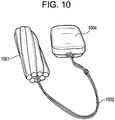
- FIG. 10 illustrates an exemplary tampon 1001 with an embedded moisture sensor or digital element, not illustrated in this figure, with leads 1002 coming out of the tampon 1001, and connected to a signal acquisition device within a case or enclosure 1004.
- the signal acquisition device performs a measurement utilizing the moisture sensor within the tampon 1001, for example capacitance, resistance and/or voltage, and transmits this data or information to a smartphone or similar personal electronic device.
- the embedded moisture sensor not shown in this this figure, is manufactured from the same conductive yarn as shown in the leads 1002.
- the leads 1002 may be made of conductive thread or conductive thread woven into non-conductive thread.
- the leads 1002 are mechanically and electrically connected to the signal acquisition device through a connector in the signal acquisition device.
- the connector, electronics, battery, antenna, and other components of the signal acquisition device are housed in the case or enclosure 1004 as described herein.
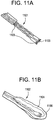
- Figures 11A and 11B Exemplary termination methods are illustrated in Figures 11A and 11B , including unstripped, stripped, and flattened terminations.
- Figure 11A illustrates an exemplary lead 1101 that is stripped of its insulation over a specified length 1105 and having flattened terminations or ends 1103.
- the flattened terminations 1103 make direct contact with the acquisition device.
- the unterminated example, illustrated in Figure 11B leaves the wire/yarn 1102 as presented on the spool such that the inner conductor is covered by insulation 1104 except for at the ends (not shown).
- Such a termination method may require a piercing connector to puncture the insulation and make contact with the inner conductor.
- the electrical contacts of the contact pierce the insulation and make nondestructive contact with the inner conductors of the acquisition device.
- This termination method may be preferred due to ease of fabrication.
- the insulation may be pressed away from the conductor exposing the conductive threads. With ends prepared this in this manner they may be placed in a compression type connection point without the need for piercing. These pressed ends can be applied directly to conductive plates on the surface of a Bluetooth device and covered with adhesive tape. This tape may then be applied to the user's skin or clothing.
- insulation is removed from a specified length 1105 of the wire/yarn to expose the inner conductor.
- a termination method may preclude the need for a piercing connector and reduce the diameter of the connector but may also introduce issues with shorting between the conductors.
- the insulation is redistributed through an operation such as pressing, heating, and/or ultrasonic energy.
- the resulting termination may or may not expose the inner conductor. It may also cause the insulation to wrap around the exposed end 1106, fully insulating it.
- a treatment may be applied to the end termination with some dependence on the physical termination method employed. For example, an unstripped connection may be dipped in conductive adhesive, ink or epoxy. This would allow electrical contact over a wider area of the termination and may preclude the need for a piercing connector. A termination may also be dipped in a non-conductive adhesive or epoxy as an insulator. A termination may be crimped or glued onto the wire/yarn.
- both leads to the connector together instead of as two discrete leads.
- This may require a termination or crimping operation, making one connection instead of two is likely preferred by customers.
- Such a termination may use a discrete, crimped-on connector but such a solution adds the cost of the termination component.
- Another option, similar to the flattened connection, may be to join the lead ends without requiring a costly component.
- Figures 12A and 12B illustrate two exemplary embodiments for the lengths of the two wires/yarns presented to the connector by the sensor.
- both ends of the wire/yarn 1201 are roughly the same length. This may be a preferred case due to the optimizations it affords the connector, for example, the connector does not have to accept a wide variation in length.
- variation in length may arise from a manufacturing process and may be desired as a tradeoff with other parameters like cost, yield, and throughput.
- the connector may also be possible for the connector to contain a "funnel" design to allow for lateral variation in the position of the lead, and/or to allow for the lead to fold inside the connector to absorb excessive length.
- FIGS 12C and 12D illustrate an exemplary enclosure and connector from two perspectives.
- the side perspective 1203 illustrates design aspects including a clip 1204 which may be suitable for attachment to an undergarment waistband.
- this device may also be worn or attached to an outer garment waistband. It may be attached to any suitable piece of clothing.
- hinge 1205 which allows the top portion 1209 of the device to tilt thereby exposing the connectors 1206, 1207.
- side-by-side connectors 1206 and 1207 are shown with an insulator 1210 positioned therebetween.
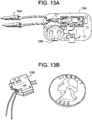
- Figure 13A illustrates another exemplary "off-the-shelf" connector 1301 and a battery clip 1302 mounted to a circuit board 1304 with various other electronic components.
- novel devices are required due to shortcomings in existing devices such as described herein.
- the alligator clips 1301 while being useful for prototype testing, are too large for integration into an intimate consumer device. They are also easy to electrically short and intimidating to potential users.
- the battery clip 1302 requires insertion and removal to happen along one edge of the clip and this may not be a convenient operation for users.
- Figure 13B illustrates yet another "off-the-shelf" connector 1303. As may be seen from the scale of the inserted wire and adjacent the United States quarter, the connector 1303 is much larger than both the wire to be connected and the desired size of a discrete device. It is important to note that these illustrated connectors are existing connectors with no modifications that may be utilized but are by no means preferable.
- Figures 14A and 14B illustrate examples of connector design aspects to aid in lead retention.
- Figure 14A illustrates a surface or "top-down" view onto the plane of a connector. The sensor lead would be laid on top of this plane. The plane illustrated includes wave-shaped texture 1401 to aid in retention of the leads regardless of insertion direction. An untextured surface or one in which the direction of texture is parallel to the lead may offer less retention force and less electrical reliability. Knurling is a known technique for increasing the "grip" of a connector. By making one or both planes of a connector with a textured surface increased friction preferably reduces the thickness of any connector utilized.
- Figure 14B illustrates the side view of an exemplary connector.
- two combinations of interlocking "top and bottom” surfaces are shown 1402 and 1404 respectively.
- external force for example a magnet or spring
- the "teeth" of the connector engage with a small gap between the pieces.
- a wire or yarn placed between the interlocking pieces may be bent around the corners, thereby increasing retention force and electrical reliability.
- Figure 14C illustrates an exemplary orientation of a lead 1403 into a textured connector 1404.
- Various insertion angles increase user convenience and are afforded by the textured connector surface. Due to the shape of the textured connector 1404 any lead 1403 would be guided to the center 1406 regardless of the angle of insertion.
- Figures 15A-15C illustrate an alternate exemplary electronic feminine hygiene system with sanitary napkins rather than tampons.
- Figure 15A illustrates an exemplary napkin 1501 with embedded sensor electrodes 1502. Such electrodes 1502 may be fabricated with conductive ink, metallized and transferred onto the pad, or through other methods. The ends of the electrodes 1502 form a connection point 1503.
- Figure 15B illustrates the napkin 1501 with a signal acquisition device 1505 attached to connector point 1503, with both positioned on or against an underwear garment 1504.
- Figure 15C illustrates an exemplary connector 1506 in which metal button snaps are crimped onto extended conductive traces 1507 on the napkin. These extended conductive traces 1507 connect to conductive traces 1502 and may contain features appropriate for attaching the snap connectors 1506 such as thicker and wider conductors.
- FIG. 16 illustrates and exemplary case/enclosure systems for the signal acquisition device.
- a screw-top lid 1601 allows for replacement of a primary battery 1610 and may afford access to other components such as a reset or pairing button.
- the lid 1601 may comprise a gasket to improve water resistance.
- a gasket may be a discrete design like an O-ring or may be a soft, rubber- or silicone-like material co-molded or applied to the harder injection-molded plastic case.
- an interference fit may be used in which attachment of the lid forms a compression fit sealing out water. It is important to note that water resistance is desired, not necessarily a waterproof design.
- piercing connectors 1603, as previously described, are shown which may improve mechanical and electrical engagement both for tampon and napkin connectors. Such piercing connectors must be designed to 1) reliably pierce an insulated conductor and achieve a repeatable electrical and mechanical connection while simultaneously 2) not being intimidating or potentially harmful to the user.
- Such a tradeoff may be achieved by carefully designing the geometry of the piercing protrusions, e.g. the height, width, and sharpness of the points given the properties of the insulated yarn/wire, along with the properties of the connector such as the maximum opening size. Such a design may only allow a small wire to enter and prevent a finger, hair, or other body part from entering the connector. Also shown in a magnet 1604 which may attract a component of the lid, apply a force to squeeze the connector closed, and thereby improve mechanical retention.
- connectors for digital feminine hygiene systems operate with both tampons and napkins from one signal acquisition device. Over the period of a menstrual cycle, many users will switch between tampons and napkins, or perhaps use both simultaneously for an added degree of assurance. Users may prefer one signal acquisition device instead of having to keep track of multiple, sensor-specific devices. As shown in the figures, one sensor connection may have round leads while the other may be flat. One solution is to force both sensors to have similar leads, but this may not be preferred for user convenience, performance, cost, or other factors. A device connector that accepts both terminations may be greatly preferred.
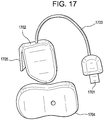
- Figure 17 illustrates an exemplary connector extension, in this case fabricated from an off-the-shelf female connector (not shown but contained within housing 1702) and a flex-based male connector 1701.
- Male connector 1701 may plug into a female receptacle in signal acquisition device 1704 thus allowing a sensor with limited connector length (not shown) to interface with a signal acquisition device located farther from the sensor.
- Such an extension may improve the convenience of the system by affording users placement of the signal acquisition device farther from the sensor, more room to make the connection, and the like.
- Such an extension may also minimize usage of relatively expensive sensor wire/yarn by allowing replacement by less expensive materials.
- An extension connector may also maximize the portion of the leads controlled and/or shielded and minimize the portion of the leads subject to introducing variations in capacitance, for example, due to body movements and the associated changes in conductor positions relative to each other and to the body.
- Housing 1702 may include feature 1705 to allow pressing a release actuator on a female connector within the housing 1702 or to clip housing 1702 to an undergarment.
- the connector may be engaged and disengaged through a number of manners, for example a combination of press-to-open and press-to-release designs.
- a preferred embodiment is to integrate the connector with the case utilizing techniques such as injection molding, co-molding, metal molding, and post processing.
- Metal deposition followed by electroplating may be necessary to achieve the desired metal, thickness, and surface finish.
- Metal alloys may be used to achieve the desired properties such as conductivity and resistance to chemicals.
- An electrical button may be required to allow a user to perform a number of functions on the device, for example, waking up, putting to sleep, changing mode, resetting, and/or pairing with a Bluetooth device. Such a button introduces challenges to both size and water resistance for such a small device.
- the button may be "hidden" inside the battery compartment, thereby placing it inside a water-resistant environment, but such button location would not be easy to use for the patient. Similar to the connector and battery, a discrete button device may not be preferred due to the added cost and size.
- An electrical button may be integrated into the case using techniques as previously described, for example, co-molding and metal-plastic co-fabrication techniques.
- Comfort of the device to be worn up against the body is of critical importance for customer acceptance. Some users may have particularly sensitive skin, and the device must be wearable for hours during activities that may include sitting, standing, exercising, and the like.
- the material in contact with a user's body should be soft and smooth, thin, promote a favorable tactile response, and be resistant to sweat.
- 3D-printed or injection-molded plastic may be inherently hard, rough, scratchy, etc. Techniques such as co-molding, multi-shot molding, silicone molding, and coating may be used to engineer the surface presented to the user.
- the device may be placed loose inside an undergarment, or a user may prefer to clip or stick it to her body or a garment.
- a biocompatible adhesive such as those used in adhesive bandages, may be uses in a disposable adhesive cover manner. However, such an adhesive may cause pain during removal and is typically not reusable.
- a light-tack, reusable adhesive may be preferred.
- a clip or other fastening device may also be used to attach the device to a garment.
- a discrete antenna component may not be preferred due to size and cost. Further, the performance of such an antenna, for example, with a Bluetooth radio, may be optimized for range, power consumption, and body absorption in a small device by designing the antenna into the electrical enclosure. Antenna traces may be realized by metal molding, co-molding, or transfer processes to integrate a very thin, custom antenna into the inside of the plastic enclosure.
- the signal acquisition device may sample capacitance, resistance, voltage, a combination thereof, complex impedance, or other electrical parameters. Voltage measurement may be particularly useful for the detection of ammonia and/or methanethiol or (methyl mercaptan).
- An analog-to-digital converter (A/D or ADC) may be utilized with a corresponding full-scale acquisition value and resolution. To optimize the signal-to-noise ratio, it may be desired to maximize the ratio between the maximum sensor value and the full-scale range of the A/D. Accordingly, it may be desired to minimize the added capacitance, resistance, impedance, etc. from the connector and case. Design techniques such as separating conductors, limiting trace lengths and overlaps, optimizing dielectric materials, high-resistivity materials, and shielding may be employed to reduce the parasitic contributions of the connector and case.
- Flexible electronics may be utilized to make the sensor and signal acquisition device more user-friendly.
- a rigid circuit board and enclosure may be replaced with segmented components, allowing bending, hinging, or flexing along defined locations.
- Increasing levels of flexibility may be achieved by still placing small, rigid components (such as microchips and surface-mount passive devices) onto flexible circuit boards such as those comprising polyimide.
- Such flexible circuits will need flexible enclosures to translate the flexibility to the users.
- Rigid plastics may be replaced with increasing flexible plastics, possibly including rubber and/or silicone.
- a rigid enclosure may be replaced with a sprayed, dipped, or otherwise deposited coating. Such a coating may provide the required mechanical and electrical characteristics while being thinner and more flexible than a rigid enclosure.
- Figures 18A-18G illustrate several case designs for the signal acquisition device (exterior outlines with internal components superimposed) in consideration of size, comfort, and user preference. These various designs are exemplary in nature and are by no means an exhaustive representation of case designs.
- Figure 18A shows a side view common to the top views shown in Figures 18B-18G.
- Figure 18B illustrates a basic tear drop design
- Figure 18C illustrates a basic heart shape design
- Figure 18D illustrates a basic diamond shape design
- Figure 18E illustrates a first basic guitar design
- Figure 18F illustrates a second basic guitar design
- Figure 18 illustrates a basic pill design.
- a personal hygiene product with a digital element can be, for example, in the form of a tampon, sanitary napkin, panty liner, and diaper, and the like.
- Specific examples have been described to illustrate embodiments of the device. These examples are for said illustration and are not intended to limit the scope of the claims in any manner. Accordingly, the description is intended to embrace all embodiments that may be apparent to those skilled in the art.
Landscapes
- Health & Medical Sciences (AREA)
- Life Sciences & Earth Sciences (AREA)
- Engineering & Computer Science (AREA)
- Public Health (AREA)
- General Health & Medical Sciences (AREA)
- Veterinary Medicine (AREA)
- Heart & Thoracic Surgery (AREA)
- Animal Behavior & Ethology (AREA)
- Biomedical Technology (AREA)
- Physics & Mathematics (AREA)
- Epidemiology (AREA)
- Vascular Medicine (AREA)
- Medical Informatics (AREA)
- Molecular Biology (AREA)
- Surgery (AREA)
- Pathology (AREA)
- Biophysics (AREA)
- Business, Economics & Management (AREA)
- General Physics & Mathematics (AREA)
- Emergency Management (AREA)
- Gynecology & Obstetrics (AREA)
- Reproductive Health (AREA)
- Computer Networks & Wireless Communication (AREA)
- Psychiatry (AREA)
- Psychology (AREA)
- Absorbent Articles And Supports Therefor (AREA)
- Investigating Or Analyzing Materials By The Use Of Electric Means (AREA)
- Orthopedics, Nursing, And Contraception (AREA)
- Adornments (AREA)
Claims (14)
- Produit d'hygiène personnelle doté d'un élément numérique comprenant :un dispositif d'hygiène personnelle (101) configuré pour absorber un fluide menstruel ;un ensemble de capteurs conducteurs (105) disposé à l'intérieur du dispositif d'hygiène personnelle, comprenant un ou plusieurs capteurs d'humidité et au moins un connecteur, ledit ensemble de capteurs conducteurs générant un signal indiquant un niveau de saturation dudit dispositif d'hygiène personnelle quand ledit ensemble de capteurs conducteurs est en contact d'humidification avec le fluide menstruel ;un élément numérique externe (401) couplé audit ensemble de capteurs conducteurs par l'intermédiaire de l'au moins un connecteur, l'élément numérique externe comprenant un substrat ayant un circuit de communication (405) capable d'une communication sans fil avec un dispositif électronique intelligent portatif, un processeur (407), une source d'alimentation (403), un premier connecteur homologue (1206, 1207) configuré pour se coupler à l'au moins un connecteur et optimisé pour être utilisé avec ledit ensemble de capteurs conducteurs et un boîtier résistant à l'eau, dans lequel le boîtier résistant à l'eau est configuré pour loger les composants de l'élément numérique externe ; etun conduit de transmission de signaux s'étendant depuis ledit ensemble de capteurs conducteurs et interconnectant ledit ensemble de capteurs conducteurs audit élément numérique externe, le conduit de transmission de signaux comprenant des fils (1101), chaque fil possédant une terminaison (1103) ;caractérisé en ce que les terminaisons établissent un contact direct avec le premier connecteur homologue.
- Produit d'hygiène personnelle doté d'un élément numérique selon la revendication 1,
dans lequel le dispositif électronique intelligent portatif comprend un dispositif électronique personnel portatif configuré pour assurer l'interface avec un utilisateur. - Produit d'hygiène personnelle doté d'un élément numérique selon l'une quelconque des revendications précédentes, dans lequel le boîtier résistant à l'eau est configuré pour être monté sur un sous-vêtement d'un utilisateur ou un vêtement de dessus d'un utilisateur.
- Produit d'hygiène personnelle doté d'un élément numérique selon la revendication 1 ou la revendication 2, dans lequel le boîtier résistant à l'eau est configuré pour être fixé sur le corps d'un utilisateur.
- Produit d'hygiène personnelle doté d'un élément numérique selon l'une quelconque des revendications précédentes, dans lequel le premier connecteur homologue comprend une surface texturée pour le conduit de transmission de signaux.
- Produit d'hygiène personnelle doté d'un élément numérique selon l'une quelconque des revendications précédentes, dans lequel le premier connecteur homologue comprend un mécanisme d'interverrouillage pour le conduit de transmission de signaux.
- Produit d'hygiène personnelle doté d'un élément numérique selon l'une quelconque des revendications précédentes, dans lequel le premier connecteur homologue comprend un raccord de perforation pour le conduit de transmission de signaux.
- Produit d'hygiène personnelle doté d'un élément numérique selon l'une quelconque des revendications précédentes, dans lequel des fils comprennent un fil conducteur, éventuellement dans lequel le conduit de transmission de signaux comprend un fil conducteur tissé dans un fil non conducteur.
- Produit d'hygiène personnelle doté d'un élément numérique selon l'une quelconque des revendications précédentes, comprenant en outre une extension de connecteur.
- Produit d'hygiène personnelle doté d'un élément numérique selon l'une quelconque des revendications précédentes, dans lequel l'élément numérique externe est réutilisable.
- Produit d'hygiène personnelle doté d'un élément numérique selon l'une quelconque des revendications précédentes, dans lequel le dispositif d'hygiène personnelle comprend un tampon.
- Produit d'hygiène personnelle doté d'un élément numérique selon l'une quelconque des revendications 1 à 10, dans lequel le dispositif d'hygiène personnelle comprend une serviette hygiénique.
- Produit d'hygiène personnelle doté d'un élément numérique selon l'une quelconque des revendications 1 à 10, dans lequel le dispositif d'hygiène personnelle comprend un protège-slip.
- Produit d'hygiène personnelle doté d'un élément numérique selon l'une quelconque des revendications 1 à 10, dans lequel le dispositif d'hygiène personnelle comprend une couche.
Priority Applications (1)
| Application Number | Priority Date | Filing Date | Title |
|---|---|---|---|
| PL18199119T PL3466384T3 (pl) | 2017-10-09 | 2018-10-08 | Złącza i okrycia do wyrobu higieny osobistej z elementem cyfrowym |
Applications Claiming Priority (1)
| Application Number | Priority Date | Filing Date | Title |
|---|---|---|---|
| US201762569744P | 2017-10-09 | 2017-10-09 |
Publications (3)
| Publication Number | Publication Date |
|---|---|
| EP3466384A1 EP3466384A1 (fr) | 2019-04-10 |
| EP3466384B1 true EP3466384B1 (fr) | 2021-05-05 |
| EP3466384B8 EP3466384B8 (fr) | 2021-07-21 |
Family
ID=63794382
Family Applications (1)
| Application Number | Title | Priority Date | Filing Date |
|---|---|---|---|
| EP18199119.1A Active EP3466384B8 (fr) | 2017-10-09 | 2018-10-08 | Connecteurs et enveloppe pour produit d'hygiène personnelle comportant un élément numérique |
Country Status (12)
| Country | Link |
|---|---|
| US (1) | US11202726B2 (fr) |
| EP (1) | EP3466384B8 (fr) |
| JP (1) | JP7350474B2 (fr) |
| KR (1) | KR102594746B1 (fr) |
| CN (1) | CN109620548A (fr) |
| AU (1) | AU2018236754B2 (fr) |
| BR (1) | BR102018070737B1 (fr) |
| CA (1) | CA3019576C (fr) |
| PL (1) | PL3466384T3 (fr) |
| RU (1) | RU2697541C1 (fr) |
| SG (1) | SG10201808536RA (fr) |
| TW (1) | TWI786197B (fr) |
Families Citing this family (6)
| Publication number | Priority date | Publication date | Assignee | Title |
|---|---|---|---|---|
| EP3727253B1 (fr) * | 2017-12-21 | 2024-01-24 | Johnson & Johnson Consumer Inc. | Produit d'hygiène personnelle avec un élément numérique |
| JP7469040B2 (ja) * | 2019-12-27 | 2024-04-16 | ユニ・チャーム株式会社 | 情報処理装置、情報処理方法、情報処理プログラム、および情報処理システム |
| CN111446820A (zh) * | 2019-12-31 | 2020-07-24 | 太原科技大学 | 一种基于3d打印技术直接法测量转子转速的装置及方法 |
| JP2024503134A (ja) * | 2021-01-20 | 2024-01-24 | ヘンケル・アクチェンゲゼルシャフト・ウント・コムパニー・コマンディットゲゼルシャフト・アウフ・アクチェン | 水分検出用フレキシブルセンサデバイス |
| US11519879B2 (en) | 2021-01-25 | 2022-12-06 | Saudi Arabian Oil Company | Two methods of determining permeabilities of naturally fractured rocks from laboratory measurements |
| NL2038499B1 (nl) * | 2024-08-27 | 2026-03-06 | Adrianus Marius Broeckx Augustinus | Intra-vaginale inbrenginrichting, hygienehulpmiddel en detectorinrichting |
Family Cites Families (27)
| Publication number | Priority date | Publication date | Assignee | Title |
|---|---|---|---|---|
| US6325066B1 (en) * | 1996-08-26 | 2001-12-04 | Charles B. Hughes | Bladder and bowel training system with removable voice module system |
| US5868723A (en) * | 1997-07-15 | 1999-02-09 | Al-Sabah; Sabah Naser | Moisture sensing and audio indicating apparatus for garments and associated methods |
| US5904671A (en) * | 1997-10-03 | 1999-05-18 | Navot; Nir | Tampon wetness detection system |
| US6091336A (en) * | 1999-03-24 | 2000-07-18 | Franz Zand | Moisture detection apparatus |
| US7250547B1 (en) | 2000-11-07 | 2007-07-31 | Rf Technologies, Inc. | Wetness monitoring system |
| JP2005270599A (ja) | 2004-03-23 | 2005-10-06 | Kosuke Nagaya | 人体装着介護用パンツ |
| US7352286B2 (en) * | 2005-08-26 | 2008-04-01 | Chan Yung C | Diaper warning alarm device, and system |
| CN2860445Y (zh) | 2005-09-12 | 2007-01-24 | 邢波 | 可洗电子提醒尿垫 |
| JP2007132703A (ja) * | 2005-11-08 | 2007-05-31 | Awajitec:Kk | 水分センサー用コネクタ |
| US7806882B1 (en) * | 2007-02-09 | 2010-10-05 | Larkin Kevin B | Tampon saturation monitoring system |
| US7760101B2 (en) * | 2008-06-20 | 2010-07-20 | Kimberly-Clark Worldwide, Inc. | Method of reducing sensor corrosion in absorbent articles |
| JP5242256B2 (ja) * | 2008-06-26 | 2013-07-24 | 中国電力株式会社 | クリップ |
| US20120040655A1 (en) | 2010-08-16 | 2012-02-16 | Larkin Kevin B | Cell Phone Based Tampon Monitoring System |
| TWM403327U (en) | 2010-11-15 | 2011-05-11 | At Box Technology Inc | Diaper structure containing urine-humidity sensing apparatus |
| CN202154798U (zh) | 2011-04-02 | 2012-03-07 | 上海科斗电子科技有限公司 | 尿湿提醒器 |
| TWI459933B (zh) * | 2011-07-15 | 2014-11-11 | Ind Tech Res Inst | 具尿布濕度檢測裝置之尿布、系統及尿布濕度檢測方法 |
| WO2013016765A1 (fr) | 2011-08-01 | 2013-02-07 | Fred Bergman Healthcare Pty Ltd | Capteur d'humidité capacitif et procédé de fabrication associé |
| FR3003751A1 (fr) * | 2013-03-27 | 2014-10-03 | Jacques Geloen | Dispositif de visualisation de saturation pour protection de l'incontinence urofecale. |
| US20170340254A1 (en) * | 2013-09-23 | 2017-11-30 | Alice McKinstry Davis | Real-time blood detection system |
| JP3193591U (ja) * | 2014-07-30 | 2014-10-09 | 株式会社Mdk | 排尿検出パッドおよびそれを備えた排尿報知装置 |
| CN105326607A (zh) | 2014-08-11 | 2016-02-17 | 卞江 | 用于尿裤环境温湿度及尿湿检测的智能设备和方法 |
| US10117790B2 (en) * | 2015-02-26 | 2018-11-06 | Johnson & Johnson Vision Care, Inc. | Personal hygiene product with a digital element |
| US9937082B2 (en) * | 2015-03-26 | 2018-04-10 | I-Ding Medical Equipment Co., Ltd. | Wetness notification system |
| JP6397809B2 (ja) * | 2015-11-13 | 2018-09-26 | ユニ・チャーム株式会社 | 吸収性物品の製造方法 |
| US10905371B2 (en) * | 2015-11-29 | 2021-02-02 | my.Flow, Inc. | Automatic detection of human physiological phenomena |
| WO2017152687A1 (fr) * | 2016-03-10 | 2017-09-14 | Little Nobleman Technology Limited | Article absorbant et procédés associés |
| US10702423B1 (en) * | 2017-01-20 | 2020-07-07 | Verily Life Sciences Llc | Ultrasound communications for low-power biosensor applications |
-
2018
- 2018-09-13 US US16/130,403 patent/US11202726B2/en active Active
- 2018-09-26 AU AU2018236754A patent/AU2018236754B2/en active Active
- 2018-09-28 SG SG10201808536RA patent/SG10201808536RA/en unknown
- 2018-10-02 CA CA3019576A patent/CA3019576C/fr active Active
- 2018-10-05 RU RU2018135095A patent/RU2697541C1/ru active
- 2018-10-05 TW TW107135181A patent/TWI786197B/zh active
- 2018-10-05 JP JP2018189755A patent/JP7350474B2/ja active Active
- 2018-10-08 KR KR1020180119744A patent/KR102594746B1/ko active Active
- 2018-10-08 BR BR102018070737-0A patent/BR102018070737B1/pt active IP Right Grant
- 2018-10-08 EP EP18199119.1A patent/EP3466384B8/fr active Active
- 2018-10-08 PL PL18199119T patent/PL3466384T3/pl unknown
- 2018-10-09 CN CN201811172106.4A patent/CN109620548A/zh active Pending
Non-Patent Citations (1)
| Title |
|---|
| None * |
Also Published As
| Publication number | Publication date |
|---|---|
| BR102018070737B1 (pt) | 2023-04-11 |
| EP3466384B8 (fr) | 2021-07-21 |
| RU2697541C1 (ru) | 2019-08-15 |
| EP3466384A1 (fr) | 2019-04-10 |
| US11202726B2 (en) | 2021-12-21 |
| KR102594746B1 (ko) | 2023-10-30 |
| PL3466384T3 (pl) | 2021-10-25 |
| TW201927236A (zh) | 2019-07-16 |
| CA3019576C (fr) | 2025-09-02 |
| KR20190040121A (ko) | 2019-04-17 |
| JP2019072477A (ja) | 2019-05-16 |
| CA3019576A1 (fr) | 2019-04-09 |
| AU2018236754B2 (en) | 2024-01-11 |
| AU2018236754A1 (en) | 2019-05-02 |
| US20190105210A1 (en) | 2019-04-11 |
| SG10201808536RA (en) | 2019-05-30 |
| TWI786197B (zh) | 2022-12-11 |
| CN109620548A (zh) | 2019-04-16 |
| BR102018070737A2 (pt) | 2019-04-24 |
| JP7350474B2 (ja) | 2023-09-26 |
Similar Documents
| Publication | Publication Date | Title |
|---|---|---|
| EP3466384B1 (fr) | Connecteurs et enveloppe pour produit d'hygiène personnelle comportant un élément numérique | |
| US10117790B2 (en) | Personal hygiene product with a digital element | |
| US20230149229A1 (en) | Personal hygiene device for detecting a fluid | |
| HK40006041B (en) | Connectors and encasement for personal hygiene product with a digital element | |
| HK40006041A (en) | Connectors and encasement for personal hygiene product with a digital element | |
| HK1226627A1 (en) | Personal hygiene product with a digital element | |
| HK1226627B (en) | Personal hygiene product with a digital element |
Legal Events
| Date | Code | Title | Description |
|---|---|---|---|
| PUAI | Public reference made under article 153(3) epc to a published international application that has entered the european phase |
Free format text: ORIGINAL CODE: 0009012 |
|
| STAA | Information on the status of an ep patent application or granted ep patent |
Free format text: STATUS: THE APPLICATION HAS BEEN PUBLISHED |
|
| AK | Designated contracting states |
Kind code of ref document: A1 Designated state(s): AL AT BE BG CH CY CZ DE DK EE ES FI FR GB GR HR HU IE IS IT LI LT LU LV MC MK MT NL NO PL PT RO RS SE SI SK SM TR |
|
| AX | Request for extension of the european patent |
Extension state: BA ME |
|
| STAA | Information on the status of an ep patent application or granted ep patent |
Free format text: STATUS: REQUEST FOR EXAMINATION WAS MADE |
|
| 17P | Request for examination filed |
Effective date: 20191007 |
|
| RBV | Designated contracting states (corrected) |
Designated state(s): AL AT BE BG CH CY CZ DE DK EE ES FI FR GB GR HR HU IE IS IT LI LT LU LV MC MK MT NL NO PL PT RO RS SE SI SK SM TR |
|
| REG | Reference to a national code |
Ref country code: HK Ref legal event code: DE Ref document number: 40006041 Country of ref document: HK |
|
| GRAP | Despatch of communication of intention to grant a patent |
Free format text: ORIGINAL CODE: EPIDOSNIGR1 |
|
| STAA | Information on the status of an ep patent application or granted ep patent |
Free format text: STATUS: GRANT OF PATENT IS INTENDED |
|
| RIC1 | Information provided on ipc code assigned before grant |
Ipc: G08B 21/24 20060101ALI20201117BHEP Ipc: A61B 5/0478 20060101ALI20201117BHEP Ipc: G08B 25/10 20060101ALI20201117BHEP Ipc: A61B 5/0482 20060101ALI20201117BHEP Ipc: A61B 5/04 20060101ALI20201117BHEP Ipc: A61B 5/00 20060101ALI20201117BHEP Ipc: A61B 10/00 20060101ALI20201117BHEP Ipc: A61F 13/84 20060101ALI20201117BHEP Ipc: A61F 13/42 20060101AFI20201117BHEP Ipc: G08B 21/20 20060101ALI20201117BHEP Ipc: G08B 21/18 20060101ALI20201117BHEP |
|
| INTG | Intention to grant announced |
Effective date: 20201207 |
|
| GRAS | Grant fee paid |
Free format text: ORIGINAL CODE: EPIDOSNIGR3 |
|
| GRAA | (expected) grant |
Free format text: ORIGINAL CODE: 0009210 |
|
| STAA | Information on the status of an ep patent application or granted ep patent |
Free format text: STATUS: THE PATENT HAS BEEN GRANTED |
|
| AK | Designated contracting states |
Kind code of ref document: B1 Designated state(s): AL AT BE BG CH CY CZ DE DK EE ES FI FR GB GR HR HU IE IS IT LI LT LU LV MC MK MT NL NO PL PT RO RS SE SI SK SM TR |
|
| REG | Reference to a national code |
Ref country code: GB Ref legal event code: FG4D |
|
| REG | Reference to a national code |
Ref country code: CH Ref legal event code: EP Ref country code: CH Ref legal event code: NV Representative=s name: E. BLUM AND CO. AG PATENT- UND MARKENANWAELTE V, CH |
|
| REG | Reference to a national code |
Ref country code: AT Ref legal event code: REF Ref document number: 1388885 Country of ref document: AT Kind code of ref document: T Effective date: 20210515 |
|
| REG | Reference to a national code |
Ref country code: IE Ref legal event code: FG4D |
|
| REG | Reference to a national code |
Ref country code: DE Ref legal event code: R096 Ref document number: 602018016545 Country of ref document: DE |
|
| REG | Reference to a national code |
Ref country code: CH Ref legal event code: PK Free format text: BERICHTIGUNG B8 |
|
| REG | Reference to a national code |
Ref country code: SE Ref legal event code: TRGR |
|
| RAP2 | Party data changed (patent owner data changed or rights of a patent transferred) |
Owner name: JOHNSON & JOHNSON CONSUMER INC. |
|
| REG | Reference to a national code |
Ref country code: BE Ref legal event code: PD Owner name: JOHNSON & JOHNSON CONSUMER INC.; US Free format text: DETAILS ASSIGNMENT: CHANGE OF OWNER(S), ASSIGNMENT Effective date: 20210629 |
|
| REG | Reference to a national code |
Ref country code: LT Ref legal event code: MG9D |
|
| REG | Reference to a national code |
Ref country code: DE Ref legal event code: R081 Ref document number: 602018016545 Country of ref document: DE Owner name: KENVUE BRANDS LLC, SUMMIT, US Free format text: FORMER OWNER: JOHNSON & JOHNSON VISION CARE, INC., JACKSONVILLE, FL, US Ref country code: DE Ref legal event code: R081 Ref document number: 602018016545 Country of ref document: DE Owner name: JOHNSON & JOHNSON CONSUMER INC., SKILLMAN, US Free format text: FORMER OWNER: JOHNSON & JOHNSON VISION CARE, INC., JACKSONVILLE, FL, US Ref country code: DE Ref legal event code: R081 Ref document number: 602018016545 Country of ref document: DE Owner name: JOHNSON & JOHNSON CONSUMER INC., WILMINGTON, US Free format text: FORMER OWNER: JOHNSON & JOHNSON VISION CARE, INC., JACKSONVILLE, FL, US Ref legal event code: R082 Ref document number: 602018016545 Ref country code: DE Ref legal event code: R082 Ref document number: 602018016545 Country of ref document: DE Representative=s name: MUELLER-BORE & PARTNER PATENTANWAELTE PARTG MB, DE |
|
| REG | Reference to a national code |
Ref country code: GB Ref legal event code: 732E Free format text: REGISTERED BETWEEN 20210909 AND 20210915 |
|
| REG | Reference to a national code |
Ref country code: AT Ref legal event code: MK05 Ref document number: 1388885 Country of ref document: AT Kind code of ref document: T Effective date: 20210505 |
|
| PG25 | Lapsed in a contracting state [announced via postgrant information from national office to epo] |
Ref country code: BG Free format text: LAPSE BECAUSE OF FAILURE TO SUBMIT A TRANSLATION OF THE DESCRIPTION OR TO PAY THE FEE WITHIN THE PRESCRIBED TIME-LIMIT Effective date: 20210805 Ref country code: AT Free format text: LAPSE BECAUSE OF FAILURE TO SUBMIT A TRANSLATION OF THE DESCRIPTION OR TO PAY THE FEE WITHIN THE PRESCRIBED TIME-LIMIT Effective date: 20210505 Ref country code: FI Free format text: LAPSE BECAUSE OF FAILURE TO SUBMIT A TRANSLATION OF THE DESCRIPTION OR TO PAY THE FEE WITHIN THE PRESCRIBED TIME-LIMIT Effective date: 20210505 Ref country code: LT Free format text: LAPSE BECAUSE OF FAILURE TO SUBMIT A TRANSLATION OF THE DESCRIPTION OR TO PAY THE FEE WITHIN THE PRESCRIBED TIME-LIMIT Effective date: 20210505 Ref country code: HR Free format text: LAPSE BECAUSE OF FAILURE TO SUBMIT A TRANSLATION OF THE DESCRIPTION OR TO PAY THE FEE WITHIN THE PRESCRIBED TIME-LIMIT Effective date: 20210505 |
|
| PG25 | Lapsed in a contracting state [announced via postgrant information from national office to epo] |
Ref country code: GR Free format text: LAPSE BECAUSE OF FAILURE TO SUBMIT A TRANSLATION OF THE DESCRIPTION OR TO PAY THE FEE WITHIN THE PRESCRIBED TIME-LIMIT Effective date: 20210806 Ref country code: IS Free format text: LAPSE BECAUSE OF FAILURE TO SUBMIT A TRANSLATION OF THE DESCRIPTION OR TO PAY THE FEE WITHIN THE PRESCRIBED TIME-LIMIT Effective date: 20210905 Ref country code: PT Free format text: LAPSE BECAUSE OF FAILURE TO SUBMIT A TRANSLATION OF THE DESCRIPTION OR TO PAY THE FEE WITHIN THE PRESCRIBED TIME-LIMIT Effective date: 20210906 Ref country code: NO Free format text: LAPSE BECAUSE OF FAILURE TO SUBMIT A TRANSLATION OF THE DESCRIPTION OR TO PAY THE FEE WITHIN THE PRESCRIBED TIME-LIMIT Effective date: 20210805 Ref country code: LV Free format text: LAPSE BECAUSE OF FAILURE TO SUBMIT A TRANSLATION OF THE DESCRIPTION OR TO PAY THE FEE WITHIN THE PRESCRIBED TIME-LIMIT Effective date: 20210505 Ref country code: RS Free format text: LAPSE BECAUSE OF FAILURE TO SUBMIT A TRANSLATION OF THE DESCRIPTION OR TO PAY THE FEE WITHIN THE PRESCRIBED TIME-LIMIT Effective date: 20210505 |
|
| REG | Reference to a national code |
Ref country code: NL Ref legal event code: MP Effective date: 20210505 |
|
| PG25 | Lapsed in a contracting state [announced via postgrant information from national office to epo] |
Ref country code: NL Free format text: LAPSE BECAUSE OF FAILURE TO SUBMIT A TRANSLATION OF THE DESCRIPTION OR TO PAY THE FEE WITHIN THE PRESCRIBED TIME-LIMIT Effective date: 20210505 |
|
| PG25 | Lapsed in a contracting state [announced via postgrant information from national office to epo] |
Ref country code: RO Free format text: LAPSE BECAUSE OF FAILURE TO SUBMIT A TRANSLATION OF THE DESCRIPTION OR TO PAY THE FEE WITHIN THE PRESCRIBED TIME-LIMIT Effective date: 20210505 Ref country code: DK Free format text: LAPSE BECAUSE OF FAILURE TO SUBMIT A TRANSLATION OF THE DESCRIPTION OR TO PAY THE FEE WITHIN THE PRESCRIBED TIME-LIMIT Effective date: 20210505 Ref country code: CZ Free format text: LAPSE BECAUSE OF FAILURE TO SUBMIT A TRANSLATION OF THE DESCRIPTION OR TO PAY THE FEE WITHIN THE PRESCRIBED TIME-LIMIT Effective date: 20210505 Ref country code: SM Free format text: LAPSE BECAUSE OF FAILURE TO SUBMIT A TRANSLATION OF THE DESCRIPTION OR TO PAY THE FEE WITHIN THE PRESCRIBED TIME-LIMIT Effective date: 20210505 Ref country code: SK Free format text: LAPSE BECAUSE OF FAILURE TO SUBMIT A TRANSLATION OF THE DESCRIPTION OR TO PAY THE FEE WITHIN THE PRESCRIBED TIME-LIMIT Effective date: 20210505 Ref country code: ES Free format text: LAPSE BECAUSE OF FAILURE TO SUBMIT A TRANSLATION OF THE DESCRIPTION OR TO PAY THE FEE WITHIN THE PRESCRIBED TIME-LIMIT Effective date: 20210505 Ref country code: EE Free format text: LAPSE BECAUSE OF FAILURE TO SUBMIT A TRANSLATION OF THE DESCRIPTION OR TO PAY THE FEE WITHIN THE PRESCRIBED TIME-LIMIT Effective date: 20210505 |
|
| REG | Reference to a national code |
Ref country code: DE Ref legal event code: R097 Ref document number: 602018016545 Country of ref document: DE |
|
| PLBE | No opposition filed within time limit |
Free format text: ORIGINAL CODE: 0009261 |
|
| STAA | Information on the status of an ep patent application or granted ep patent |
Free format text: STATUS: NO OPPOSITION FILED WITHIN TIME LIMIT |
|
| 26N | No opposition filed |
Effective date: 20220208 |
|
| REG | Reference to a national code |
Ref country code: GB Ref legal event code: 732E Free format text: REGISTERED BETWEEN 20220428 AND 20220504 |
|
| PG25 | Lapsed in a contracting state [announced via postgrant information from national office to epo] |
Ref country code: IS Free format text: LAPSE BECAUSE OF FAILURE TO SUBMIT A TRANSLATION OF THE DESCRIPTION OR TO PAY THE FEE WITHIN THE PRESCRIBED TIME-LIMIT Effective date: 20210905 Ref country code: AL Free format text: LAPSE BECAUSE OF FAILURE TO SUBMIT A TRANSLATION OF THE DESCRIPTION OR TO PAY THE FEE WITHIN THE PRESCRIBED TIME-LIMIT Effective date: 20210505 |
|
| REG | Reference to a national code |
Ref country code: GB Ref legal event code: 732E Free format text: REGISTERED BETWEEN 20220505 AND 20220512 |
|
| REG | Reference to a national code |
Ref country code: GB Ref legal event code: 732E Free format text: REGISTERED BETWEEN 20220513 AND 20220518 |
|
| PG25 | Lapsed in a contracting state [announced via postgrant information from national office to epo] |
Ref country code: MC Free format text: LAPSE BECAUSE OF FAILURE TO SUBMIT A TRANSLATION OF THE DESCRIPTION OR TO PAY THE FEE WITHIN THE PRESCRIBED TIME-LIMIT Effective date: 20210505 |
|
| PG25 | Lapsed in a contracting state [announced via postgrant information from national office to epo] |
Ref country code: LU Free format text: LAPSE BECAUSE OF NON-PAYMENT OF DUE FEES Effective date: 20211008 |
|
| PG25 | Lapsed in a contracting state [announced via postgrant information from national office to epo] |
Ref country code: IE Free format text: LAPSE BECAUSE OF NON-PAYMENT OF DUE FEES Effective date: 20211008 |
|
| REG | Reference to a national code |
Ref country code: DE Ref legal event code: R081 Ref document number: 602018016545 Country of ref document: DE Owner name: JOHNSON & JOHNSON CONSUMER INC., SKILLMAN, US Free format text: FORMER OWNER: CHENANGO TWO LLC, SKILLMAN, NJ, US Ref country code: DE Ref legal event code: R081 Ref document number: 602018016545 Country of ref document: DE Owner name: JOHNSON & JOHNSON CONSUMER INC., SKILLMAN, US Free format text: FORMER OWNER: CURRAHEE HOLDING COMPANY INC., SKILLMAN, NJ, US Ref country code: DE Ref legal event code: R081 Ref document number: 602018016545 Country of ref document: DE Owner name: JOHNSON & JOHNSON CONSUMER INC., SKILLMAN, US Free format text: FORMER OWNER: CHENANGO ZERO LLC, SKILLMAN, NJ, US Ref country code: DE Ref legal event code: R081 Ref document number: 602018016545 Country of ref document: DE Owner name: JOHNSON & JOHNSON CONSUMER INC., SKILLMAN, US Free format text: FORMER OWNER: JOHNSON & JOHNSON CONSUMER INC., SKILLMAN, NJ, US Ref country code: DE Ref legal event code: R082 Ref document number: 602018016545 Country of ref document: DE Representative=s name: MUELLER-BORE & PARTNER PATENTANWAELTE PARTG MB, DE Ref country code: DE Ref legal event code: R081 Ref document number: 602018016545 Country of ref document: DE Owner name: KENVUE BRANDS LLC, SUMMIT, US Free format text: FORMER OWNER: CHENANGO TWO LLC, SKILLMAN, NJ, US Ref country code: DE Ref legal event code: R081 Ref document number: 602018016545 Country of ref document: DE Owner name: KENVUE BRANDS LLC, SUMMIT, US Free format text: FORMER OWNER: CURRAHEE HOLDING COMPANY INC., SKILLMAN, NJ, US Ref country code: DE Ref legal event code: R081 Ref document number: 602018016545 Country of ref document: DE Owner name: KENVUE BRANDS LLC, SUMMIT, US Free format text: FORMER OWNER: CHENANGO ZERO LLC, SKILLMAN, NJ, US Ref country code: DE Ref legal event code: R081 Ref document number: 602018016545 Country of ref document: DE Owner name: KENVUE BRANDS LLC, SUMMIT, US Free format text: FORMER OWNER: JOHNSON & JOHNSON CONSUMER INC., SKILLMAN, NJ, US Ref country code: DE Ref legal event code: R081 Ref document number: 602018016545 Country of ref document: DE Owner name: JOHNSON & JOHNSON CONSUMER INC., WILMINGTON, US Free format text: FORMER OWNER: CHENANGO TWO LLC, SKILLMAN, NJ, US Ref country code: DE Ref legal event code: R081 Ref document number: 602018016545 Country of ref document: DE Owner name: JOHNSON & JOHNSON CONSUMER INC., WILMINGTON, US Free format text: FORMER OWNER: CURRAHEE HOLDING COMPANY INC., SKILLMAN, NJ, US Ref country code: DE Ref legal event code: R081 Ref document number: 602018016545 Country of ref document: DE Owner name: JOHNSON & JOHNSON CONSUMER INC., WILMINGTON, US Free format text: FORMER OWNER: CHENANGO ZERO LLC, SKILLMAN, NJ, US Ref country code: DE Ref legal event code: R081 Ref document number: 602018016545 Country of ref document: DE Owner name: JOHNSON & JOHNSON CONSUMER INC., WILMINGTON, US Free format text: FORMER OWNER: JOHNSON & JOHNSON CONSUMER INC., SKILLMAN, NJ, US |
|
| REG | Reference to a national code |
Ref country code: GB Ref legal event code: 732E Free format text: REGISTERED BETWEEN 20230406 AND 20230412 |
|
| REG | Reference to a national code |
Ref country code: GB Ref legal event code: 732E Free format text: REGISTERED BETWEEN 20230413 AND 20230419 |
|
| PG25 | Lapsed in a contracting state [announced via postgrant information from national office to epo] |
Ref country code: CY Free format text: LAPSE BECAUSE OF FAILURE TO SUBMIT A TRANSLATION OF THE DESCRIPTION OR TO PAY THE FEE WITHIN THE PRESCRIBED TIME-LIMIT Effective date: 20210505 |
|
| PG25 | Lapsed in a contracting state [announced via postgrant information from national office to epo] |
Ref country code: HU Free format text: LAPSE BECAUSE OF FAILURE TO SUBMIT A TRANSLATION OF THE DESCRIPTION OR TO PAY THE FEE WITHIN THE PRESCRIBED TIME-LIMIT; INVALID AB INITIO Effective date: 20181008 |
|
| REG | Reference to a national code |
Ref country code: DE Ref legal event code: R081 Ref document number: 602018016545 Country of ref document: DE Owner name: KENVUE BRANDS LLC, SUMMIT, US Free format text: FORMER OWNER: JOHNSON & JOHNSON CONSUMER INC. (N.D.GES.D. STAATES NEVADA), SKILLMAN, NJ, US Ref country code: DE Ref legal event code: R081 Ref document number: 602018016545 Country of ref document: DE Owner name: KENVUE BRANDS LLC, SUMMIT, US Free format text: FORMER OWNER: JOHNSON & JOHNSON CONSUMER INC., SKILLMAN, NJ, US Ref country code: DE Ref legal event code: R081 Ref document number: 602018016545 Country of ref document: DE Owner name: JOHNSON & JOHNSON CONSUMER INC., WILMINGTON, US Free format text: FORMER OWNER: JOHNSON & JOHNSON CONSUMER INC. (N.D.GES.D. STAATES NEVADA), SKILLMAN, NJ, US Ref country code: DE Ref legal event code: R081 Ref document number: 602018016545 Country of ref document: DE Owner name: JOHNSON & JOHNSON CONSUMER INC., WILMINGTON, US Free format text: FORMER OWNER: JOHNSON & JOHNSON CONSUMER INC., SKILLMAN, NJ, US |
|
| PG25 | Lapsed in a contracting state [announced via postgrant information from national office to epo] |
Ref country code: MK Free format text: LAPSE BECAUSE OF FAILURE TO SUBMIT A TRANSLATION OF THE DESCRIPTION OR TO PAY THE FEE WITHIN THE PRESCRIBED TIME-LIMIT Effective date: 20210505 |
|
| PG25 | Lapsed in a contracting state [announced via postgrant information from national office to epo] |
Ref country code: MT Free format text: LAPSE BECAUSE OF FAILURE TO SUBMIT A TRANSLATION OF THE DESCRIPTION OR TO PAY THE FEE WITHIN THE PRESCRIBED TIME-LIMIT Effective date: 20210505 |
|
| REG | Reference to a national code |
Ref country code: DE Ref legal event code: R081 Ref document number: 602018016545 Country of ref document: DE Owner name: KENVUE BRANDS LLC, SUMMIT, US Free format text: FORMER OWNER: JOHNSON & JOHNSON CONSUMER INC., WILMINGTON, DE, US |
|
| REG | Reference to a national code |
Ref country code: BE Ref legal event code: PD Owner name: JOHNSON & JOHNSON GMBH; DE Free format text: DETAILS ASSIGNMENT: CHANGE OF OWNER(S), OTHER; FORMER OWNER NAME: KENVUE BRANDS LLC Effective date: 20241216 Ref country code: BE Ref legal event code: HC Owner name: KENVUE BRANDS LLC; US Free format text: DETAILS ASSIGNMENT: CHANGE OF OWNER(S), CHANGE OF OWNER(S) NAME; FORMER OWNER NAME: JOHNSON & JOHNSON CONSUMER INC. Effective date: 20241216 |
|
| REG | Reference to a national code |
Ref country code: BE Ref legal event code: PD Owner name: KENVUE BRANDS LLC; US Free format text: DETAILS ASSIGNMENT: CHANGE OF OWNER(S), OTHER; FORMER OWNER NAME: KENVUE BRANDS LLC Effective date: 20241216 Ref country code: BE Ref legal event code: PD Owner name: KENVUE BRANDS LLC; US Free format text: DETAILS ASSIGNMENT: CHANGE OF OWNER(S), OTHER; FORMER OWNER NAME: KENVUE BRANDS LLC Effective date: 20250428 |
|
| PGFP | Annual fee paid to national office [announced via postgrant information from national office to epo] |
Ref country code: PL Payment date: 20250901 Year of fee payment: 8 Ref country code: IT Payment date: 20250922 Year of fee payment: 8 |
|
| PGFP | Annual fee paid to national office [announced via postgrant information from national office to epo] |
Ref country code: BE Payment date: 20250917 Year of fee payment: 8 Ref country code: GB Payment date: 20250828 Year of fee payment: 8 |
|
| PGFP | Annual fee paid to national office [announced via postgrant information from national office to epo] |
Ref country code: FR Payment date: 20250908 Year of fee payment: 8 |
|
| PGFP | Annual fee paid to national office [announced via postgrant information from national office to epo] |
Ref country code: SE Payment date: 20250910 Year of fee payment: 8 |
|
| REG | Reference to a national code |
Ref country code: CH Ref legal event code: U11 Free format text: ST27 STATUS EVENT CODE: U-0-0-U10-U11 (AS PROVIDED BY THE NATIONAL OFFICE) Effective date: 20251101 |
|
| PG25 | Lapsed in a contracting state [announced via postgrant information from national office to epo] |
Ref country code: TR Free format text: LAPSE BECAUSE OF FAILURE TO SUBMIT A TRANSLATION OF THE DESCRIPTION OR TO PAY THE FEE WITHIN THE PRESCRIBED TIME-LIMIT Effective date: 20210505 |
|
| PGFP | Annual fee paid to national office [announced via postgrant information from national office to epo] |
Ref country code: DE Payment date: 20250902 Year of fee payment: 8 |
|
| PGFP | Annual fee paid to national office [announced via postgrant information from national office to epo] |
Ref country code: CH Payment date: 20251101 Year of fee payment: 8 |