EP3466931A1 - Dérivé de monoquinoline de chélation tétradentate, son procédé de fabrication et son application en tant que régulateur d'ions métalliques pour les maladies neurodégénératives - Google Patents
Dérivé de monoquinoline de chélation tétradentate, son procédé de fabrication et son application en tant que régulateur d'ions métalliques pour les maladies neurodégénératives Download PDFInfo
- Publication number
- EP3466931A1 EP3466931A1 EP17802206.7A EP17802206A EP3466931A1 EP 3466931 A1 EP3466931 A1 EP 3466931A1 EP 17802206 A EP17802206 A EP 17802206A EP 3466931 A1 EP3466931 A1 EP 3466931A1
- Authority
- EP
- European Patent Office
- Prior art keywords
- radical
- compound
- group
- disease
- derivative
- Prior art date
- Legal status (The legal status is an assumption and is not a legal conclusion. Google has not performed a legal analysis and makes no representation as to the accuracy of the status listed.)
- Granted
Links
- 0 Cc(c(*)c1*)nc2c1c(*)c(*)c(*)c2* Chemical compound Cc(c(*)c1*)nc2c1c(*)c(*)c(*)c2* 0.000 description 4
- XNPGVWDGDGDCKC-UHFFFAOYSA-N CN(C)CCNCc(ccc1c(cc2Cl)Cl)nc1c2N Chemical compound CN(C)CCNCc(ccc1c(cc2Cl)Cl)nc1c2N XNPGVWDGDGDCKC-UHFFFAOYSA-N 0.000 description 1
Images

Classifications
-
- C—CHEMISTRY; METALLURGY
- C07—ORGANIC CHEMISTRY
- C07D—HETEROCYCLIC COMPOUNDS
- C07D215/00—Heterocyclic compounds containing quinoline or hydrogenated quinoline ring systems
- C07D215/02—Heterocyclic compounds containing quinoline or hydrogenated quinoline ring systems having no bond between the ring nitrogen atom and a non-ring member or having only hydrogen atoms or carbon atoms directly attached to the ring nitrogen atom
- C07D215/16—Heterocyclic compounds containing quinoline or hydrogenated quinoline ring systems having no bond between the ring nitrogen atom and a non-ring member or having only hydrogen atoms or carbon atoms directly attached to the ring nitrogen atom with hetero atoms or with carbon atoms having three bonds to hetero atoms with at the most one bond to halogen, e.g. ester or nitrile radicals, directly attached to ring carbon atoms
- C07D215/38—Nitrogen atoms
- C07D215/40—Nitrogen atoms attached in position 8
-
- A—HUMAN NECESSITIES
- A61—MEDICAL OR VETERINARY SCIENCE; HYGIENE
- A61K—PREPARATIONS FOR MEDICAL, DENTAL OR TOILETRY PURPOSES
- A61K31/00—Medicinal preparations containing organic active ingredients
- A61K31/33—Heterocyclic compounds
- A61K31/395—Heterocyclic compounds having nitrogen as a ring hetero atom, e.g. guanethidine or rifamycins
- A61K31/435—Heterocyclic compounds having nitrogen as a ring hetero atom, e.g. guanethidine or rifamycins having six-membered rings with one nitrogen as the only ring hetero atom
- A61K31/47—Quinolines; Isoquinolines
-
- A—HUMAN NECESSITIES
- A61—MEDICAL OR VETERINARY SCIENCE; HYGIENE
- A61P—SPECIFIC THERAPEUTIC ACTIVITY OF CHEMICAL COMPOUNDS OR MEDICINAL PREPARATIONS
- A61P21/00—Drugs for disorders of the muscular or neuromuscular system
-
- A—HUMAN NECESSITIES
- A61—MEDICAL OR VETERINARY SCIENCE; HYGIENE
- A61P—SPECIFIC THERAPEUTIC ACTIVITY OF CHEMICAL COMPOUNDS OR MEDICINAL PREPARATIONS
- A61P25/00—Drugs for disorders of the nervous system
-
- A—HUMAN NECESSITIES
- A61—MEDICAL OR VETERINARY SCIENCE; HYGIENE
- A61P—SPECIFIC THERAPEUTIC ACTIVITY OF CHEMICAL COMPOUNDS OR MEDICINAL PREPARATIONS
- A61P25/00—Drugs for disorders of the nervous system
- A61P25/02—Drugs for disorders of the nervous system for peripheral neuropathies
-
- A—HUMAN NECESSITIES
- A61—MEDICAL OR VETERINARY SCIENCE; HYGIENE
- A61P—SPECIFIC THERAPEUTIC ACTIVITY OF CHEMICAL COMPOUNDS OR MEDICINAL PREPARATIONS
- A61P25/00—Drugs for disorders of the nervous system
- A61P25/14—Drugs for disorders of the nervous system for treating abnormal movements, e.g. chorea, dyskinesia
-
- A—HUMAN NECESSITIES
- A61—MEDICAL OR VETERINARY SCIENCE; HYGIENE
- A61P—SPECIFIC THERAPEUTIC ACTIVITY OF CHEMICAL COMPOUNDS OR MEDICINAL PREPARATIONS
- A61P25/00—Drugs for disorders of the nervous system
- A61P25/14—Drugs for disorders of the nervous system for treating abnormal movements, e.g. chorea, dyskinesia
- A61P25/16—Anti-Parkinson drugs
-
- A—HUMAN NECESSITIES
- A61—MEDICAL OR VETERINARY SCIENCE; HYGIENE
- A61P—SPECIFIC THERAPEUTIC ACTIVITY OF CHEMICAL COMPOUNDS OR MEDICINAL PREPARATIONS
- A61P25/00—Drugs for disorders of the nervous system
- A61P25/28—Drugs for disorders of the nervous system for treating neurodegenerative disorders of the central nervous system, e.g. nootropic agents, cognition enhancers, drugs for treating Alzheimer's disease or other forms of dementia
-
- A—HUMAN NECESSITIES
- A61—MEDICAL OR VETERINARY SCIENCE; HYGIENE
- A61P—SPECIFIC THERAPEUTIC ACTIVITY OF CHEMICAL COMPOUNDS OR MEDICINAL PREPARATIONS
- A61P3/00—Drugs for disorders of the metabolism
-
- A—HUMAN NECESSITIES
- A61—MEDICAL OR VETERINARY SCIENCE; HYGIENE
- A61P—SPECIFIC THERAPEUTIC ACTIVITY OF CHEMICAL COMPOUNDS OR MEDICINAL PREPARATIONS
- A61P39/00—General protective or antinoxious agents
- A61P39/04—Chelating agents
-
- A—HUMAN NECESSITIES
- A61—MEDICAL OR VETERINARY SCIENCE; HYGIENE
- A61P—SPECIFIC THERAPEUTIC ACTIVITY OF CHEMICAL COMPOUNDS OR MEDICINAL PREPARATIONS
- A61P39/00—General protective or antinoxious agents
- A61P39/06—Free radical scavengers or antioxidants
-
- A—HUMAN NECESSITIES
- A61—MEDICAL OR VETERINARY SCIENCE; HYGIENE
- A61P—SPECIFIC THERAPEUTIC ACTIVITY OF CHEMICAL COMPOUNDS OR MEDICINAL PREPARATIONS
- A61P43/00—Drugs for specific purposes, not provided for in groups A61P1/00-A61P41/00
-
- C—CHEMISTRY; METALLURGY
- C07—ORGANIC CHEMISTRY
- C07F—ACYCLIC, CARBOCYCLIC OR HETEROCYCLIC COMPOUNDS CONTAINING ELEMENTS OTHER THAN CARBON, HYDROGEN, HALOGEN, OXYGEN, NITROGEN, SULFUR, SELENIUM OR TELLURIUM
- C07F1/00—Compounds containing elements of Groups 1 or 11 of the Periodic Table
- C07F1/005—Compounds containing elements of Groups 1 or 11 of the Periodic Table without C-Metal linkages
-
- C—CHEMISTRY; METALLURGY
- C07—ORGANIC CHEMISTRY
- C07F—ACYCLIC, CARBOCYCLIC OR HETEROCYCLIC COMPOUNDS CONTAINING ELEMENTS OTHER THAN CARBON, HYDROGEN, HALOGEN, OXYGEN, NITROGEN, SULFUR, SELENIUM OR TELLURIUM
- C07F3/00—Compounds containing elements of Groups 2 or 12 of the Periodic Table
- C07F3/003—Compounds containing elements of Groups 2 or 12 of the Periodic Table without C-Metal linkages
-
- Y—GENERAL TAGGING OF NEW TECHNOLOGICAL DEVELOPMENTS; GENERAL TAGGING OF CROSS-SECTIONAL TECHNOLOGIES SPANNING OVER SEVERAL SECTIONS OF THE IPC; TECHNICAL SUBJECTS COVERED BY FORMER USPC CROSS-REFERENCE ART COLLECTIONS [XRACs] AND DIGESTS
- Y02—TECHNOLOGIES OR APPLICATIONS FOR MITIGATION OR ADAPTATION AGAINST CLIMATE CHANGE
- Y02P—CLIMATE CHANGE MITIGATION TECHNOLOGIES IN THE PRODUCTION OR PROCESSING OF GOODS
- Y02P20/00—Technologies relating to chemical industry
- Y02P20/50—Improvements relating to the production of bulk chemicals
- Y02P20/55—Design of synthesis routes, e.g. reducing the use of auxiliary or protecting groups
Definitions
- the present disclosure relates to the field of medication and organic synthesis techniques, novel monoquinoline derivatives, and more particularly to a tetradentate chelating monoquinoline derivative, a manufacturing method thereof, and an application of the same as a metal ion regulator for neurodegenerative disease.
- AD Alzheimer's disease
- amyloid peptides the accumulation of copper ions in amyloid peptides in the brain of patients due to rupture of the homeostasis of copper in AD brains, is at the origin of an oxidative stress that might induce neuron death.
- redox active metal ions copper or iron
- redox active metal ions copper or iron
- ROS reactive oxygen species
- clioquinol and PBT2 are two monoquinoline derivatives that have been used as potential therapeutic agents in Alzheimer's disease ( R. A. Cherny et al. Neuron, 2001, 30, 665-676 ; K. J. Barnham and A. I. Bush, Chem. Soc. Rev., 2014, 43, 6727-6749 ; see also WO 2004/007461 ).
- these monoquinoline compounds are only bidendate ligands that are unable to efficiently remove copper ion linked to amyloids.
- bidendate ligands are forming ternary complex "amyloid-copper-clioquinol" as recently evidenced ( M. Nguyen et al., ChemistryOpen, 2014, 20, 6771-6785 ).
- the same article has evidenced the necessity to have a tetradendate ligand to extract copper from amyloid.
- an objective of the present disclosure is to provide mono-8-aminoquinoline tetradendate derivatives that have a high selectivity for the chelation of copper ions, a required property for compounds that should regulate the copper homeostasis in neurodegenerative diseases, like Alzheimer's disease, Huntington's disease, Parkinson's disease, Down syndrome or amyotrophic lateral sclerosis as an example, and also in monogenic disease related to the absence of a copper carrier protein like the Wilson's disease.
- chelators based on monoquinoline derivatives should have a suitable hydrophobicity in order to be active by oral administration and to be able to cross the blood-brain barrier.
- These ligands are abbreviated as TDMQ for tetradendate monoquinolines.
- the compounds according to the present disclosure are metal ligands able to specifically chelate redox active metal ions like copper ions that have been found in excess in amyloid peptides in the brain of AD patients.
- AD stands for Alzheimer's disease.
- the compounds described in this disclosure are also applicable to other neurodegenerative diseases associated with a dysregulation of other metal ions like Parkinson's disease (PD) and amyotrophic lateral sclerosis (ALS).
- PD Parkinson's disease
- ALS amyotrophic lateral sclerosis
- a monogenic disease like Wilson's disease (WD) leading to an over-loading of copper ions in blood circulation and different organs is also a domain of application of these chelating ligands.
- an objective of the present disclosure is to provide a manufacturing method and an application of above-mentioned derivatives.
- a tetradentate chelating monoquinoline derivative is provided, and a structure of the derivative is as shown in formula (I):
- X represents the NRR' group
- Y represents -(CH 2 ) n -NR 6 -(CH 2 ) m -NR 7 R 8
- R and R' are the same or different and independently represent a hydrogen atom, or an alkyl or cycloalkyl with one or more groups replaced with an amine radical, a halogen atom, a -CN and/or a -CF 3
- R 1 , R 2 , R 3 , R 4 , R 5 , R 6 , R 7 and R 8 are the same or different and independently represent a group or an atom selected from H or an alkoxy radical or an amine radical or a halogen atom or a -CN or a -CF 3 , or represent alkyl with one or more groups replaced with an alkoxy radical or an amine radical or a halogen atom or-CN and/or -CF 3 .
- X represents the NRR' group
- Y represents -(CH 2 ) n -NR 6 -(CH 2 ) m -NR 7 R 8
- R and R' are the same or different and independently represent a hydrogen atom, or an alkyl or cycloalkyl with one or more groups replaced with an amine radical, a halogen atom, a -CN and/or a -CF 3
- R 1 , R 2 , R 3 , R 4 , R 5 , R 6 , R 7 and R 8 are the same or different and independently represent H or an alkyl with one or more groups replaced with an alkoxy radical or an amine radical or a halogen atom or a -CN and/or a CF 3 .
- X represents an -NH 2 .
- the present disclosure relates to the compounds including the pharmaceutically acceptable stereoisomers or mixtures, tautomeric forms, hydrates, solvates, salts (salts include hydrochloride, hydrobromide, sulfate, bisulfate, phosphate, nitrate, acetate, benzoate, tosylate, citrate, maleate, tartrate, and the like), free base forms and esters thereof.
- the alkyl radicals are linear or branched saturated hydrocarbon radicals, containing from 1 to 20 carbon atoms, preferably from 1 to 6 carbon atoms.
- methyl, ethyl, propyl, butyl, pentyl, hexyl, octyl, nonyl, decyl, dodecyl, hexadecyl and octadecyl radicals can be mentioned in particular as linear radicals.
- the isopropyl, tert-butyl, 2-ethylhexyl, 2-methylbutyl, 2-methylpentyl, 1-methylpentyl and 3-methylheptyl radicals can be mentioned in particular as branched radicals.
- Alkoxy radicals are radicals of formula -O-alkyl, and the alkyl is as defined hereinbefore.
- Fluorine, chlorine and bromine atoms are mentioned in particular as halogen atoms.
- the alkenyl radicals are linear or branched and comprise one or more double carbon-carbon bonds.
- the alkynyl radicals are linear or branched and comprise one or more triple carbon-carbon bonds.
- the cycloalkyl radical is a saturated or partially unsaturated monocyclic, bicyclic or tricyclic, hydrocarbon radical containing from 3 to 11 carbon atoms, such as, in particular, cyclopropyl, cyclopentyl, cyclohexyl or adamantyl, as well as the corresponding rings containing one or more unsaturated bonds.
- aryl denotes a monocyclic or bicyclic hydrocarbon aromatic system containing from 6 to 10 carbon atoms, such as, in particular, phenyl or naphthyl radical, substituted or not by halogen atoms.
- Heteroaryl radicals denotes aromatic systems comprising one or more heteroatoms selected from nitrogen, oxygen or sulfur, mono- or bicyclic, which contain from 4 to 11 carbon atoms, such as, in particular and as examples, pyrazinyl, thienyl, oxazolyl, furazanyl, pyrrolyl, 1,2,4-thiadiazolyl, azaindolyl, benzimidazolyl, furanyl, imidazolyl, indolyl, tetrazolyl, isoquinolinyl, pyrazolyl, quinolinyl, isoquinolinyl, thiazolyl.
- pharmaceutical acceptable salts refers to relatively non-toxic, inorganic or organic salts of compounds of the present invention. These salts can be prepared in situ during the final isolation or purification of the compounds.
- acid addition salts include bromide, chloride, sulfate, phosphate, nitrate, acetate, oxalate, borate, tosylate, citrate, maleate, fumarate, mesylate, methanesulfonate, p-toluenesulfonate, as a non-limited list.
- the tetradentate chelating monoquinoline derivative [general formula (I)] is prepared according to the following synthesis scheme and a method comprising the following steps:
- the present invention have thus developed the tetradentate chelating monoquinoline derivatives with better specific metal ion chelating behavior and capacity of inhibiting an oxidative stress.
- the tetradentate chelating monoquinoline derivatives are able to strongly chelate copper ions, and with a suitable hydrophobicity in order to be active by oral administration and to be able to cross the blood-brain barrier.
- the tetradentate chelating monoquinoline derivatives in the present invention are able to extract copper ion from copper-amyloid complex and exhibit a strong capability of reducing an oxidative stress.
- the monoquinoline derivatives are able to specifically chelate copper ions for preparing the complexation of metal ions.
- the tetradentate chelating monoquinoline derivative further comprises pharmaceutically acceptable stereoisomers or mixtures, tautomeric forms, hydrates, solvates, salts, free base forms and esters thereof; and the salts include hydrochloride, hydrobromide, sulfate, bisulfate, phosphate, nitrate, acetate, benzoate, tosylate, citrate, maleate or tartrate.
- the neurodegenerative diseases include Alzheimer's disease, Huntington's disease, Parkinson's disease, Down syndrome, or amyotrophic lateral sclerosis, and diseases related to disorder of copper metabolism comprising Wilson's disease.
- the present invention has the following advantages:
- the tetradentate chelating monoquinoline derivatives provided in the present disclosure are able to selectively chelate copper ions with the binding constant for copper least 6-10 orders of magnitude above that for zinc, and have better capability of inhibiting an oxidative stress.
- the method for preparing the tetradentate chelating monoquinoline derivatives is simple and the tetradentate chelating monoquinoline derivatives have good application prospects in manufacturing drugs for neurodegenerative diseases.
- N-acetyl-N-(5,7-dichloro-2-methylquinolin-8-yl)acetamide (4) To a solution of compound 3 (1.29 g, 5 mmol) in CH 2 Cl 2 (10 mL) was added acetyl chloride (1.1 mL) and N , N -diisopropylethylamine (5 mL) at 0 °C. The reaction medium was kept at 0 °C for 15 min, and was gradually raised to reflux. The mixture was stirred at reflux for 4 h and then the solvent was removed under reduced pressure. The crude mixture was purified by silica gel flash column chromatography (ethyl acetate/ petroleum ether, 1:20, v/v).
- N-acetyl-N-(5,7-dichloro-2-formylquinolin-8-yl)acetamide (5) To a solution of compound 4 (0.93 g, 3 mmol) in 1,4-dioxane (7 mL) was added selenium dioxide (0.5 g, 4.5 mmol). The reaction mixture was heated at 85 °C and stirred for 12 h. The reaction mixture was filtered through a celite column and selenium metal was washed with dichloromethane. The combined filtrates were evaporated to dryness under reduced pressure. The residue was purified by silica gel flash column chromatography (ethyl acetate/petroleum ether, 1:20, v/v).
- N 1 -((8-amino-5,7-dichloroquinolin-2-yl)methyl)-N 2 ,N 2 -dimethylethane-1,2-diamine TDMQ-5 : To a solution of compound 5 (622 mg, 2 mmol) in 1,2-dichloroethane (30 mL) was added N , N -dimethyl-1,2-ethanediamine (352 mg, 4 mmol) under argon. The reaction mixture was stirred at room temperature for 1 h, and sodium triacetoxyborohydride (848 mg, 4 mmol) was added.
- 6-fluoro-2-methyl-8-nitroquinoline (6) The procedure was similar to that described for the preparation of compound 1. Compound 6 was obtained as a light yellow solid (73%).
- tert-butyl (6-fluoro-2-methylquinolin-8-yl)carbamate (8) To a solution of compound 7 (1.76 g, 10 mmol) in 1,4-dioxane (20 mL) was added di- tert butyl dicarbonate (3.27 g, 15 mmol). The reaction mixture was stirred at reflux for 12 h. After removal of the solvent under reduced pressure, the residue was purified by silica gel flash column chromatography (ethyl acetate/ petroleum ether, 1:20, v/v). After evaporation of the eluent, compound 8 was obtained as a white solid (2.58 g, 89%).
- N 1 -((8-amino-6-fluoroquinolin-2-yl)methyl)-N 2 ,N 2 -dimethylethane-1,2-diamine TDMQ-9: To compound 10 (725 mg, 2 mmol) in CH 2 Cl 2 (10 mL) was added trifluoroacetic acid (5 mL), which was stirred at room temperature for 4 h. After the removal of extra trifluoroacetic acid, the crude residue was diluted with CH 2 Cl 2 , followed by addition of 50 mL water and aqueous 25% ammonium hydroxide (2 mL). The mixture was extracted with CH 2 Cl 2 (3x30 mL). The combined organic layers were dried (Na 2 SO 4 ), filtered and concentrated under reduced pressure.
- the crude product was purified by silica gel flash chromatography (ethyl acetate/isopropanol/ammonium hydroxide (25%), 8:2:0.5, v/v/v). After evaporation of the eluent, TDMQ-9 was obtained as a light yellow solid (451 mg, 86%).
- TDMQM-10 tert-butyl(5,6-dichloro-2-(((2-(dimethylamino)ethyl)amino)methyl)quinolin-8-yl ) carbamate
- 6-chloro-2-methylquinolin-8-amine (17) The procedure was similar to that described for the preparation of compound 3 .
- Compound 17 was obtained as a light yellow solid (81%).
- N-(6-chloro-2-formylquinolin-8-yl)acetamide (18) The procedure was similar to that described for the preparation of compound 8 . Compound 11 was obtained as a light yellow solid (81%).
- N-(6-chloro-2-formylquinolin-8-yl)acetamide (19) The procedure was similar to that described for the preparation of compound 5 .
- Compound 19 was obtained as a light yellow solid (45%).
- TDMQ-12 N 1 -((8-amino-6-chloroquinolin-2-yl)methyl)-N 2 ,N 2 -dimethylethane-1,2-diamine (TDMQ-12) : The procedure was similar to that described for the preparation of TDMQ-5. TDMQ-12 was obtained as a light yellow solid (91%).
- N-(7-chloro-2-methylquinolin-8-yl)acetamide (22) The procedure was similar to that described for the preparation of compound 8 .
- Compound 22 was obtained as a light yellow solid (42%).
- N-(7-chloro-2-formylquinolin-8-yl)acetamide (23) The procedure was similar to that described for the preparation of compound 5 .
- Compound 23 was obtained as a light yellow solid (64%).
- TDMQ-13 N 1 -((8-amino-7-chloroquinolin-2-yl)methyl)-N 2 ,N 2 -dimethylethane-1,2-diamine
- N-(2-methyl-6-(trifluoromethyl)quinolin-8-yl)acetamide (27) The procedure was similar to that described for the preparation of compound 8 .
- Compound 27 was obtained as a light yellow solid (78%).
- N-(2-formyl-6-(trifluoromethyl)quinolin-8-yl)acetamide (28 ) The procedure was similar to that described for the preparation of compound 5 . Compound 28 was obtained as a light yellow solid (50%).
- TDMQ-16 N 1 -((8-amino-6-(trifluoromethyl)quinolin-2-yl)methyl)-N 2 ,N 2 -dimethylethane-1,2-dia mine
- TDMQ-19 N 1 -((8-amino-5,7-dichloroquinolin-2-yl)methyl)-N 3 ,N 3 -dimethylpropane-1,3-diamin e
- N 1 -(2-(5,7-dichloro-8-nitroquinolin-2-yl)ethyl)-N 2 ,N 2 -dimethylethane-1,2-diamine (31) A mixture of compound 30 (1.08 g, 4 mmol), N , N -dimethyl-1,2-ethanediamine (352 mg, 4 mmol), and acetic acid (4 mmol) in methanol (15 mL) was refluxed for 12 h. After removal of the solvent by evaporation, the resulting residue was dissolved in CH 2 Cl 2 (30 mL), and the CH 2 Cl 2 solution was washed with 10% aqueous NaOH three times, and dried over anhydrous K 2 CO 3 .
- TDMQ-20 N 1 -(2-(8-amino-5,7-dichloroquinolin-2-yl)ethyl)-N 2 ,N 2 -dimethylethane-1,2-diamine
- N 1 ,N 1 -dimethyl-N 2 -(2-(8-nitro-6-(trifluoromethyl)quinolin-2-yl)ethyl)ethane-1,2-dia mine (33) .
- N , N -dimethyl-1,2-ethanediamine 255.6 mg, 2.9 mmol.
- the reaction mixture was stirred at room temperature for 1 h, and quenched with water. After extraction with CH 2 Cl 2 , the organic phase was dried over Na 2 SO 4 , filtered, and concentrated under reduced pressure.
- N 1 -(2-(8-amino-6-(trifluoromethyl)quinolin-2-yl)ethyl)-N 2 ,N 2 -dimethylethane-1,2-dia mine TDMQ-22: To a mixture of compound 33 (142.5 mg, 0.4 mmol), SnCl 2 .2H 2 O (270.8 mg, 1.2 mmol) in ethanol (5 mL) was added concentrated HCI (1 mL) dropwise at room temperature, and the mixture was stirred at 50 °C for 1 h. Water (50 mL) was added, followed by addition of extra aqueous 25% ammonium hydroxide. The mixture was extracted with CH 2 Cl 2 (3x30 mL).
- Example 10 experiment of the derivatives specifically chelating copper ions
- UV/Vis monitoring at 383 nm allowed to determine the absorbance of the competitive chelation mixture ( A mix ), the absorbance of L in the absence of Cu 2+ (A L ), and the absorbance of CuL in the absence of competing ligand (A Cu-L ).
- Ligand Log K Cu 2+ Log K Zn 2+ TDMQ-5 9.8
- TDMQ-9 10.2 4.7 TDMQ-10 9.7 4.5 TDMQ-12 10.2 4.7 TDMQ-13 10.4 4.6 TDMQ-16 10.0 4.5 TDMQ-19 10.2 negligible ( ⁇ 0) TDMQ-20 16.5 4.2 TDMQ-22 15.1 4.1
- the results of Table 1 show that the binding constant of the derivatives in the present disclosure for copper log K cu 2+ is higher than 9.7, and up to 16.5, while the binding constant for zinc log K zn 2+ is below 4.7 according to the calculation to the binding constants of copper(II) and zinc(II) for a series of TDMQ chelators.
- the binding constant of TDMQ-19 for zinc is negligible, namely the TDMQ-19 cannot significantly chelate zinc ions.
- the binding constant of TDMQ-19 for copper is 10.2.
- the difference between the two binding constant is 10 orders of magnitude.
- the affinity constants of TDMQ-20 for copper and zinc are 16.5 and 4.2, respectively, and the difference between them is 12 orders of magnitude. It shows that the derivatives in the present disclosure are able to selectively chelate copper ions with respect to zinc, and can be used for manufacturing drugs for neurodegenerative diseases and diseases related to disorder of copper metabolism.
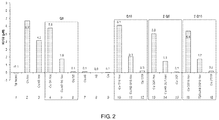
- Example 11 Quantitative Analysis of the hydrogen peroxide produced by A ⁇ in the presence of Cu 2+ , reducing agent with or without TDMQ ligand:
- Control experiments were: Cu-A ⁇ 1-16 ⁇ ascorbate, CuCl 2 ⁇ ascorbate, A ⁇ 1-16 or Cu 2+ alone, performed in the same conditions. Results are shown in Fig. 2 .
- the derivatives in the present invention are able to extract copper from copper-amyloid protein and exhibit a strong capability of reducing an oxidative stress.
Landscapes
- Health & Medical Sciences (AREA)
- Chemical & Material Sciences (AREA)
- Organic Chemistry (AREA)
- Life Sciences & Earth Sciences (AREA)
- Veterinary Medicine (AREA)
- Public Health (AREA)
- General Health & Medical Sciences (AREA)
- Animal Behavior & Ethology (AREA)
- Pharmacology & Pharmacy (AREA)
- Medicinal Chemistry (AREA)
- Chemical Kinetics & Catalysis (AREA)
- Nuclear Medicine, Radiotherapy & Molecular Imaging (AREA)
- General Chemical & Material Sciences (AREA)
- Bioinformatics & Cheminformatics (AREA)
- Engineering & Computer Science (AREA)
- Neurology (AREA)
- Neurosurgery (AREA)
- Biomedical Technology (AREA)
- Epidemiology (AREA)
- Psychology (AREA)
- Toxicology (AREA)
- Psychiatry (AREA)
- Hospice & Palliative Care (AREA)
- Physical Education & Sports Medicine (AREA)
- Diabetes (AREA)
- Hematology (AREA)
- Obesity (AREA)
- Orthopedic Medicine & Surgery (AREA)
- Biochemistry (AREA)
- Pharmaceuticals Containing Other Organic And Inorganic Compounds (AREA)
- Quinoline Compounds (AREA)
Priority Applications (1)
| Application Number | Priority Date | Filing Date | Title |
|---|---|---|---|
| HRP20240476TT HRP20240476T1 (hr) | 2016-05-27 | 2017-05-25 | Tetradentatni kelatni monokinolinski derivat, način njegove proizvodnje, i primjena istog kao regulatora metalnih iona za neurodegenerativne bolesti |
Applications Claiming Priority (2)
| Application Number | Priority Date | Filing Date | Title |
|---|---|---|---|
| CN201610369550.XA CN105949120B (zh) | 2016-05-27 | 2016-05-27 | 一种四齿螯合型单喹啉衍生物及其制备方法和作为神经退行性疾病的金属离子调节剂的应用 |
| PCT/CN2017/085886 WO2017202360A1 (fr) | 2016-05-27 | 2017-05-25 | Dérivé de monoquinoline de chélation tétradentate, son procédé de fabrication et son application en tant que régulateur d'ions métalliques pour les maladies neurodégénératives |
Publications (4)
| Publication Number | Publication Date |
|---|---|
| EP3466931A1 true EP3466931A1 (fr) | 2019-04-10 |
| EP3466931A4 EP3466931A4 (fr) | 2019-11-27 |
| EP3466931B1 EP3466931B1 (fr) | 2024-01-10 |
| EP3466931C0 EP3466931C0 (fr) | 2024-01-10 |
Family
ID=56910072
Family Applications (1)
| Application Number | Title | Priority Date | Filing Date |
|---|---|---|---|
| EP17802206.7A Active EP3466931B1 (fr) | 2016-05-27 | 2017-05-25 | Dérivé de monoquinoline de chélation tétradentate, son procédé de fabrication et son application en tant que régulateur d'ions métalliques pour les maladies neurodégénératives |
Country Status (9)
| Country | Link |
|---|---|
| US (1) | US10807957B2 (fr) |
| EP (1) | EP3466931B1 (fr) |
| JP (1) | JP6889825B2 (fr) |
| CN (1) | CN105949120B (fr) |
| CA (1) | CA3025406C (fr) |
| ES (1) | ES2974620T3 (fr) |
| HR (1) | HRP20240476T1 (fr) |
| HU (1) | HUE066677T2 (fr) |
| WO (1) | WO2017202360A1 (fr) |
Cited By (1)
| Publication number | Priority date | Publication date | Assignee | Title |
|---|---|---|---|---|
| EP4541355A1 (fr) * | 2023-10-20 | 2025-04-23 | Guangdong University Of Technology | Chélateurs de cuivre tétradentates spécifiques pour le traitement de la maladie de wilson |
Families Citing this family (7)
| Publication number | Priority date | Publication date | Assignee | Title |
|---|---|---|---|---|
| CN105949120B (zh) | 2016-05-27 | 2018-07-24 | 广东工业大学 | 一种四齿螯合型单喹啉衍生物及其制备方法和作为神经退行性疾病的金属离子调节剂的应用 |
| CN107987016B (zh) * | 2016-10-27 | 2022-05-27 | 广州威尔曼新药研发有限公司 | 化合物n-丁基-2,2’-亚氨基-双(8-喹啉胺)的晶体、药物组合物及其应用 |
| CN106674102A (zh) * | 2016-12-26 | 2017-05-17 | 广东工业大学 | 一种卤代喹啉类化合物及其制备方法 |
| US12215128B2 (en) * | 2018-07-20 | 2025-02-04 | Cold Spring Harbor Laboratory | (Pyridinylmethyl)butanediamine derivatives that chelate copper |
| CN113318116B (zh) * | 2021-06-17 | 2023-08-25 | 成都奥睿药业有限公司 | 姜黄素二氟硼及其衍生物的用途 |
| CN117427075A (zh) * | 2023-12-01 | 2024-01-23 | 广东工业大学 | Tdmq20在制备抑制lps诱导的神经炎症的药物中的应用 |
| CN118946358A (zh) | 2024-03-15 | 2024-11-12 | 广东工业大学 | 作为抗癌剂的特异性四齿铜螯合剂 |
Family Cites Families (9)
| Publication number | Priority date | Publication date | Assignee | Title |
|---|---|---|---|---|
| SE466534B (sv) * | 1988-12-30 | 1992-03-02 | Exploaterings Ab Tbf | Adsorptionsmedel foer metalljoner, proteiner och andra oorganiska och organiska substanser |
| FR2724171B1 (fr) * | 1994-09-05 | 1997-01-03 | Synthelabo | Derives de 3,3a,4,5-tetrahydro-1h-oxazolo(3,4-a)quinolein-1-one, leur preparation et leur application en therapeutique |
| US6277841B1 (en) * | 2000-03-02 | 2001-08-21 | Mallinckrodt Inc. | Quinoline ligands and metal complexes for diagnosis and therapy |
| US7589209B2 (en) * | 2004-03-23 | 2009-09-15 | New York University | 8-hydroxyquinoline tripodal metal ion probes |
| US20060094755A1 (en) * | 2004-10-28 | 2006-05-04 | Bioflexis, Llc | Novel quinoline-based metal chelators as antiviral agents |
| FR2984317B1 (fr) * | 2011-12-20 | 2015-02-27 | Univ Rennes | Composes chelateurs de metal presentant au moins une chaine polyaminee. |
| RU2642466C2 (ru) * | 2013-04-02 | 2018-01-25 | Аннцзи Фармасьютикал Ко., Лтд. | Многофункциональные производные хинолина в качестве антинейродегенеративных агентов |
| GB201403595D0 (en) * | 2014-02-28 | 2014-04-16 | Isis Innovation | Quinoline compounds |
| CN105949120B (zh) * | 2016-05-27 | 2018-07-24 | 广东工业大学 | 一种四齿螯合型单喹啉衍生物及其制备方法和作为神经退行性疾病的金属离子调节剂的应用 |
-
2016
- 2016-05-27 CN CN201610369550.XA patent/CN105949120B/zh active Active
-
2017
- 2017-05-25 EP EP17802206.7A patent/EP3466931B1/fr active Active
- 2017-05-25 HR HRP20240476TT patent/HRP20240476T1/hr unknown
- 2017-05-25 CA CA3025406A patent/CA3025406C/fr active Active
- 2017-05-25 HU HUE17802206A patent/HUE066677T2/hu unknown
- 2017-05-25 WO PCT/CN2017/085886 patent/WO2017202360A1/fr not_active Ceased
- 2017-05-25 JP JP2018562176A patent/JP6889825B2/ja not_active Expired - Fee Related
- 2017-05-25 ES ES17802206T patent/ES2974620T3/es active Active
-
2018
- 2018-11-24 US US16/199,148 patent/US10807957B2/en active Active
Cited By (1)
| Publication number | Priority date | Publication date | Assignee | Title |
|---|---|---|---|---|
| EP4541355A1 (fr) * | 2023-10-20 | 2025-04-23 | Guangdong University Of Technology | Chélateurs de cuivre tétradentates spécifiques pour le traitement de la maladie de wilson |
Also Published As
| Publication number | Publication date |
|---|---|
| WO2017202360A1 (fr) | 2017-11-30 |
| HUE066677T2 (hu) | 2024-08-28 |
| HRP20240476T1 (hr) | 2024-08-30 |
| US20190092730A1 (en) | 2019-03-28 |
| EP3466931B1 (fr) | 2024-01-10 |
| JP6889825B2 (ja) | 2021-06-18 |
| JP2019516776A (ja) | 2019-06-20 |
| CA3025406A1 (fr) | 2017-11-30 |
| CN105949120A (zh) | 2016-09-21 |
| EP3466931A4 (fr) | 2019-11-27 |
| EP3466931C0 (fr) | 2024-01-10 |
| ES2974620T3 (es) | 2024-06-28 |
| CN105949120B (zh) | 2018-07-24 |
| US10807957B2 (en) | 2020-10-20 |
| CA3025406C (fr) | 2021-06-01 |
Similar Documents
| Publication | Publication Date | Title |
|---|---|---|
| EP3466931B1 (fr) | Dérivé de monoquinoline de chélation tétradentate, son procédé de fabrication et son application en tant que régulateur d'ions métalliques pour les maladies neurodégénératives | |
| US8247396B2 (en) | Polyquinoline derivatives and therapeutic use thereof | |
| AU753402B2 (en) | New substituted amides, their production and their use | |
| HK1220977A1 (en) | Method for producing (1s,4s,5s)-4-bromo-6-oxabicyclo[3.2.1]octan-7-one | |
| CA2328720A1 (fr) | Nouveaux amides heterocycliquement substitues a action de proteases de cysteine | |
| CN101787008A (zh) | N-乙酰神经氨酸类化合物、其药物组合物及其制备方法和用途 | |
| MX2012009473A (es) | Procesos para preparar derivados de ciclopropilamidas e intermedios asociados con estas. | |
| CN108264537A (zh) | 二甲磺酸赖右苯丙胺类似物、制备方法、中间体和应用 | |
| AU2017331930B2 (en) | Crystalline forms | |
| CN103910618B (zh) | 一种2-氟代芳基羰基化合物的合成方法 | |
| CA2740107A1 (fr) | Composes pour le traitement de la maladie d'alzheimer | |
| AU2008248475B2 (en) | Derivatives of the aminated hydroxyquinoline class for treating cancers | |
| US10654862B2 (en) | Methods for the chemical synthesis of pyrrole-linked bivalent compounds, and compositions thereof | |
| PL193669B1 (pl) | Bis (akrydynokarboksyamid), bis (fenazynokarboksyamid), zawierająca je kompozycja farmaceutyczna oraz ich zastosowanie | |
| KR20100057637A (ko) | 히드라진 화합물의 제조 방법, 그리고 히드라진 화합물의 제조 중간체 및 그 제조 방법 | |
| WO2004083215A9 (fr) | Derives polycycliques azotes utilises comme chelateurs d'ions metalliques et leurs applications | |
| KR20260040085A (ko) | 결정형 베타-락탐 유도체 및 이의 용도 | |
| ES2255834B1 (es) | Nuevos derivados 1,2,4-triazol-3-carboxamida. | |
| Castillo-Ríos et al. | SYNTHESIS OF NOVEL QUINOLINE DERIVATIVES: A VERSATILE PLATFORM FOR ADVANCED ORGANIC AND MEDICINAL CHEMISTRY | |
| JP2014114221A (ja) | ベンズイミダゾール誘導体の製造方法及びその中間体 | |
| SA99190971A (ar) | عملية لتحضير نافثيريدونات ومواد وسيطة | |
| Mikhailovskii et al. | Synthesis and blood coagulation properties of drotaverine derivatives | |
| NZ750772B2 (en) | Crystalline forms | |
| ZA200400696B (en) | Novel gamma secretase inhibitors. | |
| HUP9903783A2 (hu) | Dihidro- és tetrahidrokinolinszármazékok, eljárás előállításukra és ilyen vegyületeket tartalmazó gyógyászati készítmények |
Legal Events
| Date | Code | Title | Description |
|---|---|---|---|
| REG | Reference to a national code |
Ref country code: HR Ref legal event code: TUEP Ref document number: P20240476T Country of ref document: HR |
|
| STAA | Information on the status of an ep patent application or granted ep patent |
Free format text: STATUS: THE INTERNATIONAL PUBLICATION HAS BEEN MADE |
|
| PUAI | Public reference made under article 153(3) epc to a published international application that has entered the european phase |
Free format text: ORIGINAL CODE: 0009012 |
|
| STAA | Information on the status of an ep patent application or granted ep patent |
Free format text: STATUS: REQUEST FOR EXAMINATION WAS MADE |
|
| 17P | Request for examination filed |
Effective date: 20190102 |
|
| AK | Designated contracting states |
Kind code of ref document: A1 Designated state(s): AL AT BE BG CH CY CZ DE DK EE ES FI FR GB GR HR HU IE IS IT LI LT LU LV MC MK MT NL NO PL PT RO RS SE SI SK SM TR |
|
| AX | Request for extension of the european patent |
Extension state: BA ME |
|
| DAV | Request for validation of the european patent (deleted) | ||
| DAX | Request for extension of the european patent (deleted) | ||
| A4 | Supplementary search report drawn up and despatched |
Effective date: 20191029 |
|
| RIC1 | Information provided on ipc code assigned before grant |
Ipc: A61P 25/00 20060101ALI20191023BHEP Ipc: A61K 31/47 20060101ALI20191023BHEP Ipc: C07D 215/40 20060101AFI20191023BHEP |
|
| RAP1 | Party data changed (applicant data changed or rights of an application transferred) |
Owner name: CENTRE NATIONAL DE LA RECHERCHE SCIENTIFIQUE Owner name: GUANGDONG UNIVERSITY OF TECHNOLOGY |
|
| RIN1 | Information on inventor provided before grant (corrected) |
Inventor name: MEUNIER, BERNARD Inventor name: XINGGUO, LIU Inventor name: SHU, SIWEI Inventor name: HUANG, DAYA Inventor name: LIU, YAN Inventor name: ROBERT, ANNE Inventor name: HUANG, MEIJIE Inventor name: ZHANG, WEIXIN Inventor name: WANG, DEAN Inventor name: NGUYEN, MICHEL Inventor name: HUANG, JU |
|
| STAA | Information on the status of an ep patent application or granted ep patent |
Free format text: STATUS: EXAMINATION IS IN PROGRESS |
|
| 17Q | First examination report despatched |
Effective date: 20210625 |
|
| GRAP | Despatch of communication of intention to grant a patent |
Free format text: ORIGINAL CODE: EPIDOSNIGR1 |
|
| STAA | Information on the status of an ep patent application or granted ep patent |
Free format text: STATUS: GRANT OF PATENT IS INTENDED |
|
| GRAS | Grant fee paid |
Free format text: ORIGINAL CODE: EPIDOSNIGR3 |
|
| INTG | Intention to grant announced |
Effective date: 20231107 |
|
| GRAA | (expected) grant |
Free format text: ORIGINAL CODE: 0009210 |
|
| STAA | Information on the status of an ep patent application or granted ep patent |
Free format text: STATUS: THE PATENT HAS BEEN GRANTED |
|
| AK | Designated contracting states |
Kind code of ref document: B1 Designated state(s): AL AT BE BG CH CY CZ DE DK EE ES FI FR GB GR HR HU IE IS IT LI LT LU LV MC MK MT NL NO PL PT RO RS SE SI SK SM TR |
|
| REG | Reference to a national code |
Ref country code: GB Ref legal event code: FG4D |
|
| REG | Reference to a national code |
Ref country code: CH Ref legal event code: EP |
|
| REG | Reference to a national code |
Ref country code: DE Ref legal event code: R096 Ref document number: 602017078380 Country of ref document: DE |
|
| REG | Reference to a national code |
Ref country code: IE Ref legal event code: FG4D |
|
| U01 | Request for unitary effect filed |
Effective date: 20240201 |
|
| U07 | Unitary effect registered |
Designated state(s): AT BE BG DE DK EE FI FR IT LT LU LV MT NL PT SE SI Effective date: 20240307 |
|
| REG | Reference to a national code |
Ref country code: SK Ref legal event code: T3 Ref document number: E 43788 Country of ref document: SK |
|
| U20 | Renewal fee for the european patent with unitary effect paid |
Year of fee payment: 8 Effective date: 20240425 |
|
| REG | Reference to a national code |
Ref country code: HR Ref legal event code: ODRP Ref document number: P20240476T Country of ref document: HR Payment date: 20240418 Year of fee payment: 8 |
|
| REG | Reference to a national code |
Ref country code: ES Ref legal event code: FG2A Ref document number: 2974620 Country of ref document: ES Kind code of ref document: T3 Effective date: 20240628 |
|
| PG25 | Lapsed in a contracting state [announced via postgrant information from national office to epo] |
Ref country code: IS Free format text: LAPSE BECAUSE OF FAILURE TO SUBMIT A TRANSLATION OF THE DESCRIPTION OR TO PAY THE FEE WITHIN THE PRESCRIBED TIME-LIMIT Effective date: 20240510 |
|
| PG25 | Lapsed in a contracting state [announced via postgrant information from national office to epo] |
Ref country code: GR Free format text: LAPSE BECAUSE OF FAILURE TO SUBMIT A TRANSLATION OF THE DESCRIPTION OR TO PAY THE FEE WITHIN THE PRESCRIBED TIME-LIMIT Effective date: 20240411 |
|
| PG25 | Lapsed in a contracting state [announced via postgrant information from national office to epo] |
Ref country code: RS Free format text: LAPSE BECAUSE OF FAILURE TO SUBMIT A TRANSLATION OF THE DESCRIPTION OR TO PAY THE FEE WITHIN THE PRESCRIBED TIME-LIMIT Effective date: 20240410 |
|
| PG25 | Lapsed in a contracting state [announced via postgrant information from national office to epo] |
Ref country code: RS Free format text: LAPSE BECAUSE OF FAILURE TO SUBMIT A TRANSLATION OF THE DESCRIPTION OR TO PAY THE FEE WITHIN THE PRESCRIBED TIME-LIMIT Effective date: 20240410 Ref country code: IS Free format text: LAPSE BECAUSE OF FAILURE TO SUBMIT A TRANSLATION OF THE DESCRIPTION OR TO PAY THE FEE WITHIN THE PRESCRIBED TIME-LIMIT Effective date: 20240510 Ref country code: GR Free format text: LAPSE BECAUSE OF FAILURE TO SUBMIT A TRANSLATION OF THE DESCRIPTION OR TO PAY THE FEE WITHIN THE PRESCRIBED TIME-LIMIT Effective date: 20240411 |
|
| PG25 | Lapsed in a contracting state [announced via postgrant information from national office to epo] |
Ref country code: PL Free format text: LAPSE BECAUSE OF FAILURE TO SUBMIT A TRANSLATION OF THE DESCRIPTION OR TO PAY THE FEE WITHIN THE PRESCRIBED TIME-LIMIT Effective date: 20240110 |
|
| REG | Reference to a national code |
Ref country code: HU Ref legal event code: AG4A Ref document number: E066677 Country of ref document: HU |
|
| PG25 | Lapsed in a contracting state [announced via postgrant information from national office to epo] |
Ref country code: PL Free format text: LAPSE BECAUSE OF FAILURE TO SUBMIT A TRANSLATION OF THE DESCRIPTION OR TO PAY THE FEE WITHIN THE PRESCRIBED TIME-LIMIT Effective date: 20240110 |
|
| REG | Reference to a national code |
Ref country code: HR Ref legal event code: T1PR Ref document number: P20240476 Country of ref document: HR |
|
| REG | Reference to a national code |
Ref country code: DE Ref legal event code: R097 Ref document number: 602017078380 Country of ref document: DE |
|
| PG25 | Lapsed in a contracting state [announced via postgrant information from national office to epo] |
Ref country code: SM Free format text: LAPSE BECAUSE OF FAILURE TO SUBMIT A TRANSLATION OF THE DESCRIPTION OR TO PAY THE FEE WITHIN THE PRESCRIBED TIME-LIMIT Effective date: 20240110 |
|
| PG25 | Lapsed in a contracting state [announced via postgrant information from national office to epo] |
Ref country code: SM Free format text: LAPSE BECAUSE OF FAILURE TO SUBMIT A TRANSLATION OF THE DESCRIPTION OR TO PAY THE FEE WITHIN THE PRESCRIBED TIME-LIMIT Effective date: 20240110 |
|
| PLBE | No opposition filed within time limit |
Free format text: ORIGINAL CODE: 0009261 |
|
| STAA | Information on the status of an ep patent application or granted ep patent |
Free format text: STATUS: NO OPPOSITION FILED WITHIN TIME LIMIT |
|
| 26N | No opposition filed |
Effective date: 20241011 |
|
| REG | Reference to a national code |
Ref country code: CH Ref legal event code: PL |
|
| PG25 | Lapsed in a contracting state [announced via postgrant information from national office to epo] |
Ref country code: MC Free format text: LAPSE BECAUSE OF FAILURE TO SUBMIT A TRANSLATION OF THE DESCRIPTION OR TO PAY THE FEE WITHIN THE PRESCRIBED TIME-LIMIT Effective date: 20240110 |
|
| GBPC | Gb: european patent ceased through non-payment of renewal fee |
Effective date: 20240525 |
|
| PG25 | Lapsed in a contracting state [announced via postgrant information from national office to epo] |
Ref country code: MC Free format text: LAPSE BECAUSE OF FAILURE TO SUBMIT A TRANSLATION OF THE DESCRIPTION OR TO PAY THE FEE WITHIN THE PRESCRIBED TIME-LIMIT Effective date: 20240110 Ref country code: CH Free format text: LAPSE BECAUSE OF NON-PAYMENT OF DUE FEES Effective date: 20240531 |
|
| PG25 | Lapsed in a contracting state [announced via postgrant information from national office to epo] |
Ref country code: IE Free format text: LAPSE BECAUSE OF NON-PAYMENT OF DUE FEES Effective date: 20240525 |
|
| PG25 | Lapsed in a contracting state [announced via postgrant information from national office to epo] |
Ref country code: GB Free format text: LAPSE BECAUSE OF NON-PAYMENT OF DUE FEES Effective date: 20240525 |
|
| U20 | Renewal fee for the european patent with unitary effect paid |
Year of fee payment: 9 Effective date: 20250425 |
|
| REG | Reference to a national code |
Ref country code: HR Ref legal event code: ODRP Ref document number: P20240476 Country of ref document: HR Payment date: 20250423 Year of fee payment: 9 |
|
| PGFP | Annual fee paid to national office [announced via postgrant information from national office to epo] |
Ref country code: ES Payment date: 20250610 Year of fee payment: 9 |
|
| PGFP | Annual fee paid to national office [announced via postgrant information from national office to epo] |
Ref country code: HU Payment date: 20250430 Year of fee payment: 9 Ref country code: NO Payment date: 20250425 Year of fee payment: 9 |
|
| PGFP | Annual fee paid to national office [announced via postgrant information from national office to epo] |
Ref country code: HR Payment date: 20250423 Year of fee payment: 9 |
|
| PGFP | Annual fee paid to national office [announced via postgrant information from national office to epo] |
Ref country code: RO Payment date: 20250506 Year of fee payment: 9 |
|
| PGFP | Annual fee paid to national office [announced via postgrant information from national office to epo] |
Ref country code: TR Payment date: 20250514 Year of fee payment: 9 Ref country code: SK Payment date: 20250423 Year of fee payment: 9 |
|
| PGFP | Annual fee paid to national office [announced via postgrant information from national office to epo] |
Ref country code: CZ Payment date: 20250520 Year of fee payment: 9 |
|
| PG25 | Lapsed in a contracting state [announced via postgrant information from national office to epo] |
Ref country code: CY Free format text: LAPSE BECAUSE OF FAILURE TO SUBMIT A TRANSLATION OF THE DESCRIPTION OR TO PAY THE FEE WITHIN THE PRESCRIBED TIME-LIMIT; INVALID AB INITIO Effective date: 20170525 |
|
| REG | Reference to a national code |
Ref country code: HU Ref legal event code: HC9C Owner name: GUANGDONG UNIVERSITY OF TECHNOLOGY, CN Ref country code: HU Ref legal event code: HC9C Owner name: CENTRE NATIONAL DE LA RECHERCHE SCIENTIFIQUE, FR |